


Abstract
γ-Aminobutyric acid (GABA) is a non-proteinogenic amino acid that acts as a major signaling molecule across the nervous, cardiovascular, and immune systems. While GABA has historically been produced via chemical synthesis or plant extraction, microbial fermentation using lactic acid bacteria (LAB) provides a safe, sustainable, and food-grade alternative. This review details the recent progress of LAB-derived GABA, covering the workflow from strain selection to functional food applications. We discuss how modern screening methods combine high-throughput phenotypic testing with genomic mining of the gad operon to efficiently identify high-yielding strains. The biochemical mechanisms of the GABA shunt are also explained, alongside recent CRISPR-based metabolic engineering efforts designed to bypass natural yield limits. Furthermore, we address practical industrial challenges—such as the poor proteolytic ability of key producers like Levilactobacillus brevis—and evaluate viable solutions, including symbiotic co-cultures and optimized downstream purification steps. The review then summarizes the specific health benefits of dietary LAB-derived GABA, focusing on its ability to relieve anxiety via the microbiota-gut–brain axis, control blood pressure, and regulate immunity. Finally, we analyze the current regulatory and sensory hurdles, highlighting how integrating multi-omics data can help establish LAB-derived GABA as a reliable ingredient for functional foods and personalized nutrition.
1. Introduction
γ-Aminobutyric acid (GABA) is the primary inhibitory neurotransmitter in the mammalian central nervous system. It binds to ionotropic GABAA and metabotropic GABAB receptors, altering neuronal ion permeability to produce sedative, anxiolytic, and anticonvulsant effects [1]. Beyond the brain, increasing clinical and epidemiological data indicate that GABA and GABA-enriched dietary products offer various peripheral health benefits, such as lowering blood pressure, regulating gastrointestinal motility, and modulating immune responses [2,3]. Because of its therapeutic potential, the food and pharmaceutical industries have shown growing interest in GABA, creating a need for more efficient and scalable production methods.
The acquisition of GABA historically relied on direct extraction from natural plant and animal tissues, where its basal concentrations are intrinsically low and insufficient for commercial exploitation. To address this issue, contemporary production strategies have diverged into chemical synthesis, plant enrichment, and microbial fermentation. Chemical synthesis relies on severe reaction conditions, such as the high-temperature substitution of γ-chloroprene cyanide with potassium phthalimide, followed by aggressive acidic hydrolysis [4]. While capable of producing GABA, this approach involves toxic precursors and generates hazardous chemical residues, strictly precluding its application in the food and nutraceutical sectors where purity and safety are paramount. Conversely, plant enrichment leverages abiotic stressors—such as hypoxia, cold shock, and low-frequency ultrasound—to release the autoinhibitory domain of endogenous glutamate decarboxylase (GAD), thereby triggering intracellular GABA accumulation [5]. Despite its environmental benignity, plant-based enrichment is frequently hindered by complex downstream extraction processes, matrix interference, and overall low product yield [4,5].
In contrast, microbial biosynthesis via the GABA shunt pathway provides a robust, sustainable, and highly efficient alternative. The core mechanism involves the irreversible α-decarboxylation of L-glutamate, catalyzed by the cytosolic enzyme GAD with pyridoxal 5′-phosphate (PLP) serving as an obligatory cofactor [6]. Among the diverse microbial candidates capable of this conversion, lactic acid bacteria (LAB) have emerged as the most promising biocatalysts. LAB possess a “generally recognized as safe” (GRAS) status and are inherently food-grade, extensively utilized worldwide as starter cultures and probiotics [7,8]. Exploiting specific LAB strains—such as Levilactobacillus brevis, Lactiplantibacillus plantarum, and Lactococcus lactis—for GABA production bypasses the safety concerns associated with chemical synthesis while allowing the direct formulation of functional fermented dairy, cereal, and beverage products without the absolute necessity for exhaustive downstream purification [8]. Furthermore, the distinctive metabolic pathways of LAB, including the gad operon responsible for coupling glutamate decarboxylation with proton consumption, endow these strains with a unique mechanism to combat extracellular acid stress while simultaneously accumulating high titers of extracellular GABA [9].
Despite the evident advantages of LAB-derived GABA, translating this potential into standardized industrial applications encounters multifaceted challenges. The vast taxonomic diversity within LAB translates to significant inter- and intra-species variations in GAD enzymatic activity, proteolytic capacity, and environmental adaptability [10]. Consequently, isolating wild-type LAB strains with naturally superior GABA-producing phenotypes demands the transition from labor-intensive traditional cultivation to high-throughput and genome-driven targeted screening methodologies. Furthermore, unlocking the full biosynthetic potential of these strains necessitates precise metabolic engineering, process optimization, and comprehensive evaluation of their post-ingestion functional efficacies.
This review aims to summarize recent progress in the research and application of LAB-derived GABA. We outline current targeted screening techniques, molecular mechanisms of GABA biosynthesis, and recent metabolic engineering strategies. In addition, we review the optimization of fermentation and purification processes, summarize the health benefits of LAB-derived GABA, and discuss the remaining challenges and future opportunities for its application in the food industry.
2. Targeted Screening of High GABA-Producing Lactic Acid Bacteria
The ubiquitous but minor distribution of GABA-producing microorganisms in natural ecosystems necessitates robust, highly sensitive screening methodologies to isolate strains with superior biosynthetic capacities. The inherent complexity of microbial colony morphology and the vast physiological diversity within lactic acid bacteria populations render traditional random isolation approaches inefficient and labor-intensive. Consequently, contemporary screening paradigms have shifted from conventional analytical techniques toward a systematic integration of high-throughput phenotypic assays and bioinformatics-driven genotypic evaluations.
2.1. High-Throughput Phenotypic Screening (HTS) Methodologies
Traditional analytical tools for GABA quantification, such as thin-layer chromatography (TLC) and high-performance liquid chromatography (HPLC), are generally time-consuming and require complex sample derivatization [11,12]. To speed up the initial strain isolation process, researchers have developed several high-throughput screening assays. For example, the GABase microtiter plate assay uses a dual-enzyme system (GABA-T and SSADH). This system facilitates the conversion of GABA to succinic semialdehyde (SSA), coupled with the reduction in NADP+ to NADPH, permitting the spectrophotometric quantification of GABA without prior derivatization [13]. However, from a critical limitation of this enzymatic assay is the high potential for background optical interference at 340 nm. Complex food and fermentation matrices inherently contain soluble proteins, polyphenols, and carotenoids that absorb strongly in the UV-to-near-UV spectrum, frequently leading to overestimation of GABA yields unless rigorous blanking or sample pre-treatment is employed. Similarly, the sensitivity-intensified ninhydrin-based chromogenic system (SINICS) has been optimized for rapid, cost-effective, and high-throughput relative quantification of GABA directly from fermentation broths [14]. Nevertheless, a critical analytical challenge is that residual L-glutamate (the primary substrate) strongly interferes with the ninhydrin-mediated color formation at 570 nm. Therefore, relying solely on direct chromogenic readings is often inaccurate; reliable quantification strictly requires adequate sample separation—such as thin -layer chromatography (TLC) or solid-phase extraction—prior to spectrophotometric evaluation. Additionally, exploiting the stoichiometric generation of carbon dioxide and consumption of intracellular protons during the glutamate decarboxylation process, indirect screening models have been conceptualized. Assays utilizing pH indicators (e.g., bromocresol purple) or measuring gas-release volumes within micro-bioreactors provide immediate visual or physical parameters correlating to GAD enzymatic activity, significantly accelerating the isolation of highly active candidates from complex environmental matrices like fermented foods and feces [11,15]. Integrating these optical and physical high-throughput strategies with advanced robotic colony-picking workstations and droplet-based microfluidic fluorescence-activated cell sorting (FACS) effectively eliminates subjective bias and escalates the scale of phenotypic evaluation to millions of variants per cycle [16].
2.2. Genotypic Screening via Comparative Genomics
While phenotypic screening verifies functional outputs, it is inherently restricted by the reliance on specific cultivation conditions that might suppress the expression of biosynthetic gene clusters. To address this limitation, genotypic screening utilizing molecular probes and comparative genomics provides a cultivation-independent, highly specific avenue for microbial bioprospecting [16,17].
The core genetic determinant for GABA biosynthesis in LAB is the gad operon, fundamentally encoding the glutamate decarboxylase enzyme(s) (gadA and/or gadB) and the strictly coupled glutamate/GABA antiporter (gadC) [18]. By employing colony polymerase chain reaction (PCR) with degenerate primers designed against highly conserved active-site domains (e.g., the PLP-binding domain) of LAB GADs, researchers can rapidly verify the intrinsic genetic capability of uncultured or newly isolated strains [19]. With the exponential expansion of whole-genome sequencing (WGS) databases, sophisticated bioinformatics tools facilitate the in silico prediction of probiotic properties. Large-scale genomic surveys indicate that the complete structural integrity of the gad operon (gadCBA) serves as a reliable molecular marker for distinguishing elite GABA producers. For instance, comparative genomic analyses have demonstrated that strains lacking the gad operon or possessing truncated variants intrinsically fail to accumulate significant extracellular GABA, irrespective of substrate supplementation [18,20]. Thus, leveraging genomic datasets to pinpoint sequence homology and operon completeness fundamentally streamlines the identification of optimal cellular factories.
2.3. Species Diversity and Ecological Distribution
Ecological surveillance reveals that elite GABA-producing LAB are predominantly localized within acidic environments characterized by high osmotic stress and abundant proteinaceous precursors, such as traditional fermented vegetables (e.g., kimchi, paocai), artisanal cheeses, and human or animal intestinal tracts [11,21]. The stringent selective pressure of these microenvironments inherently drives the retention and high expression of the gad operon, which operates as a critical acid-resistance mechanism by eliminating intracellular protons [11].
Taxonomically, profound interspecies variations dictate the capacity for GABA synthesis. As summarized in Table 1, the most potent GABA producers are frequently identified within the species Levilactobacillus brevis (basonym: Lactobacillus brevis), Lactiplantibacillus plantarum (basonym: Lactobacillus plantarum), Lactococcus lactis, and Streptococcus thermophilus [11,21,22]. Lv. brevis exhibits exceptional biosynthetic superiority; genomic evaluations establish that nearly 100% of completely sequenced Lv. brevis isolates harbor an intact gad operon accompanied by two functionally distinct GAD-encoding genes, making it an unparalleled candidate for industrial exploitation [11,18]. Conversely, dairy-associated isolates like S. thermophilus and Lc. lactis, though generally yielding lower absolute GABA concentrations compared to Lv. brevis, offer profound advantages in milk fermentation systems owing to their robust proteolytic nature, which naturally supplies the glutamate precursor essential for in situ GABA generation [11,23].
Table 1.
Representative high GABA-producing lactic acid bacteria: Ecological origins, target yields, and integrated screening methodologies.
3. Biosynthetic Mechanisms and Genetic Engineering of GABA in LAB
3.1. Deciphering the GABA Shunt and the Glutamate Decarboxylase System
In LAB, the accumulation of extracellular GABA is predominantly driven by the GABA shunt, a highly conserved metabolic bypass linking amino acid metabolism with intracellular acid resistance. Mechanistically, this pathway relies on the synergistic function of the GAD (EC 4.1.1.15) enzyme and the membrane-bound glutamate/GadC, both of which are transcriptionally regulated within the gad operon [21].
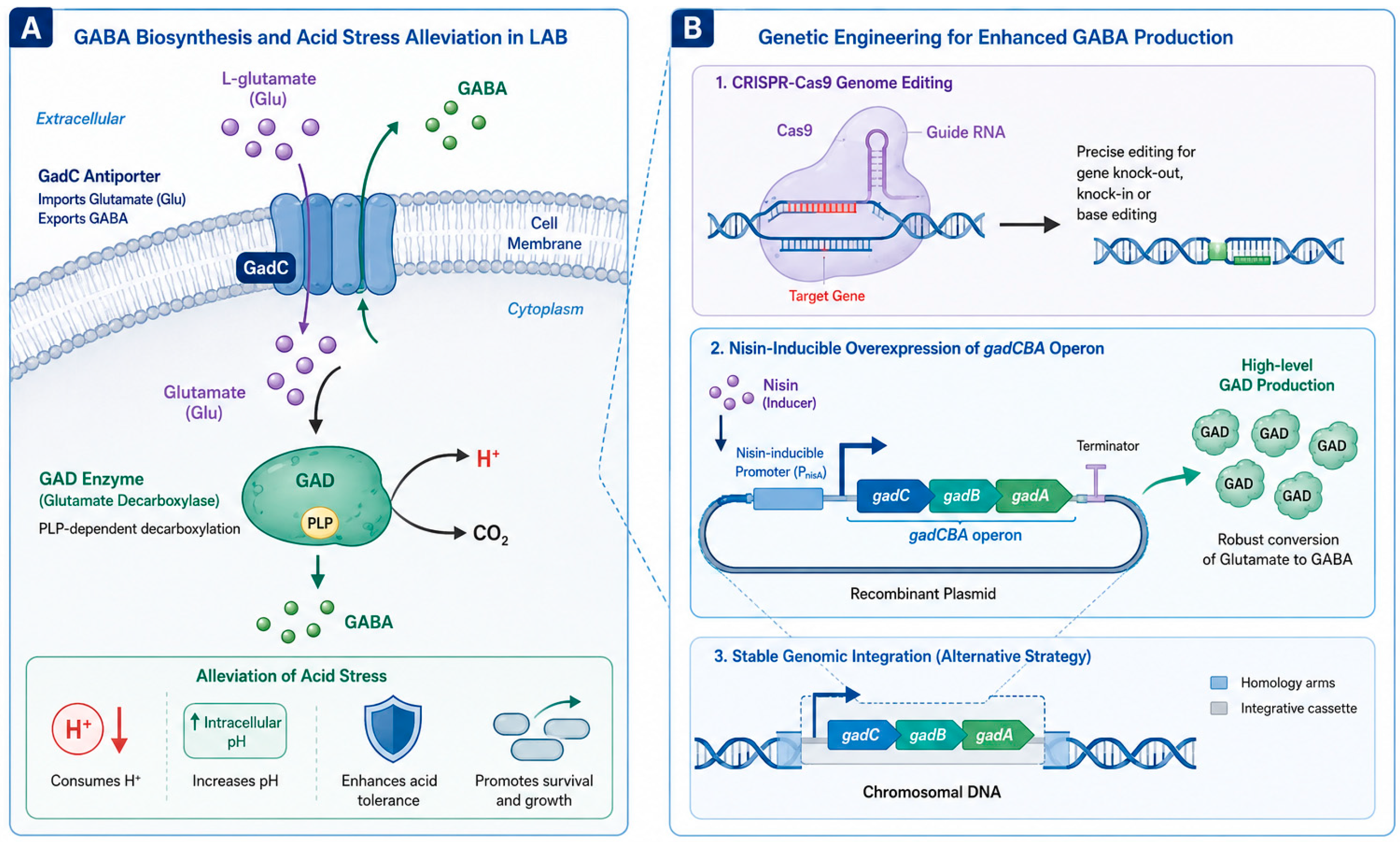
The biosynthetic cascade is initiated by the active transport of exogenous L-glutamate into the bacterial cytoplasm via the GadC antiporter. Subsequently, the cytosolic GAD enzyme catalyzes the irreversible α-decarboxylation of L-glutamate to yield GABA. This specific decarboxylation event strictly requires PLP as a co-factor and consumes one intracellular proton (H+) while releasing one molecule of carbon dioxide (CO2) [28]. The newly synthesized GABA is subsequently extruded back into the extracellular matrix via GadC in exchange for another glutamate molecule. From a physiological perspective, this proton-consuming mechanism serves as a critical fitness determinant, effectively mitigating cytosolic acidification and enabling LAB to maintain pH homeostasis under extreme fermentative conditions [28,29]. Consequently, the transcriptional activation of the gad operon is fundamentally tightly coupled with the environmental pH, triggering explosive GABA synthesis primarily when the extracellular matrix reaches critical acidity.
3.2. Biochemical Kinetics and Phylogenetic Diversity of LAB Glutamate Decarboxylases
The intrinsic capacity of distinct LAB strains to synthesize GABA is dictated by the structural configuration and catalytic kinetics of their specific GADs. Phylogenetic analyses based on the amino acid sequences of translated GAD proteins reveal highly conserved evolutionary lineages at the species level, specifically clustered within Levilactobacillus brevis, Lactiplantibacillus plantarum, and Lactococcus lactis [11]. Notably, genomic mining indicates that Lv. brevis harbors a unique genetic architecture characterized by the presence of two functionally distinct gadA and gadB alongside an intact gad operon, partially explaining its superior biosynthetic capabilities compared to other LAB [11].
Catalytic profiling of heterologously expressed and purified GADs from various LAB elucidates significant variations in enzyme kinetics (Table 2). The optimal catalytic activity for the vast majority of LAB-derived GADs is strictly confined to an acidic range (pH 4.0 to 5.2). This acidic optimum creates an operational paradox during industrial fermentation: while low pH maximizes GAD specific activity, it simultaneously impedes cellular proliferation and diminishes overall bacterial viability [6,11]. Furthermore, the optimal temperatures for purified GADs frequently exceed 45 °C (e.g., 50 °C for Lacticaseibacillus paracasei NFRI7415 and 55 °C for Streptococcus thermophilus Y2), which deviates substantially from the standard mesophilic growth temperatures (30–37 °C) of these strains. The variations in the Michaelis constant (Km)—ranging from highly affine enzymes (Km = 0.5 mM in Lc. lactis 01-7) to those requiring high substrate concentrations (Km = 22.8 mM in Lb. plantarum ATCC 14917)—further underscore the necessity of customizing the fermentation matrix and precursor feeding strategies to match the specific kinetic profile of the engineered or selected strain [30,31].
Table 2.
Biochemical properties and kinetic parameters of heterologously expressed and purified GADs from representative lactic acid bacteria.
3.3. Rewiring GABA Biosynthesis via Advanced Genetic Engineering and CRISPR Technologies
While optimizing fermentation parameters can improve baseline GABA yields, metabolic engineering is often necessary to overcome natural metabolic bottlenecks. Traditional genetic modifications in LAB mostly relied on vector-based homologous recombination (HDR), using double-crossover events for gene knockouts or replacements (Figure 1). For example, knocking out the transcriptional regulator gadR in Lv. brevis completely stopped GABA production, confirming its role as a positive regulator of the gadCB operon [38]. Similarly, overexpressing the endogenous gadB and gadC genes under a nisin-inducible promoter significantly increased GABA titers compared to using wild-type promoters [39].
Figure 1.
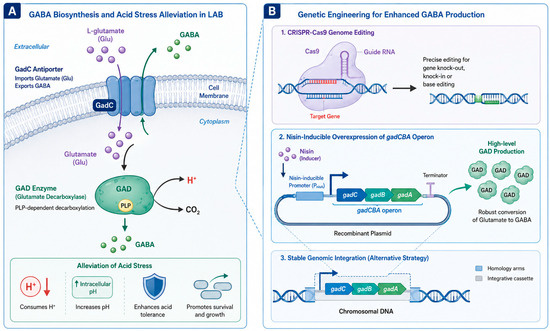
Biosynthetic mechanisms and genetic engineering of GABA in lactic acid bacteria. (A) The intracellular GABA shunt pathway mediated by the glutamate/GadC and GAD, coupling glutamate conversion with proton consumption to mitigate acid stress. (B) Targeted metabolic rewiring using CRISPR-Cas genomic editing systems to seamlessly overexpress the gad operon and optimize carbon flux for enhanced GABA accumulation.
However, traditional HDR often suffers from low recombination efficiencies and the unwanted retention of antibiotic resistance markers. To address these issues, CRISPR-Cas systems have been adapted for LAB genome editing. Advanced tools, such as the RecE/T-assisted CRISPR-Cas9 platform, have been successfully used in historically difficult-to-edit strains like Lv. brevis and Lb. plantarum, achieving gene deletion and replacement with near 100% efficiency [40]. Furthermore, researchers are using CRISPR interference (CRISPRi) with a catalytically inactive Cas9 (dCas9) to physically block RNA polymerase. By repressing competing pathways (such as lactate dehydrogenase or polyamine degradation) and simultaneously overexpressing the gad operon, CRISPRi effectively redirects carbon and nitrogen fluxes toward GABA biosynthesis [41]. These genetic tools allow researchers to construct high-yield, food-grade LAB cell factories without leaving foreign genetic sequences in the final strain (Figure 1).
4. Optimization of Fermentation, Isolation, and Purification Processes
Unlocking the maximum biosynthetic potential of LAB strictly necessitates the systematic optimization of both upstream fermentative parameters and downstream processing technologies. The transition from laboratory-scale confirmation to industrial-scale application relies on balancing physiological cell viability with maximal GAD catalytic efficiency, followed by rigorous purification to meet functional food and pharmaceutical standards.
4.1. Modulation of Critical Fermentation Parameters
The accumulation of GABA in microbial systems is not a static trait but rather a highly dynamic metabolic response governed by environmental conditions, particularly pH, temperature, and nutrient matrix compositions [21]. Because the decarboxylation of L-glutamate consumes intracellular protons, the GAD system functions optimally under acidic stress. While purified LAB GAD enzymes typically display maximum activity at a pH range of 4.0 to 5.0, maintaining the entire fermentation matrix at such extreme acidity drastically compromises cellular proliferation [11]. Consequently, dynamic pH control strategies, such as two-stage fermentation—where initial neutral conditions promote rapid biomass accumulation, followed by a controlled shift to acidic conditions to trigger explosive GABA synthesis—have proven highly effective [21].
Temperature equally dictates the metabolic flux, with optimal ranges demonstrating significant inter-species variability. While thermophilic strains like Streptococcus thermophilus achieve optimal synthesis near 40 °C, mesophilic producers such as Levilactobacillus brevis require strict temperature regulation (around 30–34 °C) to prevent the thermal denaturation of GAD [21]. The composition of the nutrient matrix, specifically the availability of the strictly required cofactor PLP and the substrate monosodium glutamate (MSG), acts as a primary limiting factor. Exceeding the osmotic tolerance threshold of the specific strain via excessive MSG supplementation inevitably inhibits cellular growth. Furthermore, carbon source substitution critically alters regulatory networks; replacing glucose with xylose has been documented to activate the xyl operon in Lv. brevis, fundamentally enhancing growth rates and resulting in a remarkable amplification of final GABA titers [21,25]. High-hydrostatic pressure treatments (e.g., 300 MPa) during cultivation have also been explored as a biophysical intervention to transiently alter membrane permeability, thereby enhancing substrate influx and product extrusion without causing permanent cellular damage [21].
4.2. Compensatory Strategies for Non-Proteolytic LAB
Although specific strains, particularly Lv. brevis, produce high amounts of GABA, they are difficult to use as primary starter cultures in dairy products because they lack proteolytic activity. Genomic analyses confirm that sequenced Lv. brevis strains do not have genes encoding cell envelope proteinases (CEPs, such as PrtP) [11]. This genetic absence prevents the bacteria from breaking down milk casein into usable oligopeptides and free amino acids, resulting in restricted growth and failed fermentation in unsupplemented milk matrices [11,42].
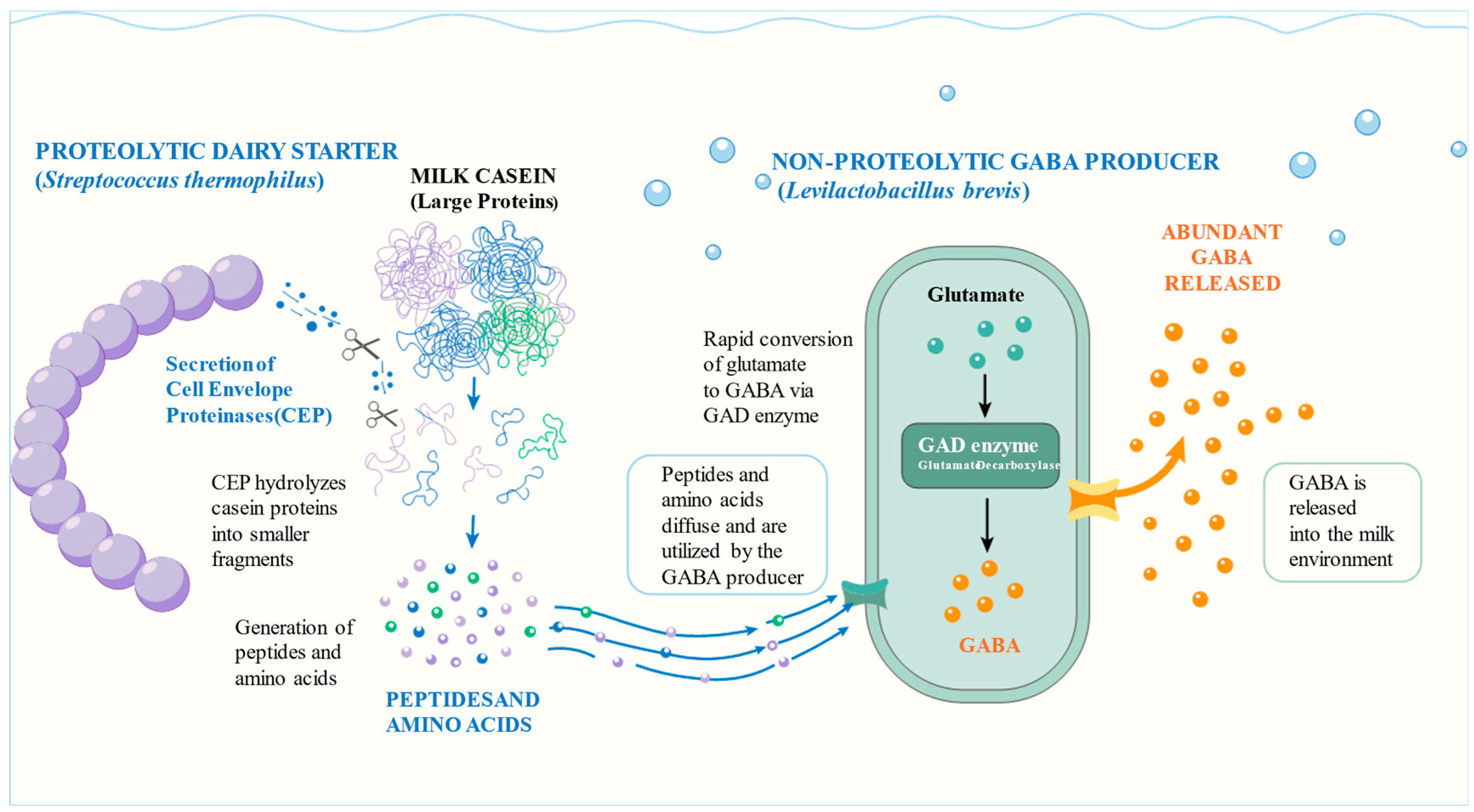
To solve this problem and produce naturally GABA-enriched fermented dairy products, researchers have developed two main approaches. The first approach is exogenous supplementation, which involves adding pre-hydrolyzed nitrogen sources—such as concentrated whey permeate, yeast extract, or germinated soybean extract—to the milk base. This provides the necessary small peptides (typically 4–20 amino acids) required to support Lv. brevis growth [11]. The second approach relies on symbiotic co-culture. This method pairs the non-proteolytic, GABA-producing adjunct (Lv. brevis) with traditional proteolytic dairy starters (e.g., S. thermophilus or Lactococcus lactis). In this mixed-culture system, the proteolytic starter breaks down milk caseins, constantly releasing essential peptides that cross-feed the GABA producer. Studies on the interaction between S. thermophilus and Lv. brevis in skim milk have shown improved viability of the adjunct strain (Figure 2) and higher final GABA concentrations, creating a functional dairy product without needing synthetic additives [21,42].
Figure 2.
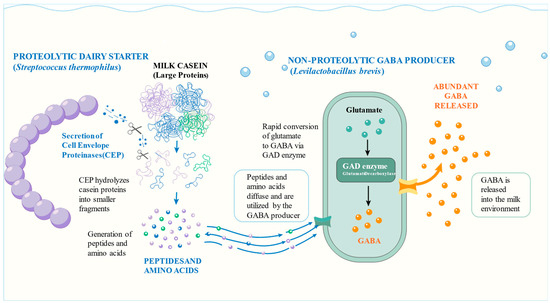
Symbiotic co-culture strategy for enhanced GABA production in dairy fermentation. Synergistic interactions between proteolytic dairy starters and non-proteolytic high-GABA producers (e.g., Levilactobacillus brevis). The enzymatic hydrolysis of milk caseins by CEPs from the primary starter liberates essential oligopeptides, effectively cross-feeding the GABA-producing adjunct and sustaining its metabolic flux within the milk matrix.
4.3. Advanced Technologies for Quantification, Isolation, and Purification
Accurate quantification and high-purity extraction from complex fermentation broths constitute the final critical phases of GABA production. Owing to the absence of a natural chromophore or fluorophore in the GABA molecule, direct detection via standard ultraviolet (UV) spectroscopy is impossible. Chromatographic quantification via HPLC remains the gold standard, mandating pre-column derivatization using reagents such as o-phthalaldehyde (OPA), dansyl chloride, or phenyl isothiocyanate (PITC) to facilitate detection [15,21]. For rapid, high-throughput relative quantification, the enzyme-linked GABase microtiter plate assay—measuring the NADPH-dependent absorbance shift during the enzymatic conversion of GABA to succinic acid—provides a precise, derivatization-free alternative [13]. Concurrently, the SINICS optimizes traditional TLC principles into a scalable spectrophotometric assay suitable for rapid industrial monitoring [14].
The downstream purification of extracellular GABA from crude microbial broth mandates the sequential elimination of residual carbohydrates, proteins, pigments, and unreacted glutamate. Industrial-scale isolation generally commences with flocculation and ultrafiltration to precipitate macromolecular impurities and cellular debris. The clarified permeate is subsequently subjected to decolorization utilizing activated carbon or macroporous adsorption resins (e.g., DA-201CII) [21]. To achieve pharmaceutical or functional food-grade purity, the decolorized solution undergoes ion exchange chromatography utilizing specific cation exchange resins (e.g., Amberlite 200C or QY-HG01) designed to separate GABA from structurally similar amino acids based on distinct isoelectric points [21,43]. The final concentration and refinement are typically accomplished via repeated ethanol precipitation and controlled crystallization, yielding colorless, stable GABA crystals with documented purities exceeding 98–99%, perfectly satisfying stringent commercial standards [21]. For post-purification structural validation, researchers frequently employ Fourier-transform infrared (FTIR) spectroscopy; however, FTIR claims should be strictly limited to identifying qualitative changes in specific vibrational modes (e.g., amine and carboxyl group stretches). To rigorously verify molecular weight and assess the absolute purity of the extract—particularly to rule out the co-precipitation of macro-molecular contaminants such as microbial exopolysaccharides (EPS)—advanced analytical techniques like size-exclusion chromatography coupled with multi-angle laser light scattering (SEC-MALLS) or gel permeation chromatography (GPC) are strictly required.
5. Physiological Functions and Health Benefits of LAB-Derived GABA
While historically defined exclusively as the principal inhibitory neurotransmitter within the mammalian central nervous system (CNS), GABA is now recognized as a highly pleiotropic signaling molecule orchestrating a vast array of peripheral physiological networks. The oral administration of purified GABA or the consumption of GABA-enriched functional foods—particularly those bio-transformed by LAB—has been explicitly linked to profound multi-target health benefits, spanning neuroprotection, hemodynamic regulation, and immunometabolic homeostasis.
5.1. Neuromodulation and the Microbiota-Gut–Brain Axis
In the CNS, GABA reduces neuronal excitability by binding to ionotropic GABAA and metabotropic GABAB receptors. This binding promotes physical relaxation, reduces anxiety, and improves sleep quality. Clinical studies indicate that dietary supplementation with microbial-derived GABA can increase α-wave activity and decrease β-wave activity in the human brain. This helps relieve psychological stress and insomnia symptoms without the adverse side effects typically associated with synthetic sleep medications like benzodiazepines [21,44].
Because dietary GABA exhibits highly limited permeability across the blood–brain barrier (BBB), its physiological anxiolytic and neurobehavioral effects cannot be simply attributed to direct central nervous system (CNS) infiltration. Instead, these effects are fundamentally driven by the microbiota-gut–brain axis. Specifically, LAB-derived GABA acts locally by activating enteric GABA receptors GABAA and GABAB distributed extensively within the gastrointestinal mucosa and the enteric nervous system (ENS) [45]. This enteric receptor activation subsequently modulates afferent vagal nerve signaling ascending to the brain. It is this critical transduction of localized enteric signaling via the vagus nerve—rather than the direct physical translocation of the GABA molecule—that dampens abnormal neuro-excitability, ultimately bridging luminal microbial metabolism with the alleviation of host emotional stress and anxiety [46,47].
5.2. Cardiovascular Protection and Hemodynamic Regulation
The peripheral GABAergic system plays a vital role in cardiovascular protection, specifically operating as a potent biological antihypertensive mechanism. The hemodynamic regulatory effects of GABA are mediated divergently across distinct receptor subtypes located within cerebrovascular and peripheral tissues. The activation of endothelial GABAA receptors directly promotes vasodilation, thereby physically reducing resistance to vascular blood flow [21]. Conversely, the stimulation of presynaptic GABAB receptors effectively inhibits the excitation of sympathetic nerve endings, suppressing the excessive release of catecholamines that drive hypertensive states [21].
Extensive in vivo evaluations employing spontaneously hypertensive rat (SHR) models confirm that the ingestion of GABA mitigates blood pressure fluctuations, regulates heart rate, and improves arterial baroreceptor reflex functionality [21]. Translating these physiological mechanisms into clinical efficacy, pioneering double-blind human trials have validated the therapeutic potential of functional dairy products. Daily intake of LAB-fermented milk containing physiological doses of GABA (e.g., 10–12 mg/100 mL) induced a significant and sustained reduction in systolic and diastolic blood pressure among mildly hypertensive patients within several weeks of intervention, underscoring the viability of LAB-derived GABA as a non-pharmacological dietary therapy for cardiovascular risk management [3].
5.3. Gastrointestinal Homeostasis and Immunometabolic Regulation
The enteric nervous system (ENS), an intricate network of autonomous neurons within the intestinal wall, is heavily regulated by local GABAergic signaling. Mucosal endocrine-like cells and myenteric plexus neurons utilize GABA to modulate both cholinergic and non-adrenergic non-cholinergic (NANC) neurotransmission [48]. By activating enteric GABAA and GABAB receptors, luminal GABA meticulously controls spontaneous gastrointestinal relaxations and contractions, optimizing gastric emptying and intestinal peristalsis. This targeted neuromodulation positions GABA as a promising therapeutic target for treating functional gastrointestinal motor disorders, such as gastroparesis and acute colonic pseudo-obstruction [21,48].
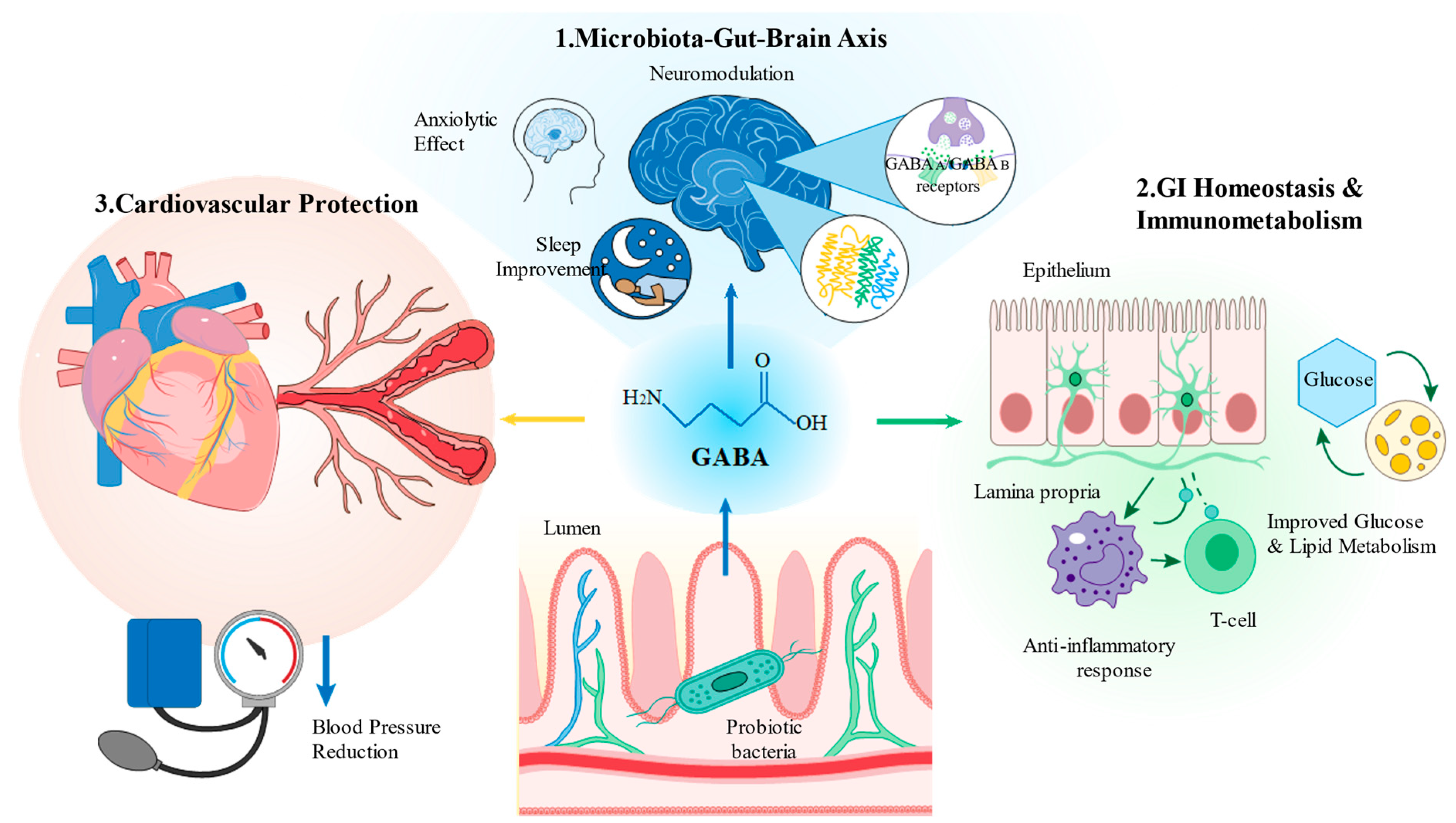
Furthermore, recent immunological paradigms reveal that peripheral immune cells—including macrophages, dendritic cells, and T lymphocytes—possess functional GABA receptor complexes [21,49]. The binding of GABA to these immune-associated receptors triggers distinct anti-inflammatory cascades. Experimental evidence establishes that GABAergic activation actively down-regulates the secretion of pro-inflammatory cytokines while simultaneously suppressing the excessive proliferation of autoreactive T cells [49]. Consequently, systemic or gut-derived GABA exerts protective immunomodulatory effects, actively ameliorating the pathophysiological progression of systemic autoimmune conditions, notably type 1 diabetes mellitus, rheumatoid arthritis, and severe mucosal inflammation [21,49]. Concurrently, specific GABA-enriched dietary interventions display profound metabolic benefits, actively maintaining blood glucose homeostasis, improving glycolipid metabolism, and reversing gut microbiota dysbiosis in type 2 diabetic models, representing a holistic approach to managing metabolic syndrome [21] (Figure 3).
Figure 3.
Multi-target physiological functions and systemic health benefits of LAB-derived GABA. Dietary intervention with microbial GABA or GABA-enriched functional foods exerts pleiotropic therapeutic effects. The key pathways include modulating the microbiota-gut–brain axis to alleviate neurological and psychiatric disorders, attenuating cardiovascular hypertension via endothelial vasodilation and sympathetic inhibition, and orchestrating gastrointestinal motility and immunometabolic homeostasis.
6. Functional Food Applications, Challenges, and Future Perspectives
6.1. Industrial Applications in Functional Foods and Beyond
The translation of LAB-derived GABA from laboratory bioprocesses to commercial food matrices represents a highly dynamic sector within the global nutraceutical market. Recognizing its physiological safety and neuroactive potential, regulatory authorities globally have progressively endorsed GABA as a legitimate dietary component; notably, the Chinese Ministry of Health officially approved GABA as a new resource food in 2009, stipulating a maximum daily intake of 500 mg [21]. Beyond China, GABA has been extensively integrated into global regulatory frameworks. In Japan, it is one of the most frequently notified active ingredients approved under the Foods with Function Claims (FFC) and Foods for Specified Health Uses (FOSHU) systems, widely utilized in functional beverages and snacks for stress relief. In the United States, GABA is regulated as a dietary supplement under the Dietary Supplement Health and Education Act (DSHEA) and has achieved Generally Recognized as Safe (GRAS) status by the FDA for inclusion in diverse food matrices. Similarly, the European Union permits the use of GABA in food supplements, albeit subject to specific national guidelines and EFSA evaluations. This regulatory validation has catalyzed the incorporation of microbial GABA into a diverse array of functional products. Specifically, high GABA-producing LAB isolates are deployed as adjunct starter cultures to manufacture naturally enriched fermented dairy products, such as yogurt and artisanal cheeses, bypassing the need for exogenous synthetic chemical additions [11,50]. Beyond traditional dairy, LAB-mediated GABA enrichment has been successfully extended to plant-based matrices, yielding functional beverages, fermented soy products (e.g., tempeh), and specialty confections like dark chocolate, where the inclusion of GABA concurrently enhances moisture retention and mitigates textural degradation [11,21].
Extending beyond human nutrition, microbial-derived GABA exhibits profound applicability within the agricultural and livestock sectors. Exogenous GABA application in crop management effectively enhances abiotic stress tolerance, mitigating heavy metal accumulation and preserving postharvest quality [21]. Concurrently, dietary GABA supplementation in livestock husbandry provides a robust strategy to alleviate heat-induced oxidative stress and behavioral aberrations in intensively reared domestic animals, improving overall immunological resilience and physiological performance without relying on pharmaceutical interventions [21].
6.2. Technical, Sensory, and Regulatory Challenges
Despite the established commercial trajectory, the large-scale industrialization of LAB-derived GABA encounters distinct technical, sensory, and regulatory bottlenecks.
Sensory Impacts and Metabolic By-Products: A primary sensory challenge arises from the requisite substrate supplementation during fermentation. The addition of high concentrations of MSG to maximize GAD-mediated GABA conversion inevitably leaves unreacted residual glutamate in the final matrix [11]. Because glutamate operates as a potent umami flavoring agent, its excessive persistence severely disrupts the delicate organoleptic balance of fermented dairy and beverage products, shifting taste profiles toward savory notes that may be undesirable [11]. Furthermore, while high-purity GABA is generally odorless, high concentrations of accumulated GABA itself can introduce a mild bitter or astringent off-taste to the final product.
In the case of intensified GABA synthesis, metabolic by-products present another limitation. When LAB metabolic flux is heavily directed toward the GABA shunt under extreme acid stress, it alters intracellular redox and energy balances. This can drive the elevated production of volatile organic acids (e.g., excessive acetate or lactate) or flavor-active compounds (e.g., diacetyl) that further alter the product’s sensory profile. Additionally, if non-specific amino acid decarboxylases are natively co-expressed during stress conditions, trace amounts of biogenic amines (e.g., tyramine or histamine) could accumulate, raising food safety concerns that mandate rigorous quality control [10,11].
Regulation of GABA Synthesis in Food Systems: To address these limitations, regulating GABA synthesis in food systems is crucial, demanding distinct strategies for natural wild-type and genetically modified (GM) strains. For natural LAB, regulation relies heavily on bioprocess engineering. For example, two-stage pH-regulated fermentation prevents early growth inhibition while dynamically triggering localized GABA synthesis [21]. Step-wise MSG micro-feeding prevents osmotic shock, while symbiotic co-culturing with highly proteolytic strains (e.g., Streptococcus thermophilus) continuously supplies nitrogenous precursors, effectively minimizing unreacted MSG and bypassing the need for expensive nitrogen sources (like yeast extracts) that escalate production costs [11,42].
Conversely, for GM strains, GABA synthesis can be precisely regulated using food-grade inducible promoters (e.g., nisin-controlled systems) or pH-inducible endogenous promoters [39]. Tools like CRISPR interference (CRISPRi) can dynamically repress competing metabolic pathways and redirect flux strictly toward GABA accumulation during the late exponential phase, minimizing unwanted by-products without leaving foreign markers [40,41].
Regulatory and Safety Frameworks: Despite these technical advances, from a regulatory and safety perspective, the application of advanced metabolic engineering introduces profound ethical and legal complications. While CRISPR-Cas9 genome editing holds immense promise for constructing hyper-producing LAB cell factories, the potential for off-target sequence modifications unpredictably altering strain behavior remains a critical safety concern [51]. Furthermore, classical genetic modifications relying on plasmid-borne antibiotic resistance markers pose severe biohazard risks regarding horizontal gene transfer within the human gut microbiome post-consumption [11]. Consequently, the deployment of genetically modified LAB strains in commercial food formulations is strictly governed by rigorous safety evaluations, transparent regulatory oversight, and stringent ethical frameworks, frequently limiting their immediate application compared to wildly screened isolates [51].
6.3. Future Perspectives and Precision Nutrition
The future trajectory of LAB-derived GABA research is deeply intertwined with the evolution of multi-omics technologies and personalized medicine. Integrating whole-genome sequencing, transcriptomics, and metabolomics will unequivocally accelerate the discovery of cryptic biosynthetic gene clusters and elucidate the intricate molecular dialogues between specific GABA-producing probiotics and host intestinal epithelia [51]. By mapping the precise metabolic flux of these strains, bioprocess engineers can transition from empirical media formulation toward mathematically modeled, rationally designed fermentation matrices.
Clinically, the paradigm is shifting toward personalized probiotic interventions. Customizing LAB formulations based on an individual’s unique microbiome architecture and metabolic baseline offers unprecedented precision in alleviating specific neuro-metabolic disorders [51]. To substantiate these therapeutic claims and transition microbial GABA from a nutritional supplement to a rigorously validated biotherapeutic agent, future endeavors must prioritize large-scale, double-blind, placebo-controlled clinical trials spanning diverse demographic cohorts (Table 3). Concurrently, the development of green, solvent-free downstream purification technologies will be imperative to ensure that the ecological sustainability of microbial GABA production matches its physiological efficacy [21].
Table 3.
Summary of physiological functions and therapeutic outcomes of LAB-derived GABA or GABA-enriched functional foods in animal models and clinical trials.
7. Conclusions
The production of GABA using LAB connects microbiological research, metabolic engineering, and functional food development. The natural ability of specific LAB strains to synthesize GABA, primarily driven by the proton-consuming gad operon, offers a food-grade alternative to chemical synthesis and plant extraction. Moving from traditional isolation methods to high-throughput screening and CRISPR-based gene editing has greatly expanded the production capacity of these strains. Both animal models and clinical studies confirm that dietary LAB-derived GABA provides diverse health benefits, including regulating the gut–brain axis, lowering blood pressure, and improving immune and metabolic health.
However, applying these findings to commercial products requires solving specific practical challenges. These include mitigating the negative sensory effects caused by residual glutamate in fermented foods and navigating the strict regulatory approval processes for genetically modified probiotics. By addressing these issues and utilizing multi-omics tools to better understand LAB metabolism, researchers can further integrate GABA-producing LAB into the development of next-generation functional foods and personalized nutrition.
Author Contributions
Conceptualization, Y.Z., W.C. and J.Z.; methodology, X.Z., D.Z., X.Y. and S.X.; validation, Y.Z. and W.C.; formal analysis, Y.Z., and W.C.; investigation, Y.Z., S.X., W.C. and J.Z.; resources, Y.Z., W.C., X.Y. and J.Z.; data curation, X.Z., D.Z., X.Y. and S.X.; validation, Y.Z. and W.C.; writing—original draft preparation, Y.Z., W.C., S.X. and J.Z.; writing—review and editing, Y.Z., W.C. and J.Z.; visualization, S.X. and J.Z.; supervision, W.C.; project administration, W.C.; funding acquisition, W.C. and J.Z. All authors have read and agreed to the published version of the manuscript.
Funding
This research is supported by the National Natural Science Foundation of China (Grant No. 22208285), China Postdoctoral Science Foundation (Grant No. 2024M762732), and the Innovative Talent Program of “Golden Phoenix of the Green City” (Grant No. YZLYJF2022YXBS169).
Institutional Review Board Statement
Not applicable.
Informed Consent Statement
Not applicable.
Data Availability Statement
No new data were created or analyzed in this study. Data sharing is not applicable.
Acknowledgments
During the preparation of this manuscript, we adopted two language optimization tools, namely Grammarly (https://www.grammarly.com/) and Quillbot (https://quillbot.com/). These tools were only used for basic language polishing purposes, including grammar error correction, wording optimization, and sentence fluency improvement. Importantly, no core research content, research hypotheses, discussion conclusions or review logic was generated, revised or altered by any AI tool. All academic content and research ideas in the manuscript are completely original and independently completed by the authors.
Conflicts of Interest
The authors declare no conflicts of interest. The funders had no role in the design of the study; in the collection, analyses, or interpretation of data; in the writing of the manuscript; or in the decision to publish the results.
References
- Romaus-Sanjurjo, D.; Fernández-López, B.; Sobrido-Cameán, D.; Barreiro-Iglesias, A.; Rodicio, M.C. Cloning of the GABAB receptor subunits B1 and B2 and their expression in the central nervous system of the adult sea lamprey. Front. Neuroanat. 2016, 10, 118. [Google Scholar] [CrossRef] [Scilit] [PubMed]
- Foster, A.C.; Kemp, J.A. Glutamate-and GABA-based CNS therapeutics. Curr. Opin. Pharmacol. 2006, 6, 7–17. [Google Scholar] [CrossRef] [Scilit] [PubMed]
- Inoue, K.; Shirai, T.; Ochiai, H.; Kasao, M.; Hayakawa, K.; Sansawa, H. Blood-pressure-lowering ef-fect of a novel fermented milk containing γ-aminobutyric acid (GABA) in mild hypertensives. Eur. J. Clin. Nutr. 2003, 57, 490–495. [Google Scholar] [CrossRef] [Scilit] [PubMed]
- Dryanska, V.; Pashkuleva, I. A simple and efficient synthesis of γ-aminobutyric acid (GABA) de-rivatives. Org. Prep. Proced. Int. 1999, 31, 232–236. [Google Scholar] [CrossRef] [Scilit]
- Wu, Y.; He, S.; Pan, T.; Miao, X.; Xiang, J.; Ye, Y.; Cao, X.; Sun, H. Enhancement of γ-aminobutyric acid and relevant metabolites in brown glutinous rice (Oryza sativa L.) through salt stress and low-frequency ultrasound treatments at pre-germination stage. Food Chem. 2023, 410, 135362. [Google Scholar] [CrossRef] [Scilit] [PubMed]
- Ueno, H. Enzymatic and structural aspects on glutamate decarboxylase. J. Mol. Catal. B Enzym. 2000, 10, 67–79. [Google Scholar] [CrossRef] [Scilit]
- Leroy, F.; De Vuyst, L. Lactic acid bacteria as functional starter cultures for the food fermentation industry. Trend Food Sci. Technol. 2004, 15, 67–78. [Google Scholar] [CrossRef] [Scilit]
- Bintsis, T. Lactic acid bacteria as starter cultures: An update in their metabolism and genetics. AIMS Microbiol. 2018, 4, 665–684. [Google Scholar] [CrossRef] [Scilit] [PubMed]
- Wu, Q.; Tun, H.M.; Law, Y.-S.; Khafipour, E.; Shah, N.P. Common distribution of gad operon in Lactobacillus brevis and its GadA contributes to efficient GABA synthesis toward cytosolic near-neutral pH. Front. Microbiol. 2017, 8, 206. [Google Scholar] [CrossRef] [Scilit] [PubMed]
- Li, W.; Wu, Q.; Kwok, L.Y.; Zhang, H.; Gan, R.; Sun, Z. Population and functional genomics of lactic acid bacteria, an important group of food microorganism: Current knowledge, challenges, and perspectives. Foods Front. 2024, 5, 3–23. [Google Scholar] [CrossRef] [Scilit]
- Wu, Q.; Shah, N.P. High γ-aminobutyric acid production from lactic acid bacteria: Emphasis on Lactobacillus brevis as a functional dairy starter. Crit. Rev. Food Sci. Nutr. 2017, 57, 3661–3672. [Google Scholar] [CrossRef] [Scilit] [PubMed]
- Li, H.; Qiu, T.; Gao, D.; Cao, Y. Medium optimization for production of gamma-aminobutyric acid by Lactobacillus brevis NCL912. Amino Acids 2010, 38, 1439–1445. [Google Scholar] [CrossRef] [Scilit] [PubMed]
- Tsukatani, T.; Higuchi, T.; Matsumoto, K. Enzyme-based microtiter plate assay for γ-aminobutyric acid: Application to the screening of γ-aminobutyric acid-producing lactic acid bacteria. Anal. Chim. Acta 2005, 540, 293–297. [Google Scholar] [CrossRef] [Scilit]
- Li, H.; Wang, L.; Nie, L.; Liu, X.; Fu, J. Sensitivity intensified ninhydrin-based chromogenic system by ethanol-ethyl acetate: Application to relative quantitation of GABA. Metabolites 2023, 13, 283. [Google Scholar] [CrossRef] [Scilit] [PubMed]
- Wu, Q.; Shah, N.P. Gas release-based prescreening combined with reversed-phase HPLC quantita-tion for efficient selection of high-γ-aminobutyric acid (GABA)-producing lactic acid bacteria. J. Dairy Sci. 2015, 98, 790–797. [Google Scholar] [CrossRef] [Scilit] [PubMed]
- Zhu, X.-D.; Shi, X.; Wang, S.-W.; Chu, J.; Zhu, W.-H.; Ye, B.-C.; Zuo, P.; Wang, Y.-H. High-throughput screening of high lactic acid-producing Bacillus coagulans by droplet microfluidic based flow cytometry with fluorescence activated cell sorting. RSC Adv. 2019, 9, 4507–4513. [Google Scholar] [CrossRef] [Scilit] [PubMed]
- Turpin, W.; Renaud, C.; Avallone, S.; Hammoumi, A.; Guyot, J.-P.; Humblot, C. PCR of crtNM combined with analytical biochemistry: An efficient way to identify carotenoid producing lactic acid bacteria. Syst. Appl. Microbiol. 2016, 39, 115–121. [Google Scholar] [CrossRef] [Scilit] [PubMed]
- Binh, T.T.T.; Ju, W.-T.; Jung, W.-J.; Park, R.-D. Optimization of γ-amino butyric acid production in a newly isolated Lactobacillus brevis. Biotechnol. Lett. 2014, 36, 93–98. [Google Scholar] [CrossRef] [Scilit] [PubMed]
- Nomura, M.; Kimoto, H.; Someya, Y.; Suzuki, I. Novel characteristic for distinguishing Lactococcus lactis subsp. lactis from subsp. cremoris. Int. J. Syst. Evol. Microbiol. 1999, 49, 163–166. [Google Scholar] [CrossRef] [Scilit] [PubMed]
- Li, H.; Li, W.; Liu, X.; Cao, Y. gadA gene locus in Lactobacillus brevis NCL912 and its expression during fed-batch fermentation. FEMS Microbiol. Lett. 2013, 349, 108–116. [Google Scholar] [CrossRef] [Scilit] [PubMed]
- Han, J.; Zhao, X.; Zhao, X.; Wang, Q.; Li, P.; Gu, Q. Microbial-derived γ-aminobutyric acid: Synthesis, purification, physiological function, and applications. J. Agric. Food Chem. 2023, 71, 14931–14946. [Google Scholar] [CrossRef] [Scilit] [PubMed]
- Lu, X.; Chen, Z.; Gu, Z.; Han, Y. Isolation of γ-aminobutyric acid-producing bacteria and optimiza-tion of fermentative medium. Biochem. Eng. J. 2008, 41, 48–52. [Google Scholar] [CrossRef] [Scilit]
- Yang, S.-Y.; Lü, F.-X.; Lu, Z.-X.; Bie, X.-M.; Jiao, Y.; Sun, L.-J.; Yu, B. Production of γ-aminobutyric acid by Streptococcus salivarius subsp thermophilus Y2 under submerged fermentation. Amino Acids 2008, 34, 473–478. [Google Scholar] [CrossRef] [Scilit] [PubMed]
- Wang, Q.; Liu, X.; Fu, J.; Wang, S.; Chen, Y.; Chang, K.; Li, H. Substrate sustained release-based high efficacy biosynthesis of GABA by Lactobacillus brevis NCL912. Microb. Cell Factories 2018, 17, 80. [Google Scholar] [CrossRef] [Scilit] [PubMed]
- Cha, X.; Ding, J.; Ba, W.; You, S.; Qi, W.; Su, R. High Production of γ-Aminobutyric Acid by Acti-vating the xyl Operon of Lactobacillus brevis. ACS Omega 2023, 8, 8101–8109. [Google Scholar] [CrossRef] [Scilit] [PubMed]
- Tung, Y.T.; Lee, B.H.; Liu, C.F.; Pan, T.M. Optimization of culture condition for ACEI and GABA production by lactic acid bacteria. J. Food Sci. 2011, 76, M585–M591. [Google Scholar] [CrossRef] [Scilit] [PubMed]
- Kook, M.-C.; Seo, M.-J.; Cheigh, C.-I.; Pyun, Y.-R.; Cho, S.-C.; Park, H. Enhanced production of γ-Aminobutyric acid using rice bran extracts by Lactobacillus sakei B2-16. J. Microbiol. Biotechnol. 2010, 20, 763–766. [Google Scholar] [CrossRef]
- Feehily, C.; Karatzas, K. Role of glutamate metabolism in bacterial responses towards acid and other stresses. J. Appl. Microbiol. 2013, 114, 11–24. [Google Scholar] [CrossRef] [Scilit] [PubMed]
- De Biase, D.; Pennacchietti, E. Glutamate decarboxylase-dependent acid resistance in orally acquired bacteria: Function, distribution and biomedical implications of the gadBC operon. Mol. Microbiol. 2012, 86, 770–786. [Google Scholar] [CrossRef] [Scilit] [PubMed]
- Shin, S.-M.; Kim, H.; Joo, Y.; Lee, S.-J.; Lee, Y.-J.; Lee, S.J.; Lee, D.-W. Characterization of glutamate decarboxylase from Lactobacillus plantarum and its C-terminal function for the pH dependence of activity. J. Agric. Food Chem. 2014, 62, 12186–12193. [Google Scholar] [CrossRef] [Scilit] [PubMed]
- Park, J.Y.; Jeong, S.-J.; Kim, J.H. Characterization of a glutamate decarboxylase (GAD) gene from Lactobacillus zymae. Biotechnol. Lett. 2014, 36, 1791–1799. [Google Scholar] [CrossRef] [Scilit] [PubMed]
- Ueno, Y.; Hayakawa, K.; Takahashi, S.; Oda, K. Purification and characterization of glutamate de-carboxylase from Lactobacillus brevis IFO 12005. Biosci. Biotechnol. Biochem. 1997, 61, 1168–1171. [Google Scholar] [CrossRef] [Scilit] [PubMed]
- Nomura, M.; Nakajima, I.; Fujita, Y.; Kobayashi, M.; Kimoto, H.; Suzuki, I.; Aso, H. Lactococcus lactis contains only one glutamate decarboxylase gene. Microbiology 1999, 145, 1375–1380. [Google Scholar] [CrossRef] [Scilit] [PubMed]
- Komatsuzaki, N.; Nakamura, T.; Kimura, T.; Shima, J. Characterization of glutamate decarboxylase from a high γ-aminobutyric acid (GABA)-producer, Lactobacillus paracasei. Biosci. Biotechnol. Biochem. 2008, 72, 278–285. [Google Scholar] [CrossRef] [Scilit] [PubMed]
- Yang, S.Y.; Lin, Q.; Lu, Z.X.; Lü, F.X.; Bie, X.M.; Zou, X.K.; Sun, L.J. Characterization of a novel glutamate decarboxylase from Streptococcus salivarius ssp. thermophilus Y2. J. Chem. Technol. Biotechnol. 2008, 83, 855–861. [Google Scholar] [CrossRef] [Scilit]
- Fan, E.; Huang, J.; Hu, S.; Mei, L.; Yu, K. Cloning, sequencing and expression of a glutamate de-carboxylase gene from the GABA-producing strain Lactobacillus brevis CGMCC 1306. Ann. Microbiol. 2012, 62, 689–698. [Google Scholar] [CrossRef] [Scilit]
- Seo, M.-J.; Nam, Y.-D.; Lee, S.-Y.; Park, S.-L.; Yi, S.-H.; Lim, S.-I. Expression and characterization of a glutamate decarboxylase from Lactobacillus brevis 877G producing γ-aminobutyric acid. Biosci. Biotechnol. Biochem. 2013, 77, 853–856. [Google Scholar] [CrossRef] [Scilit] [PubMed]
- Gong, L.; Ren, C.; Xu, Y. Deciphering the crucial roles of transcriptional regulator GadR on gam-ma-aminobutyric acid production and acid resistance in Lactobacillus brevis. Microb. Cell Factories 2019, 18, 108. [Google Scholar] [CrossRef] [Scilit] [PubMed]
- Lyu, C.; Zhao, W.; Peng, C.; Hu, S.; Fang, H.; Hua, Y.; Yao, S.; Huang, J.; Mei, L. Exploring the con-tributions of two glutamate decarboxylase isozymes in Lactobacillus brevis to acid resistance and γ-aminobutyric acid production. Microb. Cell Factories 2018, 17, 180. [Google Scholar] [CrossRef] [Scilit] [PubMed]
- Huang, H.; Song, X.; Yang, S. Development of a RecE/T-assisted CRISPR–Cas9 toolbox for Lactoba-cillus. Biotechnol. J. 2019, 14, 1800690. [Google Scholar] [CrossRef] [Scilit] [PubMed]
- Larson, M.H.; Gilbert, L.A.; Wang, X.; Lim, W.A.; Weissman, J.S.; Qi, L.S. CRISPR interference (CRISPRi) for sequence-specific control of gene expression. Nat. Protoc. 2013, 8, 2180–2196. [Google Scholar] [CrossRef] [Scilit] [PubMed]
- Wu, Q.; Law, Y.-S.; Shah, N.P. Dairy Streptococcus thermophilus improves cell viability of Lactobacillus brevis NPS-QW-145 and its γ-aminobutyric acid biosynthesis ability in milk. Sci. Rep. 2015, 5, 12885. [Google Scholar] [CrossRef] [Scilit] [PubMed]
- Gao, Q.; Duan, Q.; Wang, D.; Zhang, Y.; Zheng, C. Separation and purification of γ-aminobutyric acid from fermentation broth by flocculation and chromatographic methodologies. J. Agric. Food Chem. 2013, 61, 1914–1919. [Google Scholar] [CrossRef] [Scilit] [PubMed]
- Yoto, A.; Murao, S.; Motoki, M.; Yokoyama, Y.; Horie, N.; Kim, M.; Yokogoshi, H. Oral intake of γ-aminobutyric acid affects mood and activities of central nervous system during stressed condition induced by mental tasks. Amino Acids 2012, 43, 1331–1337. [Google Scholar] [CrossRef] [Scilit] [PubMed]
- Laroute, V.; Beaufrand, C.; Gomes, P.; Nouaille, S.; Theodorou, V.; Eutamene, H.; Mercier-Bonin, M.; Cocaign-Bousquet, M. Lactococcus lactis NCDO2118 exerts visceral antinociceptive properties in rat via GABA production in the gastro-intestinal tract. eLife 2022, 11, e77100. [Google Scholar] [CrossRef] [Scilit] [PubMed]
- Ma, T.; Jin, H.; Kwok, L.-Y.; Sun, Z.; Liong, M.-T.; Zhang, H. Probiotic consumption relieved human stress and anxiety symptoms possibly via modulating the neuroactive potential of the gut microbiota. Neurobiol. Stress 2021, 14, 100294. [Google Scholar] [CrossRef] [Scilit] [PubMed]
- Liu, G.; Khan, I.; Li, Y.; Yang, Y.; Lu, X.; Wang, Y.; Li, J.; Zhang, C. Overcoming anxiety disorder by probiotic Lactiplantibacillus plantarum LZU-J-TSL6 through regulating intestinal homeostasis. Foods 2022, 11, 3596. [Google Scholar] [CrossRef] [Scilit] [PubMed]
- Krantis, A.; Mattar, K.; Glasgow, I. Rat gastroduodenal motility in vivo: Interaction of GABA and VIP in control of spontaneous relaxations. Am. J. Physiol.-Gastrointest. Liver Physiol. 1998, 275, G897–G903. [Google Scholar] [CrossRef] [Scilit] [PubMed]
- Bhat, R.; Axtell, R.; Mitra, A.; Miranda, M.; Lock, C.; Tsien, R.W.; Steinman, L. Inhibitory role for GABA in autoimmune inflammation. Proc. Natl. Acad. Sci. USA 2010, 107, 2580–2585. [Google Scholar] [CrossRef] [Scilit] [PubMed]
- Di Cagno, R.; Mazzacane, F.; Rizzello, C.G.; De Angelis, M.; Giuliani, G.; Meloni, M.; De Servi, B.; Gobbetti, M. Synthesis of γ-aminobutyric acid (GABA) by Lactobacillus plantarum DSM19463: Functional grape must beverage and dermatological applications. Appl. Microbiol. Biotechnol. 2010, 86, 731–741. [Google Scholar] [CrossRef] [Scilit] [PubMed]
- Hu, S.; Wang, Q.; Wu, J.; Zhang, H.; Yin, J.; Ding, L.; Li, P.; Xiao, H.; Gu, Q.; Han, J. New perspectives on key bioactive molecules of lactic acid bacteria: Integrating targeted screening, key gene exploration and functional evaluation. Crit. Rev. Food Sci. Nutr. 2026, 66, 1213–1230. [Google Scholar] [CrossRef] [Scilit] [PubMed]
- Nakamura, H.; Takishima, T.; Kometani, T.; Yokogoshi, H. Psychological stress-reducing effect of chocolate enriched with γ-aminobutyric acid (GABA) in humans: Assessment of stress using heart rate varia-bility and salivary chromogranin A. Int. J. Food Sci. Nutr. 2009, 60, 106–113. [Google Scholar] [CrossRef] [Scilit] [PubMed]
- Byun, J.-I.; Shin, Y.Y.; Chung, S.-E.; Shin, W.C. Safety and efficacy of gamma-aminobutyric acid from fermented rice germ in patients with insomnia symptoms: A randomized, double-blind trial. J. Clin. Neurol. 2018, 14, 291–295. [Google Scholar] [CrossRef] [Scilit] [PubMed]
- Aoki, H.; Furuya, Y.; Endo, Y.; Fujimoto, K. Effect of γ-aminobutyric acid-enriched tempeh-like fermented soybean (GABA-tempeh) on the blood pressure of spontaneously hypertensive rats. Biosci. Biotechnol. Biochem. 2003, 67, 1806–1808. [Google Scholar] [CrossRef] [Scilit] [PubMed]
- Zhang, A.; Jiang, X.; Ge, Y.; Xu, Q.; Li, Z.; Tang, H.; Cao, D.; Zhang, D. The effects of GABA-rich adzuki beans on glycolipid metabolism, as well as intestinal flora, in type 2 diabetic mice. Front. Nutr. 2022, 9, 849529. [Google Scholar] [CrossRef] [Scilit] [PubMed]

Disclaimer/Publisher’s Note: The statements, opinions and data contained in all publications are solely those of the individual author(s) and contributor(s) and not of MDPI and/or the editor(s). MDPI and/or the editor(s) disclaim responsibility for any injury to people or property resulting from any ideas, methods, instructions or products referred to in the content. |
© 2026 by the authors. Licensee MDPI, Basel, Switzerland. This article is an open access article distributed under the terms and conditions of the Creative Commons Attribution (CC BY) license.