1. Introduction
Artificial intelligence (AI) has rapidly transformed the global scholarly communication ecosystem, reshaping how researchers discover, organize, evaluate, and disseminate academic knowledge. AI-powered technologies increasingly support various stages of the research process, including literature discovery, citation management, research analytics, knowledge synthesis, academic writing assistance, and scholarly networking. The emergence of generative AI and intelligent information systems has accelerated the integration of AI into higher education and research environments, positioning AI not merely as an auxiliary tool but as an increasingly embedded component of research infrastructures and scholarly workflows (
Nature Editorial, 2023;
UNESCO, 2023). Consequently, understanding how researchers interact with AI-supported systems and perceive their value has become an important issue within contemporary scholarly communication research.
Academic libraries have experienced substantial transformation in response to these developments. Traditionally functioning as providers of information access and research assistance, academic libraries are increasingly evolving into AI-augmented research support environments that integrate intelligent systems such as semantic search engines, automated citation services, bibliometric analytics platforms, and AI-assisted reference support (
Cox et al., 2019;
Huang et al., 2023,
Islam et al., 2025). These services are intended not only to improve operational efficiency but also to enhance research productivity, information accessibility, and personalized scholarly support. AI-enhanced research services may particularly benefit postgraduate students and early-career researchers by reducing cognitive workload and facilitating more efficient navigation of increasingly complex scholarly information ecosystems (
Bolaños et al., 2024).
At the same time, the rapid adoption of AI within scholarly environments has generated important concerns regarding reliability, transparency, ethics, accountability, and research integrity (
Jobin et al., 2019;
Wang & Zhang, 2025). Researchers may hesitate to rely on AI-supported systems because of concerns related to hallucinated information, fabricated citations, algorithmic bias, lack of explainability, and data privacy risks (
S. J. Kim, 2024;
Spennemann, 2025). Such concerns have intensified global discussions regarding responsible and ethical AI use in research and higher education (
Hosseini et al., 2023;
UNESCO, 2023). Recent studies have suggested that the effectiveness of AI-supported scholarly services cannot be explained solely through technological performance or functional efficiency. Rather, researchers’ trust in AI has emerged as a critical factor influencing whether AI systems are accepted, adopted, and meaningfully integrated into scholarly work practices (
Glikson & Woolley, 2020;
Shin, 2021).
Trust in AI refers to users’ willingness to rely on AI systems based on perceptions of reliability, transparency, predictability, and accountability (
Lee & See, 2004). Within academic and scholarly communication contexts, trust is particularly important because research activities fundamentally depend on information credibility, methodological rigor, and ethical standards. Existing studies have shown that higher levels of trust positively influence users’ attitudes toward AI and their willingness to adopt AI-supported systems (
Shin, 2021). However, empirical studies examining trust within AI-augmented academic library research support services remain limited. Much of the current literature focuses primarily on general AI adoption, educational technologies, or isolated AI applications rather than examining the interconnected relationships among trust, AI acceptance, AI use, and service outcomes within library-mediated scholarly support environments.
In addition, although prior studies have highlighted the importance of user satisfaction and perceived benefits in evaluating digital information services, limited research has empirically validated the causal mechanisms linking trust in AI, AI acceptance, actual AI use, and perceived service outcomes in academic library contexts (
Bobula, 2024). Understanding these relationships is especially important in developing and transitional digital environments where AI adoption remains uneven across disciplines and institutional settings. In Thailand, universities and academic libraries are increasingly investing in AI-supported research infrastructures and intelligent scholarly services; however, empirical evidence concerning researchers’ perceptions, acceptance, and use of these services remains insufficient.
To address these gaps, the present study develops and empirically validates a structural model examining the relationships among trust in AI, AI acceptance, AI use, and service outcomes in AI-augmented academic library research support services. Drawing upon perspectives from Trust in AI research and the Information Systems Success Model (
DeLone & McLean, 2003), the study explains how trust influences researchers’ acceptance and use of AI-supported services and how AI use contributes to perceived outcomes such as research efficiency, information quality, and user satisfaction. By focusing on users of AI-supported academic library services in Thailand, this study contributes to the growing body of research concerning AI adoption in scholarly communication environments and AI-mediated research support ecosystems.
Although trust in artificial intelligence has been widely examined in technology adoption research, the academic library context presents distinctive characteristics that extend beyond general AI use. Unlike commercial or personal AI applications, AI-supported research services in academic libraries are embedded within scholarly communication, research support, information literacy, and knowledge organization activities. Academic libraries increasingly act as trusted intermediaries by curating, recommending, integrating, and supporting AI technologies that facilitate literature discovery, citation management, information synthesis, and research assistance. Consequently, trust in this context encompasses not only confidence in AI technologies themselves but also confidence in the quality, reliability, transparency, and ethical use of AI-supported research services provided within higher education institutions. Examining trust within this library-mediated environment therefore contributes to a more nuanced understanding of AI adoption in scholarly research, distinguishing the present study from broader investigations of general AI acceptance and use.
The objectives of this study are as follows: (1) To examine the effect of trust in AI on AI acceptance in academic library research support services, (2) To investigate the influence of AI acceptance on AI use in research support services, (3) To analyze the effect of AI use on perceived service outcomes, and (4) To examine the mediating roles of AI acceptance and AI use within the proposed structural relationships.
This study contributes to both theory and practice in several ways. Theoretically, it provides an empirically validated model explaining AI-related behavioral and service outcomes within academic library research support environments. Practically, the findings offer guidance for academic libraries and higher education institutions seeking to develop trustworthy, transparent, and user-centered AI-supported research services aligned with responsible and ethical scholarly communication practices.
2. Literature Review
2.1. AI in Scholarly Communication and Academic Libraries
AI has become increasingly integrated into scholarly communication and academic research ecosystems, fundamentally transforming how knowledge is discovered, analyzed, organized, evaluated, and disseminated. AI-powered systems now support numerous research-related activities, including literature discovery, citation management, academic writing assistance, research analytics, knowledge synthesis, and peer-review processes (
Nature Editorial, 2023;
Xiong et al., 2025). The rapid advancement of generative AI and large language models has further accelerated the integration of AI into higher education and scholarly environments, reshaping traditional research workflows and altering how researchers interact with academic information systems (
Lund & Wang, 2023;
Lund et al., 2023;
Bobula, 2024).
Within this evolving context, academic libraries have undergone significant transformation from traditional repositories of scholarly resources toward digitally mediated research support environments. AI technologies are increasingly embedded into library services through semantic search systems, intelligent discovery platforms, automated metadata generation, bibliometric analytics tools, conversational AI systems, and AI-assisted reference services (
Cox & Mazumdar, 2022;
Huang et al., 2023). These services are intended not only to improve operational efficiency but also to enhance researchers’ ability to navigate increasingly complex scholarly information ecosystems. AI-supported services may help reduce cognitive workload, improve knowledge accessibility, and facilitate more efficient scholarly workflows, particularly for postgraduate students and early-career researchers (
Bolaños et al., 2024;
Islam et al., 2025;
Kautonen & Gasparini, 2024).
Recent literature further suggests that academic libraries are progressively evolving into AI-augmented research partnership environments that actively support scholarly communication and digital research practices.
J. Kim (
2025) argued that generative AI is reshaping the role of academic libraries from passive information providers into proactive facilitators of knowledge synthesis, intelligent research assistance, and AI-mediated scholarly workflows. Similarly, systematic reviews indicate that AI adoption in academic libraries is expanding rapidly across areas such as intelligent information retrieval, research analytics, digital scholarship support, and AI-assisted information management (
Ayinde et al., 2026). These developments suggest that AI-supported library services are increasingly becoming integrated components of broader scholarly communication infrastructures and digital research ecosystems.
At the same time, the growing use of AI in scholarly communication has generated substantial concerns regarding research integrity, misinformation, fabricated citations, algorithmic bias, and ethical accountability (
Wang & Zhang, 2025). Generative AI systems may produce hallucinated references, inaccurate information synthesis, or misleading scholarly outputs that potentially threaten transparency and trust in academic communication processes (
S. J. Kim, 2024;
Spennemann, 2025). Recent studies have therefore emphasized the need for responsible AI governance and ethical oversight in scholarly and educational environments (
Hosseini et al., 2023;
UNESCO, 2023). Consequently, the effectiveness of AI-supported academic library services depends not only on technological capability but also on researchers’ confidence in the trustworthiness, transparency, and ethical alignment of AI systems within scholarly communication environments.
2.2. Trust in AI Within Scholarly Communication Environments
Trust has emerged as one of the most critical determinants influencing users’ acceptance of and reliance on AI-supported systems. Trust in AI generally refers to users’ willingness to depend on AI technologies based on perceptions of reliability, predictability, transparency, competence, and accountability (
Lee & See, 2004;
Glikson & Woolley, 2020). In scholarly communication environments, trust becomes particularly significant because academic research fundamentally relies on information credibility, methodological rigor, and ethical integrity. Researchers may therefore hesitate to rely on AI-supported services when concerns arise regarding misinformation, hallucinated outputs, algorithmic bias, or lack of transparency in AI-generated content.
Previous studies consistently demonstrate that trust strongly influences users’ behavioral intentions, attitudes, and willingness to adopt AI technologies across multiple domains, including education, healthcare, and digital information systems (
Shin, 2021;
Shin et al., 2025). Explainability and transparency have been identified as especially important dimensions affecting users’ trust in AI systems. When users perceive AI-generated outputs as understandable, verifiable, and ethically accountable, they are more likely to rely on AI-supported recommendations and services (
Glikson & Woolley, 2020). Conversely, opaque AI processes and concerns regarding fabricated or unreliable outputs may reduce users’ confidence and limit adoption of AI technologies within scholarly contexts.
Recent literature has additionally emphasized that trust in AI within academic environments extends beyond technical performance and includes broader institutional and ethical dimensions.
Emaminejad et al. (
2022) suggested that trust in AI is closely associated with perceptions of ethical governance, institutional accountability, and risk management related to AI-supported systems. Similarly,
Sousa (
2025) argued that responsible AI implementation in academic libraries requires transparent governance structures, explainability mechanisms, and human oversight to maintain users’ trust in AI-mediated scholarly services. These perspectives are particularly important in scholarly communication environments, where misinformation, citation fabrication, and AI-generated inaccuracies may directly affect research quality and academic integrity (
Hosseini & Horbach, 2023;
S. J. Kim, 2024;
Bobula, 2024). Concerns regarding hallucinated references, fabricated citations, and unreliable AI-generated scholarly outputs continue to influence researchers’ trust in AI-supported systems (
Spennemann, 2025).
International organizations have also increasingly emphasized the ethical dimensions of AI trust within higher education and research.
UNESCO (
2023) highlighted that transparency, accountability, fairness, and explainability are essential principles for responsible AI use in educational and scholarly systems. Consequently, trust in AI within academic library environments may represent not only an individual psychological perception but also a reflection of institutional confidence in the reliability and ethical governance of AI-supported scholarly infrastructures.
2.3. AI Acceptance and AI Use in Research Support Services
AI acceptance refers to users’ positive attitudes, openness, and willingness to adopt AI technologies for specific tasks and activities. Within scholarly communication and research environments, AI acceptance reflects researchers’ perceptions that AI-supported systems are useful, beneficial, and relevant for enhancing research productivity and scholarly workflows. Existing studies consistently demonstrate that users who perceive AI technologies as valuable and efficient are more likely to develop favorable attitudes toward AI adoption and continued use (
Shin et al., 2025;
Yeung et al., 2025).
AI technologies are increasingly utilized within research support services to assist activities such as literature searching, citation management, academic writing support, information summarization, data analysis, and knowledge organization. These technologies may help researchers reduce time spent on repetitive tasks, improve access to scholarly information, and manage complex research workflows more effectively (
Bolaños et al., 2024). Consequently, researchers’ acceptance of AI technologies plays an important role in determining whether AI-supported services become integrated into routine scholarly practices.
The growing integration of generative AI into academic environments has also intensified expectations regarding AI literacy and AI-related competencies among researchers and information professionals. Recent reports from academic library associations indicate that researchers and librarians are increasingly expected not only to use AI tools but also to critically evaluate AI-generated information, understand ethical implications, and apply AI technologies responsibly within scholarly workflows (
ACRL, 2024,
Islam et al., 2025;
Nam & Bai, 2023). As AI-supported systems become more deeply embedded in research environments, acceptance of AI may increasingly reflect broader professional expectations associated with digital scholarship and AI-supported academic practice.
Previous studies further suggest that trust in AI strongly influences both AI acceptance and subsequent use behavior. Researchers who trust AI systems are more likely to perceive AI technologies as useful and beneficial, thereby increasing their willingness to adopt AI-supported services in research activities (
Glikson & Woolley, 2020). In academic library environments, trust may therefore function as an important psychological mechanism influencing whether researchers rely on AI-supported discovery systems, intelligent information retrieval tools, and AI-assisted scholarly services. This relationship suggests that AI acceptance may operate as an intermediary mechanism linking trust in AI with actual AI-supported research practices.
At the behavioral level, AI use refers to the practical integration of AI-supported tools into research workflows and scholarly communication activities. Researchers may use AI technologies across multiple stages of the research process, including information retrieval, content summarization, citation generation, idea development, and research writing assistance (
Ertem-Eray & Cheng, 2025). As AI-supported services become increasingly embedded within academic workflows, distinctions between acceptance and actual use may become progressively interconnected. Recent studies indicate that AI-supported scholarly practices are becoming normalized components of digital scholarship, particularly within technologically intensive higher education environments (
Ayinde et al., 2026;
J. Kim, 2025). Consequently, understanding the relationships among trust, acceptance, and AI use has become increasingly important for explaining how AI-supported academic library services contribute to contemporary scholarly communication ecosystems.
2.4. Service Outcomes of AI-Augmented Research Support Services
Evaluating the effectiveness of AI-supported research services requires examining not only system use but also the outcomes perceived by users. The Information Systems Success Model (ISSM) developed by William H. DeLone and Ephraim R. McLean conceptualizes system success through dimensions such as information quality, service quality, user satisfaction, and net benefits (
DeLone & McLean, 2003). Within AI-augmented academic library services, service outcomes may include improved research efficiency, enhanced information quality, better knowledge organization, increased confidence in research activities, and overall satisfaction with AI-supported services.
AI-supported systems may contribute positively to scholarly communication processes by facilitating faster information retrieval, improved synthesis of academic content, and enhanced management of research materials. Researchers may perceive AI-supported services as valuable when these systems reduce cognitive workload, support efficient research workflows, and improve the accessibility of scholarly information (
Bolaños et al., 2024). In addition, positive service outcomes may strengthen researchers’ willingness to continue using AI-supported services in future research activities.
However, perceived service outcomes are closely associated with users’ experiences and trust in AI-supported systems. Even technologically advanced services may fail to produce positive outcomes when users perceive the systems as unreliable or ethically problematic. Consequently, understanding how trust, acceptance, and AI use contribute to perceived service outcomes is essential for developing effective and trustworthy AI-supported scholarly services within academic libraries.
2.5. Research Gap and Conceptual Direction
The literature demonstrates that AI technologies are increasingly reshaping scholarly communication and academic library research support services. Existing studies have established the importance of trust in influencing users’ perceptions and acceptance of AI systems, while research on information systems success has emphasized the importance of user satisfaction and perceived benefits in evaluating digital services. Nevertheless, several important research gaps remain.
First, much of the existing literature focuses on general AI adoption or educational technology acceptance rather than AI-supported scholarly communication and academic library research support environments specifically. Second, limited empirical research has examined the interconnected relationships among trust in AI, AI acceptance, AI use, and perceived service outcomes within academic library contexts. Third, previous studies often examine individual constructs independently rather than validating integrated causal relationships among trust, behavioral acceptance, system use, and service outcomes.
To address these gaps, the present study proposes and empirically validates a structural model examining the relationships among trust in AI, AI acceptance, AI use, and service outcomes in AI-augmented academic library research support services in Thailand. The study positions trust as a foundational factor influencing researchers’ acceptance and use of AI-supported services, while AI use is expected to contribute to positive scholarly service outcomes. This integrated perspective contributes to emerging research concerning trustworthy AI-supported scholarly communication ecosystems and AI-mediated research support infrastructures.
Although AI acceptance, AI use, and service outcomes are closely related within technology adoption research, they represent distinct theoretical constructs. AI acceptance reflects an individual’s willingness to adopt and employ AI technologies in research activities, whereas AI use refers to the actual behavioral engagement with AI-supported research services. Service outcomes, in contrast, represent users’ perceived consequences of AI use, including improvements in research efficiency, information organization, confidence, and satisfaction. The present study adopts this sequential perspective, proposing that trust facilitates acceptance, acceptance encourages use, and use subsequently influences perceived service outcomes. Nevertheless, because these constructs are experienced within the same research workflow, some degree of empirical association is expected.
3. Conceptual Framework and Hypothesis Development
3.1. Conceptual Framework
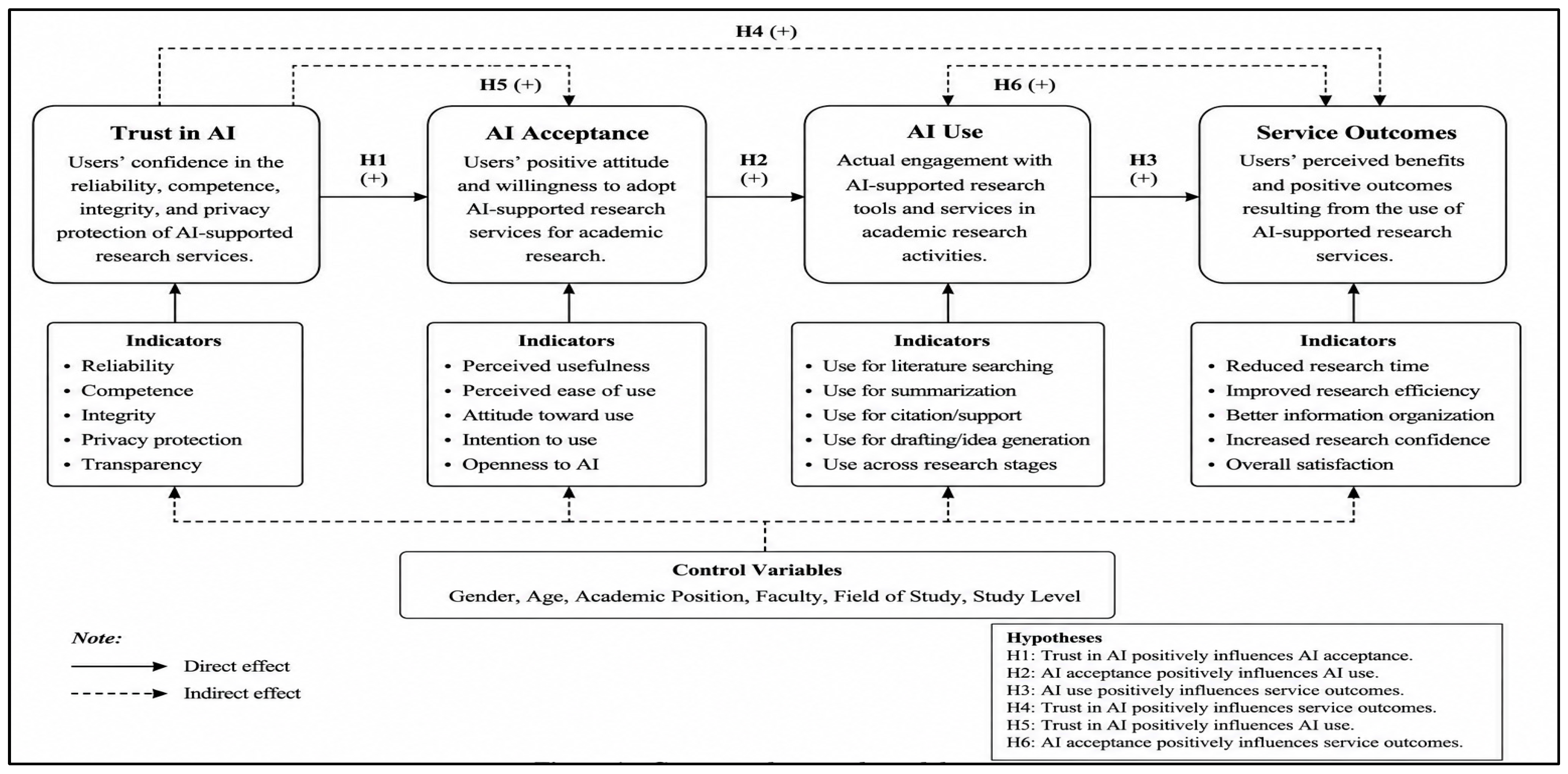
The present study proposes a structural model explaining the relationships among trust in AI, AI acceptance, AI use, and service outcomes within AI-augmented academic library research support services. The model is grounded in prior research concerning Trust in AI, AI adoption behavior, and information systems success in scholarly communication and digital service environments.
The framework assumes that researchers’ trust in AI functions as a foundational determinant influencing their acceptance of AI-supported research services. Researchers who perceive AI systems as reliable, transparent, accurate, and trustworthy are more likely to develop positive attitudes toward AI technologies and become willing to integrate AI into their scholarly workflows (
Glikson & Woolley, 2020;
Shin, 2021). Positive acceptance of AI is subsequently expected to increase actual AI use within research support activities such as literature searching, citation management, information synthesis, and research assistance.
The model further proposes that greater use of AI-supported research services contributes positively to perceived service outcomes, including improved research efficiency, enhanced information quality, increased confidence in research activities, and user satisfaction. Drawing upon the ISSM (
DeLone & McLean, 2003), the study conceptualizes service outcomes as users’ perceived benefits derived from AI-supported scholarly services.
In addition, the study proposes that AI acceptance and AI use function as mediating mechanisms through which trust in AI influences service outcomes. Specifically, researchers who trust AI systems are expected to develop more positive attitudes toward AI, which subsequently increases AI use and contributes to more favorable perceptions of service outcomes. The proposed conceptual framework therefore examines the following causal sequence: Trust in AI → AI Acceptance → AI Use → Service Outcomes.
This framework contributes to the emerging literature on AI-supported scholarly communication and academic library research services by integrating psychological, behavioral, and service outcome perspectives within a single structural model.
3.2. Hypothesis Development
3.2.1. Trust in AI and AI Acceptance
Trust has been widely recognized as a critical determinant influencing users’ perceptions and acceptance of AI technologies. Trust in AI refers to users’ willingness to rely on AI systems based on perceptions of reliability, transparency, predictability, and accountability (
Lee & See, 2004;
Glikson & Woolley, 2020). In scholarly environments, researchers are more likely to accept AI-supported services when they perceive such systems as accurate, ethical, and aligned with academic values.
Previous studies have demonstrated that higher levels of trust positively influence users’ attitudes toward AI technologies and increase their willingness to adopt AI-supported systems (
Shin, 2021;
Shin et al., 2025). Within academic library environments, trust may influence whether researchers perceive AI-supported research services as useful and beneficial for scholarly activities. Consequently, researchers who trust AI systems are expected to demonstrate higher levels of AI acceptance.
H1. Trust in AI has a positive effect on AI acceptance in academic library research support services.
3.2.2. AI Acceptance and AI Use
AI acceptance reflects users’ positive attitudes and willingness to adopt AI technologies in performing tasks and activities. In research contexts, researchers who perceive AI technologies as useful, beneficial, and relevant to scholarly work are more likely to integrate AI tools into their research practices (
Yeung et al., 2025). Prior studies on technology adoption consistently demonstrate that positive attitudes toward technologies significantly influence actual use behavior.
Within academic library research support services, researchers who accept AI technologies are expected to use AI-supported tools more frequently for activities such as literature searching, citation management, information summarization, and research assistance. Therefore, positive acceptance of AI is expected to increase actual AI use in scholarly support environments.
H2. AI acceptance has a positive effect on AI use in academic library research support services.
3.2.3. AI Use and Service Outcomes
The ISSM emphasizes that effective use of digital systems contributes to positive user outcomes, including improved information quality, user satisfaction, and perceived benefits (
DeLone & McLean, 2003). In AI-supported scholarly environments, AI technologies may improve research efficiency, facilitate knowledge organization, and enhance researchers’ confidence in conducting research activities.
Previous studies have suggested that AI-supported systems can positively contribute to academic productivity and information management when integrated effectively into research workflows (
Bolaños et al., 2024). Accordingly, researchers who actively use AI-supported research services are expected to perceive greater benefits and more positive service outcomes.
H3. AI use has a positive effect on perceived service outcomes in academic library research support services.
3.2.4. Mediating Role of AI Acceptance
Trust in AI may indirectly influence AI use through researchers’ acceptance of AI technologies. Researchers who trust AI systems are more likely to develop positive attitudes toward AI-supported services, which subsequently increases their willingness to use AI tools in research activities. Prior research has suggested that users’ behavioral acceptance often functions as an intermediary mechanism linking trust with actual technology use (
Glikson & Woolley, 2020;
Shin et al., 2025). Therefore, AI acceptance is expected to mediate the relationship between trust in AI and AI use.
H4. AI acceptance mediates the relationship between trust in AI and AI use in academic library research support services.
3.2.5. Mediating Role of AI Use
The influence of AI acceptance on service outcomes may also operate indirectly through actual AI use. Researchers who positively accept AI technologies may be more likely to integrate AI-supported services into their research workflows, thereby experiencing improved research efficiency, information quality, and overall satisfaction. In this sense, AI use functions as a behavioral mechanism through which positive attitudes toward AI contribute to favorable service outcomes. Accordingly, AI use is expected to mediate the relationship between AI acceptance and perceived service outcomes.
H5. AI use mediates the relationship between AI acceptance and perceived service outcomes in academic library research support services.
3.2.6. Sequential Mediation Effect
The study additionally proposes a sequential mediation mechanism in which trust in AI influences service outcomes indirectly through AI acceptance and AI use. Researchers who trust AI systems are expected to develop stronger acceptance of AI technologies, leading to greater AI use and subsequently more positive perceptions of service outcomes. This sequential relationship reflects the interconnected nature of psychological trust, behavioral acceptance, actual use, and perceived benefits in AI-supported scholarly environments.
H6. Trust in AI indirectly influences perceived service outcomes through AI acceptance and AI use in academic library research support services.
4. Methodology
4.1. Research Design
This study employed a quantitative cross-sectional survey design to examine the relationships among trust in AI, AI acceptance, AI use, and perceived service outcomes within AI-augmented academic library research support services in Thailand. The study aimed to empirically validate a structural model explaining how researchers’ trust in AI influences their acceptance and use of AI-supported scholarly services and how such use contributes to perceived research support outcomes.
The study focused specifically on AI-supported scholarly communication and re-search support services within higher education institutions. Rather than examining a single AI application, the study investigated the broader ecosystem of AI technologies that support scholarly research and are directly provided, institutionally supported, recommended, or incorporated into academic library research support services. These services included generative AI tools, AI-assisted information retrieval systems, intelligent search platforms, citation support tools, automated information summarization systems, and AI-enabled scholarly assistance services used throughout academic research workflows. Accordingly, respondents evaluated their experiences with AI-supported research services within the context of academic library and institutional research support rather than with general consumer AI applications alone.
A structured questionnaire was employed as the primary instrument for data collection. The questionnaire was designed to measure latent constructs related to trust in AI, AI acceptance, AI use, and service outcomes using multiple-item Likert-scale indicators adapted from previous studies on Trust in AI, AI adoption, and information systems success. The proposed research model was analyzed using Partial Least Squares Structural Equation Modeling (PLS-SEM).
PLS-SEM was considered appropriate because the study emphasized prediction and exploratory examination of relationships among closely related behavioral and perceptual constructs within an emerging AI-supported scholarly communication context. In addition, PLS-SEM is suitable for examining complex mediation relationships and does not require strict assumptions of multivariate normality (
Hair et al., 2021).
4.2. Population and Sampling
The target population consisted of postgraduate students, faculty members, researchers, and academic library users affiliated with higher education institutions in Thailand. The study focused primarily on respondents from leading public universities and research-oriented institutions included in the QS Asia University Rankings 2026, which reflect institutional academic capability, research activity, and development of scholarly information resources.
A purposive-convenience sampling approach was employed to recruit respondents with prior experience using AI-supported research tools and academic library research support services. Participants were recruited through university networks, graduate study groups, institutional communication channels, library-related online communities, and academic networks within higher education environments in Thailand.
To ensure contextual relevance, respondents who indicated that they had never used AI-supported research tools or academic library research support services were excluded from further sections of the questionnaire. The final sample consisted of 200 valid responses representing multiple disciplinary backgrounds and varying levels of research experience.
4.3. Research Instrument
The questionnaire consisted of five sections. The first section collected demographic information, including respondents’ academic status, disciplinary background, research experience, use of academic library research support services, and frequency of AI use for research purposes. The remaining sections measured the latent constructs included in the proposed structural model. Measurement items were adapted and contextualized from prior studies on Trust in AI, AI adoption, and information systems success to fit AI-supported academic library research environments.
Trust in AI refers to users’ confidence and willingness to rely on AI-supported research services based on perceptions of reliability, transparency, credibility, and dependability of AI systems. The construct was measured using five items adapted from prior Trust in AI literature (
Lee & See, 2004;
Glikson & Woolley, 2020).
AI acceptance refers to users’ positive attitudes and willingness to adopt AI technologies in research-related activities. The construct was measured using five items examining perceptions of usefulness, efficiency improvement, openness toward AI adoption, and intention to continue using AI technologies in future scholarly activities.
AI use refers to the extent to which respondents actively utilized AI-supported tools and services in research activities, including literature searching, information analysis, citation management, idea generation, and research assistance. The construct was measured using five indicators reflecting practical engagement with AI-supported scholarly services.
Service outcomes refer to users’ perceived benefits and effectiveness of AI-supported academic library research services, including improvements in research efficiency, information organization, confidence in research activities, and overall satisfaction. The construct was measured using five items adapted from the ISSM (
DeLone & McLean, 2003).
All measurement items employed a five-point Likert scale ranging from 1 (“strongly disagree”) to 5 (“strongly agree”).
4.4. Content Validity and Pilot Testing
To ensure content validity and contextual appropriateness, the research instruments were evaluated by three experts with expertise in academic library management, AI integration in research support services, and digital technologies in higher education environments. The experts reviewed the relevance, clarity, and consistency of the questionnaire items in relation to the research objectives and conceptual constructs. Content validity was assessed using the Item–Objective Congruence (IOC) method. Most questionnaire items achieved IOC values of 0.50 or higher, indicating acceptable content validity and alignment between the measurement items and the research objectives. One item related to AI frequency of use initially obtained an IOC value below the recommended threshold and was revised according to expert recommendations prior to pilot testing.
Following expert validation, the instruments were pilot tested with respondents who possessed characteristics similar to the target population, including users of academic library services which covered faculty members, researchers, and postgraduate students. Reliability analysis using Cronbach’s alpha coefficients demonstrated high levels of internal consistency reliability. The pilot test achieved a Cronbach’s alpha coefficient of 0.992, indicating excellent reliability of the research instruments.
The findings from the expert evaluation and pilot testing confirmed that the questionnaire possessed acceptable content validity and strong internal consistency reliability for investigating AI-supported academic library research support services.
4.5. Data Collection Procedure
Data were collected using an online questionnaire distributed through academic networks, graduate study groups, institutional mailing lists, and university library communication channels. Participation in the study was voluntary and anonymous. Respondents were informed about the objectives of the research, confidentiality procedures, and their rights as research participants prior to completing the questionnaire.
Data collection was conducted over a three-week period during April to May 2026. To improve response quality, the online survey system was configured to reduce incomplete submissions and duplicated responses. Completed responses were screened for completeness and consistency prior to statistical analysis.
4.6. Data Analysis
Data analysis was conducted using SPSS version 29 for descriptive statistics and SmartPLS version 4.1.1.8 for structural equation modeling. The analysis followed the two-stage procedure commonly recommended for PLS-SEM studies (
Hair et al., 2021).
The first stage involved assessment of the measurement model to evaluate indicator reliability, internal consistency reliability, and convergent validity of the constructs. Indicator reliability was assessed using factor loadings, with values above 0.70 considered acceptable. Internal consistency reliability was evaluated using Cronbach’s alpha and composite reliability (CR), while convergent validity was assessed using Average Variance Extracted (AVE). Discriminant validity was evaluated using the Heterotrait–Monotrait Ratio (HTMT).
The second stage involved assessment of the structural model. Path coefficients and hypothesis testing were examined using bootstrapping procedures with 5000 resamples. The analysis additionally evaluated explanatory power using coefficient of determination (R2), predictive relevance using Stone–Geisser’s Q2 values, and effect sizes (f2). Mediation effects among trust in AI, AI acceptance, AI use, and service outcomes were also examined using bootstrapped indirect effect analysis.
Because the study relied on self-reported perceptual data collected using a single survey instrument, common method bias was considered a potential limitation. To reduce this risk, anonymity was ensured, measurement items were organized into conceptually distinct sections, and respondents were informed that there were no correct or incorrect answers.
4.7. Ethical Considerations
This study adhered to ethical principles for research involving human participants. Participation in the study was voluntary, and respondents were informed about the objectives of the research, confidentiality procedures, and their right to withdraw from participation at any time without consequence. No personally identifiable information was collected, and all responses were analyzed in aggregated form for research purposes only.
Ethical approval for the study was granted by the Khon Kaen University Ethics Committee for Human Research under the exemption determination category (Project No. HE693137). The study was classified as exempt because it involved survey procedures and structured data collection related to educational and research behaviors without collecting sensitive personal information.
The ethical approval covered the research protocol, participant information sheets, and research instruments used in the study. Data collection procedures complied with institutional ethical guidelines for social science research involving human participants.
5. Results
5.1. Profile of Respondents
Table 1 presents the demographic characteristics of the respondents. The majority of respondents were postgraduate students (58.5%), followed by faculty members (24.0) and researchers (17.5%). Most respondents were affiliated with the humanities and social sciences disciplines (64.0%), while respondents from sciences/applied sciences (14.0%) and health sciences (22.0%) represented smaller proportions of the sample. Regarding research experience, most respondents reported having between one to three years of research experience (52.0%), followed by respondents with no prior research experience (22.5%). Respondents with more than seven years of research experience accounted for 15.0% of the sample, whereas those with four to seven years of experience represented the smallest proportion (10.5%). Most respondents (81.0%) reported that they had previously used academic library research support services, indicating that the majority possessed relevant experience with the service context examined in this study. In terms of AI use for research activities, over half of the respondents (51.0%) indicated that they regularly used AI tools for research purposes, while 41.0% reported occasional use. Only a small proportion of respondents reported rarely or never using AI in their research activities.
5.2. Descriptive Analysis
Table 2 presents the descriptive analysis of trust in AI, AI acceptance, AI use, and service outcomes related to AI-supported academic library research services. Overall, respondents demonstrated moderate perceptions across all constructs.
For trust in AI, mean scores ranged from 2.73 to 2.93, indicating moderate confidence in AI-supported services. Respondents expressed the highest confidence in using AI-assisted research services ( = 2.93), while concerns regarding informational distortion and bias received the lowest score ( = 2.73). AI acceptance demonstrated relatively higher mean scores ranging from 2.99 to 3.45. Respondents generally agreed that AI is beneficial for research activities ( = 3.45) and that AI-related skills are essential for researchers (= 3.43). However, openness toward broader AI adoption remained moderate ( = 2.99). For AI use, mean scores ranged from 2.94 to 3.29. AI was most commonly used for literature searching and accessing academic databases ( = 3.29), while AI use for idea generation and drafting academic content received lower ratings ( = 2.94). Regarding service outcomes, respondents moderately agreed that AI-supported services improved research efficiency and information organization. The highest-rated item was AI’s ability to reduce time spent on literature review and information searching ( = 3.43). In contrast, perceptions regarding AI’s enhancement of research accuracy and completeness were comparatively lower ( = 2.97).
5.3. Measurement Model
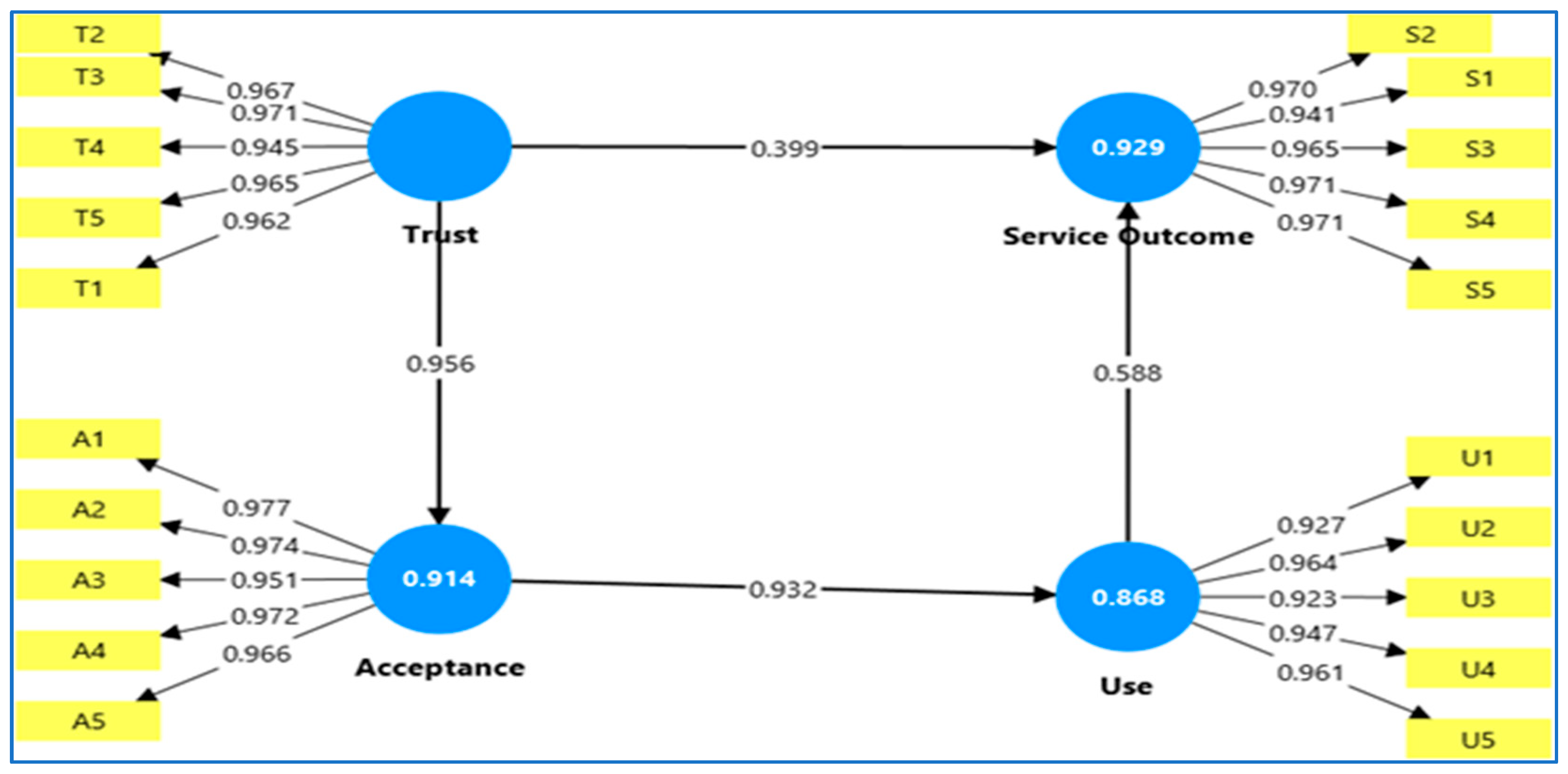
Table 3 presents the results of the measurement model assessment. Indicator reliability was first evaluated using outer loadings. All indicators demonstrated strong loadings on their respective constructs, ranging from 0.923 to 0.977, exceeding the recommended threshold of 0.70. These results indicate that the observed variables adequately represented their corresponding latent constructs.
Internal consistency reliability was assessed using Cronbach’s alpha and composite reliability (CR). As shown in
Table 3, Cronbach’s alpha values ranged from 0.970 to 0.983, while composite reliability values ranged from 0.976 to 0.987. All values substantially exceeded the recommended threshold of 0.70, indicating excellent internal consistency reliability.
Convergent validity was evaluated using the Average Variance Extracted (AVE). All constructs demonstrated AVE values between 0.892 and 0.937, well above the recommended threshold of 0.50, indicating satisfactory convergent validity. Overall, the measurement model demonstrated excellent indicator reliability, internal consistency, and convergent validity, confirming that the measurement instrument was appropriate for subsequent structural model analysis.
Figure 1 illustrates the final structural model estimated using SmartPLS, showing the hypothesized relationships among Trust in AI, AI Acceptance, AI Use, and Service Outcomes.
Table 4 presents the discriminant validity assessment using the Heterotrait–Monotrait Ratio (HTMT). Several construct pairs exhibited relatively high HTMT values, particularly those involving AI acceptance, AI use, and service outcomes, indicating that these constructs were strongly associated within the context of AI-supported research services. The highest HTMT value was observed between AI use and service outcomes (0.972). Although this value exceeds the conservative threshold of 0.90, all HTMT values remained below 1.00, indicating that the constructs remained empirically distinguishable in the revised measurement model.
The observed associations are theoretically reasonable because AI-supported research services are often experienced as integrated research activities in which behavioral engagement with AI technologies is closely linked to researchers’ perceptions of research efficiency, information organization, and service effectiveness. Accordingly, although discriminant validity should be interpreted with appropriate caution, the constructs were retained because they represent theoretically distinct dimensions of AI-supported research services. This issue is further discussed in
Section 6.
5.4. Proposed Structural Model
5.4.1. Model Fit and Explanatory Power
Table 5 presents the explanatory power and predictive relevance of the proposed structural model. The model demonstrated substantial explanatory power for all endogenous constructs. Trust in AI explained 91.4% of the variance in AI acceptance (R
2 = 0.914), while AI acceptance explained 86.8% of the variance in AI use (R
2 = 0.868). AI use accounted for 92.9% of the variance in perceived service outcomes (R
2 = 0.929), indicating that the proposed model explained a considerable proportion of the variance in all endogenous constructs.
Predictive relevance was assessed using Stone–Geisser’s Q2 statistic. All Q2 values were substantially greater than zero, demonstrating satisfactory predictive capability of the structural model.
Effect size analysis further demonstrated that the strongest relationships occurred between Trust in AI and AI Acceptance, followed by AI Acceptance and AI Use, whereas AI Use also exerted a substantial effect on Service Outcomes. These findings indicate that trust functions as a foundational determinant of AI acceptance, which subsequently encourages AI use and contributes to positive research service outcomes.
To further assess potential multicollinearity among the predictor constructs, inner Variance Inflation Factor (VIF) values were examined (
Table 6). The VIF results indicated no collinearity concerns for the Trust → AI Acceptance and AI Acceptance → AI Use relationships. However, relatively high VIF values were observed for relationships involving Service Outcomes, suggesting that the strong associations among AI Acceptance, AI Use, and Service Outcomes should be interpreted with appropriate caution. Nevertheless, these results are consistent with the integrated nature of AI-supported scholarly communication, where behavioural engagement with AI technologies is closely associated with perceived research benefits.
5.4.2. Hypothesis Testing
Figure 2 illustrates the final structural model estimated using SmartPLS, including the standardized path coefficients among the latent constructs.
Table 6 presents the results of the structural model analysis and hypothesis testing obtained from the bootstrapping procedure.
Table 7, the results demonstrated that Trust in AI exerted a strong positive influence on AI Acceptance (β = 0.934, t = 85.305,
p < 0.001), thereby supporting Hypothesis 1 (H1). This finding indicates that researchers who perceived AI-supported research services as trustworthy were significantly more likely to develop positive attitudes toward adopting AI technologies in their scholarly activities.
AI Acceptance also showed a significant positive effect on AI Use (β = 0.900, t = 46.927, p < 0.001), supporting Hypothesis 2 (H2). The result suggests that researchers with greater acceptance of AI technologies were more likely to integrate AI-supported tools into literature searching, information retrieval, citation management, knowledge organization, and other research-related tasks.
Furthermore, AI Use demonstrated a strong positive effect on Service Outcomes (β = 0.940, t = 72.224, p < 0.001), supporting Hypothesis 3 (H3). Researchers who more actively used AI-supported research services perceived greater improvements in research efficiency, information organization, confidence, and overall satisfaction with academic library research support services.
Overall, the structural model provided empirical support for all proposed direct relationships. The standardized path coefficients were consistently positive and statistically significant, indicating that trust, acceptance, and use operate sequentially in shaping researchers’ perceptions of AI-supported academic library research services.
To further examine the indirect relationships among the constructs, mediation analysis was conducted using a bootstrapping procedure with 5000 resamples. The results are presented in
Table 8.
The mediation analysis confirmed that AI Acceptance and AI Use functioned as significant mediating mechanisms within the proposed structural model. Trust in AI exerted a significant indirect effect on AI Use through AI Acceptance (H4), while AI Acceptance significantly influenced Service Outcomes through AI Use (H5). In addition, Trust in AI demonstrated a significant sequential indirect effect on Service Outcomes through the combined mediation of AI Acceptance and AI Use (H6). The corresponding bootstrapped confidence intervals did not include zero, confirming the statistical significance of all indirect effects.
These findings indicate that researchers’ trust in AI contributes to positive research service outcomes primarily through enhancing AI acceptance and encouraging active engagement with AI-supported research services. Rather than directly producing favorable outcomes, trust appears to initiate a sequential process in which greater confidence in AI promotes acceptance, acceptance facilitates actual use, and sustained use subsequently leads to improved perceptions of research support services.
Collectively, the direct and indirect effects provide strong empirical support for the proposed conceptual model and highlight the central role of trust in facilitating successful AI-supported scholarly communication and academic library research services.
5.5. Summary of Structural Findings
Overall, the structural model demonstrated strong empirical support for the proposed research framework. The direct effects confirmed that **Trust in AI** significantly influenced **AI Acceptance**, which subsequently promoted **AI Use** and ultimately contributed to positive **Service Outcomes**. In addition, the mediation analysis revealed that AI Acceptance and AI Use functioned as significant sequential mediators linking Trust in AI with perceived Service Outcomes. These findings indicate that researchers’ trust in AI-supported research services contributes to favorable research outcomes primarily through enhancing users’ acceptance of AI technologies and encouraging their active engagement with AI-supported research activities.
The structural model also demonstrated substantial explanatory power and predictive relevance for all endogenous constructs. Although the measurement assessment indicated relatively high associations among AI Acceptance, AI Use, and Service Outcomes, the revised model confirmed that these constructs remained empirically distinguishable and theoretically meaningful. Taken together, the results provide robust support for the proposed conceptual model and establish a strong empirical foundation for the subsequent discussion of the theoretical and practical implications of AI-supported research services in academic libraries.
6. Discussion
This study examined the relationships among Trust in AI, AI Acceptance, AI Use, and Service Outcomes within AI-supported academic library research services in Thailand. The findings provide strong empirical support for the proposed conceptual model, demonstrating that trust functions as the foundation for researchers’ acceptance and subsequent use of AI-supported research services, ultimately contributing to positive perceptions of research support outcomes. While all hypothesized relationships were statistically significant, respondents generally reported moderate levels of trust, acceptance, and AI use. These findings suggest that researchers increasingly recognize the value of AI in supporting scholarly communication while simultaneously maintaining critical awareness of issues related to transparency, reliability, and responsible AI use. Rather than indicating reluctance to adopt AI technologies, the results reflect a cautious but progressive transition toward AI-supported scholarly research environments in which researchers balance technological innovation with established academic values.
The findings confirm that Trust in AI is a fundamental prerequisite for AI acceptance within academic library research services. Researchers who perceived AI-supported services as reliable, transparent, and trustworthy were significantly more likely to develop positive attitudes toward adopting AI technologies for scholarly activities. This finding is consistent with previous studies that identify trust as a key determinant of AI adoption, particularly in knowledge-intensive environments where the quality, credibility, and integrity of information are essential (
Glikson & Woolley, 2020;
Shin, 2021). Unlike general AI adoption contexts, however, trust within academic libraries extends beyond confidence in AI technologies themselves. Researchers also place trust in academic libraries as trusted intermediaries that evaluate, recommend, and support AI-enabled research services. Consequently, trust reflects confidence not only in technological capability but also in the quality, reliability, transparency, and ethical governance of AI-supported scholarly communication. This broader interpretation reinforces the distinctive role of academic libraries in facilitating responsible AI adoption within higher education.
Although Trust in AI significantly influenced AI Acceptance, respondents reported only moderate levels of trust toward AI-supported research services. This finding suggests that researchers remain cautious when incorporating AI into scholarly communication despite recognizing its considerable potential. Concerns regarding misinformation, fabricated references, algorithmic bias, explainability, and ethical accountability continue to influence researchers’ confidence in AI technologies (
S. J. Kim, 2024;
UNESCO, 2023;
Hosseini et al., 2023;
Garzón et al., 2025). Similarly,
Spennemann (
2025) argued that AI-assisted scholarly communication requires greater transparency regarding data provenance and AI-generated content, while
Mututa and Tomaselli (
2025) emphasized that responsible AI implementation depends on balancing technological innovation with ethical governance and institutional trust. Collectively, these findings indicate that trust remains the cornerstone of successful AI-supported research services and should be continuously strengthened through transparent institutional policies, responsible AI governance, and ongoing user education.
The study further demonstrated that AI Acceptance significantly influenced AI Use, indicating that researchers who perceived AI technologies as useful and appropriate were more likely to incorporate them into literature searching, information retrieval, citation management, information synthesis, and other research-related activities. This finding supports previous technology adoption studies suggesting that positive attitudes toward AI are translated into actual behavioral engagement (
Shin et al., 2025;
Yeung et al., 2025). However, the descriptive analysis revealed only moderate levels of AI use, suggesting that researchers remain selective in integrating AI into scholarly workflows. AI appears to be used more extensively for supporting information discovery, organization, and productivity than for generating original scholarly content or replacing critical academic judgement. This pattern reflects an emerging consensus that AI should function as an assistive technology that complements rather than replaces researchers’ intellectual expertise.
The significant relationship between AI Use and Service Outcomes further demonstrates that active engagement with AI-supported research services contributes to improvements in research efficiency, information organization, confidence, and overall satisfaction. This finding is consistent with the Information Systems Success Model (
DeLone & McLean, 2003), which proposes that successful system use contributes directly to favorable user outcomes. Within academic library environments, AI-supported services therefore represent more than technological innovations; they function as research support mechanisms that enhance scholarly communication and facilitate evidence-based knowledge creation. Researchers who effectively integrate AI into their research workflows perceive greater value from academic library services, suggesting that AI has the potential to strengthen the research support role of academic libraries when implemented responsibly and supported by appropriate institutional guidance (
Wang & Zhang, 2025;
Xiong et al., 2025).
An important methodological observation concerns the close empirical relationships among AI Acceptance, AI Use, and Service Outcomes. The measurement and structural model assessments, including the HTMT analysis, inner variance inflation factor (VIF) assessment, and mediation analysis, consistently demonstrated strong associations among these constructs. These findings are theoretically reasonable because AI-supported research activities are typically experienced as integrated scholarly workflows in which behavioral engagement with AI technologies is closely linked to immediate perceptions of research effectiveness, information quality, and service value. Researchers often evaluate AI-supported services according to the benefits they obtain during use, making behavioral engagement and perceived outcomes naturally interconnected.
Nevertheless, AI Acceptance, AI Use, and Service Outcomes remain conceptually distinct constructs within the proposed theoretical framework. AI Acceptance reflects researchers’ willingness to adopt AI technologies for scholarly activities, AI Use represents actual behavioral engagement with AI-supported research services, and Service Outcomes describe the perceived benefits resulting from that engagement. The SmartPLS analysis demonstrated that, although these constructs are strongly associated, they remain empirically distinguishable and collectively explain different stages of researchers’ experiences with AI-supported research services. The significant mediation effects further support this sequential process, indicating that Trust in AI contributes to positive research outcomes primarily by strengthening AI Acceptance and encouraging researchers’ active engagement with AI-supported services. These findings reinforce the theoretical logic of the proposed model while acknowledging the close empirical relationships among the constructs.
The findings also provide several important implications for academic libraries and higher education institutions. As AI technologies become increasingly integrated into scholarly communication, academic libraries are evolving from traditional providers of information resources into facilitators of AI-supported research ecosystems. Successful implementation of AI-supported research services therefore depends not only on providing access to advanced technologies but also on establishing trustworthy institutional environments that promote responsible AI use. Academic libraries should develop transparent AI governance frameworks, establish institutional policies regarding ethical AI use and the appropriate citation of AI-generated content, provide AI literacy programs for researchers, and strengthen advisory services that enable users to critically evaluate AI-generated information. Such initiatives will help researchers maximize the benefits of AI while maintaining scholarly integrity and reducing potential risks associated with misinformation, algorithmic bias, and inappropriate reliance on automated systems. These findings are consistent with the evolving role of academic libraries in supporting digital scholarship and research throughout the scholarly communication lifecycle. Rather than serving solely as providers of information resources, academic libraries are increasingly acting as strategic partners that support researchers through AI-enabled discovery services, research data support, digital scholarship, and responsible AI implementation (
Cox & Mazumdar, 2022).
From a theoretical perspective, this study contributes to the growing literature on AI-supported scholarly communication by integrating Trust in AI with the Information Systems Success Model within the specific context of academic library research services. While previous studies have primarily examined AI adoption from general technology acceptance or organizational perspectives, the present study conceptualizes AI-supported research services as part of a library-mediated scholarly communication ecosystem. Consequently, trust is interpreted not only as confidence in AI technologies but also as confidence in the institutional support, professional expertise, ethical guidance, and research assistance provided by academic libraries. By demonstrating how trust, acceptance, behavioral engagement, and perceived service outcomes collectively influence researchers’ experiences with AI-supported research services, this study extends existing knowledge within the Library and Information Science discipline and provides a comprehensive framework for understanding AI-enabled research support in higher education.
Several limitations should be acknowledged when interpreting these findings. First, the study employed a cross-sectional survey design, which captures researchers’ perceptions at a single point in time and therefore limits causal inference. Second, data were collected through self-reported questionnaires using purposive-convenience sampling of faculty members, researchers, and postgraduate students with experience in AI-supported research services. Although this sampling strategy was appropriate for investigating the target population, response bias and limited generalizability should be considered when interpreting the findings. Third, despite the strong psychometric properties of the measurement model, the revised analysis indicated relatively high empirical associations among AI Acceptance, AI Use, and Service Outcomes. This observation suggests that researchers may perceive behavioral engagement with AI-supported research services and the benefits derived from such engagement as closely connected experiences. Future research should therefore continue refining measurement instruments by incorporating more objective indicators of AI use, such as system usage records or frequency of AI utilization, together with more differentiated measures of research service outcomes. Longitudinal, mixed-methods, and cross-cultural studies would also provide valuable opportunities to validate the proposed model across different institutional contexts and examine how researchers’ trust and use of AI-supported services evolve over time.
7. Conclusions
Artificial intelligence is rapidly reshaping scholarly communication and transforming the ways in which researchers discover, evaluate, organize, and communicate knowledge. As academic libraries increasingly integrate AI-supported technologies into research support services, understanding the factors that influence researchers’ trust, acceptance, use, and perceived benefits has become essential for developing effective, responsible, and user-centered AI-enabled research environments. This study developed and empirically validated an integrated structural model that combines Trust in AI with the Information Systems Success Model to explain researchers’ perceptions of AI-supported academic library research services in Thailand.
The findings demonstrate that Trust in AI serves as the foundation for researchers’ acceptance and subsequent use of AI-supported research services. Researchers who perceived AI technologies as trustworthy, reliable, and transparent were more likely to adopt AI-supported services for scholarly activities, resulting in improved perceptions of research efficiency, information organization, confidence, and overall satisfaction. The mediation analysis further revealed that AI Acceptance and AI Use function as sequential mechanisms through which trust contributes to positive research service outcomes, highlighting the importance of fostering trustworthy AI environments rather than focusing solely on technological capability.
This study contributes to the Library and Information Science literature in several important ways. First, it extends previous AI adoption research by examining AI-supported scholarly communication within academic library environments rather than general technology adoption contexts. Second, it demonstrates that researchers’ experiences with AI-supported research services can be explained through the sequential relationships among Trust in AI, AI Acceptance, AI Use, and Service Outcomes. Third, by integrating Trust in AI with the Information Systems Success Model, the study provides a comprehensive theoretical framework for understanding AI-enabled research support services within higher education. The findings also reinforce the evolving role of academic libraries as trusted intermediaries that facilitate responsible AI adoption through institutional guidance, ethical governance, information expertise, and research support.
The findings have important practical implications for academic libraries and higher education institutions. Successful implementation of AI-supported research services requires more than introducing advanced technologies; it also depends on establishing trustworthy institutional environments that promote transparency, ethical AI governance, responsible scholarly practices, and AI literacy. Academic libraries should therefore continue developing policies, training programs, and advisory services that enable researchers to critically evaluate AI-generated information while integrating AI responsibly into scholarly communication and research workflows.
Several limitations should be acknowledged. The study employed a cross-sectional design and relied on self-reported questionnaire data collected through purposive-convenience sampling, which may limit causal inference and the generalizability of the findings. Furthermore, although the measurement model demonstrated acceptable psychometric properties, relatively high empirical associations were observed among AI Acceptance, AI Use, and Service Outcomes, reflecting the integrated nature of AI-supported research experiences. Future research should continue refining measurement instruments, incorporate objective indicators of AI use, and validate the proposed model across different institutional, disciplinary, and cultural contexts using longitudinal and mixed-methods approaches.
Overall, this study demonstrates that trust remains the cornerstone of successful AI-supported research services. As artificial intelligence continues to transform scholarly communication, the future role of academic libraries will depend not only on adopting innovative technologies but also on creating trustworthy, transparent, and ethically responsible AI ecosystems that empower researchers, strengthen research quality, and support the advancement of scholarly knowledge in the digital age.