


Abstract
The rapid advancement of artificial intelligence (AI) is reshaping the landscape of library and information science, significantly altering the roles and responsibilities of information professionals. This paper aims to examine the transformations of information professional roles in the era of artificial intelligence. This study conducted a systematic literature review (SLR) emulating the PRISMA 2020 protocol. Titles and abstracts were screened based on predefined inclusion criteria, including English full-text journal articles, review papers, and conference papers indexed in Scopus addressing the roles and competencies of information professionals in the era of artificial intelligence. The study employed a conceptual and review analysis of documents to examine the use of AI and its impact on the roles of information professionals. We investigated the positive and negative effects of AI on the roles of information professionals, as well as the evolving role of information professionals in routine process automation. AI’s presence and transformation of virtually all the information professionals’ roles are profound, with pertinent challenges. The impact of AI on the roles of information professionals are both positive and negative, while the roles of information professionals have undergone significant changes in the AI era. This paper presents a unique perspective on the evolving roles of information professionals in the era of artificial intelligence. It offers original insights into how AI is reshaping the profession, highlighting the profound impacts and transformations that are redefining traditional practices and skill sets.
1. Introduction
Artificial intelligence, or AI, plays a crucial role in enhancing and providing numerous benefits to society (Kamila et al., 2022; M. Wang et al., 2021). AI can be applied in various fields, particularly in roles that involve human interaction (Jacobs et al., 2023; Shonhe & Min, 2025). AI is also transforming the way humans work in medicine, law, and accounting. For example, the law firm Baker & Hostetler utilizes an intelligent system called ROSS to assist in searching for legal documents (Turner, 2016). The system can perform tasks that paralegals and law librarians usually do. However, it is important to note that AI in this context is not merely a computational innovation that imitates humans in an abstract way, but rather a functional technological tool (usable technology) that helps automate routine tasks (Tredinnick & Laybats, 2023; Yuniawan et al., 2025).
AI technology in the workplace can impact a person’s job performance and the amount of work they need to do. AI can help learn new working methods and gain a deeper understanding of more information (Tiwari et al., 2024; Bawack & Bawack, 2025). Some worry that AI could replace their jobs and help them work better. AI can be both beneficial and detrimental, depending on how well a person utilizes it and the extent of their workload (W. Wang et al., 2020).
This research focuses specifically on information professionals. This group was selected based on their unique role as a bridge between complex information structures and user needs. Unlike pure technology professionals who focus on system infrastructure, information professionals such as librarians and records managers have job expectations centered on the curation, validity, and accessibility of information. For librarians, AI technology can simplify their work, but it also raises concerns about job security and the future of the profession. AI can help libraries provide better services and reduce costs. Librarians should learn how AI works in libraries to improve services, collection management, and time efficiency, freeing them to focus on more strategic tasks (Yuan, 2021). This study examines how AI is transforming the work of information professionals by emphasizing practical and relevant AI applications in information management, rather than simply global technology trends.
While AI will not replace everything, it will become increasingly essential in the business world. This means that individuals working with information must continually learn new things to keep pace with AI advancements (Babashahi et al., 2024). In the healthcare industry, AI has the potential to transform the roles of individuals who code medical information. This could affect the number of jobs available to people with health information. Over time, individuals need to acquire new skills to remain relevant in their jobs (Goulart et al., 2021).
Studying how AI is transforming people who work with information is crucial. This will help us understand AI’s impact on various industries and prepare for increasingly automated work. By clearly distinguishing between the roles of librarians as knowledge managers and information technology practitioners, this research will provide a more valid picture of the appropriate adoption of AI.
Research Question
The paper investigates the evolving roles of information professionals in the context of artificial intelligence (AI). It aims to analyze how AI impacts these roles, highlighting both positive and negative transformations. The research questions also focus on identifying the specific changes in responsibilities and skills required for information professionals due to AI advancements, as well as the implications for their work environments. This systematic literature review aims to provide insights into the challenges and opportunities presented by AI in the field of library and information science.
2. Literature Review
The development of Artificial Intelligence (AI) technology has sparked a significant wave of research in library and information science. This section reviews the evolution of this research through various surveys and previous literature reviews to map current research gaps.
- 1.
- Mapping AI Capabilities and Adoption
Several early surveys have documented how AI is beginning to penetrate the information sector. Research by Kamila et al. (2022) and M. Wang et al. (2021) provides a broad overview of the benefits of AI in improving public services. More specifically, a survey conducted by Jacobs et al. (2023) highlighted that the most effective AI applications are found in roles involving human interaction and complex document management. In the legal professional context, the use of systems such as ROSS has become a benchmark for how AI can substitute document retrieval tasks traditionally performed by law librarians (Turner, 2016).
- 2.
- Perceptions and Readiness of Information Professionals
The literature review reveals ambivalence in the perceptions of information professionals. A survey by Jadhav and Banubakode (2024) revealed consistent concerns about job security due to automation. However, other studies, such as those by Tiwari et al. (2024) and Bawack and Bawack (2025), show that professionals with high digital literacy tend to view AI as a tool for work efficiency. In their study, Horowitz et al. (2023) found a paradox of trust, where the more familiar a person is with AI, the greater their doubts about the ethical validity of the system.
- 3.
- Competency Transformation and Education
Curriculum reform has been a central theme in recent literature surveys. Biagini (2025) and Bilderback and Movahed (2024) emphasize that library science education can no longer simply teach traditional collection management. Long and Magerko (2020) initiative on Generative AI Literacy provides clear evidence of a shift in global competency standards. A survey by Lo (2024) confirms that AI literacy training directly increases the confidence of information professionals in navigating digital transformation.
- 4.
- Gaps in Previous Surveys
Despite numerous surveys, several critical gaps have been identified in the literature. First, Sectoral Dominance: The majority of current surveys still focus on academic libraries, while the public and specific sectors remain underrepresented (Arboh et al., 2025). Second, Lack of Longitudinal Studies: Many studies are cross-sectional, so the long-term impact of AI on professional structures remains unclear. Third, Issues of Bias and Inequality: Few surveys critically examine how AI exacerbates the digital divide or gender bias in female-dominated professions (Cox & Mazumdar, 2022/2024; Chauhan, 2024).
Table 1 presents a thematic synthesis matrix that integrates various literature findings to map the transformation of the role of information professionals in the AI era. This matrix is structured based on a structured narrative synthesis that groups the literature into four main pillars: performance impact, professional risk, strategic automation, and competency evolution (upskilling/newskilling). The relationships displayed in this table demonstrate the thematic linkages between AI technological developments and functional changes in information work, which also serve as the basis for developing a conceptual model in the discussion section of this study.
Table 1.
Thematic Synthesis Matrix: Transforming the Role of Information Professionals in the AI Era.
3. Method
This study employed a literature review method to analyze the impact and roles of information professionals as observed in previous studies. A systematic literature review aims to identify the key theoretical elements and main features of publications, thereby enhancing the quality of both the review process and its outcomes by applying precise and reproducible methods (Tranfield et al., 2003). Simply put, this process involves identifying and assessing a large volume of literature. The review is conducted based on specific theories (Wolfswinkel et al., 2013) that help researchers pinpoint gaps in the field and develop theoretical models from the emerging findings.
This systematic review followed a structured five-stage process to identify, assess, and synthesize qualitative evidence. First, we conducted a comprehensive search of the academic database Scopus. Scopus was chosen as the primary database due to its broad and multidisciplinary coverage, particularly in the fields of library and information science, education, and the social sciences. Previous methodological studies have shown that Scopus indexes a large proportion of journals also included in Web of Science, making it suitable as a comprehensive source for systematic reviews.
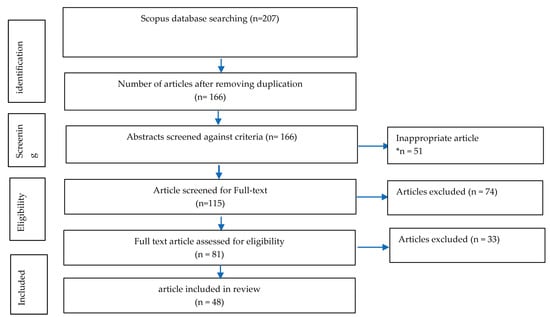
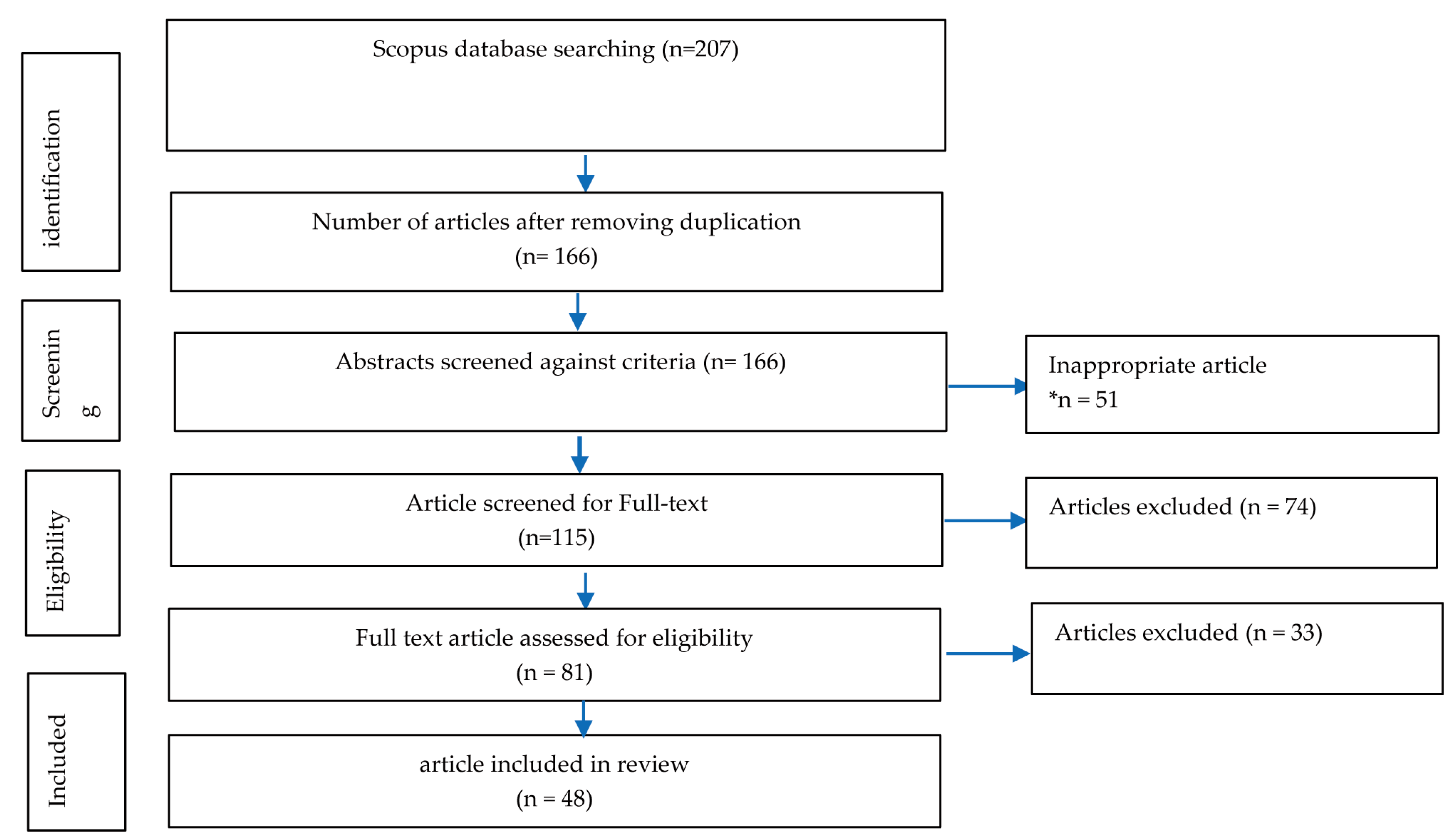
Our search strategy involved searching for relevant studies in the previously selected databases using keywords. The syntax and subject headings were adapted for database. A generic version of the search string was: (“information professional” OR “archivist” OR “curator” OR “librarian”) AND (“AI era” “artificial intelligence era” OR “artificial intelligence challenge”). This search, applying predetermined criteria, yielded a total of 207 articles from the Scopus database (Figure 1).
Figure 1.
Prisma flow chart visualizing the article selection process.
Second, selecting titles and abstracts based on predetermined inclusion criteria, followed by a full-text review of potentially relevant studies. The inclusion criteria for this study included journal articles, review papers, and conference papers that published from 2011 to 2025, available in full-text through the Scopus database, written in English, and discussed the role and competencies of information professionals in the era of artificial intelligence (Table 2). Exclusion criteria included duplicate articles, articles with titles and abstracts that did not align with the specified theme, articles not available in full-text, articles written in languages other than English, and articles that, after being read in their entirety, were deemed irrelevant to the research theme (Table 2). Articles that met all criteria were then designated as included studies and further analyzed. The analysis process was conducted through narrative and thematic synthesis by extracting key information related to the concept of the role of information professionals, the forms of transformation that have occurred, and the challenges and opportunities faced in the era of artificial intelligence. In narrative synthesis, we also explore relationships within the data and between the coding results of the studies.
Table 2.
Inclusion and exclusion criteria.
The entire article selection process was reported transparently using a PRISMA flowchart, allowing for a clear path from identification to inclusion. After removal of duplicates, 166 articles were obtained, all of which were then screened at the abstract level (n = 166), and 115 articles proceeded to full-text screening. Of these, 81 articles were assessed for eligibility, and 48 were ultimately included in the review (Figure 1).
Third, eligible studies underwent critical appraisal. Fourth, data extraction included verbatim study populations, contexts, methodologies, and findings. Finally, we synthesized the findings using a PRISMA flowchart, which groups similar findings into categories and synthesizes them into high-level statements representing the aggregate evidence. The complete process is reported below and visualized in a PRISMA flowchart. The PRISMA checklist is provided in the Appendix A.
4. Result
The synthesis results of the selected articles are presented in Table 3. The synthesis results are categorized according to the established RQs, which are then narrated according to the comprehensive relationships between the articles.
Table 3.
SLR summary based on the results.
5. Impact of AI on Information Professional Jobs
The processing of AI is changing how information is shared across various fields and impacting individuals who work with data and information. Analysis of the literature shows a dialectic between increased performance and contradictory workload. AI can help information professionals perform their jobs more effectively, but it can also make their tasks more challenging. When AI began taking on some of the work of HR professionals, some lost their jobs.
5.1. Positive Impact
Capability Transformation AI is like an intelligent supercomputer that can help information professionals perform their jobs more efficiently and effectively. AI can quickly process information from its database, making it more efficient than humans (Baltezarević, 2023). AI can also perform repetitive tasks automatically, allowing professionals to focus on more complex and strategic work. Research indicates that AI and humans possess distinct strengths and weaknesses. A synthesis of various studies shows that AI’s primary strength lies in programming consistency, while humans excel in the flexibility of skill development, which takes longer (Korteling et al., 2021). This difference creates a new niche for job opportunities in the information technology field, which requires specialized skills.
The adoption of AI has triggered the emergence of new roles previously exclusive to specific domains (Bankins, 2024; Bakarman, 2011). This indicates that AI is not simply replacing tasks but expanding the boundaries of the information professional’s work environment. Functionally, AI is capable of managing large datasets, identifying patterns, and providing predictive insights crucial for decision-making (Liakhovych & Vakun, 2023; Haleem et al., 2023). The use of AI-powered tools such as chatbots and virtual assistants is not just about automating responses, but rather a strategy to reposition information professionals to handle more complex and high-value requests (Babatunde et al., 2024; Hayes et al., 2024).
Using AI to help manage information requires unique approaches to enhance its functionality. AI can find information, sort data independently, and help save time for people working with information (Liakhovych & Vakun, 2023; Fakhlina et al., 2025). AI can analyze large datasets, identify patterns, and learn important insights to inform wise choices and predictions based on past events (Haleem et al., 2023). Information needs to be appropriately organized to ensure AI works well so that AI can easily find and sort it. AI can also help identify problems and provide more information to solve them better (R. Kaur et al., 2023).
Information professionals play a crucial role in enhancing decision-making by leveraging predictive analytics and data visualization facilitated by AI (William & Eric, 2023). Applying AI can benefit analysts and investigators in detecting, understanding, and predicting potential risks and threats. Recommendation systems can personalize the user experience, while AI-powered tools can improve customer experience and engagement (Hayes et al., 2024). Chatbots and Virtual Assistants can respond immediately to user queries, allowing information professionals to focus on more complex requests (Babatunde et al., 2024).
5.2. Negative Impact
Many people worry that AI will take over some of humans’ jobs. This could mean fewer job opportunities for people who work with information (William & Eric, 2023). Some jobs may become obsolete due to new technologies (Karamessini, 2019). For example, robots and virtual assistants are increasingly taking on customer service jobs that humans previously performed. This makes some people worried about their job security (Jadhav & Banubakode, 2024).
Sometimes, people may prefer to use AI instead of asking humans for help because AI can analyze information and provide valuable insights (Cao et al., 2020). However, relying too heavily on AI for information can lead people to believe that human experts are no longer as important as they once were. AI is excellent at some things, but humans are still needed for tasks that require creativity, critical thinking, and emotional understanding that AI cannot do (Adiatama, 2021; Koivisto & Grassini, 2023).
Integrating AI technologies in information professions may lead to a decline in professionals’ critical thinking and problem-solving skills, as AI systems handle an increasing number of tasks (Santhosh et al., 2023). Additionally, the growing use of AI in information development may alter human-AI interactions in the workplace, with AI systems potentially assuming more decision-making responsibilities. The increasing reliance on AI in information development presents challenges, including reduced human interaction and difficulties in adapting to a workforce that is increasingly dependent on AI technology (Badhurunnisa & Dass, 2023). AI can improve efficiency, but it also poses risks of discrimination, algorithmic bias, and gender and racial representation gaps, potentially exacerbating inequalities in the predominantly female profession of librarianship, as technical roles tend to be dominated by men (Cox & Mazumdar, 2022/2024).
6. The Changing Role of Information Professionals: Routine Process Automation
6.1. Routine Process Automation
AI has revolutionized the work of information professionals by automating routine tasks, streamlining workflows, and optimizing processes (Polonevych et al., 2020). With machine learning and natural language processing, tasks such as data entry, cleaning, and analysis can be automated, thus saving valuable time and resources for information professionals (Jain, 2023). The automation of routine processes has enhanced the accuracy and efficiency of information management tasks through the use of AI algorithms (Okatta et al., 2024). This enables information professionals to make more informed decisions based on reliable data, resulting in improved organizational outcomes (Goderdzishvili, 2023). By delegating repetitive tasks to AI systems, information professionals can focus on more strategic and value-added tasks, ultimately adding more strategic value to their organizations and contributing to their overall success (Goderdzishvili, 2023).
6.2. Data-Driven Strategic Role
Some routine tasks, such as recording, file management, or simple analysis, often require a significant amount of time. These tasks also often lead to potential human error due to employee carelessness. However, in an era marked by rapid AI development, some jobs are slowly being replaced by systems that can work faster and more accurately. Research conducted by Parnell (2015) has already emphasized the importance of evidence-based strategies that provide a foundation for information professionals to transition from mere administrative executors to more analytical decision-makers. This is further reinforced by research by Huang et al. (2019), which shows that in the era of the feeling economy, machines and AI can take over routine cognitive tasks, while humans are challenged to refine more complex interpretive, emotional, and strategic roles.
This transition ultimately gave rise to a new role, known as the data-driven strategic role. The data-driven strategic role refers to the ability of information professionals to use data as the primary basis for formulating organizational policy directions. Data analytics can transform routine e-commerce practices into strategic decisions that enhance business performance (Akshara & Jain, 2024). On the other hand, the research by Okatta et al. (2024) expands this perspective by showing that HR analytics not only reduces administrative burdens but also provides important insights for human resource management. This indicates that automation in the current era is not merely replacing routine tasks but rather opening up opportunities for information professionals to expand their roles, such as serving as a bridge between data, technology, and organizational strategy.
6.3. AI-Based Data Analysis
The development of AI-based data analysis has opened up new opportunities for decision-making in various fields, including science, management, and social life. Artificial intelligence can assist humans in analysis due to its speed of analysis and diagnostic accuracy (Ayhan, 2023). However, it also raises concerns regarding validity and ethics, as AI is ultimately just a tool without inherent humanistic values in its operations. The application of AI-based analysis is not merely about efficiency but also involves professional responsibility and ethical dimensions that must be taken seriously. The implementation of AI analysis must still be aligned with humanistic values in its application.
Research conducted by Horowitz et al. (2023) found that a person’s closeness to AI can give rise to the paradox that “the more familiar a person is with AI, the more they trust it, but at the same time, the more they doubt it.” This means that AI-based analysis is not only a technical issue, but also a psychological and social issue. AI can assist humans in making decisions by providing accurate data that serves as a basis for human consideration, as well as automating routine tasks through programming (Leyer & Schneider, 2021). This can undoubtedly be a strategic opportunity to improve the quality of decisions made, although it still raises some concerns about human values. Therefore, AI is used as a companion to humans in performing tasks and expanding their roles. AI-based data analysis can be understood as a field that presents both opportunities and challenges. AI can strengthen data-driven strategies, but its use still requires wisdom to avoid eroding trust and the role of humans in the decision-making process.
7. Digital Transformation and Future of Work Information Professionals
7.1. Upskilling
Upskilling refers to the enhancement of existing skills, enabling workers to become more efficient and competent in their current roles (Morandini et al., 2023). In the era of artificial intelligence (AI), upskilling librarians is crucial to ensure library services remain relevant, fair, and inclusive in the face of technological changes. Librarians are not only required to master new technologies but also to adapt and actively participate in the ever-evolving digital information ecosystem. Upskilling encompasses the ability to adapt to new technologies, such as AI, and involves continuous learning, as well as mastery of the digital work environment. The use of AI also requires librarians to understand the principles of transparency, fairness, and responsibility in technology practices. Some of the skills that need improvement are the ability to enhance data security and privacy, as well as the ability to utilize technology as a tool for searching and accessing information.
7.2. Improved Data Security and Privacy
Information professionals face new challenges in protecting sensitive data from cyber threats and unauthorized access, as the increasing use of AI technologies presents additional risks. They implement security measures such as encryption and access control to maintain data integrity (Kumar, 2023). The rise in AI has also raised concerns about privacy issues, prompting a need for compliance with privacy laws and adherence to ethical guidelines. To address these challenges, information professionals are focusing on implementing data governance frameworks and policies that prioritize transparency, accountability, and user consent, including conducting privacy impact assessments and establishing guidelines for data sharing and storage (Chukwurah, 2024). Librarians not only understand AI technically but are also aware of the privacy risks associated with it and are actively involved in designing and supervising AI systems. Therefore, there is a need for clear and communicative guidelines regarding data security and privacy for librarians using AI (Ibrahim, 2025).
7.3. Improved Information Search and Access Technology
AI technologies, such as machine learning algorithms and natural language processing, have enhanced the efficiency and accuracy of the information retrieval process, leading to more relevant search results (Prem et al., 2024). AI has revolutionized information access by developing advanced recommendation systems that provide personalized suggestions based on user preferences and behavior, simplifying retrieval and improving the overall user experience (Suryawanshi, 2024). Additionally, chatbots and virtual assistants facilitate intuitive and communicative interaction with information systems, thereby enhancing navigation through large amounts of data (Pappula & Allam, 2023).
7.4. Reskilling
Reskilling is the process of acquiring new skills in-depth so that employees can transition to jobs or roles that differ from their current ones (Asiedu & Shortland, 2025). Low-skilled jobs are experiencing the most significant pressure to change skills, and workers such as women and minorities are more affected. This makes reskilling not only a strategy for workforce adaptation but also a crucial step toward promoting inclusivity and equal opportunities in the evolving job market. Librarians also need to develop new skills for various job roles. In this case, new jobs may arise from the introduction of new roles or tasks by AI in the library environment. Some of the skills that can be developed are more in-depth data analysis and a more strategic role.
7.5. More In-Depth Data Analysis
Information professionals are like detectives who help people find important clues in vast piles of information. With the help of a new technology called AI, they can now dig deeper to uncover hidden secrets in data (Ayhan, 2023). In the past, their job was to organize and manage information to make it easy to understand. However, now, with AI, they must use advanced tools to analyze data more effectively. These tools can find patterns and connections in data that humans might miss (Horowitz et al., 2023). This helps information professionals make informed decisions and provide valuable guidance to their teams (Leyer & Schneider, 2021).
7.6. More Strategic Role
Information professionals are experiencing a shift towards a more strategic role in organizations due to the increasing use of AI technologies (Huang et al., 2019). This shift enables them to focus on leveraging data insights to drive business growth and innovation, rather than being bogged down in manual data management tasks. AI technologies enable information professionals to make more informed and data-driven decisions by automating the process of data collection and analysis (Akshara & Jain, 2024). This transformation revolutionizes how information professionals interact with data, enabling them to uncover hidden patterns and trends and make strategic decisions that drive greater value for their organizations (Parnell, 2015).
7.7. Newskilling
Information professionals require new skills, such as data science, programming, and AI technologies, to effectively navigate and utilize AI in their work (Abdussalam & Auladi, 2024). Information professionals must be able to identify appropriate AI technologies for information management needs and integrate them into existing systems (Wei & Pardo, 2022). They require soft skills, such as communication and collaboration, to work effectively with cross-functional teams and stakeholders in implementing AI solutions. They must also be able to communicate the benefits of AI technology to nontechnical staff and overcome any concerns or barriers to change (Silva-Bea et al., 2024). Another skill that is relevant to the librarian profession and artificial intelligence technology is prompt engineering. Practical engineering skills can enhance librarians’ ability to understand and utilize prompts, providing library users with relevant and accurate information (Lund, 2023). Some new skills that librarians must possess in the AI era include data and digital literacy, information curation and verification, prompt engineering, and interaction with AI.
7.8. Data and Digital Literacy
Understanding how artificial intelligence (AI) and data work is a crucial skill for information professionals. AI activities, from input to output, can be categorized into several types, such as descriptive, predictive, prescriptive, and generative (Bendig & Bräunche, 2024). The application of AI technology requires a substantial amount of data, algorithms, and advanced information technology, including cloud computing and big data analysis. The direction of information processing development is directly proportional to the advancement of AI technology, meaning that as information processing technology evolves, so does the potential of AI technology.
Data and digital are integral parts of digital skills. The two are closely related and play an important role for librarians in facing technological advances, especially now that AI technology has been developed. Digital literacy, as defined by Bell and Shank in their research (Munshi et al., 2023), refers to an individual’s ability to utilize technology, communication tools, or networks to search for, evaluate, use, and create information. Digital literacy encompasses competencies in interpreting media, reproducing and manipulating data, and applying creativity and new knowledge gained through the digital environment. The availability of data and digital literacy can also help librarians develop their ability to assess and filter misinformation (Deshen & Noa, 2024). Data and digital literacy can be applied to the use of tools in libraries, such as AI tools, digital repositories, and knowledge management platforms, which support the evaluation, management, and transfer of knowledge within organizations (Islam et al., 2025; Taherdoost & Madanchian, 2023).
7.9. Information Curation and Verification
Information curation is a comprehensive approach to digital information management that combines searching, unexpected discovery, use, and sharing of information, while reflecting elements of creativity, personal identity formation, and engagement in online communities. Information curation has become a contemporary information practice that focuses not only on content but also on how individuals and groups give meaning and build identity through interaction with information (Jacobson, 2012). Information curation is necessary for librarians to preserve digital content so that collections can be maintained and used in the future.
However, this does not mean that it is without challenges. The implementation of information curation also faces several challenges, such as a lack of professionals with the necessary skills and expertise in digital curation, inadequate technological infrastructure, difficulties in accessing digital media in the long term, and the absence of structured and comprehensive digital preservation policies (DCP) (Zareef & Jabeen, 2025). Therefore, in the information curation process, librarians are required to master various skills and expertise to support the accessibility and sustainability of digital information. Some of these include ensuring content quality, checking the security of digital files, organizing easily accessible metadata, reviewing documents, converting files to appropriate archive formats, and selecting the appropriate licenses or copyrights. All of these aspects are crucial to ensure that digital information can be searched, accessed, and analyzed optimally by the public (Hudson-Vitale et al., 2021).
The increase in digital data volume and the shift in media to the online realm pose the risk of creating opportunities for libraries to distribute unverified content. Therefore, detecting false information such as fake news, hoaxes, and manipulative content is also significant in the information curation process and the use of digital forensic techniques. Deepfake detection can be performed using deep learning models, particularly CNNs, or by integrating CLAHE, enhanced CNNs, and SVMs trained on manipulative datasets. Techniques such as transfer learning and data augmentation are used to enhance generalization capabilities (Javed et al., 2025; N. Kaur, 2025). Digital forensics is conducted to ensure that data transfer can be performed securely, one of which can be achieved using data transfer via Virtual Machine (VM) and BitCurator (C. A. Lee et al., 2012).
7.10. Prompt Engineering and Interaction with AI
Another skill that is relevant to the librarian profession and artificial intelligence technology is prompt engineering. Practical engineering skills can enhance librarians’ ability to understand and utilize prompts, providing library users with relevant and accurate information (Lund, 2023). Prompt engineering is a skill that can be honed and improved through learning and practice (D. Lee & Palmer, 2025). In a study conducted by Heston and Khun (2023), chatbots were able to search for topics more quickly and possibly more deeply than students who relied on search engines, online reference databases, or textbooks. The precise use of prompts helps users find information that is increasingly aligned with their needs. Even M. Wang et al. (2021) describe skilled prompt engineering as an art form and equate it with the skill of conducting scientific research.
Role Prompting and Few-shot Prompting methods can be used as cognitive tools to expand information search and analysis capabilities in the digital age (Yang et al., 2023; Nguyen Duc et al., 2023). Through the Role Prompting method, AI can be guided to respond like a librarian or information analyst, making search results more relevant and aligned with professional standards. Meanwhile, Few-shot Prompting allows professionals to provide examples in prompts to guide AI in generating consistent and high-quality responses (Blázquez-Ochando et al., 2025).
8. Discussion
The findings of this study reinforce the view that the advent of artificial intelligence (AI) brings about fundamental transformations in the information profession, presenting both opportunities and challenges. Consistent with Peter and Sunday (2024), AI enables significant work efficiencies, allowing librarians to shift their focus from routine tasks to strategic activities. This underscores the shift in the role of librarians from mere collection managers to service innovators and managers of more complex data ecosystems (Sridadi et al., 2025). This positive perspective is also supported by Molaudzi and Ngulube (2025), emphasizing efficiency and expanding innovation space, critical analysis shows the existential tension between empowerment and de-professionalization.
8.1. The Dialectic of Empowerment vs. De-Professionalization
On the one hand, the advent of artificial intelligence empowers librarians to transform into “knowledge architects” and “strategic partners” for their institutions. This transformation is made possible through the automation of low-level cognitive tasks, such as indexing, cataloging, and routine information retrieval, allowing librarians to shift their focus to higher-value, strategically impactful work (Huang et al., 2019; Goderdzishvili, 2023; Harisanty et al., 2025). With a reduced administrative workload, information professionals have greater opportunities to engage in data-driven decision-making, service development, and strengthening user information literacy.
However, on the other hand, this transformation is not without the risk of serious de-professionalization. The unique skills that have traditionally defined librarians, such as ethical judgment in information management, understanding the cultural context in collection curation, and sensitivity to the contextual needs of users, could potentially be deemed “redundant” by institutional management overly focused on algorithmic efficiency. As information curation and service decisions are increasingly delegated to AI systems, the value of interpretive and relational human expertise becomes increasingly difficult to quantify and institutionally recognize.
This contradiction raises a critical, unanswered question: are information professionals being elevated to become data managers and knowledge system designers, or are they being reduced to mere “machine operators” tasked with generating prompts and executing algorithmic commands? This question becomes even more relevant given the increasing reliance on commercial AI service providers. As Walsh et al. (2025) argue, such reliance could slowly erode professional autonomy, transforming libraries from independent curators of intellectual values into mere distribution channels for large, profit-oriented technology platforms. If this situation is not addressed critically and strategically, the librarian profession risks losing its sovereignty in determining the direction and value of future information management practices.
8.2. Contextual Factors and Algorithmic Gaps
The evolution of the role of information professionals in the era of artificial intelligence (AI) is not a sudden event; it is heavily influenced by surrounding contextual factors. Organizational culture, digital infrastructure readiness, institutional policies, and the technological literacy of human resources are all significant determinants of the success of AI adoption in libraries and information institutions. Institutions with a strong culture of innovation and adequate digital infrastructure tend to be more adaptive in integrating AI into their information services, while institutions that are not yet infrastructurally or culturally ready are at risk of experiencing poorly managed disruption.
Furthermore, there is a significant gap in the literature regarding how the impact of AI differs between the public and private sectors. Existing research tends to focus more on the corporate and technology industry contexts, while in-depth studies of AI implementation in public institutions, particularly public and government libraries, remain very limited. Yet, the public sector context has its own complexities that cannot be simply equated with the private sector, particularly in terms of accountability, transparency, and responsibility to the public interest.
In this context, algorithmic bias is a far more serious issue in the public sector than in the private sector. As Cox and Mazumdar (2022/2024) argue, algorithmic bias is not simply a technical problem that can be solved through code fixes or system updates, but rather a real threat to information democracy. When AI systems used by public institutions unwittingly reproduce systemic bias, whether in terms of race, gender, social class, or ideological affiliation, fair and equal access to information for all levels of society is threatened. This fundamentally contradicts the core mission of libraries as democratic institutions that guarantee free and equal access to information.
Therefore, if librarians focus solely on mastering technical skills (hard skills) such as AI system management, data analysis, and prompt engineering, without simultaneously strengthening their ethically responsible role in data management, the profession risks losing its social legitimacy. Molaudzi and Ngulube (2025) caution that amidst a society increasingly skeptical of AI transparency and accountability, it is the ethical dimension and human values of the librarianship profession that are its most fundamental differentiators. The ability to identify bias, question the validity of algorithms, advocate for information justice, and serve as a critical mediator between technology and users are competencies that cannot be replaced by machines and are also the foundation of this profession’s social legitimacy in the future.
These findings also have important implications for education and curriculum development. Curriculum reform in library and information science must integrate data literacy, technological competency, and ethical understanding as fundamental elements (Biagini, 2025; Bilderback & Movahed, 2024). Recent initiatives such as the Generative AI Literacy Essentials for Academic Librarians, developed by Long and Magerko (2020), demonstrate how AI literacy training can equip librarians with both technical and critical skills. Lo’s (2024) study also confirmed that this type of training increases librarians’ understanding and confidence, thus strengthening their readiness for digital transformation.
Limitations in the literature remain important. The lack of longitudinal research limits understanding of how AI impacts librarians’ roles in the long term (Arboh et al., 2025). Furthermore, different social and institutional contexts, such as those between academic, public, and private sector libraries, have not been adequately explored. Further research is needed to address these differences in context and expand the focus on issues of digital inequality, skills distribution, and algorithmic bias that could potentially widen these gaps (Chauhan, 2024). Consistent with Oyekunle and Boohene (2024), a more robust theoretical framework is also needed to explain the complex interactions between technology, organizational culture, and human agency in information management.
9. Conclusions
The integration of artificial intelligence (AI) into the information profession presents both significant opportunities and complex challenges. This study emphasizes that librarians and information professionals should view AI not as a threat but as a strategic partner that can enhance efficiency, drive service innovation, and strengthen data-driven decision-making. This requires a combination of technical skills, such as data literacy, information security, and an understanding of algorithm ethics, with non-technical skills, including communication, interdisciplinary collaboration, and ethical sensitivity. Practically, the implications of this research include the need for information institutions to develop ethical, critical, and user-centered strategies for adopting AI. For higher education, the study’s findings emphasize the importance of curriculum reform in library and information science, placing digital competency, AI literacy, and ethical awareness as core components. This will ensure graduates are better prepared to navigate a dynamic and digitalized information ecosystem.
Research Limitations and Future Research
This study is limited by the scarcity of longitudinal evidence that could capture how AI integration reshapes the profession of librarianship over time. Most of the existing literature still relies on cross-sectional or conceptual approaches, making it difficult to trace the long-term adaptation of information professionals and the sustainability of AI-based practices. Another limitation lies in the narrow institutional focus, as many studies emphasize academic libraries, while public, special, and private sector information institutions remain underexplored.
Future research should therefore prioritize longitudinal and comparative studies that examine how librarians adapt across different organizational and cultural contexts. Moreover, further inquiry is needed into issues such as the digital divide, unequal skill distribution, and algorithmic bias, which may exacerbate professional and societal inequalities if not adequately addressed. Finally, theoretical development is required to construct more comprehensive frameworks that explain the interplay between human agency, organizational culture, and technological transformation in the context of AI adoption.
Author Contributions
All authors contributed to the conceptualization and design of the study. D.P.S., D.E., T.K., A.S. and E.P.A. performed the literature search, screened and extracted relevant studies, conducted the analysis, and drafted the manuscript. M.A. and H.D.K. critically revised and proofread the manuscript. All authors have read and agreed to the published version of the manuscript.
Funding
This paper is a part of activities funded by the Indonesian Endowment Fund for Education (LPDP) on behalf of the Indonesian Ministry of Higher Education, Science and Technology and managed under the EQUITY Program (Contract No. 4300/B3/DT.03.08/2025 and 297/UN3/HK.07.00/2025) and International Research Collaboration Top Tier Scheme No. 5559/B/UN3.LPPM/PT.01.03/2025).
Data Availability Statement
The datasets generated and/or analyzed during this research are not publicly available due to ethical constraints and the need to protect participant confidentiality. The Ethics Review Board of Universitas Airlangga has reviewed and approved the research protocol, including restrictions on open data sharing. Access to the data may be granted upon reasonable request to dyah.srirahayu@vokasi.unair.ac.id. Data will only be shared for academic research purposes under those conditions ensure the protection of sensitive information.
Acknowledgments
We want to acknowledge and thank all those who have madevaluable contributions to this study.
Conflicts of Interest
The authors declare no conflict of interest.
Appendix A
Prisma Checklist
| Section and Topic | Item # | Checklist Item | Location Where Item Is Reported |
| TITLE | |||
| Title | 1 | Identify the report as a systematic review. | Page 1, line 2–3 |
| ABSTRACT | |||
| Abstract | 2 | See the PRISMA 2020 for Abstracts checklist. | Page 1, line 10–30 |
| INTRODUCTION | |||
| Rationale | 3 | Describe the rationale for the review in the context of existing knowledge. | Page 1–2 |
| Objectives | 4 | Provide an explicit statement of the objective(s) or question(s) the review addresses. | Page 2, line 73–80 |
| METHODS | |||
| Eligibility criteria | 5 | Specify the inclusion and exclusion criteria for the review and how studies were grouped for the syntheses. | Page 5, Line 158–172 |
| Information sources | 6 | Specify all databases, registers, websites, organisations, reference lists and other sources searched or consulted to identify studies. Specify the date when each source was last searched or consulted. | Page 4, 146–152 |
| Search strategy | 7 | Present the full search strategies for all databases, registers and websites, including any filters and limits used. | Page 4–5, line 146–182 |
| Selection process | 8 | Specify the methods used to decide whether a study met the inclusion criteria of the review, including how many reviewers screened each record and each report retrieved, whether they worked independently, and if applicable, details of automation tools used in the process. | Page 4–5, line 146–182 |
| Data collection process | 9 | Specify the methods used to collect data from reports, including how many reviewers collected data from each report, whether they worked independently, any processes for obtaining or confirming data from study investigators, and if applicable, details of automation tools used in the process. | Page 4–5, line 146–182 |
| Data items | 10a | List and define all outcomes for which data were sought. Specify whether all results that were compatible with each outcome domain in each study were sought (e.g. for all measures, time points, analyses), and if not, the methods used to decide which results to collect. | Page 4–5, line 146–182 |
| 10b | List and define all other variables for which data were sought (e.g. participant and intervention characteristics, funding sources). Describe any assumptions made about any missing or unclear information. | Page 4–5, line 146–182 | |
| Study risk of bias assessment | 11 | Specify the methods used to assess risk of bias in the included studies, including details of the tool(s) used, how many reviewers assessed each study and whether they worked independently, and if applicable, details of automation tools used in the process. | Page 4–5, line 146–182 |
| Effect measures | 12 | Specify for each outcome the effect measure(s) (e.g. risk ratio, mean difference) used in the synthesis or presentation of results. | Page 4–5, line 146–182 |
| Synthesis methods | 13a | Describe the processes used to decide which studies were eligible for each synthesis (e.g. tabulating the study intervention characteristics and comparing against the planned groups for each synthesis (item #5)). | Page 4–5, line 146–182 |
| 13b | Describe any methods required to prepare the data for presentation or synthesis, such as handling of missing summary statistics, or data conversions. | Page 4–5, line 146–182 | |
| 13c | Describe any methods used to tabulate or visually display results of individual studies and syntheses. | Page 4–5, line 146–182 | |
| 13d | Describe any methods used to synthesize results and provide a rationale for the choice(s). If meta-analysis was performed, describe the model(s), method(s) to identify the presence and extent of statistical heterogeneity, and software package(s) used. | Page 4–5, line 146–182 | |
| 13e | Describe any methods used to explore possible causes of heterogeneity among study results (e.g. subgroup analysis, meta-regression). | Page 4–5, line 146–182 | |
| 13f | Describe any sensitivity analyses conducted to assess robustness of the synthesized results. | Page 4–5, line 146–182 | |
| Reporting bias assessment | 14 | Describe any methods used to assess risk of bias due to missing results in a synthesis (arising from reporting biases). | Page 4–5, line 146–182 |
| Certainty assessment | 15 | Describe any methods used to assess certainty (or confidence) in the body of evidence for an outcome. | Page 4–5, line 146–182 |
| RESULTS | |||
| Study selection | 16a | Describe the results of the search and selection process, from the number of records identified in the search to the number of studies included in the review, ideally using a flow diagram. | Line 173–177 |
| 16b | Cite studies that might appear to meet the inclusion criteria, but which were excluded, and explain why they were excluded. | Line 173–177 | |
| Study characteristics | 17 | Cite each included study and present its characteristics. | Table 2 |
| Risk of bias in studies | 18 | Present assessments of risk of bias for each included study. | Page 5–7 |
| Results of individual studies | 19 | For all outcomes, present, for each study: (a) summary statistics for each group (where appropriate) and (b) an effect estimate and its precision (e.g. confidence/credible interval), ideally using structured tables or plots. | Table 2 |
| Results of syntheses | 20a | For each synthesis, briefly summarise the characteristics and risk of bias among contributing studies. | Line 214–503 |
| 20b | Present results of all statistical syntheses conducted. If meta-analysis was done, present for each the summary estimate and its precision (e.g. confidence/credible interval) and measures of statistical heterogeneity. If comparing groups, describe the direction of the effect. | Line 214–503 | |
| 20c | Present results of all investigations of possible causes of heterogeneity among study results. | Line 214–503 | |
| 20d | Present results of all sensitivity analyses conducted to assess the robustness of the synthesized results. | Line 214–503 | |
| Reporting biases | 21 | Present assessments of risk of bias due to missing results (arising from reporting biases) for each synthesis assessed. | Line 214–503 |
| Certainty of evidence | 22 | Present assessments of certainty (or confidence) in the body of evidence for each outcome assessed. | Line 214–503 |
| DISCUSSION | |||
| Discussion | 23a | Provide a general interpretation of the results in the context of other evidence. | Line 504–596 |
| 23b | Discuss any limitations of the evidence included in the review. | Line 504–596 | |
| 23c | Discuss any limitations of the review processes used. | Line 504–596 | |
| 23d | Discuss implications of the results for practice, policy, and future research. | Line 504–596 | |
| OTHER INFORMATION | |||
| Registration and protocol | 24a | Provide registration information for the review, including register name and registration number, or state that the review was not registered. | - |
| 24b | Indicate where the review protocol can be accessed, or state that a protocol was not prepared. | - | |
| 24c | Describe and explain any amendments to information provided at registration or in the protocol. | - | |
| Support | 25 | Describe sources of financial or non-financial support for the review, and the role of the funders or sponsors in the review. | 629–633 |
| Competing interests | 26 | Declare any competing interests of review authors. | 629–633 |
| Availability of data, code and other materials | 27 | Report which of the following are publicly available and where they can be found: template data collection forms; data extracted from included studies; data used for all analyses; analytic code; any other materials used in the review. | - |
References
- Abdussalam, A. V., & Auladi, G. A. (2024). Pushing boundaries: AI and computer science in the era of technological revolution. Techcomp Innovations: Journal of Computer Science and Technology, 1, 01–09. [Google Scholar] [CrossRef] [Scilit]
- Adiatama, P. (2021). Librarian creativity to improve library services and librarian performance. Record and Library Journal, 7(2), 333–341. [Google Scholar] [CrossRef] [Scilit]
- Akshara, R., & Jain, A. (2024). Data to decisions: Optimizing e-commerce sales potential with analytics. International Research Journal on Advanced Engineering Hub (IRJAEH), 2(4), 1087–1093. [Google Scholar] [CrossRef] [Scilit]
- Arboh, F., Zhu, X., Atingabili, S., Yeboah, E., & Drokow, E. K. (2025). From fear to empowerment: The impact of employees’ AI awareness on workplace well-being—A new insight from the JD-R model. Journal of Health Organization and Management. ahead-of-print. [CrossRef] [Scilit]
- Asiedu, E., & Shortland, S. (2025). Digitalizing agriculture and the improvement of farming business practices: How rural farmers in Ghana employ mobile phone technology. International Journal of Entrepreneurial Behavior & Research, 31(10), 2566–2586. [Google Scholar] [CrossRef] [Scilit]
- Ayhan, Y. (2023). The impact of artificial intelligence on psychiatry: Benefits and concerns—An essay from a disputed ‘author’. Turk Psikiyatri Dergisi = Turkish Journal of Psychiatry, 34(2), 65–67. [Google Scholar] [CrossRef] [Scilit]
- Babashahi, L., Barbosa, C. E., Lima, Y., & Lyra, A. (2024). AI in the workplace: A systematic review of skill transformation in the industry. Administrative Sciences, 14(6), 127. [Google Scholar] [CrossRef] [Scilit]
- Babatunde, S. O., Odejide, O. A., Edunjobi, T. E., & Ogundipe, D. O. (2024). The role of AI in marketing personalization: A theoretical exploration of consumer engagement strategies. International Journal of Management & Entrepreneurship Research, 6(3), 936–949. [Google Scholar] [CrossRef] [Scilit]
- Badhurunnisa, M., & Dass, V. S. (2023). Challenges and opportunities involved in implementing AI in the workplace. International Journal for Multidisciplinary Research, 5(6), 1–7. [Google Scholar] [CrossRef]
- Bakarman, A. (2011). Attitude, skill, and knowledge (ASK): A new model for design education. Proceedings of the Canadian Engineering Education Association, 20(3), 13–24. [Google Scholar] [CrossRef] [Scilit]
- Baltezarević, R. (2023). Impact of artificial intelligence on the global economy. Megatrend Revija, 20, 13–24. [Google Scholar] [CrossRef] [Scilit]
- Bankins, S. (2024). Navigating career stages in the age of artificial intelligence: A systematic interdisciplinary review and agenda for future research. Journal of Vocational Behavior, 153, 104011. [Google Scholar] [CrossRef] [Scilit]
- Bawack, R., & Bawack, R. (2025). “Hey librarian, what can AI and analytics do for you”: A systematic literature review and sociotechnical perspective. Aslib Journal of Information Management. [Google Scholar] [CrossRef] [Scilit]
- Bendig, D., & Bräunche, A. (2024). The role of artificial intelligence algorithms in information systems research: A conceptual overview and avenues for research. Management Review Quarterly, 75, 2863–2908. [Google Scholar] [CrossRef] [Scilit]
- Biagini, G. (2025). Towards an AI-literate future: A systematic literature review exploring education, ethics, and applications. International Journal of Artificial Intelligence in Education, 35, 2616–2666. [Google Scholar] [CrossRef] [Scilit]
- Bilderback, S., & Movahed, M. (2024). Integrating AI into global fluid healthcare workforces: Student perspectives and future trends. International Journal of Productivity and Performance Management, 74, 2301–2313. [Google Scholar] [CrossRef] [Scilit]
- Blázquez-Ochando, M., Prieto-Gutiérrez, J. J., & Ovalle-Perandones, M. A. (2025). Prompt engineering for bibliographic web-scraping. Scientometrics, 130, 3433–3453. [Google Scholar] [CrossRef] [Scilit]
- Cao, Y., Shui, R., Pan, L., Kan, M.-Y., Liu, Z., & Chua, T.-S. (2020, July 5–10). Expertise style transfer: A new task towards better communication between experts and laymen. 58th Annual Meeting of the Association for Computational Linguistics (ACL) (pp. 1061–1071), Online. [Google Scholar] [CrossRef] [Scilit]
- Chauhan, S. P. (2024). Enhancing accessibility in special libraries: A study on AI-powered assistive technologies for patrons with disabilities. arXiv, arXiv:2411.06970. [Google Scholar] [CrossRef] [Scilit]
- Chukwurah, E. G. (2024). Proactive privacy: Advanced risk management strategies for product development in the U.S. Computer Science & IT Research Journal, 5(4), 878–891. [Google Scholar] [CrossRef] [Scilit]
- Cox, A. M., & Mazumdar, S. (2024). Defining artificial intelligence for librarians. Journal of Librarianship and Information Science, 56(2), 330–340, (Original work published 2022). [Google Scholar] [CrossRef] [Scilit]
- Deshen, M., & Noa, A. (2024). Librarians’ AI literacy. Proceedings of the Association for Information Science and Technology, 61, 883–885. [Google Scholar] [CrossRef] [Scilit]
- Fakhlina, R. J., Rahmi, L., Zalmi, F. N. H., Fadzil, G. M., Yudisman, S. N., Hutagalung, M. W., & Trinova, R. (2025). Artificial intelligence as an information analysis process: A systematic literature review. Record and Library Journal, 11(2), 480–499. [Google Scholar] [CrossRef] [Scilit]
- Frost, J., & Edwards, R. (2018). It’ll be okay, because we belong together: The influence of person-organization fit on interpretation of bad-news messages in academic settings. Communication Studies, 69(3), 1–23. [Google Scholar] [CrossRef] [Scilit]
- Gengenbach, M., Chassanoff, A., & Olsen, P. (2012). Integrating digital forensics into born-digital workflows: The BitCurator project. Proceedings of the American Society for Information Science and Technology, 49, 1–4. [Google Scholar] [CrossRef] [Scilit]
- Goderdzishvili, T. (2023). Artificial intelligence and creative thinking: The future of idea generation. Economics, 105(3–4), 63–73. [Google Scholar] [CrossRef] [Scilit]
- Goulart, V. G., Liboni, L. B., & Cezarino, L. O. (2021). Balancing skills in the digital transformation era: The future of jobs and the role of higher education. Industry and Higher Education, 36(2), 118–127. [Google Scholar] [CrossRef] [Scilit]
- Haleem, A., Javaid, M., Qadri, M. A., Singh, R. P., & Suman, R. (2023). Artificial intelligence (AI) applications for marketing: A literature-based study. International Journal of Intelligent Networks, 3, 119–132. [Google Scholar] [CrossRef] [Scilit]
- Harisanty, D., Anna, N. E. V., Sin, S.-C. J., Srirahayu, D. P., Kusumaningtiyas, T., Santos, Y. T., & Mannan, E. F. (2025). Librarian behaviour towards AI: An explorative study of how librarians use AI through the lens of the diffusion of innovations theory. The Electronic Library, 43(4), 578–599. [Google Scholar] [CrossRef] [Scilit]
- Hayes, D. S., Foster, B. K., Makar, G., Manzar, S., Ozdag, Y., Shultz, M., Klena, J. C., & Grandizio, L. C. (2024). Artificial intelligence in orthopaedics: Performance of ChatGPT on text and image questions on a complete AAOS orthopaedic in-training examination (OITE). Journal of Surgical Education, 81(11), 1645–1649. [Google Scholar] [CrossRef] [Scilit]
- Heston, T. F., & Khun, C. (2023). Prompt engineering in medical education. International Medical Education, 2, 198–205. [Google Scholar] [CrossRef] [Scilit]
- Hornik, J., Rachamim, M., & Graguer, S. (2023). Fog computing: A platform for big-data marketing analytics. Frontiers in Artificial Intelligence, 6, 1242574. [Google Scholar] [CrossRef] [Scilit]
- Horowitz, M. C., Kahn, L., Macdonald, J., & Schneider, J. (2023). Adopting AI: How familiarity breeds both trust and contempt. AI & Society, 39, 1721–1735. [Google Scholar] [CrossRef] [Scilit]
- Huang, M. H., Rust, R. T., & Maksimovic, V. (2019). The feeling economy: Managing in the next generation of artificial intelligence (AI). California Management Review, 61(4), 1087–1093. [Google Scholar] [CrossRef] [Scilit]
- Hudson-Vitale, C., Carlson, J. R., Hadley, H., & Johnston, L. (2021). Introduction to the special JeSLIB issue on data curation in practice. Journal of eScience Librarianship, 10(3), 1–4. [Google Scholar] [CrossRef] [Scilit]
- Ibrahim, S. E. A. (2025). Lost in the algorithm: Navigating the ethical maze of AI in libraries. South African Journal of Libraries and Information Science, 91(1), 1–11. [Google Scholar]
- Islam, M. N., Ahmad, S., Aqil, M., Hu, G., Ashiq, M., Abusharhah, M. M., & Saky, S. A. T. M. (2025). Application of artificial intelligence in academic libraries: A bibliometric analysis and knowledge mapping. Discover Artificial Intelligence, 5, 59. [Google Scholar] [CrossRef] [Scilit]
- Jacobs, S. M., Lundy, N. N., Issenberg, S. B., & Chandran, L. (2023). Reimagining core entrustable professional activities for undergraduate medical education in the era of artificial intelligence. JMIR Medical Education, 9, e50903. [Google Scholar] [CrossRef] [Scilit]
- Jacobson, J. (2012). Information curation. Proceedings of the American Society for Information Science and Technology, 49, 1–2. [Google Scholar] [CrossRef] [Scilit]
- Jadhav, R. D., & Banubakode, A. (2024). The implications of artificial intelligence on the employment sector. International Journal for Multidisciplinary Research, 6(3), 1–11. [Google Scholar] [CrossRef]
- Jain, A. (2023). Job displacement due to artificial intelligence and machine learning—A review. International Journal for Multidisciplinary Research, 5(6), 1–8. [Google Scholar] [CrossRef]
- Javed, M., Zhang, Z., Dahri, F. H., Laghari, A. A., Krajčík, M., & Almadhor, A. (2025). Audio–visual synchronization and lip movement analysis for real-time deepfake detection. International Journal of Computational Intelligence Systems, 18(1), 170. [Google Scholar] [CrossRef] [Scilit]
- Kamila, T. J., Nurnazhiifa, K., Lara, S., & Setiawati, R. (2022). Pengembangan guru dalam menghadapi tantangan kebijakan pendidikan di era revolusi industri 4.0. Jurnal Pendidikan Tambusai, 6(2), 10013–10018. [Google Scholar] [CrossRef]
- Karamessini, M. (2019). Mapping early job insecurity impacts of the crisis in Europe. In Youth unemployment and job insecurity in Europe (pp. 24–44). Edward Elgar Publishing. [Google Scholar] [CrossRef] [Scilit]
- Kaur, N. (2025). Hybrid image splicing detection: Integrating CLAHE, improved CNN, and SVM for digital image forensics. Expert Systems with Applications, 273, 126756. [Google Scholar] [CrossRef] [Scilit]
- Kaur, R., Gabrijelčič, D., & Klobučar, T. (2023). Artificial intelligence for cybersecurity: Literature review and future research directions. Information Fusion, 97, 101804. [Google Scholar] [CrossRef] [Scilit]
- Koivisto, M., & Grassini, S. (2023). Best humans still outperform artificial intelligence in a creative divergent thinking task. Scientific Reports, 13, 13601. [Google Scholar] [CrossRef] [Scilit] [PubMed]
- Korteling, J. E., Blankendaal, R. A. M., Boonekamp, R. C., Eikelboom, A. R., & van de Boer-Visschedijk, G. C. (2021). Human-versus artificial intelligence. Frontiers in Artificial Intelligence, 4, 622364. [Google Scholar] [CrossRef] [Scilit]
- Kumar, R. (2023). A review article on cyber security. International Journal of Scientific Research in Engineering and Management, 7(8), 1–5. [Google Scholar] [CrossRef] [Scilit]
- Lee, C. A., Kirschenbaum, M., Chassanoff, A., Olsen, P., & Woods, K. (2012). BitCurator: Tools and techniques for digital forensics in collecting institutions. D-Lib Magazine, 18(5), 14–21. [Google Scholar] [CrossRef] [Scilit]
- Lee, D., & Palmer, E. (2025). Prompt engineering in higher education: A systematic review to help inform curricula. International Journal of Educational Technology in Higher Education, 22, 7. [Google Scholar] [CrossRef] [Scilit]
- Leyer, M., & Schneider, S. (2021). Decision augmentation and automation with artificial intelligence: Threat or opportunity for managers? Business Horizons, 64(5), 711–724. [Google Scholar] [CrossRef] [Scilit]
- Liakhovych, G. I., & Vakun, O. (2023). Use of artificial intelligence to increase the efficiency of the management accounting system. Problems of Theory and Methodology of Accounting, Control and Analysis, 3(56), 28–33. [Google Scholar] [CrossRef] [Scilit]
- Lo, L. S. (2024). Transforming academic librarianship through AI reskilling: Insights from the GPT-4 exploration program. The Journal of Academic Librarianship, 50, 102883. [Google Scholar] [CrossRef] [Scilit]
- Long, D., & Magerko, B. (2020). What is AI literacy? Competencies and design considerations. In Proceedings of the 2020 CHI conference on human factors in computing systems (pp. 1–16). ACM. [Google Scholar] [CrossRef] [Scilit]
- Lund, B. (2023). The prompt engineering librarian. Library Hi Tech News, 40(8), 6–8. [Google Scholar] [CrossRef] [Scilit]
- Mertoğlu, U., & Genç, B. (2020). Automated fake news detection in the age of digital libraries. Information Technology and Libraries, 39(4), 1–19. [Google Scholar] [CrossRef] [Scilit]
- Molaudzi, A. I., & Ngulube, P. (2025). Use of artificial intelligence innovations in public academic libraries. IFLA Journal, 51, 660–670. [Google Scholar] [CrossRef] [Scilit]
- Morandini, S., Fraboni, F., De Angelis, M., Puzzo, G., Giusino, D., & Pietrantoni, L. (2023). The impact of artificial intelligence on workers’ skills: Upskilling and reskilling in organisations. Informing Science, 26, 39–68. [Google Scholar] [CrossRef] [Scilit] [PubMed]
- Munshi, S. A., Biswas, A., & Barsha, S. (2023). Librarians’ self-efficacy in digital literacy skills: An investigation of librarians working in libraries of government-aided colleges in west Bengal. Science & Technology Libraries, 44(1), 14–28. [Google Scholar] [CrossRef] [Scilit]
- Nguyen-Duc, A., Cabrero-Daniel, B., Przybylek, A., Arora, C., Khanna, D., Herda, T., & Rafiq, U. (2023). Generative artificial intelligence for software engineering—A research agenda (pp. 1–87). SSRN Scholarly Paper No. 4622517. SSRN. [Google Scholar] [CrossRef] [Scilit]
- Okatta, C. G., Ajayi, F. A., & Olawale, O. (2024). Leveraging HR analytics for strategic decision-making: Opportunities and challenges. International Journal of Management & Entrepreneurship Research, 6(4), 1304–1325. [Google Scholar] [CrossRef] [Scilit]
- Oyekunle, D., & Boohene, D. (2024). Digital transformation potential: The role of artificial intelligence in business. International Journal of Professional Business Review, 9(3), E04499. [Google Scholar] [CrossRef] [Scilit]
- Pappula, S. R., & Allam, S. R. (2023). LLMs for conversational AI: Enhancing chatbots and virtual assistants. International Journal of Research Publication and Reviews, 4(12), 1601–1611. [Google Scholar] [CrossRef] [Scilit]
- Parnell, J. A. (2015). Strategic political emphasis, strategic capabilities and uncertainty: An exploratory assessment of managers in the United States. Journal of Strategy and Management, 8(1), 41–63. [Google Scholar] [CrossRef] [Scilit]
- Peter, A. O., & Sunday, T. (2024). The changing role of librarians in the artificial intelligence (AI) era: A review of opportunities and challenges. Journal of Library, Archival & Information Science, 1(2), 94–104. [Google Scholar]
- Polonevych, I. M., Sribna, V. R., Mykolaychuk, O. M., Tkalenko, O. M., & Shkapa, V. V. (2020). Artificial intelligence applications for project management. Connectivity, 146(5), 12–15. [Google Scholar] [CrossRef] [Scilit]
- Prem, T., Lucia, B., Bizotto, S., & Sathiyanarayanan, M. (2024, April 24–26). Constructing the ChatGPT for PDF files with LangChain—AI. International Conference on Inventive Computation Technologies (ICICT) (pp. 835–839), Lalitpur, Nepal. [Google Scholar] [CrossRef] [Scilit]
- Rao, R. V., & Selvamani, K. (2015). Data security challenges and their solutions in cloud computing. Procedia Computer Science, 48, 204–209. [Google Scholar] [CrossRef] [Scilit]
- Santhosh, R., Unnikrishnan, S., Shibu, S., Meenakshi, K. M., & Joseph, G. (2023). AI impact on job automation. International Journal of Engineering Technology and Management Sciences, 7(4), 410–425. [Google Scholar] [CrossRef] [Scilit]
- Sato, M., & Yamauchi, T. (2013). Secure log transfer by replacing a library in a virtual machine. In K. Sakiyama, & M. Terada (Eds.), Advances in information and computer security. IWSEC 2013 (Vol. 8231). Lecture Notes in Computer Science. Springer. [Google Scholar] [CrossRef] [Scilit]
- Shonhe, L., & Min, Q. (2025). Human–machine collaboration: Exploring professional identity threat within the records and information management community. Aslib Journal of Information Management. [Google Scholar] [CrossRef] [Scilit]
- Silva-Bea, S., Romero, M., Parga, A., Fernández, J., Mora, A., & Otero, A. (2024). Comparative analysis of multidrug-resistant Klebsiella pneumoniae strains of food and human origin reveals overlapping populations. International Journal of Food Microbiology, 413, 110605. [Google Scholar] [CrossRef] [Scilit]
- Sridadi, A. R., Srirahayu, D. P., Ekowati, D., Ghazali, A. M., & Anugrah, E. P. (2025). Innovation drivers in public library: Case study at developing country. Journal of Library Administration, 65(6–7), 737–760. [Google Scholar] [CrossRef] [Scilit]
- Suryawanshi, N. S. (2024). Predicting consumer behavior in e-commerce using recommendation systems. International Journal of Innovative Science and Research Technology (IJISRT), 4(9), 806–813. [Google Scholar] [CrossRef] [Scilit]
- Taherdoost, H., & Madanchian, M. (2023). Artificial intelligence and knowledge management: Impacts, benefits, and implementation. Computers, 12(4), 72. [Google Scholar] [CrossRef] [Scilit]
- Tiwari, R., Babu, N. S., Marda, K., Mishra, A., Bhattar, S., & Ahluwalia, A. (2024). The impact of artificial intelligence in the workplace and its effect on the digital wellbeing of employees. Journal for Studies in Management and Planning, 10(4), 1–32. [Google Scholar] [CrossRef]
- Tranfield, D., Denyer, D., & Smart, P. (2003). Towards a methodology for developing evidence-informed management knowledge by means of systematic review. British Journal of Management, 14(3), 207–222. [Google Scholar] [CrossRef] [Scilit]
- Tredinnick, L., & Laybats, C. (2023). Black-box creativity and generative artificial intelligence. Business Information Review, 40(3), 98–102. [Google Scholar] [CrossRef] [Scilit]
- Turner, K. (2016). Meet ‘ross,’ the newly hired legal robot. Available online: https://www.washingtonpost.com/news/innovations/wp/2016/05/16/meet-ross-the-newly-hired-legal-robot/?utm_term=.24d96f702a7f (accessed on 10 December 2024).
- Walsh, C., Bunting, L., Davidson, G., Doherty, N., McCartan, C., Mulholland, C., & Shevlin, M. (2025). The prevalence and impact of adverse childhood experiences in Northern Ireland. The executive programme on paramilitarism and organised crime. Available online: https://www.drugsandalcohol.ie/42643/ (accessed on 2 March 2024).
- Wang, M., Wang, M., Xu, X., Yang, L., Cai, D., & Yin, M. (2021). Unleashing ChatGPT’s power: A case study on optimizing information retrieval in flipped classrooms via prompt engineering. IEEE Transactions on Learning Technologies, 17, 629–641. [Google Scholar] [CrossRef] [Scilit]
- Wang, W., Yi, W., Yi, Z., & Jing, M. (2020). Spillover of workplace IT satisfaction onto job satisfaction: The roles of job fit and professional fit. International Journal of Information Management, 50, 341–352. [Google Scholar] [CrossRef] [Scilit]
- Wei, R., & Pardo, C. (2022). Artificial intelligence and SMEs: How can B2B SMEs leverage AI platforms to integrate AI technologies? Industrial Marketing Management, 107, 466–483. [Google Scholar] [CrossRef] [Scilit]
- William, B., & Eric, H. (2023). Artificial intelligence disruption and its impacts on future employment in Africa—A case of the banking and financial sector in Ghana. I-Manager’s Journal on Software Engineering, 18(1), 19–35. [Google Scholar] [CrossRef] [Scilit]
- Wolfswinkel, J. F., Furtmueller, E., & Wilderom, C. P. (2013). Using grounded theory as a method for rigorously reviewing literature. European Journal of Information Systems, 22, 45–55. [Google Scholar] [CrossRef] [Scilit]
- Yang, Z., Chen, S., Gao, C., Li, Z., Li, G., & Lv, R. (2023). Deep learning based code generation methods: A literature review. arXiv, arXiv:2303.01056. [Google Scholar] [CrossRef] [Scilit]
- Yuan, X. (2021, August 17–21). Research on the development of library in the era of artificial intelligence. 16th International Conference on Computer Science & Education (ICCSE) (pp. 1052–1057), Lancaster, UK. [Google Scholar] [CrossRef] [Scilit]
- Yuniawan, A., Hersugondo, H., Mas’ud, F., Latan, H., Ali, M., & Godinho Filho, M. (2025). Beyond the hype: Understanding barriers to AI adoption through the lens of protection motivation theory. Aslib Journal of Information Management. [Google Scholar] [CrossRef] [Scilit]
- Zareef, M., & Jabeen, M. (2025). A systematic review of digital curation services in academic libraries: Navigating policies, skills, and challenges. Digital Library Perspectives, 41, 518–543. [Google Scholar] [CrossRef] [Scilit]

Disclaimer/Publisher’s Note: The statements, opinions and data contained in all publications are solely those of the individual author(s) and contributor(s) and not of MDPI and/or the editor(s). MDPI and/or the editor(s) disclaim responsibility for any injury to people or property resulting from any ideas, methods, instructions or products referred to in the content. |
© 2026 by the authors. Licensee MDPI, Basel, Switzerland. This article is an open access article distributed under the terms and conditions of the Creative Commons Attribution (CC BY) license.