


Abstract
Effective toothbrushing is central to plaque control and periodontal health, yet brushing technique and adherence are often inadequate. Smart toothbrushes and digitally assisted oral hygiene systems record brushing behaviour and return feedback to patients and, in some models, to clinicians. This narrative review, prepared with reference to the SANRA checklist, drew on PubMed/MEDLINE, Scopus, Web of Science, the Cochrane Library, and Google Scholar using a targeted, non-systematic search for publications from January 2012 to February 2026. Eighteen primary studies are summarised in detail. Sensor-based and app-connected systems improved plaque scores, gingival bleeding, brushing behaviour, and, in some studies, adherence, mostly over follow-up periods of 2 weeks to 6 months. Two randomised trials in patients with periodontitis reported additional short-term improvements in periodontal parameters when AI-assisted monitoring was added to periodontal care. However, many commercial devices use fixed thresholds rather than adaptive machine learning, and most trials cannot separate the effects of powered brushing, feedback, app support, and AI. Current evidence suggests that smart toothbrushes and digitally assisted oral hygiene systems may improve plaque control, brushing behaviour, adherence, and short-term gingival outcomes. The incremental benefit specifically attributable to AI-based functions and their impact on long-term periodontal outcomes remain to be established.
1. Introduction
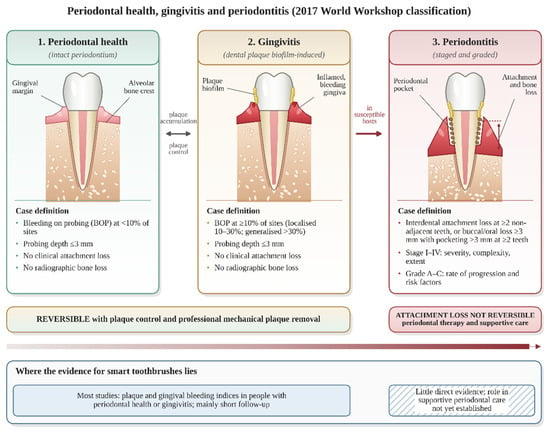
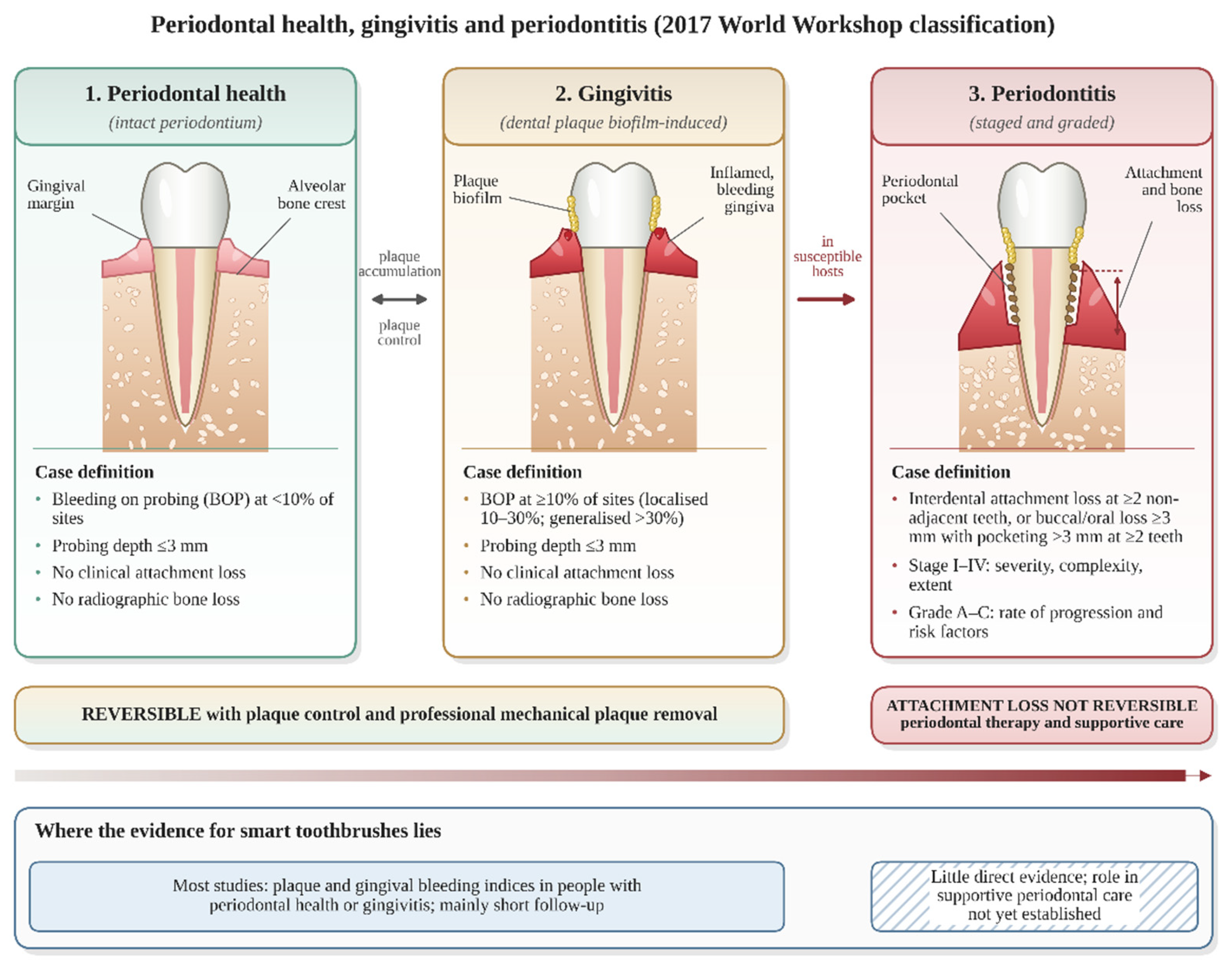
Toothbrushing provides mechanical disruption of dental plaque and is essential for periodontal health [1]. Regular oral hygiene reduces the risk of dental caries, gingivitis, and periodontitis [2,3]. Incorrect brushing technique, inadequate brushing duration, failure to clean interdental areas, and poor patient compliance reduce the effectiveness of plaque removal. Under the 2017 World Workshop classification, dental plaque biofilm-induced gingivitis is an inflammatory condition of the gingiva without attachment loss that resolves with effective plaque control, whereas periodontitis is defined by interdental clinical attachment loss and is described by stage (severity and complexity, I to IV) and grade (rate of progression, A to C) [4,5,6]. Periodontitis affects approximately 20–50% of the global population [7]. It is characterised by irreversible attachment loss and alveolar bone destruction caused by a dysregulated host inflammatory response to the dental biofilm [8]. Persistent biofilm accumulation disrupts the ecological balance of the oral microbiota. These observations emphasise the role of toothbrushing, interdental cleaning, and regular dental examinations in maintaining periodontal health and limiting disease progression (Figure 1) [9,10].
Figure 1.
Periodontal health, gingivitis, and periodontitis according to the 2017 World Workshop classification [4,5,6]. Periodontal health on an intact periodontium: bleeding on probing (BOP) at fewer than 10% of sites, probing pocket depth (PPD) ≤ 3 mm, and no attachment or bone loss. Dental plaque biofilm-induced gingivitis: BOP at 10% of sites or more, PPD ≤ 3 mm, and no attachment loss; it is reversible with plaque control. Periodontitis: interdental clinical attachment loss (CAL) at two or more non-adjacent teeth, or buccal or oral CAL ≥ 3 mm with pocketing > 3 mm at two or more teeth; it is staged (I to IV) and graded (A to C), and the attachment and bone loss are irreversible, requiring periodontal therapy and supportive periodontal care (SPC). Schematic drawings show plaque biofilm and bleeding at the gingival margin in gingivitis, and pocket formation with attachment and bone loss in periodontitis. Arrows indicate that gingivitis is reversible with plaque control and may progress to periodontitis in susceptible hosts. The lower panel indicates where the current evidence for smart toothbrush systems lies. Schematic drawn by the author in Python 3.13.16; (Matplotlib 3.11.2).
Digital technology allows toothbrushing behaviour to be recorded objectively. Smart toothbrushes record brushing time, frequency, pressure, and motion [11,12]. Trials of these systems have reported improvements in brushing habits, plaque removal, and gingival health [12,13,14,15], and machine-learning analysis of brushing data has been used to generate individualised recommendations [16,17]. Digital tools now available to dental practitioners include smart toothbrushes, AI-assisted systems, telemonitoring platforms, and gamified oral hygiene applications [16,18]. In this review, a smart toothbrush is a manual or powered toothbrush with integrated sensors (motion, position, or pressure) that sends brushing data to a mobile application. Connected refers only to data transfer, for example by Bluetooth. Rule-based feedback uses fixed, manufacturer-defined thresholds, such as a 2 min timer or a pressure limit. The terms AI-assisted and AI-enabled are used only for systems in which machine-learning models classify brushing patterns or adapt feedback to the individual user as data accumulate [16,18,19]. AI-assisted oral hygiene monitoring can also be based on intraoral photographs that patients take at home and that are analysed by AI software; these systems do not involve a toothbrush and are considered separately. The powered toothbrush provides the mechanical action, whereas the smart components add sensing and feedback [11,19].
These technologies address specific unmet needs. Oral hygiene instruction is usually given at the chairside, and its effect tends to fade between visits. Patients cannot see which surfaces they miss, and clinicians have no objective information on home care between recall appointments. This gap matters most in supportive periodontal care, where plaque control and its reinforcement are part of the recommended long-term management of treated periodontitis [20]. Mobile health (mHealth) interventions delivered by text messages or applications have improved plaque and gingival bleeding compared with conventional instruction [21], and teledentistry has improved oral hygiene in orthodontic patients [22]. Earlier reviews have focused mainly on the technical features of AI-based smart toothbrushes [16] or on AI across oral health care and periodontology [18,19,23]. The present review differs in three ways: it applies a consistent distinction between connected, rule-based, and adaptive AI systems; it separates plaque and gingival outcomes from periodontitis-related outcomes; and it considers the funding of the underlying trials. Its aims were to classify smart and AI-assisted oral hygiene technologies, to summarise the clinical evidence on plaque control, gingival health, oral hygiene behaviour, and periodontitis-related outcomes, and to identify the limitations of this evidence and the barriers to clinical use.
2. Review Methodology
This narrative review was prepared with reference to the SANRA (Scale for the Assessment of Narrative Review Articles) checklist [24]. It followed a structured narrative approach, with transparent literature identification, critical appraisal, and conceptual synthesis. A targeted, non-systematic literature search was performed in PubMed/MEDLINE, Scopus, Web of Science, the Cochrane Library, and Google Scholar, and was complemented by manual searches of the reference lists of key publications. The search covered publications from January 2012 to February 2026, when the last search was performed. This period reflects the time in which smartphone health applications and app-connected toothbrushes came into use; earlier evidence on manual and powered toothbrushing was taken mainly from systematic reviews and is cited only as background. Search terms combined oral hygiene and periodontal concepts (“oral hygiene”, “plaque control”, “gingivitis”, “periodontal disease”) with technology-related concepts (“smart toothbrush”, “connected toothbrush”, “AI toothbrush”, “artificial intelligence”, “telemonitoring”, “mHealth dentistry”), using Medical Subject Headings (MeSH) and free-text terms with Boolean operators.
Because the objective of this review was conceptual synthesis and critical interpretation rather than quantitative evidence aggregation, no formal systematic review methodology or meta-analysis was undertaken. Protocol registration, formal risk-of-bias assessment, and a study-flow diagram were therefore not considered appropriate. Publications were selected by the author according to their relevance to the review question, their scientific quality, and their contribution to understanding the clinical role of smart and AI-assisted oral hygiene technologies. Preference was given to randomised controlled trials, other clinical and observational studies, systematic reviews, meta-analyses, and consensus reports addressing plaque control, gingival health, periodontal outcomes, oral hygiene behaviour, telemonitoring, or patient-reported outcomes. Only publications in English were considered, and conference abstracts were not included. Technical studies focusing on algorithm development without clinical outcomes were included only when they helped to explain current capabilities or limitations [25]. The purpose of the review was not to summarise every published device or application, but to interpret the current evidence in a way that separates improvements in oral hygiene from effects on periodontal disease.
Primary studies in humans that evaluated a smart, connected, app-based, or AI-assisted oral hygiene intervention and reported clinical, behavioural, or user-reported outcomes are summarized in this review. Reviews, technical validation studies, and trials of non-connected powered toothbrushes were not tabulated but are discussed where relevant. Table 1 summarises device categories using systematic reviews and representative trials. In total, 58 publications are cited. Design, population, follow-up, intervention and comparator, principal finding, and funding source were also extracted. Funding was classified as industry, non-industry, or not reported. The findings were then grouped by outcome domain: plaque and gingival indices, oral hygiene behaviour and adherence, periodontitis-related clinical outcomes, and user perceptions. Within each domain, the type of technology (connected, rule-based, or adaptive AI) and the comparator were considered, because these determine which part of any effect can be attributed to the smart or AI component.
3. Advances in Toothbrushing Technologies
3.1. Manual Toothbrushes
Manual toothbrushes are commonly used for plaque control, but effective plaque removal depends on correct brush angulation, controlled pressure, adequate brushing time, and complete tooth-surface cleaning [26,27]. Many individuals do not follow these recommendations during routine toothbrushing, which can lead to plaque accumulation and gingival inflammation. Oral hygiene outcomes also depend on patient motivation, manual dexterity, and oral hygiene knowledge, resulting in variation in brushing effectiveness between individuals.
3.2. Powered Toothbrushes
Powered toothbrushes were introduced to reduce the effect of variations in individual brushing technique by using oscillating-rotating or sonic motion. Many devices include timers, pressure sensors, and ergonomic handles to improve brushing performance and reduce excessive brushing force [28]. Randomised trials and systematic reviews have shown better plaque removal and greater improvement in gingival inflammation than with manual toothbrushes, particularly in individuals with inadequate brushing technique [29,30,31]. A network meta-analysis found high certainty for a small benefit of powered over manual toothbrushes for plaque removal, with a very small additional benefit of oscillating-rotating over sonic brushes [32]. Similar findings have been reported in children, adolescents, and older adults [33,34,35]. Powered toothbrushes are also useful for individuals with limited manual dexterity, orthodontic appliances, or difficulty maintaining proper brushing habits [26,36], including people with intellectual disability, for whom one study reported that augmented-reality-guided smart toothbrush training produced greater reductions in debris and calculus indices than conventional visual instruction [37]. The higher cost of powered toothbrushes and their lack of real-time feedback on brushing behaviour have encouraged the development of smart toothbrush systems. Table 1 classifies these digital oral hygiene technologies by mechanism, clinical benefit, and evidence maturity.
Table 1.
Classification of Digital Oral Hygiene Technologies by Mechanism, Representative Evidence, and Evidence Maturity.
3.3. Smart Toothbrush Systems
Smart toothbrushes use pressure sensors, motion sensors, tooth-surface mapping, Bluetooth connectivity, and mobile applications to record brushing duration, frequency, pressure, surface coverage, and brush movement [12,16]. These data give objective information on toothbrushing behaviour and reduce dependence on patient recall. Mobile applications provide reminders, visual feedback, progress records, and brushing instructions. In most commercial systems this feedback is rule-based, and only some systems apply machine-learning models to accumulated brushing records to individualise recommendations [16,19]. Smart toothbrush systems have improved plaque removal and gingival health in controlled trials [12,39]. In children, however, a smart toothbrush with an app did not reduce plaque significantly more than electric or manual toothbrushes over 3 months when all groups received oral health education supported by fluorescence plaque imaging [46]. Gingival bleeding recorded through the application has been associated with clinically recorded bleeding on probing, which may support home monitoring and clinical assessment [38]. The characteristics and principal findings of the clinical studies are summarised in Table 2, and their synthesis by outcome domain is presented in Section 7.
Table 2.
Characteristics and principal findings of studies evaluating smart toothbrushes and digitally assisted or AI-assisted oral hygiene systems.
4. Core Components of Smart Toothbrush Systems
4.1. The Four-Component Architecture
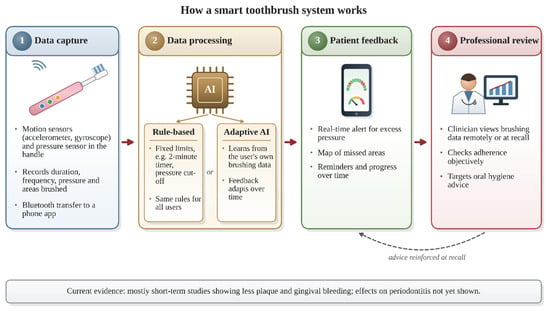
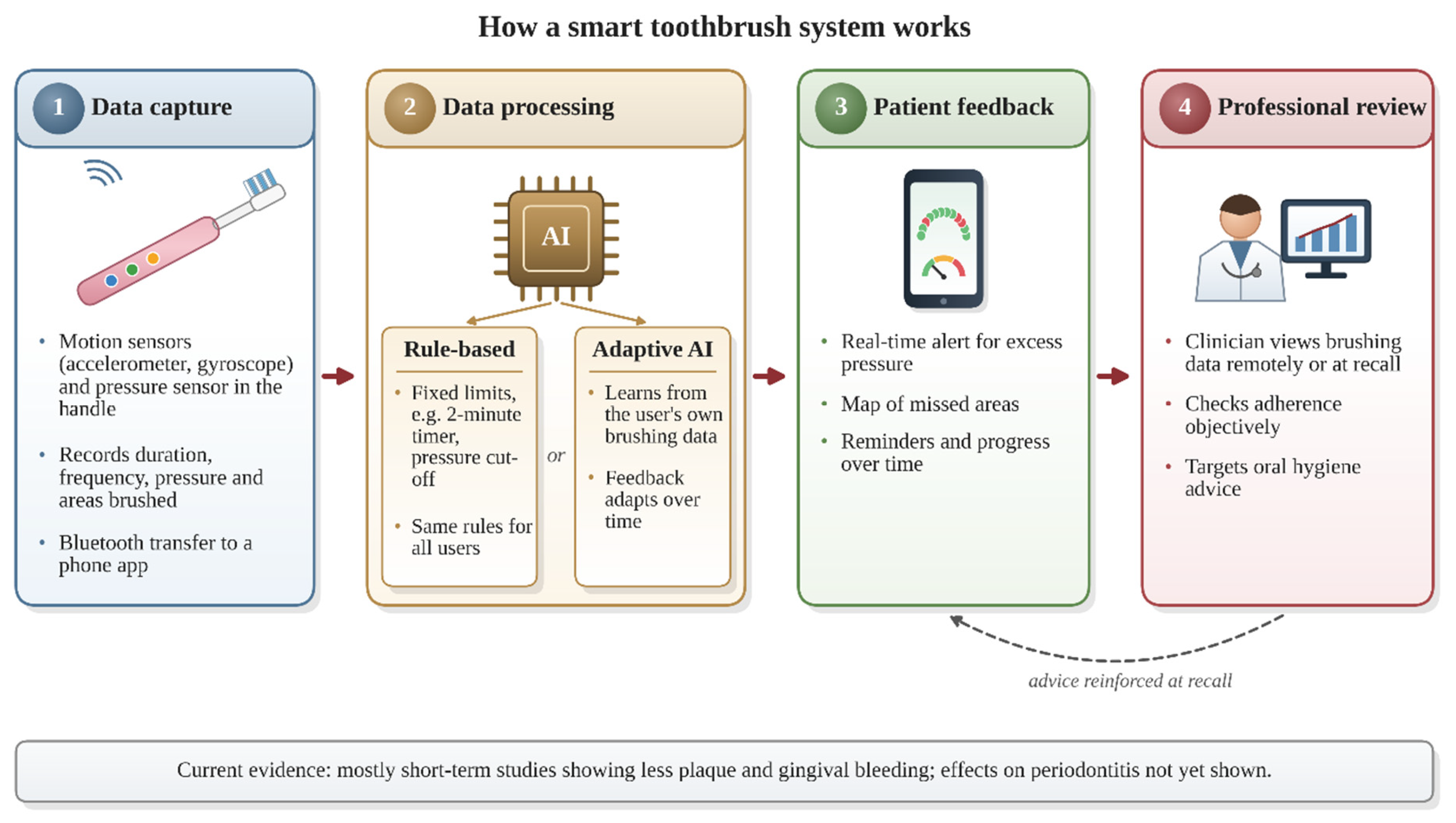
A smart oral hygiene system includes four main components: a sensor-equipped toothbrush, a smartphone application, a data analysis module, and a feedback system [17,39,48] (Figure 2). The toothbrush records brushing duration, angulation, pressure, and brush movement in real time [12,38]; in one study, a recurrent probabilistic neural network applied to nine-axis inertial sensor data identified correct Bass-technique brushing positions with over 99% accuracy on smartphone-grade hardware [25]. The smartphone application displays brushing information, identifies missed tooth surfaces, provides reminders, and stores brushing records [39,48]. The data analysis module evaluates repeated brushing records, using either fixed rules or machine-learning models (Section 4.3), and generates recommendations [17]. The feedback system delivers alerts, visual guidance, and coaching messages to improve toothbrushing technique [12,17]. This design provides functions beyond those of a conventional powered toothbrush, which is usually limited to a timer and a pressure alert.
Figure 2.
Components of a smart oral hygiene system. Sensor data captured by the toothbrush (1) are processed by fixed rules or, in some systems, by adaptive machine-learning models (2). Feedback is returned to the patient through the application (3), and in telemonitoring models the data are also reviewed by the dental team (4), who reinforce oral hygiene between visits. The dashed arrow indicates that oral hygiene advice is reinforced at recall visits, and the bottom line summarises the current evidence. Drawn by the author in Python (Matplotlib).
4.2. Gamification and Engagement Features
Gamification applies game elements such as points, badges, streaks, music, and animated characters to toothbrushing. It aims to increase motivation, brushing frequency, and, in children, parental participation [14,16,44]. In controlled trials in orthodontic patients, a music-based application and app-based coaching improved plaque or gingival outcomes over 8 to 12 weeks [41,43,50], and in preschool children a smartphone application linked to a sensor-equipped manual toothbrush improved toothbrushing [42]. However, the quality of children’s oral hygiene applications varies considerably [45], and most gamification trials lasted 3 months or less. Interest in rewards may decline once the technology becomes familiar, and none of the studies in Table 2 measured whether gamification maintained brushing quality beyond 6 months. Gamification therefore improves engagement and short-term toothbrushing behaviour, but its effect on periodontal outcomes has not been established.
4.3. Rule-Based Analytics Versus Adaptive AI
Rule-based systems compare each brushing session with fixed, manufacturer-defined thresholds, such as a 2 min timer, a pressure limit, or a coverage target for each quadrant. The same rule applies to every user and does not change with use. Adaptive AI systems use machine-learning models trained on sensor data to classify brushing position or technique and to adjust feedback to the individual user as data accumulate [19,25]. An intermediate group uses a machine-learning classifier to detect brush position but then delivers fixed feedback. Many products marketed as AI toothbrushes belong to the rule-based or intermediate groups, and manufacturers rarely disclose how their algorithms work [18,19]. Among the studies in Table 2, a machine-learning component was reported in three: one used a toothbrush with AI position detection [17], and two used AI analysis of intraoral photographs taken by patients at home rather than toothbrush data [13,40]. The others tested connectivity, sensor feedback, or app-based coaching without adaptive learning. Even in the trial by Li et al., the AI component was the proprietary position-detection algorithm of a commercially available connected toothbrush, and the individualised element was targeted messaging from clinicians based on the brushing data [17]. In this review, Bluetooth connectivity, pressure sensing, timers, and predefined alerts are not regarded as AI. This distinction matters clinically, because none of the trials identified compared adaptive AI with well-designed rule-based feedback on the same device.
5. Role of AI in Oral Hygiene Monitoring
AI can contribute to oral hygiene monitoring at three levels, and the supporting evidence differs for each. At the level of the single brushing session, machine-learning classifiers applied to inertial sensor data can identify brush position and technique; one development study reported over 99% accuracy in recognising Bass-technique brushing positions [25], and similar approaches underlie the detection of missed surfaces, excessive force, and irregular brushing [18,19]. These are mainly technical validation studies. At the level of the patient over time, AI systems integrate, process, and analyse accumulated data from toothbrush sensors and mobile applications to personalise feedback, prioritise neglected sites, and trigger messages or professional contact [11,19]. Clinical evidence at this level comes from one toothbrush-based trial, in which a commercially available toothbrush with proprietary AI position detection was combined with targeted mHealth messages in patients with periodontitis [17]. A different approach does not use the toothbrush at all: patients take intraoral photographs at home with a smartphone and a scan box, and AI software assesses plaque and gingival status and returns feedback. After non-surgical periodontal therapy, this approach, with or without personalised counselling, improved plaque control and self-care behaviour and was associated with greater reductions in probing pocket depth and clinical attachment level at 3 months [13]. In orthodontic patients, it reduced plaque, gingival inflammation, and white spot lesions compared with standard instruction [40].
The third level, AI in wider periodontal practice, includes automated periodontal charting, radiographic detection of bone loss, and clinical decision support [23,52]. These applications do not depend on toothbrush data and are outside the main scope of this review, although they may eventually be linked with home oral hygiene data (Section 9). At all three levels, AI platforms differ in their underlying technology, and the label AI in a product description does not guarantee adaptive learning (Section 4.3).
6. Telemonitoring and Remote Periodontal Prevention
Telemonitoring is the remote transfer of home oral hygiene data to the dental team, who review the data and respond between visits. It differs from app feedback, which is directed only at the patient. In periodontal prevention and supportive periodontal care, telemonitoring can be used to check adherence to recommended brushing frequency and duration, to identify repeated patterns of inadequate cleaning at specific sites, and to trigger timely re-instruction or an earlier recall visit when home care deteriorates or bleeding is reported [12,38]. Because gingival inflammation develops where plaque is left behind, data on site-level coverage are likely to be more useful for telemonitoring than brushing duration or frequency alone. Objective data are also more reliable than patient report: in older adults with mild cognitive impairment, brushing data recorded by the toothbrush correlated poorly with self-reported brushing [49].
The clinical evidence for telemonitoring is still limited. In a 6-month randomised trial, an interactive telemonitoring toothbrush with real-time app feedback and weekly review by a dental professional reduced plaque more than an oscillating-rotating power toothbrush and a manual toothbrush [12]. In a supportive periodontal care population followed for about one year, bleeding on brushing reported through the app in the two weeks before the recall visit, together with the number of residual pockets, predicted bleeding on probing at that visit, which suggests that remote bleeding reports could help identify patients who need earlier review [38]. In patients with stage II or III periodontitis, targeted mHealth micromessages linked to an AI-enabled toothbrush improved control of periodontal inflammation compared with standard care [17]. Beyond toothbrush-based systems, a meta-analysis of 15 randomised trials found that mHealth interventions using text messages or applications improved plaque and gingival bleeding, although heterogeneity was very high [21], and teledentistry education improved plaque and bleeding scores in orthodontic patients [22]. Remote monitoring can also use intraoral photographs taken by patients at home and analysed by AI, which improved oral hygiene outcomes in two trials [13,40]. Remote contact can therefore improve short-term oral hygiene outcomes. No study has yet shown that telemonitoring reduces periodontitis recurrence or tooth loss during long-term supportive periodontal care.
7. Clinical Impact on Plaque Control and Periodontal Health
7.1. Plaque and Gingivitis Reduction
Greater reductions in plaque and gingivitis have been reported with a new oscillating-rotating toothbrush (Oral-B iO) than with a manual toothbrush over 8 weeks; app feedback was not described in that trial, so the result reflects the powered brush rather than its smart functions [29]. A smart-connected oscillating-rotating toothbrush also reduced gingivitis and plaque more than a smart-connected sonic toothbrush over 6 months [39]. In adolescents, a Bluetooth-enabled interactive toothbrush improved plaque removal and brushing duration, whereas manual toothbrush users showed minimal improvement [47]. A telemonitoring toothbrush with professional review reduced plaque more than power and manual toothbrushes over 6 months [12]. App-based coaching without sensor hardware improved plaque or gingival outcomes in orthodontic patients over 8 to 12 weeks compared with usual care or conventional instruction [41,43,50], and AI analysis of patient-taken intraoral photographs reduced plaque and gingival inflammation in orthodontic patients [40]. Not all comparisons favoured the smart device: in children, a smart toothbrush did not reduce plaque significantly more than electric or manual toothbrushes [46]. Taken together, the controlled trials in Table 2 generally show short-term improvements in plaque and gingival indices. However, in several trials the comparator was a manual toothbrush, so the effect of powered brushing cannot be separated from that of the feedback, and follow-up rarely exceeded 6 months.
7.2. Behavioural and Inflammatory Correlates
Smart toothbrush systems may improve oral hygiene behaviour and patients’ perception of their brushing. In a randomised trial comparing a connected with a non-connected electric toothbrush, and in a single-arm study, users of the connected toothbrush reported improvement on several items asking about change in their brushing and oral health, although their perceptions did not correlate with objective brushing or clinical measures [14]. In in-market data from interactive toothbrushes, the proportion of app users reporting gum bleeding fell from 28.8% in the first week to 12.7% in the fifth week, and users brushed longer and with less excessive pressure when using live app feedback [48], and in a supportive periodontal care population self-reported bleeding on brushing was associated with bleeding on probing [38]. These data are useful for monitoring, but they have limitations: in-market data come from self-selected users, bleeding is self-assessed, and associations do not show that the device caused the change. Behavioural and self-reported outcomes should therefore be regarded as supportive rather than confirmatory evidence of clinical benefit.
7.3. Periodontitis-Related Clinical Outcomes
Evidence on periodontitis-related outcomes comes from two randomised trials, both in patients with periodontitis receiving treatment. In patients with stage II or III periodontitis, an AI-enabled multimodal-sensing toothbrush combined with targeted mobile health messages, added to guideline-based periodontal therapy, reduced the proportion of inflamed periodontal pockets more than standard care at 6 months (between-group difference 7.9%) [17]. In a three-arm trial, patients who used AI analysis of intraoral photographs taken at home, with or without personalised counselling, after non-surgical periodontal therapy showed better plaque control and self-care behaviour at 6 months and greater reductions in probing pocket depth and clinical attachment level at 3 months than controls; this trial did not use a smart toothbrush [13]. In older adults with mild cognitive impairment, plaque, bleeding on probing, and the proportion of pockets of 4 mm or more improved over 12 months with an app-connected powered toothbrush, even though brushing frequency and duration were below recommendations, but there was no comparator group [49]. The two trials were small (about 100 participants each), lasted 6 months or less, and tested multicomponent interventions, so they do not show which component produced the benefit. In the treated patients, these trials showed short-term improvements in periodontal parameters, but they do not show an effect on the course of periodontitis itself. No study has assessed whether smart toothbrushes prevent the onset of periodontitis, reduce disease recurrence during long-term supportive periodontal care, or reduce tooth loss. At present, these systems are best regarded as adjuncts that may support plaque control during periodontal therapy and maintenance, particularly in patients with recurrent plaque accumulation and gingival inflammation. They do not replace professional periodontal treatment [11,16,17,18].
7.4. Industry Sponsorship and Device-Specific Ecosystems
Of the 18 studies in Table 2, six were industry-funded, ten were non-industry funded, and two did not report funding clearly. The industry-funded studies included most trials of branded connected toothbrushes and the large in-market dataset [14,29,38,39,47,48]. Industry funding does not by itself invalidate results, but in these studies the comparator was a manual toothbrush, a competing brand, a non-connected electric toothbrush, or no control group, and controlled follow-up ranged from 2 to 24 weeks. In one of these trials app use was not described, so the smart functions may not have been tested at all [29]. Results obtained within one manufacturer’s device ecosystem may not apply to other products. A further difficulty is that the reported benefits may come from several components acting together: powered brushing itself, sensor-based feedback, mobile application support, behavioural messaging, telemonitoring, and, in a few systems, AI-based personalisation. Powered toothbrushes alone improve plaque removal compared with manual brushing [30,32], so a trial comparing a connected powered toothbrush with a manual toothbrush cannot show the added value of the smart functions.
Only a few trials isolated a single component: connected versus non-connected powered toothbrushes [14], a sensor-equipped toothbrush with versus without an application [42], and AI-assisted monitoring versus standard care, with an additional counselling arm [13]. No trial identified in this review compared adaptive AI with rule-based feedback on the same device. Independent randomised trials with component-controlled or factorial designs, standardised outcome measures, and device-independent comparisons are needed to establish the incremental benefit of each component [29,39,47].
7.5. Clinical Significance and Practice Implications
The current evidence supports a limited and specific role for these technologies. Smart toothbrushes may be considered for patients who do not achieve adequate plaque control with standard instruction, patients with limited manual dexterity or intellectual disability, and orthodontic patients, because short-term improvements in plaque and gingival indices or brushing performance have been reported in these groups [37,41,43,50]. In supportive periodontal care, remote brushing and bleeding data may help clinicians identify patients whose home care is declining and adjust re-instruction or recall intervals [12,38]. The size of the benefit should be kept in perspective. Part of the improvement over manual brushing is explained by powered brushing itself [30,32], and evidence for effects on periodontitis-related outcomes is limited to two short trials [13,17]. Device cost, the need for a compatible smartphone, and the time clinicians need to review remote data also influence whether routine use is realistic. These technologies should be used as an adjunct to individual oral hygiene instruction, professional mechanical plaque removal, and periodontal maintenance. They should not be considered a replacement for established periodontal treatment or maintenance protocols.
8. Behavioural Change and Patient Compliance
Smart toothbrush systems aim to change behaviour between dental visits. Conventional oral hygiene instruction is given occasionally at the chairside, whereas smart systems give feedback during every brushing session. Several mechanisms may explain their effect: real-time feedback corrects technique as it happens, reminders and streaks prompt regular brushing, progress records support self-monitoring, and awareness that data may be reviewed by a clinician can increase accountability. Theory-based coaching applications that use these mechanisms improved oral hygiene in adolescents [43], and mobile health applications and digital notifications have supported oral hygiene behaviour in orthodontic patients [15,41,50].
Whether these effects last is less certain. Most trials followed participants for 12 weeks or less, and novelty effects are possible, because interest in feedback and rewards may fall once the technology becomes familiar. In-market data come from self-selected users who are probably more motivated than typical patients [48]. Some AI-based systems add real-time plaque detection, but because sensors, applications, messaging, and AI are delivered together, the specific role of adaptive AI in sustaining behaviour cannot be separated from that of the other components [16]. Future studies should report adherence and brushing quality beyond 6 to 12 months and after the active intervention ends.
9. Personalized Preventive Periodontal Care
Precision periodontology aims to tailor prevention and treatment to the individual by combining clinical, biological, and behavioural information [53]. Smart toothbrush data are behavioural: they describe how often, how long, and how completely a patient brushes, and some systems add self-reported bleeding. On their own, these data cannot show whether the periodontal tissues are stable. Their value would increase if they were combined with biological information. Inflammatory markers in gingival crevicular fluid, such as matrix metalloproteinase-8 (MMP-8), are associated with pocket depth and periodontitis grade [54], and active MMP-8 can be measured with point-of-care tests [55]. Microbiological and other host-derived data have also been proposed as inputs for data-driven periodontal diagnosis [53]. Mobile health tools used between visits already improve plaque and bleeding scores [21,22], and powered toothbrushes provide an effective basis for home plaque control [32].
A realistic integration model would combine three data streams. The toothbrush and application would provide continuous behavioural data and self-reported bleeding; periodic biomarker or point-of-care tests at recall visits would provide information on inflammatory activity; and clinical examination would provide BOP, PPD, and CAL. An analytical model could then identify patients whose risk of recurrence is rising, for example a patient with declining brushing coverage and rising MMP-8 levels, and prompt earlier professional contact. At present this model is conceptual. No study has combined toothbrush-derived data with biomarker data, the predictive value of such combinations is unknown, and data from different devices and tests are not yet interoperable. Prospective studies should test whether combined behavioural and biological monitoring improves the timing of interventions and long-term periodontal stability.
10. Barriers to Implementation
Several barriers currently limit routine clinical use. Device cost: connected toothbrushes and their replacement heads cost more than manual or basic powered toothbrushes, which may widen inequalities in access [16,51]. Digital literacy: older adults and people with cognitive or physical limitations may find applications difficult to use, although they may benefit most [49,56]. Data privacy and security: brushing data, bleeding reports, and linked health information are personal health data, and the terms under which manufacturers store, share, or reuse them are often unclear to patients and clinicians. Interoperability: data are usually held within one manufacturer’s application and cannot easily be transferred to electronic dental records or combined with data from other devices [57]. Algorithm transparency: manufacturers seldom disclose whether feedback is rule-based or AI-driven, how algorithms were trained and validated, or how they perform across age groups and dentitions [18,19]. Industry bias and limited independent evidence: most trials are short, many are industry-funded, and independent long-term evidence is scarce (Section 7.4). Finally, power-brushing, sensors, AI features, and smartphone applications are usually delivered as one product, which makes it hard to quantify the contribution of each component [11,16,17,18].
11. Research Agenda and Clinical Translation: Prioritized Steps and Actionable Recommendations
The gaps identified in this review can be ranked by how directly they limit clinical use. The research priorities below are listed in that order, followed by recommendations that clinicians can apply now and steps for manufacturers and developers.
Priority 1 is long-term trials with periodontitis-related outcomes. Independent randomised trials of at least 12 months are needed in patients receiving supportive periodontal care, with outcomes such as the number of residual pockets with bleeding on probing, disease recurrence, need for retreatment, and tooth loss, rather than plaque and gingival indices alone [13,17]. Priority 2 is component-controlled designs. Trials should compare the same powered toothbrush with and without app feedback, with and without professional telemonitoring, and with rule-based versus adaptive AI feedback, so that the incremental benefit of each component can be estimated [14,42]. Priority 3 is independence and transparency. Trials should be investigator-led where possible and prospectively registered, and they should report funding, device settings, and whether feedback is rule-based or based on machine learning.
Priority 4 is sustained adherence. Studies should measure brushing quality and engagement beyond 6 to 12 months and after the active intervention ends, and should report how many participants stop using the device. Priority 5 is equity and cost-effectiveness. Studies should include older adults, people with disabilities, and lower-income groups, and should compare costs and outcomes with those of basic powered toothbrushes and standard oral hygiene instruction [49,56]. Priority 6 is integration with biological monitoring. Prospective studies should test whether combining toothbrush data with biomarkers such as MMP-8 improves the timing of interventions in supportive periodontal care [54,55]. Machine learning, biosensors, teledentistry, and electronic dental records may eventually be combined for periodontal care, but this remains to be tested [52,53,57,58].
Until such evidence is available, the following steps are reasonable in clinical practice. First, smart toothbrushes should be used selectively, as an adjunct, for patients who do not achieve adequate plaque control with standard instruction, patients with limited dexterity or intellectual disability, and orthodontic patients [37,41,43,50]. Second, patients should be told that the expected benefit is better plaque control and less gingival bleeding, not prevention of periodontitis. Third, where patients share brushing or bleeding data, clinicians should review the data at recall and use them to target re-instruction to neglected sites rather than to brushing time alone [12,38]. Fourth, interdental cleaning, professional mechanical plaque removal, and risk-based recall intervals remain the basis of periodontal prevention and supportive care, and smart devices should not displace them [20]. Fifth, before recommending a device, clinicians should check how the manufacturer stores and shares patient data and should obtain the patient’s consent before viewing it.
For manufacturers and developers, the priorities are to state clearly whether feedback is rule-based or AI-driven, to publish validation data for their algorithms, to adopt open data formats that allow export to electronic dental records, and to support independent evaluation of their devices [18,19,57].
12. Conclusions
Current evidence suggests that smart toothbrushes and digitally assisted oral hygiene systems may improve plaque control, brushing behaviour, adherence, and short-term gingival outcomes. Two small randomised trials suggest that AI-assisted monitoring may add short-term benefits to periodontal therapy in patients with periodontitis. However, the incremental benefit specifically attributable to AI-based functions and their impact on long-term periodontal outcomes remain to be established. In practice, these systems are best used as adjuncts to oral hygiene instruction and supportive periodontal care, particularly for patients with persistent plaque and gingival inflammation. Independent long-term trials with component-controlled designs are needed before they can be recommended for the prevention of periodontitis.
Funding
This research received no external funding.
Institutional Review Board Statement
Not applicable.
Informed Consent Statement
Not applicable.
Data Availability Statement
No new data were created or analyzed in this study. Data sharing is not applicable to this article.
Acknowledgments
During the preparation of this revision, the author used Claude (Anthropic) to generate the Python code used to draw Figure 1 and Figure 2 and to assist with language editing, in line with the journal’s policy. The author reviewed and edited all output and takes full responsibility for the content of the publication.
Conflicts of Interest
The author declares no conflicts of interest.
Abbreviations
The following abbreviations are used in this manuscript:
| Abbreviation | Full Form |
| AI | Artificial Intelligence |
| AR | Augmented Reality |
| BOP | Bleeding on Probing |
| CAL | Clinical Attachment Level |
| HFS | High-Frequency Sonic |
| MeSH | Medical Subject Headings |
| mHealth | Mobile Health |
| MMP-8 | Matrix Metalloproteinase-8 |
| OR | Oscillating-Rotating |
| PPD | Probing Pocket Depth |
| QLF | Quantitative Light-Induced Fluorescence |
| RCT | Randomized Controlled Trial |
| SANRA | Scale for the Assessment of Narrative Review Articles |
| SMS | Short Message Service |
| SPC | Supportive Periodontal Care |
References
- Baehni, P.C. Translating science into action–prevention of periodontal disease at patient level. Periodontology 2000 2012, 60, 162–172. [Google Scholar] [CrossRef] [Scilit]
- Joshi, S.; Suominen, A.L.; Knuuttila, M.; Bernabé, E. Toothbrushing behaviour and periodontal pocketing: An 11-year longitudinal study. J. Clin. Periodontol. 2018, 45, 196–203. [Google Scholar] [CrossRef] [Scilit]
- Van der Weijden, G.A.; van Loveren, C. Mechanical plaque removal in step-1 of care. Periodontology 2000 2023. early view. [Google Scholar] [CrossRef] [Scilit]
- Chapple, I.L.C.; Mealey, B.L.; Van Dyke, T.E.; Bartold, P.M.; Dommisch, H.; Eickholz, P.; Geisinger, M.L.; Genco, R.J.; Glogauer, M.; Goldstein, M.; et al. Periodontal health and gingival diseases and conditions on an intact and a reduced periodontium: Consensus report of workgroup 1 of the 2017 World Workshop on the Classification of Periodontal and Peri-Implant Diseases and Conditions. J. Clin. Periodontol. 2018, 45, S68–S77. [Google Scholar] [CrossRef] [Scilit]
- Papapanou, P.N.; Sanz, M.; Buduneli, N.; Dietrich, T.; Feres, M.; Fine, D.H.; Flemmig, T.F.; Garcia, R.; Giannobile, W.V.; Graziani, F.; et al. Periodontitis: Consensus report of workgroup 2 of the 2017 World Workshop on the Classification of Periodontal and Peri-Implant Diseases and Conditions. J. Clin. Periodontol. 2018, 45, S162–S170. [Google Scholar] [CrossRef] [Scilit]
- Tonetti, M.S.; Greenwell, H.; Kornman, K.S. Staging and grading of periodontitis: Framework and proposal of a new classification and case definition. J. Periodontol. 2018, 45, S149–S161. [Google Scholar] [CrossRef] [Scilit]
- Nazir, M.A. Prevalence of periodontal disease, its association with systemic diseases and prevention. Int. J. Health Sci. 2017, 11, 72–80. [Google Scholar]
- Łasica, A.; Golec, P.; Laskus, A.; Zalewska, M.; Gędaj, M.; Popowska, M. Periodontitis: Etiology, conventional treatments, and emerging bacteriophage and predatory bacteria therapies. Front. Microbiol. 2024, 15, 1469414. [Google Scholar] [CrossRef] [Scilit]
- Jakubovics, N.S.; Goodman, S.D.; Mashburn-Warren, L.; Stafford, G.P.; Cieplik, F. The dental plaque biofilm matrix. Periodontology 2000 2021, 86, 32–56. [Google Scholar] [CrossRef] [Scilit]
- Glenny, A.M.; Walsh, T.; Iwasaki, M.; Kateeb, E.; Braga, M.M.; Riley, P.; Melo, P. Development of Tooth Brushing Recommendations Through Professional Consensus. Int. Dent. J. 2024, 74, 526–535. [Google Scholar] [CrossRef] [Scilit]
- Ghori, A.; Kashif, M.; Ashar, A. Augmenting Preventive Dentistry with AI: From Smart Toothbrushes to Real-Time Plaque Analysis. Open Dent. J. 2025, 19, e18742106385761. [Google Scholar] [CrossRef] [Scilit]
- Kim, J.; Choi, Y.; Song, Y.; Park, W. Smartphone-Based Telemonitoring for Better Oral Health with Toothbrushes: 6-Month Randomized Controlled Trial. J. Med. Internet Res. 2025, 27, e65128. [Google Scholar] [CrossRef] [Scilit]
- Hu, Y.J.; Lin, P.C.; Lin, P.C.; Huang, C.L.; Chen, C.C.; Matsuo, K.; Lee, C.H.; Huang, H.L. Effects of Mobile-Based AI-Enhanced Health Counseling on Protection Motivation, Self-Care Behaviors, and Periodontal Treatment Outcomes in Patients with Periodontitis: Randomized Controlled Trial. J. Med. Internet Res. 2025, 27, e78211. [Google Scholar] [CrossRef] [Scilit]
- Gomez, J.; Kilpatrick, L.; Ryan, M.; Gwaltney, C. Impact of connected toothbrushes on patient perceptions of brushing skills and oral health: Results from a randomized clinical trial and a single-arm intervention study. BMC Oral Health 2025, 25, 509. [Google Scholar] [CrossRef] [Scilit]
- Patil, S.; Hedad, I.A.; Jafer, A.A.; Abutaleb, G.K.; Arishi, T.M.; Arishi, S.A.; Arishi, H.A.; Jafer, M.; Gujar, A.N.; Khan, S.; et al. Effectiveness of mobile phone applications in improving oral hygiene care and outcomes in orthodontic patients. J. Oral Biol. Craniofac Res. 2021, 11, 26–32. [Google Scholar] [CrossRef] [Scilit]
- Maini, V.; Roy, R.; Gandhi, G.; Chopra, A.; Bhat, S. Artificial-Intelligence-Based Smart Toothbrushes for Oral Health and Patient Education: A Review. Hygiene 2025, 5, 5. [Google Scholar] [CrossRef] [Scilit]
- Li, Y.; Wu, X.; Liu, M.; Deng, K.; Tullini, A.; Zhang, X.; Shi, J.; Lai, H.; Tonetti, M.S. Enhanced control of periodontitis by an artificial intelligence-enabled multimodal-sensing toothbrush and targeted mHealth micromessages: A randomized trial. J. Clin. Periodontol. 2024, 51, 1632–1643. [Google Scholar] [CrossRef] [Scilit]
- Dettori, M.; Lamloum, D.; Lingström, P. Campus G: Artificial Intelligence and Innovation in Oral Health Care Sciences: A Conceptual Review. Healthcare 2025, 13, 3327. [Google Scholar] [CrossRef] [Scilit]
- Li, H.; Chen, S.; Chang, B.; Wang, X.; He, Y.; Xu, B.; Sun, G.; Yang, C.; Li, G.; Li, S.; et al. Application of artificial intelligence in oral health management: Challenges and opportunities. Front. Med. 2026, 13, 1700529. [Google Scholar] [CrossRef] [Scilit]
- Sanz, M.; Herrera, D.; Kebschull, M.; Chapple, I.; Jepsen, S.; Berglundh, T.; Sculean, A.; Tonetti, M.S. Treatment of stage I–III periodontitis: The EFP S3 level clinical practice guideline. J. Clin. Periodontol. 2020, 47, 4–60. [Google Scholar] [CrossRef] [Scilit]
- Toniazzo, M.P.; Nodari, D.; Muniz, F.W.M.G.; Weidlich, P. Effect of mHealth in improving oral hygiene: A systematic review with meta-analysis. J. Clin. Periodontol. 2019, 46, 297–309. [Google Scholar] [CrossRef] [Scilit]
- Soltanmohamadi Borujeni, E.; Sarshar, F.; Nasiri, M.; Sarshar, S.; Jazi, L. Effect of teledentistry on the oral health status of patients undergoing fixed orthodontic treatment at the first three follow-up visits. Dent. Med. Probl. 2021, 58, 299–304. [Google Scholar] [CrossRef] [Scilit]
- Patel, M.S.; Kumar, S.; Patel, B.; Patel, S.N.; Girdhar, G.A.; Patadiya, H.H.; Hirani, T.; Haque, M. Impact of Artificial Intelligence on Periodontology: A Review. Cureus 2025, 17, e81162. [Google Scholar] [CrossRef] [Scilit]
- Baethge, C.; Goldbeck-Wood, S.; Mertens, S. SANRA-a scale for the quality assessment of narrative review articles. Res. Integr. Peer Rev. 2019, 4, 5. [Google Scholar] [CrossRef] [Scilit]
- Chen, C.H.; Wang, C.C.; Chen, Y.Z. Intelligent Brushing Monitoring Using a Smart Toothbrush with Recurrent Probabilistic Neural Network. Sensors 2021, 21, 1238. [Google Scholar] [CrossRef] [Scilit]
- Yeh, C.H.; Lin, C.H.; Ma, T.L.; Peng, T.Y.; Vo, T.T.T.; Lin, W.N.; Chen, Y.H.; Lee, I.T. Comparison Between Powered and Manual Toothbrushes Effectiveness for Maintaining an Optimal Oral Health Status. Clin. Cosmet. Investig. Dent. 2024, 16, 381–396. [Google Scholar] [CrossRef] [Scilit]
- Poyato-Ferrera, M.; Segura-Egea, J.J.; Bullón-Fernández, P. Comparison of modified Bass technique with normal toothbrushing practices for efficacy in supragingival plaque removal. Int. J. Dent. Hyg. 2003, 1, 110–114. [Google Scholar] [CrossRef] [Scilit]
- van der Sluijs, E.; Slot, D.E.; Hennequin-Hoenderdos, N.L.; Valkenburg, C.; van der Weijden, F.G.A. The efficacy of an oscillating-rotating power toothbrush compared to a high-frequency sonic power toothbrush on parameters of dental plaque and gingival inflammation: A systematic review and meta-analysis. Int. J. Dent. Hyg. 2023, 21, 77–94. [Google Scholar] [CrossRef] [Scilit]
- Grender, J.; Ram Goyal, C.; Qaqish, J.; Adam, R. An 8-week randomized controlled trial comparing the effect of a novel oscillating-rotating toothbrush versus a manual toothbrush on plaque and gingivitis. Int. Dent. J. 2020, 70, S7–S15. [Google Scholar] [CrossRef] [Scilit]
- Yaacob, M.; Worthington, H.V.; Deacon, S.A.; Deery, C.; Walmsley, A.D.; Robinson, P.G.; Glenny, A.M. Powered versus manual toothbrushing for oral health. Cochrane Database Syst. Rev. 2014, 2014, Cd002281. [Google Scholar] [CrossRef] [Scilit]
- Starke, E.M.; Ward, M.; Olson, M.; Ou, S.S.; Milleman, K.R.; Milleman, J.L. A Randomized Parallel Study to Compare the Effects of Powered and Manual Tooth Brushing on Gingival Health and Plaque. J. Clin. Dent. 2019, 30, A16–A23. [Google Scholar]
- Thomassen, T.M.J.A.; Van der Weijden, F.G.A.; Slot, D.E. The efficacy of powered toothbrushes: A systematic review and network meta-analysis. Int. J. Dent. Hyg. 2022, 20, 3–17. [Google Scholar] [CrossRef] [Scilit]
- Davidovich, E.; Ccahuana-Vasquez, R.A.; Grender, J.; Timm, H.; Gonen, H.; Zini, A. A 4-week randomized controlled trial evaluating plaque and gingivitis effects of an electric toothbrush in a paediatric population. Int. J. Paediatr. Dent. 2024, 34, 246–255. [Google Scholar] [CrossRef] [Scilit]
- Dağdeviren, F.; Van der Weijden, G.A.F.; Zijlstra, C.P.L.; Slot, D.E. The Effectiveness of Power Versus Manual Toothbrushes on Plaque Removal and Gingival Health in Children-A Systematic Review and Meta-Analysis. Int. J. Dent. Hyg. 2025, 23, 682–702. [Google Scholar] [CrossRef] [Scilit]
- Saroya, K.K.; Gupta, A.; Shrivastava, R.; Mehta, N.; Goyal, A. Powered versus manual toothbrushes for plaque removal and gingival health amongst 55 and older individuals: A systematic review and meta-analysis. Spec. Care Dent. 2024, 44, 979–989. [Google Scholar] [CrossRef] [Scilit]
- Al Makhmari, S.A.; Kaklamanos, E.G.; Athanasiou, A.E. Short-term and long-term effectiveness of powered toothbrushes in promoting periodontal health during orthodontic treatment: A systematic review and meta-analysis. Am. J. Orthod. Dentofac. Orthop. 2017, 152, 753–766.e757. [Google Scholar] [CrossRef] [Scilit]
- Jeon, B.; Oh, J.; Son, S. Effects of Tooth Brushing Training, Based on Augmented Reality Using a Smart Toothbrush, on Oral Hygiene Care among People with Intellectual Disability in Korea. Healthcare 2021, 9, 348. [Google Scholar] [CrossRef] [Scilit]
- Tonetti, M.S.; Deng, K.; Christiansen, A.; Bogetti, K.; Nicora, C.; Thurnay, S.; Cortellini, P. Self-reported bleeding on brushing as a predictor of bleeding on probing: Early observations from the deployment of an internet of things network of intelligent power-driven toothbrushes in a supportive periodontal care population. J. Clin. Periodontol. 2020, 47, 1219–1226. [Google Scholar] [CrossRef] [Scilit]
- Goyal, C.R.; Adam, R.; Timm, H.; Grender, J.; Qaqish, J. A 6-month randomized controlled trial evaluating a novel smart-connected oscillating-rotating toothbrush versus a smart-connected sonic toothbrush for the reduction of plaque and gingivitis. Am. J. Dent. 2021, 34, 54–60. [Google Scholar]
- Sharma, A.; Sharma, T.; Tomer, G.; Pattanaik, S.; Khattar, B.; Shrinivaasan, N.R.; Saidath, K.; Mishra, M.; Ram, V.V. Assessment of AI-based monitoring method in assessing oral hygiene during orthodontic treatment. J. Orthod. Sci. 2025, 14, 17. [Google Scholar] [CrossRef] [Scilit]
- Alfiya, M.; Shenoy, R.P.; Pasha, M.I.; Junaid, J.; Amanna, S. Effectiveness of the Brush DJ app in improving oral hygiene among patients with fixed orthodontic appliances: A randomized controlled trial. Sci. Rep. 2025, 15, 42492. [Google Scholar] [CrossRef] [Scilit]
- Alkilzy, M.; Midani, R.; Hofer, M.; Splieth, C. Improving Toothbrushing with a Smartphone App: Results of a Randomized Controlled Trial. Caries Res. 2019, 53, 628–635. [Google Scholar] [CrossRef] [Scilit]
- Scheerman, J.F.M.; van Meijel, B.; van Empelen, P.; Verrips, G.H.W.; van Loveren, C.; Twisk, J.W.R.; Pakpour, A.H.; van den Braak, M.C.T.; Kramer, G.J.C. The effect of using a mobile application (“WhiteTeeth”) on improving oral hygiene: A randomized controlled trial. Int. J. Dent. Hyg. 2020, 18, 73–83. [Google Scholar] [CrossRef] [Scilit]
- Chen, J.; Ying, Y.; Pang, M.; Chen, J.; Kang, T.; Xuan, P.; Chen, X.; Zhang, W. The Application of Gamification in Children’s Oral Health Management: Systematic Review. J. Med. Internet Res. 2025, 27, e75541. [Google Scholar] [CrossRef] [Scilit]
- Meriç, E. Evaluation of the quality of oral hygiene mobile apps for children using the mobile app rating scale. Int. J. Med. Inf. 2024, 192, 105612. [Google Scholar] [CrossRef] [Scilit]
- Lee, J.; Lee, T.; Jung, H.I.; Park, W.; Song, J.S. Effectiveness of an Oral Health Education Program Using a Smart Toothbrush with Quantitative Light-Induced Fluorescence Technology in Children. Children 2023, 10, 429. [Google Scholar] [CrossRef] [Scilit]
- Erbe, C.; Klees, V.; Ferrari-Peron, P.; Ccahuana-Vasquez, R.A.; Timm, H.; Grender, J.; Cunningham, P.; Adam, R.; Farrell, S.; Wehrbein, H. A comparative assessment of plaque removal and toothbrushing compliance between a manual and an interactive power toothbrush among adolescents: A single-center, single-blind randomized controlled trial. BMC Oral Health 2018, 18, 130. [Google Scholar] [CrossRef] [Scilit]
- Thurnay, S.; Adam, R.; Meyners, M. A Global, In-Market Evaluation of Toothbrushing Behaviour and Self-assessed Gingival Bleeding with Use of App Data from an Interactive Electric Toothbrush. Oral Health Prev. Dent. 2022, 20, b2572911. [Google Scholar] [CrossRef] [Scilit]
- Flyborg, J.; Renvert, S.; Anderberg, P.; Larsson, T.; Sanmartin-Berglund, J. Results of objective brushing data recorded from a powered toothbrush used by elderly individuals with mild cognitive impairment related to values for oral health. Clin. Oral Investig. 2023, 28, 8. [Google Scholar] [CrossRef] [Scilit]
- Sağoğlu, S.; Yıldırım, M. The Effect of Using a Smartphone App on Oral Hygiene and Brushing Training During Fixed Orthodontic Therapy: A Randomized Clinical Trial. Diagnostics 2025, 15, 2380. [Google Scholar] [CrossRef] [Scilit]
- Selvakumar, S.; Ravivarman, S.; Mithradas, N.; Ravindran, N.; Gopala Krisnan, S. Awareness of Tele Dentistry and Oral Hygiene Apps, Attitudes Toward Remote Consultations, and Willingness to Use Smart Oral Hygiene Devices. Int. J. Multidiscip. Res. 2025, 7. [Google Scholar] [CrossRef]
- Sarakbi, R.M.; Varma, S.R.; Muthiah Annamma, L.; Sivaswamy, V. Implications of artificial intelligence in periodontal treatment maintenance: A scoping review. Front. Oral Health 2025, 6, 1561128. [Google Scholar] [CrossRef] [Scilit]
- Song, H.; Chai, Z.; Yu, Y.; Wang, Z.; Li, A. Data-driven precision diagnosis of periodontal disease: From biological features analysis to clinical applications. Oral Sci. Homeost. Med. 2025, 1, 9610031. [Google Scholar] [CrossRef] [Scilit]
- Nędzi-Góra, M.; Górska, R.; Górski, B. The utility of gingival crevicular fluid matrix metalloproteinase-8 provides site-specific diagnostic value for periodontal grading. Cent. Eur. J. Immunol. 2021, 46, 236–243. [Google Scholar] [CrossRef] [Scilit]
- Lähteenmäki, H.; Pätilä, T.; Pärnänen, P.; Räisänen, I.; Tervahartiala, T.; Gupta, S.; Sorsa, T. AMMP-8 point-of-care: Diagnostic methods and treatment modalities in periodontitis and peri-implantitis. Expert Opin. Ther. Targets 2023, 27, 627–637. [Google Scholar] [CrossRef] [Scilit]
- Khan, S.; Webster, S.; Puxty, J.; Robertson, M. Key Challenges and Barriers to Digital Literacy for Older Adults: Scoping Review. JMIR Aging 2026, 9, e80647. [Google Scholar] [CrossRef] [Scilit]
- Surdu, A.; Foia, C.I.; Luchian, I.; Trifan, D.; Budala, D.G.; Scutariu, M.M.; Ciupilan, C.; Puha, B.; Tatarciuc, D. Telemedicine and Digital Tools in Dentistry: Enhancing Diagnosis and Remote Patient Care. Medicina 2025, 61, 826. [Google Scholar] [CrossRef] [Scilit]
- Falkner, S. Real-Time Oral Health Monitoring: AI-Driven Biosensors in Dental Practice. Glob. J. Med. Clin. Case Rep. 2025, 1, 1–6. [Google Scholar]

Disclaimer/Publisher’s Note: The statements, opinions and data contained in all publications are solely those of the individual author(s) and contributor(s) and not of MDPI and/or the editor(s). MDPI and/or the editor(s) disclaim responsibility for any injury to people or property resulting from any ideas, methods, instructions or products referred to in the content. |
© 2026 by the author. Licensee MDPI, Basel, Switzerland. This article is an open access article distributed under the terms and conditions of the Creative Commons Attribution (CC BY) license.