Article

Approach for Designing Human-Centered and Energy Saving Lighting Luminaires


Department of Materials Science and Engineering, National Tsing Hua University, No. 101, Section 2, Guangfu Road, East District, Hsinchu City 30013, Taiwan
*
Author to whom correspondence should be addressed.
Photonics 2022, 9(10), 726; https://doi.org/10.3390/photonics9100726

Submission received: 24 July 2022 / Revised: 9 September 2022 / Accepted: 14 September 2022 / Published: 5 October 2022
(This article belongs to the Topic Optical and Optoelectronic Materials and Applications)

Abstract

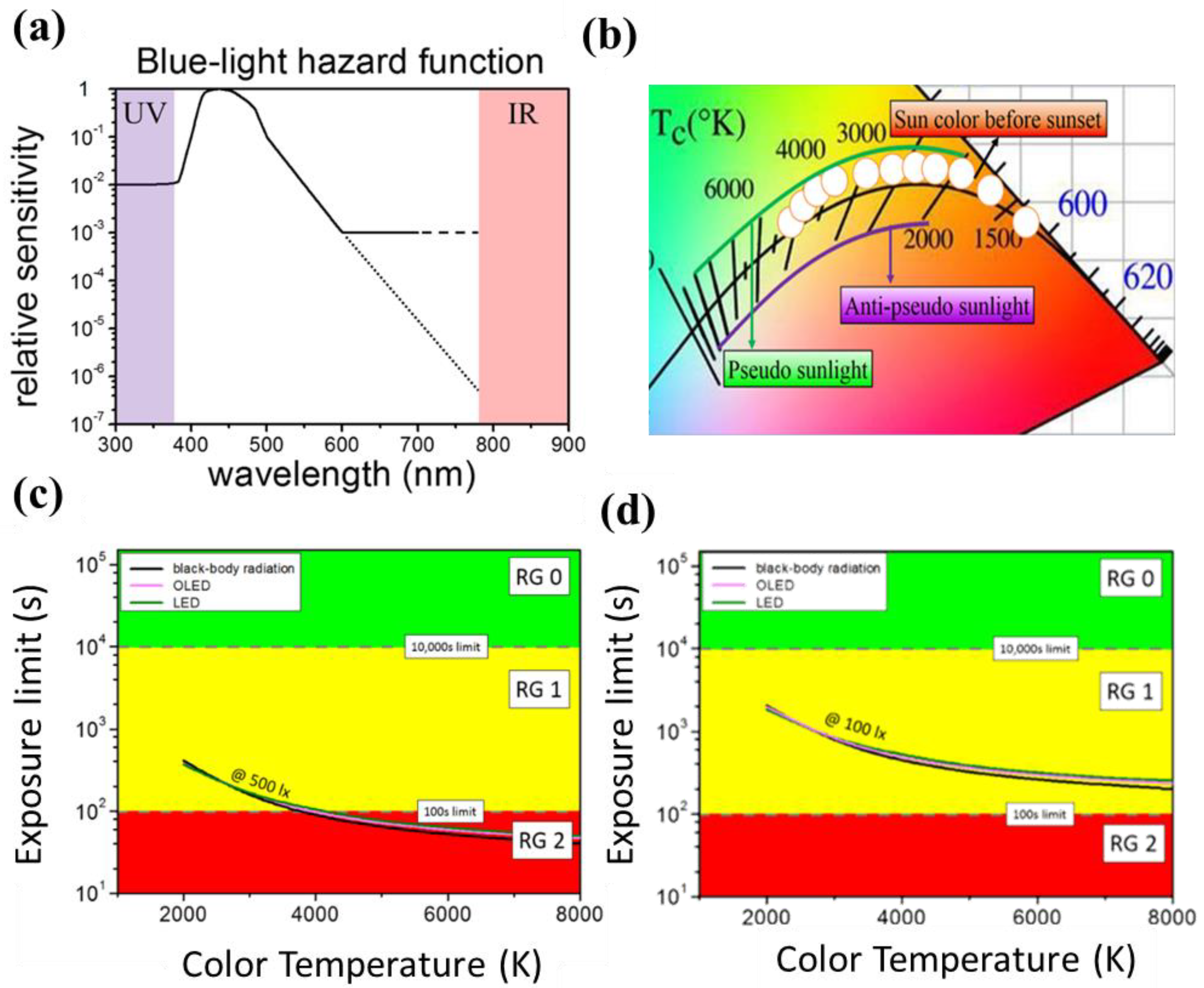
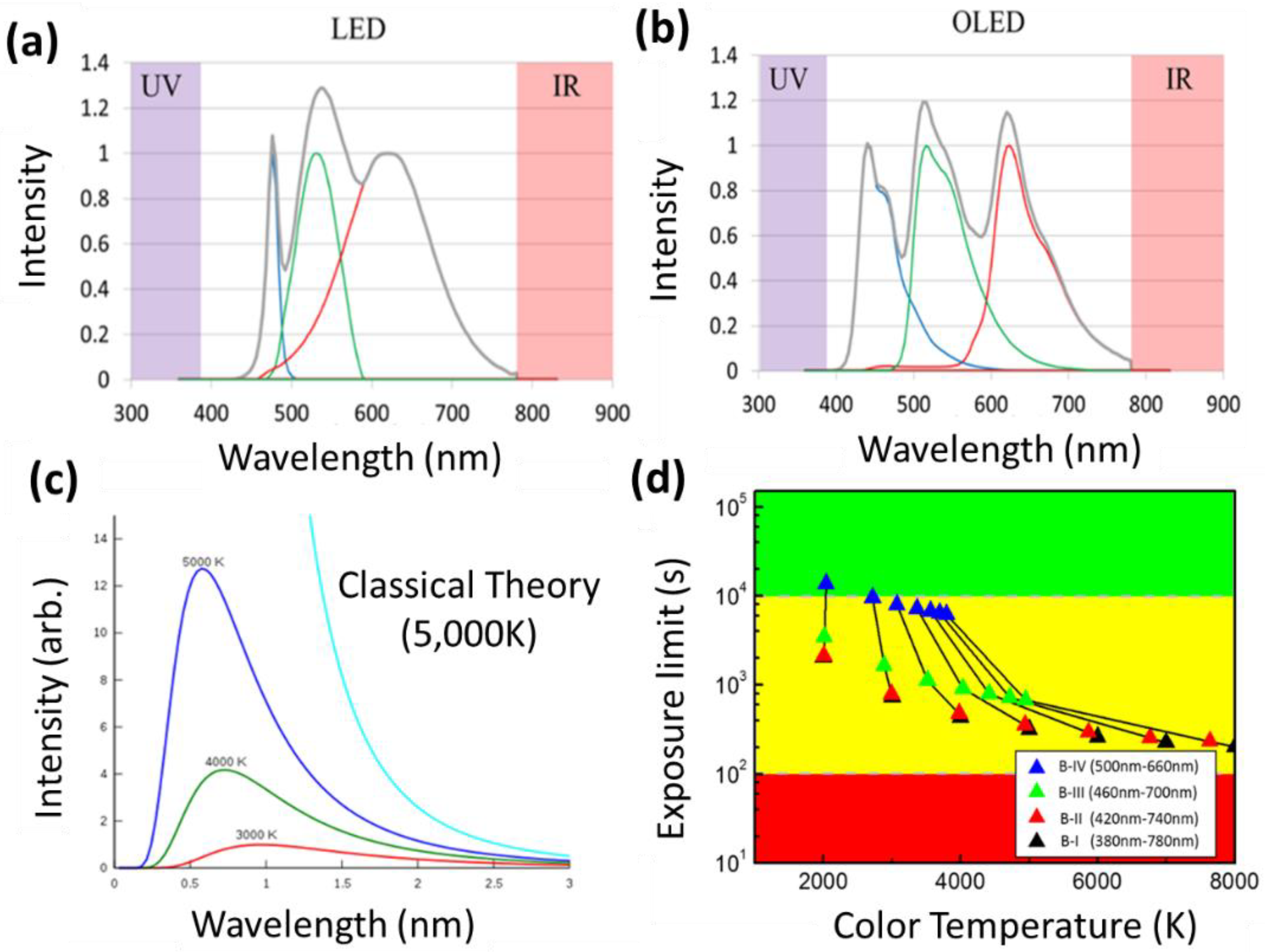
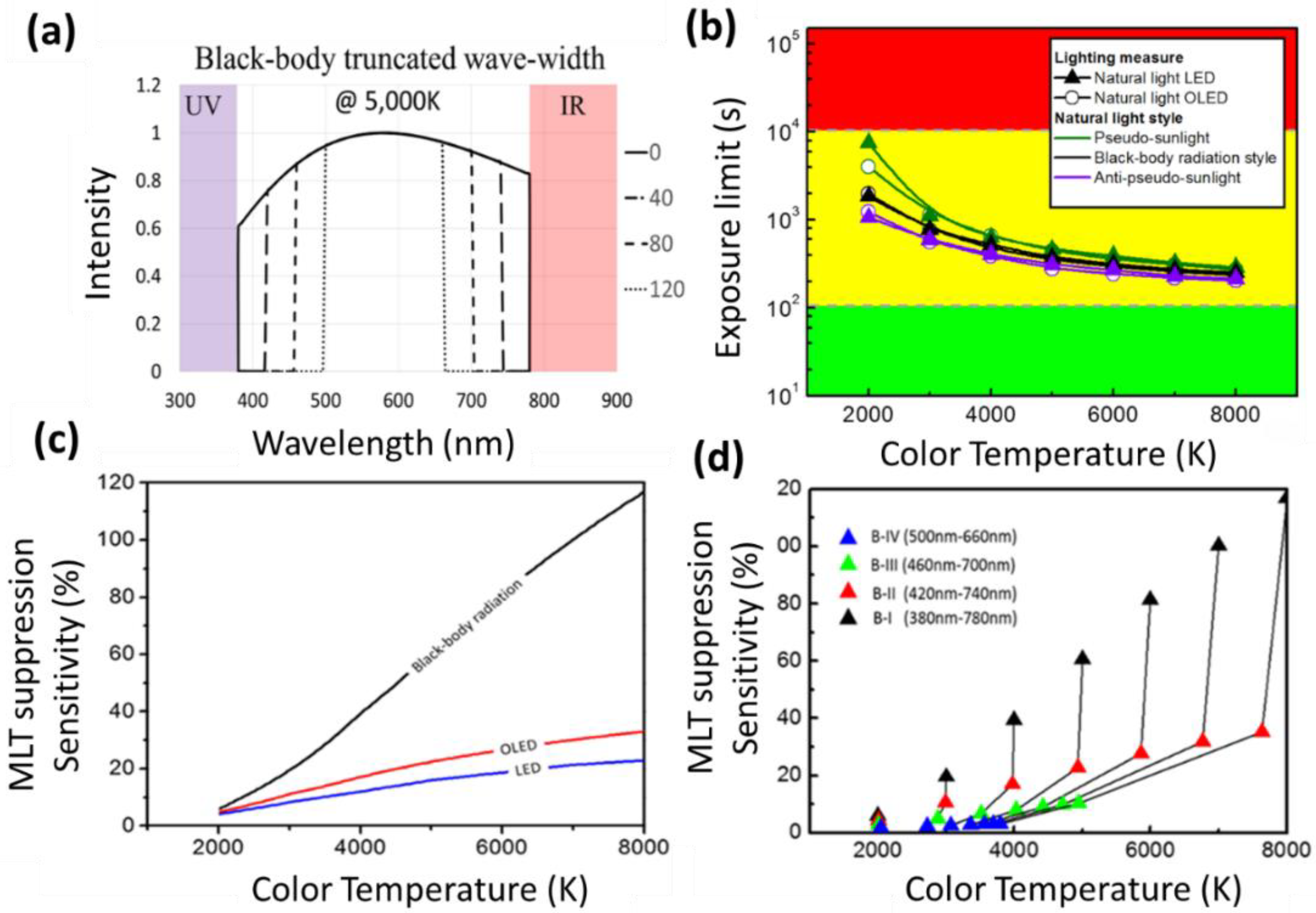
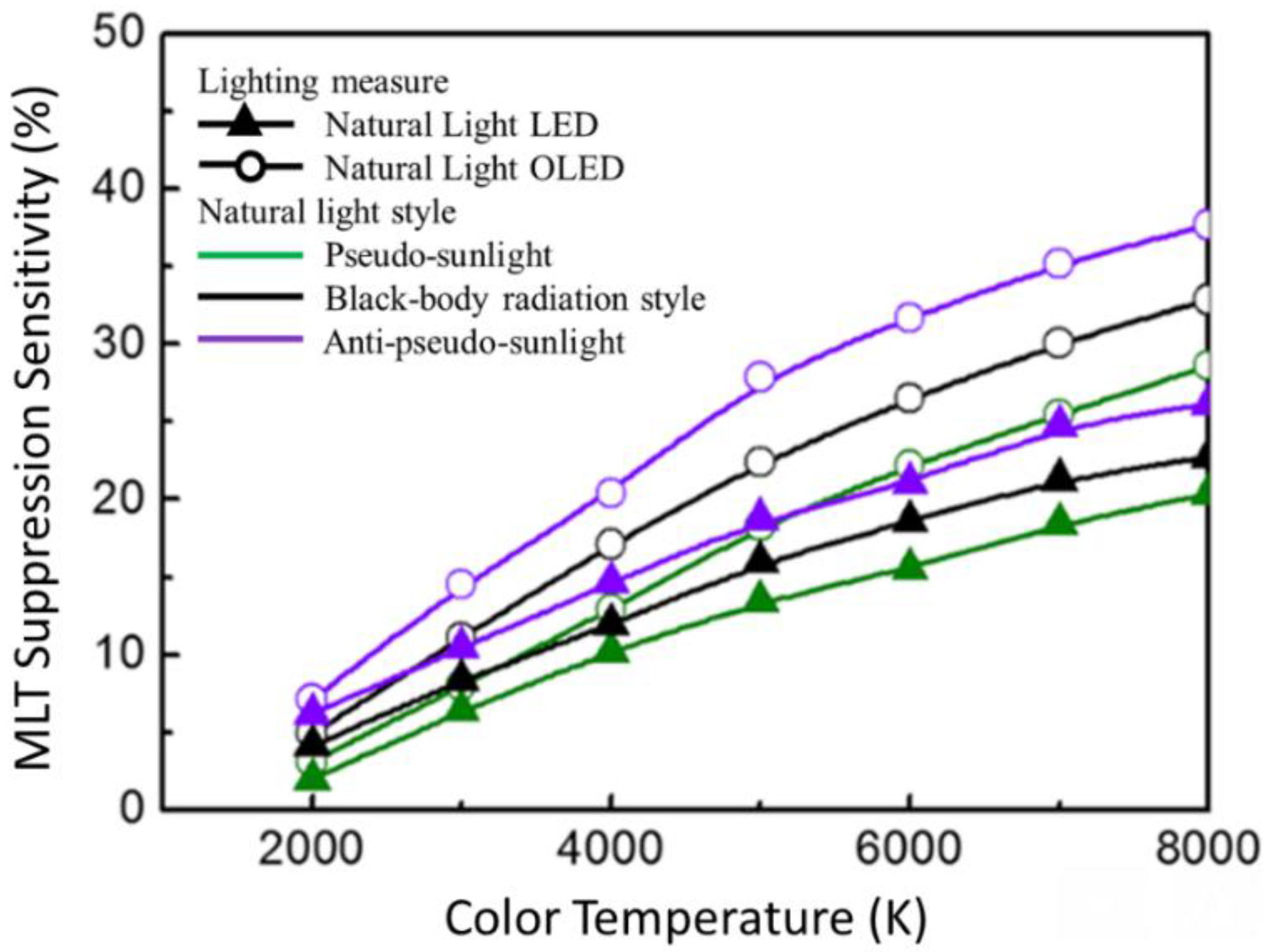
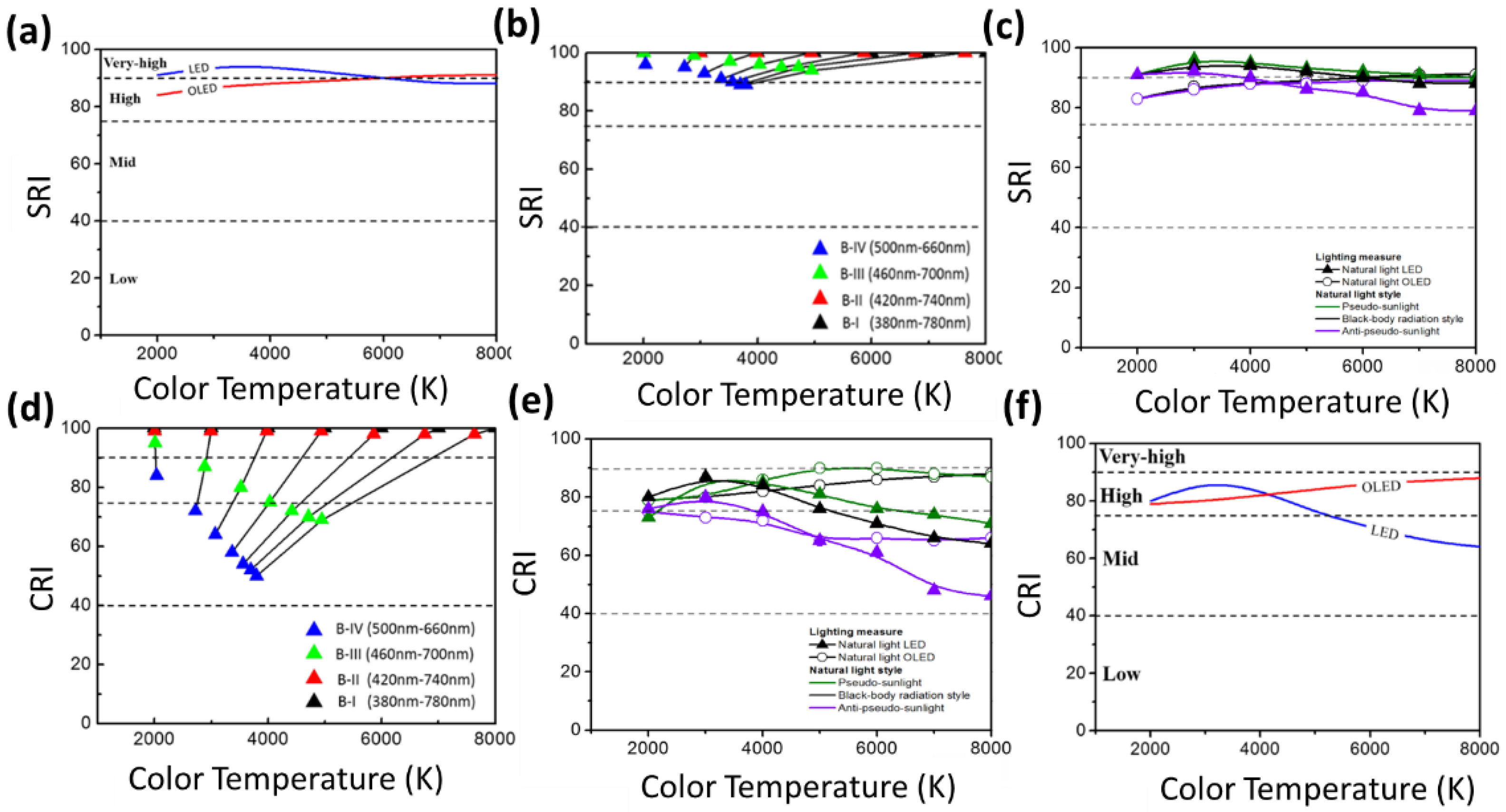
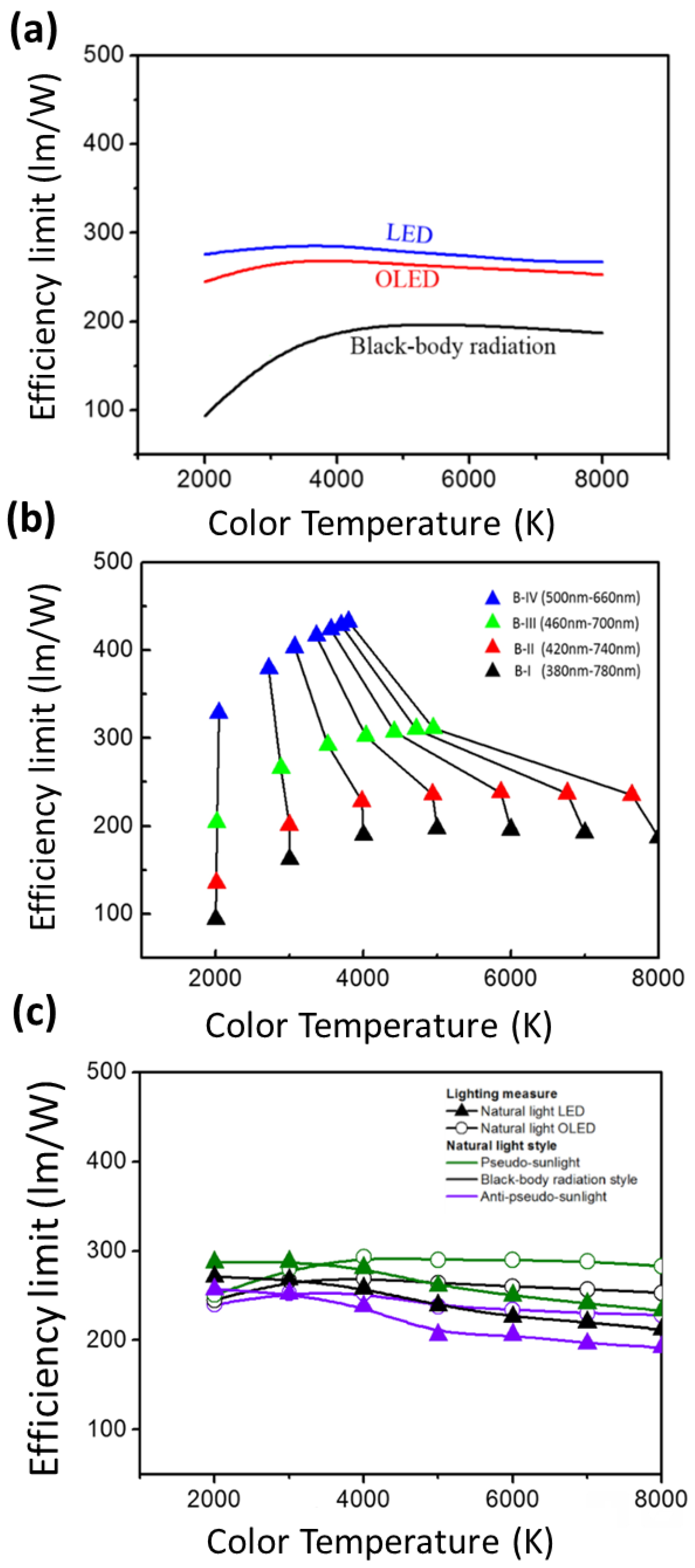
Electric light has been widely adopted in numerous applications, including signage, display, and illumination. Enhancing its efficiency and quality has been the focal point until now. Long exposure to intensive blue-light-enriched white light is, however, likely to cause health concerns, such as retina damage and melatonin suppression. A good light should hence be redefined as, at least, human-friendly, besides energy-saving and high-quality. Here, we demonstrate a novel design approach toward a good light based on the state-of-the-art solid-state lighting technologies. Taking the typical phosphor converted white-light-emitting diode (LED) for lighting, for example, a 2000 K orange-white emission with a black-body-radiation chromaticity can be 5 times safer than the 5000 K pure-white counterpart from a retina-protection perspective and 3.9 times safer from an MLT-secretion perspective. Further tuning its chromaticity from black-body-radiation- to sunlight-style, the 2000 K LED can be made 303% safer in terms of maximum retina permissible exposure limit or 100% better in terms of melatonin suppression sensitivity. Moreover, its corresponding efficacy limit can be increased from 270 to 285 lm/W, while keeping light quality constant at 91, in terms of natural light spectrum resemblance index. The same approach can be extended to organic LED as well as the design of a good light for display, wherein pure-white emission with a color temperature around 6000 K is suggested to replace the bluish-white backlight to safeguard human health.
Keywords: eco-friendly light sources; light design; organic light-emitting diodes; energy saving; high-quality light; spectrum-tuning; light-at-night eco-friendly light sources; light design; organic light-emitting diodes; energy saving; high-quality light; spectrum-tuning; light-at-night