Article

High-Resolution Fabry–Pérot Interferometric Strain Sensor for Mortar


China Electric Power Research Institute Co., Ltd., Beijing 102209, China
*
Author to whom correspondence should be addressed.
These authors contributed equally to this work.
Photonics 2026, 13(9), 876; https://doi.org/10.3390/photonics13090876

Submission received: 21 August 2026 / Revised: 10 September 2026 / Accepted: 12 September 2026 / Published: 17 September 2026

Abstract

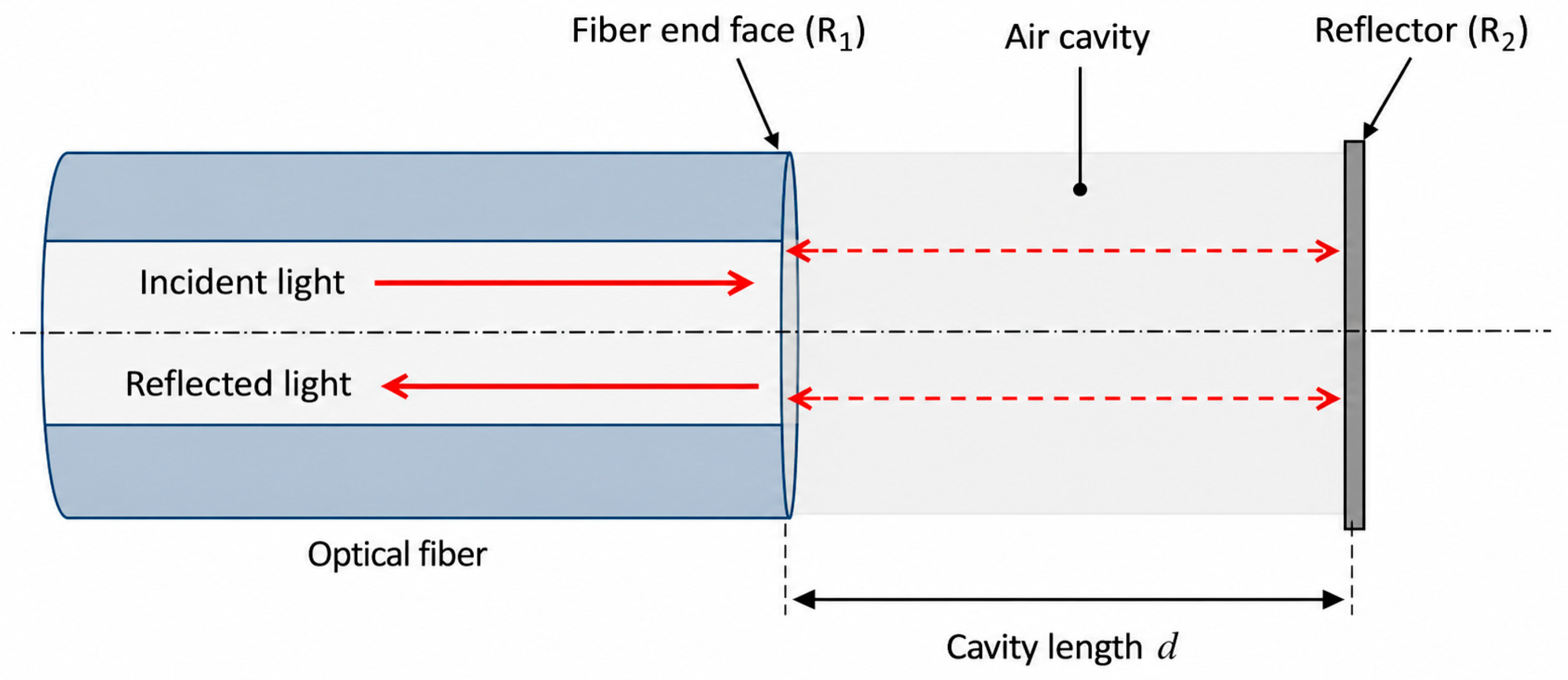
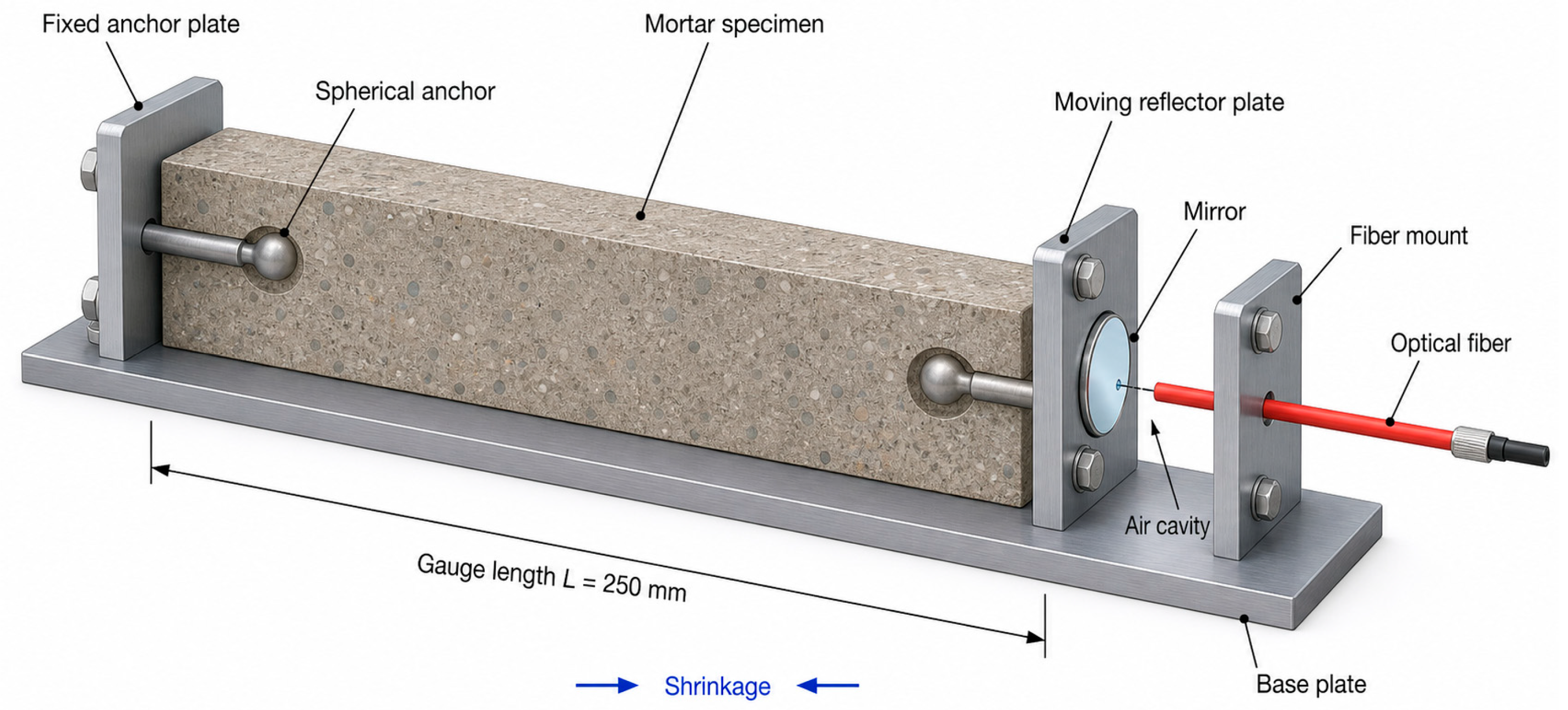
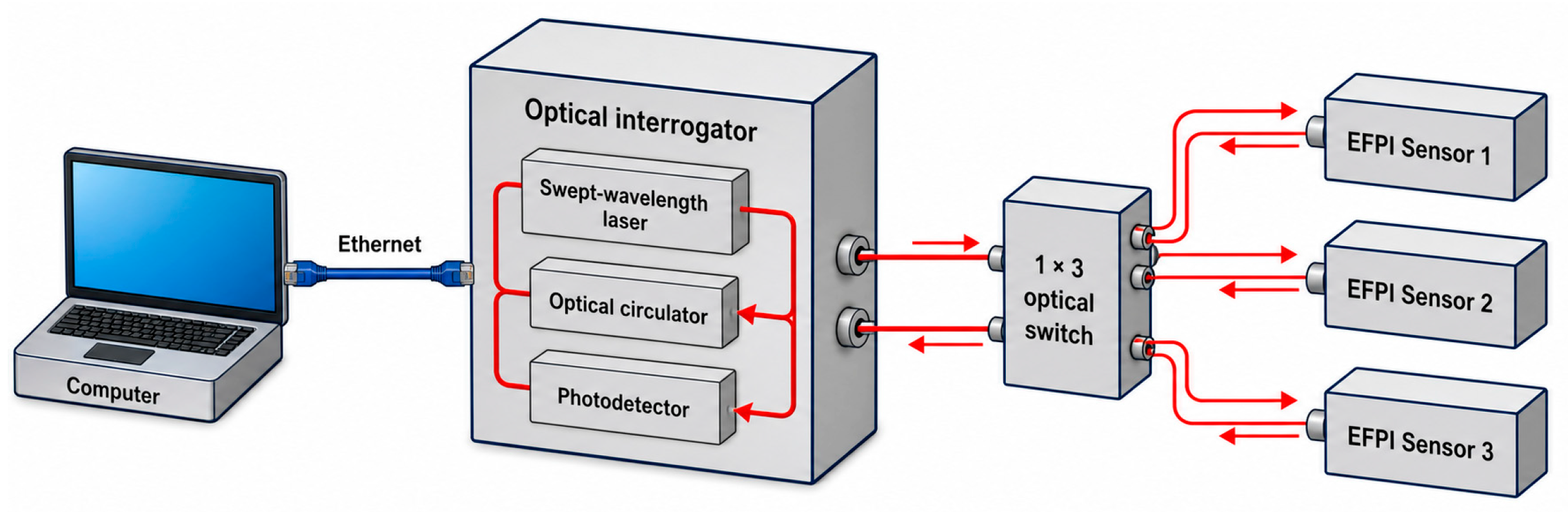
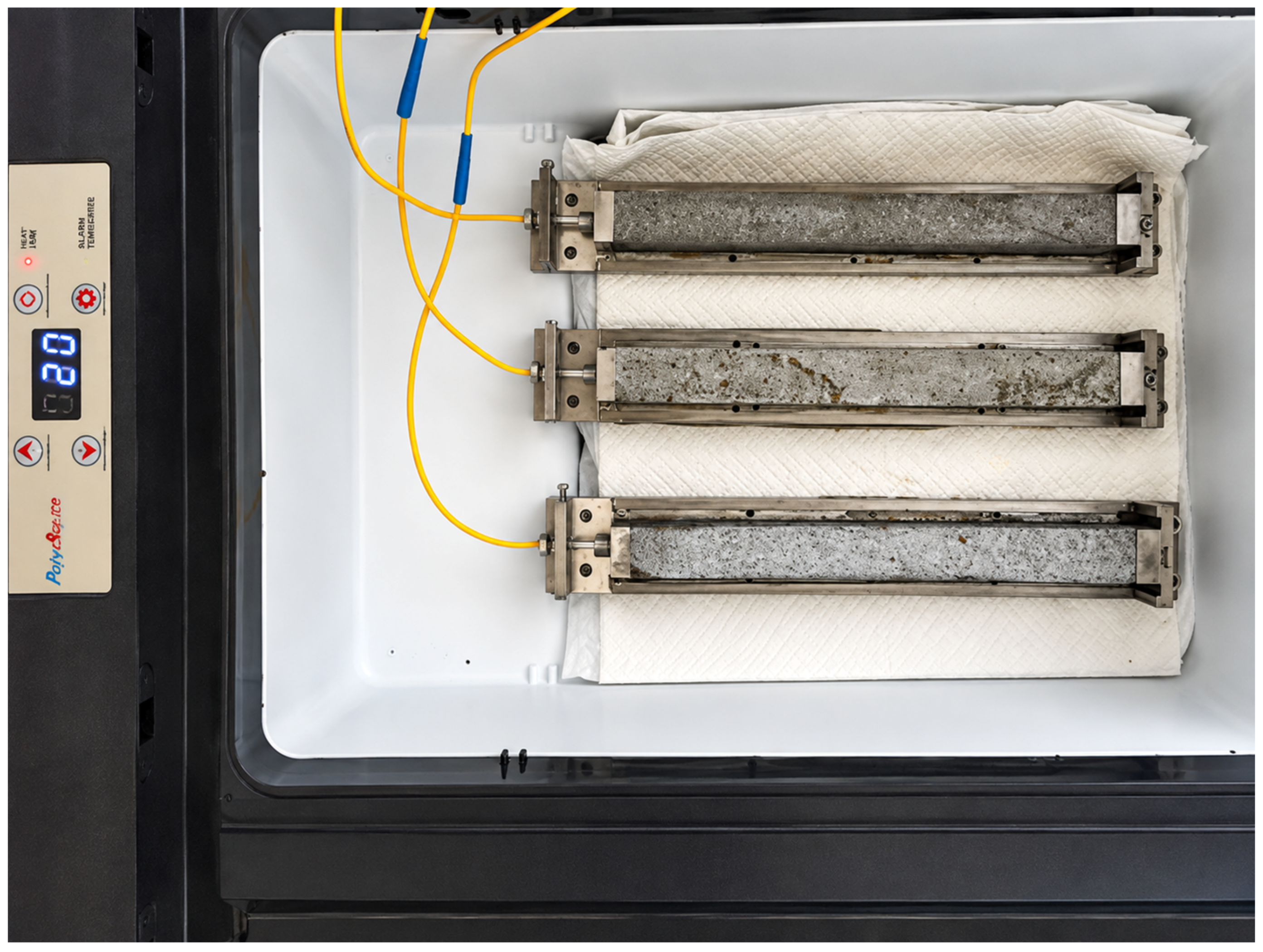
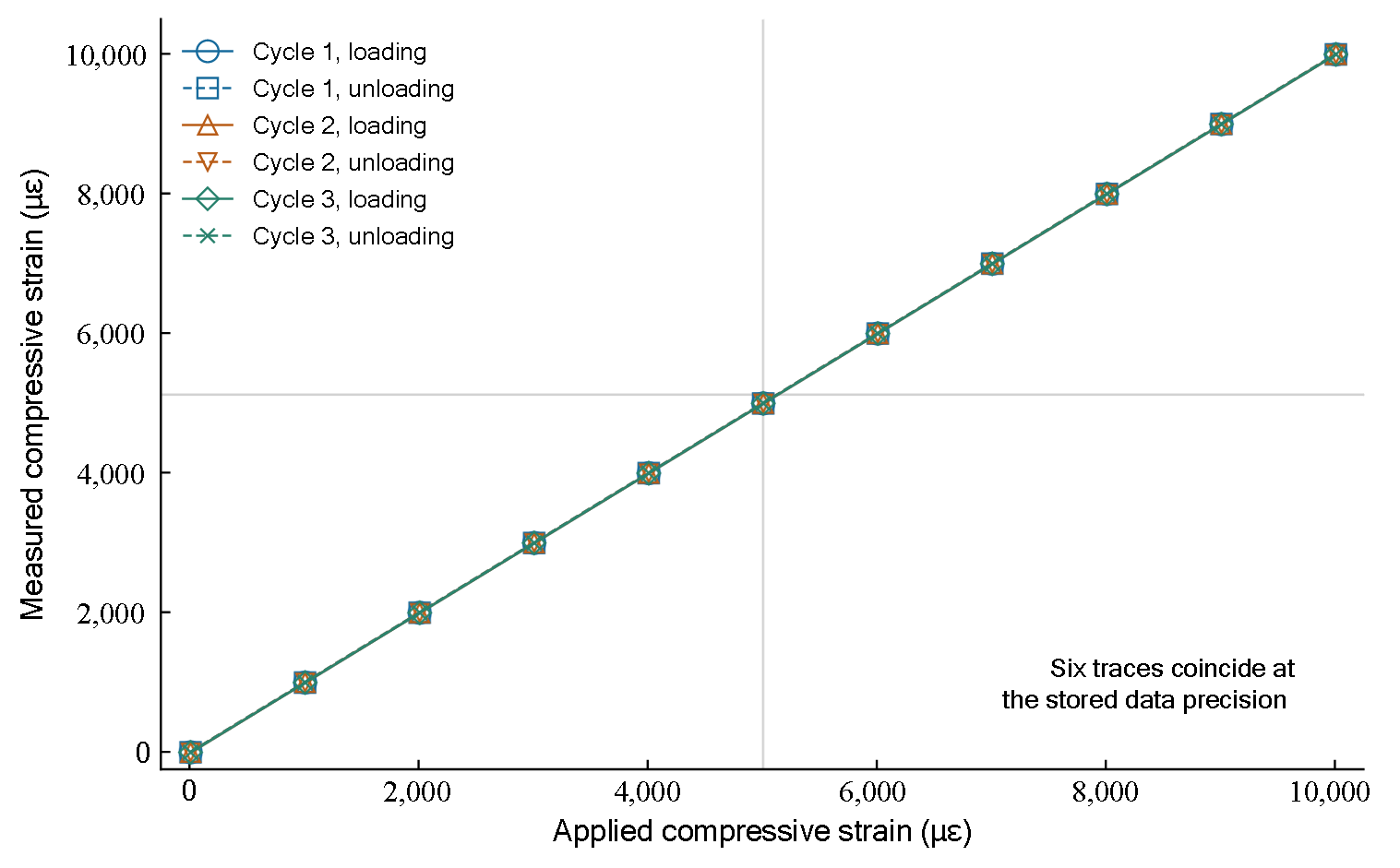
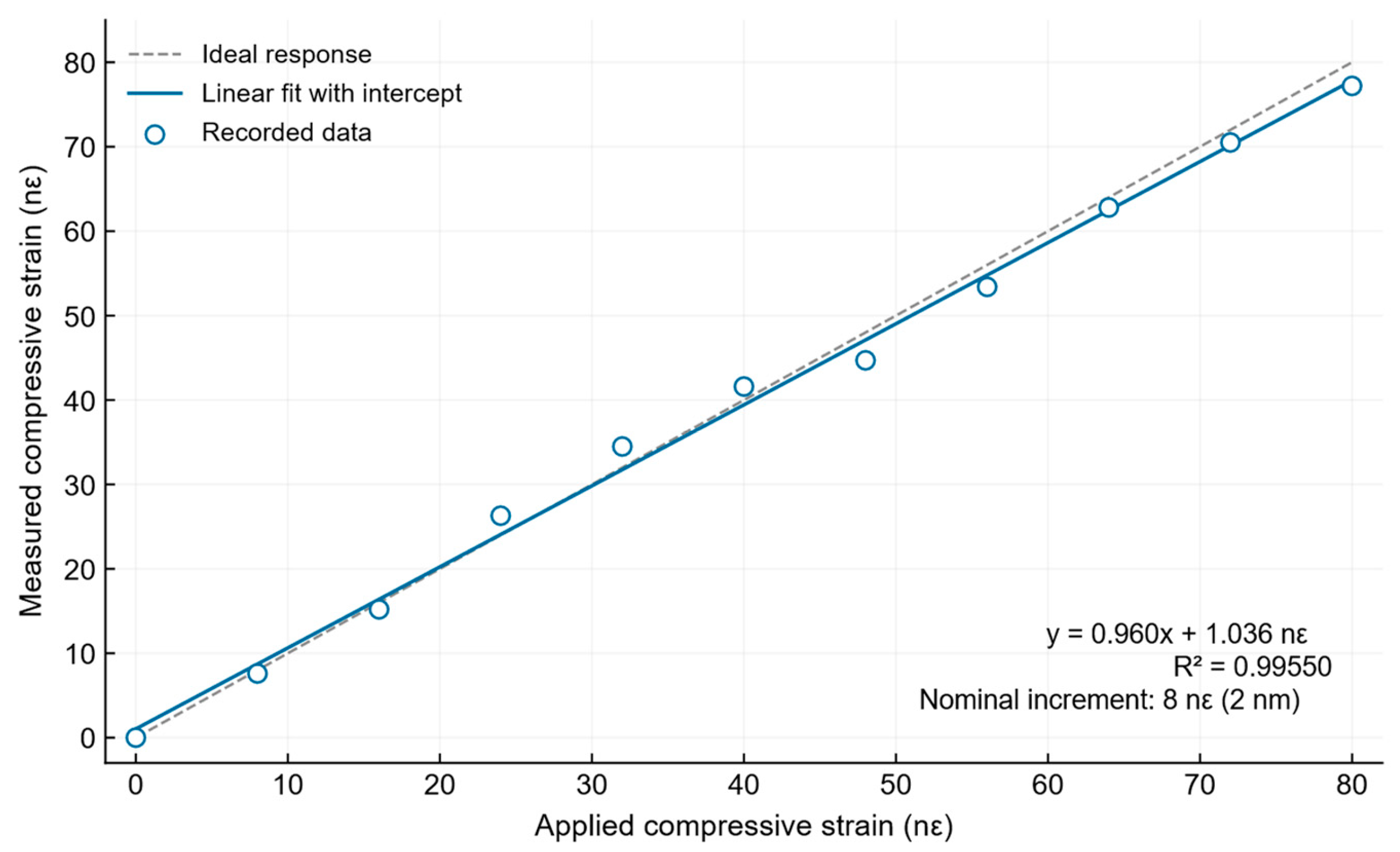
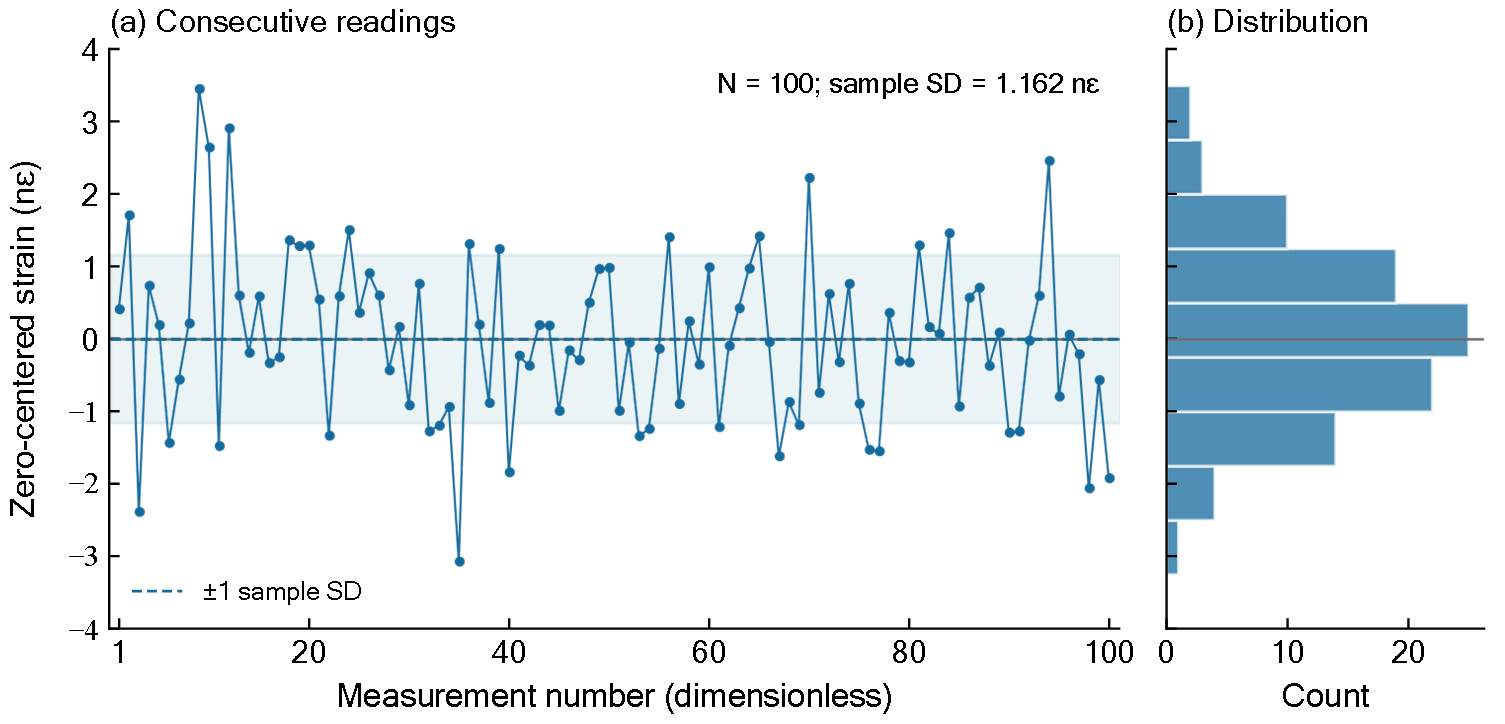
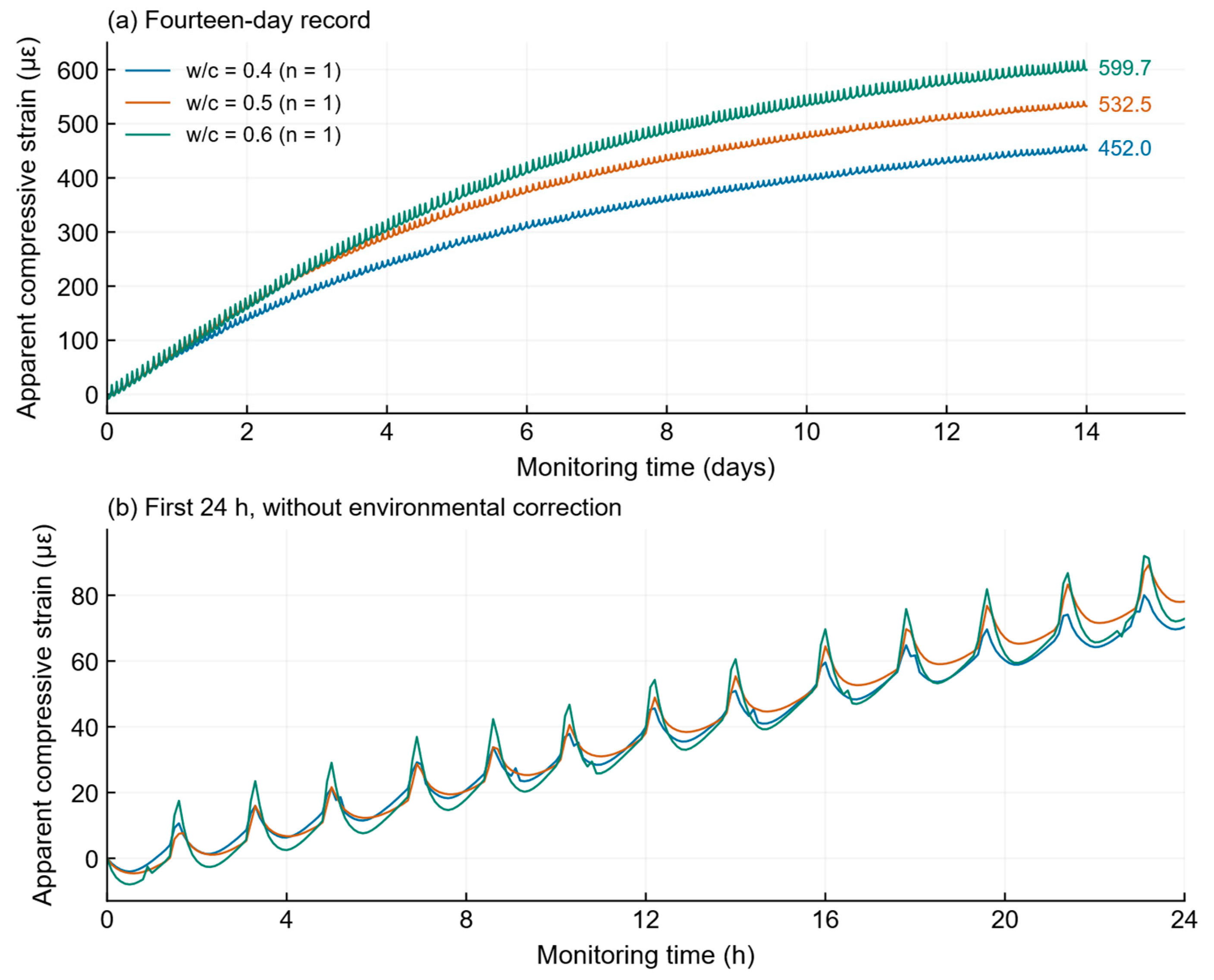
Continuous measurement of small deformation in cementitious materials requires both sensitive displacement readout and control of environmental effects. This study develops a long-gauge strain sensor based on a low-finesse extrinsic Fabry–Pérot interferometer (EFPI). Axial displacement of a 250 mm mortar prism is transferred to an external reflector, and the air cavity length is recovered from swept-wavelength reflection spectra. Loading–unloading measurements cover a nominal strain range of 0–10,000 µε. A separate incremental test resolves a nominal 2 nm displacement step, equivalent to 8 nε, with a local strain-response slope of 0.960 and R2 = 0.99550. For 100 consecutive readings at a chamber setting of 20 °C, the sample standard deviation is 1.162 nε; division by the local response slope gives an estimated input-referred noise-equivalent strain of 1.21 nε (1σ). These short-term metrics do not establish long-term accuracy. During 14-day monitoring, individual mortar prisms with water-to-cement ratios of 0.4, 0.5, and 0.6 reach apparent compressive strains of 452.0, 532.5, and 599.7 µε, respectively. The results demonstrate the feasibility of continuous long-gauge optical monitoring.
Keywords: extrinsic Fabry–Pérot interferometer; fiber-optic sensor; long-gauge strain; mortar; shrinkage monitoring; noise-equivalent strain extrinsic Fabry–Pérot interferometer; fiber-optic sensor; long-gauge strain; mortar; shrinkage monitoring; noise-equivalent strain