


Abstract
Fiber Bragg Grating (FBG) sensors are widely used for strain and temperature monitoring due to their high sensitivity, compact size, electromagnetic immunity, and multiplexing capability. While conventional FBG interrogators remain bulky and costly, Photonic Integrated Circuit (PIC) platforms provide a promising route toward compact, scalable, and low-power FBG interrogation. However, the choice of architecture strongly determines the achievable resolution, bandwidth, multiplexing capacity, and robustness. This review compares on-chip demodulation architectures, evaluating their performance in resolution, bandwidth, and interrogation speed. We show that the optimal architecture depends strongly on the application: AWG-based schemes excel in compact, multi-FBG readout; ring-resonator systems are highly effective for tunable filtering; and interferometric phase-domain schemes offer the highest sensitivity for dynamic strain sensing. Despite these architectural advances, practical deployment remains constrained by system-level bottlenecks. These challenges primarily include source/detector integration, fiber–chip coupling, packaging robustness, and thermal drift. Overcoming these barriers requires a shift in future development from isolated photonic-device optimization toward comprehensive, system-level co-design.
1. Introduction
1.1. Background and Significance of FBG Sensors
Optical fiber sensors have revolutionized the field of structural sensing, and they are considered one of the key technologies for future structural health monitoring (SHM), particularly for aerospace, civil engineering, and energy infrastructure [1]. Among these, Fiber Bragg Grating (FBG) sensors operate through a wavelength-encoded sensing mechanism, in which physical perturbations are directly translated into spectral shifts [2]. This encoding enables high-resolution and multiplexed sensing through wavelength division multiplexing (WDM) [3].
In addition, FBGs also offer inherent advantages over traditional electrical sensors: they are immune to electromagnetic interference (EMI), operate across a large temperature range, and are resilient in harsh or corrosive environments [4]. In the context of composite structures, FBGs are particularly significant because their small size allows them to be embedded with negligible distortion to the material’s structural integrity. This enables real-time monitoring of composite structures much closer to their design limits, facilitating a shift from schedule-based to condition-based maintenance.
1.2. Fundamentals of FBG Interrogation and Readout Architecture
Although FBG sensors offer important intrinsic advantages, their practical performance is determined not by the grating alone, but by the interrogation system used to read it. In practice, the achievable resolution, speed, accuracy, and robustness depend on system-level factors such as optical and electrical noise, spectral discrimination capability, calibration quality, thermal stability, and fabrication tolerances [1]. For this reason, an FBG interrogator should not be regarded merely as a wavelength-reading device, but as a complete readout architecture that converts Bragg wavelength shifts into electrical signals [5] and, ultimately, into digital estimates of strain, temperature, or other measurands.
From a functional perspective, the interrogator can be understood as a system-level chain comprising optical excitation, wavelength-dependent optical processing, photodetection, analog signal conditioning, digitization, and demodulation or estimation [2]. The role of the optical front end is to map the Bragg wavelength shift into a measurable intermediate observable, while the electronic and digital back end determines how accurately and rapidly that observable can be converted into the final measurand. Figure 1 summarizes this general readout architecture and provides the functional framework adopted throughout this review.
Figure 1.
System-level functional classification of PIC-based FBG interrogators. The diagram separates the interrogation chain into the optical front-end, PIC interrogator core, interrogation principle, readout and estimation stages, and evaluation metrics. The arrows indicate the general signal and information flow through the interrogation chain. The interrogation principle is grouped into three major classes discussed in this review: intensity/power-based demodulation, tracking/scanning-based wavelength reconstruction, and interferometric/phase-based demodulation.
Within PIC-based FBG interrogators, the main distinction between architectures lies in the physical quantity used to encode the wavelength shift. Intensity-based methods employ wavelength-selective devices, such as arrayed waveguide gratings (AWGs) or microring resonators, to convert wavelength variations into optical power changes [2,6]. Interferometric approaches instead translate wavelength shifts into phase variations [1], which are then demodulated electrically. A third category relies on wavelength reconstruction. In this approach, a tunable source or filter scans the spectrum to recover the Bragg wavelength from a calibrated temporal or bias-dependent response [7]. Despite these different operating principles, all configurations pursue the same objective: accurate and fast estimation of the Bragg wavelength under practical constraints imposed by noise, bandwidth, thermal drift, and device imperfections [8].
1.3. Conventional Bulk FBG Interrogation Landscape and the Drive Toward Miniaturization
Before the emergence of photonic integrated interrogators, FBG readout was predominantly realized using bulk-optic or fiber-optic architectures assembled from discrete components. Depending on the demodulation principle, these conventional approaches can be broadly grouped into intensity-based methods, sweep or scanning methods, interferometric methods, and dispersive or wavelength-to-time mapping methods [9,10]. In practice, these systems commonly are built using combinations of broadband sources or tunable sources, optical circulators, fixed or tunable filters, interferometers, dispersive elements, couplers, photodetectors, and external electronic processing units to recover the Bragg wavelength shift [9,11].
These bulk interrogation schemes established the principal demodulation mechanisms that also serve as the foundations for on-chip implementations. Intensity-based methods convert wavelength shifts into optical power variations by means of edge filters, fixed filters, AWGs, WDM couplers, or related spectral discriminators [9,10]. Interferometric methods instead convert Bragg wavelength shifts into phase variations, thereby enabling much higher sensitivity, but at the cost of more demanding calibration and greater susceptibility to environmental perturbations [9,11]. Dispersive methods map spectral shifts to temporal displacements, making them attractive for high-speed interrogation. Conversely, swept-source or tunable-filter schemes enable broad-spectrum reconstruction. However, their performance remains fundamentally limited by the scan mechanism’s speed and complexity [9,10,12]. As a result, the bulk interrogation landscape is best understood as a trade-off space in which resolution, dynamic range, interrogation speed, multiplexing capability, and system complexity cannot all be maximized simultaneously [9,10].
Although these discrete implementations demonstrated the versatility of FBG interrogation, they also revealed practical limitations for real deployment. Systems based on direct spectral observation are constrained by the speed and resolution of spectrometers or analyzers, whereas many high-speed solutions require more elaborate optical assemblies, tighter stability control, or more complex signal processing [10,12]. Likewise, low-cost discrete interrogators have been actively pursued precisely because general-purpose commercial FBG interrogators remain comparatively expensive, even when only the Bragg-wavelength position needs to be monitored [11]. These observations show that the challenge is not only how to demodulate wavelength accurately, but how to do so with acceptable cost, footprint, robustness, and scalability.
These limitations provide the central motivation for miniaturization toward photonic integrated circuit platforms. In aerospace and other harsh environments, this transition is driven not only by the need to reduce size and cost but also by the requirement for interrogators that can better tolerate temperature fluctuations, vibration, pressure variation, and electromagnetic interference without loss of interrogation fidelity [13]. Accordingly, PIC-based interrogators aim to improve repeatability, reduce power consumption, simplify optical assembly, and enhance thermo-mechanical robustness for field deployment and high-volume applications [6,14]. In this sense, integrated interrogators are best understood not as conceptually separate devices, but as miniaturized and functionally reconfigured descendants of mature bulk interrogation architectures.
1.4. Current State of PIC-Based Interrogation
Following this drive toward miniaturization, PIC-based FBG interrogators have evolved from early proof-of-concept microsystems integrating basic components like AWGs and couplers into a clearly emerging set of on-chip readout architectures [15]. Recent demonstrations on SOI, PLC, and hybrid platforms have shown that key interrogation functions—such as wavelength demultiplexing, resonant filtering, tunable scanning, and phase-sensitive detection—can already be transferred from bulk implementations to chip-scale systems [14,16,17,18,19,20,21,22].
However, the field has not yet converged toward a single optimal architecture. AWG-based passive interrogators remain attractive for compact and multiplexed readout, ring-resonator-based schemes offer compact tunability and tracking capability, and interferometric approaches provide a strong route toward high-resolution dynamic interrogation, but each does so with different trade-offs in thermal stability, operating range, readout complexity, and bandwidth [6,14,20,21,22]. The current challenge goes beyond merely miniaturizing the interrogator. It requires identifying the PIC architecture capable of reaching the 0.01 pm resolution needed for ultra-small dynamic strain sensing. Such extreme precision is critical for high-frequency vibration tracking, acoustic monitoring, and SHM in aerospace applications [14].
More broadly, PIC interrogators are not limited to wavelength-only processing, but can also analyze other optical observables such as intensity and polarization state. This wider perspective is relevant because future integrated FBG systems may increasingly combine spectral demodulation with auxiliary observables for polarization management, drift mitigation, or multi-parameter sensing [23]. However, to keep the discussion focused and technically comparable, the present review concentrates on PIC architectures directly aimed at FBG wavelength interrogation and dynamic strain readout.
1.5. Commercial FBG Interrogators
While PIC-based FBG interrogators are rapidly advancing in laboratory demonstrations, practical deployments in aerospace, civil engineering, energy and industrial monitoring still rely heavily on commercial FBG interrogators. Representative manufacturers include PhotonFirst, Redondo Optics, Ibsen Photonics, MicronOptics, FBGS, Sylex, Optics11, and HBK. These products provide useful engineering benchmarks and design perspectives for PIC-level interrogator because they specify system-level figures of merit such as operating wavelength range, wavelength resolution, strain resolution, multiplexing capacity, interrogation speed, measurement bandwidth, and field-deployment robustness.
Commercial systems already cover a broad range of application requirements. For example, PhotonFirst’s GTR, MIP3, and SGTR interrogators provide sub-picometer wavelength resolution with kHz-level sampling and multiplexed FBG readout [24]. Ibsen’s I-MON modules support tens of FBGs per channel, with sampling rates up to 35 kHz [25,26]. MicronOptics HYPERION si155 and si255 platforms provide calibrated multi-channel interrogation for dynamic and quasi-static sensing applications [27,28]. Other vendors, including FBGS [29], Sylex [30], Optics11 [31], and HBK [32], emphasize different combinations of industrial packaging, long-term stability, high multiplexing capacity, software-assisted calibration, and operation under field conditions.
Overall, these commercial interrogators indicate that deployable FBG systems typically target 0.3 pm to 5 pm wavelength resolution, multiplexing from tens of FBGs per channel to hundreds or more sensors across multiple channels, and sampling rates ranging from hundreds of hertz to tens of kilohertz depending on the product configuration. Some specialized dynamic systems extend beyond this range. For instance, Redondo Optics’ FAESense-M200 and FAESense-M400 report a wavelength resolution of 0.01 pm and sampling frequencies up to 500 kHz, although over a comparatively limited dynamic wavelength range of 2 nm [33]. These specifications show that the remaining gap for PIC-based interrogators is not only optical sensitivity but also complete-system engineering, including packaging, environmental robustness, high-channel multiplexing, calibration stability, photodetector integration, and electronic readout. Commercial systems therefore define practical targets that next-generation PIC-based FBG interrogators must approach to become deployable sensing instruments.
1.6. Aim of the Review
This review examines the main PIC-based FBG interrogation architectures and compares them from the perspective of resolution, dynamic performance, and practical integration. Building on the classification introduced above, it focuses on representative intensity-based, tracking/scanning-based, and interferometric phase-based approaches implemented on photonic integrated platforms.
2. Photonic Integrated Circuit Platforms and Building Blocks for FBG Interrogation
In PIC-based FBG interrogators, the material platform determines the available photonic building blocks and strongly influences propagation loss, integration density, fiber coupling, thermal sensitivity, active-device integration, and packaging complexity. Although the interrogation architecture defines the demodulation principle, the platforms determine how compactly, efficiently, and robustly that architecture can be implemented. Therefore, before classifying PIC-FBG interrogators by architecture, it is useful to summarize the main material platforms and the photonic elements that they typically support.
A PIC-FBG interrogator generally requires several functional groups: a light source, such as a broadband source, tunable laser, or laser diode, to illuminate the sensing FBG; wavelength-selective elements that convert Bragg wavelength shifts into measurable optical intensity, or phase changes; passive routing and splitting structures that distribute light on chip; fiber-to-chip interfaces that couple the FBG reflection into the PIC; photodetectors and electronic front-end circuits that convert optical signals into electrical signals; and tuning or stabilization elements, such as thermal phase shifters, heaters, and temperature-control structures, that enable calibration and drift compensation. Optical amplifiers may also be required when the reflected FBG signal or chip output power is weak, although they are often implemented off chip in current demonstrations. The following discussion therefore summarizes the main platforms according to the building blocks they support and their relevance to FBG interrogation, rather than treating the platform as an independent classification axis.
2.1. Passive Platforms and Available Building Blocks
Silicon-on-insulator (SOI) is currently the most widely used platform for compact PIC-based FBG interrogators. Its high refractive-index contrast enables dense integration of wavelength-selective, interferometric, and routing components, including arrayed waveguide gratings (AWGs), microring resonators, Mach–Zehnder interferometers (MZIs), multimode interferometers (MMIs), directional couplers, grating or edge couplers, thermo-optic phase shifters, and on-chip Bragg or subwavelength-grating structures. In FBG interrogation, SOI AWGs are commonly used as filter banks that map the reflected FBG spectrum into multiple output intensities for wavelength estimation and multiplexed readout. MZIs convert wavelength shifts into phase or intensity variations and are attractive for high-sensitivity dynamic interrogation, while microring resonators provide compact wavelength-selective filtering but require careful thermal stabilization. MMIs and directional couplers support power splitting, combining, and optical hybrid operation, whereas grating and edge couplers determine the practical fiber-to-chip interface. The main limitations of SOI are its sensitivity to fabrication errors, sidewall roughness, polarization dependence, and thermal drift. In addition, silicon does not provide efficient native light generation at telecom wavelengths, so SOI interrogators usually rely on off-chip sources or hybrid integration for active functions.
Silica planar lightwave circuit (PLC) technology occupies a lower-loss and more passive regime. Its lower refractive-index contrast leads to larger device footprints, but it offers low propagation loss, mature AWG fabrication, good channel uniformity, and efficient mode matching to standard single-mode fibers. Typical silica PLC building blocks include low-loss waveguides, star couplers, AWGs, splitters, and directional couplers. These properties make silica PLCs particularly suitable for AWG-based FBG interrogation where stable channel responses, low insertion loss, and fiber-coupling efficiency are more important than extreme compactness [14,17]. For example, AWG filter banks fabricated on silica PLC platforms can provide smooth and stable spectral responses for relative-intensity or algorithm-assisted wavelength estimation. However, because of the larger footprint and weaker confinement, silica PLCs are less favorable for very dense resonator arrays, compact interferometric circuits, or highly miniaturized systems. Active components such as lasers and photodetectors generally require off-chip or hybrid implementation.
2.2. Active and Hybrid Integration Platforms
III–V platforms, such as Indium phosphide (InP), are especially relevant when active photonic functions are required. They can provide lasers, semiconductor optical amplifiers, electro-absorption or phase modulators, and photodetectors [34]. These building blocks are important for transforming a passive interrogation chip into a more complete integrated system. However, III–V platforms generally exhibit higher passive propagation loss and lower passive-circuit density than SOI for large filter banks or low-loss routing networks [14]. Therefore, III–V materials are usually more attractive as active-device layers than as the main platform for the passive filtering core of an FBG interrogator.
Hybrid and heterogeneous integration strategies are increasingly important because practical FBG interrogators require both passive wavelength-processing circuits and active optoelectronic functions [35]. For example, SOI may be used for AWGs, MZIs, resonators, MMIs, and passive routing, while III–V materials or discrete components provide lasers and photodetectors.
Taken together, these platforms provide different implementation routes for the same basic interrogation functions. SOI favors compact and dense passive photonic circuits; silica PLC favors low-loss and stable AWG-based filter banks; and III–V or hybrid integration becomes important when light sources, optical amplifiers, photodetectors, or more complete system-level integration are required. Based on this platform-level background, the following section focuses on the main on-chip demodulation architectures used to convert FBG Bragg wavelength shifts into measurable optical or electrical signals.
3. On-Chip Demodulation Architectures
3.1. Intensity-Based Demodulation
Power-domain interrogation converts the Bragg wavelength shift in an FBG into a variation in detected optical power after spectral filtering. In PIC-based interrogators, this can be implemented either by biasing a single filter on its spectral slope or by distributing the reflected FBG spectrum over multiple partially overlapping channels and combining the corresponding output powers digitally. The main advantage of this class of methods is that interrogation can be performed without continuous wavelength scanning during measurement, so the update rate is mainly limited by the photodetectors and readout electronics [4,6,16,17].
3.1.1. Single-Channel Edge Filtering Configuration
Single-channel edge filtering is one of the most fundamental PIC-compatible interrogation schemes for FBG sensors, particularly when compact implementation and high-speed dynamic readout are desired. In this approach, the Bragg-wavelength shift is converted into an intensity variation by biasing a wavelength-dependent optical filter on a local spectral slope [36]. A representative PIC implementation is the SOI ring-resonator add-drop filter, in which broadband light is sent to the FBG through an optical circulator, and the reflected FBG spectrum is then routed into the PIC and spectrally filtered by the resonator before detection at the through or drop port, as shown in Figure 2.
Figure 2.
Single-channel edge-filtering interrogation architecture based on a PIC ring-resonator add-drop filter.
The operation principle is that the ring resonance is first adjusted by an integrated heater and then fixed at a selected operating wavelength. Once this bias point is established, the reflected FBG spectrum partially overlaps with the ring-resonator transfer function, so that shifts in the Bragg wavelength produce corresponding changes in the detected optical power. From a system point of view, the photodetected signal is determined by the spectral overlap between the ring response and the reflected FBG spectrum, and can be expressed as a convolution between the two spectral functions [6].
where is the spectral response of the ring resonator, is the resonance wavelength of the ring, is the 3 dB bandwidth of the ring response, and is the reflected FBG spectrum with 3 dB bandwidth B [6].
Maximum optical power is obtained when the ring resonance coincides with the FBG peak, but this point is also a stationary point of the response and is therefore not the most sensitive operating condition. For interrogation, the ring is instead biased on the rising or falling slope of the convolution profile, where the local derivative is largest and wavelength shifts are translated into larger power changes [6]. The minimum detectable wavelength shift can be written as
where NEP is the photodetector noise-equivalent power, BW is the electrical bandwidth, and is the local slope of the linearized response [1]. A smaller generally increases sensitivity by sharpening the response, whereas a larger broadens the usable range at the expense of a lower slope [6]. Once the operating point is set, the interrogation speed is no longer limited by wavelength scanning but mainly by the photodetector bandwidth, and high-speed dynamic strain measurements up to 40 kHz were experimentally demonstrated [6].
3.1.2. Multi-Channel Filter-Bank Interrogation
Multi-channel means the reflected FBG spectrum is distributed across multiple partially overlapping spectral channels, and the Bragg wavelength is inferred from the resulting power distribution. Unlike the single-filter slope interrogation discussed above, which relies on a local derivative at a fixed operating point, these approaches perform discrete spectral sampling of the FBG reflection profile to reconstruct the Bragg wavelength.
In PIC implementations, this concept is most realized using AWGs. In contrast to conventional telecom AWGs designed for minimal crosstalk, AWGs for FBG interrogation are intentionally engineered to exhibit significant overlap between adjacent channels, allowing a single FBG reflection peak to be simultaneously mapped onto multiple output ports. This can be achieved and enhanced by jointly reducing the output waveguide spacing and increasing the input waveguide width, while preserving acceptable loss and uniformity [16,17,37], as illustrated in Figure 3a.
Figure 3.
Multi-channel filter-bank interrogation principle and implementations: (a) AWG architecture; (b) Two-channel relative-intensity demodulation principle; (c) Multi-channel Bragg wavelength estimation.
The optical power measured at the i-th channel can be expressed as the spectral overlap integral
where is the source spectrum, is the reflected FBG spectrum, is the transmission response of channel i, and is the corresponding loss term [16,17].
- (1)
- Two-channel relative-intensity method
The simplest implementation uses two adjacent overlapping channels. As shown in Figure 3b, the Bragg wavelength can be inferred from the ratio of the detected powers distributed in channel i and i + 1, and respectively. Under the common assumption of similar channel shapes and approximately Gaussian spectral profiles [16], the logarithm of the power ratio becomes approximately linear with respect to the Bragg wavelength shift
This relative-intensity method benefits from inherent suppression of common-mode noise sources, since both channels experience nearly identical source fluctuations and optical losses. However, this approach only works effectively within a limited spectral region where both channels exhibit a sufficiently steep and overlapping response [16,17]. When the FBG reflection peak shifts toward regions where one or both channel responses become flat, as illustrated in the subplot of Figure 3b, the usable measurement range is restricted to a local linear interval, beyond which sensitivity degrades.
This range limitation is directly linked to the range–resolution trade-off of adjacent-channel power-ratio demodulation. Increasing the channel spacing or narrowing the AWG 3 dB bandwidth can increase the slope of the logarithmic power-ratio response, thereby improving wavelength resolution, but it also reduces the effective spectral-overlap region and therefore narrows the usable demodulation range. To overcome this fundamental limitation, early high-resolution demonstrations on InP platforms intentionally designed the AWG response such that at least two adjacent detectors always maintained a significant signal overlap, achieving a 0.32 pm measurement resolution over a 10 nm working range [38]. Building on this concept, recent work by Jiao et al. addressed this trade-off through AWG spectral-profile engineering: the transmission spectra were reshaped so that the optical power changes more rapidly with wavelength while the overlap wavelength range between adjacent spectral features is largely preserved [39]. In their SOI implementation, this was achieved by optimizing waveguide widths and by broadening the AWG output spectra to maintain strong overlap among multiple spectral features, providing a direct photonic-design route to improve the two-channel relative-intensity method rather than relying only on post-processing correction.
- (2)
- Multi-channel reconstruction
The limited range of adjacent-channel power-ratio demodulation can also appear as discontinuous usable regions when the FBG peak moves beyond the effective overlap of a channel pair. Multi-channel reconstruction addresses this limitation by treating the AWG as a filter bank rather than as a single channel pair. In this case, the wavelength is reconstructed from the entire power distribution over several overlapping output channels, as illustrated in Figure 3c, so that the wavelength can be tracked across a broader spectral region. A common approach is the center-of-gravity (CoG) estimator:
where is the measured power in channel i and is the calibrated center position of that channel.
Here, channel overlap becomes a design requirement rather than a drawback, since it ensures that the FBG peak contributes measurable power to multiple channels simultaneously, enabling continuous tracking over a wider wavelength range [4]. In practice, this overlap can be deliberately enhanced at the AWG design level. For example, Jiao et al. broadened the AWG output spectra by inserting a taper and multimode-interference section at the input side of the AWG [40], so that larger overlaps are formed between adjacent and non-adjacent channels and the demodulation signal can transition continuously across usable spectral regions. Compared with the two-channel relative intensity method, CoG decoding provides a broader effective measurement range and facilitates simultaneous interrogation of multiple FBGs. However, it generally requires calibration, since the centroid relation is exact only if the channels have identical spectral shapes and uniform spacing, conditions that are not strictly satisfied in practical AWGs [4,16,17]. A recent fully integrated dual-AWG interrogator provides a clear experimental proof of this limitation: the raw CoG-estimated wavelength exhibited a near-linear but non-ideal relation to the reference wavelength (measured by a wavelength meter) because of channel-shape variability and non-uniform channel spacing, and a subsequent linear calibration reduced the maximum absolute wavelength error to 1.81 pm in the C band and 1.89 pm in the L band [37].
3.2. Tracking- and Scanning-Based Demodulation
In tracking- and scanning-based interrogations, the Bragg wavelength is recovered by actively tuning either the optical source or an optical filter within the interrogator. Unlike intensity-based methods, which demodulate wavelength from a static transfer function, these approaches rely on establishing a mapping between the optical spectral response and the sensor wavelength [8,18,19,20].
3.2.1. Tunable-Source Interrogation
A PIC-level implementation of tunable-source interrogation is the VCSEL-based scheme reported by Van Hoe et al., in which the laser is directly modulated by a sawtooth current periodically so that its emission wavelength scans across the FBG spectrum due to the red-shift effect [18]. Within a certain modulation range, the wavelength response is approximately linear with the applied current, enabling a calibrated mapping between the drive signal and the emitted wavelength. Over each modulation period, the photodetector records the reflected optical power as a function of time, and a wavelength calibration of the source converts that time trace into a reconstructed spectrum [18]. Assume the instantaneous source wavelength is denoted by , a laser wavelength variation versus time can be described as:
The modulation sawtooth signal is . The current generated on photodetector is proportional to the transmission of FBG sensor, .
So that the Bragg wavelength is obtained from the time coordinate of the spectral feature after calibration. In the idealized linear-sweep case, , and one full spectrum becomes available every 1/f seconds, where f is the scan frequency.
The main strength of this approach is that it reconstructs the spectral profile itself rather than only one local feature, which might be beneficial for the cases with FBG spectrum deformation. Van Hoe et al. emphasizes that dynamic reconstruction avoids the information loss associated with pure peak-tracking systems, and in the experimental implementation, the VCSEL was tuned at 1 kHz to provide continuous spectrum reconstruction over a range of 2.5 nm. Its main practical limitations are the tuning linearity of the source, the need for calibration between drive current and wavelength, and the fact that the update rate is tied to the scan frequency and acquisition bandwidth [18].
3.2.2. Tunable Filter Interrogation
In tunable-filter interrogation, the Bragg wavelength is recovered by actively tuning the spectral response of the optical filter until it aligns with the FBG reflection peak. Unlike tunable-source schemes, this approach retains the use of a broadband light source, while the optical filter is implemented as a thermally tunable micro-ring resonator (MRR) [19].
In the implementation, via the integrated micro-heater on MRR, the applied electrical heating power induces a shift in the resonance wavelength based on thermo-optical effect,
where denotes the thermal tuning efficiency. The Bragg wavelength is then determined from the heating power at which the filter response and the FBG spectrum are aligned,
where is the heating power corresponding to the optical minimum or maximum, depending on whether the through or drop port of MRR is used.
Because this approach relies on active wavelength tracking, the interrogation speed is fundamentally limited by the filter’s thermal tuning dynamics, primarily its scanning rate. Typical implementations exhibit sweep rates on the order of tens of hertz, making them suitable for quasi-static or slowly varying measurements, but not for high-frequency dynamic strain sensing.
3.2.3. Dither-Assisted Locking and Error-Signal Tracking
Dither-assisted interrogation enhances tunable-resonator demodulation by adding a small periodic modulation to the resonance wavelength of the interrogating microring resonator (MRR) and extracting a derivative-like error signal from the resulting optical response via lock-in detection. Intensity-based demodulation provides only the magnitude of the transmission change. In contrast, the dither-generated error signal is antisymmetric around the alignment point between the FBG Bragg wavelength and the MRR resonance wavelength, indicating both the magnitude and the direction of the wavelength detuning [8,20]. This makes the method more convenient for stable operating-point tracking. A conceptual overview of the complete interrogation chain, the spectral alignment process, the time-domain lock acquisition, and the locked-state readout is summarized in Figure 4a–d. Figure 4a illustrates a multiplexed architecture using multiple microring resonators. Each thermally tunable ring is assigned to a specific FBG wavelength channel. This enables the parallel tracking of several gratings on a single chip. The transfer function of the drop-port of MRR has Lorentzian response,
where and are the input wavelength and the resonance wavelength of the ring resonator, respectively, and is the full width at half maximum (FWHM) of the resonance. Since the resonance wavelength is modulated by a dithering signal at frequency , it can be written as
where quantifies the maximal resonance wavelength shift caused by dithering. Assume the input power is , therefore the output is
Figure 4.
Conceptual workflow of dither-assisted locking and error-signal tracking for microring-based FBG interrogation: (a) system-level schematic of the multiplexed dither-assisted interrogation architecture, in which multiple thermally tunable microring resonators are assigned to different FBG wavelength channels; (b) spectral view of lock acquisition, showing the initial mismatch between the FBG reflection spectrum and the microring response and the aligned condition after bias tuning; (c) time-domain view of the bias-scan acquisition process, in which the antisymmetric error signal identifies the operating point; (d) conceptual locked-state readout, where slow error variations are used for feedback correction and fast residual variations carry the dynamic sensing information.
After the lock-in detection, the first harmonic can be extracted, and it is proportional to the first derivative of the transfer function:
Thus, the demodulated signal behaves as an antisymmetric signal whose zero crossing identifies the alignment condition between the FBG wavelength and the interrogator resonance [8,20].
To find the operating point to achieve this alignment condition, a bias scan is superimposed on the modulation drive to sweep the MRR resonance across the FBG wavelength while the dithering remains active [8]. Monitoring the acquired signal during scanning, if the error signal evolves into an antisymmetric curve, the corresponding bias voltage can be selected as the operating voltage. The spectral and time-domain views of this lock-acquisition process are shown in Figure 4b,c.
Once this operating point has been found, the slow scan will be stopped, and the interrogator is operated in a feedback-locked state. A DC heater bias maintains the resonance near the selected point, the small dithering remains applied, and the lock-in amplifier continuously extracts the error signal. Because this signal changes sign on opposite sides of the alignment point, it can be used by the feedback controller to compensate slow thermal or environmental drift of the MRR. At the same time, the high-frequency component variation in the locked-state error signal carries the dynamic strain information of the FBG [20]. This locked-state separation between slow feedback correction and fast sensing variation is illustrated conceptually in Figure 4d.
Compared with the intensity-based demodulation techniques, dither-assisted locking provides a more robust and drift-tolerant interrogation mechanism because the operating point is defined by an antisymmetric error signal rather than by the absolute amplitude of the optical power. This reduces sensitivity to source-power fluctuations and improves stability during long-term operation. However, the interrogation bandwidth is influenced by the combined dynamics of the heater, lock-in detection, and feedback loop. In Yang et al.’s single-FBG demonstration, the loop was implemented with a 100 Hz feedback rate, and dynamic strain sensing was experimentally demonstrated with a reported resolution of about over the 100 Hz–1 kHz band [20]. This illustrates the key trade-off of locking-based interrogation: it strongly improves wavelength accuracy and drift robustness, but the loop dynamics can partially suppress low-frequency signal components below the feedback bandwidth.
3.3. Interferometric Phase-Based Demodulation
In the configurations of the interferometric phase-based demodulation, the Bragg-wavelength shift in an FBG is not measured directly from intensity or by active spectral scanning but is firstly converted into a phase shift by an unbalanced interferometer, typically a Mach–Zehnder interferometer (MZI). If the spectral width of the reflected FBG signal is narrower than about half of the interferometer free spectral range (FSR), the output intensity can be written in the following form
where A is a DC term, B is related to the interference visibility, and is the phase variation induced by the FBG wavelength shift [1,14,21,22]. The phase-to-wavelength conversion is governed by the interferometer FSR,
So that the wavelength shift is
Thus, the phase variation can be demodulated back to the Bragg wavelength shift. The key functionality of a phase-based demodulation configuration is the accurate and unambiguous recovery of from the interferometric output.
Compared with intensity-based approaches, phase-domain schemes are attractive because the interferometer path imbalance can strongly amplify wavelength sensitivity, leading to very high dynamic resolution. However, direct inversion of a single sinusoidal output suffers from fringe-order ambiguity, direction ambiguity, and responsivity fading away from quadrature. For this reason, PIC-based phase-domain interrogators split naturally into two subfamilies: active phase demodulation, which introduces a known carrier modulation, and passive quadrature demodulation, which reconstructs phase from multiple output signals with fixed phase offsets.
3.3.1. Active Phase Demodulation
Active phase demodulation solves the ambiguity problem by adding a known high-frequency phase modulation to one arm of the unbalanced MZI. In the PIC-based FBG interrogators reported by Marin et al., this is done thermally, using an integrated heater as a phase modulator on one MZI arm [1,21]. With a sinusoidal carrier of angular frequency and modulation depth C, the MZI output becomes
The corresponding system-level implementation is summarized in Figure 5a, where the actively modulated unbalanced MZI is combined with wavelength demultiplexing, photodetection, and digital harmonic processing for multiplexed FBG readout.
Figure 5.
Interferometric phase-based FBG demodulation principles. (a) Active phase demodulation using a phase-generated-carrier (PGC) scheme, where the reflected FBG spectrum is injected into an actively modulated unbalanced MZI and the detected signal is processed digitally to recover Δϕ(t) and then ΔλB(t). (b) Wavelength-to-phase mapping in an unbalanced MZI, showing how a Bragg-wavelength shift ΔλB changes the relative position of the FBG spectrum on the MZI transfer function and produces a corresponding phase variation. (c) Passive three-output phase reconstruction, where three approximately 120° phase-shifted outputs are combined into X and Y, enabling Δϕ to be obtained from the angular displacement in the reconstructed phase plane.
In the phase-generated-carrier (PGC) demodulation stage, after expansion in Bessel functions, mixing at the first and second harmonics of , and low-pass filtering, two signals proportional to and can be obtained. Their ratio yields the phase through an arctangent operation [1,21]:
and when the modulation depth is chosen such that , approximately at , the phase can be recovered as
The corresponding wavelength shift is then obtained from .
This PGC approach is especially attractive for multiplexed interrogation because only one output signal per sensing wavelength is required after wavelength demultiplexing. Marin et al. first demonstrated this principle on SOI using an integrated unbalanced MZI followed by an external AWG, and later integrated the AWG on the same silicon photonic chip for wavelength-division multiplexed interrogation of multiple FBGs. In the 2019 integrated WDM implementation, the fine interferometer reached a minimum detectable strain of about at 1 kHz bandwidth and a dynamic strain resolution of about , showing that PGC-based PIC interrogation can be both compact and high-performance [21].
A more recent refinement was reported by Elaskar et al., who used a multitone-mixing implementation of the active demodulation scheme on a silicon chip integrating interferometers, AWGs, and Ge photodiodes. In their formulation, the carrier principle remains the same, but the harmonic mixing functions are digitally optimized to reduce distortion caused by modulation-depth fluctuations. Their fine interferometer achieved pm at 700 Hz bandwidth, corresponding to a dynamic spectral resolution of . Because the demodulation is performed away from baseband, active schemes are generally more tolerant to low-frequency electrical interference. Their main drawback is that the usable interrogation bandwidth is limited by the phase modulator response; in the thermally driven implementations, this becomes the main speed bottleneck [14,22].
3.3.2. Passive Interferometric Quadrature Demodulation
Passive interferometric quadrature demodulation avoids external carrier modulation. Instead, the interferometer’s output is split into several channels with known phase offsets, allowing the instantaneous phase to be reconstructed directly from simultaneous intensity measurements. This removes the bandwidth limitation associated with active phase shifters and makes passive schemes especially attractive for high-frequency dynamic strain sensing [14,22]. However, because the demodulation takes place at baseband, these schemes are generally more sensitive to electrical interference, and they require more optical outputs, photodiodes, and acquisition channels per sensing point.
Marin et al. proposed a 3 × 3 MMI approach with calibration [14,41]. In this configuration, the unbalanced MZI output is fed to a 3 × 3 multimode interference coupler, producing three interferometric signals with approximately 120° phase separation. The three outputs can be modeled as
where , , and depend on the optical power, interferometer visibility, and actual splitting properties of the fabricated 3 × 3 coupler. In the ideal case, the three phase offsets would be exactly 0°, 120°, and 240°; in practice, fabrication imperfections shift these values, so calibration is essential [14,41].
The calibration procedure consists of applying a known phase sweep, typically a 2π peak-to-peak modulation, to one MZI arm and then extracting the coefficients from the measured extrema and pairwise sums of the three outputs. Representative calibration relations are
After calibration, the phase can be reconstructed through a weighted arctangent combination of the normalized outputs, and then converted to wavelength with . The importance of this calibration step is that it compensates for the fact that real 3 × 3 MMIs are not perfectly symmetric, so the nominal 120° phase spacing and equal amplitudes cannot be assumed a priori [14]. The feasibility of this calibrated passive 3 × 3 MMI approach was experimentally validated in an SOI integrated interrogator by comparison with a commercial BaySpec FBG readout unit, showing good agreement for dynamic wavelength-shift measurements of approximately 90 pm peak-to-peak [41].
Other phase offsets are used to demodulate the FBG shift signal. Elaskar et al. experimentally implemented this passive 90°–hybrid approach with 2 × 3 coupler [22]. The passive version was experimentally characterized for single-channel detection and showed a noise figure of pm at 10 kHz bandwidth, while also successfully detecting a 42 kHz signal when the processing bandwidth was extended to 50 kHz. These results clearly illustrate the key advantage of passive quadrature recovery: the measurement bandwidth is no longer constrained by a thermal phase modulator.
With photodetectors attached to each output of the 2 × 3 coupler, the phase relations among received currents can be described as
From which one can define
and recover the phase through
The geometric interpretation of Equations (22)–(24) is shown in Figure 5c. After the Bragg-wavelength shift is mapped into an interferometric phase variation by the unbalanced MZI, as illustrated in Figure 5b, the three-output passive reconstruction represents the phase state as a point in the X–Y plane. The angular displacement between the initial and shifted states directly gives Δϕ, enabling phase recovery without external carrier modulation. This formulation is mathematically elegant and avoids responsivity fading, but it requires three simultaneous measurements per sensing point, which increases acquisition and routing complexity [22].
Overall, interferometric phase-domain interrogation offers very high demonstrated dynamic sensitivity among PIC-based FBG interrogators because the wavelength-to-phase mapping can be enhanced by increasing the interferometer imbalance. Active PGC schemes are more convenient for multiplexing and are more robust against low-frequency electrical noise, but they are limited by phase-modulator bandwidth. Passive quadrature schemes remove that bandwidth constraint and are therefore better suited for very fast dynamic sensing, at the expense of more output channels and greater sensitivity to baseband interference [14,22].
4. Performance Metrics and Comparative Benchmarking
A direct cross-paper comparison of PIC-based FBG interrogators is intrinsically difficult because the literature does not report a single uniform set of figures of merit. AWG-based intensity interrogators often emphasize wavelength resolution, wavelength accuracy, measurement span, multiplexing capacity, and footprint, whereas ring-resonator and interferometric works more often report dynamic strain resolution, dynamic spectral resolution, processing bandwidth, or normalized signal-to-noise ratio. In addition, nominally similar metrics are not always defined in the same way. Some papers quantify performance in wavelength units, others in strain units, and still others in spectral-density form normalized to . A meaningful review therefore requires not only a comparison table but also an explicit statement of how the reported metrics are interpreted.
For this reason, the present review adopts a two-step framework. First, Table 1 defines the benchmarking language used throughout the remainder of the paper. Second, Table 2 compiles representative PIC-based FBG interrogators across the three architecture families discussed in Section 3. Quantities that are not explicitly stated in the original paper are marked NR (not reported). In total, it provides a structured comparison of architecture-level trade-offs.
Table 1.
Summary of the principal performance metrics used in this review for benchmarking PIC-based FBG interrogators, including their definitions and typical units.
Table 2.
Comparison of representative PIC-based FBG interrogators.
4.1. Definitions and Benchmarking Basis of the Reported Metrics
A meaningful comparison of PIC-based FBG interrogators requires a clear and consistent interpretation of the reported figures of merit, since the literature does not adopt a fully uniform benchmarking practice. Depending on the interrogator architecture and the intended application, different studies emphasize different quantities, such as wavelength resolution, dynamic strain resolution, measurement bandwidth, interrogation speed, or multiplexing capacity [3,6]. Moreover, even when the same metric is reported, its practical definition may vary across papers. For example, wavelength resolution may be expressed as a standard deviation σ [21,22], as a minimum detectable wavelength shift defined by 3σ, or through an analytical estimate based on detector noise and the slope of the optical transfer function [6]. Similarly, static accuracy may be reported as bias, maximum absolute error, or root-mean-square error (RMSE) [16,37], while dynamic performance may be expressed either in wavelength units or directly in strain spectral-density units.
For this reason, Table 1 retains only the metrics that recur frequently enough across the literature to support a technically meaningful comparison. Broader descriptors listed in the working outline—such as detailed noise-source decomposition, calibration workflow, or intrinsic FBG thermo-mechanical coefficients—remain useful in the narrative discussion, but they are not promoted to top-level benchmark rows because they primarily describe either test conditions or sensor-side physics rather than interrogator performance alone. In the present review, the original form of each reported metric is preserved as much as possible. Accordingly, values reported as , , bias, maximum error, or RMSE are not renormalized into a single artificial metric, and strain-domain quantities are not back-converted from wavelength-domain values unless the source paper explicitly provides the corresponding conversion basis. This approach avoids introducing apparent uniformity where the original experimental methodologies are not strictly equivalent.
4.2. Comparison and Discussion of Representative PIC-Based FBG Interrogators
Table 2 summarizes representative configurations spanning the principal demodulation families discussed in Section 3: intensity-based schemes, tracking- and scanning-based interrogators, and interferometric phase-domain schemes. The selection is intentionally representative rather than exhaustive, while keeping the table readable enough for direct comparison.
A first clear trend from the table is that AWG-based intensity interrogators remain the strongest option when compactness, passive multiplexing, and straightforward WDM scalability are the primary design goals [3,4]. The hybrid III–V/SOI interrogator of Li et al. demonstrated millimeter-scale integration together with approximately 1 pm wavelength resolution and about ±10 pm wavelength accuracy, while also incorporating source and detector functionality on the same optical platform [16]. On the low-loss passive side, the PLC-AWG work of Li et al. confirms the continued relevance of silica-based routing when broad spectral coverage and fiber interfacing are prioritized [17]. Meanwhile, SOI AWG interrogators, such as the one proposed by Trita et al., show that intentional channel overlap can enlarge the usable interrogation span and support multi-channel processing. More recent work on SOI AWGs has further improved static accuracy; for example, Zhuang et al. achieved sub-picometer RMSE with continuous on-chip interrogation over a wide wavelength span. Taken together, these results show that AWG architectures remain highly competitive for compact multiplexed readout, but their performance still depends strongly on channel-shape calibration, overlap design, and the distinction between local accuracy and full-span continuous interrogation.
A second trend is that tracking- and scanning-based architectures are most valuable when explicit spectral reconstruction, tunable alignment, or drift-robust control is more important than maximum dynamic bandwidth [18,19,20]. The VCSEL-scanned interrogator of Van Hoe et al. is especially relevant because it reconstructs the reflected spectrum rather than only estimating peak position, which is useful when spectral shape itself contains information [18]. Thermally tuned microring-filter interrogation, as in Lin and Shi, provides a compact on-chip route to wavelength reconstruction, but it remains fundamentally limited by the tuning speed of the resonant filter. The dither-assisted feedback-locked microring array of Yang et al. adds an important system-level refinement: by converting wavelength mismatch into an antisymmetric error signal, it improves operating-point robustness and reports about 30 nε/√Hz dynamic strain resolution over 100 Hz to 1 kHz together with about 0.9 pm static wavelength accuracy. However, this gain in robustness comes at the cost of making the control loop part of the interrogator’s performance envelope, so such schemes should be benchmarked as control-assisted interrogators rather than purely passive spectral filters [20].
A third and perhaps most important trend is that interferometric phase-domain interrogators currently provide the strongest evidence base for ultra-sensitive dynamic interrogation [21,22]. In this family, the active PGC-style and related carrier-assisted schemes offer a particularly attractive route for multiplexed dynamic sensing because one wavelength channel can be assigned to each FBG after demultiplexing. The integrated SOI WDM-active interferometric work of Marin et al. already demonstrated sub-picometer minimum detectable wavelength shift together with single-digit nε/√Hz dynamic strain resolution, showing that compact PIC implementations can move well beyond conventional intensity-domain sensitivity. More recently, the active/passive micro interferometer platform of Elaskar et al. demonstrated an active configuration with σ = 0.13 pm at 700 Hz bandwidth, corresponding to 4.9 fm/√Hz dynamic spectral resolution, while the passive 90°–hybrid configuration reached σ = 2.55 pm at 10 kHz bandwidth and also demonstrated successful detection of a 42 kHz signal when the processing bandwidth was extended to 50 kHz [22]. These results clarify that the split between active and passive interferometric interrogation is more than just methodological. Active demodulation improves multiplexing convenience and immunity to low-frequency electrical interference. Conversely, passive quadrature demodulation removes the phase-modulator bottleneck, offering a higher bandwidth ceiling. However, this comes at the expense of requiring more optical and electrical channels, as well as greater exposure to baseband noise.
4.3. Implications for Architecture Selection
The benchmark therefore does not support the idea of a single universally superior PIC interrogator. Instead, the preferred architecture depends on the target application regime. If the main objective is compact multi-FBG readout with strong WDM compatibility, AWG-based intensity schemes remain highly attractive [3,4,16,17]. If explicit spectral reconstruction, tunable alignment, or drift-tolerant closed-loop operation is more important, tunable-source, tunable-filter, or dither-assisted resonant schemes offer clear advantages [18,19,20]. By contrast, if the primary objective is ultra-sensitive dynamic interrogation, especially for vibration and dynamic strain sensing, the current strongest evidence points toward interferometric phase-domain schemes [14,22].
At the same time, the benchmark also shows that the 0.01 pm target motivating this review has not yet been demonstrated in a fully integrated PIC interrogator under practical dynamic operating conditions. The limiting bottlenecks are increasingly system-level rather than purely optical: photodetector noise, analog front-end quality, thermal drift, calibration stability, packaging, and source–chip–detector co-integration still strongly shape the final performance envelope [6,22]. Recent AWG-based work clearly illustrates this point [39]. Even with spectral-shape engineering to optimize the range–resolution trade-off, overall accuracy remained limited by light source stability, system noise, and AWG spectral smoothness. Furthermore, interrogation speed was bottlenecked entirely by the photodetector response and data-acquisition hardware. Accordingly, the main value of the comparative benchmark is not to produce a simple ranking, but to identify which architecture family currently dominates which region of the design space and which bottlenecks still separate present PIC demonstrators from the ultra-high-resolution regime required for next-generation dynamic sensing.
5. Challenges, Design Bottlenecks, and Future Perspectives
5.1. Integration of Light Sources, Photodetectors, and Readout Electronics
Although many PIC-based FBG interrogators are described as integrated systems, most reported demonstrations are still only partially integrated. In many cases, passive optical components such as filters and couplers are integrated on chip, whereas the light source, photodetectors, and parts of the readout electronics often remain off chip [6,16,19]. As a result, the true challenge is not only to integrate the optical filter or interferometer, but to co-integrate the full readout chain, including source, photodetection, amplification, digitization, and signal processing [14].
In practice, source and photodetector co-integration is not a single technological route, but a family of distinct strategies. Recent PIC literature identifies several representative approaches, including flip-chip bonding, micro-transfer printing, photonic wire bonding, die/wafer bonding, and direct growth of crystalline layers on the PIC platform [23]. These routes differ in alignment tolerance, wafer-scale compatibility, process maturity, achievable yield, and packaging complexity. Therefore, the integration of light sources and photodetectors should be understood not only as a binary distinction between “on-chip” and “off-chip”, but as a continuum of co-integration schemes with different trade-offs in manufacturability, optical coupling efficiency, and system cost.
This difficulty is especially evident on SOI, where passive devices can be implemented very compactly, but efficient light generation at telecom wavelengths still requires hybrid or heterogeneous integration [14,23]. The hybrid III–V/SOI interrogator of Li et al. illustrates an important step in this direction, showing that source, passive routing, and detection can be combined on a small footprint. However, higher integration density also introduces greater fabrication, thermal, and packaging complexity. Similarly, integrating photodiodes reduces external optical interfaces and directly minimizes fiber-to-chip coupling bottlenecks. For instance, recent monolithic integration of an AWG and PD array on a single SOI chip has demonstrated significant reductions in optical coupling loss while maintaining high interrogation accuracy [43]. However, the final performance still depends strongly on the electronic front-end, ADC resolution, and DSP strategy [21,22]. Therefore, future progress should focus on system-level co-design, not only on further shrinking individual photonic components.
5.2. Packaging, Fiber–Chip Coupling, and Thermo-Mechanical Robustness
Packaging remains one of the main obstacles to transforming PIC interrogators from laboratory demonstrators into deployable sensing instruments. A high-performance photonic chip may still rely on delicate fiber alignment, external temperature control, and benchtop electronics, which limits practical robustness [14,23].
A central difficulty is fiber–chip coupling. Because integrated waveguides, especially on SOI, have much smaller mode sizes than standard single-mode fibers, low-loss and repeatable coupling is difficult [17,23]. However, the practical problem is broader than static coupling loss. In a packaged interrogator, the coupling interface must remain stable under fiber pull, vibration, temperature variation, adhesive curing, and long-term material aging [44]. Small lateral, vertical, or angular misalignments can change the received optical power and the polarization state, which in turn modifies the measured intensity ratios in AWG-based schemes, the operating point of resonator-based schemes, or the visibility and phase balance of interferometric schemes [45,46]. Thus, coupling instability can appear directly as wavelength error, signal-to-noise-ratio degradation, or calibration drift [47].
Grating couplers and edge couplers therefore involve different packaging trade-offs. Grating couplers are convenient for wafer-level testing and vertical optical access, but their wavelength dependence, polarization sensitivity, and relatively high insertion loss are problematic for broadband or multi-channel FBG interrogation. Edge coupling can provide lower loss and broader spectral response, but it requires accurate chip-facet preparation, sub-micrometer fiber-array alignment, stable bonding, and mechanical strain relief [45,46,47]. These requirements increase packaging cost and reduce reproducibility, especially when multiple input/output fibers, polarization-diversity paths, or parallel detection channels are required. For example, the dual-band AWG interrogator reported by Chen et al. significantly reduced the system volume to approximately one-sixth of a conventional commercial device. However, its realization still required high-precision grinding and polishing of the AWG output waveguide to form an 8° reflection mirror for packaging [37].
Beyond the optical interface, practical packages must control thermo-mechanical stress. Silicon chips, silica fibers, polymer adhesives, metal submounts, and printed-circuit boards have different coefficients of thermal expansion [47,48]. During thermal cycling or self-heating from heaters, photodetectors, and electronics, these mismatches can induce stress, change fiber alignment, shift resonator wavelengths, alter interferometer phase, and modify AWG channel responses. This is particularly critical for interrogators targeting sub-picometer resolution because small package-induced drifts can be comparable to, or larger than, the wavelength shifts to be measured. Consequently, temperature stabilization and package-level strain relief must be considered together with the photonic layout [44].
Reliability and environmental qualification are also necessary before PIC-based FBG interrogators can be regarded as field-deployable. For aerospace, civil, or industrial SHM applications, relevant tests should include thermal cycling, vibration and shock, humidity exposure, connector or pigtail robustness, and repeated calibration checks before and after environmental loading [48,49]. These tests are important because a packaged interrogator may initially meet its wavelength resolution or dynamic bandwidth specification, while failing to preserve the same calibration after mechanical or thermal stress. Therefore, packaging should be treated as part of the interrogator design and validation workflow, rather than as a final assembly step after the optical architecture has been demonstrated.
5.3. Thermal Drift, Heater Dependence, and Athermal Design
Thermal drift is one of the most important practical limitations in PIC-based FBG interrogation, particularly on silicon platforms. Changes in ambient temperature modify the effective index of waveguides and the wavelength-selective behaviors of optical filters, which can shift the interrogator response even when the sensor wavelength itself is unchanged [6,14,23].
This problem is especially pronounced in ring-resonator-based architectures [6,19,20]. In fixed-slope interrogation, thermal drift changes the relative alignment between the filter slope and the FBG spectrum, thereby affecting both sensitivity and accuracy. In thermally tuned or dither-assisted ring systems, heaters enable resonance control and locking, but they also make interrogation speed, power consumption, and long-term stability dependent on thermal dynamics. Interferometric architectures are affected differently: thermal phase modulators limit the dynamic response of active schemes, while passive schemes still require thermally stable interferometric calibration [21,22].
These issues make athermal design a key future direction. Possible solutions include using lower-thermo-optic platforms for passive routing, reducing thermal crosstalk, improving packaging-level temperature control, and reserving heater tuning only for functions where it is truly necessary. In future interrogators, thermal management should be treated as a core design parameter rather than a secondary correction mechanism [14,23].
5.4. Polarization Dependence and Polarization-Diversity Strategies
Polarization dependence is another major challenge, particularly on SOI, where high index contrast leads to strong birefringence. As a result, integrated devices may exhibit polarization-dependent loss, phase response, and wavelength characteristics. In practice, this means that changes in the state of polarization of the returned FBG signal can be misinterpreted as wavelength shifts unless appropriate countermeasures are used [4,19].
This effect can influence AWG-, ring-, and interferometer-based interrogators alike, although the physical implementation differs from one architecture to another. A common solution is polarization diversity, in which the incoming TE and TM components are separated, rotated if necessary, and processed through equivalent TE-optimized paths. Splitter–rotator structures and 2D grating couplers are representative approaches for this purpose [4,19].
For most interrogators reviewed here, polarization management should be considered an error-reduction strategy rather than an optional refinement. At the same time, polarization-sensitive operation may also be exploited intentionally in specialized sensing schemes, provided that the system is carefully designed and calibrated.
5.5. Multi-Parameter Sensing and Simultaneous Strain/Temperature Interrogation
Most PIC-based FBG interrogators are designed to recover Bragg wavelength shift and relate it to a target measurand, usually strain. In practical sensing environments, however, the Bragg wavelength is also affected by temperature, so cross-sensitivity becomes a major limitation for accurate interpretation. A useful future direction is therefore not only to suppress cross-sensitivity, but to exploit it through interrogators that recover more than one optical observable. In this sense, multifunction PIC readout architectures can extend the interrogator from a simple wavelength meter to a more general multi-parameter estimator [19,23].
A particularly relevant route is to combine spectral and polarization information. Lin and Shi showed that strain and temperature can be separated by analyzing polarization-state variations together with the Bragg response under suitable design and calibration conditions [19]. More broadly, integrated interrogators using elements such as 2D grating couplers, polarization-analysis circuitry, resonant filters, and on-chip photodetectors suggest that future PIC-based FBG systems may achieve strain–temperature decoupling not only through additional gratings or reference channels but also through multifunction readout architectures on the same chip.
5.6. AI-Assisted Readout, Calibration, and Digital Intelligence
Although PIC-based FBG interrogators are mainly defined by their optical architectures, recent studies show that the digital readout layer can substantially improve demodulation accuracy, robustness, and scalability. In this context, AI-assisted methods do not replace the wavelength-encoding physics of the FBG or the spectral discrimination performed by the photonic circuit. Instead, they act as data-driven inverse models [50]. After photodetection and digitization, these models map measured spectra, optical powers, photocurrents, or voltage signals to the Bragg wavelength, strain, temperature, or higher-level structural information.
Early work utilized neural networks to improve Bragg wavelength extraction from noisy or distorted spectra. For example, Adaptive Linear Neuron (ADALINE) networks were used to compensate for unwanted interferometric signals [51], while Multilayer Perceptron (MLP) models enabled direct wavelength estimation from sampled FBG reflection spectra [52]. Deep-learning methods have also been applied to multiplexed FBG networks. Notably, dilated Convolutional Neural Networks (CNNs) have been shown to recover highly overlapped FBG peaks with exceptionally low error (under 0.05 pm), illustrating the potential of learned demodulation when conventional peak detection becomes unreliable [53].
More directly relevant to PIC interrogators, AI has been successfully combined with passive filter-bank architectures. Systems based on Long-Period Grating (LPG) or FBG filters have used Artificial Neural Network (ANN) models to infer the perturbed sensor, wavelength shift, and strain from just a small number of filtered power measurements [54,55]. In AWG-based interrogation, cascaded neural networks have been utilized to separate channel selection from local wavelength regression, which improves the usable dynamic range and reduces errors compared to conventional curve fitting [56].
Recent AWG-based systems have further extended this strategy to achieve sub-picometer precision and compensate for nonideal hardware responses. These advancements include CNN and residual Back Propagation Neural Network (BPNN) models, Transformer-CNN-BPNN cascades [57], and neural networks trained on sparse data using data augmentation [58]. Furthermore, ultra-lightweight polynomial-regression machine learning models have demonstrated that learned calibration can effectively correct AWG channel imbalance, crosstalk, fabrication deviations, and nonlinear intensity-to-wavelength mappings [42]. This trend is particularly vital for integrated interrogators: the PIC provides compact wavelength-to-intensity conversion, while the digital layer corrects device-specific hardware imperfections.
Nevertheless, AI-assisted FBG readout remains limited by calibration dependence, training-data availability, model transferability between devices, and sensitivity to environmental drift. For PIC-based FBG interrogators, future work should focus on combining learned models with physics-based calibration, uncertainty estimation, drift-aware validation, and embedded real-time implementation. Ultimately, AI-assisted readout is best viewed as a system-level complement to photonic design. Beyond simply demodulating wavelengths, it paves the way for intelligent, application-level SHM, such as using BPNNs for direct structural damage identification from sensor network data [59].
6. Conclusions
This review examined PIC-based FBG interrogators from a system-level perspective, demonstrating that interrogation performance relies heavily on photodetection, electronic readout, and packaging, rather than the photonic demodulation element alone. Based on our comparative analysis, we highlight three core viewpoints [14,23].
First, regarding the optimal architecture, there is no universally superior PIC design; selection is strictly application-driven. AWG-based intensity interrogators are best suited for compact, passive, and scalable multi-FBG readout [2,3,4,16,17]. Ring-resonator systems are highly effective for tunable filtering and drift-compensated tracking [6,19,20]. Meanwhile, interferometric phase-domain schemes currently provide the strongest route toward ultra-sensitive dynamic strain interrogation [1,21,22].
Second, several key bottlenecks continue to limit practical deployment. The primary barriers separating laboratory demonstrators from deployable instruments are system-level rather than purely optical. Major hurdles include source and photodetector co-integration, stable fiber–chip coupling, packaging robustness, thermal drift, and analog front-end noise.
Finally, future directions for PIC-based FBG interrogators must prioritize system-level co-design over isolated photonic-device optimization. Critical development trends include the adoption of athermal layouts, polarization-diversity strategies, and AI-assisted digital processing to improve calibration and real-time strain–temperature discrimination. Ultimately, while PIC technology has established a credible foundation for high-performance FBG interrogation, the next stage of research must translate these chip-level concepts into robust, field-ready systems for dynamic structural monitoring.
Author Contributions
Conceptualization, S.X., A.F.L. and I.O.; methodology, S.X., A.F.L. and I.O.; formal analysis, S.X.; investigation, S.X.; writing—original draft preparation, S.X.; writing—review and editing, S.X., A.F.L. and I.O.; visualization, S.X.; supervision, A.F.L. and I.O. All authors have read and agreed to the published version of the manuscript.
Funding
This research was funded by the European Union’s Horizon Europe research and innovation programme through the Marie Skłodowska-Curie Actions Doctoral Network USES2, Grant Agreement No. 101072599. The APC was waived under the Special Issue arrangement.
Institutional Review Board Statement
Not applicable.
Informed Consent Statement
Not applicable.
Data Availability Statement
No new data were created or analyzed in this study. Data sharing is not applicable to this article.
Conflicts of Interest
The authors declare no conflicts of interest.
References
- Marin, Y.E.; Nannipieri, T.; Oton, C.J.; Pasquale, F.D. Integrated FBG Sensors Interrogation Using Active Phase Demodulation on a Silicon Photonic Platform. J. Light. Technol. 2017, 35, 3374–3379. [Google Scholar] [CrossRef]
- Li, T.; Yuan, P.; Li, S.; Li, K.; Zhu, L. SOI-Based 12 × 12 Arrayed Waveguide Grating for Fiber Bragg Grating Interrogation System. Meas. Sci. Technol. 2023, 34, 115201. [Google Scholar] [CrossRef] [Scilit]
- Zhuang, Y.; Zou, J.; Zhang, J.; Zhang, L.; Zhang, J.; Meng, L.; Yang, Q. On-Chip Sub-Picometer Continuous Wavelength Fiber-Bragg-Grating Interrogator. Photonic Sens. 2024, 14, 240126. [Google Scholar] [CrossRef] [Scilit]
- Trita, A.; Voet, E.; Vermeiren, J.; Delbeke, D.; Dumon, P.; Pathak, S.; Van Thourhout, D. Simultaneous Interrogation of Multiple Fiber Bragg Grating Sensors Using an Arrayed Waveguide Grating Filter Fabricated in SOI Platform. IEEE Photonics J. 2015, 7, 7802611. [Google Scholar] [CrossRef] [Scilit]
- Mendoza, E.A.; Esterkin, Y.; Kempen, C.; Sun, Z. Multi-Channel Monolithic Integrated Optic Fiber Bragg Grating Sensor Interrogator. Photonic Sens. 2011, 1, 281–288. [Google Scholar] [CrossRef] [Scilit]
- Tozzetti, L.; Bontempi, F.; Giacobbe, A.; Pasquale, F.D.; Faralli, S. Fast FBG Interrogator on Chip Based on Silicon on Insulator Ring Resonator Add/Drop Filters. J. Light. Technol. 2022, 40, 5328–5336. [Google Scholar] [CrossRef] [Scilit]
- Xiao, G.; Sun, F.; Zhang, Z.; Lu, Z.; Liu, J.; Wu, F.; Mrad, N.; Albert, J. Miniaturized Optical Fiber Bragg Grating Sensor Interrogator Based on Echelle Diffractive Gratings. Microw. Opt. Technol. Lett. 2007, 49, 668–671. [Google Scholar] [CrossRef] [Scilit]
- Yang, F.; Zhang, W.; Jiang, Y.; Tao, J.; He, Z. Highly Sensitive Integrated Photonic Sensor and Interrogator Using Cascaded Silicon Microring Resonators. J. Light. Technol. 2022, 40, 3055–3061. [Google Scholar] [CrossRef] [Scilit]
- Giordana, A.A.; Sicre, E.E.; Duchowicz, R. Simple Wavelength-to-Phase Mapping FBG’s Interrogation Method. Opt. Lasers Eng. 2014, 55, 221–225. [Google Scholar] [CrossRef] [Scilit]
- Lei, M.; Zou, W.; Li, X.; Chen, J. Ultrafast FBG Interrogator Based on Time-Stretch Method. IEEE Photon. Technol. Lett. 2016, 28, 778–781. [Google Scholar] [CrossRef] [Scilit]
- Silveira, P.C.; Dante, A.; Keley, M.M.; Carvalho, C.; Allil, R.; Mok, R.; Garcao, L.; Werneck, M. Experimental Evaluation of Low-Cost Interrogation Techniques for FBG Sensors. In Proceedings of the 2018 IEEE International Instrumentation and Measurement Technology Conference (I2MTC), Houston, TX, USA, 14–17 May 2018; IEEE: New York, NY, USA, 2018; pp. 1–6. [Google Scholar]
- Wu, N.; Li, S.; Wang, Z.; Xia, L.; Li, W. Quasi-Distributed FBG Interrogation Based on Coherent Wavelength-to-Time Mapping Using Mode-Locked Laser and Pseudo-Random Barcode. Opt. Laser Technol. 2023, 159, 108988. [Google Scholar] [CrossRef] [Scilit]
- Wild, G. Potential Designs for Miniature Distributed Optical Fiber Smart Sensors Systems for Use in Aerospace Flight Vehicles. Designs 2025, 9, 38. [Google Scholar] [CrossRef] [Scilit]
- Marin, Y.E.; Nannipieri, T.; Oton, C.J.; Pasquale, F.D. Current Status and Future Trends of Photonic-Integrated FBG Interrogators. J. Light. Technol. 2018, 36, 946–953. [Google Scholar] [CrossRef]
- Li, H.; Zhou, W.; Liu, Y.; Dong, X.; Zhang, C.; Miao, C.; Zhang, M.; Li, E.; Tang, C. Preliminary Investigation of an SOI-Based Arrayed Waveguide Grating Demodulation Integration Microsystem. Sci. Rep. 2014, 4, 4848. [Google Scholar] [CrossRef] [Scilit] [PubMed]
- Li, H.; Ma, X.; Cui, B.; Wang, Y.; Zhang, C.; Zhao, J.; Zhang, Z.; Tang, C.; Li, E. Chip-Scale Demonstration of Hybrid III–V/Silicon Photonic Integration for an FBG Interrogator. Optica 2017, 4, 692. [Google Scholar] [CrossRef] [Scilit]
- Li, K.; Yuan, P.; Lu, L.; Dong, M.; Zhu, L. PLC-Based Arrayed Waveguide Grating Design for Fiber Bragg Grating Interrogation System. Nanomaterials 2022, 12, 2938. [Google Scholar] [CrossRef] [Scilit]
- Van Hoe, B.; Bosman, E.; Missinne, J.; Kalathimekkad, S.; Lee, G.; Yan, Z.; Sugden, K.; Webb, D.J.; Van Steenberge, G.; Van Daele, P. Low-Cost Fully Integrated Fiber Bragg Grating Interrogation System. In Proceedings of the Third Asia Pacific Optical Sensors Conference, Sydney, Australia, 31 January–3 February 2012; p. 83510U. [Google Scholar]
- Lin, Z.; Shi, W. Photonic Integrated Circuit-Based Fiber-Optic Temperature and Strain Sensing System. Opt. Lett. 2022, 47, 3620. [Google Scholar] [CrossRef] [Scilit]
- Yang, F.; Zhang, W.; Zhao, S.; Liu, Q.; Tao, J.; He, Z. Miniature Interrogator for Multiplexed FBG Strain Sensors Based on a Thermally Tunable Microring Resonator Array. Opt. Express 2019, 27, 6037. [Google Scholar] [CrossRef] [Scilit]
- Marin, Y.E.; Celik, A.; Faralli, S.; Adelmini, L.; Kopp, C.; Pasquale, F.D.; Oton, C.J. Integrated Dynamic Wavelength Division Multiplexed FBG Sensor Interrogator on a Silicon Photonic Chip. J. Light. Technol. 2019, 37, 4770–4775. [Google Scholar] [CrossRef] [Scilit]
- Elaskar, J.; Bontempi, F.; Velha, P.; Ayaz, R.M.A.; Tozzetti, L.; Faralli, S.; Pasquale, F.D.; Oton, C.J. Ultracompact Microinterferometer-Based Fiber Bragg Grating Interrogator on a Silicon Chip. J. Light. Technol. 2023, 41, 4397–4404. [Google Scholar] [CrossRef] [Scilit]
- Lin, Z.; Wang, R.; Chrostowski, L.; Cai, X. Photonic Integrated Interrogators for Wearable Fiber-Optic Sensing. Opt. Lasers Eng. 2024, 181, 108396. [Google Scholar] [CrossRef] [Scilit]
- FBG Interrogators|PhotonFirst. Available online: https://www.photonfirst.com/fbg-interrogators (accessed on 11 May 2026).
- Ibsen Photonics. I- MON 256 C OEM. Available online: https://ibsen.com/product/i-mon-256-c-oem/#weglot_switcher (accessed on 11 May 2026).
- Ibsen Photonics. MON 512 OEM. Available online: https://ibsen.com/product/i-mon-512-oem/ (accessed on 11 May 2026).
- HYPERION Si255|Industrial, High-Speed Interrogator|Luna. Available online: https://lunainc.com/product/hyperion-si255 (accessed on 11 May 2026).
- HYPERION Si155|Multipoint Fiber Optic Sensing Instrument|Luna. Available online: https://lunainc.com/product/hyperion-si155 (accessed on 11 May 2026).
- FBGS. Measurement Devices Archives. Available online: https://fbgs.com/componentcategory/measurement-devices/ (accessed on 11 May 2026).
- Interrogators. Sylex. Available online: https://www.sylex.sk/category/sensing-systems/interrogators/ (accessed on 11 May 2026).
- Interrogators. OPTICS11 Fiber Optic Sensing Solutions. Available online: https://optics11.com/energy/products/fbg-interrogators/ (accessed on 11 May 2026).
- FS42PI; Portable BraggMETER PI; Data Sheet; B04205. Available online: https://anwit.com.ua/wp-content/uploads/2025/02/fs42-portable-braggmeter-data-sheet.pdf (accessed on 11 May 2026).
- FBG TransceiverTM—Redondo Optics, Inc. Available online: https://redondooptics.com/fbg-transceiver/ (accessed on 11 May 2026).
- Shi, W.; Zou, C.; Cao, Y.; Liu, J. The Progress and Trend of Heterogeneous Integration Silicon/III-V Semiconductor Optical Amplifiers. Photonics 2023, 10, 161. [Google Scholar] [CrossRef] [Scilit]
- Komljenovic, T.; Davenport, M.; Hulme, J.; Liu, A.Y.; Santis, C.T.; Spott, A.; Srinivasan, S.; Stanton, E.J.; Zhang, C.; Bowers, J.E. Heterogeneous Silicon Photonic Integrated Circuits. J. Light. Technol. 2016, 34, 20–35. [Google Scholar] [CrossRef] [Scilit]
- Di Pasquale, F.; Elaskar, J.; Faralli, S.; Velha, P.; Tozzetti, L.; Bontempi, F.; Ayaz, R.M.A.; Oton, C.J. Dynamic Fiber Bragg Grating Sensors Interrogators on Silicon Chips. In Proceedings of the Optica Sensing Congress 2023 (AIS, FTS, HISE, Sensors, ES), Munich, Germany, 30 July–3 August 2023; p. SW4D.1. [Google Scholar]
- Chen, Z.; Zhuang, Y.; Meng, L.; Zhang, J.; Ge, M.; Yang, Q.; Wang, L.; Dong, W.-F. Fully-Integrated on Chip FBG-Interrogator For High-Accuracy Measurement of Wavelength. Opt. Lett. 2023, 48, 5935–5938. [Google Scholar] [CrossRef] [Scilit]
- Pustakhod, D.; Kleijn, E.; Williams, K.; Leijtens, X. High-Resolution AWG-Based Fiber Bragg Grating Interrogator. IEEE Photon. Technol. Lett. 2016, 28, 2203–2206. [Google Scholar] [CrossRef] [Scilit]
- Jiao, Y.; Lin, Q.; Yao, K.; Zhao, N.; Tang, C.; Zhao, Y.; Ye, K.; Li, C.; Jiang, Z. Wide-Range and High-Resolution FBG Interrogator Based on a Silicon AWG Photonic Chip. Opt. Laser Technol. 2026, 194, 114391. [Google Scholar] [CrossRef] [Scilit]
- Jiao, Y.; Yao, K.; Lin, Q.; Du, J.; Zhao, Y.; Ye, K.; Sun, B.; Jiang, Z. Miniaturized High-Speed FBG Interrogator Based on a Photonic AWG Chip. Nanomaterials 2026, 16, 89. [Google Scholar] [CrossRef] [Scilit]
- Marin, Y.E.; Nannipieri, T.; Di Pasquale, F.; Oton, C.J. Integrated FBG Sensor Interrogator in SOI Platform Using Passive Phase Demodulation. In Proceedings of the Frontiers in Optics 2016, Rochester, NY, USA, 17–21 October 2016; p. FF3B.2. [Google Scholar]
- Wang, Q.; Lu, J.; Chen, Y.; Wang, D.; Zhu, W.; Zhou, E.; Zhang, J.; Hu, G.; Yun, B.; Cui, Y. High-Precision Wide-Range FBG Interrogation Based on AWG and Ultra-Lightweight Machine Learning Model. Opt. Laser Technol. 2025, 191, 113340. [Google Scholar] [CrossRef] [Scilit]
- Li, T.; Yuan, P.; Li, S.; Xu, R.; Li, B.; Yang, Y.; Zhu, L. Monolithic Integrated Chip of AWG and PD for an FBG Interrogation System. Opt. Express 2024, 32, 15827. [Google Scholar] [CrossRef] [Scilit]
- Ranno, L.; Gupta, P.; Gradkowski, K.; Bernson, R.; Weninger, D.; Serna, S.; Agarwal, A.M.; Kimerling, L.C.; Hu, J.; OBrien, P. Integrated Photonics Packaging: Challenges and Opportunities. ACS Photonics 2022, 9, 3467–3485. [Google Scholar] [CrossRef] [Scilit]
- Marchetti, R.; Lacava, C.; Carroll, L.; Gradkowski, K.; Minzioni, P. Coupling Strategies for Silicon Photonics Integrated Chips [Invited]. Photon. Res. 2019, 7, 201. [Google Scholar] [CrossRef] [Scilit]
- Mu, X.; Wu, S.; Cheng, L.; Fu, H.Y. Edge Couplers in Silicon Photonic Integrated Circuits: A Review. Appl. Sci. 2020, 10, 1538. [Google Scholar] [CrossRef] [Scilit]
- Lam, K.W.; Uddin, M.A.; Chan, H.P. Reliability of Adhesive Bonded Optical Fiber Array for Photonic Packaging. J. Optoelectron. Adv. Mater. 2008, 10, 2539–2546. [Google Scholar]
- Carroll, L.; Lee, J.-S.; Scarcella, C.; Gradkowski, K.; Duperron, M.; Lu, H.; Zhao, Y.; Eason, C.; Morrissey, P.; Rensing, M.; et al. Photonic Packaging: Transforming Silicon Photonic Integrated Circuits into Photonic Devices. Appl. Sci. 2016, 6, 426. [Google Scholar] [CrossRef] [Scilit]
- Azizi, A.; Ghaffarian, R. Reliability of Opto-Electronics Thermal Cycles plus Vibrations. In Proceedings of the 2025 24th IEEE Intersociety Conference on Thermal and Thermomechanical Phenomena in Electronic Systems (ITherm), Dallas, TX, USA, 27–30 May 2025; pp. 1–9. [Google Scholar]
- Cao, L.; Abedin, S.; Cui, G.; Wang, X. Artificial Intelligence and Machine Learning in Optical Fiber Sensors: A Review. Sensors 2025, 25, 7442. [Google Scholar] [CrossRef] [Scilit]
- Chan, C.C.; Shi, C.Z.; Jin, W.; Wang, D.N. Improving the Wavelength Detection Accuracy of FBG Sensors Using an ADALINE Network. IEEE Photon. Technol. Lett. 2003, 15, 1126–1128. [Google Scholar] [CrossRef] [Scilit]
- Li, D.; Wang, H.; Li, Z. Accurate and Fast Wavelength Demodulation for Fbg Reflected Spectrum Using Multilayer Perceptron (Mlp) Neural Network. In Proceedings of the 2020 12th International Conference on Measuring Technology and Mechatronics Automation (ICMTMA), Phuket, Thailand, 28–29 February 2020; pp. 265–268. [Google Scholar]
- Li, B.; Tan, Z.-W.; Shum, P.P.; Wang, C.; Zheng, Y.; Wong, L.J. Dilated Convolutional Neural Networks for Fiber Bragg Grating Signal Demodulation. Opt. Express 2021, 29, 7110. [Google Scholar] [CrossRef] [Scilit]
- Basu, M.; Ghorai, S.K. Sequential Interrogation of Multiple FBG Sensors Using LPG Modulation and an Artificial Neural Network. Meas. Sci. Technol. 2015, 26, 045104. [Google Scholar] [CrossRef] [Scilit]
- Ren, N.; Yu, Y.; Jiang, X.; Li, Y. Improved Multi-Grating Filtering Demodulation Method Based on Cascading Neural Networks for Fiber Bragg Grating Sensor. J. Light. Technol. 2019, 37, 2147–2154. [Google Scholar] [CrossRef]
- Chen, S.; Yao, F.; Ren, S.; Wang, G.; Huang, M. Cost-Effective Improvement of the Performance of AWG-Based FBG Wavelength Interrogation via a Cascaded Neural Network. Opt. Express 2022, 30, 7647. [Google Scholar] [CrossRef] [Scilit]
- Li, B.; Yuan, P.; Li, S.; Li, T.; Xu, R.; Yang, Y.; Zhu, L. High Performance AWG-Based FBG Interrogator Using Cascaded Neural Network. J. Light. Technol. 2024, 42, 8802–8810. [Google Scholar] [CrossRef] [Scilit]
- Ren, S.; Chen, S.; Yang, J.; Wang, J.; Yang, Q.; Xue, C.; Wang, G.; Huang, M. High-Efficiency FBG Array Sensor Interrogation System via a Neural Network Working with Sparse Data. Opt. Express 2023, 31, 8937. [Google Scholar] [CrossRef] [Scilit] [PubMed]
- Geng, X.; Lu, S.; Jiang, M.; Sui, Q.; Lv, S.; Xiao, H.; Jia, Y.; Jia, L. Research on FBG-Based CFRP Structural Damage Identification Using BP Neural Network. Photonic Sens. 2018, 8, 168–175. [Google Scholar] [CrossRef] [Scilit]
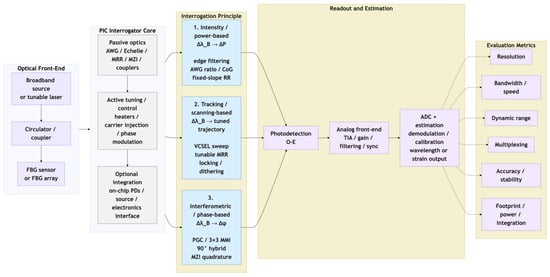
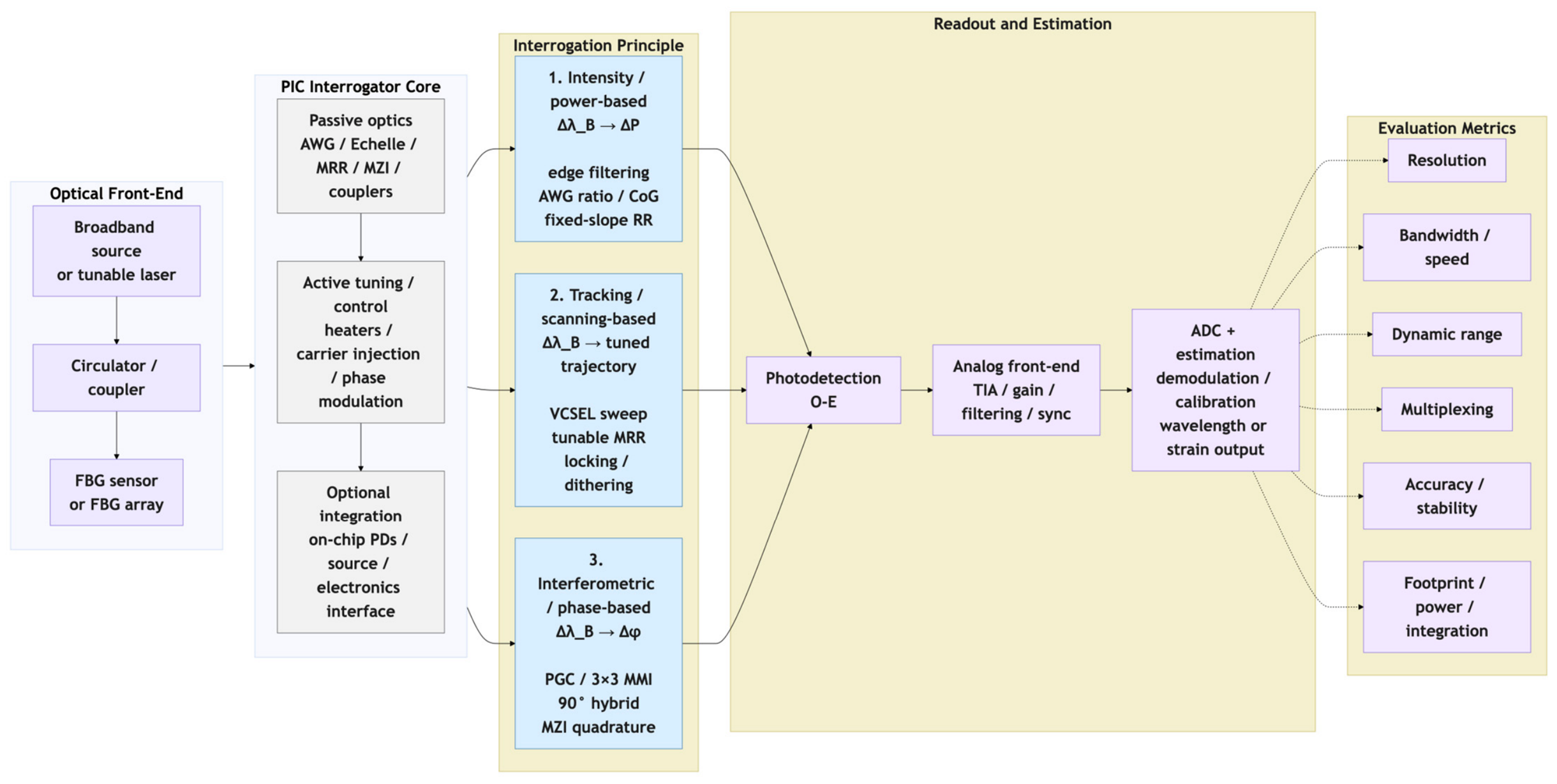
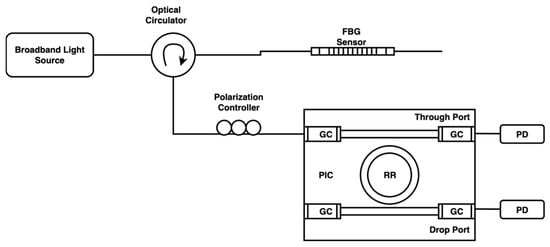
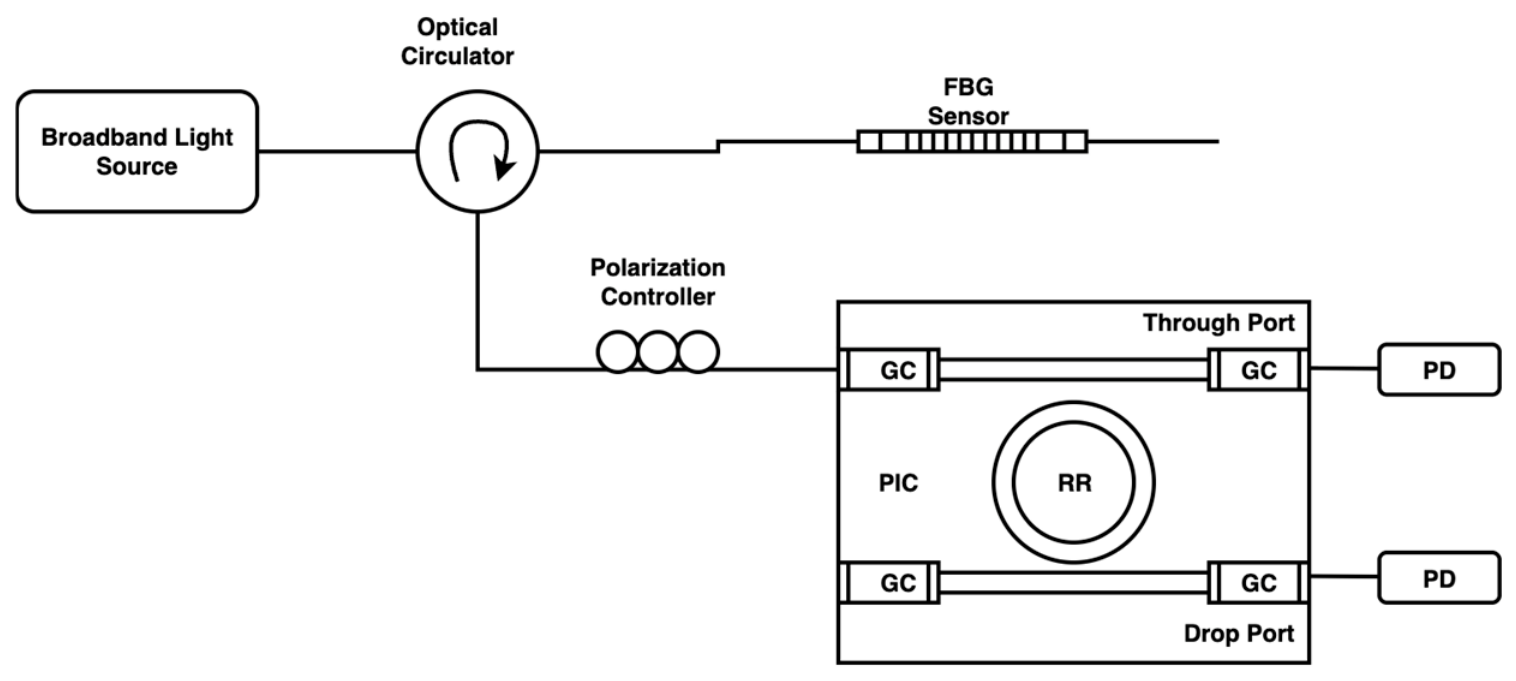
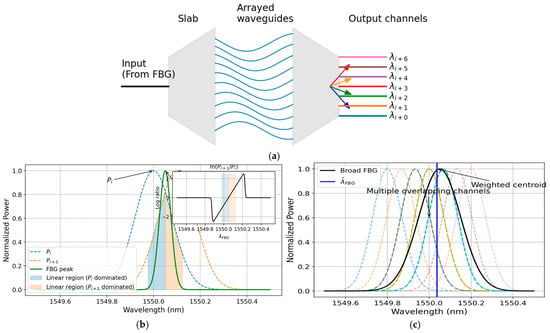
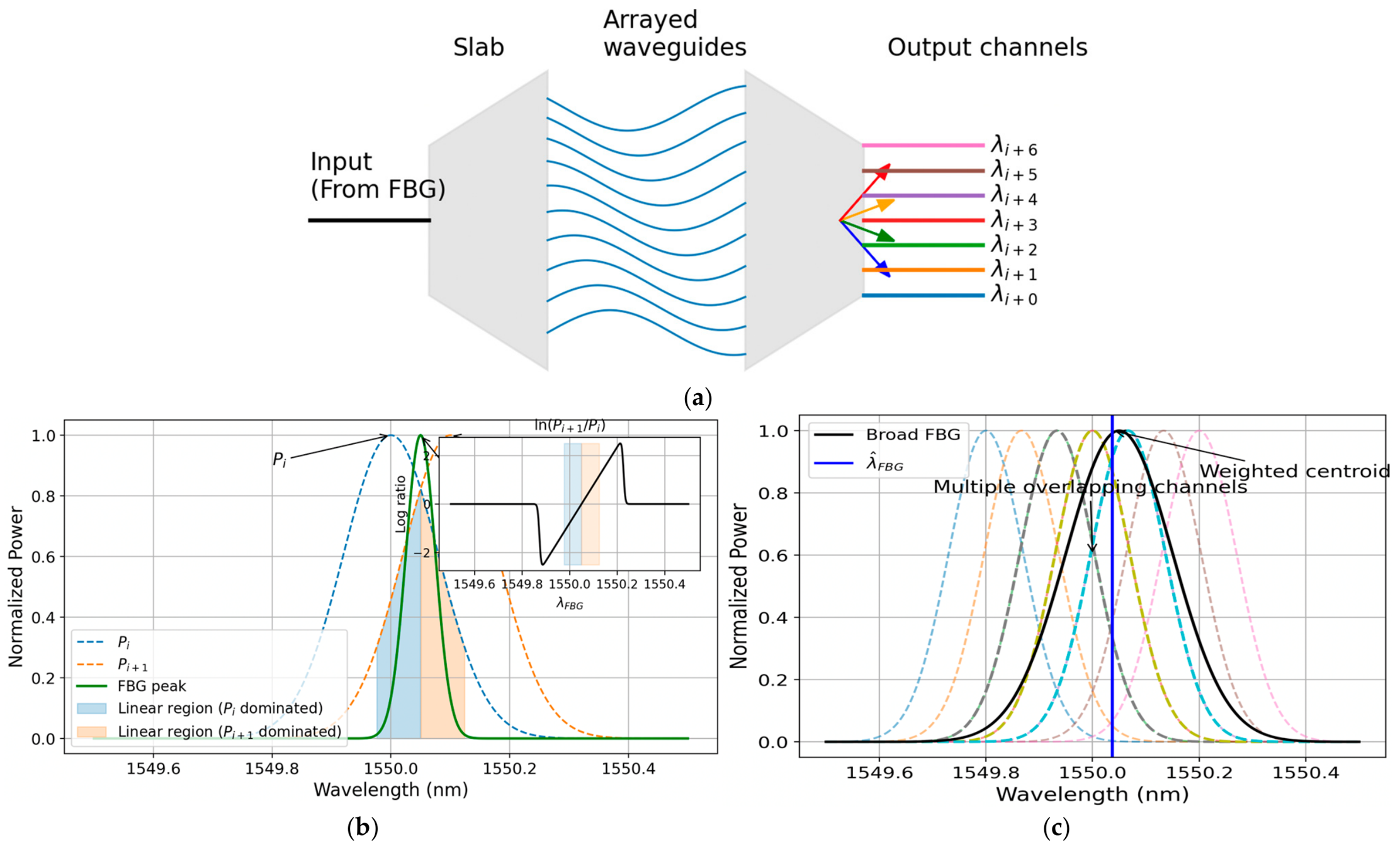
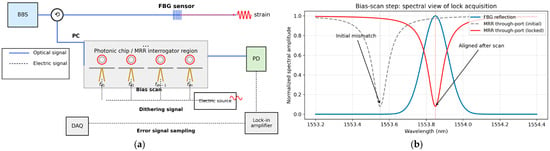
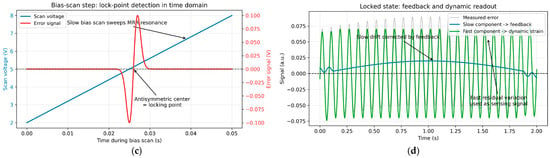
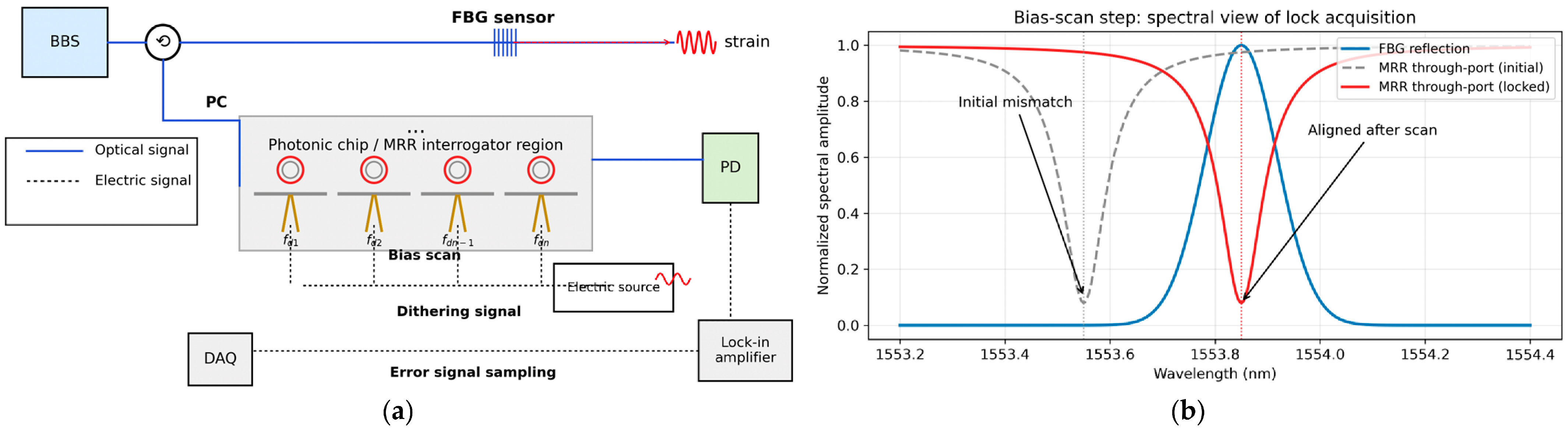
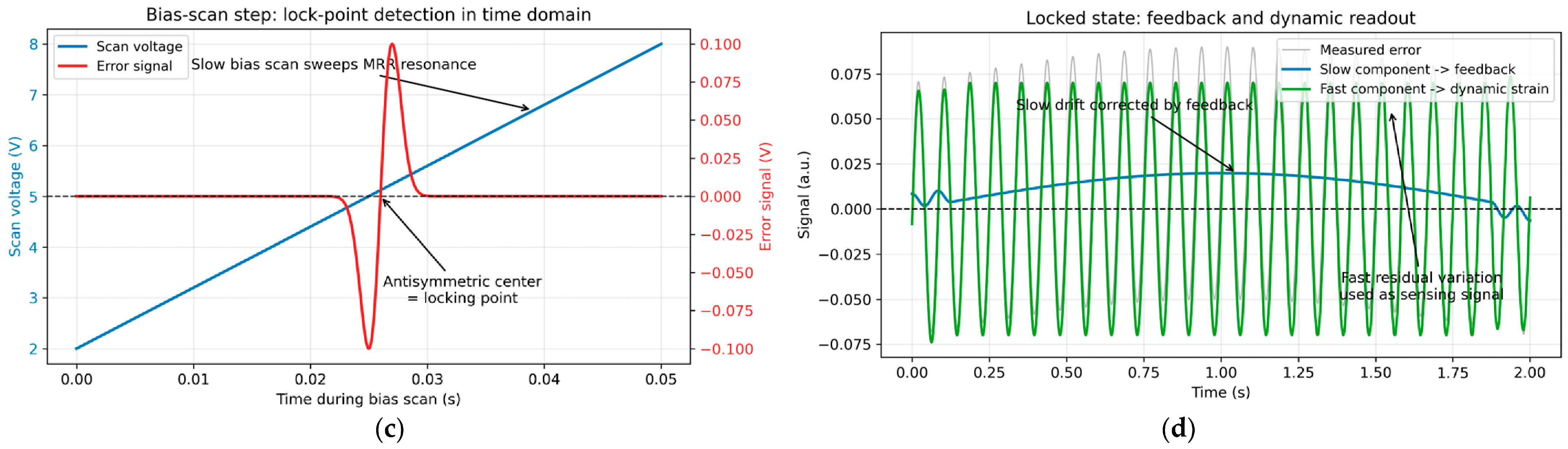
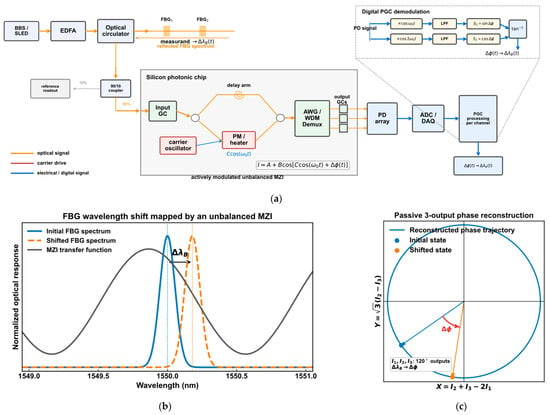
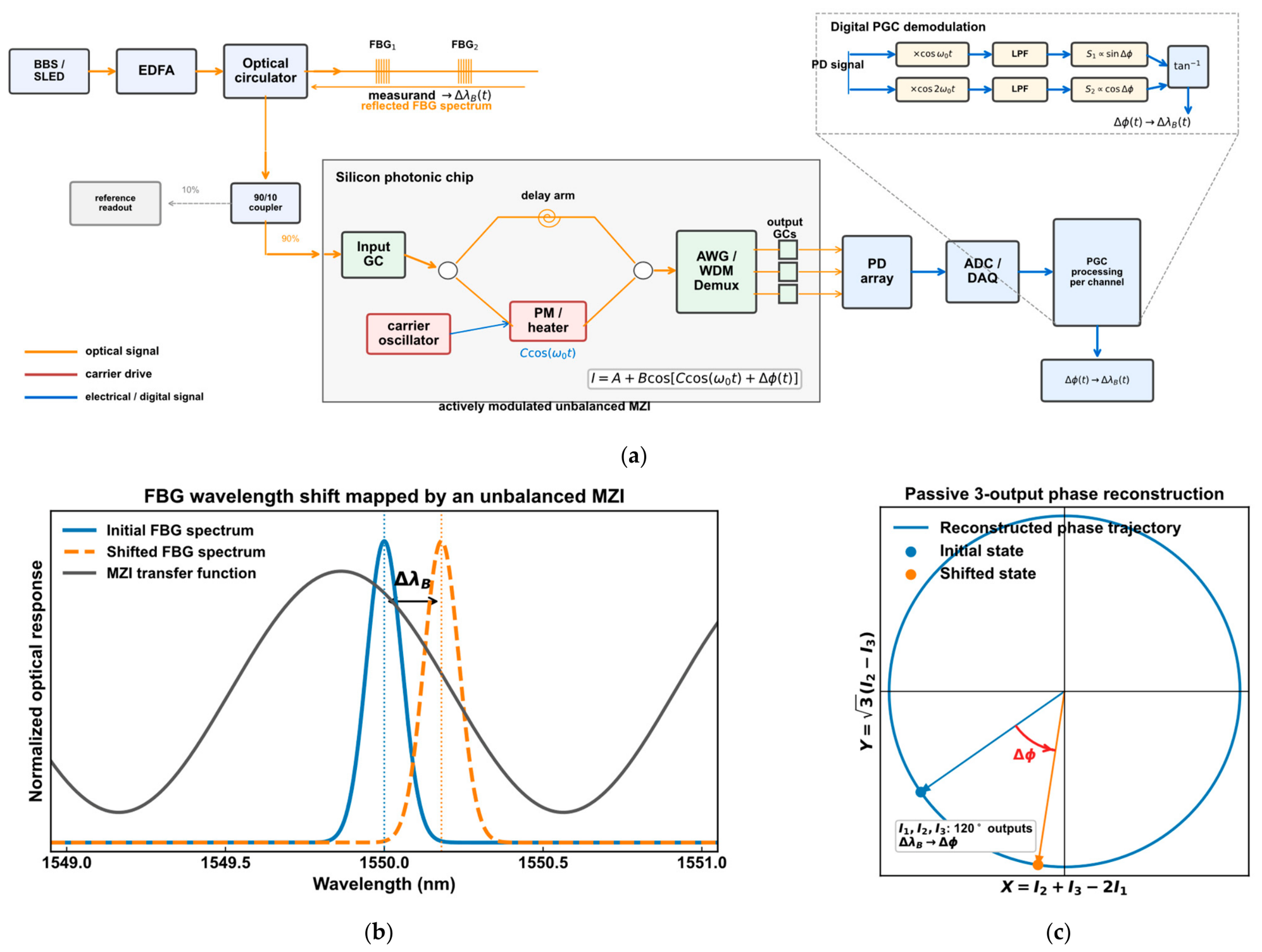

Disclaimer/Publisher’s Note: The statements, opinions and data contained in all publications are solely those of the individual author(s) and contributor(s) and not of MDPI and/or the editor(s). MDPI and/or the editor(s) disclaim responsibility for any injury to people or property resulting from any ideas, methods, instructions or products referred to in the content. |
© 2026 by the authors. Licensee MDPI, Basel, Switzerland. This article is an open access article distributed under the terms and conditions of the Creative Commons Attribution (CC BY) license.