


Abstract
The generation of intense few-cycle laser pulses with a stabilized carrier-envelope phase (CEP) has enabled unprecedented control of strong-field laser–matter interactions on an attosecond time scale. Few-cycle laser fields allow direct manipulation of the instantaneous electric-field waveform, making the CEP and other waveform parameters fundamental tools for steering electron dynamics. In this review, we present a comprehensive overview of the role of waveform control in strong-field processes driven by intense few-cycle laser pulses. We discuss the generation and characterization of few-cycle pulses and summarize the influence of the CEP on above-threshold ionization, high-order above-threshold ionization, nonsequential double ionization, high-order harmonic generation, and laser-assisted scattering and radiative recombination. Particular attention is devoted to bichromatic laser fields, where waveform engineering is achieved not only through the CEP but also by controlling the relative phase, polarization, frequency ratio, and intensity of the field components. These additional degrees of freedom provide powerful control knobs for tailoring electron trajectories, photoelectron momentum distributions, harmonic spectra, cutoff energies, and the polarization properties of the emitted radiation. Representative theoretical results are used to illustrate how waveform engineering enables efficient control of strong-field phenomena. The developments reviewed here demonstrate that waveform-controlled few-cycle laser fields have become indispensable tools for attosecond science, ultrafast spectroscopy, and coherent control, while continuing to stimulate new theoretical and experimental advances in strong-field physics. Overall, this review highlights the evolution of strong-field physics from CEP-controlled interactions to comprehensive waveform engineering, where multiple independently tunable laser parameters enable precise control of ultrafast electron dynamics and light emission.
1. Introduction
Since their invention, lasers have become important tools in modern science and technology. Their unique properties, such as their coherence, narrow spectral bandwidth, and ability to generate intense electromagnetic fields, have enabled a range of applications in physics, chemistry, biology, medicine, telecommunications, materials science, and industry [1,2,3]. In fundamental physics, lasers made it possible to investigate atomic and molecular dynamics on ultrashort timescales and to explore nonlinear interactions between intense electromagnetic fields and matter. As laser technology advanced, increasing attention was devoted to the generation of short optical pulses in order to probe ultrafast phenomena occurring on femtosecond, and, eventually, attosecond timescales [4,5]. This effort led to the development of femtosecond laser systems and, ultimately, to few-cycle laser pulses whose electric-field waveform can be controlled on a sub-cycle level. These developments laid the technological foundation for modern strong-field and attosecond physics. The electric field of a few-cycle pulse can be represented as the product of a monochromatic carrier wave and a positive definite envelope function. This description is valid for pulses that are not extremely short—for example, for pulses longer than one optical cycle. Such a few-cycle pulse is characterized by its duration and by the relative phase between the maximum of the pulse envelope and the nearest maximum of the carrier wave, known as the carrier envelope phase (CEP) or absolute phase. In theoretical work, the pulse duration is usually defined as the total time interval over which the field differs from zero, whereas in experiments, it is typically quantified by the full width at half maximum (FWHM) of the intensity profile, i.e., the square of the envelope function [6].
1.1. Development of Few-Cycle Laser Pulses
The development from femtosecond lasers to few-cycle pulse systems represents one of the most important technological advances in ultrafast optics and strong-field physics. This happened over roughly two decades, beginning with the first femtosecond pulse generation techniques in the 1980s and culminating in the routine production of CEP-stabilized sub-5 fs laser pulses in the early 2000s. Complete characterization and details of the evolution of the electric field of the few-cycle pulse have been reported in [7]. These advances ultimately enabled waveform-controlled strong-field experiments, including high-order harmonic generation (HHG), attosecond pulse production, and stereo above-threshold ionization (stereo-ATI). The technological evolution relied on a sequence of breakthroughs involving chirped-pulse amplification, Ti:sapphire laser technology, dispersion management, nonlinear pulse compression, and CEP stabilization. An early comprehensive overview of these developments was provided by Brabec and Krausz, who reviewed the evolution of ultrashort-pulse technology toward intense few-cycle fields and emphasized that precise control of the electric-field waveform would fundamentally change strong-field physics and enable attosecond science [8].
The earliest ultrashort optical pulses were generated using mode-locked dye lasers. During the late 1970s and early 1980s, pulse durations progressively decreased from the picosecond to the femtosecond regime through passive mode-locking techniques. In particular, colliding-pulse mode-locked dye lasers enabled pulse durations below 100 fs, providing temporal resolution sufficient to probe a wide range of ultrafast phenomena, including molecular and electronic dynamics. However, dye lasers suffered from significant limitations, including poor stability, complex liquid gain media, and limited scalability (for reviews about these early developments, see [9,10,11,12,13,14]). A decisive breakthrough occurred in 1985 with the invention of the chirped-pulse amplification (CPA) technique [15] (Gérard Mourou and Donna Strickland shared one half of the 2018 Nobel Prize in Physics for the invention of chirped-pulse amplification). The central difficulty in amplifying ultrashort pulses is that their peak intensity becomes extremely high even at modest pulse energies. The CPA technique solved this problem by stretching the pulse temporally before amplification and recompressing it afterward. The stretching lowers the peak intensity sufficiently to avoid optical damage inside the amplifier chain. After amplification, dispersive optics reverse the chirp and recover the short pulse duration. This technique revolutionized ultrafast optics and laid the foundation for modern strong-field laser systems. The emergence of titanium-doped sapphire (Ti:sapphire) lasers constituted the next major advance. Ti:sapphire possesses an exceptionally broad gain bandwidth centered near 800 nm (meaning that it can amplify light efficiently over a wide range of wavelengths), allowing amplification of extremely short optical pulses. The development of Kerr-lens mode-locking transformed Ti:sapphire into the dominant ultrafast laser medium. In Kerr-lens mode-locking, the nonlinear refractive index of the crystal creates an intensity-dependent focusing effect that preferentially stabilizes short pulses inside the laser cavity. In 1991, 60 fs pulses from a self-mode-locked Ti:sapphire laser were produced [16], while shortly afterwards, self-starting Kerr-lens mode-locking oscillators were developed [17]. These oscillators rapidly became standard seed sources for femtosecond CPA systems.
As pulse durations approached the 10 fs regime, dispersion management became increasingly important. Ultrashort pulses possess broad spectra, and optical materials introduce wavelength-dependent phase shifts that distort the pulse shape. Traditional prism compressors became insufficient once the pulse bandwidth became extremely broad, approaching one optical octave (i.e., the highest frequency was nearly twice the lowest frequency). This problem was largely solved through the introduction of chirped dielectric mirrors in the mid-1990s [18,19]. Chirped mirrors provided broadband negative dispersion compensation with high reflectivity and compact geometry, enabling reliable compression of pulses toward the few-cycle regime. These developments made practical sub-15 fs CPA systems possible. Although Ti:sapphire amplification supported very short pulses, direct amplification below approximately 10–15 fs remained difficult because of gain narrowing and dispersion limitations. The next revolution therefore came from nonlinear post-compression techniques based on self-phase modulation. In particular, hollow-core fiber compression became the dominant route toward few-cycle pulses. In this technique, an intense femtosecond pulse propagates through a hollow gas-filled capillary where nonlinear interaction with the gas broadens the spectrum dramatically. Chirped mirrors are then used to recompress the broadened spectrum to much shorter pulse durations. The pioneering experiments conducted in 1996 and 1997 demonstrated compression of amplified pulses below 5 fs [20]. Hollow-fiber compression rapidly became a standard technique in ultrafast laboratories and remains one of the central technologies of attosecond science. Once pulse durations entered the few-cycle regime, the phase between the maximum of the pulse envelope and the nearest maximum of the carrier wave became physically important. This phase is called the CEP or the absolute phase. In addition, the pulse duration also represents an important parameter. The stabilization of the CEP became possible at the beginning of the 21st century through developments associated with optical frequency combs (see review articles [21,22]; one half of the 2005 Nobel Prize in Physics was awarded jointly to J.L. Hall and T.W. Hänsch for their contributions to the development of laser-based precision spectroscopy, including the optical-frequency comb technique). In a landmark paper [23], the CEP control of femtosecond mode-locked lasers was demonstrated. The applied techniques were rapidly incorporated into Ti:sapphire CPA systems and hollow-fiber compressors, leading to stable waveform-controlled few-cycle pulses. Later improvements enabled CEP-stable multi-millijoule few-cycle pulses and even near-single-cycle pulse generation [24,25,26]. By the early 2000s, all key technologies had been discovered: CPA, Ti:sapphire amplification, chirped mirrors, hollow-fiber compression, and CEP stabilization. This enabled the emergence of attosecond science and CEP-sensitive strong-field experiments (see, for example, review article [27]).
The key milestones in the development of ultrashort and few-cycle laser pulses are summarized in Figure 1. The progression from early mode-locked lasers through chirped-pulse amplification, Ti:sapphire technology, pulse compression, and finally, to carrier-envelope-phase stabilization, illustrates the technological advances that made controlled few-cycle pulses possible.
Figure 1.
Historical development of the key technologies enabling the generation of few-cycle laser pulses. The timeline summarizes the major technological milestones, from mode-locked dye lasers and chirped-pulse amplification to Ti:sapphire lasers, chirped mirrors, hollow-core fiber compression, and carrier-envelope-phase stabilization, together with the corresponding evolution of representative state-of-the-art pulse durations. The step-like curve emphasizes that progress toward the few-cycle regime resulted from a sequence of discrete technological breakthroughs rather than continuous improvements.
1.2. Strong-Field Processes in Intense Laser Fields
Strong-field phenomena are commonly classified into laser-assisted and laser-induced processes [28]. In laser-assisted processes, the laser field modifies the collision or radiative process that can also occur in the absence of the field. Typical examples include laser-assisted electron–atom and electron–molecule scattering, laser-assisted bremsstrahlung, and laser-assisted electron–ion radiative recombination. In these processes, the external electromagnetic field modifies the energy and momentum exchange between the colliding particles and may strongly alter angular distributions, cross-sections, and emission spectra [28]. In contrast, laser-induced processes exist only due to the presence of the intense laser field. Among these phenomena, above-threshold ionization, high-order above-threshold ionization (HATI), high-order harmonic generation, and nonsequential double ionization (NSDI) are of particular importance (see review articles [29,30,31,32]).
Figure 2 provides a schematic overview of representative strong-field processes discussed in this review, together with the approximate intervals of laser intensities for which the experiments have been performed. The schematic representation of the processes is also presented. The electron and photon energy spectra of strong-field processes are typically characterized by a broad interval in which the probability of the process remains approximately constant—the so-called plateau in the energy spectrum. This plateau is followed by an abrupt decrease in probability, referred to as the cutoff. The appearance of plateaus and cutoffs can be explained even within a classical framework. The cutoff corresponds to the maximum energy that an electron can absorb from the laser field during its propagation (see the explanation of the three-step model in the following text).
Figure 2.
Schematic overview of representative processes occurring in intense laser fields. The approximate minimum laser intensities indicated above the corresponding processes illustrate the intensity scales at which the different phenomena can become observable. The actual thresholds depend on the laser wavelength and pulse duration as well as on the properties of the target system. A schematic representation of the processes is also presented. A laser pulse (L) propagates perpendicularly to the polarization plane in which electrons () move and interact with ion A+ or atom/molecule A. For laser-assisted radiative recombination and HHG, an X-ray is emitted.
The theoretical foundations of laser-assisted scattering (LAS) were established several decades ago through pioneering studies on free–free transitions in intense electromagnetic fields. Early theoretical works developed analytical descriptions of multiphoton scattering and laser-assisted bremsstrahlung, deriving general expressions for photon-assisted scattering cross-sections and identifying their behavior in both weak- and strong-field limits [33,34] (a schematic representation of the LAS process is provided in Figure 2). These predictions were subsequently confirmed experimentally through measurements of electron scattering from atomic targets in intense CO2 laser fields, where multiphoton free–free transitions involving the exchange of multiple laser photons were observed [35,36]. The accumulated theoretical and experimental progress was later summarized in a comprehensive review, which also discussed the principal approximation schemes for describing laser-assisted electron–atom collisions and their connection to related processes such as laser-assisted recombination and ionization [37] (for an earlier review, see [38]). Over the years, theoretical studies further expanded laser-assisted scattering to include detailed analyses of bremsstrahlung and X-ray scattering in intense laser fields, as well as resonant and rescattering phenomena [39,40,41,42,43,44,45,46,47,48]. Moreover, theoretical studies also revealed the possibility of laser-induced electron rescattering, in which the scattered electron is driven back to the target by the oscillating laser field and undergoes a second collision before reaching the detector. First, a high-energy plateau in the scattering spectrum is predicted, and it was shown that its cutoff agrees well with classical-trajectory estimates [49]. Subsequent studies analyzed rescattering using realistic atomic potentials, clarifying the dependence of the plateau structure on the collision and laser parameters [50,51,52]. Later work extended the rescattering scenario to circularly [53] and elliptically polarized laser fields [54,55], while other theoretical investigations considered bicircular driving fields and demonstrated novel symmetry properties and circular dichroism in LAS [56,57]. Despite these theoretical advances, the rescattering plateau has not yet been observed experimentally because of its small cross-section.
Laser-assisted radiative recombination (LAR) is a process in which an electron recombines with an ion in the presence of a strong laser field while emitting a high-energy photon (see the corresponding schematic representation in Figure 2). Early theoretical studies established the basic properties of LAR in infinitely long linearly polarized laser fields, considering both monochromatic and bichromatic driving fields, and demonstrated that the external laser field can strongly modify the emitted-photon spectra and significantly enhance the recombination probability [58,59,60,61,62,63,64]. Subsequent theoretical developments incorporated electron–ion scattering effects into the description of the process, providing a more accurate treatment of laser-assisted radiative recombination and its spectral characteristics [65,66,67,68]. Moreover, an analytical model for LAR was developed in [69], while a semiclassical theory of LAR was presented in [70]. Recently, LAR assisted by quantum light was investigated in [71] using the semiclassical approach, while LAR in cold hydrogen plasma was analyzed in [72]. Although experimental studies remain challenging because they require the coincidence of electron, ion, and laser beams together with photon detection, several experiments have confirmed important theoretical predictions, including the influence of the laser phase and polarization on the recombination process [73,74]. More recently, the scope of LAR research has been extended to include the effects of bound-state dressing and the radiative recombination of twisted electrons with bare nuclei [75,76].
Above-threshold ionization is one of several fundamental laser-induced strong-field phenomena. In ATI, an atom or molecule absorbs more photons than minimally required for ionization, producing photoelectron spectra consisting of peaks separated by the photon energy [77,78] (see the corresponding schematic representation in Figure 2 and Figure 3).
Figure 3.
Schematic representation of the three-step electron dynamics underlying ATI, HATI, and HHG: ionization (I), laser-driven acceleration (II), and, for HATI and HHG, elastic rescattering or radiative recombination (III), respectively. The central part of the four-cycle pulse is shown for (black solid) and (red dashed). The active electron is indicated by the circles, with blue and pink denoting real and virtual states, respectively. Dark green lines show the combined atom-laser-field potential.
The process reflects the nonlinear interaction between the electron and the oscillating laser field and becomes especially rich in the tunneling regime, where the laser field strongly suppresses the Coulomb barrier. The ATI spectra contain detailed information about electron trajectories, laser parameters, and atomic or molecular structure. High-order ATI corresponds to the high-energy part of the photoelectron spectrum originating from laser-driven rescattering of the freed electron with the parent ion [29,79,80,81] (see Figure 3). Within the three-step model [82,83], the electron first tunnels into the continuum. Then, it is accelerated by the laser field and may subsequently revisit the ionic core. Elastic rescattering leads to the generation of high-energy photoelectrons with energies extending far beyond the direct ATI cutoff. Because of its sensitivity to the rescattering dynamics, HATI provides valuable structural and dynamical information about atoms and molecules and forms the basis of several strong-field imaging techniques [84,85,86,87,88,89,90,91,92,93].
High-order harmonic generation in gases, discovered in 1987 [94,95], is another cornerstone of strong-field physics and attosecond science (see the recent roadmap on attosecond science [96]). In HHG, an electron, released by tunnel ionization, is accelerated in the continuum by the laser field and recombines with the parent ion, transferring its kinetic energy to an emitted high-energy photon (see the corresponding schematic representation in Figure 2 and Figure 3). The emitted spectrum consists of the harmonics of the driving laser frequency, and typically exhibits a plateau structure followed by a sharp cutoff. The HHG process provides a direct route toward coherent extreme-ultraviolet and soft-X-ray radiation as well as attosecond pulse generation [96,97,98,99,100]. Moreover, because the harmonic emission encodes information about the electronic structure and dynamics of the target, HHG has become a powerful tool for ultrafast spectroscopy and molecular imaging [87,89,101,102,103].
Figure 3 summarizes the common electron dynamics underlying ATI, HATI, and HHG within a three-step picture. The first two steps, ionization and subsequent propagation in the laser field, describe direct ATI, in which the electron reaches the detector without returning to the parent ion. On the other hand, HATI and HHG involve a third step after the electron is driven back to the ionic core. In particular, elastic rescattering produces high-energy photoelectrons in HATI, whereas radiative recombination leads to the emission of a high-energy photon in HHG. Thus, ATI can be regarded as a two-step process, while HATI and HHG constitute three-step processes that share the same initial ionization and propagation dynamics but differ in the outcome of the electron’s return to the parent ion. The figure also illustrates how changing the CEP modifies the electric-field waveform and consequently, the electron trajectories in a few-cycle pulse.
Nonsequential double ionization represents another prominent strong-field process. In this process, the electron–electron correlation plays a crucial role [32,104,105,106,107,108]. In the rescattering picture, the first electron freed from the atom or molecule returns to the parent ion and transfers energy to a second bound electron, leading to correlated double ionization. The NSDI process has attracted significant attention because it provides direct insight into correlated many-electron dynamics in strong laser fields.
Theoretical description of strong-field phenomena relies on several complementary approaches, including strong-field approximation (SFA), quantum-orbit theories, semiclassical and quantum-trajectory methods, numerical solutions of the time-dependent Schrödinger equation, and time-dependent density-functional approaches. Among these methods, SFA has become one of the central theoretical tools in strong-field and attosecond physics because it provides a relatively simple analytical framework capable of describing essential features of laser-driven electron dynamics. SFA is based on the assumption that, after ionization, the interaction of the electron with the laser field dominates over its interaction with the parent ion. Consequently, the continuum electron is commonly described by a Volkov-type wave function corresponding to a free electron moving in the external electromagnetic field [109,110]. The ATI process is described by direct SFA or the Keldysh–Faisal–Reiss theory [111,112,113,114] (see review [115]), while SFA for HHG was introduced in [116]. Despite its approximate nature, SFA successfully describes a broad range of strong-field phenomena and provides important physical insight into tunneling ionization, electron rescattering, and quantum-interference effects in intense laser fields [28,29,106,116,117,118]. Solving the integrals that appear in the SFA transition amplitudes by means of the saddle-point method leads to compact approximate expressions that form the foundation of quantum-orbit theory [118]. In the following, we use the term classical trajectory for a solution of the classical equations of motion in the laser field. A saddle-point trajectory refers to the semiclassical trajectory associated with a stationary point of the complex action, while a quantum orbit denotes the corresponding contribution to the quantum transition amplitude. We use the term stationary-phase solution specifically for stationary points of the real-time scattering integral.
In this review, we provide a comprehensive overview of the existing literature regarding strong-field phenomena in few-cycle laser fields. In addition, this review contains numerous original calculations and previously unpublished numerical examples obtained within a unified theoretical framework based on SFA. These results are included throughout the review to illustrate the physical mechanisms discussed in the text and to provide a consistent comparison of the effects of the CEP, the relative phase, the pulse duration, and the polarization state on different strong-field processes. The original calculations presented in this review are not intended to provide an exhaustive quantitative validation of the employed theoretical approximations for every target and laser parameter. Rather, they are used as representative examples that illustrate the physical mechanisms discussed in the reviewed literature and allow the effects of the CEP, relative phase, pulse duration, and polarization to be compared within a consistent theoretical framework. Accordingly, the quantitative values obtained from these calculations should be interpreted within the assumptions of the corresponding models, while the broader physical conclusions are discussed in the context of established experimental and theoretical results.
2. CEP Effects in Strong-Field and Attosecond Physics
The generation of few-cycle laser pulses introduced a fundamentally new aspect of strong-field physics. Such pulses are characterized by several parameters, including the pulse duration, peak intensity, polarization state, and CEP. While all of these parameters influence the laser–matter interaction, the CEP occupies a unique role. In the few-cycle regime, it determines the precise temporal evolution of the electric field within the pulse envelope, and therefore controls the optical waveform itself. Since most strong-field phenomena are governed directly by the instantaneous electric field rather than by the cycle-averaged intensity, the CEP emerges as a key parameter for controlling electron dynamics on sub-cycle timescales. In contrast to multi-cycle pulses, whose interaction with matter is largely determined by the pulse envelope and peak intensity, the electric-field waveform of a few-cycle pulse depends critically on the CEP. The importance of this parameter was first demonstrated in pioneering studies which showed that the absolute phase of a few-cycle pulse can directly influence strong-field processes and attosecond pulse generation [119,120]. These findings established the CEP as a physically measurable quantity and initiated extensive theoretical and experimental efforts aimed at controlling, measuring, and exploiting the optical waveform on a sub-cycle timescale. The recognition of the CEP as a control parameter immediately raised two major challenges. The first was the development of techniques capable of stabilizing and measuring the CEP with sufficient precision. The second was the identification of physical processes exhibiting a measurable sensitivity to the optical waveform. Addressing these challenges became one of the central research directions in strong-field and attosecond physics at the beginning of the 21st century.
2.1. CEP Stabilization and Metrology
The first challenge was the development of techniques for generating, stabilizing, and characterizing the CEP of few-cycle laser pulses. An important step was the invention of the f-to- or self-referencing technique for using femtosecond lasers as frequency rulers in precision metrology [23,121,122,123]. The reason is that stabilizing a femtosecond laser’s frequency comb implies that the rate at which the CEP changes is stabilized too. The full potential of tailored few-cycle pulses for time-domain applications was revealed after the self-referencing technique was implemented in a femtosecond laser amplifier in 2003 [120] (see also [124]). Following the realization that strong-field processes are directly governed by the electric-field waveform, considerable effort was devoted to controlling the CEP in mode-locked laser systems [125] and chirped-pulse amplifiers [126]. Various stabilization schemes were proposed, including active feedback techniques, direct time-domain locking approaches, optical-poling methods, optical parametric amplification, difference-frequency generation, and CEP stabilization in grating-based CPA systems [126,127,128,129,130,131,132]. At the same time, numerous diagnostic techniques were developed to characterize few-cycle pulses and determine their CEP (see, for example, Refs. [133,134,135,136,137,138,139,140,141,142]). In addition, methods to determine the CEP using Compton scattering were proposed in [143,144]. For studies which established the experimental foundation for CEP-controlled strong-field physics, see review articles in the Special Issue on the 10th anniversary of attosecond pulses in the Journal of Physics B, vol. 45, No. 7, and, in particular, [145]. See also [146] and references therein. More recently, a fundamentally different approach to CEP metrology has been proposed based on coherent nuclear interferometry [147]. Operating in the perturbative regime, this method retrieves the absolute CEP from interference between laser-driven vibrational wave packets while largely eliminating dependence on the reference-pulse intensity, duration, and moderate phase noise, thereby extending waveform characterization to weak sub-cycle pulses.
2.2. Atomic Strong-Field Ionization and Rescattering Processes
CEP effects have been investigated in detail for strong-field ionization. Prior to the first experimental observations of CEP-dependent photoelectron emission, several theoretical studies had already examined the role of the optical phase in photoionization. While only weak phase effects were predicted in the perturbative regime [148], much stronger CEP dependence was anticipated for nonperturbative strong-field ionization [149,150,151]. The CEP influence on photoelectron emission was first observed in [119,152] using a laser system with a nonstabilized CEP. For CEP-stabilized pulses, early theoretical studies predicted that photoelectron emission induced by few-cycle pulses should exhibit strong left–right asymmetry that depends on the CEP. This asymmetry was investigated using the angle- and energy-resolved spectrum [152,153,154,155,156,157,158,159,160,161,162,163]. Shortly afterwards, these predictions were confirmed experimentally through stereo-ATI measurements [164] (see review articles [6,145]). These investigations demonstrated that changing the CEP modifies the temporal position of the strongest electric-field half-cycle within the pulse envelope, thereby altering the sub-cycle ionization dynamics. As a consequence, electrons emitted in opposite directions may acquire substantially different ionization probabilities and final energies (examples are provided in Section 4). Further studies of the CEP dependence of the photoelectron spectra can be found in [133,136,165,166,167,168].
As experimental and theoretical understanding improved, the focus shifted from merely observing CEP-dependent effects to actively exploiting them as diagnostic tools. It became clear that the forward–backward asymmetry of ATI spectra encodes detailed information about the driving laser pulse itself. This motivated the development of CEP-retrieval techniques based on ATI measurements [133,136,169,170], enabling reconstruction of the pulse’s electric field waveform directly from photoelectron emission patterns. Subsequent advances extended these concepts to single-shot CEP determination [171], real-time CEP tagging [172], and pulse-duration measurements [173], ultimately allowing CEP characterization even in the multi-cycle regime [174] where conventional few-cycle CEP-sensitive signatures are strongly suppressed. In the single-shot technique, the asymmetries of ATI electrons in two distinct energy windows are plotted against each other, producing the characteristic “potato-shaped” parametric map from which the CEP of each laser pulse can be retrieved without phase ambiguity [171]. Single-shot CEP determination is crucial because the CEP fluctuates from pulse to pulse and many ultrafast phenomena cannot be accessed through conventional averaging [171,175,176,177]. The accuracy of ATI-based CEP metrology was further improved by using atomic hydrogen as an ab initio reference, enabling absolute CEP calibration from ATI measurements with Xe and subsequently transferring this calibration to other strong-field experiments [178]. In parallel, several alternative CEP diagnostic approaches were proposed, including methods based on circularly polarized fields [179], attosecond streaking [137], photoionization in guided geometries [180], and a variety of asymmetry-based observables. Through these developments, ATI evolved from a process used primarily to study CEP effects into one of the most powerful and widely adopted CEP metrology techniques. Finally, we note that the most advanced temporal characterization of femtosecond pulses can be achieved using XUV spatial interferometry with isolated attosecond pulses [181,182,183].
Parallel to these developments, considerable effort was devoted to understanding the fundamental mechanisms responsible for CEP-dependent strong-field ionization. Several studies investigated the role of quantum interference and Coulomb effects in shaping low-energy photoelectron spectra [184,185,186,187]. It was shown that CEP-dependent asymmetries arise not only from classical rescattering trajectories but also from interference between quantum pathways associated with different ionization times [188]. The emergence of classical orbits in few-cycle ATI was also demonstrated by directly connecting quantum wave-packet dynamics with classical trajectories [189,190,191]. Theoretical studies subsequently clarified the physical origin of CEP effects by demonstrating that they arise from the interference of quantum pathways carrying different phase dependences. These analyses identified the conditions under which such interference survives and gives rise to observable CEP-dependent signals [188,192,193], thereby significantly advancing theoretical understanding of waveform-controlled ionization.
Research was subsequently extended to a variety of atomic systems and laser-field configurations. CEP effects were investigated for hydrogen [168,178,194], rare gases [166,195], and negative ions [186,196,197,198,199,200]. In [201], it was analyzed how the hydrogen atom interacting with few-cycle laser pulses can be used to calibrate important laser-pulse parameters. Studies involving circularly polarized fields revealed characteristic CEP-dependent angular distributions and interference structures [167,192,197], while investigations of chirped few-cycle pulses demonstrated that CEP-sensitive asymmetries can survive even when the pulse duration substantially exceeds a few optical cycles [202,203]. Scaling laws governing CEP-dependent ionization have been derived and verified numerically [204,205], providing insight into how CEP effects vary with laser wavelength, intensity, and target properties.
The rescattering mechanism of ATI also inspired the development of ultrafast imaging techniques. It was recognized that the returning electron wave packet generated by a few-cycle pulse acts as a self-probing electron beam capable of scattering from the parent ion. It was demonstrated that photoelectron momentum distributions contain information not only about the laser-pulse parameters but also about the structure of the target itself [206,207]. These studies revealed the possibility of imaging ultrafast structural dynamics with subfemtosecond temporal resolution. More recently, interpretation of CEP-dependent photoelectron momentum distributions has been further refined through the concept of quantum caustics. It was shown that the cutoff in the photoelectron spectrum corresponds to a quantum caustic shifted toward higher energies relative to its classical counterpart. Experimental observations confirmed this quantum shift in sub-two-cycle strong-field ionization of Xe atoms, providing strong support for the adiabatic theory of rescattering and establishing a more accurate procedure for extracting electron–ion elastic scattering differential cross-sections from CEP-dependent HATI spectra [208].
2.3. Molecular Strong-Field Ionization and Laser-Induced Electron Diffraction
A major extension of CEP-controlled strong-field physics occurred in molecular systems. In contrast to atoms, molecules possess additional degrees of freedom related to molecular orientation, asymmetry, and nuclear motion. Theoretical studies demonstrated strong CEP-dependence of ionization in asymmetric molecules [209], molecular ATI spectra [210], and ionization in circularly polarized fields [211]. In addition, combined theoretical and experimental investigation into CEP-dependent ATI spectra of diatomic molecules driven by few-cycle infrared pulses provided direct information on electron–molecule rescattering dynamics and elastic scattering cross-sections [212]. These investigations revealed that the CEP can influence electron localization, ionization probabilities, and the direction in which the electrons are emitted. For asymmetric molecules, the combination of molecular asymmetry and waveform control was found to produce even stronger asymmetries than for the atomic targets, suggesting new possibilities for CEP diagnostics and coherent control [209,210]. Moreover, in [213], CEP-controlled directional bond breaking was placed on a unified theoretical and experimental footing by relating laboratory-frame asymmetry to intrinsic molecular-frame dynamics, opening up new possibilities for probing sub-cycle intramolecular electron motion. In the molecular HATI process, the few-cycle pulse-driven electron wave packet can be used for self-probing of the parent molecular ion. This is known as laser-induced electron diffraction [84,103]. With this technique, one retrieves information about molecular structure [169,214,215]. More recently, near-single-cycle pulses have been used to suppress intercycle interference in strong-field photoelectron holography, enabling the separation of distinct holographic patterns and allowing the internuclear separation of the target molecule to be extracted from the measured holographic signal [216].
2.4. Nonsequential Double Ionization
The influence of the CEP was also explored in correlated electron dynamics, particularly in the NSDI process. Experimental measurements of Ar2+ momentum distribution demonstrated significant CEP-dependent changes in the momentum distribution associated with NSDI [105,217,218]. Complementary experiments on the multiple ionization of Ne and Ar using few-cycle laser pulses further showed that reducing the pulse duration suppresses recollision pathways involving delayed excitation, thereby isolating the highly correlated electron-impact ionization mechanism and providing direct insight into the ultrafast dynamics of multiple ionization [219]. Subsequent theoretical investigations clarified how the CEP affects the tunneling ionization step, the recollision energy, and the accessible phase space for electron–electron interactions [220,221]. At the same time, ab initio calculations beyond the one-dimensional approximation revealed a much richer correlated two-electron dynamic, particularly in the direction transverse to the laser polarization, emphasizing the importance of treating electron correlation in its full dimensionality [222]. More recent studies examined CEP effects in recollision–excitation with subsequent ionization, showing that the CEP can be used to control the correlated electron emission on attosecond time scales [223]. These results established CEP stabilization as an important tool for investigating electron–electron correlation dynamics. In addition, the concept of waveform control has been extended to few-cycle bichromatic laser pulses, where the relative phase and amplitude ratio of the field components provide additional control over the recollision dynamics. In particular, studies of NSDI driven by counter-rotating and other bichromatic few-cycle pulses demonstrated successful control over the electron return angles, recollision energies, the relative contributions of the recollision-induced direct ionization and recollision-induced excitation with subsequent ionization mechanisms, and the resulting correlated electron and ion momentum distributions [224,225,226,227,228].
2.5. Photoionization Induced by Attosecond XUV Pulses
Another important research direction has emerged from the close connection between CEP-control and attosecond science. Theoretical studies examined CEP effects in photoionization driven by attosecond XUV pulses [229,230,231,232,233,234], revealing pronounced asymmetries in photoelectron momentum distributions that arise from interference between different ionization pathways. More recently, CEP control has also been explored in molecular photodissociation induced by sub-cycle UV pulses, where asymmetric photofragment angular distributions were shown to provide a signature of the CEP and were traced to CEP-dependent rotational excitation mediated by the permanent molecular dipole [142]. This demonstrated that the CEP can influence not only electronic ionization dynamics but also nuclear motion and the coupled electron–nuclear dynamics of molecules. In parallel, the increasing feasibility of few-cycle attosecond XUV pulses has motivated studies on atomic ionization beyond slowly varying envelope approximation. Such studies have revealed temporal and spectral modulations characteristic of the attosecond, few-cycle regime, together with CEP- and intensity-dependent asymmetries in photoelectron spectra arising from polarization and interference effects [235]. These studies have provided valuable insight into ultrafast electron dynamics and demonstrated that CEP control can be extended beyond infrared strong-field ionization to attosecond photoionization processes.
2.6. New Regimes and Applications of CEP-Controlled Ionization
Following these advances in the understanding of CEP-controlled ionization, rescattering, and photoelectron spectra, attention gradually shifted toward new regimes and applications. Bichromatic laser fields, mid-infrared drivers, plasmonic fields, nanostructures, and relativistic laser–matter interactions subsequently emerged as active areas of research. Bichromatic laser fields were introduced as additional tools for waveform control [236,237,238,239] (examples of HATI induced by bichromatic few-cycle pulses are provided in Section 4.3). The relative-phase dependence of two-color photoelectron spectra subsequently led to the development of phase-of-the-phase spectroscopy, providing a momentum-resolved probe of structural and dynamical information in strong-field ionization [240]. More recently, its extension to the few-cycle regime demonstrated that the phase-of-the-phase provides information on the CEP and pulse duration, under realistic experimental conditions [241]. Mid-infrared laser sources enabled access to new strong-field regimes characterized by larger electron excursion amplitudes and high recollision energy [187,242,243]. The development of CEP-stable few-cycle mid-infrared laser sources further extended the accessible cutoff energies owing to the favorable wavelength scaling of the recollision energy. CEP effects have also been investigated in plasmonically enhanced and spatially inhomogeneous fields generated near nanostructures [244], in photoemissions from metal nanotips [245], and in dense plasma interactions [246,247]. Moreover, CEP-sensitive observables have been proposed for relativistic laser–electron interactions and multiphoton Compton scattering [143], extending waveform control into previously unexplored intensity regimes. Also, CEP-controlled strong-field dissociation of the molecular ion was achieved in [248,249], while the influence of the CEP on atomic excitation was explored in [250]. The study of ultrashort strong-field molecular dynamics has also been extended to higher-order ionization processes. For example, a density-matrix approach was recently developed to describe the dissociative sequential triple ionization of N2, reproducing the measured kinetic-energy-release spectra and providing a simple framework for treating the coupled electronic and nuclear dynamics [251]. Few-cycle pulses with a controlled sub-cycle structure and CEP were also proposed for ultrafast control and optical detection of valley polarization in two-dimensional materials [252,253]. Few-cycle pulses have also revealed new regimes in the laser-induced breakdown of solids, where conventional breakdown criteria based on laser fluence or peak electron density become inadequate because of pronounced sub-cycle electron-density oscillations and the importance of the total energy transferred from the field to the electron subsystem, and subsequently, to the lattice [254]. More recently, strong-field Coulomb explosion of the polyatomic molecule OCS has been investigated as a route toward molecular imaging, demonstrating that the measured fragment momenta can be connected to the ground-state molecular geometry despite the structural changes induced by sequential ionization [255]. Finally, ATI induced by a few-cycle pulse was investigated within the nondipole SFA theory in [256,257].
In summary, the studies described in Section 2.1, Section 2.2, Section 2.3, Section 2.4, Section 2.5 and Section 2.6 demonstrate that CEP control has evolved from a technical challenge associated with few-cycle pulse generation into a central theme of modern strong-field physics. Research has progressed from the development of stabilization techniques and the first observations of CEP-dependent ATI to applications involving molecular control, correlated-electron dynamics, attosecond spectroscopy, ultrafast imaging, and relativistic laser–matter interactions. The ability to manipulate and characterize the electric-field waveform with sub-cycle precision continues to drive new developments in both strong-field and attosecond science.
2.7. Atomic High-Order Harmonic Generation
High-order harmonic generation is another important process in strong-field physics. It constitutes the basis of attosecond science. Because HHG originates from the ionization, propagation, and subsequent recombination of an electron wave packet driven by a strong laser field (see Figure 3), it is intrinsically sensitive to the temporal structure of the driving electric field (examples are provided in Section 5). In fact, one of the earliest demonstrations of CEP effects in strong-field physics was provided by theoretical studies showing that harmonic spectra generated by few-cycle laser pulses depend strongly on the CEP [258,259]. These pioneering investigations revealed that the CEP influences both the harmonic yield and spectral structure, and suggested that HHG could be employed as a diagnostic tool for determining the optical waveform of ultrashort laser pulses. The recognition of this sensitivity established waveform control as a central concept in HHG and motivated extensive research into CEP-dependent high-harmonic generation and attosecond pulse production.
Early theoretical investigations into CEP effects in HHG were motivated by the emerging field of attosecond pulse generation. It was demonstrated that, for few-cycle driving pulses, the emission time of the generated attosecond burst is locked to specific oscillations of the electric field rather than to the pulse envelope [260,261]. This observation revealed that the CEP directly controls the temporal structure of the emitted attosecond radiation and established waveform control as a central concept in attosecond physics. At the same time, it was realized that the harmonic spectrum itself contains detailed information about the driving pulse, leading to the proposal of HHG-based techniques for determining the pulse intensity, duration, and CEP [262]. These studies were soon followed by the first experimental observations of CEP effects in HHG spectra. Single-shot measurements of high-order harmonic emissions generated by few-cycle pulses revealed pronounced CEP-dependent modifications of the cutoff region [263]. The observed spectral variations provided direct evidence that high-harmonic generation is governed by the instantaneous electric-field waveform.
A major research direction subsequently focused on understanding the role of electron trajectories in CEP-controlled HHG. Detailed theoretical investigations demonstrated that the observed spectral changes originate primarily from single-atom dynamics, and can be explained within the framework of SFA and quantum-orbit theory [264,265]. In particular, the CEP modifies the ionization and recombination times of the electron wave packet, and thereby alters the relative contributions of the short and long quantum trajectories responsible for harmonic emission. These trajectories exhibit substantially different CEP sensitivities: long trajectories remain CEP-sensitive even in multi-cycle pulses, whereas the CEP dependence of short trajectories becomes significant mainly in the few-cycle regime [266,267]. These studies provided a microscopic interpretation of CEP-dependent HHG and clarified the role of quantum-path interference in shaping harmonic spectra. Complementary analytical studies provided further insight into the microscopic origin of CEP-dependent harmonic spectra. For example, an analytical quantum-mechanical description of HHG in few-cycle pulses has been developed in [268] for the tunneling regime. Here, explicit expressions for the returning electron wave packet within the three-step model are provided. In addition, it was shown that the characteristic structures observed in the HHG spectra generated by few-cycle pulses arise from interference between electron wave packets released during neighboring optical half-cycles [269]. Since the relative phase between these contributions depends strongly on the CEP, the resulting interference pattern provides a direct manifestation of waveform-controlled electron dynamics. The growing understanding of CEP-controlled quantum-path interference also stimulated the development of experimental techniques capable of directly resolving sub-cycle electron dynamics. By combining spectral interferometry with CEP control, it was demonstrated that the contributions of three distinct electron quantum trajectories to HHG can be separated, allowing the CEP dependence of the dipole phase in the non-adiabatic regime to be quantified. This approach also enabled the measurement of CEP-dependent time delays between consecutive attosecond pulses, thereby providing direct experimental access to waveform-controlled strong-field dynamics [270].
The strong CEP sensitivity of the harmonic cutoff region became one of the most intensively investigated topics in the field (see Section 5). Theoretical analyses demonstrated that changing the CEP modifies the maximum kinetic energy of the returning electron, and consequently shifts the cutoff position of the harmonic spectrum [271]. Experiments employing CEP-stabilized few-cycle infrared pulses confirmed the existence of distinct half-cycle cutoffs in both harmonic and photoelectron spectra [272]. These observations established a direct connection between CEP control and the underlying electron dynamics, and showed that harmonic cutoff structures can be used to retrieve attosecond-scale information about atomic and molecular processes.
Another important direction concerned the use of HHG as a diagnostic tool for waveform characterization. It was shown that the positions and shapes of harmonic peaks near the cutoff depend on the CEP [273]. Because this dependence is directly related to the electric-field waveform, harmonic spectra can be used to determine CEP stability and characterize few-cycle laser systems. Such methods provided an alternative to ATI-based CEP metrology and demonstrated that HHG can simultaneously serve as both a source of attosecond radiation and a diagnostic of the driving laser field [262,273].
2.8. High-Order Harmonic Generation and Attoscience
The close connection between HHG and attosecond pulse generation naturally stimulated research aimed at controlling isolated attosecond pulses. While conventional HHG driven by multi-cycle laser pulses produces a train of attosecond bursts separated by half an optical cycle, the advent of intense few-cycle pulses with a stabilized CEP provided the essential breakthrough that enabled the generation of isolated attosecond pulses by selecting a single dominant half-cycle responsible for the highest-energy harmonic emission [274,275] (see relevant Figures and Table in subSection 5.2 in the present review). Because the temporal structure of the emitted radiation is directly determined by the driving waveform, precise CEP control also made it possible to tailor the properties of the generated attosecond pulse or pulse train. Additional temporal gating techniques were subsequently developed and refined to further improve the generation of isolated attosecond pulses [276]. Macroscopic propagation effects were also exploited for isolated attosecond-pulse generation [277]. It was shown that spatial filtering in the far field, combined with intense few-cycle mid-infrared driving pulses, enables efficient isolation of single attosecond bursts while retaining high harmonic yields. Also, CEP-stable few-cycle mid-infrared laser sources enabled isolated attosecond-pulse generation in the sub-keV spectral range and revealed pronounced many-electron effects in xenon [278]. These advances established HHG as the principal source of coherent attosecond radiation and laid the foundation for attosecond science, whose profound impact was recognized by the 2023 Nobel Prize in Physics awarded to Pierre Agostini, Ferenc Krausz, and Anne L’Huillier for experimental methods that generate attosecond pulses of light for the study of electron dynamics in matter.
2.9. Molecular High-Order Harmonic Generation
CEP-controlled HHG was later extended to molecular systems, where additional degrees of freedom associated with molecular structure and orientation gave rise to new phenomena. Investigations of asymmetric molecules revealed that reversing the molecular orientation could have an effect equivalent to a CEP shift of , leading to substantial modifications of harmonic yields, plateau structures, and cutoff energies [279]. Further studies demonstrated that, for molecules with large internuclear separations, the CEP controls electron transfer between different molecular centers and strongly influences the resulting harmonic spectra [280]. Besides the well-known two-center structural interference, additional interference effects originating from different classes of electron trajectories have also been predicted [281]. These trajectory-dependent minima are closely related to the cutoff energies of different molecular quantum paths, and may be identified through time-frequency analysis of the emitted harmonics. The influence of the driving field on the molecular orbitals themselves has also been investigated. It was shown that field-induced orbital distortion and molecular polarizability can significantly modify the visibility of two-center interference minima and that, in the few-cycle regime, these effects depend on both the molecular orientation and the CEP [282]. Further numerical studies distinguished between structural interference minima originating from the molecular geometry and dynamical minima associated with laser-driven electronic motion, clarifying their dependence on the laser wavelength and nuclear dynamics [283]. These findings established molecular HHG as a powerful probe for ultrafast electron dynamics and molecular structure.
Theoretical developments incorporating nuclear motion into the HHG process demonstrated that harmonic emission can encode information about laser-driven vibrational wave packets and structural rearrangements occurring on femtosecond time scales [284,285,286,287]. This highlighted the potential of HHG as a sensitive probe of coupled electronic and nuclear dynamics, further strengthening the connection between waveform-controlled strong-field physics and ultrafast molecular imaging.
2.10. High-Order Harmonic Generation with Multicolor Few-Cycle Pulses
An important conceptual development involved replacing CEP variation of few-cycle pulses with direct waveform engineering using multicolor laser fields. In particular, the coherent superposition of a fundamental laser field and its second harmonic was shown to provide sub-cycle control over electron trajectories and harmonic emission [288,289,290]. Such bichromatic driving schemes offered greater flexibility in tailoring the electric-field waveform and became an important component of modern attosecond pulse generation [291,292,293]. They also demonstrated that waveform control can be achieved not only through CEP stabilization but also through coherent synthesis of optical fields. Subsequently, theoretical investigations showed that introducing a time delay between the two components of the few-cycle pulses could significantly modify both harmonic yields and cutoff energies, enabling optimization of the HHG process for specific applications [294,295]. More recently, these concepts have been extended to bicircular laser fields composed of counter-rotating frequency components. For such fields, the relative delay between the pulses provides control over the positions, intensities, helicities, and polarization properties of the generated harmonics [296,297]. Importantly, for ultrashort driving pulses, the finite pulse duration and rapid ionization can break the dynamical symmetry of bicircular fields, leading to deviations from perfectly circular harmonic emission even at the single-atom level. Experimental characterization of the individual harmonic polarization states further established the conditions required for generating fully circularly polarized harmonics [298]. Analytical studies demonstrated that ionization gating plays a crucial role in these processes by selectively enhancing specific electron trajectories and modifying the polarization characteristics of the emitted radiation [299]. These developments have transformed waveform engineering into one of the most active areas of modern HHG research, providing powerful tools for tailoring harmonic spectra, controlling polarization states, and optimizing attosecond pulse generation. Examples of HHG induced by multicolor few-cycle pulses are presented and discussed in Section 5.3.
Recent studies have further expanded the application of few-cycle bichromatic fields in attosecond science. Orthogonally polarized two-color fields have been proposed for the generation of elliptically polarized isolated attosecond pulses from aligned molecules and for controlling the polarization properties of high-order harmonics [300,301]. Few-cycle bichromatic driving schemes have also been employed to optimize isolated attosecond-pulse generation [302,303], enhance harmonic yields through pulse-shape engineering [304], and control spectral shifts and other properties of high-order harmonics [305]. These results further illustrate the versatility of waveform engineering based on few-cycle multicolor laser fields.
2.11. Macroscopic Effects and New Directions in CEP-Dependent HHG
Although high-order harmonic generation originates from the nonlinear response of individual atoms or molecules, experimentally observed harmonic radiation is ultimately determined by the coherent propagation of both the driving laser field and the generated harmonics through the nonlinear medium. Consequently, macroscopic effects such as phase matching, absorption, dispersion, plasma generation, and geometrical focusing play a crucial role in determining the harmonic yield, spectral profile, and temporal characteristics of the emitted radiation [30,306,307,308,309,310]. As the field matured, attention increasingly shifted toward understanding the influence of macroscopic propagation and phase-matching effects on CEP-dependent HHG. While many early studies focused on single-atom dynamics, later investigations revealed that propagation effects can significantly modify the CEP dependence. In particular, it was shown that phase matching can partially compensate for the CEP dependence of the intrinsic harmonic phase, leading to a surprising degree of CEP insensitivity in the emitted harmonic spectra and attosecond pulse trains [311]. These results highlighted the importance of considering both microscopic and macroscopic aspects of HHG.
More recently, CEP-related HHG research has expanded in several new directions. The influence of the CEP has been investigated in cavity quantum-electrodynamical systems [312], where harmonic generation occurs through coherent coupling of quantum emitters and cavity modes. CEP control has also been extended to attosecond pulse trains generated by HHG, where tuning the spectral phase and CEP of the driving laser enabled precise control over the relative phase and CEP between successive attosecond pulses, providing a powerful route toward waveform engineering of extreme-ultraviolet radiation [313]. Complementing these advances in waveform control, recent progress in ultrafast pulse metrology has enabled the complete temporal characterization of sub-3 fs vacuum-ultraviolet pulses generated by resonant dispersive-wave emission, providing new opportunities for time-resolved studies of ultrafast electron dynamics in atoms and molecules [314]. Another emerging direction has involved the use of few-cycle infrared pulses from free-electron laser oscillators to drive HHG in both gaseous and solid targets, providing a route toward high-repetition-rate generation of attosecond ultraviolet and X-ray pulses [315]. Studies of HHG driven by multi-timescale laser fields demonstrated that pronounced CEP effects can survive even for long multi-cycle pulses when multiple temporal scales are present in the driving field [316]. The combined influence of chirp and the CEP on harmonic spectra has also been analyzed, leading to analytical relations connecting harmonic peak shifts with pulse chirp and waveform characteristics [317]. Moreover, CEP-dependent effects in below-threshold harmonic generation were analyzed in [318,319,320]. The scope of HHG research has also expanded beyond atomic and molecular gases into condensed-matter systems, where the periodicity and electronic structure of solids give rise to new mechanisms and phenomena. Recent developments in solid-state high-harmonic spectroscopy have further established HHG as a tool for probing electronic band structure, topological properties, many-body correlations, and ultrafast electron dynamics in condensed matter [321,322,323] (see also review article [324]). These developments open new opportunities for extending phase- and waveform-control concepts, including CEP effects, to solid-state HHG.
Overall, research on CEP effects in HHG has evolved from the initial recognition of waveform-dependent attosecond pulse generation to a broad field encompassing harmonic spectroscopy, attosecond metrology, molecular dynamics, waveform characterization, and coherent control. The ability to manipulate harmonic emission through sub-cycle modifications of the driving electric field continues to play a central role in strong-field and attosecond science, and remains one of the most important applications of CEP-stabilized few-cycle laser pulses.
2.12. Laser-Assisted Scattering in Ultrashort Pulses
In addition to strong-field ionization and high-order harmonic generation, ultrashort laser pulses have also been employed to investigate the LAS and LAR processes. In these phenomena, an external electron interacts with a target in the presence of a strong laser field, which enables the exchange of energy and momentum between the electron and the electromagnetic field (see Figure 2). Although such processes have received considerably less attention than ATI, HATI, NSDI, and HHG, they provide valuable insight into continuum-electron dynamics driven by ultrashort laser waveforms.
A significant theoretical advance was achieved in [325], where electron–atom scattering assisted by a few-cycle laser pulse was analyzed within the S-matrix formalism. The theory incorporated both single-scattering and rescattering contributions through the first and second Born approximation, respectively. It was shown that electrons undergoing rescattering can gain substantial energy from the laser pulse, leading to plateau structures in the energy spectra analogous to those encountered in strong-field ionization processes. Importantly, the spectra were found to depend on both the CEP and on the pulse duration. Classical trajectory analysis successfully explained the positions of the plateau cutoffs, while calculations for different target atoms demonstrated that heavier atomic species can substantially enhance the plateau yields. This work represents one of the few systematic investigations on CEP effects in laser-assisted scattering driven by few-cycle pulses. A broader overview of theoretical studies of electron scattering processes in intense and non-monochromatic laser fields, including ultrashort pulses, can be found in [326]. Theoretical simulations of scattering assisted by a few-cycle pulse are provided in Section 6.
Although the present review focuses on few-cycle laser pulses, it should be noted that experimental studies of LAS have not yet reached the few-cycle regime. Existing experiments have been performed predominantly with femtosecond pulses or with longer laser pulses, and therefore do not yet explore the unique CEP-dependent dynamics characteristic of few-cycle fields. Nevertheless, these measurements have established the experimental foundations of this area of science and provide important benchmarks for theoretical descriptions. The first observation of laser-assisted electron–atom scattering in an intense femtosecond near-infrared laser field was reported for the scattering of 1 keV electrons by xenon atoms [327]. Energy-gain and energy-loss sidebands, together with their angular distributions and polarization dependence, were found to agree well with numerical simulations based on the Kroll–Watson framework, demonstrating the feasibility of LAS measurements with femtosecond laser pulses and suggesting applications to time-resolved gas electron diffraction and molecular imaging. To facilitate such experiments, a dedicated apparatus for observing LAS in femtosecond intense laser fields was subsequently developed [328]. The setup combined an ultrashort pulsed-electron gun, an efficient energy analyzer, and a high-repetition-rate acquisition system, enabling the detection of extremely weak laser-assisted scattering signals. Subsequent experiments revealed plateau-like structures in the energy spectra of scattered electrons that were interpreted in terms of nonperturbative electron dynamics [329]. The influence of laser-induced target dressing was later identified through characteristic modifications of the angular distributions of electrons scattered by xenon atoms [330], while recent measurements for argon in circularly polarized femtosecond fields confirmed the predicted reduction in the LAS signal relative to linear polarization, and verified Mittleman’s extension to the Kroll–Watson theory [331]. A comprehensive overview of earlier experimental and theoretical studies of laser-assisted electron scattering can also be found in [331].
Complementary experimental investigations have been carried out using Nd:YAG and CO2 laser systems. Measurements of LAS by helium, argon, molecular nitrogen, and CO2 molecules confirmed the validity of the Kroll–Watson approximation over a broad range of scattering geometries and exchanged photons [332,333,334,335,336]. These studies also clarified the conditions under which target-dressing effects become significant, particularly at small scattering angles and for highly polarizable targets.
Beyond optical fields, the concept of laser-assisted scattering has recently been extended to single-cycle terahertz pulses, where extremely high-order energy exchange involving hundreds of THz photons was observed experimentally [337]. Together with theoretical proposals for THz-assisted ultrafast electron diffraction capable of achieving sub-10 fs temporal resolution [338], these results illustrate the continuing development of laser-assisted scattering techniques toward ever shorter temporal scales.
A comprehensive overview of the progress achieved in femtosecond-LAS research was presented in [339]. In addition to reviewing the underlying theoretical framework and experimental techniques, this work discussed concepts such as optical gating and optical streaking, which exploit the sub-cycle interaction between free electrons and the laser field. Applications to laser-assisted electron diffraction and THz-assisted electron diffraction were also highlighted, emphasizing the potential of these techniques for retrieving transient molecular geometries with femtosecond temporal resolution.
2.13. Few-Cycle-Pulse-Assisted Radiative Recombination
Alongside scattering processes, ultrashort laser pulses have also been employed to control electron–ion radiative recombination. In laser-assisted radiative recombination, a free electron recombines with an ion while emitting a high-energy photon (see Figure 2), and the presence of a strong laser field modifies both the recombination dynamics and the emitted-photon spectrum. A detailed theoretical study of electron–ion radiative recombination assisted by a few-cycle laser pulse was presented in [340]. Using an S-matrix approach, both direct recombination and recombination preceded by electron–ion scattering were considered. The latter process allows the scattered electron to be driven back to the parent ion by the laser field before recombination, leading to the emission of high-energy X-ray photons. The resulting spectra exhibit plateau structures and cutoff energies that depend on the CEP, pulse duration, peak intensity, and electron impact parameters. A complementary theory was presented in [341] within the dipole approximation, while nondipole corrections were analyzed in [342].
The effects of ultrashort laser pulses on radiative recombination were also explored in [343,344], which examined the temporal evolution of X-ray spectra produced during electron–ion recombination in the presence of few-cycle laser pulses. The study demonstrated that classical descriptions based on Bohr’s correspondence principle remain applicable in the few-cycle regime and provide a useful interpretation of the emitted-photon spectra. Additional investigations explored laser-assisted radiative recombination within the Coulomb–Volkov and semiclassical frameworks [197,345,346]. These studies revealed that the spectral width and cutoff energies of the emitted photons can be controlled through variations of the CEP, pulse duration, and peak intensity. In particular, the CEP was shown to be a control parameter suitable for manipulating the range of emitted-photon energies, illustrating the possibilities of waveform-controlled recombination dynamics. More recently, photorecombination was employed to retrieve information about the quantum phase [347].
Laser-assisted radiative recombination can be regarded as a counterpart to high-order harmonic generation in the sense that both processes lead to X-ray emission (see Figure 2). At present, researchers typically have access either to relatively inexpensive but limited X-ray sources (conventional X-ray tubes) or to highly advanced yet extremely costly large-scale facilities (synchrotrons). LAR and HHG have the potential to bridge this gap. It should be noted, however, that the experimental realization of LAR is considerably more challenging than that of HHG. The reason is that LAR is fundamentally distinct from HHG because it requires both a source of free electrons and a source of ions interacting simultaneously with a strong laser field.
Although laser-assisted scattering and recombination have not yet attracted the same level of attention as ionization-based strong-field phenomena, the available theoretical and experimental studies clearly demonstrate the importance of ultrashort-pulse effects. The dependence of scattering and recombination spectra on the pulse duration, polarization, and CEP shows that these processes can serve as sensitive probes for continuum-electron dynamics, and may provide new opportunities for controlling and imaging matter on ultrafast timescales.
3. Intense Few-Cycle Laser Pulses
In this review, we use the dipole approximation, i.e., we neglect the dependence of the laser field on the spatial coordinate. The electric field of our bichromatic few-cycle laser pulse with carrier frequencies and can be written in the form
where and are the field amplitudes, and are the pulse envelopes, and are the polarization vectors, is the fundamental carrier frequency, and and denote the phases of the two pulse components. The integers r and s determine the frequency ratio of the bichromatic field. The quantities and refer to the intensities associated with the individual field components. Unless stated otherwise, these component intensities are kept fixed when other parameters are varied. Consequently, the instantaneous peak electric field, and hence the instantaneous intensity of the synthesized waveform, can depend on the phases. For linearly polarized fields, the polarization vectors are real and define fixed polarization axes. The special case where corresponds to the case of parallel linear polarizations, while describes orthogonally polarized components. On the other hand, elliptically or circularly polarized fields may be introduced through complex polarization vectors of the form , , where is the ellipticity of the j-th field component. The cases and correspond to linear and circular polarization, respectively.
In the present review, both pulse components are assumed to have the same pulse envelope, i.e., . In many experimental implementations, the higher-frequency component is obtained from the fundamental pulse through nonlinear frequency-conversion processes. Although the pulse characteristics depend on the specific conversion scheme, the two components frequently have comparable temporal profiles and durations. In such cases, it is convenient and often appropriate to model both field components using a common envelope function. In this review, we use a pulse with a sine-squared envelope, i.e., , with being the fundamental carrier frequency and being the integer number of optical cycles per pulse. The total pulse duration for which the field is different from zero is , with being the laser-field period. The strong-field processes discussed in this review depend on the pulse envelope because it determines the relative amplitudes of the individual half-cycle contributions. Throughout this review, we use a sine-squared envelope as a representative finite-duration pulse. The numerical values of employed observables should therefore be understood within this pulse model, whereas the underlying role of the phases is more general. In addition, it should be emphasized that the phases and , appearing in the field definition, do not represent the CEP. Instead, they are simply the phases of the individual carrier-frequency components. The actual CEP corresponds to a common phase shift of the entire waveform with respect to the pulse envelope. Accordingly, the bichromatic field is more appropriately written in the form
where denotes the CEP, while is the relative phase between the two field components. The electric field is taken as the primary definition of the driving pulse, while the vector potential used in the SFA action is obtained from , with the integration constant chosen such that the vector potential vanishes outside the pulse. The physical meaning of can be understood by considering the limit of an infinitely long pulse with . In this case, the phase can be eliminated from all field components by a proper time translation, implying that the physical observables are invariant with respect to its value. For a finite pulse with a nontrivial envelope, however, the same time translation shifts the carrier oscillations relative to the pulse maximum, so the observables become sensitive to . For example, under a time translation , the carrier phases of the two components change simultaneously according to and . Thus, a common phase shift of the carrier waveform can be interpreted as a time translation for an infinitely long pulse. For a finite pulse, however, such a translation also changes the position of the carrier waveform relative to the envelope, and therefore changes the physical waveform. This is precisely the definition of the CEP. The CEP is the phase between the maximum of the pulse envelope and the nearest maximum of the carrier wave. In contrast, the relative phase modifies the shape of the bichromatic waveform itself and therefore changes the corresponding Lissajous figure and dynamical symmetry of the field. The CEP and relative phase consequently play distinct physical roles. The different physical roles of the two phases are illustrated schematically in Figure 4 for linearly polarized (upper panels) and orthogonally polarized two-color pulses (lower panels).
Figure 4.
Illustration of the physical difference between the CEP and relative phase in few-cycle laser pulses. The CEP translates the carrier waveform relative to the pulse envelope (presented by the purple dotted line) without changing its intrinsic shape (see the upper left panel) or, for the pulses evolving in the plane, without changing the overall geometric character of the corresponding Lissajous figure (see the lower left panel). In contrast, the right panels demonstrate that changing the relative phase modifies the interference between the two frequency components, thereby changing both the temporal waveform and the corresponding Lissajous figure. The upper panels correspond to the linearly polarized pulses with one (upper left, , , ) and two (upper right, , , , ) carrier frequencies. The lower panels correspond to an orthogonally polarized two-color pulse (, , , , ).
The CEP translates the carrier waveform relative to the pulse envelope without changing its intrinsic shape (see the upper left panel) or, for the pulses evolving in the plane, without changing the overall geometric character of the corresponding Lissajous figure (see the lower left panel). On the other hand, the relative phase modifies the waveform itself (see the upper right panel) by changing the interference between the individual frequency components, and can therefore substantially alter the overall shape and dynamical symmetry of the Lissajous figure (see the lower right panel). The lower panels show the corresponding Lissajous figures of the finite orthogonally polarized two-color pulses. Although changing the CEP modifies the detailed trajectory because the carrier is shifted relative to the pulse envelope, its overall geometric character remains unchanged (see the lower left panel). In contrast, changing the relative phase modifies the interference between the two frequency components, and can substantially alter the overall shape and dynamical symmetry of the Lissajous figure (see the lower right panel). Finally, throughout this review, we use atomic units unless stated otherwise. We use ATI, HATI, and HHG as examples of laser-induced processes, while laser-assisted processes are exemplified by the LAS process.
4. High-Order Above-Threshold Ionization in Few-Cycle Pulses
4.1. General Aspects of (H)ATI
The differential ionization probability associated with the emission of an electron having asymptotic momentum (the angle between the unit vector and the momentum is denoted by , and we call it the emission angle) is . Here, denotes the transition amplitude from the initial bound state to the final continuum state, and the summation extends over all magnetic quantum numbers m of the initial state. The transition amplitudes used throughout this review are formulated in the length gauge, with the laser–matter interaction represented through the electric field . We use this gauge consistently throughout the ATI, HATI, and HHG calculations. Within SFA, the transition amplitude can be expressed as the sum of a direct and rescattering contribution, , with [6]
The term describes the electrons that, after tunnel ionization, reach the detector without revisiting the parent ion. In contrast, accounts for the electrons which exhibit a single elastic scattering event from the ionic core before detection. In the above expressions, , where is the vector potential associated with the laser electric field . The shift of the momentum by ensures that momentum is the final momentum at the detector outside of the pulse [6]. The intermediate stationary momentum entering the rescattering amplitude is given by , while and t represent the ionization and rescattering times, respectively. The actions corresponding to the direct and rescattered electrons are
with being the ionization potential. The ionization matrix element is . We represent our ground state by a linear combination of the Slater-type orbitals
In this expansion, are spherical harmonics with the solid angle , while , l, and m are the principal, orbital, and magnetic quantum numbers, respectively. The parameters and are taken from [348]. For this model, the ionization matrix element can be calculated analytically (see the Appendix in [349]). For the electron–core interaction, we employ the double-Yukawa potential introduced in [350]:
where the parameter D is taken from [351] and Z denotes the nuclear charge. In this case, the rescattering matrix element , which is the Fourier transform of the electron–core interaction potential (7), can also be evaluated analytically (see Equation (29) in [118] and Equation (29) in this paper).
The integrals entering Equations (3) and (4) may be evaluated either by numerical integration or by applying the saddle-point approximation (for a recent review, see [118]). In the latter case, the condition that the direct-electron action is stationary with respect to the ionization time , i.e., , leads to the saddle-point equation
For the rescattered electrons, we require that the total action is stationary with respect to the variables and t. This leads to the saddle-point equations
The corresponding solutions for the ionization and rescattering times are complex. The direct amplitude can be expressed as a coherent sum of the contributions of different saddle-point solutions for the ionization time . Similarly, the rescattering amplitude can be expressed as a coherent sum over the contributions of the individual pairs of the saddle-point solutions . These expressions are given in [6]. The saddle-point equations are solved numerically in the complex-time plane using multiple initial guesses distributed over the temporal interval of the pulse. The resulting roots are checked for convergence, and duplicate solutions are removed by comparing their complex times within the numerical precision of the calculation. The ATI solutions are subsequently ordered according to their real parts, which provides a convenient labeling according to the sequence of electron release events. For rescattering solutions, it is more convenient to classify the solutions using the travel time (the time between the ionization and rescattering). When parameters are varied continuously, the solutions are tracked from neighboring parameter values in order to follow their evolution through saddle-point coalescences and bifurcations. The numerical procedure follows the systematic treatment of saddle-point solutions discussed in [118,352,353].
Recently, considerable attention has been devoted to the classification of the solutions to the saddle-point equations. For a long laser pulse with a flat envelope, a systematic procedure for determining the number of solutions of the saddle-point Equation (8) was developed in [352,354]. This procedure can be readily extended to ultrashort driving pulses. In that case, the number of solutions to Equation (8) is larger by a factor of than for the case of an infinitely long pulse with a flat envelope. For rescattered electrons, a complete classification of the saddle-point solutions was obtained in [353,355,356] for the case of a long pulse with a flat envelope. However, unlike the case of direct electrons, extending this classification to ultrashort driving pulses is considerably more challenging and remains an open problem.
In conventional stereo-ATI measurements employing linearly polarized few-cycle pulses with a single carrier frequency, the asymmetry is typically investigated by comparing the photoelectron yields parallel and antiparallel to the laser polarization axis, i.e., for and if the polarization axis is along . A more flexible, field-dependent scheme was proposed in [357], enabling the investigation of asymmetries associated with the arbitrary values of the emission angle. The asymmetry parameter is defined by [358,359]
with the standard deviation
For the special case of the asymmetry between the two emission directions, our definition (10) reduces to . In this case, an asymmetry parameter without an absolute value can also be employed [357]:
While (10) quantifies only the magnitude of the asymmetry, the form (12) additionally specifies its direction. A positive (negative) value of the asymmetry parameter indicates that the photoelectron yield is larger in the direction (), thereby providing information not only about the strength of the symmetry breaking but also about the direction in which it occurs. The numerical value of the asymmetry parameter is evaluated for fixed emission directions and for a well-defined energy range. Its quantitative value may depend on energy binning and experimental resolution, particularly in regions where the signal is small. However, in this review, we are primarily interested in the qualitative phase-dependent structures which we expect not to be significantly affected by the energy binning or detector resolution.
4.2. (H)ATI Induced by One Carrier Frequency Few-Cycle Pulses
4.2.1. Direct Electrons—ATI
The development of intense few-cycle laser systems enabled the investigation of strong-field ionization on sub-cycle time scales, where the precise temporal structure of the driving electric field becomes important. In contrast to (H)ATI driven by long multi-cycle pulses, the ionization dynamics in few-cycle fields depend strongly on the CEP and pulse duration. For example, changing the CEP modifies the temporal asymmetry of the electric-field waveform, and thereby changes the direction and probability of electron emission. As a consequence, the photoelectron momentum distributions become asymmetric and provide direct information about the underlying electron trajectories and emission times. The effect of the CEP on photoelectron emission was first observed experimentally in [119], while a theoretical interpretation was provided in [152]. This experiment was conducted using a laser system with a nonstabilized CEP, i.e., the CEP fluctuated from one laser shot to the next. Subsequent theoretical [155,158] and experimental [164,360,361] investigations with CEP-stabilized few-cycle pulses (which were already available at this time [120,125]) demonstrated that the photoelectron spectra generated by few-cycle pulses can serve as sensitive probes of the electric-field waveform, and can therefore be used for CEP metrology and pulse characterization.
We use a Xe atom throughout Section 4.2 as a representative atomic target for illustrating the influence of a few-cycle waveform on ATI and HATI. The quantitative values of the spectra and asymmetry parameters are target-dependent, whereas the underlying mechanisms associated with sub-cycle ionization, propagation, and interference are not specific to Xe. The review also considers other atomic and molecular targets, allowing the target dependence of these effects to be discussed where relevant. As an illustration of the influence of a few-cycle nature of a driving laser pulse on strong-field ionization, in Figure 5, we present the photoelectron momentum distribution for ionization of a Xe atom by a linearly polarized four-cycle pulse (left panel) with one carrier frequency (, , , ). Only the direct electrons are considered. The corresponding saddle-point solutions are shown in the right panel (black solid lines for and red dashed lines for ) together with the electric-field waveform (indigo dotted line; right ordinate). The intensity, carrier wavelength, and CEP are W/cm2, 1300 nm, and , respectively. For these values of the driving-pulse parameters, the calculations are performed in the nonperturbative regime in which SFA provides a useful description of the dominant laser-driven electron dynamics. We emphasize, however, that SFA is not expected to reproduce all quantitative details of the spectra, particularly in the low-energy region where Coulomb effects can become important. For the chosen value of the CEP, the electric field is not symmetric with respect to the pulse center, which suggests that electron emission in the positive and negative directions of the polarization axis may differ. However, this effect of the few-cycle nature of the pulse is not equally pronounced throughout the photoelectron spectrum. In the low-energy ATI region displayed in Figure 5, the asymmetry between the opposite emission directions is relatively weak and is barely visible in the momentum distribution. Instead, the most noticeable consequence of the ultrashort pulse duration is the different interference structure observed for electrons emitted in opposite directions. This behavior can be understood by examining the corresponding saddle-point solutions shown in the right panel. These solutions are labeled by the index , whose value increases with an increasing real part of the ionization time. In this way, the saddle-point solutions are ordered according to the sequence of electron release events within the laser pulse. The value of associated with each solution is indicated above the corresponding solution in Figure 5. A systematic procedure for determination of the number of saddle-point solutions of the ATI saddle-point Equation (8) is developed in [352,354], and further elaborated in [118].
Figure 5.
(Left panel): The photoelectron momentum distribution for ATI of a Xe atom by a linearly polarized pulse with intensity W/cm2, a CEP , a total pulse duration , and carrier wavelength of 1300 nm. (Right panel): The saddle-point solutions for the emission in the directions (black solid lines) and (red dashed lines). The electric-field profile is displayed by the indigo dotted line (right ordinate).
The interference of the quantum amplitudes associated with the saddle-point solutions of Equation (8) is responsible for the oscillatory structure of the photoelectron spectra. For electron emission in the direction , the interference of two solutions [and, analogously, for the pairs , , , and ] gives rise to the so-called intracycle interference. The interference between different such pairs leads to the so-called intercycle interference [162,362,363]. The intracycle interference produces pronounced minima whose spacing increases with increasing photoelectron energy, whereas the intercycle interference generates rapid oscillations with approximately equidistant minima. For the photoelectron emission corresponding to Figure 5, the spectrum for is dominated by the contributions of the saddle-point solutions with and (because the corresponding values of the imaginary part of the ionization time are the smallest). Consequently, only the intracycle interference pattern is visible in the total spectrum along this direction. This is illustrated in the left panel of Figure 6, where the partial contributions of different saddle-point solutions to the differential ionization probability and the various coherent sums of these contributions are displayed. In particular, the coherent sum of the partial contributions of the solutions with and is presented by the red solid line, and it almost perfectly coincides with the coherent sum of the partial contributions of all saddle-point solutions (black solid line, circles). A similar situation occurs for , where the pairs of solutions and produce the intracycle interference pattern (blue solid line in the right panel of Figure 6). In contrast, the intercycle pattern originates from the interference of amplitudes associated with different pairs, i.e., when one saddle-point solution belongs to the pair and the other to the pair (red solid line in the right panel of Figure 6). The resulting spectrum consists of the intercycle minima which are superimposed on the intracycle minima (black solid line, circles in the right panel of Figure 6).
Figure 6.
Partial contributions of different saddle-point solutions to the differential ionization probability, together with various coherent sums of these contributions as indicated in the legends. The photoelectrons are emitted in the directions (left panel) and (right panel). Driving-pulse parameters and the employed gas are the same as in Figure 5.
In summary, the dominance of intercycle or intracycle interference is strongly dependent on the emission direction. For the CEP considered here, the intercycle interference is completely suppressed for electron emission in the direction , whereas it reaches its maximum strength in the opposite direction, i.e., for . As a consequence, the photoelectron spectrum in the direction exhibits only the intracycle interference pattern, while for the emission in the direction , the intercycle minima are clearly visible on top of the intracycle modulation. Changing the CEP changes the emission direction in which maximal intercycle interference appears in the polarization plane. The physical origin of this CEP dependence can be understood intuitively within the semiclassical picture of strong-field ionization. In particular, electrons are predominantly released near the extrema of the electric field through tunneling ionization. After ionization, the electron motion is driven by the laser field, and the final momentum strongly depends on the ionization time and on the subsequent acceleration in the continuum. For few-cycle pulses, the electric-field maxima associated with neighboring optical half-cycles are no longer equivalent because the pulse envelope varies significantly over only a few optical periods. The difference between these maxima strongly depends on the value of the CEP. Consequently, the CEP can be used to choose which electron trajectories are suppressed and which are dominant.
Alongside a simple semiclassical picture of the strong-field ionization, the CEP dependence of the interference pattern can also be analyzed by investigating the behavior of the relevant saddle-point solutions. For this purpose, in Figure 7 we present the imaginary parts of the saddle-point ionization times as functions of the CEP for the photoelectron energy ( is the ponderomotive energy) and the emission angle . Since the ionization probability decreases exponentially with an increasing imaginary part of the ionization time, the dominant contributions to the transition amplitude originate from the saddle-point solutions with the smallest values of . Figure 7 shows that the relative importance of the individual saddle-point solutions changes strongly with the CEP. For , the solutions and (see the blue solid and dashed lines in Figure 7) have the smallest imaginary parts, and therefore dominate the photoelectron spectrum. As a consequence, only the intracycle interference associated with this pair of trajectories is visible, while the contributions from the remaining saddle points are strongly suppressed. With increasing CEP, however, the imaginary parts of different saddle-point solutions change continuously, causing the dominant quantum orbits and the corresponding interference pattern to change. The corresponding dependence for the emission direction can be obtained directly from Figure 7 by the transformation . This symmetry reflects the fact that changing the emission direction from to is equivalent to reversing the orientation of the few-cycle waveform. Consequently, the CEP dependence of the saddle-point structure for is the mirror image of that for .
Figure 7.
The imaginary part of the saddle-point solutions as a function of the CEP for the photoelectron energy and the same other parameters as in Figure 5. The emission angle is , while the value of for each solution is indicated in the panel.
4.2.2. Rescattered Electrons—HATI
In contrast to the direct electrons discussed in the previous section, whose kinetic energies are restricted to the low-energy region, a distinctly different behavior is observed at higher energies. The HATI spectrum features a prominent high-energy plateau that ends with a sharp cutoff. Within the framework of the three-step model and quantum-orbit theory, this high-energy structure is entirely mediated by the laser-driven electron rescattering. In particular, the photoelectrons released via tunnel ionization are first accelerated away from the parent ion by the oscillating laser field. When the electric field reverses its sign, they can change direction and move back towards the core. Upon returning, elastic rescattering off the parent ion occurs, leading to the formation of a high-energy plateau (see Figure 3). The sub-cycle evolution of a few-cycle laser-pulse waveform introduces unique characteristics into the rescattering dynamics. Because the pulse envelope varies dramatically over a small number of optical periods, the electric field maxima associated with successive optical half-cycles are no longer equivalent. This broken temporal symmetry renders the rescattered part of the photoelectron spectrum highly sensitive to changes in the CEP. As demonstrated in Figure 8, the influence of the CEP on the high-energy plateau is significantly more pronounced than its influence on the direct-electron region. Both the length (cutoff energy) and the height (ionization probability) of the plateau display a significant dependence on the value of the CEP. For all values of the CEP, the asymmetry between the forward direction (; black solid lines) and the backward direction (; red dashed lines) is significant. The cutoff energy and the height of the plateau are strongly CEP-dependent. In addition, the system possesses inversion symmetry, i.e., the spectrum which corresponds to the emission angle and the CEP is identical to the spectrum which corresponds to the emission angle and the CEP . By varying the CEP, specific rescattering trajectories are selectively enhanced or suppressed, confirming that the high-energy HATI plateau serves as an exceptionally sensitive probe for waveform characterization and absolute phase metrology.
Figure 8.
Logarithm of the differential ionization probability as a function of the photoelectron energy for HATI of a Xe atom by a linearly polarized pulse with the same parameters as in Figure 5. The emission angle is (black solid lines) and (red dashed lines), while the value of the CEP is indicated in the panels. Both the direct and rescattered electrons are taken into consideration.
The stronger CEP dependence of the rescattering contribution to the photoelectron spectrum can also be understood by considering the conditions required for efficient high-energy electron production. A substantial HATI yield is obtained only when the laser field is sufficiently strong both at the instant of ionization and at the later stage following the electron’s return and rescattering. In a few-cycle pulse, these two events are typically separated by approximately one optical period, making it challenging to maintain a large field amplitude at both times simultaneously. However, by appropriately choosing the CEP, the field maxima can be synchronized with the ionization and post-rescattering stages (see Figure 3), thereby enhancing the probability of generating high-energy electrons. As a result, the HATI yield exhibits a significantly stronger CEP sensitivity than the direct ATI yield, despite being several orders of magnitude smaller.
In the left panel of Figure 9, we present the HATI momentum distribution for the CEP equal to zero with the same other parameters as in Figure 5. The left–right asymmetry is clearly visible, and it is particularly pronounced in the high-energy region of the spectrum. To systematically investigate this directional asymmetry of the photoelectron emission and its dependence on the CEP, we use the asymmetry parameter (12) calculated for the directions and . In the right panel of Figure 9, we present this asymmetry parameter as a function of the photoelectron energy and the CEP. The asymmetry landscape exhibits two distinct behaviors depending on the energy region. At low values of the photoelectron energy, the asymmetry parameter displays rapid, highly oscillatory modulations as a function of the photoelectron energy. On the contrary, in the high-energy region, the landscape exhibits large regions with either positive or negative values of the asymmetry parameter which are tilted with respect to the photoelectron energy axis. The pronounced CEP dependence of the HATI asymmetry makes it a particularly sensitive observable for CEP metrology and waveform characterization [166,193]. Its quantitative response, however, can depend on the target, laser parameters, pulse duration, and experimental averaging conditions.
Figure 9.
(Left panel): The photoelectron momentum distribution for HATI of the Xe atom by the linearly polarized pulse with the CEP and the same other parameters as in Figure 5. (Right panel): Asymmetry parameter (12) calculated for the directions and as a function of the photoelectron energy and the CEP.
4.3. (H)ATI Induced by Two-Carrier-Frequency Few-Cycle Pulses
After analyzing the case of a few-cycle driving pulse with a single carrier frequency, we now turn to pulses containing two carrier frequencies. Particularly important examples are the orthogonally polarized two-color (OTC) configuration (, , ) and the bicircular configuration (). These field geometries are especially relevant because, despite their nontrivial polarization, they exhibit temporal intervals during which the instantaneous electric field is nearly linearly polarized. During these intervals, an ionized electron can be efficiently accelerated away from, and subsequently driven back to, the parent ion, enabling recollision processes. At the same time, the second field component provides additional control over the electron trajectory and recollision dynamics through the waveform of the driving field [364,365,366,367,368]. Besides enabling efficient control of recollision dynamics, bicircular few-cycle fields have also been proposed for retrieving elastic electron–ion differential scattering cross-sections. Their broader distribution of electron return directions extends the range of accessible scattering angles compared with linearly polarized fields, opening up new possibilities for ultrafast molecular imaging [369]. The corresponding Lissajous figures of the electric field and vector potential are shown in Figure 10 for the case with and , and the values of the CEP and the relative phase are indicated in the panels. For the OTC configuration (left panel in Figure 10), varying the relative phase modifies the shape of both the electric-field and vector-potential Lissajous figures. As a consequence, the emission direction in which the photoelectrons are predominantly emitted and the corresponding photoelectron yield can be efficiently controlled using this parameter. In particular, the most significant contribution to the photoelectron yield originates from the direct electrons. According to the saddle-point Equation (8), the final-momentum distribution of these electrons closely follows the negative vector potential at the ionization instant. Similar considerations apply to rescattered electrons, i.e., the highest-energy rescattered electrons with appreciable yield are expected to be emitted predominantly in the same direction as the direct electrons. For the chosen value of the relative phase, , high-energy photoelectrons with significant yield are therefore expected around the emission angles and . For other values of the relative phase, these electrons will be emitted in different directions. In contrast, for the bicircular driving pulse, changing the relative phase primarily results in a rotation of the Lissajous figure without altering its overall shape. Consequently, the photoelectron momentum distribution undergoes a corresponding rotation while preserving its characteristic structure. For this configuration, we chose . In this case, the photoelectrons with the highest energy and significant yield can be expected in the directions , , and .
Figure 10.
Electric field (black solid lines) and the corresponding vector potential (red dotted lines) for the – OTC (left panel) and bicircular (right panel) driving-pulse configurations. The number of optical cycles per pulse is , while the values of the CEP and the relative phase are indicated in the panels.
4.3.1. OTC Driving Pulse
First, we investigate the case of the OTC driving pulse. In Figure 11, we present the HATI photoelectron momentum distributions for ionization of a Xe atom by a four-cycle – OTC pulse. The component intensities are chosen as W/cm2, the fundamental carrier wavelength is 1300 nm, and the relative phase is fixed at . The left and right panels correspond to the CEP values and , respectively. In agreement with the qualitative arguments based on the shape of the Lissajous figure of the vector potential (see the left panel in Figure 10), the highest-energy electrons are emitted predominantly along the directions and . The momentum distributions exhibit a pronounced two-lobe structure aligned with these directions. For a long – OTC driving pulse with a flat envelope, the photoelectron momentum distribution possesses the symmetry (detailed analysis of the momentum-distribution symmetry properties for various driving fields can be found in [368]). This symmetry is broken by the ultrashort nature of the pulse. At the same time, changing the CEP modifies both the detailed interference pattern and the relative strength of the two lobes. The dependence of the interference pattern on the CEP is more pronounced for low-energy electrons, while the influence of the CEP on the height of the plateau is more pronounced in the high-energy part of the spectrum. This demonstrates that, for the OTC configuration, the CEP remains an important control parameter for the sub-cycle ionization and rescattering dynamics. The observed asymmetry between the two emission directions is particularly pronounced in the high-energy plateau region, confirming that rescattered electrons provide the most sensitive probe for the driving-pulse waveform.
Figure 11.
The photoelectron momentum distribution for HATI of a Xe atom by a four-cycle – OTC driving pulse with the component intensities W/cm2, a fundamental carrier wavelength of 1300 nm, and a CEP (left panel) and (right panel). The relative phase is .
A quantitative characterization of this directional asymmetry is provided by the asymmetry parameter defined by Equation (10). Since Figure 11 shows that the dominant electron emission occurs close to the directions and , these directions are used in the evaluation of the asymmetry parameter. Here, we have chosen to use the asymmetry parameter in (10) even though the asymmetry parameter in (12) (which also accounts for the sign of the asymmetry) could also be employed. The resulting dependence on the photoelectron energy and the CEP is displayed in Figure 12. Several characteristic features can be observed. First, the asymmetry exhibits a rich interference structure at low photoelectron energies, reflecting the competition of multiple ionization pathways and the associated quantum-orbit interference of different contributions. Second, the asymmetry becomes considerably stronger in the HATI plateau, where broad diagonal bands of enhanced asymmetry appear. These bands shift continuously with the CEP, indicating that changing the CEP modifies the relative contributions of the dominant rescattering trajectories. The asymmetry pattern is periodic in the CEP and remains substantial over a wide energy range, demonstrating that the OTC-induced HATI spectrum retains strong sensitivity to the absolute optical waveform. As in the one-carrier-frequency case, the plateau region provides the clearest CEP signature and it is therefore particularly suitable for waveform characterization and CEP metrology.
As well as the CEP, the OTC pulse configuration offers an additional degree of control through the relative phase . To investigate its influence, in Figure 13 we present the asymmetry parameter as a function of the photoelectron energy and relative phase for two representative CEP values, (left panel) and (right panel). In both cases, the asymmetry landscape changes significantly as the relative phase is varied. This behavior can be traced directly to the corresponding modification of the electric-field and vector-potential Lissajous figures discussed in connection with Figure 10. Since the relative phase changes the shape of these figures, it also alters the ionization and rescattering conditions, thereby redistributing the photoelectron yield between the two dominant emission directions. The strongest asymmetry is observed in the high-energy part of the spectrum, where large continuous regions with asymmetry values close to one emerge. The CEP and the relative phase act as complementary control parameters. While the CEP mainly changes the sub-cycle timing of ionization and rescattering events, the relative phase modifies the overall geometry of the OTC waveform. Their combined action therefore provides a powerful mechanism for controlling both the magnitude and direction of photoelectron emission.
Finally, it should be mentioned that the OTC field considered here represents only one example of a much broader class of bichromatic few-cycle driving pulses. In the present example, we used the combination with and , but different choices of r and s lead to electric-field waveforms possessing different dynamical symmetries and markedly different Lissajous figures. Since the symmetry of the driving field strongly influences the underlying ionization and rescattering dynamics, the corresponding photoelectron momentum distributions exhibit different symmetry properties as well. For long pulses, these symmetries are exact and directly reflected onto the symmetry of the momentum distributions. In the few-cycle regime, however, the finite pulse duration and the CEP break the ideal dynamical symmetries of the field, leading to characteristic asymmetries whose form depends on the particular frequency combination employed. Consequently, bichromatic few-cycle OTC pulses provide additional control knobs beyond the CEP and relative phase. By appropriately choosing the frequency ratio, the relative phase, and the CEP, one can tailor both the symmetry and the degree of symmetry breaking of the photoelectron momentum distributions. This flexibility makes OTC fields exceptionally versatile platforms for controlling strong-field ionization and rescattering dynamics and for exploring the role of dynamical symmetries in ultrafast laser–matter interactions.
4.3.2. Bicircular Driving Pulse
Next, we investigate the case of a bicircular driving pulse. In Figure 14, we present the HATI photoelectron momentum distributions for ionization of a Xe atom by a four-cycle – bicircular pulse. The component intensities are W/cm2, while the fundamental carrier wavelength is 1300 nm. The relative phase is zero, while the CEP is (left panel) and (right panel). The highest-energy electrons are emitted predominantly along the directions , , and the momentum distribution exhibits a three-lobed shape where the lobes are centered around these directions. This is in agreement with the shape of the Lissajous figure of the vector potential (see the right panel in Figure 10). For a long – bicircular driving pulse with a flat envelope, the three lobes are identical, i.e., the photoelectron momentum distribution is invariant with respect to the rotation by the angle , , around the axis which is perpendicular to the laser polarization plane and goes through the origin [368]. This symmetry is broken by the ultrashort nature of the pulse.
Figure 14.
The photoelectron momentum distribution for HATI of a Xe atom by a four-cycle – bicircular driving pulse with the component intensities W/cm2, a carrier wavelength of 1300 nm, and a CEP (left panel) and (right panel). The relative phase is .
In addition, changing the CEP modifies both the detailed interference pattern and the relative strength of the lobes. Again, the dependence of the interference pattern on the CEP is more pronounced for the low-energy electrons, while the influence of the CEP on the height of the plateau is more pronounced in the high-energy part of the spectrum.
For the – bicircular field configuration, the asymmetry parameter can be calculated for the emission in two or in three directions. In the former case, the asymmetry parameter can be investigated for any pair of emission directions. For instance, one may compare the photoelectron yields corresponding to the directions and , and , or and . Owing to the rotational symmetry of the field, the asymmetry maps obtained for different pairs of directions are not independent. They are connected through the simultaneous transformations , , and , where , , and j is an integer (for detailed analysis in terms of the symmetry property of the pulse, see [370]). Consequently, the asymmetry evaluated between and at a CEP value coincides with that obtained between and at the shifted CEP . Therefore, calculating the asymmetry parameter for a single pair of emission directions is sufficient, since the values for all other pairs follow directly from the symmetry relations discussed above.
In Figure 15, we present the asymmetry parameter defined by Equation (10) as a function of the photoelectron energy and the CEP for the emission directions and . The relative phase is fixed at , while the remaining laser parameters are the same as in Figure 14. The asymmetry landscape exhibits a pronounced dependence on both the photoelectron energy and the CEP. Similar to the case of linearly polarized pulses discussed previously, the low-energy region is characterized by rapidly oscillating structures originating from quantum interference between different ionization pathways. In contrast, the high-energy part of the spectrum contains broad regions with large values of the asymmetry parameter. These regions are associated with the CEP-dependent redistribution of the rescattered-electron yield among the dominant emission lobes of the bicircular momentum distribution. The most pronounced asymmetries occur in the high-energy plateau region, where the asymmetry parameter approaches an extreme value. As a consequence, the asymmetry parameter provides a measure of the waveform-dependent symmetry breaking induced by the finite pulse duration, and may serve as a useful observable for CEP characterization in bicircular few-cycle pulses.
While the asymmetry parameter calculated for two directions provides information about the imbalance between individual pairs of lobes, it does not quantify the overall breaking of the threefold symmetry of the bicircular momentum distribution. For this purpose, it is more convenient to employ the asymmetry parameter defined by Equation (10), and to incorporate the photoelectron yields corresponding to all three dominant emission directions. The resulting asymmetry parameter, calculated for the directions , , and , is presented in Figure 16 as a function of the photoelectron energy and the CEP. It measures the overall degree of symmetry breaking among the three lobes of the momentum distribution. Small values indicate that the three emission directions contribute nearly equally, while large values correspond to a strong redistribution of the photoelectron yield among them. The asymmetry is relatively weak in the low-energy region, where the contributions from different optical cycles and ionization pathways tend to average out. However, in the high-energy plateau region, the asymmetry becomes significantly larger and exhibits a pronounced dependence on the CEP. This behavior reflects the strong sensitivity of the rescattering process to the precise temporal structure of the driving waveform. The maxima of the asymmetry parameter identify the regions in which the finite pulse duration most strongly breaks the ideal threefold rotational symmetry of the bicircular field. Consequently, Figure 16 provides a compact visualization of how the CEP controls the transition from an approximately symmetric three-lobed momentum distribution to a strongly asymmetric one. These results demonstrate that the combination of bicircular polarization and few-cycle pulse duration offers an efficient mechanism for controlling both the directionality and the symmetry properties of strong-field photoelectron emission.
4.3.3. Influence of Molecular Structure on Asymmetry Parameters
The influence of molecular structure on photoelectron momentum distributions generated by few-cycle laser pulses has been investigated in several studies. In particular, calculations for molecular targets such as , N2, and O2 have demonstrated that the molecular orientation and spatial symmetry of the electronic states can leave characteristic signatures in the photoelectron momentum distributions produced by few-cycle fields [212,371,372,373]. For example, the CEP-dependent momentum distributions of N2 were shown to depend on the molecular alignment in nonsequential double ionization [371], while the alignment of with respect to a few-cycle circularly polarized field was found to strongly affect the structure of the three-dimensional photoelectron momentum distribution [373]. Studies on N2 and O2 further demonstrated that differences in the molecular orbital symmetry can be reflected in the CEP-dependent ATI and HATI spectra [212,372]. These results established that the photoelectron momentum distribution generated by a few-cycle pulse is not determined solely by the temporal structure of the laser field, but can also provide information about the geometry and electronic structure of the molecular target. Related CEP-dependent forward–backward asymmetries have also been investigated for more complex molecular systems, such as C60, where the photoelectron angular distributions were found to depend on both the CEP and photoelectron energy [374]. The influence of molecular structure on the asymmetry parameters introduced above was analyzed systematically for homonuclear diatomic molecules exposed to few-cycle OTC and bicircular driving pulses in [359].
For few-cycle OTC pulses, the asymmetry was found to be remarkably similar for atomic and molecular targets [359]. In particular, calculations performed for the N2 molecule and the Ar atom revealed nearly identical CEP-dependent asymmetry patterns, especially in the medium- and high-energy regions of the HATI spectrum. The influence of the molecular orientation with respect to the laser field was found to be relatively weak, and it was mainly restricted to the low-energy part of the spectrum, where direct-electron contributions dominate. In the rescattering region, which is responsible for the high-energy plateau, the asymmetry is governed primarily by the temporal structure of the driving pulse. Consequently, the ultrashort nature of the pulse remains the dominant source of symmetry breaking, while the molecular geometry provides only a minor correction. These results indicate that the asymmetry parameter in OTC fields is a robust probe of the laser waveform and CEP, largely independent of whether an atomic or a molecular target is employed.
The situation is different for bicircular driving pulses. In this case, the asymmetry associated with molecular targets differs significantly from that obtained for atoms [359]. The reason lies in the fact that the threefold rotational symmetry of the bicircular field is not generally shared by a diatomic molecule. As a consequence, the molecular target itself breaks the symmetry even in the limit of a long pulse [375], while the ultrashort nature of the pulse introduces an additional CEP-dependent symmetry breaking. The resulting asymmetry therefore contains comparable contributions from both the laser waveform and the molecular structure. Numerical calculations have shown that the asymmetry parameter depends strongly on the molecular orientation, and that its dependence on the CEP and photoelectron energy is qualitatively different from that observed for atomic targets. Furthermore, the asymmetry was found to be sensitive to the symmetry and spatial structure of the highest occupied molecular orbital. For example, the asymmetry maps obtained for N2 and O2 molecules exhibit substantial differences, reflecting the different orbital symmetries of the two systems.
These findings demonstrate that the physical origin of the asymmetry strongly depends on the employed driving pulse. In OTC fields, the asymmetry is determined predominantly by the laser pulse and therefore provides a direct measure of waveform-controlled electron dynamics. In contrast, bicircular fields encode not only information about the driving pulse but also information about the molecular orientation and orbital structure. Consequently, asymmetry measurements in bicircular fields may provide an additional tool for probing molecular geometry and electronic structure through strong-field photoelectron spectroscopy.
5. High-Order Harmonic Generation in Few-Cycle Pulses
5.1. General Aspects of HHG
In this review, we use the SFA-based theory of the HHG process [28,376,377] (the SFA theory for HHG was originally introduced in [116]). Within this framework, the probability amplitude for emission of the harmonic photon with frequency , wave vector , and polarization vector is given by
where denotes the time-dependent dipole moment, which can be written as
where
is the semiclassical action, is the ionization potential, and is the vector potential corresponding to the driving electric field .
The matrix elements
and
describe the ionization and recombination step of the three-step model, respectively, where and denote the initial and final bound states.
The integration over the intermediate electron momentum can be evaluated using the saddle-point method. This yields
where is the travel (excursion) time of the electron in the continuum and is the stationary momentum.
For an infinitely long monochromatic field, the periodicity of the driving pulse allows the transition amplitude to be expanded into a Fourier series. As a consequence, energy conservation is enforced through a delta function, and harmonic emission is restricted to discrete photon energies. In contrast, few-cycle pulses are not strictly periodic, so such a decomposition is not possible. Consequently, the harmonic spectrum consists of broadened spectral features with finite bandwidth rather than strictly discrete harmonics.
The harmonic intensity is obtained by summing incoherently over the two orthogonal polarization components,
where
The integration limits have been restricted to the pulse duration , since both ionization and recombination are negligible outside the driving pulse. The HHG spectra are obtained by Fourier transforming the time-dependent dipole over the full temporal interval of the driving pulse. The temporal sampling is chosen sufficiently fine to resolve the sub-cycle dynamics, and the resulting frequency grid determines the spectral resolution. The field and dipole are evaluated up to the pulse boundaries, where the driving field vanishes. No physical spectral broadening is introduced beyond that associated with the finite pulse duration and the numerical Fourier-transform procedure.
The polarization properties of the emitted harmonics can be characterized by the harmonic ellipticity [378,379]:
where
The ellipticity of the emitted harmonics is not affected by the proportionality factor from Equation (19). Finally, we mention that the presented theory is the microscopic theory, i.e., it only investigates the single-atom response to the laser pulse. Numerical examples of the macroscopic (propagation) effects are not presented in this review.
5.2. HHG Induced by One-Carrier-Frequency Few-Cycle Pulses
As our first example, we investigate the case of a linearly polarized few-cycle driving pulse with one carrier frequency (, , , ). The intensity and the carrier wavelength are W/cm2 and 2000 nm, respectively, while the CEP and the relative phase are set to zero. In Figure 17, we present the harmonic spectra, plotted on a logarithmic scale, for the driving pulse with (black solid line) and (red dashed line) optical cycles per pulse. The harmonic intensity is expressed in arbitrary units. The approximate positions of the cutoffs associated with different plateaus are marked by the color-coded labels (). In the cutoff region, the harmonic intensity (which is proportional to ) is higher and more oscillatory than it should be due to the instability of our numerical results in this region. Importantly, this instability occurs only after the last plateau cutoff, and does not affect the well-developed plateau structures or their cutoff positions. We have verified this by repeating the calculations with finer numerical-integration parameters and different Fourier-transform discretizations. While the detailed oscillations in the extreme high-energy tail persist, the plateau structures and their cutoff positions remain unchanged.
Figure 17.
Logarithm of the harmonic intensity calculated for a Xe atom exposed to a linearly polarized laser pulse with intensity W/cm2, a wavelength of 2000 nm, and a CEP . The pulse duration is , where (black solid line) and (red dashed line). The cutoff positions are marked by the color-coded symbols ().
Unlike the case of a monochromatic field with a flat envelope, where harmonic emission is restricted to odd multiples of the fundamental frequency, few-cycle pulses generate radiation over a continuous range of photon energies. In addition, the spectra exhibit several plateau regions separated by distinct cutoff energies. The number of these plateaus and their spectral widths increase with pulse duration, whereas the highest cutoff energy, denoted by , remains unchanged for the CEP considered here. For the driving pulse with , two plateaus are clearly visible terminating at cutoffs and (see the black solid line in Figure 17). The low-energy plateau terminating at is not properly developed, and the harmonic intensity exhibits rapid oscillations in this energy region. The pronounced oscillations observed in the lowest-energy plateau originate from the coherent interference of harmonic radiation emitted during several contributing half-cycles of the driving pulse. For the driving pulse with , three plateaus are visible, terminating at cutoffs , , and , while the plateau terminating at is not properly developed, i.e., in this energy region, the harmonic intensity exhibits rapid oscillations as a function of the harmonic energy.
The physical origin of the multiple plateaus becomes apparent from the temporal evolution of the driving electric field displayed in Figure 18. Within the three-step model of the HHG process (see Figure 3), tunnel ionization occurs predominantly near the maxima of the electric field, after which the liberated electron is accelerated by the laser field before returning to and recombining with the parent ion, and a high-energy photon is emitted. For an infinitely long pulse with a flat envelope, all relevant half-cycles have identical amplitudes, leading to the familiar cutoff energy [116]. Since every half-cycle contributes equally, only a single plateau is formed.
Figure 18.
Electric field of our linearly polarized driving pulse with one carrier frequency. The pulse duration, specified by , is indicated in each panel, while the CEP is . The labels () identify the field maxima at which ionization happens.
Few-cycle pulses differ because the pulse envelope causes the peak electric field to vary from one half-cycle to the next. Electrons released during different field maxima therefore experience different local intensities I and acquire different ponderomotive energies, . As a consequence, each half-cycle contributes a separate plateau characterized by its own cutoff energy.
For the pulse durations considered here, the dominant field maximum is the central peak labeled in Figure 18. It possesses the largest electric-field amplitude and therefore produces the highest ponderomotive energy, giving rise to the longest plateau observed in Figure 17. Because the amplitude of the central peak is identical for the pulse durations considered here when , the cutoff estimates remain -independent. The numerical spectra show the corresponding highest cutoff at essentially the same energy for and . This should, however, be regarded as a result for the present pulse parameters rather than as a general consequence of an unchanged central field maximum, since the electron dynamics depend on the complete waveform during its excursion. For , the two neighboring field maxima labeled are symmetrically positioned with respect to the pulse center, and have identical amplitudes. Consequently, the estimated cutoff energies are the same. This degeneracy in the numerical spectrum reflects the symmetry of the complete pulse for this particular CEP. However, equal instantaneous field amplitudes alone would not, in general, guarantee equal electron return energies. Since their amplitudes depend on the pulse duration, the associated cutoff positions shift with increasing . For , the subsequent maxima (denoted by ) are too weak to produce appreciable ionization, preventing the formation of additional plateaus. In contrast, when , the peaks labeled retain sufficient strength to contribute noticeably to the harmonic emission, resulting in the appearance of the third plateau.
To quantitatively verify this interpretation, we associate each relevant field maximum with an effective half-cycle ponderomotive energy,
where denotes the electric-field amplitude at the corresponding maximum. The corresponding cutoff energy is then estimated from
Because the field amplitude varies substantially from one half-cycle to another in a few-cycle pulse, we do not use a single cycle-averaged ponderomotive energy for the entire pulse. Instead, for each relevant field maximum , we define the corresponding effective ponderomotive energy from the local field amplitude and use Equation (24) as an approximate estimate of the cutoff associated with that half-cycle. The predicted cutoff positions agree closely with those extracted from the numerical spectra shown in Figure 17, as summarized in Table 1.
This agreement demonstrates that the multiple plateaus arise from electron trajectories initiated during different half-cycles of the driving pulse, each characterized by its own effective ponderomotive energy. It should be emphasized, however, that Equations (23) and (24) provide only an approximate half-cycle-resolved estimate for a finite pulse. The factor is the classical maximum return-energy factor for a periodic field with a constant amplitude, whereas in a few-cycle pulse, the electron experiences the complete time-dependent waveform during its ionization, propagation, and recombination. Consequently, the actual return energy cannot, in general, be determined solely from the instantaneous field amplitude at the ionization maximum. Equations (23) and (24) are therefore used here to identify the approximate ordering and energy scale of the different half-cycle cutoffs, rather than as exact cutoff conditions.
The association of the individual plateaus with the field maxima provides a simple half-cycle-resolved interpretation of the numerical spectrum. Although a complete theoretical description of high-harmonic generation in few-cycle fields requires a full saddle-point treatment and quantum-orbit analysis, the half-cycle-resolved ponderomotive model already explains the emergence, ordering, and approximate positions of the multiple plateaus and the corresponding cutoffs. A complete quantum-orbit analysis would additionally identify the complex ionization and recombination times associated with each contribution. Such an analysis would provide a more detailed trajectory-level interpretation, but is not required for the present discussion, whose purpose is to demonstrate how the variation of the field amplitude from one half-cycle to another produces multiple cutoff energies. Besides modifying the plateau structure, the pulse duration also affects the overall harmonic yield. This influence is less pronounced than its effect on the plateau lengths, but is nevertheless significant and should not be neglected.
In addition to the pulse duration, the CEP represents an important parameter which affects the HHG process. In Figure 19, we illustrate how the harmonic spectrum changes as the CEP is varied. The corresponding electric-field waveforms are presented in Figure 20. Since changing the CEP shifts the carrier oscillations relative to the pulse envelope, both the amplitudes and the temporal ordering of the field maxima change continuously. Consequently, the half-cycle-resolved ponderomotive energies introduced above also become CEP-dependent, leading to continuous changes in both the cutoff positions and the relative strengths of the individual plateaus. A special situation occurs for , where the waveform is symmetric with respect to the center of the pulse. Consequently, the two neighboring field maxima labeled earlier by , located on opposite sides of the pulse center, possess identical amplitudes and generate the same cutoff energy. Thus, in this case, the cutoff is doubly degenerate, representing contributions from two equivalent half-cycles. As soon as the CEP deviates from , this symmetry is broken, the two maxima evolve differently, and the corresponding cutoffs split.
Figure 19.
Logarithm of the harmonic intensity calculated for a Xe atom exposed to a linearly polarized laser pulse, with the CEP as indicated in the panels and the same other parameters as in Figure 17. The pulse duration is .
Figure 20.
Electric field of the linearly polarized driving pulse with and the CEP in degrees, as indicated in the legend. Other parameters are the same as in Figure 17.
The highest-energy cutoff, associated with the field maximum for , exhibits only a relatively weak dependence on the CEP. Still, the corresponding plateau gradually loses intensity as the CEP increases. At the same time, the cutoff associated with the maximum, which is on the right from the pulse center, shifts toward higher energies. In particular, as the CEP increases, the two initially degenerate cutoffs separate because the corresponding field maxima evolve differently. The electric field corresponding to the maximum, which is on the right (left) with respect to the pulse center, increases (decreases) with an increase in the CEP. Consequently, the cutoff corresponding to the right maximum moves towards the cutoff, and eventually replaces it as the highest observable cutoff at . In other words, the distinction between the and plateaus becomes progressively less pronounced, and for , the highest-energy plateau is no longer generated by the half-cycle but by the trajectories originating from (for , this field maximum is exactly at the pulse center). Thus, the label should be understood as referring to the generating field maximum rather than to the highest plateau of the spectrum. As the CEP increases, the dominant contribution to the highest-energy region of the spectrum switches continuously from trajectories initiated near the field maximum to those initiated near the neighboring maximum.
The behavior of the remaining plateaus follows the same physical picture. The cutoffs associated with the weaker half-cycles (which are close to the edge of the pulse) exhibit considerably stronger CEP dependence because the amplitudes of the corresponding electric-field maxima vary more significantly with the CEP than does the central maximum (this conclusion depends on the type of the pulse envelope). As the waveform evolves, the associated plateaus continuously change their lengths and intensities, while neighboring plateaus may merge or become difficult to distinguish. The resulting spectrum therefore reflects a continuous redistribution of the contributions from different half-cycle trajectories rather than an independent displacement of a fixed set of plateaus.
Finally, it is important to stress that the CEP modifies not only the amplitudes of the relevant field maxima but also their temporal positions within the pulse. Since the ionization, propagation, and recombination steps depend on the complete waveform, the efficiency of a given trajectory cannot be inferred solely from the instantaneous electric-field strength during ionization. Consequently, the plateau heights do not necessarily follow the ordering of the field amplitudes.
5.3. HHG Induced by Two-Carrier-Frequency Few-Cycle Pulses
The coherent superposition of two laser pulses with different carrier frequencies provides considerably greater flexibility for controlling strong-field processes than is possible with a single-color pulse. In a one-carrier-frequency few-cycle pulse, the electric-field waveform is determined primarily by the pulse duration and the CEP. Introducing a second carrier frequency adds an additional degree of freedom through the relative phase between the two components. Consequently, the waveform can be tailored not only by shifting the carrier oscillations with respect to the pulse envelope, as in the case of the CEP control, but also by modifying the sub-cycle structure of the electric field itself. This additional degree of freedom significantly affects the HHG process. The relative phase changes the amplitudes and temporal positions of the individual field maxima responsible for tunnel ionization and electron propagation up until recombination. As a result, the electron trajectories contributing to harmonic emission can be selectively enhanced or suppressed, leading to modifications of the harmonic yield, cutoff energies, plateau structure, and polarization properties of the emitted radiation. These possibilities have established two-color waveform synthesis as one of the most versatile approaches for controlling high-order harmonic generation and attosecond-pulse production.
5.3.1. Linearly Polarized Pulses with Two Carrier Frequencies
We use a linearly polarized – few-cycle pulse (, ) as our first example of a pulse with two carrier frequencies. The pulse duration is . In Figure 21, we compare the influence of two independent phase parameters characterizing a linearly polarized – few-cycle pulse. The left panel shows the harmonic spectrum as a function of the CEP for a fixed relative phase , while the right panel presents the corresponding dependence on the relative phase for . Although both parameters can successfully be employed to control the harmonic emission, they affect the electron dynamics (and thus the HHG spectrum) in different ways. In particular, the CEP changes the temporal position of the electric-field waveform with respect to the pulse envelope while leaving the waveform structure essentially unchanged. Consequently, varying the CEP leads primarily to a continuous redistribution of the contributions from different optical half-cycles. This manifests itself as smooth shifts of the cutoff energies together with gradual variations of the harmonic intensity, while the overall spectral structure remains largely preserved (see the left panel of Figure 21). The relative phase, on the other hand, directly modifies the field profile of the – pulse, i.e., it reshapes the optical waveform within each laser cycle (see the upper right panel of Figure 4). As a result, the amplitudes and temporal positions of the individual field maxima change much more dramatically than in the case where the CEP is changed. This leads to a pronounced restructuring of the harmonic spectrum, including large variations in the cutoff energies of different plateaus, significant changes in the lengths of the plateau regions, and strong modifications to the harmonic intensity (see the right panel of Figure 21). In particular, the highest harmonic energies are obtained for relative phases around and , whereas substantially lower cutoff energies are observed near .
Figure 21.
Logarithm of the harmonic intensity calculated for a Xe atom exposed to an – linearly polarized laser pulse as a function of the harmonic energy and the CEP ((left panel); ) and the relative phase ((right panel); ). The component intensities and the fundamental carrier wavelength are W/cm2 and 2000 nm, respectively, while the pulse duration is .
A comparison of the two panels in Figure 21 demonstrates that the relative phase provides a more powerful control knob for waveform engineering than the CEP alone. While the CEP primarily redistributes the contributions of existing electron trajectories, the relative phase modifies the trajectories themselves by changing the underlying laser-field waveform. Consequently, two-color few-cycle pulses provide two complementary control parameters. The CEP determines how the synthesized waveform is positioned within the pulse envelope, whereas the relative phase determines the waveform that drives the electron dynamics. The availability of two independent phase parameters considerably enlarges the possibilities for waveform engineering. In addition to controlling harmonic yields and cutoff energies in linearly polarized fields, the same concepts can be combined with different polarization states of the two field components, enabling direct manipulation of the polarization properties of the generated harmonics, as discussed in the following subsection.
5.3.2. Polarization Control
One of the principal advantages of employing laser fields which evolve in the plane and with well-controlled polarization states is the possibility of tailoring not only the intensity spectrum of the emitted harmonics but also their polarization properties. Polarization control is particularly important for applications in ultrafast spectroscopy, chiral-sensitive measurements, magnetic circular dichroism, and the generation of circularly polarized attosecond pulses. While long-pulse bichromatic driving fields have been extensively investigated for this purpose, few-cycle pulses provide additional control parameters originating from the temporal structure of the electric field.
For linearly polarized driving fields, the emitted harmonics are linearly polarized. This follows directly from the symmetry of the interaction, since the electron dynamics are restricted to a single direction defined by the laser polarization. Consequently, the generation of elliptically or circularly polarized harmonics requires driving fields whose polarization itself is not linear. For few-cycle bichromatic pulses, this can be achieved by introducing finite ellipticities of the fundamental and its harmonic component. In addition to the ellipticity of the individual components, the CEP and the relative phase between the two frequency components become equally important. Together, these three quantities determine the polarization properties of the emitted harmonics.
The influence of the driving-pulse ellipticity is illustrated in Figure 22, which presents the harmonic intensity (left panel) and harmonic ellipticity (right panel) as functions of the harmonic energy and the ellipticity of the two-color counter-rotating components, chosen as .
Figure 22.
Logarithm of the harmonic intensity (left panel) and harmonic ellipticity (right panel) calculated for a Xe atom exposed to an – elliptically polarized laser pulse as a function of the harmonic energy and the ellipticity . The CEP and the relative phase are set to zero, while other parameters are the same as in Figure 21.
The CEP and the relative phase are fixed to zero. As expected, increasing the ellipticity of the driving field gradually transfers angular momentum to the emitted radiation, leading to progressively larger values of the harmonic ellipticity. For small ellipticity of the driving pulses, the emitted harmonics with various values of the energy remain nearly linearly polarized, whereas substantial harmonic ellipticity appears as the driving-pulse ellipticity increases. The largest harmonic ellipticity is obtained in the bicircular limit (), where the two-color components become circularly polarized with opposite helicities. In this case, for infinitely long pulses with flat envelopes, symmetry arguments require the emitted harmonics to be exactly circularly polarized. However, for few-cycle pulses, the finite temporal envelope breaks the perfect dynamical symmetry, so that the harmonic ellipticity generally remains below unity and exhibits a pronounced dependence on the harmonic order. It should be mentioned that elliptical polarization of high-order harmonics may also be obtained when the generating medium is anisotropic, such as in the case of laser-aligned molecules.
An additional degree of control arises from the CEP. Figure 23 shows the harmonic intensity (left panel) and harmonic ellipticity (right panel) as functions of the harmonic energy and the CEP for a fixed driving-pulse ellipticity . In contrast to many-cycle laser pulses, the CEP acts as a crucial control parameter in the few-cycle regime because it determines the temporal position of the electric-field maxima with respect to the pulse envelope. The figure demonstrates that the harmonic ellipticity exhibits a complicated CEP dependence, with different harmonic orders responding differently to the phase variation. Regions of enhanced ellipticity are accompanied by noticeable harmonic intensity, indicating that, by changing the CEP, elliptically polarized harmonics with significant intensity can be produced.
Figure 23.
Logarithm of the harmonic intensity (left panel) and harmonic ellipticity (right panel) calculated for a Xe atom exposed to an – elliptically polarized laser pulse () as a function of the harmonic energy and the CEP. The relative phase is zero, while other parameters are the same as in Figure 21.
The second phase parameter, namely the relative phase between the two-color components, provides an additional and largely independent parameter which can be employed for polarization control. The dependence of the harmonic intensity and harmonic ellipticity on this parameter is presented in Figure 24 for the same driving-pulse ellipticity as in Figure 23, while keeping the CEP fixed at zero. The relative phase changes the temporal interference between the and components, thereby modifying the instantaneous polarization ellipse traced by the electric field throughout the pulse. Consequently, both the harmonic intensity and the harmonic ellipticity display strong variations as functions of the relative phase. Compared with the CEP dependence, the relative phase produces a distinctly different modulation pattern, reflecting its different physical role in shaping the electric field. In particular, certain ranges of values of the relative phase lead to enhanced harmonic ellipticities over broad spectral intervals, whereas other phase values favour nearly linearly polarized emission. This behavior demonstrates that the relative phase can be used as an efficient experimental knob for tailoring the polarization state of selected harmonics without changing the laser intensity or pulse duration.
Figure 24.
Logarithm of the harmonic intensity (left panel) and harmonic ellipticity (right panel) calculated for a Xe atom exposed to an – elliptically polarized laser pulse () as a function of the harmonic energy and the relative phase. The CEP is zero, while other parameters are the same as in Figure 21.
By modifying the sub-cycle ionization and recombination dynamics, the CEP and the relative phase alter both the intensity of harmonic generation and the polarization state of the emitted radiation. This mechanism is closely related to the CEP-dependent rescattering dynamics discussed previously for HATI, although, in HHG, the returned electron recombines with the parent ion instead of escaping into the continuum and being further driven by the laser field until the end of the pulse. In summary, the polarization control in few-cycle laser pulses with two carrier frequencies is governed by the interplay of three experimentally accessible parameters: the ellipticity of the individual frequency components, the CEP, and the relative phase. The driving-pulse ellipticity primarily determines the maximum attainable harmonic ellipticity, while the CEP and the relative phase provide additional fine control by modifying the sub-cycle electron dynamics responsible for harmonic emission. Therefore, their combined optimization enables the generation of harmonic spectra with tunable polarization states, ranging from nearly linear to almost circular polarization, making few-cycle pulses with two carrier frequencies a versatile platform for polarization-resolved HHG and attosecond light-source engineering. The examples discussed above represent only one particular realization of such fields; even greater flexibility can be achieved by independently adjusting the amplitudes and ellipticities of the individual frequency components or by employing different combinations of driving frequencies. For example, very recently – and – bicircular field combinations were used to generate harmonics with ellipticities higher than 0.9 [380,381].
6. Laser-Assisted Electron–Atom Scattering in Few-Cycle Pulses
6.1. General Aspects of LAS
6.1.1. Differential Cross-Section
The differential cross-section (DCS) for scattering of an electron with initial momentum off the atom so that the final momentum is is [382]
where L is the number of photons exchanged with the assisting laser field, , , and is the S-matrix element for transition from the initial to the final plane-wave electron state. For a few-cycle assisting pulse with duration and a sine-squared envelope, the S-matrix element is given by [325]
where , , is the Fourier transform of the scattering potential, while the action is , with , , and the electron displacement in the laser field. The shift of the momenta by ensures that we calculate the transition from a state with momentum to a state with momentum at the detector outside of the assisting pulse [6].
Our scattering potential is modeled by the sum of the polarization potential and the static potential . The polarization contribution arises from the distortion of the target atom by the Coulomb field and can be represented by the potential [383]
where Z denotes the nuclear charge and is the electrostatic dipole polarizability, whose value is given in [348]. The static part of the interaction is described within the independent-particle model, which is closely related to the Hartree–Fock approach [351]. In this framework, the static potential is approximated by the double Yukawa potential (7), . The Fourier transform of the total scattering potential can be written as , where [50]
and
In this review, we assume that the polarization of our assisting laser pulse is along the unit vector , while the directions of the initial and the final electron momentum are defined by the spherical angles and , and and , respectively.
6.1.2. Stationary-Phase Method and Catastrophe Theory
The integral that appears in the S-matrix element (26) can be calculated numerically or by using the stationary-phase method [118]. For a few-cycle assisting pulse, the action is stationary if , and the corresponding stationary-phase equation is
The S-matrix element can be represented as a sum of the contributions of different stationary-phase solutions analogously to the case of an infinitely long assisting pulse with a flat envelope (for details regarding this summation, see [118]).
Depending on the values of the parameters of the process, the stationary points may coalesce. This can be investigated using the catastrophe theory. In particular, the scattering matrix element is expressed as a catastrophe-type integral with action , where C denotes a set of control parameters [384,385]. The action behaves as a polynomial. Depending on the order of this polynomial, one obtains catastrophes of the family, such as the fold , cusp , swallowtail , and butterfly , which describe the merging of increasing numbers of stationary points. A detailed treatment of the electron–atom scattering process using the catastrophe theory is provided in [386] for the case of a long pulse with a flat envelope, while the generalization to the case of an ultrashort few-cycle pulse is straightforward.
In this review, we consider potential scattering assisted by a linearly polarized few-cycle pulse with one carrier frequency (, , , ) [; see Equation (1)]. For the case of a few-cycle assisting pulse with optical cycles per pulse () and a sine-squared envelope , we choose (here, has the same meaning as in Section 3), in which case the vector potential becomes , with
where and
This choice for is convenient because the zero-net-force condition is automatically satisfied (see Appendix A in [6]). The stationary-phase Equation (30) becomes
with and . For a special case in which the electron momenta are in the laser polarization direction, it is . The left side of Equation (33) can be rewritten as the trigonometric polynomial with real coefficients
whose order is determined by the number of optical cycles per pulse. In general, is the polynomial of the order so that the equation has complex zeros , , [118,352,354]. Therefore, the maximum number of real solutions is equal to for the case of the few-cycle assisting pulse with a single carrier frequency. While the maximum number of real solutions does not depend on the laser-pulse parameters and the values of the initial and final electron energy, the number of real solutions of the stationary-phase equation depends on the values of these parameters. This dependence can be investigated using the catastrophe theory [386]. In particular, the catastrophes occur for certain values of the laser-pulse parameters and initial and final electron energies. These values create a surface in the parameter space, and the number of solutions to the stationary-phase equation from each side of this surface differs by two. This allows one to determine the number of real solutions for each point in the parameter space.
6.2. LAS for a One-Carrier-Frequency Linearly Polarized Few-Cycle Pulse
As an example, we use a four-cycle pulse () with one carrier frequency which corresponds to a wavelength of 1300 nm. The corresponding intensity is W/cm2, while the initial electron energy is set to eV. A few-cycle pulse with one carrier frequency can be represented as a trichromatic long pulse with frequencies and [6]. In this case, analytical extraction of information regarding stationary-phase solutions is challenging, if not impossible. Consequently, such information must be obtained through numerical methods and analyzed within the framework of catastrophe theory. We present our numerical results using a He atom as an example. The He atom has the s ground state.
We assume that the initial electron momentum is along (, ), i.e., the coordinate system is chosen in such a way that the initial momentum is aligned with the x axis (which is the polarization axis of the assisting field). After scattering, the electrons are emitted in all directions and the maximal value of the electron energy strongly depends on the emission direction. This is illustrated in Figure 25, where we present the DCS as a function of the final electron energy for several emission directions indicated in the legend. The CEP of the assisting laser pulse is zero.
Figure 25.
Logarithm of the DCS for potential scattering of electrons on a He atom as a function of the final electron energy for the initial momentum along (, ) and the final momentum in the direction defined by and , as indicated in the legend. The CEP of the assisting laser pulse is zero.
For , the highest final electron energy is obtained for (see the green dash-dotted line in Figure 25). In contrast, for , the electron emission is strongly suppressed (see the red dashed line in Figure 25). For , the spectrum extends to higher energies than in the case where , but remains significantly shorter than for (see the black solid line in Figure 25). The case where was considered earlier in [325]. As shown here, however, electrons with substantially higher energies can be expected for other emission directions. Finally, for , the spectrum is slightly longer than for (see the blue dotted line in Figure 25). This configuration is particularly interesting because, in this case, the DCS does not depend on the angle , i.e., the spectrum remains the same for all . This occurs because, for , the final electron momentum lies in the plane, while the electron displacement is perpendicular to this plane. Consequently, the term vanishes, and the action becomes independent of . In addition, the quantities and , which appear in the scattering potential, also do not depend on the spherical angle .
The electron spectra presented in Figure 25 exhibit a multiplateau structure, and the oscillatory pattern is different for different plateaus. This can be understood by using the stationary-phase method and the fact that the number of real solutions to the stationary-phase equation depends on the laser-pulse parameters and the initial and final electron energies. In our case, the assisting-pulse parameters are fixed as well as the initial electron energy. Consequently, the number of stationary-phase solutions depends only on the value of the final electron energy. Within the framework of the stationary-phase method, the S-matrix element (26) is a sum of the contributions of different stationary-phase solutions. In addition, the partial contributions of different stationary-phase solutions interfere, and the interference pattern depends on the number of real solutions to the stationary-phase equation.
We use an electron spectrum for which and (green dash-dotted line in Figure 25) as an example. For this case, in Figure 26, we present the logarithm of the DCS as a function of the final electron energy calculated using the numerical integration (violet line, circles) and the stationary-phase method (turquoise solid line), together with the partial contributions of different stationary-phase solutions.
Figure 26.
Partial contributions of the stationary-phase solutions to the DCS (red, blue, and green solid and dashed lines) for electron scattering on a He atom in the presence of our linearly polarized few-cycle pulse. The coherent sum of the partial contributions (turquoise solid line), together with the exact result (violate solid line, circles), is also presented. The CEP of the assisting laser pulse is zero.
The results obtained using the stationary-phase method nicely fit the results calculated using the numerical integration. The exceptions are the narrow regions where the stationary points coalesce and the number of solutions changes. A uniform approximation can be used to describe these regions more accurately. Such a treatment is beyond the scope of the present review. In the region where the stationary points coalesce, the rapid variations in DCS should not automatically be interpreted as numerical instabilities because they may arise from the intrinsic non-uniformity of the stationary-phase approximation. The stationary-phase solutions can be classified using the index , which increases with an increase in the scattering time. For our linearly polarized assisting pulse with a single carrier frequency, the maximal number of real solutions of the stationary-phase equation is . However, for the chosen values of the assisting-pulse parameters (and the chosen value of the initial electron energy), the maximal number of real solutions is six. The term real stationary-phase solution refers to a stationary point whose time coordinate is real. The complex stationary-phase solutions are the saddle points. The saddle points for strong-field ionization are related to tunneling. In particular, a real part of the saddle point is associated with the ionization time, while a positive imaginary part is associated with under-barrier propagation. As the final electron energy increases, the number of real solutions decreases (see the red, blue, and green solid and dashed lines in Figure 26). For example, for eV, all stationary-phase solutions contribute to the spectrum which exhibits almost erratic oscillations as a function of the final electron energy. Furthermore, for eV, the stationary-phase solutions with are relevant (see the blue and green solid and dashed lines in Figure 26). Finally, for eV, only the stationary-phase solutions with and are relevant (see the green solid and dashed lines in Figure 26). For eV, there are no real solutions, and the quantum mechanical DCS decreases exponentially.
The critical points for which the number of solutions changes can be isolated using the catastrophe theory [386]. In particular, the action can be expanded in its Taylor series about the stationary point : . For some critical values of the external parameters, two stationary points coincide, giving a single stationary point , at which . In this case, the action is cubic in t and the relevant catastrophe is fold [385,387]. In other words, the critical points can be found as the solutions to the system of equations , . Let us now illustrate what happens with the solutions to the stationary-phase equation when the critical point is crossed.
In Figure 27, we present the solutions to the stationary-phase equation whose partial contributions are displayed in Figure 26 as a function of the final electron energy. The path through the parameter space passes through a fold catastrophe three times (for discussion on higher-dimension catastrophes, see [386]), and the stationary-phase solutions exhibit a saddle-node bifurcation in which case two solutions coalesce and disappear (the regions with different numbers of solutions are separated by the vertical black dashed lines). For the final electron energy eV, there are six solutions. As the energy increases, the number of solutions decreases; for eV, there are four solutions, while for eV, only two stationary-phase solutions exist. This is in accordance with the results shown in Figure 26.
Figure 27.
Solutions to the stationary-phase Equation (30) as functions of the final electron energy. The regions with different numbers of solutions are separated by the black vertical dashed lines.
We now analyze the behavior of the spectrum in the entire plane, extending the previous analysis where only a particular emission direction was considered. In Figure 28, we present the DCS as a function of the final electron energy and the azimuthal emission angle for . The color map exhibits a rich interference structure whose appearance strongly depends on both the emission direction and the final electron energy (the angular sampling is chosen sufficiently fine to resolve the interference structures, including the rapidly varying structures near the boundaries between regions with different numbers of stationary-phase solutions). The magenta lines indicate the critical points at which a fold catastrophe occurs. At these lines, two stationary-phase solutions coalesce and disappear, so that the number of real solutions to the stationary-phase equation changes by two. The regions separated by the magenta curves therefore correspond to domains in which the stationary-phase equation possesses a different number of real solutions. The connection between the catastrophe structure and the observable spectrum follows directly from the coherent nature of the scattering amplitude. Each stationary-phase solution contributes an amplitude with a distinct phase, and the DCS is obtained from the coherent sum of these contributions. Consequently, when two stationary points coalesce and disappear at a fold boundary, both the number of contributing amplitudes and the set of relative phases change. This produces a corresponding change in the interference extrema and in the structure of the calculated DCS. The fold lines in Figure 28 therefore mark transitions between regions with qualitatively different interference patterns.
Figure 28.
Logarithm of the DCS as a function of the final electron energy and the angle for the initial momentum along (, ) and . The CEP of the assisting laser pulse is zero. The magenta lines correspond to the critical points where the fold catastrophe happens.
Within the stationary-phase method, the scattering amplitude is obtained as a coherent sum of the contributions from all real stationary-phase solutions. Consequently, the structure of the interference pattern depends directly on how many such solutions exist. When several stationary-phase solutions contribute simultaneously, the interference pattern becomes more intricate and exhibits rapid oscillations as a function of the final electron energy. In contrast, when the number of real solutions is reduced, fewer interfering trajectories contribute and the spectrum becomes correspondingly simpler. The magenta curves therefore mark the boundaries between regions with qualitatively different interference structures. When one of these lines is crossed, two classical trajectories merge and disappear in a saddle-node bifurcation characteristic of a fold catastrophe. As a result, the interference pattern undergoes a noticeable change, demonstrating that the detailed structure of the electron spectrum is governed by the topology of the stationary-phase solutions in the parameter space spanned by the final electron energy and the emission angle. This behavior is particularly prominent for the few-cycle assisting pulse because, in that case, the number of solutions to the stationary phase equation is much larger than for the case on an infinitely long pulse with a flat envelope.
Finally, we checked that the same qualitative behavior persists for electron emission observed in the plane different from the polarization plane of the assisting pulse, i.e., for . In this case, the detailed shape of the spectrum and the positions of the critical points change because the quantities entering the stationary-phase equation depend on the emission geometry. Nevertheless, the underlying mechanism remains the same: the spectrum is still determined by the interference of the contributions from the real stationary-phase solutions, while the boundaries between regions with different interference patterns are again determined by the fold catastrophes where two stationary-phase solutions coalesce and disappear. Consequently, the electron spectra for exhibit analogous transitions between regions with different numbers of contributing trajectories and, therefore, qualitatively similar changes in the interference structure.
For a fixed emission direction, the boundaries between regions with different numbers of real solutions to the stationary-phase equation can be controlled by varying the CEP of the assisting pulse. In particular, the positions of the critical curves associated with the fold catastrophe depend on the CEP, so that changing this parameter shifts the values of the final electron energy at which two stationary-phase solutions coalesce and disappear. This behavior is illustrated in Figure 29, where we present the logarithm of DCS for a fixed emission direction as a function of the final electron energy for several values of the CEP (as indicated in the legend).
Figure 29.
Logarithm of the DCS as a function of the final electron energy for the initial momentum along (, ) and the final momentum in the direction defined by and . The CEP of the assisting pulse is indicated in the legend.
As can be seen, the values of the final electron energy at which the interference pattern changes depend on the CEP. This reflects the fact that the positions of the critical points where the number of real stationary-phase solutions changes are CEP-dependent. Consequently, by varying the CEP, one shifts the values of at which two stationary-phase solutions coalesce and disappear. An interesting situation occurs for (blue dotted line in Figure 29). In this case, the assisting pulse becomes symmetric with respect to the maximum of the pulse envelope (notice that this does not happen for because we have chosen to ensure that the zero-net-force condition is satisfied). As a consequence, the corresponding electron displacement exhibits a symmetry which leads to pairs of scattering times located symmetrically around the pulse maximum. The associated stationary-phase solutions therefore appear in pairs that give identical partial contributions to the DCS. In particular, two pairs of trajectories originating from the vicinity of the pulse maximum become degenerate. This degeneracy reduces the number of different contributing trajectories and leads to a characteristic modification of the interference structure of the spectrum compared with the analogous structure for other CEP values. Finally, we mention that the electron spectra calculated for the and are identical.
We emphasize that the above conclusion, according to which the number of stationary-phase solutions depends only on the final electron energy, is specific to the present choice of assisting-pulse parameters and initial electron energy. In general, the positions of the critical points at which the number of solutions changes depend on the full set of control parameters, including the laser-pulse parameters, the emission geometry, and the initial and final electron energy. The essential aspect is not the particular parameter along which these points are traced, but the method of their determination. In particular, they are obtained from the coalescence conditions of stationary points, defined by the simultaneous vanishing of the first and second derivatives of the action. This highlights the role of catastrophe theory as a natural framework for analyzing the topology of stationary-phase solutions in a multidimensional parameter space.
7. Conclusions
The development of intense few-cycle laser pulses has introduced the electric-field waveform as a fundamental control parameter in strong-field and attosecond physics. When only a few optical cycles contribute to the interaction, successive half-cycles are no longer equivalent, and changes in the CEP modify both the amplitudes and the temporal positions of the relevant field extrema. Consequently, the ionization, propagation, rescattering, and recombination pathways contributing to an observable can change substantially with the CEP. This sub-cycle modification of the contributing electron trajectories provides a common physical basis for many of the CEP-dependent effects observed in photoelectron momentum distributions, high-order harmonic spectra, cutoff energies, emission asymmetries, polarization properties, and attosecond radiation.
In this review, we have followed the development of this concept from CEP-controlled interactions in one-carrier-frequency few-cycle pulses to more general waveform engineering with two carrier frequencies. In bichromatic fields, the relative phase, intensity ratio, frequency ratio, and polarization states of the two components provide additional degrees of freedom for controlling electron motion. Their combined variation can modify the ionization and return conditions, select or suppress particular electron trajectories, break or restore temporal and spatial symmetries, and thereby control the energy, angular distribution, asymmetry, and polarization of the emitted electrons and photons. Waveform engineering therefore represents a natural extension of CEP control from the adjustment of a single phase parameter to multidimensional control of the complete sub-cycle field structure.
Alongside the survey of experimental and theoretical developments, the original calculations presented throughout this review have illustrated these principles within a unified framework based primarily on strong-field approximation. SFA, supplemented by saddle-point, quantum-orbit, and semiclassical analyses, provides a particularly transparent connection between the structure of the driving field and the ionization, propagation, scattering, and recombination times of the contributing electron trajectories. This makes it especially useful for interpreting waveform-dependent interference structures and cutoff behavior. At the same time, its neglect or approximate treatment of effects such as the binding potential in the continuum and multielectron dynamics defines the limits within which such interpretations should be applied, and motivates comparison with more complete numerical and experimental approaches. The neglect of the binding potential in the continuum implies that Coulomb effects are not fully described within SFA. In particular, Coulomb focusing, phase shifts, trajectory deflection, and modifications to rescattering can be important for low-energy photoelectrons and detailed angular distributions. The waveform-dependent trends discussed in this review should therefore be regarded as the dominant laser-driven effects within the SFA framework, while their quantitative magnitude may be modified by Coulomb interactions. A systematic comparison of the SFA results with results obtained using Coulomb-corrected approaches and solutions to the time-dependent Schrödinger equation can be found in [388,389]. The original calculations presented in this review are not intended to provide an exhaustive quantitative validation of the employed theoretical approximations for every target and laser parameter. Rather, they are used as representative examples that illustrate the physical mechanisms discussed in the reviewed literature and allow the effects of the CEP, relative phase, pulse duration, and polarization to be compared within a consistent theoretical framework. Accordingly, the quantitative values obtained from these calculations should be interpreted within the assumptions of the corresponding models, while the broader physical conclusions are discussed in the context of established experimental and theoretical results.
The continuing development of few-cycle and multicolor laser sources is extending waveform control toward increasingly complex polarization states, broader frequency combinations, longer wavelengths, structured or spatially inhomogeneous fields, and higher intensity regimes, as well as toward applications involving molecules, solids, nanostructures, and other quantum systems [390,391,392,393,394]. These developments are accompanied by theoretical challenges associated with Coulomb, multielectron, propagation, nondipole, and relativistic effects, for which increasingly refined descriptions are required. At the same time, improved waveform characterization and attosecond metrology will allow increasingly direct connections to be established between the controlled optical waveform and the underlying electron dynamics.
Overall, the evolution from carrier-envelope-phase control to comprehensive waveform engineering represents a shift from controlling strong-field processes through a small number of conventional laser parameters to actively designing the sub-cycle trajectories responsible for the observed response. The results reviewed and presented here show that the combined control of the CEP, relative phase, frequency composition, intensity, and polarization provides a versatile framework for tailoring electron and photon emission on attosecond time scales. This trajectory-based perspective is likely to remain central to the development of strong-field physics, attosecond science, and ultrafast spectroscopy.
Author Contributions
Conceptualization, D.H. and D.B.M.; methodology, D.H. and D.B.M.; software, D.H. and D.B.M.; validation, D.B.M.; formal analysis, D.H. and D.B.M.; investigation, D.H. and D.B.M.; resources, D.H. and D.B.M.; data curation, D.H. and D.B.M.; writing—original draft preparation, D.H. and D.B.M.; writing—review and editing, D.H. and D.B.M.; visualization, D.H. and D.B.M.; supervision, D.B.M. All authors have read and agreed to the published version of the manuscript.
Funding
This research received no external funding.
Data Availability Statement
The datasets generated during and/or analyzed during the current study are available from the corresponding author upon reasonable request.
Conflicts of Interest
The authors declare no conflicts of interest.
Abbreviations
The following abbreviations are used in this manuscript:
| CEP | Carrier-Envelope Phase |
| HHG | High-Order Harmonic Generation |
| ATI | Above-Threshold Ionization |
| CPA | Chirped-Pulse Amplification |
| HATI | High-Order Above-Threshold Ionization |
| NSDI | Nonsequential Double Ionization |
| SFA | Strong-Field Approximation |
| LAS | Laser-Assisted Scattering |
| LAR | Laser-Assisted Radiative Recombination |
| OTC | Orthogonally Polarized Two-Color |
| DCS | Differential Cross-Section |
References
- Siegman, A.E. Lasers, 1st ed.; University Science Books: Mill Valley, CA, USA, 1986. [Google Scholar]
- Hänsch, T.W. Nobel Lecture: Passion for precision. Rev. Mod. Phys. 2006, 78, 1297–1309. [Google Scholar] [CrossRef] [Scilit]
- Svelto, O. Principles of Lasers, 5th ed.; Springer: New York, NY, USA, 2010. [Google Scholar]
- Rullière, C. (Ed.) Femtosecond Laser Pulses: Principles and Experiments, 2nd ed.; Springer: New York, NY, USA, 2005. [Google Scholar]
- Diels, J.-C.; Rudolph, W. Ultrashort Laser Phenomena, 2nd ed.; Academic Press: Amsterdam, The Netherland, 2006. [Google Scholar]
- Milošević, D.B.; Paulus, G.G.; Bauer, D.; Becker, W. Above-threshold ionization by few-cycle pulses. J. Phys. B 2006, 39, R203–R262. [Google Scholar] [CrossRef] [Scilit]
- Goulielmakis, E.; Uiberacker, M.; Kienberger, R.; Baltuška, A.; Yakovlev, V.; Scrinzi, A.; Westewalbesloh, T.; Kleineberg, U.; Heinzmann, U.; Drescher, M.; et al. Direct Measurement of Light Waves. Science 2004, 305, 1267–1269. [Google Scholar] [CrossRef] [Scilit]
- Brabec, T.; Krausz, T. Intense few-cycle laser fields: Frontiers of nonlinear optics. Rev. Mod. Phys. 2000, 72, 545–591. [Google Scholar] [CrossRef] [Scilit]
- Ippen, E.P.; Shank, C.V. Sub-picosecond spectroscopy. Phys. Today 1978, 31, 41–47. [Google Scholar] [CrossRef] [Scilit]
- Valdmanis, J.A.; Mourou, G.; Gabel, C.W. Picosecond electro-optic sampling system. Appl. Phys. Lett. 1982, 41, 211–212. [Google Scholar] [CrossRef] [Scilit]
- Mourou, G.; Meyer, K.E. Subpicosecond electro-optic sampling using coplanar strip transmission lines. Appl. Phys. Lett. 1984, 45, 492–494. [Google Scholar] [CrossRef] [Scilit]
- Meyer, K.E.; Mourou, G.A. Two Dimensional E-Field Mapping with Subpicosecond Resolution. In Picosecond Electronics and Optoelectronics; Springer Series in Electrophysics; Mourou, G.A., Bloom, D.M., Lee, C.-H., Eds.; Springer: Berlin/Heidelberg, Germany, 1985; Volume 21, pp. 46–49. [Google Scholar]
- Shank, C.V. Investigation of Ultrafast Phenomena in the Femtosecond Time Domain. Science 1986, 233, 1276–1280. [Google Scholar] [CrossRef] [Scilit]
- Weiner, A.M. Femtosecond pulse shaping and processing. Prog. Quant. Electr. 1995, 19, 161–237. [Google Scholar] [CrossRef] [Scilit]
- Strickland, D.; Mourou, G. Compression of amplified chirped optical pulses. Opt. Commun. 1985, 56, 219–221. [Google Scholar] [CrossRef] [Scilit]
- Spence, D.E.; Kean, P.N.; Sibbett, W. 60-fsec pulse generation from a self-mode-locked Ti:sapphire laser. Opt. Lett. 1991, 16, 42–44. [Google Scholar] [CrossRef] [Scilit]
- Keller, U.; ’tHooft, G.W.; Knox, W.H.; Cunningham, J.E. Femtosecond pulses from a continuously self-starting passively mode-locked Ti:sapphire laser. Opt. Lett. 1991, 16, 1022–1024. [Google Scholar] [CrossRef] [Scilit]
- Stingl, A.; Spielmann, C.; Krausz, F.; Szipöcs, R. Generation of 11-fs pulses from a Ti:sapphire laser without the use of prisms. Opt. Lett. 1994, 19, 204–206. [Google Scholar] [CrossRef] [Scilit]
- Spielmann, C.; Lenzner, M.; Krausz, F.; Szipöcs, R. Compact, high-throughput expansion-compression scheme for chirped pulse amplification in the 10 fs range. Opt. Commun. 1995, 120, 321–324. [Google Scholar] [CrossRef] [Scilit]
- Nisoli, M.; De Silvestri, S.; Svelto, O.; Szipöcs, R.; Ferencz, K.; Spielmann, C.; Sartania, S.; Krausz, F. Compression of high-energy laser pulses below 5 fs. Opt. Lett. 1997, 22, 522–524. [Google Scholar] [CrossRef] [Scilit]
- Cundiff, S.T. Phase stabilization of ultrashort optical pulses. J. Phys. D 2002, 35, R43–R59. [Google Scholar] [CrossRef] [Scilit]
- Cundiff, S.T.; Ye, J. Colloquium: Femtosecond optical frequency combs. Rev. Mod. Phys. 2003, 75, 325–342. [Google Scholar] [CrossRef] [Scilit]
- Jones, D.J.; Diddams, S.A.; Ranka, J.K.; Stentz, A.; Windeler, R.S.; Hall, J.L.; Cundiff, S.T. Carrier-envelope phase control of femtosecond mode-locked lasers and direct optical frequency synthesis. Science 2000, 288, 635–639. [Google Scholar] [CrossRef] [Scilit]
- Böhle, F.; Kretschmar, M.; Jullien, A.; Kovacs, M.; Miranda, M.; Romero, R.; Crespo, H.; Morgner, U.; Simon, P.; Lopez-Martens, R.; et al. Compression of CEP-stable multi-mJ laser pulses down to 4 fs in long hollow fibers. Laser Phys. Lett. 2014, 11, 095401. [Google Scholar] [CrossRef] [Scilit]
- Nagy, T.; Kretschmar, M.; Vrakking, M.J.J.; Rouzée, A. Generation of above-terawatt 1.5-cycle visible pulses at 1 kHz by post-compression in a hollow fiber. Opt. Lett. 2020, 45, 3313–3316. [Google Scholar] [CrossRef] [Scilit]
- Nisoli, M. Hollow Fiber Compression Technique: A Historical Perspective. IEEE J. Sel. Top. Quantum Electron. 2024, 30, 8900114. [Google Scholar] [CrossRef] [Scilit]
- Hu, X.; Mak, K.F.; Zhang, J.; Wei, Z.; Krausz, F. Ultrafast lasers for attosecond science. Light Sci. Appl. 2026, 15, 24. [Google Scholar] [CrossRef] [Scilit]
- Milošević, D.B.; Ehlotzky, F. Scattering and Reaction Processes in Powerful Laser Fields. Adv. At. Mol. Opt. Phys. 2003, 49, 373–532. [Google Scholar] [CrossRef] [Scilit]
- Becker, W.; Grasbon, F.; Kopold, R.; Milošević, D.B.; Paulus, G.G.; Walther, H. Above-Threshold Ionization: From Classical Features to Quantum Effects. Adv. At. Mol. Opt. Phys. 2002, 48, 35–98. [Google Scholar] [CrossRef] [Scilit]
- Salières, P.; L’Huillier, A.; Antoine, P.; Lewenstein, M. Study of The Spatial and Temporal Coherence of High-Order Harmonics. Adv. At. Mol. Opt. Phys. 1999, 41, 83–142. [Google Scholar] [CrossRef] [Scilit]
- Kohler, M.C.; Pfeifer, T.; Hatsagortsyan, K.Z.; Keitel, C.H. Frontiers of atomic high-harmonic generation. Adv. At. Mol. Opt. Phys. 2012, 61, 159–208. [Google Scholar] [CrossRef] [Scilit]
- Becker, W.; Liu, X.J.; Ho, P.J.; Eberly, J.H. Theories of photoelectron correlation in laser-driven multiple atomic ionization. Rev. Mod. Phys. 2012, 84, 1011–1043. [Google Scholar] [CrossRef] [Scilit]
- Bunkin, F.V.; Fedorov, M.V. Bremsstrahlung in a strong radiation field. Sov. Phys. JETP 1965, 22, 844–847, [Zh. Eksp. Teor. Fiz. 1965, 49, 1215–1221]. [Google Scholar]
- Kroll, N.M.; Watson, K.M. Charged-particle scattering in the presence of a strong electromagnetic wave. Phys. Rev. A 1973, 8, 804–809. [Google Scholar] [CrossRef] [Scilit]
- Weingartshofer, A.; Holmes, J.K.; Caudle, G.; Clarke, E.M.; Krüger, H. Direct Observation of Multiphoton Processes in Laser-Induced Free-Free Transitions. Phys. Rev. Lett. 1977, 39, 269–270. [Google Scholar] [CrossRef] [Scilit]
- Weingartshofer, A.; Holmes, J.K.; Sabbagh, J.; Chin, S.L. Electron scattering in intense laser fields. J. Phys. B 1983, 16, 1805–1817. [Google Scholar] [CrossRef] [Scilit]
- Ehlotzky, F.; Jaroń, A.; Kamiński, J.Z. Electron-atom collisions in a laser field. Phys. Rep. 1998, 297, 63–153. [Google Scholar] [CrossRef] [Scilit]
- Mason, N.J. Laser-assisted electron–atom collisions. Rep. Prog. Phys. 1993, 56, 1275–1346. [Google Scholar] [CrossRef] [Scilit]
- Karapetyan, R.V.; Fedorov, M.V. Spontaneous bremsstrahlung of an electron in the field of an intense electromagnetic wave. Sov. Phys. JETP 1978, 48, 412–418. [Google Scholar]
- Zhou, F.; Rosenberg, L. Bremsstrahlung in laser-assisted scattering. Phys. Rev. A 1993, 48, 505–515. [Google Scholar] [CrossRef] [Scilit]
- Milošević, D.B.; Ehlotzky, F. X-ray-atom scattering in the presence of a laser field. Phys. Rev. A 1998, 58, 2319–2326. [Google Scholar] [CrossRef] [Scilit]
- Milošević, D.B.; Starace, A.F. Static-electric-field-induced, high-energy plateau for scattered X-ray photons in laser-assisted X-ray–atom scattering. Phys. Rev. Lett. 1998, 81, 5097–5100. [Google Scholar] [CrossRef] [Scilit]
- Milošević, D.B.; Starace, A.F. Phase control of x-ray-atom scattering in the presence of a bichromatic laser field. J. Phys. B 1999, 32, 1831–1843. [Google Scholar] [CrossRef] [Scilit]
- Milošević, D.B.; Starace, A.F. Intensity dependence of plateau structures in laser-assisted x-ray–atom scattering processes. Phys. Rev. A 1999, 60, 3943. [Google Scholar] [CrossRef] [Scilit]
- Milošević, D.B.; Starace, A.F. Control of High-Harmonic Generation and Laser-Assisted X-ray-Atom Scattering with Static Electric and Magnetic Fields. Laser Phys. 2000, 10, 278–293. [Google Scholar]
- Dondera, M.; Florescu, V. Bremsstrahlung in the presence of a laser field. Radiat. Phys. Chem. 2006, 75, 1380–1396. [Google Scholar] [CrossRef] [Scilit]
- Zheltukhin, A.N.; Flegel, A.V.; Frolov, M.V.; Manakov, N.L.; Starace, A.F. Resonant electron-atom bremsstrahlung in an intense laser field. Phys. Rev. A 2014, 89, 023407. [Google Scholar] [CrossRef] [Scilit]
- Zheltukhin, A.N.; Flegel, A.V.; Frolov, M.V.; Manakov, N.L.; Starace, A.F. Rescattering effects in laser-assisted electron-atom bremsstrahlung. J. Phys. B 2015, 48, 075202. [Google Scholar] [CrossRef] [Scilit]
- Manakov, N.L.; Starace, A.F.; Flegel, A.V.; Frolov, M.V. Plateau Effects in the Spectra of Electrons Scattered from Atoms in a Strong Laser Field. JETP Lett. 2002, 76, 258–263, [Pis’ma Zh. Eksp. Teor. Fiz. 2002, 76, 316–321]. [Google Scholar] [CrossRef] [Scilit]
- Čerkić, A.; Milošević, D.B. Plateau structures in potential scattering in a strong laser field. Phys. Rev. A 2004, 70, 053402. [Google Scholar] [CrossRef] [Scilit]
- Čerkić, A.; Milošević, D.B. Potential Scattering in a Bichromatic Laser Field: Plateau Structures. Laser Phys. 2005, 15, 268–274. [Google Scholar]
- Čerkić, A.; Milošević, D.B. Interferences of real trajectories and the emergence of quantum features in electron-atom scattering in a strong laser field. Phys. Rev. A 2006, 73, 033413. [Google Scholar] [CrossRef] [Scilit]
- Flegel, A.V.; Frolov, M.V.; Manakov, N.L.; Starace, A.F. Circularly polarized laser field-induced rescattering plateaus in electron–atom scattering. Phys. Lett. A 2005, 334, 197–204. [Google Scholar] [CrossRef] [Scilit]
- Flegel, A.V.; Frolov, M.V.; Manakov, N.L.; Starace, A.F.; Zheltukhin, A.N. Analytic description of elastic electron-atom scattering in an elliptically polarized laser field. Phys. Rev. A 2013, 87, 013404. [Google Scholar] [CrossRef] [Scilit]
- Flegel, A.V.; Frolov, M.V.; Manakov, N.L.; Starace, A.F.; Zheltukhin, A.N. Control of atomic dynamics in laser-assisted electron-atom scattering through the driving-laser ellipticity. Phys. Rev. A 2013, 87, 033414. [Google Scholar] [CrossRef] [Scilit]
- Buica, G. Symmetries in elastic scattering of electrons by hydrogen atoms in a two-color bicircular laser field. Phys. Rev. A 2017, 96, 043419. [Google Scholar] [CrossRef] [Scilit]
- Buica, G. Circular dichroism in angular distribution of electron-hydrogen scattering in a two-color bicircular laser field. Phys. Rev. A 2018, 98, 053427. [Google Scholar] [CrossRef] [Scilit]
- Jaroń, A.; Kamiński, J.Z.; Ehlotzky, F. Stimulated radiative recombination and x-ray generation. Phys. Rev. A 2000, 61, 023404. [Google Scholar] [CrossRef] [Scilit]
- Jaroń, A.; Kamiński, J.Z.; Ehlotzky, F. Bohr’s correspondence principle and x-ray generation by laser-stimulated electron-ion recombination. Phys. Rev. A 2001, 63, 055401. [Google Scholar] [CrossRef] [Scilit]
- Kuchiev, M.Y.; Ostrovsky, V.N. Multiphoton radiative recombination of electron assisted by a laser field. Phys. Rev. A 2000, 61, 033414. [Google Scholar] [CrossRef] [Scilit]
- Jaroń, A.; Kamiński, J.Z.; Ehlotzky, F. Coherent phase control in laser-assisted radiative recombination and x-ray generation. J. Phys. B 2001, 34, 1221–1232. [Google Scholar] [CrossRef] [Scilit]
- Leone, C.; Bivona, S.; Burlon, R.; Ferrante, G. Strong-field and plasma aspects of multiphoton radiative recombination. Phys. Rev. A 2002, 66, 051403(R). [Google Scholar]
- Bivona, S.; Burlon, R.; Ferrante, G.; Leone, C. Radiative recombination in a strong laser field: Low-frequency approximation. J. Opt. Soc. Am. 2005, 22, 2076–2082. [Google Scholar] [CrossRef] [Scilit]
- Odžak, S.; Milošević, D.B. Bicircular-laser-field-assisted electron-ion radiative recombination. Phys. Rev. A 2015, 92, 053416. [Google Scholar] [CrossRef] [Scilit]
- Milošević, D.B.; Ehlotzky, F. Rescattering effects in soft-x-ray generation by laser-assisted electron-ion recombination. Phys. Rev. A 2002, 65, 042504. [Google Scholar] [CrossRef] [Scilit]
- Milošević, D.B.; Ehlotzky, F. Laser-assisted electron-ion recombination: Emitted photons’ spectra and recollision effects. J. Mod. Opt. 2002, 50, 657–671. [Google Scholar] [CrossRef] [Scilit]
- Zheltukhin, A.N.; Manakov, N.L.; Flegel, A.V.; Frolov, M.V. Effects of the atomic structure and interference oscillations in the electron photorecombination spectrum in a strong laser field. Sov. Phys. JETP 2011, 94, 599–605, [Zh. Eksp. Teor. Fiz. 2011, 94, 641–647]. [Google Scholar] [CrossRef] [Scilit]
- Zheltukhin, A.N.; Flegel, A.V.; Frolov, M.V.; Manakov, N.L.; Starace, A.F. Resonant phenomena in laser-assisted radiative attachment or recombination. J. Phys. B 2012, 45, 081001. [Google Scholar] [CrossRef] [Scilit]
- Shchedrin, G.; Volberg, A. Analytical model for laser-assisted recombination of hydrogenic atoms. J. Phys. A 2011, 44, 245301. [Google Scholar] [CrossRef] [Scilit]
- Fabrikant, I.I.; Ambalampitiya, H.B. Semiclassical theory of laser-assisted radiative recombination. Phys. Rev. A 2020, 101, 053401. [Google Scholar] [CrossRef] [Scilit]
- Mun, J.-H.; Jang, S.-H.; Nam, S.K. Quantum-optical radiative recombination between electrons and ions analyzed with a semiclassical picture. Phys. Rev. A 2024, 110, 043115. [Google Scholar] [CrossRef] [Scilit]
- Fabrikant, I.I.; Ambalampitiya, H.B. Laser-assisted radiative recombination in a cold hydrogen plasma. J. Phys. B 2024, 57, 195201. [Google Scholar] [CrossRef] [Scilit]
- Overstreet, K.R.; Jones, R.R.; Gallagher, T.F. Phase-Dependent Electron-Ion Recombination in a Microwave Field. Phys. Rev. Lett. 2011, 106, 033002. [Google Scholar] [CrossRef] [Scilit]
- Mohamed, T.; Andler, G.; Fogle, M.; Justiniano, E.; Madzunkov, S.; Schuch, R. Effects of polarization on laser-induced electron-ion recombination. Phys. Rev. A 2011, 83, 032702. [Google Scholar] [CrossRef] [Scilit]
- Müller, R.A.; Seipt, D.; Fritzsche, S.; Surzhykov, A. Effect of bound-state dressing in laser-assisted radiative recombination. Phys. Rev. A 2015, 92, 053426. [Google Scholar] [CrossRef] [Scilit]
- Zaytsev, V.A.; Serbo, V.G.; Shabaev, V.M. Radiative recombination of twisted electrons with bare nuclei: Going beyond the Born approximation. Phys. Rev. A 2017, 95, 012702. [Google Scholar] [CrossRef] [Scilit]
- Agostini, P.; Fabre, F.; Mainfray, G.; Petite, G.; Rahman, N.K. Free-Free Transitions Following Six-Photon Ionization of Xenon Atoms. Phys. Rev. Lett. 1979, 42, 1127–1130. [Google Scholar] [CrossRef] [Scilit]
- Gavrila, M. (Ed.) Atoms in Intense Laser Fields; Academic Press: Boston, MA, USA, 1992. [Google Scholar]
- Paulus, G.G.; Nicklich, W.; Xu, H.; Lambropoulos, P.; Walther, H. Plateau in above threshold ionization spectra. Phys. Rev. Lett. 1994, 72, 2851–2854. [Google Scholar] [CrossRef] [Scilit]
- Paulus, G.G.; Becker, W.; Nicklich, W.; Walther, H. Rescattering effects in above-threshold ionization: A classical model. J. Phys. B 1994, 27, L703–L708. [Google Scholar] [CrossRef] [Scilit]
- Becker, W.; Goreslavski, S.P.; Milošević, D.B.; Paulus, G.G. The plateau in above-threshold ionization: The keystone of rescattering physics. J. Phys. B 2018, 51, 162002. [Google Scholar] [CrossRef] [Scilit]
- Corkum, P.B. Plasma perspective on strong field multiphoton ionization. Phys. Rev. Lett. 1993, 71, 1994–1997. [Google Scholar] [CrossRef] [Scilit]
- Kulander, K.C.; Schafer, K.J.; Krause, J.L. Dynamics of Short-Pulse Excitation, Ionization and Harmonic Conversion. In Super-Intense Laser-Atom Physics; NATO Advanced Science Institutes Series, Series B: Physics; Piraux, B., L’Huillier, A., Rza̧żewski, K., Eds.; Plenum: New York, NY, USA, 1993; Volume 316, pp. 95–110. [Google Scholar]
- Zuo, T.; Bandrauk, A.D.; Corkum, P.B. Laser-induced electron diffraction: A new tool for probing ultrafast molecular dynamics. Chem. Phys. Lett. 1996, 259, 313–320. [Google Scholar] [CrossRef] [Scilit]
- Niikura, H.; Légaré, F.; Hasbani, R.; Bandrauk, A.D.; Ivanov, M.Y.; Villeneuve, D.M.; Corkum, P.B. Sub-laser-cycle electron pulses for probing molecular dynamics. Nature 2002, 417, 917–922. [Google Scholar] [CrossRef] [Scilit]
- Spanner, M.; Smirnova, O.; Corkum, P.B.; Ivanov, M.Y. Reading diffraction images in strong field ionization of diatomic molecules. J. Phys. B 2004, 37, L243–L250. [Google Scholar] [CrossRef] [Scilit]
- Corkum, P.B.; Krausz, F. Attosecond science. Nat. Phys. 2007, 3, 381–387. [Google Scholar] [CrossRef] [Scilit]
- Lein, M. Molecular imaging using recolliding electrons. J. Phys. B 2007, 40, R135–R173. [Google Scholar] [CrossRef] [Scilit]
- Meckel, M.; Comtois, D.; Zeidler, D.; Staudte, A.; Pavičić, D.; Bandulet, H.C.; Pépin, H.; Kieffer, J.C.; Dörner, R.; Villeneuve, D.M.; et al. Laser-Induced Electron Tunneling and Diffraction. Science 2008, 320, 1478–1482. [Google Scholar] [CrossRef] [Scilit]
- Morishita, T.; Le, A.T.; Chen, Z.; Lin, C.D. Accurate Retrieval of Structural Information from Laser-Induced Photoelectron and High-Order Harmonic Spectra by Few-Cycle Laser Pulses. Phys. Rev. Lett. 2008, 100, 013903. [Google Scholar] [CrossRef] [Scilit]
- Okunishi, M.; Morishita, T.; Prümper, G.; Shimada, K.; Lin, C.D.; Watanabe, S.; Ueda, K. Experimental Retrieval of Target Structure Information from Laser-Induced Rescattered Photoelectron Momentum Distributions. Phys. Rev. Lett. 2008, 100, 143001. [Google Scholar] [CrossRef] [Scilit]
- Ray, D.; Ulrich, B.; Bocharova, I.; Maharjan, C.; Ranitovic, P.; Gramkow, B.; Magrakvelidze, M.; De, S.; Litvinyuk, I.V.; Le, A.T.; et al. Large-Angle Electron Diffraction Structure in Laser-Induced Rescattering from Rare Gases. Phys. Rev. Lett. 2008, 100, 143002. [Google Scholar] [CrossRef] [Scilit]
- Milošević, D.B.; Becker, W.; Okunishi, M.; Prümper, G.; Shimada, K.; Ueda, K. Strong-field electron spectra of rare-gas atoms in the rescattering regime: Enhanced spectral regions and a simulation of the experiment. J. Phys. B 2010, 43, 015401. [Google Scholar] [CrossRef] [Scilit]
- McPherson, A.; Gibson, G.; Jara, H.; Johann, U.; Luk, T.S.; McIntyre, I.A.; Boyer, K.; Rhodes, C.K. Studies of multiphoton production of vacuum-ultraviolet radiation in the rare gases. J. Opt. Soc. Am. B 1987, 4, 595–601. [Google Scholar] [CrossRef] [Scilit]
- Ferray, M.; L’Huillier, A.; Lompre, L.A.; Mainfray, G.; Manus, C. Multiple-harmonic conversion of 1064 nm radiation in rare gases. J. Phys. B 1988, 21, L31–L35. [Google Scholar] [CrossRef] [Scilit]
- Varillas, R.B.; Agostini, P.; Ardana-Lamas, F.; Arnold, C.L.; Ayuso, D.; Reduzzi, M.; Benda, J.; Biegert, J.; Bourassin-Bouchet, C.; Brabec, T.; et al. Roadmap on Attosecond Science. arXiv 2026, arXiv:2604.15085. [to appear in J. Opt.]. [Google Scholar]
- Krausz, F.; Ivanov, M. Attosecond physics. Rev. Mod. Phys. 2009, 81, 163–234. [Google Scholar] [CrossRef] [Scilit]
- Popmintchev, T.; Chen, M.C.; Popmintchev, D.; Arpin, P.; Brown, S.; Ališauskas, S.; Andriukaitis, G.; Balčiunas, T.; Mücke, O.D.; Pugzlys, A.; et al. Bright Coherent Ultrahigh Harmonics in the keV X-ray Regime from Mid-Infrared Femtosecond Lasers. Science 2012, 336, 1287–1291. [Google Scholar] [CrossRef] [Scilit]
- Teichmann, S.M.; Silva, F.; Cousin, S.L.; Hemmer, M.; Biegert, J. 0.5-keV Soft X-ray attosecond continua. Nat. Commun. 2016, 7, 11493. [Google Scholar] [CrossRef] [Scilit]
- Johnson, A.S.; Austin, D.R.; Wood, D.A.; Brahms, C.; Gregory, A.; Holzner, K.B.; Jarosch, S.; Larsen, E.W.; Parker, S.; Strüber, C.S.; et al. High-flux soft x-ray harmonic generation from ionization-shaped few-cycle laser pulses. Sci. Adv. 2018, 4, eaar3761. [Google Scholar] [CrossRef] [Scilit]
- Itatani, J.; Levesque, J.; Zeidler, D.; Niikura, H.; Pépin, H.; Kieffer, J.C.; Corkum, P.B.; Villeneuve, D.M. Tomographic imaging of molecular orbitals. Nature 2004, 432, 867–871. [Google Scholar] [CrossRef] [Scilit]
- Baker, S.; Robinson, J.S.; Haworth, C.A.; Teng, H.; Smith, R.A.; Chirilǎ, C.C.; Lein, M.; Tisch, J.W.G.; Marangos, J.P. Probing proton dynamics in molecules on an attosecond time scale. Science 2006, 312, 424–427. [Google Scholar] [CrossRef] [Scilit]
- Lin, C.D.; Le, A.-T.; Chen, Z.; Morishita, T.; Lucchese, R. Strong-field rescattering physics–self-imaging of a molecule by its own electrons. J. Phys. B 2010, 43, 122001. [Google Scholar] [CrossRef] [Scilit]
- Walker, B.; Sheehy, B.; DiMauro, L.F.; Agostini, P.; Schafer, K.J.; Kulander, K.C. Precision Measurement of Strong Field Double Ionization of Helium. Phys. Rev. Lett. 1994, 73, 1227–1230. [Google Scholar] [CrossRef] [Scilit]
- Liu, X.; Figueira de Morisson Faria, C. Nonsequential double ionization with few-cycle laser pulses. Phys. Rev. Lett. 2004, 92, 133006. [Google Scholar] [CrossRef] [Scilit]
- Becker, A.; Faisal, F.H.M. Intense-field many-body S-matrix theory. J. Phys. B 2005, 38, R1–R56. [Google Scholar]
- Becker, W.; Rotke, H. Many-electron strong-field physics. Contemp. Phys. 2008, 49, 199–223. [Google Scholar] [CrossRef] [Scilit]
- Figueira de Morisson Faria, C.; Liu, X. Electron-electron correlation in strong laser fields. J. Mod. Opt. 2011, 58, 1076–1131. [Google Scholar] [CrossRef] [Scilit]
- Gordon, W. Der Comptoneffekt nach der Schrödingerschen Theorie. Z. Phys. 1926, 40, 117–133. [Google Scholar] [CrossRef] [Scilit]
- Volkov, D.M. Über eine Klasse von Lösungen der Diracschen Gleichung. Z. Phys. 1935, 94, 250–260. [Google Scholar] [CrossRef] [Scilit]
- Keldysh, L.V. Ionization in the Field of a Strong Electromagnetic Wave. Sov. Phys. JETP 1965, 20, 1307–1314, [Zh. Eksp. Teor. Fiz. 1964, 47, 1945–1957]. [Google Scholar]
- Perelomov, A.M.; Popov, V.S.; Terent’ev, M.V. Ionization of atoms in an alternating electric field. Sov. Phys. JETP 1966, 23, 924–934, [Zh. Eksp. Teor. Fiz. 1966, 50, 1393–1409]. [Google Scholar]
- Faisal, F.H.M. Multiple absorption of laser photons by atoms. J. Phys. B 1973, 6, L89–L92. [Google Scholar] [CrossRef] [Scilit]
- Reiss, H.R. Effect of an intense electromagnetic field on a weakly bound system. Phys. Rev. A 1980, 22, 1786–1813. [Google Scholar] [CrossRef] [Scilit]
- Popruzhenko, S.V. Keldysh theory of strong field ionization: History, applications, difficulties and perspectives. J. Phys. B 2014, 47, 204001. [Google Scholar] [CrossRef] [Scilit]
- Lewenstein, M.; Balcou, P.; Ivanov, M.Y.; L’Huillier, A.; Corkum, P.B. Theory of high-harmonic generation by low-frequency laser fields. Phys. Rev. A 1994, 49, 2117–2132. [Google Scholar] [CrossRef] [Scilit]
- Amini, K.; Biegert, J.; Calegari, F.; Chacón, A.; Ciappina, M.F.; Dauphin, A.; Efimov, D.K.; Figueira de Morisson Faria, C.; Giergiel, K.; Gniewek, P.; et al. Symphony on strong field approximation. Rep. Prog. Phys. 2019, 82, 116001. [Google Scholar] [CrossRef] [Scilit]
- Milošević, D.B.; Jašarević, A.S.; Habibović, D.; Hasović, E.; Čerkić, A.; Becker, W. Asymptotic methods applied to integrals occurring in strong-laser-field processes. J. Phys. A 2024, 57, 393001. [Google Scholar] [CrossRef] [Scilit]
- Paulus, G.G.; Grasbon, F.; Walther, H.; Villoresi, P.; Nisoli, M.; Stagira, S.; Priori, E.; De Silvestri, S. Absolute-phase phenomena in photoionization with few-cycle laser pulses. Nature 2001, 414, 182–184. [Google Scholar] [CrossRef] [Scilit]
- Baltuška, A.; Udem, T.; Uiberacker, M.; Hentschel, M.; Gouliemakis, E.; Gohle, C.; Holzwarth, R.; Yakovlev, V.S.; Scrinzi, A.; Hänsch, T.W.; et al. Attosecond control of electronic processes by intense light fields. Nature 2003, 421, 611–615. [Google Scholar] [CrossRef] [Scilit]
- Reichert, J.; Holzwarth, R.; Udem, T.; Hänsch, T.W. Measuring the frequency of light with mode-locked lasers. Opt. Commun. 1999, 172, 59–68. [Google Scholar] [CrossRef] [Scilit]
- Telle, H.R.; Steinmeyer, G.; Dunlop, A.E.; Stenger, J.; Sutter, D.H.; Keller, U. Carrier-envelope offset phase control: A novel concept for absolute optical frequency measurement and ultrashort pulse generation. Appl. Phys. B 1999, 69, 327–332. [Google Scholar] [CrossRef] [Scilit]
- Apolonski, A.; Poppe, A.; Tempea, G.; Spielmann, C.; Udem, T.; Holzwarth, R.; Hänsch, T.W.; Krausz, F. Controlling the Phase Evolution of Few-Cycle Light Pulses. Phys. Rev. Lett. 2000, 85, 740–743. [Google Scholar] [CrossRef] [Scilit]
- Baltuška, A.; Paulus, G.G.; Lindner, F.; Kienberger, R.R.; Krausz, F. Generation and measurement of intense phase-controlled few-cycle laser pulses. In Femtosecond Optical Frequency Comb Technology; Ye, J., Cundiff, S., Eds.; Springer: Boston, MA, USA, 2005; pp. 263–313. [Google Scholar]
- Kobayashi, Y.; Torizuka, K.; Wei, Z.Y. Control of relative carrier-envelope phase slip in femtosecond Ti:sapphire and Cr:forsterite lasers. Opt. Lett. 2003, 28, 746–748. [Google Scholar] [CrossRef] [Scilit]
- Li, C.Q.; Moon, E.; Mashiko, H.; Nakamura, C.M.; Ranitovic, P.; Maharjan, C.M.; Cocke, C.L.; Chang, Z.H.; Paulus, G.G. Precision control of carrier-envelope phase in grating based chirped pulse amplifiers. Opt. Express 2006, 14, 11468–11476. [Google Scholar] [CrossRef] [Scilit]
- Baltuška, A.; Fuji, T.; Kobayashi, T. Controlling the Carrier-Envelope Phase of Ultrashort Light Pulses with Optical Parametric Amplifiers. Phys. Rev. Lett. 2002, 88, 133901. [Google Scholar] [CrossRef] [Scilit]
- Fang, X.; Kobayashi, T. Self-stabilization of the carrier-envelope phase of an optical parametric amplifier verified with a photonic crystal fiber. Opt. Lett. 2004, 29, 1282–1284, Erratum in Opt. Lett. 2004, 29, 2932–2932. [Google Scholar] [CrossRef] [Scilit]
- Manzoni, C.; Cerullo, G.; De Silvestri, S. Ultrabroadband self-phase-stabilized pulses by difference-frequency generation. Opt. Lett. 2004, 29, 2668–2670. [Google Scholar] [CrossRef] [Scilit]
- Lee, Y.S.; Sung, J.H.; Nam, C.H.; Yu, T.J.; Hong, K.H. Novel method for carrier-envelope-phase stabilization of femtosecond laser pulses. Opt. Express 2005, 13, 2969–2976. [Google Scholar] [CrossRef] [Scilit]
- Adachi, S.; Kobayashi, T. Carrier-envelope phase-controlled quantum interference in optical poling. Phys. Rev. Lett. 2005, 94, 153903. [Google Scholar] [CrossRef] [Scilit]
- Wu, K.; Peng, Y.; Xu, S.; Zeng, H. All-optical control of the carrier-envelope phase with multi-stage optical parametric amplifiers verified with spectral interference. Appl. Phys. B 2006, 86, 537–541. [Google Scholar] [CrossRef] [Scilit]
- Paulus, G.G.; Lindner, F.; Walther, H.; Baltuška, A.; Krausz, F. Measurement of the phase of few-cycle laser pulses. J. Mod. Opt. 2005, 52, 221–232. [Google Scholar] [CrossRef] [Scilit]
- Ishizawa, A.; Nakano, H. Measurement of the true value of the carrier-envelope phase of a few-cycle laser pulse by the interference between second and third harmonics from the surface of a solid. Jpn. J. Appl. Phys. 2006, 45, 4087–4089. [Google Scholar] [CrossRef] [Scilit]
- Stibenz, G.; Ropers, C.; Lienau, C.; Warmuth, C.; Wyatt, A.S.; Walmsley, I.A.; Steinmeyer, G. Advanced methods for the characterization of few-cycle light pulses: A comparison. Appl. Phys. B 2006, 83, 511–519. [Google Scholar] [CrossRef] [Scilit]
- Verhoef, A.J.; Fernández, A.; Lezius, M.; O’Keeffe, K.; Uiberacker, M.; Krausz, F. Few-cycle carrier envelope phase-dependent stereo detection of electrons. Opt. Lett. 2006, 31, 3520–3522. [Google Scholar] [CrossRef] [Scilit]
- Popruzhenko, S.V.; Shvetsov-Shilovski, N.I.; Goreslavski, S.P.; Becker, W.; Paulus, G.G. Two-dimensional streaking: Complete characterization of an arbitrarily polarized few-cycle laser pulse using a stereodetector technique. Opt. Lett. 2007, 32, 1372–1374. [Google Scholar] [CrossRef] [Scilit]
- Walmsley, I.A.; Dorrer, C. Characterization of ultrashort electromagnetic pulses. Adv. Opt. Photonics 2009, 1, 308–437. [Google Scholar] [CrossRef] [Scilit]
- Liu, C.; Reduzzi, M.; Trabattoni, A.; Sunilkumar, A.; Dobrouil, A.; Calegari, F.; Nisoli, M.; Sansone, G. Carrier-Envelope Phase Effects of a Single Attosecond Pulse in Two-Color Photoionization. Phys. Rev. Lett. 2013, 111, 123901. [Google Scholar] [CrossRef] [Scilit]
- Nomura, Y.; Shirai, H.; Fuji, T. Frequency-resolved optical gating capable of carrier-envelope phase determination. Nat. Commun. 2013, 4, 2820. [Google Scholar] [CrossRef] [Scilit]
- He, P.L.; Ruiz, C.; He, F. Carrier-envelope-phase characterization for an isolated attosecond pulse by angular streaking. Phys. Rev. Lett. 2016, 116, 203601. [Google Scholar] [CrossRef] [Scilit]
- Dong, X.X.; Liu, Y.R.; Kimberg, V.; Vendrell, O.; Wu, Y.; Wang, J.G.; Chen, J.; Zhang, S.B. Carrier-envelope-phase measurement of sub-cycle UV pulses using angular photofragment distributions. Commun. Phys. 2022, 5, 181. [Google Scholar] [CrossRef] [Scilit]
- Mackenroth, F.; Di Piazza, A.; Keitel, C.H. Determining the Carrier-Envelope Phase of Intense Few-Cycle Laser Pulses. Phys. Rev. Lett. 2010, 105, 063903. [Google Scholar] [CrossRef] [Scilit]
- Li, J.-X.; Chen, Y.-Y.; Hatsagortsyan, K.Z.; Keitel, C.H. Single-Shot Carrier-Envelope Phase Determination of Long Superintense Laser Pulses. Phys. Rev. Lett. 2018, 120, 124803. [Google Scholar] [CrossRef] [Scilit]
- Rathje, T.; Johnson, N.G.; Möller, M.; Süßmann, F.; Adolph, D.; Kübel, M.; Kienberger, R.; Kling, M.F.; Paulus, G.G.; Sayler, A.M. Review of attosecond resolved measurement and control via carrier-envelope phase tagging with above-threshold ionization. J. Phys. B 2012, 45, 074003. [Google Scholar] [CrossRef] [Scilit]
- Kitzler, M.; Gräfe, S. (Eds.) Ultrafast Dynamics Driven by Intense Light Pulses: From Atoms to Solids, from Lasers to Intense X-Rays, 1st ed.; Springer: Cham, Switzerland, 2016. [Google Scholar]
- Dong, X.X.; Kimberg, V.; Gong, M.; Liu, Y.R.; Cheng, Y.; Wu, Y.; Wang, J.G.; Chen, J.; Kuleff, A.; Ueda, K.; et al. Intensity-insensitive carrier–envelope phase retrieval via coherent nuclear interferometry. Photonics Res. 2026, 14, 3686–3694. [Google Scholar] [CrossRef] [Scilit]
- Cormier, E.; Lambropoulos, P. Effect of the initial phase of the field in ionization by ultrashort laser pulses. Eur. Phys. J. D 1998, 2, 15–20. [Google Scholar] [CrossRef] [Scilit]
- Christov, I.P. Phase-dependent loss due to nonadiabatic ionization by sub-10-fs pulses. Opt. Lett. 1999, 24, 1425–1427. [Google Scholar] [CrossRef] [Scilit]
- Christov, I.P. Phase-dependent ionization in the barrier suppression regime. Appl. Phys. B 2000, 70, 459–462. [Google Scholar] [CrossRef] [Scilit]
- Dietrich, P.; Krausz, F.; Corkum, P.B. Determining the absolute carrier phase of a few-cycle laser pulse. Opt. Lett. 2000, 25, 16–18. [Google Scholar] [CrossRef] [Scilit]
- Milošević, D.B.; Paulus, G.G.; Becker, W. Phase-dependent effects of a few-cycle laser pulse. Phys. Rev. Lett. 2002, 89, 153001. [Google Scholar] [CrossRef] [Scilit]
- Chelkowski, S.; Bandrauk, A.D. Sensitivity of spatial photoelectron distributions to the absolute phase of an ultrashort intense laser pulse. Phys. Rev. A 2002, 65, 061802. [Google Scholar] [CrossRef] [Scilit]
- Milošević, D.B.; Paulus, G.G.; Becker, W. Above-threshold ionization with few-cycle laser pulses and the relevance of the absolute phase. Laser Phys. 2003, 13, 948–958. [Google Scholar]
- Milošević, D.B.; Paulus, G.G.; Becker, W. High-order above-threshold ionization with few-cycle pulse: A meter of the absolute phase. Opt. Exp. 2003, 11, 1418–1429. [Google Scholar] [CrossRef] [Scilit]
- Chelkowski, S.; Shon, N.H.; Bandrauk, A.D. Measuring the absolute phase of an ultrashort intense laser pulse. Laser Phys. 2003, 13, 871–882. [Google Scholar] [CrossRef] [Scilit]
- Paulus, G.G.; Lindner, F.; Milošević, D.B.; Becker, W. Phase-controlled single-cycle strong-field photoionization. Phys. Scr. 2004, T110, 120–125. [Google Scholar] [CrossRef] [Scilit]
- Milošević, D.B.; Paulus, G.G.; Becker, W. Metering the absolute phase of a few-cycle pulse via its high-order above-threshold ionization spectrum. Laser Phys. Lett. 2004, 1, 93–99. [Google Scholar] [CrossRef] [Scilit]
- Chelkowski, S.; Bandrauk, A.D.; Apolonski, A. Phase-dependent asymmetries in strong-field photoionization by few-cycle laser pulses. Phys. Rev. A 2004, 79, 013815. [Google Scholar] [CrossRef] [Scilit]
- Chelkowski, S.; Bandrauk, A.D.; Apolonski, A. Measurement of the carrier-envelope phase of few-cycle laser pulses by use of asymmetric photoionization. Opt. Lett. 2004, 29, 1557–1559. [Google Scholar] [CrossRef] [Scilit]
- Chelkowski, S.; Bandrauk, A.D. Asymmetries in strong-field photoionization by few-cycle laser pulses: Kinetic-energy spectra and semiclassical explanation of the asymmetries of fast and slow electrons. Phys. Rev. A 2005, 71, 053815. [Google Scholar] [CrossRef] [Scilit]
- Milošević, D.B.; Paulus, G.G.; Becker, W. Ionization by few-cycle pulses: Tracing the electron orbits. Phys. Rev. A 2005, 71, 061404(R). [Google Scholar]
- Tong, X.M.; Hino, K.; Toshima, N. Phase-dependent atomic ionization in few-cycle intense laser fields. Phys. Rev. A 2006, 74, 031405. [Google Scholar] [CrossRef] [Scilit][Green Version]
- Paulus, G.G.; Lindner, F.; Walther, H.; Baltuška, A.; Goulielmakis, E.; Lezius, M.; Krausz, F. Measurement of the Phase of Few-Cycle Laser Pulses. Phys. Rev. Lett. 2003, 91, 253004. [Google Scholar] [CrossRef] [Scilit]
- Villoresi, P.; Paulus, G.G.; Grasbon, F.; Walther, H.; Nisoli, M.; Priori, E.; Stagira, S.; Sansone, G.; De Silvestri, S. Absolute phase phenomena induced by few-cycle laser pulses in a strong-field photoionization experiment. Laser Phys. 2003, 13, 943–947. [Google Scholar]
- Kling, M.F.; Rauschenberger, J.; Verhoef, A.J.; Hasović, E.; Uphues, T.; Milošević, D.B.; Muller, H.G.; Vrakking, M.J.J. Imaging of carrier-envelope phase effects in above-threshold ionization with intense few-cycle laser fields. New J. Phys. 2008, 10, 025024. [Google Scholar] [CrossRef] [Scilit]
- Martiny, C.P.J.; Madsen, L.B. Finite-bandwidth effects in strong-field ionization of atoms by few-cycle circularly polarized laser pulses. Phys. Rev. A 2007, 76, 043416. [Google Scholar] [CrossRef] [Scilit]
- Borbély, S.; Tokesi, K.; Nagy, L. Ionization of the hydrogen atom by intense ultrashort laser pulses. Phys. Rev. A 2008, 77, 033412. [Google Scholar] [CrossRef] [Scilit]
- Micheau, S.; Chen, Z.J.; Le, A.T.; Rauschenberger, J.; Kling, M.F.; Lin, C.D. Accurate Retrieval of Target Structures and Laser Parameters of Few-Cycle Pulses from Photoelectron Momentum Spectra. Phys. Rev. Lett. 2009, 102, 073001. [Google Scholar] [CrossRef] [Scilit]
- Micheau, S.; Chen, Z.J.; Morishita, T.; Le, A.T.; Lin, C.D. Robust carrier-envelope phase retrieval of few-cycle laser pulses from high-energy photoelectron spectra in the above-threshold ionization of atoms. J. Phys. B 2009, 42, 065402. [Google Scholar] [CrossRef] [Scilit]
- Wittmann, T.; Horvath, B.; Helml, W.; Schätzel, M.G.; Gu, X.; Cavalieri, A.L.; Paulus, G.G.; Kienberger, R. Single-shot carrier-envelope phase measurement of few-cycle laser pulses. Nat. Phys. 2009, 5, 357–362. [Google Scholar] [CrossRef] [Scilit]
- Sayler, A.M.; Rathje, T.; Müller, W.; Rühle, K.; Kienberger, R.; Paulus, G.G. Precise, real-time, every-single-shot, carrier-envelope phase measurement of ultrashort laser pulses. Opt. Lett. 2011, 36, 1–3. [Google Scholar] [CrossRef] [Scilit]
- Sayler, A.M.; Rathje, T.; Müller, W.; Kürbis, C.; Rühle, K.; Stibenz, G.; Paulus, G.G. Real-time pulse length measurement of few-cycle laser pulses using above-threshold ionization. Opt. Express 2011, 19, 4464–4471. [Google Scholar] [CrossRef] [Scilit]
- Möller, M.; Sayler, A.M.; Rathje, T.; Chini, M.; Chang, Z.H.; Paulus, G.G. Precise, real-time, single-shot carrier-envelope phase measurement in the multi-cycle regime. Appl. Phys. Lett. 2011, 99, 121108. [Google Scholar] [CrossRef] [Scilit]
- Debrah, D.A.; Stewart, G.A.; Basnayake, G.; Tisch, J.W.G.; Lee, S.K.; Li, W. Direct in-situ single-shot measurements of the absolute carrier-envelope phases of ultrashort pulses. Opt. Lett. 2019, 44, 3582–3585. [Google Scholar] [CrossRef] [Scilit]
- Zhou, Y.; Quan, W.; Zhao, M.; Wang, Z.Q.; Wang, M.H.; Cheng, S.J.; Chen, J.; Liu, X.J. Improved Carrier-Envelope Phase Determination Method for Few-Cycle Laser Pulses Using High-Order Above-Threshold Ionization. Photonics 2022, 9, 528. [Google Scholar] [CrossRef] [Scilit]
- Kim, B.; Shin, J.-U.; Cho, W.; Kim, Y.H.; Yeom, K.H.; Kim, K.T. Single-shot carrier-envelope-phase detection using tunneling ionization in ambient air. Opt. Express 2024, 32, 33795–33803. [Google Scholar] [CrossRef] [Scilit]
- Sayler, A.M.; Arbeiter, M.; Fasold, S.; Adolph, D.; Möller, M.; Hoff, D.; Rathje, T.; Fetić, B.; Milošević, D.B.; Fennel, T.; et al. Accurate determination of absolute carrier-envelope phase dependence using photo-ionization. Opt. Lett. 2015, 40, 3137–3140. [Google Scholar] [CrossRef] [Scilit]
- Bergues, B. The circular-polarization phase-meter. Opt. Express 2012, 20, 25317–25324. [Google Scholar] [CrossRef] [Scilit]
- Strelkov, V.V.; Mével, E.; Constant, E. Short pulse carrier-envelope phase absolute single-shot measurement by photoionization of gases with a guided laser beam. Opt. Express 2014, 22, 6239–6248. [Google Scholar] [CrossRef] [Scilit]
- Carpeggiani, P.; Reduzzi, M.; Comby, A.; Ahmadi, H.; Kühn, S.; Calegari, F.; Nisoli, M.; Fressetto, F.; Poletto, L.; Hoff, D.; et al. Vectorial optical field reconstruction by attosecond spatial interferometry. Nat. Photonics 2017, 11, 383–389. [Google Scholar] [CrossRef] [Scilit]
- Salières, P. Optical waveform reconstruction. Nat. Photonics 2017, 11, 333–335. [Google Scholar] [CrossRef] [Scilit]
- Carpeggiani, P.; Reduzzi, M.; Comby, A.; Ahmadi, H.; Kühn, S.; Fressetto, F.; Poletto, L.; Hoff, D.; Ullrich, J.; Schröter, C.D.; et al. Attosecond electronic recollision as field detector. J. Phys. B 2018, 51, 104004. [Google Scholar] [CrossRef] [Scilit]
- Arbo, D.G.; Yoshida, S.; Persson, E.; Dimitriou, K.I.; Burgdörfer, J. Interference oscillations in the angular distribution of laser-ionized electrons near ionization threshold. Phys. Rev. Lett. 2006, 96, 143003. [Google Scholar] [CrossRef] [Scilit]
- Arbo, D.G.; Miraglia, J.E.; Gravielle, M.S.; Schiessl, K.; Persson, E.; Burgdörfer, J. Coulomb-Volkov approximation for near-threshold ionization by short laser pulses. Phys. Rev. A 2008, 77, 013401. [Google Scholar] [CrossRef] [Scilit]
- Bivona, S.; Bonnano, G.; Burlon, R.; Gurrera, D.; Leone, C. Signature of quantum interferences in above-threshold detachment of negative ions by a short infrared pulse. Phys. Rev. A 2008, 77, 051404. [Google Scholar] [CrossRef] [Scilit]
- Burenkov, I.A.; Popov, A.M.; Tikhonova, O.V.; Volkova, E.A. New features of interaction of atomic and molecular systems with intense ultrashort laser pulses. Laser Phys. Lett. 2010, 7, 409–434. [Google Scholar] [CrossRef] [Scilit]
- Roudnev, V.; Esry, B.D. General theory of carrier-envelope phase effects. Phys. Rev. Lett. 2007, 99, 220406. [Google Scholar] [CrossRef] [Scilit]
- Bauer, D. Emergence of Classical Orbits in Few-Cycle Above-Threshold Ionization of Atomic Hydrogen. Phys. Rev. Lett. 2005, 94, 113001. [Google Scholar] [CrossRef] [Scilit]
- Bauer, D.; Milošević, D.B.; Becker, W. On the validity of the strong field approximation and simple man’s theory. J. Mod. Opt. 2006, 53, 135–147. [Google Scholar] [CrossRef] [Scilit]
- Fetić, B.; Tunja, M.; Becker, W.; Milošević, D.B. Extracting photoelectron spectra from the time-dependent wave function. II. Validation of two methods: Projection on plane waves and time-dependent surface flux. Phys. Rev. A 2022, 105, 053121. [Google Scholar] [CrossRef] [Scilit]
- Martiny, C.P.J.; Madsen, L.B. Symmetry of carrier-envelope phase difference effects in strong-field, few-cycle ionization of atoms and molecules. Phys. Rev. Lett. 2006, 97, 093001, Erratum in Phys. Rev. Lett. 2006, 97, 169903. [Google Scholar] [CrossRef] [Scilit]
- Kübel, M.; Wustelt, P.; Zhang, Y.; Skruszewicz, S.; Hoff, D.; Würzler, D.; Kang, H.; Zille, D.; Adolph, D.; Paulus, G.G.; et al. High-Order Phase-Dependent Asymmetry in the Above-Threshold Ionization Plateau. Phys. Rev. Lett. 2021, 126, 113201. [Google Scholar] [CrossRef] [Scilit]
- Wallace, W.C.; Pullen, M.G.; Laben, D.E.; Ghafur, O.; Xu, H.; Palmer, A.J.; Hanne, G.F.; Bartschat, K.; Grum-Grzhimailo, A.N.; Quiney, H.M. Carrier-envelope phase effects in above-threshold ionization of atomic hydrogen. New J. Phys. 2013, 15, 033002. [Google Scholar] [CrossRef] [Scilit]
- Tabe, T.; Ono, N.; Tong, X.M.; Toshima, N. Laser information encoded in atomic asymmetrical ionization in few-cycle laser fields. Phys. Rev. A 2011, 84, 023409. [Google Scholar] [CrossRef] [Scilit]
- Arendt, C.; Dimitrovski, D.; Briggs, J.S. Electron detachment from negative ions by few-cycle laser pulses: Dependence on pulse duration. Phys. Rev. A 2007, 76, 023423. [Google Scholar] [CrossRef] [Scilit]
- Bivona, S.; Burlon, R.; Leone, C. Photodetachment of F− by a few-cycle circularly polarized laser field. Opt. Express 2006, 14, 12576–12583. [Google Scholar] [CrossRef] [Scilit]
- Shearer, S.F.C.; Smyth, M.C.; Gribakin, G.F. Electron detachment from negative ions in a short laser pulse. Phys. Rev. A 2011, 84, 033409. [Google Scholar] [CrossRef] [Scilit]
- Armstrong, G.S.J.; Clarke, D.D.A.; Brown, A.C.; van der Hart, H.W. Electron rotational asymmetry in strong-field photodetachment from F− by circularly polarized laser pulses. Phys. Rev. A 2019, 99, 023426. [Google Scholar] [CrossRef] [Scilit]
- Habibović, D.; Milošević, D.B. Above-threshold detachment by strong ultrashort two-component laser pulses. Phys. Rev. A 2023, 107, 053110. [Google Scholar] [CrossRef] [Scilit]
- Wallace, W.C.; Kielpinski, D.; Litvinyuk, I.V.; Sang, R.T. Precise calibration of few-cycle laser pulses with atomic hydrogen. J. Phys. B 2017, 50, 243501. [Google Scholar] [CrossRef] [Scilit]
- Nakajima, T.; Cormier, E. Effects of the carrier-envelope phase of chirped laser pulses in the multiphoton ionization regime. Opt. Lett. 2007, 32, 2879–2881. [Google Scholar] [CrossRef] [Scilit]
- Xiang, Y.; Niu, Y.P.; Gong, S.Q. Above-threshold ionization by few-cycle nonlinear chirped pulses. Phys. Rev. A 2009, 80, 023423. [Google Scholar] [CrossRef] [Scilit]
- Zhang, X.M.; Zhang, J.T.; Bai, L.H.; Gong, Q.H.; Xu, Z.Z. Verification of a scaling law in few-cycle laser pulses. Opt. Express 2005, 13, 8708–8716. [Google Scholar] [CrossRef] [Scilit]
- Zhang, J.T.; Bai, L.H.; Gong, S.Q.; Xu, Z.Z. A scaling law of photoionization in few-cycle regime. Opt. Express 2007, 15, 7261–7268. [Google Scholar] [CrossRef] [Scilit]
- Altucci, C.; Velotta, R.; Marangos, M.P. Ultra-fast dynamic imaging: An overview of current techniques, their capabilities and future prospects. J. Mod. Opt. 2010, 57, 916–952. [Google Scholar] [CrossRef] [Scilit]
- Geiseler, H.; Ishii, N.; Kaneshima, K.; Geier, F.; Kanai, T.; Tolstikhin, O.I.; Morishita, T.; Itatani, J. Carrier-envelope phase mapping in laser-induced electron diffraction. Phys. Rev. A 2016, 94, 033417. [Google Scholar] [CrossRef] [Scilit]
- Mizuno, T.; Ishii, N.; Kanai, T.; Rosenberger, P.; Zietlow, D.; Kling, M.F.; Tolstikhin, O.I.; Morishita, T.; Itatani, J. Observation of the quantum shift of a backward rescattering caustic by carrier-envelope phase mapping. Phys. Rev. A 2021, 103, 043121. [Google Scholar] [CrossRef] [Scilit]
- Kamta, G.L.; Bandrauk, A.D. Phase dependence of enhanced ionization in asymmetric molecules. Phys. Rev. Lett. 2005, 94, 203003. [Google Scholar] [CrossRef] [Scilit]
- Liao, Q.; Lu, P.; Lan, P.; Cao, W.; Li, Y. Phase dependence of high-order above-threshold ionization in asymmetric molecules. Phys. Rev. A 2008, 77, 013408. [Google Scholar] [CrossRef] [Scilit]
- Hu, S.X.; Collins, L.A. Strong-field ionization of molecules in circularly polarized few-cycle pulses. Phys. Rev. A 2006, 73, 023405. [Google Scholar] [CrossRef] [Scilit]
- Gazibegović-Busuladžić, A.; Hasović, E.; Busuladžić, M.; Milošević, D.B.; Kelkensberg, F.; Siu, W.K.; Vrakking, M.J.J.; Lépine, F.; Sansone, G.; Nisoli, M.; et al. Above-threshold ionization of diatomic molecules by few-cycle laser pulses. Phys. Rev. A 2011, 84, 043426. [Google Scholar] [CrossRef] [Scilit]
- Kangaparambil, S.; Hanus, V.; Dorner-Kirchner, M.; He, P.; Larimian, S.; Paulus, G.G.; Baltuška, A.; Xie, X.; Yamanouchi, K.; He, F.; et al. Generalized Phase Sensitivity of Directional Bond Breaking in the Laser-Molecule Interaction. Phys. Rev. Lett. 2020, 125, 023202. [Google Scholar] [CrossRef] [Scilit]
- Hu, S.X.; Collins, L.A. Imaging molecular structures by electron diffraction using an intense few-cycle pulse. Phys. Rev. Lett. 2005, 94, 073004. [Google Scholar] [CrossRef] [Scilit]
- Yang, Y.; Hu, X.; Wu, L.; Wang, Z.; Li, X.; Zhou, S.; Wang, Z.; Guo, F.; He, L.; Luo, S.; et al. Extraction of Molecular-Frame Electron-Ion Differential Scattering Cross Sections Based on Elliptical Laser-Induced Electron Diffraction. Phys. Rev. Lett. 2024, 133, 113203. [Google Scholar] [CrossRef] [Scilit]
- Khurelbaatar, T.; Heo, J.; Yu, S.G.; Lai, X.Y.; Liu, X.J.; Kim, D.E. Strong-field photoelectron holography in the subcycle limit. Light Sci. Appl. 2024, 13, 108. [Google Scholar] [CrossRef] [Scilit]
- Figueira de Morisson Faria, C.; Liu, X.; Sanpera, A.; Lewenstein, M. Classical and quantum-mechanical treatments of nonsequential double ionization with few-cycle laser pulses. Phys. Rev. A 2004, 70, 043406. [Google Scholar] [CrossRef] [Scilit]
- Liu, X.; Rottke, H.; Eremina, E.; Sandner, W.; Goulielmakis, E.; Keeffe, K.O.; Lezius, M.; Krausz, F.; Lindner, F.; Schätzel, M.G.; et al. Nonsequential double ionization at the single-optical-cycle limit. Phys. Rev. Lett. 2004, 93, 263001. [Google Scholar] [CrossRef] [Scilit]
- Rudenko, A.; Zrost, K.; Feuerstein, B.; de Jesus, V.L.B.; Schröter, C.D.; Moshammer, R.; Ullrich, J. Correlated Multielectron Dynamics in Ultrafast Laser Pulse Interactions with Atoms. Phys. Rev. Lett. 2004, 93, 253001. [Google Scholar] [CrossRef] [Scilit]
- Tong, X.M.; Lin, C.D. Carrier-envelope phase dependence of nonsequential double ionization of H2 by few-cycle laser pulses. J. Phys. B 2007, 40, 641–649. [Google Scholar] [CrossRef] [Scilit][Green Version]
- Liao, Q.; Lu, P.; Zhang, Q.; Hong, W.; Yang, Z. Phase-dependent nonsequential double ionization by few-cycle laser pulses. J. Phys. B 2008, 41, 125601. [Google Scholar] [CrossRef] [Scilit]
- Ruiz, C.; Plaja, L.; Roso, L.; Becker, A. Ab initio Calculation of the Double Ionization of Helium in a Few-Cycle Laser Pulse Beyond the One-Dimensional Approximation. Phys. Rev. Lett. 2006, 96, 053001. [Google Scholar] [CrossRef] [Scilit]
- Figueira de Morisson Faria, C.; Shaaran, T.; Nygren, M.T. Time-delayed nonsequential double ionization with few-cycle laser pulses: Importance of the carrier-envelope phase. Phys. Rev. A 2012, 86, 053405. [Google Scholar] [CrossRef] [Scilit]
- Zhou, Y.; Liao, Q.; Zhang, Q.; Hong, W.; Lu, P. Controlling nonsequential double ionization via two-color few-cycle pulses. Opt. Express 2010, 18, 632–638. [Google Scholar] [CrossRef] [Scilit]
- Pang, H.; Huang, X.; Huang, C. Sub-cycle dynamics of nonsequential double ionization of Ar atom by few-cycle counter-rotating two-color circularly polarized laser fields. Int. J. Mod. Phys. B 2020, 34, 2050304. [Google Scholar] [CrossRef] [Scilit]
- Li, Y.; Zhang, K.; Qin, L.; Chen, H.; Kang, S.; Li, Z.; Wu, Y.; Xu, J.; Zhai, C.; Tang, Q.; et al. Nonsequential double ionization of atoms driven by few-cycle counter-rotating two-color circularly polarized laser fields. Opt. Commun. 2023, 546, 129794. [Google Scholar] [CrossRef] [Scilit]
- Lu, X.; Gao, F.; Wang, Z.; Liu, J.; Xin, P. Pathways modulation of atomic non-sequential double ionization via few-cycle counter-rotating two-color laser fields. Phys. Scr. 2025, 100, 095408. [Google Scholar] [CrossRef] [Scilit]
- Xin, P.; Lu, X.; Gao, F.; Qiao, X.; Li, N.; Wang, Z.; Liu, J. Modulation of electron correlation dynamics in atomic non-sequential double ionization by counter-rotating two-color circularly polarized laser fields. Opt. Express 2025, 33, 3250–3261. [Google Scholar] [CrossRef] [Scilit]
- Peng, L.-Y.; Starace, A.F. Attosecond pulse carrier-envelope phase effects on ionized electron momentum and energy distributions. Phys. Rev. A 2007, 76, 043401. [Google Scholar] [CrossRef] [Scilit]
- Peng, L.-Y.; Pronin, E.A.; Starace, A.F. Attosecond pulse carrier-envelope phase effects on ionized electron momentum and energy distributions: Roles of frequency, intensity and an additional IR pulse. New J. Phys. 2008, 10, 025030. [Google Scholar] [CrossRef] [Scilit]
- Peng, L.-Y.; Tan, F.; Gong, Q.; Pronin, E.A.; Starace, A.F. Few-cycle attosecond pulse chirp effects on asymmetries in ionized electron momentum distributions. Phys. Rev. A 2009, 80, 013407. [Google Scholar] [CrossRef] [Scilit][Green Version]
- Pronin, E.A.; Starace, A.F.; Frolov, M.V.; Manakov, N.L. Perturbation theory analysis of attosecond photoionization. Phys. Rev. A 2009, 80, 063403. [Google Scholar] [CrossRef] [Scilit]
- Djiokap, J.M.N.; Hu, S.X.; Jiang, W.-C.; Peng, L.-Y.; Starace, A.F. Enhanced asymmetry in few-cycle attosecond pulse ionization of He in the vicinity of autoionizing resonances. New J. Phys. 2012, 14, 095010. [Google Scholar] [CrossRef] [Scilit][Green Version]
- Djiokap, J.M.N.; Manakov, N.L.; Meremianin, A.V.; Starace, A.F. Carrier-envelope-phase-induced asymmetries in double ionization of helium by an intense few-cycle XUV pulse. Phys. Rev. A 2013, 88, 053411. [Google Scholar] [CrossRef] [Scilit]
- Ziems, K.M.; Wollenhaupt, M.; Gräfe, S.; Schubert, A. Attosecond ionization dynamics of modulated, few-cycle XUV pulses. J. Phys. B 2023, 56, 105602. [Google Scholar] [CrossRef] [Scilit]
- Xia, K.; Niu, Y.; Li, C.; Gong, S. Absolute phase control of spectra effects in a two-level medium driven by two-color ultrashort laser pulses. Phys. Lett. A 2007, 361, 173–177. [Google Scholar] [CrossRef] [Scilit]
- Liu, C.; Nakajima, T. Controlling the strong field dynamics by a time-delayed near- and mid-infrared two-color laser field. Phys. Rev. A 2008, 78, 063424. [Google Scholar] [CrossRef] [Scilit]
- Kamiński, J.Z. Phase effects in resonant multiphoton emission. J. Opt. Soc. Am. B 2011, 28, 949–954. [Google Scholar] [CrossRef] [Scilit]
- Kerbstadt, S.; Pengel, D.; Englert, L.; Bayer, T.; Wollenhaupt, M. Carrier-envelope-phase control of asymmetries in the multiphoton ionization of xenon atoms by ultrashort bichromatic fields. Phys. Rev. A 2018, 97, 063402. [Google Scholar] [CrossRef] [Scilit]
- Skruszewicz, S.; Tiggesbäumker, J.; Meiwes-Broer, K.-H.; Arbeiter, M.; Fennel, T.; Bauer, D. Two-Color Strong-Field Photoelectron Spectroscopy and the Phase of the Phase. Phys. Rev. Lett. 2015, 115, 043001. [Google Scholar] [CrossRef] [Scilit]
- Habibović, D.; Milošević, D.B. Phase-of-the-phase spectroscopy in the few-cycle regime. Phys. Rev. A 2026, 113, 033116. [Google Scholar] [CrossRef] [Scilit]
- Agostini, P.; DiMauro, L.F. Atoms in high intensity mid-infrared pulses. Contemp. Phys. 2008, 49, 179–197. [Google Scholar] [CrossRef] [Scilit]
- Kästner, A.; Saalmann, U.; Rost, J.M. Energy bunching in soft recollisions revealed with long-wavelength few-cycle pulses. J. Phys. B 2012, 45, 074011. [Google Scholar] [CrossRef] [Scilit]
- Ciappina, M.F.; Pérez-Hernández, J.A.; Shaaran, T.; Biegert, J.; Quidant, R.; Lewenstein, M. Above-threshold ionization by few-cycle spatially inhomogeneous fields. Phys. Rev. A 2012, 86, 023413. [Google Scholar] [CrossRef] [Scilit][Green Version]
- Krüger, M.; Schenk, M.; Förster, M.; Hommelhoff, P. Attosecond physics in photoemission from a metal nanotip. J. Phys. B 2012, 45, 074006. [Google Scholar] [CrossRef] [Scilit]
- Blasco, A.J.; Roso, L.; Plaja, L. Influence of the laser pulse phase on the interaction of an ultrashort laser pulse with a dense target. Laser Phys. Lett. 2005, 2, 178–183. [Google Scholar] [CrossRef] [Scilit]
- Zhang, C.; Yang, W.; Song, X.; Xu, Z. Carrier-envelope phase dependence of the spectra of reflected few-cycle laser pulses in the presence of a static electric field. Phys. Rev. A 2009, 79, 043823. [Google Scholar] [CrossRef] [Scilit]
- Rathje, T.; Sayler, A.M.; Zeng, S.; Wustelt, P.; Figger, H.; Esry, B.D.; Paulus, G.G. Coherent Control at Its Most Fundamental: Carrier-Envelope-Phase-Dependent Electron Localization in Photodissociation of a Molecular Ion Beam Target. Phys. Rev. Lett. 2013, 111, 093002. [Google Scholar] [CrossRef] [Scilit]
- Kling, N.G.; Betsch, K.J.; Zohrabi, M.; Zeng, S.; Anis, F.; Ablikim, U.; Jochim, B.; Wang, Z.; Kübel, M.; Kling, M.F.; et al. Carrier-Envelope Phase Control over Pathway Interference in Strong-Field Dissociation of . Phys. Rev. Lett. 2013, 111, 163004. [Google Scholar] [CrossRef] [Scilit]
- Chetty, D.; Glover, R.D.; Tong, X.M.; deHarak, B.A.; Xu, H.; Haram, N.; Bartschat, K.; Palmer, A.J.; Luiten, A.N.; Light, P.S. Carrier-Envelope Phase-Dependent Strong-Field Excitation. Phys. Rev. Lett. 2022, 128, 173201. [Google Scholar] [CrossRef] [Scilit]
- Jia, Y.-W.; Wang, H.-H.; Yuen, C.H.; Lin, C.D.; Zhao, S.-F. Modeling the dissociative sequential triple ionization of nitrogen molecules by ultrashort intense infrared laser pulses. Phys. Rev. A 2025, 112, L031101. [Google Scholar] [CrossRef] [Scilit]
- Jiménez-Galán, A.; Silva, R.E.F.; Smirnova, O.; Ivanov, M. Lightwave control of topological properties in 2D materials for sub-cycle and non-resonant valley manipulation. Nat. Photonics 2020, 14, 728–732. [Google Scholar] [CrossRef] [Scilit]
- Jiménez-Galán, A.; Silva, R.E.F.; Smirnova, O.; Ivanov, M. Sub-cycle valleytronics: Control of valley polarization using few-cycle linearly polarized pulses. Optica 2021, 8, 277–280. [Google Scholar] [CrossRef] [Scilit]
- Zhokhov, P.A.; Zheltikov, A.M. Optical breakdown of solids by few-cycle laser pulses. Sci. Rep. 2018, 8, 1824. [Google Scholar] [CrossRef] [Scilit]
- Ashrafi-Belgabad, A.; Karimi, R.; Monfared, M.; Tian, K.; Parvin, P.; Walse, B.; Bisson, É.; Beaulieu, S.; Giguère, M.; Kieffer, J.-C.; et al. Reconstructing real-space geometries of polyatomic molecules undergoing strong field laser-induced Coulomb explosion. Commun. Phys. 2024, 7, 405. [Google Scholar] [CrossRef] [Scilit]
- Dar, D.F.; Minneker, B.; Fritzsche, S. Nondipole strong-field approximation for above-threshold ionization in a few-cycle pulse. Phys. Rev. A 2023, 107, 053102. [Google Scholar] [CrossRef] [Scilit]
- Dar, D.F.; Fritzsche, S.U. Pulse Cycle Dependent Nondipole Effects in Above-Threshold Ionization. Atoms 2023, 11, 97. [Google Scholar] [CrossRef] [Scilit]
- de Bohan, A.; Antoine, P.; Milošević, D.B.; Piraux, B. Phase-dependent harmonic emission with ultrashort laser pulses. Phys. Rev. Lett. 1998, 81, 1837–1840. [Google Scholar] [CrossRef] [Scilit]
- de Bohan, A.; Antoine, P.; Milošević, D.B.; Kamta, G.L.; Piraux, B. Phase sensitivity of harmonic emission with ultrashort laser pulses. Laser Phys. 1999, 9, 175–193. [Google Scholar]
- Hentschel, M.; Kienberger, R.; Spielmann, C.; Reider, G.A.; Milosevic, N.; Brabec, T.; Corkum, P.; Heinzmann, U.; Drescher, M.; Krausz, F. Attosecond metrology. Nature 2001, 414, 509–513. [Google Scholar] [CrossRef] [Scilit]
- Zeng, Z.N.; Li, R.X.; Yu, W.; Xu, Z.Z. Effect of the carrier-envelope phase of the driving laser field on the high-order harmonic attosecond pulse. Phys. Rev. A 2003, 67, 013815. [Google Scholar] [CrossRef] [Scilit]
- Yakovlev, V.S.; Scrinzi, A. High harmonic imaging of few-cycle laser pulses. Phys. Rev. Lett. 2003, 91, 153901. [Google Scholar] [CrossRef] [Scilit]
- Nisoli, M.; Sansone, G.; Stagira, S.; De Silvestri, S.; Vozzi, C.; Pascolini, M.; Poletto, L.; Villoresi, P.; Tondello, G. Effects of carrier-envelope phase differences of few-optical-cycle light pulses in single-shot high-order-harmonic spectra. Phys. Rev. Lett. 2003, 91, 213905. [Google Scholar] [CrossRef] [Scilit]
- Salières, P.; Carré, B.; Le Déroff, L.; Grasbon, F.; Paulus, G.G.; Walther, H.; Kopold, R.; Becker, W.; Milošević, D.B.; Sanpera, A.; et al. Feynman’s Path-Integral Approach for Intense-Laser–Atom Interactions. Science 2001, 292, 902–905. [Google Scholar] [CrossRef] [Scilit]
- Nisoli, M.; Sansone, G.; Stagira, S.; Caumes, J.P.; Vozzi, C.; De Silvestri, S.; Pascolini, M.; Poletto, L.; Villoresi, P.; Tondello, G. Single-atom effects in high-order harmonic generation: Role of carrier-envelope phase in the few-optical-cycle regime. Appl. Phys. B 2004, 78, 873–877. [Google Scholar] [CrossRef] [Scilit]
- Sansone, G.; Vozzi, C.; Stagira, S.; Pascolini, M.; Poletto, L.; Villoresi, P.; Tondello, G.; De Silvestri, S.; Nisoli, M. Observation of carrier-envelope phase phenomena in the multi-optical-cycle regime. Phys. Rev. Lett. 2004, 92, 113904. [Google Scholar] [CrossRef] [Scilit]
- Sansone, G.; Vozzi, C.; Stagira, S.; Nisoli, M. Nonadiabatic quantum path analysis of high-order harmonic generation: Role of the carrier-envelope phase on short and long paths. Phys. Rev. A 2004, 70, 013411. [Google Scholar] [CrossRef] [Scilit]
- Frolov, M.V.; Manakov, N.L.; Silaev, A.A.; Vvedenskii, N.V.; Starace, A.F. High-order harmonic generation by atoms in a few-cycle laser pulse: Carrier-envelope phase and many-electron effects. Phys. Rev. A 2011, 83, 021405(R). [Google Scholar] [CrossRef] [Scilit]
- Frolov, M.V.; Manakov, N.L.; Popov, A.M.; Tikhonova, O.V.; Volkova, E.A.; Silaev, A.A.; Vvedenskii, N.V.; Starace, A.F. Analytic theory of high-order-harmonic generation by an intense few-cycle laser pulse. Phys. Rev. A 2012, 85, 033416. [Google Scholar] [CrossRef] [Scilit]
- Ott, C.; Schönwald, M.; Raith, P.; Kaldun, A.; Sansone, G.; Krüger, M.; Hommelhoff, P.; Patil, Y.; Zhang, Y.; Meyer, K. Strong-field spectral interferometry using the carrier–envelope phase. New J. Phys. 2013, 15, 073031. [Google Scholar] [CrossRef] [Scilit]
- Ge, Y.-C. Carrier-envelope-phase dependence of emission properties of high-order harmonic generation. Chin. Phys. Lett. 2008, 25, 2070–2073. [Google Scholar] [CrossRef] [Scilit]
- Geiseler, H.; Ishii, N.; Kaneshima, K.; Kitano, K.; Kanai, T.; Itatani, J. High-energy half-cycle cutoffs in high harmonic and rescattered electron spectra using waveform-controlled few-cycle infrared pulses. J. Phys. B 2014, 47, 204011. [Google Scholar] [CrossRef] [Scilit]
- Naumov, A.Y.; Villeneuve, D.M.; Niikura, H. Contribution of multiple electron trajectories to high-harmonic generation in the few-cycle regime. Phys. Rev. A 2015, 91, 063421. [Google Scholar] [CrossRef] [Scilit]
- Drescher, M.; Hentschel, M.; Kienberger, R.; Tempea, G.; Spielmann, C.; Reider, G.A.; Corkum, P.B.; Krausz, F. X-ray Pulses Approaching the Attosecond Frontier. Science 2001, 291, 1923–1927. [Google Scholar] [CrossRef] [Scilit]
- Krebs, M.; Hädrich, S.; Demmler, S.; Rothhardt, J.; Zaïr, A.; Chipperfield, L.; Limpert, J.; Tünnermann, A. Towards isolated attosecond pulses at megahertz repetition rates. Nat. Photonics 2013, 7, 555–559. [Google Scholar] [CrossRef] [Scilit]
- Calegari, F.; Lucchini, M.; Negro, M.; Vozzi, C.; Poletto, L.; Svelto, O.; De Silvestri, S.; Sansone, G.; Stagira, S.; Nisoli, M. Temporal gating methods for the generation of isolated attosecond pulses. J. Phys. B 2012, 45, 074002. [Google Scholar] [CrossRef] [Scilit]
- Jin, C.; Le, A.-T.; Trallero-Herrero, C.A.; Lin, C.D. Generation of isolated attosecond pulses in the far field by spatial filtering with an intense few-cycle mid-infrared laser. Phys. Rev. A 2011, 84, 043411. [Google Scholar] [CrossRef] [Scilit]
- Schmidt, B.E.; Shiner, A.D.; Giguère, M.; Lassonde, P.; Trallero-Herrero, C.A.; Kieffer, J.-C.; Corkum, P.B.; Villeneuve, D.M.; Légaré, F. High harmonic generation with long-wavelength few-cycle laser pulses. J. Phys. B 2012, 45, 074008. [Google Scholar] [CrossRef] [Scilit]
- Kamta, G.L.; Bandrauk, A.D.; Corkum, P.B. Asymmetry in the harmonic generation from nonsymmetric molecules. J. Phys. B 2005, 38, L339–L346. [Google Scholar] [CrossRef] [Scilit]
- Bandrauk, A.D.; Barmaki, S.; Kamta, G.L. Laser Phase Control of High-Order Harmonic Generation at Large Internuclear Distance: The H+- System. Phys. Rev. Lett. 2007, 98, 013001. [Google Scholar] [CrossRef] [Scilit]
- Yang, W.; Song, X.; Zeng, Z.; Li, R.; Xu, Z. Quantum path interferences of electron trajectories in two-center molecules. Opt. Express 2010, 18, 2558–2565. [Google Scholar] [CrossRef] [Scilit]
- Śpiewanowski, M.D.; Madsen, L.B. Field-induced orbital distortion in high-order-harmonic generation from aligned and oriented molecules within adiabatic strong-field approximation. Phys. Rev. A 2014, 89, 043407. [Google Scholar] [CrossRef] [Scilit]
- Li, L.; Xu, Y.; Maio, X. Theoretical exploration of the interference minimum in molecular high-order harmonic generation. J. At. Mol. Sci. 2016, 7, 1–10. [Google Scholar] [CrossRef] [Scilit]
- Le, A.T.; Morishita, T.; Lucchese, R.R.; Lin, C.D. Theory of High Harmonic Generation for Probing Time-Resolved Large-Amplitude Molecular Vibrations with Ultrashort Intense Lasers. Phys. Rev. Lett. 2012, 109, 203004. [Google Scholar] [CrossRef] [Scilit]
- Nguyen, N.-T.; Hoang, V.-H.; Le, V.-H. Probing nuclear vibration using high-order harmonic generation. Phys. Rev. A 2013, 88, 023824. [Google Scholar] [CrossRef] [Scilit]
- Ahmadi, H.; Maghari, A.; Sabzyan, H.; Niknam, A.R.; Vafaee, M. Effect of nuclear motion on high-order-harmonic generation of in intense ultrashort laser pulses. Phys. Rev. A 2014, 90, 043411. [Google Scholar] [CrossRef] [Scilit][Green Version]
- Telnov, D.A.; Heslar, J.; Chu, S.-I. Effect of nuclear vibration on high-order-harmonic generation of aligned molecules. Phys. Rev. A 2014, 90, 063412. [Google Scholar] [CrossRef] [Scilit]
- Mauritsson, J.; Dahlström, J.M.; Mansten, E.; Fordell, T. Sub-cycle control of attosecond pulse generation using two-colour laser fields. J. Phys. B 2009, 42, 134003. [Google Scholar] [CrossRef] [Scilit]
- Chou, Y.; Li, P.-C.; Ho, T.-S.; Chu, S.I. Optimal control of high-order harmonics for the generation of an isolated ultrashort attosecond pulse with two-color midinfrared laser fields. Phys. Rev. A 2015, 91, 063408. [Google Scholar] [CrossRef] [Scilit]
- Rajpoot, R.; Holkundkar, A.R. Bi-chromatic driver enabled control of high harmonic generation in atomic targets. J. Phys. B 2023, 56, 105402. [Google Scholar] [CrossRef] [Scilit]
- Shao, T.; Zhao, G.; Wen, B.; Yang, H. Theoretical exploration of laser-parameter effects on the generation of an isolated attosecond pulse from two-color high-order harmonic generation. Phys. Rev. A 2010, 82, 063838. [Google Scholar] [CrossRef] [Scilit]
- Feng, L.; Chu, T. Generation of an isolated sub-40-as pulse using two-color laser pulses: Combined chirp effects. Phys. Rev. A 2011, 84, 053853. [Google Scholar] [CrossRef] [Scilit]
- Dehghanian, M.; Sabaeian, M.; Noorizadeh, S. A theoretical prediction for generating isolated attosecond pulse in water window utilizing instantaneous frequency change of two-color driving laser pulse. Sci. Rep. 2025, 15, 4008. [Google Scholar] [CrossRef] [Scilit]
- Peng, D.; Pi, L.-W.; Frolov, M.V.; Starace, A.F. Enhancing high-order-harmonic generation by time delays between two-color, few-cycle pulses. Phys. Rev. A 2017, 95, 033413. [Google Scholar] [CrossRef] [Scilit]
- Matia-Hernando, P.; Witting, T.; Walke, D.J.; Marangos, J.P.; Tisch, J.W.G. Enhanced attosecond pulse generation in the vacuum ultraviolet using a two-colour driving field for high harmonic generation. J. Mod. Opt. 2018, 65, 737–744. [Google Scholar] [CrossRef] [Scilit]
- Frolov, M.V.; Manakov, N.L.; Minina, A.A.; Vvedenskii, N.V.; Silaev, A.A.; Ivanov, M.Y.; Starace, A.F. Control of Harmonic Generation by the Time Delay Between Two-Color, Bicircular Few-Cycle Mid-IR Laser Pulses. Phys. Rev. Lett. 2018, 120, 263203. [Google Scholar] [CrossRef] [Scilit]
- Heslar, J.; Telnov, D.A.; Chu, S.I. Conditions for perfect circular polarization of high-order harmonics driven by bichromatic counter-rotating laser fields. Phys. Rev. A 2019, 99, 023419. [Google Scholar] [CrossRef] [Scilit]
- Barreau, L.; Veyrinas, K.; Gruson, V.; Weber, S.J.; Auguste, T.; Hergott, J.-F.; Lepetit, F.; Carré, B.; Houver, J.-C.; Dowek, D.; et al. Evidence of depolarization and ellipticity of high harmonics driven by ultrashort bichromatic circularly polarized fields. Nat. Commun. 2018, 9, 4727. [Google Scholar] [CrossRef] [Scilit]
- Frolov, M.V.; Manakov, N.L.; Minina, A.A.; Silaev, A.A.; Vvedenskii, N.V.; Ivanov, M.Y.; Starace, A.F. Analytic description of high-order harmonic generation in the adiabatic limit with application to an initial s state in an intense bicircular laser pulse. Phys. Rev. A 2019, 99, 053403. [Google Scholar] [CrossRef] [Scilit]
- Gong, X.; Wei, P.; Jiao, Z.-H.; Wang, G.-L.; Hu, S.; Zhao, S.-F. Generation of elliptically polarized isolated attosecond pulses from N2 and O2 molecules in orthogonal few-cycle two-color fields. Results Phys. 2023, 45, 106215. [Google Scholar] [CrossRef] [Scilit]
- Wang, J.; Yu, W. Modulation of attosecond pulses from CO molecules driven by orthogonal two-color laser fields. Chem. Phys. Lett. 2026, 896, 142929. [Google Scholar] [CrossRef] [Scilit]
- Kim, B.; Ahn, J.; Yu, Y.; Cheng, Y.; Xu, Z.; Kim, D.E. Optimization of multi-cycle two-color laser fields for the generation of an isolated attosecond pulse. Opt. Express 2008, 16, 10331–10340. [Google Scholar] [CrossRef] [Scilit]
- Wu, J.-S.; Jia, Z.-M.; Zeng, Z.-N. Isolated attosecond pulse generation with few-cycle two-color counter-rotating circularly polarized laser pulses. Chin. Phys. B 2017, 26, 093201. [Google Scholar] [CrossRef] [Scilit]
- Hamilton, K.R.; van der Hart, H.W.; Brown, A.C. Pulse-shape control of two-color interference in high-order-harmonic generation. Phys. Rev. A 2017, 95, 013408. [Google Scholar] [CrossRef] [Scilit]
- Jia, G.-R.; Kang, H.-X.; Liu, Z.-H. Optimal control of redshift of high-order harmonic in two-color laser fields. Opt. Commun. 2025, 591, 132069. [Google Scholar] [CrossRef] [Scilit]
- Gaarde, M.B.; Tate, J.L.; Schafer, K.J. Macroscopic aspects of attosecond pulse generation. J. Phys. B 2008, 41, 132001. [Google Scholar] [CrossRef] [Scilit]
- Hernández-García, C.; Pérez-Hernández, J.A.; Ramos, J.; Conejero Jarque, E.; Roso, L.; Plaja, L. High-order harmonic propagation in gases within the discrete dipole approximation. Phys. Rev. A 2010, 82, 033432. [Google Scholar] [CrossRef] [Scilit]
- Le, A.-T.; Wei, H.; Jin, C.; Lin, C.D. Tutorial: Strong-field approximation and its extension for high-order harmonic generation with mid-infrared lasers. J. Phys. B 2016, 49, 053001. [Google Scholar] [CrossRef] [Scilit]
- Ghomashi, B.; Reiff, R.; Becker, A. Coherence in macroscopic high harmonic generation for spatial focal phase distributions of monochromatic and broadband Gaussian laser pulses. Opt. Express 2021, 29, 40146–40160. [Google Scholar] [CrossRef] [Scilit]
- Milošević, D.B. Macroscopic effects in high-order harmonic generation—A focal-averaging method based on the integral solution of the wave equation. Opt. Express 2022, 30, 12163–12177. [Google Scholar] [CrossRef] [Scilit]
- Hernández-García, C.; Holgado, W.; Plaja, L.; Alonso, B.; Silva, F.; Miranda, M.; Crespo, H.; Sola, I.J. Carrier-envelope-phase insensitivity in high-order harmonic generation driven by few-cycle laser pulses. Opt. Express 2015, 23, 21497–21508. [Google Scholar] [CrossRef] [Scilit]
- Li, J.; Yu, R.; Ding, C.; Zhang, D.; Wu, Y. Enhanced harmonic generation and carrier-envelope phase-dependent effects in cavity quantum electrodynamics. Phys. Rev. A 2015, 92, 013849. [Google Scholar] [CrossRef] [Scilit]
- Guo, C.; Harth, A.; Carlström, S.; Cheng, Y.-C.; Mikaelsson, S.; Mårsell, E.; Heyl, C.; Miranda, M.; Gisselbrecht, M.; Gaarde, M.B.; et al. Phase control of attosecond pulses in a train. J. Phys. B 2018, 51, 034006. [Google Scholar] [CrossRef] [Scilit]
- Andrade, J.R.C.; Kretschmar, M.; Danylo, R.; Carlström, S.; Witting, T.; Mermillod-Blondin, A.; Patchkovskii, S.; Ivanov, M.Y.; Vrakking, M.J.J.; Rouzée, A.; et al. Temporal characterization of tunable few-cycle vacuum ultraviolet pulses. Nat. Photonics 2025, 19, 1240–1246. [Google Scholar] [CrossRef] [Scilit]
- Hajima, R. Few-Cycle Infrared Pulse Evolving in FEL Oscillators and Its Application to High-Harmonic Generation for Attosecond Ultraviolet and X-ray Pulses. Atoms 2021, 9, 15. [Google Scholar] [CrossRef] [Scilit]
- Neufeld, O.; Fleischer, A.; Cohen, O. High-order harmonic generation of pulses with multiple timescales: Selection rules, carrier envelope phase and cutoff energy. Mol. Phys. 2019, 117, 1956–1963. [Google Scholar] [CrossRef] [Scilit]
- Graml, M.; Nitsch, M.; Seith, A.; Evers, F.; Wilhelm, J. Influence of chirp and carrier-envelope phase on noninteger high-harmonic generation. Phys. Rev. B 2023, 107, 054305. [Google Scholar] [CrossRef] [Scilit]
- Hassan, M.T.; Luu, T.T.; Moulet, A.; Raskazovskaya, O.; Zhokhov, P.; Garg, M.; Karpowicz, N.; Zheltikov, A.M.; Pervak, V.; Frausz, F.; et al. Optical attosecond pulses and tracking the nonlinear response of bound electrons. Nature 2016, 530, 66–70. [Google Scholar] [CrossRef] [Scilit]
- Xiong, W.H.; Gong, Q.; Peng, L.Y. Electron dynamics from low-order harmonics generated by short laser pulses. Phys. Rev. A 2017, 96, 023421. [Google Scholar] [CrossRef] [Scilit]
- Wang, Z.-B.; Chen, Y.-Y.; Jia, T.-G.; Jiao, Z.-H.; Li, P.-C. Carrier-envelope-phase-dependent below-threshold harmonic generation in few-cycle mid-infrared laser fields. Opt. Express 2023, 31, 1567–1582. [Google Scholar] [CrossRef] [Scilit]
- Ortmann, L.; Landsman, A.S. High-harmonic generation in solids. Adv. At. Mol. Opt. Phys. 2021, 70, 103–156. [Google Scholar] [CrossRef] [Scilit]
- Goulielmakis, E.; Brabec, T. High harmonic generation in condensed matter. Nat. Photonics 2022, 16, 411–421. [Google Scholar] [CrossRef] [Scilit]
- Heide, C.; Kobayashi, Y.; Haque, S.R.U.; Ghimire, S. Ultrafast high-harmonic spectroscopy of solids. Nat. Phys. 2024, 20, 1546–1557. [Google Scholar] [CrossRef] [Scilit]
- Ghimire, S.; Reis, D.A. A tutorial on high-order harmonic generation in atoms, molecules, and condensed matter. APL Photonics 2026, 11, 021102. [Google Scholar] [CrossRef] [Scilit]
- Čerkić, A.; Milošević, D.B. Few-cycle laser-pulse-assisted electron-atom potential scattering. Phys. Rev. A 2013, 87, 033417. [Google Scholar] [CrossRef] [Scilit]
- Vélez, F.C.; Kamiński, J.Z.; Krajewska, K. Electron Scattering Processes in Non-Monochromatic and Relativistically Intense Laser Fields. Atoms 2019, 7, 34. [Google Scholar] [CrossRef] [Scilit]
- Kanya, R.; Morimoto, Y.; Yamanouchi, K. Observation of Laser-Assisted Electron-Atom Scattering in Femtosecond Intense Laser Fields. Phys. Rev. Lett. 2010, 105, 123202. [Google Scholar] [CrossRef] [Scilit]
- Kanya, R.; Morimoto, Y.; Yamanouchi, K. Apparatus for laser-assisted electron scattering in femtosecond intense laser fields. Rev. Sci. Instrum. 2011, 82, 123105. [Google Scholar] [CrossRef] [Scilit]
- Ishida, K.; Morimoto, Y.; Kanya, R.; Yamanouchi, K. High-order multiphoton laser-assisted elastic electron scattering by Xe in a femtosecond near-infrared intense laser field: Plateau in energy spectra of scattered electrons. Phys. Rev. A 2017, 95, 023414. [Google Scholar] [CrossRef] [Scilit]
- Morimoto, Y.; Kanya, R.; Yamanouchi, K. Light-Dressing Effect in Laser-Assisted Elastic Electron Scattering by Xe. Phys. Rev. Lett. 2015, 115, 123201. [Google Scholar] [CrossRef] [Scilit]
- Nomura, K.; Dobashi, S.; Haresaku, H.; Ikeda, H.; Okumura, T.; Kanya, R. Observation of laser-assisted elastic electron scattering by Ar in circularly polarized femtosecond laser fields. J. Chem. Phys. 2026, 164, 054305. [Google Scholar] [CrossRef] [Scilit]
- Musa, M.O.; MacDonald, A.; Tidswell, L.; Holmes, J.; Wallbank, B. Laser-induced free–free transitions in elastic electron scattering from CO2. J. Phys. B 2010, 43, 175201. [Google Scholar] [CrossRef] [Scilit]
- Nehari, D.; Holmes, J.; Dunseath, K.M.; Terao-Dunseath, M. Experimental and theoretical study of free–free electron–helium scattering in a CO2 laser field. J. Phys. B 2010, 43, 025203. [Google Scholar] [CrossRef] [Scilit][Green Version]
- deHarak, B.A.; Ladino, L.; MacAdam, K.B.; Martin, N.L.S. High-energy electron-helium scattering in a Nd:YAG laser field. Phys. Rev. A 2011, 83, 022706. [Google Scholar] [CrossRef] [Scilit]
- Martin, N.L.S.; deHarak, B.A. Test of target independence for free-free scattering in a Nd:YAG laser field. Phys. Rev. A 2016, 93, 013403. [Google Scholar] [CrossRef] [Scilit]
- Martin, N.L.S.; Weaver, C.M.; Kim, B.N.; deHarak, B.A. Angular distribution of electrons elastically scattered from Ar in the presence of a 1.17 eV laser field. Phys. Rev. A 2019, 99, 032708. [Google Scholar] [CrossRef] [Scilit]
- Kitanaka, M.; Ishikawa, M.; Kanya, R.; Yamanouchi, K. Observation of terahertz-wave assisted electron scattering by Ar. Chem. Phys. Lett. 2022, 795, 139512. [Google Scholar] [CrossRef] [Scilit]
- Kanya, R.; Yamanouchi, K. Numerical simulation of THz-wave-assisted electron diffraction for ultrafast molecular imaging. Phys. Rev. A 2017, 95, 033416. [Google Scholar] [CrossRef] [Scilit]
- Kanya, R.; Yamanouchi, K. Femtosecond Laser-Assisted Electron Scattering for Ultrafast Dynamics of Atoms and Molecules. Atoms 2019, 7, 85. [Google Scholar] [CrossRef] [Scilit]
- Čerkić, A.; Milošević, D.B. Few-cycle-laser-pulse-assisted electron-ion radiative recombination. Phys. Rev. A 2013, 88, 023414. [Google Scholar] [CrossRef] [Scilit]
- Kanti, D.; Kamiński, J.Z.; Peng, L.-Y.; Krajewska, K. Laser-assisted electron-atom radiative recombination in short laser pulses. Phys. Rev. A 2021, 104, 033112. [Google Scholar] [CrossRef] [Scilit]
- Kanti, D.; Majczak, M.M.; Kamiński, J.Z.; Peng, L.-Y.; Krajewska, K. Laser-assisted radiative recombination beyond the dipole approximation. Phys. Rev. A 2024, 110, 043112. [Google Scholar] [CrossRef] [Scilit]
- Kamiński, J.Z.; Ehlotzky, F. Time-frequency analysis of x-ray generation by recombination in short laser pulses. Phys. Rev. A 2005, 71, 043402. [Google Scholar] [CrossRef] [Scilit]
- Kamiński, J.Z.; Ehlotzky, F. Generation of attosecond pulses in electron-ion recombination processes. J. Mod. Opt. 2006, 53, 7–20. [Google Scholar] [CrossRef] [Scilit]
- Bivona, S.; Burlon, R.; Ferrante, G.; Leone, C. Radiative recombination in the presence of a few cycle laser pulse. Opt. Express 2006, 14, 3715–3723. [Google Scholar] [CrossRef] [Scilit]
- Bivona, S.; Burlon, R.; Leone, C. Controlling laser assisted radiative recombination with few-cycle laser pulses. Laser Phys. Lett. 2006, 4, 44–49. [Google Scholar] [CrossRef] [Scilit]
- Azoury, D.; Kneller, O.; Rozen, S.; Bruner, B.D.; Clergerie, A.; Mairesse, Y.; Fabre, B.; Pons, B.; Dudovich, N.; Krüger, M. Electronic wavefunctions probed by all-optical attosecond interferometry. Nat. Photonics 2019, 13, 54–59. [Google Scholar] [CrossRef] [Scilit]
- Radzig, A.A.; Smirnov, B.M. Reference Data on Atoms, Molecules, and Ions, 1st ed.; Springer: Berlin/Heidelberg, Germany, 1985. [Google Scholar]
- Jašarević, A.S.; Hasović, E.; Milošević, D.B. Modified saddle-point method applied to direct ionization of noble gas atoms. J. Phys. A 2023, 56, 335201. [Google Scholar] [CrossRef] [Scilit]
- Green, A.E.S.; Rio, D.E.; Ueda, T. Analytic velocity-dependent potential for bound and scattering states of electrons and atoms. Phys. Rev. A 1981, 24, 3010–3018. [Google Scholar] [CrossRef] [Scilit]
- Green, A.E.S.; Sellin, D.L.; Zachor, A.S. Analytic independent-particle model for atoms. Phys. Rev. 1969, 184, 1–9. [Google Scholar] [CrossRef] [Scilit]
- Jašarević, A.; Hasović, E.; Kopold, R.; Becker, W.; Milošević, D.B. Application of the saddle-point method to strong-laser-field ionization. J. Phys. A 2020, 53, 125201. [Google Scholar] [CrossRef] [Scilit]
- Habibović, D.; Milošević, D.B. Complete classification and additional saddle-point solutions for high-order above-threshold ionization induced by a strong laser field. Phys. Rev. A 2025, 111, 023103. [Google Scholar] [CrossRef] [Scilit]
- Kramo, A.; Hasović, E.; Milošević, D.B.; Becker, W. Above-threshold detachment by a two-color bicircular laser field. Laser Phys. Lett. 2007, 4, 279–286. [Google Scholar] [CrossRef] [Scilit]
- Habibović, D.; Becker, W.; Milošević, D.B. Complete classification and additional saddle-point solutions for high-order above-threshold ionization induced by a strong laser field. II. Classical considerations. Phys. Rev. A 2025, 111, 053110. [Google Scholar] [CrossRef] [Scilit]
- Habibović, D.; Milošević, D.B. Complete classification and additional saddle-point solutions for high-order above-threshold ionization induced by a strong laser field. III. Two-component fields. Phys. Rev. A 2025, 112, 043114. [Google Scholar] [CrossRef] [Scilit]
- Habibović, D.; Milošević, D.B. Phase-dependent effects in strong-field ionization induced by a two-component ultrashort laser pulse. Eur. Phys. J. D 2024, 78, 8. [Google Scholar] [CrossRef] [Scilit]
- Snedecor, G.W.; Cochran, W.G. Statistical Methods, 8th ed.; Iowa State University Press: Ames, IA, USA, 1989. [Google Scholar]
- Habibović, D.; Jašarević, A.S.; Busuladžić, M.; Milošević, D.B. High-order above-threshold ionisation of diatomic molecules by few-cycle bicircular and orthogonally polarised two-colour pulses. Phys. Chem. Chem. Phys. 2024, 26, 19008. [Google Scholar] [CrossRef] [Scilit]
- Grasbon, F.; Paulus, G.G.; Walther, H.; Villoresi, P.; Sansone, G.; Stagira, S.; Nisoli, M.; De Silvestri, S. Above-Threshold Ionization at the Few-Cycle Limit. Phys. Rev. Lett. 2003, 91, 173003. [Google Scholar] [CrossRef] [Scilit]
- Paulus, G.G. A meter of the “absolute” phase of few-cycle laser pulses. Laser Phys. 2005, 15, 843–854. [Google Scholar]
- Arbó, D.G.; Ishikawa, K.L.; Schiessl, K.; Persson, E.; Burgdörfer, J. Intracycle and intercycle interferences in above-threshold ionization: The time grating. Phys. Rev. A 2010, 81, 021403(R). [Google Scholar] [CrossRef] [Scilit]
- Arbó, D.G.; Ishikawa, K.L.; Schiessl, K.; Persson, E.; Burgdörfer, J. Diffraction at a time grating in above-threshold ionization: The influence of the Coulomb potential. Phys. Rev. A 2010, 82, 043426. [Google Scholar] [CrossRef] [Scilit]
- Milošević, D.B.; Becker, W. Improved strong-field approximation and quantum-orbit theory: Application to ionization by a bicircular laser field. Phys. Rev. A 2016, 93, 063418. [Google Scholar] [CrossRef] [Scilit]
- Mancuso, C.A.; Hickstein, D.D.; Dorney, K.M.; Ellis, J.L.; Hasović, E.; Knut, R.; Grychtol, P.; Gentry, C.; Gopalakrishnan, M.; Zusin, D. Controlling electron-ion rescattering in two-color circularly polarized femtosecond laser fields. Phys. Rev. A 2016, 93, 053406. [Google Scholar] [CrossRef] [Scilit]
- Hasović, E.; Becker, W.; Milošević, D.B. Electron rescattering in a bicircular laser field. Opt. Express 2016, 24, 6413–6424. [Google Scholar] [CrossRef] [Scilit]
- Milošević, D.B.; Becker, W. X-ray harmonic generation by orthogonally polarized two-color fields: Spectral shape and polarization. Phys. Rev. A 2019, 100, 031401(R). [Google Scholar] [CrossRef] [Scilit]
- Habibović, D.; Becker, W.; Milošević, D.B. Symmetries and Selection Rules of the Spectra of Photoelectrons and High-Order Harmonics Generated by Field-Driven Atoms and Molecules. Symmetry 2021, 13, 1566. [Google Scholar] [CrossRef] [Scilit]
- Hoang, A.-H.; Le, V.-H.; Le, A.-T. Retrieval of target structure information from laser-induced photoelectrons by few-cycle bicircular laser fields. Phys. Rev. A 2017, 95, 031402(R). [Google Scholar] [CrossRef] [Scilit]
- Habibović, D.; Milošević, D.B. Sensitivity of momentum-distribution asymmetry on ionization potential and atomic structure for ionization by few-cycle fields with two carrier frequencies. Phys. Rev. Res. 2025, 7, 023238. [Google Scholar] [CrossRef] [Scilit]
- Zhou, Y.; Lu, P. Phase-dependence correlated electron momentum distribution from nonsequential double ionization of N2 by few-cycle laser pulses. Front. Optoelectron. 2010, 3, 184–189. [Google Scholar] [CrossRef] [Scilit]
- Hasović, E.; Gazibegović-Busuladžić, A.; Busuladžić, M.; Milošević, D.B.; Becker, W. High-Order Above-Threshold Ionization with Few-Cycle Laser Pulses: Molecular Improved Strong-Field Approximation vs. Molecular Low-Frequency Approximation. Laser Phys. 2012, 22, 1819–1826. [Google Scholar] [CrossRef] [Scilit]
- Abu-samha, M.; Madsen, L.B. Alignment dependence of photoelectron momentum distributions of atomic and molecular targets probed by few-cycle circularly polarized laser pulses. Phys. Rev. A 2016, 94, 023414. [Google Scholar] [CrossRef] [Scilit]
- Gao, C.-Z.; Dinh, P.M.; Reinhard, P.-G.; Suraud, E.; Meier, C. Forward-backward asymmetry of photoemission in C60 excited by few-cycle laser pulses. Phys. Rev. A 2017, 95, 033427. [Google Scholar] [CrossRef] [Scilit]
- Busuladžić, M.; Gazibegović-Busuladžić, A.; Milošević, D.B. Strong-field ionization of homonuclear diatomic molecules by a bicircular laser field: Rotational and reflection symmetries. Phys. Rev. A 2017, 95, 033411. [Google Scholar] [CrossRef] [Scilit]
- Milošević, D.B. Circularly polarized high harmonics generated by a bicircular field from inert atomic gases in the p state: A tool for exploring chirality-sensitive processes. Phys. Rev. A 2015, 92, 043827. [Google Scholar] [CrossRef] [Scilit]
- Milošević, D.B. Strong-field approximation and quantum orbits. In Computational Strong-Field Quantum Dynamics. Intense Light-Matter Interactions; Bauer, D., Ed.; De Gruyter: Berlin, Germany, 2017; pp. 203–225. [Google Scholar]
- Milošević, D.B.; Becker, W.; Kopold, R. Generation of circularly polarized high-order harmonics by two-color coplanar field mixing. Phys. Rev. A 2000, 61, 063403. [Google Scholar] [CrossRef] [Scilit]
- Born, M.; Wolf, E. Principles of Optics, 7th ed.; Cambridge University Press: Cambridge, UK, 2019. [Google Scholar]
- Zhavoronkov, N.; Bengs, U.; Milošević, D.B. Control of spectral chirality in high-harmonic generation using two-color bicirular laser fields. Phys. Rev. Res. 2026, 8, 023146. [Google Scholar] [CrossRef] [Scilit]
- Zhavoronkov, N.; Bengs, U.; Milošević, D.B. Generation of elliptically polarized high harmonics by ω–4ω bicircular laser field. Opt. Lett. 2026. [Google Scholar] [CrossRef] [Scilit]
- Joachain, C.J.; Kylstra, N.J.; Potvliege, R.M. Atoms in Intense Laser Fields, 1st ed.; Cambridge University Press: Cambridge, UK, 2011. [Google Scholar]
- Mittleman, M.H.; Watson, K.M. Scattering of charged particles by neutral atoms. Phys. Rev. 1959, 113, 198–211. [Google Scholar] [CrossRef] [Scilit]
- Berry, M.V. Waves and Thom’s theorem. Adv. Phys. 1976, 25, 1–26. [Google Scholar] [CrossRef] [Scilit]
- Berry, M.V.; Upstill, C. IV Catastrophe Optics: Morphologies of Caustics and Their Diffraction Patterns. Prog. Opt. 1980, 18, 257–346. [Google Scholar] [CrossRef] [Scilit]
- Habibović, D.; Rook, T.; Milošević, D.B. Application of catastrophe theory to multicolor-laser-field-assisted scattering. Commun. Phys. 2026, 9, 138. [Google Scholar] [CrossRef] [Scilit]
- Thom, R. Structural Stability and Morphogenesis: An Outline of a General Theory of Models, 1st ed.; Fowler, D.H., Translator; W.A. Benjamin, Inc.: Reading, MA, USA, 1975; [English translation of: Thom, R. Stabilité Structurelle et Morphogénèse: Essai d’une Théorie Générale des Modèles; InterEditions: Paris, France, 1972]. [Google Scholar]
- Rook, T.; Habibović, D.; Cruz Rodriguez, L.; Milošević, D.B.; Figueire de Morisson Faria, C. Impact of the continuum Coulomb interaction in quantum-orbit-based treatments of high-order above-threshold ionization. Phys. Rev. A 2024, 109, 033115. [Google Scholar] [CrossRef] [Scilit]
- Fetić, B.; Šišić Čaluk, M.; Habibović, D.; Milošević, D.B. High-order above-threshold ionization: Improved strong-field approximation vs. numerical solution of the time-dependent Schrödinger equation. J. Phys. B 2025, 58, 195601. [Google Scholar] [CrossRef] [Scilit]
- Popmintchev, T.; Chen, M.-C.; Arpin, P.; Murnane, M.M.; Kapteyn, H.C. The attosecond nonlinear optics of bright coherent X-ray generation. Nat. Photonics 2010, 4, 822–832. [Google Scholar] [CrossRef] [Scilit]
- Suárez, N.; Chacón, A.; Pérez-Hernández, J.A.; Biegert, J.; Lewenstein, M.; Ciappina, M.F. High-order-harmonic generation in atomic and molecular systems. Phys. Rev. A 2017, 95, 033415. [Google Scholar] [CrossRef] [Scilit]
- Ciappina, M.F.; Pérez-Hernández, J.A.; Landsman, A.S.; Okell, W.A.; Zherebtsov, S.; Förg, B.; Schötz, J.; Seiffert, L.; Fennel, T.; Shaaran, T.; et al. Attosecond physics at the nanoscale. Rep. Prog. Phys. 2017, 80, 054401. [Google Scholar] [CrossRef] [Scilit]
- Ghimire, S.; Reis, D.A. High-harmonic generation from solids. Nat. Phys. 2018, 15, 10–16. [Google Scholar] [CrossRef] [Scilit]
- Forbes, A.; de Oliveira, M.; Dennis, M.R. Structured light. Nat. Photonics 2021, 15, 253–262. [Google Scholar] [CrossRef] [Scilit]
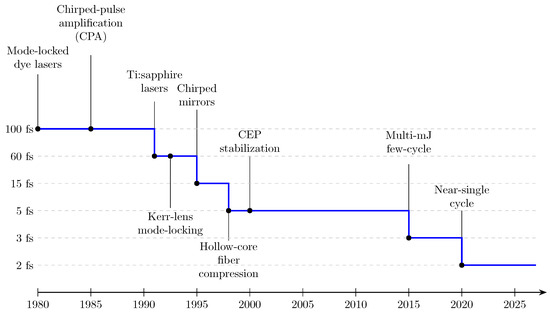
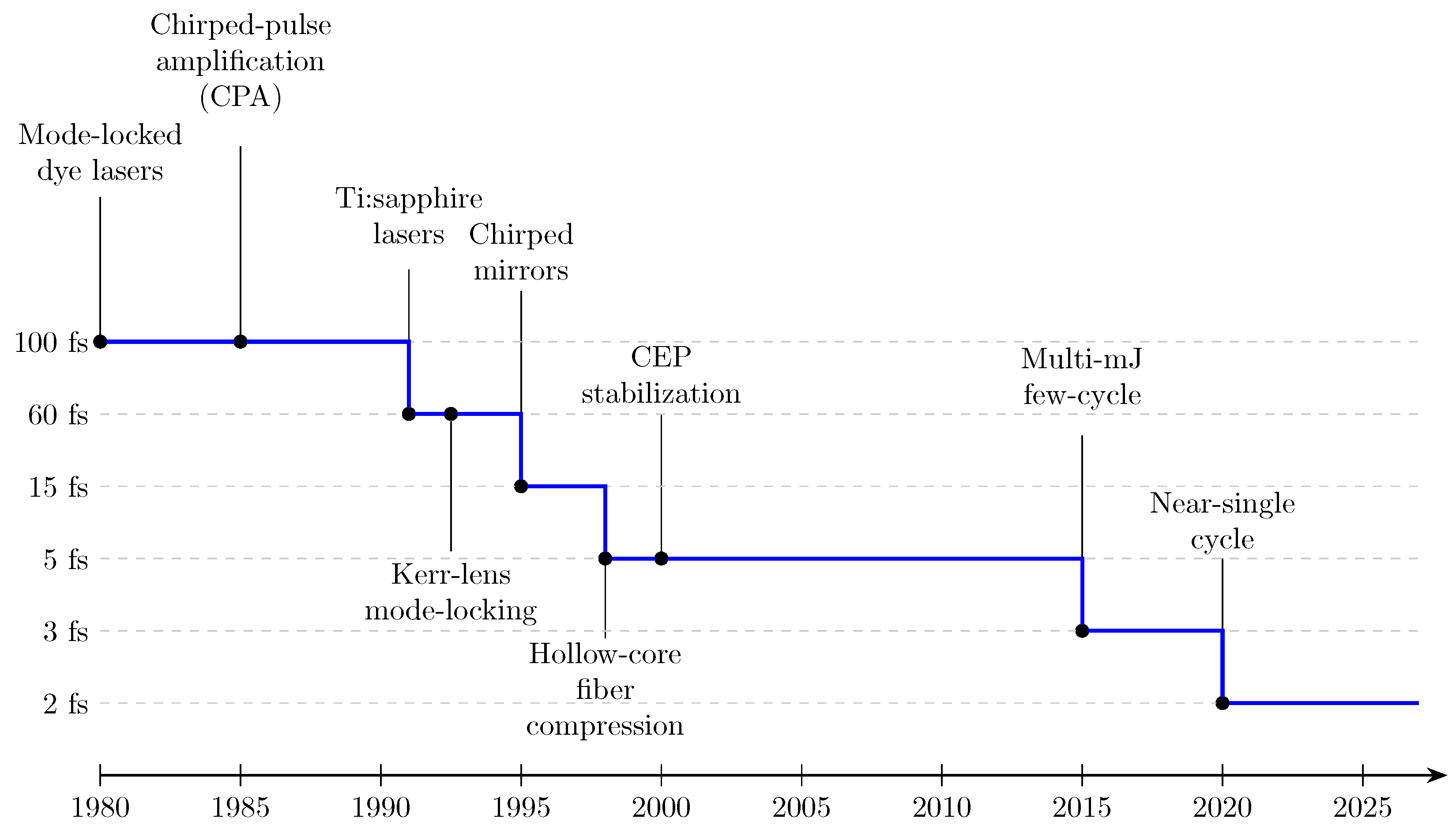
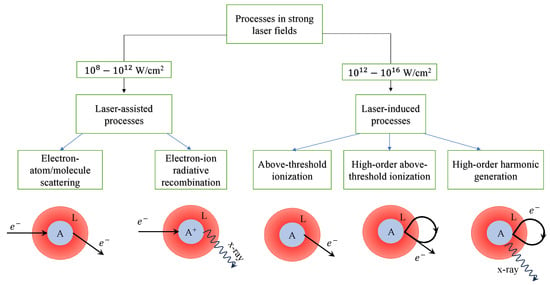
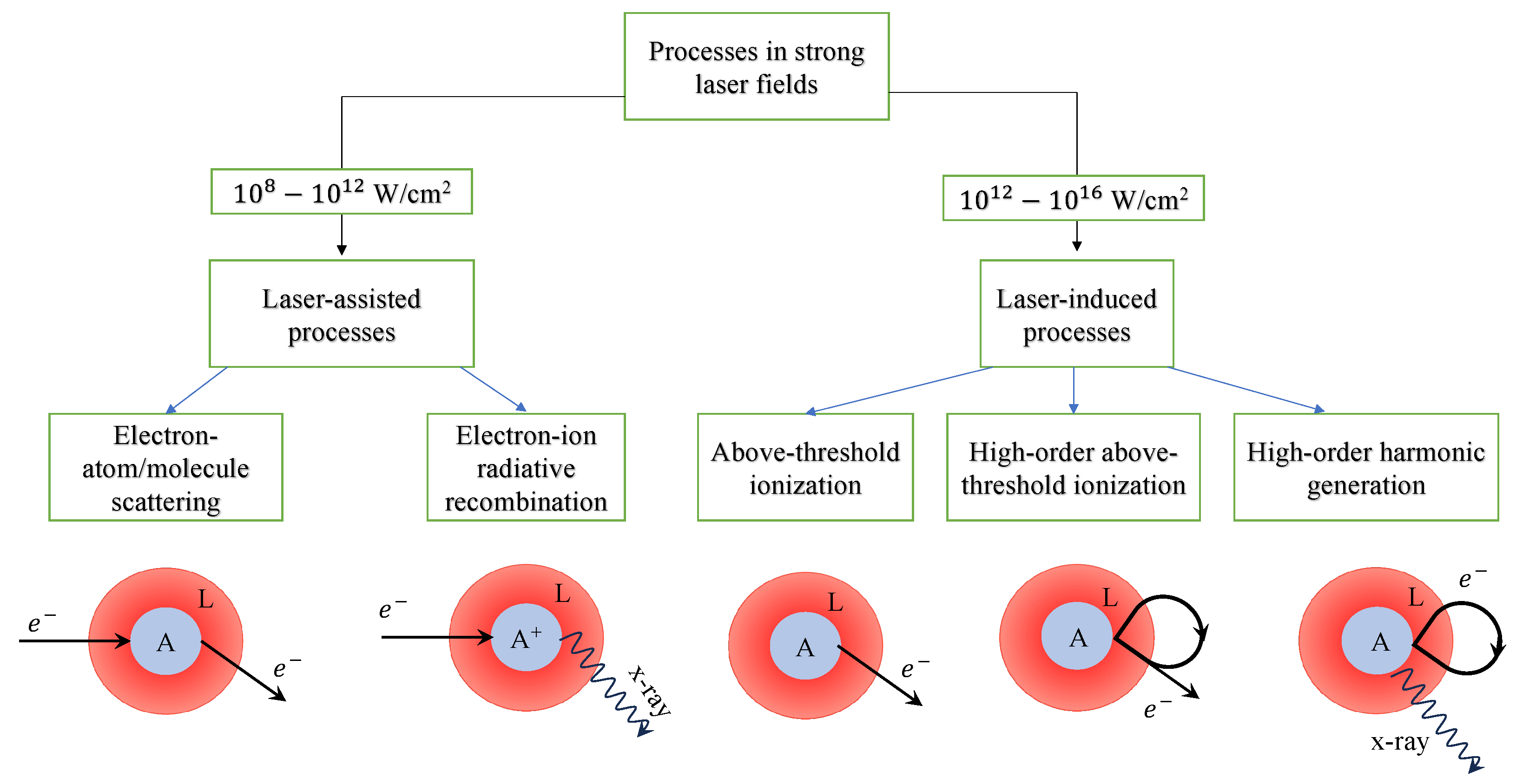
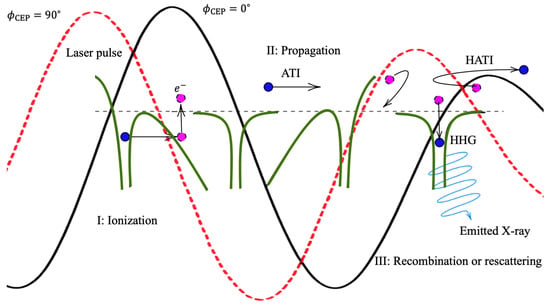
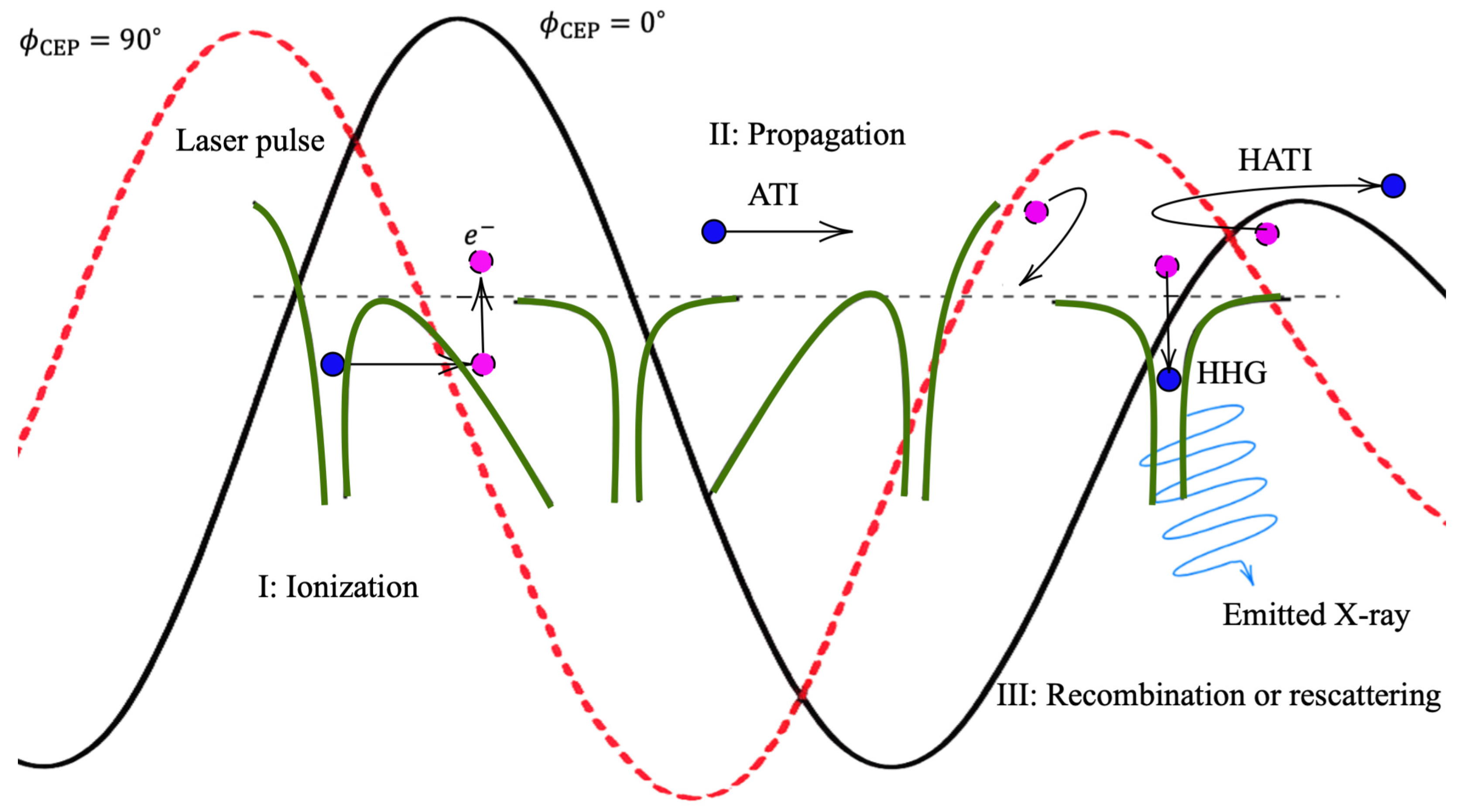
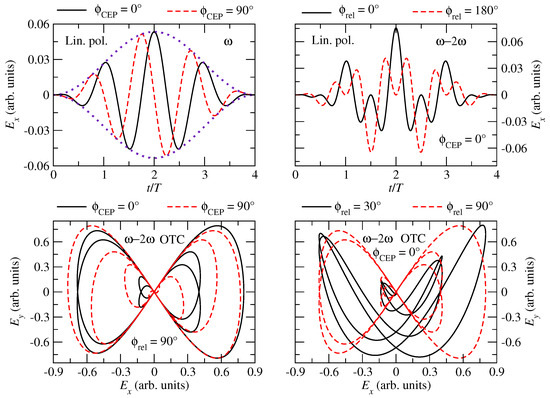
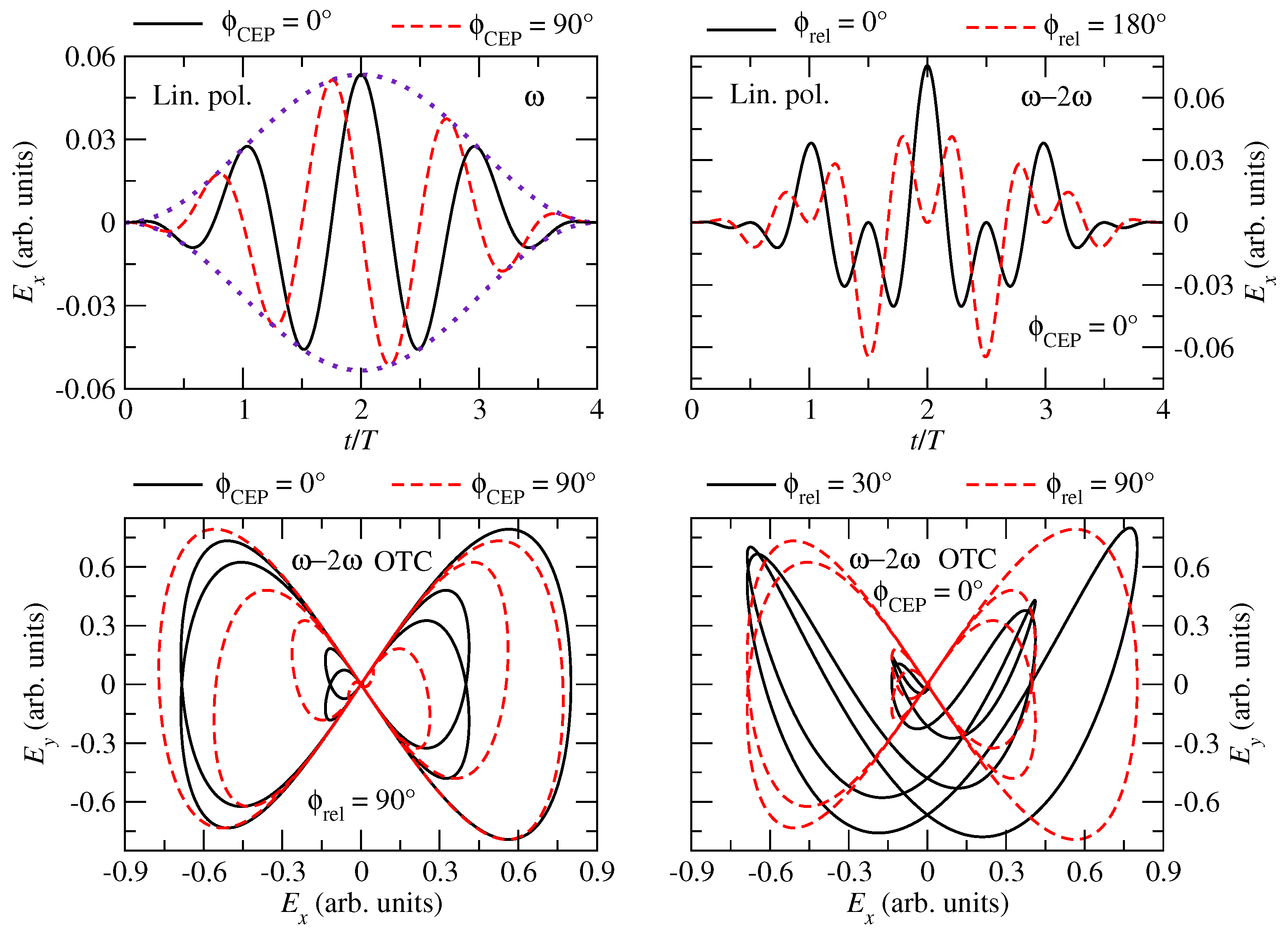
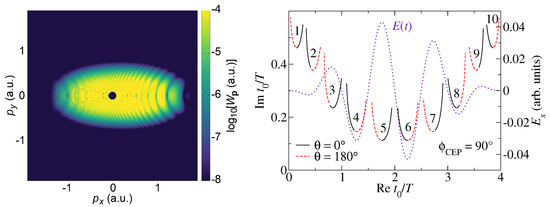
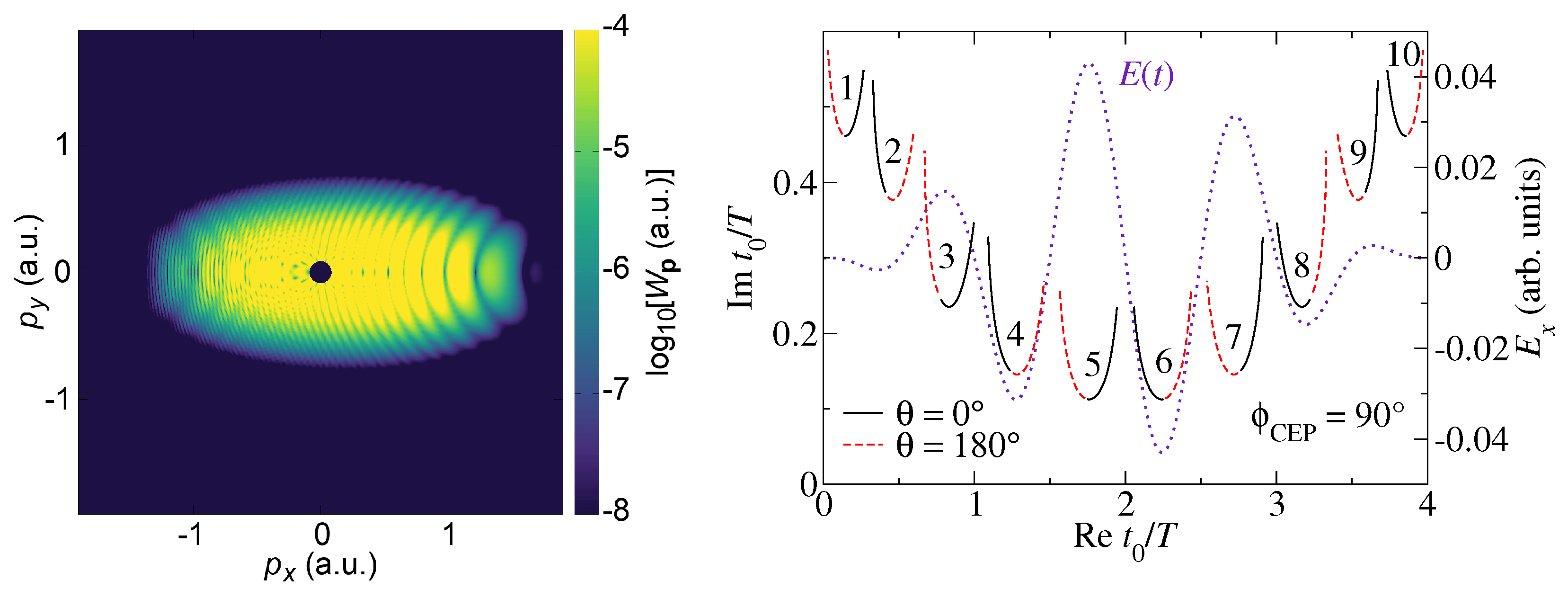
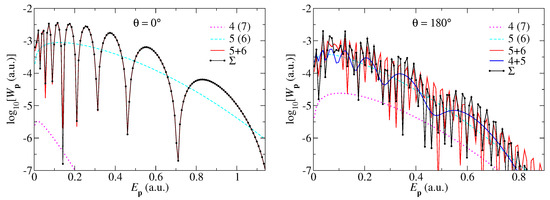
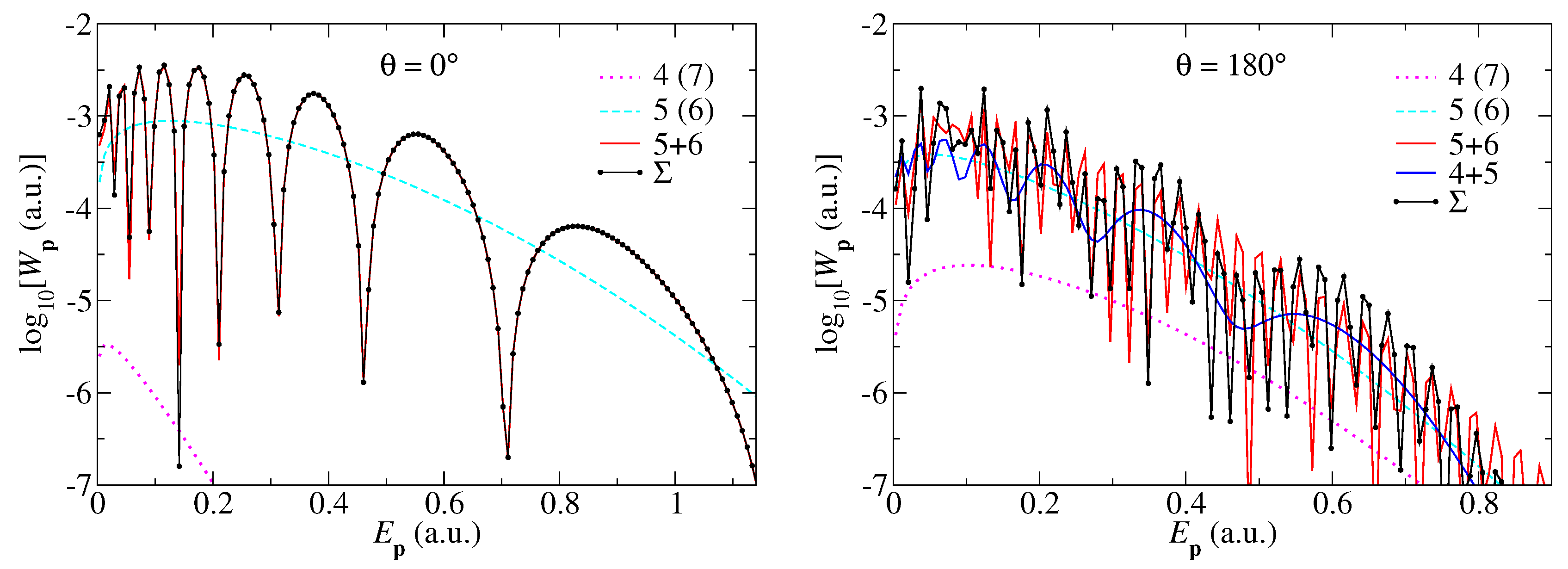
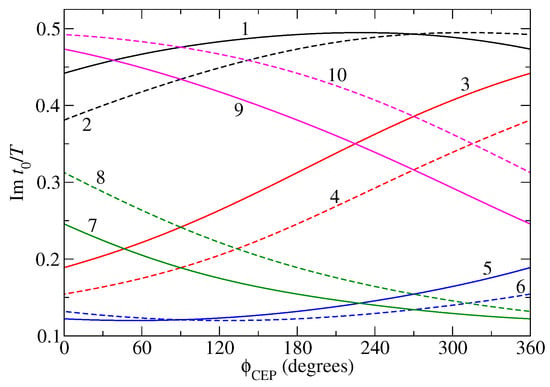
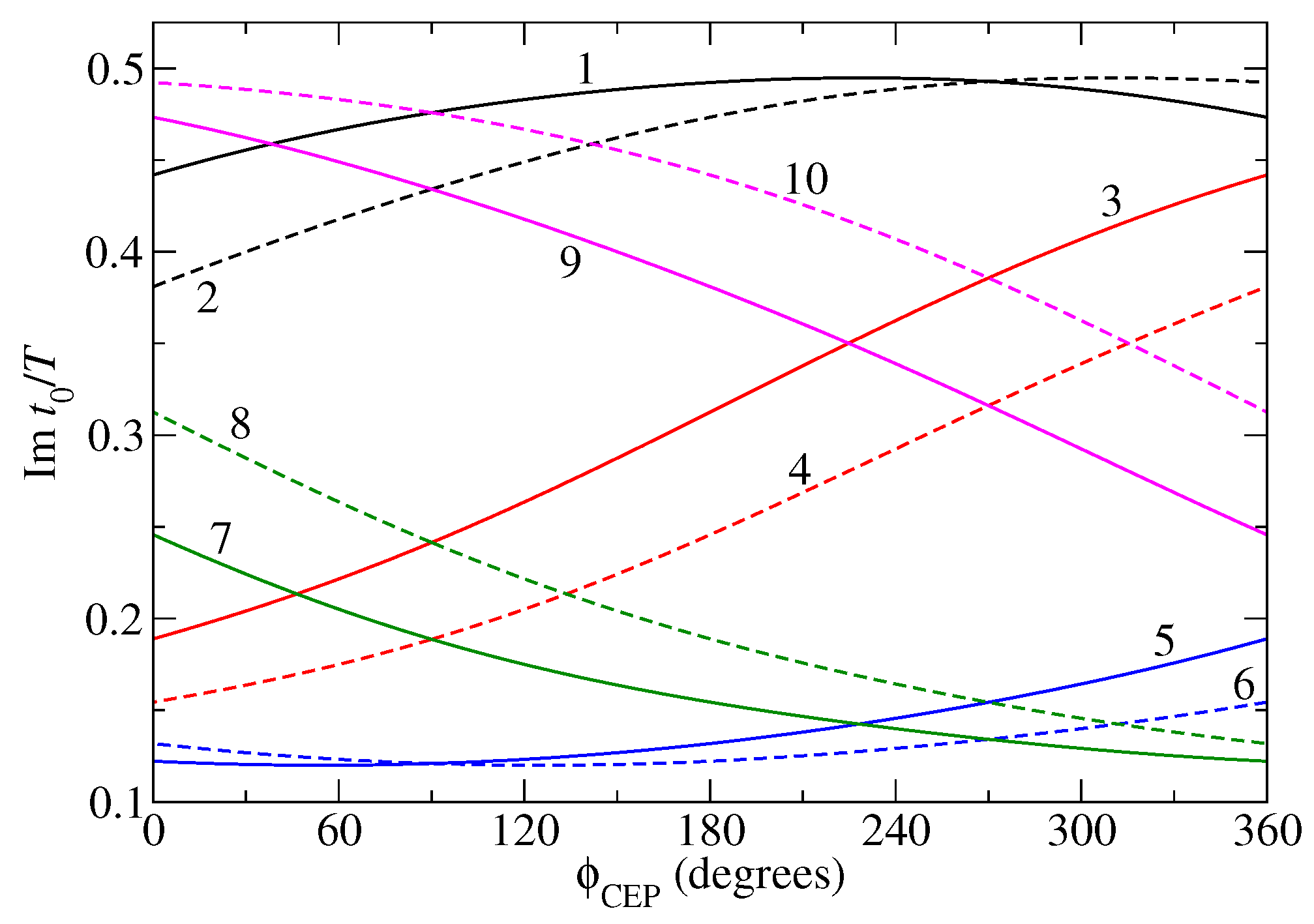
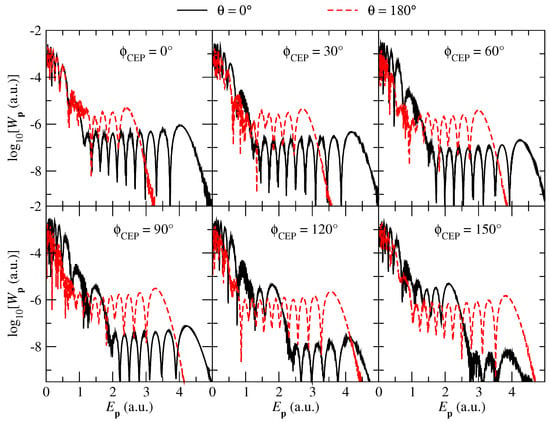
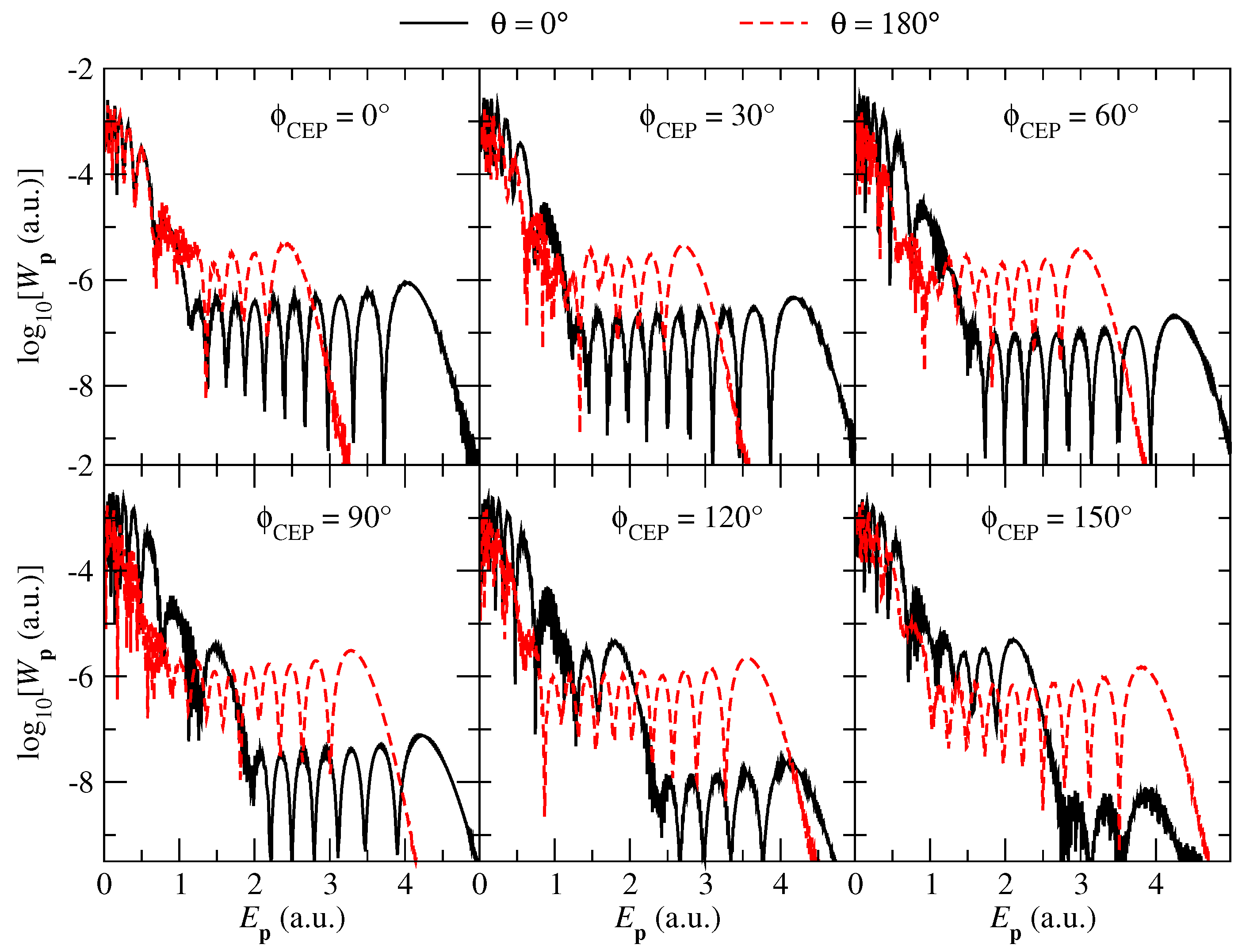
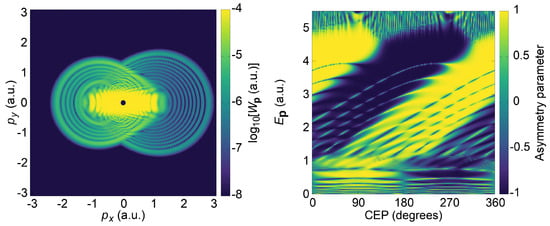
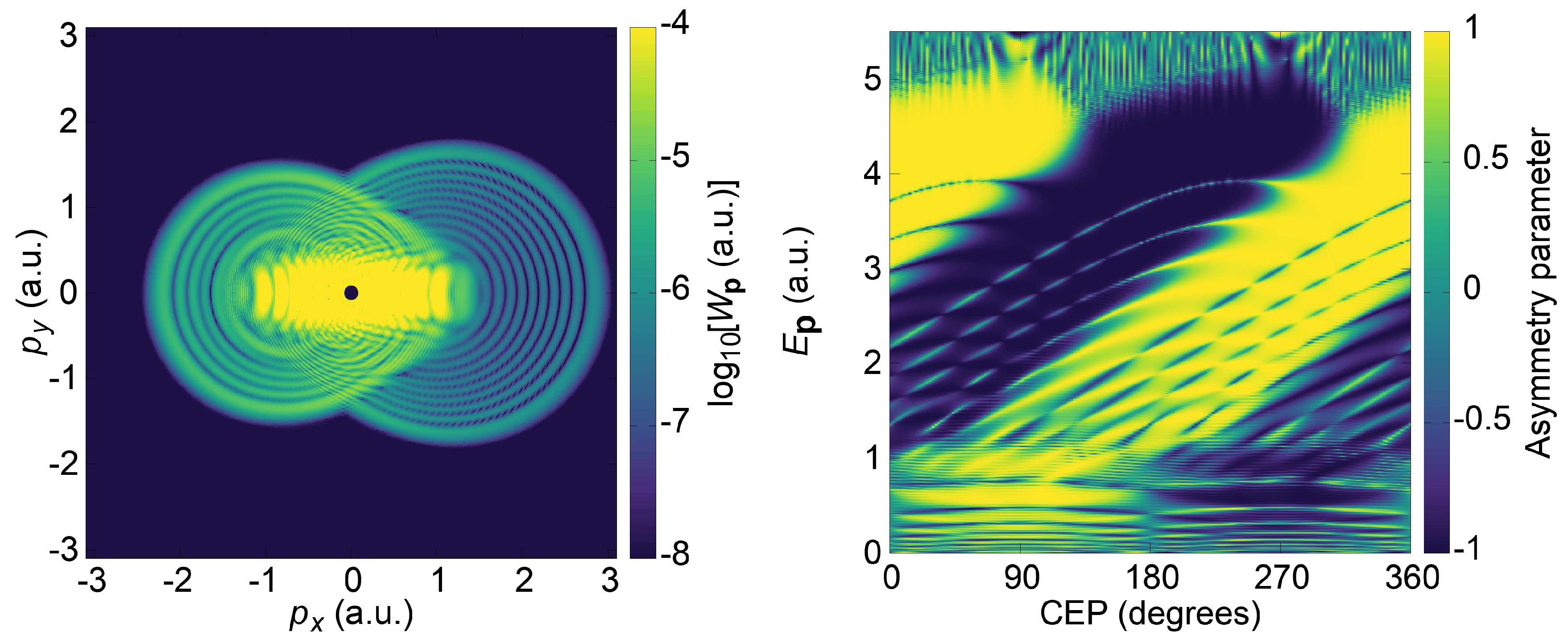
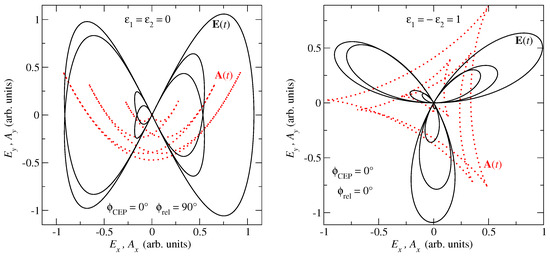
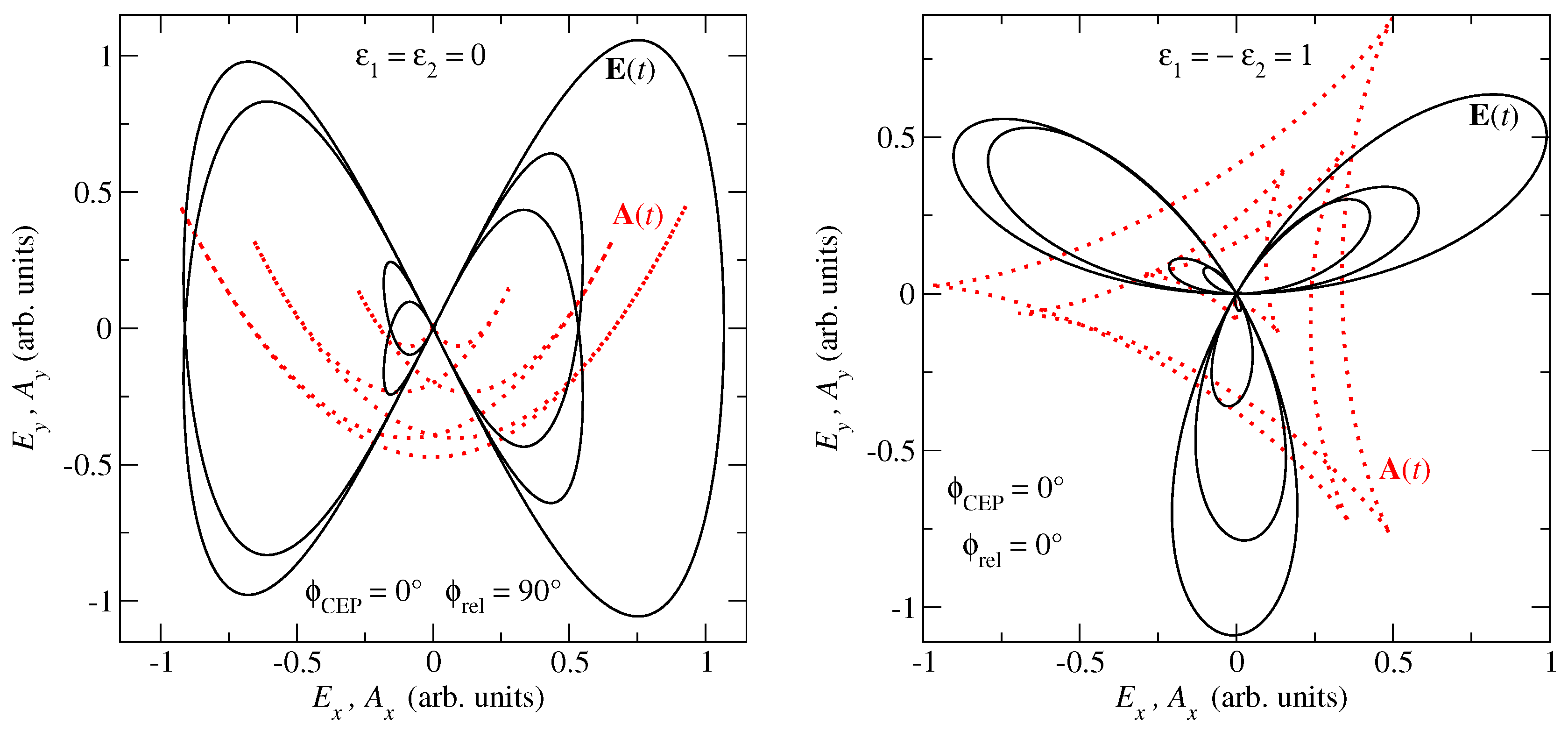
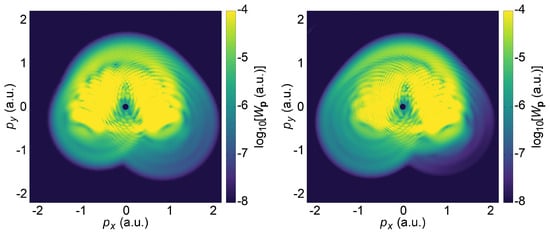
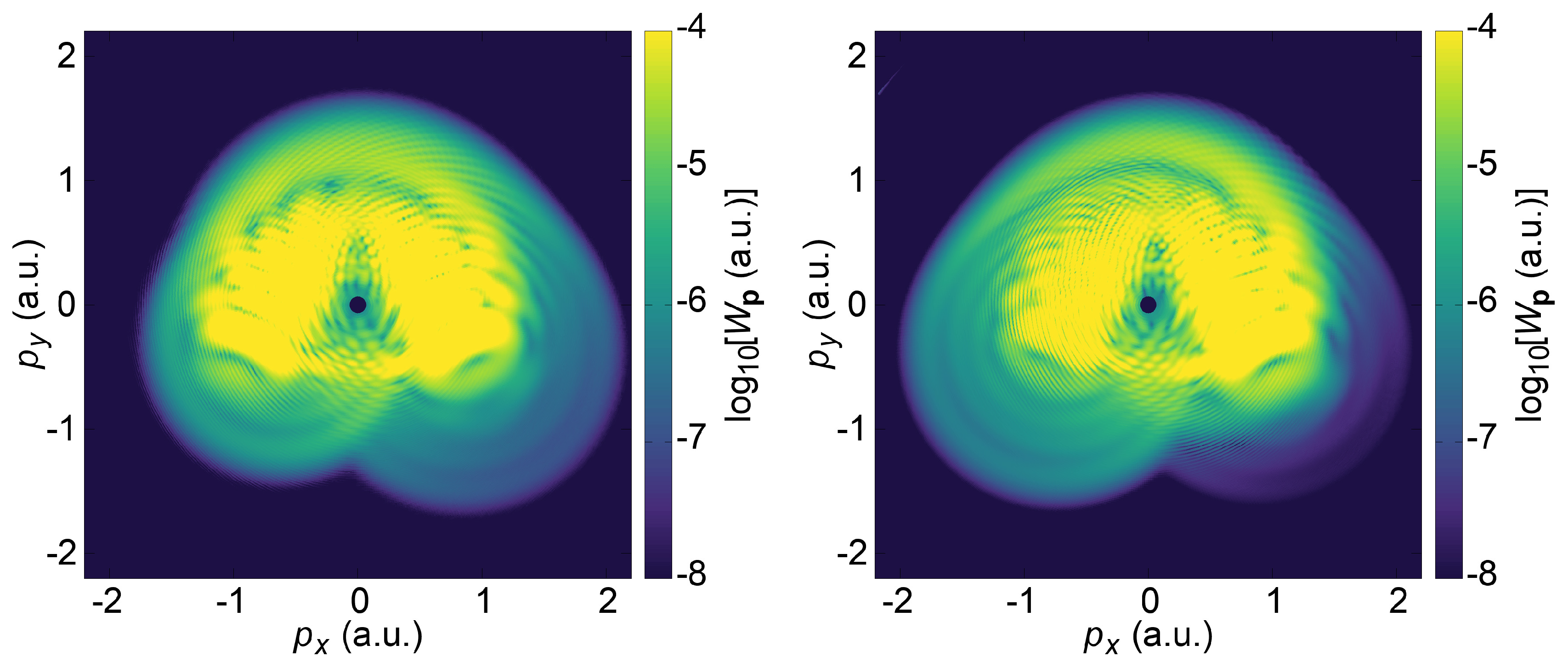
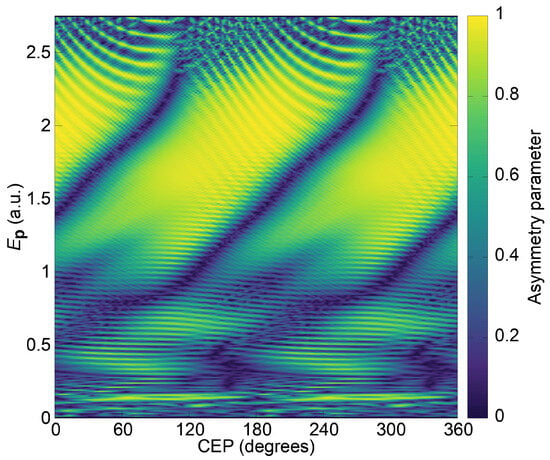
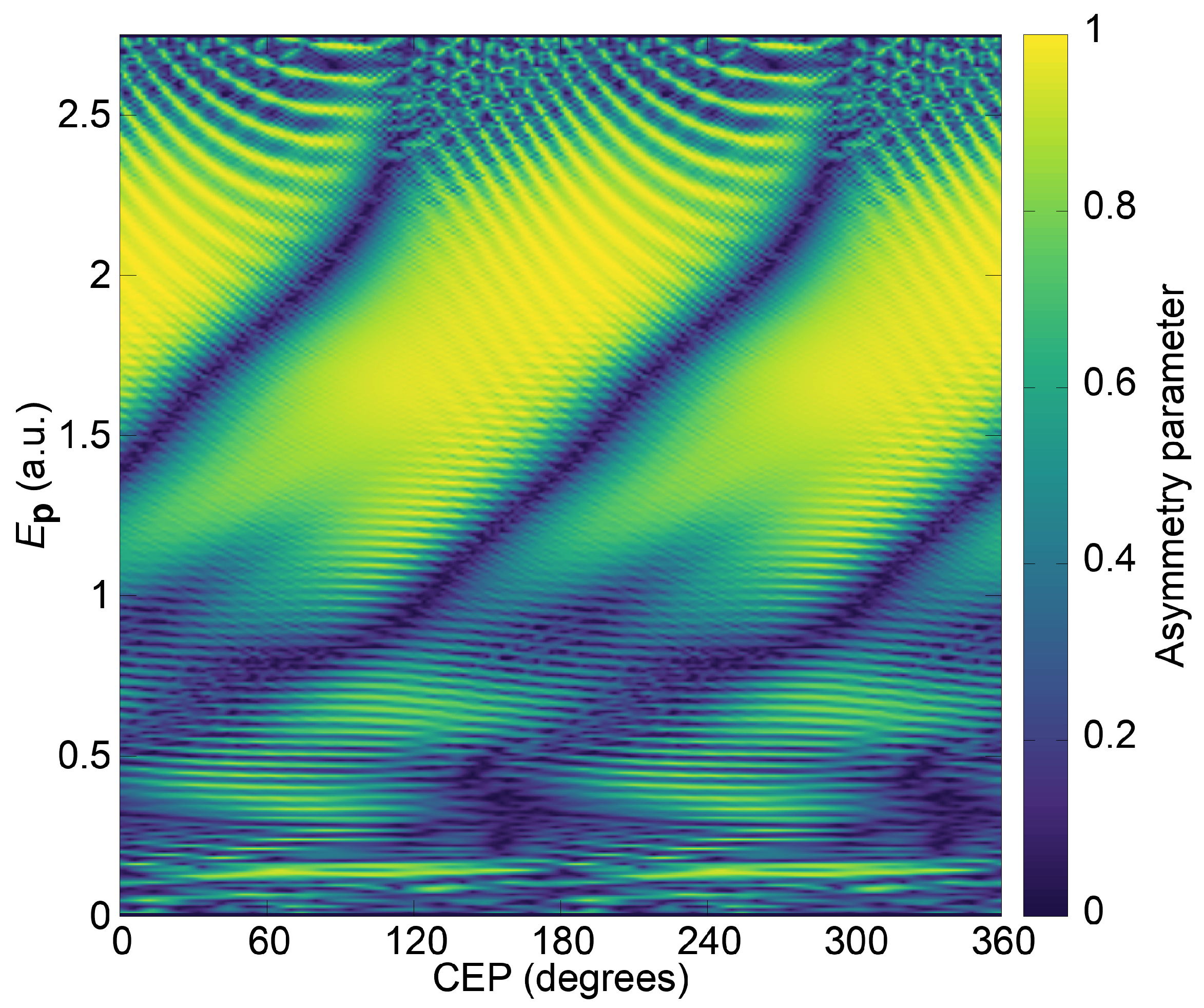
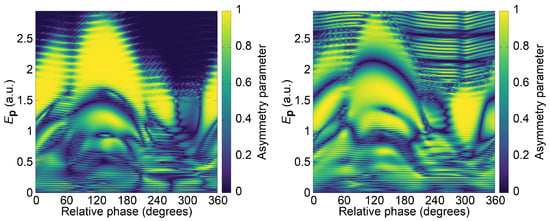
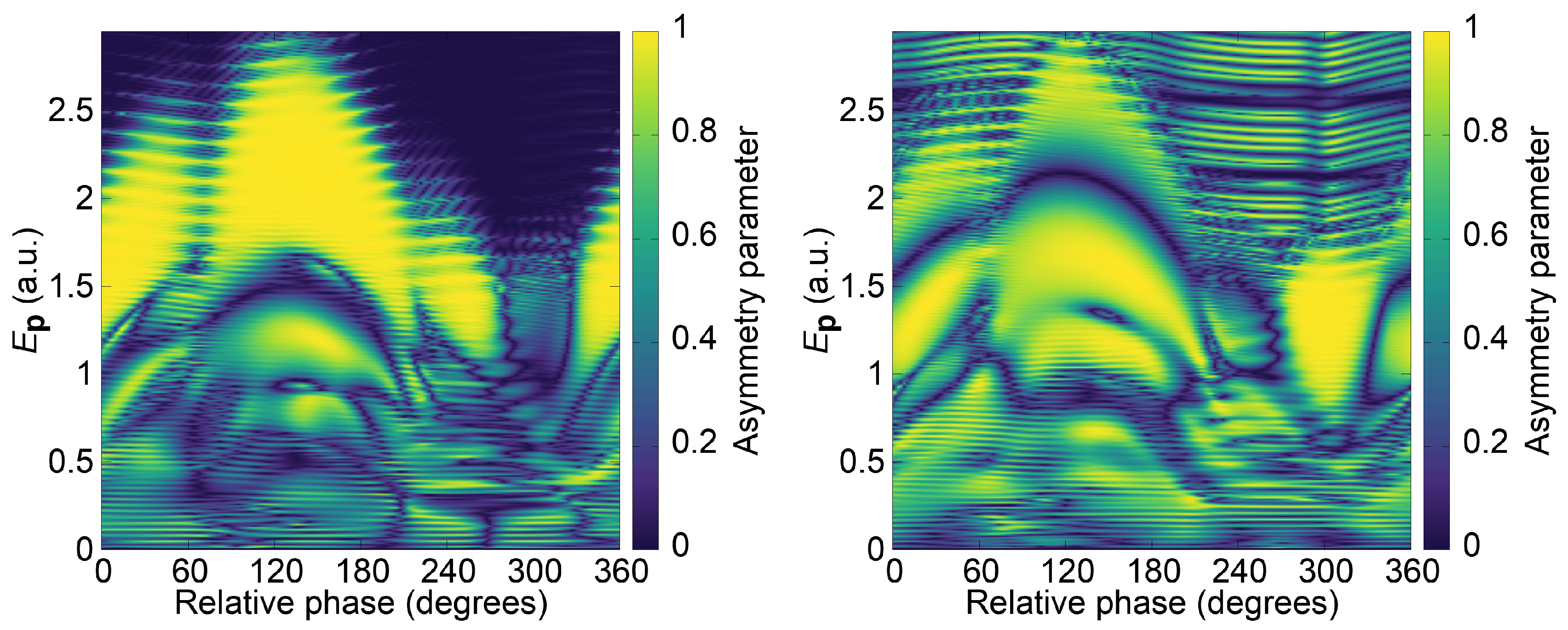
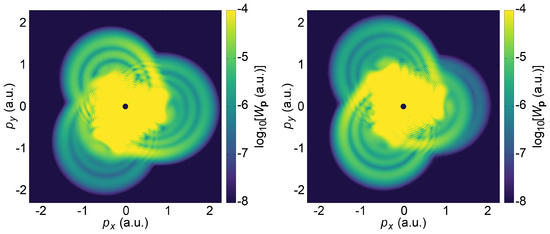
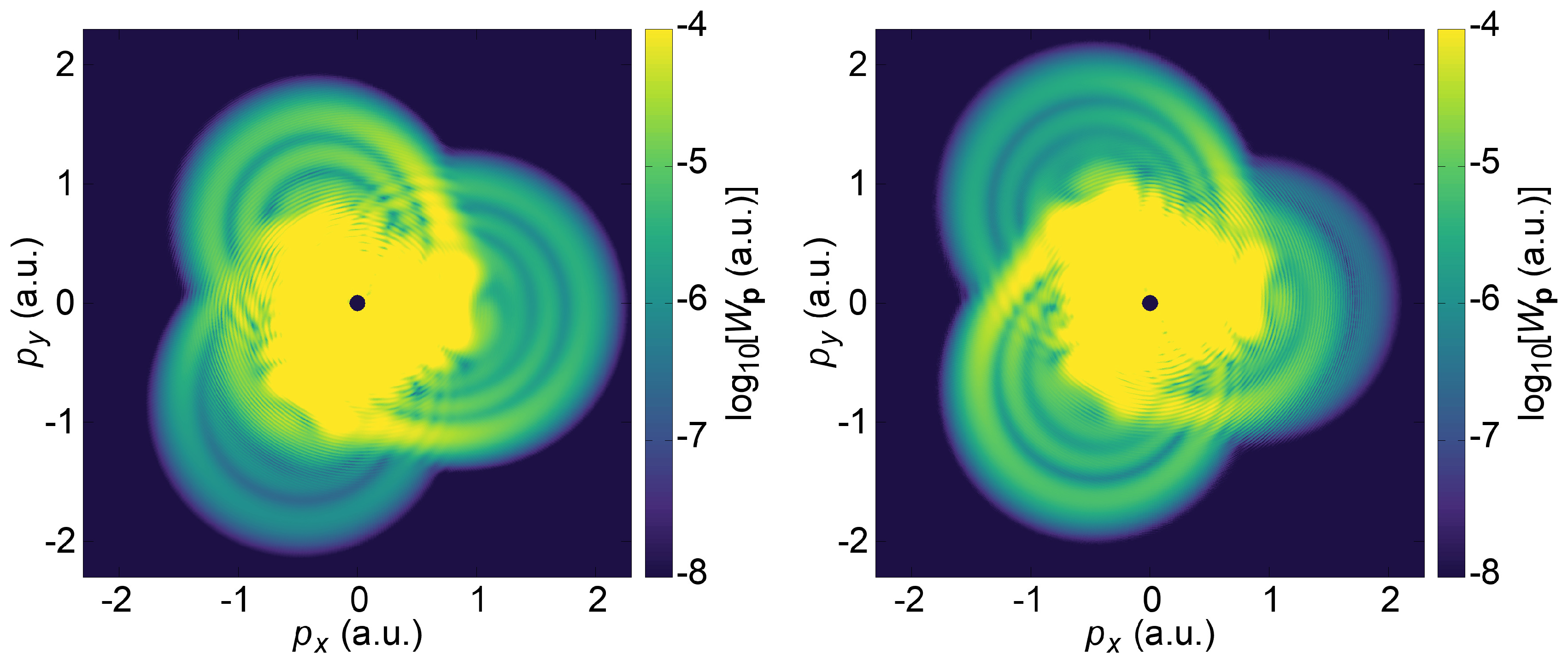
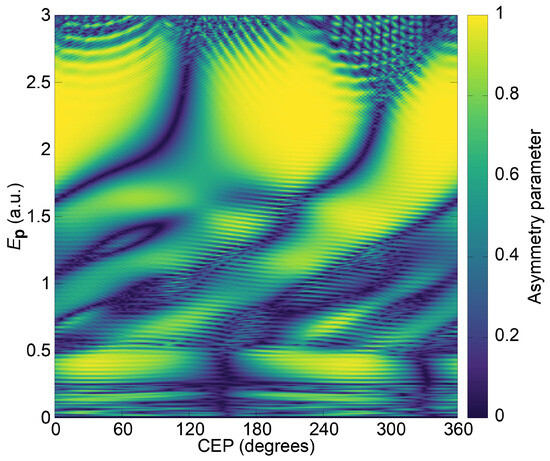
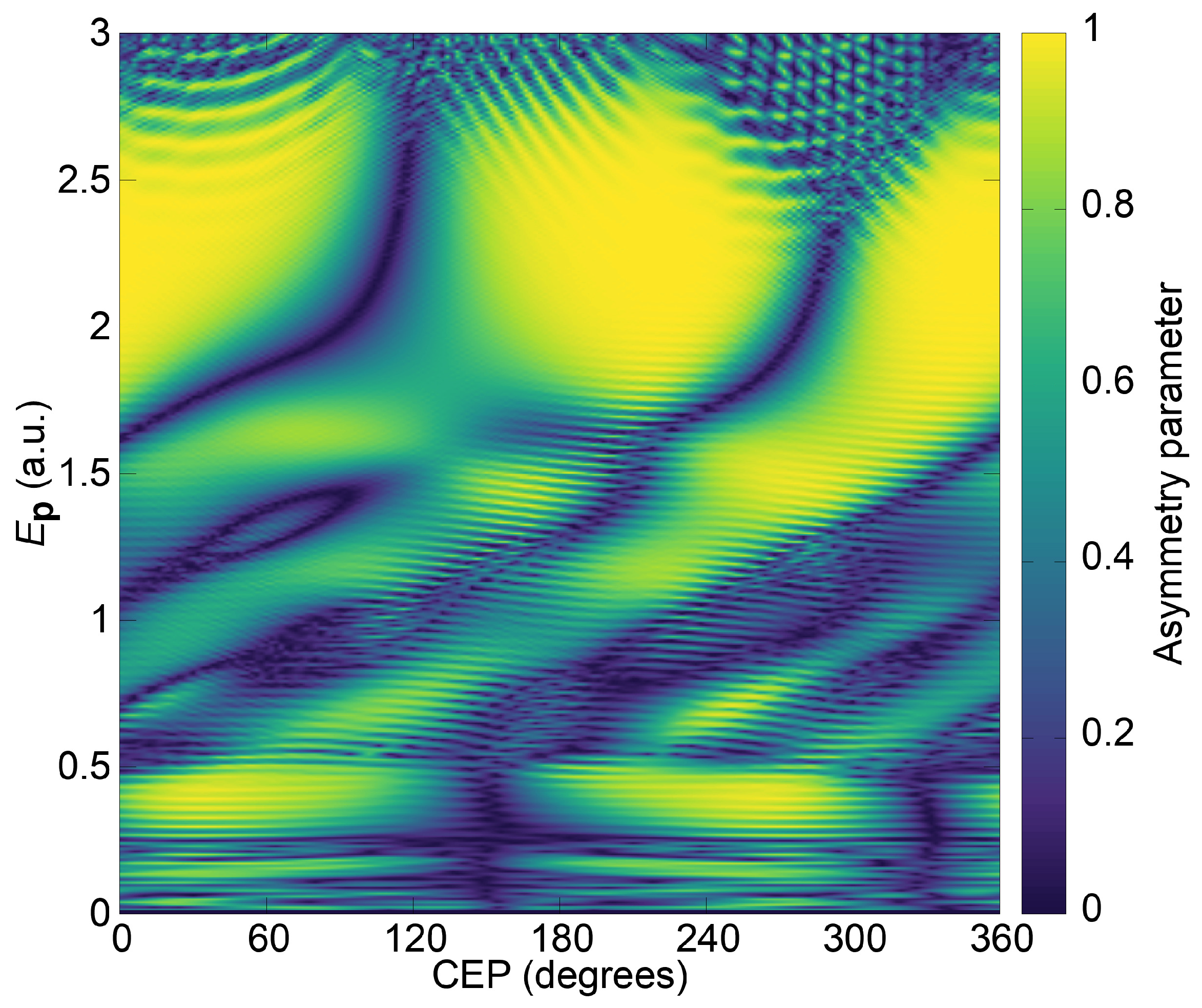
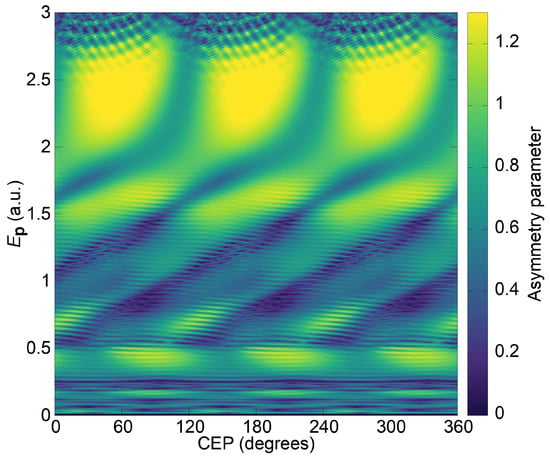
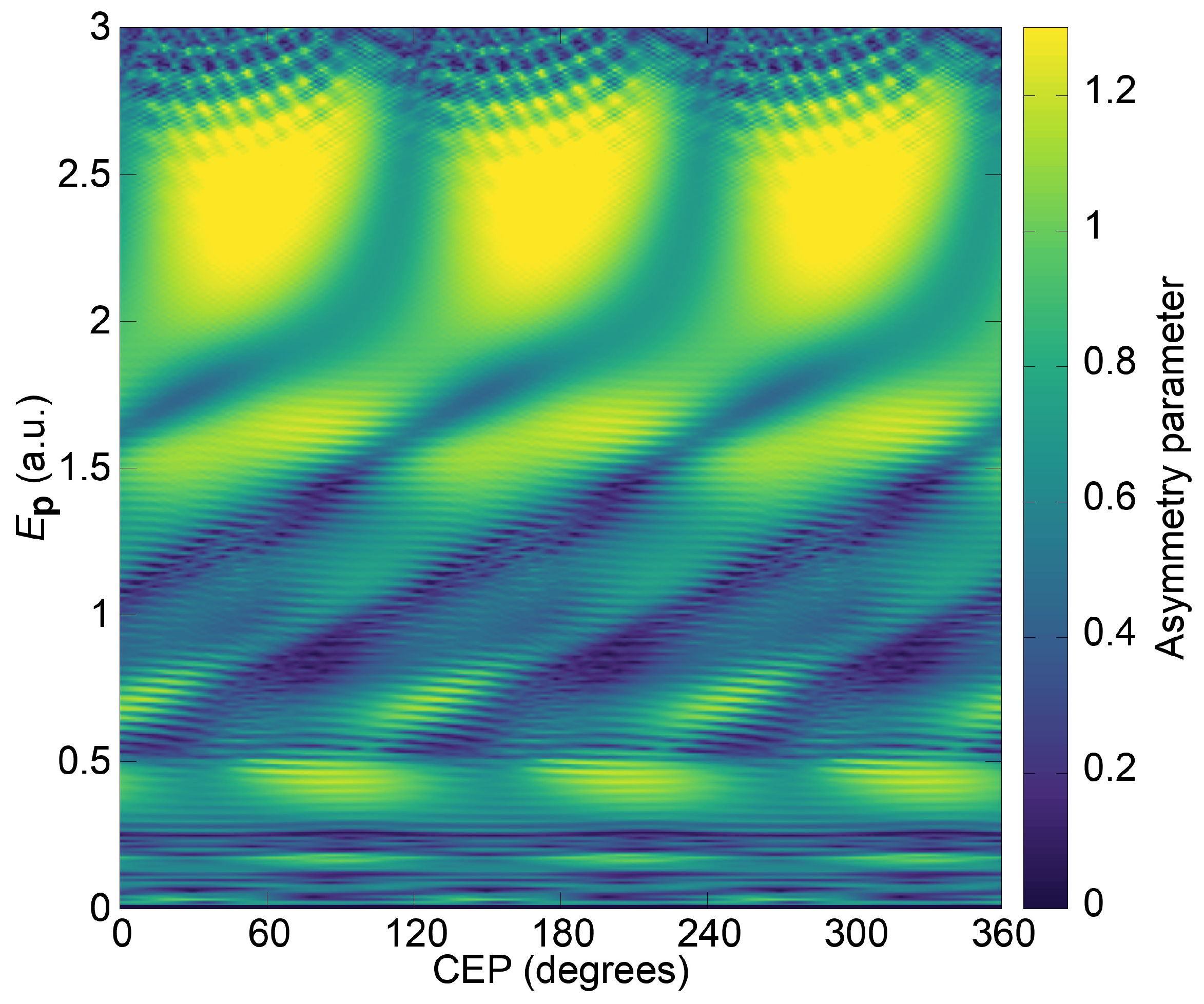
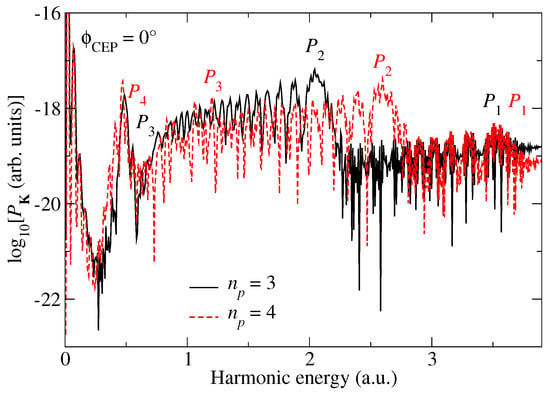
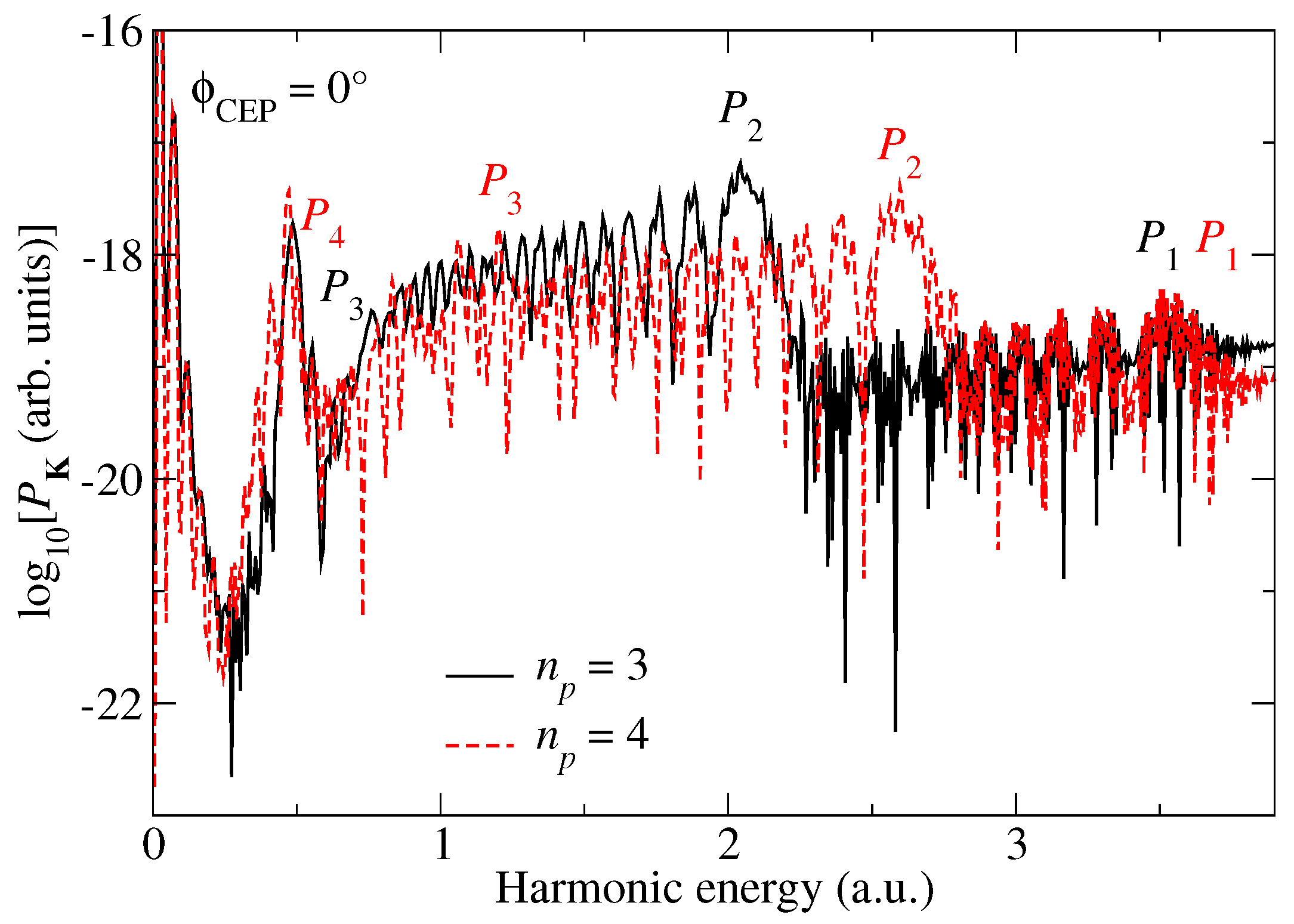
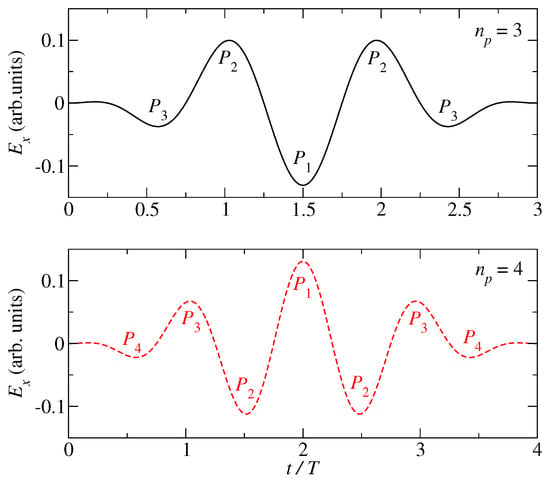
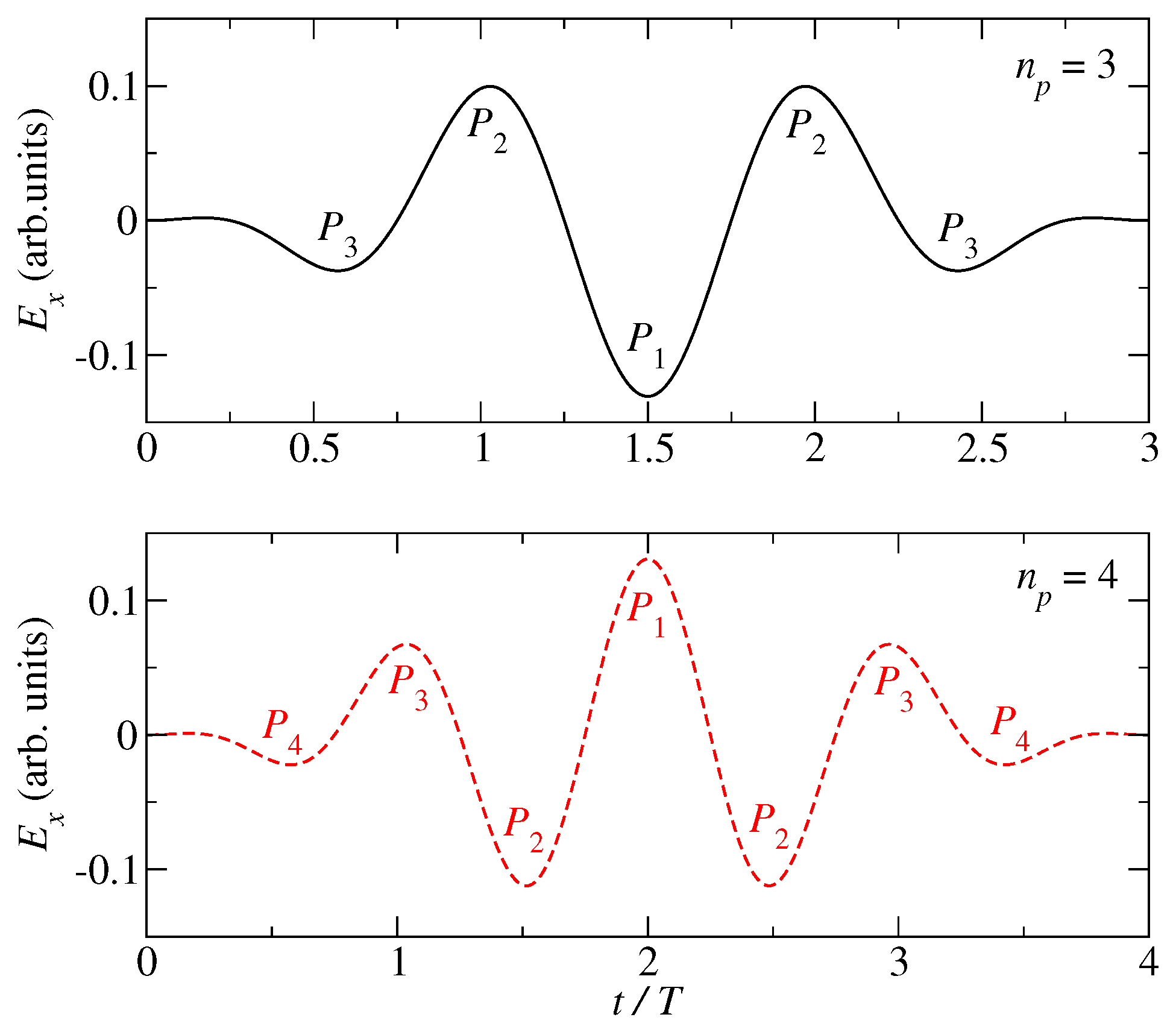
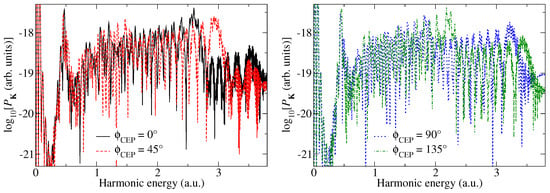
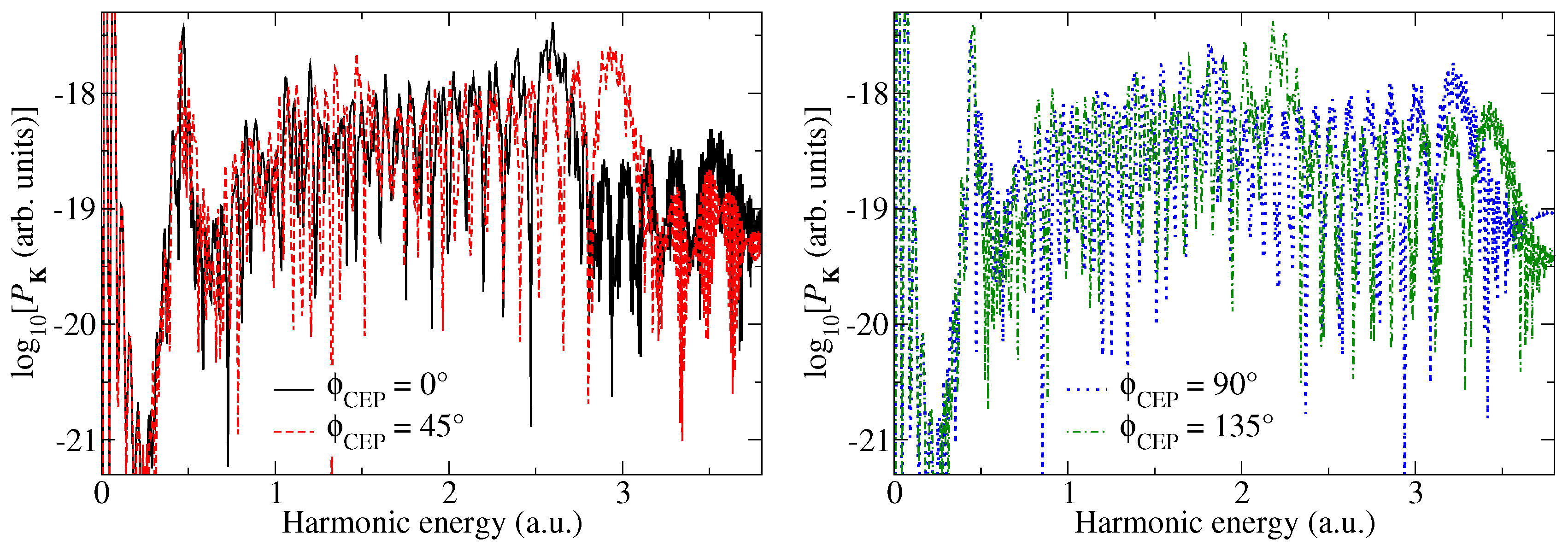
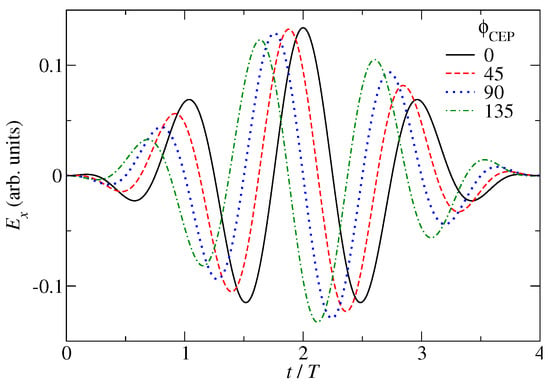
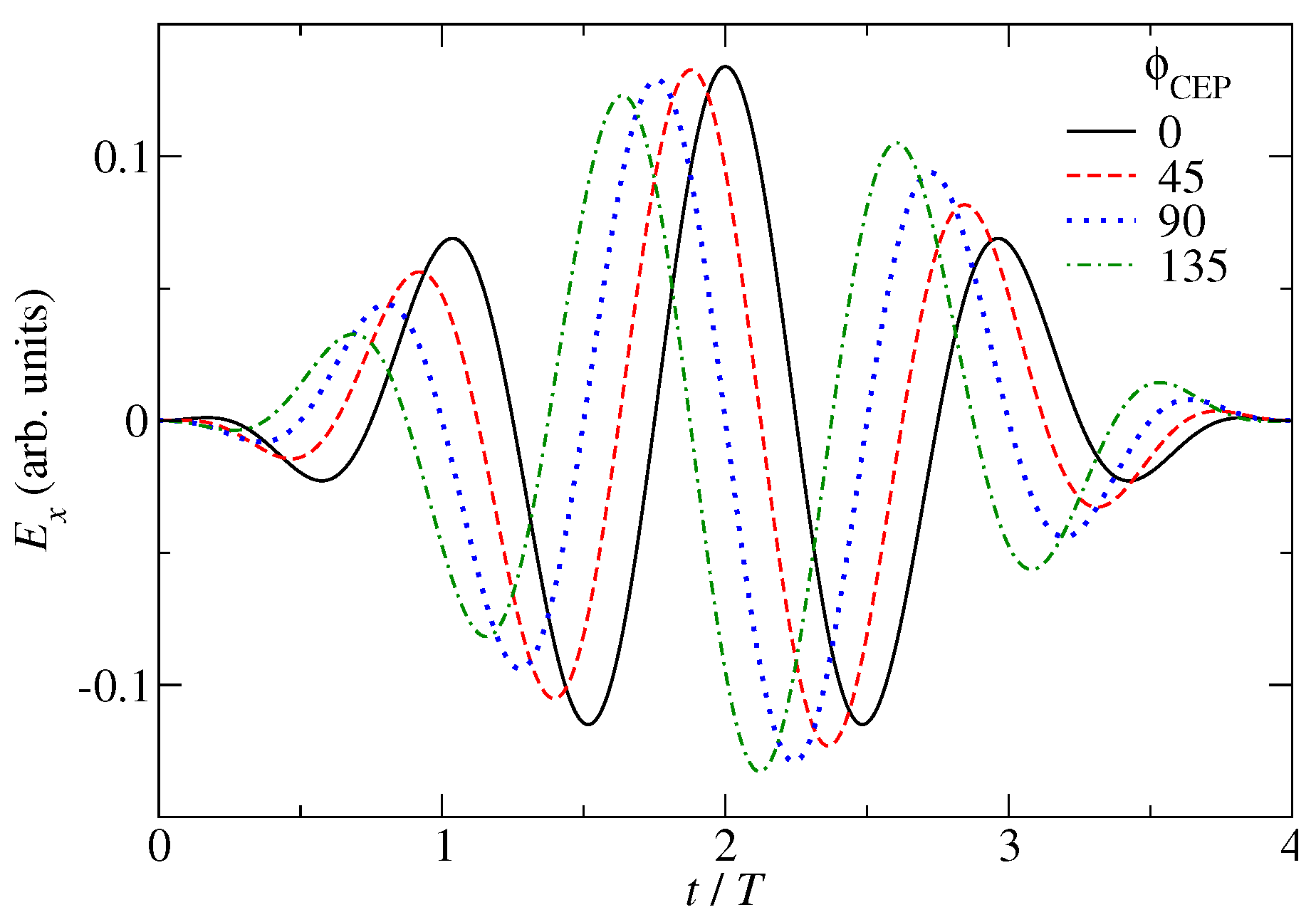
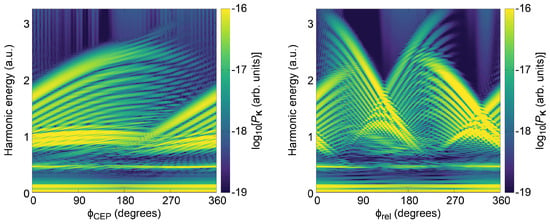
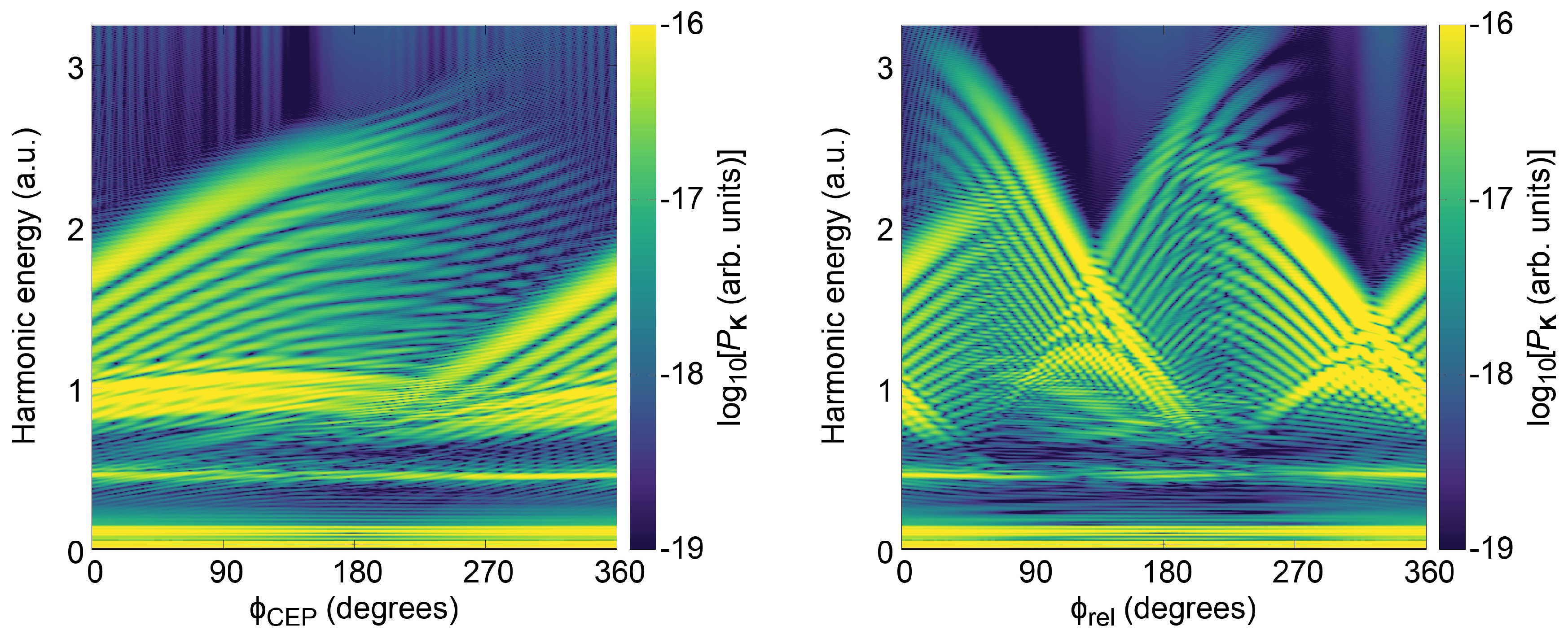
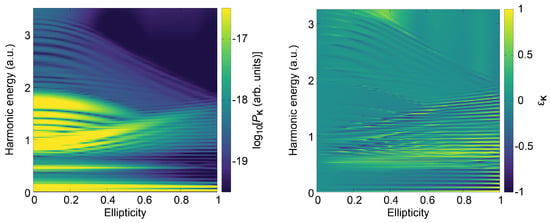
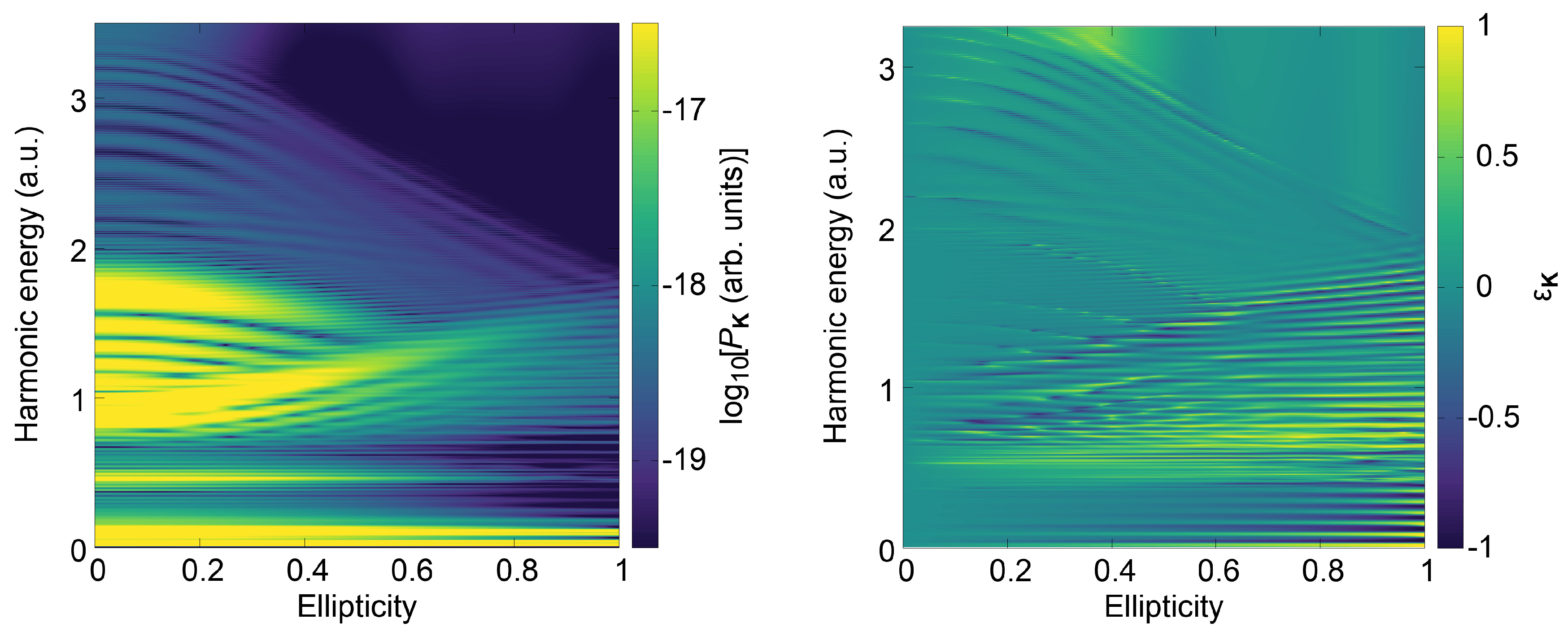
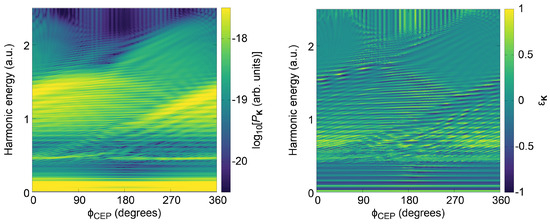
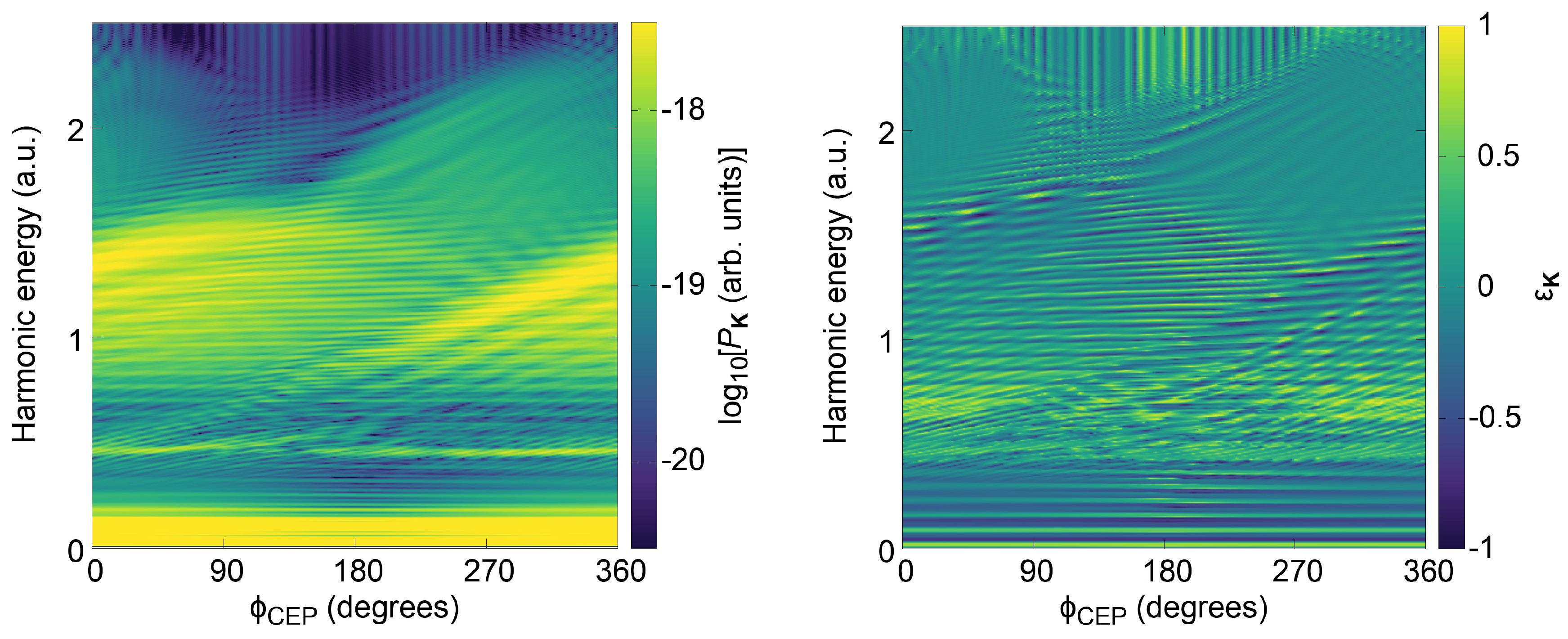
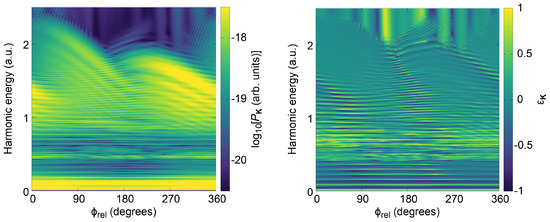
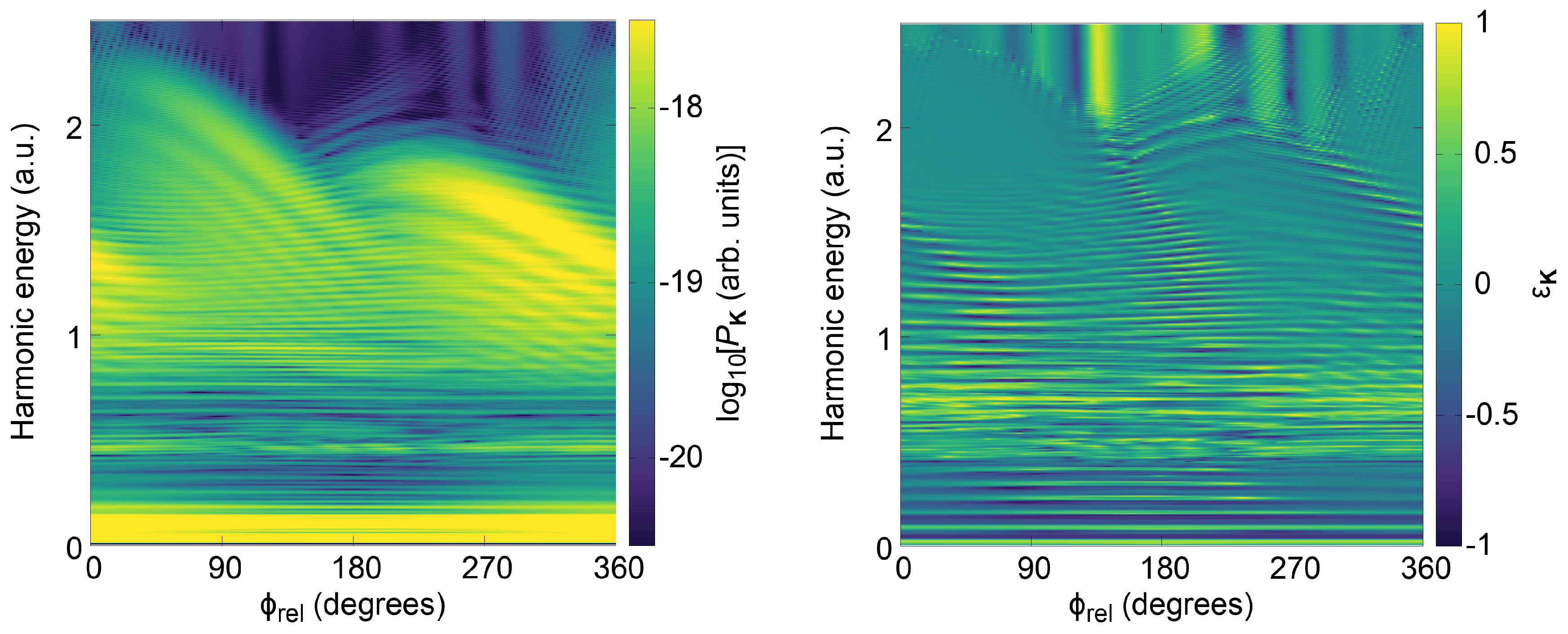
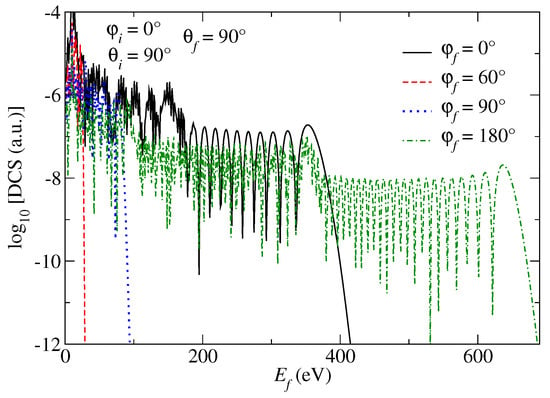
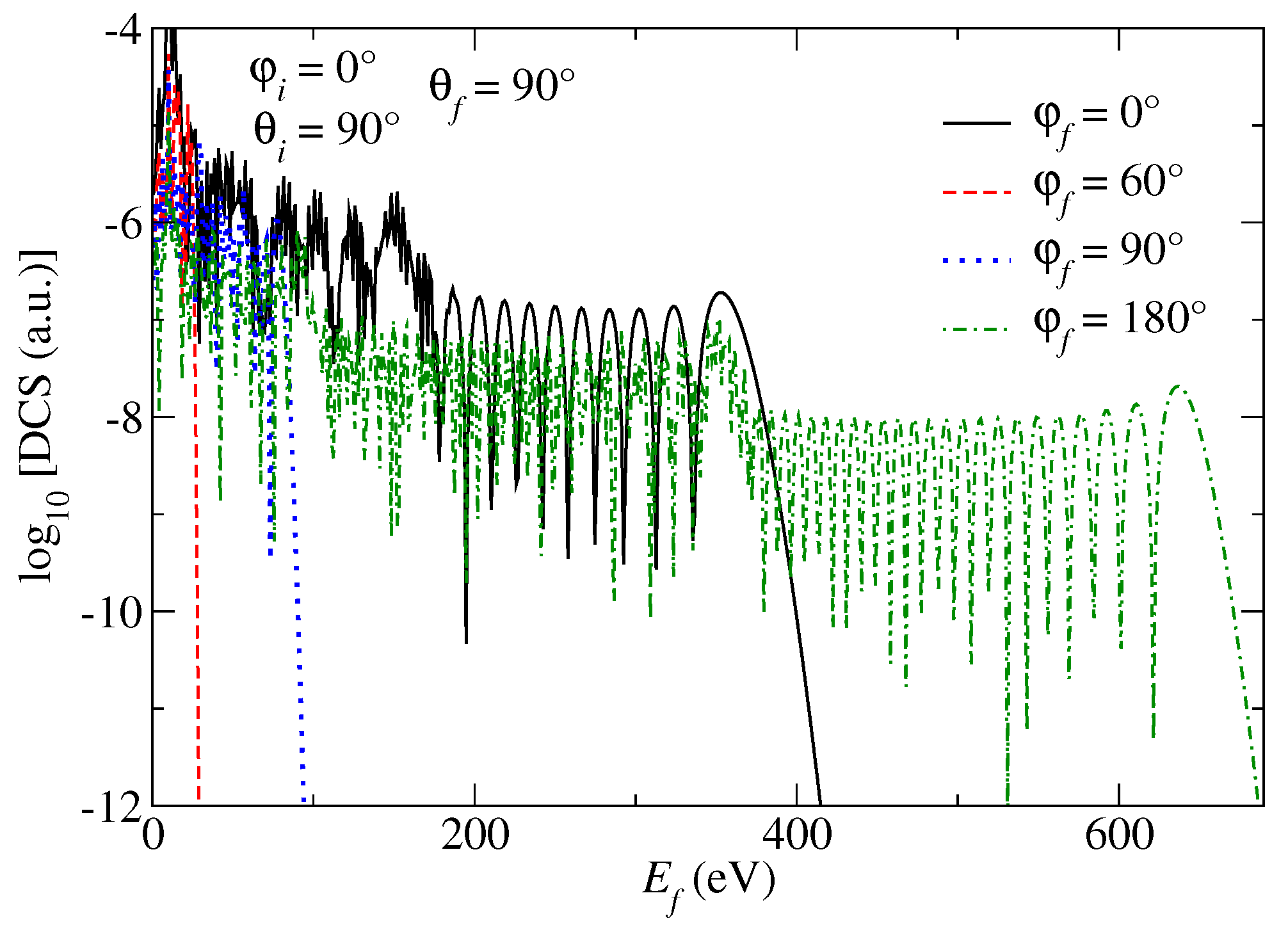
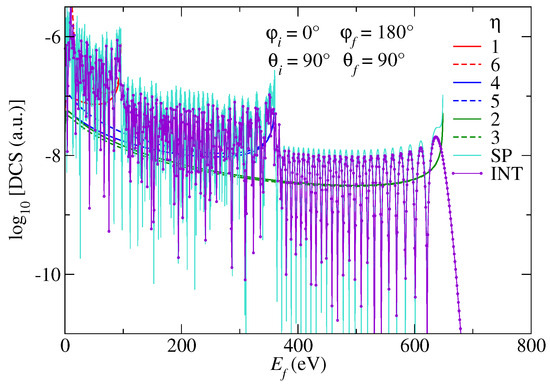
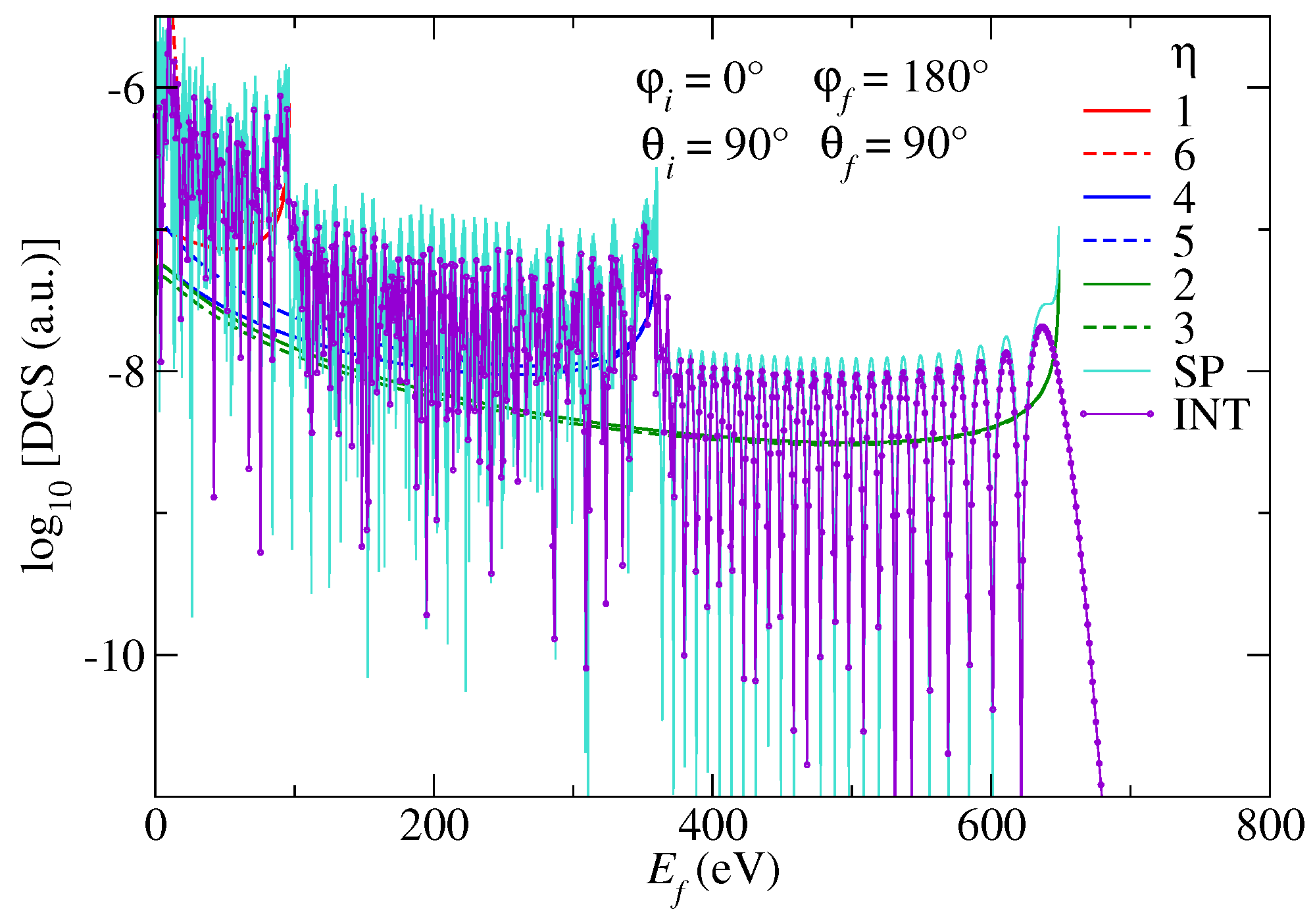
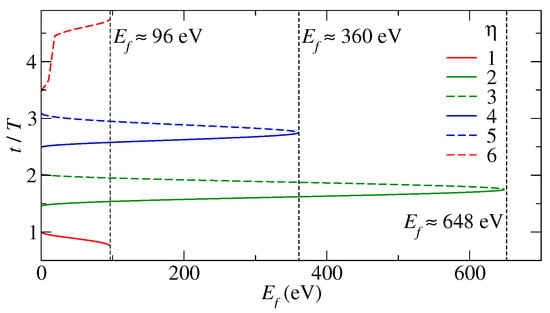
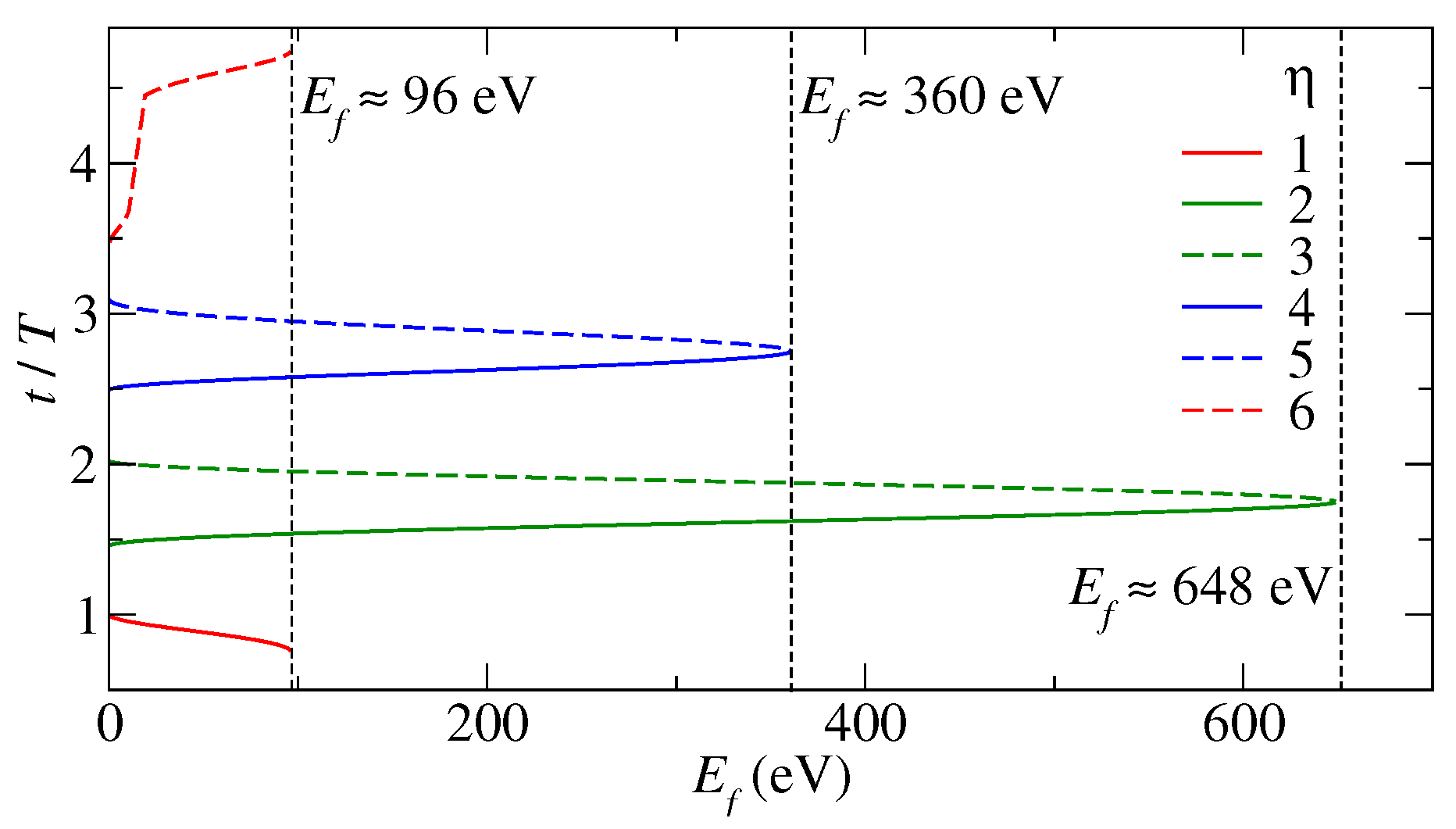
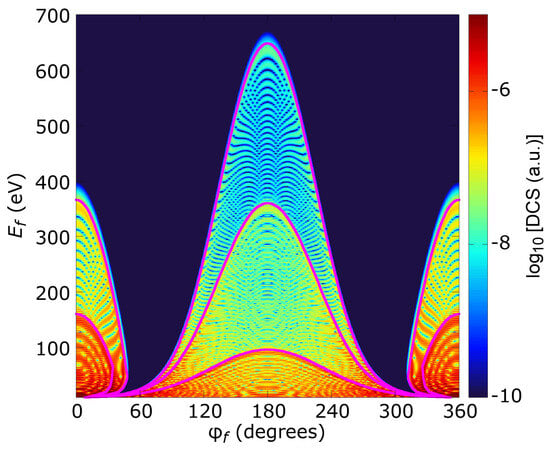
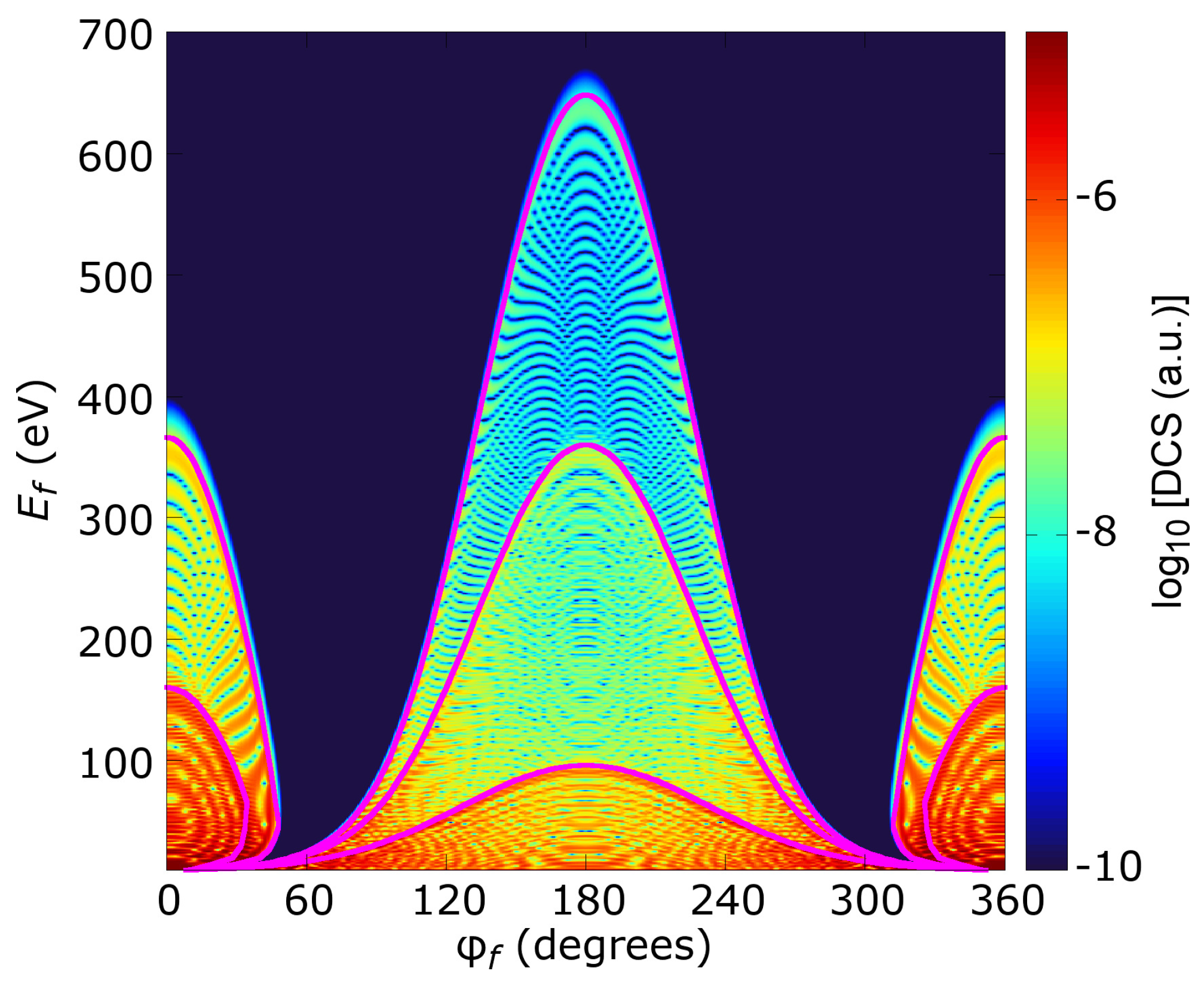
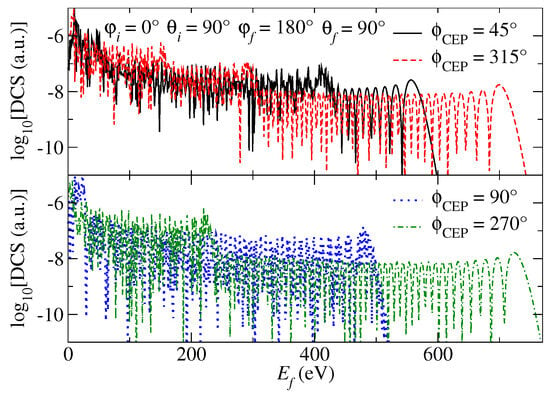
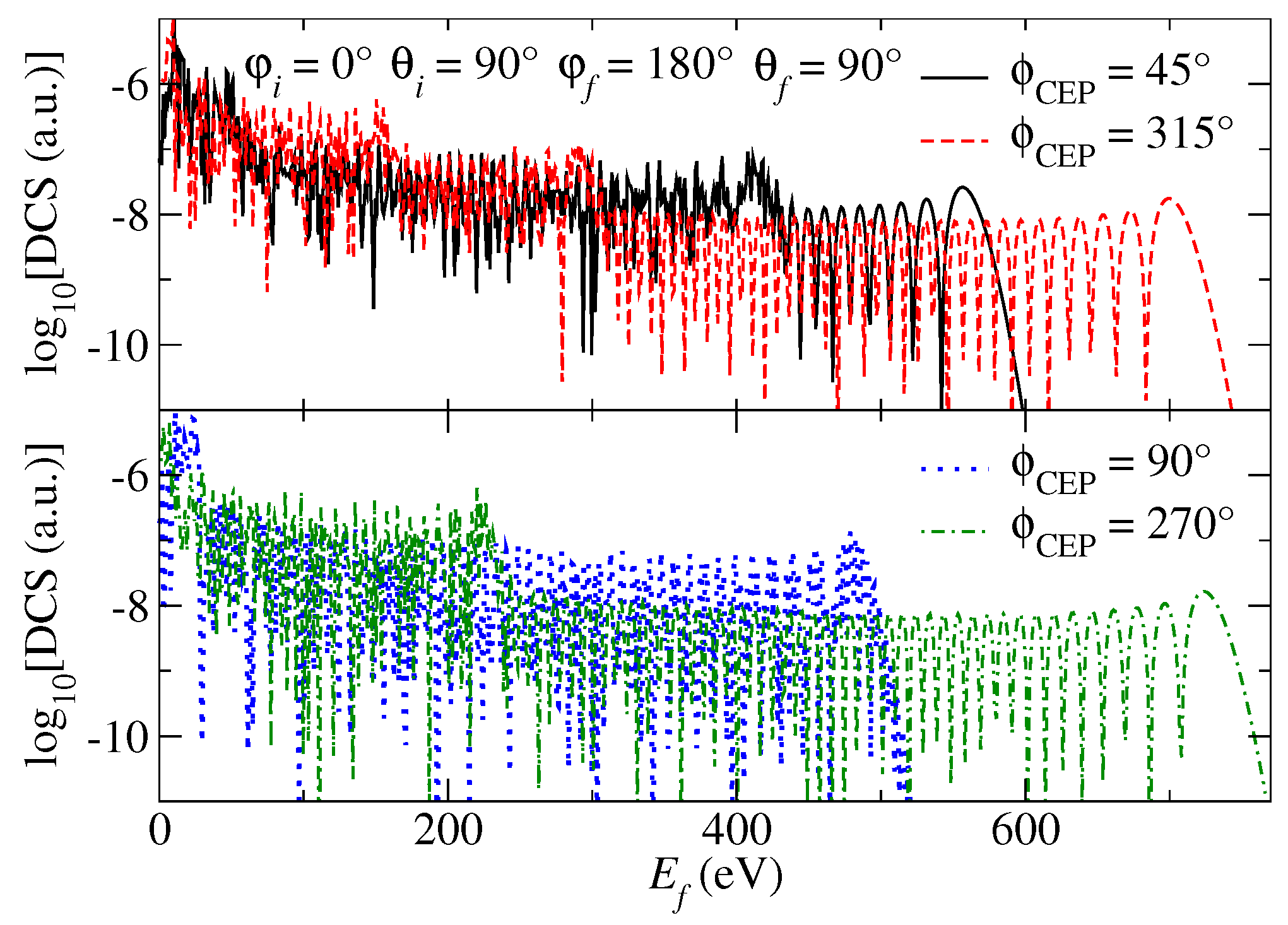

Disclaimer/Publisher’s Note: The statements, opinions and data contained in all publications are solely those of the individual author(s) and contributor(s) and not of MDPI and/or the editor(s). MDPI and/or the editor(s) disclaim responsibility for any injury to people or property resulting from any ideas, methods, instructions or products referred to in the content. |
© 2026 by the authors. Licensee MDPI, Basel, Switzerland. This article is an open access article distributed under the terms and conditions of the Creative Commons Attribution (CC BY) license.