


Abstract
Eutrophication in tropical endorheic lakes often persists despite reductions in external nutrient inputs, indicating an important role of internal nutrient loading. However, integrated evidence linking thermal stratification, sediment characteristics, and sediment-derived nutrient release in tropical endorheic lakes remains limited. This study investigated the mechanisms contributing to eutrophication in Lake Batur, a tropical endorheic volcanic lake in Indonesia, through seasonal water-column observations, sediment porewater profiling, diffusive nutrient flux analysis, and sediment characterization. Seasonal observations showed thermal stratification accompanied by hypoxic to anoxic bottom waters, while sediment-derived nutrient flux was dominated by ammonium and phosphate under reducing conditions. Sediment characterization at the representative sampling site revealed mineral assemblages dominated by biogenic silica, aluminosilicate clays, carbonates, and iron-bearing phases that may influence nutrient mobility under low-oxygen conditions. The results indicate strong coupling between thermal stratification, hypolimnetic oxygen depletion, and sediment–water interactions, suggesting that internal loading contributes to maintaining eutrophic conditions in Lake Batur. The endorheic nature of the lake likely enhances nutrient retention because of limited hydrological flushing and prolonged nutrient residence times. These findings improve understanding of eutrophication processes in tropical endorheic volcanic lakes and highlight the importance of considering sediment-derived internal loading together with external nutrient reduction in lake restoration strategies.
1. Introduction
Eutrophication remains a major threat to lake ecosystems worldwide, particularly in systems with limited hydrological flushing and long water residence times. Although eutrophication is a natural process driven by nutrient enrichment and declining water transparency, it is increasingly accelerated by anthropogenic nutrient inputs, leading to hypoxia, biodiversity loss, and ecosystem degradation [1]. Increasing attention has been given to sediment-derived nutrient release, where nutrients stored in sediments are remobilized and sustain eutrophic conditions even after reductions in external inputs [2,3].
Endorheic (closed-basin) lakes are especially vulnerable to persistent eutrophication due to the absence of surface outflows and limited groundwater exchange. These conditions promote nutrient retention, prolonged residence times, and repeated re-enrichment under stratified conditions [4,5]. Studies in temperate lakes have shown that prolonged thermal stratification and limited vertical mixing promote hypolimnetic oxygen depletion, thereby enhancing sediment–water nutrient flux and internal nutrient loading [3,6]. However, tropical endorheic lakes, particularly of volcanic origin, remain poorly studied despite their distinct thermal regimes and biogeochemical dynamics. Weathering of volcanic rocks produces mineral assemblages that regulate nutrient adsorption, retention, and release at the sediment–water interface, thereby influencing internal nutrient loading under changing redox conditions [7].
In tropical lakes, relatively constant year-round solar heating and the absence of prolonged winter cooling often promote persistent or recurrent thermal stratification, hence limiting complete water-column overturn. Consequently, hypoxic to anoxic conditions may develop and persist in bottom waters because the hypolimnion is isolated from atmospheric oxygen replenishment while oxygen is continuously consumed through organic matter decomposition and sediment respiration, enhancing release from sediments [8]. Yet, the combined effects of warm climate, volcanic geology, and closed-basin hydrology on sediment–water interactions and nutrient flux remain poorly constrained, especially in Southeast Asia. Although volcanic sediments may contain reactive mineral phases capable of adsorbing nutrients [9], their effectiveness as long-term sinks under reducing conditions is uncertain, as redox state and organic matter strongly influence nutrient mobility [10].
Within this context, Lake Batur (Bali, Indonesia) provides a representative case of a tropical endorheic volcanic lake where these processes are likely to be pronounced. The lake exhibits persistent stratification and increasing anthropogenic pressure, with trophic conditions ranging from mesotrophic to hypereutrophic [11]. Nutrient inputs from agricultural runoff, domestic wastewater, livestock activities, and intensive aquaculture (>18,000 cage fish farming units) have contributed to recurring disturbances, including mass fish mortality events [12]. Despite these pressures, the role of sediment–water interactions in sustaining eutrophication under stratified conditions remains insufficiently understood.
This study investigated the mechanisms contributing to eutrophication in Lake Batur, a tropical endorheic volcanic lake in Bali, Indonesia, through an integrated assessment of water-column stratification, sediment characteristics, sediment porewater profiles, and sediment–water diffusive nutrient flux based on seasonal field observations, laboratory analyses, sediment core profiling, and mineralogical characterization (SEM–EDX and XRD). Particular emphasis was placed on understanding how thermal stratification, hypolimnetic oxygen depletion, and sediment geochemistry interact to influence sediment-derived nutrient release and potential internal nutrient loading under low-oxygen conditions. The findings provide new insight into eutrophication process and nutrient retention in tropical endorheic volcanic lakes, which remain underrepresented in limnological studies compared with temperate systems.
2. Materials and Methods
2.1. Study Area
This study was conducted in Lake Batur, a tropical freshwater volcanic endorheic lake located in Kintamani District, Bangli Regency, Bali Province, Indonesia. Geographically, the lake lies between 115°19′16.6″–115°25′49.46″ E longitude and 8°11′18.9″–8°17′33.1″ S latitude. Based on bathymetric surveys, Lake Batur has a surface area of 16.05 km2 (1605 ha), a water volume of approximately 815.38 million m3, a mean depth of 50.80 m, and a maximum depth of 70 m. Lake Batur is an endorheic lake, characterized by the absence of both surface inflows and outflows. The lake is primarily replenished by direct rainfall and groundwater seepage from the surrounding mountainous catchment, which covers an area of approximately 105.35 km2 [13]. Lake Batur is a naturally alkaline freshwater lake whose water chemistry is strongly influenced by the surrounding volcanic lithology. Water–rock interactions and groundwater flow through carbonate-bearing formations enrich the lake with Na+, Mg2+, and Ca2+ ions, resulting in naturally alkaline conditions [7].
Lake Batur also characterized by a eutrophic state, a polymictic mixing regime, and a persistent thermal stratification that frequently produces pronounced vertical physicochemical gradients. Previous investigations have shown that prolonged stratification promotes oxygen depletion and occasional anoxic conditions in the hypolimnion. Together with sustantial external nutrient inputs, these physicochemical characteristics contribute to persistent eutrophication and active sediment–water biogeochemical interactions in the lake [11,14].
2.2. Water Quality Sampling and Analysis
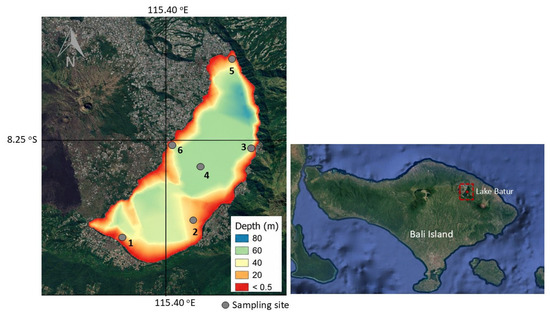
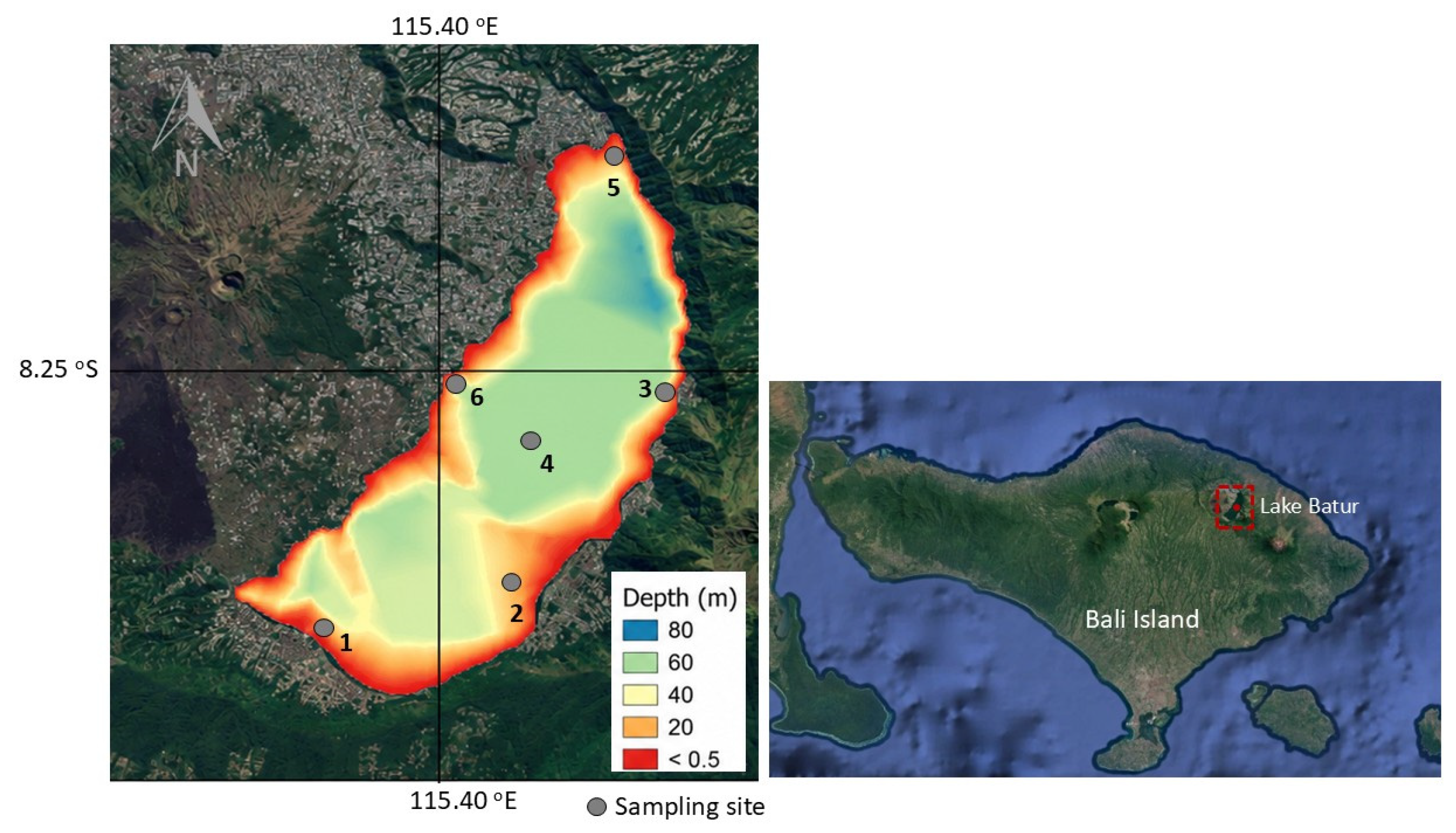
Six sampling stations were selected to represent potential water pollution sources [11] (Figure 1 and Figure 2). Sampling was conducted in October 2022, May 2023, and October 2023, covering both the rainy (October) and dry (May) seasons in Bali Province. Water was collected from three depth zones: epilimnion, thermocline, and hypolimnion, which were previously identified using temperature profiles from a RINKO Profiler (JFE Advantech Co., Ltd., Nishinomiya, Hyogo, Japan). Epilimnion samples were taken ~30 cm below the surface to avoid floating debris, while thermocline and hypolimnion samples were obtained with a 5-L Niskin water sampler (General Oceanics, Inc., Miami, FL, USA). Selected parameters were measured in situ; the remainder were preserved in polypropylene bottles for laboratory analysis.
Figure 1.
Bathymetric map of Lake Batur showing the six water quality sampling sites (1–6).
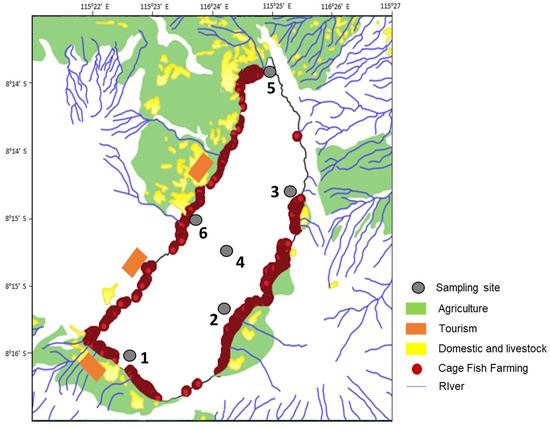
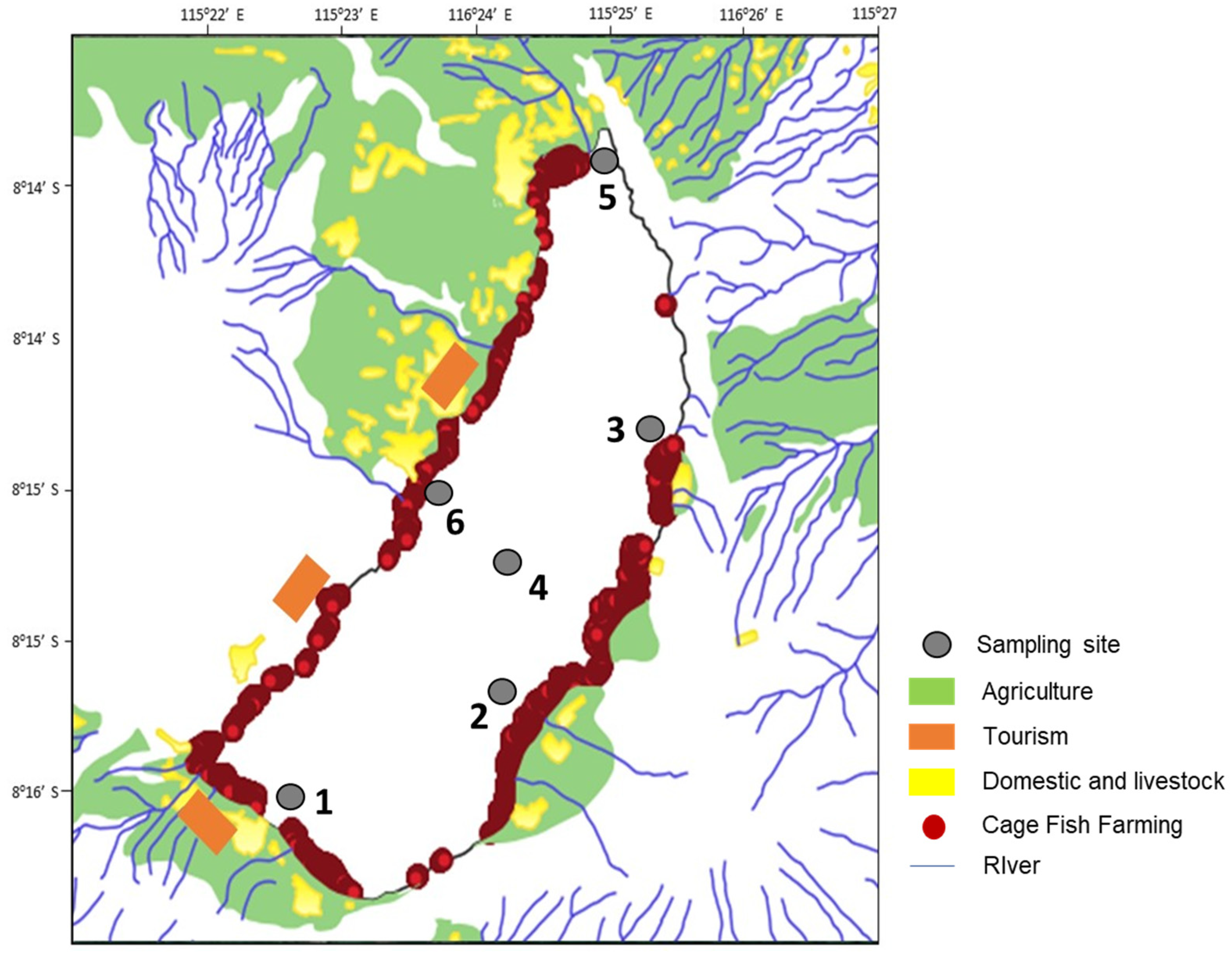
Figure 2.
Distribution of anthropogenic activities in Lake Batur. Sampling sites 1–6 denote the water quality water sampling stations, and Station 2 represents the sediment sampling site.
Water temperature (T) and dissolved oxygen (DO) were measured in situ using a RINKO profiler (JFE Advantech Co., Ltd., Nishinomiya, Hyogo, Japan). pH was recorded with a HORIBA water quality checker (HORIBA Advanced Techno Co., Ltd., Kyoto, Japan), and transparency was determined using a Secchi disk. Ammonia nitrogen (NH3–N), nitrate (NO3−), and phosphate (PO43−) were analyzed using a HACH DR 3900 UV-Vis spectrophotometer (Hach Company, Loveland, CO, USA) following HACH methods 8155, 8039, and 8048, respectively. Total nitrogen (TN), total phosphorus (TP), and chlorophyll-a (Chl-a) were determined using standard methods, including persulfate digestion, ascorbic acid, and acetone extraction [10,11].
2.3. Sediment Sampling and Characterization
Sediment samples collected from Station 2 (St.2) using an Ekman grab sampler, while intact sediment core was collected for sediment–water diffusive nutrient flux analysis. Station 2 was selected because it represents the most anthropogenically impacted area of Lake Batur, receiving substantial nutrient inputs from cage fish farming, domestic activities, agriculture, and livestock (Figure 2). Previous assessments have also classified this site as eutrophic to hypereutrophic, indicating its suitability for investigating sediment nutrient dynamics under highly impacted conditions [11]. Because this site represents the most eutrophic area of the lake, the measured sediment characteristics and nutrient flux are representative of this highly impacted environment and may not directly transferable to other areas of Lake Batur with different environmental conditions. Future investigations incorporating multiple sampling sites would improve understanding of the spatial variability of sediment nutrient dynamics across the lake.
Water content was determined gravimetrically using a separate sediment subsample to express sediment nutrient concentration on a dry weight (DW) basis. Sediment pH and oxidation–reduction potential (ORP) were measured using a portable pH/ORP meter (Hanna Instrument, Hanna Instruments, Inc., Woonsocket, RI, USA) after allowing the electrode readings to stabilize. ORP values are reported as the direct instrument measurements obtained with the manufacturer’s reference electrode and were not converted to Standard Hydrogen Electrode (SHE) values.
Sediment samples were then extracted using 2 M KCl prior to analysis. Extractable ammonium and nitrate concentrations in the sediment extracts were determined using HACH Methods 8155 and 8039, respectively, with HACH DR 3900 spectrophotometer. Total nitrogen and total phosphorus were determined using persulfate digestion and the ascorbic acid method, respectively [15,16]. All sediment nutrient concentrations are reported on a dry weight (DW) basis. Mineralogical and elemental composition were characterized using SEM–EDX and XRD. All analyses were conducted at the Advanced Characterization Laboratory, National Research and Innovation Agency, Bandung, Indonesia.
2.4. Sediment–Water Nutrient Flux Analysis
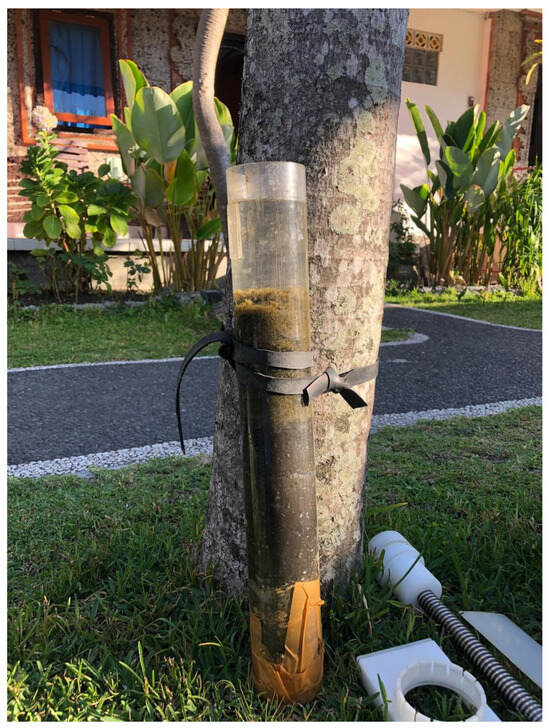
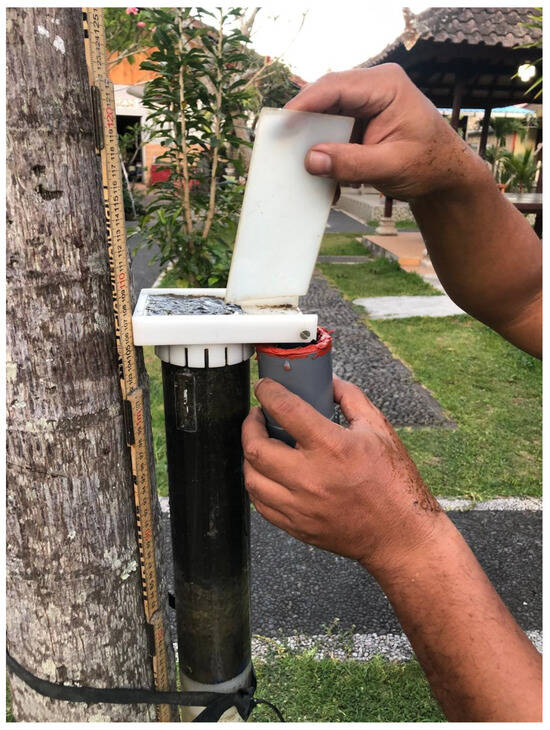
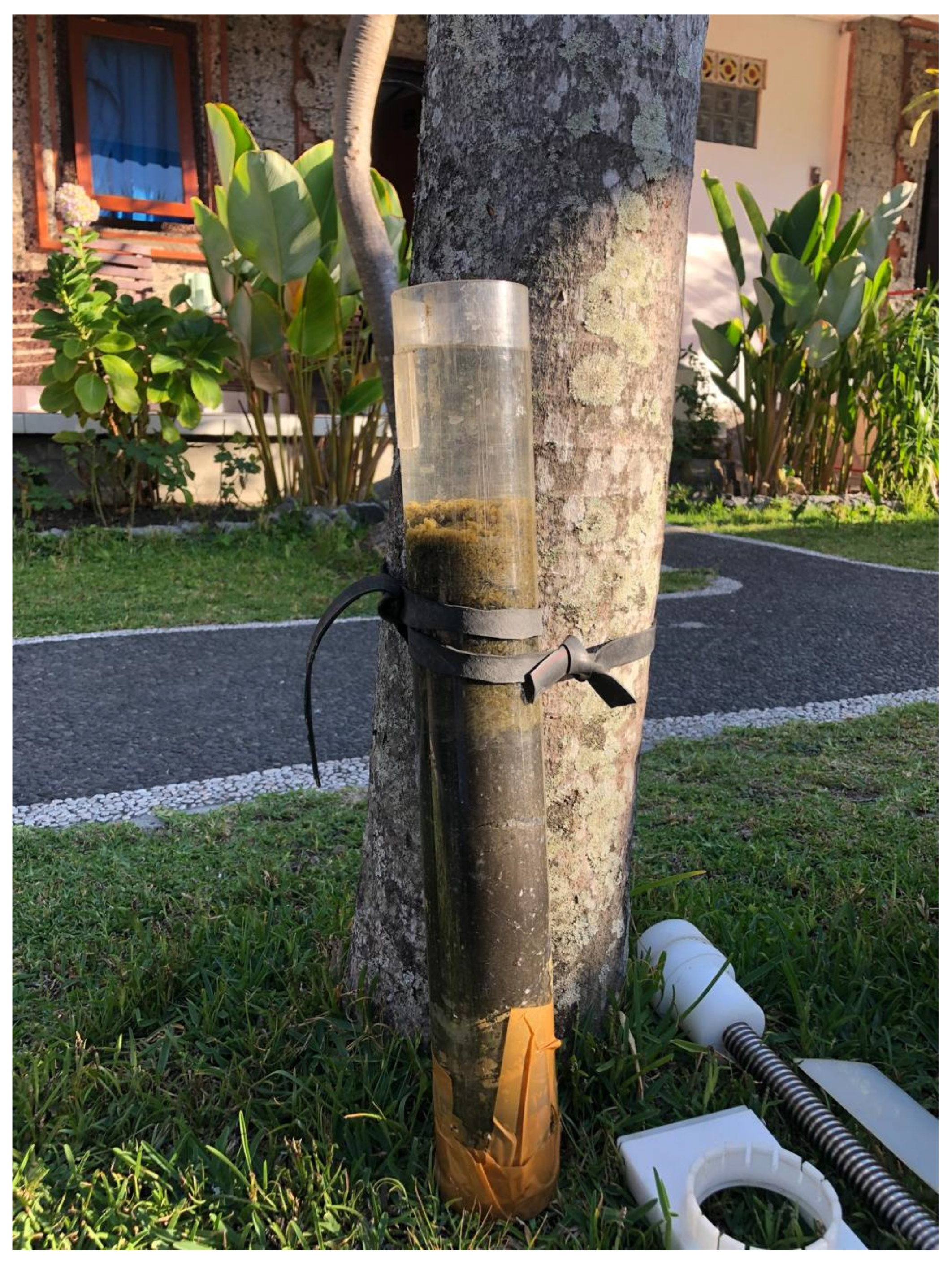
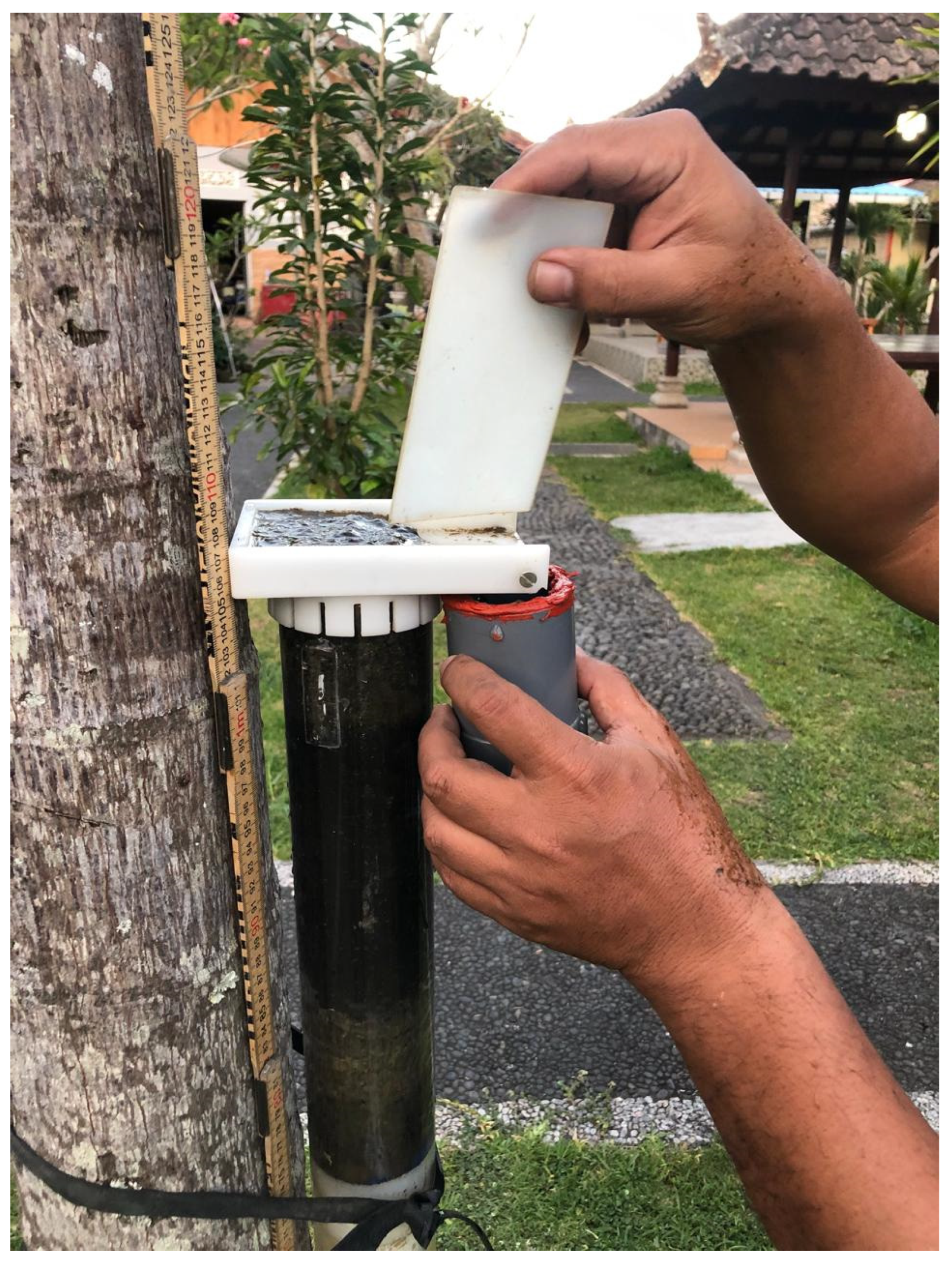
To quantify the internal nutrient dynamics and vertical concentration gradients across the sediment–water interface, intact sediment core (5 cm inner diameter x 60 cm length; Figure 3) was collected from Station 2 by carefully inserting an acrylic core into the lake sediment to preserve the in situ sediment structure and overlying water. The core was maintained with an overlying water-to-sediment height ratio of approximately 1:3, thereby preserving the natural sediment–water interface. Prior to processing, the intact core maintained at an ambient temperature of 23 °C and protected from direct light to minimize changes in sediment geochemistry [17,18]. Within 24 h of collection, the sediment was sliced at 2 cm intervals to a depth of 40 cm for porewater extraction. Ammonium, nitrate, and phosphate concentrations were determined using ion chromatography.
Figure 3.
Sediment sampling for internal nutrient flux analysis.
Diffusive nutrient flux across the sediment–water interface was estimated using Fick’s First Law based on the concentration gradient between the overlying water and the uppermost sediment porewater (Equation (1)) [19]. No sediment core incubation was performed because nutrient flux was calculated from measured concentration gradients rather than directly measured by monitoring changes in nutrient concentration overtime. The concentration gradient (dc/dx) was determined from nutrient concentration in the overlying water and the uppermost sediment porewater. In Equation (1), J represents the diffusive nutrient flux (mg m−2 day−1), De is the effective diffusion coefficient (m2 day−1), C is the nutrient ion concentration (mg L−1), and x is the sediment depth (cm).
3. Results
3.1. Stratification Zone
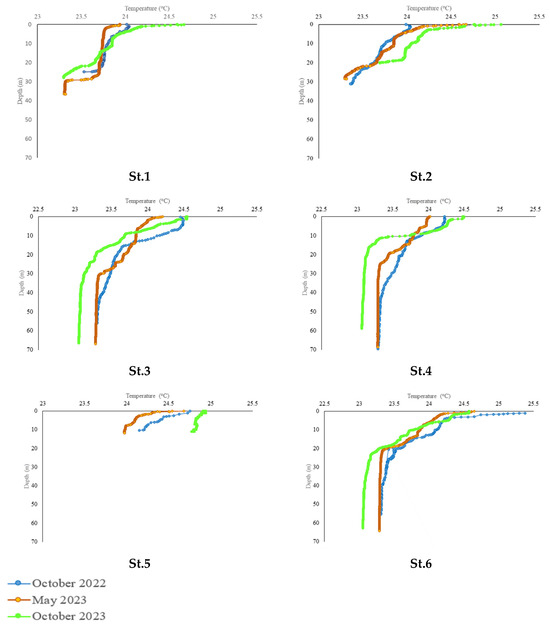
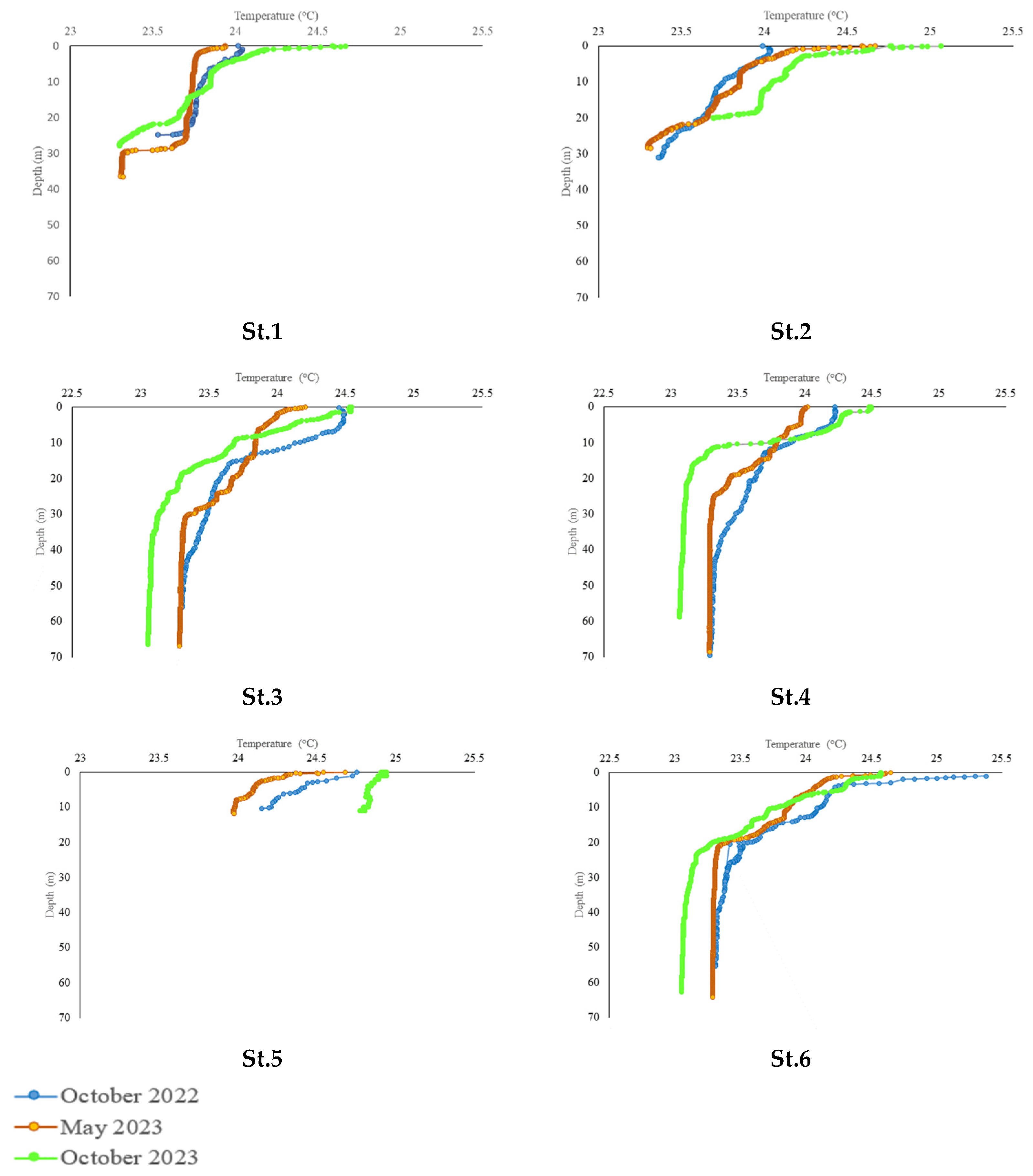
Thermal stratification zones were identified based on temperature–depth profiles, with a distinct thermocline indicating the transition between the epilimnion and hypolimnion. In Lake Batur, temperature decreased markedly with depth, showing strong vertical gradients associated with light attenuation (Figure 4). Based on the observed temperature profiles, the thermocline was located at approximately 5 m at Stations 1 and 2, around 10 m at Stations 3, 4, and 6, and at less than 3 m at Station 5 (Table 1).
Figure 4.
Stratification pattern in the main basin of Lake Batur.
Table 1.
Depth ranges of the thermal stratification zones and thermocline at each sampling station.
3.2. Vertical Distribution of Water Quality Parameter
The ranges of measured water quality parameters across all six sampling stations in Lake Batur, grouped by water-column stratification zone (epilimnion, thermocline, and hypolimnion), are summarized in Table 2. The epilimnion was defined as the surface water layer approximately 0.3 m below the surface. Thermocline depth varied among sampling stations, as described in Section 3.1, while the hypolimnion was defined as the water layer below the metalimnion, with its depth differing across stations. Epilimnion water temperatures were consistently higher during the October 2022 and October 2023 sampling periods than during May 2023, whereas lower temperatures were observed in deeper water layers across all sampling periods.
Table 2.
Minimum–maximum ranges of water quality parameters measured at six sampling stations in Lake Batur, grouped by water-column stratification zone (epilimnion, thermocline, and hypolimnion) during October 2022 (I), May 2023 (II), and October 2023 (III), together with the corresponding water quality standards specified in Indonesian Government Regulation No. 22/2021.
Water transparency (Secchi depth, SD) in Lake Batur ranged from 0.95 to 2.00 m, indicating limited light penetration in the water column. Water pH exhibited a vertical gradient, with higher values observed in surface waters and lower values at greater depths. Across all sampling periods, hypolimnetic pH values remained within a neutral to basic range (7.9–9.15), which is atypical for most lakes where deeper waters are generally near neutral [20,21]. The persistently alkaline conditions in Lake Batur are consistent with its volcanic geological setting and groundwater inputs enriched in alkali and alkaline earth ions, as described in the study site characteristics.
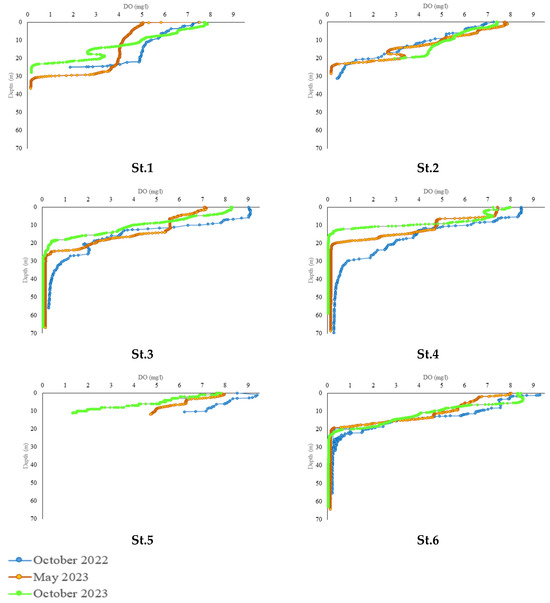
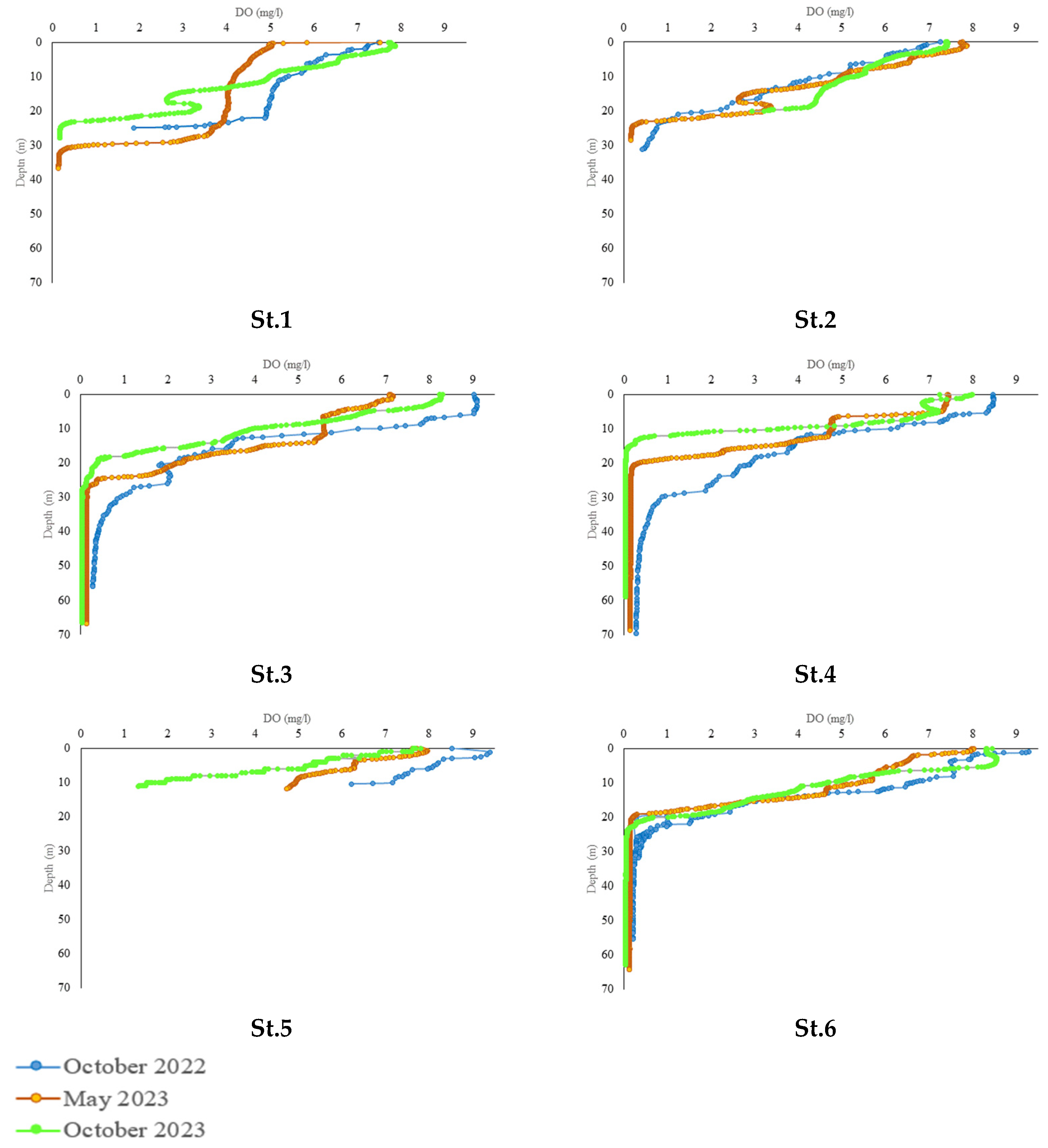
DO concentrations in surface waters ranged from 7.12 to 10.01 mg L−1, with a mean value of 8.20 mg L−1, exceeding the minimum threshold for fish cultivation specified by Indonesian water quality standards. Higher surface DO concentrations were observed during the October sampling periods compared to May. Vertical DO profiles showed a pronounced decline with depth (Figure 5), with hypoxic conditions (<4 mg L−1) occurring below approximately 10 m at most stations. At depths of 20 m, DO concentrations at Stations 1, 2, 3, 4, and 6 approached 0 mg L−1, indicating anoxic conditions, whereas Station 5 remained oxygenated throughout the water column due to its shallower depth (11.9 m). DO exhibited pronounced vertical and seasonal variability in Lake Batur, with well-oxygenated surface waters and hypoxic to anoxic conditions in hypolimnion represent one of the environmental conditions associated with the recurrent mass fish mortality events reported in the lake. The events occurred one to two times annually, major documented incidents occurred in 2021, causing approximately 14–50 tons of fish mortality, while another large event occurred in July 2025 with an estimated mortality of around 30 tons [22]. The dead fish were subsequently removed from the lake by local farmers and authorities to minimize further deterioration of water quality.
Figure 5.
Profile of DO concentration in Lake Batur.
NH3–N varied seasonally and with depth, with bottom-water concentrations exceeding the Indonesian water quality standard (>0.2 mg L−1), whereas nitrate remained below their respective standard limits across all sampling periods. Phosphate concentrations exhibited pronounced vertical gradients, ranging from 0.01 to 0.58 mg L−1, with hypolimnetic concentrations (0.16–0.58 mg L−1) consistently exceeding the standard (<0.03 mg L−1) at most stations.
Trophic state assessment based on TN, TP, Chl-a, and SD classified Lake Batur as eutrophic throughout the study period, with Carlson Trophic State Index (CTSI) values ranging from 55.15 to 71.94. TN and TP concentrations exceeded water quality standards, while Chl-a values fell within the eutrophic to hypereutrophic range.
3.3. Sediment Properties
The sediment collected from representative Station 2 exhibited strong phosphorus enrichment in Lake Batur, with TP reaching 2.75 mg g−1 DW. Sediments exhibited very high water content (252.61%), reflecting fine-grained, organic-rich, and weakly consolidated material. The measured ORP averaged −27 mV, suggesting slightly reducing sediment conditions, while the sediment pH remained alkaline (8.98). This interpretation is further supported by the predominance of ammonium (2.91 mg g−1 DW) over nitrate (1.18 mg g−1 DW), indicating limited nitrification under oxygen-depletion conditions. The total nitrogen (TN) content reached 3.72 mg g−1 DW, reflecting substantial nitrogen accumulation within the sediments.
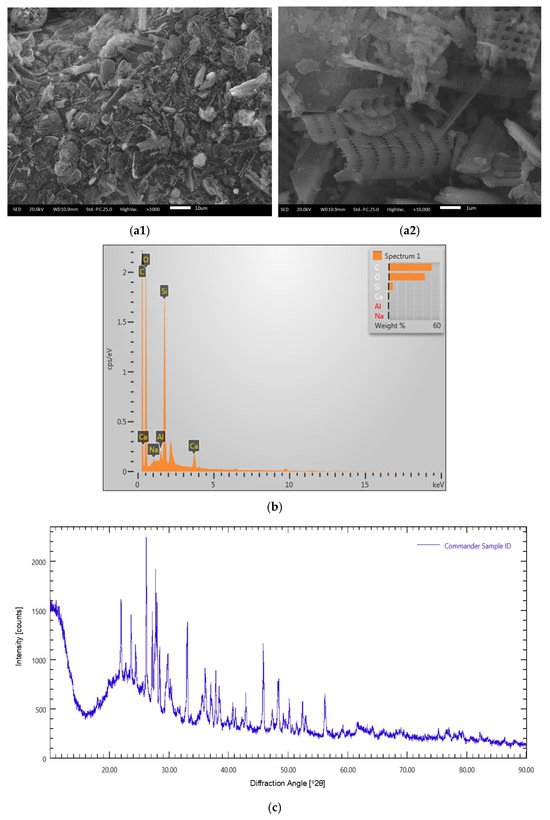
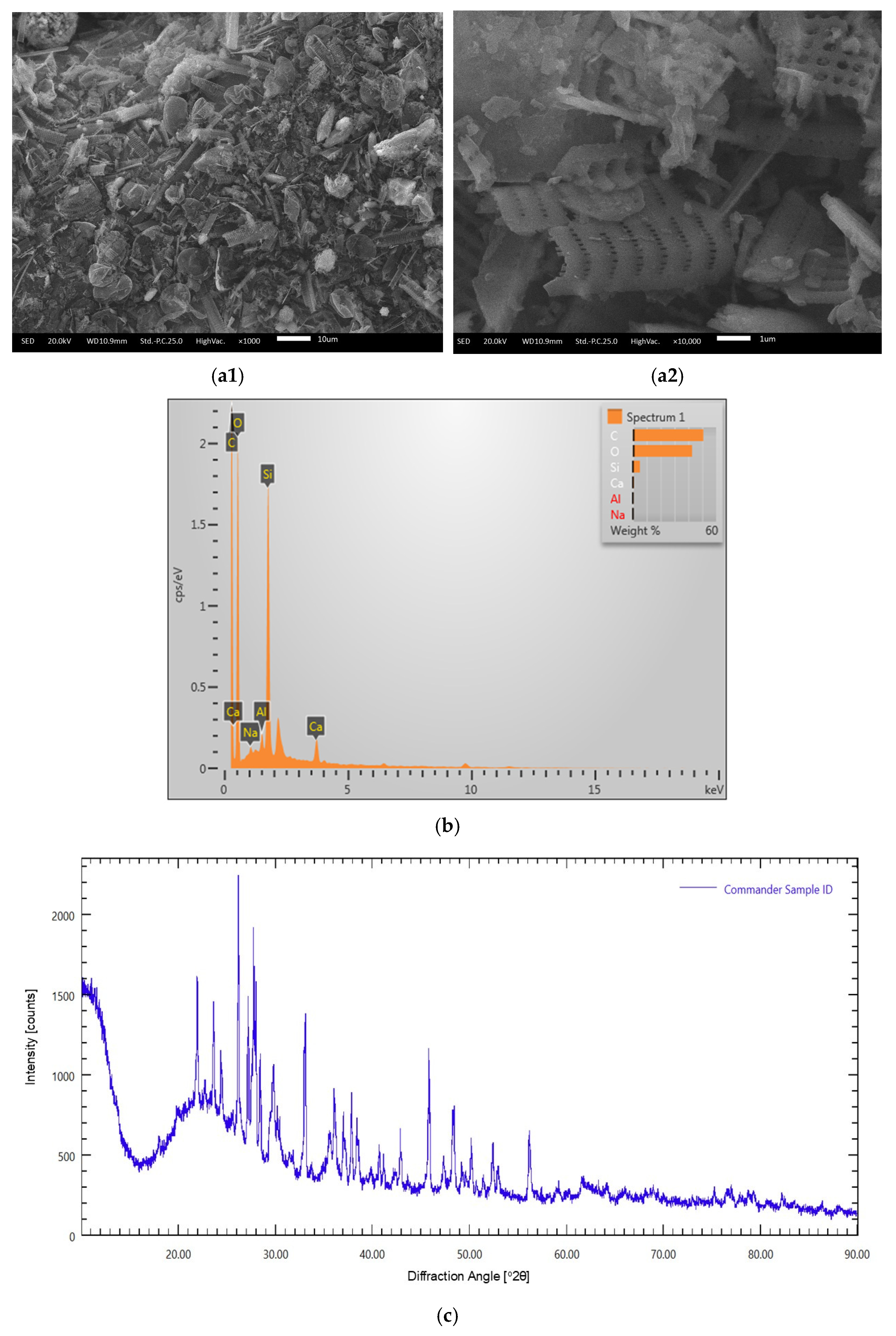
Sediment characterization using SEM–EDX, and XRD is presented in Figure 6. SEM images (Figure 6a1,a2) revealed a heterogeneous matrix composed of siliceous micro-remains, clay aggregates, and fine organic detritus, with well-preserved diatom frustules exhibiting distinct pore and valve structures. EDX analysis (Figure 6b) indicated that the sediments were dominated by carbon, oxygen, and silica, with minor contributions from calcium, aluminum, and sodium. XRD patterns (Figure 6c) identified a mixed mineral assemblage dominated by silicate and carbonate phases, including quartz, albite, kaolinite, calcite, and dolomite. Iron-bearing minerals (hematite and goethite) and minor phases such as gypsum, halite, and apatite were also detected, confirming the presence of both detrital and authigenic components.
Figure 6.
Sediment characterization of Lake Batur: (a1) SEM image of Lake Batur sediment at 1000×; and (a2) SEM image at 10,000× magnification; (b) EDX spectrum; (c) XRD pattern identifying major mineral phases.
3.4. Vertical Nutrient Profiles and Sediment–Water Diffusive Flux
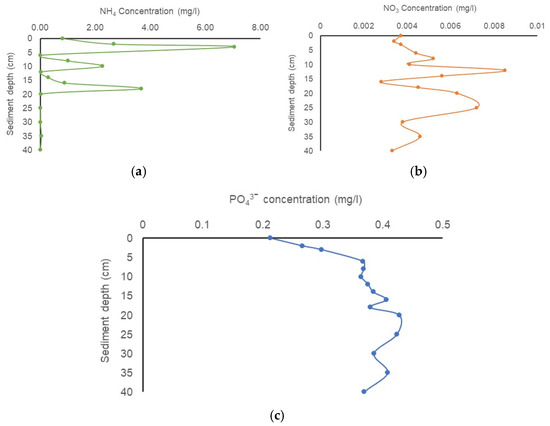
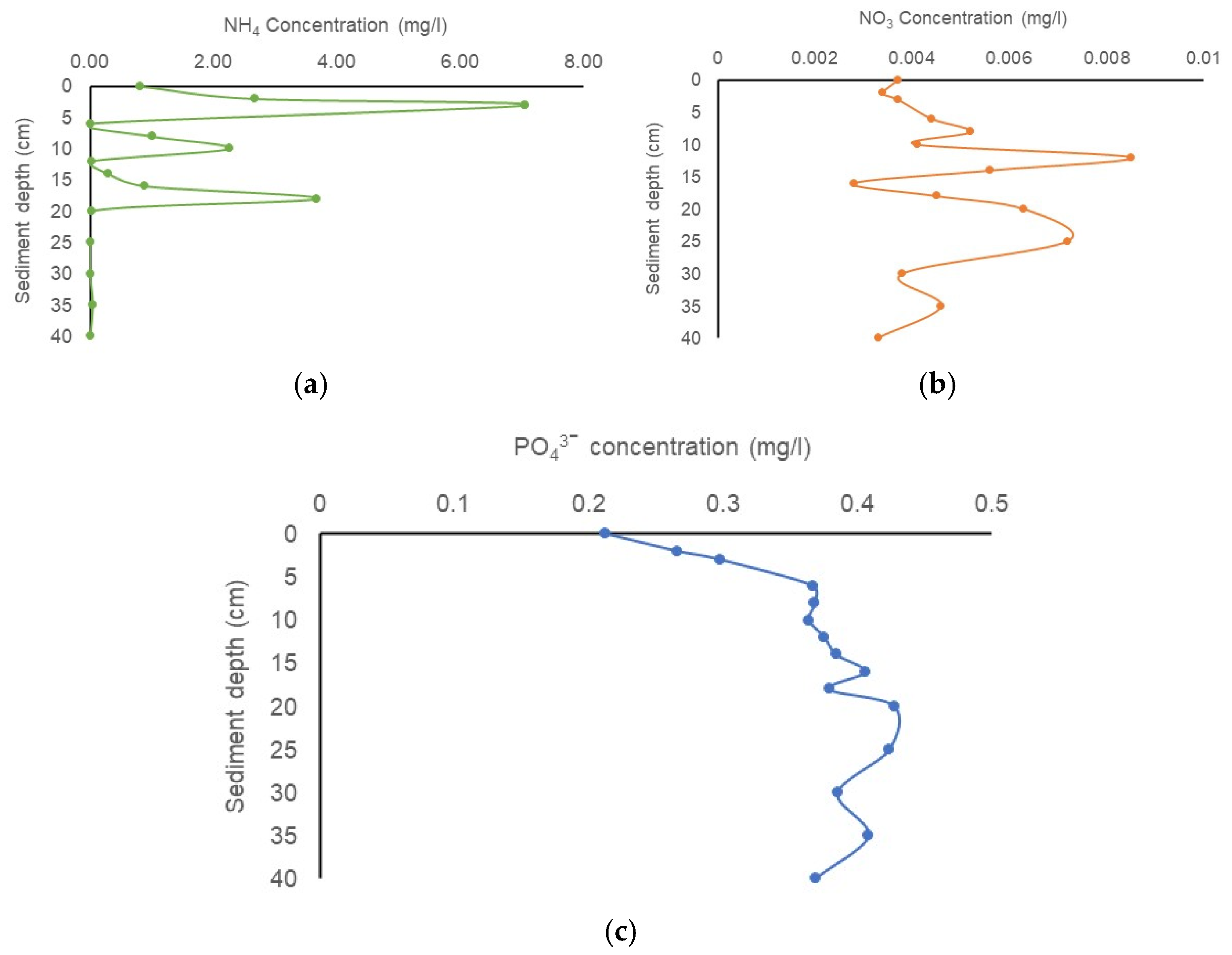
Vertical concentration profiles of ammonium, nitrate, and phosphate in porewater obtained from single sediment core collected at Station 2 are shown in Figure 7. Ammonium and phosphate exhibited pronounced concentration gradients from the sediment surface to a depth of 20 cm, with maximum concentrations of 7.04 mg L−1 (3 cm) and 0.43 mg L−1 (20 cm), respectively. Below 20 cm, both concentrations remained relatively stable. Nitrate concentrations fluctuated throughout the 40 cm sediment profile, reaching a maximum of 0.008 mg L−1 at a depth of 12 cm. Diffusive nutrient flux across the sediment–water interface were estimated using the concentration gradients between the overlying water and the uppermost sediment porewater. The estimated upward fluxes for ammonium and phosphate were 7.48 mg m−2 day−1 and 3.34 mg m−2 day−1, respectively, while nitrate exhibited a minor flux of 0.007 mg m−2 day−1, indicating ammonium and phosphate as the dominant internally released nutrient from the sediment under the sampled conditions.
Figure 7.
Vertical porewater concentration profiles of ammonium (a), nitrate (b), and phosphate (c) determined from sediment core collected at Station 2.
4. Discussion
4.1. Thermal Stratification and Its Effects on Oxygen Dynamics and Eutrophication
Thermal stratification in Lake Batur appears to be controlled by the combined effects of basin morphometry, light penetration, and monsoon-driven climatic forcing. In the present study, Secchi depth ranged from 0.95 to 2.00 m, indicating sufficient solar energy absorption within the upper water column to promote surface warming. Previous high-frequency observations further showed that net radiation reached approximately 4000–4500 W m−2 day−1 during the wet season, while nighttime heat losses of up to ~200 W m−2 (maximum daily heat loss 203.2 W m−2) promoted convective cooling and vertical mixing. Wind forcing also played an important role, with an average wind speed of 3.33 m s−1, seasonal winds exceeding 4 m s−1 during May–October, and episodic events reaching 7.8 m s−1 that were sufficient to induce complete mixing of the water column [14].
The deeper stations developed a deeper and more persistent thermocline, whereas shallower stations exhibited warmer surface water and shallower stratification, suggesting stronger sensitivity to short-term heating, wind stress, and rainfall-driven mixing. Similar patterns have been reported in tropical lakes and reservoirs, where water-column stability is strongly affected by depth, wind exposure, inflow events, and seasonal heat balance [23]. For example, studies in Lake Tinaroo, tropical Australia demonstrated persistent stratification characterized by an oxygenated epilimnion and deoxygenated hypolimnion, while wind and inflow events periodically disturbed thermocline stability [24]. In tropical systems, high temperatures further intensify biological metabolism and nutrient regeneration, making stratification an important control on nutrient cycling and oxygen distribution [25].
The observed stratification pattern in the deeper basin of Lake Batur has important implications for eutrophication persistence because stable thermal layering restricted vertical exchange between surface and bottom waters. In contrast, shallower littoral areas are expected to experience weaker or intermittent stratification due to their limited water depth and greater susceptibility to wind-induced mixing. During stratified periods, the hypolimnion becomes effectively isolated from atmospheric reaeration and surface photosynthesis oxygen production. Consequently, dissolved oxygen is progressively consumed through organic matter decomposition and sediment respiration, leading to hypoxic to anoxic conditions in deeper layers. Similar vertical oxygen partitioning has been widely reported in stratified tropical lakes, where the epilimnion remains oxygenated while bottom waters gradually become oxygen depleted [24,26]. In Lake Batur, this mechanism is particularly relevant because previous assessments have identified substantial anthropogenic nutrient inputs, particularly from cage fish farming, which contributes a major proportion of the lake’s COD, TN, and TP loads [27].
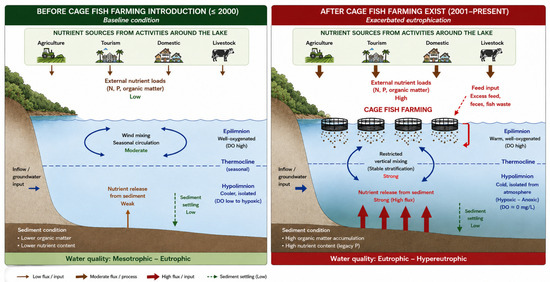
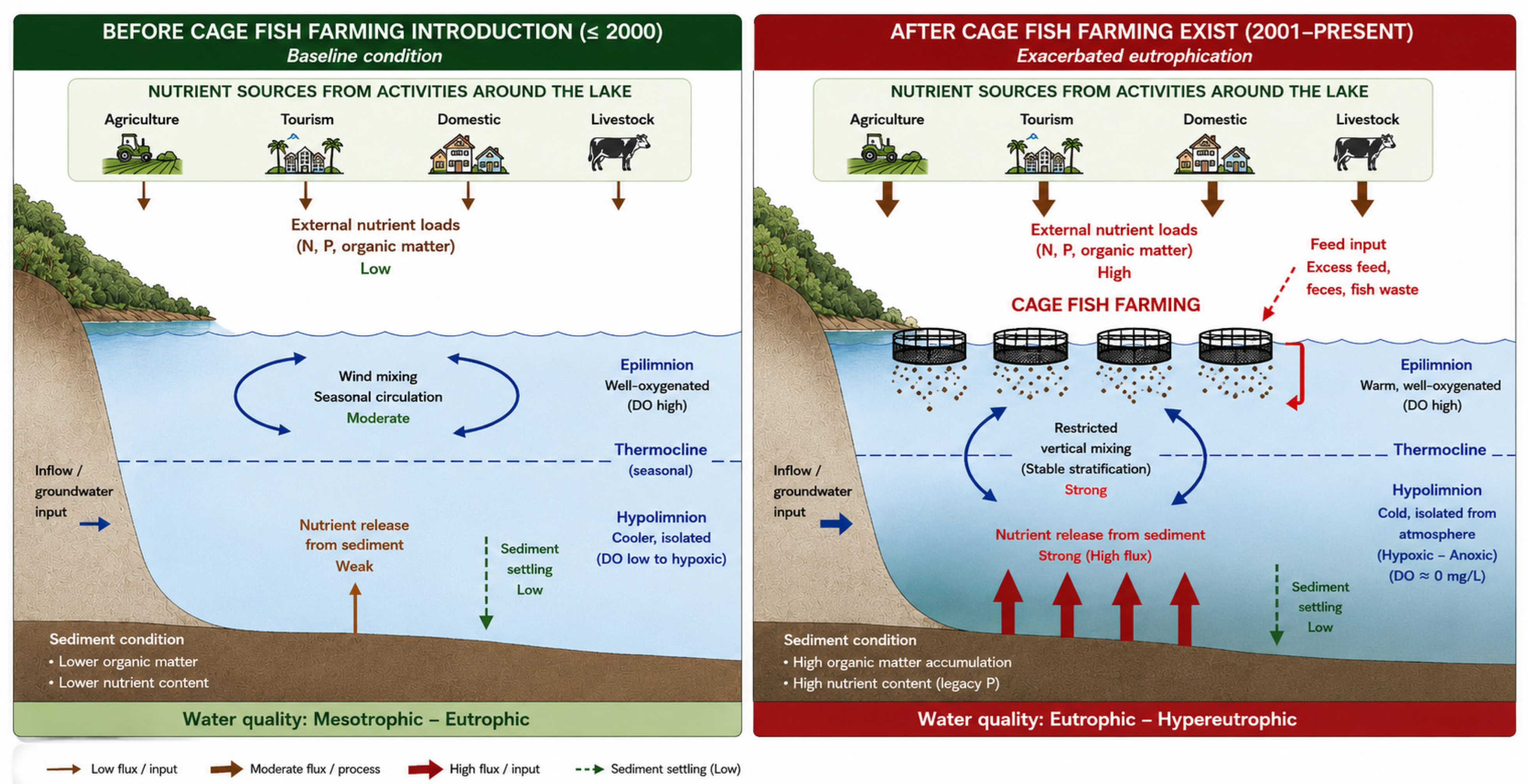
Cage fish farming was introduced to Lake Batur in 2001 as an alternative livelihood to agriculture. Since then, the number of fish cages has continuously increased and remains on an upward trend, exceeding 18,000 units. Consequently, aquaculture continues to contribute substantial nutrient inputs to the lake, with estimated annual nitrogen and phosphorus loads of approximately 161.59 and 18.23 tons, respectively [11]. The conceptual model shown in Figure 8 summarizes the changes in material circulation following the introduction of cage fish farming. Before cage fish farming, external nutrient inputs originated primarily from agriculture, tourism, domestic activities, and livestock, resulting in relatively low nutrient accumulation and limited sediment nutrient release. After cage fish farming was introduced (2001–present), feed residues, fish excretion, and organic waste substantially increased nitrogen and phosphorus inputs, promoting organic matter accumulation in the sediments. Stable thermal stratification restricted vertical mixing, causing hypoxic–anoxic conditions in the hypolimnion that enhanced internal nutrient loading through sediment nutrient release. Consequently, the material flux from the bottom sediments to the overlying water became substantially greater, sustaining eutrophication despite the continued contribution of other external nutrient sources.
Figure 8.
Conceptual model illustrating the effects of cage fish farming, thermal stratification, and sediment nutrient release on eutrophication in Lake Batur.
Low water transparency likely further strengthens this process by compressing the photic zone and limiting oxygen production to the upper water column. As a result, oxygen production becomes concentrated near the surface, while deeper waters are dominated by respiration, organic matter mineralization, and reducing processes. This metabolic separation between surface and bottom water promotes the accumulation of dissolved nutrients in the hypolimnion and sediment porewater. Previous study emphasized that internal phosphorus loading from sediments can substantially delay lake recovery even after reductions in external nutrient inputs because phosphorus stored in sediments may continue to be released under anoxic conditions [3]. Likewise, phosphorus release from anoxic sediments can become a major nutrient source in eutrophic lakes and reservoirs during stratified periods [28].
The strong oxygen depletion observed in deeper waters also has important ecological consequences. Hypoxia is widely recognized as a major stressor in eutrophic aquatic systems since it reduces habitable area, alters fish behavior and community structure, suppresses growth, and can trigger mass mortality events [29,30]. Previous reviews have shown that low dissolved oxygen impairs feeding, reproduction, and physiological performance in fish [31,32], while eutrophication further intensifies oxygen depletion through excessive organic matter decomposition and the decomposition of senescent algal blooms [33,34]. In Lake Batur, thermal stratification isolates the hypolimnion from atmospheric oxygen replenishment, allowing oxygen consumption by sediment respiration and organic matter decomposition to progressively produce hypoxic to anoxic conditions. Previous hydrodynamic observations further demonstrated that episodic mixing events driven by strong winds and surface cooling can transport oxygen-depleted hypolimnetic water into the upper water column, causing rapid declines in DO within cage fish farming areas [14]. Consequently, recurrent mass fish mortality events have been reported in Lake Batur near cage fish farming areas, occurring one to two times annually. These observations support the hypothesis that interactions between hypolimnetic oxygen depletion and episodic mixing play a critical role in triggering recurrent fish mortality in lake.
4.2. Sediment Properties and Nutrient Flux Under Oxygen-Depleted Conditions
Nutrient dynamics in Lake Batur also indicate strong coupling between thermal stratification, oxygen depletion, and sediment nutrient regeneration. In the sediment porewater, ammonium and phosphate exhibited substantially higher concentrations and diffusive fluxes than nitrate, indicating that internal nutrient recycling is dominated by reducing nitrogen and phosphorus species released from the sediments under oxygen-depleted conditions. Under low-oxygen conditions, mineralization of organic matter combined with suppressed nitrification promotes ammonium accumulation, while nitrate availability declines because nutrification is oxygen dependent and nitrate is rapidly removed through denitrification [35]. Similar study reported that anoxic sediments commonly release ammonium into overlying waters because oxygen limitation inhibits nitrification process [36]. The enrichment of phosphate in bottom waters reflects classical internal phosphorus loading mechanisms, in which anoxia promotes reductive dissolution of iron-bound phosphorus and subsequent phosphate release from sediments [8]. This mechanism has been extensively described in eutrophic lakes, where sediment phosphorus release becomes an important nutrient source during prolonged stratification.
The accumulation of ammonium and phosphate in Lake Batur porewater is consistent with previous studies that bottom-porewater ammonium is closely associated with organic matter supply and temperature, whereas phosphate dynamics are largely governed by sediment redox condition [37]. These redox-controlled processes provide a mechanistic explanation for the diffusive release of ammonium and phosphate observed in the present study. The magnitude of ammonium and phosphate fluxes observed in Lake Batur is also comparable with values reported from eutrophic lakes and reservoirs worldwide. Previous studies documented strong anoxic release of ammonia and soluble reactive phosphorus from sediments, with ammonium flux ranging from approximately 7.26–12.72 mg N m−2 d−1 [38] and phosphorus flux ranging from 0.2 to 53 mg P m−2 d−1 in eutrophic systems [39,40,41,42]. In contrast, nitrate flux is generally lower because nitrate is unstable under reducing conditions and is rapidly consumed through denitrification or dissimilatory nitrate reduction. Therefore, the relatively low nitrate flux observed in Lake Batur does not indicate limited internal loading, but instead reflects the dominance of chemically reduced biogeochemical pathways under hypoxic and anoxic conditions [19]. Comparable patterns of dominant ammonium and phosphate internal loading have also been reported in other stratified tropical and subtropical lakes, indicating that the process observed in Lake Batur are characteristic of nutrient-rich sediments exposed to persistent oxygen depletion [3].
The sediment characteristics observed at the representative Station 2, together with the persistent alkaline conditions in the hypolimnion, support the interpretation that sediments in this eutrophic area can function both as a nutrient sink and as a long-term internal nutrient source. The high phosphorus concentration (>1 mg g−1 DW), fine-grained and water-rich textures, alkaline pH, and slightly reducing redox conditions indicate an environment favorable for nutrient accumulation and remobilization [10]. Fine and weakly consolidated sediments can store large amounts of porewater and organic matter, enhancing microbial decomposition and diffusion-driven nutrient exchange across the sediment–water interface [2,43].
SEM-EDX analysis of the representative sediment core showed that the sediment was dominated by carbon, oxygen, and silica, with smaller proportions of calcium, aluminum, and sodium. This elemental composition is consistent with productive endorheic volcanic lakes, where high biogenic silica derived from diatom productivity is combined with mineral inputs derived from volcanic catchment weathering. Similar geochemical characteristics have been reported in closed-basin volcanic lakes such as Lake Challa [44] and in studies of the Batur Caldera [45], where restricted hydrology and intense biological productivity strongly influence sediment composition. Other study further demonstrated that interactions between volcanic material and alkaline lake water can increase silica and phosphate concentration and release major ions, including Na, K, and Ca, while long-term weathering and alteration of volcanic deposits may continue to influence elemental availability and lake alkalinity [46]. The identified mineral assemblage from XRD patterns, including albite, silica, calcite, dolomite, halite, gypsum, kaolinite, and iron oxides, indicates a combination of detrital materials derived from basaltic-andesite weathering and authigenic mineral formation within the lake basin. These sediment characteristics reflect intense tropical weathering and geochemical processes typical of alkaline endorheic volcanic environments similar to Lake Batur [45].
The presence of carbonate minerals such as calcite and dolomite likely contributes to the high buffering capacity of the lake and helps maintain an alkaline water condition, with a pH of 7.9–9.15, differing from the near-neutral or slightly acidic conditions commonly observed in the deeper layers of many freshwater lakes [20,21]. Similar alkaline conditions have been reported in volcanic and endorheic lake systems, where volcanic-derived minerals, carbonate buffering, and restricted hydrological flushing maintain elevated alkalinity even under oxygen-depleted conditions [47]. In Lake Batur, the alkaline hypolimnetic environment is closely associated with persistent thermal stratification, which restricts vertical mixing and oxygen renewal, resulting in hypoxic to anoxic bottom waters. The sediment matrix, dominated by silicate clays, authigenic carbonates, and evaporites, reflects a closed alkaline volcanic basin where weathering initially produces a high-capacity but temporary phosphorus sink [48]. However, under reducing conditions, the retention efficiency of these minerals decreases substantially, altering phosphorus adsorption–desorption equilibria and promoting phosphate release from sediments, consistent with recent findings on volcanic tephra diagenesis [49]. At the same time, low dissolved oxygen suppresses nitrification and promotes ammonium accumulation. Consequently, sediments that initially function as nutrient sinks may become important internal sources of ammonium and phosphate during prolonged stratification [50], reinforcing internal nutrient recycling and sustaining eutrophic conditions in Lake Batur.
Overall, the findings indicate that eutrophication in Lake Batur is closely associated with thermal stratification, hypolimnetic oxygen depletion, and sediment nutrient recycling. Thermal stratification restricts oxygen renewal in bottom waters, while anoxic conditions promote the release of ammonium and phosphate from nutrient-rich sediments, allowing internal loading to continue even when external nutrient inputs are reduced. Similar stratification-driven internal loading mechanisms have been reported in other eutrophic lakes [2,3], but the tropical endorheic nature of Lake Batur may further enhance nutrient retention because of limited hydrological flushing and prolonged nutrient residence times. Collectively, these findings suggest that effective lake restoration should not rely solely on reducing external nutrient inputs but should also address sediment–water interactions through measures such as limiting organic matter loading, minimizing sediment disturbance, and maintaining oxygenated bottom waters to suppress internal nutrient release and support long-term ecosystem recovery.
Several limitations of this study should be acknowledged. The temporal assessment was based on three seasonal sampling campaigns, while sediment nutrient dynamics and porewater profiles were investigated at a single representative station. Station 2 was intentionally selected because it is influenced by multiple anthropogenic activities, including cage fish farming, agriculture, livestock, and residential inputs, and has previously been identified as exhibiting eutrophic to hypereutrophic conditions, making it representative of the most impacted area of Lake Batur. Although the observed sediment–water interactions and nutrient release mechanisms are consistent with precious studies of Lake Batur and other eutrophic lakes, additional long-term monitoring and sediment sampling across multiple locations would improve the understanding of the spatial and temporal variability of internal nutrient loading and further strengthen lake-wide assessments.
5. Conclusions
This study demonstrates that seasonal observations of Lake Batur consistently identified thermal stratification accompanied by hypolimnetic oxygen depletion and strong sediment–water interactions during the sampling period. The representative sediment core collected from the eutrophic sampling site indicated nutrient-rich sediments with characteristics favorable for internal nutrient recycling, while diffusive flux analysis suggested that ammonium and phosphate were the dominant nutrients released from the sediment under reducing conditions. The sediment mineral composition further suggests that volcanic-derived minerals may contribute to maintaining alkaline hypolimnetic conditions, potentially influencing nutrient mobility under low-oxygen environments.
By integrating seasonal water-column observations, sediment porewater profiles, diffusive nutrient flux analysis, and sediment characterization, this study provides new insight into eutrophication processes in tropical endorheic volcanic lakes, a lake type that remains underrepresented in limnological studies compared with temperate systems. Although the findings are based on three seasonal surveys and sediment analysis from a representative sampling location, they suggest that internal nutrient loading contributes to maintaining eutrophic conditions in Lake Batur. These results highlight the importance of considering both external nutrient reduction and sediment-related internal loading processes when developing lake restoration strategies, while future studies with broader spatial and temporal coverage are recommended to further evaluate lake-wide nutrient dynamics.
Author Contributions
Conceptualization, A.S., P.S., A.B.S. and S.; methodology, A.S., A.B.S. and S.N.; formal analysis, A.S., A.B.S., S.N., D.R.W. and A.R.; investigation, A.S., A.B.S., S.N. and A.R.; resources, A.S., A.B.S., S.N. and A.R.; writing—original draft preparation A.S.; writing—review and editing, P.S., A.B.S., S., D.R.W., S.N. and A.R.; supervision, P.S., A.B.S. and S.; funding acquisition, A.S. and A.B.S. All authors have read and agreed to the published version of the manuscript.
Funding
This study was funded by the Research Organization for Life Sciences and Environment, National Research and Innovation Agency (BRIN) research grant 2023 No. 39/III.5/HK/2022 also Research and Innovation for an Advanced Indonesia (RIIM) research grant 2023 No. B-5269/III.4/HK.01.00/12/2022, and The APC was funded by Authors.
Data Availability Statement
The data are available upon request from the corresponding author of this article.
Acknowledgments
The authors acknowledge the facilities, scientific and technical support from Advanced Characterization Laboratories Bandung, National Research and Innovation Agency E-Layanan Sains.
Conflicts of Interest
The authors declare no conflicts of interest.
References
- Akinnawo, S.O. Eutrophication: Causes, consequences, physical, chemical and biological techniques for mitigation strategies. Environ. Chall. 2023, 12, 100733. [Google Scholar] [CrossRef] [Scilit]
- Hupfer, M.; Lewandowski, J. Oxygen Controls the Phosphorus Release from Lake Sediments—A Long-Lasting Paradigm in Limnology. Int. Rev. Hydrobiol. 2008, 15, 415–432. [Google Scholar] [CrossRef] [Scilit]
- Søndergaard, M.; Jensen, J.P.; Jeppesen, E. Role of sediment and internal loading of phosphorus in shallow lakes. Hydrobiologia 2003, 506, 135–145. [Google Scholar] [CrossRef] [Scilit]
- Matthews, M.W.; Bernard, S. Eutrophication and cyanobacteria in South Africa’s standing water bodies: A view from space. S. Afr. J. Sci. 2015, 111, 2014-0193. [Google Scholar] [CrossRef] [Scilit]
- Ren, X.; Yu, R.; Kang, J.; Lü, C.; Wang, R.; Li, Y.; Zhang, Z. Water pollution characteristics and influencing factors of closed lake in a semiarid area: A case study of Daihai Lake, China. Environ. Earth Sci. 2022, 25, 393. [Google Scholar]
- Kirillin, G.; Shatwell, T. Generalized scaling of seasonal thermal stratification in lakes. Earth-Sci. Rev. 2016, 161, 179–190. [Google Scholar] [CrossRef] [Scilit]
- Harlianti, U.; Fajar, S.J.; Bijaksana, S.; Iskandar, I.; Lubis, R.F.; Papa, R.D.S.; Suryanata, P.B.; Suandayani, N.K.T. Physicochemical Properties and Diatom Diversity in the Sediments of Lake Batur: Insights from a Volcanic Alkaline Ecosystem. Earth 2026, 7, 5. [Google Scholar] [CrossRef] [Scilit]
- Wetzel, R.G. Limnology Lake and Reservoir Ecosystems; Academic Press: San Diego, CA, USA, 2001. [Google Scholar]
- Nguyen, H.V.; Maeda, M. Removal of phosphorus from water by using volcanic ash soil (VAS): Batch and column experiments. Water Sci. Technol. 2016, 74, 1326–1334. [Google Scholar] [CrossRef] [Scilit] [PubMed]
- Reddy, K.R.; D’Angelo, E.M. Biogeochemical indicators to evaluate pollutant removal efficiency in constructed wetlands. Water Sci. Technol. 1997, 35, 1–10. [Google Scholar] [CrossRef] [Scilit]
- Sunaryani, A.; Santoso, A.B.; Soewondo, P.; Suharyanto; Imananda, A.; Sani, I.F. Eutrophication in Lake Batur: Current status and management strategies. E3S Web Conf. 2024, 2, 485. [Google Scholar]
- Garno, Y.S.; Riyadi, A.; Iskandar, I.; Kendarto, D.R.; Sachoemar, S.I.; Susanto, J.P.; Widodo, L.; Suwedi, N.; Prayogo, T.; Dewa, R.P.; et al. The Impact of Aquaculture in Floating Net Cages Exceeding the Carrying Capacity on Water Quality and Organic Matter Distribution: The Case of Batur Lake, Indonesia. Pol. J. Environ. Stud. 2024, 33, 3651–3663. [Google Scholar] [CrossRef] [Scilit]
- Ministry of Environment of the Republic of Indonesia. Lake Batur Rescue Movement; Ministry of Environment of the Republic of Indonesia: Jakarta, Indonesia, 2014. (In Indonesian)
- Santoso, A.B.; Hamilton, D.P.; Nomosatryo, S.; Sunaryani, A.; Rustini, H.A.; Rahmadya, A.; Setiawan, F.; Triwisesa, E.; Yulianti, M.; Muttaqien, F.H.; et al. Stratification and mixing dynamics in tropical polymictic Lake Batur, Indonesia. Inland Waters 2025, 3, 2598457. [Google Scholar] [CrossRef] [Scilit]
- Satya, A.; Chrismadha, T.; Satya, A.D.M.; Satya, I.A. Optimizing crude protein production from minute duckweed (Lemna perpusilla Torr) grown in varied NPK based medium. IOP Conf. Ser. Earth Environ. Sci. 2022, 1062, 012008. [Google Scholar] [CrossRef] [Scilit]
- APHA. Standard Methods for the Examination of Water and Wastewater, 24th ed.; American Water Works Association: Denver, CO, USA; Water Environment Federation: Alexandria, VA, USA, 2018; p. 541. [Google Scholar]
- Kiani, M.; Tammeorg, P.; Niemistö, J.; Simojoki, A.; Tammeorg, O. Internal phosphorus loading in a small shallow Lake: Response after sediment removal. Sci. Total Environ. 2020, 725, 138279. [Google Scholar] [CrossRef] [Scilit] [PubMed]
- Yang, C.; Yang, P.; Geng, J.; Yin, H.; Chen, K. Sediment internal nutrient loading in the most polluted area of a shallow eutrophic lake (Lake Chaohu, China) and its contribution to lake eutrophication. Environ. Pollut. 2020, 262, 114292. [Google Scholar] [CrossRef] [Scilit] [PubMed]
- Phillips, I.R.; Burton, E.D.; Hawker, D.W. Effect of diffusion and resuspension on nutrient release from submerged sediments. Toxicol. Environ. Chem. 2005, 87, 373–388. [Google Scholar] [CrossRef] [Scilit]
- Nomosatryo, S.; Tjallingii, R.; Schleicher, A.M.; Boli, P.; Henny, C.; Wagner, D.; Kallmeyer, J. Geochemical Characteristics of Sediment in Tropical Lake Sentani, Indonesia, Are Influenced by Spatial Differences in Catchment Geology and Water Column Stratification. Front. Earth Sci. 2021, 8, 9. [Google Scholar]
- Bicaldo, I.E.C.; Padilla, K.S.A.R.; Tu, T.-H.; Chen, W.T.; Mendoza-Pascual, M.U.; Vicera, C.V.B.; de Leon, J.R.; Poblete, K.N.; Austria, E.S.; Lopez, M.L.D.; et al. The methane-oxidizing microbial communities of three maar lakes in tropical monsoon Asia. Front. Microbiol. 2024, 9, 15. [Google Scholar]
- Department of Agriculture, Food Security and Fisheries of Bangli Regency. Laporan Dinas Pertanian, Ketahanan Pangan Dan Perikanan Kabupaten Bangli (Report of the Department of Agriculture, Food Security and Fisheries of Bangli Regency); Department of Agriculture, Food Security and Fisheries of Bangli Regency: Bangli, Indonesia, 2025. (In Indonesian)
- Kalff, J. Limnology: Inland Water Ecosystems; Prentice Hall: Upper Saddle River, NJ, USA, 2002; p. 592. [Google Scholar]
- MacKinnon, M.R.; Herbert, B.W. Temperature, Dissolved Oxygen and Stratification in Tropical Reservoir, Lake Tinaroo, Northern Quensland. Australia. Mar. Freshw. Res. 1996, 47, 937–949. [Google Scholar] [CrossRef] [Scilit]
- Lewis, W.M. Tropical lakes: How latitude makes a difference. In Perspectives in Tropical Limnology; SPB Academic Publishing: Amsterdam, The Netherlands, 1996; pp. 43–64. [Google Scholar]
- Lehmusluoto, P.; Machbub, B. National Inventory of the Major Lakes and Reservoirs in Indonesia: General Limnology; Ministry of Public Works, Agency for Research and Development: Helsinki, Finland; Research Institute for Water Resources Development: Bandung, Indonesia, 1995. [Google Scholar]
- Garno, Y.S.; Prayogo, T.; Dewa, R.P.; Widodo, L.; Riyadi, A.; Susanto, J.P.; Iskandar, I.; Kendarto, D.R.; Haryanti, H.; Adhi, R.P.; et al. Impact of Anthropogenic Activities on Water Quality, Pollutant Diffusion in Lake Waters, and the Level of Eutrophication: The Case of Batur Lake, Indonesia. Pol. J. Environ. Stud. 2025, 12, 3679–3693. [Google Scholar] [CrossRef] [Scilit]
- Nürnberg, G.K. Assessing internal phosphorus load—Problems to be solved. Lake Reserv. Manag. 2009, 25, 419–432. [Google Scholar] [CrossRef] [Scilit]
- Eby, L.; Crowder, L.; McClellan, C.; Peterson, C.; Powers, M. Habitat degradation from intermittent hypoxia: Impacts on demersal fishes. Mar. Ecol. Prog. Ser. 2005, 291, 249–262. [Google Scholar] [CrossRef] [Scilit]
- Pollock, M.S.; Clarke, L.M.J.; Dubé, M.G. The effects of hypoxia on fishes: From ecological relevance to physiological effects. Environ. Rev. 2007, 15, 1–14. [Google Scholar] [CrossRef] [Scilit]
- Wu, R.S.S.; Zhou, B.S.; Randall, D.J.; Woo, N.Y.S.; Lam, P.K.S. Aquatic Hypoxia Is an Endocrine Disruptor and Impairs Fish Reproduction. Environ. Sci. Technol. 2003, 1, 1137–1141. [Google Scholar] [CrossRef] [Scilit]
- Yan, J.; Zhang, F.; Liang, F.; Zhao, C.; Yin, S.; Zhang, G. Effects of Hypoxia and Reoxygenation on Hypoxia-Responsive Genes, Physiological and Biochemical Indices in Hybrid Catfish (Pelteobagrus vachelli ♀ × Leiocassis longirostris ♂). Biology 2025, 23, 915. [Google Scholar] [PubMed]
- Diaz, R.J.; Rosenberg, R. Spreading Dead Zones and Consequences for Marine Ecosystems. Science 2008, 321, 926–929. [Google Scholar] [CrossRef] [Scilit] [PubMed]
- Schindler, D.W. Recent advances in the understanding and management of eutrophication. Limnol. Oceanogr. 2006, 26, 356–363. [Google Scholar] [CrossRef] [Scilit]
- Parks, A. Internal Nutrient Loading in the Crystal Springs Reservoirs; University of California: Berkeley, CA, USA, 2019. [Google Scholar] [CrossRef] [Scilit] [PubMed]
- Beutel, M.W.; Burley, N.R.; Dent, S.R. Nitrate uptake rate in anoxic profundal sediments from a eutrophic reservoir. Hydrobiologia 2008, 610, 297–306. [Google Scholar] [CrossRef] [Scilit]
- Koue, J. Development of an Ecosystem Model Considering Sediment Redox Processes in Enclosed Water Bodies. Water 2024, 16, 1879. [Google Scholar] [CrossRef] [Scilit]
- Wen, S.; Yang, Z.; Biao, P.; Jing, W. Effect mechanism of nutrients on pathogenic bacteria at the sediment-water interface in eutrophic water. Front. Environ. Sci. 2024, 12, 1396772. [Google Scholar] [CrossRef] [Scilit]
- Klump, J.V.; Martens, C.S. Biogeochemical cycling in an organic rich coastal marine basin—II. Nutrient sediment-water exchange processes. Geochim. Cosmochim. Acta 1981, 45, 101–121. [Google Scholar] [CrossRef] [Scilit]
- Nowlin, W.J.; Evarts, J.L.; Vanni, M.J. Release rates and potential fates of nitrogen and phosphorus from sediments in a eutrophic reservoir. Freshw. Biol. 2005, 50, 301–322. [Google Scholar] [CrossRef] [Scilit]
- Reddy, K.R.; Fisher, M.M.; Ivanoff, D. Resuspension and Diffusive Flux of Nitrogen and Phosphorus in a Hypereutrophic Lake. J. Environ. Qual. 1996, 25, 363–371. [Google Scholar] [CrossRef] [Scilit]
- Wen, S.; Wu, T.; Yang, J.; Jiang, X.; Zhong, J. Spatio-Temporal Variation in Nutrient Profiles and Exchange Fluxes at the Sediment-Water Interface in Yuqiao Reservoir, China. Int. J. Environ. Res. Public Health 2019, 16, 3071. [Google Scholar] [CrossRef] [Scilit] [PubMed]
- Boström, B.; Andersen, J.M.; Fleischer, S.; Jansson, M. Exchange of phosphorus across the sediment-water interface. Hydrobiologia 1988, 170, 229–244. [Google Scholar] [CrossRef] [Scilit]
- Barker, P.A.; Hurrell, E.R.; Leng, M.J.; Plessen, B.; Wolff, C.; Conley, D.J.; Keppens, E.; Milne, I.; Cumming, B.F.; Laird, K.R.; et al. Carbon cycling within an East African lake revealed by the carbon isotope composition of diatom silica: A 25-ka record from Lake Challa, Mt. Kilimanjaro. Quat. Sci. Rev. 2013, 66, 55–63. [Google Scholar] [CrossRef] [Scilit]
- Harlianti, U.; Bijaksana, S.; Iskandar, I.; Lubis, R.F.; Venkateshwarlu, M.; Satyakumar, A.V.; Suryanata, P.B.; Fajar, S.J.; Suandayani, N.K.T.; Ibrahim, K. Magnetic properties of surface sediments in a closed alkaline volcanic lake: A case study from Lake Batur, Bali, Indonesia. Int. J. Sediment Res. 2025, 41, 398–410. [Google Scholar]
- Olgun, N. Volcanic Ash–Alkaline (Soda) Lake Water Interactions: Biogeochemical Effects in Lake Van as a Model System. Water 2025, 17, 2171. [Google Scholar] [CrossRef] [Scilit]
- Pecoraino, G.; D’Alessandro, W.; Inguaggiato, S. The Other Side of the Coin: Geoschemistry of Alkaline Lakes in Volcanic Areas. In Volcanic Lakes; Rouwet, D., Christenson, B., Tassi, F., Vandemeulebrouck, J., Eds.; Springer: Berlin/Heidelberg, Germany, 2015. [Google Scholar]
- Friese, A.; Bauer, K.; Glombitza, C.; Ordoñez, L.; Ariztegui, D.; Heuer, V.B.; Vuillemin, A.; Henny, C.; Nomosatryo, S.; Simister, R.; et al. Organic matter mineralization in modern and ancient ferruginous sediments. Nat. Commun. 2021, 12, 2216. [Google Scholar] [CrossRef] [Scilit] [PubMed]
- Tyler, J.J.; Mills, K.; Barr, C.; Sniderman, J.M.K.; Gell, P.A.; Karoly, D.J. Identifying coherent patterns of environmental change between multiple, multivariate records: An application to four 1000-year diatom records from Victoria, Australia. Quat. Sci. Rev. 2015, 119, 94–105. [Google Scholar] [CrossRef] [Scilit]
- Cui, K.; Xing, B.; Li, Y.; Zhu, R.; Gao, X.; Cheng, X.; Sun, D.; Huang, K. Source Identification and Control of Eutrophication in Large Shallow Freshwater Lakes: A Case Study of Lake Taihu. Water 2025, 17, 2370. [Google Scholar] [CrossRef] [Scilit]

Disclaimer/Publisher’s Note: The statements, opinions and data contained in all publications are solely those of the individual author(s) and contributor(s) and not of MDPI and/or the editor(s). MDPI and/or the editor(s) disclaim responsibility for any injury to people or property resulting from any ideas, methods, instructions or products referred to in the content. |
© 2026 by the authors. Licensee MDPI, Basel, Switzerland. This article is an open access article distributed under the terms and conditions of the Creative Commons Attribution (CC BY) license.