


Abstract
Generative artificial intelligence (GenAI) may support industrial decisions, but deployment requires feasibility checks and fair comparisons with conventional optimization. This targeted narrative synthesis proposes a Sense–Generate–Verify–Decide–Act decision contract for two methodological tracks: language-model-based operations support and generative design and optimization. The contribution is an inspectable integration of established mechanisms rather than a new solver or a validated end-to-end GenAI system. Five published job-shop instances and twelve seeds per instance compare a neural–heuristic portfolio with stochastic heuristic portfolios. The hybrid improves mean makespan on one instance, worsens it on four, and yields no familywise-significant advantage. A supplementary independent graph audit reproduces 120 selected portfolio schedules; 300 artificial semantic and constraint violations are rejected, and a bounded-time MILP offers a conventional reference. Four additional published instances provide a small, separately reported generalization check. Host-specific timing comparisons do not establish compute-invariant superiority. A small facility-layout geometry example illustrates the verifier interface without evaluating a generative layout model. Historical literature-screening counts are unavailable; industrial policy parameters, end-to-end LLM latency, and operational safety have not been validated. The results are therefore a conditional software feasibility demonstration, but they do not provide evidence of industrial deployment benefits.
1. Introduction
Research Questions and Contributions
The relevant scientific question is not whether a generative component can produce a decision candidate but when its proposals improve a verified industrial decision compared with a conventional method under a common resource budget. We address three research questions: RQ1, which industrial artifact types and constraint regimes justify generative assistance; RQ2, what independently testable release and fallback conditions should govern a generated decision; and RQ3, whether reallocating a fixed scheduling search budget to a neural generator improves verified solution quality. RQ1 and RQ2 are answered by a bounded critical synthesis and formal design artifact; RQ3 is evaluated using five offline scheduling benchmark instances; the evaluation does not establish organizational benefit or deployment performance.
The differentiation from broad GenAI surveys and scheduling-only proposals is the specification of artifact-level acceptance: a candidate is actionable only when its constraints, provenance, economic value, and operational timing have been checked by components independent of the generator. Such design principles have precedents in both prescriptive analytics and AI governance [1,2]; the present contribution is an integrated, inspectable decision contract and limited empirical interrogation rather than a claim to invent verification or optimization itself.
The specific design contribution is the proposed release contract linking (i) an artifact schema and evidence provenance, (ii) separately executed hard-constraint checks, (iii) a comparable conventional fallback, and (iv) an auditable acceptance, escalation, and timing decision. These are integrated design requirements rather than individually new algorithms, and their joint industrial effectiveness is a hypothesis. The comparative scheduling tests interrogate only candidate construction, feasibility, and selection; the independently reimplemented checks and conventional reference reported below narrow the software-assurance gap but do not validate retrieval, LLM reasoning, people, or actuation.
A targeted literature synthesis and an evaluated design artifact are combined here following the design-science perspective of Hevner et al. [3]. The reviewed research illustrates both emerging industrial applications and continuing integration challenges [4,5,6]. The review is narrative and selective, not a PRISMA systematic review, and the scheduling experiment is not claimed to constitute plant-scale field validation.
Industrial engineering increasingly operates under volatile demand, resource constraints, and decarbonization pressures that compress decision cycles across planning, scheduling, sourcing, inventory, logistics, and facility design. Digitalization has expanded the volume and heterogeneity of available signals [7], yet decision processes remain bottlenecked by modeling and integration overheads. Generative methods can propose candidates, but industrial deployment requires grounded evidence, independent verification, and disciplined service-level controls. Let denote random latency at stage s and its 95th percentile. Because stage percentiles are not generally additive, service feasibility must be assessed on observed end-to-end timings. The end-to-end latency budget that determines real-time viability is formalized as
where indexes the five stages and is tied to operational SLAs such as cutoff times for dispatching, replanning windows, or control-loop deadlines.
Economic deployment hinges on measurable value relative to cost and risk; decision-centric evaluation has precedents in prescriptive analytics [1]. Write the expected KPI improvement over a baseline as , the recurring cost per decision as , and a bounded risk proxy that aggregates safety, compliance, and reliability components as . A risk-adjusted utility that guides go/no-go and scope decisions is modeled by
with policy weights selected by governance and oversight committees. A deployment is admissible only if for a threshold reflecting capital and operational constraints.
Generative methods must also respect hard process constraints. Let denote a decision artifact such as a schedule or layout sampled from a generator , and let be plant, safety, or regulatory constraints. The feasibility rate of an unfiltered generator is
which cannot by itself justify direct actuation. Practical systems therefore incorporate verification and repair; if is a verifier and a deterministic repair operator, the effective feasibility after verification–repair becomes and can be used for release assessment, but no observed rate substitutes for checking every safety-critical accepted action. Despite rapid progress, the selected literature through 2026 remains fragmented across domains and venues with inconsistent evaluation protocols, incomplete cost reporting, and limited accounts of failure modes, attribution, or rollback. Many studies demonstrate promising offline metrics but do not articulate the conditions under which generative candidates outperform classical optimization or heuristics under latency and governance constraints. Similarly, several deployments emphasize improved exploration but provide a limited analysis of constraint satisfaction and provenance, which complicates adoption in regulated environments. This paper addresses these gaps through a targeted, non-exhaustive synthesis along two complementary tracks and by proposing a practical deployment framework that operationalizes grounding, constraint checks, attribution, rollback, and explicit budgeting. The targeted synthesis examines trends and evidence for large language models used in operations and supply decisions and for generative models used in design and optimization, and it distills a taxonomy and a decision matrix that map task characteristics, data regimes, constraint criticality, and latency budgets to appropriate methods and guardrails. The framework is organized as Sense → Generate → Verify → Decide → Act. Three applications specify scheduling, facility layout, and supplier-risk workflows, while only the scheduling generator portfolio is evaluated computationally. The evaluation protocol specifies comparable KPIs and reporting criteria. The following sections detail the underlying methods, formulation, demonstrations, governance constraints, and open research problems. Figure 1 and Figure 2 illustrate the two-track model architecture and the five-stage decision process, respectively.
Figure 1.
Two-track architecture connecting Track A and Track B over a shared data plane with orchestration, guardrails, verifiers, and actuation.
Figure 2.
Framework flow showing the sequence Sense → Generate → Verify → Decide → Act with stage budgets and KPIs.
2. Background and Scope
Optimization and digital production systems provide the indispensable baselines for generated decisions; methodological details of classical optimization and scheduling are described by Boyd and Vandenberghe and Pinedo [8,9]. Industrial engineering tasks in this study are treated as decision problems with structured objectives, hard constraints, and explicit service-level budgets. A generic instance is represented by a tuple in which is a state space derived from sensed data streams, is an action space comprising plans, schedules, layouts, orders, or triage labels, denotes historical and real-time data, encodes feasibility and policy constraints, defines an operational objective, and captures latency and cost budgets that govern actuation. Under uncertainty , the risk-adjusted objective is written as
where tunes aversion to distributional shift, compliance, or reliability violations. In rolling-horizon operation with stage latency components , , , , and , the deployment remains admissible only if the end-to-end latency budget in Equation (1) is satisfied.
2.1. IE Task Map
The scope includes production scheduling and maintenance, sourcing and inventory, transportation, facility layout, and quality or supplier-risk triage. These problems share constrained optimization objectives, though their operating scales differ. For jobs with completion times and due dates , average tardiness is ; for material flows and distances , a stylized movement cost is . Closed-loop use additionally requires a dynamic model and an independently verified actuation boundary [10].
2.2. Model Families
Large language models are used as conditional generators for plans, justifications, and tool calls. Retrieval-augmented generation introduces a selection operator that maps a query to an evidence set so that decoding conditions on . The decoding objective with a verifiable program trace is
where the idealized feasibility constraints are required for the decoded artifact . A finite penalty alone cannot guarantee hard feasibility; deployed implementations use independent, exact post-generation checks and a fail-closed action gate. Tool-augmented agents add function calls to query solvers, databases, or simulators, after which responses are fed back into the context to refine subsequent tokens; the same penalty formulation applies to intermediate artifacts to suppress infeasible branches.
Generative design uses diffusion, variational, and autoregressive models to sample candidate layouts, routings, or parameterizations before exact or heuristic repair. In diffusion, a forward process corrupts data, while a denoiser parameterizes the reverse dynamics; guided sampling incorporates constraints by augmenting the score with the gradient of a soft penalty potential . The resulting step can be written as
where estimates the target score, is a step size and . This is an illustrative guided Langevin step with ascent in model score and descent in constraint penalty; it is not an exact DDPM reverse transition, which requires a sampler-specific discretization and noise schedule. Variational autoencoders learn a latent space in which structured constraints are easier to encode; feasibility can be promoted by decoding with a constrained objective for the fiber over . Autoregressive generators model and benefit from masked decoding policies that suppress tokens leading to violated topological or resource constraints, which is useful in job-shop disjunctive graph constructions.
Surrogate and hybrid optimization connect generators to exact solvers by learning or from simulator traces, enabling search via trust regions or Bayesian acquisition. A simple acquisition that balances improvement and epistemic uncertainty is
where are posterior mean and deviation and tunes exploration. Hybrid MILP+Gen stacks a generator with a repair-and-polish stage and admits performance decomposition , where is the MILP optimum and the terms measure warm-start quality and remaining optimality gap.
2.3. Scope of the Synthesis
The synthesis covers selected peer-reviewed work through October 2026 alongside foundational methods. Preprints are not used as evidence for specific effect-size claims. Practice guidance, explicitly labeled as such, informs deployment controls. Application domains include discrete manufacturing, process industries, warehousing and fulfillment, transportation and distribution, and supplier-risk and quality triage when coupled to enterprise systems such as ERP, MES, WMS, or TMS. Studies are considered only if they specify data provenance, task definitions, baselines, and metrics sufficient to compute effect sizes and costs; minimally, a report should enable the reconstruction of key quantities such as service level , feasibility rate , decision latency at the ninety-fifth percentile, and cost per decision. Within this scope, the analysis emphasizes methods whose outputs can be verified against explicit and constraints and whose runtime characteristics satisfy the latency budget in (1); approaches that do not admit such verification or budgeting are treated as exploratory and are not elevated to the decision matrix.
3. Critical Review and Evidence Synthesis
Recent reviews synthesize large-language-model applications across manufacturing and industrial value chains [4,5,11,12]. A recent OR-oriented synthesis emphasizes optimization, stochastic systems, and simulation rather than assuming one homogeneous GenAI paradigm [6]. Compared with these reviews, this paper concentrates on testable decision acceptance and fallback contracts across two distinct artifact families.
3.1. Evidence Selection and Synthesis Method
- Evidence Classes and Strength of Inference
The review corpus intentionally combines four evidence classes, summarized in Table 1. Class F comprises foundational optimization, machine-learning, retrieval, and inference methods; these support definitions but not 2026 industrial effectiveness claims. Class S comprises recent surveys and conceptual position papers that identify the research landscape but do not provide independent effect estimates. Class E comprises domain-specific empirical or simulation studies whose findings are conditional on their reported datasets and comparators. Class G comprises standards and governance guidance, which motivates assurance controls without certifying this implementation. A source is used only for the type of claim its design can support; the number of cited sources is not itself evidence of performance.
Table 1.
Review evidence classes and limits of permissible inference.
This is a purposive thematic review rather than a systematic database review. Sources were selected for direct connection to industrial decision artifacts, verifiable generation, design optimization, and governance; the material considered extended through 12 October 2026 with foundational work admitted from earlier years. Eligibility required an identifiable method or industrial task, sufficient bibliographic provenance, and a contribution relevant to at least one artifact, comparator, constraint, verifier, or assurance mechanism. Conceptual reviews and standards were eligible only for synthesis or governance claims rather than for causal effectiveness claims. Material excluded from direct industrial-effectiveness inference includes vendor promotion, unverifiable claims, purely perceptual benchmarks without an industrial decision output, and duplicate versions of the same result. These are editorial eligibility principles used to clarify the present corpus; they do not constitute an independently recorded original screening process.
The retained citation corpus is the 120 individually cited entries in the reference list, including foundational, survey, empirical, and governance sources. Table 2 describes seven representative sources rather than all retained entries; a smaller thematic subset should not be conflated with the complete cited corpus. Retrieval counts, deduplication totals, exclusions by reason, and double-screening records were not collected; their counts are therefore not recorded, not zero. This limitation prevents PRISMA-style coverage or selection-bias claims. For a prospectively reproducible search, the specified databases are Scopus, Web of Science, IEEE Xplore, ACM Digital Library, and Crossref with title/abstract/keyword queries combining (“generative AI” OR “large language model” OR “diffusion model”) AND (manufactur* OR industr* OR schedul* OR “facility layout” OR “supply chain”); run complementary strings (“retrieval augmented generation” AND manufacturing) and (“generative design” AND constraint*), with an English-language research-publication window of 1 January 2023–12 October 2026, which was followed by backward citation checking for earlier methodological foundations. These are transparent replication instructions—not a claim that every platform/query was executed or that exhaustive retrieval was achieved. Exclusion reasons and counts must be registered prospectively in any subsequent systematic update. The practical unit of analysis remains the decision artifact, constraints, comparator, and evidence needed for its release.
Table 2.
Targeted evidence map; descriptions summarize study scope, not replicated effect sizes.
The literature selection was conducted as a purposive narrative synthesis rather than a systematic review. Accordingly, the 120 cited references should not be interpreted as the result of an exhaustive database screening process or as a comprehensive representation of all publications in the field. The search protocol described above is provided to improve transparency and facilitate future replication, but it was not implemented retrospectively to reconstruct unavailable screening records. Potential selection bias and an incomplete coverage of rapidly emerging GenAI applications therefore remain limitations of the present review.
- Evidence-to-framework traceability
Table 3 distinguishes cited methodological precedents from engineering requirements introduced here. A citation supports the rationale for a mechanism; none establishes the calibrated threshold, objective weights, or full-pipeline reliability of this proposal.
Table 3.
Literature support versus design assumptions for the five-stage decision contract.
The selected literature from 2023 to 2026 exhibits rapid maturation along two complementary lines that map to Track A: LLMs for Operations and Supply and Track B: Generative Models for Design and Optimization. Methods in the first line encode operational knowledge via retrieval, tool use, and verifiable program traces, while methods in the second line synthesize design artifacts with diffusion, variational, and autoregressive generators that are filtered or repaired by optimization. Published evidence spans heterogeneous tasks and reporting conventions, so no pooled reduction in infeasibility, attribution errors, or optimality gaps can be inferred from this narrative synthesis. A unifying perspective treats each pipeline as a stochastic decision process in which proposals are generated, verified, and either accepted or repaired with performance determined by acceptance rates, verification power, and repair efficacy. A high-level illustration of these two complementary tracks and their shared components appears in Figure 1, which situates both pipelines over a common data plane with orchestration and guardrails.
3.2. Foundations, Comparative Baselines, and the Scope of Generative Contributions
The evaluation of a generated industrial decision begins with the mathematical program that it is intended to approximate, reformulate, or warm-start. Linear and integer optimization establish explicit variables, admissible regions, relaxations, and bounds; network flow formulations provide especially transparent baselines for transport and assignment tasks [19,20,21,22]. Classical global-search and dynamic-programming methods, together with established operations-research modeling practice, remain important when a generative model is unable to guarantee feasibility or optimality [23,24,25]. Factory-physics models also reveal effects of variability, congestion, and work-in-process that cannot be inferred reliably from fluent language alone [26]. Stochastic-programming formulations distinguish decisions made before uncertainty is observed from recourse decisions made after it is observed [27]. Consequently, an industrial GenAI comparison should state whether the generated object is a model, a feasible candidate, a solver initialization, an explanation, or an operational action; success on one is not evidence of success on the others.
The choice of baseline is itself a substantive scientific decision. Tabu search and multiobjective evolutionary methods illustrate mature ways of exploring combinatorial and Pareto-efficient solutions [28,29]. Robust optimization protects against specified uncertainty sets, while distributionally robust formulations evaluate sensitivity to the assumed probability distribution [30,31,32]. For a claimed GenAI benefit, a valid experimental design therefore needs at least one strong method from the appropriate optimization family, equalized compute or candidate-evaluation budgets, and a report of both objective quality and admissibility. The cited approaches establish comparison standards and alternative deployment strategies; they were not all reproduced in the experimental study. Multi-criteria decision making also provides established methods for selecting among alternatives when operational objectives conflict. Obeidat et al. [33] systematically reviewed the Preference Selection Index (PSI), its applications, hybridizations, and methodological limitations. Their review highlights the importance of weighting assumptions, method selection, and sensitivity when comparing decision alternatives. These considerations are relevant to the Decide stage of the proposed framework, where verified candidates may differ across cost, performance, safety, and implementation criteria.
3.3. Industrial Operations and System-Specific Evidence
The production and logistics literature contains distinct physical structures that invalidate a one-size-fits-all “industrial decision” benchmark. Early machine-sequencing analysis formalized precedence and setup-time tradeoffs [34], while the Taillard and shop-scheduling benchmark traditions made algorithm comparison more transparent through public problem instances [35,36]. Strong tabu methods show why a random or uninformed baseline alone is inadequate for a claimed scheduling advantage [37]. The recent scheduling-and-control survey emphasizes response to uncertainty, digital twins, and production context rather than static makespan alone [38]. Thus, the experiment below is interpreted as a static benchmark experiment rather than a plant-scale, dynamic-rescheduling test. A recent industrial scheduling study by Obeidat et al. [39] developed a hybrid Discrete Particle Swarm Optimization, Local Search, and Simulated Annealing (DPSO+LS+SA) approach for single-machine scheduling with sequence-dependent setup times and learning effects. The hybrid approach improved total weighted tardiness relative to the individual algorithms evaluated in that study. This provides an example of a conventional hybrid optimization strategy that should be considered when selecting competitive baselines for AI-assisted industrial scheduling.
Facility-location and layout tasks pose different structural difficulties. Early assignment and location formulations motivate flow-distance objectives [40,41], and surveys show the importance of adjacency, material movement, safety, and layout representation [42,43,44]. General facilities-planning methodology provides terminology for aisles, equipment placement, and space requirements [45]. Reliability-aware facility location adds disruption-related costs not represented by a purely geometric distance surrogate [46]. Consequently, the facility-layout application specifies a feasibility-checking protocol; the diffusion literature cannot substitute for a tested warehouse or factory design outcome.
Supply-chain and warehouse decisions bring additional causality and information-flow challenges. Warehouse order picking provides a family of operational policies and measurable travel-time and service outcomes [47]; bullwhip-effect research shows why upstream decisions can amplify imperfect demand signals [48]. More recent GenAI supply-chain research identifies new decision-support opportunities but also persistent questions about data, uncertainty, and organizational coordination [16,49,50]. The distinction between alert-ranking quality and a verified procurement action therefore matters: generating a persuasive supplier narrative does not establish better purchasing outcomes.
3.4. Generative Mechanisms: What Changes and What Does Not
Generative modeling draws on probabilistic learning and representation theory rather than replacing operations research [51,52,53]. Variational autoencoders define latent-variable generative inference [54]; denoising diffusion models instead learn stochastic reverse transformations [55]. Advances in high-quality diffusion and latent diffusion improved expressive generation but do not imply satisfaction of machine, space, load, or safety constraints [56,57]. Within engineering design, topology-generation research demonstrates the importance of coupling samples to physical objectives and manufacturability checks rather than trusting visual similarity [15,58,59,60,61]. The evidence supports studying proposal generation and conditional filtering; it does not establish that a diffusion sampler is inherently an industrial optimizer.
Transformer architectures enabled flexible sequence modeling [62], and contextual representation methods changed how documents and process descriptions can be encoded [63]. Sparse large-scale models are relevant to serving economics but not evidence of operational validity [64]. Manufacturing-oriented surveys similarly identify deployment domains and limitations rather than a general assurance of optimal decision quality [4,5,11,65]. In the present framework, fluency is a user-interface capability; admissibility and utility are assessed by external mechanisms.
3.5. Grounded Language Agents, Retrieval, and Verification
Prompting methods can improve stepwise reasoning in language tasks, including chain-of-thought, zero-shot reasoning, and consistency-based decoding [66,67,68]. Toolformer and ReAct provide precedents for model-controlled tool calls and interleaved reasoning/action traces [69,70]. A separate verifier paradigm predates industrial LLM use and shows why the correctness checker should not simply be the same unconstrained text-generation step [71]. These papers establish method components, but they do not provide evidence that all agent traces are correct in production scheduling or supplier-risk triage.
Retrieval-grounded language generation builds on both language-model pretraining with retrieved material and generative methods that condition on passages [17,72,73]. Classical information retrieval remains necessary to distinguish retrieval ranking from answer attribution and decision validity [74]. Manufacturing studies illustrate complementary contexts: quality-control assistance [13], manufacturing knowledge-graph retrieval [75], and machine-monitoring interaction [76]. A systematic review of retrieval-augmented methods for manufacturing digital twins [77] should not be read as an independent experimental validation of this paper’s decision gate. These applications motivate evidence traceability and independent checks, but their reported successes cannot be pooled into a universal error-rate reduction.
Human oversight is an additional design issue rather than a decorative approval button. Explanation methods reveal the need to distinguish an account of a model’s features from a decision’s actual causal justification [78]. Large manufacturing decision models and interpretable digital-twin systems specifically explore human-in-the-loop pathways [79,80]. The review of digital twins and LLMs in Industry 5.0 underscores the gap between conceptual integration and dependable process-level deployment [81]. Each of these strands supports a different system element; together, they motivate the design artifact but do not prove its industrial transferability.
3.6. Repair, Learned Optimization, and Physical Feasibility
Simulated annealing and evolutionary multiobjective optimization remain relevant generators of candidates in large and poorly differentiable feasible spaces [82,83]. Bayesian optimization and its review literature provide a different route when simulator calls are expensive [84,85]; trust-region methods supply a principled way to restrict local approximations [86]. Differentiable optimization layers and input-convex networks make certain optimization relationships trainable while retaining mathematical structure [87,88,89]. However, an optimizer embedded in a learned model inherits requirements on the correctness of its formulation and numerical tolerances. A learned proposal should be interpreted as a candidate until validated against the actual operational constraints.
Constraint processing formalizes propagation, logical consistency, and admissible assignments [90,91]. Adaptive large-neighborhood search illustrates a practical repair alternative for logistics settings [92]. Reinforcement learning offers another family of sequential policies [93], but sequential control is not interchangeable with static combinatorial search. In the proposed gate, rejected candidates can be repaired, replaced with a baseline solution, or escalated; the choice must be recorded and the downstream performance attributed to the complete pipeline rather than to the generator alone.
3.7. Measurement, Uncertainty, and Scientifically Fair Comparison
Manufacturing decision support requires measures tied to the action—not just to the model’s text output. Queueing identities distinguish flow, work-in-process, and throughput [94]; queueing models and performance engineering clarify tail-latency and capacity implications [95,96]. Statistical process-control methods distinguish detecting a process shift from predicting its cause [97,98,99]. A demonstrated increase in anomaly alerts should therefore not be equated with improved quality or reduced scrap absent a validated action and outcome definition.
Uncertainty reporting also requires care. Classical and improved binomial confidence intervals warn against interpreting small observed failure counts as proof of low underlying risk [100,101]. Bootstrap resampling can summarize between-run variation but does not turn one benchmark family into evidence about all factories [102,103]. Precision–recall analysis is appropriate when the relevant event is rare [104]; probability calibration is distinct from discrimination [105]. Conformal prediction offers explicit predictive coverage under its stated exchangeability assumptions [106]; none of these statistical approaches obviates hard-constraint verification.
Ranking metrics such as cumulative gain must be paired with operational costs of false positives and missed events [107]. Distribution shift can be tested with kernel methods, while probability concentration bounds and information-theoretic ideas provide tools for separating sampling uncertainty from decision requirements [108,109,110,111]. Privacy and causal inference contribute distinct safeguards: formal privacy guarantees protect training and query data under specified assumptions [112], whereas causal analysis warns that improved observational KPIs may reflect confounding or policy changes rather than the new decision system [113]. Hoare-style program correctness also motivates explicit preconditions and postconditions for accepted actions [114]. These methods explain why the evaluation protocol distinguishes feasibility, predictive evidence, decision value, and deployment governance.
3.8. Recent Manufacturing Studies and Evidence Boundaries
Recent studies extend the application evidence but reinforce its heterogeneity. Human-centric manufacturing decision generation [79], interpretable digital-twin scheduling [80], and generative/predictive AI for manufacturing twins [115] differ in tested artifacts, data regimes, and reported endpoints. A broad production-scheduling synthesis [38] helps locate those contributions relative to non-generative control methods. Published work integrating large language models with digital twins [81] proposes complementary architectures, but its review character should not be confused with intervention evidence. Carbon-aware multi-agent scheduling [116] also illustrates why makespan, energy, and environmental objectives may pull in different directions.
The most directly relevant challenge for a general-purpose framework is therefore not assembling the largest possible list of AI tools. It is establishing which component changes which industrial decision metric under which constraints and with which baseline. The available published evidence is heterogeneous, and the scheduling benchmark study measures only static makespan and verifier rejection on selected classical instances. The transferability claims for facility layout and supplier triage below consequently remain conditional and are presented as unvalidated application specifications rather than observed benefits. This narrower interpretation is more scientifically defensible than asserting a general industrial efficiency gain from the existence of multiple promising case reports.
3.9. Track A: LLMs for Operations and Supply
Tool use and retrieval must be evaluated against task-specific error and evidence requirements rather than conversational fluency alone [13,17]. Language models for operations and supply emphasize grounding, tool invocation, and verifiable reasoning. A grounded answer is produced from inputs conditioned on a retrieved evidence set with a program trace that captures tool calls and intermediate tables. The decoder’s objective balances likelihood with constraint and attribution penalties so that the final artifact is both feasible and sourced. The acceptance probability after verification and attribution Attr is
where is an audit threshold defining adequate provenance.
Grounding quality depends on retrieval coverage and consistency. Let the set of factual claims extracted from the answer be and the union of retriever facts be . A coverage score that correlates with hallucination risk is
and interacts with verification by modulating the false-negative rate for valid but unobserved facts. A compact risk proxy is and is tracked alongside feasibility.
Tool-augmented planning uses function calls to external solvers and databases to enforce structure and improve data fidelity. If a chain issues tool calls with costs and latencies , the budget feasibility condition couples to the end-to-end SLA via and the per-decision cost via . The expected utility improvement over a baseline pipeline with acceptance and KPI is modeled by
where is the achieved KPI conditional on acceptance and aggregates residual governance risks. When the chain returns ranked evidence for a triage decision, ranking quality at a cutoff is defined as , which complements precision and recall under fixed inspection budgets.
Program-of-thought and self-verification strategies raise the power of by checking intermediate invariants before finalization. If denotes a decoding policy over traces and the subset of policies that embed verified invariants, the gap in infeasibility rate admits the decomposition
which is an empirical contrast to measure rather than a decomposition into separately identifiable causal effects without a controlled study. In inventory planning with demand samples and service target , a verified reorder point is expressed as with parameters tied to grounded estimates rather than unverified text.
3.10. Track B: Generative Models for Design and Optimization
Generative design and scheduling applications provide useful candidate-generation precedents, but their objectives and feasibility contracts are application dependent [14,15,58]. Generative design and optimization focus on sampling structured artifacts that minimize operational cost while satisfying geometric, topological, and safety constraints. In facility layout, a generator produces candidate embeddings that are scored by a flow objective and filtered by constraints on overlap, aisle connectivity, egress, and ergonomics. A generic cost with penalties is
with weights tuned to trade feasibility and search efficiency. Diffusion samplers incorporate penalties as guidance on the score, which increases feasibility at the expense of diversity; acceptance after a deterministic MILP repair is expressed as and is reported together with the repair gap .
In occupational ergonomics, Obeidat et al. [117] combined digital human modeling with machine learning to predictower-back forces under different working conditions. Using 216 simulated scenarios, they compared Random Forest and Multil layer Perceptron models with Random Forest achieving the stronger reported predictive performance. Although this was a predictive rather than generative application, it illustrates how simulation-derived data can support surrogate modeling for safety-related engineering decisions. Surrogate-assisted optimization improves sample efficiency in expensive simulators. With a posterior mean and deviation , expected improvement against the incumbent is
which guides batched evaluations subject to latency and cost budgets. In job-shop scheduling, autoregressive generators decode machine assignments on a disjunctive graph with masked tokens enforcing machine capacity and precedence; a makespan surrogate yields gradients for policy refinement, while an exact solver performs final polishing. The warm-start value of a generative plan for MILP repair is captured by
where is the solver without hints and the sign convention reflects improvement when .
Differentiable simulators enable end-to-end gradient signals. If a design flows through a simulator with differentiable map and cost , a single-step update under a trust-region constraint can be written as
which couples naturally with rejection based on hard constraints. In the proposed design, the acceptance set is and the sampler is tuned so that under realistic priors.
3.11. Synthesis: Taxonomy and Decision Matrix
A practical synthesis maps task characteristics to method families using normalized descriptors for data regime, constraint criticality, latency budget, and governance risk. Let with each component scaled to . For a candidate family —such as retrieval-grounded LLMs, hybrid Gen+MILP, or classical OR—the expected risk-adjusted utility is modeled as
and the recommended approach is the maximizer of subject to feasibility and SLA constraints and . The decision matrix in Figure 3 visualizes this argmax over discretized bins of and ; the targeted evidence map in Table 2 lists representative published evidence and its limits.
Figure 3.
Conceptual decision matrix linking constraint criticality and latency to candidate method families. Labels are illustrative rather than validated operating boundaries.
The synthesis emphasizes verifiability and budget adherence as first-class citizens. A method that offers superior offline objective value but fails to meet feasibility or latency targets is down-weighted in (16) through penalties embedded in and so that selection favors reproducible, auditable pipelines. This stance aligns with industrial deployment priorities in which attribution, rollback, and sustained SLA performance outweigh isolated benchmark wins, and it guides the practical framework presented in the next section.
4. A Practical Deployment Framework
The proposed structure is a design artifact subject to specified acceptance conditions rather than a demonstrated production system. For safety-critical decisions, a failed hard-constraint check must cause rejection or escalation regardless of any weighted utility score [2]. The deployment framework is organized as Sense → Generate → Verify → Decide → Act and is designed to maximize risk-adjusted utility under explicit feasibility and service-level budgets. The pipeline composes sensing, generation, verification, decision, and actuation into an end-to-end operator acting on a request–context pair . The performance target is to ensure acceptance with provenance and constraint satisfaction while meeting latency and cost budgets. The constraint on latency is inherited from earlier sections, and the economic objective is to maximize a utility subject to feasibility and governance. A compact statement that binds these elements is
Figure 2 summarizes this stagewise pipeline and highlights how budgets and KPIs attach to each stage (schematic annotations are not formal quantile identities).
4.1. Overview
The sensing stage constructs a grounded context and evidence set; the generation stage proposes structured artifacts and explanations; the verification stage enforces constraints, attribution, and uncertainty checks; the decision stage applies a policy that may include human review; the action stage commits updates to enterprise and control systems with telemetry and rollback. The orchestration plan is captured by stage-wise resource and latency allocations and by acceptance thresholds for feasibility and attribution. The acceptance probability after verification and attribution is denoted and the expected cost per decision is denoted . The risk-adjusted value per decision is written as
with selected by governance and with capturing residual safety and compliance risks.
4.2. Sense
Grounded sensing maps raw signals into a validated context and an evidence set that will be used for retrieval-augmented reasoning. Let denote the retrieved evidence and let summarize data quality based on completeness, recency, and schema checks. A simple multiplicative gate for using or rejecting a query is
where measures the coverage between question requirements and retrieved facts and where is a policy threshold. Retrieval is tuned to maximize coverage at fixed latency by solving
which treats retriever parameters as decision variables subject to a stage budget.
4.3. Generate
The generation stage proposes an artifact and a verifiable program trace conditioned on the sensed context and evidence. The decoding objective balances likelihood with penalties that reflect constraint proxies observed during generation as well as diversity encouragement under a candidate budget of . The objective is
where are soft proxies for constraints and where encourages spread so that verification has a richer candidate pool. The candidate latency must satisfy
with the per-token latency, the number of generated tokens, and the latencies of invoked tools.
4.4. Verify
A generative model is required to produce a typed artifact (for example, an operation-order list, a set of job–machine–start tuples, or parameters of an MILP model), but it is not an unparsed natural-language instruction. The schema is checked for identifiers, units, cardinality, and provenance before use. For a job-shop operation with start , processing duration , and machine label , the hard job-precedence inequalities are . Distinct operations on the same machine require the disjunction or , which an MILP can model with a bounded binary ordering variable. When relevant, machine downtime additionally forbids from intersecting , and worker shifts impose authorized resource-availability intervals. Similar geometric non-overlap and egress inequalities apply to layouts. Tokens, explanations, or a soft infeasibility penalty alone are not certificates.
A solver bridge first validates the schema and then maps it to a fully specified OR model: a proposed sequence can fix ordering binaries or provide a warm start for MILP, CP-SAT, or a discrete-event simulator. The solver or independent checker must re-evaluate hard constraints from the original instance, return a machine-readable feasible/infeasible/unknown status, and refuse actuation if verification is absent or times out. A candidate repaired by the solver is a new candidate requiring another complete check. This interface is a proposed integration pattern: no LLM–solver API or physical-controloop was exercised in the present experiment.
For every candidate x, a versioned verifier returns either , with a machine-readable proof/trace of all specified invariants, or , with reason code r. Unknown parser states, missing evidence, or verifier timeouts produce rejection rather than implicit success. A repair changes the candidate identity and therefore triggers complete re-verification. For unmodeled hazards, the verifier provides no certificate, making independent plant safety assessment necessary.
Verification enforces feasibility, attribution, and uncertainty checks. Let return a binary feasibility decision and a calibrated probability of satisfaction for each hard constraint and let Attr score attribution against the evidence set. The acceptance test after verification is defined as
where is the instance-level utility computed from expected KPI lift versus cost and risk. When estimating a feasibility rate from verified samples with successes, a lower confidence bound (Wilson) used for release gating is
which is conservative relative to the simple normal approximation at small n or extreme .
4.5. Decide
Decision policies translate verified candidates into recommended actions and route borderline cases for human review. A policy maps feature vectors extracted from candidates, verifiers, and business context to actions in an action set that includes approve, modify, defer, and escalate. The policy is optimized to maximize expected utility subject to safety constraints. The decision rule is written as
with a governance-defined bound on unsafe approvals. A practical gate that triggers human-in-the-loop review uses predictive uncertainty from verifiers or surrogates and is expressed as .
4.6. Act
The action stage commits decisions into enterprise systems while ensuring observability, idempotence, and rollback. A rollback policy maintains a shadow plan and a live plan and reverts if monitored KPIs breach guardrails. Let denote the online estimate of improvement under an exponential moving average with smoothing . The update is
and rollback is triggered when an error budget is exhausted according to
with horizon and allowance chosen per SLA.
4.7. Policy-Parameter Calibration and Uncertainty
The utility coefficients , acceptance cutoff , attribution threshold , and latency limit are normative policy variables rather than fitted estimators in this paper. Before live use, the decision owner must define commensurate units (such as monetary value per makespan unit), specify separate non-negotiable safety limits, estimate intervention and inference costs from shadow logs, and set risk penalties with documented severity and incident-rate assumptions. A practical calibration protocol is to reserve temporally separated plant cases, sweep each parameter over an approved range, plot the policy-decision regions and regret against a conventional fallback, and perform worst-case sensitivity and bootstrap uncertainty checks. Multiple stakeholder sign-offs, versioned policy records, and periodic recalibration are necessary because changing these coefficients can reverse the preferred method. No thresholds are calibrated to proprietary industrial data here.
4.8. Cost, Latency, and SLA Budgeting
Budgeting binds compute and orchestration costs and ensures that stage latencies aggregate below the service limit. The cost per decision decomposes into inference, tool, and orchestration components and is written as
with explicit dependence on token count , candidate count , and tool calls indexed by . Capacity planning respects the end-to-end budget in Equation (1) and keeps utilization below a threshold to bound tail latency with denoting service time. A simple SLO compliance score over a window of decisions is
and governance requires before broad rollout. The metric above is a joint timely-and-accepted rate over all requests; conditional timely performance among accepted requests uses an accepted-only denominator. These are not interchangeable.
The cost and latency formulations presented in this section are analytical specifications rather than experimentally validated performance estimates. The present study does not execute an end-to-end LLM–RAG decision-support pipeline and therefore does not report measured token consumption, API charges, retrieval latency, or complete Sense–Act execution times. These quantities must be measured under representative workloads before the proposed framework can be considered suitable for time-critical industrial deployment.
5. Industrial Application Scenarios
This section formulates three applications that exercise different constraints. Only the scheduling generator-portfolio experiment reported subsequently is executed; layout and supplier-risk workflows remain specified illustrations. Each study follows the same discipline: sensing and grounding construct the context and evidence, generation proposes candidates under a budget, verification enforces feasibility and attribution, decision applies a policy with optional human review, and action commits changes with rollback and telemetry. Performance is reported with feasibility, latency, and risk-adjusted utility, and it is summarized in Table 4.
Table 4.
Industrial application specifications and corresponding evaluation measures.
5.1. Plan-Then-Solve Job-Shop
The job-shop instance consists of jobs with operations processed on machines with deterministic processing times and precedence constraints. The optimization objective is to minimize makespan subject to machine capacity and technological constraints. A mixed-integer formulation on disjunctive arcs with binary order variables and start times is expressed as
where contains every unordered pair of operations requiring the same machine, assigns one of their two orders, and a safe (though potentially weak) instance-specific big-M is the sum of all operation durations. Start times and makespan are continuous variables, while the ordering variables are binary. This MILP is specified, not solved, in the computational experiment: the executed comparison uses a deterministic serial decoder and swap-based local search rather than any MILP solver. The proposed plan-then-solve pipeline would use a generator to produce a partial order that respects precedences and soft heuristics, from which a feasible schedule is obtained by decoding followed by MILP polishing. The warm-start quality relative to the solver without hints is measured by a gap
with negative values indicating improvement. Mean tardiness is also monitored as a guardrail during rollout:
Feasibility is elevated by masked autoregressive decoding on the disjunctive graph to prevent machine-capacity violations, which is followed by a verifier that checks precedence and machine overlap in time. The acceptance probability after verification and attribution is modeled as
and the stage latency budget is enforced by , where is derived from dispatch cutoffs. The illustrative utility lift is decomposed into warm-start savings and polishing improvements using
which attributes value to the generative plan independently of the solver’s residual optimization.
5.2. Diffusion for Facility Layout
Ergonomic feasibility is an important consideration alongside geometric and material-flow constraints. Obeidat et al. [118] evaluated manual palletizing postures using RULA, the Nordic Musculoskeletal Questionnaire, NIOSH methods, and CATIA-based simulation. Their study reported lower RULA scores for assessed postures when an assistive device was incorporated. Although the application concerned material handling rather than facility-layout generation, it demonstrates the relevance of independent ergonomic assessment when evaluating industrial design alternatives. The facility-layout study considers departments with areas arranged within a rectangular footprint with non-overlap, boundary, aisle, and egress constraints. The operational cost is proportional to flow–distance and is written as
with inter-department distances computed from layout coordinates. A conditional diffusion generator proposes continuous placements, which is guided by a soft penalty potential that encodes overlap and boundary violations. A single reverse step at noise level augments the score with constraint gradients according to
where and have the meanings stated above, controls the feasibility–diversity balance, and . This update is a proposed sampling heuristic rather than an implemented facility-layout diffusion experiment. The acceptance set is and the feasibility rate prior to repair is .
A deterministic MILP repair stage aligns rectangles to aisle grids and removes residual overlaps while preserving relative topology. The repair objective with penalties is
which limits deviation from the generated proposal by trust radius . Evidence of diffusion-guidance benefit would require a controlled ablation comparing against tuned under equal budgets and reports and . latency is budgeted so that , and the proposed SLO compliance metric for a canary deployment is
where is a governance-defined cost ceiling during ramp-up.
5.3. Supplier Risk Triage
Recent work on GenAI and supply coordination makes the supplier-facing scope relevant without establishing validation in the triage pipeline proposed here [16,49]. The supplier triage task assigns suppliers to risk tiers based on grounded evidence from structured enterprise data and curated external sources. The generator produces a ranked list of rationales and a tier label, which is conditioned on a retrieved evidence set with provenance. A scoring functional balances correctness and auditability and is written as
where is a calibrated loss, measures evidence ranking at cutoff , denotes the hallucination proxy defined as , and captures per-decision compute and tool costs. Precision and recall at a fixed inspection budget are measured using and over the top candidates flagged for human review.
Verification enforces attribution and source diversity to reduce correlated errors. Let Attr be an attribution score and let count distinct trusted sources. The acceptance gate under governance thresholds and is
and the binomial lower confidence bound from Equation (24) is used to de-risk launch decisions by requiring on validation cohorts. Deployment economics are tracked by a risk-adjusted utility
in which reflects audited outcomes such as avoided incidents per inspection hour and aggregates residual compliance and safety risks with weights set by policy.
Across the three studies, feasibility, attribution, and latency guardrails determine admissibility, while the value proposition is captured by risk-adjusted utility under explicit budgets. Grounding, verification, and rollback are proposed safeguards, but none ensures that offline improvements transfer to production or that operational hazards are bounded without independent deployment evidence.
6. Computational Scheduling Evaluation
6.1. Experimental Objective and Scope
The goal is to examine whether a verified portfolio that allocates candidate-generation opportunities to a lightweight neural policy can improve a scheduling decision under a fixed proposal budget. The experiment evaluates the Generate–Verify–Decide component in software; it neither uses a language model nor tests retrieval, human approval, plant constraints, or live actuation. The neural generator was pretrained on small procedurally generated job-shop instances and was not retrained using the five evaluation benchmarks. Benchmark provenance, model weights, fixed seeds, and per-run outcomes are documented in the accompanying reproducibility materials.
Five classical published job-shop instances (FT06 and LA01–LA04) from the benchmark collection [119] serve as cases. For every instance and each of 12 fixed seeds, four methods generate eligible operation sequences that a deterministic serial decoder turns into schedules: eight stochastic heuristic candidates (H8), eight neural candidates (N8), sixteen stochastic candidates (H16), and a mixed portfolio of eight heuristic plus eight neural candidates (Hybrid16). All receive an identical 24-attempt local-search polish after selection. This distinguishes candidate-count comparisons from evidence of additional computational efficiency; wall-clock latency equivalence is not assumed. The comparison of primary interest is Hybrid16 minus H16.
6.2. Feasibility Verification and Candidate Selection
Each selected schedule is checked for operation multiplicity, job precedence, and machine non-overlap by the original verifier, which shares scheduling-state logic with the decoder. For an independent software cross-check, a separate graph-based implementation reconstructs each benchmark sequence as a precedence DAG, calculates earliest starts by topological longest paths, and directly checks processing duration, precedence, and machine non-overlap. This second implementation does not reuse the original decoder’s State, verify, or decode routines. It independently cross-checks 120 final outputs (H16 and Hybrid16, 12 seeds on each of five instances) with no objective mismatches. This is functional independence at the code level—not external certification or a guarantee that both implementations model every plant hazard. The gate picks the feasible proposal with the lowest decoded makespan; if no candidate passes, a validated fallback is required. The measured final objective is makespan (lower is preferable). Verifier behavior was also tested against one illegal operation identifier, one missing operation, and one duplicated operation per seed–instance combination. An initial set of 180 deliberate corruptions are extended by a six-type, 360-case deterministic mutation battery on sixty independently decoded valid scheduling sequences. All 360 malformed sequences are rejected, while all sixty clean sequences pass. Both counts are unit-test observations—not an estimate of real-world unsafe-approval risk. The fault-injection protocol and per-case outputs are available in the reproducibility materials.
The independent verification procedure was introduced to reduce the risk of common-mode implementation errors between schedule generation and feasibility assessment. Unlike the original checker, the independent verifier reconstructs the relevant scheduling constraints separately and evaluates the generated schedules without relying on the decoder’s feasibility decisions. Agreement between the two verification procedures therefore provides additional confidence in the reported feasibility results, although it does not establish formal correctness of the entire decision-support framework.
6.3. Benchmark Results
Table 5 reports the empirical means. On LA01, the hybrid portfolio obtains a lower mean than H16, but H16 has the lower mean on FT06 and LA02–LA04. The mixed portfolio is therefore not uniformly superior. Differences over the identical seeds are described rather than generalized as causal effects across a population of factories.
Table 5.
Observed average final makespan over 12 seeds per published instance. Lower is better.
Figure 4 and Figure 5 illustrate relative benchmark gaps and seed-paired makespan differences, respectively.
Figure 4.
Experimentally observed relative gaps to published benchmark best-known solutions. This is not a comparison with state-of-the-art optimization solvers.
Figure 5.
Seed-paired Hybrid16 minus H16 makespan differences; negative values favor the mixed portfolio.
The neural arm supplies the best raw candidate in 16 of the 60 mixed runs. All reported final schedules pass the implemented verifier, and an expanded deterministic six-type mutation battery rejects 360/360 malformed sequences over 60 valid inputs; three of the mutation types overlap with the 180-test battery. Neither observation constitutes a field-level safety guarantee. Measured means are descriptive outcomes for a small fixed set of benchmarks, and the model has not been compared against high-budget mixed-integer or constraint-programming solvers. The immediate decision-gating lesson is conditional: adding generated candidates may expand search diversity in some instances, but only an apples-to-apples comparator and independent verification establish whether that extra complexity is useful.
6.4. Independent Checker and Conventional Optimization Reference
The independently written topological-graph checker reproduces all 120 audited H16/Hybrid16 final makespans and accepts their modeled precedence and machine constraints. In addition, a conventional disjunctive job-shop MILP was solved using SciPy/HiGHS with an explicit four-second solver time limit per instance; this is a distinct classical reference rather than a time-matched contest. The final feasible primal makespans are given in Table 6. FT06 was solved to certified optimality; the other four runs reached their time limits with substantial optimality gaps and are reported only as feasible incumbents. They are not claimed to be state-of-the-art outcomes, and published benchmark optima remain stronger long-budget references.
Table 6.
Conventional disjunctive MILP reference on five instances at four seconds per instance.
To probe compute fairness, elapsed proposal time and the identical 24-step polishing procedure were measured on the same host for every H16 and Hybrid16 repeat. The observed mean total portfolio time (candidate generation, polish, and independent checking) ranges approximately 0.034–0.078 s for H16 and 0.053–0.116 s for Hybrid16 across instances; neural-model training is excluded. A further approximately wall-time-matched stochastic-only variant draws candidates until it reaches the earlier same-host Hybrid16 proposal-time target; then, it uses the same 24 local-search attempts. Because the stopping rule overshoots by up to one completed candidate and execution timings vary, this is an exploratory hardware-dependent sensitivity test rather than rigorous cross-platform compute parity. Table 7 provides the observed comparison and candidate count; the stochastic variant has lower mean makespan on three instances (LA02–LA04), while Hybrid16 is lower on FT06 and LA01. Both timing and solver references weaken, rather than strengthen, any broad neural-superiority claim.
Table 7.
Approximate same-host wall-time sensitivity; lower makespan is better.
Although the additional MILP reference and approximately time-matched stochastic comparison strengthen the experimental evaluation, they do not constitute a comprehensive benchmarking study against state-of-the-art optimization algorithms. The MILP results are subject to a fixed solver time limit, while the stochastic comparison provides only approximate computational budget equivalence. Furthermore, neural-model training costs are excluded from the reported execution times. Consequently, the findings should be interpreted as an exploratory assessment of the proposed hybrid strategy rather than evidence of computational superiority over established optimization methods.
Additional benchmark evaluation. To reduce reliance on one small benchmark group without replacing the original paired five-instance analysis, four further published JSPLIB instances were evaluated using the same archived policy, fixed seed range, sixteen total proposals, and 24 swap attempts: LA05 (10 jobs, 5 machines), LA06 (15 jobs, 5 machines), FT10 (10 jobs, 10 machines), and ABZ5 (10 jobs, 10 machines). All 96 additional H16/Hybrid16 schedules pass the independently written graph audit. Table 8 reports exploratory means; two instances favor Hybrid16 (LA06 and ABZ5) and two favor H16 (LA05 and FT10). This supplements the original five benchmarks, but it is not a flexible job-shop experiment, an independent training-regime validation, or a replacement for larger multi-source benchmark testing.
Table 8.
Supplementary job-shop benchmarks; mean final makespan over 12 seeds (lower is better).
The supplementary instance files, checksums, raw seed-level CSV, and independent checker accompany the article. Published instance identities and nominal optimum values are used for descriptive relative gaps rather than as results obtained by the current solver.
The conventional MILP outcomes are one bounded-time run per instance, whereas the portfolio means summarize twelve random seeds. Comparisons are descriptive and not paired statistical evidence of dominance. Stronger tabu-search, CP-SAT, ALNS, broader benchmark families, and multiple host budgets remain untested. The accompanying scripts and CSVs allow for an independent re-execution of these supplemental checks.
6.5. Fault-Injection Tests
The six deterministic mutation classes are a negative job identifier, an out-of-range identifier, a missing operation, an extra operation, a string identifier, and a nonfinite numeric identifier. Each was applied once to a valid sequence from every one of the 60 instance–seed pairs (six tests per pair). The verifier returns reject for all 360 corrupted inputs and accept for the 60 valid inputs. This measures the parser and sequence-multiplicity contract only; a schedule satisfying those syntactic invariants can still be unsuitable under unmodeled maintenance, workforce, or safety constraints. Consequently, zero missed injected faults is not interpreted as a validated safety rate or as evidence of field deployment readiness.
Additional constraint-level mutation audit. For each of 60 H16/Hybrid16 seed–instance inputs, five counterfactual corruptions were constructed and passed to the separate checker: a job-precedence overlap, machine-resource overlap, altered processing duration, a newly imposed machine-maintenance window crossing an assigned operation, and a hypothetical global shift-end deadline below the observed makespan. All 300 injected violations were rejected by the independent checker. The first three test existing modeled invariants; their precedence and machine-overlap mutations preserve operation durations but may also violate other constraints. The last two exercise optional conditions in the independent checker, not in the original generative planner. These synthetic rejections do not establish correct integration with real workforce calendars, stochastic failures, human approvals, or industrial safety validation.
6.6. Paired Uncertainty and Multiple-Comparison Correction
Each instance has twelve paired seed-level differences . Table 9 reports their mean, a descriptive Student-t interval, and a two-sided sign-flip sensitivity test that enumerates all sign assignments to the observed paired differences. Five sign-flip p-values are corrected by the Holm procedure. The exactness of these tests requires symmetry of the seed-paired difference distribution under the null, which is an assumption that is not independently established here; thus, the p-values are exploratory diagnostics rather than confirmatory evidence. These tests address differences across stochastic seeds conditional on the five selected problem instances and the fixed implementation; the inference does not extend to production plants or a random population of instances.
Table 9.
Within-instance paired Hybrid16–H16 inference; negative mean favors Hybrid16.
For LA01, the observed mean is favorable to Hybrid16 but the 95% interval includes zero and the familywise-adjusted sign-flip p-value exceeds 0.05. No instance reaches familywise significance. An absence of statistical evidence is not a demonstration of equivalence; effects remain imprecise and the experiment has modest power.
6.7. Operational Break-Even Sensitivity
Under a transparent illustrative decision objective, one makespan time unit has value and the incremental all-in hybrid overhead is expressed in the same utility units. The mean incremental utility relative to H16 is
Hence, a mixed portfolio could be preferred by point estimates only when . On LA01, the observed right-hand side is benchmark makespan units; on FT06, LA02, LA03, and LA04, it is negative (, respectively), so no positive incremental overhead is justified by the point estimates. Because the LA01 uncertainty interval includes zero, even the LA01 threshold is a sensitivity illustration—not a statistically established business case. The timings reported above do not measure end-to-end deployment overhead, pricing, energy consumption, labor costs, or actual downtime. These quantities must be measured independently before applying the inequality to a plant. Figure 6 displays the paired confidence intervals for the observed makespan differences.
Figure 6.
Post hoc descriptive 95% paired confidence intervals for observed makespan differences. All intervals cross zero.
6.8. Small Illustrative Layout Feasibility Example
A deterministic, non-generative two-department geometry example tests only the Verify interface of the facility-layout scenario. Place rectangular department A at and B at inside a floor. The axis-aligned bounding-box rule (non-overlap, strictly positive size, and in-bounds coordinates) accepts this candidate. Replacing B by produces an overlap and is rejected; replacing it by crosses the floor boundary and is rejected. The executable test uses zero LLM tokens and records only local geometry-check microtimings, which cannot estimate end-to-end latency, API charges, egress safety, or generative layout quality. Supplier-risk triage remains wholly conceptual.
6.9. Transfer to the Other Applications
A facility-layout application would require independent geometric and safety verifiers, comparisons with mathematical-programming and constructive baselines, and geometry-specific repair costs. Supplier triage instead demands source provenance, ranking benchmarks, a calibration of false alerts, and human decisions. The only facility-layout execution is the deterministic geometry check described above; neither a generative facility-layout model nor a supplier-triage pipeline was evaluated. Claims of transfer remain architectural hypotheses awaiting domain-specific tests.
7. Evaluation Protocol and Reporting Measures
Evaluation focuses on measurable improvement under explicit budgets with statistical confidence and reproducibility. Metrics align with operational objectives, feasibility and attribution guardrails, and latency and cost limits. The definitions in Table 10 are examples rather than universal performance targets, while the application specifications in Table 4 define the intended evaluation measures. Let a decision pipeline produce artifacts y under context with acceptance after verification and attribution. The primary objective is to estimate risk-adjusted value with uncertainty while ensuring conformance to feasibility and service-level agreements.
Table 10.
KPI definitions and targets.
Key performance indicators are formalized so that offline estimates, shadow trials, and online A/B measurements are comparable. Service level is written in its simplest form as a fill-rate ratio on the evaluation horizon, and mean tardiness is summarized by with completion times and due dates . The feasibility rate measures the share of candidates that satisfy all hard constraints after verification or repair and is estimated as over n verified samples with r successes. The hallucination rate is defined as the fraction of evaluated generations that fail attribution checks and is recorded as , which pairs with an attribution threshold in the acceptance gate. Decision latency is tracked at the ninety-fifth percentile and is computed from end-to-end timings.
Risk-adjusted value per decision is the central deployment metric and is expressed as
where denotes the improvement of a target KPI relative to a baseline, is the post-verification acceptance probability, is the per-decision cost including inference, tools, and orchestration, and R aggregates residual risks weighted by governance. The same functional form is used in offline replay, shadow mode, and controlled online trials so that decisions on promotion and rollback are consistent across stages.
Latency and throughput are jointly constrained by the budget in Equation (1). Capacity planning keeps for arrival rate , mean service time , and utilization threshold . The latency estimate can be obtained with a Harrell–Davis or order-statistic quantile; a simple nonparametric p95 over n samples uses the -th order statistic with a bootstrap confidence interval during shadow trials.
Classical effect sizes and confidence intervals are used to quantify KPI shifts. For a mean-type KPI measured on independent samples, the two-sample difference is
with a confidence interval . For a proportion-type KPI such as feasibility or serviceevel, the pooled-variance z-interval is
When governance demands conservative feasibility assessment, use the Wilson lower confidence bound [101] in Equation (24) for go/no-go gates.
Sample size is chosen to achieve a desired power for minimal detectable effects consistent with business value. For a mean KPI with common variance , the balanced-arm approximation is
where is the minimal effect of interest and is the Type II error rate. For a proportion KPI, a similar approximation is
with and target proportions under treatment and control. These sample-size approximations provide a basis for designing adequately powered shadow-mode or online evaluations within resource constraints.
Offline evaluation uses historical logs and simulators to estimate value under counterfactual replay with guardrails applied. Let denote an importance weight for sample i that corrects covariate shift between log policy and candidate policy, which is normalized so that . The weighted estimate for a KPI is
with a bootstrap interval that estimates sampling variability but cannot automatically correct model bias [103]. Offline feasibility and attribution are measured using the same verifiers used online so that thresholds and acceptance behavior remain consistent across stages.
Shadow mode mirrors live traffic with read-only actuation to estimate operational impacts under realistic latencies and data freshness. The SLO compliance score is monitored over a sliding window of W requests as
and promotion from shadow to limited roll-out is conditioned on , , and a positive lower bound on the risk-adjusted value V in (42). Canary deployment proceeds with a rollback budget defined by an error counter that tracks SLA breaches and attribution failures.
Reporting standardizes evidence to enable audit and reproduction. For evaluation beyond offline scheduling, a reproducible reporting protocol documents dataset provenance, evaluation periods, features, model or program versions, verification thresholds, and calibration procedures. The corresponding evidence requirements include KPI estimates and intervals, p95 and p99 latency, decomposed decision costs, and task-specific risk measures such as unsupported claims and unsafe approvals. A minimal reproducibility bundle includes configuration files, seeds, and versioned artifacts sufficient to regenerate , , , , and V from raw or simulated inputs.
An ablation-based assessment can distinguish grounding, verification, repair, and decision-policy effects by varying one component at a time under a fixed overall resource budget and comparing feasibility, latency, and decision value. Such a full-pipeline ablation was not performed in the present scheduling experiment. A simple decomposition attributes value in a plan-then-solve pipeline to warm-start and polishing stages as with and , which clarifies where the budget is best spent. Similar decompositions apply to diffusion guidance weight in layout generation, where feasibility gain and diversity loss are tracked jointly.
Governance integrates evaluation into decision checkpoints. A release is admissible only if the feasibility lower bound in Equation (24) exceeds the minimum threshold, the latency constraint in Equation (1) is satisfied under realistic load, and the risk-adjusted value in Equation (42) is positive with a nontrivial lower confidence bound. Post-release, the exponentially weighted estimate of KPI lift follows , and rollback is triggered when cumulative breaches exceed the allowance over a horizon, preserving safety and service levels while enabling iterative improvement.
Operational Transfer Evidence and Governance Checks
The NIST generative-AI risk profile [18] offers a risk-management reference for documenting measurement, human oversight, and system monitoring; it does not endorse or certify the present framework. The three application settings require distinct forms of external assurance evidence, as summarized in Table 11.
Table 11.
Evidence required before domain-specific promotion beyond an offline demonstration.
A deployment gate requires an evidence manifest and a designated human owner. The system must remain in read-only shadow mode until every hazard-specific acceptance criterion is met and must default to a conventional fallback when the evidence quality, verifier availability, or timing is insufficient. Automated rollback must be simulated and evaluated before any higher-risk actuation. Domain review is an additional requirement, but it is not something established by the scheduling benchmark.
8. Limitations and Ethics
The NIST AI Risk Management Framework motivates documented controls, validity checks and continuing evaluation [2]. Offline scheduling benchmarks do not establish plant safety or organizational impact. Generative industrial engineering systems inherit limitations from data, models, and deployment contexts, and these limits shape ethical responsibilities around safety, privacy, intellectual property, fairness, labor impact, and governance. Many empirical claims reported across domains rely on narrow benchmarks or single-facility studies that may not generalize under covariate shift. The resulting performance variability can be formalized as a risk of harmful outcomes whose expectation must be bounded before and after release. Let H denote a calibrated harm random variable that aggregates safety, compliance, and economic loss. A conservative gating condition for any promotion decision is
where is a governance-defined budget informed by consequence analysis and where the second term is a dispersion margin under a distributional approximation rather than automatically a confidence bound on the mean. The per-decision risk contribution is with reflecting penalty severity.
Safety and reliability are constrained by verifiers that imperfectly approximate ground truth. A verifier with sensitivity for unsafe candidates and a false-positive rate on safe candidates induces residual unsafe approvals when decisions are automated. The bound on unsafe approvals across n generated candidates is expressed as
where is the sensitivity for identifying unsafe candidates, is their prevalence, and the identity holds for stationary evaluation draws. A false alarm on a safe candidate affects rejection cost but not the unsafe-approval count. A deployment is admissible only when for a governance threshold consistent with regulatory and contractual obligations.
Privacy is often the dominant ethical constraint when sensing integrates enterprise records with curated external sources. If is a released statistic or score and is its -sensitivity, the Gaussian mechanism ensures -differential privacy with noise scale . The release rule for a score used in triage or planning is therefore
for appropriately bounded sensitivity under the standard sufficient Gaussian-mechanism calibration, and the utility loss must be incorporated into the risk-adjusted utility through reduced when noise degrades performance. Provenance constraints prohibit ingestion or the reproduction of proprietary content beyond licensing, and attribution gates require that the coverage score meet or exceed an audit threshold; violations of license boundaries incur a hard fail independent of KPI gains.
Fairness considerations arise when decisions differentially affect suppliers, workers, or regions. Equalized performance across legally protected cohorts is modeled by bounding disparity in error rates. For a binary screening task with groups , a necessary condition for rollout is
with set by policy and tested with stratified confidence intervals. A disparate-impact ratio is tracked alongside error-rate gaps to detect allocation skew that may not surface in aggregate metrics.
Labor and organizational effects require accounting beyond immediate operational KPIs. A simple welfare adjustment that credits time savings while debiting displacement or deskilling risk is
where aggregates measured productivity gains, proxies expected displacement under realistic adoption, and captures incident likelihood weighted by severity; positive rollout decisions require with sensitivity analysis over . A guardrail routes cases to human review when predicted disruption exceeds a threshold, ensuring that human oversight remains central in high-stakes contexts.
Robustness and distribution shift limit generalization from offline studies. When the live input distribution diverges from the training or validation distribution , importance weighting corrects estimates only if density ratios are stable. The monitored shift index over a sliding window is
and rollback is triggered when exceeds a governance threshold that correlates with degraded feasibility or attribution. Acceptance thresholds and diversity budgets are adapted as a function of to preserve SLOs under moderate shift.
Incident response and accountability depend on immutable logs and reproducible artifacts. In an operational deployment, every accepted action should be accompanied by a verifiable record of prompts or programs, evidence identifiers, model and verifier versions, verifier outputs, and attribution scores. A minimal accountability constraint for each action identifier is
and the absence or corruption of any field forces a denial of actuation with escalation to human review. Cryptographic hashing with authenticated, append-only log storage can support tamper-evident audit trails without disclosing sensitive content, complementing the privacy guarantees in (51).
Finally, intellectual property and data lineage impose boundaries on training and retrieval; procurement reviews emphasize organizational and data-management factors [50]. Where generative components could echo sensitive layouts, schedules, or texts, a content-similarity filter pre-screens artifacts against protected corpora, and any similarity above a threshold leads to rejection or redaction. The rejection probability is treated as part of the acceptance model so that utility estimates fairly reflect ethical gating. Across these considerations, the ethical posture is to prioritize verifiability, privacy, and worker safety over marginal KPI gains and to treat deployment as conditional on sustained feasibility, attribution, latency, and auditability under monitored shift and governance thresholds.
Generalizability of Empirical Findings
The computational evidence consists of seed-level makespan observations, separate graph-based feasibility rechecks, bounded-time MILP reference results, host-dependent approximate-time comparisons, and deterministic fault-injection tests. The outcome comparisons do not demonstrate statistically significant cross-instance superiority, industrial safety, supplier-triage accuracy, or benefits from a generative facility-layout model. Table 12 summarizes the empirical findings and their boundaries of inference.
Table 12.
Evidence status and limits of generalization across applications.
Reproducibility. The study materials include all nine benchmark instances, SHA-256 checksum manifests, neural policy weights, fixed evaluation seeds, 240 original arm-level records, independent checks on 216 schedules across nine instances, 300 additional semantic mutation results, HiGHS/MILP reference outputs, illustrative layout code, hardware-dependent timing replays, and paired-inference summaries. The per-seed records permit a reanalysis of Table 5 and Table 9. The deterministic rectangle example contains no external layout dataset or generative model, and no supplier-triage data were evaluated; accordingly, both application scenarios are excluded from any real-world efficacy claims.
9. Conclusions and Research Implications
This paper synthesized purposively selected advances through 2026 across two tracks: language models for operations and supply decisions, and generative models for design and optimization. The incomplete original literature-screening log and corresponding selection-bias risk are disclosed; this is not an exhaustive systematic review. It proposed a practical deployment framework that foregrounds grounding, constraint verification, attribution, rollback, and explicit cost–latency budgeting. The application scenarios specify testable decision procedures; the scheduling evaluation remains a conditional software demonstration without across-instance superiority over the equal-candidate heuristic comparator; the expanded nine-instance evidence, independent graph audits, bounded-time MILP, and approximate compute-matched comparisons reinforce the need for stronger baselines. The evaluation protocol translates these ideas into statistically disciplined procedures with confidence bounds and service-level checks, and the limitations and ethics discussion clarified the governance scaffolding necessary for safe adoption in industrial settings.
Future progress will hinge on principled robustness to distribution shift, formally verified reasoning and actuation, economically aware compute policies, and standardized audit artifacts that travel with each decision. A unifying target for the next phase is a robust, risk-aware utility that anticipates live drift by optimizing for worst-case performance within an ambiguity set around the estimated distribution. If denotes the current live distribution and is an f-divergence ball of radius , the deployment objective becomes
and promotion criteria require that the lower confidence bound of remains positive under realistic uncertainty. The shift index informs adaptive acceptance thresholds and diversity budgets so that feasibility and latency guarantees persist as conditions evolve.
Verification that scales with compositional pipelines is another pressing direction. When stage outcomes are gated by independent or weakly dependent checks, an informative acceptance lower bound follows conservatively from a union bound over stage failures without assuming independence. Writing , a conservative composition is
and the bound tightens as intermediate invariants reduce each . Stage-local contracts expressed as Hoare triples for program traces offer a path to certifiable actuation where acceptance is contingent on verified pre/post-conditions rather than solely on end-of-pipeline checks.
Compute efficiency and environmental impacts matter alongside monetary cost; supply-chain discussions include sustainability concerns [120]. If denotes the power draw of stage s, its wall-clock time per decision at p95, and the carbon intensity of the energy mix, the carbon cost per decision is
and can be incorporated into the economic term as with a policy weight . This explicitly trades compute-heavy diversity against environmental budgets and encourages methods that reuse cached retrievals, share intermediate results, and compress models without compromising feasibility.
Standardization in benchmarking and audit is critical for comparability and governance. A balanced evaluation index aggregates effectiveness, feasibility, attribution, latency, and cost into a single, reportable score that is insensitive to scale differences across tasks. With tunable policy weights and budgets and , a practical form is
and release gates require with a published confidence interval. An accountability record that binds inputs, evidence identifiers, model and verifier versions, and policy decisions to each action enables independent reproduction and incident response across organizational boundaries.
Several open problems merit sustained attention. Uncertainty quantification tailored to verifiers and repair operators is needed to calibrate acceptance and human-review routing under tight SLAs. Differentiable digital twins that expose gradients while honoring physics and safety would narrow the gap between generative proposals and actuation for continuous-process industries. Neuro-symbolic methods that enforce discrete constraints during decoding could further reduce repair loads in combinatorial settings. Retrieval that co-optimizes coverage and contradiction detection promises lower hallucination rates at fixed latency. Human factors research on oversight, workload, and error recovery is necessary to ensure that augmentative deployments deliver durable productivity and safety gains rather than shifting cognitive load without accountability.
In summary, an auditable decision gate connects the two-track taxonomy to classical optimization and control. Broader field deployments and independent replication remain necessary before claims about safety, economic value, or transfer can be made.
Author Contributions
Conceptualization, M.S.O. and M.M.H.; methodology, M.S.O., M.M.H. and M.S.; software, M.M.H.; validation, M.M.H., M.S. and M.S.O.; formal analysis, M.M.H. and M.S.O.; investigation, M.S.O., M.S. and M.M.H.; writing—original draft preparation, M.S.O. and M.M.H.; writing—review and editing, M.S.O., M.M.H. and M.S.; supervision, M.M.H. All authors have read and agreed to the published version of the manuscript.
Funding
This research received no external funding.
Data Availability Statement
The benchmark datasets used in this study are publicly available. The experimental results, analysis scripts, and supporting reproducibility materials are available from the corresponding author upon reasonable request. No proprietary industrial data were used in this study.
Conflicts of Interest
The authors declare no conflicts of interest.
References
- Bertsimas, D.; Kallus, N. From Predictive to Prescriptive Analytics. Manag. Sci. 2020, 66, 1025–1044. [Google Scholar] [CrossRef] [Scilit]
- Tabassi, E. Artificial Intelligence Risk Management Framework (AI RMF 1.0); NIST AI 100-1; National Institute of Standards and Technology: Gaithersburg, MD, USA, 2023. [Google Scholar] [CrossRef] [Scilit]
- Hevner, A.R.; March, S.T.; Park, J.; Ram, S. Design Science in Information Systems Research. MIS Q. 2004, 28, 75–105. [Google Scholar] [CrossRef] [Scilit]
- Zhang, C.; Xu, Q.; Yu, Y.; Zhou, G.; Zeng, K.; Chang, F.; Ding, K. A survey on potentials, pathways and challenges of large language models in new-generation intelligent manufacturing. Robot. Comput.-Integr. Manuf. 2025, 92, 102883. [Google Scholar] [CrossRef] [Scilit]
- Maghanaki, M.; Shahin, M.; Chen, F.F. Large Language Models in Manufacturing: A Comprehensive Review. Int. J. Adv. Manuf. Technol. 2026, 145, 7601–7627. [Google Scholar] [CrossRef] [Scilit]
- Zhou, Q.; Sheu, J. The use of Generative Artificial Intelligence (GenAI) in operations research: Review and future research agenda. J. Oper. Res. Soc. 2025, 77, 1695. [Google Scholar] [CrossRef] [Scilit]
- Gao, R.X.; Krüger, J.; Merklein, M.; Möhring, H.; Váncza, J. Artificial intelligence in manufacturing: State of the art, perspectives, and future directions. CIRP Ann. 2024, 73, 723–749. [Google Scholar] [CrossRef] [Scilit]
- Boyd, S.; Vandenberghe, L. Convex Optimization; Cambridge University Press: Cambridge, UK, 2004. [Google Scholar]
- Pinedo, M.L. Scheduling: Theory, Algorithms, and Systems; Springer: Berlin/Heidelberg, Germany, 2016. [Google Scholar]
- Singh, P.; Krishnan, K.; Boldsaikhan, E. A Review of Production Scheduling with Artificial Intelligence and Digital Twins. J. Manuf. Mater. Process. 2026, 10, 6. [Google Scholar] [CrossRef] [Scilit]
- Ouerghemmi, C.; Ertz, M. Integrating Large Language Models into Digital Manufacturing: A Systematic Review and Research Agenda. Computers 2025, 14, 318. [Google Scholar] [CrossRef] [Scilit]
- Moenks, N.; Penava, P.; Buettner, R. A Systematic Literature Review of Large Language Model Applications in Industry. IEEE Access 2025, 13, 160010–160033. [Google Scholar] [CrossRef] [Scilit]
- Álvaro, J.A.H.; Barreda, J.G. An advanced retrieval-augmented generation system for manufacturing quality control. Adv. Eng. Inform. 2025, 64, 103007. [Google Scholar] [CrossRef] [Scilit]
- Wang, Y.; Wang, J.; Chu, Z. Multi-agent large language models as evolutionary optimizers for scheduling optimization. Comput. Ind. Eng. 2025, 111197. [Google Scholar] [CrossRef] [Scilit]
- Mazé, F.; Ahmed, F. Diffusion Models Beat GANs on Topology Optimization. Proc. AAAI Conf. Artif. Intell. 2023, 37, 9108–9116. [Google Scholar] [CrossRef] [Scilit]
- Boone, T.; Fahimnia, B.; Ganeshan, R.; Herold, D.M.; Sanders, N.R. Generative AI: Opportunities, challenges, and research directions for supply chain resilience. Transp. Res. Part E Logist. Transp. Rev. 2025, 199, 104135. [Google Scholar] [CrossRef] [Scilit]
- Lewis, P.; Perez, E.; Piktus, A.; Petroni, F.; Karpukhin, V.; Goyal, N.; Küttler, H.; Lewis, M.; Yih, W.; Rocktäschel, T.; et al. Retrieval-Augmented Generation for Knowledge-Intensive NLP Tasks. In Advances in Neural Information Processing Systems; Curran Associates, Inc.: Red Hook, NY, USA, 2020. [Google Scholar]
- Autio, C.; Schwartz, R.; Dunietz, J.; Jain, S.; Stanley, M.; Tabassi, E.; Hall, P.; Roberts, K. Artificial Intelligence Risk Management Framework: Generative Artificial Intelligence Profile; NIST AI 600-1; National Institute of Standards and Technology: Gaithersburg, MD, USA, 2024. [Google Scholar] [CrossRef] [Scilit]
- Bertsimas, D.; Tsitsiklis, J.N. Introduction to Linear Optimization; Athena Scientific: Belmont, MA, USA, 1997. [Google Scholar]
- Nemhauser, G.L.; Wolsey, L.A. Integer and Combinatorial Optimization; Wiley: Hoboken, NJ, USA, 1988. [Google Scholar]
- Wolsey, L.A. Integer Programming; Wiley: Hoboken, NJ, USA, 1998. [Google Scholar]
- Ahuja, R.K.; Magnanti, T.L.; Orlin, J.B. Network Flows: Theory, Algorithms, and Applications; Prentice Hall: Saddle River, NJ, USA, 1993. [Google Scholar]
- Bertsekas, D.P. Dynamic Programming and Optimal Control; Athena Scientific: Belmont, MA, USA, 2012; Volume 1. [Google Scholar]
- Schrijver, A. Theory of Linear and Integer Programming; Wiley: Hoboken, NJ, USA, 1986. [Google Scholar]
- Hillier, F.S.; Lieberman, G.J. Introduction to Operations Research; McGraw-Hill: New York, NY, USA, 2015. [Google Scholar]
- Hopp, W.J.; Spearman, M.L. Factory Physics; Waveland Press: Long Grove, IL, USA, 2011. [Google Scholar]
- Birge, J.R.; Louveaux, F. Introduction to Stochastic Programming; Springer: Berlin/Heidelberg, Germany, 2011. [Google Scholar]
- Glover, F. Tabu Search—Part I. ORSA J. Comput. 1989, 1, 190–206. [Google Scholar] [CrossRef] [Scilit]
- Deb, K.; Pratap, A.; Agarwal, S.; Meyarivan, T. A fast and elitist multiobjective genetic algorithm: NSGA-II. IEEE Trans. Evol. Comput. 2002, 6, 182–197. [Google Scholar] [CrossRef] [Scilit]
- Ben-Tal, A.; Nemirovski, A. Robust optimization—Methodology and applications. Math. Program. 2002, 92, 453–480. [Google Scholar] [CrossRef] [Scilit]
- Bertsimas, D.; Sim, M. The Price of Robustness. Oper. Res. 2004, 52, 35–53. [Google Scholar] [CrossRef] [Scilit]
- Esfahani, P.M.; Kuhn, D. Data-driven distributionally robust optimization using the Wasserstein metric: Performance guarantees and tractable reformulations. Math. Program. 2018, 171, 115–166. [Google Scholar] [CrossRef] [Scilit]
- Obeidat, M.S.; Al Sliti, H.; Obeidat, A. The Preference Selection Index (PSI) in Multi-Criteria Decision-Making: A Systematic and Critical Review of Applications, Integrations, and Future Directions. Math. Comput. Appl. 2025, 30, 124. [Google Scholar] [CrossRef] [Scilit]
- Johnson, S.M. Optimal two- and three-stage production schedules with setup times included. Nav. Res. Logist. Q. 1954, 1, 61–68. [Google Scholar] [CrossRef] [Scilit]
- Taillard, É. Benchmarks for basic scheduling problems. Eur. J. Oper. Res. 1993, 64, 278–285. [Google Scholar] [CrossRef] [Scilit]
- Demirkol, Ö.; Mehta, S.; Uzsoy, R. Benchmarks for shop scheduling problems. Eur. J. Oper. Res. 1998, 109, 137–141. [Google Scholar] [CrossRef] [Scilit]
- Nowicki, E.; Smutnicki, C. A fast tabu search algorithm for the job shop problem. Manag. Sci. 1996, 42, 797–813. [Google Scholar] [CrossRef] [Scilit]
- Marcello Urgo, G.L.R.V.; Gyulai, D. Future-Proof Production Scheduling and Control. CIRP Ann. 2025, 74, 971–991. [Google Scholar] [CrossRef] [Scilit]
- Obeidat, M.S.; Al Theeb, N.A.; Hamasha, M.M.; Qubaiah, A.O.; Obeidat, A.; AlSliti, H. Developing a Hybrid DPSO+LS+SA Method for Smart Single-Machine Scheduling with Sequence-Dependent Setup Times and Learning Effects. Jordan J. Mech. Ind. Eng. 2025, 19, 763–774. [Google Scholar] [CrossRef] [Scilit] [PubMed]
- Koopmans, T.C.; Beckmann, M. Assignment Problems and the Location of Economic Activities. Econometrica 1957, 25, 53–76. [Google Scholar] [CrossRef] [Scilit]
- Armour, G.C.; Buffa, E.S. A heuristic algorithm and simulation approach to relative location of facilities. Manag. Sci. 1963, 9, 294–309. [Google Scholar] [CrossRef] [Scilit]
- Drira, A.; Pierreval, H.; Hajri-Gabouj, S. Facility layout problems: A survey. Annu. Rev. Control 2007, 31, 255–267. [Google Scholar] [CrossRef] [Scilit]
- Singh, S.P.; Sharma, R. A review of different approaches to the facility layout problem. Int. J. Prod. Res. 2006, 44, 2397–2419. [Google Scholar]
- Meller, J.D.; Gau, K. The facility layout problem: Recent and emerging trends and perspectives. J. Manuf. Syst. 1996, 15, 351–366. [Google Scholar] [CrossRef] [Scilit]
- Tompkins, J.A.; White, J.A.; Bozer, Y.A.; Tanchoco, J.M.A. Facilities Planning; Wiley: Hoboken, NJ, USA, 2010. [Google Scholar]
- Snyder, L.V.; Daskin, M.S. Reliability models for facility location: The expected failure cost case. Transp. Sci. 2005, 39, 400–416. [Google Scholar] [CrossRef] [Scilit]
- Koster, R.D.; Le-Duc, T.; Roodbergen, K.J. Design and control of warehouse order picking: A literature review. Eur. J. Oper. Res. 2007, 182, 481–501. [Google Scholar] [CrossRef] [Scilit]
- Lee, H.L.; Padmanabhan, V.; Whang, S. Information Distortion in a Supply Chain: The Bullwhip Effect. Manag. Sci. 1997, 43, 546–558. [Google Scholar] [CrossRef] [Scilit]
- Li, L.; Liu, Y.; Jin, Y.; Cheng, T.C.E.; Zhang, Q. Generative AI-enabled supply chain management: The critical role of coordination and dynamism. Int. J. Prod. Econ. 2024, 277, 109388. [Google Scholar] [CrossRef] [Scilit]
- Spreitzenbarth, J.M.; Bode, C.; Stuckenschmidt, H. Artificial intelligence and machine learning in purchasing and supply management: A mixed-methods review of the state-of-the-art in literature and practice. J. Purch. Supply Manag. 2024, 30, 100896. [Google Scholar] [CrossRef] [Scilit]
- Russell, S.J.; Norvig, P. Artificial Intelligence: A Modern Approach; Pearson: London, UK, 2020. [Google Scholar]
- Goodfellow, I.; Bengio, Y.; Courville, A. Deep Learning; MIT Press: Cambridge, MA, USA, 2016. [Google Scholar]
- Murphy, K.P. Probabilistic Machine Learning: An Introduction; MIT Press: Cambridge, MA, USA, 2022. [Google Scholar]
- Kingma, D.P.; Welling, M. Auto-Encoding Variational Bayes. In Proceedings of the International Conference on Learning Representations (ICLR); ICLR: Appleton, WI, USA, 2014. [Google Scholar]
- Ho, J.; Jain, A.; Abbeel, P. Denoising Diffusion Probabilistic Models. In Proceedings of the Advances in Neural Information Processing Systems (NeurIPS); NeurIPS: Sydney, Australia, 2020. [Google Scholar]
- Dhariwal, P.; Nichol, A. Diffusion Models Beat GANs on Image Synthesis. In Proceedings of the Advances in Neural Information Processing Systems (NeurIPS); NeurIPS: Sydney, Australia, 2021. [Google Scholar]
- Rombach, R.; Blattmann, A.; Lorenz, D.; Esser, P.; Ommer, B. High-Resolution Image Synthesis with Latent Diffusion Models. In Proceedings of the IEEE/CVF Conference on Computer Vision and Pattern Recognition (CVPR); IEEE: New York, NY, USA, 2022. [Google Scholar]
- Giannone, G.; Ahmed, F. Diffusing the Optimal Topology: A Generative Optimization Approach. In Proceedings of the ASME International Design Engineering Technical Conferences and Computers and Information in Engineering Conference; ASME: Boston, MA, USA, 2023. [Google Scholar] [CrossRef] [Scilit]
- Gao, Y.; Zhou, S.; Li, M. Structural topology optimization based on diffusion generative adversarial networks. Eng. Appl. Artif. Intell. 2024, 138, 109444. [Google Scholar] [CrossRef] [Scilit]
- Herron, E.; Rade, J.; Jignasu, A.; Ganapathysubramanian, B.; Balu, A.; Sarkar, S.; Krishnamurthy, A. Latent Diffusion Models for Structural Component Design. Comput.-Aided Des. 2024, 171, 103707. [Google Scholar] [CrossRef] [Scilit]
- Zhang, W.; Zhao, G.; Su, L. Research on multi-stage topology optimization method based on latent diffusion model. Adv. Eng. Inform. 2025, 63, 102966. [Google Scholar] [CrossRef] [Scilit]
- Vaswani, A.; Shazeer, N.; Parmar, N.; Uszkoreit, J.; Jones, L.; Gomez, A.N.; Kaiser, Ł.; Polosukhin, I. Attention Is All You Need. In Proceedings of the Advances in Neural Information Processing Systems (NeurIPS); NeurIPS: Sydney, Australia, 2017. [Google Scholar]
- Devlin, J.; Chang, M.; Lee, K.; Toutanova, K. BERT: Pre-training of Deep Bidirectional Transformers for Language Understanding. In Proceedings of the 2019 Conference of the North American Chapter of the Association for Computational Linguistics (NAACL); ACL: Minneapolis, MA, USA, 2019. [Google Scholar]
- Shazeer, N.; Cheng, Y. Switch Transformers: Scaling to Trillion Parameter Models with Simple and Efficient Sparsity. In Proceedings of the 38th International Conference on Machine Learning (ICML); JMLR: Cambridge, MA, USA, 2021. [Google Scholar]
- Ilieva, G.; Iliev, Y. Generative AI in Manufacturing and Industrial Contexts: A Systematic Review of Applications, Challenges, and Future Directions. Electronics 2026, 15, 3485. [Google Scholar] [CrossRef] [Scilit]
- Wei, J.; Wang, X.; Schuurmans, D.; Bosma, M. Chain-of-Thought Prompting Elicits Reasoning in Large Language Models. In Proceedings of the Advances in Neural Information Processing Systems (NeurIPS); NeurIPS: Sydney, Australia, 2022. [Google Scholar]
- Kojima, T.; Gu, S.S.; Reid, M.; Matsuo, Y.; Iwasawa, Y. Large Language Models are Zero-Shot Reasoners. In Proceedings of the Advances in Neural Information Processing Systems (NeurIPS); NeurIPS: Sydney, Australia, 2022. [Google Scholar]
- Wang, X.; Wei, J.; Schuurmans, D.; Le, Q.V.; Chi, E.; Zhou, D. Self-Consistency Improves Chain of Thought Reasoning in Language Models. In Proceedings of the International Conference on Learning Representations (ICLR); ICLR: Appleton, WI, USA, 2023. [Google Scholar]
- Schick, T.; Dwivedi-Yu, J.; Dessì, R. Toolformer: Language Models Can Teach Themselves to Use Tools. In Advances in Neural Information Processing Systems (NeurIPS); NeurIPS: Sydney, Australia, 2023. [Google Scholar]
- Yao, S.; Zhao, J.; Bouchacourt, D. ReAct: Synergizing Reasoning and Acting in Language Models. In Proceedings of the International Conference on Learning Representations (ICLR); ICLR: Appleton, WI, USA, 2023. [Google Scholar]
- Ruderman, A.; Cobbe, K.; Kosaraju, V.; Steinhardt, J.; Schulman, J. Training Verifiers to Solve Math Word Problems. In Proceedings of the Advances in Neural Information Processing Systems (NeurIPS); NeurIPS: Sydney, Australia, 2021. [Google Scholar]
- Guu, K.; Lee, K.; Tung, Z.; Pasupat, P.; Chang, M. REALM: Retrieval-Augmented Language Model Pre-Training. In Proceedings of the International Conference on Machine Learning (ICML); PMLR: Cambridge, MA, USA, 2020. [Google Scholar]
- Izacard, G.; Grave, E. Leveraging Passage Retrieval with Generative Models for Open Domain Question Answering. In Proceedings of the International Conference on Learning Representations (ICLR); ICLR: Appleton, WI, USA, 2021. [Google Scholar]
- Manning, C.D.; Raghavan, P.; Schütze, H. Introduction to Information Retrieval; Cambridge University Press: Cambridge, UK, 2008. [Google Scholar]
- Li, L.; Zhang, Y.; Makanda, I.L.D.; Jiang, P. 3DprintMIND: An AI-Agent system using large language models and dynamic manufacturing knowledge graphs for smart manufacturing. Robot. Comput.-Integr. Manuf. 2026, 99, 103214. [Google Scholar] [CrossRef] [Scilit]
- Jeon, J.; Sim, Y.; Lee, H.; Han, C.; Yun, D.; Kim, E.; Nagendra, S.L.; Jun, M.B.G.; Kim, Y.; Lee, S.W.; et al. CNC-talks: Conversational machine monitoring via large language model and real-time data retrieval augmented generation. J. Manuf. Syst. 2026, 85, 678–688. [Google Scholar] [CrossRef] [Scilit]
- Arne Seipolt, R.B.; Hasselbring, W. Digital Twins in Manufacturing: A Systematic Literature Review With Retrieval-Augmented Generation. IEEE Access 2025, 13, 172562–172583. [Google Scholar] [CrossRef] [Scilit]
- Lundberg, S.M.; Lee, S. A Unified Approach to Interpreting Model Predictions. In Proceedings of the Advances in Neural Information Processing Systems (NeurIPS); NeurIPS: Sydney, Australia, 2017. [Google Scholar]
- Li, X.; Nassehi, A.; Hu, S.J.; Joung, B.G.; Gao, R.X. A large manufacturing decision model for human-centric decision-making. CIRP Ann. 2025, 74, 621–625. [Google Scholar] [CrossRef] [Scilit]
- Genetti, S.; Scarton, G.; Formentini, M.; Iacca, G. An intelligent Digital Twin based on machine learning for interpretable decision-making in manufacturing. Int. J. Prod. Econ. 2026, 291, 109841. [Google Scholar] [CrossRef] [Scilit]
- Chen, C.; Zhao, K.; Leng, J.; Liu, C.; Fan, J.; Zheng, P. Integrating large language model and digital twins in the context of Industry 5.0: Framework, challenges and opportunities. Robot. Comput.-Integr. Manuf. 2025, 94, 102982. [Google Scholar] [CrossRef] [Scilit]
- Kirkpatrick, S.; Gelatt, C.D.; Vecchi, M.P. Optimization by Simulated Annealing. Science 1983, 220, 671–680. [Google Scholar] [CrossRef] [Scilit] [PubMed]
- Deb, K. Multi-Objective Optimization Using Evolutionary Algorithms; Wiley: Hoboken, NJ, USA, 2001. [Google Scholar]
- Snoek, J.; Larochelle, H.; Adams, R.P. Practical Bayesian Optimization of Machine Learning Algorithms. In Proceedings of the Advances in Neural Information Processing Systems (NeurIPS); NeurIPS: Sydney, Australia, 2012. [Google Scholar]
- Shahriari, B.; Swersky, K.; Wang, Z.; Adams, R.P.; Freitas, N.D. Taking the Human Out of the Loop: A Review of Bayesian Optimization. Proc. IEEE 2016, 104, 148–175. [Google Scholar] [CrossRef] [Scilit]
- Conn, A.R.; Gould, N.I.M.; Toint, P.L. Trust-Region Methods; SIAM: Philadelphia, PA, USA, 2000. [Google Scholar]
- Amos, B.; Kolter, J.Z. OptNet: Differentiable Optimization as a Layer in Neural Networks. In Proceedings of the 34th International Conference on Machine Learning (ICML); PMLR: Sydney, Australia, 2017. [Google Scholar]
- Amos, B.; Xu, L.; Kolter, J.Z. Input Convex Neural Networks. In Proceedings of the 34th International Conference on Machine Learning (ICML); PMLR: Sydney, Australia, 2017. [Google Scholar]
- Amos, B.; Koltun, V.; Kolter, J.Z. Differentiable Convex Optimization Layers. In Proceedings of the Advances in Neural Information Processing Systems (NeurIPS); NeurIPS: Sydney, Australia, 2019. [Google Scholar]
- Dechter, R. Constraint Processing; Morgan Kaufmann: Burlington, MA, USA, 2003. [Google Scholar]
- Rossi, F.; Beek, P.V.; Walsh, T. Handbook of Constraint Programming; Elsevier: Amsterdam, The Netherlands, 2006. [Google Scholar]
- Ropke, S.; Pisinger, D. An Adaptive Large Neighborhood Search Heuristic for the Pickup and Delivery Problem with Time Windows. Transp. Sci. 2006, 40, 455–472. [Google Scholar] [CrossRef] [Scilit]
- Sutton, R.S.; Barto, A.G. Reinforcement Learning: An Introduction; MIT Press: Cambridge, MA, USA, 2018. [Google Scholar]
- Little, J.D.C. A Proof for the Queueing Formula L = λW. Oper. Res. 1961, 9, 383–387. [Google Scholar] [CrossRef] [Scilit]
- Kleinrock, L. Queueing Systems. In Theory; Wiley: Hoboken, NJ, USA, 1975; Volume 1. [Google Scholar]
- Harchol-Balter, M. Performance Modeling and Design of Computer Systems: Queueing Theory in Action; Cambridge University Press: Cambridge, UK, 2013. [Google Scholar]
- Montgomery, D.C. Introduction to Statistical Quality Control; Wiley: Hoboken, NJ, USA, 2012. [Google Scholar]
- Roberts, J.J. Control Chart Tests Based on Geometric Moving Averages. Technometrics 1959, 1, 239–250. [Google Scholar] [CrossRef]
- Page, E.S. Continuous Inspection Schemes. Biometrika 1954, 41, 100–115. [Google Scholar] [CrossRef] [Scilit]
- Agresti, A.; Coull, B.A. Approximate Is Better than "Exact" for Interval Estimation of Binomial Proportions. Am. Stat. 1998, 52, 119–126. [Google Scholar] [CrossRef] [Scilit]
- Wilson, E.B. Probable inference, the law of succession, and statistical inference. J. Am. Stat. Assoc. 1927, 22, 209–212. [Google Scholar] [CrossRef]
- Efron, B. Bootstrap Methods: Another Look at the Jackknife. Ann. Stat. 1979, 7, 1–26. [Google Scholar] [CrossRef] [Scilit]
- Efron, B.; Tibshirani, R.J. An Introduction to the Bootstrap; Chapman and Hall: New York, NY, USA, 1993. [Google Scholar]
- Davis, J.; Goadrich, M. The Relationship Between Precision-Recall and ROC Curves. In Proceedings of the 23rd International Conference on Machine Learning (ICML); PMLR: Sydney, Australia, 2006. [Google Scholar]
- Guo, C.; Pleiss, G.; Sun, Y.; Weinberger, K.Q. On Calibration of Modern Neural Networks. In Proceedings of the 34th International Conference on Machine Learning (ICML); PMLR: Sydney, Australia, 2017. [Google Scholar]
- Angelopoulos, A.N.; Bates, S. A Gentle Introduction to Conformal Prediction and Distribution-Free Uncertainty Quantification. Found. Trends Mach. Learn. 2023, 16, 494–591. [Google Scholar]
- Järvelin, K.; Kekäläinen, J. Cumulated gain-based evaluation of IR techniques. ACM Trans. Inf. Syst. 2002, 20, 422–446. [Google Scholar] [CrossRef] [Scilit]
- Gretton, A.; Borgwardt, K.M.; Rasch, M.J.; Schölkopf, B.; Smola, A. A Kernel Two-Sample Test. J. Mach. Learn. Res. 2012, 13, 723–773. [Google Scholar]
- Hoeffding, W. Probability inequalities for sums of bounded random variables. J. Am. Stat. Assoc. 1963, 58, 13–30. [Google Scholar] [CrossRef] [Scilit]
- Kullback, S.; Leibler, R.A. On information and sufficiency. Ann. Math. Stat. 1951, 22, 79–86. [Google Scholar] [CrossRef] [Scilit]
- Cover, T.M.; Thomas, J.A. Elements of Information Theory; Wiley: Hoboken, NJ, USA, 2006. [Google Scholar]
- Dwork, C.; Roth, A. The Algorithmic Foundations of Differential Privacy; Now Publishers: Hanover, MA, USA, 2014. [Google Scholar]
- Pearl, J. Causality: Models, Reasoning and Inference; Cambridge University Press: Cambridge, UK, 2009. [Google Scholar]
- Hoare, C.A.R. An axiomatic basis for computer programming. Commun. ACM 1969, 12, 576–580. [Google Scholar] [CrossRef] [Scilit]
- Dai, D.; Zhao, B.; Yu, Z.; Franciosa, P.; Ceglarek, D. Generative and Predictive AI for digital twin systems in manufacturing. Front. Artif. Intell. 2025, 8, 1655470. [Google Scholar] [CrossRef] [Scilit] [PubMed]
- Wu, T.; Li, J.; Bao, J.; Liu, Q. Large language model-driven multi-agent systems for improving production efficiency and reducing carbon emissions in manufacturing. Comput. Ind. Eng. 2025, 207, 111299. [Google Scholar] [CrossRef] [Scilit]
- Obeidat, M.S.; Alshraiedeh, O.; Alyahya, L. Machine Learning Forecasting of Lower Back Forces for Enhanced Workplace Health and Productivity. Ind. Eng. Manag. Syst. 2025, 24, 145–158. [Google Scholar] [CrossRef] [Scilit]
- Obeidat, M.S.; Abbasi, D.B.; Alzoubi, K.M.; Alyahya, L.A. Postural Modeling of Palletizing Workers via Simulation based on RULA, NMQ, and NIOSH. Ind. Eng. Manag. Syst. 2024, 23, 17–33. [Google Scholar] [CrossRef] [Scilit]
- ScheduleOpt Contributors. JSPLib Benchmark Collection and Best-Known Solutions. Available online: https://github.com/ScheduleOpt/benchmarks/blob/main/jobshop/README.md (accessed on 12 October 2026).
- Jaouhari, A.E.; Samadhiya, A.; Kumar, A.; Luthra, S. Integrating generative artificial intelligence into green logistics: A systematic review and policy-oriented research agenda. J. Clean. Prod. 2025, 146018. [Google Scholar] [CrossRef] [Scilit]
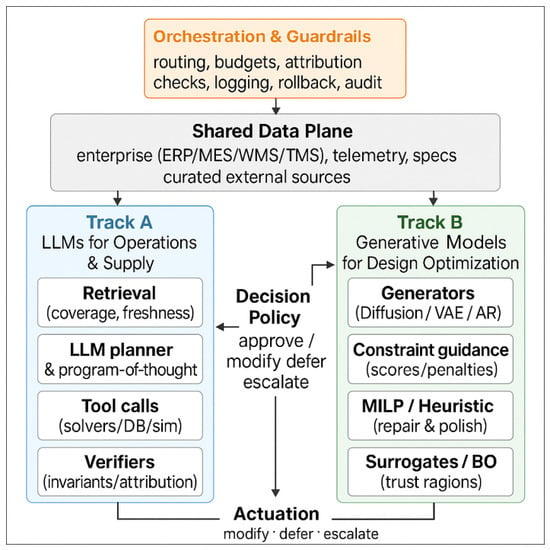
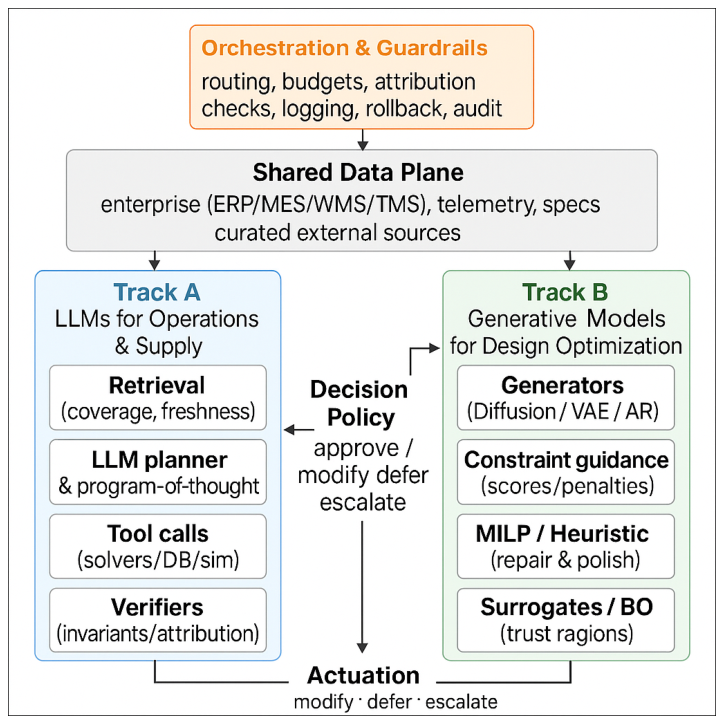
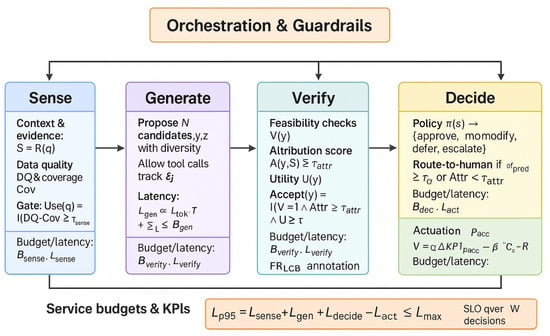
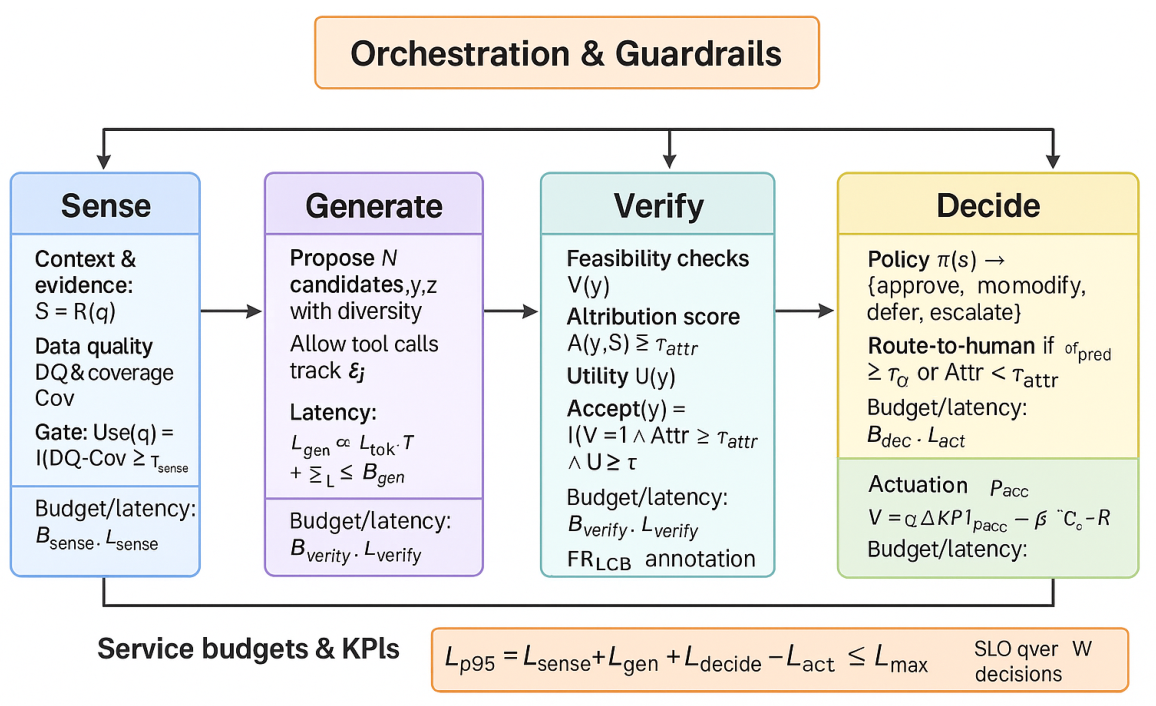
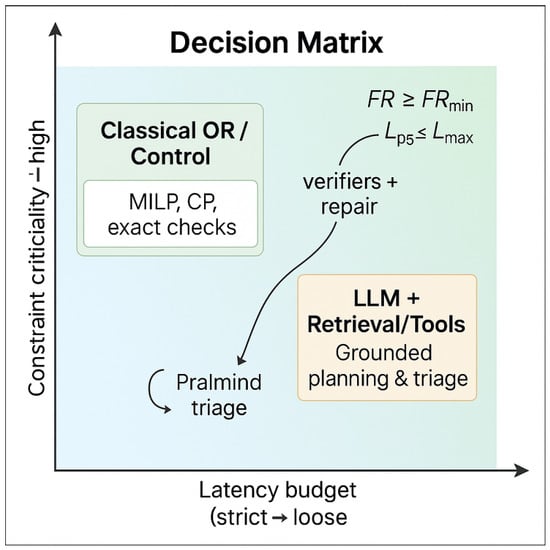
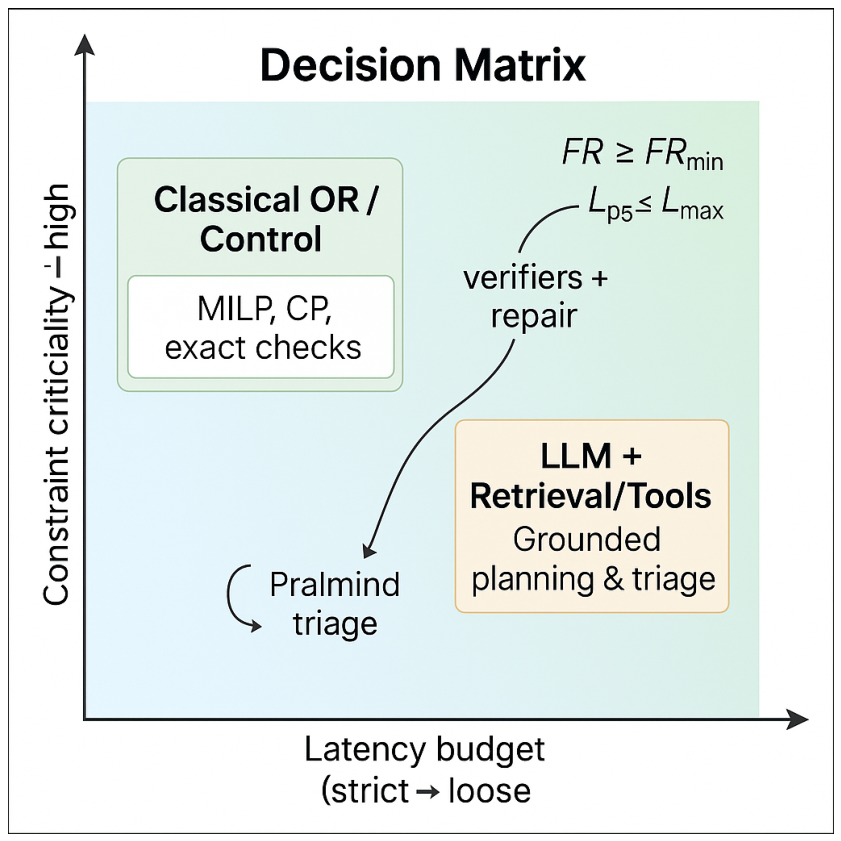
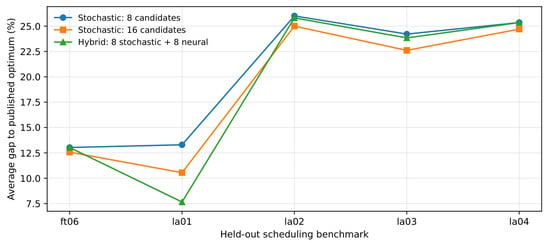
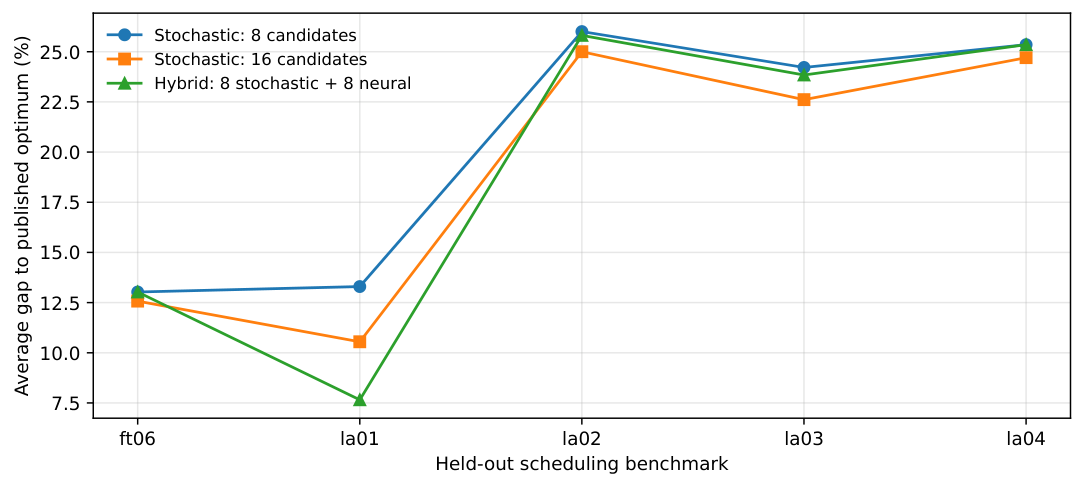
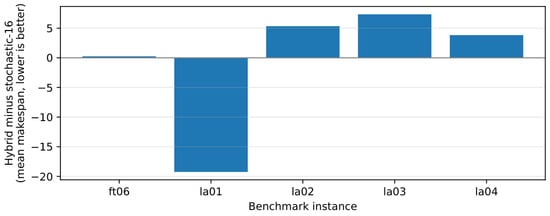
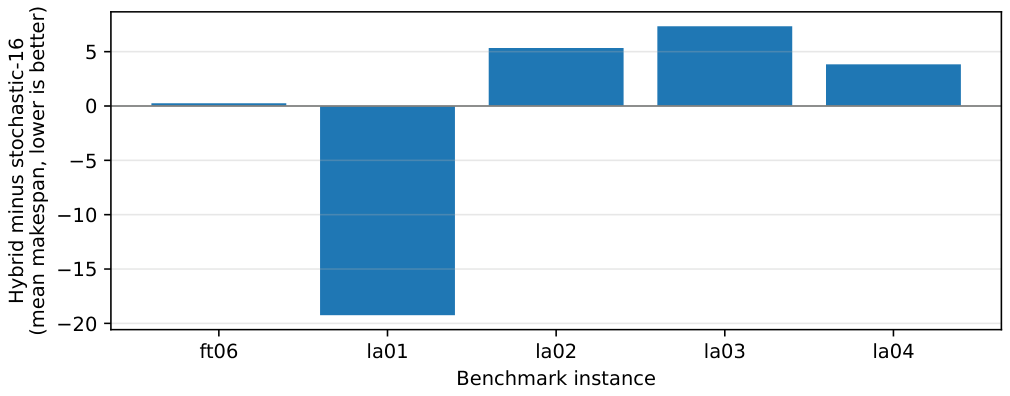
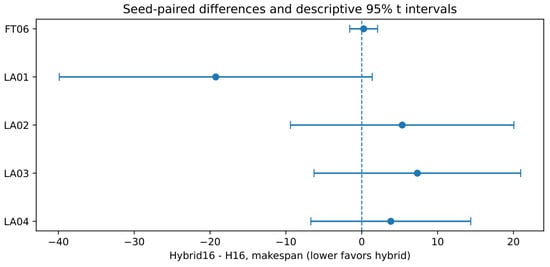
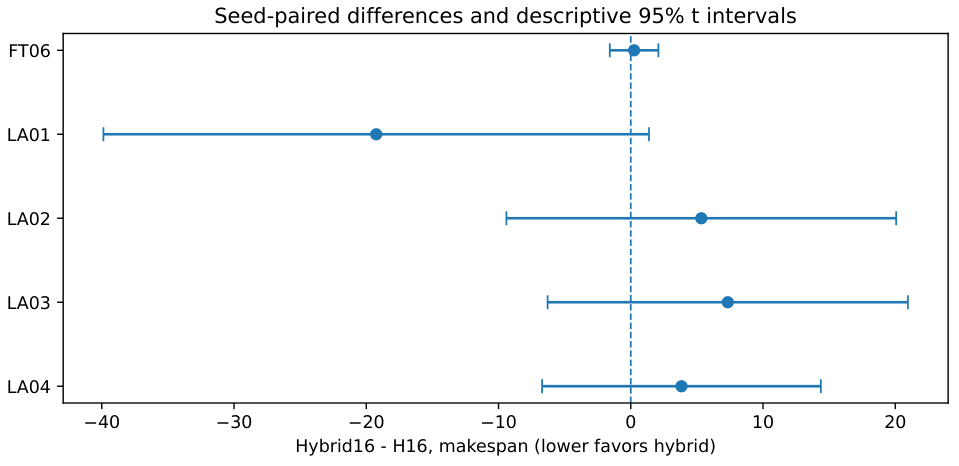

Disclaimer/Publisher’s Note: The statements, opinions and data contained in all publications are solely those of the individual author(s) and contributor(s) and not of MDPI and/or the editor(s). MDPI and/or the editor(s) disclaim responsibility for any injury to people or property resulting from any ideas, methods, instructions or products referred to in the content. |
© 2026 by the authors. Licensee MDPI, Basel, Switzerland. This article is an open access article distributed under the terms and conditions of the Creative Commons Attribution (CC BY) license.