


Abstract
To achieve selective flotation separation of ilmenite from forsterite, a novel hydroxamic acid collector, 9-sulfo-octadecyl hydroxamic acid (C18-SHA), was synthesized. Comparative flotation tests demonstrated that C18-SHA outperformed oleohydroxamic acid (C18-HA) in separation efficiency. The selective adsorption mechanism was investigated using zeta potential, contact angle, FTIR, XPS, UV-Vis, QCM-D, and AFM. The results showed that C18-SHA chemisorbed onto Ti and Fe sites on ilmenite, inducing a pronounced negative zeta potential shift and enhanced hydrophobicity, with higher adsorption (0.46 mg/g) than C18-HA (0.19 mg/g), forming a compact layer. On forsterite, only weak physical adsorption occurred (0.15 mg/g) with sparse coverage. Molecular dynamics simulations revealed that the adsorption energy (ΔE) of C18-SHA on ilmenite (−121.45 kcal/mol) was much lower than that of C18-HA (−66.57 kcal/mol), while on forsterite, it was higher (−31.71 kcal/mol) compared with C18-HA (−52.38 kcal/mol). This indicates that the sulfonic group (–SO3H) introduced in C18-SHA strengthens binding to ilmenite through a synergistic interaction with Ti/Fe sites on the surface while leaving the weak interaction with forsterite essentially unchanged, thereby amplifying the difference in flotation response between the two minerals. Collectively, C18-SHA shows considerable promise for ilmenite flotation separation.
1. Introduction
Ilmenite (FeTiO3) serves as a critical raw material for titanium metal production, holding strategic significance in aerospace, high-end equipment manufacturing, and other key industries [1,2]. As high-grade ilmenite resources continue to deplete, the efficient separation of ilmenite from complex associated minerals such as forsterite (Mg2SiO4) has emerged as a prominent research topic in this field [3]. However, the physical properties of these two minerals are closely similar, rendering conventional physical separation methods ineffective [4]. Flotation has consequently become the most widely adopted approach for their separation [5].
In flotation operations, collector performance exerts a decisive influence on ilmenite recovery efficiency [6,7]. In recent years, extensive research efforts have been devoted to developing novel collectors for ilmenite flotation, yielding a diverse array of reagents, including amines, fatty acids, phosphonic acids, hydroxamic acids, arsonic acids, and sulfonates [8]. Amine collectors, which rely primarily on physical adsorption, can be applied to ilmenite separation, yet they suffer from poor adsorption stability, inadequate selectivity, and marked temperature sensitivity, typically requiring modification or the combined use of depressants to meet separation requirements [9]. Fatty acid collectors exhibit weak selectivity and are susceptible to interference from metal ions in solution; with the increasing complexity of ore properties, their industrial applicability has become progressively limited [10]. Phosphonic acid collectors, although effective, are constrained by high costs and similar ion sensitivity, impeding their large-scale deployment [11,12]. Arsonic acid collectors possess inherent toxicity, which severely restricts their practical application [13,14].
In contrast, hydroxamic acid collectors have attracted considerable interest owing to their high selectivity, low toxicity, and strong collecting ability [15,16], particularly in the flotation of oxide minerals [17]. Comparative flotation studies have demonstrated that newly synthesized oleohydroxamic acid (OLHA) and laurohydroxamic acid (LHA) exhibit substantially superior collecting performance toward bastnaesite compared to conventional octyl hydroxamic acid (OHA), while their collecting ability for barite is relatively weaker [18,19]. A general trend indicates that extending the carbon chain length enhances collecting performance but may concurrently reduce selectivity and compromise solubility; the introduction of branched chains or polar functional groups can improve solubility while maintaining selectivity and collecting activity [20,21,22,23]. Sulfonate collectors, as anionic surfactants, are primarily employed in industry as auxiliary agents to fatty acids and also serve as frothers. The unique sulfonate group endows them with superior frothing properties and better selectivity compared to fatty acids [24]. For instance, sodium dialkyl sulfosuccinate (SDMA) has been successfully used to separate scheelite from calcite, with extended carbon chains favoring enhanced selectivity toward scheelite [25]. Sodium dodecyl sulfonate achieves ilmenite recovery exceeding 90% for fine particles under strongly acidic conditions (pH 2.4–2.7) [26]. Diisopropanolamine dodecylbenzenesulfonate (DBIA) has also been reported to significantly improve ilmenite floatability [27].
In this study, a novel collector, 9-sulfo-octadecyl hydroxamic acid (C18-SHA), was designed and synthesized, and its separation performance and interaction mechanisms in the ilmenite–forsterite flotation system were systematically evaluated. A comprehensive suite of analytical techniques was employed, including micro-flotation tests, zeta potential measurements, contact angle goniometry, Fourier-transform infrared spectroscopy (FT-IR), X-ray photoelectron spectroscopy (XPS), ultraviolet-visible spectrophotometry (UV-Vis) for adsorption quantification, quartz crystal microbalance with dissipation monitoring (QCM-D), atomic force microscopy (AFM), and adsorption kinetic analysis. These combined approaches enabled an in-depth investigation into the selective adsorption behavior of C18-SHA on the target minerals and the underlying mechanistic basis.
2. Experimental Section
2.1. Reagents and Synthesis of C18-HA and C18-SHA
All chemical reagents used in this work, including methyl oleate, isopropanol, tert-butyl peroxybenzoate, sodium bisulfite, diethylamine, sodium hydroxide, and hydroxylamine hydrochloride, were purchased from Shanghai Macklin Biochemical Technology Co., Ltd., Shanghai, China. Both HCl and H2SO4 are of analytical purity and were purchased from Sinopharm Group Chemical Reagents Co., Ltd., Shanghai, China. Water with a resistivity of 18.25 MΩ·cm (ultrapure grade) was used in all experimental processes.
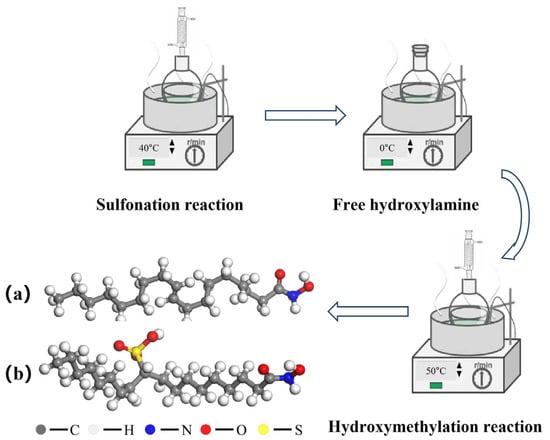
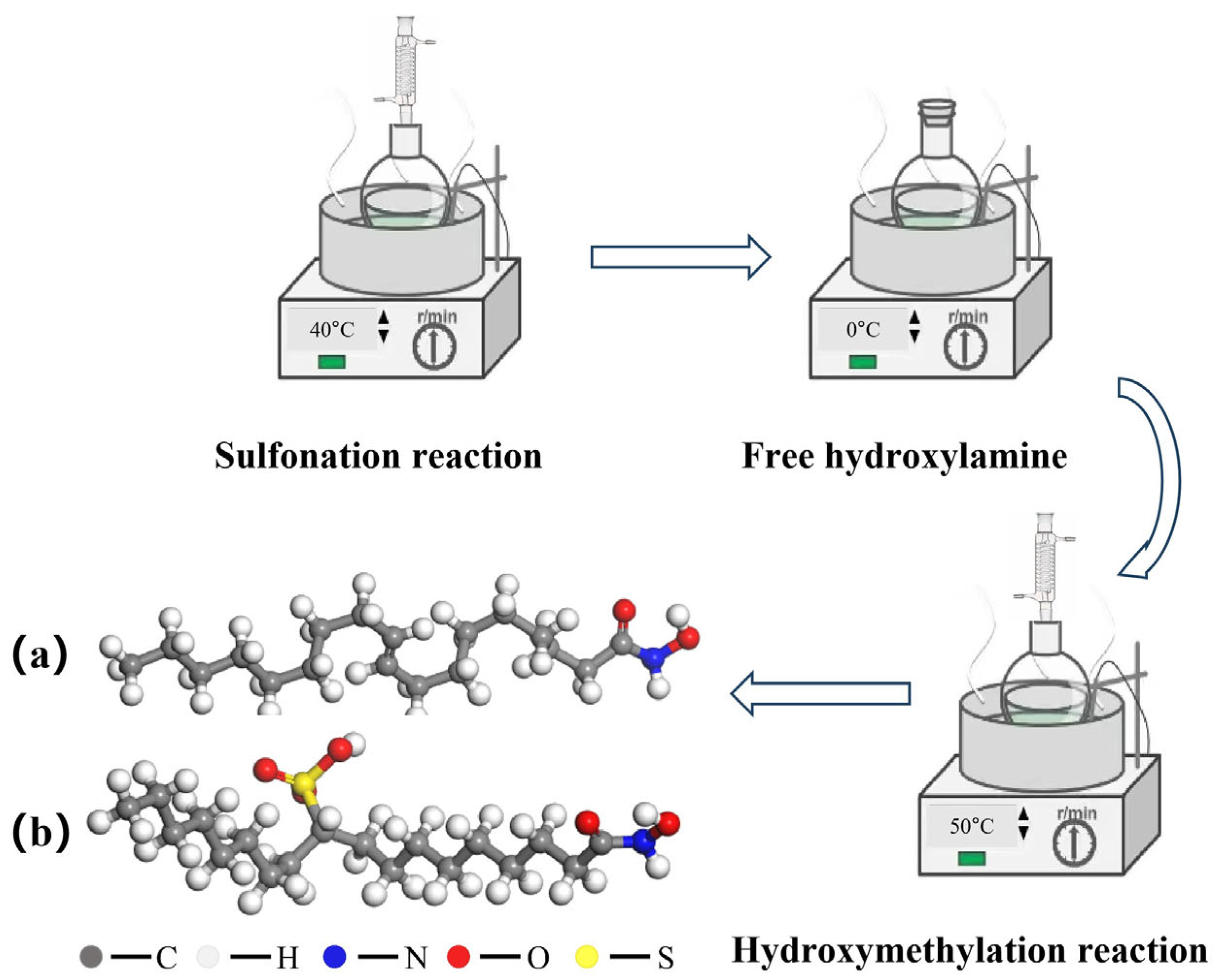
Collectors C18-SHA and C18-HA were synthesized following the procedure illustrated in Figure 1. Sodium bisulfite (3.1200 g, 0.0300 mol) was dissolved in 10 mL of ultrapure water. Methyl oleate (3.4880 g, 0.0100 mol), isopropanol (20 g), tert-butyl peroxybenzoate (0.1500 g), and diethylamine (0.0130 g) were sequentially introduced into a three-necked round-bottom flask, followed by the addition of the above-prepared sodium bisulfite aqueous solution. The flask was then placed in a thermostatically controlled oil bath, and the mixture was vigorously stirred for 10 min to ensure thorough homogenization of the reactants. The reaction was allowed to proceed at 40 °C for 25 h under continuous stirring. The filtrate was repeatedly extracted with petroleum ether, and the isopropanol-water phase was collected. Control the temperature at 50 °C and remove the isopropanol by means of rotary evaporation. The resulting product was desalted with ethanol and dried to obtain methyl oleate sulfonate [28].
Figure 1.
The synthetic procedure of (a) C18-HA and (b) C18-SHA.
Hydroxylamine hydrochloride (0.7645 g, 0.011 mol) and sodium hydroxide (0.8800 g, 0.022 mol) were each dissolved in 30 mL of methanol with the aid of ultrasonic dispersion. The two solutions were then combined and stirred in an ice-water bath for 1 h to allow complete liberation of free hydroxylamine. Subsequently, methyl oleate or methyl oleate sulfonate was added to the mixture, and the temperature was raised to 50 °C for a 6 h reaction. Upon completion of the reaction, concentrated sulfuric acid was added to tune the solution’s pH to 5–6, and the resulting precipitate was filtered to obtain the crude hydroxamic acid product. The crude product was dispersed in ethyl acetate, filtered through a sintered glass funnel to remove ethyl acetate, dried, and ground to yield the purified hydroxamic acid collector [29]. The structure of the synthetic product was characterized using three methods: FTIR, HRMS and 1H NMR.
2.2. Minerals and Flotation Tests
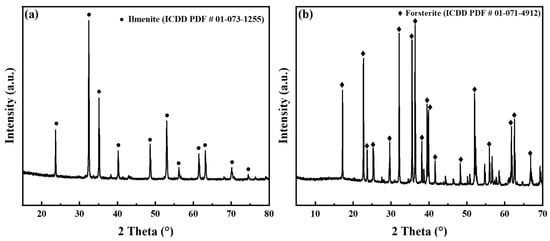
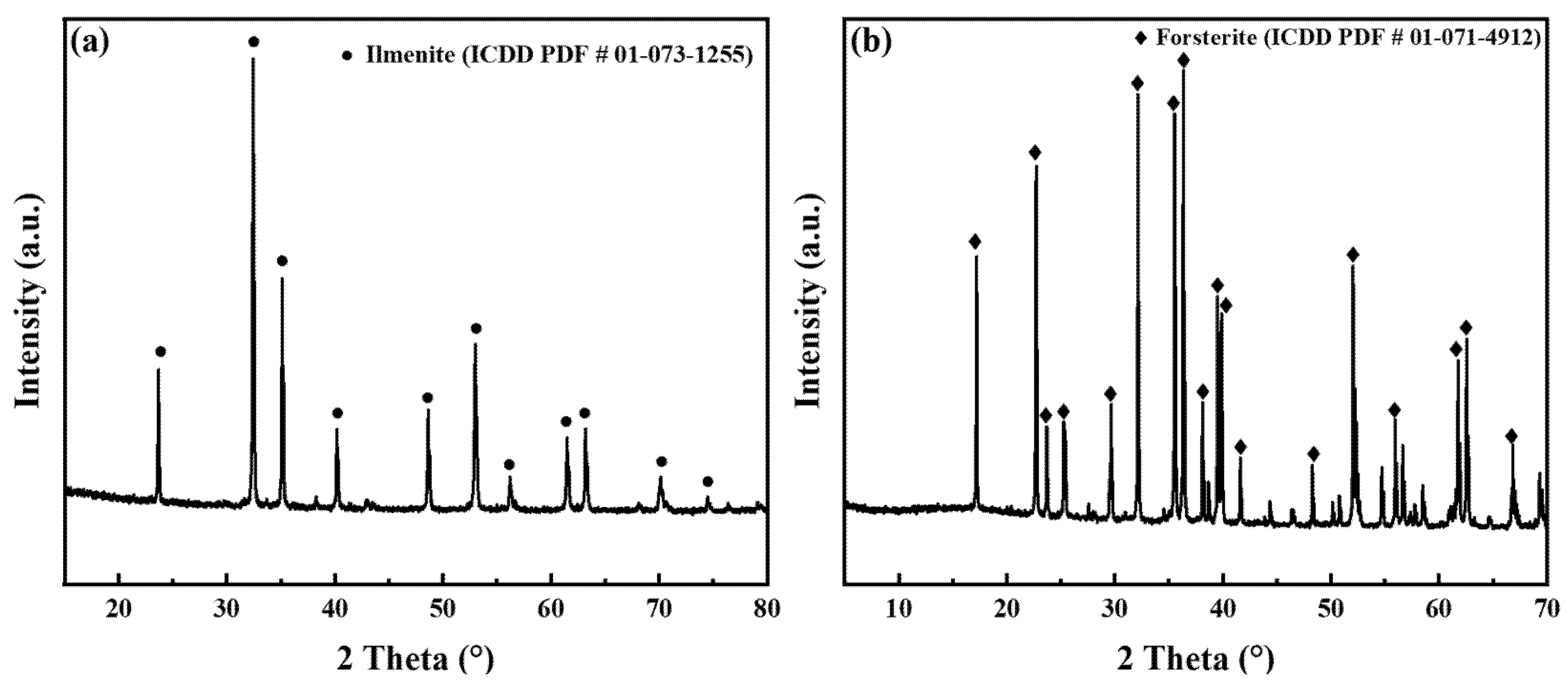
Ilmenite and forsterite mineral samples were purchased from the raw ore of the Panzhihua vanadium-titanium magnetite deposit in Sichuan Province, China. Pure mineral specimens of ilmenite and forsterite were prepared through successive purification steps involving electrostatic separation, magnetic separation, and repeated tabling. The phase compositions of the purified ilmenite and forsterite were characterized by X-ray diffraction (XRD), as shown in Figure 2, and their multi-element chemical compositions are presented (XRF) in Table 1 (XRD instrument: Bruker D8 Advance, Germany; test parameters: Cu target, tube voltage of 40 kV, tube current of 40 mA, Soller slit of 2.5°, and divergent slit of 0.6 mm; testing instrument XRF: Malvern Panace Axios, power 4 kW). The XRD patterns indicated that the diffraction peak positions of both single minerals were in excellent agreement with the corresponding standard cards, confirming their high purity levels. The analytical results demonstrated that both ilmenite and forsterite achieved sufficient purity to meet the requirements for subsequent micro-flotation tests. After crushing and grinding, the size fraction of +38–74 µm was selected for the flotation experiments, while the fraction below 38 µm was reserved for FTIR spectroscopy, zeta potential measurements, XPS, and other characterization analyses [30]. This size range provides sufficient liberation while avoiding the slime coating and surface oxidation effects associated with the −38 µm fraction, and it also avoids the lower recoveries caused by detachment of coarser particles from bubbles. It is also representative of typical industrial flotation feed sizes.
Figure 2.
XRD patterns of ilmenite (a) and forsterite (b). Reference phase patterns: ICDD Powder Diffraction File (PDF) database.
Table 1.
Analysis of elemental composition on the surface of single mineral samples (wt%).
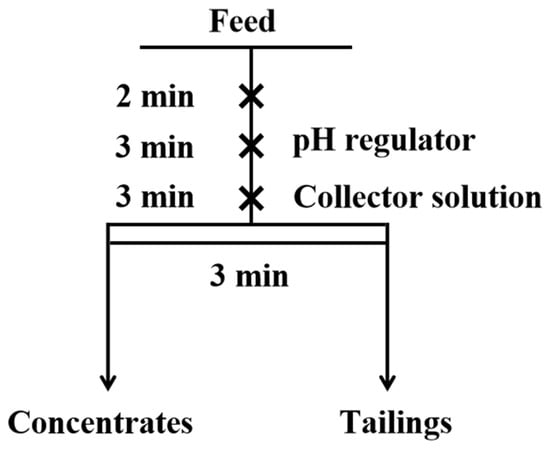
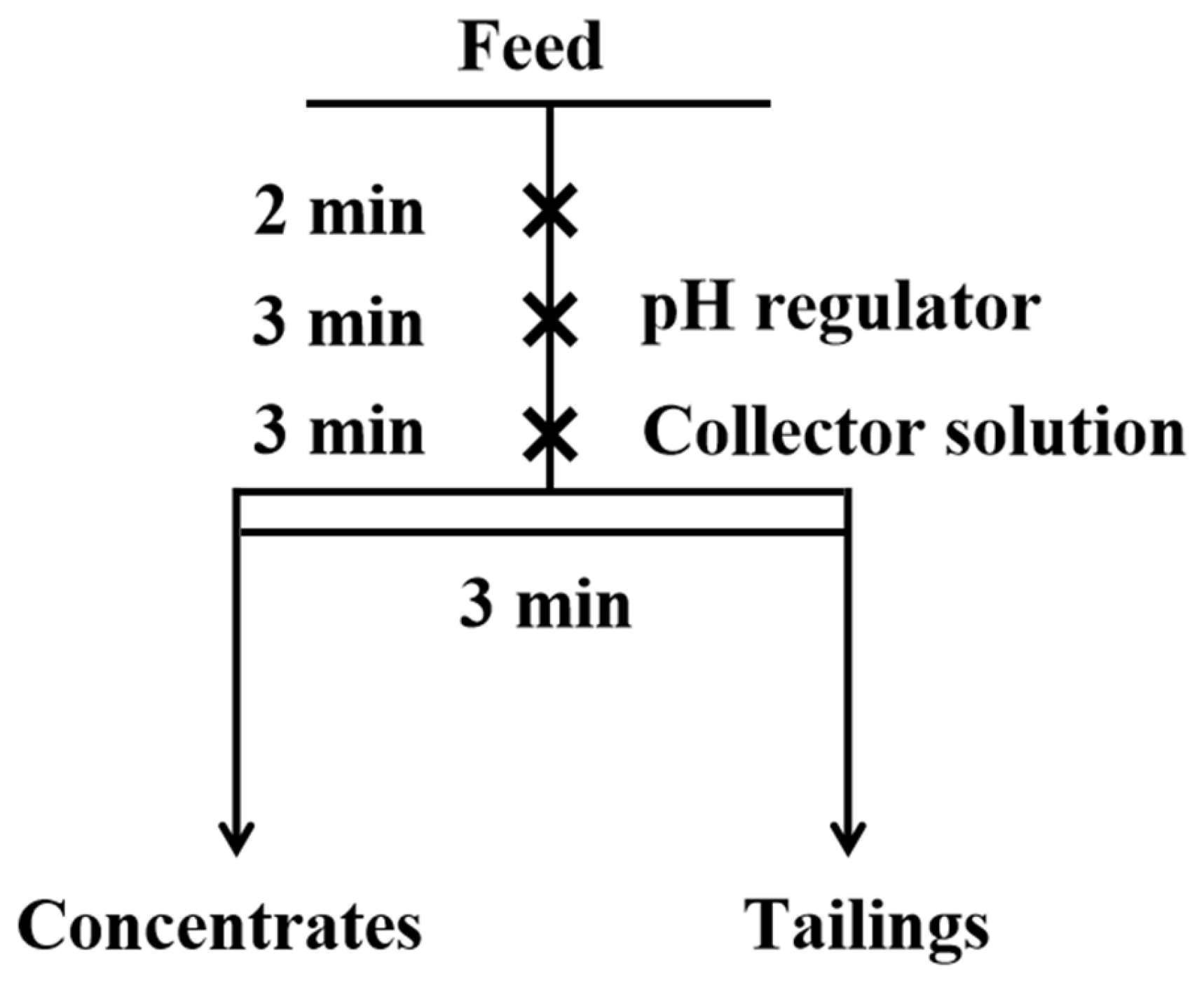
Micro-flotation tests of pure minerals were carried out with an XFG-II flotation machine (manufactured by Jilin Exploration Machinery Factory, China). The flotation procedure is displayed in Figure 3. Typically, 2 g of mineral sample was placed into a 45 mL flotation cell containing 40 mL of deionized water, followed by 2 min of conditioning to ensure homogeneous dispersion of the pulp. The rotational speed of the impeller was 1700 r/min, and the air supply volume was 100 mL/min. The pH was then adjusted to the desired value by adding HCl or NaOH solution, and the pulp was conditioned for an additional 3 min. The collector was introduced at a predetermined dosage, and the suspension was conditioned for 3 min to allow sufficient interaction. Flotation concentrates were gathered during a 3 min scraping process. Concentrate and tailing fractions were filtered, dried, and weighed to calculate flotation recovery. All flotation tests were repeated three times, with the averaged data adopted as the ultimate result.
Figure 3.
The flowsheet of the micro-flotation experiments.
2.3. Zeta Potential Measurements
The model of the zeta potential analyzer is Nano ZS90, and the manufacturer is Malvern Panalytical, Malvern UK. Typically, 0.5 g of mineral sample was placed in 50 mL of deionized water and stirred magnetically for 2 min, and the pH was adjusted with 0.1 mol/L NaOH or H2SO4. The collector was then added, followed by 10 min of stirring, and the supernatant was measured. All tests were conducted at 25 ± 2 °C and repeated three times, with the average reported [31].
2.4. Contact Angle Measurement
Contact angles were measured using a Theta Flex goniometer by the sessile drop method. The manufacturer is Biolin Scientific, Gothenburg, Sweden. The test conditions are as follows: pH = 6.0 ± 0.2, collector concentration of 40 mg/L, and action time of 30 min. A 10 mm die (Tianjin Tianguang Optical Instrument, Tianjin, China) and a powder tablet press were used, with a pressing pressure of less than 6 t and a 2 min dwell time. The −38 µm fraction was compressed into smooth pellets, with measurements taken at three positions per pellet and averaged.
2.5. FTIR and XPS Test
The FTIR model is Nicolet 380, and the manufacturer is Bruker, Karlsruhe, Germany. The model of the XPS spectrometer is ESCALAB 250Xi produced by Thermo Fisherke (Waltham, MA, USA). Samples for FTIR and XPS were prepared by placing 2.0 g of pure mineral in a flotation cell with 40 mL deionized water, adjusting pH, adding reagent, stirring for 5 min, rinsing with ultrapure water, filtering, and drying. For FTIR, 1 mg of sample was mixed with 100 mg KBr and pressed into a pellet; spectra were recorded over 400–4000 cm−1 at a resolution of 4 cm−1. For XPS, survey scans were acquired at a pass energy of 150 eV and a step size of 1 eV; high-resolution scans were acquired at 50 eV and 0.1 eV. All spectra were calibrated to C 1s at 284.8 eV using Avantage version 6.9.0 software [21].
2.6. UV–Vis Adsorption Capacity Test
The UV–Vis equipment is the UV-1750 model, manufactured by Shimadzu Corporation, Kyoto, Japan. The standard curve was established under pH = 6.0 conditions. All samples were measured three times, and the average value was taken. A 2 g portion of the mineral was added to collector solutions at 40, 60, and 80 mg/L. After pH adjustment and stirring for 5 min, the suspension was filtered, and the residual collector concentration in the filtrate was determined by UV–Vis spectrophotometry. The adsorbed amount was calculated from the concentration difference.
2.7. QCM-D Test
QCM-D measurements were conducted at 25 ± 0.02 °C with a collector concentration of 40 mg/L in deionized water. The baseline was established with deionized water prior to each test. Data modeling and analysis were performed using QSense Dfind software (Version 2.8.6, Biolin Scientific, Gothenburg, Sweden). Data modeling and analysis were performed using the QSense DFind software.
2.8. AFM Analysis
Nanoscale morphological imaging was performed using a JPK Nanowizard AFM (Bruker, Germany). Ilmenite and forsterite sensor chips were immersed in collector solutions at the optimum concentration. Topographic scanning was performed using ScanAsyst-Fluid probes (Bruker, Germany) with a spring constant of 0.7 N/m, a resonance frequency of 150 kHz, and an operating frequency of 0.9 kHz over a scan area of 2 µm × 2 µm. Data were processed offline using JPKSPM Data Processing software version 6.0 (Bruker, Germany).
2.9. Adsorption Modeling at the Solid–Liquid Interface
To elucidate the underlying mechanisms of flotation separation, molecular dynamics simulations were employed (Materials Studio 2020). Crystal models of ilmenite and forsterite, along with the collector molecular model, were constructed and geometrically optimized. Solid–liquid interfacial models incorporating an aqueous environment were established to simulate the dynamic adsorption process. The adsorption energy (ΔE) was calculated as
where Etotal is the total energy of the entire system, Em is the energy of the mineral surface, Ec is the energy of the collector, Ew is the energy of water molecules, Ew+c is the energy of water and collector combined, Ew+m is the energy of water and the mineral surface combined, and Ec+m is the energy of the collector and the mineral surface combined [32,33].
3. Results and Discussion
3.1. Characterization of C18-HA and C18-SHA
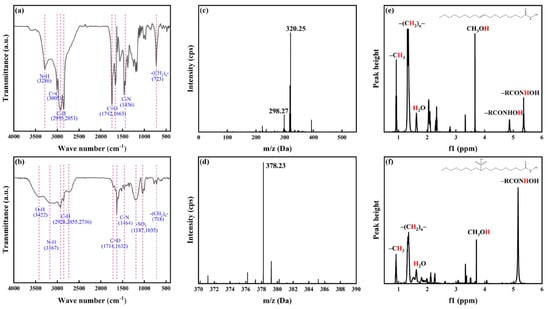
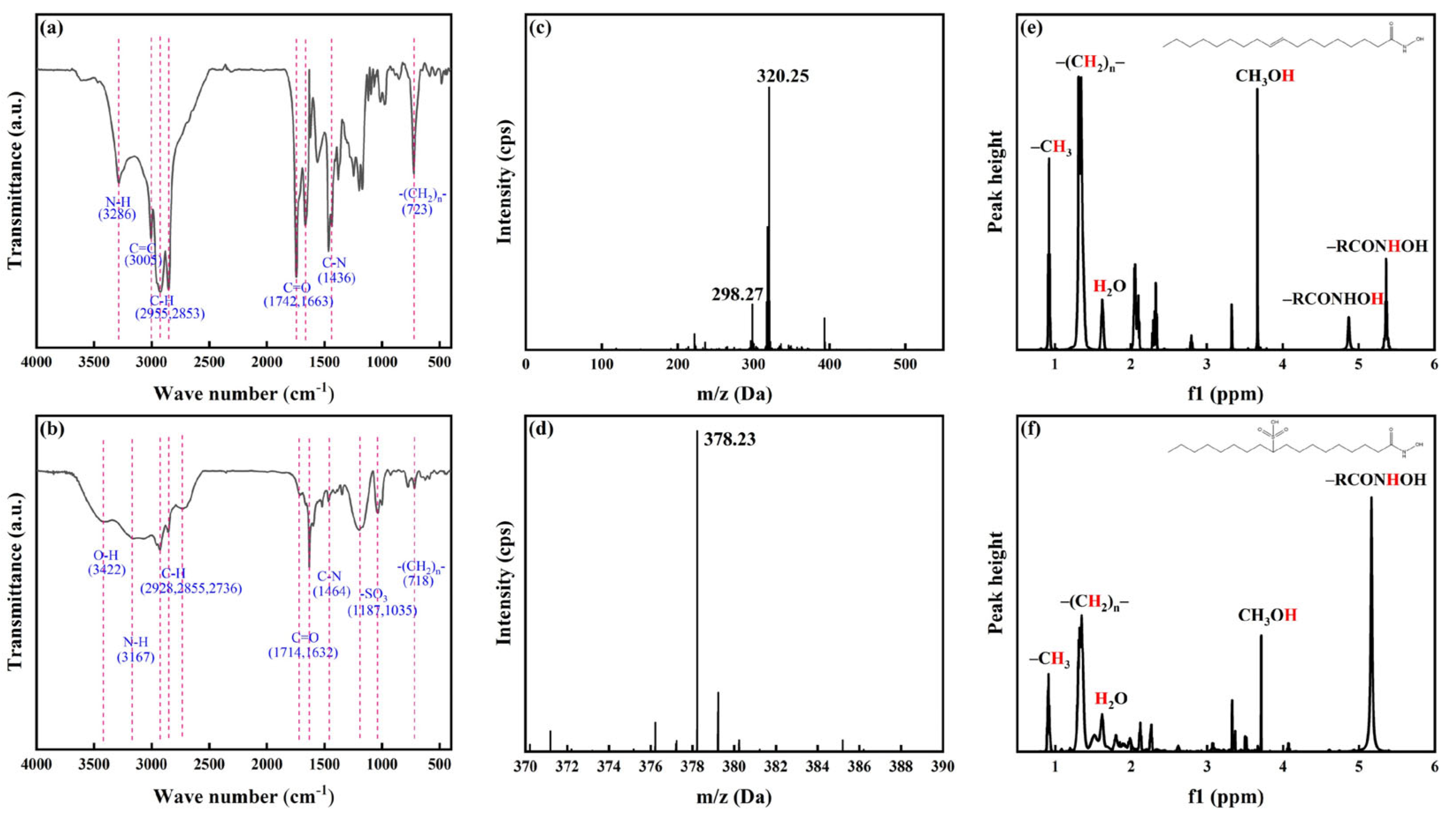
The synthesized products were characterized by FTIR, HRMS, and 1H NMR. HRMS was performed on a Thermo Scientific Q-Exactive mass spectrometer (Thermo Fisher Scientific, Waltham, MA, USA) with ESI. 1H NMR spectra were recorded on a JNM-ECZR spectrometer (Thermo Fisher Scientific, USA) in CD3OH, with TMS as the internal standard. The FTIR spectra (Figure 4a,b) showed that C18-HA exhibited characteristic N–H, C=C, and C=O vibration bands at 3286, 3005, 1742, and 1663 cm−1, respectively [34]. In addition to N–H and C=O bands, C18-SHA displayed asymmetric and symmetric stretching vibrations of the –SO3 group at 1187 and 1035 cm−1, along with the complete disappearance of the C=C band, confirming successful sulfonation [35]. HRMS analysis (Figure 4c,d) revealed that C18-HA exhibited [M+Na]+ and [M+H]+ peaks at m/z 320.25 and 298.27, respectively, while C18-SHA showed an [M]− peak at m/z 378.23, consistent with their theoretical molecular weights of 297.48 Da and 379.56 Da. The 1H NMR spectra (Figure 4e,f) displayed –NH– and –OH proton signals of the –RCONHOH moiety at 5.37 and 4.88 ppm for C18-HA and at 5.16 ppm for C18-SHA, with both collectors showing characteristic methyl and methylene chain signals near 0.90 and 1.33 ppm. Collectively, these results confirm that the molecular weights, functional groups, and proton environments of the synthesized products are in full agreement with the target structures, demonstrating the successful preparation of both C18-HA and C18-SHA.
Figure 4.
The C18-HA and C18-SHA were characterized by FTIR, HRMS and 1H NMR: FTIR spectrum of C18-HA (a) and C18-SHA (b); HRMS of C18-HA (c) and C18-SHA (d). 1HNMR spectrum of C18-HA (e) and C18-SHA (f).
3.2. Flotation Results
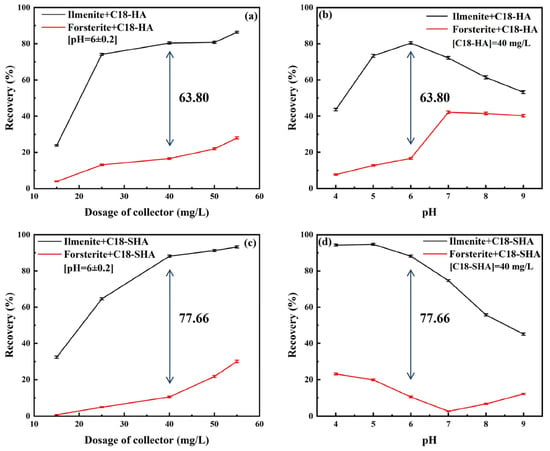
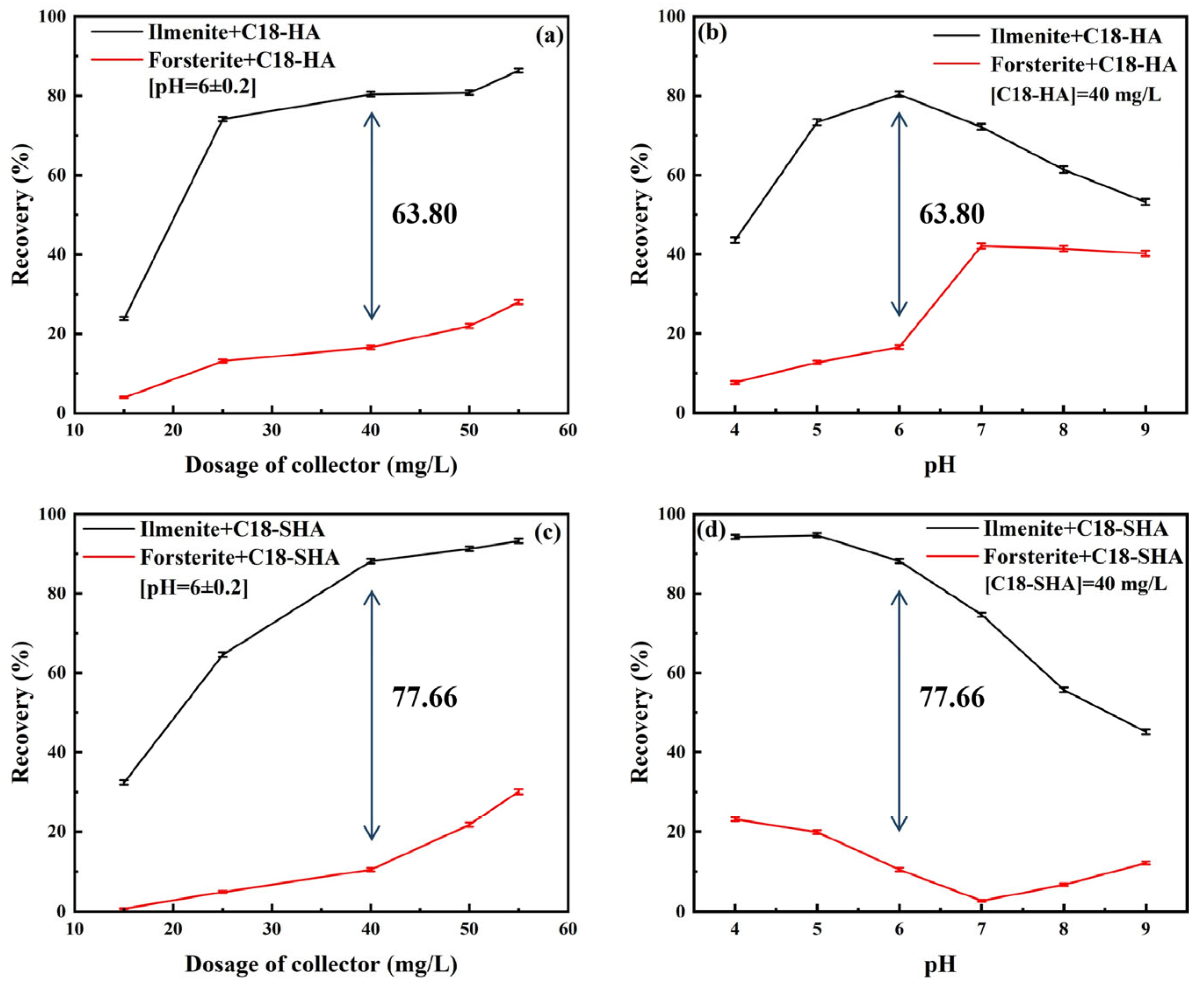
The effect of C18-HA dosage on ilmenite and forsterite flotation recoveries was examined at pH 6 ± 0.2. As shown in Figure 5a, the recoveries of both minerals increased with increasing C18-HA concentration, though the increase for forsterite was relatively moderate. At a dosage of 40 mg/L, the maximum recovery difference reached 63.8 percentage points. Under the condition of 40 mg/L collector dosage, the pH dependence, presented in Figure 5b, showed that ilmenite recovery first increased and then decreased with rising pH, peaking at 80.41% at pH 6, where the difference between the two minerals was 63.8%. These findings indicate that C18-HA exhibits only limited selectivity for ilmenite.
Figure 5.
Influence of C18-HA dosage (a), pH in the C18-HA system (b), C18-SHA dosage (c), and pH in the C18-SHA system (d) on the flotation performance of ilmenite and forsterite.
The flotation performance of C18-SHA was evaluated under the same pH conditions. As shown in Figure 5c, when the C18-SHA dosage increased from 15 to 40 mg/L, ilmenite recovery rose substantially from 32.37% to 88.2%, while forsterite recovery increased to only approximately 10%. Under the condition of 40 mg/L collector dosage, the pH dependence, shown in Figure 5d, revealed that ilmenite recovery continuously decreased with increasing pH, whereas forsterite recovery first decreased and then increased. At pH 6, the maximum recovery difference reached 77.66 percentage points, with an ilmenite recovery of 88.2%. These results demonstrate that C18-SHA exhibits superior selective collecting performance for ilmenite over forsterite.
3.3. Zeta Potential Analysis
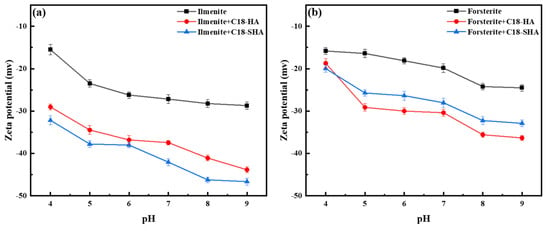
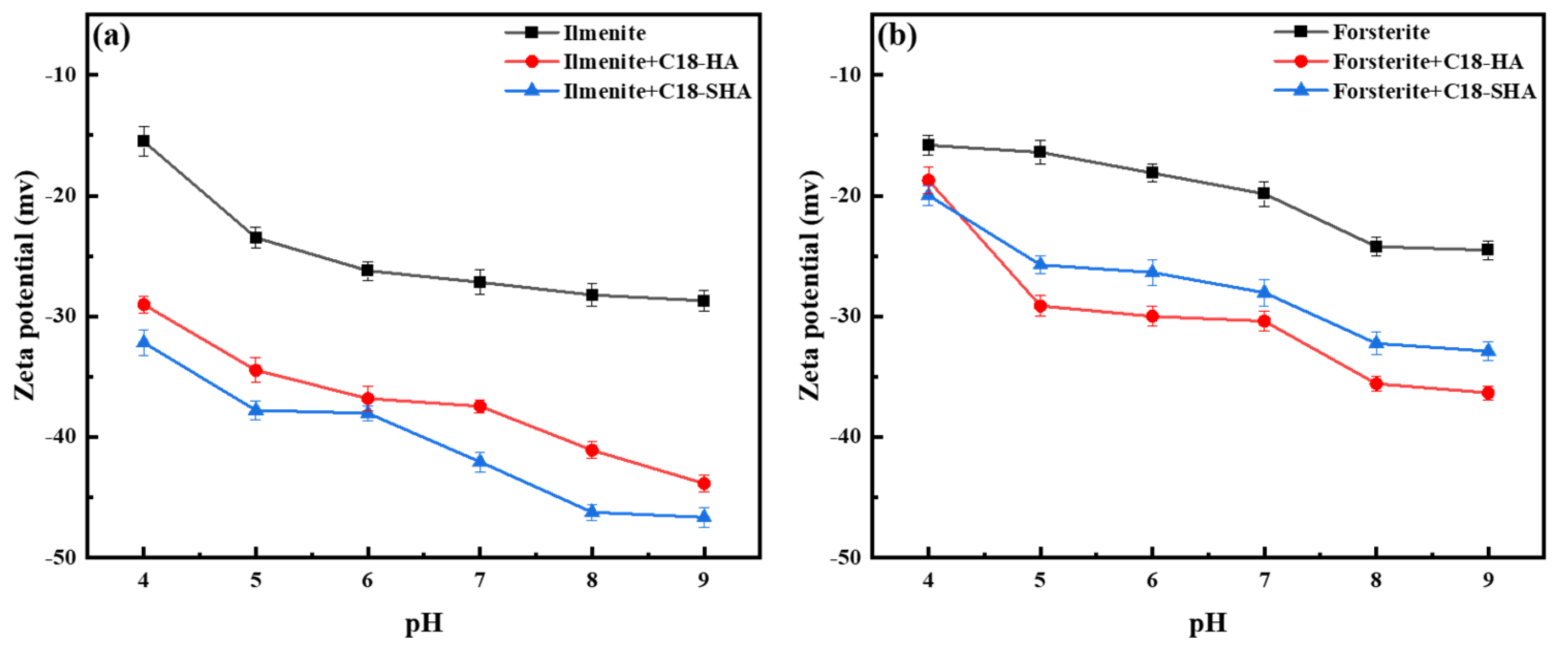
As shown in Figure 6, the zeta potentials of ilmenite and forsterite were measured as a function of pH (4~9) with and without collectors. In the absence of collectors, it is consistent with the trend of zeta potential changes reported in the literature for similar oxide minerals [36,37]. Upon C18-HA addition, the zeta potential of ilmenite shifted negatively across the entire pH range, attributed to hydroxamate anion adsorption onto surface metal sites. C18-SHA induced a more pronounced negative shift, indicating greater adsorption on ilmenite and confirming chemisorption of both collectors. For forsterite, both collectors caused negative shifts, with C18-HA inducing a larger shift than C18-SHA. These results demonstrate that C18-SHA exhibits stronger adsorption affinity toward ilmenite and favorable separation selectivity from forsterite.
Figure 6.
Zeta potentials of ilmenite (a) and forsterite (b) at different pH values with/without C18-HA or C18-SHA.
3.4. Surface Hydrophobicity Analysis
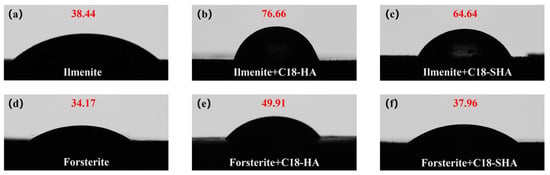
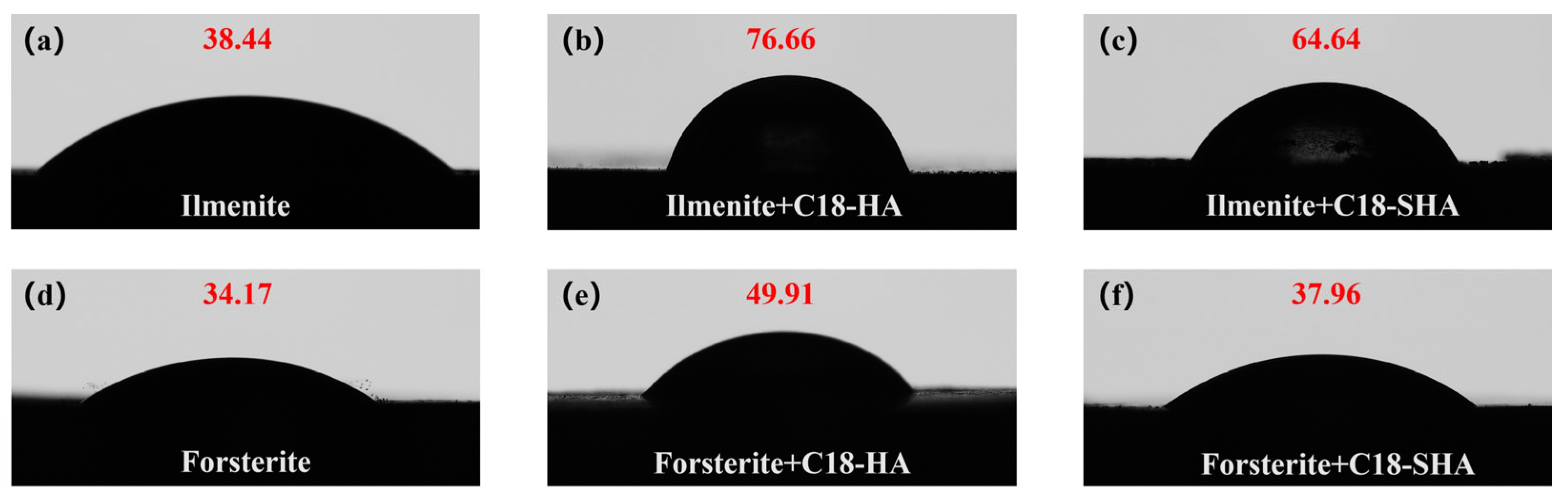
Mineral floatability is closely related to surface hydrophobicity. As shown in Figure 7, pristine ilmenite and forsterite exhibited contact angles of 38.44° and 34.17°, respectively, indicating similar natural hydrophobicity and limited floatability contrast, consistent with literature values [38,39]. After treatment with C18-HA and C18-SHA, the contact angles of ilmenite increased to 76.66° and 64.64°, respectively; the smaller increase for C18-SHA is attributable to the hydrophilic nature of the sulfonic group. For forsterite, the contact angles after C18-HA and C18-SHA treatment were 49.91° and 37.96°, respectively, with C18-SHA causing almost no change in hydrophobicity. Overall, although C18-SHA rendered ilmenite less hydrophobic than C18-HA, its effect on forsterite hydrophobicity was negligible, yielding the most pronounced hydrophobicity contrast and facilitating efficient separation. C18-SHA exhibited a lower contact angle than C18-HA but a higher flotation recovery because contact angle reflects macroscopic wettability, whereas flotation depends mainly on particle–bubble attachment and aggregate stability. The stronger binding of -SO3H to Ti/Fe sites makes the C18-SHA layer more resistant to detachment and reduces non-selective aggregation, so the higher recovery stems from stronger adsorption and better dispersion rather than contact angle alone.
Figure 7.
Contact angles of ilmenite and forsterite before and after treatment with varying collectors: (a) bare ilmenite; (b) ilmenite treated with C18-HA; (c) ilmenite treated with C18-SHA; (d) bare forsterite; (e) forsterite treated with C18-HA; (f) forsterite treated with C18-SHA.
3.5. FTIR Analysis
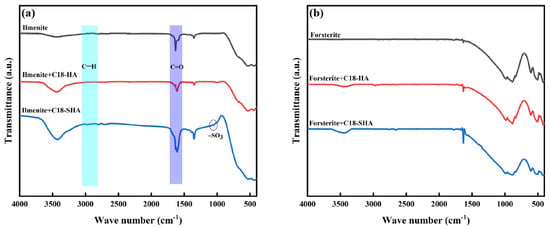
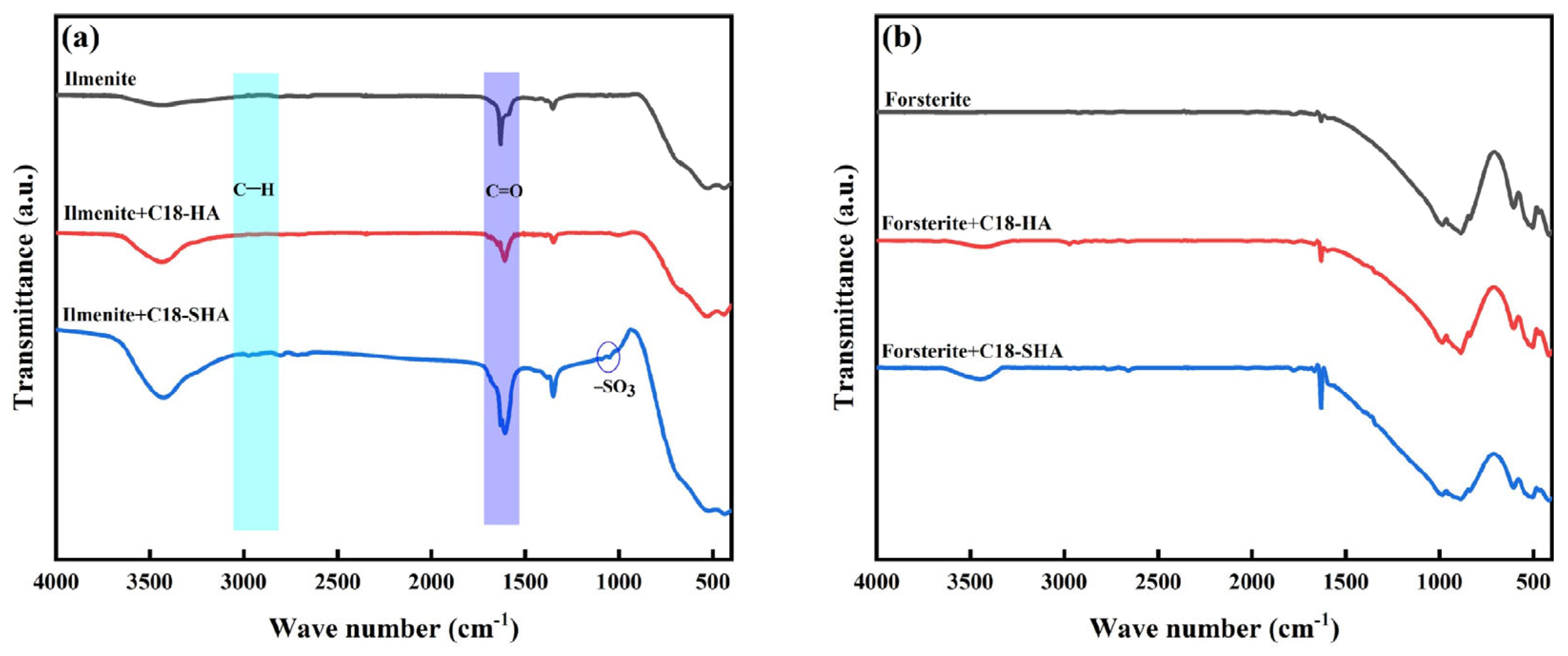
As shown in Figure 8a, the FTIR spectra of ilmenite exhibited noticeable changes after treatment with C18-HA and C18-SHA. The absorption bands at approximately 2920 cm−1 and 2850 cm−1 are attributed to the asymmetric and symmetric stretching vibrations of –CH2– groups, respectively [40,41]. The spectral region of 1600 cm−1–1650 cm−1 may contain overlapping contributions from the C=O stretching vibration of hydroxamate groups and the H–O–H bending vibration of adsorbed water [42,43]. After treatment with C18-HA and C18-SHA, absorption features were observed at approximately 1607 cm−1 and 1604 cm−1, respectively. These spectral changes are consistent with interactions between the collectors and the ilmenite surface. However, the possible overlap with adsorbed-water vibrations prevents an unequivocal assignment based solely on FTIR spectroscopy. Furthermore, a band near 1040 cm−1 appeared after C18-SHA treatment, which is consistent with the presence of the sulfonate group on the mineral surface. Combined with the XPS results, these observations support the preferential adsorption of C18-SHA on ilmenite.
Figure 8.
FTIR spectra of (a) ilmenite and (b) forsterite before and after collector treatment.
In contrast, as shown in Figure 8b, the FTIR spectra of forsterite exhibited relatively minor changes after collector treatment. The broad absorption band near 3500 cm−1 is associated with O–H stretching vibrations of surface hydroxyl groups and adsorbed water, while the feature in the 1600 cm−1–1640 cm−1 region is consistent with the H–O–H bending vibration of adsorbed water [43]. However, possible contributions from hydroxamate-related vibrations cannot be completely excluded [42]. The absence of clearly resolved new characteristic bands and the relatively small spectral changes suggest limited collector adsorption on the forsterite surface. Therefore, the FTIR results, together with XPS and adsorption measurements, support the preferential interaction of C18-SHA with ilmenite rather than forsterite.
3.6. XPS Analysis
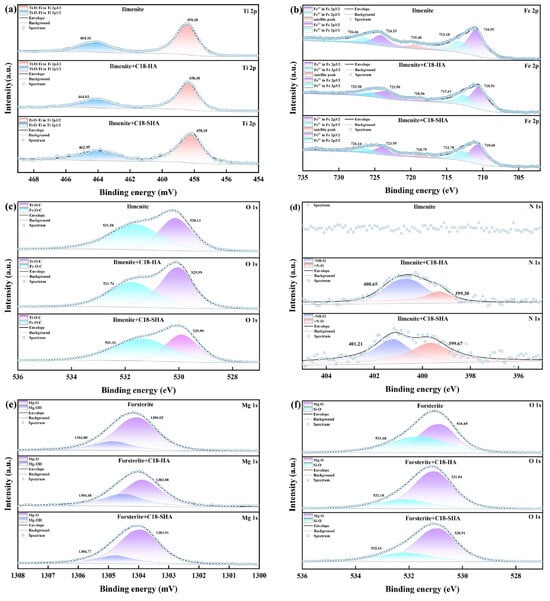
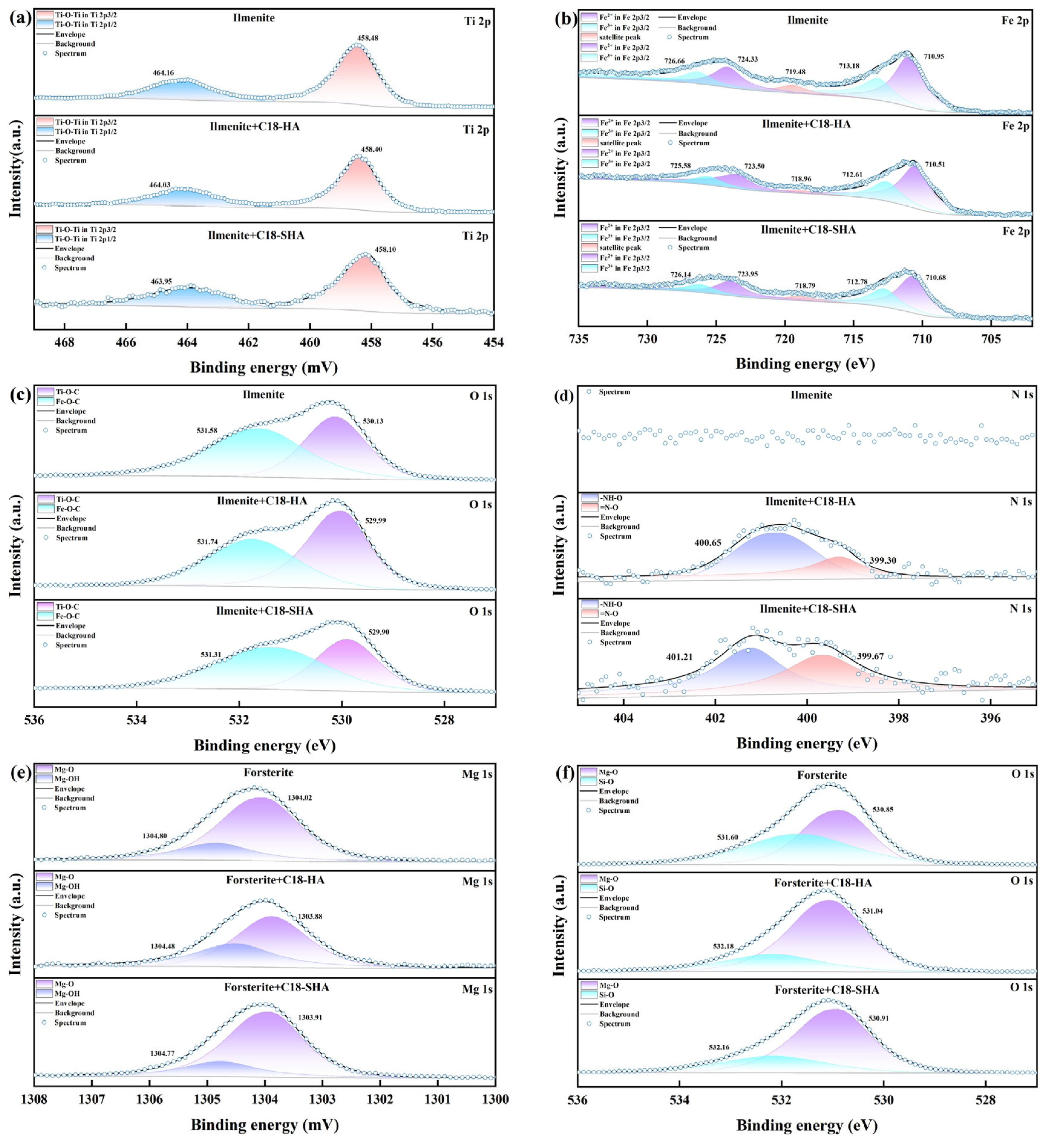
The Ti 2p spectra of ilmenite are presented in Figure 9a. In the untreated sample, the Ti 2p3/2 and Ti 2p1/2 regions exhibited Ti–O–Ti characteristic peaks at 458.48 eV and 464.16 eV, respectively [44,45]. After C18-SHA treatment, these peaks shifted negatively by 0.38 eV and 0.21 eV, respectively, while C18-HA treatment induced shifts of 0.08 eV and 0.13 eV, indicating stronger chemisorption of C18-SHA at Ti sites. As shown in Figure 9b, before treatment, the Fe 2p3/2 spectrum displayed characteristic peaks at 710.95 eV (Fe2+) and 713.18 eV (Fe3+), while the Fe 2p1/2 region presented signals at 724.33 eV (Fe2+) and 726.66 eV (Fe3+), accompanied by a satellite peak centered at 719.48 eV [46,47]. After C18-HA treatment, the Fe2+ and Fe3+ peaks shifted negatively by 0.44 eV and 0.57 eV, respectively; after C18-SHA treatment, the corresponding shifts were 0.27 eV and 0.40 eV, confirming chemical interactions of both collectors with Fe sites.
Figure 9.
High-resolution Ti 2p (a), Fe 2p (b), O 1s (c) and N 1s (d) spectra of ilmenite and Mg 1s (e) and O 1s (f) spectra of forsterite by XPS analysis.
As displayed in Figure 9c, the untreated ilmenite showed peaks at 530.13 eV and 531.58 eV, assigned to Ti–O–C and Fe–O–C, respectively [24,48]. C18-HA treatment caused a negative shift of 0.14 eV for Ti–O–C and a positive shift of 0.16 eV for Fe–O–C; C18-SHA treatment induced negative shifts of 0.23 eV and 0.27 eV, respectively. As presented in Figure 9d, no N peak was observed in the untreated sample. After C18-HA treatment, two peaks appeared at 399.30 eV and 400.65 eV; after C18-SHA treatment, peaks emerged at 399.67 eV and 401.21 eV. These signals are attributed to –NH–O and =N–O moieties [49,50], which reveals that the –NH moiety adsorbs on the mineral surface and promotes the generation of five-membered cyclic structures.
As shown in Figure 9e,f, after C18-HA treatment, Mg–O and Mg–OH in Mg 1s shifted negatively by 0.14 eV and 0.32 eV, while Mg–O in O 1s shifted positively by 0.19 eV [51,52]. In contrast, after C18-SHA treatment, the shifts were only 0.11 eV and 0.03 eV for Mg–O and Mg–OH and 0.06 eV for Mg–O in O 1s. These observations indicate that C18-HA chemisorbs at Mg sites on forsterite, whereas C18-SHA exhibits negligible adsorption on this surface.
3.7. AFM Analysis
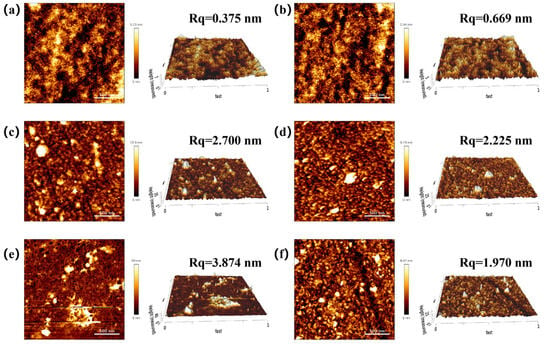
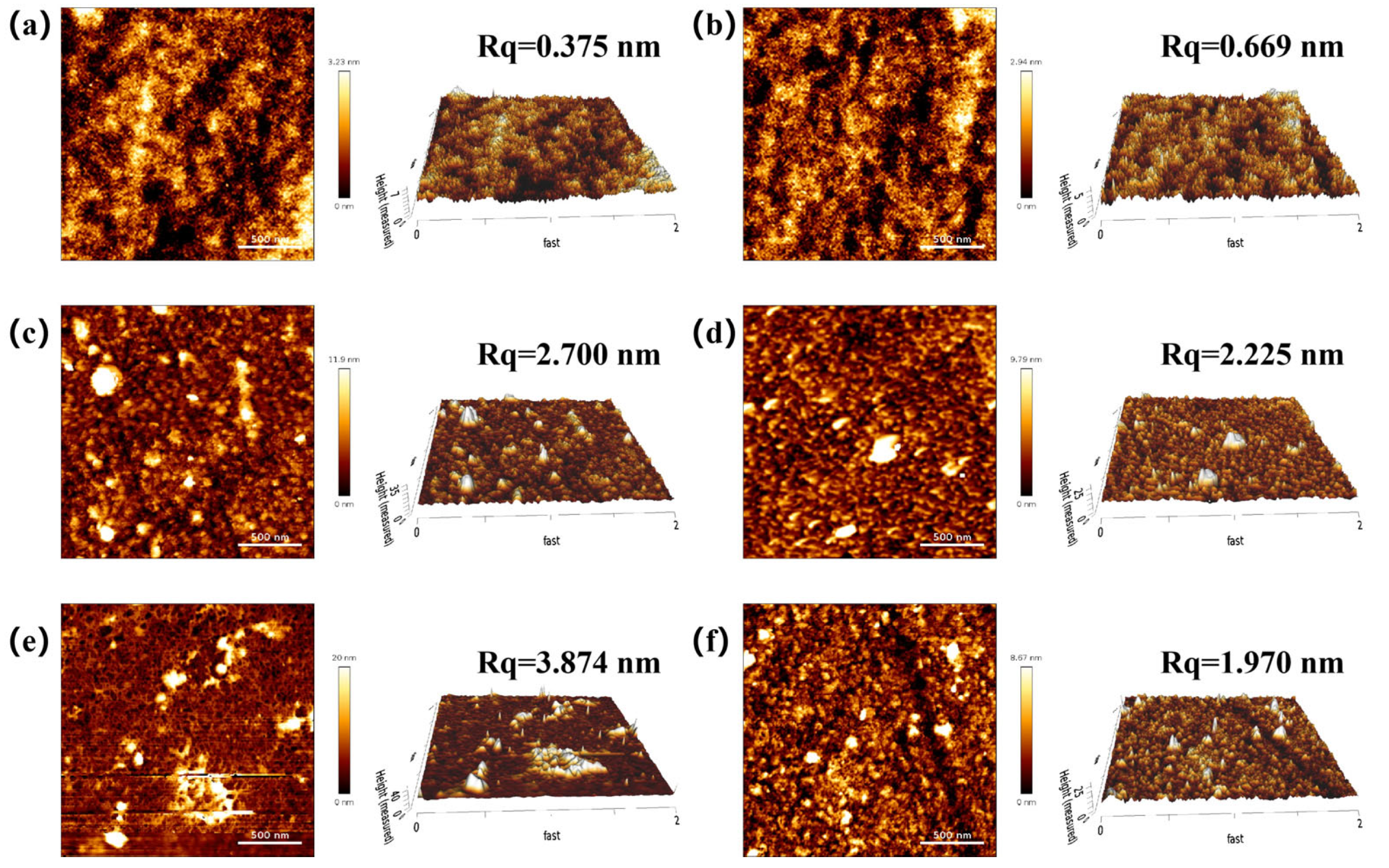
The surface morphologies of ilmenite and forsterite before and after treatment with C18-HA and C18-SHA were characterized by atomic force microscopy (AFM), with the results presented in Figure 10. The pristine ilmenite and forsterite surfaces exhibited roughness (Rq) values of 0.735 nm and 0.669 nm, respectively, indicating smooth and flat topographies that met the quality requirements for the tests [53,54]. After treatment with C18-HA and C18-SHA, clear adsorption layers were observed on the ilmenite surface, with thicknesses reaching 11.900 nm and 20.000 nm, respectively, and Rq increasing to 2.700 nm and 3.874 nm. These results indicate the formation of an adsorbed layer on the ilmenite surface. Combined with the XPS analysis, the results indicate strong chemical interactions between the hydroxamic acid group and Ti/Fe active sites, with the introduction of the sulfonic group further enhancing the adsorption strength on ilmenite.
Figure 10.
Changes in the surface morphology of ilmenite before and after the action of the collector: (a) ilmenite, (b) forsterite, (c) ilmenite + C18-HA, (d) forsterite+ C18-HA, (e) ilmenite + C18-SHA, and (f) forsterite + C18-SHA.
For forsterite, the adsorption layer thicknesses after C18-HA and C18-SHA treatment were 9.790 nm and 8.670 nm, respectively, with Rq values of 2.225 nm and 1.970 nm. The surface features appeared sparse and unevenly distributed, suggesting that the collectors only adsorbed locally at certain active sites (e.g., Mg2+) without forming a continuous coverage layer, and the introduction of the sulfonic group did not enhance adsorption on the forsterite surface. The ilmenite surface after C18-SHA treatment shows a continuous, compact, and uniform adsorption layer, whereas the forsterite surface shows only sparse and patchy adsorption. The AFM results confirm the selective adsorption affinity of the sulfonated hydroxamic acid collector toward ilmenite from a morphological perspective, providing surface structural evidence for its application in the ilmenite–forsterite flotation separation system.
3.8. UV–Vis Adsorption Capacity Analysis
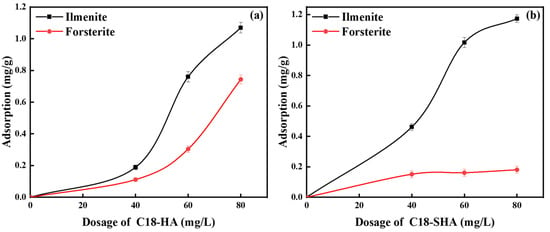
The adsorption amounts of C18-HA and C18-SHA on ilmenite and forsterite surfaces were determined by UV–Vis spectrophotometry. As shown in Figure 11, the adsorbed amounts of both collectors on ilmenite increased markedly with increasing collector dosage, while the adsorption of C18-SHA on forsterite increased only marginally. At a collector dosage of 40 mg/L, the adsorption amounts of C18-HA and C18-SHA on ilmenite were 0.19 mg/g and 0.46 mg/g, respectively, and those on forsterite were 0.11 mg/g and 0.15 mg/g, respectively. These results demonstrate that C18-SHA exhibits superior adsorption affinity toward ilmenite while showing weak adsorption on forsterite, which is consistent with the flotation results.
Figure 11.
Adsorption amounts of C18-HA (a) and C18-SHA (b) at different doses on ilmenite and forsterite.
3.9. QCM-D Analysis
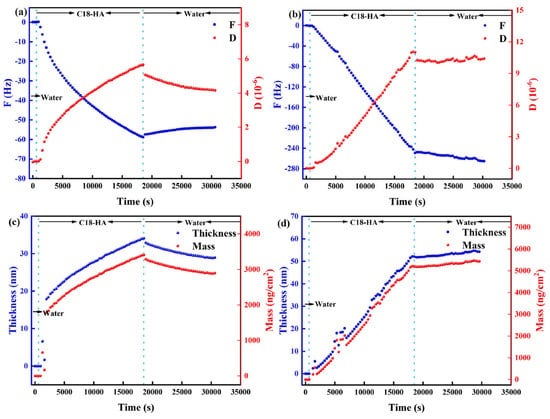
The dissipation shifts during adsorption were used to assess the rigidity of the adsorbed layer. When ΔD values exceeded 1 × 10⁻⁶, the layer was treated as flexible (viscoelastic), and the Voigt viscoelastic model was used to fit the frequency and dissipation responses. When ΔD values were below 1 × 10⁻⁶, the layer was treated as rigid, and the Sauerbrey model was used to calculate the adsorbed mass. As shown in Figure 12a,b, upon the introduction of the C18-HA solution, both the frequency and dissipation on ilmenite and forsterite sensor chips changed rapidly, with dissipation shifts (ΔD) exceeding 1 × 10⁻⁶, indicating viscoelastic (flexible) adsorption on both mineral surfaces. The adsorbed mass and layer thickness were obtained by Voigt model fitting using QSense Dfind software, as presented in Figure 12c,d. The adsorption layer’s thickness and mass on ilmenite were approximately 33 nm and 3300 ng/cm2, respectively, while those on forsterite were approximately 52 nm and 5200 ng/cm2, respectively, suggesting that C18-HA formed thick and flexible adsorption layers on both minerals, with higher uptake on forsterite, thus exhibiting poor selectivity.
Figure 12.
Kinetic analysis of C18-HA. Changes in frequency and dissipation of the adsorption layers on the surfaces of ilmenite (a) and forsterite (b). Changes in the mass and thickness of the adsorption layer on the surfaces of ilmenite (c) and forsterite (d).
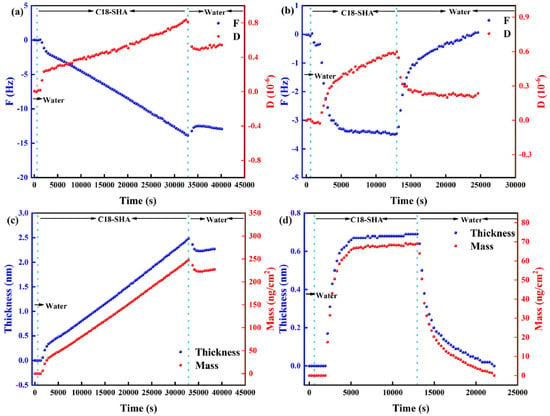
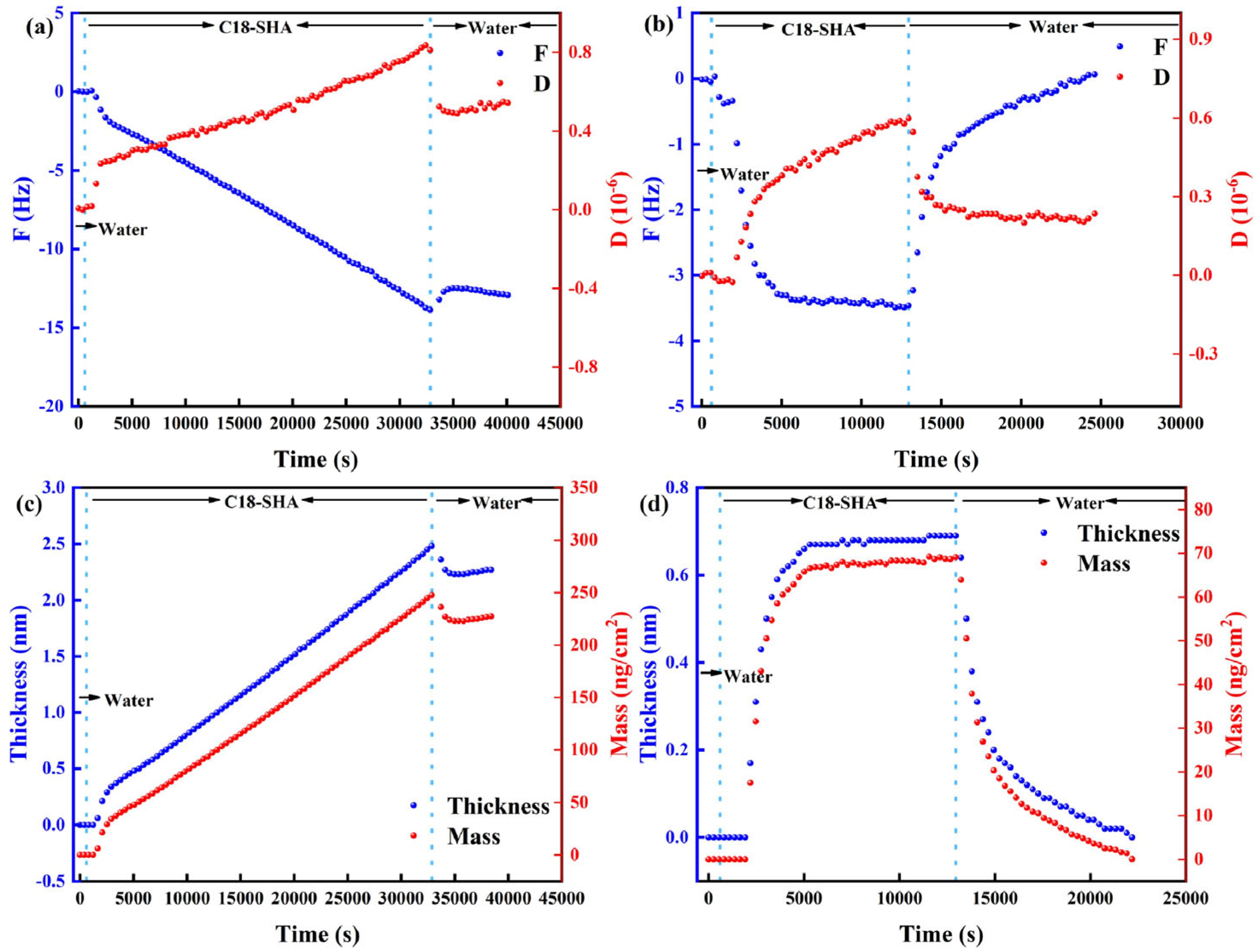
As shown in Figure 13a,b, upon C18-SHA introduction, the frequency and dissipation changes were relatively gradual, with ΔD values below 1 × 10⁻⁶, indicating rigid adsorption. The adsorbed mass and thickness were derived from Sauerbrey equation fitting using QSense Dfind software, as presented in Figure 13c,d. The adsorption layer thickness and mass on ilmenite were approximately 2.5 nm and 250 ng/cm2, respectively, while those on forsterite were approximately 0.7 nm and 70 ng/cm2, with rapid adsorption equilibrium achieved on forsterite. Overall, C18-SHA exhibited substantially superior adsorption on ilmenite over forsterite, demonstrating excellent selectivity.
Figure 13.
Kinetic analysis of C18-SHA. Changes in frequency and dissipation of the adsorbed layers formed on ilmenite (a) and forsterite (b) surfaces. Changes in the mass and thickness of the adsorption layer on ilmenite (c) and forsterite (d) surfaces.
3.10. Adsorption Model of Collectors at the Solid–Liquid Interface
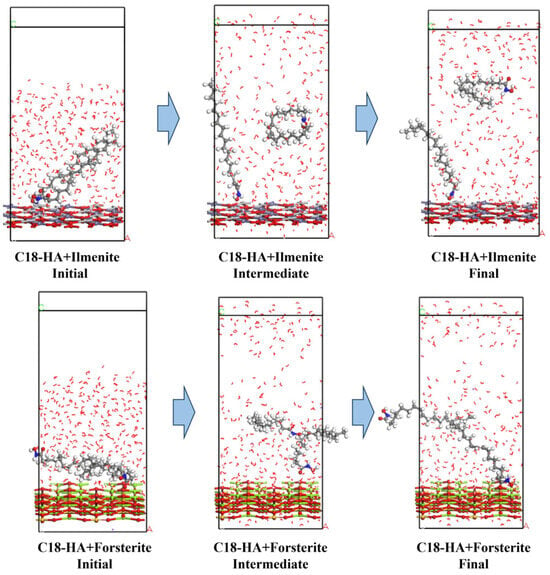
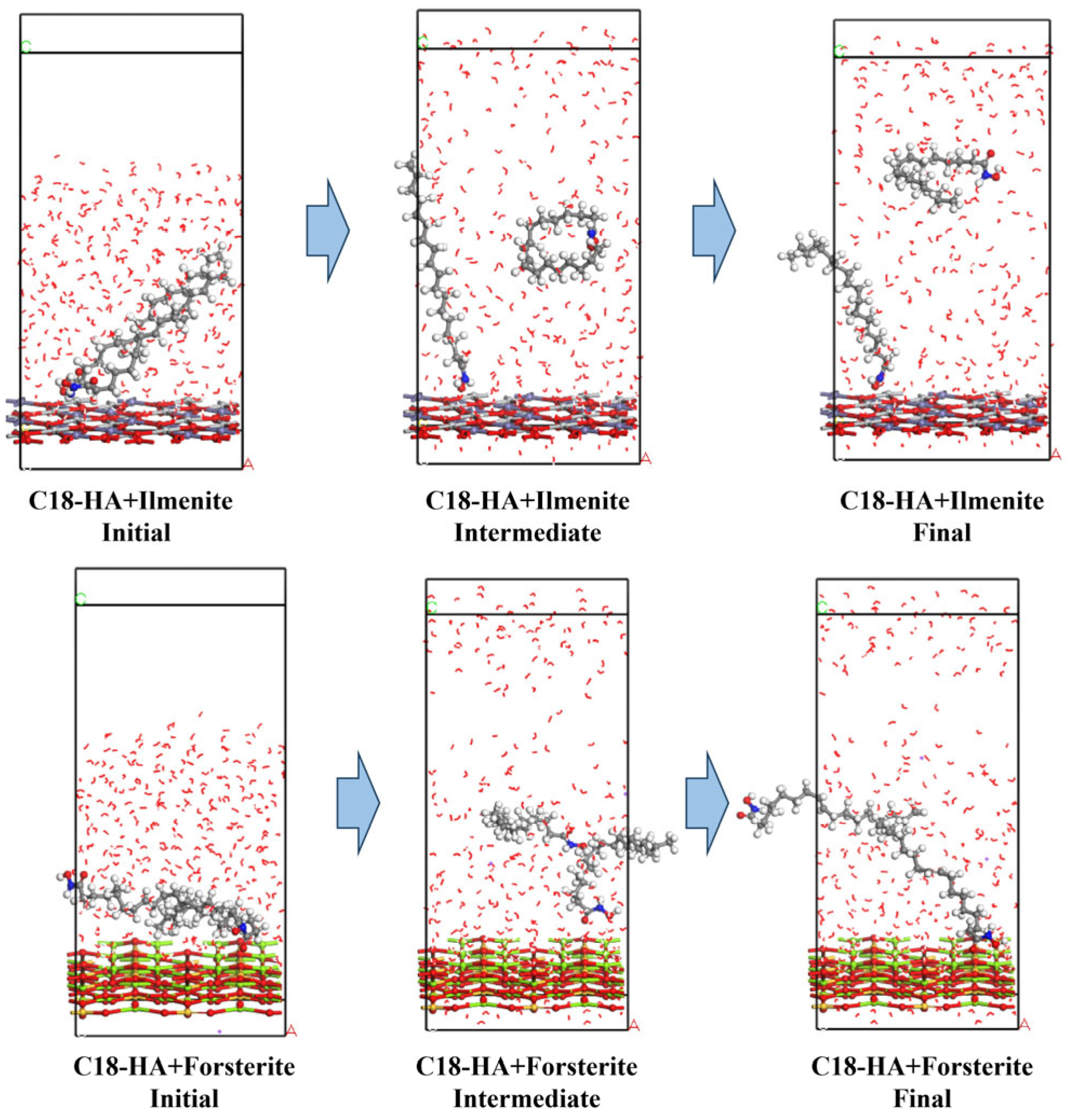
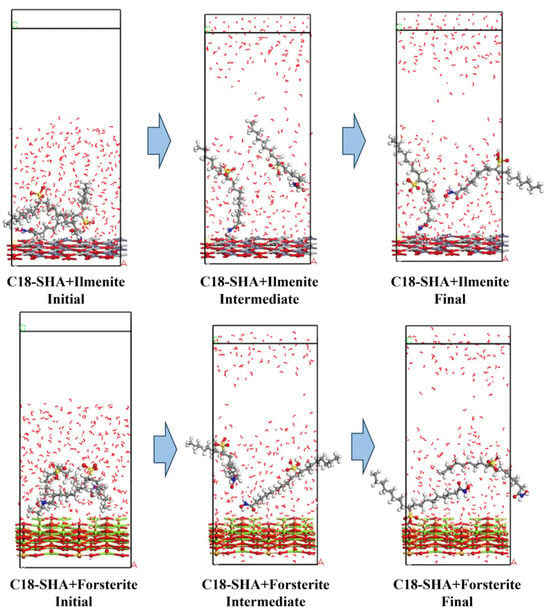
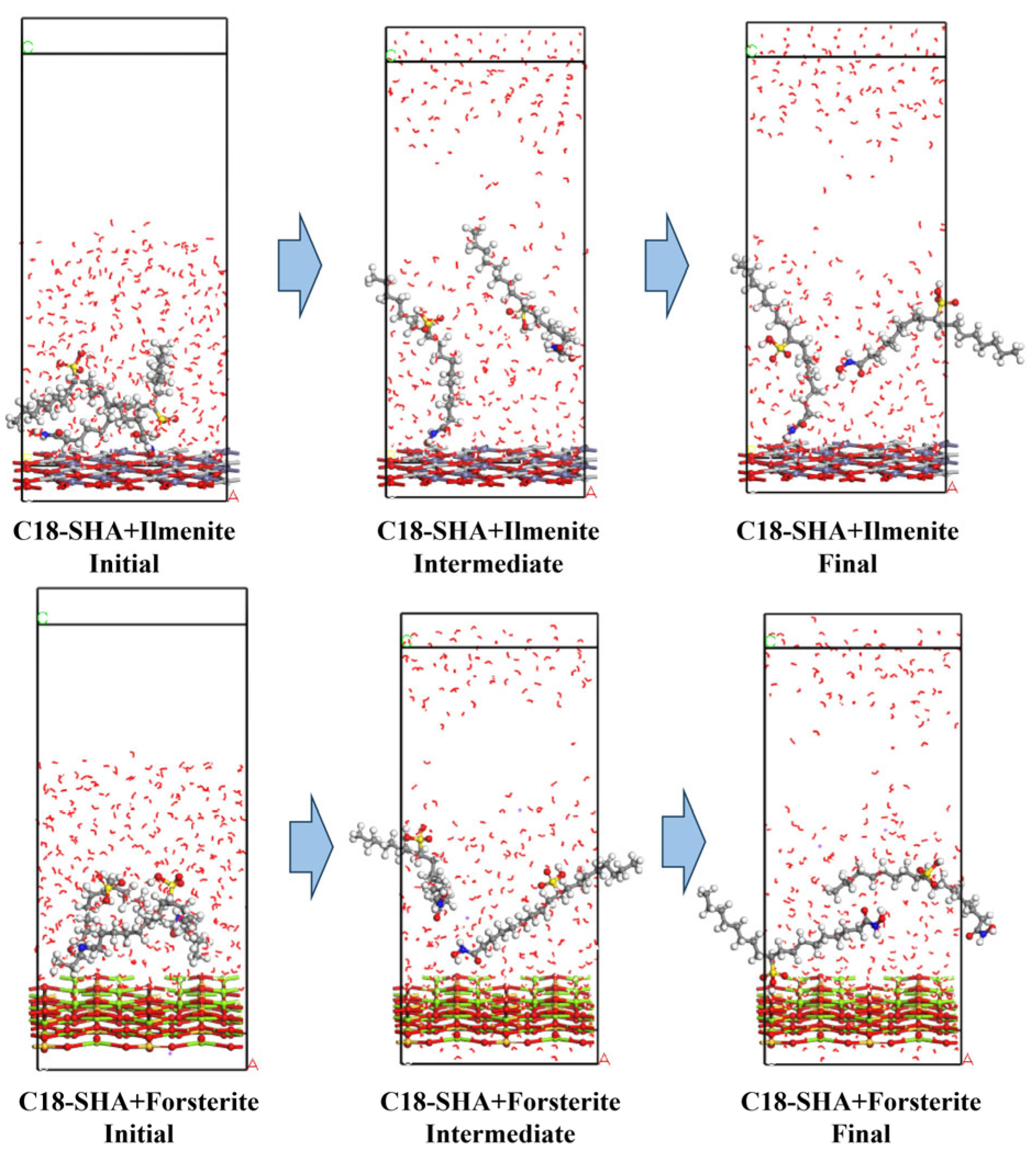
The ilmenite (104) surface is the most commonly exposed cleavage plane and the thermodynamically most stable surface [46], while the forsterite (010) surface is one of the dominant cleavage planes of olivine-group minerals [55,56]. Both are representative surfaces in flotation studies. As presented in Figure 14 and Figure 15, the molecular dynamics simulation for the adsorption of C18-HA and C18-SHA on ilmenite (104) and forsterite (010) surfaces, respectively, shows the initial, intermediate, and final configurations. The time points are 0 ps for the initial configuration (after geometry optimization), 1000 ps for the intermediate configuration, and 2000 ps for the final configuration. On the ilmenite surface, both collectors exhibited similar final adsorption configurations: The polar hydroxamic acid head group (–CONHOH) oriented stably toward the mineral surface, forming close contacts with Fe/Ti sites, indicative of characteristic chemisorption, while the hydrophobic alkyl chains extended outward and formed locally ordered structures, enhancing surface hydrophobicity and facilitating bubble attachment.
Figure 14.
Simulation of the state changes in C18-HA adsorption on the (104) plane of ilmenite and the (010) plane of forsterite under a water environment.
Figure 15.
Simulation of the state changes in C18-SHA adsorption on the (104) plane of ilmenite and the (010) plane of forsterite under a water environment.
In the MD simulations, the collector molecules were initially placed near the mineral surface. Some C18-HA molecules made transient contact with the forsterite surface but did not adsorb stably and gradually moved away from the surface into the aqueous phase, indicating weak and reversible interactions between them. In contrast, C18-SHA molecules exhibited random and dynamic distribution near the interface. In the final configuration, the sulfonic group tended to orient toward the forsterite surface, whereas the hydroxamic acid head group and hydrophobic tail deviated significantly from the surface, necessitating further quantitative comparison of selective adsorption via adsorption energy.
The calculated adsorption energies (ΔE) are listed in Table 2. All ΔE values were negative, indicating spontaneous adsorption. The ΔE of C18-SHA on ilmenite (−121.45 kcal/mol) was substantially lower than that of C18-HA (−66.57 kcal/mol), demonstrating that the introduction of the sulfonic group enhanced the adsorption strength on ilmenite. In contrast, the ΔE of C18-SHA on forsterite (−31.71 kcal/mol) was higher than that of C18-HA (−52.38 kcal/mol), indicating that the sulfonic group did not enhance interaction with the forsterite surface. Although the simulation showed that the sulfonic group of C18-SHA tended to orient toward the forsterite surface, the relatively low adsorption energy suggests weak and unstable adsorption, which also interfered with the hydroxamic acid head group’s interaction with surface active sites.
Table 2.
The calculated results of adsorption energy between the collector and the mineral (kcal/mol).
4. Conclusions
In this work, a novel hydroxamic acid collector, 9-sulfo-octadecyl hydroxamic acid (C18-SHA), was successfully synthesized. Its flotation performance was systematically evaluated and compared with that of oleohydroxamic acid (C18-HA) for the selective separation of ilmenite from forsterite. The main conclusions are summarized as follows:
- (1)
- Flotation Performance: At pH 6 and a collector dosage of 40 mg/L, C18-SHA achieved an ilmenite recovery of 88.2%, with a flotation recovery difference of 77.66 percentage points between ilmenite and forsterite. Under the same conditions, C18-HA yielded an ilmenite recovery of 80.41%, with a difference of 63.8 percentage points. These results demonstrate that C18-SHA exhibits superior selectivity and collecting ability in the ilmenite–forsterite flotation separation system.
- (2)
- Interaction Mechanism: Multi-scale characterization (zeta potential, hydrophobicity, FTIR, XPS, UV-Vis, QCM-D, and AFM) combined with molecular dynamics (MD) simulations revealed the selective adsorption mechanism of the sulfonated hydroxamic acid collector on ilmenite and forsterite surfaces. C18-SHA induced a more pronounced negative zeta potential shift and significantly enhanced surface hydrophobicity on ilmenite while exerting minimal influence on forsterite. Adsorption amount measurements showed that C18-SHA uptake on ilmenite (0.46 mg/g) was substantially higher than that of C18-HA (0.19 mg/g), whereas on forsterite, the uptake was only 0.15 mg/g. Morphological analysis indicated that C18-SHA formed a compact adsorption layer on ilmenite but only sparse adsorption on forsterite. MD simulations revealed that the adsorption energy (ΔE) of C18-SHA on ilmenite (−121.45 kcal/mol) was much lower than that of C18-HA (−66.57 kcal/mol), while on forsterite, the ΔE of C18-SHA (−31.71 kcal/mol) was higher than that of C18-HA (−52.38 kcal/mol). These results indicate that the introduction of the sulfonic group (–SO3H) significantly strengthened the binding affinity of the collector toward ilmenite while not enhancing its interaction with forsterite, thereby enabling the selective separation of the two minerals.
Author Contributions
H.W.: Writing—review and editing, methodology. L.Y.: Writing—review and editing, methodology. J.Z.: Writing—original draft, software, methodology, data curation, conceptualization. S.L.: Validation, supervision, data curation. S.G.: Software, methodology, formal analysis. X.D.: Writing—review and editing, methodology. F.Z.: Writing—review and editing, methodology. Y.K.: Writing—review and editing, methodology. Y.C.: Supervision, resources, formal analysis. G.F.: Writing—review and editing, resources, project administration, funding acquisition, formal analysis. All authors have read and agreed to the published version of the manuscript.
Funding
This research was funded by the National Nature Science Foundation of China (Grant Nos. 52474302 and 52404300); Zhongyuan Critical Metals Laboratory (Nos. GJJSGFYQ202329 and GJJSGFYQ202414); the Zhongyuan Scholar Program (244000510006); the Fundamental and Interdisciplinary Disciplines Breakthrough Plan of the Ministry of Education of China (No. JYB2025XDXM309); the Postdoctoral Fellowship Program of CPSF under Grant Number GZC20241548; Henan Provincial Excellent Youth Foundation Project (242300421058); and Henan Province Young Backbone Teacher Project (No. 2024GGJS008).
Data Availability Statement
The original contributions presented in this study are included in the article. Further inquiries can be directed to the corresponding author.
Conflicts of Interest
L.H. was employed by Henan Shenhuo Coal & Power Co., Ltd. The remaining authors declare that the research was conducted in the absence of any commercial or financial relationships that could be construed as a potential conflict of interest.
References
- Yuan, Z.; Du, Y.; Meng, Q.; Zhang, C.; Xu, Y.; Zhao, X. Adsorption differences of carboxymethyl cellulose depressant on ilmenite and titanaugite. Miner. Eng. 2021, 166, 106887. [Google Scholar] [CrossRef] [Scilit]
- Du, Y.; Meng, Q.; Yuan, Z.; Zhao, X.; Xu, Y. Impact of acid surface pretreatment on the flotation of ilmenite and titanaugite and its functional mechanism. Powder Technol. 2020, 376, 622–630. [Google Scholar] [CrossRef] [Scilit]
- Zhai, J.; Chen, P.; Sun, W.; Chen, W.; Wan, S. A review of mineral processing of ilmenite by flotation. Miner. Eng. 2020, 157, 106558. [Google Scholar] [CrossRef] [Scilit]
- Luo, L.; Wu, H.; Yang, J.; Tang, Z.; Shu, K.; Xu, Y.; Yan, W.; Xu, L. Effects of microwave pre-treatment on the flotation of ilmenite and titanaugite. Miner. Eng. 2020, 155, 106452. [Google Scholar] [CrossRef] [Scilit]
- Tian, F.; Li, P.; Cao, Y.; Hao, H.; Peng, W.; Fan, G. Selective depression of low-molecular-weight carboxylated starch in flotation separation of forsterite and ilmenite. Colloids Surf. A Physicochem. Eng. Asp. 2022, 648, 129080. [Google Scholar] [CrossRef] [Scilit]
- Kassambara, A.N.; Zhang, C.; Yu, Y.; Lv, C.; Gao, L.; Cao, J. A systematic review on the recent advances in ilmenite flotation collectors. Miner. Eng. 2026, 245, 110366. [Google Scholar] [CrossRef] [Scilit]
- Liu, G.; Yang, X.; Zhong, H. Molecular design of flotation collectors: A recent progress. Adv. Colloid Interface Sci. 2017, 246, 181–195. [Google Scholar] [CrossRef] [Scilit] [PubMed]
- Dai, C.; Chen, P.; Yang, Y.; Sun, W. Effect of grinding media on surface property and flotation performance of ilmenite. Powder Technol. 2024, 447, 120232. [Google Scholar] [CrossRef] [Scilit]
- Liu, X.; Xie, J.; Huang, G.; Li, C. Low-temperature performance of cationic collector undecyl propyl ether amine for ilmenite flotation. Miner. Eng. 2017, 114, 50–56. [Google Scholar] [CrossRef] [Scilit]
- Yu, P.; Ding, Z.; Miao, Y.; Yuan, J.; Yu, A.; Tang, Y.; Wen, S.; Bai, S. Synergism mechanism of the combined NaOL-SDBS collector at solid-liquid interface and its response to flotation separation of ilmenite from pyroxene. Surf. Interfaces 2024, 51, 104760. [Google Scholar] [CrossRef] [Scilit]
- Li, F.; Zhong, H.; Zhao, G.; Wang, S.; Liu, G. Adsorption of α-hydroxyoctyl phosphonic acid to ilmenite/water interface and its application in flotation. Colloids Surf. A Physicochem. Eng. Asp. 2016, 490, 67–73. [Google Scholar] [CrossRef] [Scilit]
- Xu, Y.; Huang, K.; Li, H.; Huang, W.; Liu, C.; Yang, S. Adsorption mechanism of styryl phosphonate ester as collector in ilmenite flotation. Trans. Nonferrous Met. Soc. China 2022, 32, 4088–4098. [Google Scholar] [CrossRef] [Scilit]
- Kang, Y.; Zhang, C.; Wang, H.; Xu, L.; Li, P.; Li, J.; Li, G.; Peng, W.; Zhang, F.; Fan, G.; et al. A novel sodium trans-2-nonene hydroxamate for the flotation separation of ilmenite and forsterite: Superior collecting and selectivity. Sep. Purif. Technol. 2024, 333, 125830. [Google Scholar] [CrossRef] [Scilit]
- Deng, L.; Zhu, L.; Fei, L.; Ma, X.; Deng, F.; Zuo, R.; Huang, Z.; Li, L.; Xie, Y.; Xiao, Z.; et al. Froth flotation of ilmenite by using the dendritic surfactant 2-decanoylamino-pentanedioic acid. Miner. Eng. 2021, 165, 106861. [Google Scholar] [CrossRef] [Scilit]
- Liu, P.; Guo, Z.; Zhang, W.; Tian, M.; Sun, W. N-[6-(hydroxyamino)-6-oxohexyl]octanamide: A collector derived from the structure of octyl hydroxamic acid and its application in bastnaesite flotation. Sep. Purif. Technol. 2024, 331, 125562. [Google Scholar] [CrossRef] [Scilit]
- Wang, H.; Zhang, X.; Qu, R.; Zhang, L.; Li, W. Recent technology developments in beneficiation and enrichment of ilmenite: A review. Miner. Eng. 2024, 219, 109084. [Google Scholar] [CrossRef] [Scilit]
- Marion, C.; Jordens, A.; Li, R.; Rudolph, M.; Waters, K.E. An evaluation of hydroxamate collectors for malachite flotation. Sep. Purif. Technol. 2017, 183, 258–269. [Google Scholar] [CrossRef] [Scilit]
- Wang, Y.; Wang, D.; Xu, L.; Xue, K.; Zhang, X.; Shi, X.; Liu, C.; Meng, J. Synthesis and utilization of a novel oleate hydroxamic acid collector for the flotation separation of bastnaesite from barite. Miner. Eng. 2023, 204, 108405. [Google Scholar] [CrossRef] [Scilit]
- Wang, D.; Wang, Z.; Wang, Y.; Liu, C.; Li, G.; Ma, Z.; Xue, K.; Tian, J.; Xu, L. Surface-specific adsorption of a novel collector in bastnaesite-barite flotation: Insights from spectroscopy and DFT calculations. Surf. Interfaces 2025, 67, 106619. [Google Scholar] [CrossRef] [Scilit]
- Zhang, C.; Li, P.; Cao, Y.; Hao, H.; Peng, W.; Teng, D.; Fan, G. Synthesis of sodium oleate hydroxamate and its application as a novel flotation collector on the ilmenite-forsterite separation. Sep. Purif. Technol. 2022, 284, 120283. [Google Scholar] [CrossRef] [Scilit]
- Wang, Y.; Liu, S.; Chen, W.; Liu, G. The hydrophobization enhancement mechanism of a novel Gemini hydroxamic acid for ilmenite flotation. Sep. Purif. Technol. 2025, 377, 134288. [Google Scholar] [CrossRef] [Scilit]
- Zhao, X.; Meng, Q.; Zhang, Y.; Yuan, Z.; Xu, Y.; Li, L. Surface adsorption investigation of dodecylbenzenesulfonate isopropanolamine a novel collector during flotation separation of ilmenite from titanaugite. Miner. Eng. 2022, 180, 107499. [Google Scholar] [CrossRef] [Scilit]
- Jia, K.; Lu, Y.; Ding, Z.; Liu, J.; Sun, W. Using sodium alkyl sulfosuccinamate as an innovative collector for the selective separation of scheelite from calcite. Appl. Surf. Sci. 2025, 682, 161718. [Google Scholar] [CrossRef] [Scilit]
- Yuan, J.; Gong, X.; Lu, H.; Jiang, W.; Lai, H.; Wen, S.; Bai, S.; Wu, D. Adsorption mechanism of a novel collector (2-ethylhexyl) phosphonic acid mono-2-ethylhexyl ester for selective flotation separation of ilmenite from titanaugite. Miner. Eng. 2025, 228, 109340. [Google Scholar] [CrossRef] [Scilit]
- Kou, J.; Tao, D.; Xu, G. Fatty acid collectors for phosphate flotation and their adsorption behavior using QCM-D. Int. J. Miner. Process. 2010, 95, 1–9. [Google Scholar] [CrossRef] [Scilit]
- Voinova, M.V.; Rodahl, M.; Jonson, M.; Kasemo, B. Viscoelastic acoustic response of layered polymer films at fluid-solid interfaces: Continuum mechanics approach. Phys. Scr. 1999, 59, 391–396. [Google Scholar] [CrossRef] [Scilit]
- Attanatho, L.; Sisuthog, W.; Butniam, P.; Thanmongkhon, Y.; Prasongthum, N.; Khamdaeng, P.; Suemanotham, A. Enhanced synthesis of branched-chain methyl ester sulfonates via surfactant-assisted sulfonation of methyl oleate. Biomass Convers. Biorefinery 2025, 15, 17239–17250. [Google Scholar] [CrossRef] [Scilit]
- Guo, M.; Li, J.; Yi, X.; Qiu, L.; Zhou, L.; Li, X.; Liu, L.; Dong, J. Effects of hydrophilic headgroups on branched-chain sulfonate surfactants derived from unsaturated fatty acids. Colloids Surf. A Physicochem. Eng. Asp. 2025, 723, 137379. [Google Scholar] [CrossRef] [Scilit]
- Jahangirian, H.; Haron, M.J.; Yusof, N.A.; Silong, S.; Kassim, A.; Rafiee-Moghaddam, R.; Peyda, M.; Gharayebi, Y. Enzymatic synthesis of fatty hydroxamic acid derivatives based on palm kernel oil. Molecules 2011, 16, 6634–6644. [Google Scholar] [CrossRef] [Scilit] [PubMed]
- Guan, C.; Yin, Z.; Zhai, J.; Hu, Y.; Chen, P.; Sun, W. Surface modification of ilmenite by a novel surfactant dodecyliminodimethylenediphosphoinc acid and its sequent influence on ilmenite floatability. Sep. Sci. Technol. 2020, 55, 358–368. [Google Scholar] [CrossRef] [Scilit]
- Yuan, Z.; Zhao, X.; Meng, Q.; Zhang, Y.; Xu, Y.; Li, L. Adsorption mode of sodium citrate for achieving effective flotation separation of ilmenite from titanaugite. Miner. Eng. 2021, 171, 107086. [Google Scholar] [CrossRef] [Scilit]
- Liu, Z.; Dong, X.; Liao, Y.; Fan, Y.; Cao, Y. New insights into the adsorption and assembly of mixed collectors with different carbon chain lengths on the low-rank coal flotation by sum-frequency vibration spectroscopy and molecular dynamics simulation. Powder Technol. 2024, 434, 119294. [Google Scholar] [CrossRef] [Scilit]
- Xia, Y.; Zhang, R.; Xing, Y.; Gui, X. Improving the adsorption of oily collector on the surface of low-rank coal during flotation using a cationic surfactant: An experimental and molecular dynamics simulation study. Fuel 2019, 235, 687–695. [Google Scholar] [CrossRef] [Scilit]
- Chen, P.; Lu, X.; Chai, X.; Mulenga, H.; Gao, J.; Liu, H.; Meng, Q.; Sun, W.; Gao, Y. Influence of Fe-BHA complexes on the flotation behavior of ilmenite. Colloids Surf. A Physicochem. Eng. Asp. 2021, 612, 125964. [Google Scholar] [CrossRef] [Scilit]
- Fan, G.; Zhang, H.; Tian, F.; Wang, H.; Xu, L.; Cao, Y.; Xu, H.; Zhang, F.; He, J.; Li, G. The Application of Dextran Sodium Sulfate to the Efficient Separation of Ilmenite and Forsterite, as a Flotation Depressant. Processes 2024, 12, 134. [Google Scholar] [CrossRef] [Scilit]
- Dai, C.; Chen, P.; Yang, Y.; Sun, W.; Wang, H. Selective flotation of ilmenite from titanaugite under weakly acidic pH conditions using 2-amino-1-propanol as novel depressant. Trans. Nonferrous Met. Soc. China 2025, 35, 1325–1337. [Google Scholar] [CrossRef] [Scilit]
- Chen, P.; Wang, J.; Sun, Y.; Cheng, S.; Gao, H.; Wang, H.; Cao, J. A-amino phosphonic acid as the oxidized ore collector: Flexible intra-molecular proton transfer providing an improved flotation efficiency. Minerals 2022, 12, 918. [Google Scholar] [CrossRef] [Scilit]
- Kang, Y.; Cao, Y.; Xu, Y.; Chen, Z.; Li, P.; Zhang, F.; Zhao, B.; Teng, D.; Li, G.; Fan, G. Novel bifunctional collector for efficient separation of low-grade ilmenite: Selectivity enhancement and mechanistic elucidation. Chem. Eng. Sci. 2026, 326, 123438. [Google Scholar] [CrossRef] [Scilit]
- Kang, Y.; Kong, C.; Hao, B.; Xu, Y.; Li, P.; Zhang, F.; Che, X.; Cao, Y.; Fan, G. The selective separation of dual active sites ilmenite by bifunctional collectors: Mechanism and performance. Sep. Purif. Technol. 2026, 388, 136697. [Google Scholar] [CrossRef] [Scilit]
- Deng, L.; Wang, S.; Zhong, H.; Liu, G. N-(6-(hydroxyamino)-6-oxohexyl) decanamide collector: Flotation performance and adsorption mechanism to diaspore. Appl. Surf. Sci. 2015, 347, 79–87. [Google Scholar] [CrossRef] [Scilit]
- Qi, J.; Fan, H.; Liu, G. β-Amino-hydroxamate surfactants: Preparation, and adsorption mechanism in bastnaesite flotation. Sep. Purif. Technol. 2020, 240, 116634. [Google Scholar] [CrossRef] [Scilit]
- Naqeebullah, K.; Farina, Y.; Mun, L.K.; Rajab, N.F.; Awang, N. Spectral characterization and crystal structures of two newly synthesized ligands of N-methyl O-substituted benzohydroxamic acids. J. Chem. Crystallogr. 2013, 43, 622–627. [Google Scholar] [CrossRef] [Scilit]
- Yeşilbaş, M.; Boily, J.F. Particle size controls on water adsorption and condensation regimes at mineral surfaces. Sci. Rep. 2016, 6, 32136. [Google Scholar] [CrossRef] [Scilit] [PubMed]
- Du, Y.; Meng, Q.; Yuan, Z.; Ma, Y.; Xu, Y.; Li, L. Flotation separation of ilmenite against titanaugite using a novel collector in a highly acidic environment. Sep. Purif. Technol. 2025, 361, 131418. [Google Scholar] [CrossRef] [Scilit]
- Yuan, J.; Gong, X.; Lu, H.; Lai, H.; Wen, S.; Bai, S.; Wu, D.; Zheng, Y. Selective flotation separation of ilmenite from fine-grained titanaugite utilizing environmentally friendly depressant sodium alginate: Experimental and mechanistic study. Appl. Surf. Sci. 2025, 708, 163705. [Google Scholar] [CrossRef] [Scilit]
- Chen, P.; Liu, J.; Zhai, J.; Yang, Y.; Sun, W. Selective flotation separation of ilmenite from titanaugite using n-octylphosphonic acid as collector in acidic pulp. Trans. Nonferrous Met. Soc. China 2025, 35, 954–964. [Google Scholar] [CrossRef] [Scilit]
- Zhang, J.; Li, H.; Niu, F.; Yang, C.; Cheng, Z.; Chen, Y. Study of soybean oil-based hydroxamic acid as an efficient flotation collector for ilmenite flotation separation. Appl. Surf. Sci. 2025, 711, 164078. [Google Scholar] [CrossRef] [Scilit]
- Yu, Y.; Zhang, Z.; Cao, Y.; Sun, W.; Gao, Z.; Han, H.; Chen, P.; Cao, J. Enhanced flotation separation of ilmenite from titanaugite by novel N-hydroxy-3-(4-methoxyphenyl) acrylamide collector. Appl. Surf. Sci. 2025, 707, 163672. [Google Scholar] [CrossRef] [Scilit]
- Zhai, J.; He, H.; Chen, P.; Sun, W. Flotation Behaviours of Ilmenite and Associated Solution Chemistry Properties Using Saturated Fatty Acids as the Collector. Separations 2025, 12, 212. [Google Scholar] [CrossRef] [Scilit]
- Liu, S.; Zhang, J.; Mei, T.; Chen, W.; Liu, G. The flotation separation of ilmenite from titanaugite with a 3,3′-[(octyl) bis(sulfanyl)]-bis-(propylhydroxamic acid) at weak-alkaline condition: Emphasis on adsorption mechanism. Appl. Surf. Sci. 2026, 718, 164954. [Google Scholar] [CrossRef] [Scilit]
- Zhang, H.; Chen, T.; Wang, X.; Cao, Y.; Li, J.; Li, G.; Huang, J.; Gao, S.; Zhang, F.; Fan, G. New insight into the implications of unsaturated hydroxamic acid collector for the flotation separation between ilmenite and forsterite: Electronic effect supplied by double bonds to improve the selective adsorption. Appl. Surf. Sci. 2026, 727, 165908. [Google Scholar] [CrossRef] [Scilit]
- Yu, Y.; Kassambar, A.N.; Jiang, S.; Zhang, Z.; Li, P.; Zhang, F.; Fan, G.; Cao, Y.; Chen, P.; Cao, J. Utilization of Pb-indole derivative complex collector for the flotation separation of ilmenite from titanaugite. Miner. Eng. 2026, 247, 110487. [Google Scholar] [CrossRef] [Scilit]
- Rizevsky, S.; Zhaliazka, K.; Dou, T.; Matveyenka, M.; Kurouski, D. Characterization of substrates and surface-enhancement in atomic force microscopy infrared analysis of amyloid aggregates. J. Phys. Chem. C 2022, 126, 4157. [Google Scholar] [CrossRef] [Scilit] [PubMed]
- Zeng, H.; Sun, W.; Tang, H.; Jiang, F.; Wang, L. Surface roughness and its role in flotation behavior, wettability, and bubble–particle interactions: A systematic review. Appl. Sci. 2025, 15, 4557. [Google Scholar] [CrossRef] [Scilit]
- Bruno, M.; Massaro, F.R.; Prencipe, M.; Demichelis, R.; De La Pierre, M.; Nestola, F. Ab initio calculations of the main crystal surfaces of forsterite (Mg2SiO4): A preliminary study to understand the nature of geochemical processes at the olivine interface. J. Phys. Chem. C 2014, 118, 2498–2506. [Google Scholar] [CrossRef] [Scilit]
- Lemelle, L.; Abel, F.; Cohen, C.; Guyot, F. Study of the (010) olivine surface by Rutherford backscattering spectrometry in channeling geometry. Am. Mineral. 2002, 87, 327–332. [Google Scholar] [CrossRef] [Scilit]

Disclaimer/Publisher’s Note: The statements, opinions and data contained in all publications are solely those of the individual author(s) and contributor(s) and not of MDPI and/or the editor(s). MDPI and/or the editor(s) disclaim responsibility for any injury to people or property resulting from any ideas, methods, instructions or products referred to in the content. |
© 2026 by the authors. Licensee MDPI, Basel, Switzerland. This article is an open access article distributed under the terms and conditions of the Creative Commons Attribution (CC BY) license.