


Abstract
To address the co-recovery of indium and germanium from sulfuric-acid systems containing indium and germanium together with their subsequent stepwise stripping, a hydroxamic-acid extractant-di-(2-ethylhexyl)phosphoric acid composite organic phase was investigated for the co-extraction and stepwise stripping of indium and germanium from sulfuric-acid solutions. The effects of extractant composition, aqueous acidity, O/A phase ratio, and extraction time were optimized, and HCl and NH4F were evaluated for stepwise stripping of In and Ge, respectively. Increasing hydroxamic-acid extractant significantly enhanced Ge extraction, while 25 vol% di-(2-ethylhexyl)phosphoric acid provided high extraction efficiencies for both metals. Tri-n-alkylphosphine oxide suppressed Ge extraction and reduced HCl stripping of In; therefore, the organic phase was selected as 15 vol% hydroxamic-acid extractant + 25 vol% di-(2-ethylhexyl)phosphoric acid + 60 vol% diluent. Under the optimized conditions of 15 g/L H2SO4, O/A = 2:1, and 5 min extraction, the extraction efficiencies of Fe, Ge, and In reached 99.9%, 99.7%, and approximately 100%, respectively. Using 3 mol/L HCl, the In stripping efficiency reached 99.8%, whereas Ge was scarcely stripped. Subsequent stripping with 2 mol/L NH4F achieved nearly 100% Ge recovery, although Fe co-stripping was approximately 95%. The hydroxamic-acid extractant-di-(2-ethylhexyl)phosphoric acid system therefore enables efficient co-extraction and stepwise stripping of In and Ge, while suppressing most coexisting impurities.
1. Introduction
Indium and germanium are typical critical dispersed metals with important applications in semiconductors, infrared optics, flat-panel displays, and advanced electronic materials. They generally do not form independent ore deposits and are commonly associated with lead–zinc ores and intermediate products from their smelting. Therefore, efficient enrichment and separation of indium and germanium from complex hydrometallurgical solutions is an important step toward improving comprehensive resource utilization [1,2,3,4,5,6].
Sulfate solutions produced by acid leaching of zinc-smelting by-products usually have relatively high acidity, high levels of impurity ions, and comparatively low concentrations of target metals. In particular, the coexistence of iron increases the difficulty of solvent extraction and subsequent product purification. Precipitation, ion exchange, and other separation techniques can be used for recovering germanium or indium, but they have various limitations in reagent consumption, throughput, selectivity, or process integration. Solvent extraction remains an important route for separating and enriching dispersed metals because of its high processing capacity, adjustable selectivity, recyclable organic phase, and suitability for continuous operation. P204 (di-(2-ethylhexyl) phosphoric acid, D2EHPA) is a commonly used acidic phosphorus extractant for indium, but when used alone for germanium recovery it has limitations in applicability and selectivity. Also, there are reports [7] indicating that Cyanex 923 can be used for the extraction of indium.
Alguacil and Robla [8] presented a review of germanium recovery routes rather than a directly comparable set of co-extraction experiments. Kamran Haghighi et al. [9] investigated germanium recovery from fly-ash leach solutions using Alamine 336, Aliquat 336 and Cyanex 923 with the addition of the co-solvent tartaric acid; this differs both in extractant chemistry and in feed matrix. Hydroxamic-acid extractants can form stable coordination structures with germanium and show high affinity for germanium extraction [1,3,10,11,12]. The previous research work of our team and Tan has shown that combining components in the organic phase can regulate extraction of target metals, co-extraction of impurities, and stripping performance [1,12,13]. Hydroxamic-acid extractant BGYW is a novel hydroxamic-acid extractant that has shown potential for germanium recovery [1,12].
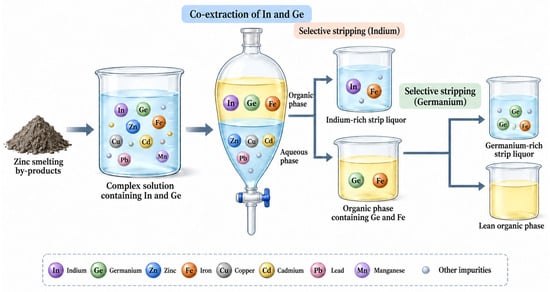
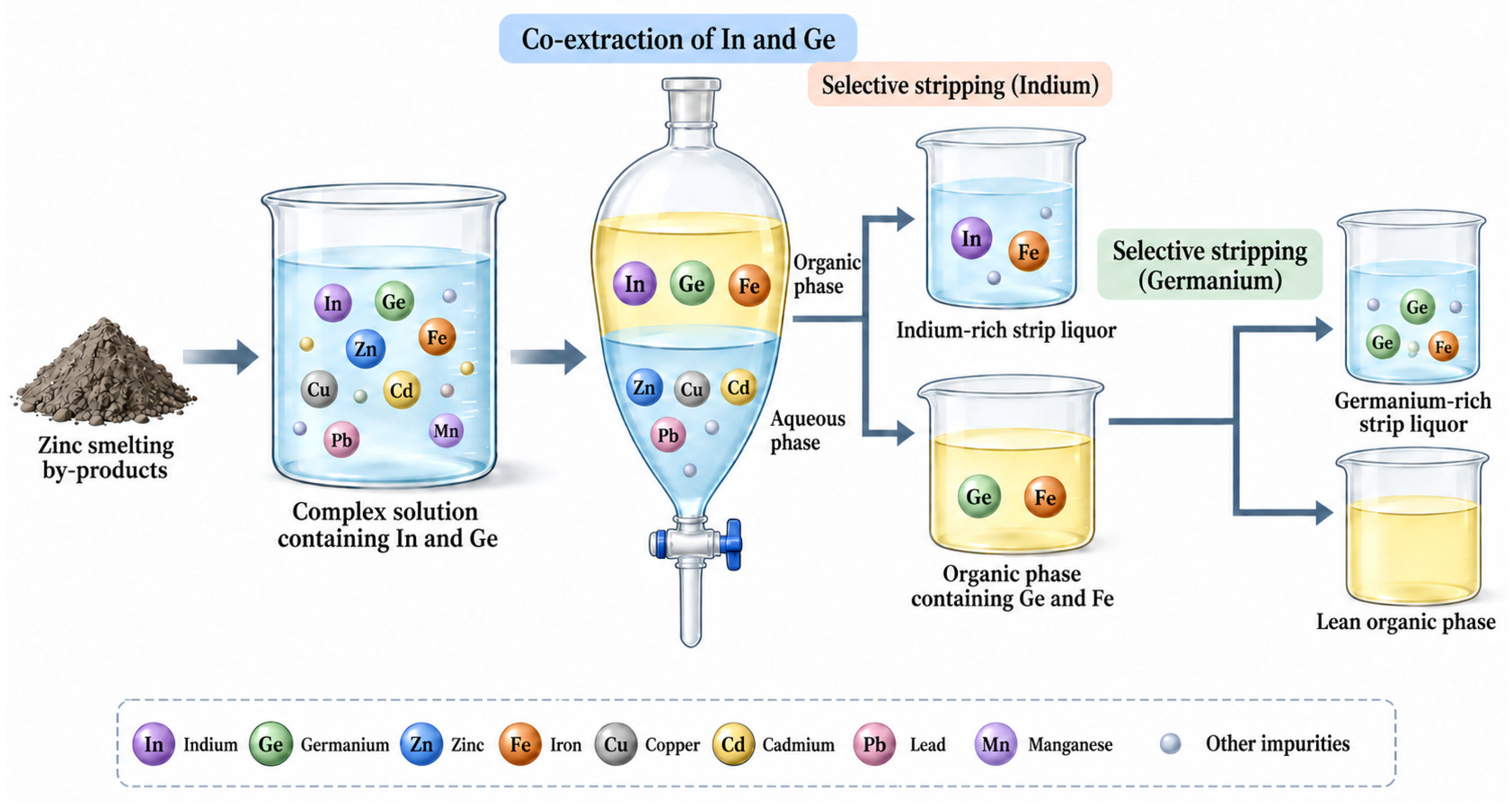
The existing forms of indium and germanium in sulfuric-acid solutions are related to pH and complexing agents, and they also have an impact on the extraction effect [14,15]. Our previous studies have mainly focused on the individual extraction of Ge or Ge/Ga and discussed the extraction mechanism [1], whereas the simultaneous recovery of both In and Ge followed by their controlled stepwise stripping has received considerably less attention [1,9]. In particular, the migration of Fe during co-extraction and subsequent stripping remains a practical challenge. In this work, we selected the co-extraction systems of indium and germanium from P204, BGYW and TRPO and aimed to establish a co-extraction route for In and Ge and to evaluate their sequential separation using HCl and NH4F, with particular attention to Fe behavior and organic-phase recyclability as shown in Figure 1.
Figure 1.
Schematic diagram of co-extraction of indium and germanium.
2. Materials and Methods
2.1. Materials and Instruments
The indium–germanium–iron feed solution used for condition-optimization experiments was a synthetic solution. In typical zinc-smelting process solutions after iron-powder reduction, the Fe3+ concentration in indium- and germanium-bearing solutions was generally 200–400 mg/L. The synthetic solution used in this work contained 391.3 mg/L Fe3+, 263.8 mg/L Ge, and 623.3 mg/L In. In addition, a solution containing various common impurities was prepared. The composition of this solution is shown in Table 1.
Table 1.
Composition of the multielement feed solution.
The extractant BGYW (>92%) was provided by BGRIMM Technology Group (Beijing, China). BGYW is a novel alkyl hydroxamic-acid extractant with the general chemical formula R-CONHOH, where R represents a long-chain group. P204 (di(2-ethylhexyl)phosphoric acid, also known as D2EHPA, ≥95% purity, industrial grade) was supplied by Shanghai Aladdin Biochemical Technology Co., Ltd. (Shanghai, China). TRPO (trialkyl phosphine oxide, ≥92% purity, industrial grade) was supplied by Sannuo New Material Technology (Luoyang) Co., Ltd. (Luoyang, China). Sulfuric acid (98%, analytical grade), ammonium fluoride (≥96%, analytical grade), and hydrochloric acid (36–38%, analytical grade) were provided by Sinopharm (Beijing, China). The diluent (industrial grade, aromatic content <0.05 wt%), was supplied by Zibo Yaoyu New Material Technology Co., Ltd. (Zibo, China).
Metal-ion concentrations were determined by Inductively Coupled Plasma Atomic Emission Spectroscopy (ICP-AES; Prodigy 8 spectrometer, Teledyne Leeman, Hudson, NH, USA) or Inductively Coupled Plasma Mass Spectrometry (ICP-MS; ELEMENT XR, Thermo Fisher, Waltham, MA, USA).
2.2. Experimental Methods
Solvent-extraction experiments were performed by mixing the aqueous phase containing the metal ions with the organic phase, followed by phase separation. The experimental temperature was 27 °C to 30 °C, and the standing time was approximately 5 min. After suitable dilution of the separated aqueous phase, metal-ion concentrations were measured by ICP-AES or ICP-MS. Unless otherwise specified, the feed solution was the synthetic solution. The default extraction conditions were an organic phase of 15 vol% BGYW + 25 vol% P204 + 60 vol% diluent, an H2SO4 concentration of 15 g/L, O/A = 2:1, and an extraction time of 5 min. A 3 mol/L HCl solution was used for indium stripping, and a 2 mol/L NH4F solution was used for germanium stripping. The organic phase used in the scrubbing experiment was the organic phase prepared through a single extraction under the optimal extraction conditions. The loading concentration of the organic phase was 436.49 mg/L for Fe(III), 277.16 mg/L for Ge, and 498.60 mg/L for In. In the stripping experiment, the organic phase used was the one loaded only with iron and germanium. The loading concentration of germanium in this organic phase was 277.85 mg/L, and the loading concentration of Fe(III) was 430.47 mg/L. In the reusability experiment, the organic phase after ammonium fluoride stripping was scrubbed with 5 g/L sulfuric acid, and then the next extraction cycle was carried out.
The solvent-extraction efficiency (E) and stripping efficiency (S) were calculated as follows:
where CO/(mg/L) and C/(mg/L) represent the concentrations of ions in the aqueous solution before and after solvent extraction, respectively; VS/(L) is the volume of the aqueous phase; Vorg/(L) is the volume of the organic phase; Cs/(mg/L) represents the concentration of ions in the stripping solution; and Corg/(mg/L) represents the concentration of ions in the loaded organic phase.
3. Results and Discussion
3.1. Effect of Organic-Phase Composition on Co-Extraction Behavior
3.1.1. BGYW Concentration
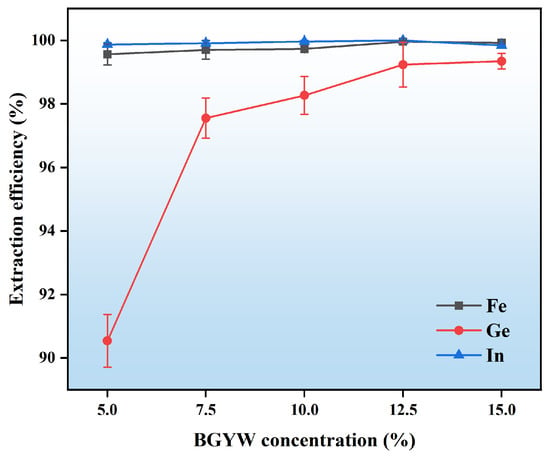
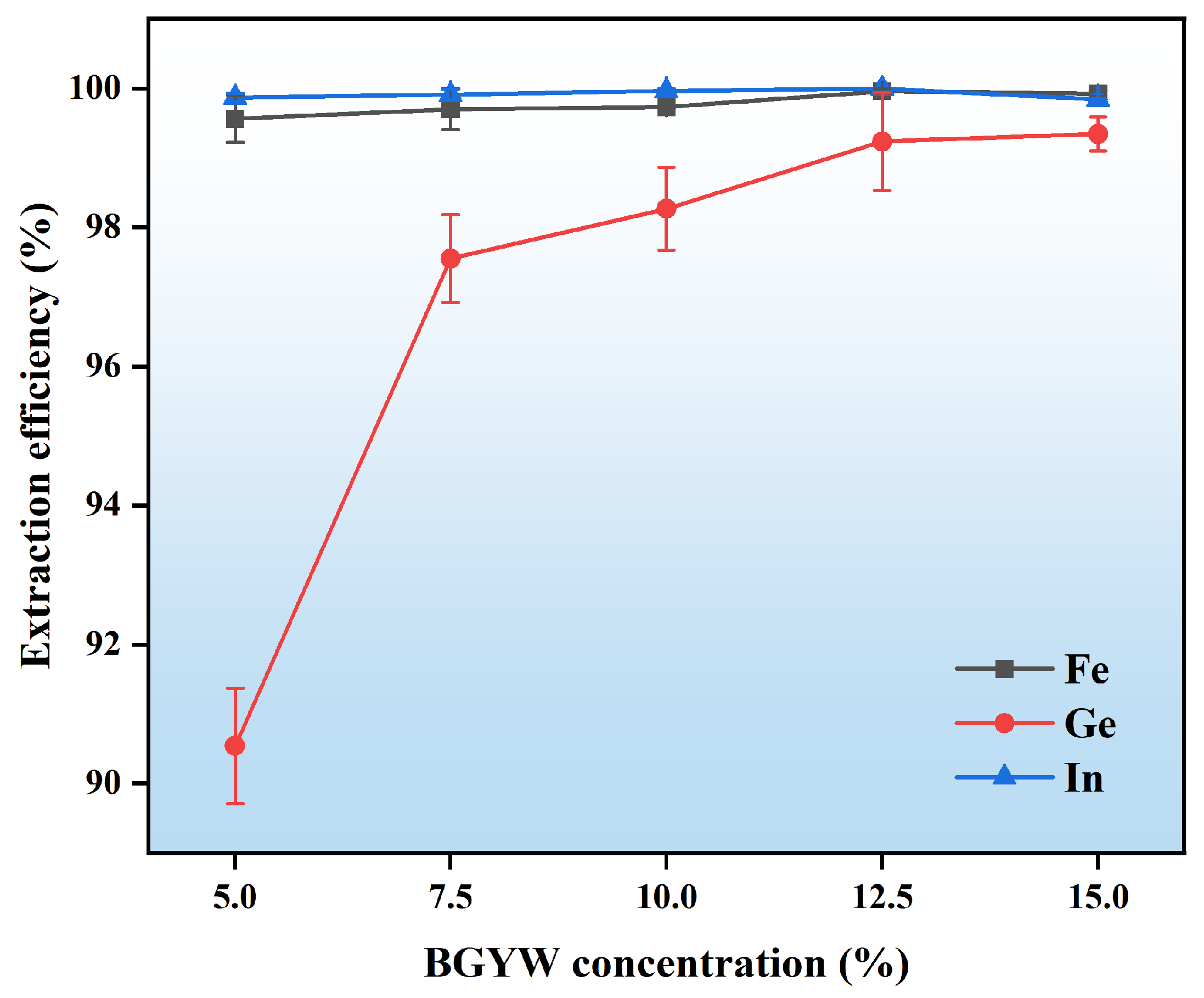
As shown in Figure 2, when the BGYW concentration increased from 5% to 15%, the Ge extraction efficiency continuously increased from 90.54% to 99.34%, representing the most pronounced improvement. In remained above 99.84% throughout the entire range, while Fe extraction also remained above 99.56%. When BGYW reached 12.5%, the Ge extraction efficiency had already reached 99.23%, and it further increased to 99.34% at 15%. This trend indicates that, in the present composite system, the BGYW concentration mainly controls the extent to which germanium enters the organic phase, whereas indium is already almost completely extracted at relatively low BGYW concentrations. A BGYW concentration of 15% was therefore selected for subsequent experiments.
Figure 2.
Effect of BGYW concentration (vol%) on the extraction efficiencies of Fe, Ge, and In (P204 of 20 vol%, TRPO of 5 vol%, O/A = 1:1, 10 min, H2SO4 of 15 g/L).
3.1.2. P204 Concentration
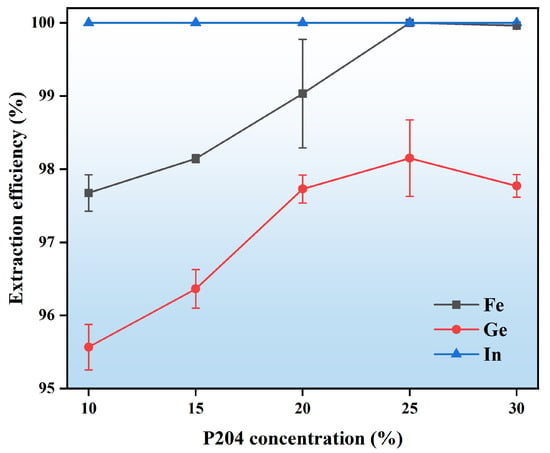
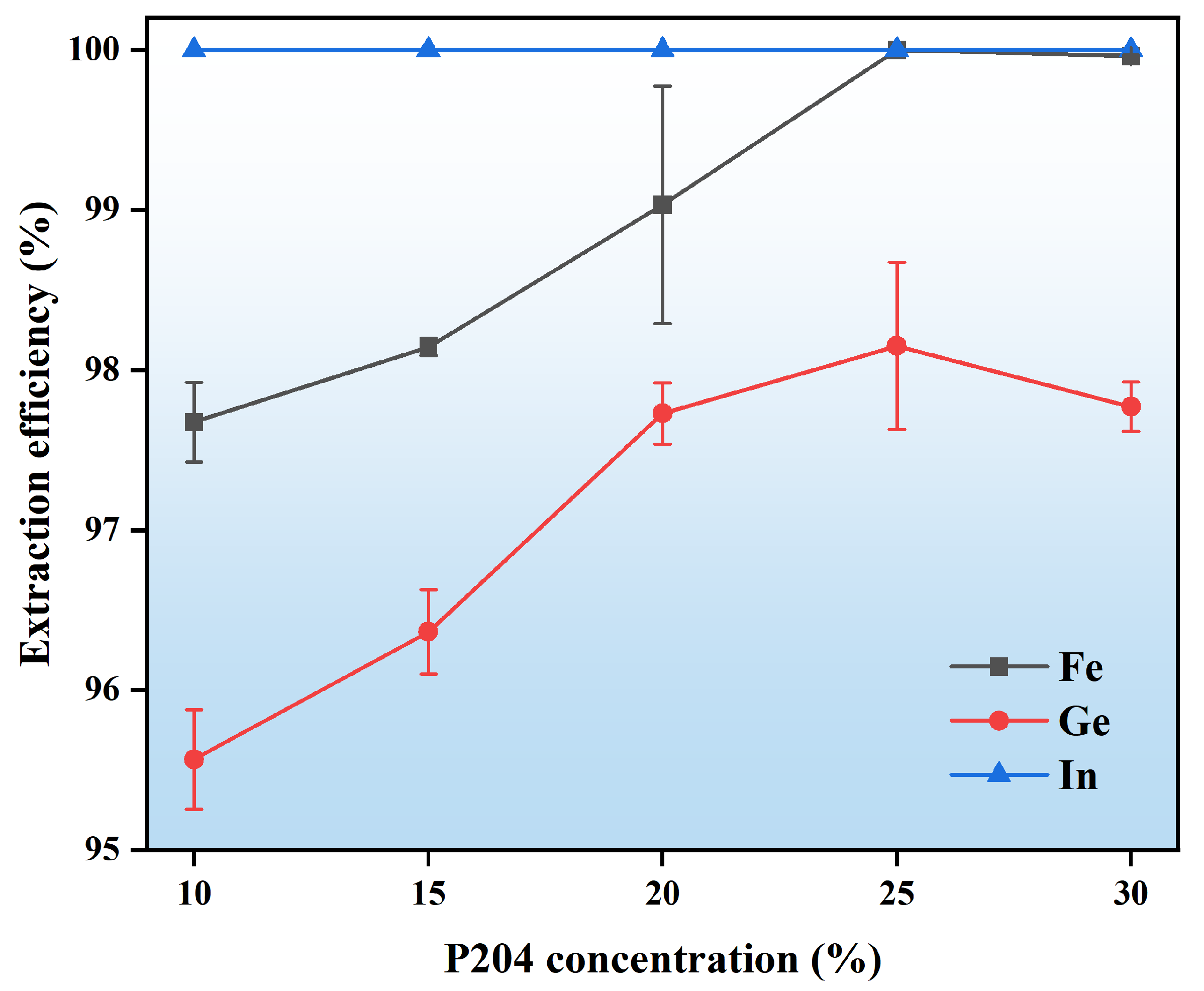
As shown in Figure 3, when the P204 concentration increased from 10% to 25%, the Fe extraction efficiency increased from 97.67% to 100%, the Ge extraction efficiency increased from 95.57% to 98.15%, and the In extraction efficiency remained at 100%. Increasing P204 was beneficial for the overall extraction of Ge; therefore, a P204 concentration of 25% was selected for subsequent experiments.
Figure 3.
Effect of P204 concentration (vol%) on the extraction efficiencies of Fe, Ge, and In (BGYW of 15 vol%, TRPO of 5 vol%, O/A = 1:1, 10 min, H2SO4 of 15 g/L).
3.1.3. TRPO Concentration and Its Effect on Stripping
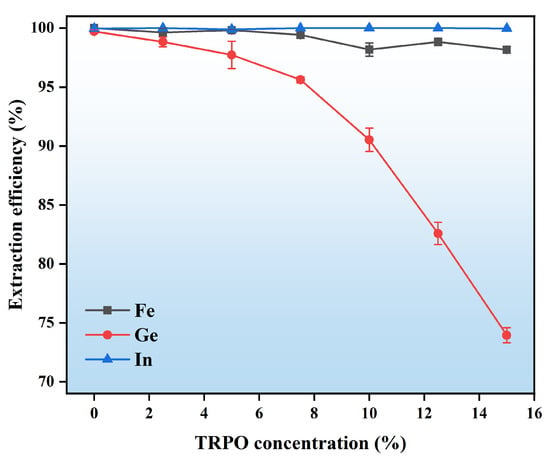
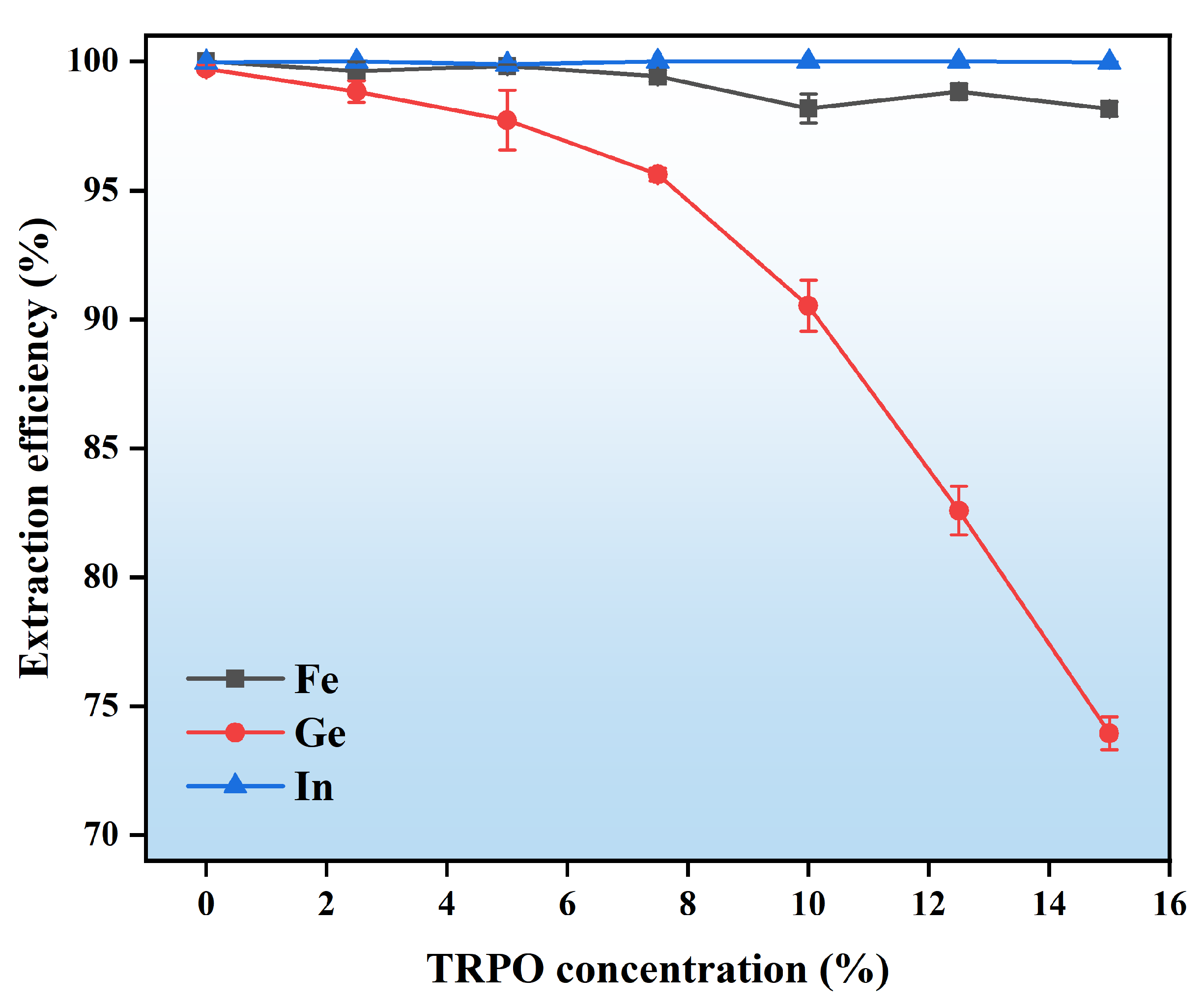
TRPO exhibited a trend different from those of BGYW and P204 (Figure 4). Without TRPO (TRPO of 0.0 vol% + BGYW of 15 vol%, P204 of 25 vol% + diluent of 60 vol%), the extraction efficiencies of Fe, Ge, and In were 99.6%, 99.72%, and 99.97%, respectively. As the TRPO concentration increased, the Ge extraction efficiency continuously decreased, reaching only 73.94% at 15% TRPO, whereas In remained close to 100%. This indicates that TRPO did not improve the co-extraction of indium and germanium in this system; instead, it had a pronounced adverse effect on germanium extraction.
Figure 4.
Effect of TRPO concentration (vol%) on the extraction efficiencies of Fe, Ge, and In (BGYW of 15 vol%, P204 of 25 vol%, O/A = 1:1, 10 min, H2SO4 of 15 g/L).
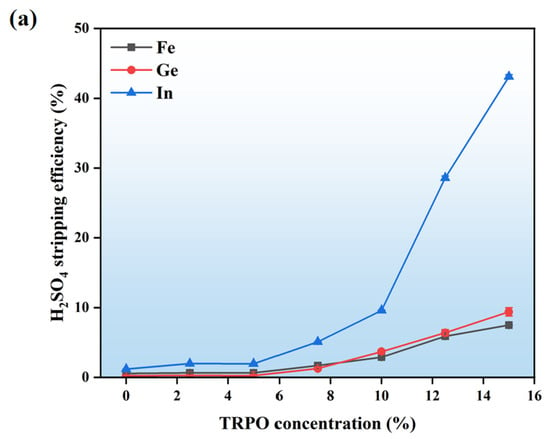
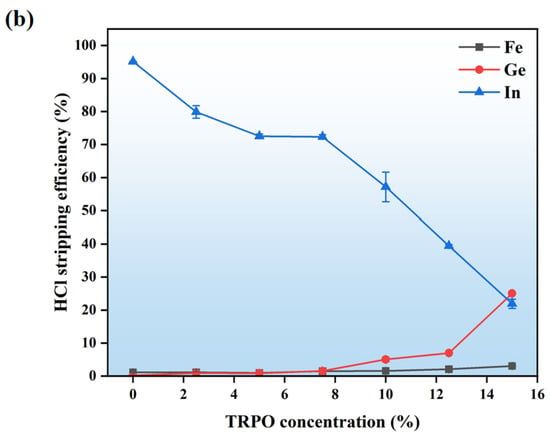
TRPO also significantly affected the stripping of indium, germanium, and iron (Figure 5). As the TRPO concentration increased, the stripping efficiencies of Ge and Fe increased by 3 mol/L HCl and 2 mol/L H2SO4, indicating that TRPO reduced the extraction strength for Ge and Fe and thereby facilitated stripping. In contrast, the effect of TRPO on indium stripping differed between the two inorganic-acid media. With 3 mol/L HCl, the In stripping efficiency at 0% TRPO was 95.13% and generally decreased with increasing TRPO, reaching only 21.92% at 15% TRPO. The stripping efficiency of In at 2 mol/L H2SO4 was low overall, but TRPO promoted indium stripping by sulfuric acid, increasing it from 1.2% to 43.1% over the 0–15% TRPO range. Considering both extraction and stripping performance, TRPO was omitted from the final organic phase, which was therefore selected as 15% BGYW + 25% P204 + 60% diluent.
Figure 5.
Changes in stripping efficiencies of In, Ge, and Fe with TRPO concentration using (a) 3 mol/L HCl and (b) 2 mol/L H2SO4 (O/A = 1:1, 10 min).
The opposite trends observed for In stripping in HCl and H2SO4 with increasing TRPO content may be related to the different complexation forms of In(III) in the two inorganic-acid media [15] and to the solvating action of TRPO [16]. In highly concentrated HCl media, In(III) can form chloro-complexes. The P=O group of TRPO may further stabilize chlorine-containing indium species in the organic phase through solvation or synergistic interaction with P204. As a result, one possible explanation is that increasing TRPO enhanced the stability of indium in the organic phase and markedly lowered the HCl stripping efficiency. By contrast, in H2SO4 media, sulfate complexes of In(III) had relatively strong affinity for the aqueous phase, and the stabilizing effect of TRPO in the organic phase was weaker. TRPO may also improve the polarity of the organic phase and the transfer of acid between the two phases, promoting dissociation of the In-P204 extracted species. Thus, H2SO4 stripping of In gradually increased with TRPO concentration. These results showed that the effect of TRPO on indium stripping was strongly dependent on the acid medium and was related not only to acidity but also to the chloride- and sulfate-containing indium complexes formed and their stability in the organic phase.
3.2. Effect of Aqueous-Phase Acidity on Co-Extraction
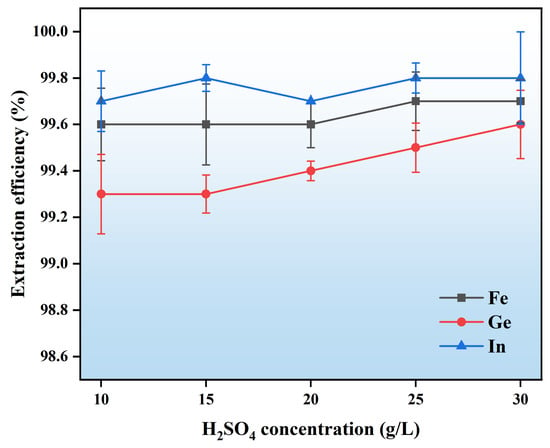
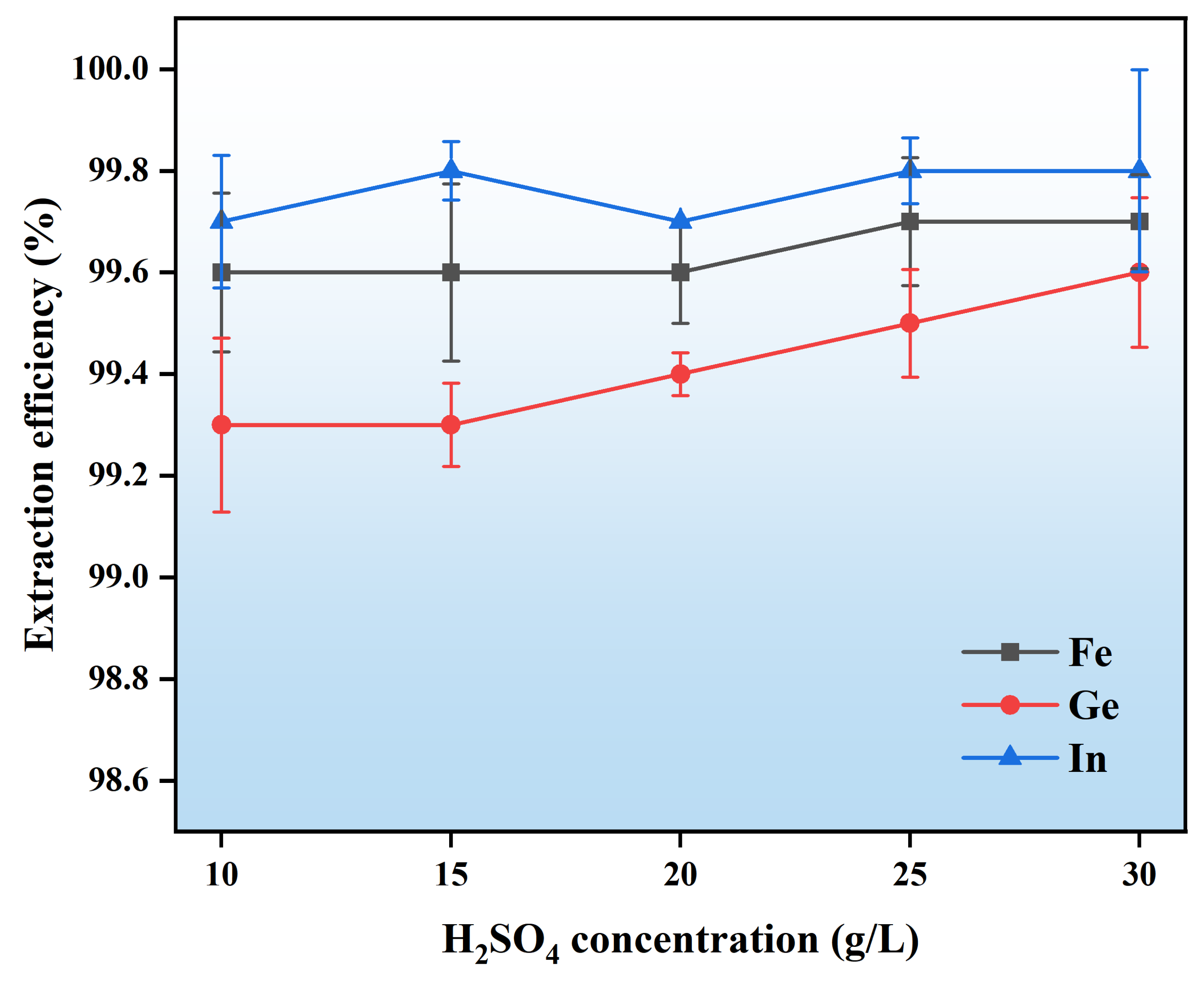
Within the H2SO4 concentration range of 10–30 g/L, all three elements maintained high extraction efficiencies (Figure 6). The Fe extraction efficiency was 99.6–99.7%, Ge was 99.3–99.6%, and In was 99.7–99.8%, indicating that the organic phase has a broad tolerance to the investigated acidity range. Considering both the high extraction efficiencies and the acidity of the target process solution, 15 g/L H2SO4 was selected for subsequent experiments.
Figure 6.
Effect of aqueous H2SO4 concentration on the extraction efficiencies of Fe, Ge, and In (BGYW of 15 vol%, P204 of 25 vol%, O/A = 1:1, 10 min).
3.3. Effect of O/A Phase Ratio on Co-Extraction
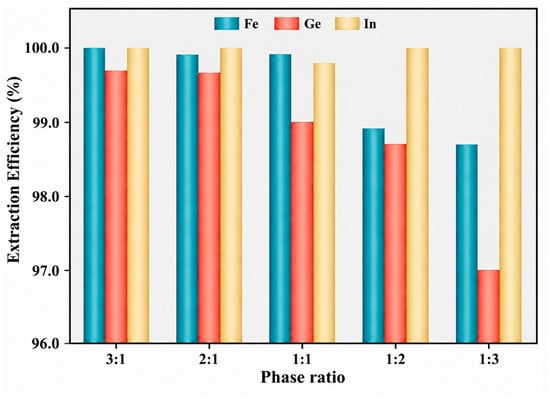
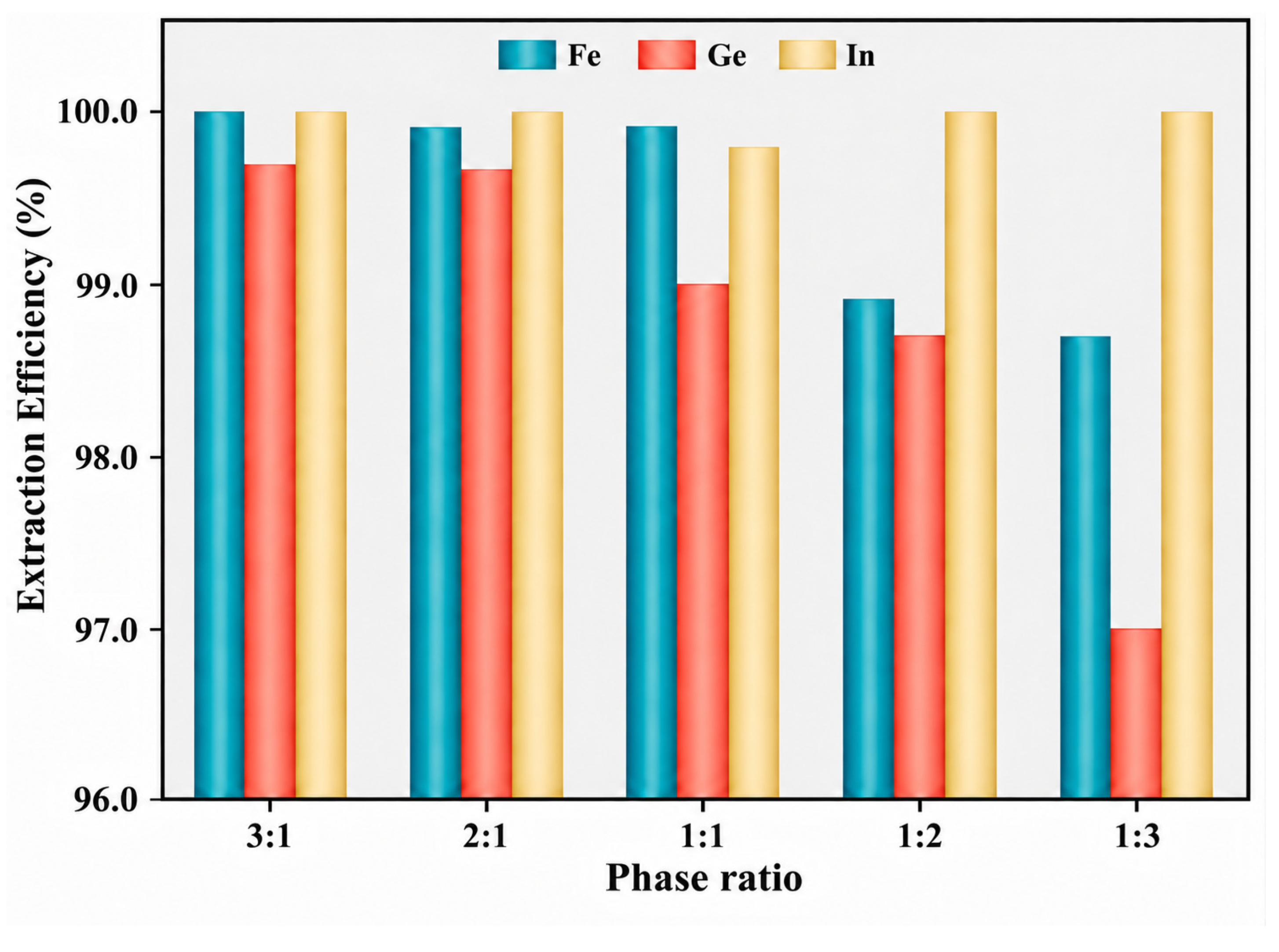
Changes in the phase ratio had relatively pronounced effects on Ge and Fe, whereas In was almost completely extracted at all tested phase ratios (Figure 7). At O/A = 3:1 and 2:1, the Ge extraction efficiency was 99.7%. As the relative amount of organic phase decreased, the Ge extraction efficiency gradually decreased to 97.0% at O/A = 1:3. The Fe extraction efficiency decreased from nearly 100% at 3:1 to approximately 98.7% at 1:3. An O/A ratio of 2:1 was selected as the preferred phase ratio; under this condition, the extraction efficiencies of Fe, Ge, and In were 99.9%, 99.7%, and approximately 100%, respectively.
Figure 7.
Effect of O/A phase ratio on the extraction efficiencies of Fe, Ge, and In (BGYW of 15 vol%, P204 of 25 vol%, 10 min, H2SO4 of 15 g/L).
3.4. Effect of Extraction Time on Co-Extraction
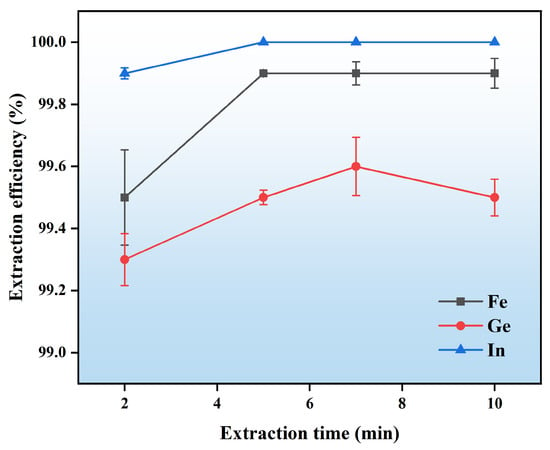
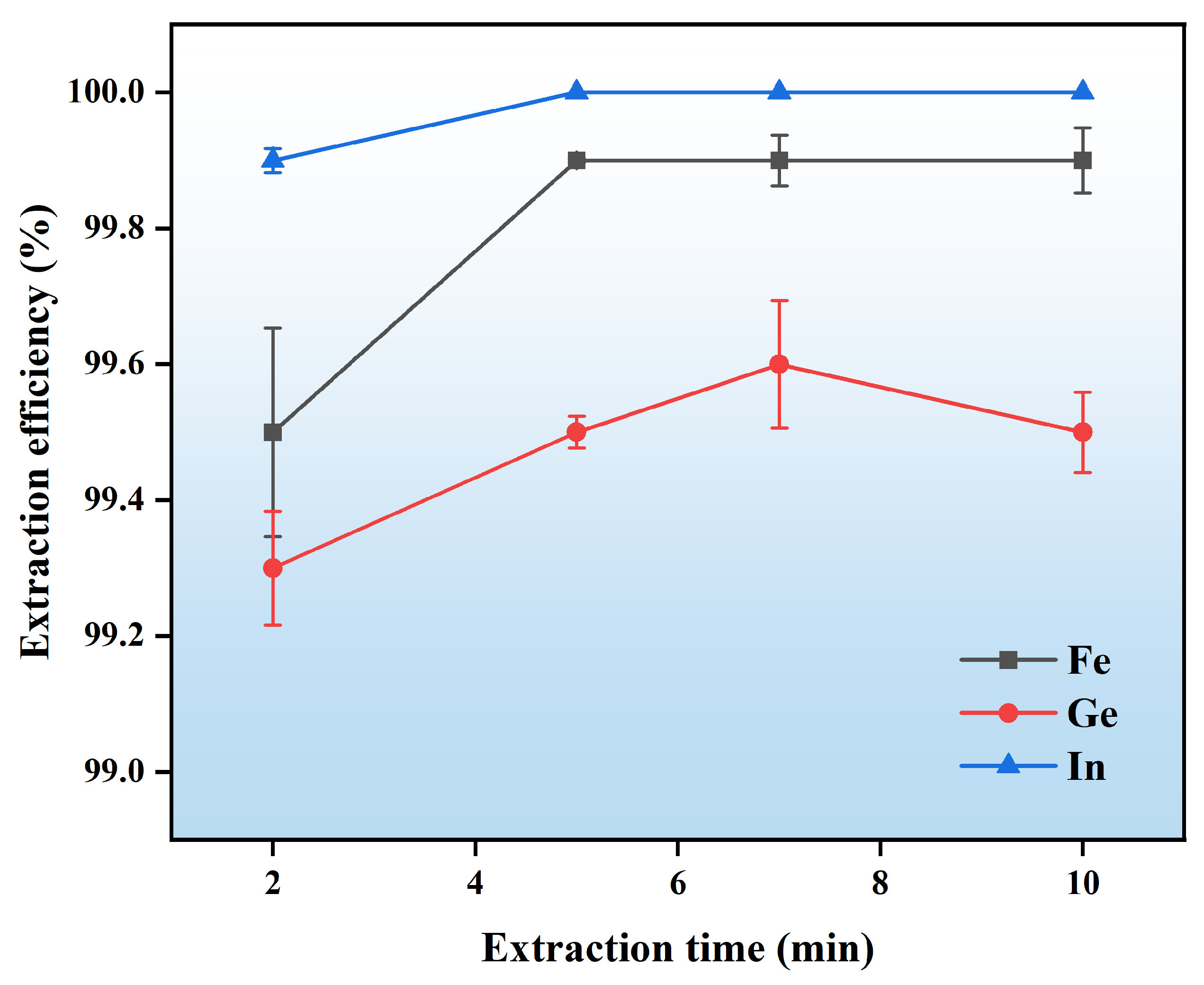
According to Figure 8, at O/A = 2:1 the extraction efficiencies of Fe, Ge, and In reached 99.5%, 99.3%, and 99.9%, respectively, after only 2 min, indicating rapid mass transfer. After extending the extraction time to 5 min, the Fe and Ge extraction efficiencies increased to 99.9% and 99.7%, respectively, and In reached 100%. Further extension to 7 or 10 min produced only limited improvement in indium and germanium extraction. Therefore, 5 min was selected as the preferred extraction time.
Figure 8.
Effect of extraction time on the extraction efficiencies of Fe, Ge, and In (BGYW of 15 vol%, P204 of 25 vol%, O/A = 2:1, H2SO4 of 15 g/L).
In summary, the overall extraction conditions were: organic phase of 15 vol% BGYW + 25 vol% P204 + 60 vol% diluent; aqueous-phase H2SO4 concentration of 15 g/L; O/A = 2:1; and extraction time of 5 min.
3.5. Multielement Extraction
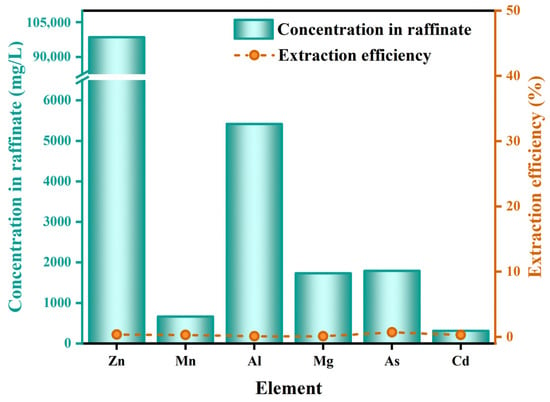
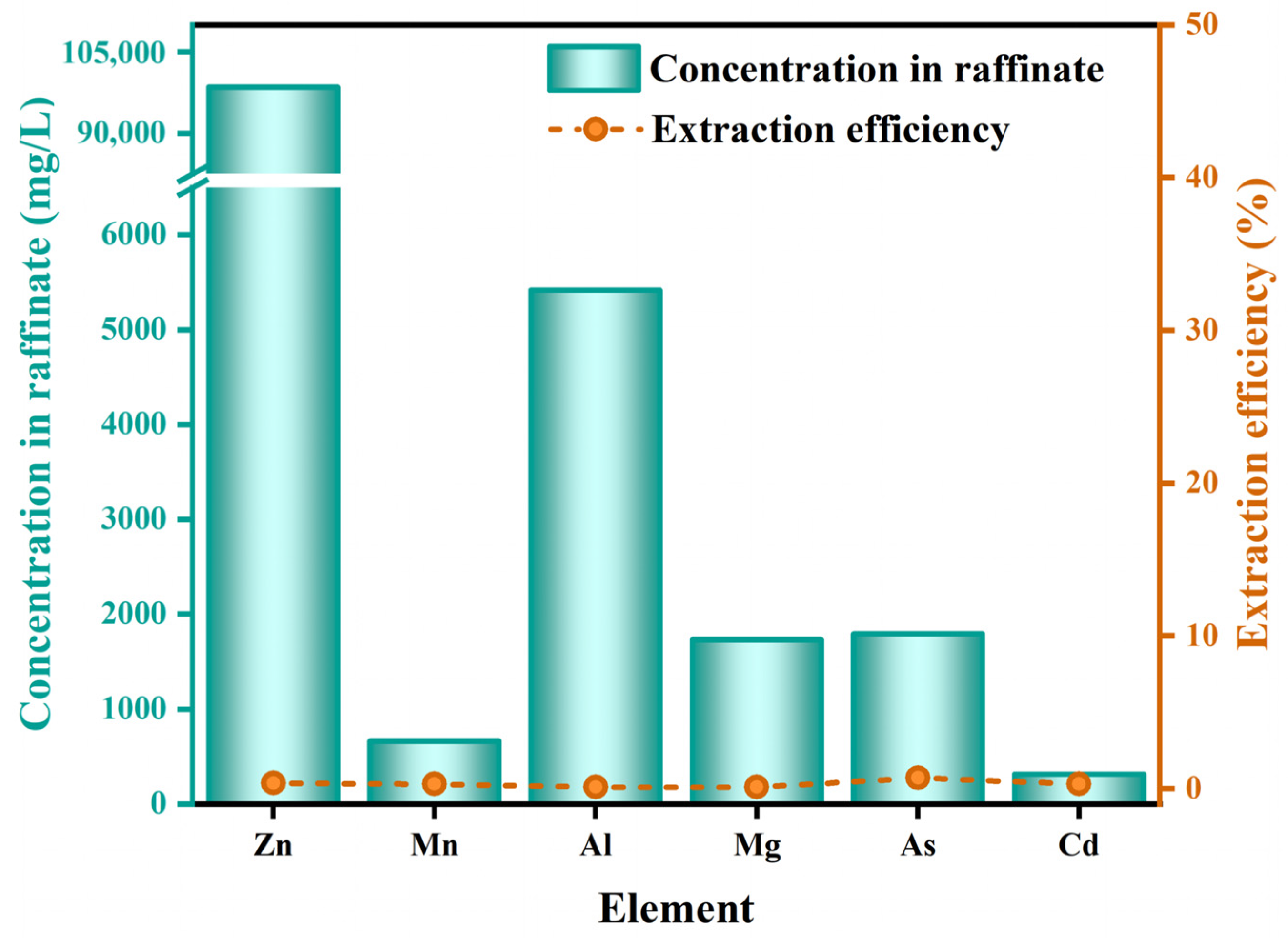
As shown in Figure 9, the concentrations of Al, As, Mg, Mn, and Cd in the raffinate were essentially the same as those in the feed solution, and the extraction efficiencies of these elements were all close to zero. This indicates that, under the current extraction conditions, these impurity elements were barely extracted into the organic phase. The system therefore shows good overall impurity rejection, which is favorable for selective enrichment of the target metals.
Figure 9.
Extraction of coexisting impurity elements under the optimized conditions (BGYW of 15 vol%, P204 of 25 vol%, O/A = 2:1, H2SO4 of 15 g/L, 5 min).
3.6. Effect of HCl Concentration on Indium Stripping
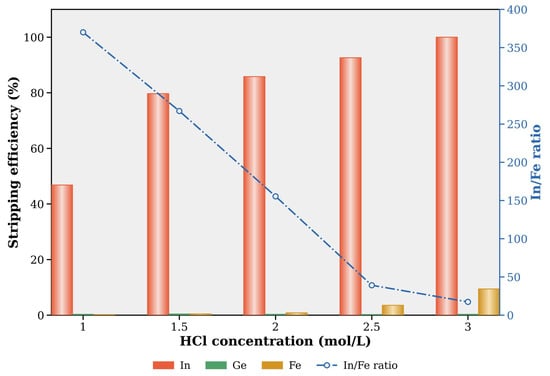
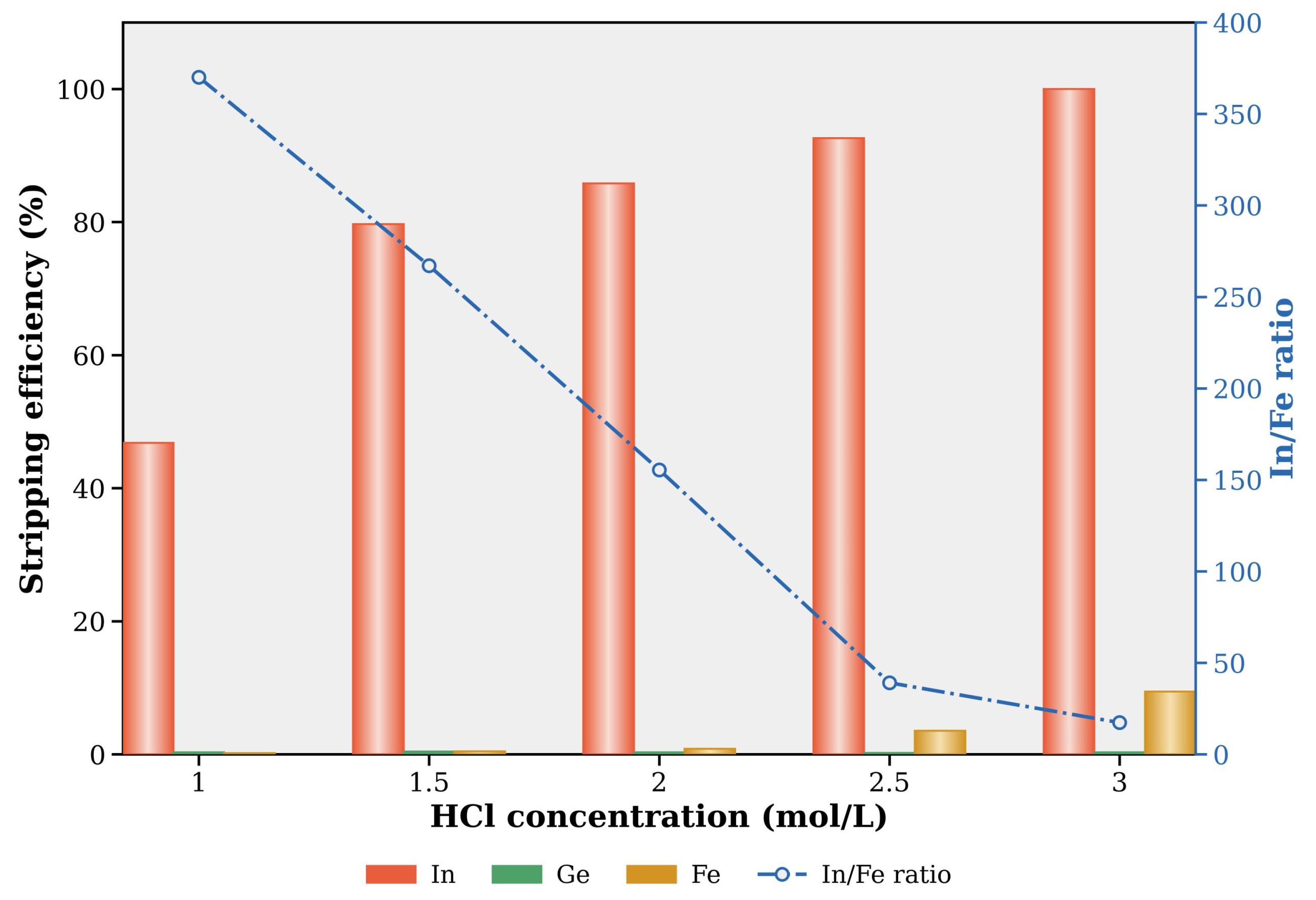
HCl concentration had a strong promoting effect on indium stripping (Figure 10). When HCl concentration increased from 1 mol/L to 1.5 mol/L, the In stripping efficiency rapidly increased from 46.8% to 79.7%; at 2, 2.5, and 3 mol/L, the corresponding values were 85.8%, 92.6%, and 99.8%. Meanwhile, the Fe stripping efficiency gradually increased from 0.09% to above 9.5%, indicating that higher acidity favors complete stripping of In but also enhances co-stripping of Fe.
Figure 10.
Effect of HCl concentration on the stripping efficiencies of In, Ge, and Fe and the In/Fe concentration ratio in the stripping liquor (O/A = 1:1, 5 min).
Different HCl concentrations produced different Fe stripping efficiencies, whereas no obvious difference in Ge stripping was observed over the tested range, as shown in Table 2. As the HCl concentration increased, Fe stripping increased, and the In/Fe concentration ratio in the indium stripping liquor decreased from 370.07 to 17.31. In this study, maximizing In recovery was the primary objective; therefore, 3 mol/L HCl was selected as the preferred stripping condition. In industrial production, a slightly lower HCl concentration may be considered to balance the indium stripping efficiency against the In/Fe ratio in the stripping liquor.
Table 2.
Concentration ratios of In/Fe and In/Ge in the indium stripping liquor.
3.7. Effect of NH4F Concentration on Germanium Stripping
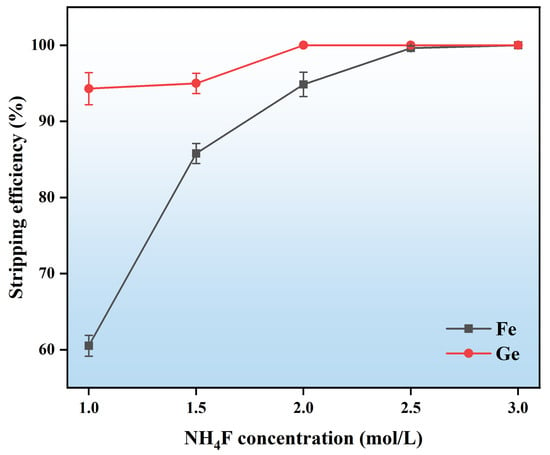
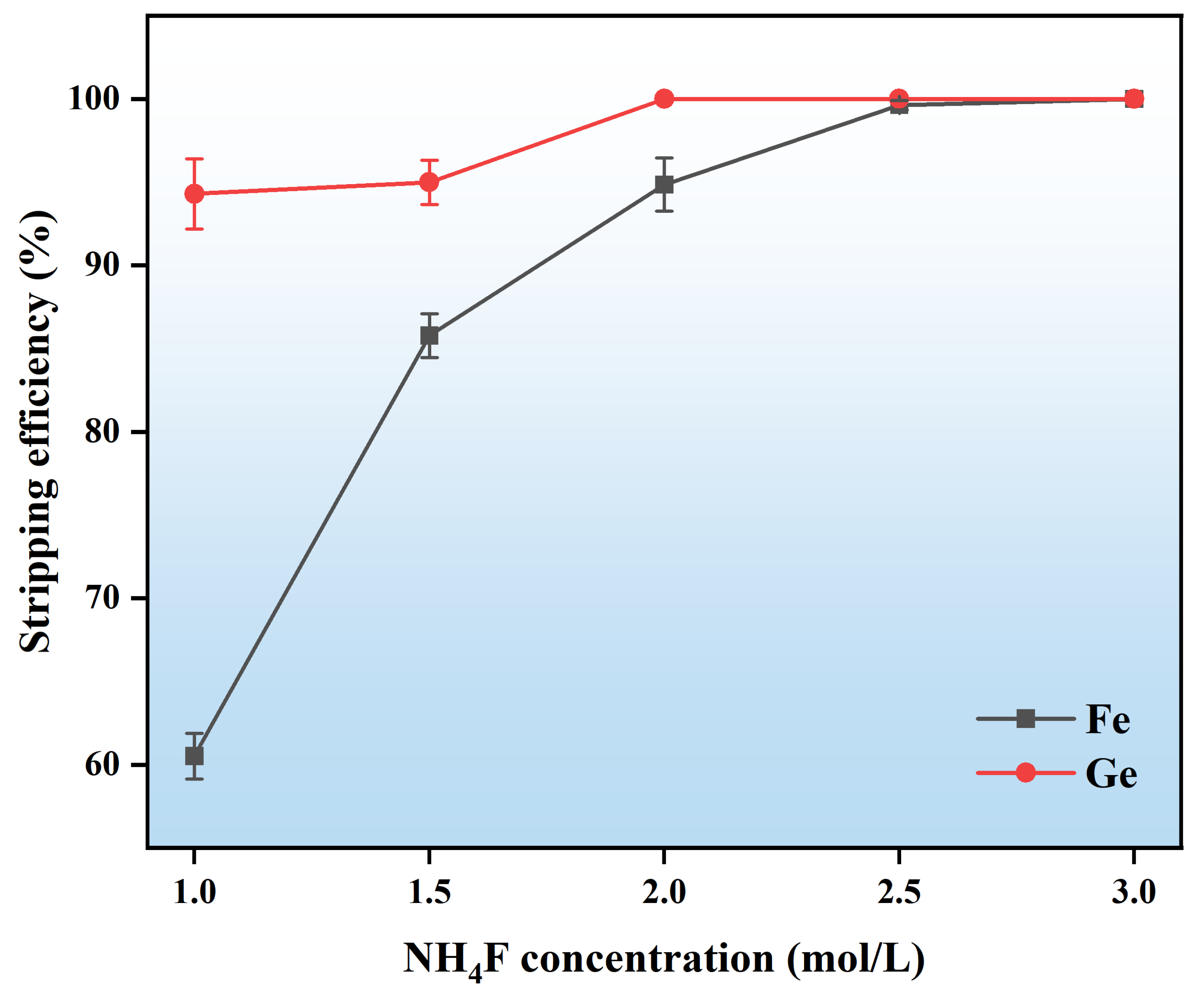
NH4F showed a clear concentration-threshold effect for Ge stripping (Figure 11). At 1 mol/L and 1.5 mol/L, the Ge stripping efficiencies were 94.3% and 95.0%, respectively. When the concentration was increased to 2 mol/L, the Ge stripping efficiency reached 100%, and it remained at 100% at 2.5 and 3 mol/L. Thus, further increases in NH4F concentration did not provide additional improvement in Ge stripping. However, Fe co-stripping was high: at NH4F concentrations of 1, 1.5, 2, 2.5, and 3 mol/L, Fe stripping efficiencies were 60.5%, 85.8%, 94.9%, 99.6%, and 100%, respectively. A concentration of 2 mol/L NH4F was selected for germanium stripping because this was the first point at which Ge stripping reached approximately 100% while avoiding unnecessary further increases in reagent concentration. Thus, NH4F provides efficient recovery of Ge from the loaded organic phase, but does not achieve effective separation of Ge from Fe3+. In order to reduce the iron concentration in the germanium-stripped solution, it is necessary to carry out iron scrubbing. This has been reported in our previous work [1].
Figure 11.
Effect of NH4F concentration on the stripping efficiencies of Ge and Fe (O/A = 1:1, 5 min).
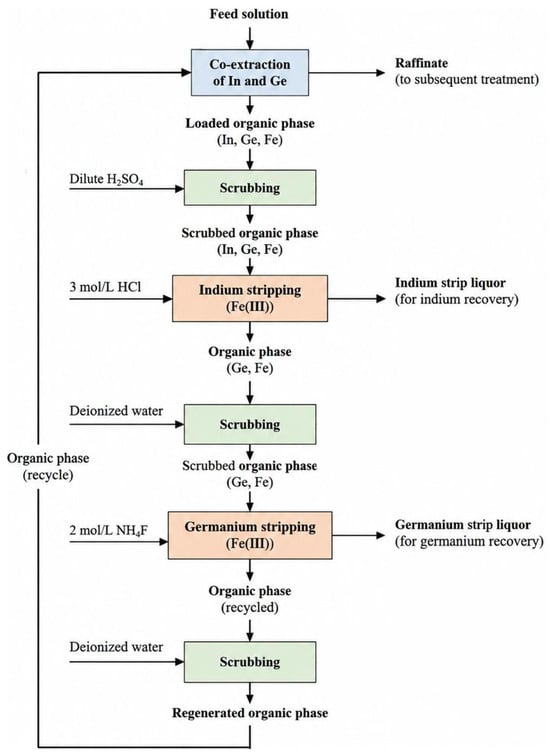
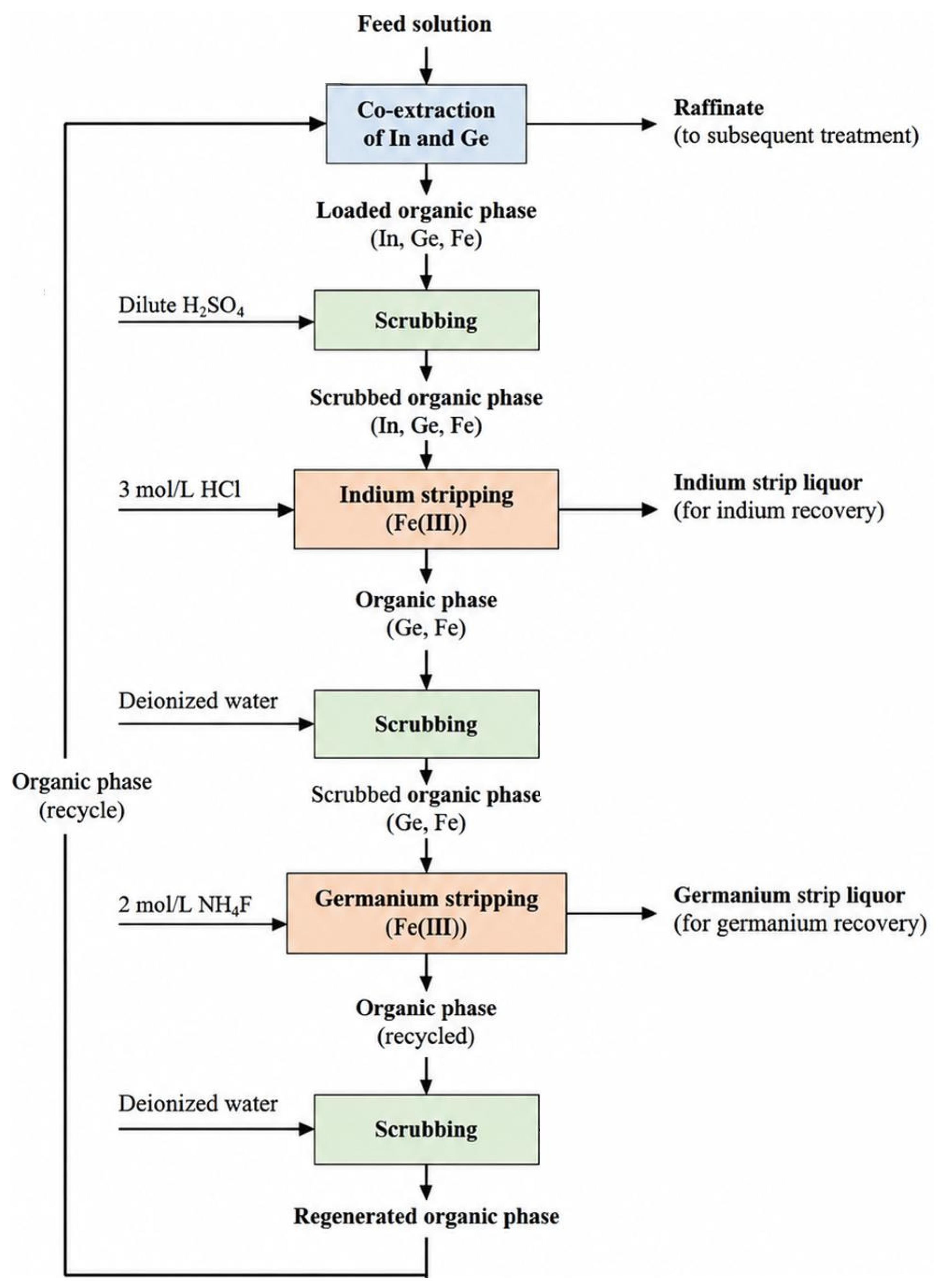
In summary, the technical route for co-extraction and stepwise stripping of indium and germanium is shown in Figure 12.
Figure 12.
Process flow diagram for the co-extraction and separation of indium and germanium.
3.8. Reusability Performance
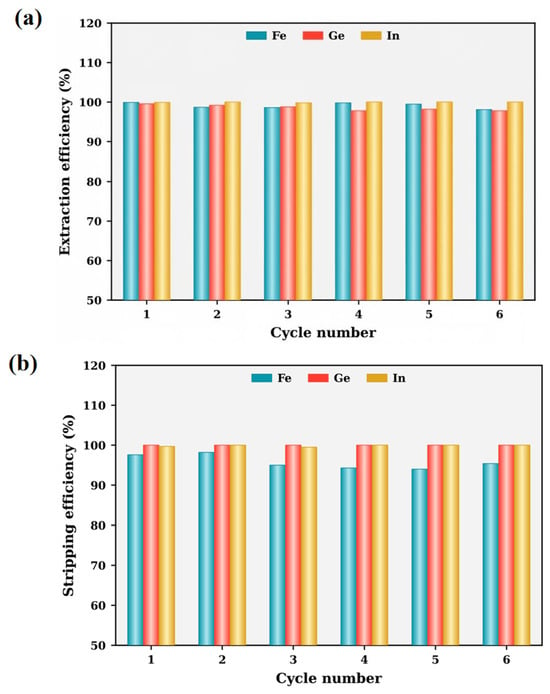
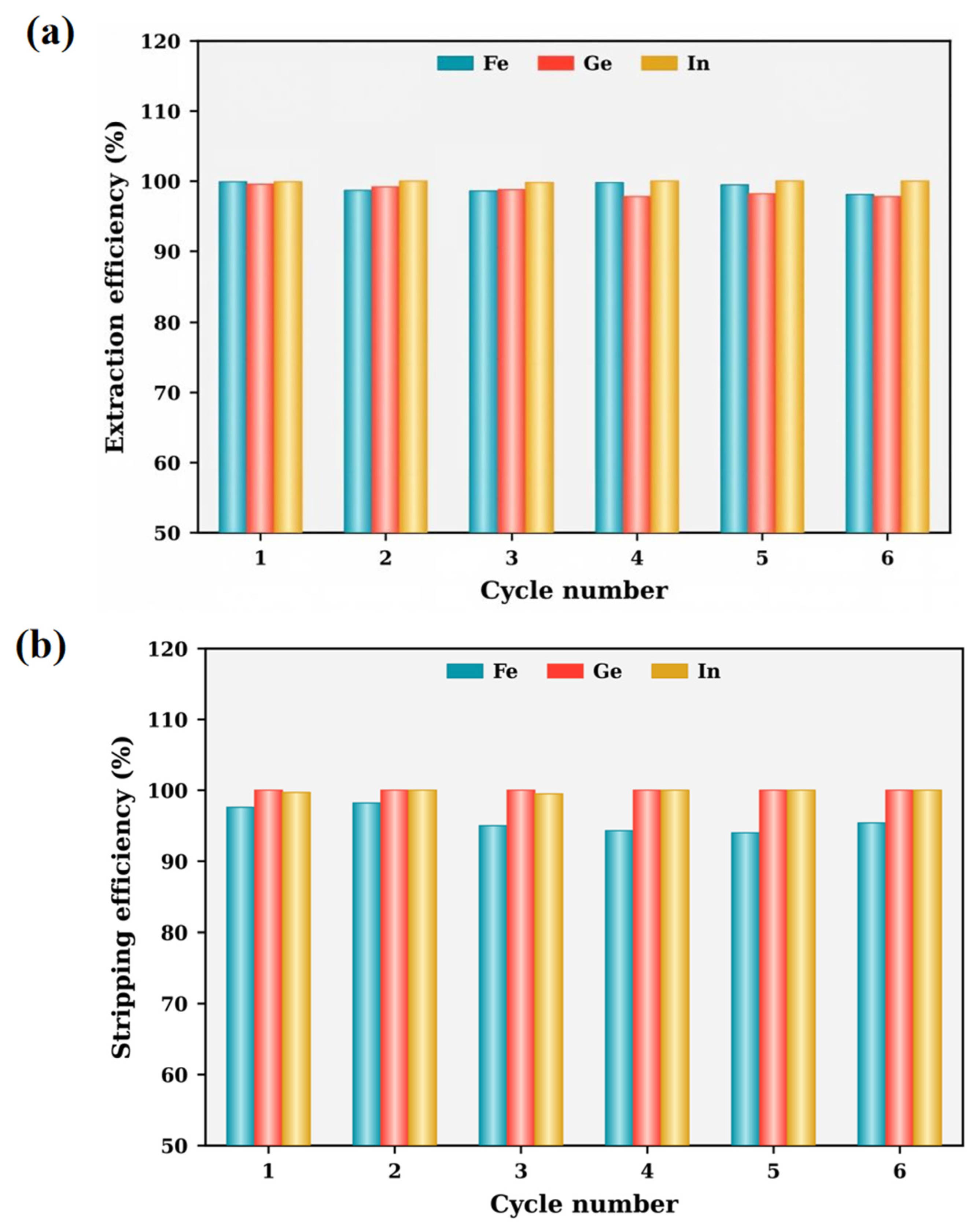
To examine the cyclic stability and reusability of the extraction system, six consecutive extraction–indium stripping–germanium stripping cycles were carried out (Figure 13). Throughout the cycles, the extraction efficiencies of Fe, Ge, and In generally remained high. From cycles 1 to 6, the In extraction efficiency remained above 99.8%, indicating that cyclic operation had almost no obvious effect on In extraction. The Ge extraction efficiency fluctuated gradually from 99.6% in the first cycle to 97.8% in the sixth cycle, indicating that the system retained good Ge extraction capability after multiple cycles. The Fe extraction efficiency fluctuated between 98.1% and 99.9%. The slight decrease in Ge extraction efficiency after repeated cycles may be related to incomplete regeneration of the organic phase, accumulation of Fe, or gradual changes in the effective concentration of BGYW. Further investigation is required to distinguish these effects.
Figure 13.
Cycling performance test. (a) Extraction (BGYW of 15 vol%, P204 of 25 vol%, O/A = 2:1, H2SO4 of 15 g/L, 5 min); (b)stripping (indium stripping: 3 mol/L HCl, O/A = 1:1, 5 min; germanium stripping: 2 mol/L NH4F, O/A = 1:1, 5 min).
With respect to stripping performance, the stripping efficiencies of In and Ge remained above 99% over cycles 1–6. The Fe stripping efficiency fluctuated slightly and remained at approximately 95% after the second cycle. This indicates that the system has a strong extraction effect on iron. Additional selective iron removal or organic-phase regeneration steps may be required for long-term operation.
4. Conclusions
This study investigated the co-extraction and stepwise separation of indium and germanium from sulfuric-acid solutions using a BGYW-P204 composite extraction system. The effects of organic-phase composition, aqueous acidity, phase ratio O/A, and extraction time were evaluated, together with the stepwise stripping of In and Ge using HCl and NH4F.
(1) The BGYW-P204 system showed efficient co-extraction of In and Ge. Increasing BGYW significantly enhanced Ge extraction, while In was almost completely extracted even at relatively low BGYW concentrations. TRPO suppressed Ge extraction and reduced HCl stripping of In. The optimized organic phase was 15 vol% BGYW + 25 vol% P204 + 60 vol% diluent. At 15 g/L H2SO4, O/A = 2:1, and 5 min, the extraction efficiencies of Fe, Ge, and In reached 99.9%, 99.7%, and 100%, respectively.
(2) The system showed good rejection of Al, As, Mg, Mn, and Cd, whose extraction efficiencies were close to zero under the optimized conditions, indicating favorable selectivity for In and Ge enrichment.
(3) Stepwise stripping was achieved using HCl and NH4F. At 3 mol/L HCl, In stripping was nearly complete, while Ge was barely stripped and Fe stripping exceeded 9.5%. Subsequent stripping with 2 mol/L NH4F achieved 100% Ge stripping, although Fe co-stripping was approximately 95%, indicating that iron removal remains an important issue for further optimization.
(4) The system also exhibited good reusability. After six consecutive cycles, In extraction remained above 99.8%, Ge extraction was 97.8% in the sixth cycle, and the stripping efficiencies of both In and Ge remained above 99%. Further work should focus on suppressing Fe co-extraction and co-stripping, improving loaded-organic-phase washing, and optimizing organic-phase regeneration.
Author Contributions
Conceptualization, Z.G., S.L., H.W. and C.Z.; methodology, Z.G., Z.W. and N.Y.; software, Z.W.; formal analysis, J.H.; data curation, Z.G., J.H. and Z.Q.; writing—original draft, Z.W., Z.Q. and C.Z.; supervision, S.L., H.W. and C.Z.; project administration, Z.G. and N.Y. All authors have read and agreed to the published version of the manuscript.
Funding
This work was supported by the Open Project of the State Key Laboratory of Advanced Metallurgy for Non-Ferrous Metals (No. YSQH-ZD-24017), the National Science and Technology Major Project of China (No. 2026ZD1212800), and the National Key Research and Development Program of China (No. 2024YFC2909605).
Data Availability Statement
The original contributions presented in this study are included in the article. Further inquiries can be directed to the corresponding author.
Acknowledgments
The authors gratefully acknowledge the support of Chihong Zinc–Germanium Huize Smelting Plant and Kunming Metallurgical Research Institute Co., Ltd. for providing the feed solution samples and technical assistance.
Conflicts of Interest
Authors Zong ZGuo, Zhenyu Wang, Zhixing Qin, Sanping Liu, Haibei Wang and Chaozhen Zheng were employed by the company “BGRIMM Technology Group”, and Ni Yang was employed by State Key Laboratory of Advanced Metallurgy for Non-Ferrous Metals. The remaining authors declare that the research was conducted in the absence of any commercial or financial relationships that could be construed as potential conflicts of interest.
References
- Guo, Z.; Wang, Z.; Qin, Z.; Li, T.; Wang, H.; Ma, Y.; Li, Y.; Fu, G.; Ma, H.; Zheng, C. Recovery of Germanium from Zinc Smelting Leachate Using a Novel Hydroxamic Acid Extractant BGYW: Continuous Counter-Current Extraction and Process Optimization. Metals 2026, 16, 937. [Google Scholar] [CrossRef] [Scilit]
- Liang, Y.; Luo, B.; Zhao, L.; Chen, L.; Ding, B.; Shen, Z.; Zheng, T.; Guo, Y.; Li, Q.; Zhou, B.; et al. Strong magnetic and ultrasonic fields enhanced the leaching of Ga and Ge from zinc powder replacement residue. Sep. Purif. Technol. 2024, 330, 125572. [Google Scholar] [CrossRef] [Scilit]
- Drzazga, M.; Palmowski, A.; Benke, G.; Ciszewski, M.; Leszczyńska-Sejda, K. Recovery of germanium and indium from leaching solution of germanium dross using solvent extraction with TOA, TBP and D2EHPA. Hydrometallurgy 2021, 202, 105605. [Google Scholar] [CrossRef] [Scilit]
- Hu, S.; Lu, Z.; Li, X.; Yang, R.; Wei, C.; Deng, Z.; Li, M. Recovery of germanium from zinc smelting leachates: A review. Environ. Chem. Lett. 2025, 23, 1341–1379. [Google Scholar] [CrossRef] [Scilit]
- Huang, Y.; Wang, M.; Liu, B.; Su, S.; Sun, H.; Yang, S.; Han, G. The extraction and separation of scarce critical metals: A review of gallium, indium and germanium extraction and separation from solid wastes. Separations 2024, 11, 91. [Google Scholar] [CrossRef] [Scilit]
- Jiang, T.; Zhang, T.; Liu, Z.H. Review on resources and recycling of germanium, with special focus on characteristics, mechanism and challenges of solvent extraction. J. Clean. Prod. 2021, 294, 126217. [Google Scholar] [CrossRef] [Scilit]
- Yang, J.; Retegan, T.; Steenari, B.-M.; Ekberg, C. Recovery of indium and yttrium from Flat Panel Display waste using solvent extraction. Sep. Purif. Technol. 2016, 166, 117–124. [Google Scholar] [CrossRef] [Scilit]
- Alguacil, F.J.; Robla, J.I. Some Recent Advances in Germanium Recovery from Various Resources. Metals 2024, 14, 559. [Google Scholar] [CrossRef] [Scilit]
- Kamran, H.H.; Irannajad, M.; Fortuny, A.; Sastre, A.M. Recovery of germanium from leach solutions of fly ash using solvent extraction with various extractants. Hydrometallurgy 2018, 175, 164–169. [Google Scholar] [CrossRef] [Scilit]
- Vernon, F.; Khorassani, J.H. Solvent extraction of metals with hydroxamic acids. Talanta 1978, 25, 410–412. [Google Scholar] [CrossRef] [Scilit] [PubMed]
- Tang, S.F.; Zhou, C.S.; Jiang, X.Y.; Zhao, C.L. Extraction separation of germanium with hydroxamic acid HGS98. J. Cent. South Univ. Technol. 2000, 7, 40–42. [Google Scholar] [CrossRef] [Scilit]
- Guo, Z.; Qin, Z.; Liu, S.; Zhang, W.; Zheng, C.; Wang, H. Solvent Extraction of Gallium and Germanium Using a Novel Hydroxamic Acid Extractant. Minerals 2024, 14, 1147. [Google Scholar] [CrossRef] [Scilit]
- Tan, Z.; Zhen, Y.; Wei, C.; Jin, X.; Li, X.; Fan, G.; Luo, X. Organic phase modification of YW100 extraction system: Extraction of germanium using YW100 + D2EHPA + N235. Sep. Purif. Technol. 2024, 329, 125175. [Google Scholar] [CrossRef] [Scilit]
- Song, L.; Di, H.; Liang, M.; Hong, Y.; Zeng, Y.; Yang, K.; Zhang, L. The States and Properties of Germanium in Sulfuric Acid Solution. Metals 2023, 13, 852. [Google Scholar] [CrossRef] [Scilit]
- Sato, T.; Sato, K. Liquid-liquid extraction of indium (III) from aqueous acid solutions by acid organophosphorus compounds. Hydrometallurgy 1992, 30, 367–383. [Google Scholar] [CrossRef] [Scilit]
- Yuko, H.; Toshiaki, S.; Masaru, N. Solvent extraction of 3B group metal ions from hydrochloric acid with trioctylphosphine oxide. J. Inorg. Nucl. Chem. 1980, 42, 1487–1489. [Google Scholar] [CrossRef] [Scilit]

Disclaimer/Publisher’s Note: The statements, opinions and data contained in all publications are solely those of the individual author(s) and contributor(s) and not of MDPI and/or the editor(s). MDPI and/or the editor(s) disclaim responsibility for any injury to people or property resulting from any ideas, methods, instructions or products referred to in the content. |
© 2026 by the authors. Licensee MDPI, Basel, Switzerland. This article is an open access article distributed under the terms and conditions of the Creative Commons Attribution (CC BY) license.