


Summary
In this article, I review the work of the pioneers in neurology and psychiatry in Europe in the 19th and 20th century and the significant scientific advances that changed the face of both specialties. The history of Swiss Neurology, which has been the subject of numerous previous articles in this journal, is not discussed here. Some of the most famous pioneers in neurology are presented, such as Jackson, Gowers, Duchenne, Charcot and Alzheimer, who all made extraordinary contributions to the nosology of neurologic diseases and played a pivotal part in establishing neurology as a clinical specialty. Prominent pioneers in psychiatry are Griesinger, Meynert, Kraepelin, Bleuler and Freud. They introduced pathological anatomy into clinical psychiatry and described new disease entities. Major milestones and discoveries in neurology and psychiatry are presented. Sakel was the discoverer of insulin shock therapy for schizophrenics and other mental patients. Moniz invented cerebral angiography and developed a surgical technique to interrupt the nerve fibres which connect the thalamus to the prefrontal cortex (already known at the time as a brain structure involved in higher intellectual functions of the brain, and in emotions as well). Actually, the Swiss psychiatrist Gottlieb Burckhardt performed the first attempts at psychosurgery. Delay was the first psychiatrist to recognise the therapeutic value of chlorpromazine in the treatment of schizophrenia. It was a major factor in the clearing and opening of psychiatric wards, allowing many inpatients to function effectively as outpatients. Following the discovery of the catecholamines and the loss of dopamine in the striatum of Parkinson’s patients, Birkmayer was the first to try L-Dopa in the therapy for Parkinson disease, but the breakthrough in L-dopa treatment came from the work of Cotzias. L-Dopa is still, today, the mainstream drug in the treatment of Parkinson disease. Modern medicine can hardly be conceived without imaging techniques. Since its introduction in the clinic, MRI has assumed a role of unparalleled importance in diagnostic medicine. With the emergence of functional MRI (fMRI), research in cognitive neuroscience has been transformed. It would be presumptuous to foresee where neurology and psychiatry are going. If the past gives us any clue about the future, we can guess that psychiatry and neurology will be shaped by clinician-scientists that view the boundary between both specialties, not as a territorial line, but as a broad and mostly unexplored terrain.
The pioneers in neurology
Long before the advent of stroke units, there were physicians concerned with apoplexy or vascular diseases of the brain. Richard Bright (1789–1858) was the leading medical consultant in London [3]. He collected and recorded an extraordinary amount of data from vascular diseases of the brain related to glomerulonephritis. Léon Rostan (1790– 1866), who became a physician at the Salpetrière Hospital in Paris at the age of 28–using rigorous anatomical-clinical methods –, was the first to distinguish between brain softening and apoplexy, and to separate stroke from encephalitis. Appointed professor of medicine, he continued to dedicate himself to the study of brain diseases [4].
John Hughlings Jackson (1835–1911) is best remembered for his seminal contributions to the diagnosis and understanding of epilepsy in all its forms and complexities [5]. His name is attached eponymously to the characteristic “march” of symptoms in focal motor seizures and to the so-called “dreamy state” of psychomotor seizures of temporal lobe origin. Jackson was one of the founders of the journal “Brain”, which was dedicated to the interaction between experimental and clinical neurology (it is one of the leading neurology journals today).
Sir William Gowers (1845–1915) is one of the epochal figures in the history of neurology. He introduced the ophthalmoscope as an essential tool in neurological examination and wrote one of the most universally acclaimed textbooks of neurology–“A manual of diseases of the nervous system” [6].
Armand Duchenne (1806–1875), a French neurologist, did pioneering studies on the electrical stimulation of muscles [7]. He used electricity not only as a therapeutic agent, as was commonly the case earlier in the 19th century, but chiefly as a physiological investigation tool to study the anatomy of the living body. He gave accurate descriptions of many neuromuscular disorders, including pseudohypertrophic muscular dystrophy to which his name is still attached (Duchenne muscular dystrophy). He also invented a needle system for percutaneous sampling of muscular tissue without anaesthesia, which is a forerunner of today’s biopsy. On a lighter side, Duchenne investigated facial expressions by electrically stimulating the faces of actresses from French comedy with the purpose of modifying emotions expressed on their face.
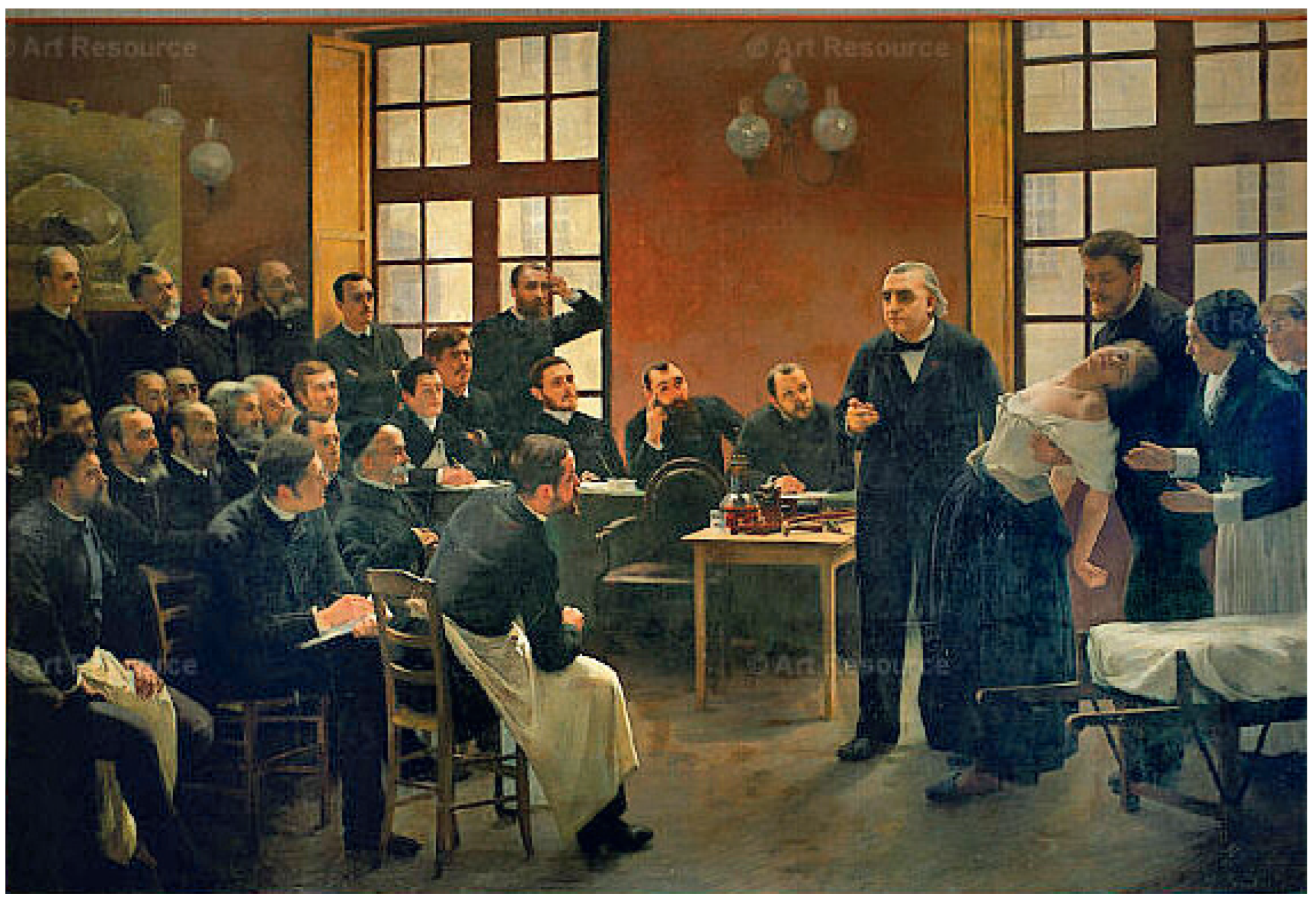
Jean-Martin Charcot (1825–1893) made extraordinary contributions to the nosology of neurological diseases and played a pivotal part in establishing neurology as a clinical specialty [8]. His research encompasses a large spectrum of neurological disorders that include progressive muscular atrophy (Charcot-Marie-Tooth disease) and amyotrophic lateral sclerosis (Charcot’s disease). The first chair in diseases of the nervous system in France was created for Charcot in 1882 (“Chaire de clinique des maladies du système nerveux”). Roger Gilliat (1922–1991) held the first chair of neurology in London, but not until 1962 [9]. This reflects the power that the internists have had for a long time on academic neurology in the U.K.
Figure 1.
Charcot teaching at the Salpetrière.
Jean Cruveilhier (1791–1874) was a highly influential anatomist during the mid-19th century, and is known for his work regarding the nervous system. He described the pathology of the lesions observed in multiple sclerosis, and published his findings and illustrations in 1842. He was also the first to record the clinical history of a patient who had the disease [10]. However, it wasn’t until 1868 that multiple sclerosis (MS) was described by Jean-Martin Charcot to be a distinct, separate disease. Charcot only saw around 30 MS cases during his career and assumed it to be a rare disease, with females more frequently affected than males. However, he noted the existence of abortive forms and stated that “… the disease is expanding in incidence as diagnostic accuracy gains in precision ...”, a sentence which is valid today [6].
Alois Alzheimer (1864–1915) is credited with the first published case of “presenile dementia”, which Kraepelin would later identify as Alzheimer’s disease, though, during much of the 20th century, psychiatrists and neurologists have been arguing about the identity of presenile (Alzheimer’s disease) and senile dementia [11]. Alzheimer was the cofounder and copublisher of the “Zeitschrift für die gesamte Neurologie und Psychiatrie”. Alzheimer was appointed professor of psychiatry at the University of Breslau in 1912.
Theodor Schwann (1810–1882) is considered the founder of modern histology. Together with Rudolf Virchow (1821–1902), they were able to place pathology on a scientific base. Schwann is, of course, remembered for the discovery of the myelinating cell in the peripheral nervous system that holds his name [12]. Of German origin, he became professor of anatomy at the University of Leuven in Belgium, later in Liège.
The pioneers in psychiatry [13]
Wilhelm Griesinger (1817–1868) was a German neurologist and psychiatrist. He studied at the University of Zurich and under the physiologist François Magendie in Paris. He participated in the planning of the Burghölzli Mental Hospital in Zurich. In 1865, he moved to Berlin to assume the leadership of the psychiatric clinic, and also of the department of nervous diseases established on his initiative at the Charité. He founded the Medizinisch-psychologische Gesellschaft and the “Archiv für Psychiatrie und Nervenkrankheiten”, which soon became one of the world’s leading journals in its field. Most likely as a result of intensive negotiations with his university, Griesinger was appointed professor of neurology and psychiatry. By formally uniting these disciplines into a single department under his leadership, Griesinger reified his unswerving philosophy of the indelible inseparability of mind and brain [14]. We owe Griesinger for the introduction into clinical psychiatry of pathological anatomy. His famous sentence “Geisteskrankheiten sind Gehirnkrankheiten” placed him ahead of his time.
Bénédict Augustin Morel (1809–1973) was a French physician who was a seminal figure in the field of psychiatry in 19th century Europe. Morel coined the term “démence précoce”, in 1853, to describe a mental disorder which initially struck subjects when they were teenagers or young adults, and eventually led to deterioration of mental functioning and disability; a concept that was later developed by Emil Kraepelin. Morel was very much influenced by Darwin’s writings. In 1857, he published the “Traité des dégénérescences physiques, intellectuelles et morales de l’espèce humaine”, in which he argued that some illnesses are caused by degeneration. In the psychiatric literature in English, Benedict Morel has often been confused with Ferdinand Morel [15]. Ferdinand Morel was Professor of Psychiatry and Director of the Bel-Air Psychiatric Hospital in Geneva from 1939 to 1950 and is actually best known for his neurologically oriented psychiatric theories.
Theodor Meynert (1833–1892) is one of the most famous Austrian psychiatrists and occupied the chair of psychiatry at the University of Vienna. Meynert’s scientific contributions are related to his work on the pathology of the brain, such as mapping the topography of the sensory and motor pathways and identifying the nerve endings in the cerebral motor cortex. Meynert is recognised, together with the French neurologist Déjerine, as the founder of the cytoarchitectonics of the cerebral cortex [16]. He devoted himself to establishing psychiatry as an exact science based on anatomy. He formulated the antagonism between the cortex and the subcortical zones as being the key to the abnormal function of cerebral mechanisms in mental illness. He left his mark on theories concerning the causal links between cerebral pathologies and psychoses as a result of deficits in “cerebral nutrition related to vasomotricity”.
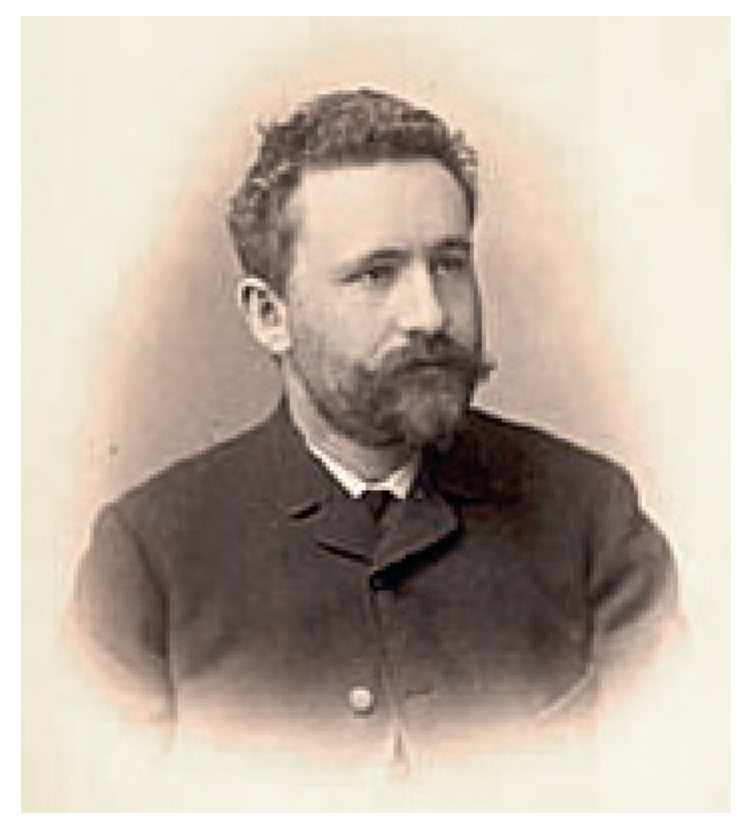
Emil Kraepelin (1856–1926) is seen as being the founder of modern scientific psychiatry. Kraepelin believed that psychiatric diseases are mainly caused by biological and genetic disorders. His psychiatric theories dominated the field of psychiatry at the beginning of the 20th century. Kraepelin is credited with the classification of what was previously considered to be a unitary concept of psychosis, into two distinct forms: dementia praecox and manic-depressive psychosis. Yet, there is now significant critique of the validity of the Kraepelinian dichotomy [17].
Figure 2.
Emil Kraepelin.
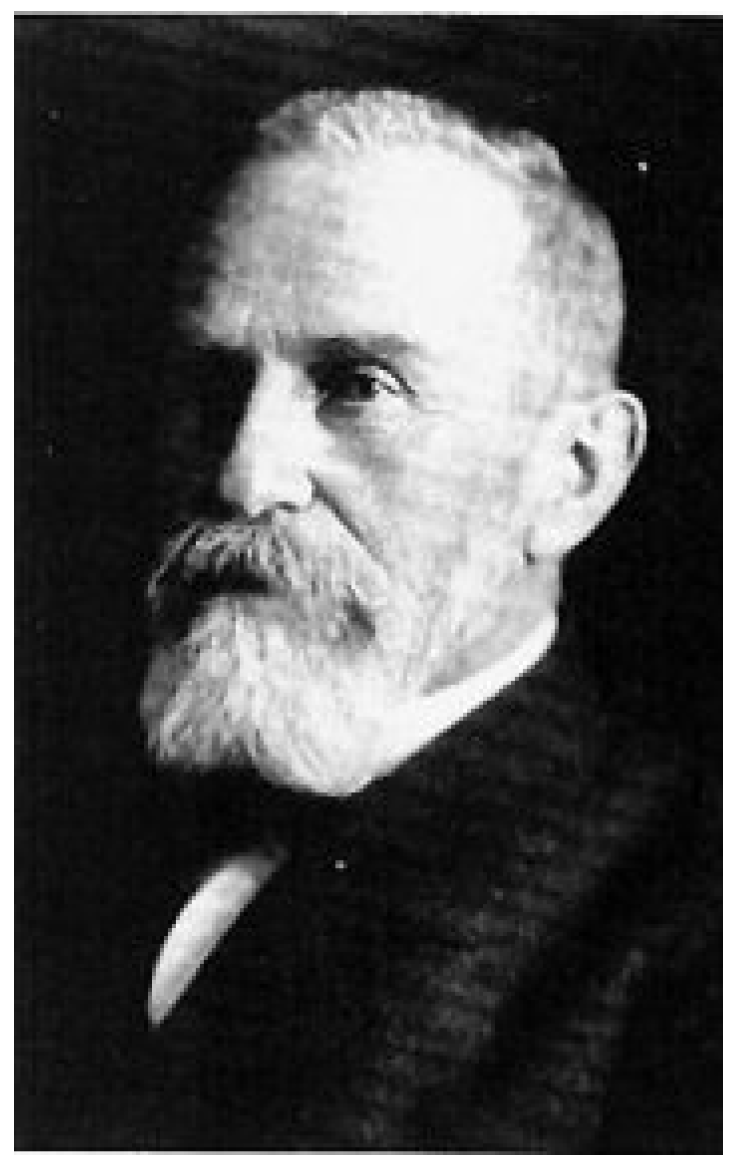
Eugen Bleuler (1857–1939), one of the most influential Swiss psychiatrists attended the universities of Zürich, Bern and Munich. In 1898, Bleuler was appointed professor of psychiatry at the University of Zürich and director of the University Psychiatric Hospital, the Burghölzli, where he served from 1898 to 1927. Eugen Bleuler coined the term “schizophrenia” in 1908 [18]. He was also the first to describe the symptoms as “positive” or “negative.” Bleuler changed the name to schizophrenia, as it was obvious that Kraepelin’s name was misleading as the illness was not a dementia.
Figure 3.
Eugen Bleuler.
In a kind of rupture with the past, Sigmund Freud (1856– 1939) took an approach that was opposite to that of Kraepelin. He is best known for his theories of the unconscious mind and the defence mechanism of repression and for creating the clinical practice of psychoanalysis for curing psychopathology, through a particular form of dialogue between a patient and a psychoanalyst. Freud with his “Project for a Scientific Psychology” promoted a new rapprochement between two forms of knowledge (psychology and biology); an approach that is still pursued and aptly defended today by several psychoanalysts and neuroscientists like Mark Solms [19].
Pierre Janet (1859–1947) was a pioneering French psychologist in the field of dissociation and traumatic memory. He was one of the first to draw a connection between events in the subject’s past life and his present day trauma. He studied, like Freud, under Jean-Martin Charcot in Paris and Janet markedly influenced the development of psychoanalysis [20].
Carl Wernicke (1848–1905) was a professor of psychiatry at the Universities of Breslau and Halle. Wernicke’s clinical studies were published as “Grundriss der Psychiatrie in klinischen Vorlesungen”. He is best known for his studies on aphasia. Shortly after Paul Broca published his findings on language deficits caused by damage to what is now referred to as Broca’s area, Wernicke began pursuing his own research into the effects of brain disease on speech and language [21]. Wernicke created an early neurological model of language, that later was revived by Norman Geschwind [21].
The main work pursued by Julius Wagner-Jauregg (1857–1940) throughout his life was related to the treatment of mental disease by inducing a fever. He investigated the effects of febrile diseases on psychoses and tried, in 1917, the inoculation of malaria parasites, which proved to be very successful in the case of dementia paralytica (also called general paresis), caused by neurosyphilis [22]. This discovery earned him the Nobel Prize in 1927. His main publication was a book titled “Verhütung und Behandlung der progressiven Paralyse durch Impfmalaria”. He succeeded Meynert as the Professor of Psychiatry and Nervous Diseases in Vienna.
It was in Leipzig that the first chair of psychiatry/psychotherapy in the western world was established and given to Johann Heinroth (1773–1843) in 1811 [23]. This question of “firsts” is confounded by the distinction between lecturer and professor. If we are asking who was the first to begin a course of academic lectures on psychiatry for the medical students in a given country, the answer would probably be quite different. Heinroth did not leave any significant scientific contributions, with his work focussing on the reform of the mental health care system.
Milestones that shaped Psychiatry and Neurology in the 20th century
Hans Berger (1873–1941) is known as the first to record electroencephalograms from human subjects and is the discoverer of rhythmic alpha brain waves. He became a professor of psychiatry in Jena. International recognition came later to Berger. His results were confirmed by British and American scientists, such as Edgar Douglas Adrian, and he was invited, in 1937, to present his work to an international forum, where the importance and pioneering nature of his discoveries were hailed.
Manfred Sakel (1900–1957), a Polish neurophysiologist and psychiatrist, was the discoverer of insulin shock therapy for schizophrenics and other mental patients in 1927, while a young doctor in Vienna. He noted that insulin-induced coma and convulsions, due to the low level of glucose attained in the blood (hypoglycemic crisis), were effective in improving the mental state of drug addicts and psychotics, sometimes dramatically [24]. His method became widely applied for many years in mental institutions worldwide. It has now been replaced by electroconvulsive therapy and other means of treatment.
Egas Moniz (1874–1955) was a professor of Neurology at the University of Lisbon. In 1927, he developed cerebral angiography. This procedure would allow physicians to map blood vessels in and around the brain, permitting the diagnosis of several kinds of neurological disorders, such as tumours and arteriovenous malformations. In 1936, Moniz developed a surgical technique to interrupt the nerve fibres which connect the thalamus to the prefrontal cortex (already known at the time as a brain structure involved in higher intellectual functions of the brain and in emotions as well). He received the Nobel Prize for this discovery in 1949; the same year as Walter Rudolf Hess, the Swiss physiologist, was a Nobel laureate for his discovery of the functional organisation of the interbrain as a coordinator of the activities of the internal organs. Actually, the Swiss psychiatrist Gottlieb Burckhardt (1836–1907) performed the first attempts at psychosurgery in 1888 [25]. Both widely publicised their procedure, yet Burckhardt was condemned and no one ventured to repeat his operation, whereas Moniz’s leucotomy was accepted and it soon entered mainstream psychiatry. His surgical approach (leucotomy) was modified in the United States by Walter Freeman to lobotomy, a much cruder procedure that was often unfortunately used indiscriminately [26].
The lack of “historicity” in our contemporary world is sometimes quite upsetting. In this respect, I would like to mention two great theoreticians and clinicians. Henry Ey (1900–1977) who was the incarnation of French psychiatry [27] in the last century and who coined the word “organodynamism”. By overcoming the Cartesian mindbody dualism and treating the mind-body unit as an inseparable whole, this model opens the way for the integrated treatment of mental disorders and recent advances in neuroscience rekindled interest for Ey’s theory. Karl Jaspers (1883–1969), a humanist who turned from psychiatry to philosophy and–in his own line of phenomenology [28] –, was a prominent figure in Europe, moving to the University of Basel in 1948. Jaspers obtained his widest influence, not through his philosophy or psychological textbooks, but through his writings on governmental conditions in Germany and, after the collapse of the National Socialist regime, he emerged as a powerful spokesperson for moraldemocratic education in Europe.
Three major discoveries that brought great changes for Neurology and Psychiatry in the last 50 years
In 1952, Jean Delay (1907–1987) was the first psychiatrist to recognise the therapeutic value of chlorpromazine in the treatment of schizophrenia [29]. He invented the word “psychopharmacology” and proposed the new name of neuroleptic drug. The introduction of neuroleptics had an enormous impact: it was a major factor in the clearing and opening of the psychiatric wards, allowing many inpatients to function effectively as outpatients [30]. Not long after its introduction into therapy, chlorpromazine was shown to produce Parkinson-like extrapyramidal syndromes [31]. Stimulated by the results of chlorpromazine, the pharmaceutical company Geigy & Co (Basel) initiated psychiatric evaluation of many iminodibenzyl derivatives. Roland Kuhn (1912–2005), a Swiss psychiatrist, discovered that one compound (G 22355) had a distinctive influence on depressive states [32]. It was subsequently introduced as imipramine for the treatment of depression.
Another development took place in Vienna in the Institute of Pharmacology [33]. Following the discovery of the catecholamines and the loss of dopamine in the striatum of Parkinson’s patients, Walther Birkmayer was the first to try L-Dopa in the therapy for Parkinson disease. However, the breakthrough in L-Dopa treatment came from the work of George Cotzias (1918–1977), a Greek-American working on Long Island near New York [34].
Modern medicine can hardly be conceived without imaging techniques. Since its introduction in the clinic in the 1980s, MRI has assumed a role of unparalleled importance in diagnostic medicine and more recently in basic research. It was the emergence of functional MRI (fMRI)–a technique for measuring haemodynamic changes after enhanced neural activity–in the early 1990s that had a real impact on basic cognitive neuroscience research. In the past decade, the use of blood oxygen level-dependent (BOLD) fMRI to investigate the effect of diseases and pharmacological agents on brain activity has increased greatly. BOLD fMRI was first described by S. OGAWA and presented as a complementary methodology to PET imaging in the study of regional brain activity [35]. A recent database query using the keywords “MRI” returned over 19000 peer-reviewed articles [36]. Given that the first fMRI study was published in 1991, this corresponds to approximately 1000 papers per year, or over 3 papers per day. About half the papers explore functional localisation or cognitive anatomy. A third are examining the physiological properties of different brain structures and the rest are on a variety of other topics including plasticity, drug action and experimental designs.
Outlook
Due to the vast increase in neurobiological knowledge in recent years, and the ever increasing number of disorders once thought to be psychopathological, a more holistic view of neurology and psychiatry is emerging. Neurologists and psychiatrists have always looked at brain/mind function, but often conflicting theories have emerged. It will be important that the education of future generations of neurologists and psychiatrists is grounded in neuroscience [37]. If the past gives us any clue about the future, we can foresee that psychiatry and neurology will be shaped by clinician-scientists that view the boundary between both specialties, not as a territorial line but as a broad and mostly unexplored terrain.
Acknowledgments
Adapted from a lecture held during the joint meeting of the Swiss Neurological Society, the Swiss Society for Psychiatry and the Swiss Society of Biological Psychiatry in Basel, November 2008. I thank Prof. Jan van Gijn, University Medical Centre Utrecht, Prof. Edward Shorter, History of Medicine Program, University of Toronto, and Sandra ter Pelle, Service de Psychiatrie Adulte, Petit-Bel-Aire, Genève, for providing helpful information.
Conflicts of Interest
There is no conflict of interest.
References
- Kolle K, Herausgeber. Grosse Nervenärzte, Band 1 und 2, Thieme, Stuttgart 1956 und 1959.
- Hippius H, Holdorff B, Schliack H, Herausgeber. Nervenärzte 2, Thieme, Stuttgart 2006.
- Van Gijn J, Hart W. From the library of the Dutch Journal of Medicine: Richard Bright (1789–1858) and his Reports of Medical cases. Ned Tijdschr Geneeskd. 1999;143(51):2570–5.
- Poirier J, Derouesné C. Neurology in Paris hospitals, particularly the Salpêtrière before Charcot: Rostan on brain softening. Rev Neurol. (Paris) 2000;156(6–7):607–15.
- Swash M. John Hughlings Jackson (1835–1911). J Neurol. 2005;252(6): 745–6.
- Gowers WR. A manual of diseases of the nervous system. London: Churchill, 1886;1:391–4.
- Rondot P. G. B. A. Duchenne de Boulogne (1806–1875). J Neurol. 2005; 252(7):866–7.
- Clanet M. Jean-Martin Charcot. 1825 to 1893. Int MS J. 2008;15(2):59–61.
- Van Gijn J. Personal communication.
- Pearce JM. Historical descriptions of multiple sclerosis. Eur Neurol. 2005; 54(1):49–53.
- Amaducci LA, Rocca WA, Schoenberg BS. Origin of the distinction between Alzheimer’s disease and senile dementia: how history can clarify nosology. Neurology. 1986;36(11):1497–9.
- Kosinski CM.Theodor Schwann. Nervenarzt. 2004;75(12):1248.
- Hochmann J. L’histoire de la psychiatrie. Presses Universitaires de France, Paris, 2004.
- Yudofsky SC. Images in psychiatry. Wilhelm Griesinger, M.D., 1817–1868. Am J Psychiatry. 1995;152(8):1203.
- Tsai SY. Eponym and Identity: Benedict Augustin Morel (1809–1873) and Ferdinand Morel (1888–1957). Arch Gen Psychiatry.1968;19(1):104–9.
- Jellinger KA. A short history of neurosciences in Austria. J Neural Transm. 2006;113(3):271–82.
- Greene T. The Kraepelinian dichotomy: the twin pillars crumbling? Hist Psychiatry. 2007;18(71 Pt 3):361–79.
- Scharfetter C. Eugen Bleuler’s schizophrenias–synthesis of various concepts. Schweiz Archiv Neurol Psychiatr. 2001;152:34–7.
- Solms M, Saling M. On psychoanalysis and neuroscience: Freud’s attitude to the localizationist tradition. Int J Psychoanal. 1986;67(Pt 4):397–416.
- Bob P. Dissociation and neuroscience: history and new perspectives. Int J Neurosci. 2003;113(7):903–14.
- Lanczik M, Keil G. Carl Wernicke’s localization theory and its significance for the development of scientific psychiatry. Hist Psychiatry. 1991;2(6):171–80.
- Geschwind N. The Organization of Language and the Brain: Language disorders after brain damage help in elucidating the neural basis of verbal behaviour. Science. 1970;170:940–4.
- Wagner-Jauregg J. The history of the malaria treatment of general paralysis. 1946. Am J Psychiatry. 1994;151(6 Suppl):231–5.
- Steinberg H. Psychiatry at Leipzig University. A 200 year old tradition. Wurzbg Medizinhist Mitt. 2004;23:270–312.
- Sakel M. The methodical use of hypoglycemia in the treatment of psychoses. 1937. Am J Psychiatry. 1994;151(6 Suppl):240–7.
- Kotowicz Z. Gottlieb Burckhardt and Egas Moniz–two beginnings of psychosurgery. Gesnerus. 2005;62(1–2):77–101.
- Obituaries: Rosemary Kennedy, inspired activism. International Herald Tribune, Monday, January 10, 2005.
- EY H. Trends and progress in French psychiatry. J Clin Exp Psychopathol. 1954;(1):1–8.
- Jaspers K. The phenomenological approach in psychopathology. Br J Psychiatry. 1968;114(516):1313–23.
- Delay J, Deniker P, Harl JM. Utilisation en thérapeutique psychiatrique d’une phénothiazine d’action centrale élective (4560 RP). Ann Méd Psychol. (Paris) 1952;110:112–7.
- Battegay R. Forty-four years of psychiatry and psychopharmacology, in: Healy, D. The Psychopharmacologists III, Interviews by Dr. David Healy, pp. 371–94. Arnold, a member of the Holder Headline Group, London. Co-published in the USA by Oxford University Press, New York 2000.
- Steck H. Le syndrome extrapyramidal et diencéphalique au cours des traitements au largactil et au serpasil. Ann Med. Psychol. (Paris) 1954;112:737–44.
- Maxwell RA, Eckhardt SD. Drug discovery: a case book analysis. Humana Press 1990.
- Jellinger KA. Highlights in the history of neurosciences in Austria–review. Clin Neuropathol. 2006;25(5):243–52.
- Cotzias GC, Papavasiliou PS, Gellene R. L-dopa in Parkinson’s syndrome. N Engl J Med. 1969;281(5):272.
- Ogawa S, Lee TM, Kay AR ,Tank DW. Brain magnetic resonance imaging with contrast dependent on blood oxygenation. Proc NatI Acad Sci. USA 1990;87:9868–72.
- Logothetis NK. What we can do and what we cannot do with fMRI. Nature. 2008;453(7197):869–78.
- Baker MG, Kale R, Menken M. The wall between neurology and psychiatry. Br Med J. 2002;324:1468–9.
This is an open-access article distributed under the terms of the Creative Commons Attribution Non-Commercial No Derivatives (CC BY-NC-ND) 4.0 License.