


Summery
Empirical studies indicate a wide range of missed appointments in psychiatry, from 12 to 60%. A survey was undertaken in the outpatient psychiatric facilities of the Clinic for Adult Psychiatry of the Geneva University Hospitals over a one-month period. For each missed appointment, residents filled a form with medical and socio-demographic information about the patient. All 23 residents, working part-time or full-time in one of four outpatient facilities, participated. Over the surveyed one-month period, 2177 appointments were scheduled. Exactly 2000 were attended and 177 (8.1%) were missed. 55.4% of missed appointments were attributed to men, of whom 69.4% were aged under 40. Patients suffering from schizophrenic disorders and mood disorders accounted for 49.7% of missed appointments, with an additional 15.8% represented by patients with personality disorders. Diagnosis was unspecified in 13.6% of patients (n = 24) who mainly missed their first contact (n = 18, 10.2%). Three residents reported 15 or more missed appointments over the month, leading to 28.8% of missed appointments attributable to 13.0% of residents. Comparison of proportions of missed appointments indicated a trend for differences across days (chi-square test, p = 0.052), with highest proportion on Mondays (12.6%) and lowest proportion on Wednesdays (6.5%). Although the design of the survey did not allow for statistical comparison between attenders and non-attenders, our overall data set suggests that non-attendance may be associated with male sex, age under forty, differences in professionals’ attitude and appointments scheduled on Mondays. Results point towards the necessity of addressing non-attendance more thoroughly, both at research and teaching levels. This would probably increase cost-effectiveness of care and satisfaction of professionals who, still too often, wait in vain for patients who do not show up.
Introduction
Daily clinical practice in a university psychiatric facility suggests that outpatient non-attendance is an increasingly frequent problem. However, due to the scarcity of quantitative data, it is impossible to assess its actual importance. Changes in professionals’ perceptions might as well account for an overestimation of this phenomenon. Indeed, strong economic constraints and increasing mental care demand from the general population contribute to residents and psychiatrists working in public services having tighter schedules and possibly feeling more disrupted by patients failing to show up at their appointments.
Empirical studies indicate a wide range of base rates of missed appointments in psychiatry, from 12 to 60%. Clearly, a difference exists between initial contacts and follow-ups, rates of missed appointments being higher for initial contacts [1]. It is generally accepted that the rate of non-attendance at psychiatric clinics is about twice that of most other specialties [2,3].
A few studies attempted to characterise patients who miss appointments and describe why they do so. Younger age, lower educational level, lower socio-economic status, substance abuse, current diagnosis of post traumatic stress disorder or psychotic disorders, less knowledge about disease, absence of subjective distress, significant resistance to seeing a psychiatrist and longer delay between referral and appointment were factors associated with non-attendance [1,4,5]. In a study conducted in a university psychiatric out-patient clinic for persons with severe mental illness, additional predictors of missed intake appointments were having a poor family support system, belonging to an ethnic minority, not taking psychotropic medications and, quite surprisingly, having health insurance [6].
When non-attenders are asked about reasons for missing their appointments at an out-patient psychiatric clinic, they tend to give various explanations, the most frequent being that they forgot about the appointment, that they were too psychiatrically ill to attend or that there was some clerical error. Other reasons are, for example, having a travel problem, being unhappy with treatment or losing appointment card [3].
Clinicians’ response to missed appointments is probably determined by a complex interplay of influences such as patients’ characteristics and billing practices [5]. Strategies and interventions designed to reduce “no-show” rates have demonstrated some usefulness in medical and psychiatric settings. They include using telephone or mail reminders, scheduling appointments before release from inpatient treatment, shortening the waiting period and offering orientation and education about treatments [7,8].
The objective of the present study was to gather preliminary data about missed appointments at Geneva outpatient facilities for adult psychiatric patients, in order to provide clues for further research and/or educational measures.
Methods
A survey was conducted over a one-month period (June 2002) in the different outpatient facilities for adult patients at the Department of Psychiatry, Geneva University Hospitals. All residents in psychiatry working in outpatient units were asked to fill a form for each missed appointment. Cancelled appointments were not included in the study. A covering letter explained the aim and methodology of the survey. The form was anonymous for both patient and resident. All residents participated, under the direct supervision of senior clinicians. The following data were recorded: patient’s sex and year of birth, date and time of missed appointment, and whether it was a first contact or a follow-up appointment. In the former case, mode of referral was recorded. In the latter case, diagnostic category according to ICD-10 was provided.
Statistical analysis concentrated on the description of missed appointments with respect to patient characteristics, facility and scheduled time. Chisquare test was used to compare proportions of missed appointments across days of the week. Significance level was set to 0.05.
Results
All 23 residents, working part-time or full-time in one of four outpatient facilities, participated. Over the surveyed one-month period, 2177 appointments were scheduled. Exactly 2000 were attended and 177 (8.1%) were missed.
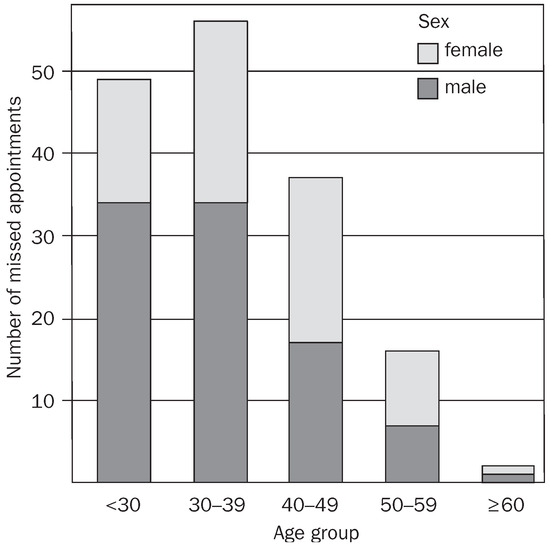
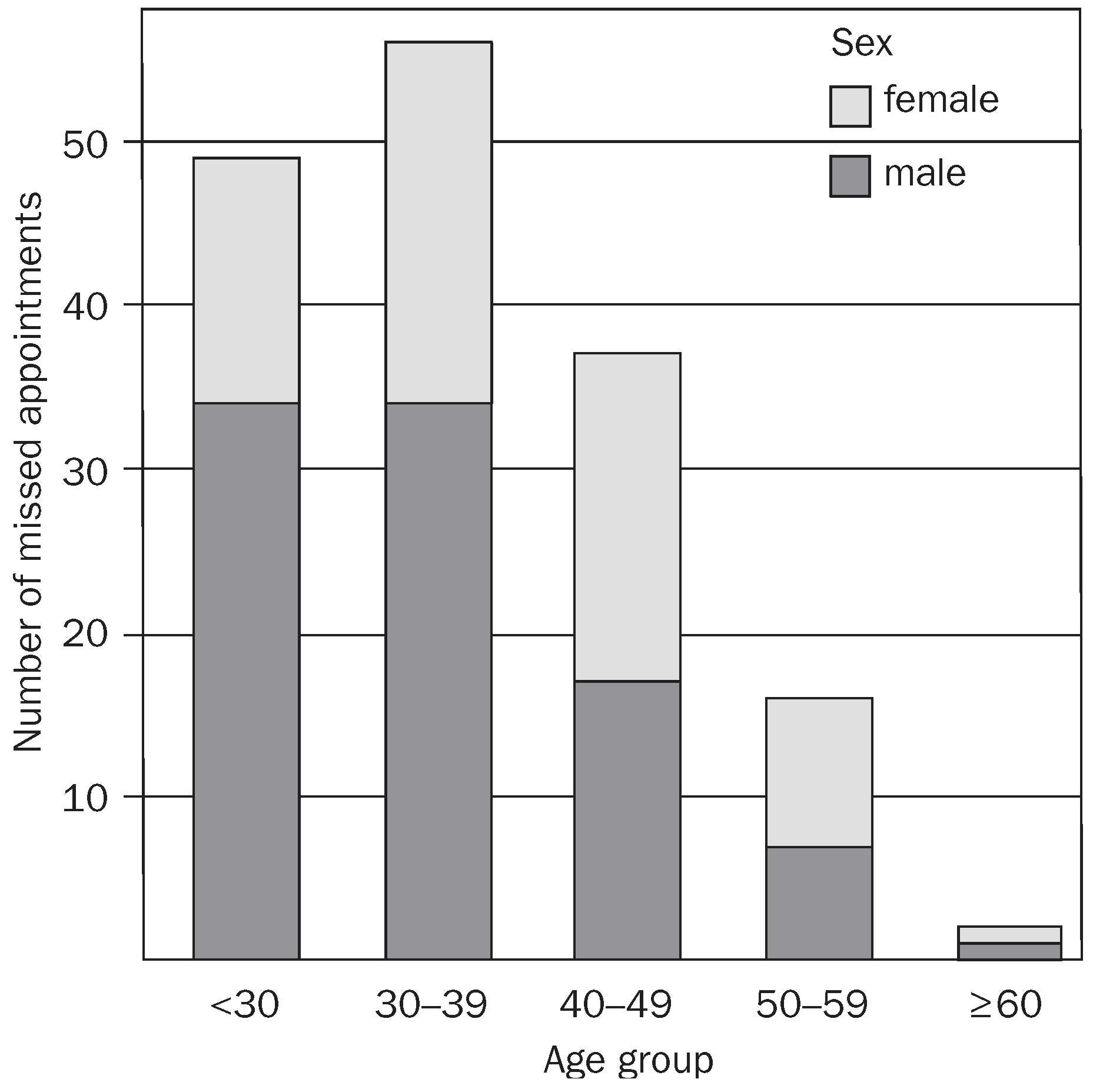
Regarding patient characteristics, 55.4% of missed appointments were attributed to men, of whom 69.4% were aged under 40 (fig. 1).
Figure 1.
Distribution of missed appointments according to patient’s sex and age group.
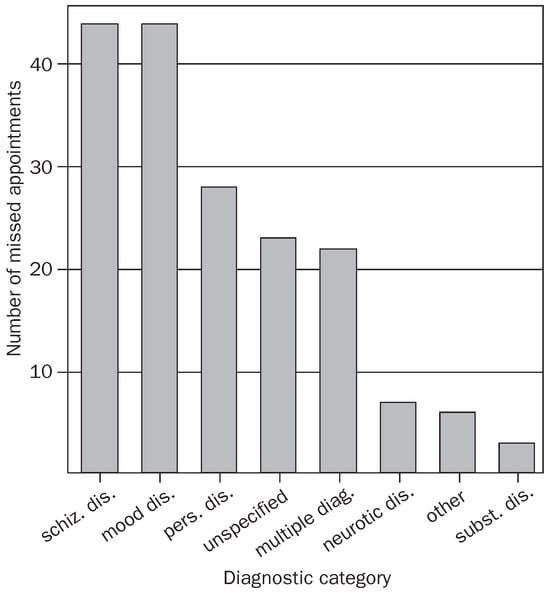
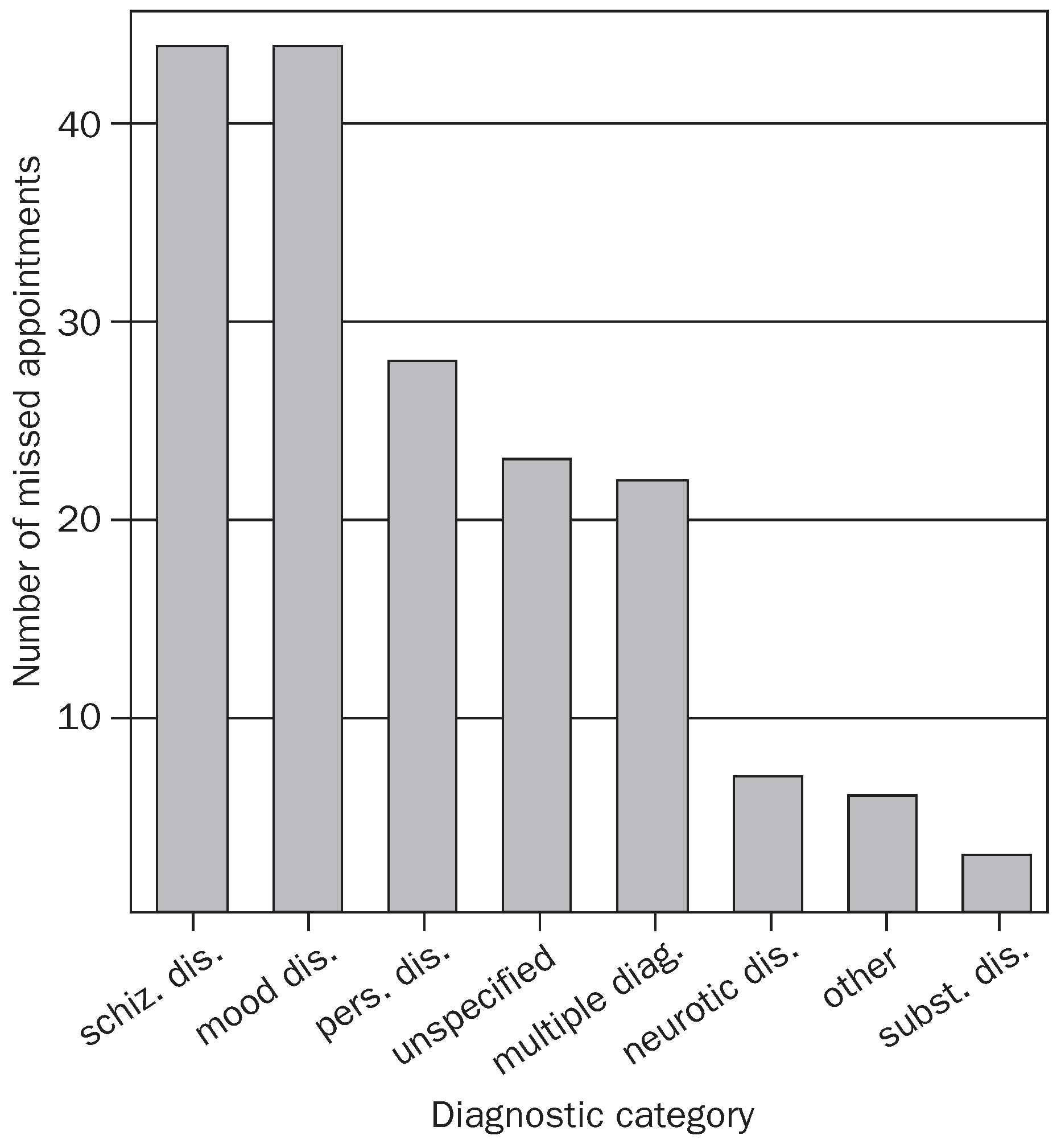
Patients suffering from schizophrenic disorders and mood disorders accounted for 49.7% of missed appointments, with an additional 15.8% represented by patients with personality disorders (fig. 2). Diagnosis was unspecified in 13.6% of patients (n = 24) who mainly missed their first contact (n = 18, 10.2%). These patients had been referred from other facilities within the department (e.g. inpatient or emergency units, n = 10) or by other physicians (n = 3) or had asked themselves for appointments (n = 4).
Figure 2.
Distribution of missed appointments according to ICD-10 main diagnostic categories.
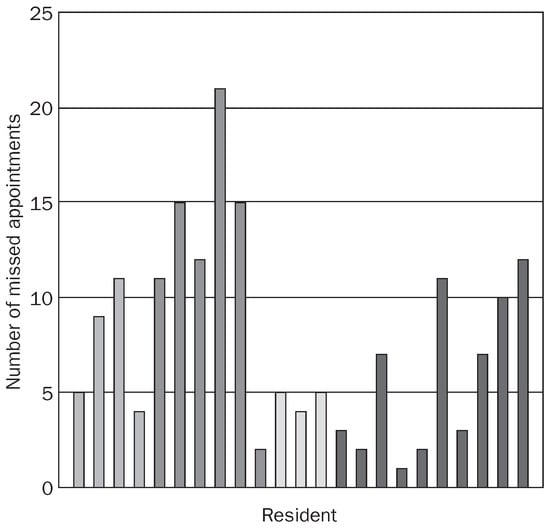
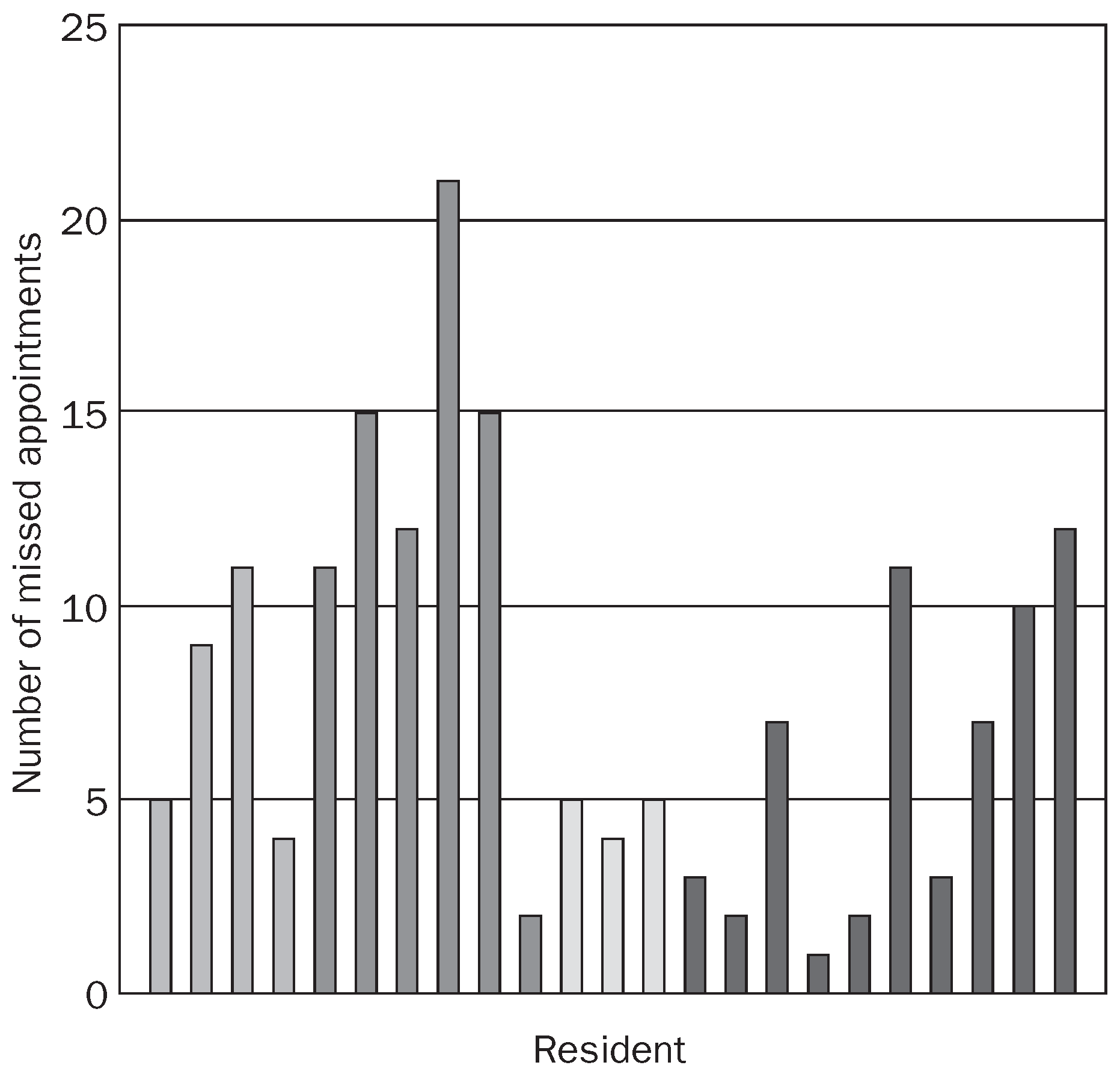
Considering the number of missed appointments per resident in the four outpatient facilities, differences appeared both between facilities and between residents in the same facility (fig. 3). In particular, 3 residents reported 15 or more missed appointments over the month, leading to 28.8% of missed appointments attributable to 13.0% of residents. Rate of missed appointments per resident was not investigated since the study had been designed to evaluate the whole phenomenon without being too intrusive with the residents.
Figure 3.
Distribution of missed appointments per resident within four outpatient facilities (different shades of grey).
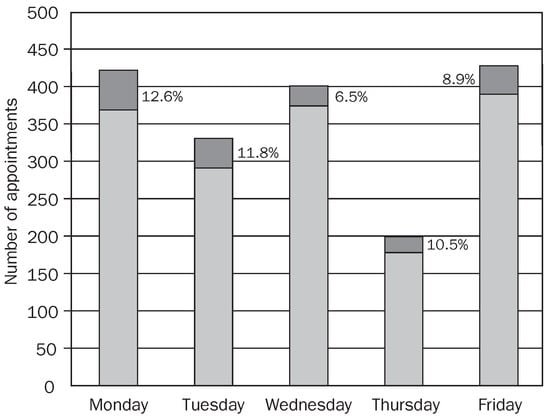
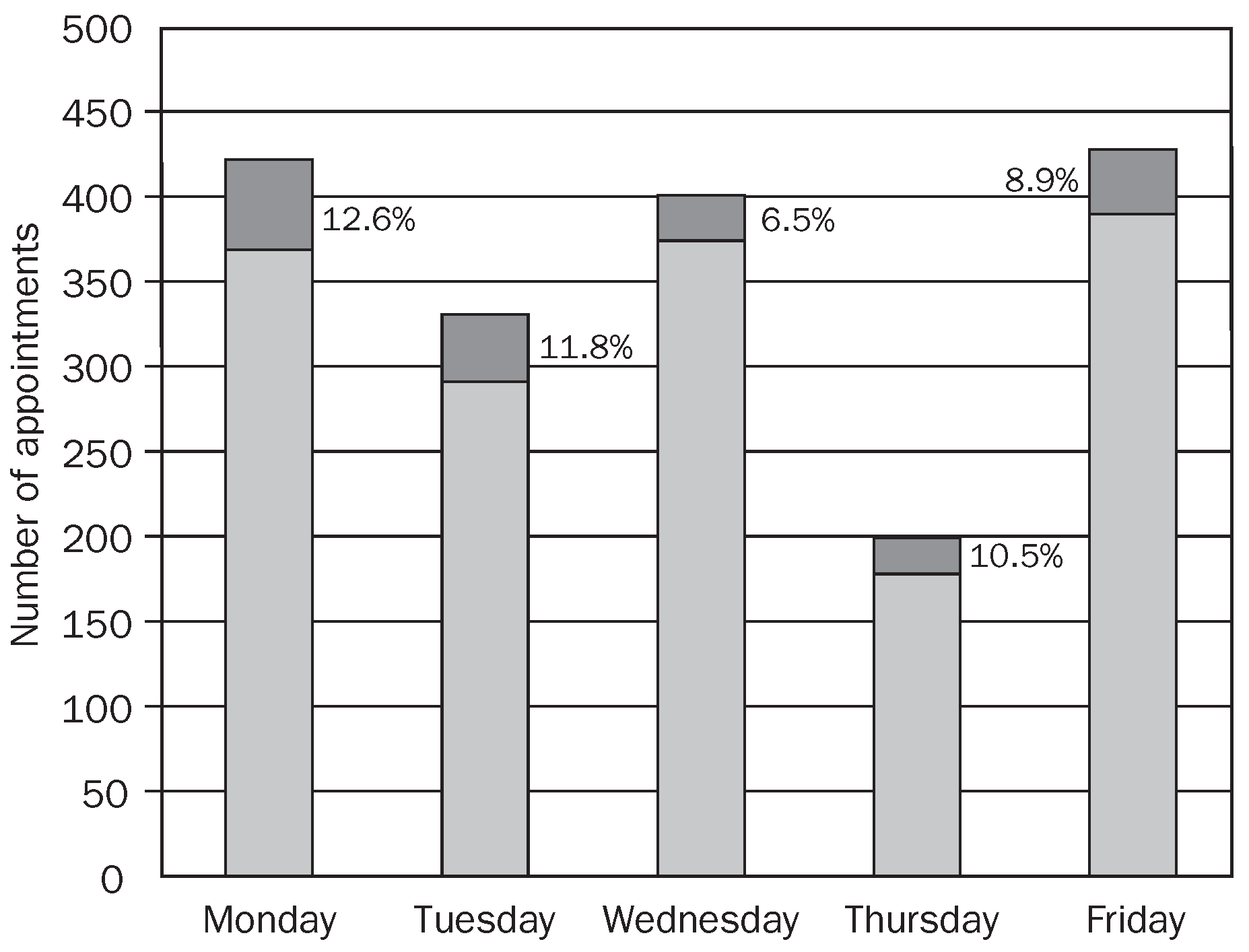
The distribution of missed appointments according to days of the week indicated that frequency was higher at the beginning of the week (Mondays and Tuesdays) and at the end of the week (Thursdays and Fridays) than in the middle of the week (Wednesdays) (fig. 4). However, this must be balanced by the weekly distribution of attended appointments. Indeed, there were variations related to academic life in the department, with the majority of post-graduate courses taking place on Thursdays. Comparison of proportions of missed appointments indicated a trend for differences across days (chi-square test, p = 0.052), with highest proportion on Mondays (12.6%) and lowest proportion on Wednesdays (6.5%).
Figure 4.
Distribution of missed appointments (dark bars) and attended ones (light bars) according to day of scheduled appointments. The percentage of missed appointments is inserted.
Discussion and conclusions
This survey has several limitations. First, nonattending patients were not interviewed later on so that reasons why they did not show up remained undocumented. Second, it covered only a short one-month period that might not be representative of the overall functioning of the participating services. Finally, and most importantly, characteristics of patients who attended their appointments were not available for analysis. Thus, no quantitative comparison was possible between non-attending patients and the overall consulting population during that time period. Nevertheless, the present survey provides clues for further investigation.
From administrative sources it is known that average monthly number of attended consultations for 2002 was almost equal for both sexes (men: 1671 appointments, women: 1624 appointments) and for two age groups (age 17–39: 1642 appointments, age 40–65: 1646 appointments). Hence we can hypothesise that males under 40 are over-represented in our sample of non-attending patients. This points towards the necessity of examining specific sociodemographic characteristics of patients in order to impact on non-attendance rates.
Similarly, the days on which the appointments are scheduled seem to play a role, with a better attendance in the middle of the week than after or before the weekend.To our knowledge, this last aspect has not yet been addressed in the literature. It could be interesting to look for a similar phenomenon in other possibly related fields (for instance absenteeism at work).
Regarding the observed differences between facilities and residents, it is possible that accessibility and professionals’ attitudes may differ from one place to another. Discrepancies in awareness and skills for reducing the problem of non-attendance cannot be excluded, even in a single psychiatric department. Organisational differences between general outpatient psychiatry facilities and specialised programs (e.g. for bipolar or borderline patients) might also account for these differences. The overall non-attendance rate in our sample (8.1%) is significantly lower than in the literature (from 12 to 60%). A few hypotheses can be proposed in order to explain this observation. Firstly, cancelled appointments were excluded from our study. Secondly, significant socio-economic characteristics of patients in Geneva, Switzerland, probably differ from British and American populations. Thirdly, the small size of the Geneva area, associated with the presence of a good public transportation system, might contribute to a better attendance rate. Fourthly, the studied month, with 2000 attended appointments, may not be fully representative of the yearly activity (around 3295 attended appointments per month on average). This administrative figure takes into account all billed consultations, including the ambulatory activity of senior registrars that were not included in the survey. We know, however, that this additional activity represents no more than 10% of all consultations. Fifthly, patients with substance abuse as main diagnosis, a particularly non-compliant subgroup, are treated in specialised outpatient clinics and were not represented in our sample.
On the basis of the trends observed in this study, we suggest that factors associated with non-attendance in outpatient psychiatric services should be examined further, both on research and teaching levels. This would be expected to increase costeffectiveness of care and satisfaction of professionals who, still too often, wait in vain for patients who do not show up.
References
- Sparr, L.F.; Moffitt, M.C.; Ward, M.F. Missed psychiatric appointments: who returns and who stays away. Am J Psychiatry 1993, 150, 801–5. [Google Scholar] [PubMed]
- McGlade, K.J.; Bradley, T.; Murphy, G.J.; Lundy, G.P. Referrals to hospital by general practitioners: a study of compliance and communication. Br Med J 1988, 297, 1246–1248. [Google Scholar] [CrossRef] [Scilit] [PubMed]
- Killaspy, H.; Banerjee, S.; King, M.; Lloyd, M. Prospective controlled study of psychiatric out-patient non-attendance. Characteristics and outcome. Br J Psychiatry 2000, 176, 160–165. [Google Scholar] [CrossRef] [Scilit] [PubMed]
- Grunebaum, M.; Luber, P.; Callahan, M.; Leon, A.C.; Olfson, M.; Portera, L. Predictors of missed appointments for psychiatric consultations in a primary care clinic. Psychiatr Serv 1996, 47, 848–852. [Google Scholar] [PubMed]
- Smoller, J.W.; McLean, R.Y.; Otto, M.W.; Pollack, M.H. How do clinicians respond to patients who miss appointments? J Clin Psychiatry 1998, 59, 330–338; quiz 339–40. [Google Scholar] [CrossRef] [Scilit]
- Kruse, G.R.; Rohland, B.M.; Wu, X. Factors associated with missed first appointments at a psychiatric clinic. Psychiatr Serv 2002, 53, 1173–1176. [Google Scholar] [CrossRef] [Scilit] [PubMed]
- Chen, A. Noncompliance in community psychiatry: a review of clinical interventions. Hosp Community Psychiatry 1991, 42, 282–287. [Google Scholar] [CrossRef] [Scilit] [PubMed]
- Macharia, W.M.; Leon, G.; Rowe, B.H.; Stephenson, B.J.; Haynes, R.B. An overview of interventions to improve compliance with appointment keeping for medical services. Jama 1992, 267, 1813–1817. [Google Scholar] [CrossRef] [Scilit] [PubMed]
This is an open-access article distributed under the terms of the Creative Commons Attribution Non-Commercial No Derivatives (CC BY-NC-ND) 4.0 License.