You are currently viewing a new version of our website. To view the old version click .

Processes, Volume 5, Issue 2

June 2017 - 19 articles

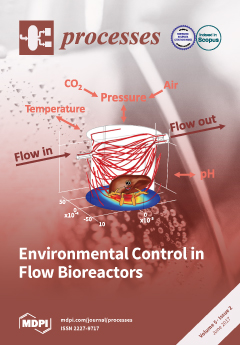
Cover Story: “Physiologically relevant” in vitro models are designed to better mimic in vivo conditions. Besides flow and 3D architecture, they also require the control of environmental parameters to ensure that the in vivo physico-chemical milieu is recapitulated. The SUITE platform – consisting of a pump, modular bioreactors and a mixing chamber, along with sensing, actuation, and control components – was engineered as a free-standing fluidic cell culture system able to measure and regulate cell culture parameters (e.g. temperature, pH, pressure) “on-line”. SUITE can be used for generating pathophysiological biomimetic in-vitro models, with applications in disease modelling or toxicity testing. View this paper
  • Issues are regarded as officially published after their release is announced to the table of contents alert mailing list .
  • You may sign up for email alerts to receive table of contents of newly released issues.
  • PDF is the official format for papers published in both, html and pdf forms. To view the papers in pdf format, click on the "PDF Full-text" link, and use the free Adobe Reader to open them.

Articles (19)

  • Article
  • Open Access
14 Citations
9,764 Views
31 Pages

19 June 2017

Metabolic acclimation to photosynthesis-associated stresses was examined in the thermophilic cyanobacterium Thermosynechococcus elongatus BP-1 using integrated computational and photobioreactor analyses. A genome-enabled metabolic model, complete wit...

  • Article
  • Open Access
3 Citations
7,198 Views
20 Pages

Closed-Loop Characterization of Neuronal Activation Using Electrical Stimulation and Optical Imaging

  • Michelle L. Kuykendal,
  • Gareth S. Guvanasen,
  • Steve M. Potter,
  • Martha A. Grover and
  • Stephen P. DeWeerth

3 June 2017

We have developed a closed-loop, high-throughput system that applies electrical stimulation and optical recording to facilitate the rapid characterization of extracellular, stimulus-evoked neuronal activity. In our system, a microelectrode array deli...

  • Feature Paper
  • Article
  • Open Access
22 Citations
7,475 Views
16 Pages

2 June 2017

Abstract: Dynamic modelling is a powerful tool for studying biological networks. Reachability (controllability), observability, and structural identifiability are classical system-theoretic properties of dynamical models. A model is structurally iden...

  • Feature Paper
  • Article
  • Open Access
8 Citations
9,706 Views
17 Pages

31 May 2017

In chemical industries, process operations are usually comprised of several discrete operating regions with distributions that drift over time. These complexities complicate outlier detection in the presence of intrinsic process dynamics. In this art...

  • Feature Paper
  • Article
  • Open Access
12 Citations
7,623 Views
23 Pages

Comparison of Polymer Networks Synthesized by Conventional Free Radical and RAFT Copolymerization Processes in Supercritical Carbon Dioxide

  • Patricia Pérez-Salinas,
  • Gabriel Jaramillo-Soto,
  • Alberto Rosas-Aburto,
  • Humberto Vázquez-Torres,
  • María Josefa Bernad-Bernad,
  • Ángel Licea-Claverie and
  • Eduardo Vivaldo-Lima

9 May 2017

There is a debate in the literature on whether or not polymer networks synthesized by reversible deactivation radical polymerization (RDRP) processes, such as reversible addition-fragmentation radical transfer (RAFT) copolymerization of vinyl/divinyl...

  • Article
  • Open Access
18 Citations
8,185 Views
15 Pages

Design of Cross-Linked Starch Nanocapsules for Enzyme-Triggered Release of Hydrophilic Compounds

  • Fernanda R. Steinmacher,
  • Grit Baier,
  • Anna Musyanovych,
  • Katharina Landfester,
  • Pedro H. H. Araújo and
  • Claudia Sayer

6 May 2017

Cross-linked starch nanocapsules (NCs) were synthesized by interfacial polymerization carried out using the inverse mini-emulsion technique. 2,4-toluene diisocyanate (TDI) was used as the cross-linker. The influence of TDI concentrations on the polym...

  • Review
  • Open Access
59 Citations
14,069 Views
27 Pages

Applications of Water-Soluble Polymers in Turbulent Drag Reduction

  • Wen Jiao Han,
  • Yu Zhen Dong and
  • Hyoung Jin Choi

4 May 2017

Water-soluble polymers with high molecular weights are known to decrease the frictional drag in turbulent flow very effectively at concentrations of tens or hundreds of ppm. This drag reduction efficiency of water-soluble polymers is well known to be...

  • Feature Paper
  • Article
  • Open Access
20 Citations
10,186 Views
18 Pages

27 April 2017

Water-soluble, carboxylic acid monomers are known to exhibit peculiar kinetics when polymerized in aqueous solution. Namely, their free-radical polymerization rate is affected by several parameters such as monomer concentration, ionic strength, and p...

of 2

Get Alerted

Add your email address to receive forthcoming issues of this journal.

XFacebookLinkedIn
Processes - ISSN 2227-9717