1. Introduction
The large-scale development of unconventional oil and gas resources is a critical pathway for optimizing energy structure and ensuring supply security. Among these resources, coalbed methane (CBM), as a clean energy source, has garnered increasing attention for its efficient extraction. However, coal reservoirs generally exhibit distinctive geomechanical properties, such as low permeability, low elastic modulus, high Poisson’s ratio, and a highly developed natural fracture network [
1,
2,
3]. These inherent characteristics make it difficult to achieve economic production rates using conventional completion methods. Consequently, hydraulic fracturing has become an essential technique for connecting the natural fracture networks within coal reservoirs and establishing effective flow channels [
4].
An effective reservoir stimulation result depends not only on the complexity of the fracture network but also on the efficient and safe flowback of fracturing fluid after the operation. A rational flowback operation can effectively improve the proppant’s support efficiency and reduce damage caused by fracturing fluid loss, which has a significant impact on long-term oil and gas production [
5]. If the flowback rate is improperly controlled, the drag force generated by the fluid on the proppant particles may overcome the frictional resistance between particles and the closure pressure, leading to proppant flowback. Proppant flowback will reduce fracture conductivity and, in severe cases, erode wellbore equipment, creating major production risks [
6]. Therefore, clarifying the critical flowback velocity of proppant and its controlling factors under coal reservoir conditions is a core issue for optimizing the flowback strategy and ensuring the effectiveness of the fracturing treatment.
Currently, research on proppant transport primarily focuses on its delivery, settlement, and placement within fractures during the fracturing process, emphasizing particle-fluid interactions and the formation mechanisms of final conductivity [
7,
8,
9,
10,
11,
12]. In contrast, studies on proppant flowback behavior and its underlying principles during the post-fracturing flowback phase are relatively limited. McLennan et al. [
13] simulated the proppant flowback process in transverse and longitudinal fractures through physical experiments, proposing that fracture geometry significantly influences the mechanical equilibrium state of proppant. Than et al. [
14] revised the proppant flowback prediction model by analyzing proppant wettability and inter-particle friction coefficient, revealing the influence of surface properties and frictional effects on flowback behavior. Garagash et al. [
15] developed a theoretical model for proppant particle bridging, clarifying the formation conditions and stability of sand-arch structures and their critical role in suppressing proppant flowback. Chen et al. [
16] conducted long-term conductivity evaluation experiments on artificial fractures in shale using a self-developed experimental system, and the results indicated that the backflow volume decreases with declining flow pressure. Duo Wang et al. [
17] employed the Lattice Boltzmann-Discrete Element Method (LB-DEM) coupling approach to investigate the behavior of proppant embedment into fracture walls under closure stress and its relationship with flowback rate. They found that the flowback rate increases quadratically with fracture aperture. Xianlu Cai and Zhiming Wang [
18] conducted backflow experiments in coalbed fractures under both single-phase water production and gas–water two-phase co-production conditions. Based on the variation patterns of the backflow ratio, they proposed a choke size management method. Zhou et al. [
19] performed numerical simulations of binary-size proppant transport using the Eulerian Multifluid Method (EMM) and experimentally validated that the method provides more accurate characterizations of proppant distribution and velocity compared with unary-system simulations. Mingkun Lv [
20], based on a CFD-DEM dynamic mesh method, analyzed the influence of factors such as perforation parameters, fracture dip angle, and friction coefficient on proppant flowback volume. Liu et al. [
21] and Sun et al. [
22] focused on supercritical CO
2 fracturing conditions, classified the stages of proppant flowback and identified fluid drag force, inter-particle contact force, and proppant morphology as the main factors controlling proppant pack stability. Furthermore, WU Tao et al. [
23] conducted experiments on proppant flowback during the flowback stage in shale reservoirs, examining the effects of proppant size, closure pressure, and wall roughness on the proppant flowback ratio. In summary, existing research primarily utilizes experimental or numerical simulation methods and tends to focus on analyzing single-particle stress states, total proppant flowback volume, and their impact on macroscopic fracture conductivity.
However, research specifically addressing proppant flowback behavior in the engineering context of post-fracturing flowback in coal reservoirs remains insufficient. Particularly, understanding of the critical flowback velocity for proppant and its main controlling factors within coal fracture environments is lacking, and its relevance to field applications needs improvement. First, the representativeness of physical models is often inadequate. Most experiments use smooth metal plates or shale slabs to simulate fractures, which fail to accurately replicate the unique surface morphology and mechanical properties of coal fracture walls, leading to discrepancies between experimental results and actual coal reservoir conditions. Second, research objectives often align poorly with engineering needs. Existing studies predominantly use final flowback volume or sand production ratio as primary evaluation metrics, while neglecting the identification and quantification of the critical conditions for proppant flowback initiation during the flowback process. In particular, there is insufficient focus on the critical flowback flow rate—a key parameter for controlling field flowback operations. Furthermore, a systematic experimental study on the quantitative influence of key engineering and geological parameters—such as proppant size, proppant concentration, fluid viscosity, and effective stress—on the critical flowback flow rate, and their respective controlling weights, is lacking. This gap makes it difficult to establish a basis for anti-flowback process design applicable to coal reservoirs.
In response to the gaps in existing research, this study focuses on coalbed methane development in the XD block of China as its engineering context. Using typical coal outcrop samples from this block, we conducted laboratory-scale physical simulation experiments on proppant flowback. The experiments were performed on a modified fracture conductivity system, which allowed for the observation and measurement of proppant flowback during the flowback process. This study established an experimental methodology for determining and quantifying proppant backflow behavior, identified the critical conditions governing the onset of proppant backflow, and elucidated the physical phenomenon whereby the critical backflow rate exhibits no explicit correlation with the backflow ratio. The fundamental patterns of proppant backflow in coal fractures were revealed, the post-backflow distribution characteristics of proppant within the fracture were analyzed, and the similarities and differences in backflow behavior between coal reservoirs and other typical lithologies were systematically compared. Combined with engineering practices, the influence effects and weightings of key engineering factors including proppant particle size, flowback fluid viscosity, proppant concentration and effective stress on the critical flowback rate are investigated. A post-fracturing flowback control strategy applicable to the studied block is proposed based on the experimental results, to provide theoretical basis and experimental support for the refined flowback control of coal reservoirs after fracturing.
2. Methods
2.1. Experimental Apparatus and Materials
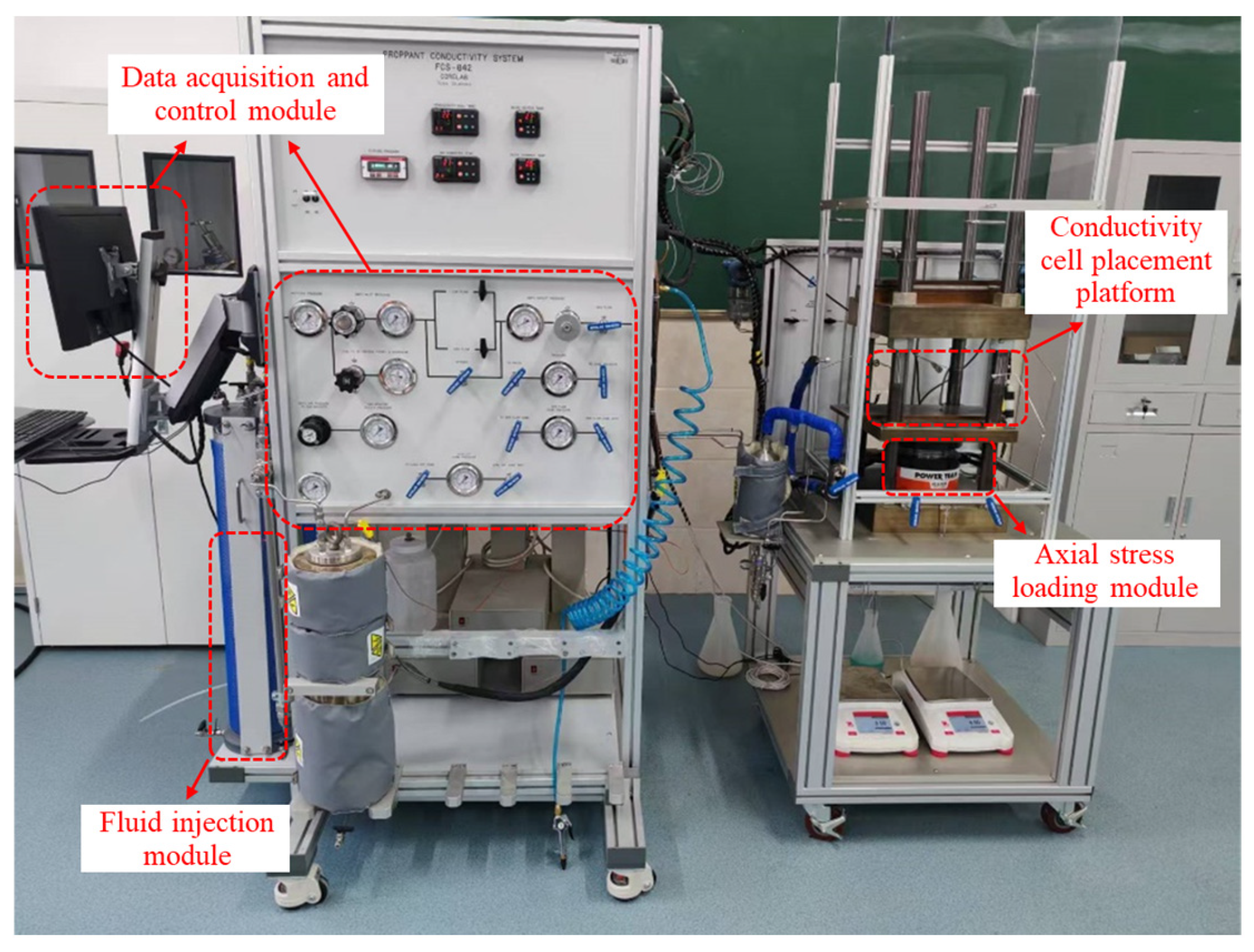
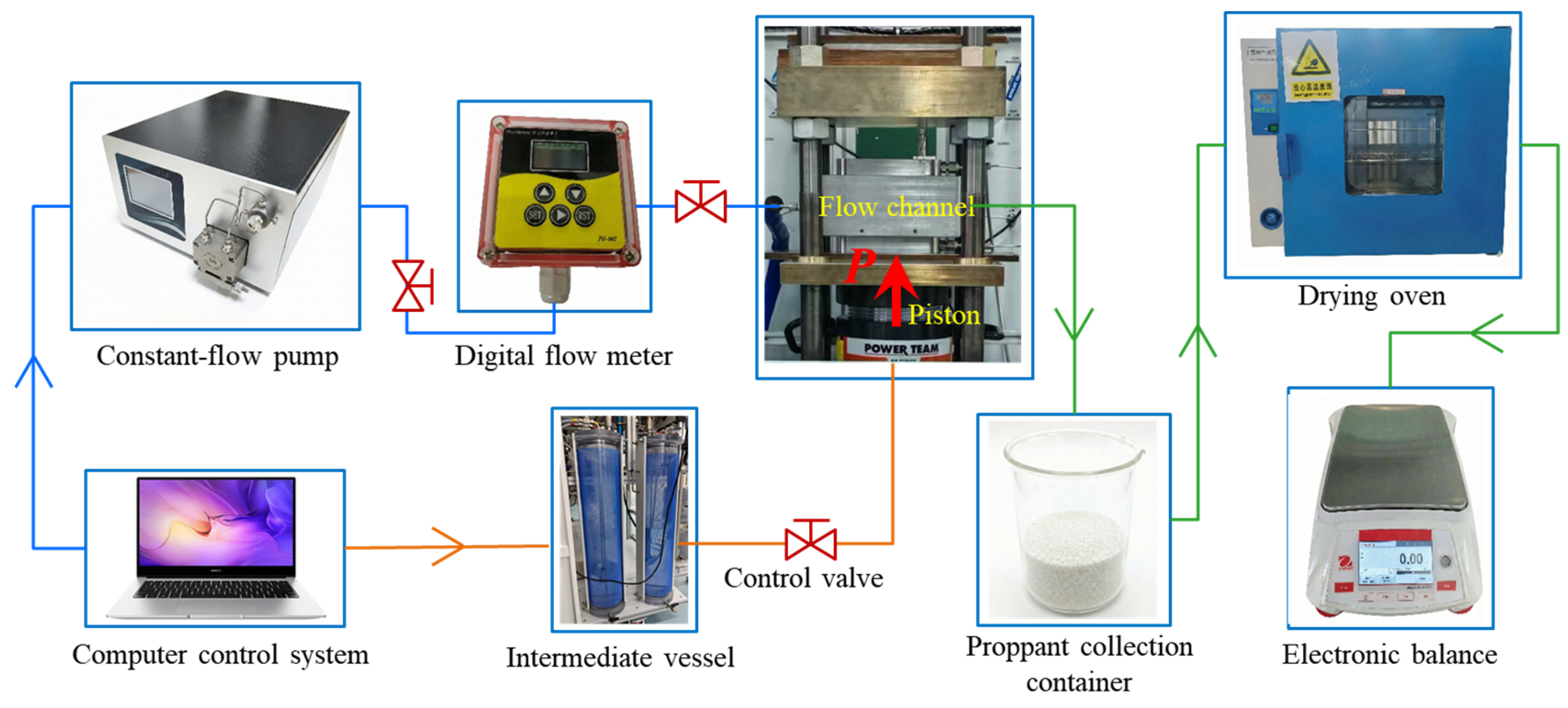
This study utilized the fracture conductivity experimental system to conduct physical simulation experiments of proppant flowback. A schematic diagram of its core setup is shown in
Figure 1. The system integrates modules for data acquisition and control, fracture conductivity testing, axial stress loading, and fluid injection. This configuration enables the simulation and testing of fracture conductivity under various reservoir conditions.
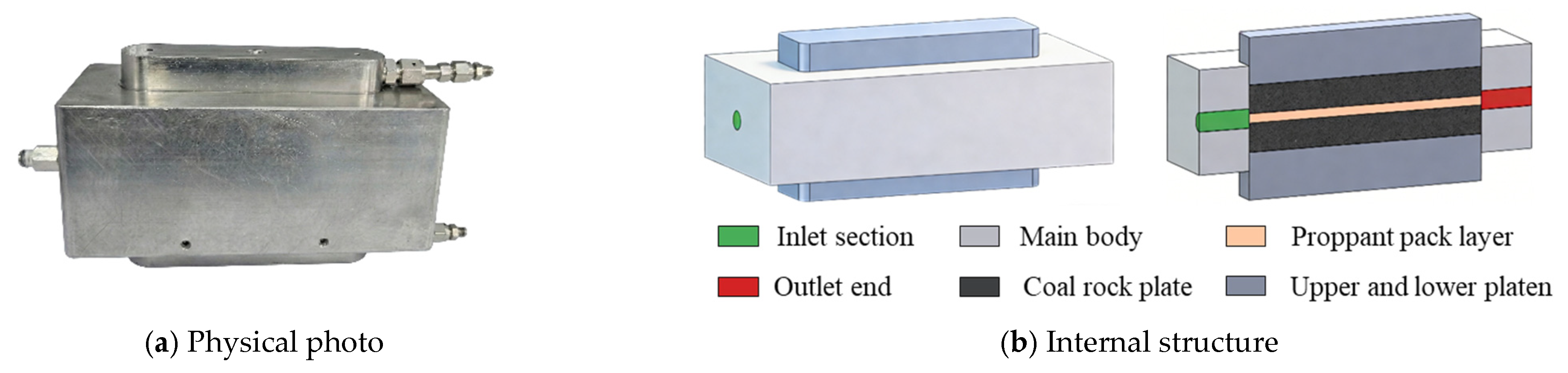
For this study, steady-state fracture conductivity was not the focus. The experimental design prioritized simulating and analyzing the behavior and patterns of proppant flowback during fracturing fluid flowback. Therefore, the targeted application and modification of the API standard conductivity cell are crucial to achieving this goal, with its physical diagram and internal structure shown in
Figure 2. The conductivity cell is the core component for simulating subsurface fracture geometry and studying proppant placement and transport behavior within the fracture. Its interior can establish a horizontal parallel-plate fracture model, providing a standardized experimental environment for investigating the dynamic behavior of proppant in a microscale space.
To accurately capture proppant flowback behavior and quantify its effect, the inlet and outlet pipelines of the standard conductivity cell were adjusted and modified for the experiments: (a) At the inlet end, the original injection pump was replaced with a high-precision constant-flow pump capable of a flow rate up to 500 mL/min. This ensures stable and controllable fluid output across a wide flow range during the simulated fracturing fluid flowback stage, thereby enhancing the measurement accuracy and reliability of the critical flowback flow rate; (b) at the outlet end, the built-in filter screen in the pipeline was removed, and a beaker was added to serve as a sand sample collector. This allows for the direct recovery of proppant particles that undergo flowback, facilitating the measurement of flowed-back proppant and providing a basis for the subsequent analysis of the critical flowback flow rate and flowback ratio.
Conventional fracture conductivity or proppant flowback experiments typically use standard smooth steel plates placed inside the conductivity cell to simulate fracture walls. However, the mechanical properties and surface morphology of steel plates differ significantly from those of actual reservoir rock. This makes it difficult for them to represent the irregular shape and roughness of natural fractures, as well as the true interaction between the rock and proppant particles [
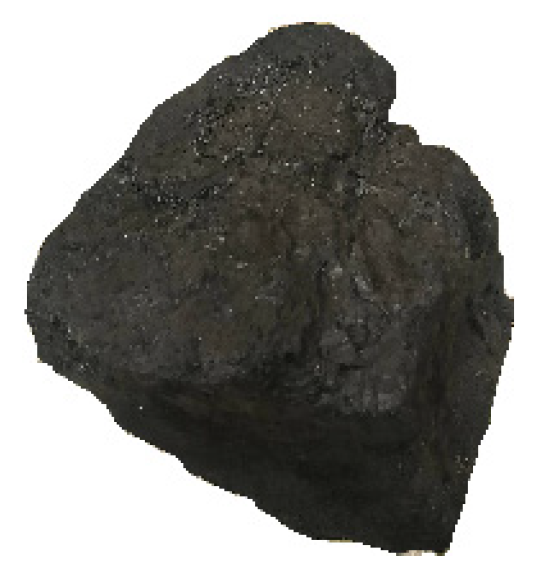
23]. To more realistically simulate formation conditions and analyze the influence of coal characteristics on proppant flowback behavior, this study selected natural outcrop samples (
Figure 3) from the Xsy Formation coal seam in the XD block of China as the experimental material. These samples were processed into the fracture rock plates required for the experiments (
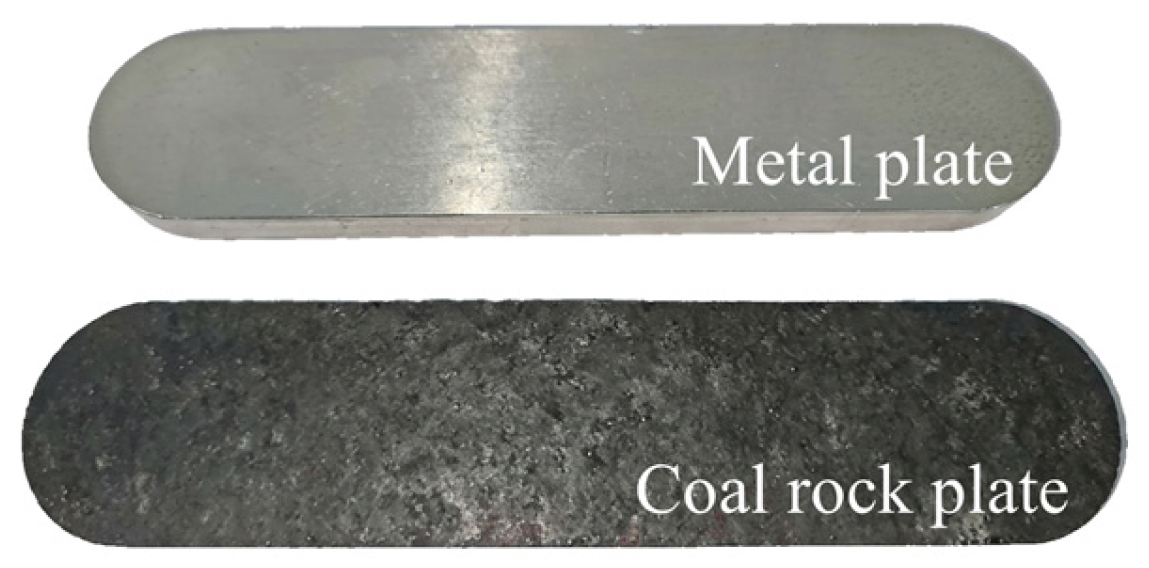
Figure 4).
The target coal seam is low-rank bituminous coal, with vitrinite reflectance (Ro) ranging from 0.56% to 0.78%. The inorganic mineral composition is dominated by calcite and ankerite (accounting for approximately 60% in total), clay minerals account for 13.1%, and the remainder consists of quartz, siderite, etc. The coal mass is dominated by primary structure, with cataclastic-microlitic structure developed locally. The permeability ranges from 0.008 to 2.86 mD, representing a typical low-permeability coal reservoir. Moreover, the reservoir presents strong pore-fracture heterogeneity, characterized by the coexistence of macropores, pore blockages and dense matrix in distinct regions. In addition, face cleats and end cleats are well developed in the coal, accompanied by bedding fractures and shear fractures, resulting in relatively high roughness of the cleavage plane, which is approximately 2–3 times that of conventional sandstone or shale cleavage planes. Mechanical property test results show that the elastic modulus of this coal is only 3.5–5.5 GPa and the uniaxial compressive strength is 16–25 MPa, exhibiting overall mechanical characteristics of low stiffness and low strength.
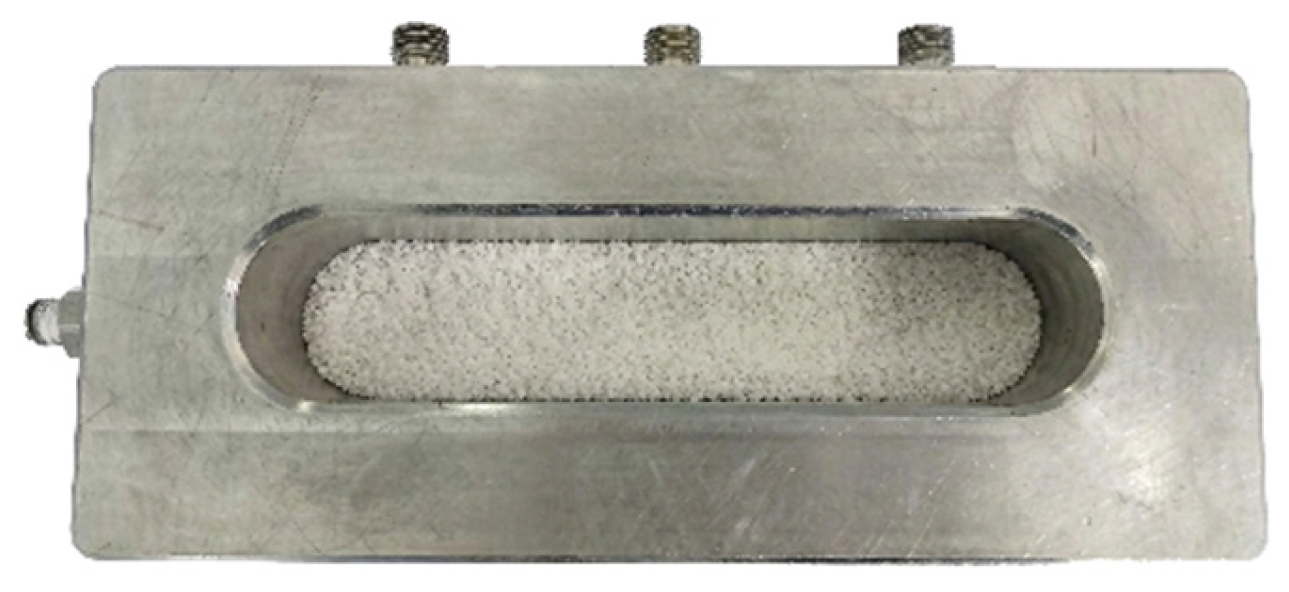
The specific preparation process for the rock plates is as follows: First, the original coal rock block is cut into rectangular slabs with dimensions of 18 cm in length, 4 cm in width, and 4 cm in thickness. Then, the slab is split along the central plane of its thickness direction. This produces two coal rock plates with relatively natural surface morphology and intact structure. A wire-cutting machine is used to shape the rectangular rock plates into a form with semicircular ends. Subsequently, through fine grinding, they are processed into standard-sized rock plates measuring 17.78 cm in length, 3.81 cm in width, and 1.5 cm in thickness. This size ensures compatibility with the interior of the conductivity cell. During experiments, two of the prepared coal rock plates are placed together face-to-face inside the conductivity cell. The gap between them constitutes the simulated coal reservoir fracture. Proppant is evenly spread on the surface of the rock plates at a preset concentration (
Figure 5), simulating the initial distribution of proppant within the fracture after hydraulic fracturing.
The experimental principle is illustrated in
Figure 6. The experimental system simulates the flowback rate using a constant flow rate provided by a high-precision constant-flow pump. This flow rate is monitored and recorded in real time by a digital flow meter. The inlet of the conductivity cell is connected to a pipeline with an inner diameter of 4 mm. The outlet pipeline is directly connected to a proppant collection container. This setup is used to capture proppant particles that flow back during the flowback process. After the experiment concludes, the collected proppant is placed in a constant-temperature drying oven (105 °C) for thorough drying. It is then weighed using an electronic balance with a precision of 0.01 g. This procedure allows for the precise quantification of the flowback mass.
The experiment applies axial load to the coal rock plates inside the conductivity cell through the system’s integrated axial stress loading module. This simulates the closure effect of the formation fracture. This stress is transmitted to the rock plates via a hydraulically driven piston and ultimately acts on the proppant particles filled between them. This process simulates the effective stress borne by the proppant under formation conditions. Effective stress is defined as the difference between the far-field geostress acting on the fracture face and the fluid pressure inside the fracture. Its value can reflect the degree of fracture closure [
24]. In the experiment, different axial pressure loads are preset and applied through the computer control system. This allows for the precise setting of different effective stress levels, thereby simulating various reservoir stress states ranging from low to high closure. A higher effective stress indicates a greater degree of fracture closure and a stronger compaction effect on the proppant particles.
2.2. Experimental Procedures and Protocol
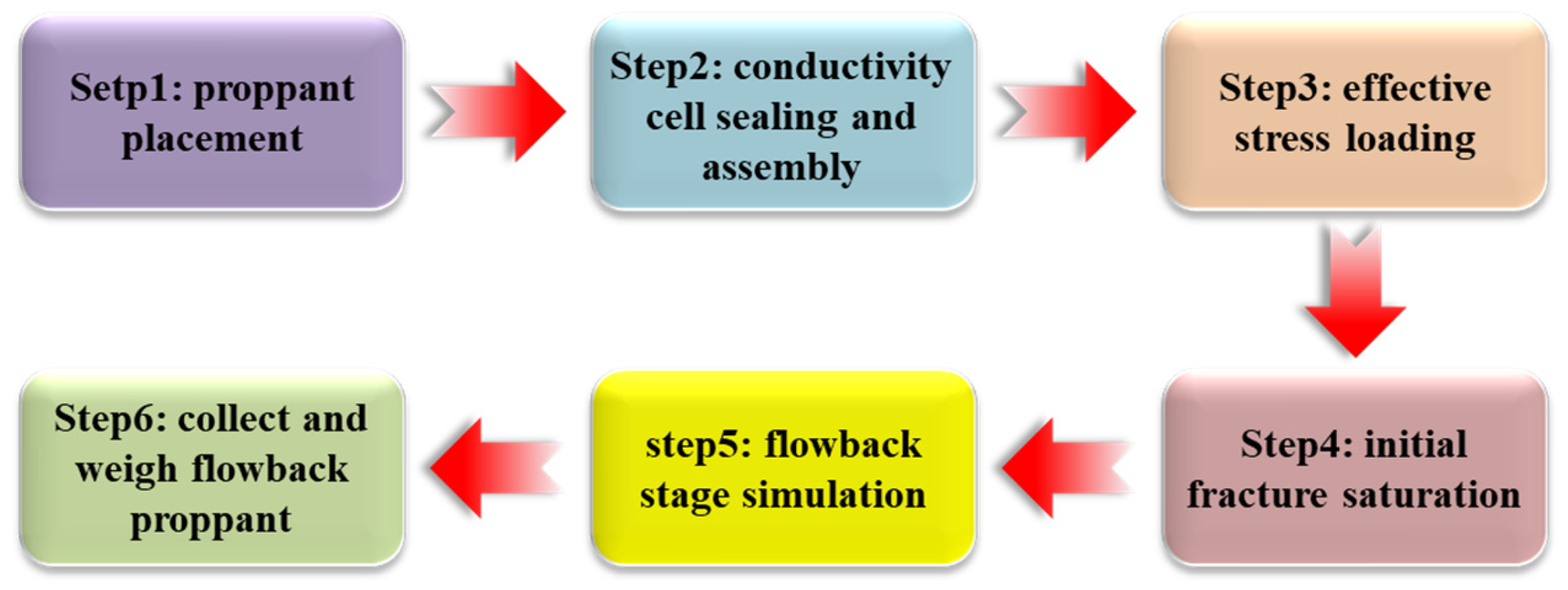
To investigate the influence of different engineering parameters on proppant flowback behavior and to determine its critical flowback flow rate, a complete experimental procedure was designed based on the principle illustrated in
Figure 6. This procedure, shown in
Figure 7, encompasses three stages: experimental preparation, experimental execution, and experimental result recording.
Experimental preparation primarily involves three steps: proppant placement, conductivity cell sealing and assembly, and effective stress loading. First, one prepared standard coal rock plate is placed horizontally on the sealing base plate, and a single layer of proppant particles is uniformly spread on its surface at a preset concentration. Then, the other matching coal rock plate is placed on top, forming a simulated initial propped fracture where the gap between the two plates contains the proppant layer. Next, a sealing top plate is placed over the rock plate assembly, and sealant is applied around its perimeter to prevent leakage under axial and fluid pressure during the experiment. The entire assembly is then positioned on the experimental platform, with the inlet and outlet pipelines properly connected. Finally, the axial stress loading module is activated via the computer control system; the piston moves upward according to the preset program to apply the specified axial load to the conductivity cell, simulating the effective stress acting on the proppant pack under formation conditions.
Upon completing the preparatory work, the proppant flowback experiment is conducted. It mainly consists of two key steps: initial fracture saturation and flowback stage simulation. Initial fracture saturation: The constant-flow pump is activated to inject flowback fluid into the fracture at a low initial rate. The purpose of this stage is to fully wet the rock plates and the proppant pack, displace any residual gas, and establish a stable initial water saturation, thereby simulating the original fluid environment within the fracture. To prevent disturbance of the proppant during saturation, the initial flow rate is set at 2 mL/min, which is significantly lower than the anticipated critical flowback flow rate. Flowback stage simulation: After initial saturation is complete, the flowback stage is simulated using a stepwise increasing flow rate method. The initial flowback flow rate is set at 10 mL/min, and 6 L of flowback fluid is injected to allow the flow within the fracture and proppant transport to reach a relative equilibrium, enabling observation of the flowback state at this rate. Subsequently, the flow rate is increased stepwise in increments of 10 mL/min. At each level, a sufficient volume of flowback fluid is injected to ensure stable flow, thereby determining the range of the critical flowback flow rate.
The specific operation for recording experimental results is as follows: After completing the flowback simulation at each flow rate level, all proppant particles flowing out from the outlet are collected. These particles are placed in a constant-temperature drying oven at 105 °C for 2 h to thoroughly remove moisture. Subsequently, the mass of the dried proppant is weighed using a precision electronic balance. By analyzing the curve of flowback mass versus flow rate, the range of the critical flowback flow rate for the proppant is determined.
Based on the aforementioned experimental procedure and integrating the geological characteristics and engineering parameters of the coal reservoir in the XD block of China, this study systematically conducted proppant flowback experiments considering the coupling effects of multiple factors.
The experimental variables include proppant particle size, flowback fluid viscosity, proppant concentration and effective stress, with specific settings listed in
Table 1. Among them, the proppant adopts 20/40 mesh, 30/50 mesh and 40/70 mesh quartz sand (apparent density 1.67 g/cm
3) applied in the field of the block. The flowback fluid uses active water, the main fracturing fluid system in field operation, whose viscosity is controlled by adjusting the concentration of viscosifier to simulate flowback fluids with different sand-carrying capacities. According to field sand concentration data, proppant concentration is set at three levels: 3 kg/m
2, 6 kg/m
2 and 9 kg/m
2, corresponding to low, medium and high sand placement conditions, respectively. Effective stress is used to characterize the net stress acting on the proppant pack during fracture closure, which directly reflects the fracture closure degree and the mechanical environment controlling proppant stability. With reference to the net stress range (2–10 MPa) during rapid flowback in the block, three levels of 2 MPa, 6 MPa and 10 MPa are selected in the experiment to simulate different reservoir stress states from weak closure to strong closure.
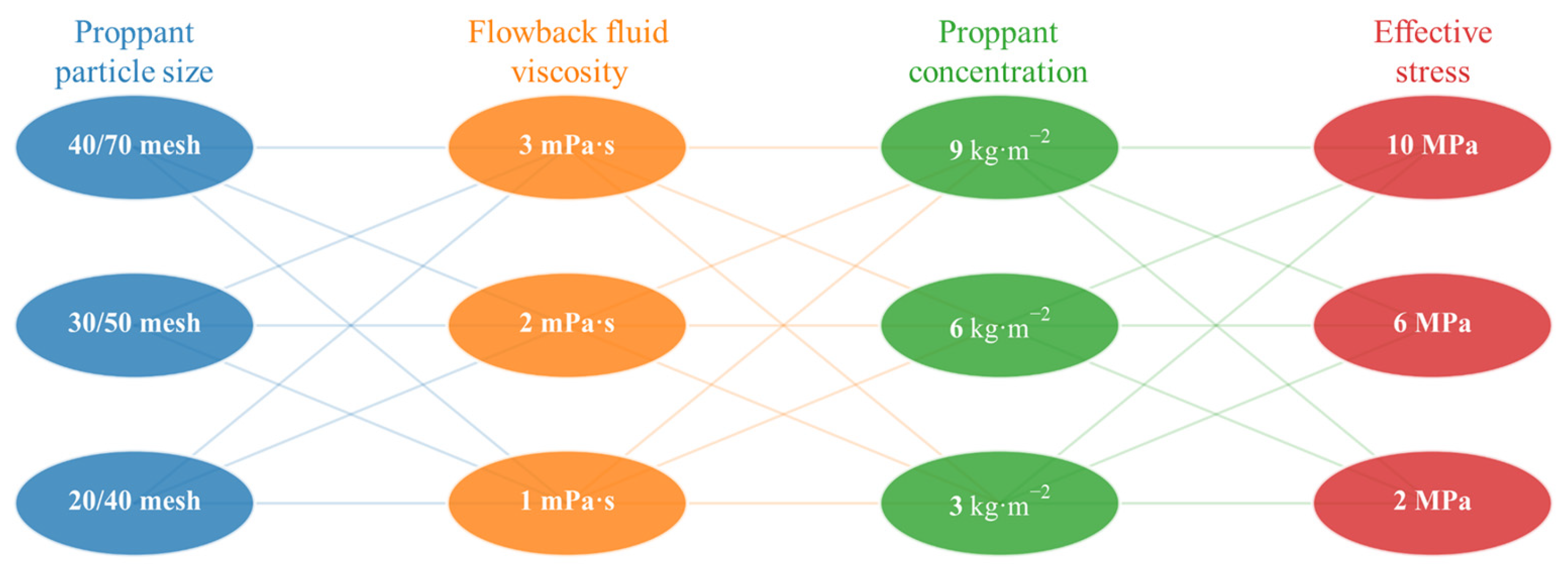
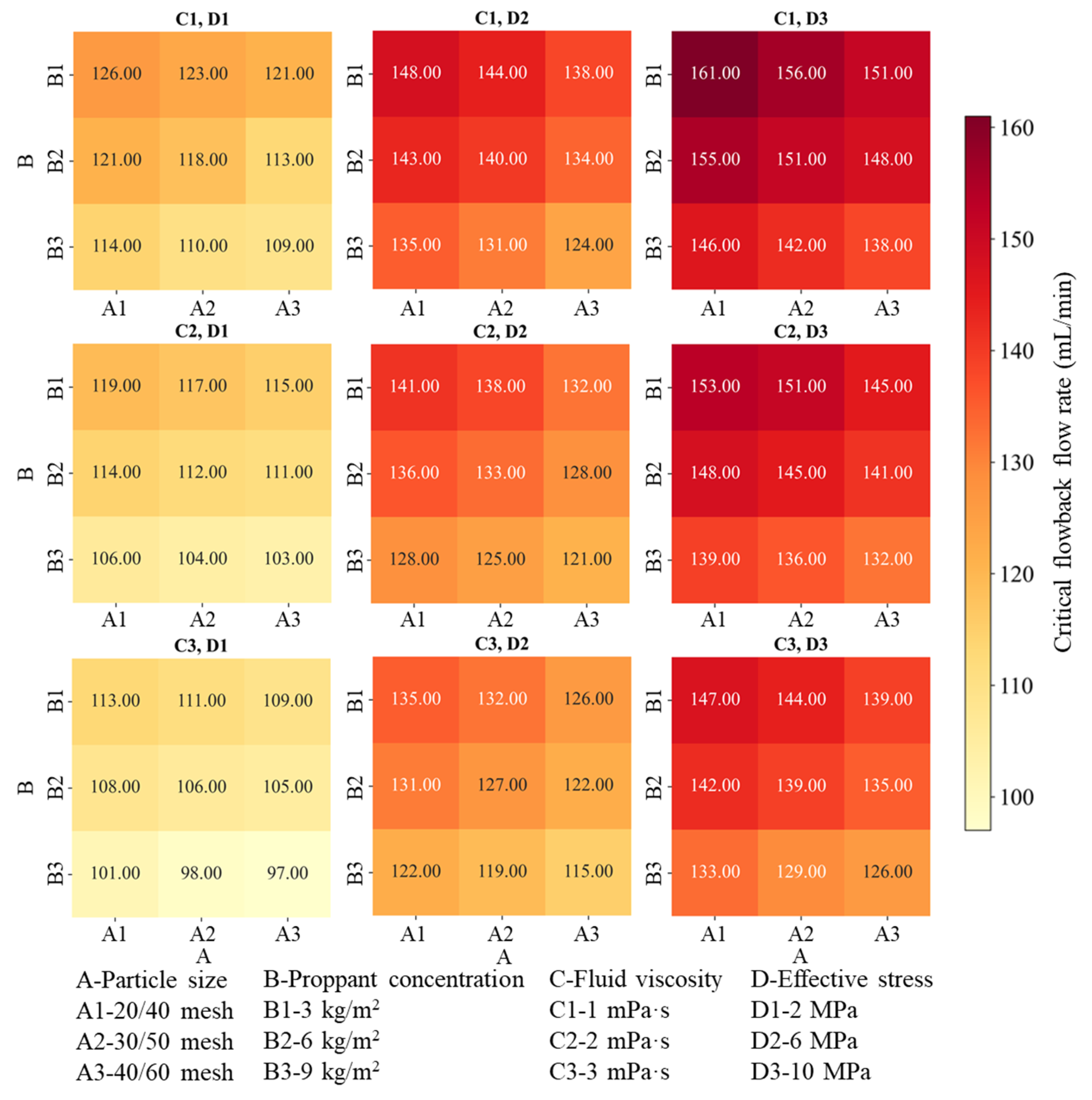
Based on the aforementioned research variables and parameter ranges, the specific combination plan for the experimental conditions is illustrated in
Figure 8. This plan aims to quantitatively reveal the influence patterns of different factors on the critical flowback flow rate and to determine their relative weights.
2.3. Flowback Criterion Method
Accurately characterizing the critical conditions for proppant flowback is significant for quantitatively evaluating fracture stability and clarifying the characteristics of flowback behavior. Referring to relevant experimental methods [
23,
25,
26,
27], this study monitors and measures the dynamics of proppant flowback behavior at different flowback rates, determines the critical flowback rate, and calculates the corresponding flowback ratio, so as to provide a basis for flowback system optimization. The specific criterion method is as follows.
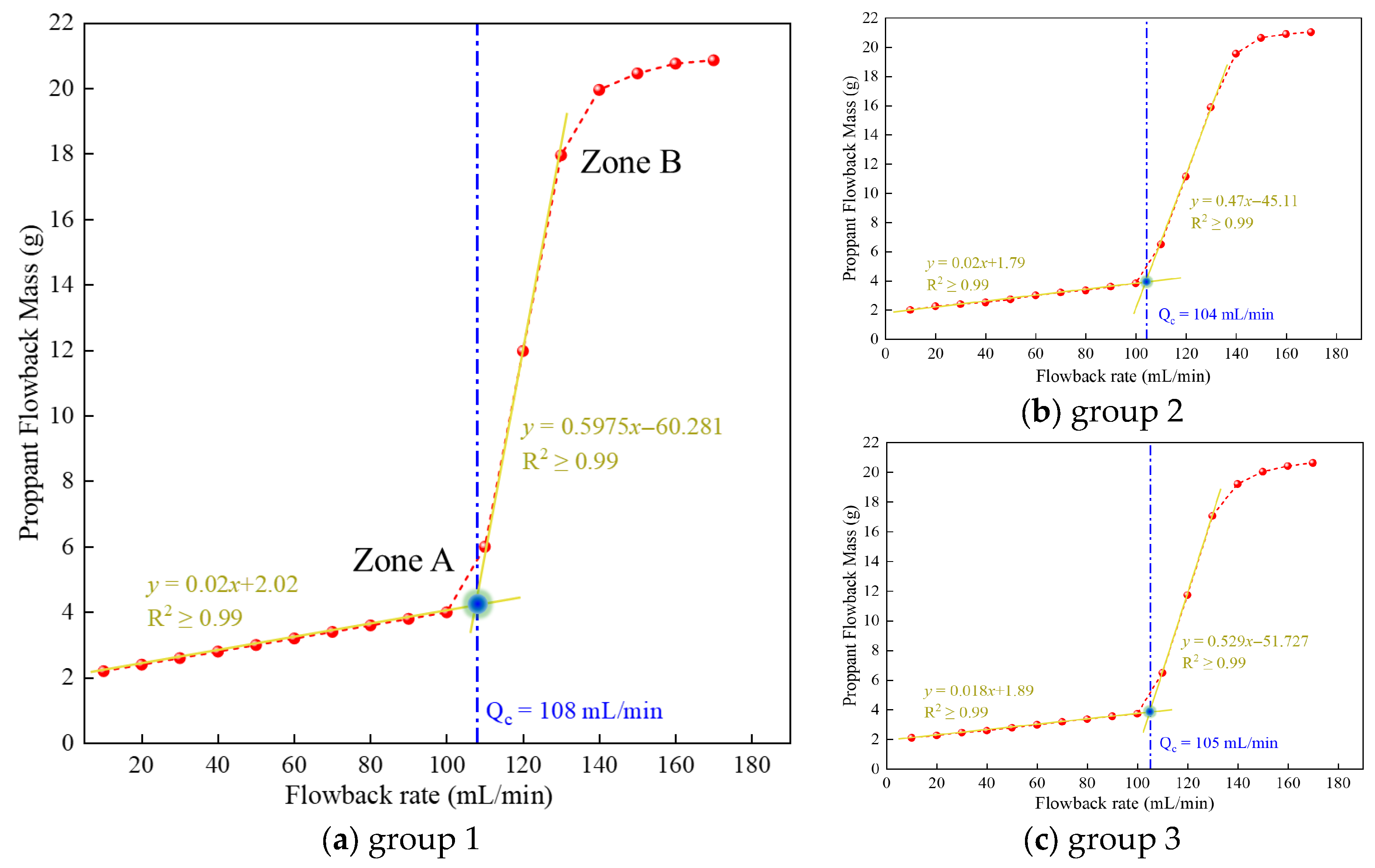
During the flowback simulation process, the flowback rate is increased stepwise from an initial low rate, using a fixed increment of 10 mL/min. At each flow rate level, after the flow stabilizes, the mass of proppant that has flowed back during that stage is collected and measured. A “flowback rate vs. proppant flowback mass” relationship curve is plotted (a typical curve is shown in
Figure 9a; experimental conditions: 20/40 mesh proppant, proppant concentration 6 kg/m
2, fluid viscosity 2 mPa·s, effective stress 2 MPa).
According to
Figure 9a, the curve exhibits two characteristic inflection points. At the first inflection point (Zone A), the slope of the curve increases significantly, indicating that the proppant begins systematic instability and continuous transport. After the second inflection point (Zone B), the slope decreases, indicating that after a substantial amount of proppant has flowed back, the remaining proppant particles within the fracture undergo further compaction under the effective stress, causing the overall structure to restabilize. Consequently, the flowback effect no longer shows significant enhancement with further increases in the flowback rate. The essence of proppant flowback is the process where its static mechanical equilibrium within the fracture is disrupted. Therefore, the flow rate interval corresponding to the first inflection point encompasses the critical flowback flow rate.
To accurately determine this critical value, linear fitting is performed on the data points before and after the inflection point in Zone A, respectively. The flow rate corresponding to the intersection of the two fitted straight lines is defined as Qc. To be consistent with field operating practices, the value of Qc is rounded to an integer. When the flowback rate is below Qc, the proppant exhibits only minimal, dispersed transport, resulting in a low and stable flowback ratio. When the flow rate exceeds Qc, significant and sustained proppant flowback occurs, causing the flowback ratio to increase sharply.
The intersection of the fitted lines rather than direct observation points is adopted as Qc, because the flowback rate increases at fixed steps during the experiment, and the actual inflection point may lie between two consecutive step values. If the observed flow rate is directly taken as the critical value, the method is simple to operate but lacks accuracy. Linear fitting can suppress the influence of discrete fluctuations in experimental data, making the determination results more consistent with the actual critical state of the continuous physical process.
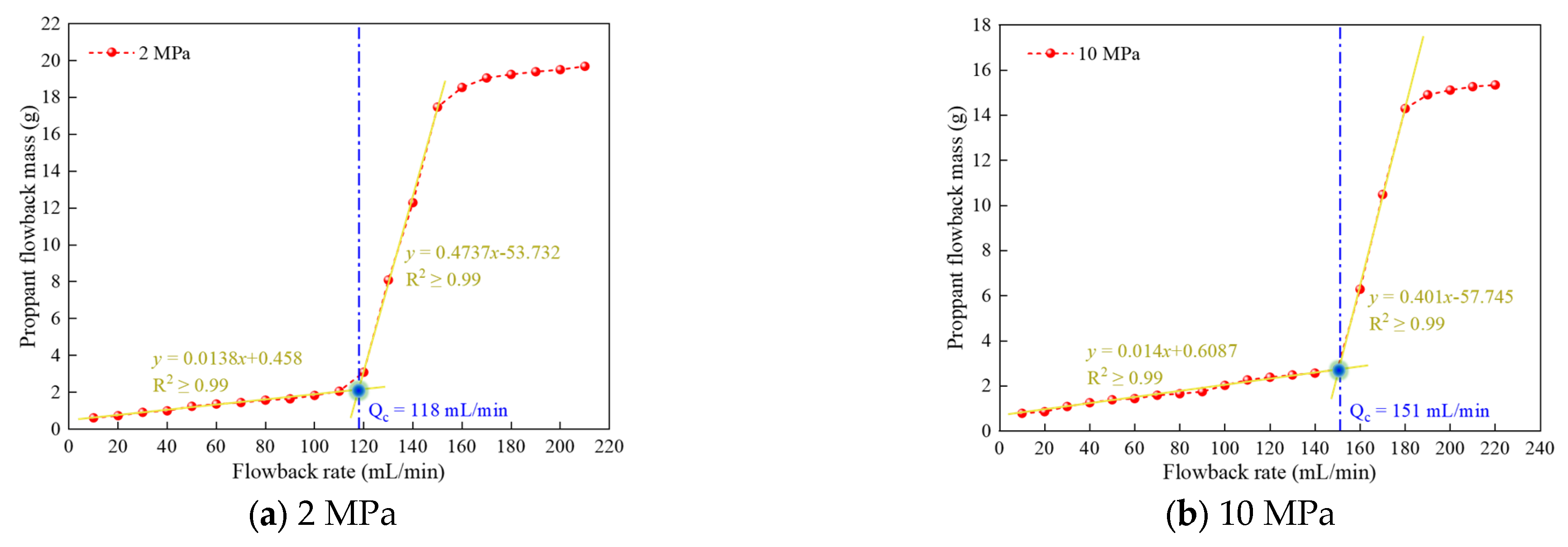
To verify the reliability of this method, repeated experiments were carried out under identical conditions (
Figure 9b,c). The relative errors of the three sets of Q
c measurement results are all less than 5%, indicating that the method has good stability and repeatability. The main sources of experimental error are attributed to the mass deviation during proppant weighing and placement, as well as the statistical error in the proppant outflow at the fracture outlet.
The calculation formula for the proppant flowback ratio at a given flowback rate is as follows:
where:
denotes the proppant flowback ratio (%);
denotes the dry mass of flowed-back proppant (g);
denotes the proppant concentration (kg/m
2).
The area of the standard API conductivity cell is 64.52 cm2; Equation (1) is obtained through conversion and simplification.
By integrating the aforementioned dynamic monitoring of proppant flowback mass with the piecewise trend analysis of the flowback rate vs. flowback mass relationship curve, a determination process for the critical flowback flow rate of proppant was established. The critical flowback flow rate characterizes the critical flowback velocity; the two can be interconverted using pipeline dimensions. This achieved the quantification of a key parameter in proppant flowback behavior, providing a methodological basis for subsequent factor analysis.
3. Results
3.1. Analysis of Fundamental Proppant Flowback Behavior
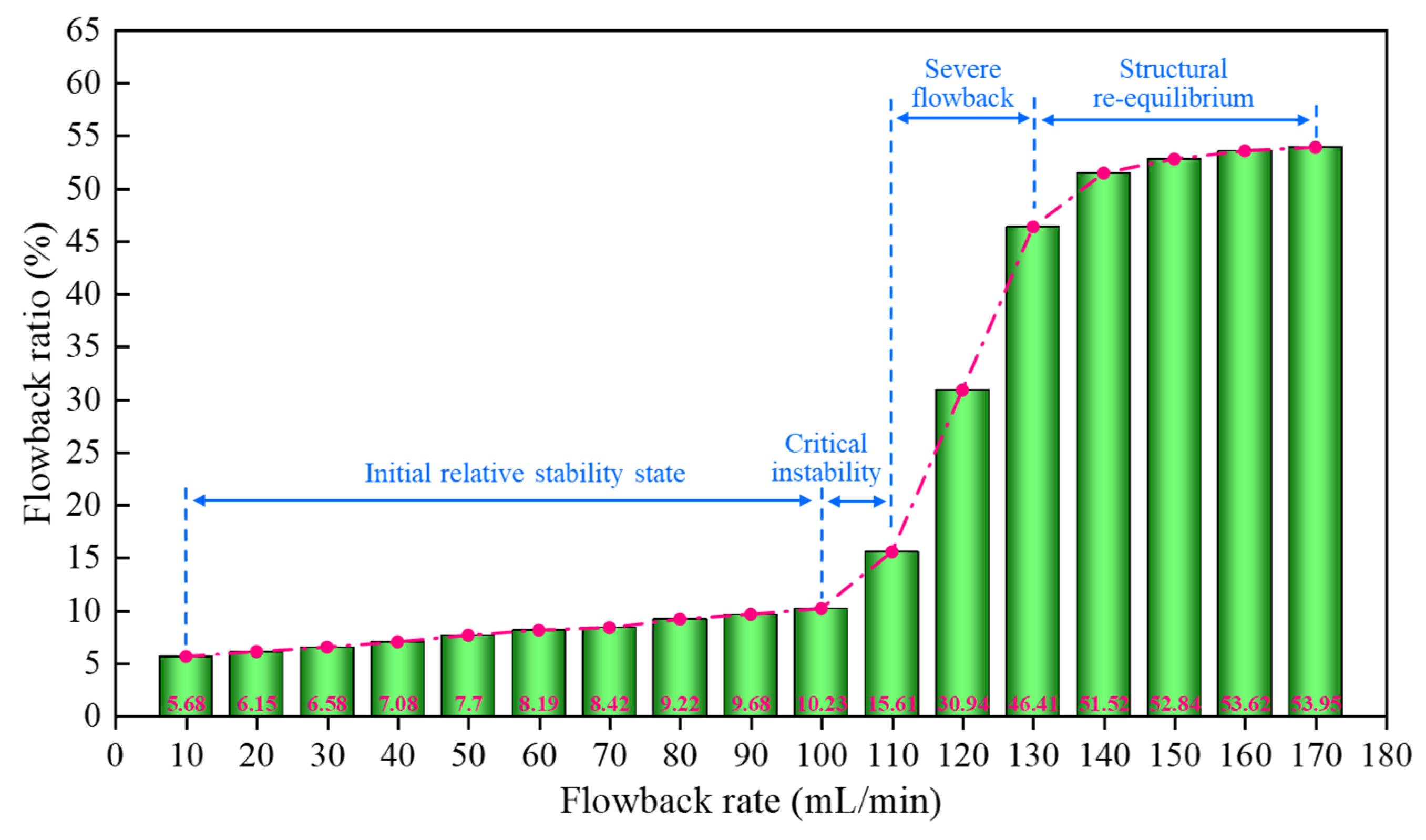
Based on the aforementioned criterion method, the trigger conditions for proppant flowback can be clarified and its dynamic process quantified. This section takes the typical experimental curve (
Figure 9a) and its corresponding calculated flowback ratio results (
Figure 10) as examples to analyze the flowback behavior of proppant in coal fractures during the flowback process. Under these experimental conditions, the critical flowback flow rate is determined to be 108 mL/min.
The flowback simulation began at an initial rate of 10 mL/min. After flow equilibrium was reached at this rate, the measured proppant flowback mass was 2.2 g, corresponding to a flowback ratio of 5.68%. The proppant produced at this stage primarily originated from a localized area near the fracture outlet. This phenomenon can be attributed to two mechanisms. First, the outlet simulates the near-wellbore perforation location, where fluid convergence leads to a significantly higher local flow velocity and drag force compared to the main body of the fracture. Second, due to the removal of the outlet filter screen during the experimental modification, the lack of boundary constraint at this location makes proppant near the outlet more susceptible to minor displacement under axial load and gravity. It must be clearly stated that this portion of proppant production mainly reflects initial system compaction and boundary effects, rather than a macroscopic flowback behavior dominated by the flowback fluid.
When the flowback rate was gradually increased from 10 mL/min to 100 mL/min, the proppant flowback ratio cumulatively increased by only about 4.55%. This indicates that the proppant pack remained largely stable below the critical flow rate. However, when the flow rate increased to 110 mL/min (slightly exceeding the critical value of 108 mL/min), the flowback ratio jumped to 15.61%, marking the onset of systematic instability in the proppant pack. Subsequently, within the flow rate range of 110 mL/min to 120 mL/min, the flowback ratio sharply increased by 15.33%, exhibiting pronounced flowback characteristics.
As flowback continued and a substantial amount of proppant was carried out of the fracture, its subsequent flowback behavior changed. When the flowback rate exceeded 140 mL/min, the increase in the flowback ratio significantly slowed down, rising by only about 2.43% within the range of 140 mL/min to 170 mL/min. This indicates that after severe flowback, the remaining proppant particles within the fracture rearranged and reached a new mechanical equilibrium, thereby re-entering a relatively stable state with low mobility.
Overall, the proppant flowback exhibits a typical evolutionary characteristic described as “initial relative stability—critical instability—severe flowback—re-equilibrium.” This dynamic pattern intuitively reflects the complete physical process experienced by the proppant pack within the fracture: “breakdown of mechanical equilibrium—massive particle transport—structural restabilization”.
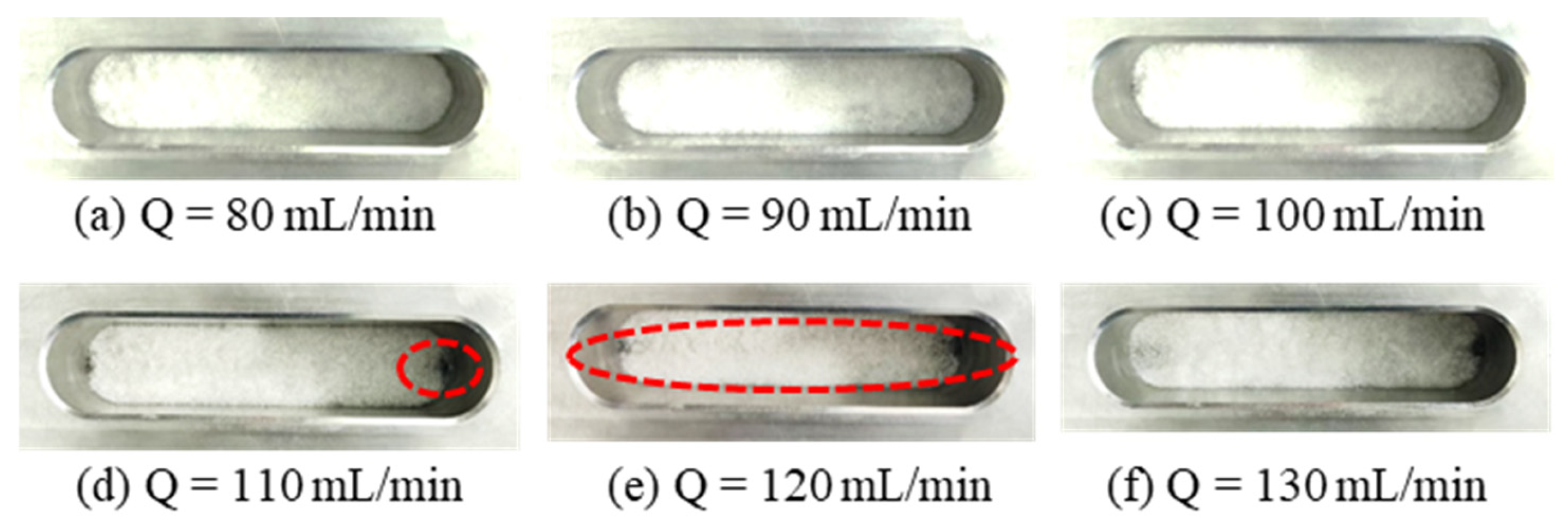
To further reveal the impact of proppant flowback on its distribution within the fracture, the proppant placement morphology inside the conductivity cell after experiments at different flowback rates was analyzed, as shown in
Figure 11.
When the flowback rate was below the Qc, the main morphology of the proppant pack inside the conductivity cell remained stable, with no large-scale disturbance observed. The limited transport that was observable was concentrated only in the outlet region, manifesting as the loss of a small number of particles. However, the overall packing structure remained intact, with no apparent channels or depressions observed.
When the flowback rate (Q = 110 mL/min) slightly exceeded Q
c, continuous proppant flowback behavior began. A localized “depression zone” first formed at the outlet end, exposing the underlying coal rock plate (
Figure 11d). This indicates that the fluid drag force had overcome the resistance caused by friction and effective stress on the proppant particles, leading to local equilibrium failure. The flowback preferentially occurred in the outlet region, primarily attributed to the stress concentration induced jointly by the fluid convergence effect and the lack of lateral constraint present at that location.
As the flowback rate further increased (Q = 120 mL/min), the flowback intensified. The “depression zone” at the outlet expanded, forming an “unsupported area.” Simultaneously, the preliminary development of a dominant flow channel oriented from the inlet to the outlet was observable (
Figure 11e). This marks the occurrence of large-scale structural reconfiguration within the proppant pack, where its overall stability was compromised, corresponding to the high flowback ratio of 30.94% at this stage.
The morphological evolution process described above indicates that proppant flowback has a distinct initiation threshold and exhibits spatial progression. Flowback first and primarily occurs in the outlet region, which simulates the near-wellbore perforation location. Once the flowback rate exceeds the critical value, proppant production will initially manifest in this region. This can easily lead to the loss of effective support in the near-wellbore fracture segment after closure, forming an “ineffective fracture” and compromising the fracturing effectiveness. If the flowback rate continues to increase, the instability zone will extend from the outlet deeper into the fracture, triggering more widespread structural damage to the proppant.
3.2. Analysis of Influencing Factors on Proppant Flowback
3.2.1. Proppant Particle Size
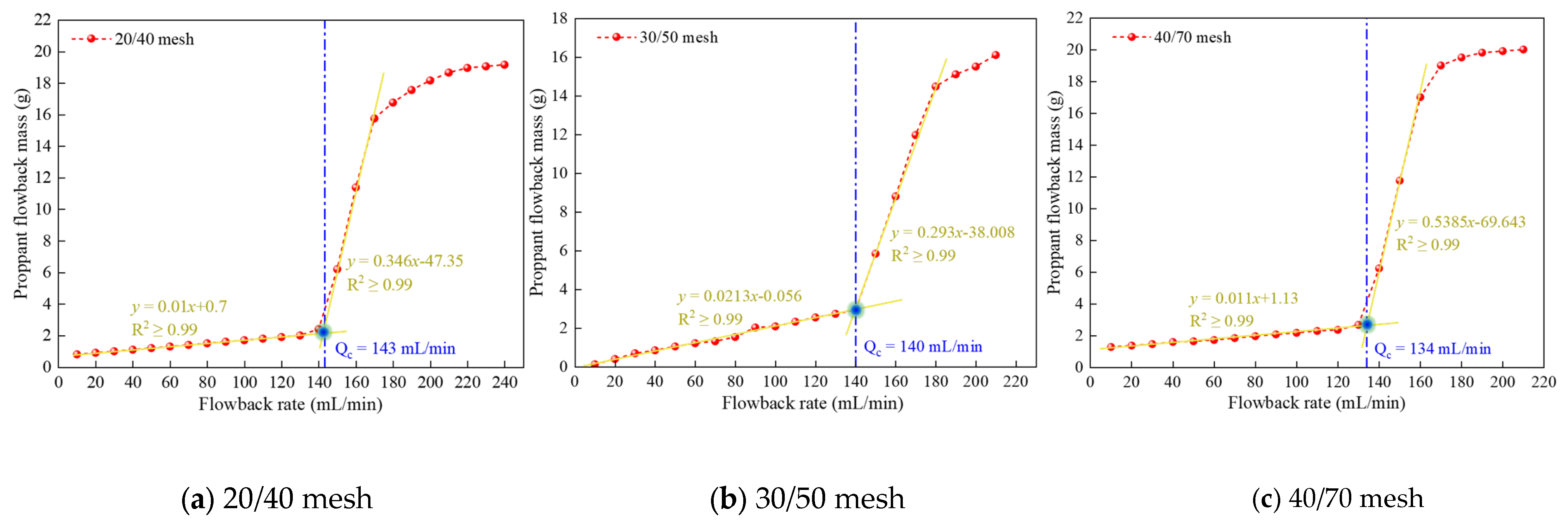
To investigate the particle size effect, flowback experiments were conducted on quartz sand with three particle size ranges—20/40 mesh, 30/50 mesh, and 40/70 mesh—under fixed conditions of flowback fluid viscosity (1 mPa·s), proppant concentration (6 kg/m
2), and effective stress (6 MPa). The “flowback rate vs. proppant flowback mass” relationship curves for the different particle sizes are shown in
Figure 12.
Based on the criterion method described in
Section 2.3, the Q
c and its corresponding flowback ratio for each particle size condition were extracted from
Figure 12. The results are summarized in
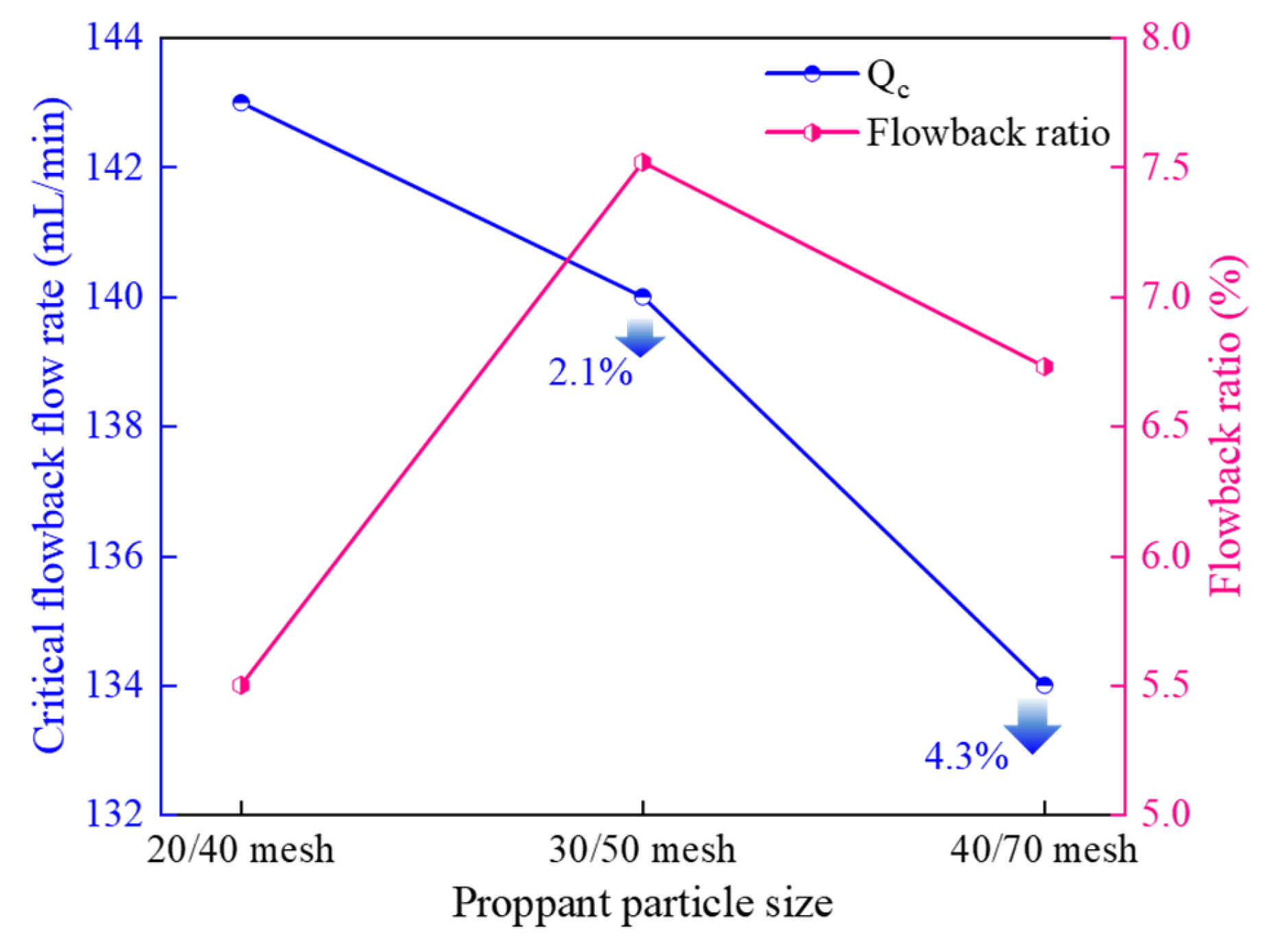
Figure 13. It can be observed from the figure that the critical flowback flow rate for proppant shows a decreasing trend as the particle size decreases, and the magnitude of the decrease becomes larger. When the particle size decreased from 20/40 mesh to 30/50 mesh, Q
c reduced by 2.1%. When it further decreased to 40/70 mesh, the reduction in Q
c increased to 4.3%. This indicates that in coal fractures, proppant packs with smaller particle sizes have a lower threshold for flow stability, making them more prone to instability and flowback during the flowback process.
It is noteworthy that the decreasing trend of the Q
c does not show a clear correlation with its corresponding critical flowback ratio. As shown in
Figure 13, as the particle size decreases, the critical flowback ratio exhibits a non-monotonic variation in rising first and then falling slightly (increasing from 5.5% to 7.52% and then decreasing to 6.73%), which is obviously inconsistent with the monotonic decreasing trend of Q
c. This phenomenon indicates that the susceptibility of the proppant pack to reaching the critical instability condition and its tendency of instantaneous massive flowback at the critical point may be governed by different physical mechanisms.
From a physical perspective, the critical flowback rate represents the threshold condition for the initiation of instability in the proppant pack, which is determined by the mechanical equilibrium among fluid drag force, interparticle friction force and net gravity, reflecting when flowback starts. In contrast, the flowback ratio characterizes the intensity and scale of particle migration after the instability of the pack, which is jointly controlled by factors such as the proppant accumulation structure, particle interlocking state, local fracture flow field and outlet boundary effect, reflecting the magnitude of flowback volume. They correspond to the initiation mechanism and migration mechanism of proppant flowback, respectively, with certain differences in controlling factors and physical processes. Therefore, when evaluating the risk of proppant flowback, attention should be paid to both the instability initiation threshold and the flowback intensity after instability, which jointly constitute the complete characteristics of proppant flowback during the flowback process.
3.2.2. Flowback Fluid Viscosity
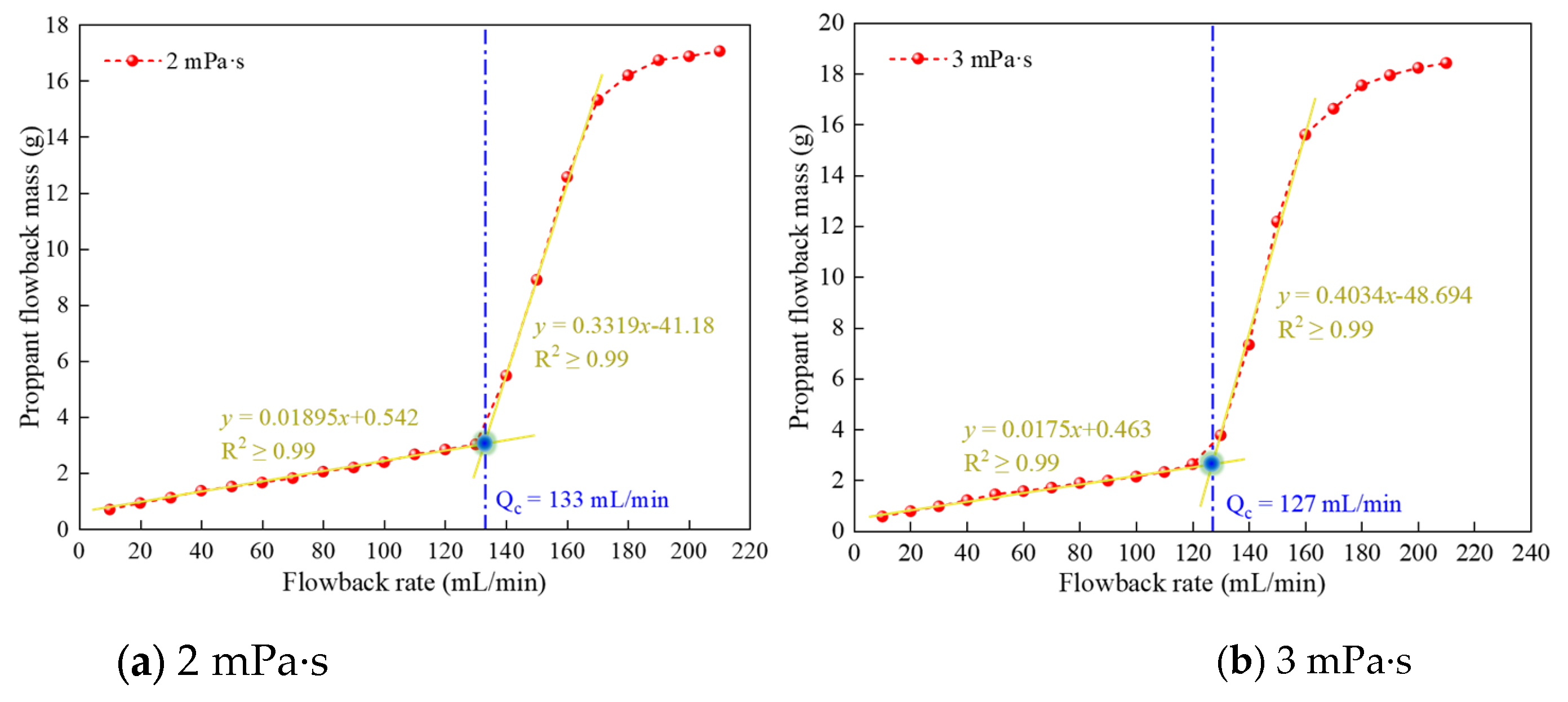
To investigate the effect of fluid viscosity, flowback experiments were conducted using fluids with viscosities of 1 mPa·s, 2 mPa·s, and 3 mPa·s, prepared by adjusting the concentration of the viscosifier. These experiments were performed under fixed conditions of proppant particle size (30/50 mesh), proppant concentration (6 kg/m
2), and effective stress (6 MPa). The “flowback rate vs. proppant flowback mass” relationship curves for fluids of different viscosities are shown in
Figure 14 (wherein, the curve for 1 mPa·s is the same as in
Figure 12b).
Based on the critical flowback criterion method, the Q
c and its corresponding critical flowback ratio for different viscosities were extracted from
Figure 14. The results are shown in
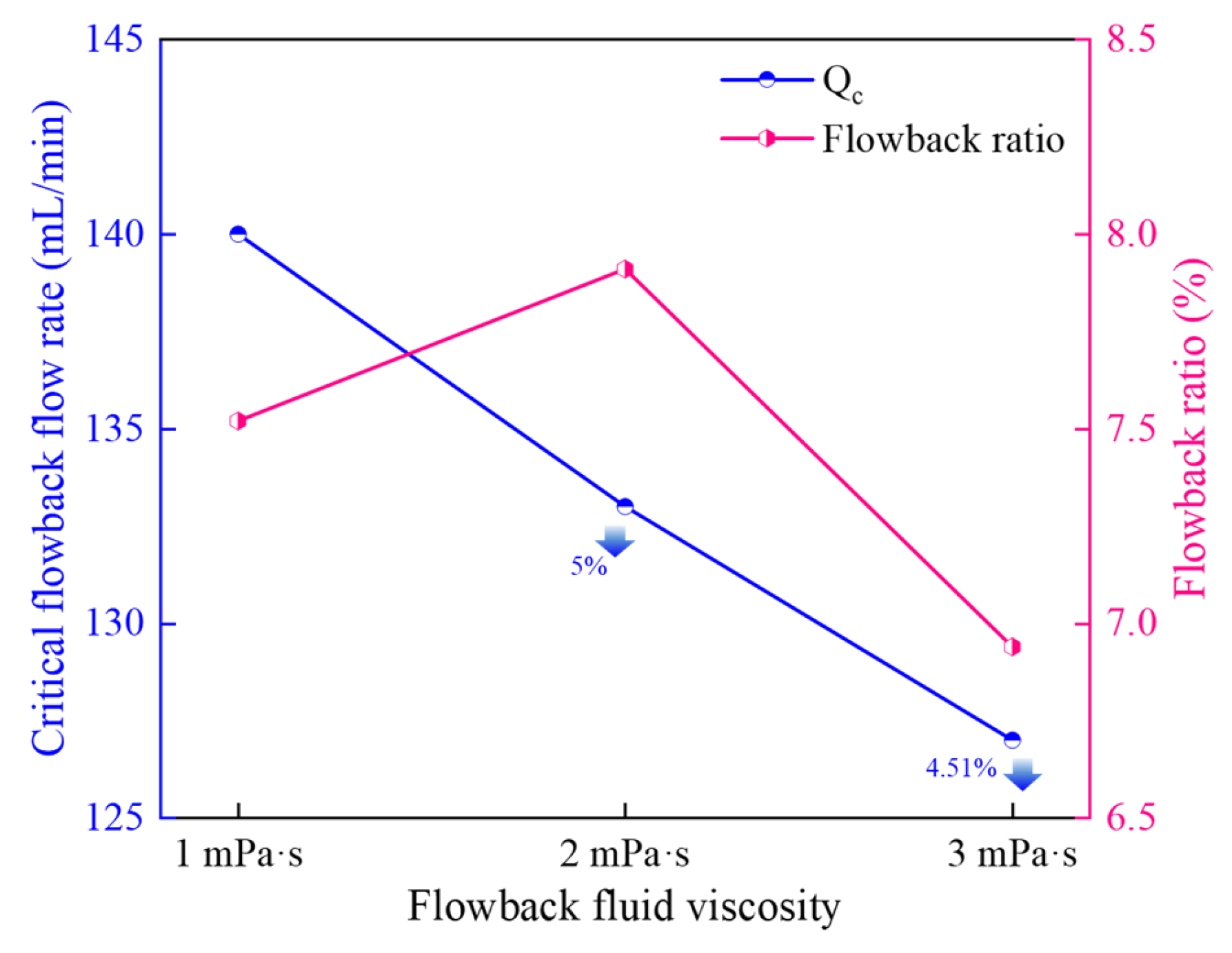
Figure 15. The experimental results indicate that as the flowback fluid viscosity increased from 1 mPa·s to 3 mPa·s, the Q
c for proppant showed a continuous downward trend, with similar reductions between adjacent viscosity levels. When the viscosity increased from 1 mPa·s to 2 mPa·s, Q
c decreased by 5.0%. When it increased from 2 mPa·s to 3 mPa·s, the Q
c further decreased by 4.51%. This is primarily attributed to the enhanced dominant role of fluid viscous forces in the force balance of the particles. Increased viscosity directly raises the viscous drag force exerted by the fluid on the proppant particles, thereby reducing the critical shear stress required to maintain static equilibrium of the particles. Consequently, the proppant pack becomes unstable and flows back at a lower flowback rate.
Similar to the effect of particle size, the decrease in the Q
c did not lead to a corresponding synchronous or regular change in its associated critical flowback ratio. As shown in
Figure 15, the critical flowback ratio presents a non-monotonic trend of increasing first and then decreasing with rising viscosity (from 7.52% to 7.91%, and then decreasing to 6.94%). This also indicates that while a higher viscosity fluid lowers the critical threshold for flowback initiation, it does not necessarily mean that a more severe flowback behavior is triggered at the critical flow rate.
3.2.3. Proppant Concentration
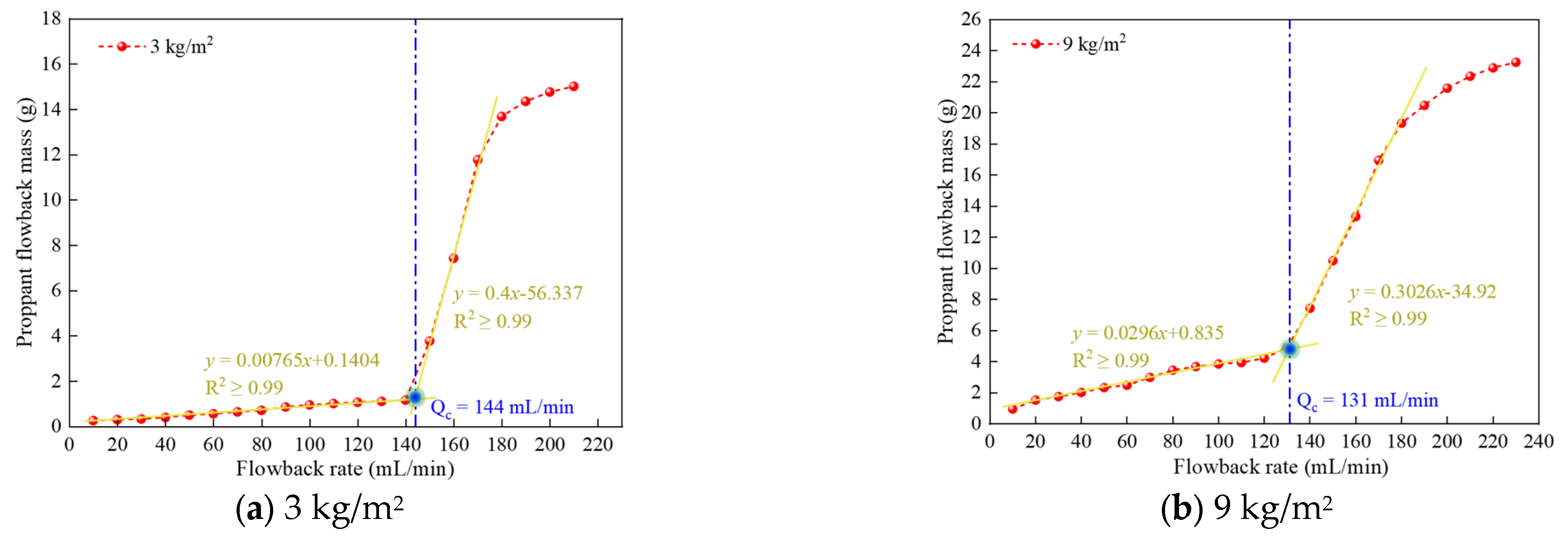
Considering the variation in proppant concentration within the fracture, the study selected three representative field concentrations for investigation: 3 kg/m
2, 6 kg/m
2, and 9 kg/m
2. Experiments were conducted under fixed conditions of proppant particle size (30/50 mesh), flowback fluid viscosity (1 mPa·s), and effective stress (6 MPa). The “flowback rate vs. proppant flowback mass” relationship curves for the different proppant concentrations are shown in
Figure 16 (where the curve for 6 kg/m
2 is consistent with
Figure 12b).
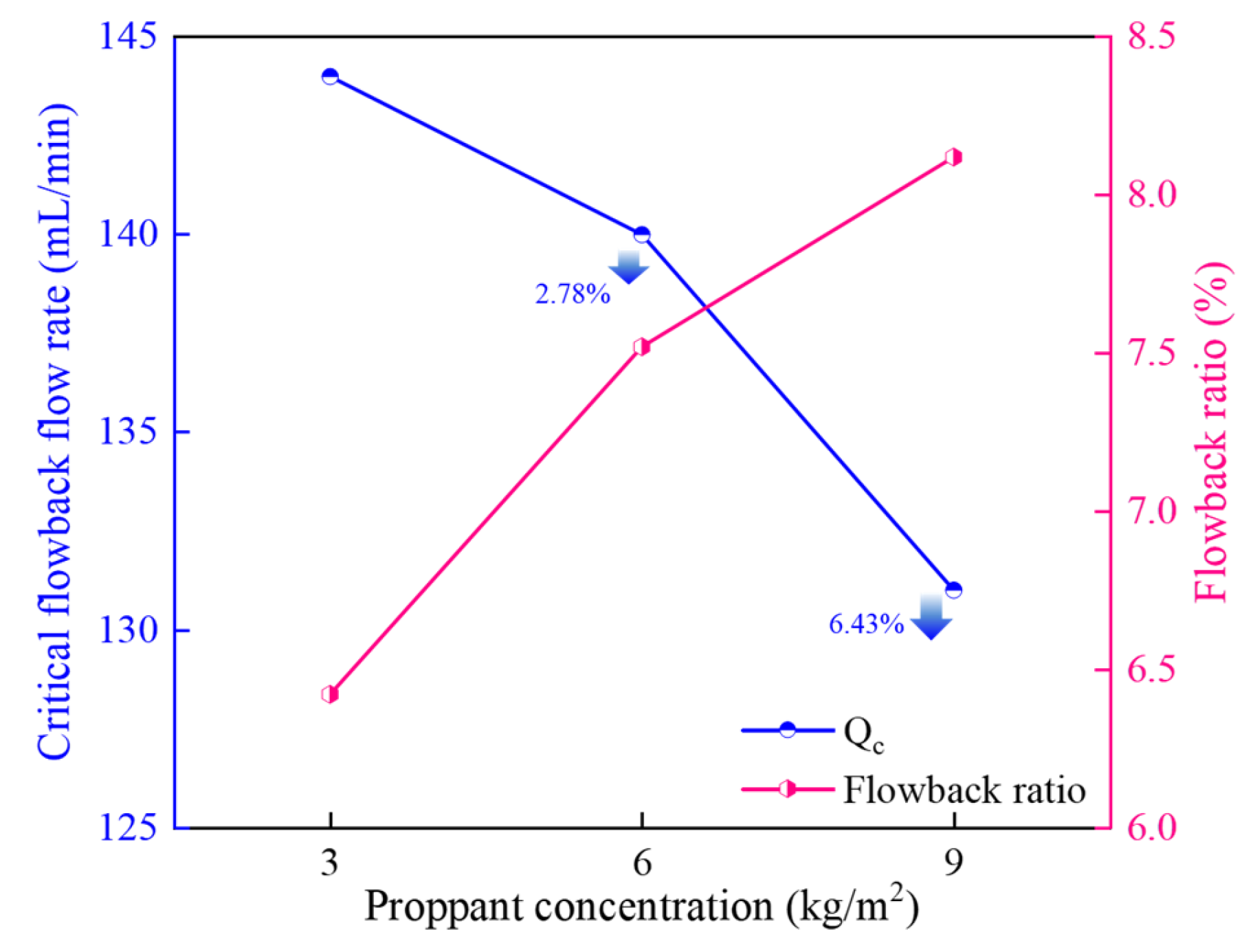
Based on the critical criterion method, the Q
c and critical flowback ratio corresponding to each proppant concentration were extracted from
Figure 16. The results are summarized in
Figure 17. The experiments show that the Q
c for proppant exhibits a significant non-linear decreasing trend with increasing proppant concentration, indicating a negative correlation between them. Specifically, when the proppant concentration increased from 3 kg/m
2 to 6 kg/m
2, Q
c decreased by 2.78%. When it further increased to 9 kg/m
2, the reduction in Q
c expanded sharply to 6.43%. This pattern indicates that a higher proppant concentration does not enhance the overall stability of the pack. On the contrary, it significantly reduces the pack’s ability to resist fluid disturbance, causing the proppant to become unstable and flow back at a lower flowback rate.
Different from the influence laws of particle size and viscosity, the decrease of Q
c is accompanied by an overall rise in the corresponding critical flowback ratio in this group of experiments, increasing from 6.42% to 8.12% (
Figure 17). This correlation can be explained from the following aspects:
- (a)
As the proppant concentration increases, the packing of proppant particles becomes denser. While the number of contact points between particles increases, the average axial stress borne by an individual particle decreases accordingly, thereby weakening the inter-particle frictional resistance that maintains their static equilibrium.
- (b)
Simultaneously, a higher proppant concentration is more prone to forming interlocking particle packing structures with poorer stability. Once the fluid drag force reaches the critical condition, it is easier to trigger collective, chain-reaction transport of particle clusters, resulting in substantial proppant production at the moment of instability.
- (c)
Furthermore, an increase in proppant concentration implies a greater proppant pack thickness within the fracture. Under the same effective stress, the ability of its overall structure to resist fracture height changes diminishes, further aggravating the flowback intensity post-instability.
Therefore, increasing the proppant concentration not only lowers the critical threshold for flowback in the proppant pack but also enhances the flowback intensity after instability. This coupled risk effect of “low threshold—high flowback” should be considered when optimizing sand placement design for coal reservoirs.
3.2.4. Effective Stress
To investigate the influence of effective stress on proppant flowback behavior, experiments were conducted under fixed conditions of proppant particle size (30/50 mesh), flowback fluid viscosity (1 mPa·s), and proppant concentration (6 kg/m
2). Based on the field stress range, three effective stress levels—2 MPa, 6 MPa, and 10 MPa—were selected for comparative analysis. The “flowback rate vs. proppant flowback mass” relationship curves under different effective stress levels are shown in
Figure 18 (wherein, the curve for the 6 MPa condition is consistent with
Figure 12b).
Based on the criterion method, the Q
c and critical flowback ratio corresponding to each effective stress level were extracted from
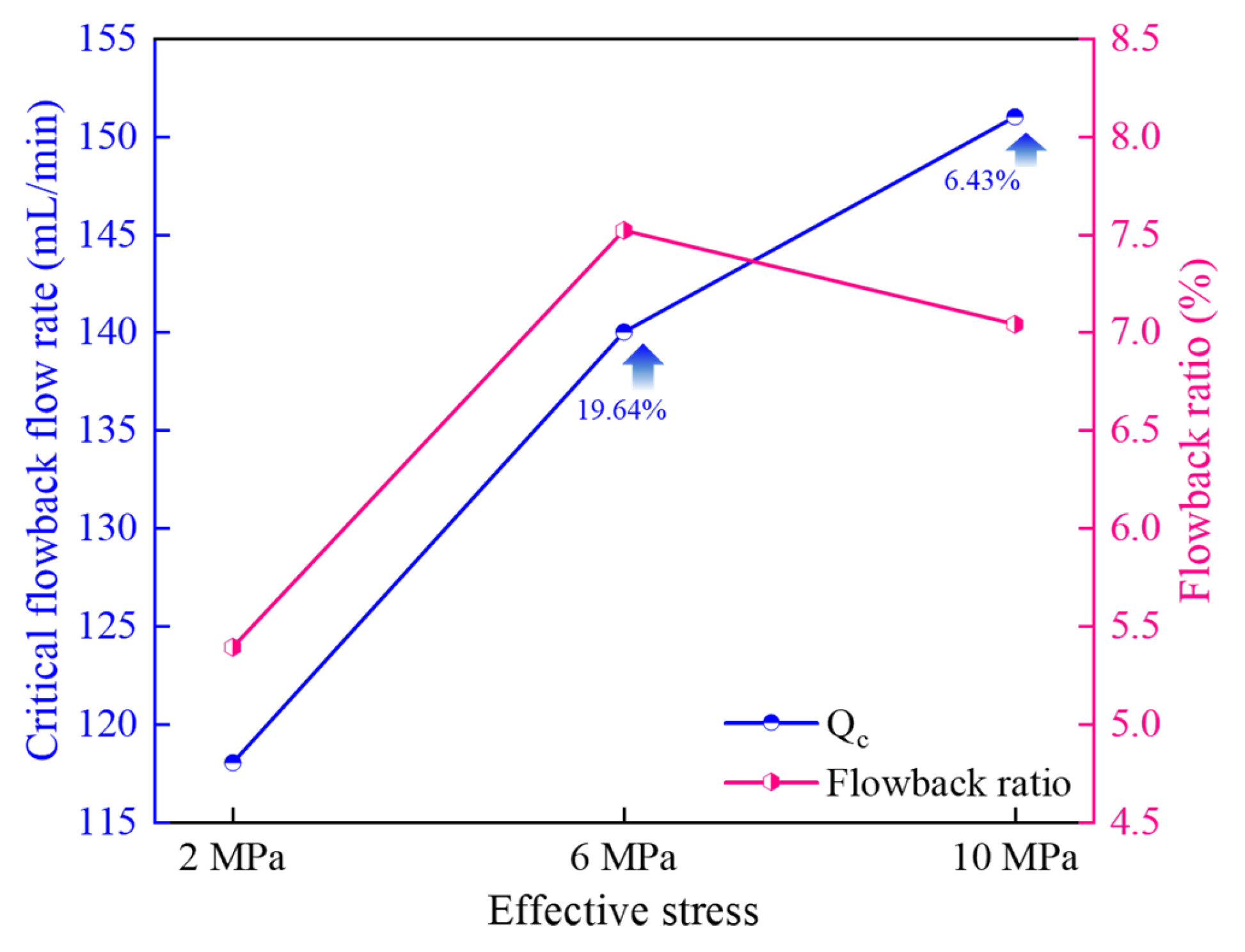
Figure 18, as shown in
Figure 19. The experimental results indicate that as the effective stress increased from 2 MPa to 10 MPa, the critical flowback flow rate for proppant showed a significant upward trend, but the rate of increase gradually slowed down. Specifically, when the effective stress increased from 2 MPa to 6 MPa, the increase in Q
c reached 19.64%. However, when the stress further increased from 6 MPa to 10 MPa, the increase in Q
c decreased to 6.43%. This phenomenon indicates that an increase in effective stress significantly enhances the macroscopic mechanical stability of the proppant pack. A higher effective stress implies a greater degree of fracture closure and an increase in the axial stress borne by the proppant particles, thereby strengthening the inter-particle frictional resistance and improving the pack’s ability to resist fluid shear disturbance.
Nevertheless, similar to the aforementioned factors, the increase in Q
c does not induce a regular variation in the corresponding critical flowback ratio. As shown in
Figure 19, the critical flowback ratio rises from 5.39% to 7.52% and then declines to 7.04%. This indicates that effective stress primarily regulates the instability threshold of the proppant pack (i.e., the critical flowback flow rate) and is not directly correlated with the intensity of particle flowback after instability occurs. The flowback intensity post-instability may depend more on complex factors such as the uniformity of local particle arrangement, the type of instability, and the transient characteristics of fluid–particle interactions. Therefore, when assessing proppant flowback risk in deep or high-stress reservoirs, even though a higher flow rate is required to initiate flowback, attention must still be paid to the potential flowback intensity once instability occurs. Both aspects should be considered together to develop a comprehensive flowback control strategy.
3.3. Analysis of Main Controlling Factors for Proppant Flowback
By synthesizing the critical flowback flow rates measured under various experimental conditions (
Figure 20), the influence patterns of multi-factor coupling effects on proppant stability can be systematically analyzed. The results show that the influence of each factor on the Q
c exhibits clear and regular trends: the Q
c for proppant decreases with decreasing particle size, increasing proppant concentration, increasing fluid viscosity, and decreasing effective stress. This indicates that when changes in the aforementioned parameters lead to a decline in the structural stability of the proppant pack or an enhancement of fluid disturbance, the critical flow condition required for proppant to initiate flowback within the fracture will correspondingly decrease.
To quantitatively evaluate the relative influence weights of different factors, this study employed an orthogonal experimental design method to conduct a comprehensive analysis of four factors: proppant particle size, proppant concentration, flowback fluid viscosity, and effective stress. The orthogonal experiment scheme is designed as shown in
Table 2, and the Q
c values under each parameter combination are obtained according to the scheme.
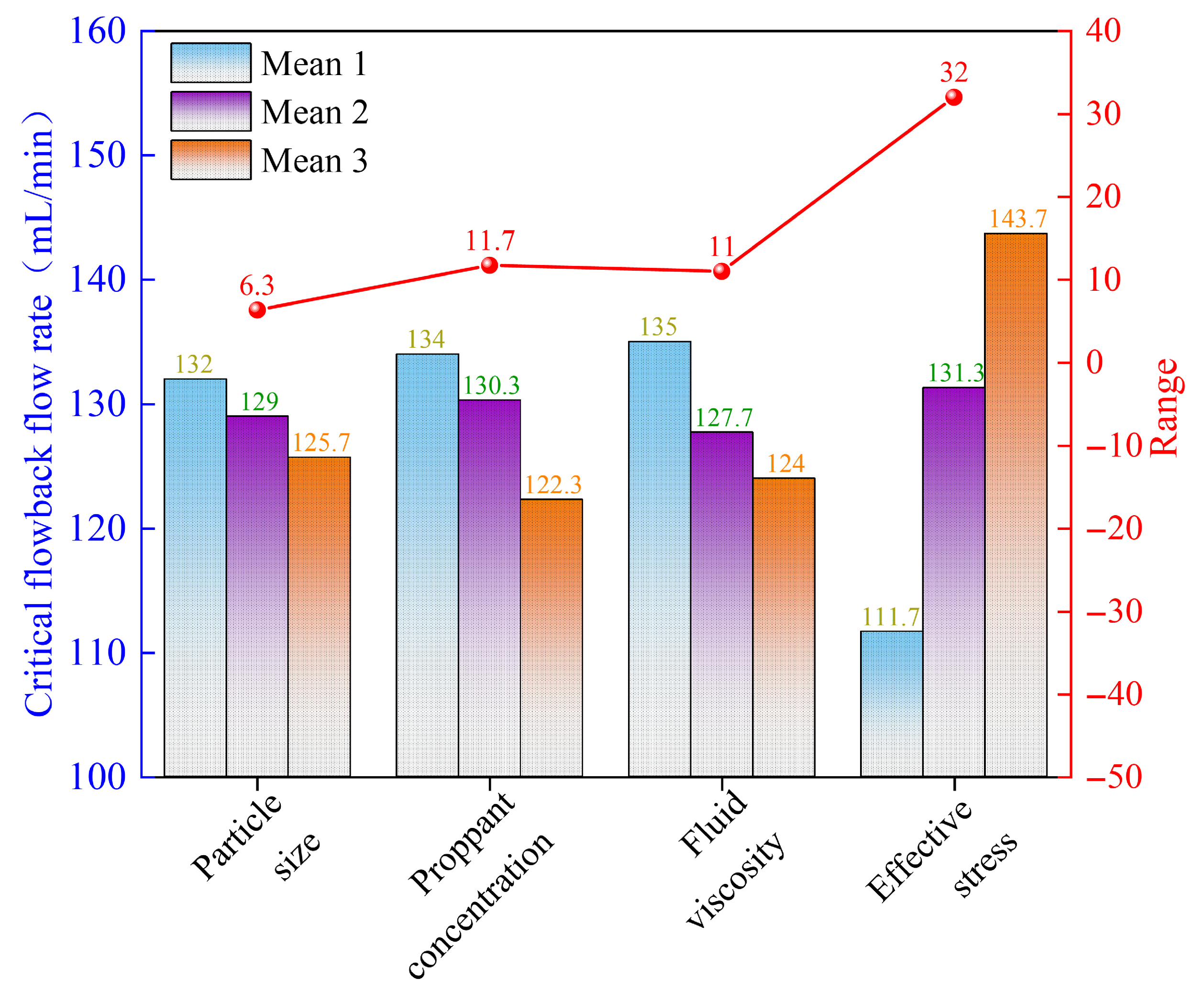
Based on the orthogonal experiment results, the influence weight of each factor was quantitatively evaluated by calculating the mean and range of Q
c at each factor level (a larger range indicates a more significant influence). The results are shown in
Figure 21. Analysis reveals that, within the parameter range set for the experiments, effective stress has the most significant impact on Q
c, with a remarkably high range of 32, reflecting its dominant role in controlling the stability of the proppant pack within the in situ stress field. The influence degrees of proppant concentration and flowback fluid viscosity are similar, with ranges of 11.7 and 11, respectively. In comparison, the influence of proppant particle size is relatively weaker within the selected mesh number ranges.
4. Discussion
In this study, experimental investigations were carried out on proppant flowback behavior during the post-fracturing flowback stage of coal reservoirs. Compared with typical sandstone and shale reservoirs, coal is characterized by geomechanical properties including low elastic modulus, low permeability and highly developed natural cleat-fracture networks, which result in similarities and differences in proppant flowback laws inside coal fractures. In terms of common characteristics, the Q
c obtained in this experiment decreases with the reduction in proppant particle size, increase in proppant concentration, rise of flowback fluid viscosity and decrease in effective stress. Effective stress is the dominant controlling factor, and this trend is consistent with existing conclusions in sandstone and shale reservoirs [
25,
26,
27,
28]. The differences are mainly reflected in the following aspects. First, the influence weights of each factor are different. In coal reservoirs, the influence weights of proppant concentration and flowback fluid viscosity are higher than that of proppant particle size, whereas the effect of particle size is generally more prominent in shale reservoirs [
23]. This may be related to the difference in embedding degree. The low stiffness property of coal results in deeper proppant embedding into fracture walls and more intense interparticle and particle-wall friction, which further amplifies the regulatory effects of effective stress and proppant concentration. Second, the instability patterns are different. Coal fracture walls are rough, which easily leads to local flow velocity concentration. In addition to preferential flowback at the fracture outlet, distinct preferential flow channels can also be found inside fractures, while sandstone and shale fractures mostly present relatively uniform structural instability. On the whole, the root of such differences lies in the inherent properties of coal, which affect the force balance and migration paths of proppant packs under identical engineering parameters.
Certainly, this study has certain limitations. First, outcrop coal samples were adopted in the experiment. They differ from underground in situ coal in terms of original crustal stress, primary damage, and temperature-pressure conditions, which may affect the mechanical properties and fracture wall morphology. Second, single-phase active water was adopted as the flowback fluid, and the influence of gas–liquid two-phase flow in actual coal reservoir flowback was not taken into account. Third, the parallel-plate fracture model with uniform width fails to reflect the non-planar propagation characteristics of real fracture networks. Fourth, the outlet boundary is simplified as free outflow, which is inconsistent with complex field conditions such as wellbore fluid column pressure, perforation friction resistance and multi-cluster flow diversion at field perforations. Fifth, proppant particles are assumed to be ideal spheres, and the effects of irregular shape and surface roughness of actual particles are not involved. Future studies can further couple the geomechanical damage of coal and coal powder production effects, take into account the temperature-pressure conditions of actual reservoirs, and establish a numerical model incorporating gas–liquid two-phase flow, non-planar fracture geometry and realistic wellbore boundaries under the thermo-hydro-mechanical coupling framework [
29]. By combining physical experiments with multiphase flow numerical simulation, the dynamic influence mechanism of proppant flowback on fracture conductivity can be systematically revealed, so as to provide a more solid theoretical basis for the optimization of flowback strategies.
Despite the above limitations, the findings of this study can still provide valuable references for field flowback operations. Effective stress is the core factor controlling proppant flowback risk. It is suggested to reasonably regulate the fluid pressure inside fractures and maintain it within an appropriate range to enhance the stability of proppant packs. On the premise of ensuring fracture conductivity, the viscosity of fracturing fluid can be moderately reduced and proppant concentration optimized to avoid overall instability of proppant packs. Larger-sized proppants are preferred when engineering conditions permit. Based on experimental data, the recommended safe flowback parameter range for the study block is as follows: 20/40 mesh proppants, proppant concentration of 3–6 kg/m2, flowback fluid viscosity ≤ 1 mPa·s, and effective stress ≥ 6 MPa. In terms of flowback regimes, Qc shall be regarded as the core control threshold. By strictly controlling choke opening and increasing flow rate stepwise, the initial flowback rate is ensured to be lower than Qc. Stable low-rate displacement shall be adopted as the main operation mode to avoid long-term operation under supercritical flow rate.