


Abstract
Biodegradable poly(lactide)/poly(ε-caprolactone) (PLA/PCL) systems functionalized with TiO2-SiO2 were synthesized via in situ ring-opening polymerization of a eutectic L-lactide/ε-caprolactone system. This work introduces a TiO2-SiO2 composite with a dual function, acting as a catalytic initiator that governs polymerization and microstructure, while simultaneously serving as a reinforcing and photocatalytic phase. The system exhibits high polymerization efficiency, reaching conversions up to 99% with low filler loadings (0.1–1.0 wt%). Structural analyses confirm polymer formation and reveal modifications in ester groups associated with coordination-driven mechanisms. Notably, the presence of TiO2-SiO2 promotes increased PLA tacticity, directly influencing mechanical performance. The resulting materials show enhanced tensile strength (~250,000 Pa) and Young’s modulus (1.5–2.0 MPa) compared to conventional systems. In addition, excellent photocatalytic activity was achieved, with up to 99.7% degradation of methyl orange. These findings demonstrate a synergistic strategy to simultaneously control polymer structure and functionality, positioning PLA/PCL–TiO2-SiO2 systems as promising multifunctional materials for environmental applications.
1. Introduction
The development of efficient synthetic strategies for biodegradable aliphatic polyesters such as poly(lactide) (PLA) and poly(ε-caprolactone) (PCL) is essential for advancing sustainable materials in applications ranging from biomedicine to packaging [1,2,3]. The combination of PLA, a rigid glassy polymer, with PCL, a semicrystalline and ductile material, enables the design of systems with tailored mechanical and physicochemical properties through copolymerization or blending [4,5,6]. Ring-opening polymerization (ROP) of cyclic monomers such as L-lactide (LLA) and ε-caprolactone (ε-CL) is a widely used strategy for synthesizing these materials. In this context, deep eutectic monomer systems (DESm) have emerged as an attractive alternative, allowing for polymerization under solvent-free conditions and moderate temperatures, thereby reducing environmental impact [7,8,9,10]. Despite these advantages, PLA/PCL systems synthesized from DESm LLA/ε-CL often exhibit limited mechanical performance, restricting their applicability in demanding environments [6,11,12,13,14].
The incorporation of inorganic nanostructured fillers during in situ polymerization has proven to be an effective strategy to overcome these limitations. In particular, TiO2-SiO2 ceramic composites can act simultaneously as catalytic systems and reinforcing phases, eliminating the need for conventional organometallic initiators (catalysts) while improving mechanical, thermal, and morphological properties [15,16]. TiO2 has been reported to enhance polymerization kinetics and structural properties in PLA/PCL systems [15,16,17,18]. However, the influence of such systems on polymer microstructure, particularly in terms of stereoselectivity during LLA polymerization, remains insufficiently understood. The tacticity of PLA, defined by the stereochemical arrangement of monomeric units along the polymer chain, plays a key role in determining its crystallinity and mechanical behavior [19,20,21]. Although titanium-based systems have been suggested to influence PLA stereoselectivity [22,23], a systematic analysis of TiO2-SiO2 effects on tacticity within DESm LLA/ε-CL systems and their correlation with material properties has not been fully established.
Beyond their catalytic role, TiO2-SiO2 composites introduce an additional functional dimension through photocatalysis. TiO2 is a well-known semiconductor capable of generating reactive oxygen species (ROS) under UV irradiation, enabling the degradation of organic pollutants [24,25,26]. The integration of TiO2 within a PLA/PCL matrix, supported by SiO2 to enhance dispersion and surface area, offers a promising route toward multifunctional materials with both structural and environmental applications.
In this work, TiO2-SiO2 is employed as both initiator and functional filler in the in situ ROP of a DESm LLA/ε-CL system. The study systematically evaluates its effect on polymerization kinetics, microstructure (including PLA tacticity), and the thermal, mechanical, and morphological properties of the resulting materials. Additionally, the photocatalytic performance of the developed systems is assessed. This approach aims to establish a direct relationship between the ceramic system, polymer microstructure, and functional properties, contributing to the design of advanced biodegradable materials with enhanced performance.
2. Materials and Methods
2.1. Materials
The reactives used for the synthesis were: tetraethyl orthosilicate (TEOS, 98%, Sigma Aldrich, St. Louis, MO, USA), titanium tetraisopropoxide (TTIP, 97%, Sigma Aldrich, St. Louis, MO, USA), absolute ethanol (EtOH, 99.5%, Sigma Aldrich, St. Louis, MO, USA), hydrochloric acid (HCl, 37%, Sigma Aldrich, St. Louis, MO, USA), polyvinylpyrrolidone (PVP, Mw = 1,300,000 g·mol−1, Alfa Aesar, Ward Hill, MA, USA), (3S)-cis-3,6-dimethyl-1,4-dioxane-2,5-dione (L-lactide or LLA, 98%, Sigma Aldrich, St. Louis, MO, USA), ϵ-caprolactone (ϵ-CL, 97%, Sigma Aldrich, St. Louis, MO, USA), 1,8-diazabicyclo [5.4.0]undec-7-ene (DBU, ≥99.0%, Sigma Aldrich, St. Louis, MO, USA), and methanesulfonic acid (MSA, ≥99.0%, Sigma Aldrich, St. Louis, MO, USA). Deionized water was used for ceramic composite synthesis. All reagents were used as received without further purification.
2.2. Synthesis of the TiO2-SiO2 Ceramic Composite
The TiO2-SiO2 composite was prepared using the sol–gel method. We used TEOS and TTIP as precursors for SiO2 and TiO2, respectively, in a 70:30 molar ratio of TEOS:TTIP. First, the precursors were mixed with TEOS, absolute ethanol, deionized water, and HCl in a volumetric ratio (v/v) of 25:13:4:0.1, all under constant stirring. To 1 mL of this resulting solution, we added a 10% (w/v) PVP solution in absolute ethanol at a 1:1 v/v ratio, continuing to stir until a gel formed. The sol–gel process was carried out under acidic conditions, with the pH adjusted to approximately 2 using HCl, which promotes controlled hydrolysis and condensation of the precursors. The reaction mixture was maintained under continuous magnetic stirring at 500 rpm for 60 min prior to gelation to ensure homogeneous mixing and precursor interaction. Afterward, the gelled material underwent thermal treatment in an electric muffle furnace (Thermo Scientific, Mod. OSG60, Waltham, MA, USA) at 800 °C for 2 h. The temperature was gradually increased with a heating ramp of 1 °C·min−1 up to 600 °C. At this point, the heating rate was increased to 5 °C·min−1 until it reached 800 °C.
2.3. Synthesis of the LLA/ϵ-CL Deep Eutectic Monomer System (DESm)
The deep eutectic solvent monomers (DESm) were prepared by mixing L-lactide (LLA) and ϵ-caprolactone (ϵ-CL) in a molar ratio of 30:70 (LLA30:CL70). The solid mixture was then heated to 90 °C for 1 h under constant stirring until a homogeneous, transparent liquid was obtained.
2.4. Ring-Opening Polymerization (ROP) of DESmLLA/ϵ-CL
The synthesis of PLA-PCL polyesters was performed via sequential bulk ROP of the DESm LLA30:CL70 at 37 °C. Powdered TiO2-SiO2 composite was used as an initiator at varying concentrations: 0.1, 0.5, and 1.0 wt% relative to the total mass of the DESm LLA/ϵ-CL. First, the DESm LLA/ϵ-CL was heated to 37 °C with constant stirring for 10 min. Then, DBU (2.9 wt% relative to the DESm LLA/ϵ-CL) was added as an organocatalyst. After 1 min, MSA (3.0 wt% relative to the DESm LLA/ϵ-CL) was incorporated as a co-organocatalyst to initiate the ROP, and the reaction was maintained for 24 h. The synthesized polyesters were purified by repeated washes with cold ethanol and dried at room temperature for 24 h. The overall monomer conversion was determined gravimetrically. For the kinetic studies, polymerizations were carried out in individual Eppendorf tubes and terminated at different reaction times. The final products were dissolved and precipitated in cold methanol, centrifuged at 4500 rpm for 10 min, separated by decantation, and dried at 40 °C for 24 h. The overall conversion for the kinetic studies was also determined gravimetrically by dividing the final mass of the polymers by the theoretical mass expected from the complete polymerization of the corresponding monomers.
2.5. Material Characterization
1H NMR spectra were acquired using a Bruker (Manning Park, Billerica, MA, USA) Advance (400 MHz) spectrometer. Samples were prepared by dissolving them in deuterated chloroform (CDCl3, ≥99.8% with TMS as an internal standard), typically at concentrations of 10–20 mg/mL. Spectra were recorded at 298 K, with a spectral width of 16 ppm and 32 scans (NS). A pulse duration of 10 μs and a relaxation delay (D1) of 1 s were used. The analysis of the PLA microstructure, specifically the evaluation of tacticity, was performed by integrating the signals corresponding to the methine protons (CH) in the chemical shift region between 5.10 and 5.20 ppm. The identification of the stereochemical tetrads (mmm, mmr, rrm, rrr) was based on assignments previously reported in the literature [19]. Spectral processing, signal integration, and peak assignment were carried out using MestReNova software (v15.0.0, 2023, Mestrelab Research S.L., Galicia, Spain), applying a line broadening of 0.3 Hz and manual phase and baseline corrections.
Fourier Transform Infrared (FTIR) Spectroscopy: FTIR spectra were obtained using a Bruker Tensor 27 spectrometer equipped with an Attenuated Total Reflectance (ATR) accessory featuring a diamond crystal (Platinum ATR, Bruker Optik, Ettlingen, Germany). Spectra were acquired within the spectral range of 4000 to 400 cm−1, with a spectral resolution of 4 cm−1, accumulating 64 scans per sample to enhance the signal-to-noise ratio. Samples were analyzed in their solid state, directly on the ATR crystal without additional prior preparation. All spectra were background-corrected before each acquisition. Spectral processing, including normalization and baseline correction, was performed using OPUS software (version 7.5, Bruker Optik, Ettlingen, Germany).
X-Ray Diffraction (XRD): XRD analyses were carried out on a X’Pert PRO (PANalytical, Almelo, The Netherlands) diffractometer, utilizing Cu Kα radiation (λ = 1.5406 Å) generated at 20 kV. Diffractograms were recorded over a 2θ range from 10° to 80°. Samples were analyzed in powder or thin film form, previously dried and pressed onto aluminum holders to ensure a homogeneous surface. Crystalline phase identification and peak assignment were performed by comparison with the ICDD (PDF-4+) databases. The crystallite size was estimated from the broadening of the most intense diffraction peaks, using the Scherrer equation:
where D is the mean size of the ordered (crystalline) domains, K is a dimensionless shape factor, typically around (0.89), λ is the X-ray wavelength (1.5406 Å for Cu Kα), β is the full width at half maximum (FWHM) of the diffraction peak in radians and θ is the Bragg angle.
Scanning Electron Microscopy (SEM): We examined the morphology of the ceramic composites and polymeric materials using a JSM-6400 (JEOL, Tokyo, Japan) scanning electron microscope. We acquired images at an accelerating voltage of 20 kV, operating in low vacuum mode (Low Vacuum Detector, LVD) with a chamber pressure of 30 Pa. We made observations at various magnifications (×60, ×600, and ×1000) to assess both the surface topography and the morphological distribution of additives, as well as their interaction with the polymer matrix. Samples were pre-dried at room temperature and mounted on metallic stubs using conductive carbon tape. The working distance (WD) was maintained between 12.9 and 18.2 mm, and the aperture diameter was adjusted according to the magnification used to optimize image resolution.
Ultraviolet-visible (UV-Vis) absorption spectroscopy: The characterization of the optical absorption properties of the materials and the dye degradation kinetics were carried out using UV-Vis. A UV-1800 (Macylab, Shanghai, China) double-beam spectrophotometer with a fixed bandwidth resolution of 1.0 nm was used. Measurements were performed over a continuous spectral range from 190 to 900 nm, with a sampling step of 0.5 nm and a scanning speed of 100 nm/min. The absorbance of the dye to be degraded was systematically measured at its maximum absorption wavelength (λmax) to monitor its concentration as a function of time. The sample was placed in a quartz cuvette with an optical path length of 10 mm. Baseline stability and photometric accuracy were ensured within the limits of ±0.002 A at 500 nm. All absorbance measurements were recorded at a controlled room temperature (25 ± 1 °C).
2.6. Thermal Analysis
Differential Scanning Calorimetry (DSC). We analyzed the thermal transitions of the polymers using a DSC3+ calorimeter (Mettler Toledo, Greifensee, Switzerland). The experimental protocol involved an initial cooling from room temperature down to −20 °C, holding at −20 °C for 10 min, followed by heating from −20 °C to 220 °C. Both heating and cooling steps were performed at a rate of 10 °C·min−1 under a nitrogen atmosphere.
The relative crystallinity fraction (Xc) of the individual components (PLA and PCL) was calculated using the following equation:
where ΔHm is the measured melting enthalpy of the polymer (J·g−1), ΔHm0 is the theoretical melting enthalpy for a 100% crystalline polymer: 93.7 J·g−1 PLA 139.5 J·g−1 PCL, Xa is the weight fraction of the respective polymer (PLA or PCL) in the composite. This methodology allows us to quantify the crystallinity of each phase in multi-polymer systems. This is fundamental for correlating the thermal and mechanical properties of the final material.
Thermogravimetric Analysis (TGA): We evaluated the thermal stability and degradation kinetics of the polymers using a TGA/DSC3+ instrument (Mettler Toledo; Greifensee, Switzerland). We placed samples, weighing approximately 8–10 mg, in platinum crucibles and analyzed them under a nitrogen atmosphere with a constant flow of 50 mL·min−1. The tests were conducted within a temperature range of 30 to 800 °C, applying a heating rate of 10 °C·min−1. We used the derivative of the TGA curve (DTGA) to pinpoint the temperatures corresponding to the maximum rate of thermal degradation.
To determine the kinetic parameters of thermal decomposition, we applied the integral Coats–Redfern model, which is generally expressed as:
where A is the fraction of conversion, T is the absolute temperature (K), A is the pre-exponential factor (min−1), Ea is the activation energy (kJ·mol−1), R is the ideal gas constant (8.314 J·mol−1·K−1), β is the heating rate (°C·min−1), g(α) is the specific conversion function according to the proposed mechanism.
The conversion fraction (α) was calculated as:
where W0 is the initial mass of the sample, Wt is the mass of the sample at time and Wf is the final mass of the sample after degradation.
We evaluated various reaction mechanisms (including diffusion, nucleation and growth, and n-order reactions). The best fit was chosen based on the linearity of the plots of ln[g(α)/T2] versus 1/T. The thermodynamic parameters, including enthalpy of activation (ΔH), entropy of activation (ΔS), and Gibbs free energy (ΔG), were calculated using the following expressions:
where k is the Boltzmann constant and h is the Planck constant. All calculations and linear fittings were performed using OriginPro 2023 (OriginLab Corp., Northampton, MA, USA).
Dynamic Mechanical Analysis (DMA): We evaluated the dynamic mechanical properties using an RSAS TA Instruments (New Castle, DE, USA) dynamic mechanical analyzer in compression mode. A 350 g load was applied to flat oval-shaped polymer samples, with a strain parameter of 0.033 mm. Tests were conducted at room temperature (25 ± 1 °C) and a frequency of 1 Hz under isothermal sweep conditions. The analysis focused on assessing the stress–strain behavior for different polymer systems modified with varying concentrations of two distinct initiators: an organic initiator (BnOH) and a ceramic initiator (TiO2-SiO2). The objective was to compare the elastic response, structural stiffness, and deformation at break under compressive load.
2.7. Photocatalytic Tests
The assessment of the photocatalytic performance of the TiO2-SiO2 material will be conducted through the degradation of a single model contaminant. Aqueous solutions of methyl orange (MO), selected as a representative azo dye due to its well-established photochemical stability and chromophoric sensitivity, will be prepared at an initial concentration of 30 ppm. Subsequently, 50 mL of the MO solution will be transferred into individual Erlenmeyer flasks, to which 5 mg of the photocatalyst will be added, maintaining a catalyst–solution ratio of 0.1 mg mL−1. The resulting suspensions will be subjected to continuous magnetic stirring under strictly dark conditions for 2 h, during which aliquots will be collected every 30 min to monitor the attainment of adsorption–desorption equilibrium. Once equilibrium is established, the photocatalytic degradation process will be initiated by exposing the suspensions to ultraviolet irradiation emitted from low-pressure mercury vapor ultraviolet lamp type A (UV-A) with a power of 125 W. The UV light intensity was estimated based on the lamp specifications and experimental setup, being in the typical range of 10–15 mW·cm−2 for UV-A irradiation at 365 nm. The light source will be positioned at a fixed distance from the reaction vessels to ensure uniform irradiation. Aliquots of the suspension will be withdrawn at 30 min intervals over a total exposure period of 24 h. The residual concentration of the dye in each aliquot will be quantified by UV–Vis spectroscopy, enabling the determination of the photocatalytic degradation kinetics.
3. Results
3.1. Characterization of the TiO2-SiO2 Initiator Composite and the DESm LLA/ϵ-CL
The FTIR spectrum obtained for the synthesized TiO2-SiO2 material, as shown in Figure 1a, reveals several characteristic absorption bands. Most notably, a broad and intense band centered in the 1075–1080 cm−1 range is observed, accompanied by less intense absorptions near 800 cm−1 and approximately 460 cm−1. A particularly distinctive feature is the presence of a well-defined band, or a pronounced shoulder, in the 950–970 cm−1 region. The intense and broad band located around 1075–1080 cm−1 is attributed to the asymmetric stretching vibration (νas) of the Si-O-Si bonds within a predominantly amorphous silica network [27,28]. The band observed near 800 cm−1 corresponds to the symmetric stretching vibration (νs) of the Si-O-Si linkages. Moving lower in the spectrum, the absorption around 460–470 cm−1 is attributed to the bending vibrations of the O-Si-O bonds. Of critical importance is the band or shoulder detected in the 950–970 cm−1 region. This feature serves as a key indicator of the stretching vibration of Si-O-Ti bonds, signifying the formation of a chemical interface between the silica and titania phases. Fundamentally, it confirms the incorporation of titanium atoms directly within the silica network [29,30].
Figure 1.
(a) FT-IR spectrum of TiO2-SiO2 powders. The inset graph schematically illustrates the three-dimensional network of Ti–O–Si bonds. (b) XRD diffractogram of TiO2-SiO2 powders, showing peaks corresponding to the anatase (α) and less intense anatase (γ) crystalline phases of TiO2.
The XRD analysis of the TiO2-SiO2 powder sample, presented in Figure 1b, shows a superposition of defined crystalline reflections over an underlying amorphous component. This indicates the coexistence of phases with different degrees of structural order within the synthesized material, which is common in composite oxide systems. The identification of the crystalline phases focused on the most prominent reflections. The sharp diffraction peaks, labeled as α in Figure 1b, are located at 2θ angles of approximately 25.3°, 37.8°, 48.0°, 53.9°, 55.1°, 62.7°, 70.3°, and 75.1°. These angular positions, especially the peak with the highest relative intensity observed at ~25.3°, are consistent with the characteristic reflections of the anatase phase of TiO2, which possesses a tetragonal crystalline structure [31,32,33,34,35,36,37]. The detailed indexing of these peaks, presented in Table 1, confirms the majority presence of the anatase phase in the composite. For example, the reflection at 25.3° corresponds to the crystallographic plane (101), which is characteristically the most intense for the anatase phase of TiO2. The peaks of lower intensity, designated as γ (e.g., those around 2θ ≈ 37.0° and 2θ ≈ 69.0°), can be attributed to secondary reflections of the same anatase phase, such as (004) or (103) and (116) or (213) respectively, or could suggest a slight distortion of the anatase crystal lattice due to interaction with the SiO2 matrix. The predominance of the anatase phase is a significant finding, given that this polymorphic phase of TiO2 is often the most active in photocatalytic applications compared to other phases such as rutile or brookite. The Scherrer equation was applied to quantify the size of the anatase crystalline domains. Where the estimated crystallite size of ~4.1 nm is significantly small, which is consistent with the literature, where it is consistently reported that the addition of SiO2 to TiO2 leads to considerably smaller anatase crystallite sizes compared to pure TiO2 processed under similar conditions [38,39,40,41]. The reduction in crystallite size is a direct result of the SiO2 matrix acting as a physical barrier, preventing TiO2 particles from encountering each other and growing during the synthesis processes. The positions of the observed anatase peaks do not show significant shifts from standard values, suggesting that there has been no extensive formation of Ti-Si-O substitution solid solutions that drastically alter the lattice parameters of anatase.
Table 1.
Comparison of the X-ray diffraction peaks (2θ, hkl planes) observed for the TiO2-SiO2 sample with the values reported in the literature for the anatase phase of TiO2 and characterization of amorphous SiO2.
FT-IR spectroscopy was used to investigate the molecular interactions between LLA and ε-CL, and to elucidate the formation of a DESmLLA/ε-CL from the precursors. The analysis focused on modifications of the characteristic vibrational bands of the functional groups involved in hydrogen bonding, mainly the hydroxyl and carboxyl groups of LLA and the carbonyl group of ε-CL. The FT-IR spectrum of pure LLA (Figure 2c) shows several characteristic absorption bands that are crucial for understanding its behavior as a hydrogen bond donor (HBD). In the O-H stretching region (ν(O-H)), a broad and complex band is observed extending approximately from 3600 cm−1 to 2800 cm−1, which is attributable to the stretching of the O-H groups of both the alcoholic hydroxyl and the carboxylic acid of LLA [28,42]. The literature reports the O-H stretching vibration of pure lactic acid at around 3464 cm−1. The stretching vibration of the carbonyl group (ν(C=O)) of the carboxylic acid of LLA manifests as an intense band. In the spectrum (Figure 2c), this band is located at approximately 1725 cm−1 and is consistent with data in the literature, which places this band between 1700 and 1750 cm−1 for carboxylic acids, with specific values for lactic acid or similar acids reported at 1721 cm−1 or 1733 cm−1 [9,10]. The exact position of the carbonyl group band is a critical reference for evaluating any displacement resulting from changes in its hydrogen bond environment after the formation of DESmLLA/eCL. Other characteristic bands include C-O stretches, expected between 1320 and 1210 cm−1, and O-H flexions, in the regions of 1440–1395 cm−1 and 950–910 cm−1.
Figure 2.
FT-IR spectrum of the eutectic mixture compared with the monomers. (a) L-lactide, (b) ε-caprolactone, and (c) LLA-CL eutectic mixture.
The FT-IR spectrum of pure ε-CL (Figure 2b) is dominated by the stretching vibration of the carbonyl group of the lactone (cyclic ester). A very intense and relatively sharp band is observed at approximately 1735 cm−1, consistent with the literature for the ε-caprolactone monomer, which typically absorbs in the range of 1725–1750 cm−1 [9,10]. The intensity and relative sharpness of this ν(C=O) band in pure ε-CL suggest a fairly uniform chemical environment for the carbonyl groups, with predominantly dipolar and van der Waals intermolecular interactions, rather than strong hydrogen bonds, given that ε-CL lacks significant hydrogen bond donor groups. The carbonyl band is the main site of interaction as a hydrogen bond acceptor (HBA) with LLA. Additionally, C-O-C stretching vibrations of the ester group are expected in the 1300–1000 cm−1 region, as well as stretching and bending vibrations of the CH2 groups (around 2950–2850 cm−1 and 1465 cm−1, respectively). The FT-IR spectrum of DESmLLA/ε-CL (Figure 2a) shows notable differences compared to a simple superposition of the spectra of the pure components (Figure 2b,c). Significant alterations are observed in the O-H stretching region (approximately 3600–2500 cm−1), mainly caused by LLA. The shape of the band, the position of the absorption maximum, and the overall width appear to be modified. Similarly, the carbonyl stretching region (approximately 1750–1650 cm−1) also shows clear changes; the distinctive C=O peaks of LLA and ε-CL are shifted [43].
3.2. Study of the ROP of the DESmLLA/ε-CL System in the Presence of TiO2-SiO2
The present study has revealed outstanding catalytic activity of the heterogeneous TiO2-SiO2 system in the ROP of LLA and ε-CL. Remarkably high monomer conversions, consistently above 85%, were achieved in exceptionally short reaction times, specifically in 1 min or less, for all TiO2-SiO2 concentrations investigated (0.1, 0.5, and 1.0 wt%). Table 2 illustrates the conversion percentages as a function of time, demonstrating the rapid kinetics of the reaction. A detailed analysis of the polymerization kinetics indicates biphasic behavior. An extremely rapid initial phase is observed, during which most of the monomer conversion takes place. For example, with a TiO2-SiO2 loading of 0.1 wt%, 85% conversion was achieved in 1 min. The value increased to 87% and 89% for TiO2-SiO2 loadings of 0.5 wt% and 1.0 wt%, respectively, in the same time frame. This initial high-speed phase is followed by a considerably slower phase, in which the conversion increases gradually until it reaches a plateau, approaching complete conversion after a reaction period of between 180 and 420 min.
Table 2.
Monomer conversion percentage (LLA and ε-CL) vs. reaction time using TiO2-SiO2 at 0.1, 0.5, and 1 wt%. Experimental conversion, number, average molecular weight (Mn), melting point (Tm), crystallinity (Xc) of the polyesters resulting from the ROP of DESmLLA/ε-CL (30:70 M ratio) under the conditions indicated.
The polymerization results demonstrate a clear dependence of monomer conversion on both TiO2-SiO2 concentration and reaction time. Increasing the initiator content from 0.1 to 1.0 wt% leads to a systematic enhancement in conversion, reaching values close to 99% at prolonged reaction times. This trend indicates that higher TiO2-SiO2 loadings promote a greater availability of active catalytic sites, thereby accelerating the ring-opening polymerization process. In addition, reaction time plays a decisive role in achieving maximum conversion. While high initial conversions are rapidly attained, the system evolves toward near-complete conversion at longer reaction times, reflecting a two-stage kinetic behavior characterized by a fast-initial polymerization followed by a slower approach to completion. Statistical analysis confirms that both TiO2-SiO2 concentration and reaction time exert a significant effect on monomer conversion, with higher initiator loadings producing statistically higher conversion values. A detailed description of the statistical treatment, including residual analysis, main effects, and response surface modeling, is provided in the Supplementary Materials (Figures S4 and S5).
3.3. Structural and Morphological Characterization of PLA-PCL/TiO2-SiO2 Polymers
Morphological characterization using scanning electron microscopy (SEM) has provided fundamental information on the microstructure of the starting polymer matrices, filler particles, and resulting composites. The surface of PLA-PCL, observed in Figure 3a,b at 60× magnification, has a topography that, at this scale, can be considered relatively smooth. However, certain surface irregularities can be seen, including some micrometric pores and what appear to be scattered filamentous residues. In Figure 3b, the surface is shown to be densely covered and, crucially, embedded with particles and particle aggregates. It is inferred that these entities correspond to TiO2-SiO2 powders. The particles are observed to be embedded in the PLA-PCL matrix, with some of them protruding slightly from the surface. At the observation scale of Figure 3b (100 µm scale), the distribution of these particles appears relatively homogeneous at the macroscopic level, although closer examination reveals areas with a higher concentration of aggregates, suggesting a not completely uniform dispersion at the micrometric scale. It is important to note that the size of the embedded aggregates is consistent with that of the aggregates observed in the precursor powders (Figure 3c). The incorporation of ceramic fillers such as TiO2-SiO2 into PLA-PCL matrix has been extensively investigated using various techniques, including the sol–gel process and electrospinning. A critical factor in these systems is particle dispersion; previous studies in ternary PLA/PCL/TiO2 systems indicate that TiO2 can be dispersed uniformly at low concentrations (e.g., 1 wt%) but tends to agglomerate at higher loads [44,45,46].
Figure 3.
SEM micrographs of PLA-PCL-TiO2 polymers. (a,b) surface of PLA-PCL polymer (60× and 500×) and (c) TiO2-SiO2 composite powders.
The FTIR spectra of the PLA/PCL blends (Figure 4a–c) exhibit the characteristic absorption bands of both polymeric components, confirming the successful formation of the binary system. The ester carbonyl stretching band appears as a dominant signal centered around ~1750 cm−1, resulting from the overlap of PLA (1746–1756 cm−1) and PCL (1722–1734 cm−1) contributions. Similarly, the C–H stretching region (2800–3000 cm−1) and the C–O–C stretching bands (1000–1300 cm−1) further corroborate the coexistence of both polyesters within the material. No significant shifts in the main absorption bands are observed with increasing TiO2-SiO2 content (0.1–1.0 wt%), indicating that the fundamental chemical structures of PLA and PCL are preserved after incorporation of the ceramic phase. This behavior is consistent with previous reports, where FTIR analyses of PLA/PCL systems show minimal spectral changes, suggesting predominantly physical interactions rather than the formation of new covalent bonds between polymer chains.
Figure 4.
FT-IR spectra of PLA-PCL polymers using different weight ratios of TiO2-SiO2: (a) −0.1 wt% TiO2-SiO2, (b) −0.5 wt% TiO2-SiO2 and (c) −1 wt% TiO2-SiO2.
However, slight shifts toward lower wavenumbers in the C–O stretching region are detected as the TiO2-SiO2 content increases. These subtle variations may be associated with conformational rearrangements or changes in crystallinity induced by the inorganic phase, as these bands are sensitive to the polymer chain organization. Variations in bands associated with crystalline and amorphous regions of PCL have been previously reported [47]. In contrast, the stability of the C–H stretching bands suggests that the aliphatic backbone remains largely unaffected, indicating that interactions with TiO2 are more likely localized at polar functional groups such as carbonyl moieties [48,49,50]. The observed slight shifts toward lower wavenumbers in the C=O and C–O stretching regions suggest an interaction between the ester groups and the TiO2-SiO2 surface. These changes can be attributed to coordination of the carbonyl oxygen with Lewis acidic Ti centers, which weakens the C=O bond and facilitates monomer activation during the ring-opening polymerization. Such interactions are consistent with coordination–insertion mechanisms reported for metal oxide-initiated ROP systems.
The evolution of the ester carbonyl region during polymerization revealed time dependent structural changes, including band broadening and intensity variations, which are consistent with progressive chain growth and reorganization of the polymer matrix. These effects were more pronounced at higher TiO2-SiO2 loadings, supporting its active role in the polymerization process. A detailed time-resolved FTIR analysis, including band deconvolution and quantitative evaluation of PLA/PCL evolution, is provided in the Supplementary Materials. The relative evolution of PLA and PCL domains suggests a sequential polymerization behavior, where LLA is preferentially consumed at early stages, followed by ε-CL incorporation. This behavior is further supported by quantitative FTIR analysis (see Supplementary Materials, Figures S1 and S2). The progressive decrease in the intensity of the carbonyl band, together with its broadening and the appearance of contributions at lower wavenumbers, indicates the formation of new ester environments during polymer growth. These changes are consistent with chain propagation and possible transesterification reactions, leading to a distribution of chemical environments within the PLA/PCL system. The TiO2-SiO2 system likely acts through Lewis acidic Ti centers that coordinate with the carbonyl group of the cyclic monomers, increasing their electrophilicity and promoting nucleophilic attack. This coordination–insertion mechanism facilitates ring opening and chain propagation. Additionally, the presence of SiO2 may enhance dispersion and stabilize active sites, contributing to a more controlled polymerization process.
The X-ray Diffraction (XRD) diffractogram of the PLA/PCL system modified with TiO2-SiO2 (Figure 5) reveals characteristic signals for both polymeric phases. Crystalline PLA exhibits intense peaks around 19° and 22°, corresponding to the (200/100) and (203) planes of its orthorhombic structure, respectively. Meanwhile, PCL shows sharp peaks near 21.5° and 23.9°, associated with the (110) and (200) planes of the PCL crystal. The simultaneous presence of these diffractions confirms the coexistence of crystalline PLA and PCL domains within the sample. As the concentration of TiO2-SiO2 increases (from 0.1% to 1 wt%, Figure 5b), the crystalline peaks become more intense and narrower, indicating a more pronounced crystalline order. The increased intensity of the peaks (especially in the principal planes of both phases) suggests that TiO2-SiO2 acts as a nucleating agent, promoting the formation of more numerous and well-developed crystals within the polymer matrix. Quantitative analysis of crystal size (Figure 5c) demonstrates that the average size of the crystalline regions progressively increases with the TiO2-SiO2 loading. Both PLA and PCL exhibit larger crystalline grains with higher TiO2-SiO2 content, reaching approximately 33 nm in PCL–TiO2 (1%). This increase in size implies that, in addition to facilitating nucleation, TiO2-SiO2 allows for more ordered crystal growth. Using the Scherrer equation, the reduction in peak broadening at 1% indicates crystals with greater coherence. Collectively, the peak intensification and the increase in crystal size confirm that TiO2-SiO2 acts as an effective nucleating agent in the PLA/PCL system (Table 3).
Figure 5.
XRD diffractogram of PLA/PCL-TiO2. (a) Full XRD diffractogram of PLA/PCL-TiO2, (b) Enlarged XRD diffractogram (2θ section from 15° to 30°) of PLA/PCL with varying weight percentages of TiO2-SiO2, and (c) Crystal sizes of PLA/PCL using different percentages of TiO2-SiO2.
Table 3.
Crystallographic Parameters Derived from XRD Data for PLA/PCL Blends and the Improvement in Crystal Size with TiO2-SiO2.
3.4. Verification of Polymerization and Determination of Molecular Weights by 1H NMR
1H NMR spectra obtained at various reaction times (from 1 min to 24 h) provide evidence for the formation of a blend of PLA/PCL homopolymers and the evolution of its composition (Figure 6). Accurate identification of the characteristic signals for each polymeric segment is fundamental for quantitative analysis. For PLA, the methine proton (-CH-) signal is observed as a distinctive multiplet at approximately 5.15 ppm (a), while the methyl protons (-CH3) appear as a doublet at approximately 1.58 ppm (b). These assignments are consistent with the structure of PLA. Conversely, for PCL, distinctive signals include the triplet of the methylene protons adjacent to the ester oxygen (-CH2O-) at approximately 4.05 ppm (f), the triplet of the methylene protons adjacent to the carbonyl (-CH2CO-) at approximately 2.30 ppm (e), and the multiplets of the internal methylene protons (-CH2-) at approximately 1.65 ppm (g) and 1.38 ppm (d). The presence and evolution of these signals in the spectra confirm the blend of PLA and PCL homopolymers. The evolving composition of the PLA/PCL homopolymer blend suggests inherent control over the polymer architecture. The observation that PCL is rapidly incorporated initially, followed by greater PLA incorporation in later stages, implies a preferential reactivity of TiO2-SiO2 towards ε-CL or a higher polymerization rate of ε-CL under initial conditions (Figure 6). The ability to control the architecture of the PLA/PCL homopolymer blend is a fundamental objective in polymer synthesis, as it directly impacts the thermal, mechanical, and degradation properties of the final material. This suggests that TiO2-SiO2 acts beyond a simple initiator during ROP, also possessing the capability to direct the microstructure of the PLA/PCL homopolymer blend. The disparity in the Mn trends for PLA and PCL in response to varying TiO2-SiO2 concentration is a fundamental finding that suggests a differential and selective interaction of TiO2-SiO2 with each monomer. The evolution of characteristic PLA and PCL signals confirms the formation of homopolymer segments; however, their relative intensity changes over time suggest a sequential polymerization process. This behavior indicates preferential activation of ε-CL at early stages, followed by increased incorporation of LLA, which is consistent with differences in monomer reactivity under coordination to Ti-based active sites.
Figure 6.
1H NMR spectra of the PLA/PCL-TiO2-SiO2 system at different polymerization times (insets show an enlargement of the signal at δ = 3.66 ppm for PCL).
The 1H NMR spectra obtained from the PLA/PCL blends reveal a direct dependence of TiO2-SiO2 initiator concentration on the appearance and intensity of specific signals in the 1.2 ppm region, which serves as a key indicator of the chemical interaction between the polymers. At a 0.1 wt% TiO2-SiO2 concentration, the spectra show a notable absence of significant signals around 1.2 ppm (Figure 7). This suggests that at low initiator concentrations, the covalent interaction between PLA and PCL is minimal, and the mixture predominantly exists as a physical blend of the homopolymers. In contrast, increasing the initiator concentration to 0.5 wt% and 1 wt% TiO2-SiO2 leads to the progressive appearance and increased intensity of signals in the 1.2 ppm region. The higher intensity at 1 wt% compared to 0.5 wt% establishes a direct correlation between the initiator concentration and the extent of the reaction responsible for these new signals. This indicates that the initiator concentration not only facilitates the reaction but also modulates its yield, a crucial finding for synthetic control. It is essential to consider the characteristic chemical shifts in the pure homopolymers. The methine protons (-CH-) of PLA typically resonate around 5.1–5.2 ppm, while the methyl group (-CH3) of PLA is observed in the 1.57–1.6 ppm range. The 1.2 ppm region is not commonly assigned to pure PLA methyl protons. Conversely, the methylene protons (-CH2-) of the PCL backbone can be found in various regions, including the 1.2–1.7 ppm range. The observed trend establishes a direct correlation between the presence and intensity of specific PCL signals and the TiO2-SiO2 initiator concentration, suggesting a direct impact of the initiator loading on the successful polymerization of ε-CL and the formation of detectable PCL.
Figure 7.
1H NMR spectra of the PLA/PCL-TiO2-SiO2 system at different weight percentages of TiO2-SiO2 (0.1 wt%, 0.5 wt% and 1 wt% TiO2-SiO2).
3.5. Study of the Stereoselectivity of TiO2-SiO2 and Its Influence on the Tacticity of PLA and the Mechanical Properties of PLA/PCL
Figure 8 illustrates the 1H NMR spectra of the methine region for PLA samples (a) and (b) prepared using different proportions of TiO2-SiO2. The methine proton (–CH–) in PLA is particularly sensitive to its local stereochemical environment, making 1H NMR a powerful tool for elucidating polymer tacticity and stereosequence distribution. Spectra (a) and (b) in Figure 8 exhibit distinct multiplet patterns in the methine region (approximately 5.10–5.25 ppm), indicating variations in stereosequence distributions. Key resonances are observed and labeled, including rmm (~5.20 ppm), rmm (~5.19 ppm), rmr (~5.17 ppm), and a group of signals around 5.15 ppm assigned to the mmm, rrr, rrm, and mrr tetrads. The assignment of these signals was performed at the tetrad level, as summarized in Table 4, in accordance with existing literature [19,51,52,53]. The three meso-centered tetrads (rmr, rmm, mmr) are determined from the CH proton in 1H NMR. However, in the current study, the mmm tetrad fraction was calculated by subtracting the sum of the fractions of the other seven tetrads from 100%, using the relative Bernoullian probability model of tetrads reported in the literature [19,52]. This approach implies that a comprehensive analysis of tetrads was performed using the 1H NMR data. The Bernoullian model allows for a complete quantification of stereoregularity, overcoming the practical resolution limitations inherent in 1H NMR for a fully resolved tetrad assignment (Table 4).
Figure 8.
Determination of the methine group tetrads of PLA in the 5.1 to 5.2 ppm region of the 1H NMR spectrum, using different weight percentages of TiO2-SiO2 during polymerization. Where (a) after 24 h of polymerization using 0.1 wt% TiO2-SiO2, (b) after 24 h of polymerization using 1 wt% TiO2-SiO2, and (c) a schematic representation of the different stereochemical tetrads obtainable after PLA polymerization. Data for 1H NMR identification in the 5.1 to 5.2 ppm region is based on literature [19].
Table 4.
Bernoullian probability of stereoregularity for PLA from the PLA/PCL system using different TiO2-SiO2 concentrations. Values are reported with estimated integration error from 1H NMR (±0.01).
Quantitative tetrad analysis allows for inference of the predominant tacticity of the PLA samples. The PLA sample using 0.1 wt% TiO2-SiO2 exhibits a high mmm content (>50%), suggesting a highly isotactic poly(L-lactide) (PLLA) or poly(D-lactide) (PDLA) structure. Conversely, a more random distribution of m and r dyads, reflected in significant fractions of mrm, rmr, and rrr tetrads, would indicate an atactic poly(DL-lactide) (PDLLA). The observed stereosequence distribution is a direct reflection of the stereochemical control exerted during polymerization. This control can be influenced by the catalytic system (e.g., stereospecific catalysts tend to produce stereochemically pure PLA), monomer purity, and reaction conditions. The challenge of achieving precise tacticity control in aliphatic polyesters through the modulation of polymerization mechanisms remains a significant area of research. The presence of a prominent signal at ~5.20 ppm in Figure 8, assigned as “rmm,” remarkably coincides with the chemical shift reported in the literature for the incorporation of meso-lactide due to racemization.
The tetrad distributions were determined from 1H NMR signal integration and are reported with an estimated uncertainty of ±0.01, derived from baseline correction, signal overlap, and instrumental resolution. This error range is consistent with typical uncertainties reported for quantitative NMR analysis and supports the reliability of the observed stereochemical trends. To gain further insight into tacticity, we attempted to fit the NMR data to an appropriate statistical model for polymerization (Table 5). Therefore, the Bernoullian pair addition (PAB) model can be used. Different variations of this model have been previously published [19,54]. For convenience, we adopt the tetrad expressions previously reported by [19].
Table 5.
Theoretical expressions for tetrad fractions in the various statistical models used for the NMR analysis of the polymerization of mixtures of L,L- and D,D-lactides.
The stress–strain behavior of PLA/PCL systems synthesized using TiO2-SiO2 as initiator is presented in Figure 9. All evaluated compositions exhibit a significant mechanical response, characterized by high tensile strength and improved deformation capacity. The materials show maximum stress values in the range of ~230,000 to 250,000 Pa, with a progressive increase in elongation at break as the TiO2-SiO2 content increases, reaching values close to 0.1% at 1.0 wt%. This behavior indicates that the incorporation of TiO2-SiO2 not only reinforces the polymer matrix but also contributes to maintaining ductility, suggesting an effective stress transfer between the inorganic phase and the polymer chains. The simultaneous increase in strength and deformation capacity reflects an optimized balance between stiffness and flexibility, which is consistent with the improved dispersion and interfacial interactions observed in the system. For comparison purposes, the mechanical response of PLA/PCL systems synthesized using BnOH as initiator is provided in the Supplementary Materials (Figure S6).
Figure 9.
Stress–strain curves from the dynamic mechanical analysis of PLA-PCL using different weight percentages of TiO2-SiO2 during polymerization.
The results of the Young’s modulus are shown in Table 6. The PLA/PCL blends, using BnOH and TiO2-SiO2 as initiators, reveal differences in the mechanical properties of the materials obtained, with the Young’s modulus for the samples with BnOH being lower (1.0–1.3 MPa) compared to those using TiO2-SiO2 as an initiator (1.5–2.00 MPa). The difference suggests greater rigidity and resistance to deformation in materials prepared with TiO2-SiO2 since, being a ceramic material, it acts as a reinforcement within the polymer matrix, limiting the movement of the polymer chains and increasing resistance to deformation.
Table 6.
Mechanical characteristics obtained in the comparison of polymerization carried out with different initiators in the dynamic mechanical analysis.
In summary, the results obtained from the analysis of the stereoregularity and mechanical properties of the PLA/PCL system using TiO2-SiO2 as an initiator reveal a clear and consistent positive correlation between the concentration of TiO2-SiO2 and the conversion of PLA, as well as its Young’s modulus and stereoselectivity (Figure 15). Specifically, as the concentration of TiO2-SiO2 increased from 0.1 wt% to 1.0 wt%, the conversion of PLA showed a notable improvement, climbing from approximately 92% to 99%, while the Young’s modulus of the resulting PLA/PCL system exhibited a substantial increase, rising from an initial value of approximately 1.55 MPa to 0. 1 wt% TiO2-SiO2 to around 2 MPa at 1.0 wt% TiO2-SiO2. This demonstrates the effectiveness of TiO2-SiO2 in both promoting the polymerization process and reinforcing the mechanical integrity of the PLA matrix. A comparison with the TiO2- and SiO2-modified PLA and PLA/PCL systems described above (see Table 8) shows that the materials developed in this study exhibit unique mechanical behavior, as there are currently no studies on in situ ROP with DESm and the TiO2-SiO2 combination, nor any evaluation of their mechanical properties.
3.6. Analysis of the Thermal Properties of the PLA-PCL/TiO2-SiO2 System
The thermogravimetric analysis (TGA) curves illustrate the mass loss of the PLA/PCL blends as a function of increasing temperature, revealing distinctive degradation events (Figure 10). All samples exhibit a main degradation event extending approximately between 250 °C and 450 °C, characteristic of the polymeric components. The thermogravimetric analysis derivative (DTGA) curves, which represent the rate of mass loss, clearly show two overlapping degradation peaks for the formulations, corresponding to the different thermal stabilities of PLA and PCL. It is well known that PLA inherently has lower thermal stability compared to PCL. The degradation onset temperature for the PLA/PCL mixture shows a slight increase with the incorporation of TiO2-SiO2, being more noticeable at concentrations of 0.5% and 1 wt%. For example, while the sample with 0.1 wt% TiO2-SiO2 begins to degrade at around ~280 °C, the samples with 0.5% and 1 wt% exhibit a shift to slightly higher temperatures, approximately ~300 °C. Similarly, the first maximum degradation rate temperature, which is attributed to the degradation of the less stable component (PLA), shifts from approximately ~350 °C for the sample with 0.1 wt% to ~360–370 °C for the samples with 0.5% and 1 wt%. The second maximum degradation rate temperature, associated with the more stable component (PCL), is observed around ~400–410 °C for the sample with 0.1 wt%, and shifts to ~415–425 °C for the samples with 0.5% and 1 wt%. Furthermore, the intensity of the peaks in the DTGA curves, which is an indicator of the degradation rate, appears to decrease slightly, especially for the second degradation stage, as the concentration of TiO2-SiO2 increases.
Figure 10.
Thermograms of the thermogravimetric analysis of PLA/PCL polymers using different percentages of TiO2-SiO2 and derivatives of the percentage of weight loss of PLA/PCL polymers using different weight percentages of TiO2-SiO2.
The consistently positive values of Ea, ΔH, and ΔG in both phases confirm that the thermal degradation of the PLA/PCL-TiO2-SiO2 system is an endothermic and non-spontaneous process, requiring a significant input of energy to overcome the activation barriers (Table 7). The negative values of ΔS suggest a more ordered or restricted transition state compared to the initial state of the reactants, which is indicative of specific bond cleavage events during polymer chain degradation.
Table 7.
Kinetic and thermodynamic parameters of each phase during the thermogravimetric analysis of PLA/PCL-TiO2-SiO2 in the initial and terminal phase of thermal decomposition.
The FT-IR spectra obtained from the PLA/PCL-TiO2-SiO2 system (Figure 11), subjected to a temperature range from 120 °C to 350 °C, show a progressive chemical evolution. As the treatment temperature increases, a general decrease in the intensity of the characteristic bands of PLA and PCL is observed, accompanied by the appearance or intensification of new bands corresponding to degradation products. In the carbonyl (C=O) region, the main band, assigned to the stretching of the C=O ester group of PLA and PCL, initially prominent around 1750 cm−1, exhibits a progressive decrease in intensity as the temperature rises from 120 °C to 350 °C. It is important to note that, concurrently, the appearance and a notable increase in the intensity of a new band in the region of approximately 1690 cm−1 is detected at elevated temperatures, particularly at 250 °C and 300 °C. This suggests the formation of new carbonyl groups, possibly associated with aldehydes or unsaturated carboxylic acids. Previous literature has placed the C=O peak of PLA around 1750 cm−1 and that of PCL near 1736 cm−1, while a band at 1720 cm−1 has been related to the increase in acetaldehydes in degraded PLA [55,56].
Figure 11.
FT-IR spectra of the PLA/PCL-TiO2-SiO2 system as a function of temperature during thermal degradation.
Figure 12 illustrates the DSC thermograms of the PLA/PCL-TiO2-SiO2 system at different concentrations of TiO2-SiO2 (0.1, 0.5, and 1 wt%). A prominent main endothermic melting peak is observed in the range of approximately 55–65 °C, which is attributed to the melting of the crystalline phase of PCL. A second peak or a less defined shoulder is hinted at higher temperatures, around 140–150 °C, which could correspond to the melting of PLA. The presence of two distinct melting regions suggests partial immiscibility between the PLLA and PCL phases within the mixture.
Figure 12.
DSC thermograms of the PLA/PCL-TiO2-SiO2 system at different %wt where 0.1 wt% (yellow), 0.5 wt% (blue), 1 wt% (red) and TiO2-SiO2 (green).
The thermograms reveal a clear and consistent trend in the intensity of the endothermic melting peaks of the PCL phase as the concentration of TiO2-SiO2 in the PLA/PCL system increases. The main melting peak, centered at approximately 60 °C, becomes progressively more pronounced and deeper as it increases from 0.1 wt% (yellow curve) to 0.5 wt% (blue curve) and finally to 1 wt% TiO2-SiO2 (red curve). The 1 wt% TiO2-SiO2 curve exhibits the most intense and sharp PCL melting peak, indicating a significant increase in the enthalpy of fusion. Although the melting temperatures (Tm) of the PCL phase remain relatively constant (~60 °C) at all TiO2-SiO2 concentrations, the increase in peak depth suggests a substantial increase in the enthalpy of fusion (ΔHm) and, consequently, in the degree of crystallinity of the PCL phase.
3.7. Analysis of the Photocatalytic Activity of the PLA-PCL/TiO2-SiO2 System
Figure 13 shows the UV-Vis absorbance spectra of methyl orange (30 mg/L) as a function of irradiation time, under photocatalytic treatment with the PLA/PCL-TiO2-SiO2 system dispersed at 0.1 wt% (Figure 13A) and 1 wt% (Figure 13B) as photocatalyst. The initial spectrum of methyl orange (red line in both figures) consistently exhibits two characteristic absorption bands, a prominent band at approximately 460 nm, attributable to the azo chromophore (-N=N-) responsible for the orange color of the dye, and a secondary, less intense band around 270 nm, associated with the aromatic rings [57,58,59]. The progressive decrease in band intensity, particularly that of 460 nm, throughout the 360 min irradiation period serves as a direct quantitative measure of the successful photocatalytic degradation of the methyl orange molecule for the PLA/PCL-TiO2-SiO2 system. A clear and distinct difference in degradation kinetics and final efficiency is observed between the two TiO2-SiO2 concentrations. The absorbance at 460 nm decreased significantly faster and more completely for 0.1 wt% TiO2-SiO2 compared to the 1 wt% catalyst. Quantitative analysis of these spectral changes, presented in Table 8, reveals the superior performance of the lower 0.1 wt% TiO2-SiO2 loading.
Figure 13.
UV-Vis absorbance curves of methyl orange (30 mg/L) subjected to treatment at different irradiation times using PLA/PCL-TiO2-SiO2 at 0.1 wt% (A) and 1 wt% (B) dispersed as photocatalyst and (C) color change in the methyl orange solution before and after irradiation treatment for 360 min.
Table 8.
Comparison of mechanical properties of PLA/PCL systems modified with TiO2 and/or SiO2 reported in the literature.
Quantitative analysis demonstrates that the photocatalytic degradation efficiency of methyl orange is significantly higher when using the 0.1 wt% TiO2-SiO2 concentration (Table 9). At the end of the 360 min irradiation period, 0.1 wt% TiO2-SiO2 achieved approximately 99.7% degradation of the 460 nm chromophore, while 1 wt% TiO2-SiO2 reached approximately 90.1%. The difference is even more pronounced in the initial stages of the reaction, where 0.1 wt% TiO2-SiO2 exhibited a much faster degradation rate (e.g., 17.4% vs. 6.5% at 30 min).
Table 9.
Degradation efficiency of Methyl Orange as a function of time and concentration of the PLA/PCL-TiO2-SiO2 system.
4. Discussion
4.1. Characterization of the TiO2-SiO2 Initiator Composite and the DESm LLA/ϵ-CL
The considerable breadth of this band indicates a distribution of bond angles and lengths, which is typical for materials with structural disorder or amorphous characteristics. This suggests an inherent high structural flexibility. Such flexibility could be advantageous for the incorporation of heteroatoms like titanium, which possess different ionic radii and coordination preferences compared to silicon [62]. This inherent flexibility facilitates a better dispersion and stabilization of isolated Ti sites, as illustrated in the conceptual scheme (Figure 1a). This flexibility can also have significant implications for the material’s mechanical and thermal properties, as well as the accessibility of active sites if the material is used in catalytic applications [62,63].
The relative intensity of this Si-O-Ti band can be qualitatively correlated with the degree of Ti-O-Si interconnection. The clarity and definition of this band, even when appearing as a shoulder, coupled with the absence of intense signals attributable to segregated Ti-O-Ti phases, strongly suggests a nanoscale interdispersion of titanium species within the silica matrix, rather than a simple physical mixture of the precursor oxides. This implies that a significant proportion of the Ti atoms are directly bonded to the SiO2 network. This direct bonding has profound consequences for the nature of the Ti sites, their local coordination environment, and consequently, their electronic and catalytic properties, making them notably different from the sites present in pure TiO2 [64,65].
A notable feature of the diffraction peaks corresponding to the anatase phase is their broadening, particularly evident in the (101) reflection at 2θ ≈ 25.3°. The broadening is a strong indication of the nanocrystalline nature of the anatase phase and/or the presence of a considerable level of lattice defects or microstresses. Applying Scherrer’s equation to the full width at half maximum (FWHM) of this peak allows an estimate of the average size of the coherent crystalline domains (Table 2). It is well known that the incorporation of silicon dioxide (SiO2) into TiO2 matrices tends to inhibit the growth of TiO2 crystallites during synthesis or subsequent heat treatments, favoring the formation of nanostructures [36,37,41,66,67]. Another distinctive feature of the diffractogram is the presence of a broad, diffuse band, commonly referred to as a “hump” or amorphous hump, which extends in the 2θ range from approximately 15° to 30°, with a maximum centered around 2θ ≈ 20–23°. This signal is unmistakably attributable to the presence of SiO2 in an amorphous state within the composite. The structure revealed by XRD, where anatase particles coexist with an amorphous SiO2 phase, has direct implications for the microstructure of the material. It is highly likely that the amorphous SiO2 acts as a matrix that surrounds or intercalates with the anatase nanoparticles. This type of arrangement is consistent with numerous reports in the literature describing how the presence of SiO2 inhibits the crystalline growth of TiO2 and stabilizes the anatase phase against transformation into rutile. In such a configuration, the interface between the nanocrystalline TiO2 and the amorphous SiO2 becomes a dominant microstructural feature, with a potentially crucial role in the properties of the composite [64,67,68].
The spectral changes suggest the existence of significant intermolecular interactions between LLA and ε-CL, which is consistent with the formation of a hydrogen-bonded complex, a distinctive feature of DES. The chemical structure shown in Figure 2a depicts a hydrogen bond interaction between the hydroxyl group of LLA and the carbonyl oxygen of ε-CL. The most revealing change confirming the role of ε-CL as an HBA is the modification of its C=O stretching band. In pure ε-CL (Figure 2b), the ν(C=O) band is observed as a very strong peak around 1735 cm−1. In the DESmLLA/ε-CL spectrum (Figure 2a), the main carbonyl band, now predominantly attributable to ν(C=O), appears slightly shifted towards lower wavenumbers, estimated to be around 1728–1730 cm−1. This red shift of approximately 5–7 cm−1 is crucial evidence that the carbonyl oxygen of the ε-CL acts as a hydrogen bond acceptor of the LLA. When a C=O group accepts a hydrogen bond, the electron density shifts, slightly weakening the double bond character of the C=O, which leads to a lower vibrational frequency. The magnitude of this shift, although modest, is consistent with the formation of hydrogen bond interactions.
4.2. Study of the ROP of the DESmLLA/ε-CL System in the Presence of TiO2-SiO2
The kinetic profile suggests a high density of easily accessible active sites on the catalyst surface, responsible for the rapid initial conversion. The subsequent slowdown could be attributed to factors such as the decrease in monomer concentration and the significant increase in the viscosity of the reaction medium, which would impose diffusion limitations on the access of the remaining monomers to the catalytic sites. Alternatively, there could be heterogeneity in the activation energy of the active sites, with the most reactive sites being preferentially consumed during the initial phase. The observed efficiency significantly exceeds that of typical catalysts Sn(Oct)2 is the standard initiator for ROP of lactides and lactones (approved by the FDA for its effectiveness), but it usually requires the presence of a co-initiator alcohol and long times to achieve high conversions [69,70,71,72]. Furthermore, its limited solubility in the monomer and the formation of transesterification products mean that polymerizations are relatively slow and inefficient. In our case, conversion greater than 80% in 30 min and 90% in 90 min indicates much faster progress than in similar Sn(Oct)2/ROH systems. This suggests that TiO2-SiO2 catalyzes the reaction more quickly, drastically reducing the reaction times required.
4.3. Structural and Morphological Characterization of PLA-PCL/TiO2-SiO2 Polymers
The quality of adhesion at the interface between TiO2-SiO2 particles and the PLA-PCL matrix is a determining factor for the overall performance of the composite, especially regarding its mechanical properties. Robust interfacial adhesion allows for efficient load transfer from the polymer to the reinforcing particles, while a weak interface acts as a point of premature failure. Interactions between a ceramic surface such as SiO2 in TiO2-SiO2 and a PLA-PCL matrix would be limited mainly to van der Waals forces and, possibly, weak dipole–dipole interactions [73,74] (Figure 14). The morphology observed in Figure 5b, where the particles are clearly embedded but their contours remain visible and defined, could be interpreted as indicative of predominant mechanical adhesion, where the polymer envelops the particles, rather than strong generalized chemical interaction. The absence (or presence) of gaps or a clear demarcation at the particle-matrix interface, which cannot be evaluated in detail at the current magnification, would be a more direct indicator of the quality of adhesion.
Figure 14.
Interpretation of the effect of TiO2 on the polymer matrix of the synthesized PLA-PCL system.
Previous studies on PCL/TiO2 composites have reported that the incorporation of TiO2 can, in some cases, improve the hydrophobicity of the composite surface and contribute to mechanical stability. The presence of SiO2 in the current system could modulate these interactions. The dual role of SiO2 is fundamental: on the one hand, as mentioned above, it can facilitate better dispersion and interfacial stability with PCL if its surface has favorable chemistry; on the other hand, if it acts as a coating on TiO2, it can function as a modulation for the photocatalytic activity of TiO2. Modulation of photocatalysis is often desirable in polymer composites to prevent premature degradation of the polymer matrix induced by radicals generated by TiO2 under UV irradiation [15,75].
The results from monitoring the area under the curve of the C=O group via FT-IR indicate that TiO2-SiO2 selectively promotes lactide ring-opening in the initial stages. In the proposed mechanism (Figure S2 in Supplementary Information) (a classical insertion-coordination mechanism), the central Ti coordinates the lactide monomer and facilitates its opening, providing precise chemical control over the incorporation of lactide units into the polymer. Previous studies indicate that under coordination-insertion catalysts (such as Sn(Oct)2), LLA reacts more rapidly than ε-CL. Therefore, it is expected that initially, sequences rich in lactide units will be predominantly generated, consistent with the observed early increase in the PLA C=O signal. As LLA is consumed, the polymerization shifts to ε-CL, which explains the subsequent growth of the PCL C=O signal and the sustained increase in the PCL/PLA ratio. In related work, it has been confirmed that Ti-based compounds act as initiators in the ring-opening polymerization (ROP) of PLA/PCL, producing both homopolymers and block copolymers under similar conditions. This supports the notion that TiO2-SiO2 can promote microstructural control, in our case, it favors sequential kinetics rather than random copolymerization [76,77,78,79].
The observed nucleating effect can be interpreted as a heterogeneous nucleation process: the TiO2-SiO2 nanoparticles provide nucleation sites where the PLA and PCL chains can more easily align. This aligns with existing literature, which has documented that TiO2 nucleates the crystallization of PLA, significantly increasing its degree of crystallinity during cold crystallization [80,81,82,83]. These reports reinforce that mixed TiO2-SiO2 combines the nucleating properties of TiO2 with the potential for improved dispersion conferred by SiO2, thereby amplifying crystalline ordering in both polymeric phases.
Increased crystallinity and crystal size will directly influence the macroscopic properties of the material. Thermally, an increase in crystallinity is typically associated with a slight rise in the melting temperature (Tm) and enhanced thermal stability. This is because crystalline regions demand more energy to melt and exhibit greater resistance to thermal degradation. Indeed, previous studies have observed that adding TiO2 to PLA increases its overall thermal stability, although the Tm did not change significantly. Furthermore, crystalline areas reduce molecular mobility, resulting in a more rigid material. In Differential Scanning Calorimetry (DSC) tests, we would expect to observe sharper endo/exothermic peaks during polymer crystallization and melting. In Thermogravimetric Analysis (TGA), we would anticipate a higher residue or decomposition temperature, consistent with the reported improvement in stability. Mechanically, higher crystallinity increases the elastic modulus and creep resistance, as demonstrated by various studies involving the addition of titania nanofibers to PLA [84,85,86]. However, conversely, the decreased amorphous fraction usually increases fragility: the material becomes more brittle and with less elongation under tension.
4.4. Verification of Polymerization and Determination of Molecular Weights by 1H NMR
The 1H NMR spectra obtained from the PLA/PCL blends reveal a direct dependence of TiO2-SiO2 initiator concentration on the appearance and intensity of specific signals in the 1.2 ppm region, which serves as a key indicator of the chemical interaction between the polymers. At a 0.1 wt% TiO2-SiO2 concentration, the spectra show a notable absence of significant signals around 1.2 ppm (Figure 6). This suggests that at low initiator concentrations, the covalent interaction between PLA and PCL is minimal, and the mixture predominantly exists as a physical blend of the homopolymers.
4.5. Study of the Stereoselectivity of TiO2-SiO2 and Its Influence on the Tacticity of PLA and the Mechanical Properties of PLA/PCL
Controlling tacticity in polymers is essential for understanding structure–property relationships at the macroscopic scale, as polymers with stereorandomized repeating units often exhibit drastically different properties compared to their stereodefinite counterparts. The tacticity of PLA influences its mechanical properties, thermal stability, melting (Tm) and glass transition (Tg) temperatures, crystallinity, solution stability, and degradability [54,87,88,89,90,91,92]. In this context, the increase in tacticity (R) observed with increasing TiO2-SiO2 concentration reflects a higher degree of stereoregularity, which promotes a more ordered packing of polymer chains. This enhanced structural organization is consistent with the increase in crystallinity observed in the system (Figure 15 and Figure 16), which directly impacts the macroscopic properties of the material. Specifically, the formation of more ordered crystalline domains restricts chain mobility and improves intermolecular interactions, facilitating more efficient stress transfer under mechanical load. This effect is reflected in the simultaneous increase in tensile strength and Young’s modulus observed for TiO2-SiO2-initiated systems compared to those initiated with BnOH (Table 6).
Figure 15.
Correlation of PLA conversion, TiO2-SiO2 concentration, Young’s modulus as a function of the tacticity obtained from PLA of the PLA/PCL system.
Figure 16.
Influence of TiO2-SiO2 and BnOH on the crystallinity of PLA. (a) Schematic representation of the low crystallinity of PLA obtained with BnOH and (b) Schematic representation of the increase in PLA crystallinity obtained with TiO2-SiO2.
The most notable and potentially transformative finding from the data is the clear and increasing dominance of Tacticity (R) with higher concentrations of TiO2-SiO2, along with the decrease in Tacticity (S). This is not simply a general catalytic effect, but a specific stereoselective influence. While the literature addresses stereocontrol in polymerization, it mainly refers to chiral organic or organometallic complex catalysts [92]. The fact that TiO2-SiO2 exhibits stereocontrol is a novel and significant departure from conventional understanding. This implies that the surface of TiO2-SiO2, despite not being explicitly designed as a chiral initiator, possesses specific sites or conformations that preferentially orient incoming LLA monomers, guiding polymerization toward a specific stereochemical outcome (R configuration). Consequently, TiO2-SiO2 not only governs polymerization kinetics but also modulates the polymer microstructure, establishing a direct correlation between stereochemistry, crystallinity, and mechanical performance.
The stereoselective effect induced by the TiO2-SiO2 system can be rationalized through a coordination–insertion mechanism mediated by Lewis acidic Ti sites. During polymerization, the carbonyl group of L-lactide coordinates to Ti4+ centers located at the Ti–O–Si interface, generating an activated monomer complex with increased electrophilicity. This coordination not only facilitates ring-opening but also constrains the spatial orientation of the monomer prior to insertion [54,92]. As a result, the incoming monomer is preferentially oriented in a specific configuration relative to the growing polymer chain, favoring selective propagation pathways. The heterogeneous surface of TiO2-SiO2, particularly the Ti–O–Si interfacial sites, provides a structured environment that stabilizes certain transition states over others, leading to a non-random distribution of stereosequences, as evidenced by the increase in tacticity (R) (see Supplementary Materials Figure S3). This effect is further supported by the consistent evolution of tetrad probabilities observed by 1H NMR and the associated changes in ester group environments detected by FTIR, indicating that TiO2-SiO2 not only accelerates polymerization but also modulates the stereochemical outcome of the reaction. Consequently, the ceramic system plays a fundamental role in directing polymer microstructure, linking catalytic activity with stereochemical control and ultimately influencing the macroscopic properties of the material.
4.6. Analysis of the Thermal Properties of the PLA-PCL/TiO2-SiO2 System
These observed shifts towards higher degradation temperatures and the slight reduction in maximum degradation rates with increasing TiO2-SiO2 content suggest that it acts as a thermal stabilizer for both components, PLA and PCL, within the blend. The results are consistent with various studies demonstrating that the incorporation of inorganic fillers, including TiO2 and SiO2, improves the thermal stability of polymer matrices. In the context of thermal degradation, the observed improvement in stability aligns with the known effects of these inorganic fillers [91,92]. The synergistic effect of the combination of TiO2 and SiO2 in the PLA/PCL system is likely to contribute significantly to this improvement.
The two-phase degradation profile for the PLA/PCL-TiO2-SiO2 system contrasts sharply with the behavior typically reported for pure PLA/PCL blends. The literature indicates that PLA and PCL blends without inorganic additives typically exhibit a single-stage weight loss profile, with initial decomposition temperatures around 297 °C. The presence of two distinct degradation phases in our study (initial at 573 K/299.85 °C and terminal at 683 K/409.85 °C) suggests that the incorporation of TiO2-SiO2 fundamentally modifies the intrinsic thermal degradation mechanism of the polymer matrix. This implies that TiO2-SiO2 does not act merely as a passive initiator but actively participates in or significantly alters the degradation pathway, possibly by stabilizing intermediate species, creating differentiated microenvironments, or influencing the decomposition of polymeric components in a sequential manner [16,21,47,93]. The activation energy for the initial degradation phase (Ea = 320 KJ·mol−1) is remarkably high. This contrasts sharply with the activation energies reported for pure PLA, which can be as low as 50–150 kJ/mol [94,95,96,97]. The massive quantitative difference in activation energy demonstrates a substantial improvement in the thermal stability of the PLA/PCL-TiO2-SiO2 system from the onset of degradation. The significant increase in Ea indicates that a considerably greater amount of energy is required to initiate polymer chain scission events in the presence of TiO2-SiO2, resulting in greater resistance to thermal degradation.
The terminal degradation phase, which occurs at a higher temperature (683 K), has a slightly lower activation energy (Ea = 284 KJ·mol−1) compared to the initial phase. The apparent reduction in Ea at higher temperatures suggests a change in the dominant degradation mechanism or in the nature of the species being degraded between the two phases. A plausible hypothesis is the initiation of an autocatalytic process, particularly for the PLA component. PLA is known for its autocatalytic hydrolysis, where acidic degradation products can accelerate additional chain scission [98,99]. A similar autocatalytic effect could occur during thermal degradation, where the initial chain scission generates species that catalyze subsequent decomposition, thereby reducing the effective activation barrier for the remaining polymer (Figure 17). Alternatively, the terminal phase could represent the degradation of a more thermally stable polymer fraction, or the breakdown of the highly stabilized polymer-nanoparticle interface, or even the degradation of residual polymer strongly interacted with the TiO2-SiO2 network.
Figure 17.
Schematic of the photocatalytic activation process of TiO2-SiO2 in the PLA/PCL-TiO2-SiO2 system for the photocatalytic degradation of methyl orange.
The positive values of the activation enthalpy (ΔH = 270 KJ·mol−1 for the initial phase, 224 KJ·mol−1 for the terminal phase) confirm the endothermic nature of the bond breaking processes involved in thermal degradation. The lower ΔH in the terminal phase is consistent with the reduction in Ea, reinforcing the idea of a potentially less energy-intensive or autocatalytic process in the later stages. The negative activation entropy (ΔS = −264.87 J·mol−1·K−1 for the initial phase, −260.14 J·mol−1·K−1 for the terminal phase) indicates that the transition state is more ordered or restricted than the initial state of the reactants. This is characteristic of polymer degradation mechanisms involving specific bond cleavage events, such as random chain scission and carbon-oxygen bond breaking in polyesters such as PLA and PCL. The slight increase in ΔS (less negative) in the terminal phase could suggest a slightly less restricted transition state, possibly due to greater chain mobility after extensive initial degradation or the presence of a more mobile residual phase [98,99].
The decrease in the main C=O (ester) band and the appearance and intensification of a new band around 1690 cm−1 at elevated temperatures constitute direct evidence of chemical restructuring and the formation of new species during degradation. While the literature associates acetaldehyde with a C=O band at ~1720 cm−1 and ε-caprolactone with ~1736 cm−1, the band at 1690 cm−1 is distinctive. The identification of this specific band is fundamental to unraveling the mechanisms of degradation, suggesting that decomposition is not a simple random cleavage, but rather involves specific reaction pathways that lead to the formation of products with distinctive spectral characteristics.
The intermolecular transesterification mechanism is a major route of thermal degradation in this system, as illustrated in Figure 17. This process involves the exchange of radicals between two ester bonds of different chains. The variations observed in the FT-IR bands of C=O and C-O-C are consistent with the cleavage of ester bonds and the formation of new structures. The decrease in the original C=O (ester) band and the appearance of the band at ~1690 cm−1 (possibly a new carbonyl in a degradation product) are direct evidence of this chemical restructuring. The decomposition of PLA mainly produces lactide and acetaldehyde, accompanied by small amounts of CO and CO2. The C=O band at 1720 cm−1 has been associated with the increase in acetaldehydes. The changes in the C-H and C-O-C regions are consistent with the formation of these volatile products. PCL degradation is characterized by the evolution of ε-caprolactone (~1736 cm−1) and 5-hexenoic acid (~3475 cm−1), in addition to CO2 and CO [55,100,101].
This observation is consistent with previous literature, where the addition of TiO2 nanoparticles to polymer matrices such as PCL and PLA has consistently been shown to increase crystallinity and melting enthalpy. For example, previous studies have reported that composites with TiO2 exhibit a significant increase in ΔHm with TiO2 content. The marked increase in ΔHm without a significant shift in Tm suggests that TiO2-SiO2 acts as a highly effective nucleating agent, promoting a higher degree of crystallinity in the PCL phase [47,82,83]. The mechanism underlying this heterogeneous nucleation implies that the surfaces of TiO2-SiO2 provide energetically favorable sites for the adsorption and alignment of polymer chains, reducing the activation barrier for the formation of crystalline nuclei. By decreasing the energy required to initiate crystallization compared to homogeneous nucleation (where crystals form spontaneously in the polymer mass), the crystallization kinetics are accelerated. As a result, a larger fraction of the polymer can crystallize during the cooling or heating process, which manifests directly as an increase in the total degree of crystallinity (Figure 10).
4.7. Analysis of the Photocatalytic Activity of the PLA-PCL/TiO2-SiO2 System
The observed degradation of methyl orange is driven by the photocatalytic properties of the TiO2 component within the PLA/PCL-TiO2-SiO2 system. Titanium dioxide, a well-known n-type semiconductor, is activated upon irradiation with UV-Vis light (specifically UV light, given its typical bandgap) with an energy equal to or higher than its bandgap (approximately 3.2 eV for anatase TiO2). This absorption leads to the generation of electron-hole pairs (e−/h+), where electrons are promoted from the valence band to the conduction band, leaving holes in the valence band. These photogenerated charge carriers then migrate to the catalyst surface. At the surface, holes react with adsorbed water molecules or hydroxyl ions (OH−) to produce highly reactive hydroxyl radicals (•OH), while electrons react with adsorbed molecular oxygen (O2) to form superoxide radicals (•O2−) [57,59,102]. Highly oxidative reactive oxygen species (ROS), together with photogenerated holes, on the surface of the PLA/PCL-TiO2-SiO2 system are responsible for the non-selective degradation of organic contaminants such as methyl orange, through a series of. oxidation and reduction reactions, with the final goal of complete mineralization into CO2 and H2O (Figure 17).
The incorporation of the TiO2-SiO2 composite into the PLA/PCL polymer matrix gives the material remarkable potential for synergistic photocatalytic activity, in addition to leading to significant improvements in its mechanical, thermal, and chemical properties. The relationship between the polymer’s structural improvements and the photocatalytic efficiency of the PLA/PCL system is based on the composite acting as a robust platform for photocatalysis. The presence of TiO2-SiO2 promotes greater stereoselectivity during polymerization, which translates into increased PLA crystallinity. This is compounded by improvements in mechanical properties, such as increased Young’s modulus, tensile strength, and ductility, as well as greater thermal stability of the PLA/PCL matrix. These structural improvements ensure the integrity of the system under demanding operating conditions, which is essential for the durability and sustained performance of the embedded photocatalyst. The presence of SiO2 in the composite plays a fundamental role by increasing the surface area and improving the dispersion of the TiO2 particles. This enhanced dispersion maximizes the exposure of the active sites to radiation and the contaminant, thus optimizing photocatalytic efficiency. Experimentally, a concentration of 0.1% by weight of TiO2-SiO2 has been observed to achieve 99.7% degradation of methyl orange, exceeding the 90.1% achieved with a 1% loading, demonstrating a concentration at which photocatalytic activity is maximized. However, this effect has a limit, as excessive concentration can cause particle aggregation and light attenuation, reducing efficiency. The greater thermal stability conferred by the incorporation of the composite not only improves the properties of the polymer but also protects the photocatalyst from thermal degradation processes, thus prolonging its functionality and efficiency over time. Together, these structural and functional synergies position the PLA/PCL–TiO2-SiO2 system as an advanced and effective platform for photocatalytic applications in the remediation of organic pollutants.
5. Conclusions
Monomer conversions consistently exceeding 85% were achieved in as little as 1 min, reaching up to 99% in 1440 min with a 1 wt% TiO2-SiO2 loading. Incorporation of TiO2-SiO2 (1 wt%) resulted in a significant increase in Young’s modulus (up to 2.00 MPa) and tensile strength (up to 0.25 MPa), exceeding the maximum tensile strength obtained with organic initiators such as benzyl alcohol by 20–33%. XRD characterization confirmed the nucleating role of TiO2-SiO2 in promoting the growth of PLA and PCL crystallites, with sizes increasing from 20.0 nm to 21.5 nm for PLA and from 29.0 nm to 32.5 nm for PCL with increasing TiO2-SiO2 concentration from 0.1 wt% to 1.0 wt%. Thermally, TiO2-SiO2 increased the stability of the polymer matrix, raising the PLA/PCL degradation onset temperature from ~280 °C to ~320 °C and the maximum degradation rate (DTGA) temperatures from ~350 °C to ~370 °C for PLA and from ~400–410 °C to ~415–425 °C for PCL.
A clear and increasing dominance of PLA tacticity (R) was observed (from 41% to 44%) with increasing TiO2-SiO2 concentration, while the tacticity (S) decreased (from 33% to 31%). This suggests that the TiO2-SiO2 surface induces a preferential orientation of LLA monomers, resulting in improved crystallinity and, consequently, superior mechanical properties. Unlike previously reported results with organic initiators, which tend to produce low crystallinity in PLA, TiO2-SiO2 promotes increased crystallinity. The combination of high catalytic efficiency in ROP, enhanced mechanical properties, increased thermal stability, a stereoselective process and, crucially, outstanding photocatalytic activity (99.7% degradation of methyl orange in 360 min with only 0.1 wt% TiO2-SiO2) positions this PLA/PCL-TiO2-SiO2 system as a promising candidate for biomedical applications (antimicrobial devices), active packaging and environmental remediation systems through photocatalysis, surpassing the degradation efficiency reported for pure TiO2 catalysts.
Supplementary Materials
The following supporting information can be downloaded at: https://www.mdpi.com/article/10.3390/pr14081324/s1, Figure S1. FT-IR spectra of PLA-PCL at different reaction times (from 1 min to 24 h); Figure S2. Comparison of the area under the curve for the carbonile group obtained via FT-IR; Figure S3. Mechanistic Representation of TiO2-SiO2-Induced Stereoselective Ring-Opening Polymerization via Coordination–Insertion Pathway; Figure S4. Statistical analysis of the influence of TiO2-SiO2 concentration, temperature, and reaction time on the average conversion in obtaining PLA/PCL; Figure S5. Response surface of different %wt of TiO2-SiO2 and different reaction times versus conversion for obtaining PLA/PCL; Figure S6. Stress-strain curves from the dynamic mechanical analysis of PLA-PCL using different weight percentages of TiO2-SiO2 during polymerization.
Author Contributions
Conceptualization, G.A.-M., P.N.S.-H., N.A.M.-C., M.S.P., E.B.H.-R., C.A.H.-E., M.E.M.-D., A.E.Z.-C. and S.Y.R.-L.; methodology, G.A.-M., P.N.S.-H., N.A.M.-C., M.S.P., E.B.H.-R., C.A.H.-E., M.E.M.-D., A.E.Z.-C. and S.Y.R.-L.; validation, G.A.-M. and S.Y.R.-L.; formal analysis, G.A.-M., N.A.M.-C., M.S.P., E.B.H.-R., C.A.H.-E., M.E.M.-D., A.E.Z.-C. and S.Y.R.-L.; investigation, G.A.-M., P.N.S.-H. and S.Y.R.-L.; resources, S.Y.R.-L.; data curation G.A.-M. and S.Y.R.-L.; writing—original draft preparation G.A.-M., P.N.S.-H., N.A.M.-C., M.S.P., E.B.H.-R., C.A.H.-E., M.E.M.-D., A.E.Z.-C. and S.Y.R.-L.; writing—review and editing, G.A.-M. and S.Y.R.-L.; visualization, G.A.-M. and S.Y.R.-L.; supervision, S.Y.R.-L.; project administration, S.Y.R.-L.; funding acquisition, S.Y.R.-L. The manuscript was written through contributions of all authors. These authors contributed equally. All authors have read and agreed to the published version of the manuscript.
Funding
This research received no external funding.
Data Availability Statement
The data that supports the findings of this study includes raw data, samples, and records and can be available from the corresponding author upon reasonable request.
Acknowledgments
To CONACHYT for the project CF-2023-G-684.
Conflicts of Interest
The authors declare no conflicts of interest. The authors declare that they have no known competing financial interests or personal relationships that could have appeared to influence the work reported in this paper.
References
- Agarwal, R.; Blum, K.M.; Musgrave, A.; Onwuka, E.A.; Yi, T.; Reinhardt, J.W.; ABest, C.; Breuer, C.K. Degradation and in Vivo Evaluation of Polycaprolactone, Poly(ε-Caprolactone-Co-L-Lactide), and Poly-L-Lactic Acid as Scaffold Sealant Polymers for Murine Tissue-Engineered Vascular Grafts. Regen. Med. 2019, 14, 627–637. [Google Scholar] [CrossRef] [Scilit]
- Pihlman, H.; Keränen, P.; Paakinaho, K.; Linden, J.; Hannula, M.; Manninen, I.K.; Hyttinen, J.; Manninen, M.; Laitinen-Vapaavuori, O. Novel osteoconductive β-tricalcium phosphate/poly(L-lactide-co-e-caprolactone) scaffold for bone regeneration: A study in a rabbit calvarial defect. J. Mater. Sci. Mater. Med. 2018, 29, 156. [Google Scholar] [CrossRef] [Scilit] [PubMed]
- Sagar, S.; Nath, P.; Ray, A.; Sarkar, A.; Panda, T.K. Crafting sustainable solutions: Architecting biodegradable copolymers through controlled ring-opening copolymerization. Dalton Trans. 2024, 53, 12837–12866. [Google Scholar] [CrossRef] [Scilit] [PubMed]
- Brogly, M.; Bistac, S.; Delaite, C.; Alzina, C. Influence of semi-crystalline poly(ε-caprolactone) and non-crystalline polylactide blocks on the thermal properties of polydimethylsiloxane-based block copolymers. Polym. Int. 2020, 69, 1105–1112. [Google Scholar] [CrossRef] [Scilit]
- Ostafinska, A.; Fortelny, I.; Nevoralova, M.; Hodan, J.; Kredatusova, J.; Slouf, M. Synergistic effects in mechanical properties of PLA/PCL blends with optimized composition, processing, and morphology. RSC Adv. 2015, 5, 98971–98982. [Google Scholar] [CrossRef] [Scilit]
- Simões, C.L.; Viana, J.C.; Cunha, A.M. Mechanical properties of poly(ε-caprolactone) and poly(lactic acid) blends. J. Appl. Polym. Sci. 2009, 112, 345–352. [Google Scholar] [CrossRef] [Scilit]
- Nahar, Y.; Thickett, S.C. Greener, Faster, Stronger: The Benefits of Deep Eutectic Solvents in Polymer and Materials Science. Polymers 2021, 13, 447. [Google Scholar] [CrossRef] [Scilit] [PubMed]
- Castillo-Santillan, M.; Quiñonez-Angulo, P.; Maniar, D.; Torres-Lubian, J.R.; Gutiérrez, M.C.; Pelras, T.; Woortman, A.J.; Chen, Q.; Pérez-García, M.G.; Loos, K.; et al. Ring-opening polymerization of emulsion-templated deep eutectic system monomer for macroporous polyesters with controlled degradability. RSC Appl. Polym. 2024, 2, 403–414. [Google Scholar] [CrossRef] [Scilit]
- Castillo-Santillan, M.; Torres-Lubian, J.R.; Martínez-Richa, A.; Huerta-Marcial, S.T.; Gutierrez, M.C.; Loos, K.; Peréz-García, M.G.; Mota-Morales, J.D. From polymer blends to a block copolymer: Ring-opening polymerization of L-lactide/ε-caprolactone eutectic system. Polymer 2022, 262, 125432. [Google Scholar] [CrossRef] [Scilit]
- Castillo-Santillan, M.; Maniar, D.; Gutiérrez, M.C.; Quiñonez-Angulo, P.; Torres-Lubian, J.R.; Loos, K.; Mota-Morales, J.D. Low-Temperature and Solventless Ring-Opening Polymerization of Eutectic Mixtures of L-Lactide and Lactones for Biodegradable Polyesters. ACS Appl. Polym. Mater. 2023, 5, 5110–5121. [Google Scholar] [CrossRef] [Scilit]
- Farah, S.; Anderson, D.G.; Langer, R. Physical and mechanical properties of PLA, and their functions in widespread applications—A comprehensive review. Adv. Drug Deliv. Rev. 2016, 107, 367–392. [Google Scholar] [CrossRef] [Scilit]
- Becker, J.M.; Pounder, R.J.; Dove, A.P. Synthesis of Poly(lactide)s with Modified Thermal and Mechanical Properties. Macromol. Rapid Commun. 2010, 31, 1923–1937. [Google Scholar] [CrossRef] [Scilit] [PubMed]
- Matumba, K.I.; Mokhena, T.C.; Ojijo, V.; Sadiku, E.R.; Ray, S.S. Morphological Characteristics, Properties, and Applications of Polylactide/Poly(ε-caprolactone) Blends and Their Composites—A Review. Macromol. Mater. Eng. 2024, 309, 2400056. [Google Scholar] [CrossRef] [Scilit]
- Chen, Y.; Zhang, J.; Zhang, Y.; Cao, W.; Liu, X.; Bao, J.; Zhang, X.; Chen, W. Poly(L-lactide)-b-poly(ε-caprolactone)-b-poly(D,L-lactide) copolymers with enhanced toughness and strength by regulating crystallization and phase separation. J. Polym. Sci. 2023, 61, 2303–2315. [Google Scholar] [CrossRef] [Scilit]
- Wu, C.-S. Characterizing polycaprolactone/SiO2-TiO2 nanocomposites synthesized via in situ sol–gel polymerization. Des. Monomers Polym. 2007, 10, 311–326. [Google Scholar] [CrossRef] [Scilit]
- Yeh, J.-T.; Chai, W.-L.; Wu, C.-S. Study on the Preparation and Characterization of Biodegradable Polylactide/SiO2-TiO2 Hybrids. Polym. Plast. Technol. Eng. 2008, 47, 887–894. [Google Scholar] [CrossRef] [Scilit]
- Zhuang, W.; Liu, J.; Zhang, J.H.; Hu, B.X.; Shen, J. Preparation, characterization, and properties of TiO2/PLA nanocomposites by in situ polymerization. Polym. Compos. 2009, 30, 1074–1080. [Google Scholar] [CrossRef] [Scilit]
- Decol, M.; Pachekoski, W.M.; Becker, D. Compatibilization and ultraviolet blocking of PLA/PCL blends via interfacial localization of titanium dioxide nanoparticles. J. Appl. Polym. Sci. 2018, 135, 44849. [Google Scholar] [CrossRef] [Scilit]
- Singha Roy, S.; Sarkar, S.; Chakraborty, D. Determination of Polylactide Microstructure by Homonuclear Decoupled 1H NMR Spectroscopy. Chem. Rec. 2021, 21, 1968–1984. [Google Scholar] [CrossRef] [Scilit]
- Chile, L.-E.; Mehrkhodavandi, P.; Hatzikiriakos, S.G. A Comparison of the Rheological and Mechanical Properties of Isotactic, Syndiotactic, and Heterotactic Poly(lactide). Macromolecules 2016, 49, 909–919. [Google Scholar] [CrossRef] [Scilit]
- Luyt, A.S.; Antunes, A.; Popelka, A.; Mahmoud, A.; Hassan, M.K.; Kasak, P. Effect of poly(ε-caprolactone) and titanium (IV) dioxide content on the UV and hydrolytic degradation of poly(lactic acid)/poly(ε-caprolactone) blends. J. Appl. Polym. Sci. 2021, 138, 51266. [Google Scholar] [CrossRef] [Scilit]
- Kim, Y.; Jnaneshwara, G.K.; Verkade, J.G. Titanium Alkoxides as Initiators for the Controlled Polymerization of Lactide. Inorg. Chem. 2003, 42, 1437–1447. [Google Scholar] [CrossRef] [Scilit] [PubMed]
- Sauer, A.; Kapelski, A.; Fliedel, C.; Dagorne, S.; Kol, M.; Okuda, J. Structurally well-defined group 4 metal complexes as initiators for the ring-opening polymerization of lactide monomers. Dalton Trans. 2013, 42, 9007. [Google Scholar] [CrossRef] [Scilit]
- Agrios, A.G.; Pichat, P. State of the Art and Perspectives on Materials and Applications of Photocatalysis over TiO2. J. Appl. Electrochem. 2005, 35, 655–663. [Google Scholar] [CrossRef] [Scilit]
- Pattanaik, P.; Sahoo, M.K. TiO2 photocatalysis: Progress from fundamentals to modification technology. Desalination Water Treat. 2014, 52, 6567–6590. [Google Scholar] [CrossRef] [Scilit]
- Salvador, P. On the Nature of Photogenerated Radical Species Active in the Oxidative Degradation of Dissolved Pollutants with TiO2 Aqueous Suspensions: A Revision in the Light of the Electronic Structure of Adsorbed Water. J. Phys. Chem. C 2007, 111, 17038–17043. [Google Scholar] [CrossRef] [Scilit]
- Nakamoto, K. Infrared and Raman Spectra of Inorganic and Coordination Compounds: Part A: Theory and Applications in Inorganic Chemistry, 6th ed.; John Wiley & Sons: Hoboken, NJ, USA, 2009. [Google Scholar]
- Socrates, G. Infrared and Raman Characteristic Group Frequencies: Tables and Charts, 3rd ed.; John Wiley & Sons: Hoboken, NJ, USA, 2004. [Google Scholar]
- Brinker, C.J.; Scherer, G.W. Sol–Gel Science: The Physics and Chemistry of Sol–Gel Processing; Academic Press: Cambridge, MA, USA, 1990. [Google Scholar]
- Livage, J.; Henry, M.; Sanchez, C. Sol–gel chemistry of transition metal oxides. Prog. Solid State Chem. 1988, 18, 259–341. [Google Scholar] [CrossRef] [Scilit]
- Sakurai, K.; Mizusawa, M. X-ray Diffraction Imaging of Anatase and Rutile. Anal. Chem. 2010, 82, 3519–3522. [Google Scholar] [CrossRef] [Scilit]
- Jiang, H.B.; Cuan, Q.; Wen, C.Z.; Xing, J.; Wu, D.; Gong, X.Q.; Li, C.; Yang, H.G. Anatase TiO2 Crystals with Exposed High-Index Facets. Angew. Chem. Int. Ed. 2011, 50, 3764–3768. [Google Scholar] [CrossRef] [Scilit]
- Roque-Ruiz, J.H.; Martínez-Máynez, H.; Zalapa-Garibay, M.A.; Arizmendi-Moraquecho, A.; Farias, R.; Reyes-López, S.Y. Surface enhanced Raman spectroscopy in nanofibers mats of SiO2-TiO2-Ag. Results Phys. 2017, 7, 2520–2527. [Google Scholar] [CrossRef] [Scilit]
- Cabello-Ribota, B.S.; Farías, R.; Reyes-López, S.Y. Surface Enhanced Infrared Absorption Studies of SiO2-TiO2–Ag Nanofibers: Effect of Silver Electrodeposition Time on the Amplification of Signals. Crystals 2021, 11, 563. [Google Scholar] [CrossRef] [Scilit]
- Solorio-Grajeda, D.; Torres-Pérez, J.; Medellín-Castillo, N.; Reyes-López, S.Y. Surface enhanced Raman spectroscopy effect and acicular growth of copper structures on Titania-Silica fibers. Inorg. Chem. Commun. 2023, 150, 110484. [Google Scholar] [CrossRef] [Scilit]
- Ruiz-Ramírez, L.R.; Torres-Pérez, J.; Medellín-Castillo, N.; Reyes-López, S.Y. Photocatalytic degradation of oxytetracycline by SiO2-TiO2–Ag electrospun fibers. Solid State Sci. 2023, 140, 107188. [Google Scholar] [CrossRef] [Scilit]
- Solorio-Grajeda, D.; de Jesus Ruiz-Baltazar, A.; Zalapa-Garibay, M.A.; Zaragoza-Contreras, E.A.; Reyes-López, S.Y. TiO2-SiO2–Ag electrospun fibers for oxytetracycline detection by SERS. Mater. Chem. Phys. 2023, 305, 127968. [Google Scholar] [CrossRef] [Scilit]
- Rosales, A.; Esquivel, K. SiO2@TiO2 Composite Synthesis and Its Hydrophobic Applications: A Review. Catalysts 2020, 10, 171. [Google Scholar] [CrossRef] [Scilit]
- Kwon, C.H.; Kim, J.H.; Jung, I.S.; Shin, H.; Yoon, K.H. Preparation and characterization of TiO2-SiO2 nano-composite thin films. Ceram. Int. 2003, 29, 851–856. [Google Scholar] [CrossRef] [Scilit]
- Swamy, V.; Menzies, D.; Muddle, B.C.; Kuznetsov, A.; Dubrovinsky, L.S.; Dai, Q.; Dmitriev, V. Nonlinear size dependence of anatase TiO2 lattice parameters. Appl. Phys. Lett. 2006, 88, 243103. [Google Scholar] [CrossRef] [Scilit]
- Okada, K.; Yamamoto, N.; Kameshima, Y.; Yasumori, A.; MacKenzie, K.J.D. Effect of Silica Additive on the Anatase-to-Rutile Phase Transition. J. Am. Ceram. Soc. 2001, 84, 1591–1596. [Google Scholar] [CrossRef] [Scilit]
- Stuart, B. Infrared Spectroscopy: Fundamentals and Applications; John Wiley & Sons: Hoboken, NJ, USA, 2004. [Google Scholar]
- Smith, B.C. Infrared Spectral Interpretation: A Systematic Approach, 2nd ed.; CRC Press: Boca Raton, FL, USA, 2014. [Google Scholar]
- Fonseca, C.; Ochoa, A.; Ulloa, M.T.; Alvarez, E.; Canales, D.; Zapata, P.A. Poly(lactic acid)/TiO2 nanocomposites as alternative biocidal and antifungal materials. Mater. Sci. Eng. C 2015, 57, 314–320. [Google Scholar] [CrossRef] [Scilit]
- Segura González, E.A.; Olmos, D.; Lorente, M.Á.; Vélaz, I.; González-Benito, J. Preparation and Characterization of Polymer Composite Materials Based on PLA/TiO2 for Antibacterial Packaging. Polymers 2018, 10, 1365. [Google Scholar] [CrossRef] [Scilit] [PubMed]
- Buasri, A.; Buranasing, G.; Piemjaiswang, R.; Yousatit, S.; Loryuenyong, V. Effect of Titanium Dioxide Nanoparticles on Mechanical and Thermal Properties of Poly(Lactic Acid) and Poly(Butylene Succinate) Blends. Adv. Sci. Technol. 2014, 96, 33–38. [Google Scholar] [CrossRef] [Scilit]
- Monteiro, M.S.d.S.B.; Tavares, M.I.B. The Development and Characterization of Polycaprolactone and Titanium Dioxide Hybrids. Adv. Nanopart. 2018, 7, 11–27. [Google Scholar] [CrossRef]
- Zhang, J.; Tsuji, H.; Noda, I.; Ozaki, Y. Structural Changes and Crystallization Dynamics of Poly(L-lactide) during the Cold-Crystallization Process Investigated by Infrared and Two-Dimensional Infrared Correlation Spectroscopy. Macromolecules 2004, 37, 6433–6439. [Google Scholar] [CrossRef] [Scilit]
- Segura Gonzalez, E.A.; Teno Díaz, J.; González Benito, F.J.; Olmos Díaz, D. Accurate Evaluation of Dynamics and Specific Interactions in PLA/TiO2 Nanocomposites. J. Mol. Phys. 2019, 1, 1–13. [Google Scholar]
- Praveena, N.M.; Shaiju, P.; Raj, R.B.A.; Gowd, E.B. Infrared bands to distinguish amorphous, meso and crystalline phases of poly(lactide)s: Crystallization and phase transition pathways of amorphous, meso and co-crystal phases of poly(ʟ-lactide) in the heating process. Polymer 2022, 240, 124495. [Google Scholar] [CrossRef] [Scilit]
- Li, G.; Xu, G.; Guo, X.; Yang, R.; Sun, H.; Wang, Q. Polymer Tacticity Control for Stereoselective Ring-Opening Polymerization of Racemic n-Propylglycolide. ACS Catal. 2024, 14, 1173–1182. [Google Scholar] [CrossRef] [Scilit]
- Suganuma, K.; Asakura, T.; Oshimura, M.; Hirano, T.; Ute, K.; Cheng, H.N. NMR Analysis of Poly(Lactic Acid) via Statistical Models. Polymers 2019, 11, 725. [Google Scholar] [CrossRef] [Scilit]
- Suganuma, K.; Horiuchi, K.; Matsuda, H.; Cheng, H.N.; Aoki, A.; Asakura, T. NMR analysis and chemical shift calculations of poly(lactic acid) dimer model compounds with different tacticities. Polym. J. 2012, 44, 838–844. [Google Scholar] [CrossRef] [Scilit]
- Cheng, B.; Qian, L.; Qian, H.; Lu, Z.; Cui, S. Effects of stereo-regularity on the single-chain mechanics of polylactic acid and its implications on the physical properties of bulk materials. Nanoscale 2017, 9, 14312–14316. [Google Scholar] [CrossRef] [Scilit]
- Vogel, C.; Siesler, H.W. Thermal Degradation of Poly(ε-caprolactone), Poly(L-lactic acid) and their Blends with Poly(3-hydroxy-butyrate) Studied by TGA/FT-IR Spectroscopy. Macromol. Symp. 2008, 265, 183–194. [Google Scholar] [CrossRef] [Scilit]
- Cardoso, J.J.F.; Queirós, Y.G.C.; Machado, K.J.A.; Costa, J.M.; Lucas, E.F. Synthesis, characterization, and in vitro degradation of poly(lactic acid) under petroleum production conditions. Braz. J. Pet. Gas 2013, 7, 57–69. [Google Scholar] [CrossRef] [Scilit]
- Mousa, S.A.; Shalan, A.E.; Hassan, H.H.; Ebnawaled, A.A.; Khairy, S.A. Enhanced the photocatalytic degradation of titanium dioxide nanoparticles synthesized by different plant extracts for wastewater treatment. J. Mol. Struct. 2022, 1250, 131912. [Google Scholar] [CrossRef] [Scilit]
- Mukherjee, D.; Barghi, S.; Ray, A.K. Degradation of methyl orange by TiO2/polymeric film photocatalyst. Can. J. Chem. Eng. 2014, 92, 1661–1666. [Google Scholar] [CrossRef] [Scilit]
- Oktafianti, R.; Putri, N.P.; Riska, A.M.; Kusumawati, D.H. Degradation performance of methyl orange by TiO2 photocatalyst from green synthesis. J. Phys. Conf. Ser. 2024, 2900, 012001. [Google Scholar] [CrossRef] [Scilit]
- Duygulu, N.E. Functionalization of PLA nanofibers with PCL blending and TiO2 nanoparticle addition. Mater. Res. Express 2024, 11, 075403. [Google Scholar] [CrossRef] [Scilit]
- Zirak, M.F. PLA-SiO2 nanocomposite films: Morphological and mechanical properties and specific end-use characteristics. Nanomed. Res. J. 2021, 3, 140–145. [Google Scholar]
- Seriani, N.; Pinilla, C.; Scandolo, S. Titania–silica mixed oxides investigated with density functional theory and molecular dynamics simulations. Phys. Status Solidi (b) 2017, 254, 1600510. [Google Scholar] [CrossRef] [Scilit]
- Lenza, R.F.S.; Vasconcelos, W.L. Synthesis of Titania-Silica Materials by Sol-Gel. Mater. Res. 2002, 5, 497–502. [Google Scholar] [CrossRef] [Scilit]
- Budnyk, A.; Damin, A.; Bordiga, S.; Zecchina, A. Synthesis and Characterization of High-Surface-Area Silica–Titania Monoliths. J. Phys. Chem. C 2012, 116, 10064–10072. [Google Scholar] [CrossRef] [Scilit]
- Rainho, J.P.; Rocha, J.; Carlos, L.D.; Almeida, R.M. 29Si nuclear-magnetic-resonance and vibrational spectroscopy studies of SiO2-TiO2 powders prepared by the sol-gel process. J. Mater. Res. 2001, 16, 2369–2376. [Google Scholar] [CrossRef] [Scilit]
- Cardoso, B.N.; Kohlrausch, E.C.; Laranjo, M.T.; Benvenutti, E.V.; Balzaretti, N.M.; Arenas, L.T.; Santos, M.J.; Costa, T.M. Tuning Anatase-Rutile Phase Transition Temperature: TiO2/SiO2 Nanoparticles Applied in Dye-Sensitized Solar Cells. Int. J. Photoenergy 2019, 2019, 7183978. [Google Scholar] [CrossRef] [Scilit]
- Bonne, M.; Pronier, S.; Batonneau, Y.; Can, F.; Courtois, X.; Royer, S.; Marécot, P.; Duprez, D. Surface properties and thermal stability of SiO2-crystalline TiO2 nano-composites. J. Mater. Chem. 2010, 20, 9205. [Google Scholar] [CrossRef] [Scilit]
- Mody, K.; Patel, I.B. Comparative study of Powder X-Ray Diffraction Analyses of Titanium Dioxide (TiO2) Nanoparticles Synthesized by the Sol-Gel Method. J. Condens. Matter 2025, 3, 30–35. [Google Scholar] [CrossRef] [Scilit]
- Sriyai, M.; Chaiwon, T.; Molloy, R.; Meepowpan, P.; Punyodom, W. Efficiency of liquid tin(ii) n-alkoxide initiators in the ring-opening polymerization of L-lactide: Kinetic studies by non-isothermal differential scanning calorimetry. RSC Adv. 2020, 10, 43566–43578. [Google Scholar] [CrossRef] [Scilit] [PubMed]
- Moravek, S.J.; Messman, J.M.; Storey, R.F. Polymerization kinetics of rac-lactide initiated with alcohol/stannous octoate using in situ attenuated total reflectance-fourier transform infrared spectroscopy: An initiator study. J. Polym. Sci. A Polym. Chem. 2009, 47, 797–803. [Google Scholar] [CrossRef] [Scilit]
- Kricheldorf Hans, R.; Weidner, S.M. Alcohol-initiated and SnOct2-catalyzed Ring-Opening Polymerization (ROP) of l-lactide in solution: A re-investigation. Eur. Polym. J. 2023, 185, 111822. [Google Scholar] [CrossRef] [Scilit]
- Reyes-López, S.Y.; Richa, A.M. The Ring-Opening Polymerization of ε-Caprolactone Catalyzed by Molybdenum Trioxide: A Kinetic Approach Study Using NMR and DSC Data. Macromol. Symp. 2013, 325–326, 21–37. [Google Scholar] [CrossRef] [Scilit]
- Mahović Poljaček, S.; Priselac, D.; Tomašegović, T.; Leskovac, M.; Šoster, A.; Stanković Elesini, U. Quantitative Analysis of Morphology and Surface Properties of Poly(lactic acid)/Poly(ε-caprolactone)/Hydrophilic Nano-Silica Blends. Polymers 2024, 16, 1739. [Google Scholar] [CrossRef] [Scilit]
- Irsai, I.; Brânzanic, A.M.V.; Silaghi-Dumitrescu, R. Polylactic acid interactions with bioceramic surfaces. Stud. Univ. Babeș-Bolyai Chem. 2021, 66, 107–121. [Google Scholar] [CrossRef] [Scilit]
- Fateh, R.; Dillert, R.; Bahnemann, D. Preparation and Characterization of Transparent Hydrophilic Photocatalytic TiO2/SiO2 Thin Films on Polycarbonate. Langmuir 2013, 29, 3730–3739. [Google Scholar] [CrossRef] [Scilit] [PubMed]
- Monticelli, O.; Cavallo, D.; Bocchini, S.; Frache, A.; Carniato, F.; Tonelotto, A. A novel use of Ti-POSS as initiator of L-lactide ring-opening polymerization. J. Polym. Sci. A Polym. Chem. 2011, 49, 4794–4799. [Google Scholar] [CrossRef] [Scilit]
- Kim, Y.; Verkade, J.G. A Tetrameric Titanium Alkoxide as a Lactide Polymerization Catalyst. Macromol. Rapid Commun. 2002, 23, 917–921. [Google Scholar] [CrossRef] [Scilit]
- Nalampang, K.; Molloy, R.; Punyodom, W. Synthesis and characterization of poly(L lactide-co-ε-caprolactone) copolymers: Influence of sequential monomer addition on chain microstructure. Polym. Adv. Technol. 2007, 18, 240–248. [Google Scholar] [CrossRef] [Scilit]
- Choi, E.; Park, J.; Chang, H. Effect of polymerization catalysts on the microstructure of P(L-LA-co-εCL). J. Polym. Sci. B Polym. Phys. 1994, 32, 2481–2489. [Google Scholar] [CrossRef] [Scilit]
- Ouchiar, S.; Stoclet, G.; Cabaret, C.; Gloaguen, V. Influence of the Filler Nature on the Crystalline Structure of Polylactide-Based Nanocomposites: New Insights into the Nucleating Effect. Macromolecules 2016, 49, 2782–2790. [Google Scholar] [CrossRef] [Scilit]
- Gasmi, S.; Hassan, M.K.; Luyt, A.S. Crystallization and dielectric behaviour of PLA and PHBV in PLA/PHBV blends and PLA/PHBV/TiO2 nanocomposites. Express Polym. Lett. 2019, 13, 199–212. [Google Scholar] [CrossRef] [Scilit]
- Wei, Z.; Wang, G.; Wang, P.; Liu, L.; Qi, M. Crystallization behavior of poly(ϵ-caprolactone)/TiO2 nanocomposites obtained by in situ polymerization. Polym. Eng. Sci. 2012, 52, 1047–1057. [Google Scholar] [CrossRef] [Scilit]
- Nomai, J.; Suksut, B.; Schlarb, A.K. Crystallization Behavior of Poly(lactic acid)/Titanium Dioxide Nanocomposites. Appl. Sci. Eng. Prog. 2015, 8, 251–258. [Google Scholar] [CrossRef] [Scilit]
- Zorah, M.; Mustapa, I.R.; Daud, N.; Nahida, J.H.; Sudin, N.A.S.; Majhool, A.A.; Mahmoudi, E. Improvement Thermomechanical Properties of Polylactic Acid via Titania Nanofillers Reinforcement. J. Adv. Res. Fluid Mech. Therm. Sci. 2020, 70, 97–111. [Google Scholar] [CrossRef] [Scilit]
- Sudin, N.A.S.; Daud, N.; Mustapa, I.R.; Zorah, M. Thermomechanical Properties and Thermal Behavior of Poly(Lactic Acid) Composites Reinforced with TiO2 Nanofiller. Solid State Phenom. 2021, 317, 341–350. [Google Scholar] [CrossRef] [Scilit]
- Zhang, H.; Huang, J.; Yang, L.; Chen, R.; Zou, W.; Lin, X.; Qu, J. Preparation, characterization and properties of PLA/TiO2 nanocomposites based on a novel vane extruder. RSC Adv. 2015, 5, 4639–4647. [Google Scholar] [CrossRef] [Scilit]
- Domenek, S.; Fernandes-Nassar, S.; Ducruet, V. Rheology, Mechanical Properties, and Barrier Properties of Poly(lactic acid). In Synthesis, Structure and Properties of Poly(lactic acid); Springer: Cham, Switzerland, 2017; pp. 303–341. [Google Scholar] [CrossRef] [Scilit]
- Drieskens, M.; Peeters, R.; Mullens, J.; Franco, D.; Lemstra, P.J.; Hristova-Bogaerds, D.G. Structure versus properties relationship of poly(lactic acid). I. Effect of crystallinity on barrier properties. J. Polym. Sci. B Polym. Phys. 2009, 47, 2247–2258. [Google Scholar] [CrossRef] [Scilit]
- Perego, G.; Cella, G.D.; Bastioli, C. Effect of molecular weight and crystallinity on poly(lactic acid) mechanical properties. J. Appl. Polym. Sci. 1996, 59, 37–43. [Google Scholar] [CrossRef]
- Jehanno, C.; Mezzasalma, L.; Sardon, H.; Ruipérez, F.; Coulembier, O.; Taton, D. Benzoic Acid as an Efficient Organocatalyst for the Statistical Ring-Opening Copolymerization of ε-Caprolactone and L-Lactide: A Computational Investigation. Macromolecules 2019, 52, 9238–9247. [Google Scholar] [CrossRef] [Scilit]
- Zahrouni, A.; Benammar, I.; Harzallah, O.; Bistac, S.; Salhi, R. Effect of Sol–Gel Derived TiO2-SiO2 Binary Nanoparticles on Thermomechanical Property of Polymer Matrix Composite. J. Inorg. Organomet. Polym. Mater. 2023, 33, 4052–4067. [Google Scholar]
- Worch, J.C.; Prydderch, H.; Jimaja, S.; Bexis, P.; Becker, M.L.; Dove, A.P. Stereochemical enhancement of polymer properties. Nat. Rev. Chem. 2019, 3, 514–535. [Google Scholar] [CrossRef] [Scilit]
- Ocelić Bulatović, V.; Jakić, M.; Kučić Grgić, D.; Jakić, J. Non-Isothermal Degradation Mechanism of Micro/Nano Titanium Dioxide-Enhanced Polycaprolactone Biocomposite. Processes 2024, 12, 1214. [Google Scholar] [CrossRef] [Scilit]
- Shi, Y.; Wen, L.; Xin, Z. Study on the Crystallization Activation Energy of Poly (L-lactic acid) Nucleated with P-tert-butylcalix [8]arene. Polym. Polym. Compos. 2018, 26, 169–175. [Google Scholar] [CrossRef] [Scilit]
- Reit, M.; Zarges, J.; Heim, H. Correlation between the activation energy of PLA respectively PLA/starch composites and mechanical properties with regard to differ accelerated aging conditions. Biopolymers 2024, 115, e23571. [Google Scholar] [CrossRef] [Scilit] [PubMed]
- Li, X.; Chu, C.; Wei, Y.; Qi, C.; Bai, J.; Guo, C.; Xue, F.; Lin, P.; Chu, P.K. In vitro degradation kinetics of pure PLA and Mg/PLA composite: Effects of immersion temperature and compression stress. Acta Biomater. 2017, 48, 468–478. [Google Scholar] [CrossRef] [Scilit]
- Yang, M.-H.; Lin, Y.-H. Measurement and Simulation of Thermal Stability of Poly(Lactic Acid) by Thermogravimetric Analysis. J. Test. Eval. 2009, 37, 364–370. [Google Scholar] [CrossRef] [Scilit]
- Gleadall, A.; Pan, J.; Kruft, M.-A.; Kellomäki, M. Degradation mechanisms of bioresorbable polyesters. Part 1. Effects of random scission, end scission and autocatalysis. Acta Biomater. 2014, 10, 2223–2232. [Google Scholar] [CrossRef] [Scilit]
- Gleadall, A. Computer Simulation of Polymer Chain Scission in Biodegradable Polymers. J. Biotechnol. Biomater. 2013, 03, 2. [Google Scholar] [CrossRef]
- Persenaire, O.; Alexandre, M.; Degée, P.; Dubois, P. Mechanisms and Kinetics of Thermal Degradation of Poly(ε-caprolactone). Biomacromolecules 2001, 2, 288–294. [Google Scholar] [CrossRef] [Scilit] [PubMed]
- Kopinke, F.-D.; Remmler, M.; Mackenzie, K.; Möder, M.; Wachsen, O. Thermal decomposition of biodegradable polyesters—II. Poly(lactic acid). Polym. Degrad. Stab. 1996, 53, 329–342. [Google Scholar] [CrossRef] [Scilit]
- Sakar, M.; Mithun Prakash, R.; Do, T.-O. Insights into the TiO2-Based Photocatalytic Systems and Their Mechanisms. Catalysts 2019, 9, 680. [Google Scholar] [CrossRef] [Scilit]
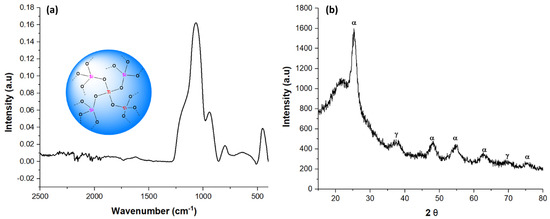
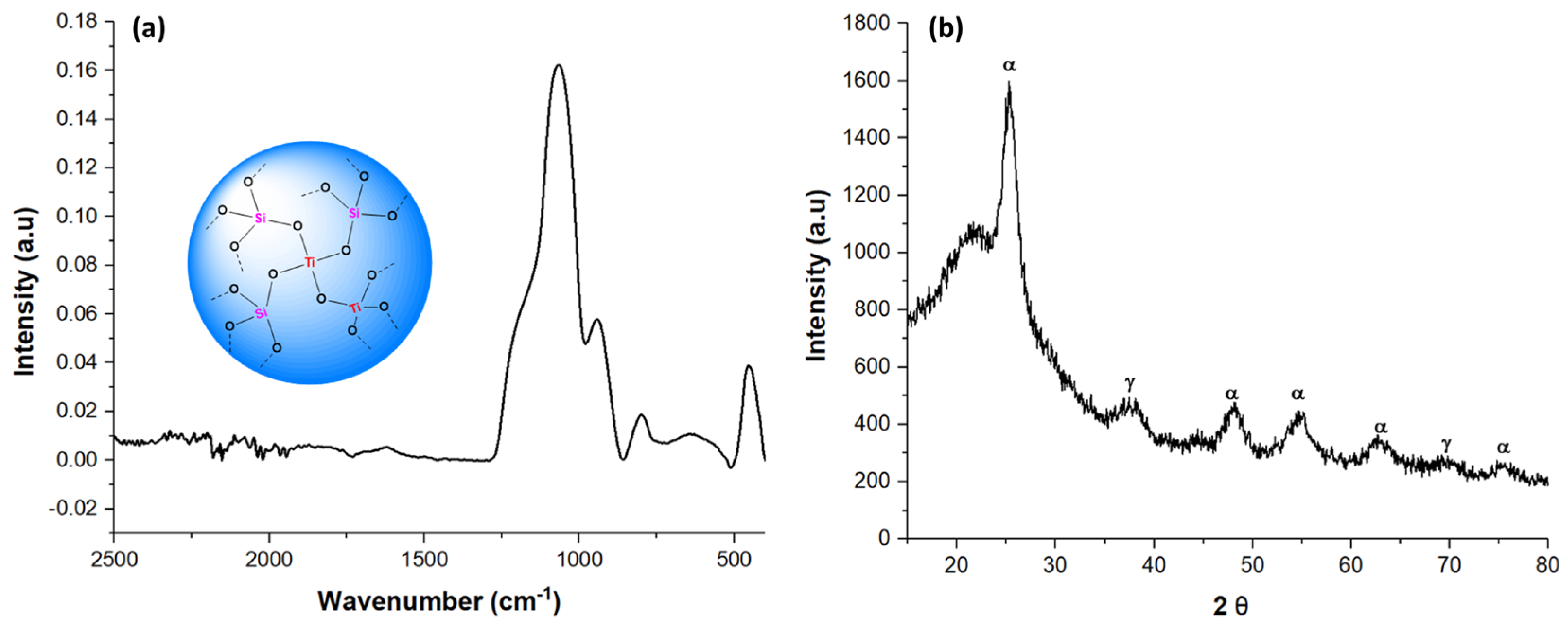
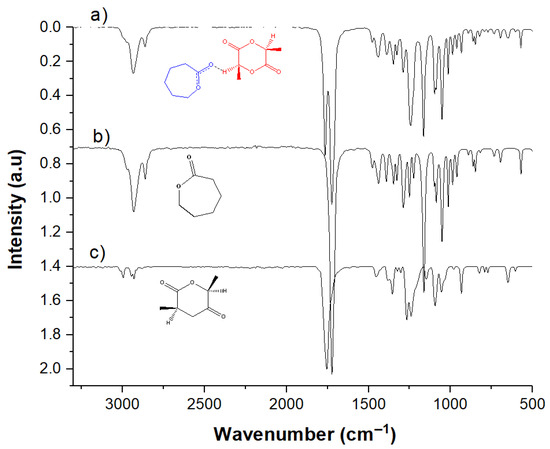
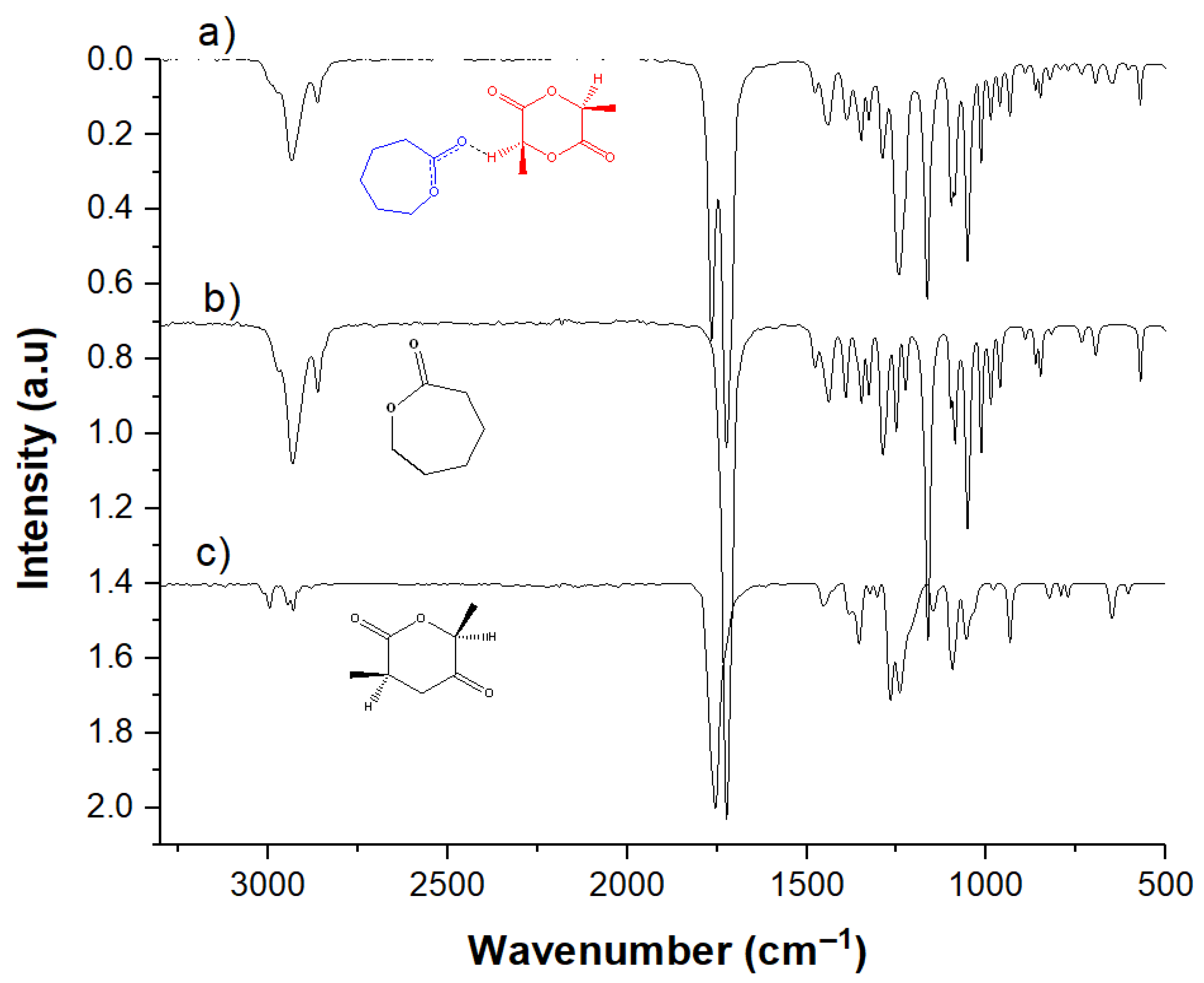
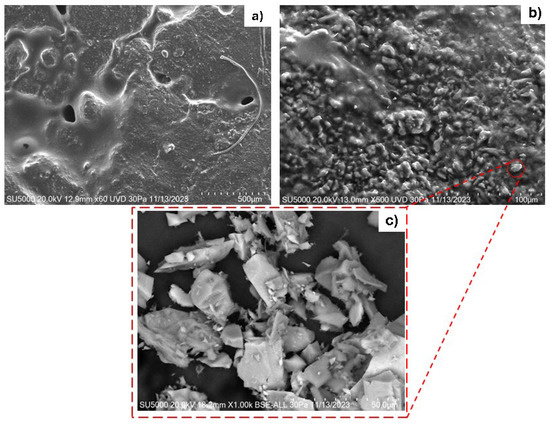
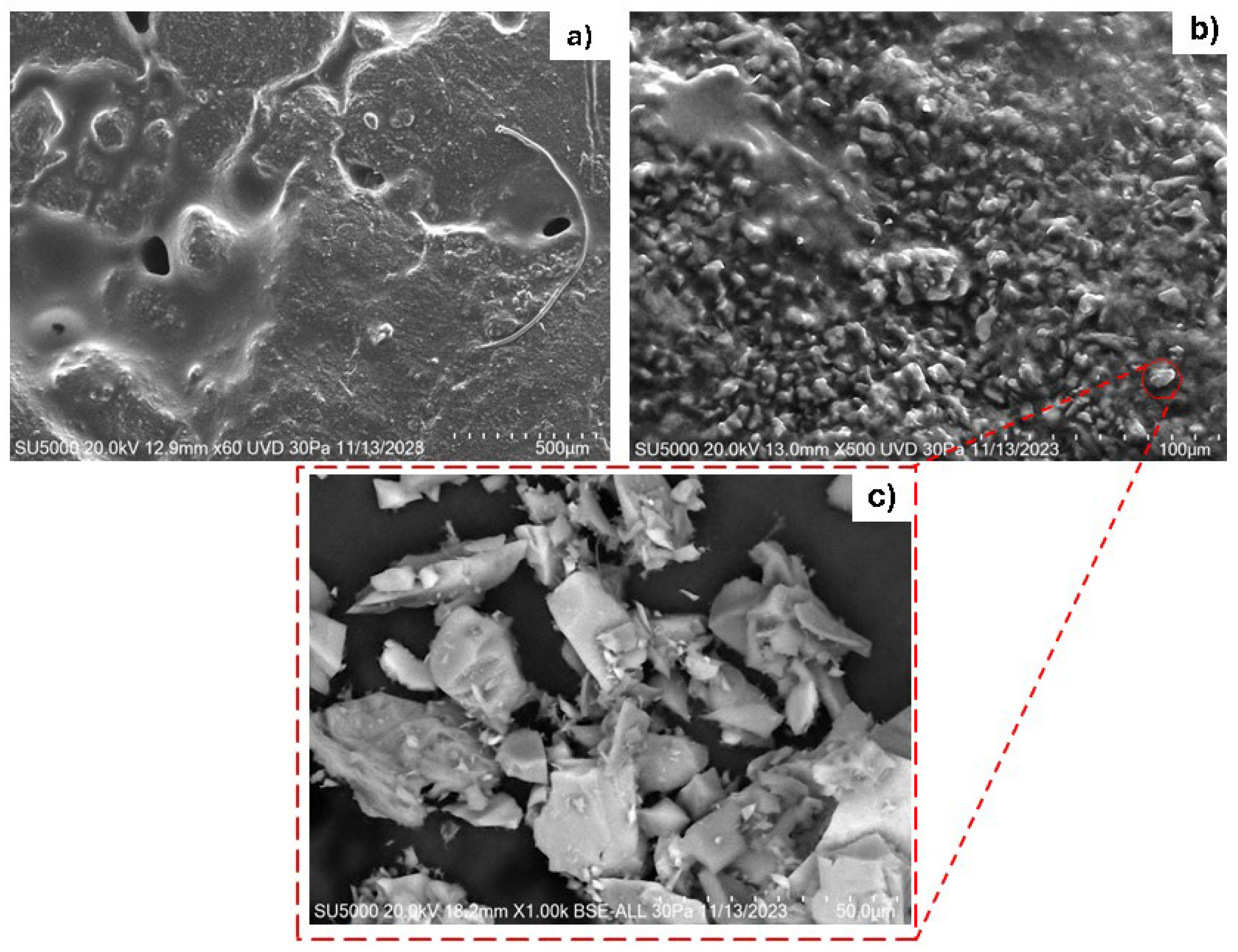
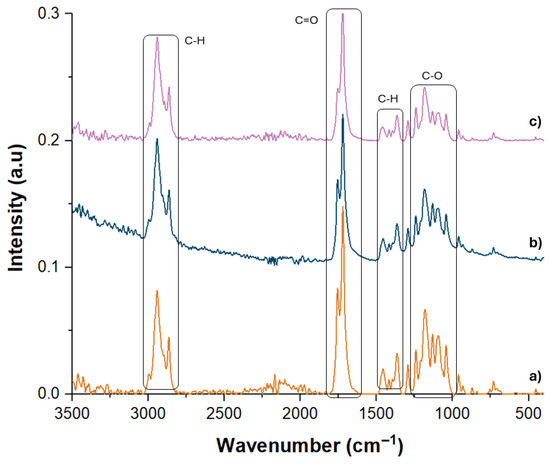
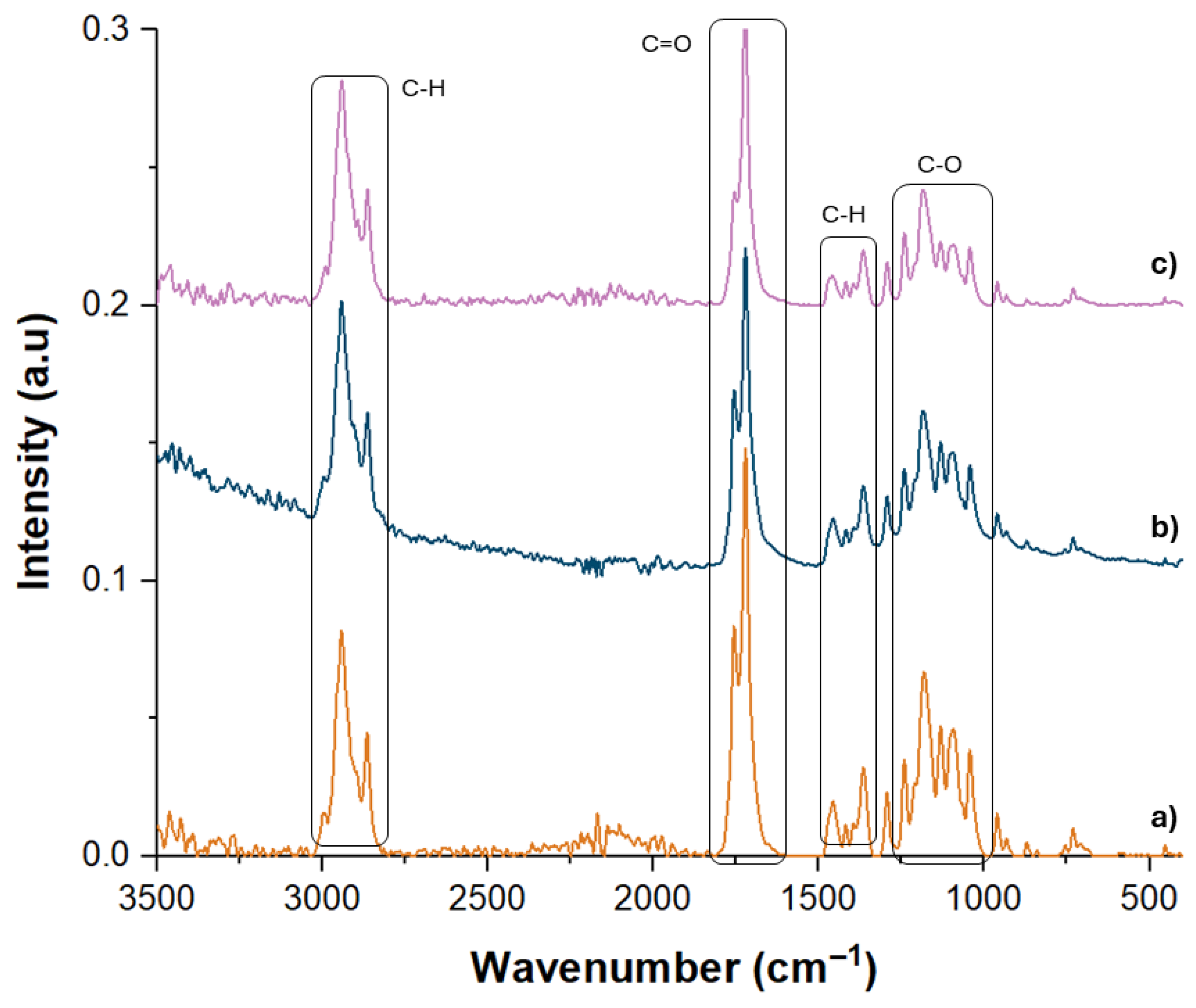
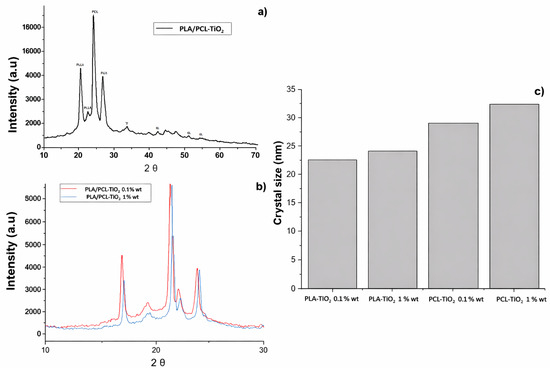
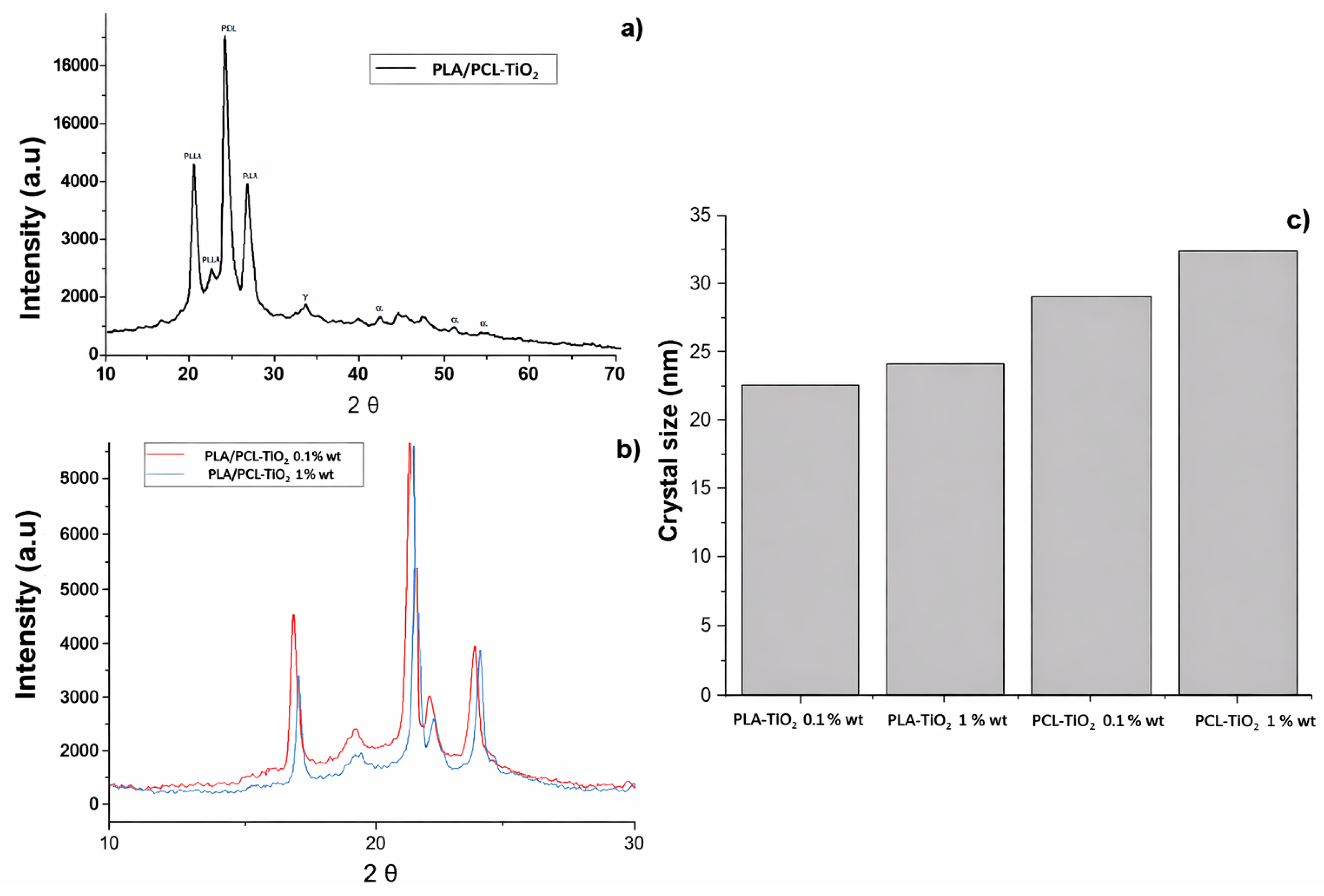
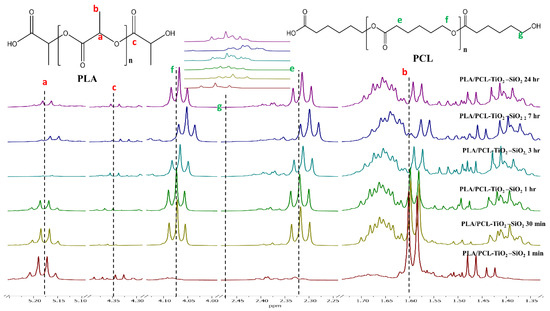
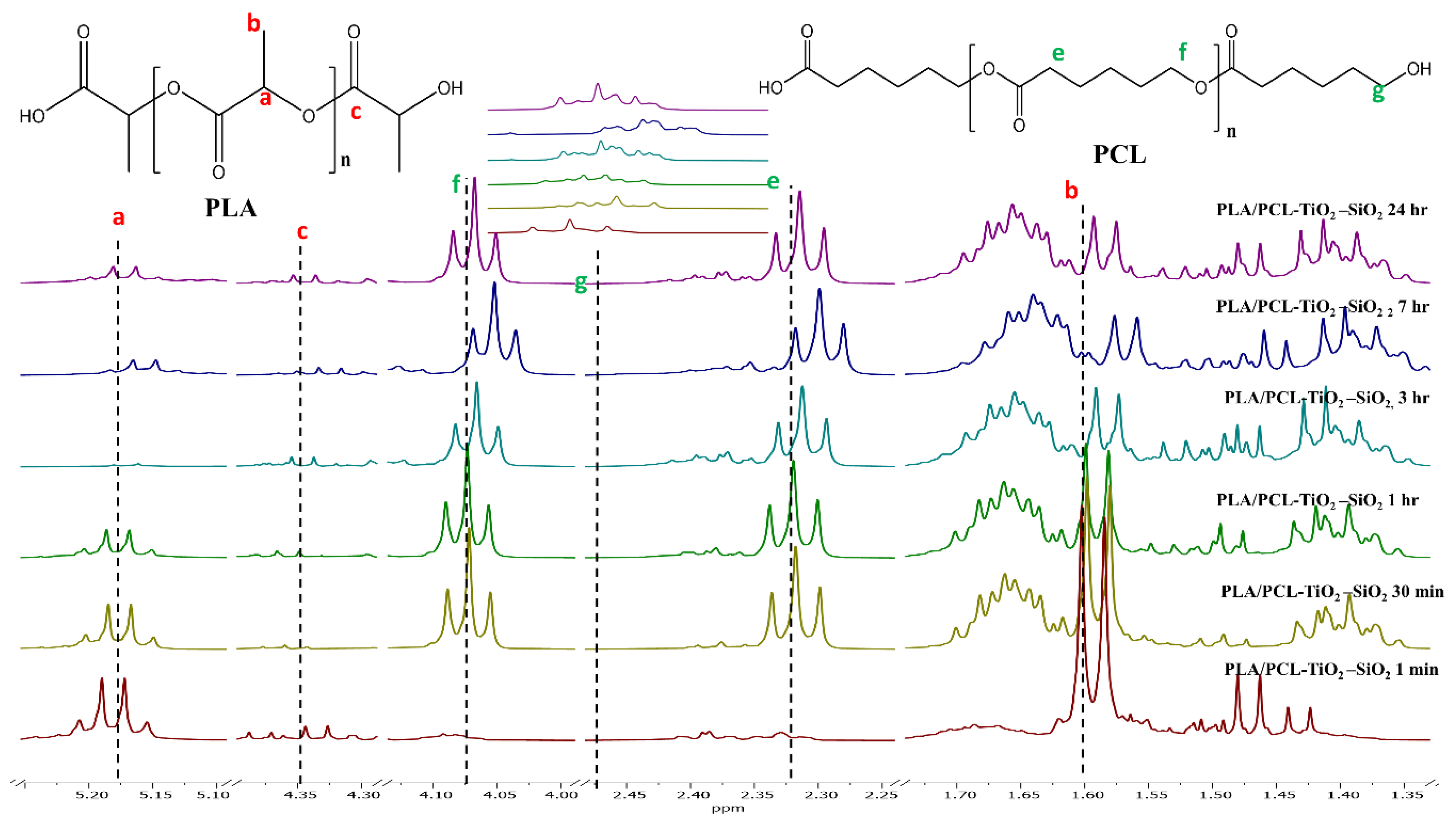
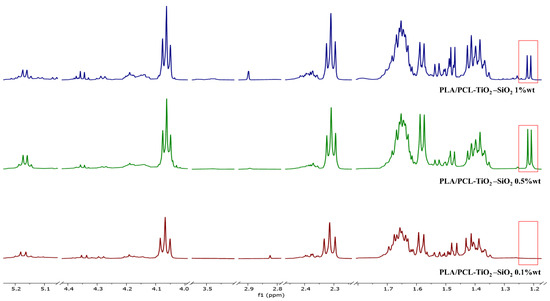
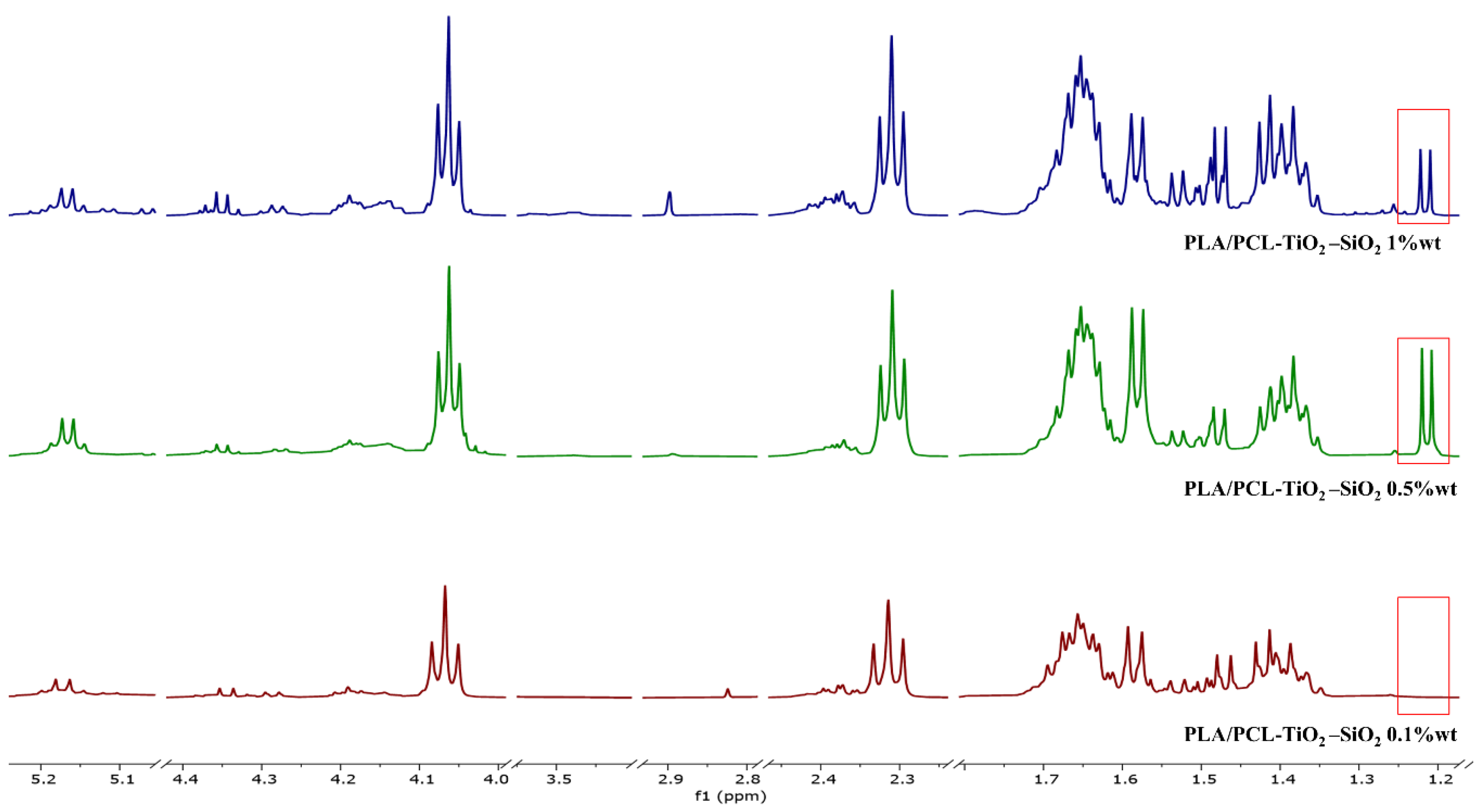
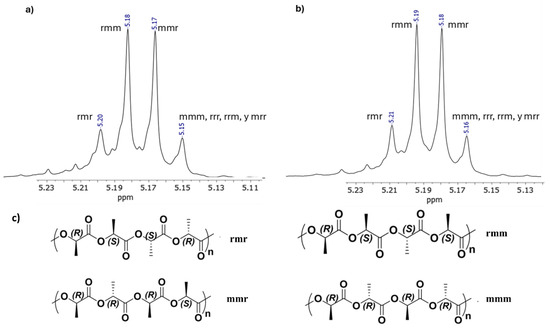
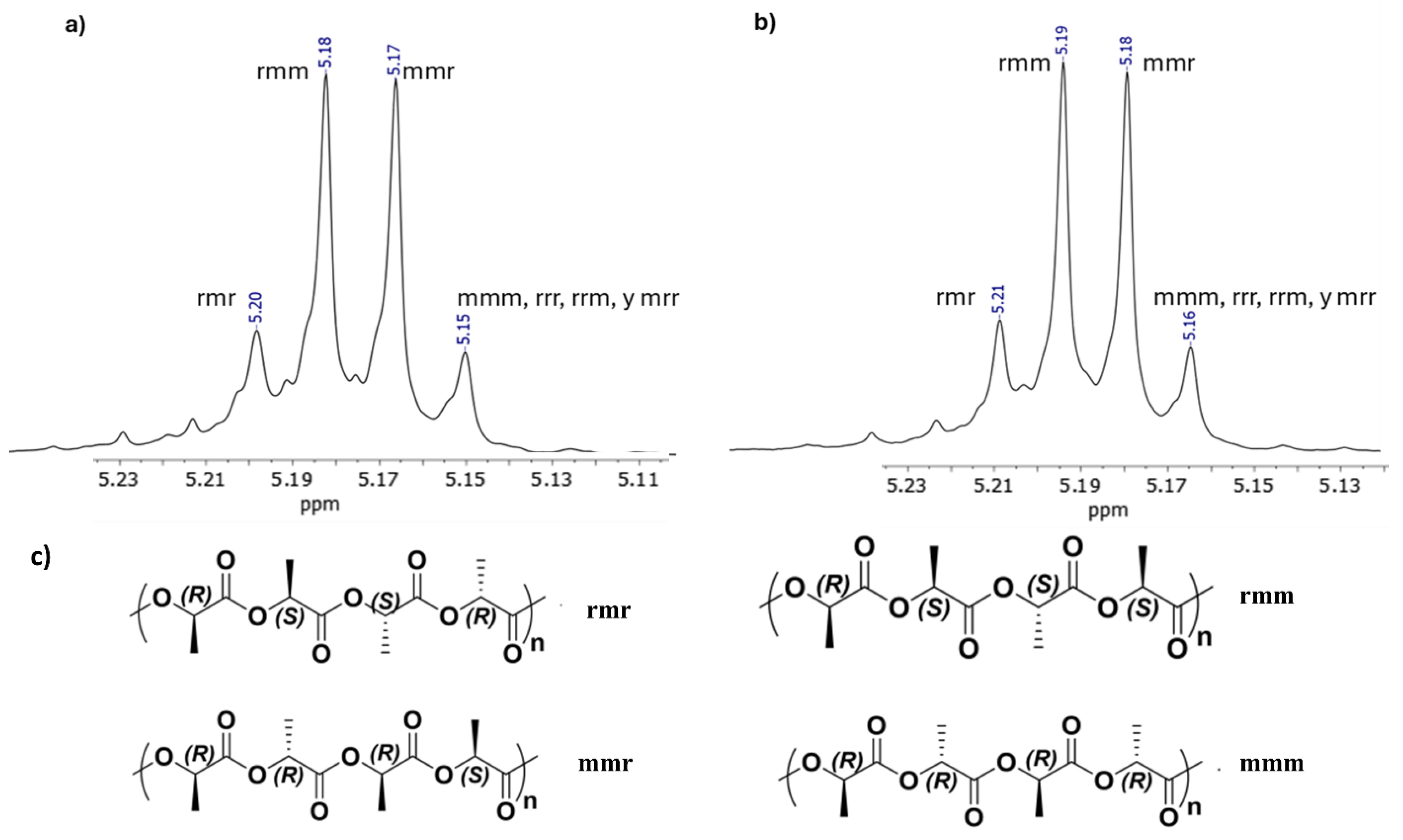
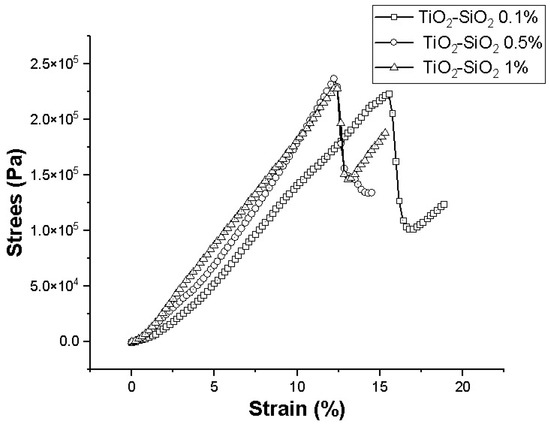
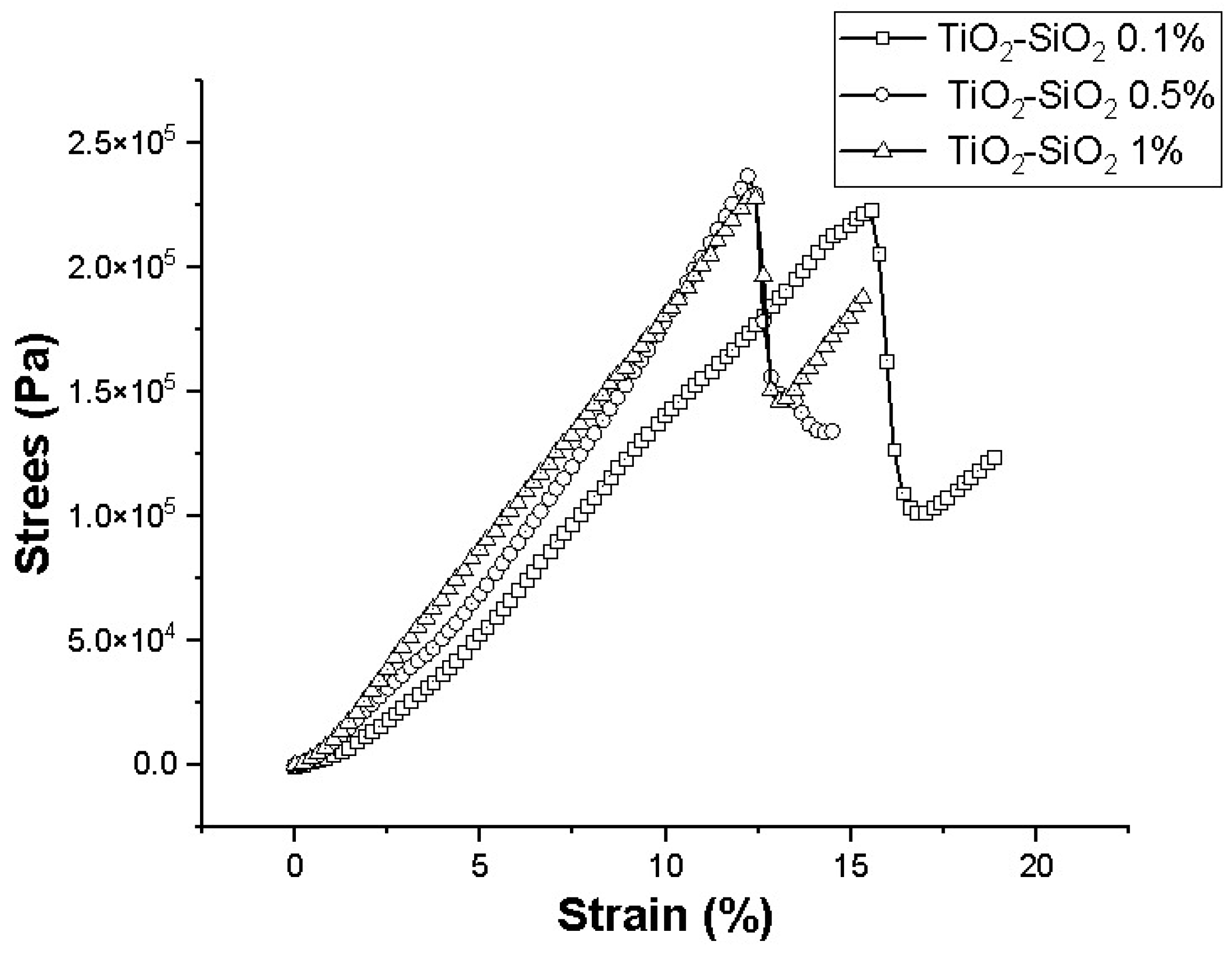
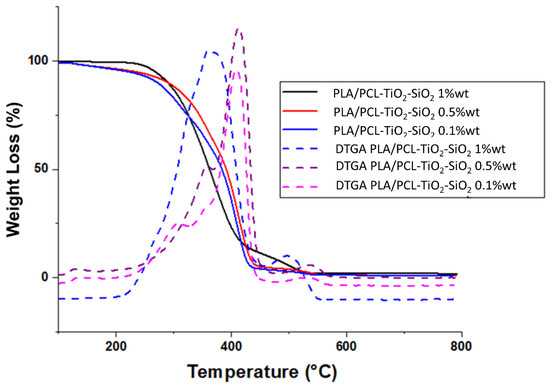
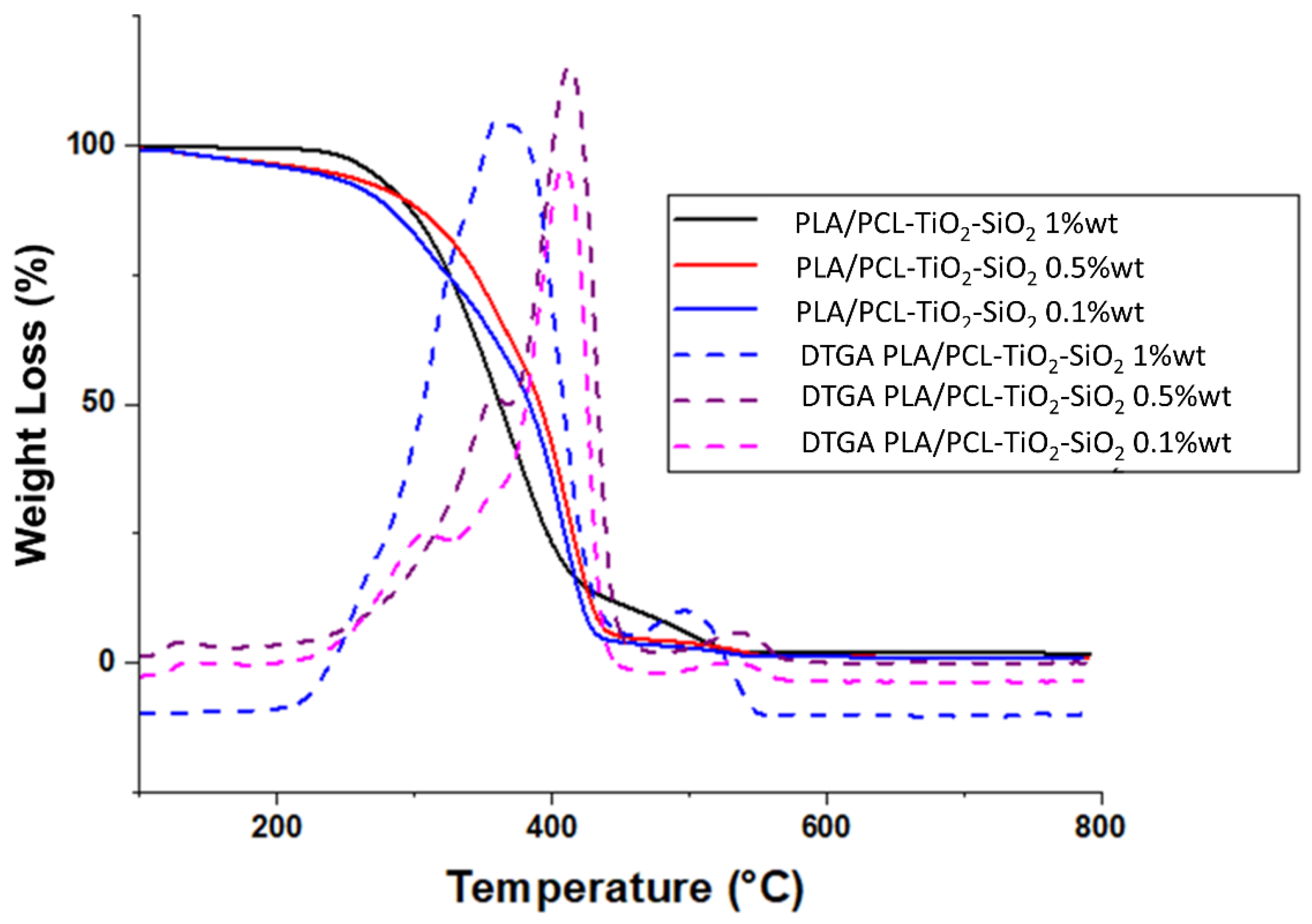
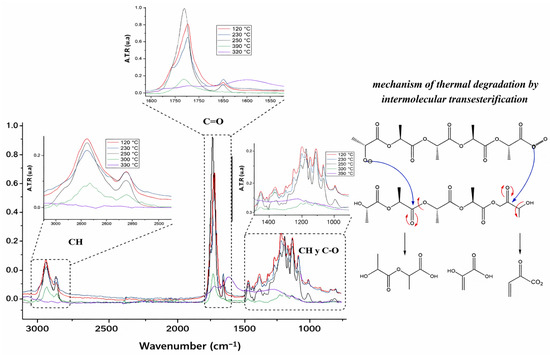
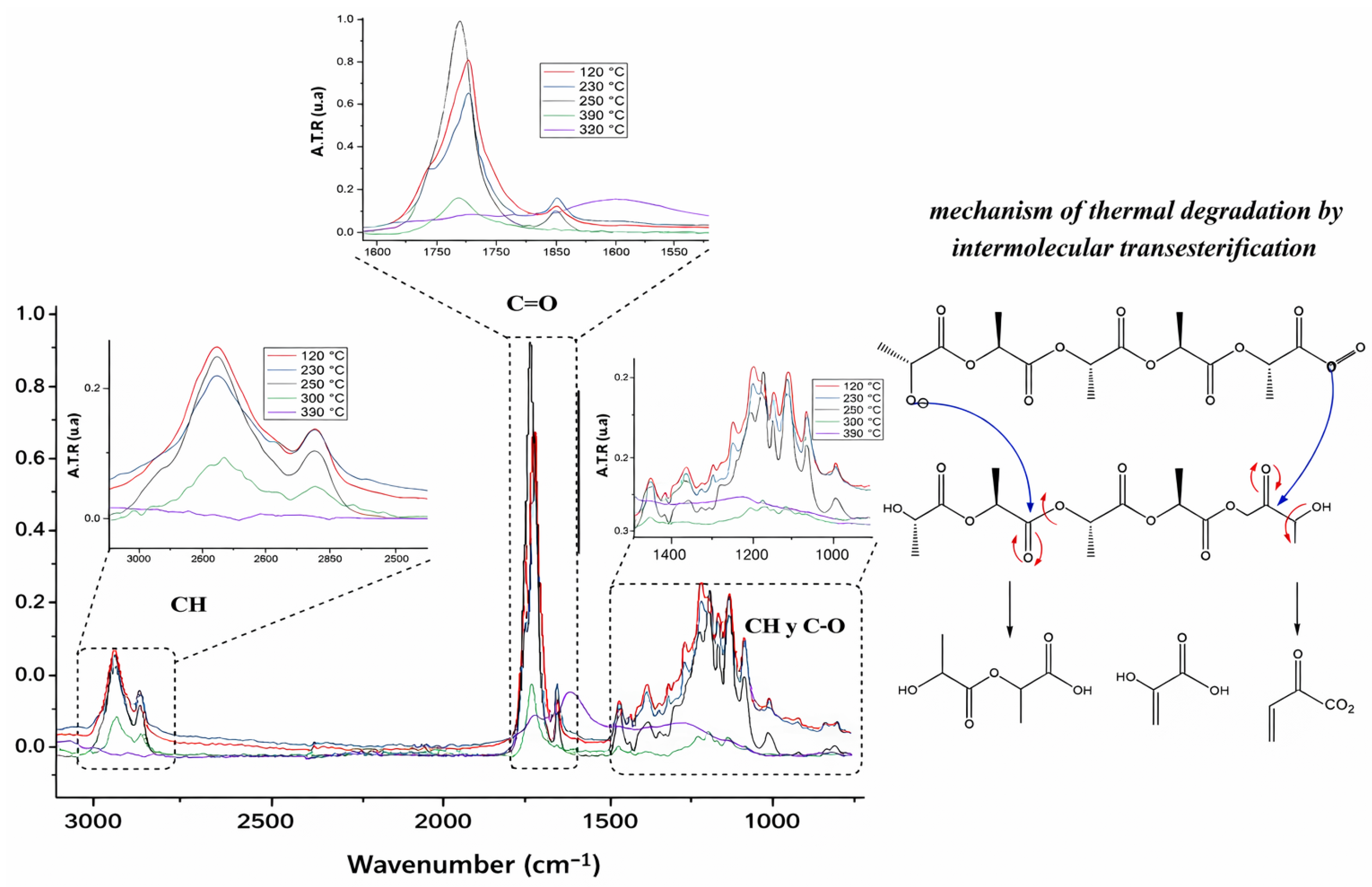
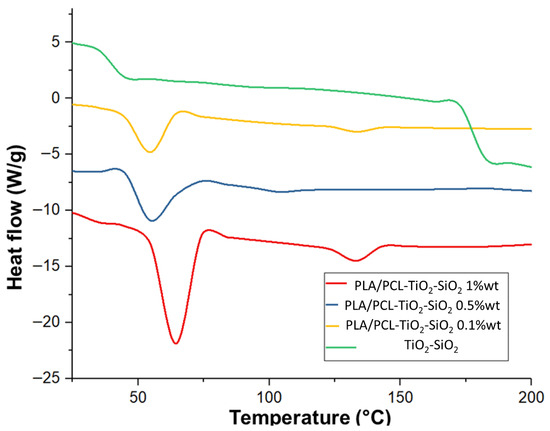
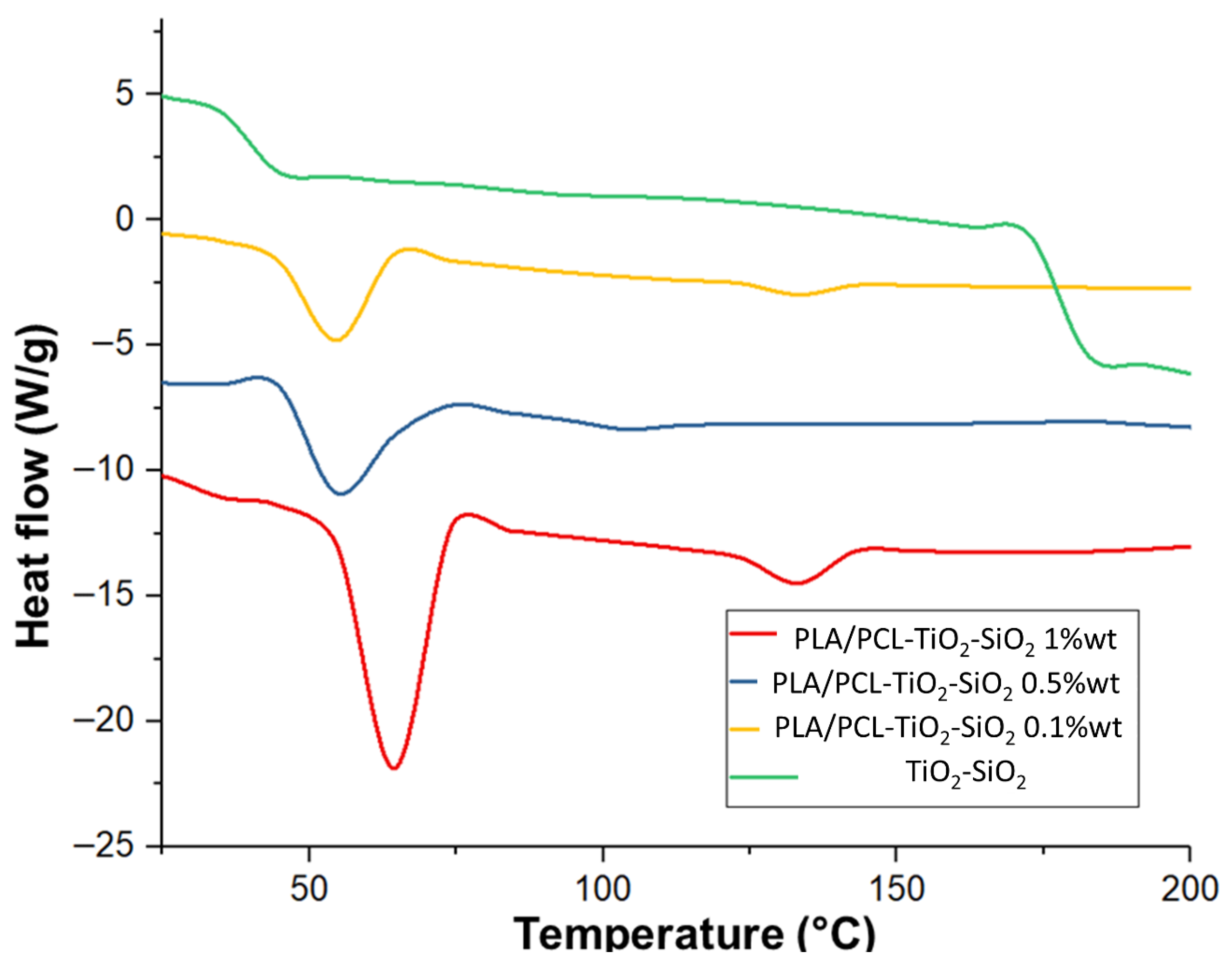
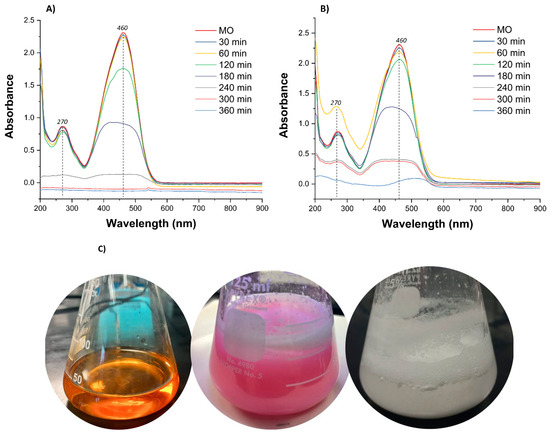
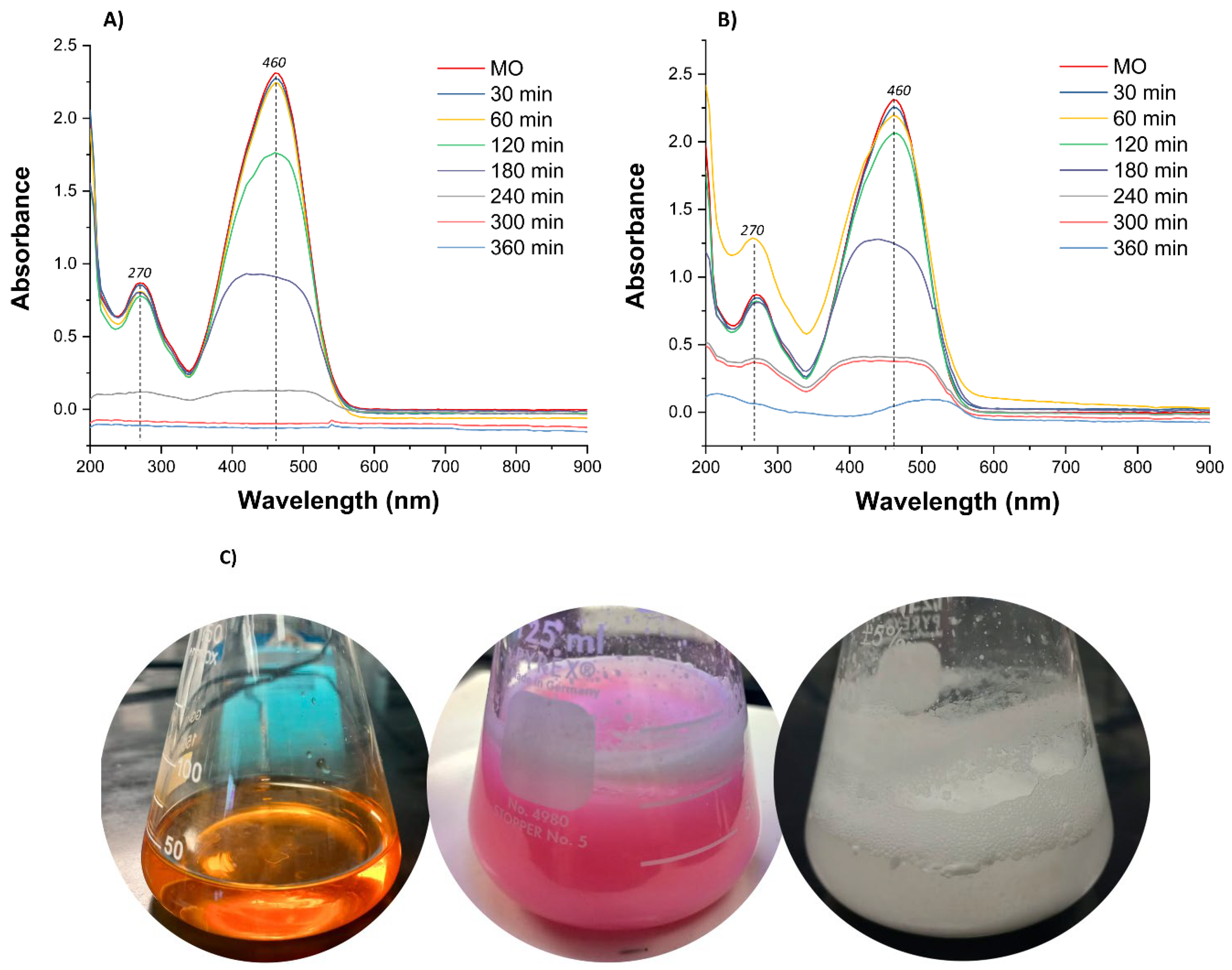
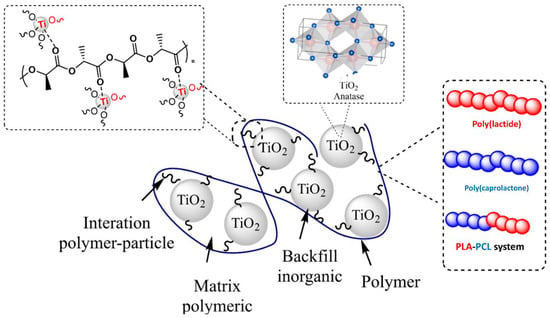
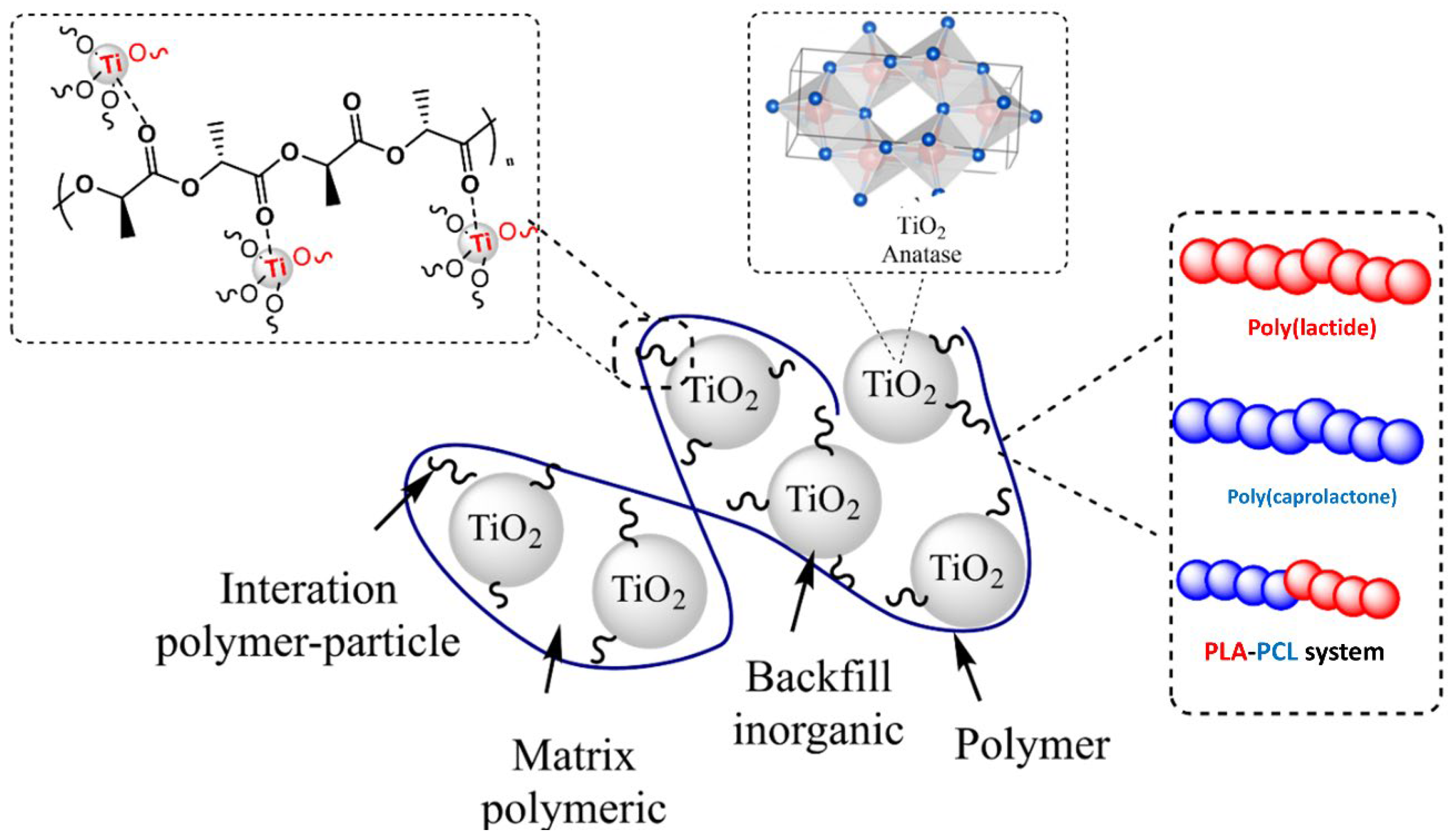
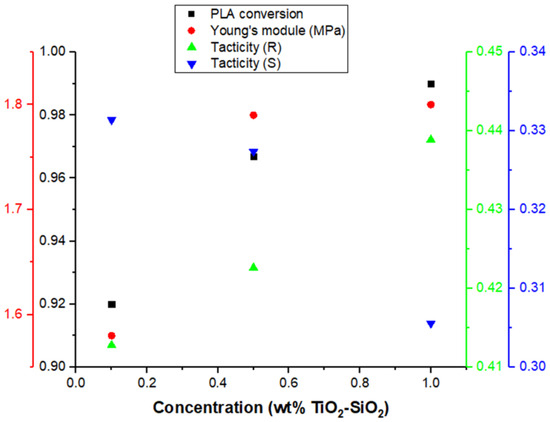
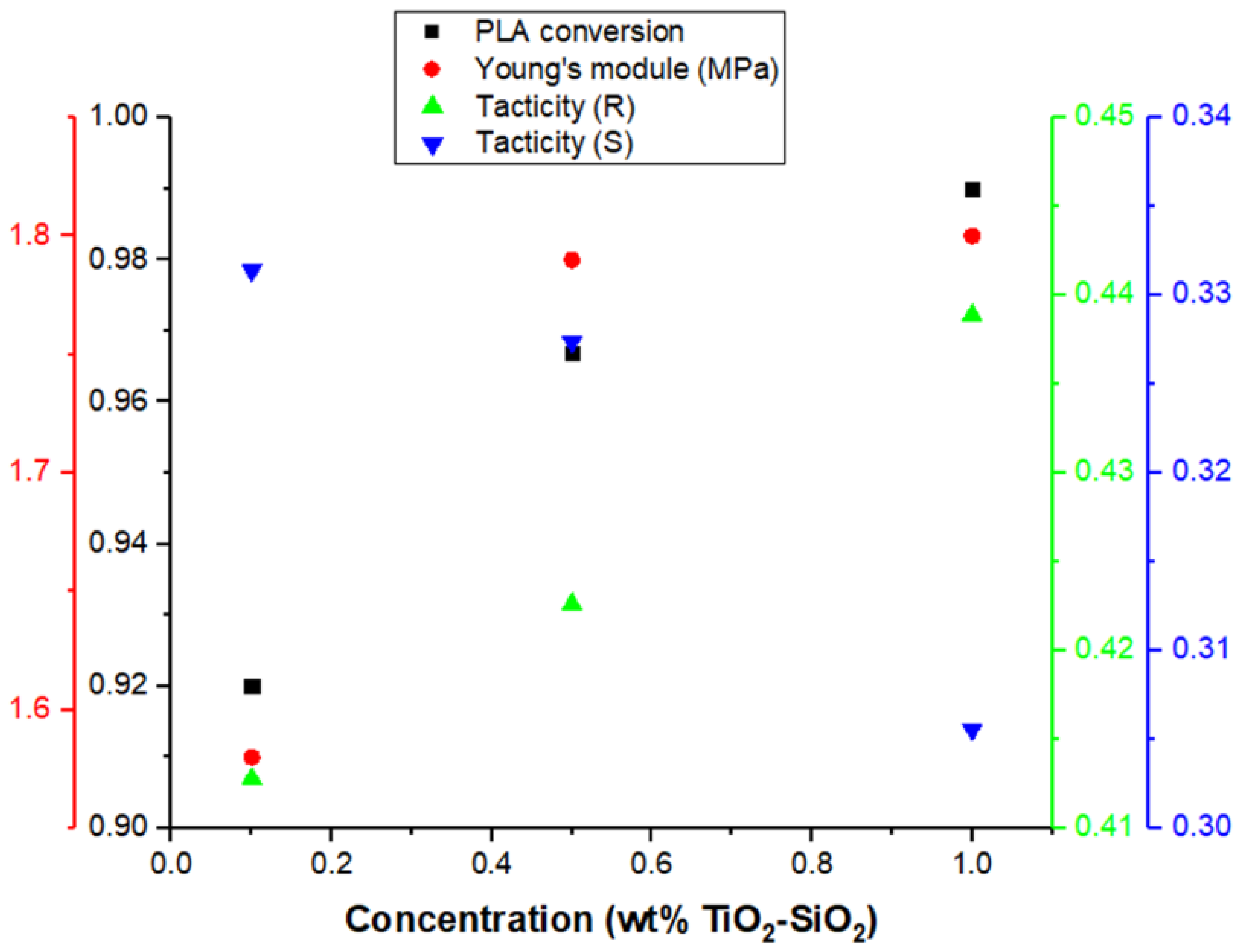
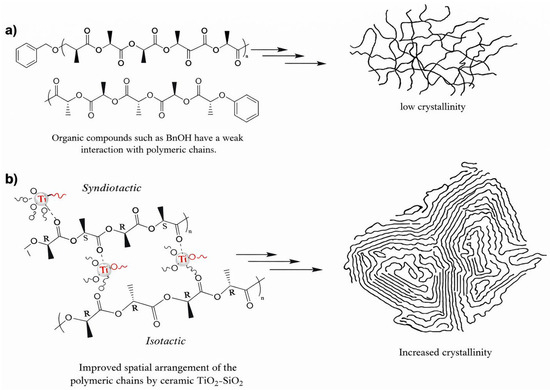
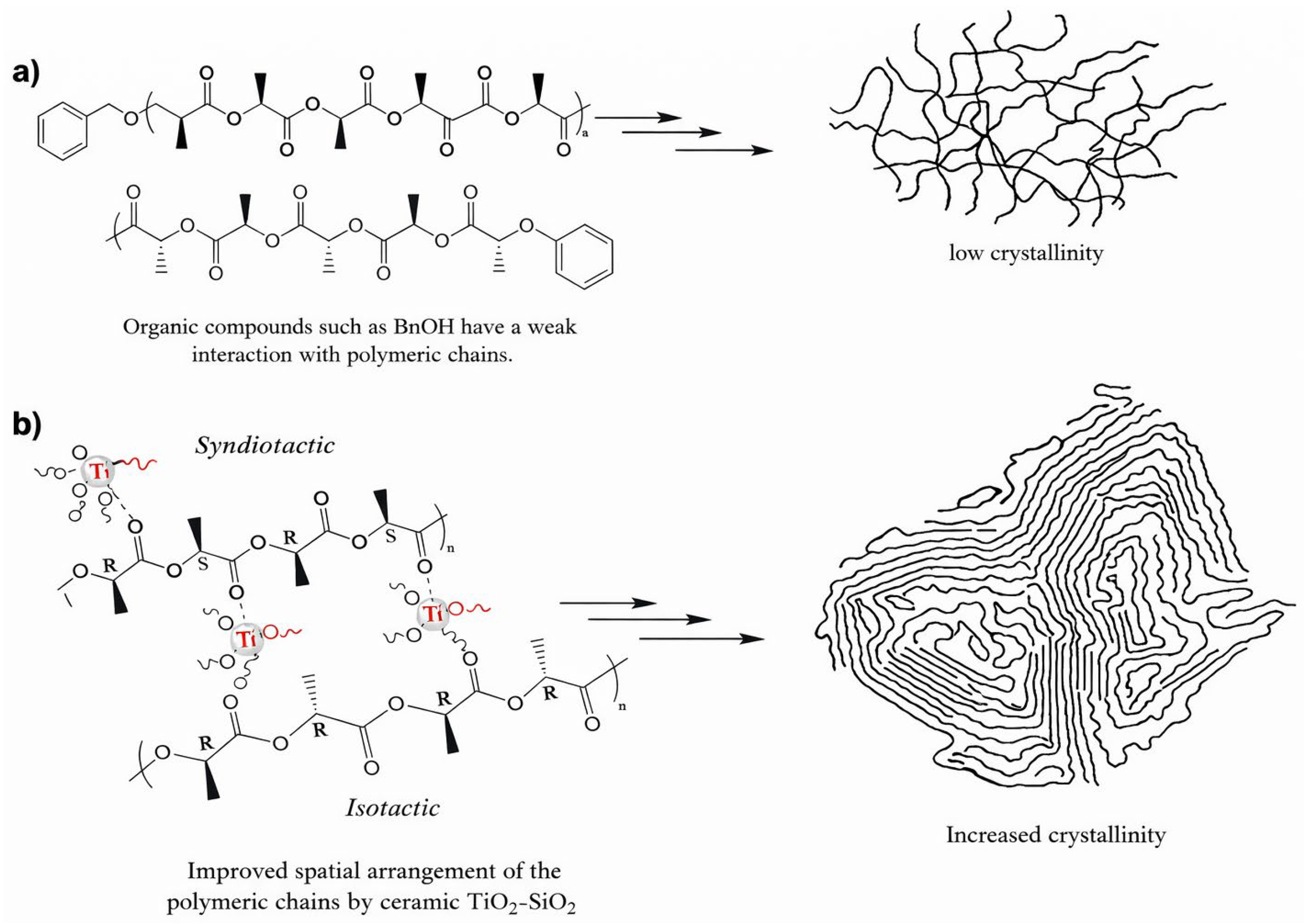
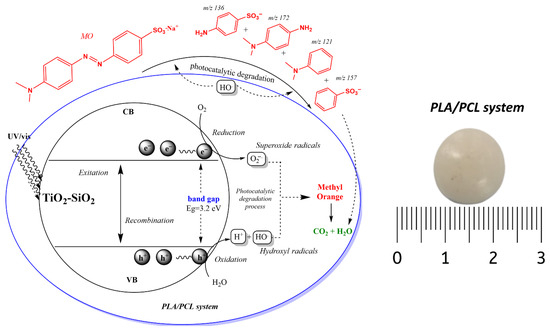
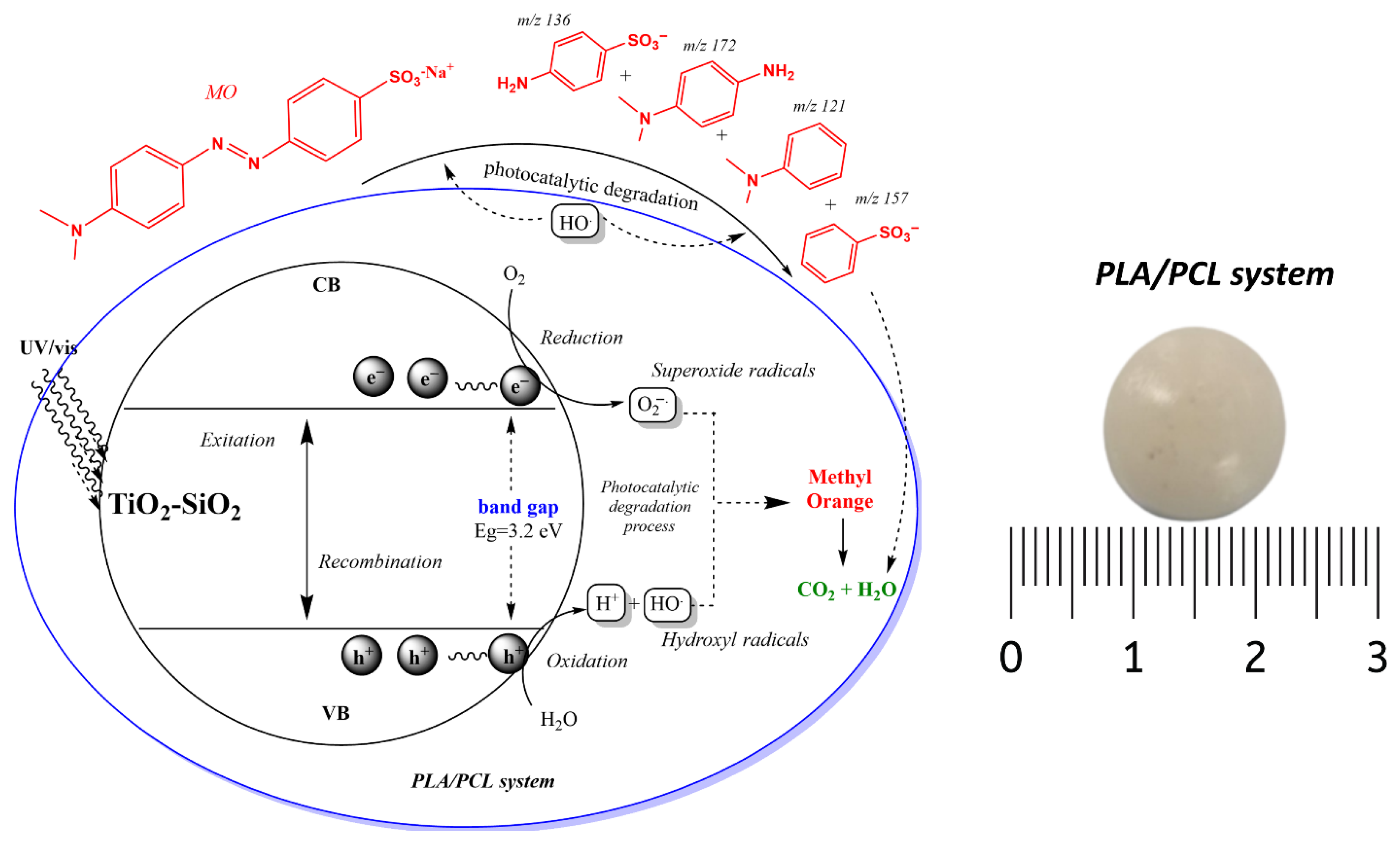

Disclaimer/Publisher’s Note: The statements, opinions and data contained in all publications are solely those of the individual author(s) and contributor(s) and not of MDPI and/or the editor(s). MDPI and/or the editor(s) disclaim responsibility for any injury to people or property resulting from any ideas, methods, instructions or products referred to in the content. |
© 2026 by the authors. Licensee MDPI, Basel, Switzerland. This article is an open access article distributed under the terms and conditions of the Creative Commons Attribution (CC BY) license.