


Abstract
A total of three variants of pellets from field bean and potato waste mixtures were investigated and analyzed. Their physical, mechanical and chemical properties were examined, and the burning emissions of pellets were measured. An experimental study was performed to determine the dependence of density and compressive strength. An empirical linear regression model was developed, allowing calculation of the density and compressive strength dependence of pellets with 84–91% accuracy. The lower calorific value of the dry waste pellets was similar across all tested samples. The chemical properties of pellet ash were determined, and its suitability for use as a fertilizer was assessed. The pellet density ranged from 1269.24 kg m−3 (potato pellets) to 1369.89 kg m−3 (potato and bean MIX DC pellets). The moisture content of the pellets varied from 6.14% to 7.37%. The moisture content of the pellets increased with the proportion of potato waste meal in the mixture. The ash contains elements magnesium, iron, calcium, potassium, silicon, sodium and phosphorus. Potassium in potato pellet ash was found to have the highest concentration (60.42%), which has a direct effect on boiler slag. The share of potato waste in biofuels helps to remove soot from the chimney in the form of solid particles. It can therefore be stated that bean and potato waste can be used in the production of solid biofuels and that pellets produced with a 20% (1:4 ratio) potato waste fraction obtain the best properties.
1. Introduction
Bean residues are suitable for alternative energy production because they are characterized by low lignin content (48.8–56.5% of the biomass fraction and 13.1–14.4% of the biomass fraction, respectively [1]. Considering that the bean harvest contains a large amount of biomass residues (from 3.7 to 5.7 t ha−1) accounting for 42.3–50.5% of the total crop biomass, many studies have been conducted to investigate the potential of biomass from bean waste for biofuel production [2,3,4]. Bean lignocellulosic biomass can also be used for the production of bioethanol and biogas. Danish scientists have studied the components of cellulose, hemicellulose, lignin and ash from beans and assessed their potential as raw materials for ethanol and biogas production [5,6].
Potatoes are the third most important food crop in the world. Every year, about 370 million tons of potatoes are produced worldwide, of which more than 33 million tons become potato waste [7]. This amount of organic waste is sent to landfills annually, which is the least desirable waste management option, posing serious environmental problems [8,9,10].
Potato tubers intended for human consumption must comply with the quality requirements and permissible deviations established for each class. Potato tubers must be healthy, clean, hard, not wilted or damaged by wet, dry or brown rot. They must not be frozen or clogged, free from foreign odor and taste, with sprouts not exceeding 3 mm in length. They also must be free from impurities, dry, and contain no more than 1% soiling. In addition, they must be without cracks or fissures deeper than 5 mm, not hollow or glassy, not damaged by pests, and without mechanical damage affecting the pulp deeper than 5 mm. Potatoes are classified into Classes I and II according to quality [11].
An important factor distinguishing potatoes from other agricultural wastes, such as rice straw, wheat straw and sugarcane bagasse, is a high content of toxic substances. Toxic glycoalkaloids, mainly α-solanine and α-chaconine, are found in all parts of the potato plant including the stems, leaves and potato tuber peels. Unlike sugarcane, wheat, and rice straw, which can be used for animal feed, potato stems, leaves, and tuber peels contain substances toxic to animals [7,12].
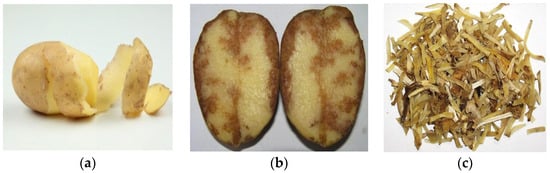
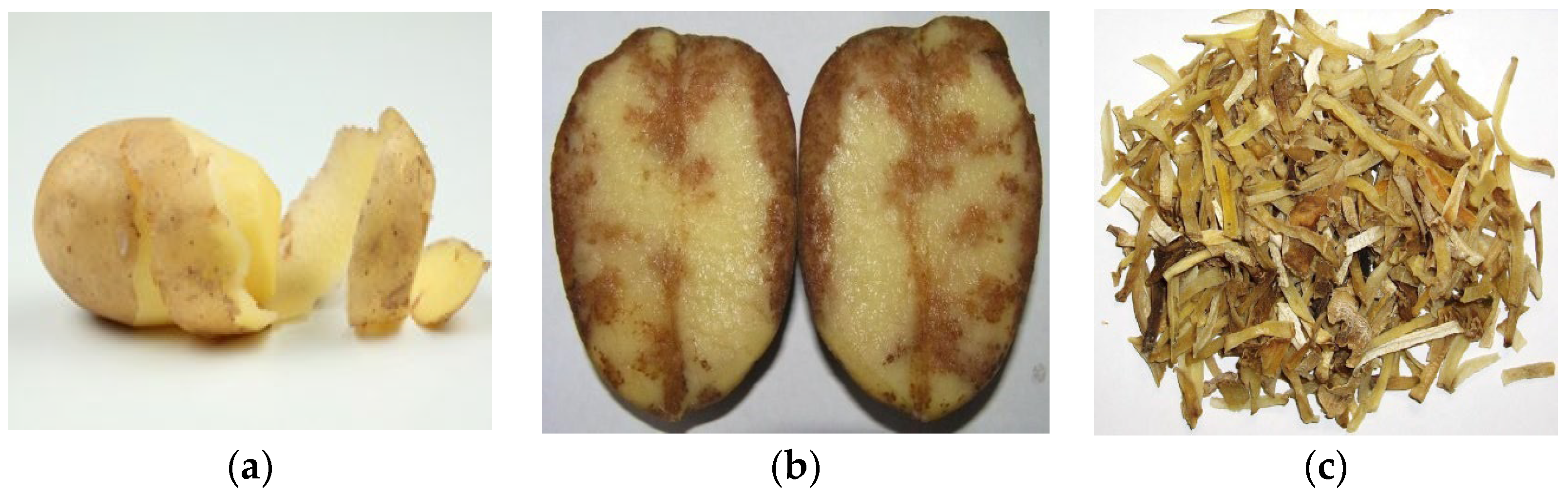
A relatively large part of the waste is generated during potato processing (about 68% of total waste). During preparation of potato products, approx. 35–46% of the processed biomass becomes waste. Potato juice and bran remain after starch extraction. This biomass is suitable for use in the production of solid biofuels because, during the production process, potatoes are washed, cleaned, grated and the liquid contained in them is squeezed out, making the material technologically and economically very valuable for biofuel production. Potato consists of potato peel, cell walls, starch and juice residues. Potato peel and potatoes unsuitable for processing are an excellent source of energy. Their dry matter contains about the same amount of energy as barley or chickpea grains. Dried potato residues (unsuitable fried potatoes and chips or expired products) are most valued due to their high energy content. The residues of potato products that use oil (French fries, chips, etc.) are especially high in energy (Figure 1).
Figure 1.
Potato waste: (a) potato peels; (b) diseased potatoes; (c) waste from production of potato products.
The company Kraft Foods Lietuva (Vilnius), operating in Lithuania, processed more than 20 thousand tons of potatoes annually, of which 6–8 thousand tons, as secondary processing products, could have been used for biofuel production [11]. Scientists have long studied the potential of using potatoes in energy production [13,14,15]. Due to their high moisture content, potatoes and their waste are most often studied as biomass for biogas production. However, potatoes intended for energy production must be characterized by starchiness and resistance to diseases. In experiments with chicken manure and potato waste for biogas production, scientists V. Kolodynskij and P. Baltrėnas found that a high methane concentration (55.3%) was achieved from a mixture consisting of chicken manure (70%) and potato waste (30%), whereas biogas obtained from other proportions was unsuitable for use due to low CH4 and high CO2 concentrations. However, if the main goal is to obtain higher-quality biogas over a longer period of time, it is preferable to use chicken manure feed without potato waste additive [16].
Researchers of the Faculty of Agricultural, Food and Forestry Engineering, Białystok University of Technology in Poland, conducted a study on the pelletization of potatoes with buckwheat waste. They found out that the starch and moisture contained in potatoes serve as good binding materials in the production of pellets. In addition, excess moisture acts as a lubricant in the pelletizer, reducing wear and tear of the equipment. The calorific value of the produced pellets was also determined, which was about 16 MJ kg−1 of dry matter [17].
Obiszinski in 2012 reported that the determined calorific value of pulp pellets was 16.33 MJ kg−1. His research shows that potato waste can be used as a raw material for producing solid biofuel in the form of pellets or briquettes [13,18,19].
Biomass production involves quite complex and energy-intensive technologies. Therefore, when producing pellets or briquettes, it is necessary to evaluate biofuels from an energy perspective and take into account the amount of energy consumed (comparative functional unit): the more energy used to produce biofuel, the less renewable the biofuel is considered [13].
Although biofuel-fired boilers are considered environmentally friendly, all technologies have a certain impact on the environment and the population. In combating particulate matter and gas emissions, greater attention must be paid to the development of gas combustion and cleaning technologies, leading to increasingly stringent environmental requirements [20,21,22,23].
Solid biofuels, compared to traditional wood materials, have certain properties that complicate thermochemical energy conversion (particularly combustion) due to the low melting point of ash, which leads to slag formation in fuel combustion equipment [24,25]. Ash transformation during biomass combustion is a very complex phenomenon that can show many fundamentally different scenarios. Compared to traditional wood materials, solid biofuels from agricultural residues like beans and potatoes may have higher ash and mineral content (Na, K, P, Cl), leading to a lower melting point and high corrosion potential [26,27,28]. The consequences of increased ash deposition during biomass combustion that are detrimental to the efficiency and operation of the combustion system are reduced burner efficiency, burner damage and maintenance problems. One of the options to increase the ash deformation temperature is to add inorganic compounds (e.g., eggshells) (3–5%) to the biofuel production process [29].
This work presents original and new experimental and theoretical research results, evaluates and substantiates technologies for the usage of bean and potato waste in the production of solid biofuel pellets, and investigates the influence of soil preparation technology on the properties of bean plant biomass. The novelty of the work is also characterized by the fact that no studies have been conducted on the use of the aboveground part of beans as biomass for solid biofuel, and experiments with potato pellets were carried out using potato waste rather than the whole potato tuber. According to Obidzinski, pellets made from potato tubers have good calorific values—16.33 MJ kg−1, but due to the high moisture content of the biomass (about 80%), high energy costs are required for their drying [17,30,31]. The potato waste used in this work comes after production processes and has a lower moisture content than fresh tubers, which is likely to result in better calorific values. The biomass of the aboveground part of beans is naturally dry and does not require additional drying.
2. Materials and Methods
2.1. Biomass Selection and Sample Preparation Methodology
Bean waste (aboveground part), hereinafter referred to as “beans”, was collected at the VMU Agricultural Research Institute Testing Station located near the city of Kaunas. Field experiments were conducted at the VMU Agricultural Research Institute Faculty of Agronomy, during which samples of the aboveground part of fodder beans were collected for the study [4]. One of the objectives of this study was to investigate the influence of soil preparation technology on the properties of bean plant biomass. This included assessing the mechanical–physical properties and quality indicators of bean waste biomass during processing, grinding, pelleting, and burning, and determining the impact of pellet burning on the environment. For the study, samples were taken from three differently prepared experimental fields, in which the following were performed:
- (1)
- Conventional plowing to a depth of 22–25 cm (CP);
- (2)
- Deep cultivation (with a cultivator to a depth of 23–25 cm) (DC);
- (3)
- Unprocessed soil (direct sowing) (US).
For the production of biofuel pellets, five bean biomass samples (from 0.25 m2 plots) were randomly collected from each experimental field. The biomass waste was dried without additional energy input, for 5–7 days outdoors in natural ambient conditions at a temperature of 15–22 °C. The mass was dried naturally until its moisture content reached 15–20%.
In the study, potato peelings were also used as waste for raw material, hereinafter referred to as potatoes unsuitable for animal feed. A significant amount of waste is also generated during the production of semi-finished potato products. These are waste after deep cleaning of potatoes and unconditioned potatoes. Such waste has excess moisture and requires additional drying. Unconditioned potatoes, unsuitable for feed, are selected during potato harvesting and at sorting sites; they are also suitable for biofuel production, but cleaning, processing and drying increase their cost. In this work, potato waste was used after secondary deep cleaning with additional drying to 20% moisture content.
Previous studies [20] have shown that the highest quality biofuel pellets were obtained from a bean and potato waste mixture produced at a ratio of 1:4 (using 20% potato waste). Therefore, this mixture was used in further studies.
The pellet samples were given name codes: MIX CP (1 mass part of potato waste and 4 parts of beans from conventional plowing), MIX DC (1 mass part of potato waste and 4 parts of beans from deep cultivation), MIX US (1 mass part of potato waste and 4 parts of beans from unprocessed soil).
2.2. Biomass Processing and Pellet Production
At the initial stage, the selected and prepared bean waste samples were crushed by using the stand of the forage harvester drum crusher (Maral 125, MDW Mähdrescherwerke GmbH, Singwitz, Germany) into particles with a diameter of 10–20 mm, and the potato waste (peelings) were additionally dried to a dry state suitable for grinding. After naturally drying to 15–20% moisture content, the prepared bean waste biomass was cut and milled into small pieces, while the potato waste pieces were further crushed into flour (particles 0.1–2.0 mm in size) using a hammer mill (Retsch SM 200, Retsch GmbH, Haan, Germany).
To assess grinding quality, the fractional composition of the flour was determined according to the standard LST EN ISO 17225-1:2021 [32]. The fractional composition of the crushed plant flour was determined using 200 mm diameter sieves with round holes, stacked in the following order: 0.0 mm, 0.25 mm, 0.5 mm, 1.0 mm, and 2.0 mm. A 5 kg sample was sieved through the sieves using a special vibrating sieve shaker (Haver EML Digital plus, Haver & Boecker, Oelde, Germany). The biomass remaining on the sieves was weighed and the sample percentage share of each fraction was calculated. Each test was repeated three times.
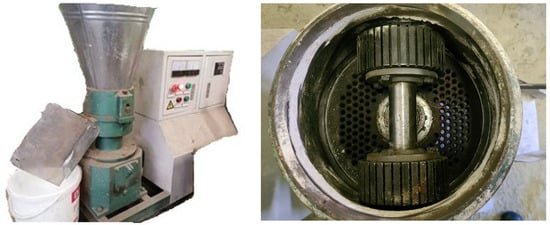
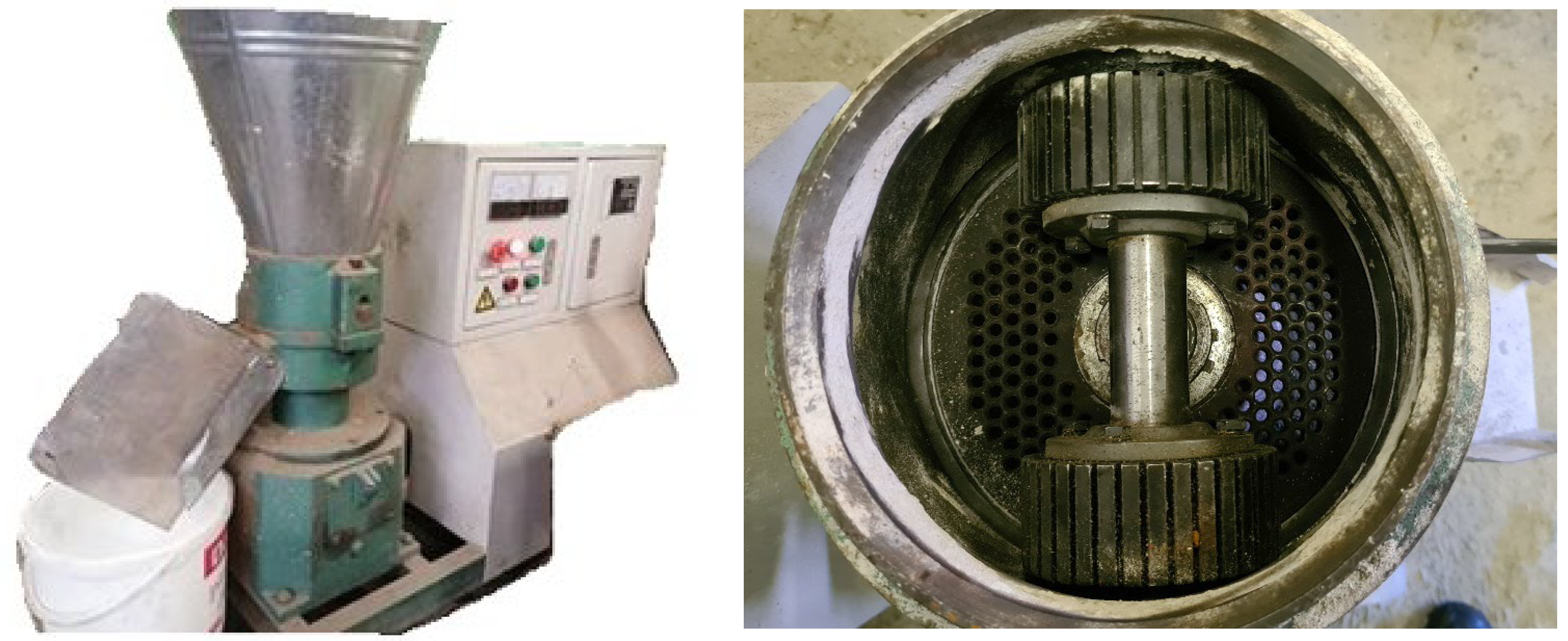
Potato and bean waste flour was mixed in the specified proportions and moistened to moisture contents of 14–16%. Raw material samples were moistened by spraying them with water to ensure the pelletizing material acquired surface moisture. The prepared mixtures were pressed using a low-performance (up to 200–300 kg h−1) 7.5 kW pelleting machine with a horizontal matrix (ZLSP200B, Czluchow, Poland) (Figure 2).
Figure 2.
Pelleting machine ZLSP200B (Poland) with a horizontal matrix (holes of 6 mm diameter).
Pellets are formed in a pellet production press, where the crushed and ground biomass is pushed through 6 mm diameter matrix holes with rollers, and the pressed pellets break off spontaneously. During the pelletization process, the biomass is heated to 70–90 °C, and, after pelletization, a stabilization period occurs cooling of the pellets. During the pelletization process, the biomass is heated to 70–90 °C due to friction forces between the rollers and the die, with no external heat source required. The pellets were left to cool for 24 h. Pellet quality is determined by the temperature and pressure conditions used in biomass preparation and pelletization processes.
2.3. Determination of Physical and Mechanical Properties of Pellets
2.3.1. Determination of Biomass and Biofuel Moisture Content
The moisture content of biomass was determined by Standard LST EN ISO 18134-1:2022 [33]: Five samples were randomly taken from each group. They were weighed and dried for 24 h at a temperature of 105 °C until constant mass was achieved. The dried samples were weighed again, empty containers were also weighed, and the moisture content of each sample was calculated in percentage.
Studies have shown that moisture content affects such properties of biofuel as volume, density, calorific value, and deformation force characteristics [17]. Also, moisture content can influence energy consumption and economic indicators of the produced solid biofuel [34].
2.3.2. Determination of Pellet Density and Strength
After pellet production, pellet dimensions, volume, density, and compressive strength were determined in accordance with the requirements of the standard LST EN ISO 17225-1:2021 [35]. Pellet length and diameter were measured using a caliper (0.05 mm accuracy). Ten randomly selected pellets were measured. The mass of the pellets was determined using a scale (KERN ABJ, KERN & Sohn GmbH, Germany) (0.01 g accuracy), and the average mass value of the tested pellets was calculated with an error. The volume was calculated after determining the diameter and length of the pellet, and the density was calculated from the pellet mass and volume data.
Compressive strength of the pellets is one of the most important mechanical properties reflecting the mechanical strength of one pellet exposed to external loads. Laboratory tests were performed to determine the resistance of the pellets, and compressive strength was assessed according to the force acting on the individual pellet [36]. The tests were performed using the Universal Testing Machine (Instron 5985, Norwood, MA, USA) device of the VMU AA laboratory. The compressive force was applied to the center of the pellets in a horizontal position. The device operates at a speed of 20 mm/min and is stopped after the pellet deforms. The maximum compressive load of the pellet is recorded. The test of each pellet sample was repeated five times. The method has also been used in other investigations with other sources of biofuel pellets [20]. The obtained test results were used to develop a mathematical model.
2.4. Development of Empirical Model
To examine and substantiate the influence of moisture on the properties of pelletized biofuel, the density and compressive strength of pellets with varying moisture content should be investigated, as well as their dynamics within the 5–15% moisture interval, should be evaluated which is important for biofuel. Having examined and quantitatively evaluated these properties, it is advisable to create and prepare an empirical model suitable for practical usage to integrate and theoretically describe them. Knowing the type of plant, moisture content (5–15%), and the pelletized biofuel pellet dimensions–diameter D = 6.0 ± 0.5 mm, length l = 20.0 ± 5.0 mm, this model will allow quantitative estimation, i.e., determination of pellet density and compressive strength.
The core of the proposed model is a linear regression model [37,38,39] based on a statistical relationship between the random variables X (regressor) and Y (regressand) forming a bivariate random variable that defines a rule under which each X corresponds to the conditional distribution function of Y. For the presented research results, the authors used PLS (Partial Least Squares) methodology; also, the regression equation was generalized.
Notations used for calculations:
—sample of random variable (the independent variable in a regression analysis),
—sample of random variable (the dependent variable in a regression analysis),
Regression equation:
The statistics of the samples (functionals of vectors x and y) are provided below:
Sample size n;
Confidence interval level α [%];
Empirical mean of the independent variable:
Empirical mean of the dependent variable:
Empirical standard deviation of the independent variable:
Empirical standard deviation of the dependent variable:
Standard deviation of data from the regression line:
Empirical coefficient of determination:
Lower bound of the confidence interval for the regression parameter:
where
is the quantile of Student’s t-distribution with n − 2 degrees of freedom;
The statistical reliability of differences between the sample groups (CP, DC, and US) was evaluated using one-way analysis of variance (ANOVA), as it is the appropriate method for multiple-group comparison.
Upper bound of the confidence interval:
for the regression parameter ;
Lower bound of the confidence interval for the regression parameter :
where is the quantile of Student’s t-distribution with n − 2 degrees of freedom;
Regression parameter ;
Upper bound of the confidence interval for the regression parameter:
Lower bound of the confidence interval for the correlation coefficient , where
Correlation coefficient ;
Criterion: angle between the regression line of the independent variable on the dependent variable and the dependent variable on the independent variable is calculated. If the relationship is linear, then the upper bound of the confidence interval for the correlation coefficient , where
Hypothesis test: H0:
Hypothesis test: H0:
The calculation results for empirical regression model development are presented in Section 3.4.
2.5. The Energy Value of Biofuels and the Environmental Impact When Burning Pellets
At the Lithuanian Energy Institute (LEI) Thermal Equipment Research and Testing Laboratory, according to the standard methodology valid in Lithuania and the European countries, elemental composition, ash and heat tests of the produced plant pellets were performed: (1) in a device for determining the total content of carbon, hydrogen, nitrogen, sulfur and oxygen in accordance with the requirements of the standard LST EN ISO 16948:2015 [40]; (2) in an ash content testing device in accordance with the requirements of the standard LST EN ISO 18122:2016 [41]; (3) in a calorific value testing device in accordance with the requirements of the standard LST EN ISO 18125:2017 [42]; (4) in a total chlorine content in accordance with the requirements of the standard LST EN ISO 16994:2016 [43]. Additionally, tests of ash content, chlorine and other chemical elements are presented in our published article [20] describing the methodology of these tests.
The calorific value of biofuel is one of the main quality indicators. It is determined using a calorimeter with a calorimeter bomb (IKA C 5012, IKA-Werke GmbH & Co. KG., Staufen, Germany) following the standard LST EN ISO 18125:2017 [42]. After performing this test, the lower heating value (LHV) and the higher heating value (HHV) of the sample are calculated. [42]. The error of the measurements is 0.02%.
The requirements of the standard LST CEN/TS 15883:2009 [44] are employed in the biofuel combustion and emission determination tests. It describes the limited CO emissions for automatic and manual loading solid fuel boilers with a capacity up to 500 kW [1]. Taking into account the requirements of the standard, CO emission standards are allowed for boilers equipped with automatic loading: 3000—class 3, 1000—class 4, and 500—class 5 boilers.
In solid fuel boilers, fuel flammability, pollutant emissions, and combustion efficiency depend strongly on the type, quality, and form of the fuel used. To determine the amount of environmentally harmful compounds, biomass pellets of approximately 20–25 mm in length and 6 mm in diameter were burned in a 5 kW low-power solid fuel boiler, and the resulting emissions were measured using a combustion product analyzer. Harmful substances were determined using LEI experimental equipment and stands. The amounts of carbon, hydrogen, nitrogen, sulfur and oxygen were analyzed in accordance with the approved requirements. Using a continuous combustion products measurement system, CO2, CO, NOx, CxHy, and SO2 emissions were determined [44]. Elemental composition of biofuel: total amounts of carbon, hydrogen, oxygen, nitrogen and sulfur were determined using elemental analyzers (Flash 2000, Thermo Fisher Scientific, Waltham, MA, USA) (measurement error 0.001–0.3%).
2.6. Determination of Chemical Composition of Biomass Ash
The methodology for determining the chemical composition of biomass ash and possibilities to use this ash as a fertilizer was based on the methodology of other researchers presented in the literature sources cited below, as these processes had also been studied by scientists from other countries, determining the investigated biofuel pellet chemical composition of biomass ash. For determination of biomass ash chemical composition of biofuel pellets produced from potato and bean waste mixtures, the methodology widely used among researchers at Vytautas Magnus University was employed [11].
2.7. Statistical Analysis
To ensure the statistical reliability of the experimental data, analysis of variance (ANOVA) was performed. During all data processing, using the appropriate number of repetitions, average values, and mean values with the 95% confidence interval (CI) of the mean.
This method was specifically applied to determine significant differences comparing results across more than two sample groups (e.g., evaluating the impact of CP, DC, and US soil preparation technologies). The p-value criterion (at a significance level of α ≤ 0.05) was used to identify statistically significant differences between the means. For pairwise comparisons of specific sample means, Student’s t-test was utilized only where methodologically appropriate.
3. Results and Discussion
3.1. Fractional Composition of Chopped and Milled Bean and Potato Waste
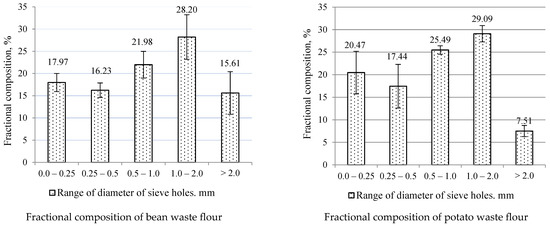
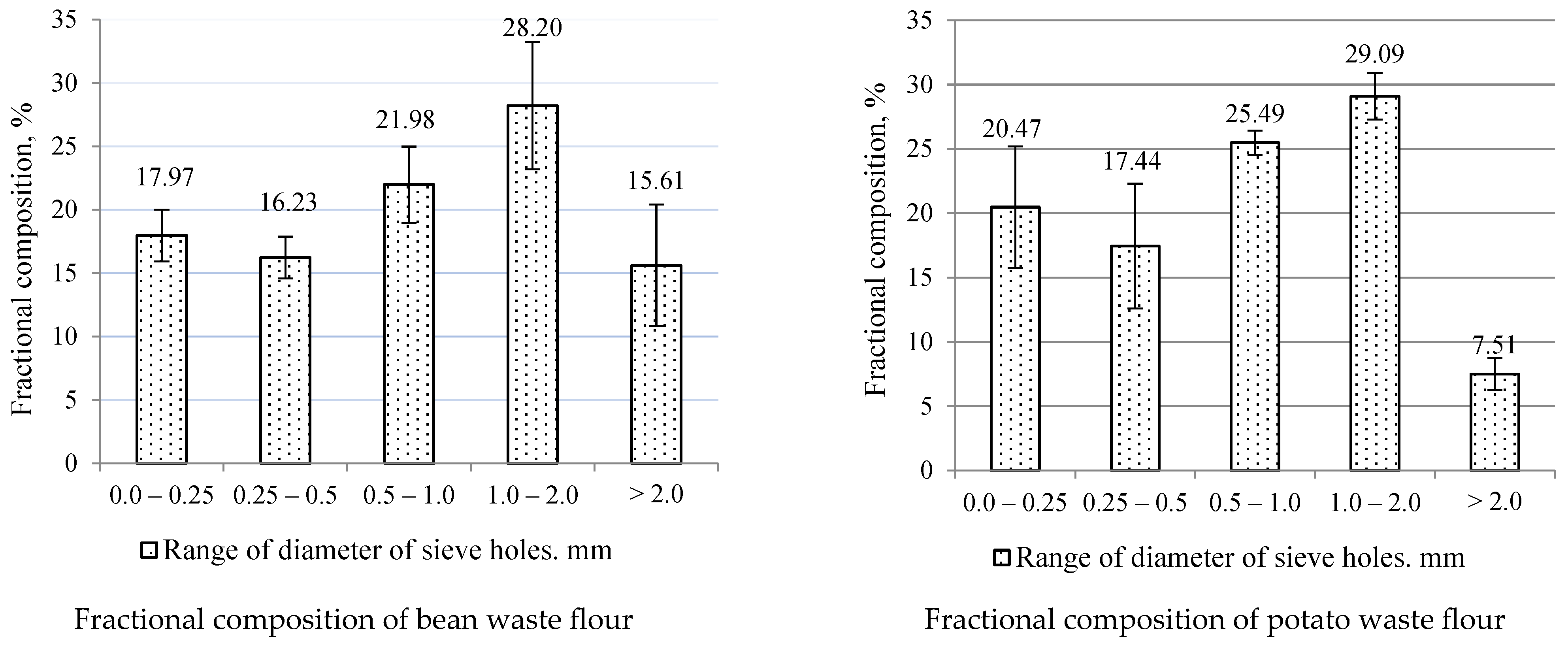
After conducting experimental studies, the fractional composition of bean and potato waste flour crushed with a drum chopper and ground with a hammer mill was determined. The results are presented in Figure 3.
Figure 3.
Fractional composition of biomass flour. Note: Error bars present confidence interval (CI) of the mean.
Analysis of the fractional composition of the milled bean and potato waste (Figure 3) showed that the largest proportion of the flour fraction was retained on sieves with a 1.0 mm hole diameter, accounting for 28.20–29.09%. A comparable proportion was retained on sieves with a 0.5 mm hole diameter, representing 21.98–25.49%. The smallest share corresponded to particles larger than 2.0 mm, comprising 7.51% of potato waste and 15.61% of bean waste. The results also indicated that smaller particles contribute to an increase in solid fuel density. Overall, the obtained flour exhibited a sufficiently fine fractional composition and did not require additional milling for biofuel pellet production.
For the production of pellets from potato and bean waste mixtures, the following flour volume proportion was selected: four parts bean waste and one part potato waste (4:1). Pelletization was performed using a 7.5 kW ZLSP200B pelleting machine (Poland) with a horizontal matrix of 6 mm diameter holes. The test results are presented in Table 1. The highest density was determined for the flour mixture MIX US reaching 285.60 kg m−3.
Table 1.
Physical properties of biomass flour mixture proportions.
The pelletization technology and equipment used depend on the raw material, its fractional composition and moisture content (in this study, these refer to the properties of crushed beans, potato waste and their mixtures).
3.2. Pellet Production and Determination of Physical, Mechanical and Chemical Properties
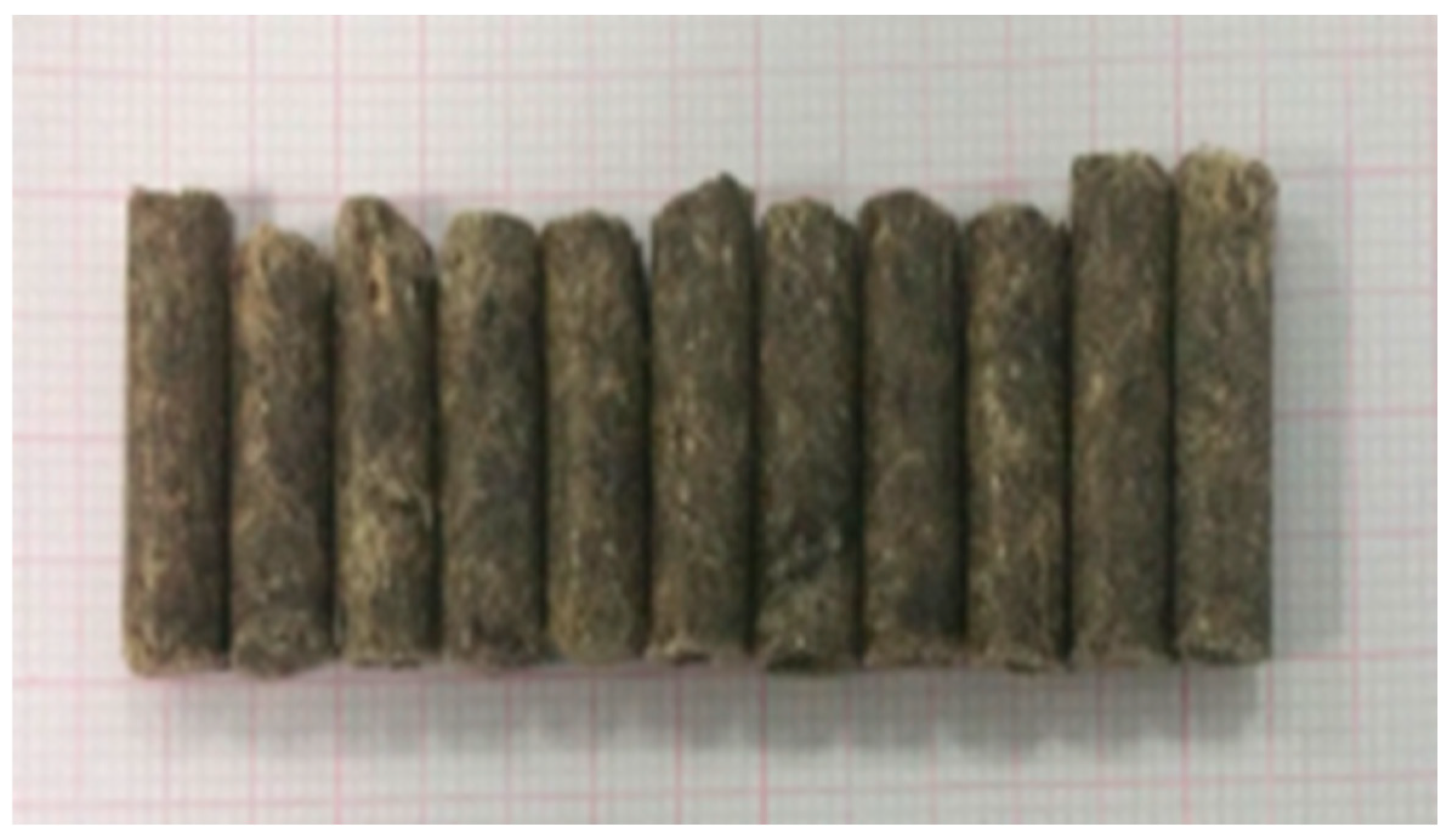
The produced and tested bean and potato waste pellets are presented in Figure 4. The following biometric and physical–mechanical properties of potato and bean waste pellets were determined: dimensions, mass, moisture and calculated density. The results of these studies are presented in Table 2.
Figure 4.
Pellets produced from bean and potato waste.
Table 2.
Physical and mechanical properties of bean and potato waste and their mixture pellets.
The results showed that moisture content in the pellets varied from 6.14 ± 0.1% (MIX DC) to 7.37 ± 0.30% (potato) and met the requirements for pellets [35]. The moisture content of the pellet affects the combustion efficiency and calorific value.
Density is an important parameter in assessing the quality of pellets. It was found that the highest density waste pellets were obtained from the MIX DC sample—1369.89 ± 12.36 kg m−3; while the lowest density pellets were made from the potato waste sample 1269.24 ± 6.90 kg m−3. The density of the pellets from other bean and potato waste mixtures varied slightly.
Gilbert et al. studied pellets made from various grasses and found that the pellets pressed at 166 bar and 75 °C were stronger and more durable compared to pellets pressed at 552 bar and room temperature [45]. It should be noted that, based on the standards of many countries and the results of other researchers, the recommended density of high-quality pellets is 1200–1400 kg m−3 according to LST EN ISO 17225-1:2021 standard [30].
3.3. Determination of Elemental and Chemical Properties of Pellets
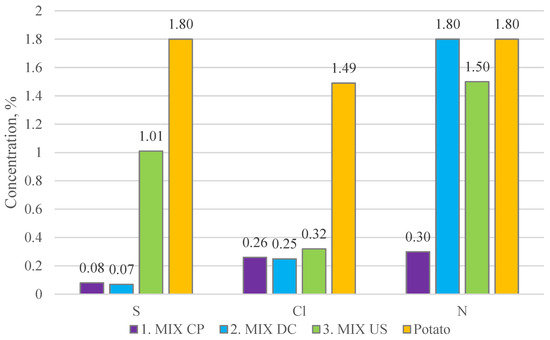
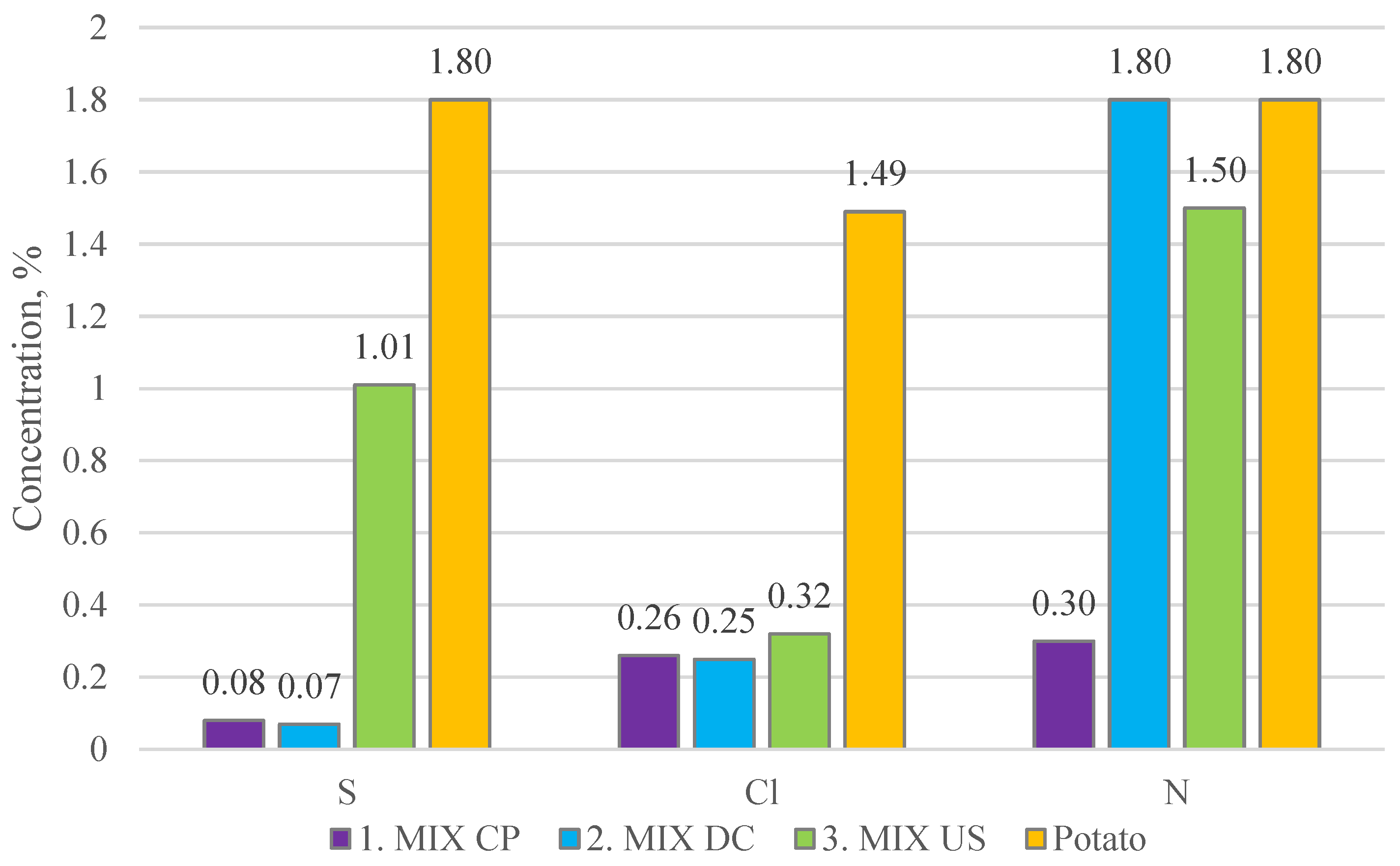
Studies have shown that moisture content affects such properties of biofuel as volume, density, calorific value and deformation force characteristics [17]. The amounts of chlorine (Cl) and sulfur (S) in the produced biofuel raw material affect the process of combustion. For example, the amount of sulfur (S) in biofuel determines the amount of harmful gases emitted. It has been established that high sulfur concentrations can cause corrosion of the chimney or combustion device. Chlorine (Cl) causes corrosion of the surfaces of the furnace and thermal equipment. Therefore, it is necessary to determine the chemical composition of biofuel. The results of the studies are presented in Figure 5.
Figure 5.
Sulfur, chlorine and nitrogen concentration in biofuel pellets, %. Note: MIX CP (1 mass part of potato waste and 4 parts of beans from conventional plowing), MIX DC (1 mass part of potato waste and 4 parts of beans from deep cultivation), MIX US (1 mass part of potato waste and 4 parts of beans from unprocessed soil). Potato samples were used as a control.
The high sulfur (1.01%) and chlorine (1.49%) content in pure potato waste pellets exceeds typical biofuel limits (0.2% and 0.3%, respectively). However, mixing with bean waste (1:4 ratio) reduces these values to acceptable levels for sustainable energy conversion (Figure 5).
The high sulfur (1.01%) and chlorine (1.49%) content in potato waste pellets exceeds typical biofuel limits (0.2% and 0.3%, respectively), requiring careful mixing with bean waste to mitigate environmental and technical risks.
The highest amount of chlorine (Cl) was found in potato waste—1.49%, and the lowest amount in MIX DC—0.25%. The Cl limit for biofuels is 0.3%. The lowest nitrogen content was found in samples MIX CP, which reached only 0.3%. The nitrogen content of other samples varied from 1.5% to 1.8%, not exceeding the limit value (Figure 5).
When analyzing the studies of other scientists, the amounts of carbon (C), hydrogen (H) and nitrogen (N) in the pellets were as follows: rapeseed straw: C—43.46%, H—4.91%, N—1.14% [46]; fibrous plant Nipa: C—40.19%, H—6.73%, N—0.55% [47]; rice husk: C—38.13%, H—6.03%, N—0.66% [48]. It was found that there were no significant differences in the results of carbon, hydrogen and nitrogen content in bean and potato pellets, among other agricultural crop wastes [20].
3.4. Results of Empirical Regression Model Development
3.4.1. Calculated Parameters
Table 3.
Density and resistance dependence on humidity.
Figure 6.
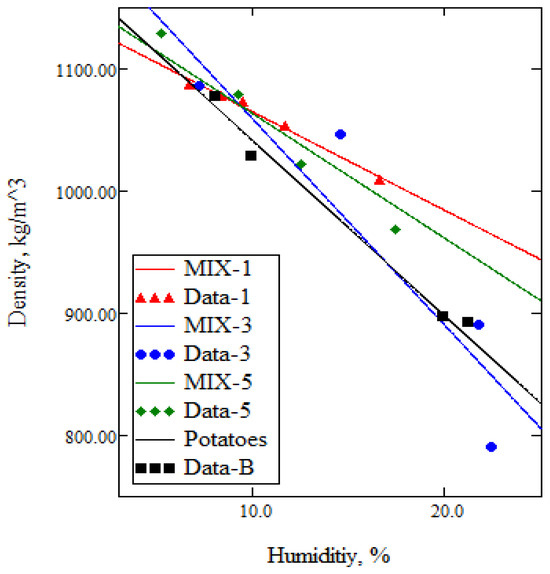
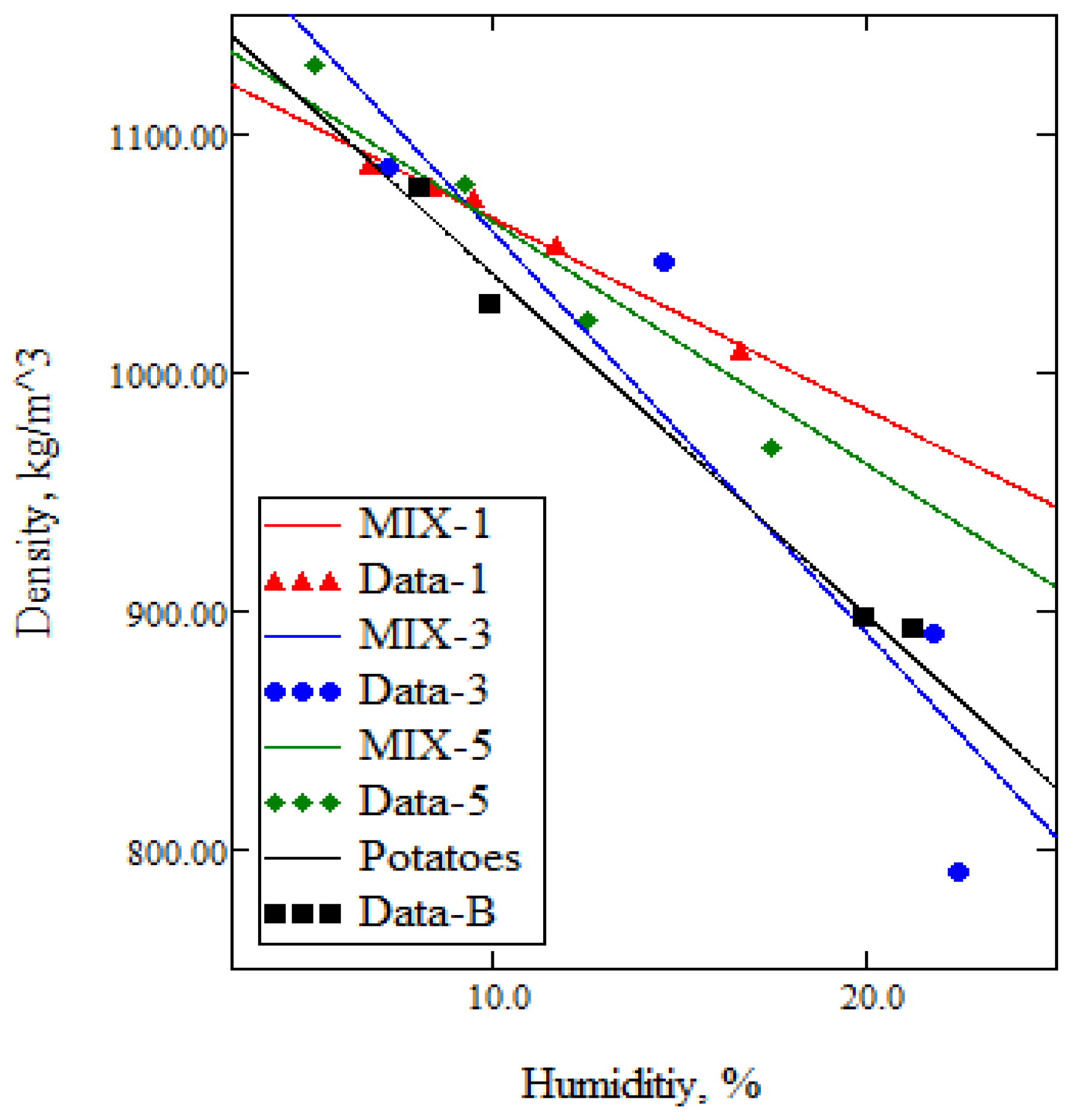
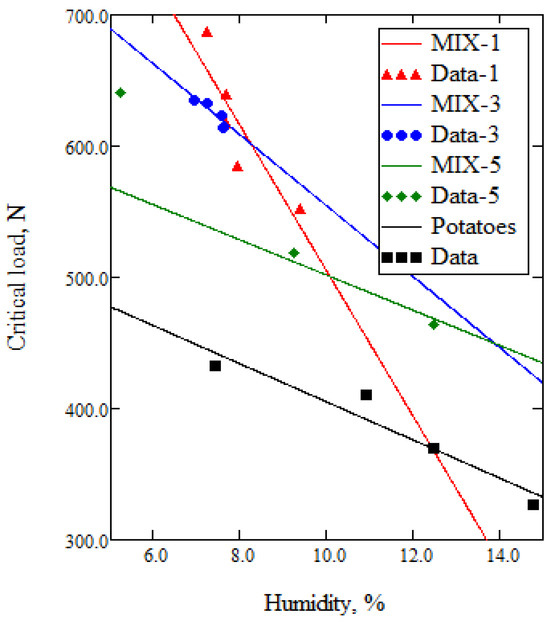
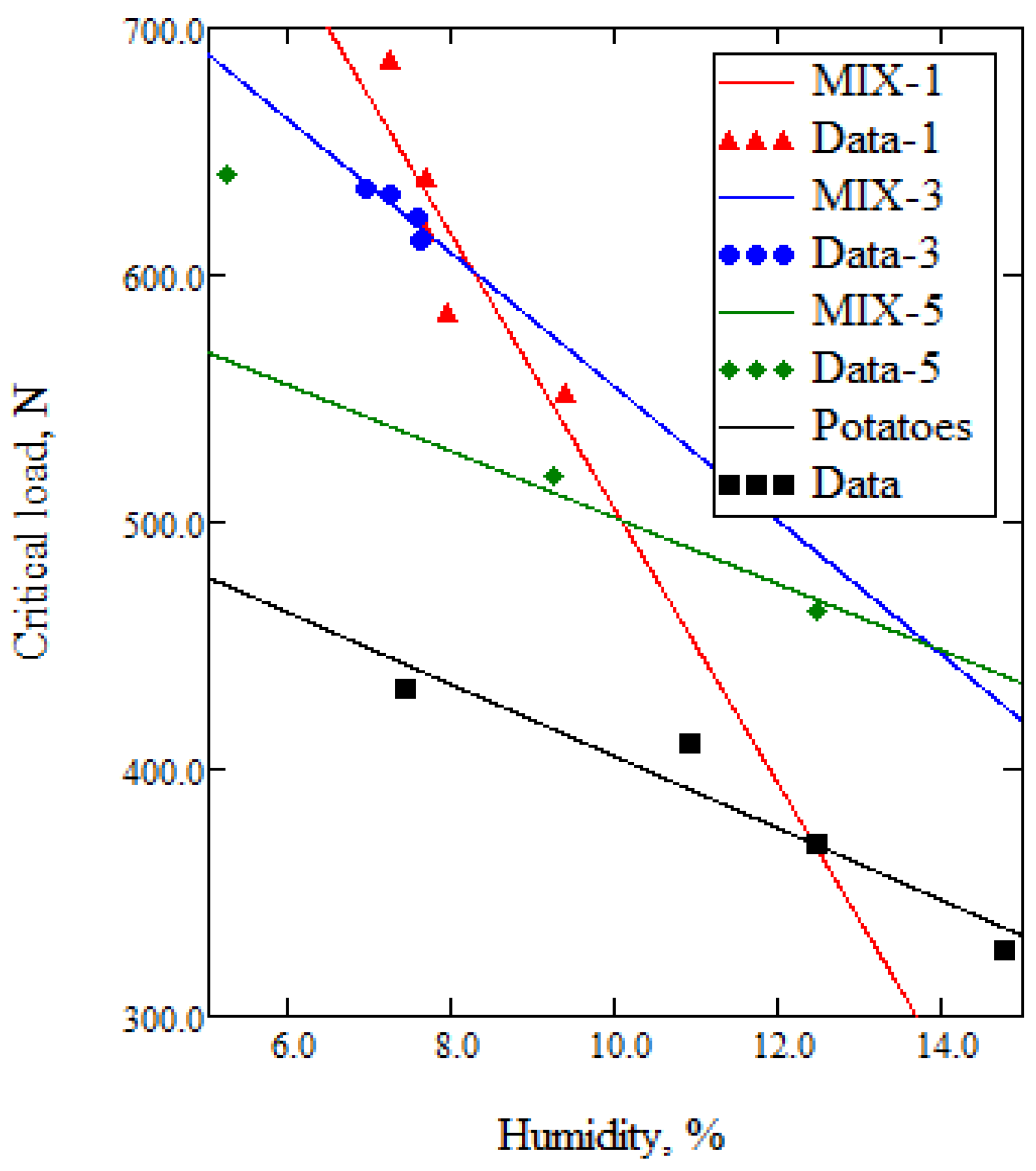
Density dependence on humidity. Note: MIX CP (experiment 1—MIX-1); MIX DC (experiment 3—MIX-3); MIX US (experiment 5—MIX-5).
Figure 7.
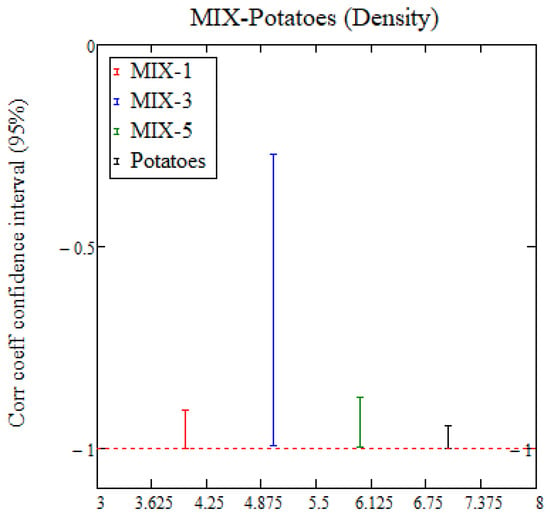
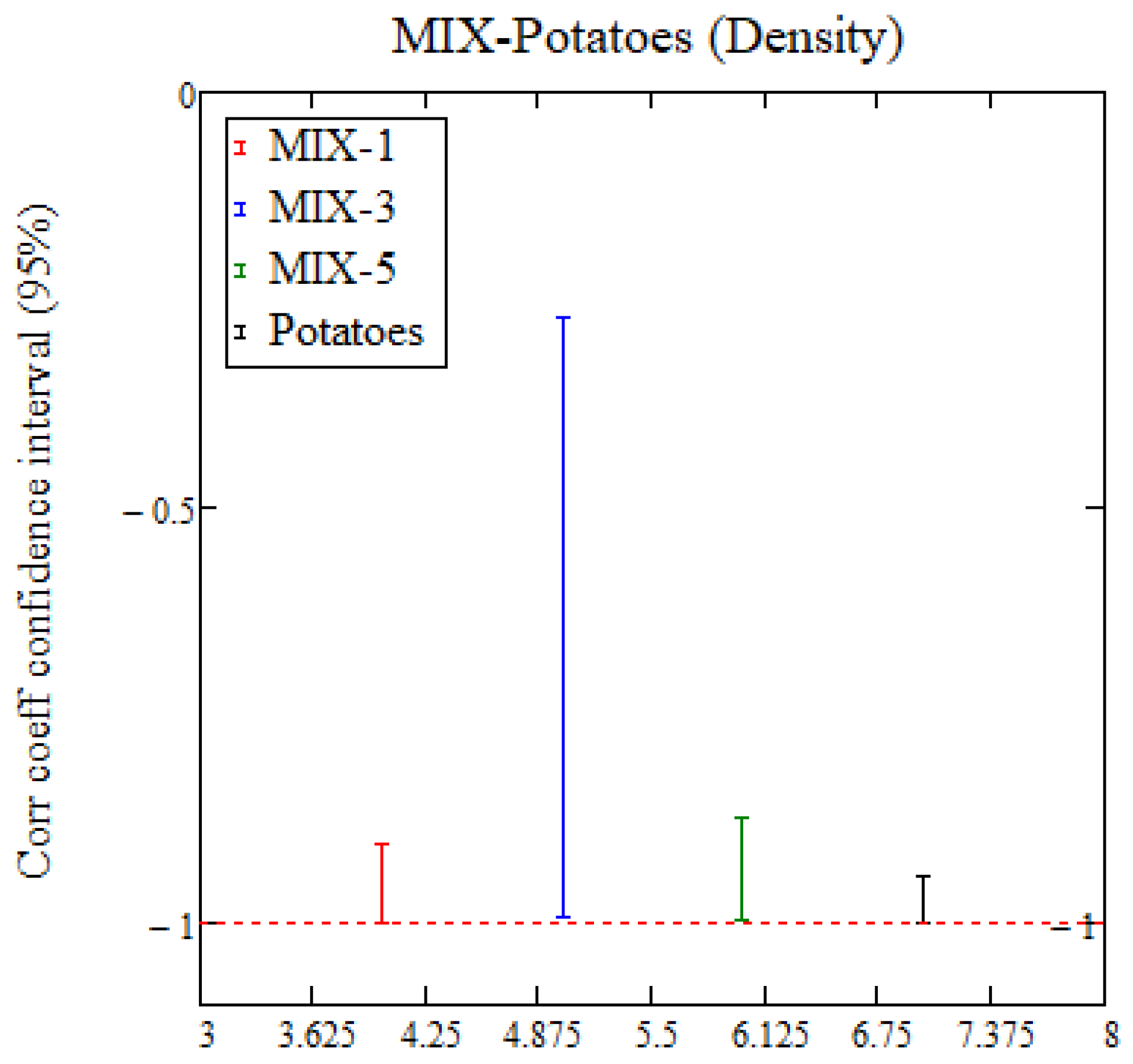
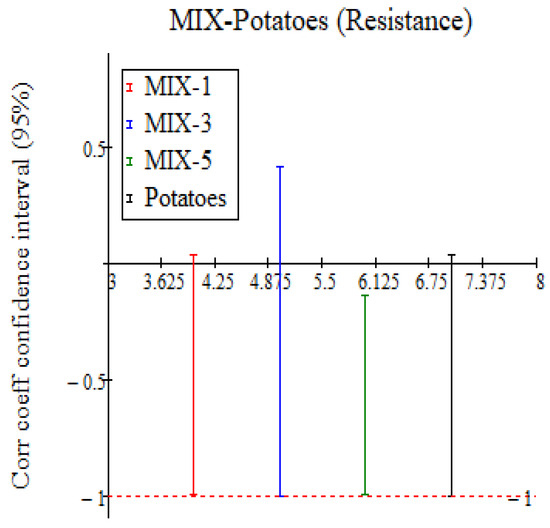
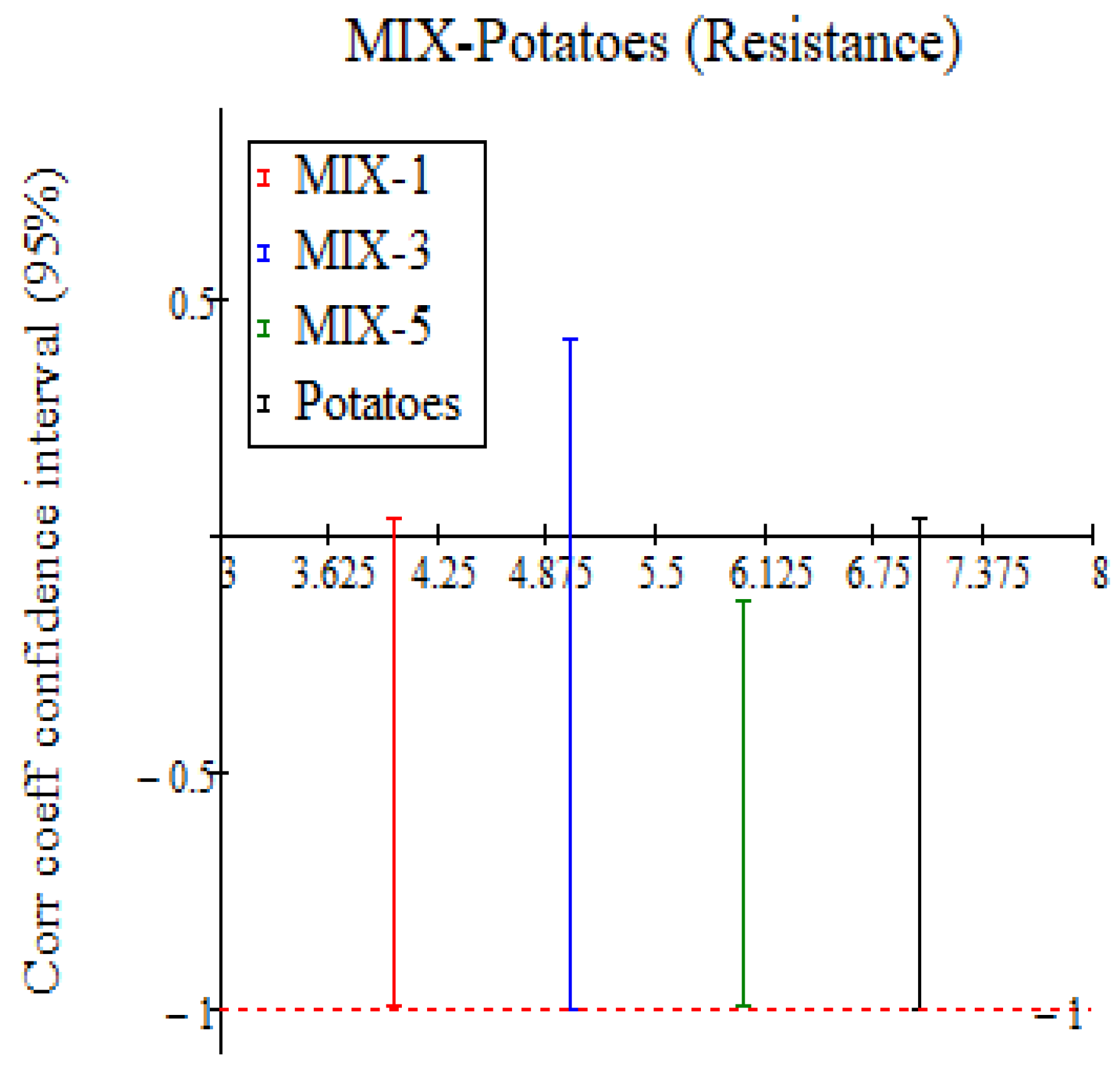
Correlation coefficient of density dependence on humidity. Note: MIX CP (experiment 1—MIX-1); MIX DC (experiment 3—MIX-3); MIX US (experiment 5—MIX-5).
Figure 8.
Resistance dependence on humidity. Note: MIX CP (experiment 1—MIX-1); MIX DC (experiment 3—MIX-3); MIX US (experiment 5—MIX-5).
Figure 9.
Correlation coefficient of resistance dependence on humidity. Note: MIX CP (experiment 1—MIX-1); MIX DC (experiment 3—MIX-3); MIX US (experiment 5—MIX-5).
For the analysis of calculation results of empirical regression model development, all data of calculations of dependences of biofuel pellet density and resistance on moisture content are discussed below in the additional chapter after Table 3 and Figure 6, Figure 7, Figure 8 and Figure 9.
The experimental data and the corresponding regression lines of pellet density dependence on humidity are presented in Figure 6. The relationship between moisture and critical load is analyzed and presented in Figure 7. The obtained intervals of the correlation coefficient values (with 95% confidence) showed that the strongest inverse proportional relationship is between potatoes, and the weakest between MIX-3.
The experimental data and the corresponding regression lines of pellet resistance (critical load) dependence on humidity are presented in Figure 8. The relationship between moisture and critical load is analyzed and presented in Figure 9. The obtained intervals of the correlation coefficient values (with 95% confidence) showed that the strongest inverse proportional relationship is between MIX3, and the weakest between MIX-1.
The data presented in Table 3 and Figure 6, Figure 7, Figure 8 and Figure 9 reflect a fundamental pattern: the moisture content of the biofuel has an inverse relationship with its physical–mechanical indicators. It was found that as moisture increases, the density and resistance (critical load) of all investigated pellets decrease. This can be explained by the fact that at higher moisture levels, water acts as a lubricant during pelleting; however, in the final structure of the pellet, it occupies the space between biomass particles, preventing the formation of strong molecular bonds. Consequently, the pellet structure becomes less compact and more fragile. Based on the obtained results, a 1% increase in moisture in all samples consistently reduced the density by an average of 15.596 kg m−3 and the mechanical resistance by as much as 43.558 N.
3.4.2. Conclusions of Calculation Results
- (1)
- The dependence of plant pellet density on moisture content
Analyzing the results (Table 4 and Table 5), it can be concluded that the dependence of density on moisture content is best described when MIX CP and MIX DC samples are combined, i.e., when regression analysis is performed using the combined sample set. All data of calculations of dependences of biofuel pellet density and resistance on moisture content are discussed in the additional chapter below.
Table 4.
Density and resistance dependence on humidity.
Table 5.
Density and resistance dependence on humidity.
With 95% confidence, it can be stated:
- For the MIX CP + MIX DC data, 84.8% of the variability of the dependent variable Y can be explained by the regression of Y on X, and 15.2% remains unexplained, as the coefficient of determination is 0.848.
- Throughout the entire investigated moisture range, an increase in moisture by 1% results in density decrease of 15.596 kg/m3 for the MIX samples.
- (2)
- Dependence of plant pellet resistance on moisture content
Analysis of other results (Table 4 and Table 5) indicates that the dependence of resistance on moisture content is best described when MIX CP and MIX DC samples are combined, i.e., when regression analysis is performed using combined sample sets:
- For the MIX CP + MIX DC data, 62.2% of the dependent variable Y can be explained by the regression of Y to X, while 37.6% remains unexplained, since the coefficient of determination is 0.622;
- In the entire range of moisture content studied, 1% increase in moisture content reduces the resistance by 43.558 N.
3.5. The Energy Value of Biofuels and the Environmental Impact When Burning Pellets
3.5.1. Ash Content and Calorific Value of Pellets
Comparison of the average lower calorific values of the investigated pellets with those of other agricultural crops showed similar results (Table 6). It should be noted that the lower calorific value of birch pellets is 10–15% higher than that of the waste pellets under consideration and reaches 19.3 MJ kg−1 [49].
Table 6.
Research results of pellet ash content and calorific value.
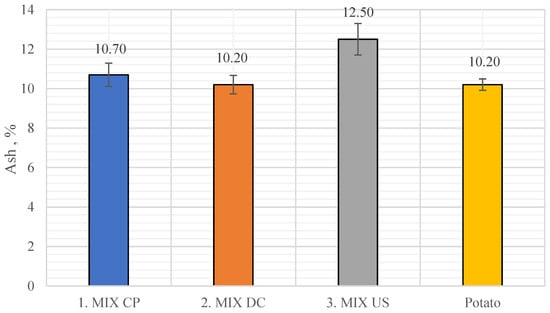
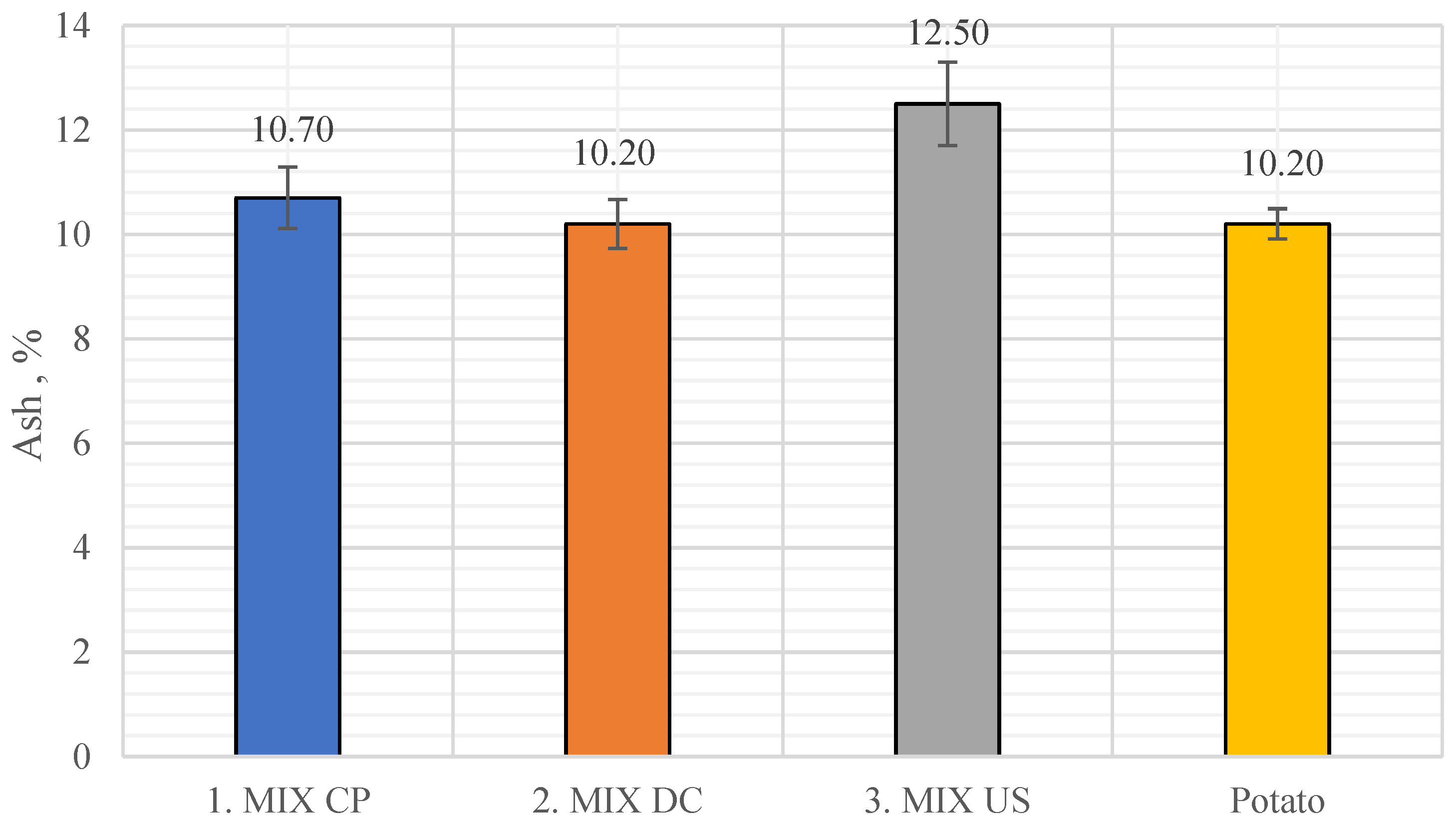
After burning the pellets, the amount of ash remaining was very similar, and it ranged from 10.2% to 10.7% (Table 6 and Figure 10).
Figure 10.
Ash content of pellets, %. Note: MIX CP (1 mass part of potato waste and 4 parts of beans from conventional plowing); MIX DC (1 mass part of potato waste and 4 parts of beans from deep cultivation); MIX US (1 mass part of potato waste and 4 parts of beans from unprocessed soil). Potato samples used as a control. Error bars present confidence interval (CI) of the meaning.
The ash content determined after burning plant waste pellets exceeded the established limits and was significantly higher than that of wood pellets. Therefore, it is necessary to combine the combustion process of pelletized biofuel and ash removal. When comparing the results obtained by other researchers with pellets made from different plants, the results differ slightly. For example, rice straw pellets contained 12.03% ash, coconut shell—10.67% [23], corn straw—10.0%, grape pomace residues—13.3% [50].
The results of the lower and upper calorific values of pellets show that the lower heating value of pellets was similar in all the samples studied. The lowest value was found in MIX US—15.79 ± 0.41 MJ kg−1; the highest was found in the sample MIX CP—16.02 ± 0.50 MJ kg−1.
Comparing the average lower heating value of dry waste pellets with the values of other agricultural crops, it was found that the studied wastes have similar energy value as other herbaceous plant wastes: green rice straw—14.75 MJ kg−1 [51], Felina 32—17.37 MJ kg−1 [36], rice husk and wheat straw mixture—15.44 MJ kg−1 [52], tea waste—17.39 MJ kg−1, oil palm empty fruit bunch—16.74 MJ kg−1 [53], a mixture of grape prunings and corn stover—15.06 MJ kg−1 [54]. It should be noted that lower calorific value of wood pellets is about 10–15% higher than that of waste pellets, and it reaches 19.3 MJ kg−1 [55].
3.5.2. Determination of Harmful Emissions During Pellet Combustion
Harmful gaseous emissions include: sulfur dioxide (SO2), nitrogen oxides (NOx), carbon monoxide, unburned hydrocarbons (CxHy) and carbon dioxide CO. The emission values for solid fuel boilers are set by standards [44] approved by the Ministry of the Environment of the Republic of Lithuania. These restrictions apply to solid biofuels, herbaceous plants and straw. Pellets made from agricultural plant waste can reduce emissions during the combustion process [56]. In addition, biomass has a lower sulfur content than coal, so SOx emissions into the environment can be reduced.
When burning samples of bean and potato waste mixture pellets, an analysis of harmful substances released into the environment was performed. Samples of the produced plant waste (5 kg each) were delivered to the research laboratory for combustion and emission testing. Each sample was burned for 10–12 min.
During the study, oxygen O2 levels, harmful carbon dioxide CO2 emissions, carbon monoxide CO levels, nitrogen oxides NOx, and unburned hydrocarbons CxHy were recorded. Wood pellet emissions were taken for control. The average values of substances emitted into the environment are presented in the figures.
Biomass can be considered a CO2-neutral fuel, but there are still emissions of pollutants related to its collection, transportation, pre-treatment, etc. [57]. Therefore, it is important that this indicator is as low as possible.
The CO2 indicators of the tested pellets are close to the CO2 concentrations of other herbaceous plants: for fibrous nettle—3.1%, for fibrous hemp USO 31—4.8%, for sedge—7.90% [36].
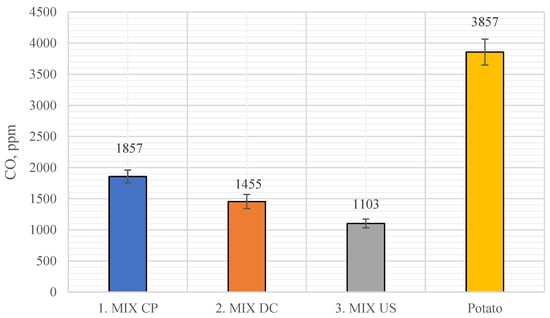
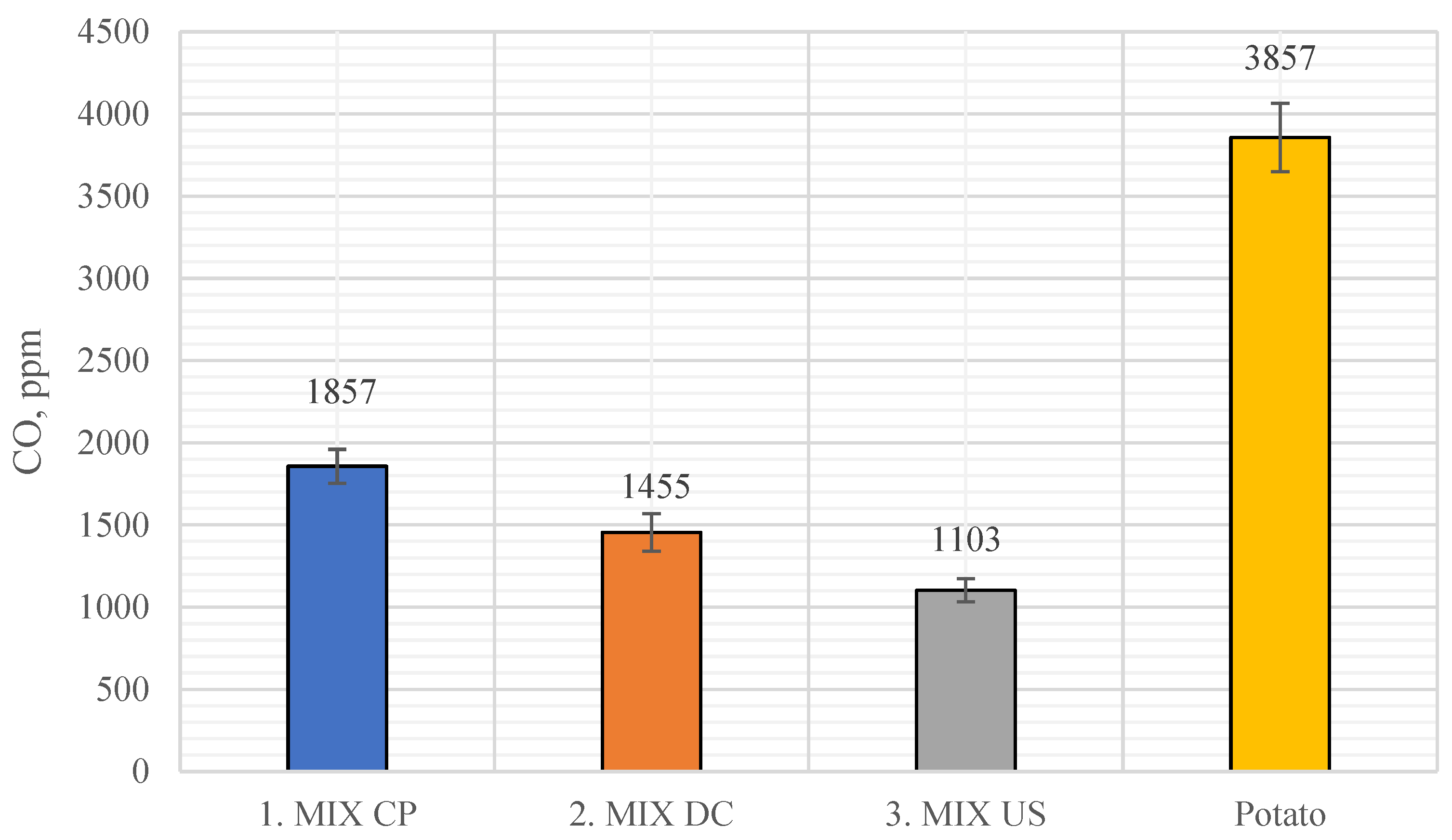
Analyzing the results of the studies, it was determined that the highest amount of carbon monoxide (CO) when burning potato waste pellets was 3857 ± 208 ppm, while, when burning pellets of the tested mixtures, the CO concentration was less than 2000 ppm (Figure 11).
Figure 11.
Pellet CO emissions from incinerated waste pellets. Note: MIX CP (1 mass part of potato waste and 4 parts of beans from conventional plowing); MIX DC (1 mass part of potato waste and 4 parts of beans from deep cultivation); MIX US (1 mass part of potato waste and 4 parts of beans from unprocessed soil). Potatoes samples used as a control. Error bars presents confidence interval (CI) of the meaning.
Although the CO concentration was high compared to the usual requirements, the emission limits for boilers with a thermal efficiency of 0.12–1.0 MW were not exceeded, except for potato waste pellets.
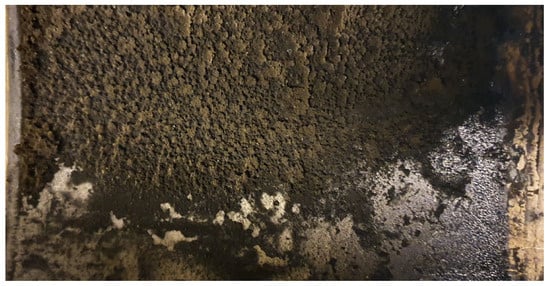
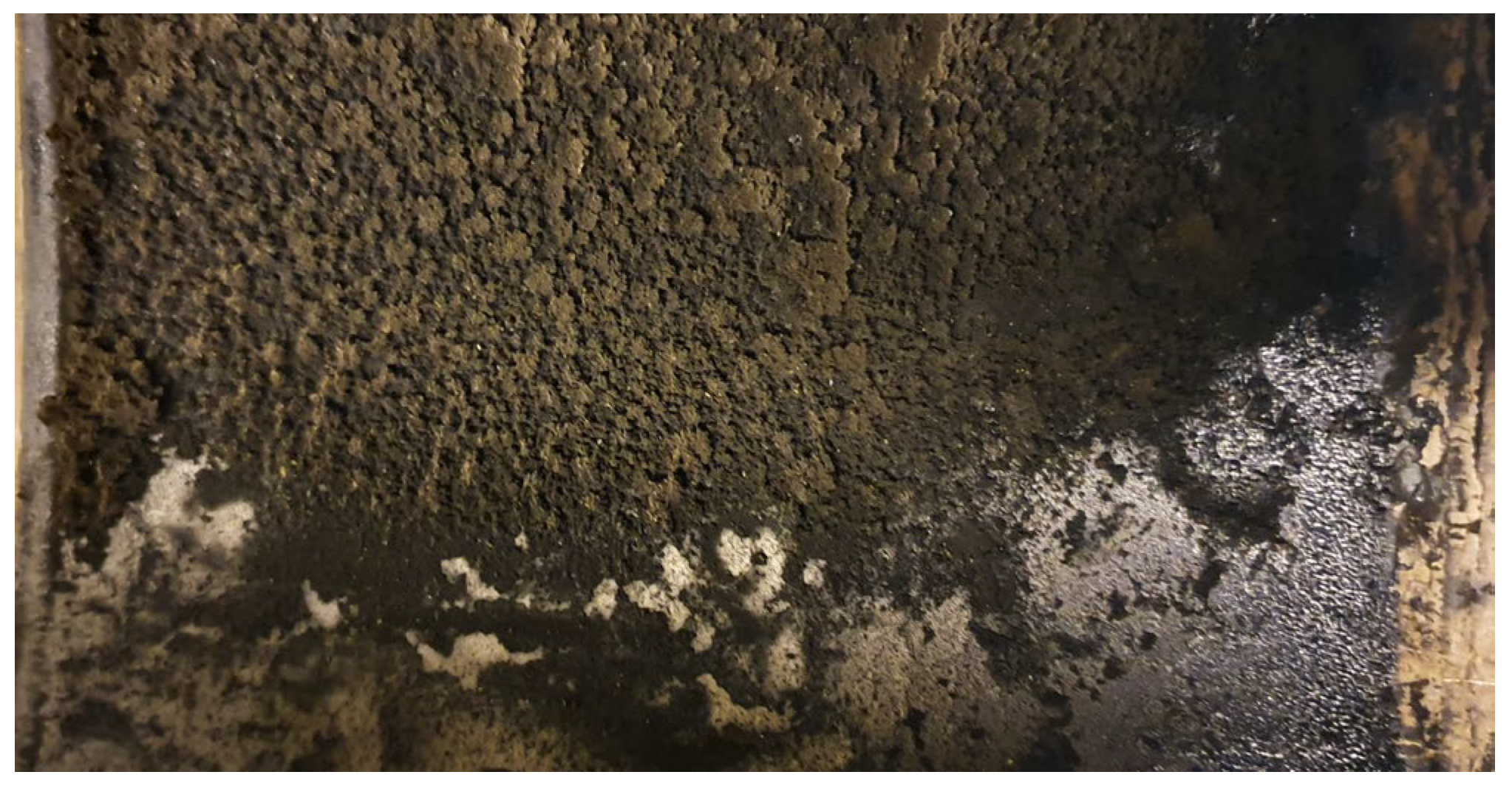
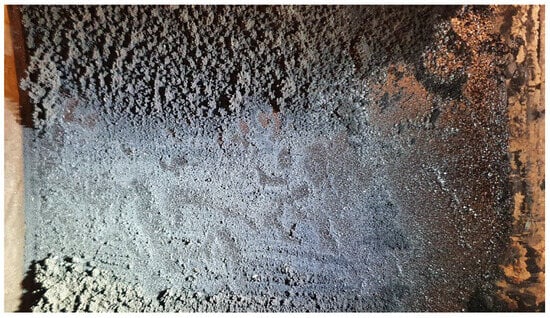
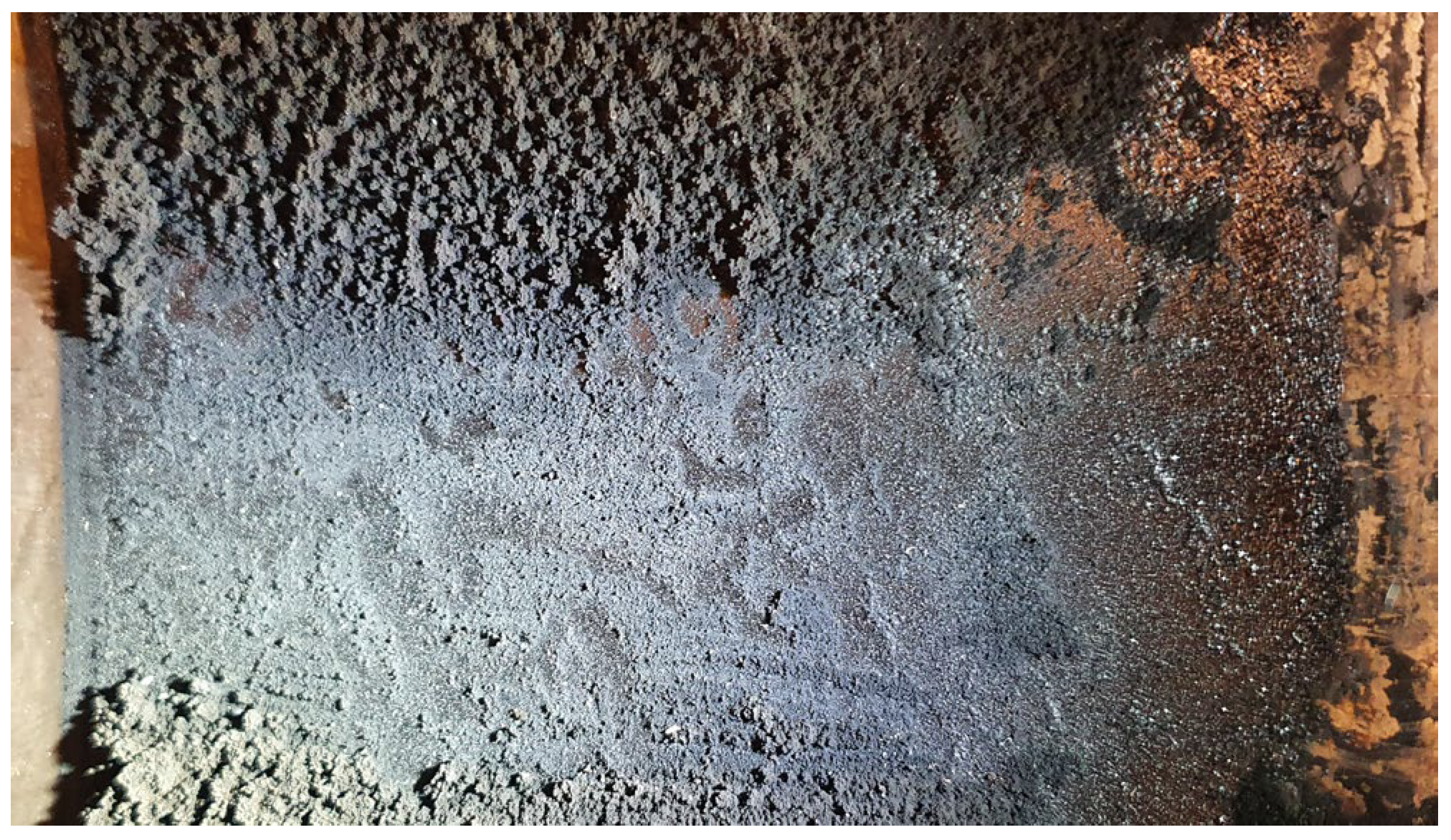
It should also be noted that particulate matter is also present in wood pellet emissions. The amount of particulate matter when burning pellets containing a portion of potatoes is higher than in biofuels made of wood or beans. The potato starch produces starch-containing vapors that soften and break down soot, helping to separate it from the chimney walls (Figure 12 and Figure 13).
Figure 12.
A layer of soot that is hard and adheres to the walls in the chimney before burning pressed biofuel containing potato biomass.
Figure 13.
Softened and easily cleaned soot layer in the chimney when burning pressed biofuel containing potato biomass.
A comparative analysis with the results obtained by other authors showed that the melting point of ash is similar to that of other plant pellets, but lower than that of wood. This is important when choosing the combustion technology and the furnace combustion mode [56].
Such biofuel can protect chimneys from formation of soot and perform a fire prevention function [11].
3.6. Chemical Properties of Biofuel Ash and Possibilities to Use Ash as Fertilizer
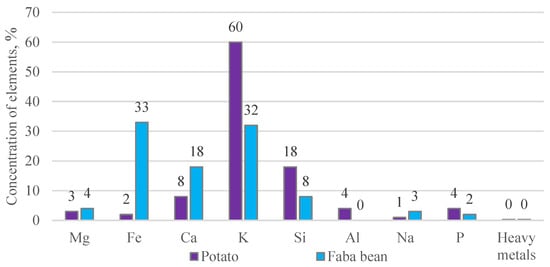
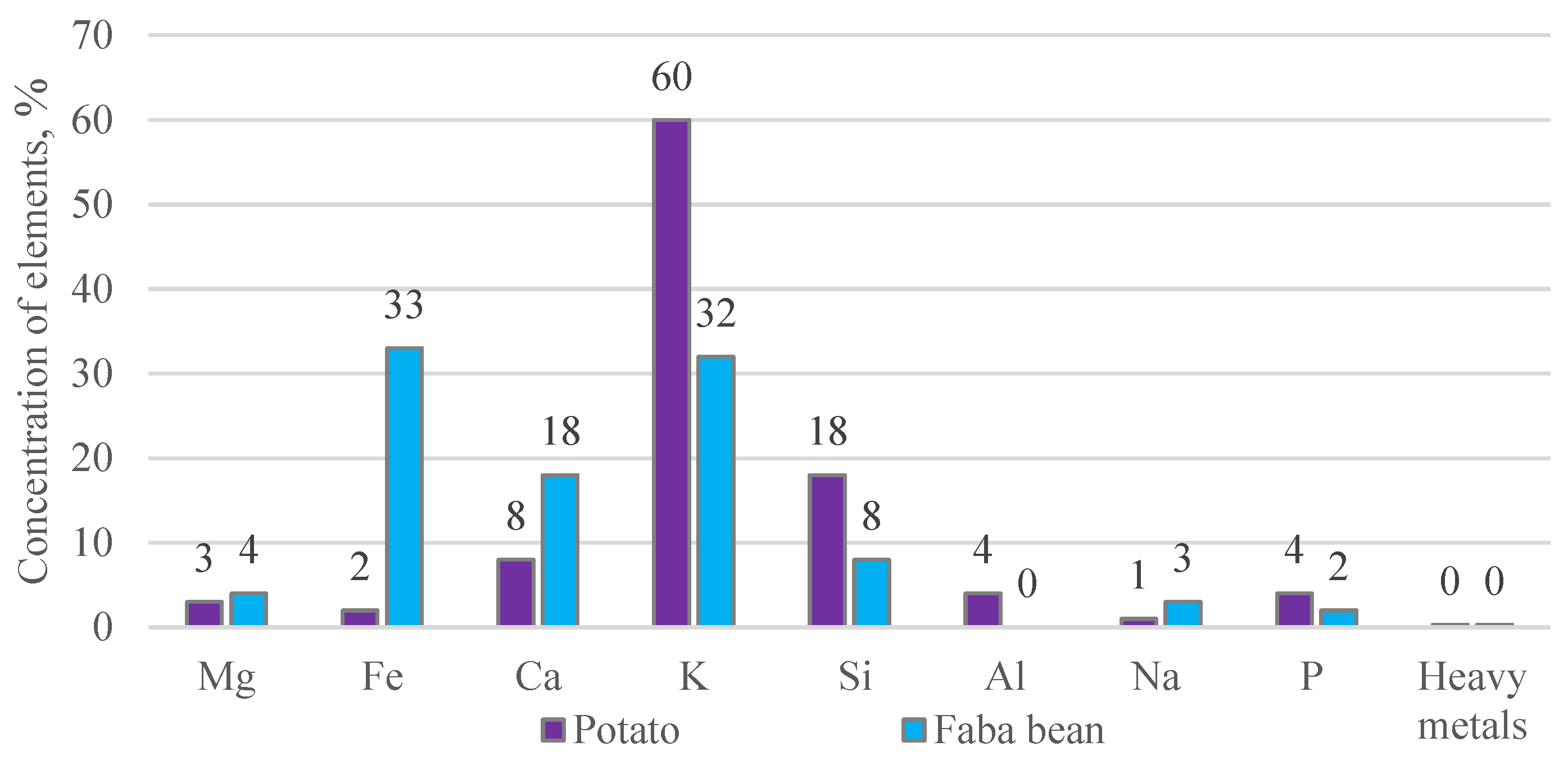
Returning nutrients from ash to agricultural plots as fertilizer plays a key role in the sustainable use of waste biomass for energy. Potato and bean pellet ash contains magnesium, iron, calcium, potassium, silicon, sodium and phosphorus elements. The concentration of potash in potato pellet ash was the highest (60.42%). This has a negative impact on the boiler system as high concentrations of potassium lower the ash melting point, leading to increased slagging and fouling.
In bean pellets, the highest concentrations of iron and potassium elements were 33.03% and 31.94%, respectively (Figure 14).
Figure 14.
Chemical composition of pellet ash.
The highest potassium and silicon levels were found in Sample 1 MIX A at 47.26% and 13.11%, respectively. As the amount of potato waste in the pellets decreases, so does the amount of potassium and silicon in the ash.
Copper, lead and zinc did not exceed the maximum permissible levels. The amount of cadmium in most of the samples exceeded the MRL, which could be removed from the ash with the help of royal water, thus neutralizing other heavy metals. So, ash could be used for fertilizer production. Farmers could also use biomass ash as a liming material for soil.
Thermochemical conversion processes are the main technology used to convert biomass into energy and generate large amounts of biomass ash which is rich in plant nutrients [58]. Recirculating ash to arable land helps to reduce the use of artificial fertilizers, close natural mineral cycles and reduce waste from energy companies [59]. Biomass ash is a potential soil fertilizer that reduces soil acidity and provides nutrients to plants [60].
4. Conclusions
A total of three variants of pellets from bean and potato waste mixtures and one potato waste were analyzed. Their physical, mechanical, chemical and other properties were investigated, and the burning emissions of pellets were measured.
The determined pellet density ranged from 1269.24 ± 6.89 kg m−3 (potato waste pellets) to 1369.89 ± 12.36 kg m−3 (MIX DC pellets). The moisture content of the pellets varied from 6.14% (MIX DC waste pellets) to 7.37% (potato waste pellets). The lower heating value of the dry waste pellets was similar in all tested samples. The lowest value was found in MIX US pellets—15.79 MJ kg−1, while the highest value was found in MIX CP pellets—16.02 MJ kg−1. The determined moisture content (6.14% to 7.37%) met the standard requirements for biofuel pellets, which typically specify a maximum limit of 10% for high-quality solid biofuels.
An experimental study was conducted to investigate the relationship between density and compressive strength. Based on the obtained results, a mathematical model was developed that predicts dependence between these properties in biofuels with an accuracy of 84–91%.
The study examined the chemical composition of pelletized ash and evaluated its potential use as a fertilizer. The ash was found to contain magnesium, iron, calcium, potassium, silicon, sodium and phosphorus. The highest potassium concentration was detected in potato pellet ash, reaching 60.42%. It directly influences slag formation in boilers. The concentrations of heavy metals in the ash did not exceed the established permissible limits.
The use of pressed biofuels produced from mixtures of bean and potato waste offers a sustainable approach to energy conversion, reducing greenhouse gas emissions. The inclusion of potato waste in the biofuel also helps to remove soot from chimneys in the form of solid particles. Based on the overall results, it can be concluded that bean and potato waste are suitable raw materials for production of solid biofuels. Among the tested compositions, biofuel containing 20% potato waste (1:4) exhibited the most favorable properties.
Author Contributions
Conceptualization, A.J., V.K. and A.M.; methodology, V.K. and A.M.; validation, A.J. and V.K.; formal analysis, A.M., R.M. and E.V.; investigation, A.J., V.K., A.M., R.M. and E.V.; resources, A.M. and R.M.; data curation, A.J., V.K. and A.M.; writing—original draft preparation, A.J., V.K. and A.M.; writing—review and editing, A.J., R.M. and E.V.; visualization, A.M.; supervision, A.J.; project administration, A.J. and A.M. All authors have read and agreed to the published version of the manuscript.
Funding
This research received no external funding.
Data Availability Statement
The original contributions presented in this study are included in the article. Further inquiries can be directed to the corresponding author.
Conflicts of Interest
The authors declare no conflicts of interest.
References
- Kolisnyk, S.; Kobak, S. Inoculation as an element of energy saving in the cultivation technology of grain legumes under conditions of the forest-steppe of Ukraine. In Proceedings of the International Scientific Conference “Renewable Energy and Energy Efficiency”; Latvia University of Agriculture: Jelgava, Latvia, 2012; pp. 29–32. [Google Scholar]
- Ankita, S.C.; Harmeet, S.B.; Loveleen, K.S.; Sandeep, K.P. Pulses waste to biofuels. In Clean Energy Production Technologies; Springer: Singapore, 2023; pp. 1–26. [Google Scholar] [CrossRef] [Scilit]
- Petlickaite, R.; Jasinskas, A.; Mieldazys, R.; Romaneckas, K.; Praspaliauskas, M.; Balandaite, J. Investigation of pressed solid biofuel produced from multi-crop biomass author to whom correspondence should be addressed. Sustainability 2022, 14, 799. [Google Scholar] [CrossRef] [Scilit]
- Romaneckas, K.; Svereikaitė, A.; Kimbirauskiene, R.; Sinkeviciene, A.; Balandaite, J. The energy and environmental evaluation of maize, hemp and faba bean multi-crops. Agronomy 2023, 13, 2316. [Google Scholar] [CrossRef] [Scilit]
- Agapi, V. From organic wastes to bioenergy, biofuels, and value-added products for urban sustainability and circular economy: A Review. Urban Sci. 2024, 8, 121. [Google Scholar] [CrossRef] [Scilit]
- Odetoye, T.E.; Ocheni, M.L. Thermochemical characterization of African oil bean husk for potential biofuel production. Chem. Afr. 2022, 5, 1097–1101. [Google Scholar] [CrossRef] [Scilit]
- Soltaninejad, A.; Jazini, M.; Karimi, K. Biorefinery for efficient xanthan gum, ethanol, and biogas production from potato crop residues. Biomass Bioenergy 2022, 158, 106354. [Google Scholar] [CrossRef] [Scilit]
- Khanal, S.; Karimi, K.; Majumdar, S.; Kumar, V.; Verma, R.; Bhatia, S.K.; Kuca, K.; Esteban, J.; Kumar, D. Sustainable utilization and valorization of potato waste: State of the art, challenges, and perspectives. Biomass Convers. Biorefin. 2024, 14, 23335–23360. [Google Scholar] [CrossRef] [Scilit]
- Chauhan, A.; Islam, F.; Imran, A.; Ikram, A.; Zahoor, T.; Khurshid, S.; Shah, M.A. A review on waste valorization, biotechnological utilization, and management of potato. Food Sci. Nutr. 2023. [Google Scholar] [CrossRef] [Scilit] [PubMed]
- Awogbemi, O.; Kallon, D.V.V.; Owoputi, A.O. Biofuel generation from potato peel waste: Current state and prospects. Recycling 2022, 7, 23. [Google Scholar] [CrossRef] [Scilit]
- Minajeva, A. The Investigation of Technological Process of FABA Bean and Potato Waste Treatment and Usage for Energy Conversion and the Environmental Impact Assessment. Doctoral Dissertation, Vytautas Magnus University, Kaunas, Lithuania, 2022. [Google Scholar]
- Vescovo, D.; Manetti, C.; Ruggieri, R.; Spizzirri, U.G.; Aiello, F.; Martuscelli, M.; Restuccia, D. The valorization of potato peels as a functional ingredient in the food industry: A Comprehensive Review. Foods 2025, 14, 1333. [Google Scholar] [CrossRef] [Scilit]
- Enríquez, M.A.P.; Hidalgo, D.R.Z.; Pantoja-Suárez, F. Characterization of briquettes from potato stalk residues for sustainable solid biofuel production. Processes 2025, 13, 1851. [Google Scholar] [CrossRef] [Scilit]
- Inyang, U.E.; Udoinyang, D.A. Thermodynamic and kinetic study of the dehydration of ethanol using potato starch as a biosorbent. Niger. Int. J. Eng. Res. Technol. (IJERT) 2025, 14, 14IS070121. [Google Scholar]
- Ayantokun, A.S.; Matambo, T.S.; Rashama, C.; Merwe, I.V.D.; Niekerk, J.A.V. A critical review of food waste and poultry manure anaerobic co-digestion: An eco-friendly valorization for sustainable waste management and biogas production. Front. Sustain. Food Syst. 2025, 9, 1695945. [Google Scholar] [CrossRef] [Scilit]
- Kolodynskij, V.; Baltrėnas, P. Experimental laboratory research and evaluation of periodic operation small size bioreactors. Environ. Eng. 2016, 8, 382–387. [Google Scholar] [CrossRef] [Scilit]
- Obidziński, S.; Piekut, J.; Dec, D. The influence of potato pulp content on the properties of pellets from buckwheat hulls. Renew. Energy 2016, 87, 289–297. [Google Scholar] [CrossRef] [Scilit]
- Obidziński, S. Analysis of usability of potato pulp as solid fuel. Fuel Process. Technol. 2012, 94, 67–74. [Google Scholar] [CrossRef] [Scilit]
- Mortadha, H.; Kerrouchi, H.B.; Al-Othman, A.; Tawalbeh, M. A comprehensive review of biomass pellets and their role in sustainable energy: Production, properties, environment, economics, and logistics. Waste Biomass Valorization 2025, 16, 4507–4539. [Google Scholar] [CrossRef] [Scilit]
- Jasinskas, A.; Minajeva, A.; Sarauskis, E.; Romaneckas, K.; Kimbirauskienė, R.; Pedisius, N. Recycling and utilisation of faba bean harvesting and threshing waste for bioenergy. Renew. Energy 2020, 162, 257–266. [Google Scholar] [CrossRef] [Scilit]
- Rychlewska, K.; Żeliński, J.; Matuszek, K.; Hrycko, P.; Telenga-Kopyczyńska, J. Estimation of emission factors from residential Ecodesign boilers considering characteristic phases of their operation. Environ. Pollut. 2025, 370, 125863. [Google Scholar] [CrossRef] [Scilit] [PubMed]
- Gunawardhana, M.K.; Gajanayake, P.; Samarawickrama, T.P.; Bandaranayakaca, D.T. Development of a guideline to assess industrial boiler fuels for sustainable boiler operations. Adv. Technol. 2025, 5, 87–10587. [Google Scholar] [CrossRef] [Scilit]
- Sun, Y.; Ji, Y.; Yang, X.; Xu, L.; Lyu, C.; Wang, X.; Snen, B. Investigation on the interaction mechanism of multi-components during the co-combustion process of coal gangue and torrefied agricultural solid waste. Fuel 2026, 405, 136507. [Google Scholar] [CrossRef] [Scilit]
- Vassilev, S.V.; Vassileva, C.G.; Song, Y.C.; Li, W.Y.; Feng, J. Ash contents and ash-forming elements of biomass and their significance for solid biofuel combustion. Fuel 2017, 208, 377–409. [Google Scholar] [CrossRef] [Scilit]
- Dula, M.; Kraszkiewicz, A. Theory and Practice of Burning Solid Biofuels in Low-Power Heating Devices. Energies 2025, 18, 182. [Google Scholar] [CrossRef] [Scilit]
- Ma, T.; Fan, C.; Hao, L.; Li, S.; Song, W.; Lin, W. Fusion characterization of biomass ash. Thermochim. Acta 2016, 638, 1–9. [Google Scholar] [CrossRef] [Scilit]
- Nunes, L.J.R.; Matias, J.; Catalao, J.P.S. Biomass combustion systems: A review on the physical and chemical properties of the ashes. Renew. Sustain. Energy Rev. 2016, 53, 235–242. [Google Scholar] [CrossRef] [Scilit]
- Noh, Y.H.; Lee, D.H.; Park, J.H.; Song, G.S.; Kim, J.S.; Park, S.J.; Choi, J.W.; Song, K.H.; Choi, Y.C.; Lee, Y.J. Ashless herbaceous biomass for slagging and fouling reduction in solid-fuel boiler: Combustion and ash fusion characterizations. Fuel 2025, 379, 132957. [Google Scholar] [CrossRef] [Scilit]
- Toscano, G.; Feliciangeli, G.; Rossini, G.; Fabrizi, S.; Pedretti, E.F.; Duca, D. Engineered solid biofuel from herbaceous biomass mixed with inorganic additives. Fuel 2019, 256, P115895. [Google Scholar] [CrossRef] [Scilit]
- LST EN ISO 17225-1:2021; Solid Biofuels—Fuel Specifications and Classes—Part 1: General Requirements. Lithuanian Standards Board: Vilnius, Lithuania, 2021.
- LST EN ISO 18134-1:2022; Solid Biofuels—Determination of Moisture Content—Oven Dry Method—Part 1: Total Moisture—Reference Method. Lithuanian Standards Board: Vilnius, Lithuania, 2022.
- Rashid, M.T.; Liu, K.; Jatoi, M.A.; Safdar, B.; Lv, D.; Li, Q. Energy efficient drying technologies for sweet potatoes: Operating and drying mechanism, quality-related attributes. Nutr. Food Sci. Technol. 2022, 9, 1040314. [Google Scholar] [CrossRef] [Scilit]
- Tepe, F.B. Novel Approaches for Potato Drying: Intermittent Microwave Drying with Pretreatments (Ethanol, Hot Water Blanching, and Citric Acid), Drying and Quality Properties, and Energy Consumption. Potato Res. 2025, 68, 2579–2608. [Google Scholar] [CrossRef] [Scilit]
- Kalinauskaite, S. Environmental and Energy Assessment of Straw Preparation and Conversion Technology. Doctoral Dissertation, Aleksandras Stulginskis University, Kaunas, Lithuania, 2014. [Google Scholar]
- LT EN ISO 17225-6:2021; Solid Biofuels—Fuel Specifications and Classes—Part 6: Graded Non-Woody Pellets. Lithuanian Standards Board: Vilnius, Lithuania, 2021.
- Jasinskas, A.; Streikus, D.; Vonžodas, T. Fibrous hemp (Felina 32, USO 31, Finola) and fibrous nettle processing and usage of pressed biofuel for energy purposes. Renew. Energy 2020, 149, 11–21. [Google Scholar] [CrossRef] [Scilit]
- Weisberg, S. Applied Linear Regression; John Wiley & Sons, Inc.: Hoboken, NJ, USA, 2014; 340p, Available online: https://www.stat.purdue.edu/~qfsong/teaching/525/book/Weisberg-Applied-Linear-Regression-Wiley.pdf (accessed on 8 January 2026).
- Bowman, A.W. Applied Smoothing Techniques for Data Analysis; Clarendon Press Oxford: Oxford, UK, 1997; 193p, Available online: https://global.oup.com/academic/product/applied-smoothing-techniques-for-data-analysis-9780198523963?cc=lt&lang=en& (accessed on 8 January 2026).
- Rice, J.A. Mathematical Statistics and Data Analysis; University of California, Berkeley: Berkeley, CA, USA, 2007; 364p, Available online: https://korivernon.com/documents/MathematicalStatisticsandDataAnalysis3ed.pdf (accessed on 16 January 2026).
- LST EN ISO 16948:2015; Solid Biofuels. Determination of Total Content of Carbon, Hydrogen and Nitrogen. Lithuanian Standards Board: Vilnius, Lithuania, 2009.
- LST EN ISO 18122:2016; Solid Biofuels. Determination of Ash Content. Lithuanian Standards Board: Vilnius, Lithuania, 2016.
- LST EN ISO 18125:2017; Solid Biofuels. Determination of Calorific Value. Lithuanian Standards Board: Vilnius, Lithuania, 2017.
- LST EN ISO 16994:2016; Solid Biofuels. Determination of Total Content of Sulfur and Chlorine. Lithuanian Standards Board: Vilnius, Lithuania, 2016.
- LST CEN/TS 15883:2009; Residential Solid Fuel Burning Appliances—Emission Test Methods. Lithuanian Standards Board: Vilnius, Lithuania, 2009.
- Gilbert, P.; Ryu, C.; Sharifi, V.; Swithenbank, J. Effect of process parameters on pelletisation of herbaceous crops. Fuel 2009, 88, 1491–1497. [Google Scholar] [CrossRef] [Scilit]
- COM 1 Communication: Climate and Energy Policy Strategy 2020–2030. 2014. Available online: https://op.europa.eu/webpub/eca/lr-energy-and-climate/lt/ (accessed on 16 January 2026).
- Ramana, M.V. A review of new technologies, models and experimental investigations of solar driers. Renew. Sustain. Energy Rev. 2012, 13, 835–844. [Google Scholar] [CrossRef] [Scilit]
- Jensen, E.S.; Peoples, M.B.; Hauggaard-Nielsen, H. Faba bean in cropping systems. Field Crops Res. 2010, 115, 203–216. [Google Scholar] [CrossRef] [Scilit]
- Abdeshahian, P.; Al-Shorgani, N.K.N.; Salih, N.K.M.; Shukor, H.; Kadier, A.; Hamid, A.A.; Kalil, M.S. The production of biohydrogen by a novel strain Clostridium sp. YM1 in dark fermentation process. Int. J. Hydrogen Energy 2014, 39, 12524–12531. [Google Scholar] [CrossRef] [Scilit]
- Sohni, S.; Norulaini, N.A.N.; Hashim, R.; Khan, S.B.; Fadhullah, W.; Omar, A.K.M. Physicochemical characterization of Malaysian crop and agro-industrial biomass residues as renewable energy resources. Ind. Crops Prod. 2018, 111, 642–650. [Google Scholar] [CrossRef] [Scilit]
- Xia, P.; Gütl, D.; Zheden, V.; Heisenberg, C.P. Lateral Inhibition in cell specification mediated by mechanical signals modulating TAZ activity. Cell 2019, 176, 1379–1392. [Google Scholar] [CrossRef] [Scilit]
- Ríos-Badran, I.M.; Luzardo-Ocampo, I.; Luzardo-Ocampo, I.; García-Trejo, J.F.; Santos-Cruz, J.; Gutiérrez-Antonio, C. Production and characterization of fuel pellets from rice husk and wheat straw. Renew. Energy 2020, 145, 500–507. [Google Scholar] [CrossRef] [Scilit]
- Pua, F.L.; Subari, M.S.; Ean, L.W.; Krishnan, S.G. Characterization of biomass fuel pellets made from Malaysia tea waste and oil palm empty fruit bunch. Mater. Today 2020, 31, 187–190. [Google Scholar] [CrossRef] [Scilit]
- Royo, J.; Canalís, P.; Quintana, D. Chemical study of fly ash deposition in combustion of pelletized residual agricultural biomass. Fuel 2020, 268, 117228. [Google Scholar] [CrossRef] [Scilit]
- Vares, V.; Kask, U.; Muiste, P.; Piuh, T.; Soosaar, S. Manual for Biofuel Users, Vilnius 2007. Available online: https://www.digar.ee/arhiiv/en/raamatud/41781 (accessed on 16 January 2026).
- Miranda, T. Characterization and combustion of olive pomace and forest residue pellets. Fuel Process. Technol. 2011, 103, 91–96. [Google Scholar] [CrossRef] [Scilit]
- Rokni, E.; Ren, X.; Panahi, A.; Levendis, Y.A. Emissions of SO2, NOx, CO2, and HCl from co-firing of coals with raw and torrefied biomass fuels. Fuel 2018, 211, 363–374. [Google Scholar] [CrossRef] [Scilit]
- Zgang, Y.; He, F.; Li, X.; Behrendt, F.; Gao, Z.; Yu, R. Fertilizer properties of ash from corn-stover pellets using the sequential extraction and matrix expression. Waste Manag. 2018, 82, 111–117. [Google Scholar] [CrossRef] [Scilit] [PubMed]
- Freire, M.; Lopes, H.; Tarelbo, L.A.C. Critical aspects of biomass ashes utilization in soils: Composition, leachability, PAH and PCDD/F. Waste Manag. 2015, 46, 304–315. [Google Scholar] [CrossRef] [Scilit] [PubMed]
- Rehal, E. Mobility of biomass ash constituents as influenced by pretreatment and soil—An artificial weathering study. Waste Manag. 2021, 121, 186–197. [Google Scholar] [CrossRef] [Scilit] [PubMed]

Disclaimer/Publisher’s Note: The statements, opinions and data contained in all publications are solely those of the individual author(s) and contributor(s) and not of MDPI and/or the editor(s). MDPI and/or the editor(s) disclaim responsibility for any injury to people or property resulting from any ideas, methods, instructions or products referred to in the content. |
© 2026 by the authors. Licensee MDPI, Basel, Switzerland. This article is an open access article distributed under the terms and conditions of the Creative Commons Attribution (CC BY) license.