


Abstract
Inadequate domestic wastewater treatment remains a major environmental challenge due to the discharge of nitrogen compounds that originate primarily from human excreta, food residues, and household products, and are commonly present as ammonium and organic nitrogen. During biological processes, these compounds are converted to nitrite and nitrate, which are highly soluble and can easily migrate through soils, contaminating groundwater and posing risks to public health. Although Moving Bed Biofilm Reactors (MBBRs) are widely used for nitrogen removal, developing biocarriers with controllable geometry and optimized surface area for enhanced biofilm growth remains a challenge. This study aimed to design and fabricate gyroid-structured biocarriers using additive manufacturing (3D printing) from polylactic acid (PLA), acrylonitrile–butadiene–styrene (ABS), and polypropylene (PP), and to evaluate their performance in wastewater treatment for nitrogen removal. Bench-scale experiments showed significant chemical oxygen demand (COD) removal for all materials, with ABS and PP promoting the most stable biofilm formation. Pilot-scale tests with PP gyroid biocarriers achieved removal efficiencies of up to 87% for biochemical oxygen demand (BOD), 87% for ammonia, and 97% for nitrate. These results demonstrate that 3D-printed gyroid biocarriers provide a tunable geometry that enhances surface area and improves biological nitrogen removal in domestic wastewater treatment.
1. Introduction
Inadequate treatment of domestic sewage is a global problem that affects water quality and public health. Many urban areas do not have efficient treatment systems or adequate infrastructure to deal with the sewage generated by the population. This results in the discharge of untreated waste into water bodies, polluting rivers, lakes and oceans. Water contamination by pollutants present in sewage, such as bacteria, viruses, excess nutrients and chemicals, can cause damage to the aquatic ecosystem and pose risks to human health. Waterborne diseases, such as cholera and hepatitis, are often associated with exposure to contaminated water. In addition, inadequate sewage disposal can contribute to eutrophication, a process in which water bodies become enriched with nutrients, particularly phosphorus and nitrogen, leading to excessive growth of algae and aquatic plants, decreased dissolved oxygen levels, and adverse effects on aquatic fauna [1,2].
Domestic wastewater represents one of the main anthropogenic sources of nitrogen entering aquatic environments. Nitrogen in sewage originates primarily from human urine and feces, which contain high concentrations of urea and organic nitrogen compounds that are rapidly converted into ammonium during wastewater transport and storage [3]. Additional contributions arise from household cleaning products, food residues, and detergents containing nitrogen-based compounds [1]. In regions with insufficient wastewater treatment infrastructure, these nitrogen forms are discharged into receiving water bodies or can infiltrate soil and reach groundwater systems, particularly in areas served by septic tanks or poorly managed sanitation systems [4,5]. Globally, it is estimated that more than 80% of municipal wastewater is discharged into the environment without adequate treatment, contributing substantially to the release of reactive nitrogen compounds into aquatic systems [3].
Groundwater contamination by nitrogen compounds has become a growing environmental concern worldwide. Ammonium released in wastewater is biologically oxidized to nitrite and nitrate through nitrification processes. Among these species, nitrate is particularly problematic due to its high solubility and mobility in soils, allowing it to easily migrate into aquifers [2,5]. Elevated nitrate concentrations in groundwater are associated with serious health risks, including methemoglobinemia (blue baby syndrome) and potential carcinogenic effects [2,6]. Consequently, improving nitrogen removal efficiency in wastewater treatment plants is essential to mitigate the transport of reactive nitrogen to groundwater and surface water ecosystems, thereby preventing severe ecological consequences such as eutrophication and biodiversity loss [1,7].
Efficient nitrogen removal involves biological and chemical processes. Wastewater treatment systems usually include nitrification steps, where bacteria convert ammonia into nitrite and subsequently into nitrate. However, nitrate can be harmful if not removed, as it can contaminate groundwater and contribute to eutrophication. To address this problem, advanced technologies are used, such as denitrification processes, which convert nitrate into gaseous nitrogen [8]. These processes are often integrated into sewage treatment systems to ensure efficient nitrogen removal. Careful control of environmental conditions, such as aeration and oxygen content, is essential to optimize the activity of these bacteria and maximize the effectiveness of biological treatment. Nitrogen removal by bacteria is a sustainable and efficient approach to mitigate the adverse environmental impacts associated with excess nitrogen in effluents [9].
Despite significant advances in biological wastewater treatment technologies, achieving efficient and stable nitrogen removal remains a challenge, particularly in systems with fluctuating loads and limited reactor surface area [7,10]. In this context, biofilm-based processes such as Moving Bed Biofilm Reactors (MBBRs) have gained increasing attention. MBBRs are used for nutrient removal and recovery applications in secondary and tertiary levels of wastewater treatment. For high-nitrogen wastewater streams, MBBRs are widely employed for nitrification, the aerobic microbial conversion of ammonium to nitrate. Aeration supplies oxygen to drive nitrogen oxidation while simultaneously promoting hydraulic mixing of the bulk liquid and ensuring contact between the wastewater and the biocarrier media supporting the nitrifying biofilm [11].
In biological effluent treatment processes, the biocarrier material for bacteria biofilm formation plays a crucial role by providing a surface on which bacteria can adhere and grow. This support increases the efficiency of the biological process, allowing a higher concentration of microorganisms in the treatment systems.
The use of polymers as a support material for biofilm formation is a common practice in biological effluent treatment. These polymers are chosen for their physical and chemical properties that favor the adhesion and growth of microorganisms forming biofilms that play an essential role in biological treatment processes, such as nitrification and denitrification [12]. For the polymer to be a good support for the biofilm, it must present some characteristics such as high surface area, porosity, biocompatibility, durability and resistance, adaptation to treatment conditions [12,13]. Until now, biocarrier manufacturing has relied on cutting, molding, and extruding single-polymer materials such as high-density polyethylene (HDPE), polypropylene (PP), nylon, and polytetrafluoroethylene (PTFE). Patent literature on media production shows that these methods typically yield geometries categorized as cylindrical, spherical, or cuboidal prisms [14]. Optimization of biocarrier geometry is therefore considered critical to enhancing MBBR performance, as geometric features directly influence biofilm formation, stability, and activity, thereby improving overall process efficiency and economic viability [11].
Traditional manufacturing methods limit the diversity of achievable geometries, whereas additive manufacturing (3D printing) enables the fabrication of more complex and optimized structures for the development of advanced biofilm carriers in biological wastewater treatment. This technology enables the fabrication of highly complex and customizable structures tailored to the requirements of biological treatment systems, including geometries optimized for microbial colonization [14]. Moreover, the layer-by-layer deposition process increases surface roughness, promoting faster microbial attachment and accelerating biofilm establishment [14]. Additive manufacturing also allows precise control of structural parameters such as porosity and internal architecture, enabling the design of optimized pores and channels that protect the biofilm from hydrodynamic shear forces caused by water flow, aeration bubbles, and collisions between carriers [14]. Additionally, 3D printing offers advantages such as rapid prototyping, efficient material use, and high design flexibility, making it a promising approach for the development of next-generation biocarriers for wastewater treatment [14,15,16]. Among the geometries enabled by additive manufacturing, Triply Periodic Minimal Surface (TPMS) structures have attracted increasing attention [17,18] due to their high surface area, interconnected porosity [19,20], and favorable mechanical properties for biofilm-based reactors [11,21,22].
Among TPMS architectures, the Schoen gyroid [11] has emerged as a particularly promising geometry. The Schoen gyroid exhibits distinctive geometric and mechanical advantages, characterized by the absence of reflection symmetry and straight lines. The gyroid geometry provides an increased specific surface area (SSA) in MBBR media, enhancing microbial attachment and biofilm development, which in turn improves treatment efficiency [17]. The elevated surface area supports higher biomass concentrations, thereby facilitating improved nutrient removal—particularly ammonium oxidation—and enabling the design of more compact and cost-efficient MBBR systems [11].
Recent studies have highlighted the potential of Triply Periodic Minimal Surface (TPMS) geometries for advanced biofilm carriers. Wan et al. [22] applied mathematical TPMS equations to design 3D-printed suspension carriers for Moving Bed Biofilm Reactors (MBBRs), demonstrating that their interconnected channels enhance mixing, promote aerobic microenvironments, and significantly improve COD and ammonia removal. Similarly, Proano-Pena et al. [11] showed that additive manufacturing enables the fabrication of highly complex TPMS-based biocarriers, such as gyroid structures, which provide substantially higher specific surface area compared with conventional media (e.g., Kaldnes K1/K3), thereby improving biofilm reactor performance.
To the best of our knowledge, the application of mathematically tunable gyroid biocarriers produced by additive manufacturing and validated under pilot-scale wastewater treatment conditions remains largely unexplored. Therefore, this study aimed to design and fabricate gyroid-shaped biocarriers using additive manufacturing (3D printing) with polylactic acid (PLA), acrylonitrile–butadiene–styrene (ABS), and polypropylene (PP), evaluate their performance at bench scale, and select the most suitable material for scale-up and pilot-scale evaluation in a wastewater treatment plant.
2. Materials and Methods
2.1. Polymers
The polymers used were polylactic acid (PLA) (F3DB Filamentos, Hamburgo, RS, Brazil), acrylonitrile–butadiene–styrene (ABS) (Brasken, São Paulo, SP, Brazil) and polypropylene (PP) (INEOS Styrolution, Frankfurt am Main, Germany) in the form of filaments suitable for use in 3D printers, purchased commercially.
2.2. Modeling and Production of Biocarrier Media
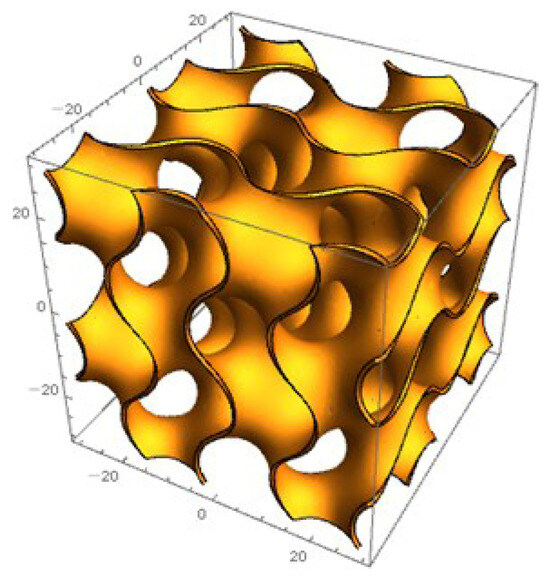
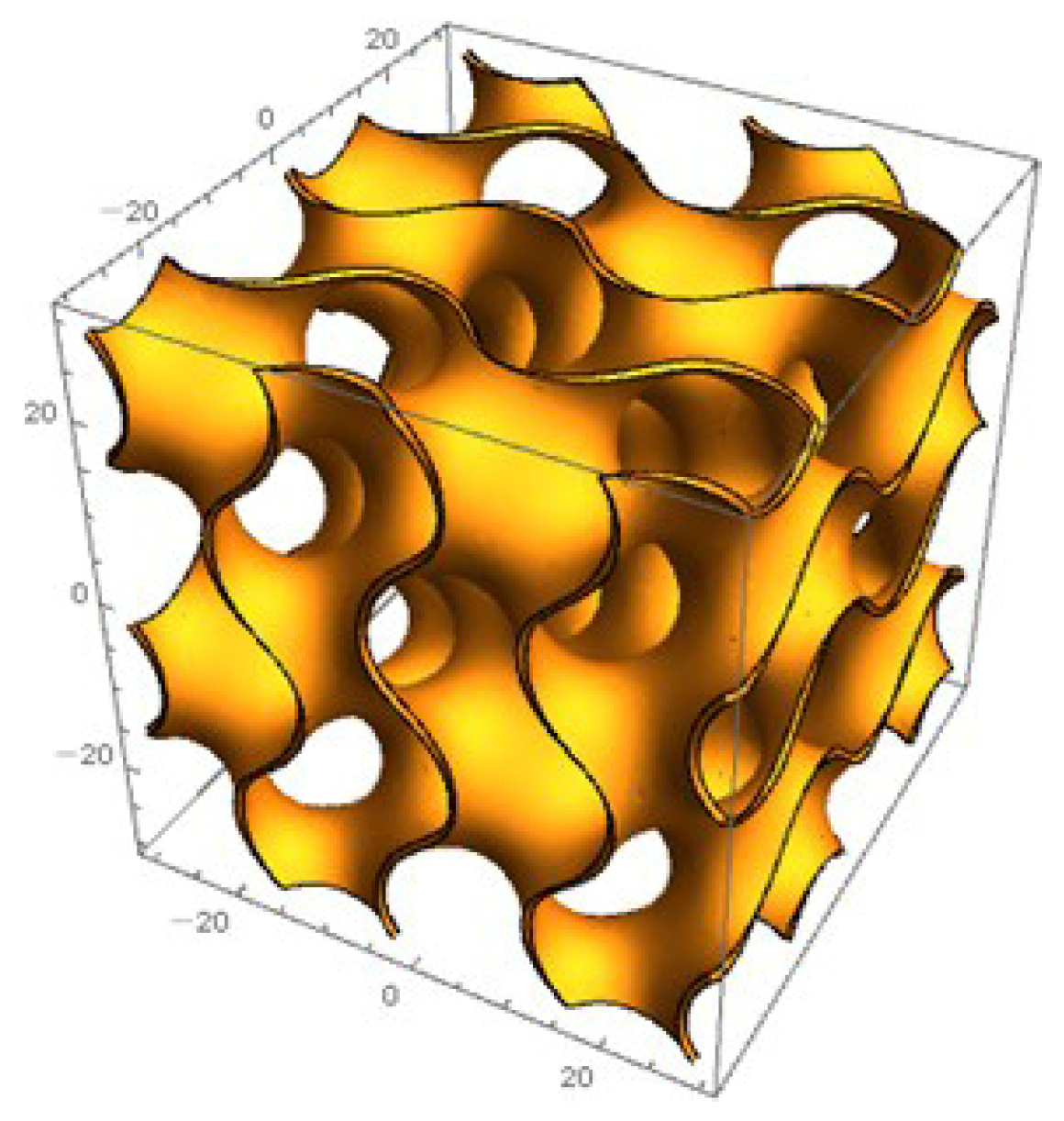
The polymers were modeled in a gyroid geometric format using Mathematica software (Wolfram Research, Inc., Version 14.1, Champaign, IL, USA), which generates the surface of the biocarrier media (Figure 1) [11].
where x, y, and z represent the Cartesian coordinates, and i is the parameter controlling the porosity.
Sen (i × x) × Cos (i × y) + Sen (i × y) × Cos (i × z) + Sen (i × z) × Cos (i × x) = 0
Figure 1.
Gyroid-shaped biocarrier media material produced in 3D printing.
The analysis of the geometric conditions of the generated surfaces was performed using the ANSYS Spaceclaim software (ANSYS, Inc., Version 2023 R2, Canonsburg, PA, USA), which allows us to obtain data on real volume (Vr) and surface area (S) using the measure tool. With this data, it is possible to estimate the porosity (η) (Equation (2)) and the ratio of surface area to volume (Ar) (Equation (3)).
η = 1 − Vr/Vυ × 100
η: Porosity (%);
Vr: Real volume occupied by the surface (m3);
Vυ: Volume occupied by the outermost width, length and height of the surface (m3).
Ar = S/Vυ
Ar: Relative area (m2/m3);
S: Surface area (m2).
Vυ: Volume occupied by the outermost width, length and height of the surface (m3).
By varying i from 0.2 to 0.7, a gyroid-type surface was generated, with boundary limits defined in the Cartesian coordinate system (x, y, and z) ranging from −50 to 50, thereby producing a solid body with dimensions of 100 × 100 × 100 mm. This configuration was adopted to evaluate key geometric parameters of the generated surface.
With the value of i of 0.2 for Equation (1), the gyroid-shaped biocarrier media were 3D-printed using PLA, ABS and PP. The surface generated in the mathematical software is saved in Standard Triangle Language (STL). The printing standards such as extrusion temperature, print bed temperature, extrusion nozzle opening diameter, layer heights, etc., are defined in the slicing software.
For printing the biocarrier media in ABS, the ideal extrusion temperature calibrated for the available filament was 230 °C, and the print bed temperature was 110 °C. For printing in PLA and PP, the ideal extrusion temperature calibrated for the available filament was 190 °C, and the print bed temperature was 60 °C. For both, the base layer height was 0.27 mm and the other layers were 0.18 mm.
2.3. Bench-Scale MBBR Experiments
2.3.1. Wastewater Samples
The domestic wastewater (DWW) samples used to conduct the experiments were kindly provided by the Paraná Sanitation Company (SANEPAR, Maringá-PR, Brazil) from one of its wastewater treatment plants (WWTPs). The initial inoculum was also provided by SANEPAR and collected from the inlet of the WWTP’s moving bed aerated reactor.
The DWW samples were collected biweekly in 20 L containers, and the inoculum was collected once and kept in the laboratory. Both the DWW samples and the inoculum were stored at 4 °C until use.
2.3.2. Biofilm Formation on Biocarrier Media
Biofilm formation was performed according to the procedure described by Fleck et al. [23]. The biocarrier media were placed in 4 L glass beakers together with the initial inoculum and DWW (1:1) and kept under aeration. After 24 h in contact, the supernatant was removed with the aid of a peristaltic pump (Masterflex, São Paulo, Brazil) and new effluent was added until the filling material was covered. This procedure for biofilm immobilization operated in batches, with the supernatant effluent changed every 24 h, and was carried out for one month with the visual verification of biofilm formation on the filling material and protein analyses to verify biofilm formation [23,24].
2.3.3. Bench-Scale MBBR
After biofilm formation on the biocarrier media, the support material was transferred to a bench-scale MBBR constructed from a cylindrical acrylic column with an internal diameter of 50 mm that was packed with activated carbon to a bed height of 51 cm, corresponding to a working volume of approximately 1 L. A thin layer of glass wool was placed at the bottom. The column was operated in upflow mode using a peristaltic pump at a flow rate of 0.13 L h−1, resulting in a hydraulic retention time (HRT) of 7.7 h. The treated effluent and samples were collected from an outlet located at the top of the column, functioning as an overflow (weir). Experiments were conducted at room temperature (25 ± 2 °C). The operating conditions were selected according to values reported in the literature for bench-scale filtration experiments [11,23,24,25,26,27].
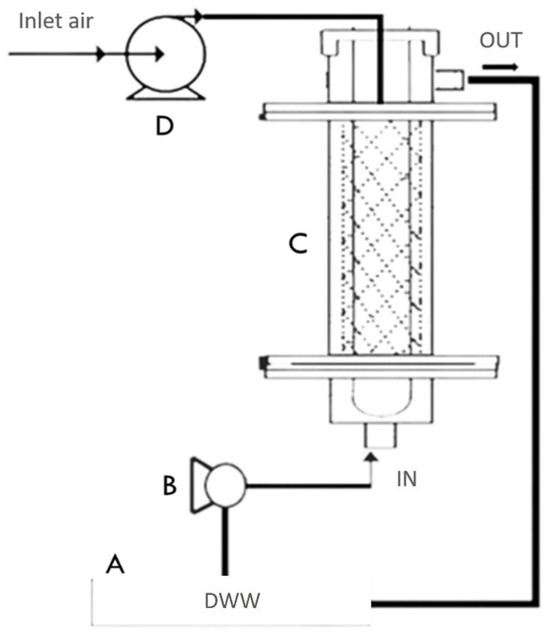
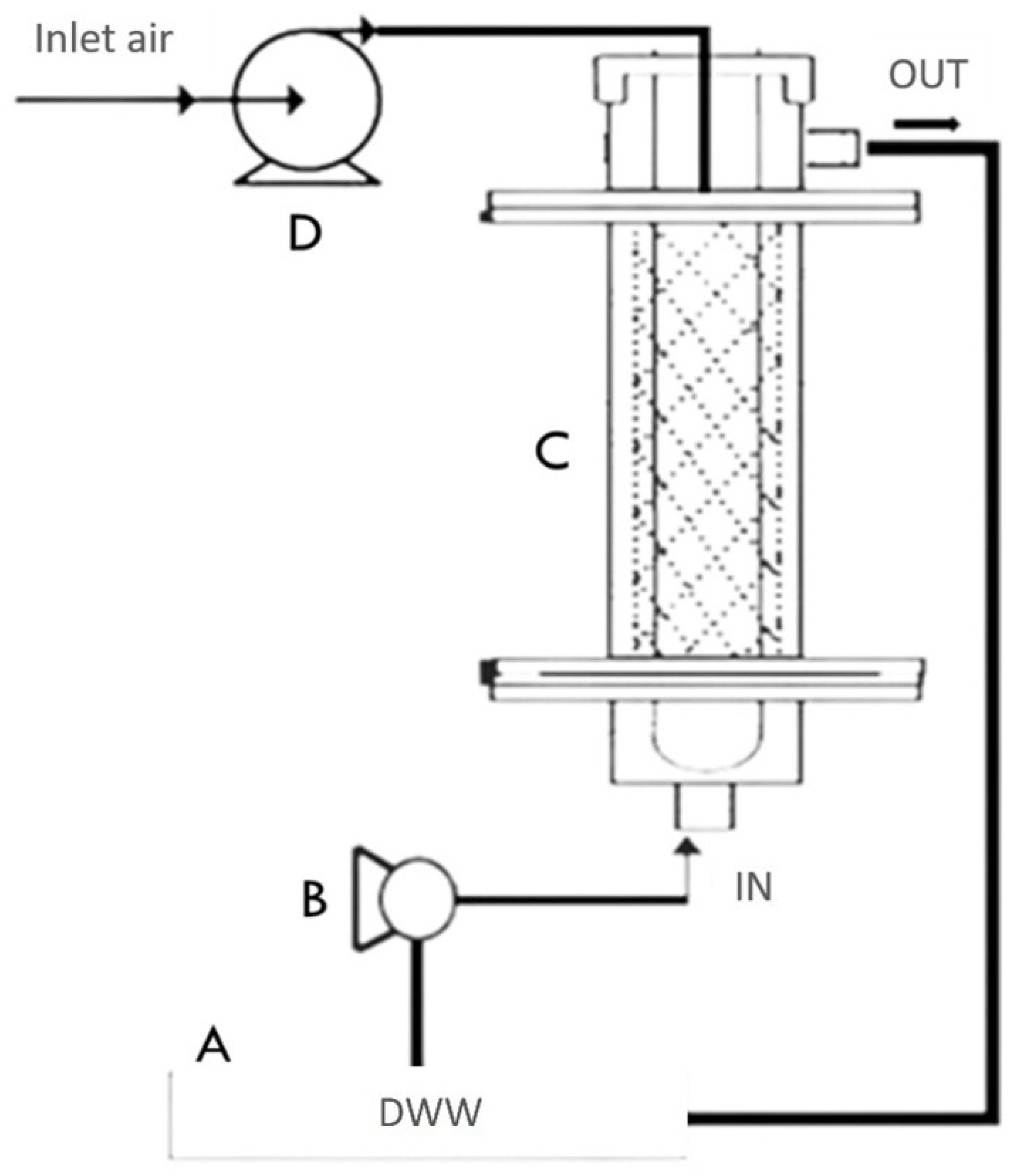
Figure 2 shows a schematic representation of the experimental setup, including an aerator and a peristaltic pump used to feed the reactor with effluent from the WWTP.
Figure 2.
Diagram of a bench-scale moving bed reactor. A—container with domestic wastewater; B—peristaltic pump; C—acrylic tube with biocarrier media; D—air pump. DWW—domestic wastewater.
2.3.4. Bench-Scale Assay Parameter Analysis
During the experiments, analyses were performed to verify biofilm formation and evaluate the removal of the following parameters: ammonia, nitrate, nitrite, total phosphorus and chemical oxygen demand (COD).
The samples were collected and analyzed 2 to 3 times a week for 3 months and sent to the Environmental Sanitation Laboratory of State University of Maringa for analysis.
To evaluate biofilm formation, parts of the carrier media were collected, weighed (1 g), and placed in a beaker with distilled water (100 mL) which was placed in an ultrasound bath for 1 h to remove the biofilm. Subsequently, aliquots of the solution were used for protein quantification using the Bradford technique, and CFU/mL counts of heterotrophic bacteria were used with the pour-plate technique.
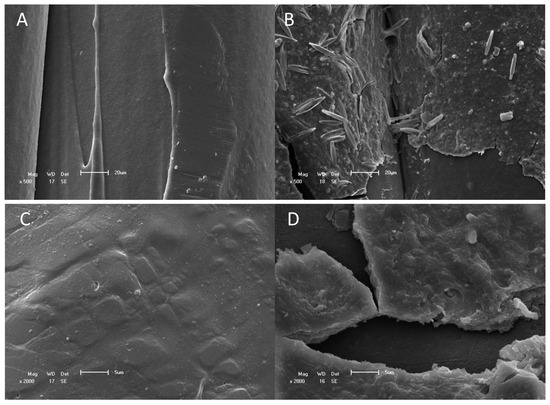
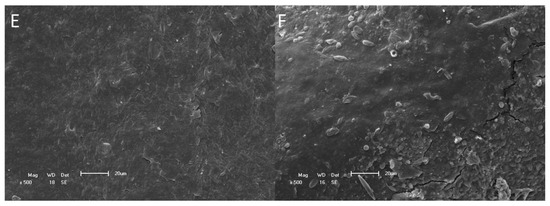
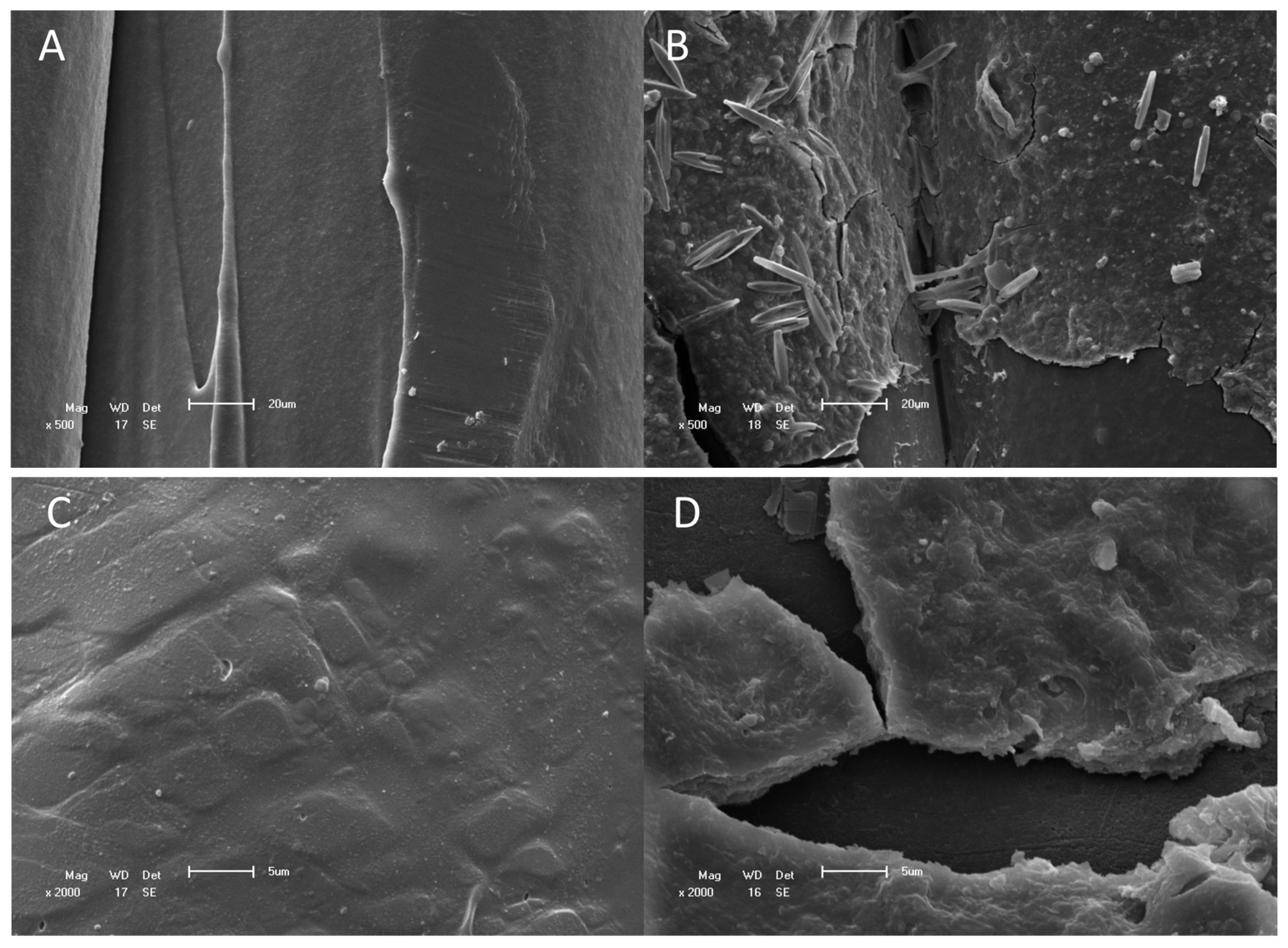
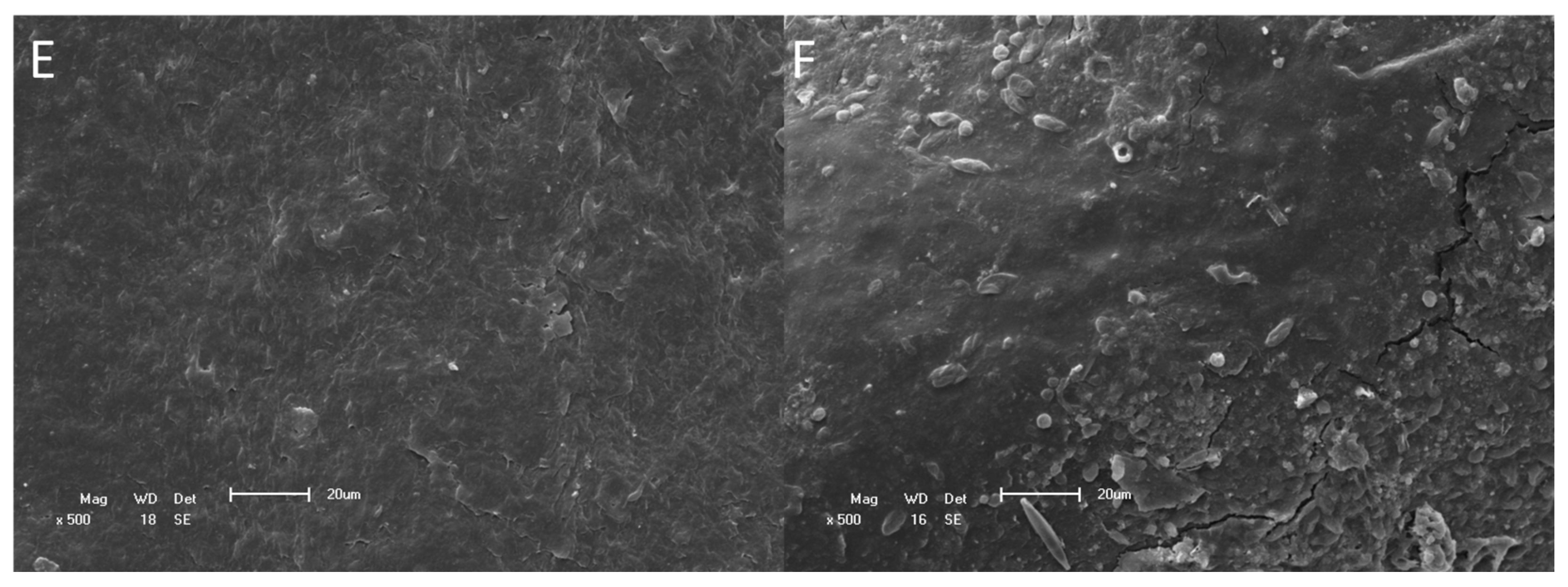
Additionally, biocarrier samples were collected both before and after biofilm colonization to visualize the biological growth using a scanning electron microscope (Shimadzu, model SS-550, Kyoto, Japan).
The other parameters were analyzed according to Standard Methods for the Examination of Water and Wastewater [28].
2.3.5. Statistical Analysis
Data represent the mean and standard error of the mean of triplicate analyses. Differences between biocarrier media polymers (PLA, ABS and PP) and controls (raw DWW) were evaluated by analysis of variance (one-way ANOVA), followed by Tukey’s test, and using GraphPad Prism 5.0 software (GraphPad Software, Inc., San Diego, CA, USA). Statistical significance was considered when p < 0.05.
2.4. Scale-Up of the Process in an Aerated Biological Filter
After the bench-scale assays, the most promising material was selected for large-scale production of the biocarrier media, enabling the continuation of the experimental campaign in the pilot-scale MBBR system.
The materials and methods employed in this phase of the study are described in the following sections.
2.4.1. Wastewater Treatment Plant (WWTP)
The wastewater treatment plant (WWTP) where the aerated biological MMBR pilot plant was installed was kindly made available by the Paraná Sanitation Company (SANEPAR). It is the Mandacaru ETE, located in the northern region (−23.355358235947577, −51.95670736344193) and named after the river that borders it, the Mandacaru. It is one of the tributaries of the Paranapanema River. Its main entrance is located on Avenida Mandacaru, after the Contorno Norte Road.
The Mandacaru WWTP has the installed capacity to treat up to 320 L of water per second. The treatment is anaerobic, followed by two biological filters. The sludge resulting from the treatment is used in agriculture as fertilizer, mainly for family farming and reforestation, in accordance with the guidelines of the Sewage Sludge Agricultural Use Program in the State of Paraná.
The pilot plant was installed after the Anaerobic Fluidized Bed Reactors (RALF), and before the biological filters.
2.4.2. MBBR—Pilot Plant
The pilot plant was installed after the RALF and before the biological filter at the Mandacaru-SANEPAR WWTP in the city of Maringá, Paraná.
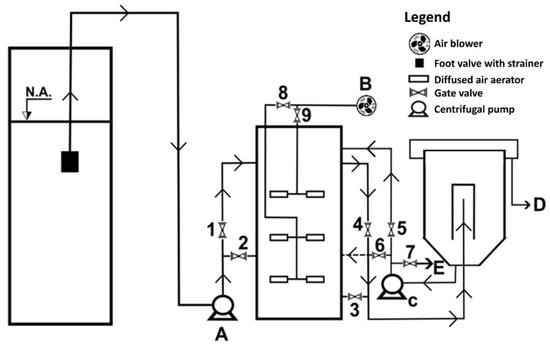
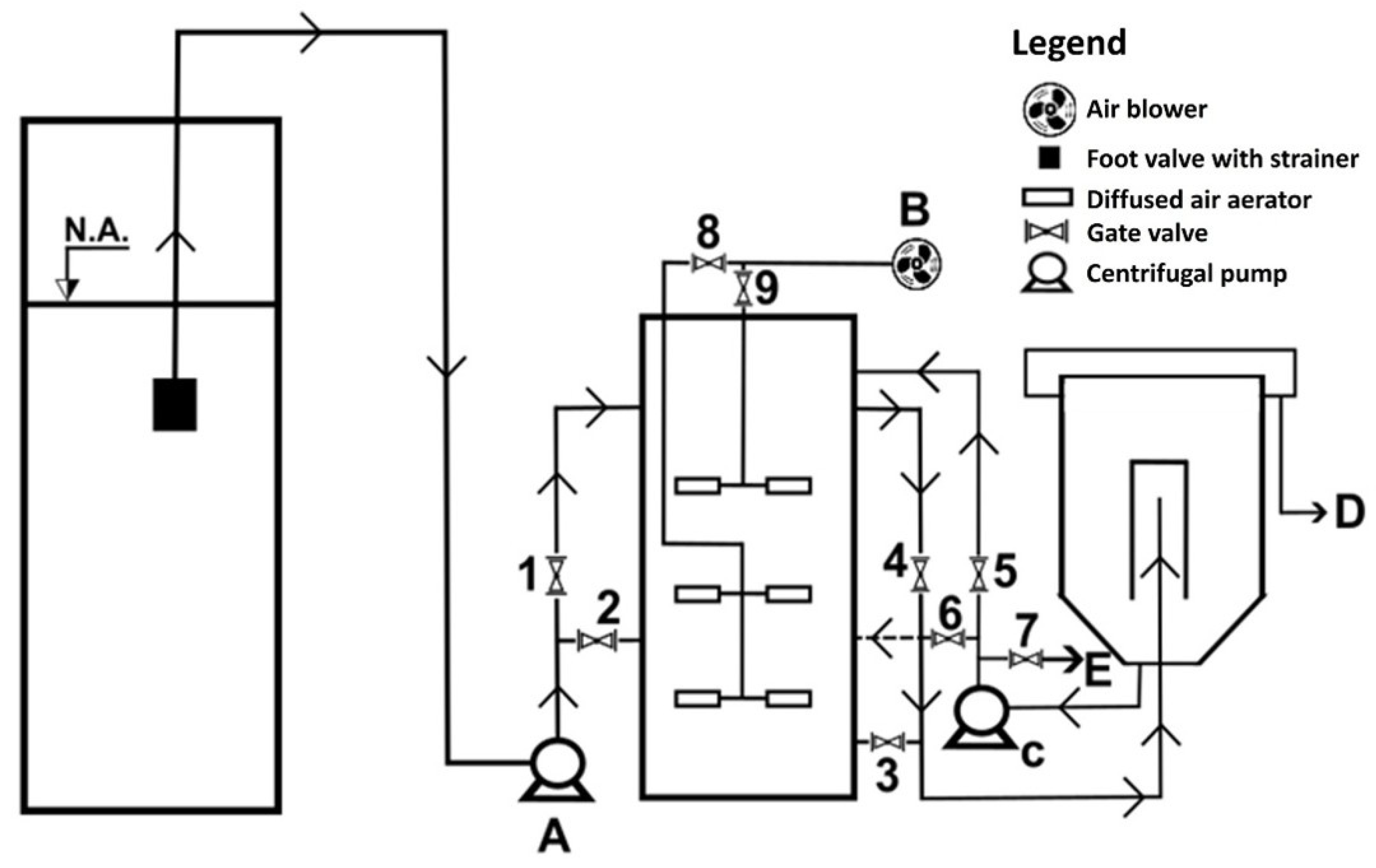
It operated under a permanent regime (1.8 m3/h) and with an aeration system. Upon leaving the RALF, the effluent was pumped to a discharge tower. An effluent collection point for the pilot plant was installed in the discharge tower, and an inverted siphon was made to collect the sewage to the pilot plant. In addition, there are registers in the pilot plant for descending and ascending flow operation options. After the biofilter, the effluent is directed to an ascending flow decanter, with a collection gutter at the top, and the outlet flow from the decanter is indicated by the letter D in the schematic of Figure 3.
Figure 3.
Diagram of the pilot plant of the aerobic/anaerobic reactor filled with gyroid-shaped media produced with polypropylene by a 3D printer. Valves 1–7 control the effluent flow. Valves 8 and 9 control aeration. A and C indicate centrifugal pumps. B indicates the air blower. D indicates the outlet effluent flow.
The pilot plant was filled with biocarrier gyroid-shaped media; the gyroid structure acted as a filling material for the adhesion of microorganisms.
DWW sampling was carried out weekly, from July 2024 to March 2025, collecting from the inlet and outlet of the pilot plant.
2.4.3. Parameters Evaluated in the Pilot Plant
The parameters evaluated and the methods used were carried out in accordance with the Standard Methods for the Examination of Water and Wastewater [28] and are presented in Table 1.
Table 1.
Methods for analyzing wastewater parameters on the bench and in the pilot plant filled with biocarrier gyroid-shaped media for domestic wastewater treatment.
To verify the presence of nitrifying bacteria in the biocarrier media, the analysis proposed by Alexander and Clark [29] for soil analysis was used. A unit of filling material was randomly removed from the pilot plant and kept under agitation in a beaker with 100 mL of saline solution for 30 min and was subsequently diluted in dilution water by means of serial dilution [30].
To quantify ammonia-oxidizing and nitrite-oxidizing bacteria, ammonia-carbonate and nitrite–carbonate culture media were used, respectively. After three weeks of incubation at 28 °C, the tubes were read using the nitrate reagent (50 mg of (C6H5)2NH and 25 mL of concentrated H2SO4) and the Griess–Ilosvay reagent. From the number of tubes that presented positive results in the five replicates of each dilution, the MPN table [28] was consulted to find the MPN value mL−1 of ammonia oxidizers and nitrite oxidizers in the sample analyzed [30].
The analysis was performed in bimonthly collections, totaling three analyses.
3. Results
3.1. Production of Filling Material
Using Equation (1), the surfaces in gyroid format were generated, with a virtual volume (Vυ) of 1 L, in Mathematica software (Version 14.1). From this software, the layers were exported as a mesh in STL format [31]. The file was opened in SpaceClaim, and then the data for the total surface area (S) and the real volume (Vr) of the meshes were extracted. The areas ranged from 0.0983 to 0.708 m2 for i values from 0.1 to 0.7, respectively. The Vr ranged from 3.85 × 10⁻⁵ to 2.64 × 10⁻⁴ for i values from 0.1 to 0.7, respectively.
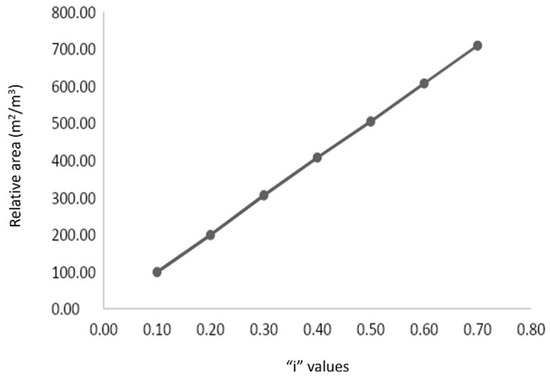
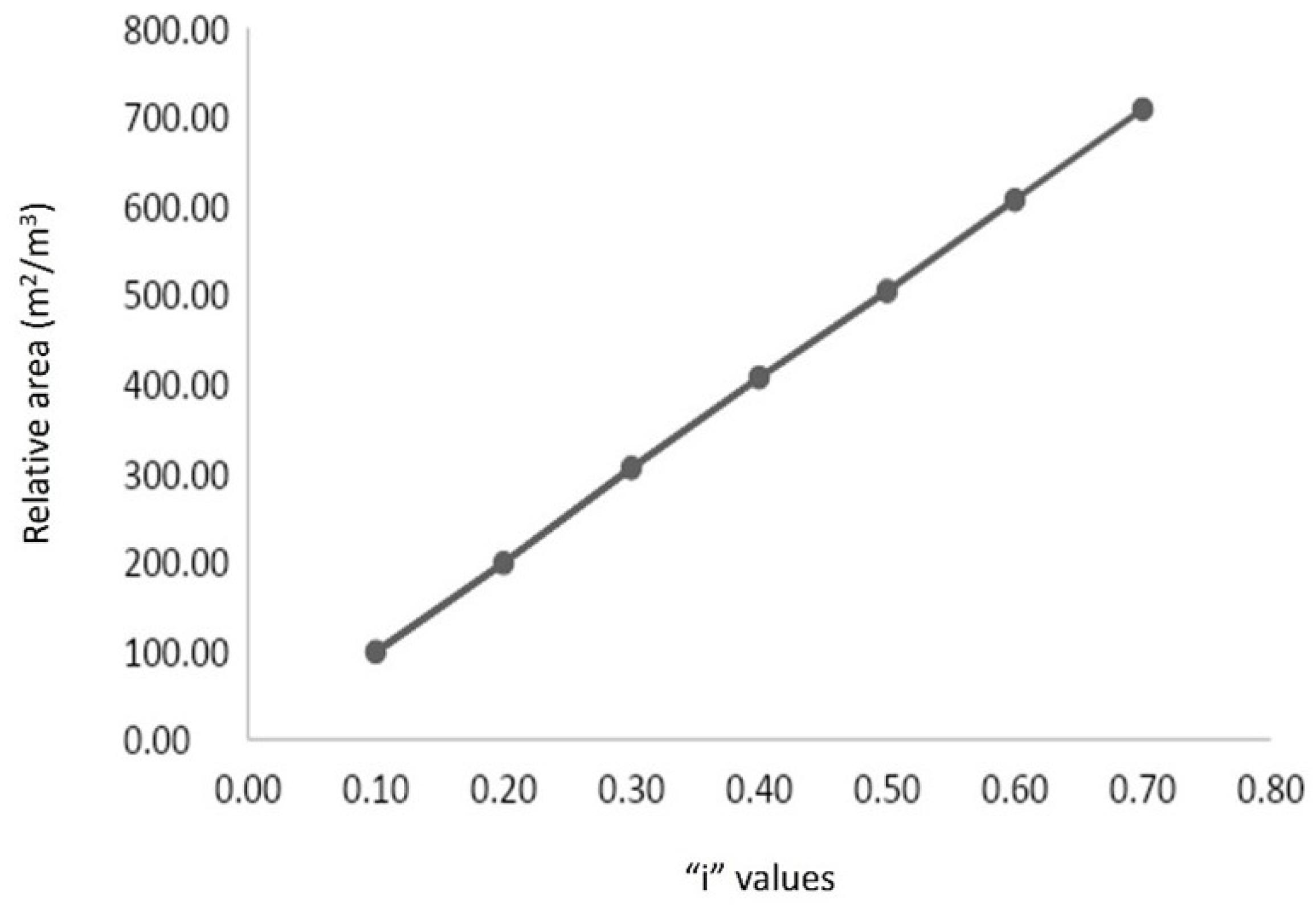
Next, dividing “S” by Vr, we obtained the relative area (RA) of the body; then, we obtained the values of 98.31, 198.08, 305.01, 406.59, 503.71, 606.23, and 708.18 m2/m3 for i of 0.1, 0.2, 0.3, 0.4, 0.5, 0.6, and 0.7, respectively. It can be noted that both the area and the relative area increase linearly as we increase the value of i [32], which can be better visualized in the graph presented below (Figure 4).
Figure 4.
Relative area (RA) graph for “i” values from 0.1 to 0.7 for the different gyroid-shaped filling materials produced in a 3D printer.
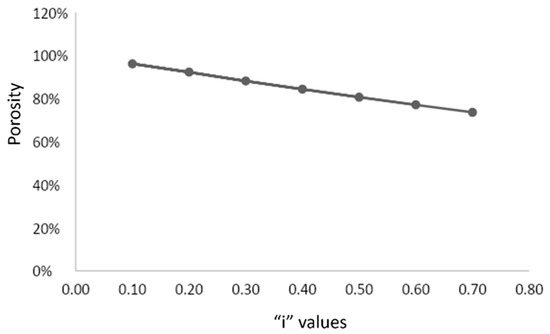
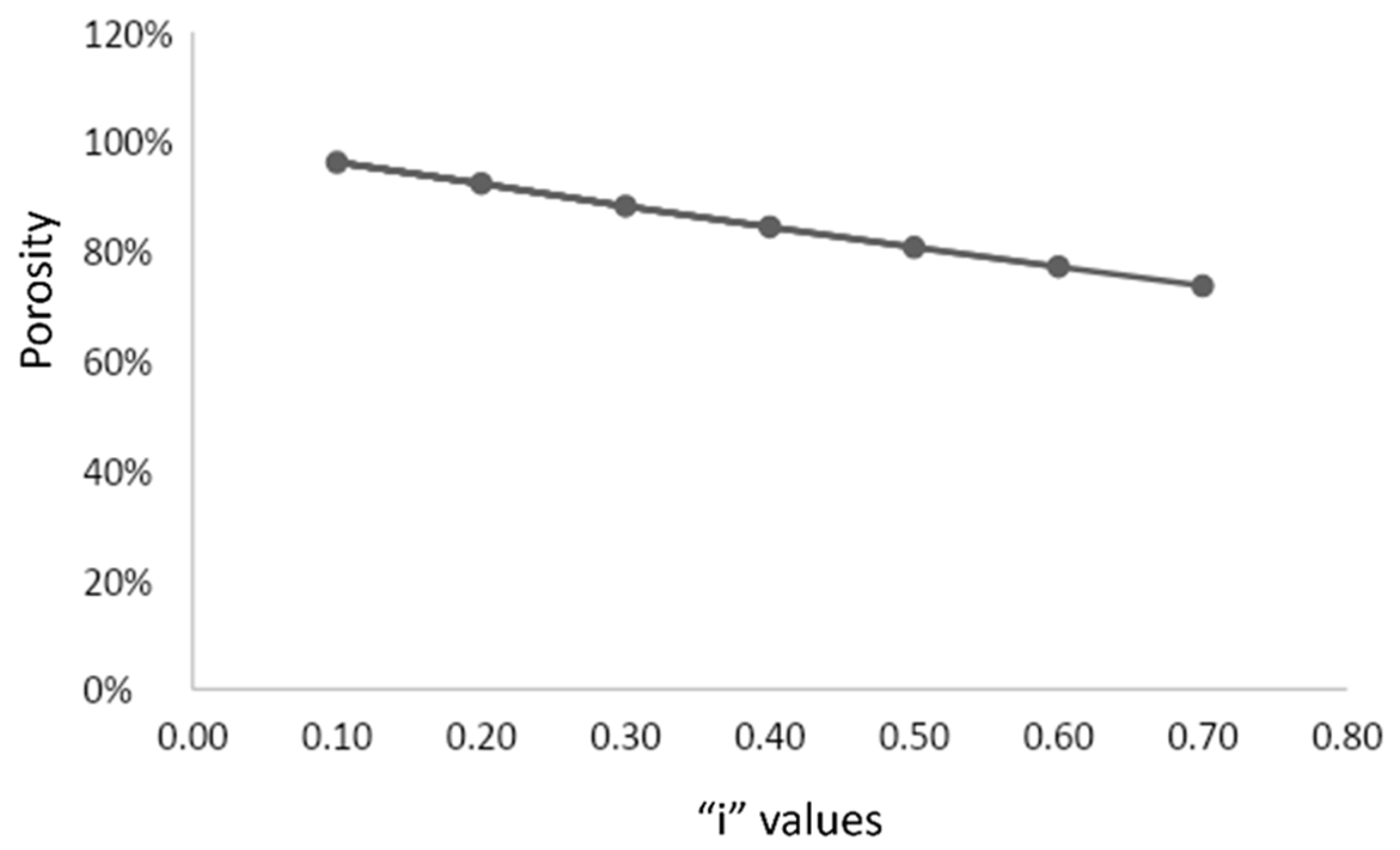
Another parameter explored was porosity (n). To find n, Vr was divided by the virtual volume (Vυ) of 1 L, and subtracting the value found by 1 gave the porosity [33]; the values were 96, 92, 88, 84, 81, 77, 74% for i of 0.1, 0.2, 0.3, 0.4, 0.5, 0.6, and 0.7, respectively. It can be seen in the graph presented below (Figure 5) that, again, this variation was linear.
Figure 5.
Degree of porosity (%) according to “i” values from 0.1 to 0.7 for the different filling materials in the gyroid format produced in a 3D printer.
The values for all explored physical parameters of the gyroid are presented in Table 2.
Table 2.
Computationally simulated physical parameters of gyroid-shaped filling materials produced in a 3D printer.
Considering the analyses, it was decided to produce 40 mm diameter gyroid biocarriers with i = 0.2, specific surface area of 199.26 m2/m3 and porosity of 92%.
The selection of the gyroid parameter i = 0.2 was based on achieving a balance between surface area and porosity, two key factors for biofilm development and mass transfer in MBBR systems. At this value, the structure exhibits a porosity of approximately 92%, which falls within the optimal range (90–92%) reported in the literature for effective biological carriers [21]. High porosity improves fluid circulation through the internal structure, enhancing oxygen diffusion and nutrient transport to the biofilm [21]. Although increasing i could further increase the specific surface area, it would significantly reduce the void fraction and narrow the pore channels, increasing the risk of clogging due to excessive biofilm accumulation [31]. Previous studies have shown that carriers with excessively high surface area relative to their volume often experience pore blockage, which reduces the effective surface available for microbial activity and limits pollutant removal efficiency [6]. Furthermore, excessive biofilm growth can increase oxygen demand and intensify mass transfer limitations within the biofilm. Therefore, selecting i = 0.2 (≈92% porosity and ~199 m2 m−3) provides a balanced structural configuration that promotes stable biofilm growth while maintaining adequate hydraulic accessibility and mass transfer within the gyroid biocarrier.
The results demonstrate that the gyroid geometry allows deterministic control of surface area through the structural parameter i material. This is a strong engineering outcome because it shows that surface area is not empirical, but mathematically tunable.
3.2. Biofilm Formation Experimental Procedure
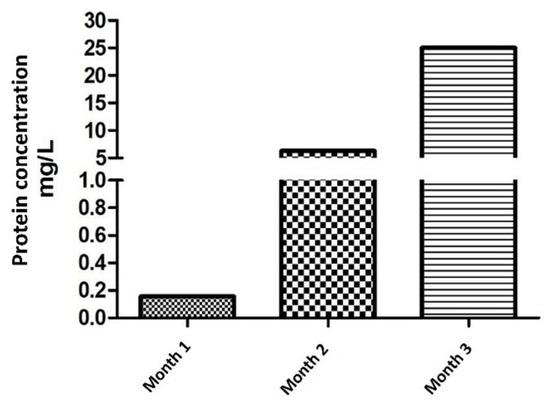
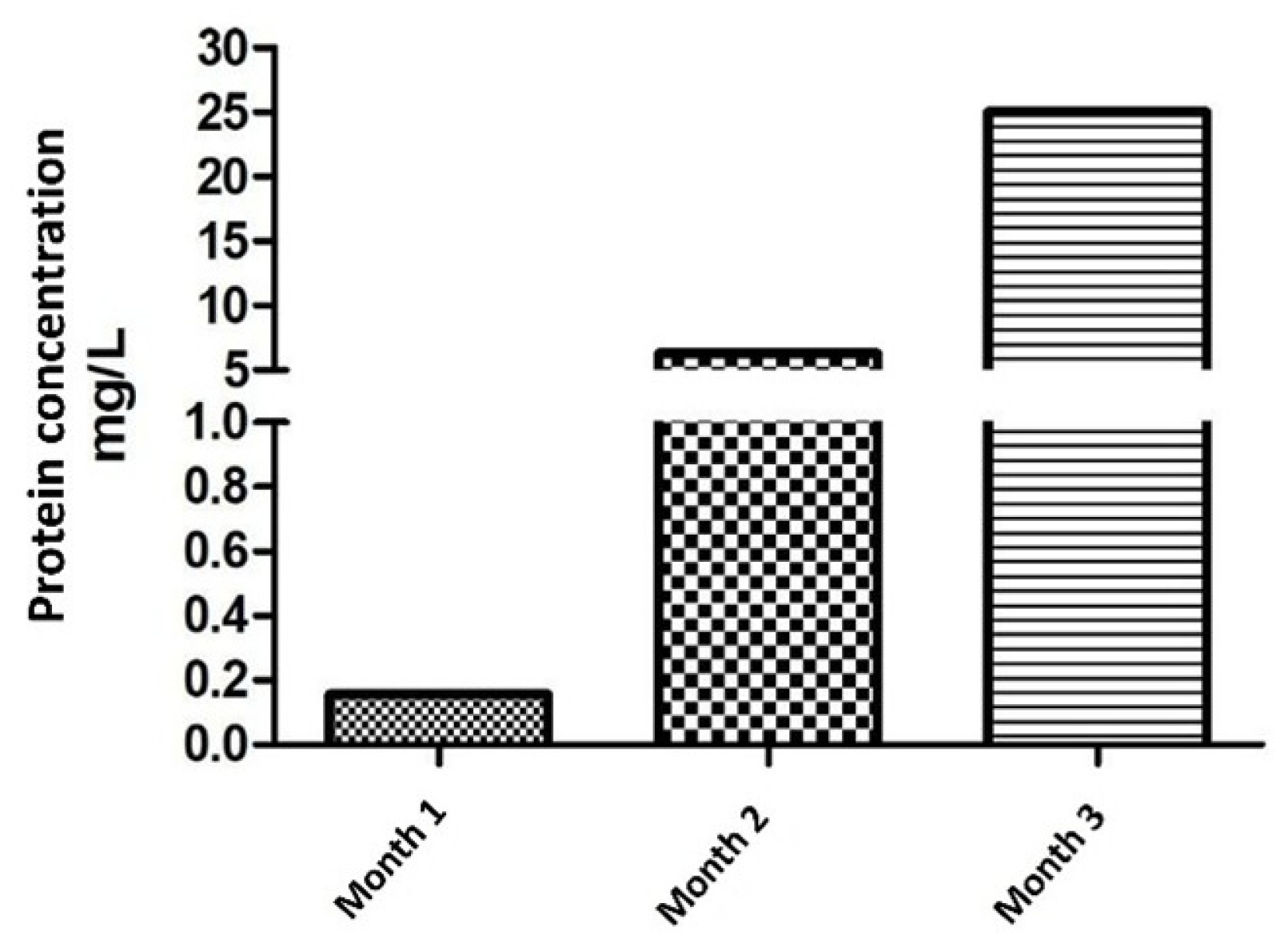
The protein concentration in the filler materials from biofilm immobilization is shown in Figure 6.
Figure 6.
Average protein production dosage (mg/L) for filling materials as support for biofilm formation after immobilization with initial inoculum.
It can be seen that, based on the procedure described in Section 2.3.2, there is an increase in the concentration of proteins over time. Protein measurement can be a useful tool for assessing biofilm formation in biological treatment systems. Biofilm consists mainly of microbial cells, including bacteria, which produce and secrete a variety of extracellular proteins [34]. Thus, the number of total proteins can be used as an indirect indicator of the biomass present in the biofilm [35].
The analysis of heterotrophic bacteria resulted in an average count of 120 CFU/mL. The presence of heterotrophic bacteria in the biofilm is advantageous in the biological treatment of domestic effluent because they are bacteria that degrade organic matter and are capable of removing some toxic compounds, improving the quality of the treated effluent [36,37]. As they are considerably resistant to environmental variations, they provide robustness to the biological treatment system, ensuring more stable performance. In summary, the presence of heterotrophic bacteria in the biofilm is essential to ensure the efficiency and adaptive capacity of biological sewage treatment, as these microorganisms play crucial roles in the degradation of organic matter and in maintaining microbial balance [37].
SEM analysis revealed that the biocarrier surface is generally homogeneous; however, it exhibits roughness and grooves where microorganisms can establish themselves for biofilm formation (Figure 7).
Figure 7.
SEM micrographs of 3D-printed gyroid biocarriers produced from ABS (500×), PLA (2000×), and PP (500×). Images (A,C,E) show surfaces after biofilm development, while (B,D,F) correspond to the respective polymer surfaces prior to biofilm formation.
3.3. Evaluation of Parameters in the Bench-Scale Aerobic Reactor Process
3.3.1. Assessment of the Concentration of Nitrogen Compounds
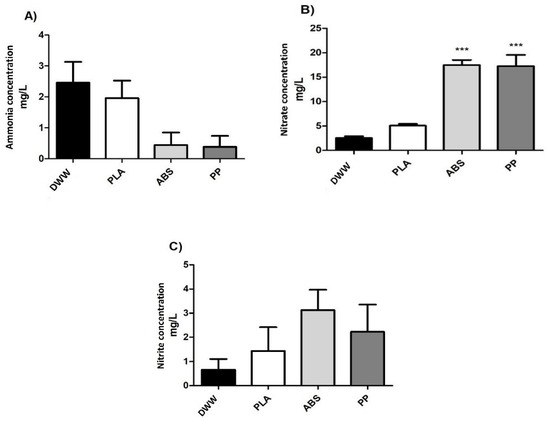
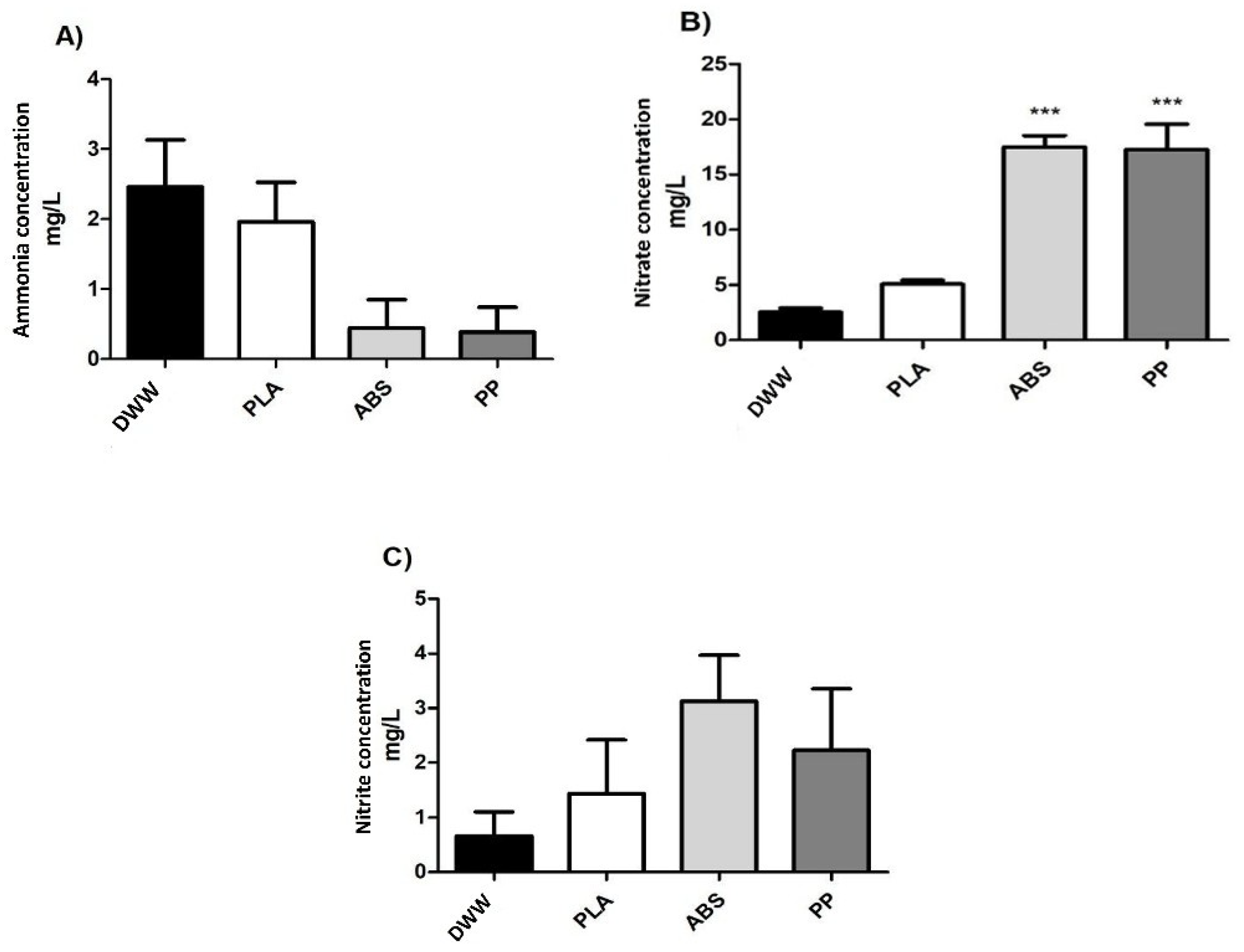
The evaluation of the concentration of nitrogen compounds is shown in Figure 8.
Figure 8.
Analysis of the concentration of nitrogen compounds ammonia (A), nitrate (B) and nitrite (C) in aerated fixed bed reactors with filling materials printed with PLA, ABS and PP materials. *** Significant difference in relation to raw effluent (p < 0.001). Three independent experiments were performed and the analysis was performed in triplicate (one-way ANOVA followed by Tukey’s test).
In general, it can be seen that the ammonia concentration decreases after treatment, while there is an increase in the concentration of nitrate and nitrite. It should be noted that when there is recent pollution, it is generally characterized by the predominance of nitrogen in organic and ammoniacal forms. In remote pollution, when under aerobic conditions, ammoniacal nitrogen passes into the less toxic forms of nitrite and nitrate [2,8], since nitrate production results from the bacterial oxidation of ammonium, with nitrite as an intermediary.
Generally, nitrate occurs in low concentrations in surface waters. In recent domestic effluents, the nitrate concentration is also low. In effluents from biological treatment plants with aeration tanks, nitrate is found in higher levels [38]. From the results, it is possible to verify the occurrence of the nitrification process, in which ammonia is oxidized and converted to nitrate in aeration treatments.
From the statistical analysis, it was found that there was no significant difference between the ammonia and nitrite concentrations, although it was possible to notice that there was a decrease in the ammonia concentration when comparing the raw effluent, without treatment, with the concentrations after treatment, mainly with the ABS and PP filler materials. An increase in the nitrite concentration was also observed for the same filler materials, although not statistically significant.
In relation to nitrate, it was possible to see that there was a statistically significant increase (p < 0.001) in its concentration in the ABS and PP filler materials when compared with the raw effluent and the PLA polymer.
From the results, it can be said that in the aerated fixed bed reactors with the ABS and PP filler materials, there is a considerable nitrification process with the removal of ammonia and production of nitrite (intermediate) and nitrate [39].
The nitrate can be removed later with the complement of biological treatment with the denitrification process, which is the second stage in the removal of nitrogen by nitrification–denitrification [40]. At this stage, nitrogen removal in the form of nitrate occurs through conversion to gaseous nitrogen carried out biologically under anoxic conditions (absence of oxygen).
3.3.2. Assessment of Total Phosphorus and COD Concentration
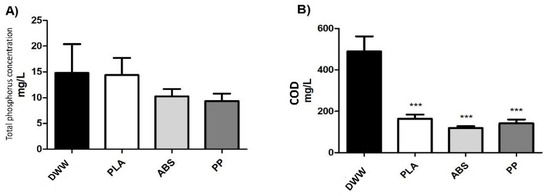
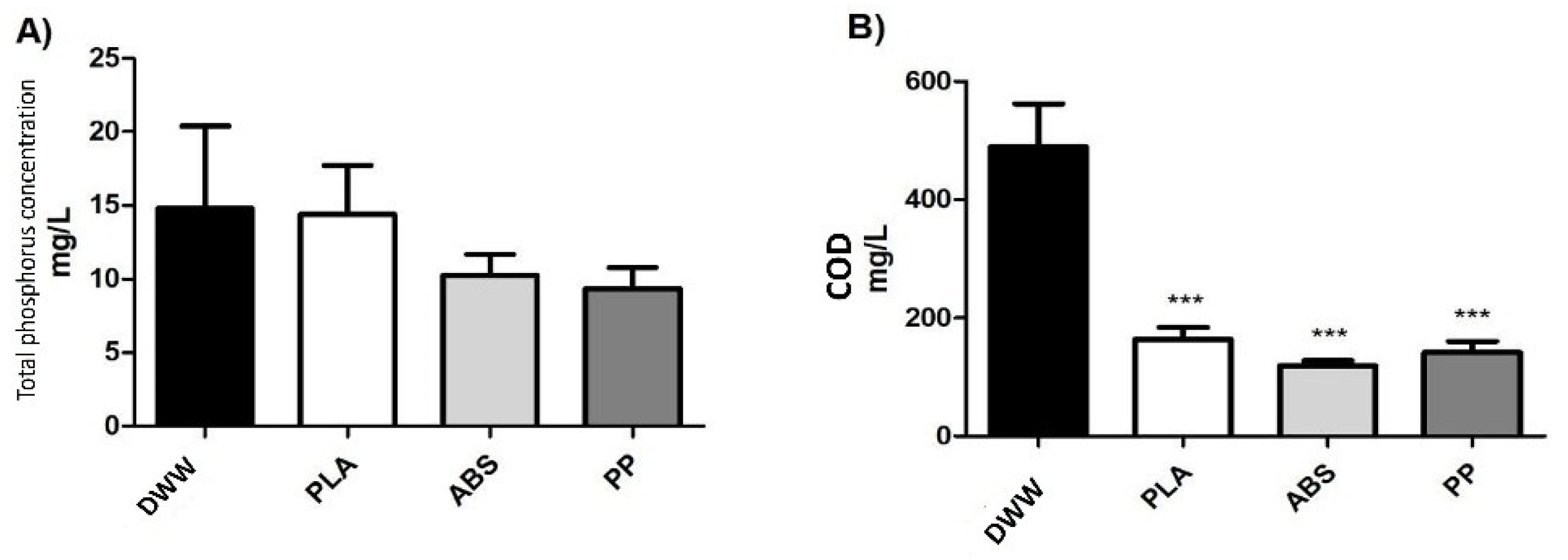
The results of the total phosphorus concentration and COD of the raw effluent and after treatment in an aerated fixed bed reactor filled with PLA, ABS and PP are presented below (Figure 9).
Figure 9.
Total phosphorus concentration (A) and chemical oxygen demand (COD) (B) in raw and treated effluent in an aerated fixed bed reactor with PLA, ABS and PP filler material. ***: Significant difference in relation to raw effluent (p < 0.001). Three independent experiments were performed and the analysis was performed in triplicate (one-way ANOVA followed by Tukey’s test).
It can be seen that there was a reduction in total phosphorus, mainly for ABS and PP, although not statistically significant (Figure 9A). Phosphorus removal in aerated biological effluent treatment generally involves biological and chemical processes [41]. The biological approach is known as biological precipitation and can be carried out in activated sludge systems. The process involves biosorption mechanisms in which bacteria present in the biofilm can incorporate phosphorus into their cells as part of their normal metabolism [38]. Phosphorus removal in aerated biological systems is an effective and sustainable approach, contributing to the reduction of the nutrient load in the treated effluents.
Regarding COD, there was a significant reduction for the three materials when compared to the raw effluent (Figure 9B). The reduction in COD in aerated biological effluent treatment involves microbiological processes that aim to decompose and oxidize organic compounds present in the water [21]. Aerobic microorganisms, present in activated sludge or in other biological systems, consume organic matter as a food source. These bacteria break down complex organic compounds into simpler products such as carbon dioxide and water [7].
It was observed that the three polymers evaluated (ABS, PP, and PLA) were capable of supporting biofilm formation and initially demonstrated satisfactory performance as biocarrier materials. However, PP and ABS developed the most robust biofilms, which resulted in the highest ammonia and COD removal efficiencies, indicating greater stability and effectiveness under the tested operational conditions. The differences in biological performance, including biofilm stability and ammonia and COD removal efficiencies, are directly associated with the mechanical, chemical, and biodegradation properties of each material.
Although PLA showed promising initial results, it presents lower stability under continuous operational conditions when compared with other polymers commonly used as biocarriers. PLA is a biodegradable polymer that undergoes gradual hydrolytic degradation when exposed to aqueous environments. When submerged in wastewater, the polymer can experience progressive hydrolysis of its ester bonds, leading to structural deterioration over time [42]. In biological reactors, this degradation may destabilize the surface available for microbial attachment, promoting premature biofilm sloughing and consequently causing fluctuations in pollutant removal performance [42]. In addition, mechanical studies indicate that 3D-printed PLA exhibits significant strain-rate sensitivity and generally behaves as a brittle material [13]. In aerated systems such as Moving Bed Biofilm Reactors (MBBRs), carrier media are continuously subjected to turbulence, shear forces, and frequent collisions between particles. Under these operational conditions, the inherent fragility of PLA can compromise its structural integrity and limit its long-term applicability as a durable biocarrier material in biological wastewater treatment processes [13].
ABS and PP exhibited higher removal efficiencies and greater biofilm stability than PLA, with similar performance between the two materials. This behavior can be attributed to their structural robustness, which allows them to withstand the hydrodynamic stress within the reactor and maintain a stable surface for microbial attachment [21]. Such stability helps protect nitrifying bacteria responsible for ammonia removal as well as heterotrophic bacteria involved in COD degradation [21]. Consistent with these characteristics, ABS demonstrated good removal performance and biofilm stability in this study. According to the literature, ABS exhibits low strain-rate sensitivity, similar to polypropylene (PP), which provides good resistance to mechanical impacts and shear forces in the reactor. This mechanical robustness helps maintain stable biomass attachment and biofilm integrity on the carrier surface [13]. Although ABS is relatively inexpensive and easy to fabricate using additive manufacturing, several material selection studies discourage its long-term application in wastewater treatment systems. The literature reports that ABS exhibits limited chemical resistance, and its mechanical properties may deteriorate significantly when exposed to harsh wastewater conditions, including pH fluctuations, elevated salinity, and aggressive ions [21].
In contrast, polypropylene (PP) is widely recognized as one of the most suitable polymers for biofilm carrier media in wastewater treatment systems, along with high-density polyethylene (HDPE) [21]. This preference is attributed to the advantageous combination of excellent chemical resistance, high mechanical durability, and favorable density. PP exhibits strong resistance to chemical compounds commonly present in wastewater, maintaining its structural integrity during prolonged operation. In addition, PP shows low sensitivity to mechanical stress and is capable of withstanding continuous collisions and shear forces within aerated reactors without structural degradation [13]. Furthermore, PP presents an optimal density range of approximately 0.900–0.909 g cm−3, which is slightly lower than that of water, providing ideal buoyancy for moving bed systems and reducing the aeration energy required to keep the carrier media in suspension [21].
Although both materials showed comparable treatment performance, polypropylene (PP) was selected for large-scale biocarrier production and subsequent application in the pilot-scale MBBR system. This decision was based not only on its recyclability but primarily on its superior chemical resistance in wastewater environments, where ABS is known to present certain limitations [21]. In addition, PP provides enhanced abrasion resistance and long-term durability, which are essential characteristics for continuous biological treatment systems [21].
3.4. Pilot Plant Parameter Results
3.4.1. Biofilm Formation Analysis
From the serial titration, we obtained an average value of 1.5 × 10⁷ MPN mL−1 for ammonia bacteria and 1.1 × 10⁸ MPN mL−1 nitrite-oxidizing bacteria.
Using the reagents mentioned above, it was possible to read multiple tubes and verify the titration in which the result was positive for the presence of ammonia- and nitrite-oxidizing bacteria. Red coloration indicates positive tubes for the production of nitrite/nitrate, indicating the presence of ammonia-oxidizing bacteria. Blue coloration indicates the production of nitrate (conversion of nitrite to nitrate) and the presence of nitrite-oxidizing bacteria [28,30].
The biofilm architecture enables substantially higher concentrations of active biomass compared to conventional suspended-growth activated sludge systems. Several studies have reported that ammonia-oxidizing microorganisms in MBBR biofilms can reach remarkably high abundance levels, with 107 copies per microliter [43].
The presence of these bacteria in the polypropylene filling material indicates the formation of biofilm and the establishment of the bacteria responsible for the treatment in the aerated reactor of the pilot plant.
3.4.2. BOD and COD Analysis
Table 3 summarizes the biochemical oxygen demand (BOD) and chemical oxygen demand (COD) values of the effluent before and after treatment in the pilot-scale Moving Bed Biofilm Reactor (MBBR) system.
Table 3.
Biochemical oxygen demand (BOD) and chemical oxygen demand (COD) of domestic wastewater from WWTP, before and after treatment in a pilot-scale Moving Bed Biofilm Reactor (MBBR) filled with 3D-printed polypropylene.
The average BOD inlet value obtained during the sampling campaigns was 187.2 mg/L. The average BOD outlet value was 86.6 mg/L, with a maximum efficiency of 87%, thus complying with the aforementioned Resolution and Normative Instruction, which establishes a limit of 120 mg/L or a minimum removal efficiency of 60 at the effluent outlet to the receiving body.
The analysis of the COD values at the inlet and outlet of the pilot plant throughout the sampling campaigns found values of 615.3 mg/L at the inlet and 267.7 mg/L at the outlet, representing an average removal efficiency of 45%. The COD removal efficiency reached peaks of 87% removal, demonstrating effective degradation of organic matter during the study period.
The relatively high standard deviation observed for BOD and COD removal efficiency was mainly associated with sampling events in which the effluent concentration was similar to, or occasionally higher than, the influent concentration. Such fluctuations are commonly reported in studies treating real domestic wastewater and can be attributed to several factors. Domestic sewage contains a wide range of organic compounds and typically exhibits highly variable composition; studies using real wastewater frequently report that its characteristics fluctuate within a broad range, which justifies the use of mean values and standard deviations to represent the magnitude of these variations in the influent during sampling campaigns [4,44]. Biological treatment systems also routinely deal with significant volatility in influent concentrations. The inherent variability and wide fluctuations in the organic load of domestic wastewater can lead to short-term variations in treatment performance [4] affecting reactor equilibrium and generating transient fluctuations in removal efficiency [45]. In addition, the detachment of biofilm fragments from the carrier surface (sloughing) may temporarily increase the organic load and suspended solids in the effluent [38,46]. Collectively, these factors explain the variability observed in the calculated removal efficiencies during specific sampling campaigns.
Despite these fluctuations, the MBBR system maintained stable treatment performance. In this configuration, the biofilm is better protected against variations in influent quality and quantity compared with conventional activated sludge systems, which contributes to greater operational stability [21]. The literature highlights that MBBRs exhibit high tolerance to organic loading shocks and resilience to adverse environmental conditions [43]. Practical studies with highly variable wastewater have demonstrated that, even under considerable influent fluctuations, MBBR systems maintain robust and stable removal capacity [45]. Accordingly, the measured parameters remained within the limits established by the applicable regulations, confirming the effectiveness of the treatment system in reducing the organic load and demonstrating the robustness of the process under realistic and highly variable operational conditions.
3.4.3. MBBR Performance: Nitrogen Compounds and Total Phosphorus (Ptot) Concentrations
Table 4 presents a summary of the results of the nitrogen compound analyses.
Table 4.
Results of the analysis of nitrogen compounds at the inlet and outlet of the pilot plant.
It can be seen that there was a removal of nitrogen compounds after the effluent treatment in the pilot plant with polypropylene biocarrier material in a gyroid shape. It was observed that the greatest removals occurred from the third sampling campaign, approximately 15 days after the start of operations, due to the formation and establishment of bacterial biofilm on the filling material [25]. As the system continued operating over an extended period, consistent removal of ammonia, nitrite, and nitrate was observed. This behavior suggests the establishment of a stratified biofilm structure with oxygen diffusion gradients, enabling the simultaneous occurrence of nitrification in the outer aerobic layers and denitrification in the inner anoxic zones [47,48].
It can be seen that the maximum removal efficiencies were 87% for ammonia, 85% for nitrite, 97% for nitrate and 90% for total nitrogen; these results are aligned with the state of the art documented in the literature for advanced bioreactors (such as MBBRs) [6,37,49].
Total phosphorus (TP) concentrations averaged 21.05 mg L−1 at the influent and 9.08 mg L−1 at the effluent of the pilot plant filled with polypropylene carrier media, corresponding to a maximum removal efficiency of 66%. Pan et al. [49] reported the operation of an MBBR system achieving a TP removal efficiency of 59.64% (approximately 60%), with performance strongly dependent on the biofilm attached to the carrier surface. These findings reinforce the premise that biofilm development plays a decisive role in enhancing phosphorus removal. Overall, TP reduction in such systems is primarily attributed to biological uptake and incorporation into biomass within the biofilm matrix, as well as associated assimilation and storage mechanisms [38].
The relatively high variability observed in the removal efficiencies of nitrogen compounds and phosphorus can be attributed to several factors inherent to biological wastewater treatment systems. Similar to the variability observed for BOD and COD, domestic wastewater exhibits a highly heterogeneous composition and fluctuating nutrient loads, which contribute to significant dispersion in influent concentrations [10,45]. Studies on real municipal wastewater systems report that influent ammonium and total nitrogen (TN) concentrations may vary significantly due to changes in household activities, weather conditions, and occasional industrial contributions [10]. Pilot-scale investigations have also shown that organic and nitrogen loads can fluctuate substantially over time, which may affect the stability of biological removal processes [45].
In addition, nitrogen removal relies on sequential biological pathways, namely nitrification and denitrification, which are sensitive to operational parameters such as dissolved oxygen concentration, carbon-to-nitrogen ratio, temperature, and biofilm development [1,6]. In MBBR systems, the stratified biofilm structure creates aerobic and anoxic microenvironments that enable these processes [43,47]. However, variations in biofilm thickness or detachment events may temporarily affect microbial activity and conversion rates [25,50]. Consequently, fluctuations in the concentrations of ammonia, nitrite, nitrate, and total nitrogen may occur during different sampling campaigns.
3.4.4. Solid Profile Before and After MBBR Pilot Treatment Plant with PP Gyroid Biocarriers
The solid fraction profile is presented in Table 5.
Table 5.
Solid fraction profile of domestic wastewater before and after the MBBR process with PP gyroid biocarriers.
The results demonstrate the high efficiency of the aerated biological treatment in removing particulate and biodegradable matter from domestic wastewater. Suspended solids are solid particles that remain suspended in the water, while settleable solids are the coarsest part of the suspended solids. Suspended solids exhibited a remarkable removal of 96%, decreasing from 1776 ± 45 mg/L to 65.44 ± 30.67 mg/L, accompanied by an equivalent 96% reduction in settleable solids. This substantial decrease indicates effective biomass retention, proper floc formation, and efficient solid–liquid separation, suggesting stable reactor operation [34].
Such high removal of particulate and settleable fractions suggests that fine particles were effectively captured and aggregated within the reactor. In biofilm-based systems, this behavior is commonly associated with the combined effects of physical interception by the carrier media and bioflocculation induced by extracellular polymeric substances (EPSs) produced by the attached microbial community [34]. The biological carrier provides a large surface area and internal structure that favor the interception and attachment of suspended particles, increasing the probability of particle capture within the system [6]. At the same time, the biofilm developed on the carrier surface produces EPSs that act as polymeric bridging agents, promoting the aggregation of colloidal and fine suspended particles into larger and denser flocs [50,51]. These aggregated structures exhibit improved settling properties, which explains the substantial reduction in settleable solids observed after treatment [41]. This interpretation is further supported by the substantial removal of volatile suspended solids (85%), indicating that a significant portion of the retained solids consisted of organic particulate matter associated with microbial biomass [44,52]. In MBBR systems, volatile solids primarily represent the active organic biomass fraction, and their high removal is directly driven by the combined mechanisms of biological degradation and physical retention within the carrier media [23].
In contrast, dissolved solids showed a moderate overall removal (44%), with a significantly higher reduction in the volatile fraction (43%) compared to fixed dissolved solids (27%). The comparatively lower removal of dissolved solids can be attributed to the fact that dissolved compounds are not subject to physical retention mechanisms within the reactor [34]. Unlike suspended particles, which can be intercepted by the carrier media and aggregated through EPS-mediated bioflocculation, dissolved substances remain in the aqueous phase and can only be removed through biological conversion or limited adsorption onto the biofilm matrix [21,50,51]. Consequently, the removal efficiency of dissolved solids tends to be lower in biofilm-based systems such as MBBRs [6,34].
The moderate removal of dissolved solids can be further explained by the different behavior of volatile and fixed dissolved fractions [53]. Volatile dissolved solids are mainly associated with organic compounds that can be partially removed through microbial metabolism and assimilation into biomass [21]. In contrast, fixed dissolved solids correspond predominantly to inorganic salts that remain in the aqueous phase and are not significantly affected by biological treatment processes [44]. As a result, although part of the dissolved organic fraction may be biologically converted, the persistence of inorganic dissolved solids limits the overall reduction of total dissolved solids in biofilm-based systems [44].
This behavior is consistent with biological treatment mechanisms, which preferentially oxidize soluble organic compounds while largely preserving inorganic salts. Mannacharaju, Somasundaram and Ganesan [44] demonstrated this behavior during the operation of a biological reactor; the authors observed that while organic matter and suspended solids were efficiently removed, the removal efficiency of total dissolved solids (TDS—encompassing inorganic mineral salts) was virtually negligible, ranging from only 0.2% to 1.8%. The study confirms that dissolved inorganic components (such as sulfates and other salts) are not amenable to biological removal and require chemical precipitation processes if their reduction is necessary.
Total solids decreased by 60%, with a more expressive removal of volatile total solids (67%) than fixed total solids (51%). A mass distribution analysis of volatile and fixed solids further supports the biological contribution to the treatment process. In the influent, volatile solids accounted for approximately 55.7% of the total solids, indicating a significant organic fraction. After treatment, the volatile fraction decreased to about 45.7%, while the relative proportion of fixed solids increased. This shift reflects the preferential removal and biological conversion of organic matter, which is characteristic of biofilm-based treatment systems [44]. The larger reduction observed for volatile solids compared with fixed solids suggests that microbial metabolism played a major role in the overall solid reduction, while the remaining fraction was largely composed of mineral solids that are less susceptible to biological transformation and thus remain largely unchanged in the aqueous phase [52,53].
The variability observed in the removal efficiencies of solids can also be attributed to factors inherent to biological wastewater treatment systems. Domestic wastewater typically contains a heterogeneous mixture of organic and inorganic particulate matter, leading to fluctuations in influent solids concentrations during different sampling campaigns [44,45]. In MBBR systems, the dynamic behavior of the biofilm plays an important role in solid removal. Biofilm growth on carrier surfaces is continuously balanced by detachment events (sloughing), which may temporarily increase the concentration of suspended solids in the effluent [11,38].
In addition, the hydrodynamic conditions within the reactor promote frequent collisions among carriers and shear forces on the biofilm surface, which can enhance particle resuspension and contribute to short-term variations in solids concentrations [14,54]. Furthermore, biological processes such as biomass growth, organic matter degradation, and particle aggregation can alter the distribution between dissolved, suspended, and total solids throughout the treatment process [50]. Consequently, these factors may lead to fluctuations in solid removal efficiencies across different sampling campaigns.
Overall, the aerated biological process achieved substantial organic stabilization and particulate removal. The variability observed in removal efficiencies reflects the intrinsic fluctuations of real domestic wastewater and the dynamic nature of biofilm-based systems. Despite these variations, the MBBR maintained stable treatment performance, demonstrating strong process resilience and operational robustness under realistic wastewater conditions.
4. Conclusions
This study demonstrated that gyroid-structured polymeric biocarriers can be successfully designed, fabricated, and applied in biological wastewater treatment systems using additive manufacturing. The produced biocarriers were evaluated in both bench-scale and pilot-scale MBBR systems treating real domestic effluent with biofilm establishment that was confirmed by increased protein concentration, heterotrophic bacterial colonization, and the detection of ammonia-oxidizing and nitrite-oxidizing bacteria in the carrier media. These findings demonstrate successful microbial immobilization and the development of a functionally active biofilm structure.
The pilot-scale system exhibited removal of ammonia, nitrite, and nitrate, indicating the formation of stratified biofilms with oxygen gradients. This structure enabled the simultaneous occurrence of nitrification in aerobic outer layers and denitrification in inner anoxic zones, resulting in effective total nitrogen removal.
Significant reductions in BOD, COD, total phosphorus, suspended solids, and volatile fractions further confirmed the efficiency of the biological process. Among the evaluated polymers, polypropylene (PP) demonstrated excellent support for biofilm establishment and superior stability under continuous operational conditions. In addition, its recyclability further reinforces its suitability as a sustainable and promising support material for application in biological wastewater treatment systems.
Overall, the results confirm that 3D-printed gyroid PP biocarriers represent a promising, scalable, and customizable alternative for advanced biological treatment of domestic wastewater. Future developments should focus on process automation and real-time monitoring of operational parameters such as dissolved oxygen, pH, and flow rate to further enhance system stability and operational control.
Author Contributions
Conceptualization, L.N., R.B., C.V.N., S.d.O.S.L. and S.R.L.; methodology, L.N., L.G.d.S.B., G.P.G. and M.F.S.; validation, L.N. and M.F.S.; formal analysis, L.N., L.G.d.S.B., G.P.G. and M.F.S.; investigation, L.N., L.G.d.S.B. and G.P.G.; resources, L.N., R.B., C.V.N., S.d.O.S.L. and S.R.L.; data curation, L.N., L.G.d.S.B. and G.P.G.; writing—original draft preparation, L.N., L.G.d.S.B. and G.P.G.; writing—review and editing, L.N.; visualization, L.N., L.G.d.S.B. and G.P.G.; supervision, L.N., R.B., C.V.N. and S.R.L.; project administration, L.N., R.B., C.V.N. and S.R.L.; funding acquisition, R.B., C.V.N., S.d.O.S.L. and S.R.L. All authors have read and agreed to the published version of the manuscript.
Funding
This research was funded by Conselho Nacional de Desenvolvimento Científico e Tecnológico, grant number 001 (academic scholarship).
Data Availability Statement
The original contributions presented in this study are included in the article. Further inquiries can be directed to the corresponding author.
Acknowledgments
The authors would like to thank the National Council for Scientific and Technological Development (CNPq) and Financiadora de Estudos e Projetos for financial support of this project, as well as the Research Support Centers Complex of the State University of Maringá (UEM) for conducting the scanning electron microscopy (SEM) analyses.
Conflicts of Interest
The authors declare no conflicts of interest.
References
- Zhou, Y.; Zhu, Y.; Zhu, J.; Li, C.; Chen, G. A Comprehensive Review on Wastewater Nitrogen Removal and Its Recovery Processes. Int. J. Environ. Res. Public Health 2023, 20, 3429. [Google Scholar] [CrossRef] [Scilit]
- Moloantoa, K.M.; Khetsha, Z.P.; van Heerden, E.; Castillo, J.C.; Cason, E.D. Nitrate Water Contamination from Industrial Activities and Complete Denitrification as a Remediation Option. Water 2022, 14, 799. [Google Scholar] [CrossRef] [Scilit]
- Su, Z.; Liu, T.; Guo, J.; Zheng, M. Nitrite Oxidation in Wastewater Treatment: Microbial Adaptation and Suppression Challenges. Environ. Sci. Technol. 2023, 57, 12557–12570. [Google Scholar] [CrossRef] [Scilit]
- Peixoto, F.d.S.; Cavalcante, I.N. Sewage Static System Influence on the Concentrations of Nitrogen Compounds in Unconfined Aquifers. Eng. Sanit. E Ambient. 2021, 26, 273–281. [Google Scholar] [CrossRef] [Scilit]
- Abascal, E.; Gómez-Coma, L.; Ortiz, I.; Ortiz, A. Global Diagnosis of Nitrate Pollution in Groundwater and Review of Removal Technologies. Sci. Total Environ. 2022, 810, 152233. [Google Scholar] [CrossRef] [Scilit] [PubMed]
- Nayeri, D.; Khamutian, S.; Shokoohizadeh, M.J. A Review on the Effect of Biofilm Thickness in Moving Bed Bioreactor for the Nitrogen Compounds Removal. Desalination Water Treat. 2025, 323, 101385. [Google Scholar] [CrossRef] [Scilit]
- Abdelfattah, A.; Hossain, M.I.; Cheng, L. High-Strength Wastewater Treatment Using Microbial Biofilm Reactor: A Critical Review. World J. Microbiol. Biotechnol. 2020, 36, 75. [Google Scholar] [CrossRef] [Scilit]
- Ye, Y.; Zhang, K.; Peng, X.; Zhou, Q.; Pan, Z.; Xing, B.; Liu, X. Research Progress on Biological Denitrification Process in Wastewater Treatment. Water 2025, 17, 520. [Google Scholar] [CrossRef] [Scilit]
- Shaw, D.R.; Terada, A.; Saikaly, P.E. Future Directions in Microbial Nitrogen Cycling in Wastewater Treatment. Curr. Opin. Biotechnol. 2024, 88, 103163. [Google Scholar] [CrossRef] [Scilit] [PubMed]
- Fan, F.; Li, M.; Dou, J.; Zhang, J.; Li, D.; Meng, F.; Dong, Y. Functional Characteristics and Mechanisms of Microbial Community Succession and Assembly in a Long-Term Moving Bed Biofilm Reactor Treating Real Municipal Wastewater. Environ. Res. 2025, 267, 120602. [Google Scholar] [CrossRef] [Scilit]
- Proano-Pena, G.; Carrano, A.L.; Blersch, D.M. Analysis of Very-High Surface Area 3D-Printed Media in a Moving Bed Biofilm Reactor for Wastewater Treatment. PLoS ONE 2020, 15, e0238386. [Google Scholar] [CrossRef] [Scilit]
- Matsumoto, S.; Ohtaki, A.; Hori, K. Carbon Fiber as an Excellent Support Material for Wastewater Treatment Biofilms. Environ. Sci. Technol. 2012, 46, 10175–10181. [Google Scholar] [CrossRef] [Scilit]
- Vidakis, N.; Petousis, M.; Velidakis, E.; Liebscher, M.; Mechtcherine, V.; Tzounis, L. On the Strain Rate Sensitivity of Fused Filament Fabrication (Fff) Processed Pla, Abs, Petg, Pa6, and Pp Thermoplastic Polymers. Polymers 2020, 12, 2924. [Google Scholar] [CrossRef] [Scilit]
- Sfetsas, T.; Patsatzis, S.; Chioti, A. A Review of 3D Printing Techniques for Bio-Carrier Fabrication. J. Clean. Prod. 2021, 318, 128469. [Google Scholar] [CrossRef] [Scilit]
- Mohd Yusoff, N.H.; Irene Teo, L.R.; Phang, S.J.; Wong, V.L.; Cheah, K.H.; Lim, S.S. Recent Advances in Polymer-Based 3D Printing for Wastewater Treatment Application: An Overview. Chem. Eng. J. 2022, 429, 132311. [Google Scholar] [CrossRef] [Scilit]
- Roy Barman, S.; Gavit, P.; Chowdhury, S.; Chatterjee, K.; Nain, A. 3D-Printed Materials for Wastewater Treatment. JACS Au 2023, 3, 2930–2947. [Google Scholar] [CrossRef] [Scilit]
- Ahmad, S.Z.; Masood, M.H.; Khattab, M.U.; Ahmad, S.S.; Zaidi, S.A.A.; Khan, S.Z. Recent Developments in Novel TPMS Lattice Materials: Design Optimization, Performance Control, and Applications in Biomimetic Scaffolds. Materials 2025, 18, 5209. [Google Scholar] [CrossRef] [Scilit]
- Zeng, C.; Hu, J.; Liu, L.; Zhao, W.; Xin, X.; Song, X.; Liu, Y.; Leng, J. Mechanical Properties of Diamond-Type Triply Periodic Minimal Surface Structures Fabricated by Photo-Curing 3D Printing. Compos. Struct. 2025, 352, 118695. [Google Scholar] [CrossRef] [Scilit]
- Chen, X.; Zhang, C.; Chen, Q.; Chen, X.; Li, N. Photocatalytic Performance of 3D-Printed Triply Periodic Minimal Surface Photocatalytic Reactors. Coatings 2025, 15, 953. [Google Scholar] [CrossRef] [Scilit]
- Hu, J.; Xu, W.; Liang, H.; Shi, J.; Tang, W.; Guo, B.; Yang, J.; Zhu, L. Flow and Heat Transfer Characteristics of 3D Printed Sheet and Solid Triply Periodic Minimal Surfaces Porous Structures. Sci. Rep. 2025, 15, 29255. [Google Scholar] [CrossRef] [Scilit]
- Meky, M.M.; Ali, M.N.; Shaltout, F.M.H.; Danial, M. Comprehensive Review of Advancements in 3D-Printed Biocarriers for Enhanced Moving Bed Biofilm Reactors. Water Conserv. Sci. Eng. 2025, 10, 42. [Google Scholar] [CrossRef] [Scilit]
- Wan, A.J.; Zheng, Z.C.; Zhao, B.; Yang, D.K. Numerical Simulation and Experiment on Suspended Carrier Designed by Triply Periodic Minimal Surface Equation. Water Air Soil Pollut. 2023, 234, 62. [Google Scholar] [CrossRef] [Scilit]
- Fleck, E.; Gewehr, A.G.; Cybis, L.F.A.; Gehling, G.R.; Juliano, V.B. Evaluation of the Treatability of Municipal Waste Landfill Leachate in a SBR and by Coagulation-Flocculation on a Bench Scale. Braz. J. Chem. Eng. 2016, 33, 851–861. [Google Scholar] [CrossRef] [Scilit]
- Barbosa Amorim, A.K.; Zaiat, M.; Foresti, E. Performance and Stability of an Anaerobic Fixed Bed Reactor Subjected to Progressive Increasing Concentrations of Influent Organic Matter and Organic Shock Loads. J. Environ. Manag. 2005, 76, 319–325. [Google Scholar] [CrossRef] [Scilit]
- Srinivasan, R.; Nambi, I.M. Influence of Physicochemical and Hydrodynamic Growth Conditions on Biofilm Adhesion in a Moving Bed Biofilm Reactor. Int. J. Environ. Sci. Technol. 2023, 20, 3177–3190. [Google Scholar] [CrossRef] [Scilit]
- Sandi, M.W.; Samawi, M.F.; Lanuru, M. Analysis of the Effectiveness of Moving Bed Biofilm Reactor and Anaerobic-Aerobic Methods in Reducing Pollutants in Domestic Wastewater at the Kebun Melati Reservoir Wastewater Treatment Plant, Central Jakarta. Ecol. Eng. Environ. Technol. 2025, 26, 71–82. [Google Scholar] [CrossRef] [Scilit]
- Dong, Y.; Fan, S.Q.; Shen, Y.; Yang, J.X.; Yan, P.; Chen, Y.P.; Li, J.; Guo, J.S.; Duan, X.M.; Fang, F.; et al. A Novel Bio-Carrier Fabricated Using 3D Printing Technique for Wastewater Treatment. Sci. Rep. 2015, 5, 12400. [Google Scholar] [CrossRef] [Scilit] [PubMed]
- Lipps, W.C.; Braun-Howland, E.B.; Baxter, T.E. Standard Methods for the Examination of Water and Wastewater, 24th ed.; American Public Health Association: Washington, DC, USA, 2023; 1536p. [Google Scholar]
- Alexander, M.; Clark, F.E. Nitrifying Bacteria. In Methods of Soil Analysis, Part 2. Chemical and Microbiological Properties; Black, C.A., Ed.; American Society of Agronomy: Madison, WI, USA, 1982; pp. 1477–1483. [Google Scholar]
- de Araújo, J.C.; Campos, A.P.; Silva, E.C.; de Oliveira, R.C.; de Lemos Chernicharo, C.A. Comparison of Methods for Quantification of Nitrifying Bacteria. Eng. Sanit. E Ambient. 2018, 23, 299–305. [Google Scholar] [CrossRef] [Scilit]
- Elliott, O.; Gray, S.; McClay, M.; Nassief, B.; Nunnelley, A.; Vogt, E.; Ekong, J.; Kardel, K.; Khoshkhoo, A.; Proaño, G.; et al. Design and Manufacturing of High Surface Area 3D-Printed Media for Moving Bed Bioreactors for Wastewater Treatment. J. Contemp. Water Res. Educ. 2017, 160, 144–156. [Google Scholar] [CrossRef] [Scilit]
- Yan, G.; Sun, M.; Zhang, Z.; Liang, Y.; Jiang, N.; Pang, X.; Song, Y.; Liu, Y.; Zhao, J. Experimental Study on Flow and Heat Transfer Performance of Triply Periodic Minimal Surface Structures and Their Hybrid Form as Disturbance Structure. Int. Commun. Heat Mass Transf. 2023, 147, 106942. [Google Scholar] [CrossRef] [Scilit]
- Gajetti, E.; Boccardo, G.; Savoldi, L.; Marocco, L. Hydrodynamic Characterization of Gyroid, Diamond and Split-P Triply Periodic Minimal Surfaces as Porous Medium. Int. J. Heat Mass Transf. 2025, 252, 127439. [Google Scholar] [CrossRef] [Scilit]
- Ragusa, S.R.; McNevin, D.; Qasem, S.; Mitchell, C. Indicators of Biofilm Development and Activity in Constructed Wetlands Microcosms. Water Res. 2004, 38, 2865–2873. [Google Scholar] [CrossRef] [Scilit]
- Wilson, C.; Lukowicz, R.; Merchant, S.; Valquier-Flynn, H.; Caballero, J.; Sandoval, J.; Okuom, M.; Huber, C.; Durham Brooks, T.; Wilson, E.; et al. Quantitative and Qualitative Assessment Methods for Biofilm Growth: A Mini-Review. Res. Rev. J. Eng. Technol. 2017, 6, 1–42. [Google Scholar] [PubMed]
- Allen, A.E.; Howard-Jones, M.H.; Booth, M.G.; Frischer, M.E.; Verity, P.G.; Bronk, D.A.; Sanderson, M.P. Importance of Heterotrophic Bacterial Assimilation of Ammonium and Nitrate in the Barents Sea during Summer. J. Mar. Syst. 2002, 38, 93–108. [Google Scholar] [CrossRef] [Scilit]
- Kamilya, T.; Majumder, A.; Saidulu, D.; Tripathy, S.; Gupta, A.K. Optimization of a Continuous Hybrid Moving Bed Biofilm Reactor and Constructed Wetland System for the Treatment of Paracetamol-Spiked Domestic Wastewater. Chem. Eng. J. 2023, 477, 147139. [Google Scholar] [CrossRef] [Scilit]
- Nhut, H.T.; Hung, N.T.Q.; Sac, T.C.; Bang, N.H.K.; Tri, T.Q.; Hiep, N.T.; Ky, N.M. Removal of Nutrients and Organic Pollutants from Domestic Wastewater Treatment by Sponge-Based Moving Bed Biofilm Reactor. Environ. Eng. Res. 2020, 25, 652–658. [Google Scholar] [CrossRef] [Scilit]
- Ghimire, A.; Ojha, S.K. Feasibility Study of Moving Bed Biofilm Reactor (MBBR) Technology at Guheshwori Wastewater Treatment Plant, Nepal. Glob. Nest J. 2025, 27, 07240. [Google Scholar] [CrossRef] [Scilit]
- Kozak, M.; Cirik, K. Combined Treatment of Domestic Wastewater with Landfill Leachate Using Aerobic Moving Bed Bioreactor (AeMBBR). Environ. Res. Technol. 2025, 8, 35–43. [Google Scholar] [CrossRef] [Scilit]
- Kang, D.; Kim, K. Real Wastewater Treatment Using a Moving Bed and Wastewater-Borne Algal–Bacterial Consortia with a Short Hydraulic Retention Time. Processes 2021, 9, 116. [Google Scholar] [CrossRef] [Scilit]
- Shevchenko, V.; Balabanov, S.; Sychov, M.; Karimova, L. Prediction of Cellular Structure Mechanical Properties with the Geometry of Triply Periodic Minimal Surfaces (TPMS). ACS Omega 2023, 8, 26895–26905. [Google Scholar] [CrossRef] [Scilit] [PubMed]
- Wang, N.; Peng, L.; Gu, Y.; Liang, C.; Pott, R.W.M.; Xu, Y. Insights into Biodegradation of Antibiotics during the Biofilm-Based Wastewater Treatment Processes. J. Clean. Prod. 2023, 393, 136321. [Google Scholar] [CrossRef] [Scilit]
- Mannacharaju, M.; Somasundaram, S.; Ganesan, S. Treatment of Post Tanning Wastewater with Minimum Sludge Generation Using Sequential Anoxic/Oxic Bioreactor and Its Microbial Community Profile. J. Water Process Eng. 2020, 35, 101244. [Google Scholar] [CrossRef] [Scilit]
- Dong, X.; Wang, F.; Yu, S.; Lan, J.; Fan, X.; Zhou, X.; Wei, W.; Li, G.; Cheng, L.; Bi, X.; et al. Efficient PPCPs Removal from Wastewaters via a Novel A/O-MBBR System: Transition towards Circular Economy in the Water Sector. J. Environ. Manag. 2024, 370, 122440. [Google Scholar] [CrossRef] [Scilit]
- Osama, A.; Kinnawy, M.A.; Moussa, M.S.; Riechelmann, C.; Hosney, H. Mathematical Modelling and Comparative Analysis of Treatment Technologies for Upgrading Wastewater Treatment Plants: A Case Study of Biofilm Reactors in El-Gouna, Egypt. Environ. Res. 2023, 238, 117008. [Google Scholar] [CrossRef] [Scilit]
- Tari, K.; Samarghandi, M.R.; Shokoohi, R.; Asgari, G.; Poorasgari, E.; Karami, P.; Afshar, S. Nutrient Removal Performance and Microbial Composition Analysis in Hybrid Membrane Bioreactor for Municipal Wastewater Treatment. Bioprocess Biosyst. Eng. 2025, 48, 665–678. [Google Scholar] [CrossRef] [Scilit] [PubMed]
- Zoppas, F.M.; Bernardes, A.M.; Meneguzzi, Á. Parâmetros Operacionais Na Remoção Biológica de Nitrogênio de Águas Por Nitrificação e Desnitrificação Simultânea. Eng. Sanit. E Ambient. 2016, 21, 29–42. [Google Scholar] [CrossRef] [Scilit]
- Pan, D.; Shao, S.; Zhong, J.; Wang, M.; Wu, X. Performance and Mechanism of Simultaneous Nitrification–Denitrification and Denitrifying Phosphorus Removal in Long-Term Moving Bed Biofilm Reactor (MBBR). Bioresour. Technol. 2022, 348, 126726. [Google Scholar] [CrossRef] [Scilit]
- Mahto, K.U.; Das, S. Bacterial Biofilm and Extracellular Polymeric Substances in the Moving Bed Biofilm Reactor for Wastewater Treatment: A Review. Bioresour. Technol. 2022, 345, 126476. [Google Scholar] [CrossRef] [Scilit] [PubMed]
- Xu, S.; Li, Z.; Yu, S.; Chen, Z.; Xu, J.; Qiu, S.; Ge, S. Microalgal–Bacteria Biofilm in Wastewater Treatment: Advantages, Principles, and Establishment. Water 2024, 16, 2561. [Google Scholar] [CrossRef] [Scilit]
- Matheus, M.C.; Ekenberg, M.; Bassin, J.P.; Dezotti, M.W.C.; Piculell, M. High Loaded Moving Bed Biofilm Reactors Treating Pulp & Paper Industry Wastewater: Effect of Hydraulic Retention Time, Filling Degree and Nutrients Availability on Performance, Biomass Fractions and Nutrients Utilization. J. Environ. Chem. Eng. 2021, 9, 104944. [Google Scholar] [CrossRef] [Scilit]
- Ariunbaatar, J.; Bair, R.; Ozcan, O.; Ravishankar, H.; Esposito, G.; Lens, P.N.L.; Yeh, D.H. Performance of AnMBR in Treatment of Post-Consumer Food Waste: Effect of Hydraulic Retention Time and Organic Loading Rate on Biogas Production and Membrane Fouling. Front. Bioeng. Biotechnol. 2021, 8, 594936. [Google Scholar] [CrossRef] [Scilit] [PubMed]
- Li, Y.Y.; Huang, X.W.; Li, X.Y. Use of a Packed-Bed Biofilm Reactor to Achieve Rapid Formation of Anammox Biofilms for High-Rate Nitrogen Removal. J. Clean. Prod. 2021, 321, 128999. [Google Scholar] [CrossRef] [Scilit]

Disclaimer/Publisher’s Note: The statements, opinions and data contained in all publications are solely those of the individual author(s) and contributor(s) and not of MDPI and/or the editor(s). MDPI and/or the editor(s) disclaim responsibility for any injury to people or property resulting from any ideas, methods, instructions or products referred to in the content. |
© 2026 by the authors. Licensee MDPI, Basel, Switzerland. This article is an open access article distributed under the terms and conditions of the Creative Commons Attribution (CC BY) license.