Article

Adaptability Evaluation of Water Injection at Structural Lows and Oil Production at Structural Highs in Dipping Reservoirs


1
School of Energy Resources, China University of Geosciences (Beijing), Beijing 100083, China
2
Sinopec Shengli Oilfield Company, Dongying 257001, China
*
Author to whom correspondence should be addressed.
Processes 2026, 14(6), 1000; https://doi.org/10.3390/pr14061000
Submission received: 4 January 2026 / Revised: 4 March 2026 / Accepted: 17 March 2026 / Published: 21 March 2026
(This article belongs to the Section Petroleum and Low-Carbon Energy Process Engineering)

Abstract

In the field of oil reservoir engineering, the development of large-dip-angle reservoirs poses significant challenges due to their strong heterogeneity, pronounced gravity effects, and inefficient water flooding sweep, all contributing to suboptimal oil recovery rates. This study aims to address these challenges by focusing on the core issue of optimizing water injection development strategies for such reservoirs. A numerical simulation mechanism model is constructed based on actual large-dip-angle reservoir A, and the impact of key parameters—including reservoir dip angle, permeability, injection–production well spacing, water injection intensity, and crude oil viscosity—on oil recovery is systematically analyzed under the “water injection at structural lows and oil production at structural highs” high-pressure water injection development mode. The simulation results reveal that the oil recovery rate increases with higher dip angles, permeability, injection–production well spacing, and water injection intensity; however, excessive water injection intensity or crude oil viscosity can lead to premature water breakthrough, reducing efficiency. Using the analytic hierarchy process, the primary controlling factors are ranked as permeability > crude oil viscosity > reservoir dip angle > water injection intensity > injection–production well spacing. Furthermore, development theory charts are established to guide the selection of appropriate water injection intensities for different injection–production well distances and permeabilities. This study offers valuable theoretical insights for optimizing water injection development in large-dip-angle reservoirs, thereby enhancing oil recovery and economic benefits and laying a foundation for future research and practical applications in similar reservoir settings.

1. Introduction

The development of reservoirs with large dip angles faces challenges due to gravity effects, reservoir heterogeneity, and low water flooding efficiency, which usually leads to low recovery [1,2,3,4]. The strategy of “water injection at structural lows and oil production at structural highs” combined with high-pressure water injection, as a potential solution, can effectively enhance formation energy replenishment, improve sweep efficiency, and alleviate problems such as water tongue entry or top oil retention. Due to the significant gravity effect, strong reservoir heterogeneity, complex oil–water distribution, and unbalanced injection–production relationship, large-dip-angle reservoirs have long been considered problematic for efficient reservoir development. The traditional horizontal or vertical injection–production mode is prone to problems such as water channeling, upper oil retention, and insufficient energy utilization in such reservoirs, resulting in generally low recovery. Therefore, in recent years, scholars have carried out extensive research on the development characteristics, water flooding laws, and injection–production optimization strategies of large-dip-angle reservoirs.
Early scholars established a foundational theoretical framework for coupling gravity and water flooding in inclined reservoirs. Craig and Lake demonstrated that the interplay of gravity, viscosity contrast, and capillary pressure significantly alters the waterflood front shape, thereby influencing sweep efficiency and displacement performance [5,6]. Hagoort quantitatively linked gravity drainage rates to recovery and introduced the concept of an “upper limit of gravity-controlled recovery.” These studies elucidated the macroscopic physical mechanisms, but largely overlooked engineering factors such as reservoir heterogeneity and well pattern design [7,8]. Subsequent numerical simulations by Obi et al. and Loubens et al. highlighted how injection pressure, oil viscosity, and dip angle interact to affect water drive front stability, noting that excessive pressure can induce channeling and viscous fingering [9,10]. Alsaleh et al. and Al-Juboori et al. examined gravity’s role in oil-wet and intermediate-wet systems, showing that strategic gravity segregation can enhance water-drive connectivity in oil zones [11,12]. However, these works primarily focused on single-factor effects, with limited quantitative analysis of multi-parameter coupling. In recent years, field applications of gravity-assisted waterflooding in high-dip reservoirs in Middle Eastern carbonate systems and western slope blocks in China have demonstrated improved sweep efficiency under controlled injection intensity. However, most reported studies remain empirical and lack unified quantitative adaptability evaluation frameworks. Moreover, while Hagoort’s gravity drainage model provided theoretical upper bounds [8], its direct coupling with structured well-pattern high-pressure injection strategies has not been systematically evaluated under multi-factor engineering constraints.
Recent advances have shifted toward intelligent water injection and high-pressure optimization. Buriro et al. emphasized real-time monitoring of pressure and ion distributions to dynamically adjust injection rates and improve sweep volume [13]. Gomaa et al. applied machine learning to predict recovery under varying injection–production ratios, offering data-driven optimization [14]. While these approaches provide high predictive accuracy and adaptability, they depend heavily on extensive field data and exhibit limited generalization to new or unmodeled reservoirs. Physical experiments in high-dip settings revealed that gravity-dominated displacement leads to spreading water fronts, stratification, and residual oil enrichment at the top [15,16]. Despite insights into gravity-controlled stratification, integrated experimental data combining high-pressure injection remain scarce. Engineering studies underscored the impact of permeability contrasts and faults on uneven fluid distribution, advocating optimized well spacing and injection intensity to balance pressure fields [17,18,19]. High-pressure injection expands sweep and sustains energy, but risks tonguing if viscosity and heterogeneity are ignored. Scholars have been validated the “down-injection-up-production” (or “water injection at structural lows and oil production at structural highs”) strategy for high-dip, high-water-cut reservoirs, leveraging gravity to stabilize displacement and delay breakthrough while maintaining pressure [20,21]. This mode shows strong production potential, yet most validations rely on single-well-group or 2D models, lacking comprehensive numerical simulations and multi-factor sensitivity analyses.
In general, the efficient development of large-dip-angle reservoirs depends on the coordination of gravity and displacement pressure, and reasonable injection–production parameters can significantly improve oil recovery. However, there is still a lack of a systematic adaptive evaluation systems which can consider the combined effects of multiple factors such as dip angle, permeability, injection–production well spacing, water injection intensity, and crude oil viscosity.
Current research highlights that the key to efficient development in large-dip-angle reservoirs lies in harmonizing gravitational segregation with the displacement pressure field. This coordination enables uniform advancement of the oil–water front and maximizes energy utilization. Despite substantial progress, several critical limitations persist:
(1)
The multi-factor coupling mechanisms remain poorly understood, with a lack of systematic quantitative evaluation of how dip angle, permeability heterogeneity, crude oil viscosity, and injection–production well spacing collectively influence recovery efficiency.
(2)
No standardized framework exists to assess the adaptability of the “water injection at structural lows and oil production at structural highs” strategy when integrated with high-pressure water injection in steeply dipping reservoirs.
(3)
Existing studies predominantly rely on isolated single-factor sensitivity analyses or limited experimental observations, without a comprehensive evaluation system that integrates numerical simulation with multi-criteria decision-making tools such as the analytic hierarchy process (AHP).
To address these gaps, this study innovatively takes a real-world large-dip-angle reservoir (Reservoir A) as the case study. It develops a dedicated numerical simulation model for the combined “down-injection-up-production” scheme with high-pressure water injection. This work systematically investigates the governing mechanisms of key parameters, including reservoir dip angle, permeability, well spacing, injection intensity, and oil viscosity, on ultimate oil recovery. Crucially, it employs the analytic hierarchy process (AHP) to quantify the relative weights of dominant controlling factors, thereby establishing a robust adaptability evaluation system for this development mode. This integrated approach merging mechanistic numerical modeling with structured multi-factor weighting via AHP provides a novel, quantitative framework for assessing and optimizing the strategy. The findings aim to deliver a solid theoretical foundation and practical engineering guidance for injection–production optimization, dynamic reservoir management, and enhanced economic performance in complex, high-dip reservoirs.

2. Establishment of Numerical Simulation Mechanism Model

2.1. Reservoir Profile

This study takes the actual large-dip-angle reservoir A as the research object. The basic parameters of the reservoir are as follows: the altitude depth of the top surface of the target layer is −2300 m, the average permeability of the reservoir is 10 mD, the average porosity is 20%, the average pressure of the original formation is 34 MPa, the original oil saturation is 80%, the viscosity of the crude oil is 1.6 mPa·s, the density of the crude oil is 0.837 × 10³ kg/m3, and the dip angle of the reservoir is about 10°. In the inclined reservoir, the remaining oil is mainly distributed at the top of the reservoir and the root of the fault, and the productivity of the production wells in different deployment parts of the inclined reservoir is quite different, which is difficult to be used effectively.

2.2. Establishment of Reservoir Mechanism Model

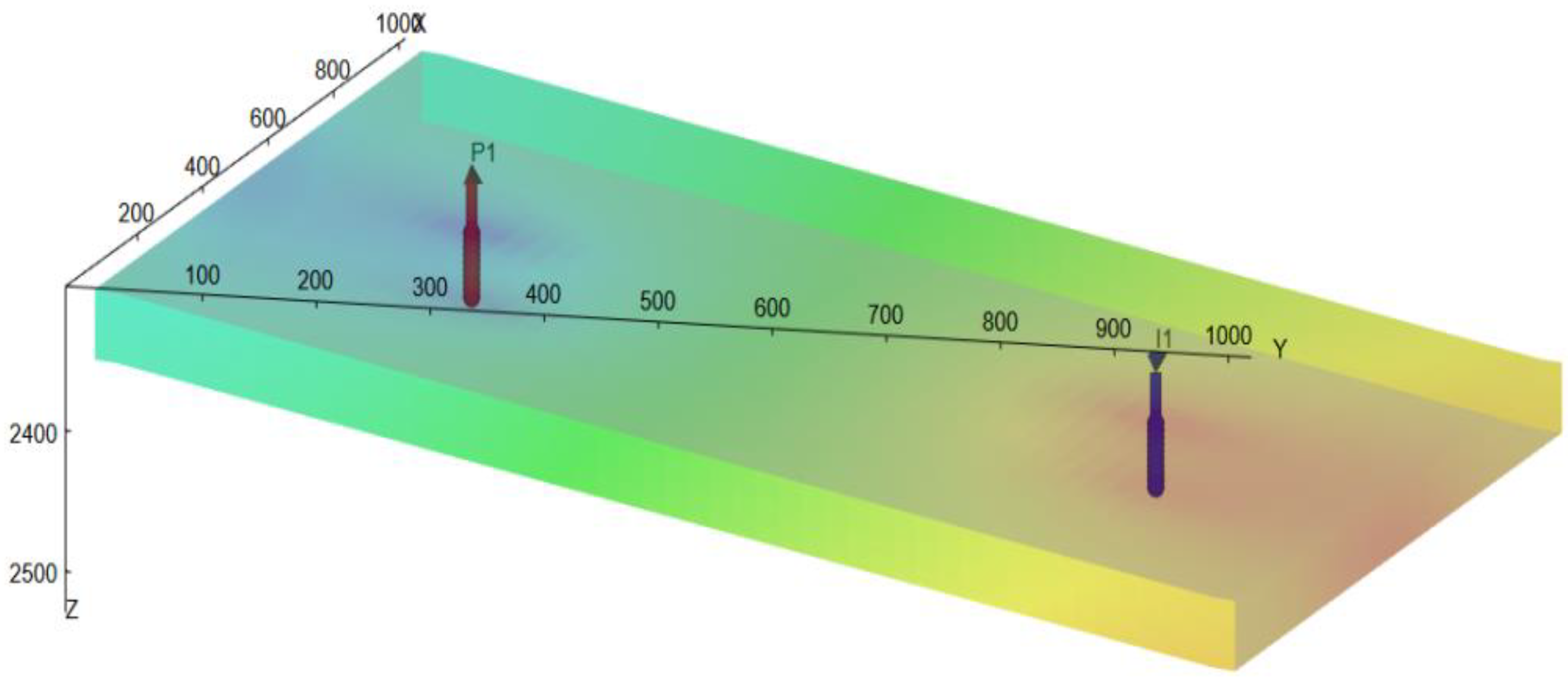
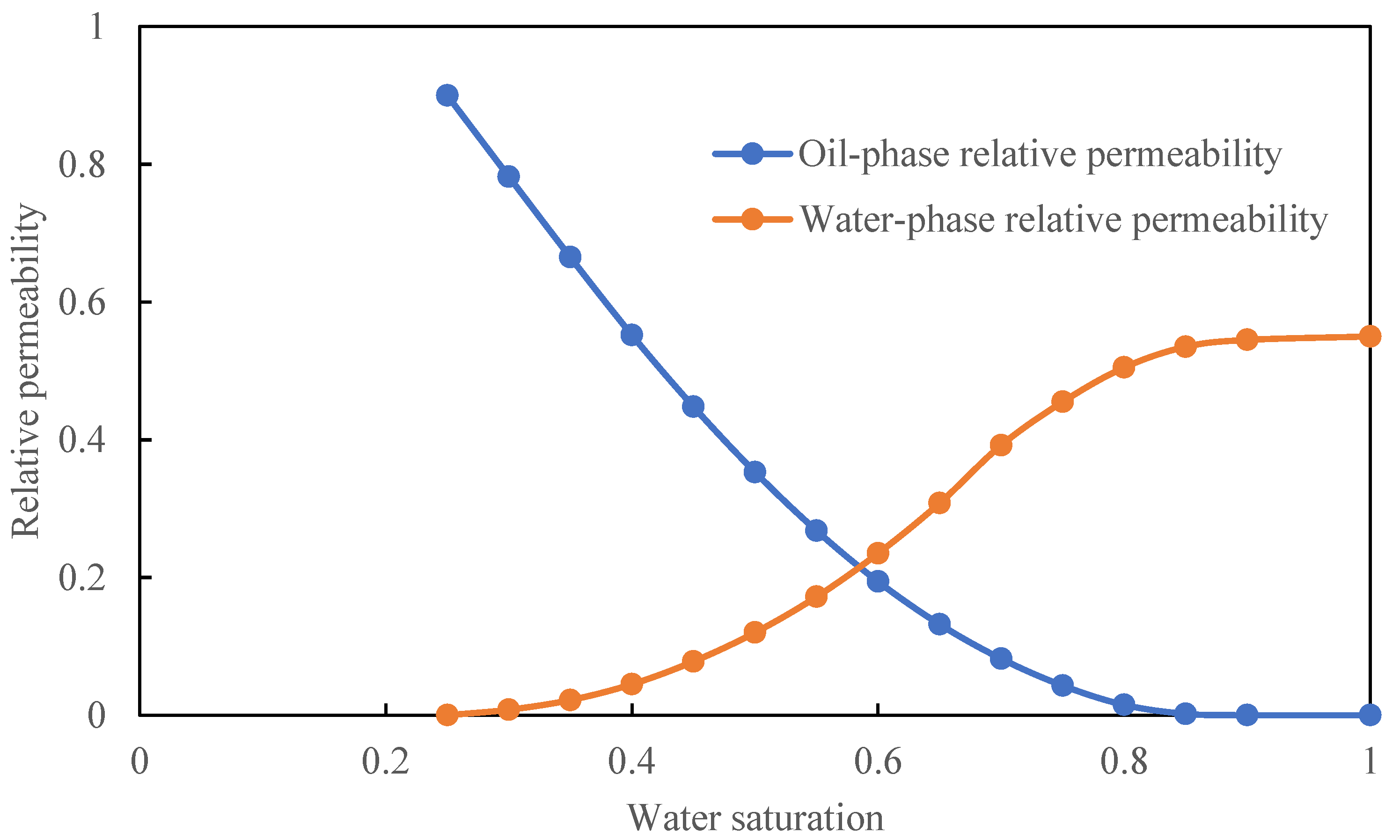
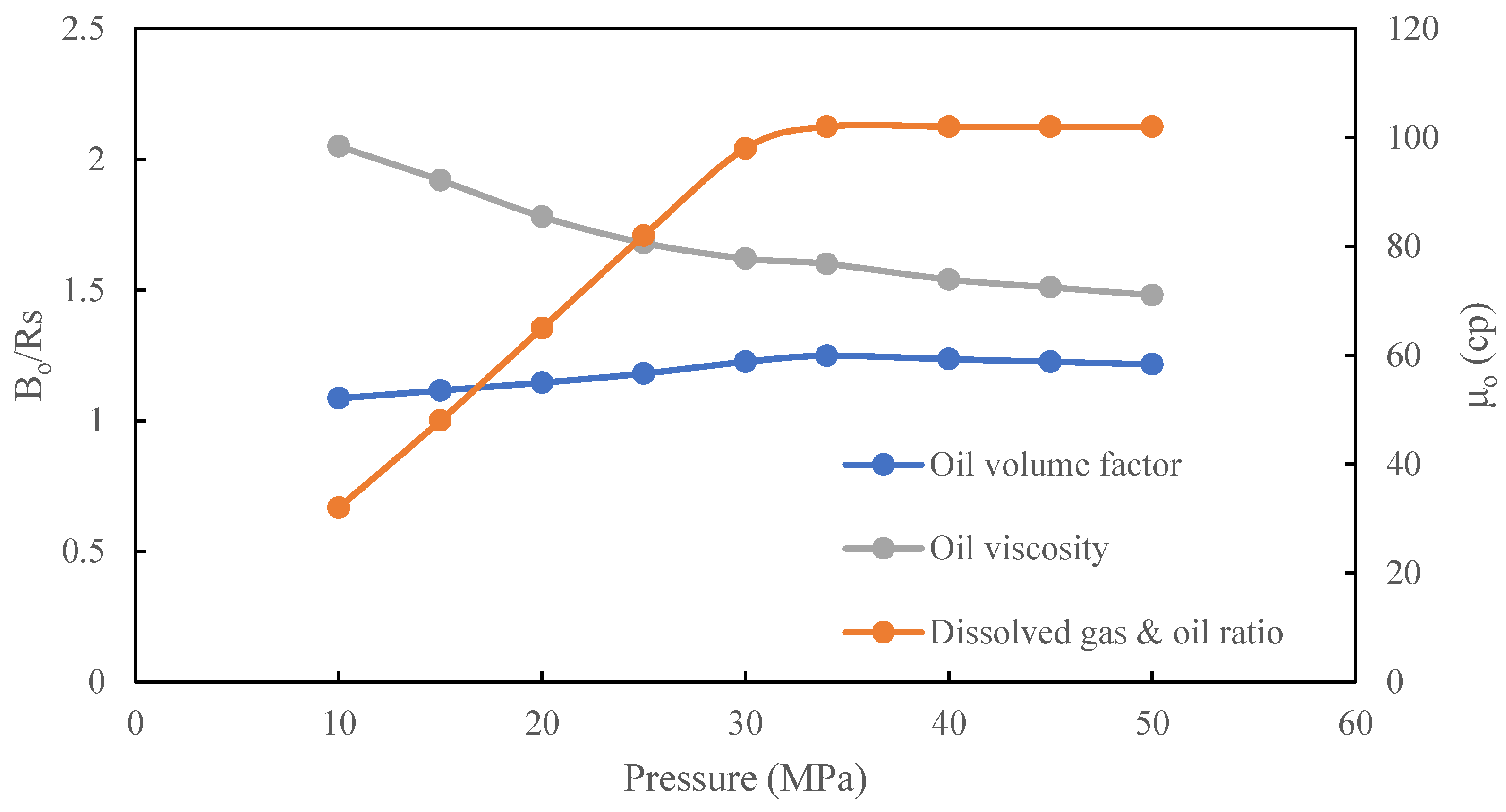
Based on the A-dip reservoir conceptual model (Figure 1), a reservoir numerical model was established. The model parameters were as follows: the length of the model unit was 1000 m, the width was 1000 m, the thickness was 50 m, and the effective thickness was 42.5 m; the x, y, and z directions of the model were 20 m, 20 m, and 5 m, respectively, with a total of 25,000 grids. Vertically, it was divided into 10 layers, and two vertical wells were perforated in each layer. Well I1 was a water injection well and well P1 was a production well. In order to ensure the convergence of reservoir simulation calculation, the relative permeability curve (Figure 2) and high-pressure physical parameters (Figure 3) were obtained from the measured data of the large-dip-angle reservoir A.

3. Adaptability Assessment

Based on the single-well group, the adaptability evaluation of one injection and one production was carried out, and the mechanism of water injection at structural lows and oil production at structural highs combined with high-pressure water injection is understood from the perspective of oil saturation and pressure. The effects of different reservoir dip angles, injection–production well spacing, injection intensity, permeability, and crude oil viscosity on the actual recovery rate were studied, and the main influencing factors of the development mode of water injection at structural lows and oil production at structural highs combined with high-pressure water injection were determined.

3.1. Reservoir Geological Factors

3.1.1. Reservoir Dip

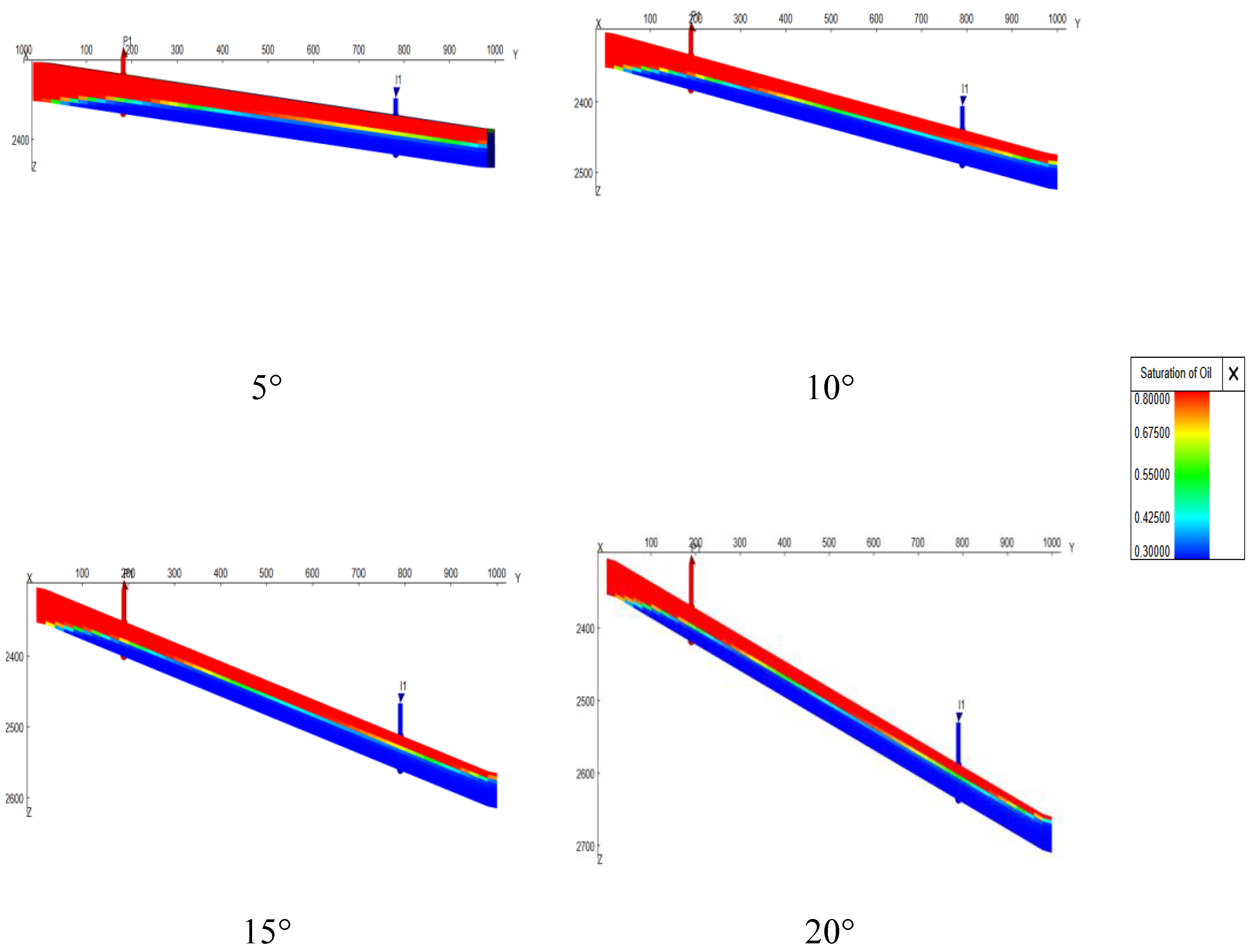
In large-dip-angle reservoirs, the influence of gravity on fluid flow is very significant. Due to the existence of the reservoir dip angle, crude oil and water will flow along the inclined direction of the reservoir under the action of gravity. This flow characteristic is significantly different from that of horizontal oil. In the development mode of water injection at structural lows and oil production at structural highs, after water injection enters the reservoir, water flows downward along the inclined direction of the reservoir while crude oil flows upward (Figure 4). This flow pattern will affect the efficiency and sweep range of water flooding.
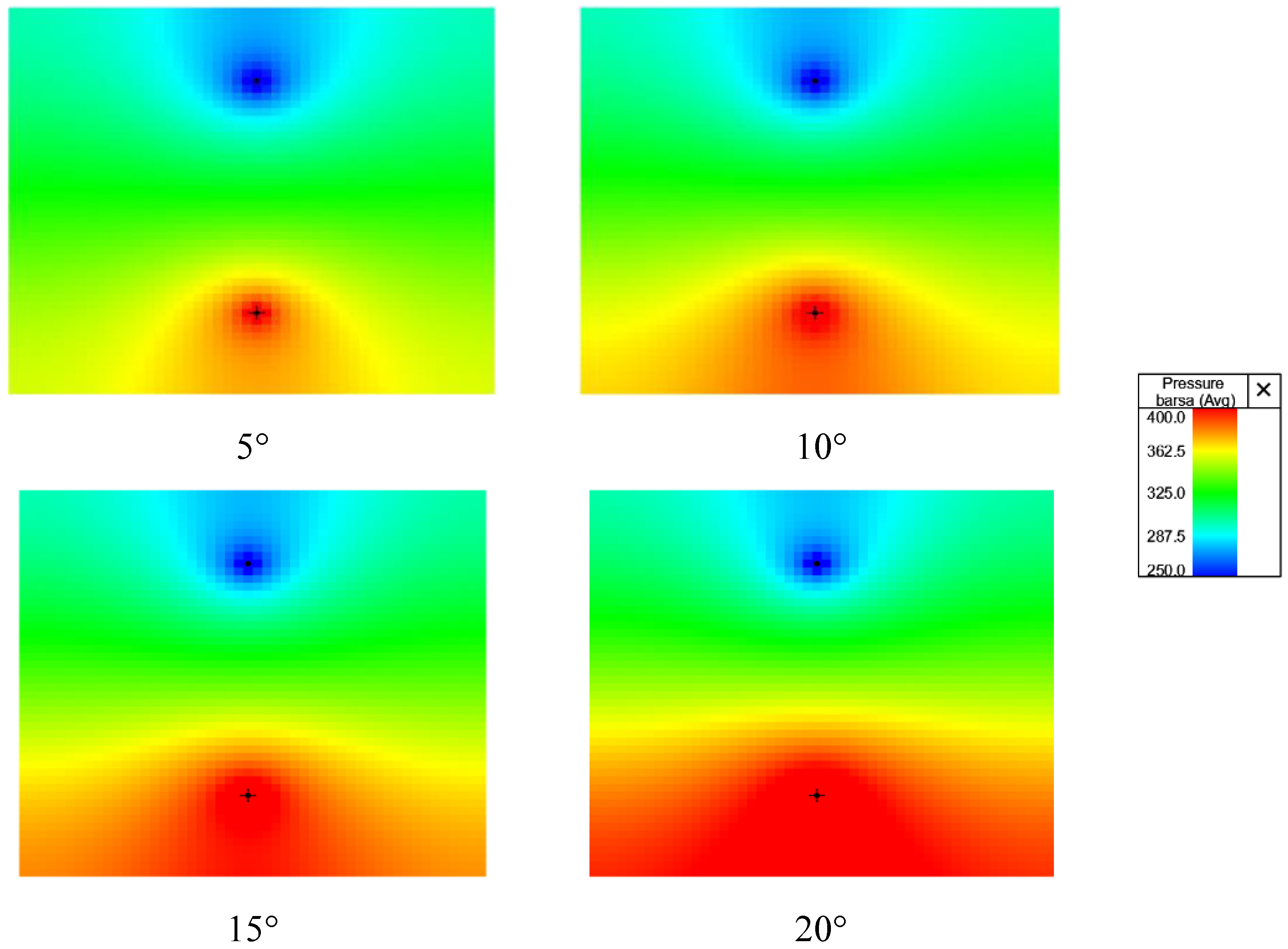
In order to understand the influence of reservoir dip angle on the recovery, the dip angles of water injection at structural lows and oil production at structural highs in the model reservoirs were set to 5°, 10°, 15°, and 20°, respectively. The injection–production conditions and geological parameters remained unchanged. The simulation production time was 10 years, and the final recovery degrees corresponding to each dip angle were 38.65%, 50.68%, 57.84%, and 63.13%, respectively. The results show that, with the increase in reservoir dip angle, under the action of gravity, the simulated high-pressure edge water formed by water injection supplemented the formation energy, resulting in an increase in recovery degree (Figure 5).

3.1.2. Reservoir Permeability

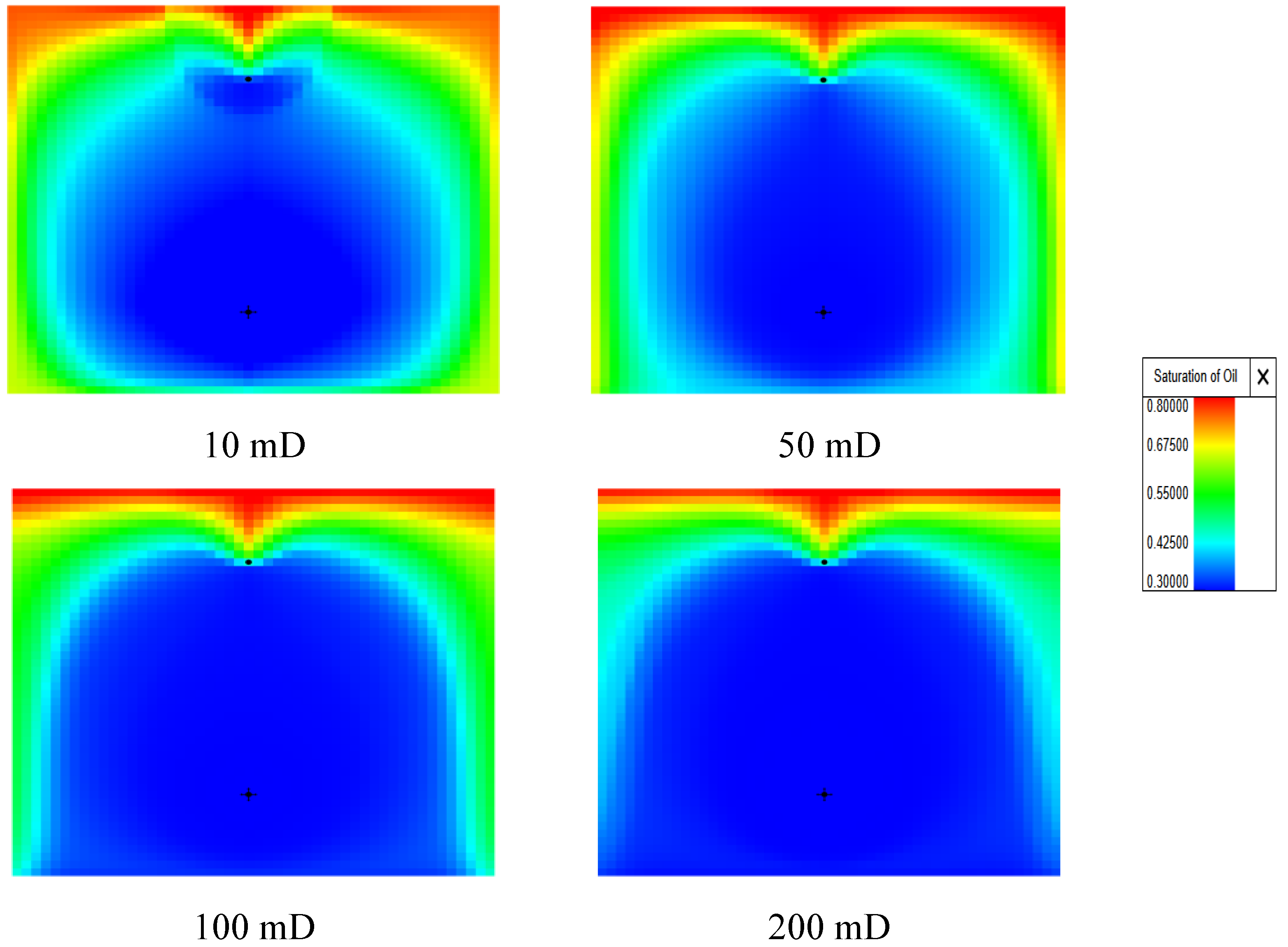
Permeability determines the flow path and velocity of fluid in the reservoir. In high-dip reservoirs, the change in permeability will affect the flow direction and velocity of water injection and crude oil. The high-permeability layer will be preferentially affected by water injection, while the low-permeability layer may become a residual oil accumulation area. In the development mode of water injection at structural lows and oil production at structural highs, the high-permeability layer may quickly form a water tongue, resulting in a decrease in the efficiency of water flooding, while the crude oil in the low-permeability layer is difficult to be effectively displaced (Figure 6).
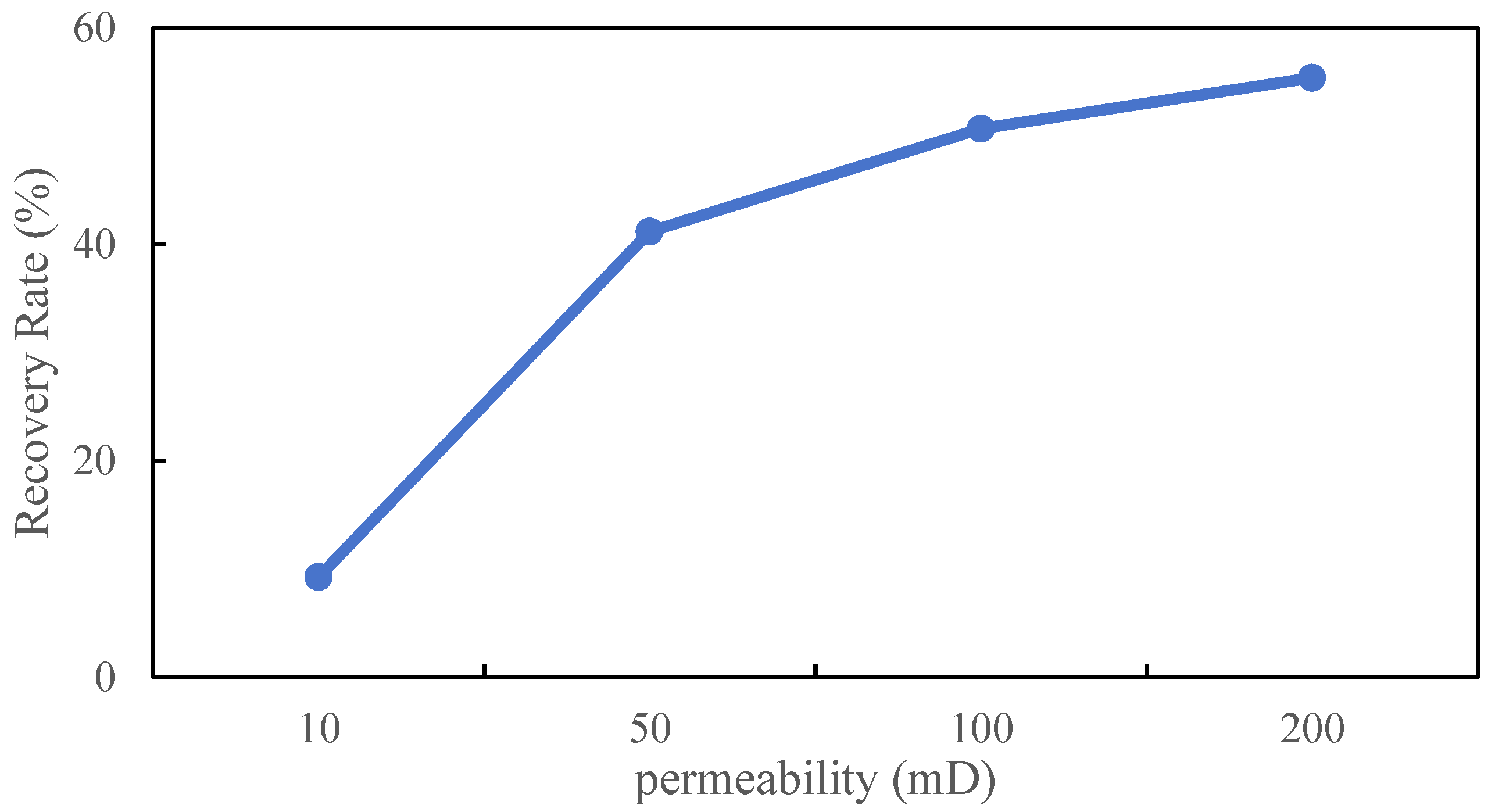
In order to understand the influence of reservoir permeability on the recovery degree of water injection at structural lows and oil production at structural highs combined with high-pressure water injection, the reservoir permeability was set to 10 mD, 50 mD, 100 mD, and 200 mD, respectively. The remaining mining conditions and geological parameters were the same. The simulation production time was 10 years, and the corresponding recovery degrees were 9.25%, 41.16%, 50.68%, and 55.38%, respectively. The results show that, with the increase in reservoir permeability, the seepage capacity of fluid increased gradually, which led to an increase in recovery degree (Figure 7).

3.1.3. Viscosity of Reservoir Crude Oil

The viscosity of crude oil determines the flow resistance of crude oil in the reservoir. The flow resistance of high-viscosity crude oil is large and the difficulty of water injection displacement is high, which leads to low water-injection sweep efficiency, and some oil layers may be difficult to be effectively displaced. Low-viscosity crude oil is relatively easy to displace, and the sweep efficiency of water injection is high, but the recovery rate may be limited due to fingering.
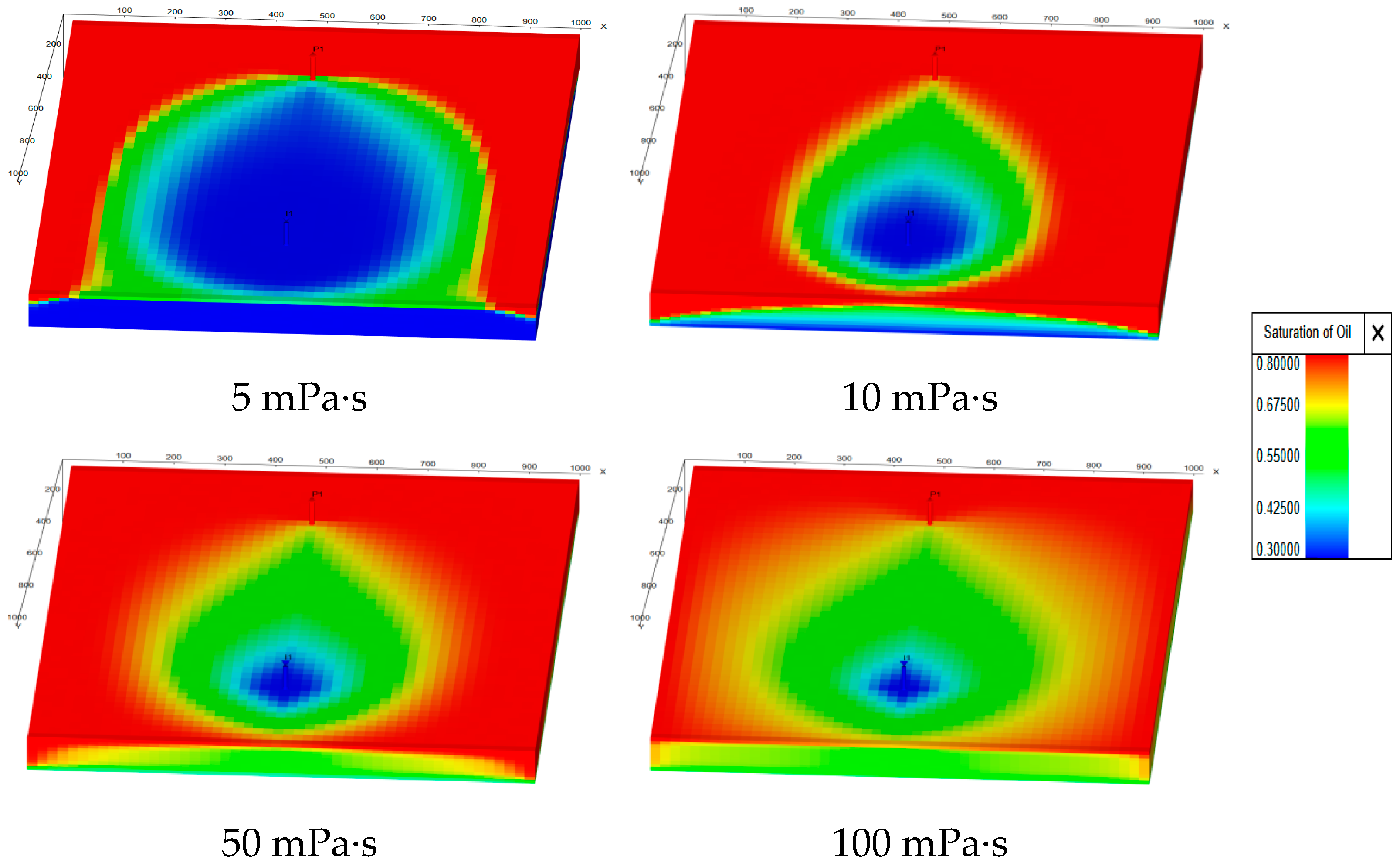
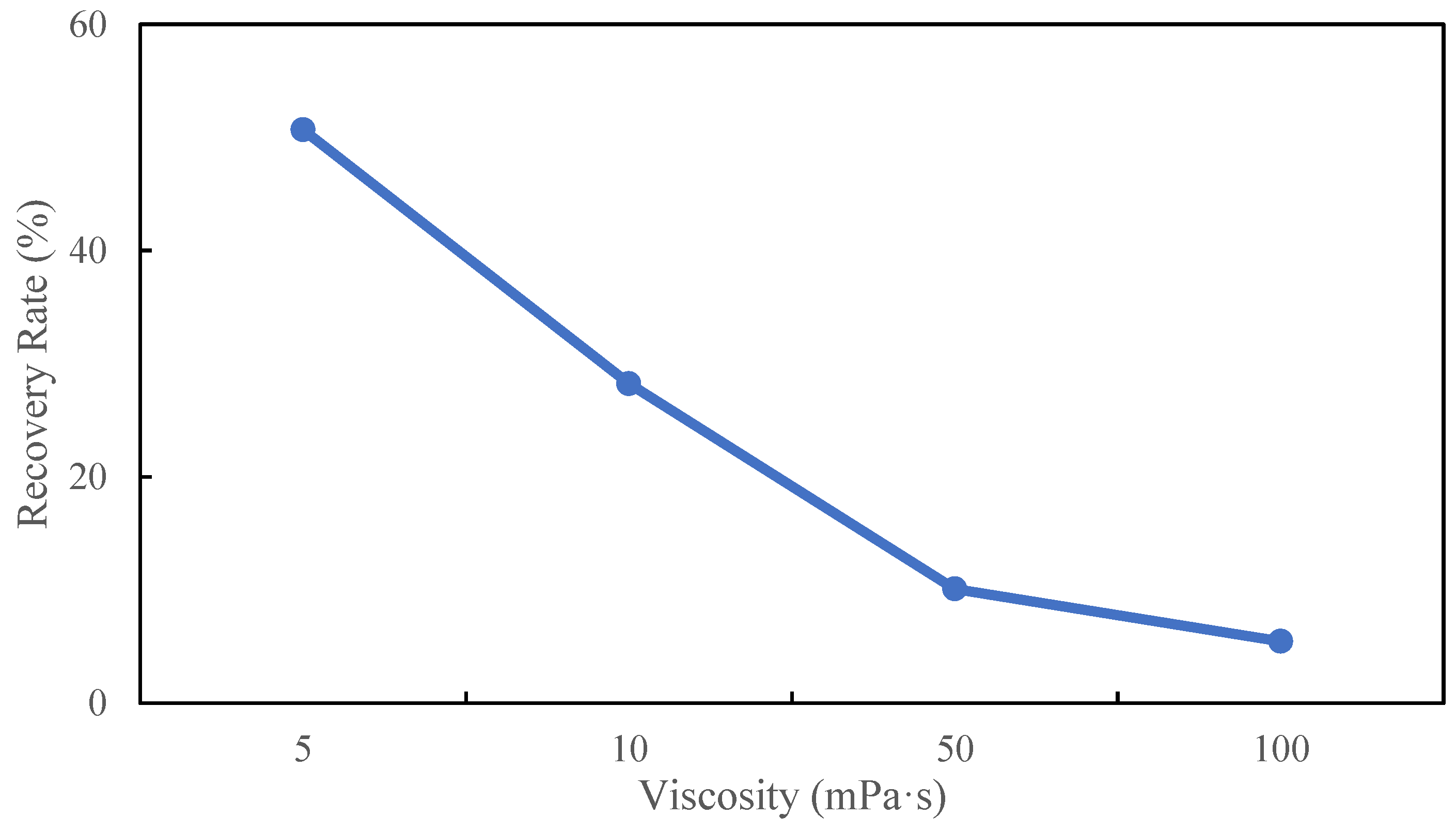
In order to understand the actual influence of reservoir crude oil viscosity on the recovery degree of water injection at structural lows and oil production at structural highs combined with high-pressure water injection, the crude oil viscosity was set to 5 mPa·s, 10 mPa·s, 50 mPa·s, and 100 mPa·s, respectively (Figure 8). The remaining mining conditions and geological parameters were the same. The simulated production time was 10 years, and the corresponding recovery degrees were 50.68%, 28.24%, 10.10%, and 5.47%, respectively (Figure 9). The results show that the lower the viscosity of the crude oil and the higher the relative permeability of oil and water, the higher the displacement efficiency and the higher the degree of recovery. As the viscosity of crude oil increases, the relative permeability of oil and water decreases, the displacement efficiency decreases, and the recovery degree gradually decreases.

3.2. Reservoir Engineering Factors

3.2.1. Injection–Production Well Spacing

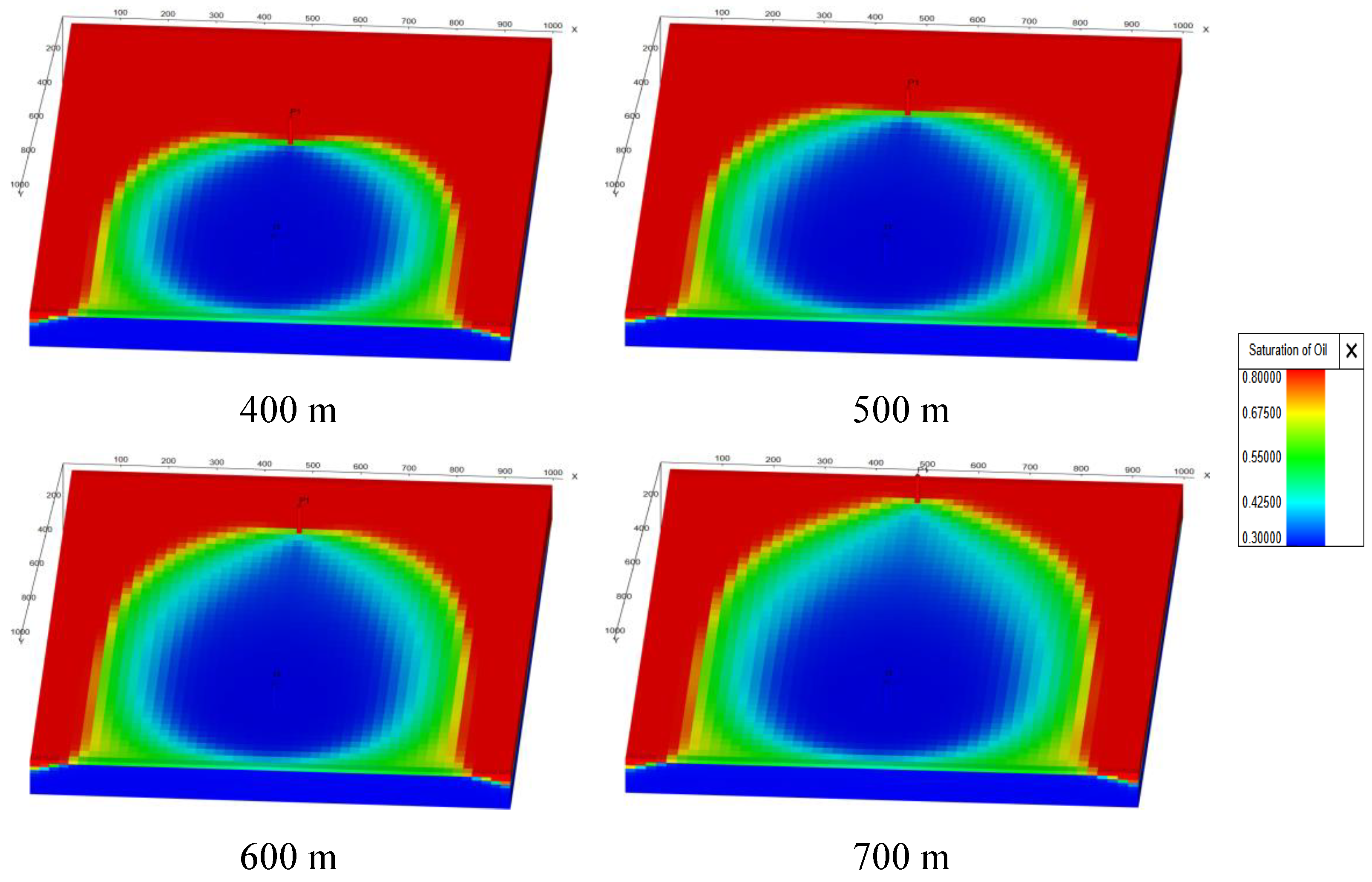
The distance between injection and production wells directly affects the range of water injection. In large-dip angle reservoirs, the water injection sweep range will be affected by both the injection–production well distance and the reservoir dip angle. When the injection–production well is too far away, water injection may not be able to effectively spread to the production well, resulting in some oil layers being difficult to be displaced. In high-dip reservoirs, water injection may flow rapidly along the inclined direction of the reservoir. If the injection–production well is too far away, the water tongue may have been formed before reaching the production well and the sweep area may be small, resulting in a decrease in water injection efficiency (Figure 10).
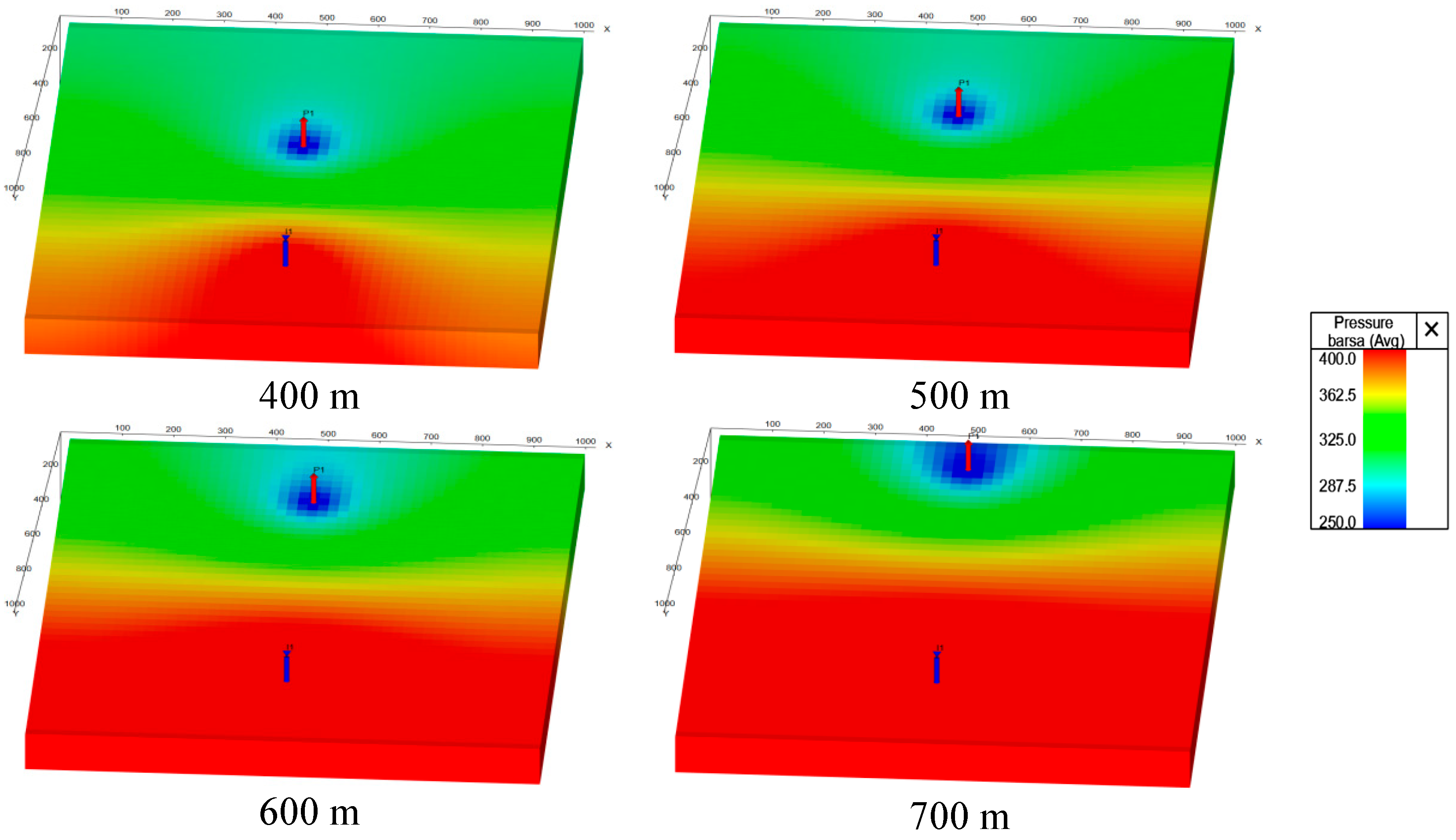
In order to understand the influence of the distance between the injection well and the production well on the recovery degree of the water injection at structural lows and oil production at structural highs combined with high-pressure water injection, the distance between the injection well and the production well in the model reservoir was set to be 400 m, 500 m, 600 m, and 700 m, respectively. The mining conditions and geological parameters were consistent. The simulated production time was 10 years, and the corresponding recovery degree was 41.23%, 46.46%, 50.68%, and 53.14%, respectively. The results show that, when the supplementary energy is sufficient, the recovery degree of the reservoir gradually increases due to the expansion of the water injection sweep range and the increase in the oil sweep area (Figure 11).

3.2.2. Water Injection Intensity of Injection Well

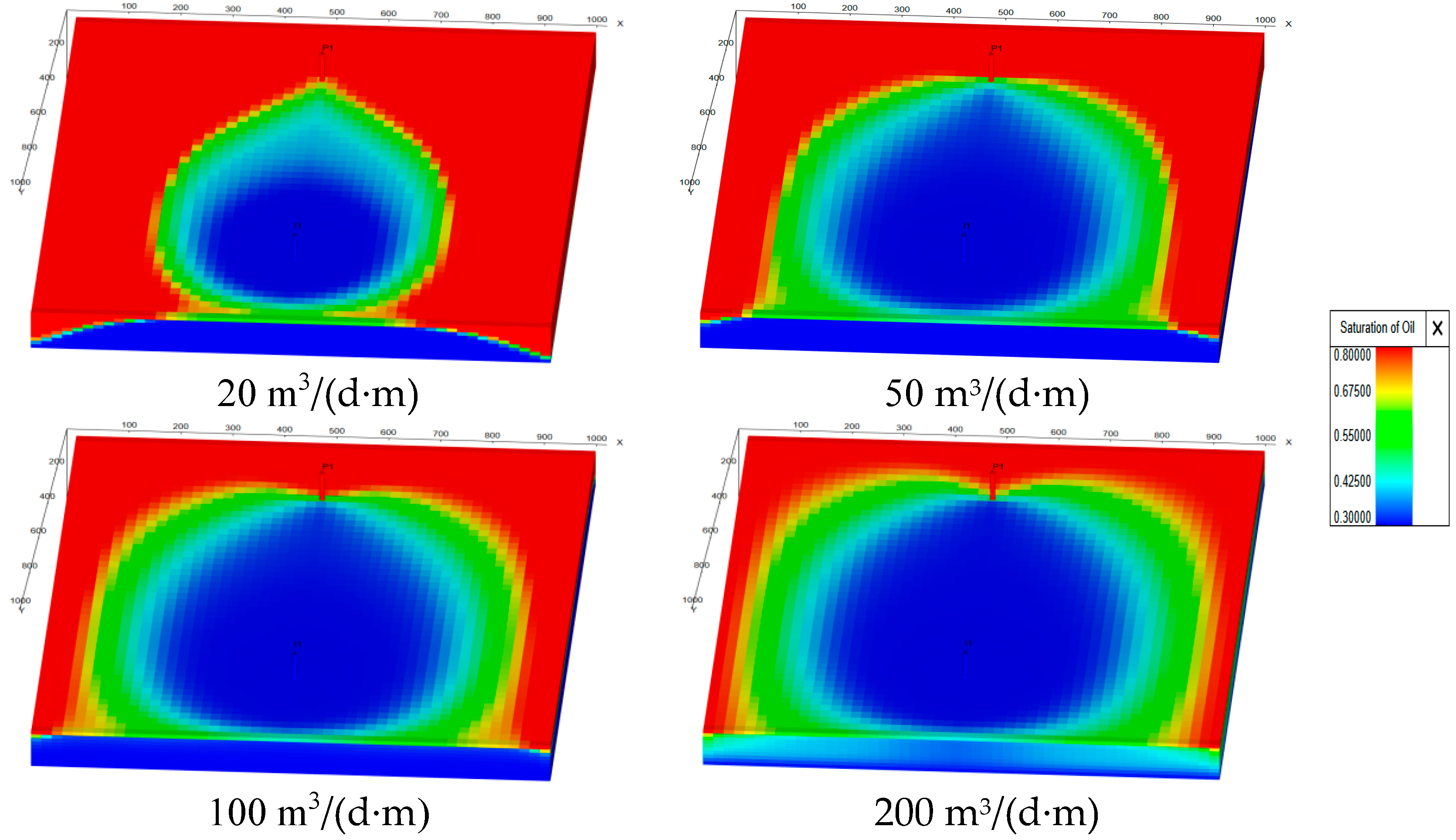
Water injection intensity refers to the daily water injection volume per unit for the effective thickness of the oil layer. In the development of water injections at structural lows and oil production at structural highs combined with high-pressure water injection, the importance of water injection intensity is reflected in many aspects. It directly affects the sweep efficiency of water injection and the state of fluid flow. Although high water-injection intensity can quickly increase the formation pressure, it is easy to cause the water tongue phenomenon and reduce the efficiency of water flooding. Low water-injection intensity can evenly affect the reservoir, but the supplementary pressure is slow. In this study, water channeling (water breakthrough instability) is quantitatively identified using two criteria: (1) a water cut exceeding 80% within less than 30% of the total simulation period (premature breakthrough); (2) a sharp increase in water cut slope > 5% per year) accompanied by a rapid decline in oil rate. Moderate water injection intensity can balance the two and optimize the development effect (Figure 12).
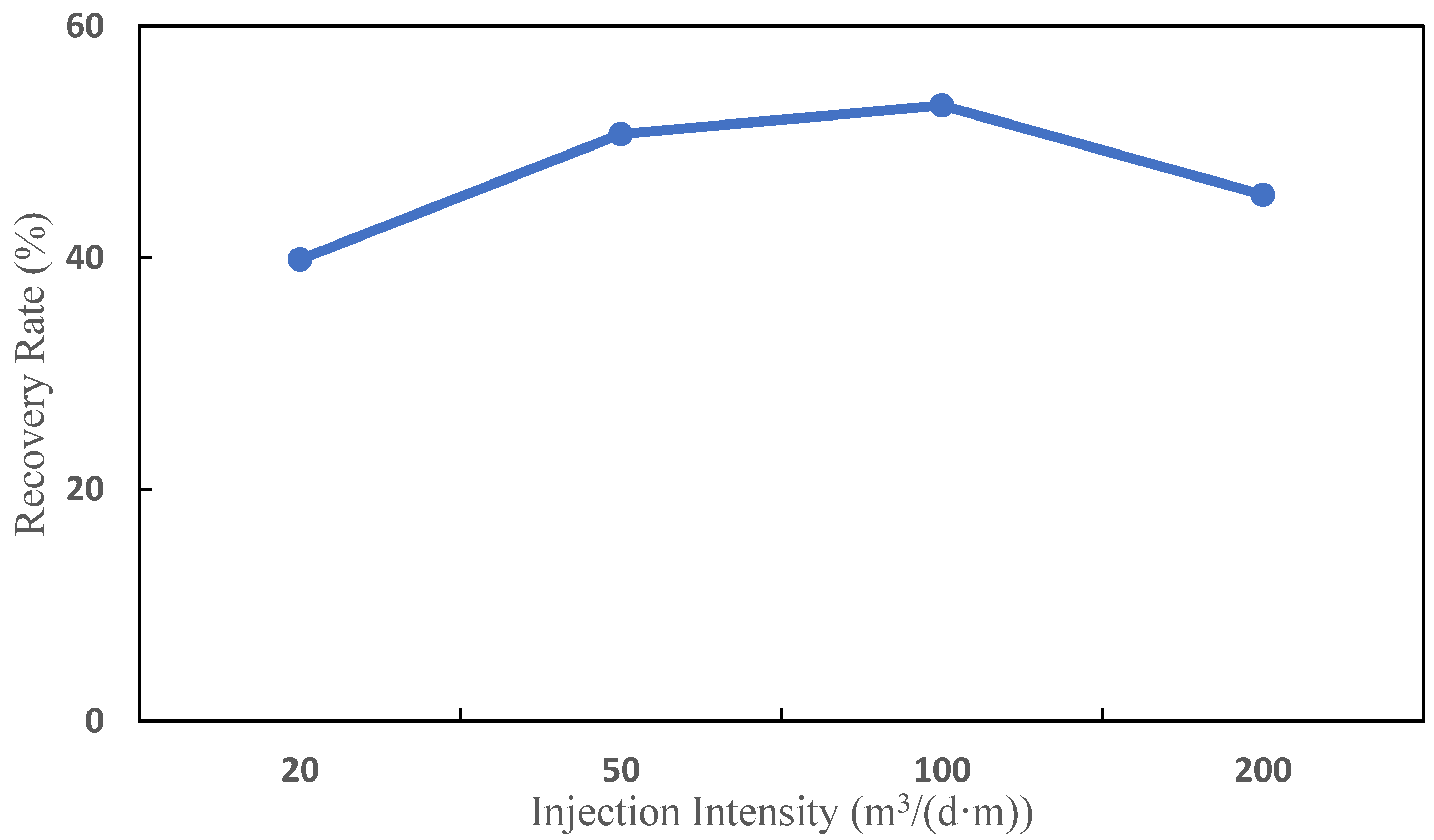
In order to understand the actual influence of the water injection intensity of injection wells on the recovery degree of water injection at structural lows and oil production at structural highs combined with high-pressure water injection, the water injection intensity was set to 20, 50, 100, and 200 m3/(day·m), respectively. The mining conditions and geological parameters were the same. The simulated production time was 10 years, and the corresponding recovery degrees were 39.85%, 50.68%, 53.15%, and 45.43%, respectively (Figure 13). The results show that, with the increase in water injection intensity, the formation energy is sufficient to increase the recovery degree. When the water injection intensity is too high, the oil-water flow balance is destroyed due to water fingering and water channeling, and the recovery degree decreases. When the water injection intensity exceeds a certain threshold, the pressure gradient near the injection well increases sharply, leading to unstable displacement fronts and water fingering. This behavior is consistent with high-pressure water injection observations in steeply dipping reservoirs.
To further clarify the quantitative boundary between “high-pressure” and conventional injection, the injection pressure ratio is defined as
R p = P i n j P i n i t
where P i n j is bottomhole injection pressure and P i n i t is initial reservoir pressure (34 MPa). In this study, R p = 1.32 1.47 , while conventional water injection in similar reservoirs typically operates at R p = 1.0 1.15 . Therefore, the applied pressure level is significantly above energy-maintenance injection, but remains below fracture pressure (55–60 MPa), representing matrix-dominated high-pressure injection rather than fracturing-assisted injection.
High-pressure water injection in this study is defined as maintaining the bottomhole injection pressure at 45–50 MPa, which is significantly higher than the conventional water injection pressure (typically 35–40 MPa in similar reservoirs) to effectively replenish formation energy and improve sweep efficiency, but deliberately controlled below the formation fracture pressure threshold. The fracture gradient for this sandstone reservoir is estimated to be approximately 0.018–0.022 MPa/m (based on typical values for medium-permeability dipping sandstone reservoirs). With an average reservoir thickness of 42.5–50 m and initial reservoir pressure of 34 MPa, the critical fracture initiation pressure at the injection well bottomhole is approximately 55–60 MPa. Therefore, the applied injection pressure range (45–50 MPa) ensures that the formation remains below the fracturing threshold throughout the simulation, preventing unintended fracture propagation or wellbore breakdown. Consequently, the maximum daily water injection volume at 200 m3/(d·m) intensity (approximately 8500–10,000 m3/d for the effective thickness) does not induce hydraulic fracturing; instead, it reflects enhanced injectivity under matrix-dominated flow conditions without artificial fracture creation.
For production control, oil wells are operated under a constant bottomhole flowing pressure of 20 MPa to maintain a stable drawdown while avoiding excessive gas liberation or coning acceleration. This strategy ensures balanced oil–water flow dynamics and maximizes the benefit of gravity-assisted displacement in the dipping structure.

4. Analysis of Main Controlling Factors

4.1. Analytic Hierarchy Process

The analytic hierarchy process is a multi-condition weight decision analysis method, which can simplify complex decision-making problems. It gradually decomposes and transforms the semi-qualitative and semi-quantitative fuzzy problems restricted by multiple factors into quantitative problems by conducting expert evaluation between each two factors, determining the weight of each factor, and comparing, judging, and sorting the advantages and disadvantages of the scheme results. The prediction of production capacity by analytic hierarchy process requires four steps: establishing the database of yield range of each factor, constructing the judgment matrix, calculating the weight of yield-influencing factors and the final consistency test.
(1)
Establish the yield range database of each factor
The data are derived from the relationship between each parameter and the degree of recovery in 20+ simulation cases.
(2)
Construct judgment matrix
In order to ensure that the construction process of the judgment matrix is rigorous and repeatable, this study invited eight experts (three university professors in reservoir engineering, three senior oilfield development engineers from operating companies, and two researchers from petroleum research institutes, all with more than 10 years of experience in reservoir simulation, waterflood optimization, and development strategy evaluation) to use the Delphi method for two rounds of anonymous scoring. The first round of experts independently scored the importance of pairwise comparison of each parameter, using the Saaty 1–9 scale method (1 indicates equal importance, 3 indicates medium importance, 5 indicates obvious importance, 7 indicates strong importance, 9 indicates extremely important; 2, 4, 6, 8 are intermediate values; the reciprocal indicates opposite importance). In the second round, the results of the first round were anonymously fed back to the experts, allowing for the score to be adjusted to move towards consensus.
All expert ratings were aggregated using the geometric mean method to reduce the influence of extreme values and maintain the reciprocity of the judgment matrix. Subsequently, the geometric mean was rounded to the nearest 1–9 scale integer (or its reciprocal) to meet the requirements of Saaty’s classical scale. This aggregation method can effectively reduce individual subjective bias and improve the credibility of the transformation from subjective evaluation to objective weight.
(3)
Weight calculation of yield influencing factors
Calculate the maximum eigenvalue λ max and eigenvector of the judgment matrix W .
A W = λ m a x W
In the above equations, the maximum eigenvalue λ max solution method involves using the numerical method to solve the det λ I A = 0 roots of the matrix A characteristic formula. The multiple roots are the eigenvalues of matrix A , and the root with the largest value is the maximum eigenvalue of matrix A ; i is the unit matrix with the same dimension as matrix A , and A is the judgment matrix of each factor.

4.2. Analysis Results

Table 1 shows the recovery degree corresponding to the injection–production and physical parameters of all the adaptability evaluations involved in this time. We planned to use the analytic hierarchy process to analyze the main controlling factors of high-pressure water injection in the inclined reservoir.
Firstly, the pairwise comparison judgment matrix (Table 2) of each factor was constructed.
Corresponding to the judgment matrix, the correlation degree of each factor to the recovery degree is obtained, as shown in Table 3.
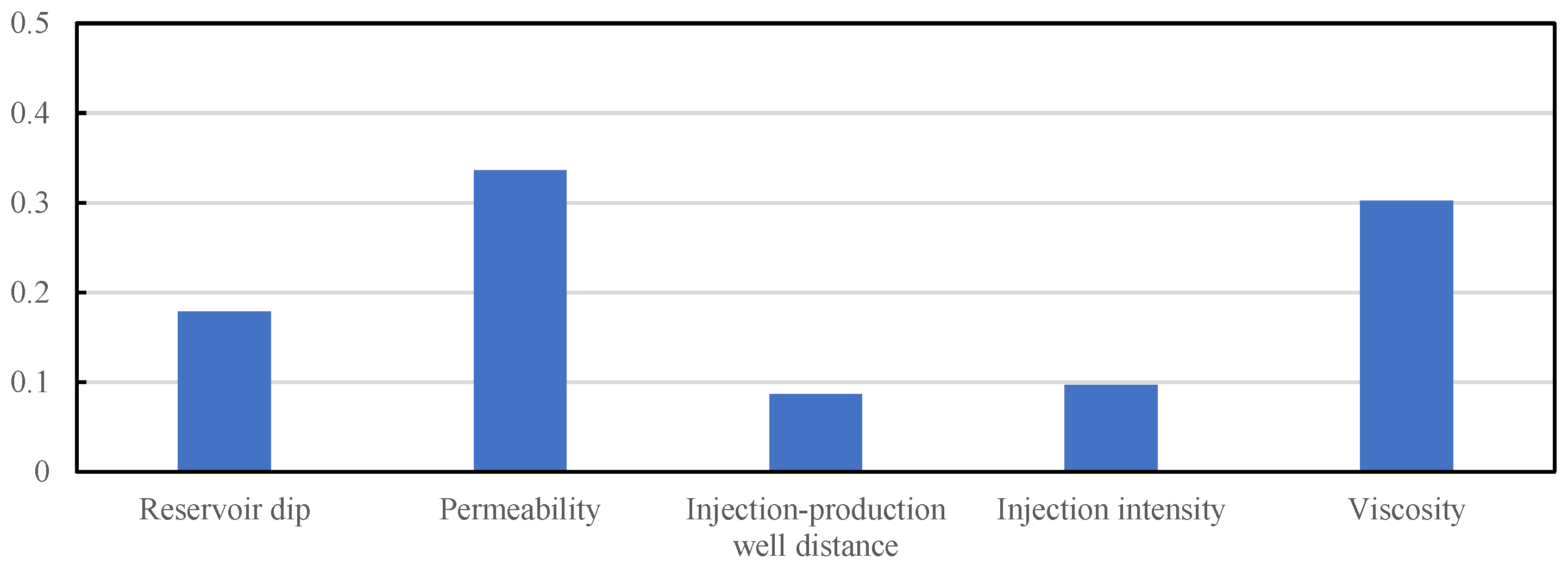
According to the calculation results in Table 1, Table 2 and Table 3, the influence of various factors on the recovery degree of water injection at structural lows, and oil production at structural highs combined with high-pressure water injection is finally obtained: permeability > crude oil viscosity > reservoir dip angle > water injection intensity > injection–production well spacing (Figure 14). Permeability plays a major role, and high permeability makes water injection quickly spread to the reservoir, but it is also easy to form the phenomenon of tongue advance. Although the low permeability limits the spread range, the water injection is more uniform. The viscosity of crude oil affects displacement efficiency. High viscosity needs to add viscosity reduction measures to achieve the effect of increasing production. Low-viscosity water flow is faster and easier to tongue in. The dip angle of the reservoir affects the flow direction of the fluid. The large dip angle is easy to tongue in, and the small dip angle is more uniform. The water injection intensity affects the range and efficiency. The high water-injection intensity is easy to water tongue, and the low water-injection intensity is slow. The injection–production well spacing affects the spread range: either too large or too small is not conducive to recovery. These factors affect each other, and the current results need to be comprehensively optimized to improve oil recovery and economic benefits.

5. Development Theory Chart

After determining the influence weight of each factor on the recovery degree, in order to understand the distribution and interaction of key factors such as permeability, injection–production well spacing, and water injection intensity, a development theory chart based on the reservoir condition was established to help us to accurately locate the key areas of water injection development and optimize the water injection strategy so as to improve the recovery rate and economic benefits of water injection in the low part of the structure and oil production in the high part of the structure combined with high-pressure water injection development.
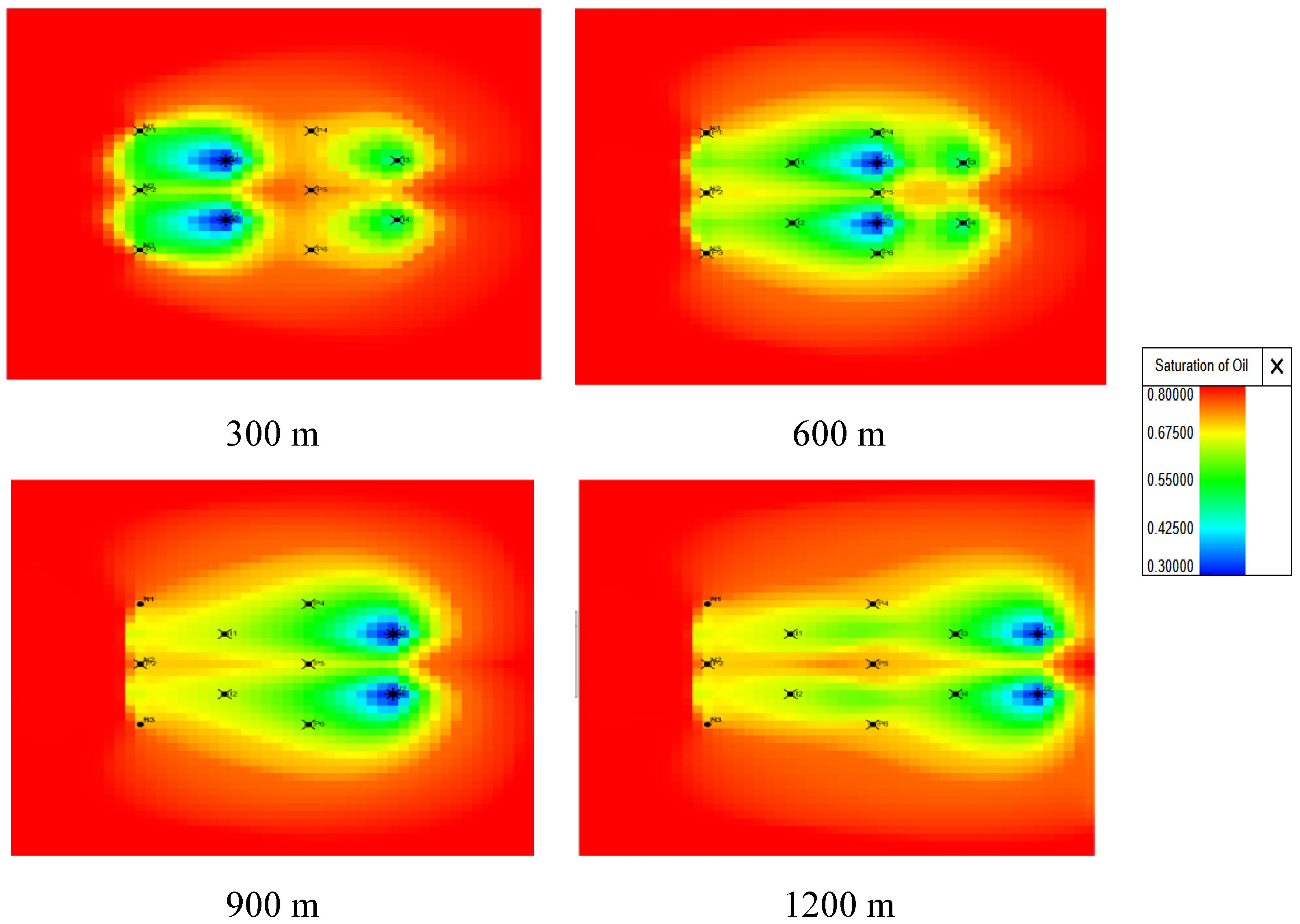
Combined with the actual block well pattern shape and injection–production parameters, the conventional five-point well pattern mining was simulated, and the model grid DX and DY were widened to 40 m to ensure that the remaining matrix physical properties and conditions remained unchanged. Simulated mining and simulated calculation of single well water decreased to 80% when the corresponding model recovered. Adjust the well spacing of the well pattern, compare the effects of different well spacings on the recovery rate, and set the injection–production well distances of 300 m, 600 m, 900 m, and 1200 m, respectively, and calculate the final recovery rates: 11.86%, 15.32%, 16.19%, and 16.21%, respectively. The results show that properly widening the well spacing can optimize the pressure distribution and fluid flow path (Figure 15), thereby improving the recovery rate.
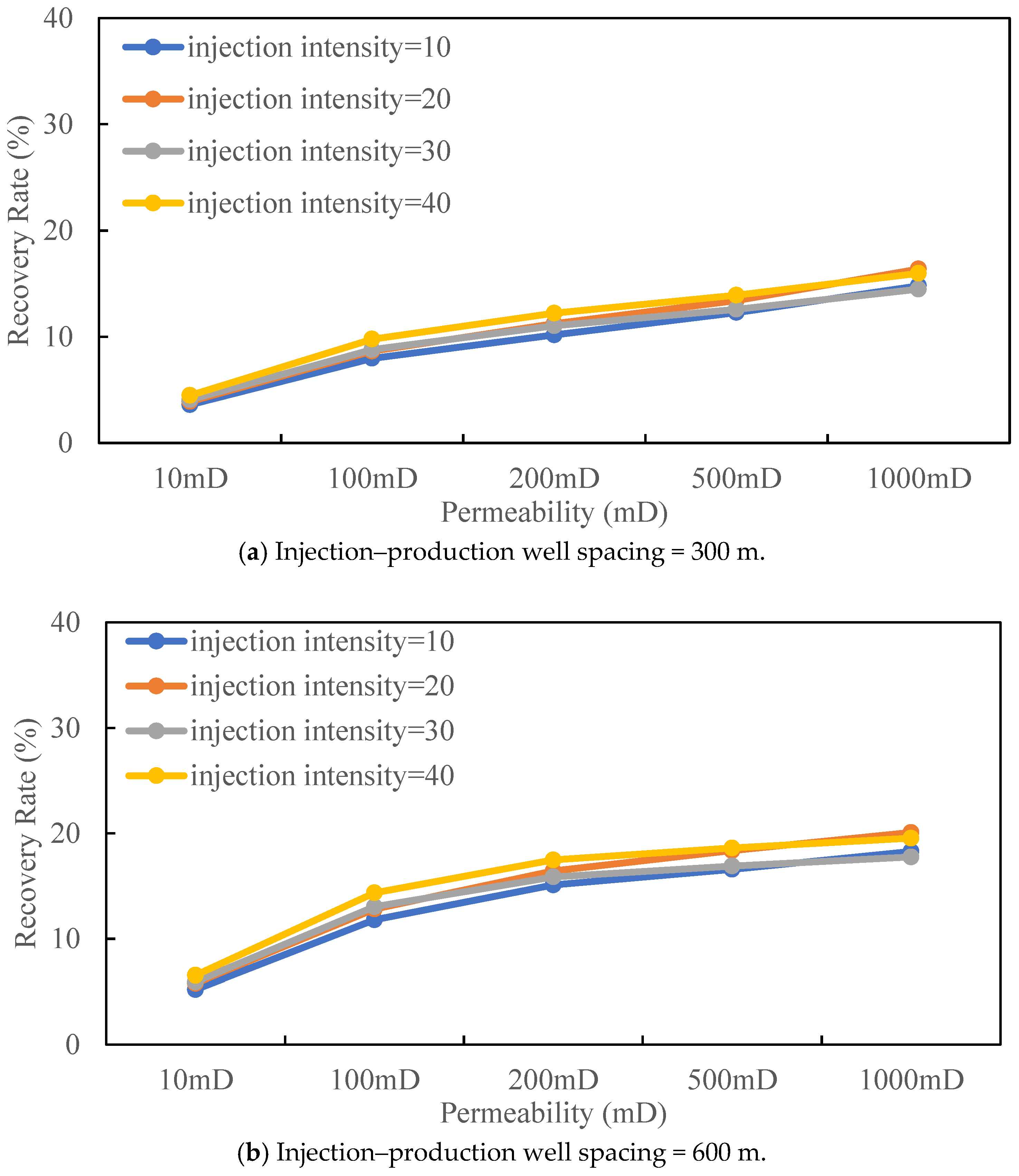
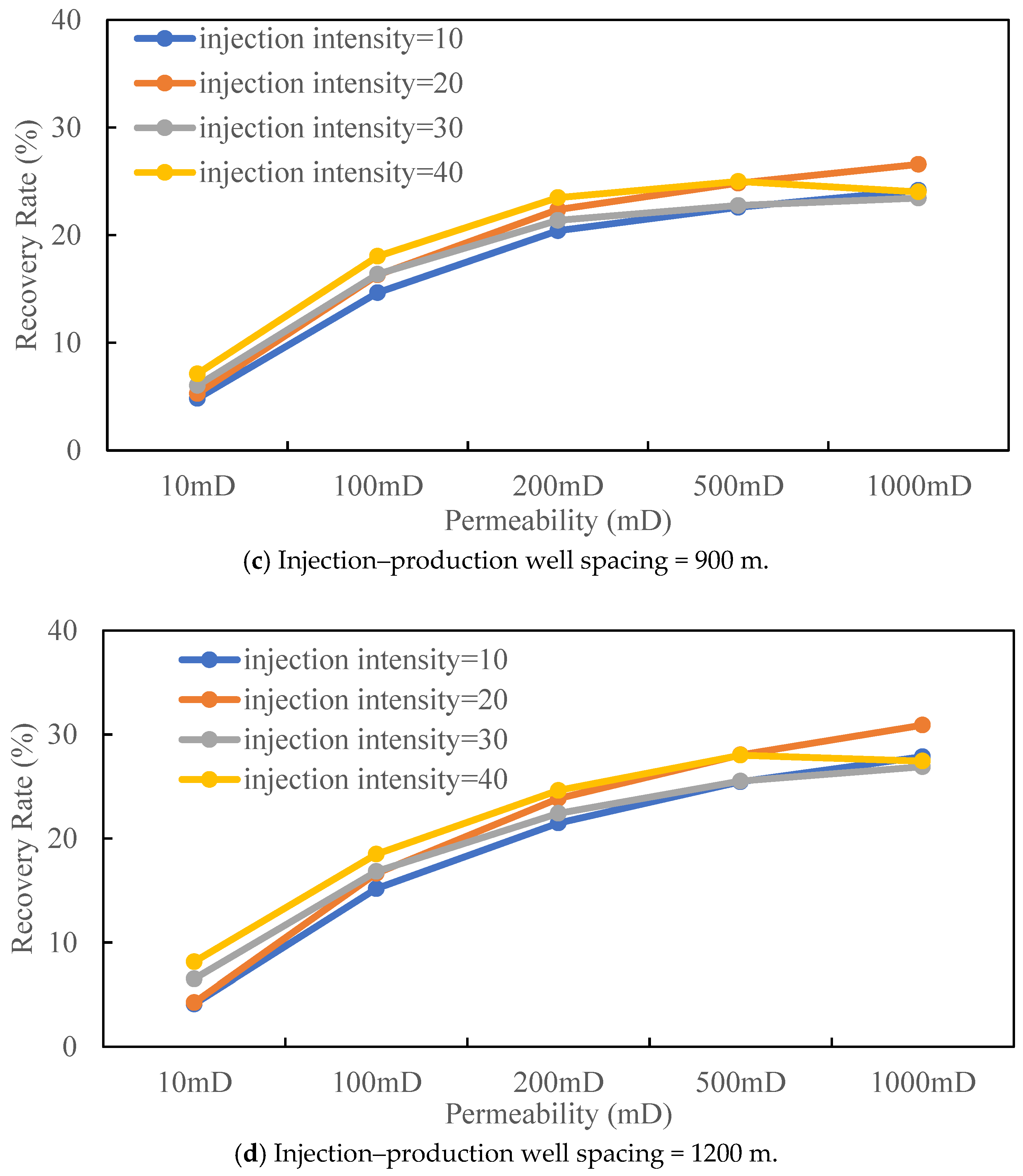
Combined with the above conclusions, in order to form the theoretical chart of conventional five-point well pattern development with water injection at structural lows and oil production at structural highs combined with high-pressure water injection, the numerical model was adjusted, and the numerical simulation models of different permeability (10 mD~1000 mD) and different water injection intensity (10–40) were set up under different injection–production well spacing (300–1200) and the recovery rate was calculated, respectively. The results show that there is interaction among permeability, water injection intensity, and injection–production well spacing. High permeability can improve oil recovery, but it needs to be combined with appropriate water injection intensity and injection–production well spacing to achieve the best results (Figure 16).

6. Conclusions

In this study, numerical simulation and data-driven AHP were used to evaluate the adaptability of “water injection at structural lows and oil production at structural highs” with high-pressure water injection in large-dip-angle reservoirs. The results show that a higher dip angle, permeability, well spacing, and moderate injection intensity improve recovery, while excessive intensity or high viscosity reduces efficiency due to fingering. AHP ranks permeability (0.42) > viscosity (0.28) > dip angle (0.15) > intensity (0.09) > spacing (0.06) as controlling factors. The theoretical charts (Figure 14) guide optimal injection intensity selection across permeability (10–1000 mD) and spacing (300–1200 m). Sensitivity analysis indicates the following: In reservoirs with a dip angle ≥ 15° and permeability ≥ 100 mD, increasing well spacing (600–1200 m) most significantly optimizes pressure field distribution, leveraging gravity segregation for uniform propagation, reduced local over-pressurization, and delayed breakthrough. In low-dip (≤10°) or low-permeability (<50 mD) cases, wider spacing offers limited benefit and may impair sweep efficiency.
Recommendations include controlling intensity at 50–100 m3/(d·m) in high-permeability reservoirs and applying viscosity reduction for oils > 20 mPa·s. These charts and guidelines provide practical optimization for similar dipping reservoirs.

Author Contributions

Conceptualization, S.W. and Z.L.; methodology, X.Y.; software, H.S.; validation, X.Y. and H.S.; writing—original draft preparation, H.S.; writing—review and editing, X.Y.; visualization, X.Y.; supervision, S.W.; project administration, S.W.; funding acquisition, S.W. All authors have read and agreed to the published version of the manuscript.

Funding

This work was supported by the Joint Fund for Enterprise Innovation and Development of NSFC (Grant No. U24B2037) and the Fund for General Program of NSFC (Grant No. 52374051).

Data Availability Statement

All data generated or analyzed during this study are included in this published article.

Conflicts of Interest

Author Xiutian Yao was employed by the company Sinopec Shengli Oilfield Company. The remaining authors declare that the research was conducted in the absence of any commercial or financial relationships that could be construed as a potential conflict of interest.

References

  1. Sun, H.; Wang, Y.; Jia, L.; Lin, Z.; Yu, H. Theoretical and numerical methods for predicting the structural stiffness of unbonded flexible riser for deep-sea mining under axial tension and internal pressure. Ocean Eng. 2024, 310, 118672. [Google Scholar] [CrossRef]
  2. Wang, Y.; Li, X.; Ma, Q.; Wang, J.; Song, X.; Jin, R. The wave slamming dynamic characteristics of the installation of subsea manifold during Splash zone considering air cushion effect. Ocean Eng. 2025, 319, 120201. [Google Scholar] [CrossRef]
  3. Wen, P.; Wang, S.; Li, J.; Dong, K.; Ren, Z.; Li, Y.; Qu, R.; Li, T. Multiobjective optimization of a pressure maintaining ball valve structure based on RSM and NSGA-II. Sci. Rep. 2025, 15, 21342. [Google Scholar] [CrossRef] [PubMed]
  4. Ge, L.; Liu, Z.; Liu, S.; Xiao, X.; Yuan, Y.; Yin, Z. Electromagnetic tomography for multiphase flow in the downhole annulus. IEEE Trans. Instrum. Meas. 2025, 74, 4504613. [Google Scholar] [CrossRef]
  5. Craig, F.C. The Reservoir Engineering Aspects of Waterflooding; Monograph Series; Society of Petroleum Engineers of AIME: Richardson, TX, USA, 1971. [Google Scholar]
  6. Lake, L.W.; Venuto, P.B. A niche for enhanced oil recovery in the 1990s. Oil Gas J. 1990, 88, 62–67. [Google Scholar]
  7. Dake, L.P. Fundamentals of Reservoir Engineering; Elsevier: Amsterdam, The Netherlands, 1983. [Google Scholar]
  8. Hagoort, J. Oil recovery by gravity drainage. SPE J. 1980, 20, 139–150. [Google Scholar] [CrossRef]
  9. Obi, C.; Hasan, A.; Rahman, M.; Banerjee, D. Multiphase flow challenges in drilling, completions, and injection: Part 1. Petroleum 2024, 10, 557–569. [Google Scholar] [CrossRef]
  10. de Loubens, R.; Vaillant, G.; Regaieg, M.; Yang, J.; Moncorgé, A.; Fabbri, C.; Darche, G. Numerical modeling of unstable waterfloods and tertiary polymer floods into highly viscous oils. SPE J. 2018, 23, 1909–1928. [Google Scholar] [CrossRef]
  11. Aljuboori, F.A.; Lee, J.H.; Elraies, K.A.; Stephen, K.D. Gravity drainage mechanism in naturally fractured carbonate reservoirs; review and application. Energies 2019, 12, 3699. [Google Scholar] [CrossRef]
  12. Alsaleh, A.; Muggeridge, A.; Blunt, M. Why gravity improves waterflood recovery in oil-wet and mixed-wet reservoirs. Geoenergy Sci. Eng. 2024, 243, 213375. [Google Scholar] [CrossRef]
  13. Buriro, M.A.; Wei, M.; Bai, B.; Yao, Y. Advances in smart water flooding: A comprehensive study on the interplay of ions, salinity in carbonate reservoirs. J. Mol. Liq. 2023, 390, 123140. [Google Scholar] [CrossRef]
  14. Gomaa, S.; Soliman, A.A.; Mansour, M.; El Salamony, F.A.; Salem, K.G. Machine learning models for estimating the overall oil recovery of waterflooding operations in heterogenous reservoirs. Sci. Rep. 2025, 15, 14619. [Google Scholar] [CrossRef] [PubMed]
  15. Geng, W.; Yuan, L.; Ma, X. Gravity stability mechanism and prediction model for natural gas injection flooding in multi-layered, heterogeneous reservoirs with high dip angles. In 2024 6th International Conference on Intelligent Control, Measurement and Signal Processing (ICMSP); IEEE: New York, NY, USA, 2024; pp. 273–280. [Google Scholar]
  16. Kong, D.; Lian, P.; Zheng, R.; Li, Y. Performance demonstration of gas-assisted gravity drainage in a heterogeneous reservoir using a 3D scaled model. RSC Adv. 2021, 11, 30610–30622. [Google Scholar] [CrossRef] [PubMed]
  17. Fu, H.; Bai, Z.; Guo, H.; Yang, K.; Guo, C.; Liu, M.; Liang, L.; Song, K. Remaining oil distribution law and development potential analysis after polymer flooding based on reservoir architecture in Daqing Oilfield, China. Polymers 2023, 15, 2137. [Google Scholar] [CrossRef] [PubMed]
  18. Xiao, K.; Li, X.; Li, X. Physical Simulation of Gas Injection Mechanism for High Dip Reservoir. Processes 2023, 11, 2111. [Google Scholar] [CrossRef]
  19. Shedid, S.A. Influences of fracture orientation on oil recovery by water and polymer flooding processes: An experimental approach. J. Pet. Sci. Eng. 2006, 50, 285–292. [Google Scholar] [CrossRef]
  20. Xue, L.; Liu, P.; Zhang, Y. Status and prospect of improved oil recovery technology of high water cut reservoirs. Water 2023, 15, 1342. [Google Scholar] [CrossRef]
  21. Asadollahi, M. Waterflooding Optimization for Improved Reservoir Management. Ph.D. Thesis, Norwegian University of Science and Technology (NTNU), Department of Petroleum Engineering and Applied Geophysics, Trondheim, Norway, 2012. [Google Scholar]
Figure 1. Conceptual model illustration.
Processes 14 01000 g001
Figure 2. Permeability saturation curve.
Processes 14 01000 g002
Figure 3. Change in high-pressure physical properties of fluid.
Processes 14 01000 g003
Figure 4. Final change in oil saturation in different dip angles.
Processes 14 01000 g004
Figure 5. Final distribution of pressure at different inclination angles.
Processes 14 01000 g005
Figure 6. Final changes in oil saturation in different permeabilities.
Processes 14 01000 g006
Figure 7. Change in recovery degree of different permeabilities.
Processes 14 01000 g007
Figure 8. Oil saturation changes in different crude oil viscosities.
Processes 14 01000 g008
Figure 9. Recovery degree of different crude oil viscosities.
Processes 14 01000 g009
Figure 10. Final changes in oil saturation in different injection–production well spacings.
Processes 14 01000 g010
Figure 11. Pressure change diagram of different injection–production well spacing.
Processes 14 01000 g011
Figure 12. Oil saturation changes with different water injection intensities.
Processes 14 01000 g012
Figure 13. Recovery degree change with different water injection intensities.
Processes 14 01000 g013
Figure 14. Influence weight of recovery degree.
Processes 14 01000 g014
Figure 15. Oil-bearing changes in different well spacing.
Processes 14 01000 g015
Figure 16. Theoretical chart of water injection intensity development under different injection–production well spacing corresponding to different permeability conditions.
Processes 14 01000 g016aProcesses 14 01000 g016b
Table 1. Different influencing factors corresponding to the recovery degree table.
Dip Angle
°
Permeability
mD
Injection–Production Well Spacing
m
Injection Intensity
m3/(d·m)
Viscosity
mPa·s
Recovery Rate
%
510060050538.65
1010060050550.68
1510060050557.84
2010060050563.13
10106005059.25
105060050541.16
1020060050555.38
1010040050541.23
1010050050546.46
1010070050553.14
1010060020539.85
10100600100553.15
10100600200545.43
10100600501028.24
10100600505010.1
10100600501005.47
Table 2. Each factor compared to the judgment matrix in pairs.
Dip Angle
°
Permeability
mD
Injection–Production Well Spacing
m
Injection Intensity
m3/(d·m)
Viscosity
mPa·s
Dip angle
°
10.235360.880410.816320.26451
Permeability
mD
0.2488510.740750.468420.12388
Injection–production well spacing
m
0.135830.2673310.927200.30044
Injection intensity
m3/(d·m)
0.225010.288320.0785210.32403
Viscosity
mPa·s
0.780520.889770.328420.086111
Table 3. Correlation degree of each factor to recovery degree.
Dip Angle
°
Permeability
mD
Injection–Production Well Spacing
m
Injection Intensity
m3/(d·m)
Viscosity
mPa·s
0.530710.25820.28830.8991
Disclaimer/Publisher’s Note: The statements, opinions and data contained in all publications are solely those of the individual author(s) and contributor(s) and not of MDPI and/or the editor(s). MDPI and/or the editor(s) disclaim responsibility for any injury to people or property resulting from any ideas, methods, instructions or products referred to in the content.