


Abstract
Natural gas separation and purification are critical stages for ensuring product quality, operational safety, and economic efficiency in the energy sector. However, a significant research gap exists: conventional control systems, predominantly based on a proportional-integral-derivative (PID) controller, are often static and lack the adaptability required to handle fluctuations in raw gas composition and operating conditions. This review aims to systematically analyze modern control strategies to identify the most influential parameters and effective methodologies for enhancing process efficiency. The methods involve a comparative assessment of classical PID control against advanced intelligent approaches, including adaptive control, fuzzy logic, and machine learning (ML) models, based on a synthesis of the recent literature and industrial case studies. The key finding is that data-driven and intelligent methods (e.g., neural networks, adaptive fuzzy controllers) demonstrate superior performance in achieving precise parameter adjustment, improving responsiveness, and optimizing energy consumption compared to traditional static systems. Such an integrated strategy transforms decision-making into a multivariable optimization framework with objectives encompassing minimizing pollutants, lowering energy usage, and enhancing end-product specifications. The present work argues for employing methodologies like systemic analyses and advanced computational techniques—particularly artificial neural networks—to forecast gas stream attributes.
1. Introduction
The oil and gas industry continues to occupy an important place in many economies around the world, providing a variety of industries with significant energy resources. According to the Organization of the Petroleum Exporting Countries (OPEC) World Oil Outlook (WOO), presented in July 2025, the share of oil and gas in the global energy mix will remain at over 50% from 2024 to 2050, making the industry critically important for the sustainable functioning of energy systems. The global trend towards increasing energy efficiency is one of the main priorities of sustainable development. The oil and gas sector forms a significant part of the budget of many exporting countries, determining their economic stability and investment opportunities [1].
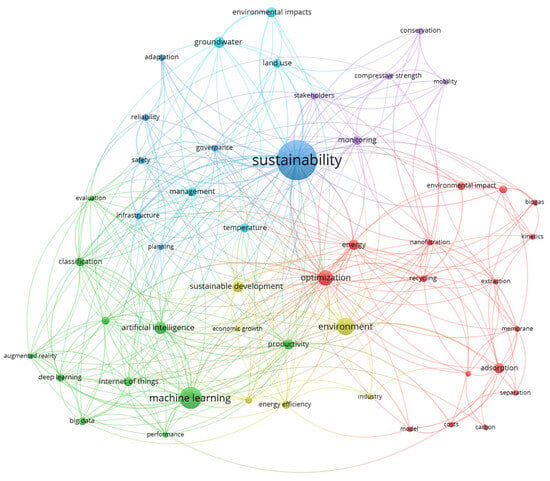
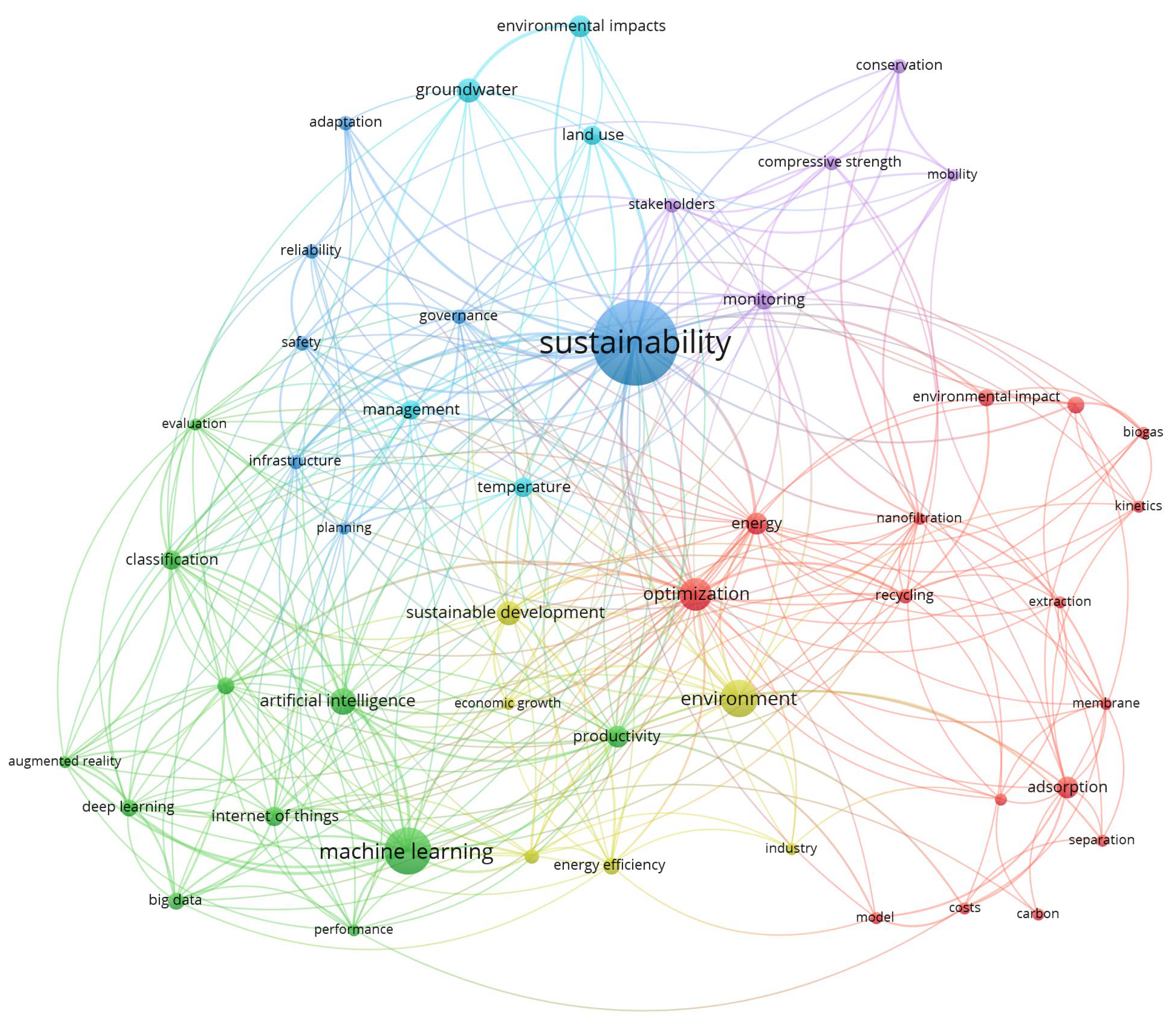
Modern corporations are investing heavily in developing modern methods of gas extraction, processing and transportation. However, existing research focuses more on the engineering improvement of technological processes, despite the fact that even modern devices run on outdated algorithms. This creates a situation where current management and control methods cannot fully realise the potential of modern equipment. Figure 1 shows the keyword co-occurrence network. It illustrates the interrelationships between various aspects of sustainability, governance and technology.
Figure 1.
A network of key aspects of the topics’ relevance.
The drive for greater efficiency and control is part of a broader industrial transformation. The advent of Industry 4.0 and artificial intelligence (AI) is fundamentally reshaping manufacturing and process industries by enabling smart, data-driven, and self-optimizing systems. AI technologies, including machine learning and neural networks, are now pivotal for tasks such as predictive maintenance, real-time process control, anomaly detection, and complex system optimization, moving beyond approaches to proactive and adaptive management [2]. This paradigm shift is particularly relevant for capital-intensive and continuous processes like natural gas treatment, where marginal gains in efficiency, stability, and resource utilization yield significant economic and operational benefits. The integration of AI and Industry 4.0 principles offers a powerful framework to address the inherent limitations of static control systems by introducing adaptability, predictive capabilities, and enhanced decision-making based on real-time and historical data analysis.
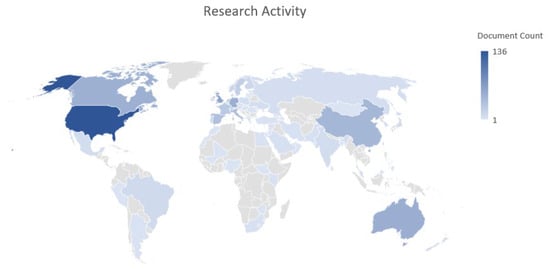
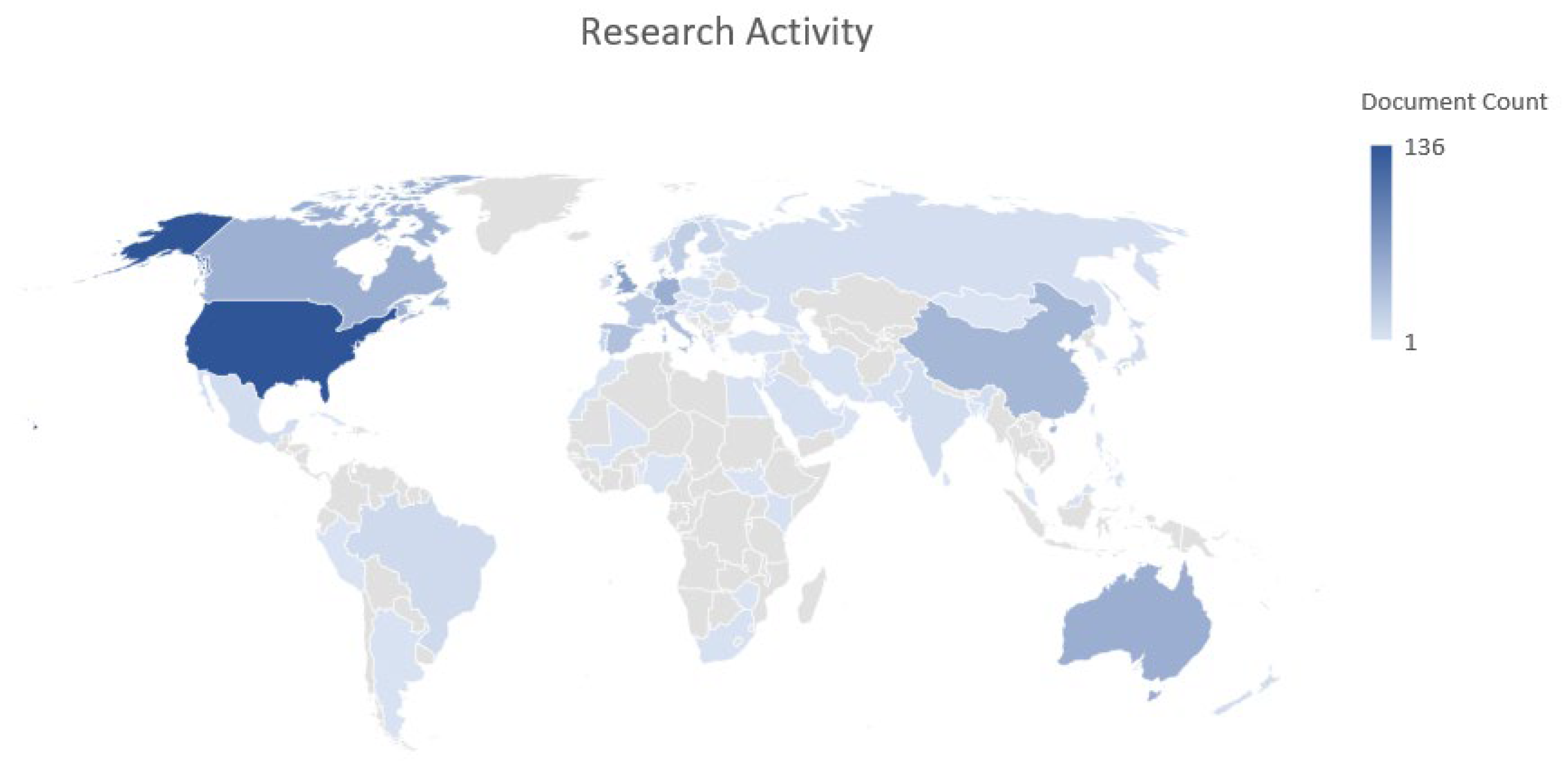
The data for the publication trend and geographical distribution analysis (Figure 1, Figure 2 and Figure 3) were collected from scientific databases (e.g., Scopus, Web of Science) using a defined set of keywords related to gas separation, purification, and control strategies. The analysis covers publications from period 2015–2024.
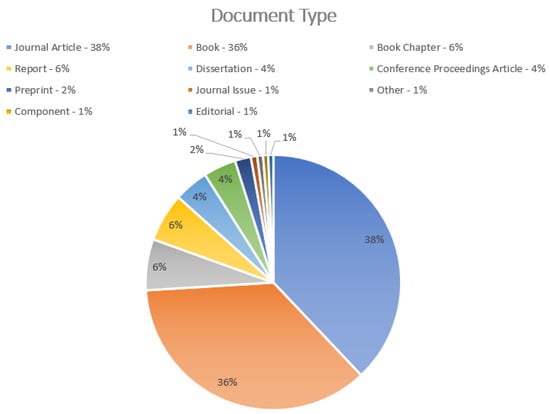
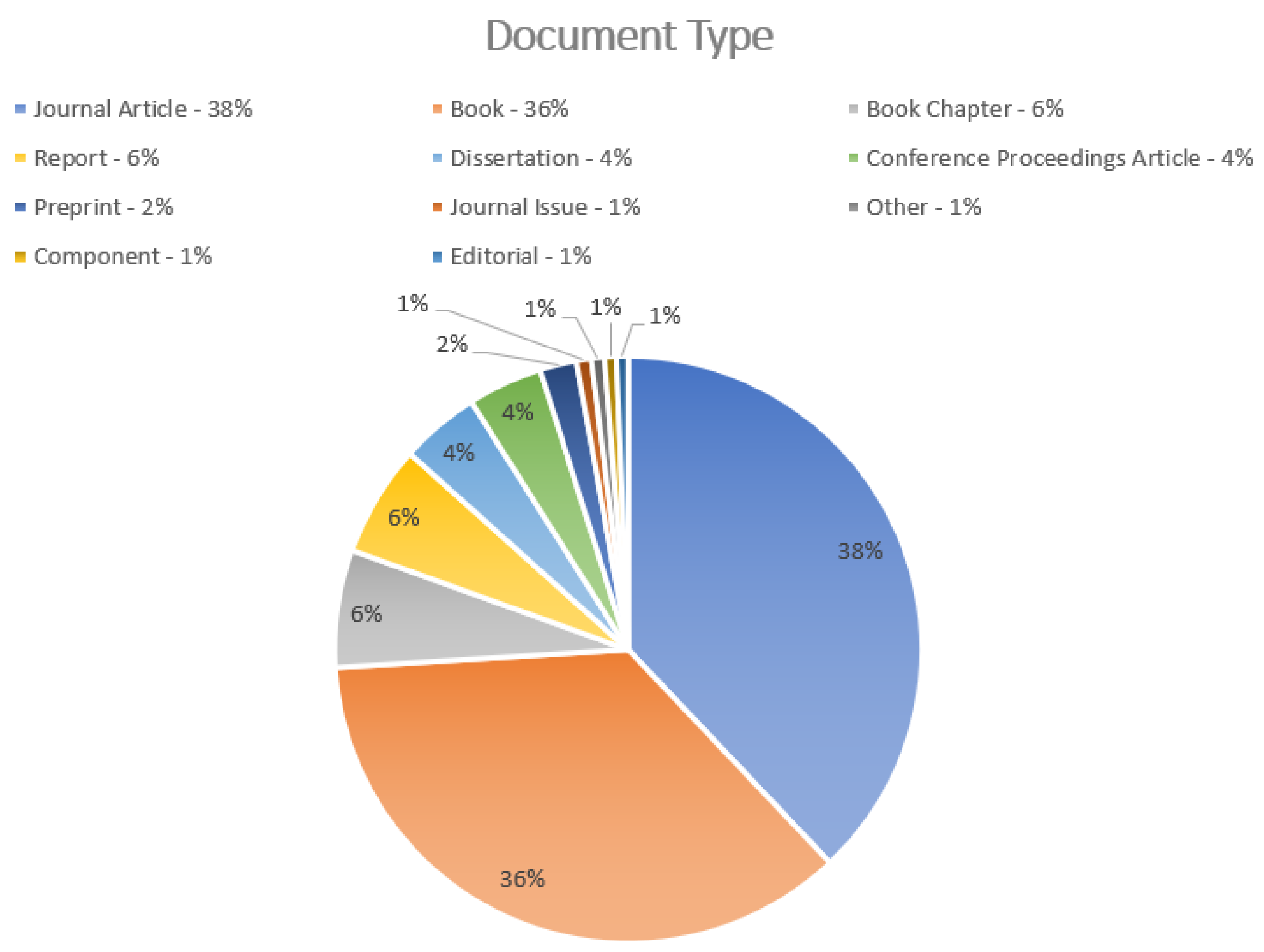
Figure 2.
Distribution of document types among all publications.
Figure 3.
Analysis of the geographical distribution of activity.
The network shown in Figure 1 reflects the key areas of research, with particular attention paid to the issues of automation and controllability of technological processes. The keyword grid analysis (Figure 1) revealed dominant clusters related to automation, but showed weak links between predictive analytics and classical management studies, indicating a lack of integration of these areas in the literature.
Research in the field of sustainable development is increasingly focusing on developing innovative methods for gas separation, production and transportation [3]. This is particularly pertinent given the growing demand for greater energy efficiency in manufacturing. Figure 3 illustrates the geographical distribution of scientific publications, revealing that countries such as the United States and China are actively developing gas purification technologies for sustainable development, as evidenced by their high publication output.
Figure 2 shows a pie chart indicating the most common publications in the field under study.
The map also illustrates the distribution of scientific activity across various regions, emphasising their substantial contributions to technological innovation. Conversely, many developing countries in Africa and South America are poorly represented in this area, potentially due to limited resources and infrastructure for implementing innovative technologies.
Numerous studies confirm the growing interest in optimising and automating gas treatment and purification processes. Enterprises are striving to minimise the human factor and reduce costs.
One of the most promising ways to improve gas purification technologies is to use advanced techniques, such as machine learning and artificial intelligence, to optimise technical processes. Using machine learning and artificial intelligence in these processes can significantly speed up decision-making and improve results. The potential of AI for optimizing gas processing is evidenced in the recent literature and industrial pilot studies. For example, data-driven operational frameworks have been reported to identify energy-efficient modes in amine-based sweetening units, leading to significant reductions in steam consumption [4]. Similarly, the implementation of closed-loop neural network controllers in hydrocarbon processes demonstrates the feasibility of adaptive, self-adjusting control systems that enhance stability and resource efficiency [5].
For example, consider the process of gas separation. This involves separating the solid, liquid and gaseous phases of a natural gas stream, followed by extracting the solid and liquid phases. The purpose of gas separation is to prevent moisture and solid particles from entering field gas collection networks and the technological equipment of gas and gas condensate fields.
The extracted gas contains mechanical impurities, such as rock particles, construction slag, corrosion and erosion products, liquid condensate and aqueous inclusions, as well as chemical impurities, such as hydrogen sulfide, carbon disulfide, mercaptan, nitrogen, helium, carbon dioxide, sulfides and disulfides [6]. These impurities can negatively impact equipment, leading to increased failures, accidents and blockages caused by particulates. Therefore, an increased amount of impurities in the flow can accelerate wear and increase the frequency of maintenance, thereby increasing operating costs.
Despite significant progress in gas treatment technology, there is still an urgent need to introduce a systematic approach to process management based on analysing parameter relationships and using forecasting methods [7]. This approach enables effective adaptation to changing operating conditions. While the gas separation process has been studied in sufficient detail, its further optimisation requires intelligent forecasting and control methods that can detect deviations in technological parameters in advance [8].
For example, consider an automatic system that monitors the operation of industrial equipment. This system observes how the machines are operating and can detect any malfunctions. For instance, if one of the machines slows down or stops, the system will register this. When a problem is detected, the system can automatically send a signal to alert someone to come and resolve the issue. This is similar to how an alarm goes off in a car if something goes wrong [9].
In recent years, increasing attention has also been paid to the development of auxiliary engineering solutions aimed at improving the energy efficiency and operational stability of industrial systems. These include vibration isolation and energy harvesting technologies, which can contribute to enhanced reliability of process equipment and support the integration of intelligent monitoring systems. For example, quasi-zero-stiffness devices based on piezoelectric structures have been proposed for simultaneous vibration suppression and energy harvesting, demonstrating their potential applicability in complex industrial environments [10].
Thus, automatic devices help us to respond quickly to changes and problems, making work more efficient and safer [11]. If everything is working well, the system continues to monitor and maintain the process in optimal condition.
The importance of researching methods to improve the efficiency of gas purification processes is emphasised by global trends in sustainable development and growing interest within the scientific community, as reflected by increased publication activity [12].
In this context, the present review considers modern technological and analytical approaches to the control and optimization of natural gas separation and purification processes. The paper examines classical control strategies based on PID regulators, as well as advanced approaches including adaptive control, fuzzy logic systems, and data-driven methods using machine learning and artificial neural networks. The analyzed methods are further considered as a methodological basis for the development of simulation models, which enable the study of process dynamics and the evaluation of control strategies under varying operating conditions.
Based on this premise, the primary aim of this review is to analyze and synthesize current knowledge on control strategies for natural gas separation and purification. The specific objectives are formulated as follows:
- To conduct a systematic comparative analysis of classical (PID-based) and modern intelligent control strategies (adaptive, fuzzy logic, neural networks) for natural gas separation and purification.
- To identify, based on a synthesis of the recent literature, the key technological parameters (e.g., pressure, temperature, flow rate) that have the most significant impact on separation efficiency and process stability.
- To formulate a methodological framework and identify promising directions for the development of next-generation adaptive control systems, providing a basis for subsequent simulation modeling.
The primary outcome of this analysis is the formulation of a novel methodological framework for adaptive control.
2. Materials and Methods
2.1. Review Methodology and Scope
This review is based on a systematic analysis and synthesis of the recent scientific literature and industrial case studies (2015–2024) pertaining to control strategies for natural gas separation and purification. The methodology involved a comparative assessment of classical and intelligent control approaches against defined criteria: adaptability, responsiveness to process variability, implementation complexity, and reported efficiency gains. The objective of this analytical process was to identify limitations in current practices and synthesize a novel methodological framework for adaptive control.
The research topic emerged from the need to address an urgent production issue. In natural gas processing, the separation stage is one of the most critical phases as it directly determines the quality of the final product, significantly affecting the technical and economic performance of industrial enterprises. The main purpose of this stage is to remove mechanical and chemical impurities from the gas stream [13]. However, the efficiency of this process is often reduced due to fluctuations in key parameters such as gas pressure and temperature [14].
The methodological core of this work is a systematic comparative analysis and synthesis of the literature. The described control logic and conceptual steps formalize the problem and provide the basis for the proposed methodological framework, which will later inform simulation modeling.
2.2. Baseline: Conventional Control of Gas Separation Units
To establish a common understanding of the industrial context, this section describes the standard, PID-based automatic control system for a gas separator, which represents the current widespread practice against which advanced methods are compared.
If the sequence of preliminary processes is violated or technological parameters are not adequately controlled, the gas entering the separation columns will contain impurities at concentrations higher than permitted, reducing the quality of cleaning and the efficiency of the equipment.
To address this, gas processing plants use an automatic control system that provides continuous measurement, analysis, and adjustment of parameters in monitoring mode. These control actions aim to stabilise the technological regime and increase the degree to which the gas is purified of liquid and mechanical impurities. Pressure control is carried out using automatic regulators that act on control valves installed at the inlet and outlet of the separator [15]. Pressure sensors transmit signals to the controller, where the current value is compared with the set value. When the pressure increases, the controller generates a control signal to partially open the valve, thereby increasing the flow rate and reducing the pressure inside the device. Conversely, when the pressure drops, the valve closes. This control principle is implemented according to the proportional-integral-derivative (PID) law, ensuring smooth and stable parameter control without fluctuations.
The aim of temperature control is to ensure the conditions under which the gas–liquid mixture can be effectively separated. This is monitored using thermal resistance sensors or thermocouples installed in key areas of the device. The control effect is realised by changing the flow rate of the refrigerant or coolant through the control valves, which affects the heat exchange equipment. When the temperature rises, the coolant supply increases; when it falls, the supply decreases. In winter, a heating agent can be supplied to prevent hypothermia and the freezing of gas components [16,17].
It is necessary to regulate the liquid level in the separator to prevent overflow and leakage of liquid into the gas line. Float or ultrasonic level meters are used for this purpose. When the maximum allowable level is reached, the controller signals to open the drain valve or turn on the condensate drain pump. Once the level has been lowered, the valve closes automatically. This approach enables a stable hydraulic regime to be maintained inside the device and eliminates emergency situations [18].
Furthermore, controlling the gas flow ensures a uniform supply of gas to the separator, which is necessary for maintaining stable phase separation conditions. Flow control is carried out using vortex or diaphragm flowmeters. Based on the flow data, the system adjusts the degree of opening of the control valves to prevent sudden pressure and temperature fluctuations. This parameter is often used as an auxiliary signal to coordinate the operation of pressure and temperature control circuits.
It should be clarified that the control logic described above is not proposed as a standalone control method. Instead, it represents an intermediate conceptual step to-ward the development of a data-driven control model. The described algorithm formalizes the regulation of key technological parameters, including pressure, temperature, liquid level, and gas flow rate, as well as the associated feedback mechanisms. This structured representation provides a methodological basis for subsequent data-driven approaches discussed later in this section.
All control actions are performed within a closed-cycle automatic control system [19]. Measuring devices record the current state of the process, and the controller analyses any deviation of parameters from the set points, generating a control signal for the actuators. The actuating devices (valves, pumps and throttling units) then change the state of the process flow. The updated values are then sent back to the feedback system [20]. Consequently, the productivity of the separation equipment decreases and the required technical operating mode cannot be maintained [21,22].
Interconnected regulation of pressure, temperature, level and flow ensures the separator operates stably. Changes in one parameter are compensated for by adjustments to the others, maintaining optimal conditions for the separation process. This approach enables the concentration of impurities in the gas to be reduced, equipment productivity to be increased, and the technical and economic performance of the installation to be improved.
The parameters of the separation process are measured using a system of sensors that monitor pressure, temperature, level and flow. This ensures continuous data collection. These parameters serve as input variables for constructing a mathematical model and implementing a control algorithm.
2.3. Synthesized Conceptual Framework: A Dual Adaptive Strategy
The critical analysis conducted in this review leads to the synthesis of a conceptual framework for next-generation control. This framework, distilled from the literature, is centered on the principle of dual adaptability—integrating real-time internal regulation with proactive external disturbance forecasting. It is presented not as a technical specification, but as a structured hypothesis and a derived from the reviewed trends.
The innovative aspect of this approach lies in its dual adaptability. This allows the system to adjust simultaneously to both internal process parameters (pressure and temperature) and external conditions (supply volume and equipment operating mode), thereby increasing the stability and efficiency of gas treatment [23].
Internal adaptation aims to maintain optimal parameters within the process circuit, primarily pressure, temperature and liquid level. In continuous time monitoring mode, the controller analyses the current parameter values coming from the sensors and compares them with the preset settings. If any parameters deviate, the system corrects the control actions by changing the position of the control valves, the flow rate of the coolant or refrigerant, and the operating mode of the pumps. To solve this problem, the development of an integrated management system is proposed [24,25].
Thus, the control system for the gas separation process is a set of automatic control and regulation tools that ensure the required technological parameters are maintained. Implementing adaptive control algorithms enables a quick response to changes in the composition and properties of incoming raw materials, thereby increasing the reliability and efficiency of the gas treatment process. This system can regulate pressure and temperature more accurately, reducing the concentration of impurities in the gas before it reaches the separation stage. The gas will then flow into the separator with the required quality parameters, thereby increasing the overall efficiency of the cleaning process. Pressure and temperature control are important in gas processing, but existing methods are insufficient.
Therefore, internal adaptation ensures dynamic equilibrium in the system when the load, raw material composition or temperature conditions change without requiring operator intervention.
Thus, external adaptation responds to external disturbances and changes in operating conditions, such as changes in the composition of incoming raw materials (e.g., the ratio of hydrocarbons, moisture, and impurities), fluctuations in the volume of gas supply, and variations in ambient temperature and pressure at the installation inlet.
The system analyses retrospective data, forecast models and statistics of technological fluctuations in order to adjust control settings in advance. This external adaptation enables the system to work proactively, eliminating not only existing deviations, but also preventing them.
The algorithm operates in a cyclic manner through several consecutive stages. First, data from pressure, temperature, and level sensors are read and analyzed to determine the current state. Subsequently, the obtained values are compared with the setpoints to generate control errors. Then, internal adaptation is performed, where the controller adjusts its actions according to the PID law to maintain the temperature and pressure setpoints. Following this, the analysis unit forecasts external conditions by evaluating parameter dynamics and factors such as gas composition changes. Based on this forecast, the system proactively executes external adaptation by automatically adjusting regulator settings and coefficients to prepare for upcoming mode shifts. Finally, the updated measured values are fed back to the controller, and the cycle repeats with the new data [26].
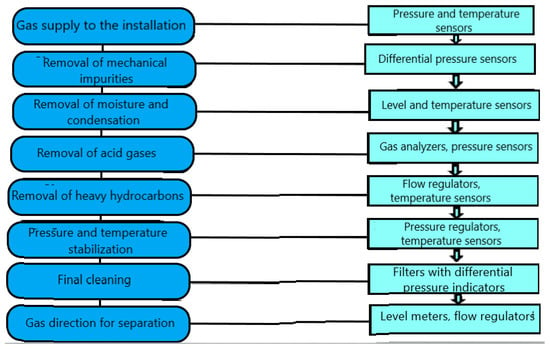
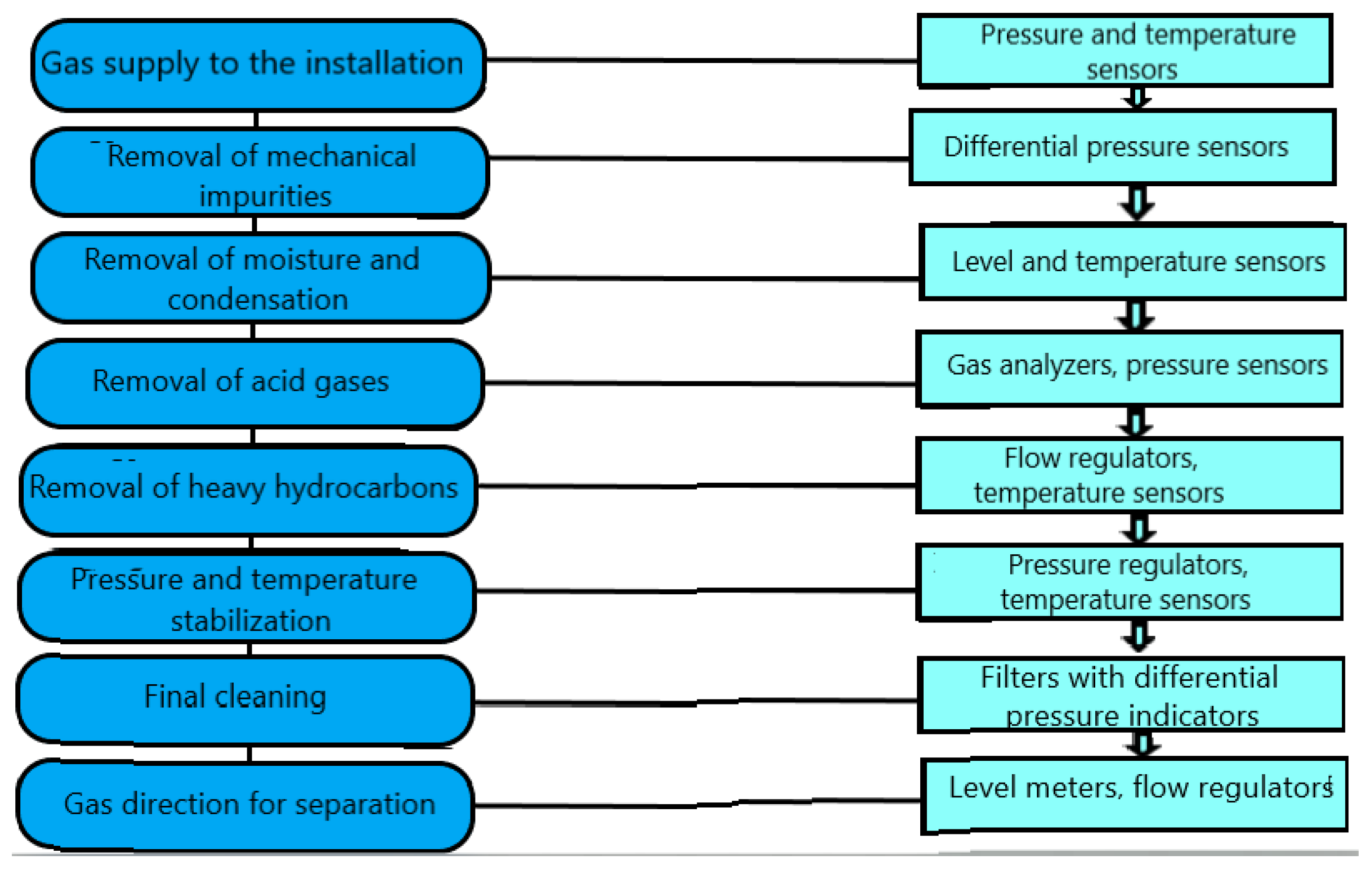
Despite the constant introduction of new technologies into the industry, the core responsibilities of gas and oil refining specialists remain unchanged. Although machinery and equipment used in the chemical industry and oil and gas refining are being upgraded, they retain a certain method of operation. This is to avoid complicating the design, as this can lead to increased costs and delays in commissioning facilities. Figure 4 illustrates the stages of gas preparation for separation and the associated devices.
Figure 4.
Stages of gas treatment.
The parameters are measured using a suite of instrumentation, including pressure sensors (e.g., piezoresistive type DD-100), thermocouples or resistance thermometers for temperature control, level meters (float or ultrasonic types), flow meters (such as turbine, vortex, or diaphragm variants), and gas analyzers for determining humidity and the presence of mechanical impurities.
The gas–liquid mixture enters the device via a gas supply nozzle fitted with an inlet device, which includes a mesh coagulator and a deflector plate. This is where the initial separation of large liquid droplets and mechanical impurities from the gas stream occurs. The liquid droplets then flow into the lower part of the separator under the influence of gravitational forces [27,28]. Next, the gas enters the second stage of separation: a mesh droplet trap. The third stage comprises a plate with a cyclone-type drop catcher, where gas purification (separation) occurs in a centrifugal field. The gas then enters the outlet filter and separation section, where it is cleaned of small liquid droplets on a plate containing highly efficient filter elements. Finally, the gas is discharged from the apparatus through the outlet nozzle. After the separation of the crude gas, the liquid enters the separator, followed by the separation of the liquid into hydrocarbon condensate. Currently, the company’s gas processing is carried out in one stage. After the separation process, the gas composition contains a large amount of impurities, which significantly reduces purification efficiency [29]. Implementing an integrated control system would allow key gas parameters, such as pressure and temperature, to be monitored before the separation stage. These adjustments can optimise the operation of the separation columns, leading to more efficient impurity removal and improving the characteristics of the final product.
In the future, data obtained from technological sensors during the two-year operational period of the separators will be used as initial information. This data set includes the following parameters: gas inlet and separator pressure, gas temperature, liquid levels, gas and liquid flow, and measurement time. The data will then need to be aggregated over time intervals to allow analysis of parameter change dynamics and identification of patterns in the time series.
The proposed approach therefore provides comprehensive control and regulation of gas separation parameters based on an adaptive model, improving the stability of the process and the quality of the final product.
The conceptual framework proposed in this review is designed to address a critical industrial constraint identified through our analysis. In current practice, control parameters for separation units are often recalibrated infrequently (e.g., quarterly) due to the high cost of production shutdowns. This leads to prolonged operation with suboptimal settings, especially under changing conditions, resulting in inefficient separation, elevated impurity levels, increased consumption of energy and chemical reagents in downstream purification stages.
The core novelty of our proposed approach lies in its proactive, closed-loop adaptability without requiring frequent physical intervention. Unlike traditional static or infrequently adjusted schemes, the envisioned system would integrate continuous data-driven forecasting with classical control loops. It would aim to continuously adapt key parameters in real-time based on predictive models of external disturbances. The hypothesized primary benefit is a significant reduction in impurity content at the primary separation stage, which could translate to lower operational costs by decreasing the load and reagent consumption in subsequent treatment units.
This proposed concept offers distinct advantages over existing approaches discussed in the literature. Firstly, it moves beyond the infrequent off-line optimization models that reflect current industry practice by advocating for continuous in-line optimization, thereby aiming to eliminate the performance degradation inherent between manual adjustments. Secondly, unlike conventional control schemes based solely on feedback from basic PID controllers, this predictive-proactive approach utilizes forward-looking models to anticipate and mitigate process disturbances, rather than relying solely on corrective action after a deviation has been measured. Finally, in contrast to complex «black-box» AI controllers, the envisioned hybrid architecture retains the interpretable and reliable core of classical control, using AI primarily for forecasting. This design principle aims to ensure robustness and facilitate smoother potential industrial adoption.
Therefore, the novelty of our research direction lies in the structured conceptual synthesis of classical control theory, data-driven adaptation, and external disturbance forecasting into a cohesive framework. Consequently, based on this comparative analysis, the final objective is to formulate and propose a novel methodological framework for next-generation adaptive control systems.
3. Research Problem Statement
The core scientific and industrial challenge addressed in this review stems from the fundamental mismatch between the static nature of conventional control schemes (e.g., PID with fixed setpoints) and the dynamic, non-stationary environment of natural gas separation and purification processes [30]. Key disturbances—such as fluctuations in feed gas composition, pressure, temperature, and flow rate—are often unpredictable and lead to suboptimal performance: reduced separation efficiency, increased energy and reagent consumption in downstream units, and elevated risks of equipment failure. While advanced methods (fuzzy logic, neural networks) show promise in isolation, there is a lack of a systematic framework for their integration into a cohesive, closed-loop control strategy that combines real-time internal parameter regulation with proactive external disturbance forecasting.
An analysis of existing systems has shown that a high content of impurities—such as moisture, hydrogen sulfide, and mechanical particles—reduces gas quality, complicates its transportation, and increases the load on downstream equipment. Furthermore, the lack of adaptive control over key gas purification parameters (temperature, pressure) leads to inefficient resource use and increased operating costs. Existing control methods are often based on fixed setpoints that fail to account for variations in gas composition (e.g., fluctuating impurity levels) and changing external conditions, which significantly limits their effectiveness. This problem is compounded by insufficient automation of process analysis and control, which necessitates constant operator intervention, thereby increasing the likelihood of human error and reducing overall system stability. Finally, the inherent limitations of traditional forecasting and parameter adjustment systems hinder the optimization of technological processes in continuous monitoring mode.
Having identified the main problems with the study, it was concluded that using an integrated control system can make it possible to adapt the gas purification parameters dynamically in response to changing conditions and gas composition [31].
This system uses a combination of system analysis and artificial intelligence to identify key patterns and dependencies in the gas purification process and apply optimal parameter control algorithms to improve efficiency. To this end, the study will further develop a model based on accumulated data from previous years that will adapt the system to provide high-quality gas treatment and increase its efficiency and resistance to changes in external conditions. The model will incorporate forecasting and analytical methods to optimise the gas treatment process.
It is worth noting that this study has practical significance in solving the problem of utilising associated petroleum gas (APG). Currently, a significant proportion of APG is flared, reducing the economic efficiency of the oil and gas industry and resulting in the loss of valuable hydrocarbons.
The main reasons are the remoteness and dispersion of the deposits, the underdeveloped processing and transportation infrastructure, and the technological difficulties associated with the high moisture content, solid particles, and other impurities [32].
Developing adaptive methods for controlling gas purification and separation processes will improve APG preparation quality and enable its effective involvement in production cycles.
Modern gas purification technologies must operate in conditions of increasing variability in the characteristics of raw materials and increasingly stringent product quality requirements [33,34]. The gas supplied for processing is increasingly characterised by an unstable composition, which significantly complicates the task of effective purification [35]. Under these conditions, traditional control systems based on fixed parameters demonstrate limited adaptability and become irrelevant. A lack of flexibility and a low level of automation mean they are unable to respond quickly to fluctuations in pressure, temperature and gas composition, which reduces process efficiency, increases operating costs and increases the risk of equipment failure. This study conducted a comprehensive comparison of existing technological solutions in terms of their respective advantages and limitations, as well as the potential bottlenecks identified during industrial operation.
Thus, the aim of this work is to identify and substantiate solutions to improve the efficiency of gas purification in modern operating conditions. Next, we will analyse in detail the methods of gas purification.
The three key methods used for gas purification are separation, absorption and adsorption. Separation is used for coarse cleaning and phase separation; absorption removes gases that dissolve in a liquid; and adsorption removes specific components and performs fine cleaning.
Absorption is a physicochemical process whereby molecules, atoms or ions of a gas enter into a chemical or physical interaction with an absorbent, either liquid or solid, by being absorbed by it. In the gas industry, absorbents such as calcium chloride and glycols (ethylene glycol, diethylene glycol, triethylene glycol and tetraethylene glycol) are widely used, with triethylene glycol being the most common. The main advantages of the absorption method are its flexibility in gas treatment and the ability to regenerate the absorbent. A description of gas purification methods can be found in Table 1.
Table 1.
Description of gas purification methods.
A deeper technical analysis reveals the specific control challenges and performance boundaries of each method. Gravitational and centrifugal separators, while effective for bulk liquid removal (>99% efficiency for droplets >10–20 µm), exhibit a strong dependence on gas velocity. Exceeding design flow rates induces re-entrainment, while lower rates reduce centrifugal forces, limiting their operational flexibility. Absorption columns (e.g., amine-based for H2S/CO2) achieve high removal efficiencies (>99.9%) but are sensitive to key parameters: the liquid-to-gas ratio (L/G), solvent concentration, and regeneration column temperature. Deviations from their narrow optimal window can cause foaming, solvent degradation, and a sharp rise in energy consumption for solvent regeneration, which alone can account for 60–80% of the units operating costs [36]. Adsorption beds (e.g., molecular sieves for dehydration) offer precise purification but operate in cyclic, non-steady-state modes. Their performance is governed by the breakthrough time, which is highly sensitive to feed temperature, pressure, and impurity concentration. Inadequate control of these parameters or faulty timing of the regeneration cycle leads to premature breakthrough or excessive energy use for desorption. This detailed perspective underscores that effective control must extend beyond simple PID loops to manage complex, interacting constraints and non-linear responses inherent in each purification stage.
However, this process requires complex equipment and incurs significant costs. Unlike absorption, adsorption is a process in which gas molecules are held onto the surface of a solid material by physical or chemical interactions.
The effectiveness of natural gas purification depends on a number of interrelated factors. These primarily include the composition of the source gas and its thermobaric parameters (pressure and temperature). The type and configuration of the installed equipment, as well as the level of automation and sophistication of the control system, are also critical determinants. Furthermore, the application of mathematical and simulation modeling for process design and optimization plays a vital role. Ultimately, all technical choices are bound by overarching economic constraints, which define the feasibility and scope of potential improvements.
The economic imperative for overcoming these control limitations is underscored by data from adjacent sectors where AI integration has been successfully piloted. In shale gas development, for instance, the application of intelligent systems has demonstrated the potential for a 15% increase in recoverable reserves through automated monitoring and optimization. More directly relevant to process control, AI-driven parameter optimization has been shown to reduce development costs by 55% and improve return on investment (ROI) by 24% in capital-intensive field operations [37]. While these figures pertain to upstream activities, they highlight the magnitude of economic benefit possible when moving from static to intelligent, adaptive control paradigms. Translating even a fraction of this efficiency gain to the separation and purification stage—where suboptimal control directly increases energy and chemical consumption—justifies the pursuit of advanced adaptive frameworks. The current gap, therefore, is not merely technical but carries a significant, quantifiable economic opportunity cost.
Given the variety of factors affecting the efficiency of natural gas purification, it is clear that more complex, high-tech methods must be employed. Modern advances in system analysis, mathematical modelling and integration with artificial intelligence offer new possibilities for enhancing gas purification and treatment processes.
4. Results
This paper presents the results of an analysis of recent research into the practical application of theoretical principles and methods in gas separation system design. In recent years, significant attention has also been given to incorporating neural network models into gas treatment processes. For example, Ghiasi et al. developed a fuzzy neural network model to assess the purity of triethylene glycol (TEG) in natural gas drying plants [38]. This tool enables solvent concentration to be evaluated in real time and regeneration parameters to be adjusted, allowing for the partial automation of drying quality regulation without the need for expensive online analysers.
Pengtao Niu and co-authors study is one example of the application of neural network approaches to forecasting and analysing gas consumption processes [39]. They proposed the P-KTFNet (Prior Knowledge Enhanced Time-Frequency Network) model, which combines deep learning methods and a priori physical domain knowledge. This model focuses on short-term forecasting of natural gas consumption and is based on three key components: the use of wavelet transforms (DWTs) to isolate time-frequency features; the implementation of parallel LSTM blocks to extract dependencies of various durations; and the embedding of a priori knowledge, such as the dependence of consumption on temperature, directly into the loss function. This approach has significantly improved forecasting accuracy.
The article «Explicable Fault Diagnosis of Gas–Liquid Separator Based on Fully Convolutional Neural Network» proposes a diagnostic method based on a fully convolutional neural network. To analyse the network’s diagnostic process, the authors used class activation mapping, multidimensional mutual information, global averaging and stochastic neighbour embedding with a t-distribution [40]. During the experiment, the authors obtained results based on simulation data and demonstrated that the proposed method can determine the degree of correlation between different operating conditions and the importance of each period in the measured variable. It can also reveal the engineering significance of the convolutional cores of the last layer, providing experts with additional information for fault analysis. In the study «A machine learning-based operational control framework for reducing energy consumption of an amine-based gas sweetening process», the authors applied a data-based operational management system using machine learning-based predictive modelling to reduce energy consumption during natural gas treatment [41]. This multi-stage system consists of the following steps: (a) to characterise the sampling space of all possible operating states and determine the operating modes of the gas purification plant, a clustering algorithm based on the spatial clustering methodology of noise-based applications is used; (b) the mode with the lowest steam consumption is selected as a reference for operational control of the gas purification process; and (c) a number of highly accurate regression models are developed using the gradient boosting algorithm to predict controlled parameters and output variables. This operational control strategy provides useful information about the energy efficiency of the plant’s current operation and offers energy-saving opportunities to gas processing plant operators.
Significant improvements in efficiency have already been achieved. For instance, BP has announced plans to introduce an IoT- and AI-based system to manage its technological processes. This has led to a 20% increase in operational efficiency, a 15% reduction in energy consumption, and a 25% reduction in equipment maintenance costs. These improvements were achieved through AI modules that optimise operating modes such as temperature and pressure control according to economic models, as well as predictive maintenance to prevent unplanned downtime. Another example is the use of neural networks for directly controlling separation processes. A recent study proposed the use of an intelligent controller based on a neural network for the installation of a pressure swing adsorption (PSA) system, which releases hydrogen from a gas mixture. The neural network model was trained to reproduce the operation of a classic PID controller, after which it controlled the PSA cycle itself. The result is accurate tracking of the set concentrations: the neural network achieved a 98.6% match with the target mode, estimated by matching the output signal, with an average error margin of just a small amount. This approach demonstrates the potential for adaptive control without manual reconfiguration, as the algorithm can independently adjust to changes in process dynamics while maintaining the required level of product quality (gas purity at the outlet).
Machine learning also enables the prediction of system behaviour: an algorithm based on previous data can anticipate how a situation will develop and proactively adjust management accordingly [42]. This is particularly important in the gas industry, where inertial processes can lead to issues such as sharp drops in pressure in the network or overheating of the device. Preliminary forecasting can help avoid such problems. Based on the rule base and the membership function, the fuzzy controller outputs control actions [43].
The main advantage of this approach is its ability to work with incomplete or inaccurate information about the system. Indeed, a fuzzy controller can be configured without an accurate mathematical model of the system; knowledge of the desired behaviour is sufficient [44]. Parameters can be entered into the controller based on the trend of change (growth or decline) and the current value, making the output more accurate and reducing the impact of measurement errors. The rules, which are set out in understandable terms, make the management results interpretable for staff, as the logic behind the controller’s decision-making process is clear. The fuzzy approach has proved effective in a number of gas industry applications. For example, it is used in main gas pipelines, where supply disruption (surging) in centrifugal compressors can be dangerous. Although traditional anti-surge systems prevent accidents, the fuzzy controller can optimise this process further by maintaining the compressor in a stable operating zone more flexibly.
Introducing fuzzy regulators also provides advantages in natural gas drying plants (e.g., glycol drying) or impurity removal. In complex columns where temperature and pressure must be regulated simultaneously, fuzzy control has proven effective.
Recent studies have shown that introducing adaptive fuzzy control in gas fractionation plants provides more stable management of the technological process than using PID controllers alone. This is reflected in greater stability of the modes and reduced likelihood of critical deviations that could lead to a drop in productivity or an emergency shutdown of the equipment [45].
The example of the adaptive control is the self-adjusting PID controllers, in which the algorithm monitors the effectiveness of the current settings according to control quality criteria and adjusts the coefficients. This can be implemented through online optimisation, for example using genetic algorithms or gradient descent methods, or through additional contours, for example an observer model that evaluates object parameters and recalculates controller settings [46].
These regulators are often used for:
- Control burning in furnaces.
- Gas reduction and throttling.
- Stabilization of complex objects.
The introduction of intelligent control systems in gas treatment has several effects. The table below (Table 2) compares the capabilities of traditional and intelligent methods.
Table 2.
Comparison of traditional and intelligent process control methods.
In summary, intelligent methods demonstrate higher management efficiency in situations where traditional approaches are inadequate [47]. Table 3 therefore shows a comparison of the performance characteristics of a typical process with different control methods (average results collected from literature sources and experimental data).
Table 3.
Conditional comparison of the quality of regulation (approximate indicators).
The table shows that intelligent regulators (such as fuzzy, neural network and adaptive controllers) can significantly reduce integral error and overshoot, thereby expanding the range of stable operation. For instance, the paper states that an adaptive fuzzy controller can maintain stable operation of a gas fractionation unit in the presence of parameter fluctuations, whereas traditional PID controllers necessitate manual reconfiguration and still produce significant deviations.
There are gradually becoming more examples of the successful implementation of intelligent systems in the industry. For instance, Gazprom and other major corporations are experimenting with predictive control systems for compressor stations, where algorithms predict the load and adjust the operating modes of the units in advance to save fuel.
Fuzzy pressure and level regulators were introduced at some gas processing plants in the Commonwealth of Independent States (CIS), which resulted in smoother operation of the columns with a variable composition of raw materials (these data were published in industry collections, for example at conferences on automation).
Machine learning-based monitoring systems are used to detect anomalies. Although they do not directly control the process, they alert the operator or automation system to potential emergencies, enabling timely intervention. To summarize, intelligent control methods provide several key advantages. They offer increased adaptability, enabling the system to adjust itself to changing conditions and maintain optimal technological parameters. This leads to improvements in both product quality and process efficiency, as more precise control increases the yield of target products while reducing energy consumption. Furthermore, these methods significantly reduce the need for manual labor by minimizing the constant intervention of highly qualified operators to reconfigure equipment, as the automation can handle many situations autonomously. Finally, they expand the range of stable operation, allowing an intelligent controller to prevent the development of emergency conditions that would surpass the stability limits of a classic regulator.
One of the key applications of artificial intelligence is the development and improvement of models for calculating the gas compressibility factor (Z-factor). In particular, correlation dependencies and AI models have been proposed or modified to solve estimation problems related to the Z-factor in high-pressure, high-temperature formations, which remains an important issue for accurate engineering calculations in gas production.
Machine learning approaches improve the prediction accuracy of the gas compressibility factor by capturing complex nonlinear relationships between pressure, temperature, and gas composition that are difficult to represent using traditional empirical correlations. This advantage is particularly significant for multicomponent gas mixtures and non-ideal operating conditions, where classical equations often show limited accuracy. By learning directly from experimental or operational data, data-driven models can adapt to variations in gas composition and thermodynamic conditions.
In the publication «Advanced Metering Infrastructure for Industrial Natural Gas Smart Management», author Everton Camoleze De Araujo describes a model developed for the intelligent management of industrial natural gas consumers using the Internet of Things (IoT). This architecture uses LoRaWAN communication for remote accounting and a cloud-based intelligent management system that includes continuous monitoring, anomaly detection, and alarm notifications. Experimental results have shown that LoRaWAN meets the communication requirements for industrial natural gas metering and that the intelligent control system can analyse accumulated data on the plant’s operation and detect anomalies in gas consumption [48].
Using intelligent systems in the oil and gas industry will reduce the cost of technical operations and increase production due to the increased productivity of equipment and personnel [49].
Multicriteria optimisation methods are widely used to select the most effective control strategies for gas purification [50]. These methods enable us to consider various factors, such as minimising impurity content, optimising energy consumption, and increasing productivity, to maximise the efficiency of the purification process.
At the same time, they consider the complexity of development, the need for careful verification of the model and test site before implementation, and the need to collect training data. Nevertheless, the trend is clear: the gas industry is moving towards more and more «smart» control systems. Based on technical analysis, most companies choose an economical and reliable process for purifying gas from water, considering the state of the Russian gas and oil industry.
After analysing the information, it can be concluded that, although the traditional method is simple to implement, it has limited flexibility and efficiency. It is suitable for conditions where the gas composition and operating parameters are stable [51].
In contrast, the modern method, which is based on system analysis, enables the optimisation of streaming processing of process data, but requires sophisticated equipment and substantial initial investment.
A comparison shows that the modern approach is much more effective, especially in difficult conditions where high accuracy and adaptability are required. However, the traditional method remains acceptable for small or stable industries [52].
Applying a systematic approach enables us to view the gas treatment process as an integrated system comprising interrelated components [53]. During the analysis of such systems, the decomposition method is widely used to divide the process into simpler subsystems, facilitating the search for optimal solutions. One of the most interesting studies was conducted by Ilyushin Yuri Valeryevich, author of the article «Development of mathematical model for forecasting the production rate» [54]. This work is devoted to searching to the optimal parameters of the modified link to replace the static and dynamic parameters of the hydrodynamic process. The presented approach increases the accuracy of the process used to control the tank’s pressure.
Based on this approach, the author created dynamic models to describe the behaviour of the temperature field in the pipeline. These models enabled us to estimate thermal deformation. In the scientific study «Dynamic simulation and thermoeconomic analysis of a power to gas system» [55], simulation modelling enabled us to evaluate the effectiveness of gas purification more accurately. The authors presented a new installation concept and carried out a technical and economic analysis of using renewable energy sources for natural gas production. Structural analysis is used to identify relationships between system elements, while correlation analysis helps identify relationships between parameters affecting gas purification quality.
Modelling the gas purification and separation process is one of the most frequently used methods for predicting the system’s behaviour in various operating modes [56]. Mathematical models can accurately describe changes in parameters such as temperature, pressure, and gas composition. This enables us to quickly identify optimal operating modes for equipment and minimise impurity content in the final product.
Simulation models are widely used to test proposed solutions under conditions that closely resemble current changes [57]. This enables the effectiveness of the proposed methods to be tested and the process to be optimised at different stages of its implementation. Simulation is also used to test various potential scenarios that may occur during operation. High-quality simulation is of particular importance for gas industry enterprises, especially in the context of increasing staff turnover and demographic changes. These systems significantly reduce the time needed to train and adapt new employees, enabling them to quickly grasp production processes.
To provide a consolidated quantitative overview of the advancements discussed, the key performance improvements reported in the recent literature are summarized in Table 4. This synthesis demonstrates the tangible benefits of implementing intelligent control systems across various gas processing applications, from acid gas removal to predictive maintenance.
Table 4.
Claimed performance improvements from intelligent control methods in gas separation and purification processes.
An analysis of existing gas purification methods, including system analysis, mathematical modelling, simulation modelling, optimisation methods and the use of neural networks and machine learning, revealed the strengths and weaknesses of each approach. Methods of system analysis and mathematical modelling have demonstrated high efficiency in analysing the relationships between process parameters and in predicting system behaviour. However, simulation modelling has shown its value in verifying solutions in conditions close to the current ones; it does, however, require significant computing resources and time to perform. Neural networks and machine learning have proven to be promising tools for automating control and adaptation in a continuous measurement flow. However, their application currently requires extensive training data and additional effort to assess forecast accuracy. Optimisation methods, in turn, provide effective management of multi-criteria tasks, but they may be limited in cases involving highly variable process parameters. An analysis of existing control systems reveals a lack of mechanisms for swiftly adapting to changes in conditions, such as fluctuations in gas composition, temperature, and pressure. The limited flexibility of such systems increases the need for new approaches that focus on automatically adjusting parameters and improving the overall stability of the technological process. In this regard, the development of automated control systems that can adjust parameters in continuous monitoring mode while ensuring the reliability of the technological regime is particularly relevant. However, the effectiveness of such systems is directly determined by the quality of the source data, the processing methods used, and the ability of the algorithms to adapt to dynamic production conditions.
This comparative perspective is summarized in Table 5, which contrasts the focus and contribution of seminal recent papers with the integrative contribution of this review.
Table 5.
Comparative analysis of recent research focus and the integrative contribution of this review.
The novelty of the presented in this review lies in its integrative, system-level perspective. While the recent studies analyzed herein (and summarized in Table 5) excel in advancing specific algorithms or optimizing particular unit operations, this review provides a coherent methodological framework that connects these discrete advancements. This framework is designed to address the core, system-wide challenge of process variability in gas separation and purification.
For instance, where Ghiasi et al. [38] advance fuzzy neural networks for monitoring triethylene glycol purity in a dehydration unit, and Moghadasi et al. [41] develop a machine learning framework for energy optimization in an amine sweetening process, the present work proposes how and where such distinct technologies can be orchestrated. It outlines a unified adaptive control strategy that encompasses both internal parameter feedback loops (e.g., for pressure and temperature stabilization) and external disturbance forecasting (e.g., for anticipating changes in feed composition or ambient conditions). Thus, the contribution shifts from isolated technological solutions to a structured, integrative roadmap for building resilient and efficient gas treatment systems.
The next step in the research will be to develop a conceptual model, which will define the efficiency evaluation criteria more accurately and build algorithms that can improve gas treatment process management. A comparative analysis of the effectiveness of using a neural network to predict and control key parameters of the gas treatment process (pressure, temperature and impurity content) is also planned. To this end, one year’s worth of data will be used to train the neural network. The accuracy of the prediction and the model’s ability to adapt to changes in the technological process will then be assessed by comparing its forecasts with actual values.
5. Conclusions
This study has conducted a systematic review of control strategies for natural gas separation and purification. This review addressed the persistent challenge of managing natural gas treatment and processing, where the main limitations of existing approaches lie in the insufficient efficiency of impurity removal and the scarce application of advanced system analysis for process optimization. The increasing complexity of processing schemes, coupled with stringent demands for energy efficiency and cost reduction, makes the development of adaptive control strategies an urgent priority.
The primary contribution of this work is the synthesis of these insights into a coherent methodological framework that advocates for closed-loop, intelligent control systems as the key direction for industrial development.
The analysis presented in this review indicates that the future development of natural gas separation and purification systems will increasingly rely on the integration of adaptive control strategies, data-driven methods, and simulation-based approaches. Traditional PID-based control remains effective under stable operating conditions; however, its limited adaptability highlights the need for intelligent and hybrid control frameworks capable of responding to variations in gas composition and process parameters. The reviewed studies demonstrate that machine learning, neural networks, and predictive analytics offer significant potential for improving process stability, energy efficiency, and impurity removal performance. At the same time, the analysis shows that many existing gas quality control systems lack effective feedback mechanisms, which limits their ability to adapt to changing raw material properties. Addressing this limitation through closed-loop and intelligent control systems represents a key direction for future research and industrial development.
The analysis confirmed the limitations of static systems and highlighted the potential of intelligent, data-driven methods. As a direct synthesis of these findings, have proposed a novel methodological framework for adaptive control, which integrates real-time feedback with predictive forecasting to address process variability.
This review set out to address three specific objectives. First, the comparative analysis confirms that while classical PID control remains robust under stable conditions, modern intelligent strategies—notably adaptive control, fuzzy logic, and neural networks—demonstrate superior capability in maintaining efficiency amidst the fluctuations in raw gas composition and operating parameters typical of real-world gas processing. Second, the synthesis identifies pressure, temperature, flow rate, and feed composition variability as the most critical technological parameters impacting separation efficiency and process stability. Third, based on this analysis, the review formulates a novel methodological framework centered on dual adaptability, which integrates real-time internal parameter regulation with proactive external disturbance forecasting. This framework is proposed as a structured pathway for developing next-generation adaptive control systems and serves as the direct conceptual basis for the planned simulation modeling phase.
It is important to acknowledge the limitations inherent in both this review and the intelligent control systems it discusses. Limitations of this review include its primary focus on control strategy integration rather than sensor technology or hardware implementation, and its reliance on published case studies, necessitating future empirical validation through simulation.
Limitations of intelligent control systems themselves are significant and must be considered for practical adoption. These include: (1) a strong dependency on extensive, high-quality historical data for training machine learning and neural network models, which can be a barrier for older or less-instrumented facilities; (2) increased computational load for real-time execution of advanced algorithms, coupled with the “black-box” nature of some models that hinders operational trust and complicates troubleshooting in safety-critical environments; (3) substantial investment and specialized expertise required for integrating such systems into existing infrastructure, as well as for their ongoing maintenance, model retraining, and updates; and (4) generalization limits, whereby models optimized for specific process conditions may not perform robustly under entirely novel feedstocks or operational regimes, necessitating careful design for adaptability.
Despite these challenges, the trajectory towards more intelligent, integrated control is clear. The practical significance and immediate next step of this work lie in applying this framework as a blueprint for building a simulation model. Future research will focus on implementing this model using retrospective industrial data to test, optimize, and validate the proposed adaptive control strategies before potential industrial implementation.
Author Contributions
Fulfilled the statement of the research task, A.V.M.; performed collection and analysis of materials on the research topic, D.V.R. On the basis of the analysis parameters of the most effective methods of gas treatment process control were determined. All authors have read and agreed to the published version of the manuscript.
Funding
This research received no external funding.
Data Availability Statement
No new data were created or analyzed in this study. Data sharing is not applicable to this article.
Conflicts of Interest
The authors declare no conflicts of interest.
References
- Litvinenko, V. The Role of Hydrocarbons in the Global Energy Agenda: The Focus on Liquefied Natural Gas. Resources 2020, 9, 59. [Google Scholar] [CrossRef] [Scilit]
- Alenizi, F.A.; Abbasi, S.; Mohammed, A.H.; Rahmani, A.M. The artificial intelligence technologies in Industry 4.0: A taxonomy, approaches, and future directions. Comput. Ind. Eng. 2023, 185, 109662. [Google Scholar] [CrossRef] [Scilit]
- Marinina, O.A.; Ilyushin, Y.V.; Kildiushov, E.V. Comprehensive Analysis and Forecasting of Indicators of Sustainable Development of Nuclear Industry Enterprises. Int. J. Eng. 2025, 38, 2527–2536. [Google Scholar] [CrossRef] [Scilit]
- Afanaseva, O.V.; Tulyakov, T.F. A methodology to develop an information and control system to monitor the technical state of power transmission lines. Elektrotehniški Vestn. 2025, 92, 221–228. [Google Scholar]
- Boronko, E.A.; Novozhilov, I.M. Designing an Information System for Monitoring the Electromagnetic Field of a Power Plant. In Proceedings of the 2024 Conference of Young Researchers in Electrical and Electronic Engineering (ElCon), Saint Petersburg, Russia, 29–31 January 2024; pp. 331–334. [Google Scholar] [CrossRef] [Scilit]
- Pervukhin, D.A.; Davardoost, H.; Gasimov, E.; Hawezy, A.L.J. Optimizing Multimodal Logistics in Petroleum Supply Chains Using Linear Goal Programming: A Case Study on South Pars Gas Field Development. Int. J. Eng. 2025, 38, 1909–1921. [Google Scholar] [CrossRef] [Scilit]
- Mal’Tsev, P.A.; Shatilova, N.A.; Abramkin, S.E. Designing a Digital Twin in Oil and Gas Technologies: Technology Integration. In Proceedings of the 2024 XXVII International Conference on Soft Computing and Measurements (SCM), Saint Petersburg, Russia, 22–24 May 2024; pp. 352–355. [Google Scholar] [CrossRef] [Scilit]
- Kukharova, T.; Maltsev, P.; Novozhilov, I. Development of a Control System for Pressure Distribution During Gas Production in a Structurally Complex Field. Appl. Syst. Innov. 2025, 8, 51. [Google Scholar] [CrossRef] [Scilit]
- Cheng, M.; Xue, W.; Guo, Z.; Hou, M.; Wang, C. Development of Large-Scale Tight Gas Sandstone Reservoirs and Recommendations for Stable Production—The Example of the Sulige Gas Field in the Ordos Basin. Sustainability 2023, 15, 13. [Google Scholar] [CrossRef] [Scilit]
- Liu, C.; Zhao, R.; Yu, K.; Lee, H.P.; Liao, B. A quasi-zero-stiffness device capable of vibration isolation and energy harvesting using piezoelectric buckled beams. Energy 2021, 233, 121146. [Google Scholar] [CrossRef] [Scilit]
- Abramkin, S.E.; Dushun, S.E. Implementation of Complex Control Algorithms at a Gas Production Enterprise. In Proceedings of the 2022 XXV International Conference on Soft Computing and Measurements (SCM), Saint Petersburg, Russia, 25–27 May 2022; pp. 56–59. [Google Scholar] [CrossRef] [Scilit]
- Lv, M.; Xue, B.; Guo, W.; Li, J.; Guan, B. Novel calculation method to predict gas-water two-phase production for the fractured tight-gas horizontal well. J. Pet. Explor. Prod. Technol. 2024, 14, 255–269. [Google Scholar] [CrossRef] [Scilit]
- Li, L. Development of natural gas industry in China: Review and prospect. Nat. Gas Ind. B 2022, 9, 187–196. [Google Scholar] [CrossRef] [Scilit]
- Montenegro, J.; Veloz, C.; Ricaurte, M. Estimating water content of natural gas mixtures considering heavy hydrocarbons contribution using artificial neural networks. Pet. Sci. Technol. 2023, 41, 819–833. [Google Scholar] [CrossRef] [Scilit]
- Kastanidis, P.; Romanos, G.E.; Stubos, A.K.; Pappa, G.; Voutsas, E.; Tsimpanogiannis, I.N. Evaluation of a Simplified Model for Three-Phase Equilibrium Calculations of Mixed Gas Hydrates. Energies 2024, 17, 440. [Google Scholar] [CrossRef] [Scilit]
- Ilyushin, Y.; Afanaseva, O. Development of a spatial-distributed control system for preparation of pulse gas. In Proceedings of the 20th International Multidisciplinary Scientific GeoConference Surveying Geology and Mining Ecology Management, SGEM, Varna, Bulgaria, 16–25 August 2020; pp. 475–482. [Google Scholar] [CrossRef] [Scilit]
- Nevskaya, M.; Shabalova, A.; Kosovtseva, T.; Nikolaychuk, L. Applications of simulation modeling in mining project risk management: Criteria, algorithm, evaluation. J. Infrastruct. Policy Dev. 2024, 8, 5375. [Google Scholar] [CrossRef] [Scilit]
- Gao, W.; Zheng, W.; Yan, K.; Sun, W.; Zhao, L. Accelerating the discovery of acid gas-selective MOFs for natural gas purification: A combination of machine learning and molecular fingerprinting. Fuel 2023, 350, 128757. [Google Scholar] [CrossRef] [Scilit]
- Santana, L.O.S.; Santos, G.S.; Bispo, A.S.; Marinho, C.B.; Dias, V.L.S.; Santos, A.L.N.; Ávila, J.S.; Pessoa, F.L.P. Comparative Analysis of Pressure Swing Adsorption and Supersonic Separators for High-Purity Hydrogen Applications. Chem. Eng. Trans. 2023, 100, 187–192. [Google Scholar] [CrossRef]
- Zakharov, L.A.; Martyushev, D.A.; Ponomareva, I.N. Prediction of dynamic reservoir pressure by artificial intelligence methods. J. Min. Inst. 2022, 253, 23–32. [Google Scholar] [CrossRef] [Scilit]
- Sidorenko, A.; Kriukov, A.; Meshkov, A.; Sidorenko, S. A Comprehensive Technical and Economic Analysis of Rubber-Tyred Transport Implementation in Longwall Mining: A Case Study on the V.D. Yalevsky Coal Mine. Mining 2025, 5, 65. [Google Scholar] [CrossRef] [Scilit]
- Ganczarek-Gamrot, A.; Gorczyca-Goraj, A.; Pilot, K.; Kania, K. Electricity Price Volatility and the Performance of Machine Learning Forecasting Models in European Energy Markets. Energies 2025, 18, 6535. [Google Scholar] [CrossRef] [Scilit]
- Zemenkova, M.Y.; Chizhevskaya, E.L.; Zemenkov, Y.D. Intelligent monitoring of the condition of hydrocarbon pipeline transportation facilities using neural network technologies. J. Min. Inst. 2022, 258, 933–944. [Google Scholar] [CrossRef] [Scilit]
- Klyuev, R.V.; Morgoeva, A.D.; Gavrina, O.A.; Bosikov, I.A.A.; Bosikov, I.I.; Morgoev, I.D. Forecasting planned electricity consumption for the united power system using machine learning. J. Min. Inst. 2023, 261, 392–402. [Google Scholar]
- Urazakov, K.; Belozerov, V.; Latypov, B. Study of the dynamics for gas accumulation in the annulus of production wells. J. Min. Inst. 2021, 250, 606–614. [Google Scholar] [CrossRef] [Scilit]
- Pershin, I.M.; Tsapleva, V.V.; Malkov, A.V.; Pomelyaiko, I.S. Design of a distributed well cluster control system. In Proceedings of the XII All-Russian Scientific Conference “System Synthesis and Applied synergetics”, Novosibirsk, Russia, 23–29 September 2024; pp. 330–336. [Google Scholar] [CrossRef] [Scilit]
- Mal’Tsev, P.A.; Abramkin, S.E.; Plotnikov, A.V.; Martirosyan, K.V. A conceptual Model of Controlled Gas Production Processes in Fields with a Complex Geological Structure. In Proceedings of the 2024 XXVII International Conference on Soft Computing and Measurements (SCM), Saint Petersburg, Russia, 22–24 May 2024; pp. 107–110. [Google Scholar] [CrossRef] [Scilit]
- Khan, M.; Warrier, P.; Peters, C.; Koh, C. Hydrate-Based Separation for Industrial Gas Mixtures. Energies 2022, 15, 966. [Google Scholar] [CrossRef] [Scilit]
- Yin, X.; Wen, K.; Huang, W.; Luo, Y.; Ding, Y.; Gong, J.; Gao, J.; Hong, B. A high-accuracy online transient simulation framework of natural gas pipeline network by integrating physics-based and data-driven methods. Appl. Energy 2023, 333, 120615. [Google Scholar] [CrossRef] [Scilit]
- Tian, J.; Hu, Y.; Lv, J.; Feng, Z.; Song, W. Modelling and performance analysis of power system in gas engine-driven heat pump. Appl. Therm. Eng. 2023, 223, 120015. [Google Scholar] [CrossRef] [Scilit]
- Yang, Z.; Li, X.; Xiang, Q.; He, Q.; Faber, M.H.; Zio, E.; Su, H.; Zhang, J. A resilience evaluation method of natural gas pipeline system based on uncertainty analysis. Process Saf. Environ. Prot. 2023, 177, 891–908. [Google Scholar] [CrossRef] [Scilit]
- Qiu, M.; Ji, Z.; Ma, L. An energy-efficiency evaluation method for high-sulfur natural gas purification system using artificial neural networks and particle swarm optimization. Int. J. Energy Res. 2022, 46, 3213–3232. [Google Scholar] [CrossRef] [Scilit]
- Su, J.; Yao, S.; Liu, H. Data Governance Facilitate Digital Transformation of Oil and Gas Industry. Front. Earth Sci. 2022, 10, 861091. [Google Scholar] [CrossRef] [Scilit]
- Ilyushin, Y.V.; Pervukhin, D.A.; Afanaseva, O.V. Application of the theory of systems with distributed parameters for mineral complex facilities management. ARPN J. Eng. Appl. Sci. 2019, 14, 3852–3864. [Google Scholar]
- Wahono, T.; Purniawan, A.; Mukhlash, I.; Putri, E.R. Risk-based asset integrity management in the oil and gas industry from traditional to machine learning approaches: A systematic review. Results Eng. 2025, 28, 107287. [Google Scholar] [CrossRef] [Scilit]
- Nayeri, M.R.; Araabi, B.N.; Yazdanpanah, M.; Moshiri, B. Design, implementation and evaluation of an expert system for operating regime detection in industrial gas turbine. Expert Syst. Appl. 2022, 203, 117332. [Google Scholar] [CrossRef] [Scilit]
- Zhu, X.; Ji, H.; Huang, Y.; Han, Y. Application and research progress of artificial intelligence in shale gas exploration and development. Unconv. Resour. 2026, 10, 100300. [Google Scholar] [CrossRef] [Scilit]
- Ghiasi, M.M.; Bahadori, A.; Zendehboudi, S. Estimation of triethylene glycol (TEG) purity in natural gas dehydra-tion units using fuzzy neural network. J. Nat. Gas Sci. Eng. 2014, 17, 26–32. [Google Scholar] [CrossRef] [Scilit]
- Niu, P.; Du, J.; Xu, N.; Wang, B.; Liao, Q.; Qiu, R.; Cai, S.; Liang, Y. P-KTFNet: A prior knowledge enhanced time-frequency forecasting model for natural gas consumption. Energy 2025, 328, 136559. [Google Scholar] [CrossRef] [Scilit]
- Liu, J.; Hou, L.; Wang, X.; Zhang, R.; Sun, X.; Xu, L.; Yu, Q. Explainable fault diagnosis of gas-liquid separator based on fully convolutional neural network. Comput. Chem. Eng. 2021, 155, 107535. [Google Scholar] [CrossRef] [Scilit]
- Moghadasi, M.; Ozgoli, H.A.; Farhani, F. A machine learning-based operational control framework for reducing energy consumption of an amine-based gas sweetening process. Int. J. Energy Res. 2021, 45, 1055–1068. [Google Scholar] [CrossRef] [Scilit]
- Li, Y.; Qin, G.; Xiong, Z.; Fan, L. Gas-liquid separation performance of a micro axial flow cyclone separator. Chem. Eng. Sci. 2022, 249, 117234. [Google Scholar] [CrossRef] [Scilit]
- Morgunova, M.; Shaton, K. The role of incumbents in energy transitions: Investigating the perceptions and strategies of the oil and gas industry. Energy Res. Soc. Sci. 2022, 89, 102573. [Google Scholar] [CrossRef] [Scilit]
- He, Y.-W.; He, Z.-Y.; Tang, Y.; Xu, Y.-J.; Long, J.-C.; Sepehrnoori, K. Shale gas production evaluation framework based on data-driven models. Pet. Sci. 2023, 20, 1659–1675. [Google Scholar] [CrossRef] [Scilit]
- Pervukhin, D.A.; Lisha, T. A Multi-objective ε-Constraint Optimization of Coal Supply Chain Performance Considering Customer Satisfaction in Multi-layer Logistics Networks. Int. J. Eng. 2026, 39, 1716–1729. [Google Scholar] [CrossRef] [Scilit]
- Ilyushin, Y.V.; Boronko, E.A. Analysis of Energy Sustainability and Problems of Technological Process of Primary Aluminum Production. Energies 2025, 18, 2194. [Google Scholar] [CrossRef] [Scilit]
- Safiullin, R.N.; Zalyubovskiy, A.F.; Safiullin, R.R.; Sorokin, K.V.; Avksentiev, S.Y. An Algorithm to Process Big Data of Remote Technical Condition Assessment System for Mining Machines. Int. J. Eng. 2026, 39, 613–622. [Google Scholar] [CrossRef] [Scilit]
- de Araújo, E.C.; de Almeida, N.C.; Godoy, E.P. Advanced Metering Infrastructure for Industrial Natural Gas Smart Management. IEEE Lat. Am. Trans. 2023, 21, 1081–1087. [Google Scholar] [CrossRef] [Scilit]
- Lin, Y.; Wang, F.; Wu, Y.; Xu, H.; Zhou, J.; Yang, J.; Zhang, X.; Zheng, G. Numerical Simulation and Structural Optimization of Multi-Stage Separation Devices for Gas-Liquid Foam Flow in Gas Fields. Modelling 2025, 6, 160. [Google Scholar] [CrossRef] [Scilit]
- Nevskaya, M.; Marinina, O.A. Challenges and opportunities of state regulation of the innovation process in the Russian mineral resources sector. Acad. Strateg. Manag. J. 2017, 16, 149–159. [Google Scholar]
- Nazarychev, A.; Iliev, I.; Manukian, D.; Beloev, H.; Suslov, K.; Beloev, I. Review of Operating Conditions, Diagnostic Methods, and Technical Condition Assessment to Improve Reliability and Develop a Maintenance Strategy for Electrical Equipment. Energies 2025, 18, 5832. [Google Scholar] [CrossRef] [Scilit]
- Liu, Y.; Yang, C.; Jiang, H.; Wang, H. Controller Hardware-in-the-Loop Simulation of SOFC-GT Hybrid System. Energies 2025, 18, 6500. [Google Scholar] [CrossRef] [Scilit]
- Marinina, O.; Malikov, A.; Lyubek, Y.; Pasternak, S.; Reshneva, E.; Stolbovskaya, N. Selection of Enhanced Oil Recovery Method on the Basis of Clustering Wells. Processes 2024, 12, 2082. [Google Scholar] [CrossRef] [Scilit]
- Ilyushin, Y.V.; Nosova, V.A. Development of Mathematical Model for Forecasting the Production Rate. Int. J. Eng. 2025, 38, 1749–1757. [Google Scholar] [CrossRef] [Scilit]
- Calise, F.; Cappiello, F.L.; Cimmino, L.; D’aCcadia, M.D.; Vicidomini, M. Dynamic simulation and thermoeconomic analysis of a power to gas system. Renew. Sustain. Energy Rev. 2023, 187, 113759. [Google Scholar] [CrossRef] [Scilit]
- Jabari, M.; Ghoreishi, M.; Bragatto, T.; Santori, F.; Cresta, M.; Geri, A.; Maccioni, M. Advancing Hybrid AC/DC Microgrid Converters: Modeling, Control Strategies, and Fault Behavior Analysis. Energies 2025, 18, 6302. [Google Scholar] [CrossRef] [Scilit]
- Tukeev, D.L.; Afanaseva, O.V.; Tulyakov, T.F. Realization of Statistical Models Based on Symmetric Unimodal Distributions. Int. J. Eng. 2026, 39, 407–419. [Google Scholar] [CrossRef] [Scilit]

Disclaimer/Publisher’s Note: The statements, opinions and data contained in all publications are solely those of the individual author(s) and contributor(s) and not of MDPI and/or the editor(s). MDPI and/or the editor(s) disclaim responsibility for any injury to people or property resulting from any ideas, methods, instructions or products referred to in the content. |
© 2026 by the authors. Licensee MDPI, Basel, Switzerland. This article is an open access article distributed under the terms and conditions of the Creative Commons Attribution (CC BY) license.