


Abstract
Gelcasting is a widely developed ceramic forming technique; however, a persistent challenge lies in the drying process, where cracking and deformation frequently occur, hindering the further development of gelcasting. In this study, a strategy was proposed to address warpage and cracking during drying through gel structure design, aimed at increasing the ultimate strain of the bodies. The stress–strain curves of the bodies were analyzed at the wet body, ethanol body, and dried body stages. The effects of different gels on the mechanical performance of the bodies and their roles in regulating drying stress were further examined. The incorporation of flexible polymer segments into the polyethylene glycol diglycidyl ether/polyethyleneimine (PEGDE/PEI) system enhanced the strain capacity of the bodies. A physically and chemically crosslinked gel, denoted as PEGDE/PEI-TAC/SMALA-Na (PPS), was designed and synthesized in a silicon carbide/carbon black aqueous slurry. This PPS gel imparted excellent mechanical properties to the bodies, manifested by high strain during the drying process and high strength after drying. These findings provide a new perspective for controlling the mechanical behavior of gelcast bodies through gel structure manipulation and achieving defect-free execution of the drying process in gelcasting.
1. Introduction
As a near-net-shaping technique, gelcasting has been extensively developed for fabricating high-quality ceramics, including alumina [1], silicon carbide (SiC) [2], zirconia [3], and zirconium carbide [4]. This technique enables near-net-shape manufacturing of large and complex components and produces green bodies with homogeneous microstructures and high strength, which are essential for advanced ceramic applications. However, a persistent technological challenge in practical implementation lies in the tendency of gelcast bodies to undergo warpage and cracking during the drying process [5]. This cracking behavior is particularly pronounced in large and thick ceramic bodies, severely restricting the broader application of gelcasting in ceramic manufacturing. Consequently, the development of drying processes capable of producing defect-free bodies remains a critical scientific issue that must be addressed to further advance gelcasting.
Previous studies have reported that strategies for improving the drying process can be broadly classified into two categories: liquid drying approaches and manipulation of the mechanical properties of the body. In gelcasting, liquid drying mainly involves osmotic drying and solvent exchange. Osmotic drying involves the application of aqueous polymer solutions (e.g., PEG) as liquid desiccants, in which osmotic pressure differences drive water transport from the body into the surrounding solution [6,7]. In contrast, solvent exchange replaces the original solvent (e.g., water) within the bodies with another solvent (e.g., ethanol (EtOH), followed by the evaporation of EtOH to achieve drying [8]. Compared with osmotic drying, solvent-exchange-based liquid drying offers greater practical convenience, leading to its wider application in ceramic component fabrication [9]. Methods for tailoring the mechanical performance of bodies primarily include the incorporation of plasticizers and the use of physical gels. The addition of PEG as a plasticizer to the slurry can reduce the elastic modulus of the gel network, thereby alleviating internal stresses and suppressing crack formation during drying shrinkage. Trunec et al. proposed a novel explanation for the role of PEG during drying, attributing its effect to the solvent evaporation rate at the gas–liquid interface [10]. Physical gels refer to slurries solidified through gelation driven by interactions such as electrostatic forces, hydrophobic effects, and hydrogen bonding. These gels generally exhibit higher toughness, allowing for improved accommodation of stresses arising from drying shrinkage. Peng et al. reported that alumina bodies prepared using PIBM demonstrated reduced shrinkage and no deformation during drying compared with those based on epoxy resin systems, which was attributed to the physical crosslinking between PIBM and ceramic particles that facilitated moisture transport and stress relaxation throughout the drying process [11].
These studies have established developmental directions for addressing drying challenges of gelcasting. However, the effective methods identified to date remain largely inconsistent. Bodies derived from physical gels such as PIBM generally exhibit more favorable drying behavior, whereas the addition of plasticizers such as PEG to slurries is primarily intended to enhance the flexibility of chemically crosslinked gels. Consequently, these approaches are typically applicable to distinct systems. However, the combined effects of physical gels and plasticizer addition on the liquid drying process have not been systematically investigated. This lack of integrated understanding has led to the absence of coherent design principles for drying, rendering the unified implementation of multiple effective strategies within a single system particularly challenging.
Research on gelcasting drying has frequently focused on controlling environmental conditions and observing macroscopic parameters, including additive content and mass change in the bodies [12,13]. Fundamentally, drying involves water removal accompanied by shrinkage of the gel network, the volumetric contraction of which governs the overall shrinkage of ceramic bodies. As drying proceeds from the surface to the interior, the drying rate of the surface layer exceeds that of the inner region. Consequently, the surface layer tends to shrink earlier than the interior, whereas the undried, water-saturated core constrains this shrinkage. Therefore, the theoretical shrinkage of the surface layer surpassed the actual macroscopic shrinkage of the body, indicating that the surface layer experienced a strained state during drying. Stresses generated during drying originate from differential strains, and cracking occurs when the drying-induced strain exceeds the ultimate strain tolerance of the bodies. This suggests that enhancing the strain limit of the bodies is an effective strategy for improving the drying process.
In this study, a novel gelcasting drying concept was proposed by synergistically integrating mechanical property regulation with liquid drying, guided by the ultimate strain of the bodies and realized through deliberate gel structure design. An aqueous SiC/carbon black (CB) slurry suitable for reaction-bonding sintering was employed as the model system, and the stress–strain behaviors of SiC/CB bodies with different gel architectures were evaluated at various drying stages. To enable this integrated drying strategy, a physically and chemically crosslinked gel was designed and implemented during gelcasting. Subsequently, the impact of gel architecture on the mechanical performance of the bodies during drying was investigated systematically.
2. Materials and Methods
2.1. Materials
Epoxy resin Poly(ethylene glycol) diglycidyl ether (PEGDE) and Hydantoin epoxy resin (HER), curing agent polyethylenimine (PEI) and 3,3′-diaminodipropylamine (DPTA), dispersant polyvinylpyrrolidone (PVP) and tetramethylammonium hydroxide (TMAH) were directly used in the preparation of the casting slurry. 2,3-epoxypropyltrimethylammonium chloride (EPTAC), hydroxypropyl trimethylammonium chloride chitosan (HTCC), ammonia solution (NH3·H2O), sodium hydroxide (NaOH) and hydrochloric acid (HCl·H2O) were employed for the preparation of the curing agent PEI-TAC and the dispersant SMALA-Na. All the above chemicals were purchased from Shanghai Aladdin Biochemical Technology Co., Ltd. (Shanghai, China). Polystyrene–maleic anhydride resin (SMA) was supplied by Jiaxing Huawei Chemical Co., Ltd. (Jiaxing, China). SiC powders were obtained from Weifang Kaihua Silicon Carbide Differential Co., Ltd. (Weifang, China)., and CB powder was obtained from Tianjin Huacai Chemical Co., Ltd. (Tianjin, China).
2.2. Synthesis of the Dispersant SMALA-Na
SMA was dispersed in deionized water at a mass ratio of 1:20 in a flask, followed by heating to 70 °C under stirring and reflux. Ammonia solution was then added until the complete dissolution of SMA was achieved, yielding a clear solution. After cooling to room temperature, dilute hydrochloric acid was added dropwise under stirring until the pH reached 3, resulting in the formation of a white, colloidal precipitate. The precipitate was collected by filtration, washed, and dried to obtain polystyrene maleamic acid (SMALA). SMALA was then redispersed in deionized water at a mass ratio of 1:10, and NaOH solution was slowly added dropwise until complete dissolution, producing a clear solution. Water was finally removed by rotary evaporation to obtain SMALA-Na.
2.3. Synthesis of the Curing Agent PEI-TAC
EPTAC was prepared as a 70 wt% aqueous solution. PEI was introduced into a flask, into which the EPTAC solution was added dropwise under continuous stirring, maintaining a PEI-to-EPTAC mass ratio of 20:3. The reaction temperature was maintained below 30 °C. After stirring for 4 h, a curing agent solution was obtained, followed by the removal of water via rotary evaporation to yield the final curing agent.
2.4. Gelcasting and Liquid Drying
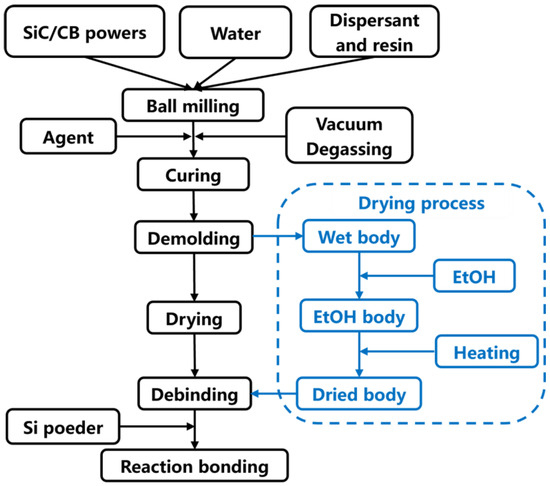
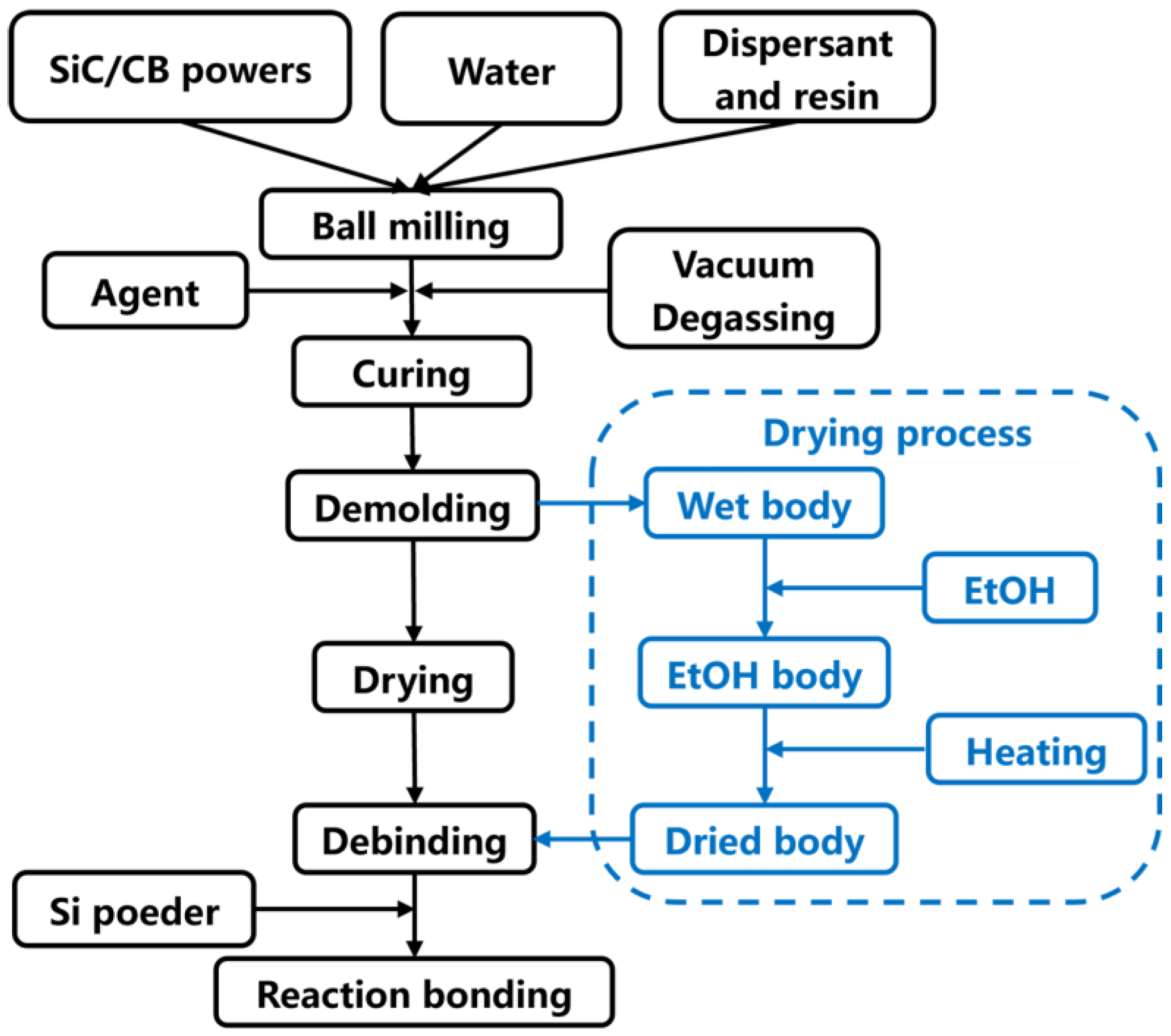
Figure 1 illustrates the process flow for manufacturing SiC ceramics by gelcasting combined with reaction sintering. In this work, we focus on the drying processAn aqueous solution was prepared by dissolving the resin, PVP, and TMAH in deionized water according to the slurry formulation, with PVP added at 2 wt% relative to the CB mass and TMAH used at pH = 11. Powders were added to the solution according to the slurry composition. The SiC powder consisted of F240 and F1200 in a mass ratio of 7:3. The resulting slurry was ball-milled for 6 h to ensure homogeneity. The curing agent was added and mixed under vacuum stirring to remove bubbles. After thorough homogenization, the slurry was cast into molds and cured at a specified temperature. Upon complete curing and demolding, gelcast wet bodies were obtained. They were immersed in a large volume of EtOH for 48 h to produce EtOH bodies, held at ambient temperature for 24 h, and subsequently dried in an oven at 60 °C until a constant weight, yielding the dried bodies.
Figure 1.
Flowchart of the gel casting and drying process.
2.5. Characterization
The stress–strain behavior of gelcast bodies was evaluated using a universal testing machine (Instron 5566, Instron, UK). Cylindrical specimens with dimensions of 10 mm in diameter and 10 mm in height were tested at a constant crosshead speed of 0.2 mm/min. The rheological properties of the slurries, including viscosity and storage modulus profiles, were characterized using a rotational rheometer (MCR 301, Anton Paar, Austria). The chemical structures of the compounds were examined by Fourier-transform infrared (FTIR) spectroscopy using a Nicolet iS20 spectrometer (Thermo Fisher Scientific, USA).
3. Results and Discussion
3.1. Effect of the PEGDE/PEI System on the Mechanical Properties in Drying Process of Gelcast Bodies and Preparation of PEGDE/SiC/CB Slurry
PEG is regarded as an effective additive for enhancing the flexibility of gelcast bodies [14], which is attributed to the abundance of C–O bonds in PEG chains with relatively low rotational energy barriers. During the gelcasting process, an appropriate amount of plasticizer introduced into the slurry was distributed between the gel network and the solvent. As drying proceeds and the solvent evaporates, the plasticizer is gradually adsorbed onto the gel network. Consequently, the addition of plasticizers exerts limited influence on the mechanical properties of wet bodies during drying, whereas a more pronounced effect is observed on the properties of dried bodies [15]. This underscores the limitations of using externally added plasticizers to regulate the mechanical performance of gelled materials.
As an alternative to external plasticization, the direct modification of the gel network architecture can be achieved by incorporating flexible polyether segments enriched with C–O bonds. This approach directly enhances the gel network compliance and remains effective throughout the entire gelcasting process. Accordingly, a PEGDE/PEI gel system was introduced, in which PEGDE, characterized by a high density of C–O linkages and terminal epoxy functionalities, reacted with the multifunctional amine groups of PEI via an epoxy–amine addition reaction.
3.1.1. Effect of the PEGDE/PEI System on the Mechanical Properties in Drying Process of Gelcast Bodies
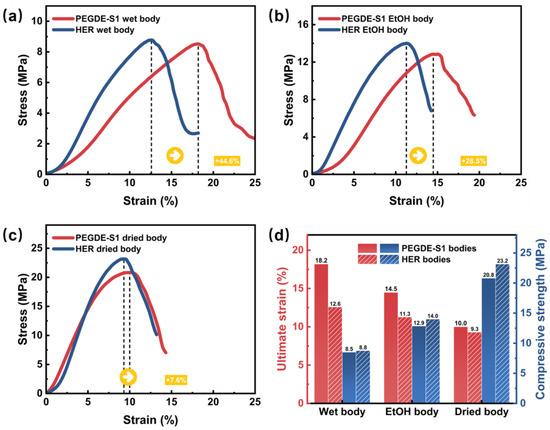
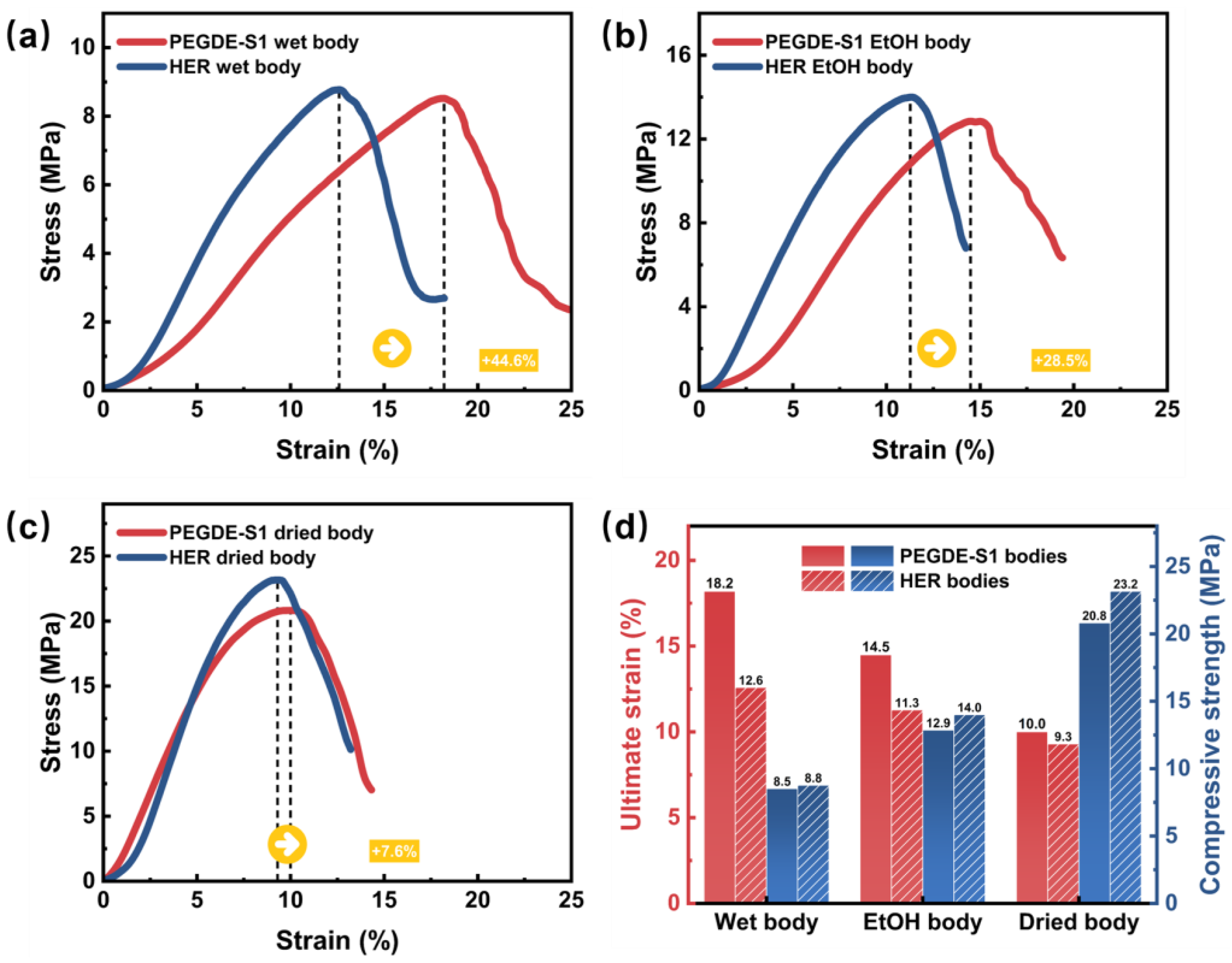
To assess the influence of the PEGDE/PEI system on the mechanical properties of the gelcast bodies in drying process, a comparative analysis was conducted with the HER/DPTA system, which has been successfully applied to ZrO2, Al2O3, and PZT ceramics [3,16,17]. SiC slurries were prepared using both gel systems, and their respective compositions are summarized in Table 1. The compressive stress–strain responses of the wet, EtOH, and dried bodies are shown in Figure 2.
Table 1.
Component Compositions of Slurries with PEGDE/PEI and HER/DPTA Systems.
Figure 2.
Stress–strain curves of the PEGDE/PEI and HER/DPTA systems for (a) wet, (b) EtOH, and (c) dried bodies, and comparison of (d) ultimate strain and compressive strength.
Wang et al. suggested that the peak width of stress–strain curves served as an indicator of the plasticity of ceramic bodies, with broader peak widths reflecting the enhanced plasticity [15]. Conversely, the ultimate strain, defined as the strain corresponding to the maximum stress, was considered a more appropriate parameter for characterizing plasticity, as an increase in the ultimate strain directly indicated an improved strain accommodation capability. The enhancement of the ultimate strain enabled the gelcast bodies to better tolerate deformation, thereby suppressing deformation and cracking during drying. The ultimate strain of PEGDE-S1 bodies reached 18.2% in the wet state, 14.5% in the EtOH state, and 10.0% in the dried state (Figure 2a–c). Compared with the HER bodies, the PEGDE-S1 bodies exhibited higher ultimate strain values, with increases of 44.6%, 28.3%, and 7.5% in the wet, EtOH, and dried states, respectively. This demonstrated that PEGDE effectively enhanced the ultimate strain and plasticity of the gelcast bodies owing to the presence of its polyether segments. The pronounced dependence on the gel network architecture confirmed its critical role in governing the mechanical behavior of gelcast bodies during drying. This effect was more evident in the wet and EtOH states but became less pronounced after drying, in contrast to the trends reported for systems with external plasticizers.
Previous studies have shown that the incorporation of plasticizers reduces the mechanical strength of gelcast bodies [7] because plasticizer molecules intercalate between polymer chains and weaken intermolecular interactions. In the present PEGDE/PEI system, although the ultimate strain was enhanced, the compressive strengths remained similar to those of the bodies prepared with the alternative gel system. The compressive strengths of PEGDE-S1 bodies were 8.5, 12.9, and 20.8 MPa in the wet, EtOH, and dried states, respectively, which were 3.4%, 7.9%, and 10.3% lower than those of HER bodies (Figure 2d). The lower strength of PEGDE, compared to HER, is possibly due to its lower epoxy value leading to a reduced crosslinking density in the gel structure. In the wet and EtOH states, the presence of the solvent increased the molecular mobility within the gel network, reducing the strength disparity between the two systems. Upon drying, solvent loss induced network shrinkage and chain interpenetration, and the higher rigidity of the HER/DPTA network conferred superior strength to the dried bodies. During drying, network shrinkage was constrained by ceramic particles, generating internal stress that contributed to the final strength. The flexible chain segments of PEGDE partially alleviated this stress, further narrowing the strength difference between the dried bodies derived from the two gel systems.
The fracture energy of the bodies containing PEGDE and HER at different drying stages, as shown in Table 2, was calculated from the stress–strain curves in Figure 2. At an equivalent gel content, the PEGDE bodies exhibited relatively higher fracture energy throughout the drying process. Since the fracture mode was brittle for all specimens, the elevated fracture energy suggests a greater capacity of the PEGDE to dissipate energy before failure. This property is advantageous for mitigating the effects of drying stress in gelcast bodies. Based on the ultimate strain, compressive strength and fracture energy of the gelcast bodies prepared using the two gel systems, the PEGDE/PEI system enhanced the ultimate strain while preserving the strength. This indicated that the system enhanced the tolerance to stress and deformation during drying, which was highly beneficial for suppressing warpage and cracking.
Table 2.
Fracture energy of HER and PEGDE-S1 gelcast bodies.
3.1.2. Fabrication of PEGDE/SiC/CB Slurry and Mechanical Characterization of the Bodies
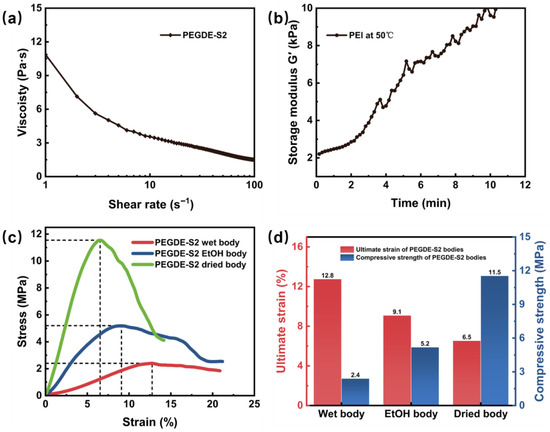
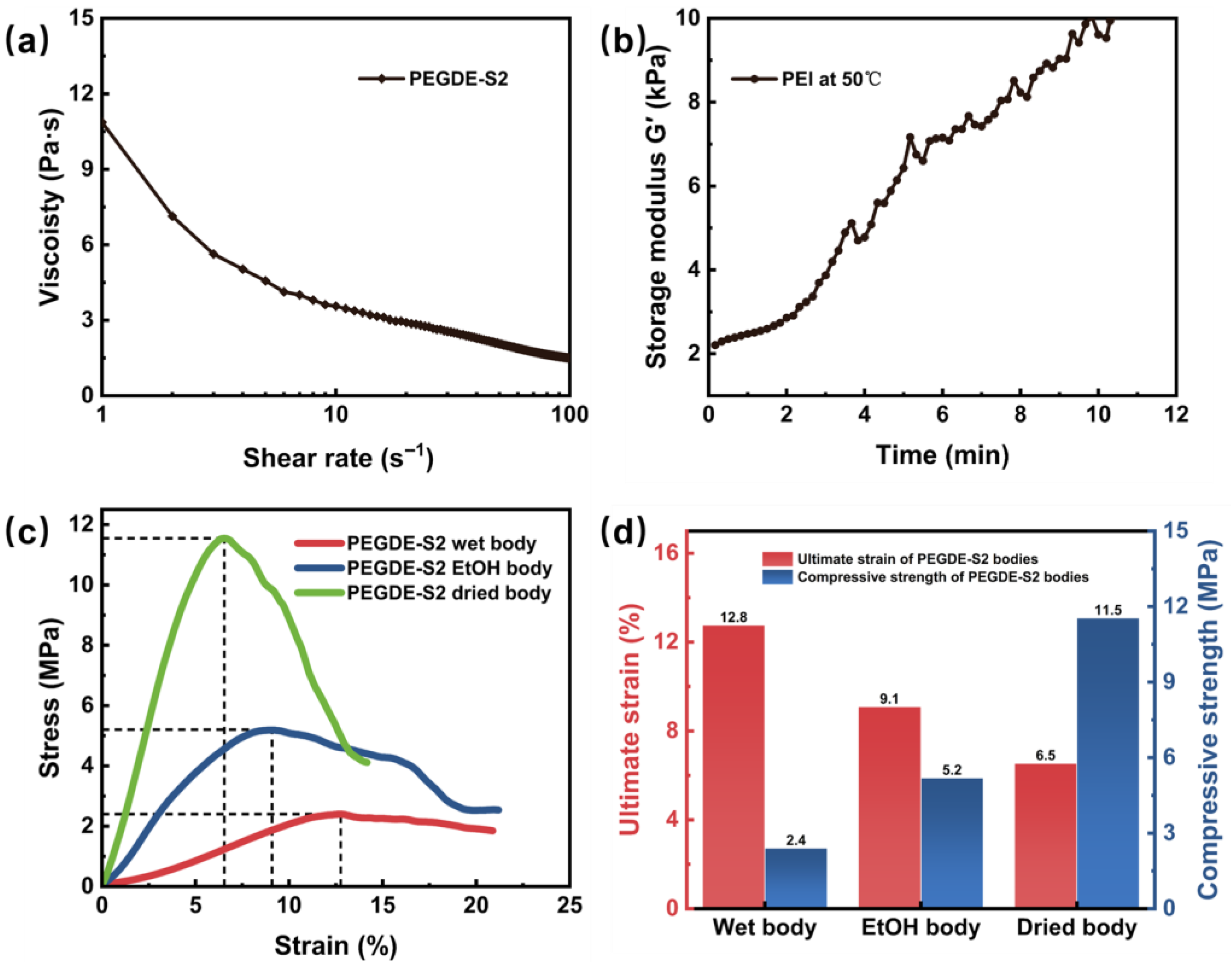
The PEGDE/PEI system confers favorable mechanical properties to gelcast bodies. Using a SiC/CB slurry suitable for the fabrication of reaction-bonded SiC (RBSiC) as the model system, a PEGDE/SiC/CB slurry was prepared, and its composition is listed in Table 3. The preparation of slurries with high solid loading is essential for achieving ceramic materials with superior mechanical performance. To achieve a high solid loading while maintaining the viscosity within a range suitable for engineering applications, the PEGDE content was fixed at 2 wt% of the slurry mass. As shown in Figure 3a, the PEGDE-S2 slurry exhibited a viscosity of 1.5 Pa·s at a shear rate of 100 s−1. Effective curing of the slurry was achieved using PEI, even at this low PEGDE content. The variation in the storage modulus during curing is presented in Figure 3b, indicating the curing reaction within 2 min at 50 °C. The stress–strain behavior of PEGDE-S2 bodies during drying is shown in Figure 3c. Owing to the low resin content and the resulting incomplete gel network, the PEGDE-S2 bodies exhibited ultimate strains of 6.5%, 9.1%, and 12.8% in the wet, EtOH, and dried states, respectively. Although the PEGDE/PEI system presented a high ultimate strain, the mechanical performance of PEGDE-S2 bodies remained relatively limited at this low additive content, indicating the need for further optimization.
Table 3.
Component Composition of the PEGDE/SiC/CB Slurry.
Figure 3.
(a) Viscosity of the PEGDE-S2 slurry, (b) evolution of the storage modulus during curing of the PEGDE-S2 slurry, (c) stress–strain curve, and (d) ultimate strain and compressive strength of the PEGDE-S2 bodies.
3.2. Preparation of Physically and Chemically Crosslinked Gels and Their Effects on the Mechanical Properties of Gelcast Bodies in Drying Process
In recent advances in ceramic wet-forming technologies, two emerging gel-based approaches have attracted attention: direct coagulation casting [18,19,20] and dispersant failure–induced coagulation casting [21]. They utilize the strong adsorption interactions between dispersants and ceramic particles, through which slurry solidification is achieved either by crosslinking between dispersants and ceramic particles or by modifying environmental conditions for dispersant flocculation, with the dispersant simultaneously acting as a gelling agent [22]. Bodies produced via these approaches generally exhibit limited strength, whereas physical gels are characterized by low organic content and enhanced plasticity, extending the strain accommodation range of the bodies. Therefore, a novel CB dispersant, SMALA-Na, was developed to achieve physical crosslinking. By introducing a dual-functional curing agent, chemical crosslinking was integrated (Section 3.1), forming a physically and chemically crosslinked gel.
3.2.1. Synthesis and Curing of Slurries Using a Physical Gel Based on Carbon Black Dispersant SMALA-Na
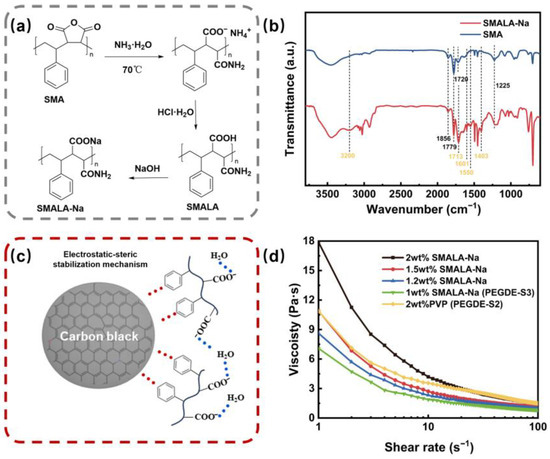
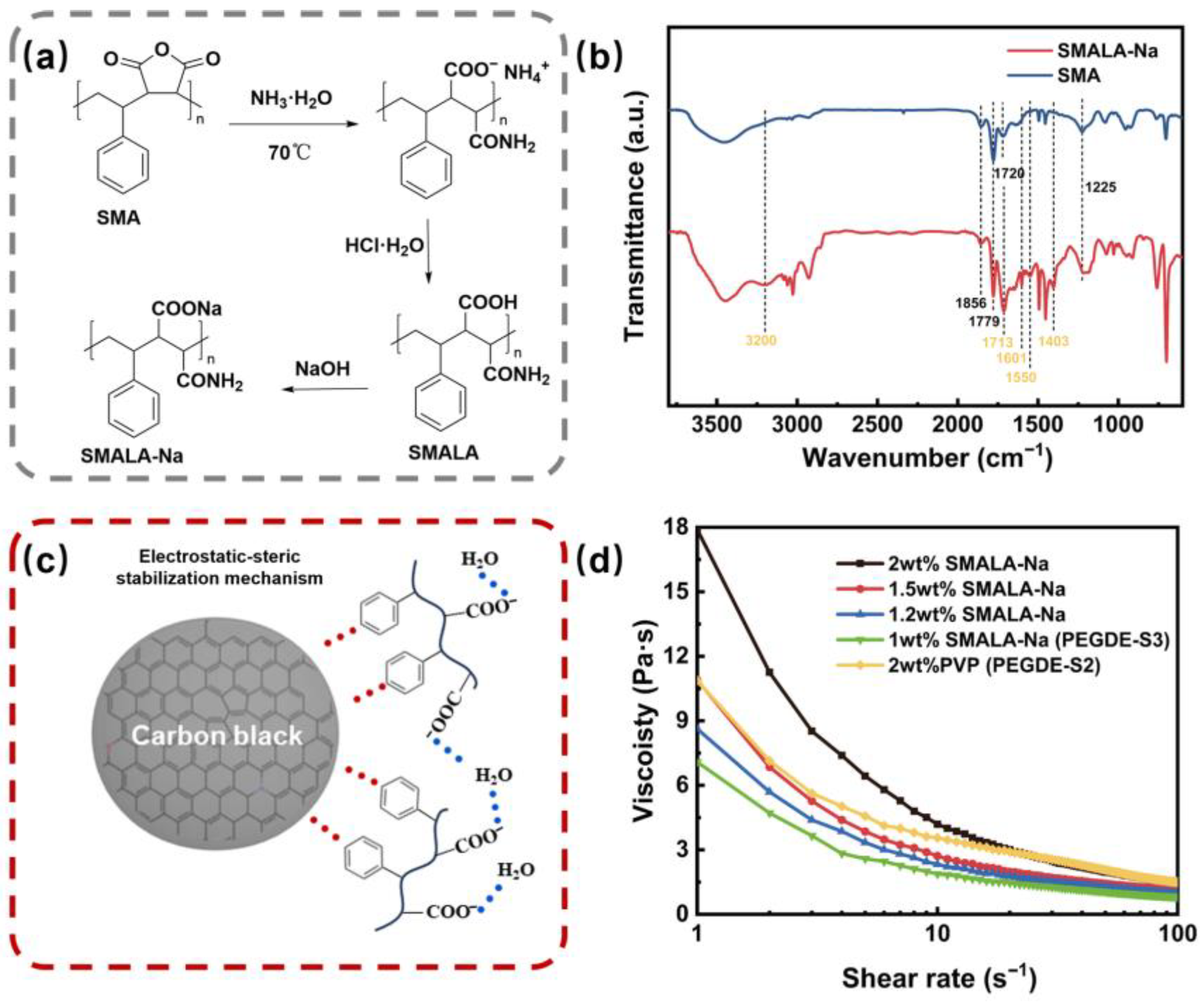
The CB dispersant SMALA-Na was synthesized from an SMA precursor using a straightforward procedure (Figure 4a) [23]. To verify the chemical structure of the product, both the starting material and synthesized dispersant were analyzed using FTIR spectroscopy (Figure 4b). These features confirmed the successful synthesis of SMALA-Na via the reaction pathway. In previous studies, carbon black has often been dispersed using PVP dispersants, which function primarily through a steric hindrance stabilization mechanism. In contrast to PVP, SMALA-Na provides dispersion through a combined electrostatic–steric stabilization mechanism (Figure 4c). To evaluate its dispersing performance, PVP in the PEGDE-S2 slurry (Table 3) was replaced with SMALA-Na at different concentrations, and the corresponding slurry viscosity was measured. Figure 4d illustrates the lower viscosity of the slurry with 1 wt% SMALA-Na introduced, denoted as PEGDE-S3. This electrostatic–steric stabilization mechanism endowed SMALA-Na with a high dispersing efficiency at a reduced dosage, thereby enabling the preparation of slurries with a lower viscosity. And low viscosity of the slurry facilitates the gelcasting process.
Figure 4.
(a) Synthesis route of carbon black dispersant SMALA-Na; (b) FTIR spectra of SMA and SMALA-Na; (c) schematic illustration of the electrostatic-steric stabilization mechanism of SMALA-Na; and (d) viscosity comparison of PEGDE-S2 slurries containing different SMALA-Na contents.
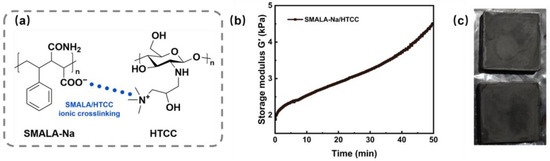
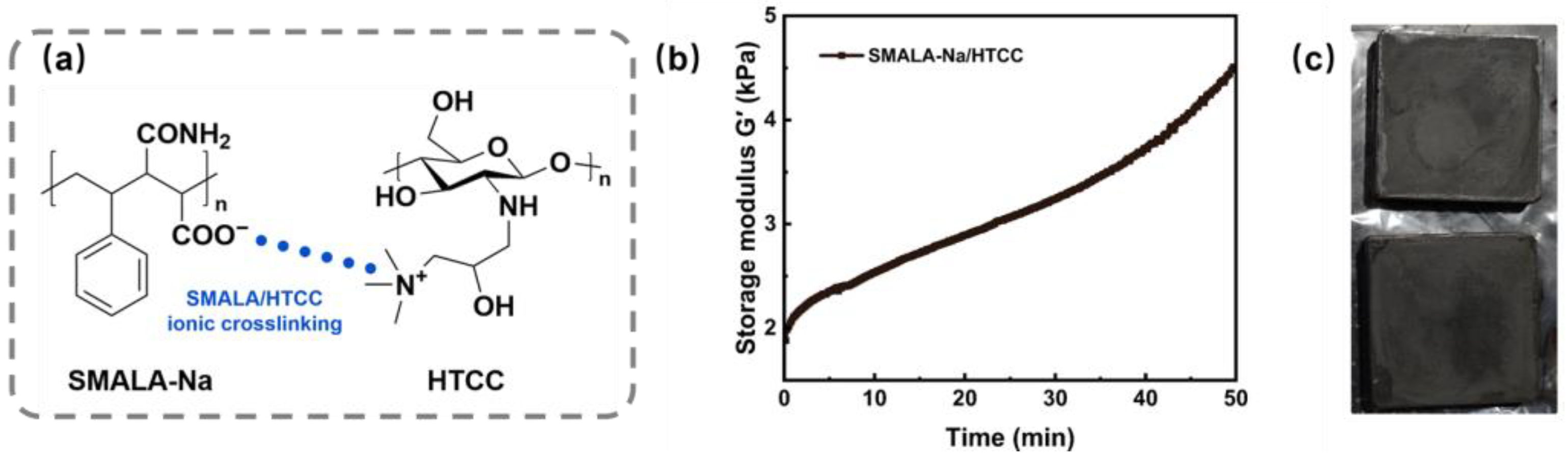
SMALA-Na is a representative amphiphilic dispersant. The abundant aromatic rings in its molecular structure have a strong affinity for the conjugated structure of CB surfaces, ensuring effective anchoring of dispersant molecules. The amide groups in SMALA-Na increase the number of hydrogen bonds formed with water, whereas the presence of carboxyl groups in the sodium salt form further enhances hydrophilicity. This amphiphilic characteristic is critical for achieving slurry solidification via physical crosslinking induced by dispersant deactivation. In aqueous media, bulky polymeric anions and polymeric cations can mutually adsorb to form organic salts, thereby inducing flocculation [24], which provides an effective route for gel formation via ionic crosslinking. Therefore, HTCC was selected as the ionic crosslinker, and the resulting gel structure is illustrated in Figure 4a. HTCC dissociated into polymeric cations in aqueous solution, which formed an ionically crosslinked physical gel with the polymeric anions derived from SMALA-Na. The variation in the storage modulus (G′) of the PEGDE-S3 slurry upon the addition of HTCC is shown in Figure 5b. A gradual increase in G′ was observed, demonstrating progressive gel formation. A wet body obtained from slurry solidification using the SMALA-Na/HTCC system is shown in Figure 5c. This system enabled slurry solidification at a very low gel content, with molding successfully achieved through the deactivation-induced solidification of the CB dispersant SMALA-Na. Nevertheless, similar to other physically crosslinked gels, the wet body exhibited relatively limited mechanical properties, which were sufficient only for demolding. This limitation may require integration with chemical crosslinking to achieve complementary mechanical performance.
Figure 5.
(a) Schematic illustration of the ionic crosslinking mechanism between SMALA-Na and HTCC; (b) variation in storage modulus (G′) of the PEGDE-S3 slurry upon addition of HTCC; and (c) SiC/CB wet green body fabricated using the SMALA-Na/HTCC system.
3.2.2. Preparation of a Dual Curing Agent and Formation of a Physically and Chemically Crosslinked Gel
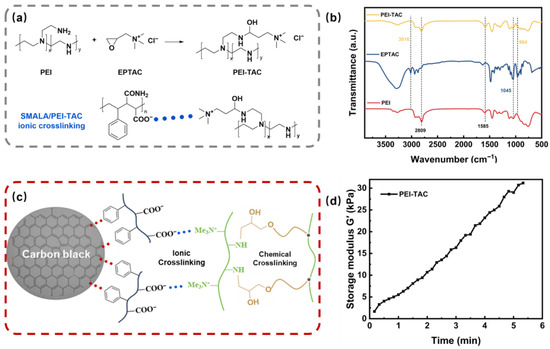
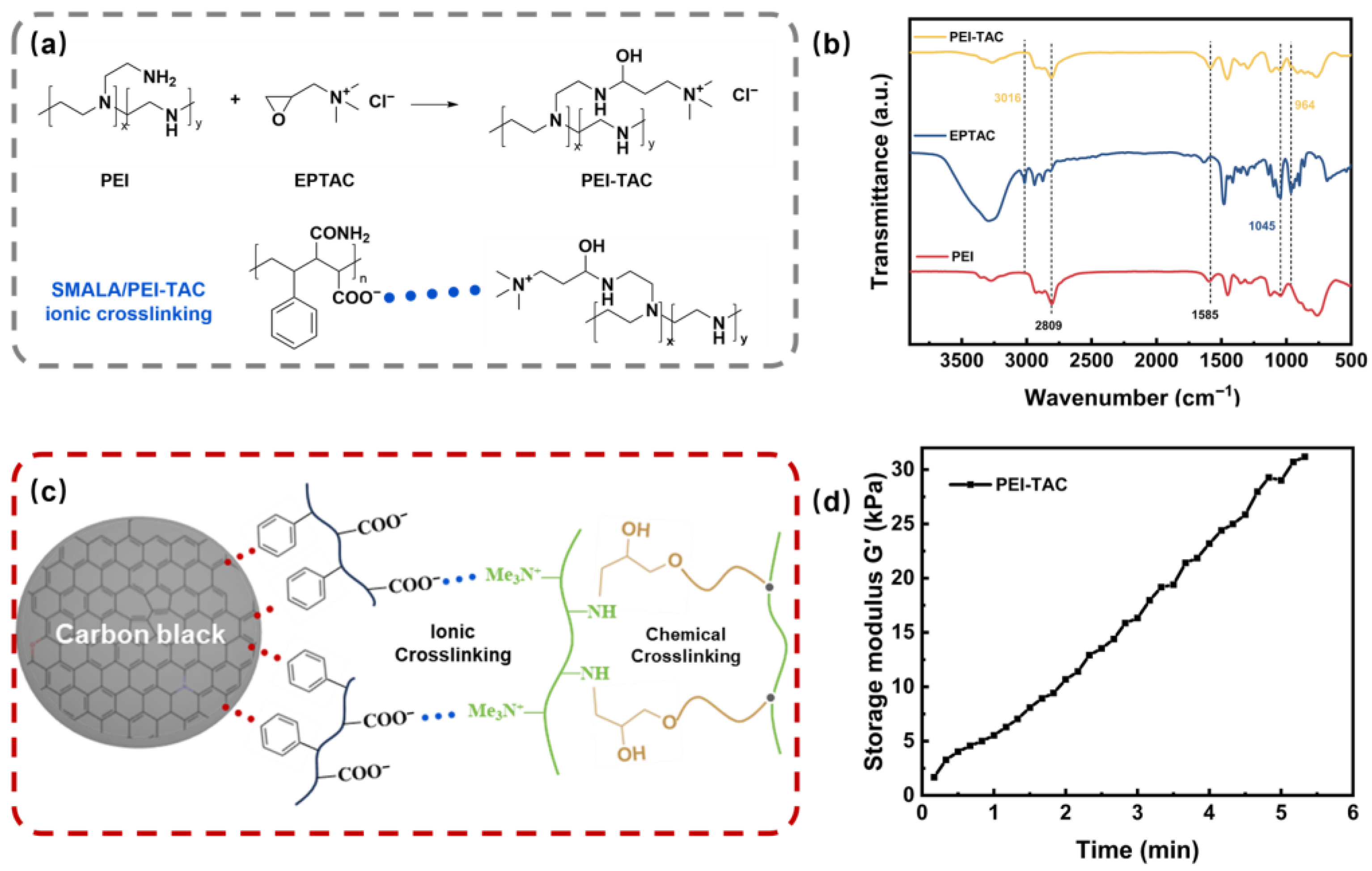
As described in Section 3.2.1, the ionic crosslinking of SMALA-Na relies on polymeric quaternary ammonium cations. As a curing agent for epoxy resins, PEI contains abundant amino groups. Accordingly, it was reacted with EPTAC to synthesize polyethylenimine grafted with quaternary ammonium salts (PEI-TAC). By controlling the EPTAC dosage, quaternary ammonium groups were grafted onto approximately 15% of the primary amino groups. The reaction pathway is shown in Figure 6a. The FTIR spectra of PEI, EPTAC, and the resulting PEI-TAC are presented in Figure 6b. The chemical structure of the synthesized product was confirmed through FTIR analysis, which demonstrated successful synthesis.
Figure 6.
(a) Schematic illustration of the synthesis route for the dual curing agent PEI-TAC; (b) FTIR spectra of PEI, EPTAC, and PEI-TAC; (c) structural diagram of the physically and chemically crosslinked PPS gel; and (d) variation in the storage modulus (G′) of the PEGDE-S3 slurry upon addition of PEI-TAC.
The variation in G′ of the PEGDE-S3 slurry upon addition of the curing agent is presented in Figure 6d. The G′ increase following the introduction of PEI-TAC indicated the successful curing of the slurry. The gel network formed by curing with the dual-functional agent PEI-TAC is depicted in Figure 6c. In this system, the primary amino groups of PEI-TAC reacted with PEGDE to establish chemical crosslinking via epoxy–amine reactions, while the grafted quaternary ammonium groups simultaneously enabled physical crosslinking with SMALA-Na through carboxylate anion–quaternary ammonium cation interactions. This dual functionality enabled PEI-TAC to become a curing agent for both chemical and physical crosslinking. Employing this dual-curing strategy, a hybrid physically and chemically crosslinked gel, denoted as PEGDE/PEI-TAC/SMALA-Na (PPS), was constructed within the gelcasting process.
3.2.3. Influence of Physically and Chemically Crosslinked Gels on the Mechanical Properties of Gelcast Bodies in Drying Process
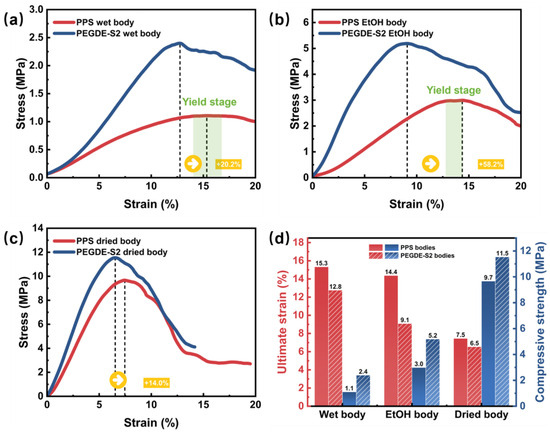
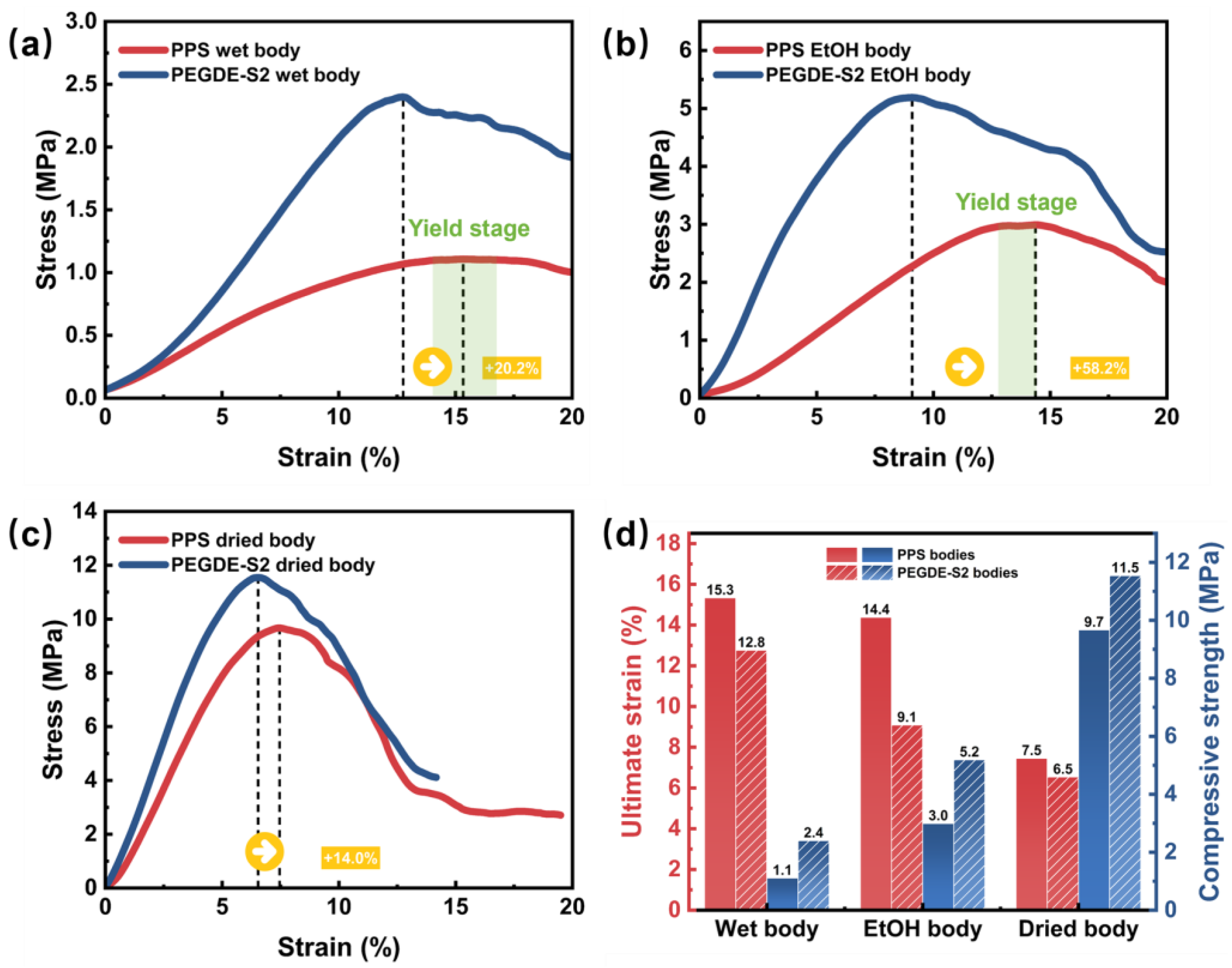
As shown in Figure 7a,b, the stress–strain curves of PPS wet and EtOH bodies exhibited a distinct yield plateau, during which the stress remained nearly constant with increasing strain as the peak stress was approached. Following this plateau, failure occurred with an accompanying stress drop, whereas no comparable yield stage was observed in the PEGDE-S2 curve. The presence of a yield plateau suggests that substantial plastic deformation occurred once the elastic deformation limit was exceeded. This revealed that the PPS system affected the characteristic behavior of the physical gel in the wet and EtOH bodies. In the PPS system, physical gelation arose from ionic crosslinking based on cation–anion interactions. The plasticity of the wet and EtOH bodies associated with this physical crosslinking relied on the reversible dissociation and reformation of ionic bonds, implying that the interactions between the carboxylate groups of SMALA-Na and the quaternary ammonium groups of PEI-TAC were dynamic, rather than static. During drying, the deformation induced polymer chain mobility, which enabled SMALA-Na and PEI-TAC chains to establish multiple mobile ionic crosslinking sites, thereby accounting for the plastic deformation observed beyond the peak stress.
Figure 7.
Stress–strain curves of PEGDE-S2 and PPS systems for the (a) wet body, (b) EtOH body, and (c) dried body, and (d) a comparison of the ultimate strain and compressive strength.
This plastic deformation further increases the ultimate strain of the body. As shown in Figure 7a,b, PPS wet and EtOH bodies exhibited ultimate strains of 15.3% and 14.4%, respectively, corresponding to increases of 20.2% and 58.2% compared with PEGDE-S2 bodies. The introduction of the physical gel enhanced the strain tolerance throughout the drying process, which was critical for suppressing deformation and cracking. However, the increased ultimate strain was accompanied by a pronounced reduction in the strength of wet and EtOH bodies. The compressive strengths of PPS wet and EtOH bodies decreased by 54.2% and 42.3%, respectively, relative to those of PEGDE-S2 bodies. As indicated in Table 4, the fracture energy of the PPS body is also lower than that of PEGDE-S2. However, the fracture energies of the two gel systems are comparable in the dried state. This suggests that physical crosslinking enhances the plasticity and capacity for plastic deformation of the during the wet body and EtOH body, but the associated increase in toughness concurrently constrains the improvement in strength. This reduction in strength and fracture energy was attributed to the presence of polyammonium salt grafts in the dual-curing agent PEI-TAC. This partially affected the reactivity between amine and epoxy groups, thereby lowering the degree of chemical crosslinking. Nevertheless, the strengths of PPS wet and EtOH bodies remained sufficient for practical operations, such as demolding and handling during drying. Accordingly, the trade-off of reduced strength in exchange for a substantially higher ultimate strain was considered more favorable for the drying process.
Table 4.
Fracture energy of PPS and PEGDE-S2 gelcast bodies.
The PPS wet and EtOH bodies exhibited higher ultimate strain but lower strength and fracture energy, whereas this distinction was less pronounced in the dried bodies, consistent with the behavior shown in Figure 2. Figure 7c illustrates the similar flexural stress–strain responses of dried PPS and PEGDE-S2 green bodies without a distinct yield stage. In the dried state, the ionic species associated with physical crosslinking were immobilized within the matrix as macromolecular salts, rendering them ineffective in facilitating plastic deformation. Consequently, the bodies predominantly exhibited high-strength characteristics governed by chemical crosslinking. In summary, the physically and chemically crosslinked gel markedly enhanced the ultimate strain of gelcast bodies during drying, which was highly advantageous for crack suppression, while not significantly compromising the strength of the dried green bodies, thereby making it a highly suitable gel system for the gelcasting process.
3.2.4. Kinetic Analysis of the Drying Process
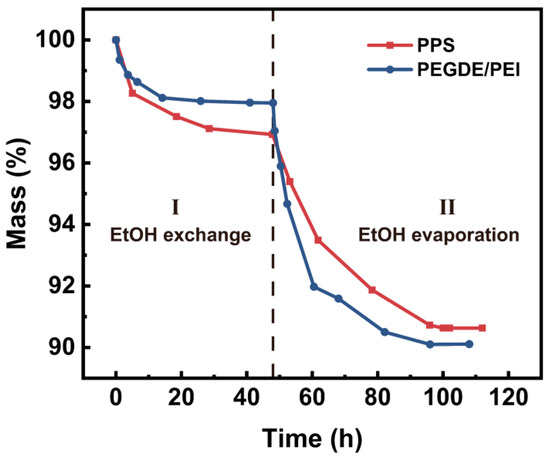
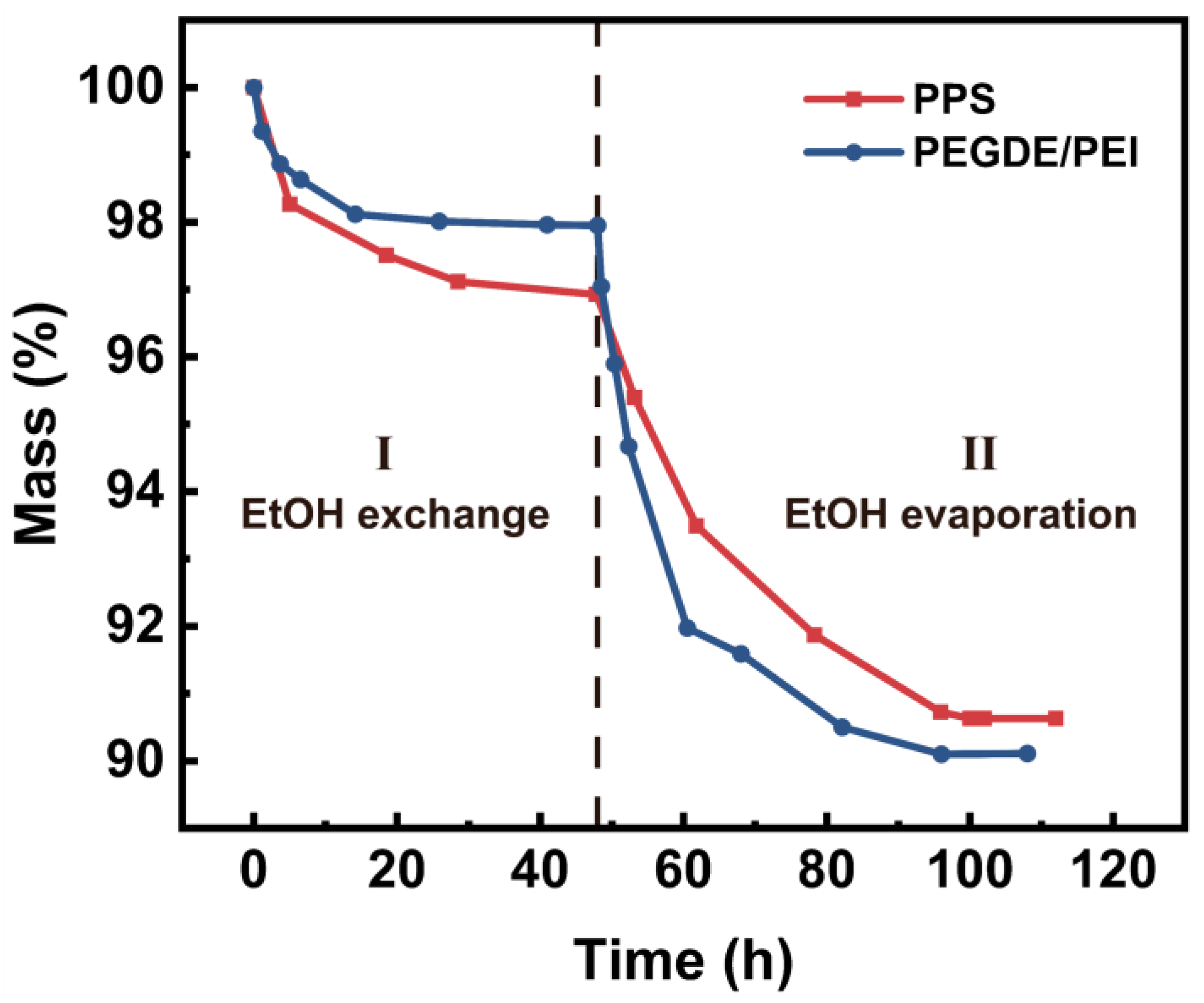
The mass loss of the bodies from the two gel systems during the drying process are shown in Figure 8. The trends of mass loss during drying were relatively similar for the two gel systems. Solvent-exchange-based liquid drying with EtOH enabled initial drying of the green bodies, resulting in limited mass loss and volumetric contraction. Compared with conventional drying by water evaporation, this approach introduces an intermediate stage into the drying process. This is conducive to minimizing internal stress gradients in the body during drying process. Additionally, the favorable volatility of EtOH enables a shorter timeframe for the solvent evaporation process. Both types of green bodies exhibited a mass loss of 2% to 3% during the EtOH solvent-exchange stage. This process involves the replacement of the internal water with EtOH, leading to an overall reduction in solvent within the bodies. Consequently, the EtOH-exchanged bodies demonstrated enhanced mechanical properties compared to their wet-state counterpart. The reduction in solvent content can be attributed to the crosslinked gel network, which forms numerous hydrogen bonds with water molecules, effectively immobilizing them within the network. In contrast, the interaction between EtOH and the gel network is weaker, preventing the retention of a significant amount of EtOH molecules. A mass loss of 7~8% occurred during the EtOH evaporation stage, where the highly volatile nature of EtOH enabled rapid volatilization and reduced the drying time. Since both types of bodies underwent an identical drying procedure, with the only difference being the gel system, they exhibited nearly identical mass loss. The difference in mass change during drying for the bodies from the two gel systems lies in the fact that the PPS gel body experienced a greater mass loss during the EtOH solvent-exchange process, and subsequently exhibited a relatively slower rate in the EtOH evaporation stage. This indicates that a smaller amount of EtOH penetrated into the PPS body during the solvent-exchange process. This phenomenon may be attributed to the formation of an ionic gel in the PPS system, which results in a lower chemical crosslinking density compared to the PEGDE/PEI system, as discussed in Section 3.2.3. The reduced chemical crosslinking density diminishes its capacity to immobilize EtOH molecules. Concurrently, the lower polarity of EtOH relative to water may cause the physically crosslinked network to precipitate from the solvent and become fixed within the powder matrix. The greater mass loss observed for the PPS body during the EtOH exchange stage signifies that a more advanced state of drying is achieved at this phase. This can help mitigate the stress differentials that develop within the body during the subsequent EtOH volatilization stage.
Figure 8.
Mass loss of PPS and PEGDE/PEI bodies during liquid drying via solvent exchange to EtOH and EtOH evaporation.
3.2.5. Gel Casting of SiC Ceramics Based on PPS Gel
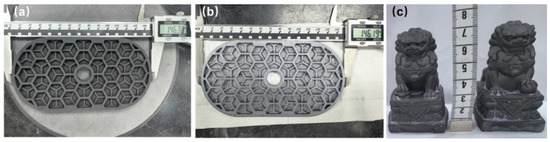
Based on this gel system, a series of SiC ceramics with complex geometries were fabricated via gelcasting (Figure 9). Defect-free drying and subsequent reaction sintering were successfully achieved for a body with a length of approximately 150 mm and intricate support structures (Figure 9a,b). In contrast, gelcasting is generally regarded as more suitable for thin-walled components rather than thick, solid structures, because the increased thickness results in pronounced drying-rate differences between the surface and core, which readily induces cracking. Using the present PPS system, a solid complex-structured RBSiC ceramic with dimensions of approximately 70 mm × 50 mm × 50 mm was successfully prepared (Figure 9c). This result demonstrates that the system can accommodate drying-induced strain more effectively and exhibits favorable process viability for engineering applications.
Figure 9.
Components fabricated using the PPS system: (a) a 150 mm complex-shaped SiC/CB green body, (b) a 150 mm reaction-bonded SiC (RBSiC) ceramic, and (c) a ~70 mm × 50 mm × 50 mm solid complex-shaped RBSiC ceramic.
4. Conclusions
This study addressed the issues of warpage and cracking during the drying of gelcast bodies by proposing the enhancement of strain tolerance as an effective strategy. Using SiC/CB slurries designed for the fabrication of RBSiC ceramics as the model system, a physical–chemical gelation system was implemented in gelcasting, leading to the following conclusions:
- (1)
- The microstructure of the gel system directly influenced the mechanical behavior of the bodies throughout the drying process. PEGDE-S1 bodies containing flexible chain segments exhibited higher ultimate strain. Compared with HER bodies, the ultimate strain increased by 44.6%, 28.5%, and 7.6% in the wet, EtOH, and dried states, respectively. These results demonstrate that the PEGDE/PEI system provides improved compliance to strain development, thereby enhancing resistance to warpage and cracking during drying process.
- (2)
- The dual functionality of the dispersant as a gelling agent represents an effective route for realizing physical gels in gelcasting. An amphiphilic CB dispersant, SMALA-Na, was successfully synthesized, and physical gelation and slurry curing were achieved via ionic crosslinking induced by quaternary ammonium salts. A dual-functional curing agent, PEI-TAC, was prepared by grafting quaternary ammonium groups onto PEI, the curing agent for epoxy resins. This curing agent enabled the formation of a PPS physically and chemically crosslinked gel within the SiC/CB slurry.
- (3)
- The PPS gel exhibited the combined characteristics of both chemical and physical gels. A distinct plastic deformation regime was observed in the wet and EtOH PPS bodies following the initial elastic deformation, which significantly increased the ultimate strain. Specifically, the ultimate strain of wet and EtOH PPS bodies increased by 20.2% and 58.3%, respectively, compared with PEGDE-S2 bodies. In contrast, dried PPS and PEGDE-S2 bodies displayed similar stress–strain responses, indicating that the physical gel promoted stress relaxation during drying without compromising the mechanical properties of the dried body. Various ceramics with complex geometries were successfully fabricated via gelcasting using the PPS system, confirming its practical viability and providing a broadly applicable reference for advancing the engineering implementation of gelcasting technology.
Author Contributions
Conceptualization, C.W.; methodology, C.W.; validation, Z.C.; formal analysis, C.W.; investigation, C.W.; resources, Z.C.; data curation, C.W.; writing—original draft preparation, C.W.; writing—review and editing, L.L.; visualization, C.W.; supervision, Z.H.; project administration, Z.H.; funding acquisition, Z.C. All authors have read and agreed to the published version of the manuscript.
Funding
This research was funded by The National Key R&D Program of China (Grant No. 2024YFB3714704).
Data Availability Statement
The original data presented in this study are included in the article. Further inquiries can be directed to the corresponding author.
Conflicts of Interest
The authors declare no conflicts of interest.
References
- Omatete, O.O.; Janney, M.A.; Nunn, S.D. Gelcasting: From Laboratory Development toward Industrial Production. J. Eur. Ceram. Soc. 1997, 17, 407–413. [Google Scholar] [CrossRef] [Scilit]
- Wang, Y.; Cheng, Y.; Chen, Y.; Wang, R.; Ping, Z. Lattice-Structured SiC Ceramics Obtained via 3D Printing, Gel Casting, and Gaseous Silicon Infiltration Sintering. Ceram. Int. 2022, 48, 6488–6496. [Google Scholar] [CrossRef] [Scilit]
- Liao, J.; Zhang, D.; Wu, X.; Luo, H.; Zhou, K.; Su, B. Preparation of High Strength Zirconia by Epoxy Gel-Casting Using Hydantion Epoxy Resin as a Gelling Agent. Mater. Sci. Eng. C 2019, 96, 280–285. [Google Scholar] [CrossRef] [Scilit] [PubMed]
- Ma, G.; Zhang, H.; Wang, C.; Wu, H.; Yuan, M.; Liu, X.; Huang, Z. Preparation of Zirconium Carbide Ceramic with Good Mechanical Properties via Gel-Casting and Pressureless Sintering. Ceram. Int. 2024, 50, 31732–31736. [Google Scholar] [CrossRef] [Scilit]
- Babashov, V.G.; Varrik, N.M. Gel Casting Method for Producing Ceramic Materials: A Review. Glass Ceram 2023, 80, 9–16. [Google Scholar] [CrossRef] [Scilit]
- Tu, T.; Jiang, G. SiC Reticulated Porous Ceramics by 3D Printing, Gelcasting and Liquid Drying. Ceram. Int. 2018, 44, 3400–3405. [Google Scholar] [CrossRef] [Scilit]
- Hammel, E.C.; Campa, J.A.; Armbrister, C.E.; Scheiner, M.V.; Okoli, O.I. Influence of Osmotic Drying with an Aqueous Poly(Ethylene Glycol) Liquid Desiccant on Alumina Objects Gelcast with Gelatin. Ceram. Int. 2017, 43, 16443–16450. [Google Scholar] [CrossRef] [Scilit]
- Zhang, X.; Hu, H.; Wang, X.; Luo, X.; Zhang, G.; Zhao, W.; Wang, X.; Liu, Z.; Xiong, L.; Qi, E.; et al. Challenges and Strategies in High-Accuracy Manufacturing of the World’s Largest SiC Aspheric Mirror. Light Sci. Appl. 2022, 11, 310. [Google Scholar] [CrossRef] [Scilit]
- Zhang, G.; Cui, C.; Dong, B.; Cao, Q.; Bao, J. Fabricating of Ф4m CIOMP-SiC Mirror Blank. In Proceedings of the 9th International Symposium on Advanced Optical Manufacturing and Testing Technologies: Large Mirrors and Telescopes, Dalian, China, 26–29 June 2018; International Society for Optics and Photonics: Bellingham, WA, USA, 2019; Volume 10837, p. 108370I. [Google Scholar]
- Trunec, M.; Stastny, P.; Kastyl, J. Defect-Free Drying of Large Fine-Particle Zirconia Compacts Prepared by Gelcasting Method. J. Eur. Ceram. Soc. 2022, 42, 7180–7186. [Google Scholar] [CrossRef] [Scilit]
- Peng, X.; Shimai, S.; Sun, Y.; Zhou, G.; Wang, S. Correlation between Microstructure Evolution and Drying Behavior of Gelcast Alumina Green Bodies. Ceram. Int. 2015, 41, 11870–11875. [Google Scholar] [CrossRef] [Scilit]
- Barati, A.; Kokabi, M.; Famili, M.H.N. Drying of Gelcast Ceramic Parts via the Liquid Desiccant Method. J. Eur. Ceram. Soc. 2003, 23, 2265–2272. [Google Scholar] [CrossRef] [Scilit]
- Kheyrinia, L.; Baharvandi, H.R.; Ehsani, N.; Yaghobizadeh, O. Fabrication and Properties of a Gel-Cast Dense Silicon Carbide Body. Silicon 2022, 14, 2521–2532. [Google Scholar] [CrossRef] [Scilit]
- Luo, X.; Ma, Y.; Shao, B.; Li, C.; Li, K.; Guo, D.; Chen, D. Eco-Friendly Tape Casting of Borosilicate Glass/Al2O3 Sheets for LTCC Applications. Ceram. Int. 2022, 48, 25975–25983. [Google Scholar] [CrossRef] [Scilit]
- Wang, J.; Zhao, J.; Mao, J.; Liu, W.; Ji, H.; Zhang, J.; Wang, S. Enhanced Plasticity of Spontaneous Coagulation Cast Oxide Ceramic Green Bodies. J. Adv. Ceram. 2024, 13, 568–578. [Google Scholar] [CrossRef] [Scilit]
- Xie, R.; Zhang, D.; Zhang, X.; Zhou, K.; Button, T.W. Gelcasting of Alumina Ceramics with Improved Green Strength. Ceram. Int. 2012, 38, 6923–6926. [Google Scholar] [CrossRef] [Scilit]
- Boonruang, A.; Thongchai, T.; Jiang, Y.; Demore, C.E.M.; Neale, S.; Moldovan, A.; Button, T.W.; Cochran, S. Progress towards Wafer-Scale Fabrication Based on Gel Casting Technique for 1–3 Randomised Piezocomposite μUS Linear Array. J. Eur. Ceram. Soc. 2022, 42, 5565–5574. [Google Scholar] [CrossRef] [Scilit]
- Wu, X.; Zhao, J.; Shimai, S.; Mao, X.; Zhang, J.; Wang, S. Re-Fluidising the Aged Gel for High-Density Alumina Green Body. J. Adv. Ceram. 2022, 11, 1375–1382. [Google Scholar] [CrossRef] [Scilit]
- Wang, X.; Xiang, H.; Liu, J.; Hou, F.; Sun, Y.; Zhou, Y. Gelcasting of Yb3Al5O12 Using a Nontoxic Water-Soluble Copolymer as Both Dispersant and Gelling Agent. Ceram. Int. 2016, 42, 421–427. [Google Scholar] [CrossRef] [Scilit]
- Gan, K.; Gai, Y.; Wang, Y.; Cui, J.; Lu, Y.; Zhang, X.; Liu, J.; Xu, J.; Yang, J. Direct Coagulation Casting of Silicon Carbide Suspension via Polyelectrolyte Dispersant Crosslink Reaction. Int. J. Appl. Ceram. Technol. 2020, 17, 274–284. [Google Scholar] [CrossRef] [Scilit]
- Gan, K.; Xu, J.; Gai, Y.-J.; Wu, J.-M.; Li, S.-J.; Lu, Y.-J.; Huo, W.-L.; Zhang, X.-Y.; Yang, J.-L. In-Situ Coagulation of Yttria-Stabilized Zirconia Suspension via Dispersant Hydrolysis Using Sodium Tripolyphosphate. J. Eur. Ceram. Soc. 2017, 37, 4868–4875. [Google Scholar] [CrossRef] [Scilit]
- Wu, Q.; Li, Y.; Zhang, B.; Liu, Y.; Li, X.; Ji, H. A New Gelcasting Using Isobam Both as Dispersant and Monomer. Ceram. Int. 2023, 49, 15560–15567. [Google Scholar] [CrossRef] [Scilit]
- Yao, Y.; Zhang, X.; Guo, Z.; Liu, W.; Hu, C.; Ru, Y.; Zhang, L.; Jiang, C.; Qiao, J. Preparation and Application of Recyclable Polymer Aerogels from Styrene-Maleic Anhydride Alternating Copolymers. Chem. Eng. J. 2023, 455, 140363. [Google Scholar] [CrossRef] [Scilit]
- Jiang, L.; Tian, S.; Xie, Y.; Lv, X.; Sun, S. High Strength, Conductivity, and Bacteriostasis of the P(AM-Co-AA)/Chitosan Quaternary Ammonium Salt Composite Hydrogel through Ionic Crosslinking and Hydrogen Bonding. Langmuir 2023, 39, 8698–8709. [Google Scholar] [CrossRef] [Scilit]

Disclaimer/Publisher’s Note: The statements, opinions and data contained in all publications are solely those of the individual author(s) and contributor(s) and not of MDPI and/or the editor(s). MDPI and/or the editor(s) disclaim responsibility for any injury to people or property resulting from any ideas, methods, instructions or products referred to in the content. |
© 2026 by the authors. Licensee MDPI, Basel, Switzerland. This article is an open access article distributed under the terms and conditions of the Creative Commons Attribution (CC BY) license.