


Abstract
As coastal ultra-deep mine shafts advance to greater depths, shaft lining concrete may experience sustained humid–hot conditions. Elevated temperature is induced by geothermal heat and early-age hydration heat, while high humidity is maintained in water-rich underground environments, which can compromise long-term performance. Such late-age deterioration may increase maintenance demand and pose safety concerns for ultra-deep shaft construction and long-term service. This study experimentally evaluates a high-strength shaft lining concrete designed with a composite cementitious system and cured at 40, 60, and 80 °C (95% RH) for 30–180 days, considering the engineering scenario of the 2500 m shaft at the Sanshan Island Gold Mine. The selected temperature range was determined based on in situ temperature monitoring in the target shaft. P-wave velocity measurements and uniaxial compression tests were conducted, while acoustic emission (AE) monitoring and energy evolution analysis were used to interpret damage progression. P-wave velocity decreased with curing temperature, with the most pronounced reduction at 80 °C. Compressive strength increased at early ages and then declined at later ages; by 180 d, the strength loss relative to the peak level is more pronounced at higher temperatures. AE results show four typical damage stages, with activity increasingly concentrated near peak stress as temperature and age increase. AF–RA analysis indicates tensile cracking dominates, with a slight increase in shear-related events at higher curing temperatures and longer ages. Energy analysis further confirms that most input energy is stored as elastic strain energy prior to peak stress, and higher curing temperatures increase the proportion of input energy stored elastically, implying a higher tendency toward brittle failure. These results suggest optimizing curing regimes and toughness-enhancement strategies for durable shaft infrastructure.
1. Introduction
Mine shafts are critical infrastructure for deep mining, and their long-term serviceability directly affects operational safety, resource efficiency, and the environmental burden associated with repair and reconstruction [1,2,3]. With increasing excavation depth, the surrounding rock temperature rises due to geothermal gradients; meanwhile, hydration heat from mass concrete can further elevate the curing temperature of shaft linings, especially in the early stage. Sustained thermal exposure may accelerate early hydration while impairing long-term mechanical stability and durability, which increases maintenance demand and can reduce mining efficiency [4,5,6,7].
Numerous studies have demonstrated that high-temperature curing conditions could accelerate the hydration reaction and lead to higher early-age strength of the cement, but reduce its long-term strength and durability [7,8,9,10,11]. Cui and Liu [12,13] reported that high-temperature curing enhances the strength of tunnel concrete at 1 day, but causes rapid deterioration of strength and pore structure after 7 days. Wang et al. [14] found that the surge in hydration significantly contributes to the strength promotion of the concrete material in early stages. However, the pivotal factor leading to strength deterioration is the increase in porosity when the difference in the hydration degree is less than 0.065. Additionally, some studies [15,16] indicated that high-temperature curing reduces the fracture energy and toughness of the concrete, which makes the material more susceptible to cracking under load. Microscale investigations based on scanning electron microscopy (SEM), X-ray diffraction (XRD), nuclear magnetic resonance (NMR), and thermogravimetric analysis (TGA) have revealed that moderate heating promotes cement hydration, facilitates the formation of hydration products, and produces a dense interfacial bonding structure, thereby enhancing concrete strength. In contrast, excessively high temperatures, despite accelerating hydration kinetics, tend to induce localized accumulation of hydration products, obstruct subsequent hydration processes, increase porosity, and ultimately degrade mechanical stability [17,18,19,20]. These findings demonstrate the coupling between temperature, microstructural evolution, and macroscopic mechanical properties.
To mitigate such deterioration, mineral admixtures such as fly ash, slag, and silica fume are commonly incorporated into concrete. Their pozzolanic reactivity and micro-filling effects promote secondary hydration, refine pore structure, and densify the interfacial transition zone (ITZ), thereby improving mechanical stability and ductility under elevated-temperature curing [21,22,23]. In addition, high humidity can supplement water loss at elevated temperatures and help maintain hydration continuity, which may partially offset long-term strength loss [24,25]. In underground shafts, humidity is often high and may vary with ventilation and seepage conditions [26]. Such variation may influence moisture loss and shrinkage-related cracking, and may affect long-term damage development [13].
In summary, previous studies have systematically elucidated the influence of curing temperature on concrete behavior across macro-, meso-, and micro-scales. However, significant variations in raw materials, curing regimes (including temperature, humidity, and duration), and mix proportions limit the direct comparability of existing results and their applicability to deep shaft lining concretes [22]. Moreover, relatively less attention has been devoted to the evolution of damage and progressive failure mechanisms induced by prolonged high-temperature environments. In recent years, advanced non-destructive monitoring techniques, such as acoustic emission (AE), have been increasingly applied to concrete failure investigations [27,28,29,30]. During the monitoring process, AE detects transient elastic waves released during microcrack propagation, enabling real-time analysis of internal damage evolution [27]. Simultaneously, in numerous engineering projects, concrete and rock materials invariably undergo processes involving the input, accumulation, dissipation, and release of energy. The energy transfer and conversion processes lead to deformation and failure of the materials [31,32]. However, research on the progressive damage process of high-temperature-cured concrete under load, especially studies employing non-destructive testing techniques and energy theory, remains relatively scarce. Accordingly, this study provides a complementary interpretation of damage evolution and failure behaviors by combining AE characteristics with an energy-evolution analysis.
Based on the 2500 m shaft project at the Sanshan Island Gold Mine, this study prepared a high-strength shaft lining concrete using a composite cementitious system. We investigated the effects of curing temperature 40, 60, and 80 °C and curing age 30–180 days under a controlled high-humidity condition relevant to humid underground shafts. Uniaxial compression tests were conducted to evaluate mechanical properties, and acoustic emission (AE) characteristics together with energy evolution analysis were used to interpret damage development and failure behaviors under sustained humid–hot conditions relevant to ultra-deep shafts. The results support performance assessment and long-term stability evaluation of shaft lining concrete in ultra-deep shafts.
2. Materials and Methods
2.1. Environmental Conditions and Curing Parameters of Ultra-Deep Shaft Concrete
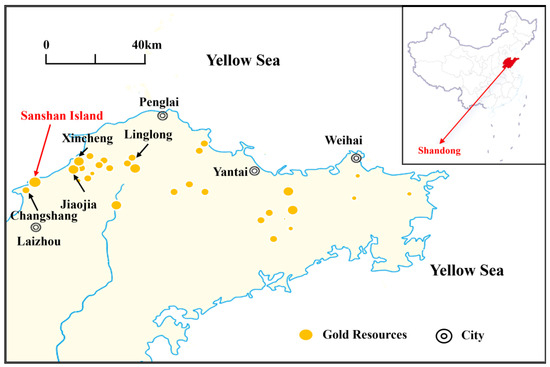
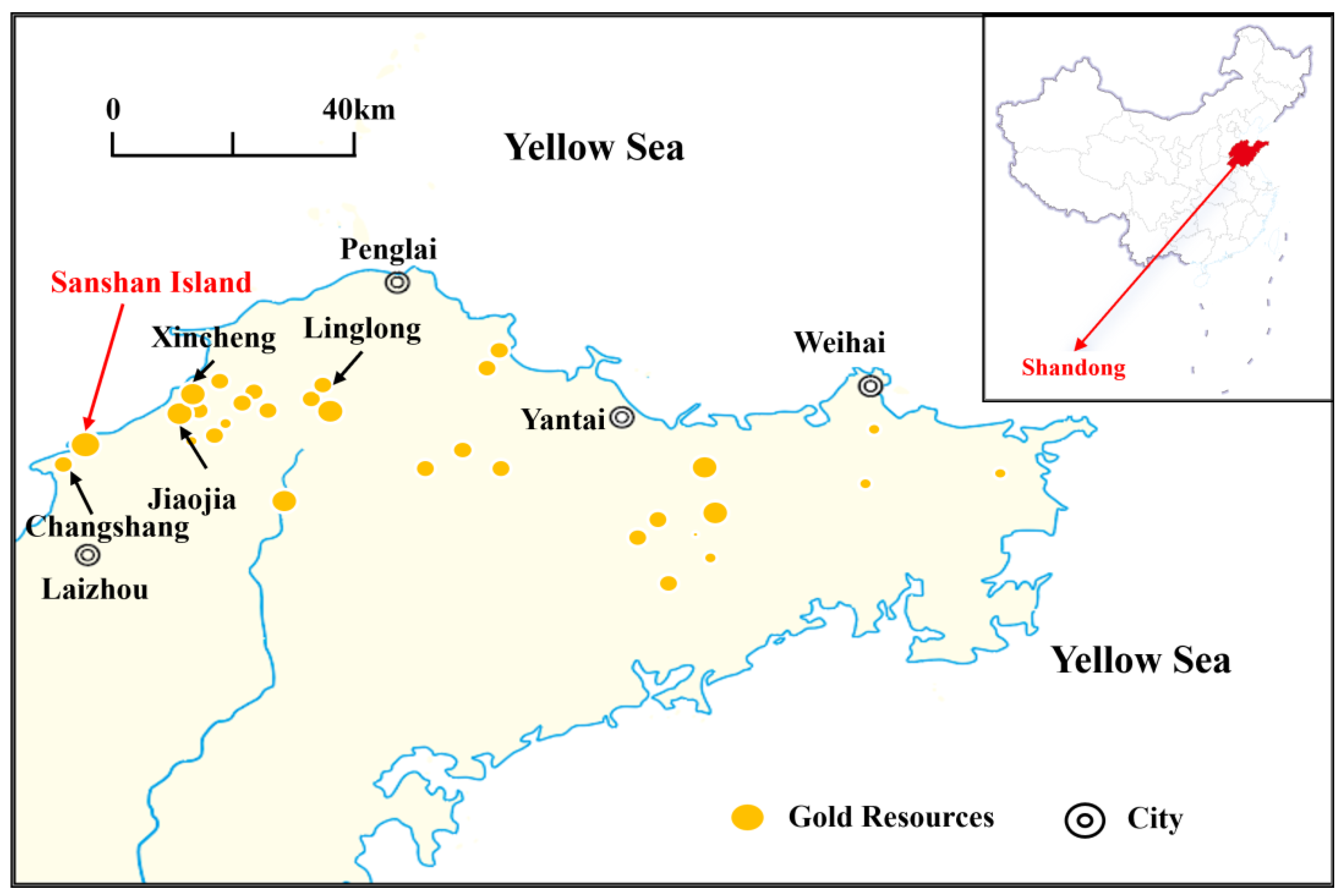
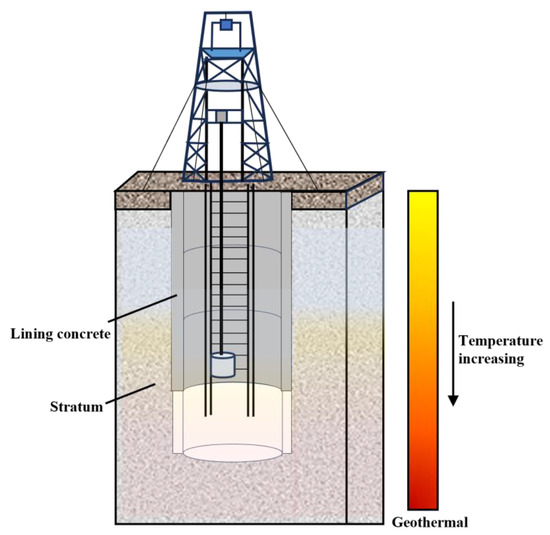
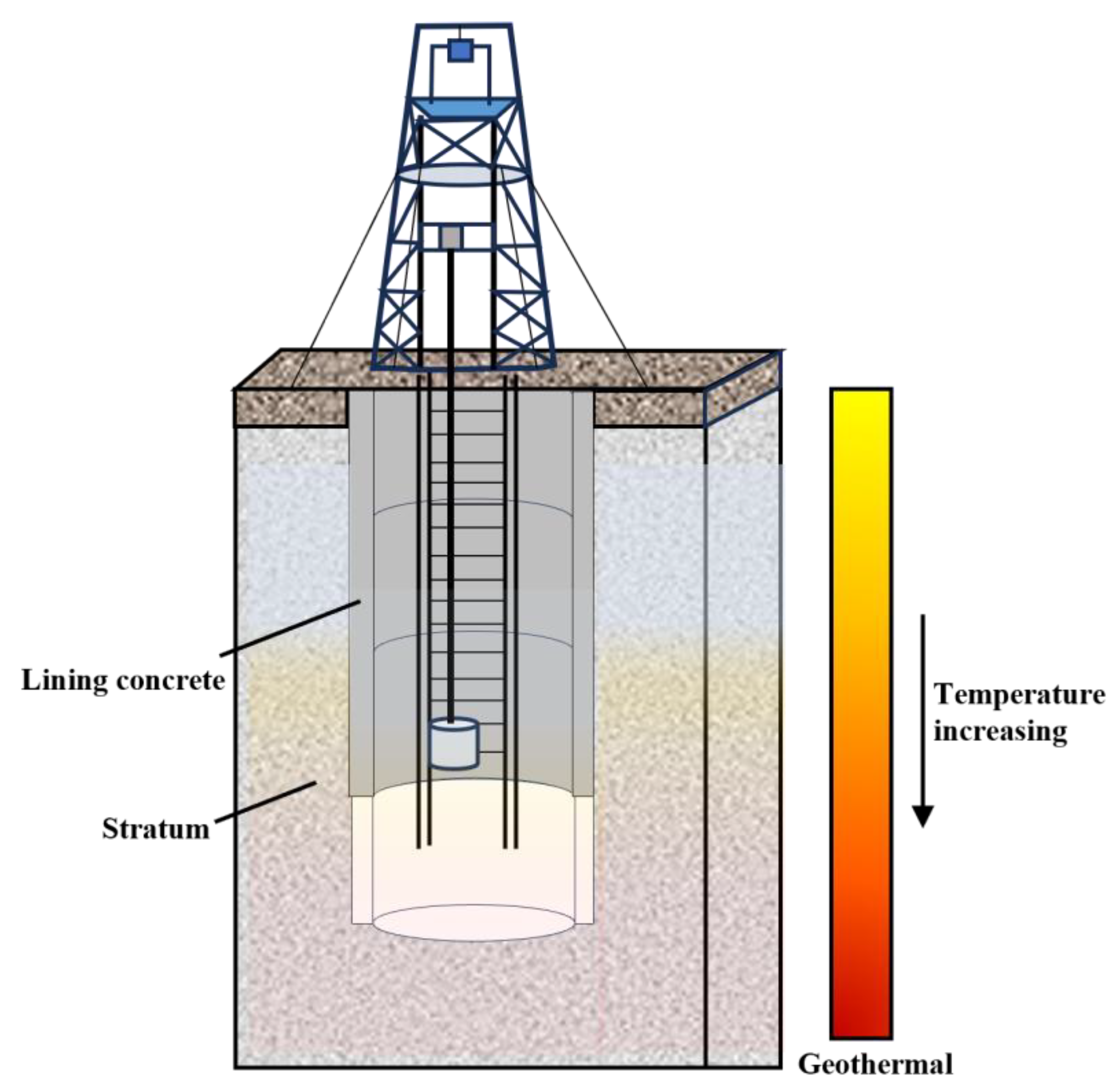
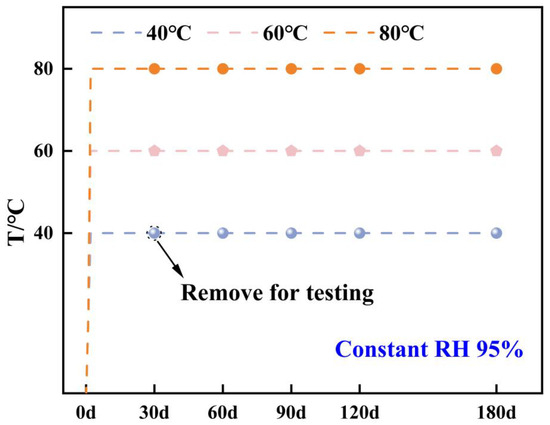
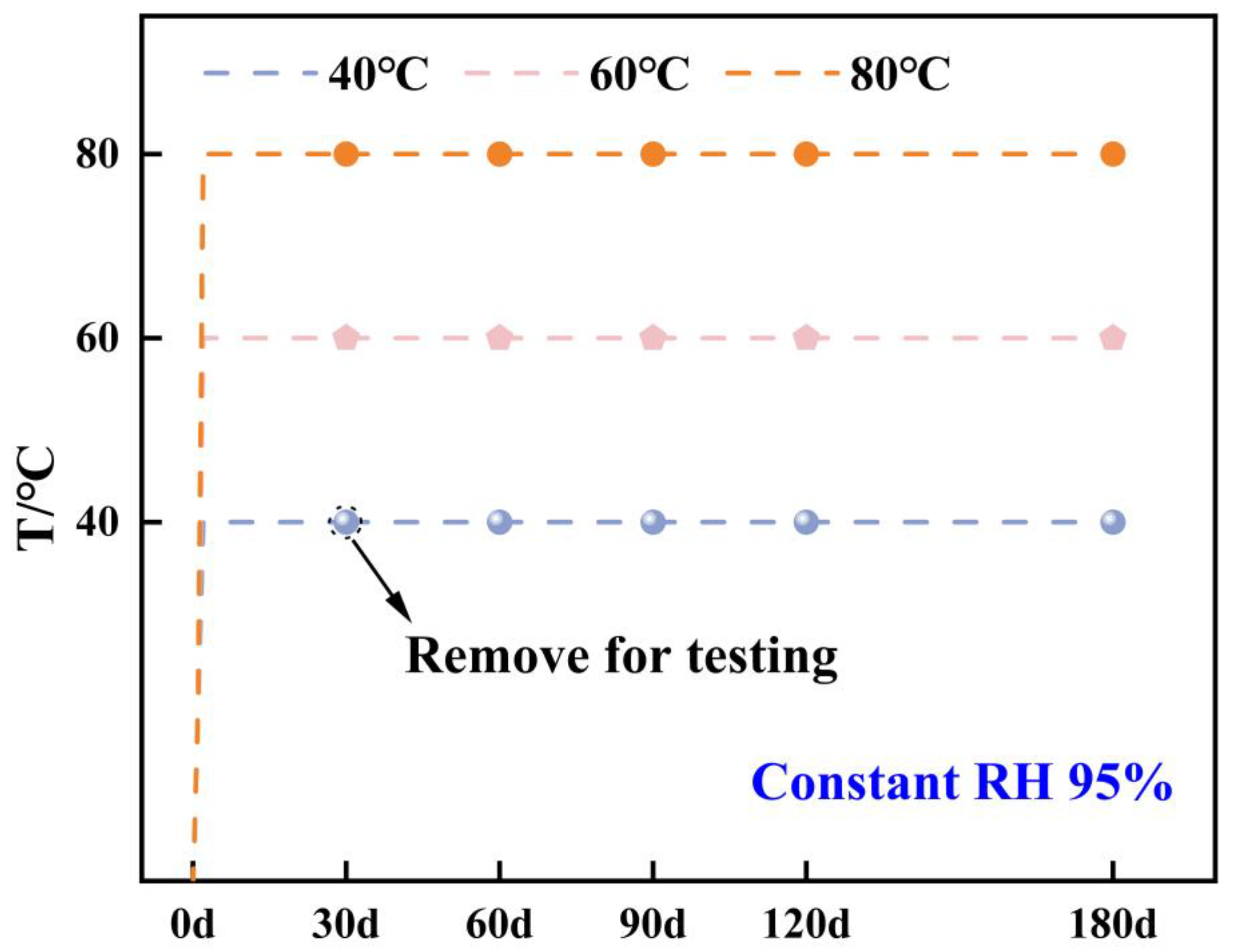
The Sanshan Island Gold Mine is situated in Yantai City, Shandong Province, China (see Figure 1). The ultra-deep shaft under construction has a diameter of 10.5 m and a designed depth of 2500 m (see Figure 2). In situ monitoring indicates that the underground environment is characterized by high humidity exceeding 90%. Temperatures range from 36.75 °C to 57.39 °C at depths between 1200 m and 2000 m, as summarized in Table 1. The average geothermal gradient is approximately 2.52 °C per 100 m, exhibiting a gradual and relatively uniform increase without apparent geothermal anomaly zones. In view of the designed depth of 2500 m and hydration heat from mass concrete, three curing temperatures were adopted, with 80 °C representing a conservative high-temperature condition. All specimens were cured at 40 °C, 60 °C, and 80 °C under 95% relative humidity. Specimens were cured under a constant 95% relative humidity to reduce the influence of humidity variation and to examine the effects of temperature and curing age more clearly. Five curing ages were selected: 30, 60, 90, 120, and 180 days.
Figure 1.
Distribution of gold deposits in the Jiaodong region (adapted from Refs. [33,34]).
Figure 2.
Schematic of the environmental conditions for the ultra-deep shaft in the Sanshan Island Gold Mine.
Table 1.
Underground temperature conditions in the Sanshan Island Gold Mine.
2.2. Concrete Material and Preparation
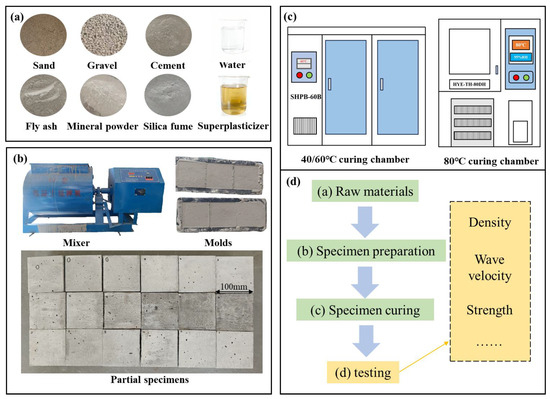
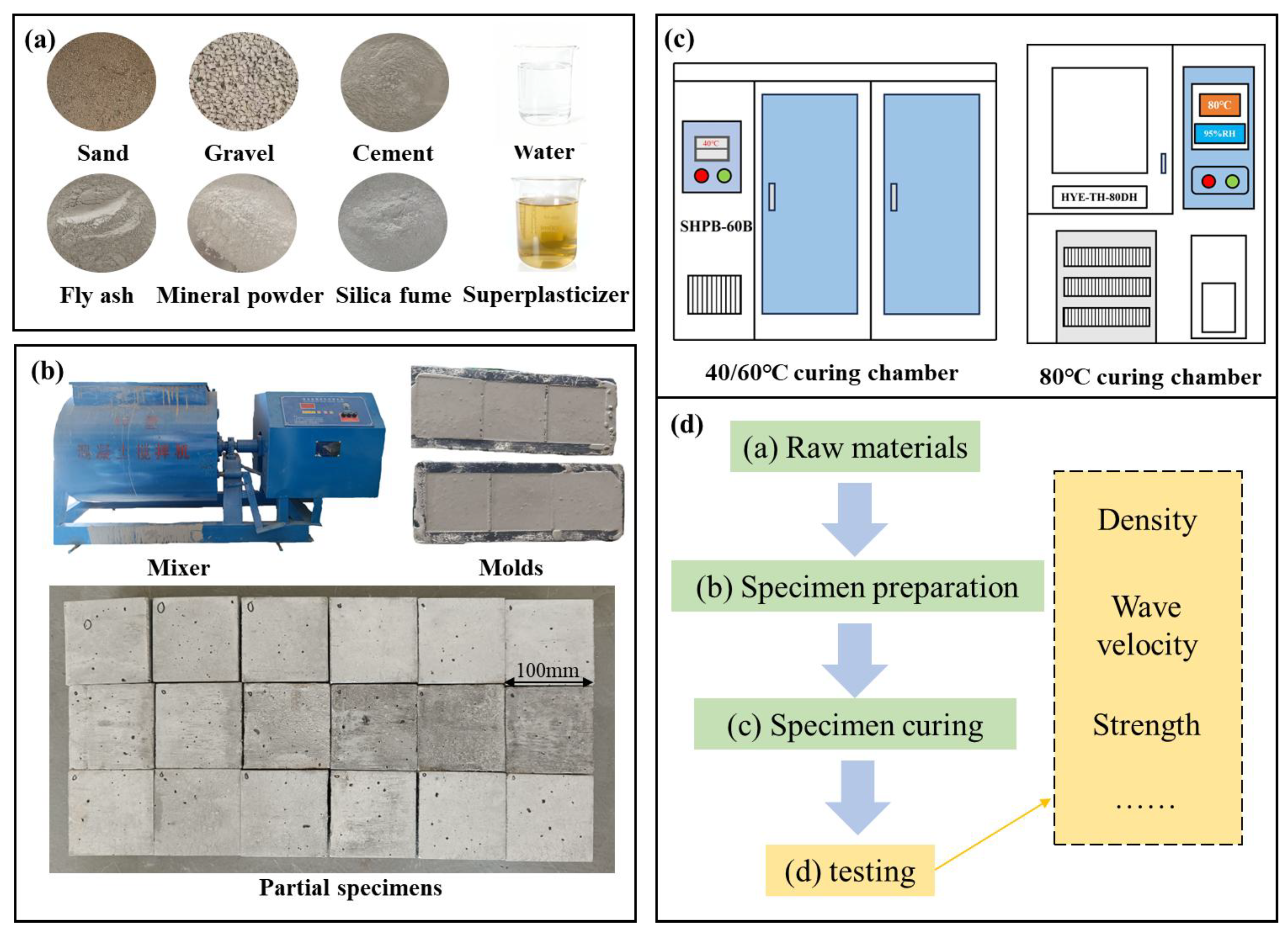
In this work, PO 42.5 cement (Anhui Conch Cement Co., Ltd., Xuancheng, China) along with coarse and fine aggregate materials were selected for preparing the concrete samples. The cement used in this study had a 3-day compressive strength of 24.4 MPa and a 28-day compressive strength of 53.6 MPa. The coarse aggregates had particle sizes ranging from 5 to 15 mm, while the fine aggregate consisted of natural river sand with a fineness modulus of 2.6 (both sourced locally from Ordos, Inner Mongolia, China). To enhance the strength and durability of concrete under high-temperature conditions, composite mineral admixtures, including Class I fly ash (Huaneng Shang’an Power Plant, Shijiazhuang, China), S95 mineral powder (Jingye Steel Co., Ltd., Shijiazhuang, China), and silica fume (Henan Wuhu Environmental Protection Technology Co., Ltd., Gongyi, China), were incorporated into the cement matrix. Moreover, a polycarboxylate superplasticizer (Shanxi Feike New Materials Technology Co., Ltd., Yuncheng, China) was also used to improve the workability of the concrete. The mixing water was municipal tap water (Ordos, Inner Mongolia, China) (see Figure 3a). The concrete mix proportions were designed in accordance with the Chinese standard JGJ/T 281–2012 [35]. After several preliminary trials, the final mix composition adopted in this study is presented in Table 2.
Figure 3.
The preparation process of the concrete specimens: (a) raw materials; (b) partial specimens; (c) specimen curing; (d) testing.
Table 2.
The material composition and mixing ratio of the shaft concrete in this study.
Figure 3b shows the preparation process of the tested concrete specimens. Firstly, coarse and fine aggregates were placed into the mixer and mixed for 1 min. The composite cementitious material was then added and stirred for another 1 min. Finally, the mixture of water and polycarboxylate superplasticizer was added and stirred for 3 min. After the above mixing process, the mixture was poured into 100 mm × 100 mm × 100 mm cube molds and was placed on the vibration table for approximately 30 s. Next, the concrete mold surfaces were smoothed and covered with plastic wrap at room temperature for 24 h (±2 h). Lastly, the specimens were demolded and placed into their respective curing environments. They were then removed at the specified age for compression tests, as shown in Figure 4. A total of 15 environmental groups were established, with three specimens prepared for each group, amounting to 45 specimens in total. The concrete specimens were labeled according to the curing temperature–age–sequence format (e.g., 40-30-1).
Figure 4.
Curing and testing procedures for concrete specimens in high-temperature environments.
2.3. Experimental Equipment and Setup
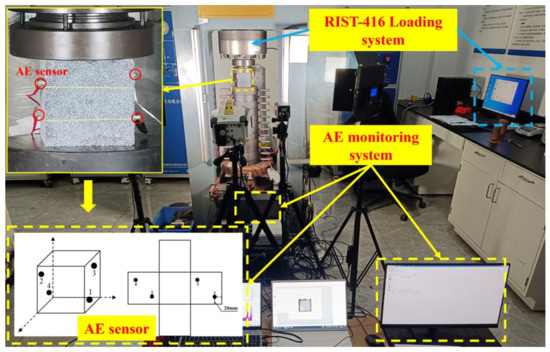
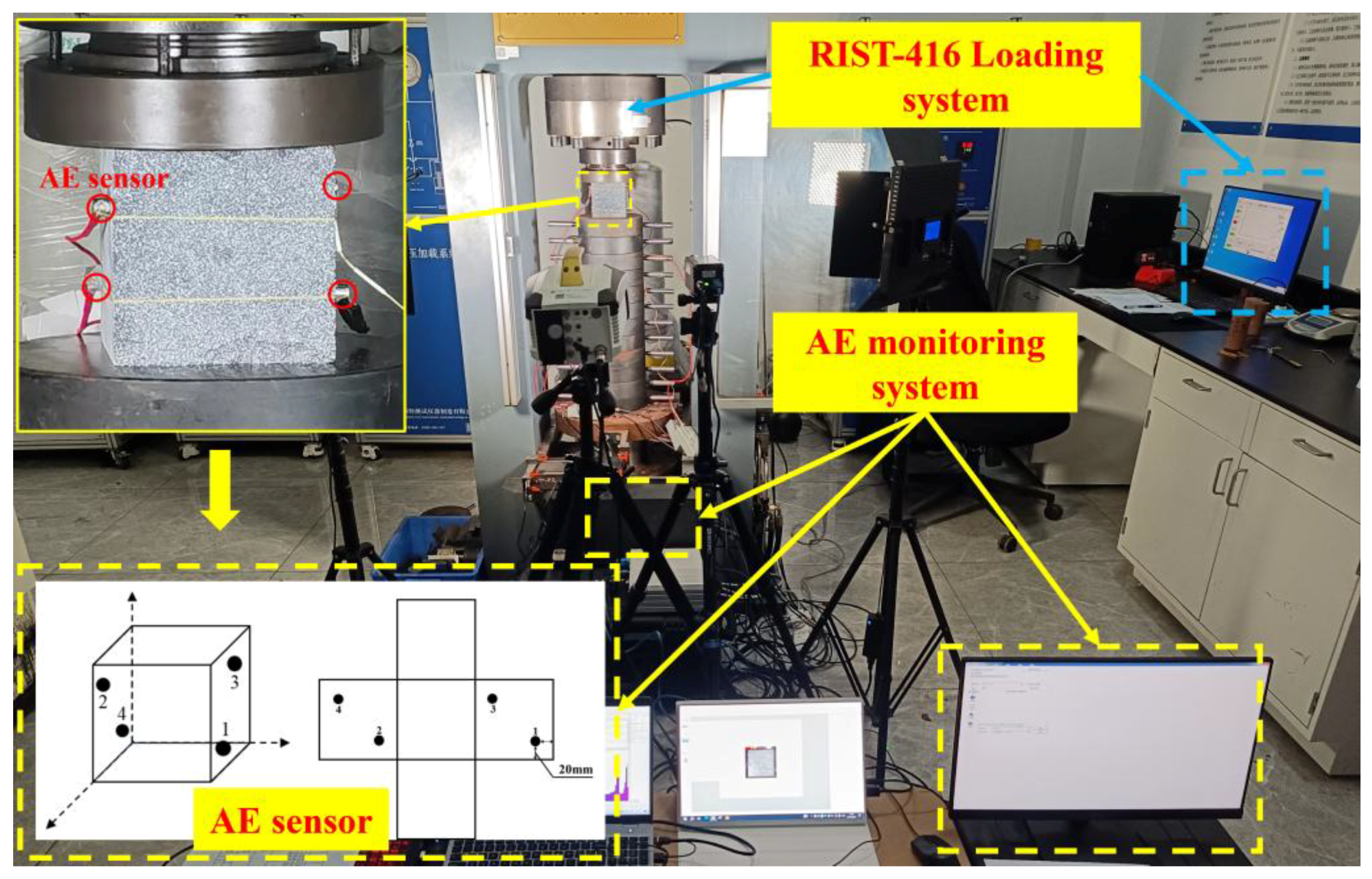
As illustrated in Figure 5, the experimental setup consisted of a RIST-416 mechanical loading system (Jilin RIST Testing Instrument Manufacturing Co., Ltd., Changchun, China) and an acoustic emission (AE) monitoring system (PCI-Express8, Physical Acoustics, Princeton Junction, NJ, USA). The uniaxial compression tests were conducted on the RIST-416 mechanical testing system with a loading rate of 0.2 mm/min. Owing to the inherently heterogeneous and multiphase nature of concrete, variations among specimens within the same group are unavoidable. Therefore, the average value obtained from three replicate tests represents the mechanical properties of each group. The uniaxial compressive strength of the specimen is calculated by Equation (1). In data analysis, representative curves are shown for the specimen whose compressive strength is closest to the group mean, including the stress response, AE evolution, and energy-related results. For group comparisons across curing conditions, all three specimens were analyzed, and the mean and standard deviation are reported to characterize the scatter.
where is the compressive strength of the concrete specimen (MPa), rounded to 0.1 MPa; is the peak load of the specimen (N); A is the cross-sectional area of the specimen (mm2).
Figure 5.
Diagram of uniaxial compression test equipment and the acoustic emission sensor arrangement.
The Micro-II Express AE system was employed to monitor the AE activity in real-time during the loading process. Four Nano-30 miniature AE sensors (Φ 8 mm × 8 mm) were attached to the non-loaded surfaces of each specimen at a distance of 20 mm from the end faces. To ensure optimal acoustic coupling, the sensors were fixed using rubber bands with Vaseline applied as a coupling agent. The threshold of the AE system was set at 40 dB, with a sampling rate of 5 MHz.
3. Results and Discussions
3.1. Physical and Mechanical Properties of Shaft Concrete Under Different Curing Temperature and Age Conditions
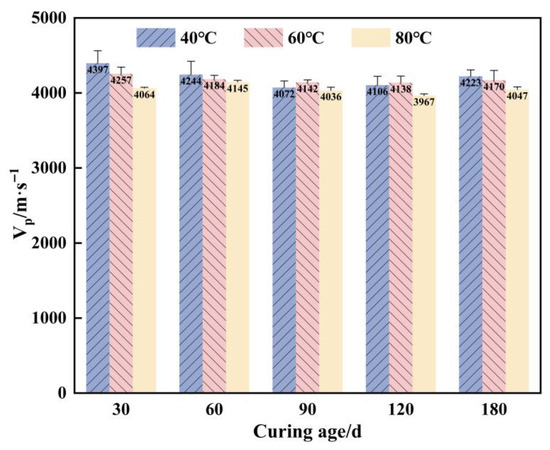
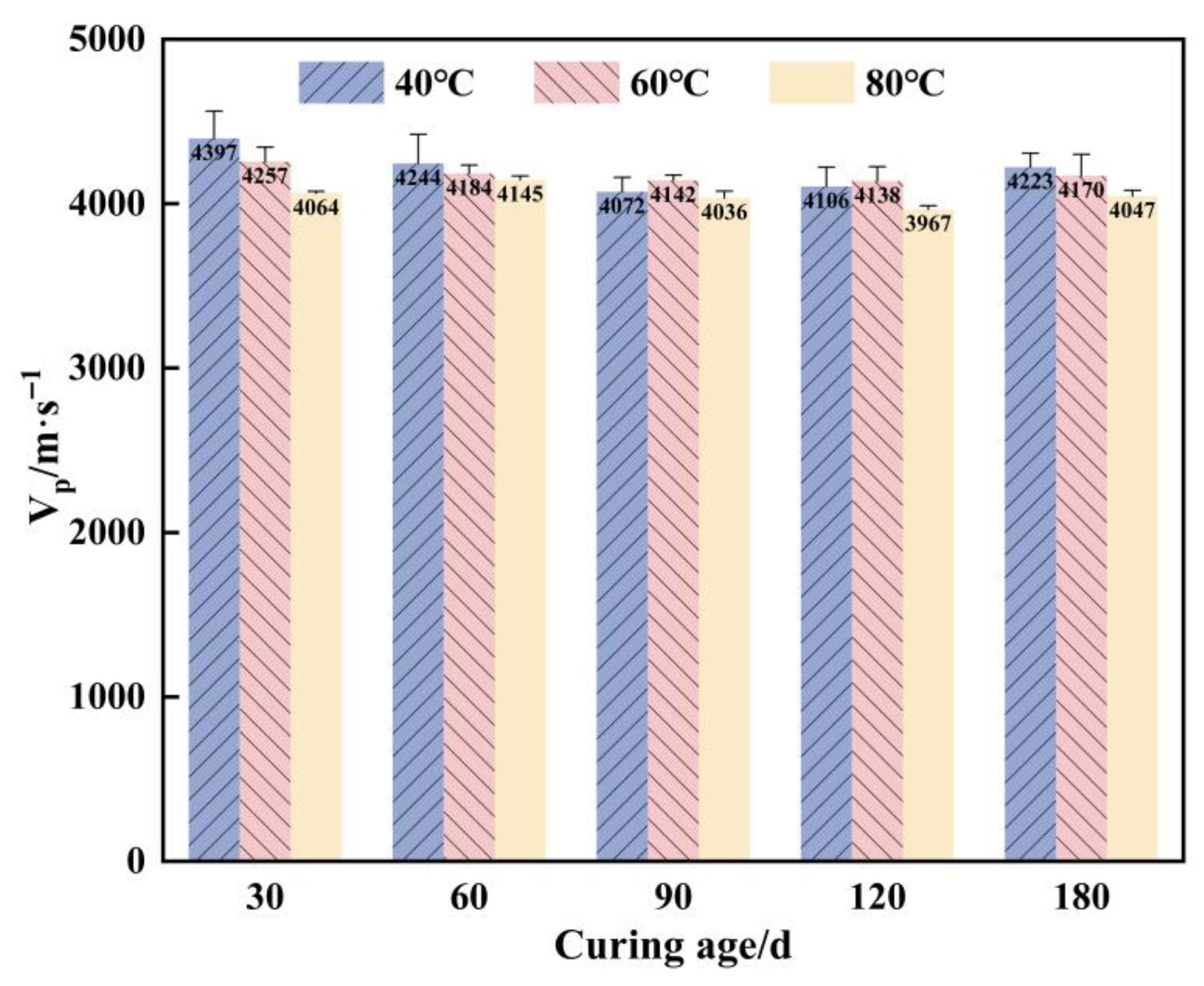
Table 3 summarizes the physical and mechanical properties of specimens cured at different temperatures. Density varies within a narrow range among all groups, which is attributable to the high-humidity environment within the curing chamber promptly replenishing moisture lost due to high temperatures. As shown in Figure 6, the P-wave velocity is consistently lower for specimens cured at 80 °C than for those cured at 40 °C and 60 °C at the same age, indicating that excessive temperature produces a more pronounced deterioration in internal continuity. Meanwhile, a moderate increase in wave velocity is observed for certain specimens during the middle and late curing stages, which can be attributed to the continued hydration of mineral admixtures and the formation of additional hydration products, leading to localized densification of the microstructure.
Table 3.
The physical and mechanical properties of each concrete specimen at different curing temperatures and ages.
Figure 6.
Wave velocity of concrete specimens at different curing temperatures and ages.
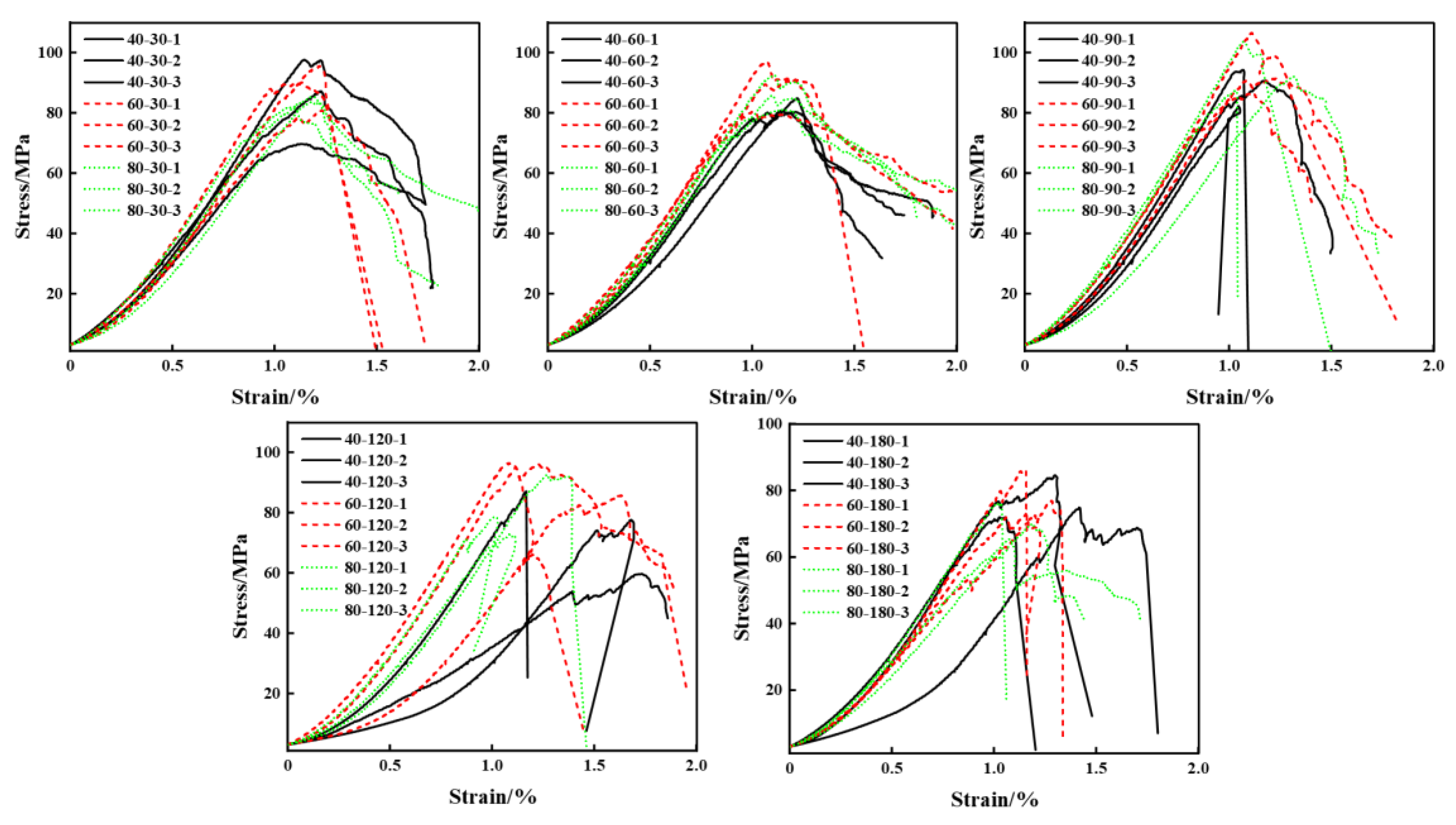
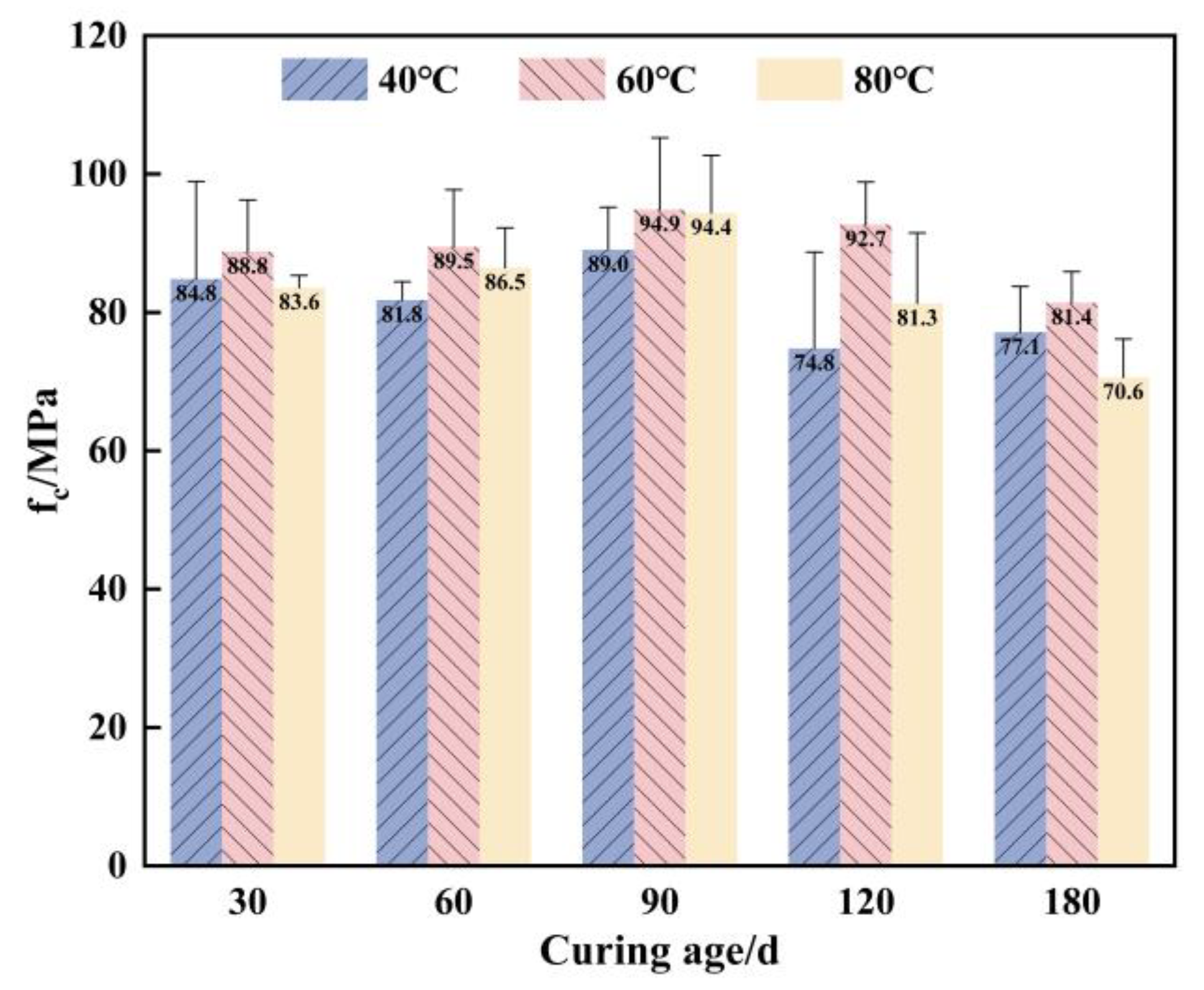
The stress–strain responses and uniaxial compressive strength of all specimens are shown in Figure 7 and Figure 8. The compressive strength exhibits a clear non-linear evolution with curing age. At all curing temperatures, strength generally increases at early ages and reaches a peak at approximately 90 days, followed by a decline at later ages. During 30–90 days, accelerated cement hydration and enhanced pozzolanic reactions promote strength development by refining pore structure and improving matrix compactness [36]. In this period, curing at 60 °C generally exhibits higher strength than curing at 40 °C, indicating that moderate heating effectively accelerates reaction kinetics and improves early-to-middle-age strength development. Curing at 80 °C does not show a stable advantage at the earliest age (30 days) but catches up by 60–90 days, reaching a peak strength comparable to that at 60 °C, which is attributable to accelerated early reactions under higher temperature. After 90 days, however, strength gradually declines and the deterioration becomes increasingly significant as curing temperature rises. At 180 days, the strength losses relative to the peak values are 13.4%, 14.2%, and 25.2% for 40 °C, 60 °C, and 80 °C, respectively, confirming that prolonged exposure to excessive temperature (80 °C) compromises long-term mechanical performance. This long-term strength deterioration can be attributed to temperature-induced microstructural heterogeneity and damage accumulation, including increased porosity and weak interfaces due to non-uniform distribution of hydration products, as well as microcracking driven by thermal deformation mismatch among constituents [37,38]. Concurrently, it has been demonstrated that high-temperature curing not only increases concrete porosity, thereby adversely affecting its performance, but also elevates the Ca/Si ratio in the C–S–H gel. This promotes the formation of highly polymerized, long-chain C–S–H structures. Such structural evolution reduces the specific surface area and weakens the interfacial bonding strength of the C–S–H, ultimately impairing the mechanical properties and fracture toughness of the concrete [19].
Figure 7.
Uniaxial compression stress–strain curves of shaft concrete.
Figure 8.
Uniaxial compressive strength of concrete specimens at different curing temperatures and ages.
Overall, compared with 40 °C, curing at 60 °C improves compressive strength from 30 to 120 days, and the largest advantage occurs at 120 days. In contrast, curing at 80 °C can enhance strength development up to the peak age but leads to the most pronounced long-term deterioration, indicating that excessively high curing temperature is detrimental to long-term strength retention.
3.2. Effects of Curing Temperature and Age on AE Characteristics of Shaft Concrete
3.2.1. AE Events
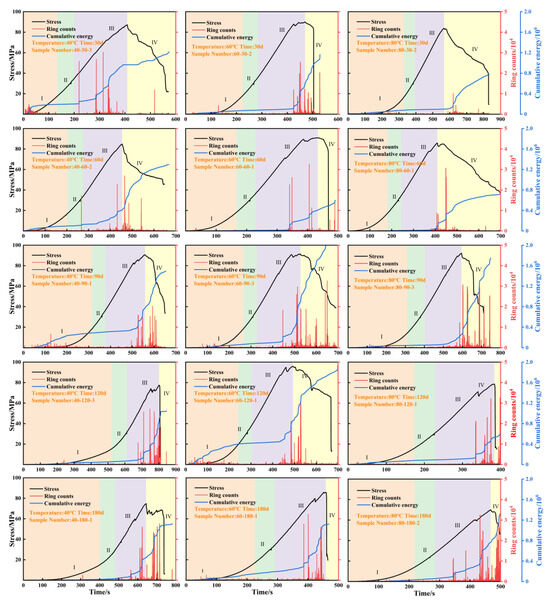
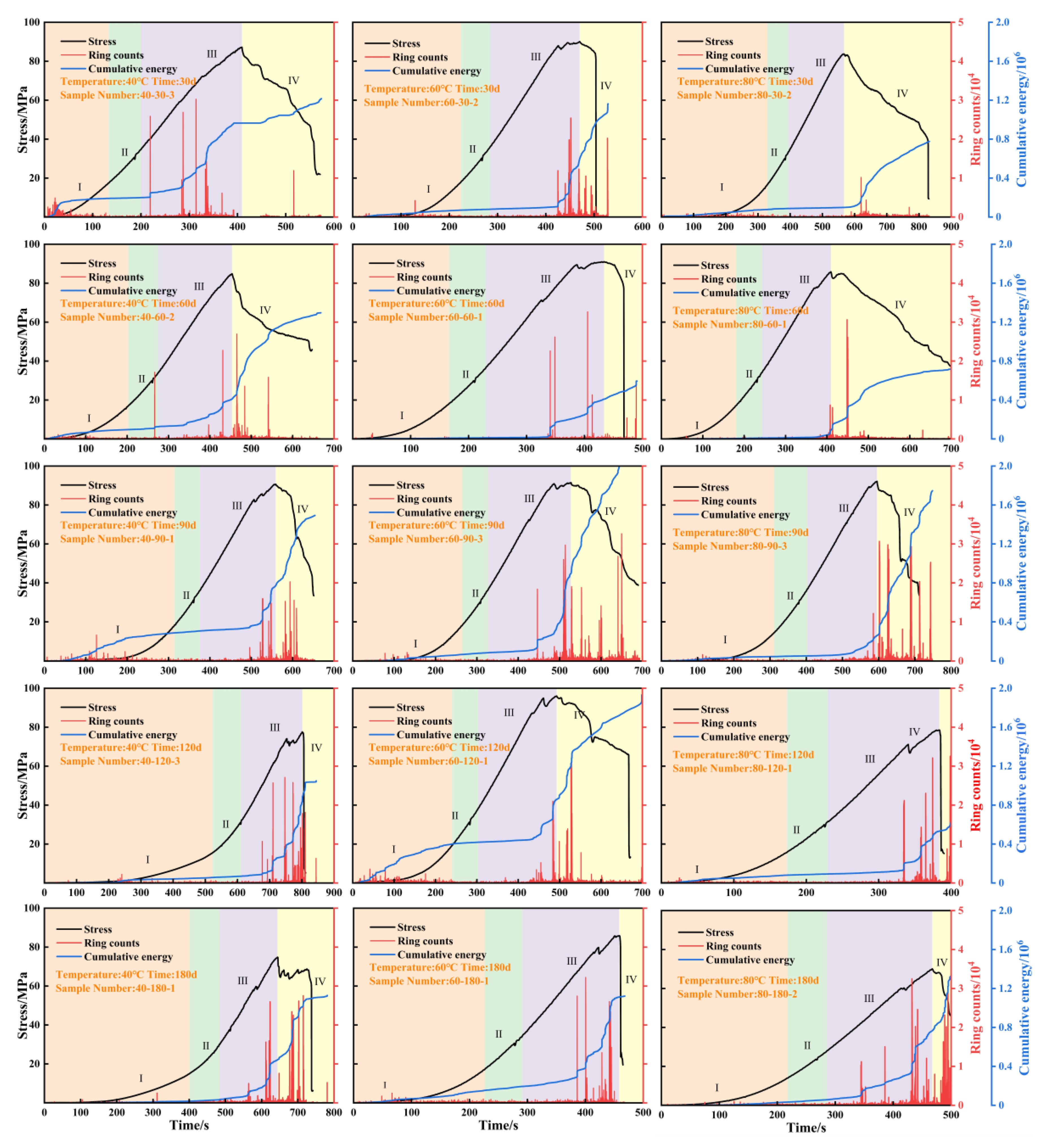
During uniaxial compression, AE ring counts and cumulative energy are effective indicators for tracking damage evolution in concrete [39]. Figure 9 shows the coupled response among stress, AE ring counts, and cumulative energy. Following Chen et al., the loading process can be divided into four distinct stages based on stress development [40].
Figure 9.
AE ring counts and cumulative energy evolution curves of concrete specimens under different curing conditions.
Stage I (0–0.2 fc) corresponds to compaction and stable deformation. Pre-existing pores and microcracks close gradually, producing only weak AE activity. Stage II (0.2–0.4 fc) is dominated by stable deformation with limited crack growth. AE signals remain intermittent, and the cumulative-energy curve shows a mild and steady rise. Stage III (0.4–1.0 fc) represents accelerated damage development. Microcracks rapidly propagate and coalesce, resulting in a sharp rise in AE ring counts and a rapid increase in cumulative energy, often in a step-like manner, indicating intermittent crack growth and interaction. Stage IV (post-peak) is governed by macrocrack propagation and damage localization. Stress drops rapidly or progressively depending on curing conditions, and AE bursts become more concentrated as fracture localizes.
The stress–AE coupling in Figure 9 also reflects the influence of curing temperature and age. With increasing curing temperature and prolonged age, AE counts become increasingly concentrated toward the peak and into Stage IV. The onset of rapid cracking is more distinct, with a larger share of AE activity appearing in Stage III and a more abrupt transition into post-peak localization. This pattern indicates a transition from progressive, distributed microcracking to more localized crack growth, which has also been associated with a more brittle failure tendency in AE-based crack evolution studies. In contrast, specimens cured at 40 °C and 60 °C more often show sustained AE activity over a wider portion of Stage III and a less abrupt post-peak evolution, suggesting a larger contribution from distributed microcracking and crack interaction. The consistent boundaries defined by stress ratios also facilitate crack assessment across curing conditions, while the AE evolution within each stage provides mechanistic evidence for changes in damage accumulation and failure mode [39,41].
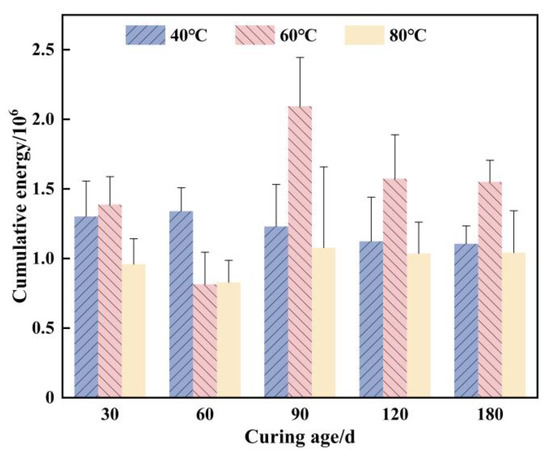
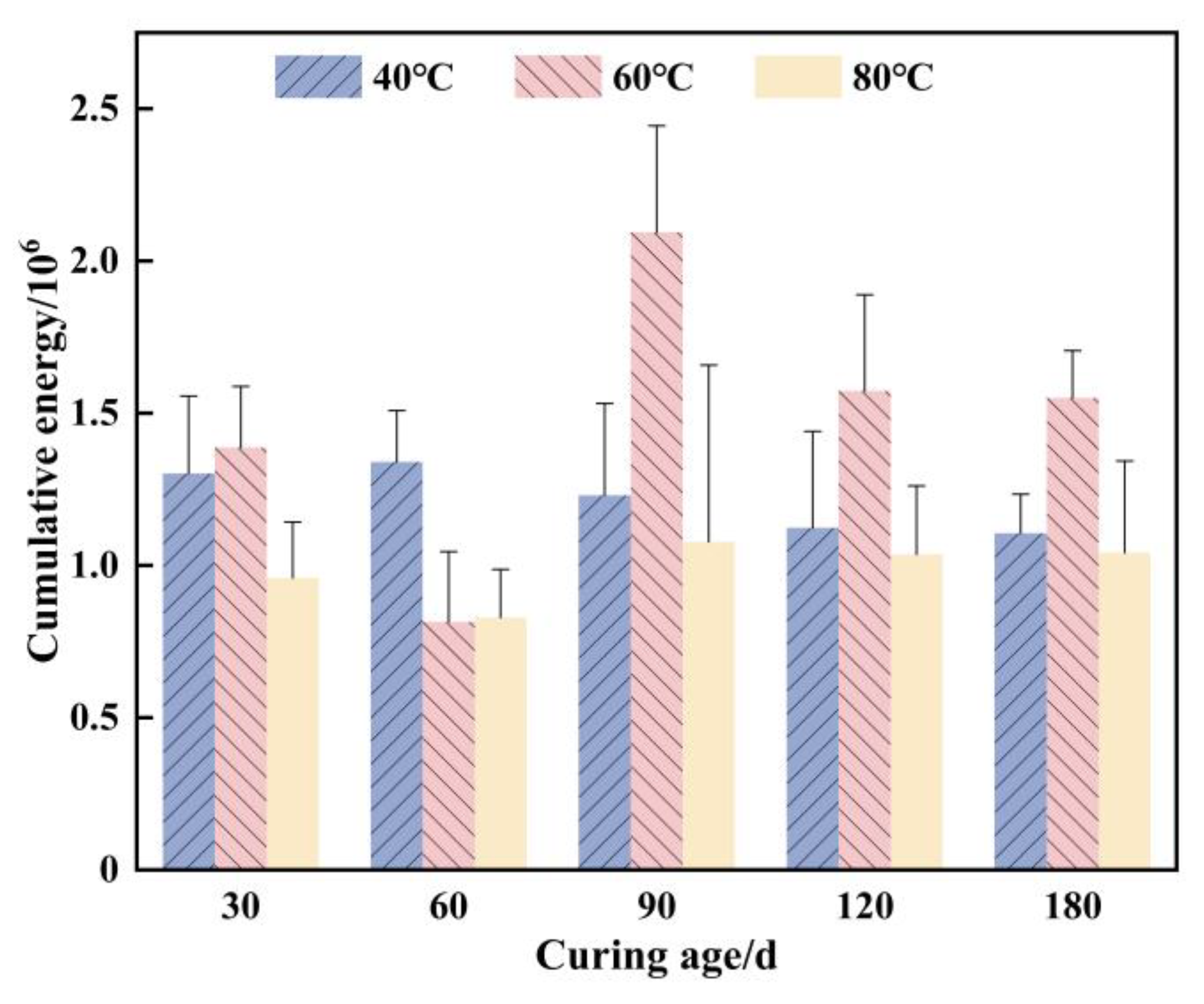
As shown in Figure 10, the cumulative AE energy over the whole loading process differs among curing conditions and shows visible scatter in some groups. This is expected because AE energy is sensitive to sensor coupling and wave attenuation along the propagation path. The heterogeneous and multiphase nature of concrete also leads to specimen-to-specimen differences in crack initiation and coalescence. Therefore, the results are reported as the mean with standard deviation from three specimens, and the discussion focuses on comparative trends among curing conditions. For 40 °C, the cumulative AE energy remains at a similar level from 30 to 60 days and then shows a moderate reduction at later ages. For 60 °C, the cumulative AE energy varies with age and exhibits a pronounced peak around 90 days, accompanied by a larger scatter. For 80 °C, the cumulative AE energy is generally lower and varies within a narrower range over 30–180 days, suggesting less distributed AE activity during the loading process.
Figure 10.
Cumulative energy of concrete specimens at different curing temperatures and ages.
Combined with the stress–AE responses in Figure 9, these results suggest that long-term curing at elevated temperature tends to change the damage development mode. The lower cumulative AE energy at 80 °C is consistent with a more localized fracture process, where fewer but more concentrated cracking episodes occur near the peak region, rather than a sustained accumulation of distributed microcracking throughout loading [30]. Meanwhile, the higher and more scattered cumulative AE energy at 60 °C implies that damage activity can be more sensitive to specimen-to-specimen heterogeneity under this curing condition, leading to a wider spread in the accumulated AE output.
3.2.2. AF–RA Distribution
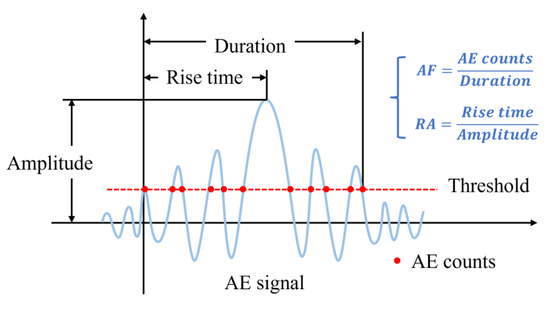
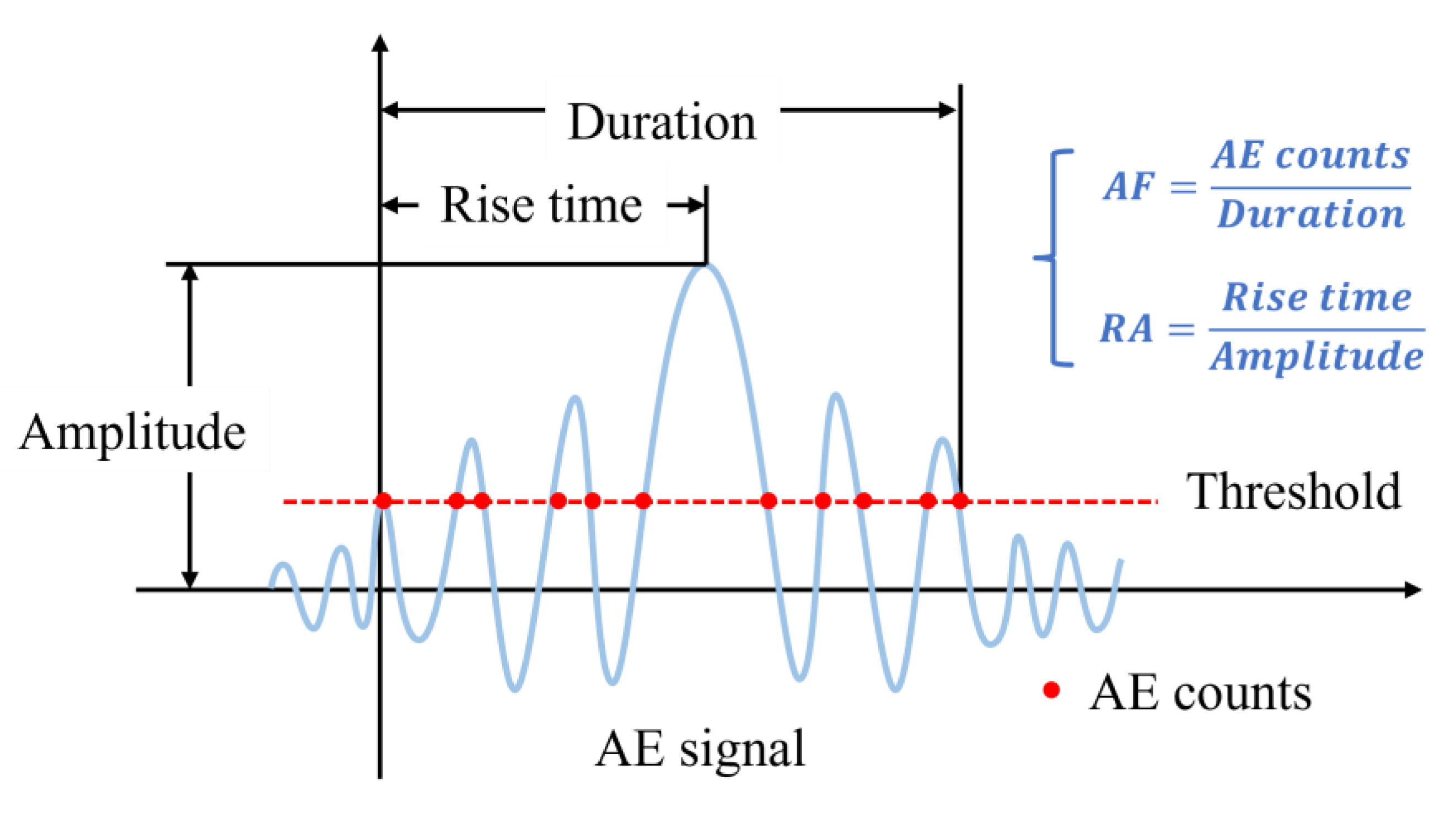
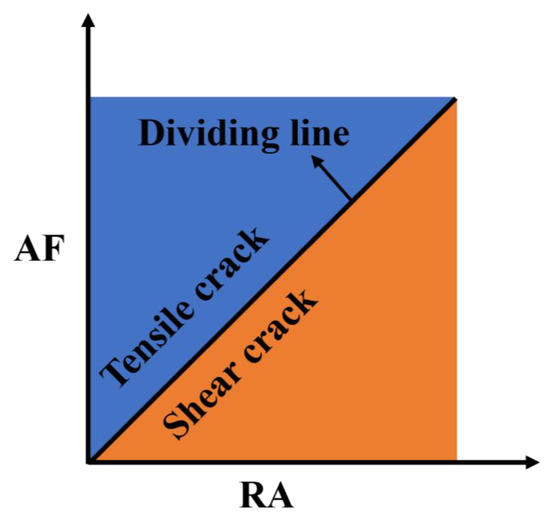
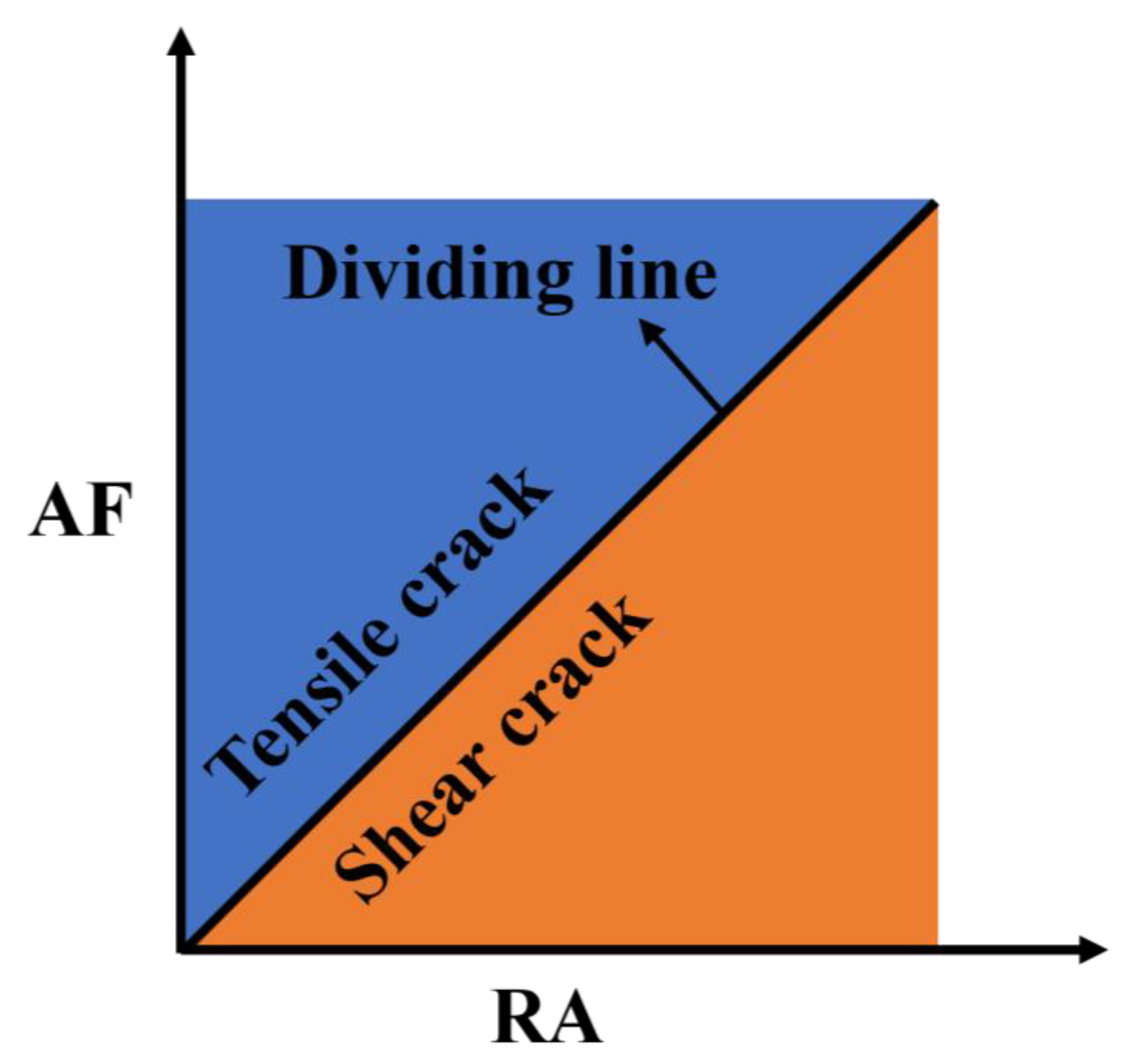
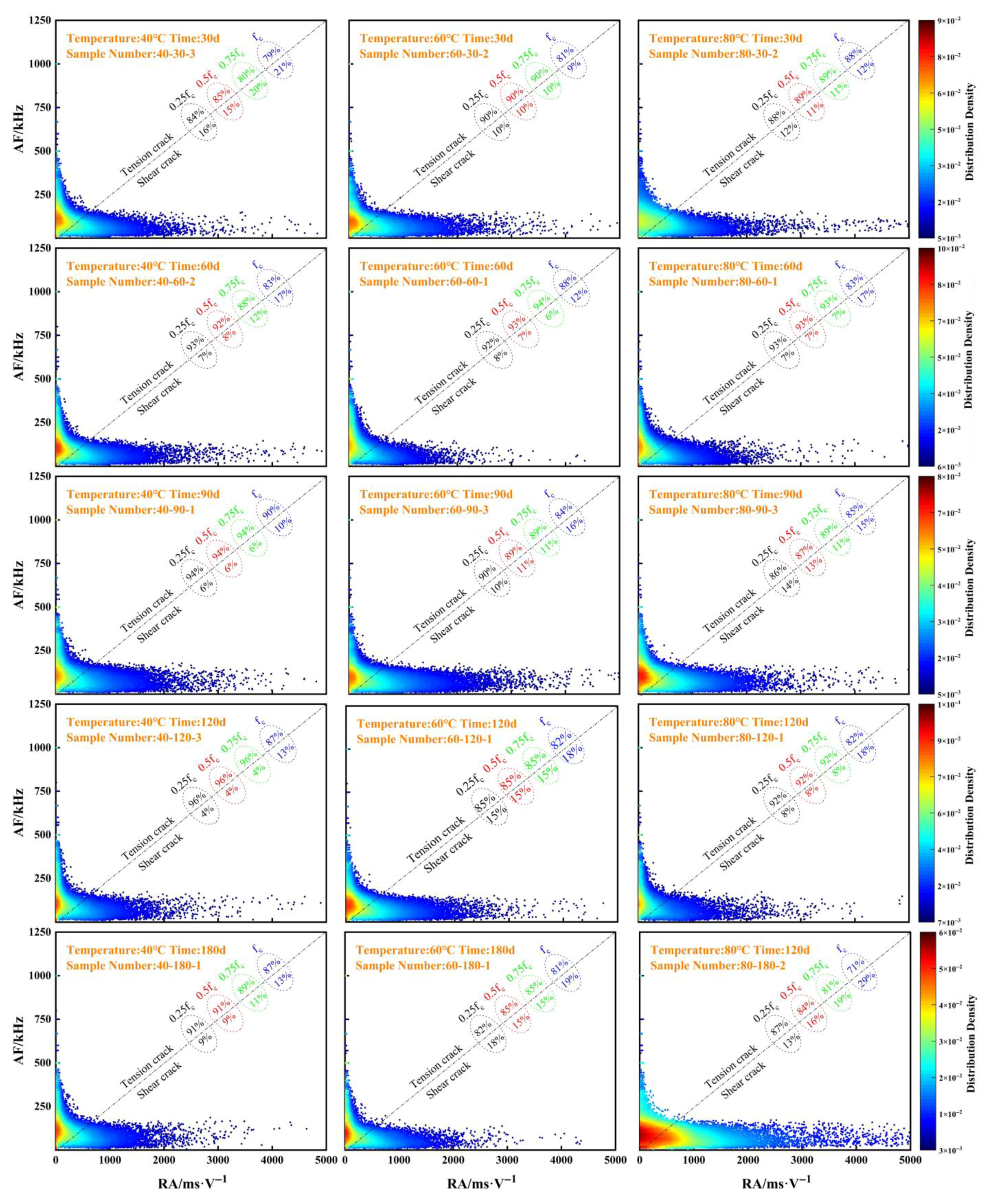
The failure process of concrete is invariably accompanied by the interactive propagation of cracks. The AF–RA distribution is a crucial parameter for analyzing different crack propagation patterns through AE signals, calculated by the equation: AF = AE counts/Duration, RA = Rise time/Amplitude. As shown in Figure 11, amplitude refers to the maximum magnitude of a signal, which is proportional to the energy released by the signal source and reflects the severity of internal damage within the material. The average frequency reflects the rate of threshold crossings within the signal duration, which is related to the signal’s ringing frequency and duration, and reflects the type and activity intensity of the acoustic emission source. Generally, as damage progresses, the amplitude increases, the rise time shortens, and the average frequency rises. Therefore, the combined AF–RA analysis provides a practical way to describe the evolution of cracking behavior in concrete during loading [42]. Typically, AE events related to tensile fracture exhibit smaller RA values and larger AF values, while events corresponding to shear fracture show larger RA values and smaller AF values (see Figure 12). This study employs the traditional AE parameter analysis method specified in JCMS-IIIB 5706 (2003) to classify crack types [43].
Figure 11.
Characteristic diagram of a typical AE signal (adapted from Ref. [44]).
Figure 12.
Crack classification method (adapted from Ref. [43]).
Figure 13 presents the AF–RA distributions of representative specimens under different curing temperatures, ages, and stress ratios. Most AE events cluster in the high-AF (50–200 kHz) and low-RA (0–200 ms/V) region, indicating that tensile cracking is dominant during uniaxial compression. The dense cluster near the origin suggests that early damage is mainly controlled by tensile microcrack initiation and stable growth. As the stress level increases, the AE population gradually extends toward higher RA and lower AF. This shift implies the increasing contribution of frictional sliding and mixed-mode crack growth during crack interaction and coalescence. In many specimens, the shear-type fraction becomes more noticeable at higher stress ratios, consistent with the transition from distributed microcracking to localized macrocrack formation near peak stress [45].
Figure 13.
AF–RA distribution of concrete specimens at different curing temperatures and ages.
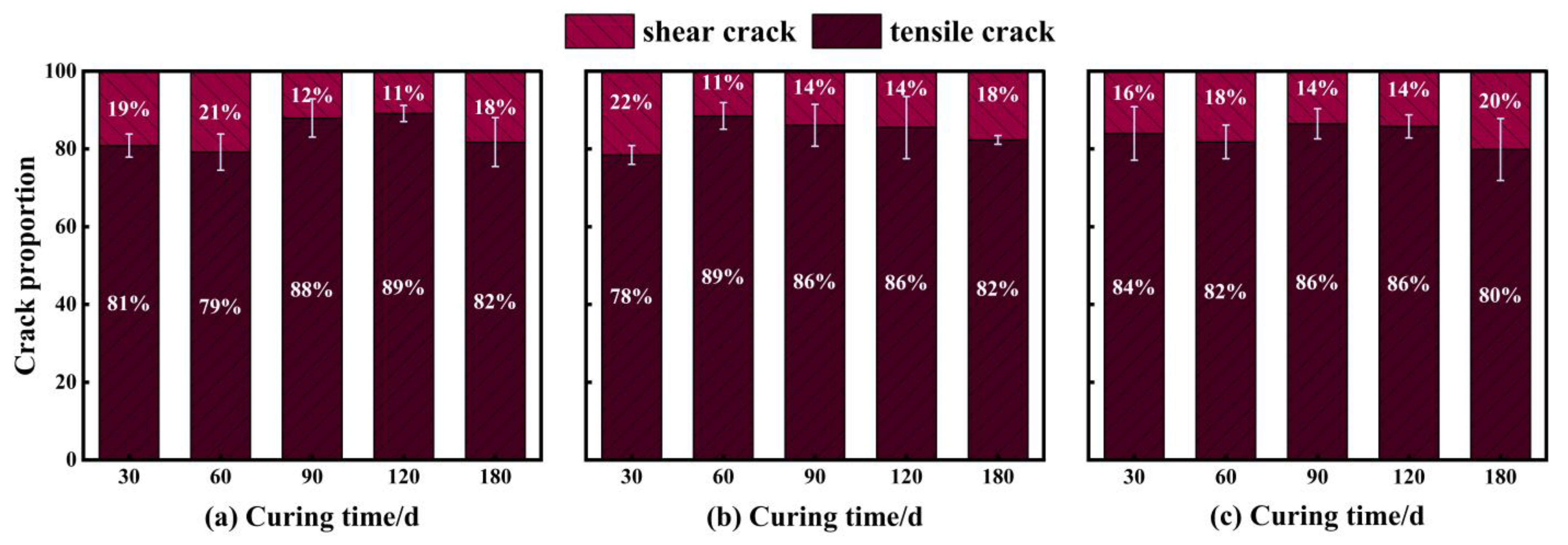
Figure 14 summarizes the crack-type proportions with uncertainty. Tensile cracking remains dominant under all curing conditions, while the shear-crack fraction is consistently lower. At 30 days, the tensile-crack ratio does not show a monotonic dependence on temperature, and the differences among temperature groups are modest within the scatter. With curing age, the crack-type proportions fluctuate rather than following a single monotonic trend. This result is consistent with Figure 13, where the AF–RA distributions show a stable tensile-dominated background combined with a stress-dependent increase in shear involvement at higher stress ratios.
Figure 14.
Proportion of cracks in concrete specimens at peak strength under different curing temperatures: (a) 40 °C; (b) 60 °C; (c) 80 °C.
The effect of curing age differs among temperature levels. At 40 °C, the tensile-crack fraction increases from 60 to 120 days and then decreases at 180 days, accompanied by a late-age rise in the shear fraction. At 60 °C and 80 °C, tensile cracking reaches higher levels at intermediate curing ages (60–120 days) but tends to decline at 180 days, while the shear-crack proportion increases. These changes indicate a slight rise in tensile cracking during the early to mid-curing stages due to enhanced hydration [46,47]. The prolonged high-temperature curing may slightly exacerbate shear cracking in the later stages, even though tensile cracking remains dominant. Potential reasons include altered microstructures and enhanced damage localization from prolonged thermal exposure [25]. The formation of weak zones within the concrete increases the likelihood of frictional slip along dominant crack paths during final loading stages [48,49].
3.2.3. B-Value
The b-value, originally established in geophysics as a key parameter for characterizing the relationship between earthquake magnitude and frequency over time, has been extended to analyze acoustic emission (AE) characteristics in coal, rock, and concrete. This characteristic reflects real-time fracture processes within materials [50,51]. Generally, an increasing b-value suggests a predominance of low-amplitude AE events, indicating that microcrack propagation is the primary damage mechanism. Conversely, a decreasing b-value signifies a shift toward high-amplitude AE events, implying that microcracks are coalescing into macroscopic fractures, accompanied by a significant release of strain energy [52]. Thus, the b-value can effectively reflect the progression of crack development and serve as an indicator for evaluating the extent of structural damage. The b-value is defined as follows [51,53]:
In the equation, represents the amplitude of AE, N denotes the number of AE amplitudes exceeding , b is the slope of the curve fit, and a is a constant.
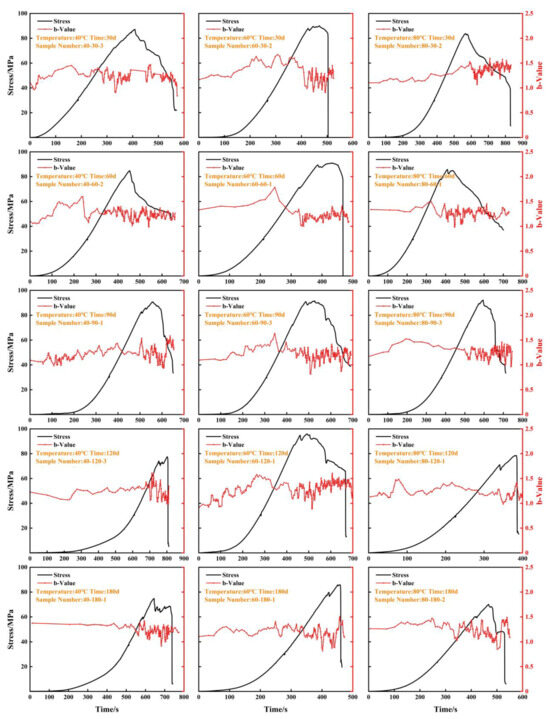
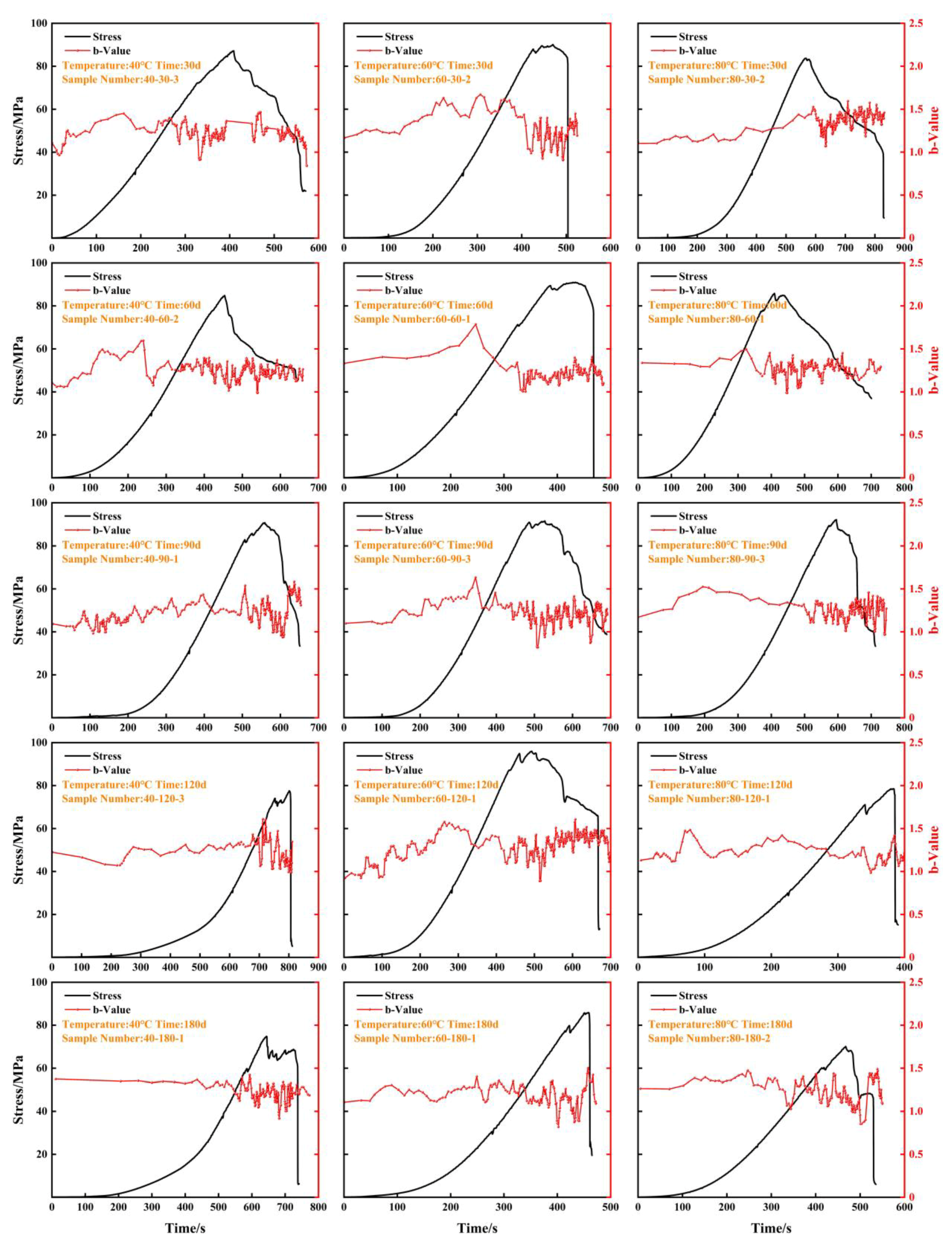
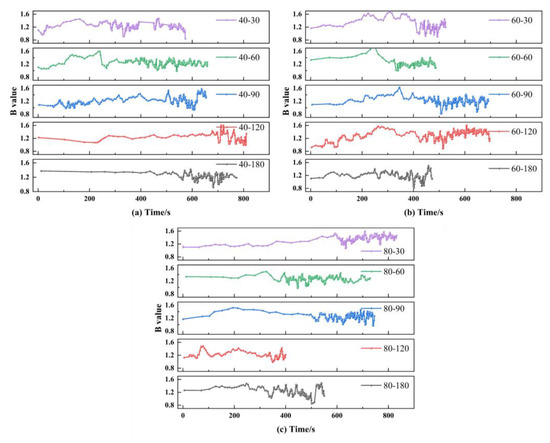
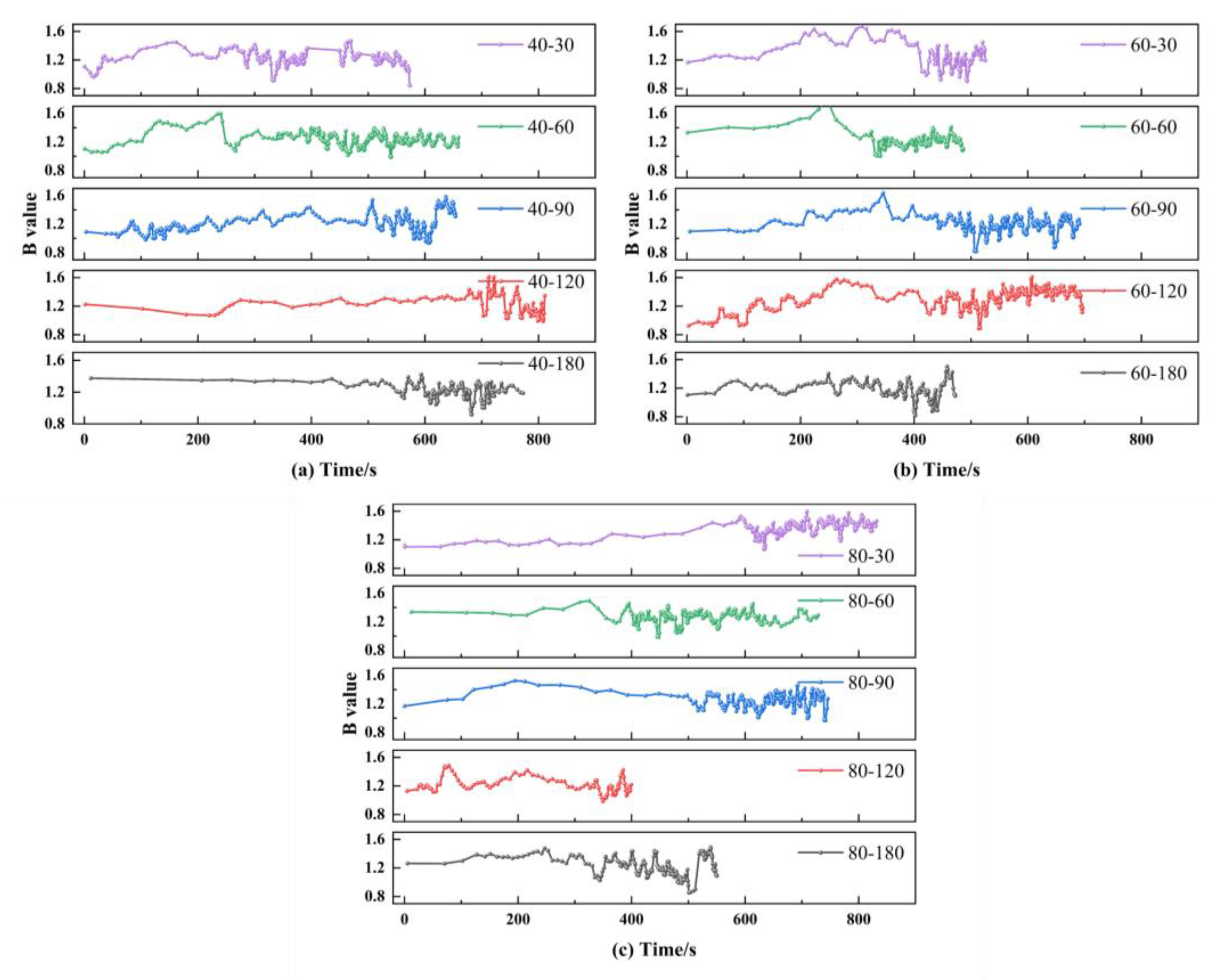
The evolution of the b-value for concrete under various curing conditions is shown in Figure 15 and Figure 16. During uniaxial compression tests, the b-value exhibits a consistent trend across all specimens: (1) In the low-stress phase, the b-value remains relatively stable. (2) During the mid-loading phase, the b-value may increase and its fluctuations tend to become more evident as microcracking develops. (3) As the concrete approaches failure, the b-value often decreases and becomes more scattered. (4) In the post-peak phase, the b-value exhibits irregular fluctuations associated with localized fracture.
Figure 15.
B-value-stress curves of concrete specimens at different curing temperatures and ages.
Figure 16.
B-value curves of concrete specimens at different curing temperatures and ages: (a) 40 °C; (b) 60 °C; (c) 80 °C.
At the same temperature, with increasing curing age, the b-value tends to show a reduced rise and a lower peak level. At 30 days, specimens generally exhibit more pronounced b-value fluctuations during the mid to late loading stages, indicating more active crack development. In contrast, 180-day specimens show reduced b-value fluctuations during the pre-peak stage and a more concentrated change after peak stress, reflecting restrained crack initiation and limited microcrack development during compression. For specimens of the same curing age, increasing the curing temperature reduced b-value fluctuations during the pre-peak loading stage, with this effect becoming more pronounced at higher temperatures. This phenomenon is associated with temperature-induced microstructural heterogeneity and damage localization, which reduces distributed cracking activity at low-to-mid stress levels but promotes a more concentrated fracture process near peak stress [46].
These findings indicate that long-term high-temperature curing may suppress distributed cracking activity at low stress levels. However, once the peak stress is reached and cracking localizes, failure can occur more suddenly, accompanied by a rapid stress drop and concentrated AE activity.
3.3. Analysis of the Shaft Concrete Damage Mechanism from Energy Evolution
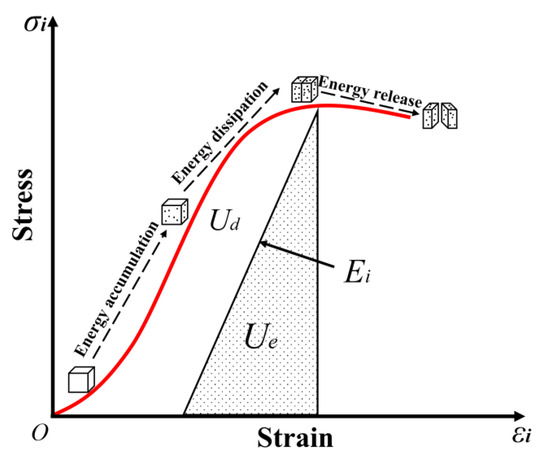
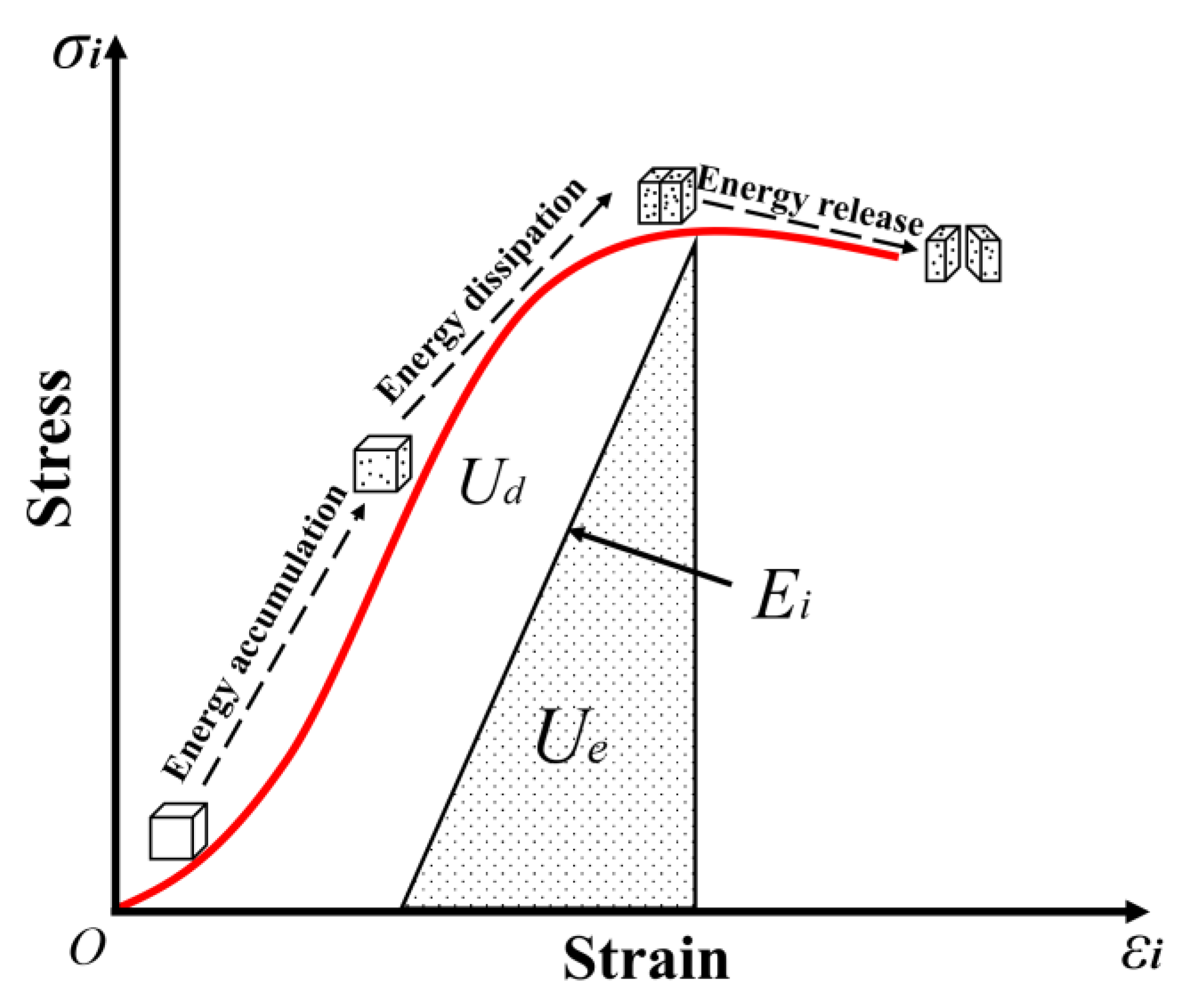
According to the law of conservation of energy, external energy input is transferred into concrete in the form of mechanical energy. As the load increases, energy accumulates within the concrete as elastic strain energy, which is subsequently converted into plastic potential energy. Upon failure, the stored energy dissipates outward through thermal radiation, heat exchange, and kinetic energy [31]. Assuming no significant external heat exchange occurs during testing, and that energy losses due to heat exchange and thermal radiation are negligible, the total input energy can be considered entirely converted into elastic strain energy and dissipated energy, as shown in Figure 17 [54,55]:
where is the total input energy, is the dissipated energy, and is the elastic strain energy.
Figure 17.
Energy schematic diagram (adapted from Refs. [54,55]).
The formula for calculating the concrete element energy under triaxial compression is given by Equations (4) and (5).
where and are the unloading elastic modulus and unloading Poisson’s ratio, respectively, and the initial elastic modulus is used as a substitute in calculations. When concrete is subjected to uniaxial compression, , Equations (4) and (5) become:
Therefore, the dissipated energy is calculated according to Equation (8):
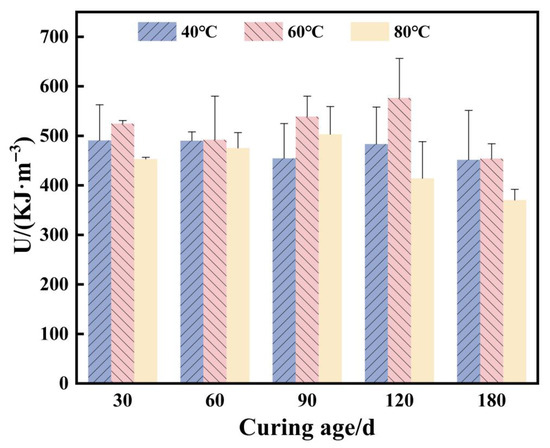
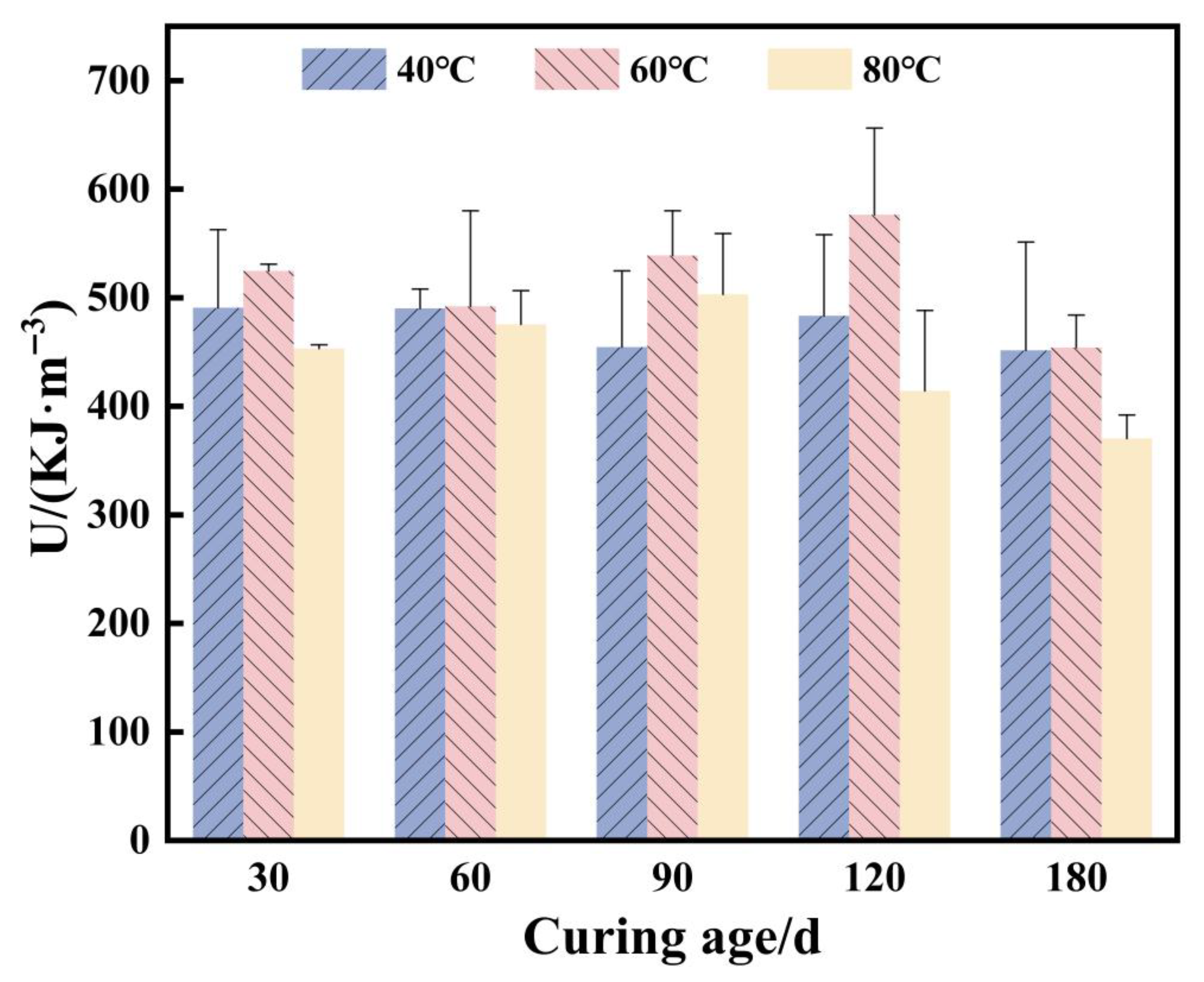
For concrete specimens under different curing conditions, the total input energy U, elastic strain energy Ue, and dissipated energy Ud were calculated from the stress–strain curves using the aforementioned equations. As illustrated in Figure 18, the total input energy remained relatively stable for curing ages up to 120 days, after which it exhibited a pronounced decline. This trend is consistent with the observed evolution of compressive strength and can be attributed to the degradation of concrete strength caused by prolonged high-temperature exposure, which progressively weakened the load-bearing capacity of the material.
Figure 18.
Total input energy of concrete specimens at peak strength under different curing temperatures and ages.
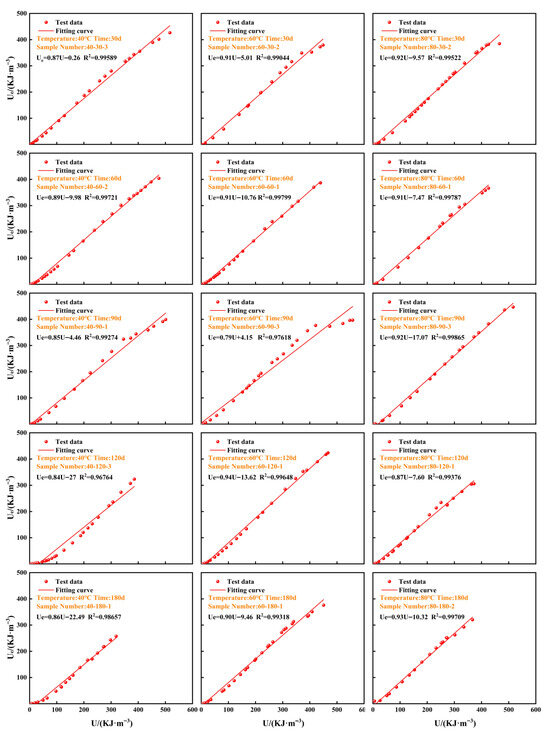
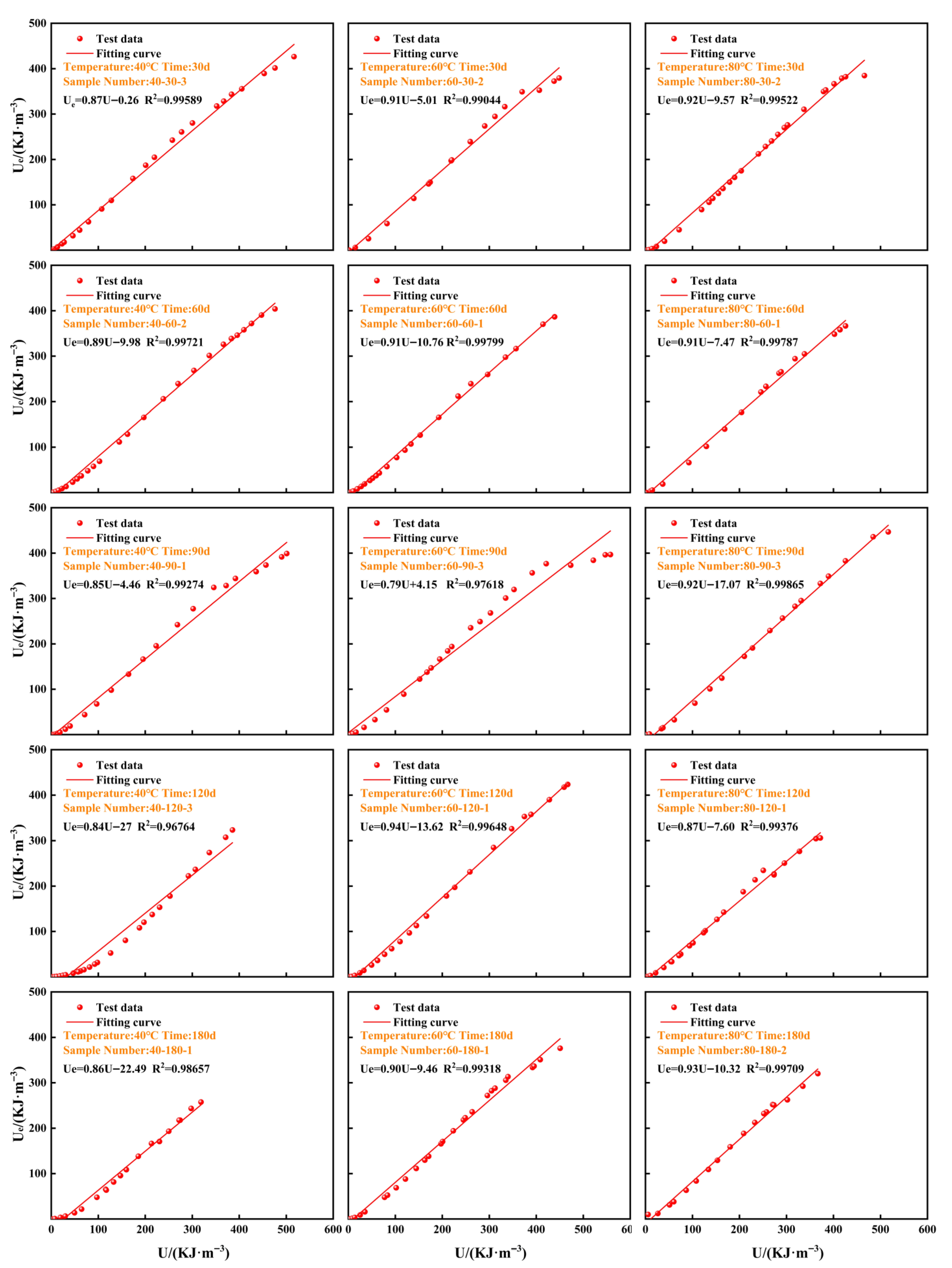
Energy ratios such as the elastic-energy proportion and dissipation proportion can be used to track deformation and damage evolution in concrete [55]. Figure 19 shows representative examples of the relationship between U and Ue prior to peak stress. The scatter points in these selected specimens are well described by a linear function, as given in Equation (9). According to the definition proposed by Gong et al. [56,57,58], the slope a is the energy storage coefficient, which reflects the fraction of externally input energy converted into elastic strain energy during loading.
where a and c are constants.
Figure 19.
Relationship between elastic strain energy and total input energy.
Across the tested conditions, a is generally high, indicating that pre-peak energy is mainly stored in elastic strain energy. The fitted a values show modest variation with curing temperature and age. For specimens cured at 40 °C, the energy storage coefficient a ranges from 0.84 to 0.89. At 60 °C, a varies between 0.79 and 0.94, whereas specimens cured at 80 °C exhibit consistently higher a values of about 0.87 to 0.93. These results demonstrate that the energy absorbed by concrete during loading is predominantly stored in the form of elastic strain energy. Moreover, the elastic energy proportion tends to be higher at elevated curing temperature. When the elastic storage fraction is high, damage evolution tends to become more concentrated near peak stress. Once the load-bearing skeleton fails, the accumulated elastic strain energy can be released over a short period, which may promote localized through-crack failure in stress concentration zones [55,59].
Overall, prolonged high-temperature curing reduces the peak energy capacity U while maintaining a relatively high elastic storage fraction. In interpreting these energy-based results, size and boundary effects should be considered, as they may influence cracking and the apparent energy-release characteristics in compression tests. Concrete fracture and post-peak softening can be scale-dependent because crack localization and defect statistics vary with specimen size, which may affect the measured brittleness and the rate of energy release [60,61]. In addition, platen–specimen friction may introduce partial end restraint and non-uniform confinement near specimen ends, which can influence crack initiation, the post-peak response, and the inferred energy partitioning [60]. Because specimen size and boundary conditions are consistent across all curing conditions, the comparative trends with temperature and age remain meaningful; however, extrapolating the absolute post-peak energy-release behavior to in situ shaft linings should account for structural scale and boundary restraints [62]. This imbalance between energy storage and dissipation increases the propensity of concrete to undergo sudden and brittle failure under loading.
4. Conclusions
This study investigates a high-strength shaft lining concrete cured at 40, 60, and 80 °C (95% RH) for 30–180 days, to represent humid–hot conditions relevant to the 2500 m Sanshan Island ultra-deep shaft. Based on physical tests, uniaxial compression, AE monitoring, and energy evolution analysis, the main conclusions are as follows:
- (1)
- P-wave velocity is most adversely affected by curing at 80 °C. Across all ages, the velocity at 80 °C remains lower than the values at 40 °C and 60 °C. This indicates a more pronounced impairment of internal continuity under excessive temperature. The influence of 60 °C on Vp is comparatively mild and age-dependent, becoming comparable to 40 °C at 90–120 days. Compressive strength increased at early ages, reaching a maximum at approximately 90 days, and then declined thereafter. At 180 days, the compressive strength reductions relative to the peak values are 13.4%, 14.2%, and 25.2% for specimens cured at 40 °C, 60 °C, and 80 °C, respectively, demonstrating that prolonged high-temperature exposure significantly compromises the concrete’s long-term mechanical properties.
- (2)
- AE results show that higher temperatures intensify damage accumulation near peak stress and modestly increase the proportion of shear-type AE events near peak load. Moreover, the b-value shows a smaller rise and weaker fluctuations at higher curing temperatures and longer curing ages, suggesting a transition toward more localized microcracking and abrupt fracture.
- (3)
- Energy analysis demonstrates that most of the input mechanical energy is stored as elastic strain energy prior to peak stress. Increasing curing temperature raises the proportion of elastic energy storage and accelerates its rapid release after peak stress, consequently intensifying the brittleness of the failure process and increasing the risk of sudden instability.
Overall, within the tested age range (30–180 days), curing at 60 °C yields a higher compressive strength than curing at 40 °C and 80 °C, although a decline was still observed at 180 days. Prolonged curing at 80 °C caused the most pronounced deterioration in long-term mechanical performance and increased brittleness. These results indicate that curing temperature control is critical for shaft lining concrete in sustained high-humidity environments. Based on these results, we recommend controlled thermal-curing management and toughness-enhancing measures, such as fiber reinforcement or crack-control design to reduce sudden-failure risk in linings exposed to long-term high-temperature curing.
This study still has limitations; therefore, several directions are recommended for future work to improve the applicability of the findings to in situ shaft linings. The curing humidity was fixed at 95% RH; however, in situ humidity may fluctuate due to ventilation and seepage and may affect moisture loss and shrinkage cracking. In addition, the tests were performed under monotonic and unrestrained compression, so restraint effects relevant to shaft linings were not captured. Future studies should consider variable humidity histories and restrained boundary conditions, and should quantify creep and shrinkage under realistic structural constraints.
Author Contributions
Conceptualization, G.W. and W.F.; methodology, G.W., W.F. and G.Z.; validation, G.W. and G.Z.; formal analysis, J.Y. and G.Z.; investigation, G.W. and W.F.; resources, G.W. and W.F.; data curation, J.Y. and Z.T.; writing—original draft preparation, G.W., W.F., J.Y., Z.T., C.L. and G.Z.; writing—review and editing, G.W., W.F. and J.Y.; visualization, Z.T., C.L. and G.Z.; supervision, G.Z.; project administration, G.W. and W.F.; funding acquisition, G.W. and W.F. All authors have read and agreed to the published version of the manuscript.
Funding
This research was funded by the China National Coal Group Major Science and Technology Project, grant number 20231BY001.
Data Availability Statement
The original contributions presented in this study are included in the article. Further inquiries can be directed to the corresponding author.
Conflicts of Interest
Authors Guoyuan Wang and Wenbo Fan were affiliated with China Coal Construction Group Co., Ltd. The remaining authors declare that the research was conducted in the absence of any commercial or financial relationships that could be construed as a potential conflict of interest.
References
- Wang, X.; Liu, Z.; Fan, Y.; Liu, X.; Jiang, M.; Cheng, L.; Li, G. Destruction Characteristics and Control Countermeasure of Shaft Surrounding Rock Mass in Complex Geological Environment. Sustainability 2022, 14, 13329. [Google Scholar] [CrossRef] [Scilit]
- Hashemi, S.; Ashcroft, B.; Chittenden, N.; Gwildis, U.; Heine, J.; Luxford, J.; Marquis, F.; Nasri, V.; Preene, M.; Shaterpour-Mamaghani, A.; et al. Selection of Shaft Construction Method. Tunn. Undergr. Space Technol. 2025, 164, 106654. [Google Scholar] [CrossRef] [Scilit]
- Wagner, H. Deep Mining: A Rock Engineering Challenge. Rock Mech. Rock Eng. 2019, 52, 1417–1446. [Google Scholar] [CrossRef] [Scilit]
- Fan, L.; Xu, F.; Yu, Y.; Zhang, J.; Sun, L.; Yang, M. Research status and progress of supporting concrete for high geothermal underground project. Sci. Technol. Eng. 2022, 22, 1308–1320. [Google Scholar] [CrossRef]
- Guo, P.; Bu, M.; Zhang, P.; Li, Q.; He, M. Review on catastrophe mechanism and disaster countermeasure of high geotemperature tunnels. Chin. J. Rock Mech. Eng. 2023, 42, 1561–1581. [Google Scholar] [CrossRef]
- Jalali, S.; Abyaneh, M.Y. Prediction of Final Concrete Strength in Hot Climates. Mag. Concr. Res. 1995, 47, 291–297. [Google Scholar] [CrossRef] [Scilit]
- Kim, J.-K.; Han, S.H.; Song, Y.C. Effect of Temperature and Aging on the Mechanical Properties of Concrete: Part I. Experimental Results. Cem. Concr. Res. 2002, 32, 1087–1094. [Google Scholar] [CrossRef] [Scilit]
- Lothenbach, B.; Winnefeld, F.; Alder, C.; Wieland, E.; Lunk, P. Effect of Temperature on the Pore Solution, Microstructure and Hydration Products of Portland Cement Pastes. Cem. Concr. Res. 2007, 37, 483–491. [Google Scholar] [CrossRef] [Scilit]
- Elkhadiri, I.; Puertas, F. The Effect of Curing Temperature on Sulphate-Resistant Cement Hydration and Strength. Constr. Build. Mater. 2008, 22, 1331–1341. [Google Scholar] [CrossRef] [Scilit]
- Yan, P.; Cui, Q. Effects of Curing Regimes on Strength Development of High-Strength Concrete. J. Chin. Ceram. Soc. 2015, 43, 133–137. [Google Scholar] [CrossRef]
- Lee, C.-H.; Wang, T.-T.; Chen, H.-J. Experimental Study of Shotcrete and Concrete Strength Development in a Hot Spring Environment. Tunn. Undergr. Space Technol. 2013, 38, 390–397. [Google Scholar] [CrossRef] [Scilit]
- Cui, S.; Liu, P.; Cui, E.; Su, J.; Huang, B. Experimental Study on Mechanical Property and Pore Structure of Concrete for Shotcrete Use in a Hot-Dry Environment of High Geothermal Tunnels. Constr. Build. Mater. 2018, 173, 124–135. [Google Scholar] [CrossRef] [Scilit]
- Liu, P.; Cui, S.; Li, Z.; Xu, X.; Guo, C. Influence of Surrounding Rock Temperature on Mechanical Property and Pore Structure of Concrete for Shotcrete Use in a Hot-Dry Environment of High-Temperature Geothermal Tunnel. Constr. Build. Mater. 2019, 207, 329–337. [Google Scholar] [CrossRef] [Scilit]
- Wang, Q.; Sheng, R.; Sang, Q.; Chen, X.; Zhang, J.; Ukrainczyk, N.; Koenders, E.; Yuan, Y. Multiscale Model for Concrete Cured under Geothermal Environment: Theoretical Analysis and Experimental Validation. Constr. Build. Mater. 2024, 449, 138385. [Google Scholar] [CrossRef] [Scilit]
- Xia, W.; Cui, S.; Xu, L.; Shen, L.; Liu, P.; Ju, J.-W.W. Study on the Fracture Performance for Rock-Concrete Interface in the High Geothermal Tunnel Environment. Constr. Build. Mater. 2022, 347, 128568. [Google Scholar] [CrossRef] [Scilit]
- Li, Z.; Wang, Y.; Tong, Y.; Zhang, S.; Niu, D. Compressive and Hydration Behavior of Steel Fiber-Reinforced Concrete under High Geothermal Environment. Constr. Build. Mater. 2023, 406, 133378. [Google Scholar] [CrossRef] [Scilit]
- Kjellsen, K.O.; Detwiler, R.J.; Gjørv, O.E. Development of Microstructures in Plain Cement Pastes Hydrated at Different Temperatures. Cem. Concr. Res. 1991, 21, 179–189. [Google Scholar] [CrossRef] [Scilit]
- Niu, D.; Zhang, S.; Wang, Y.; Hong, M.; Li, Z. Effect of Temperature on the Strength, Hydration Products and Microstructure of Shotcrete Blended with Supplementary Cementitious Materials. Constr. Build. Mater. 2020, 264, 120234. [Google Scholar] [CrossRef] [Scilit]
- Li, Q.; Wang, H.; Xue, H.; Zhang, Q.; Dong, H. The Effect of Microwave Curing on the Static and Dynamic Mechanical Properties and Thermal Brittleness of Coal Gangue Concrete. Constr. Build. Mater. 2025, 463, 140025. [Google Scholar] [CrossRef] [Scilit]
- Bahafid, S. A Multi-Technique Investigation of the Effect of Hydration Temperature on the Microstructure and Mechanical Properties of Cement Paste. Ph.D. Thesis, Paris-Est University, Paris, France, 2017. [Google Scholar]
- He, X.; Wei, L.; Yang, K.; Wen, Z.; Zhang, L.; Hou, Y. Effects of Curing Temperature and Age on the Mechanical Properties and Damage Law of Coal-Based Solid Waste Cemented Backfill. Case Stud. Constr. Mater. 2025, 23, e04937. [Google Scholar] [CrossRef] [Scilit]
- Zheng, Y.; Wang, Y.; Jiang, S.; Xia, Z.; Zhang, Q. Effect of Silica Fume with Various Fineness Levels on the Strength Degradation of Concrete after Steam Curing. Constr. Build. Mater. 2025, 464, 140169. [Google Scholar] [CrossRef] [Scilit]
- Xiang, Y.; Lai, W.; Lan, S.; Zhang, S.; Wang, J.; Xiao, Q.; Zeng, X. Synthetical Improvement of Dynamic Mechanical Property and Toughness for Precast Concrete Element Based on Optimization Design of Composition and Curing Regime. J. Build. Eng. 2024, 95, 110348. [Google Scholar] [CrossRef] [Scilit]
- Huang, Y.; Qian, J. The Influence on high strength concrete mechanical properties by age and curing condition. Bull. Chin. Ceram. Soc. 2007, 26, 427–430. [Google Scholar] [CrossRef]
- Wang, M.; Hu, Y.; Wang, Q.; Tian, H.; Liu, D. A Study on Strength Characteristics of Concrete under Variable Temperature Curing Conditions in Ultra-High Geothermal Tunnels. Constr. Build. Mater. 2019, 229, 116989. [Google Scholar] [CrossRef] [Scilit]
- Cui, S.; Zhu, B.; Li, F.; Ye, Y. Experimental Study on Bond Performance between Shotcrete and Rock in a Hot and Humid Tunnel Environment. KSCE J. Civ. Eng. 2016, 20, 1385–1391. [Google Scholar] [CrossRef] [Scilit]
- Gao, M.; Cui, Z.; Li, B. Failure Characteristics and Damage Evolution Mechanisms of Different Surface-Coating Modified Recycled Concretes Based on the AE-DIC Technique. Constr. Build. Mater. 2025, 498, 143983. [Google Scholar] [CrossRef] [Scilit]
- Wang, Z.; Niu, F.; Du, W.; Wang, Y. Durability Evaluation of Modified Basalt Fiber Reinforced Concrete in High Altitude Cold Regions: Based on AE, DIC and Deep Learning Prediction. Case Stud. Constr. Mater. 2025, 22, e04837. [Google Scholar] [CrossRef] [Scilit]
- Gao, H.; Zhai, Y.; Wei, S. Research on Compressive Failure and Damage Mechanism of Concrete-Granite Composites with Different Roughness Coefficient by NMR and DIC Techniques. Eng. Fail. Anal. 2025, 170, 109291. [Google Scholar] [CrossRef] [Scilit]
- Rostampour, M.A.; Mostofinejad, D.; Bahmani, H.; Mostafaei, H. Crack Assessment Using Acoustic Emission in Cement-Free High-Performance Concrete under Mechanical Stress. J. Compos. Sci. 2025, 9, 380. [Google Scholar] [CrossRef] [Scilit]
- Liu, W.; Niu, S. Energy Evolution Properties and Strength Failure Criterion of Coal-Fired Slag Concrete Based on Energy Dissipation. Case Stud. Constr. Mater. 2022, 17, e01369. [Google Scholar] [CrossRef] [Scilit]
- Xu, Y.; Yao, Z.; Wang, J.; Fang, Y.; Ding, Z.; Huang, X. Mechanical Properties and Energy Evolution of Drilling Shaft Lining Concrete under Hydro-Mechanical Coupling. Constr. Build. Mater. 2024, 419, 135548. [Google Scholar] [CrossRef] [Scilit]
- Liu, M.; Mao, J.; Jiang, Z.; Zhao, P. Feasibility analysis of co-mining of mineral and geothermal resources in the Jiaodong Peninsula. Chin. J. Eng. 2022, 44, 1652–1659. [Google Scholar] [CrossRef]
- Chen, Z.; Huang, L.; Li, X.; Chen, J.; Liu, Z. Comprehensive Heat Extraction Performance and Fractured Reservoir Cooling Effect Analysis of a Novel Mine Enhanced Geothermal System. Appl. Therm. Eng. 2024, 245, 122790. [Google Scholar] [CrossRef] [Scilit]
- JGJ/T 281–2012; Technical Specification for Application of High Strength Concrete. Ministry of Housing and Urban-Rural Development of the People’s Republic of China: Beijing, China, 2012.
- Zhang, G.; Ge, J.; Zhang, C.; Yang, J.; Liu, K.; Wang, A.; Sun, D. Review on the Microstructure Formation Mechanism in Concrete Material Under Different Curing Regimes. Mater. Rep. 2021, 35, 15125–15133. [Google Scholar] [CrossRef]
- Tan, K.; Liu, T. Effect of High Temperature Curing on Compressive Strength of Concrete. J. Build. Mater. 2006, 9, 473–476. [Google Scholar]
- Wang, R.; Chen, G.; Li, T.; Xu, P. Experimental study on mechanical property of the high-geothermal-enduring lining concrete. Sci. Technol. Eng. 2018, 18, 110–116. [Google Scholar]
- Huang, L.; Deng, J.; Hu, D.; Li, X.; Liu, Y.; Zhu, W. A Comparative Study of Shear Crack Growth Mechanisms in Concrete through Acoustic Emission Analysis. Sci. Rep. 2025, 15, 17272. [Google Scholar] [CrossRef] [Scilit] [PubMed]
- Chen, L.; Chen, X.; Xiong, Z.; Lu, K.; Liu, Z. Damage Evolution Analysis of Macro-Synthetic Fiber Reinforced Rubber Concrete under Uniaxial Compression Using Acoustic Emission Technique. J. Build. Eng. 2026, 118, 114968. [Google Scholar] [CrossRef] [Scilit]
- Li, T.; Li, Y.; Li, T.; Hu, X.; Li, Y.; Liao, J.; Mei, L.; Hou, Y.; Yang, B.; Gu, J. Experimental Study on Acoustic Emission Characteristics and Damage-Failure Process of Seawater Sea-Sand Ultra-High-Performance Concrete under Uniaxial Compression. Case Stud. Constr. Mater. 2025, 22, e04260. [Google Scholar] [CrossRef] [Scilit]
- Gao, Y.; Zhao, Y.; Wang, H.; Liu, B.; Hartlieb, P.; Gao, S. Loaded Failure Characteristics of Anthracite Derived from Microwave Irradiation: Acoustic Emission Evaluation. Rock Mech. Rock Eng. 2023, 56, 8809–8831. [Google Scholar] [CrossRef] [Scilit]
- JCMS-IIIB 5706; Monitoring Method for Active Cracks in Concrete by Acoustic Emission. Federation of Construction Materials Industries: Tokyo, Japan, 2003.
- Wang, Y.; Han, G.; Zhang, Q.; Chen, Q.; Zhang, H.; Jiang, Z.; Zhu, H. Revealing the Synergistic Effects of Steel-Basalt-Polypropylene Fibers on the Early-Age Bending Behaviour of Shotcrete: Insights from Acoustic Emission and Imaging Techniques. Constr. Build. Mater. 2025, 483, 141752. [Google Scholar] [CrossRef] [Scilit]
- Haneef, T.K.; Kumari, K.; Mukhopadhyay, C.K.; Venkatachalapathy, V.; Rao, B.P.; Jayakumar, T. Influence of Fly Ash and Curing on Cracking Behavior of Concrete by Acoustic Emission Technique. Constr. Build. Mater. 2013, 44, 342–350. [Google Scholar] [CrossRef] [Scilit]
- Dong, J.; Gao, Y.; Wu, T.; Huang, C.; Li, J.; Zhou, Y. Failure Behaviour of Various Rocks Coated New Thin Spray-on Liner with Different Curing Time under Uniaxial Compression: Insights from AE and DIC. Constr. Build. Mater. 2024, 449, 138515. [Google Scholar] [CrossRef] [Scilit]
- Li, Y.; Ma, H.; Wen, L.; Yuan, J.; Zhang, Y.; Li, Y.; Zhou, H.; Chen, J. Influence of Pore Size Distribution on Concrete Cracking with Different AEA Content and Curing Age Using Acoustic Emission and Low-Field NMR. J. Build. Eng. 2022, 58, 105059. [Google Scholar] [CrossRef] [Scilit]
- Qin, W.; Zhao, Y.; Jin, A.; Chen, S.; Liu, J. Analysis of Precursor and Failure Mechanisms of Granite under High Temperature: Based on Acoustic Emission and 3D-DIC Perspectives. Constr. Build. Mater. 2025, 473, 141049. [Google Scholar] [CrossRef] [Scilit]
- Xargay, H.; Folino, P.; Nuñez, N.; Gómez, M.; Caggiano, A.; Martinelli, E. Acoustic Emission Behavior of Thermally Damaged Self-Compacting High Strength Fiber Reinforced Concrete. Constr. Build. Mater. 2018, 187, 519–530. [Google Scholar] [CrossRef] [Scilit]
- Yanjie, B.; Hui, S.; Bai, Y.; Cai, Y. Mechanical Properties and Damage Mechanisms of Concrete under Four Temperature Gradients Combined with Acoustic Emission Method. J. Build. Eng. 2022, 57, 104906. [Google Scholar] [CrossRef] [Scilit]
- Sagasta, F.; Zitto, M.E.; Piotrkowski, R.; Benavent-Climent, A.; Suarez, E.; Gallego, A. Acoustic Emission Energy b-Value for Local Damage Evaluation in Reinforced Concrete Structures Subjected to Seismic Loadings. Mech. Syst. Signal Proc. 2018, 102, 262–277. [Google Scholar] [CrossRef] [Scilit]
- Ou, X.; Chen, F.; Jiang, J.; Chen, M.; Liao, B.; Huang, L. Characteristics of Energy and Cracks Evolution of Foam Concrete under Different Bauxite Tailing Contents and Dry and Wet Cycling Environments. J. Build. Eng. 2025, 101, 111847. [Google Scholar] [CrossRef] [Scilit]
- Colombo, I.S.; Main, I.G.; Forde, M.C. Assessing Damage of Reinforced Concrete Beam Using “b-Value” Analysis of Acoustic Emission Signals. J. Mater. Civ. Eng. 2003, 15, 280–286. [Google Scholar] [CrossRef] [Scilit]
- Xie, H.; Ju, Y.; Li, L. Criteria for strength and structural failure of rocks based on energy dissipation and energy release principles. Chin. J. Rock Mech. Eng. 2005, 24, 3003–3010. [Google Scholar] [CrossRef]
- Yang, H.; Wang, E.; Cheng, D.; Wang, X.; Li, B.; Song, Y.; Wang, D.; Liu, W. Characteristics of Energy Evolution and Acoustic Emission Response of Concrete under the Action of Acidic Drying-Saturation Processes Cycle. J. Build. Eng. 2023, 74, 106928. [Google Scholar] [CrossRef] [Scilit]
- Gong, F.; Yan, J.; Li, X. A new criterion of rock burst proneness based on the linear energy storage law and the residual elastic energy index. Chin. J. Rock Mech. Eng. 2018, 37, 1993–2014. [Google Scholar] [CrossRef]
- Gong, F.; Yan, J.; Luo, S.; Li, X. Investigation on the Linear Energy Storage and Dissipation Laws of Rock Materials under Uniaxial Compression. Rock Mech. Rock Eng. 2019, 52, 4237–4255. [Google Scholar] [CrossRef] [Scilit]
- Gong, F.; Zhang, P.; Du, K. A Novel Staged Cyclic Damage Constitutive Model for Brittle Rock Based on Linear Energy Dissipation Law: Modelling and Validation. Rock Mech. Rock Eng. 2022, 55, 6249–6262. [Google Scholar] [CrossRef] [Scilit]
- Wang, Y.; Li, X.; Wu, Y.; Ben, Y.; Li, D.; Hao, J.; Zhang, B. Research on relationship between crack initiation stress level and brittleness indices for brittle rocks. Chin. J. Rock Mech. Eng. 2014, 33, 264–275. [Google Scholar] [CrossRef]
- Li, M.; Hao, H.; Shi, Y.; Hao, Y. Specimen Shape and Size Effects on the Concrete Compressive Strength under Static and Dynamic Tests. Constr. Build. Mater. 2018, 161, 84–93. [Google Scholar] [CrossRef] [Scilit]
- Wang, Z.; Zhang, J.; Liu, Y.; Ma, G.; Huang, W.; Wang, Z. Predicting Peak Tensile Stress in Mesoscale Concrete Considering Size Effects: A Data-Physical Hybrid-Driven Approach. Constr. Build. Mater. 2024, 442, 137614. [Google Scholar] [CrossRef] [Scilit]
- Talaat, A.; Emad, A.; Tarek, A.; Masbouba, M.; Essam, A.; Kohail, M. Factors Affecting the Results of Concrete Compression Testing: A Review. Ain Shams Eng. J. 2021, 12, 205–221. [Google Scholar] [CrossRef] [Scilit]

Disclaimer/Publisher’s Note: The statements, opinions and data contained in all publications are solely those of the individual author(s) and contributor(s) and not of MDPI and/or the editor(s). MDPI and/or the editor(s) disclaim responsibility for any injury to people or property resulting from any ideas, methods, instructions or products referred to in the content. |
© 2026 by the authors. Licensee MDPI, Basel, Switzerland. This article is an open access article distributed under the terms and conditions of the Creative Commons Attribution (CC BY) license.