


Abstract
Synthetic azo dyes are widely used in the textile industry; however, their use often poses environmental challenges. Here, we characterized the compost bacterium Bacillus subtilis strain CKCC for the decolorization of various azo dyes, including Congo Red, Reactive Black 5, Reactive Green 19, Reactive Red 120, and Reactive Blue 4. The application of strain CKCC exhibited high decolorization efficiency by utilizing various extracellular enzymes, including azoreductase and ligninolytic enzymes such as laccase, lignin peroxidase, and manganese peroxidase, which are essential for the decolorization of azo dyes. Fourier transform infrared spectroscopy (FTIR) analysis revealed structural changes during decolorization, consistent with the degradation of key functional groups. This transformation was attributed to the cleavage of azo linkages by azoreductase, with ligninolytic enzymes functioning on phenolic and aromatic moieties. While FTIR confirmed these structural changes, our findings only provided insights at the functional-group level, and the presence or absence of specific decolorized metabolites, such as aromatic amines, requires additional analytical techniques. In this study, the phytotoxic metabolites positively affected the germination and growth of Vigna radiata, confirming that decolorization using strain CKCC significantly reduced the toxic properties of the metabolites produced during dye decolorization. Hence, our isolated strain CKCC offers a potentially effective and environmentally sustainable method for treating azo-dye effluent in the textile industry.
1. Introduction
The textile industry predominantly utilizes synthetic azo dyes (R1–N=N–R2) in its production processes. These dyes are derived from polycyclic aromatic compounds formed by the oxidation of anthracene, a vital precursor in the synthesis of various azo dyes [1,2]. Azo dyes are characterized by their diverse chemical structures, typically linked to a benzene or naphthalene ring that features an array of functional groups, including sulfonic acid (SO3H), chloro (-Cl), amino (-NH2), and hydroxyl (-OH) groups [3]. Over 70% of all manufactured dyes are azo dyes, favored for their stability and cost-effectiveness [4]. There are approximately 100,000 azo dyes available in the market, with a combined production capacity exceeding 7 × 10⁵ tons annually [5]. Azo dyes possess robust chemical structures that can withstand physicochemical changes and resist biodegradation [6]. During textile dyeing, roughly 10–15% of the dye does not bind to the fabric and is released into the environment [7].
The textile industry is recognized as a significant contributor to substantial wastewater generation, which can lead to dye pollution and threaten aquatic ecosystems [8]. Moreover, effluents that contain dyes can have detrimental effects on both human health and the environment. These effluents may exhibit mutagenic and carcinogenic properties, and their presence can also be visually unappealing and harmful to soil quality [9]. While the effectiveness of various physicochemical methods, such as chemical oxidation, adsorption, coagulation/flocculation, electrochemical treatment, and membrane filtration, has been established [10], concerns regarding high operational costs, technical challenges, and the risk of secondary pollution from byproducts like sludge raise questions about their economic feasibility [11]. Conversely, biological methods, particularly those utilizing bacteria, offer several advantages, such as being environmentally friendly, capable of degrading a wide range of azo dyes, exhibiting rapid growth rates, being easier to manage, consuming less energy, generating less sludge, and requiring minimal waste management compared to physicochemical approaches [12].
The utilization of bacteria as a biological method has emerged as a promising approach for the decolorization of azo dyes. Certain bacterial strains produce extracellular enzymes that play a critical role in the breakdown of these dyes [13]. Enzymes known to affect the decolorization of azo dyes positively include azoreductases and ligninolytic enzymes such as laccases (EC 1.10.3.2), manganese peroxidases (EC 1.11.1.13), and lignin peroxidases (EC 1.11.1.14) [12].
In our previous research, we characterized a compost bacterium using a top-down strategy, leading to the isolation of a novel Bacillus subtilis strain designated CKCC, known for its ability to effectively decolorize textile azo dyes [14]. Consequently, this study aimed to further investigate the efficiency of this bacterium in the decolorization of various azo dyes. We assessed the enzyme activities involved in these processes and used Fourier transform infrared spectroscopy (FTIR) to analyze the byproducts generated after dye decolorization. Additionally, we examined the phytotoxicity of metabolites present in the culture supernatant of strain CKCC. Our research findings not only advance biological methods for the decolorization of azo dyes but also provide an alternative solution to the challenges posed by textile dyeing effluents to the environment.
2. Materials and Methods
2.1. Dyes, Chemicals, and Culture Media
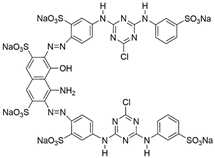
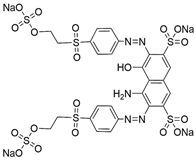
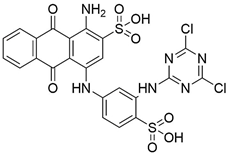
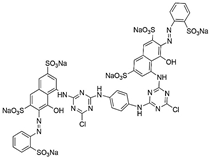
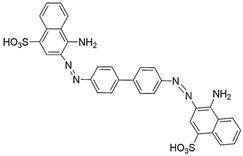
The synthetic azo dyes employed in this study are widely utilized in the global textile industry, including Congo Red (CR, λmax = 490 nm), Reactive Blue 4 (RB4, λmax = 594 nm), Reactive Black 5 (RB5, λmax = 596 nm), Reactive Green 19 (RG19, λmax = 630 nm), and RR120 (λmax = 537 nm), were procured from Sigma-Aldrich, USA. The structures of synthetic azo dyes are detailed in Table 1. All chemical dye structures were constructed using ChemDraw (version 25.0.2). Lignosulfonic acid (LSA, λmax = 249 nm), also sourced from Sigma-Aldrich, St. Louis, MO, USA, was selected as a lignin-like aromatic substrate to evaluate bacterial ligninolytic properties related to dye decolorization. The enzyme substrates methyl red, guaiacol, and veratryl alcohol were obtained from Sigma-Aldrich, USA. Berg’s mineral salt (BMS, pH 7.0) medium was formulated with 0.2% (w/v) NaNO3, 0.05% (w/v) K2HPO4, 0.02% (w/v) MgSO4·7H2O, 0.002% (w/v) MnSO4·H2O, 0.002% (w/v) FeSO4·7H2O, and 0.002% (w/v) CaCl2·2H2O. Murashige and Skoog (MS) medium was obtained from Himedia (Mumbai, India). All chemicals used in the experiments were of analytical grade.
Table 1.
The azo dye structures, formulas, and molar masses were used in this study.
2.2. Microorganism and Culture Conditions
The B. subtilis strain CKCC (Access Number: MT613731) was screened and isolated from composting of agricultural residues in Suphanburi province, Thailand, as previously identified by Chanchao et al. (2021) [14]. The isolated strain was cultured aerobically in BMS medium (pH 7.0) with 0.5% (v/v) glucose and 0.5% (v/v) yeast extract as a nutritional supplement at 200 rpm and 37 °C for 48 h. A 5% (v/v) starter culture at approximately 6 × 10⁷ CFU/mL (OD600 = 0.6) was inoculated into a 500 mL Erlenmeyer flask containing 100 mL of BMS medium with the different azo dyes. BMS medium without cell inoculation served as the blank control. The samples were collected aseptically at specific intervals and then centrifuged using a Kubota 5922 centrifuge (Kyoto, Japan) at 8000× g for 5 min. The resulting supernatants were analyzed with a UV-Vis spectrophotometer (Shimadzu Model UV-160, Kyoto, Japan) at the respective dye wavelengths, as outlined in Section 2.1.
2.3. Effects of Physicochemical Parameters on Decolorization Efficiency
Our previous findings indicated that the decolorization efficiency of strain CKCC was significantly enhanced at 200 rpm and pH 7.0. Subsequently, these optimal conditions were applied in further experiments. To evaluate the effect of temperature on decolorization efficiency, the study was tested at temperatures between 30 and 45 °C. Furthermore, the BMS medium containing 20 mg·L−1 of an azo dye was enriched with varying concentrations of glucose and yeast extract (0.1–0.6%) to assess the effect of nutrient supplementation on decolorization efficiency. A variety of azo dyes, including CR, RB5, RG19, RR120, and RB4, were examined at different concentrations (20 and 80 mg·L−1) to assess the decolorization capabilities of strain CKCC. The dye decolorization efficiency was measured using UV-Vis spectrophotometry (Shimadzu Model UV-160, Japan), and the percentage of decolorization efficiency was calculated using Equation (1):
where OD Initial refers to the initial absorbance, and OD Decolorized is the absorbance after dye decolorization.
2.4. Enzyme Assay
A culture supernatant was prepared for the enzyme assay. Subsequently, the supernatant was precipitated with ammonium sulfate (NH4)2SO4 at 95% (w/v) saturation, with gentle stirring at 100 rpm at 4 °C for 12 h. The precipitate was then centrifuged at 9000× g (Kubota 5922, Japan) for 15 min at 4 °C, and the pellet was resuspended in 2 mL of sterile 20 mM sodium phosphate buffer (pH 7.0) before dialysis. Protein concentrations were determined using the Bradford method [15], with bovine serum albumin (Sigma-Aldrich, USA) serving as the standard. The azoreductase assay was performed using methyl red as the substrate, as described in a previous study [16]. Laccase and manganese peroxidase activities were assessed using guaiacol as the substrate [17,18], while lignin peroxidase activity was evaluated with veratryl alcohol as the substrate [19]. An assay containing sterilized distilled water served as the blank, whereas an identical assay conducted in the absence of the enzyme served as the negative control. All assays were conducted in triplicate, and enzyme activities are expressed in units (U), calculated according to Equation (2).
where ΔE = (t–to) = activity time (min); Vt = reaction test volume (mL); ε = molar extinction coefficient (M−1cm−1); d = distance (1 cm); Vs = volume of crude enzyme (mL).
2.5. FTIR Spectroscopy Analysis
FTIR spectroscopy (PerkinElmer Spectrum, version 10.4.00, Beaconsfield, UK) was used to examine the functional groups present in the azo dye structure before and after decolorization by strain CKCC after 96 h. The decolorized samples were centrifuged at 9000× g (Kubota 5922, Japan) for 30 min at 4 °C. The supernatant was then freeze-dried (BIOBASE) at −20 °C for 24 h. The resulting lyophilized sample was positioned directly in the path of an infrared beam, which penetrated the sample and was detected by a sensor. Distinct functional groups generate bond absorptions at specific wavelengths and exhibit varying intensities in the IR spectrum. The IR absorptions of common functional groups were compared against established standards. Samples were scanned using the FTIR spectrophotometer over a wavelength range of 4000–550 cm−1 at a resolution of 1 cm−1.
2.6. Phytotoxicity Assessment
The decolorized supernatant was subjected to a preliminary phytotoxicity screening prior to any discussion of environmental safety. To evaluate the toxic effects of the decolorization products, a plant tissue culture technique was employed. Mung bean (Vigna radiata) seeds were sourced from Chita Organic Food Co., Ltd. in Bangkok, Thailand. The seeds were aseptically disinfected with 75% ethanol for 5 min, followed by 10 min of surface sterilization with 50% Clorox (Tri Solution Co., Ltd., Nonthaburi, Thailand). Afterward, the seeds were rinsed twice with sterile distilled water and air-dried for 30 min. Subsequently, 20 disinfected seeds were germinated in a glass plant tissue culture vessel using MS medium. A blank control was used, consisting only of MS medium without any azo dyes or decolorization products. Metabolite assessment was conducted using 20 mg·L−1 of representative RR120 decolorization metabolites supplemented into MS medium, while the negative control consisted solely of MS medium with 20 mg·L−1 of raw representative RR120. The phytotoxicity assessment was performed over 7 days at 25 °C in a plant growth chamber (Nippon Medical & Chemical Instruments Co., Ltd., Osaka, Japan). All experiments were conducted in triplicate, and the germination efficiency was calculated using Equation (3):
2.7. Statistical Analysis
The data were analyzed using a one-way ANOVA (IBM SPSS Statistics 25) to identify any statistical differences (p = 0.05). A Tukey HSD Post Hoc Test was conducted to evaluate pairwise group mean differences, where means sharing the same letter indicate no significant difference (p > 0.05). The mean difference is considered significant at the 0.05 level. A compact letter display (CLD) was generated using R version 4.4.2. Results are presented as triplicate samples ± standard deviation (SD).
3. Results and Discussion
3.1. Effect of Physicochemical Parameters on Decolorization Efficiency
3.1.1. Nutrient and Temperature
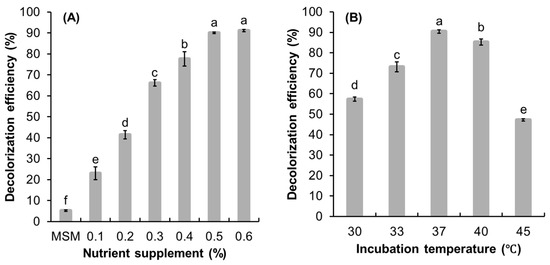
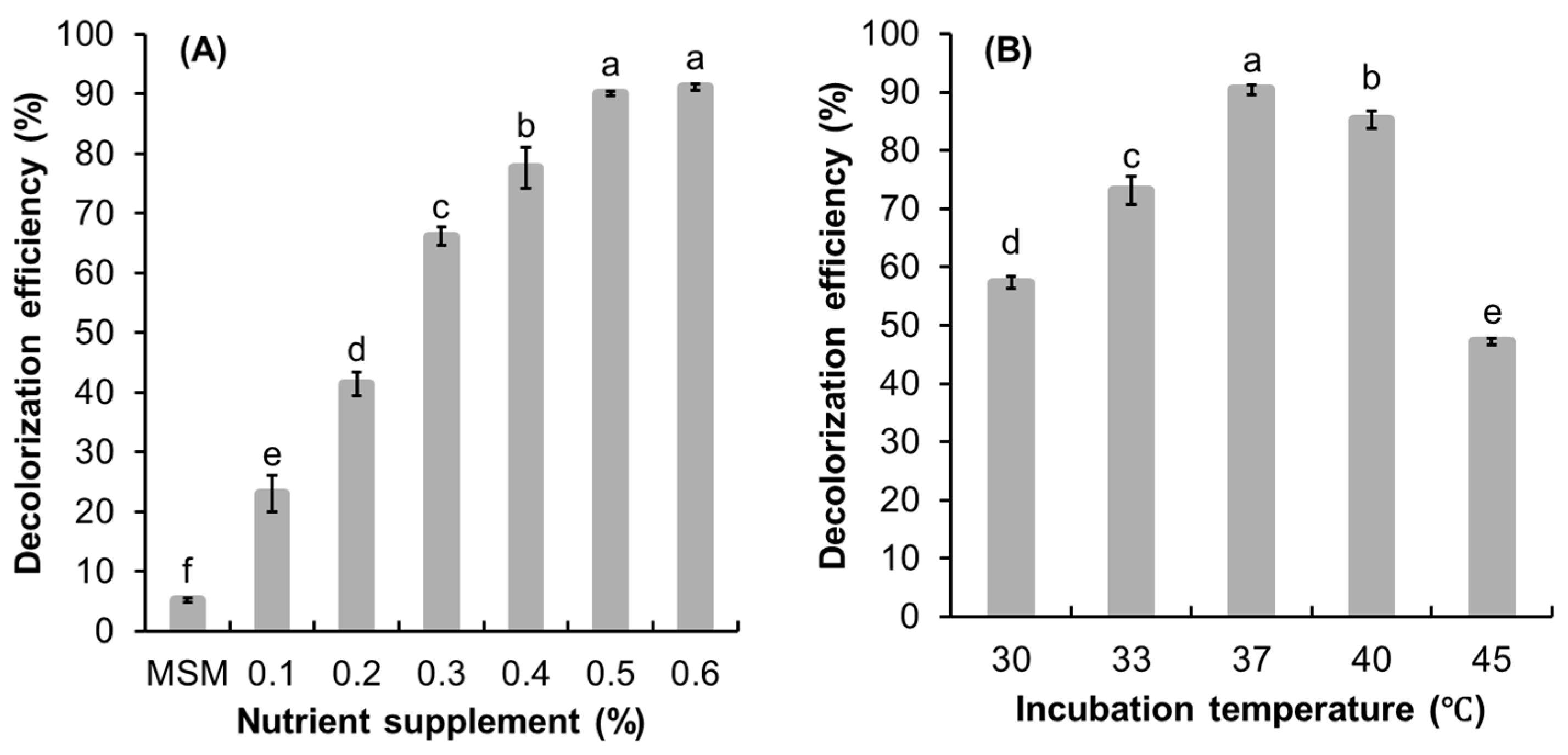
B. subtilis, classified as biosafety level 1, is regarded as highly safe because it does not cause disease in humans, animals, or plants, nor does it produce toxins. This bacterium exhibits resistance to various environmental stresses and has been utilized as a probiotic for both humans and animals [20]. Consequently, the B. subtilis strain CKCC was considered suitable for this study. Typically, decolorizing bacteria rely on organic carbon and nitrogen sources for nutrient acquisition, enabling them to grow and produce enzymes essential for dye degradation [21]. In the investigation of azo dye decolorization by the strain CKCC, glucose and yeast extract were chosen as familiar sources of organic carbon and nitrogen, respectively. Under aerobic conditions, the addition of glucose and yeast extract at 0.3% to 0.5% (w/v) significantly enhanced decolorization efficiency, reaching approximately 66% to 90% (Figure 1A). In our previous research, we showed a correlation between the strain CKCC’s cell growth and its decolorization efficiency [14]. These findings suggested that the decolorization efficiency of azo dyes was influenced by nutrients in the culture medium, which were essential for optimal cell growth and for facilitating the accumulation of enzymes responsible for their decolorization. At a glucose-to-yeast extract concentration ratio of 0.6% (w/v), the decolorization efficiency increased slightly, with no significant difference (p > 0.05) compared to the 0.5% (w/v) ratio. This improvement may be attributed to the elevated concentrations of glucose and yeast extract in the culture medium, which can reduce dissolved oxygen availability. It showed that the strain CKCC relied on oxygen for its metabolic processes and utilized oxidative enzymes to facilitate electron transfer during the oxidation of the azo dye.
Figure 1.
The effect of physicochemical parameters on the decolorization efficiency of B. subtilis strain CKCC. (A) The influence of glucose and yeast extract on decolorization efficiency. (B) The effect of incubation temperature on decolorization efficiency. The effect of physicochemical parameters on the decolorization efficiency was investigated using a representative azo dye (RR120) at 200 rpm, 37 °C, pH 7.0, over 96 h. Means sharing the same letter indicate no significant difference (p > 0.05).
Likewise, temperature significantly influenced the decolorization efficiency of strain CKCC, with an optimal temperature of 37 °C, resulting in approximately 90.42% decolorization. In comparison, the decolorization efficiencies at 45 °C and 30 °C were 47.23% and 57.38%, respectively (Figure 1B). These findings indicated that strain CKCC is a mesophilic bacterium capable of functioning effectively across a broad temperature range, which was economically advantageous for potential scale-up in practical applications. Typically, the decolorization of textile dyes by mesophilic bacteria occurs optimally at temperatures between 30 and 37 °C [5].
3.1.2. Dye Concentration and Dye Type
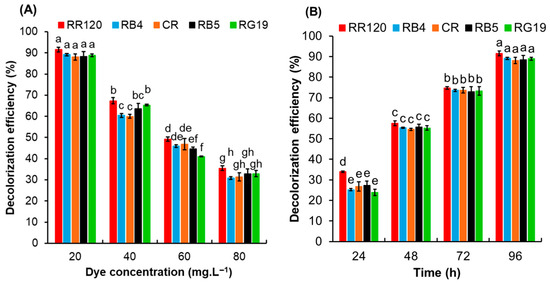
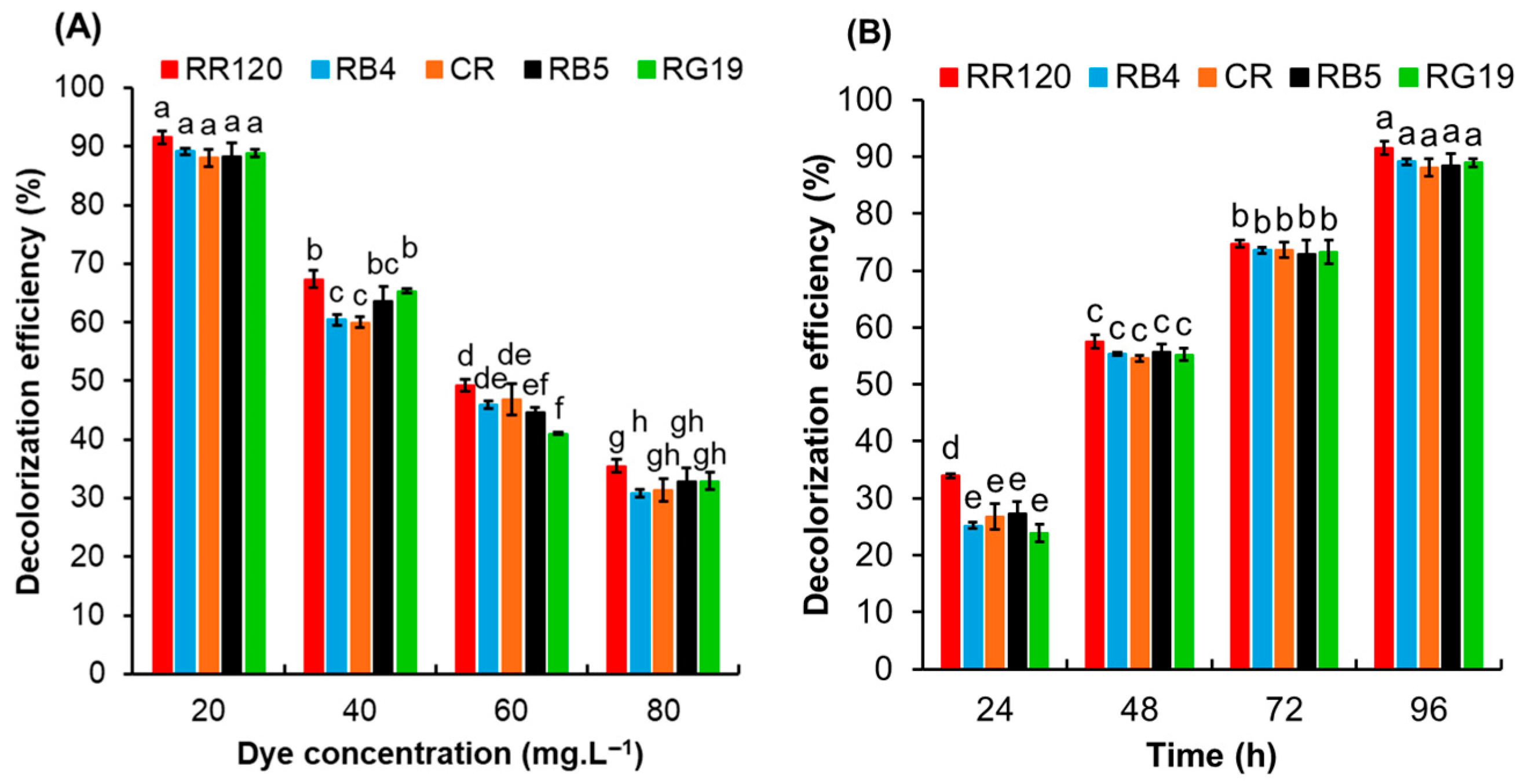
The textile industry has widely utilized various types of azo dyes and similar compounds in its dyeing processes. Nevertheless, these dyes are often easily discharged, leading to significant pollution in effluents. Typically, these effluents contain a diverse range of dyes with complex structural and chemical characteristics [22]. Biological treatment offers a potential solution for dye decolorization, with an effective candidate requiring the ability to decolorize a variety of azo dyes [12]. Hence, we aimed to assess the ability of the B. subtilis strain CKCC to decolorize several azo dyes, including CR, RB5, RG19, RR120, and RB4. Dye concentrations of 16–20 mg·L−1 have generally been reported in textile effluents [23]. Consequently, the decolorization efficiency of the strain CKCC was evaluated at azo dye concentrations ranging from 20 to 80 mg·L−1. As illustrated in Figure 2A, under optimized conditions (200 rpm, 37 °C, and pH 7.0), the decolorization efficiency for each azo dye significantly increased at a dye concentration of 20 mg·L−1, achieving approximately 88–91% decolorization. However, as the concentration of each azo dye increased to 40, 60, and 80 mg·L−1, the decolorization efficiency was decreased significantly (p < 0.05), dropping below 67%. Therefore, our findings indicated that the decolorization efficiency was significantly decreased as the dye concentration was increased. This reduction was due to increased toxic stress, enzymatic inhibition, and limitations in redox mass transfer, which inhibited microbial metabolism and the activity of enzymes involved in dye transformation [24].
Figure 2.
Decolorization efficiency of B. subtilis strain CKCC. (A) Effect of dye concentration and dye type on the decolorization efficiency over 96 h. (B) Decolorization efficiency of B. subtilis strain CKCC at a dye concentration of 20 mg·L−1. The experiment was carried out in BMS medium supplemented with 0.5% (w/v) glucose and 0.5% (w/v) yeast extract, at 200 rpm, 37 °C, and pH 7.0. Means sharing the same letter indicate no significant difference (p > 0.05).
Similarly, at a dye concentration of 20 mg·L−1, the decolorization efficiency of strain CKCC improved significantly, increasing from 23–33% at 24 h to 88–91% by 96 h (Figure 2B). Our findings indicated that strain CKCC effectively decolorized each dye at this concentration, within cells’ physiological tolerance and catalytic capacity. This optimal condition promoted sustained growth and elevated enzyme activity, extending the reaction to proceed without toxic limitations. Additionally, at an optimal dye concentration, dye decolorization was further enhanced because the substrate load remained below inhibitory thresholds. This promoted vigorous growth, provided sufficient reducing equivalents, and facilitated efficient enzyme-mediated transformation without the accumulation of toxic intermediates.
Our research demonstrated that the isolated strain CKCC significantly decolorized various azo dyes. These findings have highlighted the potential of strain CKCC as an effective solution for addressing textile effluent contamination challenges, which are often composed of complex azo dyes. Furthermore, decolorization under aerobic conditions may reduce the likelihood of aromatic amine accumulation compared to strictly anaerobic reduction [25]. Similarly, strain CKCC has utilized these by-products for its metabolism and growth. Although our isolated strain CKCC has demonstrated strong decolorization of various azo dyes under controlled laboratory conditions, translating this proficiency to real textile wastewater requires precise consideration of the chemical complexity and operational variability typical of industrial effluents. Textile wastewaters often contained a mixture of dyes, high salinity (e.g., NaCl/Na2SO4), surfactants, and heavy metals. They may also exhibit alkaline pH levels and fluctuating organic loads, all of which can affect microbial growth, enzyme stability, and decolorization kinetics. Hence, the practical applicability of strain CKCC needed to be tested with real textile wastewater under realistic pH, salinity, and temperature conditions.
3.2. Enzymatic Decolorization
Enzymes involved in the decolorization of azo dyes included azoreductases, which cleave azo linkages (-N=N-), and ligninolytic enzymes such as laccases, lignin peroxidases, and manganese peroxidases. Laccases can oxidize various aromatic substrates, while lignin peroxidases can oxidize phenolic structures. Manganese peroxidases catalyze the oxidation of phenolic compounds via Mn3+-mediated reactions [12]. Consequently, we further characterized the enzymatic decolorization produced by B. subtilis strain CKCC. Under the optimal conditions, strain CKCC has produced measurable enzymatic activities, including azoreductase (7.36 U g protein−1), laccase (21.61 U g protein−1), lignin peroxidase (135.2 U g protein−1), and manganese peroxidase (14.16 U g protein−1) (see Table 2). These enzymatic decolorizations have provided the mechanistic rationale for azo dye decolorization and transformation. The activity of azoreductase enabled the reduction of azo bonds, while ligninolytic enzymes promoted the oxidative modification of the remaining aromatic and phenolic moieties after initial cleavage [26]. However, our findings showed that the correlations between enzyme activities and decolorization kinetics over time remained indirect, as the study considered these enzymatic activities as correlative support for the decolorization. Furthermore, we also observed the strain CKCC’s abilities to degrade 0.5% (w/v) lignosulfonic acid for 96 h. As a result, the strain CKCC can degrade lignosulfonic acid by 18.80%, suggesting its potential to break down lignin, an aromatic polymer, since lignosulfonate resembles dye-like aromatic structures used to evaluate ligninolytic potential.
Table 2.
The enzymatic activities produced by the B. subtilis strain CKCC after 96 h using the representative azo dye RR120. The specific activities were assessed in triplicate (n = 3), and identical letters indicated no significant difference (p > 0.05).
Several bacterial strains have been reported to decolorize azo dyes, including Acinetobacter calcoaceticus, Aeromonas hydrophila, Arthrobacter bambusae, Bacillus cereus, Bacillus filamentosus, Bacillus firmus, Bacillus subterraneus, B. subtilis, and Bacillus sp. YZU1, Brevibacterium sp., Citrobacter sp., Dermacoccus nishinomiyaensis, Kocuria indica, Kocuria rosea, Leifsonia shinshuensis, Micrococcus luteus, Paraburkholderia sp., Proteus mirabilis, Pseudomonas luteola, Pseudomonas sp. SUK1, Rhodococcus sp., Shewanella putrefaciens, Sphingomonas paucimobilis, Staphylococcus sp., and Rhizobium radiobacter [5,12]. However, due to variations in substrates and assay conditions across studies, comparing the specific activities of the enzymes involved in azo dye decolorization has proven challenging.
While strain CKCC’s enzymes can decolorize dyes into colorless compounds, the transformation products could influence plant growth regulation [27]. Additionally, the reductive cleavage of azo dyes can generate aromatic amine intermediates, which raise toxicological concerns [5]. However, aerobic bacteria with oxidative enzyme systems can further modify these aromatic intermediates [28].
3.3. FTIR Analysis
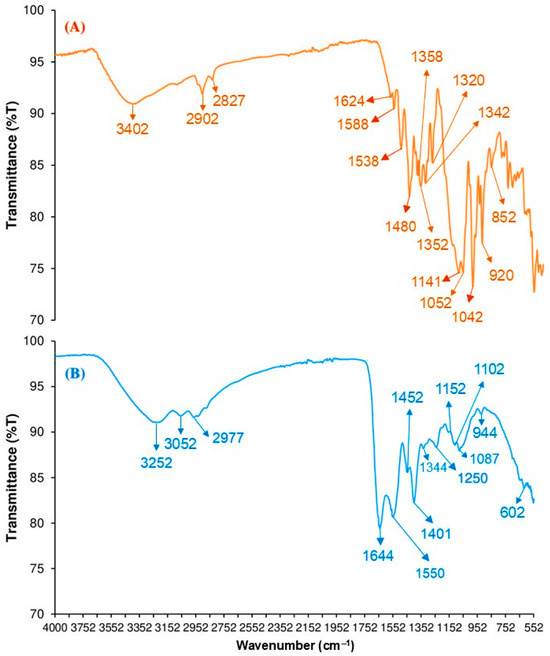
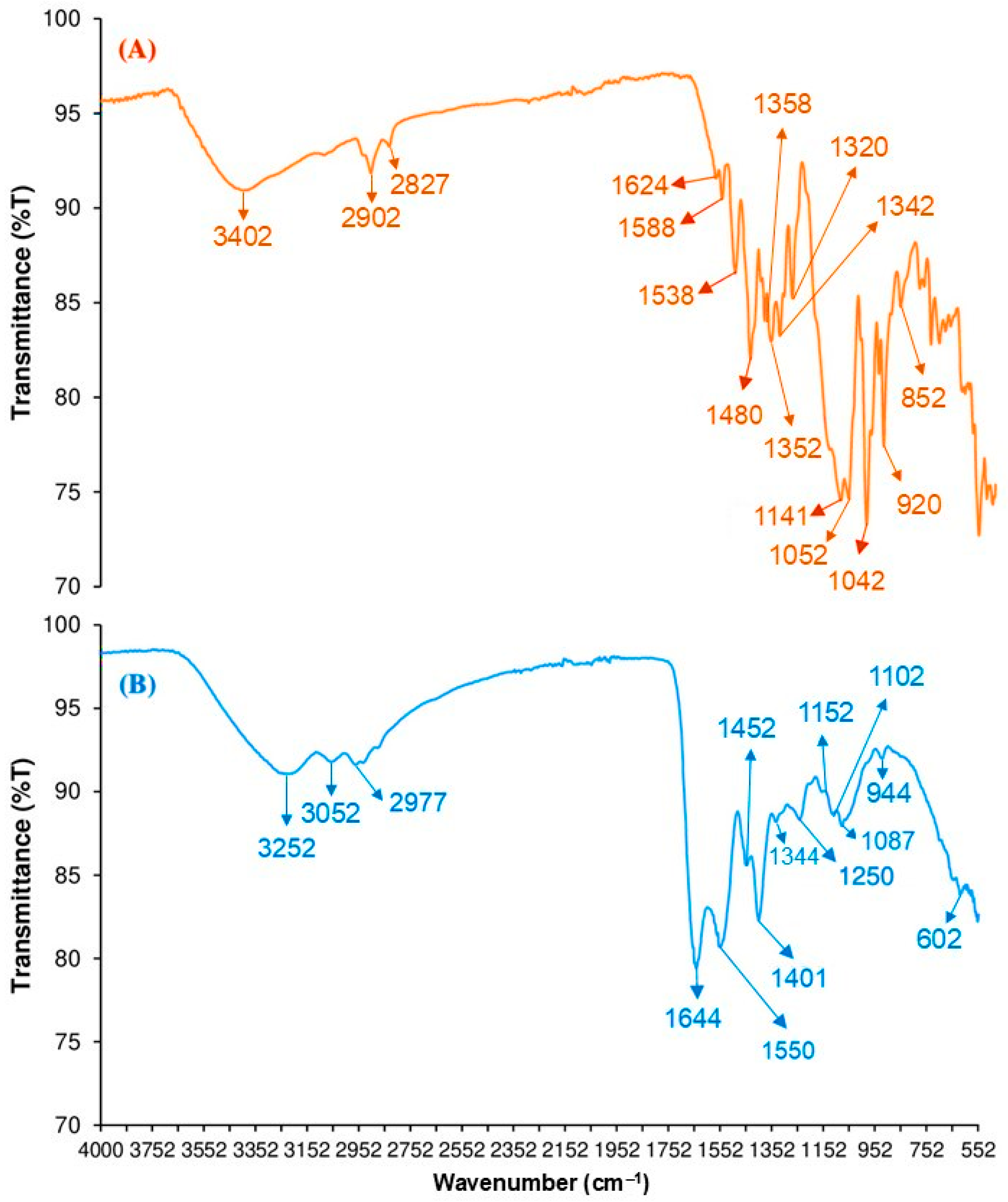
As RR120 displayed the highest decolorization efficiency among the tested azo dyes, it was selected as the representative dye for FTIR analysis. To investigate the chemical changes in the RR120 structure before and after cultivation with the B. subtilis strain CKCC, FTIR analysis was conducted. FTIR analysis has been widely utilized to identify various functional groups of azo-dye structures [4,29,30]. As shown in Figure 3, the intensity profiles of untreated and treated RR120 exhibited significant differences, indicating functional-group changes consistent with enzymatic transformation of RR120, potentially involving azoreductase- and ligninolytic-enzyme-mediated reactions.
Figure 3.
FTIR spectrum of RR120 before and after cultivation with the B. subtilis strain CKCC. (A) Untreated RR120. (B) Treated RR120.
As illustrated in Figure 3A, the FTIR spectrum of the untreated RR120 molecule reveals a broad O-H stretching band in the 3600–3200 cm−1 range. The peak at 3402 cm−1 corresponds to the N-H stretching frequency of the aromatic amine, while C-H stretching was observed at 2902 cm−1 and 2827 cm−1. The peak at 1624 cm−1 was attributed to the aromatic C-O stretching, and the azo bond (-N=N-) was identified at 1588 cm−1. A strong peak at 1538 cm−1 resulted from both N-H deformation and C-N stretching. Peaks at 1480 cm−1, 1352 cm−1, and 1342 cm−1 were related to the heterocyclic aromatic rings, with the C=N bond in pyrimidine rings appearing at 1358 cm−1. The asymmetric and symmetric S-O stretching frequencies were observed at 1320 cm−1 and 1042 cm−1, respectively, along with C-O stretching bands at 1141 cm−1 and 1052 cm−1. Additionally, the C-Cl stretch in untreated RR120 may be associated with peaks at 920 cm−1 and 852 cm−1. In the decolorized RR120, as shown in Figure 3B, a comparison with the untreated RR120 indicated that the O-H and C-H stretching vibrations have slightly shifted to 3252 cm−1 and to 3052 and 2977 cm−1, respectively. A distinct peak at 1644 cm−1 likely corresponds to C=O stretching in secondary amides or to C=C stretching in decolorization products. The band associated with azo-related vibrations (~1588 cm−1) was significantly reduced after decolorization, consistent with cleavage or transformation of azo linkages, indicating cleavage by azoreductase. Additionally, the N-H deformation and C-N stretching bands coalesce to form a strong peak at 1550 cm−1. The disappearance of peaks at 1480, 1352, and 1342 cm−1 suggested substantial alteration of aromatic/heterocyclic-associated functional groups; however, FTIR alone cannot confirm complete heterocyclic ring breakdown. A new peak at 1452 cm−1 indicated the presence of C=S stretching, while a peak at 1401 cm−1 confirmed the intact C=N bond in pyridine rings. The peak at 1344 cm−1 was likely due to the symmetric and asymmetric stretching of the nitro group (-NO2). Additionally, the peak at 1250 cm−1 may be associated with N-H deformation and C-N stretching in amides. The peak at 1152 cm−1 was likely indicative of C-O stretching in alcohols, while the peak at 1102 cm−1 may represent C-O stretching in secondary and tertiary alcohols. The peak at 1087 cm−1 likely pertained to the C-O stretch of secondary alcohols. A peak at 944 cm−1 may correspond to monosubstituted alkenes. The breaking of the C-Cl bond, leading to the loss of chlorine, was evidenced by the absence of peaks at 920 cm−1 and 852 cm−1. Furthermore, the peak at 602 cm−1 may correspond to C-S stretching. The disappearance of peaks at 3402 cm−1 and 1624 cm−1, which were related to the structure of aromatic amines in untreated RR120, indicated that the disappearance of bands previously assigned to N-H/aromatic-associated vibrations suggested modification of amine- and aromatic-related functional groups. However, the lack of specific aromatic amines required additional analysis.
Based on the FTIR results, we concluded that RR120 was effectively decolorized by the extracellular enzymes produced by the B. subtilis strain CKCC. This decolorization was evidenced by cleavage of the -N=N- bond, breakdown of aromatic rings, cleavage of the C-Cl bond, and loss of -SO3Na groups in the decolorized sample. However, our understanding was that FTIR primarily provided information at the functional group level. Based solely on FTIR may not conclusively establish the presence or absence of specific decolorized metabolites. Therefore, our study suggested that the characterization of decolorized metabolites required further examination using complementary chromatographic techniques, such as HPLC, GC-MS, or LC-MS. These techniques allow for a comprehensive analysis of dye decolorization by combining high-resolution separation of complex mixtures with precise identification of molecular structural changes. In related studies, Oturkar et al. (2011) observed that under aerobic conditions, the decolorization of RR120 by Bacillus lentus BI377 was influenced by culture time [31]. They suggested that the decolorized products included 2-hydroxybenzoic acid, 6-hydroxy cyclohexa-2,4-dienone, 3-hydroxyphthalic acid, pyrocatechol, and various ring-fission products. Similarly, Radhika and Aruna (2022) reported that following the cultivation of a bacterial consortium comprised of Shewanella haliotis RDB_1 (LK-1), Shewanella putrefaciens RDB_2 (DL-1), and Aeromonas hydrophila RDB_3 (LK-2) on RR120 under aerobic conditions, a variety of decolorized products appeared, including 2-hydroxybenzoic acid, catechol, methylenedinitramine, 4-nitro-2,4-diazabutanal, and additional ring-fission products [4]. The differences in metabolite profiles may be attributed to variations in the enzymatic systems of the different bacterial species.
3.4. Phytotoxicity
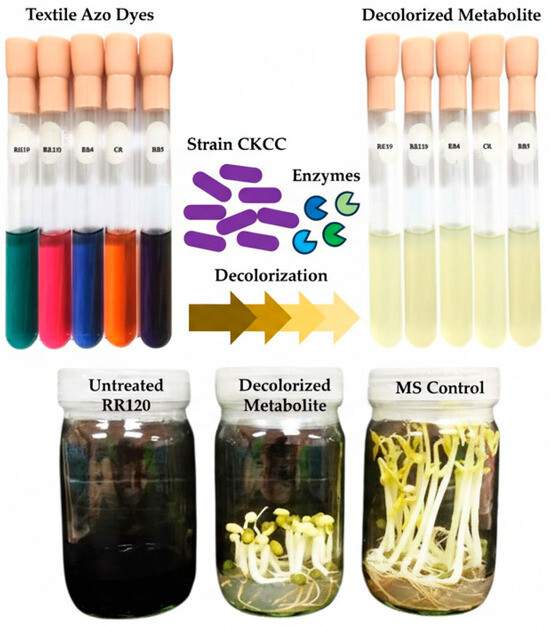
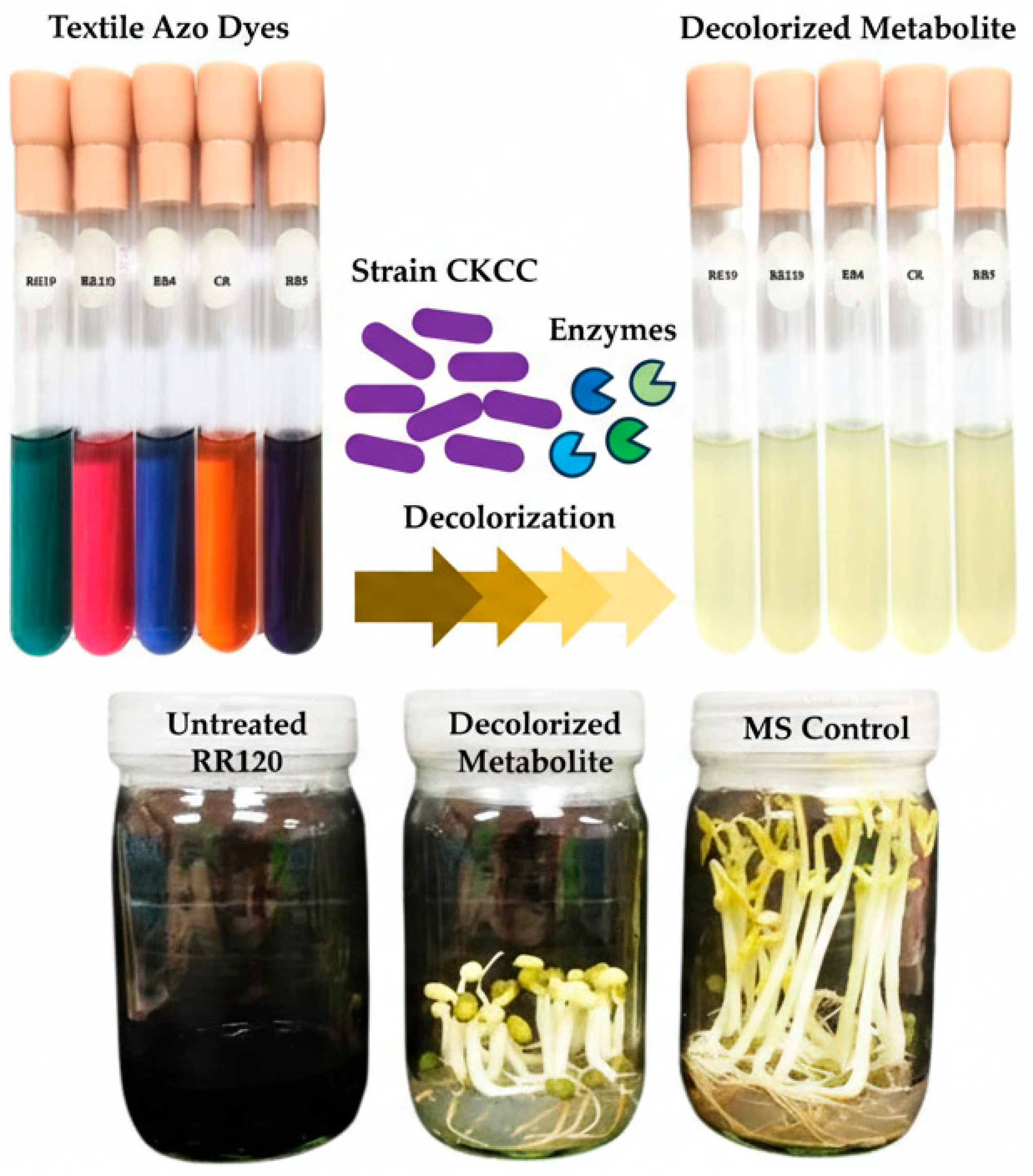
The release of textile effluents into the environment poses significant challenges, even after treatment, as these substances may retain their toxic characteristics [32,33]. Research indicated that harmful dyes could interfere with the activity of key plant growth hormones, including auxins, cytokinins, and gibberellins. These phytohormones were crucial for seed germination and seedling growth [27]. Thus, we evaluated the phytotoxicity of the decolorized metabolites in the culture supernatant by assessing germination of V. radiata and shoot and root lengths to analyze their effect on plant development. As demonstrated in Table 3, the untreated RR120 at 20 mg·L−1 completely inhibited seed germination and shoot and root length of V. radiata. On the other hand, the results showed that the strain CKCC can detoxify decolorized metabolites, as evidenced by 100% seed germination (Figure 4). Meanwhile, the shoot length was reported to be 5.69 cm, while the root length was 2.37 cm, accounting for 50.18% and 51.63%, respectively, compared with the control. In previous works, Fareed et al. (2022) reported that under aerobic conditions, decolorization of the azo dye (Reactive Orange 16) by B. cereus strain ROC significantly increased Solanum lycopersicum seed germination percentage, shoot length, and root length, compared with the untreated dye [27]. Kurade et al. (2013) found that the metabolites formed after the decolorization of Disperse Brown 118 showed non-toxic effects on seed germination of Raphanus raphanistrum [34]. Prasad et al. (2013) reported reduced toxic effects on shoot and root lengths of Vigna mungo, Sorghum bicolor, and V. radiata seeds when exposed to the decolorized metabolites of the Direct Blue-1 azo dye, compared with the untreated dye [35]. Furthermore, integrating chemical profiling with multi-species bioassays may enhance the assessment of environmental risks from treated textile effluents. This study’s phytotoxicity evaluation focused solely on V. radiata, limiting the findings to an initial screening of decolorized metabolites. Since plant responses to dye transformation products differ across species, future research needs to include a range of models, such as Lactuca sativa, Lepidium sativum, Raphanus sativus, and Cucumis sativus, to provide a broader assessment of ecological safety. Consequently, decolorization using the B. subtilis strain CKCC showed no acute phytotoxicity to V. radiata under our test conditions. Hence, the decolorization of azo dyes by the new aerobic bacterium CKCC is environmentally friendly for wastewater containing azo dyes. Therefore, the strain CKCC produced enzymatic systems that decolorized structurally complex compounds into simpler, colorless, and less harmful products, offering an eco-friendly, cost-effective, and highly efficient alternative to traditional chemical treatments, which often generate hazardous sludge and secondary pollution.
Table 3.
Phytotoxicity assessment of the metabolite products produced by B. subtilis strain CKCC using RR120 culture supernatant after 96 h. The results are presented as means ± SD (n = 3). Identical letters indicate no significant difference (p > 0.05).
Figure 4.
The phytotoxicity assessment of metabolite products produced by the B. subtilis strain CKCC, showing the culture supernatant was detoxified, as evidenced by 100% seed germination.
4. Conclusions
Azo dyes have been extensively utilized in the textile and leather industries. However, untreated effluents from these industries cause significant water and soil pollution, posing risks to ecosystems and human health due to toxic dyes, heavy metals, and high chemical loads that devastate aquatic life and disrupt entire ecosystems. The B. subtilis strain CKCC has demonstrated an impressive ability to decolorize various azo dyes effectively. Strain CKCC produced a variety of enzymes, including azoreductases, laccases, lignin peroxidases, and manganese peroxidases. These enzymes effectively degrade structurally complex compounds into simpler, colorless, and less harmful products, as demonstrated by 100% seed germination in V. radiata. The use of strain CKCC presented an eco-friendly, cost-effective, and highly efficient alternative to traditional physicochemical treatments, offering great potential for the effective treatment of textile effluents.
Author Contributions
Conceptualization, R.W., P.P., K.R. and C.T.; methodology, C.C. and C.T.; software, C.C. and S.C.; validation, C.C., P.K., S.B., A.S. and C.T.; formal analysis, C.C., S.C., P.K., S.B. and A.S.; investigation, C.C., P.K., S.B. and A.S.; resources, R.W., P.P., K.R. and C.T.; data curation, C.C.; writing—original draft preparation, C.C.; writing—review and editing, C.C., K.R. and C.T.; visualization, C.C.; supervision, K.R. and C.T.; project administration, P.K., S.B., A.S., R.W. and P.P.; funding acquisition, C.T. All authors have read and agreed to the published version of the manuscript.
Funding
This research was funded by King Mongkut’s University of Technology Thonburi through the “KMUTT 55th Anniversary Commemorative Fund”. Additional support was provided by KMUTT through the Research Center of Excellence Project (Grant No. 7601.24/4054).
Data Availability Statement
The nucleotide sequencing data presented in the study are deposited in the Nucleotide BLAST database (NCBI, NIH), accession number MT613731. The data supporting the findings of this study are available from the authors upon reasonable request.
Acknowledgments
The first author would like to express sincere gratitude to Akekavitch Siriatcharanon for his invaluable practical and technical guidance, Sreyneang Nhim for her assistance with strain isolation, and Sobroney Heng for her technical support in DNA extraction and 16S rRNA gene sequencing. The authors also appreciate the Pilot Plant Development and Training Institute at King Mongkut’s University of Technology Thonburi for providing access to essential laboratory and research facilities.
Conflicts of Interest
The authors declare no conflicts of interest.
References
- Ganjoo, R.; Verma, C.; Kumar, A.; Quraishi, M.A. Colloidal and interface aqueous chemistry of dyes: Past, present and future scenarios in corrosion mitigation. Adv. Colloid Interface Sci. 2023, 311, 102832. [Google Scholar] [CrossRef] [Scilit]
- Mohan, D.; Shukla, S.P. Hazardous consequences of textile mill effluents on soil and their remediation approaches. Clean. Eng. Technol. 2022, 7, 100434. [Google Scholar] [CrossRef] [Scilit]
- Dave, S.R.; Patel, T.L.; Tipre, D.R. Bacterial Degradation of Azo Dye Containing Wastes. In Microbial Degradation of Synthetic Dyes in Wastewaters, 1st ed.; Singh, S.N., Ed.; Environmental Science and Engineering; Springer: Cham, Switzerland, 2015; pp. 57–83. [Google Scholar] [CrossRef] [Scilit]
- Radhika, B.; Aruna, K. Elucidating a pathway for degradation of azo dye reactive red 120 BY bacterial consortium. J. Appl. Biol. Sci. 2022, 16, 396–417. [Google Scholar] [CrossRef] [Scilit]
- Sehar, S.; Rasool, T.; Syed, H.M.; Mir, M.A.; Naz, I.; Rehman, A.; Younis, A. Recent advances in biodecolorization and biodegradation of environmental threatening textile finishing dyes. 3 Biotech 2022, 12, 186. [Google Scholar] [CrossRef] [Scilit] [PubMed]
- Tiwari, A.; Joshi, M.; Salvi, N.; Gupta, D.; Gandhi, S.; Rajpoot, K.; Tekade, R.K. Toxicity of pharmaceutical azo dyes. In Pharmacokinetics and Toxicokinetic Considerations; Tekade, R.K., Ed.; Academic Press: Cambridge, MA, USA, 2022; Volume 2, pp. 569–603. [Google Scholar] [CrossRef] [Scilit]
- Adesanmi, B.M.; Hung, Y.T.; Paul, H.; Huhnke, C. Comparison of dye wastewater treatment methods: A review. GSCARR 2022, 10, 126–137. [Google Scholar] [CrossRef] [Scilit]
- Al-Tohamy, R.; Ali, S.S.; Li, F.; Okasha, K.M.; Mahmoud, Y.A.G.; Elsamahy, T.; Sun, J. A critical review on the treatment of dye-containing wastewater: Ecotoxicological and health concerns of textile dyes and possible remediation approaches for environmental safety. Ecotoxicol. Environ. Saf. 2022, 231, 113160. [Google Scholar] [CrossRef] [Scilit] [PubMed]
- Rathi, B.S.; Kumar, P.S.; Vo, D.V.N. Critical review on hazardous pollutants in water environment: Occurrence, monitoring, fate, removal technologies and risk assessment. Sci. Total Environ. 2021, 797, 149134. [Google Scholar] [CrossRef] [Scilit]
- Rashid, R.; Shafiq, I.; Akhter, P.; Iqbal, M.J.; Hussain, M. A state-of-the-art review on wastewater treatment techniques: The effectiveness of adsorption method. ESPR 2021, 28, 9050–9066. [Google Scholar] [CrossRef] [Scilit] [PubMed]
- Behera, M.; Nayak, J.; Banerjee, S.; Chakrabortty, S.; Tripathy, S.K. A review on the treatment of textile industry waste effluents towards the development of efficient mitigation strategy: An integrated system design approach. J. Environ. Chem. Eng. 2021, 9, 105277. [Google Scholar] [CrossRef] [Scilit]
- Ngo, A.C.R.; Tischler, D. Microbial degradation of azo dyes: Approaches and prospects for a hazard-free conversion by microorganisms. Int. J. Environ. Res. Public Health 2022, 19, 4740. [Google Scholar] [CrossRef] [Scilit]
- Srivastava, A.; Rani, R.M.; Patle, D.S.; Kumar, S. Emerging bioremediation technologies for the treatment of textile wastewater containing synthetic dyes: A comprehensive review. J. Chem. Tech. Biotechnol. 2022, 97, 26–41. [Google Scholar] [CrossRef] [Scilit]
- Chanchao, C.; Patthra, P.; Rattiya, W.; Khanok, R.; Chakrit, T. Biodecolorization of azo dye using Bacillus subtilis strain CKCC isolated from compost residues. CJBAR 2021, 3, 77–83. [Google Scholar] [CrossRef] [Scilit]
- Bradford, M.M. A rapid and sensitive method for the quantitation of microgram quantities of protein utilizing the principle of protein-dye binding. Anal. Biochem. 1976, 72, 248–254. [Google Scholar] [CrossRef]
- Qi, J.; Anke, M.K.; Szymańska, K.; Tischler, D. Immobilization of Rhodococcus opacus 1CP azoreductase to obtain azo dye degrading biocatalysts operative at acidic pH. Int. Biodeterior. Biodegradation 2017, 118, 89–94. [Google Scholar] [CrossRef] [Scilit]
- Sheikhi, F.; Roayaei Ardakani, M.; Enayatizamir, N.; Rodriguez-Couto, S. The determination of assay for laccase of Bacillus subtilis WPI with two classes of chemical compounds as substrates. Indian J. Microbiol. 2012, 52, 701–707. [Google Scholar] [CrossRef] [Scilit]
- Paszczyński, A.; Crawford, R.L.; Huynh, V.B. Manganese peroxidase of Phanerochaete chrysosporium: Purification. In Methods in Enzymology; Willis, A.W., Scott, T.K., Eds.; Academic Press: Cambridge, MA, USA, 1988; Volume 161, pp. 264–270. [Google Scholar] [CrossRef] [Scilit]
- Tien, M.; Kirk, T.K. Lignin peroxidase of Phanerochaete chrysosporium. In Methods in Enzymology; Willis, A.W., Scott, T.K., Eds.; Academic Press: Cambridge, MA, USA, 1988; Volume 161, pp. 238–249. [Google Scholar] [CrossRef] [Scilit]
- Galano, M.; van den Dungen, M.W.; van Rij, T.; Abbas, H.E. Safety evaluation of food enzymes produced by a safe strain lineage of Bacillus subtilis. Regul. Toxicol. Pharmacol. 2021, 126, 105030. [Google Scholar] [CrossRef] [Scilit]
- Garg, N.; Garg, A.; Mukherji, S. Eco-friendly decolorization and degradation of reactive yellow 145 textile dye by Pseudomonas aeruginosa and Thiosphaera pantotropha. J. Environ. Manag. 2020, 263, 110383. [Google Scholar] [CrossRef] [Scilit]
- Saxena, A.K.; Kumar, M.; Chakdar, H.; Anuroopa, N.; Bagyaraj, D.J. Bacillus species in soil as a natural resource for plant health and nutrition. J. Appl. Microbiol. 2020, 128, 1583–1594. [Google Scholar] [CrossRef] [Scilit] [PubMed]
- Guadie, A.; Tizazu, S.; Melese, M.; Guo, W.; Ngo, H.H.; Xia, S. Biodecolorization of textile azo dye using Bacillus sp. strain CH12 isolated from alkaline lake. Biotechnol. Rep. 2017, 15, 92–100. [Google Scholar] [CrossRef] [Scilit] [PubMed]
- Ray, J.C.J.; Wickersheim, M.L.; Jalihal, A.P.; Adeshina, Y.O.; Cooper, T.F.; Balázsi, G. Cellular growth arrest and persistence from enzyme saturation. PLoS Comput. Biol. 2016, 12, e1004825. [Google Scholar] [CrossRef] [Scilit]
- Shah, M.P. Microbial Decolorization of Mixture of Dyes by an Application of Laccase through Bacillus subtillis ETL-1979 Isolated from Soil of Industrial Effluent Treatment Plant. J. Bacteriol. Mycol. 2017, 4, 00099. [Google Scholar] [CrossRef] [Scilit]
- Telke, A.A.; Kadam, A.A.; Govindwar, S.P. Bacterial Enzymes and Their Role in Decolorization of Azo Dyes. In Microbial Degradation of Synthetic Dyes in Wastewaters; Singh, S., Ed.; Environmental Science and Engineering; Springer: Cham, Switzerland, 2015; pp. 149–168. [Google Scholar] [CrossRef] [Scilit]
- Fareed, A.; Zaffar, H.; Bilal, M.; Hussain, J.; Jackson, C.; Naqvi, T.A. Decolorization of azo dyes by a novel aerobic bacterial strain Bacillus cereus strain ROC. PLoS ONE 2022, 17, e0269559. [Google Scholar] [CrossRef] [Scilit]
- Chaudhari, A.; Paul, D.; Thamke, V.; Bagade, A.; Bapat, V.A.; Kodam, K.M. Concurrent removal of reactive blue HERD dye and Cr (VI) by aerobic bacterial granules. J. Clean. Prod. 2022, 367, 133075. [Google Scholar] [CrossRef] [Scilit]
- Navaei, A.; Alidadi, H.; Dankoob, M.; Bonyadi, Z.; Dehghan, A.; Hosseini, A. Biosorption of Reactive Red 120 dye from aqueous solution using Saccharomyces cerevisiae: RSM analysis, isotherms and kinetic studies. Desalin. Water Treat. 2019, 171, 418–427. [Google Scholar] [CrossRef] [Scilit]
- Paul, J.; Kadam, A.A.; Govindwar, S.P.; Kumar, P.; Varshney, L. An insight into the influence of low dose irradiation pretreatment on the microbial decolouration and degradation of Reactive Red-120 dye. Chemosphere 2013, 90, 1348–1358. [Google Scholar] [CrossRef] [Scilit]
- Oturkar, C.C.; Nemade, H.N.; Mulik, P.M.; Patole, M.S.; Hawaldar, R.R.; Gawai, K.R. Mechanistic investigation of decolorization and degradation of Reactive Red 120 by Bacillus lentus BI377. Bioresour. Technol. 2011, 102, 758–764. [Google Scholar] [CrossRef] [Scilit]
- Jargalsaikhan, M.; Lee, J.; Jang, A.; Jeong, S. Efficient removal of Azo dye from wastewater using the non-toxic potassium ferrate oxidation–coagulation process. Appl. Sci. 2021, 11, 6825. [Google Scholar] [CrossRef] [Scilit]
- Serrano-Martínez, A.; Mercader-Ros, M.T.; Martínez-Alcalá, I.; Lucas-Abellán, C.; Gabaldón, J.A.; Gómez-López, V.M. Degradation and toxicity evaluation of azo dye Direct red 83: 1 by an advanced oxidation process driven by pulsed light. J. Water Process Eng. 2020, 37, 101530. [Google Scholar] [CrossRef] [Scilit]
- Kurade, M.B.; Waghmode, T.R.; Kabra, A.N.; Govindwar, S.P. Degradation of a xenobiotic textile dye, Disperse Brown 118, by Brevibacillus laterosporus. Biotechnol. Lett. 2013, 35, 1593–1598. [Google Scholar] [CrossRef] [Scilit]
- Prasad, A.A.; Rao, K.B. Aerobic biodegradation of Azo dye by Bacillus cohnii MTCC 3616; an obligately alkaliphilic bacterium and toxicity evaluation of metabolites by different bioassay systems. Appl. Microbiol. Biotechnol. 2013, 97, 7469–7481. [Google Scholar] [CrossRef] [Scilit]

Disclaimer/Publisher’s Note: The statements, opinions and data contained in all publications are solely those of the individual author(s) and contributor(s) and not of MDPI and/or the editor(s). MDPI and/or the editor(s) disclaim responsibility for any injury to people or property resulting from any ideas, methods, instructions or products referred to in the content. |
© 2026 by the authors. Licensee MDPI, Basel, Switzerland. This article is an open access article distributed under the terms and conditions of the Creative Commons Attribution (CC BY) license.