


Abstract
The simultaneous control of friction, filter-cake adhesion, wear, and corrosion remains a major challenge for water-based drilling fluids (WBDFs) under high-temperature and high-salinity conditions. Herein, citric-acid-derived carbon dots (CDs) were synthesized hydrothermally and investigated as multifunctional lubricating additives for bentonite-based WBDFs. Fourier-transform infrared spectroscopy revealed abundant oxygen-containing surface functionalities, while thermogravimetric analysis showed only 5.3% mass loss below 230 °C. Transmission electron microscopy confirmed the nanoscale, nearly spherical morphology of the CDs. At a CD concentration of 0.5 wt%, the lubrication coefficient decreased from 0.475 to 0.052, corresponding to an 89.1% reduction, while the filter-cake adhesion coefficient decreased from 0.152 to 0.046, representing a 69.7% reduction. The lubrication coefficient remained approximately 0.05 during 30 min of continuous testing, reached a minimum of 0.046 at 150 °C, and remained at 0.059 at 210 °C. Even at 35 wt% NaCl, the coefficient remained as low as 0.081. UV–vis measurements revealed a concentration-dependent increase in the adsorption capacity of CDs on steel, from approximately 84 to 164 mg·g−1, accompanied by an increase in the water contact angle from 35.2° to 72.4° after immersion in a 0.5 wt% CD solution. Moreover, the wear volume decreased from 5.8 × 10⁻² to 1.56 × 10⁻² mm3, corresponding to a reduction of approximately 73.1%, while the corrosion rate decreased from 0.226 to 0.048 mm·a−1 after 7 days of exposure to a drilling-fluid system containing 35 wt% NaCl at 180 °C, representing a reduction of 78.8%. Benchmarking against three commercial lubricants (RH-3, methyl oleate, and HEP-1) under identical high-temperature, high-salinity conditions confirmed the superior lubricating performance of the CDs. SEM observations further confirmed the mitigation of friction-induced surface damage. Collectively, these results establish a structure–interface–performance relationship in which surface-functionalized CDs adsorb onto steel, modify interfacial wettability, and facilitate the formation of a protective boundary layer that reduces direct asperity contact and interfacial shear while restricting corrosive-species access. This work demonstrates the potential of CDs as multifunctional interfacial additives that integrate friction reduction, anti-adhesion, antiwear, and corrosion protection in demanding WBDF environments.
1. Introduction
Current shale gas development is increasingly shifting toward deep reserves (burial depth > 3500 m) [1]. However, these deep reservoirs exhibit more complex geological and engineering conditions, where bottomhole circulating temperatures typically exceed 150 °C [2]. Water-based drilling fluids (WBDFs) are widely used in oil and gas drilling because of their favorable environmental profile, relatively low cost, and operational versatility. However, inadequate lubricity remains a major limitation of WBDFs, particularly in highly deviated, horizontal, and extended-reach wells, where substantial friction between the drill string, borehole wall, and filter cake can increase torque and drag, accelerate equipment wear, and increase the risk of differential sticking [3,4,5]. Although conventional lubricants, including oil-based additives [6,7], ester compounds, and solid lubricants [8,9,10], have been investigated extensively, their practical application may be constrained by environmental considerations, dispersion stability, compatibility with drilling-fluid components, and performance under elevated-temperature and high-salinity conditions [11,12,13,14]. Therefore, developing efficient multifunctional additives that can regulate interfacial friction and maintain their performance under demanding drilling conditions remains an important research objective.
Nanomaterials have attracted considerable attention as potential lubricating additives because their nanoscale dimensions and tunable surface chemistry enable them to modify the contact between solid surfaces. Depending on their structure and interfacial interactions, nanoparticles may reduce friction through surface adsorption, nanoscale gap filling, the formation of protective interfacial layers, and other synergistic effects [15,16]. Among these materials, carbon dots (CDs) are particularly interesting because of their small size, abundant surface functional groups, and potential compatibility with aqueous media [17]. Previous studies have demonstrated that graphene quantum dots can improve the friction-reducing and antiwear performance of water-based lubricants, while other carbon-dot-based materials have shown promising tribological behavior in conventional lubricant systems [18,19,20,21]. These findings establish the potential of carbon-based quantum dots as lubricant additives. Nevertheless, the behavior of such materials in drilling fluids cannot be directly inferred from their performance in simple aqueous or oil-based systems. The presence of clay particles, dissolved electrolytes, and filter cakes introduces additional interfacial interactions that may influence nanoparticle adsorption, surface coverage, and lubrication efficiency. Accordingly, the application of CDs to complex drilling-fluid systems requires dedicated evaluation using drilling-relevant tribological and interfacial measurements [22].
In this study, CDs were synthesized hydrothermally using citric acid as the precursor and evaluated as multifunctional additives for bentonite-based water-based drilling fluids. Fourier-transform infrared spectroscopy, thermogravimetric analysis, and transmission electron microscopy were employed to characterize the surface functional groups, thermal behavior, and nanoscale morphology of the CDs. Their lubricating performance was systematically investigated as a function of CD concentration, testing time, temperature, and NaCl concentration. In addition, filter-cake adhesion measurements and UV–vis spectrophotometry were used to evaluate changes in filter-cake lubricity and the adsorption of CDs onto steel surfaces, respectively. Water contact angle measurements and scanning electron microscopy were further employed to characterize changes in surface wettability and wear morphology, while wear-volume measurements and high-temperature, high-salinity corrosion tests were conducted to assess the mechanical and chemical protection of steel. Based on these results, a possible interfacial mechanism involving CD adsorption, modification of surface contact conditions, friction and wear reduction, and corrosion protection is proposed. Furthermore, the lubricating performance of the CDs was benchmarked against three commercially available drilling-fluid lubricants to assess their practical competitiveness. This work provides an experimental basis for understanding the interfacial role of citric-acid-derived CDs in drilling fluids and assessing their potential as multifunctional additives for demanding drilling environments.
2. Experimental Section
2.1. Materials
Citric acid (99.5%) was purchased from Aladdin Chemical Reagent Co., Ltd. (Shanghai Aladdin Biochemical Technology Co., Ltd., Shanghai, China), and bentonite for base slurry preparation from Huaian Bentonite Co., Ltd (Huai’an County Tengfei Bentonite Development Co., Ltd., Huai’an, China). The water-based drilling fluid base slurry was prepared by adding 20 g of bentonite and 0.8 g of Na2CO3 to 400 mL of deionized water, followed by mixing at 6000 rpm for 30 min, before being sealed and statically aged at room temperature for 24 h [23].
2.2. Synthesis of the Lubricant
Citric acid and distilled water were mixed at a mass ratio of 1:1 and thoroughly stirred on a magnetic stirrer. The resulting citric acid solution was then transferred to a hydrothermal synthesis reactor and placed in an electric blast drying oven for hydrothermal reaction at 200 °C for 6 h. After sufficient reaction, carbon dots were obtained. The reaction product was poured into a 1000 D dialysis bag, sealed with clips, and immersed in a beaker containing distilled water for one day to allow low-molecular-weight substances to diffuse out while retaining the macromolecular fraction. Finally, the dialyzed product was transferred to a Petri dish wrapped with plastic film and dried in a blast drying oven at 80 °C, yielding high-temperature-resistant CD lubricants.
2.3. Characterizations of the CDs
The surface functional groups of the as-prepared CDs were characterized using a Fourier-transform infrared spectrometer. Before analysis, the CD sample was dried to remove residual moisture. The FTIR spectrum was recorded over the wavenumber range of 4000–500 cm−1 using a spectral resolution of 0.25 cm−1. The resulting spectrum was used to identify the characteristic functional groups on the CD surface. Thermogravimetric analysis (TGA) was conducted using a Mettler Toledo instrument (Mettler-Toledo GmbH, Schwerzenbach, Switzerland) under nitrogen at a flow rate of 20 mL min−1. Samples were heated from 40 to 800 °C at 10 °C min−1. The morphology and particle size of the CDs were further characterized by transmission electron microscopy (TEM). The CD dispersion was dropped onto a carbon-coated copper grid and dried, and the images were recorded to determine the particle morphology and size distribution.
2.4. Lubrication Coefficient Test
The lubricating performance of the drilling fluids was evaluated using an EP-B extreme-pressure lubricity tester (Qingdao Haitongda Special Instrument Co., Ltd., Qingdao, China). During the test, a steel block was pressed against a rotating steel ring under a prescribed normal load. The tester was operated at a torque load of 16.95 N·m and a rotational speed of 60 rpm. After the system had run steadily for 5 min, the torque reading of the sample was recorded. Deionized water was used as the reference fluid, with a reference torque reading of 34 ± 4 under the same testing conditions. All sample readings were calibrated against this reference to ensure comparability. The lubrication coefficient was calculated using Equation (1), and the lubrication reduction rate (η) was derived from Equation (2) to evaluate the lubrication performance enhancement [24].
where μ is the lubrication coefficient, N1 represents the torque reading of the specimen, N2 indicates the torque reading of deionized water, and 34 denotes the reference torque reading of deionized water.
where R signifies the lubrication reduction rate, μB is the lubrication coefficient of 5% base slurry, and μS is the lubrication coefficient of 5% base slurry with lubricant.
2.5. Filter-Cake Adhesion Coefficient Test
The filter-cake adhesion coefficient was measured to evaluate the adhesion behavior of the drilling-fluid filter cake and its associated interfacial friction against a contacting surface. First, the filtration loss of each drilling fluid was measured, and a filter cake was formed under a differential pressure of 3.5 MPa for 30 min. Subsequently, an adhesion plate was brought into contact with the filter cake under compression. The maximum torque (M) required to initiate relative sliding between the adhesion plate and the filter cake was recorded. The adhesion coefficient (Kf) of the filter cake was calculated using Equation (3), and the adhesion coefficient reduction rate (ΔKf) was calculated using Equation (4) [25].
where Kf and Kf1 are the adhesion coefficients of the drilling fluid before and after adding the lubricant. A lower (Kf) indicates weaker adhesion between the filter cake and the contacting plate, suggesting a reduced tendency for adhesion-related friction during relative motion. The adhesion coefficient reduction rate (ΔKf) was used to quantify the improvement achieved by the addition of CDs. A higher (ΔKf) indicates a greater reduction in filter-cake adhesion relative to the base slurry.
2.6. Corrosion Rate Test
The corrosion resistance of N80 steel in high-salinity drilling fluids containing different lubricants was evaluated using a static high-temperature and high-pressure corrosion test in accordance with ASTM G111-21 [26,27]. A base drilling-fluid slurry containing 35 wt% NaCl was prepared, and different lubricants were added at the prescribed concentrations. N80 steel coupons were then immersed in the respective drilling-fluid formulations and aged in a high-pressure autoclave at 180 °C for 7 days under static conditions. After exposure, the steel coupons were retrieved and treated to remove corrosion products, followed by drying and weighing to determine the mass loss, provided that these procedures were performed as part of the experimental protocol. The corrosion rate was calculated using Equation (5). Standard N80 coupons with known dimensions were used, and their surfaces were degreased before testing. The coupons were fully immersed in the drilling fluid, and three replicate coupons were tested for each group [14].
In the equation:
- CR—corrosion rate, mm/a;
- W—weight loss, g;
- A—surface area of the metal specimen, mm2;
- T—corrosion test time, d;
- D—the density of the specimen, g/cm3.
2.7. Wear Volume Test
The wear resistance of the steel surfaces lubricated by the CD-containing drilling fluids was evaluated using a tribological test followed by three-dimensional surface profilometry. The base slurry and drilling fluids containing 0.1, 0.3, and 0.5 wt% CDs were prepared using the same procedure as that used for the lubrication coefficient measurements. After each test, the steel specimen was carefully cleaned to remove residual drilling fluid and loose debris without altering the wear track, and was then dried before characterization. The tribological tests were performed on an oscillating reciprocating friction-and-wear tester (SRV-IV, Optimol Instruments, München-Sendling, Germany). The three-dimensional topography of the worn surface was measured using a non-contact 3D profilometer (MicroXAM-3D, KLA Tencor, Milpitas, CA, USA). The unworn regions adjacent to the wear track were used to establish a reference surface, and the wear volume was determined from the three-dimensional height data using the instrument software. All friction tests were performed using standardized SRV parameters: a normal load of 100 N, an oscillation frequency of 25 Hz, a stroke amplitude of 1 mm, and a GCr15 steel ball (a high-carbon chromium bearing steel) as the counterface, under ambient conditions (25 °C and 60% relative humidity).
2.8. Adsorption of CDs on the Steel Surface
The adsorption behavior of carbon dots (CDs) on the steel surface was investigated using a UV–vis spectrophotometer. CD solutions with different concentrations (0.1, 0.2, 0.3, 0.4, and 0.5 wt%) were prepared using deionized water. Before the adsorption experiments, a series of CD standard solutions with known concentrations was prepared, and their absorbance values were measured at the characteristic absorption wavelength of the CDs. A calibration curve relating absorbance to CD concentration was established and used to determine the residual CD concentration after adsorption. For each experiment, a preweighed steel coupon was immersed in a known volume of CD solution at room temperature for 24 h. After immersion, the steel coupon was removed, and the remaining solution was collected for UV–vis analysis. The residual CD concentration was determined from the established calibration curve.
2.9. Contact Angle Measurement
The wettability of the steel surface after immersion in 0.5% CDs solution was evaluated by measuring the static water contact angle using a contact angle goniometer.
2.10. Scanning Electron Microscopy (SEM) Test
The surface morphologies of the steel specimens after tribological testing were characterized using a scanning electron microscope (SEM; Zeiss GeminiSEM 360, ZEISS, Tokyo, Japan).
3. Results and Discussion
3.1. Characterization of the CDs
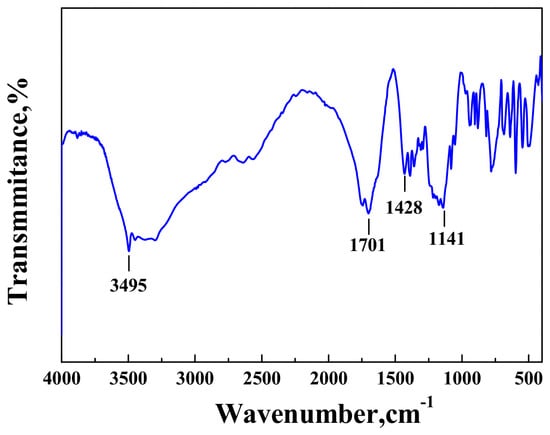
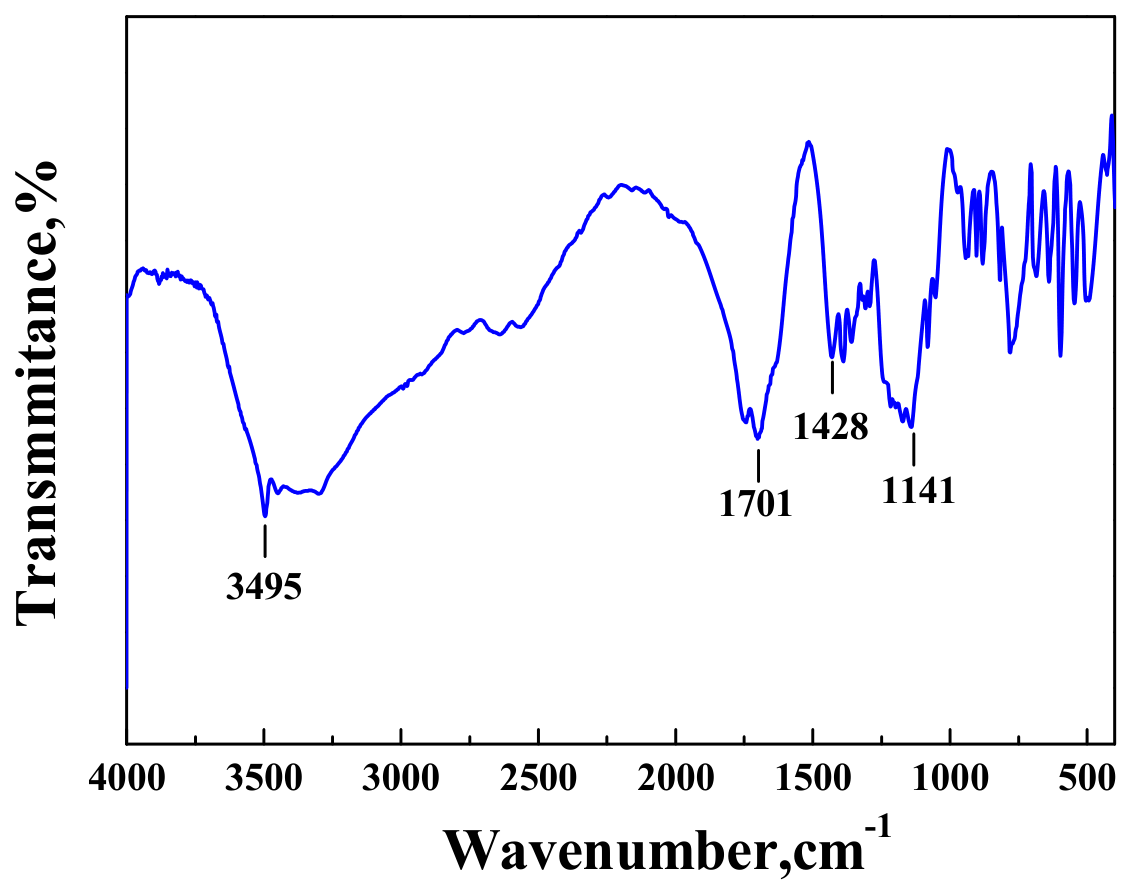
The surface chemical functionalities of the as-prepared carbon dots (CDs) were characterized by Fourier-transform infrared (FTIR) spectroscopy, as shown in Figure 1. The FTIR spectrum exhibits several characteristic absorption bands associated with oxygen-containing functional groups on the CD surface. A broad band centered at 3495 cm−1 is assigned to the stretching vibration of O-H groups, indicating the presence of abundant hydroxyl groups and/or hydrogen-bonded surface water. The pronounced band at 1701 cm−1 is associated with the stretching vibration of C=O groups, mainly originating from surface carboxyl and carbonyl functionalities. The bands observed in the 1141–1428 cm−1 region are mainly attributable to C-O and C-O-H stretching vibrations, further confirming the abundance of oxygen-containing functionalities on the CD surface. These results indicate that the hydrothermal treatment of citric acid involves dehydration, condensation and carbonization reactions, while a considerable fraction of oxygen-containing groups is retained on the resulting carbonaceous nanoparticles. Importantly, the coexistence of hydroxyl, carboxyl/carbonyl and C-O-containing functionalities endows the CDs with a hydrophilic and chemically active surface. Such surface functionalities are expected to promote strong interactions with water molecules and facilitate adsorption onto solid surfaces, which is particularly favorable for their application as a nanoscale lubricant in water-based drilling fluids.
Figure 1.
FTIR spectrum of CD lubricant.
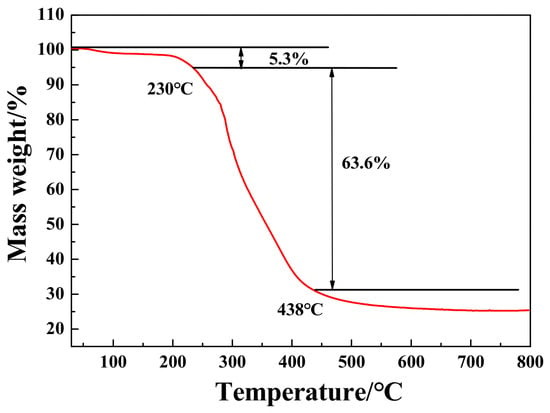
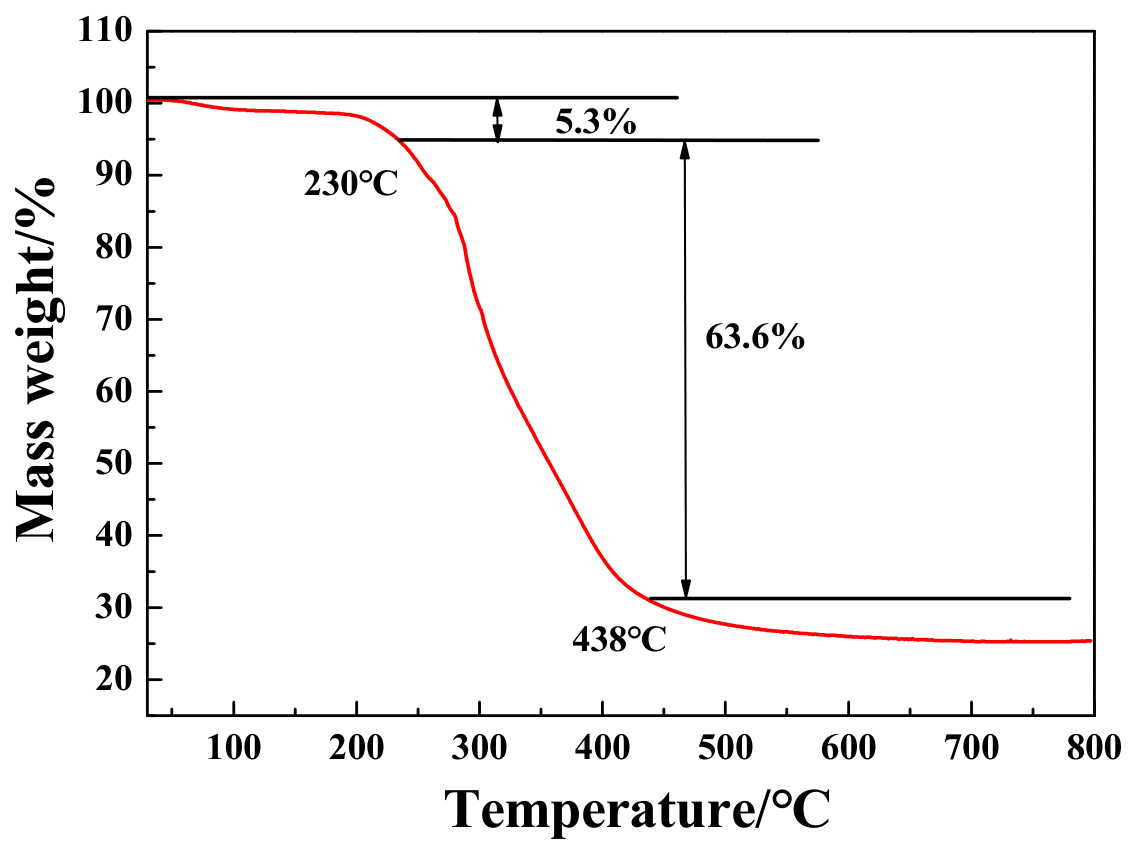
The thermal stability of the as-prepared carbon dots (CDs) was evaluated by thermogravimetric analysis (TGA), as shown in Figure 2. The TGA curve can be approximately divided into three characteristic regions. In the first stage, below approximately 230 °C, the CDs exhibit only a limited mass loss of 5.3%, which can be primarily attributed to the removal of physically adsorbed/bound water and the dehydration or decomposition of a small fraction of thermally labile surface functionalities. The relatively low mass loss in this temperature range indicates that the major carbonaceous framework of the CDs remains relatively stable. This feature is particularly important for their application in high-temperature water-based drilling fluids, because the mass loss at 200 °C is limited. A pronounced mass-loss stage occurs between approximately 230 and 438 °C, during which the sample loses approximately 63.6% of its initial mass. This major thermal degradation process can be associated with the decomposition of oxygen-containing surface functionalities and thermally labile organic moieties retained during the hydrothermal carbonization of citric acid. This interpretation is consistent with the FTIR results, which indicate the presence of abundant hydroxyl, carbonyl/carboxyl, and C–O-containing functionalities on the CD surface. Above approximately 438 °C, the mass loss becomes considerably slower, and approximately 25% of the initial mass remains at 800 °C, indicating the presence of a relatively thermally stable carbonaceous residue under the employed testing atmosphere. Overall, the TGA results demonstrate that the CDs possess appreciable thermal stability within the temperature range relevant to high-temperature drilling-fluid applications. In particular, the limited mass loss below 230 °C suggests that the CDs can largely preserve their structural integrity at 200 °C. The coexistence of a relatively stable carbonaceous core and surface oxygen-containing functionalities is favorable for maintaining the interfacial characteristics of the CDs under elevated temperatures, thereby providing a structural basis for their potential use as a high-temperature lubricant in water-based drilling fluids.
Figure 2.
Thermogravimetric curve of CD lubricant.
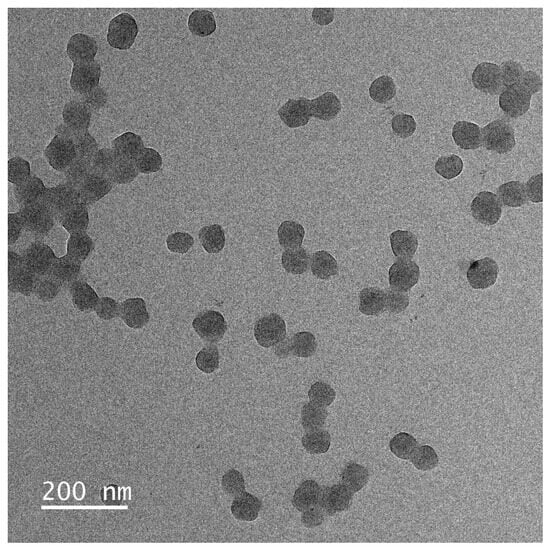
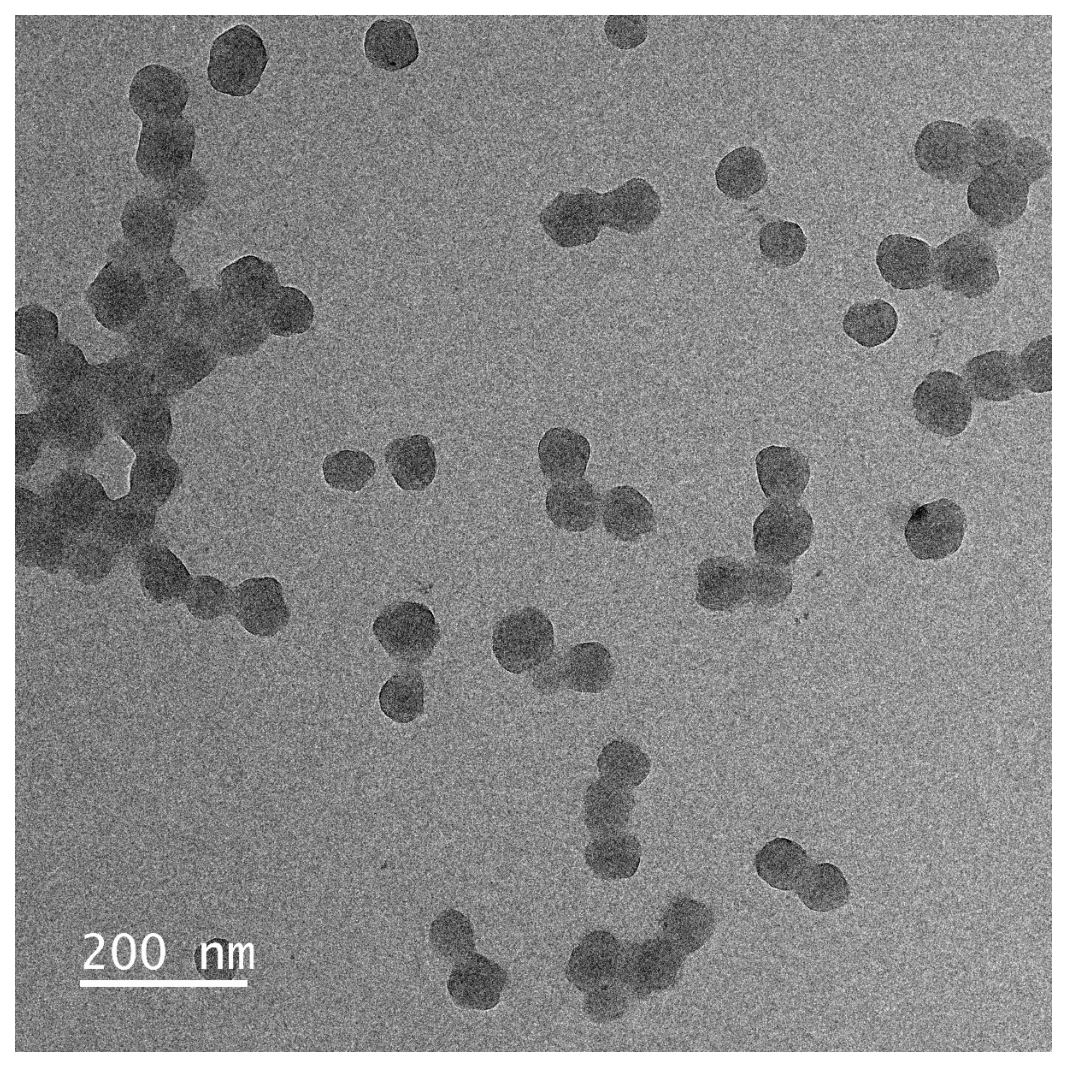
As shown in Figure 3, transmission electron microscopy (TEM) was further employed to examine the morphology and particle size of the CDs. The TEM image shows that the CDs are nearly spherical in shape with a relatively uniform size distribution, and the particle diameter is mainly in the range of approximately 50–70 nm, confirming the nanoscale dimensions and the successful formation of carbonaceous nanoparticles from citric acid.
Figure 3.
TEM image of the CDs.
3.2. Lubrication Behavior
3.2.1. Lubricating Performance and Environmental Adaptability of CDs
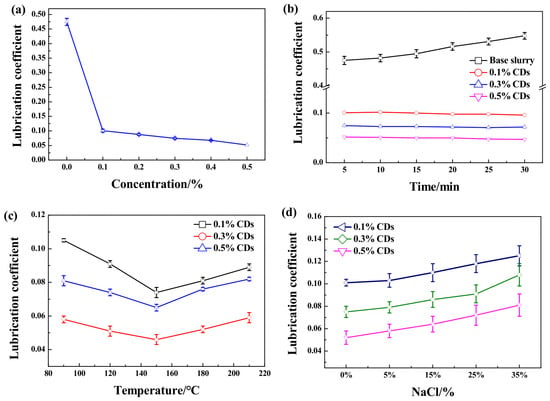
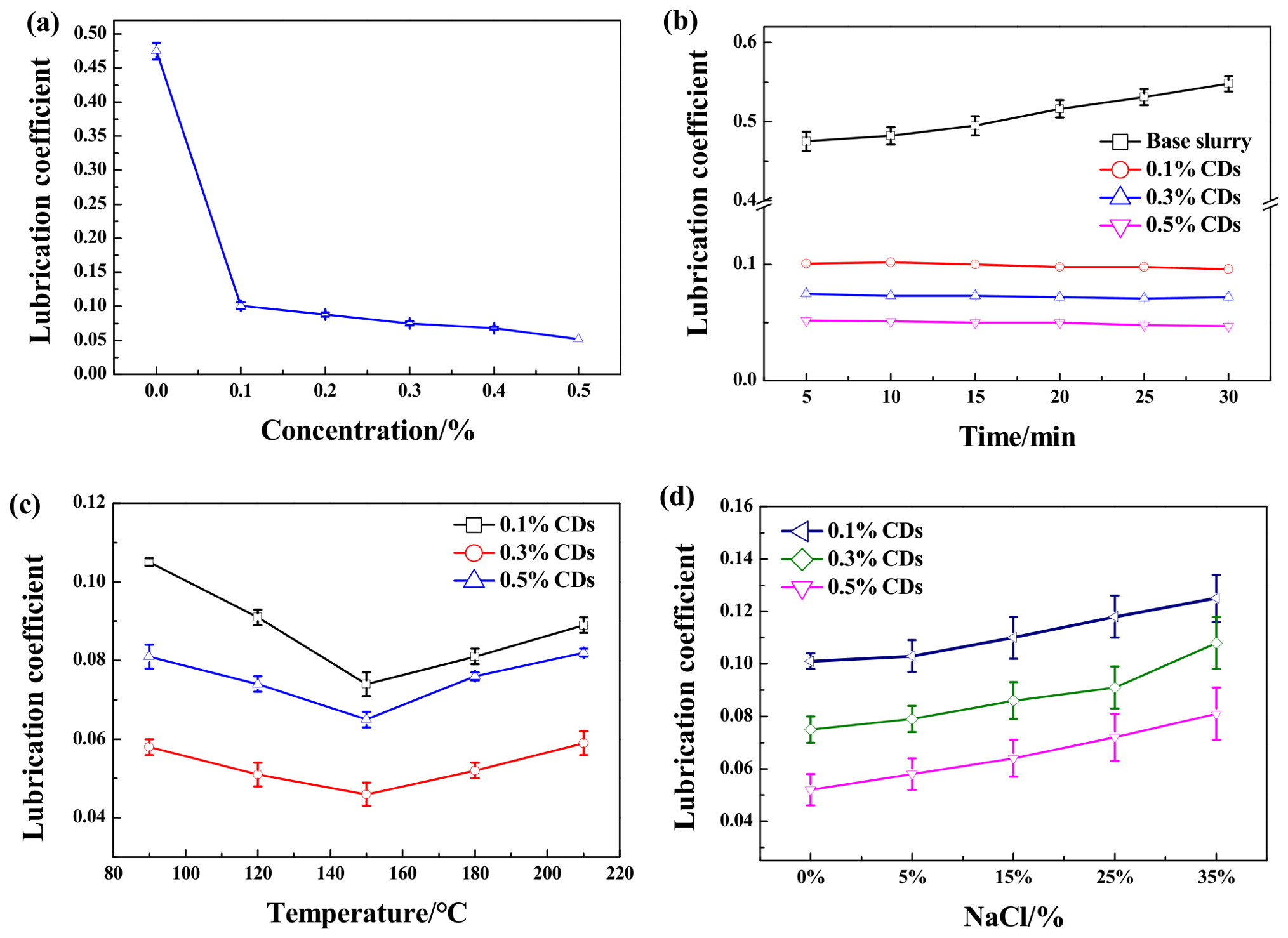
The effect of CD concentration on the lubricating performance of the drilling fluid was first investigated, as shown in Figure 4a. The base slurry exhibits a relatively high lubrication coefficient of 0.475, indicating substantial frictional resistance at the contacting interface. Remarkably, the addition of only 0.1% CDs reduces the lubrication coefficient to 0.101, corresponding to a reduction of 78.7% compared with the base slurry. Further increasing the CD concentration to 0.2%, 0.3%, 0.4%, and 0.5% progressively decreases the lubrication coefficient to 0.088, 0.075, 0.068, and 0.052, respectively. At 0.5% CDs, the lubrication coefficient is therefore reduced by 89% relative to the base slurry, demonstrating the pronounced lubricating capability of the CDs.
Figure 4.
Lubricating performance and environmental adaptability of CDs in water-based drilling fluids: (a) effect of CD concentration on the lubrication coefficient; (b) variation in the lubrication coefficient with testing time; (c) effect of temperature on the lubrication coefficient; and (d) effect of NaCl concentration on the lubrication coefficient.
The temporal stability of the lubricating performance was further evaluated over 30 min, as shown in Figure 4b. The lubrication coefficient of the base slurry gradually increases from approximately 0.45 to 0.563 with increasing test time, indicating that the interfacial frictional resistance becomes progressively greater during continuous sliding. In contrast, the CD-containing drilling fluids exhibit remarkably stable lubrication behavior. The lubrication coefficients of the 0.1%, 0.3%, and 0.5% CD-containing systems remain close to approximately 0.10, 0.07, and 0.05, respectively, with only minor variations throughout the 30 min test. The markedly different temporal responses indicate that the CDs can maintain a relatively stable lubricating interface during prolonged friction. The persistent low friction coefficient may be associated with the strong interfacial affinity and nanoscale surface coverage of the CDs. Once adsorbed at the frictional interface, the CDs can continuously shield direct solid–solid contact and maintain a hydrated interfacial layer during sliding. In comparison, the progressive increase in friction for the base slurry suggests that direct contact between the filter cake and the counter surface becomes increasingly dominant during continuous shearing. Therefore, the CDs not only reduce the initial frictional resistance but also effectively maintain the lubricating state of the interface over the investigated period.
The temperature dependence of the lubricating behavior was further examined from 90 to 210 °C, as shown in Figure 4c. All three CD-containing systems exhibit a similar non-monotonic temperature dependence. As the temperature increases from 90 to approximately 150 °C, the lubrication coefficient decreases progressively. The minimum values are observed at approximately 150 °C, reaching about 0.074, 0.065, and 0.046 for 0.1%, 0.3%, and 0.5% CDs, respectively. Upon further increasing the temperature to 180 and 210 °C, the lubrication coefficient gradually increases. Nevertheless, even at 210 °C, the values remain relatively low, approximately 0.089, 0.082, and 0.059 for 0.1%, 0.3%, and 0.5% CDs, respectively. This thermal adaptability is consistent with the TGA results, which show only approximately 5.3% mass loss below 230 °C, suggesting that the CDs can largely preserve their structural integrity within the investigated temperature range.
The effect of NaCl concentration on the lubricating behavior of the CD-containing drilling fluids was further investigated, as shown in Figure 4d. For all CD concentrations, the lubrication coefficient gradually increases with increasing NaCl concentration from 0 to 35%. For 0.1% CDs, the coefficient increases from approximately 0.101 to 0.125; for 0.3% CDs, it increases from approximately 0.075 to 0.108; and for 0.5% CDs, it increases from approximately 0.052 to 0.081. The increase in friction with salinity indicates that the high ionic strength environment partially weakens the lubricating efficiency of the CDs, which may be associated with electrostatic screening, changes in surface hydration, and/or salt-induced modification of nanoparticle interfacial organization.
Nevertheless, the absolute lubrication coefficients remain relatively low even at 35% NaCl, particularly for the 0.5% CD-containing system, which exhibits a coefficient of only approximately 0.080. This behavior demonstrates that the CDs retain substantial lubricating functionality under extremely saline conditions. The persistence of lubrication may originate from the oxygen-rich surface of the CDs, which can maintain favorable hydration and interfacial interactions even under high ionic strength. The nanoscale carbonaceous domains may simultaneously provide persistent surface coverage and reduce direct solid–solid contact. Therefore, although salinity partially attenuates the lubrication effect, the CDs retain considerable interfacial lubricity under high-salinity conditions.
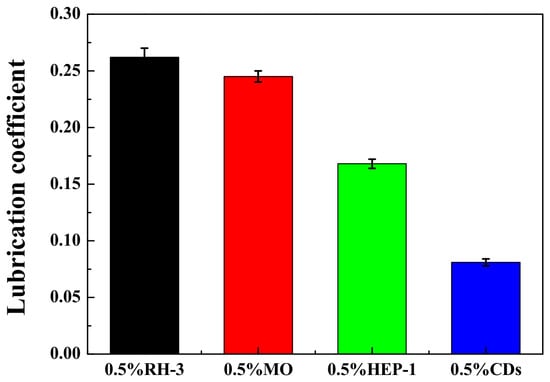
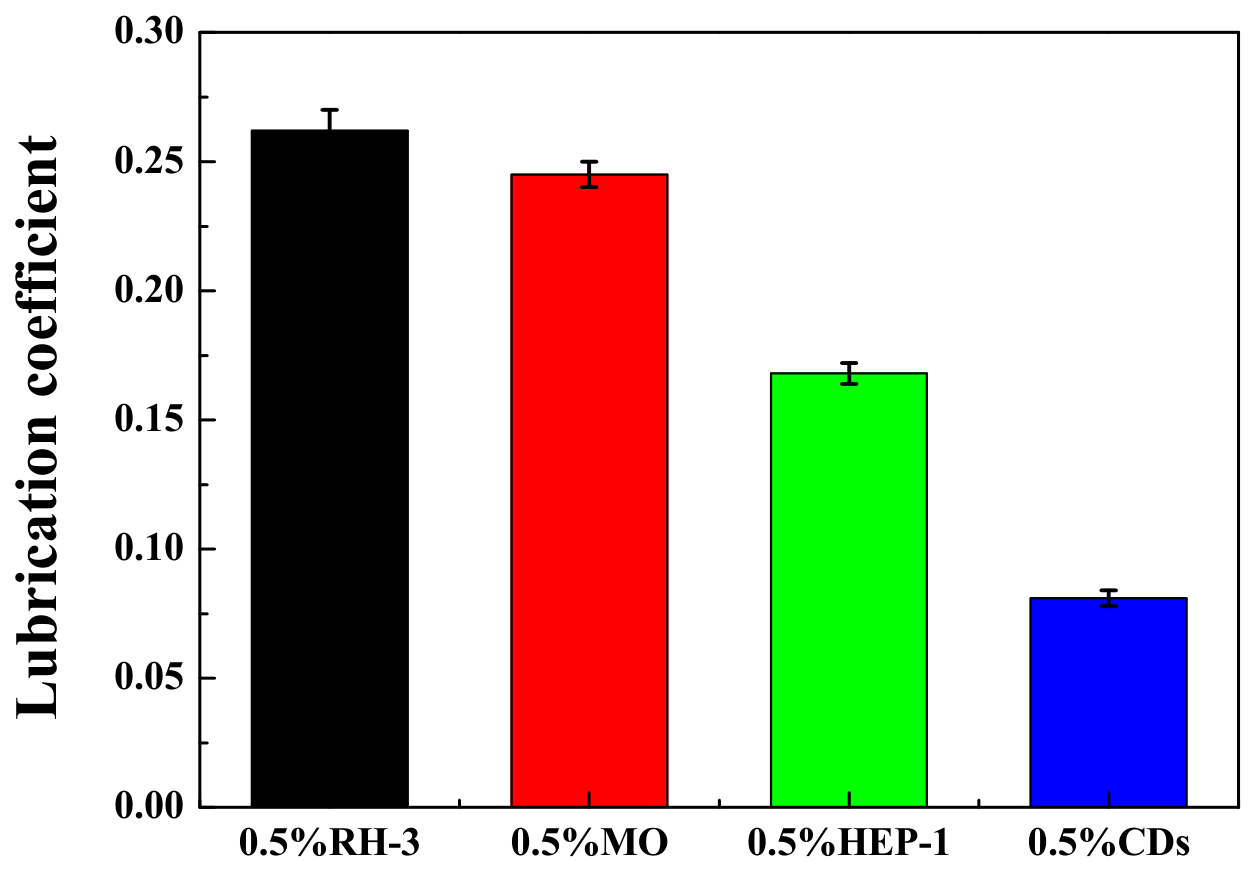
As shown in Figure 5, to further assess the potential of the CDs for practical application, their lubricating performance was compared with three commercially available lubricants, namely RH-3, methyl oleate (MO), and the high-temperature/high-salinity lubricant HEP-1. Under the conditions of 210 °C with 35 wt% NaCl, the lubrication coefficient of the CD-containing fluid was 0.081, which is markedly lower than those of RH-3 (0.262), MO (0.245), and HEP-1 (0.168), demonstrating the superior lubricating performance of the CDs under demanding high-temperature and high-salinity conditions.
Figure 5.
Comparison of the lubrication coefficient of the CDs with three commercially available lubricants (RH-3, methyl oleate, and HEP-1) in water-based drilling fluids at 210 °C with 35 wt% NaCl.
3.2.2. Effect of CDs Concentration on Filter-Cake Adhesion
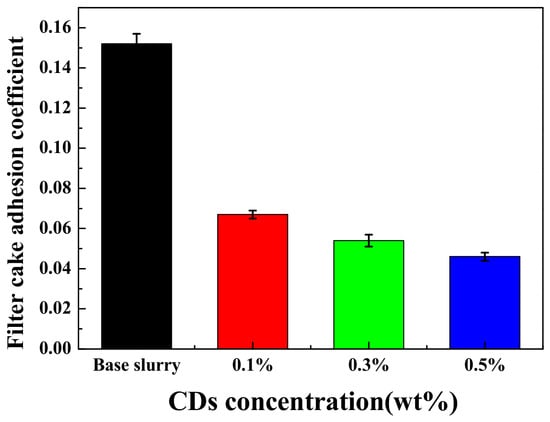
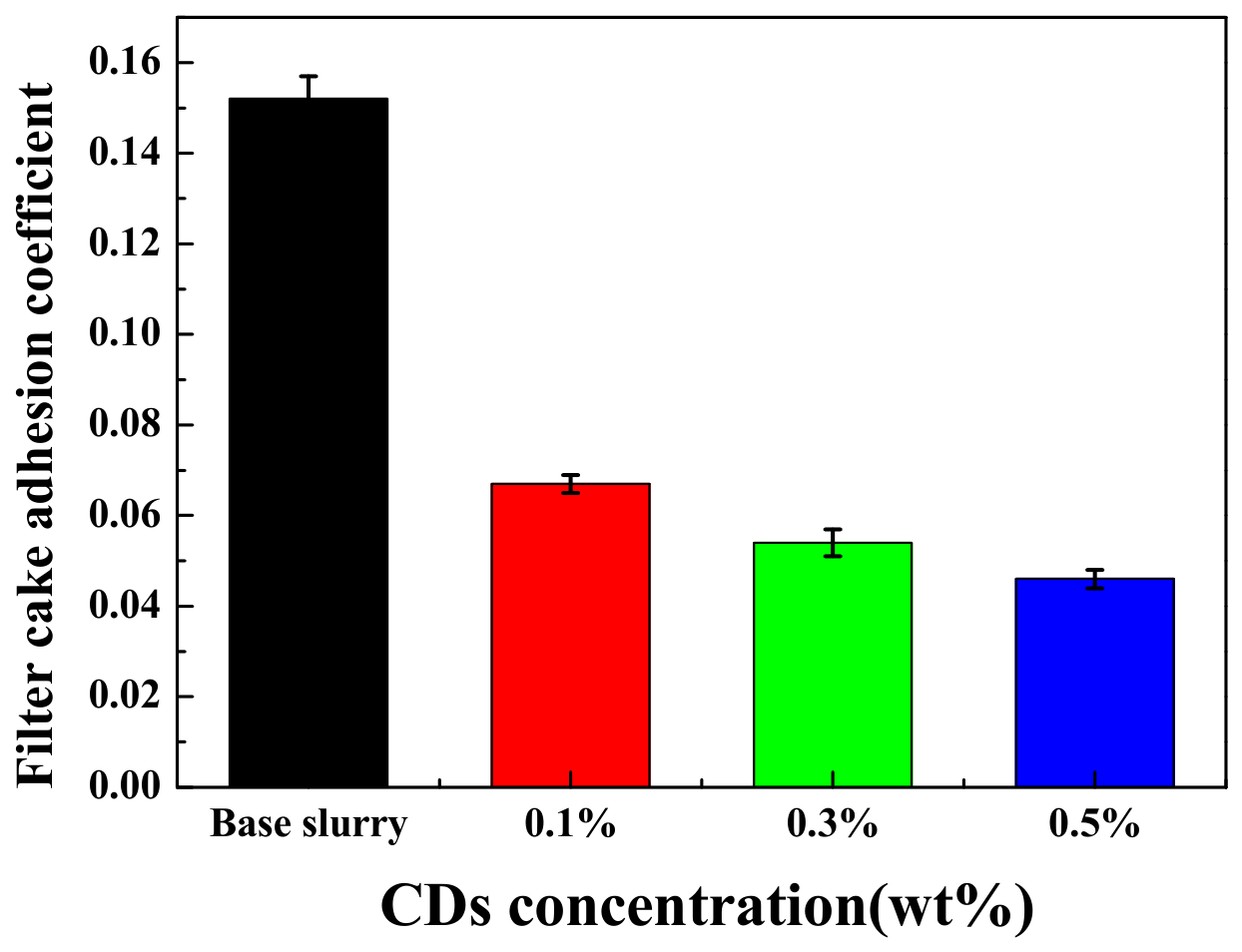
The effect of carbon dot (CD) concentration on the adhesion behavior of the filter cake was evaluated by measuring the filter-cake adhesion coefficient, as shown in Figure 6. The base slurry exhibits a relatively high adhesion coefficient of 0.152, indicating strong adhesive interaction between the filter cake and the contacting metal surface. Upon incorporation of only 0.1% CDs, the adhesion coefficient decreases sharply to 0.067, corresponding to a reduction of about 56% relative to the base slurry. Further increasing the CD concentration to 0.3% and 0.5% decreases the adhesion coefficient to 0.054 and 0.046, respectively, corresponding to overall reductions of 65% and 70%. These results demonstrate that the CDs possess a pronounced anti-adhesion effect and that their effectiveness increases progressively with increasing concentration within the investigated range.
Figure 6.
The filter-cake adhesion coefficients of the base slurry incorporated with different-concentration lubricants.
3.2.3. Effect of CDs on the Corrosion Behavior of Steel
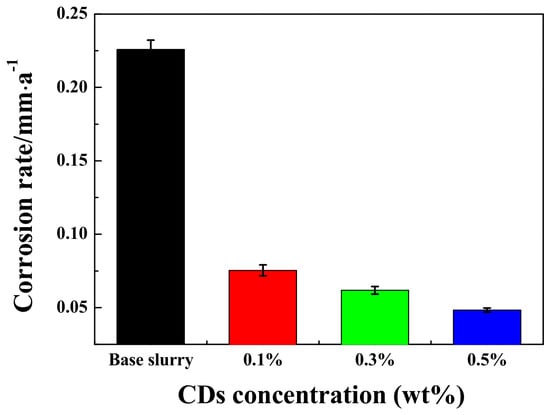
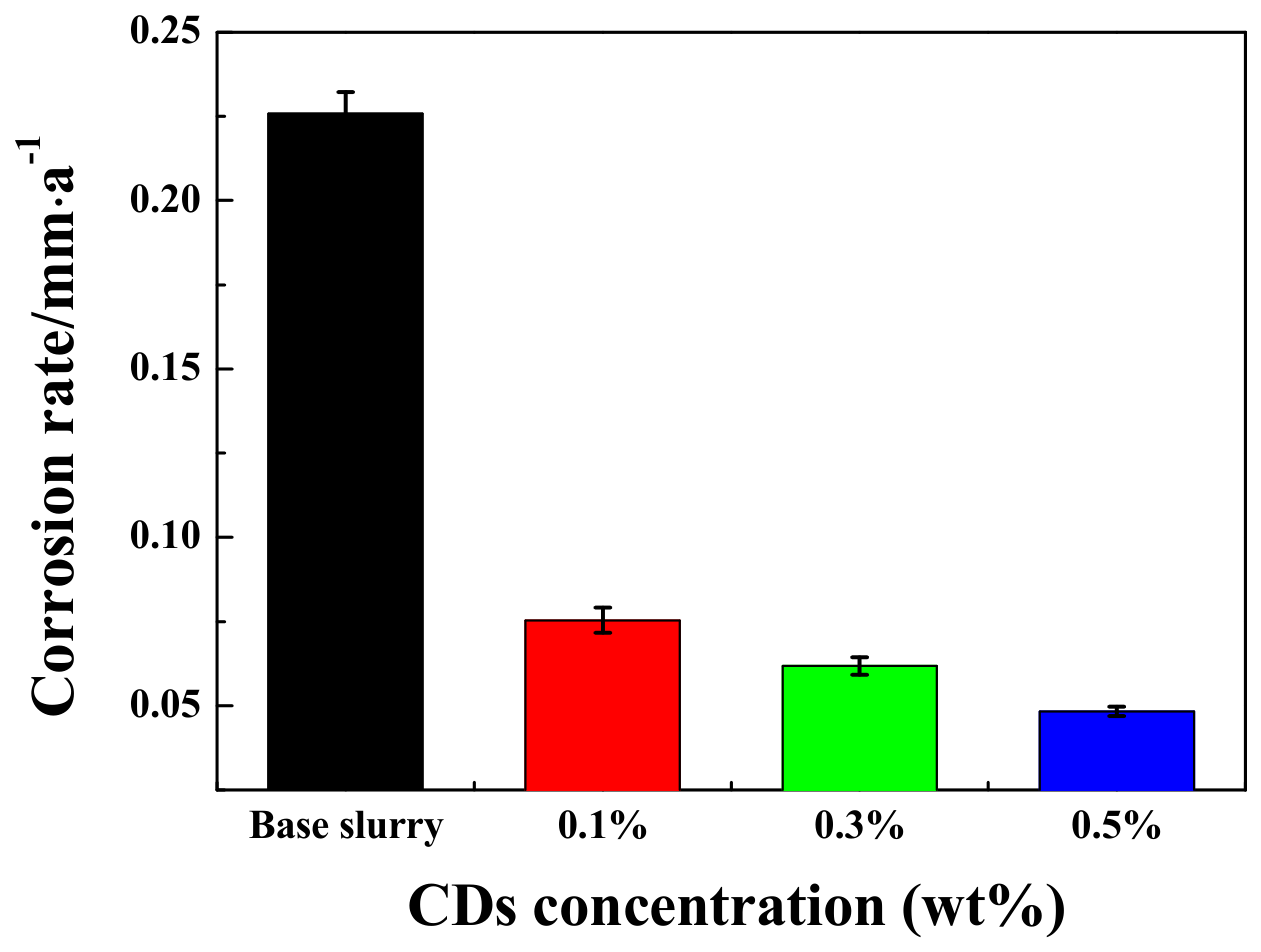
In addition to their lubricating performance, the potential effect of CDs on the corrosion behavior of steel was evaluated to assess their applicability as a drilling-fluid additive, as shown in Figure 7. The base slurry exhibits a relatively high corrosion rate of 0.226 mm·a−1, indicating appreciable corrosive interaction between the drilling fluid and the steel surface. Remarkably, the incorporation of only 0.1 wt% CDs decreases the corrosion rate to approximately 0.075 mm·a−1, corresponding to a reduction of about 67% relative to the base slurry. With a further increase in CD concentration to 0.3 and 0.5 wt%, the corrosion rate decreases to 0.062 and 0.048 mm·a−1, respectively, corresponding to overall reductions of 73% and 79%. These results demonstrate that the introduction of CDs substantially suppresses the corrosion of steel in the drilling-fluid environment, while the protective effect becomes progressively stronger with increasing CD concentration.
Figure 7.
Effect of CD concentration on the corrosion rate of steel in water-based drilling fluids.
3.2.4. Effect of CDs on the Wear Behavior of Steel
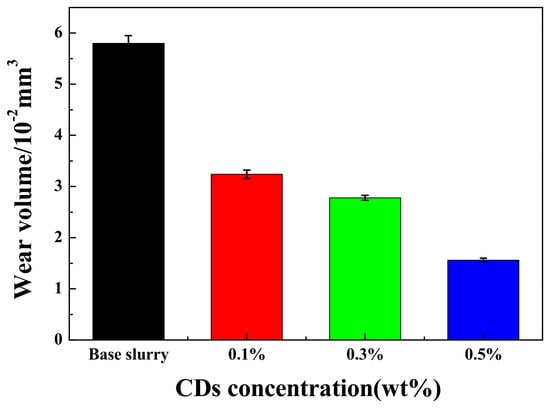
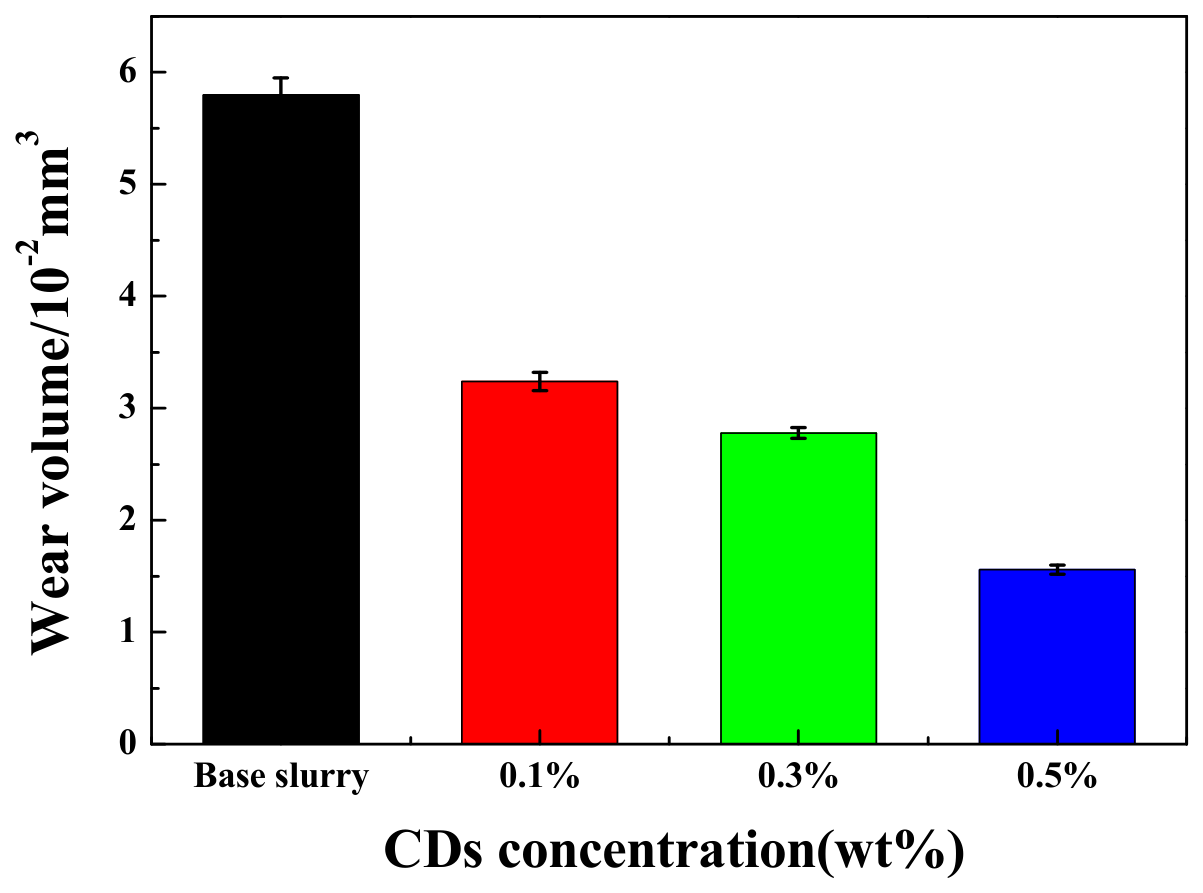
The wear volume of the steel surface after the tribological test was determined to further evaluate the effectiveness of CDs in reducing mechanical damage at the frictional interface, as shown in Figure 8. The base slurry produces a relatively large wear volume of approximately 5.8 × 10⁻² mm3, indicating considerable surface material loss under the applied friction conditions. The addition of CDs markedly suppresses the wear of the steel surface. At a CD concentration of 0.1 wt%, the wear volume decreases to approximately 3.24 × 10⁻² mm3, corresponding to a reduction of about 44% relative to the base slurry. Further increasing the CD concentration to 0.3 and 0.5 wt% decreases the wear volume to approximately 2.78 and 1.56 × 10⁻² mm3, respectively, corresponding to overall reductions of approximately 52% and 73%. These results clearly demonstrate that CDs can effectively mitigate the wear of the steel surface during friction, with the most pronounced wear-reduction effect obtained at 0.5 wt% CDs.
Figure 8.
Concentration-dependent wear protection of the steel surface by CDs.
The concentration-dependent reduction in wear volume is also consistent with the variation in the lubrication coefficient. Increasing the CD concentration from 0.1 to 0.5 wt% progressively decreases both frictional resistance and wear volume, suggesting that a higher concentration of CDs facilitates more extensive coverage of the frictional interface. At 0.5 wt% CDs, the formation of a relatively continuous nanoscale lubricating layer may effectively isolate the contacting surfaces and minimize direct asperity interaction, thereby substantially reducing material removal from the steel surface. The concurrent decreases in lubrication coefficient and wear volume indicate that the CDs not only reduce friction but also provide an effective protective function for the metal surface during sliding.
3.3. Adsorption Behavior of CDs on the Steel Surface
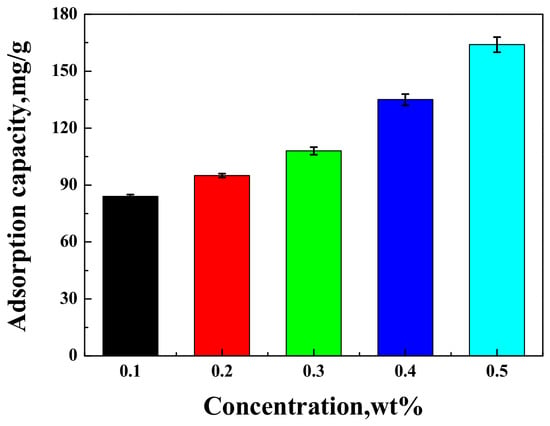
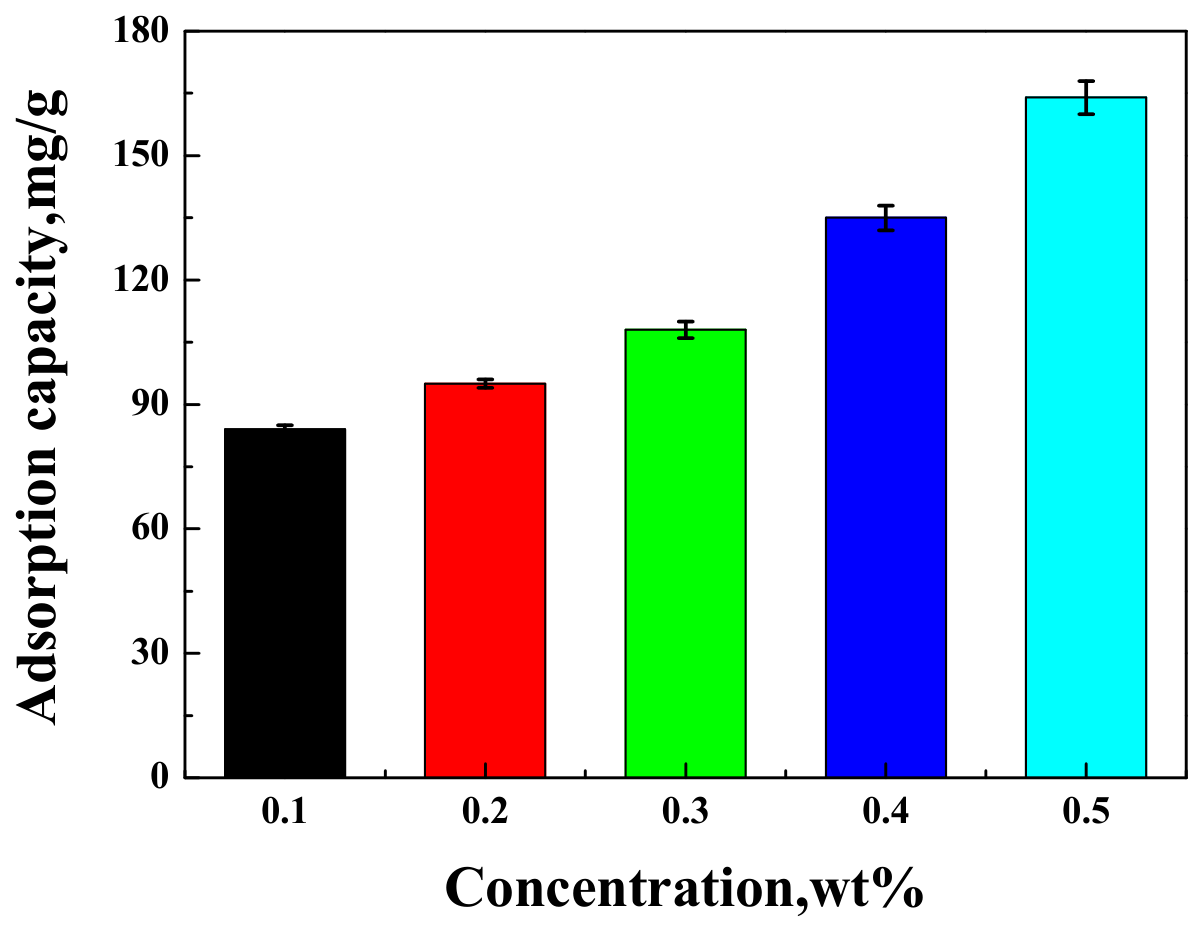
The adsorption of CDs onto the steel surface was quantitatively evaluated at different CD concentrations to investigate the interfacial behavior of CDs during lubrication, as shown in Figure 9. The adsorption capacity increases continuously with increasing CD concentration from 0.1 to 0.5 wt%. The adsorption capacity is approximately 84 mg·g−1 at 0.1 wt% CDs and increases to approximately 95, 108, 135, and 164 mg·g−1 at 0.2, 0.3, 0.4, and 0.5 wt%, respectively. Thus, increasing the CD concentration from 0.1 to 0.5 wt% results in a 95% increase in the amount of CDs adsorbed onto the steel surface. The pronounced concentration dependence demonstrates the strong tendency of CDs to accumulate at the steel/solution interface.
Figure 9.
Concentration-dependent adsorption of CDs on the steel surface.
The adsorption results provide direct support for the interfacial lubrication mechanism of the CDs. The progressively increasing adsorption of CDs with increasing concentration is consistent with the concentration-dependent decrease in the lubrication coefficient observed previously. Once adsorbed onto the steel surface, the CDs can modify the physicochemical characteristics of the solid–liquid interface and reduce direct contact between the steel surface and the counter surface. Meanwhile, the oxygen-containing hydrophilic groups on the CDs can promote the retention of interfacial water, thereby generating a hydration-rich nanoscale layer that facilitates interfacial sliding. The combination of surface adsorption, nanoscale coverage, and hydration-mediated lubrication therefore provides a plausible explanation for the markedly improved lubricating performance of the CD-containing drilling fluids.
3.4. Effect of CDs Adsorption on the Wettability of the Steel Surface
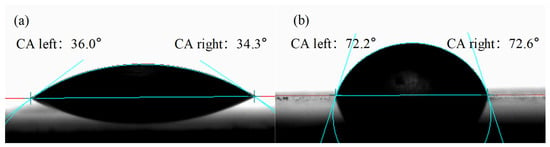
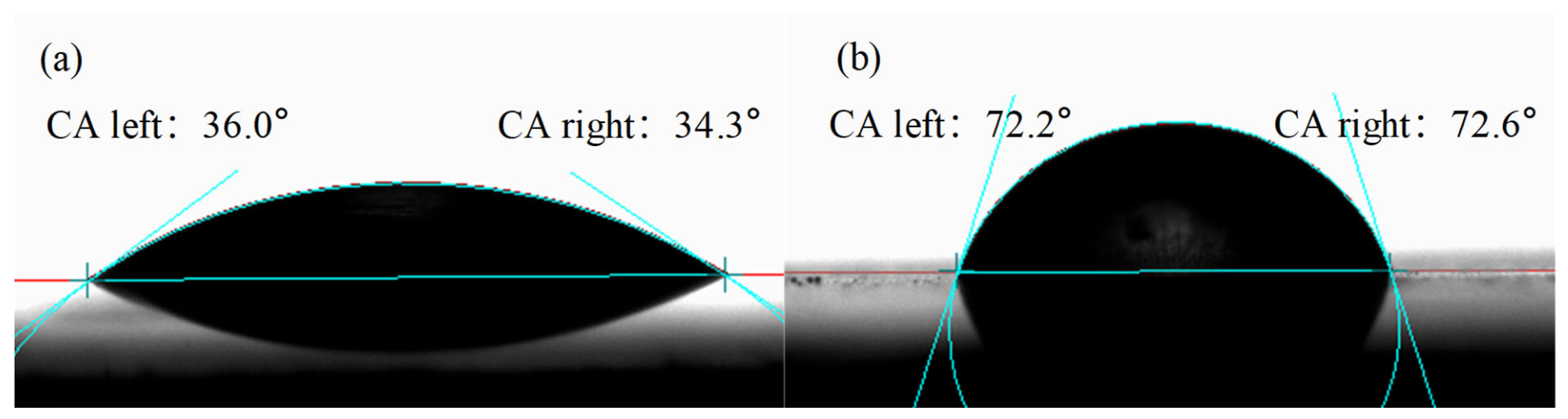
The wettability of the steel surface was evaluated by water contact angle measurements before and after immersion in a 0.5 wt% CDs solution, as shown in Figure 10. The average contact angle increased from approximately 35.2° before immersion to 72.4° after immersion, corresponding to an increase of 37.3°. This pronounced increase indicates a substantial reduction in the wettability of the steel surface by water, suggesting that the adsorption of CDs modifies the surface chemistry and interfacial properties of the steel. The oxygen-containing functional groups on the CD surface can facilitate interactions with the steel substrate and promote the formation of an adsorbed interfacial layer. Meanwhile, the carbonaceous domains of the CDs may alter the surface energy and contribute to the increased hydrophobic character of the modified surface. Such an adsorbed layer may act as a boundary lubricating film, separating the steel surface from contacting metal or rock surfaces and thereby reducing direct solid–solid contact and interfacial shear resistance. Consequently, the modified interfacial contact conditions may contribute to the reduction in friction and wear observed in the CD-containing drilling fluids. These results, together with the adsorption, lubrication, and wear measurements, support the proposed role of CDs in regulating interfacial interactions and improving lubrication performance.
Figure 10.
Water contact angles of the steel surface (a) before and (b) after immersion in a 0.5 wt% CDs solution.
3.5. Effect of CDs on the Wear Morphology of the Steel Surface
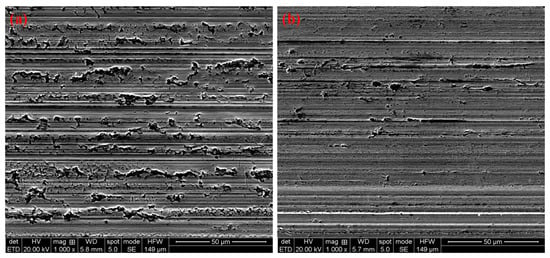
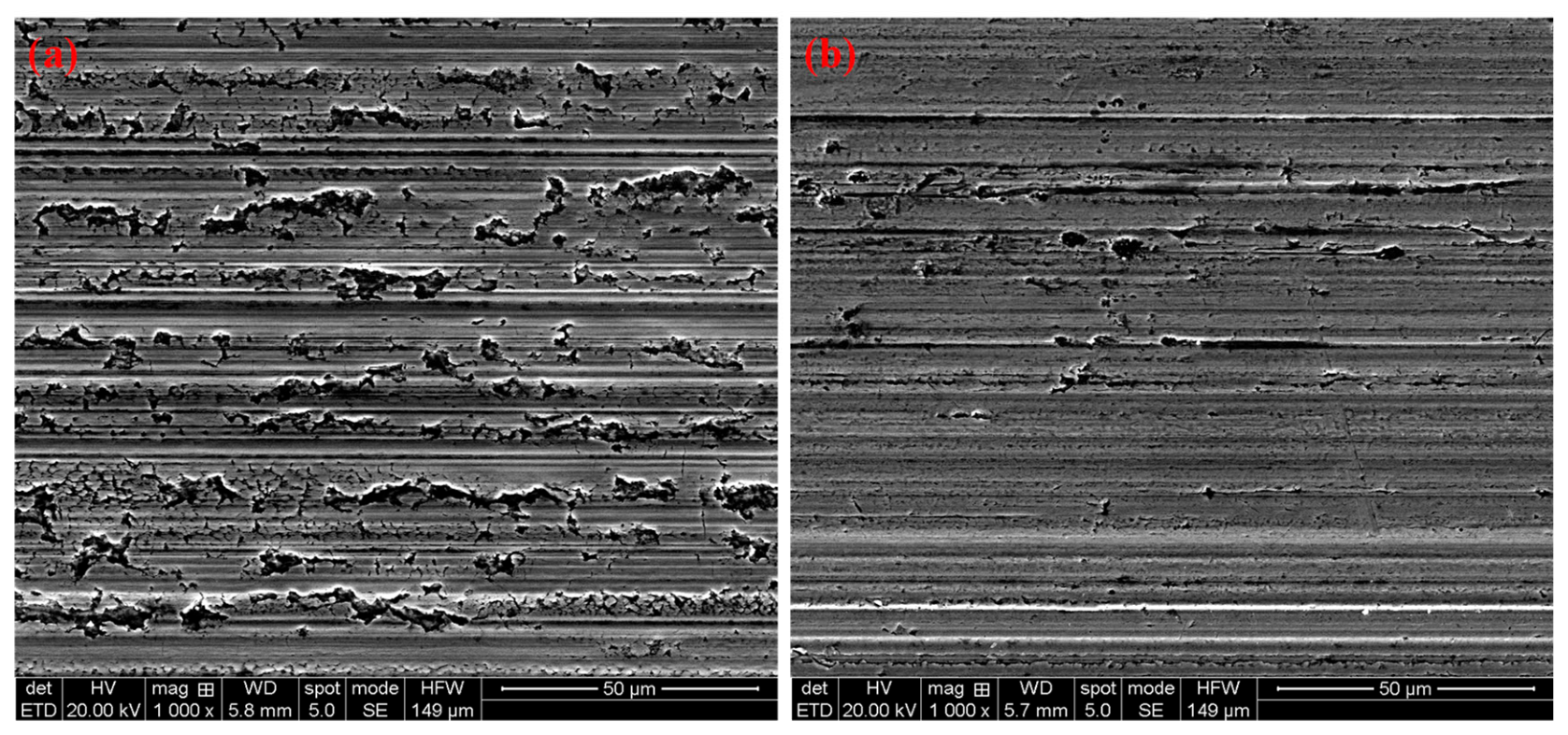
The wear morphologies of the steel surfaces after tribological testing in the base slurry and the base slurry containing 0.5 wt% CDs were examined by SEM, as shown in Figure 11. In the base-slurry system (Figure 11a), the steel surface exhibits pronounced wear damage, characterized by numerous irregular debris deposits, localized damaged regions, and distinct grooves extending along the sliding direction. These features suggest substantial surface disruption during sliding, potentially involving abrasive interactions, material transfer, and localized material detachment. The accumulation of irregular debris and the presence of damaged regions indicate that the base slurry provides limited protection against friction-induced surface damage under the applied test conditions.
Figure 11.
SEM images of steel surfaces after tribological testing in (a) the base slurry and (b) the base slurry containing 0.5 wt% CDs.
In contrast, the steel surface tested in the presence of 0.5 wt% CDs (Figure 11b) exhibits a comparatively smoother and more uniform morphology, with markedly fewer debris deposits and less pronounced localized damage. Although parallel grooves remain visible, their overall appearance is more uniform, and extensive debris accumulation and severe surface disruption are less evident than those observed for the base slurry. This morphological difference indicates that the incorporation of CDs mitigates friction-induced damage to the steel surface. The SEM observations are consistent with the measured decrease in wear volume and lubrication coefficient, supporting the role of CDs in improving the tribological performance of the drilling fluid.
3.6. Mechanism Analysis
The lubrication and interfacial protection mechanisms of CDs are primarily associated with their surface functional groups and adsorption behavior. FTIR analysis reveals abundant oxygen-containing groups on the CD surface, while the adsorption and contact angle measurements demonstrate that CDs can accumulate on the steel surface and modify its wettability. During friction, the adsorbed CDs may form a protective boundary layer that reduces direct solid–solid contact and interfacial shear, thereby decreasing the lubrication coefficient, filter-cake adhesion, and wear volume [28]. Meanwhile, partial coverage of the steel surface by CDs may restrict the access of corrosive species, contributing to the observed reduction in corrosion rate [29]. The relatively high thermal stability of the CDs, together with their sustained lubricating performance under elevated-temperature and high-salinity conditions, further supports their potential application in water-based drilling fluids.
4. Conclusions
Citric-acid-derived carbon dots (CDs) were developed as multifunctional lubricating additives for bentonite-based water-based drilling fluids. By integrating surface chemical characterization, adsorption and wettability measurements, tribological testing, and corrosion evaluation, this study establishes a coherent relationship between CD interfacial behavior and the lubrication and protection of steel. The main conclusions are as follows.
(1) The surface chemistry and thermal characteristics of CDs underpin their interfacial functionality. FTIR spectra revealed abundant hydroxyl, carbonyl, and C–O-related functionalities, while TGA showed only 5.3% mass loss below 230 °C under nitrogen. These characteristics provide a basis for interfacial adsorption and the retention of lubricating functionality at elevated temperatures.
(2) CDs simultaneously reduce friction and filter-cake adhesion while maintaining lubricating performance under severe operating conditions. At 0.5 wt% CDs, the lubrication coefficient decreased from 0.475 to 0.052 (89.1%), and the filter-cake adhesion coefficient decreased from 0.152 to 0.046 (69.7%). The lubrication coefficient remained approximately 0.05 over 30 min, reached 0.046 at 150 °C, and was 0.059 at 210 °C. Although increasing salinity weakened the lubricating effect to some extent, the coefficient remained at 0.081 at 35 wt% NaCl, demonstrating the retention of substantial lubricating capability under highly saline conditions.
(3) The adsorption-mediated interfacial effect of CDs provides a unified explanation for their antiwear and corrosion-protection performance. As the CD concentration increased from 0.1 to 0.5 wt%, the adsorption capacity on steel increased from approximately 84 to 164 mg·g−1, while the water contact angle increased from 35.2° to 72.4° after immersion in a 0.5 wt% CD solution. At 0.5 wt% CDs, the wear volume decreased from 5.8 × 10⁻² to 1.56 × 10⁻² mm3 (73.1%), and the corrosion rate decreased from 0.226 to 0.048 mm·a−1 (78.8%) after exposure to 35 wt% NaCl at 180 °C for 7 days. These quantitative results, together with the reduced surface damage observed by SEM, support a mechanism involving CD adsorption, modification of interfacial wettability, and the formation of a protective boundary layer that mitigates direct solid–solid contact and impedes corrosive-species access.
Overall, this study demonstrates that CDs can function beyond conventional friction-reducing additives by coupling interfacial regulation with anti-adhesion, antiwear, and corrosion-protection effects. The resulting multifunctional strategy offers a promising approach to improving the tribological performance and steel-surface protection of WBDFs under high-temperature and high-salinity conditions.
Author Contributions
Conceptualization, F.Y.; methodology, F.Y.; validation, F.Y.; formal analysis, X.L.; investigation, X.L.; resources, Z.W.; data curation, X.L. and Z.W.; writing—original draft, Z.W.; writing—review and editing, Z.W. All authors have read and agreed to the published version of the manuscript.
Funding
This research was funded by Natural Science Basic Research Program of Shaanxi (Grant Nos. 2025JC-YBQN-552).
Data Availability Statement
The original contributions presented in this study are included in the article. Further inquiries can be directed to the corresponding author.
Acknowledgments
The authors would like to thank the staff of Xi’an Shiyou University for their technical assistance with the characterization tests, and are grateful to their colleagues for valuable discussions and suggestions during this work.
Conflicts of Interest
Authors Fan Yang and Xuan Li were employed by the Sinopec Key Laboratory of Drilling Completion and Fracturing of Shale Oil and Gas. The remaining author declares that the research was conducted in the absence of any commercial or financial relationships that could be construed as a potential conflict of interest.
References
- Zhao, J.Z.; Ren, L.; Lin, C.; Lin, R.; Hu, D.F.; Wu, J.F.; Song, Y.; Shen, C.; Tang, D.J.; Jiang, H. A review of deep and ultra-deep shale gas fracturing in China: Status and directions. Renew. Sust. Energ. Rev. 2025, 209, 16. [Google Scholar] [CrossRef] [Scilit]
- Zou, C.; Zhao, Q.; Dong, D.; Yang, Z.; Qiu, Z.; Liang, F.; Wang, N.; Huang, Y.; Duan, A.; Zhang, Q.; et al. Geological characteristics, main challenges and future prospect of shale gas. Nat. Gas. Geosci. 2017, 28, 1781–1796. [Google Scholar]
- Ytrehus, J.D.; Taghipour, A.; Golchin, A.; Saasen, A.; Prakash, B. The Effect of Different Drilling Fluids on Mechanical Friction. J. Energy Resour. Technol.-Trans. ASME 2017, 139, 6. [Google Scholar] [CrossRef] [Scilit]
- Li, W.; Zhao, X.H.; Li, Y.F.; Ji, Y.H.; Peng, H.; Liu, L.; Yang, Q. Laboratory investigations on the effects of surfactants on rate of penetration in rotary diamond drilling. J. Pet. Sci. Eng. 2015, 134, 114–122. [Google Scholar] [CrossRef] [Scilit]
- Zhao, X.; Li, D.; Zhu, H.; Ma, J.; An, Y. Advanced developments in environmentally friendly lubricants for water-based drilling fluid: A review. RSC Adv. 2022, 12, 22853–22868. [Google Scholar] [CrossRef] [Scilit] [PubMed]
- McGuiggan, P.M.; Gee, M.L.; Yoshizawa, H.; Hirz, S.J.; Israelachvili, J.N. Friction studies of polymer lubricated surfaces. Macromolecules 2007, 40, 2126–2133. [Google Scholar] [CrossRef] [Scilit]
- Borugadda, V.B.; Goud, V.V. Improved thermo-oxidative stability of structurally modified waste cooking oil methyl esters for bio-lubricant application. J. Clean Prod. 2016, 112, 4515–4524. [Google Scholar] [CrossRef] [Scilit]
- Shaji, S.; Radhakrishnan, V. Analysis of process parameters in surface grinding with graphite as lubricant based on the Taguchi method. J. Mater. Process. Technol. 2003, 141, 51–59. [Google Scholar] [CrossRef] [Scilit]
- Xiao, H.P.; Liu, S.H.; Guo, Y.B.; Wang, D.G.; Chen, Y. Effects of Microscale Particles as Antiwear Additives in Water-Based Slurries with Abrasives. Tribol. Trans. 2016, 59, 323–329. [Google Scholar] [CrossRef] [Scilit]
- Liu, S.Q.; Chen, Z.R.; Meng, Q.N.; Zhou, H.L.; Li, C.; Liu, B.C. Effect of Graphene and Graphene Oxide Addition on Lubricating and Friction Properties of Drilling Fluids. Nanosci. Nanotechnol. Lett. 2017, 9, 446–452. [Google Scholar] [CrossRef] [Scilit]
- Nomura, A.; Ohno, K.; Fukuda, T.; Sato, T.; Tsujii, Y. Lubrication mechanism of concentrated polymer brushes in solvents: Effect of solvent viscosity. Polym. Chem. 2012, 3, 148–153. [Google Scholar] [CrossRef] [Scilit]
- Livescu, S.; Craig, S. A critical review of the coiled tubing friction-reducing technologies in extended-reach wells. Part 1: Lubricants. J. Pet. Sci. Eng. 2017, 157, 747–759. [Google Scholar] [CrossRef] [Scilit]
- Tadros, T. Interaction forces between adsorbed polymer layers. Adv. Colloid Interface Sci. 2011, 165, 102–107. [Google Scholar] [CrossRef] [Scilit] [PubMed]
- Wang, Z.; Feng, J.; Liu, J.; Zhang, F.; Dou, L.; Zhang, X.; Wang, B.; Liu, X.; Ren, Y. Protic ionic liquids as lubricants for water-based drilling fluids in deep shale gas development. Colloids Surf. A Physicochem. Eng. Asp. 2025, 728, 138748. [Google Scholar] [CrossRef] [Scilit]
- Yang, K.; Chen, H.; Li, Z.; Wang, Y.; Li, B.; Wang, C.; Qiu, S.; Chen, F. Advanced Research on Graphene-Based Nano-Materials: Synthesis, Structure, Dispersibility and Tribological Applications. ChemNanoMat 2025, 11, e202400428. [Google Scholar] [CrossRef] [Scilit]
- Zhang, J.; Gao, H.; He, H.; Gao, H. Review: Recent advances of carbon dots in nano-lubrication. J. Mater. Sci. 2025, 60, 4097–4117. [Google Scholar] [CrossRef] [Scilit]
- Yu, M.; Wang, Q.; Pei, X.; Zhang, Y.; Wang, Y.; Zhang, Z. Carbon dots in tribology. Nano Mater. Sci. 2025. [Google Scholar] [CrossRef] [Scilit]
- Li, Z.; Yu, H.; Guo, D.; Lin, M.; Du, X.; Zhang, X. Zero-Dimensional Carbon Quantum Dots and Alkylphosphonate Ionic Liquids as Synergistic Water-Based Lubricant Additives for Ultralow Friction at Steel Interfaces. ACS Appl. Nano Mater. 2026, 9, 16484–16500. [Google Scholar] [CrossRef] [Scilit]
- Wang, Y.; Tang, W.; Wei, X.; Lei, H.; Liu, H.; Gao, W.; Zhang, Z.; Li, Y. Well-designed polymer-grafted and heteroatom co-doped carbon nitride quantum dots: Towards efficient friction-reduction and anti-wear additives. Carbon 2025, 247, 120973. [Google Scholar] [CrossRef] [Scilit]
- Yang, H.; Wang, Y.; Cui, Y.; Yang, K.; Jiang, Y.; Ye, Q.; He, Y.; Liu, X. Covalent organic frameworks embellished with g-C3N4 quantum dots as lubricant additives to optimize the lubrication performance. Carbon 2025, 247, 120989. [Google Scholar] [CrossRef] [Scilit]
- Jin, G.; Liu, B.; Wang, T.; Xue, S.; Liu, S.; Ye, Q. MBT-functionalized carbon dots for enhanced water-based lubrication: Superior friction reduction and corrosion inhibition. Tribol. Int. 2025, 211, 110854. [Google Scholar] [CrossRef] [Scilit]
- Akakuru, O.U.; Martin-Alarcon, L.; Bryant, S.; Trifkovic, M. Unraveling water-based lubrication with carbon dots of asphaltene origin. ACS Appl. Mater. Interfaces 2024, 16, 16699–16711. [Google Scholar] [CrossRef] [Scilit] [PubMed]
- Zhang, F.; Sun, J.S.; Li, Q.; Lv, K.H.; Wang, J.T.; Wang, Z.Y. Mechanism of organosilicate polymer as high-temperature resistant inhibitor in water-based drilling fluids. Colloid Surf. A-Physicochem. Eng. Asp. 2022, 641, 11. [Google Scholar] [CrossRef] [Scilit]
- Sönmez, A.; Kök, M.V.; Özel, R. Performance analysis of drilling fluid liquid lubricants. J. Pet. Sci. Eng. 2013, 108, 64–73. [Google Scholar] [CrossRef] [Scilit]
- Zhang, Y.H.; Meng, X.H.; Zhou, F.S.; Lu, J.B.; Shang, J.W.; Xing, J.; Chu, P.K. Utilization of recycled chemical residues from sodium hydrosulfite production in solid lubricant for drilling fluids. Desalin. Water Treat. 2016, 57, 1804–1813. [Google Scholar] [CrossRef] [Scilit]
- Standard’s ASTM G111-21; Standard Guide for Corrosion Tests in High Temperature or High Pressure Environment, or Both. ASTM International: West Conshohocken, PA, USA, 2021.
- Chen, Z.; Sun, S.; Huang, H.; He, J.; Ouyang, Z.; Yu, S.; Li, X.; Fu, A.; Feng, Y. Corrosion behavior and failure mechanism of V150 drill pipe in HPHT and ultra-deep drilling process. Eng. Fail. Anal. 2024, 158, 107974. [Google Scholar] [CrossRef] [Scilit]
- Solomon, M.M.; Amune, U.O.; He, X.; Wang, H.; He, J.; Hu, D.; Tesema, F.B.; Do, H.; Ait Mansour, A.; Salghi, R. Combined experimental, theoretical, & machine learning studies of anticorrosion properties of hydroxyethyl cellulose, L-glutamic acid, & potassium acesulfame-derived carbon dots. Carbon 2025, 245, 120772. [Google Scholar] [CrossRef] [Scilit]
- Cao, S.; Zhao, Y.; Cao, Y.; Li, Y.; Tan, H.; Wang, H. Ionic liquid-assisted biomass-derived N, S-doped carbon dots with enhanced corrosion inhibition. Sci. Rep. 2025, 15, 23056. [Google Scholar] [CrossRef] [Scilit] [PubMed]
Disclaimer/Publisher’s Note: The statements, opinions and data contained in all publications are solely those of the individual author(s) and contributor(s) and not of MDPI and/or the editor(s). MDPI and/or the editor(s) disclaim responsibility for any injury to people or property resulting from any ideas, methods, instructions or products referred to in the content. |
© 2026 by the authors. Licensee MDPI, Basel, Switzerland. This article is an open access article distributed under the terms and conditions of the Creative Commons Attribution (CC BY) license.