


Abstract
The development of complex and unconventional reservoirs places higher demands on enhanced oil recovery (EOR) technologies. To address issues such as insufficient control of gas flow rate and chemical agent loss, colloidal gas aphron (CGA) has attracted attention for its potential for microbubble plugging and flow-rate regulation. The introduction of nanoparticles has opened new avenues of research for modulating the interfacial properties, rheological behavior, and stability of CGA systems. However, relevant studies are scattered across fields such as CGA drilling fluids, nanofluid displacement, and nanoparticle-stabilized foams, creating an urgent need for a systematic review of research progress, mechanisms of action, and application prospects for nanoparticle-enhanced CGA. As a comprehensive review, this paper examines 126 relevant publications from 1987 to 2026, including 72 experimental studies and 54 reviews, numerical simulations, field applications, and other types of literature. It provides a comprehensive summary of CGA structure and applications, research progress on nanoparticle-enhanced CGA, and existing mechanisms. It discusses the potential mechanisms of nanoparticle action in CGA systems. Existing research indicates that CGA consists of micron-sized bubbles surrounded by a multilayer shell structure and can regulate flow and seal pores in porous media. Building on this, researchers have introduced nanoparticles into the CGA system to modulate its stability, interfacial properties, and continuous-phase rheological behavior; their effects depend on factors such as particle properties, surfactant–polymer formulations, and reservoir conditions. Existing studies have explored the microscopic mechanisms of nanoparticle-enhanced CGA from the perspectives of gas–liquid interface stability, synergistic interactions between nanoparticles and surfactants/polymers, and pore-scale displacement. Additionally, drawing on nanoparticle applications in other EOR systems, relevant research has proposed potential mechanisms of action for nanoparticles in CGA systems, providing a basis for subsequent mechanism validation and formulation optimization.
1. Introduction
In the global energy landscape, although renewable energy has made significant strides in recent years, fossil fuels will continue to dominate the global energy consumption mix for decades to come [1]. According to projections by the International Energy Agency (IEA), demand for hydrocarbons will continue to rise as the global economy recovers and the population grows [2]. However, after decades of exploration and development, easily accessible conventional light crude oil resources are increasingly depleted, and the remaining oil and gas reserves are primarily distributed in complex, deep, and heavy-oil reservoirs [3]. In traditional oil extraction processes, after the primary recovery stage—which relies on natural energy—and the secondary recovery stage—which restores reservoir pressure through water injection—approximately 60% to 70% of the crude oil remains trapped as residual oil in the pores of underground rock. Because of characteristics such as reservoir heterogeneity, capillary forces, and viscoelasticity, this crude oil cannot be extracted [4,5]. Consequently, enhanced oil recovery (EOR) methods, new drilling and completion technologies, intelligent reservoir management and control, advanced reservoir monitoring technologies, and various improvements to primary and secondary recovery processes have emerged [6]. Tapping the enormous potential of residual oil through EOR technologies has become a key strategic challenge in the global energy sector and demands urgent attention.
EOR mechanisms primarily rely on reducing viscosity, density, and interfacial tension (IFT) between fluids, and are tailored to the specific properties of the reservoir and fluid characteristics [7]. EOR methods are broadly classified as thermal, gas injection, and chemical methods [8,9,10]. Thermal methods are primarily applied at oil production sites and include steam injection, electric heating, in-situ combustion, and steam-assisted oil recovery (SAOR) technologies [6,7]. These methods increase oil recovery through mechanisms such as temperature rise, crude oil expansion, and viscosity reduction; however, because they require external energy sources and generate combustion gases, they are costly and environmentally detrimental [11,12]. Heat transfer, heat loss, and reservoir conditions constrain their effectiveness.
Gas and chemical methods are classified as non-thermal technologies [12]. As primary oil recovery methods among non-thermal technologies, chemicals and gases may reduce reservoir-rock permeability, causing reservoir damage [13,14,15]. Gas injection primarily includes air flooding, nitrogen flooding, and carbon dioxide flooding [10]. These methods operate through mechanisms such as miscibility, viscosity reduction, and increased oil-phase volume, particularly in deep and unconventional oil and gas reservoirs [7,16]. However, Gas Injection has low gas-phase viscosity and high fluidity; in heterogeneous reservoirs, it tends to flow along high-permeability channels and exhibit finger-like flow, resulting in limited sweep efficiency [17]. Chemical methods include alkali flooding, surfactant flooding, and polymer flooding. These techniques increase oil recovery by reducing the IFT and altering the wetting properties of the rock pores [18,19,20]. Although chemical flooding can improve interfacial properties and flowability, it is limited by chemical costs, formation compatibility, adsorption retention, and potential reservoir damage. Currently, non-thermal technologies also include injecting microorganisms into realistic structural micromodels to study oil displacement mechanisms and optimize injection formulations [21]. However, these methods can produce harmful secretions that can damage the reservoir. These non-thermal technologies require lower energy inputs during extraction, reducing operating costs and the carbon footprint [6].
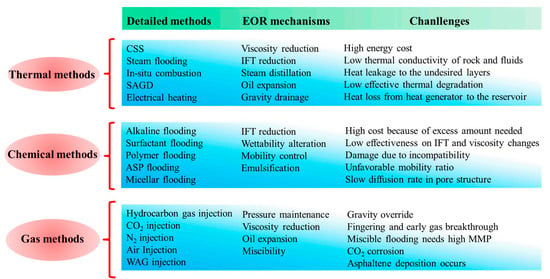
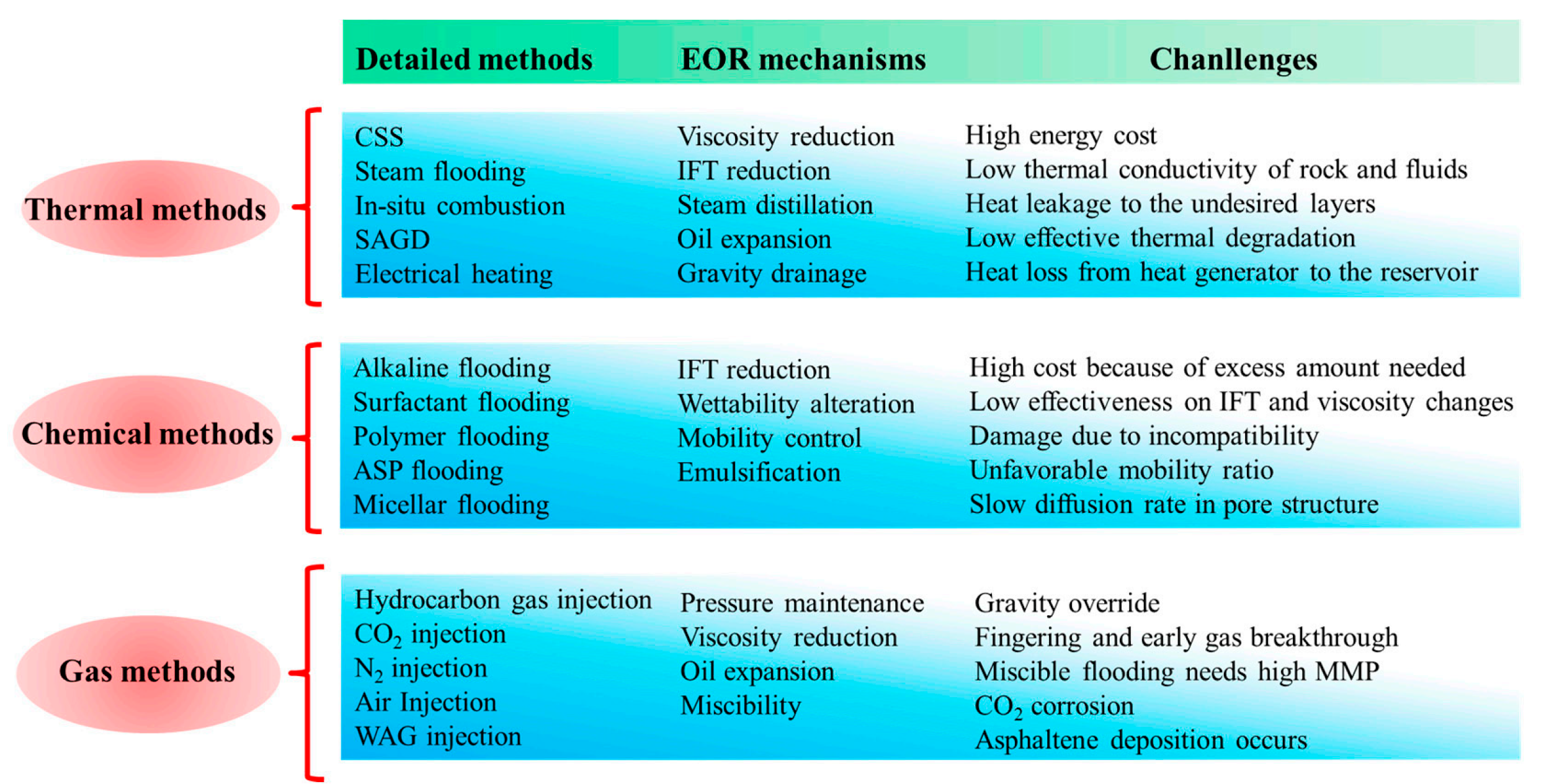
Figure 1 provides a detailed explanation of EOR techniques, including their basic mechanisms of action and future challenges [10].
Figure 1.
Mechanisms and challenges of EOR methods. Reproduced from ref. [10], licensed under the Creative Commons Attribution 4.0 International License (https://creativecommons.org/licenses/by/4.0/ (accessed on 9 June 2026)).
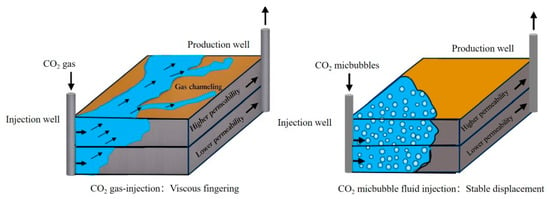
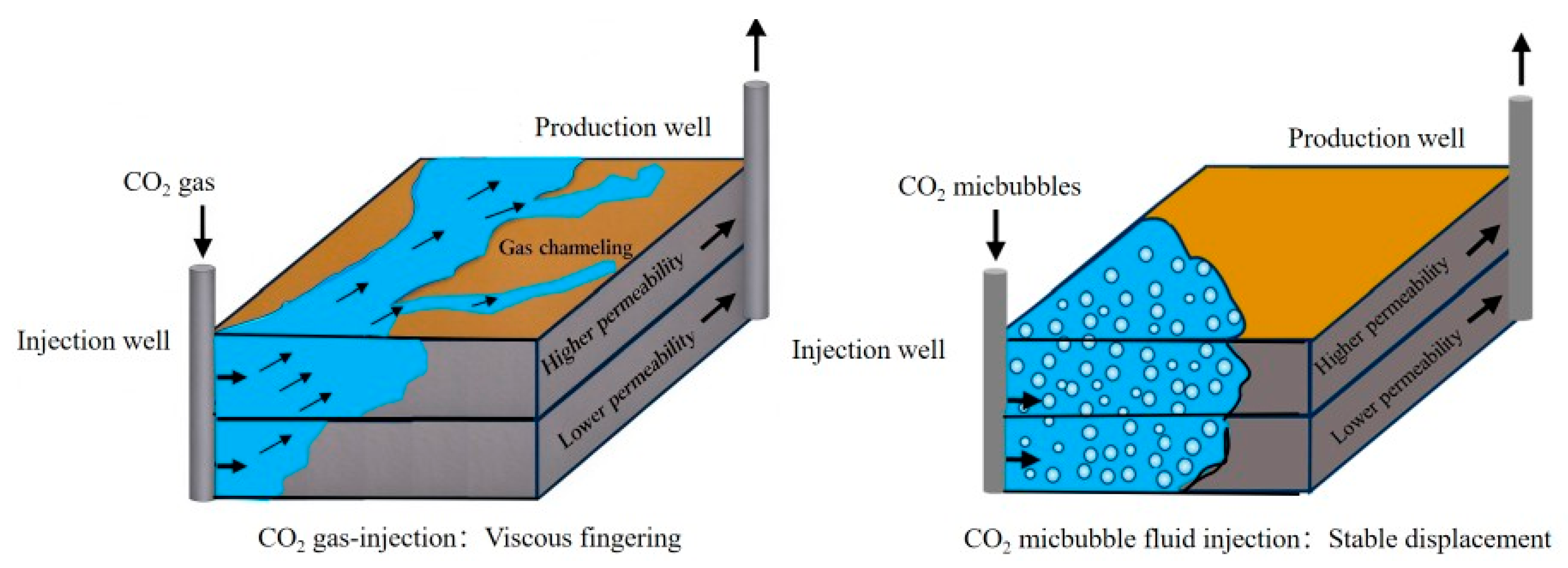
EOR requires not only improved crude oil flow and interfacial properties but also control of driving-fluid migration within heterogeneous pores, enhanced sweep efficiency, and balanced chemical utilization with reservoir compatibility. To address the challenges of gas-injection and chemical methods, a foam-based oil displacement technology that combines both approaches has emerged [22,23,24]. By reducing interfacial tension through surfactant addition and using the Jiamin effect to generate additional capillary resistance, temporary blockages form in hyperosmotic channels, forcing the fluid to change direction and effectively mitigating viscous fingering during gas-injection development, as shown in Figure 2 [25]. This method reduces chemical use and increases oil recovery. However, in foam flooding, although adding surfactants stabilizes the foam and the gas injection displacement process, foam stability and durability are insufficient, resulting in only a modest increase in oil recovery. Factors such as temperature, salinity, crude oil, shear, and formation water dilution can cause liquid discharge, coalescence, or foam collapse, leading to a gradual decline in flow control and plugging effectiveness over time [26]. Reducing bubble diameter can enhance foam stability and mitigate the fingering phenomenon associated with gas injection; consequently, microbubble displacement technology is rapidly advancing in EOR [25,27]. Therefore, improving the displacement fluid’s properties while suppressing gas ingress and enhancing pore-scale flow control has become a key direction in developing composite displacement systems, driving increased interest in CGA.
Figure 2.
Effects of CO2 gas injection and CO2 microbubble fluid injection. Compiled based on literature data from Refs. [25,28].
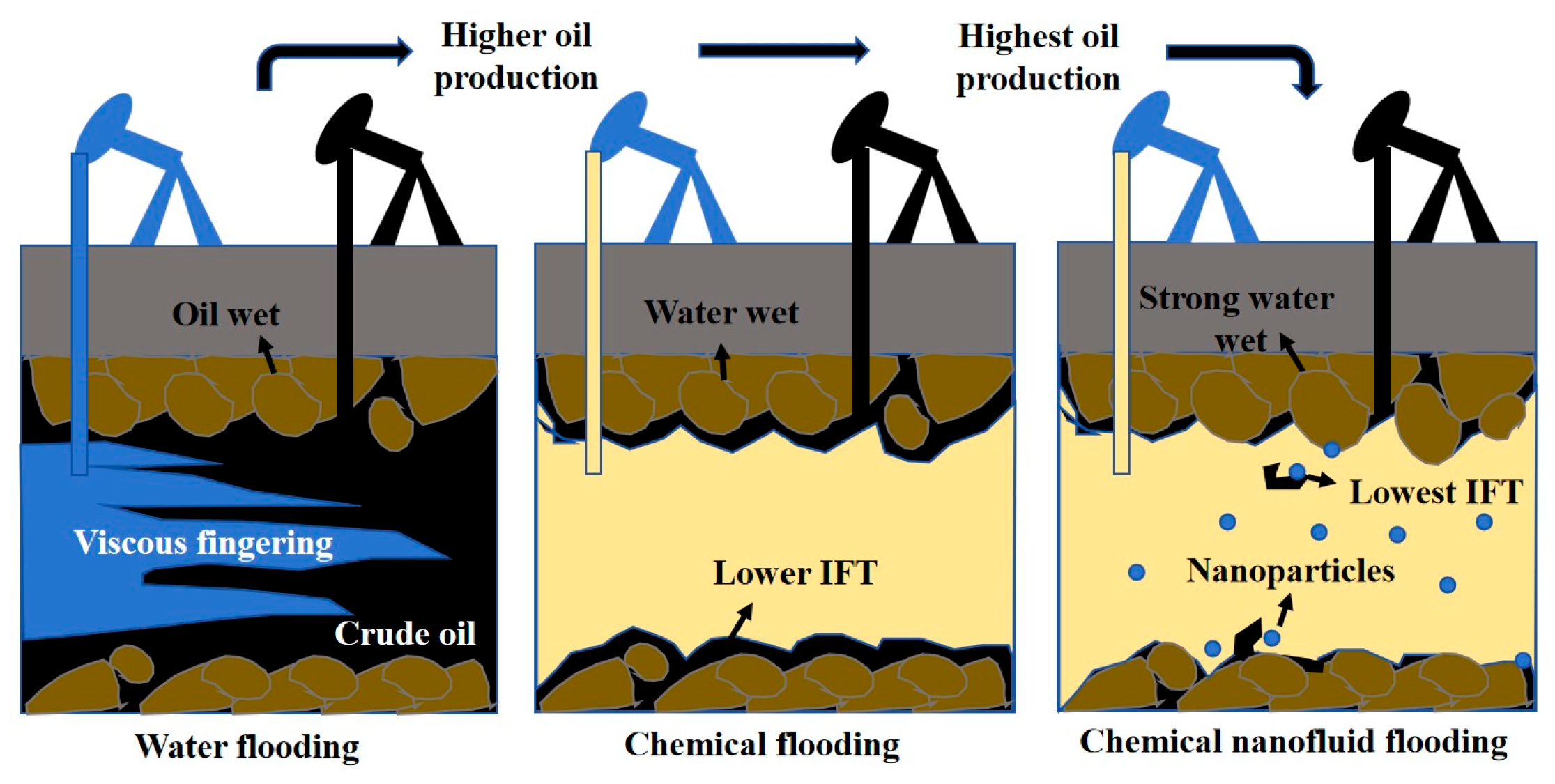
In addition, nanoparticles offer reliable solutions for various EOR technologies, including nanofluids, nanoemulsions, and nanocatalysts [29]. Nanofluids possess properties that complement those of surfactants; their characteristics include high adsorption rates, environmental friendliness, a large specific surface area, and high chemical reactivity [30]. The relevant mechanisms are illustrated in Figure 3 [29]. Their ability to alter wettability, reduce IFT, control flow behavior, and prevent asphalt precipitation makes them highly suitable for EOR [30]. Consequently, the combined application of nanoparticles and EOR technologies has become an important research area [30,31]. However, several factors influence nanoparticle behavior in the system, including particle type, size, and concentration; reservoir pressure, temperature, and salinity; and operational conditions such as injection rate. Introducing nanoparticles into CGA systems is expected to modulate interfacial and rheological behavior and influence the formation and stability of particle networks, thereby optimizing system performance across different reservoir conditions [32].
Figure 3.
Mechanism of oil recovery based on nanofluid EOR technology. Compiled based on literature data from Ref. [29].
2. Applied Research on CGA and Nanoparticle-Enhanced CGA
2.1. Fundamental Characteristics and Application Basis of CGA
As early as 1987, Sebba first proposed that CGA has a unique multilayer shell structure, a vast specific surface area, and fluid-like properties that enable it to produce the Jamin effect effectively [33]. Figure 4 shows the schematic comparison of a conventional air bubble and a CGA.
A conventional air bubble consists of an air core enclosed by a thin soap film composed of a single or multiple layers of surfactant. The structure of a CGA consists of a spherical gas core and a protective multilayer film. The protective multilayer film comprises a three-layer shell with a more stable structure [33]. The inner shell consists of a surfactant layer, which is enveloped by a viscous water shell on the outside. The outermost layer forms a thicker, surfactant multilayer region, which is a surfactant bilayer that provides rigidity and low permeability to the whole structure [34,35]. Conventional air bubbles exhibit a wide range of particle sizes with a broad distribution and are uneven in size; CGA bubbles are concentrated and stable in the 10–100 μm range, with a narrower particle-size distribution and greater uniformity [36,37].
Figure 4.
Schematic comparison of a conventional air bubble and a CGA. Compiled based on literature data from Ref. [35].
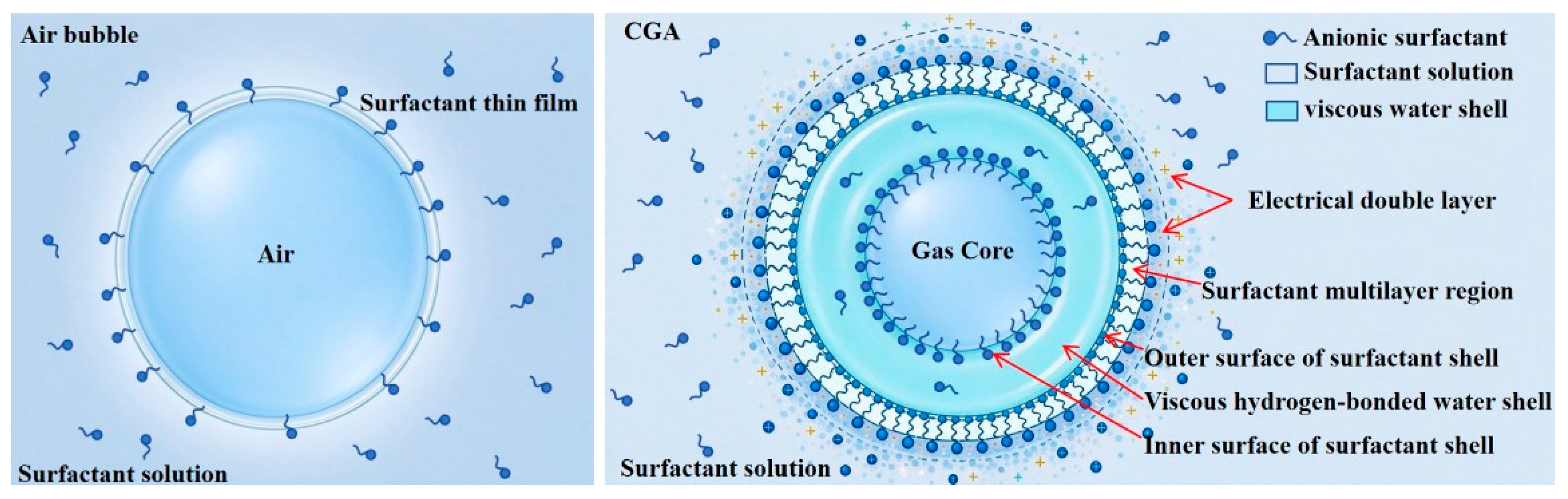
Surfactant molecules are arranged on the surface of each CGA [38]. The surfactant layer surrounding the CGA forms a dispersed bilayer that provides electrostatic repulsion, repelling other bubbles and preventing coalescence [39,40]. This unique multilayer film structure gives CGA extremely high stability and compressive strength (>27.6 MPa), nearly 10 times that of conventional foam [37]. The gas content of CGA fluids is typically less than 30%, and the gas is usually dispersed in a continuous liquid phase consisting primarily of a liquid base. At the same gas content, the apparent viscosity of CGA is significantly lower than that of traditional foams composed of bubbles, resulting in better flowability [41].
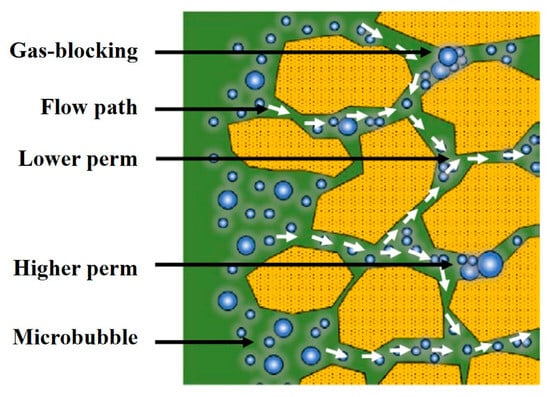
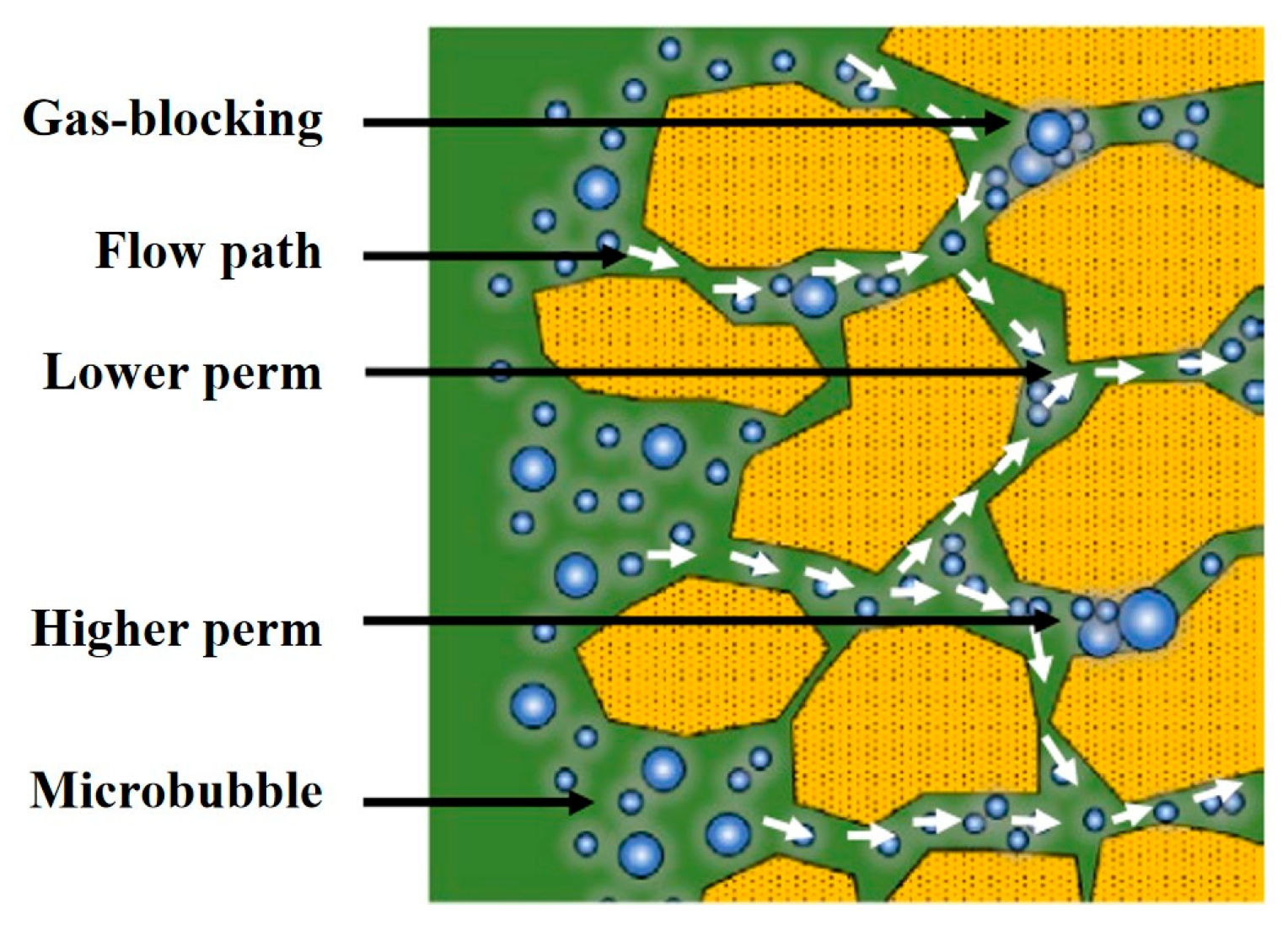
CGAs not only possess the physicochemical properties of traditional bubbles described above, but also—due to their unique surface and structural characteristics as well as their liquid-phase composition—are capable of blocking high-permeability zones and forcing the driving fluid into low-permeability zones to recover residual crude oil, thereby increasing oil recovery [37,42], making them an important option for EOR [43]. Furthermore, polymers and surfactants are two key chemicals used to prepare CGA. By leveraging the high viscosity of polymers and the gas-barrier effect of CGA, it is possible to better control gas flow and substantially increase flow resistance, thereby expanding the swept volume and enhancing oil recovery, as shown in Figure 5 [38]. Microbubbles in CGA fluids form a sealing zone ahead of the fluid, acting as an excellent elastic sealant for pores and microfractures, thereby protecting the reservoir [42].
Figure 5.
Gas-blocking effect of microbubbles. Reproduced from ref. [38], licensed under the Creative Commons Attribution 4.0 International License (https://creativecommons.org/licenses/by/4.0/ (accessed on 4 June 2026)).
Furthermore, CGA’s unique structure and properties allow it to maintain a spherical shape under certain pressures and be pumped into wells for oil and gas field development, sparking significant interest in the petroleum industry for drilling, cementing, well completion, and EOR applications. Initially, CGA was introduced as a drilling fluid, and early research primarily focused on optimizing its overall performance and chemical composition [23,44]. Subsequently, the application of CGA in drilling fluids led to the development of innovative methods [23,36], and research on CGA technology has primarily focused on analyzing the rheological properties and stability of microbubbles under varying surfactant and polymer concentrations, as well as under different temperature and pressure conditions [45,46,47]. In recent years, CGA drilling fluid technology has been applied to drilling operations in depleted oil and gas reservoirs [30]. Reports describe field applications of CGA drilling fluid, primarily in drilling operations in Lake Maracaibo and in mature, depleted oil and gas reservoirs in Mexico. Relevant case studies describe experience using it to control formation leakage and support the development of depleted reservoirs under conventional equipment conditions [48,49]. According to Chinese standards SY/T 5350-2009 [50], the Waring-Blender test is the most commonly used method for evaluating the performance of foam systems in oil and gas drilling engineering [37,51]. CGA is prepared using a high-speed mixing and agitation experimental method [41,52]. Most importantly, researchers typically measure its stability by its half-life (τ0.5). The half-life refers to the time required for the CGA to expel half of the initial surfactant solution [41].
CGA technology requires no additional equipment for field deployment [44] and is one of the most promising technologies among this class of advanced wellbore fluids [22,53]. Although these operational successes subsequently paved the way for innovative methods [23,36], comprehensive studies evaluating its potential for EOR or its overall capabilities have remained limited to date. During oil recovery using CGA, problems with colloidal and asphaltene deposition persist [54]. At the same time, oil recovery in oilfields places higher demands on displacement-agent performance, suggesting that, from a microscopic perspective, nanomaterials are a key approach to enhancing displacement-agent performance [55].
2.2. Applications of Nanoparticle-Enhanced CGA in EOR
Although CGA has demonstrated significant application potential in petroleum engineering fields such as drilling, cementing, well completion, and enhanced oil recovery due to its unique multilayer shell structure, good stability, and excellent flow control and plugging capabilities, its stability, rheological control capabilities, and long-term plugging performance under high-temperature, high-salinity, high-pressure, and complex reservoir conditions still require further improvement. Nanoparticles possess a large specific surface area, tunable surface properties, and good interfacial and rheological modulation capabilities; therefore, they have been gradually introduced into CGA systems to overcome the performance limitations of conventional CGAs under complex conditions and to expand their scope of application in the petroleum industry [56]. Existing studies have shown that nanoparticles may influence the stability, rheology, filtrate control capability, and pore-blocking behavior of CGAs through mechanisms such as gas–liquid interface adsorption, liquid film thickening, the formation of spatial network structures, and particle–surfactant and polymer synergistic interactions [37,57]. Table 1 summarizes the current major applications of nanoparticle-enhanced CGAs in the petroleum sector and their performance improvements. Overall, existing research remains primarily focused on laboratory-scale mechanistic investigations, material screening, and formulation optimization; understanding of the interfacial evolution, synergistic effects, and long-term mechanisms of nanoparticles in CGA multiphase systems under complex reservoir conditions remains relatively limited.
Table 1.
Current applications of nanoparticle-enhanced CGAs in the petroleum industry.
In the field of drilling fluids, existing laboratory experiments have primarily focused on two types of nanoparticle-enhanced CGA drilling fluids: water-based and non-aqueous [57,59]. Modified materials include silica and nanoclay in various forms, and researchers have also studied green materials such as corn-based nano-biopolymers [31,57]. Some experiments show that nanoparticles can produce a synergistic effect with surfactants, which is expected to increase the system’s low-shear viscosity and optimize bubble plugging, bubble breakup, and filtrate loss control [56,57]; most studies have identified a suitable range for nanoparticle addition [40,62]. Modified nano-SiO2 can increase the temperature resistance of water-based CGAs to 200 °C, potentially offering an alternative solution for deep-well and geothermal drilling; kerosene-based non-aqueous CGAs modified with hydrophobic nanoparticles can achieve pore sealing, but their temperature resistance is limited, and performance tends to degrade above 60 °C. There is a risk of deteriorated fluid loss control under high-temperature and high-pressure conditions [59]. Most of these conclusions come from small-scale laboratory evaluations; however, assessments under field conditions—such as circulation aging and formation fluid compatibility—remain insufficient, and numerous issues still need to be resolved before large-scale field application is possible.
In the field of EOR, relevant research is generally less extensive than in the drilling sector, with existing work primarily focused on formulation exploration for high-salinity reservoirs. One study modified CGA by blending Fe3O4 magnetic nanoparticles with natural hard asphalt. It combined this with salt-ion regulation to improve bubble stability under experimental conditions, providing a reference for injection-fluid formulation design in high-salt reservoirs [60]. However, most research in this area still primarily focuses on characterizing basic parameters such as static stability and interfacial tension. At the same time, quantitative evaluations of incremental oil recovery under core displacement conditions remain relatively scarce.
3. Microscopic Mechanisms of Nanoparticle-Enhanced CGA Systems
3.1. Pickering Stabilization at the Gas–Liquid Interface
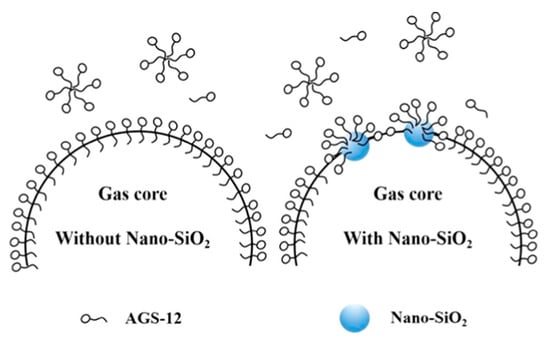
Adding nanoparticles to surfactant solutions can significantly improve heavy oil recovery rates, representing a breakthrough in heavy oil recovery technology [63]. The effectiveness of nanoparticles in CGA stabilization depends on multiple factors, including particle size, surface chemistry, wettability, concentration, and interactions with surfactants [37]. Nanoparticles can adsorb at the gas–liquid interface between the CGA gas core and the surrounding aqueous phase. The particles are partially immersed in both the gas and liquid phases; the reduction in interfacial energy causes them to remain at the interface, making spontaneous desorption unlikely. This mechanism of interfacial particle stabilization is commonly referred to as the Pickering effect [62,64,65]. As particle coverage at the interface increases, particles can form a particle-enriched layer in mutual contact or locally connected, providing an additional mechanical barrier at the bubble interface. This layer may synergize with the CGA’s inherent viscous aqueous shell and the outer surfactant structure to reduce the likelihood of direct bubble contact and coalescence, and to enhance the interface’s resistance to deformation [57]. Interfacial adsorption due to the Pickering effect can be considered one of the potentially important mechanisms by which nanoparticles enhance CGA stability. As illustrated in Figure 6 below [37].
Figure 6.
Adsorption of nanoscale silica at the gas–liquid interface. Reproduced from ref. [37], licensed under the Creative Commons Attribution-NonCommercial-NoDerivatives 4.0 International License (https://creativecommons.org/licenses/by-nc-nd/4.0/ (accessed on 10 November 2025)).
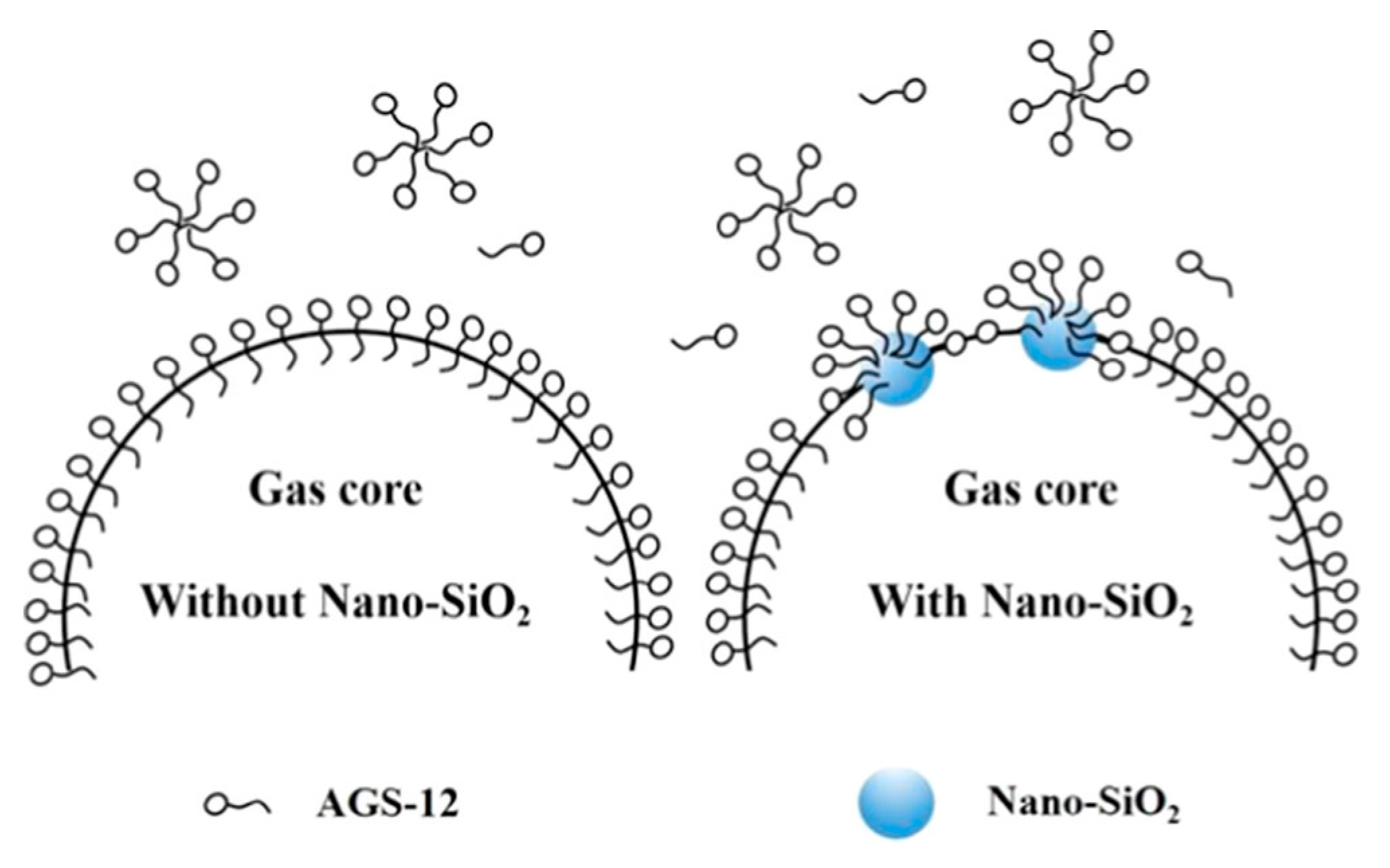
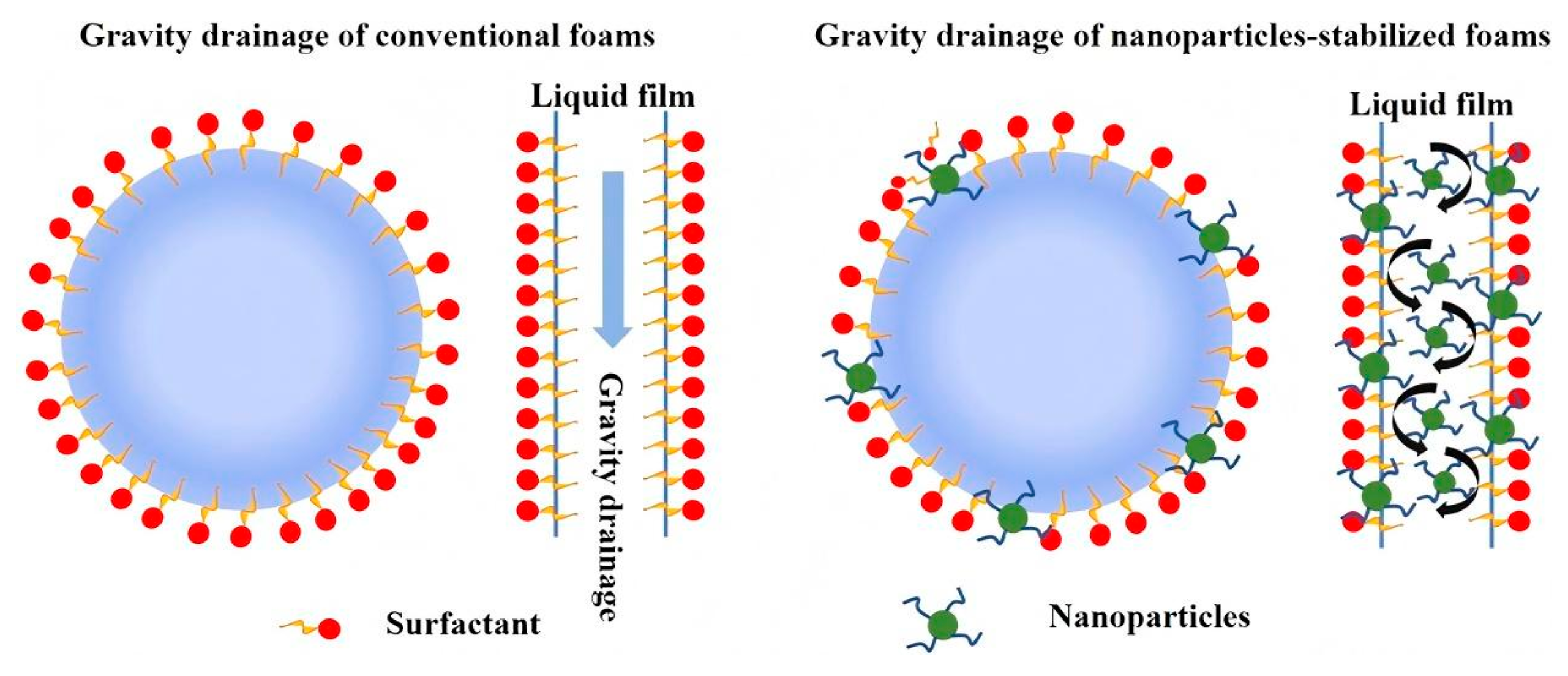
Studies have shown that nanoparticles adsorbed at the gas–liquid interface can prevent bubble coalescence, thereby effectively reducing the contact area for gas diffusion. They form a robust adsorption layer at the gas–liquid interface [64,65]. Their position is similar to the inner surface of the surfactant shell shown in Figure 4. This adsorption layer formation significantly increases steric hindrance and intermolecular repulsive forces within the system. At the same time, particle interactions can form a network structure. Through electrostatic repulsion, steric hindrance, increased flow resistance (which hinders the separation of water from the liquid film), reduced gravitational drainage rates, and slowed gas diffusion, a robust foam structure capable of resisting coalescence and drainage is formed, thereby enhancing foam stability, as shown in Figure 7 below [37,66,67]. Furthermore, cross-linking and increased viscosity also contribute to the foam stabilization mechanisms of CGA and nano-silica by increasing flow resistance and reducing the gravitational drainage rate [68]. Moreover, nanoparticles can increase the system’s interfacial viscoelastic modulus, thereby enhancing the foam liquid film’s resistance to deformation [69,70,71]. When bubbles undergo severe deformation within micropores (confined spaces), they are less prone to rupture, thereby maintaining a stable Jamin effect, which in turn regulates fluid flow, delays fluid migration, and expands the macroscopic influence range.
Figure 7.
Mechanism of action of nanoparticles. Reproduced from ref. [37], licensed under the Creative Commons Attribution-NonCommercial-NoDerivatives 4.0 International License (https://creativecommons.org/licenses/by-nc-nd/4.0/ (accessed on 10 November 2025)).
In addition to nanoparticle-enhanced CGA, Davoodi et al. proposed that when nanoparticles are uniformly dispersed in water and subjected to agitation, they can form stable nanoparticle suspensions. These innovative mixtures open up new prospects for EOR [72], reducing surface tension [73], lowering IFT [74], increasing viscosity, and ultimately improving oil recovery [75].
3.2. Microstructural Formation of Polymer-like Networks and Micellar Entanglement
In nanoparticle–surfactant fluid systems, the improvement in the performance of these systems stems primarily from two microscopic mechanisms [62]: the primary mechanism is related to micelle entanglement. In contrast, the secondary mechanism involves interactions between nanoparticles and micelles. Nanoparticles act as physical connectors within the micelle network, increasing micelle length and the number of entangled micelles.
Nanoparticles can mimic the chain-like molecular structure of polymer systems by forming comparable continuous structures. Nettesheim et al. found that adding low concentrations of nanoparticles to a fluid containing surfactant micelles improved solution stability [76]. Previous researchers have also reported similar results [77]. When low concentrations of nanoparticles are added to a solution containing surfactant micelles, the solution behaves like a polymeric fluid because the nanoparticles form a continuous structure and can create chains similar to those seen in polymeric systems [78]. Furthermore, Huang et al. [79] studied surfactant micelles in the presence of nanoparticles. This structure was shown to enhance the fluid’s rheological and thermal stability [40]. However, the formation of these connections is competitive. As the concentration increases further, micelles may frequently break and reconnect between different particles, causing a temporary decline in properties [62]. At even higher concentrations, the first mechanism reasserts itself, causing viscosity to rise sharply again through the formation of a robust three-dimensional spatial network (similar to a cross-linked polymer gel) [80]. As an efficient bridging particle, nano-silica can synergize with the polymer components in the CGA system, promoting the transformation of polymers from a linear chain conformation to a stable three-dimensional network structure in an aqueous solution [23]. This network structure not only further enhances the mechanical strength of the foam liquid film, reducing film rupture and water drainage, but also significantly increases the viscosity of the entire CGA system, thereby enhancing the system’s steric hindrance effect and achieving a dual reinforcement of foam stability [37].
3.3. Interfacial Tension (IFT) and Mechanisms Governing Wettability
When nano-silica is introduced into the CGA system, it strongly adsorbs at the gas–liquid interface and forms a dense adsorption layer. This adsorption layer can adsorb more surfactant molecules, thereby preventing foam collapse caused by surfactant desorption from the interface over time in conventional foam displacement. Consequently, the surface tension of the CGA system is effectively reduced, and the interfacial energy at the gas–liquid interface is also decreased, resulting in greater stability [23,37,61]. In a saline aphron system, a study on the blending of Fe3O4 nanoparticles with gilsonite reported changes in IFT, contact angle, and foam stability. In the CGA system, interfacial tension was reduced to 39.02 dyn/cm and the contact angle to as low as 20.58°, reversing the reservoir surface from oil-wetting to strongly water-wetting and promoting crude oil stripping through wettability control [60]. Moreover, experimental observations of nanoparticle-enhanced CGA in micro-scale models revealed changes in pressure drop, bubble plugging, and reverse permeability, providing experimental evidence for the relationship between interfacial/rheological properties and pore-scale flow control [56,58]. Hassani and Ghazanfari compared SiO2 nanoparticles with different hydrophobicities and found that particle surface properties affect the stability and filtration performance of water-based CGAs; among them, certain hydrophobic SiO2 formulations performed better. The study also reported that nanoparticles can increase the system’s swollen interfacial viscoelasticity, while no significant changes in surface tension were observed [57]. This suggests that, in this experimental system, improvements in CGA performance cannot be attributed solely to reduced surface tension; nanoparticle wettability and their impact on interfacial mechanical responses are also important to consider.
Studies of conventional nanofluid and surfactant–nanoparticle systems show that nanoparticles may influence oil displacement by altering the wettability of mineral surfaces, interacting with surfactants, or modifying the rheological properties of the continuous phase [81,82,83,84,85]. Betancur et al. found that the adsorption capacity of surfactant mixtures on nanoparticles decreases in the following order: aluminum oxide > silicon dioxide > magnetic iron-core carbon-shell nanoparticles. The study emphasizes that, in EOR processes, preparing nanofluids based on surfactant–nanoparticle–brine interactions is crucial for achieving ultra-low IFT [86]. Furthermore, nanoparticles not only promote fluid migration toward low-permeability zones by altering formation wettability and increasing flow resistance, thereby significantly enhancing recovery rates [87]. Regarding wettability enhancement, combining surfactants and nanoparticles outperforms nanofluids alone. Khalafi et al. showed that, compared with surfactants or nanoparticles alone, surfactant–nanoparticle mixtures yield greater permeability changes and higher oil recovery rates [88]. Different combinations of surfactants and nanoparticles produce varying effects on mineral wettability regulation [89]. Nanoparticles can alter mineral surface properties by reducing the contact angle and transforming them from hydrophobic to hydrophilic, thereby increasing oil recovery rates [90]. Keykhosravi et al. conducted experimental studies showing that silica nanoparticles have strong potential to alter rock wettability, increasing water absorption in carbonate rocks and achieving a final recovery rate of up to 17% of the original oil in place (OOIP). They emphasized that the change in wettability caused by the adsorption of silica nanoparticles is the primary mechanism of EOR [91]. Huibers et al. investigated how SiO2 nanoparticle dispersions alter the wettability of Berea and Boise sandstones. The results indicate that even low nanoparticle concentrations can effectively enhance the hydrophilicity of rock surfaces, thereby improving recovery rates of both light and heavy crude oils [92]. Adding nanoparticles affects the IFT at the interface between the displacement fluid and the crude oil [30].
Research on conventional nanofluids and surfactant–nanoparticle systems has provided an important foundation for understanding the regulatory role of nanoparticles in interfacial tension, wettability, rheological properties, and displacement efficiency; nanoparticle-enhanced CGA further introduces features such as gas–liquid interfaces, microbubble structures, and pore-scale flow control. While both share commonalities in nanoparticle–surfactant interactions and rock wettability regulation, bubble stabilization, liquid film expulsion, bubble deformation, and pore blockage in CGA systems make their mechanisms of action more complex. Existing research on nanoparticle-enhanced CGA has preliminarily shown that nanoparticles can influence CGA stability, interfacial properties, and pore-scale flow behavior; however, the underlying mechanisms across different particle types, formulations, and reservoir conditions still require systematic comparison and validation [1].
4. Potential Mechanisms of Nanoparticle-Enhanced CGA Systems
The application of nanotechnology in EOR is an emerging field that involves nanoparticles ranging from 1 to 100 nanometers [93]. Compared to other materials, nanoparticles are characterized by their ultra-small size, high specific surface area, and environmental friendliness [94]. Their ability to modify pore interfaces, combined with their high specific surface area, enables them to form robust or lightweight materials and enhances their interaction with various solvents, thereby conferring exceptional efficiency [95]. At the same time, they exhibit enhanced strength, electrical properties, and chemical reactivity [96]. These characteristics allow them to demonstrate beneficial rheological properties even at extremely low nanoparticle concentrations [62].
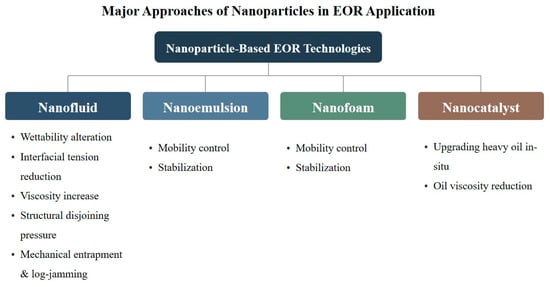
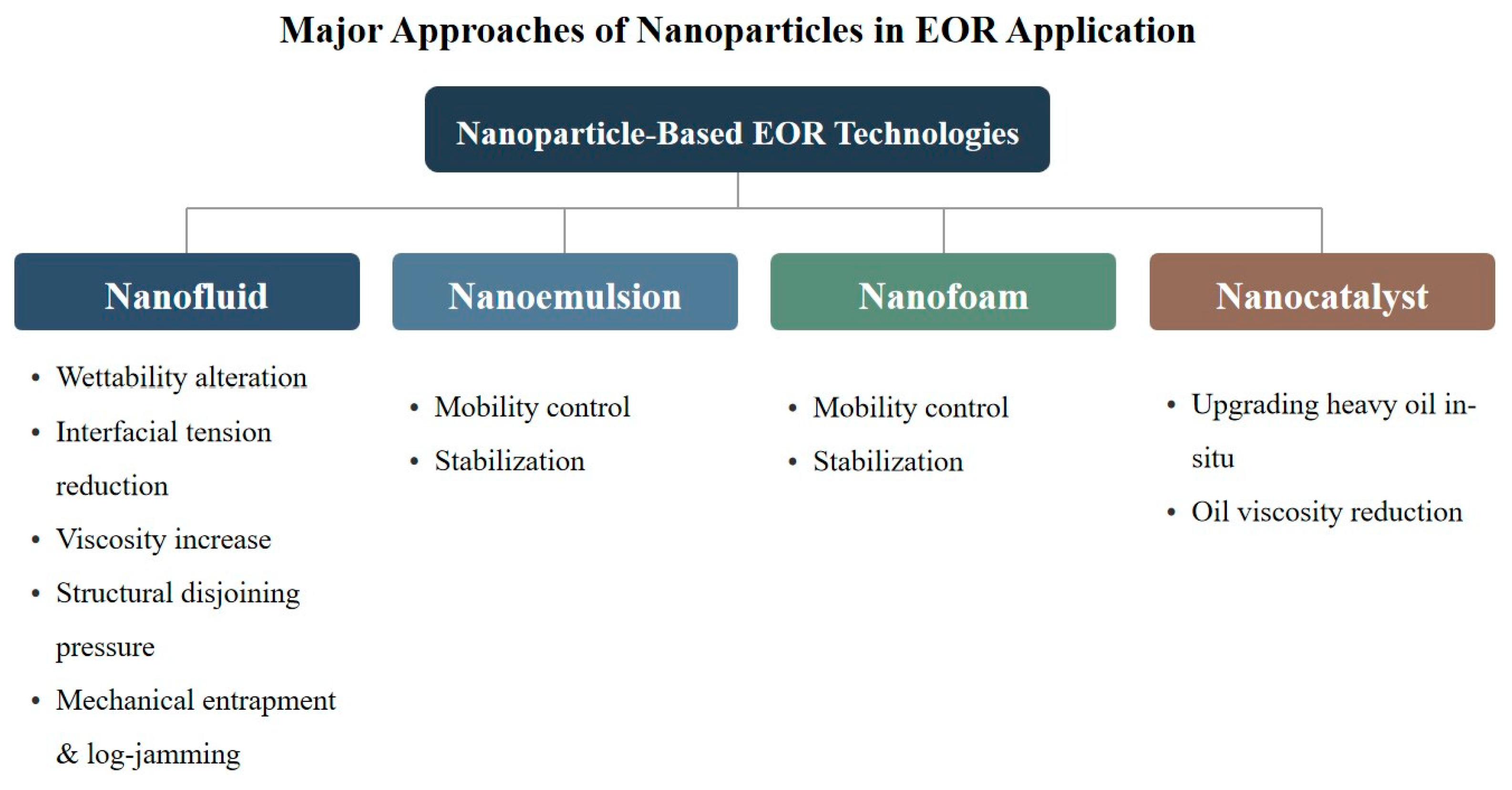
The cost of certain unfunctionalized nanoparticle raw materials is relatively low [97]. Nanoparticles have been widely used in fields such as energy, materials, environmental remediation, and lubrication, and their application has gradually expanded to EOR research [61,98,99,100]. The application of nanoparticles in EOR, including nanofluids, nanoemulsions, nanofoams, and nanocatalysts, has demonstrated tremendous potential [94,101]. Figure 8 below illustrates the applications of nanoparticles in EOR and their mechanisms of action. Furthermore, compared with traditional EOR chemicals, nanoparticles offer performance advantages in engineering applications [10].
Figure 8.
Major applications of nanoparticles in EOR. Compiled based on literature data from Ref. [9].
In terms of material selection, non-metallic oxides (such as SiO2) and metallic oxides (such as ZrO2, NiO, TiO2, and Al2O3) have become research hotspots in the EOR field because of their suitable particle sizes, high mechanical strength, and cost-effectiveness [102]. Among these, silicon dioxide (SiO2) nanoparticles have become the most widely used material in foam stabilization research due to their availability and well-established surface tunability [84,103,104]. In addition, fly ash, modified silicon dioxide, and Janus particles with amphiphilic properties have also demonstrated tremendous application potential under specific complex operating conditions [103,105]. Nanoparticles not only serve as stabilizers but also generate effective synergistic effects. For example, nanoparticles such as SiO2, TiO2, and Al2O3, as well as functionalized carbon structures (e.g., carbon nanotubes), can all act as highly efficient crosslinking agents. Their extremely high specific surface area facilitates the formation of stable three-dimensional network structures, which—while maintaining the fluid’s rheological properties—can reduce the required polymer thickener by 30–50% and significantly improve the system’s thermal stability and shear resistance [106,107].
In terms of application performance, the literature indicates that numerical simulations of two-dimensional porous media show that adding appropriate amounts of SiO2, Al2O3, and CuO nanoparticles can increase oil recovery by more than 20%. This highlights the effectiveness of nanoparticles in enhancing the thermal conductivity and interfacial properties of displacement fluids, providing theoretical support for the industrial application of nanofluid displacement technology [108]. Furthermore, breakthroughs have been achieved in applying novel functional and structural specialty nanomaterials. Ngouangna et al. found that under high-temperature, high-salinity conditions, low concentrations of hydroxyapatite nanoparticles can reduce interfacial tension (IFT) to approximately 3.4 mN/m and significantly lower the rock contact angle, demonstrating exceptional wettability modification capabilities [109], and significantly lower the rock contact angle, demonstrating exceptional wettability modification capabilities [110]. Carbon-based engineered nanoparticles, such as multi-walled carbon nanotubes (MWCNTs) and C60, can effectively maintain high retention rates and transport stability in porous media by leveraging their unique migration properties [111]. Wang et al. proposed that foamed amphiphilic fluorinated nanoparticles can serve as effective Pickering emulsifiers; these particles exhibit strong interfacial activity and can generate highly stable, aggregation-resistant water-based foams without additional surfactants [112].
The type of nanoparticles has a decisive influence on the regulation of wettability. Through complex interactions with mineral surfaces, different particle types can alter wettability, reduce IFT, and improve the flowability ratio, thereby enhancing crude oil recovery [30]. To address the cost and supply constraints of commercial materials, low-cost alternative materials have gained attention. Eftekhari et al. prepared 100–200 nm fly ash nanoparticles via a high-frequency ultrasonic milling process as a low-cost alternative to commercial silica nanoparticles [103]. With their complex composition and unique surface chemistry and interfacial properties, these nanoparticles offer a cost-effective solution for field applications. Other alternative nanoparticle systems used for foam stabilization include Al2O3, TiO2, and clay nanoparticles. Each material possesses unique surface chemistry, wettability, and cost characteristics. When selecting a nanoparticle type, consider not only foam-stabilization performance but also availability, cost, and compatibility with reservoir conditions.
Although nanoparticles have been widely applied in various EOR systems [9], research on nanofluid-assisted oil recovery has examined the effects of nanoparticle adsorption on the wettability and permeability of porous media, as well as the impact of nanoparticle displacement on enhancing recovery rates [113,114,115,116,117]. These studies indicate that particle–rock interactions, wettability regulation, and changes in interfacial properties can influence displacement processes in porous media, providing a reference for analyzing the potential role of nanoparticles in CGA systems. Although traditional nanofluids and CGA differ in fluid structure and displacement mechanisms, nanoparticle regulation of interfacial properties, wettability, liquid film stability, and rheological behavior still provides a theoretical basis for proposing potential mechanisms of action in CGA. Based on this, this paper compares and summarizes the major mechanisms of action reported in traditional nanofluid displacement systems with their potential regulatory effects in CGA systems, as shown in Table 2.
Table 2.
Potential mechanisms and effects of conventional nano-displacement and nanoparticle-enhanced CGA.
Furthermore, the effectiveness of nanoparticles in enhancing recovery rates depends not only on their regulation of interfacial properties and rock wettability but also on their transport, retention, and particle–rock interactions within porous media. Hedayati et al. studied the transport of carbon-based engineered nanoparticles and natural nanoparticles in saturated porous media, noting that particle migration and retention are influenced by particle properties and porous medium conditions; particle retention alters their effective transport distance within the pores, thereby affecting their range of action [111]. Ehtesabi et al. examined the transport and deposition of TiO2 nanoparticles in core plugs. Their results indicate that nanoparticle deposition within the core must be considered alongside recovery-rate enhancement, as particle deposition may change particle concentration along the flow path and pore-flow conditions, thereby affecting the nanoparticles’ oil-displacement efficiency and injection capacity [119]. Jumiati et al. studied the dynamic adsorption of nano-SiO2 in carbonate rocks and its relationship with recovery rates, demonstrating that the adsorption behavior of nanoparticles on rock surfaces is a key factor influencing their oil displacement performance [115]. Binshan et al. investigated the effects of adsorption by nanostructured polysilicate materials on the wettability and permeability of porous media, suggesting that particle adsorption may simultaneously alter rock surface properties and flow channel conditions, thereby influencing the displacement process [125]. The interaction between particles and rock surfaces may facilitate changes in wettability and promote oil displacement, but it may also affect permeability and injectability due to particle retention or deposition. Therefore, when evaluating the EOR effectiveness of nanoparticles and investigating the mechanisms of nanoparticle-enhanced CGA, one should simultaneously examine the effects of recovery rate, particle breakthrough and retention, pressure differential, and changes in permeability.
5. Current Challenges and Limitations
- There are deep-rooted limitations in terms of theoretical mechanisms and system stability. The theoretical framework for nanoparticle-enhanced CGA systems remains incomplete. Multiphase interfacial interactions among nanoparticles, gas, crude oil, and rock, as well as the multiscale mechanisms of permeation and mass transfer, remain unclear. Consequently, existing coupled models struggle to provide precise guidance for practical engineering applications.
- Under extreme reservoir conditions, high temperatures and high salinity readily lead to nanoparticle agglomeration and sedimentation; meanwhile, the shear forces generated during long-term displacement and the diluting effect of formation water can disrupt the CGA structure, causing it to lose its effective blocking and displacement capabilities. Furthermore, irreversible nanoparticle adsorption on rock surfaces further weakens the system’s synergistic effects, creating a significant disconnect between mechanistic studies and the complexities of actual reservoir conditions.
- There is currently a lack of sufficient field or pilot-scale data on nanoparticle-enhanced CGA; field applications still require an assessment of raw material and functionalization costs, dispersion and storage stability, scale-up of preparation, transportation, and injection, and monitoring requirements. Economic feasibility and scalability depend on particle type, formulation compatibility, and application conditions, and a techno-economic analysis is still needed [94,97]. Furthermore, the migration, retention, transformation, and ultimate fate of nanoparticles after injection require further evaluation; when assessing their environmental safety, ecological risk analyses should be conducted in conjunction with specific particle materials, dosages, exposure pathways, and receptor environments. The environmental risk assessment framework for EOR projects can serve as a reference for such evaluations [126]. More field-or pilot-scale data are still needed to support assessments of the life-cycle impacts, overall costs, and environmental risks of nano-enhanced CGA.
6. Conclusions and Future Prospects
6.1. Conclusions
A comprehensive analysis of EOR levels achieved using nanoparticle-enhanced CGA technology led to the following main conclusions:
- Nanoparticle-enhanced CGA offers significant structural advantages; it consists of a spherical air core and multiple layers of film, with nanoparticles adsorbed at the gas–liquid interface. This structure provides greater stability and a stronger Jamin effect in porous media than traditional foams, enabling it to seal large pores effectively and suppress gas migration.
- The microscopic mechanisms of nanoparticle-enhanced CGA primarily include: interfacial strengthening based on the Pickering effect, which creates a physical barrier that reduces coalescence between microbubbles; the interweaving of nanoparticles with surfactant micelles and polymer chains to form a three-dimensional network structure, thereby increasing the system’s viscosity and shear resistance; and the effective regulation of wettability by nanoparticles, which significantly reduces the oil-water interfacial tension difference. These properties make it a highly promising new non-thermal recovery technology.
- Although nanoparticle-enhanced CGA shows potential for improving stability, flow control, and pore-sealing performance, current conclusions are primarily based on laboratory-scale experiments. The field applicability of nanoparticle-enhanced CGA still requires further evaluation, considering cost, particle adsorption and retention losses, and long-term stability.
6.2. Future Prospects
Given the current state of research and challenges facing nanoparticle-enhanced CGA systems in the field of EOR, it is recommended that future research focus on in-depth exploration of the following three areas:
- Deepen multi-scale mechanistic studies and the development of fully coupled mathematical models. Future research should use simulation methods and advanced microfluidic visualization techniques to comprehensively investigate interactions among nanoparticles, CGA, crude oil, and formation water at multiphase interfaces. Particular attention should be paid to the dynamic adsorption evolution of nanoparticles at gas–liquid interfaces, as well as the rheological response characteristics of “polymer-like network structures” formed by nanoparticles, polymers, and surfactant micelles within confined pores. Accordingly, there is an urgent need to develop multiscale, fully coupled numerical models that can simultaneously characterize microscopic interfacial effects, mesoscale pore flow, and macroscopic displacement evolution, providing accurate predictions of co-displacement processes under complex reservoir conditions.
- To address nanoparticle agglomeration and CGA failure caused by extreme reservoir conditions (high temperature, high salinity, and high shear), efforts should focus on developing high-performance nanoparticle-enhanced CGA systems. By regulating nanoparticle wettability and surface charge, adsorption losses on mineral surfaces can be minimized under reservoir conditions. At the same time, researchers should explore synergistic mechanisms between CGAs and heterogeneous materials—such as Janus particles and carbon nanotubes. By leveraging their unique geometric characteristics, the physical barriers generated by the Pickering effect can be strengthened, thereby constructing novel fluid systems with ultra-long half-lives and strong salt resistance.
- Efforts should shift toward screening low-cost alternative materials (such as fly ash and modified silica fume) to optimize economic feasibility. It is essential to establish comprehensive monitoring technologies and industry access standards for nanomaterial fate, clarify nanoparticle distribution and migration patterns after large-scale injection, and achieve green, efficient, and sustainable petroleum resource development while ensuring technological compliance.
Author Contributions
Conceptualization, C.L. and E.A.A.; methodology, W.H.A.; formal analysis, C.L.; investigation, C.L.; resources, E.A.A.; data curation, C.L.; writing—original draft preparation, C.L.; writing—review and editing, E.A.A.; supervision, W.H.A.; project administration, C.L.; funding acquisition, C.L.; All authors have read and agreed to the published version of the manuscript.
Funding
This research received no external funding.
Data Availability Statement
The data are contained within the article.
Acknowledgments
The authors would like to express their heartfelt thanks to the research support of Universiti Malaysia Pahang Al-Sultan Abdullah (UMPSA) and Shandong Huayu University of Technology.
Conflicts of Interest
The authors declare no conflicts of interest.
Abbreviations
The following abbreviations are used in this manuscript:
| EOR | Enhanced oil recovery |
| CGA | Colloidal Gas Aphron |
| IEA | International Energy Agency |
| SAOR | Steam-assisted oil recovery |
| IFT | Interfacial tension |
| OOIP | Original oil in place |
| CGANFs | Colloidal gas aphron nano-fluids |
| HN-silica | Hydrophobic nanoparticles of silica |
| NCGA | Nano-enhanced colloidal gas aphron |
| MWCNTs | Multi-walled carbon nanotubes |
References
- Pryazhnikov, A.; Vaganov, R.; Lubenets, S.; Yakimov, A.; Pryazhnikov, M.; Minakov, A. Microfluidic investigation of the efficiency of oil recovery by surfactant solutions modified with nanoparticles. J. Mol. Liq. 2025, 438, 128672. [Google Scholar] [CrossRef] [Scilit]
- Bratovcic, A. Application of Nanofluids and Nanocomposites for Enhanced Oil Recovery. SSRG Int. J. Mater. Sci. Eng. 2023, 9, 7–15. [Google Scholar] [CrossRef] [Scilit]
- Zhou, W.; Xin, C.; Chen, Y.; Mouhouadi, R.D.; Chen, S. Nanoparticles for enhancing heavy oil recovery: Recent progress, challenges, and future perspectives. Energy Fuels 2023, 37, 8057–8078. [Google Scholar] [CrossRef] [Scilit]
- Liang, T.; Hou, J.-R.; Qu, M.; Xi, J.-X.; Raj, I. Application of nanomaterial for enhanced oil recovery. Pet. Sci. 2022, 19, 882–899. [Google Scholar] [CrossRef] [Scilit]
- Kong, X.; Ohadi, M.M. Applications of micro and nano technologies in the oil and gas industry-an overview of the recent progress. In Proceedings of the Abu Dhabi International Petroleum Exhibition and Conference, Abu Dhabi, United Arab Emirates, 1–4 November 2010. [Google Scholar] [CrossRef] [Scilit]
- Alvarado, V.; Manrique, E. Enhanced oil recovery: An update review. Energies 2010, 3, 1529–1575. [Google Scholar] [CrossRef] [Scilit]
- Mokheimer, E.M.; Hamdy, M.; Abubakar, Z.; Shakeel, M.R.; Habib, M.A.; Mahmoud, M. A comprehensive review of thermal enhanced oil recovery: Techniques evaluation. J. Energy Resour. Technol. 2019, 141, 030801. [Google Scholar] [CrossRef] [Scilit]
- Rashidi, A.; Solaimany Nazar, A.; Radnia, H. Application of nanoparticles for chemical enhanced oil recovery. Iran. J. Oil Gas Sci. Technol. 2018, 7, 1–19. [Google Scholar] [CrossRef] [Scilit]
- Youssif, M.I.; Saleh, S.M. A macro and micro-investigation of nanotechnology for enhanced oil recovery: A comprehensive review. J. Mol. Liq. 2024, 407, 125284. [Google Scholar] [CrossRef] [Scilit]
- Sun, X.; Zhang, Y.; Chen, G.; Gai, Z. Application of Nanoparticles in Enhanced Oil Recovery: A Critical Review of Recent Progress. Energies 2017, 10, 345. [Google Scholar] [CrossRef] [Scilit]
- Srinivasa Reddy, D.; Kumar, G.S. A comprehensive analysis on thermal and kinetic aspects of in situ combustion: Numerical approach. Appl. Mech. Mater. 2014, 592, 1393–1397. [Google Scholar] [CrossRef] [Scilit]
- Dawaymeh, F.; Ayoub, E.; Khaleel, M.; Alamoodi, N. Insights into the Application of Microfluidic Platforms in Enhanced Oil Recovery. Petroleum 2025, 11, 422–439. [Google Scholar] [CrossRef] [Scilit]
- Yuan, B.; Wood, D.A. A comprehensive review of formation damage during enhanced oil recovery. J. Pet. Sci. Eng. 2018, 167, 287–299. [Google Scholar] [CrossRef] [Scilit]
- Manjunath, G. Chapter 9-Formation damage in oil reservoirs during CO2 injection. In Nanotechnology for CO2 Utilization in Oilfield Applications; Gulf Professional Publishing: Amsterdam, The Netherlands, 2022; pp. 147–166. [Google Scholar] [CrossRef] [Scilit]
- Chaturvedi, K.R.; Sharma, T.; Sharma, T.; Trivedi, J. Chapter 5-Carbonated nanofluids for EOR and improved carbon storage. In Nanotechnology for CO2 Utilization in Oilfield Applications; Gulf Professional Publishing: Amsterdam, The Netherlands, 2022; pp. 71–84. [Google Scholar] [CrossRef] [Scilit]
- Bahadori, A. Fundamentals of Enhanced Oil and Gas Recovery from Conventional and Unconventional Reservoirs; Gulf Professional Publishing: Cambridge, MA, USA, 2018; pp. 185–212. [Google Scholar] [CrossRef] [Scilit]
- Gao, Y.; Zhang, M.; Wei, Y.; Shao, X.; Yang, M.; Tao, X. CO2 Micro-Nano Bubble Fracturing Fluid-Assisted Enhanced Recovery Technology for Shale Oil Reservoirs. Geoenergy Sci. Eng. 2026, 268, 214745. [Google Scholar] [CrossRef] [Scilit]
- Jain, S.; Pachisia, H.; Sharma, A.; Patel, S.; Patel, S.; Ragunathan, B. A systematic review–Chemical EOR using surfactants and polymers. Mater. Today Proc. 2022, 62, 7220–7223. [Google Scholar] [CrossRef] [Scilit]
- Gbadamosi, A.O.; Junin, R.; Manan, M.A.; Agi, A.; Yusuff, A.S. An overview of chemical enhanced oil recovery: Recent advances and prospects. Int. Nano Lett. 2019, 9, 171–202. [Google Scholar] [CrossRef] [Scilit]
- Negin, C.; Ali, S.; Xie, Q. Most common surfactants employed in chemical enhanced oil recovery. Petroleum 2017, 3, 197–211. [Google Scholar] [CrossRef] [Scilit]
- Gaol, C.L.; Ganzer, L.; Mukherjee, S.; Alkan, H. Parameters govern microbial enhanced oil recovery (MEOR) performance in real-structure micromodels. J. Pet. Sci. Eng. 2021, 205, 108814. [Google Scholar] [CrossRef] [Scilit]
- Zhu, W.; Zheng, X. Application of modified starch in high-temperature-resistant colloidal gas aphron (CGA) drilling fluids. J. Polym. Eng. 2021, 41, 458–466. [Google Scholar] [CrossRef] [Scilit]
- Mehrjoo, H.; Kazemzadeh, Y.; Ismail, I.; Gaganis, V. A Comprehensive Review of Colloidal gas aphrons applications in the Oil Industry. J. Pet. Explor. Prod. Technol. 2025, 15, 44. [Google Scholar] [CrossRef] [Scilit]
- Li, X.; Peng, B.; Liu, Q.; Liu, J.; Shang, L. Micro and nanobubbles technologies as a new horizon for CO2-EOR and CO2 geological storage techniques: A review. Fuel 2023, 341, 127661. [Google Scholar] [CrossRef] [Scilit]
- Le, N.N.H.; Sugai, Y.; Vo-Thanh, H.; Nguele, R.; Ssebadduka, R.; Wei, N. Experimental investigation on plugging performance of CO2 microbubbles in porous media. J. Pet. Sci. Eng. 2022, 211, 110187. [Google Scholar] [CrossRef] [Scilit]
- Gowida, A.; Shah, J.P.; Elkatatny, S. Foam systems for underbalanced and geothermal drilling: A critical review of stability challenges and research frontiers. J. Pet. Explor. Prod. Technol. 2026, 16, 10. [Google Scholar] [CrossRef] [Scilit]
- Liao, M.; Tong, B.; Li, X.; Jiang, L.; Zhang, Y.; Yu, T.; Song, Y. Micofluidic Visualization of Oil Displacement Mechanisms by CO2 Microbubbles. Energy Fuels 2026, 40, 5233–5246. [Google Scholar] [CrossRef] [Scilit]
- Zhao, S.; Wu, J.; Li, Y. Advances in the Research on the Properties and Applications of Micro-Nano Bubbles. Processes 2025, 13, 2106. [Google Scholar] [CrossRef] [Scilit]
- Tavakkoli, O.; Kamyab, H.; Shariati, M.; Mohamed, A.M.; Junin, R. Effect of nanoparticles on the performance of polymer/surfactant flooding for enhanced oil recovery: A review. Fuel 2022, 312, 122867. [Google Scholar] [CrossRef] [Scilit]
- Liang, F.; Wang, W.; Zhu, S.; Hu, Y.; Zhao, Z.; Tan, Y.; Yu, G.; Hou, J.; Li, J. Nanofluids application in enhanced oil recovery process-opportunities and challenges. Arab. J. Chem. 2025, 18, 106053. [Google Scholar] [CrossRef] [Scilit]
- Dizayee, R.; Ali, J.; Omar, H. Performance Impact of the Nano-Colloidal Aphron-Based Drilling Fluids on Rheological and Filtration Properties. Processes 2026, 14, 587. [Google Scholar] [CrossRef] [Scilit]
- Sead, F.F.; Altalbawy, F.M.; Reddy, M.S.; Sahu, B.N.; Sundharam, S.; Kumar, S.; Pramanik, A.; Smerat, A.; Pashtun, F. Optimized Selenium-Doped Nanocomposites for Enhanced Polymer Gel Performance in Permeability Reduction. Asia-Pac. J. Chem. Eng. 2026, 21, e70231. [Google Scholar] [CrossRef] [Scilit]
- Sebba, F. Foams and Biliquid Foams, Aphrons; John Wiley & Sons: Chichester, UK; New York, NY, USA, 1987; pp. 63–78. [Google Scholar]
- Pasdar, M.; Kazemzadeh, E.; Kamari, E.; Ghazanfari, M.H.; Soleymani, M. Insight into selection of appropriate formulation for colloidal gas aphron (CGA)-based drilling fluids. Pet. Sci. 2020, 17, 759–767. [Google Scholar] [CrossRef] [Scilit]
- Arora, I.; Yousuf, T.; Malik, F.; Manzoor, S.; Bhaskarwar, A.N. Comprehensive Analysis of the Quality of Colloidal Gas Aphrons: Impact of Batch and Batch-Recirculation Modes of Operation on Air Holdup and Stability. Top. Catal. 2025, 68, 1094–1109. [Google Scholar] [CrossRef] [Scilit]
- Zhu, W.; Zheng, X.; Li, G. Micro-bubbles size, rheological and filtration characteristics of Colloidal Gas Aphron (CGA) drilling fluids for high temperature well: Role of attapulgite. J. Pet. Sci. Eng. 2020, 186, 106683. [Google Scholar] [CrossRef] [Scilit]
- Zhu, W.; Wang, B.; Zheng, X. Preparation and foam stabilization mechanism of an ultrahigh-temperature colloidal gas aphron (CGA) system based on nano-SiO2. Acs Omega 2023, 8, 46091–46100. [Google Scholar] [CrossRef] [Scilit]
- Natawijaya, M.A.; Sugai, Y.; Anggara, F. CO2 microbubble colloidal gas aphrons for EOR application: The generation using porous filter, diameter size analysis and gas blocking impact on sweep efficiency. J. Pet. Explor. Prod. Technol. 2020, 10, 103–113. [Google Scholar] [CrossRef] [Scilit]
- Sensoy, T.; Chenevert, M.E.; Sharma, M.M. Minimizing water invasion in shale using nanoparticles. In Proceedings of the SPE Annual Technical Conference and Exhibition, New Orleans, LA, USA, 4–7 October 2009. [Google Scholar] [CrossRef] [Scilit]
- Tabzar, A.; Ziaee, H.; Arabloo, M.; Ghazanfari, M.H. Physicochemical properties of nano-enhanced colloidal gas aphron (NCGA)-based fluids. Eur. Phys. J. Plus 2020, 135, 312. [Google Scholar] [CrossRef] [Scilit]
- Molaei, A.; Waters, K. Aphron applications—A review of recent and current research. Adv. Colloid Interface Sci. 2015, 216, 36–54. [Google Scholar] [CrossRef] [Scilit]
- Hosseini-Kaldozakh, S.A.; Khamehchi, E.; Dabir, B.; Alizadeh, A.; Mansouri, Z. Rock wettability effect on Colloidal Gas Aphron invasion near wellbore region. J. Pet. Sci. Eng. 2020, 189, 106766. [Google Scholar] [CrossRef] [Scilit]
- Telmadarreie, A.; Doda, A.; Trivedi, J.J.; Kuru, E.; Choi, P. CO2 microbubbles–A potential fluid for enhanced oil recovery: Bulk and porous media studies. J. Pet. Sci. Eng. 2016, 138, 160–173. [Google Scholar] [CrossRef] [Scilit]
- Growcock, F.B.; Belkin, A.; Fosdick, M.; Irving, M.; O’Connor, B.; Brookey, T. Recent advances in aphron drilling-fluid technology. SPE Drill. Complet. 2007, 22, 74–80. [Google Scholar] [CrossRef] [Scilit]
- Bjorndalen, N.; Alvarez, J.; Jossy, W.; Kuru, E. A study of the effects of colloidal gas aphron composition on pore blocking. SPE Drill. Complet. 2011, 26, 139–150. [Google Scholar] [CrossRef] [Scilit]
- Gupta, D.S.; Cawiezel, K.E. Method of Fracturing with Aphron Containing Fluids. US20130126163A1, 23 May 2013. [Google Scholar]
- Shi, S.; Wang, Y.; Li, Z.; Chen, Q.; Zhao, Z. Laboratory investigation of the factors impact on bubble size, pore blocking and enhanced oil recovery with aqueous Colloidal Gas Aphron. J. Pet. Explor. Prod. Technol. 2016, 6, 409–417. [Google Scholar] [CrossRef] [Scilit]
- Rea, A.B.; Alvis, E.C.; Paiuk, B.P.; Climaco, J.M.; Vallejo, M.; Leon, E.; Inojosa, J. Application of aphrons technology in drilling depleted mature fields. In Proceedings of the SPE Latin America and Caribbean Petroleum Engineering Conference, Port-of-Spain, Trinidad and Tobago, 27–30 April 2003. [Google Scholar] [CrossRef]
- Montilva, J.; Ivan, C.D.; Friedheim, J.; Bayter, R. Aphron drilling fluid: Field lessons from successful application in drilling depleted reservoirs in Lake Maracaibo. In Proceedings of the Offshore Technology Conference, Houston, TX, USA, 6–9 May 2002. [Google Scholar] [CrossRef] [Scilit]
- Standard’s SY/T 5350-2009; Evaluation procedure for foaming agents used in drilling fluids. Petroleum Industry Press: Beijing, China, 2009.
- Gowida, A.; Elkatatny, S.; Kamal, M.S.; Hussain, S.M.S. Experimental study on an eco-friendly gemini foaming agent for enhancing foam drilling applications. J. Pet. Explor. Prod. Technol. 2024, 14, 1995–2010. [Google Scholar] [CrossRef] [Scilit]
- Jauregi, P.; Gilmour, S.; Varley, J. Characterisation of colloidal gas aphrons for subsequent use for protein recovery. Chem. Eng. J. 1997, 65, 1–11. [Google Scholar] [CrossRef] [Scilit]
- Yong, L.; Qian, L.; Aiguo, Y.; Xianyong, Z. Experiments for selecting the optimal foam drilling fluid formula. Chem. Technol. Fuels Oils 2016, 52, 340–345. [Google Scholar] [CrossRef] [Scilit]
- Pasdar, M.; Kazemzadeh, E.; Kamari, E.; Ghazanfari, M.H.; Soleymani, M. Insight into the behavior of colloidal gas aphron (CGA) fluids at elevated pressures: An experimental study. Colloids Surf. A Physicochem. Eng. Asp. 2018, 537, 250–258. [Google Scholar] [CrossRef] [Scilit]
- You, S.; Sun, X.; Li, X. Preparation of Modified Colloidal Gas Aphrons and Analysis of the Oil Displacement Effect. Appl. Sci. 2020, 10, 927. [Google Scholar] [CrossRef] [Scilit]
- Tabzar, A.; Ghazanfari, M.H. Pore-scale analysis of filtration loss control by Colloidal Gas Aphron Nano-Fluids (CGANF) in heterogeneous porous media. Exp. Therm. Fluid Sci. 2016, 77, 327–336. [Google Scholar] [CrossRef] [Scilit]
- Hossein Hassani, A.; Hossein Ghazanfari, M. Impact of hydrophobicity of SiO2 nanoparticles on enhancing properties of colloidal gas aphron fluids: An experimental study. J. Energy Resour. Technol. 2018, 140, 012901. [Google Scholar] [CrossRef] [Scilit]
- Tabzar, A.; Ghazanfari, M.H. Monitoring of microscopic behavior of nano-enhanced colloidal gas aphron in fractured and un-fractured non-uniform porous medium. J. Pet. Sci. Eng. 2022, 210, 110073. [Google Scholar] [CrossRef] [Scilit]
- Hassani, A.H.; Ghazanfari, M.H. Improvement of non-aqueous colloidal gas aphron-based drilling fluids properties: Role of hydrophobic nanoparticles. J. Nat. Gas Sci. Eng. 2017, 42, 1–12. [Google Scholar] [CrossRef] [Scilit]
- Ardakani, F.G.; Kazemzadeh, Y.; Ahmadi, S.; Khormali, A. Use of gilsonite in the presence of salt for the control of formation and stability of aphrons. Sci. Rep. 2026, 16, 1745. [Google Scholar] [CrossRef] [Scilit]
- Mo, Y.; Dong, J.; Fan, Y.; Zhang, W. Stability and Migration Characteristics of SDS and SiO2 Colloidal Gas Aphron and Its Removal Efficiency for Nitrobenzene-Contaminated Aquifers. J. Environ. Eng. 2023, 149, 04023011. [Google Scholar] [CrossRef] [Scilit]
- Tabzar, A.; Wood, D.A. Chapter 11-Gas-aphron drilling fluids enhanced with silica nanoparticles and biosurfactant. In Sustainable Natural Gas Drilling; Elsevier: Amsterdam, The Netherlands, 2024; pp. 325–354. [Google Scholar] [CrossRef] [Scilit]
- Rahman, A.; Shirif, E.; Torabi, F. Nanoparticle-stabilized CO2 foam flooding for enhanced heavy oil recovery: A micro-optical analysis. Petroleum 2024, 10, 696–704. [Google Scholar] [CrossRef] [Scilit]
- Huang, Y.; Yang, J.; Chen, L.; Zhang, L. Chitin nanofibrils to stabilize long-life pickering foams and their application for lightweight porous materials. ACS Sustain. Chem. Eng. 2018, 6, 10552–10561. [Google Scholar] [CrossRef] [Scilit]
- Lam, S.; Velikov, K.P.; Velev, O.D. Pickering stabilization of foams and emulsions with particles of biological origin. Curr. Opin. Colloid Interface Sci. 2014, 19, 490–500. [Google Scholar] [CrossRef] [Scilit]
- Wang, G.; Wang, K.; Lu, C. Advances of researches on improving the stability of foams by nanoparticles. IOP Conf. Ser. Mater. Sci. Eng. 2017, 242, 012020. [Google Scholar] [CrossRef] [Scilit]
- Zhaomin, L.; Dawei, H.; Teng, L.; Shizhen, H.; Keming, Z.; Sheng, L.; Zihan, G. Properties of Hydrophobic SiO2 Nanoparticles Stabilized Foam and It’s Temperature Resistance Evaluation. Oilfield Chem. 2019, 36, 494–500. [Google Scholar] [CrossRef]
- Zhu, W.; Wang, B.; Zheng, X. Study on high-temperature resistance, salt/calcium resistance of environment-friendly colloidal gas aphron drilling fluid. Sci. Iran. 2024, 32, 8225. [Google Scholar] [CrossRef] [Scilit]
- Xu, H.; Chen, Y.; Liu, N.; Chen, X.; Wu, D.; Ju, B.; Shao, M. Foam optimization evaluation for enhanced oil recovery based on hydrophilic SiO2/SDS dispersions. Chem. Phys. Lett. 2022, 803, 139811. [Google Scholar] [CrossRef] [Scilit]
- Li, W.; Wei, F.; Xiong, C.; Ouyang, J.; Shao, L.; Dai, M.; Liu, P.; Du, D. A novel supercritical CO2 foam system stabilized with a mixture of zwitterionic surfactant and silica nanoparticles for enhanced oil recovery. Front. Chem. 2019, 7, 718. [Google Scholar] [CrossRef] [Scilit]
- Udoh, T.H. Improved insight on the application of nanoparticles in enhanced oil recovery process. Sci. Afr. 2021, 13, e00873. [Google Scholar] [CrossRef] [Scilit]
- Davoodi, S.; Al-Shargabi, M.; Wood, D.A.; Rukavishnikov, V.S.; Minaev, K.M. Experimental and field applications of nanotechnology for enhanced oil recovery purposes: A review. Fuel 2022, 324, 124669. [Google Scholar] [CrossRef] [Scilit]
- Ferreira, C.C.; da Silva, T.B.G.; Francisco, A.D.d.S.; Bandeira, L.; Cunha, R.D.; Coutinho-Neto, M.D.; Homem-de-Mello, P.; Moraes de Almeida, J.; Orestes, E.; Nascimento, R.S.V. Hyperbranched polyglycerols derivatives as cetyltrimethylammonium bromide nanocarriers on enhanced oil recovery processes. J. Appl. Polym. Sci. 2022, 139, 51725. [Google Scholar] [CrossRef] [Scilit]
- Sharma, T.; Sangwai, J.S. Silica nanofluids in polyacrylamide with and without surfactant: Viscosity, surface tension, and interfacial tension with liquid paraffin. J. Pet. Sci. Eng. 2017, 152, 575–585. [Google Scholar] [CrossRef] [Scilit]
- Cao, Z.; Ouyang, Z.; Liu, Z.; Li, Y.; Ouyang, Y.; Lin, J.; Xie, X.; Long, J. Effects of surface oxides and nanostructures on the spontaneous wettability transition of laser-textured copper surfaces. Appl. Surf. Sci. 2021, 560, 150021. [Google Scholar] [CrossRef] [Scilit]
- Nettesheim, F.; Liberatore, M.W.; Hodgdon, T.K.; Wagner, N.J.; Kaler, E.W.; Vethamuthu, M. Influence of nanoparticle addition on the properties of wormlike micellar solutions. Langmuir 2008, 24, 7718–7726. [Google Scholar] [CrossRef] [Scilit]
- Crews, J.B.; Huang, T. Performance enhancements of viscoelastic surfactant stimulation fluids with nanoparticles. In Proceedings of the SPE Europec Featured at EAGE Conference and Exhibition, Rome, Italy, 9–12 June 2008. [Google Scholar] [CrossRef] [Scilit]
- Huang, T.; Crews, J.B.; Agrawal, G. Nanoparticle pseudocrosslinked micellar fluids: Optimal solution for fluid-loss control with internal breaking. In Proceedings of the SPE International Conference and Exhibition on Formation Damage Control, Lafayette, LA, USA, 10–12 February 2010. [Google Scholar] [CrossRef] [Scilit]
- Sulaiman, R.; Dolan, K.D. Effect of amylose content on estimated kinetic parameters for a starch viscosity model. J. Food Eng. 2013, 114, 75–82. [Google Scholar] [CrossRef] [Scilit]
- Nagarajan, R. Association of nonionic polymers with micelles, bilayers, and microemulsions. J. Chem. Phys. 1989, 90, 1980–1994. [Google Scholar] [CrossRef] [Scilit]
- He, X.; Liu, Q.; Xu, Z. Treatment of oily wastewaters using magnetic Janus nanoparticles of asymmetric surface wettability. J. Colloid Interface Sci. 2020, 568, 207–220. [Google Scholar] [CrossRef] [Scilit]
- Li, Y.; Zhang, X.; Liu, G.; Gerhardt, A.; Evans, K.; Jia, A.; Zhang, Z. Oxygen-deficient titanium dioxide supported cobalt nano-dots as efficient cathode material for lithium-sulfur batteries. J. Energy Chem. 2020, 48, 390–397. [Google Scholar] [CrossRef] [Scilit]
- Li, Z.; Meng, X.; Zhang, Z. Fabrication of surface hydroxyl modified gC3N4 with enhanced photocatalytic oxidation activity. Catal. Sci. Technol. 2019, 9, 3979–3993. [Google Scholar] [CrossRef] [Scilit]
- Sun, Q.; Li, Z.; Li, S.; Jiang, L.; Wang, J.; Wang, P. Utilization of surfactant-stabilized foam for enhanced oil recovery by adding nanoparticles. Energy Fuels 2014, 28, 2384–2394. [Google Scholar] [CrossRef] [Scilit]
- Singh, R.; Mohanty, K.K. Synergy between nanoparticles and surfactants in stabilizing foams for oil recovery. Energy Fuels 2015, 29, 467–479. [Google Scholar] [CrossRef] [Scilit]
- Betancur, S.; Giraldo, L.J.; Carrasco-Marín, F.; Riazi, M.; Manrique, E.J.; Quintero, H.; García, H.A.; Franco-Ariza, C.A.; Cortés, F.B. Importance of the nanofluid preparation for ultra-low interfacial tension in enhanced oil recovery based on surfactant–nanoparticle–brine system interaction. ACS Omega 2019, 4, 16171–16180. [Google Scholar] [CrossRef] [Scilit]
- Xiao, S.; Zeng, Y.; Vavra, E.D.; He, P.; Puerto, M.; Hirasaki, G.J.; Biswal, S.L. Destabilization, propagation, and generation of surfactant-stabilized foam during crude oil displacement in heterogeneous model porous media. Langmuir 2018, 34, 739–749. [Google Scholar] [CrossRef] [Scilit]
- Khalafi, E.; Hashemi, A.; Zallaghi, M.; Kharrat, R. An experimental investigation of nanoparticles assisted surfactant flooding for improving oil recovery in a micromodel system. J. Pet. Environ. Biotechnol. 2018, 9, 1000355. [Google Scholar] [CrossRef]
- Zhang, J.; Huang, Q.; Xu, F.; Zhao, Z.; Meng, X.; Zhang, X. Experimental and numerical simulation study on the influence of fracture distribution on gas channeling in ultralow-permeability reservoirs. J. Energy Eng. 2022, 148, 05021002. [Google Scholar] [CrossRef] [Scilit]
- Bhuvanesh, M.; Kalaiselvam, S. Enhanced oil recovery by polymer flooding using polyacrylamide stabilised with alumina/graphene oxide nanocomposite. Arab. J. Sci. Eng. 2023, 48, 16819–16830. [Google Scholar] [CrossRef] [Scilit]
- Keykhosravi, A.; Simjoo, M. Insights into stability of silica nanofluids in brine solution coupled with rock wettability alteration: An enhanced oil recovery study in oil-wet carbonates. Colloids Surf. A Physicochem. Eng. Asp. 2019, 583, 124008. [Google Scholar] [CrossRef] [Scilit]
- Huibers, B.M.; Pales, A.R.; Bai, L.; Li, C.; Mu, L.; Ladner, D.; Daigle, H.; Darnault, C.J. Wettability alteration of sandstones by silica nanoparticle dispersions in light and heavy crude oil. J. Nanopart. Res. 2017, 19, 323. [Google Scholar] [CrossRef] [Scilit]
- Cheraghian, G.; Hendraningrat, L. A review on applications of nanotechnology in the enhanced oil recovery part B: Effects of nanoparticles on flooding. Int. Nano Lett. 2016, 6, 1–10. [Google Scholar] [CrossRef] [Scilit]
- Agista, M.N.; Guo, K.; Yu, Z. A state-of-the-art review of nanoparticles application in petroleum with a focus on enhanced oil recovery. Appl. Sci. 2018, 8, 871. [Google Scholar] [CrossRef] [Scilit]
- Bera, A.; Belhaj, H. Application of nanotechnology by means of nanoparticles and nanodispersions in oil recovery—A comprehensive review. J. Nat. Gas Sci. Eng. 2016, 34, 1284–1309. [Google Scholar] [CrossRef] [Scilit]
- Li, S.; Hendraningrat, L.; Torsaeter, O. Improved oil recovery by hydrophilic silica nanoparticles suspension: 2-phase flow experimental studies. In Proceedings of the IPTC 2013: International Petroleum Technology Conference, Houten, The Netherlands, 26–28 March 2013. [Google Scholar] [CrossRef] [Scilit]
- Behera, U.S.; Poddar, S.; Deshmukh, M.P.; Sangwai, J.S.; Byun, H.-S. Comprehensive review on the role of nanoparticles and nanofluids in chemical enhanced oil recovery: Interfacial phenomenon, compatibility, scalability, and economic viability. Energy Fuels 2024, 38, 13760–13795. [Google Scholar] [CrossRef] [Scilit]
- Velayati, A.; Roostaei, M.; Rasoolimanesh, R.; Soleymani, M.; Fattahpour, V. Colloidal gas aphron (CGA) based foam cement system. Pet. Explor. Dev. 2019, 46, 1281–1287. [Google Scholar] [CrossRef] [Scilit]
- Özakın, B.; Gültekin, K.; Yurdgülü, H.İ. Improvement of oxidation stability, hydrolytic stability and tribological properties of kaolin particles doped bio-based green palm oil. Colloids Surf. A Physicochem. Eng. Asp. 2025, 712, 136441. [Google Scholar] [CrossRef] [Scilit]
- Özakın, B.; Gültekin, K.; Uymaz, S.E.; Özakın, A.N. Formulation optimization with structural, oxidative and thermal behaviors of castor oil-based nanolubricants reinforced with boron nitride and black cumin oil. J. Mol. Liq. 2025, 443, 129163. [Google Scholar] [CrossRef] [Scilit]
- El-Diasty, A.I.; Aly, A.M. Understanding the mechanism of nanoparticles applications in enhanced oil recovery. In Proceedings of the SPE North Africa Technical Conference and Exhibition, Cairo, Egypt, 14–16 September 2015. [Google Scholar] [CrossRef] [Scilit]
- Bahraminejad, H.; Khaksar Manshad, A.; Riazi, M.; Ali, J.A.; Sajadi, S.M.; Keshavarz, A. CuO/TiO2/PAM as a novel introduced hybrid agent for water—Oil interfacial tension and wettability optimization in chemical enhanced oil recovery. Energy Fuels 2019, 33, 10547–10560. [Google Scholar] [CrossRef] [Scilit]
- Eftekhari, A.A.; Krastev, R.; Farajzadeh, R. Foam stabilized by fly-ash nanoparticles for enhancing oil recovery. In Proceedings of the SPE Kuwait Oil and Gas Show and Conference, Mishref, Kuwait, 11–14 October 2015. [Google Scholar] [CrossRef] [Scilit]
- Qian, S.; Zhaomin, L.; Songyan, L. Experimental study on interface properties and oil displacement efficiency of foams stabilized by SiO2 nanoparticles. J. China Univ. Pet. Ed. Nat. Sci. 2016, 40, 101–108. [Google Scholar] [CrossRef]
- Wang, D.; Jia, H.; Wang, Q.; Wen, X.; Wei, Z.; Wang, Q.; Fan, F.; Wen, S.; Lv, K.; Liu, D. Investigation on the stability of Janus SiO2-n nanoparticle-assisted nonionic surfactant-stabilized foam and its application in enhanced oil recovery. Energy Fuels 2022, 36, 10205–10212. [Google Scholar] [CrossRef] [Scilit]
- Goharzadeh, A.; Fatt, Y.Y.; Sangwai, J.S. Effect of TiO2–SiO2 hybrid nanofluids on enhanced oil recovery process under different wettability conditions. Capillarity 2023, 8, 1–10. [Google Scholar] [CrossRef] [Scilit]
- Li, J.; Yu, M.; Qin, S.; Zhang, X.; Wei, Q.; Chen, M.; Yang, K. Nanomaterials in petroleum engineering: Progress, current applications and emerging challenges. Alex. Eng. J. 2025, 124, 214–230. [Google Scholar] [CrossRef] [Scilit]
- Al-Yaari, A.; Ching, D.L.C.; Sakidin, H.; Muthuvalu, M.S.; Zafar, M.; Alyousifi, Y.; Saeed, A.A.H.; Bilad, M.R. Thermophysical properties of nanofluid in two-phase fluid flow through a porous rectangular medium for enhanced oil recovery. Nanomaterials 2022, 12, 1011. [Google Scholar] [CrossRef] [Scilit]
- Ngouangna, E.N.; Jaafar, M.Z.; Norddin, M.; Agi, A.; Yakasai, F.; Oseh, J.O.; Mamah, S.C.; Yahya, M.N.; Al-Ani, M. Effect of salinity on hydroxyapatite nanoparticles flooding in enhanced oil recovery: A mechanistic study. ACS Omega 2023, 8, 17819–17833. [Google Scholar] [CrossRef] [Scilit]
- Ngouangna, E.; Dzulkarnain, I.; Jaafar, M.; Oseh, J.; Afolabi, F.; Yakasai, F.; Gbadamosi, A.; Nwaichi, P.; Ntone, E.; Abutu, D. An Analysis of the Effects of In-Situ Functionalized Nanoparticles on Oil Recovery via Interfacial Tension Reduction and Wettability Modification. In Proceedings of the SPE Nigeria Annual International Conference and Exhibition, Lagos, Nigeria, 4–6 August 2025. [Google Scholar] [CrossRef] [Scilit]
- Hedayati, M.; Sharma, P.; Katyal, D.; Fagerlund, F. Transport and retention of carbon-based engineered and natural nanoparticles through saturated porous media. J. Nanoparticle Res. 2016, 18, 57. [Google Scholar] [CrossRef] [Scilit]
- Wang, K.; Wang, G.; Lu, C.; Pei, C.; Wang, Y. Preparation and investigation of foaming amphiphilic fluorinated nanoparticles for enhanced oil recovery. Materials 2017, 10, 1403. [Google Scholar] [CrossRef] [Scilit]
- Etergele, S.J. Application of polymer-reinforced methane foam in the presence of nanoparticles in increasing oil recovery from carbonate porous media at different temperatures. Sci. Rep. 2026, 16, 16828. [Google Scholar] [CrossRef] [Scilit]
- Onyekonwu, M.O.; Ogolo, N.A. Investigating the use of nanoparticles in enhancing oil recovery. In Proceedings of the SPE Nigeria Annual International Conference and Exhibition, Tinapa-Calabar, Nigeria, 31 July–7 August 2010. [Google Scholar] [CrossRef] [Scilit]
- Jumiati, W.; Permadi, A.K.; Hendraningrat, L.; Siagian, U.W.; Sunendar, B. Dynamic adsorption and oil recovery of Nanosilica on carbonate rock. ACS Omega 2024, 9, 44134–44153. [Google Scholar] [CrossRef] [Scilit]
- Ju, B.; Fan, T.; Ma, M. Enhanced oil recovery by flooding with hydrophilic nanoparticles. China Particuology 2006, 4, 41–46. [Google Scholar] [CrossRef] [Scilit]
- Roustaei, A.; Moghadasi, J.; Iran, A.; Bagherzadeh, H.; Shahrabadi, A. An experimental investigation of polysilicon nanoparticles’ recovery efficiencies through changes in interfacial tension and wettability alteration. In Proceedings of the SPE International Oilfield Nanotechnology Conference and Exhibition, Noordwijk, The Netherlands, 12–14 June 2012. [Google Scholar] [CrossRef] [Scilit]
- Ogolo, N.; Olafuyi, O.; Onyekonwu, M. Enhanced oil recovery using nanoparticles. In Proceedings of the SPE Kingdom of Saudi Arabia Annual Technical Symposium and Exhibition, Al-Khobar, Saudi Arabia, 8–11 April 2012. [Google Scholar] [CrossRef] [Scilit]
- Ehtesabi, H.; Ahadian, M.M.; Taghikhani, V. Enhanced Heavy Oil Recovery Using TiO2 Nanoparticles: Investigation of Deposition during Transport in Core Plug. Energy Fuels 2015, 29, 1–8. [Google Scholar] [CrossRef] [Scilit]
- Rezvani, H.; Khalilnezhad, A.; Ganji, P.; Kazemzadeh, Y. How ZrO2 nanoparticles improve the oil recovery by affecting the interfacial phenomena in the reservoir conditions? J. Mol. Liq. 2018, 252, 158–168. [Google Scholar] [CrossRef] [Scilit]
- Nwidee, L.N.; Al-Anssari, S.; Barifcani, A.; Sarmadivaleh, M.; Lebedev, M.; Iglauer, S. Nanoparticles influence on wetting behaviour of fractured limestone formation. J. Pet. Sci. Eng. 2017, 149, 782–788. [Google Scholar] [CrossRef] [Scilit]
- Rashidi, M.; Kalantariasl, A.; Saboori, R.; Haghani, A.; Keshavarz, A. Performance of environmental friendly water-based calcium carbonate nanofluid as enhanced recovery agent for sandstone oil reservoirs. J. Pet. Sci. Eng. 2021, 196, 107644. [Google Scholar] [CrossRef] [Scilit]
- Jafarnezhad, M.; Giri, M.S.; Alizadeh, M. Impact of SnO2 nanoparticles on enhanced oil recovery from carbonate media. Energy Sources Part A Recovery Util. Environ. Eff. 2017, 39, 121–128. [Google Scholar] [CrossRef] [Scilit]
- Zaid, N.S.A.; Nasser, M.S.; Onaizi, S.A. Pickering emulsions stabilized by metal-organic frameworks, graphene-based materials, and carbon nanotubes: A comprehensive review. J. Mol. Liq. 2024, 393, 123617. [Google Scholar] [CrossRef] [Scilit]
- Binshan, J.; Shugao, D.; Zhian, L.; Tiangao, Z.; Xiantao, S.; Xiaofeng, Q. A study of wettability and permeability change caused by adsorption of nanometer structured polysilicon on the surface of porous media. In Proceedings of the SPE Asia Pacific Oil and Gas Conference and Exhibition, Melbourne, Australia, 8–10 October 2002. [Google Scholar] [CrossRef]
- Vora, M.; Sanni, S.; Flage, R. An environmental risk assessment framework for enhanced oil recovery solutions from offshore oil and gas industry. Environ. Impact Assess. Rev. 2021, 88, 106512. [Google Scholar] [CrossRef] [Scilit]

Disclaimer/Publisher’s Note: The statements, opinions and data contained in all publications are solely those of the individual author(s) and contributor(s) and not of MDPI and/or the editor(s). MDPI and/or the editor(s) disclaim responsibility for any injury to people or property resulting from any ideas, methods, instructions or products referred to in the content. |
© 2026 by the authors. Licensee MDPI, Basel, Switzerland. This article is an open access article distributed under the terms and conditions of the Creative Commons Attribution (CC BY) license.