


Abstract
The ferrosilicon and metallic silicon smelting industry produces tens of millions of tons of silica fume (SF) solid waste cumulatively. The stockpiling of SF has caused prominent ecological and environmental problems, while its high-value silicon resources remain underdeveloped. Silicon-based materials derived from SF via alkaline extraction and controlled functionalization show great potential for valorization. This review systematically discussed the physicochemical characteristics and pretreatment activation mechanisms of SF, elaborated process regulation rules for typical preparation routes including alkaline leaching, sol–gel, template-directed synthesis, hydrothermal, and microwave-assisted methods, and analyzed the coupled effects of key parameters such as pH, template/surfactant ratio, and aging conditions on pore structure, morphology, and surface chemical properties. It also summarized research progress and engineering exploration in environmental remediation, including heavy metal adsorption, organic pollutant removal, and CO2 capture. Current research still faces several practical limitations, including raw material impurity fluctuations, synthesis scale-up obstacles, insufficient understanding of multi-scale pollutant removal mechanisms and incomplete long-term service evaluation under complex conditions. Future efforts should deepen thermodynamic and kinetic analyses of material preparation and conversion, as well as material–pollutant interfacial interactions. Quantitative evaluation systems should also be established for long-term performance and low-carbon resource benefits under actual working conditions. Furthermore, multi-condition coupled intelligent preparation and performance regulation technologies should be developed and the transition from laboratory fundamental research toward engineering, quantitative, and intelligent applications should be promoted. This review could provide a theoretical basis and technical reference for the high-value resource utilization of SF and potentially low-carbon environmental remediation.
1. Introduction
Silica fume (SF) is an ultrafine particulate by-product collected from the flue gas during ferrosilicon and industrial silicon arc smelting processes via baghouse dust collection systems, with amorphous silica as its primary phase [1,2,3]. Global annual production of SF is enormous and continues to rise with the expansion of ferrosilicon alloy and metallic silicon production capacity. Nowadays, the resource utilization of SF was largely confined to the field of concrete admixtures, where its pozzolanic activity was exploited to improve building material performance [4,5,6]. This low-value utilization model failed to fully unlock the resource value of its high-purity silicon component, leaving large quantities of SF in a state of extensive utilization or even outright disposal. Moreover, as China’s construction industry declines, its traditional consumption pathways are encountering obstacles [7]. A substantial amount of SF is disposed of through open stockpiling, and the ultrafine powder readily generates fugitive dust emissions. Such stockpiling not only occupies land resources but also results in the waste of high-quality silicon resources. From the perspective of resource endowment, SF generally possesses a high silicon dioxide content [8,9], predominantly in the form of a highly reactive amorphous phase [10,11,12], while also featuring ultrafine primary particle size and silicon hydroxyl-rich particle surfaces [13]. These structural attributes make it a high-quality precursor for the preparation of value-added silica functional materials [14,15,16]. Driven by the dual carbon strategy and the principles of circular economy development, promoting the transformation of SF from traditional low-value building material applications toward green, low-carbon, and high-value functional material domains can effectively alleviate the pollution stock of metallurgical solid waste and contribute to the synergistic development of pollution reduction and carbon mitigation in the metallurgical industry.
The current mainstream approach for preparing high-performance functional nano-silica materials is the sol–gel process using organosilicon compounds such as tetraethyl orthosilicate (TEOS) as precursors [17,18,19]. This process enables control over product purity and microstructure, yielding products with good uniformity, thereby maintaining the dominant position in high-purity silicon-based materials applications such as semiconductors and pharmaceuticals. However, the procurement cost of organosilicon precursors is relatively high. The preparation process consumes large quantities of organic solvents, certain reaction systems require inert atmosphere protection, and the reaction tends to generate organic by-products [20]. The overall preparation mode incurs high economic costs and environmental burdens, making it difficult to meet the large-scale application demands of extensive environmental remediation scenarios [21]. Compared with organosilicon precursors, SF offers several inherent advantages, including high amorphous silicon content, fine primary particle size, abundant surface active sites, and good overall compositional stability [13,22]. Through treatments such as acid washing and calcination, impurity removal and component activation can be achieved [23,24]. Combined with alkaline leaching techniques for silicon component purification, and coupled with various synthesis approaches including sol–gel, template assembly, hydrothermal reaction, and microwave assistance, the nucleation, growth, particle agglomeration, and pore evolution processes of SF can be regulated to prepare morphologically controllable functional silicon-based materials [25,26,27,28].
SF-derived silicon-based materials feature large specific surface area, well-developed porous structure, strong surface modifiability, and promising adsorption activity [14,29,30]. Through microstructure regulation and diversified functional modification, their pore structure and surface chemical properties can be directionally optimized to construct abundant specific adsorption active sites, potentially leading to effective remediation of various complex pollutants. SF-derived silicon-based materials have demonstrated outstanding pollutant purification capability in water environment remediation [31,32]. Through multiple mechanisms including surface complexation, electrostatic adsorption, and pore enrichment, it can remove common heavy metal pollutants such as lead, cadmium, mercury, chromium, and copper from water bodies, exhibiting high adsorption capacity for highly toxic heavy metal ions [28,33]. Meanwhile, this type of material can effectively address organic pollution issues in water environments, showing good enrichment and degradation-assisting capabilities for typical dye pollutants including methylene blue, rhodamine B, and methyl orange in dyeing wastewater [34,35], as well as for emerging persistent organic pollutants such as ciprofloxacin residues in water bodies [36]. Beyond water pollution treatment, functionally modified SF-derived silicon-based materials also demonstrated application potential in atmospheric environmental governance, capable of adsorbing and enriching typical volatile organic compounds including formaldehyde [37,38], while also stably achieving carbon dioxide adsorption and capture [39]. These capabilities have positive implications for greenhouse gas emission reduction, volatile organic compound treatment, and overall atmospheric environmental quality improvement. Several studies have confirmed that SF-derived silicon-based materials, after structural optimization and functional modification, exhibited pollutant removal efficiencies and adsorption stability performance largely comparable to those of conventional organosilicon-based materials, while offering potential advantages including low raw material cost, simple preparation process and a potentially lower-carbon production cycle. These findings supported the scientific soundness and practical feasibility of the high-value utilization model based on metallurgical solid waste resource regeneration and the principle of treating waste with waste.
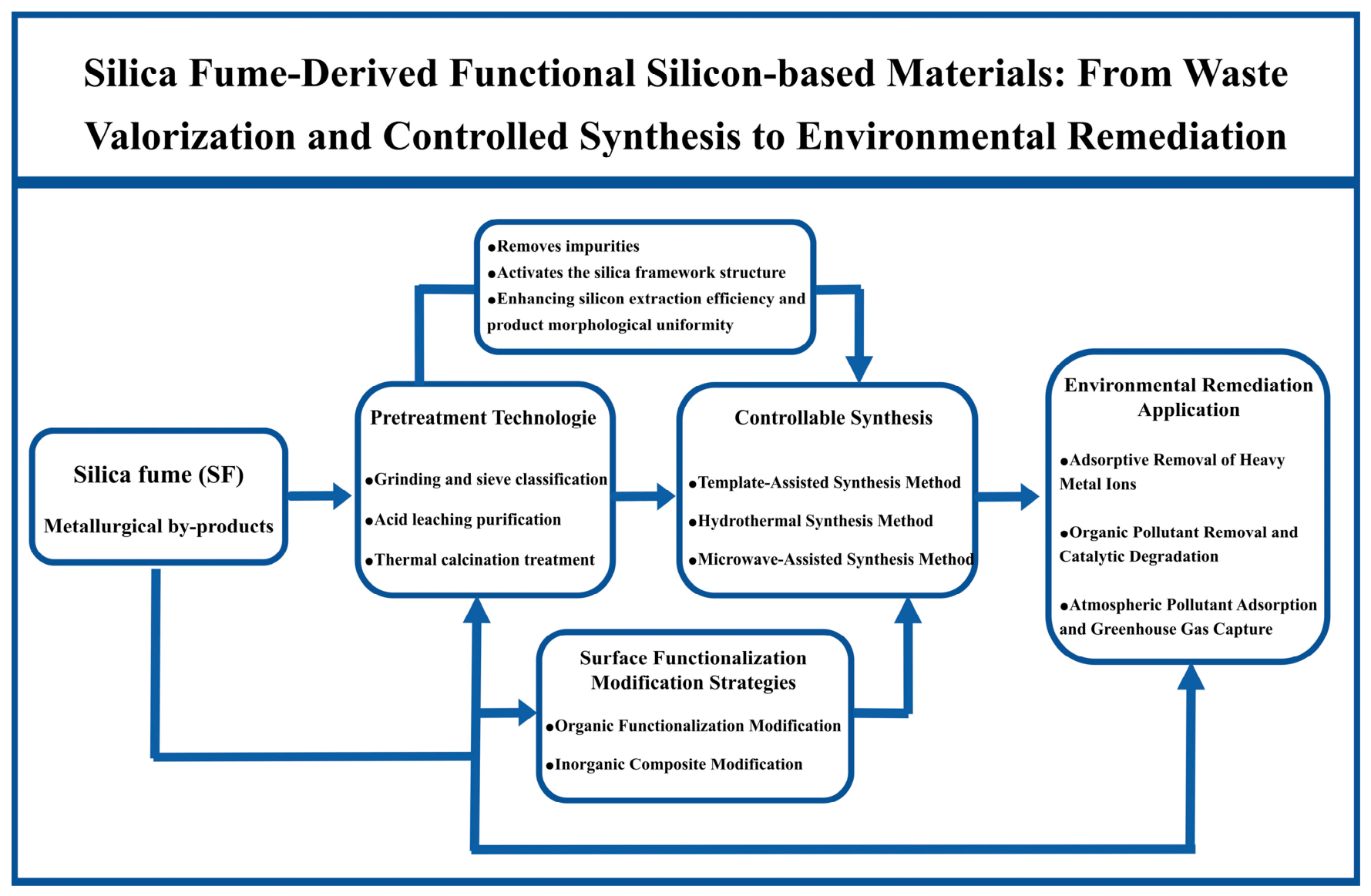
In recent years, researchers both domestically and internationally have conducted extensive fundamental research on the preparation technologies and environmental applications of SF-derived silicon-based materials, accumulating substantial theoretical findings and technical experience. Related studies had systematically investigated the effects of SF pretreatment and purification methods, silicon component extraction conditions, synthesis process parameters, and modification strategies. They had clarified the influence mechanisms of raw material basic properties and reaction conditions on the microstructure, pore structure, and surface functional group characteristics of silicon-based material, and had preliminarily established the intrinsic correlation system between material preparation processes and macroscopic environmental remediation performance. However, research in this field still exhibits notable deficiencies in terms of mechanistic interpretation depth, quantitative performance regulation precision, and engineering practical adaptability. The inherent compositional fluctuations of SF raw materials, where variations in impurity content can interfere with the stability of the synthesis reaction, pose challenges. Laboratory-scale batch preparation processes cannot be directly adapted to industrial continuous production systems, and there exist numerous technical barriers to process scale-up. The quantitative relationships among material preparation process parameters, microstructural features, and pollutant removal performance have yet to form a systematic and comprehensive theoretical framework, failing to support the directed design of materials and performance regulation. In terms of environmental remediation, most current performance studies were conducted under idealized experimental conditions, and research on the effects of various interfering factors on material performance under complex water bodies and variable gas-phase conditions remained insufficient. The evaluation systems for long-term service stability, anti-interference capability, and cyclic regeneration performance of the materials have yet to be perfected. There exists a disconnect between fundamental theoretical research achievements and practical engineering applications, constraining the transformation of this material from empirical trial production toward quantitative preparation and large-scale application. Based on the above research status, this review conducted a systematic overview of the controllable synthesis mechanisms and environmental remediation performance regulation of SF-derived silicon-based materials (as shown in Figure 1). The physicochemical characteristics and pretreatment activation mechanisms of SF were systematically investigated, and the reaction patterns and structural regulation mechanisms of various mainstream synthesis routes were elucidated. The coupled effects of key process parameters on material microstructure and surface properties were comprehensively explored, and the research progress of such materials in environmental remediation fields including water treatment and waste gas emission reduction was summarized. The core bottlenecks existing in current fundamental research and engineering application stages were analyzed, and the key research directions toward industrial development were also projected. This review provided effective theoretical support and technical reference for the high-value resource utilization of SF solid waste, the preparation of silicon-based environmental functional materials, and the iterative upgrading of low-carbon environmental remediation technologies.
Figure 1.
Schematic overview of silica fume-derived functional silicon-based materials: from waste valorization to environmental remediation.
2. Research Methodology
This review was conducted through a systematic literature search of peer-reviewed publications related to SF-derived silicon-based materials. The primary databases used include Web of Science, Scopus, ScienceDirect, SpringerLink, Wiley Online Library, ACS Publications, RSC Publishing, and Google Scholar. The search covered publications mainly from 2000 to 2026, with emphasis on recent studies published after 2015. The following keywords and their combinations were employed of SF, SF-derived silica, silicon-based nanomaterials, surface functionalization, heavy metal adsorption, organic pollutant removal, photocatalysis, dye degradation, antibiotic degradation, CO2 adsorption and capture. Both research articles and review papers were considered.
The inclusion criteria were as follows: (1) the study focused on the preparation, modification, or environmental application of SF-derived silica or silicon-based materials; (2) the paper reported sufficient experimental details, such as synthesis parameters, characterization results, or performance data; (3) the article was published in a peer-reviewed journal in English or Chinese; and (4) the study provided quantitative or mechanistic insights into material synthesis or pollutant removal. Exclusion criteria included: (1) conference abstracts, patents, and non-peer-reviewed literature; (2) studies solely focused on traditional construction applications of SF without functional material development; (3) papers lacking sufficient methodological or performance data; and (4) articles not directly related to SF-derived silicon-based materials.
The screening process involved three stages, namely initial title and abstract screening, full-text assessment, and final inclusion based on the above criteria. Duplicate records were removed, and the reference lists of selected articles were also checked to identify additional relevant studies. Data extracted from the included literature covered synthesis routes, pretreatment methods, structural characteristics, surface modification strategies, and environmental remediation performance. This methodology ensures that the review provides a comprehensive and balanced synthesis of current research on SF-derived silicon-based materials.
3. Sources, Physicochemical Properties, and Pretreatment Technologies of Silica Fume
3.1. Generation, Production Scale, and Environmental Footprint
SF is an ultrafine powdery by-product generated during the high-temperature smelting of ferrosilicon alloys and industrial silicon, primarily produced in submerged electric arc furnaces [40]. During the smelting process, quartz sand feedstock reacted with carbonaceous reductants under high-temperature reducing conditions to generate gaseous silicon monoxide [41]. This high-temperature gaseous product was discharged with the smelting flue gas and rapidly undergoes oxidation, condensation, and agglomeration during cooling in the flue duct, ultimately forming amorphous nano-silica particles, which were captured by industrial baghouse dust collection systems [42,43]. Modern baghouse filtration equipment typically achieved collection efficiency, and the resulting SF was a dry ultrafine powder with low bulk density, fine particle size, and high susceptibility to airborne dispersion [44]. Global SF production capacity and output have continued to expand with the development of the metallurgical industry, with major production regions concentrated in China, Norway, Russia, and the United States [45,46]. However, the current supporting systems for solid waste resource utilization remained inadequate, and large quantities of SF were not effectively consumed, instead being disposed of through open stockpiling, which gave rise to a series of ecological and environmental problems. The ultrafine SF powder exhibited weak adhesion and strong dispersibility, making it susceptible to wind disturbance during open storage, generating fugitive dust that exacerbated regional atmospheric particulate matter pollution. Rainwater leaching can promote the dissolution of trace metal impurities from SF, altering the pH and ionic composition of surrounding runoff, and posing potential cumulative hazards to soil structure and groundwater quality [47]. Furthermore, SF is rich in highly reactive amorphous silica and possessed resource utilization potential. The traditional low-value building material consumption and waste stockpiling models not only resulted in the waste of high-quality silicon resources but also contradicted the industry’s strategic direction toward solid waste resource utilization and green, low-carbon development.
3.2. Comparative Analysis of Physicochemical Properties
A systematic understanding of the fundamental physicochemical properties, structural advantages, and inherent limitations of SF is a prerequisite for its purification, activation, controllable synthesis, and high-value functional modification. Table 1 compares the physicochemical parameters of SF with those of mainstream silicon sources including TEOS, rice husk ash, fly ash, and crystalline quartz, covering indicators such as silica purity, amorphous content, primary particle size, specific surface area, impurity characteristics, and reactivity [48,49,50,51,52,53,54,55]. Compared with TEOS, SF has slightly lower purity but offers a notable raw material cost advantage and does not require rigorous anhydrous and oxygen-free reaction conditions, substantially reducing the economic cost and environmental burden of material preparation. Compared with solid waste silicon sources such as rice husk ash and fly ash, SF has a higher proportion of amorphous content and nanoscale primary particle size, providing abundant surface active sites without the need for intensive mechanical comminution, and exhibiting superior intrinsic reactivity. Overall, SF simultaneously combines multiple advantages including high reactivity, nanostructured primary particles, low cost, and solid waste resource potential. The core technical challenge of SF lies in how to remove impurities such as metal oxides and residual carbon through mild and controllable pretreatment processes, achieving low-cost purification and activation while preserving the amorphous silica structure and reactivity, thereby laying the foundation for the subsequent controllable synthesis of functional materials.
Table 1.
Comparison of physicochemical parameters between SF and mainstream silicon sources.
3.3. Principles of Pretreatment Technologies
The residual metal oxides, residual carbon, and agglomerated structures present in raw SF powder interfere with the dissolution, purification, and nucleation-growth processes of the silicon component, leading to decreased purity, disordered pore structures, and deteriorated performance uniformity of the derived materials [23,57]. Pretreatment serves as the important pre-processing step for high-value utilization of SF, which removes impurities to eliminate their adverse interference with synthesis reactions and material performance, and activates the silica framework structure to optimize powder dispersibility and surface activity, thereby enhancing silicon extraction efficiency and product morphological uniformity [30,58]. In practical process, the selection of pretreatment technologies and parameter optimization must balance purification efficiency, energy consumption, economic cost, and structural preservation. Current mainstream pretreatment technologies are physical pretreatment, chemical pretreatment, and thermal pretreatment, which can be applied individually or in synergistic combinations. A quantitative summary of impurity removal efficiencies is provided in Table 2.
Physical pretreatment centers on mechanical modification, primarily including mechanical grinding and sieve classification [59,60]. Its functions are to break powder agglomerates, optimize particle size distribution, and expose reactive interfaces. During storage, ultrafine SF powder tends to form soft agglomerates due to electrostatic adsorption and intermolecular forces, which block surface active sites and impede the penetration of reaction media. Mechanical grinding can disrupt the agglomerated structure through external forces, effectively refining particle size and improving specific surface area and dispersion uniformity. However, physical processes can only achieve structural optimization and cannot remove chemically bonded metal impurities, resulting in limited purification capability. Grinding duration affects the modification outcome in that short-term grinding effectively breaks agglomerates and enhances activity, while excessive grinding causes particle re-agglomeration, which instead reduces specific surface area and dispersibility. Sieve classification enables selection of target particle sizes, removing large-particle impurities and hard agglomerates to improve the uniformity of the raw material.
Acid leaching purification is the most widely applied and most stable chemical pretreatment technology, relying primarily on dilute inorganic acid systems to achieve dissolution of metal oxide impurities [61,62]. Impurities such as iron, aluminum, and calcium in SF predominantly exist in oxide forms. Hydrochloric acid can disrupt the chemical bonds of metal oxides through protonation, converting solid metal impurities into soluble ionic species that can be removed through solid–liquid separation [6,63]. The crystal structures and bond strengths of different metal oxides vary, leading to differences in dissolution kinetics, with iron oxides exhibiting notably higher dissolution rates and removal efficiencies compared to aluminum oxides [64,65]. Through synergistic optimization of acid concentration, reaction temperature, solid–liquid ratio, and leaching duration, high removal rates for iron and aluminum impurities can be achieved while maximizing the retention of the silicon matrix.
Table 2.
Typical removal efficiencies and trade-offs in SF pretreatment.
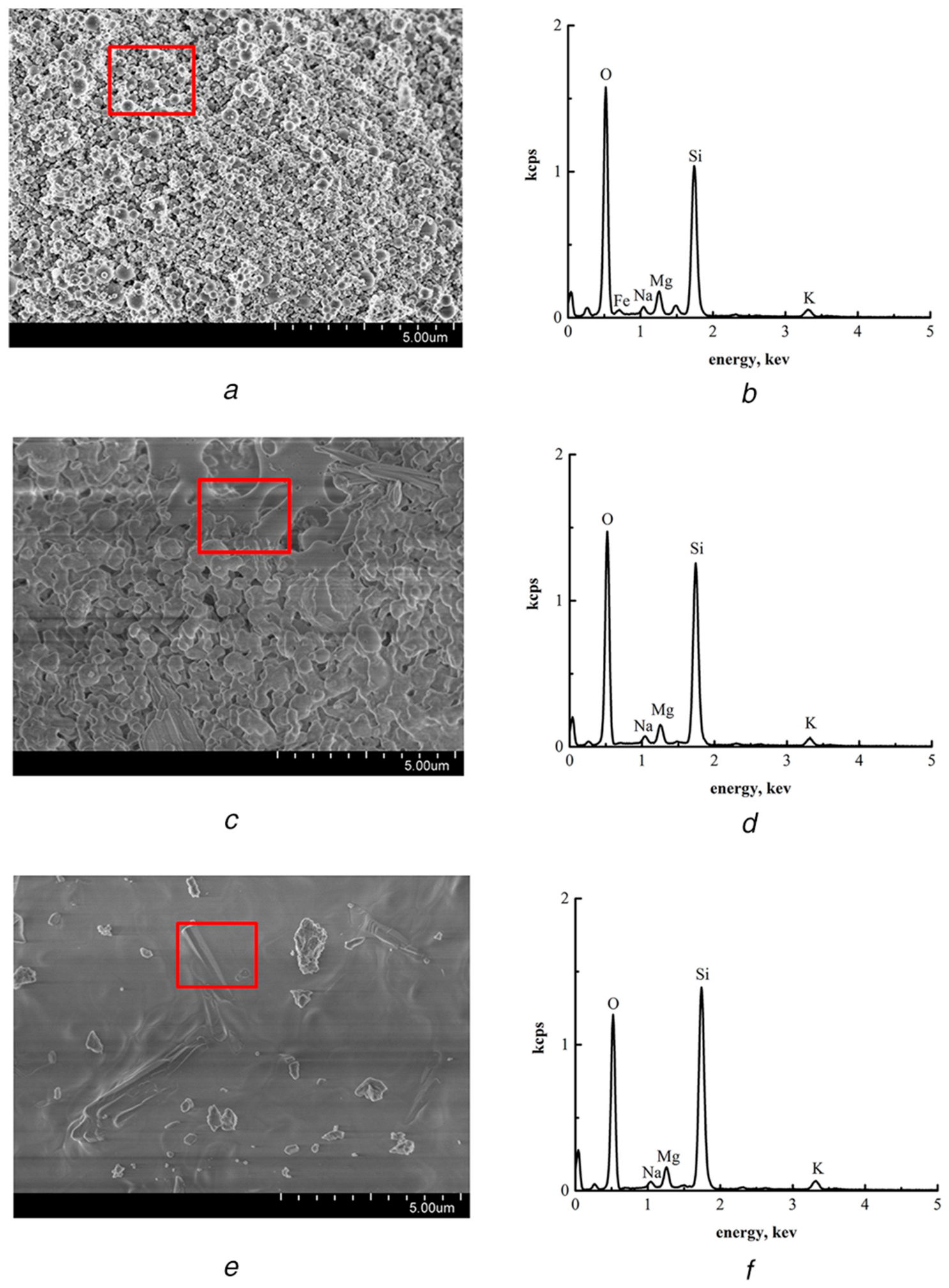
Thermal calcination treatment is primarily used to remove residual carbonaceous and organic volatile impurities, optimizing the surface chemical properties and color of the powder [66]. Small amounts of unreacted carbonaceous reductants and organic impurities remaining from the smelting process can cover surface active sites, reducing powder hydrophilicity and reactivity, as shown in Energy Dispersive Spectroscopy (EDS) spectra of SF calcined at different temperatures in Figure 2 [66]. Calcination within an appropriate temperature range under air atmosphere can fully oxidize and decompose residual carbon and organic components, optimizing the surface morphology and functional group distribution of SF. The calcination temperature must be carefully controlled because low temperatures cannot completely remove residual carbon, while excessive temperatures can induce phase transformation of amorphous silica into crystalline phases such as cristobalite and tridymite, drastically reducing alkali dissolution reactivity and subsequent synthesis controllability [66,67,68]. The carbon removal efficiency could reach 90–99% at 500–700 °C in air, but excessive temperatures (>800 °C) may induce crystallization of amorphous silica, reducing alkali dissolution reactivity. Thus, the calcination temperature must be carefully controlled to balance carbon removal and preservation of the amorphous silica structure. Therefore, mild to moderate temperature calcination represents the optimal thermal processing range for SF pretreatment.
Figure 2.
Scanning electron microscopy (SEM) images and EDS spectra of silica fume: (a,b) raw silica fume; (c,d) after calcination at 800 °C for 3 h in air; (e,f) after calcination at 1100 °C for 3 h in air (heating rate: 10 °C/min) [66].
The dissolution kinetics of amorphous silica in alkaline media provide an important theoretical foundation for pretreatment process optimization and subsequent silicon component extraction [69]. Amorphous silica features a long-range disordered and loose structure with abundant unsaturated silanol groups on its surface and low activation energy, making it highly susceptible to hydrolysis and dissolution in alkaline solutions. The dissolution process is regulated by multiple factors including temperature, alkali concentration, and stirring mass transfer. The alkaline dissolution of amorphous silica is governed by both interfacial diffusion and surface reaction. Zhong et al. investigated the dissolution of silicon from SF in NaOH solutions (5–20 wt%) at 50–80 °C [70]. Using a shrinking core model, they found that the rate-controlling mechanism shifted from diffusion control (conversion degree < 0.35, with an apparent activation energy of 42.22 ± 3.03 kJ/mol) to surface reaction control (0.35 < conversion degree < 0.6, with an apparent activation energy of 78.06 ± 4.27 kJ/mol). This kinetic behavior indicates that optimization of pretreatment and alkaline extraction processes requires not only regulation of temperature and alkali concentration but also enhancement of stirring intensity and fluid mass transfer efficiency, especially in the early diffusion-controlled stage.
The single pretreatment technology has limited functionality and cannot simultaneously achieve the multiple objectives of impurity removal, structural activation, and minimal structural damage. Combined physical-chemical-thermal pretreatment systems can achieve complementary advantages of multiple technologies [6]. The combined pretreatment system was suitable for industrial application and follows a progressive logic. Mechanical grinding is applied first to break powder agglomerates and expose fresh reactive interfaces, creating favorable mass transfer conditions for subsequent chemical leaching. An optimized acid leaching step was then conducted to remove metal oxide impurities. And mild calcination was performed to thoroughly remove residual carbonaceous impurities, repair surface hydroxyl structures, and activate the silica framework. This combined system can achieve comprehensive impurity removal and maximal powder activity enhancement without compromising the intrinsic amorphous silica structure, providing a high-quality raw material foundation for subsequent silicon component extraction and controllable synthesis of silica materials.
4. Controllable Synthesis and Structural–Functional Regulation of SF-Derived Silicon-Based Nanomaterials
4.1. Alkaline Extraction Kinetics of Silica Fume
Converting the silicon component in SF into soluble silicon species is a prerequisite for transforming metallurgical solid waste into silicon-based functional nanomaterials. The alkaline extraction process disrupts the amorphous siloxane crosslinked network within SF, causing the solid silicon component to dissociate and enter the liquid phase in the form of silicate ions. The current mainstream processes for preparing silicon-based materials from silicon-containing solid wastes are typically categorized into two technical routes, namely alkaline fusion and alkaline leaching. These two routes differ in reaction conditions, kinetic behavior, and engineering adaptability. However, while alkaline fusion has been extensively investigated and applied in the valorization of fly ash, its application in the resource utilization of SF remains rarely reported [71,72].
The alkaline leaching method is a low-temperature liquid-phase extraction approach, using aqueous sodium hydroxide or potassium hydroxide as the leaching medium to accomplish silicon component dissolution at moderate temperature under atmospheric or slightly elevated pressure [21,23]. The dissolution process of amorphous silica in alkaline liquid phase is governed by two simultaneous mechanisms, namely the interfacial reaction rate on the particle surface and the diffusion mass transfer of silicate products toward the bulk solution. Alkali concentration, system temperature, and solid-to-liquid ratio are the variables determining extraction efficiency. Increasing alkali concentration and reaction temperature accelerates the interfacial reaction kinetics and effectively improves the silicon extraction rate. Moreover, the solid-to-liquid ratio directly affects both extraction efficiency and mother liquor concentration. A higher solid-to-liquid ratio yields a more concentrated sodium silicate mother liquor, but tends to introduce mass transfer limitations that ultimately reduce extraction efficiency.
Considering factors such as energy consumption level, equipment requirements, and adaptability to continuous production, the alkaline leaching process offers more pronounced engineering advantages. The crude sodium silicate mother liquor obtained from alkaline leaching contains residual metal impurity ions including iron, aluminum, and calcium, which can interfere with the subsequent nucleation and growth of silica, inducing disorder in the product pore structure and reducing purity. The mother liquor requires filtration to remove solid residues, and can be further purified through deep purification methods such as precipitation impurity removal and ion exchange to eliminate residual metal cations. Only after such purification can the sodium silicate solution be used as a qualified precursor for the subsequent synthesis of nano-silica.
4.2. Synthesis Mechanisms and Performance Characteristics
The purified SF or sodium silicate precursor prepared from purified SF can be used to construct SF-derived silicon-based materials through various liquid-phase synthesis routes. Different synthesis systems exhibit differences in reaction mechanisms, microstructure regulation capability, energy consumption levels, preparation cycles, and industrial scale-up potential, and can be tailored to meet different structural requirements and application scenarios. A systematic understanding of the reaction mechanisms, technical advantages, and inherent limitations of various synthesis methods is the theoretical foundation for achieving targeted design, performance regulation, and large-scale application of SF-derived silicon-based materials. The current mainstream synthesis routes mainly include the template-assisted synthesis method [73], the hydrothermal synthesis method [74], and the microwave-assisted synthesis method [75]. Each method can be used independently, or process coupling can be employed to achieve synergistic optimization of structure and performance.
4.2.1. Template-Assisted Synthesis Method
The template-assisted synthesis method is a key technology for the construction of ordered mesoporous, hierarchical porous, and hollow special structures in SF-derived silicon-based materials [14,32,76]. It enables customization of pore size, pore channel ordering, and microstructure morphology, making it suitable for the targeted preparation of environmental functional materials with high selectivity and high adsorption capacity. The preparation of porous silica-based materials can be divided into soft template and hard template methods [77,78]. However, the preparation of SF-based porous silica materials currently remains predominantly dominated by the soft template approach using surfactants such as cetyltrimethylammonium bromide (CTAB), polyethylene glycol 6000 (PEG-6000), etc. [14,79]. Zhu et al. successfully synthesized MCM-41-type ordered mesoporous silica using SF as the sole silicon source and CTAB as the structure-directing agent via a hydrothermal and calcination route (Si/CTAB ≈ 6.7; hydrothermal treatment at 90 °C for 48 h, followed by calcination at 550 °C for 5 h), as shown in Figure 3 [14]. The resulting material exhibited a high specific surface area of approximately 730 m2/g and a uniform pore size of about 3.2 nm.
Figure 3.
SEM and Transmission Electron Microscopy (TEM) images of SF (a,b) and the calcined MCM-41-SF (c,d) [14].
The soft template method uses amphiphilic surfactants as structure-directing agents. Relying on the self-assembly effect of surfactant molecules in aqueous solution, it forms regular micellar aggregates such as spheres and rods, constructing an ordered organic template framework [80,81]. The SF can be directionally assembled and crosslinked on the surface of organic micelles through electrostatic adsorption, hydrogen bonding, and van der Waals forces, forming an organic–inorganic composite system. Subsequent removal of the organic template components through high-temperature calcination or solvent extraction reproduces the ordered pore channel structure of the template, yielding ordered mesoporous silica framework materials with regular pore channels and uniform pore sizes. This method is simple to operate and offers a wide adjustable pore size range, making it the mainstream preparation route for ordered mesoporous silica materials.
4.2.2. Hydrothermal Synthesis Method
The hydrothermal synthesis method relies on a closed high-pressure hydrothermal system to complete the structural rearrangement and crystalline phase optimization of the silica precursor under elevated temperature and autogenous pressure. It is an important process for improving the structural densification and thermal stability of SF-derived silicon-based materials. In the high-temperature and high-pressure hydrothermal environment, which can enhance the solubility and mass transfer efficiency of amorphous silicic acid species, promote uniform nucleation and directional growth of precursor particles, effectively repair precursor structural defects, and drive the transformation from disordered loose structures to regular and stable structures. Chen et al. synthesized Zeolite Socony Mobil-5 (ZSM-5) zeolite via a one-step hydrothermal method at 180 °C using SF as the raw material [82]. The Ni-, Cu-, and Zn-loaded products on ZSM-5 exhibited nitric oxide (NO) conversion rates of 92%, 100%, and 95%, respectively. Density functional theory (DFT) calculations confirmed the framework stability and active site distribution of the product. This study demonstrates that the hydrothermal method enables phase reconstruction of amorphous SF under template-free conditions, highlighting its advantage in valorizing metallurgical solid waste.
Compared with conventional room-temperature synthesis processes, the high-pressure environment of the hydrothermal system can effectively avoid pore structure collapse and particle agglomeration caused by the drying process [83]. The resulting silica materials exhibit more developed pore structures, stronger pore wall densification, and improved structural thermal stability and mechanical stability. In addition, hydrothermal temperature and holding time can regulate the crystallinity, pore size distribution, and particle size of the material. This process yields products with effective performance and strong structural controllability, but it requires high equipment sealing, has limited single-batch production capacity, and faces certain barriers to continuous and large-scale industrial application.
4.2.3. Microwave-Assisted Synthesis Method
The microwave-assisted synthesis method is an energy-saving and efficiency-enhancing upgrade of conventional heating synthesis systems. Relying on the unique volumetric heating mechanism of microwaves, it completely overcomes the limitations of traditional heat conduction and heat radiation heating, enabling rapid, uniform, and controllable synthesis of SF-derived silicon-based materials [27,32]. Microwave radiation can directly couple with polar water molecules and silicic acid molecules in the system, achieving uniform heating at the molecular scale and avoiding issues such as large temperature gradients, uneven heating, and localized overheating present in conventional heating systems [84,85].
This process can shorten the synthesis cycle, improve heating efficiency, and yield products with relatively uniform structures. It can effectively inhibit abnormal particle growth and agglomeration, enabling regulation of nanoscale microstructures. Compared with conventional hydrothermal and sol–gel processes, microwave-assisted synthesis offers lower energy consumption and faster reaction kinetics, capable of completing precursor nucleation, growth, and structural solidification within a short time while ensuring regular pore structures and uniform particle size distribution [86]. However, its limitation lies in the difficulty of achieving uniform microwave field distribution over large areas. Energy distribution differences exist within large-scale cavities, making it challenging to ensure batch-to-batch product performance consistency and limiting its suitability for industrial scale-up [87].
Different synthesis processes differ in reaction behavior, structural regulation, and application adaptability (Table 3). In general, the template-assisted method is suitable for high-precision functional materials. However, in the template method, excessive template causes micelle agglomeration and disordered mesostructures. Insufficient template cannot form complete ordered pore channels. The hydrothermal method usually requires high-pressure sealed equipment. Its single-batch capacity is limited. Continuous production is difficult. High temperature and high pressure may also cause pore collapse or excessive grain growth. The microwave method provides rapid and uniform heating and short synthesis cycles. However, uniform microwave field distribution is difficult to achieve during scale-up. This leads to local overheating and batch-to-batch performance fluctuations. It is also worth noting that SF has relatively high amorphous silica content and intrinsic reactivity. Alkaline fusion pretreatment and sol–gel methods have been extensively studied for other silicon-bearing solid wastes such as fly ash. However, they have rarely been explored for SF-derived silicon-based materials preparation. Given the potential of these techniques to enhance silicon extraction efficiency and tailor product microstructures, their application to the SF system warrants further investigation.
Table 3.
Comparison of template-assisted, hydrothermal and microwave-assisted synthesis routes.
4.3. Morphological and Pore Structure Regulation
The microstructure and pore structure of materials are the core structural foundations determining the environmental remediation performance of SF-derived silica. They directly affect specific surface area, number of active sites, pollutant mass transfer efficiency, and adsorption capacity [88]. Through the aforementioned diverse synthesis processes, various specialized functional structures such as mesoporous nanospheres, ordered mesoporous frameworks, hollow structures, and aerogels can be prepared. Different structural systems possess unique textural advantages and application adaptability. A systematic understanding of the construction mechanisms and performance characteristics of various morphological structures is key to achieving targeted functional empowerment of materials.
4.3.1. Mesoporous Silica Nanospheres
Mesoporous silica nanospheres represent the most mature preparation process and the most widely applied morphological structure among SF-derived functional materials. These spherical particles feature mild synthesis conditions, uniform morphology, and promising monodispersity, with good flowability and packing regularity. They can effectively avoid issues such as easy agglomeration, uneven filling, and hindered mass transfer commonly found in irregular powders. The regular spherical microstructure ensures uniform fluid permeability in adsorption systems and column separation systems, stabilizes pollutant mass transfer channels, and guarantees performance stability during long-term continuous operation [89].
4.3.2. Ordered Mesoporous Silica Frameworks
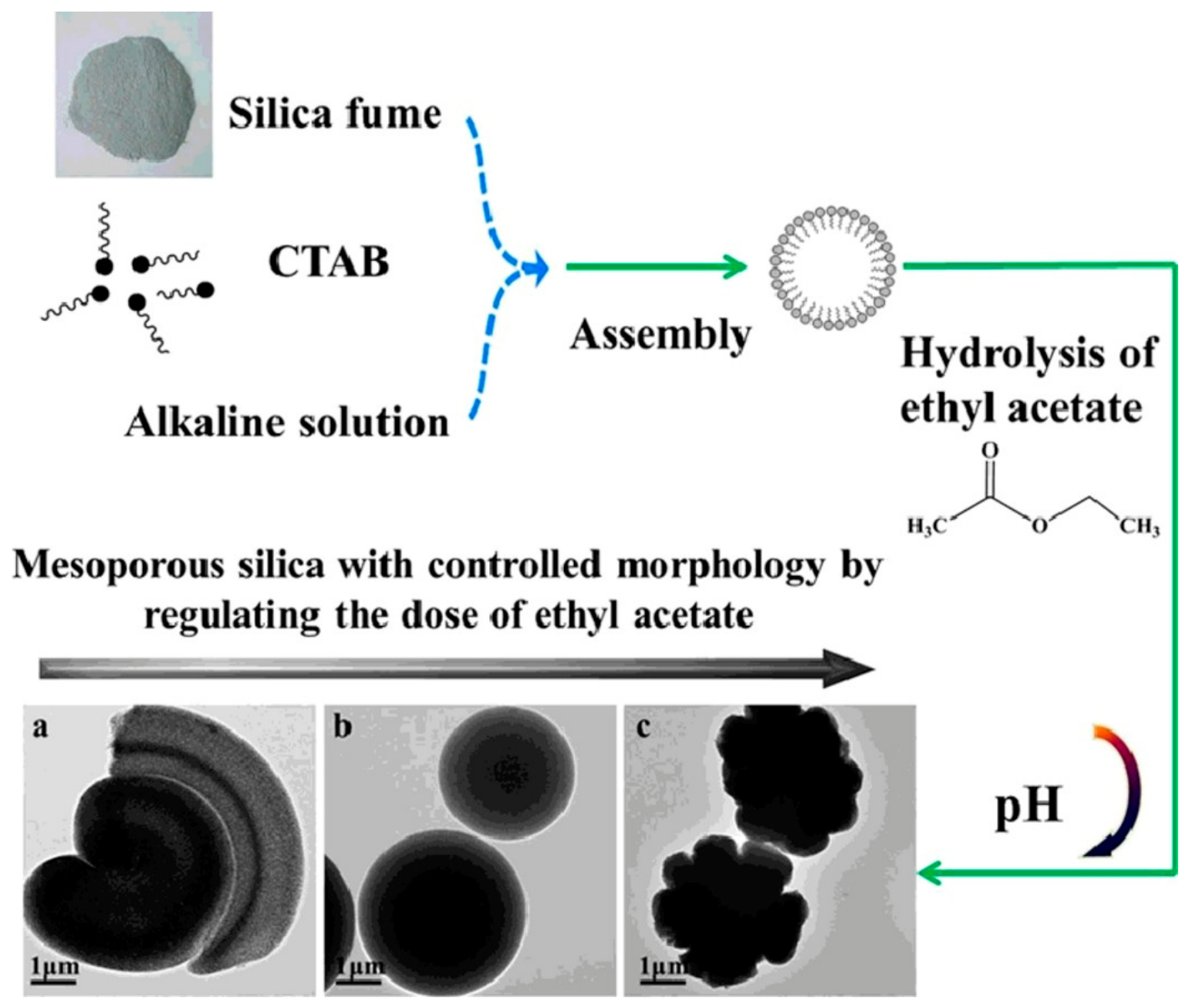
Using the SF-derived sodium silicate precursor, classical ordered mesoporous silica framework materials such as Mobil Composition of Matter -41 (MCM-41) and Santa Barbara Amorphous-15 (SBA-15) can be constructed through template-assisted methods. These materials feature highly regular one-dimensional straight pore channels, uniform pore size distribution, and effective pore connectivity, enabling rapid diffusion and transport of pollutants. The key to successful preparation of ordered mesoporous frameworks lies in matching the pre-hydrolysis degree of silicate with the self-assembly phase transition behavior of surfactant micelles. By regulating the pre-hydrolysis duration and system pH, the silicate polymerization rate and template assembly rate can be dynamically matched, avoiding template structural damage or uneven assembly caused by excessively rapid silicate polymerization, ultimately forming a long-range ordered and structurally stable mesoporous framework system [90]. Zhu et al. rapidly synthesized MCM-41 from SF via microwave heating; the product exhibited a well-ordered hexagonal mesostructure with a high surface area of 1253 m2/g. When evaluated for heavy metal removal, the material showed maximum adsorption capacities of 36.3 mg/g for Cu2+, 58.5 mg/g for Pb2+, and 32.3 mg/g for Cd2+, with the adsorption process being strongly pH-dependent as illustrated by the schematic mechanism (Figure 4) [32]. This type of material is suitable for refined application scenarios such as removal of low-concentration trace pollutants and selective adsorption separation.
Figure 4.
Schematic illustration of the morphology-controlled synthesis of mesoporous silica nanoparticles from SF [32].
4.3.3. Hollow Structured Silica Nanomaterials
Hollow structured silica nanomaterials consist of an external porous shell and an internal large cavity structure, featuring hierarchical structural characteristics including a porous shell and abundant internal cavity space. The unique hollow structure can enhance the internal space utilization of the material, substantially increasing pollutant loading capacity. At the same time, the cavity confinement effect can strengthen the interfacial interaction between pollutants and material active sites, improving adsorption selectivity and removal stability [91]. The porous shell enables selective sieving and rapid mass transfer of pollutants, while the internal cavity can enrich a large number of pollutant molecules. This structure offers advantages in high-concentration pollutant wastewater treatment, volatile organic compound adsorption, and functional component loading.
4.3.4. Silica Aerogels
SF-derived silica aerogels represent a promising direction for the high-value preparation of high-performance porous materials from solid waste, with potential for a reduced carbon footprint. They are prepared through sol crosslinking, gel solidification, and specialized drying processes using SF precursors, featuring three-dimensional interconnected porous network structures, extremely high porosity, enormous specific surface area, and low thermal conductivity [92]. The microstructural properties of this type of material are comparable to those of high-end aerogel materials prepared from conventional organosilicon precursors. Meanwhile, leveraging the low-cost raw material advantages of metallurgical solid waste, it can provide a relatively feasible approach for the low-cost and large-scale preparation of aerogels. It holds broad prospects for industrial applications in thermal insulation, atmospheric pollutant adsorption, and comprehensive treatment of complex water pollutants.
4.3.5. Regulation Mechanisms of Synthesis Parameters on Structural Characteristics
The microstructure, pore size, specific surface area, and structural ordering of SF-derived silicon-based materials are all subject to coupled regulation by multiple parameters in the synthesis system. The core controllable parameters include system pH, template-to-silicon source ratio, aging time, and hydrothermal temperature. Each parameter achieves targeted regulation of material structural performance by altering reaction kinetics and structural evolution patterns.
The system pH regulates the dynamic equilibrium between hydrolysis and condensation reactions, determining the nucleation mode and structural type of the product. Under acidic conditions, particle nucleation dominates, enabling the preparation of high-specific-surface-area microporous–mesoporous composite structures. Under neutral conditions, continuous gel networks tend to form, with an increased proportion of mesoporous structures. Under alkaline conditions, the dissolution and recrystallization of silicon species are promoted, effectively optimizing size and structural ordering.
The template-to-silicon source ratio directly determines micelle assembly density and pore size. An appropriate ratio can construct highly ordered mesoporous structures with uniform pore sizes. Excessive template can induce micelle agglomeration, while insufficient template fails to form complete ordered pore channels. Zhou et al. confirmed this principle using SF as the silicon source and CTAB as the template (9.8 g CTAB, 2.59 g SF, 8 g NaOH, 100 mL H2O, aging time: room temperature 1 h, then 125 °C 1.5 h) and varied only the ethyl acetate dosage (8, 15, and 35 mL) [32] (Figure 4). They found that excessive ethyl acetate lowered the system pH, which caused a morphological transition from ordered worm-like to disordered popcorn-like mesoporous silica. This observation demonstrates that both the template-to-silicon ratio and the system pH must be balanced to construct highly ordered mesoporous structures.
Aging time primarily affects pore wall densification and structural thermal stability. Under short aging conditions, the gel network has a low degree of crosslinking, with thin pore walls and large specific surface area, but weak structural thermal stability and mechanical properties. Prolonged aging promotes sufficient crosslinking and polymerization of silicic acid, thickening pore walls and improving overall material stability, but may cause partial micropore closure, leading to a slight decrease in specific surface area.
Hydrothermal temperature can regulate material crystallinity and structural regularity. Moderate temperature increases can promote structural rearrangement and repair structural defects, improving pore channel ordering. Excessively high temperatures can induce pore channel collapse and particle agglomeration, damaging the porous structure.
4.4. Surface Functionalization Modification Strategies
Unmodified SF-derived silicon-based materials are rich in silanol active groups on their surface, enabling fundamental adsorption removal of some pollutants through hydrogen bonding and electrostatic adsorption, with good hydrophilic properties and dispersion stability. However, the pristine silicon-based materials have limited surface functional groups, lacking strong chelation sites, redox active sites, and specific recognition sites. Their removal capacity for low-concentration heavy metals, refractory organic pollutants, and trace volatile organic compounds in water is limited. Adsorption selectivity is poor, and anti-interference capability is weak, making it difficult to meet the treatment requirements of complex practical conditions. Surface functionalization modification can introduce specific active functional groups and inorganic active components, compensating for the performance shortcomings of the pristine material and endowing it with composite functions such as selective adsorption, catalytic degradation, and synergistic removal. This is a core key technology for enhancing the environmental remediation performance of SF-derived silicon-based materials. The current mainstream modification strategies are mainly divided into two categories, namely organic functionalization grafting and inorganic composite modification.
4.4.1. Organic Functionalization Modification
Organic functionalization modification is primarily achieved through silane coupling agent grafting reactions. The trialkoxysilane groups in silane coupling agent molecules undergo dehydration condensation with the abundant silanol groups on the silica surface, stably grafting various functional organic groups onto the material surface, achieving targeted regulation of surface chemical properties. This modification method features mild reaction conditions and strong grafting stability, enabling control of surface functional group types and grafting density, and adaptation to the specific removal requirements of different pollutants. The commonly used functional groups currently include amino, thiol, carboxyl, and thiazole groups. Each type of functional group possesses differentiated pollutant affinity characteristics and mechanisms of action. Amino groups can generate electrostatic adsorption with anionic pollutants through protonation, while also forming coordination chelates with heavy metal ions [30,31,92]. Rind et al. synthesized a polymer-modified SF composite (SF/p(DETA-TMC)) by grafting diethylene triamine and trimesoyl chloride onto SF surfaces. The resulting composite exhibited a maximum adsorption capacity of 255.7 mg/g for bromophenol blue (BPB) dye, with the adsorption mechanism involving π–π stacking, hydrogen bonding, and pore filling effects [93]. In addition, thiol groups possess extremely strong specific chelation capability for heavy metal ions, enabling selective removal of heavy metal pollutants [94], and carboxyl and thiazole groups can effectively enhance the adsorption and enrichment capability of materials.
4.4.2. Inorganic Composite Modification
Inorganic composite modification constructs silicon-based multi-component composite functional materials by loading metal oxides, zero-valent metals, and bimetallic nano-active components, achieving synergistic coupling of adsorption performance and catalytic performance. SF-derived silicon-based materials possesses notable carrier advantages including large specific surface area, stable structure, and good dispersibility. It can serve as an ideal support substrate, effectively solving the technical challenges of easy agglomeration, easy oxidation, and poor stability of metal active components, ensuring uniform dispersion of active components on the material surface. The loaded zero-valent metals and oxides active components can provide abundant redox active sites [95,96]. While achieving pollutant adsorption and enrichment, they can simultaneously accomplish functions such as catalytic degradation of organic pollutants, valence state transformation of heavy metals, and catalytic activation of greenhouse gases. For instance, Zanfir et al. successfully coated TiO2 nanoparticles onto SF surfaces via a sol–gel method. The TEM images (Figure 5) revealed that the anatase TiO2 nanoparticles were uniformly dispersed on the surface of the larger SF spherical particles, confirming the effective support capability of SF for dispersing oxide active components [96].
Figure 5.
TEM and HRTEM analyses for: (a,b) – SF; (c,d) - TiO2powder calcined at 450 °C/2 h [96].
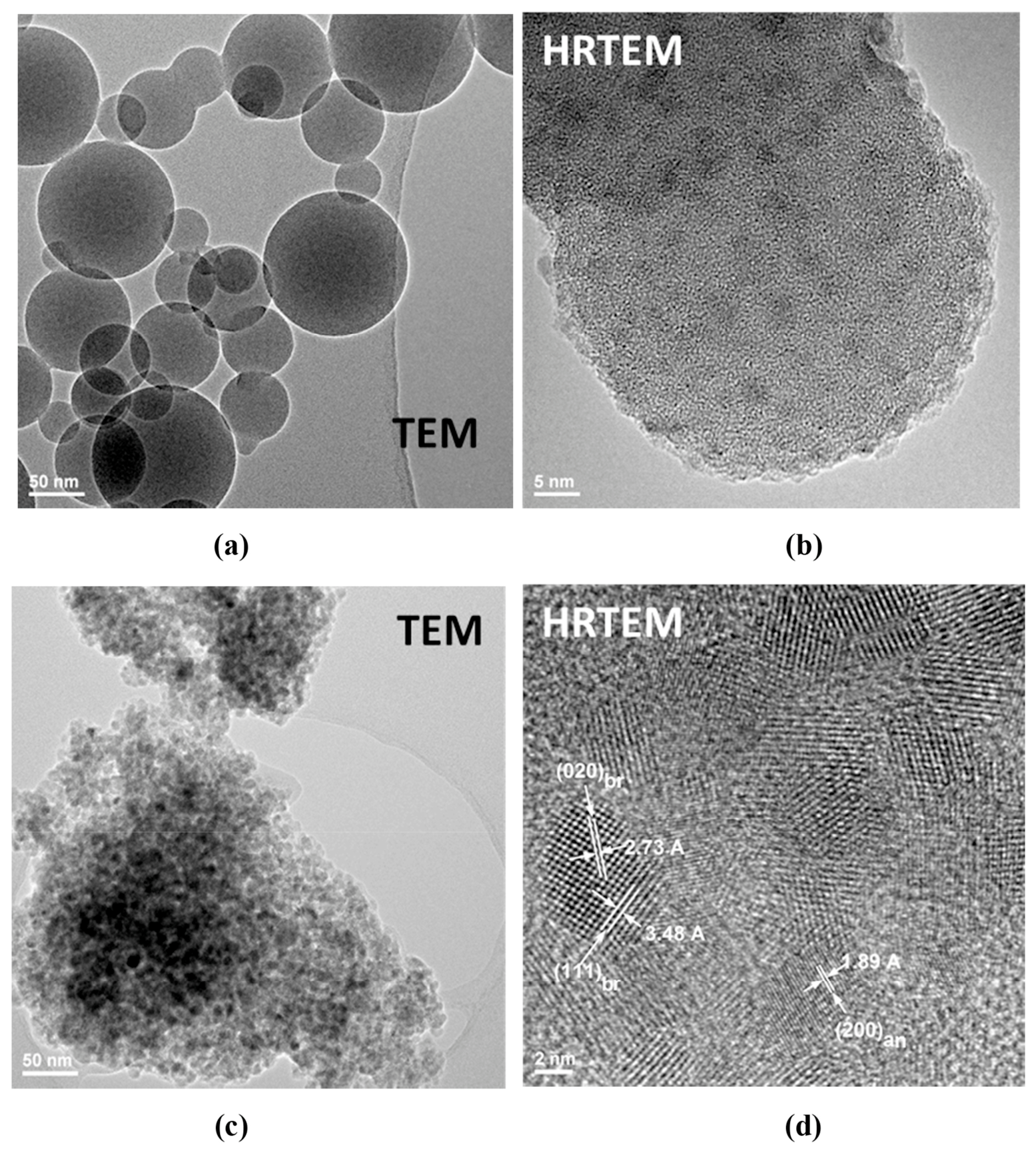
Table 4 summarizes the structural parameters and environmental remediation performance of different SF-derived silicon-based materials. It can be seen that a high Brunauer–Emmett–Teller (BET) surface area provides a good foundation for the environmental remediation performance of SF-derived silicon-based materials, facilitating the exposure of active sites and the mass transfer enrichment of pollutants. On this basis, functional modification strategies such as organic grafting, inorganic compositing, and geopolymerization further enhance the removal capacity and selectivity for specific pollutants. The combination of different structural types and modification strategies provides a tunable material design platform for addressing diverse pollutants such as heavy metals, organic dyes, antibiotics, and CO2. However, functionalization may also reduce accessible pore volume or surface area, alter diffusion resistance, and increase preparation complexity. Overall, the environmental remediation performance of SF-derived silicon-based materials is the result of the synergistic effects of specific surface area, pore structure, surface chemistry, and active components. Future research can further optimize the type and density of functional modifications on the basis of maintaining good pore structures, and should systematically report both adsorption performance and pore parameters to enable a balanced evaluation of modification strategies, so as to achieve more efficient and stable remediation for specific pollutants.
Table 4.
Summarizes the structural parameters and environmental remediation performance of different SF-derived silicon-based materials.
5. Environmental Remediation Applications of Silica Fume-Derived Silicon-Based Materials
5.1. Adsorptive Removal of Heavy Metal Ions
Heavy metal pollution in water bodies is characterized by persistent toxicity, strong bioaccumulation, and profound ecological harm. Long-term accumulation disrupts the ecological balance of aquatic environments and poses threats to human health through food chains. Conventional water treatment processes have limited removal efficiency for low-concentration complex heavy metal systems and struggle to achieve deep purification. SF-derived silicon-based materials, with their tunable porous frameworks, high specific surface areas, and designable surface active sites, exhibit outstanding application potential in the deep removal of various heavy metal ions, enabling targeted enrichment and immobilization of multiple highly toxic heavy metals in aquatic environments.
Amino-functionalized mesoporous silica derived from SF has demonstrated prominent adsorption capacity for lead ions. Zhu et al. synthesized spherical mesoporous silica from SF via pseudomorphic transformation, achieving effective Pb2+ removal through surface complexation [28]. The thiol-functionalized silica nanoparticles derived from SF exhibited high adsorption capacities through the formation of thermodynamically stable metal-sulfur bonds to capture mercury ions. Kong et al. functionalized SF-derived silicon-based materials with (3-mercaptopropyl) triethoxysilane (MPTES) and achieved adsorption capacities of approximately 166 mg/g for mercury ions at room temperature, demonstrating the effectiveness of thiol-modified silicon-based materials for heavy metal capture [97]. For cadmium ions, functionalization with nitrogen- and sulfur-containing groups can effectively enhance complexation and immobilization capacity through coordination and electrostatic interactions. Zhu et al. developed a direct functionalization strategy for SF by grafting 3-aminopropyltriethoxysilane (APTES) and 1,3-thiazole-2-carbaldehyde (TACA) onto its surface via a sequential reaction [30]. The resulting TACA-APTES-SF adsorbent exhibited promising adsorption performance for cadmium ions, with a maximum adsorption capacity of 91.37 mg·g−1, following the Langmuir isotherm and pseudo-second-order kinetic models. The adsorption process of heavy metals by SF-derived silicon-based materials is the result of multi-mechanism synergy. The well-developed porous structure creates a pore confinement and enrichment effect, providing ample space for heavy metal ion migration and immobilization. The abundant surface hydroxyl groups and modified functional groups can stably immobilize metal ions through complexation, coordination, and ion exchange. Meanwhile, interfacial electrostatic interactions enable selective capture of charged ions based on the pH of the aqueous environment.
5.2. Organic Pollutant Removal and Catalytic Degradation
Organic pollutants discharged from industrial processes are characterized by stable molecular structures, poor biodegradability, and long environmental persistence. Conventional biochemical treatment processes have limited removal efficiency, leading to continuous accumulation of organic pollution in water bodies. Synthetic dyes possess stable aromatic conjugated structures, high colority, and strong resistance to decomposition, making them a major challenge in textile wastewater treatment. SF-derived porous silicate materials exhibit promising surface affinity and pore adsorption capacity, effectively capturing cationic dye pollutants from water. Hashem et al. synthesized calcium silicate nanopowders (CS) from SF and marble sawing dust via a microwave-assisted method and applied them for malachite green (MG) adsorption. The Langmuir maximum monolayer adsorption capacity of the material reached 59.95 mg/g at 45 °C. The adsorption was dominated by electrostatic attraction and multilayer physisorption involving surface -OH, -NH, C=O, and C=C groups [98] (Figure 6). Overall, the adsorption of dyes on SF-derived silicate materials is synergistically determined by multiple interfacial mechanisms, including electrostatic adsorption, possible π–π stacking, and hydrogen bonding, which simultaneously operate at the interface between the material surface and dye molecules.
Figure 6.
Proposed mechanism of CS nanopowder synthesis and MG dye adsorption [98].
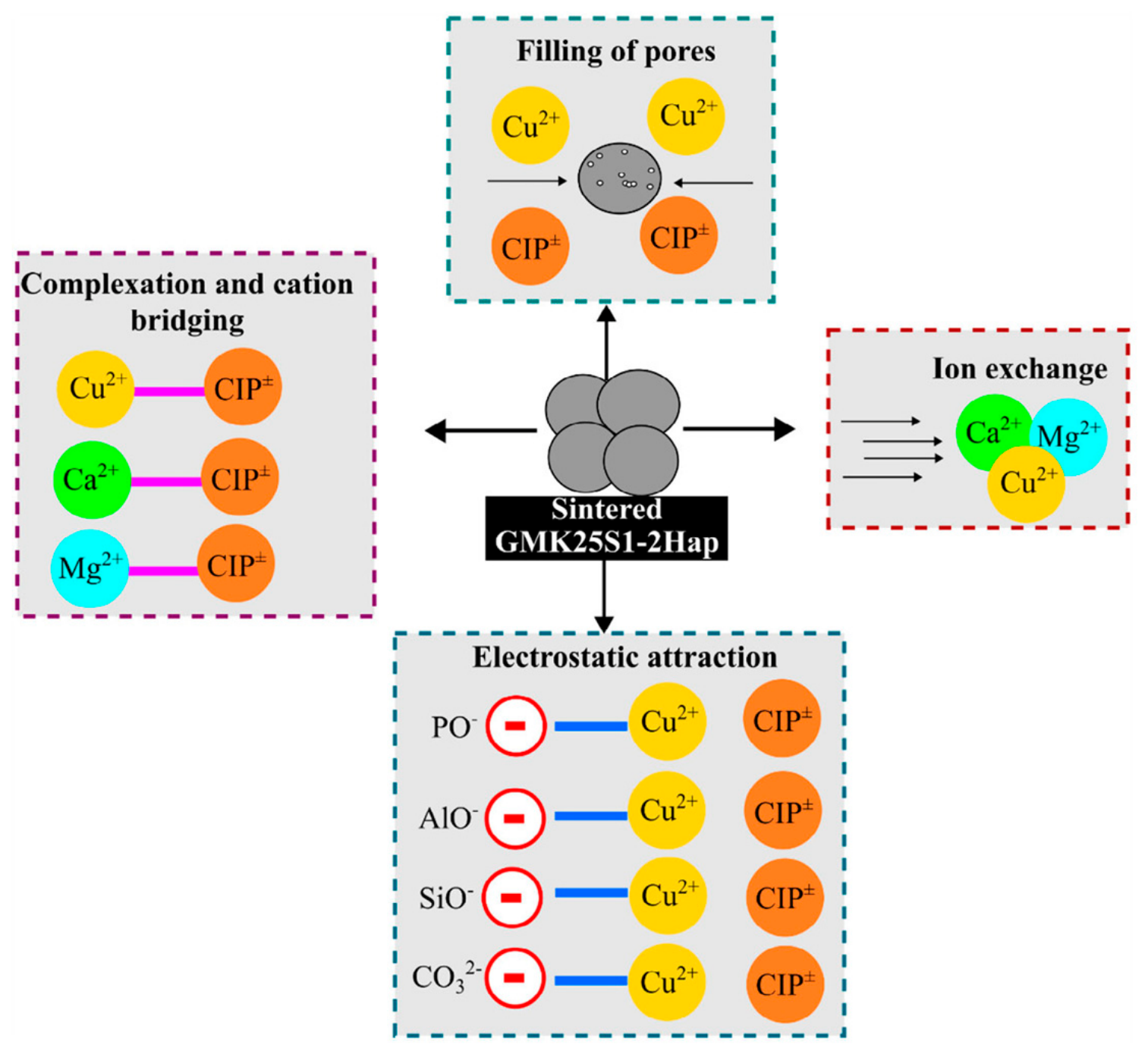
Antibiotics, as emerging trace organic pollutants, are widely present in aquatic environments and can induce ecotoxicity and risks of antibiotic resistance gene propagation even at extremely low concentrations, making them a key research focus in current water treatment. SF-derived porous materials can enrich antibiotic molecules through pore filling and physical adsorption in developed mesoporous/microporous channels, while charged surface sites and functional groups further stabilize the adsorbed antibiotics. Arokiasamy et al. developed a hydroxyapatite-incorporated geopolymer porous adsorbent (GMK25S1-2Hap) from 75% SF, 25% metakaolin, and 2% hydroxyapatite [36]. Sintering at 600 °C generated abundant micropores and a high surface area (21.53 m2·g−1), achieving 87% removal of ciprofloxacin (CIP) and 99.53% removal of Cu2+ in the binary system. As shown in Figure 7, the co-adsorption mechanism involves pore diffusion, electrostatic attraction, cation exchange, complexation, and cation bridging. Negatively charged surface groups, such as ≡PO−, (Al/Si)-O−, and CO32−, electrostatically attract protonated CIP (–NH2+) and Cu2+. Ca2+ and Mg2+ can complex with the carboxylate group of CIP− and exchange with Cu2+, while Cu2+ and CIP− form [Cu–CIP]2+ complexes that bridge additional CIP and Cu2+, generating ternary/quaternary surface complexes and enhancing simultaneous removal.
Beyond the sole function of adsorption, SF-derived silica can serve as a promising catalytic support material to construct an integrated adsorption-catalysis composite treatment system. Traditional iron-based catalytic materials suffer from issues such as active component agglomeration, poor operational stability, and a narrow effective pH window. Silicon-based porous supports, with their high specific surface area and uniformly connected pore channels, enable uniform dispersion and immobilization of iron-based active components, effectively inhibiting particle agglomeration and deactivation. The porous framework continuously enriches organic pollutants from water, creating a locally high-concentration reaction environment at the catalyst interface, enhancing the degradation kinetics of organic pollutants. The composite catalytic system can broaden the pH adaptability range of wastewater treatment, reduce the strong acid dependency of traditional Fenton systems, and exhibit good reusability, effectively improving the economic efficiency and stability of organic wastewater treatment. SF-derived silica has been successfully employed as a support for iron-based catalysts, where the porous framework ensures uniform dispersion of active components and enhances the degradation kinetics of organic pollutants.
Figure 7.
Adsorption mechanisms of sintered GMK25S1−2Hap on ciprofloxacin (CIP) and Cu2+ [36].
Photocatalytic composite modification represents an important approach to expanding the organic pollutant treatment capability of SF-based materials. Constructing composites by combining photocatalytic active components (e.g., TiO2, ZnO) with SF-derived silica fully leverages the complementary structural and functional advantages of both materials. The silica framework effectively inhibits the agglomeration and sintering of photocatalytic particles, stabilizing the microstructure of active components. The interconnected mesoporous channels provide convenient mass transfer pathways for organic pollutant diffusion and removal of degradation products, and promote effective separation of photogenerated charge carriers, suppressing electron–hole recombination losses and enhancing overall photocatalytic degradation efficiency. Kassem et al. prepared a mesoporous ZnO@SF-derived SiO2 nanocomposite by using SF-derived SiO2 as a support for ZnO nanosheets [99] (Figure 8). The composite exhibited a specific surface area of 46.7 m2/g and a mesopore size of about 4.77 nm, and removed >98% of crystal violet within 1 h under UV irradiation at pH 9. The enhanced performance was attributed to the uniform dispersion of ZnO, the mesoporous channels for mass transfer, and the radical scavenging experiments indicated that the O2−· was the dominant active species. This example confirms that SF-derived silica can serve not only as an adsorbent but also as an effective catalytic support for constructing integrated adsorption–photocatalysis treatment systems.
Figure 8.
Schematic design to show (A) preparation of ZnO nano-sheets, (B) preparation of sodium silicate solution from industrial-waste silica fume, (C) grafting of ZnO with SF-SS to obtain ZnO@SF-derived SiO2 nanocomposite, and (D) the photocatalytic degradation process of crystal violet [99].
5.3. Atmospheric Pollutant Adsorption and Greenhouse Gas Capture
Excessive emissions of volatile organic compounds and greenhouse gases are core issues in current air pollution control and dual-carbon governance. Conventional treatment technologies suffer from high energy consumption, poor selectivity, and secondary pollution. Amine-functionalized SF-based mesoporous silica can simultaneously achieve physical and chemical adsorption, making it a promising material for greenhouse gas capture. Its well-developed porous structure provides ample interfacial space for gas adsorption, and the grafted organic amine sites enable selective and stable capture through specific chemical interactions, improving selectivity and anti-interference in complex gas streams. These functionalized materials also exhibit good structural stability over multiple adsorption–desorption cycles. Beyond amine-functionalized mesoporous silica, SF can also serve as a low-cost silica source for synthesizing microporous zeolites for CO2 capture. Peng et al. prepared Deca-Dodecasil 3 Rhombohedral (DDR) zeolite from SF without seeds; although the reaction was slower than with chemical silica sources, the resulting DDR zeolite had higher purity and a higher CO2 uptake (1.16 mmol/g at 273 K) than silica-sol-derived DDR (0.47 mmol/g) and tetramethyl orthosilicate-derived (0.40 mmol/g) DDR [100] (Figure 9). The high CO2 capacity was attributed to the high DDR purity, high specific surface area (222.09 m2/g), and lower Si/Al ratio caused by Al dissolution, which provides more charged sites for CO2 adsorption. Thus, SF-derived porous materials show promise for low-cost greenhouse gas capture.
Figure 9.
Schematic illustration of silica fume−mediated synthesis of DDR zeolite and its application in CO2 separation [100].
SF-derived aerogels and ordered mesoporous materials also exhibit application advantages in volatile organic compound treatment. These materials feature high porosity, loose structures, and abundant surface adsorption sites, which can provide effective adsorption and enrichment for typical aromatic volatile organic pollutants. Compared with traditional activated carbon adsorbents, SF-based porous materials possess notable advantages including non-flammability, favorable thermal regeneration performance, and good cycling stability. The regeneration process does not generate residual by-products or secondary pollution risks, enabling enrichment and desorption regeneration of gaseous organic pollutants, and is suitable for diverse application scenarios such as industrial waste gas pretreatment and indoor air purification. Beyond Volatile Organic Compounds (VOCs) removal, SF-derived porous hybrid materials have also shown potential for capturing atmospheric particulate matter. Zanoletti et al. developed a mesoporous organic–inorganic hybrid from SF and sodium alginate, which removed up to 94% of methylene blue from aqueous solution and, after TiO2 coating, exhibited photocatalytic degradation performance [101]. More importantly, the material captured diesel exhaust particulate matter, with more than 23 wt% carbon detected on its surface after exposure. It should be noted, however, that this study did not investigate VOCs adsorption, and thus it should not be cited as direct evidence for VOCs removal.
5.4. Core Challenges in Practical Engineering Applications
At present, SF-derived functionalized silica materials have demonstrated effective pollutant removal and controllable structures in laboratory systems. However, significant differences exist between complex real-world environments and ideal experimental conditions. Many research gaps still remain in the large-scale engineering application of these materials, mainly in areas such as complex matrix interference, long-term service stability, and process scale-up adaptability.
Ion competition interference from complex water matrices is the primary factor limiting practical treatment performance. Real industrial wastewater and natural water bodies commonly contain large amounts of alkaline earth metal ions and inorganic impurity ions. These coexisting components compete with target pollutants for the limited adsorption active sites on the material surface. Some ions can form complex structures with pollutants, inhibiting the material’s recognition and capture capability for target pollutants, ultimately leading to performance deterioration compared with pure experimental systems. Increasing the grafting density of surface functional groups, developing highly selective specific functional group modification systems, and incorporating pre-concentration and purification steps can effectively mitigate competitive interference and enhance the material’s adaptability to real-world conditions.
Long-term service stability is a critical factor determining the operational lifespan and treatment costs of the material. During repeated adsorption-regeneration cycles, surface organic functional groups undergo gradual leaching and oxidative degradation. Porous channel structures are susceptible to blockage and coverage by water impurities and pollutant degradation by-products, leading to loss of active sites and hindered mass transfer pathways. These multiple structural and functional degradation issues result in gradual attenuation of adsorption capacity and declining treatment stability over long-term operation. Conventional acid-based regeneration methods can achieve good performance recovery in the initial stages, but cumulative structural damage after multiple cycles leads to irreversible performance decline, limiting continuous long-term application.
Naturally occurring organic matter in the environment also exerts negative effects on material remediation performance. Humic substances can adsorb extensively onto material surfaces through hydrogen bonding and hydrophobic interactions, occupying active adsorption sites and blocking pore structures. These natural organic matter compounds can form stable complexes with heavy metal ions, altering pollutant speciation and migration behavior and reducing the material’s capture efficiency for target pollutants. The coupled effects of such complex environmental interference mechanisms make it difficult to directly transfer optimal laboratory parameters to actual field conditions, necessitating systematic environmental adaptability optimization studies.
The research gap in process scale-up for translating laboratory achievements to industrial applications is also prominent. Laboratory-scale batch preparation systems feature uniform reaction environments and strong parameter controllability, enabling stable production of silicon-based functional materials with uniform structure and consistent performance. In large-scale continuous production, the uniformity of temperature fields, concentration fields, and mass transfer conditions is difficult to match with small-scale systems, often resulting in structural inhomogeneity, performance fluctuations, and poor batch-to-batch stability, hindering industrialization. From an economic perspective, SF solid waste has extremely low raw material costs, and the overall preparation process relies on green and mild modification synthesis routes. However, the production cost of the derived materials is also affected by factors such as purification, acid and alkali consumption, templates, functionalization agents, energy consumption, wastewater treatment, and regeneration. Currently, there is still a lack of quantitative techno-economic analysis and life cycle assessment studies. Future research should further focus on continuous process optimization, equipment adaptation and upgrading, and operational cost management to promote the transition of SF-based environmental functional materials from laboratory fundamental research to large-scale engineering applications.
6. Conclusions and Outlook
This review systematically summarizes the research progress of SF-derived silicon-based materials in raw material activation and purification, controllable synthesis, structural and functional regulation, and environmental remediation applications. It establishes a theoretical and technical framework for the preparation of high-performance silicon-based functional materials from metallurgical solid waste recycling. SF is rich in amorphous silica, possesses nanoscale primary particle size and abundant surface hydroxyl groups, and exhibits promising reactivity, making it a high-quality low-cost alternative to traditional organosilicon precursors and crystalline silicon sources. Its alkaline dissolution process features low activation energy and controllable mass transfer, enabling silicon component extraction under mild reaction conditions and providing a favorable raw material foundation for the preparation of SF-derived silicon-based materials. Various synthesis methods enable regulation of the microstructure and pore structure of SF-derived silicon-based materials. Combined with organic grafting and inorganic composite modification, these approaches can effectively enrich surface active sites and enhance pollutant adsorption capacity and selectivity. These materials can remove heavy metals, organic pollutants, and atmospheric greenhouse gases and volatile pollutants through synergistic mechanisms including electrostatic interactions, surface complexation, ion exchange, and redox reactions. Their remediation performance is comparable to that of conventional commercial silicon-based materials, while offering the dual advantages of solid waste resource utilization and potential environmental protection. Current research still has notable deficiencies. Issues such as ion and organic matter interference from complex environmental matrices, performance degradation during long-term cyclic service, and insufficient stability of large-scale synthesis processes constrain the translation of these materials from laboratory research to practical engineering applications.
Future development of SF-derived silicon-based materials requires systematic and in-depth research focusing on process upgrading, performance optimization, system improvement, and engineering implementation. At the industrial level, there is a need to move beyond traditional batch preparation models and develop continuous synthesis processes, while optimizing the preparation system through the utilization of metallurgical waste heat to improve production consistency and economic and environmental sustainability. In terms of research and development approaches, machine learning could link process parameters, microstructure, and performance for targeted design. However, current data are insufficient in quantity, homogeneity, and standardization. Studies vary widely in SF source, pretreatment, synthesis, characterization, and testing, hindering data integration. Future work should standardize data reporting and build large databases of parameters (SF composition, alkali concentration, temperature, time, template/Si ratio, modifier type/dosage), material properties (surface area, pore volume, pore size, functional groups, crystalline phase, Si/Al ratio), and performance (adsorption capacity, removal efficiency, selectivity, cyclic stability). At the material functional level, integrated adsorption-catalysis composite systems should be developed to construct multi-functional synergistic remediation platforms suitable for complex combined pollution treatment. Priority should also be given to developing highly stable inorganic modification systems to mitigate performance degradation during cyclic service and improve long-term operational stability. At the industry development level, unified material performance testing and evaluation standards should be established to standardize experimental conditions and evaluation metrics, enabling scientific comparison and screening of different technical systems. Comprehensive life-cycle techno-economic assessments should also be conducted to quantify the economic and environmental benefits of the processes, providing theoretical support for technology promotion. Promoting industry-university-research collaborative pilot-scale empirical studies can effectively validate material adaptability under real-world conditions, gradually bridge the gap between fundamental research and engineering applications, and advance the large-scale industrial development of high-value SF solid waste utilization technologies.
Author Contributions
W.D., H.J., and Q.W. contributed to the conceptualization of this review, outline design, literature search and screening, literature analysis, writing of the original draft, and reading and editing of the final manuscript. All authors have read and agreed to the published version of the manuscript.
Funding
This work was supported by the Major Science and Technology Projects in Gulang County (Project/funding No.: GL2024ZDG01; funding agency: the Gulang County Science and Technology Bureau) and the Science and Technology Plan Project of Wuwei City (Project/funding No.: WW25A02CGZH02; funding agency: the Wuwei City Science and Technology Bureau).
Data Availability Statement
No new data were created or analyzed in this study. Data sharing is not applicable to this article.
Conflicts of Interest
The authors declare no conflicts of interest.
Abbreviations
The following abbreviations are used in this manuscript:
| SF | Silica fume |
| TEOS | Tetraethyl orthosilicate |
| EDS | Energy Dispersive Spectroscopy |
| SEM | Scanning Electron Microscopy |
| TEM | Transmission Electron Microscopy |
| CTAB | Cetyltrimethylammonium bromide |
| PEG-6000 | Polyethylene glycol 6000 |
| BET | Brunauer–Emmett–Teller |
| MCM-41 | Mobil Composition of Matter-41 |
| ZSM-5 | Zeolite Socony Mobil-5 |
| NO | Nitric oxide |
| DFT | Density functional theory |
| SBA-15 | Santa Barbara Amorphous-15 |
| BPB | Bromophenol blue |
| APTES | 3-Aminopropyltriethoxysilane |
| TACA | 1,3-Thiazole-2-carbaldehyde |
| MPTES | (3-Mercaptopropyl)triethoxysilane |
| MG | Malachite green |
| CS | Calcium silicate |
| CIP | Ciprofloxacin |
| GMK25S1-2Hap | Hydroxyapatite-incorporated geopolymer porous adsorbent |
| VOCs | Volatile Organic Compounds |
| DDR | Deca-Dodecasil 3 Rhombohedral |
References
- Du, H.; Chen, Y.; Wang, Y.; Wang, H.; Guo, X.; Zhang, Z.; Li, H.; Xing, P.; Zhuang, Y. Thermodynamic mechanism of metallurgical-grade silicon preparation from silica fume by carbothermal reduction. J. Clean. Prod. 2025, 529, 146817. [Google Scholar] [CrossRef] [Scilit]
- Haugen, N.; Brandenburg, A.; Friede, B.; Birkeland, R. Silicon-Monoxide Flames: The Nucleation and Condensation of Silica Fume. Combust. Sci. Technol. 2026, 1–36. [Google Scholar] [CrossRef] [Scilit]
- Liang, Y.; Zhang, H.; Ding, H.; Sun, S.; Wang, Y.; Bai, X.; Li, S. Amorphous silica: Prepared by byproduct microsilica in the ferrosilicon production and applied in amorphous silica-TiO2 composite with favorable pigment properties. J. Mater. Res. Technol. 2023, 26, 235–245. [Google Scholar] [CrossRef] [Scilit]
- Chen, H.; Qian, W.; Zhao, G.; Wang, X.; Cheng, S.; Yao, Z.; Deng, X. Mineral admixtures in shotcrete: A review of pozzolanic activity-based classification, micro-mechanisms and macroscopic performance. J. Environ. Manag. 2026, 413, 130308. [Google Scholar] [CrossRef] [Scilit] [PubMed]
- Song, J.; Banthia, N.; Yoo, D. Effect of supplementary cementitious materials on durability of ultra-high-performance concrete: A review. Cem. Concr. Compos. 2025, 163, 106198. [Google Scholar] [CrossRef] [Scilit]
- Metwally, G.; Elemam, W.; Mahdy, M.; Ghannam, M. A comprehensive review of metakaolin-based ultra-high-performance geopolymer concrete enhanced with waste material additives. J. Build. Eng. 2025, 103, 112019. [Google Scholar] [CrossRef] [Scilit]
- Dunant, C.; Hafez, H.; Marsh, A.; Miller, S.; Röck, M.; Schmidt, W.; Scrivener, K.; Zunino, F. Timely deployment of best-in-class technologies to enable development and decarbonise construction. Nat. Commun. 2026, 17, 799. [Google Scholar] [CrossRef] [Scilit] [PubMed]
- Ma, Y.; Li, N.; Chang, J. Research Progress on Properties and Recycling of Silica Fume. Inorg. Chem. Ind. 2009, 41, 8–10. [Google Scholar] [CrossRef]
- Lei, D.; Guo, L.; Sun, W.; Liu, J.; Shu, X.; Guo, X. A new dispersing method on silica fume and its influence on the performance of cement-based materials. Constr. Build. Mater. 2016, 115, 716–726. [Google Scholar] [CrossRef] [Scilit]
- Sakulich, A.R. Reinforced geopolymer composites for enhanced material greenness and durability. Sustain. Cities Soc. 2011, 1, 195–210. [Google Scholar] [CrossRef] [Scilit]
- Walkley, B.; Provis, J. Solid-state nuclear magnetic resonance spectroscopy of cements. Mater. Today Adv. 2019, 1, 100007. [Google Scholar] [CrossRef] [Scilit]
- Mendes, B.; Pedroti, L.; Vieira, C.; Marvila, M.; Azevedo, A.; de Carvalho, J.; Ribeiro, J. Application of eco-friendly alternative activators in alkali-activated materials: A review. J. Build. Eng. 2021, 35, 102010. [Google Scholar] [CrossRef] [Scilit]
- Oertel, T.; Hutter, F.; Helbig, U.; Sextl, G. Amorphous silica in ultra-high performance concrete: First hour of hydration. Cem. Concr. Res. 2014, 58, 131–142. [Google Scholar] [CrossRef] [Scilit]
- Zhu, W.; Zhou, Y.; Ma, W.; Li, M.; Yu, J.; Xie, K. Using silica fume as silica source for synthesizing spherical ordered mesoporous silica. Mater. Lett. 2013, 92, 129–131. [Google Scholar] [CrossRef] [Scilit]
- Zhu, W.; Wu, D.; Li, X.; Yu, J.; Zhou, Y.; Luo, Y.; Ma, W. Synthesis of Mesoporous Silica Materials (MCM-41) Using Silica Fume as the Silica Source in a Binary Surfactant System Assisted by Post-Hydrothermal Treatment and Its Pb2+ Removal Properties. Can. J. Chem. Eng. 2017, 95, 46–54. [Google Scholar] [CrossRef] [Scilit]
- Adhya, P.; Sardar, P.; Chowdhury, S.; Samanta, A.; Mondal, T.; Kaushal, M. Aminoethylethanolamine-Modified Silica Nanoparticles for CO2 Capture. Ind. Eng. Chem. Res. 2026, 65, 11642–11654. [Google Scholar] [CrossRef] [Scilit]
- Mahendran, S.; Yahaya, N.; Hameed, B.; Vo, D.; Ouakouak, A.; Nishiyama, N.; Din, A. Enhanced Carbon Dioxide Capture: Adsorption and Physicochemical Properties of SBA-15 Mesoporous Silica. Chem. Eng. Technol. 2025, 48, e202300576. [Google Scholar] [CrossRef] [Scilit]
- Pal, S.; Kamparath, R.; Subrahmanyam, V.; Sharma, N.; Biswas, A.; Singh, R.; Tiwari, S.; Kumar, Y.; Benerji, N. Sol-gel dip coating of Ta2O5/SiO2 anti-reflection films on fused silica for developing laser optics with high laser induced damage threshold. J. Sol.-Gel Sci. Technol. 2025, 115, 115–129. [Google Scholar] [CrossRef] [Scilit]
- Yan, X.; Gou, Z.; Chang, W.; Liu, R.; Su, J.; Su, D.; Li, X. Robust, thermally insulating and hydrophobic resorcinol-formaldehyde modified SiO2 aerogels with interpenetrating network structure. J. Porous Mater. 2025, 32, 1939–1949. [Google Scholar] [CrossRef] [Scilit]
- Brambila, C.; Boyd, P.; Keegan, A.; Sharma, P.; Vetter, C.; Ponnusamy, E.; Patwardhan, S.V. A Comparison of Environmental Impact of Various Silicas Using a Green Chemistry Evaluator. ACS Sustain. Chem. Eng. 2022, 10, 5288–5298. [Google Scholar] [CrossRef] [Scilit] [PubMed]
- Ros-Lis, J.V.; Vetter, S.; Smith, P. A comparative life cycle assessment of the synthesis of mesoporous silica materials on a small and a large scale. Green Chem. 2024, 26, 10107. [Google Scholar] [CrossRef] [Scilit]
- Li, C.; Zhang, Y.; Chen, H.; Meng, Q. Development of the geopolymer-based zeolite from powdery silica fume and its application in methanol to dimethyl ether. Adv. Powder Technol. 2022, 33, 103742. [Google Scholar] [CrossRef] [Scilit]
- Deng, J.; Luo, D.; Rong, K.; Gao, Z.; Chen, J.; Zhao, K.; Yu, Z. A green route for producing high-purity nano-SiO2 from silicon containing waste. Green Chem. 2025, 27, 7191–7207. [Google Scholar] [CrossRef] [Scilit]
- Tie, S.; Zhang, S. Removal of free carbon and crystal structure change of amorphous silica fume by calcination. Int. J. Mod. Phys. B 2017, 31, 1744083. [Google Scholar] [CrossRef] [Scilit]
- Choi, J.; Lee, W.; Shim, T.; Park, J. Fumed Silica-Based Ultra-High-Purity Synthetic Quartz Powder via Sol-Gel Process for Advanced Semiconductor Process beyond Design Rule of 3 nm. Nanomaterials 2023, 13, 390. [Google Scholar] [CrossRef] [Scilit] [PubMed]
- Wang, Y.; Chen, J.; Lei, X.; Ren, Y.; Wu, J. Preparation of high silica microporous zeolite SSZ-13 using solid waste silica fume as silica source. Adv. Powder Technol. 2018, 29, 1112–1118. [Google Scholar] [CrossRef] [Scilit]
- Hashem, A.A.; Mahmoud, S.A.; Geioushy, R.A.; Fouad, O.A. A green synthesis of calcium silicate nanopowders from silica fume and marble sawing dust by a microwave irradiation-assisted route. New J. Chem. 2021, 45, 12426–12434. [Google Scholar] [CrossRef] [Scilit]
- Zhu, W.; Li, X.; Wu, D.; Yu, J.; Zhou, Y.; Luo, Y.; Wei, K.; Ma, W. Synthesis of spherical mesoporous silica materials by pseudomorphic transformation of silica fume and its Pb2+ removal properties. Microporous Mesoporous Mater. 2016, 222, 192–201. [Google Scholar] [CrossRef] [Scilit]
- Zhou, C.; Yan, C.; Zhao, J.; Wang, H.; Zhou, Q.; Luo, W. Rapid synthesis of morphology-controlled mesoporous silica nanoparticles from silica fume. J. Taiwan Inst. Chem. Eng. 2016, 62, 307–312. [Google Scholar] [CrossRef] [Scilit]
- Zhu, J.; Wei, K. Functionalized Silica Fume for Efficient Cd2+ Removal from Aqueous Solutions. Molecules 2019, 24, 126. [Google Scholar] [PubMed]
- Li, X.; Han, C.; Zhu, W.; Ma, W.; Luo, Y.; Zhou, Y.; Yu, J.; Wei, K. Cr(VI) Removal from Aqueous by Adsorption on Amine-Functionalized Mesoporous Silica Prepared from Silica Fume. J. Chem. 2014, 2014, 765856. [Google Scholar] [CrossRef] [Scilit]
- Zhu, W.; Wang, J.; Wu, D.; Li, X.; Luo, Y.; Han, C.; Ma, W.; He, S. Investigating the Heavy Metal Adsorption of Mesoporous Silica Materials Prepared by Microwave Synthesis. Nanoscale Res. Lett. 2017, 12, 323. [Google Scholar] [CrossRef] [Scilit] [PubMed]
- Wang, Y.; Chu, W. Adsorption and Removal of a Xanthene Dye from Aqueous Solution Using Two Solid Wastes as Adsorbents. Ind. Eng. Chem. Res. 2011, 50, 8734–8741. [Google Scholar] [CrossRef] [Scilit]
- Mahdavi, H.; Karami, M. Cross-linked mixed matrix membranes made up of amine-functionalized silica and chloromethylated polysulfone for organic solvent nanofiltration applications. J. Environ. Chem. Eng. 2022, 10, 107145. [Google Scholar] [CrossRef] [Scilit]
- Gao, S.; Guo, T.; Liu, X.; Ren, Q.; Wang, J. Zeolite-carbon composite synthesis and its adsorption property. Chem. Eng. Sci. 2025, 301, 120697. [Google Scholar] [CrossRef] [Scilit]
- Arokiasamy, P.; Abdullah, M.M.A.B.; Arifi, E.; Razak, R.A.; Rojviriya, C.; Mydin, M.A.O.; Sandu, A.V.; Yaacob, N.A.; Mohamed, R. Hydroxyapatite Incorporated Geopolymer Porous Adsorbent for Efficient Removal of Copper Ions and Ciprofloxacin. J. Am. Ceram. Soc. 2025, 108, e20618. [Google Scholar] [CrossRef] [Scilit]
- Zhang, Y.; Qi, H.; Li, Y.; Zhang, Y.; Sun, J. Preparation and characterization of a porous silicate material from silica fume. Korean J. Chem. Eng. 2017, 34, 3185–3194. [Google Scholar] [CrossRef] [Scilit]
- Wang, Y.; Zhao, J. Preparation and mechanism research on silica fume-based material for formaldehyde adsorption. Chin. J. Environ. Eng. 2017, 11, 2407–2412. [Google Scholar] [CrossRef]
- Mahmoudi, F.; Kahforoushan, D.; Ziaei, S. Utilizing Silica Fume and Synthetically Produced Mesoporous Silicas for Simulated Flue Gas CO2 Adsorption. Environ. Technol. 2025, 44, 948–962. [Google Scholar] [CrossRef] [Scilit] [PubMed]
- Zhu, D.; Yang, J.; Yang, C.; Pan, J.; Guo, Z.; Li, S.; Song, L.; Hu, M. Efficient briquetting-thermal hardening of silica fume to manufacture high strength briquettes for industrial silicon smelting. Process Saf. Environ. Prot. 2026, 206, 108302. [Google Scholar] [CrossRef] [Scilit]
- Han, Y.; Tangstad, M. Metallurgical Properties of Biocarbon in Ferroalloy Production—A Review. ACS Omega 2024, 9, 24142–24162. [Google Scholar] [CrossRef] [Scilit] [PubMed]
- Panesar, D.K.; Zhang, R. Performance comparison of cement replacing materials in concrete: Limestone fillers and supplementary cementing materials—A review. Constr. Build. Mater. 2020, 251, 118866. [Google Scholar] [CrossRef] [Scilit]
- González-Fariña, R.; Münch, A.; Oliver, J.M.; Van Gorder, R.A. Modeling Microsilica Particle Formation and Growth Due to the Combustion Reaction of Silicon Monoxide with Oxygen. SIAM J. Appl. Math. 2020, 80, 1003–1033. [Google Scholar] [CrossRef] [Scilit]
- Jónsdóttir, S. The Relations between Raw Material Selection and Silica Fume Attributes During Ferro Silicon Furnace Operations. Master’s Thesis, Reykjavik University, Reykjavik, Iceland, 2025. Available online: https://hdl.handle.net/1946/50850 (accessed on 15 March 2026).
- HDIN Research. Silica Fume Market Summary: Industry Dynamics, Regional Trends, and Strategic Competitive Landscape; Market Report; HDIN Research: Beijing, China, 2026. [Google Scholar]
- Anderson, S.; Adesina, A. Advancements in multifunctional sustainable and smart concrete for disaster-resilient urban infrastructure: A review. Next Mater. 2026, 13, 102811. [Google Scholar] [CrossRef] [Scilit]
- Jeong, M.; Kim, Y.; Jeon, T.; Lee, H. Hazardous Characteristics of Silica Fume from Ferrosilicon Plant in Republic of Korea. J. Korea Soc. Waste Manag. 2015, 32, 453–461. [Google Scholar] [CrossRef] [Scilit]
- Luo, T.; Hua, C.; Liu, F.; Sun, Q.; Yi, Y.; Pan, X. Effect of adding solid waste silica fume as a cement paste replacement on the properties of fresh and hardened concrete. Case Stud. Constr. Mater. 2022, 16, e01048. [Google Scholar] [CrossRef] [Scilit]
- Pan, Z.; Tan, M.; Zheng, G.; Wei, L.; Tao, Z.; Hao, Y. Effect of silica fume type on rheology and compressive strength of geopolymer mortar. Constr. Build. Mater. 2024, 430, 136488. [Google Scholar] [CrossRef] [Scilit]
- Kesmez, Ö.; Burunkaya, E.; Kiraz, N.; Çamurlu, H.E.; Asiltürk, M.; Arpaç, E. Effect of acid, water and alcohol ratios on sol-gel preparation of antireflective amorphous SiO2 coatings. J. Non-Cryst. Solids 2011, 357, 3130–3135. [Google Scholar] [CrossRef] [Scilit]
- Pham, Q.; Yao, Z.; Wang, Y.; Wu, Y.; Chern, C. Preparation and characterization of monodisperse silica nanoparticles via miniemulsion sol-gel reaction of tetraethyl orthosilicate. J. Mater. Sci. 2017, 52, 12706–12716. [Google Scholar] [CrossRef] [Scilit]
- Steven, S.; Restiawaty, E.; Pasymi, P.; Bindar, Y. An appropriate acid leaching sequence in rice husk ash extraction to enhance the produced green silica quality for sustainable industrial silica gel purpose. J. Taiwan Inst. Chem. Eng. 2021, 122, 51–57. [Google Scholar] [CrossRef] [Scilit]
- Villota-Enríquez, M.D.; Rodríguez-Páez, J.E. Bio-silica production from rice husk for environmental remediation: Removal of methylene blue from aqueous solutions. Mater. Chem. Phys. 2023, 301, 127671. [Google Scholar] [CrossRef] [Scilit]
- Liang, G.; Li, Y.; Yang, C.; Zi, C.; Zhang, Y.; Hu, X.; Zhao, W. Production of biosilica nanoparticles from biomass power plant fly ash. Waste Manag. 2020, 105, 8–17. [Google Scholar] [CrossRef] [Scilit] [PubMed]
- Mao, N.; Lee, S.; Shin, H.; Kwac, L.; Ko, S.; Kim, H.; Jeong, H. Biomass Fly Ash as an Alternative Approach for Synthesis of Amorphous Silica Nanoparticles with High Surface Area. J. Nanosci. Nanotechnol. 2018, 18, 3329–3334. [Google Scholar] [CrossRef] [Scilit] [PubMed]
- Zhang, H.; Dzemua, G.L.; Liu, Q. Preliminary Beneficiation Studies of Quartz Samples from the Northwest Territories, Canada. Minerals 2024, 14, 1177. [Google Scholar] [CrossRef] [Scilit]
- Lillicrap, A.; Allan, I.; Friede, B.; Garmo, Ø.; Macken, A. Is the transformation/dissolution protocol suitable for ecotoxicity assessments of inorganic substances such as silica fume? Sci. Total Environ. 2014, 468–469, 358–367. [Google Scholar] [CrossRef] [Scilit] [PubMed]
- Rashad, M.M.; Hessien, M.M.; Abdel-Aal, E.A.; El-Barawy, K.; Singh, R.K. Transformation of silica fume into chemical mechanical polishing (CMP) nano-slurries for advanced semiconductor manufacturing. Powder Technol. 2011, 205, 149–154. [Google Scholar] [CrossRef] [Scilit]
- Zhao, C.; Li, B.; Li, K.; Li, Z. Research on Mechanical Properties of Silica Fume Cementitious Materials Excited by Wet Grinding Methods. Buildings 2024, 14, 3757. [Google Scholar] [CrossRef] [Scilit]
- Sanjuán, M.Á.; Argiz, C.; Gálvez, J.C.; Moragues, A. Effect of Silica Fume Fineness on the Improvement of Portland Cement Strength Performance. Constr. Build. Mater. 2015, 96, 55–64. [Google Scholar] [CrossRef] [Scilit]
- Barati, M.; Sarder, S.; McLean, A.; Roy, R. Recovery of Silicon from Silica Fume. J. Non-Cryst. Solids. 2011, 357, 18–23. [Google Scholar] [CrossRef] [Scilit]
- Sadique, S.E. Production and Purification of Silicon by Magnesiothermic Reduction of Silica Fume. Master’s Thesis, University of Toronto, Toronto, Canada, 2010. [Google Scholar]
- Tie, S.; Jiang, Z.; Wang, C.; Jiang, X. Research on Improvement of Silica Fume Purity by Microwave Acid Leaching Method. J. Synth. Cryst. 2013, 42, 2183–2187. [Google Scholar]
- Cui, L.; Guo, Y.; Wang, X.; Du, Z.; Cheng, F. Dissolution Kinetics of Aluminum and Iron from Coal Mining Waste by Hydrochloric Acid. Chin. J. Chem. Eng. 2015, 23, 590–596. [Google Scholar] [CrossRef] [Scilit]
- Gololobova, E.G.; Gorichev, I.G.; Lainer, Y.A.; Kozlov, K.V. Comparison of the Kinetic Laws of the Dissolution of Bauxite and Aluminum and Iron(III) Oxides and Hydroxides in Hydrochloric Acid. Russ. Metall. 2013, 2013, 501–506. [Google Scholar] [CrossRef] [Scilit]
- Zhang, S.; Tie, S.; Zhang, F. Cristobalite Formation from the Thermal Treatment of Amorphous Silica Fume Recovered from the Metallurgical Silicon Industry. Micro-Nano Lett. 2018, 13, 1465–1468. [Google Scholar] [CrossRef] [Scilit]
- He, Z.Y.; Liu, B.K.; Fu, Q.H.; Qi, J.; Chang, L.; Gao, Z.X. Phase Transformation and Melting Behavior of Silica Fume. J. Chin. Ceram. Soc. 2012, 40, 1376–1382. [Google Scholar]
- Tesi, G.; Coppi, C.; Fornari, L.; Mezzadri, F.; Trevisi, G.; Del Canale, E.; Gilioli, E.; Delmonte, D. Thermodynamic, Kinetic, and Density-Driven Pathways in the Selective Transformation of Amorphous Silica to α-Quartz. Solid State Sci. 2025, 170, 108117. [Google Scholar] [CrossRef] [Scilit]
- Han, Y.; Lapeyre, J.; Van Dam Levy, N.; Ucak-Astarlioglu, M.G.; Burroughs, J.F.; Bullard, J.W. Dissolution Kinetics of Densified and Undensified Silica Fume in a KOH Solution at pH 13 and 23 °C. Cem. Concr. Res. 2024, 183, 107586. [Google Scholar] [CrossRef] [Scilit]
- Zhong, Y.; Qiu, X.; Gao, J.; Guo, Z. Chemical Structure of Si-O in Silica Fume from Ferrosilicon Production and Its Reactivity in Alkali Dissolution. ISIJ Int. 2019, 59, 1098–1104. [Google Scholar] [CrossRef] [Scilit]
- Xia, J.; Zhao, B.; Guo, Y.; Li, K.; Na, Q.; He, S.; Zhang, J. Synergistic Alkali Fusion-Acid Leaching Strategy for Silica Aerogel Synthesis from Fly Ash and Performance Optimization. Sci. Rep. 2025, 15, 40299. [Google Scholar] [CrossRef] [Scilit] [PubMed]
- Zhuo, H.; Cao, W.; Mei, X.; Liu, Y.; Chen, B.; Cao, B.; Li, Y. High Purity Silica Aerogel Particles and Nano-Alumina Particles Obtained from Fly Ash: A Novel Method and Potential Applications. J. Environ. Chem. Eng. 2025, 13, 119045. [Google Scholar] [CrossRef] [Scilit]
- Wei, F.; Liu, Z.; Lu, J.; Liu, Z. Synthesis of Mesoporous MCM-48 Using Fumed Silica and Mixed Surfactants. Microporous Mesoporous Mater. 2010, 131, 224–229. [Google Scholar] [CrossRef] [Scilit]
- Sun, R.; Zhang, A.; Sun, H.D.; Jiang, J.; Wang, W. Facile synthesis of monodispersed mesoporous silica nanoparticles with ultra-large mesopores through a NaBH4-assisted hydrothermal process. J. Non-Cryst. Solids 2024, 627, 122820. [Google Scholar] [CrossRef] [Scilit]
- Khandan, M.; Saffarzadeh-Matin, S.; Shalmashi, A. Green Hydrophobization of Fume Silica: Tailoring of Heterogeneous Basic Catalyst for Biodiesel Production. J. Clean. Prod. 2020, 260, 121066. [Google Scholar] [CrossRef] [Scilit]
- Li, M.; Zhu, W.J.; Ma, W.H.; Zhou, Y.; Xie, K.Q. Synthesis of High-Quality MCM-41 Using Silica Fume as Silica Source. Adv. Mater. Res. 2013, 734–737, 2536–2540. [Google Scholar] [CrossRef] [Scilit]
- Elma, M.; Rampun, E.L.A.; Rahma, A.; Assyaifi, Z.L.; Sumardi, A.; Lestari, A.E.; Saputro, G.S.; Bilad, M.R.; Darmawan, A. Carbon Templated Strategies of Mesoporous Silica Applied for Water Desalination: A Review. J. Water Process Eng. 2020, 38, 101520. [Google Scholar] [CrossRef] [Scilit]
- Gurung, S.; Gucci, F.; Cairns, G.; Chianella, I.; Leighton, G.J.T. Hollow Silica Nano and Micro Spheres with Polystyrene Templating: A Mini-Review. Materials 2022, 15, 8578. [Google Scholar] [CrossRef] [Scilit] [PubMed]
- Zhu, W.J.; Li, M.; Zhou, Y.; Ma, W.H.; Yu, J.; Xie, K.Q. Effect of Binary Surfactant System on Morphologies and Structural Properties of Mesoporous Silica Materials Prepared from Silica Fume. Integr. Ferroelectr. 2013, 147, 115–122. [Google Scholar] [CrossRef] [Scilit]
- Pal, N.; Bhaumik, A. Soft Templating Strategies for the Synthesis of Mesoporous Materials: Inorganic, Organic-Inorganic Hybrid and Purely Organic Solids. Adv. Colloid Interface Sci. 2013, 189–190, 21–41. [Google Scholar] [CrossRef] [Scilit] [PubMed]
- Pérez-Sánchez, G.; Gomes, J.R.B.; Jorge, M. Modeling Self-Assembly of Silica/Surfactant Mesostructures in the Templated Synthesis of Nanoporous Solids. Langmuir 2013, 29, 2387–2396. [Google Scholar] [CrossRef] [Scilit] [PubMed]
- Chen, H.; Zhang, Y.J.; He, P.Y.; Li, C.J. Cost-Effective and Facile One Step Synthesis of ZSM-5 from Silica Fume Waste with the Aid of Metakaolin and Its NOx Removal Performance. Powder Technol. 2020, 367, 558–567. [Google Scholar] [CrossRef] [Scilit]
- Feng, P.Y.; Bu, X.H.; Pine, D.J. Control of Pore Sizes in Mesoporous Silica Templated by Liquid Crystals in Block Copolymer-Cosurfactant-Water Systems. Langmuir 2000, 16, 5304–5310. [Google Scholar] [CrossRef] [Scilit]
- Adhikari, S.; Omagamre, E.W.; Sarker, M.A.I.; Dawadi, M.; Adhikari, A.R. Microwave Heating for Sustainable Material Synthesis and Processing. Appl. Sci. 2026, 16, 5198. [Google Scholar] [CrossRef] [Scilit]
- Zhu, Y.; Chen, F. Microwave-Assisted Preparation of Inorganic Nanostructures in Liquid Phase. Chem. Rev. 2014, 114, 6462–6555. [Google Scholar] [CrossRef] [Scilit] [PubMed]
- Lovingood, D.D.; Owens, J.R.; Seeber, M.; Kornev, K.G.; Luzinov, I. Controlled Microwave-Assisted Growth of Silica Nanoparticles under Acid Catalysis. ACS Appl. Mater. Interfaces 2012, 4, 6875–6883. [Google Scholar] [CrossRef] [Scilit] [PubMed]
- Arshad, H.; Sulaiman, S.A.; Hussain, Z.; Naz, Y.; Basrawi, F. Microwave Assisted Pyrolysis of Plastic Waste for Production of Fuels: A Review. MATEC Web Conf. 2017, 131, 02005. [Google Scholar] [CrossRef] [Scilit]
- Sungsinchai, S.; Niamnuy, C.; Devahastin, S.; Chen, X.D.; Chareonpanich, M. Effect of the Structure of Highly Porous Silica Extracted from Sugarcane Bagasse Fly Ash on Aflatoxin B1 Adsorption. ACS Omega 2023, 8, 19320–19328. [Google Scholar] [CrossRef] [Scilit] [PubMed]
- Khamseh, A.A.G.; Ghorbanian, S.A.; Amini, Y.; Shadman, M.M. Investigation of kinetic, isotherm and adsorption efficacy of thorium by orange peel immobilized on calcium alginate. Sci. Rep. 2023, 13, 8393. [Google Scholar] [CrossRef] [Scilit] [PubMed]
- Manet, S.; Schmitt, J.; Impéror-Clerc, M.; Zholobenko, V.; Durand, D.; Oliveira, C.L.P.; Pedersen, J.S.; Gervais, C.; Baccile, N.; Babonneau, F.; et al. Kinetics of the Formation of 2D-Hexagonal Silica Nanostructured Materials by Nonionic Block Copolymer Templating in Solution. J. Phys. Chem. B 2011, 115, 11330–11344. [Google Scholar] [CrossRef] [Scilit] [PubMed]
- He, J.L.; Chen, X.H.; Cao, F.; Li, D. Synthesis of Mesoporous Silica Microspheres by PICA and Pseudomorphic Transformation Using Silica Fume as Silica Source. Mater. Sci. Forum 2015, 809–810, 207–212. [Google Scholar] [CrossRef] [Scilit]
- Qiao, J. Preparation and Characterization of Low-Cost Silicon-Based Aerogels. Master’s Thesis, Lanzhou University of Technology, Lanzhou, China, 2025. [Google Scholar]
- Khan Rind, I.; Sarı, A.; Tuzen, M.; Saleh, T.A. Adsorption of Bromophenol Blue from Aquatic Media Using Polymer-Modified Silica Fume: Factorial Design Optimization, Kinetic Evaluation and Adsorption Mechanism. Inorg. Chem. Commun. 2024, 168, 112953. [Google Scholar] [CrossRef] [Scilit]
- Zhang, Y.; Li, M.; Wang, W.; Du, H. Surface Modification of Silica Fume and Adsorption Property of Pb(II) Ions. IOP Conf. Ser. Mater. Sci. Eng. 2018, 394, 052022. [Google Scholar] [CrossRef] [Scilit]
- Ersöz, K.; Bayrak, B.; Gündüz, F.; Karaca, H. Fabrication of a Bimetallic SF/NZVI/Ni Catalyst and Its Efficacy in Enhancing the Biomass Liquefaction Process. Top. Catal. 2025, 68, 707–723. [Google Scholar] [CrossRef] [Scilit]
- Zanfir, A.-V.; Voicu, G.; Badanoiu, A.-I.; Gogan, D.; Oprea, O.; Vasile, E. Synthesis and characterization of titania-silica fume composites and their influence on the strength of self-cleaning mortar. Compos. Part B Eng. 2018, 140, 157–163. [Google Scholar] [CrossRef] [Scilit]
- Kong, X.F.; Yang, B.; Xiong, H.; Zhou, Y.; Xue, S.G.; Xu, B.Q.; Wang, S.X. Selective removal of heavy metal ions from aqueous solutions with surface functionalized silica nanoparticles by different functional groups. J. Cent. South Univ. 2014, 21, 3575–3579. [Google Scholar] [CrossRef] [Scilit]
- Hashem, A.A.; Mahmoud, S.A.; Geioushy, R.A.; Fouad, O.A. Adsorption of malachite green dye over synthesized calcium silicate nanopowders from waste materials. Mater. Sci. Eng. B 2023, 295, 116605. [Google Scholar] [CrossRef] [Scilit]
- Kassem, K.O.; Hussein, M.A.T.; Motawea, M.M.; Gomaa, H.; Alrowaili, Z.A.; Ezzeldien, M. Design of Mesoporous ZnO @ Silica Fume-Derived SiO2 Nanocomposite as Photocatalyst for Efficient Crystal Violet Removal: Effective Route to Recycle Industrial Waste. J. Clean. Prod. 2021, 326, 129416. [Google Scholar] [CrossRef] [Scilit]
- Peng, Z.; Liu, D.; Liu, Z.; Zhang, Q.; Wang, D.; Liu, H. Process Difference and Mechanism Study between Silica Fume and Chemical Reagents in the Preparation of DDR Zeolite. Powder Technol. 2025, 455, 120749. [Google Scholar] [CrossRef] [Scilit]
- Zanoletti, A.; Vassura, I.; Venturini, E.; Monai, M.; Montini, T.; Federici, S.; Zacco, A.; Treccani, L.; Bontempi, E. A New Porous Hybrid Material Derived from Silica Fume and Alginate for Sustainable Pollutants Reduction. Front. Chem. 2018, 6, 60. [Google Scholar] [CrossRef] [Scilit] [PubMed]
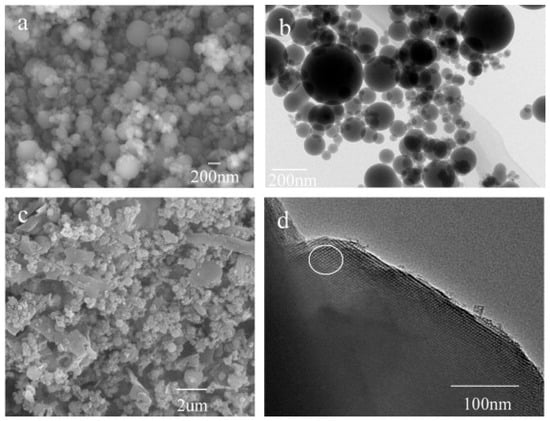
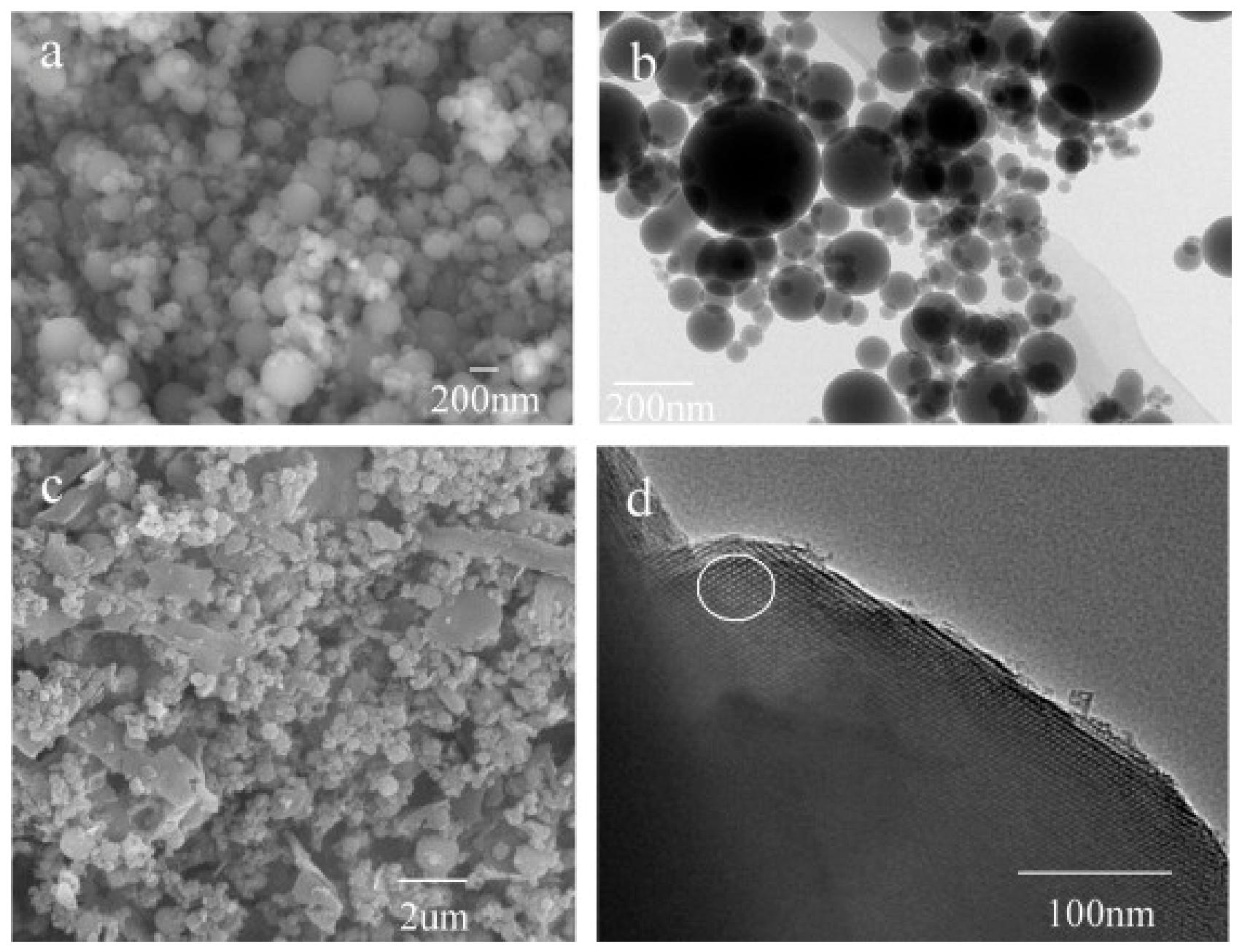
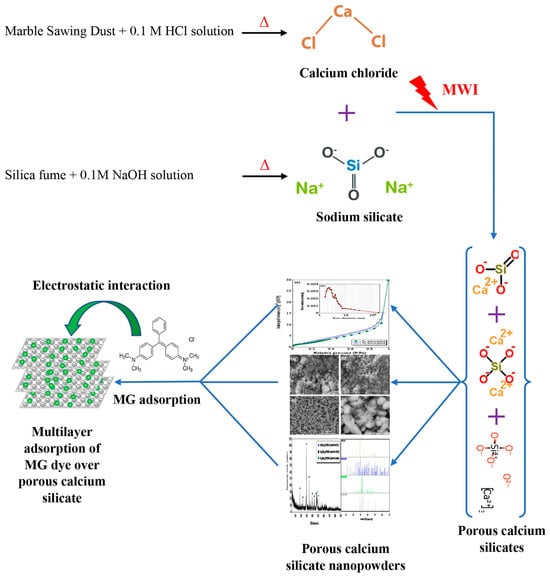
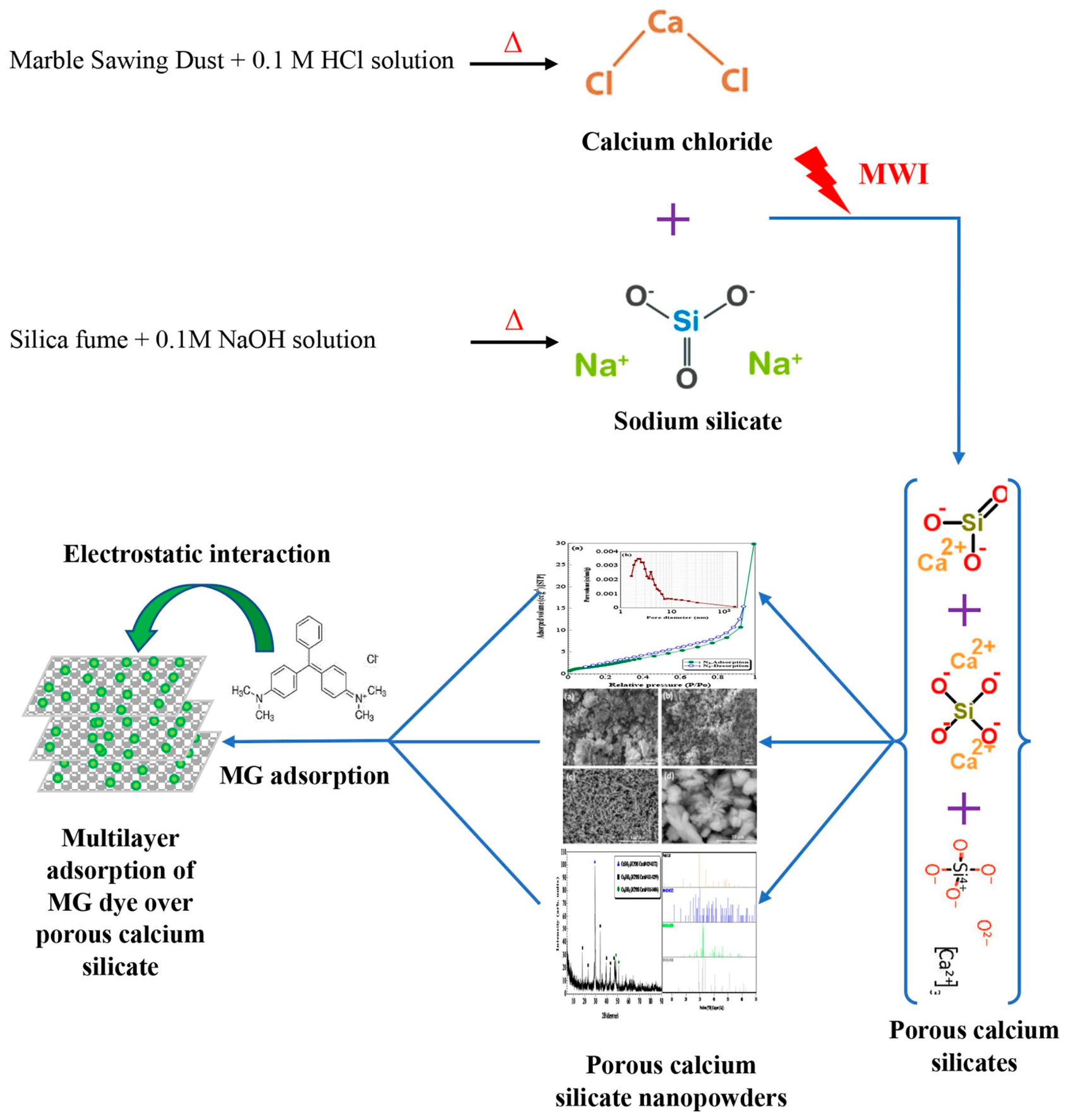
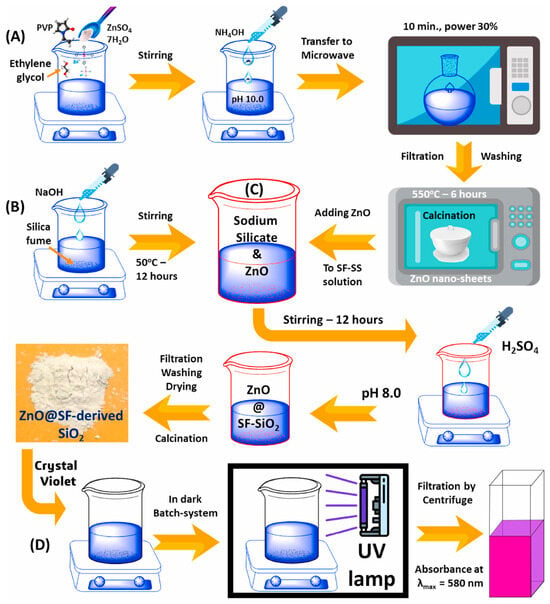
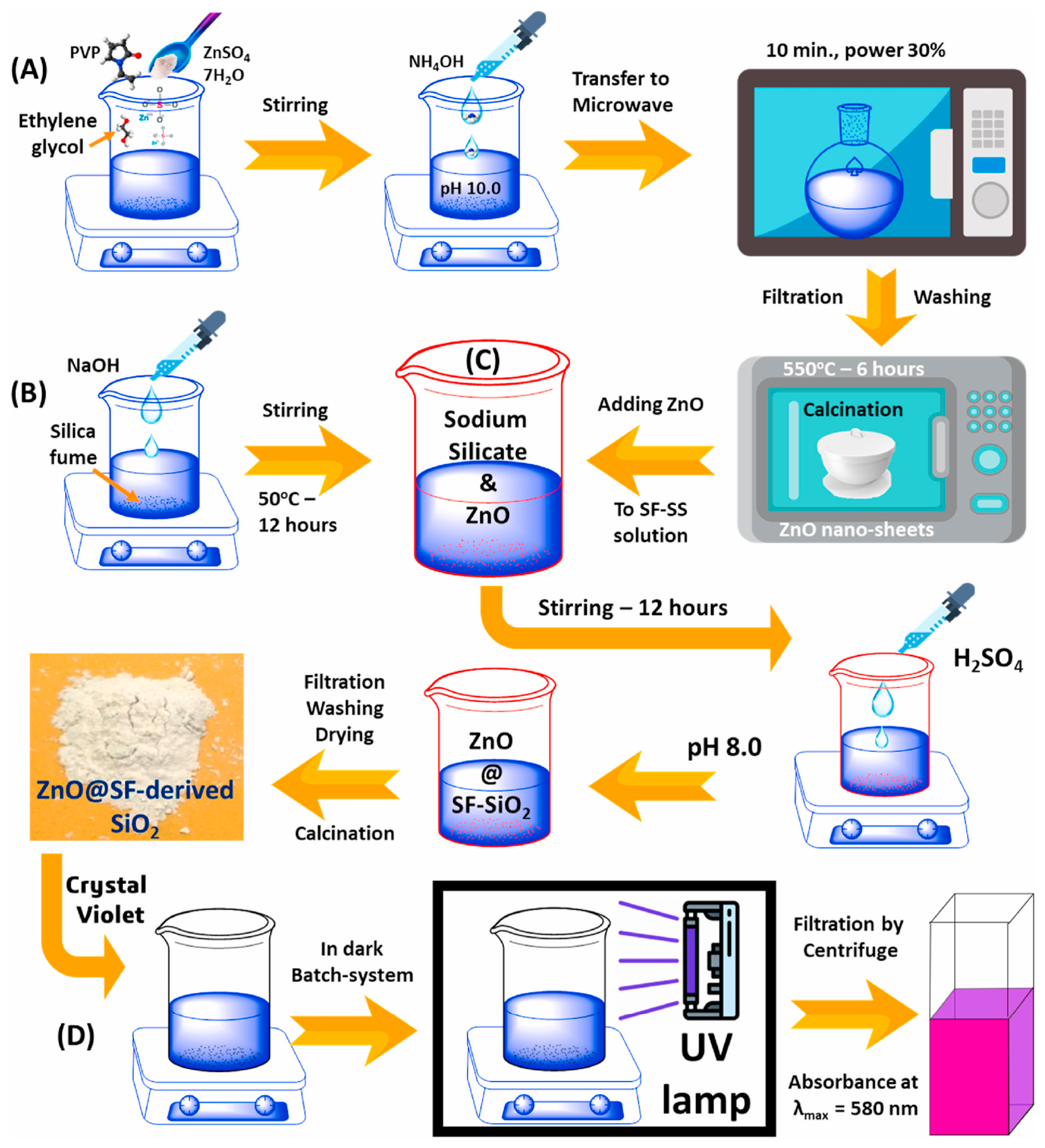
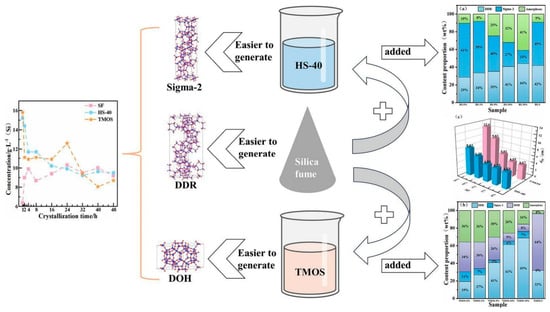
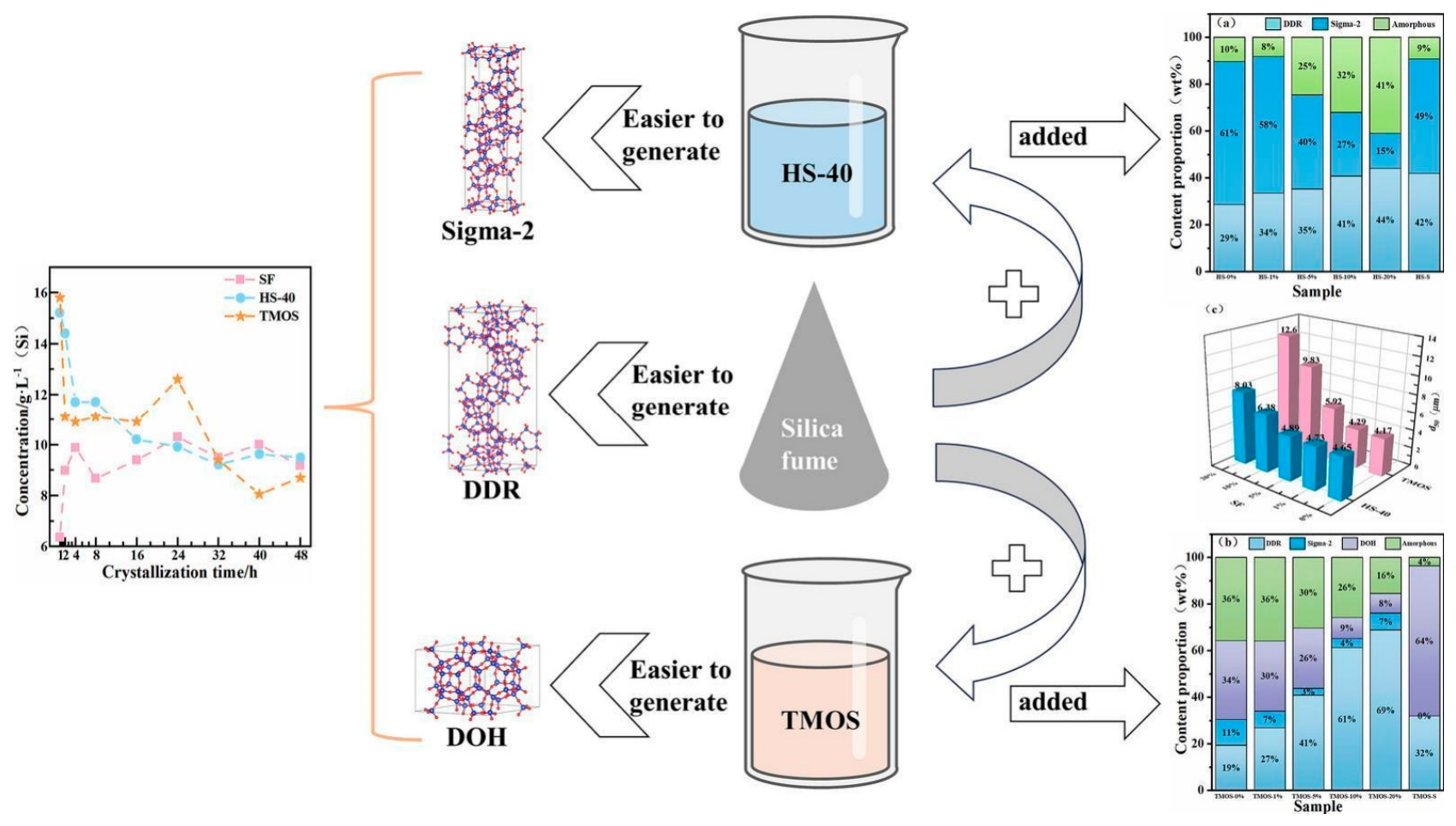

Disclaimer/Publisher’s Note: The statements, opinions and data contained in all publications are solely those of the individual author(s) and contributor(s) and not of MDPI and/or the editor(s). MDPI and/or the editor(s) disclaim responsibility for any injury to people or property resulting from any ideas, methods, instructions or products referred to in the content. |
© 2026 by the authors. Licensee MDPI, Basel, Switzerland. This article is an open access article distributed under the terms and conditions of the Creative Commons Attribution (CC BY) license.