


Abstract
Glyphosate is a non-selective, broad-spectrum herbicide commonly used to control various types of weeds in both urban and agricultural settings. Due to their high effectiveness, herbicide formulations containing glyphosate as the active ingredient are among the most widely used in agriculture worldwide. However, the extensive use of glyphosate has been associated with significant environmental contamination events and toxic effects on non-target organisms, including humans. To mitigate environmental contamination and the adverse impacts of glyphosate, it is essential to develop remediation alternatives and treatment methods. Bioremediation using microorganisms has been proposed as a viable solution to address glyphosate contamination. This review analyzes the environmental impacts and human health risks associated with glyphosate use, as well as biological alternatives based on the use of microorganisms, such as bacteria, for the treatment of glyphosate contamination.
Keywords:
bacteria; bioremediation; ecotoxicology; glyphosate; herbicide; environmental microbiology 1. Introduction
Global population growth continues to increase the demand for essential resources, including food, water, energy, and raw materials. In 2011, the global population reached seven billion people, and only approximately twelve years later, it surpassed eight billion [1,2]. Although population growth rates have slowed, the global population is expected to continue increasing in the coming decades, intensifying environmental, social, and economic pressures, and, particularly, the challenge of ensuring sufficient and sustainable food production [3,4].
Agriculture has played a fundamental role in meeting human food and raw material demands since its emergence approximately 10,000 years ago. As populations and societal needs have expanded, agricultural practices and technologies have continuously evolved to increase productivity and ensure food availability [5,6,7,8]. However, increasing agricultural production also requires the efficient management of factors that limit crop yields, including weed growth, insect pests, and plant diseases [9,10].
Modern agriculture employs a wide range of technologies and management strategies to improve crop productivity and quality. These include the use of irrigation systems, protected agriculture, improved crop varieties, fertilizers, and pesticides. Among these approaches, pesticides play an important role in controlling organisms that can adversely affect agricultural production. Consequently, pesticide use has increased substantially worldwide during recent decades [11].
According to data from the Food and Agriculture Organization of the United Nations (FAO), the global use of pesticides in the agricultural sector reached 3.92 million tonnes in 2024, of which approximately 2.03 million tonnes (51.9%) corresponded to herbicides [12]. The extensive use of herbicides reflects the importance of weed management in modern agricultural systems. Weeds compete with crops for essential resources, such as sunlight, water, nutrients, and space, and can consequently reduce crop productivity [13,14,15,16].
Among the herbicides currently used worldwide, glyphosate is one of the most widely applied active ingredients. Glyphosate-based formulations account for a substantial proportion of global herbicide use. During the period 2019–2022, the global use of glyphosate as a herbicide active ingredient was 749.3 million kg per year, representing about 44% of the total amount of herbicide active ingredients used in agriculture, and was applied in 646.11 million hectares, 22% of the total herbicide sprayed area worldwide [17].
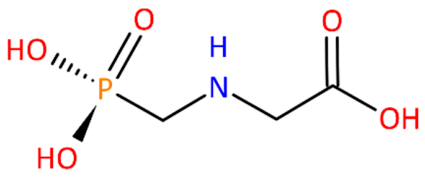
Glyphosate (N-phosphonomethylglycine) is a synthetic, broad-spectrum, non-selective herbicide used to control a wide range of annual and perennial weeds in agricultural and non-agricultural environments [18,19,20,21,22]. Its herbicidal activity is primarily associated with the inhibition of 5-enolpyruvylshikimate-3-phosphate synthase (EPSPS), a key enzyme of the shikimate pathway involved in the biosynthesis of aromatic amino acids in plants and many microorganisms. This mechanism contributes to its broad-spectrum activity and effectiveness in weed control [23,24,25]. Since its commercial introduction in 1974, glyphosate has become an important component of weed management strategies worldwide. However, its extensive and repeated application has also increased the potential for environmental exposure and has raised concerns regarding its occurrence in agricultural soils, surface waters, groundwater, and sediments [26,27].
The environmental fate of glyphosate is complex and depends on its physicochemical properties, environmental matrix, and local conditions. Following application, glyphosate can interact strongly with soil minerals and organic matter, influencing its adsorption, desorption, mobility, and availability for degradation. Its persistence is therefore not uniform and may vary according to soil composition, pH, temperature, moisture, microbial activity, and other environmental factors [26,27,28]. Glyphosate can reach aquatic and terrestrial compartments through processes including runoff, erosion, spray drift, accidental spills, and transport associated with contaminated soil particles. Consequently, repeated agricultural applications may contribute to continued environmental exposure even when the compound is strongly retained in soils.
Microbial transformation represents an important process in the environmental dissipation of glyphosate. Bacteria and fungi can transform glyphosate through different metabolic pathways that include enzymatic activities associated with C–P bond cleavage (sarcosine pathway) or generating transformation products such as aminomethylphosphonic acid (AMPA), which is frequently detected in environmental matrices [26,27,28,29]. The formation of AMPA is particularly relevant because glyphosate degradation does not necessarily correspond to complete mineralization, and the environmental behavior and biological effects of transformation products should therefore also be considered when evaluating remediation strategies. Moreover, the behavior and potential effects of glyphosate-containing commercial formulations cannot always be inferred solely from the properties of the active ingredient because formulations may contain co-formulants that influence exposure and biological responses.
The widespread environmental use of glyphosate has consequently generated continued scientific interest in its potential effects on non-target organisms, environmental microbial communities, ecosystem processes, and human health. Evidence reported in the literature varies according to the experimental system, exposure concentration, duration, route of exposure, environmental matrix, and whether the active ingredient or a commercial formulation was evaluated. These differences highlight the importance of considering exposure conditions and environmental relevance when interpreting the potential risks associated with glyphosate.
In this context, understanding the environmental behavior, transformation pathways, and biological effects of glyphosate is essential for developing strategies to reduce its persistence and potential impacts. Conventional physicochemical approaches may be constrained by treatment costs, generation of secondary waste, or incomplete transformation. Biological approaches, in contrast, exploit the metabolic capabilities of microorganisms or their enzymes to transform contaminants under relatively mild environmental conditions. Bacteria, fungi, microbial consortia, and isolated enzymes have therefore been investigated for their ability to transform glyphosate and, in some cases, contribute to its removal from contaminated environmental matrices [29].
Therefore, this mini-review critically examines the potential risks to human and environmental health associated with intensive glyphosate use and evaluates biological alternatives for its treatment, focusing on the role of microorganisms and their metabolic pathways in glyphosate degradation and their potential application in bioremediation, as well as the discussion of limitations and perspectives of the experimental evidence on microbial glyphosate degradation.
2. Methodological Approach
This mini-review was conducted through a targeted literature search aimed at identifying original studies on bacterial strains capable of degrading glyphosate. The search covered publications from 2015 to 2025 and was conducted using the Google Scholar database. The search strategy combined the keywords “glyphosate,” “degradation,” “bioremediation,” and “bacteria” using different Boolean operator combinations. The initial search identified approximately 6000 records. After screening by titles, abstracts, and full-text articles, and applying the predefined eligibility criteria, 24 studies were selected for the final analysis.
Studies were considered eligible if they (i) were original peer-reviewed research articles published between 2015 and 2025; (ii) were written in English or Spanish; (iii) reported quantitative information on glyphosate degradation, including initial glyphosate concentration and degradation percentage and/or rate; and (iv) provided information on degradation time and/or degradation pathways. Duplicate records, conference abstracts, theses, purely modeling-based studies without experimental validation, and articles that did not meet the predefined eligibility criteria were excluded.
For each selected study, information on the initial glyphosate concentration, incubation time during the degradation process, percentage of degradation, degradation rate, bacterial strain, and reported degradation pathway was extracted. When the degradation rate was not directly reported, but sufficient data were available, it was calculated using the following equation:
where C0 is the initial glyphosate concentration (mg·L−1), D is the percentage of glyphosate degradation (%), and t is the incubation time (h). The calculated values were used to facilitate a more consistent comparison of bacterial degradation performance among the selected studies. Because the studies differed substantially in initial glyphosate concentration, incubation time, culture medium, nutrient availability, and experimental conditions, the calculated degradation rates were interpreted as comparative indicators rather than standardized kinetic parameters.
3. What Is Glyphosate?
The presence of “weeds” is a recurring and high-impact problem in agriculture because these plants compete with crops for space in cultivated fields and access to sunlight, water, and soil nutrients. In addition, they can host other pests, including viruses, bacteria, fungi, and pathogenic insects, which further threaten agricultural productivity or complicate harvesting processes [13,14]. As a result, crop yields are reduced, and the incidence of weeds is estimated to cause losses exceeding 30% of total production [15].
A study conducted in India found that weeds can severely reduce crop productivity, particularly in soybean (by 50–76%), rice (by 15–66%), and maize (by 18–65%) [16]. Therefore, weed control is a critical component of agricultural practices. Various herbicide molecules and formulations are available to control weeds, with glyphosate-based herbicides being the most widely used worldwide [18,19,20].
Glyphosate (N-phosphonomethylglycine) is a synthetic, broad-spectrum, non-selective herbicide widely used for weed control in agricultural and non-agricultural systems (Table 1) [18,19,20,21,22]. Because glyphosate-based herbicides efficiently control a broad range of annual and perennial weed species, they are among the most widely used herbicides worldwide [18,19,20]. The widespread use of this compound is closely associated with the need to reduce weed interference in crop production, as weeds compete with cultivated plants for essential resources, including light, water, nutrients, and space, thereby negatively affecting agricultural productivity [13,14,15,16].
Swiss chemist Henri Martin first synthesized glyphosate in 1950 at the pharmaceutical company CILAG (Switzerland). However, because no pharmaceutical application was identified, the compound was later transferred to the American company Monsanto, where the scientist John Franz first identified its herbicidal activity in 1970. In 1974, Monsanto began commercializing glyphosate under the trade name ROUNDUP® [30].
Chemically, glyphosate is an organophosphorus compound derived from glycine and is characterized by the presence of phosphonate, carboxyl, and amino functional groups. These physicochemical characteristics influence the glyphosate behavior in environmental matrices, including its high affinity for soil particles and mineral surfaces [21,22]. Despite its strong adsorption to soil components, glyphosate can enter other environmental compartments through agricultural applications, spray drift, surface runoff, soil erosion, leaching under specific conditions, and accidental spills.
Table 1.
Physicochemical properties, environmental persistence, and toxicological effects of glyphosate.
4. Herbicidal Mechanism of Action of Glyphosate
The mechanism of action of glyphosate is based on the inhibition of a fundamental metabolic pathway for plant growth and development, the shikimate pathway. Due to the structural similarity of glyphosate to phosphoenolpyruvate, it inhibits the function of the enzyme 5-enolpyruvylshikimate-3-phosphate synthase (EPSPS), responsible for catalyzing the union of shikimate-3-phosphate and phosphoenolpyruvate molecules to form 5-enolpyruvylshikimate-3-phosphate (Figure 1). Through this pathway, plants can generate aromatic precursors such as chorismate and prephenate, which serve as substrates for synthesizing aromatic amino acids (phenylalanine, tyrosine, and tryptophan), p-aminobenzoic acid, salicylic acid, among other compounds essential for plant metabolism [21,22,34].
Figure 1.
Shikimate pathway in plants and the herbicidal target of glyphosate.
EPSPS inhibition triggers alterations in multiple physiological and biochemical processes in plants. Among the most notable effects are the accumulation of shikimic acid, the induction of oxidative stress, and alterations in carbon and nitrogen metabolism. Furthermore, glyphosate exposure reduces the biosynthesis of essential compounds such as chlorophyll, lignin, and phytohormones like indole-3-acetic acid, which impairs photosynthetic efficiency and plant growth [35,36,37]. Glyphosate also has metal-chelating properties that allow it to bind essential micronutrients such as Fe, Mn, and Zn, which function as cofactors in enzymatic reactions and as structural components of proteins, thus exacerbating metabolic dysfunction [21,38].
Additionally, glyphosate and its primary degradation product, aminomethylphosphonic acid (AMPA), can produce secondary effects that enhance herbicidal activity. These include further disruption of enzymatic systems, increased oxidative damage, and interference with physiological processes beyond the shikimate pathway [39,40]. Because of the inhibition of the shikimate pathway, together with these collateral effects such as cofactor sequestration, disruption of chlorophyll biosynthesis and photosynthesis, oxidative stress, metabolic imbalances in carbon and nitrogen pathways, and altered phytohormone production, plants ultimately undergo desiccation and death. Because the shikimate pathway is absent in animals, including humans, glyphosate was initially considered a highly effective and safe herbicide. These properties have contributed to its widespread adoption, making it one of the most successful herbicides in history [41,42,43].
5. Why Is Glyphosate the Most Widely Used Herbicide Worldwide?
In the mid-1990s, glyphosate use increased significantly in agriculture because of its association with herbicide-resistant transgenic crops, mainly maize, soybean, and cotton. Currently, glyphosate is the most widely used herbicide worldwide in agricultural and urban environments [44,45]. Since the development of the first transgenic crops, more than 500 genetic modifications have been approved in 32 different crops worldwide [46], facilitating pest control, increasing crop productivity and nutritional quality, providing economic benefits, and simplifying processes related to agricultural production [47].
Glyphosate is the most widely used herbicide worldwide due to its broad-spectrum, non-selective properties, which enable it to effectively control a wide variety of weed species, including grasses, broadleaf plants, and perennial weeds, making it highly versatile across different cropping systems [48]. Glyphosate is also highly effective and systemic; once applied, it is absorbed through plant leaves and translocated throughout the plant, reaching roots and growing points, ensuring complete weed control rather than only superficial damage. From an economic perspective, glyphosate is relatively low-cost and easy to apply compared to alternative herbicides or mechanical weed control methods, and its widespread availability, especially after the expiration of its patent, has further contributed to its global adoption [43].
The widespread adoption of glyphosate-resistant genetically modified crops has been a major driver of glyphosate use worldwide. Currently, 67% of all genetically modified crops are herbicide-resistant; of these, 63% are glyphosate-resistant varieties. In the United States of America, 94% of cotton, 92% of maize, and 94% of soybean crops are genetically modified, most of them carrying glyphosate resistance traits. Furthermore, 91% of all genetically modified crops are concentrated in Argentina, Brazil, Canada, India, and the United States, highlighting the extensive integration of glyphosate-resistant cropping systems into large-scale agricultural production [43,49].
Another common practice involving glyphosate is based on its desiccant effect. When non-transgenic crops have reached maturity, glyphosate is applied in crop fields—particularly in cereals such as oats and wheat—to facilitate and accelerate harvesting. As a result, traces of glyphosate have been detected in products such as flour, cereals, and bread, which are essential components of the diet of many people worldwide [50,51].
Finally, the patent granting Monsanto exclusive commercialization rights for glyphosate expired in the year 2000, and multiple companies now produce herbicide formulations containing glyphosate as the active ingredient. It is estimated that around 750 glyphosate-based herbicide formulations are currently marketed worldwide, reducing costs and increasing accessibility for producers [52]. However, the large-scale use of glyphosate is now recognized as a potential threat to environmental and human health. Glyphosate and its primary degradation product, AMPA, have been frequently detected in soils and in surface and groundwater near agricultural areas across various regions of the world, raising concerns regarding their environmental persistence and potential impacts on ecosystem and human health [53,54,55,56].
6. Environmental Impacts of Glyphosate
For over 50 years, glyphosate use has been a common practice in agriculture worldwide. In both industrialized and developing countries, this herbicide is applied on a large scale in productive activities, leading to the dispersion of glyphosate and its degradation products into the environment. As a result, it is commonly detected in soils and in surface and groundwater bodies [53,57]. Glyphosate and its environmental metabolites pose a significant ecotoxicological risk to non-target species due to their direct toxicity, effects on reproductive processes, and potential endocrine-disrupting activity [58,59].
In terrestrial environments, glyphosate contamination can alter the composition of soil microbiota, reduce soil quality and fertility [60,61,62], as well as cause adverse effects on organisms with important ecological roles, such as earthworms [63,64] and pollinating insects like bees [65,66,67]. In wild plants, exposure to glyphosate reduces growth rates, threatens biodiversity, and has been associated with the development of resistant plants, commonly referred to as “superweeds” [68,69,70,71], in addition to toxic effects reported in various mammals, including humans [24,72,73,74]. In aquatic environments, adverse effects of glyphosate have been documented in algae [75,76], crustaceans [77,78], fish [79,80,81], and amphibians [82,83].
7. Human Health Risks Associated with Glyphosate Exposure
Humans may be exposed to glyphosate through two main routes: (1) directly, via occupational exposure, and (2) indirectly, through various environmental sources and the consumption of food and water containing glyphosate residues [84]. Direct occupational exposure is common among agricultural workers, farmers, gardeners, and employees in facilities that process glyphosate [85]. These individuals may be exposed to glyphosate through inhalation, dermal, and/or ocular exposure. On the other hand, indirect glyphosate exposure occurs through the consumption of contaminated water or food [40,86,87], as well as through environmental exposure to residues or degradation products such as AMPA in water or soil [88], affecting the general population [89]. Additionally, recent findings indicate that the toxicity of commercial glyphosate-based herbicides is enhanced by the presence of surfactant compounds [90], with polyoxyethylene amine (POEA) being the most common. This compound can disrupt phosphorylation processes, leading to oxidative stress, cardiotoxicity, nephrotoxicity, among other adverse effects [91,92,93].
Several studies have documented traces of glyphosate in the urine of agricultural workers and the general population across various countries. In a study conducted in Minnesota and South Carolina (United States of America), the presence of glyphosate in urine of 48 farmers and their families (spouse and children) was evaluated, as result 60% of farmers, 4% of the spouses and 12% of children showed glyphosate traces in urine on the application day (1–233 µg·kg−1), the average glyphosate concentration determined in farmer was of 3 µg·kg−1 and the highest estimated systemic dose was 0.004 mg·kg−1, after three day from glyphosate application in crops just 27% of farmers showed glyphosate traces in urine (1–68 µg·kg−1) [94].
In the study by Rendón-von Osten and Dzul-Caamal (2017) [95], the presence of glyphosate residues was evaluated in groundwater, bottled drinking water, and 81 urine samples from subsistence farmers from various localities of Hopelchén, Campeche (Mexico). Glyphosate was detected in all groundwater samples from agricultural communities (seven communities) in concentrations above 1 μg·L−1 and in the bottled drinking water samples from the three communities evaluated, with 0.65 μg·L−1 as the highest concentration. Traces of glyphosate were detected in the urine of the subsistence farmers, with a concentration range of 0.1–0.47 μg·L−1. These data provide evidence of the high-level use of glyphosate in the agriculture of this region of Mexico and the exposure of subsistence farmers to this herbicide.
Perry et al. (2019) [96], evaluated urine from 18 farm workers in Wisconsin (United States of America) implicated in the glyphosate application in at least the eight previous years, as result 39% of the samples showed detectable glyphosate concentrations (in average 4.04 μg·kg−1); however, no glyphosate concentrations were detected in urine of the 94.4% of the urine samples from farm workers that declare not been implicated in glyphosate application, these findings support evidence of the role of occupational exposure in the detection of glyphosate in the urine of farm workers.
In a study conducted in Australia and New Zealand, the presence of glyphosate and AMPA was evaluated in both occupationally exposed population (farmers) and general population, glyphosate and AMPA was detected in 8% of the samples corresponding to general population in ranges from 0.20 to 1.25 μg·L−1, while in the urine samples from 27 exposed individuals, glyphosate was detected in 96% (0.85–153 μg·L−1) and AMPA in 33% (0.5–3.33 μg·L−1). In this study, the higher glyphosate internal dose estimated (510 μg·kg−1 bw·day−1) was 1.7 times above the recommended acceptable daily intake (ADI), 300 μg·kg−1 bw·day−1 [97]. These observations suggest widespread exposure to this herbicide and underscore potential concerns regarding its impact on human health [98,99,100].
In an attempt to link glyphosate exposure to reductions in kidney function, Rodgers et al. (2026) [101] evaluated the presence of glyphosate and AMPA traces in urine from 285 workers in El Salvador and Nicaragua in Central America. Glyphosate and AMPA were detected in 38% and 50% of the analyzed samples (mainly from agricultural workers); however, the study found no relationship between glyphosate and AMPA in urine and losses in kidney function.
More notably, glyphosate has also been detected in biological fluids such as blood and urine samples from non-occupationally exposed individuals in many countries, likely due to acute intoxications [102,103] and dietary exposure to this compound. In the study by Ospina et al. (2022) [104], urine samples from 2310 non-occupational glyphosate-exposed individuals (≥6 years old), representative of the United States of America population, were analyzed. Glyphosate traces were identified in 81.2% of the samples at an average concentration of 0.392 (0.263–0.656) μg·L−1. The most probable source of glyphosate exposure was food consumption. In another study conducted in the United States of America, samples of urine from occupationally and non-occupationally glyphosate-exposed individuals were evaluated; glyphosate was identified in around 90% of the samples from farmers, with higher levels (5.46 µg·L−1) in recently exposed farmers; however, an important result was the detection of glyphosate traces in 81% of the non-occupationally glyphosate-exposed individuals at an average concentration of 0.39 µg·L−1 [105].
In France, the presence of glyphosate in the general population was evaluated in urine samples from 6848 participants; as a result, 99.8% of the evaluated samples were positive for glyphosate presence, with an average concentration of 1.19 μg·L−1 and higher levels in males and children, suggesting glyphosate contamination through food and water intake [100]. While, in the study of Conolly et al. (2020) [106], the presence of glyphosate and AMPA was evaluated in 41 urine samples of general population (non-occupationally exposed) in Germany, as result glyphosate was detected in 66% of the samples (median concentration of 0.09 µg·L−1, and the higher detected value of 0.33 µg·L−1), while the detection of AMPA was 90% (median concentration of 0.20 µg·L−1, and the higher detected value of 2.54 µg·L−1), evidencing the relevance of evaluating both molecules in this kind of biomonitoring studies.
However, Solomon (2025) [107] conducts a review study, to analyses evidence on glyphosate exposure in glyphosate applicators farmers and the general population, covering a period from 2020 to 2024, 19 studies from 8 different countries were analyzed, according to the findings of this study the risk associated with glyphosate exposure in applicators farmer and the general population was considered minimis due detected values in urine (<0.05–1.8 µg·L−1) were below the acceptable daily intakes (ADIs) and the reference dose (RfD), 1 mg·kg−1 body mass·day−1 (FAO) and 1 mg·kg−1 body mass·day−1 (USEPA) respectively.
On the other hand, several studies have proposed that exposure to glyphosate herbicide may induce oxidative stress, genetic damage, alterations in the gastrointestinal microbiota, and a possible association with gluten intolerance [108,109,110,111,112]. Furthermore, it has been suggested that this compound can interfere with the absorption of essential micronutrients such as iron, cobalt, molybdenum, and copper, as well as with the synthesis of amino acids including tryptophan, tyrosine, methionine, and selenomethionine [38,113]. On the other hand, a correlation between glyphosate exposure and non-Hodgkin lymphoma has also been reported [108,114,115], suggesting that occupational exposure to glyphosate may increase the risk of developing this type of cancer, particularly B-cell lymphoma [116,117].
The World Health Organization (WHO) classifies pesticides based on their acute toxic effects evaluated in laboratory animals (rat model). In this context, glyphosate has an LD50 value of 4230 mg·kg−1 of body weight and is therefore classified as a slightly hazardous pesticide (Class III) [32]. This indicates that glyphosate’s acute toxicity in these model organisms occurs at high doses, and exposure is expected to pose a low risk to humans; however, no information on potential chronic exposure effects is provided. In 2015, based on a comprehensive review of evidence from experts in cancer research and toxicology, the International Agency for Research on Cancer (IARC) reclassified glyphosate into Group 2A, a category that groups probable human carcinogens. Glyphosate exposure was associated in particular with lymphoma development [115,118,119]. By contrast, the U.S. Environmental Protection Agency (EPA) indicates that glyphosate did not represent any risk for human health (including in sensitive populations such as infants, children, and pregnant women) when it is used according to label indications; this conclusion was based on evidence of the EPA’s 2017 risk assessment, where dietary, residential, aggregate (dietary + residential), and risks to farmworkers and nearby communities were evaluated. Moreover, according to the EPA, glyphosate did not display carcinogenic or endocrine disruption potential [33,120,121].
However, while the accumulation of scientific evidence does not resolve the controversy over whether this herbicide poses a risk to human health, it is undeniable that glyphosate is present in our immediate environment. The interrelationship between human health, animal health, and the environment is recognized within the One Health framework, which holds that these issues cannot be evaluated in isolation [122,123,124]. The intensive use of glyphosate in agriculture worldwide and the associated pollution are recognized as a major environmental problem with significant public health implications. Therefore, an integrative approach based on the One Health perspective enables a comprehensive understanding of glyphosate-associated environmental risks and promotes coordinated actions for prevention and, where necessary, bioremediation of contaminated sites [125,126].
Figure 2 presents the risks associated with large-scale glyphosate use worldwide from a One Health perspective. Glyphosate has been detected in soil, water bodies, and agricultural settings due to spray drift, affecting environmental health by polluting all three spheres and contributing to biodiversity loss. In the sphere of environmental health, negative effects have been reported on soil microorganisms, which affect biogeochemical cycles, impact pollinators such as bees, and harm non-target plants. In the sphere of animal health, toxic effects have been reported in aquatic and terrestrial organisms, including alterations in development, behavior, and physiology. In the sphere of human health, according to the IARC in 2015, glyphosate was classified as a probable human carcinogen. The spheres of animal and human health share adverse effects, ranging from acute effects such as irritation of the skin, eyes, and respiratory tract, to chronic effects such as oxidative stress, which in turn may cause genetic damage and hormonal disruptions.
Figure 2.
Human health, animal and environment effects associated with glyphosate exposure: a One Health perspective.
8. Glyphosate and Bioremediation, Degradation Mechanisms
The extensive and continuous use of glyphosate, particularly in agriculture, has resulted in its widespread occurrence in soils, surface waters, and groundwater, raising concerns regarding environmental contamination and potential risks to non-target organisms and human health [25,34,127]. Consequently, effective strategies are required to reduce glyphosate residues in contaminated agricultural and aquatic environments. Among the available strategies for mitigating glyphosate contamination, bioremediation has emerged as a promising, environmentally friendly, and potentially cost-effective approach because microorganisms can transform glyphosate and its metabolites through diverse enzymatic pathways [29,34,128].
Several bacterial genera, including Bacillus, Burkholderia, Ochrobactrum, and Pseudomonas, have demonstrated the ability to tolerate and transform glyphosate and, depending on the strain and environmental conditions, may utilize it as a source of phosphorus, nitrogen, or carbon [28,34,129,130]. These metabolic capabilities make such microorganisms promising candidates for reducing glyphosate residues in contaminated environments. However, their bioremediation potential cannot be assessed solely based on glyphosate removal or tolerance.
The effectiveness of biological treatment depends on several interacting factors, including the microorganism and its metabolic pathway, initial glyphosate concentration, environmental matrix, nutrient availability, and incubation conditions [29,127]. Moreover, degradation efficiencies obtained under controlled laboratory conditions may not necessarily be translated into comparable performance in environmentally relevant systems because physicochemical conditions, microbial interactions, and glyphosate bioavailability can substantially influence degradation kinetics [127,130]. Therefore, evaluating the practical suitability of glyphosate-degrading microorganisms requires not only quantifying glyphosate disappearance but also characterizing degradation pathways, transformation products, degradation kinetics, and performance under environmentally relevant conditions.
Two main bacterial degradation pathways for glyphosate have been reported (Figure 3) [29,34,130]. The first pathway is mediated by glyphosate oxidoreductase (GOX), an enzyme that catalyzes the oxidative cleavage of the C–N bond, producing aminomethylphosphonic acid (AMPA) and glyoxylate. AMPA can subsequently undergo further transformation through different enzymatic systems, including AMPA-specific transaminases and oxidases, depending on the metabolic capabilities of the microorganism [131]. In some bacterial species, the C–P lyase system can further cleave the C–P bond of AMPA, releasing inorganic phosphate and methylamine, which can subsequently be metabolized and ultimately mineralized to carbon dioxide and ammonium.
Figure 3.
Major metabolic pathways involved in bacterial glyphosate degradation.
The second major pathway involves the C–P lyase system, which directly cleaves the C–P bond of glyphosate, producing sarcosine and inorganic phosphate. Sarcosine can then be oxidized by sarcosine oxidase to glycine, which is subsequently metabolized through central metabolic pathways and ultimately mineralized to carbon dioxide and ammonium [29,34,130]. These pathways indicate that glyphosate degradation is not a single-step process but rather a sequence of enzymatic reactions whose progression and completeness depend on the metabolic capabilities of the microorganism and the prevailing environmental conditions.
From a bioremediation perspective, an important distinction must therefore be made between glyphosate removal, transformation, and mineralization. A high percentage of glyphosate disappearance from a culture medium does not necessarily indicate complete degradation or detoxification, because transformation through the GOX pathway may result in the accumulation of AMPA. Indeed, AMPA is frequently reported as a major transformation product of glyphosate and may persist in environmental matrices [29,127]. Consequently, studies reporting only glyphosate removal may overestimate the effectiveness of biological treatment if the subsequent fate and potential effects of transformation products are not evaluated. In contrast, microorganisms capable of further transforming AMPA or other intermediates may offer greater potential for achieving more complete remediation. For example, Chryseobacterium sp. Y16C completely degraded 400 mg·L−1 glyphosate within four days and was also able to tolerate and degrade AMPA at concentrations of up to 800 mg·L−1, highlighting the importance of evaluating the complete degradation pathway and the fate of transformation products rather than glyphosate disappearance alone [132].
9. Bacterial Performance and Process Conditions
Table 2 summarizes bacterial strains reported between 2015 and 2025 for their ability to degrade glyphosate under different experimental conditions. Considerable variation was observed in glyphosate degradation efficiency and degradation rates among the bacterial strains, with reported rates ranging from 0.01 to 14.4 mg·L−1·h−1. Comamonas odontotermitis P2 showed the highest reported degradation rate (14.4 mg·L−1·h−1), followed by Rhizobium sp. SRG (13.3 mg·L−1·h−1) and Pseudomonas putida HE (13.1 mg·L−1·h−1). In contrast, Bacillus megaterium exhibited the lowest reported degradation rate (0.01 mg·L−1·h−1), despite achieving 71–87.3% degradation after prolonged incubation (1440 h). These differences indicate that degradation kinetics are strongly dependent on the bacterial strain and the experimental conditions. However, degradation rates obtained from different studies should not be interpreted as directly comparable because the initial glyphosate concentrations, incubation periods, culture media, and use of co-substrates differed substantially among experiments.
Table 2.
Bacterial strains reported glyphosate degradation under laboratory conditions of 2015–2025.
The initial glyphosate concentration appears to be an important factor influencing the reported degradation performance. In general, high initial concentrations may impose greater toxic or metabolic stress on bacterial cells, potentially reducing degradation rates, whereas lower concentrations may result in higher apparent removal efficiencies. However, percentage degradation alone may be misleading when studies use markedly different initial concentrations. Similarly, prolonged incubation can increase the percentage of glyphosate removed without necessarily indicating a high degradation capacity, as illustrated by B. megaterium, which required up to 1440 h to achieve 71–87.3% degradation. Therefore, the combination of degradation percentage, degradation rate, initial concentration, and incubation time provides a more informative basis for evaluating bacterial performance than any single parameter.
Culture conditions also contribute substantially to the variability among studies. Differences in pH, temperature, oxygen availability, agitation, inoculum size, nutrient composition, and culture medium can affect bacterial growth, enzyme activity, glyphosate bioavailability, and consequently degradation kinetics. The presence of additional carbon or nitrogen sources may further influence glyphosate transformation. Co-substrates such as glucose, fructose, or glutamate can support bacterial growth and may enhance glyphosate transformation through co-metabolic processes; however, their effects are strain- and concentration-dependent and cannot be assumed to improve degradation under all conditions. Thus, higher degradation rates reported in media supplemented with readily available nutrients should be interpreted cautiously when considering their applicability to contaminated soils or natural waters, where such co-substrates may be absent or present at substantially lower concentrations.
The data presented in Table 2 also reveal important differences in the metabolic pathways associated with glyphosate transformation. The AMPA pathway was the most frequently reported route, either alone or in combination with the sarcosine pathway. For example, Comamonas odontotermitis P2, Ochrobactrum intermedium Sq20, and Ochrobactrum sp. A-1 were associated with both AMPA and sarcosine formation, whereas several strains, including Burkholderia cenocepacia CEIB S5-2, Bacillus albus F9D, Chryseobacterium sp. Y16C, and Pseudomonas sp. GC04, were primarily associated with the AMPA pathway. The predominance of AMPA among the reported transformation products highlights the importance of glyphosate oxidation in bacterial degradation; however, the detection of AMPA should not be interpreted as evidence of complete glyphosate mineralization because AMPA can persist and may require further microbial transformation.
Importantly, the experimental scale and environmental relevance of the reported results should also be considered. Most studies summarized in Table 2 were conducted under controlled laboratory conditions using defined culture media and glyphosate concentrations that may differ substantially from those encountered in agricultural soils, sediments, or surface waters. Consequently, a strain exhibiting high degradation efficiency in a liquid culture does not necessarily have equivalent performance in a complex environmental matrix, where glyphosate may be adsorbed to soil particles, interact with minerals or organic matter, or be affected by competing microorganisms. These factors may reduce glyphosate bioavailability and alter the apparent degradation kinetics. Therefore, laboratory degradation rates should be considered indicators of bacterial potential rather than direct estimates of field-scale remediation performance.
Overall, the studies compiled in Table 2 demonstrate that bacterial glyphosate degradation is highly strain- and condition-dependent. Importantly, degradation percentage and degradation rate alone are insufficient to determine the bioremediation potential of a microorganism. A more comprehensive assessment should consider glyphosate tolerance, degradation kinetics, transformation products, the ability to further degrade AMPA or other intermediates, metabolic pathways, and performance under environmentally relevant conditions. Particular attention should be given to whether the reported degradation occurred in the presence of co-substrates, under conditions that support rapid bacterial growth, or at glyphosate concentrations substantially higher than those typically detected in environmental matrices. These factors may improve degradation under laboratory conditions but can limit the direct extrapolation of the results to field applications. In addition, some studies suggest that co-substrates may enhance glyphosate transformation through co-metabolic processes, which should be considered when evaluating the feasibility of bacterial strains for practical bioremediation applications. Future studies should therefore prioritize environmentally relevant glyphosate concentrations, complex environmental matrices, longer-term performance, degradation of transformation products, and validation at pilot or field scale to determine whether the observed laboratory performance can be translated into effective bioremediation.
10. Co-Substrate Effects
The availability of auxiliary carbon and nitrogen sources is another important factor affecting glyphosate biodegradation. Several studies have demonstrated that the addition of readily assimilable carbon or nitrogen sources can modify glyphosate degradation by stimulating microbial growth and metabolic activity. For example, fructose and glucose enhanced glyphosate degradation by Burkholderia vietnamiensis AQ5-12, whereas glutamate and ammonium chloride were used as carbon and nitrogen sources, respectively, to optimize glyphosate degradation by Ochrobactrum anthropi GPK 3 and Achromobacter sp. Kg 16 [139,155]. Similarly, the addition of glucose, ammonium, and phosphate stimulated glyphosate biodegradation in soil and sediment microcosms, demonstrating that nutrient availability can influence both the onset and rate of degradation [156]. These observations suggest that glyphosate degradation may involve co-metabolic processes in some microbial systems rather than the exclusive use of glyphosate as a carbon or energy source.
However, the effect of co-substrates is not necessarily proportional to their concentration and depends on the microorganism, nutrient source, environmental matrix, and glyphosate bioavailability. For instance, increasing fructose concentrations beyond the optimum reduced glyphosate degradation by Burkholderia vietnamiensis AQ5-12, demonstrating that excessive supplementation may negatively affect the process [139]. Moreover, the stimulation of microbial growth does not necessarily demonstrate an increase in glyphosate-specific metabolic activity, making it important to distinguish biomass production from actual glyphosate transformation.
Therefore, although co-substrate supplementation can improve degradation under controlled laboratory conditions, its additional cost and potential effects on process performance should be considered when designing large-scale bioremediation systems. Future studies should determine whether efficient glyphosate degradation can be maintained without external co-substrates or by using inexpensive and environmentally compatible carbon and nitrogen sources.
11. Environmental Conditions and Field-Scale Application
The transition from laboratory experiments to field-scale bioremediation represents a major challenge. Most studies of glyphosate-degrading microorganisms have been conducted under controlled conditions using isolated strains and defined culture media, where pH, temperature, nutrient availability, and glyphosate concentration can be readily controlled. In contaminated soils and natural waters, however, glyphosate bioavailability is affected by adsorption to soil minerals and organic matter, while pH, temperature, moisture, nutrient availability, and microbial community composition may modify degradation kinetics [157,158,159]. Furthermore, changes in these environmental factors can alter microbial community composition and the abundance or activity of glyphosate-degrading microorganisms [160]. In addition, introduced bacterial strains may encounter competition with indigenous microorganisms and fluctuating environmental conditions, potentially limiting their persistence and degradation performance outside controlled laboratory systems [161]. Therefore, successful microbial bioremediation requires validation in environmentally relevant soil and water matrices, followed by pilot- or field-scale studies evaluating microbial persistence, degradation kinetics, transformation products, and treatment stability [162].
12. Conclusions
Glyphosate remains one of the most widely used herbicides worldwide because of its broad-spectrum activity and effectiveness; however, its extensive use has led to widespread environmental presence and raised concerns about potential effects on non-target organisms and human health. Although glyphosate primarily acts by inhibiting EPSPS in the shikimate pathway, current evidence indicates that its potential risks cannot be assessed solely from the absence of this pathway in animals. Environmental exposure, persistence, transformation products such as AMPA, and effects on different organisms should also be considered when evaluating their overall environmental and health implications. Microbial bioremediation is a promising and sustainable approach for glyphosate-contaminated environments, with bacteria and fungi demonstrating diverse degradation capabilities through AMPA- and sarcosine-associated pathways. Nevertheless, degradation efficiency depends strongly on the microorganism and experimental conditions, and glyphosate removal alone does not necessarily indicate complete degradation or detoxification. Future research should therefore prioritize characterizing degradation pathways and metabolites, particularly AMPA; validating results under environmentally relevant conditions; and integrating omics approaches to identify the microorganisms, genes, and enzymes involved in glyphosate transformation. These efforts are essential for developing effective, scalable, and environmentally reliable bioremediation strategies.
Author Contributions
Conceptualization, M.L.C.-G. and A.R.; resources, A.R.; data analysis, M.L.C.-G., P.M.-G., E.T.-S. and A.R.; writing—original draft preparation, M.L.C.-G. and A.R.; writing—review and editing, M.L.C.-G., A.R., P.M.-G. and E.T.-S.; supervision, A.R.; funding acquisition, A.R. All authors have read and agreed to the published version of the manuscript.
Funding
This research was funded by the Secretaría de Ciencia, Humanidades, Tecnología e Innovación (SECIHTI), through the project “Sistema de tratamiento para la eliminación de glifosato, paraquat y atrazina, herbicidas altamente contaminantes, basado en biomasa residual agrícola y de especies invasoras como soporte de microorganismos degradadores”, grant number CBF2023-2024-2134.
Data Availability Statement
No new data were created or analyzed in this study. Data sharing is not applicable to this article.
Conflicts of Interest
The authors declare no conflicts of interest.
References
- Pison, G.; Couppié, E.; Caporali, A. The population of the world, 2022. Popul. Soc. 2022, 603, 1–8. [Google Scholar] [CrossRef] [Scilit]
- United Nations (UN). World Population Prospects-Population Division [Internet]. Available online: https://population.un.org/wpp/ (accessed on 14 April 2026).
- Weber, H.; Sciubba, J.D. The effect of population growth on the environment: Evidence from European regions. Eur. J. Popul. 2019, 35, 379–402. [Google Scholar] [CrossRef] [Scilit] [PubMed]
- Gu, D.; Andreev, K.; Dupre, M.E. Major trends in population growth around the world. China CDC Wkly. 2021, 3, 604–613. [Google Scholar] [CrossRef] [Scilit] [PubMed]
- Jayachandran, S. How economic development influences the environment. Annu. Rev. Econom. 2022, 14, 229–252. [Google Scholar] [CrossRef] [Scilit]
- Parra-Henao, G.; Henao, E.; Escobar, J.P. Environmental health and infectious diseases: Challenges and perspectives in Latin America. Ther. Adv. Infect. Dis. 2023, 10, 1–4. [Google Scholar] [CrossRef] [Scilit] [PubMed]
- Sadigov, R. Rapid growth of the world population and its socioeconomic results. Sci. World J. 2022, 2022, 8110229. [Google Scholar] [CrossRef] [Scilit] [PubMed]
- Tauger, M.B. Agriculture in World History, 1st ed.; Routledge: London, UK, 2010. [Google Scholar] [CrossRef] [Scilit]
- Benjamin, J.; Idowu, O.; Babalola, O.K.; Oziegbe, E.V.; Oyedokun, D.O.; Akinyemi, A.M.; Adebayo, A. Cereal production in Africa: The threat of certain pests and weeds in a changing climate—A review. Agric. Food Secur. 2024, 13, 18. [Google Scholar] [CrossRef] [Scilit]
- Bommarco, R. Ecological redesign of crop ecosystems for reliable crop protection. A review. Agron. Sustain. Dev. 2024, 44, 51. [Google Scholar] [CrossRef] [Scilit]
- Sabzevari, S.; Hofman, J. A worldwide review of currently used pesticides’ monitoring in agricultural soils. Sci. Total Environ. 2022, 812, 152344. [Google Scholar] [CrossRef] [Scilit] [PubMed]
- FAO. FAOSTAT Pesticides Use [Internet]. Available online: https://www.fao.org/faostat/en/#data/RP (accessed on 6 April 2026).
- Mesnage, R.; Szekács, A.; Zaller, J.G. Herbicides: Brief history, agricultural use, and potential alternatives for weed control. In Herbicides: Chemistry, Efficacy, Toxicology, and Environmental Impacts: Emerging Issues in Analytical Chemistry; Mesnage, R., Zaller, J., Eds.; Elsevier: Amsterdam, The Netherlands, 2021; pp. 1–20. [Google Scholar] [CrossRef] [Scilit]
- Vercellino, R.B.; Hernández, F.; Pandolfo, C.; Ureta, S.; Presotto, A. Agricultural weeds: The contribution of domesticated species to the origin and evolution of feral weeds. Pest Manag. Sci. 2023, 79, 922–934. [Google Scholar] [CrossRef] [Scilit] [PubMed]
- Oerke, E.C. Crop losses to pests. J. Agric. Sci. 2006, 144, 31–43. [Google Scholar] [CrossRef] [Scilit]
- Gharde, Y.; Singh, P.K.; Dubey, R.P.; Gupta, P.K. Assessment of yield and economic losses in agriculture due to weeds in India. Crop Prot. 2018, 107, 12–18. [Google Scholar] [CrossRef] [Scilit]
- Brookes, G. Glyphosate Use in Agricultural Production: Its Contribution to Global Carbon Dioxide Emissions. GM Crops Food 2026, 17, 2594217. [Google Scholar] [CrossRef] [Scilit] [PubMed]
- Haggblade, S.; Minten, B.; Pray, C.; Reardon, T.; Zilberman, D. The herbicide revolution in developing countries: Patterns, causes, and implications. Eur. J. Dev. Res. 2017, 29, 533–559. [Google Scholar] [CrossRef] [Scilit]
- Werner, M.; Berndt, C.; Mansfield, B. The glyphosate assemblage: Herbicides, uneven development, and chemical geographies of ubiquity. Ann. Am. Assoc. Geogr. 2022, 112, 19–35. [Google Scholar] [CrossRef] [Scilit]
- de Araujo, L.G.; Zordan, D.F.; Celzard, A.; Fierro, V. Glyphosate uses, adverse effects and alternatives: Focus on the current scenario in Brazil. Environ. Geochem. Health 2023, 45, 9559–9582. [Google Scholar] [CrossRef] [Scilit] [PubMed]
- Duke, S.O. The history and current status of glyphosate. Pest Manag. Sci. 2018, 74, 1027–1034. [Google Scholar] [CrossRef] [Scilit] [PubMed]
- Kanissery, R.; Gairhe, B.; Kadyampakeni, D.; Batuman, O.; Alferez, F. Glyphosate: Its environmental persistence and impact on crop health and nutrition. Plants 2019, 8, 499. [Google Scholar] [CrossRef] [Scilit] [PubMed]
- Duke, S.O. Glyphosate: Uses other than in glyphosate-resistant crops, mode of action, degradation in plants, and effects on non-target plants and agricultural microbes. Rev. Environ. Contam. Toxicol. 2021, 255, 1–65. [Google Scholar] [CrossRef] [Scilit] [PubMed]
- Rivas-Garcia, T.; Espinosa-Calderón, A.; Hernández-Vázquez, B.; Schwentesius-Rindermann, R. Overview of environmental and health effects related to glyphosate usage. Sustainability 2022, 14, 6868. [Google Scholar] [CrossRef] [Scilit]
- Alcántara-de la Cruz, R.; Guidi, Y.M.; Ramirez-Castillo, M.; Adegas, F.S.; Carbonari, C.A.; Velini, E.D.; De Prado, R.; Duke, S.O. Thirty years of glyphosate-resistant crops and weeds: Current situation and future prospects. Pest Manag. Sci. 2026, 82, 5987–6009. [Google Scholar] [CrossRef] [Scilit] [PubMed]
- Dar, M.A.; Akkaya, E.K.; Rizwan, M. Glyphosate in the environment: Pollution dynamics, fate, microbial degradation and associated pathways. J. Hazard. Mater. Adv. 2026, 23, 101428. [Google Scholar] [CrossRef] [Scilit]
- Zhang, T.; Fan, Y.; Yang, Q.; Zhang, R.; Guo, W. An integrated review of glyphosate ecotoxicity and environmental fate in aquatic systems using species sensitivity distributions and meta-analysis. Pestic. Biochem. Physiol. 2026, 219, 107025. [Google Scholar] [CrossRef] [Scilit] [PubMed]
- Díaz-Soto, J.A.; Mussali-Galante, P.; Castrejón-Godínez, M.L.; Saldarriaga-Noreña, H.A.; Tovar-Sánchez, E.; Rodríguez, A. Glyphosate resistance and biodegradation by Burkholderia cenocepacia CEIB S5-2. Environ. Sci. Pollut. Res. 2024, 31, 37480–37495. [Google Scholar] [CrossRef] [Scilit] [PubMed]
- Chen, Y.; Chen, W.J.; Huang, Y.; Li, J.; Zhong, J.; Zhang, W.; Zou, Y.; Mishra, S.; Bhatt, P.; Chen, S. Insights into the microbial degradation and resistance mechanisms of glyphosate. Environ. Res. 2022, 215, 114153. [Google Scholar] [CrossRef] [Scilit] [PubMed]
- Valle, A.L.; Mello, F.C.C.; Alves-Balvedi, R.P.; Rodrigues, L.P.; Goulart, L.R. Glyphosate detection: Methods, needs and challenges. Environ. Chem. Lett. 2019, 17, 291–317. [Google Scholar] [CrossRef] [Scilit]
- Gustafson, D.I. Groundwater ubiquity score: A simple method for assessing pesticide leachability. Environ. Toxicol. Chem. Int. J. 1989, 8, 339–357. [Google Scholar] [CrossRef]
- WHO; Inter-Organization Programme for the Sound Management of Chemicals. The WHO Recommended Classification of Pesticides by Hazard and Guidelines to Classification 2019; World Health Organization: Geneva, Switzerland, 2020; p. 92. Available online: https://www.who.int/publications/i/item/9789240005662 (accessed on 5 September 2026).
- University of Hertfordshire. Pesticide Properties Database (PPDB). Agriculture & Environment Research Unit (AERU), University of Hertfordshire. Available online: https://sitem.herts.ac.uk/aeru/ppdb/en/ (accessed on 2 October 2026).
- Castrejón-Godínez, M.L.; Tovar-Sánchez, E.; Valencia-Cuevas, L.; Rosas-Ramírez, M.E.; Rodríguez, A.; Mussali-Galante, P. Glyphosate pollution treatment and microbial degradation alternatives: A review. Microorganisms 2021, 9, 2322. [Google Scholar] [CrossRef] [Scilit] [PubMed]
- Fuchs, M.A.; Geiger, D.R.; Reynolds, T.L.; Bourque, J.E. Mechanism of glyphosate toxicity in velvetleaf (Abutilon theophrasti medikus). Pestic. Biochem. Physiol. 2002, 74, 27–39. [Google Scholar] [CrossRef] [Scilit]
- Gomes, M.P.; Smedbol, E.; Chalifour, A.; Hénault-Ethier, L.; Labrecque, M.; Lepage, L.; Lucotte, M.; Juneau, P. Alteration of plant physiology by glyphosate and its by-product aminomethylphosphonic acid: An overview. J. Exp. Bot. 2014, 65, 4691–4703. [Google Scholar] [CrossRef] [Scilit] [PubMed]
- Gomes, M.P.; Le Manac’h, S.G.; Hénault-Ethier, L.; Labrecque, M.; Lucotte, M.; Juneau, P. Glyphosate-dependent inhibition of photosynthesis in willow. Front. Plant Sci. 2017, 8, 207. [Google Scholar] [CrossRef] [Scilit] [PubMed]
- Mertens, M.; Höss, S.; Neumann, G.; Afzal, J.; Reichenbecher, W. Glyphosate, a chelating agent—Relevant for ecological risk assessment? Environ. Sci. Pollut. Res. 2018, 25, 5298–5317. [Google Scholar] [CrossRef] [Scilit] [PubMed]
- Van Bruggen, A.H.C.; He, M.M.; Shin, K.; Mai, V.; Jeong, K.C.; Finckh, M.R.; Morris, J.G., Jr. Environmental and health effects of the herbicide glyphosate. Sci. Total Environ. 2018, 616, 255–268. [Google Scholar] [CrossRef] [Scilit] [PubMed]
- Bai, S.H.; Ogbourne, S.M. Glyphosate: Environmental contamination, toxicity and potential risks to human health via food contamination. Environ. Sci. Pollut. Res. 2016, 23, 18988–19001. [Google Scholar] [CrossRef] [Scilit] [PubMed]
- Duke, S.O.; Powles, S.B. Glyphosate: A once-in-a-century herbicide. Pest Manag. Sci. 2008, 64, 319–325. [Google Scholar] [CrossRef] [Scilit] [PubMed]
- Cuhra, M.; Bøhn, T.; Cuhra, P. Glyphosate: Too much of a good thing? Front. Environ. Sci. 2016, 4, 28. [Google Scholar] [CrossRef] [Scilit]
- Benbrook, C.M. Trends in glyphosate herbicide use in the United States and globally. Environ. Sci. Eur. 2016, 28, 3. [Google Scholar] [CrossRef] [Scilit] [PubMed]
- Green, J.M. The rise and future of glyphosate and glyphosate-resistant crops. Pest Manag. Sci. 2018, 74, 1035–1039. [Google Scholar] [CrossRef] [Scilit] [PubMed]
- Coupe, R.H.; Capel, P.D. Trends in pesticide use on soybean, corn and cotton since the introduction of major genetically modified crops in the United States. Pest Manag. Sci. 2016, 72, 1013–1022. [Google Scholar] [CrossRef] [Scilit] [PubMed]
- Kumar, K.; Gambhir, G.; Dass, A.; Tripathi, A.K.; Singh, A.; Jha, A.K.; Yadava, P.; Choudhary, M.; Rakshit, S. Genetically modified crops: Current status and future prospects. Planta 2020, 251, 91. [Google Scholar] [CrossRef] [Scilit] [PubMed]
- Chaudhary, G.; Singh, S.K. Global status of genetically modified crops and its commercialization. In Biotechnology Products in Everyday Life; Khoobchandani, M., Saxena, A., Eds.; Springer: Cham, Switzerland, 2019; pp. 147–160. [Google Scholar] [CrossRef] [Scilit]
- Ahuja, M.; Kumar, L.; Kumar, K.; Shingatgeri, V.M.; Kumar, S. Glyphosate: A review on its widespread prevalence and occurrence across various systems. Environ. Sci. Adv. 2024, 3, 1030–1038. [Google Scholar] [CrossRef] [Scilit]
- Verma, V.; Negi, S.; Kumar, P.; Srivastava, D.K. Global status of genetically modified crops. In Agricultural Biotechnology: Latest Research and Trends; Srivastava, D.K., Thakur, A.K., Kumar, P., Eds.; Springer: Singapore, 2022; pp. 305–322. [Google Scholar] [CrossRef] [Scilit]
- Xu, J.; Smith, S.; Smith, G.; Wang, W.; Li, Y. Glyphosate contamination in grains and foods: An overview. Food Control 2019, 106, 106710. [Google Scholar] [CrossRef] [Scilit]
- Wiese, A.; Steinmann, H.H. Yield effects associated with glyphosate use in non-GMO arable farming: A review. Crop Prot. 2020, 134, 105148. [Google Scholar] [CrossRef] [Scilit]
- Matozzo, V.; Fabrello, J.; Marin, M.G. The effects of glyphosate and its commercial formulations on marine invertebrates: A review. J. Mar. Sci. Eng. 2020, 8, 399. [Google Scholar] [CrossRef] [Scilit]
- Maggi, F.; la Cecilia, D.; Tang, F.H.; McBratney, A. The global environmental hazard of glyphosate use. Sci. Total Environ. 2020, 717, 137167. [Google Scholar] [CrossRef] [Scilit] [PubMed]
- Marques-Brovini, E.; Cardoso, S.J.; Rebelo-Quadra, G.R.; Vilas-Boas, J.A.; Paranaiba, J.R.; Oliveira-Pereira, R.D.; Fernandes-Mendonca, R. Glyphosate concentrations in global freshwaters: Are aquatic organisms at risk? Environ. Sci. Pollut. Res. 2021, 28, 60635–60648. [Google Scholar] [CrossRef] [Scilit] [PubMed]
- Sang, Y.; Mejuto, J.C.; Xiao, J.; Simal-Gandara, J. Assessment of glyphosate impact on the agrofood ecosystem. Plants 2021, 10, 405. [Google Scholar] [CrossRef] [Scilit] [PubMed]
- Aslam, S.; Jing, Y.; Nowak, K.M. Fate of glyphosate and its degradation products AMPA, glycine and sarcosine in an agricultural soil: Implications for environmental risk assessment. J. Hazard. Mater. 2023, 447, 130847. [Google Scholar] [CrossRef] [Scilit] [PubMed]
- Ferreira, N.G.; da Silva, K.A.; Guimarães, A.T.B.; de Oliveira, C.M.R. Hotspots of soil pollution: Possible glyphosate and aminomethylphosphonic acid risks on terrestrial ecosystems and human health. Environ. Int. 2023, 179, 108135. [Google Scholar] [CrossRef] [Scilit] [PubMed]
- Mensah, P.K.; Palmer, C.G.; Odume, O.N. Ecotoxicology of glyphosate and glyphosate-based herbicides—Toxicity to wildlife and humans. In Toxicity and Hazard of Agrochemicals; Larramendy, M.L., Soloneski, S., Eds.; InTech: Rijeka, Croatia, 2015; pp. 9–37. [Google Scholar] [CrossRef] [Scilit]
- Rodríguez-Gil, J.L.; Prosser, R.S.; Duke, S.O.; Solomon, K.R. Ecotoxicology of glyphosate, its formulants, and environmental degradation products. In Reviews of Environmental Contamination and Toxicology, Volume 255: Glyphosate; Knaak, J.B., Ed.; Springer: Cham, Switzerland, 2021; pp. 129–205. [Google Scholar] [CrossRef] [Scilit] [PubMed]
- Vázquez, M.B.; Moreno, M.V.; Amodeo, M.R.; Bianchinotti, M.V. Effects of glyphosate on soil fungal communities: A field study. Rev. Argent. Microbiol. 2021, 53, 349–358. [Google Scholar] [CrossRef] [Scilit] [PubMed]
- Bueno de Mesquita, C.P.B.; Solon, A.J.; Barfield, A.; Mastrangelo, C.F.; Tubman, A.J.; Vincent, K.; Porazinska, D.L.; Hufft, R.A.; Shackelford, N.; Suding, K.N.; et al. Adverse impacts of Roundup on soil bacteria, soil chemistry and mycorrhizal fungi during restoration of a Colorado grassland. Appl. Soil Ecol. 2023, 182, 104778. [Google Scholar] [CrossRef] [Scilit]
- He, X.; Wu, C.; Tan, H.; Deng, X.; Li, Y. Impact of combined exposure to glyphosate and diquat on microbial community structure and diversity in lateritic paddy soil. Sustainability 2023, 15, 8497. [Google Scholar] [CrossRef] [Scilit]
- Pochron, S.T.; Mezic, M.; Byrne, S.; Sasoun, S.; Casamassima, A.; Kilic, M.; Nuzzo, A.; Beaudet, C.E. Exposure to Roundup increases movement speed and decreases body mass in earthworms. Front. Environ. Sci. 2022, 10, 991494. [Google Scholar] [CrossRef] [Scilit]
- Schmidt, R.; Spangl, B.; Gruber, E.; Takács, E.; Mörtl, M.; Klátyik, S.; Székács, A.; Zaller, J.G. Glyphosate effects on earthworms: Active ingredients vs. commercial herbicides at different temperature and soil organic matter levels. Agrochemicals 2022, 2, 1–16. [Google Scholar] [CrossRef] [Scilit]
- Abraham, J.; Benhotons, G.S.; Krampah, I.; Tagba, J.; Amissah, C.; Abraham, J.D. Commercially formulated glyphosate can kill non-target pollinator bees under laboratory conditions. Entomol. Exp. Appl. 2018, 166, 695–702. [Google Scholar] [CrossRef] [Scilit]
- Defarge, N.; Otto, M.; Hilbeck, A. A Roundup herbicide causes high mortality and impairs development of Chrysoperla carnea (Stephens) (Neuroptera: Chrysopidae). Sci. Total Environ. 2023, 865, 161158. [Google Scholar] [CrossRef] [Scilit] [PubMed]
- Motta, E.V.S.; Moran, N.A. The effects of glyphosate, pure or in herbicide formulation, on bumble bees and their gut microbial communities. Sci. Total Environ. 2023, 872, 162102. [Google Scholar] [CrossRef] [Scilit] [PubMed]
- Cederlund, H. Effects of spray drift of glyphosate on nontarget terrestrial plants—A critical review. Environ. Toxicol. Chem. 2017, 36, 2879–2886. [Google Scholar] [CrossRef] [Scilit] [PubMed]
- Sikorski, Ł.; Baciak, M.; Bęś, A.; Adomas, B. The effects of glyphosate-based herbicide formulations on Lemna minor, a non-target species. Aquat. Toxicol. 2019, 209, 70–80. [Google Scholar] [CrossRef] [Scilit] [PubMed]
- Qu, M.; Wang, L.; Xu, Q.; An, J.; Mei, Y.; Liu, G. Influence of glyphosate and its metabolite aminomethylphosphonic acid on aquatic plants in different ecological niches. Ecotoxicol. Environ. Saf. 2022, 246, 114155. [Google Scholar] [CrossRef] [Scilit] [PubMed]
- Damalas, C.A.; Koutroubas, S.D. Herbicide resistance evolution, fitness cost, and the fear of the superweeds. Plant Sci. 2024, 339, 111934. [Google Scholar] [CrossRef] [Scilit] [PubMed]
- Heymann, A.K.; Schnabel, K.; Billenkamp, F.; Bühler, S.; Frahm, J.; Kersten, S.; von Soosten, D.; Dänicke, S. Influences of glyphosate residues and different concentrate feed proportions in dairy cow rations during early gestation on performance, blood parameters, functional properties and DNA damage of blood cells in cows and their offspring. PLoS ONE 2023, 18, e0286995. [Google Scholar] [CrossRef] [Scilit] [PubMed]
- Rawat, D.; Bains, A.; Chawla, P.; Kaushik, R.; Yadav, R.; Kumar, A.; Sridhar, K.; Sharma, M. Hazardous impacts of glyphosate on human and environmental health: Occurrence and detection in food. Chemosphere 2023, 329, 138676. [Google Scholar] [CrossRef] [Scilit] [PubMed]
- Winters, J.F.; Foldager, L.; Krogh, U.; Nørskov, N.P.; Sørensen, M.T. Impact of glyphosate residues in sow diets on neonatal piglets: Tail kinks, stillborn and diarrhoea. Livest. Sci. 2023, 269, 105172. [Google Scholar] [CrossRef] [Scilit]
- Smedbol, É.; Lucotte, M.; Labrecque, M.; Lepage, L.; Juneau, P. Phytoplankton growth and PSII efficiency sensitivity to a glyphosate-based herbicide (Factor 540®). Aquat. Toxicol. 2017, 192, 265–273. [Google Scholar] [CrossRef] [Scilit] [PubMed]
- Zhang, Y.; Chen, Z.; Li, X.; Wu, X.; Chen, L.; Wang, G. Photosynthesis responses of Tibetan freshwater algae Chlorella vulgaris to herbicide glyphosate. Int. J. Environ. Res. Public Health 2022, 20, 386. [Google Scholar] [CrossRef] [Scilit] [PubMed]
- Lares, B.A.; Vignatti, A.M.; Echaniz, S.A.; Gutiérrez, M.F. Effects of glyphosate on cladocera: A synthetic review. Aquat. Toxicol. 2022, 249, 106232. [Google Scholar] [CrossRef] [Scilit] [PubMed]
- Darmani, H.; Al-Saleh, D.R.H. Lower concentrations of the glyphosate-based herbicide Roundup® cause developmental defects in Artemia salina. Environ. Toxicol. Chem. 2023, 42, 1586–1594. [Google Scholar] [CrossRef] [Scilit] [PubMed]
- Cao, X.; Rao, C.; Cui, H.; Sun, D.; Li, L.; Guo, S.; Zhou, J.; Yuan, R.; Yang, S.; Chen, J. Toxic effects of glyphosate on the intestine, liver, and brain of carp and on epithelioma papulosum cyprinid cells: Evidence from in vivo and in vitro research. Chemosphere 2022, 302, 134691. [Google Scholar] [CrossRef] [Scilit] [PubMed]
- De Maria, M.; Kroll, K.J.; Yu, F.; Nouri, M.Z.; Silva-Sanchez, C.; Perez, J.G.; Moraga, D.A.; Zhang, Y.; Walsh, M.T.; Denslow, N.D. Endocrine, immune and renal toxicity in male largemouth bass after chronic exposure to glyphosate and Rodeo®. Aquat. Toxicol. 2022, 246, 106142. [Google Scholar] [CrossRef] [Scilit] [PubMed]
- Lopes, A.R.; Moraes, J.S.; Martins, C.D.M.G. Effects of the herbicide glyphosate on fish from embryos to adults: A review addressing behavior patterns and mechanisms behind them. Aquat. Toxicol. 2022, 251, 106281. [Google Scholar] [CrossRef] [Scilit] [PubMed]
- Baier, F.; Gruber, E.; Hein, T.; Bondar-Kunze, E.; Ivanković, M.; Mentler, A.; Brühl, C.A.; Spangl, B.; Zaller, J.G. Non-target effects of a glyphosate-based herbicide on common toad larvae (Bufo bufo) and associated algae are altered by temperature. PeerJ 2016, 4, e2641. [Google Scholar] [CrossRef] [Scilit] [PubMed]
- Bach, N.C.; Marino, D.J.G.; Natale, G.S.; Somoza, G.M. Effects of glyphosate and its commercial formulation, Roundup® Ultramax, on liver histology of tadpoles of the neotropical frog Leptodactylus latrans. Chemosphere 2018, 202, 289–297. [Google Scholar] [CrossRef] [Scilit] [PubMed]
- Solomon, K.R. Estimated exposure to glyphosate in humans via environmental, occupational, and dietary pathways: An updated review of the scientific literature. Pest Manag. Sci. 2019, 76, 2878–2885. [Google Scholar] [CrossRef] [Scilit] [PubMed]
- Solomon, K.R. Glyphosate in the general population and in applicators: A critical review of studies on exposures. Crit. Rev. Toxicol. 2016, 46, 21–27. [Google Scholar] [CrossRef] [Scilit] [PubMed]
- Gillezeau, C.; Van Gerwen, M.; Shaffer, R.; Rana, I.; Zhang, L.; Sheppard, L.; Taioli, E. The evidence of human exposure to glyphosate: A review. Environ. Health 2019, 18, 2. [Google Scholar] [CrossRef] [Scilit] [PubMed]
- Galli, F.S.; Mollari, M.; Tassinari, V.; Alimonti, C.; Ubaldi, A.; Cuva, C.; Marcoccia, D. Overview of human health effects related to glyphosate exposure. Front. Toxicol. 2024, 6, 1474792. [Google Scholar] [CrossRef] [Scilit] [PubMed]
- Ojelade, B.S.; Durowoju, O.S.; Adesoye, P.O.; Gibb, S.W.; Ekosse, G.-I. Review of glyphosate-based herbicide and aminomethylphosphonic acid (AMPA): Environmental and health impacts. Appl. Sci. 2022, 12, 8789. [Google Scholar] [CrossRef] [Scilit]
- Gillezeau, C.; Lieberman-Cribbin, W.; Taioli, E. Update on human exposure to glyphosate, with a complete review of exposure in children. Environ. Health 2020, 19, 115. [Google Scholar] [CrossRef] [Scilit] [PubMed]
- Martins-Gomes, C.; Silva, T.L.; Andreani, T.; Silva, A.M. Glyphosate vs. glyphosate-based herbicides exposure: A review on their toxicity. J. Xenobiot. 2022, 12, 21–40. [Google Scholar] [CrossRef] [Scilit] [PubMed]
- Sihtmäe, M.; Blinova, I.; Künnis-Beres, K.; Kanarbik, L.; Heinlaan, M.; Kahru, A. Ecotoxicological effects of different glyphosate formulations. Appl. Soil Ecol. 2013, 72, 215–224. [Google Scholar] [CrossRef] [Scilit]
- Chłopecka, M.; Mendel, M.; Dziekan, N.; Karlik, W. The effect of glyphosate-based herbicide Roundup and its co-formulant, POEA, on the motoric activity of rat intestine—In vitro study. Environ. Toxicol. Pharmacol. 2017, 49, 156–162. [Google Scholar] [CrossRef] [Scilit] [PubMed]
- Mikó, Z.; Hettyey, A. Toxicity of POEA-containing glyphosate-based herbicides to amphibians is mainly due to the surfactant, not to the active ingredient. Ecotoxicology 2023, 32, 150–159. [Google Scholar] [CrossRef] [Scilit] [PubMed]
- Acquavella, J.F.; Alexander, B.H.; Mandel, J.S.; Gustin, C.; Baker, B.; Chapman, P.; Bleeke, M. Glyphosate biomonitoring for farmers and their families: Results from the Farm Family Exposure Study. Environ. Health Perspect. 2004, 112, 321. [Google Scholar] [CrossRef] [Scilit] [PubMed]
- Rendón-von Osten, J.; Dzul-Caamal, R. Glyphosate residues in groundwater, drinking water and urine of subsistence farmers from intensive agriculture localities: A survey in Hopelchén, Campeche, Mexico. Int. J. Environ. Res. Public Health 2017, 14, 595. [Google Scholar] [CrossRef] [Scilit] [PubMed]
- Perry, M.J.; Mandrioli, D.; Belpoggi, F.; Manservisi, F.; Panzacchi, S.; Irwin, C. Historical evidence of glyphosate exposure from a US agricultural cohort. Environ. Health 2019, 18, 42. [Google Scholar] [CrossRef] [Scilit] [PubMed]
- Campbell, G.; Mannetje, A.; Keer, S.; Eaglesham, G.; Wang, X.; Lin, C.Y.; Hobson, P.; Toms, L.-M.; Douwes, J.; Thomas, K.V.; et al. Characterization of glyphosate and AMPA concentrations in the urine of Australian and New Zealand populations. Sci. Total Environ. 2022, 847, 157585. [Google Scholar] [CrossRef] [Scilit] [PubMed]
- Steinborn, A.; Alder, L.; Michalski, B.; Zomer, P.; Bending, P.; Martinez, S.A.; Mol, H.G.J.; Class, T.J.; Pinheiro, N.C. Determination of Glyphosate Levels in Breast Milk Samples from Germany by LC-MS/MS and GC-MS/MS. J. Agric. Food Chem. 2016, 64, 1414–1421. [Google Scholar] [CrossRef] [Scilit] [PubMed]
- Connolly, A.; Coggins, M.A.; Koch, H.M. Human Biomonitoring of Glyphosate Exposures: State-of-the-Art and Future Research Challenges. Toxics 2020, 8, 60. [Google Scholar] [CrossRef] [Scilit] [PubMed]
- Grau, D.; Grau, N.; Gascuel, Q.; Paroissin, C.; Stratonovitch, C.; Lairon, D.; Devault, D.A.; Cristofaro, J.D. Quantifiable urine glyphosate levels detected in 99% of the French population, with higher values in men, in younger people, and in farmers. Environ. Sci. Pollut. Res. 2022, 29, 32882–32893. [Google Scholar] [CrossRef] [Scilit] [PubMed]
- Rodgers, K.M.; Fimbres, J.; Velázquez, J.J.A.; Jarquin, E.; García-Trabanino, R.; Lopez-Pilarte, D.; Keogh, S.; Petropoulos, Z.; Reynolds, M.; Kannan, K.; et al. Urine glyphosate levels and kidney function outcomes in a cohort study of workers in El Salvador and Nicaragua. J. Expo. Sci. Environ. Epidemiol. 2026, 1–12. [Google Scholar] [CrossRef] [Scilit] [PubMed]
- Yoshioka, N.; Asano, M.; Kuse, A.; Mitsuhashi, T.; Nagasaki, Y.; Ueno, Y. Rapid determination of glyphosate, glufosinate, bialaphos, and their major metabolites in serum by liquid chromatography–tandem mass spectrometry using hydrophilic interaction chromatography. J. Chromatogr. A 2011, 1218, 3675–3680. [Google Scholar] [CrossRef] [Scilit] [PubMed]
- Zouaoui, K.; Dulaurent, S.; Gaulier, J.M.; Moesch, C.; Lachâtre, G. Determination of glyphosate and AMPA in blood and urine from humans: About 13 cases of acute intoxication. Forensic Sci. Int. 2013, 226, e20–e25. [Google Scholar] [CrossRef] [Scilit] [PubMed]
- Ospina, M.; Schütze, A.; Morales-Agudelo, P.; Vidal, M.; Wong, L.Y.; Calafat, A.M. Exposure to glyphosate in the United States: Data from the 2013–2014 National Health and Nutrition Examination Survey. Environ. Int. 2022, 170, 107620. [Google Scholar] [CrossRef] [Scilit] [PubMed]
- Chang, V.C.; Ospina, M.; Xie, S.; Andreotti, G.; Parks, C.G.; Liu, D.; Madrigal, J.M.; Ward, M.H.; Rothman, N.; Silverman, D.T.; et al. Urinary biomonitoring of glyphosate exposure among male farmers and nonfarmers in the Biomarkers of Exposure and Effect in Agriculture (BEEA) study. Environ. Int. 2024, 187, 108644. [Google Scholar] [CrossRef] [Scilit] [PubMed]
- Connolly, A.; Koslitz, S.; Bury, D.; Brüning, T.; Conrad, A.; Kolossa-Gehring, M.; Coggins, M.A.; Koch, H.M. Sensitive and selective quantification of glyphosate and aminomethylphosphonic acid (AMPA) in urine of the general population by gas chromatography-tandem mass spectrometry. J. Chromatogr. B 2020, 1158, 122348. [Google Scholar] [CrossRef] [Scilit] [PubMed]
- Solomon, K.R. Measured exposures to glyphosate in applicators and the general population: An updated review of the scientific literature since 2020. Pest Manag. Sci. 2025, 81, 4947–4961. [Google Scholar] [CrossRef] [Scilit] [PubMed]
- Samsel, A.; Seneff, S. Glyphosate, pathways to modern diseases II: Celiac sprue and gluten intolerance. Interdiscip. Toxicol. 2013, 6, 159. [Google Scholar] [CrossRef] [Scilit] [PubMed]
- Puigbò, P.; Leino, L.I.; Rainio, M.J.; Saikkonen, K.; Saloniemi, I.; Helander, M. Does glyphosate affect the human microbiota? Life 2022, 12, 707. [Google Scholar] [CrossRef] [Scilit] [PubMed]
- Mazuryk, J.; Klepacka, K.; Kutner, W.; Sharma, P.S. Glyphosate: Impact on the microbiota-gut-brain axis and the immune-nervous system, and clinical cases of multiorgan toxicity. Ecotoxicol. Environ. Saf. 2024, 271, 115965. [Google Scholar] [CrossRef] [Scilit] [PubMed]
- Zhang, Q.; Lei, C.; Jin, M.; Qin, G.; Yu, Y.; Qiu, D.; Wang, Y.; Zhang, Z.; Zhang, Z.; Lu, T.; et al. Glyphosate disorders soil enchytraeid gut microbiota and increases its antibiotic resistance risk. J. Agric. Food Chem. 2024, 72, 2089–2099. [Google Scholar] [CrossRef] [Scilit] [PubMed]
- Klátyik, S.; Simon, G.; Takács, E.; Oláh, M.; Zaller, J.G.; Antoniou, M.N.; Székács, A. Toxicological concerns regarding glyphosate, its formulations, and co-formulants as environmental pollutants: A review of published studies from 2010 to 2025. Arch. Toxicol. 2025, 99, 3169–3203. [Google Scholar] [CrossRef] [Scilit] [PubMed]
- Martinez, D.A.; Loening, U.E.; Graham, M.C. Impacts of glyphosate-based herbicides on disease resistance and health of crops: A review. Environ. Sci. Eur. 2018, 30, 2. [Google Scholar] [CrossRef] [Scilit] [PubMed]
- Schinasi, L.; Leon, M.E. Non-Hodgkin lymphoma and occupational exposure to agricultural pesticide chemical groups and active ingredients: A systematic review and meta-analysis. Int. J. Environ. Res. Public Health 2014, 11, 4449–4527. [Google Scholar] [CrossRef] [Scilit] [PubMed]
- Weisenburger, D.D. An update of evidence that the herbicide glyphosate (Roundup) is a cause of non-Hodgkin lymphoma. Clin. Lymphoma Myeloma Leuk. 2026, 26, 178–183. [Google Scholar] [CrossRef] [Scilit] [PubMed]
- Zhang, L.; Rana, I.; Shaffer, R.M.; Taioli, E.; Sheppard, L. Exposure to glyphosate-based herbicides and risk for non-Hodgkin lymphoma: A meta-analysis and supporting evidence. Mutat. Res. Rev. Mutat. Res. 2019, 781, 186–206. [Google Scholar] [CrossRef] [Scilit] [PubMed]
- Boffetta, P.; Ciocan, C.; Zunarelli, C.; Pira, E. Exposure to glyphosate and risk of non-Hodgkin lymphoma: An updated meta-analysis. Med. Lav. 2021, 112, 194. [Google Scholar] [CrossRef] [Scilit] [PubMed]
- International Agency for Research on Cancer (IARC). IARC Monographs on the Evaluation of Carcinogenic Risks to Humans: Some Organophosphate Insecticides and Herbicides; IARC: Lyon, France, 2017; Volume 112, Available online: https://publications.iarc.who.int/549 (accessed on 15 June 2026).
- Richmond, M. Development of IARC Monograph 112: Assessment process, review panel decisions, and basis for final panel decisions. In Cancer Hazards: Parathion, Malathion, Diazinon, Tetrachlorvinphos and Glyphosate; AESS Interdisciplinary Environmental Studies and Sciences Series; Springer: Cham, Switzerland, 2021; pp. 141–176. [Google Scholar] [CrossRef] [Scilit]
- Novotny, E. Glyphosate, Roundup and the Failures of Regulatory Assessment. Toxics 2022, 10, 321. [Google Scholar] [CrossRef] [Scilit] [PubMed]
- U.S. Environmental Protection Agency (EPA). Glyphosate. 2026. Available online: https://www.epa.gov/ingredients-used-pesticide-products/glyphosate#health (accessed on 15 June 2026).
- Murtaugh, M.P.; Steer, C.J.; Sreevatsan, S.; Patterson, N.; Kennedy, S.; Sriramarao, P. The science behind One Health: At the interface of humans, animals, and the environment. Ann. N. Y. Acad. Sci. 2017, 1395, 12–32. [Google Scholar] [CrossRef] [Scilit] [PubMed]
- WHO. A Health Perspective on the Role of the Environment in One Health. Copenhagen. 2022. Available online: http://apps.who.int/iris (accessed on 6 May 2026).
- Roy, S.; Malla, S.; Dekari, D.; Choudhury, T.G. One Health Approach: Human, Environment, and Animal Health. In Management of Fish Diseases; Mallik, S.K., Shahi, N., Pandey, P.K., Eds.; Springer: Singapore, 2025; pp. 1–17. [Google Scholar] [CrossRef] [Scilit]
- Ferrante, M.; Rapisarda, P.; Grasso, A.; Favara, C.; Conti, G.O. Glyphosate and environmental toxicity with “One Health” approach, a review. Environ. Res. 2023, 235, 116678. [Google Scholar] [CrossRef] [Scilit] [PubMed]
- Malinoski, L.; Silva, G.G.; Rodrigues, L.K.I.; Carneiro, L.F.; Gomes, M.P. How Glyphosate and Its Derivatives Influence Antimicrobial Resistance Emergence and Transmission: A One Health Perspective. Antibiotics 2026, 15, 419. [Google Scholar] [CrossRef] [Scilit] [PubMed]
- Zabaloy, M.C.; Allegrini, M.; Hernández Guijarro, K.; Kraemer, F.B.; Morrás, H.; Erijman, L. Microbiomes and Glyphosate Biodegradation in Edaphic and Aquatic Environments: Recent Issues and Trends. World J. Microbiol. Biotechnol. 2022, 38, 98. [Google Scholar] [CrossRef] [Scilit] [PubMed]
- Feng, D.; Soric, A.; Boutin, O. Treatment technologies and degradation pathways of glyphosate: A critical review. Sci. Total Environ. 2020, 742, 140559. [Google Scholar] [CrossRef] [Scilit] [PubMed]
- Masotti, F.; Garavaglia, B.S.; Gottig, N.; Ottado, J. Bioremediation of the herbicide glyphosate in polluted soils by plant-associated microbes. Curr. Opin. Microbiol. 2023, 73, 102290. [Google Scholar] [CrossRef] [Scilit] [PubMed]
- Souza, K.S.; da Silva, M.R.F.; Candido, M.A.; Lins, H.T.S.; de Lima Torres, G.; da Silva Felix, K.C.; Silva, C.K.C.; Filho, N.R.M.; Bhadouria, R.; Trippathi, S.; et al. Biodegradation Potential of Glyphosate by Bacteria: A Systematic Review on Metabolic Mechanisms and Application Strategies. Agronomy 2025, 15, 1247. [Google Scholar] [CrossRef] [Scilit]
- Badani, H.; Djadouni, F.; Haddad, F.Z. Effects of the herbicide glyphosate [N-(phosphonomethyl) glycine] on biodiversity and organisms in the soil. Eur. J. Environ. Sci. 2023, 13, 5–14. [Google Scholar] [CrossRef] [Scilit]
- Zhang, W.; Li, J.; Zhang, Y.; Wu, X.; Zhou, Z.; Huang, Y.; Zhao, Y.; Mishra, S.; Bhatt, P.; Chen, S. Characterization of a novel glyphosate-degrading bacterial species, Chryseobacterium sp. Y16C, and evaluation of its effects on microbial communities in glyphosate-contaminated soil. J. Hazard. Mater. 2022, 432, 128689. [Google Scholar] [CrossRef] [Scilit] [PubMed]
- Firdous, S.; Iqbal, S.; Anwar, S. Optimization and Modeling of Glyphosate Biodegradation by a Novel Comamonas odontotermitis P2 through Response Surface Methodology. Pedosphere 2020, 30, 618–627. [Google Scholar] [CrossRef] [Scilit]
- Chauhan, M.P.; Singh, N.K.; Chaudhary, A.K.; Shalini, R. Characterization of Rhizobium Isolates from Sesbania Rhizosphere and Their Role in Bioremediation of Glyphosate and Monocrotophos. Int. J. Appl. Nat. Sci. 2017, 6, 11–22. [Google Scholar]
- Wang, M.; Hao, Q.; Lessing, D.J.; Chu, W. Pseudomonas putida HE alleviates glyphosate-induced toxicity in earthworm: Insights from the neurological, reproductive and immunological status. Environ. Pollut. 2024, 359, 124554. [Google Scholar] [CrossRef] [Scilit] [PubMed]
- Firdous, S.; Iqbal, S.; Anwar, S.; Jabeen, H. Identification and Analysis of 5-Enolpyruvylshikimate-3-Phosphate Synthase (EPSPS) Gene from Glyphosate-Resistant Ochrobactrum intermedium Sq20. Pest Manag. Sci. 2018, 74, 1184–1196. [Google Scholar] [CrossRef] [Scilit] [PubMed]
- Liu, M.; Wu, S.; Chen, W.J.; Song, H.; Ghorab, M.A.; Zhang, W.; Chen, S. Genetic redundancy and adaptive cellular regulation jointly ensure robust glyphosate detoxification and metabolic homeostasis in Ochrobactrum sp. Chem. Eng. J. 2025, 524, 169658. [Google Scholar] [CrossRef] [Scilit]
- Chen, W.J.; Liu, M.; Chen, S.F.; Zhang, Y.; Song, H.; Abdoulahi, M.H.; Bhatt, K.; Mishra, S.; Ghorab, M.A.; Zhang, W.; et al. Glyphosate bioremediation using a newly isolated Bacillus albus strain F9D: Mechanisms and kinetic studies. Microb. Cell Fact. 2025, 24, 195. [Google Scholar] [CrossRef] [Scilit] [PubMed]
- Manogaran, M.; Shukor, M.Y.; Yasid, N.A.; Khalil, K.A.; Ahmad, S.A. Optimisation of culture composition for glyphosate degradation by Burkholderia vietnamiensis strain AQ5-12. 3 Biotech 2018, 8, 108. [Google Scholar] [CrossRef] [Scilit] [PubMed]
- Morales-Olivares, M.I.; Castrejón-Godínez, M.L.; Mussali-Galante, P.; Tovar-Sánchez, E.; Saldarriaga-Noreña, H.A.; Rodríguez, A. Characterization of Glyphosate Resistance and Degradation Profile of Caballeronia zhejiangensis CEIB S4-3 and Genes Involved in Its Degradation. Microorganisms 2025, 13, 651. [Google Scholar] [CrossRef] [Scilit] [PubMed]
- Ermakova, I.T.; Shushkova, T.V.; Sviridov, A.V.; Zelenkova, N.F.; Vinokurova, N.G.; Baskunov, B.P.; Leontievsky, A.A. Organophosphonates Utilization by Soil Strains of Ochrobactrum anthropi and Achromobacter sp. Arch. Microbiol. 2017, 199, 665–675. [Google Scholar] [CrossRef] [Scilit] [PubMed]
- Zhao, H.; Tao, K.; Zhu, J.; Liu, S.; Gao, H.; Zhou, X. Bioremediation Potential of Glyphosate-Degrading Pseudomonas spp. Strains Isolated from Contaminated Soil. J. Gen. Appl. Microbiol. 2015, 61, 165–170. [Google Scholar] [CrossRef] [Scilit] [PubMed]
- Massoti, F.; Garavaglia, B.S.; Piazza, A.; Burdisso, P.; Altabe, S.; Gottig, N.; Ottado, J. Bacterial isolates from Argentine Pampas and their ability to degrade glyphosate. Sci. Total Environ. 2021, 774, 145761. [Google Scholar] [CrossRef] [Scilit] [PubMed]
- Zhang, Z.; Zhao, C.; Wu, T.; Xu, Y.; Wang, L.; Niu, Y. Physiological response and molecular mechanism of glyphosate degradation by Pseudomonas alcaligenes Z1-1. Biochem. Eng. J. 2024, 209, 109405. [Google Scholar] [CrossRef] [Scilit]
- Li, J.; Chen, W.J.; Zhang, W.; Zhang, Y.; Lei, Q.; Wu, S.; Huang, Y.; Mishra, S.; Bhatt, P.; Chen, S. Effects of free or immobilized bacterium Stenotrophomonas acidaminiphila Y4B on glyphosate degradation performance and indigenous microbial community structure. J. Agric. Food Chem. 2022, 70, 13945–13958. [Google Scholar] [CrossRef] [Scilit] [PubMed]
- Singh, S.; Kumar, V.; Singh, J. Kinetic study of the biodegradation of glyphosate by indigenous soil bacterial isolates in presence of humic acid, Fe (III) and Cu (II) ions. J. Environ. Chem. Eng. 2019, 7, 103098. [Google Scholar] [CrossRef] [Scilit]
- Perez-Rodriguez, M.; Melo, C.; Jimenez, E.; Dussan, J. Glyphosate bioremediation through the sarcosine oxidase pathway mediated by Lysinibacillus sphaericus in soils cultivated with potatoes. Agriculture 2019, 9, 217. [Google Scholar] [CrossRef] [Scilit]
- Manogaran, M.; Shukor, M.Y.; Yasid, N.A.; Johari, W.L.W.; Ahmad, S.A. Isolation and Characterisation of Glyphosate-Degrading Bacteria Isolated from Local Soils in Malaysia. Rend. Lincei Sci. Fis. Nat. 2017, 28, 471–479. [Google Scholar] [CrossRef] [Scilit]
- Acosta-Cortés, A.G.; Martinez-Ledezma, C.; López-Chuken, U.J.; Kaushik, G.; Nimesh, S.; Villarreal-Chiu, J.F. Polyphosphate recovery by a native Bacillus cereus strain as a direct effect of glyphosate uptake. ISME J. 2019, 13, 1497–1505. [Google Scholar] [CrossRef] [Scilit] [PubMed]
- Riedel, R.; Commichau, F.M.; Benndorf, D.; Hertel, R.; Holzer, K.; Hoelzle, L.E.; Mardoukhi, M.S.Y.; Noack, L.E.; Martienssen, M. Biodegradation of selected aminophosphonates by the bacterial isolate Ochrobactrum sp. BTU1. Microbiol. Res. 2024, 280, 127600. [Google Scholar] [CrossRef] [Scilit] [PubMed]
- Mohy-Ud-Din, W.; Akhtar, M.J.; Bashir, S.; Asghar, H.N.; Nawaz, M.F.; Chen, F. Isolation of Glyphosate-Resistant Bacterial Strains to Improve the Growth of Maize and Degrade Glyphosate Under Axenic Condition. Agriculture 2023, 13, 886. [Google Scholar] [CrossRef] [Scilit]
- Góngora-Echeverría, V.R.; García-Escalante, R.; Rojas-Herrera, R.; Giácoman-Vallejos, G.; Ponce-Caballero, C. Pesticide Bioremediation in Liquid Media Using a Microbial Consortium and Bacteria-Pure Strains Isolated from a Biomixture Used in Agricultural Areas. Ecotoxicol. Environ. Saf. 2020, 200, 110734. [Google Scholar] [CrossRef] [Scilit] [PubMed]
- Mousa, N.; Abdul Hassan, M. Biodegradation of Glyphosate by Four Plant Growth Promoting Bacteria (4PGPB). Pollution 2024, 11, 15–22. [Google Scholar]
- Mousa, N.K.; Ali, A.J.; Hussein, M. Bacillus Megaterium Biodegradation Glyphosate; IntechOpen: Rijeka, Croatia, 2021; pp. 1–9. [Google Scholar]
- Shushkova, T.V.; Ermakova, I.T.; Sviridov, A.V.; Leontievsky, A.A. Biodegradation of glyphosate by soil bacteria: Optimization of cultivation and the method for active biomass storage. Microbiology 2012, 81, 44–50. [Google Scholar] [CrossRef] [Scilit]
- Tang, F.H.M.; Jeffries, T.C.; Vervoort, R.W.; Conoley, C.; Coleman, N.V.; Maggi, F. Microcosm experiments and kinetic modeling of glyphosate biodegradation in soils and sediments. Sci. Total Environ. 2019, 658, 105–115. [Google Scholar] [CrossRef] [Scilit] [PubMed]
- Borggaard, O.K.; Gimsing, A.L. Fate of glyphosate in soil and the possibility of leaching to ground and surface waters: A review. Pest. Manag. Sci. 2008, 64, 441–456. [Google Scholar] [CrossRef] [Scilit] [PubMed]
- Albers, C.N.; Banta, G.T.; Hansen, P.E.; Jacobsen, O.S. The influence of organic matter on sorption and fate of glyphosate in soil-Comparing different soils and humic substances. Environ. Pollut. 2009, 157, 2865–2870. [Google Scholar] [CrossRef] [Scilit] [PubMed]
- Muskus, A.M.; Krauss, M.; Miltner, A.; Hamer, U.; Nowak, K.M. Effect of temperature, pH and total organic carbon variations on microbial turnover of ^13C3^15N-glyphosate in agricultural soil. Sci. Total Environ. 2019, 658, 697–707. [Google Scholar] [CrossRef] [Scilit] [PubMed]
- Muskus, A.M.; Miltner, A.; Hamer, U.; Nowak, K.M. Microbial community composition and glyphosate degraders of two soils under the influence of temperature, total organic carbon and pH. Environ. Pollut. 2022, 297, 118790. [Google Scholar] [CrossRef] [Scilit] [PubMed]
- Megharaj, M.; Naidu, R. Soil and brownfield bioremediation. Microb. Biotechnol. 2017, 10, 1244–1249. [Google Scholar] [CrossRef] [Scilit] [PubMed]
- Ermakova, I.T.; Kiseleva, N.I.; Shushkova, T.; Zharikov, M.; Zharikov, G.A.; Leontievsky, A.A. Bioremediation of glyphosate-contaminated soils. Appl. Microbiol. Biotechnol. 2010, 88, 585–594. [Google Scholar] [CrossRef] [Scilit] [PubMed]
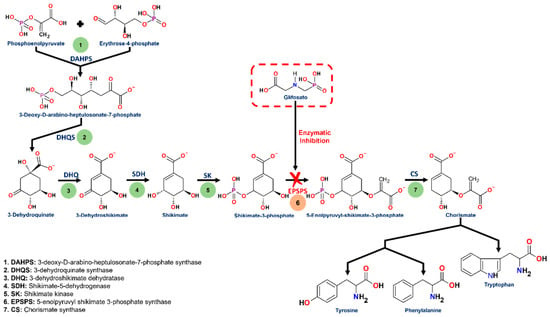
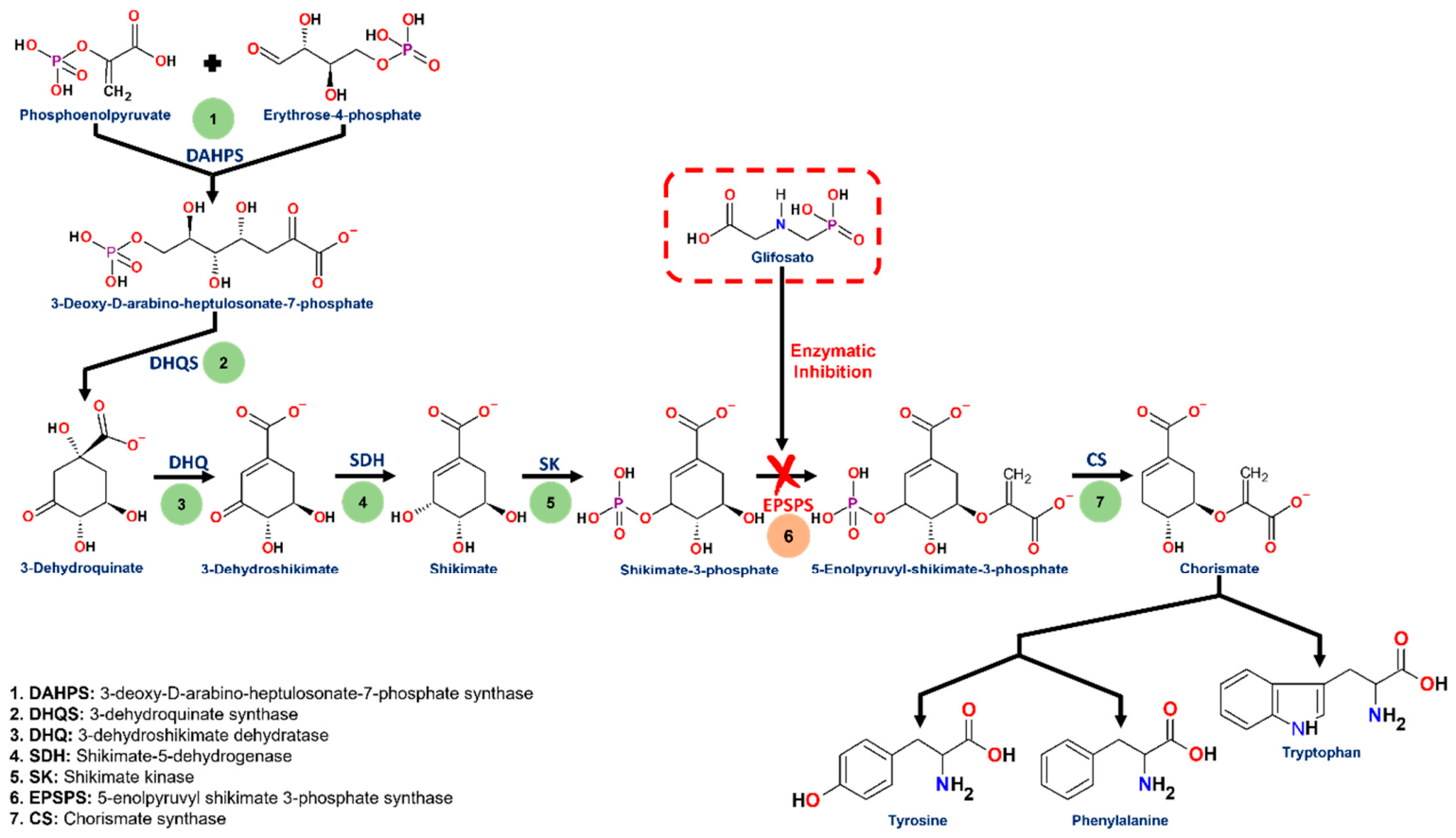
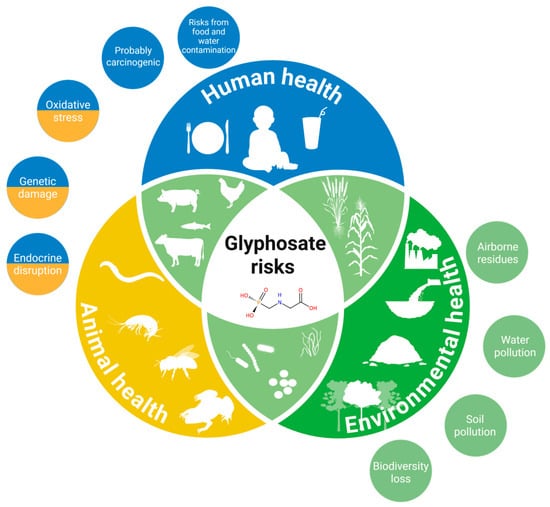
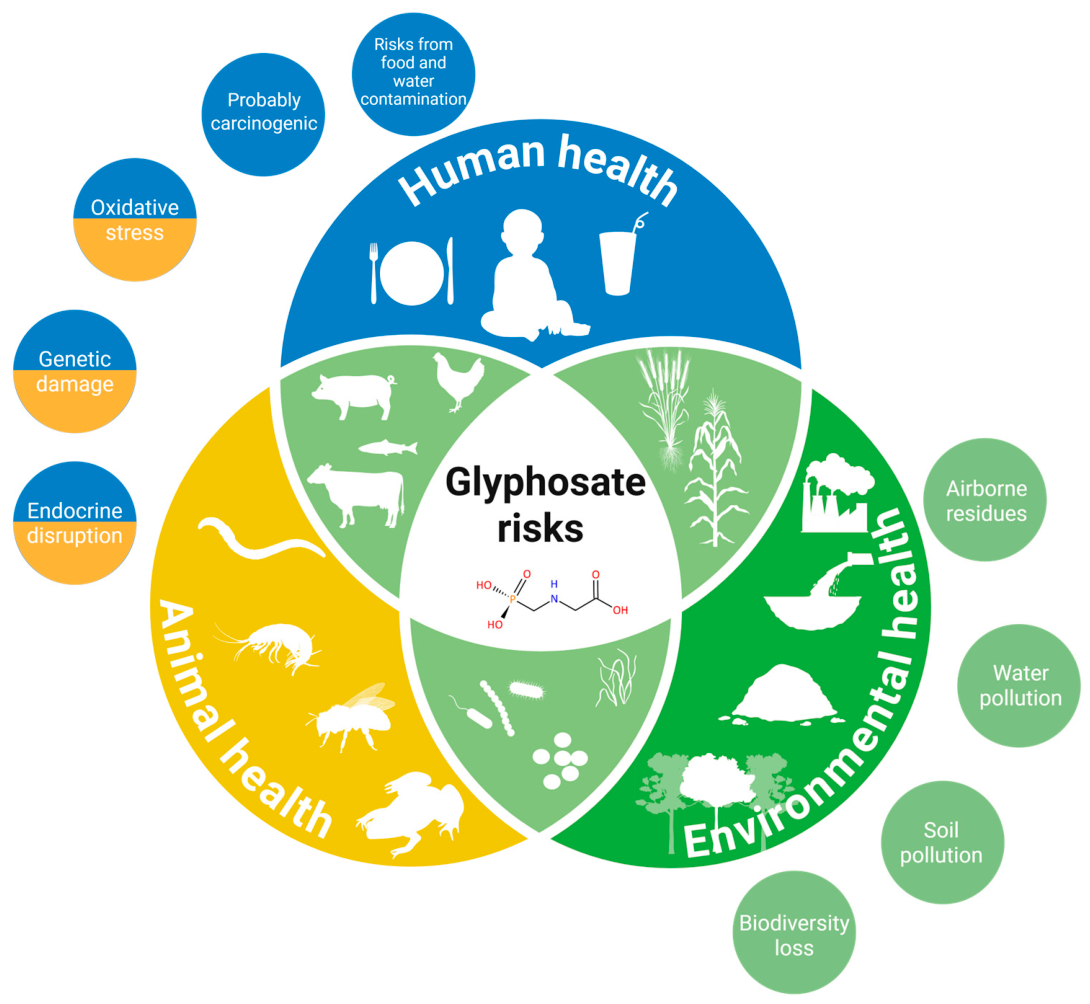
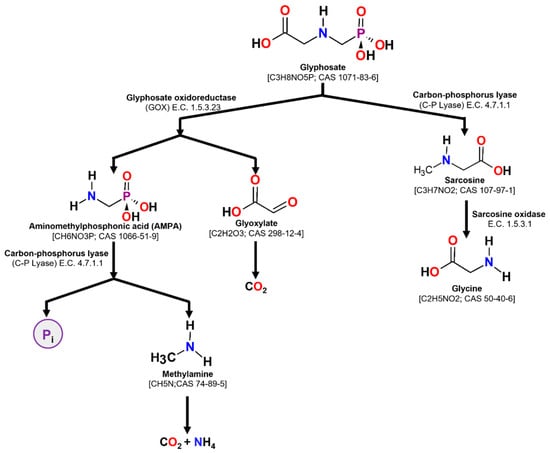
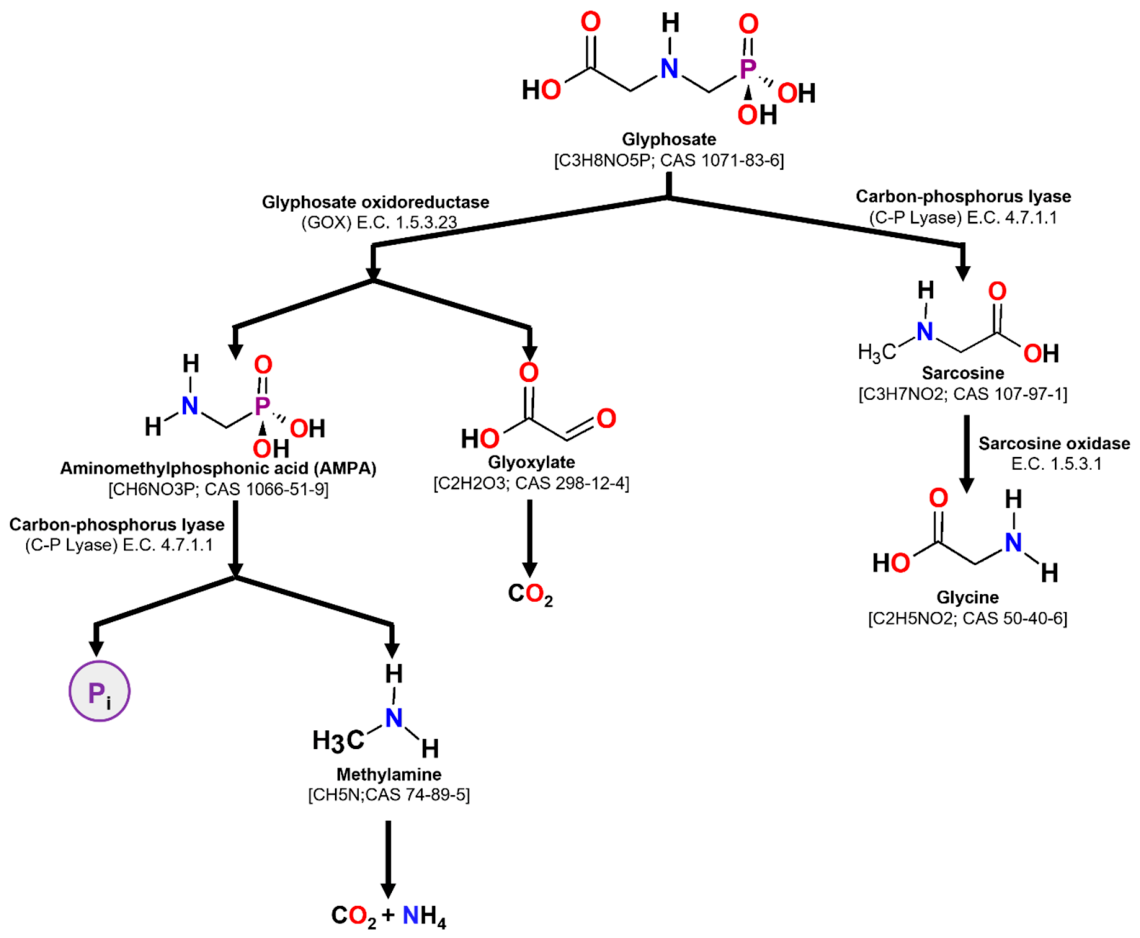

Disclaimer/Publisher’s Note: The statements, opinions and data contained in all publications are solely those of the individual author(s) and contributor(s) and not of MDPI and/or the editor(s). MDPI and/or the editor(s) disclaim responsibility for any injury to people or property resulting from any ideas, methods, instructions or products referred to in the content. |
© 2026 by the authors. Licensee MDPI, Basel, Switzerland. This article is an open access article distributed under the terms and conditions of the Creative Commons Attribution (CC BY) license.