


Abstract
This study investigated the optimisation of roselle (Hibiscus sabdariffa L.) leaf tisane formulation using response surface methodology (RSM), targeting total phenolic content (TPC), ferric reducing antioxidant power (FRAP), and DPPH radical scavenging activity as quality indicators. A face-centred central composite design was employed to evaluate dose effects (0.5–2.5 g) and infusion time (5–15 min). Multi-response optimisation using the desirability function identified 1.81 g dose and 5 min infusion as the optimum condition, yielding predicted values of 24.46 mg GAE/100 mL (TPC), 61.07 µmol Fe2+/100 mL (FRAP), and 80.47% (DPPH), with a composite desirability score of 0.64. Validation experiments confirmed strong predictive accuracy, with deviations of 0.80% (FRAP) and 3.92% (DPPH), and a modest deviation of 13.2% (TPC), acceptable within complex food matrices. The findings demonstrate that short infusion times are sufficient to extract key bioactives, ensuring consumer convenience and energy efficiency, while valorising roselle leaves as an underutilised by-product into a sustainable functional beverage. Future studies should address sensory acceptance, stability, and bioavailability to support industrial applications further.
1. Introduction
The demand for functional beverages derived from natural plant sources has grown significantly in recent years, driven by increasing consumer wellness and health awareness. Many traditional plant leaf uses have been scientifically validated, further supporting their value as functional ingredients [1]. Among these, herbal teas (tisanes) have gained notable popularity for their rich bioactive constituents, particularly phenolic compounds and antioxidants, which are associated with cardioprotective, antidiabetic, and anti-inflammatory benefits [2,3,4,5]. These beverages are also valued for their low-calorie content, natural composition, and traditional use across various cultures as remedies for different ailments [6,7,8]. Herbal tisane, made from fresh or dried roots, stems, leaves, fruits, flowers, seeds, and bark, is caffeine-free and ideal for individuals seeking a relaxing and holistic drinking experience [9].
One of the most well-known functional plants used in food compositions is Hibiscus sabdariffa L., also called roselle [10,11]. Previous studies show that the calyces of the tropical plant roselle (Hibiscus sabdariffa L.) are frequently used in herbal drinks and functional beverages [12,13,14,15]. However, roselle leaves are also becoming more recognised as an underutilised resource with significant promise, even if most studies and commercial applications concentrate on its calyces. According to earlier research [16,17], roselle leaves are high in phenolic compounds and have potent antioxidant properties. They are also abundant, sustainable, plentiful, and frequently discarded during harvest, making them a perfect fit for creating value-added products. Using roselle leaves enhances the physiological profile of herbal beverages and contributes to waste reduction and the circular food economy goals. Furthermore, research revealed that the aqueous extract of rosella leaves are non-toxic and may be categorised as having no observable adverse effects [18].
Although the bioactivity of roselle leaves has been reported, there is limited consensus on standardised preparation methods for leaf-based tisanes and few systematic studies that optimise infusion conditions to maximise extraction of target bioactives. Tea and tisane preparation variables such as leaf dosage (g/volume), water temperature, and infusion time strongly influence the extraction efficiency of phenolics and antioxidant compounds; inconsistent preparation methods therefore contribute to variability in measured total phenolic content (TPC) and antioxidant capacity across studies and products [19]. For commercial product development and reproducible research, it is essential to define and validate preparation parameters that reliably yield high functional activity.
Response surface methodology (RSM) is a statistical tool widely used for optimising formulation and processing parameters in food systems. However, studies applying RSM to roselle leaves particularly in relation to optimising multiple antioxidant responses remain limited. In view of the increasing interest in plant-based wellness beverages, developing a validated preparation protocol for roselle leaf tisane is both scientifically relevant and commercially valuable.
Therefore, this study investigates the preparation of roselle leaf tisane and applies RSM to optimise brewing conditions to maximise antioxidant capacity. Specifically, infusion time and roselle leaf dosage were selected as the primary factors, and their effects on TPC, ferric reducing antioxidant power (FRAP), and DPPH radical scavenging activity were evaluated. A composite desirability function was used to identify the optimal preparation conditions, and model validation experiments were performed to assess predictive accuracy. The explicit objectives of the study are to quantify the effects of roselle leaf dosage and infusion time on TPC, FRAP, and DPPH responses, to develop and fit RSM models that describe the relationships between the two process variables and the antioxidant responses, and to determine optimal infusion conditions using a composite desirability approach and validate the model predictions experimentally.
By providing a standardised, optimised preparation protocol and validated predictive models, this work aims to facilitate reproducible research and support the development of roselle leaf-based functional beverages with consistent antioxidant properties.
2. Materials and Methods
2.1. Materials
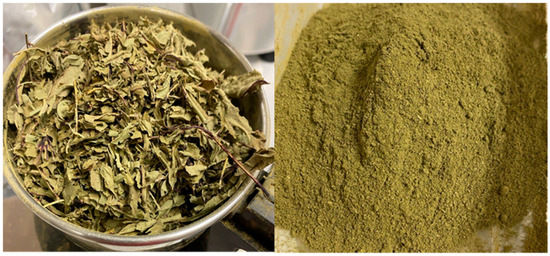
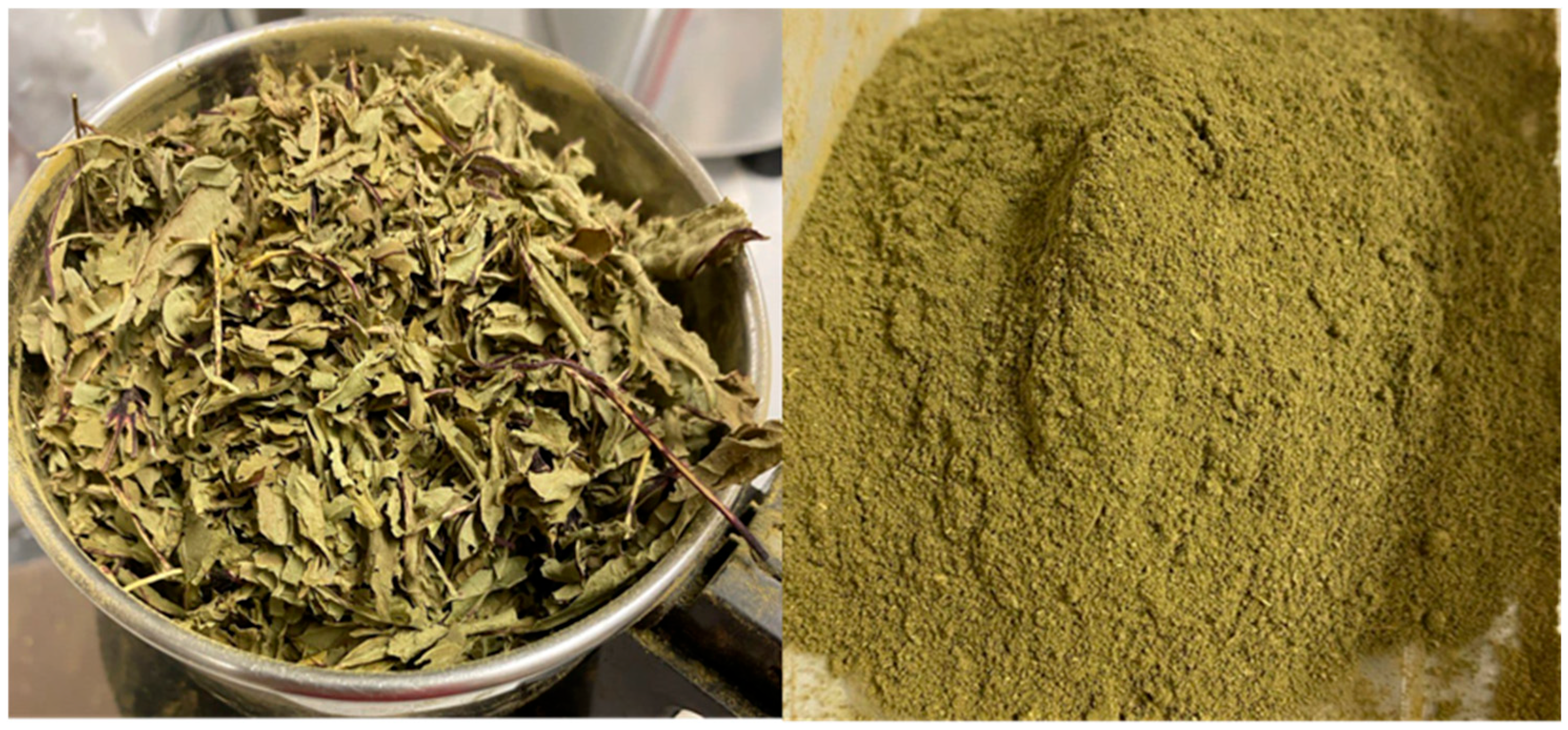
Fresh roselle leaves were obtained at three months of maturity from a roselle plantation in Raub, Pahang, Malaysia. The leaves were washed, oven-dried at 60 °C for 5 h until the moisture content was below 10% (Figure 1). Analytical-grade reagents were used: gallic acid, Trolox, DPPH, and TPTZ (Sigma-Aldrich, Steinheim, Germany); iron (III) chloride, ferrous sulfate, acetic acid, and hydrochloric acid (Merck, Darmstadt, Germany); sodium carbonate and sodium acetate trihydrate (Bendosen Laboratory Chemicals, Selangor, Malaysia); Folin–Ciocalteu reagent (Ajax Finechem, Steinheim, Germany); methanol (R&M Chemicals, Selangor, Malaysia); and L-ascorbic acid (HmbG Chemicals, Hamburg, Germany).
Figure 1.
Roselle dried leaves (left) and roselle leaf powder (right) used for tisane preparation.
2.2. Tisane Preparation
The dried leaves were ground using a laboratory grinder and passed through a 0.5 mm sieve to obtain a fine and uniform powder suitable for infusion as shown in Figure 1. A known amount of powdered leaves (0.5–2.5 g), according to the experimental design (Table 1), was weighed and packed into heat-sealed food-grade teabags. For infusion, each teabag was placed in 200 mL of freshly boiled distilled water (100 °C). Extraction temperature was not evaluated as a variable in this study, as boiling water was used to simulate standard consumer preparation conditions rather than an optimised laboratory extraction process. The beaker was immediately covered with a watch glass to minimise heat loss and volatile compound escape. The infusion was allowed to steep for the designated time (5–15 min) based on the RSM design. After steeping, the teabag was removed, and the tisane was allowed to cool to room temperature. The infusion was then filtered through Whatman No. 1 filter paper to remove suspended particles. The filtered extract was transferred into amber bottles to prevent light degradation and stored at 4 °C prior to analysis. All samples were prepared in triplicate.
Table 1.
Coded and uncoded level combinations of dosage and infusion time of dried roselle leaves tisane.
2.3. Design of Experiment
A response surface methodology (RSM) approach based on a face-centred central composite design (FCCD) was employed to evaluate the simultaneous and interactive effects of two independent variables on roselle leaf infusion performance. The factors investigated were leaf dose (X1: 0.5–2.5 g) and infusion time (X2: 5–15 min). This multivariate experimental design allows the assessment of both main effects and interaction effects between variables, rather than relying on single-factor experimentation. The selected responses were TPC, FRAP, and DPPH radical scavenging activity (Table 1). The experimental design comprised a total of 12 runs, including three replicates at the centre point (1.5 g, 10 min), which were incorporated to estimate experimental error, evaluate model adequacy, and assess the reproducibility of the response surface model.
2.4. Determination of Total Phenolic Content (TPC)
The Folin-Ciocalteau test, as advised by Norra et al. [20], was performed to determine the total phenolic content in all samples, using gallic acid as a reference phenolic component. 50 μL of distilled water and 50 μL of standard gallic acid solutions and extracts were mixed in a 96-well microplate. After that, 100 μL of the Folin-Ciocalteau reagent solution was added, which had been diluted ten times with distilled water beforehand. After six minutes, 100 microliters of 7.5% (w/v) Na2CO3 were added and mixed gently. A microplate reader (BIOTEK GEN5 EON Microplate Spectrophotometer, Winooski, VT, USA) was used to measure the absorbance of the reaction mixture at 765 nm after two hours in the dark, using distilled water as a blank solution. The TPC was expressed in gallic acid equivalents (GAE), which were computed using known amounts of the gallic acid standard.
2.5. Ferric Reducing Antioxidant Power (FRAP) Assay
The procedure used for the FRAP assay was Norra et al. [20]. To put it briefly, the FRAP reagent was made by mixing 10 volumes of 300 mM acetate buffer (pH 3.6), one volume of 10 mM TPTZ in 40 mM HCl, and one volume of 20 mM FeCl3·6H2O (10:1:1). The mixture was incubated at 37 °C for a minimum of 10 min. A 96-well microplate was filled with 200 μL of freshly prepared FRAP reagent, followed by the addition of 20 μL of extract solution and 80 μL of distilled water. After eight minutes, a microplate reader (BIOTEK GEN5 EON Microplate Spectrophotometer, Winooski, VT, USA) was used to measure the absorbance at 593 nm against a reagent blank, which was prepared using the same procedure as before but with 20 μL of water in place of the extract solution. Calculating and expressing the FRAP value in ferrous equivalents (FE) was made possible by plotting a calibration curve using FeSO4 as a standard.
2.6. DPPH Free Radical Scavenging Activity Assay
The spectrophotometric assay uses the stable radical 2,2-diphenyl-1-picrylhydrazyl (DPPH) as a reagent [20]. To measure the scavenging activity, 200 μL of a 0.008% methanol solution of DPPH was combined with 100 μL of the extracts in a 96-well microplate. After 40 min of room temperature incubation, the absorbance was measured at 517 nm using a microplate reader (BIOTEK GEN5 EON Microplate Spectrophotometer, Winooski, VT, USA) against a blank. The proportion of free radical DPPH inhibition in the extracts was calculated as follows (Equation (1)):
Ablank represents the absorbance of the control reaction (which contains all reagents except one), and Asample represents the absorbance of the test substance.
2.7. Model Verification
To evaluate the adequacy and predictive accuracy of the regression models generated through RSM, a verification experiment was conducted under the optimised conditions predicted by the software. The optimised levels for the independent variables were set as determined by the response optimiser to maximise the TPC, FRAP, and DPPH radical scavenging activity. Under these optimal conditions, using the previously described analytical methods, the tisane was prepared and analysed in triplicate for TPC, FRAP, and DPPH radical scavenging activity values. The experimental values were then compared with the predicted values generated by the polynomial regression models. The percentage error between actual and predicted responses was calculated. Additionally, a one-sample t-test (p < 0.05) was performed to assess whether the differences were statistically significant, confirming the model’s validity.
2.8. Sensory Evaluation
Sensory evaluation was conducted on the tisane sample prepared under the optimised conditions identified by the RSM model and subsequently validated through experimental testing. A panel of 33 semi-trained individuals evaluated the sample using a 7-point hedonic scale to assess colour, aroma, sourness, bitterness, viscosity, aftertaste, and overall acceptability. The samples were provided in 50 mL plastic cups at room temperature in identical conditions for the evaluation, which took place in separate sensory chambers with white lighting. In between tastes, panellists were told to wash their mouths with water. The sensory data verified the optimised formulation’s acceptability.
2.9. Statistical Analisis
All experimental data were analysed using response surface methodology (RSM). A face-centred central composite design (FCCD) was constructed to evaluate the effects of roselle leaf dosage and infusion time on the total phenolic content (TPC), ferric reducing antioxidant power (FRAP), and DPPH radical scavenging activity. Model fitting, analysis of variance (ANOVA), regression coefficient estimation, and generation of response surface plots were performed using Minitab version 21.0 (Minitab Inc., State College, PA, USA).
The adequacy of each fitted model was assessed based on the coefficient of determination (R2), adjusted R2, predicted R2, lack-of-fit test, and diagnostic residual plots. Model terms with p < 0.05 were considered statistically significant. Optimisation of the responses was carried out using a composite desirability function to identify the combination of factors that maximised TPC, FRAP, and DPPH values simultaneously.
All experimental measurements were conducted in triplicate, and results are reported as mean ± standard deviation (SD). One-way ANOVA followed by Tukey’s post hoc test was used where relevant to compare mean differences among treatments.
3. Results
3.1. Regression Model and Equation
Second-order polynomial regression models were developed to evaluate the influence of roselle leaf dose and infusion time on TPC, FRAP, and DPPH radical scavenging activity. All three models were statistically significant (p < 0.001), with high coefficients of determination (R2 = 0.993 for TPC, 0.991 for FRAP, and 0.949 for DPPH radical scavenging activity), indicating excellent model fit and predictive accuracy. The lack-of-fit tests for all models were non-significant (p > 0.05), confirming that the quadratic models sufficiently captured the experimental variation without systematic deviation (Table 2). These results validate the use of RSM in modelling the nonlinear and interactive effects of the two independent variables.
Table 2.
ANOVA (analysis of variance) for the surface quadratic model for TPC, FRAP, and DPPH radical scavenging activity.
As expected, dose exhibited a strong positive linear effect on TPC and FRAP, while its relationship with DPPH was negative, as reflected in the model coefficients. Significant quadratic terms (dose2 and time2) and interaction terms (dose × time) in each model further highlight the complexity of the response behaviours, reinforcing the need to apply second-order polynomial models for accurately predicting the optimal extraction conditions. These validated models provide a solid foundation for the subsequent response surface and numerical optimisation analyses.
Following the model validation, the experimental data were examined to observe the direct effects of dose and infusion time on the measured responses. Table 3 presents the experimental responses of total phenolic content (TPC), ferric reducing antioxidant power (FRAP), and DPPH radical scavenging activity as influenced by varying levels of roselle leaf dose and infusion time. The data demonstrate that increasing the leaf dose from 0.5 g to 2.5 g substantially improves TPC and FRAP, regardless of the infusion time applied. For instance, TPC increased from 6.32–7.51 mg GAE/100 mL at 0.5 g to over 30 mg GAE/100 mL at 2.5 g, while FRAP rose correspondingly from 17.35–20.27 µmol Fe2+/100 mL to values above 70 µmol Fe2+/100 mL, suggesting a strong positive dose-dependent effect. The influence of infusion time (5 to 15 min) on TPC and FRAP was relatively moderate compared to the dose. Slight increases were observed with longer steeping times, such as in test runs 6 and 9. Still, the effect was less consistent, indicating that most phenolic compounds were extracted within the first few minutes of infusion. In addition to being consistent with the practice of commercial teas [21], which require only a few minutes to infuse, this is also consistent with previous findings in herbal infusions, where fast polyphenol release occurs during the initial extraction phases [22].
Table 3.
Factorial design arrangement and response of the dependent variables to leaf dose and infusion time (independent variables).
In contrast, the DPPH radical scavenging activity (Y3) shows an opposite trend. Higher doses led to a decline in % inhibition, with the highest DPPH values (above 88%) observed at the lowest dose (0.5 g). As the dose increased, DPPH radical scavenging activity dropped, reaching the lowest values (≈73%) at 2.5 g. The results suggest that higher doses increase phenolic and reduce power content, but they may also introduce matrix effects or compound saturation that reduce DPPH radical scavenging activity efficiency. Furthermore, the DPPH radical scavenging activity results in our study appeared less sensitive to infusion time, supporting the idea that this response depends more on extract composition than duration of exposure. Similar findings have been reported in Hibiscus sabdariffa infusions, where prolonged brewing time beyond an early extraction window did not significantly increase DPPH radical scavenging activity, and the observed antioxidant capacity was more strongly associated with the phenolic profile and extraction conditions (plant part, solvent/temperature) than with infusion duration [23].
The experimental data confirm that leaf dose is the dominant factor influencing all three responses. However, the inverse relationship between dose and DPPH activity highlights the importance of multi-response optimisation, as maximising all antioxidant parameters simultaneously is not straightforward. These trends underscore the need for a statistical modelling approach, such as RSM, to identify an optimal compromise formulation.
3.2. Effect of Leaf Dose and Infusion Time on the TPC, FRAP, and DPPH Radical Scavenging Activity of Tisane Roselle Leaves
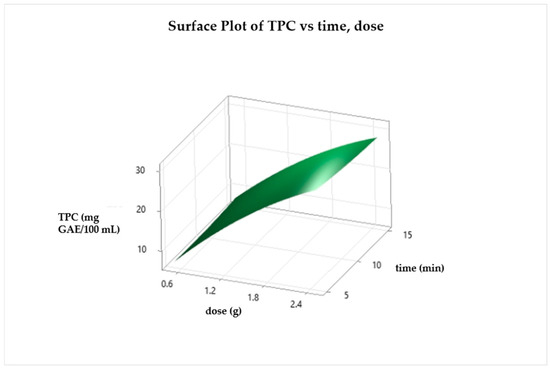
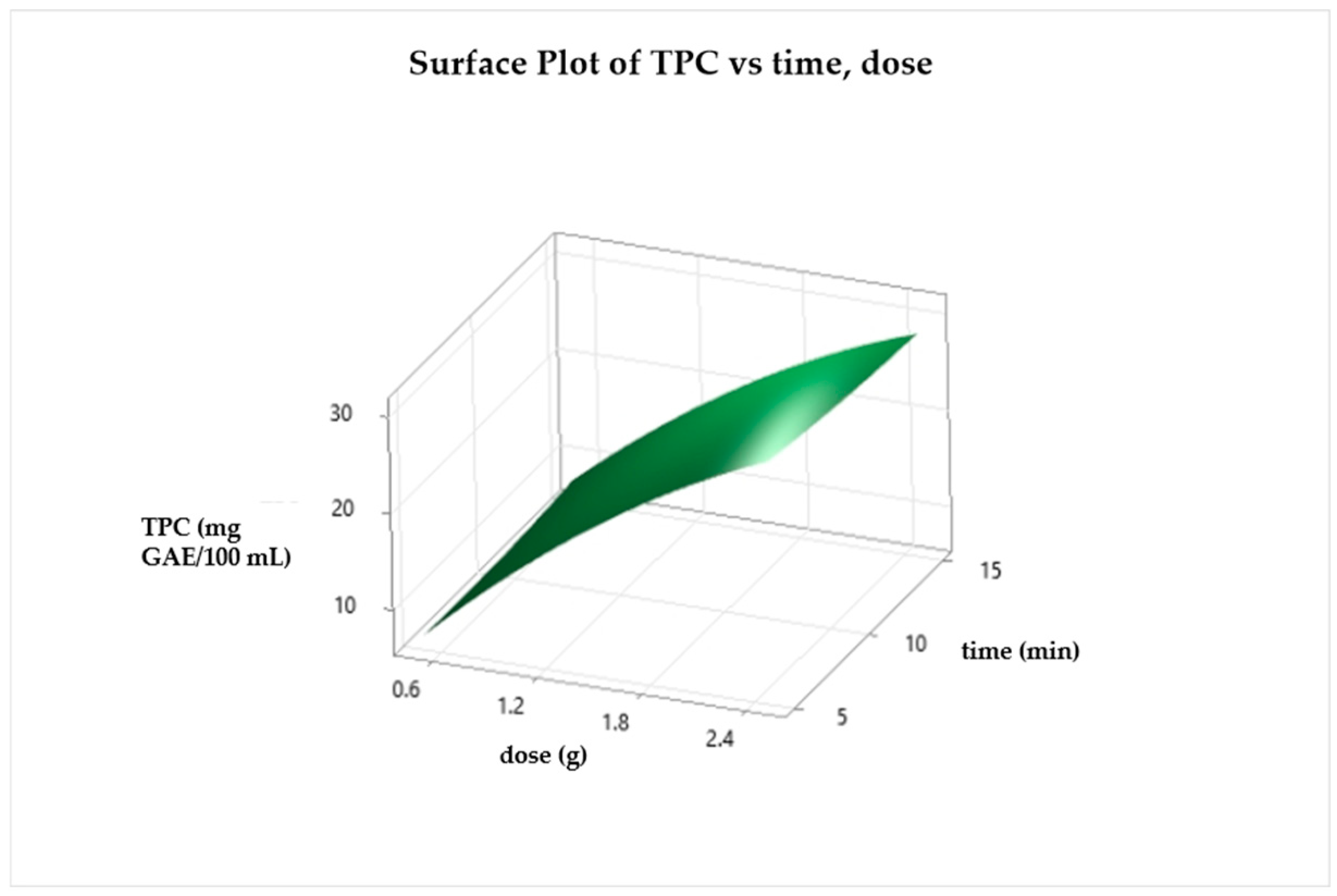
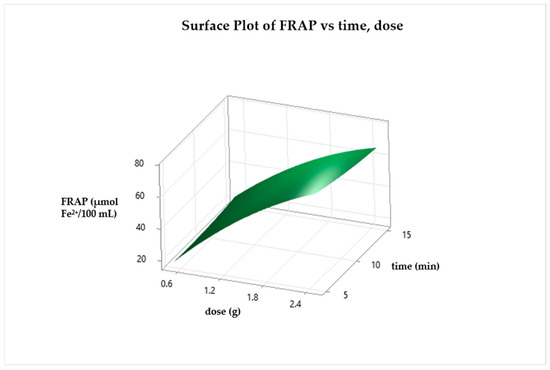
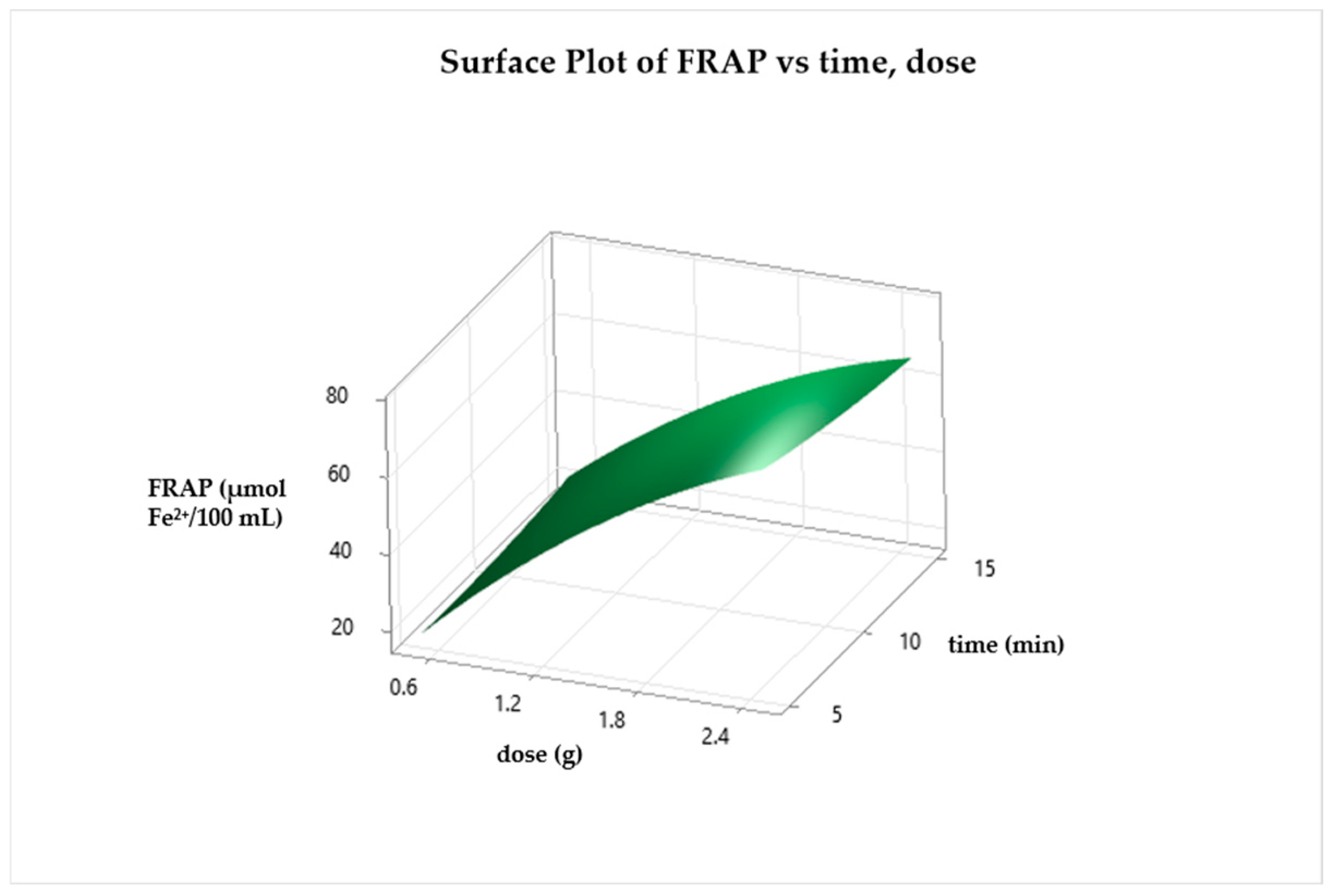
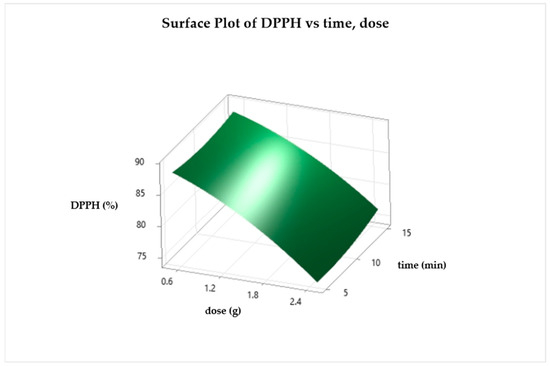
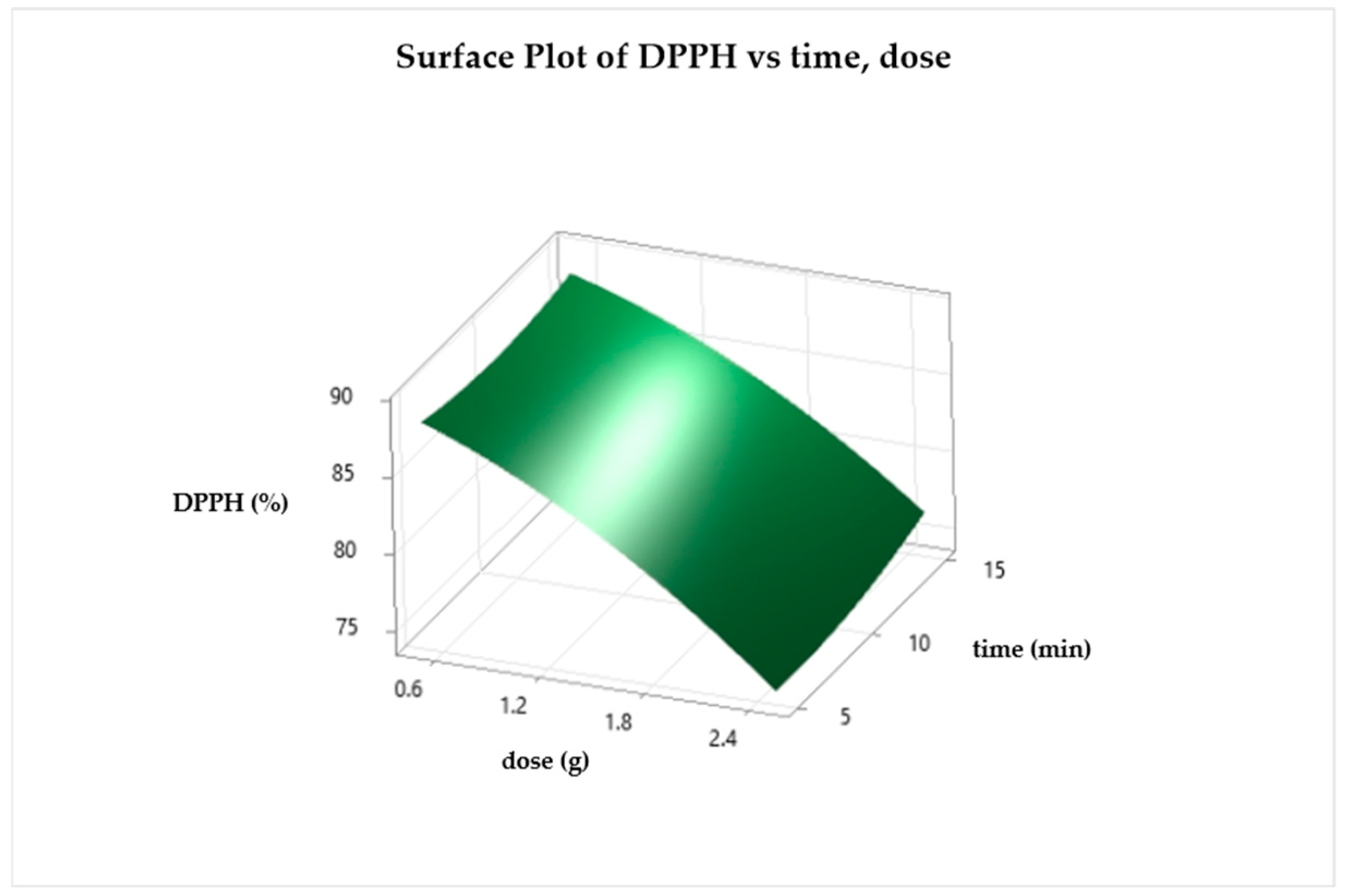
The three-dimensional (3D) surface plots in Figure 2, Figure 3 and Figure 4 illustrate the effects of roselle leaf dose, expressed on a normalised basis (g/100 mL) and infusion time (min) on the three primary responses: TPC, FRAP, and DPPH radical scavenging activity. The surface plot of TPC (Figure 2) demonstrates a clear upward trend with increasing dose and time, indicating that both factors enhance phenolic compound extraction. However, the steeper gradient along the dose axis suggests that dose has a greater influence than time. This is likely due to the increased availability of extractable polyphenols at higher solid concentrations. A nonlinear curvature at the surface’s upper end also indicates a saturation effect, where additional dose or time yields diminishing increases in TPC. This observation aligns with previous reports on herbal infusions, where most phenolics are extracted rapidly, followed by a plateau phase [24].
Figure 2.
Three-dimensional surface plot showing the roselle leaf dose and infusion time effect on TPC.
Figure 3.
Three-dimensional surface plot showing the roselle leaf dose and infusion time effect on FRAP.
Figure 4.
Three-dimensional surface plot showing the roselle leaf dose and infusion time effect on DPPH radical scavenging activity.
A similar pattern was seen for FRAP, increasing with both dose and time (Figure 3). The surface’s striking resemblance to TPC supports the idea that phenolic compounds are a key factor in the reducing power of roselle tisane. Given the association between FRAP and TPC, it is anticipated that many recovered chemicals support both antioxidant tests. Once more, the impact of dosage was more pronounced, highlighting its significance in attaining a high antioxidant capacity.
On the other hand, the DPPH radical scavenging activity surface plot (Figure 4) showed the opposite pattern. Higher doses led to a decline in % inhibition, with the highest DPPH values (above 87%) observed at the lowest dose (0.5 g). As the dose increased, DPPH radical scavenging activity dropped, reaching the lowest values (≈73%) at 2.5 g. A plausible reason for this inverse behaviour is that higher roselle concentrations may introduce additional matrix components such as tannins, polysaccharides and coloured pigments. These compounds can increase total phenolics and reducing power (as reflected in TPC and FRAP), but may also promote phenolic aggregation, turbidity or inner-filter effects that reduce the effective interaction between antioxidants and the DPPH radical, resulting in lower apparent inhibition despite a higher antioxidant load.
Several studies have reported that DPPH radical scavenging activity is maximised during shorter infusion times. McAlpine and Ward [22] observed no significant improvement in DPPH inhibition when tea brewing was extended from five to ten minutes across different tea types. Vinci et al. [25] reported peak DPPH radical scavenging activity in black and green teas after just three min of brewing, while Kowalska et al. [26] found that oolong tea brewed for five min at 100 °C exhibited the highest DPPH radical scavenging activity. This suggests that optimal radical scavenging is achieved under mild extraction conditions, whereas prolonged or concentrated infusions may reduce DPPH efficiency, potentially due to matrix interaction and inner-filter interference effects.
Combined, these plots demonstrate formulation variables’ intricate and occasionally conflicting impacts on antioxidant responses. Higher doses may lessen DPPH’s efficiency but also improve TPC and FRAP. Subsequently, a desirability study showed that the ideal formulation is found at a balance point that attains acceptable levels for all three responses.
3.3. Process Optimisation and Verification of the Predictive Model
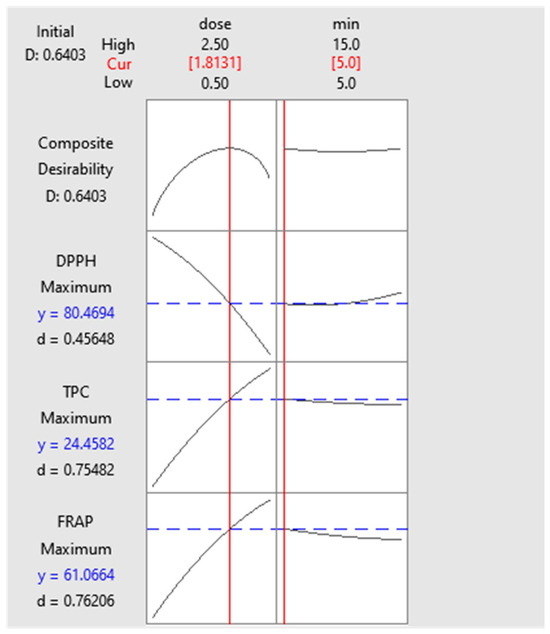
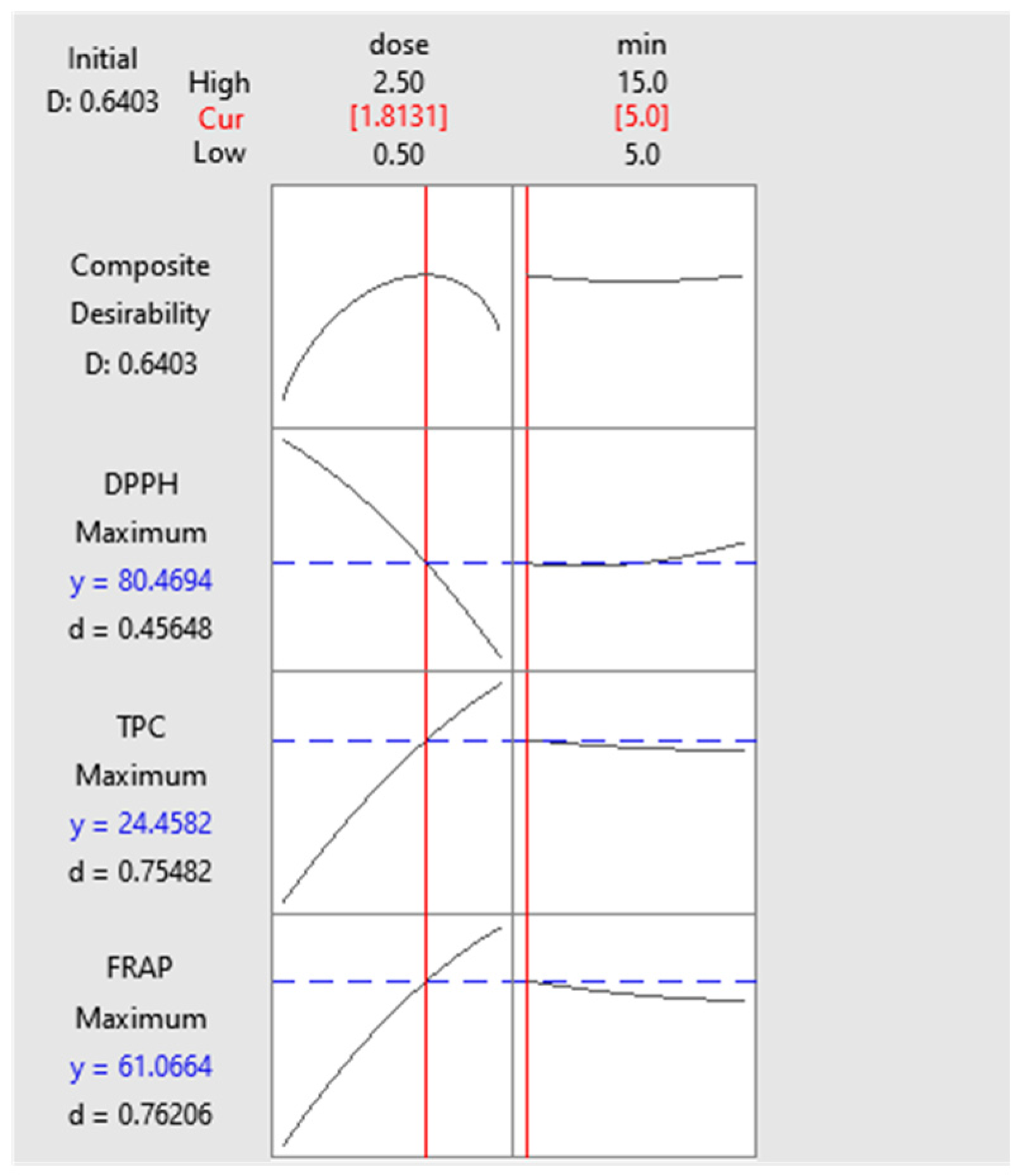
Multi-response optimisation using the desirability function approach was applied to identify the most suitable infusion parameters for roselle leaf tisane. The Response Optimiser plot (Figure 5) indicated that an infusion dose of 1.81 g of roselle leaves in 200 mL of boiling water with an infusion time of 5 min provided the best compromise among the three target responses, namely TPC, FRAP, and DPPH radical scavenging activity. Under these optimum conditions, the model predicted values of 24.46 mg GAE/100 mL for TPC, 61.07 µmol Fe2+/100 mL for FRAP, and 80.47% for DPPH radical scavenging activity, resulting in a composite desirability score of 0.6403.
Figure 5.
Response optimiser plot showing the predicted values for TPC, FRAP, and DPPH radical scavenging activity at the optimal formulation condition.
These findings emphasise the need to balance phenolic concentration and antioxidant mechanisms in functional beverage formulation. Increasing the dose of roselle leaves enhanced TPC and FRAP due to greater polyphenol extraction and availability of reducing agents. However, DPPH radical scavenging activity declined at higher doses, likely due to pro-oxidant effects, compound saturation, or matrix interactions that reduced radical scavenging efficiency. The optimised formulation therefore represents an effective balance, maximising overall antioxidant potential without compromising individual assay outcomes. Notably, the relatively short infusion time (5 min) offers practical advantages for consumers and reduces energy input, strengthening the case for commercial application.
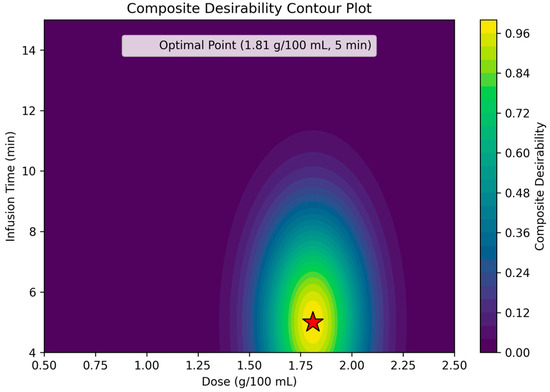
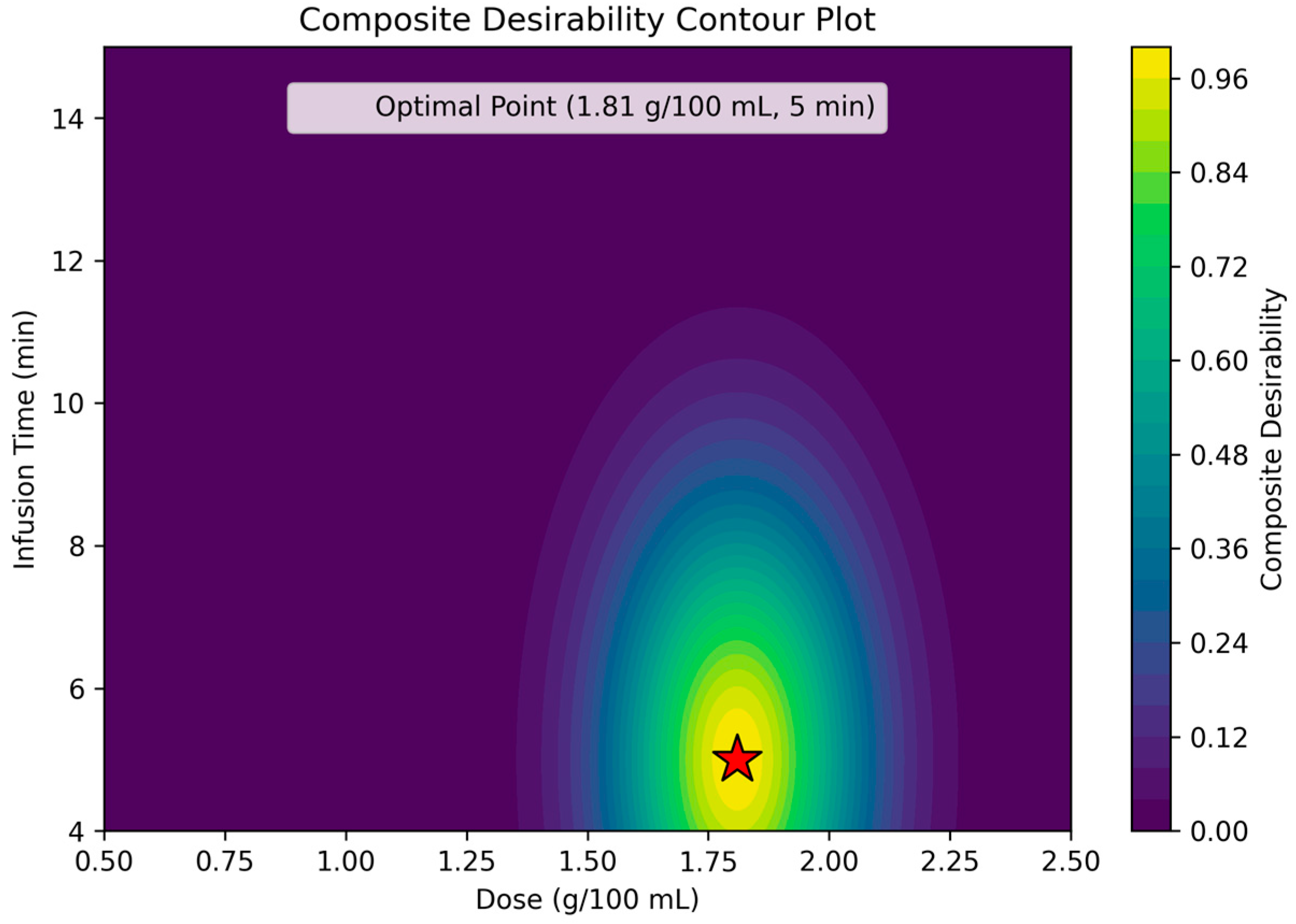
The composite desirability contour plot (Figure 6) further illustrates the optimal region where all three responses can be simultaneously maximised. A distinct peak was observed around an infusion condition of 1.81 g of roselle leaves in 200 mL of water with an infusion time of 5 min, which is consistent with the numerical optimisation results, yielding a maximum composite desirability value of 0.64 [27]. The contour shape revealed that dose exerted a greater influence than time, with desirability increasing sharply with dose up to the optimum before plateauing or declining. Infusion time had only a minor effect, reinforcing evidence that short steeping is sufficient to extract key phenolics and antioxidants from roselle leaves, as reported previously [22,25,26].
Figure 6.
Composite desirability contour plot illustrating the optimal region for simultaneous maximisation of TPC, FRAP, and DPPH radical scavenging activity as a function of roselle leaf dose and infusion time. The dose is expressed on a normalised basis (g/100 mL) for modelling purposes. The optimal condition (indicated by a red star) was identified at 1.81 g/100 mL with an infusion time of 5 min, corresponding to a composite desirability value of 0.6403.
Integrating multiple response surfaces into a single desirability map offers an intuitive yet statistically rigorous framework for decision-making. It highlights the inherent trade-offs between responses: while TPC and FRAP benefit from higher concentrations, DPPH radical scavenging activity is favoured at lower doses. In order to convert tisane products into both functional and commercial success, a balanced formulation that provides phenolic richness, strong antioxidant activity, and consumer-friendly preparation is reflected in the discovered optimum zone. Furthermore, compared to the lengthier infusion duration, the color of the 5 min infusion is not very dark. Tannin will also add to the bitter flavor during the extended infusion period [28].
Experimental validation conducted under the predicted optimum conditions (1.81 g of roselle leaves infused in 200 mL of boiling water for 5 min) yielded observed values of 21.23 mg GAE/100 mL for TPC, 60.58 µmol Fe2+/100 mL for FRAP, and 83.62% for DPPH radical scavenging activity. These values were compared with the corresponding model-predicted values of 24.46 mg GAE/100 mL, 61.07 µmol Fe2+/100 mL, and 80.47%, using a one-sample t-test. The results indicated statistically significant differences (p < 0.05) between predicted and observed values for TPC, FRAP, and DPPH. This finding suggests that the model predictions are not in exact statistical agreement with the experimental responses at the optimum condition. However, the relative deviations between predicted and experimental values for FRAP (0.80%) and DPPH (3.92%) were small in magnitude and within an acceptable range for practical formulation and process optimisation. Therefore, while the differences are statistically significant, the model remains useful for predicting response trends and guiding optimisation within the studied experimental domain. The relative error of 13.21% observed for TPC indicates a moderate deviation between predicted and experimental values, suggesting that the model has limited predictive accuracy for this response. Such deviations have been reported in food process optimisation studies involving complex plant matrices, where biological variability and sensitivity of phenolic assays can contribute to higher prediction errors [29,30]. Therefore, while the model provides a useful indication of trends, its predictive capability for TPC should be interpreted with caution.
These results confirm that the RSM models provide robust and practically relevant predictions, particularly for antioxidant capacity indices (FRAP and DPPH), while the modest deviation observed for TPC highlights the complexity of phenolic extraction dynamics. Overall, the optimisation model can be considered statistically adequate and operationally valid for guiding formulation development of roselle leaf tisane.
3.4. Sensory Quality of Tisane from Roselle Leaves
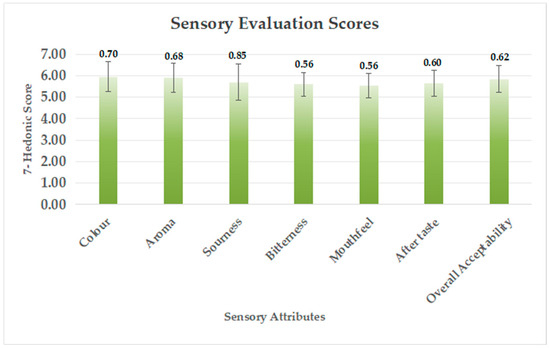
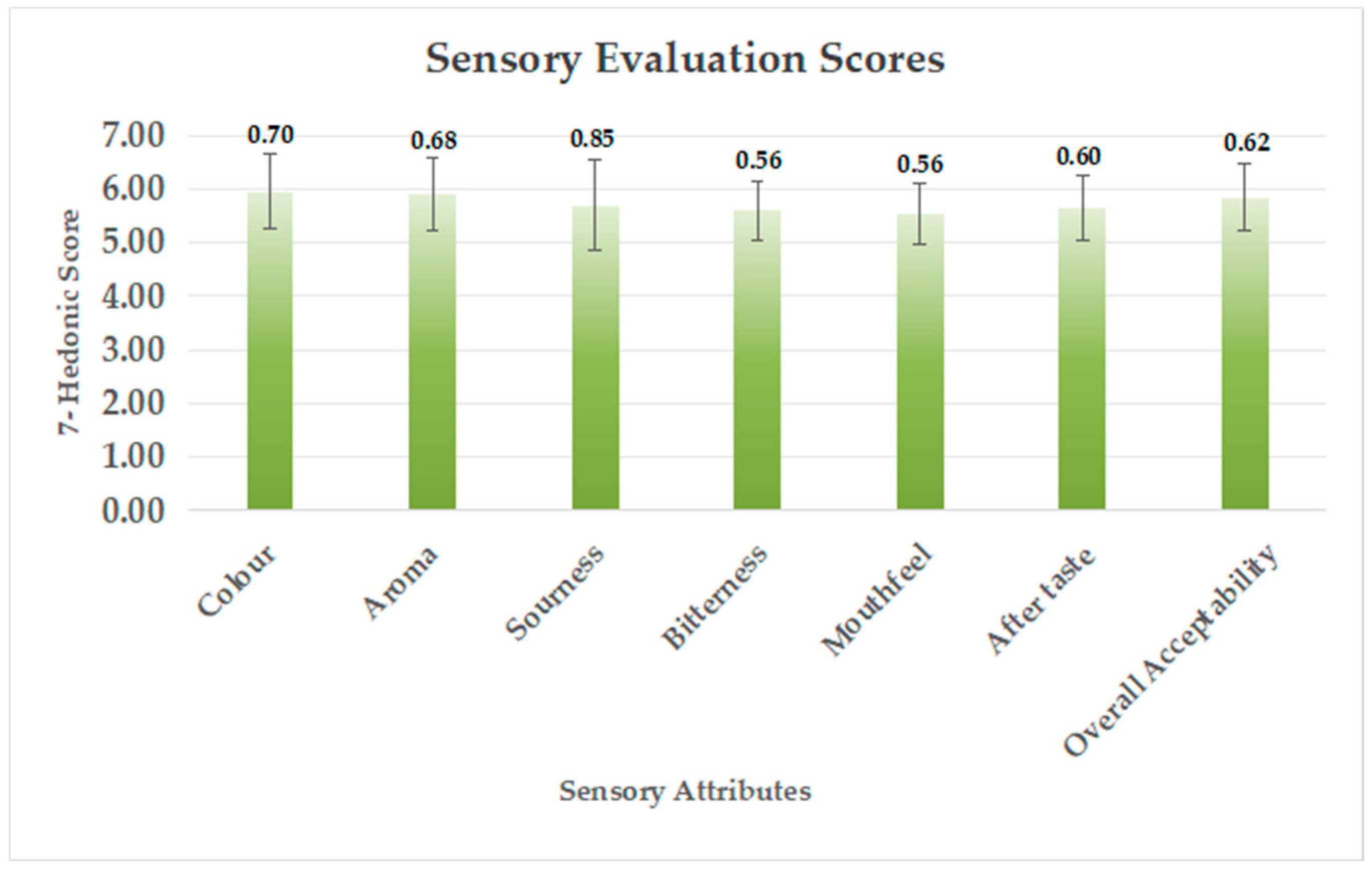
Sensory evaluation was conducted on the final optimised tisane formulation to assess consumer acceptability. Among the evaluated attributes, colour (5.95) and aroma (5.90) received the highest mean scores, indicating strong consumer approval of the tisane’s visual and aromatic appeal (Figure 7). The panelists accepted the mild sourness and aftertaste of the tisane with a mean score of 5.70 and 5.65, respectively. Mouthfeel and bitterness had somewhat lower scores (between 5.55 and 5.60), but they were still in the “like slightly” to “like moderately” range. The relatively low bitterness scores may be related to the presence of phenolic compounds formed or released during extended infusion. Polyphenols, particularly tannin-associated fractions, have been reported to contribute to bitterness and astringency in herbal infusions; however, as tannin content was not directly quantified in this study, this relationship remains speculative and warrants further investigation. These levels do not, however, fall below the neutral threshold (score = 4), suggesting that there is no discernible sensory rejection. The optimised formulation had a satisfactory reaction, as evidenced by the total acceptability score of 5.85. These findings support the product’s viability for consumer applications by confirming that important sensory qualities were not compromised by the functional optimisation based on antioxidant activity (TPC, FRAP, DPPH radical scavenging activity).
Figure 7.
Sensory evaluation scores of the product based on a 7-point hedonic scale. The bar chart presents mean scores for colour, aroma, sourness, bitterness, mouthfeel, aftertaste, and overall acceptability. Standard deviation values are represented by error bars, with numerical values displayed above each bar for clarity.
4. Conclusions
This study successfully applied RSM to optimise the infusion conditions for roselle (Hibiscus sabdariffa) leaf tisane, with TPC, FRAP, and DPPH radical scavenging activity as the key quality indicators. The multi-response optimisation using desirability function identified an optimum condition of 1.81 g of roselle leaves infused in 200 mL of boiling water for 5 min, which provided a balanced antioxidant profile with a composite desirability value of 0.64.
Validation trials confirmed the adequacy of the predictive models, with minor deviations for FRAP (0.8%) and DPPH (3.9%), and a moderate deviation for TPC (13.2%). This indicates that while the model reliably predicts FRAP and DPPH responses, its predictive accuracy for TPC is comparatively lower and should be interpreted with caution. Nevertheless, the findings demonstrate that short infusion times are sufficient to extract key bioactive compounds, offering both consumer convenience and improved energy efficiency. Overall, this work demonstrates the potential of roselle leaves as an underutilised by-product compared to calyces, as a functional ingredient for sustainable beverage development. The optimised tisane formulation delivers strong antioxidant capacity, practical preparation, and commercial feasibility. While the present work focuses on optimisation based on global antioxidant responses (TPC, FRAP and DPPH), future studies will integrate chromatographic profiling to relate individual phenolic compounds with antioxidant mechanisms in detail. Further investigation of individual bioactive compounds and their biological effects, including in vivo validation, would provide complementary insight into the functional potential of roselle leaf infusions and is the subject of ongoing work.
Author Contributions
Conceptualization, I.Z.; formal analysis, I.Z., N.I., M.S.J. and N.A.S.; data curation, I.Z. and N.I.; writing—original draft preparation, I.Z.; writing—review and editing, I.Z. and N.I.; supervision, I.Z. and N.I. All authors have read and agreed to the published version of the manuscript.
Funding
This research was funded by Ministry of Agriculture and Food Security, under IMAT Project (K-RF288-1001-KSR99).
Data Availability Statement
The original contributions presented in this study are included in the article. Further inquiries can be directed to the corresponding author.
Conflicts of Interest
The authors declare no conflicts of interest.
References
- Liu, Y.; Guo, C.; Zang, E.; Shi, R.; Liu, Q.; Zhang, M.; Zhang, K.; Li, M. Review on herbal tea as a functional food: Classification, active compounds, biological activity, and industrial status. J. Future Foods 2023, 3, 206–219. [Google Scholar] [CrossRef] [Scilit]
- Dludla, P.V.; Joubert, E.; Muller, C.J.; Louw, J.; Johnson, R. Hyperglycemia-induced oxidative stress and heart disease-cardioprotective effects of rooibos flavonoids and phenylpyruvic acid-2-O-β-D-glucoside. Nutr. Metab. 2017, 14, 45. [Google Scholar] [CrossRef] [Scilit] [PubMed]
- Gao, Y.; Wang, J.Q.; Fu, Y.Q.; Yin, J.F.; Shi, J.; Xu, Y.Q. Chemical composition, sensory properties and bioactivities of Castanopsis lamontii buds and mature leaves. Food Chem. 2020, 316, 126370. [Google Scholar] [CrossRef] [Scilit]
- Zhao, X.; Guo, S.; Lu, Y.; Hua, Y.; Zhang, F.; Yan, H.; Shang, E.-X.; Wang, H.-Q.; Zhang, W.-H.; Duan, J.-A. Lycium barbarum L. leaves ameliorate type 2 diabetes in rats by modulating metabolic profiles and gut microbiota composition. Biomed. Pharmacother. 2020, 121, 109559. [Google Scholar] [CrossRef] [Scilit]
- Stangl, V.; Dreger, H.; Stangl, K.; Lorenz, M. Molecular targets of tea polyphenols in the cardiovascular system. Cardiovasc. Res. 2007, 73, 348–358. [Google Scholar] [CrossRef] [Scilit]
- Ojewole, J. Antiinflammatory and analgesic effects of Psidium guajava Linn. (Myrtaceae) leaf aqueous extract in rats and mice. Methods Find. Exp. Clin. Pharmacol. 2006, 28, 441–446. [Google Scholar] [CrossRef] [Scilit]
- Ortega-Vidal, J.; Ruiz-Riaguas, A.; Fernández-de Córdova, M.; Ortega-Barrales, P.; Llorent-Martínez, E. Phenolic profile and antioxidant activity of Jasonia glutinosa herbal tea. Influence of simulated gastrointestinal in vitro digestion. Food Chem. 2019, 287, 258–264. [Google Scholar] [CrossRef] [Scilit]
- Nash, L.A.; Ward, W.E. Tea and bone health: Findings from human studies, potential mechanisms, and identification of knowledge gaps. Crit. Rev. Food Sci. Nutr. 2017, 57, 1603–1617. [Google Scholar] [CrossRef] [Scilit] [PubMed]
- Priya, N.S.; Krishna, P.S.; Babu, P.S.; Polisetty, N.V.; Mamatha, P.; Bharathi, M.; Bhargavi, V.R.; Vallabhaneni, S.V. A Comprehensive Review on the Development of Functional Tisane Formulations. Nanotechnol. Percept. 2024, 20, 2868–2879. [Google Scholar]
- Chew, L.Y.; Teng, S.K.; Neo, Y.P.; Sim, Y.Y.; Chew, S.C. The potential of roselle (Hibiscus sabdariffa) plant in industrial applications: A promising source of functional compounds. J. Oleo Sci. 2024, 73, 275–292. [Google Scholar] [CrossRef] [Scilit]
- Shruthi, V.; Ramachandra, C.; Udaykumar Nidoni, U.N.; Sharanagouda Hiregoudar, S.H.; Nagaraj Naik, N.N.; Kurubar, A.R. Roselle (Hibiscus sabdariffa L.) as a source of natural colour: A review. Plant Arch. 2016, 16, 515–522. [Google Scholar]
- McKay, D.L.; Chen, C.O.; Saltzman, E.; Blumberg, J.B. Hibiscus sabdariffa L. tea (tisane) lowers blood pressure in prehypertensive and mildly hypertensive adults. J. Nutr. 2010, 140, 298–303. [Google Scholar] [CrossRef] [Scilit]
- Larasati, I.D.; Oktaviani, N.M.; Lioe, H.N.; Estiasih, T.; Palma, M.; Setyaningsih, W. Optimization of Ultrasound-Assisted Cold-Brew Method for Developing Roselle (Hibiscus sabdariffa L.)-Based Tisane with High Antioxidant Activity. Beverages 2023, 9, 58. [Google Scholar] [CrossRef] [Scilit]
- Khongrum, J.; Yingthongchai, P.; Boonyapranai, K.; Wongtanasarasin, W.; Donrung, N.; Sukketsiri, W.; Prachansuwan, A.; Chonpathompikunlert, P. Antidyslipidemic, Antioxidant, and Anti-inflammatory Effects of Jelly Drink Containing Polyphenol-Rich Roselle Calyces Extract and Passion Fruit Juice with Pulp in Adults with Dyslipidemia: A Randomized, Double-Blind, Placebo-Controlled Trial. Oxidative Med. Cell. Longev. 2022, 2022, 4631983. [Google Scholar] [CrossRef] [Scilit]
- Dehkhoda, B.; Enayati, A.; Mirzaei, H.; Ghorbani, S.; Soleimani, M.H.; Amirkhanlou, S.; Sahebkar, A. Roselle (Hibiscus sabdariffa L.) extract as an adjunct to valsartan in patients with mild chronic kidney disease: A double-blind randomized controlled clinical trial. Avicenna J. Phytomed. 2024, 14, 505. [Google Scholar] [CrossRef]
- Guardiola, S.; Mach, N. Therapeutic potential of Hibiscus sabdariffa: A review of the scientific evidence. Endocrinol. Y Nutr. (Engl. Ed.) 2014, 61, 274–295. [Google Scholar] [CrossRef] [Scilit] [PubMed]
- Lyu, J.I.; Kim, J.M.; Kim, D.G.; Kim, J.B.; Kim, S.H.; Ahn, J.W.; Kang, S.-Y.; Ryu, J.; Kwon, S.-J. Phenolic Compound Content of Leaf Extracts from Different Roselle (Hibiscus sabdariffa) Accessions. Plant Breed. Biotechnol. 2020, 8, 1–10. [Google Scholar] [CrossRef] [Scilit]
- Hasnisa, H.; Syahida, M.; Hadijah, H. Acute and sub-acute toxicity studies of roselle leaves. Food Res. 2022, 6, 1–8. [Google Scholar] [CrossRef] [Scilit]
- Mahendra, S.B. Studies on the Effects of Drying Time and Brewing Conditions on the Quality and Organoleptic Attributes of Roselle (Hibiscus sabdariffa L.) Tea Infusion. Master’s Thesis, Uttar Banga Krishi Vishwavidyalaya, Cooch Behar, India, 2023. [Google Scholar]
- Norra, I.; Hadijah, H.; Norhartini, A. Effect of steaming and frozen storage on polyphenol content and antioxidant properties of Mangifera odorata (Kuini) pulp. Food Res. 2021, 5, 313–321. [Google Scholar] [CrossRef] [Scilit]
- Price, W.E.; Spitzer, J.C. The kinetics of extraction of individual flavanols and caffeine from a Japanese green tea (Sen Cha Uji Tsuyu) as a function of temperature. Food Chem. 1994, 50, 19–23. [Google Scholar] [CrossRef] [Scilit]
- McAlpine, M.D.; Ward, W.E. Influence of steep time on polyphenol content and antioxidant capacity of black, green, rooibos, and herbal teas. Beverages 2016, 2, 17. [Google Scholar] [CrossRef] [Scilit]
- Winiarska-Mieczan, A.; Baranowska-Wójcik, E. The effect of brewing time on the antioxidant activity of tea infusions. Appl. Sci. 2024, 14, 2014. [Google Scholar] [CrossRef] [Scilit]
- Rittisak, S.; Charoen, R.; Choosuk, N.; Savedboworn, W.; Riansa-ngawong, W. Response surface optimization for antioxidant extraction and attributes liking from roasted rice germ flavored herbal tea. Processes 2022, 10, 125. [Google Scholar] [CrossRef] [Scilit]
- Vinci, G.; D’Ascenzo, F.; Maddaloni, L.; Prencipe, S.A.; Tiradritti, M. The influence of green and black tea infusion parameters on total polyphenol content and antioxidant activity by ABTS and DPPH assays. Beverages 2022, 8, 18. [Google Scholar] [CrossRef] [Scilit]
- Kowalska, J.; Marzec, A.; Domian, E.; Galus, S.; Ciurzyńska, A.; Brzezińska, R.; Kowalska, H. Influence of tea brewing parameters on the antioxidant potential of infusions and extracts depending on the degree of processing of the leaves of Camellia sinensis. Molecules 2021, 26, 4773. [Google Scholar] [CrossRef] [Scilit]
- Derringer, G.; Suich, R. Simultaneous Optimization of Several Response Variables. J. Qual. Technol. 1980, 12, 214–219. [Google Scholar] [CrossRef] [Scilit]
- Matthews, C.M. Steep your genes in health: Drink tea. In Baylor University Medical Center Proceedings; Taylor & Francis: Abingdon-on-Thames, UK, 2010; pp. 142–144. [Google Scholar]
- Baş, D.; Boyacı, İ.H. Modeling and optimization I: Usability of response surface methodology. J. Food Eng. 2007, 78, 836–845. [Google Scholar] [CrossRef] [Scilit]
- Bezerra, M.A.; Santelli, R.E.; Oliveira, E.P.; Villar, L.S.; Escaleira, L.A. Response surface methodology (RSM) as a tool for optimization in analytical chemistry. Talanta 2008, 76, 965–977. [Google Scholar] [CrossRef] [Scilit] [PubMed]

Disclaimer/Publisher’s Note: The statements, opinions and data contained in all publications are solely those of the individual author(s) and contributor(s) and not of MDPI and/or the editor(s). MDPI and/or the editor(s) disclaim responsibility for any injury to people or property resulting from any ideas, methods, instructions or products referred to in the content. |
© 2026 by the authors. Licensee MDPI, Basel, Switzerland. This article is an open access article distributed under the terms and conditions of the Creative Commons Attribution (CC BY) license.