


Abstract
The shale oil reservoirs in the Sichuan Basin are distinguished by pronounced heterogeneity, with natural fractures locally developed within specific horizontal well intervals. These fractures serve as pivotal conduits for crude oil migration; consequently, maximizing connectivity with these pre-existing discontinuities to enlarge the Stimulated Reservoir Volume (SRV) remains a paramount objective in hydraulic fracturing design. In early-stage field operations, temporary plugging fracturing was routinely implemented in horizontal wells to establish effective linkage with natural fractures. However, critical treatment parameters—including the type of Temporary Plugging Agent (TPA), plugging location, and pumping rate—were predominantly determined via empirical approaches. This heavy reliance on field heuristics often led to suboptimal diversion performance and substantially undermined overall stimulation efficiency. To address these limitations, we employed a three-dimensional dynamic temporary plugging evaluation system equipped with wedge-shaped fracture models of varying apertures (specifically 6 mm, 4 mm, and 2 mm) to systematically screen high-strength TPA combinations. This experimental setup enabled the simulation of realistic fracture geometries under dynamic flow conditions. The screening results revealed a clear inverse correlation between fracture width and plugging efficacy: for any given TPA formulation, the achieved plugging pressure differential decreased progressively as the fracture aperture expanded from 2 mm to 6 mm. Furthermore, under a constant fracture width, the incorporation of smaller-sized TPA particulates into the formulation proved critically effective in substantially elevating the plugging pressure, attributable to the enhanced bridging and packing efficiency within the narrower constrictions. Through this rigorous, width-dependent optimization protocol, the final optimized TPA blend consistently generated a plugging pressure differential exceeding 24 MPa, thereby robustly validating its capacity to induce effective fracture diversion. In parallel with the experimental efforts, a numerical simulation model was developed to systematically optimize the plugging position, injection rate, and target plugging pressure. The proposed workflow was subsequently applied to Well XN1. Post-treatment diagnostic analysis indicated that the temporary plugging operation markedly enhanced the extent of fracture propagation, thus validating the effectiveness of the optimized strategy.
1. Introduction
Against the backdrop of sustained global energy demand growth, the development of unconventional oil and gas resources has emerged as a strategic priority for safeguarding national energy security [1,2,3]. Substantial reserves of shale oil and tight oil have been proven in China’s Sichuan Basin and Bohai Bay Basin [4,5,6]. These reservoirs are generally characterized by low porosity, low permeability, and strong heterogeneity, and horizontal well staged fracturing serves as the core engineering technology for their effective exploitation. In this context, how to scientifically expand the stimulated reservoir volume (SRV) and enhance the effective drainage area has become a critical scientific problem and engineering bottleneck that urgently requires resolution in fracturing design [7,8,9,10].
Xin Chang et al. [11] proposed a three-dimensional discrete lattice model to quantitatively simulate and actively control the fracture propagation behavior in TPDF operations. The research results show that the optimal amount of the temporary plugging balls is approximately 50% of the total number of perforation clusters, and the best temporary plugging timing window is located within the 50–67% interval of the total pump injection duration. Yang Wang et al. [12] conducted temporary plugging agent sealing pressure tests with systematic consideration of the coupling effects between fracture surface roughness and fracture width variations. The study revealed that increasing the concentration of the temporary plugging agent, incorporating fiber components, and optimizing the gradation of particles with different sizes can significantly enhance the sealing pressure. Feng Yang et al. [13] evaluated the impact of different TPA parameters on the plugging effect through the TPF experiment, and proposed that the combination of small-particle and large-particle temporary plugging agents has a better plugging effect. The rock samples with relatively high density of bedding planes have a better plugging effect within the stage than the plugging effect in the fractures. Fan Fan et al. [14] replicated the surface morphology of fractures using resin materials to fabricate visually observable rough fracture models, thereby enabling the investigation of the migration and plugging behavior of plugging agents within rough fractures. Yang Wang et al. [15] proposed a temporary plugging segmented acid fracturing technique for horizontal wells, using degradable fiber to temporarily seal the fracture, forcing the acid fracturing fracture extension direction to change. Paul Weddle et al. [16] emphasized the evolution of advanced completion designs incorporating solid particulate diverters, which have led to a substantial increase in the number of fracture initiation points. Xu Hualei et al. [17] developed physical and numerical simulation methodologies for modeling the fracture propagation behavior of Temporary Plugging and Diversion Fracturing in fractured shale gas reservoirs, and demonstrated that TPDF can inhibit the unidirectional extension of fractures, thereby preventing the unintended connectivity between hydraulic fractures or natural fractures in the vicinity of the wellbore. Wenjun Xu et al. [18] established quantitative equations for pure fiber, pure particle, and fiber-particle composite temporary plugging agents, with fracture width as the independent variable and the product of concentration and particle size as the dependent variable. These equations preliminarily determine temporary blocking schemes for different hydraulic fracture widths.
Previous studies have largely been constrained to laboratory experiments on temporary plugging agents or oversimplified numerical simulations that neglect the influence of natural fractures. However, within the Lianggaoshan Formation reservoirs of the Sichuan Basin, natural fractures are notably developed in certain well intervals. Hydraulic fracturing within naturally fractured formations involves exceptionally intricate geomechanical interactions during stimulation. Within this context, the effective enlargement of the Stimulated Reservoir Volume (SRV) emerges as a pivotal engineering hurdle, primarily due to the intense fracture competition and the highly heterogeneous local stress regimes that govern fracture branching within these discontinuities.
Rather than proposing a new temporary plugging fracturing concept, this study applies established temporary-plugging and diversion-fracturing concepts to hydraulic fracturing of the Lianggaoshan shale oil reservoir in the Sichuan Basin. To this end, physical experiments were first conducted to evaluate the plugging performance of high-pressure-resistant temporary plugging agents and to determine their applicable combinations and conditions. A hydraulic fracturing numerical model incorporating a natural fracture network was then developed to analyze the effects of temporary plugging location and fracturing injection rate on fracture propagation and diversion, and co-optimization of key parameters was subsequently performed. The novelty of this work lies not in the combination of experiments, numerical simulation, parameter optimization, and field application, but in the development of a fracturing design method suitable for enhancing the stimulated reservoir volume (SRV) of the Lianggaoshan shale oil reservoir.
2. Introduction of Shale Oil Reservoir
The Gongshanmiao Oilfield, located in the northern part of the Yingshan Structural Group within the slope belt of the Central Sichuan Ancient Uplift, occupies a tectonically strategic position at the convergence of multiple favorable structures—including Gongshanmiao, Baguochang, and Zhongtaishan. This setting has fostered the development of multi-phase nose-shaped anticlines and steep-to-gentle transition zones, accompanied by a relatively well-connected fault–fracture network that enhances reservoir connectivity. Reservoir rocks of the Lianggaoshan Formation are predominantly feldspathic lithic sandstones, with grain sizes concentrated in the fine sand to silt range. Quantitative compositional analysis yields average modal abundances of quartz (62.5%), lithic fragments (21.4%), and feldspar (16.1%). Petrophysical characterization reveals an average porosity of 1.52% and an average permeability of 0.3218 mD values consistent with a class-I ultra shale reservoir. Pore systems are dominated by primary intergranular pores, supplemented by secondary intergranular and intragranular dissolution pores; critically, micro-fractures serve not merely as auxiliary conduits but as essential enablers of effective fluid flow in this low-mobility system. Natural fracture distribution exhibits pronounced spatial heterogeneity: while low-angle to subhorizontal fractures prevail regionally, localized enhancement in fracture density, aperture, and connectivity is consistently observed in structural highs and fault damage zones—key targets for hydraulic stimulation. The Lianggaoshan Formation exhibits an original formation pressure of 26.1–32.6 MPa and a pressure coefficient of 1.0–1.5, classifying it as a normal- to overpressured oil reservoir. Crude oil at surface conditions has a relative density of 0.81–0.86 and a viscosity of 5–12 mPa·s, indicating light to medium gravity oil; associated natural gas shows a relative density of 0.64–0.76 and a methane volume fraction of 74–89%.
3. Temporary Plugging and Diversion Fracturing Technology
3.1. High-Performance Temporary Plugging and Diversion Materials
The reservoir temperature of the Lianggaoshan Formation in the Gongshangmiao Oilfield is approximately 80 °C, which classifies it as a medium-temperature reservoir. Compared with ultra-deep wells (e.g., depth >5000 m, temperature >120 °C), the thermodynamic conditions of this reservoir impose relatively lower requirements on the high-temperature resistance of temporary plugging agents.
The technical principle of temporary plugging and diversion fracturing is as follows: During fracturing operations, temporary plugging materials are injected. By leveraging their selective plugging effect in high-permeability channels (e.g., pre-opened artificial fractures or natural fractures), a localized temporary plugging pressure is established. This pressure forces subsequent fracturing fluid to divert toward un-stimulated zones, thereby effectively connecting the natural fracture system, enhancing fracture network complexity, and expanding the stimulated reservoir volume [19,20,21].
Given the reservoir characteristics of the Lianggaoshan Formation in the Gongshangmiao Oilfield, temporary plugging materials with high plugging strength, rational particle size gradation, and excellent fracture entry capability are preferentially selected to ensure the effectiveness of temporary plugging and the reliability of fluid diversion.
Biodegradable temporary plugging fibers and particles represent the two most extensively utilized temporary plugging materials in hydraulic fracturing operations. They not only exhibit superior plugging pressure and dynamic pressure-bearing capacity, but also enable complete and controllable chemical degradation under in situ reservoir conditions. The degradation products are non-toxic, residue-free, and do not clog pore throats, thereby ensuring the efficacy of temporary plugging while fundamentally mitigating potential damage to reservoir permeability and long-term productivity [22,23,24].
In this study, a three-dimensional dynamic temporary plugging evaluation apparatus was employed to systematically assess the plugging performance of composite temporary plugging systems. The composite systems were formulated by blending a degradable temporary plugging agent with plugging particles of varying particle sizes at multiple mass ratios, and then injected into physically simulated fractures to evaluate their sealing capability. Given that natural fractures in the reservoir commonly exhibit non-uniform wedge-shaped geometries, the fracture widths in the experiments were not set to a single fixed value. Field-scale hydraulic fracturing simulations incorporating a natural fracture network indicate that the apertures of hydraulic fractures and hydraulically active natural fractures in the Lianggaoshan reservoir mainly range from 2 to 6 mm. Accordingly, laboratory temporary-plugging experiments were designed to cover this reservoir-relevant aperture range of 2–6 mm, three representative widths 2 mm, 4 mm, and 6 mm were selected to encompass the primary aperture distribution of natural fractures in the study area, thereby ensuring that the experimental geometric boundary conditions adequately correspond to field-scale realities. During the injection process, a high-precision electronic pressure gauge continuously recorded transient pressure data as a function of time. Two key indicators, peak plugging pressure and sustained pressure duration, were adopted to quantitatively characterize and rank the plugging efficiency of each composite formulation. The former directly reflects the ultimate pressure-bearing capacity of the bridging filter cake formed within the fracture throat, while the latter indicates the dynamic stability and sealing integrity of that cake structure. All experiments were conducted at temperature and pressure conditions strictly matching those of the Lianggaoshan Formation reservoir, so as to replicate the subsurface mechanical and chemical environment as faithfully as possible.
Table 1 presents the results of the pressure-bearing tests of the degradable temporary plugging fiber and particle composite system under different ratios. For a fixed formulation (0.5% 10/40 mesh + 1.0%70/140 mesh + 0.5% fiber), increasing the fracture width from 2 mm to 6 mm (Tests 1, 4, 7) caused a marked decline in plugging pressure from 24.64 MPa to 18.42 MPa (a 25.2% reduction). Concurrently, the pressure build-up initiation time rose from 24 s to 31 s, while the time to peak pressure surged from 220 s to 510 s—an increase of 132%. Filter cake thickness also decreased from 2.6 cm to 2.2 cm. These trends indicate that a wider fracture imposes weaker geometric constraints on particle bridging, thereby reducing the stability of the bridging structure. Consequently, the system requires a longer period for particle transport, capture, and compaction, which ultimately degrades the ultimate pressure-bearing capacity. Notably, the most pronounced performance deterioration occurred when the width increased from 2 mm to 4 mm (a 24.0% drop in plugging pressure), whereas the further increase from 4 mm to 6 mm caused only a 1.7% decrease. This suggests that once the fracture aperture exceeds a critical matching range relative to particle size, the dominant failure mechanism shifts from bridge collapse to filter-cake structural rupture.
Table 1.
Experimental data on the plugging of degradable temporary plugging fibers and particles in different combinations.
When the fracture width was fixed at 4 mm (Tests 4–6), different formulations exhibited distinct plugging responses. The mixture with a high fine-particle content and low fiber loading (Test 4: 0.5% 10/40 mesh + 1.0% 70/140 mesh+ 0.5% fiber) yielded the lowest plugging pressure (18.73 MPa) and a prolonged initiation time (34 s), implying that insufficient coarse particles hinder the initial bridging process. In contrast, increasing the coarse fraction while reducing fine content (Test 5: 1.0% 10/40 mesh + 0.5% 70/140 mesh + 0.5% fiber) raised the plugging pressure to 24.25 MPa and shortened the initiation time to 20 s, confirming the dominant role of coarse particles in establishing a robust skeletal bridge at the fracture throat. When the fiber dosage was increased to 1.0% (Test 6: 0.5% 10/40 mesh + 0.5%70/140 mesh + 1.0% fiber), the plugging pressure reached 22.51 MPa and the initiation time was the shortest among the three (16 s), while the filter cake thickened to 3.1 cm. This indicates that fibers promote early bridging and enhance cake integrity, yet excessive fiber may introduce steric hindrance that hampers dense particle packing, as evidenced by the slightly lower plugging pressure compared to Test 5.
From a mechanistic perspective, the plugging performance of the composite system in wedge-shaped fractures arises from a synergistic three-stage process: bridging, infilling, and reinforcement. Coarse particles (10/40 mesh) first form a primary bridge skeleton at the tapering section of the fracture; fine particles (70/140 mesh) subsequently fill the interstitial voids, drastically reducing filter-cake permeability and improving sealing tightness; and fibers develop a three-dimensional network that reinforces the cake against shear and enhances structural cohesion. The mass ratio among these three components critically governs the overall efficiency. Insufficient coarse particles lead to inadequate bridging (e.g., Test 4 with only 18.73 MPa), while an excess of coarse particles may compromise fine-particle infilling (Test 8 exhibited the shortest stabilization duration). A moderate fiber content significantly improves cake stability (Test 5: 24.25 MPa, time to peak 195 s), but over-dosage introduces spatial hindrance that delays the compaction process (Test 6).
A critical quantitative aspect lies in the matching relationship between particle size (μm scale) and fracture aperture (mm scale). According to classical bridge-formation criteria (e.g., the “1/3–2/3” rule), effective bridging requires the median particle diameter to be approximately 1/3 to 2/3 of the fracture width. For a 2 mm narrow fracture, the 10/40 mesh coarse particles (with a median size around 850 μm) fall exactly within this optimum range, enabling rapid and stable mechanical interlocking at the narrowing tip. In contrast, for a 6 mm wide fracture, the same coarse particles are relatively undersized (ratio < 0.15), making them prone to pass through without forming a durable arch; under such conditions, fine particles and fibers become decisive—fine particles serve as mobile fillers that accumulate and densify the internal porous structure, while fibers intertwine to create a flexible network that bridges across the wider gap, compensating for the lack of rigid skeleton. This aperture-dependent transition explains why coarse particles dominate plugging in 2 mm fractures, whereas fine particles and fibers play a more critical role in 6 mm fractures. The preferred formulation under the primary criterion of plugging pressure (Test 1) achieves the best synergy: in a 2 mm narrow fracture, coarse particles create an efficient bridge, fine particles densify the cake, and fibers secure the network, resulting in a rapid initiation (24 s), a moderate peak time (220 s), and the highest plugging pressure (24.64 MPa). These experimental findings provide direct guidance for selecting appropriate particle size gradation and fiber concentration in field temporary-plugging fracturing treatments, based on the natural fracture aperture encountered in the reservoir.
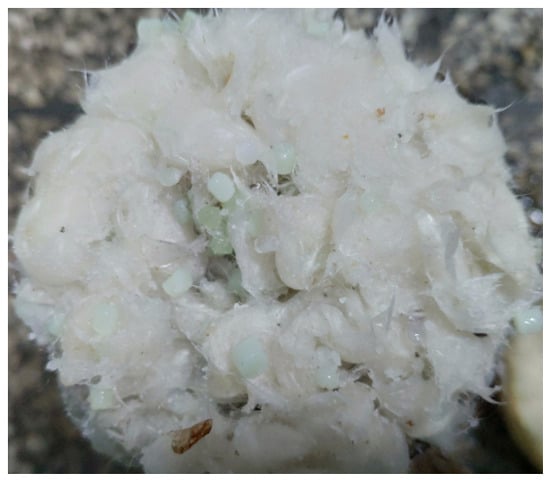
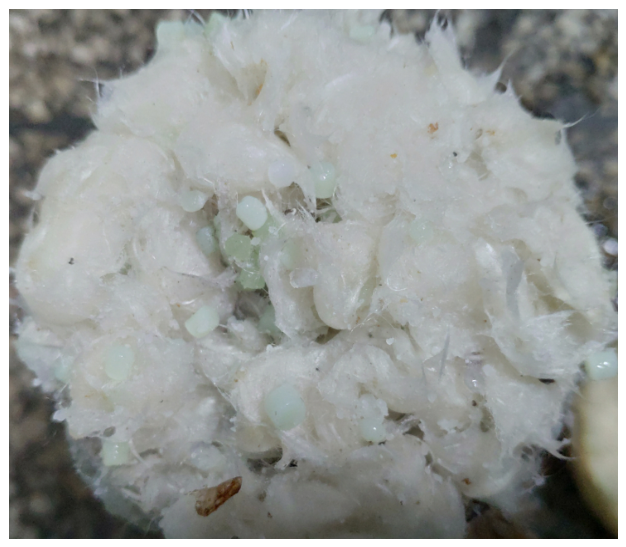
Figure 1 and Figure 3 show the filter cake morphologies formed by the combined system consisting of 0.5 wt% 10/40-mesh particles, 1.0 wt% 70/140-mesh particles, and 0.5 wt% fiber in artificial fractures with widths of 2 mm and 4 mm, respectively. This combination produced relatively thick and structurally dense filter cakes at both fracture widths, and no obvious pores or interconnected channels were observed at the macroscopic scale.
Figure 1.
Filter cake formed by 0.5% 10/40-mesh particles, 1.0% 70/140-mesh particles, and 0.5% fiber in a 4 mm wide fracture.
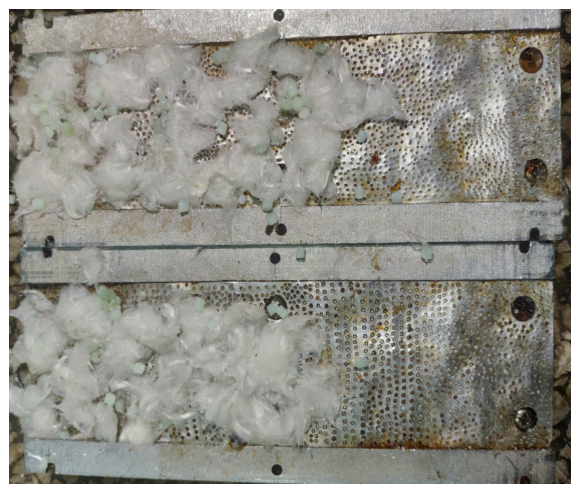
Figure 2 and Figure 4 show the placement morphologies of a combined temporary plugging system consisting of 0.5 wt% 10/40-mesh particles, 1.0 wt% 70/140-mesh particles, and 0.5 wt% fiber in artificial fractures with widths of 2 mm and 4 mm, respectively. The results indicate that under the narrow 2 mm fracture condition, the temporary plugging particles more readily accumulate and settle in the fracture inlet region, thereby significantly prolonging the initial pressure buildup time and increasing the final plugging pressure.
Figure 2.
Distribution of 0.5 wt% 10/40-mesh particles, 1.0 wt% 70/140-mesh particles, and 0.5 wt% fiber in a 4 mm wide fracture.
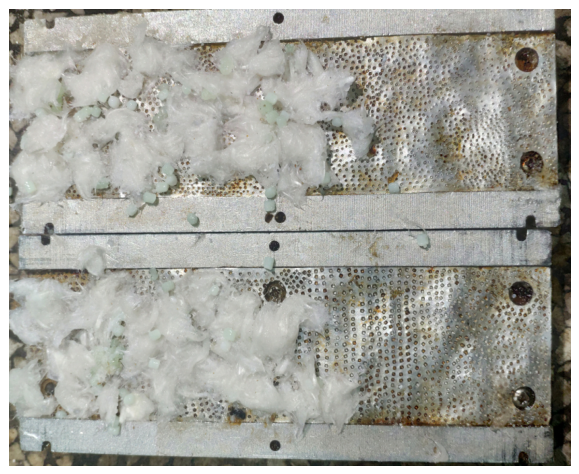
Figure 3.
Filter cake formed by 0.5% 10/40-mesh particles, 1.0% 70/140-mesh particles, and 0.5% fiber in a 2 mm wide fracture.
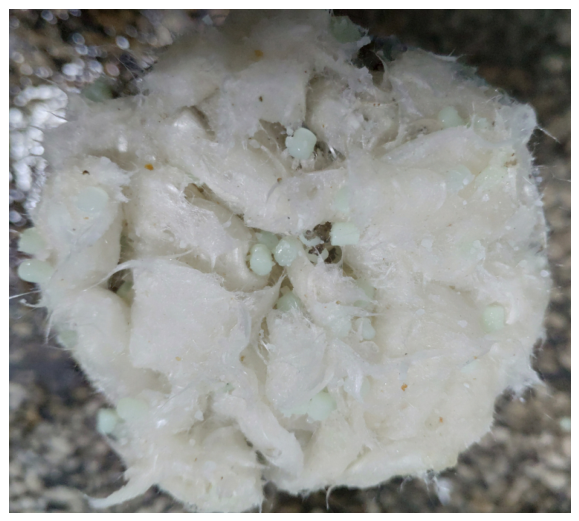
Figure 4.
Distribution of 0.5 wt% 10/40-mesh particles, 1.0 wt% 70/140-mesh particles, and 0.5 wt% fiber in a 2 mm wide fracture.
It should be noted that the present experiments were designed as a preliminary screening study rather than a statistically comprehensive investigation. Nine tests were conducted, covering three fracture widths and three temporary plugging agent formulations, with each formulation–fracture width combination tested only once. Therefore, the statistical variability and repeatability of the plugging performance could not be fully evaluated, and the differences in plugging performance among formulations and fracture widths reported here should be interpreted as indicative trends rather than statistically significant differences. Although a measurement uncertainty analysis was performed considering instrument accuracy, sample preparation tolerance, and temperature fluctuation, such an analysis cannot replace replicate experiments. Future work should therefore include at least three replicates per condition, combined with analysis of variance or equivalent non-parametric tests, to establish the statistical robustness of the observed plugging behavior. The preliminary results are still useful for screening temporary plugging agent formulations and guiding subsequent parameter optimization; however, the formulation ranking and inferred optimal conditions should be regarded as tentative until confirmed by replicate experiments.
3.2. Optimization of Critical Parameters for Temporary Plugging Fracturing
The shale oil reservoirs in the Sichuan Basin are characterized by low porosity and low permeability, and expanding the Stimulated Reservoir Volume (SRV) is a pivotal technical pathway to achieve stable and increased production [25,26,27,28]. Temporary plugging fracturing, by injecting temporary plugging agents (TPAs) into fracturing fluids, creates localized blockages within pre-existing fractures, forcing subsequent fluid diversion to activate natural fractures or initiate new ones. This technique effectively enhances the uniformity and connectivity of reservoir stimulation, emerging as one of the core technologies for volume fracturing in horizontal wells within the region. This process is inherently a strongly nonlinear, multi-physics coupling problem, encompassing mechanisms such as rock constitutive response, fracture surface contact mechanics, TPA migration and deposition, and non-Newtonian fluid flow. Traditional analytical models struggle to balance geometric complexity and physical realism, whereas numerical simulation methods integrating continuum mechanics and fracture mechanics can more accurately characterize the dynamic fracture propagation behavior induced by temporary plugging.
In this study, a two-dimensional (200 m × 200 m) plane-strain numerical model of a typical shale reservoir in the Lianggaoshan Formation was constructed using a proprietary in-house developed multi-physics fracturing simulation code. The code is based on the finite-discrete element method (FDEM) coupled with a cohesive zone model (CZM) that adopts a bilinear traction-separation law as the fracture initiation and propagation criterion. The simulator fully couples solid deformation, transient fluid flow within fractures and matrix, and fluid leak-off, assuming the rock matrix to be linear elastic, isotropic, and poroelastic. The natural fracture network was stochastically generated as a discrete fracture network (DFN) conditioned on imaging log interpretations from the target well, all of which honour the measured geological constraints. A horizontal wellbore is placed at the model centre, with perforation clusters equally spaced along the lateral section.
Boundary conditions strictly replicate the regional in situ stress state: a constant overburden stress of 55 MPa is applied on the top boundary, while the lateral boundaries are subjected to far-field horizontal principal stresses. The minimum horizontal stress is set to 45 MPa and the maximum horizontal stress to 55 MPa, yielding a horizontal stress difference of 10 MPa, which is the value used as the direct simulation input. The key rock and fluid properties are matrix permeability = 0.02 mD, porosity = 5.5%, Young’s modulus = 41 GPa, Poisson’s ratio = 0.2, Biot coefficient = 0.8. All input parameters were calibrated against laboratory core measurements.
Based on this validated model, a systematic sensitivity analysis was conducted to evaluate the effects of temporary plugging location, plugging intensity, and pumping rate on fracture propagation geometry and stimulated reservoir volume. The results provide practical guidance for optimising temporary plugging fracturing designs in horizontal shale oil wells of the Sichuan Basin.
(1) Temporary Plugging Location
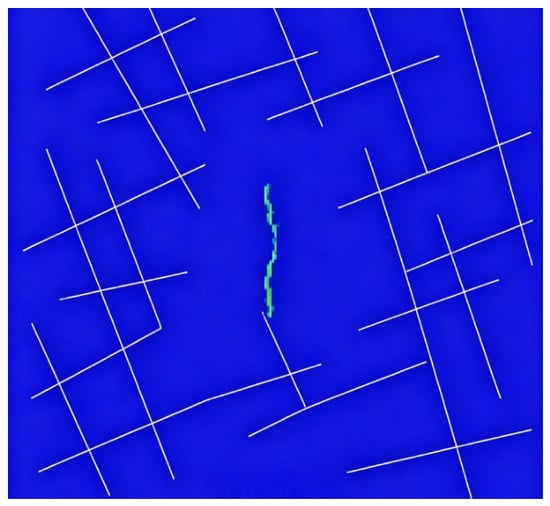
Figure 5 illustrates the hydraulic fracture propagation behavior in the Lianggaoshan Formation reservoir, Sichuan Basin, without temporary plugging measures being implemented. The green lines denote the primary hydraulic fractures driven by fracturing fluid pressure, while the white lines represent natural fractures. Results indicate that, in the absence of temporary plugging, hydraulic fractures extend highly linearly along the direction of the maximum horizontal principal stress, exhibiting a single, continuous morphology with no significant deflection, bifurcation, or secondary branching. Upon intersection with natural fractures, only local stress perturbations are induced in the vicinity of the intersection, with no effective opening, shear slip, or observable extension of natural fractures. The fundamental mechanism underlying this phenomenon lies in the reservoir’s high horizontal principal stress difference (10 MPa), which results in insufficient energy release at the hydraulic fracture tip to overcome the normal closure stress and inter facial static friction resistance on natural fracture surfaces. This severely inhibits fracture diversion behavior and the mechanical activation of natural fractures, ultimately limiting the enhancement of fracture network complexity.
Figure 5.
Fracture propagation without temporary plugging.
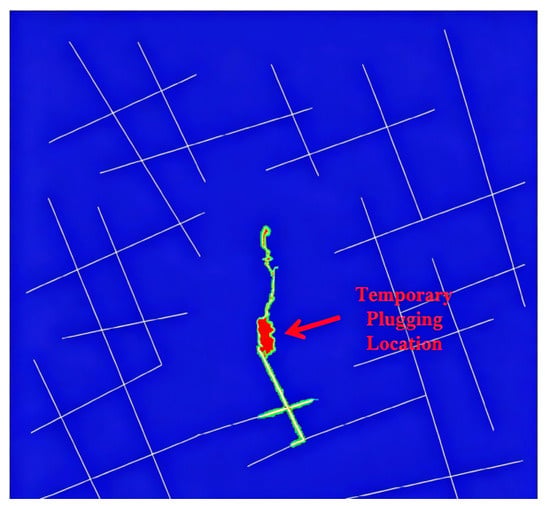
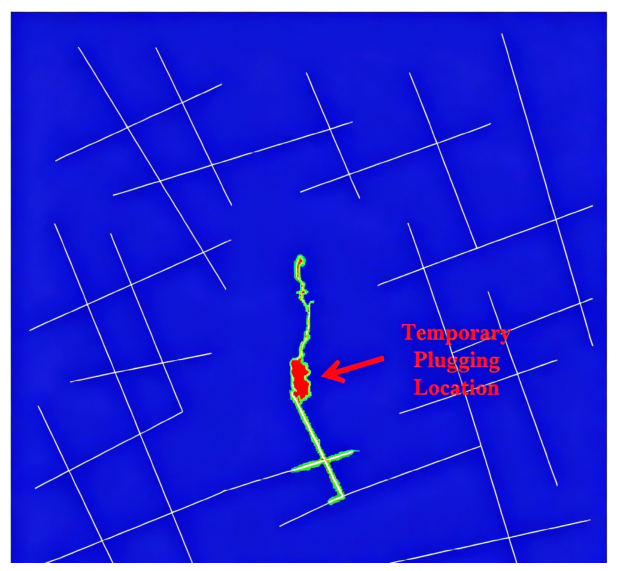
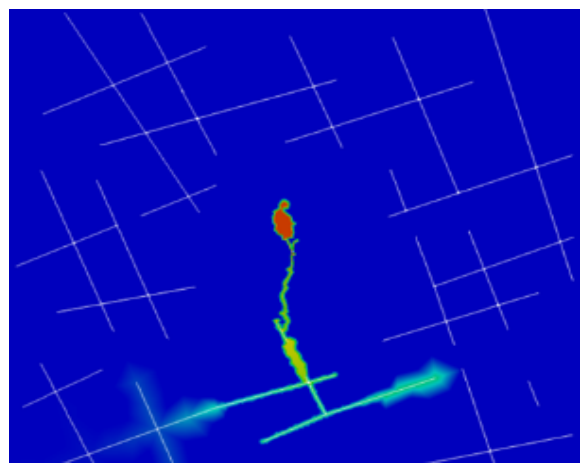
Figure 6 illustrates the hydraulic fracture propagation behavior of the Lianggaoshan Formation reservoir in the Sichuan Basin following targeted temporary plugging at the fracture tip. Compared with the non-temporary plugging condition (Figure 5), the temporary plugging measure significantly alters the fracture propagation path: the hydraulic fracture exhibits a distinct deflection when approaching natural fractures and establishes effective connectivity with them. Notably, the temporary plugging not only activates the opening and shear slip of natural fractures but also enables their effective extension. Consequently, the stimulated reservoir volume (SRV) is significantly enhanced relative to the non-temporary plugging scenario.
Figure 6.
Fracture propagation diagram after temporary plugging at the fracture tip.
The physical mechanism underlying this effect is as follows: After temporary plugging, the pressure inside the fracture rises rapidly, inducing stress field reconfiguration near the fracture tip. This reconfiguration drives the fracturing fluid to preferentially infiltrate the adjacent natural fracture system, thereby achieving multi-point synchronous activation and coordinated expansion of the natural fracture network. To maximize the activation of the natural fracture system, it is recommended that temporary plugging measures be implemented when the hydraulic fracture tip approaches the natural fracture system during horizontal well fracturing operations in the Lianggaoshan Formation of the Sichuan Basin. This strategy can effectively enhance the fracture diversion probability and connectivity efficiency, thereby significantly expanding the stimulated reservoir volume (SRV).
(2) Temporary Plugging Fracturing Flow Rate
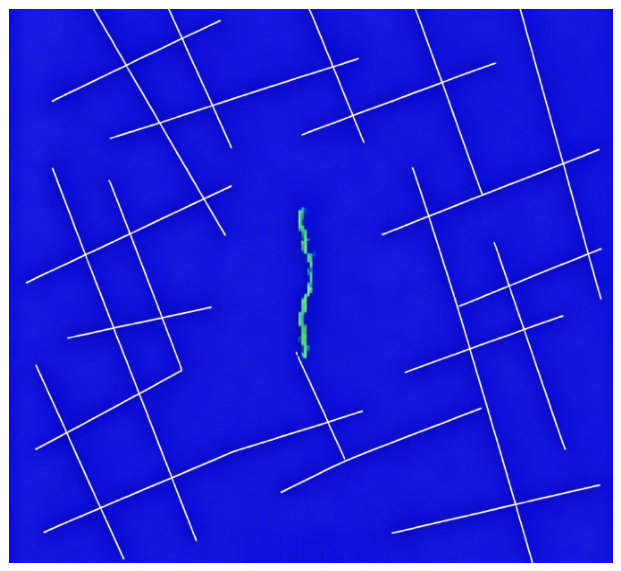
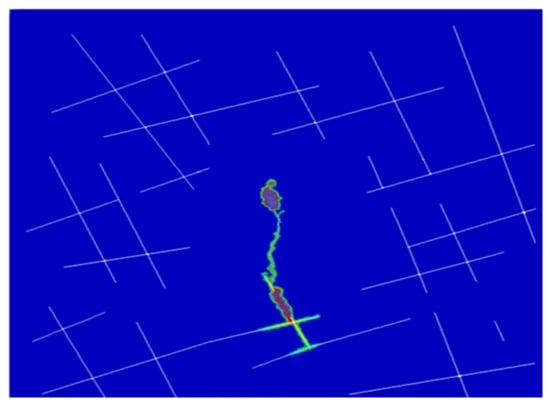
Figure 7 and Figure 8 illustrate the simulation results of fracture propagation during temporary plugging fracturing under varying injection rates. The findings indicate that natural fractures can be effectively activated and initiated when the fracturing rate reaches 16 m3/min or higher; a further increase in the rate (e.g., to 20 m3/min) significantly enhances the extension length of natural fractures, demonstrating that the injection rate exerts a dominant control over the dynamic propagation behavior of natural fractures.
Figure 7.
Fracture propagation under the flow rate of 16 m3/min for the temporary plugging fracturing.
Figure 8.
Fracture propagation under the flow rate of 20 m3/min for the temporary plugging fracturing.
Under the specific simulation conditions adopted in this study, increasing the injection rate from 16 to 20 m3/min enhanced the activation degree of natural fractures and extended the hydraulic main fracture. These results indicate that, within the simulated injection-rate range, a higher injection rate is more favorable for increasing the stimulated reservoir volume (SRV). The injection rates of 16 and 20 m3/min were selected as representative moderate- and high-rate scenarios within the field-feasible injection range for the Lianggaoshan Formation, rather than to define an exact critical activation rate or a unique optimal value. Accordingly, for horizontal wells in the Lianggaoshan Formation of the Sichuan Basin with reservoir, geological, and completion conditions similar to those modeled here, an injection rate of approximately 20 m3/min or higher may be considered a preferred design option for fracturing stimulation. However, this recommendation should be further validated through multi-rate simulations and well-specific field tests, and it should not be generalized to all horizontal wells in the formation without accounting for variations in reservoir properties, natural-fracture development, in situ stress, and completion parameters.
(3) Temporary plugging pressure
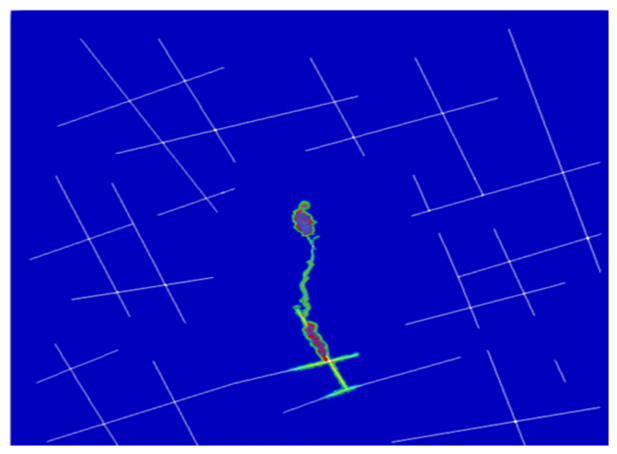
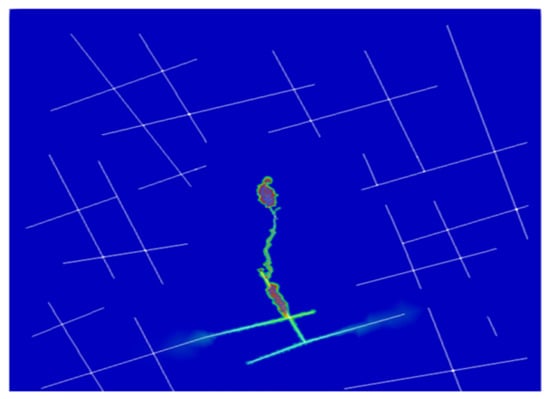
Figure 9 and Figure 10 present numerical simulation results of fracture propagation under different effective temporary plugging pressures. The 8 and 12 MPa cases were selected as representative low and moderate effective plugging pressures, rather than as exact critical or optimal values. This selection is based on the laboratory temporary plugging experiments: the tested temporary plugging system reached a maximum plugging pressure of 24.64 MPa, which defines the upper strength capacity of the material under ideal laboratory conditions. The simulated 8 and 12 MPa cases correspond to approximately 32% and 49% of this laboratory maximum, respectively, and thus represent conservative to moderate effective plugging pressures. In field operations, the actual effective plugging pressure is influenced by filter-cake integrity, fracture aperture, temperature, fluid erosion, and in situ stress; therefore, the laboratory maximum of 24.64 MPa should be regarded as an upper-bound capacity rather than a direct field design value.
Figure 9.
Fracture propagation morphology under a temporary plugging pressure of 8 MPa.
Figure 10.
Fracture propagation morphology under a temporary plugging pressure of 12 MPa.
The simulation results show that at an effective plugging pressure of 8 MPa, natural fractures can be activated and exhibit noticeable propagation, although their extension length remains relatively limited. When the effective plugging pressure is increased to 12 MPa, natural fracture propagation is significantly enhanced. This not only improves connectivity with the hydraulic main fracture but also promotes cross-fracture communication among natural fractures, leading to a marked increase in fracture-network complexity and stimulated reservoir volume (SRV). These results indicate that, under the modeled conditions, a moderate effective plugging pressure of approximately 12 MPa is sufficient to promote fracture diversion and natural-fracture activation. The higher laboratory-measured capacity of 24.64 MPa suggests that the tested high-strength temporary plugging system has sufficient potential to achieve the required effective strength in the field; however, the field target should be optimized rather than simply set to the laboratory maximum.
For the Lianggaoshan Formation under reservoir, geological, and completion conditions similar to those modeled in this study, a temporary plugging treatment designed to generate an effective plugging pressure of approximately 12 MPa or higher may be favorable for maximizing SRV. In field operations, this can be pursued by using a combined high-strength temporary plugging system. To achieve the target effective strength, a straightforward injection strategy is proposed: the designed volume of temporary plugging agents is pumped as a single slug at a high pump rate. The high pump rate promotes deep transport of the agents into the fracture system, while the single-slug injection facilitates rapid and continuous filter-cake buildup and avoids the potential inefficiencies and operational complexity of multi-slug procedures. The optimal plugging pressure and injection schedule should be further verified through well-specific design and field trials.
4. Field Application
Well XN1 is situated in the Lianggaoshan Formation of the Jurassic System within the Bashansi Syncline, Eastern Sichuan Basin, China. It is a horizontal well with a total fractured interval length of 1894 m and a box-shaped reservoir encounter rate of 97.5%. During drilling, six gas logging anomaly intervals were identified, with a cumulative thickness of 1114 m; gas logging responses were generally weak, with the maximum total hydrocarbon volume fraction reaching 3.49% and an average of 1.14%. Logging interpretation results indicate: a porosity of 4.31%, total organic carbon (TOC) of 1.98%, and oil saturation of 56.8%; the horizontal principal stress difference is 10 MPa. Natural fractures are overall underdeveloped, yet distinct fracture-dense zones exist in local well intervals. To enhance stimulation effectiveness in natural fracture-developed intervals, a temporary plugging agent combination system was employed during fracturing operations in such intervals: 1.0 vol% 10/40 mesh temporary plugging particles and 0.5 vol% 100 mesh temporary plugging powder were co-injected. This approach aims to increase the net pressure within fractures, induce hydraulic fracture diversion, and effectively activate natural fractures, thereby expanding the stimulated reservoir volume (SRV).
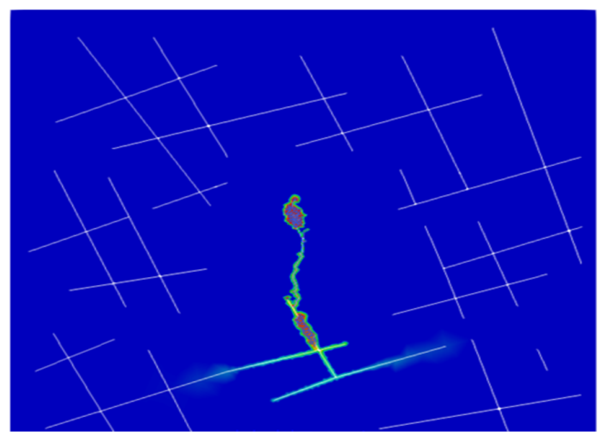
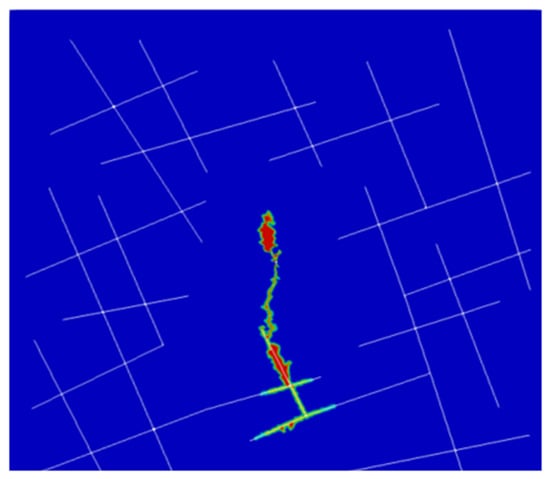
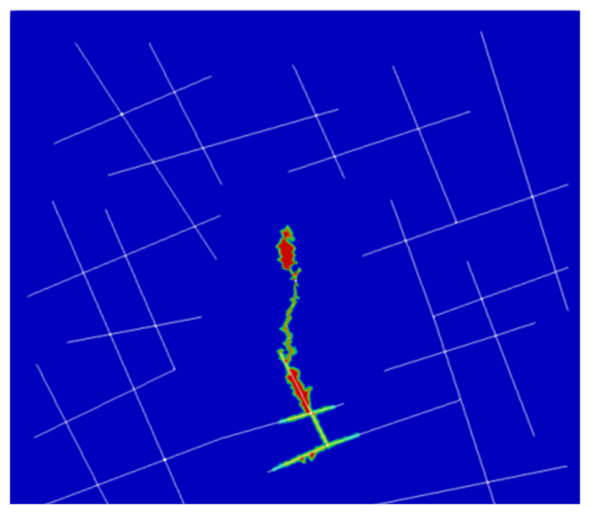
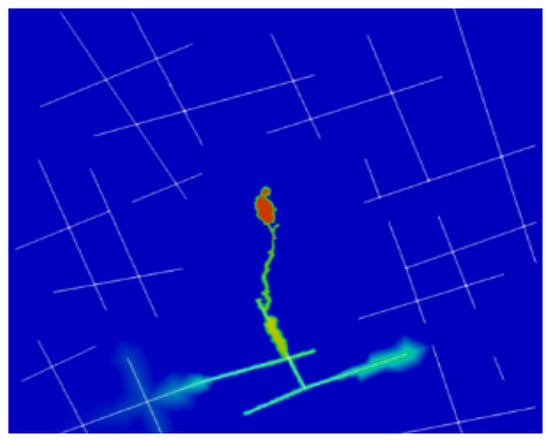
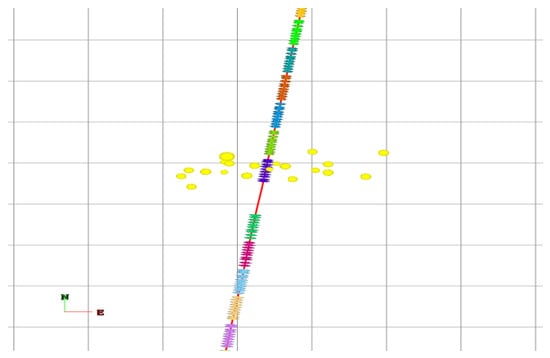
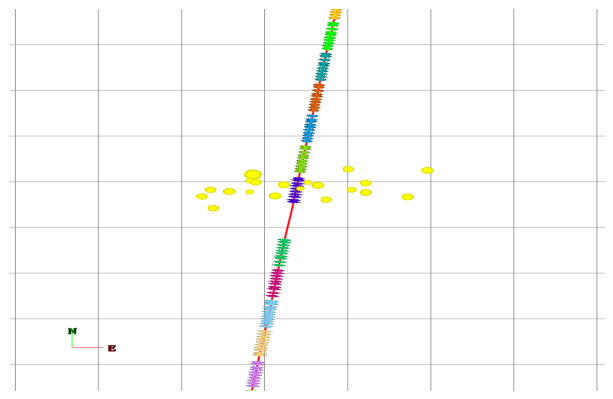
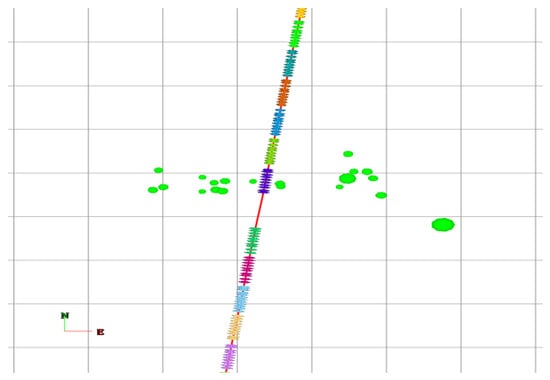
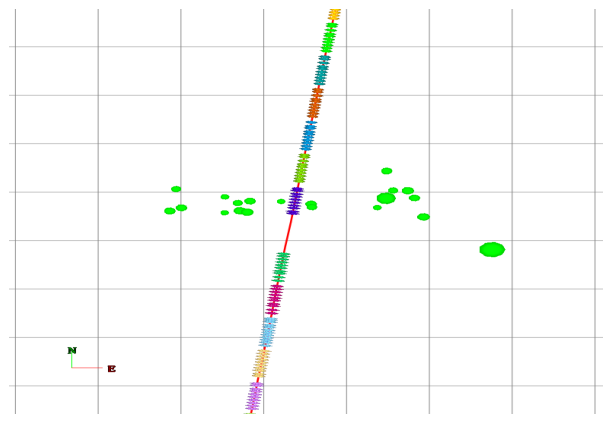
Figure 11 and Figure 12 present the microseismic monitoring results of Well XN1 before and after temporary plugging fracturing, respectively. To ensure consistency of the comparison, both intervals were processed using the same workflow: microseismic events were filtered using the same location-uncertainty threshold and magnitude-of-completeness criterion, and the stimulated reservoir volume (SRV) was calculated using the same grid-based method. The control interval was selected based on comparable lithology, in situ stress, stage length, injected fracturing-fluid volume, and pumping rate. Comparative analysis reveals that after temporary plugging fracturing implementation, both the lateral and longitudinal propagation ranges of hydraulic fractures expanded significantly, with distinct fracture diversion signals observed in the far-field region. Additionally, fracture parameters inverted from high-frequency water hammer pressure responses indicate that, relative to the non-temporary plugging fracturing control interval, the stimulated reservoir volume (SRV) of the temporary plugging fracturing interval increased by 16%, and the fracture network complexity was also significantly enhanced.
Figure 11.
Fracture morphology from microseismic monitoring prior to temporary plugging fracturing in well XN1.
Figure 12.
Fracture morphology from microseismic monitoring following temporary plugging fracturing in well XN1.
5. Conclusions
- (1)
- Optimizing the combination of temporary plugging particles and fibers based on the target diversion pressure enhances the plugging pressure.
- (2)
- Adhering to the principle of tip plugging, continuous high-rate injection, and enhanced plug stability maximizes the stimulated reservoir volume, as validated by numerical simulations for the Lianggaoshan Formation in the Sichuan Basin.
The field application in Well XN1 indicates that the proposed technology is technically feasible in the tested interval, especially where natural fractures are well developed. However, because this finding is based on a single well, it should be considered a site-specific observation rather than evidence of broad applicability. For the studied Lianggaoshan Formation, intervals with well-developed natural fractures can be considered preferential candidates for pilot tests; broader application requires multi-well and multi-block validation.
Author Contributions
Y.W.: conceptualization, investigation, writing—original draft, writing—review and editing; W.C.: formal analysis, writing—original draft; S.L.: writing—original draft; Y.Z.: writing—original draft; T.W.: writing—original draft; F.Z.: writing—original draft. All authors have read and agreed to the published version of the manuscript.
Funding
This research received no external funding.
Data Availability Statement
The original contributions presented in this study are included in the article. Further inquiries can be directed to the corresponding authors.
Conflicts of Interest
Authors Yang Wang, Weihua Chen, Song Li, Tao Wang and Feng Zhao were employed by the company Oil & Gas Technology Research Institute of Southwest Oil & Gas Field Company. The remaining authors declare that the research was conducted in the absence of any commercial or financial relationships that could be construed as potential conflicts of interest.
References
- Wang, Y.; Yuan, Q.; Chen, W.; Yan, J.; Zhang, X.; Li, S. Temporary-Plugging-Driven Balanced Fracturing: A Novel Strategy to Achieve Uniform Reservoir Stimulation in Sichuan Shale Oil Horizontal Wells. Processes 2025, 13, 1846. [Google Scholar] [CrossRef] [Scilit]
- Jiang, X.M.; Han, X.X.; Cui, Z.G. Progress and recent utilization trends in combustion of Chinese oil shale. Prog. Energy Combust. Sci. 2007, 33, 552–579. [Google Scholar] [CrossRef] [Scilit]
- Liu, H.; Kuang, L.; Li, G.; Wang, F.; Jin, X.; Tao, J.; Meng, S. Considerations and suggestions on optimizing completion methods of continental shale oil in China. Acta Pet. Sin. 2020, 41, 489. [Google Scholar] [CrossRef]
- He, W.; Sun, Y.; Guo, W.; Shan, X. Controlling the in-situ conversion process of oil shale via geochemical methods: A case study on the Fuyu oil shale, China. Fuel Process. Technol. 2021, 219, 106876. [Google Scholar] [CrossRef] [Scilit]
- Yang, F.; Ning, Z.; Liu, H. Fractal characteristics of shales from a shale gas reservoir in the Sichuan Basin, China. Fuel 2014, 115, 378–384. [Google Scholar] [CrossRef] [Scilit]
- Wang, L.; Zhao, Y.; Yang, D.; Kang, Z.; Zhao, J. Effect of pyrolysis on oil shale using superheated steam: A case study on the Fushun oil shale, China. Fuel 2019, 253, 1490–1498. [Google Scholar] [CrossRef] [Scilit]
- Liu, H.; Huang, Y.; Cai, M.; Meng, S.; Tao, J. Practice and development suggestions of hydraulic fracturing technology in the Gulong shale oil reservoirs of Songliao Basin, NE China. Pet. Explor. Dev. 2023, 50, 688–698. [Google Scholar] [CrossRef] [Scilit]
- Sun, H.; Cai, X.; Hu, D.; Lu, Z.; Zhao, P.; Zheng, A.; Li, J.; Wang, H. Theory, technology and practice of shale gas three-dimensional development: A case study of Fuling shale gas field in Sichuan Basin, SW China. Pet. Explor. Dev. 2023, 50, 651–664. [Google Scholar] [CrossRef] [Scilit]
- Zhao, Z.; Li, K.; Zhao, P.; Tao, L. Practice and development suggestions for volumetric fracturing technology for shale oil in the ordos basin. Pet. Drill. Tech. 2021, 49, 85–91. [Google Scholar] [CrossRef]
- Zeng, L.; Lyu, W.; Li, J.; Zhu, L.; Weng, J.; Yue, F.; Zu, K. Natural fractures and their influence on shale gas enrichment in Sichuan Basin, China. J. Nat. Gas Sci. Eng. 2016, 30, 1–9. [Google Scholar] [CrossRef] [Scilit]
- Chang, X.; Wang, X.; Yang, C.; Guo, Y.; Hu, G.; Jiang, C.; Li, Q. Enhanced simulation and optimization of multi-cluster temporary plugging and diverting fracturing in horizontal shale wells. Rock Mech. Rock Eng. 2025, 58, 10241–10270. [Google Scholar] [CrossRef] [Scilit]
- Wang, Y.; Fan, Y.; Wang, X. Study on migration law of multiscale temporary plugging agent in rough fractures of shale oil reservoirs. Front. Phys. 2023, 11, 1228006. [Google Scholar] [CrossRef] [Scilit]
- Yang, F.; Qian, Q.; Lu, M.; He, W.; Zhong, A.; Zhang, Z.; Zhu, D.; Zou, Y. Experimental study of plugging agent particle size and concentration on temporary plugging fracturing in shale formation. Processes 2024, 12, 1049. [Google Scholar] [CrossRef] [Scilit]
- Fan, F.; Zhou, F.; Yuan, L.; Yang, X. Visualization Study on Plugging Mechanism of Fibers and Particles in Rough and Tortuous Fracture. In Proceedings of the Volume 8: Polar and Arctic Sciences and Technology; Petroleum Technology: Glasgow, UK, 2019. [Google Scholar]
- Wang, Y.; Zhou, C.; Yi, X.; Li, L.; Chen, W.; Han, X. Technology and application of segmented temporary plugging acid fracturing in highly deviated wells in ultradeep carbonate reservoirs in southwest China. ACS Omega 2020, 5, 25009–25015. [Google Scholar] [CrossRef] [Scilit] [PubMed]
- Weddle, P.; Griffin, L.; Pearson, C.M. Mining the Bakken: Driving Cluster Efficiency Higher Using Particulate Diverters. In Proceedings of the SPE Hydraulic Fracturing Technology Conference and Exhibition, The Woodlands, TX, USA, 26 January 2017; OnePetro: Richardson, TX, USA, 2017. [Google Scholar]
- Xu, H.; Jiang, H.; Wang, J.; Wang, T.; Zhang, L. Simulation of fracture propagation law in fractured shale gas reservoirs under temporary plugging and diversion fracturing. Phys. Fluids 2023, 35, 063309. [Google Scholar] [CrossRef] [Scilit]
- Xu, W.; Jiang, F.; Wang, L.; Liao, Y.; Qiu, S. Experimental study on plugging behavior of multitype temporary plugging agents in hydraulic fractures. SPE J. 2024, 29, 6756–6774. [Google Scholar] [CrossRef] [Scilit]
- Wang, Y.; Fan, Y.; Zhou, C.; Luo, Z.; Chen, W.; He, T.; Fang, H.; Fu, Y. Research and application of segmented acid fracturing by temporary plugging in ultradeep carbonate reservoirs. ACS Omega 2021, 6, 28620–28629. [Google Scholar] [CrossRef] [Scilit] [PubMed]
- Yuan, L.; Zhou, F.; Li, B.; Gao, J.; Yang, X.; Cheng, J.; Wang, J. Experimental study on the effect of fracture surface morphology on plugging efficiency during temporary plugging and diverting fracturing. J. Nat. Gas Sci. Eng. 2020, 81, 103459. [Google Scholar] [CrossRef] [Scilit]
- Lei, Q.; Xu, Y.; Jiang, T.; Ding, Y.; Wang, X.; Lu, H. “Fracture network” fracturing technique for improving post-fracturing performance of low and ultra-low permeability reservoirs. Acta Pet. Sin. 2009, 30, 237. [Google Scholar] [CrossRef]
- Ren, X.; Li, A.; Memon, A.; Fu, S.; Wang, G.; He, B. Experimental simulation on imbibition of the residual fracturing fluid in tight sandstone reservoirs. J. Energy Resour. Technol. 2019, 141, 082905. [Google Scholar]
- Hou, H.; Yang, W.; Du, W.; Feng, X.; Jiang, Z.; Shi, F.; Lin, R.; Wang, Y.; Zhang, D.; Chen, Y.; et al. Implications of multi-stage deformation on the differential preservation of Lower Paleozoic shale gas in tectonically complex regions: New structural and kinematic constraints from the Upper Yangtze Platform, South China. Mar. Pet. Geol. 2024, 160, 106629. [Google Scholar] [CrossRef] [Scilit]
- Li, J.; Liu, X.; Nie, B.; Li, M.; Nie, J.; Jia, X.; He, C.; Li, Z. Impact of supercritical CO2 exposure time on the pore structure evolution and fractal characteristics of lacustrine shale. Geoenergy Sci. Eng. 2026, 266, 214658. [Google Scholar] [CrossRef] [Scilit]
- Liu, X.; Jia, X.; Yang, T.; Nie, B.; He, C.; Li, C.; Bao, S. Permeability enhancement mechanism in coal beds fractured using highvoltage electrical pulse treatment: Cross-scale transportation of coalbed methane. Green Smart Min. Eng. 2025, 2, 402–412. [Google Scholar] [CrossRef] [Scilit]
- Sun, M.; Duan, X.; Liu, Q.; Blach, T.P.; Ostadhassan, M.; Liu, B.; Ji, Y.; Hu, Q.; Pan, Z. The importance of pore-fracture connectivity in overmature marine shale for methane occurrence and transportation. Mar. Pet. Geol. 2023, 157, 14. [Google Scholar] [CrossRef] [Scilit]
- Zhang, C.; Hu, Z.Q.; Kong, X.Y.; Gao, B.; Liu, J.Y.; Huang, Y.H.; Chen, H.D. A comprehensive fracture characterization method for shale reservoirs. Pet. Sci. 2025, 22, 2660–2676. [Google Scholar] [CrossRef] [Scilit]
- Zhang, C.; Dong, Y.; Wang, Q. Coupled formation of fracture assemblages in shale and their infuence on permeability. Geol. Soc. Am. Bull. 2026, 138, 177–194. [Google Scholar] [CrossRef] [Scilit]

Disclaimer/Publisher’s Note: The statements, opinions and data contained in all publications are solely those of the individual author(s) and contributor(s) and not of MDPI and/or the editor(s). MDPI and/or the editor(s) disclaim responsibility for any injury to people or property resulting from any ideas, methods, instructions or products referred to in the content. |
© 2026 by the authors. Licensee MDPI, Basel, Switzerland. This article is an open access article distributed under the terms and conditions of the Creative Commons Attribution (CC BY) license.