


Abstract
In situ gasification-assisted hydrogen production from heavy oil has the potential to simultaneously achieve in-reservoir upgrading and hydrogen generation, offering a promising pathway for the clean and efficient development of heavy oil resources. To investigate stage-dependent hydrogen-formation pathways and the thermal conversion behavior of the heavy oil-water system, batch reactor experiments were conducted to simulate heavy oil gasification under reservoir-like conditions. Experiments were carried out under a nitrogen atmosphere at different temperatures and reaction times. Combined with gas chromatography and elemental analysis, the product distribution and reaction characteristics were investigated. The results show that, under an inert N2 atmosphere with an oil-to-water mass ratio of 1:1, in situ hydrogen production from heavy oil can be qualitatively divided into three approximate stages: a deoxygenation activation stage (300–400 °C), a water–gas shift hydrogen-production stage (400–500 °C), and a coke conversion hydrogen-production stage (500–550 °C). Temperature was identified as the key factor governing the reaction pathway, and the highest H2 mole fraction of 10.84% was obtained at 450 °C for 6 h. Reaction time mainly affected thermal conversion and gas distribution, while excessively long residence time at high temperatures promoted hydrogen-consuming reactions. Elemental analysis of the high-temperature residues further revealed enhanced dehydrogenation, aromatization, and coking, indicating that coke served as an important intermediate for sustained hydrogen generation. A stage-dependent mechanism of in situ hydrogen production from heavy oil at 300–550 °C was proposed, and the dominant reactions controlling H2 generation in different temperature intervals were clarified. These findings provide a basis for process optimization and numerical simulation of in situ hydrogen production from heavy oil.
1. Introduction
Heavy oil is an important component of unconventional liquid hydrocarbon resources. Against the backdrop of the increasing difficulty in developing conventional light crude oil resources, its strategic importance as a replacement resource has continued to grow [1]. Because of its high viscosity, high density, high resin–asphaltene content, and poor mobility, heavy oil faces limitations in reservoir seepage capacity, wellbore lifting efficiency, and surface gathering and transportation performance. At present, thermal recovery technologies are commonly used for its development, including cyclic steam stimulation, steam flooding, steam-assisted gravity drainage, and in situ combustion, so as to reduce crude oil viscosity and improve recovery efficiency [2]. However, recent studies have shown that conventional steam-based thermal recovery technologies generally suffer from a high steam–oil ratio, high unit energy consumption per barrel of oil, intensive water use, and heavy carbon-emission burdens, making them difficult to meet the current strategic demand for green and low-carbon development [3]. Against the background of the “dual-carbon” goals and the low-carbon transition of the oil and gas industry, the development of new heavy-oil recovery and in situ upgrading technologies featuring high efficiency, low energy consumption, and low carbon emissions has become an important research direction in the field of unconventional oil and gas development [4]. More broadly, recent studies on alternative-fuel energy systems have highlighted the importance of optimizing fuel compositions and operating conditions to improve energy-conversion performance and reduce environmental impacts [5]. Integrated energy, exergy, and exergoeconomic analyses have also been employed to comprehensively evaluate the efficiency and sustainability of waste-to-energy conversion systems [6]. These studies emphasize the importance of improving energy-conversion efficiency while considering environmental and economic performance.
Against this background, in situ gasification-assisted hydrogen production from heavy oil has gradually become a frontier topic in the energy field because of its dual potential for resource development and clean-energy generation. This technology usually involves injecting air or oxygen into the reservoir and igniting part of the hydrocarbon components in situ, thereby forming and advancing a combustion front. The heat released by in situ combustion can directly act on the heavy-oil system, reduce its viscosity, improve its mobility, and enhance reservoir seepage capacity, thus creating favorable conditions for the flow and production of heavy fractions. Underground reservoirs generally possess good thermal insulation properties and can be regarded as natural reactors in which multiple thermochemical reactions, including pyrolysis, hydrothermal cracking, coke gasification, and water–gas shift, can occur in a coupled manner. In situ combustion can not only provide heat to reduce heavy-oil viscosity and improve its flowability, but also promote the conversion of part of the heavy organic components into low-carbon energy products such as hydrogen and methane. Since the major reaction processes occur underground, this technology can reduce dependence on surface heating facilities, fuel consumption, and water-supply systems, thereby lowering the overall energy consumption during development. Meanwhile, part of the greenhouse gases generated during the reactions may be retained or sequestered in situ within the reservoir, giving the technology certain environmental benefits. At present, however, heavy-oil in situ hydrogen production is still in its early stage of development. Key scientific issues, such as reaction pathways, controlling mechanisms, and favorable hydrogen-production conditions, remain insufficiently understood. Therefore, this technology remains largely confined to laboratory experiments and field pilot tests and is still some distance from large-scale, stable, and economical industrial application.
To address the complexity of reaction mechanisms and the unclear controlling factors in heavy-oil in situ hydrogen production, extensive experimental and numerical simulation studies have been conducted in recent years on key reactions such as pyrolysis, hydrothermal cracking, coke gasification, and the water–gas shift reaction. Yang et al. [7] investigated the mechanism of heavy-oil pyrolysis and hydrogen production using Thermogravimetric Analysis–Mass Spectrometry (TGA-MS) and found that the weight-loss process of heavy oil under heating could be divided into two stages, namely the evaporation of light components and chemical reactions. The chemical-reaction stage included pyrolysis and coke dehydrogenation, and more than 80% of hydrogen was found to originate from coke dehydrogenation in the range of 528–820 °C. Tang et al. [8] conducted kinetic studies from the perspective of hydrothermal cracking and found that hydrogen could also be generated from heavy-oil hydrothermal cracking at 200–280 °C, with asphaltene gasification as an important source of H2, CO2, and H2S. Song et al. [9] established an experimental-scale numerical model for in situ combustion gasification (ISCG) of heavy oil and systematically analyzed the mechanism of hydrogen generation at high temperatures. Their results showed that steam-involved gasification reactions and the water–gas shift reaction were important sources of hydrogen, and higher temperatures were more favorable for hydrogen production, with the hydrogen mole fraction reaching up to 34% at 800 °C. Liu et al. [10] combined high-temperature and high-pressure batch reactor experiments with CMG STARS kinetic modeling to investigate the in situ hydrogen-production behavior of bitumen under different atmospheres and temperatures. Their results showed that a nitrogen environment was more favorable for hydrogen generation, and the highest hydrogen concentration of 28.6% was obtained at 425 °C, 6 MPa, and a constant temperature of 10 d. Okere and Sheng [11] further proposed a novel numerical model based on saturates, aromatics, resins, and asphaltenes (SARA) characterization, making the simulation object more consistent with the saturates, aromatics, resins, and asphaltenes used in experiments, and found that the composition of the injected gas significantly affected the reaction pathways. Pure oxygen injection was unfavorable for increasing hydrogen yield, whereas a suitable O2/N2 ratio was more beneficial for improving the H2/syngas ratio. Ifticene et al. [12] used numerical simulation to study in situ hydrogen production in heavy-oil reservoirs under cyclic air–steam injection. Their results indicated that the synergistic effect of steam and air could improve hydrogen yield while maintaining reservoir heat by affecting temperature-field evolution and coke gasification.
Although recent studies have made important progress in the mechanism and condition optimization of heavy-oil in situ hydrogen production through core experiments, isothermal experiments, and numerical simulations, most of these studies have mainly relied on numerical simulation to analyze the effect of temperature-field distribution on hydrogen-production behavior at the macroscopic scale. However, due to model assumptions and parameter simplifications, numerical simulation still has certain limitations in describing complex reaction processes. As a result, the regulation mechanisms of reaction pathways and product distribution under laboratory conditions remain to be further clarified, and the dominant reaction pathways for hydrogen generation in different temperature intervals are still not clearly understood. Therefore, in this study, batch reactor experiments were employed to simulate the in situ gasification process of heavy oil under reservoir conditions. The effects of temperature and reaction time on the composition of produced gases were systematically analyzed, and the possible reaction pathways in different temperature intervals were investigated by combining gas-product evolution with elemental analysis of the residues after reaction. This work provides a theoretical basis for mechanistic studies and process optimization of heavy-oil in situ hydrogen production.
2. Materials and Methods
2.1. Materials and Sample Preparation
The heavy-oil sample used in this study was collected from the Liaohe Oilfield block. Its water content was 4.05%. Before the experiments, the oil sample was dehydrated using an electric dehydrator, and its viscosity was measured using a rotational rheometer, yielding 10,800 mPa·s at 50 °C. In addition, SARA analysis showed that the sample consisted of 31.28 wt% saturates, 24.43 wt% aromatics, 21.93 wt% resins, and 22.36 wt% asphaltenes. The high resin content contributed to the high viscosity of the heavy oil. Reservoir core powder was used as the catalyst in the experiments. Prior to use, the reservoir core material was ground and sieved through a 180-mesh sieve, and the fraction passing through the sieve was collected for the experiments. Inductively coupled plasma (ICP) analysis of its elemental composition showed that the core powder contained transition metal elements such as Fe, Co, and Ni, as summarized in Table 1.
Table 1.
Elemental composition of the catalyst.
2.2. Experimental Procedure and Methods
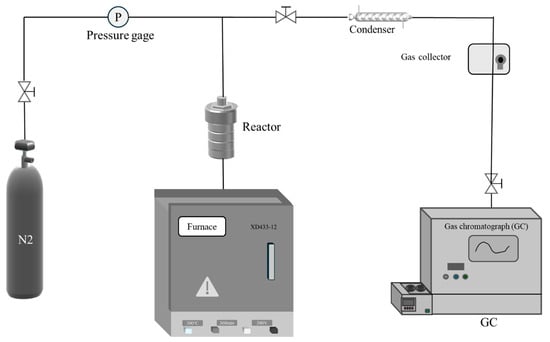
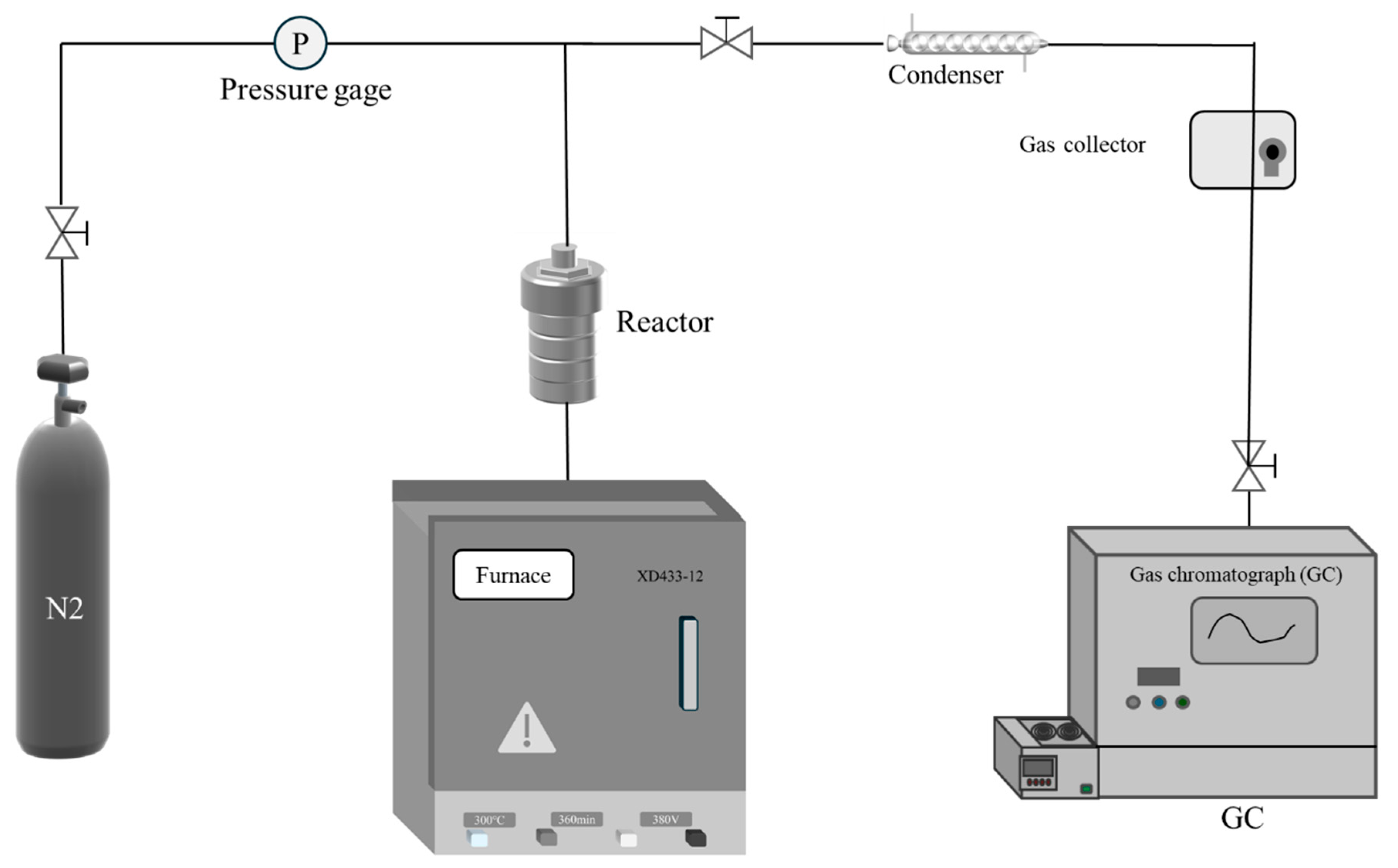
The batch-reactor experiments were designed to approximate a localized high-temperature, oxygen-deficient thermochemical environment in the reservoir. To better simulate reservoir conditions, the dehydrated heavy oil, quartz sand, and core powder were mixed in predetermined mass ratios. In each experiment, the reactor was loaded with 1 g of heavy oil, 9 g of quartz sand, and 0.1 g of core powder (as catalyst). Deionized water was then added at an oil-to-water mass ratio of 1:1. The reaction was carried out under a nitrogen atmosphere. After the reactants were uniformly mixed and loaded into the reactor, the reactor was evacuated to remove air and then pressurized with nitrogen to 0.15 MPa. This evacuation and nitrogen-filling process was repeated three times to ensure an inert reaction environment. For each combination of target temperature and reaction time (4, 6, or 8 h), an independent experiment was conducted in the sealed constant-volume batch reactor, and no gas was released or withdrawn during the reaction. The reactor was subsequently placed in a muffle furnace and heated at a constant rate of 10 °C/min. Experiments were conducted at six target temperatures ranging from 300 to 550 °C, with an interval of 50 °C between adjacent temperature levels. Once the target temperature was reached, the reactor was maintained isothermally for 4, 6, or 8 h. The reactor pressure increased during heating and reaction and was monitored using the pressure gauge. Under the same target temperature, generally similar reactor pressures were observed among the experimental groups, and the highest observed pressure was approximately 10 MPa at 550 °C. After completion of each experiment, a 20 mL gas sample was collected. The sampled gas was first passed through a condenser to remove water vapor and other condensable components, thereby minimizing interference with subsequent analysis, and was then analyzed using gas chromatography (GC) to determine the composition of the gaseous products. To reduce experimental uncertainty and ensure the reproducibility of the results, each experimental condition was repeated three times, and the average value was used for subsequent analysis. The H2 mole fraction is reported as mean ± standard deviation (SD, n = 3), and the complete mean ± SD values under different temperature and reaction-time conditions are provided in Table S1 of the Supplementary Information. The GC was calibrated with standard gas mixtures prior to the experiments to ensure the accuracy and reliability of the gas composition measurements. The experimental setup is shown in Figure 1.
Figure 1.
Schematic diagram of the experimental setup.
2.3. Analysis Methods for Gaseous Products and Reaction Residues
- (1)
- Analysis of gaseous products
The gaseous products were analyzed using an Agilent 8860 gas chromatograph (Agilent Technologies, Santa Clara, CA, USA) system. The gaseous products collected following the procedure described in Section 2.2 were analyzed by GC to quantify the concentrations of H2, CO, CO2, CH4, and C2+ (hydrocarbons with two or more carbon atoms). To ensure the accuracy and repeatability of the test results, the GC was calibrated with standard gas before the experiments. Although detected by GC, N2 was excluded from the product normalization as it was the inert pressurization gas.
- (2)
- Elemental analysis
After completion of the reaction and cooling of the reactor, the bulk residual mixture, containing quartz sand, reservoir core powder, and heavy-oil-derived residual carbonaceous material, was collected from the reactor. The collected residue was vacuum-dried at 60 °C for 24 h to remove residual moisture and then ground thoroughly using an agate mortar to obtain a homogeneous powder. The contents of C, H, N, and S in the original heavy oil and the prepared bulk residual mixture were determined using a Vario EL-III elemental analyzer (Elementar, Langenselbold, Germany; relative accuracy: ±0.3%). The elemental composition of the residual sample is reported on a dry, total-sample basis without ash correction. Thus, the analyzed residual sample represents the entire dried residual mixture rather than an isolated organic or coke fraction.
3. Results and Discussion
3.1. Effect of Temperature on Gas Composition
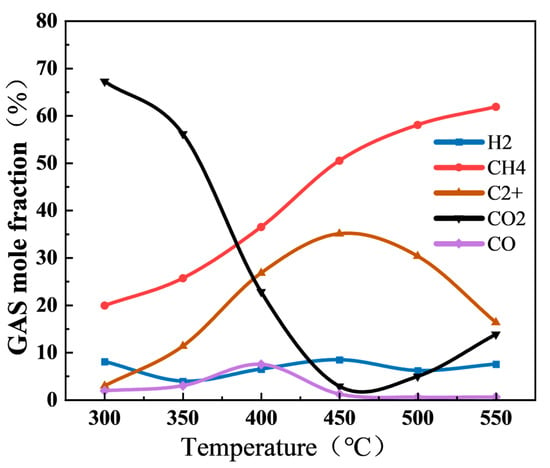
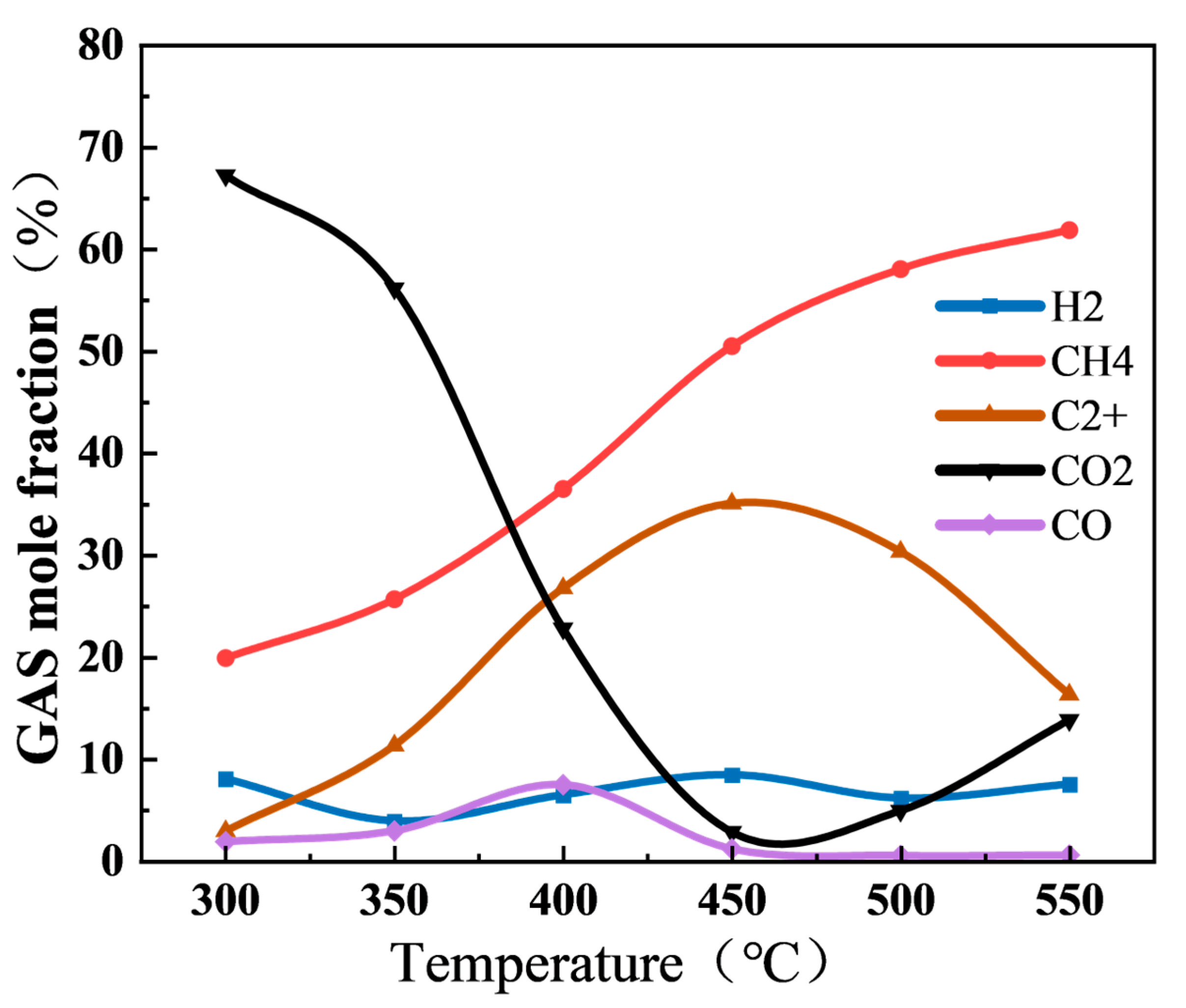
In this study, batch reactor experiments were conducted under a high-purity nitrogen inert atmosphere. Nitrogen was used primarily to establish an inert, oxygen-free reaction atmosphere and did not directly participate in the reactions. Based on the gas-composition characteristics after 8 h of reaction at different temperatures in the range of 300–550 °C, the possible reaction pathways associated with different temperature stages were analyzed to investigate the mechanism of hydrogen generation. The relevant results are shown in Figure 2.
Figure 2.
Gas-phase mole fractions of the detected components (H2, CH4, C2+, CO2, and CO) as a function of reaction temperature after 8 h.
As shown in Figure 2, temperature significantly affects the composition of the gases produced in the reactor, particularly the H2 content. Noticeable changes in the overall trends are observed around 400 °C and 500 °C; however, these temperatures should not be regarded as strict or abrupt reaction boundaries, as the actual transitions may occur gradually within the temperature ranges surrounding these points. Based on the evolution characteristics of each gas component, the reaction process can be divided into three temperature intervals: 300–400 °C, 400–500 °C, and 500–550 °C.
In the range of 300–400 °C, the produced gas was dominated by CO2, whereas the H2 content remained below the levels attained in the subsequent 400–500 °C interval. At 300 °C and 8 h, the mole fraction of CO2 reached the highest value of 67–73%. As temperature increased, the mole fraction of C2+ gases gradually increased, indicating that the system shifted from low-temperature deoxygenation to the initial cracking stage. In the range of 400–500 °C, the mole fraction of CH4 increased rapidly with temperature, and the contents of H2 and C2+ also increased significantly, but decreased slightly at higher temperatures. In this stage, both CO and CO2 decreased rapidly, indicating that the reaction system entered an active conversion stage. At 450 °C after 8 h, the H2 mole fraction reached 8.45%, which was the maximum among the experiments conducted at a fixed reaction time of 8 h; across all temperature–time combinations, the highest H2 mole fraction (10.84%) was obtained at 450 °C and 6 h (Section 3.2). When the temperature exceeded 500 °C, the H2 mole fraction continued to increase slowly and remained stable at about 8% at 550 °C. Meanwhile, the contents of CH4 and CO2 further increased, C2+ decreased significantly, and CO continued to decline and remained at a low level, indicating that the generation of light gases and deep conversion processes were further enhanced at high temperatures.
Based on previous studies, the experimental results of this work, and the characteristics of the produced gases, each temperature interval is analyzed in detail below to clarify the effect of temperature on the gas-phase H2 mole fraction and reaction pathways at different stages. The first stage (300–400 °C) is defined as the deoxygenation activation stage, the second stage (400–500 °C) as the water–gas shift hydrogen-production stage, and the third stage (500–550 °C) as the coke conversion hydrogen-production stage. It should be noted that these stage assignments represent a mechanistic interpretation based on the present experimental observations and previously reported mechanistic evidence, rather than exclusive reaction regimes, as multiple parallel and consecutive reactions may occur simultaneously.
In the deoxygenation activation stage (300–400 °C), the reaction system gradually shifted from deoxygenation-related reactions toward increasingly significant free-radical thermal cracking. At around 300 °C, weak heteroatom bridge bonds and polar functional groups in resins and asphaltenes were preferentially converted, in which structures associated with ester bonds, ether bonds, and C–S bonds began to break first, accompanied by deoxygenation, desulfurization, and other heteroatom-removal reactions. At this stage, the system mainly involved the removal of polar functional groups and the initial cleavage of heavy fractions and had not yet entered the deep thermal-cracking stage dominated by carbon-chain scission. As a result, CO2 accounted for a high proportion of the gas-phase products, whereas the generation of light hydrocarbon gases was relatively low [13,14]. As the temperature further increased above 350 °C, the contribution of thermal cracking gradually increased. The homolytic cleavage of C–C bonds in alkyl side chains and aromatic substituents in heavy oil was significantly enhanced, accompanied by free-radical reactions such as H transfer and β-scission, which promoted side-chain cleavage, short-chain hydrocarbon release, and molecular restructuring, leading to a marked increase in the mole fractions of CH4 and C2+ hydrocarbon gases in the gas phase [15]. As the reaction proceeded, free-radical intermediates and oxygen-containing products formed during thermal cracking gradually increased, and the CO generated could further participate in the water–gas shift reaction, promoting an increase in the H2 mole fraction. The participation of water not only promoted the hydrothermal cracking of heavy oil but also enhanced the water–gas shift reaction, thereby exerting a dual promoting effect on H2 generation [10]. The experimental results showed that the CO mole fraction initially increased and subsequently decreased with increasing temperature. This trend may be attributed to changes in the relative contributions of CO formation and consumption pathways at different temperatures. At relatively low temperatures, the decomposition of oxygen-containing compounds, such as carbonyl compounds, can promote CO formation. With a further increase in temperature, particularly in the temperature range around and above 400 °C, the contribution of CO-consuming reactions, such as the water–gas shift reaction, may gradually become more significant, resulting in a decrease in the CO mole fraction accompanied by an increase in the H2 mole fraction [16].
In the water–gas shift hydrogen-production stage, the water–gas shift reaction, methanation, and thermal conversion of heavy fractions occurred simultaneously, and the H2 mole fraction first increased and then decreased. As the temperature rose from the lower interval, the water–gas shift reaction may make an important contribution to the observed increase in H2 mole fraction. However, because the water–gas shift reaction is exothermic, its equilibrium constant decreases with increasing temperature; therefore, at higher temperatures, the thermodynamic driving force for continued H2 accumulation gradually weakened [17]. In the presence of Ni-containing components in the core powder, the methanation of CO may be promoted to some extent, which would additionally consume CO and H2 and contribute to CH4 formation. As a result, the gas composition exhibited a continuous decrease in CO and a continuous increase in CH4, while H2 began to decline after reaching its peak. In Ni-based catalytic systems, suppressing the methanation side reaction can improve the selectivity of the water–gas shift reaction; when the methanation pathway occupies a greater proportion, the system is more likely to shift toward CH4 generation [18,19,20,21]. At the same time, asphaltenes and related heavy aromatic fractions continued to undergo deep conversion. The peripheral alkyl side chains of asphaltenes continued to crack to generate gases and lighter liquid components, while the degree of aromatization and condensation continued to increase. As the temperature increased further, the conversion pathway shifted from large molecular products toward small-molecule gases and coke formation, causing the mole fraction of C2+ components to decrease in the later stage, while intermediate hydrocarbons underwent secondary cracking to produce methane and other gases [22,23,24]. The unsaturated aromatic hydrocarbons and polycyclic aromatic hydrocarbons generated during thermal conversion could further undergo addition, condensation, and dehydrogenation reactions, gradually evolving into coke precursors and promoting coke deposition.
Upon entering the coke conversion hydrogen-production stage, as the temperature continued to increase, the coke formed in the earlier pyrolysis stage gradually transformed from an intermediate product into an increasingly important reaction substrate. Coke dehydrogenation was significantly enhanced and may make an important contribution to hydrogen generation in the high-temperature region [7,25]. Meanwhile, heavy fractions, especially asphaltenes, continuously transformed into coke structures with low H/C ratio and high aromaticity through condensation, aromatization, and continuous dehydrogenation. In addition, under steam, coke gasification continued, and the generated CO could be converted into H2 through the high-temperature water–gas shift reaction.
3.2. Effect of Reaction Time on Gas Composition and H2 Mole Fraction
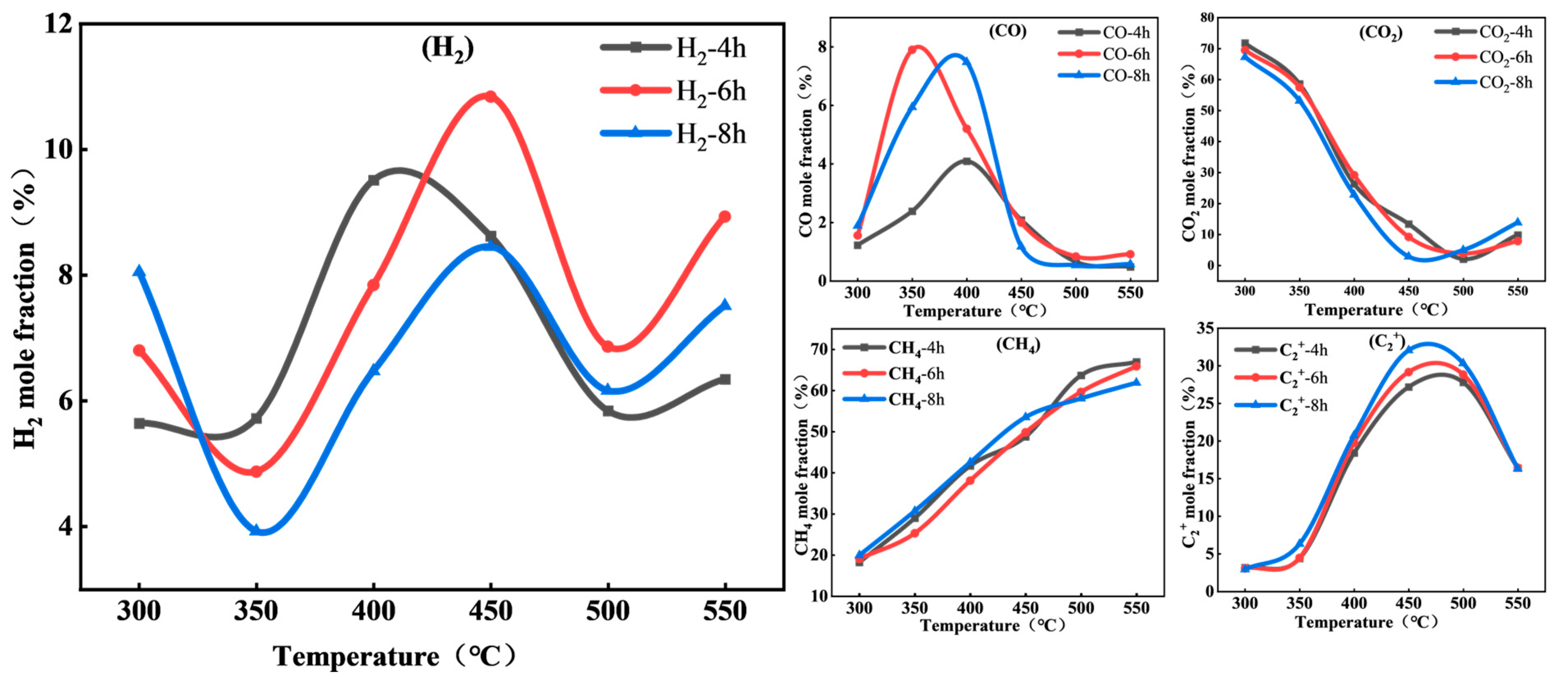
This section focuses on the effects of reaction time on the H2 mole fraction in the system. The results indicate that, under different reaction-time conditions, the hydrogen mole fraction exhibits an overall similar trend with temperature; however, the effect of prolonged reaction time varies across different temperature intervals. The analysis is based on Figure 3, while the corresponding H2 mole fractions expressed as mean ± SD (n = 3) are provided in Table S1 of the Supplementary Information.
Figure 3.
Mole fractions of produced gases at different reaction times of 4, 6, and 8 h.
In the low-temperature deoxygenation activation stage (300–400 °C), the first effect of prolonging the reaction time was to change the distribution characteristics of oxygen-containing gases. As shown in Figure 3, the mole fraction of CO2 generally decreased with increasing reaction time, whereas H2 and CO did not show a stable monotonic increase. At 300 °C and 8 h, the hydrogen mole fraction reached 7.96%, which was higher than that at 4 h. This is because heavy fractions mainly exist in the form of supramolecular association structures maintained by non-covalent interactions. Prolonging the reaction time favors disruption of the association structures of resins and asphaltenes and promotes further progression of heavy-oil hydrothermal cracking, thereby increasing the mole fractions of H2 and CO with reaction time [26,27,28]. After entering 350–400 °C, however, H2 under 4–6 h was higher than that under 8 h, and CO only exhibited slight short-term fluctuations around 350–400 °C, indicating that in this stage, with prolonged reaction time, the initially reactive oxygen-containing functional groups were gradually consumed, and the system shifted from predominantly deoxygenation-related behavior toward the coexistence of deoxygenation and initial cracking. Therefore, the proportion of CO2 in the produced gas decreased.
In the water–gas shift hydrogen-production stage (400–500 °C), H2 was generally higher for 6 h in this stage, especially around 450 °C where it reached the peak of this stage. In addition, the mole fraction of C2+ gases was higher with longer reaction time, and the 8 h curve was overall higher than those at 4 h and 6 h in the range of 400–500 °C, whereas CH4 varied relatively little with reaction time. In this stage, longer reaction times were more conducive to the continuous conversion of heavy fractions into intermediate hydrocarbon gases. Among the tested reaction times, 6 h yielded a relatively higher H2 mole fraction within this temperature interval, whereas extending the reaction to 8 h was detrimental to both further H2 accumulation and overall hydrogen conversion. In this stage, the cracking degree of resins and asphaltenes was significantly deepened, and side-chain scission and bridge-bond cleavage were further enhanced, promoting the conversion of more carbon–hydrogen structures into light gaseous hydrocarbons. Meanwhile, some hydrogen-consuming reactions in the system were also continuously strengthened with increasing reaction time; therefore, the H2 mole fraction did not exhibit a monotonic increasing trend.
In the coke conversion hydrogen-production stage (500–550 °C), the gas mole fractions showed clear nonlinear behavior with increasing reaction time. The H2 mole fraction was relatively low at 4 h but increased significantly at 6 h and remained at a relatively high level in the range of 500–550 °C, indicating that a moderate extension of reaction time was beneficial for the further dehydrogenation of coke and its condensed aromatic structures, thereby contributing to a higher H2 mole fraction in the product gas. When the reaction time was extended to 8 h, the H2 mole fraction decreased relative to that at 6 h, which may be attributed to the enhancement of hydrogen-consuming reactions such as methanation with increasing time. The mole fraction of CH4 decreased with increasing reaction time, whereas that of C2+ increased, indicating that CH4 mainly originated from primary cracking processes such as side-chain cleavage and terminal methyl removal in the early stage. As the reaction proceeded, its precursors were gradually depleted. By contrast, C2+ generation may be more related to the continuous cracking of coke and heavy intermediates and could therefore continue to accumulate at longer reaction times. Based on the gas-phase H2 mole fraction, 6 h represents the more favorable reaction time within the coke conversion hydrogen-production stage; across all operating conditions, the system at 450 °C for 6 h exhibited the highest measured H2 mole fraction (10.84%).
3.3. Comparison of Maximum H2 Mole Fractions with Previous Studies
The maximum H2 mole fraction obtained in this study was quantitatively compared with representative values reported in recent literature. As shown in Table 2, substantial differences exist between the H2 mole fractions reported in previous studies and those obtained in the present work. (1) Elemental analysis of the residual oil mixture.
Table 2.
Comparison of maximum H2 mole fractions reported under different reaction conditions.
Song et al. [9] and Liu et al. [10] reported relatively high H2 mole fractions, which can largely be attributed to their more severe reaction conditions. Song et al. [9] employed temperatures as high as 800 °C, which favor extensive thermal cracking of heavy components, coke gasification, and other hydrogen-producing reactions. Liu et al. [10], in contrast, conducted reactions at 425 °C and 6 MPa for up to 10 d, where the elevated pressure and prolonged reaction time facilitated more extensive conversion of heavy components and hydrogen-producing reactions such as the water–gas shift reaction. In comparison, the present study focused on an intermediate temperature range of 300–550 °C, with reaction times of only 4–8 h and an initial N2 pressure of 0.15 MPa. Although this temperature range is considerably lower than the high-temperature gasification conditions adopted by Song et al. [9], it is more representative of the thermal conditions that may prevail over a broader region of the reservoir during in situ combustion and gasification of heavy oil.
The H2 mole fractions reported by You et al. [14] and Zhao et al. [25] were lower than those obtained in the present study. You et al. [14] achieved a maximum H2 mole fraction of 6.8% at 340 °C after 24 h, indicating that a longer reaction time does not necessarily result in greater H2 mole fraction and that crude-oil composition and reaction temperature also play important roles. Zhao et al. [25] further demonstrated that the reaction atmosphere can significantly affect both the extent of H2 generation and the dominant hydrogen-producing pathways. Therefore, the differences in H2 mole fraction among these studies cannot be attributed to a single parameter but rather reflect the combined effects of reaction temperature, pressure, duration, feedstock properties, and reaction atmosphere. Notably, the present study achieved a maximum H2 mole fraction of 10.84% under relatively moderate temperatures, low initial pressure, and short reaction times, demonstrating the appreciable potential of the Liaohe heavy oil-water system for in situ hydrogen generation under thermal conditions relevant to practical reservoir environments.
However, it should be emphasized that the experimental results and mechanistic conclusions presented in this work are derived from a single heavy-oil sample from the Liaohe Oilfield, Panjin, China. The SARA composition of this sample is specific to this crude oil; different heavy oils with varying asphaltene and resin contents would exhibit distinct pyrolysis, coking, and hydrogen-generation behaviors. The reaction pathways, product distribution, and conditions associated with relatively high H2 mole fractions reported here may therefore have limited generalizability and should be applied to other heavy-oil systems with caution, particularly when the SARA fractions differ substantially.
3.4. Elemental Analysis of Residues
The elemental compositions of the original heavy oil and the dried bulk residual mixture obtained after reaction at 550 °C are summarized in Table 3.
Table 3.
Elemental analysis data of the original oil sample and bulk residual mixture sample at 550 °C.
The experimental results showed that at 550 °C, the H/C ratio of the residual phases was significantly lower than that of the original oil sample, dropping from 1.61 to 0.13. The substantial decrease in H/C indicates extensive dehydrogenation, cracking, condensation, and aromatization of the residual carbonaceous phase. Combined with the observed formation of H2, CH4, and light hydrocarbons in the gas phase, this trend is consistent with hydrogen release from heavy-oil-derived structures and the progressive formation of hydrogen-poor, condensed carbonaceous structures in the residue [29,30].
4. Hydrogen-Production Mechanism
Based on the above analysis and previous studies, this work summarizes the stage-wise evolution pattern of hydrogen production under a nitrogen atmosphere by combining the distribution of gaseous products, the properties of residues, and the thermal behavior characteristics of the system, and further elucidates the mechanism of heavy-oil in situ hydrogen production under nitrogen as well as the regulating role of water for the specific Liaohe heavy oil-water system investigated in this study.
In this study, the temperature range of 300–550 °C can be qualitatively divided into three approximate stages: the deoxygenation activation stage, the water–gas shift hydrogen-production stage, and the coke conversion hydrogen-production stage. In the pyrolysis transition stage, the system gradually shifted from hydrothermal cracking to thermal cracking. Oxygen-containing functional groups such as carboxyl, hydroxyl, and carbonyl groups in heavy oil were preferentially removed, generating oxygen-containing gases dominated by CO2 [14]. Meanwhile, weak bonds in heavy fractions such as resins and asphaltenes began to break. Some aromatic structures or side-chain-substituted aromatic structures (Ar–H) underwent side-chain cleavage, dehydrogenation, and structural rearrangement during the initial cracking process, gradually forming polycyclic aromatic hydrocarbons (PAHs), accompanied by the formation of a small amount of active hydrogen radicals (H). Combined with the low-temperature water–gas shift reaction, a small amount of H2 was released. This stage was mainly characterized by deoxygenation and initial cracking reactions [31]. As the temperature increased, the contribution of the water–gas shift reaction became increasingly significant. Thermal cracking of heavy oil was intensified, and heavy fractions continuously underwent side-chain cleavage, dealkylation, and condensation/aromatization reactions, producing more CH4, C2+, and CO [29]. The aromatic structures formed in the early stage further underwent dehydro-aromatization to form PAHs, which then gradually evolved into condensed aromatic aggregates ((PAH)n) through condensation and recombination and were further transformed into coke precursors and coke products. Meanwhile, CO reacted with steam via the water–gas shift reaction to generate more H2 and CO2, although hydrogen-consuming reactions such as methanation also existed in this stage [12,32,33]. After entering the coke-based hydrogen-production stage, the coke formed in the early stage served as an important carrier for high-temperature reactions and continuously generated H2 through coke dehydrogenation, coke gasification, and the water–gas shift reaction, thereby further enhancing the sustained hydrogen-production capacity under high-temperature conditions [7,25].
5. Conclusions
Based on a heavy-oil in situ hydrogen-production system simulating reservoir conditions, this study systematically investigated the effects of temperature, reaction time, and other factors on the hydrogen-production process using a Liaohe heavy-oil sample with a specific SARA composition (31.28 wt% saturates, 24.43 wt% aromatics, 21.93 wt% resins, and 22.36 wt% asphaltenes). By combining the distribution characteristics of gaseous products, the stage-dependent hydrogen-production mechanisms were interpreted under different reaction conditions. Furthermore, based on elemental analysis of the residues, the reaction characteristics of heavy-oil in situ hydrogen production were elucidated from the perspective of changes in residue properties. The results provide a theoretical basis for mechanistic studies, reaction-condition optimization, and subsequent process design of heavy-oil in situ hydrogen production.
The specific conclusions are as follows:
- (1)
- Under an inert N2 atmosphere and an oil-to-water ratio of 1:1, the in situ hydrogen-production process of heavy oil in the range of 300–550 °C can be qualitatively divided into three approximate stages: the deoxygenation activation stage (roughly 300–400 °C), the water–gas shift hydrogen-production stage (roughly 400–500 °C), and the coke conversion hydrogen-production stage (roughly 500–550 °C).
- (2)
- Temperature is the key factor controlling the dominant reaction pathway and H2 mole fraction. As the temperature increases, the system gradually shifts from deoxygenation and initial cracking to deep cracking, aromatization/condensation, and coke conversion, among which 400–500 °C is the temperature interval associated with relatively high H2 mole fractions under the investigated conditions.
- (3)
- Reaction time mainly affects the conversion degree of the system and gas distribution. At high temperatures, 6 h gives a better H2 mole fraction, whereas an excessively long residence time enhances hydrogen-consuming reactions and is associated with a lower H2 mole fraction.
- (4)
- High-temperature reactions significantly promote dehydrogenation, aromatization, and coking. Coke serves as an important intermediate carrier for sustained hydrogen production. At 550 °C, the H/C ratio of the dried bulk residual mixture decreases from 1.61 to 0.13, which is consistent with extensive dehydrogenation and the progressive formation of hydrogen-poor, condensed carbonaceous structures.
- (5)
- Based on the distribution of gaseous products, the effect of reaction time, and the elemental evolution characteristics of the residues, a stage-dependent reaction mechanism for heavy-oil in situ hydrogen production in the range of 300–550 °C is proposed, clarifying the continuous evolution pathway of deoxygenation activation, water–gas shift hydrogen production, and coke conversion hydrogen production, as well as their controlling roles in H2 generation.
Future studies could further strengthen the proposed stage-dependent reaction framework by incorporating total gas-yield measurements and carbon–hydrogen mass-balance analysis to quantitatively evaluate H2 production characteristics and the relative contributions of heavy oil and water to H2 formation. Employing finer temperature intervals would help define the transition boundaries between the proposed reaction stages more precisely. In addition, in situ or operando characterization techniques could provide further evidence for the evolution of reaction intermediates and solid residues. Extending the experimental matrix to heavy oils with different SARA compositions would further help evaluate the general applicability of the proposed stage-dependent reaction framework.
Supplementary Materials
The following supporting information can be downloaded at: https://www.mdpi.com/article/10.3390/pr14182962/s1, Table S1: H2 mole fractions under different reaction temperatures and reaction times (mean ± SD, n = 3).
Author Contributions
Conceptualization, J.T., Y.D., B.L., C.Y., and Y.J.; Methodology, J.T., B.L., C.Y., and Y.J.; Software, J.T., B.L., and C.Y.; Validation, B.L.; Investigation, Y.D. and W.G.; Resources, J.T., W.G., and Y.J.; Data curation, J.T., W.G., and Y.J.; Writing—original draft, Y.D. and C.Y.; Writing—review & editing, J.T., Y.D., and C.Y.; Visualization, Y.D. All authors have read and agreed to the published version of the manuscript.
Funding
This work was supported by the State Key Laboratory of Enhanced Oil and Gas Recovery.
Data Availability Statement
The original contributions presented in this study are included in the article. Further inquiries can be directed to the corresponding author.
Conflicts of Interest
Authors Junshi Tang, Bolin Lv, Wenlong Guan, and Youwei Jiang were employed by the State Key Laboratory of Enhanced Oil Recovery, Research Institute of Petroleum Exploration and Development, PetroChina. The remaining authors declare that the research was conducted without any commercial or financial relationships that could be construed as a potential conflict of interest.
References
- Sun, H.; Wang, H.; Cao, X.; Shu, Q.; Fan, Z.; Wu, G.; Yang, Y.; Wu, Y. Innovations and Applications of the Thermal Recovery Techniques for Heavy Oil. Energy Geosci. 2024, 5, 100332. [Google Scholar] [CrossRef] [Scilit]
- Gomaa, S.; Salem, K.G.; El-Hoshoudy, A. Enhanced Heavy and Extra Heavy Oil Recovery: Current Status and New Trends. Petroleum 2024, 10, 399–410. [Google Scholar] [CrossRef] [Scilit]
- Yang, S.; Huang, S.; Jiang, Q.; Jiang, G.; Liu, Q.; Wang, Z.; Gong, R. In-Situ Solvents Generation Enhanced Steam Assisted Gravity Drainage (ISSG-SAGD): A Low Carbon and High-Efficiency Approach for Heavy Oil Recovery. Energy 2024, 291, 130370. [Google Scholar] [CrossRef] [Scilit]
- Wang, L.; Guo, J.; Li, C.; Xiong, R.; Chen, X.; Zhang, X. Advancements and Future Prospects in In-Situ Catalytic Technology for Heavy Oil Reservoirs in China: A Review. Fuel 2024, 374, 132376. [Google Scholar] [CrossRef] [Scilit]
- Demirci, O.K.; Çınar, C.; Kocakulak, T. Investigation of the Combined Use of Diesel and CNG Fuels on an HCCI Engine Using Response Surface Methodology (RSM). Sci. Iran. 2025, 32, 1–15. [Google Scholar] [CrossRef] [Scilit]
- Gülcan, H.E.; Demirci, O.K.; Erol, D.; Tunçer, E. Energy, Exergy and Exergoeconomic Analysis of a CI Engine Fuelled with Waste Frying Oil Biodiesel Blended with Waste Tyre Pyrolysis Oil and Higher Alcohols (Heptanol and Octanol): A Waste-to-Energy Approach. Biomass Bioenergy 2026, 207, 108787. [Google Scholar] [CrossRef] [Scilit]
- Yang, S.; Huang, S.; Jiang, Q.; Yu, C.; Zhou, X. Experimental Study of Hydrogen Generation from In-Situ Heavy Oil Gasification. Fuel 2022, 313, 122640. [Google Scholar] [CrossRef] [Scilit]
- Tang, X.; Pu, W.; Chen, Q.; Liu, R.; Yang, Y. A Comprehensive Study on Kinetics for Hydrogen Generation from Aquathermolysis Gasification of Heavy Crude Oil. Int. J. Hydrogen Energy 2023, 48, 39780–39790. [Google Scholar] [CrossRef] [Scilit]
- Song, P.; Li, Y.; Yin, Z.; Ifticene, M.A.; Yuan, Q. Simulation of Hydrogen Generation via In-Situ Combustion Gasification of Heavy Oil. Int. J. Hydrogen Energy 2024, 49, 925–936. [Google Scholar] [CrossRef] [Scilit]
- Liu, Y.; Yu, C.; Jiang, Q.; Liu, Y.; Fan, Z.; Deng, H.; Li, M.; Liu, Y.; Xiong, M. Kinetic Modeling of In-Situ Hydrogen Generation from Bitumen and Its Influencing Factors and Mechanisms Study. Fuel 2025, 385, 134155. [Google Scholar] [CrossRef] [Scilit]
- Okere, C.J.; Sheng, J.J. A New Modelling Approach for In-Situ Hydrogen Production from Heavy Oil Reservoirs: Sensitivity Analysis and Process Mechanisms. Energy 2024, 302, 131817. [Google Scholar] [CrossRef] [Scilit]
- Ifticene, M.; Yuan, Q. Numerical Modeling of In-Situ Hydrogen Production via Cyclic Air-Steam Injection in Heavy Oil Reservoirs. Int. J. Hydrogen Energy 2025, 129, 172–183. [Google Scholar] [CrossRef] [Scilit]
- Cheshkova, T.V.; Grinko, A.A.; Min, R.S.; Sagachenko, T.A. Structural Transformations of Heavy Oil Asphaltenes in the Course of Heat Treatment. Pet. Chem. 2022, 62, 214–221. [Google Scholar] [CrossRef] [Scilit]
- You, A.; Huang, S.; Gong, R.; Jiang, Q.; Fan, D.; Zhao, H. Experimental Study on the Mechanism of Associated Gas Generation by Heavy Oil Aquathermolysis and Thermal Cracking during Steam Injection. J. Anal. Appl. Pyrolysis 2024, 182, 106722. [Google Scholar] [CrossRef] [Scilit]
- Liu, X.-S.; Wang, L.-T.; Huang, Z.-B.; Yuan, P.-Q. Characteristics of Hydrogen Abstraction Involved in Thermal Processing of Heavy Oil. Chem. Eng. Sci. 2024, 298, 120346. [Google Scholar] [CrossRef] [Scilit]
- Liu, J.; Jiang, X.; Shen, J.; Zhang, H. Pyrolysis of Superfine Pulverized Coal. Part 2. Mechanisms of Carbon Monoxide Formation. Energy Convers. Manag. 2014, 87, 1039–1049. [Google Scholar] [CrossRef] [Scilit]
- Wang, C.-W.; Peng, X.-L.; Liu, J.-Y.; Jiang, R.; Li, X.-P.; Liu, Y.-S.; Liu, S.-Y.; Wei, L.-S.; Zhang, L.-H.; Jia, C.-S. A Novel Formulation Representation of the Equilibrium Constant for Water Gas Shift Reaction. Int. J. Hydrogen Energy 2022, 47, 27821–27838. [Google Scholar] [CrossRef] [Scilit]
- Ang, M.; Oemar, U.; Kathiraser, Y.; Saw, E.; Lew, C.; Du, Y.; Borgna, A.; Kawi, S. High-Temperature Water-Gas Shift Reaction over Ni/xK/CeO2 Catalysts: Suppression of Methanation via Formation of Bridging Carbonyls. J. Catal. 2015, 329, 130–143. [Google Scholar] [CrossRef] [Scilit]
- Byeon, H.-J.; Jeon, K.-W.; Kim, H.-M.; Lee, Y.-H.; Heo, Y.-S.; Park, M.-J.; Jeong, D.-W. Promotion of Methanation Suppression by Alkali and Alkaline Earth Metals in Ni-CeO2 Catalysts for Water-Gas Shift Reaction Using Waste-Derived Synthesis Gas. Fuel Process. Technol. 2022, 231, 107229. [Google Scholar] [CrossRef] [Scilit]
- Lim, J.Y.; McGregor, J.; Sederman, A.J.; Dennis, J.S. Kinetic Studies of the Methanation of CO over a Ni/γ-Al2O3 Catalyst Using a Batch Reactor. Chem. Eng. Sci. 2016, 146, 316–336. [Google Scholar] [CrossRef] [Scilit]
- Saw, E.; Oemar, U.; Tan, X.; Du, Y.; Borgna, A.; Hidajat, K.; Kawi, S. Bimetallic Ni–Cu Catalyst Supported on CeO2 for High-Temperature Water-Gas Shift Reaction: Methane Suppression via Enhanced CO Adsorption. J. Catal. 2014, 314, 32–46. [Google Scholar] [CrossRef] [Scilit]
- Wang, J.; Anthony, E.J. A Study of Thermal-Cracking Behavior of Asphaltenes. Chem. Eng. Sci. 2003, 58, 157–162. [Google Scholar] [CrossRef] [Scilit]
- Wang, F.; Wei, Q.; Li, K.; Biney, B.W.; Liu, H.; Chen, K.; Wang, Z.; Guo, A. Coke Formation of Heavy Oil during Thermal Cracking: New Insights into the Effect of Olefinic-Bond-Containing Aromatics. Fuel 2023, 336, 127138. [Google Scholar] [CrossRef] [Scilit]
- Félix, G.; Djimasbe, R.; Tirado, A.; Varfolomeev, M.A.; Ancheyta, J. Kinetic Study for the Ashalcha Heavy Crude Oil Upgrading at Supercritical Water Conditions. Fuel 2025, 380, 133145. [Google Scholar] [CrossRef] [Scilit]
- Zhao, R.; Wang, T.; Ren, H.; Jiang, N.; Li, X.; Lv, W.; Wang, H.; Bai, S. A Strategy for Enhanced Hydrogen Generation: The Effect of Varying Atmospheres on In-Situ Gasification in Heavy Oil Reservoirs. Appl. Energy 2024, 376, 124168. [Google Scholar] [CrossRef] [Scilit]
- Kapadia, P.; Kallos, M.; Gates, I. A Review of Pyrolysis, Aquathermolysis, and Oxidation of Athabasca Bitumen. Fuel Process. Technol. 2015, 131, 270–289. [Google Scholar] [CrossRef] [Scilit]
- Fan, H.; Zhang, Y.; Lin, Y. The Catalytic Effects of Minerals on Aquathermolysis of Heavy Oils. Fuel 2004, 83, 2035–2039. [Google Scholar] [CrossRef] [Scilit]
- Mullins, O.C. The Modified Yen Model. Energy Fuels 2010, 24, 2179–2207. [Google Scholar] [CrossRef] [Scilit]
- Ma, Y.; Ge, Z.; Zeng, M.; Zha, Z.; Tao, Y.; Zhang, H. Reactivity and Performance of Steam Gasification during Biomass Batch Feeding. Carbon Resour. Convers. 2023, 6, 229–237. [Google Scholar] [CrossRef] [Scilit]
- Li, N.; Zhang, X.; Zhang, Q.; Chen, L.; Ma, L.; Xiao, X. Reactivity and Structural Changes of Asphaltene during the Supercritical Water Upgrading Process. Fuel 2020, 278, 118331. [Google Scholar] [CrossRef] [Scilit]
- Muraza, O.; Galadima, A. Aquathermolysis of Heavy Oil: A Review and Perspective on Catalyst Development. Fuel 2015, 157, 219–231. [Google Scholar] [CrossRef] [Scilit]
- Alvarez, E.; Marroquín, G.; Trejo, F.; Centeno, G.; Ancheyta, J.; Díaz, J.A. Pyrolysis Kinetics of Atmospheric Residue and Its SARA Fractions. Fuel 2011, 90, 3602–3607. [Google Scholar] [CrossRef] [Scilit]
- Wang, F.; Zhang, Z.; Zhang, X.; Jiao, S.; Yang, Y.; Jin, X.; Liu, H.; Wang, Z.; Guo, A. In-Situ Hydrogenation of Heavy Oil via Medium-Temperature Water-Gas Shift Reaction Enhanced with Supercritical n-Heptane: Improved PAHs Hydrogenation Effectiveness and Upgraded Thermal Cracking Performance. Fuel 2026, 414, 138312. [Google Scholar] [CrossRef] [Scilit]

Disclaimer/Publisher’s Note: The statements, opinions and data contained in all publications are solely those of the individual author(s) and contributor(s) and not of MDPI and/or the editor(s). MDPI and/or the editor(s) disclaim responsibility for any injury to people or property resulting from any ideas, methods, instructions or products referred to in the content. |
© 2026 by the authors. Licensee MDPI, Basel, Switzerland. This article is an open access article distributed under the terms and conditions of the Creative Commons Attribution (CC BY) license.