


Abstract
Dairy wastewater treatment via dissolved air flotation (DAF) generates large amounts of sludge rich in fats and organic matter, posing significant management challenges. This laboratory-scale study evaluated the valorization of dairy DAF sludge through a rapid vermicomposting process using Eisenia fetida. Three biomixtures (83–85% DAF sludge) amended with cow dung, soybean hulls, and sawdust were subjected to a 28-day stabilization phase followed by only 30 days of vermicomposting, incorporating a 1 cm vermicompost surface layer to support earthworm acclimation. The results demonstrated progressive stabilization and maturation in all treatments. The final vermicomposts were stable, non-phytotoxic, and microbiologically safe, meeting Class A compost standards. Notably, N-NH4+ levels decreased significantly to maturity levels (<500 mg kg−1 dry weight), while nitrate and available phosphorus increased compared to controls. Principal component analysis confirmed advanced maturation, with mixtures containing cow dung and soybean hulls promoting the highest earthworm biomass and reproductive performance. These findings demonstrate that dairy DAF sludge can be efficiently transformed into agronomically valuable organic amendments in just 58 days, a period significantly shorter than that for conventional processes. This approach provides a sustainable residue management strategy that contributes to the circular bioeconomy in the dairy sector.
1. Introduction
The generation of wastewater represents a significant environmental concern within the context of the dairy industry. The dairy industry consumes large quantities of water in its processes, especially to maintain the required hygienic and sanitary conditions. Globally, it is estimated that the industry generates 6–10 L of effluents for every litre of milk produced [1]. The quantity of dairy waste residue produced annually is estimated to range from 4 to 11 million tonnes, comprising solid waste and effluents [2]. The main sources of wastewater in dairy processing plants are: the cleaning of equipment, occurrence of spills or leaks in equipment, pipes from various production lines, inadequate handling of raw milk or dairy products and use of alkaline and acidic detergents and sanitizers [3,4]. Wastewater from these sources is rich in organic matter and nutrients such as nitrogen and phosphorus. It also has high Biochemical Oxygen Demand (BOD) and chemical oxygen demand (COD); therefore, proper treatment is vital prior to discharge or reuse [3].
In this particular industrial sector, wastewater is typically subjected to a combination of physicochemical and biological treatments. The main treatment process are dissolved air flotation (DAF), employed to remove fats, oils and grease, and traditional aerobic secondary treatment, such as activated sludge aeration, used to remove organic material and suspended solids. The utilization of conventional wastewater treatment processes generates significant quantities of sludge, leading to substantial disposal costs that can account for up to 50% of total operating expenses [3,5].
The valorization of sewage sludge, rather than its disposal as waste, is a fundamental tenet of sustainable agriculture and the circular economy. Landfilling and improper disposal of DAF sludge are common practices in many developing countries. Leachate from DAF sludge landfills can contaminate groundwater and surface water if not properly managed. The sludge can contribute to the emissions of methane, a potent greenhouse gas, due to the decomposition of organic matter under anaerobic conditions [6]. In addition to water contamination, the decomposition of organic matter in DAF sludge produces unpleasant odours and releases volatile organic compounds (VOCs) or ammonia, which severely compromise air quality, especially in the vicinity of waste storage or treatment facilities [7]. This operational and environmental challenge is clearly illustrated by a dairy industry in Argentina, which transports 18 to 20 tonnes of DAF sludge per day to a landfill site located more than 500 km away from the treatment plant (personal communication, plant technical manager).
The environmental challenges associated with DAF sludge management require an integrated approach combining treatment optimization, responsible disposal, and innovative technologies to minimize ecological impacts. Consequently, enhancing sludge management frameworks through public awareness, policy development, and technical innovation is essential to prevent environmental damage and ensure sustainable waste management in these regions. Various technologies are available for waste management, including anaerobic digestion, composting, and waste-to-energy technologies [6].
Earthworm vermicomposting is a biological process that transforms complex, energy-rich organic matter into a stable, nutrient-rich humus known as vermicompost [8]. The final product is odourless, crumbly, and dark, resembling fine-textured soil, and is considered a sustainable solution for organic waste management, including the treatment of industrial sludge and agricultural residues. Moreover, vermicomposting helps mitigate the toxicity of industrial waste and sludge, rendering it a highly eco-friendly and sustainable solution [9]. Extensive evidence demonstrates the successful application of earthworms in stabilizing waste from diverse sectors, including the beverage, paper, sugar, distillery, winery, and tannery industries [10]. The study by Boruah and Morang [11] clearly highlights the suitability of vermicomposting over conventional composting as an alternative technology for the management, stabilization and nutrient recovery of these industrial organic wastes. Although several studies have investigated dairy sludge treatment by vermicomposting, the literature often fails to specify the exact origin of the sludge within the treatment facility. Among these works, studies employing mixtures of dairy sludge combined with cow dung and agricultural residues—such as sugarcane bagasse and wheat stubble—demonstrated significant reductions in pH, organic carbon, and the C:N ratio, yielding a high-quality biofertilizer characterized by increased total nitrogen, available phosphorus, and exchangeable cations [8,12]. Other research also tested different proportions of sludge and cow dung using two earthworm species (Eisenia fetida and Eudrilus eugenia), obtaining a vermicompost with good performance as a biofertilizer for the growth of different plants [13]. Boruszko [14] investigated the potential of effective microorganisms and vermicomposting processes for the stabilization of excess sewage sludge from biological dairy wastewater treatment, focusing on their impact on nutrient and macro-element content. The findings indicated that vermicomposting enhanced total N and assimilable P levels while increasing cation concentrations. Similarly, Dutta et al. [15] evaluated the synergistic effect of amending dairy sludge–cattle manure mixtures with biochar at various ratios during vermicomposting. Their results showed that biochar amendment accelerated mineralization, boosted nutrient recovery, and promoted significant earthworm growth, ultimately producing a high-quality vermicompost suitable for agricultural applications.
Reports by Quintern et al. [16,17] describe the up-scaling of the vermicomposting process on an industrial scale in New Zealand for the treatment of activated sludge and DAF sludge mixed with sludge from several pulp and paper mills. These sludges are converted to high-quality soil conditioner while producing positive environmental and economic outcomes for industries and agriculture. However, these reports lack the level of detail provided by a comprehensive research study.
A common feature among these studies is the prolonged vermicomposting period, typically requiring 90 to 120 days in addition to a 2-to-3-week pre-stabilization phase, depending on the specific trial.
Although dairy dissolved air flotation (DAF) sludge has been extensively investigated for anaerobic digestion [18], studies evaluating its stabilization through vermicomposting are extremely scarce. To the best of our knowledge, only one previous report has described the full-scale vermicomposting of dairy DAF sludge, without a comprehensive assessment of vermicompost quality, maturity, phytotoxicity, or earthworm performance. Furthermore, a common feature among existing studies on generic dairy sludge is the prolonged vermicomposting period.
Therefore, the present study aimed to transform DAF sludge into vermicompost in the shortest possible time. This was achieved by optimizing formulations with diverse wastes to accelerate the processing capacity of E. fetida.
2. Materials and Methods
2.1. DAF Sludge, Waste Materials and Earthworms
DAF sludge (DS) was collected from a local milk industry in Santa Fe, Argentina. Cow dung (CD), soybean husk (SH), vermicompost (VC) and Eucalyptus sp. sawdust (ES) were used to prepare different mixtures. These materials act as bedding and feeding materials for earthworms.
The waste materials (CD, SH, and ES) were locally supplied from different sites within the province of Santa Fe (Argentina), allowing for their reutilization. CD was partially dried in the shade and homogenized manually. ES was obtained from a commercial sawmill located in Helvecia (Santa Fe, Argentina) and SH from the Avigan Agroservicios plant located in Humboldt (Santa Fe, Argentina). Adult clitellated Eisenia fetida earthworms and vermicompost (VC) were obtained from the bioterium at INTEC (Instituto de Desarrollo Tecnológico para la Industria Química). The VC complied with the chemical, physical, and microbiological quality requirements for Class A compost established by Argentine national regulations (Joint Resolution SCyMA–SENASA No. 1/2019 and Resolution MAyDS No. 410/2018 for matrices derived from biosolids [19]). The earthworms were used in the vermicomposting stage.
The main characteristic properties of DS and waste materials are given in Table 1.
Table 1.
Characteristic parameters of DS and waste materials.
2.2. Preparation and Conditioning of Biomixtures: Stabilization Stage
Three biomixtures (B1, B2, and B3) were prepared using DS with other local materials in the following weight proportions:
B1: 10.2 kg (85%) DS + 1.2 kg (10%) CD + 0.6 kg (5%) ES; B2: 10 kg (83.4%) DS + 1 kg (8.3%) VC + 1 kg (8.3%) ES and B3: 10.2 kg (85%) DS + 1.2 kg (10%) SH + 0.6 kg (5%) ES.
In all biomixtures, DS was the major component, representing at least 80% of the total mixture. Biomixtures were held in 63 × 50 × 30 cm plastic boxes for 28 days for thermal stabilization, the elimination of harmful gases and initial microbial degradation (stabilization stage). Samples were taken from the three biomixtures at the beginning of the experiment and analyzed for the following parameters: pH, electrical conductivity (EC), ashes, organic matter (OM), nitrogen Kjeldahl (N), and ammonium. During this period, biomixtures were turned periodically (each 5 days) for aeration and to remove odours from decomposing wastes. The boxes were kept in a shaded area at an ambient temperature (between 11 and 19 °C), and moisture was maintained at 70–75% (on a wet-weight basis) by manually watering with a pump pressure sprayer and controlled with a TFA hygrometer (TFA Dostmann GmbH & Co. KG, Wertheim, Germany).
On day 28, an avoidance test was conducted to evaluate earthworm behaviour across the different biomixtures. The bioassays were conducted according to ISO [20] and Owojori & Reinecke [21], using four replicates represented by glass boxes divided into two sections with a removable separator. Each replicate contained one section with 250 g of control soil, and the other section contained the same amount of the test biomixture, both moistened to 60–70%. Once the separator was removed, ten clitellate individuals were placed on the dividing line between the sections. After 72 h, the separator was repositioned, and the number of individuals on each section was counted. The results were presented in terms of net response (NR) mean percentage values and calculated as follows:
where C is the number of earthworms observed in the control soil; T is the number of earthworms observed in testing biomixture; and N is the total number of earthworms per replicate.
RN (%) = (C − T)/N × 100
According to [21], NR values equal to or greater than 80% indicate the toxicity and/or low quality of the biomixture, which means that 20% or less of the earthworms are found on the testing substrate. On day 28, the earthworms showed a net negative avoidance response (mean net value −90% avoidance), indicating high biomixture acceptance. Based on these results, the vermicomposting stage of the biomixtures was initiated.
2.3. Vermicomposting Stage
The results obtained on day 28 established the initial conditions for the vermicomposting stage, expanding the dataset to include water-soluble carbon (WSC), nitrate, extractable phosphorous (ex-P) and extractable potassium (ex-K). Each biomixture was divided into three independent physical vermicomposting units (replicates) of approximately 1.5 kg, which were kept in separate containers, and 30 clitellate adult Eisenia fetida individuals were added (average weight 0.27 ± 0.01 g ind−1). Control treatments without earthworms were also established for each biomixture.
The moisture content of the biomixtures was monitored weekly and maintained at 60–75% (on a wet-weight basis), following the same watering and monitoring protocol described in Section 2.2. This stage was conducted under the same sheltered conditions as the preceding stabilization stage, with ambient temperatures fluctuating between 11 °C and 19 °C. A 1 cm thick layer of vermicompost was applied to the surface of each replicate, serving as an operational refuge zone proposed in this study to aid earthworms during their initial adaptation and gradual colonization and processing of the biomixtures.
This stage lasted 30 days. At the end of the period, samples were taken to determine pH, EC, OM, ashes, WSC, ammonia, N, ex-P, ex-K, total and fecal coliform, Salmonella sp., viable Helminth ova and phytotoxicity through the germination assay with Lactuca sativa L.
Earthworm biomass (g per worm) was evaluated both at the onset and at the conclusion of the experiment. Additionally, reproductive parameters—including cocoon and juvenile production—were assessed at the end of the vermicomposting period.
2.4. Physicochemical Analysis
Samples were oven-dried at 60 °C and sieved (2 mm sieve). Determinations of pH, EC, ammonium, nitrate and WSC were carried out on a 1:10 aqueous extract, and samples were shaken in a horizontal position for 2 h and decanted (for pH and EC) or filtered through Whatman N°42 (Whatman, Cytiva, Little Chalfont, UK) for ammonium, nitrate and WSC; a centrifugation step was included prior to filtration exclusively for the last two determinations. pH and EC were measured with HACH RHQd multiparameter equipment (Hach Company, Loveland, CO, USA), while ammonium was quantified by the indophenol blue method [22] with a commercial kit ((Wiener Lab., Argentina)). Nitrate concentration was determined by ion chromatography using a Dionex IonPac AS22 anion-exchange column (Thermo Fisher Scientific, Sunnyvale, CA, USA) and conductivity detection. Samples were filtered through 0.22 µm nylon membranes before injection (20 µL), and quantification was performed using external calibration with NaNO3 standards (0–100 mg/L; R2 > 0.999). OM was determined by loss on ignition at 550 °C for 2 h. Organic carbon (OC) was estimated from organic matter (OM) using the conversion factor OC = OM/1.8, following the approach applied to compost and vermicompost by Tognetti et al. [23], based on the empirical relationship between organic matter and carbon in organic wastes reported by Navarro et al. [24]. WSC determination was performed based on chemical oxygen demand [25]. Extractable phosphorous (ex-P) was quantified on a 1:100 NaHCO3 0.5 M extract with the Bray & Kurtz N°1 method (ascorbic acid–ammonium molybdate method), while extractable potassium (Ex-K) was measured on an ammonium acetate extract (ratio 1:10, pH = 7) by atomic absorption spectrometry as reported by [26]. The metal content in vermicompost was evaluated following the sample digestion procedure described in EPA Method 200.2 [27], followed by determination by atomic absorption spectrometry. The limits of detection (LODs) were 0.15, 0.02, 0.08, 0.6, 4.5, 0.3, 0.15, and 0.15 mg kg−1 for Pb, Hg, Cd, Ni, As, Cr, Zn and Cu, respectively.
The presence of pathogens, including fecal coliforms, Salmonella sp., and viable helminth ova, was evaluated in DS, CD, and the three final vermicomposts according to the standard EPA methods [28]. For microbiological and parasitological analyses, composite samples were prepared for each treatment and control by mixing equal-weight aliquots from the three independent physical replicates.
2.5. Phytotoxicity Assay
Germination bioassays were performed on vermicompost products following the USEPA [29] methodology. Aqueous extracts were obtained by suspending 4 g of material in 40 mL of distilled water under agitation for 1 h. Extracts at 75%, 50% and 25% concentrations were tested. For each treatment, twenty L. sativa seeds were placed on germination paper within Petri dishes and moistened with 4 mL of extract. Five replicates per concentration plus a distilled water control were included. After a 5-day dark incubation at 24 °C, germination percentage and primary root length were determined. The germination index (GI) was calculated as follows:
where Gs and Gc are the number of germinated seeds in the extracts and in the control, and RL and RLC are the average root length in the extracts and in the control, respectively.
2.6. Statistical Analysis
All physical, chemical, and biological analyses were performed individually on each of the three independent replicates (n = 3) for all treatments and controls. Throughout the manuscript, tables, and figures, data are expressed as the mean ± standard deviation (SD). Data normality and homogeneity of variances were assessed using the Shapiro–Wilk and Levene tests, respectively. Differences in physicochemical parameters between each vermicompost treatment and its respective earthworm-free control (V1 vs. C1, V2 vs. C2, and V3 vs. C3) were evaluated using Student’s t-test. Because these represented three planned, independent, and orthogonal a priori comparisons, the potential inflation of Type I error was controlled by applying a Bonferroni correction. Consequently, the family-wise significance threshold was adjusted from α = 0.05 to α′ = 0.0177. Differences were only considered statistically significant if their p-value fell below this corrected threshold. Earthworm biomass and reproduction data were subjected to a one-way analysis of variance (ANOVA, 95% confidence level), and the differences among the means were evaluated by Tukey’s test (p ≤ 0.05). Principal component analysis (PCA) was performed as an exploratory method for visualizing biomixture maturation trajectories. The analysis was conducted on standardized data using all 18 independent replicate data points (6 treatments × 3 physical replicates) to preserve natural experimental variance. Nine active variables were included: pH, EC, OM, N, ammonium, nitrate, WSC, Ex-P, and Ex-K. Germination index (GI) values were subjected to a two-way ANOVA, with substrate treatment (vermicomposts and controls) and aqueous extract dilution (25%, 50%, and 75%) as fixed factors. The interaction between factors was included in the model. Significant differences among means were determined using Tukey’s test (p < 0.05). Statistical analyses were conducted using jamovi (version 2.7.30, The jamovi project, Sydney, Australia), and significance was established at p < 0.05.
3. Results and Discussion
3.1. Physicochemical Characterization of Vermicompost: Quality, Maturity and Stability Parameters
The pH of the vermicomposts obtained was neutral to alkaline, ranging from 7.7 to 8.6 (Table 2). These results are consistent with those reported by several authors [30,31]. El Fels et al. [32] showed that the pH tends towards neutrality due to the formation of humic compounds with buffer properties and that it remains stable at an optimal range of 6–8. Since the onset of stabilization, EC showed an overall reduction of 37–42% across the three vermicomposts. By the end of the vermicomposting process, EC values remained within the acceptable range for the growth of sensitive plant species. Similar decreases in EC during vermicomposting have been reported by other authors, who attribute this behaviour to the loss of soluble ions through leaching, their immobilization by microorganisms and earthworms, or their precipitation as insoluble salts [33,34,35].
Table 2.
The characteristic parameters of the biomixtures at different stages of the experiment.
Organic matter (OM) conversion is a critical indicator of waste stabilization. While a progressive decline in OM was recorded throughout the entire 58-day process, the most substantial transformation occurred during the vermicomposting stage. Total OM reductions ranged between 58% and 62% by the end of this study (Table 2). Although the initial 28-day stabilization phase prompted an early decrease in OM, the subsequent 30-day vermicomposting period was responsible for the vast majority of the mineralization. Specifically, significant differences in OM content were found in V1 and V3 when compared to their respective controls (Table 3) (p < 0.001). This confirms that the synergistic activity of E. fetida and its associated microbiota significantly accelerated the decomposition of complex organic compounds in the DS, leading to higher carbon losses as CO2 and resulting in a more stabilized and mature final product than that achieved by microbial action alone during stabilization.
Table 3.
The final physicochemical characteristics of the vermicomposts and their respective controls.
Water-soluble carbon (WSC) concentrations, which represent the most readily biodegradable fraction of organic matter, also decreased after vermicomposting. Although statistically significant differences were only observed in V3 (p < 0.001), all vermicomposts exhibited lower values than their corresponding controls (Table 3). This consistent decline suggests a progressive depletion of labile carbon compounds due to the combined activity of earthworms and microorganisms. The reduction in water-soluble carbon, together with the decrease in organic matter content, provides additional evidence of substrate stabilization and organic matter degradation during the vermicomposting process.
The C/N ratios obtained for the three vermicomposts met the maturity criterion established by the California Compost Quality Council (CCQC), which specifies a C/N ratio below 25 [36]. Furthermore, all three vermicomposts complied with the requirements for Class A compost under the Argentine national regulations [19], which specify a C/N ratio of ≤20.
The sludge generated in DAF systems in the dairy industry tends to have a high ammoniacal nitrogen () content due to the high protein content of dairy effluents, as well as protein hydrolysis and microbial deamination during stabilization. Controlling this parameter is crucial for environmental, legal, technological and health reasons. The three initial biomixtures had high values of ammoniacal nitrogen (6023–7379 mg kg−1), and during the stabilization stage, the conversion rate was high (>82%), but the values remained too high according to regulations for the compost to be considered mature (<400 mg N-NH4+ kg−1). However, after 30 days of vermicomposting, the CCQC maturity index standards [36] indicate that vermicomposts V1 and V2 are considered very mature (˂75 mg kg−1) and V3 mature (˂500 mg kg−1) in terms of their N-NH4 content.
As a biofertilizer, the agricultural effectiveness of vermicompost depends strongly on nitrogen availability, since this element is essential for plant development and soil enhancement. The nitrification process controls the conversion of ammonium to nitrate and plays a key role in maintaining nitrogen balance [37,38], thereby influencing the final quality of vermicompost. In this study, the three vermicomposts were characterized by high nitrate concentrations (see Table 3). These values are consistent with those reported in other studies on vermicomposts produced from different types of waste [38,39,40]. Nitrate concentrations were significantly higher in all vermicompost treatments than in their corresponding controls. Mean nitrate values increased from 3788 to 4371 mg kg−1 in V1, from 2847 to 3925 mg kg−1 in V2, and from 350 to 2898 mg kg−1 in V3. The magnitude of the increase followed the order V3 > V2 > V1 (p < 0.001), indicating that earthworm activity markedly enhanced nitrogen mineralization and nitrification processes, resulting in greater nitrate accumulation in the vermicomposts. The lower nitrate concentration in the control group is associated with a higher N content compared to the vermicompost group (see Table 3), i.e., there was less transformation of organic N in the control group without earthworms.
Available or extractable phosphorus concentrations showed a uniform upward trend in vermicomposts compared to their respective controls, representing a 10–20% increase (Table 3). The high values recorded (1.13–1.35 mg g−1) are consistent with those reported for vermicomposts derived from phosphorus-rich organic substrates, such as DAF and manures [39,41]. However, under the strict Bonferroni-corrected threshold (α′ = 0.0167), these differences did not reach formal statistical significance (with V1 yielding p = 0.045 and V2 and V3 showing p > 0.05). Despite the lack of formal significance, the consistent upward trend across all treatments suggests that earthworm activity enhanced phosphorus solubilization and availability, likely through the combined action of earthworms and associated microorganisms, which accelerate organic matter decomposition and promote the release of phosphorus into more bioavailable P forms, mainly inorganic orthophosphates.
Extractable K concentrations remained high in all treatments, ranging from 3.31 to 7.17 mg g−1 in vermicomposts and from 4.00 to 8.27 mg g−1 in the controls (Table 3). The highest values were observed in mixtures containing DS and soybean hulls, suggesting an important contribution of this co-substrate to the K content. Unlike phosphorus, potassium is not incorporated into stable organic compounds but occurs predominantly as soluble and exchangeable K+. Consequently, changes in K concentration during vermicomposting are more likely associated with solubilization, redistribution, and leaching losses than with mineralization processes [42]. In all three biomixtures, extractable K concentrations were significantly lower in vermicomposts than in their respective controls (p < 0.001), indicating a consistent decrease associated with the vermicomposting process. This reduction may reflect the mobilization and redistribution of soluble K during earthworm activity and organic matter stabilization, as well as possible losses through leaching due to the high mobility of this element.
It is important to note that the observed increases in the concentrations of nutrients (such as nitrate) in the final vermicomposts compared to their respective controls may not represent a net absolute nutrient enrichment in the systems. Instead, these changes are largely driven by a concentration effect resulting from the greater loss of organic matter and total dry mass (as CO2 and water vapour through respiration) in the treatments with earthworms compared to the passive microbial controls [8,12]. This is consistent with the significantly higher organic matter mineralization observed in V1 and V3 compared to C1 and C3 (Table 3).
Pathogenic microorganism levels in the final vermicompost met Class A biosolid safety standards, confirming the effectiveness of the short-term stabilization process (Table 2). Fecal coliform levels in V1, V2, and V3 (125, 68, and 67 MPN g−1, respectively) were well below the Class A regulatory limit of <1000 MPN g−1. Furthermore, Salmonella sp. (absent in 25 g) and viable helminth ova (<1 viable ovum per 4 g dry weight) were not detected, fully satisfying the requirements of Argentine national regulations (SCyMA–SENASA No. 1/2019) and US EPA Part 503 standards [19,43]. In addition to biological safety, the chemical safety of the final products was confirmed. Heavy metal concentrations (Pb, Hg, Cd, Ni, As, Cr, Zn and Cu) in all final vermicomposts (V1, V2, and V3) were well below the maximum thresholds allowed by the Joint Resolution SCyMA-SENASA No. 1/2019 for Class A organic amendments, ensuring their safety for agricultural application.
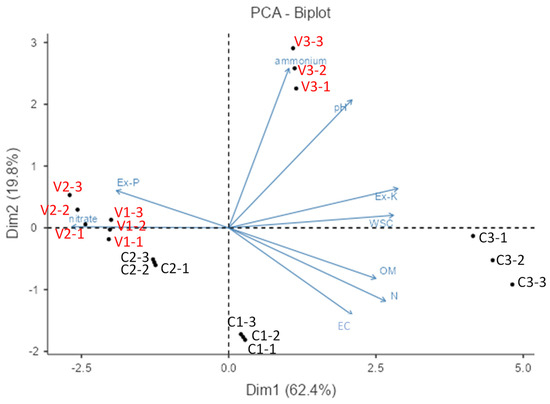
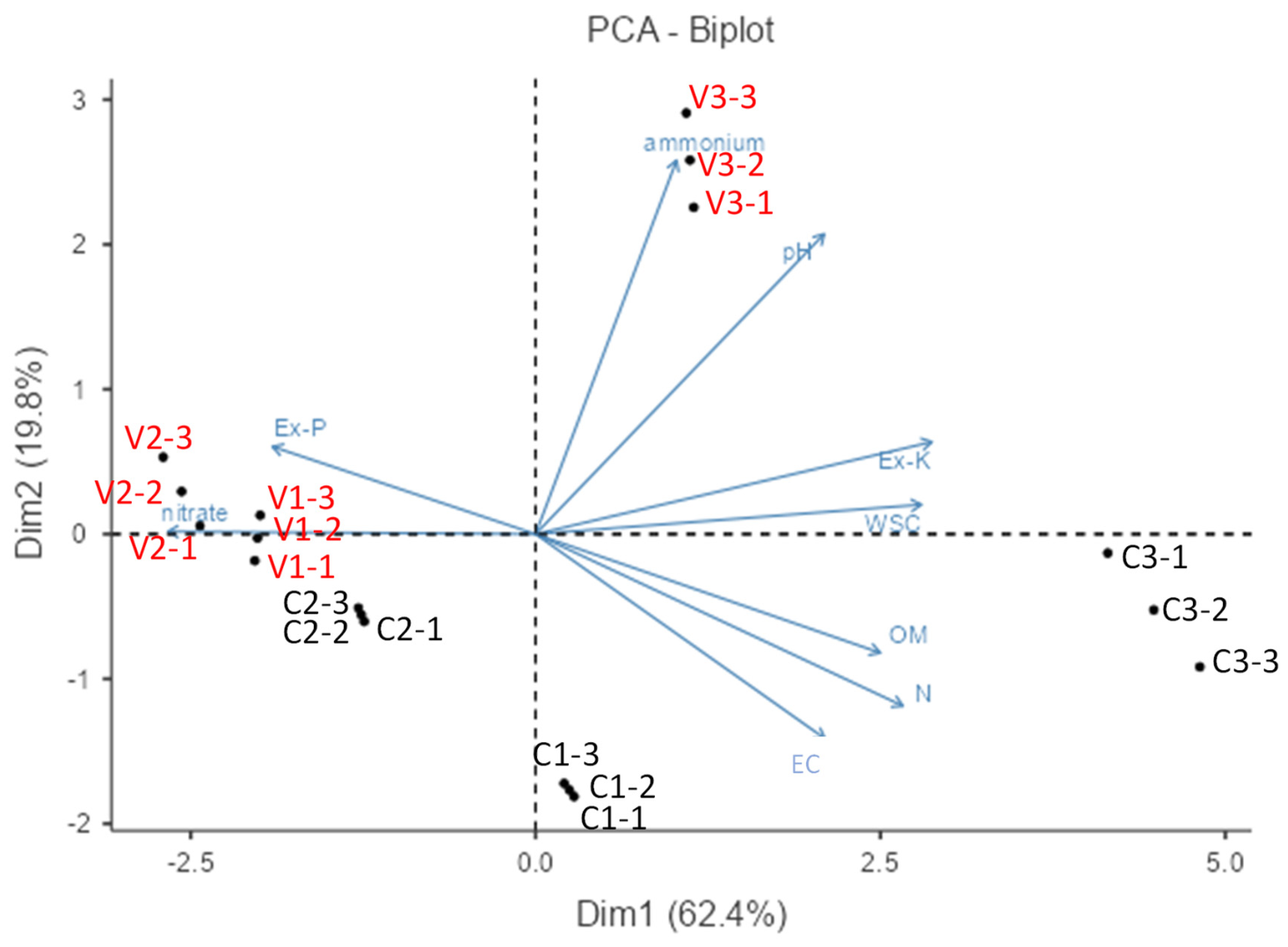
To explore the multivariate relationships and visualize the overall trends in biomixture maturation and co-substrate behaviour, a principal component analysis (PCA) was performed (Figure 1). The first two components explained 82.2% of the total variance (PC1: 62.4%; PC2: 19.8%). The PC loadings revealed that PC1 was strongly and positively loaded with parameters typical of unstable/initial matrices, such as organic matter (OM), total nitrogen (N), extractable potassium (Ex-K), water-soluble carbon (WSC), and electrical conductivity (EC), while being negatively loaded with stabilization indicators, primarily nitrate and available phosphorus (Ex-P). Conversely, PC2 was defined positively by ammonium content and pH. The score plot exploratorily illustrated a clear spatial grouping of the individual replicates, showcasing high experimental consistency, as replicates of the same treatment clustered tightly together. Vermicomposts V1 and V2 clustered on the far negative side of PC1, aligning with the nitrate vector and reflecting advanced organic matter mineralization and nitrification. Control C2 positioned close to the centre-left, whereas C1 stayed in the centre-right, and C3 (soybean hulls control) was heavily displaced toward the extreme positive side of PC1, driven by high initial organic load. Lastly, the replicates of V3 shifted toward the upper-right quadrant, influenced by its higher residual ammonium (232 mg kg−1) and remaining WSC compared to V1 and V2. This exploratory analysis successfully highlights the multidimensional differences in the final product fingerprints depending on the co-substrate used.
Figure 1.
A principal component analysis (PCA) biplot of the final vermicomposts and controls after 58 days. Individual points represent the 18 independent physical replicates (n = 3 for vermicomposts V1, V2, and V3 and controls C1, C2, and C3). Blue arrows represent the vectors of the 9 active physicochemical variables: pH, electrical conductivity (EC), organic matter (OM), total nitrogen (N), ammonium, nitrate, water-soluble carbon (WSC), available phosphorus (Ex-P), and extractable potassium (Ex-K). PC1 and PC2 account for 62.4% and 19.8% of the total explained variance (82.2% cumulative), respectively.
Overall, the evolution of the physicochemical parameters consistently indicated the progressive stabilization and maturation of the biomixtures. DAF exhibited a strong offensive odour, which represents a major limitation for its handling and agricultural valorization. The incorporation of the other residues effectively mitigated this problem, with sawdust acting as a particularly suitable bulking and adsorbent material that contributed to odour reduction during the stabilization stage. The subsequent vermicomposting process promoted intense organic matter mineralization, complete deodorization, and a marked transformation in substrate appearance. A remarkable finding of this study was the rapid transformation of the DS despite its exceptionally high grease and oil content (6.5%) (Table 1). Lipids are typically considered challenging substrates in composting systems due to their hydrophobic nature and potential toxicity to earthworms. However, the efficient bioconversion observed within only 30 days of vermicomposting can be attributed to the highly active lipolytic system of Eisenia fetida and its gut-associated microflora. Earthworms possess endogenously produced lipases (EC 3.1.1.3) in their digestive tract. Specifically, these endogenous enzymes exhibit robust baseline activities and can be significantly stimulated in response to organic feeding matrices [44]. In E. fetida, these digestive enzymes are further activated and enhanced by hydrophilic, low-molecular-weight biomolecules present within the earthworm’s digestive fluids [45,46]. Physiologically, this lipase activity is highly concentrated in the anterior intestine of the earthworm gut, acting intensively during the active stages of vermicomposting to target and hydrolyze the ingested lipid fractions [47]. This endogenous enzymatic action works in close synergy with the dense community of gut-associated vermi-bacteria. Intestinal microbes isolated from E. fetida, including Aeromonas hydrophila and Paenibacillus motobuensis, as well as various gut-associated Bacillus strains (such as B. subtilis, B. licheniformis, and B. megaterium), have been demonstrated to exhibit outstanding extracellular lipase activities [48,49]. This intensive lipolytic bioconversion was visually evident in our trials: the starting biomixtures presented a highly compacted, pasty, and cement-grey appearance due to the high density of emulsified dairy fats and proteins. By the end of the 58-day process, the breaking of this lipid–protein emulsion resulted in a dark brown material characteristic of mature compost, yielding stable and agronomically valuable products within a relatively short period (see Figure S1 in Supplementary Material).
The addition of a 1 cm superficial vermicompost layer was designed and implemented in this study as a novel operational strategy to assist E. fetida during its initial adaptation to the highly organic and potentially stressful DAF substrate. Although the specific experimental contribution of this refuge layer was not comparatively evaluated against a non-layered control in our trials, we propose this setup as a practical management tool to mitigate potential initial shock and prevent earthworm mortality in highly dense waste matrices. The achievement of these characteristics after only 28 days of stabilization followed by 30 days of vermicomposting (58 total days) highlights the remarkable efficiency of the process. However, direct comparisons with the previous literature on dairy sludge must be interpreted with caution, as differences in feedstock compositions and thermal regimes represent confounding factors. For instance, Suthar [12] and Suthar et al. [8] successfully stabilized dairy wastewater sludge spiked with cattle dung and plant wastes but required a 90-day vermicomposting period preceded by 3 weeks of precomposting (111 total days) under stable, warm laboratory temperatures (ca. 27 °C). Similarly, Dutta et al. [15] vermicomposted a dairy sludge–manure mixture under elevated temperatures (24–37 °C), requiring 120 days of active vermicomposting after 15 days of pre-stabilization (135 total days). Despite operating under fluctuating, cooler seasonal temperatures (11–19 °C) and handling a primary, fat-rich DS (6.5% grease and oil), our optimized co-substrate formulations accelerated the processing capacity of E. fetida [14,17]. These findings demonstrate that DAF sludge-based mixtures can be rapidly transformed into mature, stable, and microbiologically safe vermicomposts with favourable physicochemical properties, making them suitable for agricultural applications.
3.2. Earthworms’ Growth and Reproduction
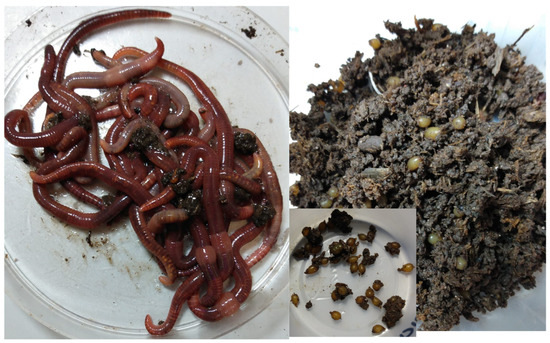
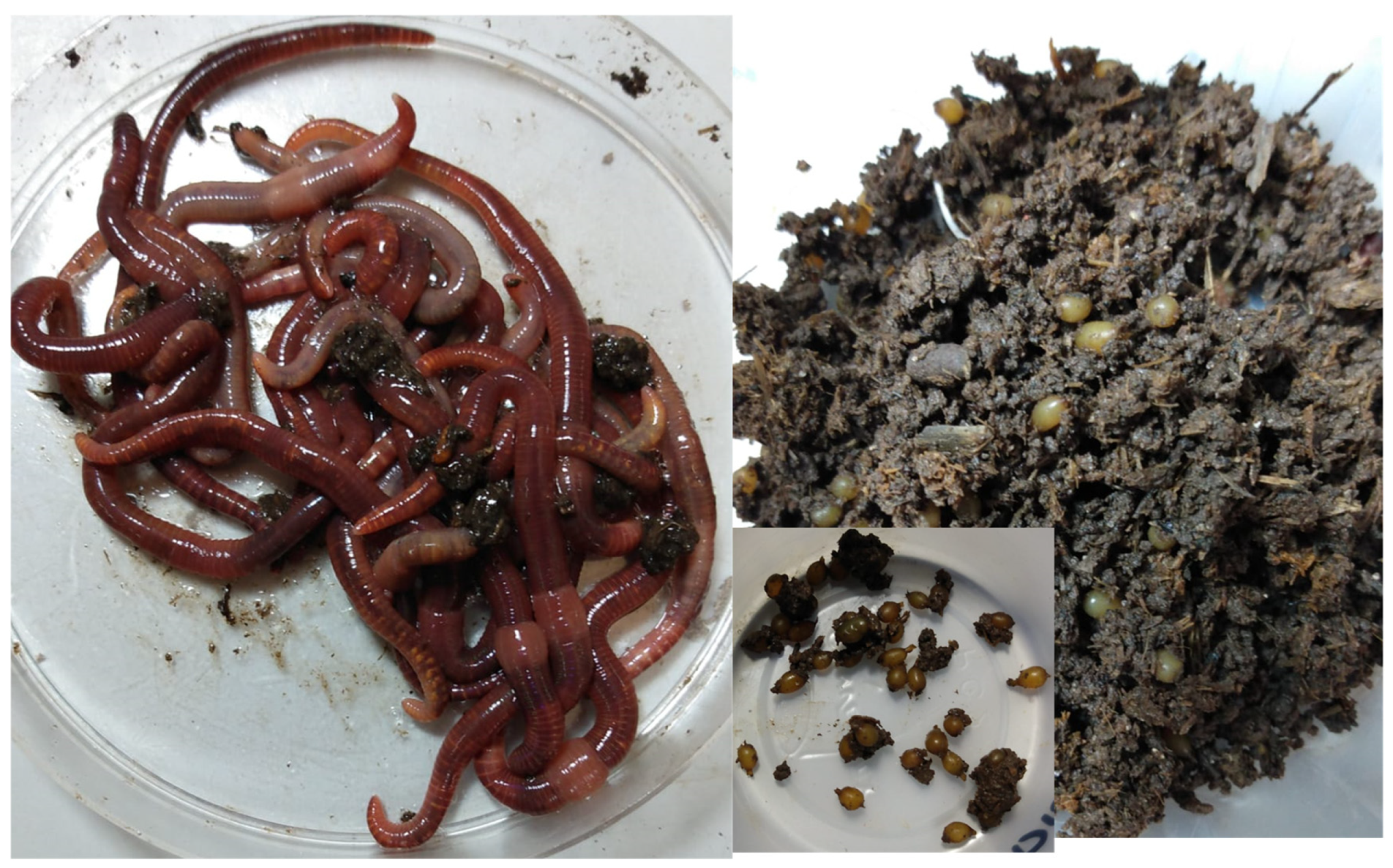
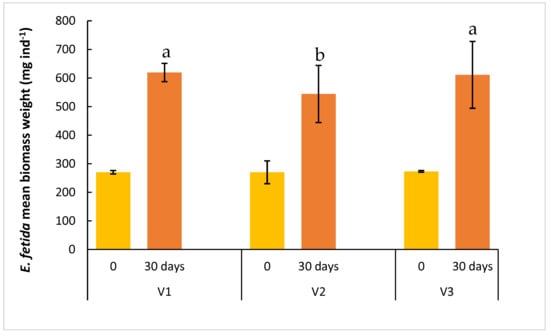
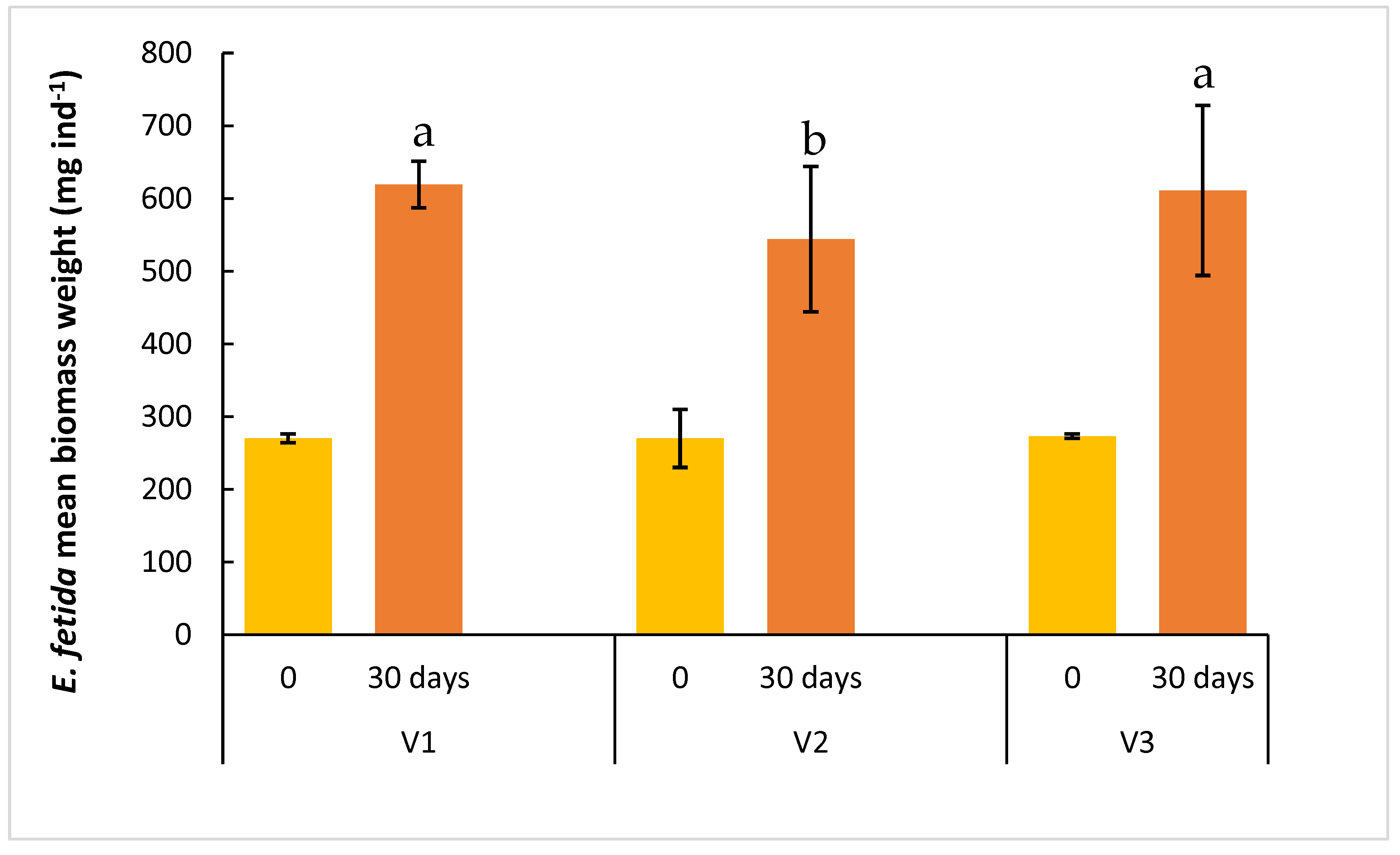
The survival of E. fetida was high, reaching 91, 99, and 100% for V1, V2, and V3, respectively. In addition, as a qualitative visual observation, the earthworms exhibited a characteristic coloration and glossy appearance, illustrating their healthy status (Figure 2). Figure 3 compares the initial and final mean individual biomass of E. fetida after 30 days of vermicomposting. A substantial increase in individual biomass was observed in all treatments, amounting to 129%, 102%, and 123% for V1, V2, and V3, respectively. An ANOVA revealed a highly significant effect of time (p < 0.001), confirming that earthworm biomass increased markedly throughout the experiment. The significant effects of treatment (p < 0.001) further indicated that biomass gain depended on substrate composition. At the end of the experiment, individuals reared in V1 and V3 attained significantly greater biomass than those in V2. These results suggest that biomixtures containing cow dung (V1) and soybean hulls (V3) as feeding and bedding materials provided more favourable conditions for earthworm growth. As shown in Table 2, vermicomposts V1 and V3 exhibited higher organic matter (OM) contents, consistent with the higher OM levels of their respective initial substrates (Table 1). The increase in biomass may be attributed to an optimal diet in terms of substrate type, palatability, feed quality, and nutrient availability [15]. Similar increases in biomass were reported by [12] when exposing E. fetida to mixtures of dairy sludge and different proportions of cow dung. However, those authors did not specify the origin of the sludge within the treatment plant or describe the treatment processes involved.
Figure 2.
Representative photographs of Eisenia fetida populations at the end of the vermicomposting process (V1), showing healthy, markedly clitellated adults and abundant cocoon production within the vermicompost.
Figure 3.
E. fetida biomass weight variation during the vermicomposting stage in the V1, V2 and V3 treatments. Values represent the mean ± standard deviation (SD) of n = 3 independent replicates (with 30 earthworms per replicate). Different lowercase letters above the bars indicate statistically significant differences (p < 0.05) among treatments at the end of the experiment, according to Tukey’s post hoc test following the one-way ANOVA.
All vermicomposts supported the reproduction of E. fetida, with V1 and V2 exhibiting numerically higher cocoon production (Table 4). Although cocoon production tended to be lower in V3, differences among treatments were not statistically significant (p = 0.051). A similar pattern was observed for juvenile abundance, which also tended to decrease in V3 without reaching statistical significance (p = 0.063). These cocoon production values were comparable to those reported by Suthar et al. [8] after 90 days of vermicomposting and by Dutta et al. [15] in mixtures of dairy sludge, cattle manure, and biochar.
Table 4.
The reproductive performance of Eisenia fetida in the different vermicomposting treatments.
Regarding offspring quality, cocoon weight did not differ significantly among treatments (p = 0.785) and remained within the range reported for E. fetida (12–22 mg) under different seasonal conditions [50]. However, juvenile weight differed significantly among treatments (p = 0.006), being the highest in V1, intermediate in V2, and the lowest in V3. The ambient temperature during the 58-day trial fluctuated between 11 °C and 19 °C, reflecting seasonal conditions in the sheltered area. Although slightly below the traditional thermal optimum of 20–25 °C for E. fetida, the earthworms maintained high processing rates and biological activity. Vermistabilization has been shown to proceed rapidly within temperate ranges of 13–22 °C, with E. fetida showing excellent growth tolerance and reproductive capacity at cooler regimes (such as 15 °C) compared to tropical species [51]. Furthermore, recent trials processing industrial sludge confirmed no statistically significant differences in biomass gain, cocoon production, or organic degradation between intermediate (17 °C) and warm (22 °C) conditions [52]. This aligns with the standard use of 15 °C in contemporary earthworm microcosm studies [44]. Thus, achieving advanced stabilization in 58 days under sheltered, unheated conditions highlights the robustness of this process for temperate regions, offering a low-cost, energy-free operational advantage for full-scale dairy waste management.
The biomixture composition appears to have influenced offspring growth, as indicated by juvenile biomass. Overall, the mixture containing cow manure (V1) provided the most favourable conditions for earthworm growth and development. Figure 2 presents representative photographs of healthy earthworms and abundant cocoons in the V1 substrate after its transformation into vermicompost.
3.3. Phytotoxicity Tests
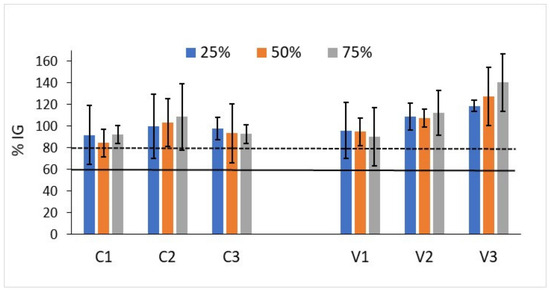
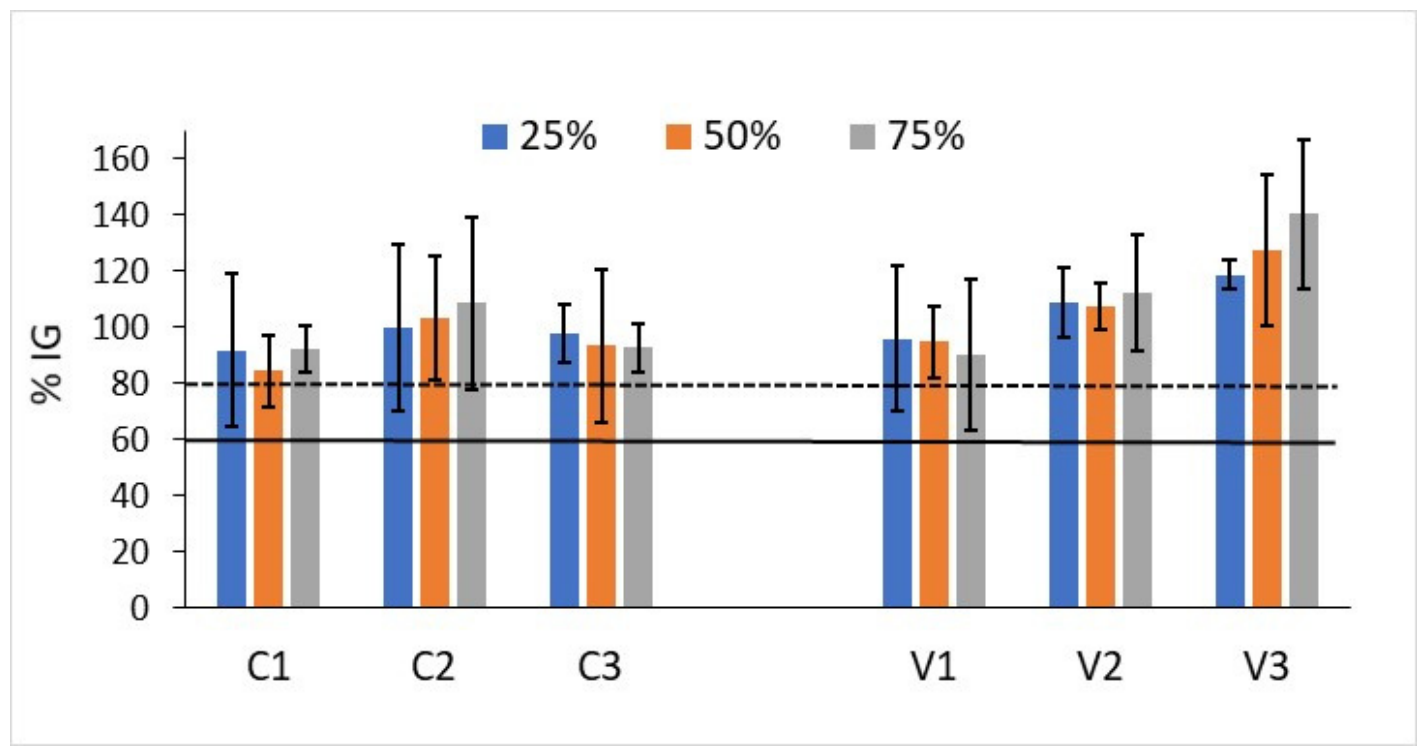
Seed germination and root elongation are recognized as simple and sensitive bioindicators for evaluating the phytotoxicity and maturity of organic substrates, since the early stages of plant development are highly responsive to soluble compounds and contaminants present in the growth medium [53,54]. The combined assessment of these parameters, expressed as the germination index (GI), provides an integrated measure of substrate quality. According to [55], GI values above 60% indicate the absence of phytotoxic effects, whereas values exceeding 80% are generally associated with mature and stable substrates suitable for plant growth [56]. However, since the GI is primarily an indicator of phytotoxicity, compost maturity should be interpreted in conjunction with other chemical indicators. In this study, and in accordance with the Argentine national regulations for compost quality [19], substrate maturity was established using an integrated multiparameter approach by evaluating both biological and chemical indexes. The final vermicomposts not only achieved GI values > 80% but also successfully complied with the regulatory chemical limits of N-NH4+ (<400 mg kg−1) and the ; ratio (<0.3) (Table 2 and Table 3), confirming chemical maturation. Figure 4 shows the GI obtained for three extract dilutions (25, 50 and 75%) of the three vermicomposts and their respective controls. All substrates exhibited GI values above 80%. Although a phytostimulatory effect was generally observed in the vermicomposts compared with their corresponding controls, a significant increase in the GI was detected only for V3 relative to C3 (p < 0.01). A two-way ANOVA revealed a significant effect of treatment on the GI (p < 0.001), whereas neither extract dilution nor the interaction between treatment and dilution significantly affected this parameter (p > 0.05). While previous investigations on dairy sludge vermicomposting assessed phytotoxicity using different seed bioassays, such as Trigonella foenum-graecum, requiring 90 to 120 days to achieve a germination index (GI) > 80% [15], our study successfully established advanced maturity and non-phytotoxicity using L. sativa (GI > 80%) in a significantly shorter timeframe of 58 total days.
Figure 4.
Germination index (GI) of controls (C1, C2 and C3) and vermicompost (V1, V2 and V3) extracts at three different dilutions (25, 50 and 75%). Values above the full black line denote non-phytotoxicity and above the dotted line indicate also a mature biomixture.
4. Conclusions
This study demonstrates that dairy industry DAF sludge can be successfully valorized through a rapid vermicomposting process of only 58 total days (28 days of stabilization and 30 days of vermicomposting). The application of a vermicompost surface layer is proposed as a simple and effective operational measure to support the acclimation of Eisenia fetida to this high-organic-load biomixture. The resulting vermicomposts were stable and mature, ensuring their sanitary safety and agronomic quality. Biomixtures containing cow dung and soybean hulls were found to be the most efficient for earthworm development. This methodology not only significantly reduces conventional processing times but also offers a practical tool for the circular bioeconomy in the dairy sector, transforming a problematic waste into a high-value organic amendment.
While these laboratory-scale results are promising, industrial scale-up faces challenges in maintaining moisture uniformity, managing the high lipid load without forming anaerobic zones, and buffering ambient temperature fluctuations. Therefore, further pilot-scale validation is essential before full-scale commercial implementation.
Supplementary Materials
The following supporting information can be downloaded at https://www.mdpi.com/article/10.3390/pr14182957/s1, Figure S1: The visual and textural transformation of the biomixtures during the 58-day treatment: (A) DAF sludge. (B) Initial biomixture, B1 (day 0) showing a pasty, compacted, and cement-grey appearance due to the high emulsified fat and protein load from the dairy DAF sludge. (C) Final vermicompost, V1 (day 58) exhibiting a loose, odourless, dark brown, and granular humus-like structure, demonstrating the successful breakdown of the lipid–protein organic matrix by the synergistic action of Eisenia fetida and its gut microflora.
Author Contributions
Conceptualization, C.Z. and C.M.; Methodology, C.M., C.Z., M.L., M.E.F. and A.D.; Validation, C.Z. and C.M.; Formal Analysis, C.Z.; Investigation, C.M., C.Z., M.L., M.E.F. and A.D.; Resources, M.E.F., C.M., M.L. and C.Z.; Data Curation, C.Z.; Writing—Original Draft Preparation, C.Z.; Writing—Review and Editing, C.Z., M.L., C.M., M.E.F. and A.D.; Visualization, C.Z. and C.M.; Supervision, C.Z.; Project Administration, C.Z.; Funding Acquisition, C.Z. All authors have read and agreed to the published version of the manuscript.
Funding
This research was funded by Consejo Nacional de Investigaciones Científicas y Técnicas (CONICET), grant number PIP 347; Agencia Nacional de Promoción Científica y Tecnológica (ANPCyT), grant number PICT 2019-00916; and Universidad Nacional del Litoral (UNL), grant number CAI+D 2020 50620190100087LI.
Data Availability Statement
The original contributions presented in this study are included in the article. Further inquiries can be directed to the corresponding author.
Acknowledgments
The authors would like to thank the technical and administrative staff of INTEC (UNL-CONICET) for their support during the experimental phase.
Conflicts of Interest
The authors declare no conflicts of interest.
References
- Samal, K.; Roshan, R.; Bhunia, P. A comparative study of macrophytes influence on performance of hybrid vermifilter for dairy wastewater treatment. J. Environ. Chem. Eng. 2018, 6, 4714–4726. [Google Scholar] [CrossRef] [Scilit]
- Chaudhary, V.; Kajla, P.; Verma, D.; Singh, T.P.; Kothakota, A.; Prasath, V.A.; Jeevarathinam, G.; Kumar, M.; Ramniwas, S.; Rustagi, S.; et al. Valorization of dairy wastes into wonder products by the novel use of microbial cell factories. Trends Food Sci. Technol. 2023, 142, 104221. [Google Scholar] [CrossRef] [Scilit]
- Ashekuzzaman, S.M.; Forrestal, P.; Richards, K.; Fenton, O. Dairy industry derived wastewater treatment sludge: Generation, type and characterization of nutrients and metals for agricultural reuse. J. Clean Prod. 2019, 230, 1266–1275. [Google Scholar] [CrossRef] [Scilit]
- Adesra, A.; Srivastava, V.K.; Varjani, S. Valorization of Dairy Wastes: Integrative Approaches for Value Added Products. Indian J. Microbiol. 2021, 61, 270–278. [Google Scholar] [CrossRef] [Scilit] [PubMed]
- Ryan, M.P.; Walsh, G. The Characterisation of Dairy Waste and the Potential of Whey for Industrial Fermentation; Environmental Protection Agency: County Wexford, Ireland, 2016.
- Hajam, Y.A.; Kumar, R.; Kumar, A. Environmental waste management strategies and vermi transformation for sustainable development. Environ. Chall. 2023, 13, 100747. [Google Scholar] [CrossRef] [Scilit]
- Shi, W.; Healy, M.G.; Ashekuzzaman, S.M.; Daly, K.; Leahy, J.J.; Fenton, O. Dairy processing sludge and co-products: A review of present and future re-use pathways in agriculture. J. Clean. Prod. 2021, 314, 128035. [Google Scholar] [CrossRef] [Scilit]
- Suthar, S.; Mutiyar, P.K.; Singh, S. Vermicomposting of milk processing industry sludge spiked with plant wastes. Bioresour. Technol. 2012, 116, 214–219. [Google Scholar] [CrossRef] [Scilit] [PubMed]
- Grasserová, A.; Pacheco, N.I.N.; Semerád, J.; Filipová, A.; Innemanová, P.; Hanč, A.; Procházková, P.; Cajthaml, T. New insights into vermiremediation of sewage sludge: The effect of earthworms on micropollutants and vice versa. Waste Manag. 2024, 174, 496–508. [Google Scholar] [CrossRef] [Scilit] [PubMed]
- Bhat Ahmad, S.; Singh, S.; Singh, J.; Kumar, S. Bioremediation and detoxi fi cation of industrial wastes by earthworms: Vermicompost as powerful crop nutrient in sustainable agriculture. Bioresour. Technol. 2018, 252, 172–179. [Google Scholar] [CrossRef] [Scilit] [PubMed]
- Boruah, T.; Morang, A. Current understanding on industrial organic waste management by employing Eisenia fetida. Int. J. Environ. Pollut. 2020, 67, 48–61. [Google Scholar] [CrossRef] [Scilit]
- Suthar, S. Vermistabilization of wastewater sludge from milk processing industry. Ecol. Eng. 2012, 47, 115–119. [Google Scholar] [CrossRef] [Scilit]
- Anusha, S.; Paul, P. Stabilization of sludge from AAVIN dairy processing plant (Chennai) using vermicomposting. J. Chem. Pharm. Res. 2015, 7, 846–851. [Google Scholar]
- Boruszko, D. Research of Effective Microorganisms on Dairy Sewage Sludge Stabilization. J. Ecol. Eng. 2019, 20, 241–252. [Google Scholar] [CrossRef] [Scilit]
- Dutta, R.; Angmo, D.; Singh, J.; Chowdhary, A.B.; Quadar, J.; Singh, S.; Vig, A.P. Synergistic effect of biochar amendment in milk processing industry sludge and cattle dung during the vermiremediation. Bioresour. Technol. 2023, 371, 128612. [Google Scholar] [CrossRef] [Scilit] [PubMed]
- Quintern, M.; Morley, M.; Seato, B. Full-scale vermicomposting of sludge from milk plants with pulp and paper mill sludge. In Wastes: Solutions, Treatments and Opportunities; The 3rd Edition of the International Conference; Taylor & Francis Group: London, UK, 2015; pp. 241–246. [Google Scholar] [CrossRef] [Scilit]
- Quintern, M.; Seaton, B.; Mercer, E.; Millichamp, P. Industrial scale vermicomposting of pulp and paper mill solids with municipal biosolids and DAF sludge from dairy industries. Appita 2014, 44, 290–296. [Google Scholar]
- Parlina, I.; Rachmani, A.; Baroutian, S. Anaerobic Digestion of Dairy Dissolved Air Flotation Sludge: Assessment of Enhancement Strategies. ChemBioEng Rev. 2025, 12, e70031. [Google Scholar] [CrossRef] [Scilit]
- SCyMA; SENASA. Marco Normativo Para la Producción, Registro y Aplicación de Compost. 2019. Available online: https://www.argentina.gob.ar/normativa/nacional/resoluci%C3%B3n-1-2019-318692/texto (accessed on 30 July 2026).
- 17512-1:2008; Soil Quality—Avoidance Test for Determining the Quality of Soils and Effects of Chemicals on Behaviour—Part 1: Test with Earthworms (Eisenia fetida and Eisenia andrei). ISO: Geneva, Switzerland, 2008.
- Owojori, O.J.; Reinecke, A.J. Avoidance behaviour of two eco-physiologically different earthworms (Eisenia fetida and Aporrectodea caliginosa) in natural and artificial saline soils. Chemosphere 2009, 75, 279–283. [Google Scholar] [CrossRef] [Scilit] [PubMed]
- Laos, F.; Mazzarino, M.J.; Walter, I.; Roselli, L.; Satti, P.; Moyano, S. Composting of ash offal and biosolids in northwestern Patagonia. Bioresour. Technol. 2002, 81, 179–186. [Google Scholar] [CrossRef] [Scilit] [PubMed]
- Tognetti, C.; Mazzarino, M.J.; Laos, F. Improving the quality of municipal organic waste compost. Bioresour. Technol. 2007, 98, 1067–1076. [Google Scholar] [CrossRef] [Scilit] [PubMed]
- Navarro, A.E.; Cegarra, J.; Roig, A.; Garcia, D. Relationships Between Organic Matter and Carbon Contents of Organic Wastes. Bioresour. Technol. 1993, 44, 203–207. [Google Scholar] [CrossRef] [Scilit]
- Tognetti, C.; Laos, F.; Mazzarino, M.J.; Hernández, M.T. Composting vs. vermicomposting: A comparison of end product quality. Compost. Sci. Util. 2005, 13, 6–13. [Google Scholar] [CrossRef] [Scilit]
- Andrea Campitelli, P.; Bachmeier, O. Calidad De Compost Y Vermicompuestos Para Su Uso Como Enmiendas Orgánicas En Suelos Agrícolas. Doctoral Dissertation, Universidad Nacional de Córdoba, Córdoba, Argentina, 2010. Available online: http://hdl.handle.net/11086/4726 (accessed on 31 July 2026).
- Martin, T.D.; Creed, J.T.; Brockhoff, C.A. Method 200.2, Revision 2.8: Sample Preparation Procedure for Spectrochemical Determination of Total Recoverable Elements; U.S. Environmental Protection Agency: Washington, DC, USA, 1994.
- EPA/625/R-92/013; Control of Pathogens and Vector Attraction in Sewage Sludge. USEPA: Washington, DC, USA, 2003.
- US EPA. Ecological effects test guidelines. In Seed Germination/Root Elongation Toxicity Test; US EPA: Washington, DC, USA, 1996. [Google Scholar]
- Wako, R.E. Preparation and characterization of vermicompost made from different sources of materials. Open J. Plant Sci. 2021, 6, 042–048. [Google Scholar] [CrossRef] [Scilit]
- Dube, B.; Chimdessa, D.; Sori, G. Preparation and Characterization of Vermicompost Nutrients Made from Different Sources of Organic Materials. Sci. J. Anal. Chem. 2025, 13, 15–23. [Google Scholar] [CrossRef] [Scilit]
- El Fels, L.; Zamama, M.; El Asli, A.; Hafidi, M. Assessment of biotransformation of organic matter during co-composting of sewage sludge-lignocelullosic waste by chemical, FTIR analyses, and phytotoxicity tests. Int. Biodeterior. Biodegrad. 2014, 87, 128–137. [Google Scholar] [CrossRef] [Scilit]
- Masin, C.E.; Fernandez, M.E.; Lescano, M.R.; Zalazar, C.S. Bioconversion of agro-industrial wastes: Combined compost and vermicompost processes using Eisenia fetida for stabilization of poultry litter. Int. J. Recycl. Org. Waste Agric. 2020, 9, 107–118. [Google Scholar] [CrossRef] [Scilit]
- Masin, C.E.; Duran, A.; Zalazar, C.S.; Fernandez, M.E. Composting-vermicomposting of pigeon dropping waste. A contribution to the reduction of urban contamination. Int. J. Recycl. Org. Waste Agric. 2025, 14, 1–9. [Google Scholar] [CrossRef]
- Domínguez, J.; Gómez-Brandón, M.; Martínez-Cordeiro, H.; Lores, M. Bioconversion of Scotch broom into a high-quality organic fertiliser: Vermicomposting as a sustainable option. Waste Manag. Res. 2018, 36, 1092–1099. [Google Scholar] [CrossRef] [Scilit] [PubMed]
- California Compost Quality Council (CCQC). Compost Maturity Index, Technical Report; California Compost Quality Council: Nevada, CA, USA, 2001. [Google Scholar]
- Levy-Booth, D.J.; Prescott, C.E.; Grayston, S.J. Microbial functional genes involved in nitrogen fixation, nitrification and denitrification in forest ecosystems. Soil Biol. Biochem. 2014, 75, 11–25; pp. 11–25. [Google Scholar] [CrossRef] [Scilit]
- Raza, S.T.; Tang, J.L.; Ali, Z.; Yao, Z.; Bah, H.; Iqbal, H.; Ren, X. Ammonia Volatilization and Greenhouse Gases Emissions during Vermicomposting with Animal Manures and Biochar to Enhance Sustainability. Public Health 2021, 18, 178. [Google Scholar] [CrossRef] [Scilit] [PubMed]
- Hait, S.; Tare, V. Transformation and availability of nutrients and heavy metals during integrated composting-vermicomposting of sewage sludges. Ecotoxicol. Environ. Saf. 2012, 79, 214–224. [Google Scholar] [CrossRef] [Scilit] [PubMed]
- Dume, B.; Hanc, A.; Svehla, P.; Michal, P.; Chane, A.D.; Nigussie, A. Composting and vermicomposting of sewage sludge at various C/N ratios: Technological feasibility and end-product quality. Ecotoxicol. Environ. Saf. 2023, 263, 115255. [Google Scholar] [CrossRef] [Scilit] [PubMed]
- Nieto-Cantero, J.; García-López, A.M.; Recena, R.; Quintero, J.M.; Delgado, A. Recycling Manure as Vermicompost: Assessing Phosphorus Fertilizer Efficiency and Effects on Soil Health Under Different Soil Management. J. Soil Sci. Plant Nutr. 2025, 25, 5046–5061. [Google Scholar] [CrossRef] [Scilit]
- Sardans, J.; Peñuelas, J. Potassium control of plant functions: Ecological and agricultural implications. Plants 2021, 10, 419. [Google Scholar] [CrossRef] [Scilit] [PubMed]
- USEPA. 40 CFR Part 257, 403 and 503 Standards for Use or Disposal of Sewage Sludge; United States Environmental Protection Agency: Washington, DC, USA, 1993.
- Rodinò, M.T.; Navarro Pacheco, N.I.; Gelsomino, A. Soil and earthworm-derived enzymatic activities in soil microcosms following addition of a N- and P-enriched polysaccharide-based vs a conventional starch-based mulching film. Sci. Total Environ. 2025, 993, 180013. [Google Scholar] [CrossRef] [Scilit] [PubMed]
- Yoshii, K.; Ogasawara, M.; Yamamoto, Y.; Inouye, K. Activating effects on trypsin, α-chymotrypsin, and lipase and inhibitory effects on α-amylase and α-glucosidase as provided by low-molecular-weight compounds in the water extract of the earthworm Eisenia fetida. Enzym. Microb. Technol. 2018, 118, 20–29. [Google Scholar] [CrossRef] [Scilit] [PubMed]
- Ichi, A.S.; Tokuyama, H.; Sato, S.; Watanabe, T.; Shida, Y.; Ogasawara, W. High-pressure tolerance of earthworm fibrinolytic and digestive enzymes. J. Biosci. Bioeng. 2018, 125, 155–159. [Google Scholar] [CrossRef] [Scilit] [PubMed]
- Ordoñez-Arévalo, B.; Guillén-Navarro, K.; Huerta, E.; Cuevas, R.; Calixto-Romo, M.A. Enzymatic dynamics into the Eisenia fetida (Savigny, 1826) gut during vermicomposting of coffee husk and market waste in a tropical environment. Environ. Sci. Pollut. Res. 2018, 25, 1576–1586. [Google Scholar] [CrossRef] [Scilit] [PubMed]
- Andleeb, S.; Shafique, I.; Naseer, A.; Abbasi, W.A.; Ejaz, S.; Liaqat, I.; Ali, S.; Khan, M.F.; Ahmed, F.; Ali, N.M. Molecular characterization of plant growthpromoting vermi-bacteria associated with Eisenia fetida gastrointestinal tract. PLoS ONE 2022, 17, e0269946. [Google Scholar] [CrossRef] [Scilit] [PubMed]
- Hong, S.W.; Lee, J.S.; Chung, K.S. Effect of enzyme producing microorganisms on the biomass of epigeic earthworms (eisenia fetida) in vermicompost. Bioresour. Technol. 2011, 102, 6344–6347. [Google Scholar] [CrossRef] [Scilit] [PubMed]
- Monroy, F.; Aira, M.; Domínguez, J.; Velando, A. Seasonal population dynamics of Eisenia fetida (Savigny, 1826) (Oligochaeta, Lumbricidae) in the field. Comptes Rendus. Biol. 2006, 329, 912–915. [Google Scholar] [CrossRef] [Scilit] [PubMed]
- Loehr, R.C.; Neuhauser, E.F.; Malecki, M.R. Factors Affecting the Vermistabilization Process Temperature, Moisture Content and Polyculture. Water Res. 1985, 19, 1311–1317. [Google Scholar]
- Subramaniam, D.; Galagedara, L.; Krishnapillai, M. Optimizing temperature and feedstock interactions for efficient vermibioconversion of pulp and paper mill sludge under boreal conditions. Sci. Total Environ. 2026, 1033, 181816. [Google Scholar] [CrossRef] [Scilit] [PubMed]
- Lyu, J.; Park, J.; Pandey, L.K.; Choi, S.; Lee, H.; De Saeger, J.; Depuydt, S.; Han, T. Testing the toxicity of metals, phenol, effluents, and receiving waters by root elongation in Lactuca sativa L. Ecotoxicol. Environ. Saf. 2018, 149, 225–232. [Google Scholar] [CrossRef] [Scilit] [PubMed]
- Augusto Rodrigues de Oliveira, G.; Morais Leme, D.; de Lapuente, J.; Barroso Brito, L.; Porredón, C.; de Brito Rodrigues, L.; Brull, N.; Txu Serret, J.; Borràs, M.; Rodrigo Disner, G.; et al. A test battery for assessing the ecotoxic effects of textile dyes. Chem. Biol. Interact. 2018, 291, 171–179. [Google Scholar] [CrossRef] [Scilit] [PubMed]
- Zucconi, F.; Monaco, A.; Forte, M.; De Bertoldi, M. Phytotoxins during the stabilization of organic matter. In Composting of Agricultural and Other Wastes; Elsevier Applied Science Publishers Ltd.: London, UK, 1985; pp. 75–85. [Google Scholar]
- Sharma, D.; Prasad, R.; Patel, B.; Parashar, C.K. Biotransformation of sludges from dairy and sugarcane industries through vermicomposting using the epigeic earthworm Eisenia fetida. Int. J. Recycl. Org. Waste Agric. 2022, 11, 165–175. [Google Scholar] [CrossRef] [Scilit]

Disclaimer/Publisher’s Note: The statements, opinions and data contained in all publications are solely those of the individual author(s) and contributor(s) and not of MDPI and/or the editor(s). MDPI and/or the editor(s) disclaim responsibility for any injury to people or property resulting from any ideas, methods, instructions or products referred to in the content. |
© 2026 by the authors. Licensee MDPI, Basel, Switzerland. This article is an open access article distributed under the terms and conditions of the Creative Commons Attribution (CC BY) license.