


Abstract
The increasing penetration of variable solar and wind generation requires flexible resources capable of improving energy balancing, reliability, and renewable energy utilization. This review critically assesses biofuel-integrated hybrid energy systems as complementary architectures for renewable energy integration, connecting system configuration, energy conversion efficiency, storage and dispatch, intelligent control, environmental performance, and scalability. A critical narrative and integrative approach was applied using literature retrieved from Scopus and Web of Science, and organized across solar–bioenergy, wind–bioenergy, multi-source, storage-supported, microgrid, and multi-energy configurations. The evidence indicates that biomass-derived fuels can provide dispatchable and storable renewable energy that complements variable generation and supports decentralized and multi-energy applications. However, no architecture is universally superior, and greater hybridization does not inherently result in higher thermodynamic efficiency. Performance depends strongly on resource complementarity, feedstock availability and quality, conversion pathways, storage requirements, and operating strategy. Advanced energy management, model predictive control, machine learning, and digital twins can improve system coordination, although much of the available evidence remains simulation-based or limited in experimental scale. Environmental benefits are likewise pathway- and boundary-dependent, particularly when avoided emissions, coproduct allocation, infrastructure, and feedstock supply chains are considered. Overall, biofuel-integrated hybrid systems represent an application-dependent flexibility option rather than a universally optimal solution; future progress requires dynamic uncertainty-aware modeling, harmonized techno-economic and life-cycle assessment, and greater pilot- and industrial-scale validation.
1. Introduction
The global transition toward low-carbon energy systems has accelerated the deployment of renewable energy technologies as a central strategy for reducing greenhouse gas emissions, improving energy security, and decreasing dependence on fossil fuels [1,2,3]. This transformation has been particularly evident in the power sector, where solar photovoltaic and wind technologies have become the dominant drivers of renewable capacity expansion. In 2025, global renewable power capacity reached approximately 5149 GW after the addition of nearly 692 GW, with solar and wind jointly accounting for 96.8% of net renewable capacity additions [1]. Solar photovoltaic capacity alone increased by approximately 510 GW, while wind power added around 159 GW during the same year [2]. This rapid expansion is expected to continue over the present decade, with the International Energy Agency projecting almost 4600 GW of additional renewable capacity between 2025 and 2030, nearly double the deployment achieved during the previous five-year period [3]. These trends reflect not only technological progress and declining costs, but also the increasing role of renewable electricity in climate mitigation strategies and in the broader restructuring of energy systems required to achieve long-term decarbonization objectives [3,4]. Nevertheless, as power systems become increasingly dependent on weather-sensitive renewable resources, their design and operation require greater flexibility, coordination, and integration across generation, storage, and energy-management technologies [3,5].
Despite their rapid deployment and declining generation costs, solar photovoltaic and wind technologies introduce significant operational challenges because their power output is inherently dependent on meteorological conditions and therefore varies across hourly, daily, seasonal, and interannual timescales [6,7,8]. As the penetration of variable renewable energy increases, mismatches between electricity generation and demand can intensify, leading to higher balancing requirements, renewable energy curtailment, reserve needs, and greater dependence on flexible resources capable of compensating for short- and long-term fluctuations [6,9]. Multi-annual variability in solar and wind resources can also affect the optimal sizing of generation and storage assets, particularly in isolated or weakly interconnected systems, where insufficient flexibility may compromise supply reliability and substantially increase system costs [7]. Moreover, high shares of fluctuating renewable generation require power systems to respond rapidly to changes in net load, making flexibility a central requirement for maintaining the balance between supply and demand [8,9]. Consequently, the integration of solar and wind energy cannot be addressed exclusively by increasing installed renewable capacity; it also requires coordinated combinations of complementary generation technologies, energy storage, demand-side flexibility, grid interconnections, and dispatchable resources capable of maintaining system reliability under changing operating conditions [8,9,10].
In this context, hybrid renewable energy systems (HRES) have emerged as a promising approach for improving the reliability and operational flexibility of renewable-based power generation. These systems combine two or more energy sources, commonly solar photovoltaic and wind generation, with complementary technologies such as energy storage or controllable generation units to reduce the limitations associated with the use of individual renewable resources [11,12,13]. The complementary behavior of different generation technologies can improve the matching between energy production and demand, reduce periods of energy deficit [11] or surplus, and increase the utilization of locally available renewable resources [11,12]. In addition, the integration of storage and dispatchable generation can enhance supply continuity and reduce the dependence of isolated or weakly interconnected systems on conventional fossil-fuel backup [13]. However, the technical and economic performance of hybrid systems remains strongly dependent on system configuration, component sizing, resource availability, load profiles, and operating strategy [12,14]. Consequently, the effective deployment of HRES requires an integrated system perspective in which renewable generation, storage, and controllable energy sources are coordinated according to local operating conditions and energy requirements [13,14].
Within hybrid energy systems, bioenergy can provide an important complementary function because, unlike solar and wind resources, biomass-derived energy carriers can be stored and converted into electricity or heat according to system demand [15,16]. Biomass, biogas, and liquid biofuels can therefore support dispatchable generation and contribute to balancing periods of insufficient solar irradiation or wind availability, particularly in decentralized and off-grid applications [15,16,17]. Their integration with photovoltaic, wind, and energy storage technologies has been investigated as a strategy to increase renewable penetration, reduce dependence on conventional diesel backup, and improve the continuity of energy supply [16,18]. However, the contribution of bioenergy to hybrid systems depends strongly on feedstock availability, conversion technology, fuel-storage requirements, local resource conditions, and the technical and economic characteristics of the overall system [17,19]. Consequently, biomass-derived fuels should be considered not as substitutes for variable renewable sources, but as complementary renewable energy carriers that can provide controllable generation within appropriately designed hybrid energy architectures [15,18].
Beyond the selection of energy sources, the performance of hybrid energy systems depends strongly on the efficiency with which energy is converted, stored, and delivered to the final load. The integration of photovoltaic modules, wind turbines, bioenergy conversion units, storage devices, and power-conditioning equipment introduces multiple conversion stages and associated energy losses [20,21]. Consequently, system performance should consider not only renewable penetration but also energy efficiency, fuel consumption, storage losses, and the interaction among individual components [20,22]. Exergy analysis can complement conventional energy assessment by identifying irreversible losses and the components with the greatest potential for efficiency improvement [21,23]. Therefore, improving conversion efficiency requires coordinated system design and operation rather than the isolated optimization of individual technologies.
The increasing complexity of hybrid energy systems has also strengthened the role of optimization and energy management strategies in coordinating generation, storage, and load demand. Energy management systems (EMS) are commonly used to determine the operating schedule of individual components while considering renewable-resource variability, demand fluctuations, storage constraints, and system operating objectives [24,25]. Conventional optimization techniques can support component dispatch and system sizing, whereas artificial intelligence and machine learning approaches are increasingly being applied to renewable generation forecasting, load prediction, optimal scheduling, and adaptive control [24,25,26]. These approaches can improve the coordination of distributed energy resources and facilitate real-time decision-making under uncertain operating conditions [25,26]. Therefore, intelligent control represents an important pathway for improving the operational efficiency, reliability, and flexibility of hybrid renewable energy systems.
From an environmental perspective, the sustainability of hybrid renewable energy systems depends not only on operational emissions but also on the life-cycle impacts associated with energy generation, storage technologies, fuel production, and infrastructure [27,28]. This consideration is particularly relevant when bioenergy is incorporated, since the environmental performance of biofuels can vary substantially according to feedstock origin, conversion pathway, land and water requirements, transportation, and system boundaries [28,29]. Life-cycle assessment (LCA) therefore provides an important framework for comparing hybrid configurations and identifying potential trade-offs between greenhouse gas mitigation, resource consumption, and other environmental impacts [27,28,29]. Consequently, the environmental benefits of biofuel-supported hybrid systems should be evaluated from a life-cycle perspective rather than inferred solely from their renewable energy content.
Despite the growing literature on hybrid renewable energy systems, the principal research gap is not the absence of studies on individual technologies, but the fragmentation of evidence across system architecture, bioenergy conversion, storage, thermodynamic performance, intelligent control, and sustainability assessment. Existing reviews commonly examine renewable-system sizing, storage, optimization, artificial intelligence, hydrogen integration, or specific bioenergy pathways as separate domains [30,31,32,33]. Consequently, the literature provides limited integrated guidance on when biofuel integration actually improves system flexibility and useful-energy recovery, under which conditions additional conversion and storage stages become thermodynamically or economically detrimental, and how these trade-offs change under variable feedstock properties, part-load operation, uncertainty, and different life-cycle boundaries. This fragmentation limits the transfer of results from isolated technology assessments to practical design and operation of biofuel-integrated hybrid systems.
This review addresses this gap by linking six representative hybrid-system configuration families with component- and system-level energy/exergy performance, storage and dispatch strategies, intelligent energy management, techno-economic indicators, and environmental assessment within a common analytical framework. Rather than identifying a universally optimal architecture, the analysis examines the conditions under which dispatchable bioenergy provides measurable system-level value and the trade-offs that constrain this contribution. Particular emphasis is placed on the relationships between resource complementarity, conversion efficiency, component dynamics, storage requirements, control strategy, uncertainty, and life-cycle performance. The resulting synthesis therefore aims not only to summarize available technologies but to identify transferable design principles, methodological limitations, and unresolved gaps that must be addressed before biofuel-integrated hybrid energy systems can be reliably scaled from optimized simulations to real-world applications [30,31,32,33].
2. Methodological Approach and Scope
This study was developed as a critical and integrative narrative review aimed at evaluating hybrid energy systems that combine biofuels with renewable energy sources, with particular emphasis on energy conversion efficiency, system optimization, intelligent control, and environmental performance. The methodological approach was designed to integrate evidence from different but interconnected research domains, including hybrid renewable energy architectures, bioenergy-based dispatchable generation, energy storage, thermodynamic performance, energy management strategies, artificial intelligence, and sustainability assessment. Rather than restricting the analysis to a single technology or performance indicator, the review adopts a system-level perspective to examine how these elements interact within grid-connected, off-grid, and microgrid configurations [34,35].
The literature search was conducted using the Scopus and Web of Science Core Collection databases because of their broad coverage of peer-reviewed research in energy engineering, renewable energy, environmental assessment, and energy-system optimization. The principal search period was defined as 2010–2026, with particular emphasis on studies published from 2020 onward to capture recent developments in hybrid-system architectures, artificial intelligence, advanced optimization, and energy-management technologies. Earlier publications were retained when they represented seminal contributions to hybrid renewable energy systems, energy and exergy analysis, bioenergy integration, or established optimization methodologies. Search strings combined terms related to hybrid energy systems, solar and wind generation, biofuels and bioenergy, energy storage, efficiency, exergy, optimization, energy management, artificial intelligence, life-cycle assessment, and techno-economic performance. Similar database-based strategies have been adopted in recent reviews of hybrid renewable energy systems and their optimization and control frameworks [34,36,37].
Studies were considered eligible when they provided direct evidence on at least one of the analytical dimensions of the review: hybrid-system configuration, integration of biomass-derived fuels or bioenergy conversion units, energy or exergy performance, storage and dispatch, optimization and intelligent control, environmental assessment, or techno-economic feasibility. These criteria were selected to ensure that each included study contributed evidence to at least one element of the system-level analytical chain linking architecture, biofuel conversion, performance, operation, economics, and environmental implications. Because this work is a critical and integrative narrative review rather than a statistical meta-analysis, the selection strategy was designed to capture complementary evidence across these interconnected domains while maintaining direct relevance to biofuel-integrated hybrid systems.
Priority was given to peer-reviewed research articles, experimental studies, validated modeling and simulation studies, life-cycle assessments, and techno-economic analyses because these sources provide sufficiently documented methods and quantitative or experimentally supported performance information for critical comparison. Review articles were used primarily to establish technological context and identify established or emerging research directions, whereas earlier publications were retained when they represented seminal methods or foundational evidence not adequately replaced by more recent studies. Studies were excluded when they addressed renewable technologies in isolation without relevance to hybrid integration, focused exclusively on fossil-fuel systems, lacked sufficient methodological or performance information for meaningful comparison, duplicated previously identified evidence, or fell outside the defined technical scope. Conference papers were considered selectively when they introduced relevant control or optimization methods not adequately represented in the peer-reviewed journal literature.
The selected literature was subsequently classified according to its contribution to the analytical structure of the review. System-oriented studies were used to examine photovoltaic–bioenergy, wind–bioenergy, solar–wind–bioenergy, storage-supported, grid-connected, and off-grid configurations. Performance-oriented studies were analyzed in terms of energy efficiency, exergy efficiency, renewable fraction, fuel consumption, reliability, and energy losses. Optimization and control studies were classified according to conventional mathematical programming, heuristic and metaheuristic algorithms, model predictive control, and artificial intelligence-based approaches. Environmental and economic studies were used to assess life-cycle impacts, greenhouse gas emissions, resource requirements, levelized energy costs, investment requirements, and scalability constraints. This thematic organization allowed heterogeneous evidence to be synthesized within a common system-level framework while preserving the differences among technological configurations, operating conditions, analytical methods, and performance indicators, as summarized in Table 1.
Table 1.
Search strategy and selection criteria used in the review.
Because the environmental studies employed heterogeneous system boundaries, functional units, allocation procedures and avoided-burden assumptions, their numerical LCA results were not pooled or normalized across methodologically incompatible studies. Cross-study environmental comparisons were therefore restricted to qualitative trends or to cases with sufficiently comparable accounting conditions, while individual numerical results were interpreted within their original methodological context.
3. Global Context of Hybrid Renewable Energy Systems
The rapid expansion of solar photovoltaic and wind generation is reshaping the composition and operation of electricity systems worldwide. In 2024, wind and solar together supplied approximately 15% of global electricity, with their combined contribution exceeding hydropower generation for the first time, reflecting the growing importance of variable renewable energy within the global power mix [38]. This transformation is occurring alongside a broader shift towards decentralized and increasingly complex energy systems, in which distributed generation, storage, flexible demand, and digital control are becoming progressively interconnected [39,40]. However, increasing the contribution of weather-dependent renewable resources also modifies conventional patterns of system operation, since electricity supply must continuously adapt to fluctuations in solar irradiation, wind availability, and demand. Consequently, the transition toward renewable-dominated power systems requires not only additional generation capacity but also greater coordination among generation, storage, network infrastructure, and flexible energy resources to maintain secure and efficient operation [39,41].
These trends indicate that the effective integration of renewable energy cannot rely on a single technological solution. As illustrated in Figure 1, the development of biofuel-supported hybrid renewable energy systems requires the interaction of several complementary dimensions, including renewable generation, energy storage, dispatchable bioenergy, system integration, intelligent energy management, and sustainability-oriented operation. Each dimension responds to different technical and operational requirements: solar and wind provide low-carbon electricity, energy storage compensates for short- and medium-term variability, biofuels provide dispatchable and storable renewable energy, system integration enables grid-connected, off-grid, and microgrid configurations, intelligent energy management coordinates generation and storage resources, and sustainability-oriented strategies support reliability, energy security, and emissions reduction [39,42].
Figure 1.
Integrated technological and operational dimensions of biofuel-supported hybrid renewable energy systems.
3.1. Renewable Energy Integration and System Flexibility
The increasing penetration of solar photovoltaic and wind generation is changing the operational characteristics of modern power systems. Unlike conventional generation, these technologies are inherently dependent on variable meteorological conditions, which introduces greater uncertainty into generation profiles and requires more dynamic coordination between supply, demand, storage, and network resources [39,43]. As renewable shares increase, power systems progressively move from configurations dominated by centralized and controllable generation toward more distributed structures involving photovoltaic systems, wind generation, energy storage, flexible loads, and other distributed energy resources [43,44]. This transition can reduce dependence on fossil-based generation, but it also increases the need for planning and operational strategies capable of maintaining system adequacy, stability, and efficient energy use under changing conditions.
System flexibility has therefore become a fundamental requirement for integrating high shares of variable renewable energy. Flexibility refers to the ability of a power system to respond to changes in generation and demand over different timescales while maintaining the balance between electricity supply and consumption [39,45]. Its importance becomes more pronounced as solar and wind penetration increases, since periods of surplus renewable generation may coexist with periods in which renewable output is insufficient to meet demand. Depending on the characteristics of the system, flexibility can be provided through dispatchable generation, energy storage, demand response, transmission expansion and coordinated operation of distributed resources [45]. The combination and relative importance of these options depend strongly on renewable-resource profiles, demand patterns, network characteristics, and the temporal scale of the imbalance to be addressed.
Distributed energy resources and microgrids provide an additional level of flexibility by allowing generation, storage, and loads to be coordinated closer to the point of consumption. Modern distribution systems increasingly incorporate photovoltaic generation, battery storage, demand response resources, electric loads with controllable operation, and local microgrids, creating new opportunities for decentralized energy management [44,46]. Microgrids are particularly relevant because they can coordinate multiple distributed resources and, depending on their configuration, operate either interconnected with the main grid or autonomously during grid disturbances. Nevertheless, greater decentralization also introduces challenges related to system coordination, protection, power quality, communication infrastructure, and the management of numerous heterogeneous energy resources. Consequently, the benefits of distributed generation depend strongly on appropriate system design and coordinated control rather than on the isolated deployment of individual renewable technologies [44,46].
Within this context, hybrid renewable energy systems represent a practical approach for increasing system flexibility by combining resources with complementary generation and operating characteristics. The coordinated use of solar, wind, energy storage, and controllable generation can reduce the dependence of the system on a single resource, improve renewable energy utilization, and support supply continuity when one source is temporarily unavailable [47,48]. The effectiveness of hybridization, however, depends on the appropriate sizing and coordination of individual components, since oversized systems can increase investment requirements while undersized configurations may compromise reliability. Hybrid architectures should therefore be designed as integrated systems in which generation complementarity, storage capacity, dispatchable backup, network interaction, and operating strategy are considered simultaneously. This system-level perspective provides the basis for understanding the role of storage and dispatchable bioenergy in the following subsections.
3.2. Intermittency, Reliability, and Energy Balancing
The increasing penetration of variable renewable energy introduces new operational challenges because solar and wind generation are inherently dependent on weather conditions and therefore fluctuate across hourly, daily, and seasonal timescales. These variations can alter conventional generation–demand relationships and increase the need for balancing resources capable of responding to rapid and prolonged changes in renewable output [49,50]. In addition, high shares of converter-interfaced generation may reduce the contribution of synchronous machines to system inertia, making frequency dynamics more sensitive to sudden disturbances and changes in generation [49]. Consequently, renewable integration must be evaluated not only in terms of installed capacity or annual energy production, but also according to the ability of the power system to maintain frequency stability, adequate reserves, and continuous supply under variable operating conditions [49,50].
Variability also creates temporal mismatches between renewable electricity production and demand. Periods of high solar or wind availability may generate energy surpluses that cannot be fully absorbed by the system, whereas prolonged periods of low renewable output can increase dependence on storage, dispatchable generation, electricity imports, or demand-side flexibility [50,51]. The magnitude of these imbalances depends on the correlation between renewable-resource profiles and load patterns, as well as on the geographical diversity of generation and the availability of flexible infrastructure. When balancing options are insufficient, excess production may result in renewable curtailment, whereas generation deficits can increase adequacy and reliability risks. Therefore, energy balancing becomes a central operational requirement in systems with high renewable penetration and must be considered across multiple timescales rather than exclusively through short-term frequency control [50,51].
Reliability and resilience become particularly important as energy systems increasingly depend on variable and distributed resources. Reliability generally concerns the capability of the system to provide the required energy supply under expected operating conditions, whereas resilience extends this perspective by considering the ability to withstand, adapt to, and recover from disruptive events [51]. Renewable-dominated systems may face additional exposure to correlated weather conditions, prolonged resource deficits, network contingencies, and extreme events that simultaneously affect generation and demand. For this reason, maintaining adequate capacity, reserve margins, storage availability, and controllable generation remains essential even when annual renewable energy production is sufficient to cover a large share of electricity consumption [51,52]. The interaction between reliability and resilience should therefore be incorporated into the planning of hybrid energy systems rather than treated as an operational consideration after system design.
These challenges reinforce the importance of combining resources with different operating characteristics within hybrid energy architectures. Short-duration storage can compensate for rapid fluctuations and support frequency regulation, whereas longer-duration storage and dispatchable generation can address sustained renewable energy deficits and contribute to supply adequacy [50,52]. At the same time, geographical diversification, demand response, grid interconnection, and coordinated energy management can reduce the magnitude of local imbalances and improve the utilization of available renewable generation. The appropriate combination of these options depends on the duration and frequency of renewable shortfalls, the load profile, network constraints, and the technical characteristics of each flexibility resource. Hybrid systems therefore provide a suitable framework for addressing variability and reliability through complementary technologies operating across different timescales, establishing the basis for the role of energy storage discussed in the following subsection [52].
3.3. Energy Storage as an Enabling Technology
Energy storage has become a key enabling technology for increasing the penetration of variable renewable energy because it decouples electricity generation from immediate consumption. By absorbing surplus electricity during periods of high solar or wind production and releasing it when renewable output decreases, storage can reduce curtailment, improve renewable energy utilization, and contribute to load balancing and ancillary services [53,54]. The contribution of storage, however, varies according to the required discharge duration, response time, power rating, energy capacity, and operating objective. Short-duration technologies are particularly suitable for rapid balancing and frequency support, whereas longer-duration solutions are required to manage sustained renewable deficits and larger temporal mismatches between generation and demand [53,55]. Consequently, storage technology should be selected according to the temporal characteristics of the flexibility requirement rather than considered as a single interchangeable system component.
Battery energy storage systems are currently among the most versatile solutions for renewable energy integration because of their rapid response, modularity, and ability to operate across a wide range of power and energy scales [54,56]. Lithium-ion batteries are particularly prominent in stationary applications due to their high round-trip efficiency, relatively high energy density, and fast charge–discharge capability. Within hybrid renewable energy systems, batteries can smooth short-term fluctuations, reduce generator cycling, shift renewable electricity to periods of higher demand, and support microgrid operation during grid disturbances [54,56]. Their effectiveness nevertheless depends strongly on operating parameters such as state of charge, depth of discharge, charge–discharge rate, temperature, and cycling frequency. These parameters influence both technical performance and battery degradation, making appropriate sizing and energy-management strategies essential for avoiding excessive capacity loss and premature replacement.
Storage requirements extending beyond short-duration electricity balancing have encouraged the development of complementary technologies with different operational characteristics. Thermal energy storage can retain energy as sensible, latent, or thermochemical heat and can be particularly valuable in multigeneration systems where electricity, heating, and cooling demands are jointly managed [57]. Hydrogen-based storage, in contrast, offers the possibility of storing renewable energy over substantially longer durations and at larger scales, although the complete electricity-to-hydrogen-to-electricity pathway generally involves lower round-trip efficiency than battery storage [55]. Mechanical technologies, including pumped hydropower and compressed-air energy storage, can also provide large-scale and long-duration services where geographical and infrastructure conditions are suitable. These differences indicate that storage technologies are complementary rather than directly interchangeable and that hybrid storage configurations can combine rapid-response devices with longer-duration energy reservoirs [55,57].
Despite its technical benefits, energy storage introduces additional economic, operational, and environmental constraints that must be considered at the system-design stage. High investment costs, conversion losses, degradation, material requirements, replacement intervals, safety considerations, and end-of-life management can significantly affect the overall performance of storage-supported hybrid systems [53,56]. Oversizing storage may improve autonomy but increase capital expenditure and embodied impacts, whereas insufficient capacity can lead to greater renewable curtailment, increased reliance on backup generation, and reduced system reliability. The optimal storage capacity therefore depends on renewable-resource variability, load characteristics, desired autonomy, technology lifetime, and the operating strategy adopted by the energy-management system [53,56]. These trade-offs reinforce the need to evaluate storage not only through technical indicators but also through economic and life-cycle criteria.
Energy storage should therefore be considered an enabling component of hybrid renewable energy systems rather than a universal substitute for controllable generation. Batteries are highly effective for rapid and relatively short-duration balancing, while thermal, mechanical, hydrogen-based, and other long-duration storage technologies can extend flexibility over longer time horizons [54,55]. Nevertheless, covering prolonged renewable energy deficits exclusively through storage may require substantial installed capacity and infrastructure, depending on the duration and frequency of low-generation periods. Hybrid systems can therefore benefit from combining storage with dispatchable renewable resources capable of supplying energy when variable generation remains insufficient for extended periods. Within this context, biofuels provide a complementary option because they can be stored as chemical energy and converted into electricity or heat according to system demand, providing a transition to the role of dispatchable bioenergy examined in the following subsection.
3.4. Biofuels as Dispatchable Renewable Energy Carriers
Biofuels provide a distinctive complement to variable renewable energy because they can be stored as chemical energy and converted into electricity or heat when required by the system. Unlike solar and wind resources, whose availability is directly constrained by meteorological conditions, bioenergy-based generation can be scheduled according to demand, resource availability, and system operating conditions [58,59]. This dispatchable characteristic is particularly relevant in hybrid renewable energy systems, where biofuels can support electricity supply during periods of low solar irradiation or wind availability and reduce dependence on conventional fossil fuel backup. In microgrids, bioenergy can also contribute to power balancing, local energy autonomy, and the integration of locally available organic resources [58]. Consequently, the value of biofuels within hybrid systems extends beyond their renewable origin and is strongly associated with their storability, controllability, and ability to complement variable generation.
The biofuel category includes gaseous and liquid energy carriers with different conversion pathways and operational characteristics. Biogas, typically obtained through anaerobic digestion of organic matter, can be used directly for combined heat and power generation or upgraded to biomethane, whereas liquid biofuels such as biodiesel and bioethanol can substitute or partially replace conventional fuels in compatible engines and generator sets [58,59]. Their suitability for hybrid applications depends on feedstock characteristics, conversion technology, fuel quality, storage requirements, and the intended energy service. Recent reviews of biofuel-based microgrids indicate that gaseous and liquid biofuels can be incorporated into both grid-connected and stand-alone configurations, providing controllable generation alongside photovoltaic, wind, and storage technologies [59,60]. This technological diversity enables biofuel integration to be adapted to local resource conditions rather than restricted to a single fuel or conversion pathway.
The conversion technology determines how effectively the chemical energy contained in biofuels can support the overall hybrid system. Biogas can be utilized in gas engines, microturbines, and combined heat and power units, whereas biodiesel and other liquid biofuels can be employed in compression-ignition generator sets with different blending ratios [58,60]. Experimental and simulation studies have demonstrated the technical feasibility of photovoltaic–biogas hybrid systems for decentralized electricity supply. For example, Habib et al. developed and experimentally evaluated a PV–biogas system for rural electrification, demonstrating that the biogas subsystem could complement photovoltaic production while contributing to continuous load supply [60]. Such configurations illustrate how biofuel-based units can function as controllable components within hybrid architectures rather than merely as independent renewable generators, particularly when their operation is coordinated with renewable availability and load demand.
Biodiesel provides another relevant pathway for introducing dispatchable renewable generation into microgrids, particularly where conventional diesel generators are already used for backup or isolated electricity supply. Because biodiesel can be employed in compression-ignition engines either in pure form or through blends with petroleum diesel, existing generating infrastructure can potentially be adapted without replacing the entire conversion system [61]. Recent assessments have considered photovoltaic–biodiesel and photovoltaic–biogas–biodiesel configurations and show that biofuel generators can eliminate unmet load in situations where photovoltaic generation alone is insufficient [61]. This characteristic is particularly valuable for remote and rural systems, where fuel transport, network extension, and supply interruptions can represent significant technical and economic constraints. Nevertheless, the benefits depend strongly on local feedstock availability, fuel production costs, generator efficiency, and the operating schedule assigned to the biofuel unit.
Despite these advantages, biofuel-based dispatchability should not be interpreted as inherently sustainable or unrestricted. Feedstock availability, seasonal variability, collection and transport requirements, fuel-processing efficiency, storage conditions, competing biomass uses, and life-cycle emissions can substantially influence the environmental and economic performance of bioenergy-supported systems [58,59,61]. Moreover, increasing the operating hours of a biofuel generator may improve reliability but can simultaneously increase fuel consumption, operating costs, and dependence on biomass supply chains. The optimal role of biofuels is therefore not necessarily to replace storage or variable renewable generation, but to complement them when controllable energy is required. Their contribution should consequently be evaluated within the complete hybrid architecture, considering renewable availability, storage capacity, conversion efficiency, local feedstock supply, and operating strategy. This integrated perspective provides the basis for examining decentralized resource use, circularity, and energy security in the following subsection.
3.5. Decentralized Generation, Circular Resource Use, and Energy Security
Decentralized energy systems have gained increasing relevance as an alternative to conventional centralized supply, particularly in rural, remote, and weak-grid regions where grid extension can be technically difficult or economically unattractive. Renewable energy communities, microgrids, and other distributed configurations allow electricity generation to be located closer to demand while facilitating the integration of locally available renewable resources [62,63]. In rural areas, these systems can combine photovoltaic generation, small-scale wind, storage, and locally available bioenergy resources to improve electricity access and reduce dependence on imported fuels or on distant centralized infrastructure. Beyond energy supply, decentralized systems can also support local economic activity, community participation, and greater control over energy production and consumption [62,63]. Their effectiveness, however, depends on adequate technical design, local institutional capacity, financing mechanisms, and long-term operation and maintenance.
The integration of bioenergy into decentralized systems creates additional opportunities for linking renewable energy production with circular resource management. Agricultural residues, livestock wastes, agro-industrial by-products, food wastes, and other biodegradable streams can be converted through biochemical or thermochemical processes into useful energy carriers, including biogas, biofuels, heat, and electricity [64]. From a circular-economy perspective, this approach can reduce waste disposal requirements while recovering part of the energy and material value contained in residual biomass. Agricultural waste valorization is particularly relevant in regions with significant farming and agro-industrial activity, where residues are generated close to potential energy-demand centers [64]. In hybrid renewable systems, the conversion of these residues into dispatchable bioenergy can therefore connect waste management, local energy production, and renewable-resource integration within the same technological framework.
Local biomass utilization can also contribute to energy security by diversifying the energy-resource portfolio and reducing exposure to external fuel supply chains. This contribution is particularly relevant for remote communities and regions with limited energy diversity, where locally sourced biomass can provide an additional controllable resource for electricity and heat generation [65]. Evidence from the literature on biomass-energy governance indicates that decentralized bioenergy can support rural economies, improve energy access, and strengthen energy security when biomass is sourced and managed sustainably [65]. Within hybrid systems, this benefit becomes especially important because bioenergy can complement variable solar and wind production during periods when renewable electricity generation is insufficient. As a result, the use of locally available biomass can enhance both resource diversification and operational resilience while creating stronger links between energy production and regional economic activity.
The benefits of decentralized bioenergy nevertheless depend strongly on the spatial distribution, quality, and actual availability of biomass resources. The theoretical quantity of agricultural or forestry residues cannot be considered equivalent to the amount that can be sustainably recovered for energy production, since part of this biomass may already have competing uses or perform important agricultural and ecological functions [64,65]. Feedstock moisture, bulk density, seasonality, collection distance, transportation requirements, storage losses, and preprocessing needs can further influence the technical and economic feasibility of local bioenergy systems. These factors are particularly important for low-energy-density biomass, for which excessive transport distances can increase costs and environmental impacts. Consequently, decentralized bioenergy planning requires a territorial assessment of feedstock availability and supply-chain conditions rather than assuming that all locally generated residues constitute an immediately usable energy resource [64,65].
Circularity and energy security should therefore be considered complementary objectives rather than automatic consequences of biomass utilization. Decentralized hybrid systems can create value from locally available residues, reduce dependence on external energy carriers, and contribute to rural and community energy development [62,63,64,65]. However, these benefits depend on sustainable feedstock management, appropriate conversion technologies, viable logistics, community participation, and effective institutional and policy frameworks. The integration of local bioenergy with solar, wind, and storage must consequently be planned according to territorial resource conditions and system requirements rather than solely on the basis of theoretical biomass potential. Moreover, as the number of distributed generation, storage, and bioenergy components increases, coordinated operation becomes progressively more complex, creating the need for advanced energy management and control strategies. This operational dimension is addressed in the following subsection.
3.6. Intelligent Energy Management and Integrated System Operation
As hybrid renewable energy systems incorporate a greater number of generation, storage, and controllable resources, their operation becomes increasingly dependent on coordinated energy management. An energy management system (EMS) acts as the supervisory layer responsible for balancing generation and demand while determining the operating status of distributed resources according to technical, economic, and environmental objectives [66,67]. In systems combining photovoltaic generation, wind energy, batteries, and dispatchable units, the EMS can coordinate charging and discharging schedules, generator commitment, power exchange with the grid, and demand-side actions while respecting component and network constraints. This coordination becomes particularly important under variable renewable generation, since operational decisions must continuously adapt to changes in resource availability and load demand [66,67]. Therefore, the performance of a hybrid system depends not only on component sizing but also on the strategy used to coordinate its operation.
Energy-management strategies range from rule-based and conventional optimization approaches to advanced predictive and intelligent control methods. Classical strategies can establish predefined operating priorities, whereas mathematical optimization can determine generation schedules and energy flows by minimizing objectives such as operating cost, fuel consumption, emissions, or unmet demand [66,68]. Depending on system complexity, these formulations may involve linear or nonlinear programming, mixed-integer optimization, multi-objective methods, or hierarchical control structures. Although conventional approaches remain valuable because of their transparency and well-defined constraints, their performance may be limited when renewable generation, demand, electricity prices, and component states vary rapidly or are affected by uncertainty [66,68]. Consequently, modern EMS architectures increasingly combine optimization with forecasting and adaptive decision-making to improve operation under changing system conditions.
Artificial intelligence and computational intelligence techniques provide additional capabilities for managing the nonlinear and uncertain behavior of hybrid energy systems. Machine learning models can support short-term forecasting of renewable generation and electricity demand, while artificial neural networks, fuzzy systems, evolutionary algorithms, and reinforcement-learning approaches can assist in operational scheduling and adaptive control [67,68]. These methods are particularly attractive when conventional analytical models cannot fully represent complex interactions among renewable resources, storage devices, controllable generators, and dynamic loads. Recent reviews of microgrid energy management show increasing interest in combining data-driven prediction with optimization to improve decision-making under uncertainty [67,68]. Nevertheless, AI-based methods should complement rather than replace physical and operational constraints, since reliable control requires decisions that remain technically feasible across varying operating conditions.
Predictive and real-time energy management extends this framework by incorporating anticipated changes in renewable production, demand, storage state, and operating conditions into current control decisions. Model predictive control and related receding-horizon strategies repeatedly update system schedules as new measurements and forecasts become available, allowing the EMS to adapt to short-term uncertainty while respecting operational constraints [68,69]. In a biofuel-supported hybrid system, this capability can be used to determine when stored electricity should be discharged, when renewable generation should be prioritized, and when a dispatchable biofuel unit should operate to maintain supply reliability and avoid unnecessary fuel consumption. Real-time coordination can therefore improve the use of complementary resources and reduce inefficient component operation. However, the benefits depend strongly on forecasting accuracy, model quality, communication infrastructure, and the computational requirements of the control strategy [69].
Despite these advances, intelligent energy management still faces challenges related to data availability and quality, forecasting errors, computational complexity, communication reliability, interoperability, and the transferability of control strategies between different system configurations [66,67,68,69]. Highly complex AI models may also reduce interpretability, while strategies validated primarily through simulation may not necessarily reproduce the same performance under real operating conditions. For this reason, intelligent control should be developed together with robust system models, measurable performance indicators, physical constraints, and experimental or real-world validation. Overall, coordinated EMS, optimization, forecasting, and intelligent control provide the operational link that enables renewable generation, storage, and dispatchable biofuels to function as an integrated energy system rather than isolated components. Having established this broader context, the following section examines the principal technological configurations used to integrate biofuels with renewable energy sources.
4. Hybrid Energy System Configurations Integrating Biofuels
Hybrid energy systems integrating biofuels can adopt multiple technological architectures according to the renewable resources available, the selected bioenergy conversion pathway, the type of storage, and the operating mode of the system. As illustrated in Figure 2, the principal configurations considered in this review include solar–biofuel, wind–biofuel, solar–wind–biofuel, biofuel–storage, grid-connected or stand-alone microgrid architectures, and multi-energy or cogeneration systems [14,18,47]. In these configurations, variable renewable sources generally provide the primary low-carbon energy input, while biofuel-based units contribute controllable generation, and storage technologies compensate for short-term mismatches between production and demand. More advanced architectures may additionally recover thermal energy or integrate several energy carriers, allowing electricity, heat, cooling, or fuels to be supplied within the same system [18,20]. The resulting architecture therefore determines how renewable resources, biofuels, storage devices, and conversion technologies interact and how energy flows are distributed throughout the hybrid system.
Figure 2.
Main configurations of hybrid renewable energy systems integrating biofuels.
For systematic comparison, the six configuration families illustrated in Figure 2 are classified according to their dominant integration dimension: (i) the primary renewable source, distinguishing solar–biofuel, wind–biofuel, and solar–wind–biofuel systems; (ii) the flexibility mechanism, represented by biofuel–storage configurations; (iii) grid interaction, encompassing grid-connected, off-grid, and microgrid architectures; and (iv) end-use coupling, represented by multi-energy and cogeneration systems. These categories are not strictly mutually exclusive, because a single installation may simultaneously incorporate multiple renewable sources, storage, microgrid operation, and sector coupling. The classification therefore identifies the dominant architectural function for comparative purposes, whereas final configuration selection remains dependent on local renewable resources, feedstock availability, load profile, storage requirements, grid access, end-use demand, and economic constraints [18,20,47,58,59].
4.1. Solar–Biofuel Hybrid Systems
Solar–biofuel hybrid systems represent one of the most technically straightforward approaches for coupling variable renewable generation with dispatchable renewable energy. In these configurations, photovoltaic (PV) or photovoltaic-thermal (PV/T) technologies exploit daytime solar availability, whereas biomass- or biogas-based units provide controllable electricity or heat when solar output decreases or load demand exceeds instantaneous renewable generation. This complementary operating principle can reduce dependence on fossil-fuel backup while increasing resource utilization, supply continuity, and the flexibility of decentralized energy systems. Depending on the application, solar–bioenergy integration may therefore encompass purely electrical PV–biogas architectures, combined heat and power arrangements, or PV/T–biomass systems incorporating thermal storage [70,71,72].
Across rural, unreliable-grid, and grid-connected applications, PV–biogas and PV–biomass systems consistently show that the main contribution of bioenergy is dispatchable support rather than simply additional renewable capacity. Reported cases achieved competitive electricity costs and substantial emission reductions, while optimization further improved economic performance and reduced the storage burden when grid support was available; conversely, autonomous systems required greater local generation and storage capacity to maintain reliability [71,72,73,74,75].
More integrated PV/T–biomass and waste-to-biogas configurations extend this complementarity through thermal storage, waste heat recovery, and coordinated dispatch [70,76]. Overall, the suitability of solar–biofuel systems is governed by solar availability, feedstock supply, grid access, storage needs, and operational coordination rather than by installed renewable capacity alone.
4.2. Wind–Biofuel Hybrid Systems
Wind–biofuel hybrid systems exploit the complementary operating characteristics of a variable aerodynamic resource and a controllable bioenergy conversion unit. Whereas wind turbines provide electricity without direct fuel consumption and are inherently affected by short-term fluctuations and forecasting errors, biomass and biogas systems can be scheduled according to demand and therefore compensate periods of insufficient wind generation. This configuration is particularly attractive in locations where solar irradiation is limited or where agricultural residues, organic wastes, or biogas resources are locally available. The resulting hybrid architecture can consequently reduce the need for fossil-fuel backup while increasing dispatchability, improving power-supply continuity, and allowing wind generation to participate more reliably in electricity markets [77,78].
Wind–biofuel studies show that comparatively modest dispatchable biomass or biogas capacity can substantially improve balancing and predictability when it is sized according to wind deficits rather than installed wind capacity. In the 40 MW wind case reported in [77], compensation was achieved during nearly 90% of operations using a 4.5 MW biomass plant, while other studies confirm that feasibility depends strongly on local wind profiles, feedstock availability, and fuel logistics [77,78].
Recent work extends this role from energy balancing toward power-electronic control and multi-energy operation [79]. Grid access can also substantially alter the preferred architecture; in [80], the grid-connected wind–biogas–CHP configuration reduced COE by approximately 45% and NPC by 15.5% relative to the off-grid alternative. Thus, the engineering value of bioenergy in wind-based systems lies primarily in improved controllability and reliability, provided that resource quality, fuel supply, storage, and grid conditions are jointly considered.
4.3. Solar–Wind–Biofuel Multi-Source Systems
Solar–wind–biofuel multi-source systems extend the concept of renewable hybridization by combining two complementary variable resources with a dispatchable bioenergy pathway. Solar photovoltaic generation is predominantly governed by diurnal irradiation patterns, whereas wind availability may follow different hourly and seasonal profiles; their simultaneous integration can therefore reduce periods of coincident renewable deficit. Biomass or biogas generation adds a further level of operational flexibility because it can be dispatched when the combined solar–wind output is insufficient. Compared with single- or dual-source architectures, this diversification can reduce the oversizing of individual generation and storage components, although it simultaneously increases the number of design variables, energy flow interactions, and operational constraints that must be coordinated. Consequently, resource complementarity rather than installed capacity alone becomes a central determinant of system performance [81,82,83].
Multi-source PV–wind–bioenergy systems benefit from resource diversity primarily when complementary generation profiles reduce component oversizing, and residual deficits can be supplied efficiently by storage or dispatchable bioenergy. Comparative studies show that the preferred architecture changes with battery technology, reliability constraints, and optimization objectives; resource diversity alone is therefore insufficient to guarantee the lowest-cost configuration [81,82,83,84,85].
Experimental and dynamic studies further show that control and stability become increasingly important as system complexity grows. Coordinated PV–wind–biogas–storage microgrids have achieved zero LPSP under tested operating conditions [86], whereas other analyses identify explicit trade-offs among cost, availability, storage technology, and reliability [87,88,89]. Scenario-based results additionally indicate that deterministic optimization can underestimate operating costs and external-energy requirements under uncertain resource and demand conditions [81,83,84,88,89].
4.4. Biofuel–Storage Integrated Configurations
Biofuel–storage integrated configurations introduce a distinct form of flexibility in hybrid renewable energy systems because dispatchable bioenergy and energy storage address supply–demand mismatches through fundamentally different mechanisms. Batteries and other storage technologies shift energy temporally by absorbing surplus generation and returning it when required, whereas biomass and biogas units provide controllable generation as long as an adequate fuel inventory is available. Their integration therefore creates a bidirectional design interaction: dispatchable bioenergy can reduce the storage capacity required to maintain reliability, while storage can reduce cycling, peak operation, and fuel consumption of the bioenergy conversion unit. The appropriate architecture consequently depends not only on storage efficiency but also on response time, storage duration, feedstock availability, conversion efficiency, operating strategy, and the temporal profile of electricity and thermal demand. The literature increasingly reflects this transition from treating storage as an auxiliary battery bank to coordinating electrochemical, chemical, thermal, and mechanical storage with bioenergy as complementary flexibility resources [90,91,92,93,94].
Electrochemical storage is primarily suited to short-duration balancing, but its required capacity depends on how dispatchable bioenergy is coordinated with the storage subsystem. Optimization studies show that battery chemistry, predictive scheduling, and reliability constraints can materially alter storage sizing and cost; coordinated biomass–SOFC–VRFB operation, for example, reduced the required VRFB energy capacity by 23%, while experimental PV–biogas–VRFB operation maintained zero LPSP under dynamic conditions [90,93,94]. Under uncertainty, dispatch can shift among batteries, bioenergy, and grid purchases, reinforcing the need to evaluate cost, emissions, and reliability jointly [91,92].
Biofuels can also function as chemical storage, decoupling fuel production from electricity generation. Biogas-based storage has been reported as economically favorable to battery-only alternatives in specific applications [95], whereas thermal, cold, and hydrogen storage become particularly relevant when heating, cooling, mobility, or long-duration energy services dominate demand [96,97,98,99]. The storage vector should therefore be matched to the required service and temporal scale rather than converting all flexibility requirements into battery capacity.
Mechanical storage provides an additional option for larger-capacity applications. Biomass–CAES systems can exploit thermal integration between compressed air and biomass process streams, improving energy recovery but increasing infrastructure and operational complexity [100,101]. Overall, storage technology should be co-optimized with feedstock availability, degradation, conversion pathways, reliability targets, and multi-energy demand rather than selected independently.
Taken together, the evidence indicates that no single storage technology is universally optimal for biofuel-integrated hybrid systems. Electrochemical batteries and VRFBs provide rapid response and short-duration balancing; gaseous biofuels can act as comparatively low-cost chemical storage when feedstock and gas-storage infrastructure are available; hydrogen extends storage toward longer durations and additional end uses; thermal and cold storage can directly match heating and refrigeration loads; and CAES offers a pathway for higher-capacity mechanical storage with opportunities for thermodynamic coupling to biomass plants [90,91,92,93,94,95,96,97,98,99,100,101]. The most important implication is therefore not that storage simply improves reliability, but that dispatchable bioenergy changes the marginal value and required capacity of storage, while the selected storage technology determines how frequently and under what operating conditions the bioenergy unit must be dispatched. The strongest designs consequently emerge from co-optimizing fuel availability, storage duration, conversion pathways, reliability constraints, energy prices, and multi-energy demands rather than sizing storage independently. Remaining limitations include battery replacement and degradation, biomass-feedstock logistics and price uncertainty, possible methane leakage from biogas storage, the lower round-trip efficiency of hydrogen pathways, thermal-storage site requirements, and the infrastructure complexity of CAES systems, all of which must be considered when translating optimized configurations into deployable projects [91,92,94,95,96,97,99,100,101].
4.5. Grid-Connected, Off-Grid, and Microgrid Architectures
The operating architecture of a biofuel-integrated hybrid energy system strongly determines its economic performance, reliability requirements, and degree of energy autonomy. Grid-connected systems can import electricity during renewable or bioenergy shortages and export surplus generation when local production exceeds demand, thereby reducing the need for extensive generation and storage oversizing. In contrast, off-grid systems must maintain supply continuity exclusively through local renewable generation, dispatchable bioenergy, and storage, making component sizing and reserve management considerably more restrictive. Microgrid architectures occupy an intermediate position because they can operate interconnected with the utility network under normal conditions while retaining the ability to island and supply local critical loads during grid disturbances. Consequently, grid accessibility is not simply an external boundary condition but a fundamental design variable affecting system sizing, dispatch strategy, storage requirements, renewable fraction and life-cycle cost [71,80,86,94,95]. Grid connection changes the economics of hybrid systems by allowing the network to absorb renewable surpluses and cover residual deficits, thereby reducing local redundancy and storage requirements. In the reviewed wind–biogas and PV–biogas cases, grid-connected configurations were substantially less costly than comparable off-grid solutions, although the magnitude of the benefit depended on electricity tariffs, export compensation, and interconnection conditions [73,80].
Off-grid systems instead prioritize autonomy and therefore require coordinated sizing of variable renewables, storage, and dispatchable bioenergy, while microgrids additionally provide the ability to transition between grid-connected and islanded operations. Experimental PV–wind–biogas–VRFB systems demonstrate that bioenergy can provide local reference generation during outages and support critical-load continuity [86,94]. Architecture selection should therefore reflect the required balance among cost, autonomy, resilience, grid services, and reliability [71,75,81,92,95].
4.6. Multi-Energy and Cogeneration Configurations
Multi-energy and cogeneration configurations represent the highest level of functional integration among biofuel-supported hybrid energy systems because their objective extends beyond electricity generation toward the simultaneous provision of heat, cooling, hydrogen, synthetic fuels, or other useful energy carriers. Biomass and biogas are particularly suitable for these architectures because their conversion processes inherently generate thermal streams that can be recovered rather than rejected to the environment. Combined heat and power (CHP), combined cooling, heat and power (CCHP), trigeneration, and more advanced polygeneration configurations therefore increase resource utilization by cascading energy through different conversion stages. The central design objective is no longer limited to maximizing electrical output but rather to matching the quality and temporal availability of each energy stream with an appropriate end use, thereby increasing useful-energy recovery and reducing avoidable conversion losses [18,47,80,96,98].
CHP and trigeneration configurations use bioenergy most effectively when thermal demand is sufficiently coincident with electricity production, because waste-heat recovery can reduce primary-energy consumption and storage requirements. Studies integrating wind–biogas CHP, biomass trigeneration, hydrogen storage, and coordinated electricity–heat scheduling show that sector coupling can reduce energy use, operating expenditure and battery requirements when electrical and thermal loads are optimized jointly [80,96,98,99].
More complex polygeneration systems extend this principle to hydrogen, synthetic fuels, ammonia, carbon products, and regional waste valorisation [101,102,103]. These architectures can improve exergy utilization and resource recovery, but every additional conversion stage also introduces new equipment, auxiliary consumption, control requirements, and allocation challenges. Their system-level benefit therefore depends on whether useful coproduct demand and recovered energy compensate for the added capital and operational complexity.
Overall, multi-energy and cogeneration configurations provide broader opportunities for energy recovery than electricity-only hybrid systems, but this advantage is accompanied by greater technological and operational complexity. Their performance depends on the simultaneous availability of compatible electrical, thermal, cooling, hydrogen, or fuel demands; when these coproducts cannot be effectively utilized, additional recovery and conversion units may increase capital cost without providing proportional system-level benefits. Moreover, the increasing number of conversion pathways introduces additional heat exchangers, compressors, reactors, storage units, and control variables, strengthening the need for integrated optimization and careful selection of the architecture according to the intended application [47,96,99,101,102,103]. In this context, the six configuration families examined throughout Section 4—from solar–biofuel and wind–biofuel systems to multi-source, storage-integrated, grid-dependent, and multi-energy architectures—present distinct combinations of component complexity, biofuel function, operational flexibility, advantages, and limitations. These characteristics are therefore synthesized comparatively in Table 2, which summarizes the main technological features and suitable applications of each biofuel-integrated hybrid energy system configuration.
Table 2.
Systematic classification and comparative characteristics of biofuel integrated hybrid energy system configurations.
Table 3 complements the systematic configuration framework presented in Table 2 by summarizing representative studies across the six hybrid-architecture families, including their optimization or control approaches and the principal techno-economic, operational, and environmental outcomes reported in the literature.
Table 3.
Representative studies on hybrid renewable energy systems integrating biofuels.
Together, Table 2 and Table 3 and Figure 3 show that architecture selection is governed by resource availability, required flexibility, grid access, end-use demand, and the relative priorities assigned to cost, efficiency, reliability, and environmental performance.
Figure 3.
Conceptual mapping of biofuel-integrated hybrid energy system configurations, performance characteristics, and application-oriented selection criteria.
The comparative analysis of the configurations reviewed in Section 4 shows that no single hybrid architecture is universally superior, as system performance depends on resource availability, biofuel function, storage requirements, operating mode, and end-use demand. The evidence summarized in Table 2 and Table 3, therefore, provides the technological basis for evaluating how these design choices affect conversion effectiveness. Accordingly, Section 5 focuses on energy conversion efficiency and overall system performance, examining the main factors that determine how efficiently renewable and bioenergy resources are transformed into useful energy outputs.
5. Energy Conversion Efficiency and System Performance
While Section 4 compared the main hybrid energy system configurations integrating biofuels, this section focuses on how efficiently these systems convert renewable and bioenergy resources into useful energy and how this efficiency influences overall system performance. Energy conversion in biofuel-integrated hybrid systems involves several transformation stages, including biomass or biogas conversion, electricity and heat generation, storage and the production of fuels or other energy carriers. Each stage introduces conversion losses and irreversibilities that can significantly affect the overall efficiency of the system.
System performance therefore cannot be evaluated using a single indicator. Energy efficiency, exergy efficiency, electrical efficiency, and thermal efficiency provide complementary perspectives on conversion performance, while techno-economic, environmental, and reliability indicators help determine the practical value of each configuration. These indicators are influenced by the selected conversion technologies, resource characteristics, storage systems, operational strategies, heat-recovery opportunities, and level of integration among system components. Figure 4 summarizes these relationships and provides the conceptual framework for the analysis developed in the following subsections.
Figure 4.
Energy conversion and performance factors in biofuel-integrated hybrid systems.
5.1. Energy and Exergy Efficiency
Energy and exergy analyses provide complementary but non-equivalent perspectives for evaluating biofuel-integrated hybrid energy systems. Energy efficiency, derived from the first law of thermodynamics, quantifies the fraction of the supplied energy that is converted into useful outputs, whereas exergy analysis additionally considers energy quality and identifies the maximum useful work that can be obtained relative to environmental conditions. Consequently, exergy destruction provides a direct measure of thermodynamic irreversibility and allows the components responsible for performance degradation to be identified. This distinction is particularly relevant in hybrid systems combining solar radiation, biomass or biogas, electricity, hydrogen and thermal outputs, because these energy streams differ substantially in their ability to perform useful work [104,105,106].
Throughout this review, energy and exergy efficiencies are interpreted using the same plant-level physical boundary, extending from primary renewable, bioenergy, and imported energy inputs through conversion, storage, and heat-recovery units to net useful electricity, heat, cooling, hydrogen, or fuel outputs; internal recirculation is excluded to prevent double counting. Energy efficiency is based on energy flows, whereas exergy efficiency uses the corresponding exergy flows relative to the reference environment adopted in each original study; results based on narrower component boundaries are retained within their reported scope and are not treated as directly comparable.
The difference between energy and exergy efficiencies becomes particularly evident in systems dominated by thermal end uses. Chen et al. [105] reported an energy efficiency of 29.7% for a centralized solar–biogas heating system, whereas its exergy efficiency was only 4.5%. The solar collector accounted for approximately 41% of the total exergy loss, followed by the biogas boiler (28.9%) and the chemical exergy retained in the biogas-digestion residue (27.4%). A similar behavior was observed by Mouaky and Rachek [107] for a solar–biomass polygeneration plant, whose mean annual energy and exergy efficiencies were 24.42% and 3.89%, respectively. These large differences indicate that high utilization of thermal energy does not necessarily imply efficient utilization of its thermodynamic quality, particularly when a substantial share of the useful output is delivered as low-temperature heat, cooling, or domestic hot water [105,107].
Hybrid configurations incorporating electrochemical conversion generally exhibit a narrower difference between energy and exergy efficiencies. Ran et al. [104] obtained overall energy and exergy efficiencies of 43.29% and 37.4%, respectively, for a biogas-fueled SOFC–micro gas turbine system assisted by solar thermal energy storage. The reported total system exergy destruction was 1434.59 kW. Based on the component-level exergy balance reported in the original study, the anaerobic digestion unit accounted for approximately 64% of the total exergy destruction, whereas the parabolic-trough solar collector contributed 12.73%. This result identifies upstream biogas production as the dominant source of irreversibility despite the comparatively high conversion efficiency of the downstream SOFC-based power unit. Similarly, Sinha et al. [108] reported thermal efficiencies of approximately 62.6–63.1% for biomass-fueled SOFC–gas turbine configurations. However, the pine sawdust case, despite achieving the highest thermal efficiency of 63.12%, also produced the largest exergy destruction of 2653.14 kW and the lowest sustainability index among the investigated feedstocks. These results demonstrate that energy efficiency alone may conceal substantial internal irreversibilities and therefore cannot be used as the sole criterion for selecting a hybrid configuration [104,108].
The location of exergy destruction also strongly depends on the selected biomass conversion pathway. In the food-waste plasma-gasification/HT-PEMFC cogeneration system studied by Yang et al. [106], the plasma gasifier and fuel-cell stack accounted for 62.1% and 32.2% of total exergy destruction, respectively. Moreover, increasing the gasification temperature from 1000 to 1300 K reduced the system exergy efficiency from 60.3% to 38.4%, while multi-objective optimization yielded an exergy efficiency of 61.25% and a cogeneration efficiency of 46.36%. In the biomass SOFC–GT system investigated by Sinha et al. [108], the gasifier and SOFC together were likewise responsible for more than half of the overall exergy destruction. Thus, improving high-temperature conversion and electrochemical stages can provide greater thermodynamic benefits than uniformly improving all components of the system [106,108].
Solar–bioenergy hybridization can also modify exergy performance substantially, although its effect is highly dependent on system architecture and operating conditions. Korpeh et al. [109] showed that increasing solar irradiation from 600 to 1000 W m−2 increased net power generation by 47.4% and improved exergy efficiency by 35%, whereas increasing the number of heliostats from 350 to 650 raised exergy efficiency from 24.34% to 35.17%; the selected multi-objective optimum reached 31.75%. More recently, Balvardi et al. [110] reported energy and exergy efficiencies of 60.7% and 47.9% for a PCM-integrated solar–biomass multigeneration system. In that configuration, the solar gas-turbine section and biomass conversion unit accounted for approximately 57% and 33% of total exergy destruction, respectively, while increasing gasifier temperature from 900 to 1350 K increased overall exergy efficiency from 45.2% to 52.0% [109,110].
Interestingly, the opposite influence of gasification temperature reported in [110] and [106] illustrates why individual operating parameters cannot be generalized across different hybrid architectures. Increasing temperature improved exergy efficiency in the solar–biomass gasification system of Balvardi et al. [109,110], whereas it reduced efficiency in the plasma gasification/HT-PEMFC configuration of Yang et al. [106]. The thermodynamic effect of a given parameter therefore depends on the conversion technology, auxiliary energy requirements, heat-recovery arrangement, downstream processes, and definition of the system boundary. More broadly, the efficiencies reported across these studies should not be interpreted as directly comparable rankings because the systems produce different combinations of electricity, heat, cooling, hydrogen, freshwater, and other products. Nevertheless, a common pattern emerges: the largest opportunities for efficiency improvement are concentrated in biomass conversion, solar-thermal conversion, fuel-cell stacks, and high-temperature heat-transfer processes, where irreversibilities are most significant [104,105,106,107,108,109,110].
5.2. Conversion Pathways and Component-Level Performance
In biofuel-integrated hybrid energy systems, conversion performance is determined by the complete pathway linking the primary resource to the final energy service rather than by the efficiency of an isolated device. Biomass and biofuels may undergo pretreatment, gasification, digestion, reforming, combustion, or biochemical conversion before being coupled with internal combustion engines, gas turbines, fuel cells, or secondary power cycles. Solar energy can simultaneously provide direct thermal input, support conversion processes, or reduce the biofuel contribution during periods of high renewable energy availability. Consequently, the selection of the conversion pathway determines not only the number of intermediate transformations but also the temperature levels, auxiliary energy requirements, fuel quality, and possibilities for recovering otherwise rejected energy [111,112,113].
For thermochemical pathways, component-level performance is strongly conditioned by biomass pretreatment and gasification before energy reaches the prime mover. Liu et al. [111] integrated torrefaction and biomass gasification with solar thermal collection and absorption cooling, demonstrating that upstream processing directly modifies the composition and quality of the resulting syngas. Within the biomass conversion subsystem, the gasifier accounted for 46.67% of the exergy loss, followed by the torrefaction unit and gas boiler at 25.35% and 23.39%, respectively. This indicates that hybridization with solar energy does not eliminate the thermodynamic limitations of biomass conversion; instead, the benefit depends on how solar heat and bioenergy are allocated across the conversion chain. Feedstock characteristics further modify this behavior. In an integrated gasifier–SOFC system, Faheem et al. [112] showed that moisture, ash content, steam demand, gasification temperature, and syngas temperature affect both gas composition and downstream electrochemical performance. Sugarcane bagasse provided the most efficient overall conversion among the biomass feedstocks considered, whereas the higher moisture and ash contents of marine algae reduced overall efficiency despite comparatively high power density [111,112].
The interface between biofuel production and electrochemical conversion is equally important because improvements in fuel generation do not necessarily translate directly into higher electrical output. Syngas from biomass gasification requires adequate cleaning because tar, sulfur compounds, halogens, and other contaminants can degrade SOFC anodes, while biogas utilization requires appropriate reforming conditions to balance hydrogen generation, fuel dilution, temperature control, and carbon deposition. Faheem et al. [112] emphasized the importance of gas cleaning and thermal integration in gasifier–SOFC systems, whereas Mehrabian and Mahmoudimehr [113] demonstrated that the steam-to-carbon and air-to-carbon ratios determine the performance of internally reformed biogas-fed SOFCs. Their optimization yielded S/C and Air/C ratios of 0.4264 and 0.3517, respectively, thereby increasing maximum power density while maintaining operation outside the carbon-deposition region. These results show that the reforming stage acts as a critical coupling interface: insufficient oxidant restricts reforming and promotes carbon formation, whereas excessive steam or air dilutes the fuel and lowers electrochemical performance [112,113].
Steady-state component efficiencies can nevertheless overestimate operational flexibility when hybrid systems are exposed to rapidly varying renewable inputs. Recent experimental PEM-electrolyzer research shows that transient operation is constrained by coupled electrical and thermal dynamics, ramping conditions, overload limits, and degradation considerations; explicitly incorporating these dynamics into scheduling reduces operating cost by 3.8% relative to a conventional benchmark [114]. Similar effects arise in biomass conversion: dynamic control of a 10 MW solar–autothermal biomass gasifier demonstrated that reactor temperature and syngas production must be actively stabilized under fluctuating solar input, directly affecting biomass and oxidant consumption [115]. At part load, biomass-gasification power trains also exhibit load-dependent efficiencies and fuel requirements, with different responses observed for internal-combustion engines and micro gas turbines [116]. Together with the transient biomass–SOFC evidence reported in [93], these studies show that control and sizing should incorporate load-dependent efficiency maps, minimum stable-load and ramp limits, startup and shutdown energy, thermal inertia, and degradation rather than relying exclusively on nominal efficiencies; otherwise, storage requirements, reserve capacity, fuel consumption, and achievable flexibility may be misestimated.
The choice of prime mover further determines how the chemical energy of biofuels is distributed among electricity and recoverable thermal streams. Landry Hervé et al. [117] considered the co-firing of biogas from anaerobic digestion and syngas from biomass gasification in an internal combustion engine coupled with an ORC and thermal recovery units. Interestingly, increasing the methane fraction enhanced electricity production but reduced total energy efficiency because the lower syngas contribution also reduced the thermal energy available for hot- and chilled-water production. This illustrates an important characteristic of hybrid multi-energy systems: maximizing the performance of the electrical conversion device does not necessarily maximize the performance of the overall configuration. Jia and Yan [118] reached a similar system-level conclusion by placing a Stirling engine upstream of an ICE to recover the sensible heat of hot syngas. The Stirling engine contributed approximately 25% of total power and increased electrical efficiency from about 27% for the ICE alone to approximately 35%, while the overall CCHP energy efficiency reached 72.48%. Nevertheless, the ICE and gasifier remained responsible for the largest shares of exergy destruction, confirming that additional recovery devices improve utilization of residual energy without necessarily removing the dominant irreversibilities of the primary conversion stages [117,118].
SOFC-centered architectures offer greater opportunities for cascading conversion because the high-temperature exhaust can support additional power, heating, cooling, and fuel-production processes. Wang et al. [119] proposed a biomass gasification–SOFC system in which unconverted fuel is burned, the resulting gases drive a gas turbine, and the remaining thermal energy is sequentially distributed among an ORC, absorption refrigeration, and domestic hot-water production. The gasifier, SOFC, and cathode-air heat exchanger represented the principal component-level sources of exergy destruction, accounting for 24.98%, 20.99%, and 12.34%, respectively. More importantly, changing the downstream coupling arrangement allowed the same conversion chain to prioritize power, cooling, or heating according to demand. Wang et al. [120] extended this concept by integrating biomass gasification and SOFC conversion with CCHP recovery, carbon capture, and a solar-assisted power-to-gas pathway in which surplus PV electricity supports co-electrolysis and methane production. Such configurations illustrate how hybrid systems can progressively convert unreacted fuel, exhaust heat, and surplus renewable electricity into additional useful products; however, each additional conversion stage also introduces auxiliary consumption, new heat transfer requirements, and greater operational complexity [119,120].
The final use of recovered thermal energy is therefore as important as the selection of the primary conversion device. Prestipino et al. [121] compared two biomass-gasification CHP pathways in which residual heat was either delivered directly to a district-heating network or converted into additional electricity through an ORC. The district-heating configuration achieved an overall energy efficiency of 46%, compared with 22% for the ORC configuration, whereas their exergy efficiencies were much closer, at approximately 21% and 20%, respectively. The ORC produced 16% more electricity, but its conversion of relatively low-grade heat into electrical power resulted in a lower total energy yield. This comparison demonstrates that adding another power-conversion stage does not automatically improve integrated system performance; the optimum pathway depends on the thermodynamic quality of the available heat and on whether local thermal demand exists to utilize it directly [121].
Although thermochemical routes dominate the hybrid configurations investigated in the literature, biochemical pathways can also provide intermediate biofuels for downstream high-efficiency conversion. Gu et al. [122] coupled lignocellulosic biomass pretreatment, hydrolysis, fermentation, ethanol recovery, and a direct-ethanol SOFC, obtaining an overall exergy efficiency of approximately 72%. However, substantial inefficiencies remained in upstream processing, particularly within high-solids hydrolysis and conditioning. This result reinforces a broader conclusion across the reviewed systems: shifting from combustion to electrochemical conversion does not remove upstream conversion penalties, and increasing the number of coupled technologies does not inherently guarantee superior performance. Instead, efficient hybrid-system design requires matching feedstock characteristics, intermediate-fuel quality, prime-mover technology, temperature levels, and useful-energy demand so that high-quality energy is not degraded unnecessarily and residual streams are recovered at an appropriate thermodynamic level. Accordingly, the most effective conversion pathway is not universally defined by the highest efficiency of a single component, but by the degree of integration achieved across the complete resource-to-useful-energy chain [111,112,113,114,115,116,117,118,119,120,121,122].
5.3. Effect of Hybridization and Energy Recovery
Hybridization can improve the performance of biofuel-integrated energy systems through two distinct but closely related mechanisms: resource complementarity and internal energy recovery. The first combines variable renewable inputs with dispatchable bioenergy to extend operating periods, reduce biomass consumption, and stabilize useful-energy production; the second exploits thermal or chemical energy that would otherwise leave the system as exhaust, unconverted fuel, or low-grade heat. Therefore, the benefit of hybridization should not be inferred simply from the presence of multiple technologies. A meaningful performance gain occurs only when the coupling reduces resource curtailment, avoids unnecessary fuel consumption, or enables residual energy streams to be reused at an appropriate thermodynamic level [123,124,125].
Solar–biomass systems provide a clear example of resource complementarity. Morrone et al. [123] showed that coupling concentrated solar energy with a biomass-fired transcritical ORC enabled solar radiation below the stand-alone ORC operating threshold to be utilized instead of discarded. Relative to the biomass-only configuration, annual biomass consumption was reduced by approximately 12.4–22.1%, depending on the operating strategy, while the hybrid configuration also achieved substantially longer operating periods than the solar-only system. A more complex solar–biomass architecture, investigated by Hajimohammadi Tabriz et al. [124], integrating hydrogen and methane production and storage, reported a 40% increase in exergy efficiency and a 35% improvement in the total unit cost of products compared with the stand-alone solar configuration. These results indicate that the value of bioenergy in hybrid systems extends beyond supplementary energy supply: its dispatchability can increase the usable fraction of variable renewable resources and allow conversion equipment to operate over a wider range of resource conditions [123,124].
However, hybridization does not inherently lead to higher thermodynamic efficiency. Bet Sarkis and Zare [125] compared two solar–biomass combined-cycle configurations with a conventional biomass-only system and found that the hybrid plants generated more net power and reduced CO2 emissions, while the configuration with the highest solar contribution also achieved the lowest levelized electricity cost. Nevertheless, both hybrid configurations exhibited lower energy and exergy efficiencies than the biomass reference plant because the additional solar input introduced substantial exergy destruction in the solar field. Increasing solar contribution could therefore increase output while simultaneously decreasing conversion efficiency. This counterexample is particularly important because it demonstrates that the benefits of hybridization may appear in different performance dimensions—fuel displacement, output, emissions, operating flexibility, or cost—without necessarily producing a simultaneous increase in first- or second-law efficiency. Consequently, hybrid architectures should not be ranked through a single efficiency indicator [125].
Beyond resource complementarity, energy recovery can substantially increase the useful output obtained from the same bioenergy input by establishing cascaded conversion pathways. Wu et al. [126] combined biomass gasification, SOFC conversion, an internal combustion engine, and waste-heat recovery, obtaining overall energy and exergy efficiencies of approximately 68% and 51%, respectively. The SOFC supplied around 71% of the generated power, whereas the downstream engine and thermal recovery units enabled further utilization of residual chemical and thermal energy. Similarly, SOFC-based cogeneration investigated by Yang et al. [127] integrated biomass co-gasification with ORC recovery, exploiting high-temperature exhaust remaining after electrochemical conversion and process preheating. More elaborate architectures can extend this cascade further: the previously discussed system in [120] combines biomass gasification, SOFC, CCHP recovery, carbon capture, and solar-assisted power-to-gas conversion, so that unreacted syngas, exhaust heat, and surplus PV electricity are redirected toward additional useful products. These configurations illustrate that the performance advantage of hybridization increasingly depends on the degree to which energy streams are internally matched rather than on the nominal efficiency of the primary converter alone [120,126,127].
The thermodynamic grade of recovered heat is particularly important when designing these cascades. Anvari et al. [128] compared a conventional biomass CHP reference system, with an overall energy efficiency of 62%, with an enhanced configuration incorporating two-stage waste-heat recovery. The increase to 80.5% did not result from a comparable improvement in the efficiency of the primary biomass conversion unit, but from recovering thermal energy that was otherwise rejected. High-temperature engine exhaust was utilized through an ORC, while lower-temperature heat from the ICE cooling circuit and ORC condenser was recovered for useful thermal applications. The resulting system delivered 100 kW of net power together with 268 kW of useful heat, thereby increasing the fraction of the biomass energy input converted into useful outputs. In contrast, exergy efficiency increased only from 22% to 24.9%, demonstrating that much of the additional first-law benefit originated from low-grade heat recovery rather than from a proportional increase in high-quality energy conversion. The same configuration reduced CO2 emissions by 6.6%, while the reported life-cycle assessment showed reductions of approximately 20% in several environmental-impact indicators relative to the reference plant [128].
Importantly, maximizing heat recovery does not imply that every residual thermal stream should be converted into additional electricity. The comparison previously reported by Prestipino et al. [121] is illustrative: direct use of cogenerated heat in district heating produced an overall energy efficiency of approximately 46%, whereas converting the same heat into additional electricity through an ORC resulted in approximately 22%. In contrast, the corresponding exergy efficiencies were much closer, at approximately 21% and 20%, because electricity carries higher thermodynamic quality than low-temperature heat. Likewise, the integration of a Stirling engine with an ICE in [118] increased electrical efficiency from approximately 27% to 35% by recovering high-temperature syngas energy before combustion. Taken together, these results indicate that energy recovery should follow a temperature-quality hierarchy: high-grade residual energy can justify additional power conversion, whereas lower-grade heat may be more effectively supplied directly to compatible thermal demands. Additional conversion stages become beneficial only when their useful output compensates for the new irreversibilities, auxiliary consumption, and capital requirements they introduce [118,121].
Recent multigeneration systems further illustrate both the opportunities and limitations of deeper hybridization. Soleimani et al. [129] integrated solar thermal energy with biomass gasification and pyrolysis for simultaneous electricity, methanol, and freshwater production. Increasing solar availability reduced dependence on biomass and improved system economics, while the optimized configuration achieved energy and exergy efficiencies of 67.45% and 59.35%, respectively. However, the system remained seasonally sensitive: lower winter irradiation increased biomass dependence and operating costs, whereas higher solar availability improved power generation and product economics. Thus, even highly integrated systems do not eliminate resource variability; rather, hybridization changes which subsystem carries the energy burden under different operating conditions. This reinforces the need to distinguish between high nominal performance under favorable design conditions and sustained performance over realistic temporal resource profiles [129].
Overall, the reviewed evidence shows that hybridization provides its greatest benefit when it creates genuine thermodynamic and operational complementarity. Solar integration can reduce biomass consumption and extend renewable-resource utilization, dispatchable bioenergy can compensate for intermittent generation, and cascading recovery can convert residual chemical and thermal streams into additional electricity, heat, cooling or fuels. However, adding renewable inputs or secondary recovery cycles does not guarantee higher energy or exergy efficiency, because each additional subsystem introduces its own irreversibilities, auxiliary loads, investment requirements, and control constraints. The appropriate design objective is therefore not to maximize technological complexity or even a single efficiency metric, but to minimize avoidable conversion steps while matching resource availability, energy quality, recovery temperature, and end-use demand. In this context, the theoretical benefits of hybridization identified here ultimately depend on how storage resources and operating decisions coordinate the different subsystems over time, which motivates the analysis of storage and operational strategy in Section 5.4 [120,121,123,124,125,126,127,128,129].
Because the reviewed studies employ different technologies, system boundaries, operating conditions, and objective functions, a universal numerical threshold for beneficial hybridization cannot be established. Instead, additional components should be justified through their marginal system-level contribution, assessed through observable indicators such as changes in exergy destruction, renewable energy curtailment, biofuel consumption, storage requirements, LCOE/NPC, reliability, and life-cycle emissions. From an engineering perspective, further hybridization is therefore justified only when improvements in flexibility, resource utilization, or useful-energy recovery compensate for the additional conversion losses, auxiliary consumption, cost, and operational complexity.
5.4. Influence of Storage and Operational Strategy
Energy storage in biofuel-integrated hybrid systems should not be considered an independent add-on, because its contribution to system performance depends fundamentally on how generation, conversion, storage, and demand are coordinated over time. Batteries, hydrogen, thermal storage, and gaseous biofuel storage provide different forms of temporal flexibility and therefore interact differently with dispatchable biomass or biogas generation. In the configurations reviewed here, electrical storage is predominantly used to compensate short-term mismatches and renewable fluctuations, whereas hydrogen, thermal energy, and producer gas can shift energy over longer periods or between different end-use sectors. However, the presence of storage does not itself guarantee improved efficiency or lower cost: its value depends on charging and discharging rules, minimum reserve levels, conversion losses, load profiles, energy prices, and the operating constraints of the bioenergy conversion unit. Consequently, storage sizing and dispatch strategies must be treated as a coupled optimization problem rather than as sequential design decisions [88,96,98,130,131].
This coupling is evident in battery-supported hybrid systems, where alternative dispatch rules can generate opposing economic and environmental outcomes. Cano et al. [130] compared cycle charging (CC), load following (LF), and combined dispatch strategies for an autonomous PV–hydrokinetic–battery–biomass gasifier system. Under CC, the gasifier operates at high output when activated and uses surplus generation to recharge the battery, whereas LF supplies only the residual load required after renewable generation and storage. The study showed that LF reduced biomass consumption and associated emissions relative to CC and combined dispatch, but required greater PV and battery capacity. Conversely, CC produced the lowest cost of energy in the final configuration comparison. Increasing the minimum battery state of charge also raised system cost while reducing biomass consumption and CO2 emissions. Thus, a strategy that minimizes fuel consumption is not necessarily the strategy that minimizes total cost, and conservative battery reserve policies can exchange economic performance for lower biofuel use and greater operational security [130].
Practical microgrid operation further shows that storage value is determined by its coordination with dispatchable bioenergy rather than by storage capacity alone. Samanta et al. [94] experimentally validated an IoT-managed microgrid comprising 10 kWp PV, a 15 kVA biogas generator, and 6 kWh of vanadium redox flow battery storage. The energy-management strategy prioritized solar generation, scheduled the VRFB for peak-demand support, and maintained approximately 60% of usable biogas capacity as a strategic reserve for grid-loss conditions. During daytime outages, the biogas generator also acted as the local AC reference required to maintain operation of the grid-tied PV inverter, allowing available solar energy to continue supplying critical loads. The resulting system achieved continuous load supply and zero loss-of-power-supply probability in the evaluated cases. This example illustrates that dispatchable bioenergy can perform a role that batteries alone cannot necessarily provide: in addition to supplying energy, it can establish operational reference conditions and preserve system resilience during islanded operation [94].
Hybrid electrical and chemical storage adds further flexibility, but also introduces conversion and economic penalties that can make apparently attractive storage pathways operationally inactive. In the PV–wind–biomass–battery–hydrogen microgrid investigated by Acevedo-Arenas et al. [132], the 14.79% reduction in mean total microgrid cost was obtained by replacing a fixed, pre-scheduled dispatch strategy with an evolutionary-algorithm-based MPC combined with demand response. Over a seven-day prediction horizon, the controller used forecasts of weather conditions, hourly electricity prices, and residential demand to optimize the timing and power level of biomass and fuel-cell generation and to reschedule detachable loads. The cost reduction was mainly driven by moving flexible loads to the hours with the lowest electricity prices and lowest base demand, optimizing biomass use, and reducing the amount of surplus energy requiring storage. In the representative five-household summer case, the optimized controller did not activate the hydrogen pathway because storing electricity through electrolysis was more expensive than battery storage and the electrolyzer operated predominantly at partial load, reducing its conversion efficiency. Consequently, the mean total microgrid cost decreased from EUR 24.834 day−1 with the pre-scheduled controller to EUR 21.161 day−1 with MPC, corresponding to a 14.79% reduction. The equivalent LCOE also decreased from EUR 0.147 kWh−1 to EUR 0.123 kWh−1, representing a 16.21% improvement. Therefore, the reported cost reduction resulted from forecast-based scheduling, demand shifting, optimized biomass dispatch, reduced storage requirements, and the avoidance of an economically unfavorable hydrogen-conversion pathway under the evaluated operating conditions. A comparable dependence on operating logic is observed in the biomass-based hydrogen/thermal storage system of [96]: following electricity demand with hydrogen load achieved primary-energy savings of 11.82%, annual expenditure reduction of 46.20%, and CO2 reduction of 86.67%, whereas following thermal demand produced a negative primary-energy-saving ratio of −12.11%. These results demonstrate that technically available storage capacity should not be interpreted as economically or thermodynamically useful capacity; whether a storage pathway is activated depends on the relative cost and losses of competing flexibility options [88,96,132].
The same principle applies to thermal and biofuel storage. Zheng et al. [131] jointly optimized producer-gas storage and thermal energy storage in a biomass CHP system and found that their economic value depended strongly on tariff structure, equipment sizing, and temporal demand. Producer-gas storage was mainly used to shift electricity generation toward higher-value periods because electricity prices varied temporally, whereas thermal storage shifted recovered heat to periods of greater thermal demand. Although the storage-equipped BCHP configuration reduced energy costs substantially relative to conventional supply under the assumed conditions, configurations without storage could achieve nearly equivalent costs in some scenarios, implying that the additional investment was not universally justified. Seasonal storage exhibits a different value proposition: in [98], pit thermal energy storage absorbed surplus trigeneration heat and shifted it toward seasonal heating and cooling demand peaks, allowing full thermal-load coverage and improving annual utilization when sufficient economies of scale were available. Even within a single CCHP architecture, however, thermal storage may cease to be advantageous. Jie et al. [133] found that heat-storage capacity was beneficial under a following-electric-load strategy, whereas its optimized capacity became zero under the improved hybrid electric–thermal load strategy because additional storage altered heat recovery, electricity production, and grid exchanges unfavorably [98,131,133].
Operational coordination can therefore reduce the amount of physical storage required while simultaneously improving the utilization of residual energy. Wang et al. [99] demonstrated this effect in a biomass–PV–battery islanded microgrid by coordinating battery state of charge, microturbine operation, and thermal energy requirements instead of allowing the generating units to follow electrical demand independently. Relative to the conventional strategy, the proposed electricity–heat scheduling scheme reduced peak BESS charging-power requirements from 130 to 80 kW, corresponding to a 40% reduction, while extending microturbine operating periods so that their exhaust heat could be more effectively absorbed by the thermal subsystem. Waste-heat utilization increased by 10.79% and 12.81% on two representative days. The result is significant from a system-design perspective: improved scheduling can partially substitute for storage and generation oversizing by coordinating electrical and thermal flexibility before additional hardware capacity is installed [99].
A further development is to treat the biofuel-production process itself as a flexible resource rather than assuming constant biofuel generation followed by storage and dispatch. Liu et al. [134] coordinated multiple anaerobic digesters with wind and solar generation through a bi-level framework in which the upper layer determined biogas dispatch and a data–mechanism hybrid controller adjusted substrate feeding to track the required biogas-production profile. Flexible feeding produced ramp-up rates above 25% h−1 and reached peak biogas output within approximately 3 h. More importantly, compared with constant-rate biogas production, the demand-oriented strategy reduced required gas-storage capacity by 34.13%, 31.72%, and 25.46% across the three experimental periods. This indicates that controllable biofuel production can partly substitute for physical gas storage. Nevertheless, the experiments also revealed delayed methane production and temporary storage overflow in two cases, occasionally requiring gas flaring, while accurate tracking of the target biogas curve remained imperfect. Hence, exploiting bioenergy as an operational flexibility resource introduces biological dynamics and process-stability constraints that are absent from conventional electrochemical storage [134].
Finally, storage requirements can also be reduced by exploiting flexibility on the demand side. Zhang et al. [135] integrated biomass-to-electricity, heat, and hydrogen conversion with electrical and thermal storage and agricultural demand response in a rural multi-energy microgrid. Zhang et al. [135] obtained these reductions by comparing Scenario 3, which included biomass conversion and integrated demand response, with Scenario 1, which included neither measure; neither scenario included carbon-emission costs. Total operating cost decreased from 3,934,490.4 to 1,872,237.6 yuan, yielding [(3,934,490.4 − 1,872,237.6)/3,934,490.4] × 100 = 52.41%, while annual CO2 emissions decreased by 30.3% under the same comparison. Nevertheless, the robust optimization results also showed that economic and environmental objectives cannot be improved simultaneously under all uncertainty conditions, requiring operating parameters to be adjusted according to real-time priorities. Taken together, the reviewed evidence indicates that batteries, hydrogen, thermal storage, stored biofuels, dispatchable bioenergy, and flexible demand should be regarded as partially substitutable flexibility resources. The objective is therefore not to maximize storage capacity, but to allocate each flexibility mechanism according to its conversion losses, response time, storage duration, operating cost, resource availability, and contribution to reliability. This multidimensional character of system operation motivates the integrated assessment of efficiency, cost, emissions, reliability, and renewable utilization developed in Section 5.5 [96,99,132,134,135].
5.5. Integrated Performance Assessment and Optimization Trade-Offs
The integrated assessment of biofuel-based hybrid energy systems requires moving beyond the maximization of a single performance indicator. As demonstrated in the preceding subsections, improvements in conversion efficiency, storage utilization, or renewable integration may alter capital requirements, fuel consumption, emissions, reliability, and the value of useful energy outputs in different directions. Consequently, the technically highest-performing configuration is not necessarily the economically preferable or environmentally least intensive solution. This issue becomes particularly relevant in biomass- and biogas-integrated systems because dispatchable bioenergy can reduce storage and renewable-generation oversizing, but its increased use may simultaneously increase feedstock consumption, conversion losses, and operational costs. Conversely, higher shares of variable renewable energy can reduce direct fuel use while requiring larger storage, conversion, and balancing infrastructures. System optimization must therefore be formulated as a multidimensional problem in which energy, exergy, economic, environmental, and reliability objectives are evaluated simultaneously rather than sequentially [91,92,102,103,109,110,124,128,135,136,137,138,139,140,141,142].
The thermodynamic–economic trade-off is particularly evident when additional renewable subsystems are introduced into biomass-based configurations. Ren et al. [136] compared biomass-gasification CCHP systems coupled with ground-source heat pumps, thermal storage, and solar energy under different feedstocks and operating strategies. Although solar integration improved primary-energy and environmental performance, it made the resulting system less economically attractive and substantially increased the required thermal-storage capacity. Under the selected corn-straw/electric-load-following condition, the solar-assisted configuration achieved primary-energy savings and CO2-emission reductions of 91.66% and 94.28%, respectively, but its annual cost-saving ratio was 30.26%, compared with 36.33% for the configuration without solar integration. Similar behavior appears at the process level. Amini et al. [140] increased energy and exergy efficiencies from 55.91% and 51.77% to 57.08% and 53.21%, respectively, while reducing specific CO2 emissions by approximately 6.4% and slightly decreasing electricity cost; nevertheless, the optimized Fischer–Tropsch pathway increased the unit biodiesel production cost. By contrast, Darabi et al. [142] obtained a locally synergistic region in which optimization of a solar–biomass combined cycle simultaneously increased exergy efficiency by 8.63% and reduced LCOE and specific CO2 emissions by 6.47% and 6.60%. These results demonstrate that trade-offs are not necessarily monotonic: some design regions permit simultaneous improvement of several objectives, but beyond these regions further thermodynamic gains increasingly require economic or environmental concessions [136,140,142].
Reliability introduces an additional performance dimension that can fundamentally alter the preferred architecture. Barakat et al. [137] showed that grid-connected solar–biogas systems for dairy farms achieved LCOEs of approximately 0.165–0.167 USD kWh−1 and reliability above 99.9% under stress conditions, whereas an off-grid configuration required 192.28 kWh of battery capacity—5.89 times that of the grid-connected cases—and incurred an approximately 71% LCOE premium. This premium was calculated relative to the representative grid-connected LCOE of 0.166 USD kWh−1: [(0.284 − 0.166)/0.166] × 100 ≈ 71%, and was associated with the substantially larger battery capacity required in the absence of grid support [137]. Under high-degradation conditions, off-grid reliability decreased to approximately 85.1%, despite the large storage requirement. This result is important because it challenges the common assumption that greater installed storage necessarily translates into proportionally greater system resilience. In hybrid bioenergy systems, reliability is a system property emerging from dispatchable fuel availability, renewable-resource variability, storage duration, grid support, equipment degradation, and reserve policy. Similar cost–reliability compromises are reported in risk-aware and robust PV–biomass–battery optimization [91,92] and in rural multi-energy dispatch under uncertainty [135]. Thus, configurations should not be compared solely at identical nominal capacities; they should be compared at equivalent reliability constraints and under equivalent uncertainty assumptions [91,92,135,137].
A particularly strong illustration of the conflict between efficiency and economic feasibility is provided by the PV–biomass–reversible solid oxide cell system investigated by Wang et al. [138]. The highest-efficiency Pareto solution reached 80.72% with zero biomass contribution, but produced a negative NPV of −10.57 MUSD because the absence of dispatchable bioenergy required substantially larger PV, rSOC, and hydrogen-storage capacities. Conversely, the solution maximizing NPV reached 25.69 MUSD with a 46.31% biomass contribution, but system efficiency decreased to 11.25%. At 50% biomass contribution, PV, rSOC, and hydrogen-storage capital requirements were reduced by approximately 59%, 49%, and 49%, respectively, and the payback period decreased from more than 19 years to approximately 12 years. More importantly, equal weighting of efficiency and NPV selected a theoretically optimal solution that still exhibited a negative NPV of −4.50 MUSD; assigning 70% weight to economic performance shifted the preferred configuration to a positive NPV of 9.17 MUSD at 13.28% efficiency. This example demonstrates that the “optimal” architecture is not intrinsic to the Pareto frontier itself. It emerges only after technical objectives, economic feasibility thresholds, and decision-maker preferences are imposed on that frontier [138].
The interpretation becomes even more complex for multigeneration systems because the definition of useful output and the selected system boundary directly affect comparative performance. The solar–biomass cogeneration system studied by Mousavi Rabeti et al. [139] simultaneously produces power and freshwater through combined Brayton, Rankine, ORC, and desalination subsystems. Its annual energy and exergy efficiencies were 31.64% and 14.35%, respectively, while optimization simultaneously targeted cogeneration efficiency, payback period, and total environmental impact. The optimized solution improved cogeneration efficiency by 54.04%, reduced payback period by 38.82%, and decreased environmental impact by 6.39% relative to the baseline. However, such performance cannot be directly ranked against electricity-only systems because desalinated water represents an additional useful product and changes both the numerator of performance indicators and the allocation of investment and environmental burdens. The same problem applies to systems producing electricity together with hydrogen, methane, ammonia, methanol, cooling, or process heat as observed in [102,124,128]. Therefore, apparently superior multigeneration performance may partly reflect product diversification and accounting methodology rather than intrinsically superior conversion of the primary renewable resources. Consistent functional units, allocation procedures, and system boundaries are essential before cross-study efficiency, cost, or environmental rankings can be considered meaningful [102,124,128,139].
Environmental performance is similarly sensitive to the metric and accounting boundary adopted. In the dairy-farm analysis of Barakat et al. [137], all optimized configurations achieved net-negative GHG balances, but approximately 86% of the avoided emissions originated from methane-abatement credits associated with manure treatment rather than from displacement of grid electricity. The resulting carbon performance is therefore inseparable from the counterfactual manure-management scenario used in the assessment. A different perspective is provided by Wang et al. [141], who evaluated a solar-assisted biomass-to-methanol system using emergy indicators rather than CO2 emissions alone. Multi-objective optimization increased the emergy yield ratio by 7.14%, decreased the environmental loading ratio by 13.26%, and increased the emergy sustainability index by 23.48%, but energy efficiency decreased from 69.55% to 66.28%. Hence, a 4.70% thermodynamic penalty produced a much larger improvement in resource-based sustainability metrics. These findings show that “environmentally optimal” cannot be treated as synonymous with minimum direct CO2 emissions. Depending on the system boundary, conclusions can change when avoided methane, embodied material requirements, purchased inputs, land and feedstock resources, life-cycle burdens, or coproduct credits are incorporated [128,137,141].
Multi-objective optimization provides an appropriate framework for exposing these conflicts, but it does not remove the decision problem. Pareto-based methods such as NSGA-II, NSGA-III, MOGTO, and related metaheuristics generate sets of non-dominated alternatives in which improving one objective necessarily degrades at least one other objective. Ren et al. [136], for example, explicitly found that annual economic cost, primary energy consumption, and CO2 emissions could not reach their individual optima simultaneously and therefore used TOPSIS to select a compromise solution. Darabi et al. [142] similarly obtained a Pareto surface among exergy efficiency, LCOE, and specific CO2 emissions. Mousavi Rabeti et al. [139] further demonstrated that different optimization algorithms populate the Pareto domain differently: NSGA-III generated solutions closer to the defined ideal point, whereas other algorithms produced broader solution distributions and different emphases on efficiency, environmental impact, and payback period. More fundamentally, the weighting experiment in [138] demonstrates that the decision-making layer can change the preferred architecture even when the underlying Pareto set remains unchanged. Consequently, TOPSIS, AHP, entropy weighting, knee-point selection, or other multicriteria methods should not be interpreted as identifying a universal physical optimum; they identify preference-dependent compromise solutions conditioned by objective normalization, weighting rules, constraints, and the definition of the ideal solution [136,138,139,141,142].
Overall, the evidence reviewed in Section 5 demonstrates that no universally optimal biofuel-integrated hybrid energy architecture can be defined from a single performance metric. The preferred solution emerges from the interaction among conversion efficiency, resource availability, biofuel contribution, storage requirements, grid access, reliability constraints, carbon accounting, useful-energy demand, coproduct value, and economic assumptions. Dispatchable bioenergy can reduce the capacity and cost burden associated with variable renewable generation and long-duration storage, but excessive biomass utilization may decrease overall efficiency or increase exposure to feedstock cost and availability. Conversely, higher renewable penetration can reduce direct fuel consumption and emissions while requiring additional storage, conversion, and balancing infrastructure. Multi-objective optimization is therefore most informative when used to identify robust Pareto regions rather than isolated numerical optima, and when the resulting compromise solutions are interpreted within clearly defined system boundaries and uncertainty conditions [91,92,102,103,109,110,124,128,135,136,137,138,139,140,141,142]. To consolidate these findings, Table 4 compares representative biofuel-integrated hybrid systems using common thermodynamic, economic, environmental, and operational indicators, highlighting the principal factors governing their performance and the trade-offs that limit direct cross-system comparison.
Table 4.
Comparative energy and performance indicators reported for representative biofuel-integrated hybrid energy systems.
The comparative evidence summarized in Table 4 confirms that the performance of biofuel-integrated hybrid energy systems is governed by interactions among conversion efficiency, component-level irreversibility, energy recovery, storage, dispatch strategy, and multi-objective design criteria. High energy efficiency may coexist with substantial exergy destruction, while configurations with lower nominal efficiency can become preferable when cost, reliability, emissions, storage requirements, or product diversification are considered. Likewise, additional hybridization and recovery stages are beneficial only when the recovered energy quality and temporal flexibility justify the associated conversion losses, auxiliary consumption, and capital requirements. The available studies therefore support a shift from single-indicator optimization towards integrated and uncertainty-aware assessment of hybrid systems. This need for coordinated decision-making, forecasting, adaptive control, and simultaneous optimization of technical, economic, and environmental objectives provides the basis for the intelligent optimization and sustainability approaches examined in Section 6.
However, the reviewed literature does not reveal a standardized multicriteria decision-making benchmark specifically developed for biofuel-integrated hybrid energy systems. Existing studies instead adapt general methods such as TOPSIS, AHP, entropy weighting, or Pareto-based compromise selection using study-specific objectives and weights; therefore, a practical benchmark for engineering applications should define a common minimum set of thermodynamic, economic, reliability, and life-cycle indicators while allowing their relative weighting to remain application-dependent [136,138,139,141,142].
6. Intelligent Optimization, Environmental Performance, and Sustainability
The increasing complexity of biofuel-integrated hybrid energy systems requires coordinated management of renewable generation, bioenergy conversion, storage, demand, and grid interactions. Conventional rule-based strategies are often insufficient to handle resource variability, nonlinear component behavior, multiple energy carriers, and conflicting operational objectives. Consequently, advanced energy management, forecasting, model predictive control, artificial intelligence, and multi-objective optimization are increasingly used to improve system adaptability, operational efficiency, and decision-making under uncertain conditions.
However, intelligent operation should not be evaluated solely through energy or economic performance. Optimization decisions can modify fuel consumption, emissions, resource utilization, equipment loading, reliability, and life-cycle impacts, while improvements in one indicator may adversely affect another. Therefore, environmental assessment, circular resource use, and broader sustainability metrics must be integrated with intelligent control and optimization rather than considered as independent post-processing indicators. Figure 5 summarizes this interaction between data, intelligent decision-making, hybrid-system operation, and multidimensional sustainability performance.
Figure 5.
Intelligent optimization and sustainability assessment framework for biofuel-integrated hybrid energy systems.
To provide a consistent comparison, Table 5 evaluates conventional, uncertainty-aware, predictive, and AI-assisted methods using the same criteria: application and time horizon, data or model requirements, uncertainty treatment, computational burden, interpretability, validation, and principal limitation. Conventional methods are generally more transparent and less data-intensive, whereas AI-assisted methods better capture nonlinear relationships and support forecasting or surrogate evaluation but require representative data and stronger generalization and physical validation. Because the reviewed studies use different architectures, datasets, and objectives, their reported performance improvements are not interpreted as direct cross-study rankings.
Table 5.
Comparative assessment of optimization and intelligent-control methods applied to biofuel-integrated hybrid energy systems.
The comparison indicates that no optimization method is universally superior. Deterministic and HOMER-based approaches remain suitable for transparent preliminary sizing, whereas metaheuristics are advantageous for nonlinear and non-convex design spaces. Robust and IGDT formulations are more appropriate when uncertainty must be explicitly considered, while Pareto-based methods are preferable when thermodynamic, economic, environmental, and reliability objectives conflict. MPC and NMPC provide greater value for dynamic operation because they explicitly incorporate system states and constraints, but their practical implementation requires reliable models and sufficient computational capability. Data-driven approaches can improve forecasting and surrogate-based decision-making, although their advantages depend strongly on training data quality and validation beyond the original operating domain. Consequently, method selection should be determined by the optimization objective, uncertainty level, temporal resolution, model availability, computational resources, and required validation level rather than by algorithmic sophistication alone [71,73,91,103,132,136,139,141,143,144,145,146,147].
6.1. Intelligent Energy Management and Control
Intelligent energy management provides the operational layer that coordinates variable renewable generation, dispatchable bioenergy, storage, thermal recovery, grid exchange, and flexible demand. In biofuel-integrated systems, this coordination is intrinsically multi-energy and multi-timescale because electrical variables may change within seconds or minutes, storage states evolve over longer intervals, and biological conversion processes respond over hours or days. Consequently, advanced EMS architectures increasingly combine hierarchical scheduling, state estimation, predictive control, and real-time feedback rather than relying exclusively on fixed priority rules. Zhang et al. [143], for example, decomposed the management of a biogas-dominated hydro–wind–solar energy hub into an upper scheduling layer and a faster state estimation layer, explicitly accounting for digester thermodynamics and the state of energy of biogas storage. The resulting coordination increased biogas yield by 31.75% and reduced battery degradation costs by 29.71% and 22.63% during representative summer and winter days, respectively [66,68,94,99,132,143].
Predictive management can further exploit flexibility on both the supply and demand sides, but the deterministic optimum may become less attractive once uncertainty is considered. Zheng et al. [151] combined economic linear programming, model predictive control, and load shifting to coordinate electrical and thermal demand with PV and biomass CHP generation. Demand-side management reduced operating costs by 6.06% and increased the renewable energy fraction by 6.34%; however, greater demand flexibility produced diminishing marginal benefits once renewable generation became the limiting constraint. More importantly, Monte Carlo analysis showed that the configuration with the lowest deterministic cost had only a 39.5% probability of attaining that value when uncertainties in energy supply, demand, and economic parameters were included. Thus, intelligent control should not be evaluated only by the nominal optimum obtained over a prediction horizon; its practical value also depends on forecast quality, flexibility constraints, uncertainty propagation, and the robustness of the resulting operating policy [99,132,151].
A distinctive feature of biofuel-integrated systems is that intelligent control can extend upstream from energy dispatch to the biofuel-production process itself. Hellmann et al. [144] applied multi-stage NMPC to substrate feeding in anaerobic digestion, enabling demand-oriented biogas production while maintaining a 20% safety margin on gas-storage limits under uncertain influent composition; methane-production setpoints were tracked within 12 h, and the robust controller maintained process stability under disturbances for which nominal MPC failed. This robustness increased computational effort, with runtime approximately doubling relative to nominal MPC, although remaining compatible with real-time implementation in the simulated case. Experimental studies provide an important counterpoint to these simulation-based results. Bai et al. [145] combined system identification, Kalman state estimation, and linear MPC and validated the controller in a 21-day anaerobic co-digestion experiment, while Carecci et al. [146] experimentally implemented tube-based NMPC with an Extended Kalman Filter using only online biogas-flow and composition measurements. The latter increased biomethane production by approximately 17–22% relative to baseline operation while explicitly constraining process-stability indicators. Nevertheless, its tracking performance was comparable to a simpler selector-PI controller, and the authors found insufficient evidence to claim statistical superiority under the bench-scale conditions investigated. This distinction is critical: advanced control may provide its greatest benefit through constraint handling and robustness rather than through a universally higher nominal production rate [134,144,145,146].
However, transferring AI- and MPC-based strategies from simulation to physical biofuel-hybrid microgrids remains constrained by plant–model mismatch, uncertain and time-varying feedstock properties, limited high-frequency sensing, state-estimation requirements, forecast errors, communication and interoperability limitations, computational burden, and component degradation. These barriers are compounded by the different timescales of electrical and biological processes and the limited availability of pilot- and full-scale validation. Consequently, real-world deployment requires controllers that remain robust to measurement noise, model uncertainty, changing operating conditions, and hardware constraints rather than merely achieving superior performance under nominal simulated conditions [66,68,132,134,144,145,146].
6.2. Forecasting, Artificial Intelligence, and Data-Driven Optimization
Accurate forecasting is a prerequisite for intelligent operation because prediction errors in renewable generation, demand, and bioenergy availability propagate directly into dispatch and storage decisions. In biofuel-integrated microgrids, this problem is particularly challenging because changes in biogas contribution introduce an additional source of non-stationarity that is not necessarily correlated with meteorological variables. Maślak and Orłowski [147] addressed this issue using a CNN–LSTM predictor trained on aggregate microgrid energy flow rather than separately forecasting each generation and demand component. Hyperparameter selection was formulated as a robust surrogate optimization problem considering variations in biogas contribution. The optimized predictors maintained near-minimum prediction errors under changing biogas shares and showed little performance degradation when prediction horizons varied between 1 and 24 h. Nevertheless, prediction remained sensitive to weather-forecast errors and neural-network training variability, illustrating that robust forecasting requires explicit treatment of data and infrastructure shifts rather than optimization of nominal accuracy alone [24,25,66,67,68,147].
At the bioenergy-production level, data-driven models can reduce the measurement burden associated with mechanistic process models while enabling soft sensing of variables that are difficult to monitor continuously. Using 1.5 years of operational data from four full-scale dry anaerobic digesters, Zou et al. [152] compared eight machine learning algorithms and identified CatBoost as the most generalizable predictor, with test-set R2 values of 0.604–0.915 for biogas production across the four digesters. The same framework predicted the VFA/ALK stability indicator with R2 values of 0.618–0.768, enabling its use as a soft sensor for early warning; feature analysis identified biomass input as the dominant predictor of biogas generation, whereas COD and free ammonia nitrogen strongly influenced VFA/ALK [152,153].
However, higher model complexity does not necessarily provide proportionally greater predictive value. Tisocco et al. [153] directly compared random forest, LSTM, and the mechanistic ADM1-R3 using two years of data from a full-scale agricultural biogas plant. The three approaches achieved comparable predictive performance, while LSTM reached its highest performance using only feedstock quantities and RF benefited from additional loading and maize-silage information. In contrast, LSTM training required approximately 11 times more time than RF and 141 times more than ADM1-R3. SHAP analysis further improved interpretation by identifying maize silage as the dominant input affecting ML predictions. These findings indicate that the appropriate modeling approach depends on the application: mechanistic models retain advantages when biochemical interpretation is required, whereas ML can reduce input requirements and support rapid prediction when sufficiently representative data are available [134,145,146,153].
Data-driven methods can also act as surrogate models for computationally intensive thermodynamic optimization. Forootan et al. [154] replaced repeated evaluation of a detailed solar–biomass polygeneration model with separate feedforward ANNs trained from 600 sampled operating points and coupled them with a multi-objective Grey Wolf optimizer. This approach enabled simultaneous exploration of exergy efficiency, total cost, LCOE, hydrogen cost, and CO2 emissions without directly solving the complete physical model during each optimization iteration [154]. The increasing use of surrogate models, however, reinforces the need for interpretability and physical consistency. Erikgenoglu et al. [148] combined Random Forest-based explainable AI with AHP and multicriteria decision analysis in a solar–biogas multigeneration system, illustrating how AI can support interpretation and selection among competing technical and economic objectives rather than functioning only as a black-box predictor [148,153]. Overall, the evidence suggests that the principal contribution of AI is not simply greater predictive accuracy, but the ability to extract actionable information from heterogeneous data, approximate computationally expensive models, and support decision-making under changing operating conditions. Its practical deployment nevertheless requires external validation, uncertainty quantification, interpretability, and assessment under data distributions different from those used for training. These requirements become particularly important when environmental objectives are incorporated into system optimization, as discussed in Section 6.3.
6.3. Environmental and Life-Cycle Performance
Environmental performance in biofuel-integrated hybrid energy systems cannot be inferred from operational CO2 emissions alone. Life-cycle assessment extends the evaluation to material production, equipment manufacturing, fuel and feedstock supply, operation, maintenance, and end-of-life processes, while also considering impact categories beyond climate change. This distinction is particularly important in highly integrated systems because increasing renewable penetration may reduce direct fuel consumption while simultaneously increasing material requirements for solar collectors, storage, electrochemical devices, heat exchangers, or auxiliary equipment. Consequently, LCA results depend strongly on the selected system boundary, functional unit, allocation procedure, and treatment of coproducts and avoided burdens. Methodological reviews of bioenergy systems have already shown that variations in these assumptions can substantially alter comparative conclusions, limiting direct comparison among independently reported environmental indicators [28,29,102,139,155].
Component-level life-cycle evidence further shows that technological complexity does not automatically translate into environmental superiority. Borri et al. [155] evaluated a solar–biomass residential system including manufacturing, component replacement, operation, and disposal over a 30-year lifetime. Although the operational stage accounted for the largest share of total impact, the reversible heat pump/ORC, dry cooler, and solar collectors with thermoelectric generators were the principal manufacturing hotspots, largely because of their material intensity. Importantly, removing the solar collectors reduced manufacturing-related impacts but increased total life-cycle burden because additional electricity and biomass were required during operation. This result demonstrates that minimizing embodied impacts independently from operational performance can shift rather than reduce environmental burdens. Similar considerations apply to multigeneration systems, where additional conversion and recovery components can improve resource utilization while increasing infrastructure-related impacts and complicating allocation among electricity, heat, hydrogen, freshwater, and other products [139,155].
Environmental performance is also temporally dependent because renewable availability modifies the operating share of dispatchable bioenergy. Anvari et al. [156] reported climate-change impacts ranging from 0.247 kg CO2-eq kWh−1 in summer to 0.522 kg CO2-eq kWh−1 in winter, as biomass consumption increased to compensate for reduced solar availability. However, these values were obtained using a gate-to-gate operational boundary and economic allocation between electricity and useful heat; equipment manufacturing, raw-material extraction, and end-of-life processes were excluded. The same study also showed that solar-dominant operation can reduce combustion-related impacts while increasing resource-related burdens associated with solar infrastructure [156]. Biofuel supply itself introduces additional environmental hotspots. Sinsuw et al. [157] found that two-stage anaerobic digestion impacts extended beyond greenhouse gases to photochemical ozone formation, eutrophication, acidification, and human toxicity, with contributions associated with feedstock handling, nutrient-rich digestate, process electricity, fugitive emissions, and wastewater management. Thus, biogas should not be treated as an environmentally neutral dispatchable input merely because its carbon originates from biogenic sources [137,157].
Cross-study environmental rankings should therefore be interpreted cautiously unless comparable functional units, life-cycle boundaries, allocation procedures, temporal conditions, and counterfactual scenarios are applied. This is especially relevant for waste-derived bioenergy, where environmental benefits may depend strongly on credits for avoided methane emissions, displaced waste treatment, fertilizer substitution, or coproduct utilization. Likewise, gate-to-gate assessments can identify operational hotspots but cannot support the same conclusions as cradle-to-grave studies that include infrastructure and end-of-life stages. Sinsuw et al. [157], for example, describe a gate-to-grave assessment while excluding infrastructure, plant manufacturing, maintenance, decommissioning, biofertilizer transport, and downstream energy distribution, illustrating how nominally similar boundary labels may still encompass substantially different processes [28,29,128,137,153,154,155]. Overall, environmental optimization of biofuel-integrated hybrid systems should therefore move from isolated CO2 indicators toward harmonized life-cycle frameworks that combine operational variability, embodied impacts, biofuel supply chains, coproduct allocation, and avoided-burden assumptions.
Because methodological heterogeneity prevented statistically meaningful pooling of the available LCA results, a formal meta-analysis was not performed. Instead, Table 6 provides a boundary-aware quantitative synthesis of representative environmental indicators, retaining the original accounting conditions of each study. The comparison demonstrates that reported GHG performance ranges from positive emission intensities to net-negative balances, but these values cannot be ranked independently of system boundaries, allocation rules, avoided-burden credits, and functional units [137,155,156,157,158].
Table 6.
Representative environmental indicators and methodological boundaries reported for biofuel-integrated hybrid energy systems.
6.4. Resource Efficiency, Circularity, and Sustainability Assessment
Resource efficiency and circularity extend the assessment of biofuel-integrated hybrid systems beyond renewable energy penetration or conversion efficiency. A system becomes progressively more circular when waste-derived feedstocks and secondary material or energy streams are reintegrated to reduce virgin-resource consumption, disposal requirements, and external energy inputs. This is particularly relevant for food waste, agricultural residues, manure, and sewage sludge, which can be converted into biogas, hydrochar, or syngas while enabling recovery of heat, nutrients, water, and carbon-containing streams [64,76,103,126,137,157]. Li et al. [159], for example, coupled hydrothermal carbonization of sewage sludge with biomass co-gasification and cascading heat recovery. The resulting hydrochar reached an LHV of 16.45 MJ kg−1, while co-gasification increased syngas heating value from 8.59 to 9.82 MJ kg−1 and raised net thermal and exergy efficiencies from 46.76% to 58.09% and from 45.71% to 56.79%, respectively. Internal heat recovery supplied 12.58 MW for sludge preheating and 4.86 MW to the hydrothermal process, directly reducing external energy demand. However, the aqueous phase still contains heavy metals and other contaminants requiring separation and purification, whereas ash and low-calorific organic fractions were excluded from subsequent calculations. Therefore, high waste utilization should not automatically be interpreted as complete material-loop closure.
Cascaded energy recovery and multigeneration provide a complementary pathway for improving resource productivity by extracting several useful services from the same primary energy input. Systems combining electricity, heating, cooling, fuels, and freshwater can reduce the destruction or rejection of usable energy, particularly when low- and medium-grade heat is redirected toward Rankine cycles, absorption refrigeration, or desalination [129,137,157,158]. Daneh-Dezfuli et al. [158] integrated biomass gasification with Brayton and Rankine cycles, absorption cooling, MED-TVC desalination, and heat recovery. The recovery subsystem contributed 1.69 MW of the total 5.83 MW net electrical output and reduced the reported CO2 emission intensity from 0.83 to 0.52 kg kWh−1, corresponding to a 37% reduction. Nevertheless, the gasification unit still accounted for approximately 61% of total exergy destruction, showing that downstream energy cascading cannot fully compensate for upstream conversion irreversibilities [126,128,157,158]. More fundamentally, multigeneration itself should not be used as a proxy for circularity: producing additional outputs improves resource utilization only when those outputs displace external resources and when the additional equipment, auxiliary energy, and material requirements do not offset the recovered value.
Circularity can be further expanded through water–energy–carbon and nutrient linkages in which secondary streams are treated as process resources rather than wastes. Naghizadeh et al. [160] integrated municipal solid waste gasification, waste heat recovery, post-combustion carbon capture, electrolysis, and power-to-gas conversion. Captured CO2 was hydrogenated with green H2 to produce renewable natural gas, while purified water from reverse osmosis was internally supplied to electrolysis and oxygen emerged as an additional coproduct. The modeled system generated 5.52 MW of net electricity and approximately 9.57 MW of thermal output together with about 6817 t yr−1 of RNG and 26,697 t yr−1 of O2, while reporting avoided CO2 emissions of approximately 16,645 t yr−1 [137,157,160]. Such integration illustrates how carbon, water, waste, and energy flows can be coupled within a common resource-recovery architecture. However, claims of near-zero-emission or closed-loop operation require caution: the reported performance was obtained under deterministic modeling assumptions, CCU operation depended strongly on internally available regeneration heat, and uncertainty, dynamic behavior, and pilot-scale validation were not incorporated. Thus, internal carbon recycling is a resource-efficiency mechanism, but it is not equivalent to demonstrated life-cycle carbon neutrality.
Broader sustainability metrics are therefore required to determine whether improved conversion or circular integration actually reduces dependence on external resources. Emergy analysis provides one such framework by expressing renewable resources, non-renewable inputs, materials, services, and economic contributions on a common resource basis and deriving indicators such as the emergy yield ratio (EYR), environmental loading ratio (ELR), and emergy sustainability index (ESI) [138]. Wang et al. [141] demonstrated the importance of this distinction: multi-objective optimization increased EYR by 7.14%, reduced ELR by 13.26%, and increased ESI by 23.48%, although system energy efficiency decreased by 4.70%. Hence, maximum thermodynamic efficiency and maximum sustainability need not occur at the same operating point. Current evidence nevertheless remains fragmented across energy, exergy, LCA, emergy, waste recovery, and nexus indicators, often under different boundaries and steady-state assumptions. Future assessment should therefore integrate material circularity, avoided virgin-resource consumption, water and nutrient recovery, carbon reutilization, external-input dependence, life-cycle impacts, and uncertainty within harmonized performance frameworks. Such multidimensional information must ultimately be incorporated into operational decision-making rather than evaluated only after system optimization, providing the basis for the integrated intelligent and sustainable energy management framework discussed in Section 6.5.
6.5. Toward Integrated Intelligent and Sustainable Energy Management
The transition toward intelligent and sustainable management requires moving from isolated forecasting, dispatch, and optimization functions toward a closed-loop architecture in which sensing, prediction, decision-making, and control continuously interact with the physical energy system. In biofuel-integrated configurations, this architecture must coordinate renewable generation, dispatchable bioenergy, storage, demand, and multi-energy conversion across different temporal scales while accounting for resource and operational constraints [132,134,143,147]. Wu and Mei [149] illustrate this integration through an IoT-enabled hybrid microgrid combining a 10 kWp PV system, a 15 kVA biogas generator, and 6 kWh of vanadium redox-flow battery storage. Their framework incorporates real-time metering, MODBUS/TCP-IP communication, Raspberry-Pi-based control, cloud monitoring, automated biogas-generator operation, storage scheduling, and a digital-twin simulator for scenario evaluation. Importantly, the control logic uses the biogas unit as a dispatchable resource and modifies storage operation according to load, renewable availability, and state of charge rather than treating each subsystem independently. Such architectures demonstrate the potential of digitalization to connect physical measurements with operational decisions, although simulation-supported digital twins should still be distinguished from fully autonomous, bidirectionally coupled plant-level implementations.
Adaptive management becomes even more relevant when uncertainty originates from the biofuel itself. Ba-Alawi et al. [150] developed a digital-twin-based supervisory strategy for biogas-to-hydrogen production that combines KNN classification of feed composition, a multi-input multi-output DNN surrogate of the reforming process, and NSGA-II optimization of production cost, net CO2-equivalent emissions, and energy efficiency. The framework explicitly responds to CH4/CO2 variability rather than assuming constant fuel properties. A particularly relevant result is that the most intensively regulated strategy was not selected despite producing slightly higher efficiency: the five-class moderate mode provided a better compromise between performance and operational stability, reducing annual production cost by approximately 19.2%, emissions by 20.3%, and efficiency by 21.2% relative to the baseline, while avoiding the frequent adjustments required by the fifteen-class strategy. When subsequently evaluated with real biogas data, the strategy reduced annual operating cost by 30.59%, emissions by 6.68%, and increased energy efficiency by 22.92%. However, the authors explicitly acknowledge that full integration with the physical hydrogen-production process and bidirectional plant coupling remain future work [134,147,149].
The next development stage should therefore extend intelligent control beyond conventional cost–efficiency objectives by incorporating reliability, storage degradation, carbon emissions, resource consumption, circularity, and broader sustainability indicators into the decision layer itself. Existing studies demonstrate complementary elements of this transition: explainable AI can improve the interpretation of multi-objective decisions [148], emergy-based optimization shows that improved sustainability may require accepting a moderate reduction in energy efficiency [141], and integrated water–energy–carbon management illustrates how internal resource flows can modify system-level performance [160]. Digital-twin approaches further enable physical measurements, prediction, optimization, and supervisory control to be linked under changing renewable availability and biofuel characteristics [149,159]. However, these capabilities remain unevenly integrated, and environmental or resource-efficiency indicators are still frequently evaluated offline rather than embedded directly within operational decision-making.
The comparison in Table 7 shows that increasing algorithmic sophistication does not necessarily imply greater practical deployability. MPC and physics-based approaches require reliable dynamic models and state estimation, whereas ML-based methods depend strongly on representative training data and generalization beyond the training domain. Digital twins impose additional sensing, communication, synchronization, and computational requirements, and most reported implementations remain simulation-based or only partially coupled to physical assets. Therefore, reported performance gains should be interpreted together with data requirements, computational burden, robustness, and validation level rather than as stand-alone indicators of control superiority [130,143,144,145,146,147,148,149,150].
Table 7.
Comparative assessment of advanced intelligent control and digital-twin approaches in biofuel-integrated hybrid energy systems.
Despite these advances, fully integrated intelligent–sustainable management remains constrained by model dependence, uncertainty, heterogeneous sustainability metrics, and limited pilot- or industrial-scale validation, providing the basis for the technological and scalability gaps discussed in Section 7.
7. Technological Challenges, Scalability, and Research Gaps
Despite the technological progress achieved in biofuel-integrated hybrid energy systems, large-scale deployment remains constrained by feedstock heterogeneity and increasing multi-energy integration complexity. Biomass moisture and heating value directly affect drying demand, gasifier temperature, feed rate, and cold-gas efficiency, whereas ash and alkali content influence slagging, fouling, and maintenance; changes in cellulose and lignin composition also modify syngas yield and the H2/CO ratio [58,59,61,143]. In biogas systems, variations in the CH4/CO2 ratio alter heating value, air–fuel requirements, generator or reformer output, and emissions, while H2S variability increases gas-cleaning requirements and corrosion risk. Seasonal availability additionally affects inventory, transport, and guaranteed dispatchable capacity. These variables should therefore be represented as time-dependent inputs or bounded scenarios in sizing and dispatch models rather than as fixed fuel properties [58,59,61,143]. At the plant level, coupling bioenergy conversion with photovoltaics, wind generation, electrochemical or thermal storage, hydrogen pathways, fuel cells, carbon capture, and waste-heat recovery introduces additional partial-load losses, auxiliary consumption, equipment interactions, and control constraints. Consequently, increasing the number of integrated subsystems does not necessarily improve overall performance; additional conversion stages are beneficial only when the recovered energy, flexibility, or material value compensates for their thermodynamic losses, parasitic demand, and capital requirements [95,100,101,102,103,110,124,136,138,139,140,141,142,159].
A second major limitation is that many quantitative performance gains synthesized in this review originate from simulations reported by the cited studies and lack pilot- or industrial-scale validation, limiting their transferability to real operating conditions. A substantial fraction of the reviewed literature relies on steady-state, deterministic, or design-point models, whereas practical systems are simultaneously exposed to renewable-resource variability, load uncertainty, changing biomass properties, equipment degradation, storage constraints, and transient operation. Degradation-aware treatment remains fragmented across the reviewed literature. Battery ageing is generally represented through replacement intervals, cycling constraints, or degradation costs, whereas feedstock variability is more commonly addressed through sensitivity or scenario analysis; by contrast, conversion units such as gasifiers, engines, fuel cells, and heat-recovery devices are frequently modeled with fixed or quasi-steady efficiencies [53,56,81,82,143]. These simplifications can bias long-term techno-economic results because progressive efficiency losses, capacity fade, maintenance requirements, and component replacement modify fuel consumption, dispatch decisions, operating expenditure, and life-cycle cost over the project horizon. Integrated models simultaneously coupling component degradation, feedstock seasonality, off-design efficiency, and replacement decisions remain comparatively scarce, representing an important gap for long-term system optimization. Uncertainty-aware approaches can be grouped into three complementary categories. Stochastic and Monte Carlo methods characterize uncertain variables probabilistically and quantify expected performance and risk, but require representative distributions and sufficient data; robust and IGDT-based formulations seek solutions that remain feasible within prescribed uncertainty ranges, reducing dependence on probability distributions at the expense of potentially more conservative designs; and scenario-based approaches evaluate discrete combinations of renewable resources, loads, feedstock availability, and economic conditions, offering greater transparency but no continuous probabilistic guarantee [91,92,135,151]. For engineering applications, uncertainty quantification should therefore (i) identify the dominant uncertain variables and their temporal scales, (ii) represent them using distributions, uncertainty sets, or scenarios according to data availability, (iii) propagate uncertainties jointly through sizing and dispatch models rather than one variable at a time, and (iv) report nominal performance together with dispersion, worst-case or reliability indicators and sensitivity to the assumed uncertainty range. Dynamic control studies emphasize the importance of explicitly representing bioenergy-production and storage states [143,144,145,146]. More recent forecasting and digital-twin approaches improve adaptability to changing energy flows and biogas composition [147,149,150]; however, experimental evidence remains limited. Even advanced optimization studies acknowledge the need for pilot-scale validation, long-term operation, off-design assessment, and explicit consideration of degradation and time-dependent uncertainty [141,150]. Therefore, the principal research gap is not the absence of sophisticated algorithms, but their insufficient validation when coupled to physical systems under uncertain and evolving operating conditions.
Economic and environmental scalability constitute an additional challenge because reported performance remains strongly dependent on local assumptions. Biomass availability and transport costs, electricity and fuel prices, financing conditions, carbon pricing, subsidies, replacement schedules, and coproduct revenues can substantially modify the preferred architecture, limiting direct transfer of techno-economic conclusions among regions and scales [91,130,131,137,139,140,158,159,160]. Environmental comparisons are similarly affected by methodological inconsistency. Studies differ in functional units, allocation procedures, avoided-burden assumptions, and whether biomass production, infrastructure, transport, manufacturing, and end-of-life stages are included [28,29,128,155,156,157]. Gate-to-gate assessments, for example, cannot support the same comparative conclusions as broader life-cycle studies that include upstream and infrastructure-related impacts. Thus, harmonization of techno-economic, life-cycle, and circularity assessment protocols remains necessary for meaningful cross-study comparison.
Future research should therefore prioritize integration and validation rather than further isolated optimization of individual components. Accordingly, the identified gaps map directly onto the following priorities: feedstock heterogeneity requires dynamic feedstock and supply-chain models; steady-state and degradation assumptions require transient, off-design, and degradation-aware models; deterministic operation requires robust or stochastic energy management; limited physical coupling requires experimentally validated digital twins; and inconsistent economic and environmental metrics require harmonized TEA–LCA–circularity frameworks. Pilot- and demonstration-scale studies are particularly necessary to quantify startup and partial-load behavior, maintenance requirements, sensor reliability, control robustness, and long-term degradation [92,141,143,147,148,149,150]. Ultimately, scalable deployment will depend less on maximizing a single efficiency or cost indicator than on identifying modular configurations that remain technically reliable, economically viable, environmentally consistent, and operationally adaptive under realistic uncertainty. Table 8 summarizes the principal limitations, unresolved research gaps, and priority directions required to advance biofuel-integrated hybrid energy systems toward robust real-world deployment.
Table 8.
Key technological challenges, research gaps, and priorities for biofuel-integrated hybrid energy systems.
8. Conclusions
This review critically examined biofuel-integrated hybrid energy systems by connecting system architecture, energy and exergy performance, storage and dispatch, intelligent energy management, and environmental sustainability within a common analytical framework. The available evidence supports a clear but conditional role for bioenergy: biomass-derived fuels can provide dispatchable and storable renewable energy that complements variable solar and wind generation, particularly in microgrids, isolated systems, and multi-energy applications. However, no configuration can be identified as universally superior. System performance remains strongly dependent on local renewable resources, feedstock availability and quality, conversion technology, storage requirements, load characteristics, grid conditions, and operating strategy. Moreover, hybridization does not inherently increase thermodynamic efficiency; additional conversion, storage, and recovery stages may improve reliability, fuel displacement, useful energy recovery, or product diversification while simultaneously increasing exergy destruction, auxiliary consumption, capital requirements, or system complexity. The relevant design question is therefore not how to maximize the degree of hybridization, but which combination of resources and conversion pathways provides the most appropriate compromise for a specific application.
The reviewed studies also indicate a transition from static system optimization toward predictive and adaptive operation. Model predictive control, hierarchical management, machine learning, surrogate models, explainable AI, and digital twins can improve the coordination of renewable generation, storage, bioenergy production, and demand, and several studies report meaningful improvements in cost, efficiency, biogas utilization, or operational flexibility. Nevertheless, these results should not be interpreted as evidence that increasingly sophisticated algorithms will necessarily deliver equivalent gains in deployed systems. A large share of the literature remains based on steady-state models, deterministic assumptions, simulated operating conditions, or limited experimental scales. Forecast errors, changing biomass and biogas properties, component degradation, transient behavior, sensor availability, communication failures, and plant–model mismatch remain insufficiently represented. Even recent digital-twin approaches have not yet demonstrated fully validated bidirectional operation at industrial scale. Consequently, the most important research need is no longer the development of additional optimization algorithms in isolation, but their integration and long-term validation with physical energy systems under realistic uncertainty.
Finally, the environmental advantage of biofuel-integrated hybrid systems cannot be assumed from renewable energy penetration or direct CO2 emissions alone. The review shows that environmental conclusions are highly sensitive to feedstock origin, avoided-waste credits, methane leakage, infrastructure requirements, coproduct allocation, functional units, and life-cycle boundaries. Waste-derived bioenergy can provide genuine opportunities for resource recovery and circular integration, but biogenic carbon should not automatically be considered environmentally neutral, and higher thermodynamic efficiency does not necessarily correspond to higher sustainability. The most credible pathway toward scalable deployment is therefore an integrated and uncertainty-aware framework combining dynamic system models, intelligent control, techno-economic assessment, life-cycle analysis, and explicit resource-circularity indicators. Future progress should be judged primarily through pilot- and industrial-scale evidence demonstrating technical reliability, economic viability, environmental benefit, and adaptive operation over representative time periods. Until such evidence becomes more widely available, the literature supports biofuel-integrated hybrid systems as a promising and application-dependent flexibility option within renewable energy systems rather than as a universally optimal solution.
Author Contributions
Conceptualization, C.L.-A., S.N.-D. and J.F.G.-G.; methodology, C.L.-A., S.N.-D. and S.N.-S.; formal analysis, C.L.-A., J.F.G.-G. and C.D.A.-J.; investigation, C.L.-A., S.N.-D., J.F.G.-G., S.N.-S. and C.D.A.-J.; resources, C.L.-A., S.N.-D. and C.D.A.-J.; data curation, C.L.-A., S.N.-S. and C.D.A.-J.; writing—original draft preparation, C.L.-A., S.N.-D. and S.N.-S.; writing—review and editing, C.L.-A., S.N.-D., J.F.G.-G., S.N.-S. and C.D.A.-J.; visualization, S.N.-S. and C.D.A.-J.; supervision, S.N.-D. and J.F.G.-G.; project administration, C.L.-A. and S.N.-D.; funding acquisition, C.L.-A. and S.N.-D. All authors have read and agreed to the published version of the manuscript.
Funding
This research received no external funding.
Data Availability Statement
The original contributions presented in this study are included in the article. Further inquiries can be directed to the corresponding author.
Acknowledgments
The authors gratefully acknowledge the GAIRBER research group (Grupo de Aprovechamiento Integral de Residuos Biomásicos y Energías Renovables) of the University of Extremadura, Department of Applied Physics, for their continued collaboration and support during C.L.’s research stays at the University of Extremadura.
Conflicts of Interest
Author Sebastian Naranjo-Silva was employed by the Ministry of Production of Ecuador, a government institution. The remaining authors declare that the research was conducted in the absence of any commercial or financial relationships that could be construed as potential conflicts of interest.
Abbreviations
The following abbreviations are used in this manuscript:
| AI | Artificial Intelligence |
| BESS | Battery Energy Storage System |
| CHP | Combined Heat and Power |
| EMS | Energy Management System |
| GHG | Greenhouse Gas |
| HRES | Hybrid Renewable Energy System |
| IoT | Internet of Things |
| LCA | Life-Cycle Assessment |
| LCOE | Levelized Cost of Energy |
| ML | Machine Learning |
| MPC | Model Predictive Control |
| NPC | Net Present Cost |
| NPV | Net Present Value |
| PV | Photovoltaic |
| SOFC | Solid Oxide Fuel Cell |
| TEA | Techno-Economic Analysis |
| TES | Thermal Energy Storage |
| XAI | Explainable Artificial Intelligence |
References
- International Renewable Energy Agency (IRENA). Renewable Capacity Highlights 2026; International Renewable Energy Agency (IRENA): Abu Dhabi, United Arab Emirates, 2026. [Google Scholar]
- International Renewable Energy Agency (IRENA). Renewable Capacity Statistics 2026; International Renewable Energy Agency (IRENA): Abu Dhabi, United Arab Emirates, 2026. [Google Scholar]
- International Energy Agency (IEA). Renewables 2025 Analysis and Forecasts to 2030; International Energy Agency (IEA): Paris, France, 2025. [Google Scholar]
- Calvin, K.; Dasgupta, D.; Krinner, G.; Mukherji, A.; Thorne, P.W.; Trisos, C.; Romero, J.; Aldunce, P.; Barrett, K.; Blanco, G.; et al. IPCC, 2023: Climate Change 2023: Synthesis Report. Contribution of Working Groups I, II and III to the Sixth Assessment Report of the Intergovernmental Panel on Climate Change; Core Writing Team, Lee, H., Romero, J., Eds.; IPCC: Geneva, Switzerland, 2023. [Google Scholar]
- International Energy Agency (IEA). Electricity 2025 Analysis and Forecast to 2027; International Energy Agency (IEA): Paris, France, 2025. [Google Scholar]
- Flores, F.; Feijoo, F.; DeStephano, P.; Herc, L.; Pfeifer, A.; Duić, N. Assessment of the Impacts of Renewable Energy Variability in Long-Term Decarbonization Strategies. Appl. Energy 2024, 368, 123464. [Google Scholar] [CrossRef] [Scilit]
- Javed, M.S.; Jurasz, J.; Guezgouz, M.; Canales, F.A.; Ruggles, T.H.; Ma, T. Impact of Multi-Annual Renewable Energy Variability on the Optimal Sizing of off-Grid Systems. Renew. Sustain. Energy Rev. 2023, 183, 113514. [Google Scholar] [CrossRef] [Scilit]
- Brunner, C.; Deac, G.; Braun, S.; Zöphel, C. The Future Need for Flexibility and the Impact of Fluctuating Renewable Power Generation. Renew. Energy 2020, 149, 1314–1324. [Google Scholar] [CrossRef] [Scilit]
- Khalili, S.; Lopez, G.; Breyer, C. Role and Trends of Flexibility Options in 100% Renewable Energy System Analyses towards the Power-to-X Economy. Renew. Sustain. Energy Rev. 2025, 212, 115383. [Google Scholar] [CrossRef] [Scilit]
- Muzammal Islam, M.; Yu, T.; Giannoccaro, G.; Mi, Y.; la Scala, M.; Rajabi Nasab, M.; Wang, J. Improving Reliability and Stability of the Power Systems: A Comprehensive Review on the Role of Energy Storage Systems to Enhance Flexibility. IEEE Access 2024, 12, 152738–152765. [Google Scholar] [CrossRef] [Scilit]
- Irshad, A.S.; Samadi, W.K.; Fazli, A.M.; Noori, A.G.; Amin, A.S.; Zakir, M.N.; Bakhtyal, I.A.; Karimi, B.A.; Ludin, G.A.; Senjyu, T. Resilience and Reliable Integration of PV-Wind and Hydropower Based 100% Hybrid Renewable Energy System without Any Energy Storage System for Inaccessible Area Electrification. Energy 2023, 282, 128823. [Google Scholar] [CrossRef] [Scilit]
- Medghalchi, Z.; Taylan, O. A Novel Hybrid Optimization Framework for Sizing Renewable Energy Systems Integrated with Energy Storage Systems with Solar Photovoltaics, Wind, Battery and Electrolyzer-Fuel Cell. Energy Convers. Manag. 2023, 294, 117594. [Google Scholar] [CrossRef] [Scilit]
- Kharrich, M.; Selim, A.; Kamel, S.; Kim, J. An Effective Design of Hybrid Renewable Energy System Using an Improved Archimedes Optimization Algorithm: A Case Study of Farafra, Egypt. Energy Convers. Manag. 2023, 283, 116907. [Google Scholar] [CrossRef] [Scilit]
- Alqahtani, B.; Yang, J.; Paul, M.C. Reliability and Dispatchability Improvement of a Hybrid System Consisting of PV, Wind, and Bio-Energy Connected to Pumped Hydropower Energy Storage. Energy Convers. Manag. 2024, 304, 118212. [Google Scholar] [CrossRef] [Scilit]
- Memon, S.A.; Upadhyay, D.S.; Patel, R.N. Optimization of Solar and Battery-Based Hybrid Renewable Energy System Augmented with Bioenergy and Hydro Energy-Based Dispatchable Source. iScience 2023, 26, 105821. [Google Scholar] [CrossRef] [Scilit] [PubMed]
- Sadeghi, A.; Maleki, A.; Haghighat, S. Techno-Economic Analysis and Optimization of a Hybrid Solar-Wind-Biomass-Battery Framework for the Electrification of a Remote Area: A Case Study. Energy Convers. Manag. X 2024, 24, 100732. [Google Scholar] [CrossRef] [Scilit]
- Jahangir, M.H.; Cheraghi, R. Economic and Environmental Assessment of Solar-Wind-Biomass Hybrid Renewable Energy System Supplying Rural Settlement Load. Sustain. Energy Technol. Assess. 2020, 42, 100895. [Google Scholar] [CrossRef] [Scilit]
- Anvari, S.; Medina, A.; Merchán, R.P.; Hernández, A.C. Sustainable Solar/Biomass/Energy Storage Hybridization for Enhanced Renewable Energy Integration in Multi-Generation Systems: A Comprehensive Review. Renew. Sustain. Energy Rev. 2025, 223, 115997. [Google Scholar] [CrossRef] [Scilit]
- Patil, A.A.; Arora, R.; Arora, R.; Sridhara, S.N. Techno-Economic Analysis of Solar, Wind and Biomass Hybrid Renewable Energy Systems in Bhorha Village, India. J. Atmos. Sol. Terr. Phys. 2024, 265, 106362. [Google Scholar] [CrossRef] [Scilit]
- Walmsley, T.G.; Philipp, M.; Picón-Núñez, M.; Meschede, H.; Taylor, M.T.; Schlosser, F.; Atkins, M.J. Hybrid Renewable Energy Utility Systems for Industrial Sites: A Review. Renew. Sustain. Energy Rev. 2023, 188, 113802. [Google Scholar] [CrossRef] [Scilit]
- Liu, L.; Zhai, R.; Hu, Y. Multi-Objective Optimization with Advanced Exergy Analysis of a Wind-Solar-hydrogen Multi-Energy Supply System. Appl. Energy 2023, 348, 121512. [Google Scholar] [CrossRef] [Scilit]
- Chennaif, M.; Zahboune, H.; Elhafyani, M.; Zouggar, S. Electric System Cascade Extended Analysis for Optimal Sizing of an Autonomous Hybrid CSP/PV/Wind System with Battery Energy Storage System and Thermal Energy Storage. Energy 2021, 227, 120444. [Google Scholar] [CrossRef] [Scilit]
- Chen, J.; Chen, H.; Liang, Z.; Tan, B.; Yin, X.; Zhao, Z. A Joint Solution Framework for the Optimal Operation and Evaluation of Integrated Energy Systems Based on Exergy. Energy Convers. Manag. 2024, 301, 118071. [Google Scholar] [CrossRef] [Scilit]
- Judge, M.A.; Franzitta, V.; Curto, D.; Guercio, A.; Cirrincione, G.; Khattak, H.A. A Comprehensive Review of Artificial Intelligence Approaches for Smart Grid Integration and Optimization. Energy Convers. Manag. X 2024, 24, 100724. [Google Scholar] [CrossRef] [Scilit]
- Hadi, M.; Elbouchikhi, E.; Zhou, Z.; Saim, A.; Shafie-khah, M.; Siano, P.; Rahbarimagham, H.; Colom, P.M. Artificial Intelligence for Microgrids Design, Control, and Maintenance: A Comprehensive Review and Prospects. Energy Convers. Manag. X 2025, 27, 101056. [Google Scholar] [CrossRef] [Scilit]
- Lin, Y.-J.; Chen, Y.-C.; Hsieh, S.-F.; Liu, H.-Y.; Chiang, C.-H.; Yang, H.-T. Reinforcement Learning-Based Energy Management System for Microgrids with High Renewable Energy Penetration. In Proceedings of the 2023 IEEE International Conference on Energy Technologies for Future Grids (ETFG), Wollongong, Australia, 3–6 December 2023; pp. 1–6. [Google Scholar]
- Sayed, E.T.; Wilberforce, T.; Elsaid, K.; Rabaia, M.K.H.; Abdelkareem, M.A.; Chae, K.-J.; Olabi, A.G. A Critical Review on Environmental Impacts of Renewable Energy Systems and Mitigation Strategies: Wind, Hydro, Biomass and Geothermal. Sci. Total Environ. 2021, 766, 144505. [Google Scholar] [CrossRef] [Scilit] [PubMed]
- Gaffey, J.; Collins, M.N.; Styles, D. Review of Methodological Decisions in Life Cycle Assessment (LCA) of Biorefinery Systems across Feedstock Categories. J. Environ. Manag. 2024, 358, 120813. [Google Scholar] [CrossRef] [Scilit] [PubMed]
- Bouter, A.; Duval-Dachary, S.; Besseau, R. Life Cycle Assessment of Liquid Biofuels: What Does the Scientific Literature Tell Us? A Statistical Environmental Review on Climate Change. Biomass Bioenergy 2024, 190, 107418. [Google Scholar] [CrossRef] [Scilit]
- Hassan, Q.; Algburi, S.; Sameen, A.Z.; Salman, H.M.; Jaszczur, M. A Review of Hybrid Renewable Energy Systems: Solar and Wind-Powered Solutions: Challenges, Opportunities, and Policy Implications. Results Eng. 2023, 20, 101621. [Google Scholar] [CrossRef] [Scilit]
- Thirunavukkarasu, M.; Sawle, Y.; Lala, H. A Comprehensive Review on Optimization of Hybrid Renewable Energy Systems Using Various Optimization Techniques. Renew. Sustain. Energy Rev. 2023, 176, 113192. [Google Scholar] [CrossRef] [Scilit]
- Li, C.; Yang, T.; Cai, W.; Agbossou, K.; Bénard, P.; Chahine, R.; Zong, Y.; Li, Y.; Su, S.; Li, G.; et al. A Comprehensive Review of Hydrogen Integrated Hybrid Renewable Energy Systems: Configurations, Models, Simulation and Optimization with Artificial Intelligence. Green Energy Resour. 2026, 4, 100165. [Google Scholar] [CrossRef] [Scilit]
- Ahmadi, M.; Aly, H.; Gu, J. A Comprehensive Review of AI-Driven Approaches for Smart Grid Stability and Reliability. Renew. Sustain. Energy Rev. 2026, 226, 116424. [Google Scholar] [CrossRef] [Scilit]
- Modu, B.; Abdullah, M.P.; Bukar, A.L.; Hamza, M.F. A Systematic Review of Hybrid Renewable Energy Systems with Hydrogen Storage: Sizing, Optimization, and Energy Management Strategy. Int. J. Hydrogen Energy 2023, 48, 38354–38373. [Google Scholar] [CrossRef] [Scilit]
- Bamisile, O.; Cai, D.; Adun, H.; Dagbasi, M.; Ukwuoma, C.C.; Huang, Q.; Johnson, N.; Bamisile, O. Towards Renewables Development: Review of Optimization Techniques for Energy Storage and Hybrid Renewable Energy Systems. Heliyon 2024, 10, e37482. [Google Scholar] [CrossRef] [Scilit] [PubMed]
- Korovushkin, V.; Boichenko, S.; Artyukhov, A.; Ćwik, K.; Wróblewska, D.; Jankowski, G. Modern Optimization Technologies in Hybrid Renewable Energy Systems: A Systematic Review of Research Gaps and Prospects for Decisions. Energies 2025, 18, 4727. [Google Scholar] [CrossRef] [Scilit]
- Muhibbuddin; Erdiwansyah; Syahir, A.Z.; Mamat, R.; Sardjono, R.E. A Review of Optimization Strategies for Hybrid Renewable Energy Systems toward Sustainable Clean Energy. Results Eng. 2025, 28, 108363. [Google Scholar] [CrossRef] [Scilit]
- Ember Energy. Global Electricity Review 2025; Ember Energy: London, UK, 2025. [Google Scholar]
- International Energy Agency. Integrating Solar and Wind: Global Experience and Emerging Challenges; International Energy Agency: París, France, 2024. [Google Scholar]
- Zapparoli, L.; Oneto, A.; Parajeles Herrera, M.; Gjorgiev, B.; Hug, G.; Sansavini, G. Future Deployment and Flexibility of Distributed Energy Resources in the Distribution Grids of Switzerland. Sci. Data 2025, 12, 1491. [Google Scholar] [CrossRef] [Scilit] [PubMed]
- Staadecker, M.; Szinai, J.; Sánchez-Pérez, P.A.; Kurtz, S.; Hidalgo-Gonzalez, P. The Value of Long-Duration Energy Storage under Various Grid Conditions in a Zero-Emissions Future. Nat. Commun. 2024, 15, 9501. [Google Scholar] [CrossRef] [Scilit] [PubMed]
- Gharibvand, H.; Gharehpetian, G.B.; Anvari-Moghaddam, A. A Survey on Microgrid Flexibility Resources, Evaluation Metrics and Energy Storage Effects. Renew. Sustain. Energy Rev. 2024, 201, 114632. [Google Scholar] [CrossRef] [Scilit]
- de Lima, T.D.; Lezama, F.; Soares, J.; Franco, J.F.; Vale, Z. Modern Distribution System Expansion Planning Considering New Market Designs: Review and Future Directions. Renew. Sustain. Energy Rev. 2024, 202, 114709. [Google Scholar] [CrossRef] [Scilit]
- Adham, M.; Keene, S.; Bass, R.B. Distributed Energy Resources: A Systematic Literature Review. Energy Rep. 2025, 13, 1980–1999. [Google Scholar] [CrossRef] [Scilit]
- Guerra, K.; Haro, P.; Gutiérrez, R.E.; Gómez-Barea, A. Facing the High Share of Variable Renewable Energy in the Power System: Flexibility and Stability Requirements. Appl. Energy 2022, 310, 118561. [Google Scholar] [CrossRef] [Scilit]
- Álvarez-Arroyo, C.; Vergine, S.; de la Nieta, A.S.; Alvarado-Barrios, L.; D’Amico, G. Optimising Microgrid Energy Management: Leveraging Flexible Storage Systems and Full Integration of Renewable Energy Sources. Renew. Energy 2024, 229, 120701. [Google Scholar] [CrossRef] [Scilit]
- Sasidhar, P.R.S.; Gebremedhin, A.; Norheim, I. Multi-Energy Microgrid Design and the Role of Coupling Components—A Review. Renew. Sustain. Energy Rev. 2025, 216, 115540. [Google Scholar] [CrossRef] [Scilit]
- Mahmoud, M.; Adhari, O.H.K.; Sayed, E.T.; Abdelkareem, M.A.; Olabi, A.G. Advances in Hybrid Renewable Energy Systems Coupled with Mechanical Energy Storage: Progress and Challenges. Results Eng. 2026, 29, 108994. [Google Scholar] [CrossRef] [Scilit]
- Njoka, G.M.; Mogaka, L.; Wangai, A. Impact of Variable Renewable Energy Sources on the Power System Frequency Stability and System Inertia. Energy Rep. 2024, 12, 4983–4997. [Google Scholar] [CrossRef] [Scilit]
- Rahman, M.M.; Dadon, S.H.; He, M.; Giesselmann, M.; Hasan, M.M. An Overview of Power System Flexibility: High Renewable Energy Penetration Scenarios. Energies 2024, 17, 6393. [Google Scholar] [CrossRef] [Scilit]
- Monie, S.W.; Gustafsson, M.; Önnered, S.; Guruvita, K. Renewable and Integrated Energy System Resilience—A Review and Generic Resilience Index. Renew. Sustain. Energy Rev. 2025, 215, 115554. [Google Scholar] [CrossRef] [Scilit]
- De Carne, G.; Maroufi, S.M.; Beiranvand, H.; De Angelis, V.; D’Arco, S.; Gevorgian, V.; Waczowicz, S.; Mather, B.; Liserre, M.; Hagenmeyer, V. The Role of Energy Storage Systems for a Secure Energy Supply: A Comprehensive Review of System Needs and Technology Solutions. Electr. Power Syst. Res. 2024, 236, 110963. [Google Scholar] [CrossRef] [Scilit]
- Conde, H.J.C.; Demition, C.M.; Honra, J. Storage Is the New Black: A Review of Energy Storage System Applications to Resolve Intermittency in Renewable Energy Systems. Energies 2025, 18, 354. [Google Scholar] [CrossRef] [Scilit]
- Yang, Y.; Wu, Z.; Yao, J.; Guo, T.; Yang, F.; Zhang, Z.; Ren, J.; Jiang, L.; Li, B. An Overview of Application-Oriented Multifunctional Large-Scale Stationary Battery and Hydrogen Hybrid Energy Storage System. Energy Rev. 2024, 3, 100068. [Google Scholar] [CrossRef] [Scilit]
- Twitchell, J.; DeSomber, K.; Bhatnagar, D. Defining Long Duration Energy Storage. J. Energy Storage 2023, 60, 105787. [Google Scholar] [CrossRef] [Scilit]
- Nazaralizadeh, S.; Banerjee, P.; Srivastava, A.K.; Famouri, P. Battery Energy Storage Systems: A Review of Energy Management Systems and Health Metrics. Energies 2024, 17, 1250. [Google Scholar] [CrossRef] [Scilit]
- Vallese, L.; Javadi, H.; Badenes, B.; Urchueguia, J.F.; Lombardo, G.; Menegazzo, D.; Ure, Z.; Cesari, S.; Bottarelli, M.; Baccega, E.; et al. A Comprehensive Review of Thermal Energy Storage Technologies and Their Applications: Creation of a Database. Renew. Sustain. Energy Rev. 2026, 225, 116133. [Google Scholar] [CrossRef] [Scilit]
- Loboichenko, V.; Iranzo, A.; Casado-Manzano, M.; Navas, S.J.; Pino, F.J.; Rosa, F. Study of the Use of Biogas as an Energy Vector for Microgrids. Renew. Sustain. Energy Rev. 2024, 200, 114574. [Google Scholar] [CrossRef] [Scilit]
- Kiehbadroudinezhad, M.; Merabet, A.; Ghenai, C.; Abo-Khalil, A.G.; Salameh, T. The Role of Biofuels for Sustainable MicrogridsF: A Path towards Carbon Neutrality and the Green Economy. Heliyon 2023, 9, e13407. [Google Scholar] [CrossRef] [Scilit] [PubMed]
- Habib, S.; Jia, Y.; Tamoor, M.; Zaka, M.A.; Shi, M.; Dong, Q. Modeling, Simulation, and Experimental Analysis of a Photovoltaic and Biogas Hybrid Renewable Energy System for Electrification of Rural Community. Energy Technol. 2023, 11, 2300474. [Google Scholar] [CrossRef] [Scilit]
- Akinyele, D.; Olabode, O.; Ariyo, F.; Adeshina, A. Biodiesel Resource for Sustainable Microgrid System: A Spotlight on the State-of-the-Art, Application, Challenges and Enabling Policy. Discov. Sustain. 2025, 6, 268. [Google Scholar] [CrossRef] [Scilit]
- Shi, Z.; Liang, F.; Pezzuolo, A. Renewable Energy Communities in Rural Areas: A Comprehensive Overview of Current Development, Challenges, and Emerging Trends. J. Clean. Prod. 2024, 484, 144336. [Google Scholar] [CrossRef] [Scilit]
- Tamasiga, P.; Onyeaka, H.; Altaghlibi, M.; Bakwena, M.; Ouassou, E. houssin Empowering Communities beyond Wires: Renewable Energy Microgrids and the Impacts on Energy Poverty and Socio-Economic Outcomes. Energy Rep. 2024, 12, 4475–4488. [Google Scholar] [CrossRef] [Scilit]
- Ufitikirezi, J.d.D.M.; Filip, M.; Ghorbani, M.; Zoubek, T.; Olšan, P.; Bumbálek, R.; Strob, M.; Bartoš, P.; Umurungi, S.N.; Murindangabo, Y.T.; et al. Agricultural Waste Valorization: Exploring Environmentally Friendly Approaches to Bioenergy Conversion. Sustainability 2024, 16, 3617. [Google Scholar] [CrossRef] [Scilit]
- Pandey, S.; Erbaugh, J.T. Driving Sustainable Uptake: A Systematic Review of Global Literature on Policies Governing Woody Biomass for Energy. Discov. Sustain. 2024, 5, 28. [Google Scholar] [CrossRef] [Scilit]
- Kouihi, M.; Bikndaren, S.; Moutchou, M.; ElMahjoub, A.A.; Majdoul, R. Comprehensive Review of Classical and Ai-Driven Energy Management Strategies for Hybrid Renewable Energy Systems. E Prime Adv. Electr. Eng. Electron. Energy 2025, 13, 101085. [Google Scholar] [CrossRef] [Scilit]
- Bilal, M.; Algethami, A.A.; Imdadullah; Hameed, S. Review of Computational Intelligence Approaches for Microgrid Energy Management. IEEE Access 2024, 12, 123294–123321. [Google Scholar] [CrossRef] [Scilit]
- Nkambule, M.S.; Hasan, A.N.; Shongwe, T. A Review of Intelligent Control Strategies for Energy Management Systems in Microgrids. Energy Convers. Manag. X 2025, 28, 101323. [Google Scholar] [CrossRef] [Scilit]
- Elazab, R.; Dahab, A.A.; Adma, M.A.; Hassan, H.A. Reviewing the Frontier: Modeling and Energy Management Strategies for Sustainable 100% Renewable Microgrids. Discov. Appl. Sci. 2024, 6, 168. [Google Scholar] [CrossRef] [Scilit]
- Hassan, Q. Hybrid PV/T–Biomass Heating and Power System for Optimized Energy Management in Residential Units. Energy Convers. Manag. X 2025, 27, 101186. [Google Scholar] [CrossRef] [Scilit]
- Sanni, S.O.; Oricha, J.Y.; Oyewole, T.O.; Bawonda, F.I. Analysis of Backup Power Supply for Unreliable Grid Using Hybrid Solar PV/Diesel/Biogas System. Energy 2021, 227, 120506. [Google Scholar] [CrossRef] [Scilit]
- Kimutai, S.K.; Dushengere, B.; Muchilwa, I. Assessing the Viability of Solar-Biogas Hybrid Systems for Energy Provision in Rural Kenyan Communities. Sustain. Energy Technol. Assess. 2025, 75, 104244. [Google Scholar] [CrossRef] [Scilit]
- Habib, S.S.; Islam, M.d.A.; Ali, M.M.N.; Benitez, I.B.; Mamadiyarov, Z.; Mirzayev, B.; Nurmatovich, H.A.; Flah, A. Multi-Objective Optimization and Feasibility Analysis of Integrated Biogas–Solar Energy Systems for Rural Electrification. Results Eng. 2025, 28, 107086. [Google Scholar] [CrossRef] [Scilit]
- Li, J.; Liu, P.; Zhang, G.; Liu, H. Optimal Planning and Feasibility Analysis of a Grid-Connected PV-Biomass Hybrid Renewable Energy System for Rural Electrification with Electric Vehicles: A Case Study of Hainan, China. Energy 2025, 324, 135986. [Google Scholar] [CrossRef] [Scilit]
- Irshad, A.S.; Rafi, F.; Muhajer, R.; Alshammari, N.F.; Suhrab, G.F.; Afyare, A.A.A.; Ahmadullah, A.B.; Ali, E.S.; Senjyu, T. Optimization and Performance Analysis of 100% Reliable Grid-Connected Photovoltaic–Biomass Hybrid Systems for Urban Power Supply. Energy 2026, 360, 141708. [Google Scholar] [CrossRef] [Scilit]
- Chen, L.; Cheng, Z.; Yue, H.; Wang, J.; Lou, J.; Chua, K.J. Power Load Analysis and Configuration Optimization of a Hybrid Microgrid Integrating Food Waste-to-Biogas and Photovoltaics. J. Clean. Prod. 2026, 538, 147295. [Google Scholar] [CrossRef] [Scilit]
- Pérez-Navarro, A.; Alfonso, D.; Álvarez, C.; Ibáñez, F.; Sánchez, C.; Segura, I. Hybrid Biomass-Wind Power Plant for Reliable Energy Generation. Renew. Energy 2010, 35, 1436–1443. [Google Scholar] [CrossRef] [Scilit]
- Tajeddin, A.; Roohi, E. Designing a Reliable Wind Farm through Hybridization with Biomass Energy. Appl. Therm. Eng. 2019, 154, 171–179. [Google Scholar] [CrossRef] [Scilit]
- Goswami, S.; Benia, T.K.; Banerjee, A. ASS-MPPT and 2TSO Algorithm-Based Design and Evaluation of a Wind-Biomass Hybrid Power Generation Systems. Smart Grids Sustain. Energy 2023, 8, 18. [Google Scholar] [CrossRef] [Scilit]
- Aktas, I.S. Techno-Economic Feasibility Analysis and Optimisation of on/off-Grid Wind-Biogas-CHP Hybrid Energy System for the Electrification of University Campus: A Case Study. Renew. Energy 2024, 237, 121792. [Google Scholar] [CrossRef] [Scilit]
- Noman, M.d.S.; Ali, M.d.F.; Azam, M.d.E.; Biswas, D.; Shezan, S.A.; Kamwa, I.; Razzak, M.A.; Rashid, T.H.M.S. Techno-Economic Optimization of a Solar–Wind–Biogas Hybrid Microgrid for Smart Agricultural Farms in Developing Countries. Results Eng. 2026, 32, 112176. [Google Scholar] [CrossRef] [Scilit]
- Li, J.; Liu, P.; Li, Z. Optimal Design and Techno-Economic Analysis of a Solar-Wind-Biomass off-Grid Hybrid Power System for Remote Rural Electrification: A Case Study of West China. Energy 2020, 208, 118387. [Google Scholar] [CrossRef] [Scilit]
- Askarzadeh, A.; Alipour, M.A. Scenario-Based Operation of an on-Grid Wind/Photovoltaic/Biomass Hybrid Energy System with Fuel Cell under Renewable Generation and Load Uncertainty. Energy Convers. Manag. X 2026, 31, 102113. [Google Scholar] [CrossRef] [Scilit]
- Alqahtani, M.; Alhajri, S.; Menesy, A.S.; Maher Mohammed, A.; Sultan, H.M.; Khalid, M. Comprehensive Techno-Environmental Evaluation of an Isolated PV/Wind/Biomass Hybrid Microgrid Employing Various Battery Technologies: A Comparative Analysis. PLoS ONE 2025, 20, e0317757. [Google Scholar] [CrossRef] [Scilit] [PubMed]
- Gusain, C.; Nangia, U.; Tripathi, M.M. Optimal Sizing of Standalone Hybrid Renewable Energy System Based on Reliability Indicator: A Case Study. Energy Convers. Manag. 2024, 310, 118490. [Google Scholar] [CrossRef] [Scilit]
- Sarkar, T.; Bhattacharjee, A.; Samanta, H.; Bhattacharya, K.; Saha, H. Optimal Design and Implementation of Solar PV-Wind-Biogas-VRFB Storage Integrated Smart Hybrid Microgrid for Ensuring Zero Loss of Power Supply Probability. Energy Convers. Manag. 2019, 191, 102–118. [Google Scholar] [CrossRef] [Scilit]
- Hossen, M.D.; Islam, M.F.; Ishraque, M.F.; Shezan, S.A.; Arifuzzaman, S.M. Design and Implementation of a Hybrid Solar-Wind-Biomass Renewable Energy System Considering Meteorological Conditions with the Power System Performances. Int. J. Photoenergy 2022, 2022, 8792732. [Google Scholar] [CrossRef] [Scilit]
- Modu, B.; Abdullah, M.P.; Bukar, A.L.; Hamza, M.F.; Adewolu, M.S. Energy Management and Capacity Planning of Photovoltaic-Wind-Biomass Energy System Considering Hydrogen-Battery Storage. J. Energy Storage 2023, 73, 109294. [Google Scholar] [CrossRef] [Scilit]
- Bade, S.O.; Tomomewo, O.S. Optimizing a Hybrid Wind-Solar-Biomass System with Battery and Hydrogen Storage Using Generic Algorithm-Particle Swarm Optimization for Performance Assessment. Clean. Energy Syst. 2024, 9, 100157. [Google Scholar] [CrossRef] [Scilit]
- Eteiba, M.B.; Barakat, S.; Samy, M.M.; Wahba, W.I. Optimization of an Off-Grid PV/Biomass Hybrid System with Different Battery Technologies. Sustain. Cities Soc. 2018, 40, 713–727. [Google Scholar] [CrossRef] [Scilit]
- Khodadadi, M.; Askarzadeh, A. A Techno-Enviro-Economic Framework for Optimal Operation of a Battery-Driven Hybrid Energy System with Biomass: A Risk-Averse Approach. Energy 2025, 320, 135273. [Google Scholar] [CrossRef] [Scilit]
- Askarzadeh, A.; Alipour, M. A Robust and Stochastic Operational Framework for a Grid-Connected Biomass/Photovoltaic Hybrid System with Battery Storage Using Exploration-Exploitation Approach. Results Eng. 2026, 29, 109843. [Google Scholar] [CrossRef] [Scilit]
- Ouyang, T.; Tan, X.; Zuo, K.; Zhou, H.; Mo, C.; Huang, Y. Transient Biomass-SOFC-Energy Storage Hybrid System for Microgrids Peak Shaving Based on Optimized Regulation Strategy. J. Energy Storage 2025, 105, 114668. [Google Scholar] [CrossRef] [Scilit]
- Samanta, H.; Bhattacharjee, A.; Pramanik, M.; Das, A.; Bhattacharya, K.D.; Saha, H. Internet of Things Based Smart Energy Management in a Vanadium Redox Flow Battery Storage Integrated Bio-Solar Microgrid. J. Energy Storage 2020, 32, 101967. [Google Scholar] [CrossRef] [Scilit] [PubMed]
- Diyono, D.; Onwuanaku, V.; Cappon, H.; Kujawa-Roeleveld, K.; Keesman, K.J. Optimized Design of a Hybrid Renewable Energy System with Biogas Energy Storage for Sustainable Rural Electrification: A Case Study in Sempu, East Java, Indonesia. Energy Rep. 2026, 15, 109288. [Google Scholar] [CrossRef] [Scilit]
- Zhang, X.; Yan, R.; Zeng, R.; Zhu, R.; Kong, X.; He, Y.; Li, H. Integrated Performance Optimization of a Biomass-Based Hybrid Hydrogen/Thermal Energy Storage System for Building and Hydrogen Vehicles. Renew. Energy 2022, 187, 801–818. [Google Scholar] [CrossRef] [Scilit]
- Briceño-León, M.; Escrivá-Escrivá, G.; Clairand, J.-M.; Serrano-Guerrero, X. Bi-Objective Optimization of Hybrid Renewable Energy Systems with Ice Storage vs. Battery Storage for Sustainable Dairy Farming. J. Energy Storage 2026, 155, 121442. [Google Scholar] [CrossRef] [Scilit]
- Dominković, D.F.; Ćosić, B.; Bačelić Medić, Z.; Duić, N. A Hybrid Optimization Model of Biomass Trigeneration System Combined with Pit Thermal Energy Storage. Energy Convers. Manag. 2015, 104, 90–99. [Google Scholar] [CrossRef] [Scilit]
- Wang, G.; Dong, K.; Song, Y.; Cao, S.; Gao, L.; Yu, M.; Gan, H.; Lin, C.; Duan, G.; Sun, H. Integrated Electricity–heat Scheduling Optimization Strategy for Biomass-PV-Battery Islanded Microgrid with Micro Turbine in High-Latitude Regions. Biomass Bioenergy 2026, 207, 108765. [Google Scholar] [CrossRef] [Scilit]
- Xue, X.; Li, S.; Shi, T.; Xu, G.; Zheng, L.; Chang, S. Performance Analysis of a Compressed Air Energy Storage Incorporated with a Biomass Power Generation System. Appl. Therm. Eng. 2024, 248, 123281. [Google Scholar] [CrossRef] [Scilit]
- Golaki, P.P.; Zarnoush, M.; Zolfaghari, S.M.; Soltani, M.; Rosen, M.A. Comprehensive Examination of a Green Hybrid Biomass-Integrated Compressed Air Energy Storage System with PEM Hydrogen Production Across Various Operating Modes. J. Energy Storage 2025, 121, 116545. [Google Scholar] [CrossRef] [Scilit]
- Rabet, S.; Sharafi Laleh, S.; Rezaei Mousavi, H.S.; Gholamian, E.; Yari, M.; Soltani, S.; Saberi Mehr, A. Solar- and Biomass-Assisted Hybrid Solid Oxide Fuel Cell, Thermophotovoltaic, and Photovoltaic System for Sustainable Ammonia and Synthetic Natural Gas Production: Multi-Objective LCA-TEA Optimization. Energy Convers. Manag. X 2026, 30, 101268. [Google Scholar] [CrossRef] [Scilit]
- Wu, J.; Li, J.; Liu, Z. Robust Optimization and Low-Carbon Operation of Regional Hybrid Energy System Based on PV–CSP–Poultry Farming Waste. J. Energy Storage 2026, 154, 121418. [Google Scholar] [CrossRef] [Scilit]
- Ran, P.; Ou, Y.; Zhang, C.; Chen, Y. Energy, Exergy, Economic, and Life Cycle Environmental Analysis of a Novel Biogas-Fueled Solid Oxide Fuel Cell Hybrid Power Generation System Assisted with Solar Thermal Energy Storage Unit. Appl. Energy 2024, 358, 122618. [Google Scholar] [CrossRef] [Scilit]
- Chen, Y.; Guo, M.; Liu, Y.; Wang, D.; Zhuang, Z.; Quan, M. Energy, Exergy, and Economic Analysis of a Centralized Solar and Biogas Hybrid Heating System for Rural Areas. Energy Convers. Manag. 2023, 276, 116591. [Google Scholar] [CrossRef] [Scilit]
- Yang, S.; Liang, A.; Peng, S.; Liu, Z.; Deng, C.; Xie, N. Energy, Exergy and Exergo-Economic Analysis of a Novel HT-PEMFC Based Cogeneration System Integrated with Plasma Gasification of Food Waste. Appl. Therm. Eng. 2024, 246, 122924. [Google Scholar] [CrossRef] [Scilit]
- Mouaky, A.; Rachek, A. Energetic, Exergetic and Exergeoeconomic Assessment of a Hybrid Solar/Biomass Poylgeneration System: A Case Study of a Rural Community in a Semi-Arid Climate. Renew. Energy 2020, 158, 280–296. [Google Scholar] [CrossRef] [Scilit]
- Sinha, A.A.; Saini, G.; Sanjay; Shukla, A.K.; Ansari, M.Z.; Dwivedi, G.; Choudhary, T. A Novel Comparison of Energy-Exergy, and Sustainability Analysis for Biomass-Fueled Solid Oxide Fuel Cell Integrated Gas Turbine Hybrid Configuration. Energy Convers. Manag. 2023, 283, 116923. [Google Scholar] [CrossRef] [Scilit]
- Korpeh, M.; Asadbagi, P.; Lotfollahi, A.; Ghaemi, S.; Anvari-Moghaddam, A. 4E Analysis and Optimization of a Novel Hybrid Biomass-Solar System: Focusing on Peak Load Management and Environmental Emissions. Process Saf. Environ. Prot. 2024, 181, 452–468. [Google Scholar] [CrossRef] [Scilit]
- Balvardi, A.A.; Alikhani, M.S.; Gharehghani, A.; Mehrenjani, J.R. Dynamic Simulation and Multi-Objective Optimization of a Novel PCM-Integrated Solar-Biomass Hybrid System with Water Harvesting. Energy Convers. Manag. 2026, 356, 121380. [Google Scholar] [CrossRef] [Scilit]
- Liu, Y.; Bi, D.; Yin, M.; Zhang, K.; Liu, H.; Liu, S. Modeling and Exergy-Economy Analysis of Residential Building Energy Supply Systems Combining Torrefied Biomass Gasification and Solar Energy. Therm. Sci. Eng. Prog. 2024, 50, 102584. [Google Scholar] [CrossRef] [Scilit]
- Faheem, H.H.; Britt, B.; Rocha, M.; Zhou, S.-H.; Li, C.; Cai, W.; Fan, L. Sensitivity Analysis and Process Optimization for Biomass Processing in an Integrated Gasifier-Solid Oxide Fuel Cell System. Fuel 2024, 356, 129529. [Google Scholar] [CrossRef] [Scilit]
- Mehrabian, M.; Mahmoudimehr, J. Optimizing Steam-to-Carbon and Air-to-Carbon Ratios in Internal Autothermal Reforming of a Biogas-Fed Solid Oxide Fuel Cell Using the Combination of Computational Fluid Dynamics and Artificial Intelligence. Energy Convers. Manag. 2026, 348, 120763. [Google Scholar] [CrossRef] [Scilit]
- Keller, R.; Baader, F.J.; Bardow, A.; Müller, M.; Peters, R. Experimental Demonstration of Dynamic Demand Response Scheduling for PEM-Electrolyzers. Appl. Energy 2025, 393, 126014. [Google Scholar] [CrossRef] [Scilit]
- Curcio, A.; Rodat, S.; Vuillerme, V.; Abanades, S. Dynamic Control of a 10 MW Solar-Autothermal Hybrid Biomass Gasifier for Round-the-Clock Processing with Stable Syngas Production. Energy Convers. Manag. X 2025, 26, 100913. [Google Scholar] [CrossRef] [Scilit]
- Fatiguso, M.; Valenti, A.R.; Ravelli, S. Comparative Energy Performance Analysis of Micro Gas Turbine and Internal Combustion Engine in a Cogeneration Plant Based on Biomass Gasification. J. Clean. Prod. 2024, 434, 139782. [Google Scholar] [CrossRef] [Scilit]
- Landry Hervé, P.; Michael, T.T.; Paul Salomon, N.-E.; Joseph, K.; Raphael, M.K.; Jean, N. Energy and Exergy Analyses of CCHP (Combined Cooling, Heating and Power) System Based on Co-Firing of Biogas and Syngas Produced from Biomass. Heliyon 2023, 9, e21753. [Google Scholar] [CrossRef] [Scilit] [PubMed]
- Jia, J.; Yan, X. Thermodynamic and Techno-Economic Analysis of a Biomass Gasification Tri-Generation System with Internal Combustion Engine and Stirling Engine. Int. J. Hydrogen Energy 2025, 134, 128–138. [Google Scholar] [CrossRef] [Scilit]
- Wang, J.; Cui, Z.; Yao, W.; Huo, S. Regulation Strategies and Thermodynamic Analysis of Combined Cooling, Heating, and Power System Integrated with Biomass Gasification and Solid Oxide Fuel Cell. Energy 2023, 266, 126430. [Google Scholar] [CrossRef] [Scilit]
- Wang, J.; Al-Attab, K.A.; Heng, T.Y. Optimization of Solid Oxide Fuel Cell System Integrated with Biomass Gasification, Solar-Assisted Carbon Capture and Methane Production. J. Clean. Prod. 2024, 449, 141712. [Google Scholar] [CrossRef] [Scilit]
- Prestipino, M.; Piccolo, A.; Vilela, C.M.; Galvagno, A. Cogeneration Processes Based on Giant Reed Gasification Combined with ORC and District Heating for Heat Recovery: Comparative Energy and Exergy Analysis. Renew. Energy 2025, 238, 121944. [Google Scholar] [CrossRef] [Scilit]
- Gu, S.; Lu, Y.; Zhuang, Y. Investigation of a System Combining Separate Hydrolysis and Fermentation of Biomass with a Direct-Ethanol Solid Oxide Fuel Cell: Thermodynamic and Reaction Kinetic Studies. Energies 2025, 18, 6456. [Google Scholar] [CrossRef] [Scilit]
- Morrone, P.; Algieri, A.; Castiglione, T. Hybridisation of Biomass and Concentrated Solar Power Systems in Transcritical Organic Rankine Cycles: A Micro Combined Heat and Power Application. Energy Convers. Manag. 2019, 180, 757–768. [Google Scholar] [CrossRef] [Scilit]
- Hajimohammadi Tabriz, Z.; Kasaeian, A.; Mohammadpourfard, M.; Shariaty-Niassar, M. Design and Comprehensive Analysis of a Solar-Biomass Hybrid System with Hydrogen Production and Storage: Towards Self-Sufficient Wastewater Treatment Plants. Energy Convers. Manag. 2025, 344, 120340. [Google Scholar] [CrossRef] [Scilit]
- Bet Sarkis, R.; Zare, V. Proposal and Analysis of Two Novel Integrated Configurations for Hybrid Solar-Biomass Power Generation Systems: Thermodynamic and Economic Evaluation. Energy Convers. Manag. 2018, 160, 411–425. [Google Scholar] [CrossRef] [Scilit]
- Wu, Z.; Zhu, P.; Yao, J.; Zhang, S.; Ren, J.; Yang, F.; Zhang, Z. Combined Biomass Gasification, SOFC, IC Engine, and Waste Heat Recovery System for Power and Heat Generation: Energy, Exergy, Exergoeconomic, Environmental (4E) Evaluations. Appl. Energy 2020, 279, 115794. [Google Scholar] [CrossRef] [Scilit]
- Yang, S.; Wang, G.; Liu, Z.; Deng, C.; Xie, N. Energy, Exergy and Exergo-Economic Analysis of a Novel SOFC Based CHP System Integrated with Organic Rankine Cycle and Biomass Co-Gasification. Int. J. Hydrogen Energy 2024, 53, 1155–1169. [Google Scholar] [CrossRef] [Scilit]
- Anvari, S.; Medina, A.; Khalilarya, S. Enhancing Biomass CHP Sustainability through Two-Stage Waste Heat Recovery: An Exergy, Exergoeconomic, and Life Cycle Assessment Approach. Energy Convers. Manag. X 2026, 29, 101543. [Google Scholar] [CrossRef] [Scilit]
- Soleimani, T.; Esfandiari, N.; Azizi, M.; Aboosadi, Z.A.; Azdarpour, A. Design, Optimization, and Experimental Validation of a Hybrid Biomass–Solar Multigeneration System for Methanol, Electricity, and Freshwater Production. Energy Rep. 2026, 15, 109333. [Google Scholar] [CrossRef] [Scilit]
- Cano, A.; Arévalo, P.; Jurado, F. Energy Analysis and Techno-Economic Assessment of a Hybrid PV/HKT/BAT System Using Biomass Gasifier: Cuenca-Ecuador Case Study. Energy 2020, 202, 117727. [Google Scholar] [CrossRef] [Scilit]
- Zheng, Y.; Jenkins, B.M.; Kornbluth, K.; Kendall, A.; Træholt, C. Optimal Design and Operating Strategies for a Biomass-Fueled Combined Heat and Power System with Energy Storage. Energy 2018, 155, 620–629. [Google Scholar] [CrossRef] [Scilit]
- Acevedo-Arenas, C.Y.; Correcher, A.; Sánchez-Díaz, C.; Ariza, E.; Alfonso-Solar, D.; Vargas-Salgado, C.; Petit-Suárez, J.F. MPC for Optimal Dispatch of an AC-Linked Hybrid PV/Wind/Biomass/H2 System Incorporating Demand Response. Energy Convers. Manag. 2019, 186, 241–257. [Google Scholar] [CrossRef] [Scilit]
- Jie, P.; Zhao, W.; Yan, F.; Man, X.; Liu, C. Economic, Energetic and Environmental Optimization of Hybrid Biomass Gasification-Based Combined Cooling, Heating and Power System Based on an Improved Operating Strategy. Energy 2022, 240, 122730. [Google Scholar] [CrossRef] [Scilit]
- Liu, Y.; Wu, R.; Li, J.; Sun, Y.; Zhang, Y.; Zhang, S.; Wang, S.; Sheng, G. A Bi-Level Dispatching Model for Load-Balancing of Distributed-Flexible Biogas Plants in Multi-Energy Complementary Microgrid: A Hybrid Data-Driven and Mechanism-Based Approach. Fuel 2026, 406, 137043. [Google Scholar] [CrossRef] [Scilit]
- Zhang, Y.; Lu, T.; Zhang, L.; Mei, Y.; Guo, Y.; Wu, S.; Wu, Q.; Xu, Y. Low-Carbon Optimal Dispatching of Rural Multi-Energy Microgrid System Based on Multi-Energy Conversion and Agricultural Load Demands. Energy 2026, 344, 140024. [Google Scholar] [CrossRef] [Scilit]
- Ren, X.-Y.; Wang, Z.-H.; Zhang, L.; Guerrero, J.M. Energy, Economy, and Environment Optimization of Biomass Gasification Hybrid Energy Systems Integrated with Solar and Geothermal Energies. Energy 2026, 342, 139676. [Google Scholar] [CrossRef] [Scilit]
- Barakat, S.; Elnaggar, G.R.; Elkhouly, H.I. Achieving Carbon-Negative Dairy Operations through Biogas-Solar Hybridization: Multi-Objective Optimization for Egyptian Farms. Biomass Bioenergy 2026, 215, 109600. [Google Scholar] [CrossRef] [Scilit]
- Wang, Z.; Fang, Z.; Zhang, S.; Zhang, H.; Sun, R.; Lyu, S.; Pan, T.; Huang, X. Performance Evaluation and Multi-Objective Optimization of Integrated PV-Biomass-RSOC System. Renew. Energy 2026, 271, 125967. [Google Scholar] [CrossRef] [Scilit]
- Mousavi Rabeti, S.A.; Khoshgoftar Manesh, M.H.; Blanco-Marigorta, A.M.; Del Río-Gamero, B. Multi-Objective Optimization, Techno-Economic Analysis, and Life Cycle Assessment of an Innovative Solar-Biomass-Driven Cogeneration System Integrated with MED-RO-MD: A Case Study of the Canary Islands. Renew. Energy 2026, 256, 123757. [Google Scholar] [CrossRef] [Scilit]
- Amini, M.; Golhosseini, R.; Imandoust, M.; Kermani Alghorayshi, S.T. Techno-Economic and Environmental Assessment of a Hybrid Bioenergy System Optimized via NSGA-II: Biomass Pyrolysis, Fischer–Tropsch Synthesis, and Solar-Enhanced Power Generation. Energy Convers. Manag. X 2025, 28, 101408. [Google Scholar] [CrossRef] [Scilit]
- Wang, J.; Ding, S.; Zhai, C.; Zhou, Y. A Novel Multi-Objective Optimization Framework for a Solar-Assisted Biomass-to-Green Methanol Production System Based on Emergy Assessment. Int. J. Hydrogen Energy 2026, 256, 156522. [Google Scholar] [CrossRef] [Scilit]
- Darabi, M.; Fattahi, A.; Shahbazian, H. 4E Analysis and Multi-Objective Optimization of Hybrid Solar-Biomass Assisted Combined Cycle for Power Generation: A Case Study in Yazd, Iran. Renew. Energy 2026, 267, 125676. [Google Scholar] [CrossRef] [Scilit]
- Zhang, K.; Zhou, B.; Li, C.; Voropai, N.; Li, J.; Huang, W.; Wang, T. Dynamic Modeling and Coordinated Multi-Energy Management for a Sustainable Biogas-Dominated Energy Hub. Energy 2021, 220, 119640. [Google Scholar] [CrossRef] [Scilit]
- Hellmann, S.; Frontzek, J.; Zarate, D.M.; Wilms, T.; Koch, K.; Knorn, S.; Streif, S.; Weinrich, S. Multi-Stage Model Predictive Control of Agricultural Anaerobic Digestion Plant with Uncertain Substrate Characterization. Bioresour. Technol. 2026, 441, 133568. [Google Scholar] [CrossRef] [Scilit] [PubMed]
- Bai, R.; Li, X.; Shimizu, N. Development of a Fed-Batch-Scale Anaerobic Co-Digestion Control System Based on Multivariable Output Error State Space and Model Predictive Control. Results Eng. 2024, 22, 102284. [Google Scholar] [CrossRef] [Scilit]
- Carecci, D.; Dewasme, L.; Ficara, E.; Vande Wouwer, A.; Ferretti, G.; García-Gen, S. Model Predictive Control of Anaerobic Co-Digestion: Experimental Validation of a Robust Tube-Based Scheme. Control Eng. Pract. 2026, 174, 107052. [Google Scholar] [CrossRef] [Scilit]
- Maślak, G.; Orłowski, P. A Robust Energy Flow Predictor Based on CNN-LSTM for Prosumer-Oriented Microgrids Considering Changes in Biogas Generation. Energy 2025, 326, 136050. [Google Scholar] [CrossRef] [Scilit]
- Kilic Erikgenoğlu, D.; Ergenekon Arslan, A.; Selvi, A.O.; Arslan, O. Explainable Artificial Intelligence-Based Multi-Objective Optimization of a Novel Hybrid Solar–Biogas Multigeneration System. Int. J. Hydrogen Energy 2026, 242, 155619. [Google Scholar] [CrossRef] [Scilit]
- Wu, P.; Mei, X. Microgrids Energy Management Considering Net-Zero Energy Concept: The Role of Renewable Energy Landscaping Design and IoT Modeling in Digital Twin Realistic Simulator. Sustain. Energy Technol. Assess. 2024, 63, 103621. [Google Scholar] [CrossRef] [Scilit]
- Ba-Alawi, A.H.; Chung, H.; Kim, J. A Rule-Based Digital Twin Strategy for Optimizing Hydrogen Production from Biogas under Dynamic Feed Conditions. Energy 2026, 342, 139779. [Google Scholar] [CrossRef] [Scilit]
- Zheng, Y.; Jenkins, B.M.; Kornbluth, K.; Kendall, A.; Træholt, C. Optimization of a Biomass-Integrated Renewable Energy Microgrid with Demand Side Management under Uncertainty. Appl. Energy 2018, 230, 836–844. [Google Scholar] [CrossRef] [Scilit]
- Zou, J.; Lü, F.; Chen, L.; Zhang, H.; He, P. Machine Learning for Enhancing Prediction of Biogas Production and Building a VFA/ALK Soft Sensor in Full-Scale Dry Anaerobic Digestion of Kitchen Food Waste. J. Environ. Manag. 2024, 371, 123190. [Google Scholar] [CrossRef] [Scilit] [PubMed]
- Tisocco, S.; Weinrich, S.; Møller, H.B.; Ward, A.J.; Kilmartin, L.; Zhan, X.; Crosson, P. Machine Learning vs. ADM1: Reliable Biogas Prediction with Minimal Data Requirements in Full-Scale Plants. Environ. Sci. Ecotechnology 2026, 29, 100662. [Google Scholar] [CrossRef] [Scilit] [PubMed]
- Forootan, M.M.; Akbari, S.; Haddadzadeh, Z.; Farmahini-Farahani, M.; Ahmadi, A.; Powell, K.M. Modeling and Machine Learning-Based Optimization of a Hybrid Biomass/Solar-Driven Polygeneration Energy System. Energy 2025, 340, 139264. [Google Scholar] [CrossRef] [Scilit]
- Borri, E.; Charalampidis, A.; Palomba, V.; Zsembinszki, G.; Frazzica, A.; Karellas, S.; Cabeza, L.F. Environmental Impact of an Innovative Solar-Biomass Hybrid System for Residential Applications. Renew. Energy 2025, 239, 122138. [Google Scholar] [CrossRef] [Scilit]
- Anvari, S.; Medina, A.; Arteconi, A.; Rosen, M.A. Comparative Seasonal Assessment of Hybrid Solar-Biomass Cogeneration for Sustainable Year-Round Energy: Technoeconomic, and Life Cycle Approaches. Energy Convers. Manag. X 2026, 31, 101939. [Google Scholar] [CrossRef] [Scilit]
- Sinsuw, A.A.E.; Chen, T.-H.; Dokmaingam, P.; Suriandjo, H.S.; Chu, C.-Y. Life Cycle Assessment of Environmental Impacts for Two-Stage Anaerobic Biogas Plant between Commercial and Pilot Scales. Int. J. Hydrogen Energy 2024, 52, 58–70. [Google Scholar] [CrossRef] [Scilit]
- Daneh-Dezfuli, A.; Ghanad-Dezfuli, M.; Changizian, M. A Novel 4E-Based Optimization Framework for Circular Biomass Multi-Generation Systems Integrating NSGA-II and ANN to Enhance Resource Efficiency and Sustainability. Int. Commun. Heat Mass Transf. 2025, 164, 108849. [Google Scholar] [CrossRef] [Scilit]
- Li, J.; Chen, H.; Cao, J.; Jin, Z.; Pan, P.; Xu, G.; Wang, X. Energy, Exergy, Economic, and Environmental (4E) Analysis of a Hybrid Sludge-Biomass Power System via Integrated Hydrocharization and Co-Gasification. Energy 2025, 335, 137945. [Google Scholar] [CrossRef] [Scilit]
- Naghizadeh, Y.; Ebrahimi-Moghadam, A.; Sardarabadi, M.; Pasandideh-Fard, M. Study on Water-Energy-Carbon Nexus in a New Waste-to-Energy Biomass-Driven Hybrid System Integrated with a Carbon Capture and Utilization Unit. Energy Convers. Manag. 2026, 356, 121390. [Google Scholar] [CrossRef] [Scilit]
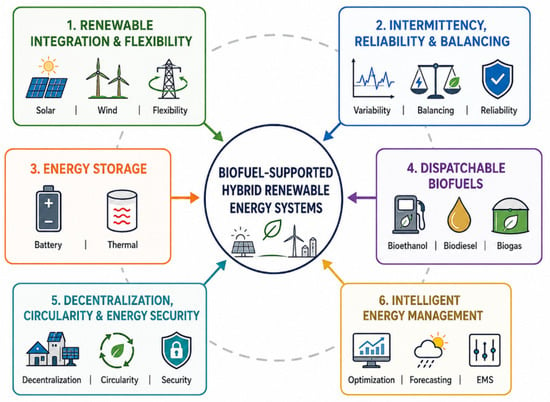
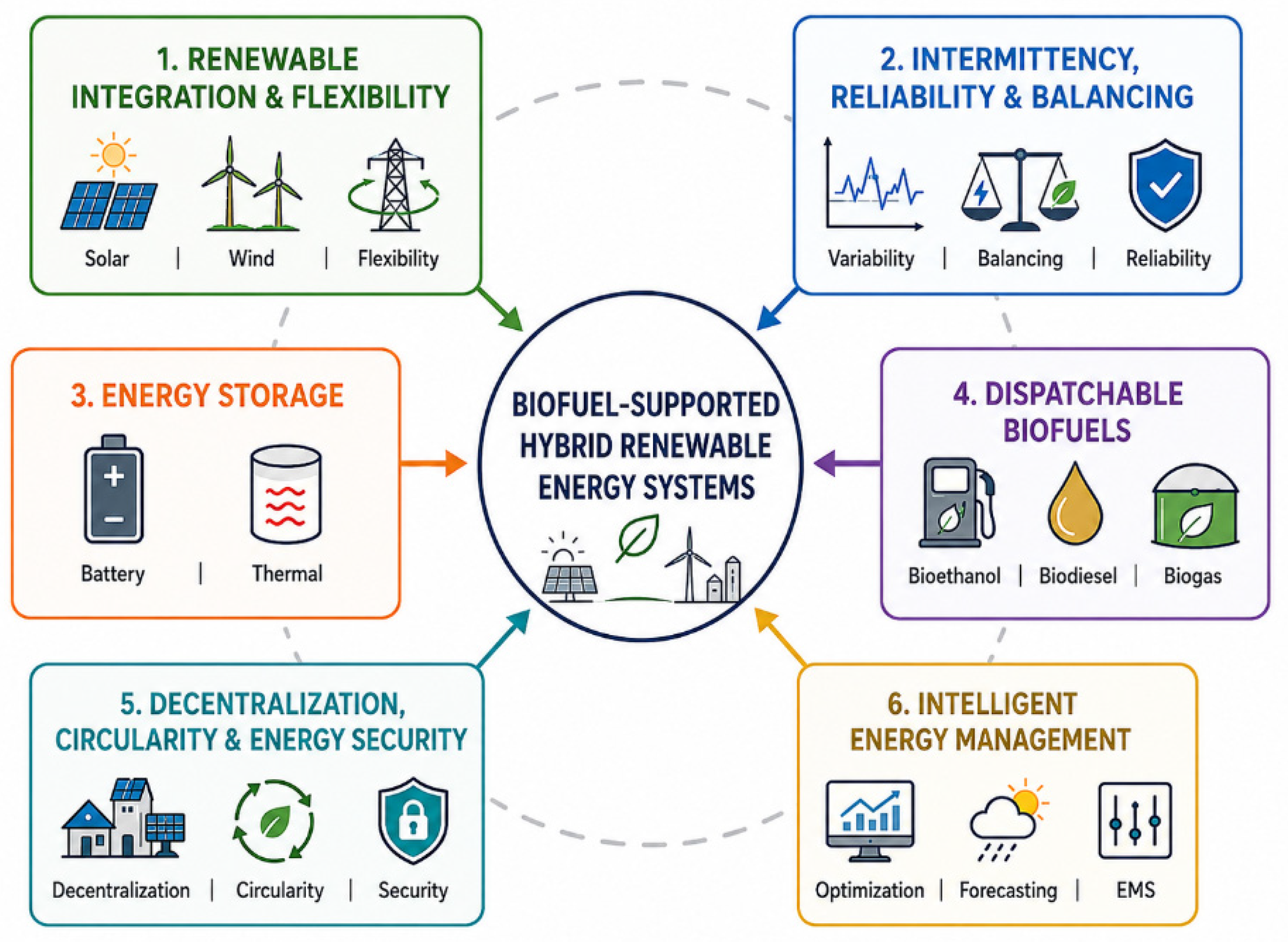
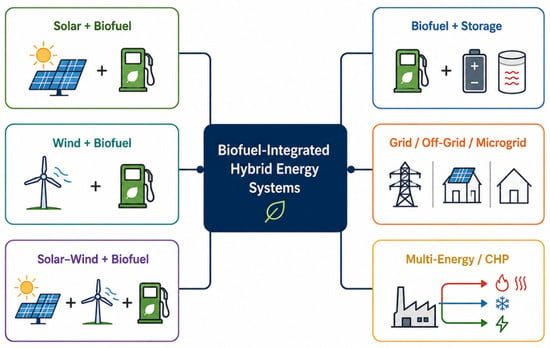
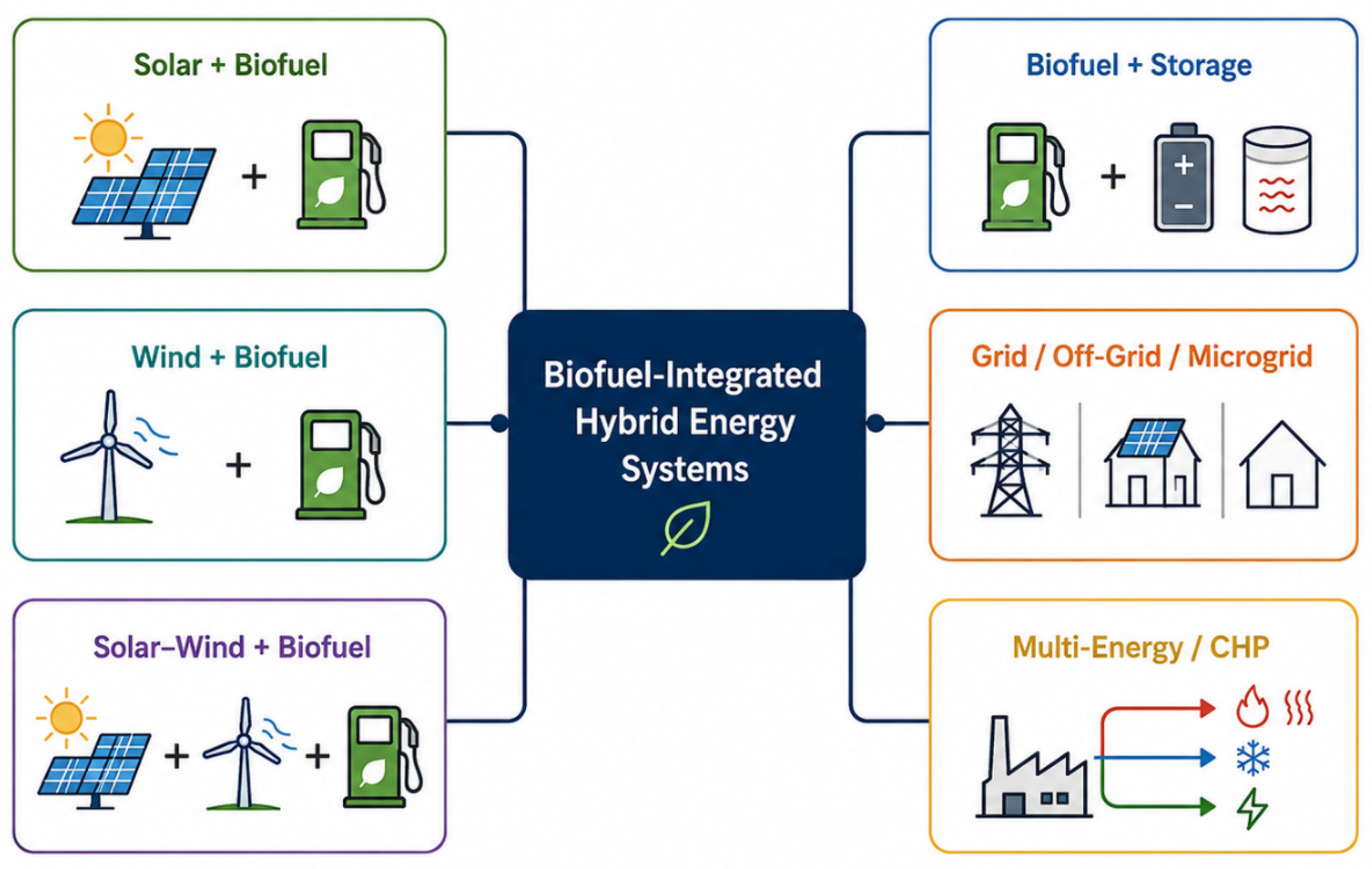
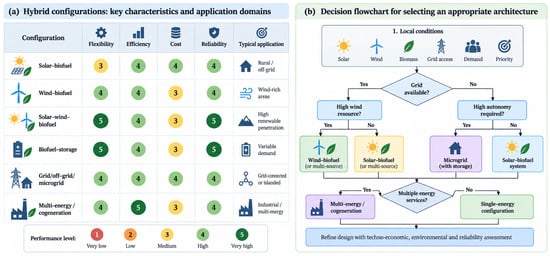
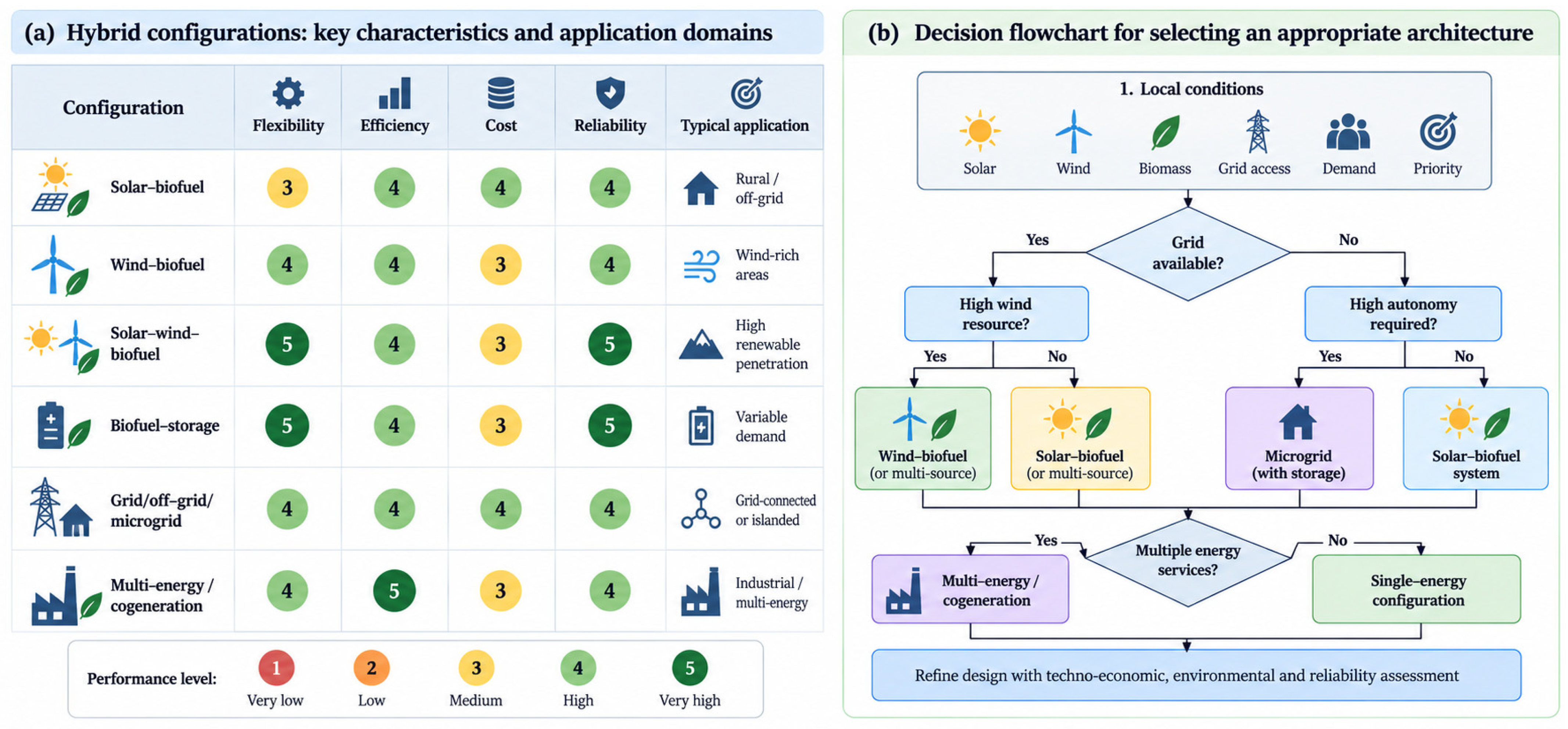
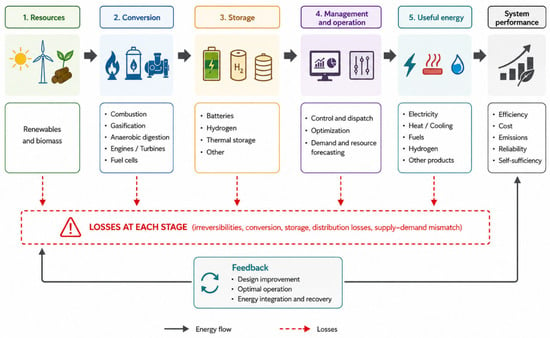
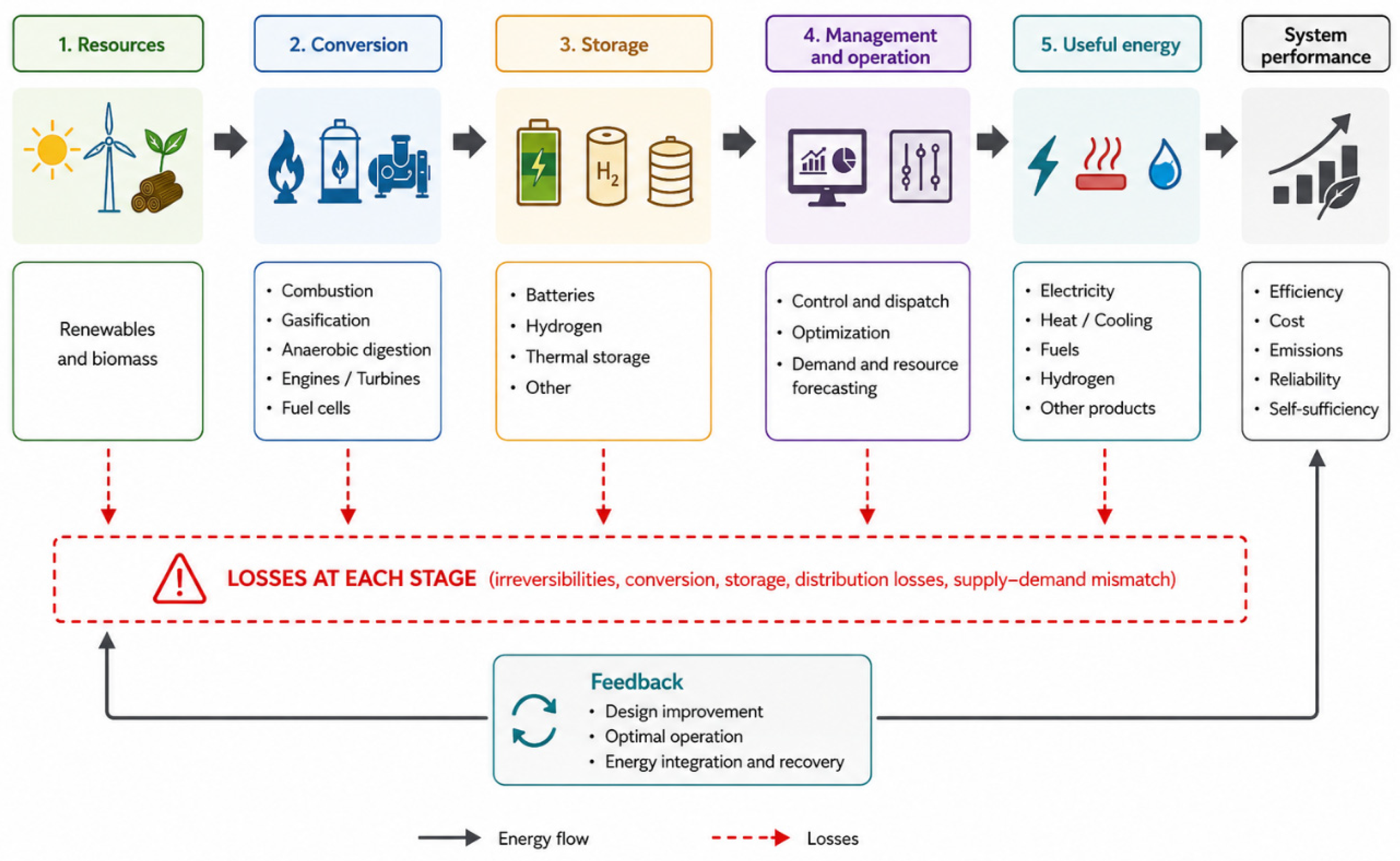
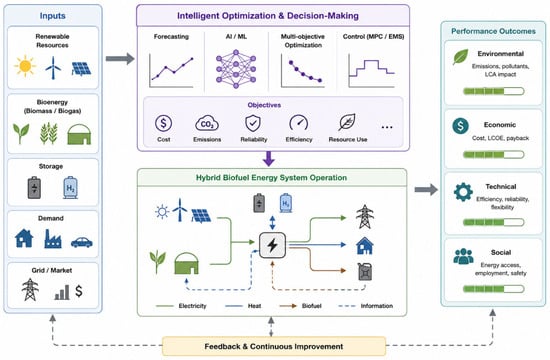
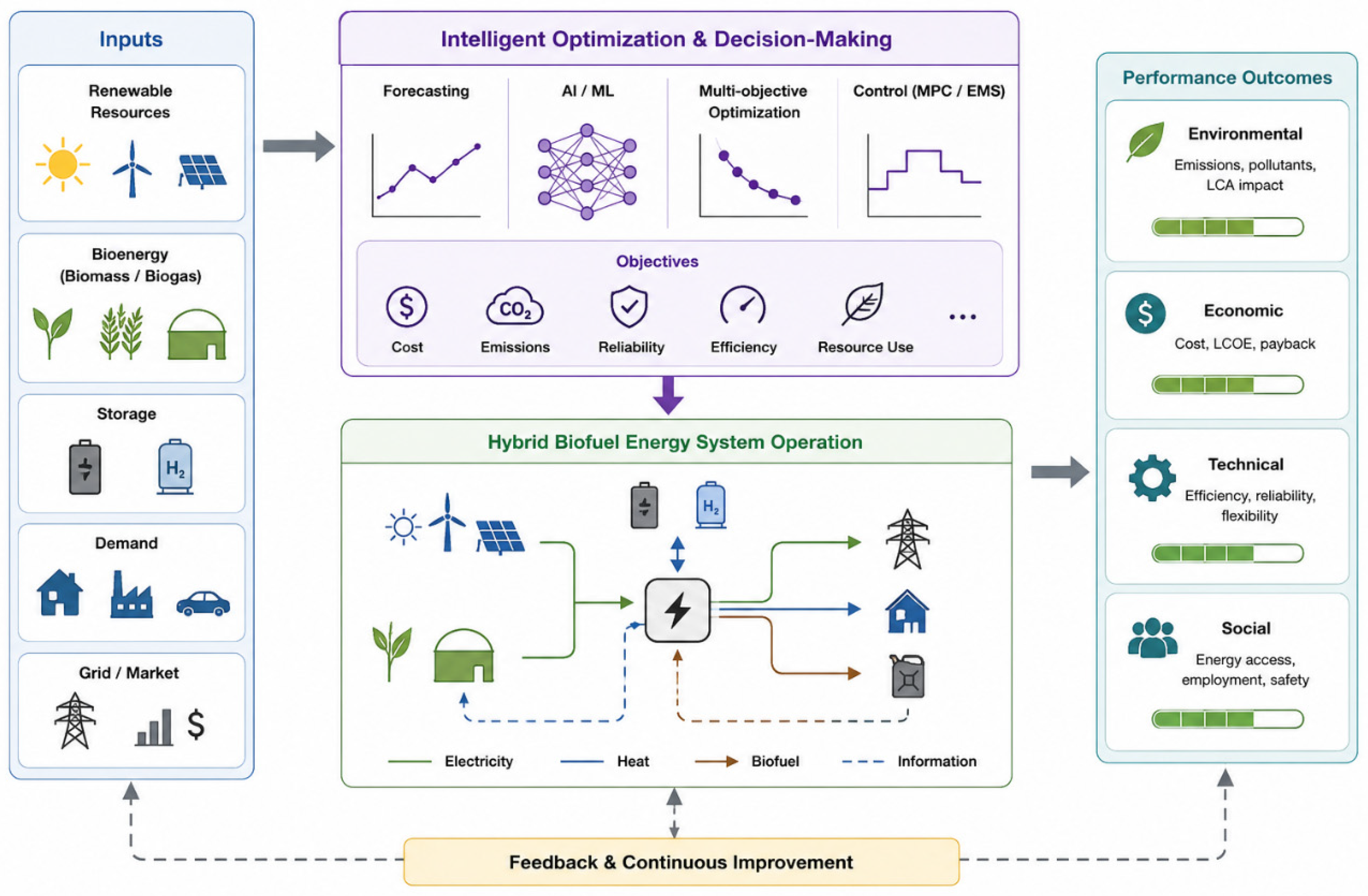

Disclaimer/Publisher’s Note: The statements, opinions and data contained in all publications are solely those of the individual author(s) and contributor(s) and not of MDPI and/or the editor(s). MDPI and/or the editor(s) disclaim responsibility for any injury to people or property resulting from any ideas, methods, instructions or products referred to in the content. |
© 2026 by the authors. Licensee MDPI, Basel, Switzerland. This article is an open access article distributed under the terms and conditions of the Creative Commons Attribution (CC BY) license.