


Abstract
Hyperthermophilic composting (HTC) is a promising approach for rapidly stabilizing organic waste and valorizing municipal biological residues; however, the microbial mechanisms underlying biomass conversion under hyperthermophilic conditions remain insufficiently understood. In this study, a pilot-scale HTC process was applied to anaerobically digested sludge, and temporal changes in bacterial communities and predicted functional genes were investigated. The process rapidly exceeded 90 °C within 2 days without external heating and maintained an average of approximately 77 ± 11 °C, demonstrating stable hyperthermophilic conditions. Moisture content concurrently decreased from 46.7% to 31.8% during the 40-day process. Bacillota and Actinomycetota dominated at the phylum level, while thermophilic genera including Thermobifida, Planifilum, Compostibacillus, and Oceanobacillus prevailed at the genus level. Functional prediction indicated increasing abundance of genes associated with carbohydrate metabolism and lignocellulose degradation throughout the process. Predicted gene profiles related to fengycin biosynthesis and oxidative stress responses suggested enhanced microbial adaptation to extreme conditions and potential suppression of pathogenic microorganisms. These findings provide integrated insights into microbial dynamics under hyperthermophilic conditions and highlight the potential of HTC as an efficient sludge stabilization strategy.
1. Introduction
Sewage sludge is a by-product of biological wastewater treatment processes and represents a potentially valuable resource due to its organic constituents, such as proteins, lipids, polysaccharides, cellulose, hemicellulose, and lignin [1]. Globally, the generation of sewage sludge has steadily increased due to population growth and stricter environmental regulations, leading to the widespread use of disposal and treatment methods such as landfilling, incineration, anaerobic digestion, and composting [1,2]. However, these approaches are often problematic, with drawbacks including high energy consumption, limited treatment efficiency, odor emissions, and secondary pollution [3,4]. Moreover, residual sludge after resource recovery is frequently subjected to further disposal, resulting in continued energy loss and environmental burden [5].
To address these limitations, thermophilic composting has been widely recognized as an effective aerobic treatment strategy that stabilizes organic matter, inactivates pathogens, and converts waste into value-added products such as organic fertilizers and soil amendments [4]. Particularly, hyperthermophilic composting (HTC) can sustain elevated temperatures (≥80 °C) for extended periods compared to conventional thermophilic composting, with reported temperatures reaching up to 90 °C without external heating [6]. These elevated temperatures offer several advantages, including enhanced degradation of organic matter, reduced nitrogen loss, and improved removal of antibiotic resistance genes and mobile genetic elements [7,8,9].
The HTC process generally comprises mesophilic, thermophilic (or hyperthermophilic), and maturation phases [6]. During the hyperthermophilic phase, microorganisms adapted to extreme temperatures play a decisive role in determining process performance. Therefore, HTC typically relies on specialized inocula enriched with hyperthermophilic microorganisms. Hyperthermophiles, defined as bacteria and archaea with optimal growth temperatures above 80 °C, include genera such as Thermus, Planifilum, and Calditerricola [10]. However, these microorganisms are difficult to isolate and maintain under conventional composting conditions. As a result, previous studies have often employed mature compost as an inoculum source [11]. Additionally, the repeated preparation and addition of freshly cultivated hyperthermophilic inocula for each cycle is economically impractical, underscoring the need to evaluate the feasibility of reusable inoculum strategies.
Despite growing interest in HTC, previous studies have primarily focused on microbial community succession and the removal of antibiotic resistance genes. However, limited information is available on the relationships between bacterial community succession and predicted functional potential, particularly in pilot-scale HTC systems treating anaerobically digested sludge [12]. Integrating microbial community analysis with predicted functional profiles may therefore provide further insight into microbial adaptation and biomass treatment under hyperthermophilic conditions.
Therefore, this study investigated a pilot-scale HTC process using anaerobically digested sludge, with particular emphasis on microbial and functional dynamics during the hyperthermophilic phase. The specific objectives were to: (1) characterize shifts in bacterial community structure, including dominant phyla and genera; (2) identify key predicted functional genes and metabolic pathways using 16S rRNA amplicon-based functional prediction; and (3) elucidate the relationships between dominant microbial taxa and predicted functional genes, thereby providing deeper insight into the microbiological mechanisms underlying HTC.
2. Materials and Methods
2.1. Pilot-Scale HTC System and Sampling
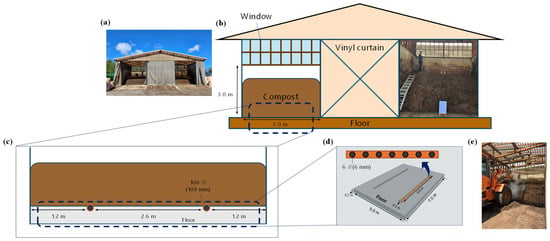
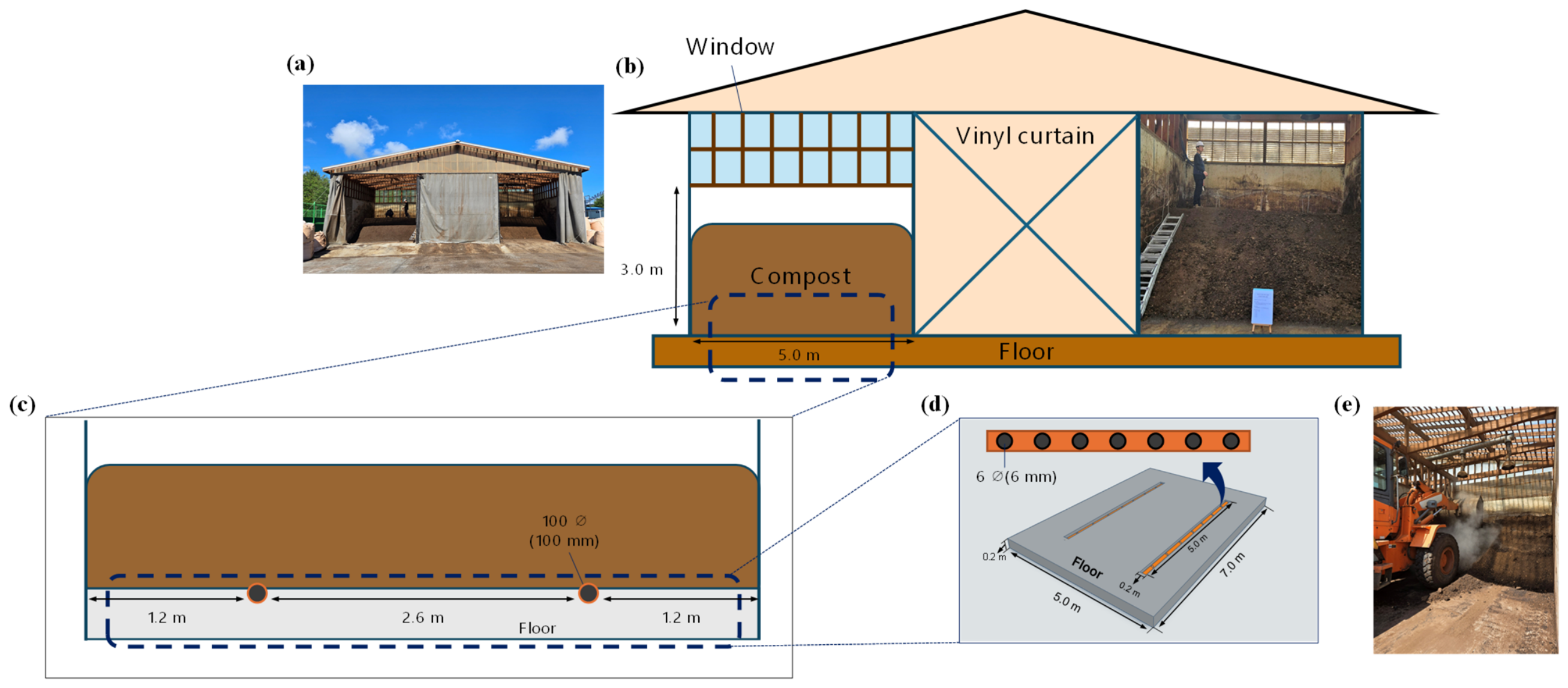
HTC was conducted using a pilot-scale facility located at a municipal wastewater treatment plant in Gangneung-si, Gangwon-do, Republic of Korea (Figure 1a). The facility consisted of three fermentation units, each measuring 5.0 m (W) × 7.0 m (L) × 3.0 m (H) (Figure 1b). Perforated pipes were installed at the base of each unit to supply air. These pipes were made of polyvinyl chloride (inner diameter: 100 mm) and contained seven evenly spaced holes (diameter: 6 mm) (Figure 1c,d). At the base of the facility, trenches measuring 0.2 m (W) × 5.0 m (L) × 0.2 m (H) were constructed, with two pipes positioned 1.2 m from the reactor walls and 2.6 m apart.
Figure 1.
Schematic illustration of the pilot-scale HTC system and its key components, including the composting reactor, vinyl curtain, and floor aeration system with perforated pipes. Insets show the external view of the composting facility (a), the internal condition of the reactor containing compost material (b), the layout of the composting bed and aeration channels (c), the detailed configuration of the perforated aeration pipes installed beneath the floor (d), and the turning operation during composting (e).
The initial compost mixture was prepared by combining 23 tons of compost previously produced via an HTC process using digested sludge (moisture content: 30.40%; Shinhwa Construction Co., Gangneung-si, Republic of Korea) with 12 tons of anaerobically digested sludge (moisture content: 79.75%) using a payloader (MAGA400V, Doosan, Republic of Korea) (Figure 1e). The resulting mixture had a total mass of 35 tons, a moisture content of 47.3%. The composting experiment was conducted over 40 days, from 9 July–17 August 2025. Mixing was performed six times by transferring the entire compost mass to an adjacent reactor using a payloader.
Aeration was supplied using a high-pressure multistage blower (DTB-405, Donggun Industrial Co., Incheon, Republic of Korea), with a maximum airflow rate of 12.5 m3/min and a maximum air pressure of 1400 mmAq. Airflow was regulated using butterfly and ball valves installed on the external walls of the facility. No leachate was generated during the composting process.
Samples were collected during the hyperthermophilic phase on days 0, 7, 14, 22, 28, 34, and 40. At each time point, samples were obtained from three locations within the same compost pile at depths of 50–100 cm below the compost surface (300 g per location). The three samples were then thoroughly mixed, pooled into a single sample, and sieved through a 2 mm mesh prior to analysis. Of the homogenized sample, 50 g was stored at −80 °C for DNA analysis, and the remainder was stored at 4 °C for physicochemical analyses.
2.2. Analysis of Physicochemical Parameters
Physicochemical properties were monitored throughout the HTC process. Temperature was measured by inserting a single alcohol thermometer probe approximately 1 m into the compost pile. The pH and moisture content were determined according to standard analytical methods [13]. For pH measurement, 5 g of sample was mixed with 25 mL of distilled water and allowed to equilibrate at room temperature for 1 h, after which pH was measured using a pH meter (Orion Star A211, Thermo Scientific, Waltham, MA, USA). Moisture content was determined by drying samples at 110 °C for 4 h. Volume changes were estimated based on measurements of the length, width, and height of the compost pile. All analyses were performed in triplicate.
Compost quality on day 40 was evaluated by a certified laboratory (CHEILLAB, Seoul, Republic of Korea) according to the official analytical methods issued by the Rural Development Administration of Korea (Notification No. 2024-4) [14]. To assess odor emissions during composting, air samples were collected on day 13 from a point 30 cm below the top surface of the compost pile. The concentrations of 22 designated odor-causing compounds, along with overall odor intensity, were analyzed by an accredited laboratory (Green Environmental Complex Center, Suncheon-si, Republic of Korea) in accordance with standard methods [15,16].
2.3. Bacterial Community and Predicted Functional Gene Analysis
To investigate bacterial community structure and predicted functional gene profiles during the hyperthermophilic phase, 16S rRNA gene amplicon sequencing was performed. Genomic DNA was extracted from 0.3 g of frozen compost samples using the NucleoSpin® Soil Kit (Macherey-Nagel GmbH, Düren, Germany), following the manufacturer’s instructions. Two independent DNA extractions were performed from each composite sample (n = 2), and both extracts were subjected to downstream sequencing analysis. Bead beating was carried out using a FastPrep-24™ (MP Biomedicals, Santa Ana, CA, USA). DNA concentration was measured using a SpectraMax QuickDrop spectrophotometer (Molecular Devices, San Jose, CA, USA), and the extracted DNA was stored at −20 °C until further analysis.
The V4 region of the 16S rRNA gene was amplified using the primer set 515F (5’-TGC CAG CMG CCG CGG TAA-3’) and 806R (5’-GGA CTA CHV GGG TWT CTA AT-3’). PCR products were purified, quantified, and pooled prior to sequencing. Sequencing was performed on the Illumina MiSeq platform (Illumina Inc., San Diego, CA, USA) at Macrogen Inc. (Seoul, Republic of Korea). Raw sequence data were processed using the DADA2 pipeline to infer amplicon sequence variants (ASVs), and taxonomic assignment was performed using the National Center for Biotechnology Information (NCBI) 16S rRNA database.
Predicted functional gene profiles were generated from the 16S rRNA gene data using Phylogenetic Investigation of Communities by Reconstruction of Unobserved States (PICRUSt2). Functional annotation was conducted based on the Kyoto Encyclopedia of Genes and Genomes (KEGG) Orthology (KO) database. Predicted functional genes associated with composting, heat and oxidative stress, and pathogen removal were selected for further analysis. Only genes with a relative abundance ≥0.001% across all samples were included in the final dataset.
2.4. Statistical Analysis
Heatmaps were generated to visualize changes in the relative abundance of dominant predicted functional genes during the composting process using the pheatmap package in R (version 4.4.2).
3. Results
3.1. Changes in Physicochemical Parameters During HTC
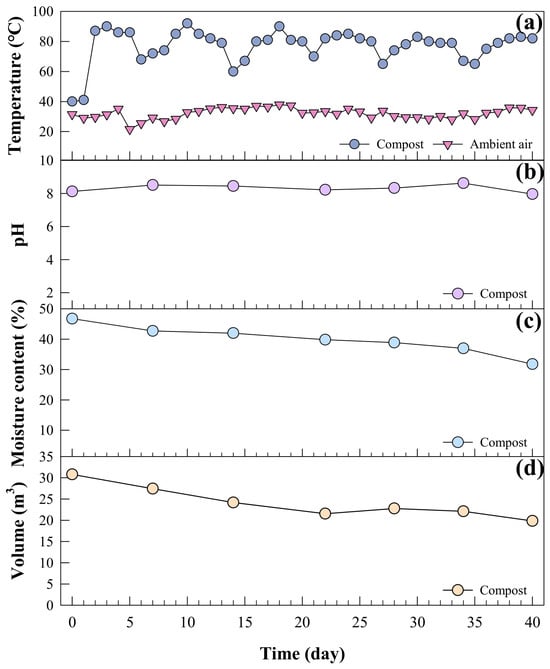
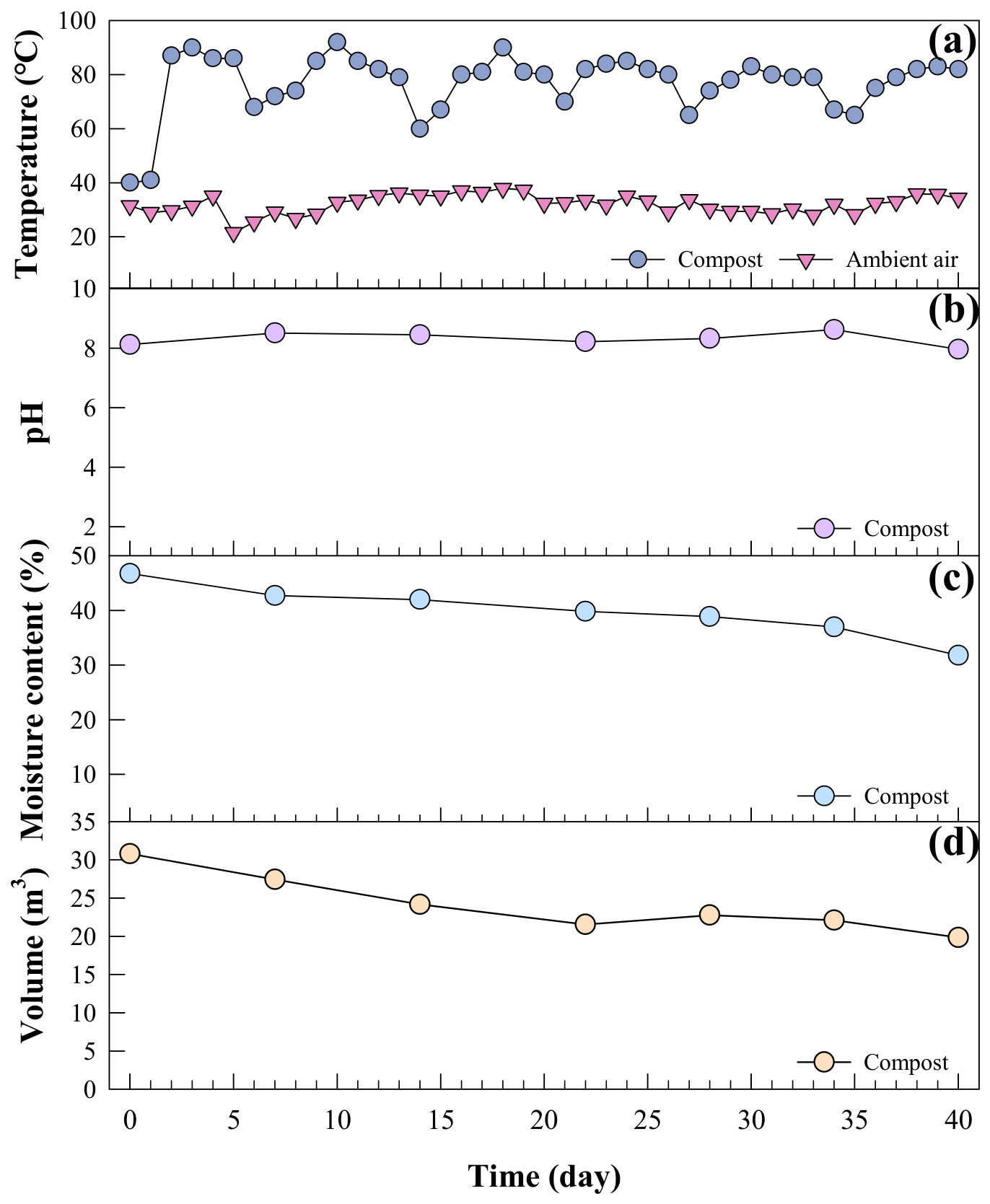
Temperature increased rapidly from 40 °C on day 0 to 87 °C within 2 days (Figure 2a). The maximum temperature reached 92 °C, with an average temperature of 77 °C over the 40-day composting period. Following each weekly turning and aeration event, the temperature exhibited a cyclic pattern, characterized by a sharp increase, entry into the hyperthermophilic phase, and a subsequent decline. Moreover, pH remained relatively stable throughout the process, ranging from 7.97 to 8.63 (Figure 2b). Moisture content and compost volume both decreased steadily throughout the composting process (Figure 2c,d). Moisture content declined from 46.7% on day 0 to 31.8% on day 40.
Figure 2.
Temporal changes in physicochemical parameters during HTC, including compost (using a single probe within the compost pile) and ambient air temperature (a), compost pH (b), moisture content (c), and compost volume (d).
Compost quality analysis was conducted on day 40 to evaluate the characteristics of the final compost product, in accordance with the official analytical methods of the Rural Development Administration of Korea (Notification No. 2024-4). It showed that all evaluated parameters apart from the maturity index met the regulatory standards (Table S1). Moreover, odor emission analysis based on the Korean Odor Prevention Act (Article 7, Enforcement Rule Article 8) showed that the dilution-to-threshold ratio of complex odor on day 13 was 208, which was below the regulatory limits for both industrial (≤1000) and general areas (≤500) (Table S2). However, the ammonia concentration was 19.9 ppm, substantially exceeding the corresponding limits for industrial (≤2 ppm) and general areas (≤1 ppm). Dimethyl disulfide, styrene, and n-butyric acid also exceeded the general-area guidelines, although their concentrations remained within the industrial-area limits.
3.2. Bacterial Community Dynamics During HTC
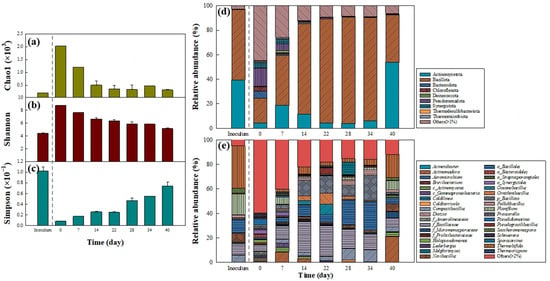
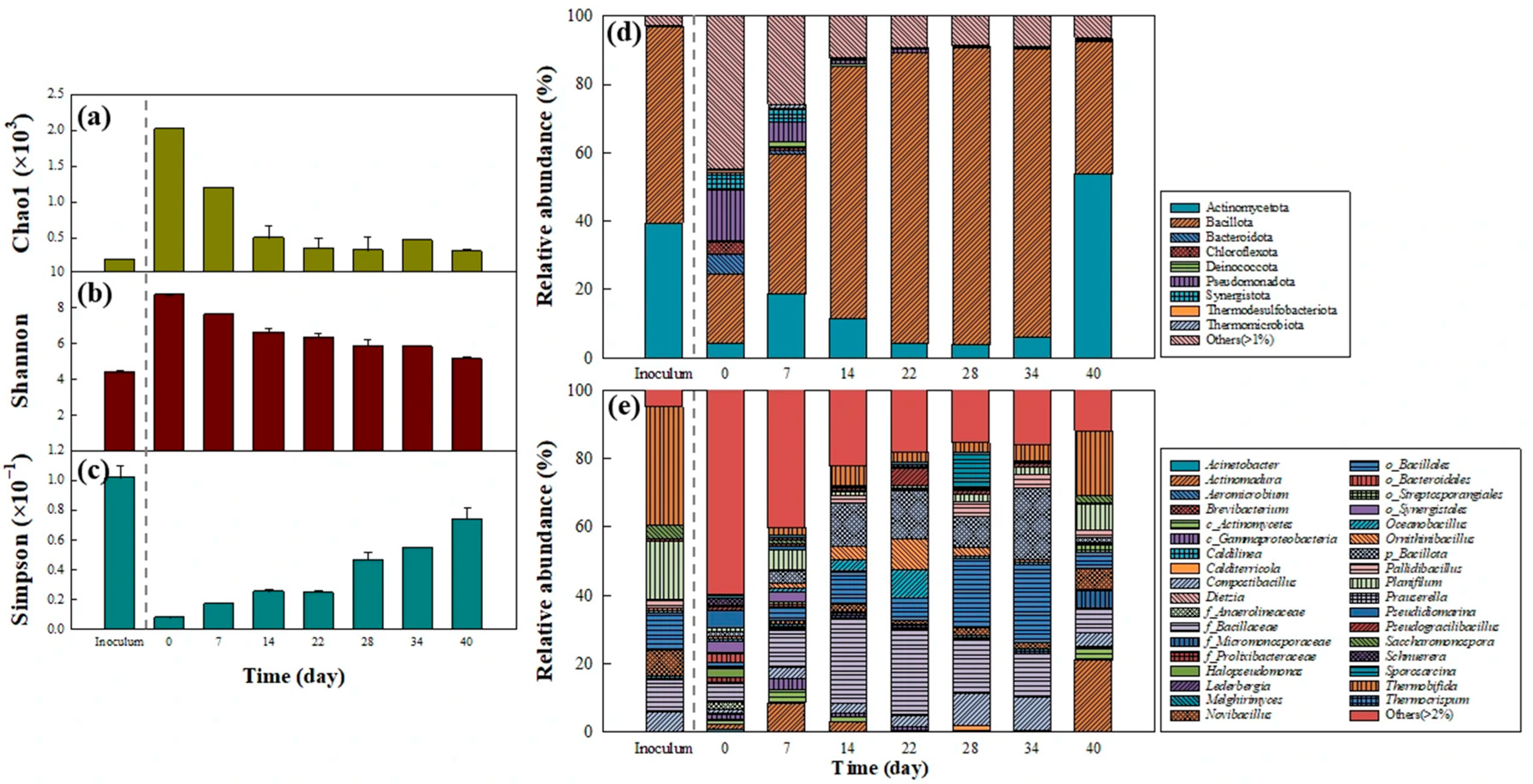
During the HTC process, alpha diversity indices were analyzed to assess temporal changes in microbial diversity (Figure 3a–c). The Chao1 and Shannon indices were higher during composting than in the inoculum but gradually declined over time. Consistent with these trends, the Simpson index increased, indicating reduced community evenness and the progressive dominance of specific taxa. Together, these results suggest that the microbial community became increasingly specialized as composting progressed.
Figure 3.
Characteristics of bacterial communities during HTC. Temporal changes in alpha diversity indices, including Chao1 (a), Shannon (b), and Simpson (c), and the relative abundances of bacterial phyla (>1%) (d) and genera (>2%) (e), with genus-unresolved taxa presented at their highest assigned taxonomic rank. The vertical dashed line separates the inoculum from the samples collected during the HTC process. Error bars represent the variation between duplicate DNA extractions (n = 2) from each composite sample.
Clear temporal shifts in bacterial community composition were observed at both the phylum and genus levels, with the final community structure closely resembling that of the initial inoculum (Figure 3d,e). At the phylum level, Actinomycetota and Bacillota dominated the inoculum and remained predominant throughout the composting process. During the early hyperthermophilic stage, additional phyla such as Synergistota, Pseudomonadota, and Chloroflexota were relatively abundant. However, as composting progressed, the community converged toward dominance by Actinomycetota and Bacillota. At the genus level, the inoculum was primarily dominated by Thermobifida, Planifilum, Novibacillus, Compostibacillus, and members of the family Bacillaceae. In the early stages (days 0 and 7), a more diverse assemblage of genera was observed, whereas later stages were characterized by the predominance of Thermobifida, Planifilum, Oceanobacillus, Ornithinibacillus, Bacillaceae, Compostibacillus, and Actinomadura. By day 40, the microbial community structure closely resembled that of the initial inoculum, indicating convergence toward a stable and functionally adapted consortium.
3.3. Predicted Functional Gene Profiles of Bacterial Communities
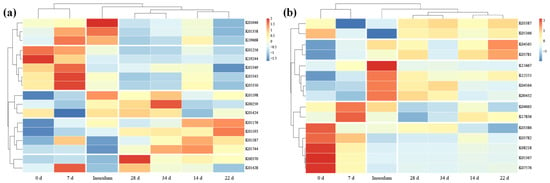
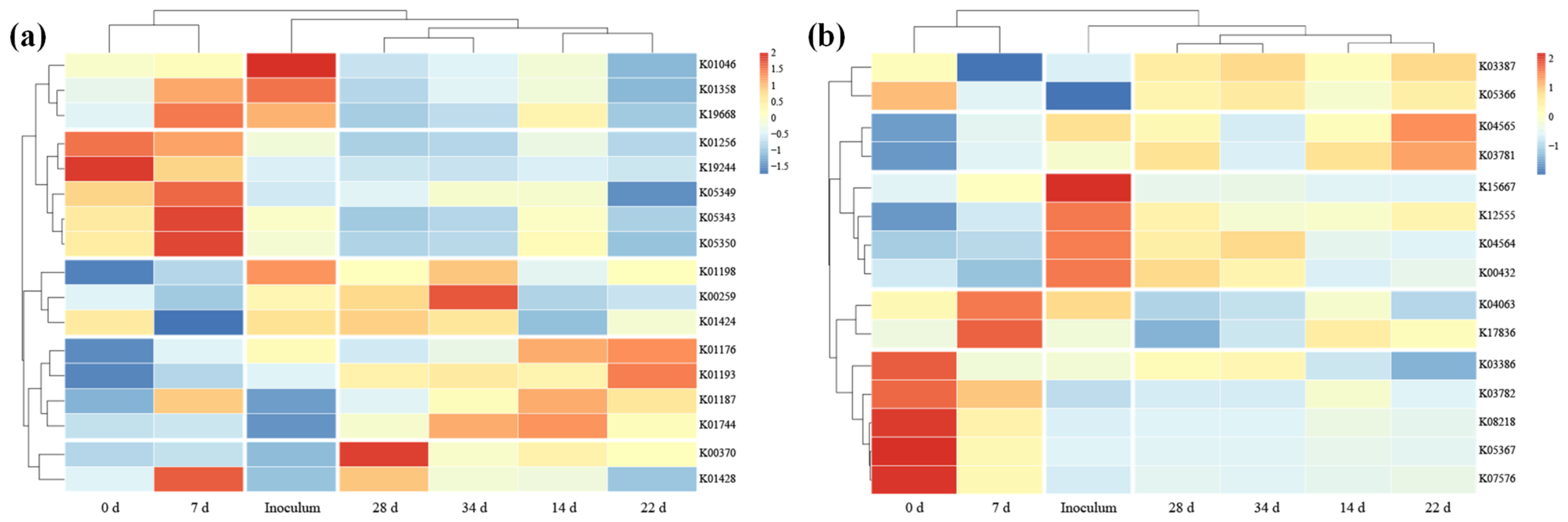
The relative abundance of predicted functional genes in the inoculum and during the HTC process is shown in Figure 4. Among composting-related genes, K01256 (aminopeptidase N), K19244 (alanine dehydrogenase), K05343 (maltose α-D-glucosyltransferase/α-amylase), and K05349–K05350 (β-glucosidases) were highly enriched at the early stages (days 0 and 7) compared with the inoculum, but their relative abundances gradually decreased as composting progressed (Figure 4a). As the process advanced, other carbohydrate-degrading genes became more prominent, including K01176 (α-amylase), K01193 (β-fructofuranosidase), and K01187 (α-glucosidase). In the later stages, genes such as K01198 (xylan 1,4-β-xylosidase), K00259 (alanine dehydrogenase), K01424 (L-asparaginase), K00370 (nitrate reductase/nitrite oxidoreductase), and K01428 (urease subunit α) predominated.
Figure 4.
Predicted functional gene profiles during HTC. Heatmaps of abundant predicted functional genes related to composting (a) and pathogen removal (b) (relative abundance >0.01%). Detailed descriptions of the KEGG orthologs are provided in Tables S3 and S4.
To further examine pathogen-related dynamics, genes associated with antimicrobial production, oxidative stress, antibiotic resistance, and pathogenicity were analyzed (Figure 4b). In the inoculum, genes such as K15667 (plipastatin/fengycin lipopeptide synthetase D), K12555 (penicillin-binding protein 2A), K04564 (superoxide dismutase, Fe–Mn family), and K00432 (glutathione peroxidase) were predominant. Their relative abundances decreased during the early composting stage but increased again in the later stages. During the early stage (days 0 and 7), oxidative stress- and antibiotic resistance-related genes, including K04063 (lipoyl-dependent peroxiredoxin), K17836 (β-lactamase class A), K03386 (peroxiredoxin 2/4), K03782 (catalase–peroxidase), K08218 (MFS transporter, AmpG), K05367 (penicillin-binding protein 1C), and K07576 (metallo-β-lactamase), were dominant. In contrast, during the middle and late stages, genes such as K03387 (NADH-dependent peroxiredoxin subunit F), K05366 (penicillin-binding protein 1A), K04565 (superoxide dismutase, Cu–Zn family), K03781 (catalase), and K12555 (penicillin-binding protein 2A) became more prevalent.
4. Discussion
4.1. Changes in Physicochemical Parameters During HTC
Overall, the HTC process achieved temperatures exceeding 80 °C and maintained an average above 70 °C, consistent with previously reported HTC criteria [4]. These temperature patterns are consistent with previous studies. For example, Liu, He, Zhang, Zhang, Ai, Tang, Yang, Yu, Tan, Friman, Liao, Zhou [17] reported that temperature increased rapidly to 94 °C within the first 3 days during a 45-day large-scale HTC process. The compost temperature remained above 80 °C for 9 days, then gradually declined to 55 °C after day 15, eventually approaching ambient temperature by day 27 [17]. Similarly, Ajmal, Shi, Awais, Mengqi, Zihao, Shabbir, Faheem, Wei, Ye [18] observed that temperature reached 96 °C within 3 days and sustained a prolonged thermophilic phase (>60 °C) during HTC. These findings indicate that rapid temperature elevation and sustained high-temperature conditions are characteristic features of HTC systems.
The slightly alkaline condition is commonly observed during aerobic composting and is associated with microbial activity and organic matter degradation [18,19,20,21]. Optimal composting performance is generally achieved within a pH range of 7.5–8.5, while microbial activity can be sustained between pH 6.7 and 9 [19]. Similarly, Ge, Shen, Ding, Meng, Zhou, Zhou, Cheng, Zhang, Wang, Wang, Cheng, Li, Liu [20] reported that composting at pH 8.5 resulted in prolonged thermophilic duration, an improved germination index, and compliance with compost quality standards. Similar trends of moisture content have been reported in previous HTC studies, where moisture content decreased from 60.5% to 35.5% over 24 days [18] and from 55–65% to 20–30% after 30 days [21]. Although the initial moisture content in this study was lower than the typically recommended range of 55–60%, the final moisture content fell within the optimal range of 20–30%, indicating effective aerobic composting [21]. The elevated ammonia concentration may be associated with ammonification during the degradation of nitrogen-containing organic matter in the anaerobically digested sludge. These results indicate that despite the relatively low complex odor dilution factor, control of ammonia emissions may remain an important consideration during HTC of anaerobically digested sludge. However, because odor compounds were measured only on day 13, these results should be interpreted as a part of the odor profile at that sampling point rather than as representative of emissions throughout the entire HTC process.
4.2. Bacterial Community Dynamics During HTC
The dominance of Bacillota (Firmicutes) and Actinomycetota (Actinobacteria) is consistent with previous composting studies [22,23]. Bacillota are known for their thermotolerance and their important role in lignocellulose degradation during composting [22]. Similarly, Actinomycetota contribute to the breakdown of recalcitrant organic matter, including cellulose and lignin, thereby facilitating compost stabilization [22].
Among the dominant genera, Thermobifida plays a particularly important role. Members of this genus are thermophilic or mesophilic soil bacteria, which produce cellulolytic enzymes that degrade plant cell walls in heated organic environments such as compost, hay, and manure piles [24]. Thermobifida has also been reported to promote humic substance formation through lignocellulose degradation [20,25]. Previous studies have shown that the relative abundance of Thermobifida increases from the thermophilic to the maturation phase, suggesting a strong association with compost maturity [20]. Several other genera identified in this study, including members of Bacillaceae, Oceanobacillus, and Pseudogracilibacillus, have been reported as keystone taxa in composting systems [26]. Thermophilic members of Bacillota, such as Bacillus and Geobacillus, are known to increase in abundance during the HTC, reflecting their adaptation to high-temperature environments [24,27].
The hyperthermophilic inoculum used in this study contained thermophilic bacteria, including Calditerricola satsumensis YM081 and Calditerricola yamamurae YM0722, which were originally isolated from compost exceeding 95 °C [28]. Although Calditerricola was not dominant during the composting process, it may have contributed to the establishment of the microbial consortium under hyperthermophilic conditions. This interpretation is supported by the dominance of the Bacillaceae family, to which Calditerricola is phylogenetically related.
Composting is known to effectively reduce pathogenic microorganisms in sewage sludge [29]. In this study, the relative abundance of the pathogenic genus Acinetobacter decreased markedly during composting and the associated sequences were not detected after day 14. Similar reductions have been reported in sludge and manure composting processes [29,30]. Furthermore, compost quality analysis confirmed the absence of Bacilli and Salmonella in the final product (Table S1), indicating effective pathogen inactivation during the HTC process.
4.3. Predicted Functional Gene Profiles of Bacterial Communities
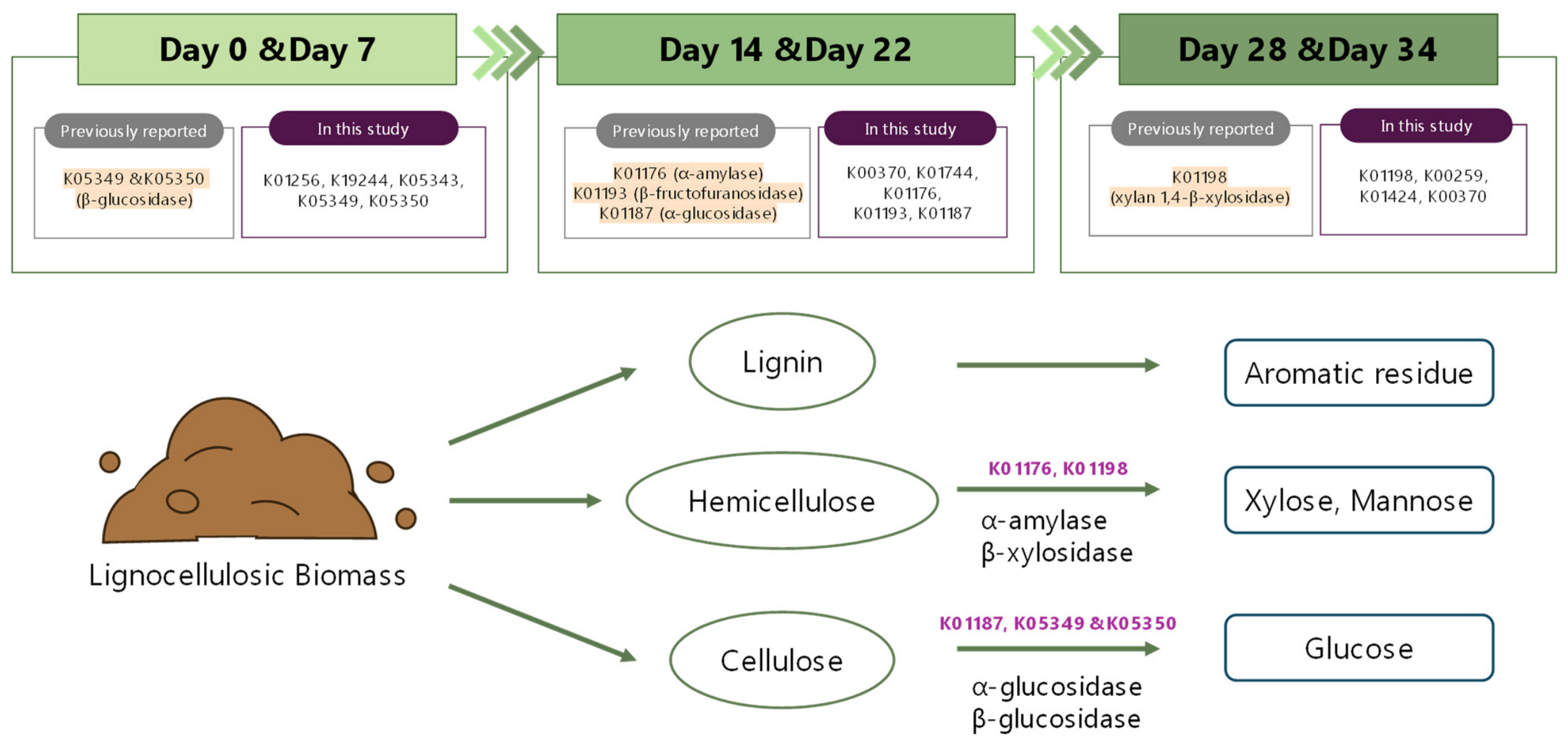
The patterns of predicted functional genes indicate a functional succession in carbon and nitrogen metabolism during composting. In the early stage, predicted β-glucosidase genes associated with organic carbon mineralization showed relatively high abundances [31]. Genes encoding α-glucosidase (K01187) and β-glucosidases (K05349, K05350) are associated with cellulose degradation, with β-glucosidase catalyzing the hydrolysis of cellobiose into glucose [32]. Additionally, α-amylase (K01176) and xylan 1,4-β-xylosidase (K01198) contribute to hemicellulose degradation, while β-fructofuranosidase (K01193) facilitates the breakdown of oligosaccharides [32].
Notably, oxidative stress-related genes, including those encoding superoxide dismutase (SOD), catalase, peroxidase, and peroxiredoxin, were highly enriched during the thermophilic stage. These genes play a critical role in microbial survival under extreme conditions by mitigating damage caused by reactive oxygen species (ROS) [33]. Thermophilic microorganisms possess robust stress response and regulatory mechanisms that enable them to tolerate oxidative stress generated during organic matter degradation [33]. High-temperature environments are known to exacerbate oxidative stress, which is closely associated with heat-induced cellular damage [34]. Consistent with this, overexpression of SOD has been shown to enhance thermotolerance in microorganisms [34]. Taken together, these findings suggest that oxidative stress-related genes do not directly eliminate pathogens but instead contribute indirectly to pathogen reduction by shaping microbial community structure under hyperthermophilic and oxidative stress conditions.
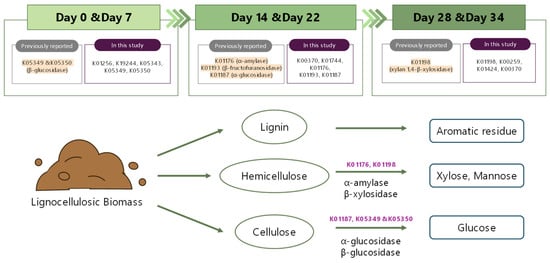
By integrating the predicted functional profiles identified in the present study with those previously reported, we propose a hypothetical model of biomass conversion during the HTC process (Figure 5). The model represents potential functional succession associated with the decomposition of recalcitrant lignocellulosic biomass rather than directly measured metabolic activities. These findings advance current understanding of biomass conversion mechanisms in HTC and support the development of sustainable technologies for the valorization of municipal biological residues. However, the functional profiles in this study were inferred from 16S rRNA gene data using PICRUSt2 and therefore represent predicted functional potential rather than directly measured metabolic activity. Accordingly, the observed temporal changes should be interpreted as potential functional succession associated with shifts in bacterial community composition, and further metagenomic or metatranscriptomic analyses are required to validate these predicted functions.
Figure 5.
Hypothetical succession of key composting-related PICRUSt2-predicted functional potential during hyperthermophilic composting. Functional genes shown in the “Previously reported” boxes were compiled from a previous study [32].
5. Conclusions
This study investigated a pilot-scale HTC process using mature hyperthermophilic compost as an inoculum for anaerobically digested sludge, with a particular focus on microbial community structure and predicted functional gene profiles. The HTC system successfully reached a maximum temperature of 92 °C and maintained an average temperature of approximately 77 °C without external heating throughout the process. As composting progressed, microbial diversity decreased, while thermophilic genera such as Thermobifida, Planifilum, Oceanobacillus, and Compostibacillus became predominant. The marked reduction of the pathogenic genus Acinetobacter further demonstrated the effectiveness of HTC in pathogen inactivation. Predicted functional gene analysis revealed the enrichment of genes associated with organic matter degradation, thermotolerance, and oxidative stress response.
Despite these findings, several limitations should be acknowledged. This study primarily focused on the thermophilic phase and did not comprehensively evaluate the entire HTC process. In addition, real-time monitoring of key gaseous emissions, as well as detailed characterization of physicochemical parameters such as organic matter content and C/N ratio, was not conducted. Compost quality was assessed only at the final sampling point (day 40), while odor compounds were measured only on day 13; therefore, temporal variations in these parameters throughout the HTC process could not be evaluated. Furthermore, the absence of direct comparisons with conventional thermophilic composting systems limits the assessment of relative process performance. At each sampling time point, samples collected from three locations within the compost pile were pooled into a single composite sample for microbial community analysis, and thus independent biological replicates were not available. Accordingly, the observed temporal patterns in bacterial community composition and predicted functional profiles should be interpreted descriptively, and further studies with biological replication are needed to confirm their reproducibility under different conditions. Additionally, further studies are needed to confirm the reproducibility of the observed microbial and functional patterns under different conditions. It should also be noted that functional gene profiles were inferred from 16S rRNA gene amplicon data and therefore should be interpreted with caution. Future studies employing shotgun metagenomic approaches are needed to directly validate functional gene dynamics and metabolic pathways.
Overall, this study provides insights into the interactions between microbial communities and functional potential in HTC systems. By elucidating the microbial basis of biomass transformation under self-sustaining hyperthermophilic conditions, this work advances current understanding of biological residue utilization and supports the development of sustainable biomass management.
Supplementary Materials
The following supporting information can be downloaded at: https://www.mdpi.com/article/10.3390/pr14182875/s1, Table S1: Quality assessment of mature compost after hyperthermophilic composting (HTC) based on Korean fertilizer regulations; Table S2: Evaluation of odor emissions from HTC products based on Korean odor regulations; Table S3: KEGG orthologs of composting-related predicted functional genes presented in Figure 4a; Table S4: KEGG orthologs of pathogen removal-related predicted functional genes presented in Figure 4b.
Author Contributions
I.C.: Writing—original draft, Visualization, Validation, Investigation, Formal analysis, Conceptualization. G.K.: Methodology, Data curation, Conceptualization, Writing—review & editing. J.L.: Visualization, Data curation. S.H.: Visualization, Data curation. J.C.: Visualization, Data curation. J.P.: Visualization, Data curation. M.K.: Resources. Y.-j.K.: Investigation, Methodology, Funding acquisition. K.-S.C.: Writing—review & editing, Supervision, Funding acquisition. All authors have read and agreed to the published version of the manuscript.
Funding
This work was supported by the Technology Development Program (RS-2025-02222395), funded by the Ministry of SMEs and Startups (MSS, Republic of Korea).
Data Availability Statement
The raw data supporting the conclusions of this article will be made available by the authors on request.
Conflicts of Interest
Author Young-jun Kwon was employed by Shinhwa Construction Co. Shinhwa Construction Co. was involved in the operation of the pilot-scale hyperthermophilic composting system and the collection of process data. The company had no role in the interpretation of the data, writing of the manuscript, or decision to publish the results. The remaining authors declare that the research was conducted in the absence of any commercial or financial relationships that could be construed as a potential conflict of interest.
References
- Chen, R.; Yuan, S.; Chen, S.; Ci, H.; Dai, X.; Wang, X.; Li, C.; Wang, D.; Dong, B. Life-cycle assessment of two sewage sludge-to-energy systems based on different sewage sludge characteristics: Energy balance and greenhouse gas-emission footprint analysis. J. Environ. Sci. 2022, 111, 380–391. [Google Scholar] [CrossRef] [Scilit] [PubMed]
- Tarpani, R.R.Z.; Alfonsín, C.; Hospido, A.; Azapagic, A. Life cycle environmental impacts of sewage sludge treatment methods for resource recovery considering ecotoxicity of heavy metals and pharmaceutical and personal care products. J. Environ. Manag. 2020, 260, 109643. [Google Scholar] [CrossRef] [Scilit] [PubMed]
- Vaithyanathan, V.K.; Cabana, H. Integrated Biotechnology Management of Biosolids: Sustainable Ways to Produce Value—Added Products. Front. Water 2021, 3, 729679. [Google Scholar] [CrossRef] [Scilit]
- Wang, S.; Wu, Y. Hyperthermophilic composting technology for organic solid waste treatment: Recent research advances and trends. Processes 2021, 9, 675. [Google Scholar] [CrossRef] [Scilit]
- Hao, X.; Wu, D.; Li, J.; Liu, R.; van Loosdrecht, M. Making Waves: A sea change in treating wastewater–Why thermodynamics supports resource recovery and recycling. Water Res. 2022, 218, 118516. [Google Scholar] [CrossRef] [Scilit] [PubMed]
- Liu, C.; Ai, C.; Liao, H.; Wen, C.; Gao, T.; Yang, Q.; Zhou, S. Distinctive community assembly enhances the adaptation to extreme environments during hyperthermophilic composting. Waste Manag. 2023, 157, 60–68. [Google Scholar] [CrossRef] [Scilit] [PubMed]
- Liao, H.; Lu, X.; Rensing, C.; Friman, V.P.; Geisen, S.; Chen, Z.; Yu, Z.; Wei, Z.; Zhou, S.; Zhu, Y. Hyperthermophilic Composting Accelerates the Removal of Antibiotic Resistance Genes and Mobile Genetic Elements in Sewage Sludge. Environ. Sci. Technol. 2018, 52, 266–276. [Google Scholar] [CrossRef] [Scilit] [PubMed]
- Cui, P.; Liao, H.; Bai, Y.; Li, X.; Zhao, Q.; Chen, Z.; Yu, Z.; Yi, Z.; Zhou, S. Hyperthermophilic composting reduces nitrogen loss via inhibiting ammonifiers and enhancing nitrogenous humic substance formation. Sci. Total Environ. 2019, 692, 98–106. [Google Scholar] [CrossRef] [Scilit] [PubMed]
- Ma, F.; Wang, Y.; Quan, H.; Wang, Z.; Zhao, C.; Li, X.; Liang, B.; Zhang, H.; Hao, L.; Zhu, T. Exploring the humification process of municipal sludge in hyperthermophilic composting through metagenomic and untargeted metabolomic. Bioresour. Technol. 2023, 387, 129575. [Google Scholar] [CrossRef] [Scilit] [PubMed]
- Chen, S.; Gu, J.; Zhang, S.; Yu, R. Application of hyperthermophiles in sludge composting: A review. Environ. Chem. Lett. 2024, 22, 445–460. [Google Scholar] [CrossRef] [Scilit]
- Wang, Z.; Chen, Z.; Jiang, S.; Jin, H.; Chen, R.; Wu, S.; Fan, C.; Zhao, M.; Gong, X.; Xu, M.; et al. Improvement of metabolic heat accumulation for hyperthermophilic composting system: Influencing factors and microbial communities. Environ. Sci. Eur. 2025, 37, 74. [Google Scholar] [CrossRef] [Scilit]
- Wang, Z.; Wu, D.; Lin, Y.; Wang, X. Role of temperature in sludge composting and hyperthermophilic systems: A review. BioEnergy Res. 2022, 15, 962–976. [Google Scholar] [CrossRef] [Scilit]
- Lee, Y.Y.; Lee, S.Y.; Lee, S.D.; Cho, K.S. Seasonal Dynamics of Bacterial Community Structure in Diesel Oil-Contaminated Soil Cultivated with Tall Fescue (Festuca arundinacea). Int. J. Environ. Res. Public Health 2022, 19, 4629. [Google Scholar] [CrossRef] [Scilit] [PubMed]
- Ahn, J.-H.; Song, I.-H.; Kang, M.-S. Correlation between raw materials and chemical contents of livestock compost. J. Korean Soc. Agric. Eng. 2013, 55, 37–45. [Google Scholar] [CrossRef] [Scilit][Green Version]
- Jung, H.; Oh, K.C.; Ryu, H.W.; Jeon, J.M.; Cho, K.S. Simultaneous mitigation of methane and odors in a biowindow using a pipe network. Waste Manag. 2019, 100, 45–56. [Google Scholar] [CrossRef] [Scilit] [PubMed]
- Hong, K.H.; Cha, J.D.; Ko, Y.H.; Lee, J.H.; Lim, E.J.; Kim, K.S. Evaluation of Odor Concentration for Food Waste Compost Facility. J. Korean Soc. Odor Res. Eng. 2006, 5, 151–155. [Google Scholar]
- Liu, C.; He, Y.; Zhang, H.; Zhang, D.; Ai, C.; Tang, X.; Yang, Q.-E.; Yu, Z.; Tan, S.; Friman, V.-P.; et al. Metabolic activity and survival strategies of thermophilic microbiomes during hyperthermophilic composting. mSystems 2025, 10, e0095625. [Google Scholar] [CrossRef] [Scilit] [PubMed]
- Ajmal, M.; Shi, A.; Awais, M.; Mengqi, Z.; Zihao, X.; Shabbir, A.; Faheem, M.; Wei, W.; Ye, L. Ultra-high temperature aerobic fermentation pretreatment composting: Parameters optimization, mechanisms and compost quality assessment. J. Environ. Chem. Eng. 2021, 9, 105453. [Google Scholar] [CrossRef] [Scilit]
- Chen, Z.; Fu, Q.; Cao, Y.; Wen, Q.; Wu, Y. Effects of lime amendment on the organic substances changes, antibiotics removal, and heavy metals speciation transformation during swine manure composting. Chemosphere 2021, 262, 128342. [Google Scholar] [CrossRef] [Scilit] [PubMed]
- Ge, M.; Shen, Y.; Ding, J.; Meng, H.; Zhou, H.; Zhou, J.; Cheng, H.; Zhang, X.; Wang, J.; Wang, H.; et al. New insight into the impact of moisture content and pH on dissolved organic matter and microbial dynamics during cattle manure composting. Bioresour. Technol. 2022, 344, 126236. [Google Scholar] [CrossRef] [Scilit] [PubMed]
- Chi, Z.; Zhang, S.; Li, Y.; Li, H. Ultra-high temperature bacterial agents enhance heavy metal passivation and antibiotic degradation in compost. Front. Microbiol. 2025, 16, 1708982. [Google Scholar] [CrossRef] [Scilit] [PubMed]
- Sun, L.; Long, M.; Li, J.; Wu, R.; Ma, L.; Tang, D.; Lu, Y.; Wang, Z. Different Effects of Thermophilic Microbiological Inoculation With and Without Biochar on Physicochemical Characteristics and Bacterial Communities in Pig Manure Composting. Front. Microbiol. 2021, 12, 746718. [Google Scholar] [CrossRef] [Scilit] [PubMed]
- Flores-Orozco, D.; Levin, D.; Kumar, A.; Sparling, R.; Derakhshani, H.; Cicek, N. Metagenomic comparison of effects of mesophilic and thermophilic manure anaerobic digestion on antimicrobial resistance genes and mobile genetic elements. Environ. Adv. 2024, 15, 100472. [Google Scholar] [CrossRef] [Scilit]
- Piceno, Y.M.; Pecora-Black, G.; Kramer, S.; Roy, M.; Reid, F.C.; A Dubinsky, E.; Andersen, G.L. Bacterial community structure transformed after thermophilically composting human waste in Haiti. PLoS ONE 2017, 12, e0177626. [Google Scholar] [CrossRef] [Scilit] [PubMed]
- Lykidis, A.; Mavromatis, K.; Ivanova, N.; Anderson, I.; Land, M.; DiBartolo, G.; Martinez, M.; Lapidus, A.; Lucas, S.; Copeland, A.; et al. Genome sequence and analysis of the soil cellulolytic actinomycete Thermobifida fusca YX. J. Bacteriol. 2007, 189, 2477–2486. [Google Scholar] [CrossRef] [Scilit] [PubMed]
- Zhao, X.; Li, J.; Che, Z.; Xue, L. Succession of the Bacterial Communities and Functional Characteristics in Sheep Manure Composting. Biology 2022, 11, 1181. [Google Scholar] [CrossRef] [Scilit] [PubMed]
- Finore, I.; Feola, A.; Russo, L.; Cattaneo, A.; Di Donato, P.; Nicolaus, B.; Poli, A.; Romano, I. Thermophilic bacteria and their thermozymes in composting processes: A review. Chem. Biol. Technol. Agric. 2023, 10, 7. [Google Scholar] [CrossRef] [Scilit]
- Moriya, T.; Hikota, T.; Yumoto, I.; Ito, T.; Terui, Y.; Yamagishi, A.; Oshima, T. Calditerricola satsumensis gen. nov., sp. nov. and Calditerricola yamamurae sp. nov., extreme thermophiles isolated from a high-temperature compost. Int. J. Syst. Evol. Microbiol. 2011, 61, 631–636. [Google Scholar] [CrossRef] [Scilit] [PubMed]
- Tan, Y.; Cao, X.; Chen, S.; Ao, X.; Li, J.; Hu, K.; Liu, S.; Penttinen, P.; Yang, Y.; Yu, X.; et al. Antibiotic and heavy metal resistance genes in sewage sludge survive during aerobic composting. Sci. Total Environ. 2023, 866, 161386. [Google Scholar] [CrossRef] [Scilit] [PubMed]
- Cai, R.; Xu, Q.; Luo, X.; Xiong, G.; Wang, C.; Yu, W.; Xu, C. Influence of turning frequency on removal of pathogens and antibiotic resistance genes from full-size sheep manure composting on the Qinghai-Tibet Plateau. Biochem. Eng. J. 2025, 222, 109845. [Google Scholar] [CrossRef] [Scilit]
- de Sosa, L.L.; Moreno, B.; Herrera, R.A.; Panettieri, M.; Madejón, E.; Benítez, E. Organic Amendments and Sampling Date Influences on Soil Bacterial Community Composition and Their Predictive Functional Profiles in an Olive Grove Ecosystem. Agriculture 2021, 11, 1178. [Google Scholar] [CrossRef] [Scilit]
- Fernandez-Bayo, J.D.; Simmons, C.W.; VanderGheynst, J.S. Characterization of digestate microbial community structure following thermophilic anaerobic digestion with varying levels of green and food wastes. J. Ind. Microbiol. Biotechnol. 2020, 47, 1031–1044. [Google Scholar] [CrossRef] [Scilit] [PubMed]
- Aragaw, T.A.; Bogale, F.M.; Gessesse, A. Adaptive Response of Thermophiles to Redox Stress and Their Role in the Process of dye Degradation From Textile Industry Wastewater. Front. Physiol. 2022, 13, 908370. [Google Scholar] [CrossRef] [Scilit] [PubMed]
- Anggarini, S.; Murata, M.; Kido, K.; Kosaka, T.; Sootsuwan, K.; Thanonkeo, P.; Yamada, M. Improvement of Thermotolerance of Zymomonas mobilis by Genes for Reactive Oxygen Species-Scavenging Enzymes and Heat Shock Proteins. Front. Microbiol. 2020, 10, 3073. [Google Scholar] [CrossRef] [Scilit] [PubMed]
Disclaimer/Publisher’s Note: The statements, opinions and data contained in all publications are solely those of the individual author(s) and contributor(s) and not of MDPI and/or the editor(s). MDPI and/or the editor(s) disclaim responsibility for any injury to people or property resulting from any ideas, methods, instructions or products referred to in the content. |
© 2026 by the authors. Licensee MDPI, Basel, Switzerland. This article is an open access article distributed under the terms and conditions of the Creative Commons Attribution (CC BY) license.