


Abstract
The integration of zeolitic imidazolate framework-8 (ZIF-8) into polymer matrices has created a versatile class of nanocomposites with potential applications in gas separation, water purification, food packaging, sensing, catalysis, energy systems, and environmental remediation. However, their performance is governed by complex and strongly coupled variables, including ZIF-8 particle size, morphology, defect density, surface chemistry, filler loading, polymer compatibility, interfacial adhesion, dispersion state, and processing conditions. To organize this complexity, the review introduces a hierarchical design framework that distinguishes controllable synthesis and processing inputs, experimentally measurable intermediate material states, and condition-dependent performance outputs, thereby providing a structured basis for machine-learning-ready data representation. Conventional trial-and-error approaches are therefore often inefficient and provide limited capacity to identify transferable structure–processing–property relationships. This review examines the emerging role of machine learning (ML) in the rational design and optimization of ZIF-8/polymer nanocomposites for sustainable applications. Particular attention is given to the construction of material descriptors, selection of predictive algorithms, interpretation of feature importance, optimization of synthesis and processing parameters, and prediction of mechanical, thermal, barrier, transport, adsorption, catalytic, and antimicrobial properties. The review further discusses how supervised learning, explainable artificial intelligence, active learning, Bayesian optimization, transfer learning, and physics-informed models can support material screening and multi-objective optimization across performance, cost, energy consumption, environmental impact, and end-of-life considerations. Current limitations, including small and heterogeneous datasets, inconsistent reporting, insufficient negative results, limited model interpretability, and weak experimental validation, are critically evaluated. A future framework is proposed that integrates standardized databases, high-throughput experimentation, multiscale characterization, life-cycle indicators, uncertainty quantification, and closed-loop machine learning. Such an approach could accelerate the transition from empirical formulation toward data-driven, interpretable, and sustainability-oriented design of ZIF-8/polymer nanocomposites.
1. Introduction
The development of advanced composite materials is increasingly shaped by the need to reconcile high functional performance with lower energy demand, reduced material consumption, extended service life, and improved end-of-life management. Polymer nanocomposites are central to this transition because incorporating small amounts of nanoscale fillers can markedly modify the mechanical, thermal, transport, optical, electrical, and biological properties of the polymer matrix [1]. Their performance, however, rarely follows simple composition–property relationships. Instead, it emerges from coupled interactions among filler chemistry, particle dimensions, dispersion, interfacial adhesion, polymer-chain organization, processing history, and operating conditions. Consequently, the identification of an effective formulation is not merely a matter of selecting a high-performing filler; it requires the coordinated design of a multicomponent and multiscale material system.
Metal–organic frameworks have introduced an especially versatile class of nanofillers into this design space [2]. Among them, zeolitic imidazolate framework-8 (ZIF-8) has attracted sustained attention because it combines permanent microporosity with relatively high thermal resistance, chemical robustness under selected conditions, and a structure that can be produced across a broad range of particle sizes and morphologies [3]. ZIF-8 is constructed from tetrahedrally coordinated Zn(II) centers linked by 2-methylimidazolate ligands to form a sodalite-type network. Its internal cavities are connected through nominally narrow apertures, while rotational changes in the imidazolate linkers permit framework flexibility and guest-dependent gate-opening behavior [3,4]. These characteristics allow ZIF-8 to act not only as a conventional reinforcing particle but also as a molecular sieve, adsorbent, nanocarrier, interfacial modifier, catalytic host, and responsive reservoir within polymer matrices.
The incorporation of ZIF-8 into polymers offers a practical route for combining the processability, flexibility, and macroscopic formability of polymers with the porosity and molecular-level functionality of the framework. Early studies on ZIF-8/Matrimid mixed-matrix membranes demonstrated that unusually high filler loadings could be incorporated while preserving useful molecular-sieving behavior [5]. Subsequent work showed that ZIF-8 could modify polymer free volume and gas-transport pathways, thereby improving permeability without necessarily imposing a proportionate loss of selectivity [6]. Since then, ZIF-8/polymer systems have expanded beyond conventional gas-separation membranes to include adsorptive and filtration membranes, protective coatings, catalytic films, sensors, controlled-release platforms, antimicrobial materials, and active packaging. For example, the incorporation of trans-cinnamaldehyde-loaded ZIF-8 into poly(vinyl alcohol) films affected their mechanical, barrier, and thermal characteristics while enabling antimicrobial functionality in a food-packaging context [7]. Such studies illustrate the broader appeal of ZIF-8, with a single nanofiller that can influence both the structural properties of the polymer and the delivery, transport, or accessibility of functional guest species.
The apparent versatility of ZIF-8 introduces a complex materials-design challenge, as the macroscopic performance of ZIF-8/polymer nanocomposites is governed by interdependent variables spanning multiple length scales. At the fundamental framework level, intrinsic properties, such as crystallinity, defect density, and pore accessibility, dictate baseline performance. These microscopic characteristics directly influence particle-level phenomena, including morphology, aggregation tendencies, and surface functionalization, which collectively determine how ZIF-8 disperses within the polymer matrix [8,9]. Ultimately, at the composite level, processing parameters and polymer chemistry interlock with these lower-scale variables to define the final interface and microstructure. Crucially, these multiscale variables are highly coupled, creating inherent trade-offs that complicate material optimization. For instance, decreasing particle size enhances dispersion at the expense of elevated surface reactivity. Similarly, increasing filler loading creates additional transport pathways but simultaneously induces agglomeration and nonselective interfacial voids. Because improvements in a single metric frequently result in the degradation of another, these systemic trade-offs cannot be readily resolved through isolated empirical studies, necessitating a more holistic design approach.
This complexity is further amplified by the sensitivity of ZIF-8 formation to synthetic conditions. Precursor concentration, metal-to-linker ratio, solvent identity, water content, temperature, reaction time, mixing, additives, and post-synthetic treatment can alter nucleation and growth, leading to differences in particle size and morphology even when the nominal chemical composition is unchanged. A recent machine-learning analysis of published ZIF-8 syntheses confirmed that meaningful relationships between synthetic variables and particle characteristics can be extracted from the literature, while also exposing the limitations created by heterogeneous reporting and sparsely sampled experimental space [10]. Such variability is particularly important for polymer nanocomposites because the particle attributes established during ZIF-8 synthesis propagate into dispersion, interfacial structure, accessible porosity, and final composite performance. Accordingly, ZIF-8 synthesis and composite fabrication should not be treated as independent optimization stages.
The designation of these materials as sustainable also requires careful qualification. ZIF-8/polymer nanocomposites may contribute to sustainability by enabling energy-efficient separations, pollutant removal, longer food shelf life, controlled delivery, material lightweighting, reusable adsorption systems, and enhanced durability. However, application-level benefits do not automatically establish environmental superiority. The synthesis of ZIF-8 can require large quantities of solvent, excess organic linker, washing media, and energy, while polymer selection, nanoparticle release, metal or ligand leaching, regeneration requirements, recyclability, and disposal pathways further influence the overall environmental profile. Life-cycle assessments have shown that the impacts associated with ZIF-8 production vary substantially among solvothermal, aqueous, microwave-assisted, sonochemical, mechanochemical, and other synthetic routes [11,12]. More recent environmental assessments similarly indicate that protocols described as green can retain important impact hotspots when solvent production, reagent excess, purification, energy consumption, and material yield are evaluated systematically [13]. Sustainable design must therefore move beyond maximizing a single functional property and instead consider performance together with resource efficiency, process intensity, durability, safety, and end-of-life behavior.
Conventional trial-and-error experimentation is poorly suited to such a multidimensional design space. Studying one variable at a time may identify local trends, but it often fails to capture nonlinear interactions, threshold effects, or competing objectives. Full-factorial experimentation becomes rapidly impractical as the number of material and processing variables increases, while physically based simulations can be computationally demanding and may not fully represent defects, interfaces, processing-induced heterogeneity, or real experimental conditions. Moreover, the ZIF-8/polymer literature is distributed across membrane science, polymer engineering, adsorption, catalysis, sensing, food packaging, and biomedical materials. Differences in terminology, measurement protocols, units, test conditions, and reporting practices make direct comparison difficult and leave much of the accumulated experimental knowledge underused.
ML provides a complementary strategy for addressing these limitations. By learning relationships from experimental, computational, and literature-derived datasets, machine-learning models can serve as rapid surrogate tools for property prediction, variable screening, materials selection, and process optimization [14,15]. In porous-material research, data-driven methods have already been used to investigate synthesis outcomes, structural diversity, adsorption, stability, and structure–property relationships that are difficult to resolve through direct intuition alone [15,16,17]. Within polymer nanocomposites, ML has similarly been applied to predict mechanical, thermal, electrical, flame-retardant, and processing-related behavior, demonstrating its ability to connect compositional and microstructural descriptors with macroscopic performance [18,19]. The principal value of ML in this context is not simply faster numerical prediction. Properly designed models can help identify dominant variables, expose hidden interactions, quantify uncertainty, guide the selection of informative experiments, and support inverse design toward combinations of desired properties.
The relevance of this approach to MOF/polymer composites is now becoming increasingly evident. Machine-learning models have been developed to predict the permeability and selectivity of MOF-based mixed-matrix membranes for CO2 separation, reducing the need to evaluate every MOF–polymer combination experimentally or through high-cost molecular simulation [20]. Interpretable models and feature-attribution methods have further been used to determine how polymer, MOF, and operating descriptors influence membrane performance [21]. High-throughput studies have expanded the searchable design space to hundreds of thousands of hypothetical MOF/polymer combinations for helium and multigas separations [22,23]. At the ZIF-8 level, ML has been applied to literature-derived synthesis data and, more recently, to the optimization of ZIF-8 membrane fabrication from ZnO precursor layers [10,24]. Together, these developments demonstrate that data-driven methods can contribute at multiple stages, from particle synthesis and structural control to composite formulation and performance prediction.
Despite this progress, the existing knowledge remains fragmented. Reviews of ML in porous materials or MOFs generally cover large families of framework structures and diverse application areas, with limited attention to the distinct behavior of ZIF-8 inside polymer matrices [15,25], while reviews of ML in polymer composites primarily emphasize conventional fibers, carbon nanomaterials, clays, oxides, or general manufacturing problems rather than porous framework fillers [18,19]. Conversely, recent data-driven discussions of MOF/polymer mixed-matrix membranes have largely centered on gas separation, where permeability and selectivity provide comparatively well-established performance targets [26,27]. This emphasis leaves several important questions insufficiently integrated: how ZIF-8 synthesis descriptors should be connected to polymer-level descriptors; how particle dispersion and interfacial quality can be represented quantitatively; how models developed for one polymer, fabrication route, or application can be transferred to another; and how functional performance can be optimized alongside energy demand, material efficiency, toxicity, durability, and end-of-life indicators.
This review addresses these gaps by critically examining the emerging role of ML in the design of ZIF-8/polymer nanocomposites for sustainable applications. Rather than presenting a general survey of artificial intelligence in MOFs or a conventional catalogue of ZIF-8 applications, the review focuses on the data relationships that connect ZIF-8 chemistry and particle characteristics with polymer selection, interfacial structure, processing conditions, composite morphology, and final performance. Key focus areas include data quality, physics-informed descriptors, model selection, interpretability, uncertainty quantification, and the integration of experimental and computational workflows. The discussion encompasses transport, separation, adsorption, mechanical, thermal, barrier, catalytic, sensing, antimicrobial, and controlled-release functions, while treating sustainability as a multi-objective design requirement rather than an assumed consequence of material novelty. Finally, the review identifies the reporting standards, shared databases, high-throughput experiments, physics-informed models, transfer-learning strategies, and closed-loop optimization frameworks required to move ZIF-8/polymer nanocomposites from empirically formulated systems toward reproducible, interpretable, and sustainability-oriented materials design.
2. Review Methodologies
A structured literature search was conducted using Web of Science, Scopus, ScienceDirect, and Google Scholar. Publications available up to July 2026 were considered. The search combined terms related to ZIF-8, polymer nanocomposites, and machine learning, including “ZIF-8 polymer composite”, “ZIF-8 nanocomposite”, “metal–organic framework mixed-matrix membrane”, “machine learning”, “data-driven materials design”, “property prediction”, “process optimization”, and “sustainable composites”. Additional studies were identified by examining the reference lists of relevant articles and reviews.
Peer-reviewed research articles, reviews, and selected conference papers were included if they addressed at least one of the following topics: ZIF-8 synthesis and particle-property control, fabrication and performance of ZIF-8/polymer nanocomposites, machine-learning applications in MOFs or polymer composites, or sustainability assessment of ZIF-8-based materials. Studies on other MOFs were considered only when their methodologies or findings were directly transferable to ZIF-8/polymer systems. Publications lacking sufficient methodological detail or relevance to composite design were excluded.
The selected literature was critically organized according to material descriptors, polymer and ZIF-8 characteristics, processing variables, machine-learning algorithms, predicted properties, model validation, interpretability, and sustainability criteria, with a focus on data quality, experimental comparability, model generalizability, and the extent to which machine-learning predictions were validated experimentally. This approach enabled the identification of current research trends, methodological limitations, and future opportunities for data-driven design of sustainable ZIF-8/polymer nanocomposites. During manuscript preparation, Figure Labs Plus, an AI-assisted graphical tool, was used solely to support the visual refinement and modification of selected schematic figures. The scientific concepts, figure structures, labels, interpretation, and final content were defined and reviewed by the authors.
To provide a quantitative indication of reporting and publication bias, an additional reporting audit was conducted on the primary experimental ZIF-8/polymer studies discussed in Section 5.1, Section 5.2, Section 5.3 and Section 5.4. Studies were eligible when ZIF-8 was experimentally integrated with a polymer matrix, support, coating, electrolyte, hydrogel, film, or membrane; reviews, simulation-only studies, and systems without a polymer component were excluded. The resulting 36 studies were coded at the abstract level for (i) reporting of at least one favorable performance outcome relative to a control, neat polymer, or alternative formulation; (ii) explicit reporting of adverse outcomes, including performance deterioration, structural instability, degradation, unacceptable migration, or unsuccessful formulations; and (iii) availability of structured failed or negative experimental records. Because individual studies could report both favorable and adverse outcomes, these categories were not treated as mutually exclusive.
3. From Materials Complexity to Machine-Learning-Ready Representation of ZIF-8/Polymer Nanocomposites
Unlike conventional reviews that classify ZIF-8/polymer nanocomposites primarily by polymer type, fabrication route, or application, this section reformulates the literature into a hierarchical, machine-learning-ready design space. The central objective is not to provide another catalogue of ZIF-8 synthesis methods or composite architectures, but to determine which variables must be measured, distinguished, and connected before reliable data-driven models can be developed. This distinction is important because a ZIF-8/polymer nanocomposite is not defined adequately by the identities of its two principal components. Its properties emerge from the sequence linking synthesis conditions, particle state, polymer characteristics, processing history, interfacial organization, composite morphology, testing environment, and final performance.
3.1. Hierarchical Decomposition of the Composite Design Space
A structure–property description often assumes a direct relationship between formulation and performance. In ZIF-8/polymer nanocomposites, however, this relationship is mediated by several experimentally observable states. Synthesis variables first determine the physical and chemical state of ZIF-8 particles. Those particles then interact with a selected polymer and processing environment to produce a particular dispersion, interface, and macroscopic architecture [28]. Only after these intermediate states have formed can application-specific properties be measured. The appropriate representation is therefore sequential in Figure 1.
Figure 1.
Process flow for the nanocomposite performance.
This sequence also implies that the same variable may occupy different roles at different stages. Particle size, for example, is an output of ZIF-8 synthesis but becomes an input during composite fabrication [29]. Composite porosity is an outcome of polymer concentration, filler loading, solvent exchange, and solidification history, but subsequently becomes a predictor of adsorption or transport behavior. Treating all recorded variables as equivalent entries in a flat dataset would obscure these dependencies and could produce correlations that are statistically strong but experimentally unactionable.
The need for hierarchical representation is evident across published systems. ZIF-8 particles synthesized under different precursor ratios, solvents, reaction times, and mixing conditions display substantial variation in crystal dimensions and morphology [30,31]. Once incorporated into a polymer, those variations influence particle distribution and interfacial structure, but their effect is further modified by polymer chemistry, solvent choice, thermal treatment, and filler concentration [32,33,34]. Fabrication routes, such as casting, phase inversion, electrospinning, interfacial growth, ice templating, and in situ crystallization, then generate architectures ranging from dense films and selective layers to porous beads, fibers, hydrogels, and aerogels [35,36,37,38]. These materials cannot be represented meaningfully through polymer name and ZIF-8 weight fraction alone.
A machine-learning-ready description must consequently distinguish three types of variables. The first comprises controllable inputs, which can be selected before an experiment, such as precursor concentration, polymer identity, filler loading, mixing sequence, and processing temperature. The second comprises intermediate states, which arise from those decisions and must be measured, including actual particle size, retained crystallinity, aggregation, interfacial voids, and composite porosity. The third comprises conditional outputs, such as permeability, mechanical strength, adsorption, conductivity, or release behavior measured under defined conditions. Sustainability and feasibility indicators form an additional constraint layer because they determine whether a statistically promising formulation can be synthesized, processed, used, and managed at the end of its service life [39,40].
This decomposition is more than an organizational device. It identifies where information is lost in the existing literature and clarifies which predictions are useful for prospective design. A model that predicts performance from measured composite porosity may be scientifically informative, but it does not determine how to obtain that porosity unless an upstream relationship connects it to controllable synthesis and processing variables. Data-driven design therefore requires linked models or datasets that preserve the progression from experimental decision to material state and from material state to performance.
3.2. Controllable Material and Processing Variables
Controllable variables define the experimentally accessible search space. For ZIF-8, these variables begin with precursor identity and concentration, metal-to-linker ratio, solvent composition, water content, additives, temperature, reaction time, mixing, and activation. Rapid room-temperature synthesis, aqueous preparation, size-controlled crystallization, continuous processing, and microfluidic production have all demonstrated that changes in these parameters can alter nucleation, crystal growth, yield, and final particle dimensions [30,41,42]. Surfactants and coordination modulators can additionally modify surface charge and hydrodynamic behavior, showing that particle surface state may be controlled independently, at least in part, from crystalline topology [43]. Figure 2 summarizes the principal controllable variables that collectively define the design space of ZIF-8/polymer nanocomposites and should be explicitly retained throughout material development and data collection.
Figure 2.
Hierarchical representation of controllable variables defining the design space of ZIF-8/polymer composites.
Particle morphology should be recorded as a controllable or semi-controllable outcome rather than reduced to a mean diameter. High-aspect-ratio ZIF-8 nanoplates, for example, occupy a different geometric design space from approximately equiaxed nanocrystals because shape affects orientation, contact area, and packing within a polymer [44]. Similarly, precursor ratio or reaction time may change several particle attributes simultaneously. These coupled effects mean that synthesis variables should be retained in their original form even when particle characteristics have also been measured. Otherwise, the dataset cannot support future optimization of the synthesis route itself.
The polymer introduces a second set of controllable variables. Relevant information includes chemical identity, copolymer composition, molecular weight, dispersity, crystallinity, thermal transitions, plasticizer or cross-linker content, and the properties of the unfilled matrix. Merely assigning a polymer category is insufficient because commercial grades or laboratory-synthesized batches may differ in chain length, residual solvent, functional-group density, and processing behavior [45]. These differences can influence solution viscosity, ZIF-8 dispersion, solidification, polymer-chain packing, and final composite morphology.
Surface modification expands the design space further. Dopamine-derived coatings, polyethyleneimine, long-chain imidazolate species, and amphiphilic modifiers have been used to alter interactions between ZIF-8 and polymer matrices [34,46,47]. For data representation, these treatments should not be coded using a single binary variable like functionalized. Modifier identity, treatment concentration, reaction conditions, measured surface composition, and changes in accessible porosity should be recorded separately. A surface treatment that improves apparent dispersion but obstructs pore accessibility represents a different design outcome from one that improves compatibility without substantially altering the internal ZIF-8 structure.
Composite processing variables must be treated with the same level of importance as composition. In solution-based preparation, polymer concentration, solvent identity, order of addition, mixing duration, sonication, aging, casting thickness, evaporation rate, drying, and thermal treatment can influence the final structure. In phase inversion, the nonsolvent bath, exchange rate, solution viscosity, and coagulation conditions determine pore formation. Electrospinning introduces solution conductivity, flow rate, applied voltage, collector distance, and fiber diameter [48,49]. Interfacial synthesis and supported growth depend on substrate chemistry, precursor diffusion, nucleation density, number of growth cycles, and selective-layer thickness [50,51]. Ice templating, hydrogel formation, and in situ crystallization introduce additional controls related to freezing direction, cross-link density, swelling, and confinement of crystal growth [36,37,38].
Sustainable processing variables should likewise be retained as design inputs rather than discussed only after material optimization. Mechanochemical synthesis, alternative solvent systems, and continuous production alter solvent demand, reaction duration, energy use, washing requirements, and potential scalability [52,53,54].
3.3. Intermediate Material States as the Missing Data Layer
The most important distinction between a machine-learning-ready framework and a conventional composite review lies in the treatment of intermediate material states. Published studies commonly relate nominal ZIF-8 loading directly to permeability, adsorption, mechanical behavior, or another final property. Yet filler loading does not determine performance independently. It first affects particle spacing, aggregation, polymer packing, interface formation, retained porosity, and macroscopic architecture. These intermediate states are the physical link between formulation and measured response. As illustrated in Figure 3, intermediate material states provide the critical link between controllable formulation variables and measured performance, yet these states remain incompletely characterized in much of the ZIF-8/polymer literature.
Figure 3.
Intermediate material states linking formulation and performance in ZIF-8/polymer nanocomposites.
The particle state entering composite fabrication may differ from the state initially reported after synthesis. Sonication can change the dimensions of ZIF-8 dispersions through ripening or aggregation, while surfactants and solvents affect hydrodynamic size and surface charge [43]. Exposure to water, acidic polymer solutions, reactive additives, or prolonged processing may produce partial degradation or surface alteration [55]. Defects formed during crystallization can also modify mechanical properties and local coordination without being evident from nominal composition or routine diffraction alone [56]. Consequently, particle size, crystallinity, porosity, and surface chemistry should ideally be measured both before and after composite fabrication.
The polymer–filler interface constitutes another intermediate state that is often described qualitatively. Studies of ZIF-8/Matrimid and PIM/ZIF-8 systems have demonstrated that interfacial organization reflects a combination of particle size, surface chemistry, polymer packing, solvent history, and thermal treatment [32,57]. Surface-modified particles may improve apparent contact with the matrix, but the final interface depends on how the modifier interacts with both the framework and polymer during solidification [34,46,58]. Terms such as “good compatibility”, “uniform dispersion”, or “strong interaction” therefore have limited value unless they are supported by measurable descriptors.
Potential quantitative indicators include cluster-size distribution, interparticle spacing, interfacial void fraction, changes in glass-transition temperature, retained surface area, spectroscopic shifts, polymer-chain mobility, density, and free-volume measurements. Microscopy images may provide information on aggregation and spatial heterogeneity, but representative sampling and image-analysis procedures must be reported. A single high-magnification image showing a well-dispersed region cannot establish uniformity across an entire film or membrane.
Composite architecture represents a further intermediate layer. Solution-cast PVA/starch/methyl cellulose films, PVA/ZIF-8 aerogels, ice-templated porous bodies, chitosan beads, supported membranes, electrospun fibers, and phase-inverted beads contain ZIF-8 in fundamentally different spatial arrangements [35,49,59]. The same nominal filler content may correspond to particles embedded within a dense matrix, located along pore walls, grown directly on a polymer network, concentrated near a selective surface, or immobilized within a macroscopic porous bead. Architecture-specific descriptors, including film thickness, fiber diameter, bead size, selective-layer thickness, bulk density, swelling ratio, pore-size distribution, and directional porosity, must therefore accompany composition.
In situ growth requires particular attention because ZIF-8 formation and composite construction occur simultaneously. Chitosan and chitosan/PVP networks can act as supports, confinement environments, and nucleation-directing phases [37,38,60,61]. Polyethersulfone matrices and polymeric hollow fibers similarly influence where crystals form and how they connect [50,51,62]. In such systems, the precursor feed composition cannot be assumed to equal the final ZIF-8 content, and powder-based characterization may not reflect the framework formed within the polymer. Measured filler content, spatial localization, retained crystallinity, and accessible porosity are more meaningful descriptors than nominal precursor ratios alone.
The central implication is that intermediate states should not be treated as optional characterization details. They constitute the causal bridge between design decisions and performance and are therefore essential for interpretable prediction. When these variables are unavailable, a model may still identify statistical patterns, but it cannot determine whether an observed effect arises from ZIF-8 chemistry, aggregation, altered polymer structure, pore blockage, or processing-induced defects.
3.4. Conditional Performance Outputs and Measurement Context
Performance measurements should be represented as condition-dependent outputs rather than fixed properties of a named composite. Gas permeability depends on penetrant identity, pressure, temperature, humidity, gas composition, membrane thickness, aging, and thermal history. Accordingly, permeability values obtained from differently conditioned ZIF-8/polymer membranes cannot be merged solely because the polymer and filler are nominally similar [58,63]. As shown in Figure 4, the measured performance of a ZIF-8/polymer nanocomposite should be interpreted together with its testing conditions and measurement level rather than as an intrinsic property of the formulation alone.
Figure 4.
Measurement-context framework for condition-dependent performance of ZIF-8/polymer nanocomposites.
The same principle applies beyond membrane transport. Adsorption depends on adsorbate identity, initial concentration or pressure, pH, ionic strength, temperature, contact time, and the basis used for normalization. Chitosan/ZIF-8 beads, polymer-supported structures, hydrogels, and phase-inverted composites may report uptake per mass of total composite, mass of ZIF-8, or mass of active adsorbent, leading to different interpretations of material efficiency [37,38,60]. Water content and swelling can further alter the accessible mass and transport environment.
Mechanical properties are conditional on specimen geometry, conditioning humidity, strain rate, loading direction, and testing standard. Thermal and flame-related responses depend on heating rate, atmosphere, sample mass, and test configuration [35,36]. Electrochemical conductivity depends strongly on temperature, electrolyte composition, electrode contact, and cell configuration [64]. Enzyme-containing electrospun composites additionally require information on biological loading, activity assay, immobilization route, and storage history [49].
Testing conditions should therefore be encoded as part of each observation rather than stored as supplementary metadata. This distinction prevents a model from attributing changes caused by temperature, pressure, or specimen geometry to the material formulation itself. It also allows the same composite to contribute multiple observations under different conditions without being treated incorrectly as several independent materials.
Outputs should also be separated according to measurement level. An intrinsic or specimen-level property, such as permeability or tensile strength, differs from a device-level outcome, such as membrane productivity or material recovery after repeated use. Likewise, maximum adsorption capacity differs from cyclic working capacity, and initial conductivity differs from retained conductivity after operation. Combining these response types into a single target would obscure the distinction between short-term laboratory performance and deployable functionality.
3.5. Data Completeness, Missingness Mechanisms, and Literature Bias in ML-Guided ZIF-8-Polymer Composites
Data completeness, missing values, and literature bias directly affect the reliability of machine-learning-guided design of ZIF-8/polymer nanocomposites. Missing-data mechanisms are commonly classified as missing completely at random (MCAR), missing at random (MAR), or missing not at random (MNAR), each of which has different implications for statistical inference and data imputation [65,66]. In the literature-derived materials datasets, however, the underlying mechanism is often uncertain or mixed. Missing particle dimensions, polymer characteristics, processing conditions, or unsuccessful formulations may reflect inconsistent reporting, selective measurement, or deliberate omission rather than random absence. Uncertainty associated with missingness should therefore be considered when comparing models and interpreting their apparent predictive performance [67,68].
Ignoring incomplete data can introduce biased estimates, reduce statistical power, and distort comparisons among machine-learning models, particularly when the missingness mechanism is MAR or MNAR [66,69,70]. Researchers compiling ZIF-8/polymer datasets should report the proportion of incomplete records, feature-specific missingness, and the procedures used to retain, exclude, or impute observations. This information is essential because incomplete material descriptions can confound apparent relationships between formulation and performance. For example, a model may incorrectly attribute improved permeability to ZIF-8 loading when polymer molecular weight, particle-size distribution, or processing history is systematically absent from part of the dataset. Transparent reporting of completeness and data-handling decisions is therefore necessary for reproducible cross-study analysis [67,70,71].
Selective publication creates an additional source of bias. The ZIF-8/polymer literature predominantly reports successful synthesis routes, structurally intact composites, and favorable performance outcomes, whereas aggregated particles, failed film formation, framework degradation, or negligible property enhancement are rarely documented. Models trained on this positively selected evidence may overestimate both fabrication success and the expected benefits of ZIF-8 incorporation. Bias may be further amplified when studies omit their missing-data strategy or rely on simplistic procedures such as complete-case deletion or mean imputation [70,72,73]. Claims concerning the progress of machine-learning-guided composite design should therefore be tempered by recognizing that the published literature may not represent the full experimental design space [74,75].
A quantitative audit of the application-focused experimental literature included in this review further illustrates the magnitude of this reporting asymmetry. Among 36 primary ZIF-8/polymer studies examined across gas separation, water treatment, packaging and controlled-delivery systems, and electrochemical or sensing applications, 35 studies (97.2%) emphasized at least one favorable or improved outcome relative to a neat polymer, control, or alternative formulation. In contrast, only three studies (8.3%) explicitly acknowledged an adverse material or performance outcome in their abstracts, including severe performance deterioration at excessive ZIF-8 loading, processing-induced structural transformation of ZIF-8, or unacceptable Zn2+ migration and loss of polymer thermal stability. Only one study (2.8%) concluded that the investigated composite was unsuitable for its intended application in its present form, and none of the 36 studies provided a structured, reusable dataset of failed formulations or unsuccessful experiments. These categories are not mutually exclusive because a study may report an optimal improvement while simultaneously documenting deterioration outside the optimum processing window. Moreover, the 8.3% value should be interpreted as a conservative, abstract-level indicator rather than the true frequency of unfavorable outcomes, as additional examples of aggregation, reduced porosity, framework degradation, and performance loss are reported within the full text of otherwise positively framed studies. This pronounced imbalance indicates that literature-derived ML datasets are likely to overrepresent experimentally successful regions of the ZIF-8/polymer design space.
To address this source of bias, negative-result curation in ZIF-8/polymer datasets should distinguish at least four failure classes: synthesis failure or phase impurity; particle-level failure such as severe aggregation or framework degradation; composite-processing failure such as phase separation, interfacial void formation, or brittle film formation; and application-level failure in which incorporation of ZIF-8 produces no meaningful improvement or causes unacceptable trade-offs. Each negative record should retain the attempted formulation, processing conditions, characterization evidence, and failure category rather than being represented simply as missing performance data. Equally important, “not measured”, “below detection”, “no improvement”, and “failed fabrication” should be encoded as distinct states. The choice of data-handling strategy should reflect the presumed missingness mechanism, dataset size, variable structure, and availability of auxiliary information. Multiple imputation approaches, including multivariate imputation by chained equations and model-based methods, may reduce bias under suitable MAR assumptions, particularly when informative auxiliary variables are retained [65,76]. Random-forest-based methods, such as missForest and RF-assisted imputation, can accommodate nonlinear relationships and mixed data types, although their effectiveness under MNAR conditions remains dependent on whether the missingness process itself is represented adequately [66,75]. No imputation procedure should be regarded as universally valid.
Accordingly, studies developing ZIF-8/polymer datasets should report missingness diagnostics, justify the selected handling method, and conduct sensitivity analyses using alternative assumptions or imputation strategies. Measured absence should also be distinguished from unreported or unmeasured information. These practices would reduce hidden bias, improve model comparability, and provide a more credible basis for predicting new composite formulations. Ultimately, the reliability of machine-learning-guided design depends not only on algorithmic performance but also on whether the underlying data accurately represents successful, unsuccessful, complete, and incomplete regions of the experimental space.
3.6. Proposed Minimum Information Framework for ML-Ready ZIF-8/Polymer Data
To improve comparability and enable future data-driven modeling, this review proposes a minimum information framework organized into six linked data layers. The framework is not intended to prescribe a single experimental protocol. Rather, it identifies the information required to reconstruct the material history and distinguish controllable decisions from measured intermediate states and final responses. To facilitate reproducible research and enable future data-driven analysis, the minimum information that should be reported across the synthesis–structure–processing–performance workflow is summarized in Table 1.
Table 1.
Recommended data-reporting framework for machine learning–ready datasets of ZIF-8/polymer composites.
For practical implementation, a standardized ZIF-8/polymer database should preserve not only numerical property values but also the complete material history associated with each observation. Each record should therefore link ZIF-8 synthesis conditions and measured particle characteristics with polymer identity, formulation, processing history, intermediate states such as dispersion and interfacial quality, testing conditions, uncertainty, and final performance. Unique identifiers should connect multiple measurements obtained from the same synthesis batch or composite specimen, while nominal values should be distinguished from experimentally measured quantities. Such relational organization would reduce information loss and allow models to reconstruct the sequence from controllable experimental decisions to material state and ultimately to application-specific performance. Three reporting principles should accompany this framework. First, nominal and measured quantities must be distinguished. Precursor feed does not necessarily equal incorporated ZIF-8 content, and supplier particle size does not necessarily represent the state after dispersion or processing. Second, characterization should be linked to the exact specimen used for performance testing whenever possible. Powder characterization from a separate synthesis does not establish the retained structure of particles embedded within a film, fiber, hydrogel, or bead. Third, negative and incomplete outcomes should be preserved, including failed casting, severe aggregation, loss of crystallinity, low yield, and unacceptable mechanical or functional performance.
Overall, ZIF-8/polymer nanocomposites should be represented as process-dependent material histories rather than static combinations of a framework and a polymer. Their design space begins with controllable synthesis and formulation variables, passes through particle, interface, and architecture states, and concludes with performance measured under explicit conditions and bounded by feasibility and sustainability requirements. Preserving this hierarchy is essential for developing models that do more than reproduce published correlations. It provides the foundation for predicting experimentally achievable materials, identifying missing characterization, guiding new measurements, and ultimately enabling machine-learning-assisted design with genuine transferability.
4. Machine-Learning Frameworks for the Design of ZIF-8/Polymer Nanocomposites
The multiscale variables described in Section 3 provide the physical basis for data-driven design, but their conversion into reliable machine-learning models requires more than assembling numerical property values from published studies. ZIF-8/polymer nanocomposites occupy a heterogeneous data environment in which synthesis conditions, particle characteristics, polymer chemistry, processing history, testing protocols, and application-specific responses are reported at markedly different levels of detail. The central methodological challenge is therefore not simply to identify an algorithm capable of fitting available observations. It is to establish a workflow that preserves the relationships among controllable formulation variables, intermediate material states, and final performance while preventing literature bias, data leakage, and unsupported extrapolation. This section examines the principal stages of such a workflow, from data acquisition and material representation to model validation, interpretation, and closed-loop optimization.
4.1. Data Acquisition, Curation, and Target Definition
Experimental data for ZIF-8/polymer nanocomposites are distributed across journal articles, supporting information, theses, technical reports, tables, figures, and occasionally open repositories. Manual extraction remains practical for small, narrowly defined datasets, but it becomes difficult to maintain consistency when hundreds of publications and multiple property categories are considered. Materials-informatics studies have demonstrated that literature mining can convert otherwise fragmented experimental records into structured datasets. Raccuglia et al. (2016) showed that both successful and failed synthesis experiments could inform predictive models, challenging the conventional practice of retaining only positive outcomes [77]. In MOF research, Luo et al. (2022) constructed the SynMOF database by extracting synthesis conditions and linking them to structural information, enabling predictions of appropriate reaction parameters for target frameworks [78]. Large-language-model-assisted workflows have subsequently extracted thousands of MOF synthesis parameters while reducing the manual burden associated with differences in writing style and document structure [79].
These studies provide a useful foundation for ZIF-8/polymer datasets, although automatic extraction should not be treated as equivalent to verified data curation. Terms such as particle size, filler loading, porosity, permeability, and removal efficiency may refer to measurements obtained using different definitions and protocols. Numerical values extracted correctly from a sentence may therefore remain scientifically non-comparable. Each record should retain its experimental context, including measurement method, temperature, pressure, humidity, specimen geometry, exposure time, and normalization basis. Values digitized from figures should be distinguished from those reported directly in tables, while ranges, estimated values, and measurements below detection limits should be encoded explicitly rather than silently converted into conventional point values.
Data curation must also preserve unsuccessful formulations and boundary conditions. Models trained only on nanocomposites reported as high-performing learn from a positively selected subset of the design space and may consequently overestimate the probability of successful fabrication or performance improvement. Failed membrane formation, macroscopic phase separation, framework degradation, severe aggregation, brittle films, negligible functional enhancement, and unacceptable leaching are valuable outcomes because they define infeasible regions. The MOF-Simplify project illustrates how natural-language processing, manually checked records, and community feedback can be combined to curate stability information while retaining uncertainty in the extracted labels [80,81]. A comparable strategy for ZIF-8/polymer composites should distinguish verified negative results from missing information; the absence of reported aggregation, for example, cannot be interpreted as evidence of homogeneous dispersion.
Target variables should be defined before model construction. A single dataset should not merge conceptually different outcomes merely because they share similar units. Gas permeability measured for different penetrants, adsorption capacity obtained at different equilibrium concentrations, antimicrobial reduction measured at different contact times, and mechanical properties obtained from different specimen geometries represent conditional responses rather than universal material constants [82]. Testing conditions may be incorporated as input features, or separate task-specific models may be developed when protocols are insufficiently compatible. Multi-task learning provides an intermediate option when related outcomes share underlying information but remain experimentally distinct. This strategy is particularly relevant when permeability, diffusivity, and solubility are reported unevenly, or when tensile strength, modulus, and elongation arise from the same composite specimens. Figure 5 outlines the key steps for transforming heterogeneous literature data into a structured and reliable dataset for machine-learning analysis of ZIF-8/polymer nanocomposites.
Figure 5.
Data acquisition and curation workflow for ML-ready ZIF-8/polymer nanocomposite datasets.
A useful ZIF-8/polymer database should therefore be relational rather than flat. Separate but linked tables can describe ZIF-8 synthesis batches, polymer grades, surface treatments, composite formulations, fabrication procedures, characterization results, performance tests, and sustainability indicators. Such a structure avoids repeating incomplete material descriptions across multiple observations and allows new measurements to be added without redefining the entire material. It also permits records derived from the same synthesis batch or publication to be identified during model validation, an essential requirement for preventing closely related samples from being divided between training and test sets.
4.2. Descriptor Construction Across the Framework–Polymer–Process Hierarchy
A machine-learning model can only distinguish materials through the information supplied in their descriptors. For ZIF-8/polymer nanocomposites, this representation must capture at least four levels: the ZIF-8 phase, the polymer matrix, the interface and composite morphology, and the processing and testing environment. Using only categorical polymer names and nominal ZIF-8 loading may reproduce trends within a restricted dataset, but it provides little basis for predicting new polymer chemistries, modified ZIF-8 particles, or alternative manufacturing routes. Figure 6 illustrates the hierarchical descriptor space required to represent ZIF-8/polymer nanocomposites beyond simple compositional variables.
Figure 6.
Hierarchical descriptor space for machine-learning representation of ZIF-8/polymer nanocomposites.
ZIF-8 descriptors can be divided into synthesis-derived, structural, geometric, and surface-related variables. Synthesis-derived descriptors include metal and linker concentrations, molar ratios, solvent composition, additives, reaction temperature, time, mixing intensity, and activation history. Structural descriptors may include crystal density, pore volume, accessible surface area, aperture dimensions, defect indicators, and retained crystallinity. Particle-level descriptors should account for primary size, size distribution, morphology, aspect ratio, hydrodynamic diameter, surface charge, and aggregation state. For modified ZIF-8, the identity and concentration of surface species, the functionalization route, and the measured changes in porosity should be retained rather than represented by a generic modification label.
Computational screening of MOF/polymer mixed-matrix membranes demonstrates the value of combining geometric and chemical descriptors. Daglar and Keskin (2022) integrated molecular simulation with ML to evaluate MOF membranes and MOF/polymer composites for several gas separations [83]. Yu et al. (2025) subsequently combined machine-learning predictions with a composite transport model to reduce the computational burden of screening MOFs as fillers [84]. These approaches show that framework porosity, adsorption, and diffusivity descriptors can complement experimentally available polymer and composite information. Their direct transfer to experimental ZIF-8 systems, however, requires caution because idealized structural models do not automatically represent particle defects, pore blockage, framework degradation, or non-ideal interfaces.
Polymer representation introduces a different challenge because repeat-unit chemistry alone does not fully specify molecular weight, dispersity, tacticity, crystallinity, copolymer sequence, plasticization, or processing-induced structure. The Polymer Genome platform demonstrated that hierarchical fingerprints could support prediction across diverse polymer properties [85]. Graph-based and language-based representations have since reduced dependence on manually constructed descriptors. Multitask graph neural networks trained across more than 30 polymer-property tasks were able to learn transferable repeat-unit representations at substantially reduced fingerprinting cost [86], while polyBERT treated polymer structures as a chemical language suitable for rapid high-throughput screening [87]. Benchmarking studies nevertheless indicate that model performance remains sensitive to descriptor selection, molecular-weight representation, structural similarity, and training-set size [88]. For ZIF-8/polymer nanocomposites, learned polymer embeddings should therefore be supplemented with experimentally relevant variables such as molecular weight, thermal transitions, crystallinity, density, water uptake, and baseline mechanical or transport properties.
The interface is more difficult to encode because it is an emergent region rather than an independently synthesized component. Direct descriptors may be obtained from microscopy, spectroscopy, thermal analysis, scattering, positron annihilation, or mechanical measurements, but these data are rarely available consistently. Practical models may therefore require a combination of measured and proxy variables. Surface-functional-group density, polymer and particle solubility parameters, hydrogen-bonding capacity, polarity, surface energy, zeta potential, changes in glass-transition temperature, and microscopy-derived aggregation metrics can provide more information than a subjective compatibility score. Image analysis may further convert micrographs into quantitative descriptors of particle spacing, cluster size, orientation, void fraction, and spatial uniformity.
Processing descriptors should remain separate from compositional descriptors because identical formulations can generate different structures under different preparation conditions. Mixing sequence, sonication energy, shear rate, polymer concentration, solvent evaporation, coagulation conditions, drying temperature, annealing, film thickness, fiber diameter, and cross-linking can all affect measured performance. Recent polymer-composite informatics work has shown that incorporating matrix, additive, processing, and measurement variables enables the prediction of multiple mechanical, thermal, electrical, and flame-related properties [89]. Likewise, experimental–machine-learning studies of hybrid nanocomposites demonstrate that reliable optimization requires both composition and processing information rather than nanofiller concentration alone [90].
For small datasets, descriptor construction should favor scientifically justified variables over indiscriminate generation of thousands of weakly relevant features. Highly correlated or sparsely populated descriptors can destabilize feature rankings and inflate apparent model complexity. Dimensionality reduction and feature selection may be useful, but they should be performed within each cross-validation fold to prevent information from the test data influencing the selected feature set. A hierarchical representation is especially valuable: synthesis variables predict ZIF-8 particle state; particle, polymer, and processing variables predict composite morphology; and these intermediate characteristics, together with test conditions, predict performance. This staged approach is more interpretable and experimentally actionable than a single model that maps all recorded inputs directly to a final response. Importantly, associations identified from such descriptors should be regarded as hypothesis-generating relationships rather than evidence of causality unless they are supported by controlled experiments or established physical principles.
4.3. Model Selection Under Small and Heterogeneous Data Conditions
The limited size of most ZIF-8/polymer datasets does not justify selecting complex models solely because they are associated with modern artificial intelligence. Algorithm choice should reflect sample number, feature dimensionality, data type, noise level, and the intended prediction domain. Linear and regularized regression provide valuable baselines and can reveal whether more complex nonlinear models are warranted. Support vector regression is useful for moderately sized datasets with nonlinear relationships, whereas random forests and gradient-boosted trees generally accommodate mixed numerical and categorical variables, missing patterns, and interaction effects with relatively limited preprocessing [91,92,93]. Their feature-attribution compatibility also makes them practical for materials datasets in which interpretation is as important as predictive accuracy. For ZIF-8/polymer datasets, algorithm selection should therefore follow the structure of the available evidence rather than a predetermined hierarchy of model sophistication. When the number of observations is small relative to the descriptor space and mechanistic interpretation is a primary objective, regularized linear models provide an appropriate starting point. Tree-based ensembles become preferable when nonlinear interactions among filler loading, particle characteristics, polymer properties, processing conditions, and testing variables are expected, particularly when mixed numerical and categorical descriptors are present. Kernel methods such as support vector regression may be advantageous for moderately sized, relatively clean datasets with nonlinear relationships but limited dimensionality. Deep-learning architectures should generally be reserved for substantially larger datasets, transferable pretrained representations, or intrinsically high-dimensional inputs such as spectra, microscopy images, molecular graphs, or text. In all cases, gains in predictive accuracy should be weighed against interpretability, data requirements, computational cost, and the risk of overfitting.
Deep neural networks become more attractive when datasets are sufficiently large, when transfer learning is possible, or when raw structural, image, spectral, or textual inputs are used. Crystal graph convolutional networks and related graph architectures learn representations directly from atomic structures and have achieved strong performance across crystalline-material properties [94,95]. MOFTransformer extends this concept by integrating atom-based structural information with pore-energy-grid representations and pretraining on a large hypothetical MOF collection, allowing transfer to tasks with fewer labeled observations [96]. Such models may provide useful pretrained ZIF-8 or polymer features, but an end-to-end deep model trained only on a few hundred composite formulations is likely to overfit. In that setting, combining pretrained embeddings with simpler regression models may offer a more defensible balance between representation power and statistical reliability. To facilitate practical algorithm selection for ZIF-8/polymer nanocomposites, Table 2 compares the principal ML approaches according to suitable data types, material-design tasks, data requirements, interpretability, limitations, and expected predictive performance.
Table 2.
Comparative suitability of machine-learning algorithms for ZIF-8/polymer nanocomposite design.
Data fusion is particularly relevant because experimentally measured composite properties are scarce, whereas simulations or related-material datasets may be more abundant. Phan et al. (2024) combined high-fidelity experimental polymer data with lower-fidelity simulation data through multitask learning and improved prediction of gas permeability, diffusivity, and solubility in previously underrepresented chemical regions [97]. A comparable framework could combine experimental ZIF-8/polymer measurements with molecular simulations, finite-element calculations, adsorption models, or data from related ZIF and MOF composites. The fidelity level and source of each observation should remain explicit, however, because simulated and experimental values do not share identical uncertainty or physical assumptions.
Model comparison should be based on repeated and grouped validation rather than a single random split. Random division is inappropriate when several formulations originate from the same article, polymer grade, ZIF-8 batch, or experimental campaign. These observations share unrecorded laboratory factors and are more similar than independently produced materials. Grouped cross-validation by publication or synthesis batch provides a more realistic estimate of performance on unseen experiments. More stringent leave-one-polymer-out, leave-one-fabrication-route-out, or leave-one-application-domain-out tests can evaluate whether the model has learned transferable relationships rather than interpolation within familiar material families.
Performance metrics should also match the scientific objective. Reporting only the coefficient of determination can obscure large absolute errors or systematic bias at the extremes of the response range. Regression studies should generally report mean absolute error, root-mean-square error, coefficient of determination, residual distributions, and error relative to experimental variation. Classification models should report precision, recall, specificity, balanced accuracy, and calibration where class imbalance is present. Model improvements should be compared with simple baselines and with the uncertainty of the underlying measurements; reducing prediction error below poorly characterized experimental variability provides limited practical benefit.
4.4. Interpretability, Uncertainty, and External Validation
High predictive accuracy does not establish that a model has learned physically meaningful relationships. Literature-derived datasets frequently contain hidden correlations between material families, research groups, characterization methods, and publication periods. A model may appear to identify an effect of ZIF-8 loading while actually learning that certain loading ranges are associated with a particular polymer or laboratory. Interpretability tools are therefore required not only to explain predictions but also to diagnose dataset structure.
Global feature-importance measures can identify variables that influence model behavior across the dataset, whereas local methods explain individual predictions. SHapley Additive exPlanations have become widely used because they can estimate both the magnitude and direction of feature contributions [98]. Polymer studies have employed uncertainty-guided graph models and explainable artificial intelligence to relate learned representations to predicted properties [99]. In ZIF-8/polymer models, such analyses can determine whether predictions are dominated by meaningful descriptors—such as particle size, polymer free volume, interfacial indicators, and test pressure—or by article identifiers, missing-value patterns, and narrow categorical groupings. Partial-dependence and accumulated-local-effect plots can further reveal nonlinear trends, although their interpretation becomes unreliable when highly correlated variables are varied independently.
Interpretability should not be equated with proof of mechanism. A SHAP ranking indicates how a trained model uses available variables; it does not establish causality. Feature effects should be compared with controlled experiments, sensitivity analyses, and established physical constraints. Interpretability is most valuable when it generates experimentally testable hypotheses, identifies underrepresented regions, or exposes contradictions between model behavior and material knowledge.
Uncertainty estimation is equally important because the intended use of ML is often to predict formulations outside the densest regions of literature. Polymer-property benchmarking has shown that uncertainty methods vary considerably in their ability to identify unreliable predictions [100]. Deep ensembles, Gaussian processes, conformal approaches, and distance-based applicability measures can provide different forms of predictive confidence [101]. Regardless of method, uncertainty should distinguish between aleatoric uncertainty arising from experimental variability and epistemic uncertainty associated with limited knowledge of a material region.
Applicability-domain analysis should accompany every prospective prediction. A formulation containing a new polymer family, highly modified ZIF-8, an unusually high filler loading, or a previously unseen processing route may be chemically distant from the training set even when the model returns a precise numerical value. Structural similarity, distance in descriptor space, ensemble disagreement, and leverage statistics can help identify such cases. Uncertainty-based active-learning studies also show that selecting samples solely according to uncertainty is not universally efficient, particularly in high-dimensional and imbalanced descriptor spaces [102]. Confidence estimates must therefore be calibrated and evaluated against independent observations rather than accepted from internal cross-validation alone.
External validation remains the strongest test of practical utility. Candidate formulations should be synthesized after model development, characterized using predefined protocols, and compared with predictions without retraining. Preferably, validation should be conducted by a different experimental campaign or laboratory. Prospective failure is informative: it may identify a missing processing variable, an unrepresented interface state, or an incorrect assumption about the transferability of a descriptor. Reporting these discrepancies is essential for improving subsequent model generations.
4.5. Active Learning, Inverse Design, and Closed-Loop Optimization
Once a model provides calibrated predictions and uncertainty, it can be used to select the next experiments rather than merely analyze completed ones. Active learning is particularly suitable for ZIF-8/polymer nanocomposites because each formulation may require particle synthesis, composite fabrication, multi-technique characterization, and application-specific testing. The objective is not necessarily to identify the mathematically most uncertain sample, but to choose experiments that provide the greatest information or expected improvement while satisfying feasibility constraints.
Bayesian optimization has already accelerated materials campaigns with limited experimental budgets. Multi-objective active learning has been used to reconstruct Pareto fronts without imposing an arbitrary weighting among competing properties [103]. This is directly relevant to ZIF-8/polymer systems, where permeability may compete with selectivity, adsorption capacity with regeneration energy, antimicrobial performance with migration safety, or stiffness with flexibility. Rather than collapsing these responses into a single score, Pareto-based strategies can identify formulations for which no objective can be improved without compromising another.
Closed-loop platforms further connect prediction with automated experimentation. The CAMEO system demonstrated real-time materials exploration by linking Bayesian decision-making with synthesis and characterization [104], while benchmarking across several experimental domains showed that the effectiveness of Bayesian optimization depends strongly on the surrogate model, acquisition function, and structure of the search space [105]. Goal-aware approaches, such as Bayesian algorithm execution, can target regions that satisfy multiple property thresholds rather than simply maximizing a single response [106]. These strategies could be adapted to identify ZIF-8/polymer composites that simultaneously meet predefined mechanical, functional, safety, and sustainability requirements.
MOF synthesis provides direct evidence that such workflows are technically feasible. A robotic platform, coupled with Bayesian optimization, improved the crystallinity of ZIF-67 while optimizing several synthesis variables [107]. Bayesian-optimization-enhanced neural networks have also been applied specifically to the prediction of ZIF-8 morphology from experimental synthesis conditions [108]. In a related approach, multiple AI agents and Bayesian optimization were combined to optimize the crystallinity of MOFs and COFs under microwave-assisted conditions [109]. These studies move beyond retrospective modeling by allowing experimental results to update the search strategy iteratively.
Autonomous chemistry platforms provide a broader demonstration of the concept. Mobile robotic systems have independently selected, performed, and evaluated experiments [110], while self-driving laboratories have accelerated the search for functional thin-film materials by integrating automated deposition, characterization, and ML [111]. Translation to ZIF-8/polymer nanocomposites will be more complex because particle synthesis and composite fabrication involve different timescales and measurement types. A realistic implementation may therefore begin as a modular closed loop: one model optimizes ZIF-8 synthesis, a second predicts dispersion and processability for selected polymers, and a third evaluates multi-property composite performance.
Inverse design represents the final extension of this workflow. Instead of predicting the properties of a specified formulation, the model searches for combinations of ZIF-8 particle attributes, surface treatment, polymer chemistry, filler loading, and processing conditions that satisfy a target profile. Bayesian optimization and related sequential methods have already reduced the number of calculations required to discover materials with desired electronic or thermal properties [112,113,114]. For ZIF-8/polymer systems, physically constrained optimization is preferable to unrestricted mathematical search. Candidate formulations should respect synthesis feasibility, composition limits, polymer-processing windows, framework stability, and realistic characterization uncertainty.
Physics-informed models may further reduce implausible predictions by embedding known relationships, conservation constraints, transport equations, or monotonic trends into the learning process [115,116]. Their purpose should not be to reproduce detailed mechanisms already available from conventional modeling, but to restrict predictions to physically defensible regions when data are sparse. Integration of experimental data and ML predictions should operate bidirectionally. Curated experimental observations first provide the training data used to establish predictive models and uncertainty estimates. The resulting models can then rank candidate formulations or identify regions where additional measurements are most informative. Selected candidates should subsequently be synthesized and characterized under predefined conditions, after which the measured outcomes, including disagreement with predictions and unsuccessful experiments, are returned to the database. This iterative exchange allows the model to be updated using experimentally verified information rather than relying continuously on static literature-derived datasets.
Ultimately, the most effective machine-learning framework will be one in which experimental data, simplified physical models, uncertainty estimates, and sustainability objectives are updated together. Such an approach can transform ZIF-8/polymer nanocomposite development from retrospective correlation into an iterative design process in which each experiment is selected for both its expected performance and its contribution to the broader materials knowledge base.
5. Sustainable Application Pathways and Machine-Learning-Enabled Opportunities
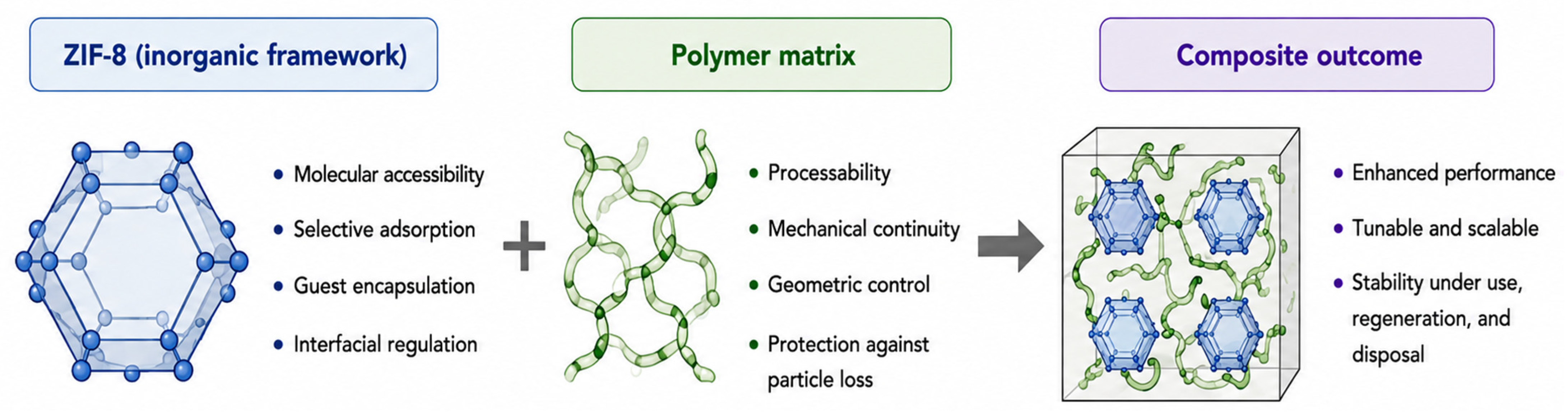
Gas separation currently provides the most mature evidence base, but rapid development is also occurring in water treatment, active packaging, controlled release, electrochemical energy storage, and flexible sensing. Across these fields, ZIF-8 can contribute molecular accessibility, selective adsorption, guest encapsulation, or interfacial regulation, whereas the polymer provides processability, mechanical continuity, geometric control, and protection against particle loss (Figure 7). The practical value of the resulting composite nevertheless depends on whether these contributions can be maintained during fabrication, use, regeneration, and disposal. ML can support this transition by identifying formulations that balance several objectives rather than maximizing a single laboratory response. However, the target variables and acceptable constraints differ substantially among applications. A membrane for carbon capture must retain performance under pressure, mixed-gas exposure, humidity, and prolonged operation; a water-treatment material must withstand fouling and cleaning while minimizing particle or zinc release; active packaging must meet migration, sensory, mechanical, and shelf-life requirements; and polymer electrolytes must combine ionic conductivity with electrochemical and interfacial stability. Application-specific models are therefore more defensible than a universal model trained across incompatible performance metrics. The following subsections examine the principal application domains in which machine-learning-guided design could provide the greatest near-term value.
5.1. Energy-Efficient Gas Separation and Carbon Management
Gas separation is the most extensively investigated application of ZIF-8/polymer nanocomposites and consequently represents the most realistic starting point for machine-learning-guided formulation. ZIF-8 has been incorporated into polysulfone, polyimides, polyurethane, poly(ether-block-amide), and other matrices to improve CO2/CH4, CO2/N2, H2/CO2, and hydrocarbon separations. Nevertheless, the resulting performance depends not only on intrinsic polymer and ZIF-8 properties but also on filler loading, particle size, surface treatment, membrane thickness, processing history, and operating conditions.
Low ZIF-8 loadings in asymmetric polysulfone membranes have been shown to improve CO2/CH4 separation while avoiding the severe aggregation and interfacial disruption commonly associated with excessive filler addition [117]. At higher loadings, the balance between accessible porous pathways and nonselective defects becomes increasingly dependent on dispersion and polymer–filler adhesion. Surface cross-linking of ZIF-8/polyimide membranes was therefore introduced to stabilize the selective structure and reduce undesirable plasticization or interfacial transport [118]. Similar considerations became evident when Pebax-based flat-sheet and hollow-fiber membranes were compared. Although both configurations benefited from ZIF-8 incorporation, differences in selective-layer morphology and fabrication history resulted in distinct operational stability, demonstrating that data obtained from dense laboratory films cannot be transferred directly to industrially relevant hollow-fiber modules [119].
Figure 7.
Complementary roles of ZIF-8 and polymer matrices in determining composite structure and performance.
The effect of matrix chemistry is equally important. Polyurethane/ZIF-8 membranes displayed composition-dependent CO2 and CH4 transport, but the optimum filler concentration reflected simultaneous changes in polymer-chain organization, filler distribution, and membrane integrity [120]. Mixed-linker ZIF particles incorporated into Pebax further showed that framework chemistry can be tuned to alter CO2 capture and transport behavior [121]. More recent interface-engineering approaches have used amine-functionalized or hierarchical ZIF-8 fillers to improve compatibility while introducing preferential CO2-transport environments [122]. These developments indicate that the searchable design space extends beyond polymer identity and filler loading to include linker composition, surface chemistry, hierarchical architecture, and the spatial arrangement of functional groups.
Studies performed closer to practical operating conditions provide an important qualification to results obtained from idealized single-gas tests. Polysulfone/ZIF-8 membranes designed for CO2 removal from CH4 have demonstrated that selectivity gains must be interpreted together with permeance, membrane thickness, and resistance to pressure-induced changes [123]. Beaded ZIF-8@aminoclay fillers created interconnected transport domains in Pebax membranes, but their contribution depended on the preservation of a continuous polymer phase and controlled filler organization [124]. Dual-layer hollow-fiber membranes developed for natural-gas purification further illustrated how support resistance, coating quality, and module-relevant geometry can determine whether improvements observed at the material level translate into useful separation performance [125]. Temperature-dependent studies of polysulfone/ZIF-8 membranes similarly showed that operating conditions can change both absolute transport values and the relative advantage of the composite over the unfilled polymer [126]. Moreover, high-aspect-ratio ZIF-8 nanoplates offer an additional design dimension by altering the orientation and continuity of transport pathways, particularly after thermal annealing [127]. Gulbalkan et al. (2025) screened 1322 ionic liquid (IL)/ZIF-8 composites using molecular simulations and ML for CO2 separation [128]. ML accurately predicted CO2, CH4, and N2 adsorption and identified IL loading and HOMO energy as key descriptors. Most composites outperformed pristine ZIF-8, with CO2/CH4 and CO2/N2 selectivities improving by up to 9.5- and 14.5-fold, respectively.
These studies provide sufficient data to support increasingly sophisticated predictive models, but the optimization target should move beyond permeability and ideal selectivity. A practically useful model should include membrane thickness, mixed-gas composition, feed pressure, temperature, humidity, plasticization, aging, mechanical stability, and fabrication yield. Module productivity and energy consumption may then be calculated from material-level predictions rather than treated as implicit consequences of improved permeability. ML models could first screen polymer–ZIF-8 combinations, followed by process models that predict whether a selected formulation can be fabricated reproducibly as an asymmetric film or hollow fiber.
Multi-objective optimization is particularly relevant because high permeability, high selectivity, thin selective layers, physical durability, and long-term stability are not always achieved simultaneously. A Pareto-based search could identify formulations that provide modest improvements across all relevant attributes rather than an exceptional value for one metric accompanied by poor processability or rapid performance decay. External validation should involve mixed gases, realistic contaminants, extended operation, and repeated pressure cycles. This progression would shift machine-learning-guided membrane design from fitting published performance data toward selecting materials capable of reducing the energy and material requirements of carbon capture, biogas upgrading, hydrogen purification, and natural-gas processing.
5.2. Water Purification, Pollutant Capture, and Resource Recovery
Water-treatment applications present a more heterogeneous data environment because ZIF-8/polymer materials have been evaluated as pressure-driven membranes, adsorptive films, distillation membranes, coated meshes, hydrogel-supported systems, and recoverable beads. The intended targets include dyes, pharmaceutical residues, proteins, oils, salts, metal ions, and iodine-containing species. This diversity expands the potential sustainability benefits but also limits direct comparison among studies.
ZIF-8-modified cellulose acetate nanofiltration membranes demonstrated that filler incorporation could increase water flux and improve fouling recovery without eliminating solute rejection [129]. Interfacial growth of a thin ZIF-8 layer on poly(vinylidene fluoride) provided another strategy for combining porous support structures with selective and antifouling surface properties [130]. However, exposure to aqueous media remains a central concern. Biomolecule-assisted stabilization of ZIF-8 membranes improved hydrostability during dye nanofiltration, illustrating that water-treatment performance cannot be separated from framework retention and membrane integrity [131]. A material that initially displays high rejection but gradually loses its porous phase would offer limited environmental or economic value.
Immobilizing ZIF-8 within recoverable polymer architectures can reduce the handling limitations associated with dispersed powders. Millimeter-scale ZIF-8/polyacrylonitrile beads retained substantial porosity while enabling straightforward recovery after iodine capture [132]. Polymer-supported ZIF-8 membranes have likewise been applied to iodine immobilization, demonstrating the value of combining adsorption with containment in a mechanically manageable form [133]. These systems are relevant not only to contaminant removal but also to resource recovery, because the polymer architecture may facilitate regeneration, concentration, and controlled downstream processing of captured species.
Recent membrane designs increasingly combine separation with adsorption or surface responsiveness. Multilayer ZIF-8 channels incorporated into polymer membranes were used to improve the filtration of ofloxacin, connecting channel architecture with the removal of an emerging pharmaceutical contaminant [134]. ZIF-8-containing hydrogel coatings on PVDF membranes provided durable hydrophilicity, dye adsorption, and oil–water separation within one material [135]. Direct pathways formed through in situ polymer sealing of ZIF-8 composite membranes further showed that post-synthetic control of interparticle regions can improve dye-removal performance without relying solely on increased filler concentration [136].
Hybrid fillers provide additional functionality but enlarge the number of variables that must be optimized. CNT-functionalized ZIF-8 incorporated into poly(vinylidene fluoride-co-hexafluoropropylene) membranes enabled high antibiotic rejection during membrane distillation, although filler loading, pore wetting, thermal conditions, and feed composition jointly determined operational suitability [137]. ZIF-8/activated-carbon/chitosan nanocomposites introduced into nanofiltration membranes improved hydrophilicity, fouling resistance, and separation of salts, dyes, and heavy metals [138]. Electrodeposited Ag/ZIF-8 coatings on stainless-steel meshes combined water-remediation functionality with a rapid fabrication route, but their broader sustainability profile depends on coating durability and the control of silver and zinc release [139].
These examples show why machine-learning models for water treatment should not be trained solely on equilibrium adsorption capacity or initial rejection. Relevant input variables include feed pH, ionic strength, pollutant concentration, competing solutes, natural organic matter, temperature, pressure, membrane thickness, pore size, and cleaning conditions. The outputs should include normalized permeability, rejection under multicomponent conditions, fouling rate, flux recovery, adsorption kinetics, regeneration efficiency, structural retention, and metal or particle release. Longitudinal data are especially important because performance after repeated cycles may be more informative than the maximum value obtained from a fresh specimen.
Data-driven optimization can also connect material design with process configuration. For example, the preferred ZIF-8 loading for a pressure-driven membrane may differ from that for membrane distillation or a recoverable adsorptive bead. Models should therefore encode the treatment mode explicitly rather than merge all water-remediation systems into a single dataset. Multi-fidelity approaches could combine standardized laboratory tests with smaller numbers of pilot-scale observations. Ultimately, the environmental benefit should be assessed relative to an application-specific functional unit, such as the volume of water treated to a defined quality over the material lifetime. This would prevent high per-gram adsorption values from masking poor recovery, rapid degradation, or energy-intensive regeneration.
5.3. Active Packaging and Controlled Functional Delivery
Active packaging is an attractive application for ZIF-8/polymer nanocomposites because ZIF-8 can function simultaneously as a reinforcing filler and a carrier for antimicrobial, antioxidant, or photosensitive compounds. The polymer matrix converts the particles into a continuous film and regulates their interaction with food and the surrounding environment. Nevertheless, packaging formulations must satisfy a broader set of requirements than antimicrobial activity alone, including mechanical strength, flexibility, water and oxygen barrier performance, transparency, controlled release, migration safety, sensory compatibility, manufacturability, and disposal.
Polycaprolactone films containing curcumin-loaded ZIF-8 demonstrated environmentally responsive release and antibacterial performance, showing that storage conditions can be used as triggers rather than treated only as sources of material degradation [140]. However, migration studies on poly(L-lactic acid)/ZIF-8 composites indicated that promising mechanical or functional behavior does not necessarily establish suitability for direct food contact [141]. This contrast is important, with the effectiveness of ZIF-8 as a functional carrier must be evaluated together with the amount and chemical form of species migrating from the film.
Multicomponent biopolymer films have been used to improve the balance among functional and structural properties. Curcumin-loaded ZIF-8 incorporated into chitosan/zein films provided controlled release, enhanced gas-barrier behavior, and antimicrobial activity, while extending the preservation of litchi [142]. The benefits arose from the integrated formulation rather than from ZIF-8 alone, because zein content, chitosan chemistry, filler concentration, and interfacial quality collectively determined film strength and release behavior. Light-responsive PCL-based films containing photosensitizer-loaded ZIF-8 similarly combined UV shielding with antibacterial activity, but their performance depended on light exposure and the stability of the encapsulated active compound [143].
More recent systems have expanded the range of natural active agents and polymer matrices. Thymol-loaded ZIF-8 incorporated into κ-carrageenan/zein films improved functional properties and supported blueberry preservation [144]. Paeonol-loaded ZIF-8 combined with silver-containing heterojunctions in chitosan/kudzu films produced a multifunctional packaging platform for raspberry preservation, although the addition of multiple nanoscale components also increased the importance of migration and end-of-life assessment [145]. Ordered macroporous ZIF-8 loaded with clove oil was incorporated into starch/gellan-gum films to provide pH-responsive release, antioxidant and antibacterial activity, and improved blueberry storage [146]. ZIF-8-reinforced bacterial-cellulose films derived from rice-bran resources further illustrate how framework fillers can be integrated with waste-derived polymeric substrates [147]. Meanwhile, Nguyen et al. (2026) determined that OEO-Ag-ZIF-8-HA showed the strongest antimicrobial performance against Listeria monocytogenes, achieving >5-log reductions on latex and 3.39-log CFU/g reduction on arugula within 15 min, outperforming 200 ppm chlorine [148]. The nanocomposites maintained >85% cell viability and preserved arugula quality, demonstrating strong potential as chlorine-free sanitizers for food-contact surfaces and fresh produce.
The number of interacting variables in these systems makes active packaging well suited to ML. A useful dataset should link ZIF-8 particle characteristics, active-compound loading, encapsulation efficiency, polymer-blend ratio, plasticizer content, cross-linking, film thickness, and drying conditions with mechanical, barrier, release, optical, migration, and preservation outcomes. Storage temperature, relative humidity, food pH, microbial load, illumination, and headspace composition should be treated as inputs because the same film may perform differently across food products and distribution conditions.
Release modeling is one area in which hybrid physical and data-driven methods could be particularly effective. Conventional kinetic equations may describe a specific active compound under a restricted set of conditions, whereas ML can incorporate formulation, environmental, and structural descriptors across multiple systems. The objective should not be the fastest or greatest release; it should be a release profile that maintains an effective concentration without causing unacceptable migration, sensory changes, or premature depletion. Similar multi-objective relationships apply to barrier and mechanical properties, because a formulation that minimizes water-vapor transmission may become too brittle or restrict the gas exchange required by fresh produce.
Future validation should prioritize real foods rather than relying exclusively on agar diffusion, free-radical scavenging, or food-simulant tests. Shelf-life extension, microbial safety, nutrient retention, sensory quality, migration, and packaging integrity should be measured under realistic cold-chain or ambient storage conditions. Sustainability claims should additionally consider the source of the polymer, solvent, and energy requirements, food-waste reduction, recyclability or biodegradation, and the fate of ZIF-8 and its guest compounds after disposal. More broadly, recent assessments of nano-enabled food-safety technologies have emphasized that practical translation of smart packaging and food-contact nanomaterials requires simultaneous consideration of analytical or functional performance, material safety, migration behavior, scalability, environmental fate, regulatory acceptance, and compatibility with real food-system conditions [149]. ML can integrate these responses into a decision framework, but regulatory and toxicological limits must be imposed as firm constraints rather than weighted objectives that can be compensated for by improved functional performance.
5.4. Electrochemical Energy Storage and Flexible Functional Systems
The incorporation of ZIF-8 into polymer electrolytes has created another emerging application space in which multiple properties must be optimized simultaneously. ZIF-8-based quasi-solid electrolytes have been investigated for lithium batteries because the porous phase can alter liquid-electrolyte retention, ion transport, and dimensional stability [150]. In situ growth of ZIF-8 within porous epoxy matrices provided a route for producing composite electrolytes with a more integrated filler distribution [151]. Anion-anchoring strategies in ZIF-8-containing polymer electrolytes further demonstrated that surface chemistry can influence electrochemical behavior beyond the effect of filler concentration alone [152].
Hybrid inorganic–framework fillers have broadened this design space. ZIF-8/SiO2 incorporated into PEO-based solid electrolytes improved the combination of ionic transport and compatibility with lithium-metal electrodes [153]. ZIF-8-functionalized polymer electrolytes have also been evaluated under elevated temperatures, where conductivity must be maintained without compromising dimensional or electrochemical stability [154]. Extending the concept beyond lithium, confinement of polymer electrolytes within ZIF-8-related porous domains has supported the development of solid-state sodium-metal batteries [155], while ZIF-8-modified gel polymer electrolytes have been investigated for suppressing unstable deposition in zinc-based batteries [156].
For these systems, conductivity alone is an insufficient optimization target. Models should jointly consider ionic conductivity, transference number, electrochemical stability window, modulus, thermal behavior, electrolyte uptake, interfacial resistance, critical current density, cycling retention, and dendrite-related failure. Temperature, current density, electrode chemistry, electrolyte thickness, and cell configuration must be encoded because performance values obtained under different electrochemical conditions are not directly interchangeable. Time-dependent and survival-modeling approaches may be more appropriate for cycle life than conventional regression on a final capacity value.
Flexible sensing provides a related example of multifunctional design. ZIF-8-containing nanocomposite hydrogels have been developed as stretchable strain sensors capable of detecting human motion and physiological activity [157]. Their practical performance depends on sensitivity, working range, hysteresis, response time, water retention, fatigue resistance, adhesion, and mechanical comfort. ML could be used both to optimize the material formulation and to interpret the complex time-series signals generated by the finished sensor. This dual role distinguishes sensing from many other applications: the same data-driven framework may assist material discovery at the development stage and pattern recognition during device operation. Table 3 summarizes the principal material variables, performance targets, and data-driven opportunities across ZIF-8-based electrochemical energy-storage and flexible sensing systems.
Table 3.
Data-driven design considerations for ZIF-8-based electrochemical energy-storage and flexible sensing systems.
The current literature on ZIF-8/polymer electrolytes and sensors remains smaller and less standardized than that for gas-separation membranes. This limitation favors transfer learning and multi-fidelity modeling, in which information from related polymers, porous fillers, electrochemical systems, or hydrogel sensors is adapted to the ZIF-8 domain. Such transfer should be accompanied by uncertainty estimation because relationships learned from another MOF or filler may not remain valid after changes in pore chemistry, particle stability, or interfacial behavior. Prospective validation under device-relevant conditions is therefore essential before model-guided formulations can be considered credible.
5.5. From Application-Specific Prediction to Sustainability-Guided Inverse Design
The application areas discussed above share a central challenge: the highest-performing material in a simplified test is not necessarily the most sustainable or deployable system. The relevant objective is to identify a ZIF-8/polymer formulation that satisfies a defined application profile while remaining manufacturable, stable, safe, and environmentally preferable to the available alternative. ML can support this objective only when the problem is formulated around the complete material–process–use system.
The first requirement is to define the functional unit and benchmark before model development. Gas-separation materials may be evaluated per amount of purified gas, water-treatment systems per volume of water meeting a quality threshold, packaging per quantity of food waste avoided, and battery electrolytes per energy delivered over the device lifetime. These functional definitions determine which performance and sustainability variables should be predicted. Without them, environmental indicators remain disconnected from application value.
A second requirement is hierarchical data integration. Particle-synthesis models should predict measurable ZIF-8 attributes; composite-processing models should relate those attributes to dispersion, interface, and architecture; and application models should connect the resulting structure with performance under specified conditions. Linking these stages preserves experimental actionability. In contrast, a direct model that predicts shelf life or membrane selectivity from precursor names may achieve statistical accuracy within a narrow dataset while providing little guidance for controlling the intermediate material state.
Multi-objective inverse design can then search across polymer selection, ZIF-8 characteristics, surface modification, filler loading, processing route, and operating conditions. Sustainability indicators—including solvent demand, yield, energy use, durability, regeneration, migration, toxicity, recyclability, and end-of-life behavior—should be incorporated alongside functional properties. Hard feasibility limits should exclude chemically unstable, unprocessable, or unsafe candidates before optimization. Among the remaining formulations, Pareto analysis can reveal whether additional functional improvement justifies increased material or environmental cost.
Model-selected candidates must progress through prospective laboratory validation, realistic application testing, and pilot-scale production. The importance of such application-level validation is illustrated by recent work on metal-doped ZIF-8 for fresh-produce sanitation, where Cu-ZIF-8 achieved rapid antimicrobial performance exceeding conventional chlorine treatment, while prolonged storage revealed a concurrent decline in lettuce crispness [158]. This example highlights why optimization should extend beyond a single functional endpoint and simultaneously account for efficacy, product quality, safety, and application-specific stability. Disagreement between prediction and experiment should be retained as new training information rather than omitted as an unsuccessful outcome. Life-cycle and techno-economic assessments should likewise be updated as synthesis yield, solvent recovery, fabrication rate, service life, and regeneration become better defined. This closed-loop approach would allow ML to evolve from a retrospective tool for correlating published results into a decision system that guides which ZIF-8/polymer nanocomposites should be produced, tested, scaled, and ultimately deployed. To operationalize sustainability within ML-guided materials design, Figure 8 proposes a sustainability-constrained optimization workflow in which environmental and feasibility criteria are incorporated either as hard exclusion limits or as explicit objectives alongside functional performance.
Figure 8.
Proposed framework for integrating sustainability constraints into ML-guided optimization of ZIF-8/polymer nanocomposites.
Within this framework, sustainability variables should enter the optimization process at two distinct levels. Non-negotiable requirements, including unacceptable toxicity, migration, chemical instability, or processing infeasibility, should be treated as hard constraints that exclude candidates regardless of predicted functional performance. In contrast, continuous indicators such as solvent demand, energy intensity, material yield, greenhouse-gas burden, durability, regeneration efficiency, and end-of-life impacts can be incorporated as additional optimization objectives. Pareto-based approaches can then identify formulations that balance functional performance with environmental and economic burden without collapsing these competing outcomes into a single arbitrary score. As experimental and scale-up data become available, both predictive and sustainability models should be iteratively updated.
The strongest opportunity for the field therefore lies not in applying one algorithm across every application, but in creating interoperable, application-specific models connected through a shared representation of ZIF-8 synthesis, polymer chemistry, interface, and processing history. Such a framework would preserve the distinctive constraints of each use while allowing knowledge to be transferred across related material systems. By integrating predictive accuracy with uncertainty, experimental feasibility, and quantified sustainability, machine-learning-guided design can help distinguish genuinely advantageous ZIF-8/polymer nanocomposites from formulations that are innovative only under narrowly selected laboratory conditions. To advance machine-learning-guided ZIF-8/polymer nanocomposites beyond fragmented proof-of-concept studies, a staged implementation roadmap is needed. The priority is to establish interoperable ML-ready datasets that capture ZIF-8 synthesis, particle characteristics, polymer properties, processing conditions, intermediate material states, testing conditions, uncertainty, and unsuccessful outcomes using standardized reporting practices. The second stage should emphasize reliable model development rather than increasing algorithmic complexity. Physically meaningful descriptors, transparent baseline models, uncertainty quantification, grouped validation, and clearly defined applicability domains are essential for improving interpretability and transferability across material systems. The third stage should connect prediction with prospective experiments. Model-selected formulations should be synthesized and independently validated, while both successful and failed outcomes are returned to the dataset to support active learning and iterative model refinement. Finally, promising materials should be evaluated under realistic operating and scale-up conditions, incorporating durability, safety, energy and solvent demand, recyclability, life-cycle impacts, and techno-economic feasibility. Together, these stages establish an integrated material–data ecosystem in which machine learning, mechanistic understanding, and experimental evidence continuously reinforce one another.
6. Conclusions and Future Perspectives
ZIF-8/polymer nanocomposites provide a versatile platform that combines the molecular selectivity, porosity, and functional capacity of ZIF-8 with the processability, flexibility, and structural stability of polymer matrices. These materials have shown considerable potential in gas separation, water treatment, adsorption, catalysis, sensing, antimicrobial packaging, controlled release, and environmental remediation. However, their performance is governed by strongly interconnected variables, including ZIF-8 particle size, morphology, defect structure, surface chemistry, filler loading, polymer identity, interfacial compatibility, dispersion quality, fabrication conditions, and operating environment. This multidimensional design space limits the effectiveness of conventional trial-and-error optimization and makes it difficult to transfer findings across different material systems.
Machine learning offers a promising means of converting these complex variables into quantitative structure–processing–property relationships. Existing studies demonstrate its capacity to support ZIF-8 synthesis control, screen MOF–polymer combinations, predict separation performance, identify influential descriptors, and optimize processing conditions. Nevertheless, machine-learning applications to ZIF-8/polymer nanocomposites remain at an early stage, particularly outside gas-separation membranes. Most reported models rely on small, heterogeneous, or literature-derived datasets, while critical factors such as interfacial quality, particle aggregation, framework degradation, defect concentration, and processing-induced morphology are rarely represented consistently. High predictive performance within a restricted dataset should therefore not be interpreted as evidence of broad model generalizability.
Future progress will depend more strongly on data quality than on increasing algorithmic complexity. Standardized reporting of ZIF-8 synthesis, particle characteristics, polymer properties, composite fabrication, testing conditions, negative results, and experimental uncertainty is essential. Nominal filler loading alone cannot adequately describe a ZIF-8/polymer nanocomposite. Future datasets should include measured filler content, accessible porosity, particle-size distribution, dispersion state, interfacial structure, and framework integrity after processing. Sharing raw characterization data and unsuccessful formulations would further improve model reliability and reduce publication bias.
Machine-learning frameworks should also move beyond the prediction of isolated properties. Practical ZIF-8/polymer nanocomposites must frequently balance competing objectives, such as permeability and selectivity, antimicrobial activity and migration safety, adsorption capacity and regeneration demand, or mechanical reinforcement and flexibility. Multi-objective models should therefore integrate functional performance with solvent use, energy consumption, material efficiency, durability, toxicity, recyclability, and end-of-life impacts. Such integration is necessary to ensure that sustainability is evaluated as a measurable design criterion rather than assumed from the intended application.
Among these challenges, three priorities are particularly urgent. First, the field needs interoperable and standardized materials datasets that preserve the full experimental history from ZIF-8 synthesis and particle characteristics to polymer chemistry, interfacial structure, processing conditions, testing environment, and final performance. Second, machine-learning models should be increasingly coupled with mechanistic and physical understanding so that predictions reflect experimentally meaningful relationships rather than statistical correlations arising from fragmented literature data. Third, prospective experimental validation and closed-loop learning should become a central component of model development, whereby predicted formulations are synthesized, characterized, tested, and the resulting successful and unsuccessful outcomes are returned to the dataset. These priorities are more consequential than simply increasing model complexity.
Within such an integrated framework, active learning, Bayesian optimization, physics-informed modeling, transfer learning, and multimodal representations can become particularly valuable because they can guide informative experiments and connect information across different material scales. Functional performance should simultaneously be evaluated against sustainability and feasibility constraints, including solvent and energy demand, material efficiency, durability, toxicity, recyclability, and end-of-life behavior.
Ultimately, the greatest advances in machine-learning-guided ZIF-8/polymer nanocomposites will not arise from applying increasingly complex algorithms to fragmented datasets. They will emerge from an integrated materials-data ecosystem in which standardized data infrastructure, mechanistic understanding, machine-learning prediction, and prospective experimental evidence continuously reinforce one another. Establishing this iterative ecosystem is therefore the most important step toward transforming data-driven ZIF-8/polymer research from retrospective property prediction into reliable, experimentally actionable, and sustainability-oriented materials design.
Author Contributions
Conceptualization: H.L.N. and T.B.N.N.; data curation: H.L.N.; formal analysis: H.L.N.; investigation: H.L.N.; methodology: H.L.N. and T.B.N.N.; project administration: H.L.N.; resources: H.L.N.; software: T.B.N.N.; supervision: H.L.N.; validation: H.L.N. and T.B.N.N.; visualization: H.L.N.; writing—original draft: H.L.N. and T.B.N.N.; writing—review and editing: H.L.N. and T.B.N.N. All authors have read and agreed to the published version of the manuscript.
Funding
This research received no external funding.
Data Availability Statement
No new data were created or analyzed in this study. Data sharing is not applicable to this article.
Acknowledgments
During the preparation of this manuscript, the authors used Figure Labs Plus for the purpose of modifying the figures. The authors have reviewed and edited the output and take full responsibility for the content of this publication.
Conflicts of Interest
The authors declare no conflict of interest.
References
- Fu, S.; Sun, Z.; Huang, P.; Li, Y.; Hu, N. Some basic aspects of polymer nanocomposites: A critical review. Nano Mater. Sci. 2019, 1, 2–30. [Google Scholar] [CrossRef] [Scilit]
- Nguyen, H.L. Metal-Organic Frameworks in Food Biotechnology: Opportunities, Challenges, and Future Perspectives for Probiotic Delivery, Precision Fermentation, and Circular Food Systems. Nanomaterials 2026, 16, 946. [Google Scholar] [CrossRef] [Scilit] [PubMed]
- Park, K.S.; Ni, Z.; Côté, A.P.; Choi, J.Y.; Huang, R.; Uribe-Romo, F.J.; Chae, H.K.; O’Keeffe, M.; Yaghi, O.M. Exceptional chemical and thermal stability of zeolitic imidazolate frameworks. Proc. Natl. Acad. Sci. USA 2006, 103, 10186–10191. [Google Scholar] [CrossRef] [Scilit] [PubMed]
- Fairen-Jimenez, D.; Moggach, S.A.M.; Wharmby, M.T.; Wright, P.A.; Parsons, S.; Düren, T. Opening the gate: Framework flexibility in ZIF-8 explored by experiments and simulations. J. Am. Chem. Soc. 2011, 133, 8900–8902. [Google Scholar] [CrossRef] [Scilit] [PubMed]
- Ordoñez, M.J.C.; Balkus, K.J.; Ferraris, J.P.; Musselman, I.H. Molecular sieving realized with ZIF-8/Matrimid® mixed-matrix membranes. J. Membr. Sci. 2010, 361, 28–37. [Google Scholar] [CrossRef] [Scilit]
- Lang, L.; Banihashemi, F.; James, J.B.; Miao, J.; Lin, J.Y.S. Enhancing Selectivity of ZIF-8 Membranes by Short-Duration Postsynthetic Ligand-Exchange Modification. J. Membr. Sci. 2021, 619, 118743. [Google Scholar] [CrossRef] [Scilit]
- Hara, Y.; Castell-Perez, M.E.; Moreira, R.G. Properties of poly(vinyl alcohol) films with embedded zeolitic imidazolate framework (ZIF-8) nanoparticles for food packaging applications. J. Food Sci. 2023, 88, 2078–2089. [Google Scholar] [CrossRef] [Scilit] [PubMed]
- Nguyen, H.L.; Nguyen, T.B.N. Metal-doped and surface-functionalized ZIF-8 nanoplatforms for antimicrobial applications in food and environmental systems. Sustainability 2026, 18, 3621. [Google Scholar] [CrossRef] [Scilit]
- Ploetz, E.; Engelke, H.; Lächelt, U.; Wuttke, S. The chemistry of reticular framework nanoparticles: MOF, ZIF, and COF materials. Adv. Funct. Mater. 2020, 30, 1909062. [Google Scholar] [CrossRef] [Scilit]
- Allegretto, J.A.; Onna, D.; Bilmes, S.A.; Azzaroni, O.; Rafti, M. Unified roadmap for ZIF-8 nucleation and growth: Machine learning analysis of synthetic variables and their impact on particle size and morphology. Chem. Mater. 2024, 36, 5814–5825. [Google Scholar] [CrossRef] [Scilit] [PubMed]
- Ntouros, V.; Kousis, I.; Papadaki, D.; Pisello, A.L.; Assimakopoulos, M.N. Life Cycle Assessment on Different Synthetic Routes of ZIF-8 Nanomaterials. Energies 2021, 14, 4998. [Google Scholar] [CrossRef] [Scilit]
- Xia, W.; Lau, S.K.; Yong, W.F. Comparative life cycle assessment on zeolitic imidazolate framework-8 (ZIF-8) production for CO2 capture. J. Clean. Prod. 2022, 370, 133354. [Google Scholar] [CrossRef] [Scilit]
- Chernova, E.; Dutta, S.; Lizundia, E.; Wuttke, S. Environmental impact assessment of green protocols for the production of zeolitic imidazolate frameworks. ACS Sustain. Chem. Eng. 2025, 13, 18577–18589. [Google Scholar] [CrossRef] [Scilit]
- Butler, K.T.; Davies, D.W.; Cartwright, H.; Isayev, O.; Walsh, A. Machine learning for molecular and materials science. Nature 2018, 559, 547–555. [Google Scholar] [CrossRef] [Scilit] [PubMed]
- Jablonka, K.M.; Ongari, D.; Moosavi, S.M.; Smit, B. Big-data science in porous materials: Materials genomics and machine learning. Chem. Rev. 2020, 120, 8066–8129. [Google Scholar] [CrossRef] [Scilit] [PubMed]
- Moosavi, S.M.; Chidambaram, A.; Talirz, L.; Haranczyk, M.; Stylianou, K.C.; Smit, B. Capturing chemical intuition in synthesis of metal-organic frameworks. Nat. Commun. 2019, 10, 539. [Google Scholar] [CrossRef] [Scilit] [PubMed]
- Moosavi, S.M.; Nandy, A.; Jablonka, K.M.; Ongari, D.; Janet, J.P.; Boyd, P.G.; Lee, Y.; Smit, B.; Kulik, H.J. Understanding the diversity of the metal-organic framework ecosystem. Nat. Commun. 2020, 11, 4068. [Google Scholar] [CrossRef] [Scilit] [PubMed]
- Champa-Bujaico, E.; García-Díaz, P.; Díez-Pascual, A.M. Machine learning for property prediction and optimization of polymeric nanocomposites: A state-of-the-art. Int. J. Mol. Sci. 2022, 23, 10712. [Google Scholar] [CrossRef] [Scilit] [PubMed]
- Cassola, S.; Duhovic, M.; Schmidt, T.; May, D. Machine learning for polymer composites process simulation—A review. Compos. Part B Eng. 2022, 246, 110208. [Google Scholar] [CrossRef] [Scilit]
- Guan, J.; Huang, T.; Liu, W.; Feng, F.; Japip, S.; Li, J.; Wu, J.; Wang, X.; Zhang, S. Design and prediction of metal-organic framework-based mixed matrix membranes for CO2 capture via machine learning. Cell Rep. Phys. Sci. 2022, 3, 100864. [Google Scholar] [CrossRef] [Scilit]
- Wan, H.; Fang, Y.; Hu, M.; Guo, S.; Sui, Z.; Huang, X.; Liu, Z.; Zhao, Y.; Liang, H.; Wu, Y.; et al. Interpretable machine-learning and big data mining to predict the CO2 separation in polymer-MOF mixed matrix membranes. Adv. Sci. 2025, 12, 2405905. [Google Scholar] [CrossRef] [Scilit] [PubMed]
- Wu, J.; Guo, Y.; Liu, G.; Liu, G.; Jin, W. Machine learning accelerates high throughput design and screening of MOF mixed-matrix membranes towards He separation. J. Membr. Sci. 2025, 717, 123612. [Google Scholar] [CrossRef] [Scilit]
- Yüngül, F.N.; Keskin, S. Discovering metal-organic framework/polymer mixed-matrix membranes via machine learning for CO2 separation. Commun. Mater. 2026, 7, 230. [Google Scholar] [CrossRef] [Scilit] [PubMed]
- Dedecker, K.; Drobek, M.; Bechelany, M.; Julbe, A. Rational design of high-quality ZIF-8 membranes: Machine learning-guided optimization of ALD ZnO conversion. ACS Appl. Mater. Interfaces 2026, 18, 12199–12211. [Google Scholar] [CrossRef] [Scilit] [PubMed]
- Gómez-Gualdrón, D.A.; de Vilas, T.G.; Ardila, K.; Fajardo-Rojas, F.; Pak, A.J. Machine learning to design metal–organic frameworks: Progress and challenges from a data efficiency perspective. Mater. Horiz. 2026, 13, 1694–1715. [Google Scholar] [CrossRef] [Scilit] [PubMed]
- Nguyen, H.L.; Nguyen, H.M.X.; Nguyen, T.B.N. Data-Driven Engineering of Antimicrobial Nanomaterials for Food Safety and Biomedical Systems. Nanomaterials 2026, 16, 764. [Google Scholar] [CrossRef] [Scilit] [PubMed]
- Keskin, S. Data-driven design and discovery of metal–organic framework/polymer mixed matrix membranes. Macromol. Mater. Eng. 2026, 311, e202500364. [Google Scholar] [CrossRef] [Scilit]
- Bergaoui, M.; Khalfaoui, M.; Awadallah-F, A.; Al-Muhtaseb, S. A review of the features and applications of ZIF-8 and its derivatives for separating CO2 and isomers of C3- and C4-hydrocarbons. J. Nat. Gas Sci. Eng. 2021, 96, 104289. [Google Scholar] [CrossRef] [Scilit]
- Beh, J.J.; Lim, J.K.; Ng, E.P.; Ooi, B.S. Synthesis and size control of zeolitic imidazolate framework-8 (ZIF-8): From the perspective of reaction kinetics and thermodynamics of nucleation. Mater. Chem. Phys. 2018, 216, 393–401. [Google Scholar] [CrossRef] [Scilit]
- Tanaka, S.; Kida, K.; Okita, M.; Ito, Y.; Miyake, Y. Size-controlled synthesis of zeolitic imidazolate framework-8 (ZIF-8) crystals in an aqueous system at room temperature. Chem. Lett. 2012, 41, 1337–1339. [Google Scholar] [CrossRef] [Scilit]
- Kolmykov, O.; Commenge, J.-M.; Alem, H.; Girot, E.; Mozet, K.; Medjahdi, G.; Schneider, R. Microfluidic reactors for the size-controlled synthesis of ZIF-8 crystals in aqueous phase. Mater. Des. 2017, 122, 31–41. [Google Scholar] [CrossRef] [Scilit]
- Nordin, N.A.H.M.; Ismail, A.F.; Mustafa, A.; Murali, R.S.; Matsuura, T. The impact of ZIF-8 particle size and heat treatment on CO2/CH4 separation using asymmetric mixed matrix membrane. RSC Adv. 2014, 4, 52530–52541. [Google Scholar] [CrossRef] [Scilit]
- Benzaqui, M.; Semino, R.; Menguy, N.; Carn, F.; Kundu, T.; Guigner, J.-M.; McKeown, N.B.; Msayib, K.J.; Carta, M.; Malpass-Evans, R.; et al. Toward an understanding of the microstructure and interfacial properties of PIMs/ZIF-8 mixed matrix membranes. ACS Appl. Mater. Interfaces 2016, 8, 27311–27321. [Google Scholar] [CrossRef] [Scilit] [PubMed]
- Jiang, X.; He, S.; Han, G.; Long, J.; Li, S.; Lau, C.H.; Zhang, S.; Shao, L. Aqueous one-step modulation for synthesizing monodispersed ZIF-8 nanocrystals for mixed-matrix membrane. ACS Appl. Mater. Interfaces 2021, 13, 11296–11305. [Google Scholar] [CrossRef] [Scilit] [PubMed]
- Lee, S.; Lei, Y.; Wang, D.; Li, C.; Cheng, J.; Wang, J.; Meng, W.; Liu, M. The Study of Zeolitic Imidazolate Framework (ZIF-8) Doped Polyvinyl Alcohol/Starch/Methyl Cellulose Blend Film. Polymers 2019, 11, 1986. [Google Scholar] [CrossRef] [Scilit] [PubMed]
- Nabipour, H.; Nie, S.; Wang, X.; Song, L.; Hu, Y. Zeolitic imidazolate framework-8/polyvinyl alcohol hybrid aerogels with excellent flame retardancy. Compos. Part A Appl. Sci. Manuf. 2020, 129, 105720. [Google Scholar] [CrossRef] [Scilit]
- Liu, L.; Yang, W.; Gu, D.; Zhao, X.; Pan, Q. In situ preparation of chitosan/ZIF-8 composite beads for highly efficient removal of U(VI). Front. Chem. 2019, 7, 607. [Google Scholar] [CrossRef] [Scilit] [PubMed]
- Wang, Y.; Dai, X.; Zhan, Y.; Ding, X.; Wang, M.; Wang, X. In situ growth of ZIF-8 nanoparticles on chitosan to form the hybrid nanocomposites for high-efficiency removal of Congo Red. Int. J. Biol. Macromol. 2019, 137, 77–86. [Google Scholar] [CrossRef] [Scilit] [PubMed]
- Ge, W.; De Silva, R.; Fan, Y.; Sisson, S.A.; Stenzel, M.H. Machine learning in polymer research. Adv. Mater. 2025, 37, 2413695. [Google Scholar] [CrossRef] [Scilit] [PubMed]
- Dosta, M.; Schneider, M.; Geis, C.W.; Schulte, L.; Kriegl, J.M.; Gomez, A.M.; Domenech, E.D.; Stephan, J.; Maus, M.; Emenike, V.N. Machine learning real-time control of continuous granulation process. Int. J. Pharm. 2025, 685, 126244. [Google Scholar] [CrossRef] [Scilit] [PubMed]
- Pan, Y.; Liu, Y.; Zeng, G.; Zhao, L.; Lai, Z. Rapid synthesis of zeolitic imidazolate framework-8 (ZIF-8) nanocrystals in an aqueous system. Chem. Commun. 2011, 47, 2071–2073. [Google Scholar] [CrossRef] [Scilit] [PubMed]
- Tu, M.; Wiktor, C.; Rösler, C.; Fischer, R.A. Rapid room temperature syntheses of zeolitic-imidazolate framework (ZIF) nanocrystals. Chem. Commun. 2014, 50, 13258–13260. [Google Scholar] [CrossRef] [Scilit] [PubMed]
- Jongert, T.K.; Slowinski, I.A.; Dao, B.; Cortez, V.H.; Gredig, T.; Plascencia, N.D.; Tian, F. Zeta potential and size analysis of zeolitic imidazolate framework-8 nanocrystals prepared by surfactant-assisted synthesis. Langmuir 2024, 40, 6138–6148. [Google Scholar] [CrossRef] [Scilit] [PubMed]
- Kwon, O.; Kim, M.; Choi, E.; Bae, J.H.; Yoo, S.; Won, J.C.; Kim, Y.H.; Shin, J.H.; Lee, J.S.; Kim, D.W. High-aspect ratio zeolitic imidazolate framework (ZIF) nanoplates for hydrocarbon separation membranes. Sci. Adv. 2022, 8, eabl6841. [Google Scholar] [CrossRef] [Scilit] [PubMed]
- Tan, J.D.; Ramalingam, B.; Wong, S.L.; Cheng, J.J.W.; Lim, Y.-F.; Chellappan, V.; Khan, S.A.; Kumar, J.; Hippalgaonkar, K. Transfer learning of full molecular weight distributions via high-throughput computer-controlled polymerization. J. Chem. Inf. Model. 2023, 63, 4560–4573. [Google Scholar] [CrossRef] [Scilit] [PubMed]
- Mei, X.; Yang, S.; Lu, P.; Zhang, Y.; Zhang, J. Improving the selectivity of ZIF-8/polysulfone mixed-matrix membranes by polydopamine modification for H2/CO2 separation. Front. Chem. 2020, 8, 528. [Google Scholar] [CrossRef] [Scilit] [PubMed]
- Guan, X.; Wu, Y.; Zheng, Y.; Zhang, B. Improved CO2/N2 separation performance of Pebax-1074 blend membranes containing poly(ethylene glycol). Sci. Prog. 2023, 106, 00368504231156295. [Google Scholar] [CrossRef] [Scilit] [PubMed]
- Hao, W.; Zhong, Y.; Pan, X.; Ke, C.; Cui, P.; Lu, H.; Jiang, Z.; Yang, W. Poly(lactic acid) electrospun membranes for sustainable separation processes. Ind. Eng. Chem. Res. 2024, 63, 16029–16050. [Google Scholar] [CrossRef] [Scilit]
- Asadi, V.; Marandi, A.; Kardanpour, R.; Tangestaninejad, S.; Moghadam, M.; Mirkhani, V.; Mohammadpoor-Baltork, I.; Mirzaei, R. Carbonic anhydrase-embedded ZIF-8 electrospun PVA fibers as an excellent biocatalyst candidate. ACS Omega 2023, 8, 17809–17818. [Google Scholar] [CrossRef] [Scilit] [PubMed]
- Li, Y.; Wee, L.H.; Volodin, A.; Martens, J.A.; Vankelecom, I.F.J. Polymer supported ZIF-8 membranes prepared via an interfacial synthesis method. Chem. Commun. 2015, 51, 918–920. [Google Scholar] [CrossRef] [Scilit] [PubMed]
- Abdul Hamid, M.R.; Park, S.; Kim, J.S.; Lee, Y.M.; Jeong, H.-K. Synthesis of ultrathin zeolitic imidazolate framework ZIF-8 membranes on polymer hollow fibers using a polymer modification strategy for propylene/propane separation. Ind. Eng. Chem. Res. 2019, 58, 14947–14953. [Google Scholar] [CrossRef] [Scilit]
- Choi, H.-S.; Lee, S.-J.; Bae, Y.-S.; Choung, S.-J.; Im, S.H.; Kim, J. Scalable continuous solvo-jet process for ZIF-8 nanoparticles. Chem. Eng. J. 2015, 266, 56–63. [Google Scholar] [CrossRef] [Scilit]
- Brekalo, I.; Yuan, W.; Mottillo, C.; Lu, Y.; Zhang, Y.; Casaban, J.; Holman, K.T.; James, S.L.; Duarte, F.; Williams, P.A.; et al. Manometric real-time studies of the mechanochemical synthesis of zeolitic imidazolate frameworks. Chem. Sci. 2020, 11, 2141–2147. [Google Scholar] [CrossRef] [Scilit] [PubMed]
- Itatani, M.; Német, N.; Valletti, N.; Schuszter, G.; Prete, P.; Lo Nostro, P.; Cucciniello, R.; Rossi, F.; Lagzi, I. Synthesis of zeolitic imidazolate framework-8 using glycerol carbonate. ACS Sustain. Chem. Eng. 2023, 11, 13043–13049. [Google Scholar] [CrossRef] [Scilit] [PubMed]
- Zhang, H.; Zhao, M.; Lin, Y.S. Stability of ZIF-8 in water under ambient conditions. Microporous Mesoporous Mater. 2019, 279, 201–210. [Google Scholar] [CrossRef] [Scilit]
- Möslein, A.F.; Donà, L.; Civalleri, B.; Tan, J.-C. Defect engineering in metal–organic framework nanocrystals: Implications for mechanical properties and performance. ACS Appl. Nano Mater. 2022, 5, 6398–6409. [Google Scholar] [CrossRef] [Scilit] [PubMed]
- Mahdi, E.M.; Tan, J.-C. Mixed-matrix membranes of zeolitic imidazolate framework (ZIF-8)/Matrimid nanocomposite: Thermo-mechanical stability and viscoelasticity underpinning membrane separation performance. J. Membr. Sci. 2016, 498, 276–290. [Google Scholar] [CrossRef] [Scilit]
- Pérez-Miana, M.; Luque-Alled, J.M.; Yahia, M.; Mayoral, Á.; Coronas, J. ZIF-8 modified with 2-undecylimidazolate as filler for mixed matrix membranes for CO2 separation. J. Mater. Chem. A 2024, 12, 10316–10328. [Google Scholar] [CrossRef] [Scilit]
- Ali, M.; Aslam, M.; Khan, A.; Gilani, M.A.; Khan, A.L. Mixed matrix membranes incorporated with sonication-assisted ZIF-8 nanofillers for hazardous wastewater treatment. Environ. Sci. Pollut. Res. 2019, 26, 35913–35923. [Google Scholar] [CrossRef] [Scilit] [PubMed]
- He, N.; Li, W.; Shi, T.; Li, Z.; Guo, F.; Li, Z.; Zhao, X. Modulated growth of MOFs to fabricate ZIF-8@chitosan/polyvinylpyrrolidone hydrogels with improved adsorption capacity for CO2. ACS Appl. Polym. Mater. 2024, 6, 2814–2822. [Google Scholar] [CrossRef] [Scilit]
- Nguyen, H.L. Chitosan as a Natural Antimicrobial and Nanocarrier: Strategies for Food Preservation and Surface Protection. Res. J. Food Nutr. 2025, 8, 38–45. [Google Scholar] [CrossRef] [Scilit]
- Lee, M.J.; Abdul Hamid, M.R.; Lee, J.; Kim, J.S.; Lee, Y.M.; Jeong, H.-K. Ultrathin zeolitic-imidazolate framework ZIF-8 membranes on polymeric hollow fibers for propylene/propane separation. J. Membr. Sci. 2018, 559, 28–34. [Google Scholar] [CrossRef] [Scilit]
- Ayas, İ.; Yilmaz, L.; Kalipcilar, H. The gas permeation characteristics of ternary component mixed matrix membranes prepared using ZIF-8 with a large range of average particle size. Ind. Eng. Chem. Res. 2018, 57, 16041–16050. [Google Scholar] [CrossRef] [Scilit]
- Lei, Z.; Shen, J.; Zhang, W.; Wang, Q.; Wang, J.; Deng, Y.; Wang, C. Exploring porous zeolitic imidazolate framework-8 (ZIF-8) as an efficient filler for high-performance poly(ethylene oxide)-based solid polymer electrolytes. Nano Res. 2020, 13, 2259–2267. [Google Scholar] [CrossRef] [Scilit]
- Collins, L.M.; Schafer, J.L.; Kam, C.-M. A comparison of inclusive and restrictive strategies in modern missing data procedures. Psychol. Methods 2001, 6, 330–351. [Google Scholar] [CrossRef]
- Emmanuel, T.; Maupong, T.; Mpoeleng, D.; Semong, T.; Mphago, B.; Tabona, O. A survey on missing data in machine learning. J. Big Data 2021, 8, 140. [Google Scholar] [CrossRef] [Scilit] [PubMed]
- Ke, X.; Keenan, K.; Smith, V.A. Treatment of missing data in Bayesian network structure learning: An application to linked biomedical and social survey data. BMC Med. Res. Methodol. 2022, 22, 326. [Google Scholar] [CrossRef] [Scilit] [PubMed]
- Chen, F.; Wang, D.; Lei, S.; He, J.; Fu, Y.; Lu, C.-T. Adaptive graph convolutional imputation network for environmental sensor data recovery. Front. Environ. Sci. 2022, 10, 1025268. [Google Scholar] [CrossRef] [Scilit]
- Shi, D.; Lee, T.; Fairchild, A.J.; Maydeu-Olivares, A. Fitting ordinal factor analysis models with missing data: A comparison between pairwise deletion and multiple imputation. Educ. Psychol. Meas. 2020, 80, 41–66. [Google Scholar] [CrossRef] [Scilit] [PubMed]
- Moore, E.W.G. Missing data? Fear not! Best practices for handling, reporting, and embracing missing data. Sport Exerc. Perform. Psychol. 2025, 14, 78–95. [Google Scholar] [CrossRef] [Scilit]
- Bouhlila, D.S.; Sellaouti, F. Multiple imputation using chained equations for missing data in TIMSS: A case study. Large-Scale Assess. Educ. 2013, 1, 4. [Google Scholar] [CrossRef] [Scilit]
- Hong, M.; Carter, M.; Kim, C.; Cheng, Y. Data exclusion in policy survey and questionnaire data: Aberrant responses and missingness. Policy Insights Behav. Brain Sci. 2023, 10, 11–17. [Google Scholar] [CrossRef] [Scilit]
- Guo, J.; Dong, P.; Quan, Z. Starting off on the wrong foot: Pitfalls in data preparation. arXiv 2026, arXiv:2603.18190. [Google Scholar] [CrossRef] [Scilit]
- Davariashtiyani, A.; Wang, B.; Hajinazar, S.; Zurek, E.; Kadkhodaei, S. Impact of data bias on machine learning for crystal compound synthesizability predictions. arXiv 2024, arXiv:2406.17956. [Google Scholar] [CrossRef] [Scilit]
- Lee, Y.; Leite, W.L. A comparison of random forest-based missing imputation methods for covariates in propensity score analysis. Psychol. Methods 2024. Advance online publication. [Google Scholar] [CrossRef] [Scilit] [PubMed]
- Mustillo, S. The effects of auxiliary variables on coefficient bias and efficiency in multiple imputation. Sociol. Methods Res. 2012, 41, 335–357. [Google Scholar] [CrossRef] [Scilit]
- Raccuglia, P.; Elbert, K.C.; Adler, P.D.F.; Falk, C.; Wenny, M.B.; Mollo, A.; Zeller, M.; Friedler, S.A.; Schrier, J.; Norquist, A.J. Machine-learning-assisted materials discovery using failed experiments. Nature 2016, 533, 73–76. [Google Scholar] [CrossRef] [Scilit] [PubMed]
- Luo, Y.; Bag, S.; Zaremba, O.; Cierpka, A.; Andreo, J.; Wuttke, S.; Friederich, P.; Tsotsalas, M. MOF synthesis prediction enabled by automatic data mining and machine learning. Angew. Chem. Int. Ed. 2022, 61, e202200242. [Google Scholar] [CrossRef] [Scilit] [PubMed]
- Zheng, Z.; Zhang, O.; Borgs, C.; Chayes, J.T.; Yaghi, O.M. ChatGPT chemistry assistant for text mining and the prediction of MOF synthesis. J. Am. Chem. Soc. 2023, 145, 18048–18062. [Google Scholar] [CrossRef] [Scilit] [PubMed]
- Nandy, A.; Duan, C.; Kulik, H.J. Using machine learning and data mining to leverage community knowledge for the engineering of stable metal–organic frameworks. J. Am. Chem. Soc. 2021, 143, 17535–17547. [Google Scholar] [CrossRef] [Scilit] [PubMed]
- Nandy, A.; Terrones, G.; Arunachalam, N.; Duan, C.; Kastner, D.W.; Kulik, H.J. MOFSimplify, machine learning models with extracted stability data of three thousand metal–organic frameworks. Sci. Data 2022, 9, 74. [Google Scholar] [CrossRef] [Scilit] [PubMed]
- Baschetti, M.G.; Minelli, M. Test methods for the characterization of gas and vapor permeability in polymers for food packaging application: A review. Polym. Test. 2020, 89, 106606. [Google Scholar] [CrossRef] [Scilit]
- Daglar, H.; Keskin, S. Combining machine learning and molecular simulations to unlock gas separation potentials of MOF membranes and MOF/polymer MMMs. ACS Appl. Mater. Interfaces 2022, 14, 32134–32148. [Google Scholar] [CrossRef] [Scilit] [PubMed]
- Yu, X.; Chng, J.Y.; Sholl, D.S. Facilitating screening of MOFs for mixed matrix membranes using machine learning and the Maxwell model. J. Phys. Chem. C 2025, 129, 9217–9230. [Google Scholar] [CrossRef] [Scilit] [PubMed]
- Kim, C.; Chandrasekaran, A.; Huan, T.D.; Das, D.; Ramprasad, R. Polymer genome: A data-powered polymer informatics platform for property predictions. J. Phys. Chem. C 2018, 122, 17575–17585. [Google Scholar] [CrossRef] [Scilit]
- Gurnani, R.; Kuenneth, C.; Toland, A.; Ramprasad, R. Polymer informatics at scale with multitask graph neural networks. Chem. Mater. 2023, 35, 1560–1567. [Google Scholar] [CrossRef] [Scilit] [PubMed]
- Kuenneth, C.; Ramprasad, R. polyBERT: A chemical language model to enable fully machine-driven ultrafast polymer informatics. Nat. Commun. 2023, 14, 4099. [Google Scholar] [CrossRef] [Scilit] [PubMed]
- Tao, L.; Varshney, V.; Li, Y. Benchmarking machine learning models for polymer informatics: An example of glass transition temperature. J. Chem. Inf. Model. 2021, 61, 5395–5413. [Google Scholar] [CrossRef] [Scilit] [PubMed]
- Tran, H.; Kim, C.; Gurnani, R.; Hvidsten, O.; DeSimpliciis, J.; Ramprasad, R.; Gadelrab, K.; Tuffile, C.; Molinari, N.; Kitchaev, D.; et al. Polymer composites informatics for flammability, thermal, mechanical and electrical property predictions. Polym. Chem. 2025, 16, 3459–3467. [Google Scholar] [CrossRef] [Scilit]
- Champa-Bujaico, E.; Díez-Pascual, A.M.; Lomas Redondo, A.; Garcia-Diaz, P. Optimization of mechanical properties of multiscale hybrid polymer nanocomposites: A combination of experimental and machine learning techniques. Compos. Part B Eng. 2024, 269, 111099. [Google Scholar] [CrossRef] [Scilit]
- Cortes, C.; Vapnik, V. Support-vector networks. Mach. Learn. 1995, 20, 273–297. [Google Scholar] [CrossRef] [Scilit]
- Friedman, J.H. Greedy function approximation: A gradient boosting machine. Ann. Stat. 2001, 29, 1189–1232. [Google Scholar] [CrossRef] [Scilit]
- Breiman, L. Random forests. Mach. Learn. 2001, 45, 5–32. [Google Scholar] [CrossRef] [Scilit]
- Xie, T.; Grossman, J.C. Crystal graph convolutional neural networks for an accurate and interpretable prediction of material properties. Phys. Rev. Lett. 2018, 120, 145301. [Google Scholar] [CrossRef] [Scilit] [PubMed]
- Chen, C.; Ye, W.; Zuo, Y.; Zheng, C.; Ong, S.P. Graph networks as a universal machine learning framework for molecules and crystals. Chem. Mater. 2019, 31, 3564–3572. [Google Scholar] [CrossRef] [Scilit]
- Kang, Y.; Park, H.; Smit, B.; Kim, J. A multi-modal pre-training transformer for universal transfer learning in metal–organic frameworks. Nat. Mach. Intell. 2023, 5, 309–318. [Google Scholar] [CrossRef] [Scilit]
- Phan, B.K.; Shen, K.-H.; Gurnani, R.; Tran, H.; Lively, R.; Ramprasad, R. Gas permeability, diffusivity, and solubility in polymers: Simulation-experiment data fusion and multi-task machine learning. npj Comput. Mater. 2024, 10, 186. [Google Scholar] [CrossRef] [Scilit]
- Lundberg, S.M.; Lee, S.-I. A unified approach to interpreting model predictions. In Advances in Neural Information Processing Systems; Curran Associates, Inc.: Red Hook, NY, USA, 2017; Volume 30, pp. 4765–4774. [Google Scholar]
- Wang, S.; Yue, H.; Yuan, X. Accelerating polymer discovery with uncertainty-guided PGCNN: Explainable AI for predicting properties and mechanistic insights. J. Chem. Inf. Model. 2024, 64, 5500–5509. [Google Scholar] [CrossRef] [Scilit] [PubMed]
- Tang, H.; Yue, T.; Li, Y. Assessing uncertainty in machine learning for polymer property prediction: A benchmark study. J. Chem. Inf. Model. 2025, 65, 6585–6598. [Google Scholar] [CrossRef] [Scilit] [PubMed]
- Lakshminarayanan, B.; Pritzel, A.; Blundell, C. Simple and scalable predictive uncertainty estimation using deep ensembles. Adv. Neural Inf. Process. Syst. 2017, 30, 6402–6413. [Google Scholar]
- Koizumi, A.; Deffrennes, G.; Terayama, K.; Tamura, R. Performance of uncertainty-based active learning for efficient approximation of black-box functions in materials science. Sci. Rep. 2024, 14, 27019. [Google Scholar] [CrossRef] [Scilit] [PubMed]
- Jablonka, K.M.; Jothiappan, G.M.; Wang, S.; Smit, B.; Yoo, B. Bias free multiobjective active learning for materials design and discovery. Nat. Commun. 2021, 12, 2312. [Google Scholar] [CrossRef] [Scilit] [PubMed]
- Kusne, A.G.; Yu, H.; Wu, C.; Zhang, H.; Hattrick-Simpers, J.; DeCost, B.; Sarker, S.; Oses, C.; Toher, C.; Curtarolo, S.; et al. On-the-fly closed-loop materials discovery via Bayesian active learning. Nat. Commun. 2020, 11, 5966. [Google Scholar] [CrossRef] [Scilit] [PubMed]
- Liang, Q.; Gongora, A.E.; Ren, Z.; Tiihonen, A.; Liu, Z.; Sun, S.; Deneault, J.R.; Bash, D.; Mekki-Berrada, F.; Khan, S.A.; et al. Benchmarking the performance of Bayesian optimization across multiple experimental materials science domains. npj Comput. Mater. 2021, 7, 188. [Google Scholar] [CrossRef] [Scilit]
- Chitturi, S.R.; Ramdas, A.; Wu, Y.; Rohr, B.; Ermon, S.; Dionne, J.; da Jornada, F.H.; Dunne, M.; Tassone, C.; Neiswanger, W.; et al. Targeted materials discovery using Bayesian algorithm execution. npj Comput. Mater. 2024, 10, 156. [Google Scholar] [CrossRef] [Scilit]
- Xie, Y.; Zhang, C.; Deng, H.; Zheng, B.; Su, J.-W.; Shutt, K.; Lin, J. Accelerate synthesis of metal-organic frameworks by a robotic platform and Bayesian optimization. ACS Appl. Mater. Interfaces 2021, 13, 53485–53491. [Google Scholar] [CrossRef] [Scilit] [PubMed]
- Du, Y.; Du, D. Bayesian optimization enhanced neural networks for predicting metal-organic framework morphology: A ZIF-8 synthesis case study. Mater. Lett. 2025, 380, 137738. [Google Scholar] [CrossRef] [Scilit]
- Zheng, Z.; Zhang, O.; Nguyen, H.L.; Rampal, N.; Alawadhi, A.H.; Rong, Z.; Head-Gordon, T.; Borgs, C.; Chayes, J.T.; Yaghi, O.M. ChatGPT research group for optimizing the crystallinity of MOFs and COFs. ACS Cent. Sci. 2023, 9, 2161–2170. [Google Scholar] [CrossRef] [Scilit] [PubMed]
- Burger, B.; Maffettone, P.M.; Gusev, V.V.; Aitchison, C.M.; Bai, Y.; Wang, X.; Li, X.; Alston, B.M.; Li, B.; Clowes, R.; et al. A mobile robotic chemist. Nature 2020, 583, 237–241. [Google Scholar] [CrossRef] [Scilit] [PubMed]
- MacLeod, B.P.; Parlane, F.G.L.; Morrissey, T.D.; Häse, F.; Roch, L.M.; Dettelbach, K.E.; Moreira, R.; Yunker, L.P.E.; Rooney, M.B.; Deeth, J.R.; et al. Self-driving laboratory for accelerated discovery of thin-film materials. Sci. Adv. 2020, 6, eaaz8867. [Google Scholar] [CrossRef] [Scilit] [PubMed]
- Bassman Oftelie, L.; Rajak, P.; Kalia, R.K.; Nakano, A.; Sha, F.; Sun, J.; Singh, D.J.; Aykol, M.; Huck, P.; Persson, K.; et al. Active learning for accelerated design of layered materials. npj Comput. Mater. 2018, 4, 74. [Google Scholar] [CrossRef] [Scilit]
- Seko, A.; Togo, A.; Hayashi, H.; Tsuda, K.; Chaput, L.; Tanaka, I. Prediction of low-thermal-conductivity compounds with first-principles anharmonic lattice-dynamics calculations and Bayesian optimization. Phys. Rev. Lett. 2015, 115, 205901. [Google Scholar] [CrossRef] [Scilit] [PubMed]
- Ueno, T.; Rhone, T.D.; Hou, Z.; Mizoguchi, T.; Tsuda, K. COMBO: An efficient Bayesian optimization library for materials science. Mater. Discov. 2016, 4, 18–21. [Google Scholar] [CrossRef] [Scilit]
- Raissi, M.; Perdikaris, P.; Karniadakis, G.E. Physics-informed neural networks: A deep learning framework for solving forward and inverse problems involving nonlinear partial differential equations. J. Comput. Phys. 2019, 378, 686–707. [Google Scholar] [CrossRef] [Scilit]
- Karpatne, A.; Atluri, G.; Faghmous, J.H.; Steinbach, M.; Banerjee, A.; Ganguly, A.; Shekhar, S.; Samatova, N.; Kumar, V. Theory-guided data science: A new paradigm for scientific discovery from data. IEEE Trans. Knowl. Data Eng. 2017, 29, 2318–2331. [Google Scholar] [CrossRef] [Scilit]
- Nordin, N.A.H.M.; Ismail, A.F.; Mustafa, A.; Murali, R.S.; Matsuura, T. Utilizing low ZIF-8 loading for an asymmetric PSf/ZIF-8 mixed matrix membrane for CO2/CH4 separation. RSC Adv. 2015, 5, 30206–30215. [Google Scholar] [CrossRef] [Scilit]
- Wijenayake, S.N.; Panapitiya, N.P.; Versteeg, S.H.; Nguyen, C.N.; Goel, S.; Balkus, K.J., Jr.; Musselman, I.H.; Ferraris, J.P. Surface cross-linking of ZIF-8/polyimide mixed matrix membranes (MMMs) for gas separation. Ind. Eng. Chem. Res. 2013, 52, 6991–7001. [Google Scholar] [CrossRef] [Scilit]
- Sutrisna, P.D.; Hou, J.; Li, H.; Zhang, Y.; Chen, V. Improved operational stability of Pebax-based gas separation membranes with ZIF-8: A comparative study of flat sheet and composite hollow fibre membranes. J. Membr. Sci. 2017, 524, 266–279. [Google Scholar] [CrossRef] [Scilit]
- Gholami, M.; Mohammadi, T.; Mosleh, S.; Hemmati, M. CO2/CH4 separation using mixed matrix membrane-based polyurethane incorporated with ZIF-8 nanoparticles. Chem. Pap. 2017, 71, 1839–1853. [Google Scholar] [CrossRef] [Scilit]
- Hu, C.-C.; Lin, C.-H.; Chiao, Y.-H.; Huang, Y.-C.; Tsai, H.-A.; Hung, W.-S.; Lee, K.-R.; Lai, J.-Y. Mixing effect of ligand on carbon dioxide capture behavior of zeolitic imidazolate framework/poly(amide-b-ethylene oxide) mixed matrix membranes. ACS Sustain. Chem. Eng. 2018, 6, 15341–15348. [Google Scholar] [CrossRef] [Scilit]
- Jo, J.H.; Lee, C.O.; Ryu, G.Y.; Jae, H.; Roh, D.; Chi, W.S. Hierarchical amine-functionalized ZIF-8 mixed-matrix membranes with an engineered interface and transport pathway for efficient gas separation. ACS Appl. Polym. Mater. 2022, 4, 6426–6439. [Google Scholar] [CrossRef] [Scilit]
- Ch’ng, C.W.M.; Yeong, Y.F.; Jusoh, N.; Suhaimi, N.H.; Lai, L.S. High performance membranes containing zeolitic imidazolate framework-8 and polysulfone for CO2 removal from CH4. J. Chem. Technol. Biotechnol. 2022, 97, 995–1005. [Google Scholar] [CrossRef] [Scilit]
- Lv, X.; Ding, S.; Huang, L.; Li, X.; Zhang, J. Constructing dual-transport pathways by incorporating beaded nanofillers in mixed matrix membranes for efficient CO2 separation. ACS Appl. Mater. Interfaces 2022, 14, 49233–49243. [Google Scholar] [CrossRef] [Scilit] [PubMed]
- Kamaludin, R.; Xuefeng, M.; Othman, M.H.D.; Imtiaz, A.; Puteh, M.H.; Sheikh Abdul Kadir, S.H. ZIF-8-based dual layer hollow fiber mixed matrix membrane for natural gas purification. Fuel 2023, 354, 129377. [Google Scholar] [CrossRef] [Scilit]
- Papchenko, K.; Risaliti, G.; Ferroni, M.; Christian, M.; De Angelis, M.G. An analysis of the effect of ZIF-8 addition on the separation properties of polysulfone at various temperatures. Membranes 2021, 11, 427. [Google Scholar] [CrossRef] [Scilit] [PubMed]
- Jia, Y.; Chen, K.; Liu, P.; Liu, Y.; Pi, X.; Zhang, X.; Zhang, Y. Thermally annealed high-aspect-ratio ZIF-8 nanoplates-incorporated mixed matrix membranes for improved H2/CO2 selectivity. ACS Appl. Mater. Interfaces 2024, 16, 37100–37110. [Google Scholar] [CrossRef] [Scilit] [PubMed]
- Gulbalkan, H.C.; Uzun, A.; Keskin, S. Assessing CO2 separation performances of IL/ZIF-8 composites using molecular features of ILs. Carbon Capture Sci. Technol. 2025, 14, 100373. [Google Scholar] [CrossRef] [Scilit]
- Vatanpour, V.; Yuksekdag, A.; Ağtaş, M.; Mehrabi, M.; Salehi, E.; Castro-Muñoz, R.; Koyuncu, I. Zeolitic imidazolate framework (ZIF-8) modified cellulose acetate NF membranes for potential water treatment application. Carbohydr. Polym. 2023, 299, 120230. [Google Scholar] [CrossRef] [Scilit] [PubMed]
- Vatanpour, V.; Khorshidi, S. Surface modification of polyvinylidene fluoride membranes with ZIF-8 nanoparticles layer using interfacial method for BSA separation and dye removal. Mater. Chem. Phys. 2020, 241, 122400. [Google Scholar] [CrossRef] [Scilit]
- Zhang, M.-Y.; Wang, X.-P.; Lin, R.; Liu, Y.; Chen, F.-S.; Cui, L.-S.; Meng, X.-M.; Hou, J. Improving the hydrostability of ZIF-8 membrane by biomolecule towards enhanced nanofiltration performance for dye removal. J. Membr. Sci. 2021, 618, 118630. [Google Scholar] [CrossRef] [Scilit]
- Yu, Q.; Jiang, X.; Cheng, Z.; Liao, Y.; Duan, M. Porous ZIF-8@polyacrylonitrile composite beads for iodine capture. RSC Adv. 2021, 11, 30259–30269. [Google Scholar] [CrossRef] [Scilit] [PubMed]
- Mahdi, E.M.; Chaudhuri, A.K.; Tan, J.-C. Capture and immobilisation of iodine (I2) utilising polymer-based ZIF-8 nanocomposite membranes. Mol. Syst. Des. Eng. 2016, 1, 122–131. [Google Scholar] [CrossRef] [Scilit]
- Sun, M.; Wang, D.; Ma, H.; Wang, G. Small channels assembled by multilayer ZIF-8 in nanocomposite membranes for filtration of ofloxacin in water. Langmuir 2024, 40, 4904–4913. [Google Scholar] [CrossRef] [Scilit] [PubMed]
- Liu, Y.; Zhao, S.; Xu, C.; Huang, J.; Guo, Z. Construction of ZIF-8 composited hydrogel coated PVDF membrane with durable superhydrophilicity and dyes adsorption properties for efficient separation of emulsified and dyed wastewater. Sep. Purif. Technol. 2025, 353, 128299. [Google Scholar] [CrossRef] [Scilit]
- Tang, J.; Freger, V.; Shao, L.; He, X. Direct-through channels of ZIF-8 composite membranes via in-situ PolyBMA sealing: Radical-induced phase transformation and dye removal efficiency. J. Membr. Sci. 2025, 714, 123412. [Google Scholar] [CrossRef] [Scilit]
- Yadav, A.; Yadav, P.; Labhasetwar, P.K.; Shahi, V.K. CNT functionalized ZIF-8 impregnated poly(vinylidene fluoride-co-hexafluoropropylene) mixed matrix membranes for antibiotics removal from pharmaceutical industry wastewater by vacuum membrane distillation. J. Environ. Chem. Eng. 2021, 9, 106560. [Google Scholar] [CrossRef] [Scilit]
- Afshari, M.; Moghadassi, A.; Hosseini, S.M. Nanocomposite ZIF-8@active carbon-co-chitosan incorporated nanofiltration membrane with enhanced antifouling property and high separation efficiency to salt, heavy metals, and dye solutions. Arab. J. Chem. 2024, 17, 105951. [Google Scholar] [CrossRef] [Scilit]
- Rodriguez, R.; Palma, M.S.; Bhandari, D.; Tian, F. Electrodeposition of Ag/ZIF-8-modified membrane for water remediation. Langmuir 2023, 39, 2291–2300. [Google Scholar] [CrossRef] [Scilit] [PubMed]
- Cai, Y.; Guan, J.; Wang, W.; Wang, L.; Su, J.; Fang, L. pH and light-responsive polycaprolactone/curcumin@ZIF-8 composite films with enhanced antibacterial activity. J. Food Sci. 2021, 86, 3550–3562. [Google Scholar] [CrossRef] [Scilit] [PubMed]
- Kathuria, A.; Abiad, M.G.; Auras, R. PLLA-ZIF-8 metal organic framework composites for potential use in food applications: Production, characterization and migration studies. Packag. Technol. Sci. 2021, 34, 393–400. [Google Scholar] [CrossRef] [Scilit]
- Geng, C.; Liu, X.; Ma, J.; Ban, H.; Bian, H.; Huang, G. High strength, controlled release of curcumin-loaded ZIF-8/chitosan/zein film with excellence gas barrier and antibacterial activity for litchi preservation. Carbohydr. Polym. 2023, 306, 120612. [Google Scholar] [CrossRef] [Scilit] [PubMed]
- Wang, C.; Feng, S.; Tang, H.; Tan, L.; Fan, S.; Sun, Z.; Han, X. UV-blocking and light-responsive poly(ε-caprolactone)/ZIF-8 multifunctional composite films for efficient antibacterial activities. Chem. Eur. J. 2023, 29, e202300785. [Google Scholar] [CrossRef] [Scilit] [PubMed]
- Li, H.; Wang, S.; Chen, J.; Sun, M.; Tang, H. Preparation and characterization of thymol-loaded ZIF-8/κ-carrageenan/zein composite film as active food packaging with enhanced functional properties for blueberry preservation. Carbohydr. Polym. 2025, 356, 123406. [Google Scholar] [CrossRef] [Scilit] [PubMed]
- Ding, X.; Zhao, Y.; Chen, X.; Huang, Y.; Lin, Z.; Wang, J.; Chen, G.; Liu, G.; Xu, X.; Jiao, B.; et al. Chitosan/kudzu-based packaging films synergistically reinforced by paeonol@ZIF-8 and Ag2CO3/Ag2O nano-heterojunctions for raspberry preservation. Food Packag. Shelf Life 2025, 51, 101584. [Google Scholar] [CrossRef] [Scilit]
- Li, H.; Shu, C.; Zhou, Y.; Zhang, K.; Wang, Y. pH-triggered starch/ordered macroporous ZIF-8 smart films: Synergistic antioxidant–antibacterial activity via clove oil encapsulation for sustainable food packaging. Food Qual. Saf. 2026, 10, fyaf076. [Google Scholar] [CrossRef]
- Feng, X.; Liang, Y.; Deng, B.; Zhang, C.; Bian, L. Rice bran–derived bacterial cellulose films fortified with ZIF-8 for multifunctional food packaging. Packag. Technol. Sci. 2026, 39, 1123–1140. [Google Scholar] [CrossRef] [Scilit]
- Nguyen, H.L.; Moreira, R.G.; Castell-Perez, M.E. Multifunctional OEO-ZIF-8-HA nanoparticles for antibacterial control on latex surfaces and baby arugula (Eruca sativa) leaves. J. Food Sci. 2026, 91, e70896. [Google Scholar] [CrossRef] [Scilit] [PubMed]
- Nguyen, H.L.; Nguyen, H.M.X.; Nguyen, T.B.N. Sustainable Nanotechnology Approaches for Rapid Food Contaminant Detection and Future Food Safety Systems. Nanomaterials 2026, 16, 876. [Google Scholar] [CrossRef] [Scilit] [PubMed]
- Sun, C.; Zhang, J.-H.; Yuan, X.-F.; Duan, J.-N.; Deng, S.-W.; Fan, J.-M.; Chang, J.-K.; Zheng, M.-S.; Dong, Q.-F. ZIF-8-based quasi-solid-state electrolyte for lithium batteries. ACS Appl. Mater. Interfaces 2019, 11, 46671–46677. [Google Scholar] [CrossRef] [Scilit] [PubMed]
- Zhang, W.; Long, J.; Wang, H.; Lan, J.; Yu, Y.; Yang, X. Novel in situ growth of ZIF-8 in porous epoxy matrix for mechanically robust composite electrolyte of high-performance, long-life lithium metal batteries. Molecules 2022, 27, 7488. [Google Scholar] [CrossRef] [Scilit] [PubMed]
- Liu, R.; Lai, X.; Xue, J.; Chen, H.; Xie, L.; Qiu, Y.; Yin, W. Anionic anchoring enhanced quasi solid composite polymer electrolytes for high performance lithium metal battery. Polymers 2023, 15, 4716. [Google Scholar] [CrossRef] [Scilit] [PubMed]
- Zhang, F.; Jiang, K.; Zhu, G.; Xu, H.; Zhang, X.; Zhao, Y.; Zhang, Y.; Wang, Q.; Pang, P.; Yu, A. A ZIF-8 composite SiO2-enhanced high-performance PEO-based solid-state electrolyte for Li-metal batteries. Sustain. Energy Fuels 2023, 7, 1245–1255. [Google Scholar] [CrossRef] [Scilit]
- Zhang, J.-F.; Wang, Y.-Y.; Li, X.-F.; Zhang, G.-Y.; Li, Y.; Liu, R.; Hu, S.-L.; Hu, T.-P.; Knibbe, R.; Xia, Q.-B. ZIF-8-functionalized polymer electrolyte with enhanced performance for high-temperature solid-state lithium metal batteries. Rare Met. 2024, 43, 984–994. [Google Scholar] [CrossRef] [Scilit]
- Zhang, J.; Wang, Y.; Xia, Q.; Li, X.; Liu, B.; Hu, T.; Tebyetekerwa, M.; Hu, S.; Knibbe, R.; Chou, S. Confining polymer electrolyte in MOF for safe and high-performance all-solid-state sodium metal batteries. Angew. Chem. Int. Ed. 2024, 63, e202318822. [Google Scholar] [CrossRef] [Scilit] [PubMed]
- Huang, C.; Li, H.; Teng, Z.; Luo, Y.; Chen, W. MOF-modified dendrite-free gel polymer electrolyte for zinc-ion batteries. RSC Adv. 2024, 14, 15337–15346. [Google Scholar] [CrossRef] [Scilit] [PubMed]
- Rahman, M.S.; Rahman, M.T.; Kumar, H.; Kim, K.; Kim, S. ZIF-8-enhanced multifunctional, high-performance nanocomposite hydrogel–based wearable strain sensor for healthcare applications. Adv. Compos. Hybrid Mater. 2024, 7, 168. [Google Scholar] [CrossRef] [Scilit]
- Nguyen, H.L.; Moreira, R.G.; Castell-Perez, M.E. Antibacterial Effectiveness of Zeolitic Imidazolate Framework-8 (ZIF-8) Nanoparticle Solutions and Its Derivatives Against Salmonella Typhimurium ATCC13311 on Loose-Leaf Lettuce (Lactuca sativa). J. Food Saf. 2025, 45, e70031. [Google Scholar] [CrossRef] [Scilit]
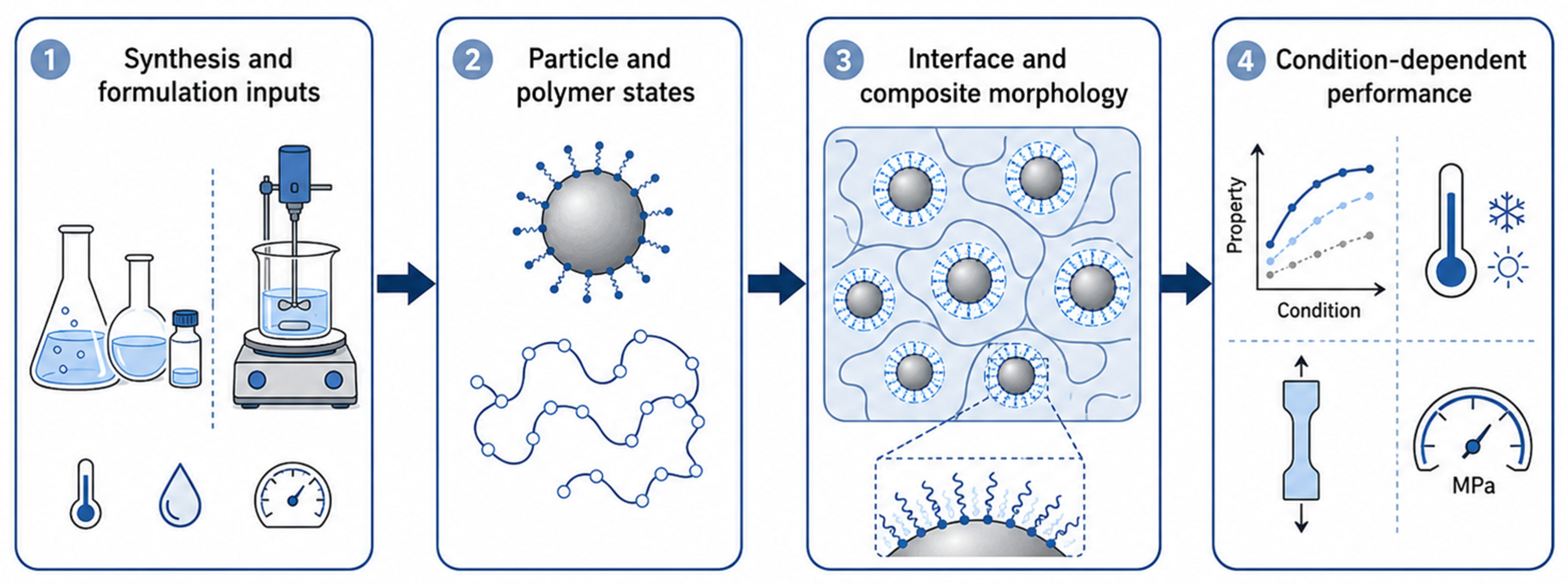
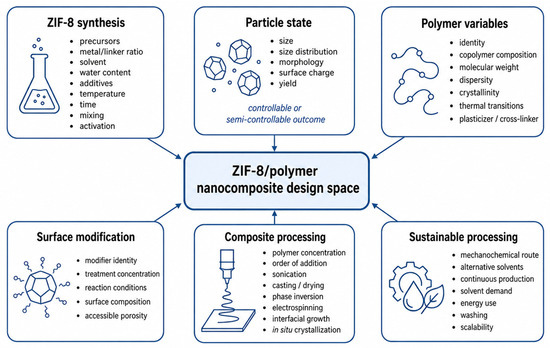
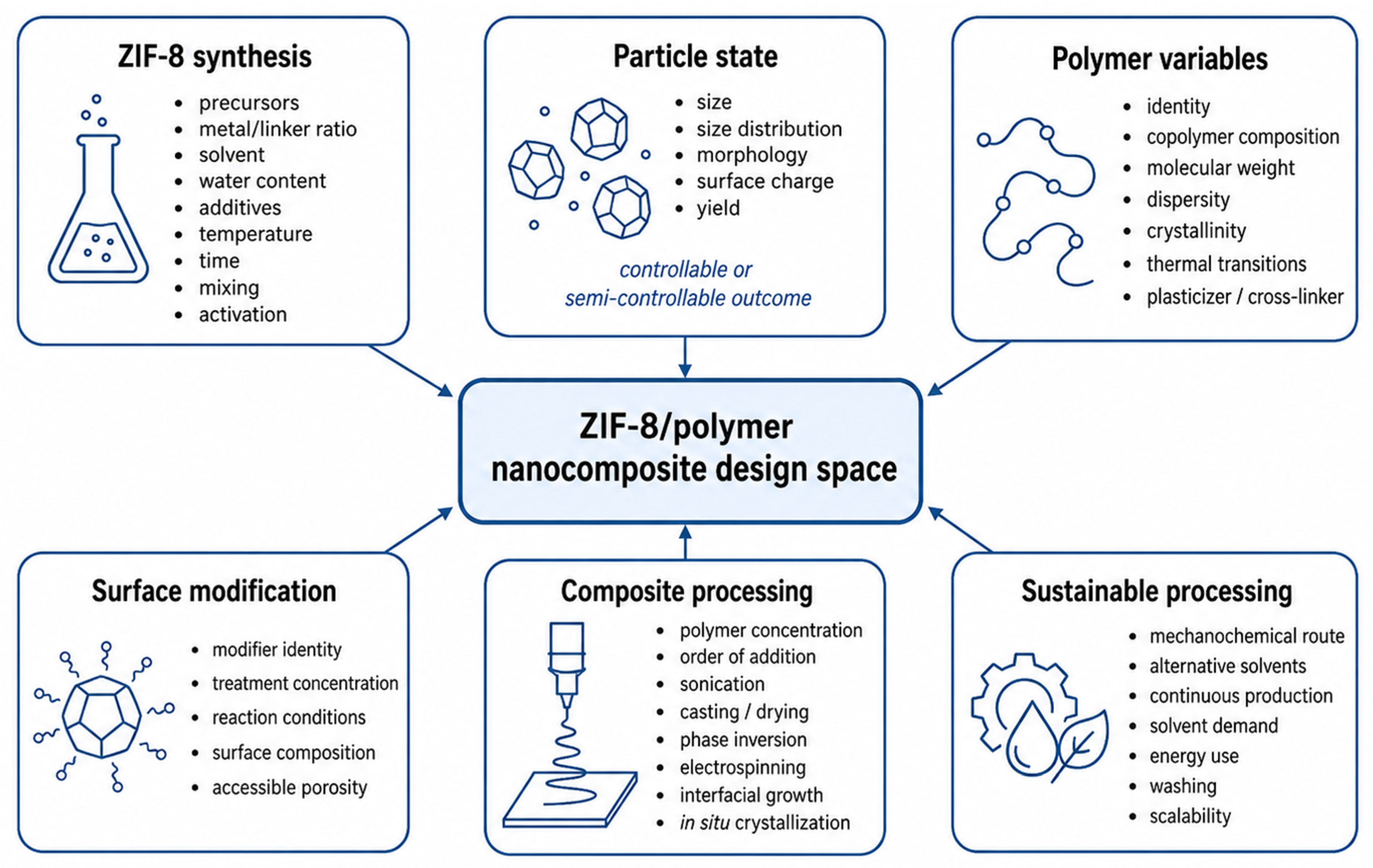
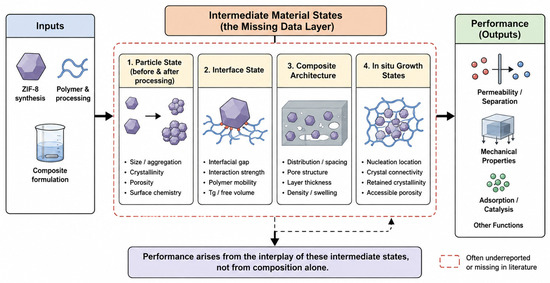
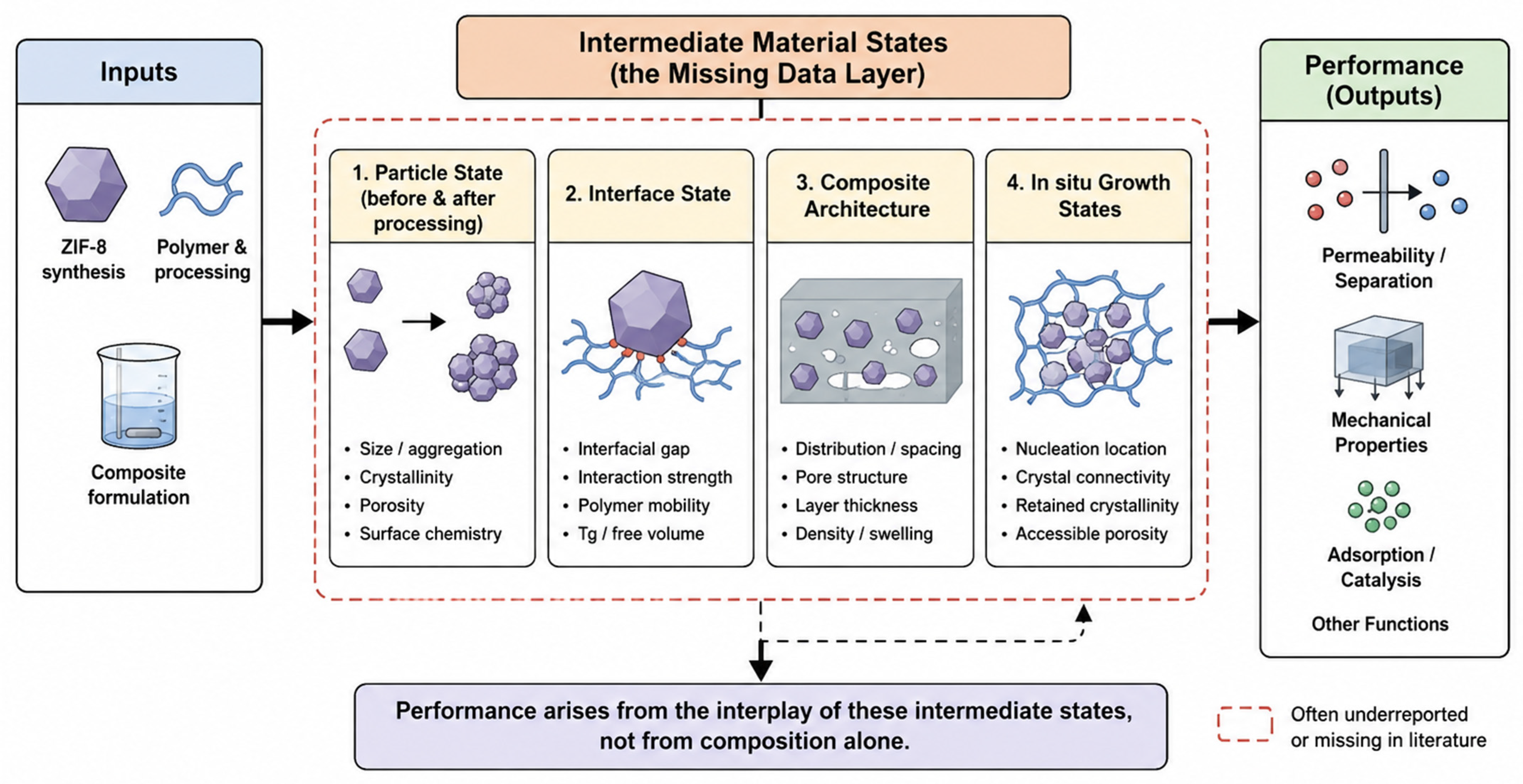
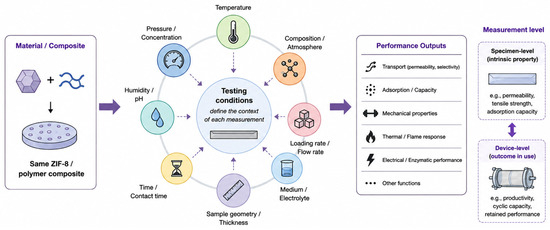
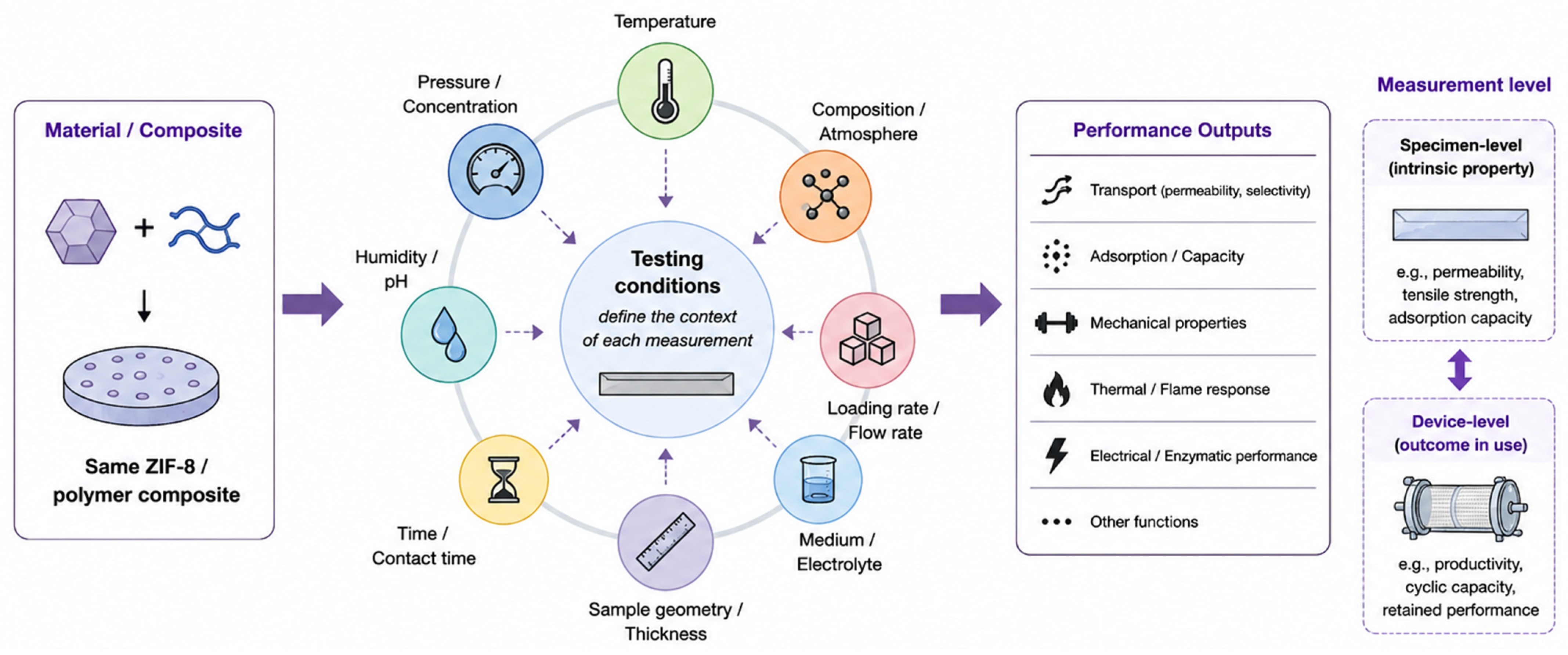
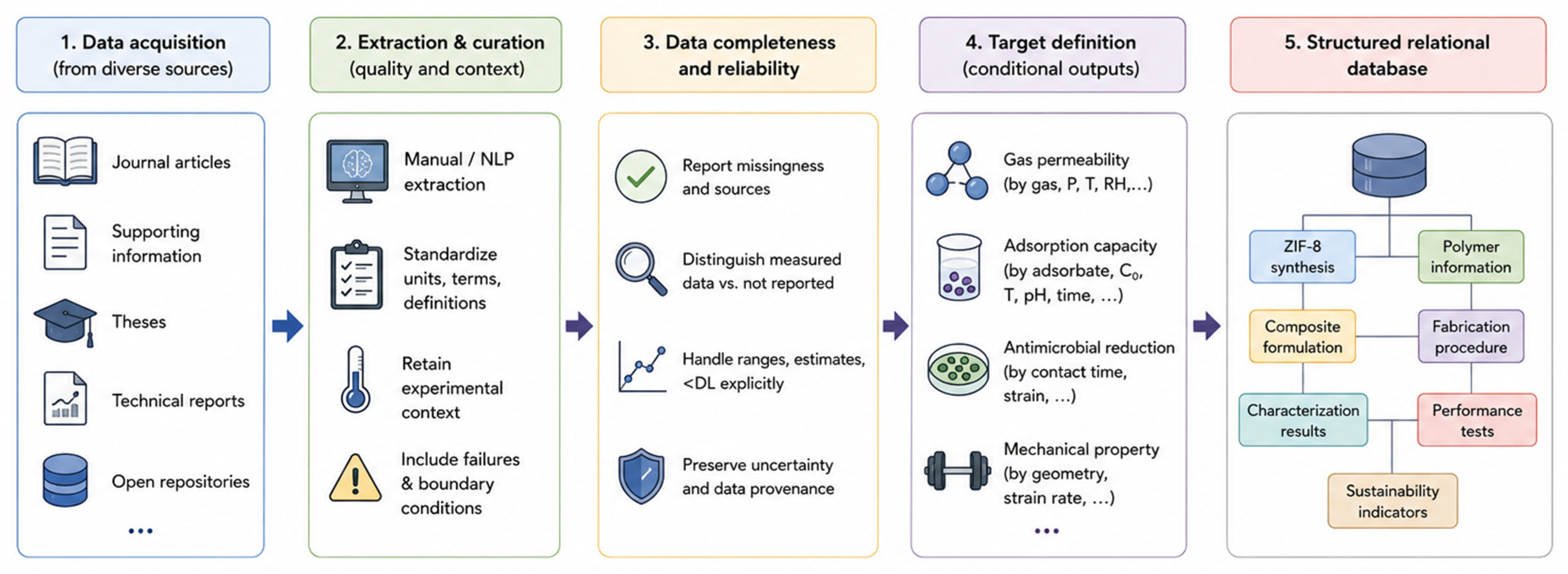
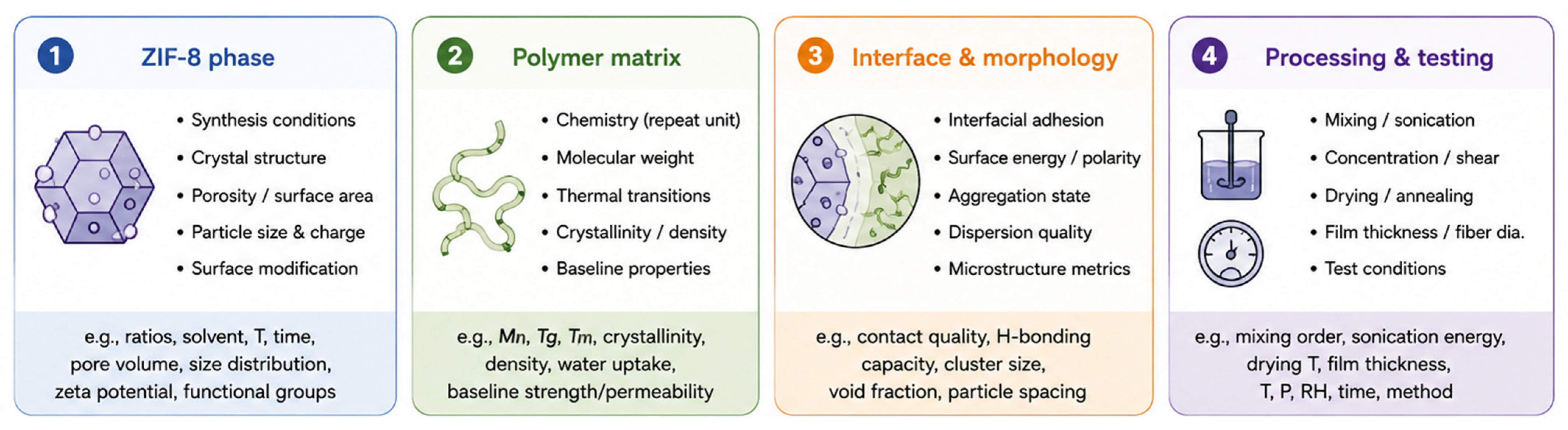
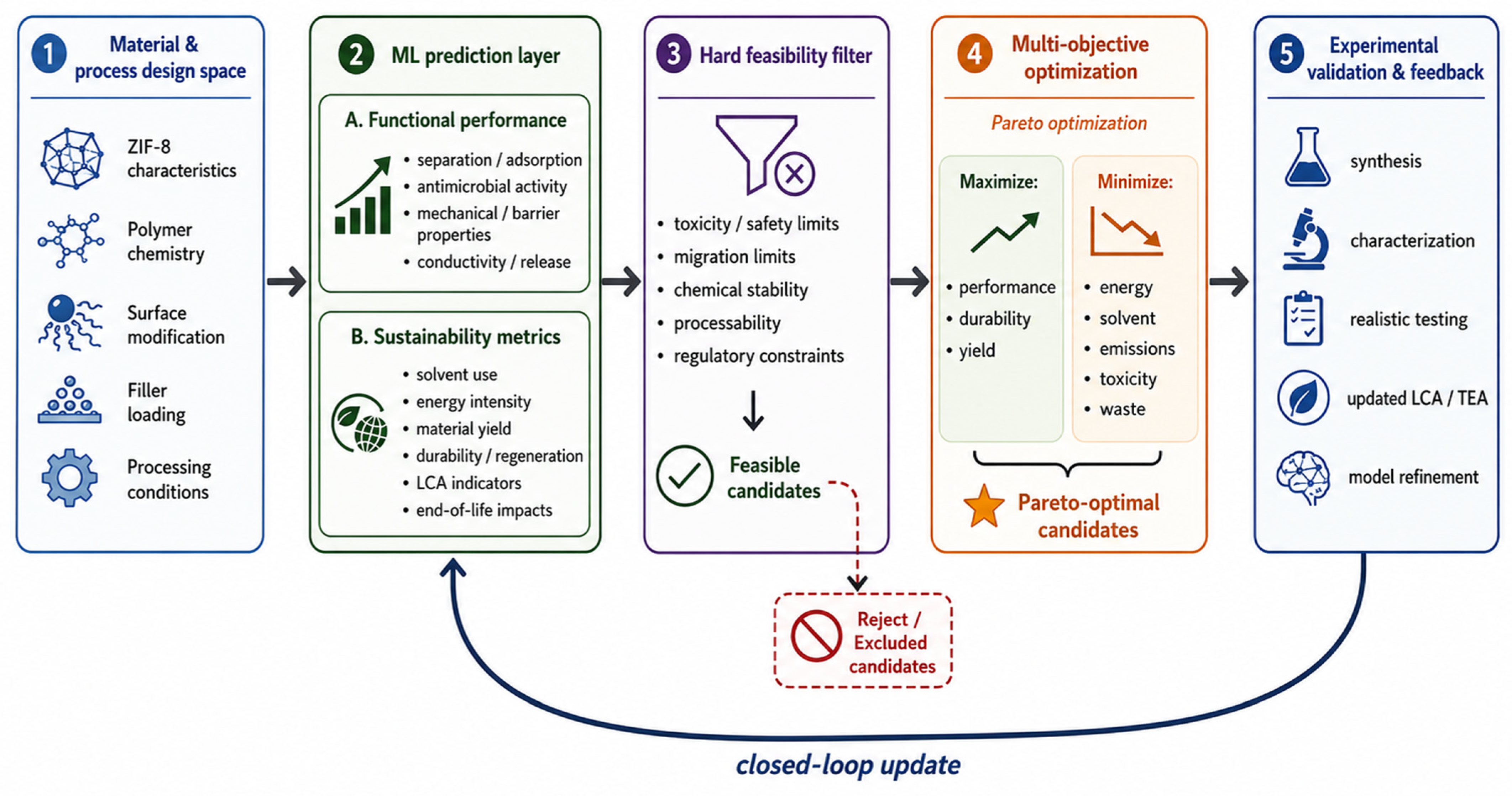

Disclaimer/Publisher’s Note: The statements, opinions and data contained in all publications are solely those of the individual author(s) and contributor(s) and not of MDPI and/or the editor(s). MDPI and/or the editor(s) disclaim responsibility for any injury to people or property resulting from any ideas, methods, instructions or products referred to in the content. |
© 2026 by the authors. Licensee MDPI, Basel, Switzerland. This article is an open access article distributed under the terms and conditions of the Creative Commons Attribution (CC BY) license.