


Abstract
In mining methods such as the “three-underground” shortwall strip mining and other methods involving coal pillar retention, research on the instability mechanism of overburden–coal pillar groups considering the rheological properties of coal and rock is of great significance for ensuring the long-term safety and stability of the coal pillar system, the safe and efficient production of mines, and the safety of surface structures. Based on the interaction between the coal pillar and the surrounding rock, a plane strain model of residual coal pillars in inclined coal seams is established, and analytical expressions for the stress and displacement fields of the coal pillar are derived using the Ritz method. Combined with the actual conditions of strip mining in a certain village, a three-dimensional numerical calculation model for coal pillar group stability is established, which incorporates the rheological characteristics of coal-rock media. The influence of time effect on the long-term stability of coal pillar group is investigated. The impact of coal pillar width, mining depth, and coal seam dip angle on the plastic zone, stress distribution, and deformation characteristics of coal pillar groups is further studied. Research findings indicate that under the long-term action of the gravity of the overlying strata, the two sides of each coal pillar entered the plastic yielding state after 1 day of creep, and present a shear failure form. With the width of coal pillars increasing, both the extent of plastic zones and stress and deformation within each pillar decrease to varying degrees. When the pillar width reaches 40 m, the disparity in plastic zone coverage between pillars diminishes from a maximum of 21.14% to 10.16%. As mining depth increases, the rate of growth in plastic zones, stress, and deformation across coal pillars gradually accelerates, with the range of plastic zones expanding from 3.55% to 11.36%. An increase in coal seam dip angle similarly accelerates the development of the plastic zone within the coal pillar group. However, the vertical stress and vertical displacement of individual coal pillars exhibit varying degrees of reduction, while the maximum shear stress and horizontal deformation of the coal pillar group increase more rapidly.
1. Introduction
Due to complex coal seam conditions and outdated mining methods, numerous coal pillar resources have been left behind in coal mines across multiple regions of China, including Shanxi, Shaanxi, and Inner Mongolia. Particularly in coal pillar mining methods such as the “three-down” strip mining, pillar-and-room mining, and pillar-and-room mining, large coal pillars are often retained to support the roof, ensure the stability of the surrounding rock in the mining area, control surface subsidence, protect roadways, and isolate water and sand. However, due to factors such as overburden pressure and coal-rock creep, local coal pillars may experience instability and failure, which will reduce their load-bearing capacity. The pressure from the overlying strata supported by these pillars then shifts to adjacent pillars, causing them to fail due to overload. This can trigger a large-scale, progressive “domino effect” of instability, leading to a cascade of interrelated disasters: unstable collapse of the mining area’s surrounding rock, surface subsidence, gas outbursts, or water inrushes and sand collapses [1,2]. The collapse of residual coal pillars at the Wajinwan Coal Mine in the Datong Mining District resulted in 18 fatalities and 19 injuries, extensive damage to underground facilities, and surface subsidence covering approximately 163,000 square meters. The coal pillar group in the 402 panel of the No. 2 coal seam at Majiliang Coal Mine became unstable, causing an elliptical subsidence zone to form on the surface with a maximum subsidence depth of 0.7 m [3]. Therefore, investigating the instability mechanisms of overlying rock-residual coal pillar groups is crucial for ensuring the safety and stability of coal pillar groups, safe and efficient mining operations, and the safety of surface structures.
Regarding coal pillar instability issues, many scholars have conducted research on aspects such as coal pillar loading and bearing capacity [4,5,6], coal pillar width determination [7,8,9,10], and coal pillar stability analysis [11,12,13,14,15,,16,17,18,19]. Various theories have been established for calculating the coal pillar loads, including the effective area theory, pressure arch theory, and A.H. Wilson’s two-zone constraint theory, as well as theoretical and empirical formulas for calculating the bearing capacity of coal pillars. Analytical numerical methods, such as the dominant area method [11], the abrupt change theory [12,13,14,15], and the finite difference method [16,17,18], as well as the discrete element method [19], have been applied to coal pillar stability analysis. On the other hand, coal-rock masses subjected to high stress during deep coal mining often exhibit pronounced creep characteristics [20]. Xu et al. [21] employed the principle of minimum potential energy to establish a stability analysis model for coal pillars, in which the roof strata stiffness and the softening and rheological properties of the pillar are considered. This model is further used to investigate the long-term stability of coal pillars. Based on viscoelastic-plastic theory and unified strength theory, Xu et al. [22] derived the theoretical formulas for stress and displacement distributions in the elastic and viscoplastic zones of coal pillars, as well as for the width of the viscoplastic zone. Sun et al. [23] employed a generalized Kelvin model to characterize the rheological properties of coal pillars. By integrating the principle of minimum potential energy, they derived an effective bearing time calculation formula for coal pillars in knife-pillar type goaf areas. Li et al. [24] studied the long-term damage evolution of a strip coal pillar through the combination of in situ investigations, laboratory tests and numerical simulation.
As evidenced by the aforementioned studies, existing research on the long-term stability of coal pillars predominantly focuses on near-horizontal coal seam conditions, with relatively limited exploration of inclined or steeply inclined seams [7,24,25]. Moreover, most studies fail to adequately account for the influence of coal-rock rheological characteristics, and the literature reporting on the mechanism whereby the instability of a single coal pillar triggers widespread instability in coal pillar groups remains scarce.
Therefore, based on the interaction between the coal pillar and the surrounding rock, a plane strain model of residual coal pillars in inclined coal seams is established, and analytical expressions for the stress and displacement fields of the coal pillar are derived using the Ritz method. On this basis, based on the actual conditions of strip mining in a certain village [26], a numerical model for the instability of coal pillar groups in inclined coal seam strip mining is established to investigate the interaction between coal pillar groups and surrounding rock. The influence of time effect on the long-term stability of coal pillar groups is investigated. The variation in stress, deformation, and plastic zone evolution characteristics in coal pillar groups with respect to pillar width, mining depth, and coal seam dip angle are further studied. The research findings can provide a theoretical foundation and technical support for determining the width of coal pillars to be reserved during strip mining of inclined coal seams and for evaluating the long-term stability of these pillars.
2. Mechanical Analysis of Interaction Between Coal Pillar and Surrounding Rock
In the stability analysis of coal pillars, some scholars have established the empirical calculation formula of coal pillar load and bearing capacity from the point of view of statistical analysis through tests and field observation. However, research on the interaction between coal pillar and surrounding rock and the stress–strain characteristics of coal pillar is limited, and research on the main factors affecting the stability of coal pillar is insufficient. The coal mining practice shows that the coal pillar width, mining depth, coal seam inclination, and other factors have an impact on the stability of the coal pillar. At the same time, under the long-term action of the overlying strata, the coal pillar strength will decrease with the extension of time, and the coal pillar deformation has a time effect. In this section, after analyzing the stress characteristics of the coal pillar and the relationship between the coal pillar and the roof, the mechanical model of the coal pillar is established to analyze the stress and deformation characteristics of the coal pillar. The analytical expressions for the stress field and displacement field of the coal pillar were derived using the Ritz method. A preliminary parametric analysis was further conducted to examine the effect of coal pillar width on the vertical and horizontal displacements in the core region of the coal pillar. The derived analytical solution can lay a theoretical benchmark for the subsequent three-dimensional numerical analysis of inclined coal seam pillar groups.
2.1. Interaction Between Coal Pillar and Surrounding Rock
In some mining methods, a certain width of coal pillar is usually reserved to protect the roadway and control the surface subsidence. The stability of the coal pillar is very important for the safe production of the mine and the safety of surface buildings. In order to avoid wavy undulating basins on the surface, it is necessary to set the appropriate mining width and reserved width. If the coal pillar size is set too small or the mining width is too large, it will lead to the instability of the coal pillar, and then cause the deformation of the overlying strata to be too large and the fracture instability, resulting in the uneven settlement of the surface buildings.
In coal pillar mining, the interaction between coal pillar and surrounding rock is determined by the binding force and stiffness ratio between coal pillar and roof and floor. There are three main types of interaction between coal pillar and surrounding rock [27]: (1) Integral connection—The lithology of the roof and floor is the same as that of the coal pillar, and the coal seam is non-full-thickness mining. (2) Non-integral connection and dry friction—The coal seam is full-thickness mining, and there is binding force on the contact interface between the coal seam and the roof and floor; (3) Connection with plastic interlayer—There is a weak interlayer between the contact interface of the coal seam, roof and floor; (4) Combined connection—Any combination of the above three.
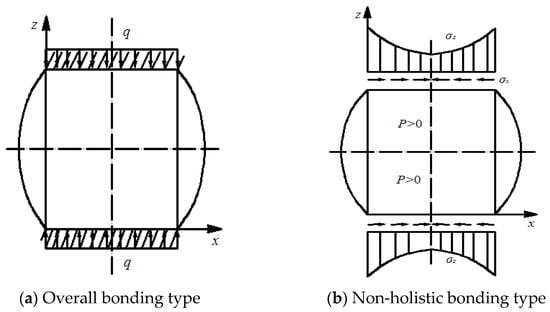
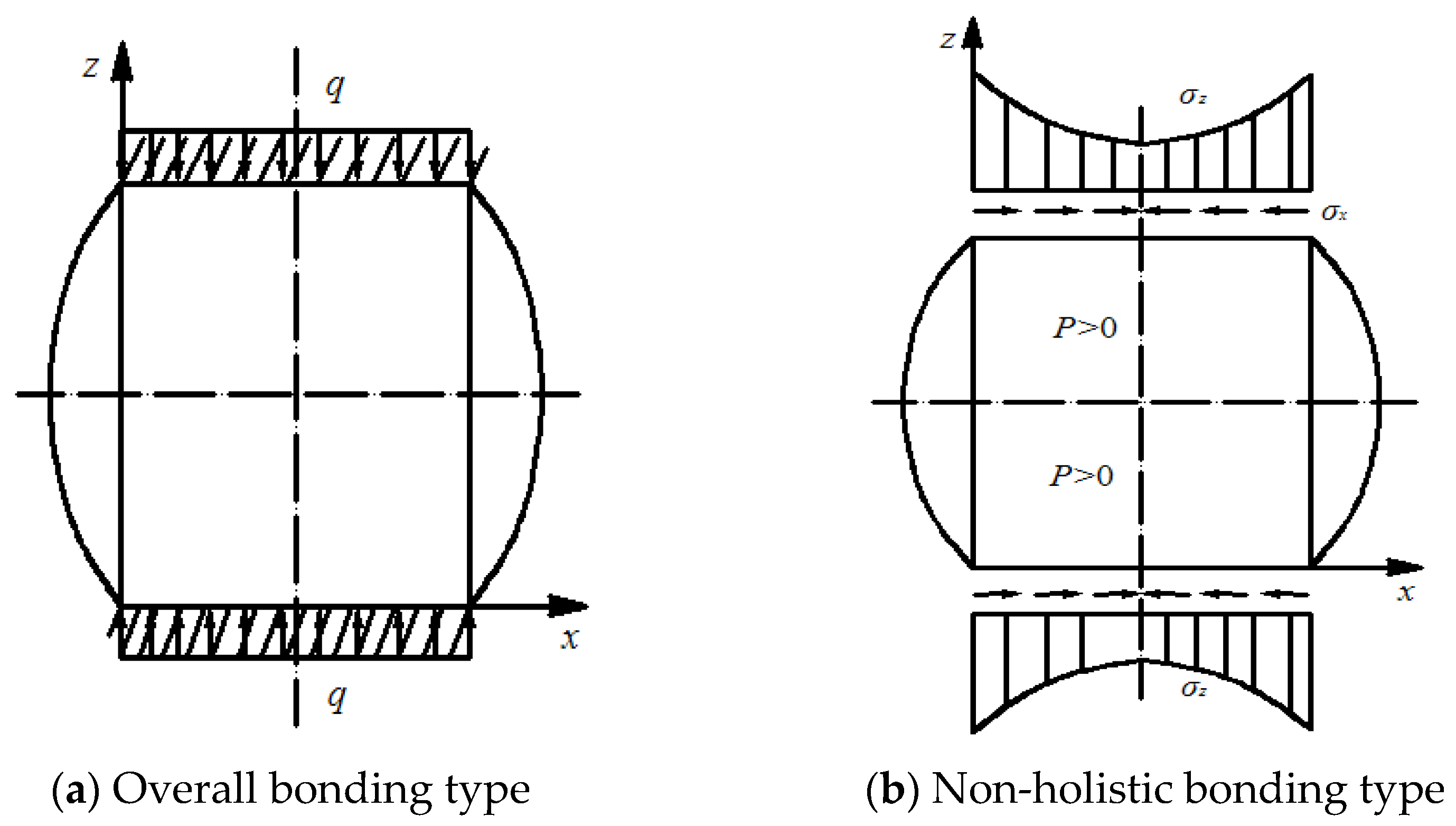
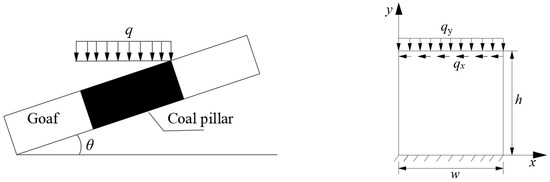
Due to the existence of binding force, the coal pillar will produce ideal deformation as shown in Figure 1 and Figure 2. Figure 1a shows the situation where there is a bonding force between contact interfaces, which mainly has two types: (1) ( denotes the overall cohesion and denotes the internal friction); (2) ( denotes the non-holistic cohesion and denotes the external friction). The presence of bonding force restricts the lateral deformation of the coal pillar near the contact surface; as the distance from the contact surface increases, the influence of the bonding force gradually decreases, and under these conditions, the coal pillar exhibits the ideal deformation shown in Figure 1b. At this time, the coal pillar near the contact surface is in a three-dimensional compression state. In the plane problem, the coal pillar near the contact surface is in the state of bidirectional compression. Near the contact surface, not only are vertical stresses present, but horizontal stresses directed toward the centerline of the coal pillar are also present.
Figure 1.
Ideal deformation characteristics of coal pillar with binding force on contact surface.
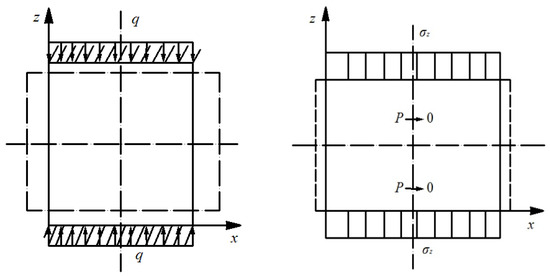
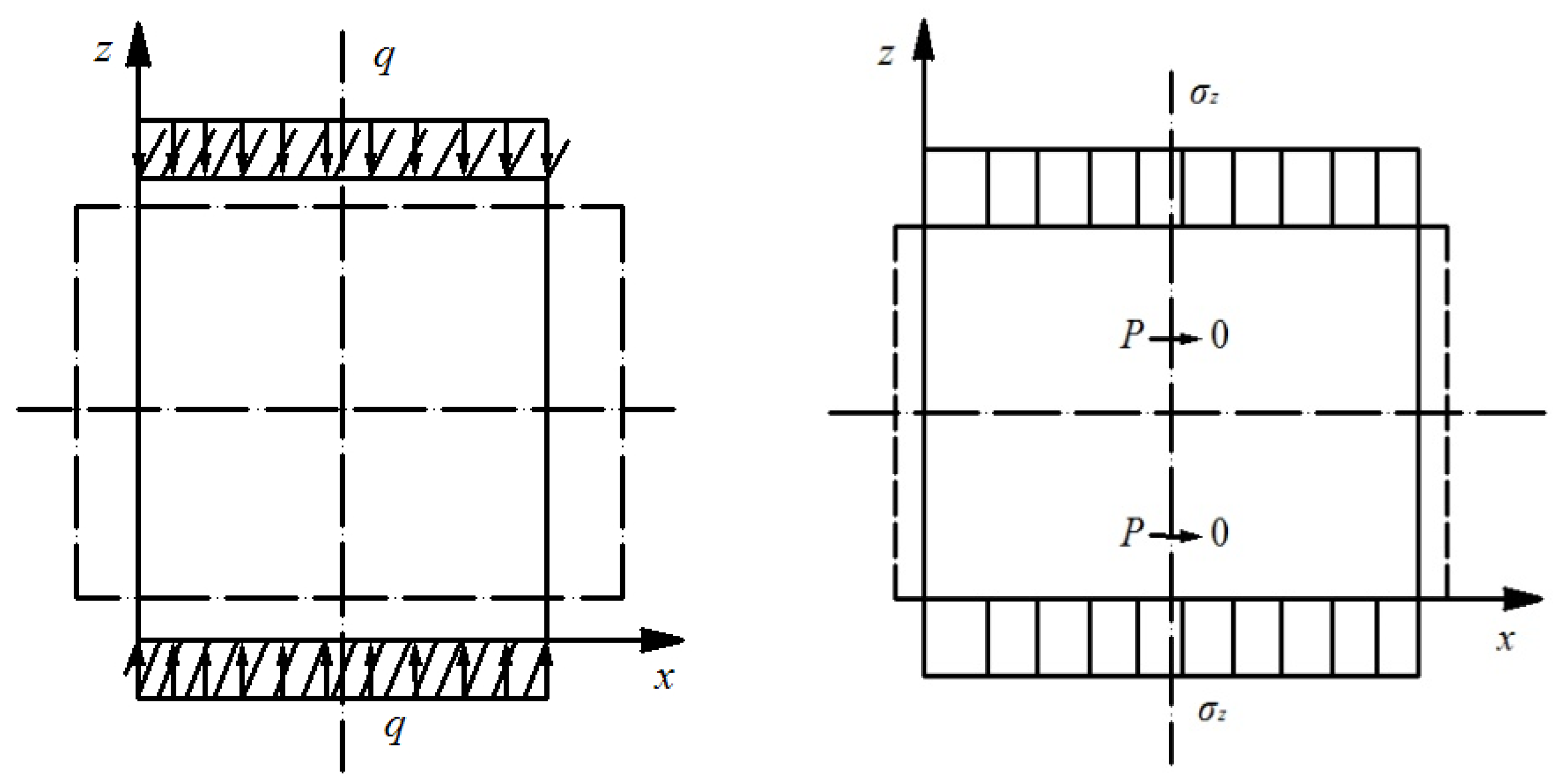
Figure 2.
Ideal deformation characteristics of coal pillar without cohesive force at contact surface.
When the bonding force is very small, the coal pillar exhibits ideal deformation, as shown in Figure 2. This situation arises because there is a weak interlayer between the coal pillar and the roof and floor. Due to factors such as the dip angle of the coal seam, this interlayer is easily forced out under the pressure of the overlying rock, causing the bidirectional compression zone at the interface to disappear. As a result, the lateral deformation of the coal pillar is no longer constrained, and the pillar is subjected to uniaxial compression along its height.
2.2. Establishment of Mechanical Model for Coal Pillar Stability Analysis
In the pillar mining method, the stability of the coal pillar can be treated as a plane strain problem. In the following, the coal pillar with unit thickness is taken for quantitative analysis of the stress and deformation of the coal pillar. According to the interaction between the coal pillar and surrounding rock, in order to facilitate the analysis, the following basic assumptions are made: (1) the coal pillar is assumed to be a continuous, uniform, and isotropic elastomer; (2) there is no weak plane in the coal pillar; (3) the coal seam is mined in full thickness.
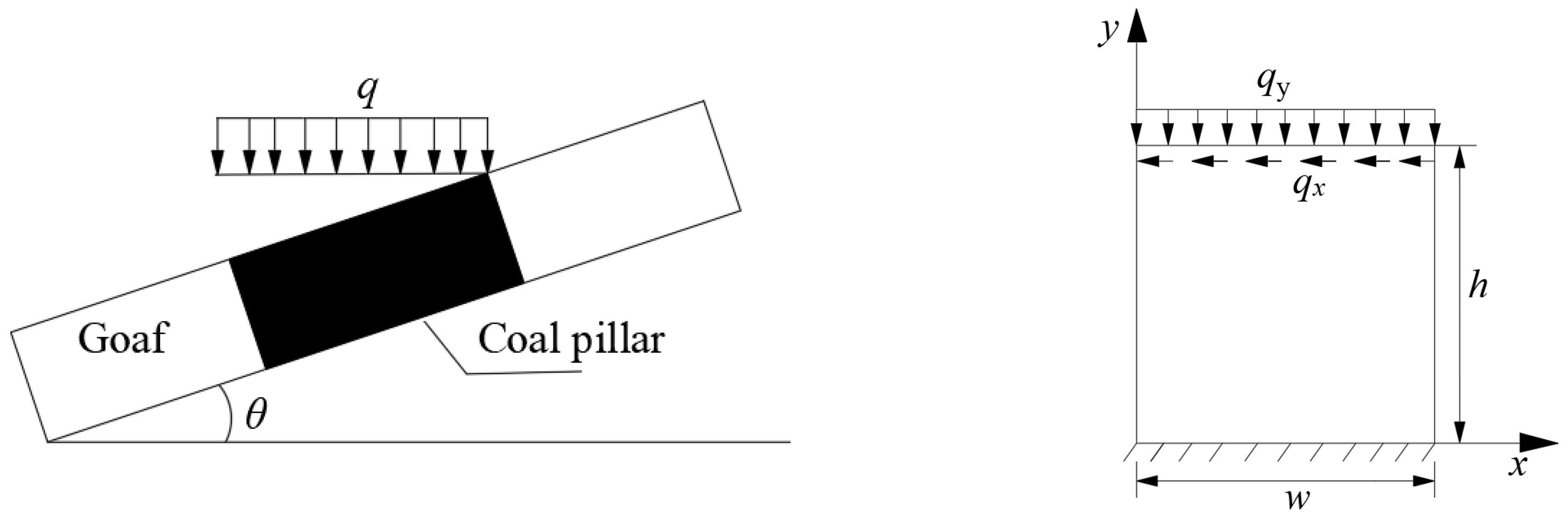
Figure 3 depicts the mechanical model for coal pillar stability analysis. Taking into account the dip of the coal seam, the load exerted by the overlying strata on the inclined coal pillar can be decomposed into vertical load and horizontal load acting on the horizontal coal pillar. In Figure 3, the width of the coal pillar is set as and the height is ; the lower boundary of the coal pillar is fixed, while the upper boundary of the coal pillar is subjected to vertically distributed load and horizontally distributed load .
Figure 3.
Mechanical model for coal pillar stability analysis.
2.3. Calculation and Analysis of Coal Pillar Stability
In this section, the Ritz method is utilized to solve the analytical expression of the stress and displacement field of the coal pillar. For the mechanical model shown in Figure 3, the boundary conditions are
in which , denote the displacement components in horizontal and vertical directions at the bottom surface of the coal pillar, respectively. , are the vertical and shear stress of the coal pillar on the upper surface of the coal pillar, respectively. , are the vertically distributed load and horizontally distributed load, and their directions are defined as positive along the positive X- and Y-axes, and negative along the negative X- and Y-axes.
The approximate body force components are , . From the displacement boundary condition of the coal pillar, the displacement field expression and can be taken as
in which , and , are the undetermined coefficients; , are the spatial coordinates. Obviously, Equation (2) satisfies the displacement boundary condition of the coal pillar and can be solved by the Ritz method. For a plane strain problem, the deformation potential energy of the coal pillar is
in which and are the elastic modulus and Poisson’s ratio.
Calculate the partial derivative of with respect to , and , to obtain
For the case of , the Ritz equation is
in which , are the force components above the boundary; , and , are the prescribed function which varies only with coordinates and are completely independent of the variation in displacements. Their expressions are
The boundary conditions of a coal pillar include
Then, the equations that determine are
Thus, the equations determining , and , are
Taking the above parameters into and , the expression of the displacement field can be obtained.
The geometric and physical equations for plane problems in elasticity are as follows:
Combining Equations (10) and (11) yields the expression for the stress field:
Substituting and into the above equation yields the expression for the stress field in the coal pillar:
2.4. Analysis of Factors Affecting Coal Pillar Stability
When considering the effects of factors such as pillar width, mining depth, and coal seam dip angle on pillar stress and displacement, the effective area method may be used to calculate the overburden pressure [28]:
Taking into account the effect of the coal seam dip angle, the overburden pressure mentioned above is decomposed into vertical and horizontal loads acting on the horizontal coal pillar surface, which are
in which and are the coal pillar width and mining width, is the average unit weight of the overlying strata, is the mining depth and is the coal seam dip angle.
Taking the strip mining operation in a certain village as an example [26], within the protected coal pillar area of that village, the thickness of the primary No. 2 coal seam ranges from 3.5 m to 4.5 m, with an average dip angle of 28° and a depth of occurrence between 230 m and 400 m. Based on the engineering geological conditions described above, calculations were performed using the parameters shown in Table 1.
Table 1.
The calculation parameters for coal pillar stability analysis.
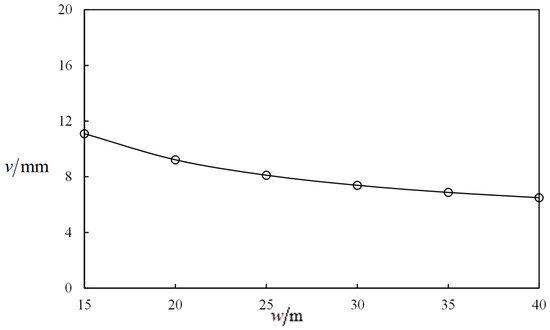
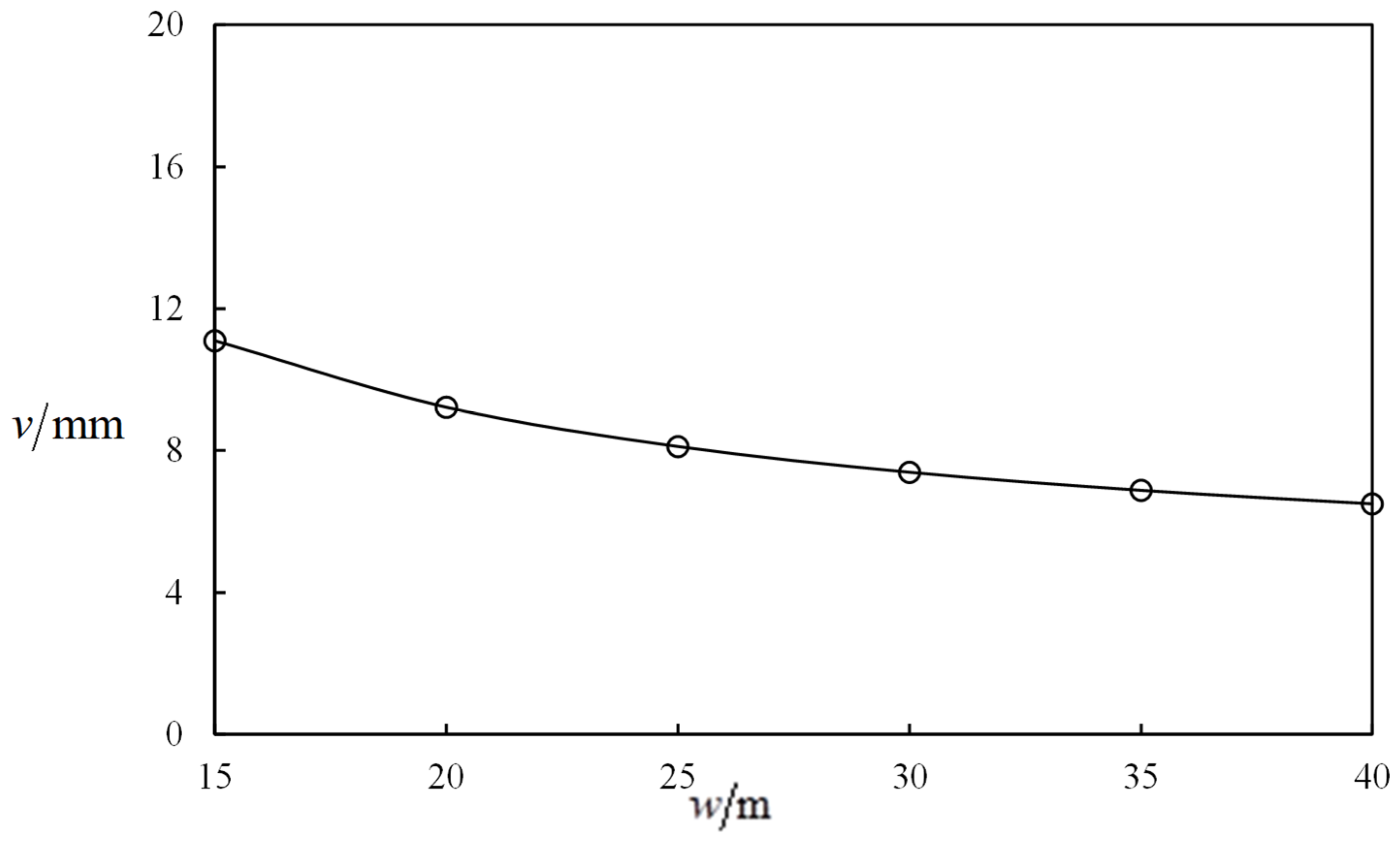
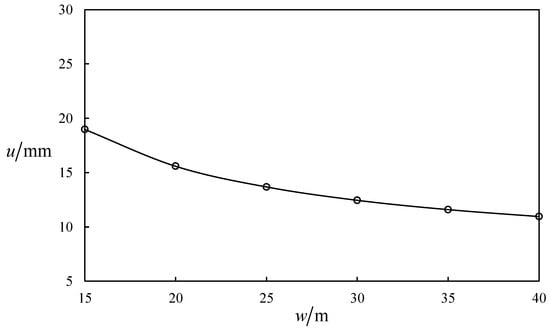
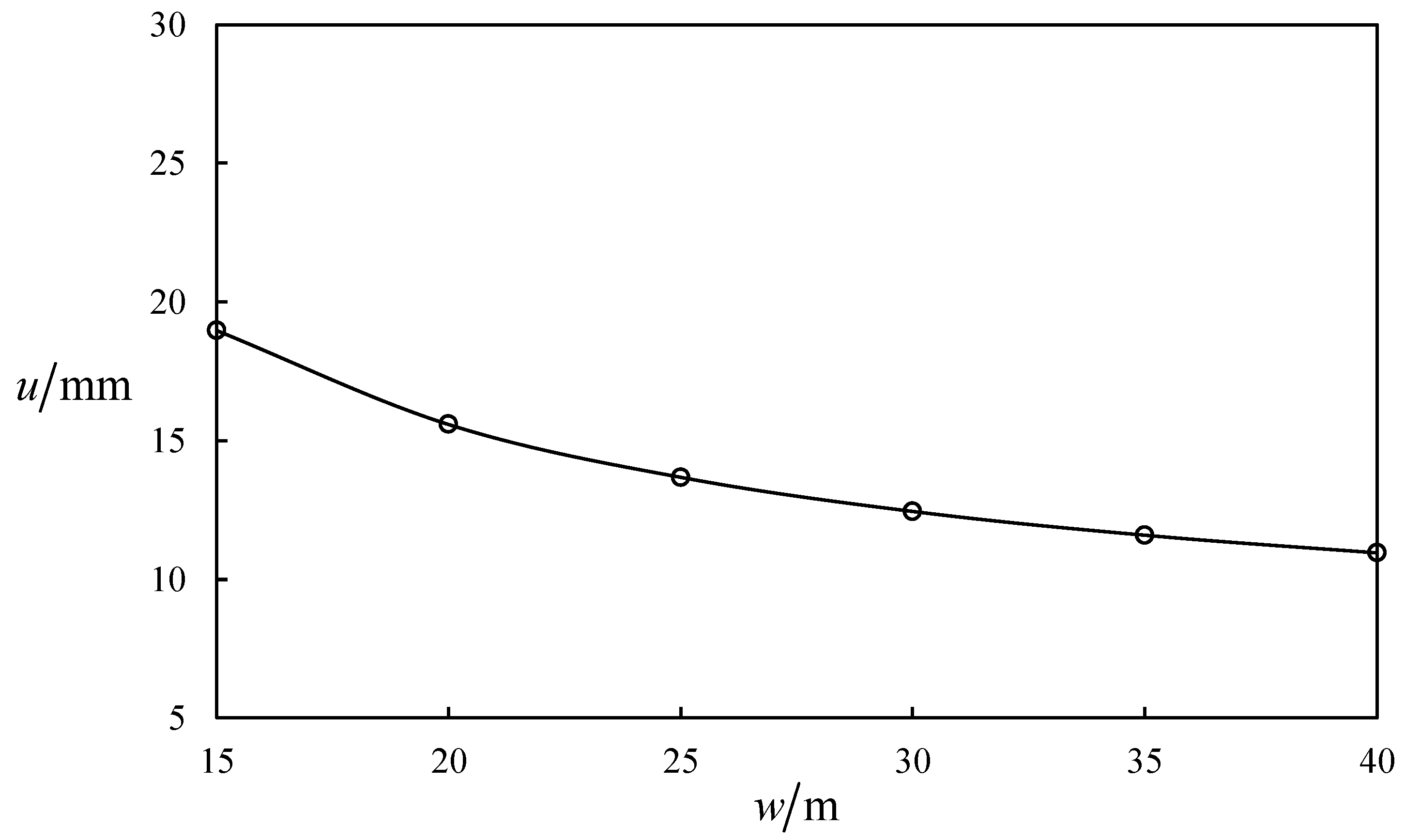
In the following, by setting the width of the coal pillar , , , , , and , the variation in vertical displacement and horizontal displacement in the central core area of the coal pillar with coal pillar width is obtained by compiling the corresponding Mathematica calculation program, as shown in Figure 4 and Figure 5.
Figure 4.
Variation law of vertical displacement in central core area of coal pillar with coal pillar width.
Figure 5.
Variation in horizontal displacement in central core area of coal pillar with coal pillar width.
As can be seen from Figure 4 and Figure 5, with the increase in coal pillar width, the vertical displacement and horizontal displacement of the central core area of the coal pillar show a downward trend. Under the influence of the coal seam dip angle, the horizontal displacement of the central core area of the coal pillar is about 1.7 times that of the vertical displacement at the same width of coal pillar. In addition, when the width of the coal pillar is less than 30 m, the vertical and horizontal displacement of the central core area of the coal pillar decreases rapidly; when the width of the coal pillar is greater than 30 m, the vertical displacement and horizontal displacement in the central core area of the coal pillar tend to slow down.
3. Numerical Analysis of Overburden–Coal Pillar Group Instability
The long-term stability of substantial coal pillars left behind in pillar mining methods such as “three-down” strip mining is influenced by geological conditions (e.g., coal seam dip angle, geological structures), mining conditions (e.g., mining width, pillar width, mining depth, recovery rate), the coal pillar’s own conditions (such as its mechanical properties, the contact and adhesion between the coal seam and the roof, and the coal seam dip angle), and time effects. Therefore, through considering the rheological properties of coal-rock masses, this study employs the FLAC3D numerical simulation method to establish a computational model including the interaction between roof, coal pillars, and floor. The influence of time effect on the long-term stability of the coal pillar group is first investigated. The impact of factors such as pillar width, mining depth, and coal seam dip angle on the time-dependent load-deformation behavior of the pillar group is further studied. The study can quantitatively evaluate the impact of these factors on the long-term stability of pillar groups.
3.1. Establishment of the Numerical Calculation Model
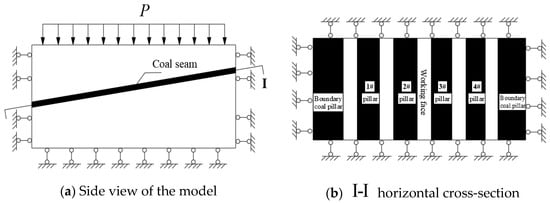
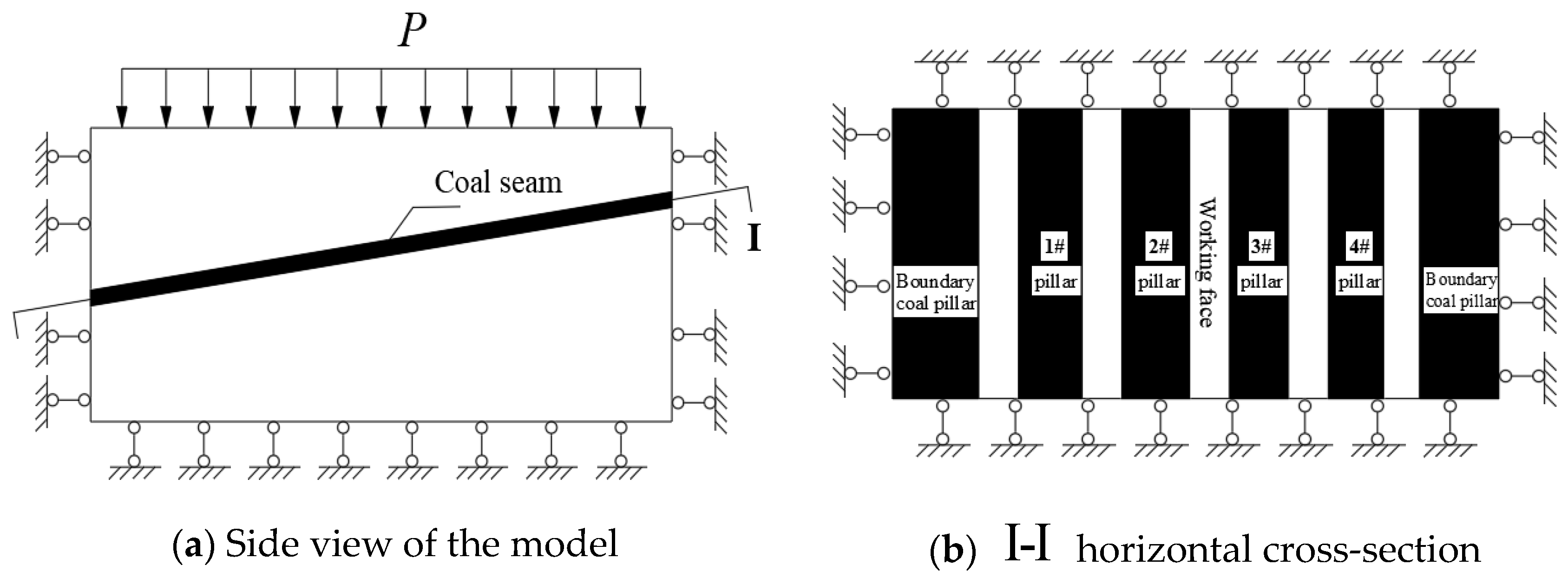
Figure 6 shows the numerical calculation model for the instability mechanism of overburden-residual coal pillar groups in inclined coal seams. Based on the spatial distribution characteristics of coal pillars reserved for mining in the lower seam of a certain village [26], the geometric dimensions (length × width × height) of the computational model established here are set to . The model is fixedly constrained on all sides and at the bottom. A uniformly distributed load representing the effect of the gravity of overburden is applied to the top boundary. Additionally, in order to eliminate the influence of boundary effects on numerical results, multiple calculations indicate that setting a boundary coal pillar of 60 m along each lengthwise direction of the model and 35 m along each widthwise direction can render the numerical calculation results unaffected by boundary conditions while ensuring favorable computing speed and efficiency. Therefore, boundary coal pillars of 60 m were set along each lengthwise direction of the model, and boundary coal pillars of 35 m were set along each widthwise direction. In the model, coal seams and overlying/underlying strata are treated with densification, while goaf areas are simulated using Null elements.
Figure 6.
Numerical Computation model.
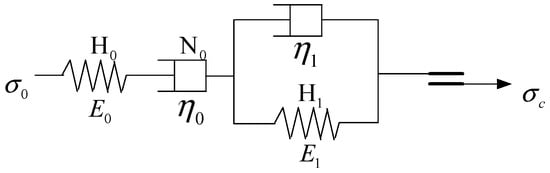
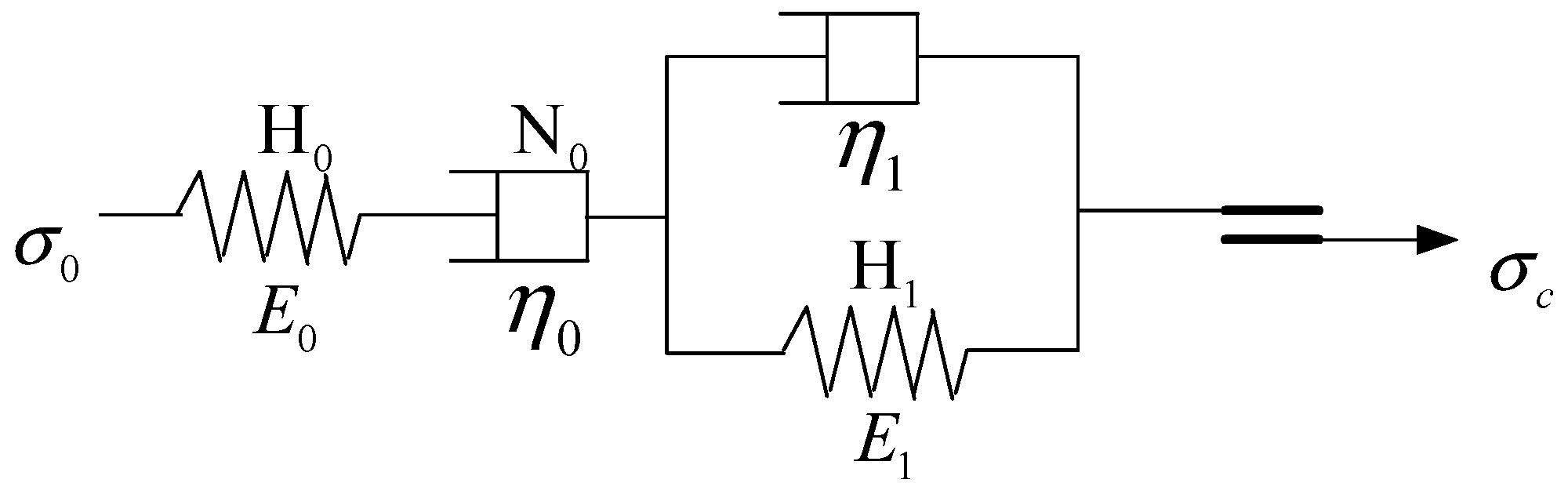
To account for the rheological characteristics of coal-rock masses, the Burgers combined creep viscoelastic-plastic constitutive model shown in Figure 7 is adopted for the coal-rock masses. By combining the plastic elements conforming to the Mohr–Coulomb yield criterion with the Burgers model in series, this model can effectively capture the viscoelastic stress–strain behavior and elastoplastic volumetric change characteristics of coal-rock masses. When the stress has not reached the yield stress of the M-C criterion, the model’s plastic strain is zero. When stress is greater than or equal to the yield stress , plastic deformation follows the M-C plastic flow rule.
Figure 7.
The Burgers combination creep mechanical model.
Based on the geological characteristics of the coal-bearing strata mined in the lower strip of this village [26], the overlying strata in this mining area are primarily composed of siltstone and fine sandstone. The immediate roof consists of interbedded sandstone and mudstone, the old roof comprises medium-fine feldspar sandstone, and the floor is dominated by mudstone, sandy mudstone, and siltstone. The physical and mechanical parameters of the coal-rock mass are calculated, which are shown in Table 2. These parameters are determined based on the results of laboratory uniaxial compression tests on the coal-rock mass. Meanwhile, the creep model parameters can be determined through regression analysis of laboratory creep test results, supplemented by empirical analogy methods. The specific process is as follows: Firstly, the constitutive equation of the Burgers model is shown as
Table 2.
Physical and mechanical parameters of coal-rock mass.
Then, based on its constitutive equation and combined with the Laplace transform technique, the creep equation for the Burgers model is given as follows:
in which is the constant stress.
Finally, according to the derived creep equation, nonlinear regression calculation is performed based on the least squares method, and the experimental data is fitted to obtain the numerical values of creep parameters. The creep parameters of coal-rock mass are shown in Table 3.
Table 3.
Creep parameters of coal-rock mass.
3.2. Numerical Calculation Scheme
Based on the actual conditions of longwall mining in this village, this study investigates the effects of factors such as coal pillar width, mining depth, and coal seam dip angle on the stress-deformation characteristics of coal pillar groups and the development of plastic zones. Throughout the calculation process, the mining width was set to 25 m, and the model was excavated five times sequentially from left to right. For the convenience of research, the coal pillars were numbered from left to right as 1# to 4#. After excavation completion, the impact of the aforementioned factors on the long-term stability of the pillar group was analyzed.
4. Study on the Long-Term Stability of Coal Pillar Group
In the following, through investigating the distribution of plastic zones over time, the impact of time effect on the long-term stability of the coal pillar group is studied. During the analysis process, the pillar width, mining depth and coal seam dip angle are set as , , .
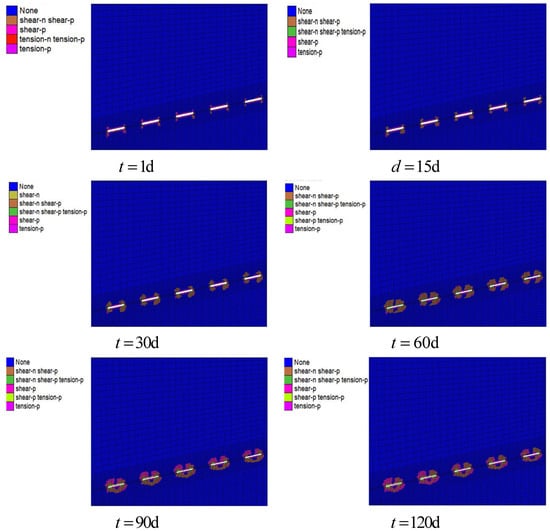
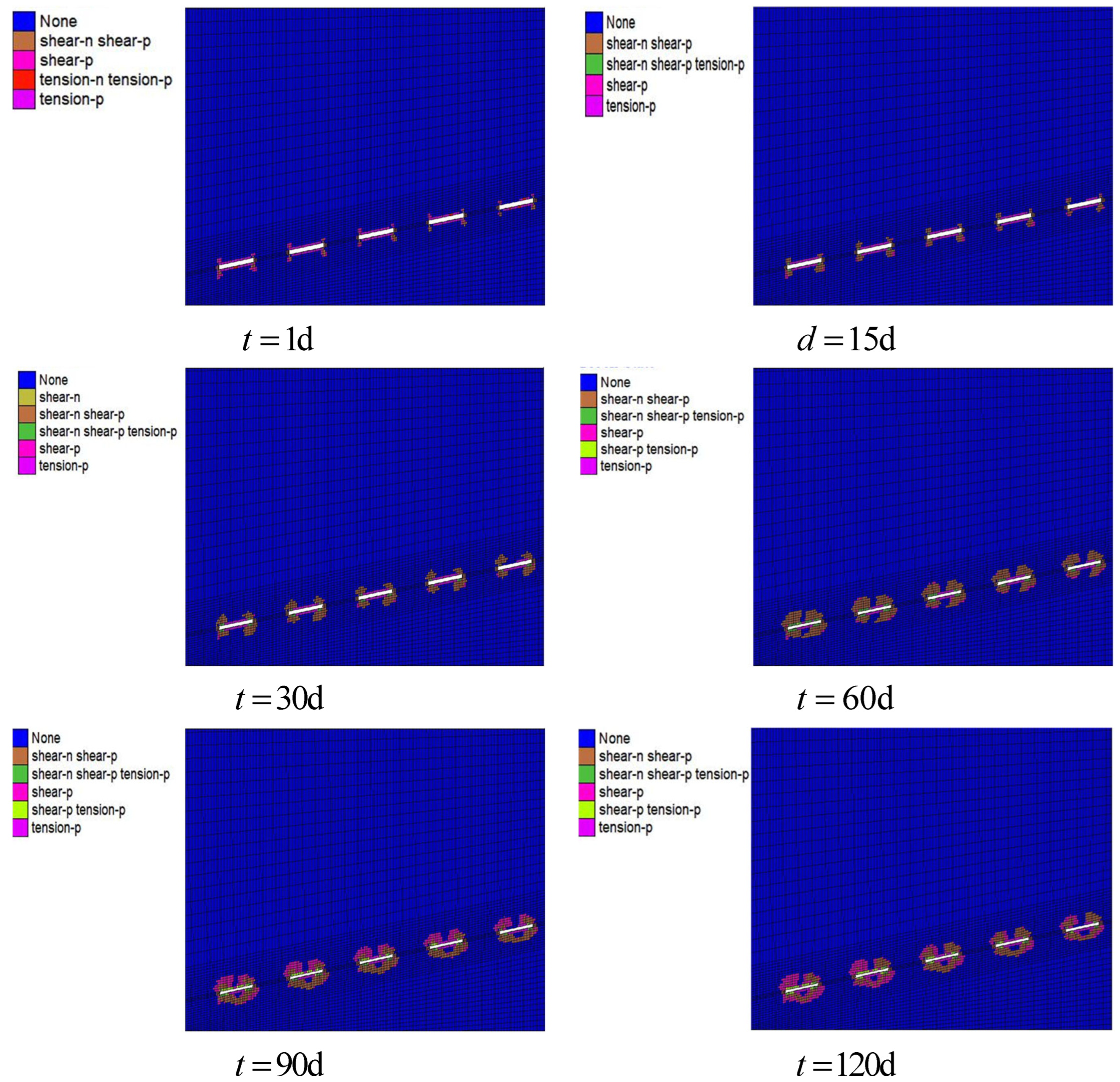
Figure 8 shows the variation in the plastic zone of the coal pillar group with time. It can be seen from the figure that at the initial time, due to the small creep deformation of the coal pillar group, the development range of the plastic zone of each coal pillar is small, and it is mainly distributed on both sides of the coal pillar. With the development of coal pillar creep, the plastic zone of each coal pillar expands rapidly to the inside of the coal pillar, and the range of the coal pillar elastic zone decreases. When the coal-rock masses enter the deceleration creep stage, the development of the plastic zone of each coal pillar basically stagnates, and then the coal pillar group tends to be stable.
Figure 8.
Variation in plasticity zone of coal pillar group with time.
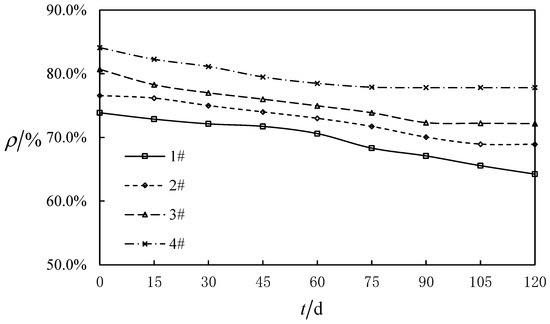
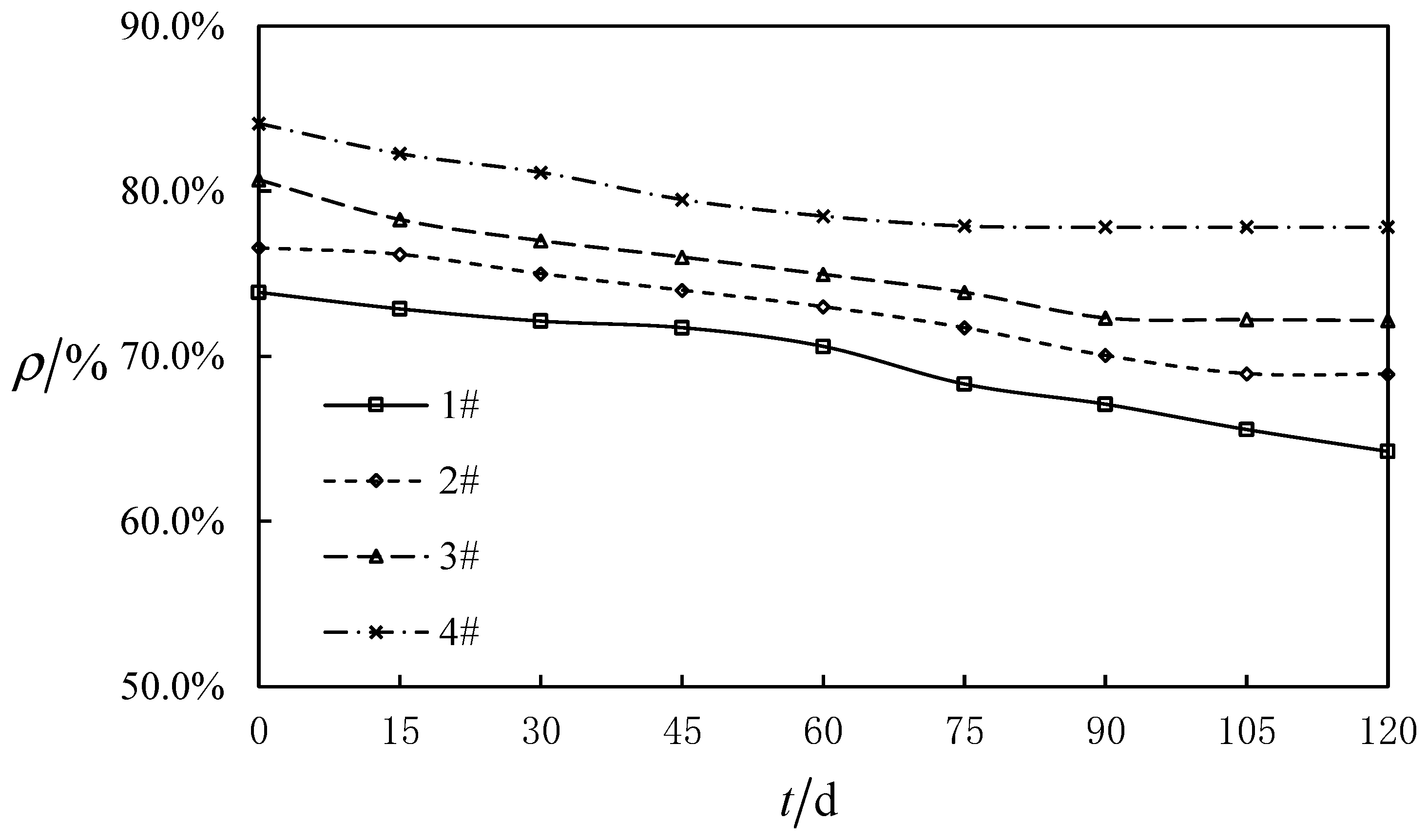
For the convenience of research, here the coal pillar nuclear zone rate is defined as the ratio of the volume of the elastic zone within the coal pillar to the total volume of the coal pillar. Figure 9 shows the variation in nuclear zone rate of coal pillar group with time. It can be seen from the figure that with the increase in time, the nuclear zone rate of each coal pillar gradually decreases and tends to be stable. The time required for the nuclear zone rate of each coal pillar to stabilize is also different. It takes more than 120 days for the core area rate of the 1# coal pillar to stabilize, while the time required for 2# to 4# coal pillars to stabilize is about 105 days, 90 days, and 75 days, respectively. This is because the buried depth of 1# to 4# coal pillars gradually decreases and the pressure of the overlying strata also decreases, so the time required for the coal pillar to reach stability decreases. In the early stage of creep, the nuclear zone rate of 1# to 4# coal pillars is 73.86%, 77.27%, 80.68% and 84.09%, respectively. The difference in nuclear zone rate of each coal pillar is small. With the development of coal and rock mass creep, the difference in nuclear zone rate of each coal pillar also gradually increases, and the nuclear zone rate of 1# coal pillar gradually decreases from 73.86% in the early stage of creep to 64.24% in about 120 days, with a decrease of 9.62%; However, at 120 days of creep, the nuclear zone rate of 2# to 4# coal pillar is 68.92%, 72.16% and 77.83%, respectively, and the decrease in core rate is 8.35%, 7.65% and 6.26%, respectively. The decreasing amplitude of the nuclear zone rate decreased in turn.
Figure 9.
Variation in nuclear zone rate of coal pillar group with time.
5. Influence of Coal Pillar Width on the Stability of Coal Pillar Groups
Theoretical research and practical experience demonstrate that the appropriate width of coal pillar retention is crucial for ensuring the long-term stability of coal pillar groups. Excessively wide coal pillar retention widths, whilst increasing the safety factor of pillar groups, reduce coal recovery rates, resulting in substantial wastage of coal resources. Conversely, excessively narrow retention widths, although improving recovery rates, diminish the effective support area of pillars, rendering pillar groups prone to instability and collapse. This section employs finite difference numerical simulation methods to analyze indicators such as the plastic zone, stress, and deformation of coal pillar groups. This analysis aims to reveal the influence of coal pillar width on the stability of coal pillar groups, thereby providing reference for coal pillar design. During the analysis process, the mining depth and coal seam dip angle are held constant, and their values are set at , . Only the coal pillar width is varied at 15 m, 20 m, 25 m, 30 m, 35 m, and 40 m.
5.1. Effect of Coal Pillar Width on the Distribution of Plastic Zones
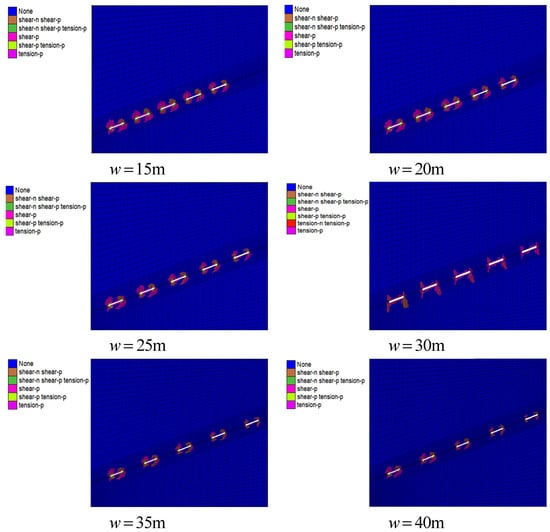
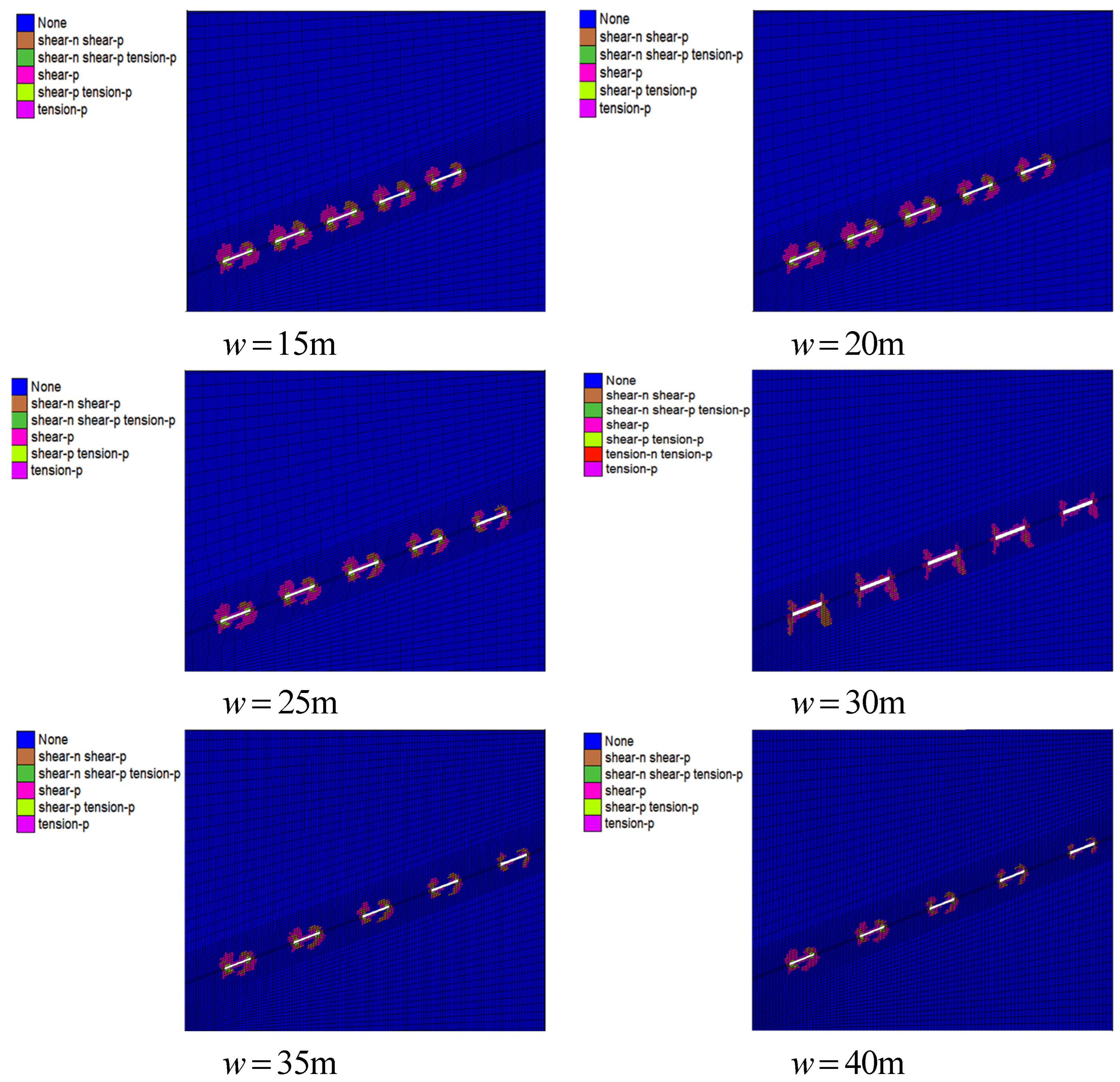
Figure 10 shows the contour of the plastic zone of the coal pillar group with coal pillar width at a creep time of days. As can be seen from the figure, the plastic zone of the coal pillar is primarily distributed along both sides of the coal pillar, while the core region remains in an elastic state. Furthermore, as the width of the coal pillar increases, the corresponding plastic zone gradually decreases in extent. Additionally, for pillars of the same width, the extent of the plastic zone varies among the pillar group. Among these, the plastic zone of 1# pillar is relatively large, while the plastic zones of 2#, 3#, and 4# pillars decrease progressively in size.
Figure 10.
Contour of the plastic zone of coal pillar group with the coal pillar width.
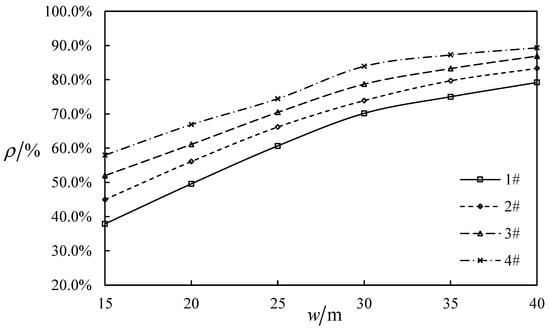
Figure 11 shows the variation in nuclear zone rate of coal pillar group with pillar width at days. The figure indicates that with pillar width increasing, the nuclear zone rate of each pillar exhibits an increasing trend. When the pillar width is less than 30 m, the core zone rate of the same pillar increases rapidly; when the pillar width exceeds 30 m, the growth rate of the core zone rate for the same pillar slows down. Additionally, as the coal pillar width increases, the disparity in core zone rates between pillars progressively diminishes. When the coal pillar width , the difference between the core zone rates of 1# and 4# pillars is 21.14%. When the width expanded to 40 m, the gap between 1# and 4# pillars narrowed to 10.16%.
Figure 11.
Variation in nuclear zone rate of coal pillar group with pillar’s width.
5.2. Variation in Stress Distribution in Coal Pillar Groups with Pillar Width
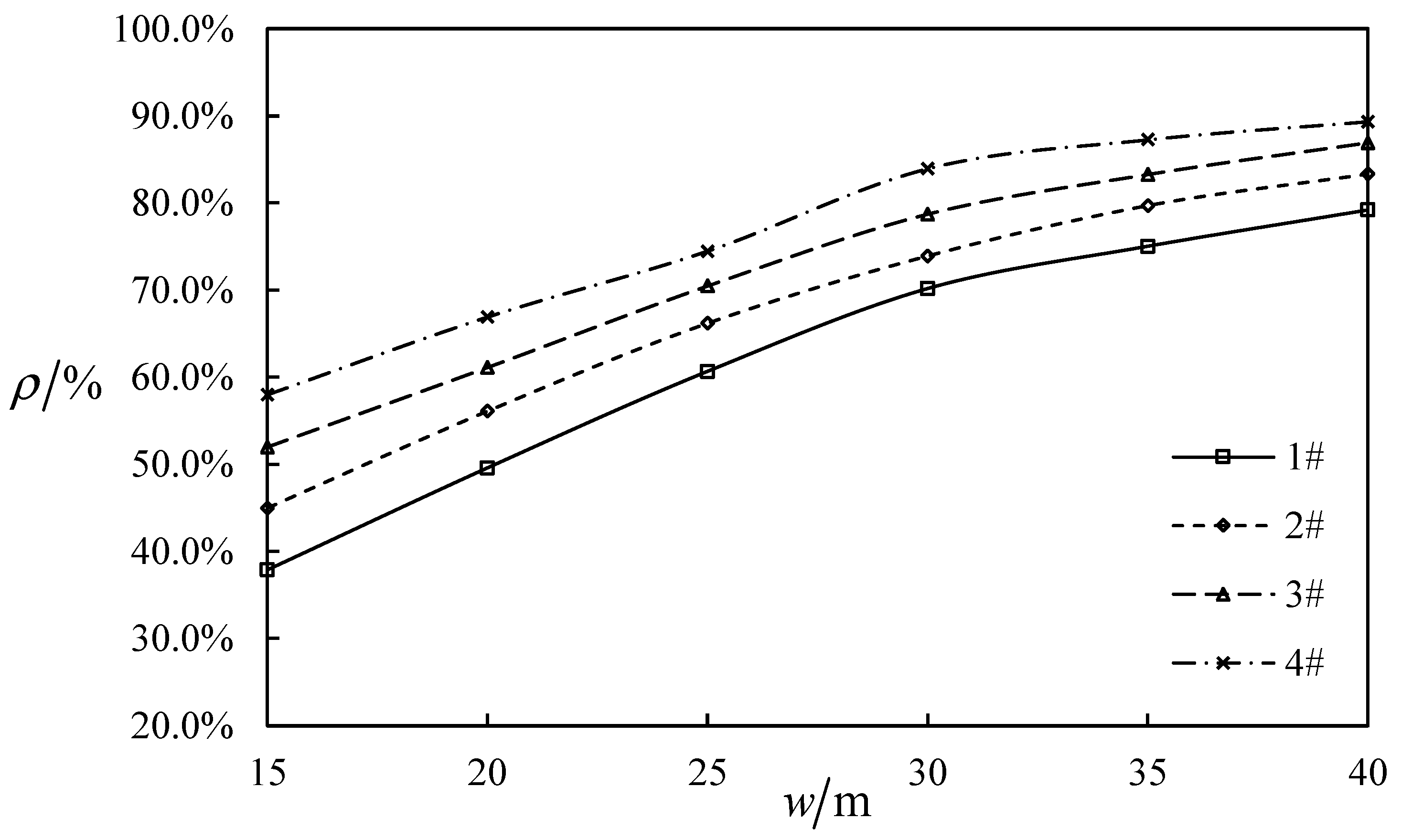
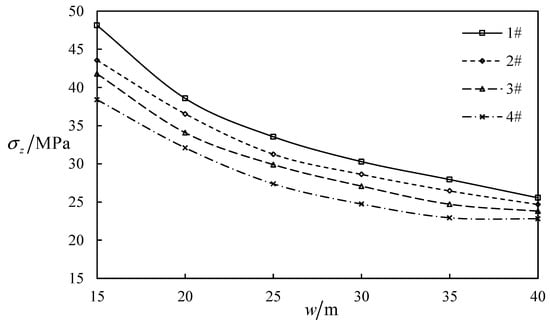
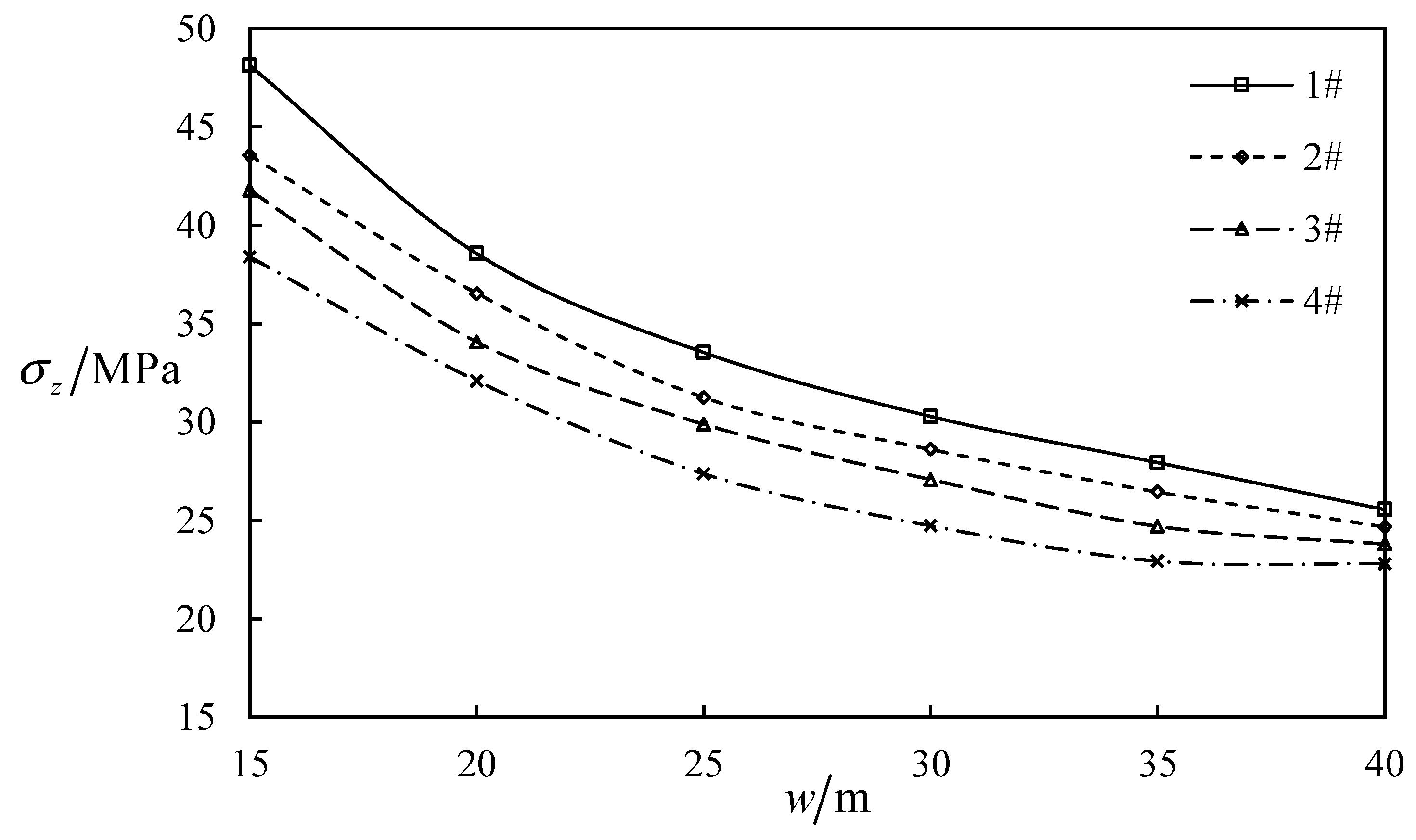
Figure 12 shows the variation in peak vertical stress in coal pillar groups with pillar width. As can be seen from the figure, as the coal pillar width increases, the peak vertical stress values for each pillar gradually decrease. When the pillar width is less than 30 m, the peak vertical stress values decline more rapidly with increasing width. When the pillar width exceeds 30 m, the peak vertical stress values decrease more slowly as the width grows. Additionally, the degree of stress concentration varies among the pillars. No. 1# coal pillar exhibits the highest peak vertical stress, followed by 2#, 3#, and 4# coal pillars in descending order. As pillar width increases, the differences in peak vertical stress among pillars gradually diminish.
Figure 12.
Variation in peak vertical stress in coal pillar group with pillar width.
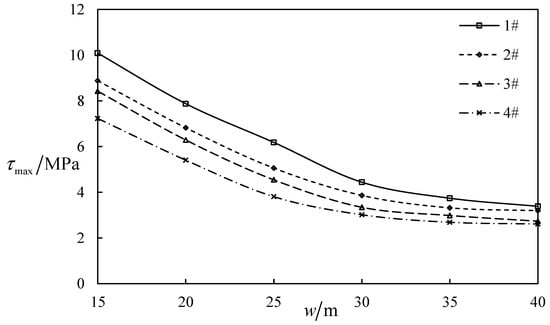
Figure 13 shows the variation in peak horizontal stress in coal pillar groups with pillar width. As shown in Figure 8, the maximum shear stress of each coal pillar also exhibits a decreasing trend with increasing pillar width. When the pillar width is less than 30 m, the maximum shear stress decreases significantly with increasing width. However, when the pillar width exceeds 30 m, the decrease in maximum shear stress becomes less pronounced with increasing width. Additionally, the degree of stress concentration varies among the pillars. The maximum shear stresses of 1#, 2#, 3#, and 4# coal pillars decrease sequentially, and the difference in maximum shear stress between adjacent pillars gradually diminishes as the pillar width increases. For instance, when the pillar width is 15 m, the difference in maximum shear stress between 1# and 4# coal pillars is 2.85 Mpa. When the coal pillar width increases to 40 m, the difference in maximum shear stress between 1# and 4# coal pillars narrows to 0.77 Mpa. This indicates that as the coal pillar width increases, the overlying rock pressure borne by each pillar gradually becomes more balanced, enhancing the stability of the coal pillar group.
Figure 13.
Variation in maximum shear stress in coal pillar group with pillar width.
5.3. Variation in Displacement in Coal Pillar Groups with PILLAR Width
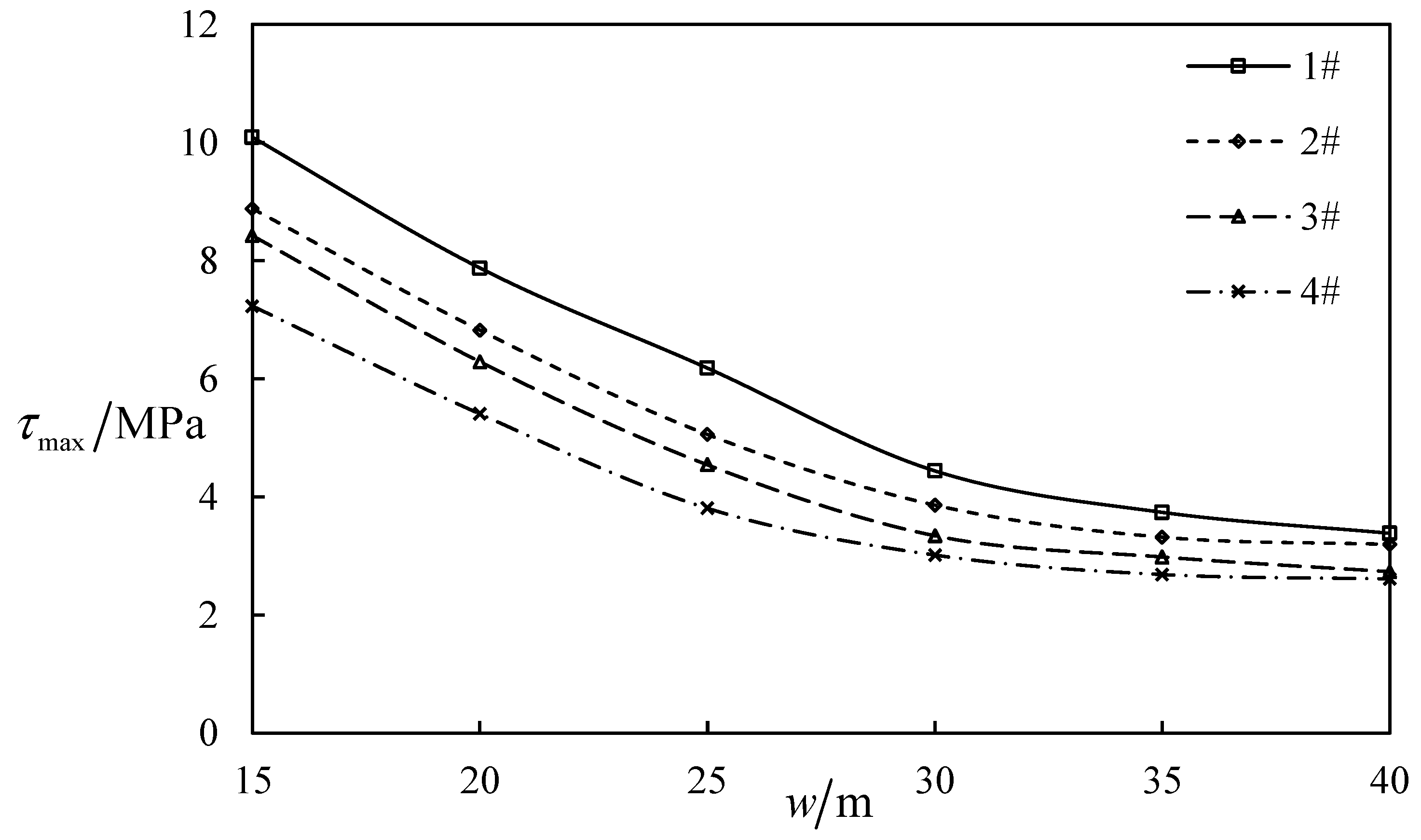
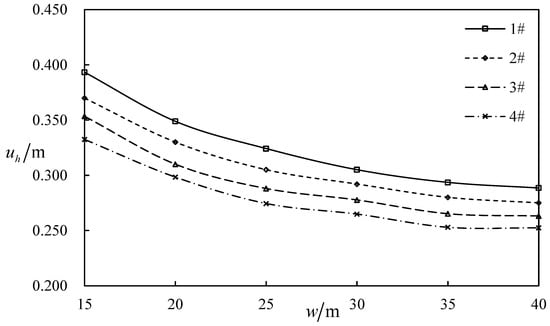
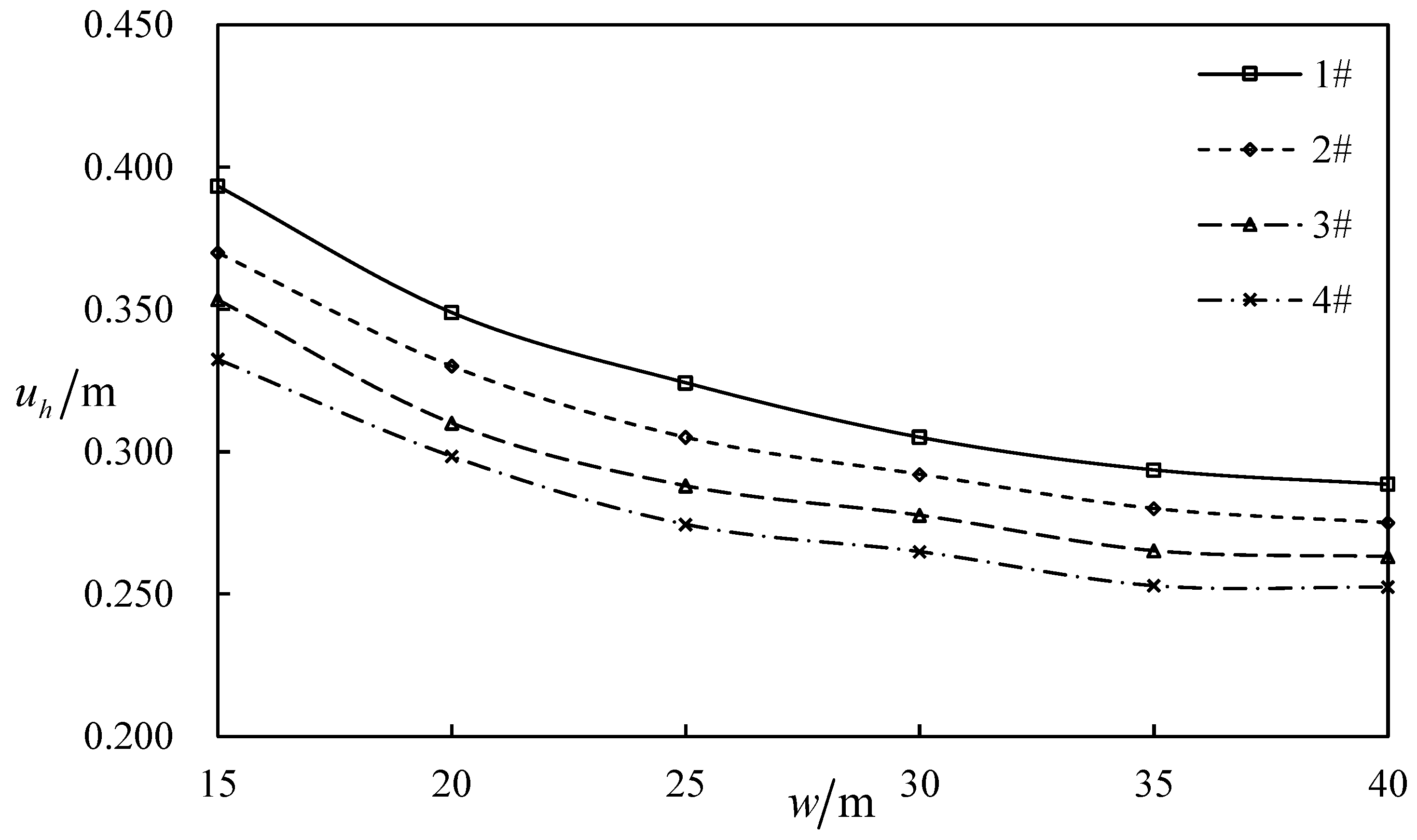
Figure 14 and Figure 15 show the variation in vertical and horizontal displacements of coal pillar groups with respect to pillar width, respectively. Comparing Figure 14 and Figure 15 reveals that both vertical and horizontal displacements gradually decrease as pillar width increases. When the coal pillar width is less than 30 m, the vertical and horizontal displacements decrease significantly with increasing width; when the width exceeds 30 m, the rate of decrease in vertical and horizontal displacements flattens as the width increases. Additionally, under the influence of the overlying strata, the degree of deformation varies among the coal pillars. No. 1# coal pillar exhibits the greatest vertical and horizontal displacements, while 2#, 3#, and 4# coal pillars show progressively decreasing vertical and horizontal displacements. As the width of the coal pillars increases, the differences in vertical and horizontal displacement among the pillars gradually diminish. This further indicates that with increasing pillar width, the deformation of each pillar becomes more stable, enhancing the overall stability of the pillar group.
Figure 14.
Variation in vertical displacement of coal pillar group with pillar width.
Figure 15.
Variation in horizontal displacement of coal pillar group with pillar width.
6. Influence of Mining Depth on the Stability of Coal Pillar Groups
In underground coal mining, as mining depth increases, the stress on the surrounding rock in the mining area gradually intensifies, and the load transmitted from the overlying strata to the coal pillars also rises accordingly. Simultaneously, strata that exhibit hard rock properties at shallow depths transition to distinct soft rock characteristics at greater depths, causing the deformation of coal pillars to display pronounced rheological characteristics. Therefore, investigating the influence of mining depth on the stress-deformation time-dependent characteristics of coal pillar groups holds significant importance for the safe and efficient operation of coal mines. In the following, the coal pillar width and coal seam dip angle are held constant, and they are set as , . The mining depth is set as , , , , , and .
6.1. Effect of Mining Depth on the Distribution of Plastic Zones
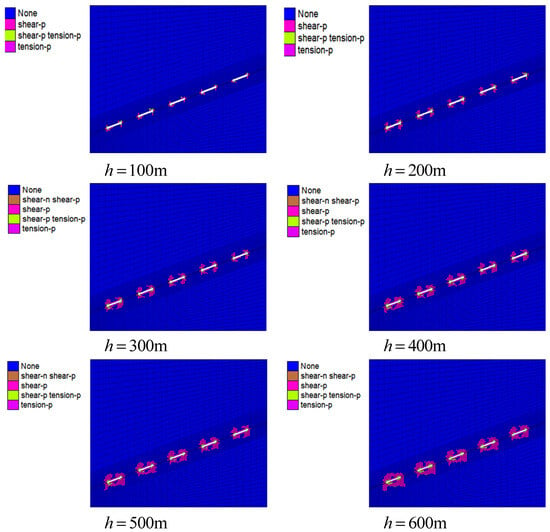
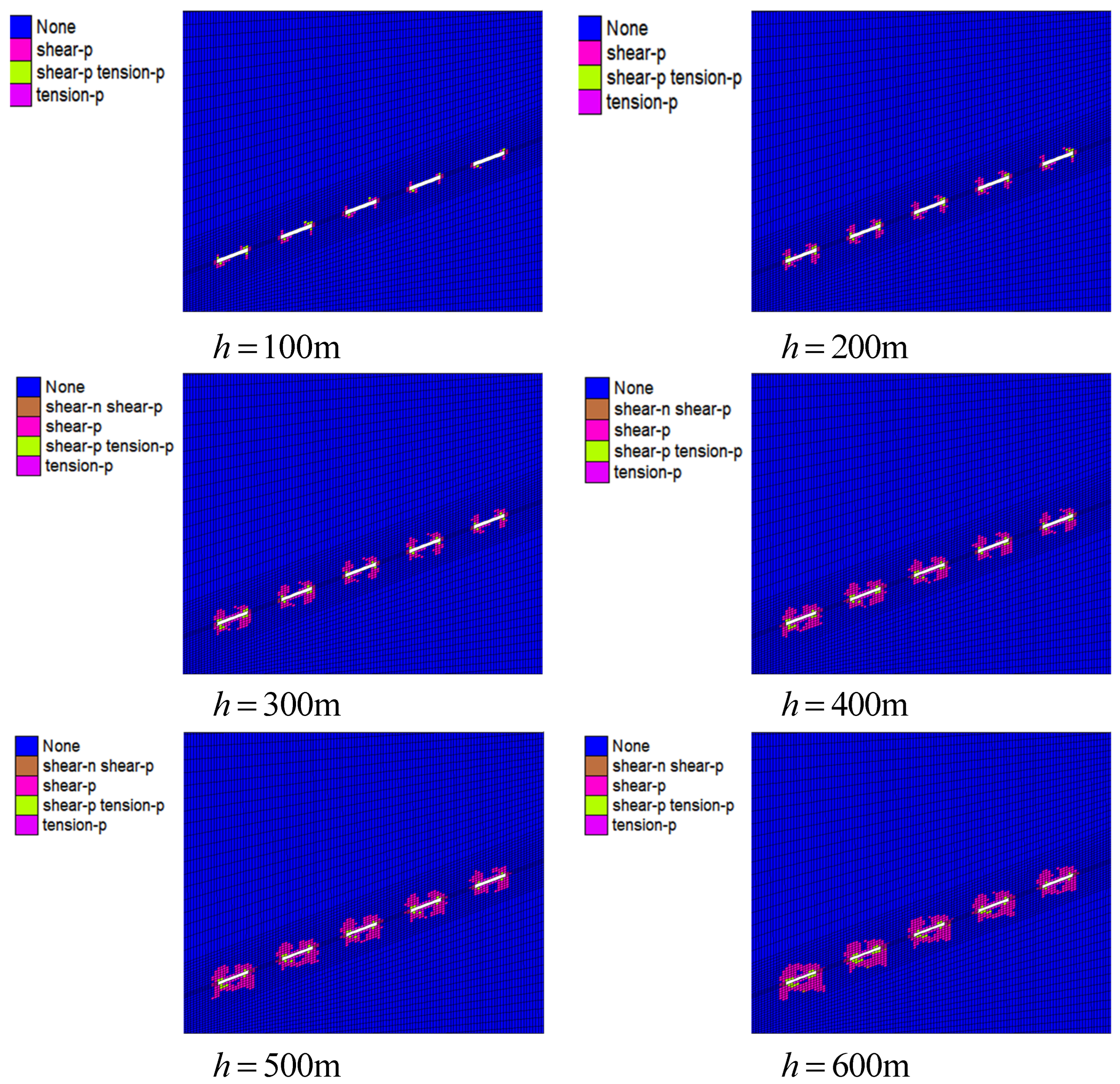
Figure 16 illustrates the contour of the plastic zone of each coal pillar varying with mining depth when the coal pillar width is 25 m, the coal seam dip angle is 25°, and the creep time is 120 days. From the figure, it can be seen that the plastic zone of the coal pillar is mainly distributed on both sides of the coal pillar, and the core area of the coal pillar remains in an elastic state. Moreover, as the mining depth increases, the plastic zone of each coal pillar gradually develops towards the core area of the coal pillar, and the range of the plastic zone of the coal pillar gradually increases.
Figure 16.
Variation in the plastic zone of coal pillar group with mining depth.
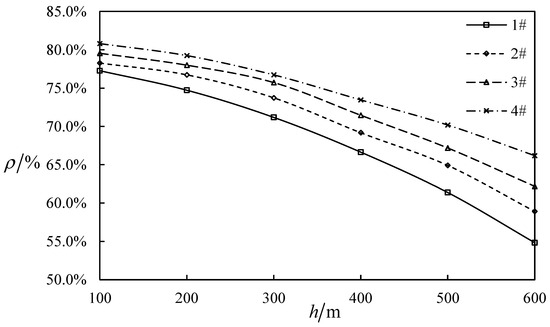
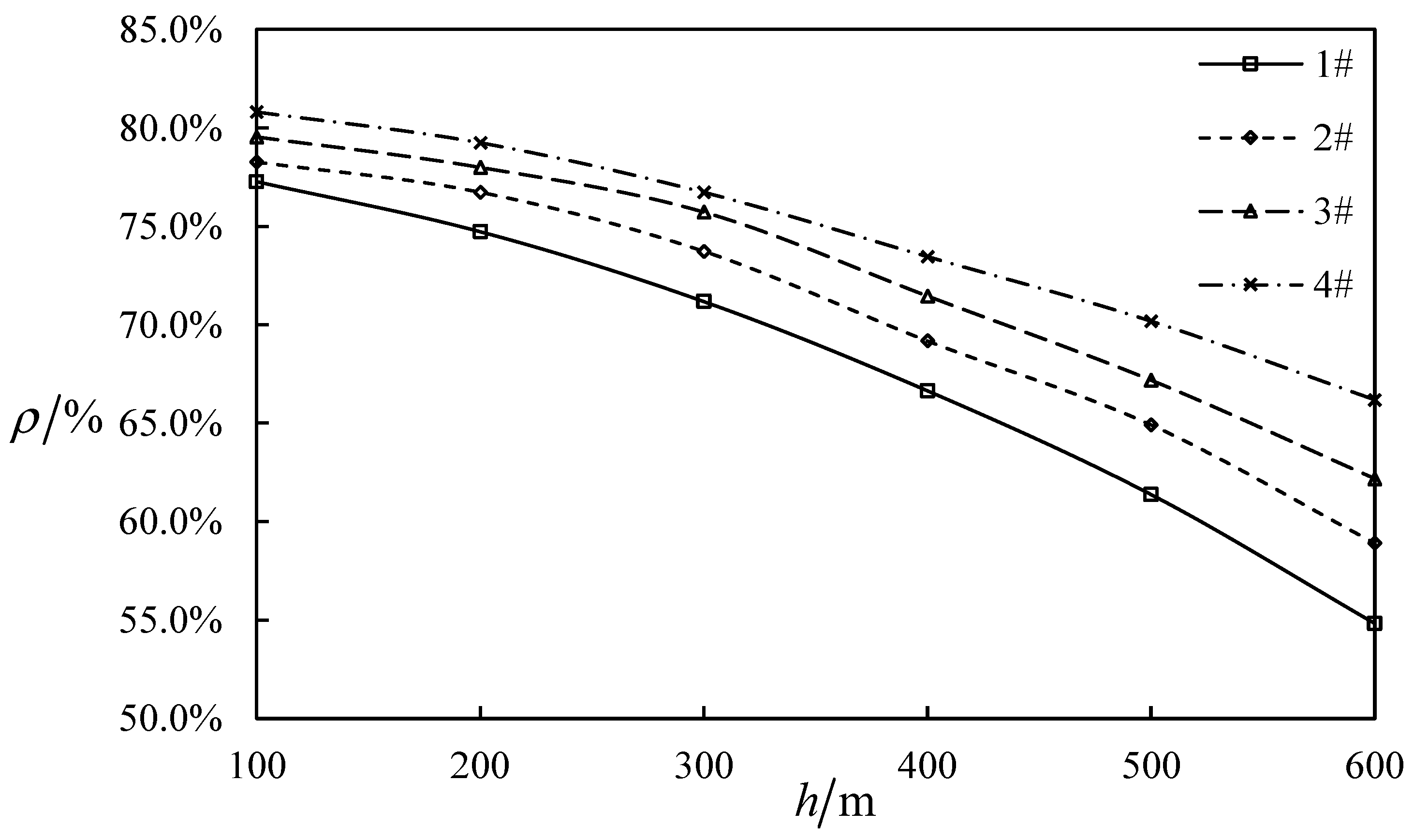
Figure 17 illustrates the variation in core zone rates of coal pillar groups with mining depth. It clearly shows that as mining depth increases, the plastic zones of each coal pillar gradually expand, leading to a progressive decrease in their core zone rates. When the mining depth is less than 400 m, the decrease in the core zone rates of each coal pillar is relatively slow with increasing depth. When the mining depth exceeds 400 m, the rate of decrease in the core zone ratio of each coal pillar gradually increases. Additionally, the core zone ratios vary among the pillars, with pillar 1# exhibiting the lowest core zone ratio, followed by a sequential decrease in 2#, 3#, and 4# coal pillars. As mining depth increases, the differences in core zone ratios among the pillars gradually widen. For example, at a mining depth of 100 m, the difference between the core zone rates of 1# and 4# coal pillars was only 3.55%. However, at a mining depth of 600 m, the difference between the core zone rates of coal pillar 1# and 4# reached 11.36%.
Figure 17.
Variation in the core zone rate of coal pillars with mining depth.
6.2. Variation in Stress Distribution in Coal Pillar Groups with Mining Depth
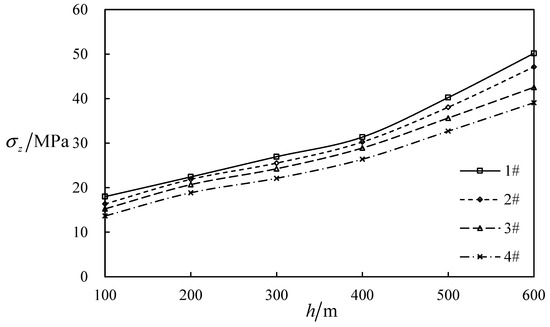
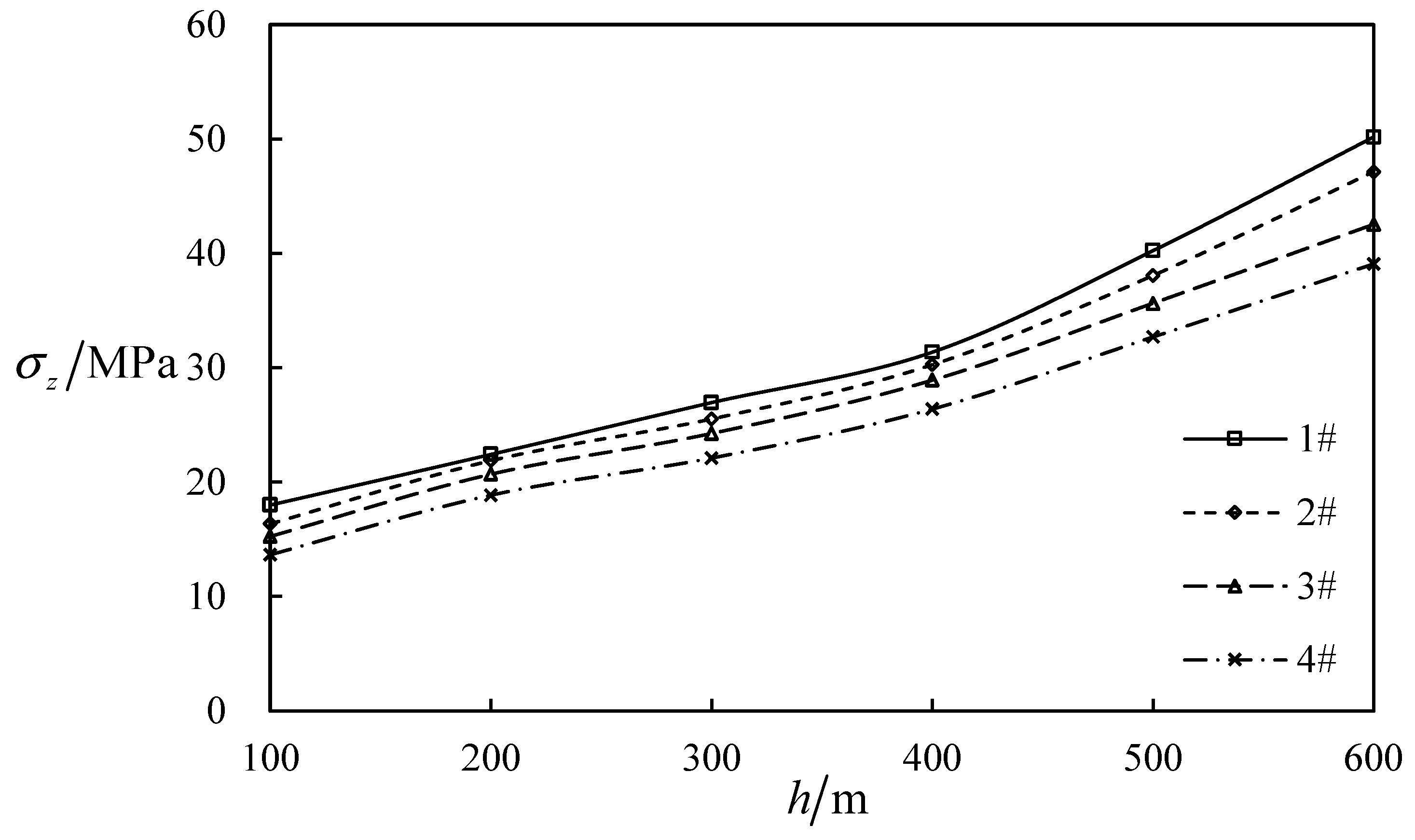
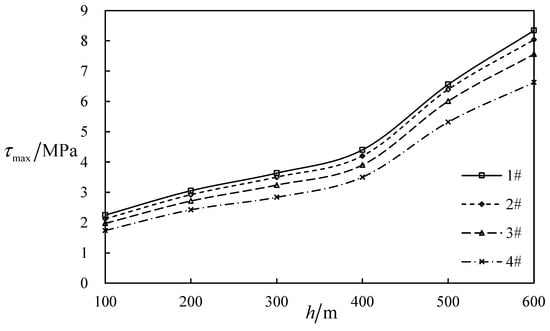
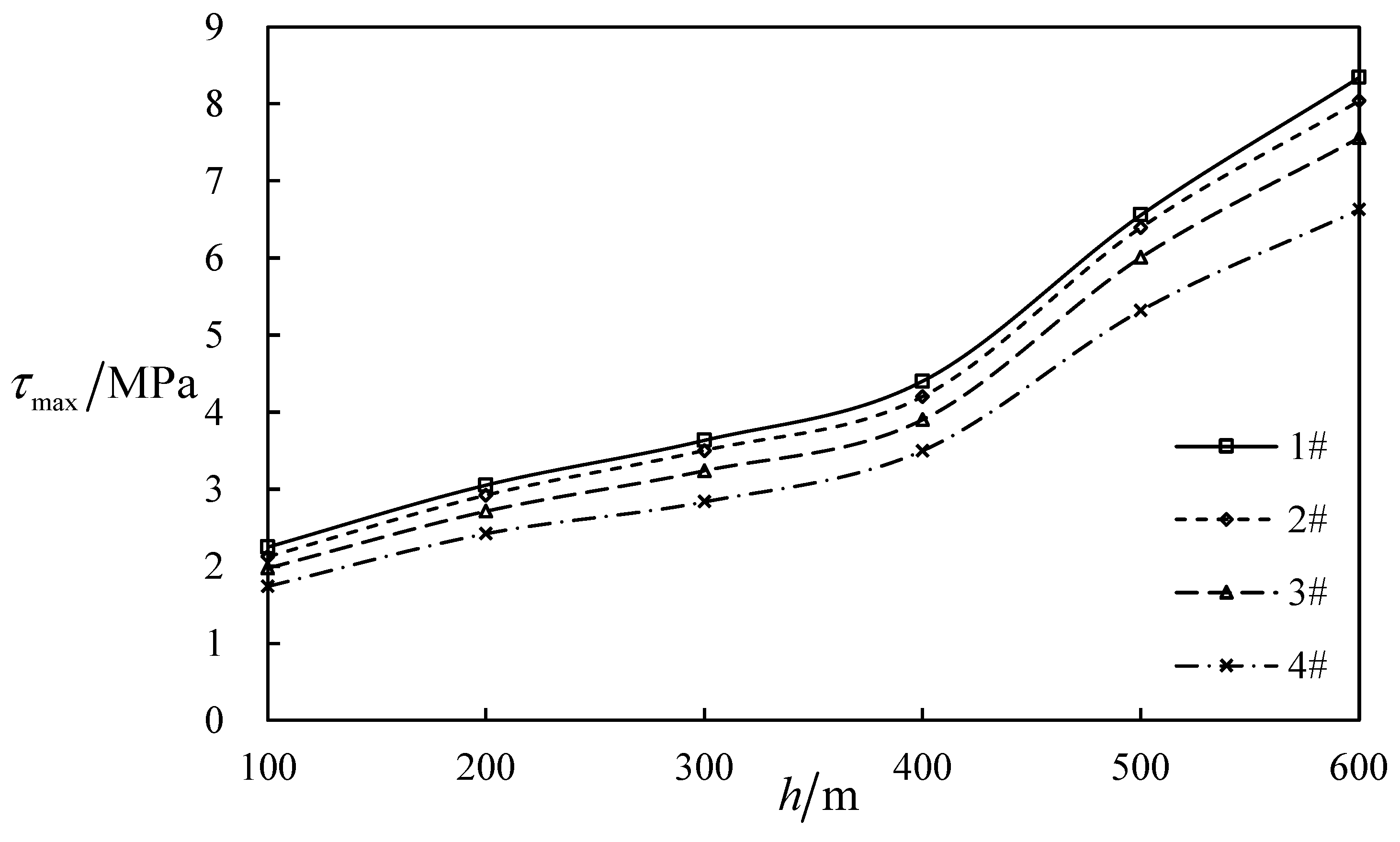
Figure 18 and Figure 19 show the variation in peak vertical stress and maximum shear stress in coal pillars with mining depth, respectively. By comparing Figure 18 and Figure 19, it can be observed that as the mining depth increases, the peak values of vertical stress and horizontal shear stress in each coal pillar gradually increase. When the mining depth is less than 400 m, the peak values of vertical stress and horizontal shear stress in each coal pillar increase relatively slowly with the growth in mining depth; when the mining depth is greater than 400 m, the peak values of vertical stress and horizontal shear stress in each coal pillar increase rapidly with the growth in mining depth. In addition, the degree of stress concentration varies among the coal pillars, with the peak stress of 1# coal pillar being the highest, and the peak stresses of 2#, 3#, and 4# coal pillars decreasing in turn. As the mining depth increases, the differences in the peak values of vertical stress and horizontal shear stress among the coal pillars tend to increase, with the peak values of vertical stress and horizontal shear stress in 1# coal pillar increasing the most, and the peak stress increases in 2#, 3#, and 4# coal pillars decreasing in turn.
Figure 18.
Variation in peak vertical stress in coal pillars with mining depth.
Figure 19.
Variation in maximum shear stress in coal pillars with mining depth.
6.3. Variation in Displacement in Coal Pillar Groups with Mining Depth
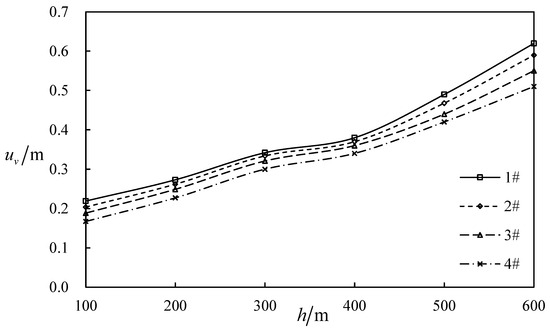
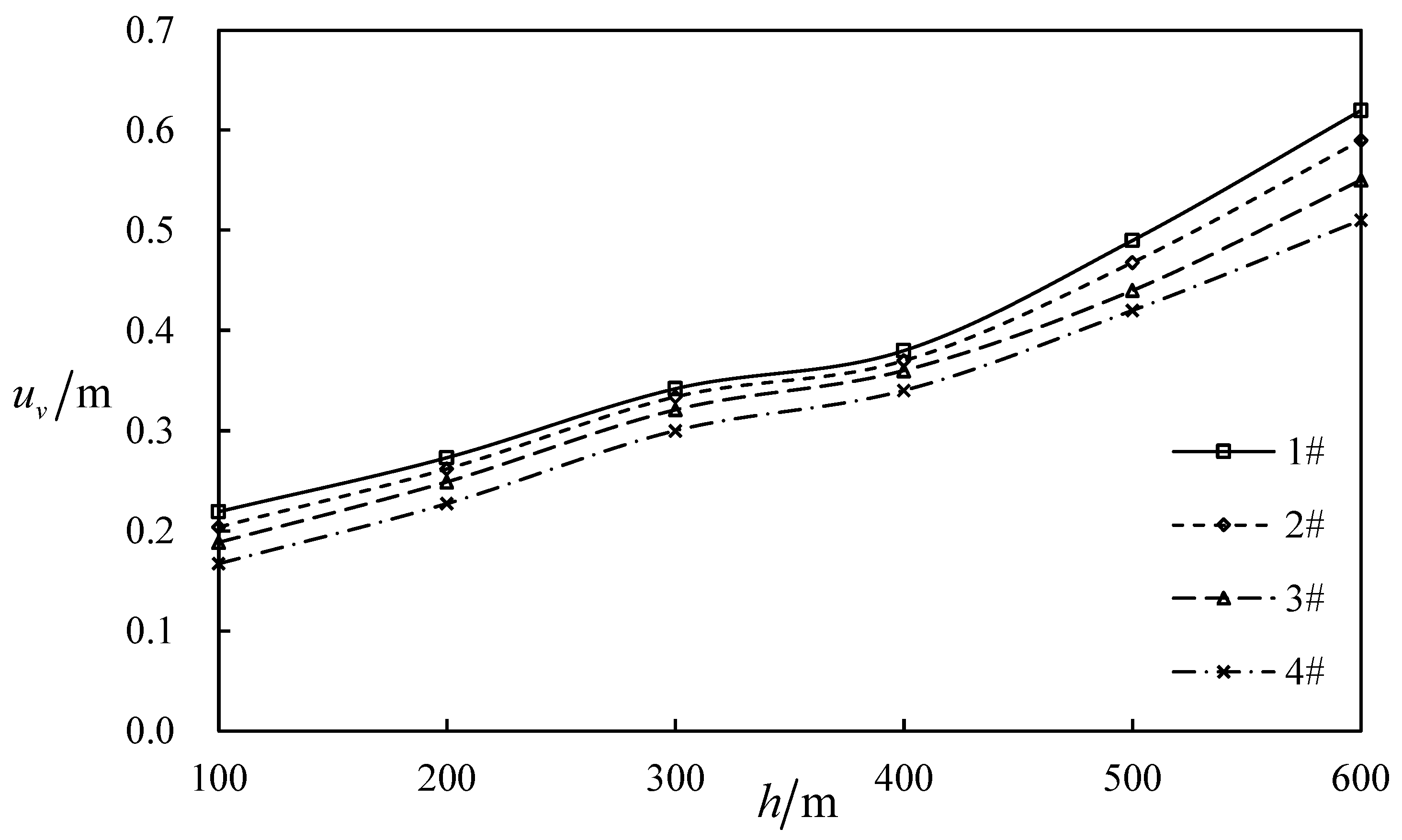
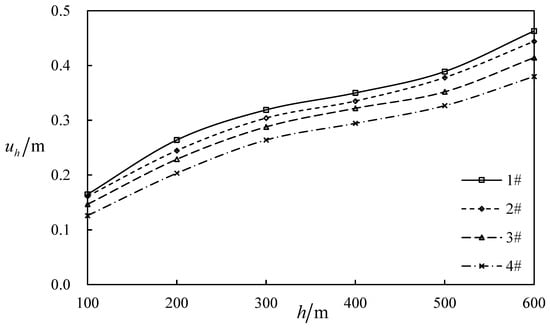
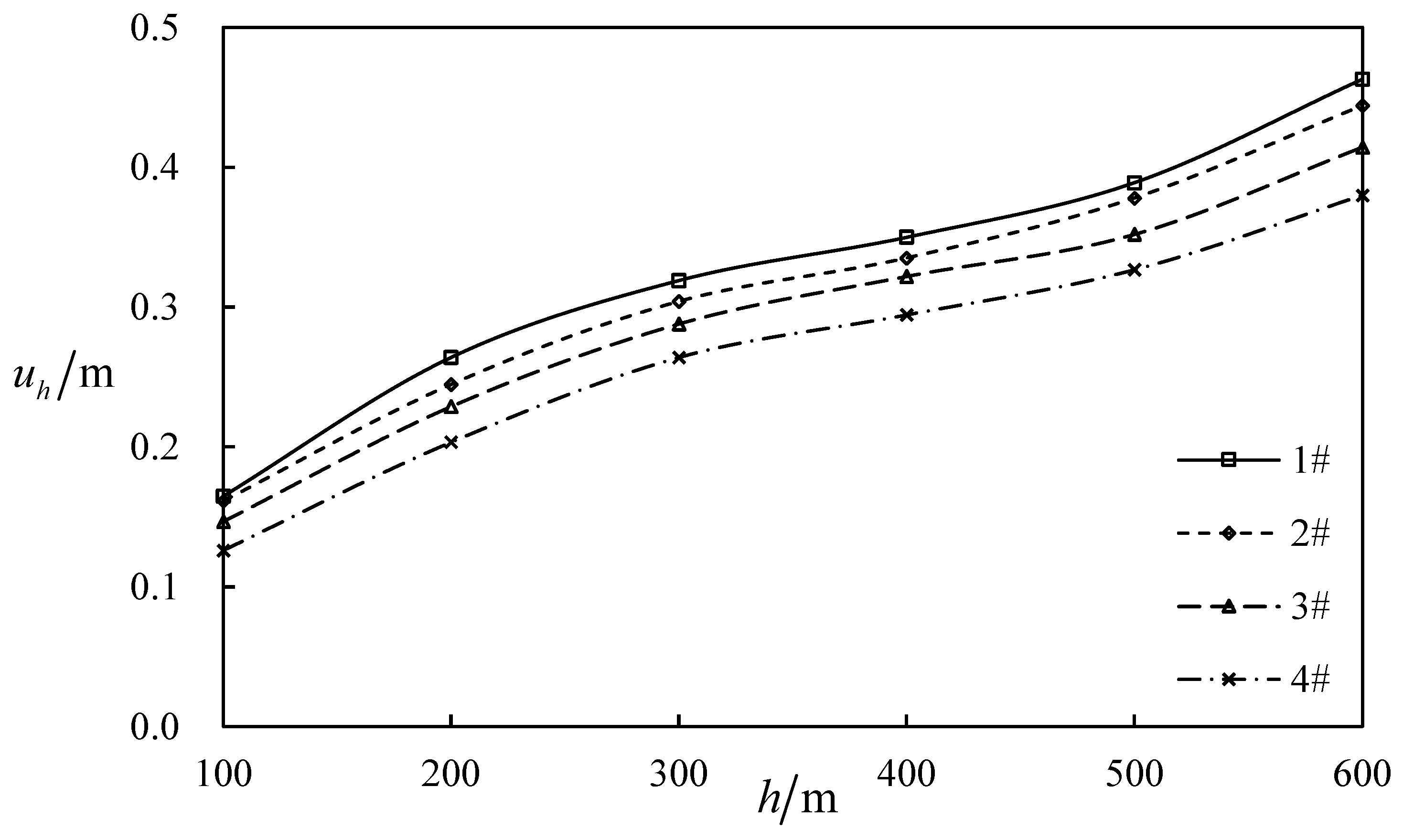
Figure 20 and Figure 21 illustrate the influence of mining depth on the vertical and horizontal displacements of coal pillar groups, respectively. A comparison between Figure 20 and Figure 21 reveals that as mining depth increases, the vertical and horizontal displacements of each coal pillar gradually increase. When the mining depth is less than 400 m, the increase in vertical and horizontal displacements of each coal pillar is relatively slow. However, when the mining depth exceeds 400 m, the pressure on the overlying strata gradually increases with the increase in mining depth, leading to a gradual increase in the vertical and horizontal displacements of each coal pillar.
Figure 20.
Variation in vertical displacement of coal pillar group with mining depth.
Figure 21.
Variation in horizontal displacement of coal pillar group with mining depth.
On the other hand, similar to Figure 18 and Figure 19, coal pillar 1# experiences the greatest vertical and horizontal displacement due to bearing the highest overburden pressure. The displacement in 2#, 3#, and 4# coal pillars decreases progressively in that order. As mining depth increases, the differences in vertical and horizontal displacement among the coal pillars gradually widen. This indicates that with the increase in mining depth, the overburden pressure progressively intensifies, leading to greater deformation of the coal pillar group under stress and an elevated risk of pillar instability.
7. Influence of Coal Seam Dip Angle on the Stability of Coal Pillar Groups
In mining methods that leave coal pillars, such as strip mining and room-and-pillar mining, the stability of pillar groups is crucial for both safe production at the working face and control of surface subsidence. Among the various factors affecting pillar stability, the dip angle of the coal seam significantly impacts the stability of pillar groups. Changes in coal seam dip angle directly affect the stress state and stress concentration within the coal pillar group. Excessive dip angles may cause pillar slippage and instability, triggering a “domino effect” of instability throughout the entire pillar group. Therefore, investigating the impact of coal seam dip angle on pillar group stability holds significant engineering importance.
This section continues to employ the mechanical model depicted in Figure 6. By analyzing the variation in the plastic zone of the coal pillar group, vertical/horizontal stresses, and vertical/horizontal displacements with respect to the coal seam dip angle, the influence of coal seam dip angle on the long-term stability of the coal pillar group is investigated. During the analysis, strip mining with retained coal pillars is most suitable for nearly horizontal and gently inclined coal seams with dip angles ranging from 0° to 25°. Coal seams with a dip angle greater than 25° are classified as inclined coal seams. When strip mining is implemented in such seams, coal pillars are prone to sliding shear failure, imposing stricter requirements on mining techniques. For coal seams with a dip angle exceeding 45°, strip coal pillars face extremely high risks of sliding and collapse along the dip direction, accompanied by highly uneven surrounding rock stress distribution. There are very few engineering cases of strip mining carried out under such dip conditions. Accordingly, the selection of coal seam dip angles here refers to existing engineering practices of mines adopting strip mining with retained coal pillars [9,29], most of which have coal seam dip angles below 30°. Therefore, the pillar width and mining depth are set as , , the coal seam dip angle is set as , , , .
7.1. Effect of Coal Seam Dip Angle on the Distribution of Plastic Zones
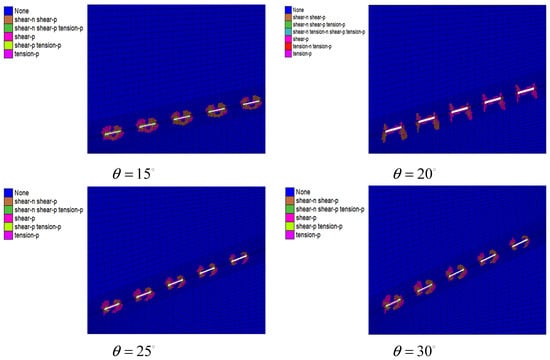
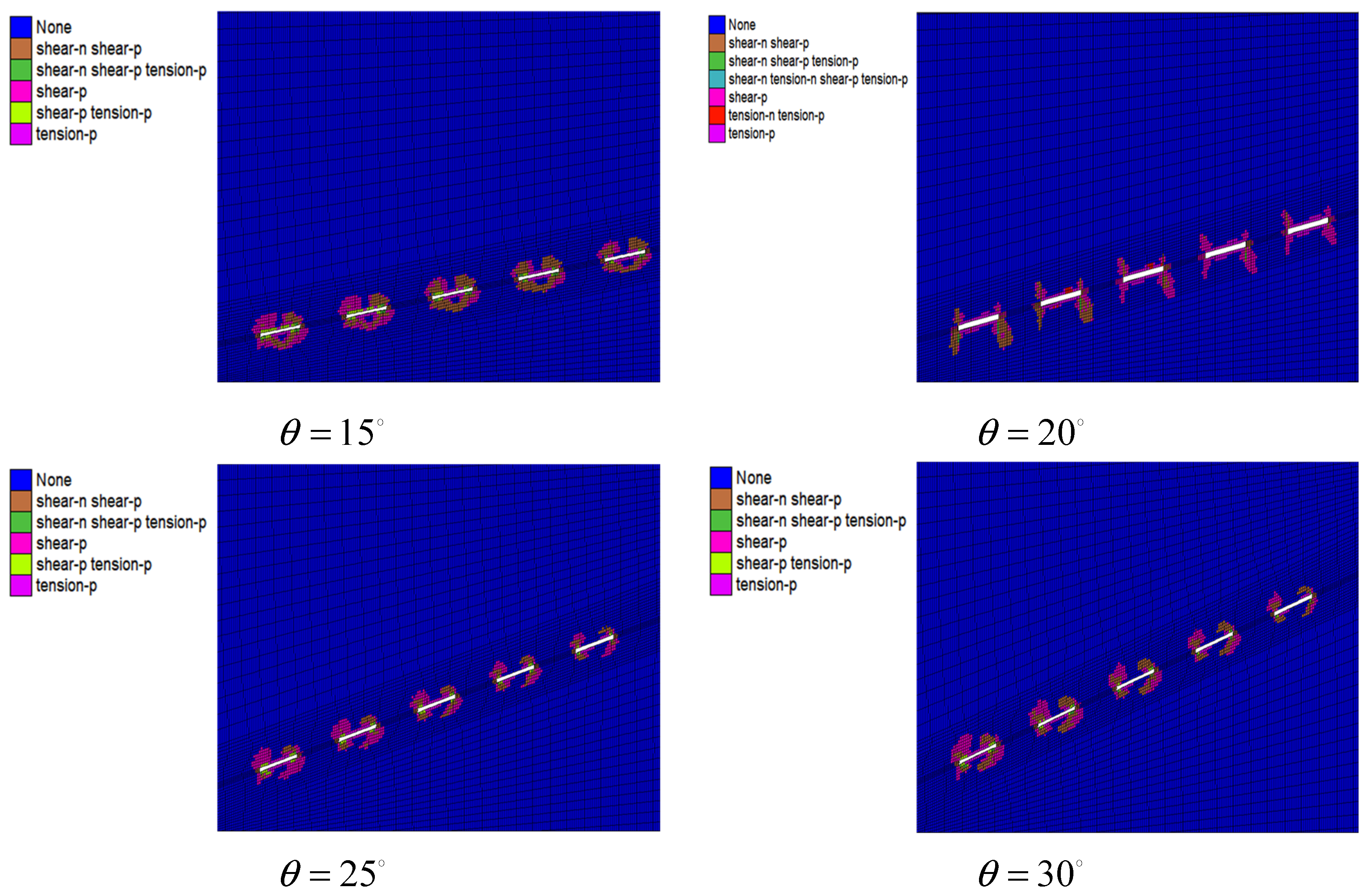
Figure 22 shows a contour of the plastic zone of coal pillar groups with coal seam dip angle. As shown in Figure 22, the plastic zones of each coal pillar are primarily distributed along the two sides of the pillar, while the core zone remains in an elastic state. The plastic deformation of the pillars is dominated by shear failure. As the dip angle of the coal seam increases, the plastic zones of each pillar gradually develop toward the core zone, and the extent of the plastic zones progressively expands.
Figure 22.
Variation in the plastic zone of coal pillar group with coal seam dip angle.
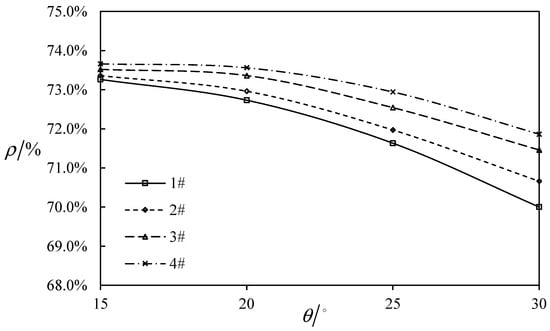
Figure 23 shows the variation in the core zone rate of coal pillar groups with coal seam dip angle. As shown more clearly in Figure 23, the core zone rate of each coal pillar gradually decreases with increasing coal seam dip angle, and the rate of decrease accelerates as the dip angle increases. The core zone rates also vary among pillars, with 1# pillar exhibiting the lowest rate, followed by 2#, 3#, and 4# pillars in ascending order. Furthermore, as the coal seam dip angle increases, the differences between the core zone rates of the coal pillars gradually widen. For example, when the coal seam dip angle is 15°, the difference between the core zone rates of 1# and 4# pillars is only 0.4%; when the coal seam dip angle is 30°, the difference between the core zone rates of 1# and 4# pillars reaches 1.86%.
Figure 23.
Variation in the core zone rate of coal pillars with coal seam dip angle.
7.2. Variation in Stress Distribution in Coal Pillar Groups with Coal Seam Dip Angle
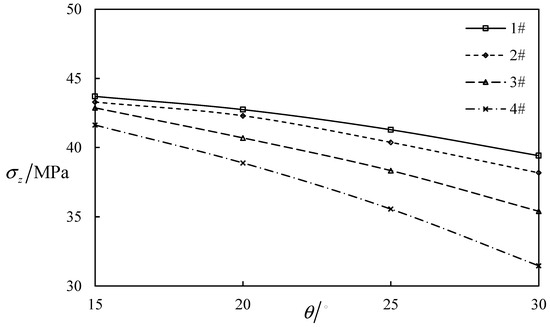
Figure 24 illustrates the effect of coal seam dip angle on the peak vertical stress distribution within the coal pillar group. As shown in Figure 19, with increasing coal seam dip angle, the peak vertical stresses in each pillar gradually decrease, and the reduction in peak stress across pillars progressively increases with greater dip angles. At a dip angle of 15°, the difference in peak stresses between pillars is relatively small. As the dip angle increases, the disparity in peak stresses between pillars progressively widens.
Figure 24.
Variation in peak vertical stress in coal pillars with coal seam dip angle.
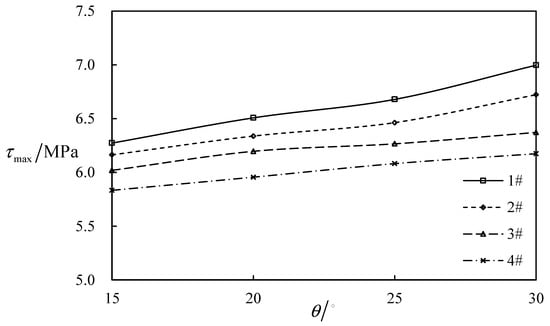
Figure 25 illustrates the effect of coal seam dip angle on the peak horizontal shear stress of coal pillar groups. It demonstrates that the peak horizontal shear stress of each pillar increases progressively with the coal seam dip angle, with the rate of increase becoming progressively steeper as the dip angle rises. Furthermore, the degree of stress concentration varies among the pillars, with 1# pillar exhibiting the highest peak stress, followed by 2#, 3#, and 4# pillars in descending order. As the coal seam dip increases, 1# pillar experiences the greatest increase in horizontal shear stress, while the peak shear stresses of 2#, 3#, and 4# pillars decrease successively. Consequently, the difference in peak stresses between pillars progressively widens.
Figure 25.
Variation in maximum shear stress in coal pillars with coal seam dip angle.
7.3. Variation in Displacement in Coal Pillar Groups with Coal Seam Dip Angle
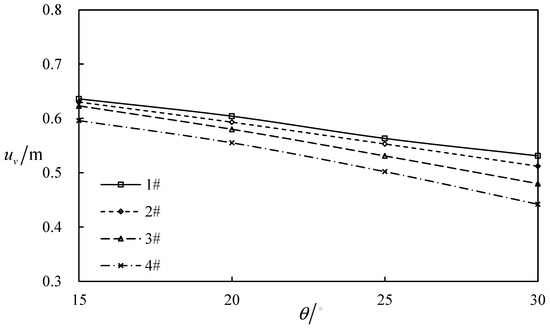
Figure 26 illustrates the influence of coal seam dip angle on the vertical deformation behavior of coal pillar groups. As shown in Figure 26, under any coal seam dip angle, 1# pillar exhibits the greatest vertical displacement, with 2#, 3#, and 4# pillars showing progressively decreasing vertical displacements. As the coal seam dip angle increases, the reduction in vertical deformation for 1# pillar is the smallest, while the reduction for 2#, 3#, and 4# pillars grows successively. The difference in vertical deformation between the pillars exhibits an increasing trend with the coal seam dip angle.
Figure 26.
Variation in vertical displacement of coal pillar group with coal seam dip angle.
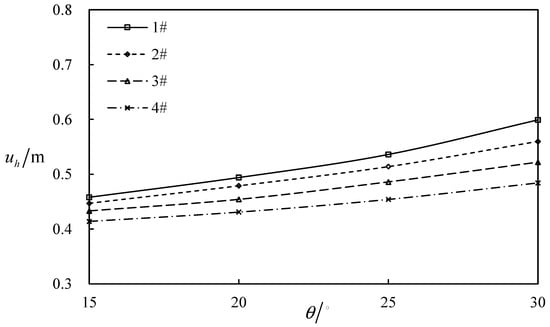
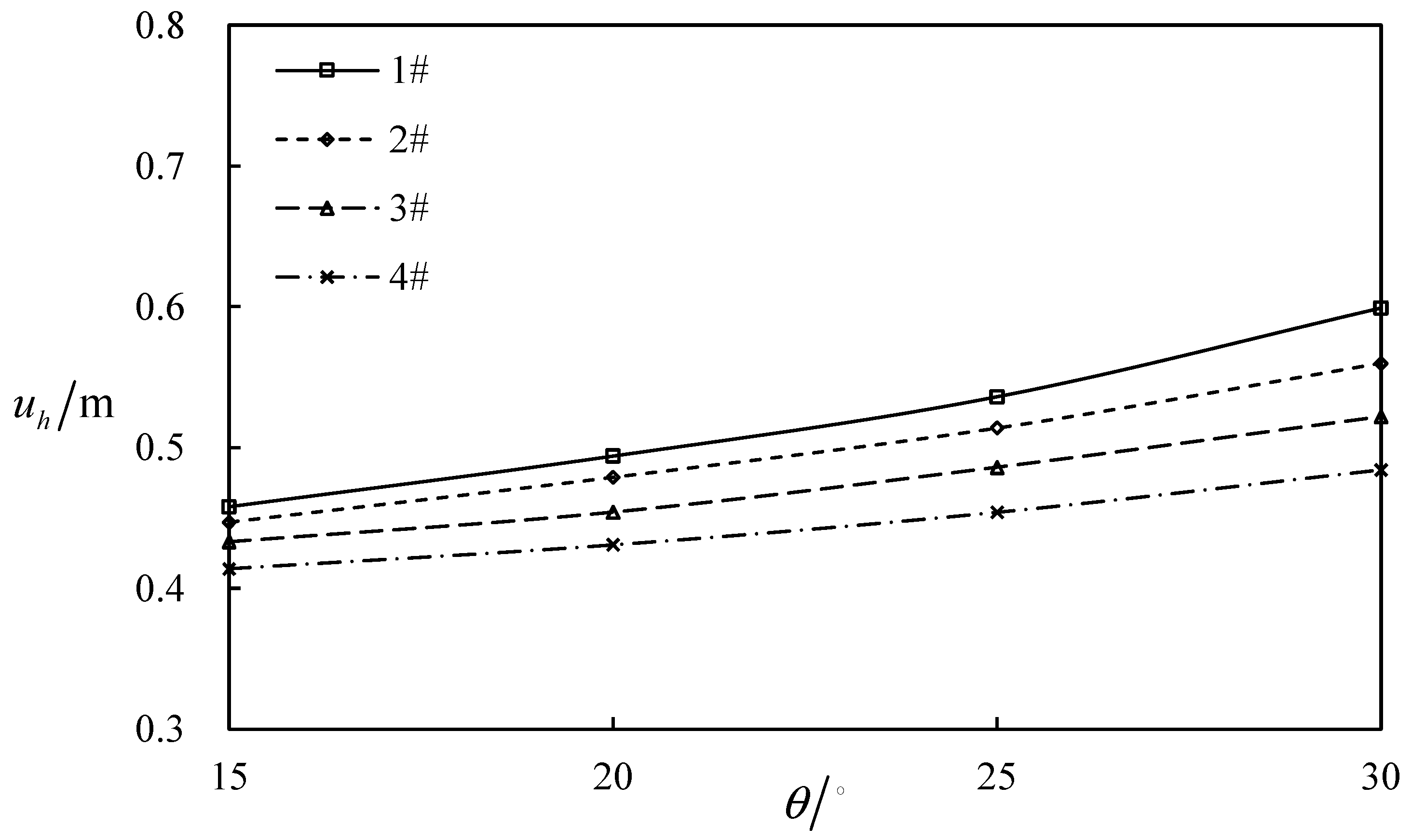
Figure 27 illustrates the influence of coal seam dip angle on the horizontal deformation behavior of coal pillar groups. As shown in Figure 27, unlike the influence of coal seam dip angle on the vertical displacement of the coal pillar group, the horizontal displacement of each pillar exhibits an increasing trend with rising dip angle. Among these, 1# pillar demonstrates the greatest increase in horizontal displacement, while 2#, 3#, and 4# pillars show progressively smaller increases. Furthermore, the disparity in horizontal displacement between pillars tends to widen as the coal seam dip angle increases.
Figure 27.
Variation in horizontal displacement of coal pillar group with coal seam dip angle.
8. Conclusions
This paper employs analytical and numerical methods to analyze the instability mechanism of overlying strata and residual coal pillars in inclined coal seams. Analytical expressions for the stress and displacement fields of the coal pillar are derived using the Ritz method. On this basis, combined with the actual conditions of strip mining in a certain village, the influence of time effect on the long-term stability of coal pillar group is investigated. The impact of factors such as pillar width, mining depth, and coal seam dip angle on the distribution of plastic zones within pillar groups and their load-deformation characteristics are further studied. The following principal conclusions are drawn:
- (1)
- Under the influence of long-term overburden pressure, the two sides of each coal pillar first enter the plastic yield state, and due to the influence of coal seam dip angle, the coal pillar presents the form of shear failure. With the development of coal and rock creep, the plastic zone of each coal pillar expands to the inner core zone.
- (2)
- As the width of the coal pillars increases, the extent of the plastic zones, stress levels, and deformation within each pillar decrease to varying degrees. Among these, the reduction in the plastic zone of the 1# pillar is most pronounced, while the decreases in 2#, 3#, and 4# pillars progressively diminish. The disparity in plastic zone extent across pillars gradually narrows with increasing pillar width. When the coal pillar width is less than 30 m, the reduction in stress and deformation across pillars is notably pronounced. When the width exceeds 30 m, the reduction in stress and deformation gradually diminishes, and the differences in stress and deformation between pillars progressively narrow.
- (3)
- Increased mining depth leads to varying degrees of expansion in the plastic zones, stresses, and deformations across coal pillars. Among these, the plastic zone of coal pillar 1# exhibits the most significant increase, while the expansions for pillars 2#, 3#, and 4# decrease successively. The disparity in plastic zone dimensions across pillars tends to widen with greater mining depth. When mining depth is less than 400 m, the increase in stress and deformation across coal pillars is relatively gradual. However, when the mining depth exceeds 400 m, the growth in stress and deformation across coal pillars accelerates, with the disparity in stress and deformation between pillars progressively widening.
- (4)
- As the coal seam dip angle increases, the extent of the plastic zones within each coal pillar expands rapidly. Among these, pillar 1# exhibits the greatest increase, while pillars 2#, 3#, and 4# show progressively smaller increases in plastic zone extent. The disparity in plastic zone size between pillars gradually widens. The pillar’s vertical stress and vertical deformation decreased to varying degrees across the pillars, with pillar 1# exhibiting the smallest reduction and pillars 2#, 3#, and 4# showing progressively greater decreases. Conversely, horizontal stress and horizontal deformation increased to varying degrees, with pillar 1# experiencing the largest increase and pillars 2#, 3#, and 4# showing progressively smaller increases. The variation in stress and deformation between coal pillars showed a tendency to increase with the coal seam dip angle.
Author Contributions
This study was designed by H.W., Y.C., and J.Y. The data collection and analysis were completed by H.W. The manuscript was drafted and revised by H.W., Y.C., J.Y., H.L., G.L., C.Z., K.Z., and X.M. All authors have read and agreed to the published version of the manuscript.
Funding
This research is supported by the Xinjiang Uygur Autonomous Region Special Program for Key R&D Tasks (2025B03038), the Regional Fund of National Natural Science Foundation of China (52464008), Natural Science Foundation of Xinjiang Uyghur Autonomous Region (2024D01C15), and the Xinjiang Uygur Autonomous Region “Tianshan Talent Training” Program (2022TSYCCX0037).
Data Availability Statement
The raw data supporting the conclusions of this article will be made available by the authors on request.
Conflicts of Interest
The authors declare no conflicts of interest.
References
- Bai, J.; Shi, X.; Feng, G.; Qi, T.; Li, Z. A new method for evaluating chain failure of residual coal pillars and its application in the upward mining. J. Min. Saf. Eng. 2022, 39, 643–652+662. [Google Scholar] [CrossRef]
- Feng, G.; Bai, J.; Ma, J.; Guo, J.; Pan, R.; Wang, K.; Song, C. Technical challenge of coal pillars resource green mining and underground space developing in the residual mining area. J. Green Mine 2023, 1, 91–100. [Google Scholar]
- Feng, G.; Bai, J.; Shi, X.; Qi, T.; Wang, P.; Guo, J.; Wang, S.; Kang, L. Key pillar theory in the chain failure of residual coal pillars and its application prospect. J. China Coal Soc. 2021, 46, 164–179. [Google Scholar] [CrossRef]
- Mohan, G.M.; Sheorey, P.R.; Kushwaha, A. Numerical estimation of pillar strength in coal mines. Int. J. Rock Mech. Min. Sci. 2001, 38, 1185–1192. [Google Scholar] [CrossRef] [Scilit]
- Mortazavi, A.; Hassani, F.P.; Shabani, M. A numerical investigation of rock pillar failure mechanism in underground openings. Comput. Geotech. 2009, 36, 691–697. [Google Scholar] [CrossRef] [Scilit]
- Xie, H.; Duan, F.; Zhou, H.; Zhao, G. Recent development of theory and analysis methods of strip pillar stability. China Min. Mag. 1998, 7, 37–41. [Google Scholar]
- Zhang, C.; Qi, H.; Zhao, J.; Cai, M. Unified solutions to remained width for inclined strip coal pillar. J. Min. Saf. Eng. 2019, 36, 248–255. [Google Scholar] [CrossRef]
- Shao, X.; Tao, Y.; Liu, E.; Zhao, B.; Li, X.; Wang, L.; Li, L.; Tang, R.; Zhang, J. Study and application of paste-like filling mining parameters of shallow buried coal seam in Northern Shaanxi. Coal Sci. Technol. 2021, 49, 63–70. [Google Scholar]
- Ma, J. Research on reasonable width of coal pillars between caverns of Wongawilli mining. Coal Sci. Technol. 2022, 50, 69–77. [Google Scholar]
- Wu, B.; Cao, Z.; Yu, L.; Li, P.; Wang, Y.; Zuo, C. Quantifying coal pillar dam width and analyzing influencing factors in underground reservoirs of inclined coal seams. J. Min. Saf. Eng. 2024, 41, 277–284. [Google Scholar] [CrossRef]
- Cui, X.; Miao, X. Analysis of stress acting on strip pillar and form of subsidence curve. J. China Univ. Min. Technol. 2000, 29, 392–395. [Google Scholar]
- Guo, W.; Deng, K.; Zou, Y. Study on failure and instability of trip coal pillar by catastrophic theory. J. China Univ. Min. Technol. 2005, 34, 77–81. [Google Scholar]
- Wang, L.; Miao, X. Study on catastrophe characteristics of the destabilization of coal pillars. J. China Univ. Min. Technol. 2007, 36, 7–11. [Google Scholar] [CrossRef] [Scilit]
- Tan, Y.; Guo, W.; Zhao, Y. Engineering stability and instability mechanism of strip Wongawilli coal pillar system based on cata-strophic theory. J. China Coal Soc. 2016, 41, 1667–1674. [Google Scholar] [CrossRef]
- Zhang, J.; Qin, G.; Wang, B. Study on the instability mechanism of interbedded rock strata and remining coal pillar groups based on cusp catastrophe theory. Results Eng. 2025, 27, 106319. [Google Scholar] [CrossRef] [Scilit]
- Li, C.; Zhou, J.; Armaghani, D.J.; Li, X. Stability analysis of underground mine hard rock pillars via combination of finite difference methods, neural networks, and Monte Carlo simulation techniques. Undergr. Space 2021, 6, 379–395. [Google Scholar] [CrossRef] [Scilit]
- He, Z.; Zhu, L.; Liu, C.; Gu, W. Study on failure and instability mechanism of roof in room-and-pillar goaf. Saf. Coal Mines 2024, 55, 152–163. [Google Scholar]
- Qiao, H.; Liu, S.; Dong, L.; Guo, P.; Gao, R. Failure and permeability characteristics of coal pillar in closely coal seams gob under multiple Mining. Processes 2024, 12, 2934. [Google Scholar] [CrossRef] [Scilit]
- Ma, J.; Bai, J.; Cui, B.; Feng, G.; Wang, S.; Shi, X.; Pan, R.; Xun, J.; Fan, Z. Influence mechanism of pillar-side backfilling on the overburden-coal pillar system’s stability under upward mining. Mater. Today Commun. 2025, 44, 112117. [Google Scholar] [CrossRef] [Scilit]
- Guo, X.; Jin, Y.; Miu, T.; Wei, S.; Xia, Y.; Tang, J. Investigation of the time-dependent and dynamic geomechanical behaviors induced by depressurization in natural gas hydrate-bearing sediments based on a poro-elasto-viscoplastic-dynamic model. Int. J. Rock Mech. Min. Sci. 2026, 197, 106357. [Google Scholar] [CrossRef] [Scilit]
- Xu, J.; Miao, X.; Zhang, X. Analysis of the time-dependence of the coal pillar stability. J. China Coal Soc. 2005, 30, 433–437. [Google Scholar]
- Xu, S.; Mao, X.; Zhang, D. Study on pillar’s plastic zone based on elasto-visco-plastic theory. J. Liaoning Tech. Univ. 2006, 25, 194–196. [Google Scholar]
- Sun, C.; Xu, N.; Fan, Z.; Wang, M. Analysis on rational loading time of coal pillar in wedge pillar type goaf. Coal Sci. Technol. 2017, 45, 43–48. [Google Scholar] [CrossRef]
- Li, X.; Wang, F.; Yi, S.; Yi, H.; Cheng, G.; Chen, Z. Investigation on the long-term damage evolution of a strip coal pillar. Sci. Rep. 2025, 15, 35688. [Google Scholar] [CrossRef] [Scilit] [PubMed]
- Wang, M.; Wang, Z.; Hu, B.; Chen, H. Coal pillar design of strip mining in deeply inclined coal seam under buildings. Coal Min. Technol. 2006, 11, 21–22+44. [Google Scholar]
- Chai, H.; Zou, Y.; Guo, W. Study on strip pillar mining method for inclined coal seams under village. China Saf. Sci. J. 2008, 18, 172–176. [Google Scholar] [CrossRef]
- Xu, J.; Liu, K.; Lu, A. Viscoelasticity analysis and application of key strata of covering rock to short wall Mining. Chin. J. Rock Mech. Eng. 2006, 25, 1147–1151. [Google Scholar]
- Zou, Y.; Chai, H. Research status of strip coal pillar stability and its main problems in China. J. Min. Saf. Eng. 2006, 23, 141–145+150. [Google Scholar]
- Guo, W.; Wang, H.; Liu, Z. Coal pillar stability and surface movement characteristics of deep wide strip pillar mining. J. Min. Saf. Eng. 2015, 32, 369–375. [Google Scholar] [CrossRef]

Disclaimer/Publisher’s Note: The statements, opinions and data contained in all publications are solely those of the individual author(s) and contributor(s) and not of MDPI and/or the editor(s). MDPI and/or the editor(s) disclaim responsibility for any injury to people or property resulting from any ideas, methods, instructions or products referred to in the content. |
© 2026 by the authors. Licensee MDPI, Basel, Switzerland. This article is an open access article distributed under the terms and conditions of the Creative Commons Attribution (CC BY) license.