


Abstract
Geological observations, excavation performance records, field monitoring data, and support applications obtained during construction were examined in relation to excavation-induced structural behavior. Monitoring systems, including tiltmeters, extensometers, and distomat measurements, were used to evaluate deformation behavior in buildings located near the tunnel alignment. This study additionally discusses the differences between the preliminary FEM-based deformation predictions reported during the design stage and the structural behavior observed during excavation. The results indicate that groundwater-sensitive claystone sections generated significant excavation and stability problems despite controlled excavation and support measures. High groundwater inflow (30–35 L/s) caused base instability, unfavorable excavation conditions, and increased deformation risks. Field observations indicated substantially greater deformation behavior than the preliminary FEM-based predictions reported during the design stage. The findings demonstrate that shallow urban tunneling in weak and groundwater-sensitive formations may generate more complex ground–structure interactions than those represented in preliminary numerical assessments. This study highlights the importance of continuous field monitoring, adaptive support strategies, groundwater control measures, and observational excavation management practices for improving tunnel safety and reducing risks to nearby urban structures.
1. Introduction
Tunnel construction is an essential component of urban infrastructure systems used for transportation, water conveyance, and energy transmission. However, shallow urban tunneling may induce ground deformation and settlement, potentially affecting adjacent buildings and infrastructure [1,2]. Reliable prediction and monitoring of excavation-induced deformations are critical for maintaining excavation safety and minimizing risks to nearby structures [3]. In complex urban tunnel applications, comprehensive field investigations, groundwater control, and continuous monitoring are of critical importance [4,5].
Tunnel-induced deformation behavior is governed by the combined influence of geological-, hydrogeological-, geometrical-, and construction-related factors. Parameters such as overburden thickness, tunnel geometry, excavation sequence, support stiffness, groundwater conditions, and soil or rock mass characteristics directly affect tunnel stability and settlement development [6,7,8]. In shallow urban tunnels excavated under weak or water-bearing formations, groundwater inflow is often one of the dominant factors controlling deformation behavior. Previous studies have demonstrated that excessive groundwater inflow may reduce ground strength, accelerate volume loss, increase convergence, and significantly amplify settlement-related risks [9,10]. Furthermore, heterogeneous geological conditions and the interaction between weak and relatively stiff formations may further complicate deformation behavior and increase instability potential [11,12]. These complex conditions introduce substantial uncertainty into conventional settlement prediction approaches and numerical analyses.
The New Austrian Tunneling Method (NATM) is widely adopted in urban tunneling projects because of its adaptability to varying geological conditions and its observational design philosophy. Nevertheless, deformation behavior in weak ground conditions remains highly sensitive to excavation sequences, support timing, groundwater conditions, and support stiffness [13,14]. Reducing the steel arch spacing and increasing support stiffness can significantly improve tunnel stability in weak formations, although these measures may also decrease excavation efficiency and increase construction costs [15]. In addition to tunnel stability, tunneling-induced deformations may considerably affect nearby structures. Structural stiffness, foundation characteristics, and tunnel proximity strongly influence the response of buildings subjected to tunneling-induced settlements [16]. Additionally, tunnel geometry plays a critical role in influencing stress distribution and failure mechanisms. Regarding dynamic fracture characteristics and energy evolution of tunnel models with varying shapes under impact loads, elliptical tunnels exhibited better stress distribution and stability compared to other tunnel shapes under dynamic loads [17]. Adaptive support measures and real-time monitoring are commonly applied to control deformation and maintain excavation stability during urban tunnel excavation [2].
Previous studies have extensively examined tunnel-induced settlement and deformation behavior by using empirical methods and numerical analyses. However, field-based investigations comparing predicted and observed deformations in shallow NATM tunnels excavated within weak claystone formations under intense groundwater inflow remain limited. In particular, the combined influence of groundwater-induced weakening, shallow overburden, heterogeneous ground conditions, and support modifications on building-scale deformation has not been sufficiently documented. Consequently, the reliability of conventional prediction approaches under such conditions remains uncertain.
Empirical settlement models and finite element analyses are widely used to evaluate tunneling-induced deformation and tunnel stability. Nevertheless, recent studies have shown that deformation in groundwater-affected weak formations may exceed numerical predictions because of uncertainties related to groundwater flow, geological heterogeneity, and excavation-induced disturbance [18,19,20]. For this reason, integrating field monitoring data with numerical analyses has become increasingly important for evaluating actual ground and structural responses during tunnel construction.
In this context, the present study investigates the excavation performance, support behavior, groundwater-related instability behavior, and tunneling-induced deformations observed during the construction of the Diyarbakır–Emek Street pressure tunnel excavated using the NATM under shallow overburden conditions. The main objective of this study is to evaluate the discrepancy between predicted and observed deformations in weak claystone formations subjected to high groundwater inflow conditions. Unlike previous studies primarily focused on metro tunnels excavated in soft soil environments, the present study examines a shallow pressure tunnel constructed within groundwater-affected weak claystone formations characterized by severe instability and significant deformation behavior. This study combines field observations, excavation performance records, structural monitoring data, and previously conducted finite element analyses to evaluate the performance of conventional prediction approaches under complex urban tunneling conditions. The findings provide practical insights into groundwater-related instability behavior, support system performance, deformation control strategies, and the challenges associated with predicting field behavior in shallow urban NATM tunnels excavated in weak water-bearing formations.
2. Project Description
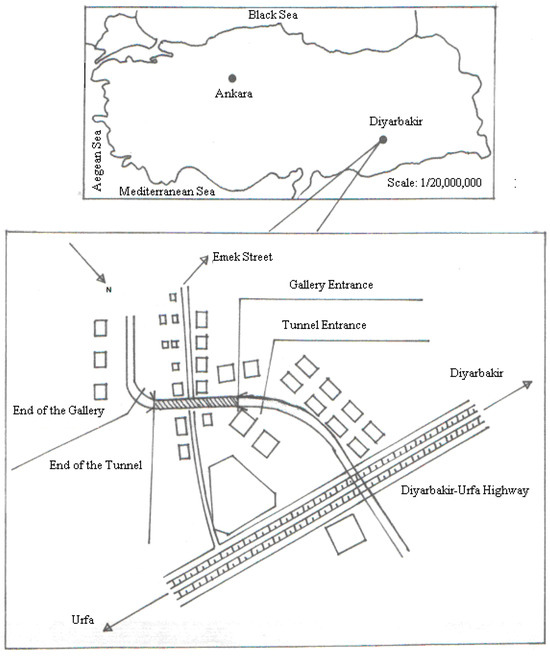
The Diyarbakır–Emek Street pressure tunnel constitutes part of the irrigation infrastructure developed within the Southeastern Anatolia Project (GAP), Türkiye. While most sections of the irrigation channel were constructed as open channels, a 122.76 m long section located beneath Emek Street in a densely urbanized area was excavated as a shallow underground tunnel due to the presence of existing residential structures, transportation infrastructure, and limited surface construction space (Figure 1).
Figure 1.
The general layout of the tunnel axis.
The tunnel alignment passed beneath an urban area characterized by shallow overburden conditions and buildings located in close proximity to the excavation zone. These conditions significantly increased the risk of tunneling-induced ground deformation and structural damage during excavation. Consequently, minimizing surface deformation and maintaining the stability of nearby structures became critical engineering considerations throughout the construction process.
In addition to urban constraints, the tunnel excavation encountered complex geological and hydrogeological conditions associated with weak claystone formations and significant groundwater inflow. These factors considerably affected excavation stability, support performance, and observed deformation behavior during construction.
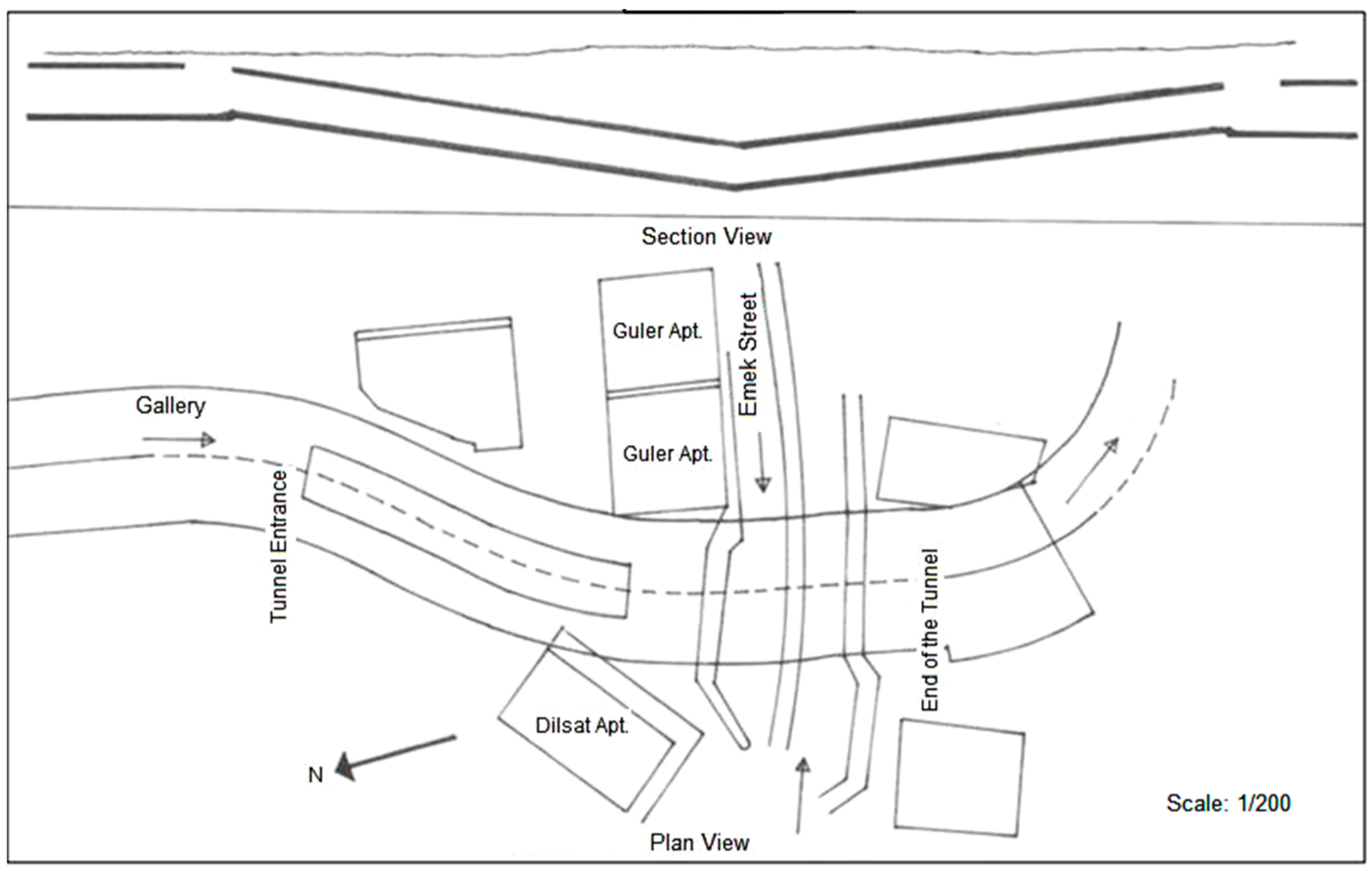
The pressure tunnel had an internal diameter of 7.0 m and functioned as a siphon structure along the tunnel alignment. The tunnel descended from the upstream horseshoe-shaped channel section with an approximate slope of 13%, reaching its maximum depth near the location closest to the Dilsat Apartment. From this point, the tunnel ascended with an opposite slope of approximately 13% before reconnecting to the downstream horseshoe-shaped main channel section (Figure 2). The technical characteristics of the Diyarbakır–Emek Street pressure tunnel are summarized in Table 1.
Figure 2.
Plan and section view of the pressure tunnel.
Table 1.
Technical characteristics of the Diyarbakır–Emek Street pressure tunnel.
The tunnel was excavated under generally shallow overburden conditions, with a maximum overburden depth of approximately 17 m. The limited cover thickness, combined with the proximity of residential buildings to the tunnel alignment, increased the sensitivity of the excavation to ground deformation and tunneling-induced structural effects.
The excavation and preliminary support design were prepared during the design stage of the project based on the geological and geotechnical conditions identified along the tunnel route [21].
3. Geotechnical Assessment of Route
Prior to tunnel excavation, two exploratory boreholes were drilled along the tunnel alignment to investigate the geological and geotechnical conditions of the site. Based on the borehole data, the tunnel route was identified within the Miocene-aged Şelmo Formation, consisting predominantly of conglomerate–sandstone and claystone units. The geological and geotechnical characteristics of the formations encountered along the tunnel route are detailed in Table 2.
Table 2.
Geological and geotechnical characteristics of the tunnel formations.
The preliminary geotechnical investigations indicated that parts of the tunnel excavation would likely be located below the groundwater table. Although the initial assessments suggested that the overall ground conditions could provide short-term excavation stability, the potential effects of groundwater inflow and weak claystone behavior were identified as important risk factors during tunnel construction [21].
Due to the heterogeneous nature of the formation and the anticipated groundwater influence, rapid support installation and continuous monitoring were recommended during excavation in order to minimize deformation-related risks.
4. Tunnel Excavation and Support
4.1. Tunnel Excavation
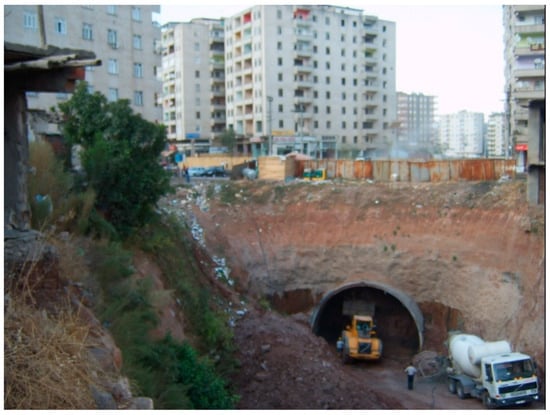
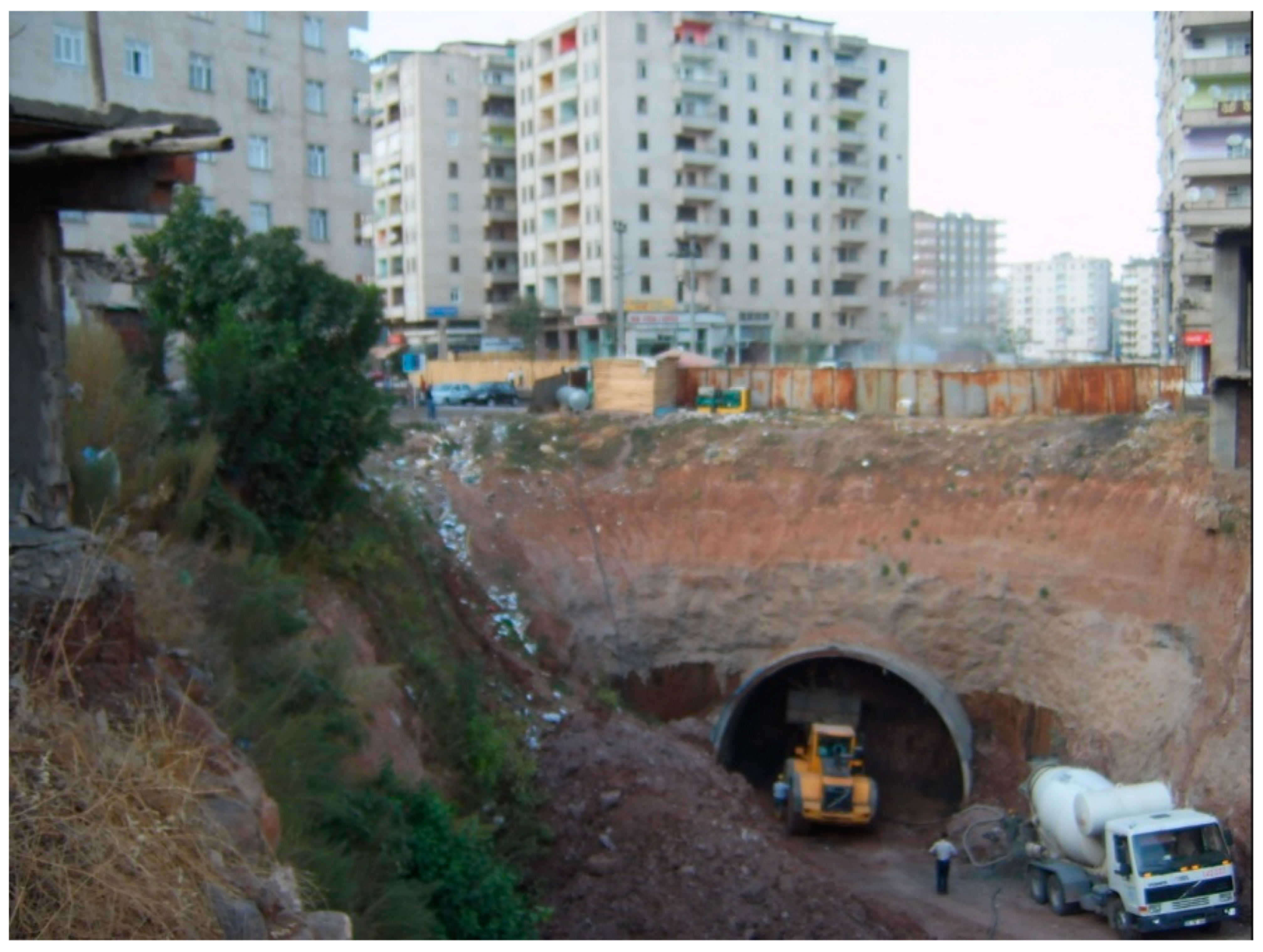
Tunnel excavation was initiated using full-face shotcrete support and a temporary support system consisting of steel arches and reinforced wire mesh (Figure 3). Excavation was performed according to the New Austrian Tunneling Method (NATM) using staged upper and lower bench excavation in order to improve excavation stability and control deformation under shallow urban conditions.
Figure 3.
A view of the tunnel entrance.
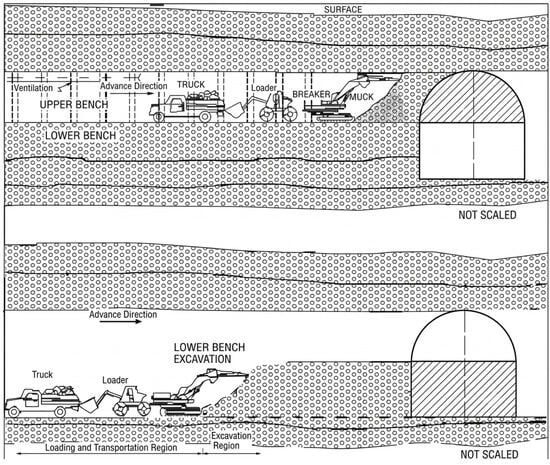
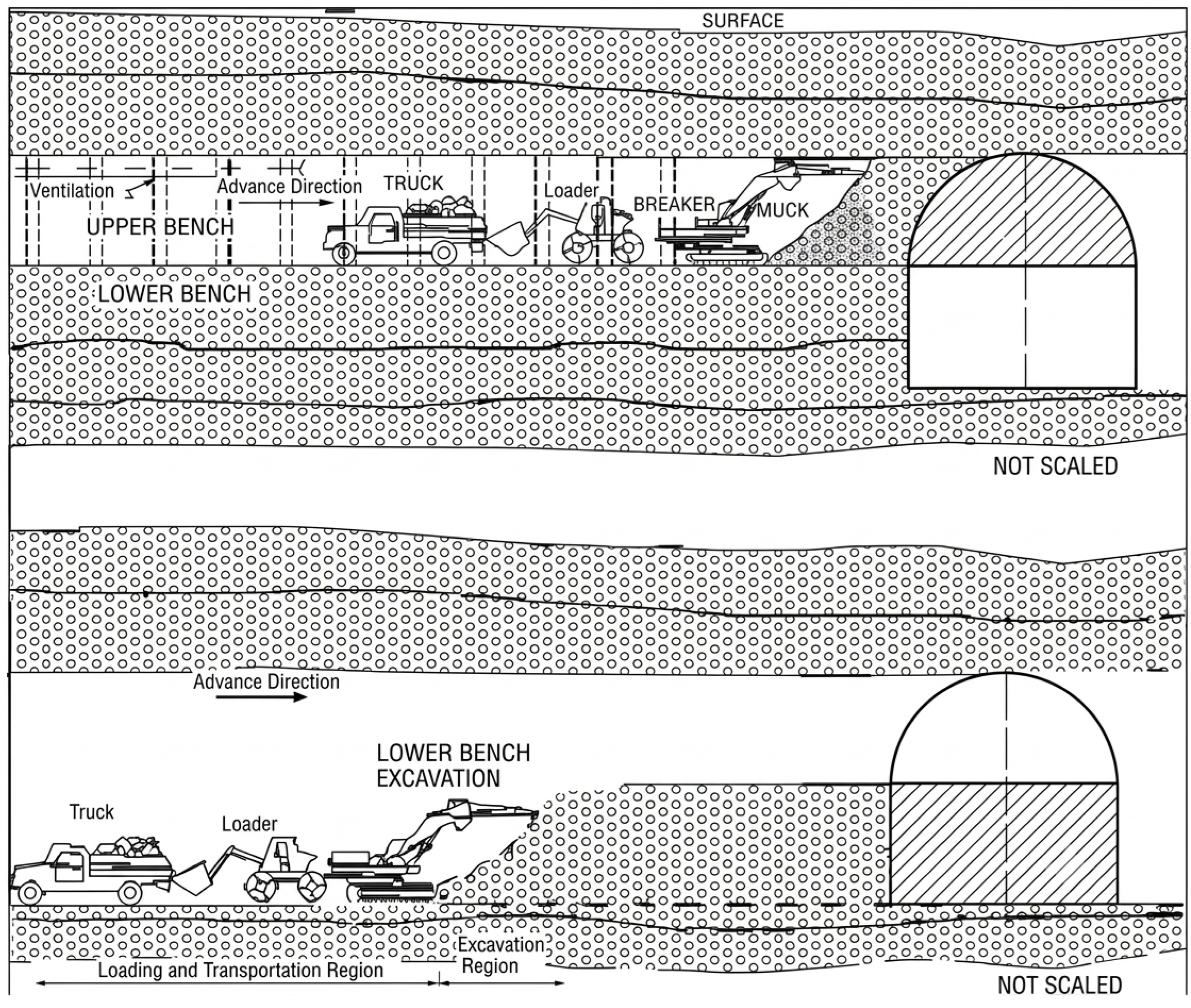
The staged excavation sequence allowed progressive support installation and reduced the risk of excessive ground deformation, particularly in weak claystone sections affected by groundwater inflow. Excavated material was removed using a truck–loader transportation system. A schematic representation of the excavation sequence and support system is presented in Figure 4.
Figure 4.
Typical cross-section of the tunnel and excavation method.
Due to the shallow overburden conditions and the proximity of nearby residential buildings, maintaining excavation stability and minimizing tunneling-induced deformation were considered critical during all excavation stages. It was installed at the tunnel face using a full double layer of shotcrete, and a protective shield consisting of permanent arches covered with cages was used (Figure 3). Tunnel excavation was completed using the New Austrian Tunneling Method (NATM) for the upper and lower benches.
Tunnel excavation was carried out using hydraulic excavators equipped with hydraulic breakers that were suitable for the excavation of conglomerate–sandstone and weak claystone formations. Excavated material was transported using a truck–loader system. A detailed illustration of the complete excavation system is provided in Figure 4.
Due to the shallow overburden conditions, highway crossing, and the close proximity of residential buildings to the tunnel alignment, excavation and support operations were performed in a highly controlled manner. Excavation advance lengths were generally limited to approximately 1 m in sections located beneath Emek Street and near existing buildings in order to minimize ground deformation and maintain excavation stability.
Rapid support installation was considered essential to reduce unsupported exposure time and control deformation behavior during excavation. The combination of weak claystone behavior and groundwater inflow significantly increased the sensitivity of the excavation process, particularly in sections located near the Dilsat Apartment.
Excavation progress was intermittently interrupted due to concerns raised by nearby residents regarding possible structural effects and vibration-related impacts. These interruptions contributed to extended construction durations under urban conditions.
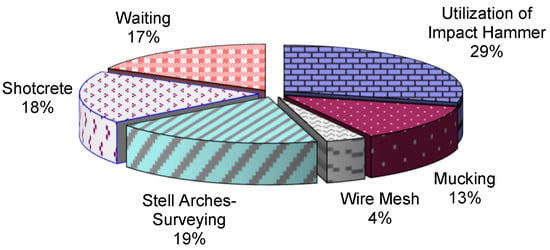
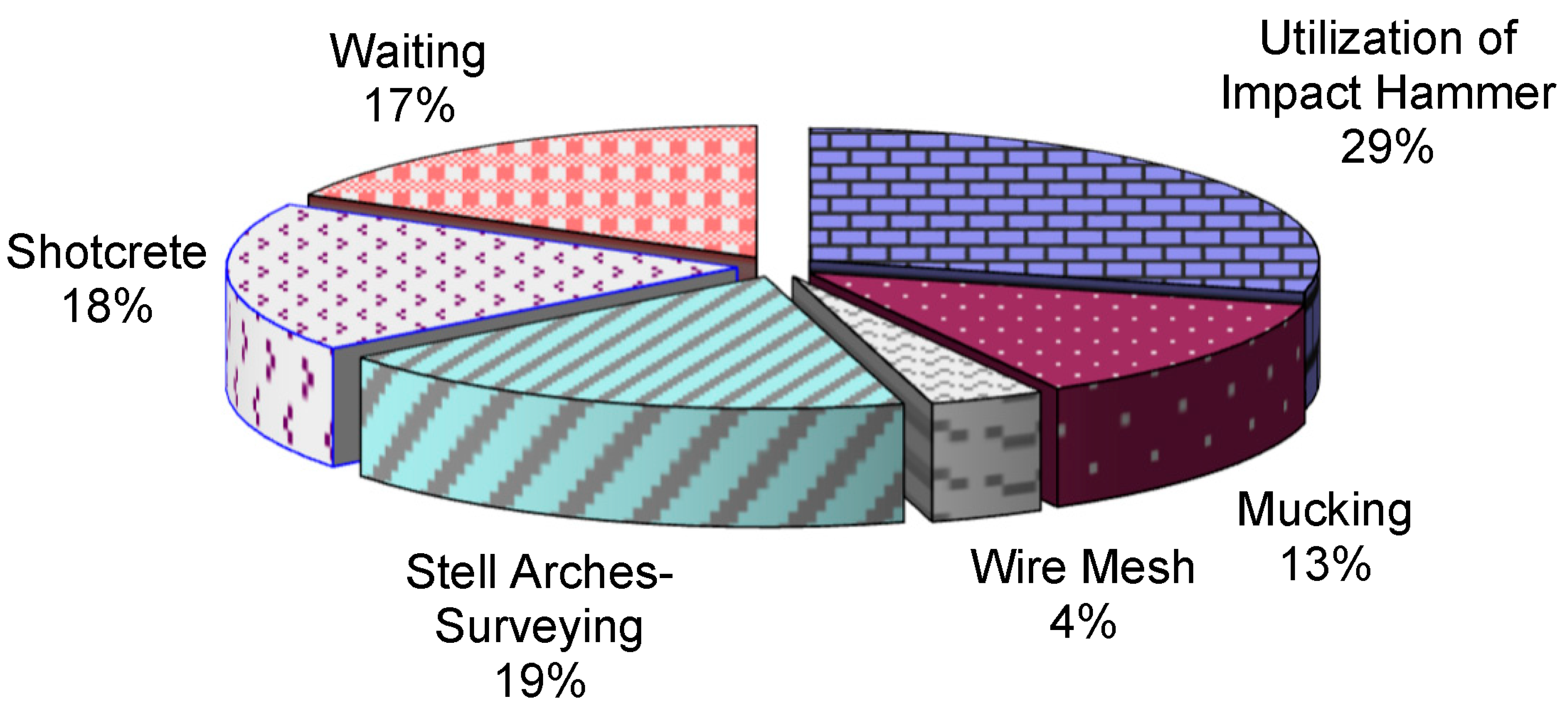
Table 3 summarizes the average excavation cycle performance for combined upper and lower bench excavation. Controlled excavation activities and support installation accounted for the largest proportion of the excavation cycle, representing approximately 29% and 41% of total operational time, respectively (Figure 5). In addition, waiting periods associated with unfavorable ground conditions accounted for approximately 17% of excavation time. These values were calculated based on active tunnel working periods and do not include interruptions caused by external social factors.
Table 3.
Machine performance.
Figure 5.
Excavation cycle distribution.
Excavation of the upper bench required approximately seven months, whereas the lower bench excavation was completed within approximately three months. The relatively slow excavation progress reflects the challenging geological conditions and the importance of deformation control during shallow urban tunneling.
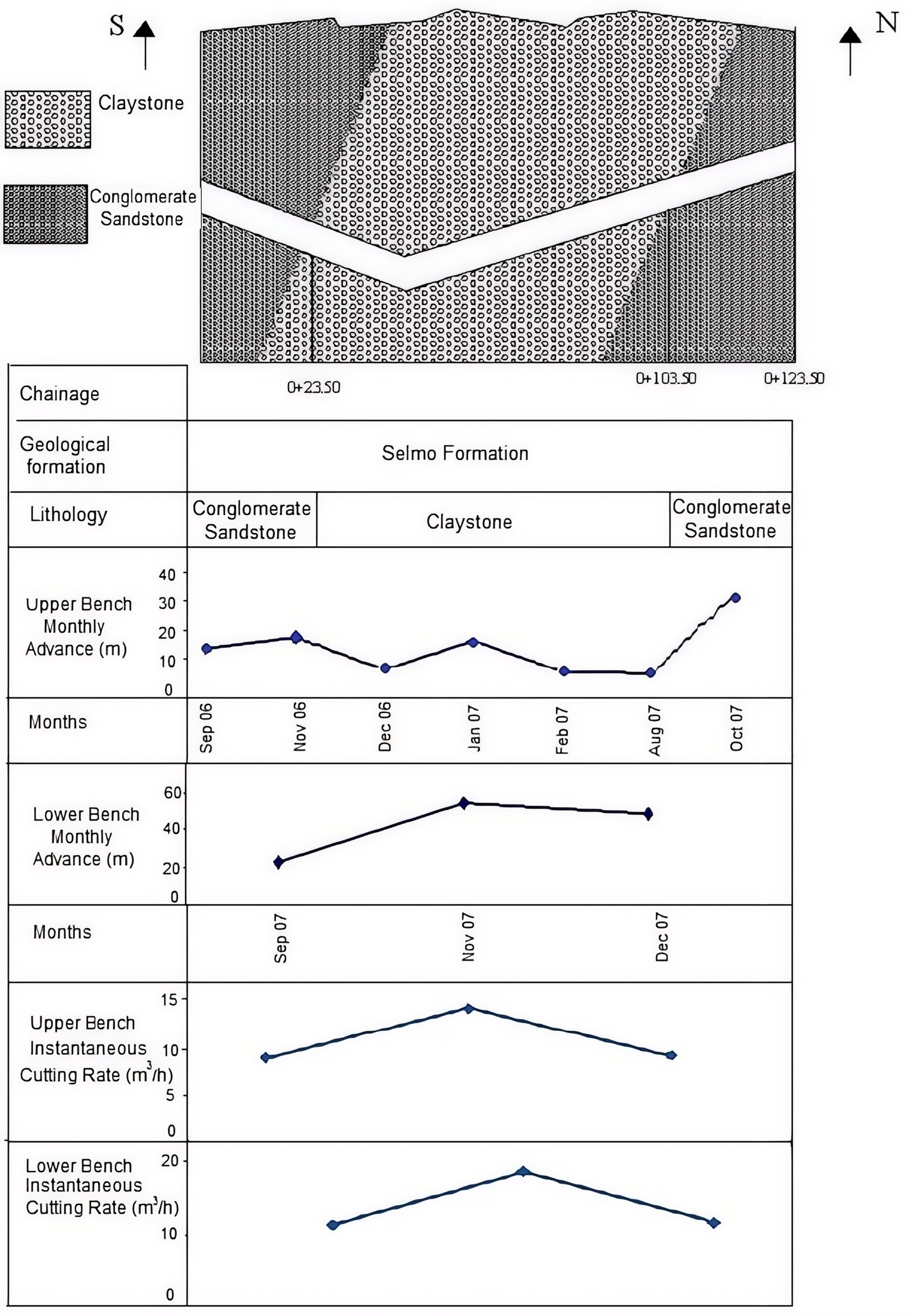
Excavation was performed within two main lithological units of the Şelmo Formation. The initial 23.5 m from the tunnel entrance and the final 20 m near the outlet were excavated within the conglomerate–sandstone unit, whereas the intermediate section of approximately 80 m was excavated within weak claystone.
Excavation within the conglomerate–sandstone sections was relatively difficult due to the well-cemented and competent nature of the formation. Consequently, lower instantaneous cutting performance was achieved in these sections. However, groundwater inflow remained limited because these sections were located above the groundwater level.
In contrast, the claystone sections were mechanically weaker and easier to excavate. Water exposure caused significant softening and strength degradation within the claystone, resulting in relatively higher cutting performance during excavation. Nevertheless, this section of the tunnel was located below the groundwater table and experienced substantial groundwater inflow ranging between approximately 30–35 L/s.
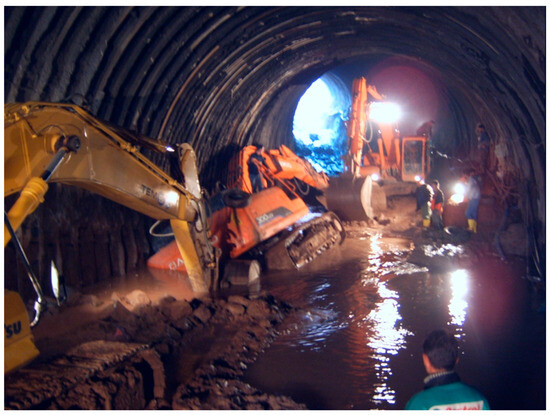
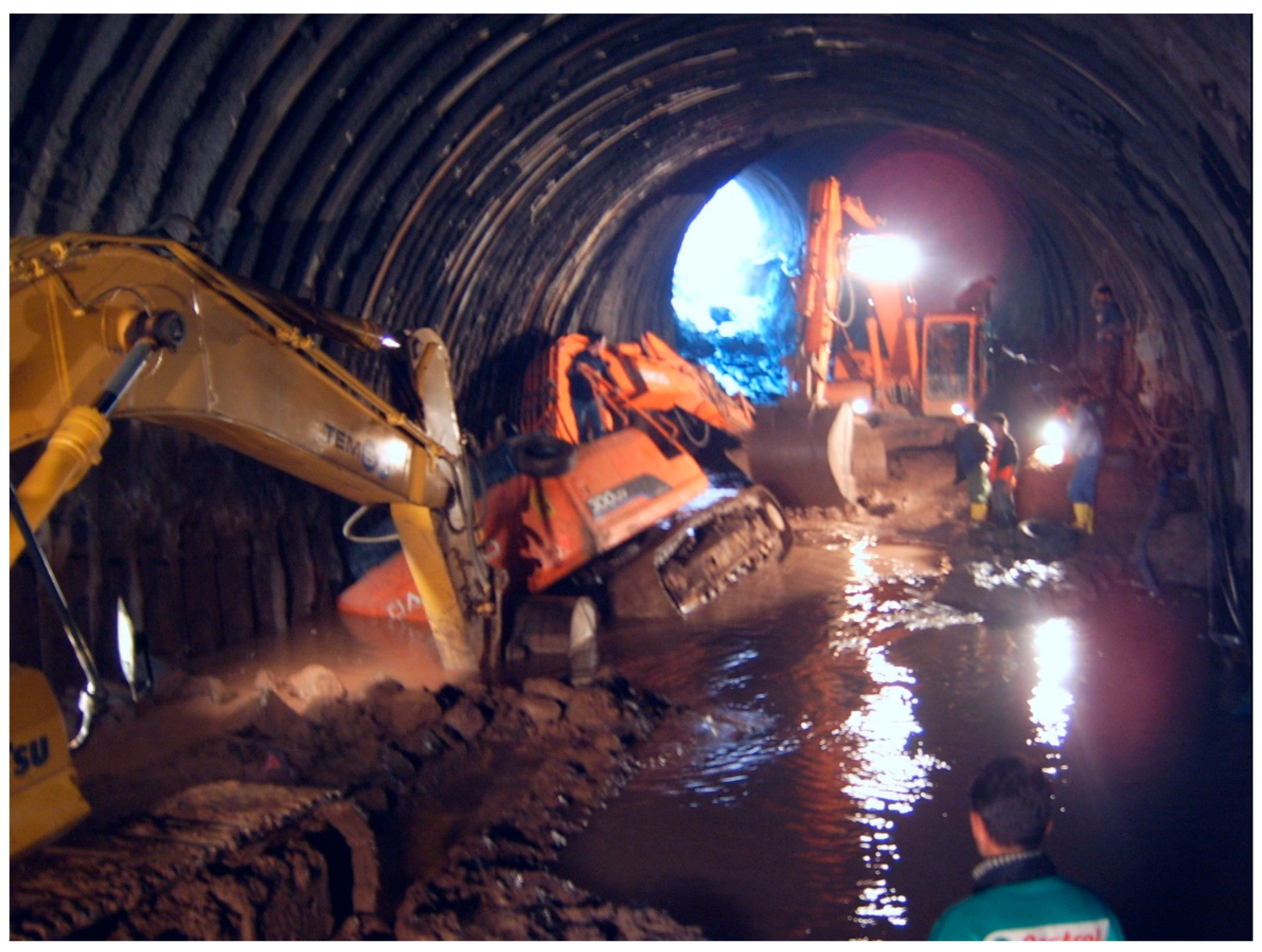
The combination of groundwater inflow and weak claystone behavior caused significant base instability and unfavorable excavation conditions. In several sections, loss of bearing capacity at the tunnel invert created operational difficulties for excavation equipment, including localized sinking of loaders and excavators (Figure 6).
Figure 6.
A view of the sunken excavator in the lower bench excavation.
Despite the relatively easier excavation of claystone, the overall tunnel advancement rate decreased within these sections. This reduction was primarily associated with the need for additional stabilization measures, including decreasing steel arch spacing from 50 cm to 30 cm in order to control deformation and maintain excavation stability. As a result, support installation required substantially more operational time.
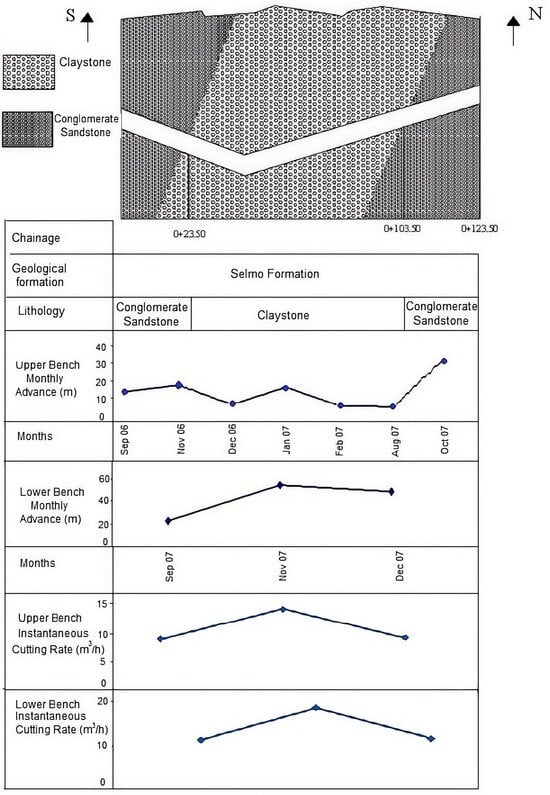
Figure 7 further illustrates the relationship between geological conditions, excavation performance, and monthly tunnel advancement rates. An increase in advancement rate observed during the final construction stage was associated with the implementation of simultaneous excavation activities from multiple working positions. The observed relationships between geological conditions, groundwater inflow, excavation performance, and support requirements along the tunnel alignment are summarized in Table 4.
Figure 7.
The tunnel-advancing and instantaneous cutting rate at different geological sites.
Table 4.
Summary of geological conditions and excavation performance.
4.2. Support of Tunnel
The tunnel support design was developed based on Type IV and Type V ground conditions according to Terzaghi’s rock mass classification system, considering the geological and geotechnical conditions identified during the preliminary site investigations [21].
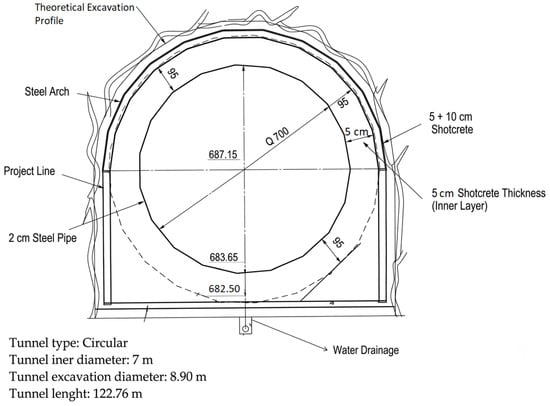
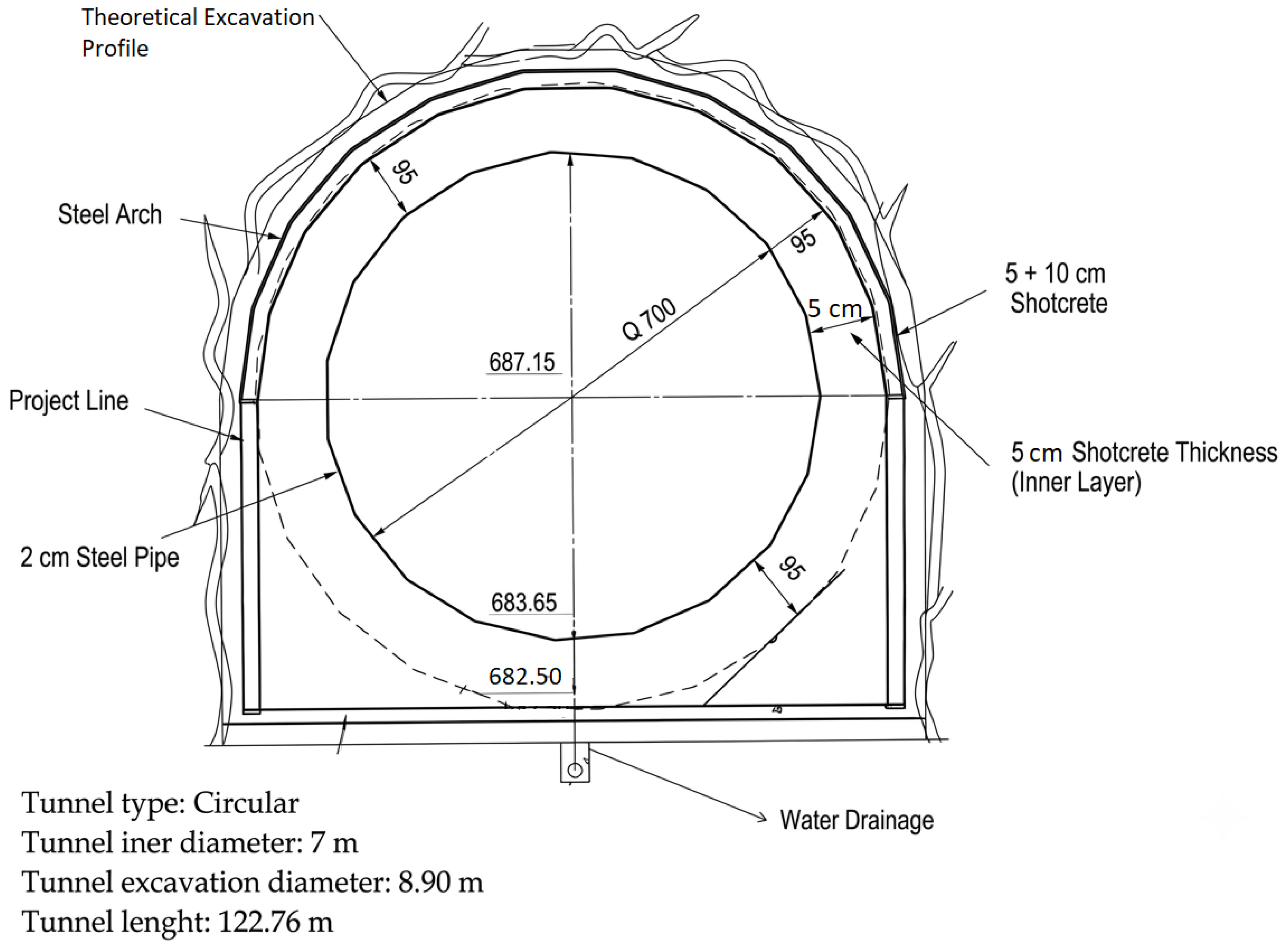
Following excavation, the tunnel was supported using steel arches (I-240 profiles), reinforced wire mesh, and staged shotcrete application consisting of 5 cm initial shotcrete and 10 cm secondary shotcrete layers in order to maintain excavation stability and control deformation under shallow urban conditions (Figure 8).
Figure 8.
Typical cross-section and support design of the tunnel.
Steel arch spacing was generally maintained at 80 cm within relatively stable tunnel sections near the entrance and exit zones. However, in sections located beneath Emek Street and near existing buildings, the spacing was reduced to approximately 30 cm due to increased deformation risk associated with weak claystone behavior and groundwater inflow.
The tunnel lining system consisted of 2 cm thick steel pipes installed in 3 m segments along the tunnel interior. The annular space between the support system and the steel lining, ranging between approximately 70–100 cm, was subsequently filled with concrete to improve structural stability and hydraulic performance.
In addition, a drainage system was installed at the tunnel invert to control groundwater accumulation and reduce water-related instability during tunnel operation (Figure 8).
During tunnel construction, a Finite Element Method (FEM)-based analysis was conducted to evaluate potential structural responses, including tunnel lining deformation, axial forces, torque distribution, and possible settlement effects on nearby buildings [22]. The FEM analysis predicted that, under controlled excavation and adequate support conditions, settlements at neighboring building foundations would remain below approximately 5 mm.
These numerical predictions provided the preliminary basis for evaluating excavation-induced deformation risks during tunnel construction and later enabled a comparison between predicted and observed field behavior.
5. Monitoring Results and Structural Deformation During Excavation
Despite the implementation of controlled excavation procedures and support measures, significant structural deformation was observed in buildings located near the tunnel alignment. The combined effects of shallow overburden conditions, weak claystone behavior, and substantial groundwater inflow (30–35 L/s) adversely affected the stability of nearby structures.
Due to the close proximity of the tunnel alignment to the Dilsat and Guler Apartments, monitoring activities were initiated prior to excavation in order to evaluate possible excavation-induced structural responses during tunnel construction.
Tiltmeters and extensometers were installed to monitor building inclination and displacement behavior throughout the excavation process. Measurements were regularly evaluated during excavation, particularly as the tunnel face approached the buildings. Excavation activities were intermittently suspended in response to concerns raised by nearby residents regarding possible structural deformation and vibration effects.
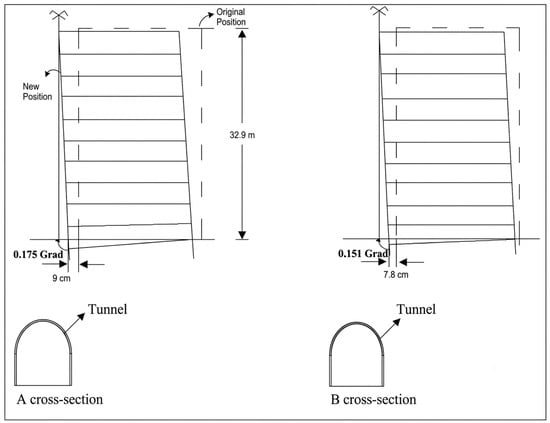
Monitoring data indicated significant structural deformation and foundation-related distress, particularly in the Dilsat Apartment. Distomat measurements revealed angular deformations of approximately 0.175 grad along the short axis and 0.151 grad along the long axis of the structure (Figure 9).
Figure 9.
Angular rotations and displacements on the Dilsat Apartment.
Corresponding lateral displacements of approximately 9 cm and 7.8 cm were measured along the short and long axes, respectively, in the 32.9 m high structure. The principal monitoring results obtained from the Dilsat Apartment during tunnel excavation are summarized in Table 5.
Table 5.
Measured structural deformations in the Dilsat Apartment during tunnel excavation.
Additional tiltmeter measurements installed on the tunnel-facing side of the building further confirmed progressive tunnel-oriented structural inclination during excavation activities [23].
The observed deformation magnitudes considerably exceeded the settlement levels predicted during the design-stage numerical assessments, indicating that actual field conditions generated more severe structural responses than initially anticipated. The discrepancy between predicted and observed behavior is considered to be primarily associated with the combined effects of weak claystone conditions, shallow overburden, and high groundwater inflow encountered during excavation.
Extensometer measurements obtained from the tunnel section located near the Dilsat Apartment indicated a vertical displacement of approximately 1.0 mm. In addition, field observations conducted within the building revealed deformation and torsional behavior in several columns located at the basement level. These observations indicated that the structural response of the building was not limited to measurable displacement alone but also involved visible structural distress affecting the load-bearing system.
Considering the existing weaknesses in the structural system of the Dilsat Apartment, the observed deformation behavior was interpreted as a potential collapse risk during continued excavation activities. Therefore, it was recommended that excavation should not proceed unless structural reinforcement measures were implemented or the building was evacuated in order to ensure life safety.
Based on these engineering assessments, the building was first expropriated and evacuated, and subsequently demolished prior to the continuation of tunnel excavation activities. These measures enabled excavation to proceed under safer operational conditions.
A similar monitoring and assessment program was also conducted for the Guler Apartment. However, unlike the Dilsat Apartment, the monitoring results indicated no significant angular deformation or lateral displacement associated with tunnel excavation activities [23].
The different structural responses observed in the Dilsat and Guler Apartments suggest that factors such as foundation conditions, structural characteristics, distance from the tunnel alignment, and local geological variability played an important role in controlling excavation-induced building behavior.
6. Discussion
The construction of the Diyarbakır–Emek Street pressure tunnel illustrates the challenges associated with shallow urban tunneling in weak and groundwater-sensitive formations. The project underscores the importance of detailed geotechnical assessments and feasibility studies during the design phase to ensure excavation stability and minimize adverse effects on nearby structures. Despite the implementation of controlled excavation procedures and robust support systems, significant deformation-related problems developed during construction, particularly in sections characterized by weak claystone, limited overburden thickness, and high groundwater inflow. Similar difficulties have been reported in other urban tunneling projects constructed under complex geological conditions [4,17].
Geological conditions had a direct influence on excavation performance and tunnel stability. The conglomerate–sandstone sections required greater cutting effort because of their competent and well-cemented structure, resulting in lower excavation performance. In contrast, the claystone sections were easier to excavate mechanically; however, groundwater inflow of approximately 30–35 L/s caused softening, strength degradation, and loss of invert stability. These conditions increased support demand and reduced excavation efficiency despite the relatively favorable cutting characteristics of the claystone. Comparable groundwater-related instability mechanisms have been reported in previous studies [9,10,12,24].
The proximity of the tunnel alignment to the Dilsat and Guler Apartments required continuous monitoring throughout excavation. Tiltmeter, extensometer, and distomat measurements revealed significant angular deformation, lateral displacement, and tunnel-oriented inclination in the Dilsat Apartment. Similar deformation-related risks to urban structures exposed to tunneling-induced ground movements have been reported in previous studies [25,26]. The observed structural response led to the evacuation and subsequent demolition of the Dilsat Apartment because of collapse concerns. This case demonstrates the necessity of continuous monitoring and timely mitigation measures when tunneling beneath densely populated urban areas [27].
In contrast, monitoring results obtained from the Guler Apartment indicated no significant angular deformation or lateral displacement during excavation. The contrasting responses observed in the Dilsat and Guler Apartments indicate that excavation-induced building behavior is strongly influenced by foundation conditions, structural stiffness, tunnel proximity, and local geological variability, consistent with previous studies [2,16,28]. Recent monitoring- and numerical-analysis-based investigations have also shown that excavation geometry, support conditions, and geological variability significantly affect the response of adjacent structures [29].
A major finding of this study is the discrepancy between design-stage FEM predictions and observed field behavior. Numerical analyses predicted settlements below approximately 5 mm under controlled excavation and support conditions, whereas monitoring data revealed substantially greater structural deformation in the Dilsat Apartment. The results suggest that the combined effects of groundwater inflow, weak claystone behavior, shallow overburden, and local geological variability generated ground–structure interactions that were not fully represented in the preliminary numerical model. This observation highlights the limitations of relying solely on design-stage numerical predictions under highly variable ground conditions.
Groundwater management proved to be one of the controlling factors during construction. High groundwater inflow reduced excavation stability, increased deformation risk, and required additional stabilization measures. To maintain stability, support density was increased by reducing steel arch spacing from 50 cm to 30 cm in critical sections. Although this modification improved excavation stability, it resulted in slower excavation progress and longer construction durations. Similar findings have been reported in weak and groundwater-affected formations [14,15,30,31].
Field monitoring played a critical role in identifying excavation-related risks and supporting engineering decision-making during construction. The monitoring data enabled the assessment of structural behavior as excavation progressed and provided information that could not be captured by numerical analyses alone. In the case of the Dilsat Apartment, the observed deformation levels ultimately led to evacuation and demolition decisions before excavation continued.
The project also demonstrated the operational challenges associated with tunneling beneath densely populated urban areas. Concerns raised by nearby residents periodically interrupted excavation activities, emphasizing the need for effective monitoring, risk management, and communication throughout construction.
Overall, the findings indicate that shallow urban tunnels excavated in weak, groundwater-sensitive formations may experience substantially greater deformation than predicted during preliminary design studies. Under such conditions, numerical analyses should be supported by continuous field monitoring and adaptive support measures to ensure excavation safety and minimize risks to adjacent structures.
7. Conclusions
This study demonstrates the significant influence of weak geological conditions, groundwater inflow, and shallow overburden on excavation-induced structural behavior during urban tunneling. The excavation process demonstrated that weak claystone formations, shallow overburden thickness, and high groundwater inflow can significantly affect tunnel stability, excavation performance, and the behavior of nearby structures. While the conglomerate–sandstone sections were more difficult to excavate because of their competent structure, the claystone sections experienced significant instability due to groundwater inflow of approximately 30–35 L/s.
Field monitoring revealed substantially greater deformation than predicted by the design-stage FEM analyses. Although FEM-based assessments predicted relatively limited settlement levels under controlled excavation and support conditions, field monitoring revealed substantially greater structural deformations in the Dilsat Apartment, including angular deformation, lateral displacement, and tunnel-oriented inclination. However, no comparable deformation was observed in the Guler Apartment. These contrasting responses indicate that excavation-induced building behavior is strongly influenced by local geological conditions, groundwater effects, structural characteristics, and tunnel proximity.
The project demonstrated that increasing support density improved excavation stability in weak and groundwater-affected sections but reduced excavation progress and extended construction time. The observed discrepancy between predicted and measured deformation also indicates that preliminary numerical analyses may underestimate ground–structure interactions under highly variable field conditions.
Overall, the findings suggest that observational approaches, including continuous monitoring and adaptive support measures, should complement preliminary numerical analyses when excavating shallow urban tunnels in weak and groundwater-sensitive formations.
Funding
This research received no external funding.
Data Availability Statement
The data presented in this study are available on request from the corresponding author. The data are not publicly available due to project-based and institutional confidentiality restrictions.
Conflicts of Interest
The author declares no conflicts of interest.
References
- Martirosyan, A.Z.; Cherkesov, R.H.; Isaev, I.O.; Shishkina, V.V. Surface settlement during tunneling: Field observation analysis. Appl. Sci. 2022, 12, 9963. [Google Scholar] [CrossRef] [Scilit]
- Wang, M.; Li, S.; Wei, Y.; Zhang, Y. Numerical modeling of ground surface settlement due to tunneling in urban areas. Multiscale Multidiscip. Model. Exp. Des. 2023, 7, 1679–1692. [Google Scholar] [CrossRef] [Scilit]
- Huat, C.Y.; Armaghani, D.J.; Lai, S.H.; Motaghedi, H.; Asteris, P.G.; Fakharian, P. Analyzing surface settlement factors in single and twin tunnels: A review study. J. Eng. Res. 2025, 13, 2096–2108. [Google Scholar] [CrossRef] [Scilit]
- Das, K.; Sarkar, M.; Majumder, D.; Bandyopadhyay, K. Tunnel-Induced Ground Settlement: A Case Study Showing the Importance of Dynamic Analysis. Indian Geotech. J. 2026, 56, 106–124. [Google Scholar] [CrossRef] [Scilit]
- Ayhan, M.; Topal, E. Excavation and support design of the Dicle-Kralkizi water tunnel: An overview. Tunn. Undergr. Space Technol. 2005, 20, 81–87. [Google Scholar] [CrossRef] [Scilit]
- O’Reilly, M.P.; New, B.M. Settlement above tunnels in the United Kingdom—Their magnitude and prediction. In Tunnelling 82, Proceedings of the 3rd International Symposium, Brighton, UK, 7–11 June 1982; IMM: London, UK, 1982; pp. 173–181. [Google Scholar]
- Karakuş, M.; Fowell, R.J. Effects of different tunnel face advance excavation on the settlement by FEM. Tunn. Undergr. Space Technol. 2003, 18, 513–523.16. [Google Scholar] [CrossRef] [Scilit]
- Suwansawat, S.; Einstein, H.H. Artificial neural networks for predicting the maximum surface settlement caused by EPB shield tunneling. Tunn. Undergr. Space Technol. 2006, 21, 133–150. [Google Scholar] [CrossRef] [Scilit]
- Sun, L.; Wang, X.; Wang, S.; Sun, W.; Wang, J.; Di, H. Experimental study on soil deformation caused by overexploitation of groundwater. Water Environ. Res. 2004, 96, e11111. [Google Scholar] [CrossRef] [Scilit]
- Cui, L.; Yang, W.; Zheng, J.; Sheng, Q. Improved equations of ground pressure for shallow large-diameter shield tunnel considering multiple impact factors. Tunn. Undergr. Space Technol. 2023, 138, 105166. [Google Scholar] [CrossRef] [Scilit]
- Gazzola, L.; Ferronato, M.; Teatini, P.; Zoccarato, C.; Corradi, A.; Dacome, M.; Mantica, C. Reducing uncertainty on land subsidence modeling prediction by a sequential data-integration approach. Application to the Arlua off-shore reservoir in Italy. Geomech. Energy Environ. 2023, 33, 100434. [Google Scholar] [CrossRef] [Scilit]
- Liang, C.; Zhao, H.; Wang, Y.; Dong, C. Stability analysis of shield tunnel excavation face in upper-clay and lower-sand composite strata considering seepage. Bull. Eng. Geol. Environ. 2025, 84, 89. [Google Scholar] [CrossRef] [Scilit]
- Rehman, H.; Naji, A.M.; Nam, K.; Ahmad, S.; Muhammad, K.; Yoo, H.-K. Impact of construction method and ground composition on headrace tunnel stability in the Neelum–Jhelum hydroelectric project. Appl. Sci. 2021, 11, 1655. [Google Scholar] [CrossRef] [Scilit]
- Khan, A.; Fang, Y.; Sulaiman, K.; Ali, B.; Jiang, Y. Ground settlement induced by NATM tunneling and surface loads in Shiraz Metro station. Sci. Rep. 2025, 15, 32843. [Google Scholar] [CrossRef] [Scilit] [PubMed]
- Wang, T.; Liu, H.; Kang, M.; Zhao, B.; Shen, J.; Li, Y.; Yang, Y. Study on the Synergistic Effect of Primary Support and Surrounding Rock of Large Buried Depth Tunnel in Soft and Fractured Strata. Appl. Sci. 2024, 14, 2028. [Google Scholar] [CrossRef] [Scilit]
- Amorosi, A.; Sangirardi, M. Coupled three-dimensional analysis of the progressive tunnelling-induced damage to masonry buildings. Tunn. Undergr. Space Technol. 2021, 118, 104173. [Google Scholar] [CrossRef] [Scilit]
- Nie, F.; Zhang, X.; Zhou, L.; Wang, H.; Hua, J.; Liu, B.; Feng, B. Investigation of Fracture Characteristics and Energy Evolution Laws of Model Tunnels with Different Shapes Subjected to Impact Load. Materials 2025, 18, 889. [Google Scholar] [CrossRef] [Scilit] [PubMed]
- Ahmed, N.; El-Shourbagy, Z.; Akl, M.; Metwally, A. Field monitoring and numerical analysis of ground deformation induced by tunnelling beneath an existing tunnel. Cogent Eng. 2021, 8, 1861731. [Google Scholar] [CrossRef] [Scilit]
- Lai, J.; Zhu, J.; Guo, Y.; Xie, Y.; Hu, Y.; Wang, P. A multi-factor-driven approach for predicting surface settlement caused by the construction of subway tunnels by undercutting method. Environ. Earth Sci. 2024, 83, 442. [Google Scholar] [CrossRef] [Scilit]
- Dapeng, L.; Ke, W.; Wenbin, X.; Zhongyu, D.; Zhenhua, L.; Jie, S. Study on the interaction mechanism of segments in the stratum of TBM tunnels undercrossing existing buildings. Bull. Eng. Geol. Environ. 2024, 18, e18741495301772. [Google Scholar] [CrossRef] [Scilit]
- Savcı, S. Technical Report—113; Sarp Engineering Corporation: Ghaziabad, India, 2006. [Google Scholar]
- Balkaya, C. Kralkızı-Dicle Sulama Anakanalı Diyarbakır Emek Caddesi (km:34+496–34+681) Tünel Geçişi Projesi Değerlendirme Raporu (ODTÜ Döner Sermaye Proje Kod No: 06-03-03-1-00-68); BUPIM: Ankara, Turkey, 2006. [Google Scholar]
- Balkaya, C. Kralkızı-Dicle Sulama Anakanalı Diyarbakır Emek Caddesi Basınçlı Tünel Geçişi Imalatı Esnasında Yapılan Ölçümler ve Binaların Güvenirliliklerinin Değerlendirilmesi (ODTÜ Döner Sermaye Proje Kod No: 07-03-03-1-00-10); BUPIM: Ankara, Turkey, 2007. [Google Scholar]
- Lei, M.; Liu, J.; Lin, Y.; Shi, C.; Liu, C. Deformation characteristics and influence factors of a shallow tunnel excavated in soft clay with high plasticity. Adv. Civ. Eng. 2019, 2019, 7483628. [Google Scholar] [CrossRef] [Scilit]
- Martirosyan, A.Z.; Anzhelo, G.O.; Rud, V.V. The influence of metro tunnel construction parameters on the settlement of surrounding buildings. Appl. Sci. 2024, 14, 6435. [Google Scholar] [CrossRef] [Scilit]
- Mohammed, D.; Kamel, B. Shallow tunneling’s impact on surface settlements. J. Eng. Exact. Sci. 2024, 10, 18591. [Google Scholar] [CrossRef] [Scilit]
- Zhang, S.; He, S.; Qui, J.; Xu, W.; Garners, S.; Wang, R. Displacement Characteristics of an Urban Tunnel in Silty Soil bythe Shallow Tunnelling Method. Adv. Civ. Eng. 2020, 2020, 3975745. [Google Scholar] [CrossRef] [Scilit]
- Yun, J.-S.; Kim, H.-E.; Yoo, H.-K. Three-dimensional modeling and analysis of ground settlement due to twin tunneling using GIS. Sustainability 2024, 16, 5891. [Google Scholar] [CrossRef] [Scilit]
- Chen, H.; Wang, Z.; Zhang, J.; Wang, Z.; Peng, P.; Feng, T. Field monitoring and analysis of factors influencing existing tunnels laterally adjacent to foundation pit excavations. Appl. Sci. 2025, 15, 1074. [Google Scholar] [CrossRef] [Scilit]
- Xu, W.; Zhang, J.; Wang, H.; Li, S. Protection of low-strength shallow-founded buildings around deep excavation: A case study in the Yangtze River soft soil area. Buildings 2025, 15, 4094. [Google Scholar] [CrossRef] [Scilit]
- Vitali, O.P.M.; Celestino, T.; Bobet, B. Construction strategies for a NATM tunnel in São Paulo, Brazil, in residual soil. Undergr. Space 2022, 7, 1–18. [Google Scholar] [CrossRef] [Scilit]

Disclaimer/Publisher’s Note: The statements, opinions and data contained in all publications are solely those of the individual author(s) and contributor(s) and not of MDPI and/or the editor(s). MDPI and/or the editor(s) disclaim responsibility for any injury to people or property resulting from any ideas, methods, instructions or products referred to in the content. |
© 2026 by the author. Licensee MDPI, Basel, Switzerland. This article is an open access article distributed under the terms and conditions of the Creative Commons Attribution (CC BY) license.