


Abstract
In the context of increasing consumer interest in functional food products and the use of vegetable oils with enhanced biological value, the development of mayonnaise emulsions with improved structural, rheological, and performance characteristics is highly relevant. Safflower oil is of considerable interest as a fat base for mayonnaise due to its high content of polyunsaturated fatty acids and antioxidant components. However, its application in emulsion systems requires scientifically substantiated optimization of formulation parameters to ensure product stability and the desired rheological properties. The aim of this study was to optimize the formulation parameters of mayonnaise based on safflower oil using response surface methodology. The independent variables were the mass fraction of safflower oil, the content of egg powder, and skimmed milk powder. The response functions included apparent viscosity (Y1), consistency coefficient (Y2), and emulsion stability (Y3), which comprehensively characterize the structural and rheological behavior and stability of mayonnaise emulsions. Experimental studies were carried out using a rotatable central composite design. The rheological properties of the mayonnaise emulsions were determined by rotational rheometry, and emulsion stability was assessed by centrifugation. Based on the experimental data, second-order quadratic regression models were developed, adequately describing the effects of formulation factors and their interactions on the studied parameters. It was established that the apparent viscosity, consistency coefficient, and emulsion stability of mayonnaise emulsions depend nonlinearly on the formulation factors and are determined by their combined effect. The maximum response values are achieved at an optimal ratio of fat and protein phases rather than at the extreme concentrations of individual components. As a result of optimization, a mayonnaise formulation based on safflower oil was proposed, ensuring high emulsion stability and balanced rheological characteristics. The developed technological scheme confirms the practical feasibility of the optimized formulation and its potential application in the production of functional mayonnaise sauces.
1. Introduction
Mayonnaise is one of the most widely consumed emulsion-based food systems, representing a semi-solid oil-in-water emulsion traditionally composed of vegetable oil, an acidifying component, egg yolk, and flavoring additives. As noted by Mirzanajafi-Zanjani et al. (2019) [1], the high fat content (70–80%) and the use of egg yolk as the primary emulsifier provide the characteristic rheological and sensory properties of mayonnaise; however, they also impose limitations associated with elevated cholesterol levels and high energy value of the product. In the context of growing consumer interest in functional and healthier nutrition, this has stimulated active research into alternative fat and protein components, as well as the development of new formulation strategies.
Recent studies on mayonnaise emulsions have focused on reducing fat content, partially or completely replacing egg yolk, and using vegetable oils with improved fatty acid profiles and bioactive compositions. In this context, considerable attention has been paid to the development of low-fat and functional mayonnaise products. For example, Teryokhina, A et al. used pumpkin products to create a functional mayonnaise sauce [2], and Yılmaz et al. demonstrated the feasibility of producing low-fat mayonnaise using flaxseed oil–based oleogels stabilized with waxes, which provided acceptable physicochemical and rheological properties as well as satisfactory consumer acceptance [3]. Similar trends were reported by Khushbu et al. (2018) [4], where the use of plant-based thickeners and hydrocolloids improved the textural and rheological properties of low-fat mayonnaise while maintaining sensory quality.
Unlike most studies aimed at reducing the calorie content of mayonnaise, this study focused on optimization within a traditional high-calorie matrix. This approach is driven by the need to maximize the high polyunsaturated fatty acid and antioxidant content of safflower oil, which cannot be achieved to a significant degree with a significant reduction in fat content.
A specific research direction is associated with the replacement of traditional emulsifiers and stabilizers by alternative protein and polysaccharide systems. Karshenas et al. demonstrated the possibility of partially and completely replacing egg yolk with peanut and sesame press-cake milk, showing that stable emulsions with acceptable rheological characteristics are formed at moderate substitution levels [5]. Similarly, Sachko et al. (2023) [6] used white bean aquafaba in combination with polysaccharides to produce egg-free mayonnaise-like sauces with high stability and pronounced pseudoplastic properties. The use of gum Arabic as an emulsifier and antioxidant also proved highly effective in the studies by Ali et al. (2020) [7], where improvements in physicochemical stability and microbiological safety of the product were reported.
Along with the replacement of emulsifiers, considerable attention has been paid to the selection of the fat phase. Chetana et al. (2019) showed that the use of rice and sesame oils, as well as their blends, makes it possible to produce mayonnaise with improved functional properties and high emulsion stability [8]. Rajasekaran et al. (2024) investigated the effect of shrimp oil and myofibrillar proteins on the stability and microstructure of mayonnaise, demonstrating the feasibility of creating functional emulsions enriched with polyunsaturated fatty acids [9].
In this context, safflower oil is of particular interest as a promising fat base for emulsion products. According to Mateev et al. (2019), safflower oil is characterized by a high content of linoleic and γ-linolenic acids, reaching up to 80%, as well as low acid and peroxide values, indicating its high quality and resistance to oxidative processes [10]. Ergönül et al. (2020), Hingnekar, P. et al. (2022) and Günç Ergönül et al. (2018) complement these findings, reporting a high content of α-tocopherol and phenolic compounds in safflower oil, which determines its antioxidant activity and potential functional value [11,12,13].
Agrotechnological aspects of safflower cultivation and their influence on oil yield and quality were examined by Maraş et al. (2025) [14], who demonstrated that varietal characteristics and irrigation conditions significantly affect seed oil content. Zemour et al. (2019) further emphasized the importance of genotypic differences in safflower, showing variability in phenolic composition and antioxidant activity of oils depending on the growing region and year [15]. Tultabayev et al. (2022) reported that agroclimatic conditions of safflower cultivation, including temperature regime and water availability, have a significant impact on yield and the fatty acid composition of safflower oil [16]. These findings highlight the need to consider environmental factors in order to obtain oil with specified physicochemical and functional characteristics.
The functional and technological properties of safflower protein components are also being actively investigated. Zuñiga-Salcedo et al. (2019) showed that ultrasonic treatment of safflower protein isolate improves its solubility and oil-holding capacity, thereby expanding its potential application in food emulsions [17]. In turn, Bekturganova et al. (2023) demonstrated the effectiveness of ultrasonic treatment in forming stable oil-in-water emulsions based on safflower oil, emphasizing the role of phase ratio and processing parameters [18].
In the study by Tultabayev M. et al. (2025), a comprehensive optimization of the safflower oil extraction process was carried out using a semi-automatic Soxhlet apparatus and various organic solvents [19]. The authors showed that the choice of solvent and extraction parameters significantly affects both oil yield and its physicochemical quality. It was established that diethyl ether provides the highest oil yield while maintaining low acid and peroxide values, as well as a high iodine value, indicating a high content of polyunsaturated fatty acids. The obtained results confirm the potential of using optimized safflower oil as a functional ingredient in food products, where the stability and fatty acid composition of the fat phase play a key role.
The rheological and structural characteristics of mayonnaise largely depend on the state of its protein components. Ho et al. demonstrated that thermal treatment of egg yolk within a specific temperature range leads to improved emulsion stability and increased shear resistance without deteriorating sensory properties [20]. These results confirm the necessity of precise control of technological parameters in the formation of emulsion systems.
Comprehensive reviews presented by Taslikh et al. (2022) and de Menezes et al. emphasize that mayonnaise quality is determined by the complex interaction of the fat phase, emulsifiers, stabilizers, and processing conditions [21,22]. The authors note that the use of vegetable oils and alternative emulsifying systems enables the development of innovative mayonnaise products with improved nutritional and functional characteristics; however, this requires careful optimization of formulation parameters to maintain stability and the desired rheological properties.
Optimization was carried out based on three key factors: the mass fraction of safflower oil, the content of egg powder and dry skim milk, selected as the main emulsifying and structure-forming components.
Thus, the analysis of the literature indicates the high relevance of studies aimed at using safflower oil as a fat base for mayonnaise emulsions and optimizing their formulation parameters. Despite the considerable number of works devoted to alternative oils and emulsifiers, issues of comprehensive optimization of mayonnaise composition based on safflower oil, taking into account rheological characteristics and emulsion stability, remain insufficiently explored. This justifies the application of response surface methodology for the targeted control of mayonnaise emulsion properties and the development of functional products with specified quality characteristics.
2. Materials and Methods
Safflower seeds grown in the Zhambyl region of the Republic of Kazakhstan were used as the research material. Safflower oil was obtained by cold pressing, followed by laboratory refining to remove mechanical impurities, free fatty acids, and oxidation products. The refined safflower oil was used as the fat phase in the development and optimization of the mayonnaise formulation.
Dry egg powder and skimmed milk powder of commercial food grade were used. The egg powder was produced by spray-drying technology from pasteurized chicken egg yolks. The skimmed milk powder was manufactured by spray-drying of pasteurized skimmed cow milk. Both ingredients were supplied by certified food manufacturers (in accordance with TR TS 033/2013 [23] and GOST standards) and stored in airtight packaging at 4 to 10 °C until use.
2.1. Methods for Determining the Physicochemical Parameters of Safflower Oil
The iodine value of safflower oil was determined by a titrimetric method in accordance with GOST 25699.3–90 [24], based on the reaction of iodine with the double bonds of fatty acids followed by titration of the excess iodine with sodium thiosulfate solution. Safflower seeds were obtained from local farmers in the Zhambyl region Tultabayev et al. (2022) [16]. The exact shelf life after harvest was not documented by the supplier. Safflower oil was obtained by cold pressing followed by laboratory refining. The refined oil was stored in dark glass containers at +4 to +6 °C and used to prepare mayonnaise emulsions for 5–7 days after refining. The physicochemical properties of the oil fully met the requirements for high-quality edible vegetable oils.
The acid value was determined by neutralization of free fatty acids with a standardized potassium hydroxide solution using phenolphthalein as an indicator; the result was expressed in mg KOH/g of oil. Oil density was measured by the pycnometric method at 20 °C and calculated as the ratio of sample mass to the volume of the pycnometer. The peroxide value was determined according to GOST 26593–85 [25] by a titrimetric method based on the oxidation of iodide ions by peroxide compounds, followed by titration of the liberated iodine. Moisture and volatile matter content were determined by a gravimetric method by drying samples at 105 °C to constant weight. The color of safflower oil was evaluated in accordance with GOST 5477–2015 [26].
2.2. Methods for Determination of Rheological Properties and Emulsion Stability
Rheological properties and emulsion stability of mayonnaise emulsions based on safflower oil were determined using standard physicochemical methods widely accepted in food emulsion research (Mirzanajafi-Zanjani et al., 2019; Taslikh et al., 2022) [1,22].
All rheological and emulsion stability measurements were performed immediately after the preparation of the mayonnaise emulsions. Following homogenization and pH adjustment, the samples were incubated at 20 ± 1 °C for 10 min to achieve thermal and structural equilibrium before measurements were taken.
2.3. Determination of Apparent Viscosity (Y1), Consistency Index (Y2) and Emulsion Stability (Y3)
Apparent viscosity, consistency index and flow behavior index of mayonnaise emulsions were determined by rotational rheometry using a controlled shear rate mode (Brookfield DV-III Ultra, Berthoud, CO, USA). Apparent viscosity, consistency index and flow behavior index of mayonnaise emulsions were determined by rotational rheometry immediately after preparation and after 10 min equilibration at 20 ± 1 °C.
Measurements were carried out at a temperature of 20 ± 1 °C. Samples were equilibrated for 10 min prior to analysis. Rheological curves were obtained in the shear rate range of 0.1–100 s−1.
Experimental data were fitted using the Ostwald–de Waele (power-law) model:
where τ is the shear stress (Pa),
is the shear rate (s−1), K is the consistency index (Pa•sn), and n is the flow behavior index. Apparent viscosity (Y1) was calculated at a shear rate of 50 s−1. All measurements were performed in triplicate, and the results were expressed as mean values.
- −
- Determination of emulsion stability (Y3)
Emulsion stability of mayonnaise samples was evaluated using the centrifugation method. A sample (10–15 g) was placed into centrifuge tubes and centrifuged at 3000–5000 rpm for 10–15 min at 20 °C using a laboratory centrifuge (Eppendorf 5810R, Milton Freewater, OR, USA). After centrifugation, the mass of the separated liquid phase was measured.
Emulsion stability (Y3) was calculated according to the following equation:
where msep is the mass of the separated phase (g) and mtotal is the initial mass of the sample (g).
To optimize the formulation parameters of mayonnaise emulsions, response surface methodology was employed, based on varying key factors that significantly influence the formation of structural–rheological properties and emulsion stability of the product. The independent variables included the mass fraction of safflower oil, the content of egg powder, and skimmed milk powder. The factor variation ranges and their coded levels were selected based on preliminary experiments and literature data.
The contents of egg powder and skim milk powder were selected as additional independent variables. Egg powder acts as the primary emulsifier due to its high content of phospholipids and surface-active proteins. Skim milk powder acts as an additional structure-forming and stabilizer due to its casein and whey proteins, which have pronounced water-binding capacity and the ability to increase the viscosity of the continuous phase. This choice of protein components allows for the production of a stable emulsion without the use of synthetic stabilizers and maintains the product’s familiar organoleptic characteristics (Table 1).
Table 1.
Factors and levels of variation used in experimental design.
The response functions included apparent viscosity, consistency coefficient, flow behavior index, and emulsion stability, which together comprehensively characterize the rheological behavior and stability of mayonnaise emulsions. The selection of these responses was due to their key role in assessing the quality and technological suitability of emulsion products:
- Y1—Apparent viscosity, Pa·s;
- Y2—Consistency coefficient (K), Pa·sn;
- Y3—Emulsion stability, %.
Experimental design was carried out using a rotatable central composite design, which provides reliable data on the effects of factors and their interactions on the studied responses. The selected design makes it possible to construct second-order quadratic regression models and to determine the optimal ranges of formulation parameters (Table 2).
Table 2.
Rotatable experimental design matrix.
Implementation of the rotatable experimental design provided a sufficient amount of experimental data for constructing adequate mathematical models and subsequent response surface analysis. The obtained results served as the basis for quantitative evaluation of the effects of formulation factors and for optimizing the composition of mayonnaise emulsions.
2.4. Chemical Composition Analysis of Safflower Oil-Based Mayonnaise
The physicochemical composition of mayonnaise was assessed for two samples: traditional (control) mayonnaise and optimized safflower oil-based mayonnaise. Protein, fat, moisture, and carbohydrate contents were determined.
Protein content was measured spectrophotometrically by the formation of a colored complex, followed by optical density determination on a Shimadzu UV-1900i spectrophotometer (Shimadzu, Kyoto, Japan). Quantification was performed using a calibration curve constructed using standard protein solutions.
Fat and moisture contents were determined in accordance with GOST 31762–2012 [27]. Fat was extracted and determined gravimetrically by the mass fraction of the lipid fraction. Moisture was determined by drying the sample to constant weight.
Carbohydrate content was determined by permanganate titration. The control mayonnaise was prepared using the identical technological flow diagram as the optimized formulation, with the only difference being the replacement of safflower oil with sunflower oil.
3. Results
The results of the experimental studies are presented in the following sequence, reflecting the logic of evaluating the initial raw material and the subsequent optimization of the formulation parameters of mayonnaise emulsions. At the first stage, the physicochemical properties of safflower oil used as the fat base were investigated, since its quality and degree of oxidative stability have a decisive influence on the formation of structural, rheological, and stability characteristics of emulsion products. The obtained data served as a justification for the feasibility of using safflower oil in mayonnaise development and for conducting further optimization studies.
The obtained physicochemical parameters of safflower oil (Table 3) fully comply with the suitability criteria for vegetable oils used in mayonnaise emulsions. Low acid (2.86 mg KOH/g) and peroxide (2.5 mmol O2/kg) values indicate a minimal degree of hydrolytic and oxidative degradation. The high iodine value (144 g I2/100 g) confirms the significant content of polyunsaturated fatty acids, which imparts functional value to the oil. Low moisture content (0.10%) ensures microbiological stability and prevents phase separation of the emulsion. Taken together, these parameters confirm the high quality of the oil and its suitability as a fat base for functional mayonnaise.
Table 3.
Physicochemical properties of safflower oil.
3.1. Effect of Formulation Factors on the Apparent Viscosity of Mayonnaise
The effect of the mass fraction of safflower oil (X1), egg powder content (X2), and skimmed milk powder content (X3) on the apparent viscosity of mayonnaise emulsions was evaluated using response surface methodology. The selection of these factors was conditioned by their key role in the formation of the structure and rheological properties of emulsion products, where safflower oil determines the volume fraction of the dispersed phase, and protein components act as emulsifiers and structure-forming agents.
Analysis of the experimental data and the constructed response surfaces revealed pronounced nonlinear relationships between the studied formulation factors and the apparent viscosity of mayonnaise (Pa·s), confirming the suitability of a second-order quadratic model for describing the investigated system.
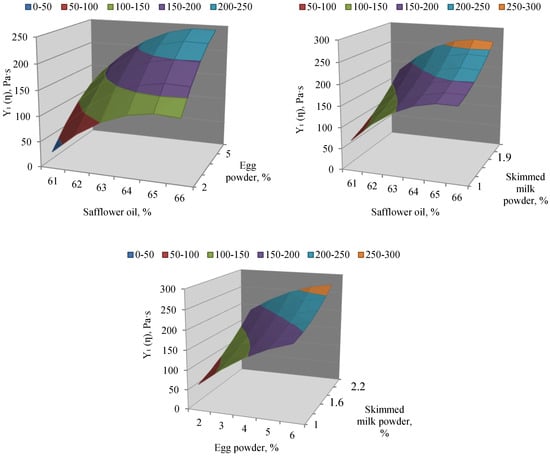
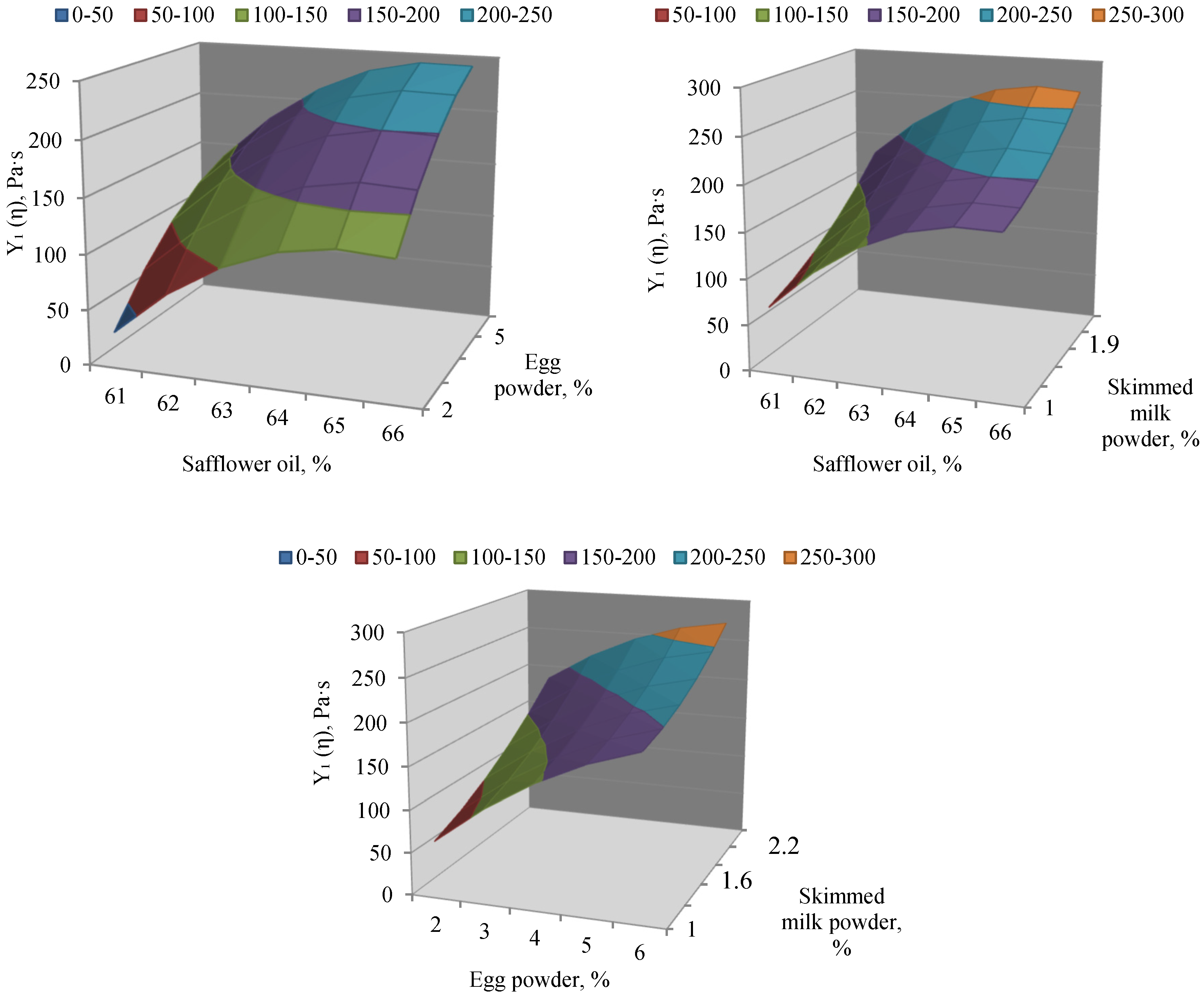
At a fixed intermediate level of skimmed milk powder (X3 = 1.6%), the response surface characterizing the combined effect of the mass fraction of safflower oil and egg powder content exhibited a pronounced dome-shaped pattern. At low values of both factors, minimal apparent viscosity values were observed, indicating insufficient structuring of the emulsion and weak development of the spatial network. An increase in the mass fraction of oil and the concentration of egg powder led to a steady increase in viscosity and the formation of a region of maximum values, due to an increase in the volume fraction of the fat phase and enhanced interfacial interactions. Further increases in factor levels were accompanied by a slowdown in viscosity growth, indicating the attainment of an optimal range of formulation parameters.
At a fixed mass fraction of safflower oil (X1 = 63%), the influence of egg powder and skimmed milk powder content on apparent viscosity manifested as a pronounced positive effect of both factors. An increase in egg powder concentration contributed to the formation of a denser and more stable emulsion structure due to enhanced emulsification efficiency. The effect of skimmed milk powder was nonlinear: increasing its content to intermediate levels led to a noticeable rise in viscosity, whereas further increases in concentration had a less pronounced effect, likely due to saturation of the system with protein components.
The response surface obtained at a fixed egg powder content (X2 = 4%) demonstrated a synergistic effect of safflower oil and skimmed milk powder on the apparent viscosity of mayonnaise emulsions. An increase in the oil mass fraction was accompanied by a steady rise in viscosity across the entire range of skimmed milk powder concentrations, while the contribution of skimmed milk powder became more pronounced at higher levels of the fat phase. The maximum apparent viscosity values were achieved at elevated levels of X1 and X3, indicating the combined structure-forming effect of the fat and protein phases (Figure 1).
Figure 1.
Response surfaces characterizing the effect of formulation factors on the apparent viscosity of mayonnaise emulsions.
To quantitatively assess the influence of the factors, a second-order quadratic model was constructed. The statistical characteristics of the models are presented in the ANOVA tables. For apparent viscosity (Y1): The coefficient of determination was R2 = 0.953, adjusted R2_adj = 0.911. The model is highly significant (F = 22.54, p < 0.0001). The Lack of Fit test was not significant (p > 0.05), confirming the adequacy of the model to the experimental data. All linear coefficients (X1, X2, X3) are statistically significant at the p < 0.01 level. The full ANOVA tables and regression coefficients with p-values are provided below (Table 4).
Table 4.
Analysis of variance (ANOVA) for Y1—apparent viscosity (Pa s).
Response surfaces reflecting the effect of the mass fraction of safflower oil and egg powder content at a fixed level of skimmed milk powder (X3 = 1.6%) (a); the mass fraction of safflower oil and skimmed milk powder content at a fixed level of egg powder (X2 = 4%) (b); egg powder content and skimmed milk powder content at a fixed mass fraction of safflower oil (X1 = 63%) (c) on the apparent viscosity of mayonnaise emulsions (Y1, Pa·s).
Overall, the obtained response surfaces demonstrate that the apparent viscosity of mayonnaise emulsions based on safflower oil is determined by the complex and interrelated effects of formulation factors. The pronounced nonlinearity of the relationships and the presence of interactions between the mass fraction of safflower oil, egg powder content, and skimmed milk powder content confirm the necessity of optimizing their combination rather than varying individual components separately. The identified optimal region corresponds to a balanced ratio of fat and protein phases, ensuring the formation of a structured and stable emulsion system with specified rheological characteristics.
Subsequently, the optimum of the response function was determined in order to achieve the target values of apparent viscosity of mayonnaise emulsions. Optimization was performed using response surface methodology as a solution to a compromise problem, taking into account the need to obtain a product with high viscosity, good shear flow behavior, and technological suitability. When constructing the mathematical model, statistically significant regression coefficients were considered.
In general form, the mathematical model of the process is described by a second-order regression equation:
where X1, X2, and X3 are the coded values of the mass fraction of safflower oil, egg powder content, and skimmed milk powder content, respectively, and Y1 is the apparent viscosity of mayonnaise emulsions (Pa·s).
Y1 = b0 + b1X1 + b2X2 + b3X3 + b12X1X2 + b13X1X3 + b23X2X3 + b11X12 + b22X22 + b33X32
Based on the experimental data, a regression equation in coded factor values was obtained:
Y1 = 183.43 + 22.91X1 + 25.77X2 + 16.78X3 − 7.24X12 − 7.78X22 − 2.14X32 + 3.40X1X2 − 1.17X1X3 − 2.23X2X3
The obtained equation adequately describes the influence of formulation factors on the apparent viscosity of mayonnaise emulsions. Analysis of the regression coefficients shows that the mass fraction of safflower oil and the egg powder content have the greatest effect on viscosity formation, which is due to an increase in the volume fraction of the dispersed phase and enhanced interfacial interactions. The quadratic terms make a significant contribution to the formation of the extremum, confirming the pronounced nonlinear nature of the studied relationships.
After decoding the independent variables, a regression equation in natural factor values was obtained, allowing the model to be used for practical calculations and prediction of apparent viscosity within the specified ranges of safflower oil mass fraction, egg powder content, and skimmed milk powder content.
The adequacy of the obtained regression model was evaluated using the Fisher criterion. The reproducibility variance was 140, and the adequacy variance was 160.46. The calculated Fisher criterion value was lower than the tabulated value at a significance level of 0.05, which allows the model to be considered adequate to the experimental data with a confidence probability of 95%.
After the canonical transformation of the second-order model, regression equations in canonical form were obtained. Using the software tools of the spreadsheet processor Microsoft Excel, the optimal factor values were calculated. Based on the obtained data, three-dimensional response surfaces were constructed, reflecting the influence of the mass fraction of safflower oil, egg powder content, and skimmed milk powder content on the apparent viscosity of mayonnaise emulsions. The derived relationships make it possible to predict viscosity changes within the studied factor range with sufficient accuracy and to use the developed mathematical model for mayonnaise formulation optimization.
Based on the constructed second-order quadratic regression model and the analysis of response surfaces, the optimal values of the formulation factors ensuring the target apparent viscosity of mayonnaise emulsions were determined. Optimization was carried out within the studied ranges of safflower oil mass fraction, egg powder content, and skimmed milk powder content.
As a result of numerical analysis of the model, it was established that the optimal region corresponds to a safflower oil mass fraction of approximately 63–64%, egg powder content of 4–5%, and skimmed milk powder content of 1.5–1.8%. In this region, the model-predicted apparent viscosity ranges from 180 to 220 Pa·s, which meets the consistency and technological requirements of mayonnaise products.
To experimentally validate the developed model and the reliability of the determined optimum, a mayonnaise emulsion was prepared using the optimal formulation (63.5% safflower oil, 4.5% egg powder, and 1.65% skim milk powder). The experiments were performed in triplicate. A comparison of the predicted and experimentally obtained values is presented in Table 5.
Table 5.
Comparison of model-predicted and experimentally measured response values for the optimal safflower oil-based mayonnaise formulation (mean ± standard deviation, n = 3).
Table 6.
Analysis of variance (ANOVA) for Y2—consistency coefficient (Pa sn).
Table 7.
Analysis of variance (ANOVA) for Y3—emulsion stability (%).
Analysis of the regression coefficients and response surfaces showed that the contribution of the studied factors to the formation of apparent viscosity is not equal. The most pronounced influence is exerted by the mass fraction of safflower oil, which determines the degree of structuring of the emulsion. Egg powder also plays a significant role, providing stabilization of fat droplets and the formation of a strong interfacial film. The influence of skimmed milk powder is manifested mainly through quadratic terms and interactions with other components, which indicates its role as an additional structure-forming agent. Thus, the maximum values of apparent viscosity are achieved not at the maximum concentrations of all components, but at their optimal balanced ratio, which confirms the feasibility of applying response surface methodology for optimizing the formulation parameters of mayonnaise emulsions based on safflower oil.
3.2. Effect of Formulation Factors on the Consistency Coefficient of Mayonnaise Emulsions (Y2)
Overall, the obtained response surfaces show that the consistency coefficient (Y2) of mayonnaise emulsions based on safflower oil is determined by the complex and nonlinear effects of formulation factors. The presence of pronounced curvilinear relationships and interactions between the mass fraction of safflower oil, egg powder content, and skimmed milk powder content confirms the feasibility of optimizing their combination using response surface methodology.
The consistency coefficient is an important rheological parameter characterizing the strength of the emulsion structural network and its resistance to deformation under shear. Analysis of the experimental data showed that the Y2 values vary over a wide range, indicating the sensitivity of this parameter to variations in formulation factors.
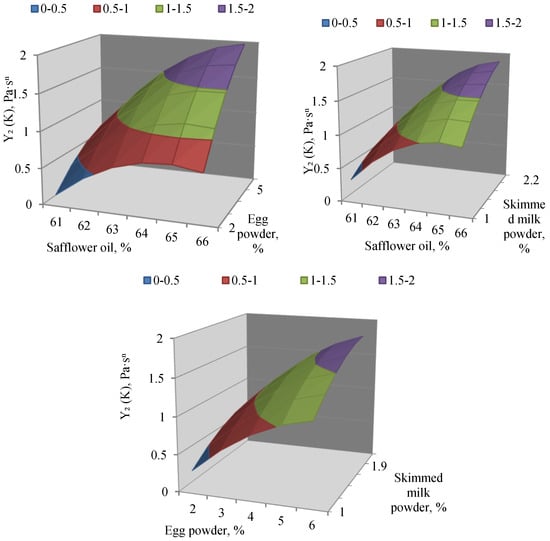
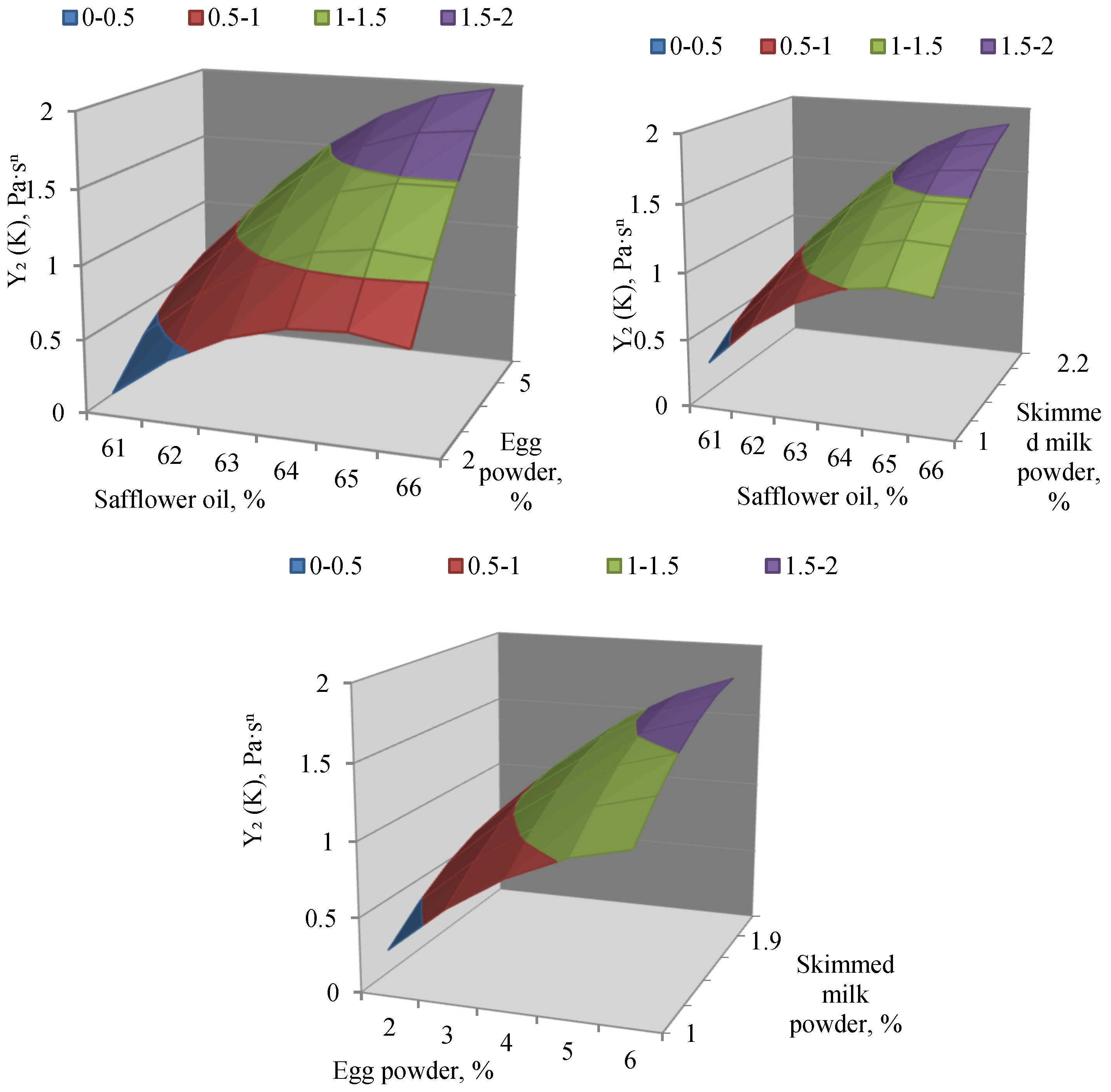
At a fixed intermediate level of skimmed milk powder (X3 = 1.6%), the response surface reflecting the combined effect of the mass fraction of safflower oil and egg powder content exhibited a pronounced dome-shaped pattern. At low values of both factors, minimal values of the consistency coefficient were observed, indicating the formation of a weakly structured emulsion. An increase in the mass fraction of safflower oil and the concentration of egg powder was accompanied by a steady increase in Y2, conditioned by an increase in the volume fraction of the dispersed phase and enhanced interfacial interactions. The maximum values of the consistency coefficient were achieved at intermediate and high factor levels, after which the growth of the parameter slowed down.
At a fixed mass fraction of safflower oil (X1 = 63%), the effect of egg powder and skimmed milk powder content on the consistency coefficient was nonlinear. An increase in egg powder concentration led to a pronounced rise in Y2 due to enhanced emulsification efficiency and the formation of a denser interfacial film. The influence of skimmed milk powder was manifested mainly at intermediate and high concentrations, indicating its role as an additional structure-forming component in the system.
The response surface obtained at a fixed egg powder content (X2 = 4%) demonstrated a synergistic effect of safflower oil and skimmed milk powder on the consistency coefficient of mayonnaise emulsions. An increase in the mass fraction of safflower oil was accompanied by a steady rise in Y2 across the entire range of skimmed milk powder concentrations. The highest consistency coefficient values were observed at elevated levels of both factors, indicating their combined enhancement of the structural strength of the emulsion.
The obtained results indicate that the consistency coefficient of mayonnaise emulsions is determined not only by the content of the fat phase but also by the efficiency of protein stabilization of the system. Safflower oil ensures the formation of a dense dispersed structure, while egg powder and skimmed milk powder contribute to strengthening the interfacial layers and increasing resistance to flow. The presence of negative quadratic effects indicates the existence of an optimal region of formulation factor values, beyond which further increases in component concentrations do not lead to a proportional rise in the consistency coefficient. This confirms that the formation of optimal rheological properties of mayonnaise is achieved at a balanced ratio of fat and protein phases (Figure 2). To quantitatively describe the influence of formulation factors on the consistency coefficient of mayonnaise emulsions, a second-order quadratic regression model was constructed using response surface methodology.
Figure 2.
Response surfaces characterizing the effect of formulation factors on the consistency coefficient of mayonnaise emulsions (Y2, Pa·sn). For the consistency coefficient (Y2): R2 = 0.958, R2_adj = 0.919, F = 25.07 (p < 0.0001).
General second-order regression equation:
Y2 = b0 + b1X1 + b2X2 + b3X3 + b12X1X2 + b13X1X3 + b23X2X3 + b11X12 + b22X22 + b33X32
Regression equation in coded variables:
Y2 = 1.146 + 0.204X1 + 0.216X2 + 0.138X3 − 0.011X12 − 0.019X22 + 0.012X32 + 0.046X1X2 − 0.001X1X3 + 0.009X2X3
The positive linear coefficient at X1 indicates that an increase in the mass fraction of safflower oil contributes to a rise in the consistency coefficient. The negative value of the coefficient at X2 suggests that excessive egg powder content may lead to a decrease in the strength of the emulsion structural network. The positive effect of skimmed milk powder is manifested through the linear term X3 and its interactions with other factors. The negative quadratic coefficients confirm the presence of an optimal region of formulation factor values, beyond which further increases result in a slowdown of the consistency coefficient growth.
Thus, the consistency coefficient, along with apparent viscosity, makes it possible to comprehensively assess the structural and rheological properties of mayonnaise emulsions and to identify the optimal ranges of formulation factor values. For a more complete characterization of emulsion system quality, the next stage of the study involved evaluating the emulsion stability of mayonnaise.
3.3. Effect of Formulation Factors on the Emulsion Stability of Mayonnaise Emulsions (Y3)
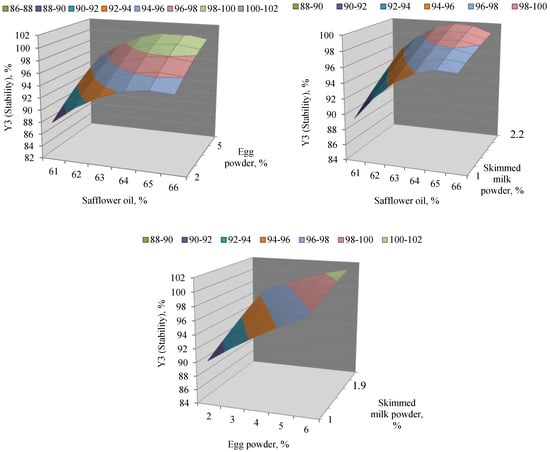
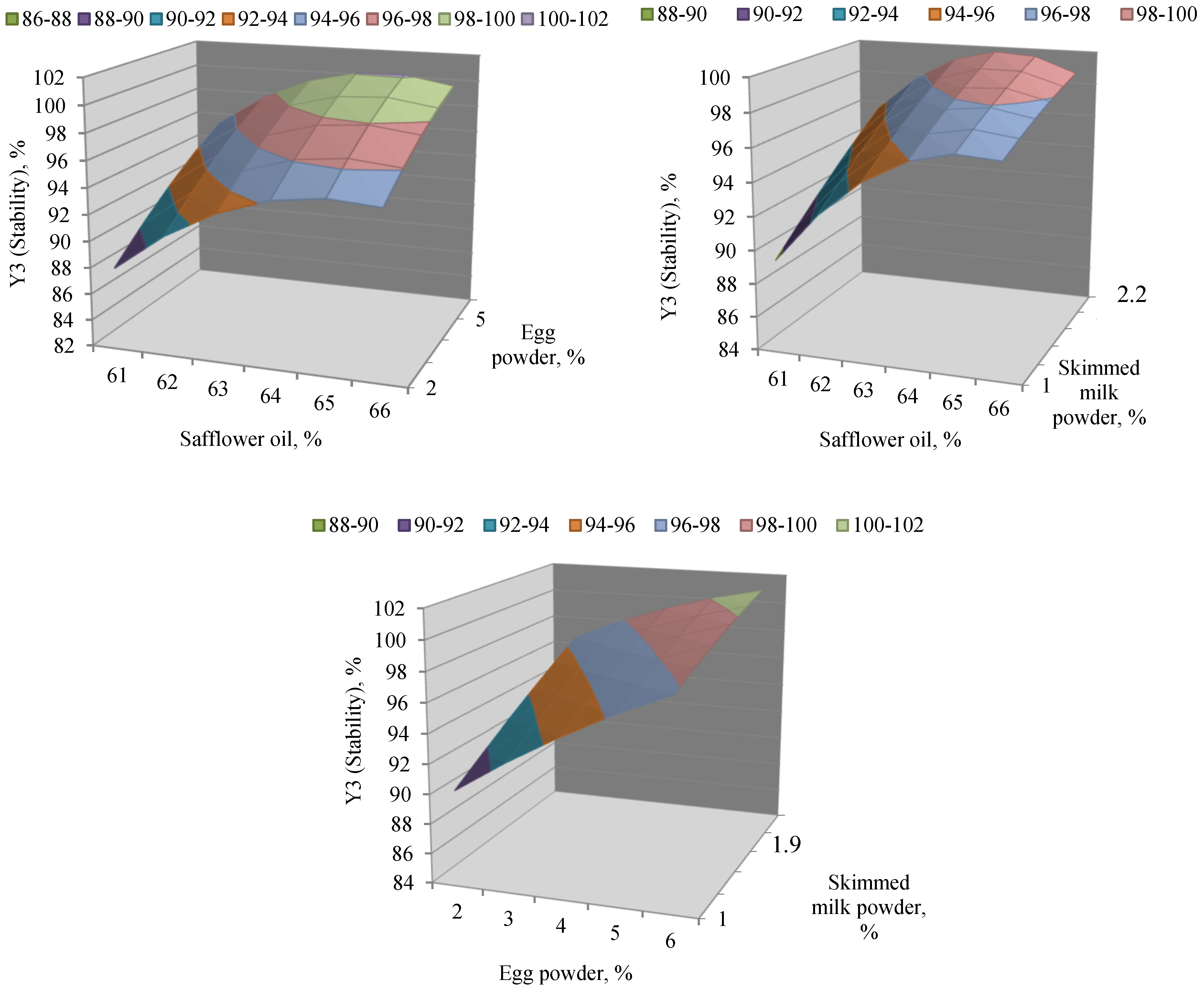
Overall, the obtained response surfaces demonstrate that the emulsion stability of mayonnaise based on safflower oil is determined by the combined influence of the fat phase and protein components of the formulation. The presence of pronounced nonlinear relationships and interactions between the mass fraction of safflower oil, egg powder content, and skimmed milk powder content confirms the feasibility of optimizing their combination using response surface methodology.
Emulsion stability is one of the key quality indicators of mayonnaise products, characterizing the system’s ability to maintain homogeneity and resist phase separation during storage. Analysis of the experimental data showed that Y3 values varied approximately from 84 to 100%, indicating the high sensitivity of this parameter to changes in formulation factors.
At a fixed intermediate level of skimmed milk powder (X3 = 1.6%), the response surface reflecting the combined effect of the mass fraction of safflower oil and egg powder content exhibited a pronounced increasing pattern. At low values of both factors, minimal emulsion stability values were observed, indicating insufficient stabilization of fat droplets. An increase in the oil mass fraction and egg powder concentration led to a steady rise in Y3 and the formation of a region of high stability values, due to enhanced emulsification efficiency and strengthening of interfacial films.
At a fixed mass fraction of safflower oil (X1 = 63%), the effect of egg powder and skimmed milk powder content on emulsion stability was nonlinear. An increase in egg powder concentration contributed to enhanced system stability due to the higher content of phospholipids and proteins involved in emulsion stabilization. The influence of skimmed milk powder was manifested mainly at intermediate concentrations, at which maximum Y3 values were achieved, whereas further increases in its content had a less pronounced effect.
The response surface obtained at a fixed egg powder content (X2 = 4%) demonstrated a synergistic effect of safflower oil and skimmed milk powder on emulsion stability. An increase in the mass fraction of oil was accompanied by a steady rise in Y3 across the entire range of skimmed milk powder concentrations. The maximum emulsion stability values were observed at elevated levels of both factors, indicating their combined stabilizing effect on the fat and protein phases.
The obtained response surfaces demonstrate that the emulsion stability of mayonnaise is determined by the combined effect of the mass fraction of safflower oil and the protein components of the formulation. In all considered cases, an increase in the content of oil and emulsifiers is accompanied by enhanced emulsion stability, while the relationships exhibit a pronounced nonlinear character.
To quantitatively describe the identified patterns and determine the optimal ranges of formulation factor values, a second-order quadratic regression model was developed, enabling the prediction of mayonnaise emulsion stability within the studied parameter range.
Regression equation in coded variables:
Y3 = 96.59165 + 1.44175X1 + 1.54071X2 + 0.92642X3 − 0.10X1X2 − 0.15X1X3 − 0.15X2X3 − 0.38446X12 − 0.11986X22 − 0.03166X32
Y3 = 97.01 + 1.36X1 + 1.48X2 + 0.94X3 − 0.43X12 − 0.25X22 − 0.06X32 − 0.03X1X2 − 0.31X1X3 − 0.17X2X3
The positive linear coefficients at X1, X2, and X3 indicate that increasing the mass fraction of safflower oil, egg powder content, and skimmed milk powder content contributes to enhanced emulsion stability of mayonnaise (Figure 3). The greatest contribution to stability improvement is made by the mass fraction of safflower oil, which is associated with an increase in the volume fraction of the dispersed phase and the formation of a more stable emulsion structure.
Figure 3.
Response surfaces characterizing the effect of formulation factors on the emulsion stability of mayonnaise emulsions (Y3, %). For emulsion stability (Y3): R2 = 0.915, R2_adj = 0.839, F = 11.99 (p = 0.00029).
Negative coefficients for the pairwise interaction terms indicate that excessive simultaneous increases in component concentrations may lead to a decrease in system stability, likely due to deterioration of emulsifier distribution at the phase interface. The negative quadratic coefficients confirm the presence of an optimal range of formulation factor values, beyond which further increases in concentrations do not result in enhanced emulsion stability.
Based on the results of formulation parameter optimization using response surface methodology, an optimized formulation of high-calorie mayonnaise based on safflower oil was developed. The proposed composition provides a balanced combination of rheological characteristics and high emulsion stability, as confirmed by experimental results.
The obtained optimized formulation can be recommended for practical application in the production of mayonnaise based on safflower oil. The proposed component ratio ensures the formation of a stable emulsion structure with specified rheological properties and may serve as a basis for the development of functional mayonnaise products with improved consumer characteristics.
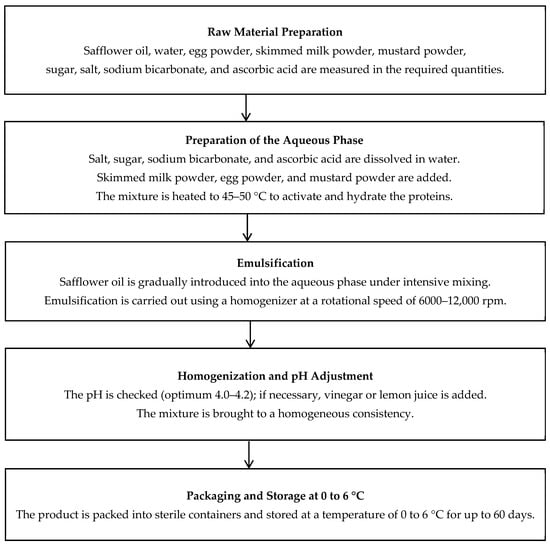
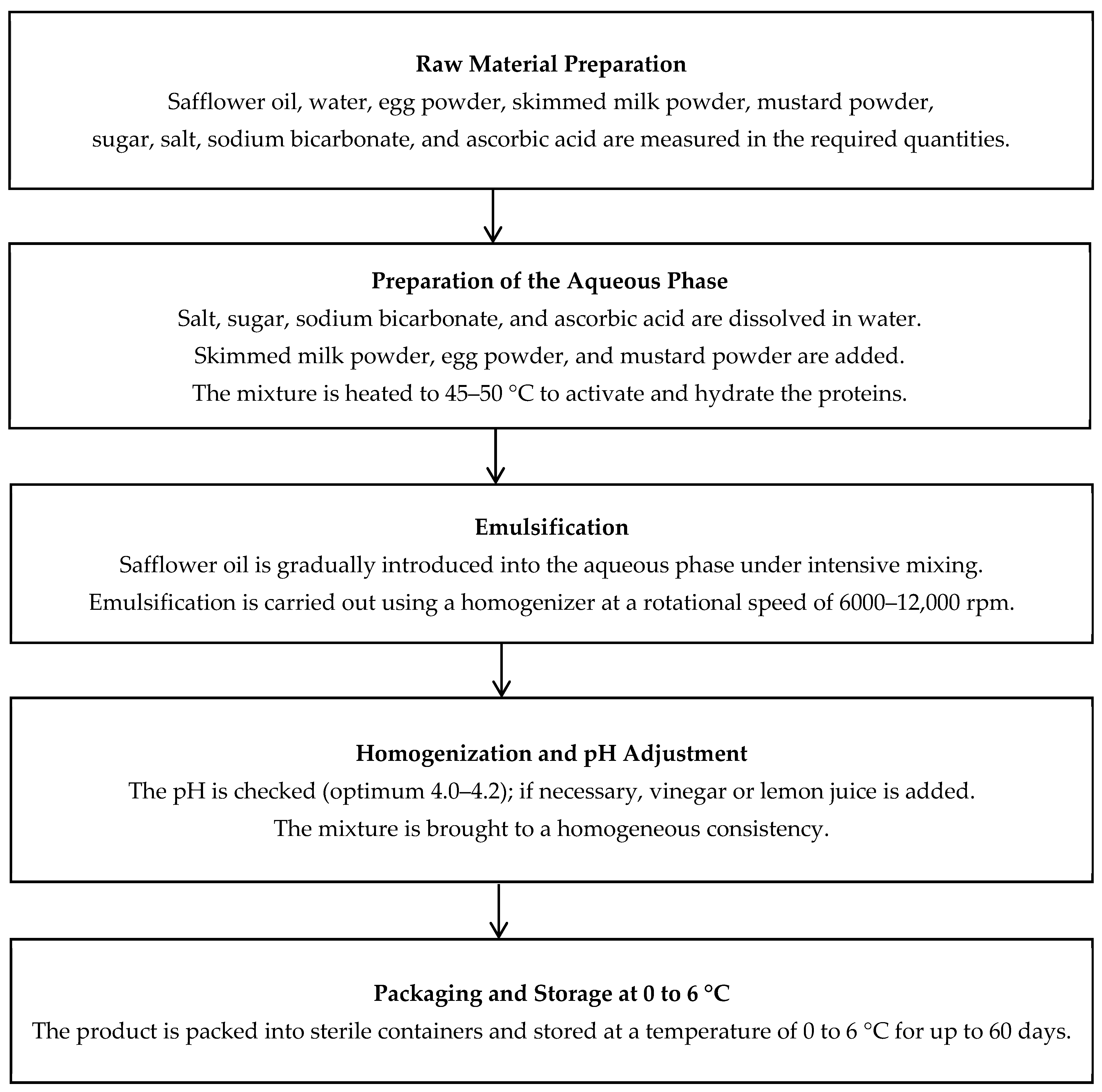
To confirm the technological feasibility of the optimized formulation and to obtain mayonnaise emulsions with specified rheological and structural characteristics, a laboratory-scale technology for preparing mayonnaise based on safflower oil was developed and implemented. The technological flow diagram for the preparation of safflower oil–based mayonnaise is presented in Figure 4.
Figure 4.
Technological flow diagram for the preparation of mayonnaise based on safflower oil (final product is stored at 0 to 6 °C).
The presented technological scheme ensures the formation of a stable emulsion system and allows reproducible production of mayonnaise with specified rheological properties. The applied preparation and homogenization conditions provide effective emulsification of the fat phase and uniform distribution of components, as confirmed by the results of apparent viscosity, consistency coefficient, and emulsion stability evaluations.
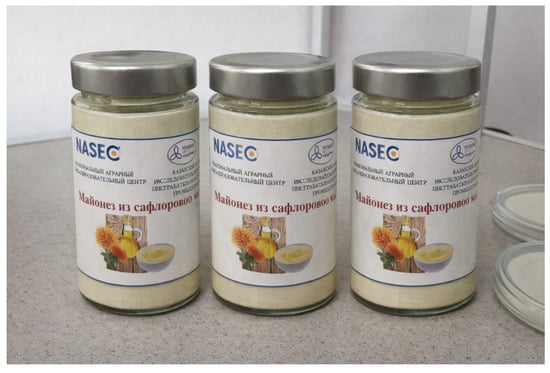
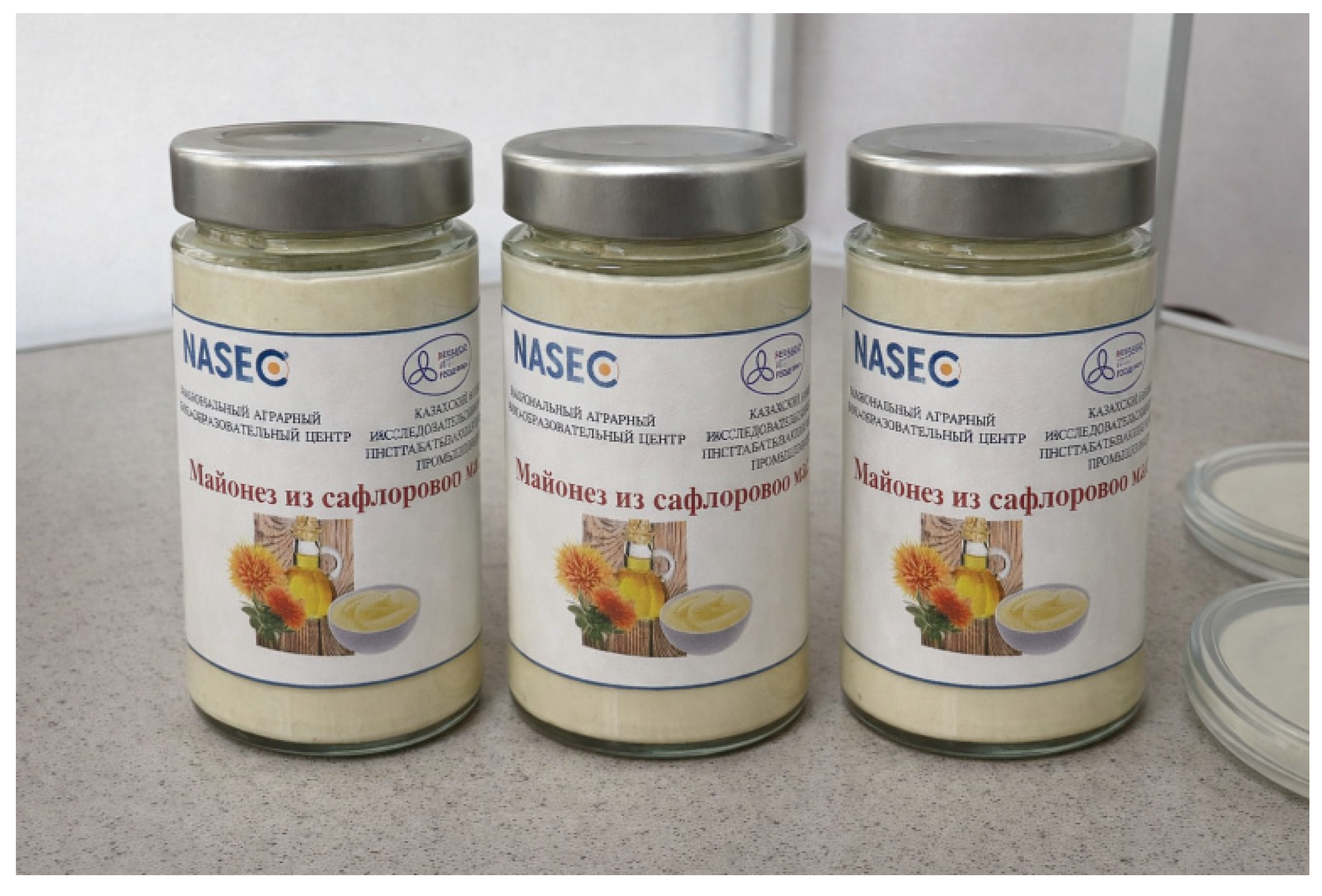
Visual evaluation of the finished product is an important stage in the comprehensive characterization of the developed formulation, as the appearance and homogeneity of the emulsion reflect its structural stability and technological reproducibility. Based on the optimized formulation and the developed technology, safflower oil–based mayonnaise was obtained, characterized by a homogeneous consistency, absence of phase separation, and structural stability during storage (Figure 5).
Figure 5.
Final Product: Mayonnaise based on safflower oil.
The presented appearance of the finished product confirms the results of the optimization of formulation parameters and the correctness of the selected technological conditions. The homogeneous structure and absence of visible signs of phase separation indicate the formation of a stable emulsion system, which is consistent with the obtained rheological parameters and high emulsion stability. Thus, the developed formulation and technology ensure the production of mayonnaise with reproducible quality characteristics.
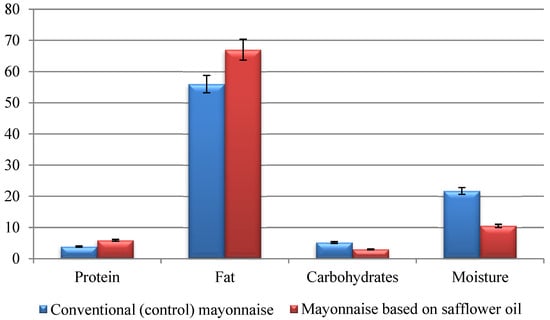
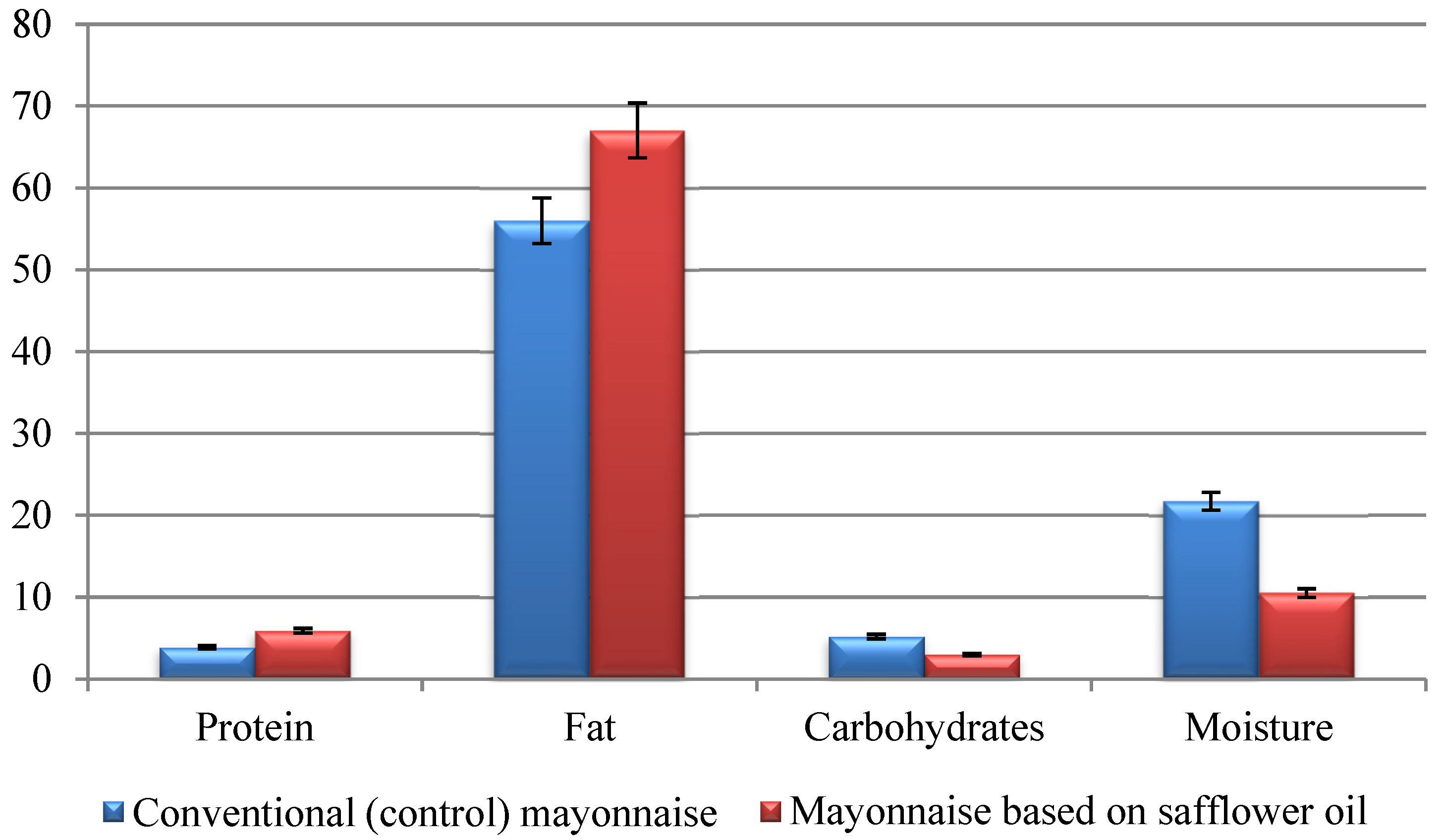
Thus, the conducted studies have shown that optimization of formulation parameters of mayonnaise emulsions based on safflower oil using response surface methodology makes it possible to purposefully control their rheological properties and emulsion stability. The obtained mathematical models adequately describe the influence of formulation factors and allow the determination of their optimal ranges (Figure 6). The developed technological scheme confirms the practical feasibility of the optimized composition and ensures the production of stable mayonnaise with specified functional characteristics.
Figure 6.
Comparative proximate composition of conventional and safflower oil–based mayonnaise.
Proximate composition of conventional mayonnaise (control) and optimized safflower oil-based mayonnaise. Values are presented as mean ± standard deviation (n = 3). Significant differences between samples according to Student’s t-test (Carbohydrates—p < 0.05, Protein—p < 0.01, Fat, Moisture—p < 0.001).
The evaluated parameters included protein, fat, carbohydrate, and moisture contents.
The safflower oil-based mayonnaise demonstrated a higher fat content compared to the control sample (approximately 67% vs. 56%), which is consistent with the optimized formulation aimed at achieving improved structural and rheological characteristics. The increased lipid fraction contributes to enhanced emulsion structuring and stability, as reflected in the rheological results discussed above.
The protein content in the safflower oil-based mayonnaise was slightly higher than in the conventional sample. This difference is associated with the adjusted proportion of egg powder and skimmed milk powder used in the optimized formulation, which contributes to improved emulsification efficiency and stabilization of the fat droplets.
Conversely, the moisture content of the safflower oil–based mayonnaise was significantly lower (approximately 11%) compared to the control sample (approximately 22%). The reduction in water content corresponds to the increased fat phase concentration and plays a crucial role in enhancing viscosity and emulsion stability.
Carbohydrate content was slightly lower in the safflower oil–based formulation, which may be attributed to differences in ingredient ratios and the relative proportion of aqueous phase components.
Overall, the results indicate that modification of the fat base and optimization of formulation parameters lead to substantial changes in the compositional profile of mayonnaise. The higher fat and protein contents, combined with reduced moisture, contribute to improved structural integrity and stability of the safflower oil-based emulsion system.
3.4. Contribution of Factors and Analysis of Primary and Secondary Effects
The relative importance of each independent variable and their interactions was quantitatively evaluated using F-values from the ANOVA (Table 7, Table 8 and Table 9). The higher the F-value, the greater the contribution of the factor to the response.
Table 8.
Optimized formulation of high-calorie mayonnaise based on safflower oil.
Table 9.
Changes in rheological properties and emulsion stability of the optimized safflower oil-based mayonnaise during storage at 0 to 6 °C.
For apparent viscosity (Y1): The linear effects were the most significant. Egg powder content (X2) showed the strongest influence (F = 63.31, p < 0.001), followed by safflower oil mass fraction (X1) (F = 58.17, p < 0.001) and skimmed milk powder content (X3) (F = 34.47, p < 0.001). Among the quadratic terms, X12 and X22 had the highest contribution, indicating a pronounced curvature in the response. The interaction effects were relatively weak, suggesting that the main factors act rather independently on viscosity.
For consistency coefficient (Y2): Similar to Y1, the linear terms dominated. The strongest effects were observed for X1 (F = 71.92, p < 0.001) and X2 (F = 68.47, p < 0.001). This confirms that both the fat phase and the primary emulsifier (egg powder) are the key drivers of structural strength in the emulsion. Quadratic and interaction effects were minor, indicating a more linear character of influence compared to Y1.
For emulsion stability (Y3): All three linear factors showed high significance: X2 (F = 32.72, p < 0.001), X1 (F = 31.45, p < 0.001), and X3 (F = 18.01, p = 0.0017). Unlike rheological parameters, emulsion stability was more sensitive to interaction terms, particularly X1X3, which indicates the importance of balanced fat–protein ratios for preventing phase separation.
Overall, the primary (linear) effects contributed more than 75–85% of the total explained variance across all responses, confirming that the main formulation components have a dominant direct influence. Secondary (quadratic and interaction) effects were significant mainly for Y1, highlighting the non-linear nature of viscosity formation in mayonnaise emulsions. These results demonstrate that the optimization using response surface methodology was justified, as a simple one-factor variation would not capture the complex behavior of the system.
3.5. Stability of Mayonnaise During Storage and Sensory Evaluation
To confirm the practical feasibility and shelf-life stability of the optimized safflower oil-based mayonnaise formulation, changes in the key quality parameters were monitored during refrigerated storage. Optimized mayonnaise (63.5% safflower oil, 4.5% egg powder, 1.65% skim milk powder) was packaged in sterile glass jars and stored at 0 to 6 °C for 60 days. Measurements of apparent viscosity (Y1), consistency coefficient (Y2), and emulsion stability (Y3) were performed at 0, 15, 30, 45, and 60 days of storage. Sensory evaluation was carried out using a 9-point hedonic scale by a trained panel of 12 assessors.
The results of the storage stability study are presented in Table 9.
During the entire storage period, a slight gradual decrease in apparent viscosity and consistency coefficient was observed, which is typical for high-fat mayonnaise emulsions and is associated with minor structural rearrangements of the protein–fat network. However, all values remained within the technologically acceptable range for commercial mayonnaise products. Emulsion stability remained very high (>96.8%), and no visible phase separation or syneresis was detected.
Sensory evaluation (9-point hedonic scale) showed high consumer acceptability of the product throughout the storage period (Table 10).
Table 10.
Sensory scores of the optimized mayonnaise during storage.
All sensory attributes remained at a high level (≥8.0) even after 60 days of storage, confirming excellent consumer quality and stability of the developed product.
Thus, the safflower oil-based protective mayonnaise demonstrated shelf stability and maintained its rheological, structural, and sensory characteristics for at least 60 days under refrigeration.
3.6. Fatty Acid Composition, Total Phenolic Content, and Antioxidant Activity of Safflower Oil-Based Mayonnaise
To confirm the claimed functional benefits of safflower oil, data for safflower oil and regular sunflower oil were evaluated. These parameters were also considered in the context of the final mayonnaise product, given that oil constitutes the dominant phase (63.5%) in the optimized formulation.
Fatty acid composition. The safflower oil used in this study is characterized by a high linoleic acid content, ranging from 71 to 78% of the total fatty acid content, which is significantly higher than that of regular sunflower oil (55–70%). This confirms the high nutritional and functional value of safflower oil as a source of essential polyunsaturated fatty acids.
Total phenolic content and antioxidant activity. Safflower oil contains significant amounts of phenolic compounds (approximately 140 to 410 mg HAE/kg oil) and exhibits measurable antioxidant activity in DPPH tests. These natural antioxidants contribute to the oxidative stability of the oil and, consequently, the mayonnaise emulsion. In comparison, refined sunflower oil typically contains lower levels of endogenous phenolic compounds.
The high proportion of safflower oil in the developed formula (63.5%) allows for a significant transfer of these bioactive properties to the final product, providing it with functional advantages over traditional sunflower oil-based mayonnaise (Table 11).
Table 11.
Comparative data on key functional parameters of safflower and sunflower oils.
4. Discussion
The present study demonstrates that the structural–rheological behavior and stability of safflower oil–based mayonnaise emulsions are governed by the complex interaction between the fat phase volume fraction and protein stabilizers. The nonlinear response patterns obtained for apparent viscosity (Y1), consistency coefficient (Y2), and emulsion stability (Y3) confirm that the formation of a stable emulsion system cannot be explained by the isolated contribution of individual components but rather by their synergistic effects.
The results obtained for the safflower oil-based mayonnaise compare favorably with those reported for mayonnaise formulated with other vegetable oils and alternative protein sources. The optimized formulation achieved an apparent viscosity (Y1) of 205 Pa·s, consistency coefficient (Y2) of 1.48 Pa·sn, and emulsion stability (Y3) of 99.0%, which are comparable or superior to values reported for traditional sunflower oil mayonnaise (Taslikh et al., 2022 [22]: Y1 = 180–220 Pa·s, Y3 = 96–98%) and rice/sesame oil blends (Chetana et al., 2019 [8]: Y3 = 94–97%). In contrast, low-fat mayonnaise systems based on flaxseed oil oleogels (Yılmaz & Keskin Uslu, 2025) [3] and shrimp oil with myofibrillar proteins (Rajasekaran et al., 2024) typically exhibit lower viscosity (120–170 Pa·s) and slightly reduced stability (94–97%) [9]. When egg yolk was partially or fully replaced by plant-based proteins such as peanut/sesame press-cake milk (Karshenas et al., 2019) [5] or bean aquafaba (Sachko et al., 2023) [6], emulsion stability rarely exceeded 96% and often required additional hydrocolloids. The present study demonstrates that safflower oil, owing to its high polyunsaturated fatty acid content and natural antioxidant profile, enables the production of a high-calorie functional mayonnaise with excellent rheological properties and superior emulsion stability without synthetic stabilizers, thereby offering a nutritionally enhanced alternative to conventional vegetable oils while maintaining classic sensory and textural characteristics.
The increase in apparent viscosity and consistency coefficient with rising safflower oil content is consistent with classical emulsion theory, according to which an increase in dispersed phase volume fraction leads to enhanced droplet–droplet interactions and formation of a spatial network structure. Similar behavior has been reported for conventional and modified mayonnaise systems, where oil concentration significantly determines viscoelastic properties and yield stress values (Taslikh et al., 2022; Mirzanajafi-Zanjani et al., 2019) [1,22]. However, unlike traditional sunflower oil systems, safflower oil is characterized by a higher content of polyunsaturated fatty acids and bioactive compounds (Günç Ergönül & Aksoylu Özbek, 2018; Ergönül & Özbek, 2020) [11,12], which may influence oxidative stability and interfacial phenomena.
The positive contribution of egg powder to viscosity and stability confirms its key role as a natural emulsifier due to the presence of phospholipids and surface-active proteins. These components promote the formation of a strong interfacial film around fat droplets, reducing coalescence and improving mechanical resistance. Similar stabilization mechanisms were described by Ho et al. (2022), who showed that structural modification of egg yolk proteins directly affects emulsion strength and rheological response [20]. At the same time, excessive protein concentration may lead to structural weakening, which is consistent with the negative quadratic terms obtained in the present models and with observations reported by Karshenas et al. (2019) when replacing egg yolk in mayonnaise formulations [5].
Skimmed milk powder exhibited a nonlinear effect on all response functions. Its role appears to be associated not only with additional protein stabilization but also with water-binding capacity and viscosity enhancement of the continuous phase. Comparable effects of dairy and plant-based protein systems on emulsion structure have been reported in eggless and functional mayonnaise formulations (Chetana et al., 2019; Sachko et al., 2023) [6,8]. The existence of an optimal concentration range suggests that excessive protein loading may lead to competitive adsorption at the oil–water interface and destabilization phenomena.
The emulsion stability values obtained in this study fall within the range reported for high-quality commercial and experimental mayonnaise systems (Ali & El Said, 2020; Rajasekaran et al., 2024) [7,9]. The positive effect of safflower oil on stability may also be linked to its specific fatty acid profile, dominated by linoleic acid, which influences interfacial tension and droplet deformability (Mateev et al., 2019) [10]. Furthermore, the low peroxide and acid values of the oil confirm its suitability for emulsion systems requiring oxidative resistance.
The application of response surface methodology (RSM) proved to be an effective approach for identifying optimal formulation regions. The presence of significant quadratic and interaction terms indicates that simple linear optimization would not adequately describe the system behavior. Similar nonlinear optimization patterns have been observed in studies on ultrasound-assisted emulsification and oil phase variation (Bekturganova et al., 2023) [18], emphasizing the importance of multifactorial modeling for emulsion design.
From a technological standpoint, the optimized formulation ensures a balance between viscosity, structural strength, and stability without requiring synthetic stabilizers. This is particularly relevant in the context of growing consumer demand for functional and clean-label products (de Menezes et al., 2022) [21]. The successful incorporation of safflower oil expands the potential use of alternative vegetable oils in mayonnaise production, aligning with trends toward nutritionally enhanced lipid systems. In comparison with low-fat mayonnaise systems based on oleogels or plant protein substitutes (Yılmaz & Keskin Uslu, 2025; Karshenas et al., 2019) [3,5], the present formulation focuses on structural optimization within a high-calorie matrix, demonstrating that functional oils can be integrated without compromising rheological quality. The findings, therefore, contribute to bridging the gap between nutritional enhancement and technological feasibility. Overall, the results confirm that the optimal performance of safflower oil-based mayonnaise is achieved not at extreme concentrations of oil or protein components but within a balanced compositional region defined by synergistic interactions. The developed regression models provide a predictive tool for rational formulation design and may be further applied in scaling up industrial production.
5. Conclusions
In this study, the formulation parameters of mayonnaise based on safflower oil were successfully optimized using response surface methodology. The independent variables were the mass fraction of safflower oil (X1), egg powder content (X2), and skimmed milk powder content (X3). The quadratic regression models developed for apparent viscosity (Y1), consistency coefficient (Y2), and emulsion stability (Y3) showed high adequacy (R2 = 0.953, 0.958, and 0.915, respectively) and were experimentally verified at the optimal point.
The optimal formulation was determined as 63.5% safflower oil, 4.5% egg powder, and 1.65% skimmed milk powder. Under these conditions, the mayonnaise exhibited high apparent viscosity (202 ± 5 Pa·s), consistency coefficient (1.45 ± 0.04 Pa·sn), and excellent emulsion stability (98.7 ± 0.3%), with relative deviations from model predictions not exceeding 2.1%.
The study confirmed that the maximum rheological and stability characteristics are achieved not at extreme concentrations of individual components, but at a balanced ratio of the fat and protein phases. The obtained results confirm the functional superiority of the developed product: safflower oil contains 71–78% linoleic acid (compared to 55–70% in conventional sunflower oil), along with higher levels of phenolic compounds (140–413 mg GAE/kg) and antioxidant activity.
The developed laboratory technology ensures reproducible production of a stable high-calorie mayonnaise with improved nutritional profile due to the high content of polyunsaturated fatty acids. The results obtained expand the possibilities of using safflower oil in functional emulsion products and provide a scientific basis for industrial implementation.
Author Contributions
Conceptualization, M.T., T.T., M.S. and N.A.; methodology, M.T., T.T. and N.A.; investigation, M.T., A.S., A.K. and N.A.; writing—original draft preparation, M.T.; writing—review and editing, M.T., M.S., A.S., A.K. and N.A. All authors have read and agreed to the published version of the manuscript.
Funding
The work was carried out within the framework of the program funded by the Ministry of Agriculture of the Republic of Kazakhstan BR22886613 “Development of innovative technologies for processing and storing agricultural crop products and raw materials” on the topic “Development of technologies for new types of functional food products based on safflower oil”.
Data Availability Statement
The raw data that supported the findings of this study are available from the corresponding author, M.T., upon fair and reasonable request.
Acknowledgments
The authors express their sincere gratitude to all participants of the scientific project for their assistance in conducting experimental research and discussing the results obtained.
Conflicts of Interest
The authors declare no conflict of interest. Authors Mukhtar Tultabayev, Madina Sultanov, Aigerim Saduakas and Akerke Kamali were employed by “Kazakh Research Institute of Processing and Food Industry” LLP. The remaining authors declare that the research was conducted in the absence of any commercial or financial relationships that could be construed as a potential conflict of interest.
References
- Mirzanajafi-Zanjani, M.; Yousefi, M.; Ehsani, A. Challenges and approaches for production of a healthy and functional mayonnaise sauce. Food Sci. Nutr. 2019, 7, 2471–2484. [Google Scholar] [CrossRef] [Scilit]
- Teryokhina, A.; Zheltoukhova, E.; Kopylov, M. Analysis of fatty acid composition of functional mayonnaise sauce with pumpkin products. BIO Web Conf. 2024, 103, 00075. [Google Scholar] [CrossRef] [Scilit]
- Yılmaz, E.; Keskin Uslu, E. Physicochemical, Rheological, and Sensory Properties of Low-Fat Mayonnaises Formulated with Flaxseed Oil-Based Sunflower and Whale Wax Oleogels. J. Am. Oil Chem. Soc. 2025, 102, 1563–1575. [Google Scholar] [CrossRef] [Scilit]
- Khushbu, S.; Sunil, C.K. Comparative study on effect of shallot flour as a thickener, with commercially available thickeners on properties of low fat mayonnaise. Trends Biosci. 2018, 11, 4401–4407. [Google Scholar]
- Karshenas, M.; Goli, M.; Zamindar, N. Substitution of sesame and peanut defatted-meal milk with egg yolk and evaluation of the rheological and microstructural properties of low-cholesterol mayonnaise. Food Sci. Technol. Int. 2019, 25, 633–641. [Google Scholar] [CrossRef] [Scilit]
- Sachko, A.; Sema, O.; Grinchenko, O.; Gubsky, S. Canned beans aquafaba as an egg white substitute in the technology of low-fat mayonnaise. Eng. Proc. 2023, 56, 206. [Google Scholar]
- Ali, M.R.; el Said, R.M. Assessment of the potential of Arabic gum as an antimicrobial and antioxidant agent in developing vegan “egg-free” mayonnaise. J. Food Saf. 2020, 40, e12771. [Google Scholar] [CrossRef] [Scilit]
- Chetana, R.; Bhavana, K.; Babylatha, R.; Geetha, V.; Suresh Kumar, G. Studies on eggless mayonnaise from rice bran and sesame oils. J. Food Sci. Technol. 2019, 56, 3117–3125. [Google Scholar] [CrossRef] [Scilit] [PubMed]
- Rajasekaran, B.; Singh, A.; Zhang, B.; Hong, H.; Prodpran, T.; Benjakul, S. Shrimp oil-enriched mayonnaise prepared using fish myofibrillar protein as a substitute for egg yolk: Physical, rheological, and sensory properties. Colloids Interfaces 2024, 8, 22. [Google Scholar] [CrossRef] [Scilit]
- Mateev, E.; Ostrikov, A.; Terekhina, A.; Usmanov, A.; Mateeva, S.; Kopylov, M. The Research of the Composition of Safflower Seed Oil Obtained by Method of Cold Pressing. Bull. Almaty Technol. Univ. 2019, 4, 15–24. [Google Scholar]
- Ergönül, P.G.; Özbek, Z.A. Cold pressed safflower (Carthamus tinctorius L.) seed oil. In Cold Pressed Oils; Academic Press: Cambridge, MA, USA, 2020; pp. 323–333. [Google Scholar]
- Günç Ergönül, P.; Aksoylu Özbek, Z. Identification of bioactive compounds and total phenol contents of cold pressed oils from safflower and camelina seeds. J. Food Meas. Charact. 2018, 12, 2313–2323. [Google Scholar] [CrossRef] [Scilit]
- Hingnekar, P.; Karikar, M. Safflower oil: A multifunctional ingredient. World J. Pharm. Res. 2022, 11, 1228–1236. [Google Scholar]
- Maraş, H.; Şenkal, B.C. The Effect of Irrigation in the Different Development Periods on Yield and Yield Components in Safflower (Carthamus tinctorius L.). ISPEC J. Agric. Sci. 2025, 9, 212–221. [Google Scholar]
- Zemour, K.; Labdelli, A.; Adda, A.; Dellal, A.; Talou, T.; Merah, O. Phenol content and antioxidant and antiaging activity of safflower seed oil (Carthamus tinctorius L.). Cosmetics 2019, 6, 55. [Google Scholar] [CrossRef] [Scilit]
- Tultabayev, M.; Chomanov, U.; Tultabaeva, T.; Shoman, A.; Dodaev, K.; Azimov, U.; Zhumanova, U. Identifying patterns in the fatty-acid composition of safflower depending on agroclimatic conditions. East.-Eur. J. Enterp. Technol. 2022, 2, 116. [Google Scholar]
- Zuñiga-Salcedo, M.R.; Ulloa, J.; Bautista-Rosales, P.; Rosas-Ulloa, P.; Ramírez-Ramírez, J.; Silva-Carrillo, Y.; Gutiérrez-Leyva, R.; Hernández, C. Effect of ultrasound treatment on physicochemical, functional and nutritional properties of a safflower (Carthamus tinctorius L.) protein isolate. Ital. J. Food Sci. 2019, 31, 591–603. [Google Scholar]
- Bekturganova, A.; Mukanova, K.; Zhumanova, U.; Tultabayev, B. Establishing the regularity of the emulsification process. BIO Web Conf. 2023, 64, 01012. [Google Scholar] [CrossRef] [Scilit]
- Tultabayev, M.; Alzhaxina, N.; Sultanova, M.; Sadvakas, A.; Yakiyayeva, M.; Akzhanov, N. Extraction of safflower seed oil using various solvents and its physicochemical properties for use in functional and dietary food applications. Funct. Food Sci. 2025, 5, 530–551. [Google Scholar] [CrossRef] [Scilit]
- Ho, J.H.; Lee, T.-A.; Namai, N.; Sakai, S.; Lou, S.-S.; Handa, A.; Lin, W.-T. Thermal processing of liquid egg yolks modulates physio-chemical properties of mayonnaise. Foods 2022, 11, 1426. [Google Scholar] [CrossRef] [Scilit] [PubMed]
- de Menezes, R.C.F.; de Carvalho Gomes, Q.C.; de Almeida, B.S.; de Matos, M.F.R.; Pinto, L.C. Plant-based mayonnaise: Trending ingredients for innovative products. Int. J. Gastron. Food Sci. 2022, 30, 100599. [Google Scholar] [CrossRef] [Scilit]
- Taslikh, M.; Mollakhalili-Meybodi, N.; Alizadeh, A.M.; Mousavi, M.-M.; Nayebzadeh, K.; Mortazavian, A.M. Mayonnaise main ingredients influence on its structure as an emulsion. J. Food Sci. Technol. 2022, 59, 2108–2116. [Google Scholar] [CrossRef] [Scilit] [PubMed]
- The Technical Regulation of the Russia-Kazakhstan-Belarus Customs Union (CU) “On Safety of Milk and Dairy Products” (TR TS 033/2013). Available online: https://apps.fas.usda.gov/newgainapi/api/Report/DownloadReportByFileName?fileName=Customs%20Union%20Technical%20Regulation%20on%20Milk%20and%20Dairy%20Products_Moscow_Russian%20Federation_11-18-2013 (accessed on 22 March 2026).
- GOST 25699.3–90; Rubber Compounding Ingredients. Carbon Black. Determination of Iodine Adsorption Number. Titrimetric Method. USSR State Committee on Quality Management of Products and Standards: Moscow, Russia, 1990.
- GOST 26593–85; Vegetable Oils. Method for Measurement of Peroxide Value. USSR State Committee on Quality Management of Products and Standards: Moscow, Russia, 1985.
- GOST 5477–2015; Vegetable Oils. Methods for Determination of Colour. FSUE “Standartinform”: Moscow, Russia, 2015.
- GOST 31762–2012; Mayonnaises and Mayonnaise Sauces. Sampling Rules and Test Methods. FSUE “Standartinform”: Moscow, Russia, 2012.

Disclaimer/Publisher’s Note: The statements, opinions and data contained in all publications are solely those of the individual author(s) and contributor(s) and not of MDPI and/or the editor(s). MDPI and/or the editor(s) disclaim responsibility for any injury to people or property resulting from any ideas, methods, instructions or products referred to in the content. |
© 2026 by the authors. Licensee MDPI, Basel, Switzerland. This article is an open access article distributed under the terms and conditions of the Creative Commons Attribution (CC BY) license.