


Abstract
Biocoagulants derived from Moringa oleifera Lam seeds are a sustainable alternative for water clarification, but require preparation adapted to the treatment of the dark waters of the Amazon River. This study compared the effectiveness of three coagulant preparation methods from moringa seeds: powder (B1), saline solution (B2), and aqueous solution (B3) in the clarification of samples collected on the shore of Macapá (Amapá—AP), Brazil. The tests were performed using a jar test (fast mixing of 100 rpm for 3 min and slow mixing of 20 rpm for 15 min), with dosages of 20 to 200 mg·L−1, and sedimentation times between 10 and 60 min. The optimized conditions were: 80 mg·L−1/20 min (B1), 40 mg·L−1/30 min (B2), and 40 mg·L−1/40 min (B3). The maximum removals achieved by clarification were as follows: apparent color (92.6%), turbidity (79.4%), chloride (70.9%), ammonia (81.2%), aluminum (99.1%), copper (85.4%), iron (85.8%), and manganese (100.0%). The saline solution was the most efficient. Filtration brought additional improvements to the treated water. It was found that the moringa coagulant was effective in removing contaminants from the waters of the Amazon River, standing out as a green, sustainable, and low-cost technology. However, disinfection would be necessary to improve its microbiological quality.
1. Introduction
Access to safe drinking water of adequate quality and quantity is essential for public health, well-being, and sustainable development all over the world [1]. The Amazon Basin, the largest in the world concerning freshwater volume [2], holds vast water resources. However, this abundance does not automatically ensure the safe supply of treated water to the population. In Brazil’s Northern region, for example, significant inequalities persist in the city of Macapá (AP), where 45.6% of the population still lacks access to potable water [3].
Conventional water treatment systems typically involve the coagulation, flocculation, sedimentation, filtration, and disinfection stages to meet current drinking water standards [4]. Among these stages, coagulation and flocculation are considered fundamental to the success of the water clarification. Coagulation promotes the neutralization of the charges of colloidal particles of the water [5], while flocculation facilitates the aggregation of these particles into larger and denser flocs [6,7], which are easier to remove in the subsequent stages. Thus, the coagulation-flocculation unit contributes significantly to the overall efficiency of the treatment system, optimizing the removal of apparent color, turbidity, organic matter, and microorganisms [5,6,7,8]. After this stage, sedimentation enables the settling of the flocs, filtration complements the retention of remaining particles, and disinfection ensures the elimination of pathogenic microorganisms [8].
For coagulation, chemical coagulants based on aluminum and iron salts are often used, but they can compromise water quality, produce toxic waste, and cause equipment corrosion [6,9,10]. Moreover, the accumulation of these metals, particularly aluminum, is risky to human health [11,12].
Regarding such impacts, there is an increasing interest in natural coagulants (biocoagulants or biopolymers) produced from available biomass, which are biodegradable, low in toxicity, and efficient. Their use generates less waste regarding chemical products, and the by-products are promising as fertilizers. In addition, these coagulants also reduce costs and the production of toxic sludge [10,13,14].
As moringa (Moringa oleifera Lam) seeds contain approximately 40% protein, they are among the most promising natural coagulants [14,15]. These proteins possess a highly charged structure and high molecular weight, which provides their coagulating activity [16]. Their physicochemical performance consists of charge neutralization through protein adsorption [10,17,18,19]. In addition, moringa exhibits antimicrobial properties, being capable of inactivating pathogenic bacteria such as Escherichia coli [13,20].
Numerous studies have demonstrated the effectiveness of moringa in water treatment, both as powdered seed and solutions [21,22,23,24,25,26]. However, factors such as raw water quality, coagulant concentration, and preparation method directly influence the results, making it essential to identify the ideal combination of these elements to optimize treatments [19]. This challenge becomes even more significant in the Amazon region, where the water from the Amazon River presents high turbidity, a large amount of organic matter, and considerable seasonal variation [27]. These conditions require specific care to ensure the proper performance of natural coagulants, highlighting the importance of using solutions adapted to the local context.
Therefore, this study aimed to compare the effectiveness of three different preparation methods of coagulants from the moringa seeds in clarifying waters from the waterfront of the Amazon River. The study focused on optimizing dosages and sedimentation times, followed by the application of a filtration step for further improvements of the water quality.
2. Materials and Methods
2.1. Water Sampling
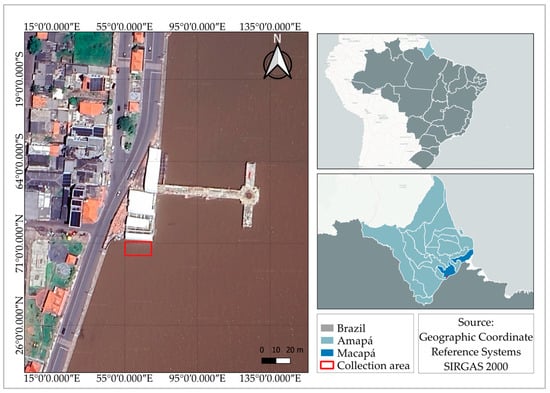
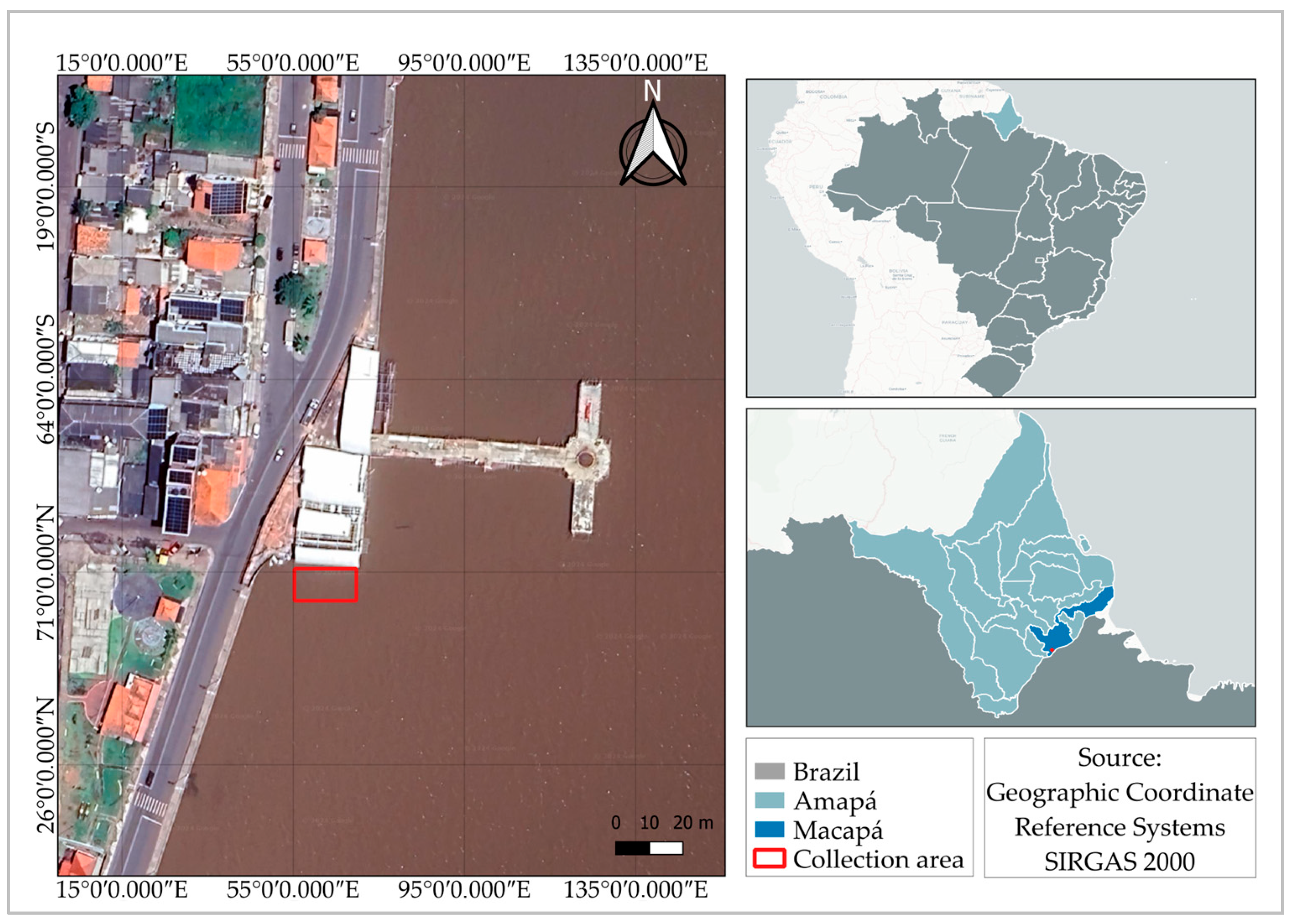
The raw surface water was collected from the waterfront of the Amazon River in Macapá (AP), at the geographic coordinates 0°00′55.6″ N and 51°03′22.8″ W (Figure 1). Approximately 100 L of water was collected directly from the river surface and stored in 25 L containers, in a freezer (Gelopar, GHBS 411L, Curitiba, PR, Brazil) for preservation until the tests were performed.
Figure 1.
Location of the collection site.
2.2. Preparation of the Biocoagulants
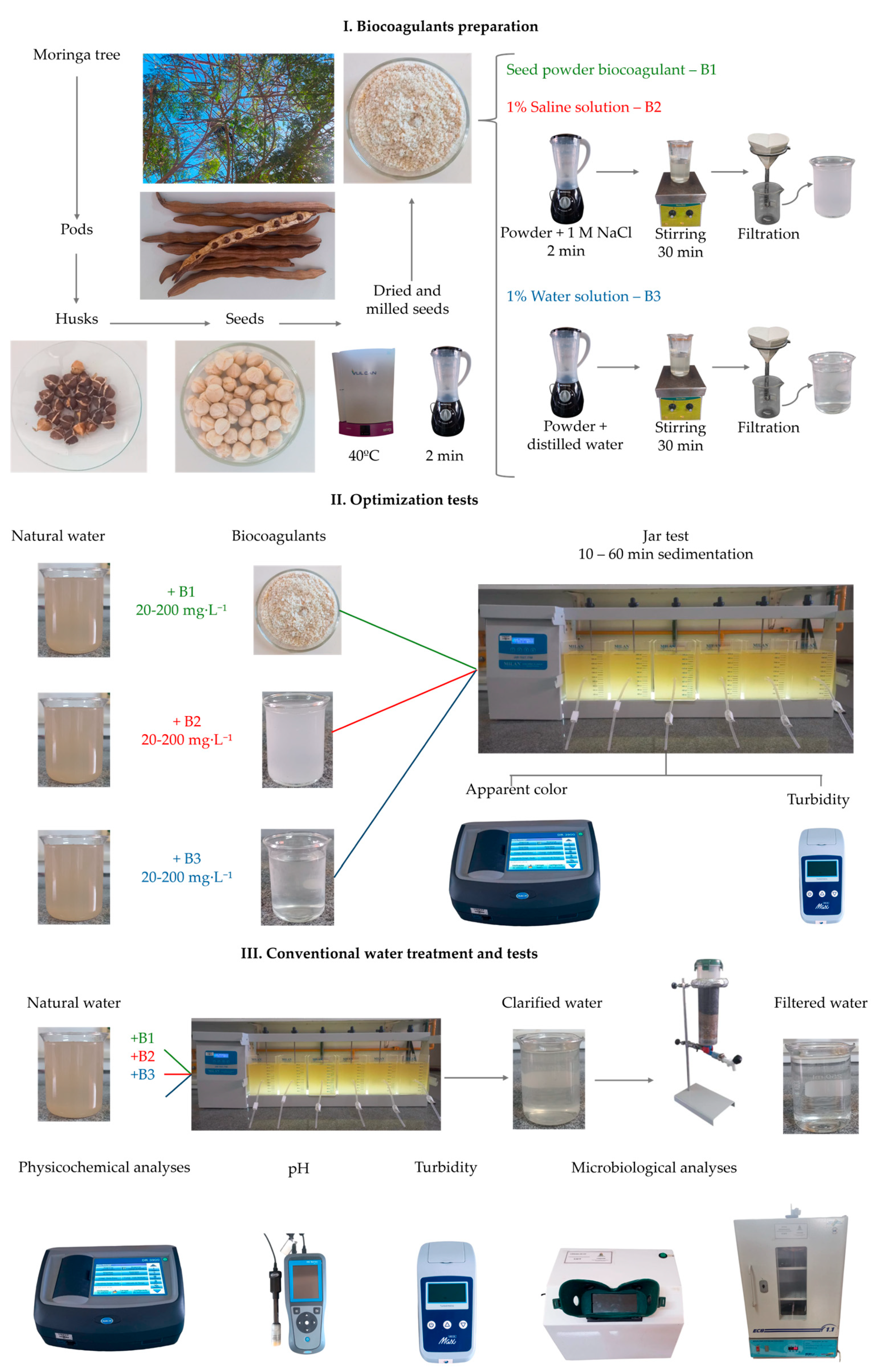
Moringa seeds were shelled to obtain the powder, and 15 g were weighed (Ohaus, PA214CP, Newark, NJ, EUA), dried in an oven (Vulcam, EESCRA-1150-BI, Araucária, PR, Brazil) at 40 °C until reaching constant weight (12–24 h), and ground in a blender (Mondial, L-550-B, Manaus, AM, Brazil) for 2 min [26]. The powder was used as a direct coagulant and for the preparation of saline and aqueous solutions.
The solutions were prepared at a concentration of 1% (w/v). For the saline solution, a 1 M NaCl solution (Alphatec, São Bernardo do Campo, SP, Brazil) was used, and distilled water was used for the aqueous solution. Each solution was homogenized in a blender (Mondial, L-550-B, Manaus, AM, Brazil) for 2 min and then stirred for 30 min on a magnetic stirrer (Ion, HJ-5, Changzhou, China). After this step, the solution was filtered through qualitative filter paper (Nalgon, Itupeva, SP, Brazil), with a grammage of 80 g.m−2 and a diameter of 9 cm [28].
2.3. Coagulation, Flocculation, and Sedimentation Tests
The clarification tests were conducted using a six-unit jar test apparatus (Milan, 603M6, Colombo, PR, Brazil). Each beaker received 2 L of raw water at room temperature (25 ± 2 °C). Operational conditions were standardized with rapid mixing at 100 rpm for 3 min for coagulation, followed by slow mixing at 20 rpm for 15 min for flocculation. These values were selected based on previous studies that indicate they are effective in promoting floc formation and stability in waters with similar physical characteristics to those analyzed [26].
The applied dosages were 20, 40, 60, 80, 100, 120, 140, 160, 180, and 200 mg·L−1. Sedimentation time was evaluated at intervals of 10, 20, 30, 40, 50, and 60 min, in triplicate. In addition to the treatments, a control trial was included, without the addition of coagulant.
2.4. Definition of Optimized Conditions
In the optimization stage, ideal dosages and sedimentation times for each preparation method were evaluated based on apparent color and turbidity removal parameters.
All analyses were performed in triplicate, and the data were processed using Minitab Statistical Software, version 22 (Minitab, LLC, State College, PA, USA) with contour plots. This program calculates intermediate values between existing measurement points for dosages and sedimentation times through data interpolation, allowing for the identification of optimal conditions.
2.5. Filtration
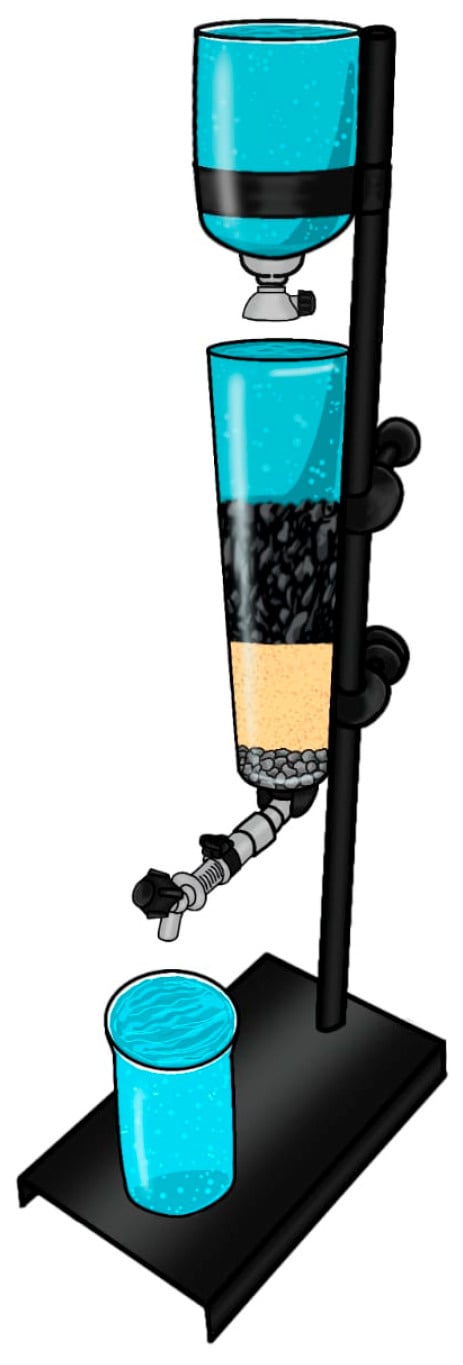
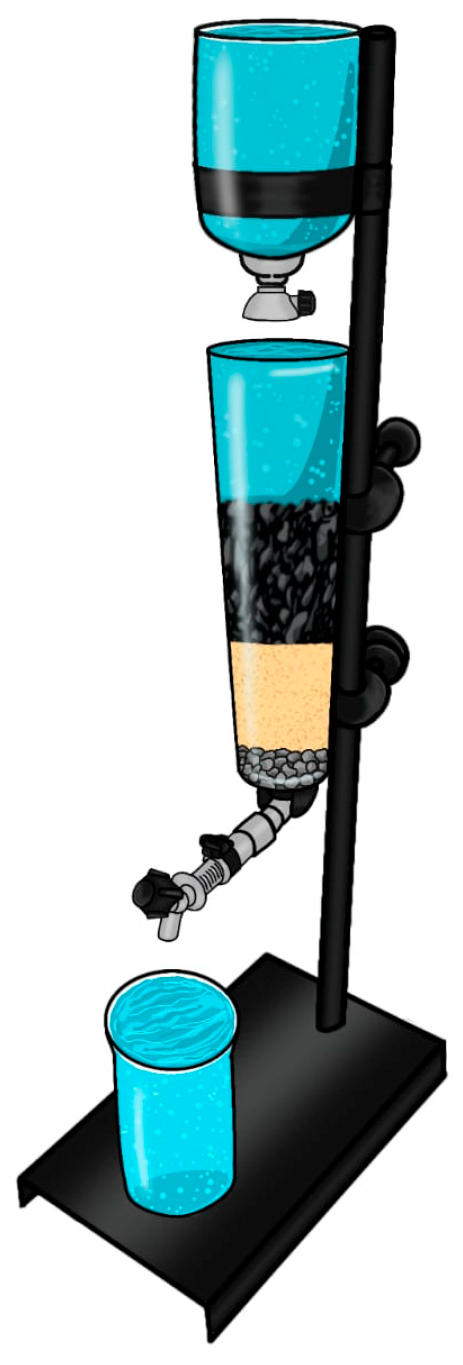
After optimization, the tests were repeated using the previously defined optimal dosages and sedimentation times, followed by the filtration stage using a rapid downward-flow dual-media filter with depth filtration action, made of a plastic tube measuring 28 cm in height and 6 cm in diameter. The filter media, with a total height of 13 cm, consisted of 40% sand (0.6–1.2 mm) and 60% anthracite coal (0.9–1.0 mm), supported by a 4 cm layer of gravel. The adopted hydraulic loading rate was at least 240 m3·m−2·day−1 [26,29], resulting in a total hydraulic head of 7.7 cm. The total filtration time was 7 min, with samples collected after 5 min of operation (Figure 2).
Figure 2.
Design of the rapid downward-flow dual-media filter.
2.6. Physicochemical and Microbiological Analyses
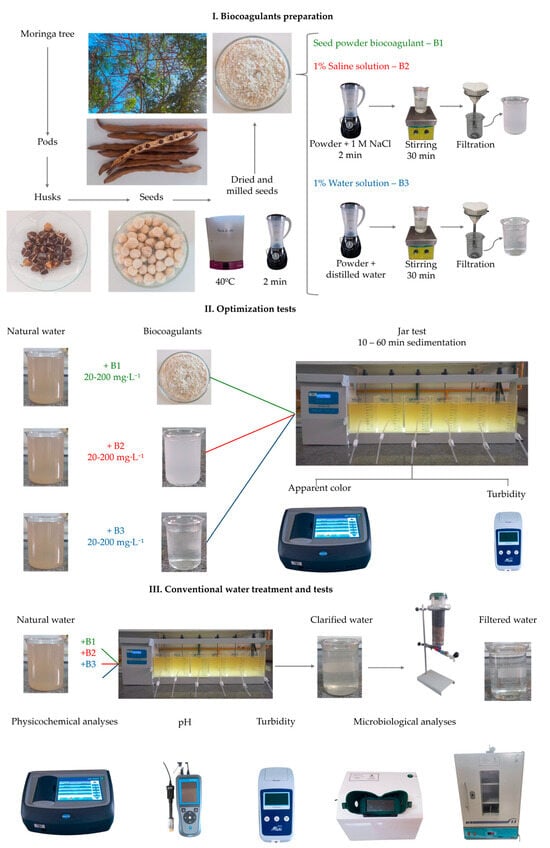
The following physicochemical and microbiological parameters were evaluated for the raw surface water, clarified water under optimized conditions, and filtered water: apparent color (uH), turbidity (NTU), chloride (Cl−), ammonia (NH3), pH, aluminum (Al), copper (Cu), iron (Fe), manganese (Mn), total coliforms, and E. coli, according to the methodologies described in the Standard Methods for the Examination of Water and Wastewater [30]. The equipment used included: a spectrophotometer (Hach, DR3900, Düsseldorf, NW, Germany), a turbidimeter (Akso, Turbimax, São Leopoldo, RS, Brazil), a pH meter (Hach, HQ4300, Loveland, CO, USA), a bacteriological incubator (Odontobras, ECB 1.1, Ribeirão Preto, SP, Brazil), a Sealer (Idexx Quanti-Tray Sealer, model 2X, Westbrook, ME, USA), and an ultraviolet (UV, Piracicaba, SP, Brazil) chamber. The overall methodology of the work is summarized in Figure 3.
Figure 3.
Scheme of the overall methodology.
3. Results and Discussion
3.1. Optimization of Dosage and Sedimentation Parameters
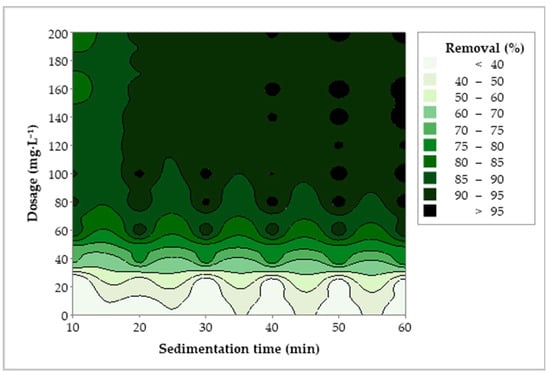
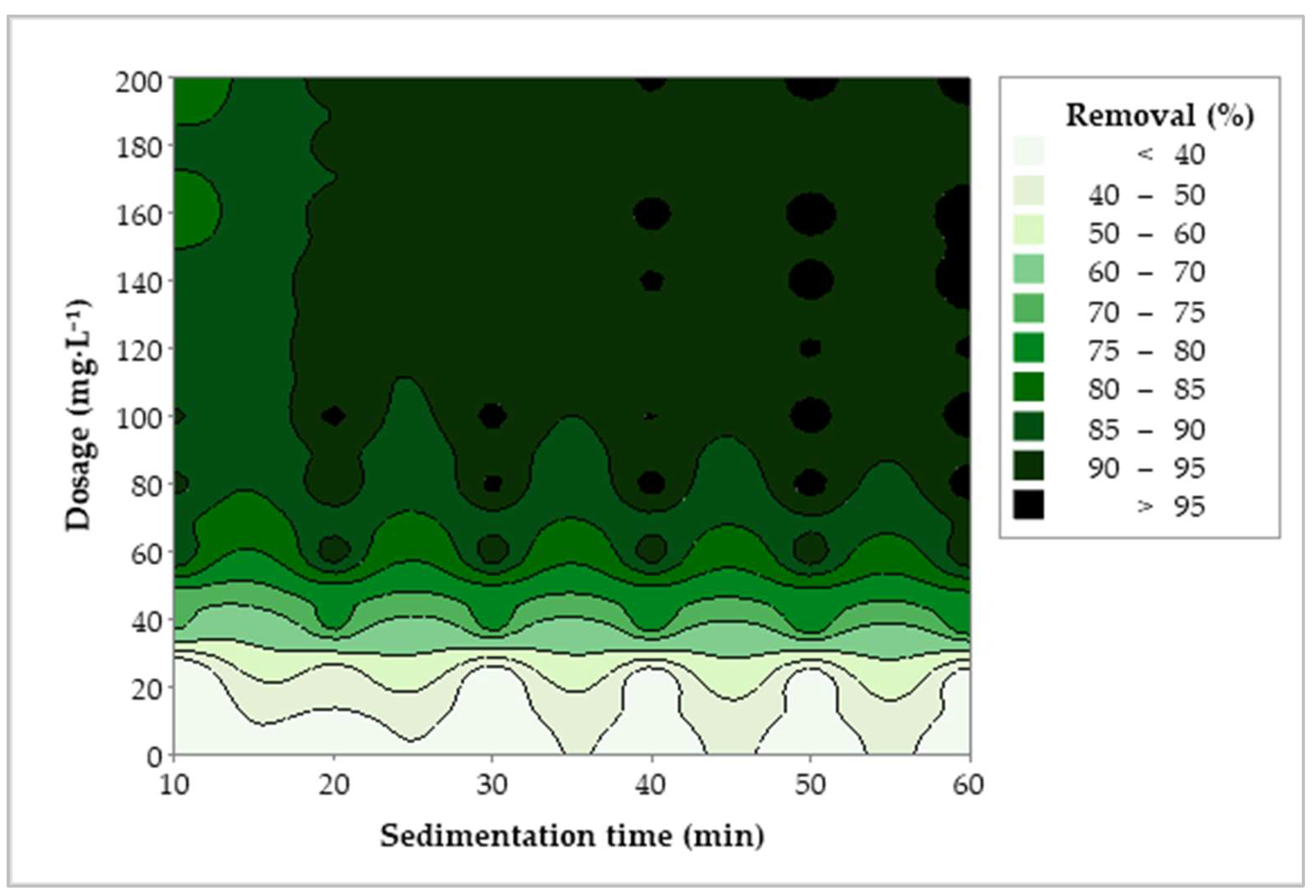
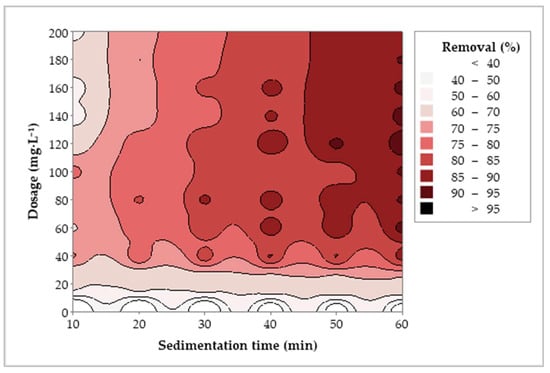
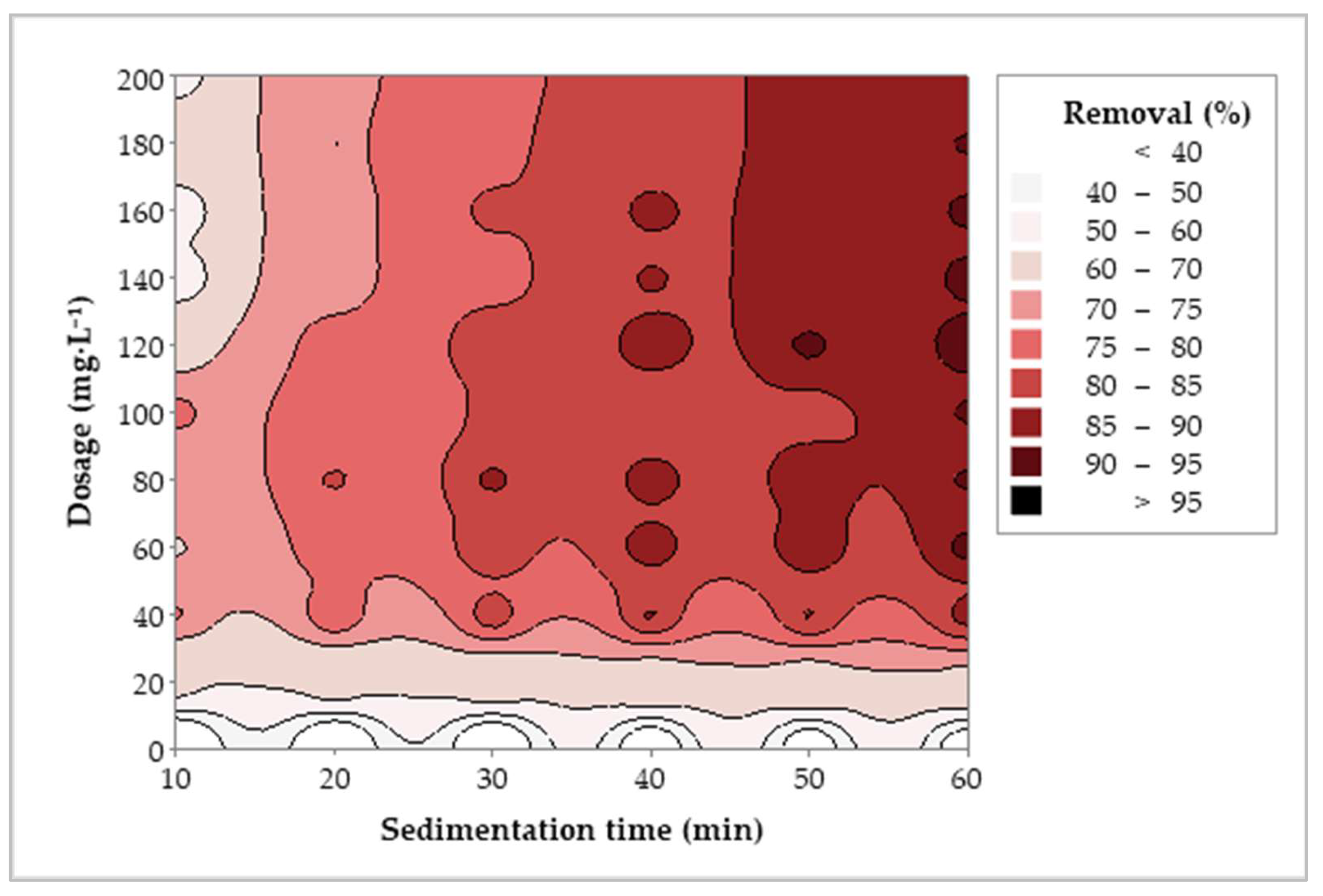
For moringa powder, the dosage of 20 mg·L−1 resulted in low efficiency and was similar to that of the control sample (0 mg·L−1 of coagulant). In contrast, concentrations between 40 mg·L−1 and 100 mg·L−1 significantly removed apparent color and turbidity. From 120 mg·L−1 to 200 mg·L−1, the removal efficiency tended to stabilize. Furthermore, the sedimentation time directly influenced the results (Figure 4 and Figure 5).
Figure 4.
Removal of apparent color as a function of dosage and sedimentation using moringa powder as a biocoagulant.
Figure 5.
Removal of turbidity as a function of dosage and sedimentation using moringa powder as a biocoagulant.
The raw water showed an apparent color of (797.6 ± 1.53) uH and turbidity of (94.3 ± 2.08) NTU. The tests were conducted with sedimentation times ranging from 10 to 60 min. The removal of the control (0 mg·L−1) treatment ranged from (1.5 ± 1.96)% to (18.6 ± 0.47)% for apparent color and from (13.3 ± 1.40)% to (28.9 ± 0.78)% for turbidity, which are below the values obtained by using moringa biocoagulant. Up to 39.0% of turbidity removal without a coagulant was achieved in the literature [17]. According to Ordinance GM/MS n°. 888/2021, the maximum allowed values for drinking water are 15 uH for apparent color and 5 NTU for turbidity [31]. Therefore, the use of a coagulant, such as moringa seeds, is essential to enhance clarification and meet drinking water standards [32].
The dosage of 20 mg·L−1 resulted in apparent color removals between (11.8 ± 2.47)% and (29.7 ± 1.39)%, like the control sample; hence, it had inefficient particle agglomeration [33]. The suitable dosage of a coagulant is essential for forming flocs, leading to effective impurity removal [34].
Applying a 40 mg·L−1 dosage, the apparent color removal ranged from (72.0 ± 0.26)% to (79.4 ± 0.71)%, while the turbidity removal varied from (61.5 ± 0.96)% to (67.5 ± 0.27)%. When the dosage was increased to 60 mg·L−1, removal rates were (88.8 ± 0.63)% to (93.6 ± 0.65)% for apparent color and (75.3 ± 0.43)% to (81.1 ± 0.18)% for turbidity, a significant improvement. A similar performance was reported with removals of 79.8% for apparent color and 84.0% for turbidity in the Pirapó River water, Maringá (PR), Brazil, using a 50 mg·L−1 dosage of moringa within the same concentration range [28].
Raising the dosage to 80 mg·L−1 and 100 mg·L−1 allowed the achievement of removal rates of (91.1 ± 1.01)% to (97.4 ± 0.40)% for apparent color and (77.0 ± 1.44)% to (89.0 ± 0.12)% for turbidity since there were more proteins available to form stable flocs [35]. The efficiency of the highest dosages, between 120 mg·L−1 and 200 mg·L−1, tended to stabilize or slightly reduce, with values ranging from (80.0 ± 1.69)% to (97.4 ± 0.22)% for apparent color and from (63.9 ± 1.65)% to (85.1 ± 0.50)% for turbidity. This behavior is associated with protein excess in the solution, providing extra positive charges, and altering the zeta potential of the suspension, which hinders the formation of stable flocs [18].
Sedimentation time proved to be a determining factor in removal efficiency, with better results observed between 20 and 30 min, despite continued gains up to 60 min. In general, longer sedimentation times tend to improve efficiency by promoting the deposition of flocculated particles [36,37]. However, even with shorter durations, good clarification can be achieved if the coagulant preparation and water characteristics are suitable [23].
In light of this, the results demonstrated that apparent color and turbidity removal rates varied according to dosage and sedimentation time, corroborating the findings of [38,39].
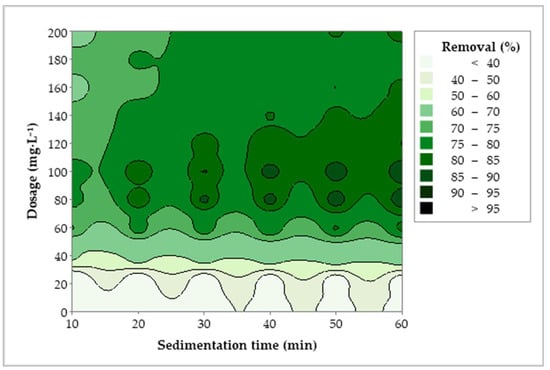
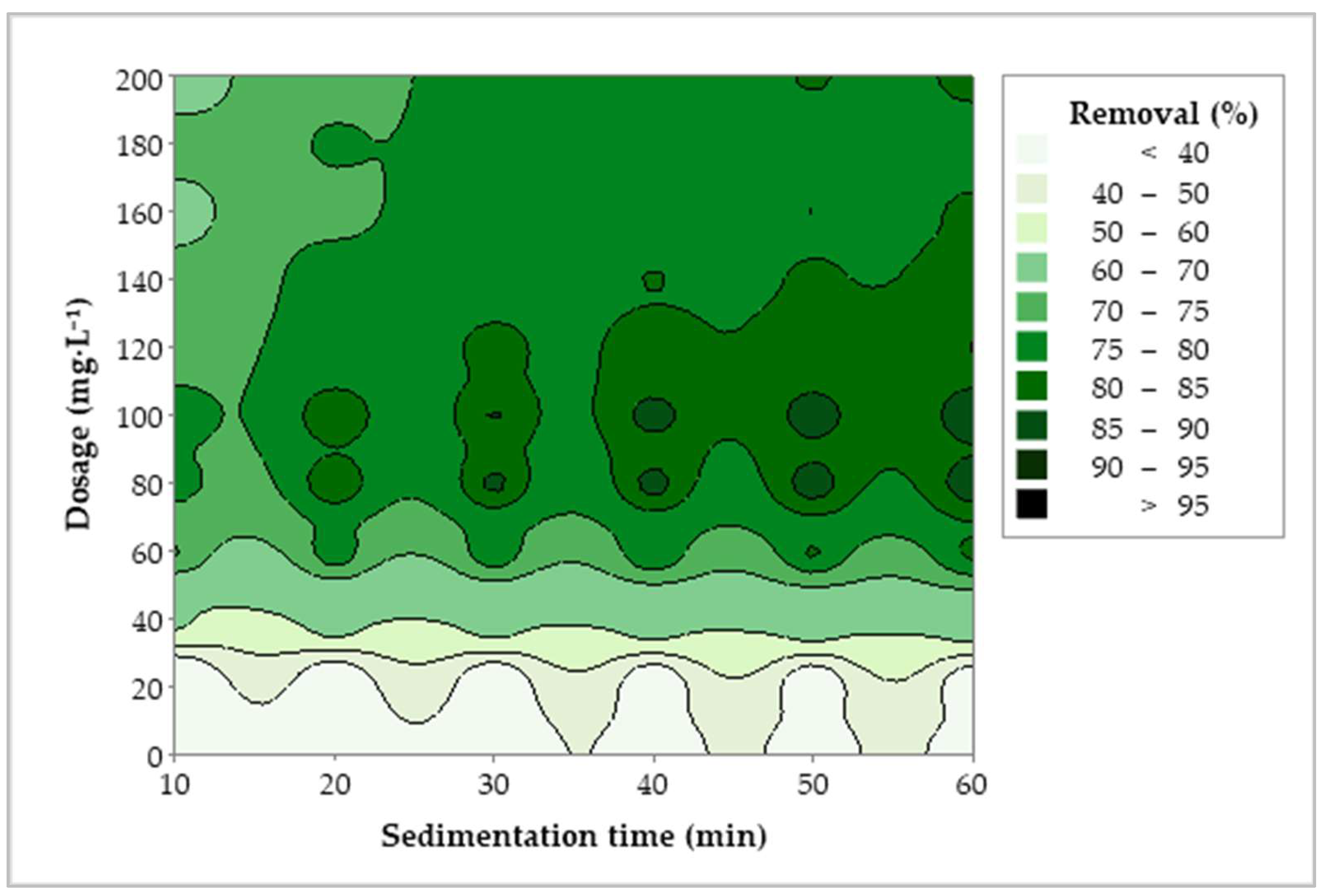
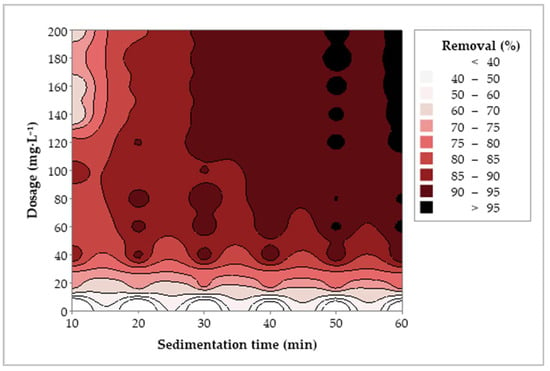
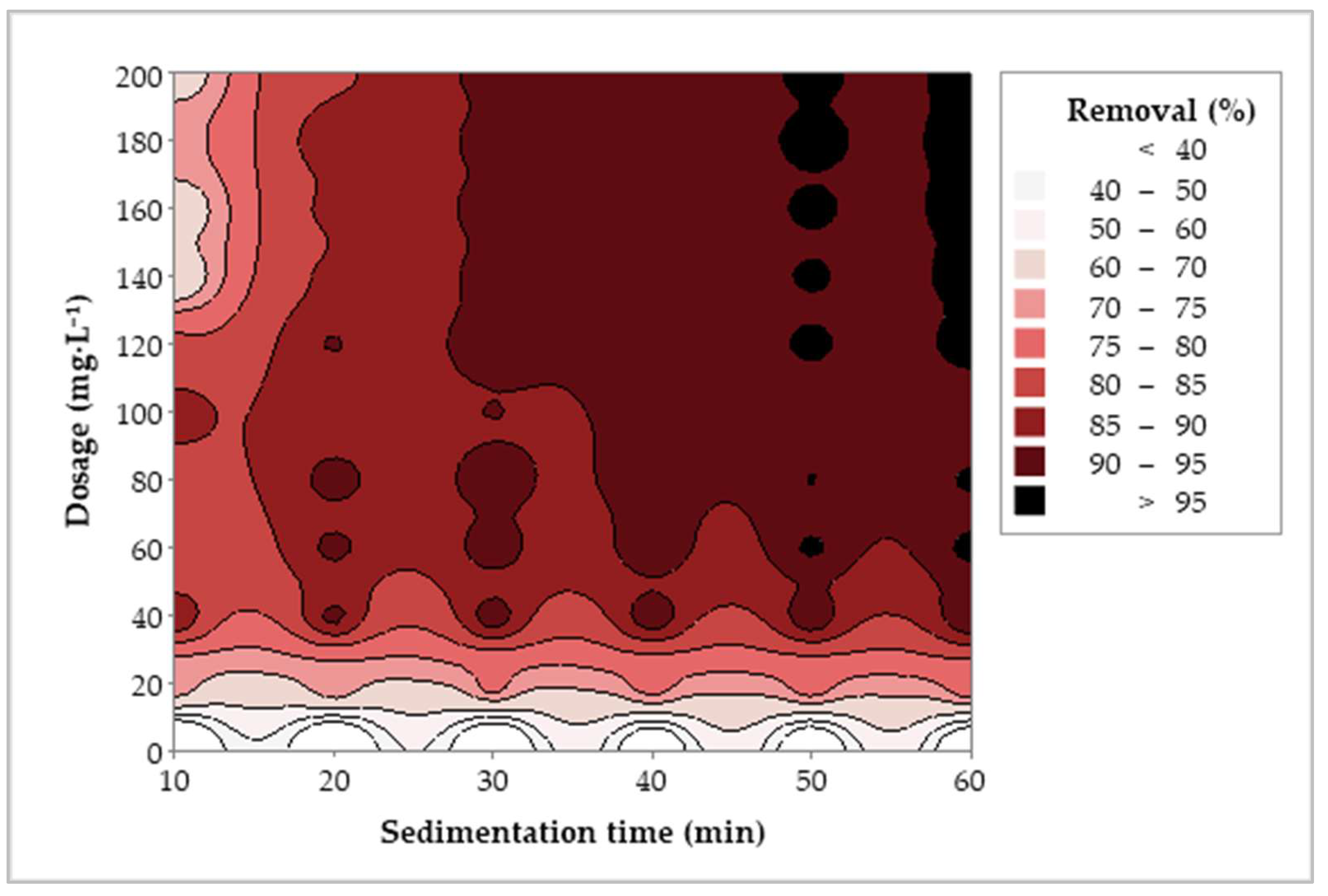
The saline moringa solution showed high efficiency in removing apparent color and turbidity, even at dosages of 20 mg·L−1 to 40 mg·L−1. From 60 mg·L−1 up, the results remained stable up to 200 mg·L−1. Regarding sedimentation time, periods between 20 and 30 min were already sufficient to achieve efficiencies like those obtained with longer times (Figure 6 and Figure 7).
Figure 6.
Removal of apparent color as a function of dosage and sedimentation using moringa saline solution as biocoagulant.
Figure 7.
Removal of turbidity as a function of dosage and sedimentation using moringa saline solution as biocoagulant.
At a dosage of 20 mg·L−1, an efficiency in the removal of apparent color of (73.8 ± 0.32)% to (78.8 ± 0.94)%, and for turbidity of (63.2 ± 0.69)% to (68.9 ± 0.37)% was observed. The dosage of 40 mg·L−1 presented removal of apparent color between (89.0 ± 1.78)% and (94.7 ± 0.52)%, and of turbidity between (75.4 ± 1.07)% and (86.6 ± 0.06)%, evidencing adequate performance. From the dosage of 60 mg·L−1 to 200 mg·L−1, the removal of apparent color varied between (61.5 ± 1.43)% and (97.4 ± 0.95)%, while turbidity varied between (52.7 ± 1.21)% and (93.1 ± 0.94)%.
Overall, the effectiveness of the moringa saline solution for treating water was observed in previous studies that reported up to 90.0% of turbidity removal [17], 82.9% of apparent color, and 89.3% of turbidity removal [28].
It was observed that, although increasing the sedimentation time improved the results, dosages up to 40 mg·L−1 showed similar efficiencies to those between 60 mg·L−1 and 200 mg·L−1, regardless of short sedimentation times of 20 to 30 min. This performance is associated with the action of NaCl, which enhances coagulant activity [21]. Therefore, it is more advantageous to use low dosages in combination with shorter sedimentation times [38].
In this study, the saline solution showed superior performance compared to moringa powder, confirming previous findings that reported up to 7.4 times greater efficiency with saline extraction [40]. This performance is related to the increase in ionic strength promoted by the addition of salt, which enhances protein solubilization and the availability of active compounds responsible for coagulation [17,41].
Thus, while the coagulation mechanism of the powder tends toward adsorption and charge neutralization [10,42], the activation mechanism of moringa in saline solution is not yet fully understood and requires further investigation [28].
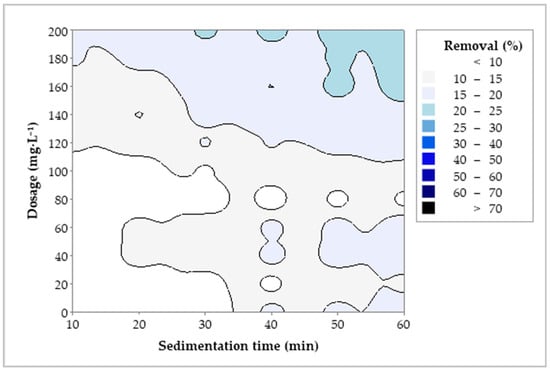
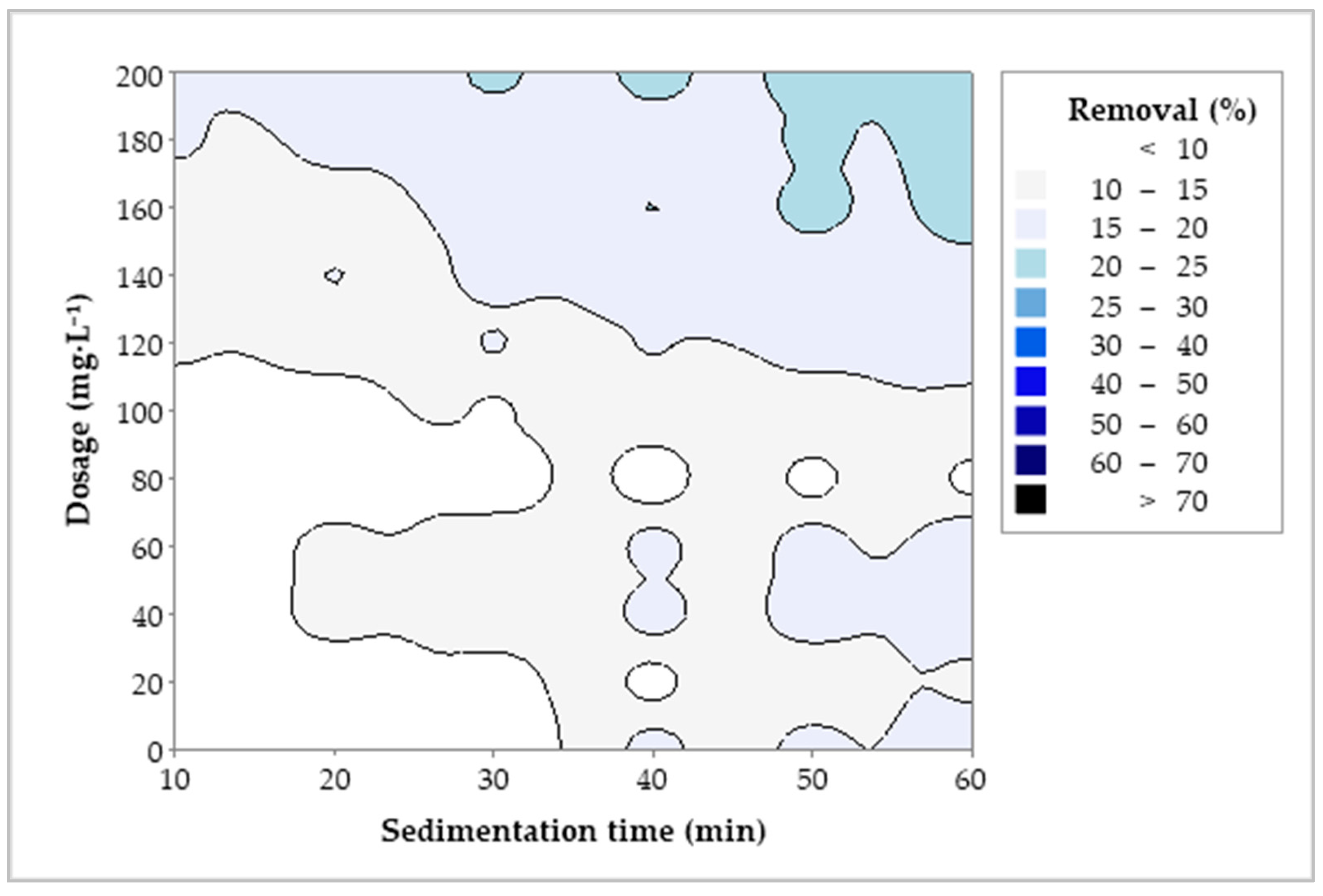
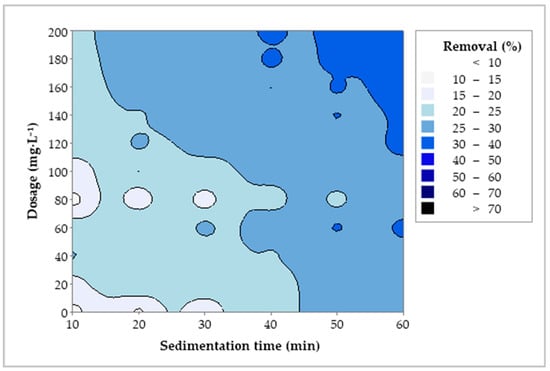
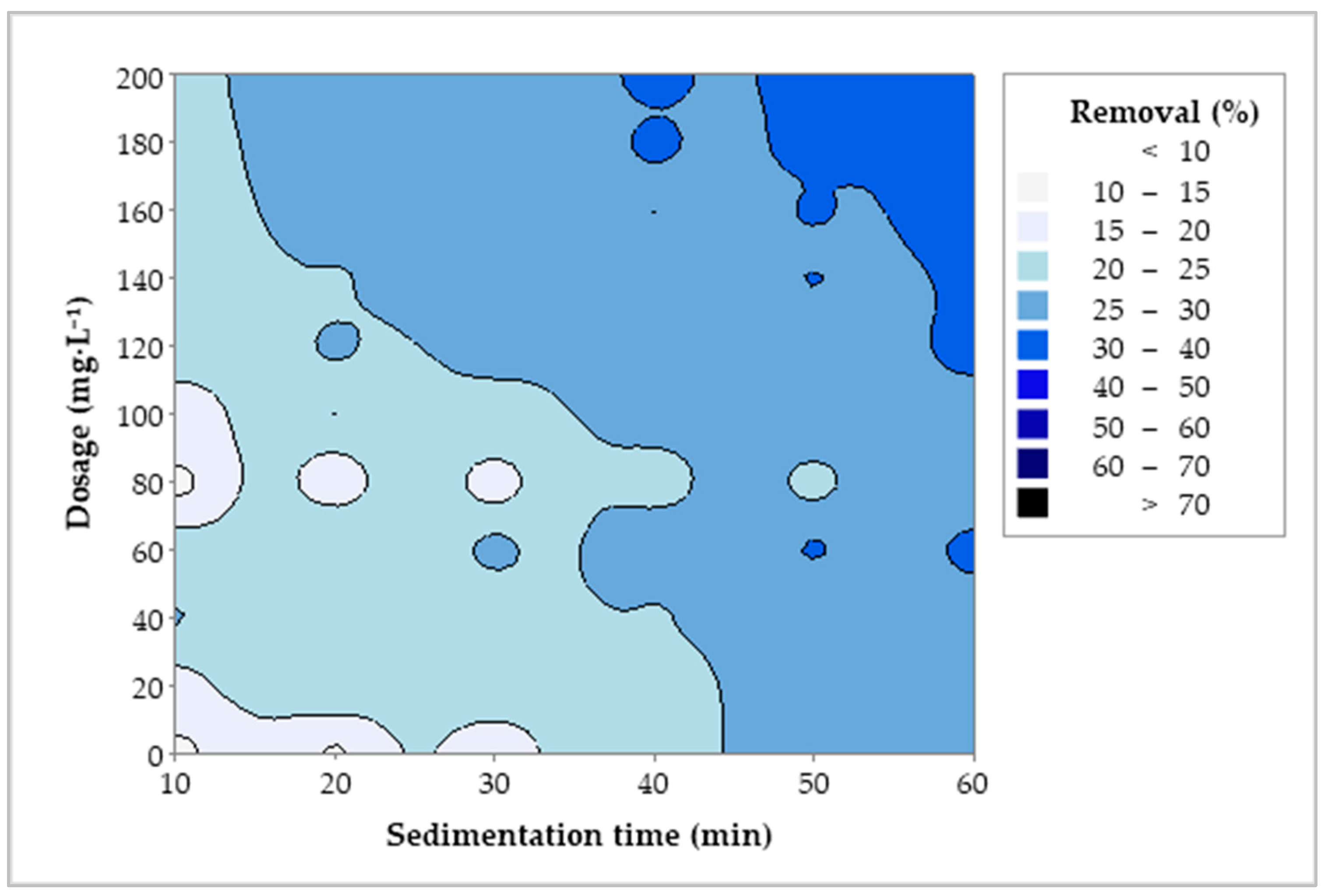
The aqueous moringa solution showed low percentages of apparent color and turbidity removal, even with increased dosages between 20 mg·L−1 and 200 mg·L−1. Furthermore, sedimentation time did not influence the results, indicating the low efficiency of this method in the water clarification process (Figure 8 and Figure 9).
Figure 8.
Removal of apparent color as a function of dosage and sedimentation using moringa aqueous solution as biocoagulant.
Figure 9.
Removal of turbidity as a function of dosage and sedimentation using moringa aqueous solution as biocoagulant.
Dosages ranging from 20 to 200 mg·L−1 resulted in removals of (3.9 ± 1.93)% to (24.0 ± 1.23)% for apparent color and (13.2 ± 0.55)% to (33.3 ± 0.22)% for turbidity, showing similar performance to that of the control sample. Increasing the sedimentation time did not lead to significant improvements, due to the formation of small and loosely compacted flocs, which hinder water clarification [7].
Higher protein concentrations are directly related to increased coagulant activity, while extraction with water results in lower protein concentration, thereby reducing coagulant efficiency [43]. The solubility of coagulant proteins is limited in aqueous media, whereas saline solutions promote better extraction and performance. In this context, the aqueous preparation method showed inferior removal rates for the evaluated parameters compared to moringa powder and the saline solution [41].
Similar results were observed in a previous study that compared different preparation methods of moringa-based biocoagulants. The aqueous solution achieved 35.5% removal of apparent color and 60.5% of turbidity. In comparison, the moringa powder increased removal efficiency by 44.3% for color and 23.5% for turbidity concerning the aqueous solution, reaching 79.8% and 84.0%, respectively. The saline solution showed even higher performance, with removal increases of 47.4% and 28.8% based on the aqueous solution, achieving removal rates above 80.0% for both parameters [28]. These findings reinforce the inferiority of the aqueous method compared to the powder and saline methods for using moringa as a natural coagulant in the treatment of raw surface waters.
Based on the contour plots (see Figure 4, Figure 5, Figure 6, Figure 7, Figure 8 and Figure 9), the following combinations of dosage and sedimentation time were defined as optimal points for moringa seed-based coagulants: 80 mg·L−1 in 20 min for the powder; 40 mg·L−1 in 30 min for the saline solution; and 40 mg·L−1 in 40 min for the aqueous solution. The performance differences between the moringa oleifera biocoagulant preparation methods are primarily associated with the solubility of the coagulant proteins and the ionic strength of the medium. In powdered coagulant, the active compounds are released gradually during the process, favoring rapid floc formation and, consequently, shorter sedimentation times. In saline solution, the addition of NaCl increases protein solubility and charge neutralization, promoting the formation of larger, more stable flocs with lower dosages. This superiority is related to the higher concentration of active proteins and the presence of chloride ions, which act as supporting electrolytes. These ions reduce the thickness of the electrical double layer surrounding the colloidal particles, facilitating their convergence and flocculent aggregation. In contrast, in aqueous solution, the low solubility of proteins in distilled water limits the coagulant’s action, resulting in the formation of smaller, less dense flocs, requiring longer sedimentation times to achieve satisfactory efficiencies [10,21,41,42].
3.2. Conventional Water Treatment
Clarification with the three coagulants greatly reduced apparent color and turbidity, using the three coagulants, with the subsequent filtering, overall improving water quality. Nevertheless, the removals by seed powder and saline solution greatly overcame those of the aqueous solution. The only chemical parameter that increased was the chloride concentration for the saline solution. Despite clarification and filtering, the microbiological parameters remained high (Table 1).
Table 1.
Quality parameters of the water and their reductions (↓) through clarification with the different moringa biocoagulants, followed by filtering.
Moringa powder promoted significant reductions in apparent color and turbidity; however, the final values did not meet the limits established by Ordinance GM/MS n°. 888/2021 [31], even after filtration. The saline solution showed better performance, with an apparent color of (8.67 ± 1.53) uH and turbidity only 0.9 NTU above the permitted level after filtration. The filtration after the aqueous solution further removed 32.1% in apparent color removal and 20.7% in turbidity, which are also above the established limits.
Chloride levels remained below the legal limit of 250 mg·L−1 in all preparation methods. In the saline solution, chloride increased significantly due to the NaCl used, but values stayed within the allowed limit.
Ammonia met the potability standards after clarification in all preparation methods, with additional removal of 29.1% after filtration in the powder form, 3.2% in the saline solution, and 7.0% in the aqueous solution.
pH remained stable across all moringa preparation methods, confirming that its use does not significantly alter this parameter, as indicated by previous studies [25,28,40,44].
One of the advantages of natural coagulants, such as those derived from moringa, is precisely their effectiveness regardless of pH variations, in addition to their tendency to maintain the pH of the treated water virtually unchanged, unlike inorganic coagulants [45]. This behavior is particularly beneficial in subsequent treatment steps, such as chlorination, since the neutral pH commonly observed after the use of moringa is in the ideal range between 6.5 and 7.5 for the formation of hypochlorous acid (HOCl), the most effective disinfectant [46].
The aluminum met the limits established by current legislation already in the clarification stage, regardless of the preparation method, presenting removals of (99.1 ± 1.20)% for the powder, (98.2 ± 2.49)% for the saline solution, and (96.1 ± 3.57)% for the aqueous solution.
Copper, whose initial concentration was already within the limits established by Brazilian legislation, was removed by (56.3 ± 12.50)% during the clarification stage using the powder preparation. The saline solution reduced the copper content by (81.3 ± 12.50)%, while the aqueous solution achieved (85.4 ± 13.01)% removal.
In the powder preparation, iron did not reach the legal limit of 0.3 mg·L−1, even with an additional removal of 23.8% after filtration. The saline solution met the limit already at the clarification stage, with a removal of (85.8 ± 1.96)%. In the aqueous solution, despite a (66.8 ± 4.11)% removal after filtration, iron levels remained above the permitted limit.
Manganese in the powder preparation reached the limit for human consumption after an additional 18.2% removal through filtration. In the saline solution, it was completely removed during the clarification stage. In the aqueous solution, the final removal of (79.1 ± 0.31)% after filtration brought the parameter within the limits established by Brazilian legislation.
The efficiency of metal removal varied among the analyzed elements and the different preparation methods of the biocoagulant. Aluminum removal was particularly high across all methods, a result attributed to the strong affinity of moringa proteins for trivalent ions [47]. The powder and saline solution forms showed notable performance in heavy metal removal, standing out as promising alternatives for the treatment of contaminated water [48,49,50]. Although less effective, the aqueous solution also demonstrated the ability to reduce metal concentrations, in line with findings from previous studies [51,52].
Due to the high concentration of total coliforms in the raw water, which exceeded the equipment’s reading limit, it was not possible to evaluate the antimicrobial efficacy of moringa in any of the three preparation methods, despite its potential already demonstrated in previous studies [20,53]. Performing dilutions could have allowed for a more accurate analysis.
A reduction in E. coli was observed only after filtration, with (>75.3 ± 4.69)% removal for the powder method and (>33.3 ± 14.35)% for the saline solution, while no removal was detected at any stage for the aqueous solution. Previous studies have reported removal rates of up to 85.9% during the clarification stage of surface water treatment in Nigeria [20]. Other studies highlight the effectiveness of moringa in improving the microbiological quality of water, although complete elimination of microorganisms such as E. coli is not always achieved [54]. In this context, proper dilution of samples is essential to enable accurate evaluation of E. coli removal during the clarification process.
However, some factors can interfere with effective microbiological action, such as initial water turbidity, strongly associated with seasonality, which directly influences removal efficiency [55]. Furthermore, whole seeds contain, in addition to the cationic proteins of interest, lipids and carbohydrates that can be released during treatment, resulting in dissolved organic carbon (DOC), which can favor microbial growth and the formation of disinfection byproducts [17]. These factors reinforce the need to combine the use of moringa with complementary disinfection steps to ensure the microbiological safety of the treated water, as well as the evaluation of the formation of trihalomethanes [29].
4. Conclusions
The dosage and sedimentation time influence the efficiency of water treatment with moringa, with the best results obtained using 80 mg·L−1 at 20 min for the powdered method, 40 mg·L−1 at 30 min for the saline solution, and 40 mg·L−1 at 40 min for the aqueous solution.
The parameters chloride and copper already had concentrations below the limits established by Brazilian legislation in the raw water, before treatment. In the powdered moringa method, ammonia and aluminum met legal standards at the clarification stage, while filtration also allowed manganese to fall within the permitted limits. In the saline solution method, ammonia, aluminum, iron, and manganese met potability standards during clarification and filtration, enabling the apparent color to comply with legal standards as well. In the aqueous solution method, clarification was effective for ammonia and aluminum, and filtration brought manganese into compliance with current legislation. The pH did not show significant variations in the results after treatment in any of the three preparation methods.
Regarding microbiological parameters, the removal of total coliforms and E. coli was insufficient across all methods and stages, highlighting the need for disinfection to ensure water potability.
It was observed that the results obtained with the aqueous solution were inferior to those obtained with the powder and saline solution methods. It was observed that the results obtained with the aqueous solution were inferior to those obtained with the powder and saline solution methods. The removal efficiencies in the clarification stage for the parameters apparent color, turbidity, chloride, ammonia, aluminum, copper, iron, and manganese, using the aqueous solution, were, respectively, 74.1%, 46.4%, 30.7%, 8.9%, 3.0%, 0.0%, 0.0%, and 2.3% lower compared to the powder method; and 73.2%, 47.8%, 0.0%, 35.1%, 2.1%, 0.0%, 21.2%, and 26.3% lower compared to the saline solution method.
Nevertheless, moringa proved to be an effective coagulant in the removal of various quality parameters, standing out as a promising and eco-friendly alternative for water treatment. Its use offers several environmental and economic advantages, especially in areas where access to conventional water treatment resources is limited.
Author Contributions
Conceptualization, M.S.S., L.B. and K.C.V.; Methodology, M.S.S., A.B.R., B.d.O.B., P.G.F.B. and L.P.d.S.; Formal analysis, M.S.S.; Investigation, M.S.S., A.B.R., B.d.O.B., P.G.F.B. and L.P.d.S.; Writing—original draft preparation, M.S.S.; Writing—review and editing, M.S.S., L.B. and K.C.V.; Supervision, L.B. and K.C.V.; Project administration, L.B. and K.C.V. All authors have read and agreed to the published version of the manuscript.
Funding
This work was supported by the Coordination for the Improvement of Higher Education Personnel (CAPES), Brazil—Funding Code 001. The author Michelle Silva Santos received a research grant from CAPES during the development of this study.
Data Availability Statement
All data generated or analyzed during this study are available from the corresponding author upon reasonable request.
Acknowledgments
The Federal University of Amapá (UNIFAP), and the Pro-Rectory for Research and Graduate Studies (PROPESPG) for their institutional and financial support. The authors also acknowledge the Foundation for Research Support of the State of Amapá (FAPEAP), through Process 0036.1201.2160.0002/2024 (FAPEAP/CAPES), for the financial support.
Conflicts of Interest
The authors declare no conflict of interest.
Correction Statement
This article has been republished with a minor correction to the Acknowledgments. This change does not affect the scientific content of the article.
References
- Gadelha, H.S.; Marques, A.T.; Neto, F.D.C.B.; Almeida, L.M.F.; Almeida, R.S.; Neto, J.M.; Maracajá, P.B. The new regulatory framework for basic sanitation and the right to access water. Res. Soc. Dev. 2021, 10, e569101118843. [Google Scholar] [CrossRef] [Scilit]
- Giffard, P.; Llovel, W.; Jouanno, J.; Morvan, G.; Decharme, B. Contribution of the Amazon River discharge to regional sea level in the tropical Atlantic Ocean. Water 2019, 11, 2348. [Google Scholar] [CrossRef] [Scilit]
- ITB Instituto Trata Brasil. Painel de Saneamento do Município de Macapá. 2022. Available online: https://www.painelsaneamento.org.br/localidade?id=160030 (accessed on 29 May 2025).
- Ismail, I.A.L.; Pires, E.C. Evaluation of the treatment by clarification of the water used to wash filters of a conventional water treatment plant. AIDIS J. Eng. Environ. Sci. Res. Dev. Pract. 2022, 15, 745–756. [Google Scholar] [CrossRef] [Scilit]
- Kamiwada, W.Y.; Andrade, P.V.; Reis, A.G. Use of polyaluminum chloride in studies on the treatability of water supplies via coagulation, flocculation and sedimentation. Sanit. Environ. Eng. 2020, 25, 667–676. [Google Scholar] [CrossRef] [Scilit]
- Chiavola, A.; Marcantonio, C.D.; D’agostini, M.; Leoni, S.; Lazzazzara, M.A. Combined experimental modeling approach for optimizing turbidity removal in a coagulation-flocculation unit of a drinking water treatment plant. J. Process Control 2023, 130, 103068. [Google Scholar] [CrossRef] [Scilit]
- Lopes, V.D.S.; Silva, L.M.D.A.; Moruzzi, R.B.; Oliveira, A.L.D. Study of coagulation/flocculation of water with moderate turbidity in sedimentation and flotation by dissolved air. Sanit. Environ. Eng. 2020, 25, 567–572. [Google Scholar] [CrossRef] [Scilit]
- Souto, B.C.C.; Leite, A.P.; Borges, C.H.A.; Pereira, L.F.A. Use of Moringa seeds in the sedimentation of waste in construction water. Agropecu. Cient. Semiárido 2020, 16, 52–57. [Google Scholar]
- Gandiwa, B.I.; Moyo, L.B.; Ncubo, S.; Mamvura, T.A.; Mguni, L.L.; Hlabangana, N. Optimization of the use of a mixture of natural and synthetic plant-based coagulants for water treatment: (Moringa oleifera-Cactus and Opuntia-alum blend). S. Afr. J. Chem. Eng. 2020, 34, 158–164. [Google Scholar] [CrossRef] [Scilit]
- Kurniawan, S.B.; Abdullah, S.R.S.; Imronet, M.F.; Disse, N.S.M.; Ismail, N.; Hasan, H.A.; Othman, A.R.; Purwanti, I.F. Challenges and opportunities of applying biocoagulants/bioflocculants for drinking water and wastewater treatment and their potential for sludge recovery. Int. J. Environ. Res. Public Health 2020, 17, 9312. [Google Scholar] [CrossRef] [Scilit]
- Chagas, G.H.; Faria, M.L. Use of natural polymer from okra (Abelmoschus esculentos L. Moench) in the treatment of water for human consumption. Stud. Educ. Sci. 2022, 3, 137–148. [Google Scholar] [CrossRef] [Scilit]
- Freitas, A.C.B.; Santos, A.L.C.; Bezerra, M.C.M.; Nascimento, S.C.T. Systematic review of studies on aluminum as a risk factor for Alzheimer’s disease. J. Chem. Process. 2021, 15, 83–88. [Google Scholar] [CrossRef] [Scilit]
- Báez, L.C.; Muñoz, C.F.P.; Crespo-Barrera, P.M.; Venegas, P.O.; Bahena, A.M.; Navarro-Frometa, A.E. Development of a simple and low-cost method for the elimination of indicator bacteria from domestic wastewater discharges to the Huacapa River in Guerrero, Mexico. Water Air Soil Pollut. 2024, 235, 552. [Google Scholar] [CrossRef] [Scilit]
- Coldebella, P.F.; Valverde, K.C.; Yamaguchi, N.U.; Ferreira, M.E.C.; Camacho, F.P.; Silva, M.F.; Bittencourt, P.R.S.; Fagundes-Klen, M.R.; Bergamasco, R. Exploring the eco-friendly potential of Moringa oleifera parts as biosorbents for atrazine removal. Int. J. Environ. Sci. Technol. 2024, 21, 6445–6458. [Google Scholar] [CrossRef] [Scilit]
- Gallão, M.I.; Damasceno, L.F.; Brito, E.S. Chemical and structural evaluation of Moringa seed. J. Agric. Sci. 2006, 37, 106–109. [Google Scholar]
- Conceição, V.M.; Yamaguchi, N.U.; Bassetti, F.J.; Bergamasco, R. Process performance combining natural coagulant Moringa oleifera Lam and ultrafiltration for groundwater defluoridation. Water Air Soil Pollut. 2021, 232, 222. [Google Scholar] [CrossRef] [Scilit]
- Chales, G.G.; Tihameri, B.S.; Milhan, N.V.M.; Koga-Ito, C.Y.; Antunes, M.L.P.; Reis, A.G.D. Impact of Moringa oleifera seed-derived coagulants processing steps on physicochemical, residual organic, and cytotoxicity properties of treated water. Water 2022, 14, 2058. [Google Scholar] [CrossRef] [Scilit]
- Ribeiro, J.V.M.; Andrade, P.V.; Reis, A.G. Moringa oleifera seed as a natural coagulant to treat low turbidity waters via direct in-line filtration. Ambiente Água Mag. 2019, 14, e2442. [Google Scholar] [CrossRef] [Scilit]
- Santos, L.O.; Sousa, I.F.; Silva, G.S.; Barbosa, S.A.; Caetano, N.S. Efficiency analysis of different seeds and oilseed husks for use as natural coagulants. Braz. J. Phys. Geogr. 2024, 17, 1833–1847. [Google Scholar] [CrossRef] [Scilit]
- Egbuikwem, P.N.; Sangodoyin, A.Y. Coagulation efficacy of Moringa oleifera seed extract compared to alum for removal of turbidity and E. coli in three different water sources. Eur. Int. J. Sci. Technol. 2013, 2, 13–20. [Google Scholar]
- Bouchareb, R.; Derbal, K.; Benalia, A. Optimization of active coagulant agent extraction method from Moringa oleifera seeds for municipal wastewater treatment. Water Sci. Technol. 2021, 84, 393–403. [Google Scholar] [CrossRef] [Scilit]
- Nascimento, A.C.S.; Oliveira, A.F.G.; Lavôr, M.B.; Pereira, E.C.; Amorim, M.C.C. low turbidity water treated with Moringa oleifera Lam. Electron. J. Environ. Manag. Educ. Technol. 2020, 24, 115. [Google Scholar]
- Silva, J.R.; Oliveira, D.S. Water treatment with clean technologies using moringa oleifera seeds in alternative low-cost clarification units. Clean Technol. 2024, 6, 625–645. [Google Scholar] [CrossRef] [Scilit]
- Santos, T.R.T.; Bongiovani, M.C.; Silva, M.F.; Nishi, L.; Coldebella, P.F.; Vieira, M.F.; Bergamasco, R. Trihalomethanes minimization in drinking water by coagulation/flocculation/sedimentation with natural coagulant Moringa oleifera Lam and activated carbon filtration. Can. J. Chem. Eng. 2016, 94, 1277–1284. [Google Scholar] [CrossRef] [Scilit]
- Shah, A.; Arjunan, A.; Manning, G.; Zakharova, J.; Andraulaki, I.; Batool, M. The effect of dose, settling time, shelf life, storage temperature and extractant on Moringa oleifera Lam. protein coagulation efficiency. Environ. Nanotechnol. Monit. Manag. 2024, 21, 100919. [Google Scholar] [CrossRef] [Scilit]
- Valverde, K.C.; Yamaguchi, N.U.; Pomini, A.M.; Paccola, E.A.S.; Bergamasco, R. Combined water treatment with extract of natural Moringa oleifera Lam and synthetic coagulant. Rev. Ambiente Água 2018, 13, e2135. [Google Scholar] [CrossRef] [Scilit]
- Damasceno, M.D.C.S.; Ribeiro, H.M.C.; Takiyama, L.R.; Paula, M.T.D. Seasonal assessment of surface water quality of the Amazon River on the edge of the city of Macapá, Amapá, Brazil. Environ. Water Mag. 2015, 10, 598–613. [Google Scholar] [CrossRef] [Scilit]
- Valverde, K.C.; Coldebella, P.F.; Vieira, A.M.S.; Nishi, L.; Bongiovani, M.C.; Baptista, A.T.A.; Fagundes-Klen, M.R.; Santos, O.P.A.; Bergamasco, R. Preparations of Moringa oleifera seeds as coagulant in water treatment. Environ. Eng. Manag. J. 2018, 17, 1123–1129. [Google Scholar] [CrossRef] [Scilit]
- Bongiovani, M.C.; Camacho, F.P.; Coldebella, P.F.; Valverde, K.C.; Nishi, L.; Bergamasco, R. Removal of natural organic matter and trihalomethane minimization by coagulation/flocculation/filtration using a natural tannin. Desalination Water Treat. 2015, 57, 5406–5415. [Google Scholar] [CrossRef] [Scilit]
- APHA 2017; Standard Methods for the Examination for Water and Wastewater. American Public Health Association: Washington, DC, USA, 2017.
- Ministério da Saúde. Amends Annex XX of the GM/MS Consolidation Ordinance nº. 5, of September 28, 2017, to Provide for Procedures for Controlling and Monitoring the Quality of Water for Human Consumption and Its Potability Standard. Diário Oficial da União, 7 May 2021; p. 127.
- Michelan, D.C.D.G.S.; Santos, W.N.D.A.; Rosa, T.S.; Santos, D.D.G.; Jesus, R.D.S.D. Use of emerging coagulant/flocculant based on Moringa in water treatment with verification of the composition and toxicity of the sludge produced: Water treatment with Moringa and sludge toxicity. Sanit. Environ. Eng. 2021, 26, 955–963. [Google Scholar] [CrossRef] [Scilit]
- Michelan, D.C.G.S.; Batista, I.F.; Batista, D.F.; Santos, D.G.; Mendonça, L.C.; Lima, D.M.F. Performance of the water treatment stages of the Poxim water treatment plant. Sci. Cum Ind. 2019, 7, 7–14. [Google Scholar] [CrossRef] [Scilit]
- Megersa, M.; Beyene, A.; Ambelu, A.; Asnake, D.; Bekele, T.; Firdissa, B.; Alebachew, Z.; Triest, L. A preliminary evaluation of locally used plant coagulants for household water treatment. Water Conserv. Sci. Eng. 2016, 1, 95–102. [Google Scholar] [CrossRef] [Scilit]
- Ng, M.H.; Elshikh, M.S. Utilization of Moringa oleifera as natural coagulant for water purification. Ind. Domest. Waste Manag. 2021, 1, 1–11. [Google Scholar] [CrossRef] [Scilit]
- Cardoso, K.C.; Bergamasco, R.; Cossich, E.S.; Moraes, L.C.K. Optimization of mixing and decantation times in the coagulation/flocculation process of raw water using Moringa oleifera Lam. Acta Sci. Technol. 2008, 30, 193–198. [Google Scholar] [CrossRef] [Scilit]
- Santos, M.L.W.; Siqueira, M.H.D.; Vazquez, G.V. Moringa seed structure and sedimentation time in water clarification. Alta Paul. Environ. Forum 2020, 16, 81–92. [Google Scholar] [CrossRef] [Scilit]
- Muniz, G.L.; Duarte, F.V.; Oliveira, S.B. Use of Moringa oleifera seeds to remove turbidity from water supply. Ambiente Água Mag. 2015, 10, 454–463. [Google Scholar] [CrossRef] [Scilit]
- Zaid, A.Q.; Ghazali, S.B.; Mutamim, N.S.A.; Olalere, O.A. Experimental optimization of Moringa oleifera seed powder as bio-coagulants in water treatment process. SN Appl. Sci. 2019, 1, 504. [Google Scholar] [CrossRef] [Scilit]
- Moreti, L.D.O.R.; Camacho, F.P.; Bongiovani, M.C.; Stroher, A.P.; Nishi, L.; Vieira, A.M.S.; Bergamasco, R. Use of Moringa oleifera LAM seeds as an alternative coagulant to polyaluminum chloride (PAC) in the treatment of drinking water. e-xacta 2013, 6, 153–165. Available online: https://revistas.unibh.br/dcet/article/view/991/586 (accessed on 13 August 2025). [CrossRef] [Scilit]
- Figueiredo, M.T.S.; Santos, C.B.; Santos, M.H.; Silva, D.K.; Oliveira, T.L.R. Water treatment using Moringa oleifera seed extract: An integrative review. Res. Soc. Dev. 2022, 11, e41411225889. [Google Scholar] [CrossRef] [Scilit]
- Yamaguchi, N.U.; Cusioli, L.F.; Quesada, H.B.; Ferreira, M.E.C.; Fagundes-Klen, M.R.; Vieira, A.M.S.; Gomes, R.G.; Vieira, M.F.; Bergamasco, R. A review of Moringa oleifera seeds in water treatment: Trends and future challenges. Process Saf. Environ. Prot. 2021, 147, 405–420. [Google Scholar] [CrossRef] [Scilit]
- Madrona, G.S.; Serpelloni, G.B.; Vieira, A.M.S.; Nishi, L.; Cardoso, K.C.; Bergamasco, R. Study of the effect of saline solution on the extraction of the Moringa oleifera seed’s active component for water treatment. Water Air Soil Pollut. 2010, 211, 409–415. [Google Scholar] [CrossRef] [Scilit]
- Kaushal, K.R.; Goyal, H. Treatment of waste water using natural coagulants. In Proceedings of Recent Advances in Interdisciplinary Trends in Engineering & Applications; SSRN: Rochester, NY, USA, 2019; pp. 1–7. [Google Scholar] [CrossRef] [Scilit]
- Murali, A.; Hillstead, K.D.; Wrobel, B.S.; Thomas, D.J.; Gonety, R.; Tarabara, V.V. Moringa oleifera-derived coagulants for watertreatment: Floc structure, residual organics, and performance trade-offs. Environ. Sci. Pollut. Res. 2022, 29, 24381–24389. [Google Scholar] [CrossRef] [Scilit]
- Gupta, V.; Shekhawat, S.S.; Kulshreshtha, N.M.; Gupta, A.B. A systematic review on chlorine tolerance among bacteria and standardization of their assessment protocol in wastewater. Water Sci. Technol. 2022, 86, 261–291. [Google Scholar] [CrossRef] [Scilit] [PubMed]
- Araújo, C.S.T.; Alves, V.N.; Rezende, H.C.; Almeida, I.L.S.; Assunção, R.M.N.; Tarley, C.R.T.; Segatelli, M.G.; Coelho, N.M.M. Characterization and use of Moringa oleifera seeds as biosorbent for removing metal ions from aqueous effluents. Water Sci. Technol. 2010, 62, 2198–2203. [Google Scholar] [CrossRef] [Scilit] [PubMed]
- Abatal, M.; Olguin, M.T.; Anastopoulos, I.; Giannakoudakis, D.A.; Lima, E.C.; Vargas, J.; Aguilar, C. Comparison of heavy metals removal from aqueous solution by Moringa oleifera leaves and seeds. Coatings 2021, 11, 508. [Google Scholar] [CrossRef] [Scilit]
- Gonçalves Junior, A.C.; Meneghel, A.P.; Rubio, F.; Strey, L.; Dragunski, D.C.; Coelho, G.F. Applicability of Moringa oleifera Lam cake as an adsorbent for removing heavy metals from water. Braz. J. Agric. Environ. Eng. 2013, 17, 94–100. [Google Scholar] [CrossRef] [Scilit]
- Tokay, B.; Akpinar, I.A. Comparative study of heavy metals removal using agricultural waste biosorbents. Bioresour. Technol. Rep. 2021, 15, 100719. [Google Scholar] [CrossRef] [Scilit]
- Ali, E.N.; Seng, H.T. Heavy metals (Fe, Cu, and Cr) removal from wastewater by Moringa oleifera press cake. MATEC Web of Conf. 2018, 150, 02008. [Google Scholar] [CrossRef] [Scilit]
- Tanko, M.A.; Sanda, B.Y.; Bichi, M.H. Application of Moringa oleifera seed extract (Mose) in the removal of heavy metals from tannery wastewater. Niger. J. Technol. Dev. 2020, 17, 70–78. [Google Scholar] [CrossRef] [Scilit]
- Taiwo, A.S.; Adenike, K.; Aderonke, O. Efficacy of a natural coagulant protein from Moringa oleifera (Lam) seeds in treatment of Opa reservoir water, Ile-Ife, Nigeria. Heliyon 2020, 6, e03335. [Google Scholar] [CrossRef] [Scilit]
- Hendrawati, H.; Yuliastri, I.R.; Nurhasni, N.; Rohaeti, E.; Effendi, H.; Darusman, L.K. The use of Moringa oleifera seed powder as coagulant to improve the quality of wastewater and groundwater. Earth Environ. Sci. 2016, 31, 012033. [Google Scholar] [CrossRef] [Scilit]
- Yin, C.Y. Emerging usage of plant-based coagulants for water and wastewater treatment. Process Biochem. 2010, 45, 1437–1444. [Google Scholar] [CrossRef] [Scilit]

Disclaimer/Publisher’s Note: The statements, opinions and data contained in all publications are solely those of the individual author(s) and contributor(s) and not of MDPI and/or the editor(s). MDPI and/or the editor(s) disclaim responsibility for any injury to people or property resulting from any ideas, methods, instructions or products referred to in the content. |
© 2026 by the authors. Licensee MDPI, Basel, Switzerland. This article is an open access article distributed under the terms and conditions of the Creative Commons Attribution (CC BY) license (https://creativecommons.org/licenses/by/4.0/).