


Abstract
The deep Qiongzhusi (QZS) shales in the Deyang–Anyue Aulacogen, Sichuan Basin, are important shale gas targets in China. However, the differences in pore development of the shales in the marginal areas of the aulacogen and its main controlling factors remain unclear. In this study, the organic and inorganic compositions, water-bearing characteristics, and porosities of the sublayer 7 (SL7) and sublayer 5 (SL5) deep QZS shales collected from Well Z204 were systematically investigated. The results indicate that, compared with the SL5 shales, the SL7 shales have higher total organic carbon (TOC) and clay mineral contents, lower brittle mineral contents, greater porosities, and water content and saturation. The TOC content of the deep QZS shale has a strong positive correlation with porosity, and a negative correlation with water saturation. Therefore, the TOC content is the main controlling factor for the development of effective porosity. The TOC content of the SL7 shale is higher than that of the SL5 shale, so the SL7 shale has a larger effective porosity. Therefore, the margin of the Deyang–Anyue Aulacogen is a new exploration area for the deep QZS shales, and the shale gas accumulate conditions of the SL7 shales are better than that of the SL5 shales, especially in the lower section of the SL7 shales. This new understanding provides an important geological basis for the next exploration of the Deyang–Anyue Aulacogen.
1. Introduction
In the past two decades, shale gas exploration in the Sichuan Basin, China, has made significant progress, and commercial exploitation has been achieved in the lower Silurian Longmaxi Formation–upper Ordovician Wufeng Formation (WF-LMX shales) [1,2]. In recent years, with increasing exploration extent, the deep Lower Cambrian QZS shale gas has made continuous breakthroughs in the Sichuan Basin, especially in the Deyang–Anyue Aulacogen [3]. Several high yields shale gas wells have drilled in this region. In 2022, the first deep QZS well with high-yield shale (Z201) gas was drilled by PetroChina in the Deyang–Anyue Aulacogen, and its production reached 74 × 104 m3/d [4]. Subsequently, well ZY2, with a production of 125.7 × 10⁴ m3/d, was explored by Sinopec in the Deyang–Anyue Aulacogen [5], further confirming that this area is a favorable exploration region for deep and ultra-deep QZS shale gas [6,7]. However, the discovered high-yield wells are all distributed in the sedimentary center area of the Deyang–Anyue Aulacogen, while no significant progress has been made in the wide marginal areas of the aulacogen. The sweet spots of shale gas and their distribution are still not clear in the marginal areas of the Deyang–Anyue Aulacogen.
Shale gas is both generated and stored within shale formations, and the pore types and widths play a critical role in controlling its occurrence and enrichment [8,9,10]. Therefore, the pore characteristics of shale are critical for evaluating the gas-in-place (GIP) content and predicting shale gas potential [11,12]. The organic and inorganic compositions of various types of shale generally differ in the pore development. The organic matter of shales can develop abundant organic matter-hosted (OM) pores during hydrocarbon generation and expulsion processes [13], and the OM pores developed at high maturity stages are generally strongly hydrophobic, providing important reservoir space for shale gas storage [14]. The OM pore characteristics of shale vary significantly across different types of organic matter and different thermal evolution stages [15,16]. The clay minerals of shales can also develop abundant inorganic matter-hosted (IM) pores during diagenesis and thermal evolution. In particular, clay minerals associated with OM can also develop a large number of organic—clay composite pores [17,18]. However, some IM pores may be occupied by pore water because of the strong hydrophilicity of clay minerals, which is disadvantageous to the storage of shale gas [19]. Brittle minerals of shales, including silicate minerals (e.g., quartz and feldspar) and carbonate minerals (e.g., calcite and dolomite), develop nanopores at a low degree, but the presence of brittle minerals resulting from their high hardness can resist the compaction effect of the overlying strata and protect the nanopores of shales under deep burial conditions [20]. In addition, during the diagenesis and thermal evolution of shales, some brittle minerals are dissolved by geological fluids such as formation water, hydrothermal fluids, and organic acids, resulting in the formation of dissolution pores [21]. The dissolution pores of shales vary greatly with different brittle minerals, geological fluids, and geological environments [22]. The pore development of shale is significantly controlled by its organic and inorganic components [23,24]. However, the influence of the organic and inorganic components of the deep QZS shales on pore development is unclear, especially those in the marginal areas of the Deyang–Anyue Aulacogen, because of the limitations of typical shale samples.
Due to limitations in drilling technology and experimental samples, most previous studies have focused on the pore structure and influencing factors of the shallow and middle QZS shales, with relatively low research on the deep and ultra-deep QZS Formation shales. Recently, a new well (Z204) drilled a complete set of deep QZS shales in the margin area of the Deyang–Anyue Aulacogen in the Sichuan Basin, providing advantageous conditions for the characterization of shale pores. The organic and inorganic compositions, porosities, and water-bearing properties of the deep QZS shales from Well Z204 were systematically investigated in this study. This study aims to reveal the differences in organic and inorganic compositions and their influences on pore development of the deep QZS shales in the margin area of the Deyang–Anyue Aulacogen, which may provide a new geological basis for the further exploration of deep QZS shale gas in this area.
2. Geological Background
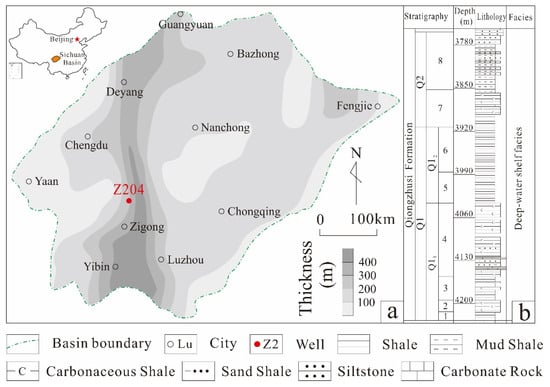
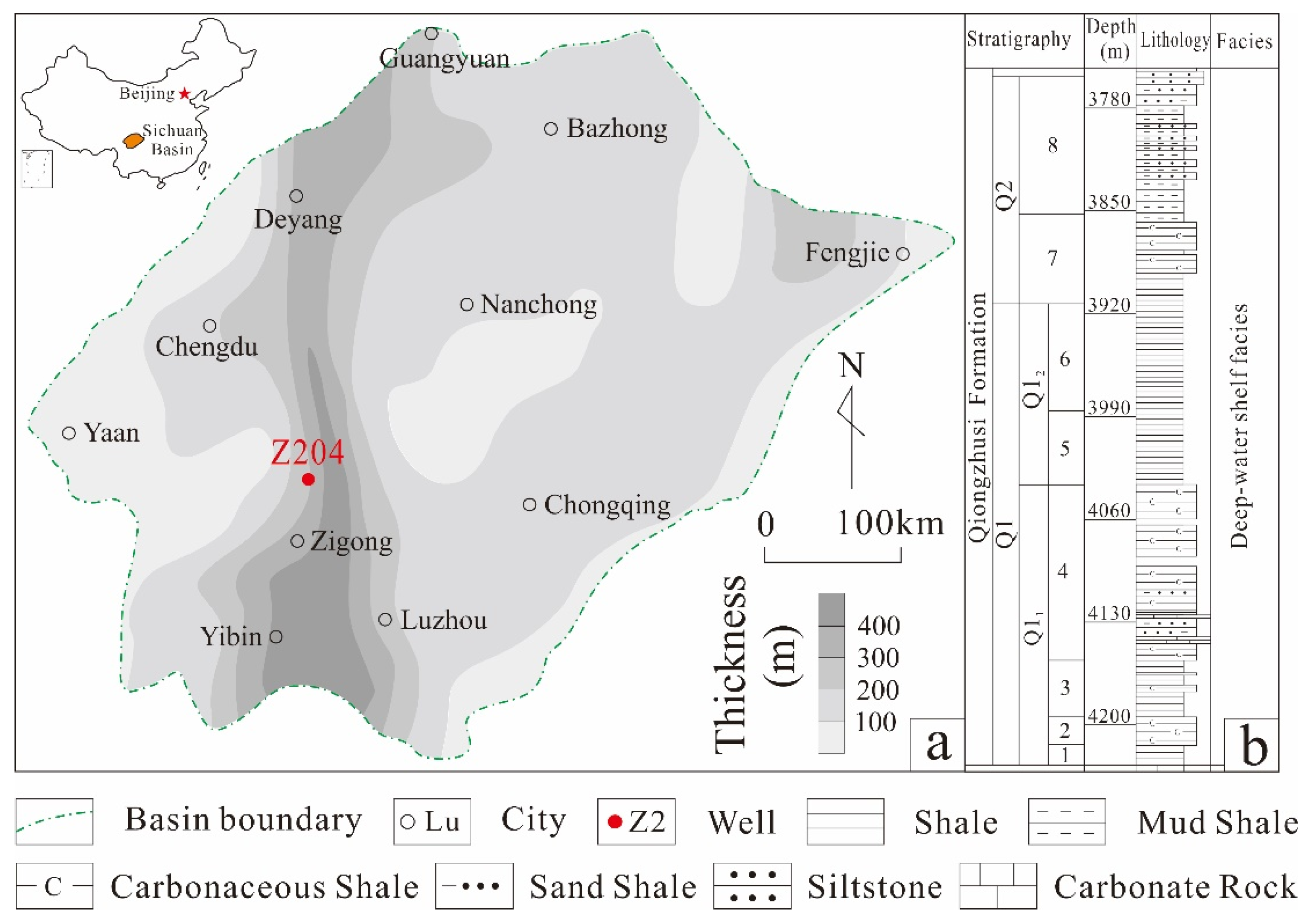
The studied area is located in the Deyang–Anyue Aulacogen in the southern Sichuan Basin, which is currently an important area for the exploration of deep and ultra-deep QZS shale gas in China (Figure 1a) [25]. The Deyang–Anyue Aulacogen was developed by extension in the early Sinian–Early Cambrian [26,27]. In the early Cambrian, the thick QZS Formation marine shale was generally deposited in the Deyang–Anyue Aulacogen, and organic-rich shale layers developed mainly in the first and second members of the QZS Formation [28]. In actual exploration, eight sublayers of the QZS Formation in this area were further divided based on the properties of the shale reservoirs, and sublayers 1, 3, 5, and 7 developed mainly shale beds, whereas sublayers 2, 4, 6, and 8 developed mainly sandy shale beds (Figure 1b). The first member of the QZS Formation (QZS1) includes sublayers 1–6, whereas the second member of the QZS Formation (QZS2) includes sublayers 7 and 8 (Figure 1b). Sublayer 5 (SL5) was the main exploration target in the sedimentary central areas of the Deyang–Anyue Aulacogen. In the marginal areas of the Deyang–Anyue Aulacogen, sublayer 7 (SL7) has a great sedimentary thickness, which indicates a favorable shale gas potential. Therefore, this study comparatively analyzed the differences in the organic and inorganic compositions and pore development of the SL7 and SL5 shales from Well Z204.
Figure 1.
Schematic maps showing the structural framework of the Deyang–Anyue Aulacogen and the location of Well Z204 (a), and the stratigraphic column of the lower Cambrian Qiongzhusi Formation of Well Z204 (b).
3. Samples and Experiments
3.1. Samples
A total of 60 deep shale samples were collected from the Lower Cambrian QZS Formation of Well Z204, including 27 SL7 shale samples from the QZS2 strata and 33 SL5 shale samples from the QZS1 strata. Both the SL7 and SL5 shale samples are deep shale reservoirs, with burial depths ranging from 3871.91 to 3899.60 m and 3992.85 to 4029.04 m, respectively (Table 1). The SL7 and SL5 shale samples have similar thermal maturities, with average laser Raman Reflectance values of 3.32% and 3.40%, respectively.
Table 1.
Geological information, organic and inorganic compositions, porosities, and water-bearing characteristics of the deep Qiongzhusi shales collected from Well Z204 on the margin of the Deyang–Anyue Aulacogen, Sichuan Basin.
3.2. TOC and Mineral Composition Analysis
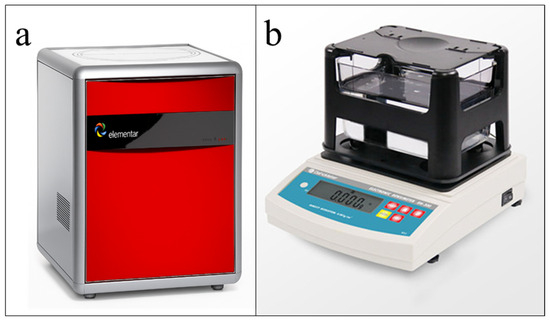
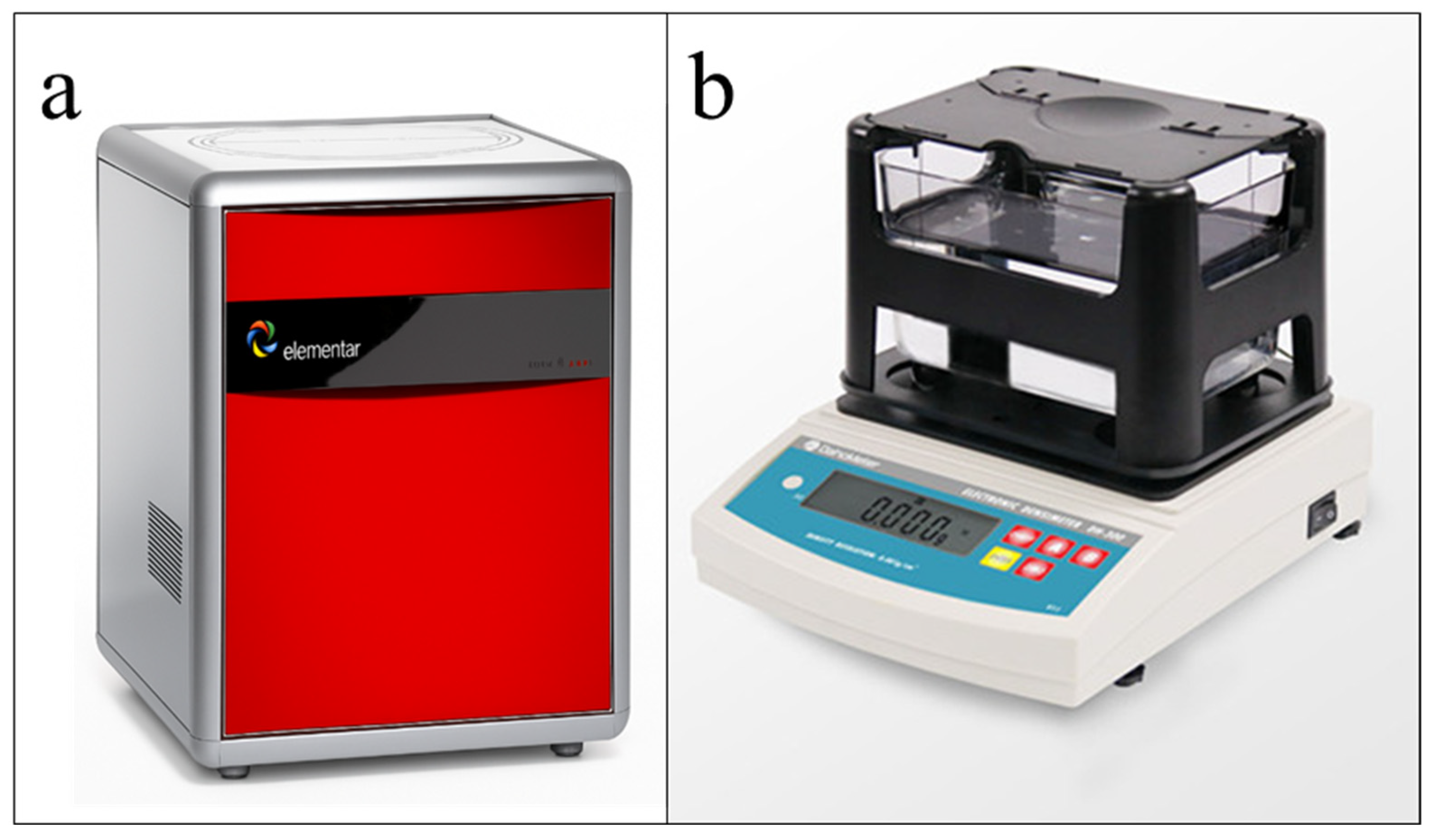
The shale core samples were ground to <180 μm (i.e., 80 mesh), and their carbonate minerals were removed by treatment with dilute hydrochloric acid. The treated shale powders were dried in an oven to remove moisture. After that, an Eario El Cube elemental analyzer instrument produced by German Elementar company (Hanau, German) was used to analyze the TOC content of the shale samples (Figure 2a). The instrument utilizes high-temperature catalytic combustion (up to 1200 °C) samples and employs a thermal conductivity detector for gas purification and detection. The TOC content of the sample is quantitatively determined based on the amount of CO2 generated. This method has high analytical accuracy, better than 0.1 wt% TOC.
Figure 2.
The photos of the Eario El Cube elemental analyzer instrument (a) and hydrometer (DH-1200 M, Daho Meter) (b).
The shale core sample was ground to <75 μm (i.e., 200 mesh) and dried in an oven to remove moisture. Then, the dried shale powders were measured by a Bruker D8 Advance X-ray diffractometer produced by German Bruker company (Karlsruhe, German) to obtain their mineralogical compositions. The instrument is equipped with a Cu Kα radiation with working voltage of 40 kV and 30 mA, and a Lynx Eye high-speed position sensitive detector (Bruker Corporation, Billerica, MA, USA), and scans at a rate of 4°/min with a range of 3–85°. It can analyze minerals and their relative contents in shale, with a relative error within 2 wt%.
3.3. Water Content and Water Saturation
The shale core sample was broken into blocks, and selected a small shale originally located in the inner part of the shale core. The small shale block was weighed to obtain its moisture mass (m1, g). Then, it was dried in an oven to remove moisture and weighed again to obtain its dried mass (m2, g) [29]. The pore water mass was the mass difference between the two measurements, and the pore water content (CPW) of the shale sample was calculated by Equation (1).
CPW = (m1 − m2)/m1 × 100%
Combined with the ethanol-saturated mass (m3, g) and the densities of ethanol (ρE = 0.789 g/cm3) and water (ρW = 1 g/cm3), the water saturation (SW) of the shale sample was calculated by Equation (2).
Sw = ((m1 − m2) × ρE)/((m3 − m2) × ρw)
3.4. Porosity and Effective Porosity
An ethanol injection method was used to analyze the porosity of the shale samples. The shale core sample was broken into blocks, and selected a small shale block originally located in the inner part of the shale core. The selected shale blocks were first oven-dried, and their dry mass was recorded (m2, g). The dried samples were placed in a sealed chamber, which was evacuated and subsequently filled with anhydrous ethanol. The chamber was pressurized to 50 MPa to ensure complete saturation of the shale blocks with ethanol [30]. After saturation, the samples were removed, the surface ethanol was gently wiped off, and the saturated mass was recorded (m3, g). Finally, the ethanol-saturated shale blocks were placed into a hydrometer (DH-1200 M) produced by Japan Daho Meter company and weighed while immersed in ethanol to obtain their buoyant mass (m4, g) (Figure 2b). Combined with m1, m2, and m3, the porosity (Φ) of the shale can be calculated by Equation (3). Under geological conditions, parts of the shale pore spaces are occupied by water, and the residual pore spaces are effective for shale gas storage [31]. Combined with the water saturation, the effective porosity (Φe) of the shale can be calculated by Equation (4).
Φ = (m3 − m2)/(m3 − m4) × 100%
Φe = Φ × (1 − Sw)
4. Results and Discussion
In this study, the organic and inorganic compositions, porosities, and water-bearing characteristics of the SL7 and SL5 shales were systematically analyzed (Table 1 and Figure 3, Figure 4 and Figure 5). The differences in the above properties of the two sets of sublayer shales were investigated to reveal the influences of the organic and inorganic compositions on the porosity and effective porosity of the deep QZS shales on the margin of the Deyang–Anyue Aulacogen, Sichuan Basin.
Figure 3.
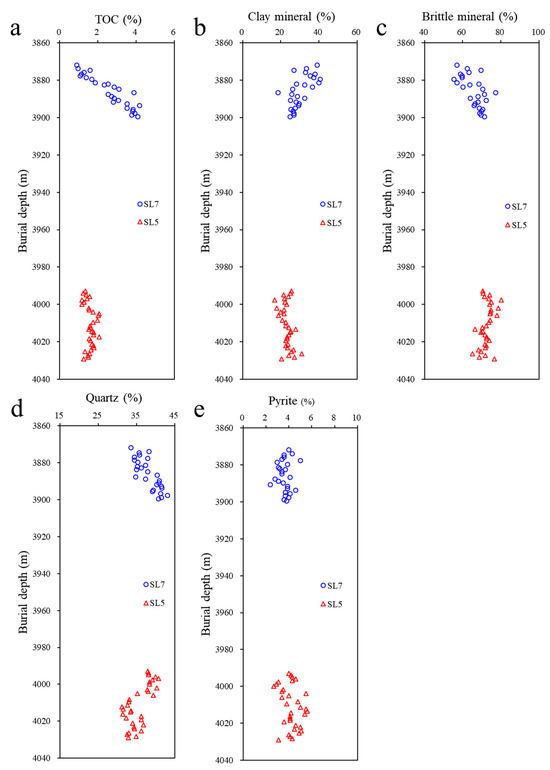
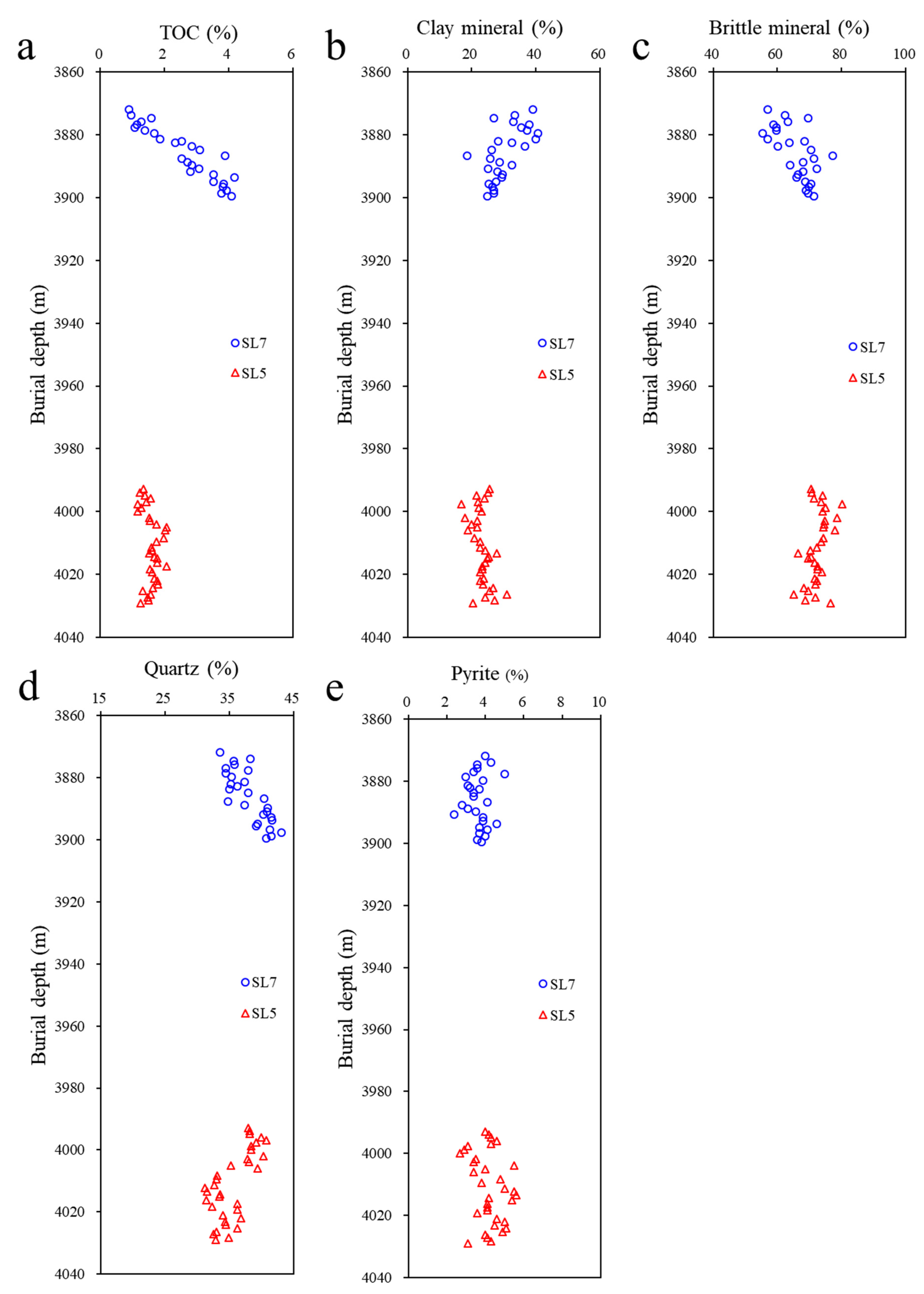
Variation characteristics of TOC (a), clay mineral (b), brittle minerals (c), quartz (d), and pyrite (e) contents with burial depth for the SL7 and SL5 shales on the margin of the Deyang–Anyue Aulacogen, Sichuan Basin.
Figure 4.
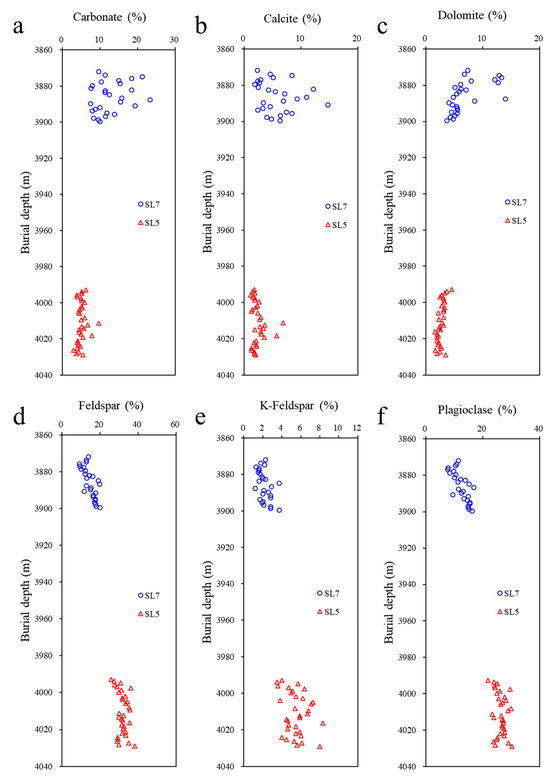
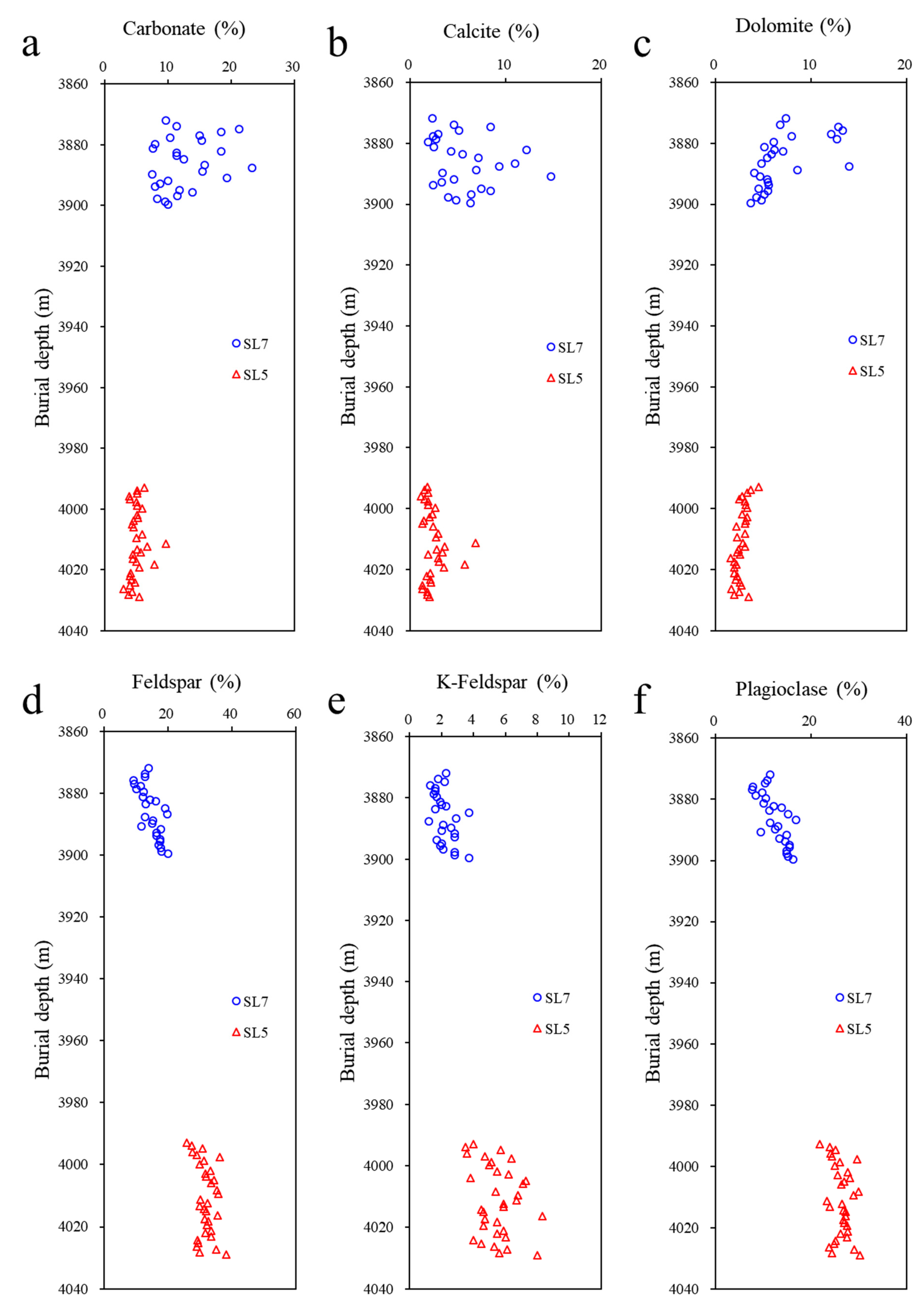
Variation characteristics of carbonate (a–c) and feldspar (d–f) mineral contents with burial depth for the SL7 and SL5 shales on the margin of the Deyang–Anyue Aulacogen, Sichuan Basin.
Figure 5.
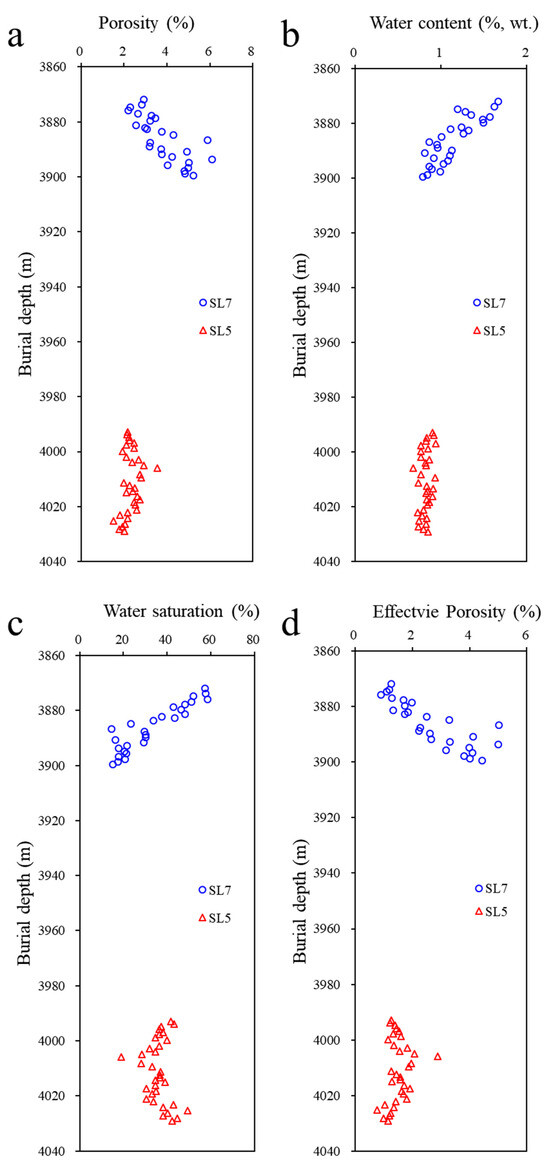
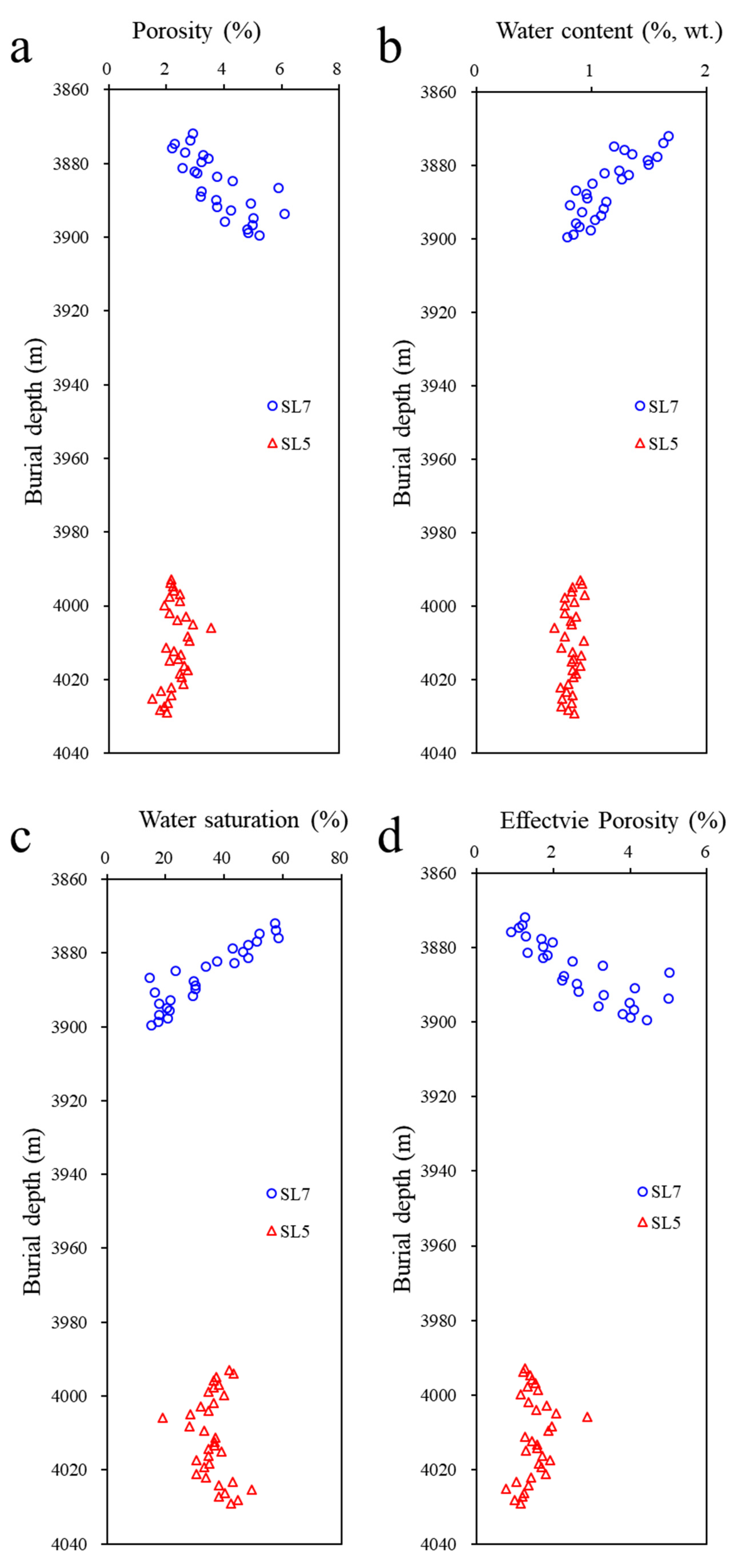
Variation characteristics of porosity (a), water content (b), water saturation (c), and effective porosity (d) with burial depth for the SL7 and SL5 shales on the margin of the Deyang–Anyue Aulacogen, Sichuan Basin.
4.1. TOC Content of the Deep QZS Shales
The TOC contents of the deep QZS shales on the margin of the Deyang–Anyue Aulacogen vary significantly with both different sublayers and the same sublayer (Table 1 and Figure 3a). The SL7 shales have TOC contents ranging from 0.87% to 4.17%, with an average of 2.62%. The TOC content of this set of shales progressively increases with increasing burial depth (Table 1 and Figure 3a). The changes in the TOC content of the SL7 shales may be largely attributed to a great biological explosion process in the early Cambrian period, which was recorded by a negative carbon isotope excursion event [32]. The TOC contents of the SL5 shales are lower than those of the SL7 shales and range from 1.14% to 2.05%, with an average of 1.57%. The TOC content of this set of shales exhibits a fluctuating trend with increasing burial depth (Table 1 and Figure 3a), which may result from changes in ancient aquatic environments.
4.2. Mineralogical Compositions of the Deep QZS Shales
The mineralogical compositions of the deep QZS shales on the margin of the Deyang–Anyue Aulacogen mainly include clay minerals, silicate minerals, carbonate minerals, and pyrite. The SL7 and SL5 shales have different mineralogical compositions. The clay mineral contents of the SL7 and SL5 shales range from 18.60 to 40.60% and 16.70 to 31.00%, respectively, with average values of 30.49% and 23.24%, respectively (Table 1 and Figure 3b). The SL7 shales are richer in clay minerals than the SL5 shales. In addition, as the burial depth increased, the clay mineral content decreased overall for the SL7 shales but fluctuated slightly for the SL5 shales (Figure 3b).
The brittle minerals of the deep QZS shales on the margin of the Deyang–Anyue Aulacogen include quartz, feldspar, and carbonate minerals. The brittle mineral contents of the SL7 and SL5 shales range from 55.50 to 75.90% and 65.00 to 80.20%, respectively, with average values of 65.59% and 72.45%, respectively (Table 1 and Figure 3c). The SL5 shales are richer in brittle minerals than the SL7 shales. In addition, as the burial depth increased, the brittle mineral content increased overall for the SL7 shales but fluctuated slightly for the SL5 shales (Figure 3c).
Quartz is the most abundant brittle mineral in the deep QZS shales, and the quartz content varies for the SL7 and SL5 shales. The quartz contents of the SL7 and SL5 shales range from 33.40 to 43.00% and 31.10 to 40.60%, respectively, with average values of 38.06% and 35.50%, respectively (Table 1 and Figure 3d). The SL7 and SL5 shales have similar quartz contents. However, as the burial depth increased, the quartz content increased overall for the SL7 shales but decreased slightly overall for the SL5 shales (Figure 3d).
Additionally, the deep QZS shales on the margin of the Deyang–Anyue Aulacogen generally contain pyrite, and the pyrite contents of the SL7 and SL5 shales range from 2.40 to 5.00% and 2.70 to 5.60%, respectively, with average values of 3.66% and 4.23%, respectively (Table 1 and Figure 3e). The SL7 and SL5 shales have similar pyrite contents. However, as the burial depth increased, the pyrite content did not significantly change for both the SL7 and SL5 shales (Figure 3e).
The carbonate minerals of the deep QZS shales mainly contain calcite and dolomite, and the former content is generally lower than the latter content (Table 1). The calcite, dolomite, and carbonate mineral contents of the SL7 shales are 1.90–14.70%, 3.70–14.00%, and 7.50–23.30%, respectively, with average values of 5.73%, 7.02%, and 12.76%, respectively. The calcite, dolomite, and carbonate mineral contents of the SL5 shales are 1.10–6.80%, 1.60–4.50%, and 3.00–9.70%, respectively, with average values of 2.40%, 2.69%, and 5.09%, respectively (Table 1 and Figure 4a–c). The calcite, dolomite, and carbonate mineral contents of the SL7 shales are greater than those of the SL5 shales. In addition, as the burial depth increased, the calcite, dolomite, and carbonate mineral contents did not significantly change for both the SL7 and SL5 shales (Figure 4a–c).
The feldspars of the deep QZS shales mainly contain K-feldspar and plagioclase, and the former content is generally lower than the latter content. The K-feldspar, plagioclase, and feldspar contents of the SL7 shales are 1.20–3.70%, 7.80–16.90%, and 9.20–20.00%, respectively, with average values of 2.18%, 12.59%, and 14.77%, respectively. The K-feldspar, plagioclase, and feldspar contents of the SL5 shales are 3.50–8.30%, 21.90–30.20%, and 25.90–38.20%, respectively, with average values of 5.51%, 26.35%, and 31.86%, respectively (Table 1 and Figure 4d–f). The K-feldspar, plagioclase, and feldspar contents of the SL7 shales are lower than those of the SL5 shales. In addition, as the burial depth increased, the K-feldspar, plagioclase, and feldspar contents increased overall for both the SL7 and SL5 shales (Figure 4d–f).
4.3. Porosity of Shales and Its Controlling Factors
The porosity of the deep QZS shales on the margin of the Deyang–Anyue Aulacogen varies significantly across different sublayers and within the same sublayer (Table 1 and Figure 5a). The porosities of the SL7 and SL5 shales range from 2.20 to 6.09% and 1.51 to 3.55%, respectively, with average values of 3.83% and 2.32%, respectively (Table 1 and Figure 5a). The porosities of the SL7 shales are greater than those of the SL5 shales. In addition, as the burial depth increased, the porosity increased overall for the SL7 shales but fluctuated slightly for the SL5 shales (Figure 5a).
The porosity development of shales is generally correlated with multiple factors, and the main factors include the organic and inorganic compositions of shales, the compaction effect of overlying strata, and the hydrocarbon generation and expulsion during thermal evolution [33,34]. The deep QZS shales on the margin of the Deyang–Anyue Aulacogen have similar thermal maturities, and the porosities of the SL7 and SL5 shales show different evolution trends with increasing burial depth, which implies that the thermal maturity and compaction effects may have little influence on the porosity development of the shales. Therefore, the differences in the porosities of the deep QZS shales may be largely affected by their organic and inorganic compositions.
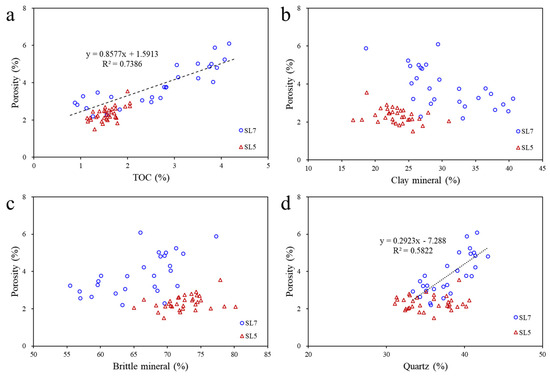
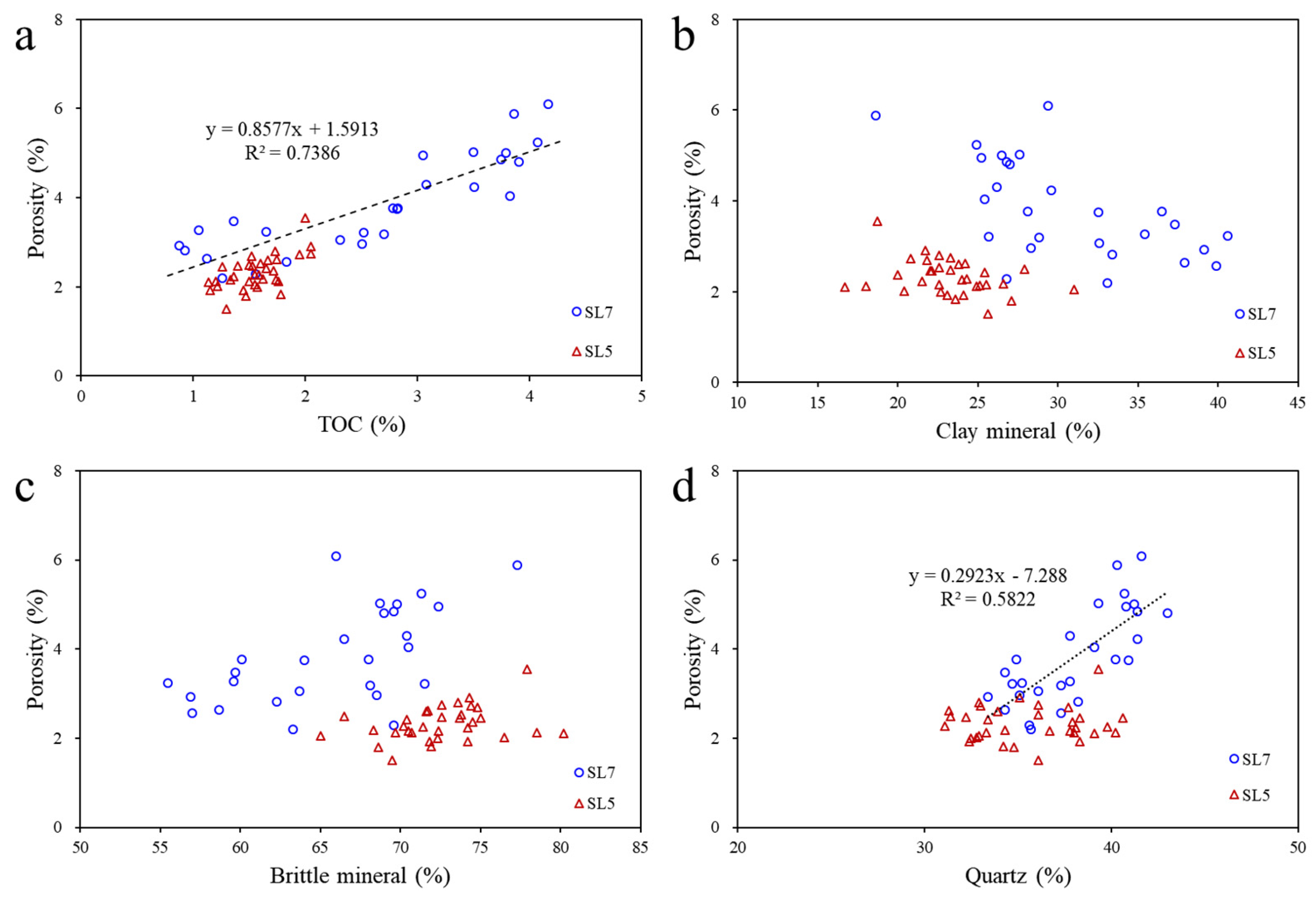
The porosity and TOC content are positively correlated for the deep QZS shales. The positive correlation is more significant for the SL7 shales, with a correlation coefficient (R2) of 0.74 (Figure 6a), and the weak positive correlation for the SL5 shales may be attributed mainly to the small variations in their TOC content. Although the clay minerals of shales can also develop certain IM pores, the porosity is negatively correlated with the clay mineral content of the deep QZS shales (Figure 6b). This phenomenon may be because the clay-hosted pores of deep shales are difficult to preserve effectively. Alternatively, the presence of clay minerals may block partial nanopores of the shales. The porosity and brittle mineral content are weakly positively correlated for the deep QZS shales (Figure 6c) because brittle minerals can counteract the compaction effect of overlying strata and protect the nanopores in shales. However, the porosity and quartz content exhibit different correlations for the SL7 and SL5 shales, with a weak positive correlation for the former shales and an unclear correlation for the latter shales (Figure 6d).
Figure 6.
Correlations of the porosity with the TOC content (a), clay mineral content (b), brittle mineral content (c), and quartz content (d) for the SL7 and SL5 shales on the margin of the Deyang–Anyue Aulacogen, Sichuan Basin.
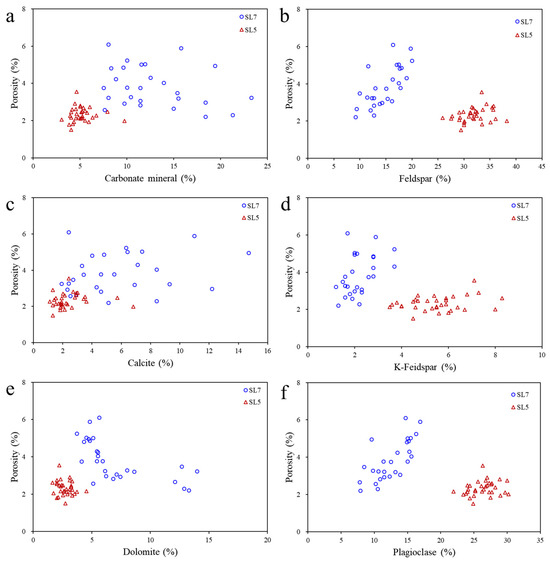
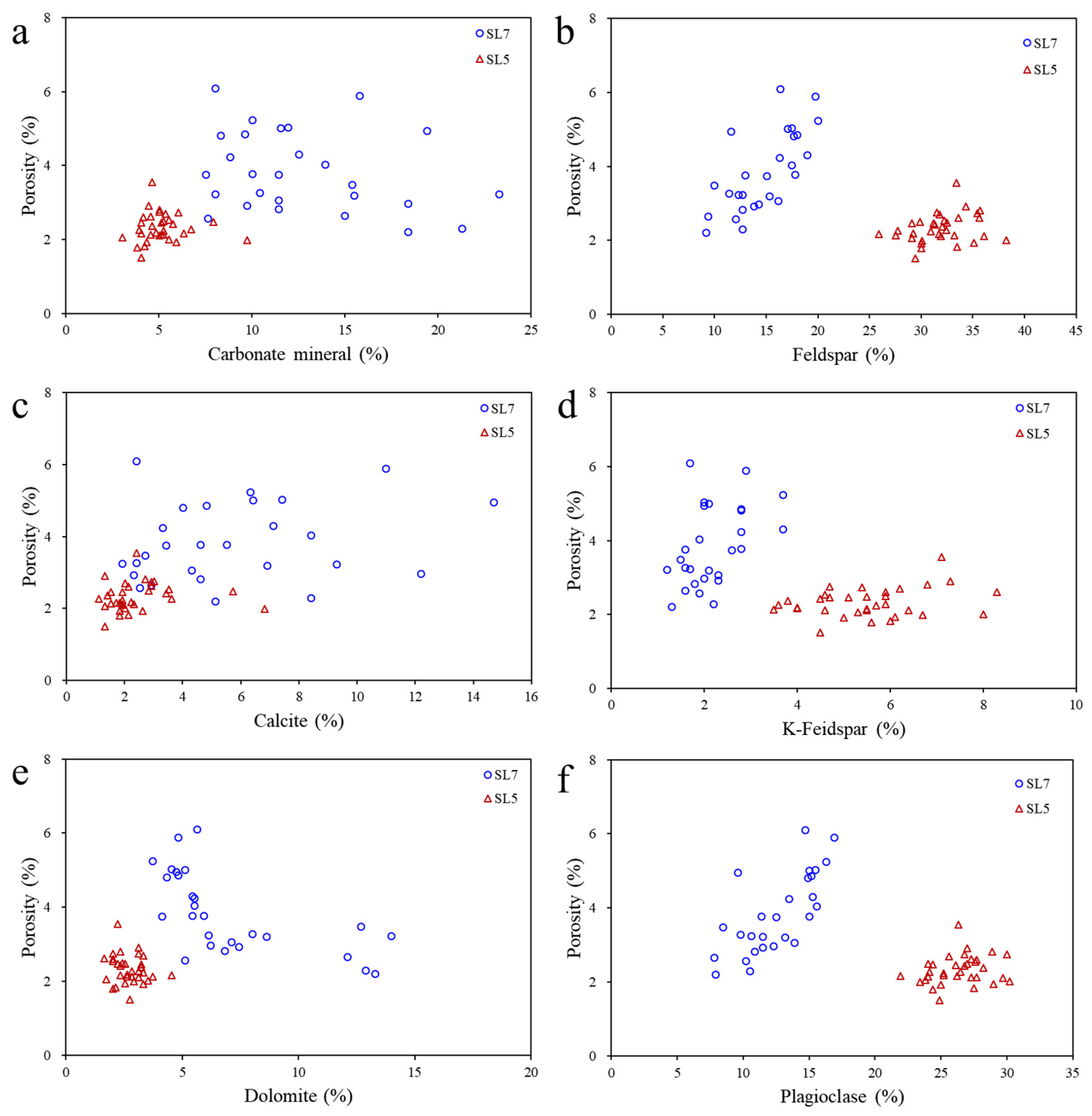
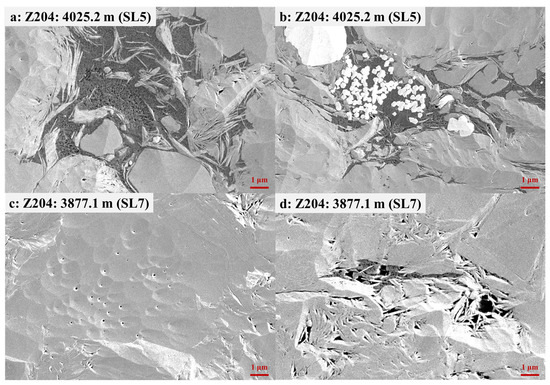
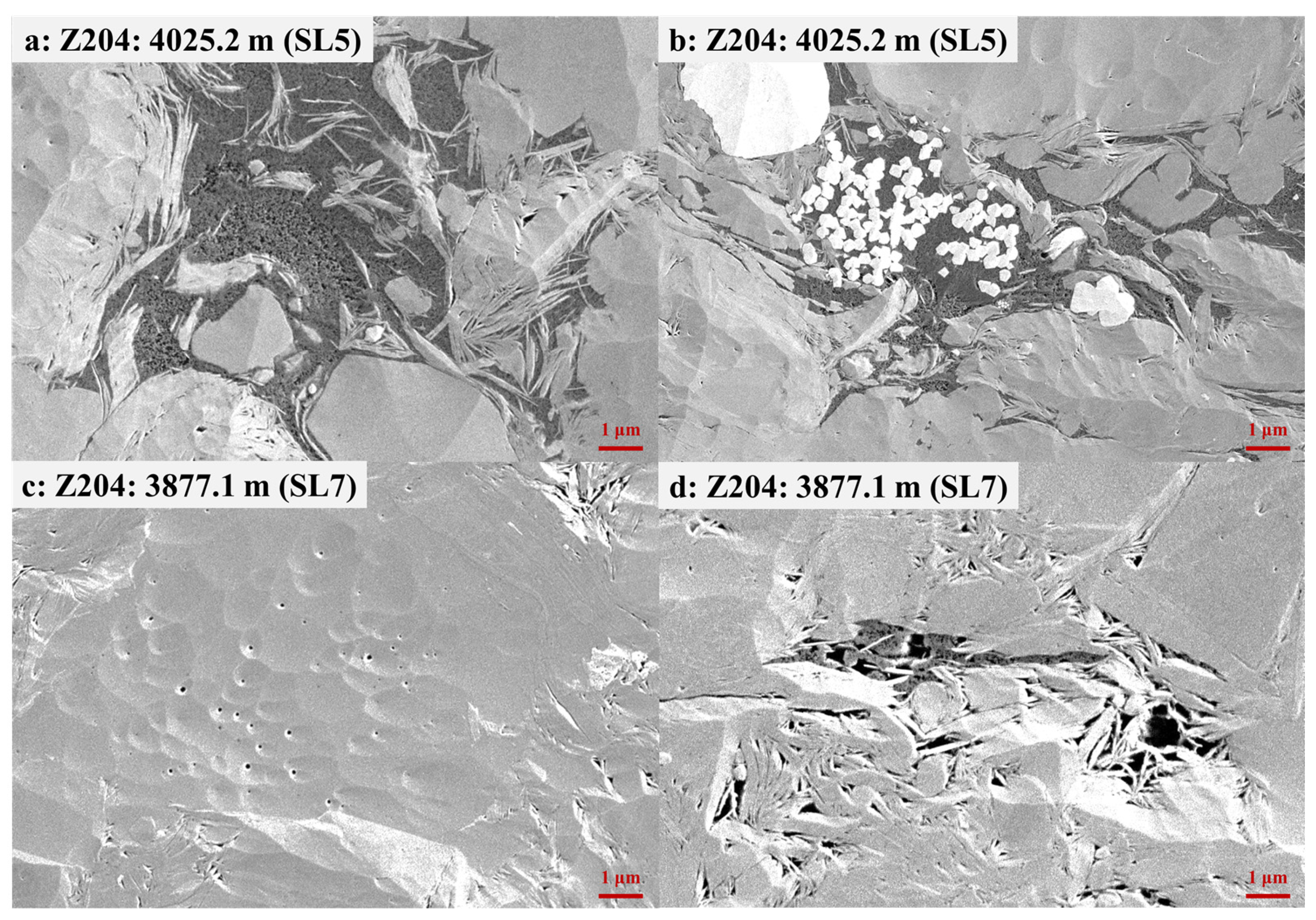
The porosity of the SL5 shales is not significantly correlated with the carbonate mineral content (Figure 7a,c,e), which indicates that carbonate minerals barely influence the pore development of the shales. However, the porosity has complex correlations with the carbonate mineral contents of the SL7 shales, and it shows a weakly positive correlation with the calcite content, a weakly negative correlation with the dolomite content, and no significant correlations with the carbonate mineral content (Figure 7a,c,e). Therefore, the calcite of the SL7 shales contributed to pore development (Figure 8). The porosity is not significantly correlated with the feldspar content of the SL5 shales (Figure 7b,d,f), which indicates that feldspar may barely influence the pore development of the shales. However, because some calcite and feldspar of the shale developed dissolution pores (Figure 8c), the calcite and feldspar contents exhibit a weak correlation with the porosity of the shales. The porosity is positively correlated with the feldspar, K-feldspar, and plagioclase contents of the SL7 shales (Figure 7b,d,f). Therefore, the feldspar of the SL7 shales contributes to pore development (Figure 8).
Figure 7.
Correlations of porosity with carbonate mineral contents (a,c,e) and feldspar mineral contents (b,d,f) for the SL7 and SL5 shales on the margin of the Deyang–Anyue Aulacogen, Sichuan Basin.
Figure 8.
Typical SEM images of the SL5 (a,b) and SL7 (c,d) shale samples in the margin area of the Deyang–Anyue Aulacogen, showing the organic matter-hosted (OM) and inorganic matter-hosted (IM) pores of the deep Qiongzhusi shales.
The complex pore structure is developed in the QZS shale, among which the dissolution pores and intergranular pores hosted by calcite and feldspar minerals are important components of the shale pore structure. Calcite and feldspar, as typical brittle minerals, have high hardness and can be preserved under compaction, forming a large number of intergranular pores, which are important components of inorganic pores in shale [35]. In addition, calcite and feldspar minerals in the QZS shale undergo selective dissolution under the action of organic acids and other fluids, forming a large number of irregularly shaped dissolution pores, which can significantly increase the shale porosity [36]. Partial dissolution pores are connected to other types of pores such as intergranular pores, forming a complex pore network, which is a good channel for shale gas migration and can significantly improve shale gas production and development efficiency [37].
4.4. Water-Bearing Characteristics of Shale and Its Controlling Factors
Although the deep QZS shales on the margin of the Deyang–Anyue Aulacogen, Sichuan Basin, were evaluated to an overmature stage, these shales generally contain pore water, and the water-bearing characteristics are different for the SL7 and SL5 shales. The water contents of the SL7 and SL5 shales range from 0.79 to 1.67% and 0.67 to 0.94%, respectively, with average values of 1.14% and 0.82%, respectively (Table 1 and Figure 5b). The water saturations of the SL7 and SL5 shales range from 14.63 to 58.49% and 18.97 to 49.40%, respectively, with average values of 33.40% and 36.23%, respectively (Table 1 and Figure 5c). The water content and saturation of the SL7 shales vary widely, and both decrease with increasing burial depth. However, the water content and saturation of the SL5 shales vary within a small range. With increasing burial depth, the water content does not significantly change, and the water saturation fluctuates (Figure 5b,c). Pore water occupies pore spaces and reduces the adsorption capacity of pore surfaces, which is adverse for the storage of shale gas [38]. Therefore, the gas-in-place (GIP) content of SL7 shales with high water-bearing features is lower than that of SL5 shales with low water-bearing features.
Previous studies have revealed that overmature shales contain mainly capillary-bound water, and that the presence of capillary-bound water not only occupies the pore space but also reduces the adsorption capacity of the pore surface, significantly decreasing the content of both free gas and adsorbed gas in shale strata [39,40,41]. Consequently, the understanding of shale water content and its controlling factors is of critical theoretical and practical importance for accurately assessing shale gas resources in deep shale reservoirs and improving the efficiency of gas extraction.
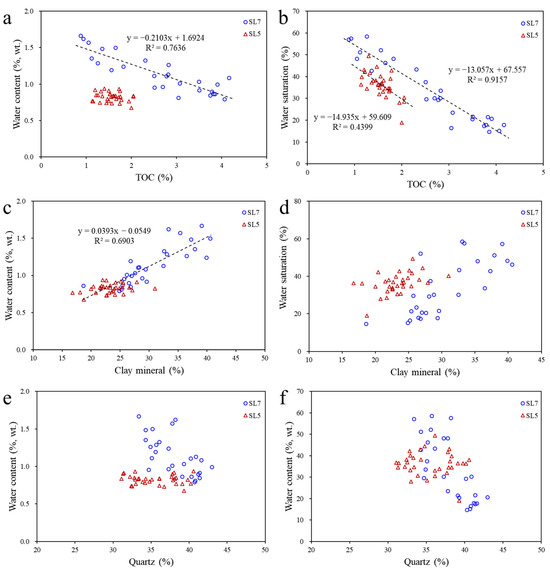
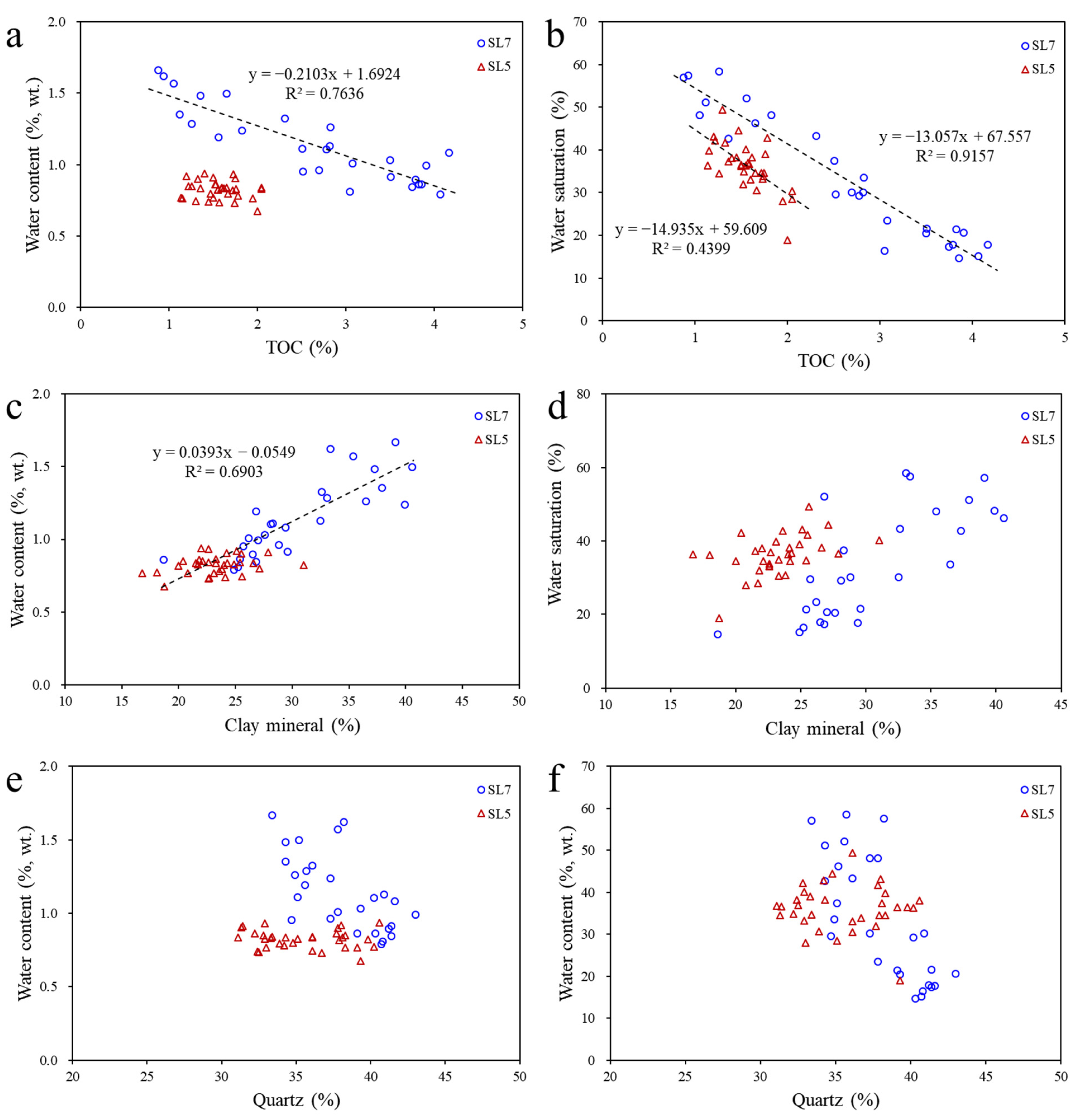
The water-bearing characteristics of shales are affected by multiple factors, including thermal maturity, pore wettability and space, and the geological environment [42,43]. Although many previous studies have been conducted on the water-bearing characteristics of overmature shales, the main factors controlling the water-bearing characteristics of the deep QZS shale on the margin of the Deyang–Anyue Aulacogen are still unclear. The CPW is negatively correlated with the TOC content for the SL7 and SL5 shales (Figure 9a), because OM with high maturity is generally hydrophobic and the presence of OM pores can reduce the hydrophilia of the shales. The CPW is positively correlated with the clay mineral content of the SL7 and SL5 shales (Figure 9c), because IM is generally hydrophilic and the presence of clay-hosted pores increases the hydrophilia of the shales. The CPW is negatively correlated with the brittle mineral content of the SL7 and SL5 shales (Figure 9e), because brittle minerals rarely develop pores and fail to provide pore spaces for water storage. The CPW is positively correlated with the clay mineral content and is negatively correlated with the TOC, brittle mineral, and quartz contents of the SL7 shales. However, the CPW is not significantly correlated with the TOC, clay mineral, brittle mineral, and quartz contents of the SL5 shales (Figure 9b,d,f).
Figure 9.
Correlations of water content (a,c,e) and water saturation (b,d,f) with TOC, clay mineral, brittle mineral, and quartz contents for the SL7 and SL5 shales on the margin of the Deyang–Anyue Aulacogen, Sichuan Basin.
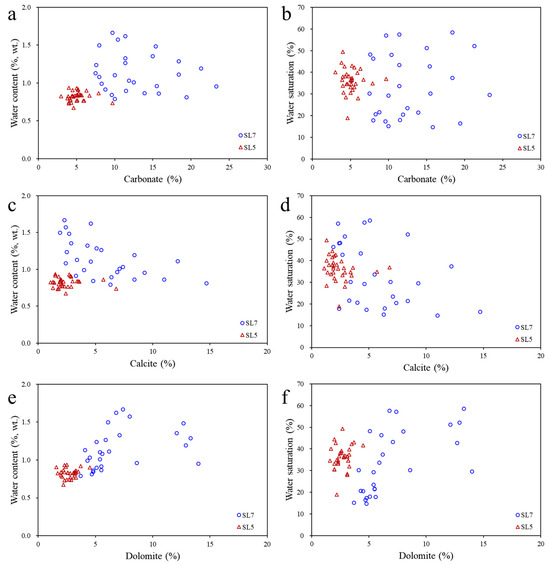
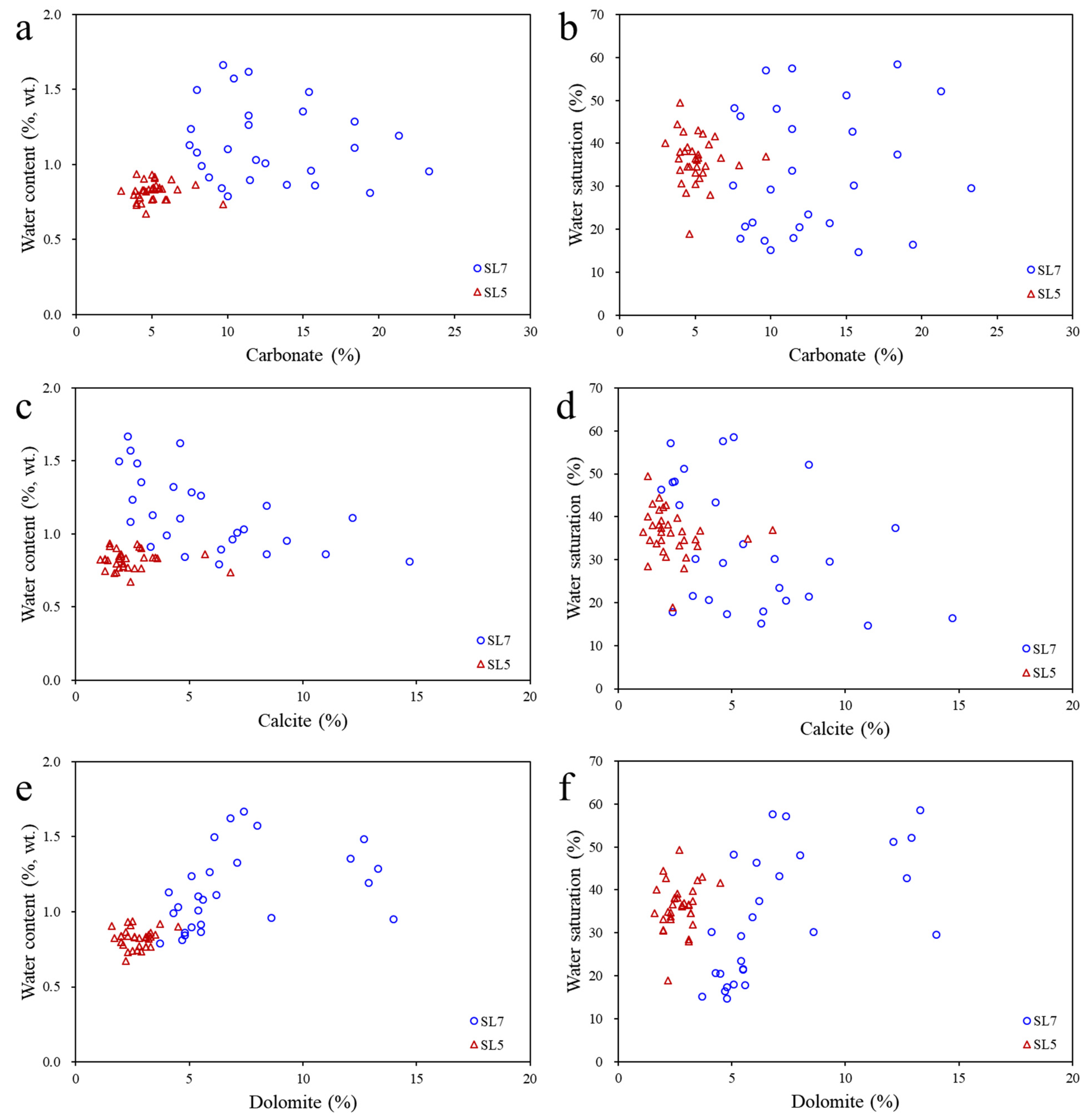
The CPW and SW values exhibit no significant correlations with the carbonate mineral contents for the SL5 shales (Figure 10a–f), probably because these shales have low carbonate mineral contents. The CPW and SW have complex correlations with the carbonate mineral contents for the SL7 shales, with weakly positive correlations with the dolomite content, weakly negative correlations with the calcite content, and no significant correlations with the carbonate mineral content (Figure 10a–f). Overall, the carbonate mineral contents of the deep QZS shales have little influence on their water-bearing characteristics.
Figure 10.
Correlations of the water content (a,c,e) and water saturation (b,d,f) with the carbonate mineral contents for the SL7 and SL5 shales on the margin of the Deyang–Anyue Aulacogen, Sichuan Basin.
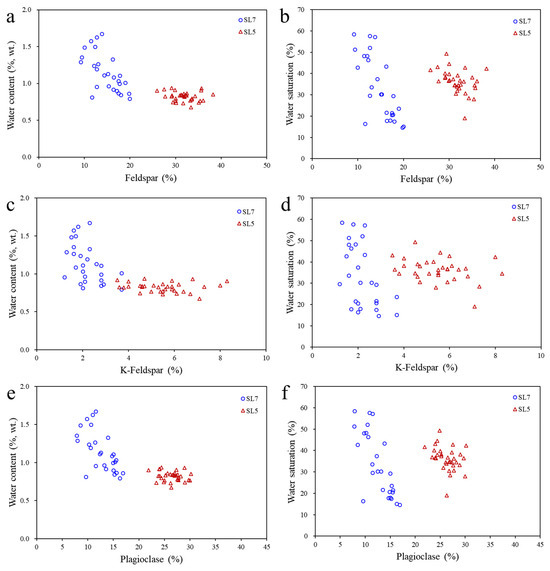
The CPW shows negative correlations with the feldspar, K-feldspar, and plagioclase contents for the SL7 shales, but no significant correlations with the feldspar contents for the SL5 shales (Figure 11a,c,e). The SW values show negative correlations with the feldspar, K-feldspar, and plagioclase contents for the SL7 and SL5 shales. The correlations of the SL7 shales are more obvious than those of the SL5 shales (Figure 11b,d,f). Overall, the presence of feldspar minerals can reduce the water-bearing characteristics of the deep QZS shales.
Figure 11.
Correlations of the water content (a,c,e) and water saturation (b,d,f) with the feldspar mineral contents for the SL7 and SL5 shales on the margin of the Deyang–Anyue Aulacogen, Sichuan Basin.
4.5. Effective Porosity of Shale and Its Main Controlling Factors
Under geological conditions, shale strata generally contain water. Because pore water and shale gas are competitively stored in shale pore system, the water content and distribution significantly affect the occurrence and enrichment of shale gas [44]. The effective pore space of shale is the total pore space minus the pore space occupied by pore water. Therefore, the effective porosity of shales has practical importance for the evaluation and prediction of shale gas [45,46].
The effective porosity of the deep QZS shales on the margin of the Deyang–Anyue Aulacogen varies significantly across different sublayers and within the same sublayer (Table 1 and Figure 5d). The effective porosities of the SL7 and SL5 shales range from 0.91 to 5.03% and 0.76 to 2.88%, respectively, with average values of 2.69% and 1.50%, respectively (Table 1 and Figure 5d). The effective porosities of the SL7 shales are greater than those of the SL5 shales. In addition, as the burial depth increased, the porosity increased overall for the SL7 shales but fluctuated slightly for the SL5 shales (Figure 5d).
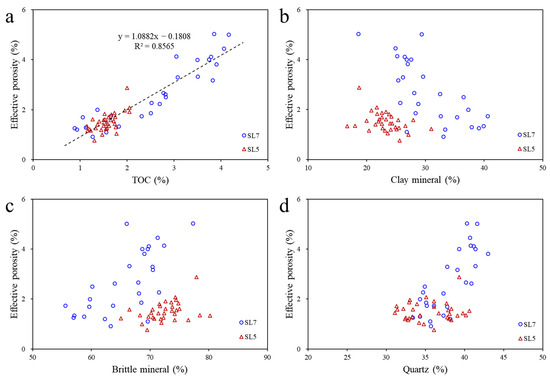
The effective porosity and TOC content are positively correlated for the deep QZS shales, and the correlations are similar for the SL7 and SL5 shales (Figure 12a). The effective porosity has weak positive correlations with the clay mineral content and weak negative correlations with the brittle mineral content, and the correlations are different for the SL7 and SL5 shales (Figure 12b,c). However, the effective porosity and quartz content exhibit different correlations for the SL7 and SL5 shales, with a weak positive correlation for the former shales and an unclear correlation for the latter shales (Figure 12d).
Figure 12.
Correlations of the effective porosity with TOC (a), clay mineral (b), brittle mineral (c), and quartz content (d) for the SL7 and SL5 shales on the margin of the Deyang–Anyue Aulacogen, Sichuan Basin.
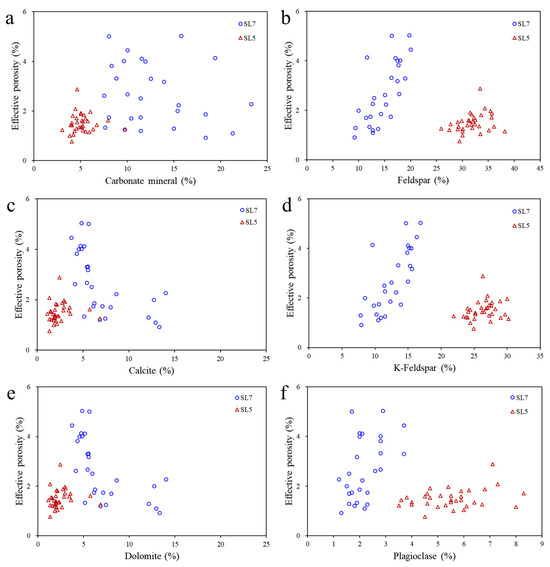
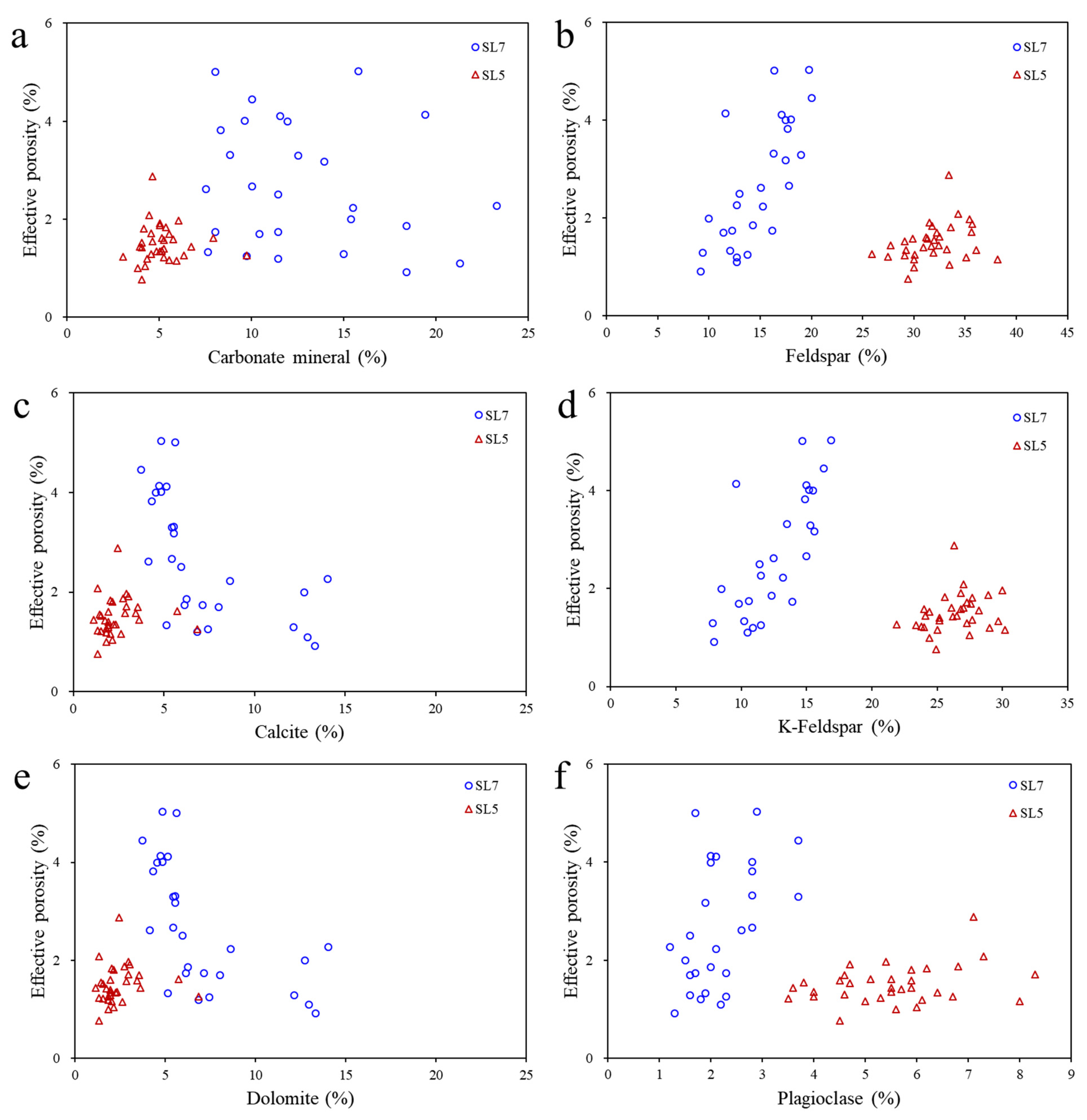
The effective porosity is not significantly correlated with the carbonate mineral contents of the SL5 shales (Figure 13a,c,e), which indicates that the carbonate minerals barely influence the effective porosity of the shales. However, the effective porosity has complex correlations with the carbonate mineral contents of the SL7 shales, with a weakly positive correlation with the calcite content, a weakly negative correlation with the dolomite content, and no significant correlations with the carbonate mineral content (Figure 13a,c,e). The effective porosity exhibits no significant correlations with the feldspar contents of the SL5 shales (Figure 13b,d,f), which indicates that feldspar barely influences the pore development of the shales. However, the effective porosity is positively correlated with the feldspar, K-feldspar, and plagioclase contents of the SL7 shales (Figure 13b,d,f).
Figure 13.
Correlations of the effective porosity with carbonate mineral content (a,c,e) and feldspar mineral content (b,d,f) for the SL7 and SL5 shales on the margin of the Deyang–Anyue Aulacogen, Sichuan Basin.
4.6. Geological Significance
In recent years, significant progress has been made in the deep QZS shale gas in the Sichuan Basin, especially in the sedimentary center areas of the Deyang–Anyue Aulacogen [26]. However, the deep QZS shales in the margin areas of the Deyang–Anyue Aulacogen also developed thick thicknesses and enriched in OM, which is considered to be a potential target for subsequent shale gas exploration. For the central areas of the Deyang–Anyue Aulacogen, the TOC content, porosity, and water saturation of the SL7 are 1.33%, 4.4%, and 34.8%, respectively [47]. The porosity is generally greater for the SL7 shales in the margin areas than in the central areas, whereas the porosity is similar for the SL5 shales in both the marginal and central areas. The reason for this phenomenon may be due to differences in the sedimentary environment of the QZS shale in the center and margin areas of the Deyang–Anyue Aulacogen of the QZS shales [48,49]. However, the SL7 shales in the margin areas of the Deyang–Anyue Aulacogen have an average effective porosity of 2.69%, which is greater than that of the SL5 shales, which makes the former shales more favorable for shale gas accumulation than the latter shales. Therefore, the SL7 shales on the margin of the Deyang–Anyue Aulacogen were also favorable targets for shale gas, which is different from the SL5 shales in the central areas of the aulacogen. This discovery has expanded the exploration targets of QZS shale gas. In addition, this study reveals that the effective porosity of the deep QZS shales is predominantly controlled by their TOC content. The above discoveries provide important guidance for deep QZS shale gas exploration in the margin of the Deyang–Anyue Aulacogen.
5. Conclusions
In this study, the organic and inorganic compositions, water-bearing characteristics, and porosities of the deep QZS shales collected from Well Z204 in the margin of the Deyang–Anyue Aulacogen, Sichuan Basin, were systematically analyzed, and the main factors controlling the effective porosities of the shales were investigated. The conclusions are as follows:
(1) The deep QZS shales in the margin of the Deyang–Anyue Aulacogen are diverse in organic and inorganic composition. The average TOC, clay, and brittle mineral contents of the SL7 shales are 2.62%, 30.49%, and 65.59%, respectively. Compared with the SL5 shales, the SL7 shales have higher TOC and clay mineral contents, and lower brittle mineral contents.
(2) The SL7 shales have an average porosity and water saturation of 3.83% and 33.40%, respectively, which is greater than the SL5 shales. The effective porosity of the SL7 and SL5 shales is 2.69% and 1.50%, respectively; the former shales’ is basically greater than that of the latter shales because the TOC content of the QZS shales is the main factor controlling the effective porosity.
(3) In the margin of the Deyang–Anyue Aulacogen, the SL7 shales have more advantages for shale gas accumulation than the SL5 shales, especially in the lower section of the SL7 shales with high TOC contents, which are the sweet spots for shale gas exploration.
Author Contributions
W.W.: Conceptualization, writing—original draft, project administration. L.X.: Data curation. C.L.: Software, resources. H.G. (Haitao Gao): Investigation, formal analysis. H.L.: Data curation, visualization. X.S.: Data curation. H.G. (Haifeng Gai): Investigation, methodology, writing—review and editing. P.C.: Conceptualization, supervision, funding acquisition. All authors have read and agreed to the published version of the manuscript.
Funding
This study was supported by the PetroChina Southwest Oil and Gas Fields Company Project (XNS-YYY-JS2024-30) and the National Natural Science Foundation (42030804).
Data Availability Statement
The original contributions presented in this study are included in the article material. Further inquiries can be directed to the corresponding author.
Conflicts of Interest
Author Wei Wu, Liang Xu and Chao Luo were employed by the PetroChina Southwest Oil and Gas Field Company. The remaining authors declare that the research was conducted in the absence of any commercial or financial relationships that could be construed as a potential conflict of interest. The authors declare that this study received funding from PetroChina Southwest Oil and Gas Fields Company Project. The funder was not involved in the study design, collection, analysis, interpretation of data, the writing of this article or the decision to submit it for publication.
References
- Hao, F.; Zou, H.Y.; Lu, Y.C. Mechanisms of shale gas storage: Implications for shale gas exploration in China. Aapg Bull. 2013, 97, 1325–1346. [Google Scholar] [CrossRef] [Scilit]
- Zou, C.N.; Zhu, R.K.; Chen, Z.Q.; Ogg, J.G.; Wu, S.T.; Dong, D.Z.; Qiu, Z.; Wang, Y.M.; Wang, L.; Lin, S.H.; et al. Organic-matter-rich shales of China. Earth-Sci. Rev. 2019, 189, 51–78. [Google Scholar] [CrossRef] [Scilit]
- Zhao, W.Z.; Li, J.Z.; Yang, T.; Wang, S.F.; Huang, J.L. Geological difference and its significance of marine shale gases in South China. Pet. Explor. Dev. 2016, 43, 547–559. [Google Scholar] [CrossRef] [Scilit]
- Liang, F.; Zhao, Q.; Zhao, S.X.; Shi, Z.S.; Zhang, Q.; Zhou, T.Q.; Wang, Y.M.; Cui, H.Y.; Chen, H.R.; Wang, Y. Genesis Mechanism of Low Resistivity in the Lower Cambrian Qiongzhusi Formation Shale and Its Response Characteristics to Pore Structure—Take the Z201 Well as an Example. Acs Omega 2025, 10, 43995–44011. [Google Scholar] [CrossRef] [Scilit] [PubMed]
- Guo, T.L.; Deng, H.C.; Zhao, S.; Wei, L.M.; He, J.H. Formation mechanisms and exploration breakthroughs of new type of shale gas in Cambrian Qiongzhusi Formation, Sichuan Basin, SW China. Pet. Explor. Dev. 2025, 52, 64–78. [Google Scholar] [CrossRef] [Scilit]
- Li, G.; Gao, P.; Xiao, X.M.; Lu, C.G.; Feng, Y. Lower Cambrian Organic-Rich Shales in Southern China: A Review of Gas-Bearing Property, Pore Structure, and Their Controlling Factors. Geofluids 2022, 2022, 9745313. [Google Scholar] [CrossRef] [Scilit]
- Huang, J.L.; Zou, C.N.; Li, J.Z.; Dong, D.Z.; Wang, S.I.; Wang, S.Q.; Cheng, K.M. Shale gas generation and potential of the Lower Cambrian Qiongzhusi Formation in the Southern Sichuan Basin, China. Pet. Explor. Dev. 2012, 39, 75–81. [Google Scholar] [CrossRef] [Scilit]
- Tang, X.L.; Jiang, Z.X.; Yuan, Z.L.; Jiao, Y.F.; Lin, C.H.; Liu, X.X. Pore Water and Its Multiple Controlling Effects on Natural Gas Enrichment of the Quaternary Shale in Qaidam Basin, China. Energies 2023, 16, 6170. [Google Scholar] [CrossRef] [Scilit]
- Huang, X.F.; Zhao, Y.P. Characterization of pore structure, gas adsorption, and spontaneous imbibition in shale gas reservoirs. J. Pet. Sci. Eng. 2017, 159, 197–204. [Google Scholar] [CrossRef] [Scilit]
- Wang, Y.Q.; Chen, D.X.; Wang, Y.C.; Lei, W.Z.; Wang, F.W. Characteristics and Controlling Factors of Pores in Different Shale Lithofacies Reservoirs of Lower Cambrian Qiongzhusi Formation, Southwestern Sichuan Basin, China. Minerals 2023, 13, 1442. [Google Scholar] [CrossRef] [Scilit]
- Perez, F.; Devegowda, D. Estimation of adsorbed-phase density of methane in realistic overmature kerogen models using molecular simulations for accurate gas in place calculations. J. Nat. Gas Sci. Eng. 2017, 46, 865–872. [Google Scholar] [CrossRef] [Scilit]
- Gao, P.; Xiao, X.M.; Hu, D.F.; Liu, R.B.; Li, F.; Zhou, Q.; Cai, Y.D.; Yuan, T.; Meng, G.M. Gas in place and its controlling factors of deep shale of the Wufeng-Longmaxi Formations in the Dingshan area, Sichuan Basin. Front. Earth Sci. 2023, 17, 322–336. [Google Scholar] [CrossRef] [Scilit]
- Zhang, Q.; Liu, Z.Y.; Liu, C.; Zhu, X.M.; Steel, R.J.; Tian, H.Y.; Wang, K.; Song, Z.P. Experimental Study on the Development Characteristics and Controlling Factors of Microscopic Organic Matter Pore and Fracture System in Shale. Front. Earth Sci. 2021, 9, 773960. [Google Scholar] [CrossRef] [Scilit]
- Cheng, P.; Xiao, X.M.; Wang, X.; Sun, J.; Wei, Q. Evolution of water content in organic-rich shales with increasing maturity and its controlling factors: Implications from a pyrolysis experiment on a water-saturated shale core sample. Mar. Pet. Geol. 2019, 109, 291–303. [Google Scholar] [CrossRef] [Scilit]
- Loucks, R.G.; Reed, R.M.; Ruppel, S.C.; Hammes, U. Spectrum of pore types and networks in mudrocks and a descriptive classification for matrix-related mudrock pores. Aapg Bull. 2012, 96, 1071–1098. [Google Scholar] [CrossRef] [Scilit]
- Li, F.L.; Wang, M.Z.; Lin, S.B.; Hao, Y.W. Pore characteristics and influencing factors of different types of shales. Mar. Pet. Geol. 2019, 102, 391–401. [Google Scholar] [CrossRef] [Scilit]
- Xiao, X.M.; Zhou, Q.; Cheng, P.; Sun, J.; Liu, D.H.; Tian, H. Thermal maturation as revealed by micro-Raman spectroscopy of mineral-organic aggregation (MOA) in marine shales with high and over maturities. Sci. China-Earth Sci. 2020, 63, 1540–1552. [Google Scholar] [CrossRef] [Scilit]
- Hu, C.E.; Tan, J.Q.; Lyu, Q.; Zhang, Y.L. Evolution of organic pores in Permian low maturity shales from the Dalong Formation in the Sichuan Basin: Insights from a thermal simulation experiment. Gas Sci. Eng. 2024, 121, 205166. [Google Scholar] [CrossRef] [Scilit]
- Zou, J.; Rezaee, R.; Yuan, Y.J.; Liu, K.Q.; Xie, Q.; You, L.J. Distribution of adsorbed water in shale: An experimental study on isolated kerogen and bulk shale samples. J. Pet. Sci. Eng. 2020, 187, 106858. [Google Scholar] [CrossRef] [Scilit]
- Chen, S.; Gong, Z.; Li, X.; Wang, H.; Wang, Y.; Zhang, Y. Pore structure and heterogeneity of shale gas reservoirs and its effect on gas storage capacity in the Qiongzhusi Formation. Geosci. Front. 2021, 12, 101244. [Google Scholar] [CrossRef] [Scilit]
- Nie, H.K.; Sun, C.X.; Liu, G.X.; Du, W.; He, Z.L. Dissolution pore types of the Wufeng Formation and the Longmaxi Formation in the Sichuan Basin, south China: Implications for shale gas enrichment. Mar. Pet. Geol. 2019, 101, 243–251. [Google Scholar] [CrossRef] [Scilit]
- Wang, H.; He, Z.L.; Zhang, Y.G.; Bao, H.Y.; Su, K.; Shu, Z.H.; Zhao, C.H.; Wang, R.Y.; Wang, T. Dissolution of marine shales and its influence on reservoir properties in the Jiaoshiba area, Sichuan Basin, China. Mar. Pet. Geol. 2019, 102, 292–304. [Google Scholar] [CrossRef] [Scilit]
- Tian, H.; Pan, L.; Zhang, T.W.; Xiao, X.M.; Meng, Z.P.; Huang, B.J. Pore characterization of organic-rich Lower Cambrian shales in Qiannan Depression of Guizhou Province, Southwestern China. Mar. Pet. Geol. 2015, 62, 28–43. [Google Scholar] [CrossRef] [Scilit]
- Liu, Y.N.; Zong, P.; Wang, L.; Xu, Y.Y.; Guo, J.Z.; Wu, H. Quantitative Characterization of Inorganic Pores in Sinian Doushantou Dolomitic Shale Based on FIB-SEM in Western Hubei Province, China. Acs Omega 2024, 9, 8151–8161. [Google Scholar] [CrossRef] [Scilit]
- Zou, C.N.; Du, J.H.; Xu, C.C.; Wang, Z.C.; Zhang, B.M.; Wei, G.Q.; Wang, T.S.; Yao, G.S.; Deng, S.H.; Liu, J.L.; et al. Formation, distribution, resource potential, and discovery of Sinian-Cambrian giant gas field, Sichuan Basin, SW China. Pet. Explor. Dev. 2014, 41, 306–325. [Google Scholar] [CrossRef] [Scilit]
- Yong, R.; Shi, X.W.; Luo, C.; Zhong, K.S.; Wu, W.; Zheng, M.J.; Yang, Y.R.; Li, Y.Y.; Xu, L.; Zhu, Y.Q.; et al. Aulacogen-uplift enrichment pattern and exploration prospect of Cambrian Qiongzhusi Formation shale gas in Sichuan Basin, SW China. Pet. Explor. Dev. 2024, 51, 1402–1420. [Google Scholar] [CrossRef] [Scilit]
- Wu, J.F.; Jiang, W.B.; Luo, C.; Lin, M.; Zhong, K.S.; He, Y.F.; Li, Y.Y.; Nie, Y.H.; Ji, L.L.; Cao, G.H. Composition-based methane adsorption models for the Qiongzhusi Formation shale in Deyang-Anyue rift trough of Sichuan Basin, China, and its comparison with the Wufeng-Longmaxi Formation shale. Fuel 2025, 393, 134976. [Google Scholar] [CrossRef] [Scilit]
- Zhang, X.N.; Yan, J.P.; Liao, M.J.; Qiu, X.X.; Yang, Y.; Guo, W.; Zheng, M.J.; Hu, Q.H. Lithofacies Classification and Sweet Spot Development Model for Marine Shale in the Lower Cambrian Qiongzhusi Formation, Sichuan Basin. Energy Fuels 2025, 39, 18802–18820. [Google Scholar] [CrossRef] [Scilit]
- Cheng, P.; Xiao, X.M.; Tian, H.; Wang, X. Water Content and Equilibrium Saturation and Their Influencing Factors of the Lower Paleozoic Overmature Organic-Rich Shales in the Upper Yangtze Region of Southern China. Energy Fuels 2018, 32, 11452–11466. [Google Scholar] [CrossRef] [Scilit]
- Li, T.X.; Song, H.Q.; Wang, J.L.; Wang, Y.H.; Killough, J. An analytical method for modeling and analysis gas-water relative permeability in nanoscale pores with interfacial effects. Int. J. Coal Geol. 2016, 159, 71–81. [Google Scholar] [CrossRef] [Scilit]
- Jin, G.W.; Xie, R.H.; Xiao, L.Z.; Wu, B.H.; Xu, C.Y.; Wang, X.Y.; Wang, T.Y. Quantitative characterization of bound and movable fluid microdistribution in porous rocks using nuclear magnetic resonance. J. Pet. Sci. Eng. 2021, 196, 107677. [Google Scholar] [CrossRef] [Scilit]
- Betts, M.J.; Paterson, J.R.; Jacquet, S.M.; Andrew, A.S.; Hall, P.A.; Jago, J.B.; Jagodzinski, E.A.; Preiss, W.; Crowley, J.L.; Birch, S.A.; et al. Early Cambrian chronostratigraphy and geochronology of South Australia. Earth-Sci. Rev. 2018, 185, 498–543. [Google Scholar] [CrossRef] [Scilit]
- Hasan, M.R.; Reza, M.T. Hydrothermal deformation of Marcellus shale: Effects of subcritical water temperature and holding time on shale porosity and surface morphology. J. Pet. Sci. Eng. 2019, 172, 383–390. [Google Scholar] [CrossRef] [Scilit]
- Iqbal, M.A.; Rezaee, R. Porosity and Water Saturation Estimation for Shale Reservoirs: An Example from Goldwyer Formation Shale, Canning Basin, Western Australia. Energies 2020, 13, 6294. [Google Scholar] [CrossRef] [Scilit]
- Fu, C.Q.; Zhu, Y.M.; Chen, S.B.; Xue, X.H. Structure and Fractal Characteristics of Nano-Micro Pores in Organic-Rich Qiongzhusi Formation Shales in Eastern Yunnan Province. J. Nanosci. Nanotechnol. 2017, 17, 5996–6013. [Google Scholar] [CrossRef] [Scilit]
- Zheng, M.J.; Chen, Y.N.; Tang, T.K.; Wu, Y.; Chen, Y.; Chen, J.Y.; Peng, S.X.; Zhang, J.Z. Multiscale Characterization of Pore Structure and Heterogeneity in Deep Marine Qiongzhusi Shales from Southern Basin, China. Minerals 2025, 15, 515. [Google Scholar] [CrossRef] [Scilit]
- Li, X.; Jiang, Z.X.; Wang, P.F.; Song, Y.; Li, Z.; Tang, X.L.; Li, T.W.; Zhai, G.Y.; Bao, S.J.; Xu, C.L.; et al. Porosity-preserving mechanisms of marine shale in Lower Cambrian of Sichuan Basin, South China. J. Nat. Gas Sci. Eng. 2018, 55, 191–205. [Google Scholar] [CrossRef] [Scilit]
- Xing, Y.J.; Xiao, X.M.; Zhao, Y.M.; Liu, W.; Fan, Q.Z.; Meng, G.M.; Qian, Y.J. Thermodynamic and kinetic behaviors of water vapor adsorption on the lower Cambrian over-mature shale and kerogen. Fuel 2025, 381, 133560. [Google Scholar] [CrossRef] [Scilit]
- Huang, R.; Lei, Q.; Chen, J.B.; Weng, D.W.; Wang, X.M.; Liang, H.B. Gas content prediction model of water-sensitive shale based on gas-water miscible competitive adsorption. Pet. Sci. Technol. 2024, 42, 1841–1863. [Google Scholar] [CrossRef] [Scilit]
- Mu, Y.; Hu, Z.M.; Shen, R.; Chang, J.; Duan, X.G.; Li, Y.R.; Guo, Q.L. Water Occurrence Characteristics of Gas Shale Based on 2D NMR Technology. Energy Fuels 2022, 36, 910–921. [Google Scholar] [CrossRef] [Scilit]
- Edwards, R.W.J.; Celia, M.A. Shale Gas Well, Hydraulic Fracturing, and Formation Data to Support Modeling of Gas and Water Flow in Shale Formations. Water Resour. Res. 2018, 54, 3196–3206. [Google Scholar] [CrossRef] [Scilit]
- Mu, Y.; Hu, Z.M.; Chang, J.; Duan, X.G.; Li, Y.L.; Li, Y.R.; Niu, W.T. Effect of water occurrence on shale seepage ability. J. Pet. Sci. Eng. 2021, 204, 108725. [Google Scholar] [CrossRef] [Scilit]
- Yang, K.; Zhou, J.P.; Xian, X.F.; Zhou, L.; Zhang, C.P.; Lu, Z.H.; Yin, H. Changes of wettability of shale exposed to supercritical CO2-water and its alteration mechanism: Implication for CO2 geo-sequestration. Fuel 2024, 357, 129942. [Google Scholar] [CrossRef] [Scilit]
- Day, S.; Sakurovs, R.; Weir, S. Supercritical gas sorption on moist coals. Int. J. Coal Geol. 2008, 74, 203–214. [Google Scholar] [CrossRef] [Scilit]
- Yang, R.; Ma, T.R.; Kang, Y.L.; Du, H.Z.; Xie, S.L.; Ma, D.P. A fractal model for gas-water relative permeability in inorganic shale considering water occurrence state. Fuel 2025, 381, 133664. [Google Scholar] [CrossRef] [Scilit]
- Zhang, C.; Shan, W.; Wang, X. Quantitative evaluation of organic porosity and inorganic porosity in shale gas reservoirs using logging data. Energy Sources Part A-Recovery Util. Environ. Eff. 2019, 41, 811–828. [Google Scholar] [CrossRef] [Scilit]
- He, X.; Liang, F.; Li, H.; Zheng, M.J.; Zhao, Q.; Liu, Y.; Liu, W.P. Breakthrough and enrichment mode of marine shale gas in the Lower Cambrian Qiongzhusi Formation in high-yield wells in Sichuan Basin. China Pet. Explor. 2024, 29, 142–155. [Google Scholar]
- Shi, J.Y.; Jin, Z.J.; Liu, Q.Y.; Huang, Z.K. Depositional process and astronomical forcing model of lacustrine fine-grained sedimentary rocks: A case study of the early Paleogene in the Dongying Sag, Bohai Bay Basin. Mar. Pet. Geol. 2020, 113, 103995. [Google Scholar] [CrossRef] [Scilit]
- Shi, J.Y.; Jin, Z.J.; Liu, Q.Y.; Huang, Z.K. Lithofacies classification and origin of the Eocene lacustrine fine-grained sedimentary rocks in the Jiyang Depression, Bohai Bay Basin, Eastern China. J. Asian Earth Sci. 2020, 194, 104002. [Google Scholar] [CrossRef] [Scilit]

Disclaimer/Publisher’s Note: The statements, opinions and data contained in all publications are solely those of the individual author(s) and contributor(s) and not of MDPI and/or the editor(s). MDPI and/or the editor(s) disclaim responsibility for any injury to people or property resulting from any ideas, methods, instructions or products referred to in the content. |
© 2025 by the authors. Licensee MDPI, Basel, Switzerland. This article is an open access article distributed under the terms and conditions of the Creative Commons Attribution (CC BY) license (https://creativecommons.org/licenses/by/4.0/).