


Abstract
Biotrickling filtration is a well-established technology for the treatment of air polluted with odorous and volatile organic compounds (VOCs). Besides dozens of successful industrial applications of this technology, there are still gaps in a full understanding and description of the mechanisms of biotrickling filtration. This review focuses on recent research results on biotrickling filtration of air polluted with single and multiple VOCs, as well as process modeling. The modeling offers optimization of a process design and performance, as well as allows deeper understanding of process mechanisms. An overview of the developments of models describing biotrickling filtration and conventional biofiltration, as primarily developed and in many aspects through similar processes, is presented in this paper.
1. Air Pollution with VOCs: Problem and Treatment Strategies
Air pollution with volatile organic compounds, such as hydrocarbons, ethers, esters or alcohols that resultfrom both anthropogenic and industrial activities, poses a broad scope of health hazards to living organisms [1]. Volatile organic compounds easily evaporate, even at room temperature. Because these are chemicals with different chemical properties, including small molecular size with no electric charge, variable lipophilicity, and volatility, inhalation is the major route of their absorption by living organisms [2]. Inhalation-related hazards are not only related to short-term exposure and possible feelings of discomfort, but mainly to long-term exposure and possible unknown health effects. This has also become evident from the perspective of COVID-19 epidemics [3]. For example, number of reported infections and death cases related to COVID-19 may be related to the severity of atmospheric pollution in a given territory [4]. It is obvious, therefore, that efficient, reliable, and economic methods of air treatment need to be developed and improved.
Various treatment methods of air polluted with VOCs have been established worldwide. These methods include combustion [5], absorption [6], adsorption [7], condensation [8,9], membrane processes [10], oxidative catalysis [11,12], UV-oxidation [13], and non-thermal plasma processes [14]. Besides the fact that such gas treatment methods have plenty of advantages, like rapid start-up periods and efficient removal rates of the pollutants, they are usually costly, especially in operation, and may consume considerable amounts of chemicals that generate hazardous by-products. Thus, some of these methods may be considered unsustainable. Due to high efficiency, their possibility to economically treat large volumes of gases, their limited or nonexistent use of chemicals, and their capability of operating at ambient temperatures (10–40 °C) and under atmospheric pressure, biological methods find promising applications as deodorization methods [15,16,17,18]. These methods mainly include biofiltration, bioscrubbing, biotrickling filtration, and other bioreactor configurations, and sometimes include combinations of these methods with other physico-chemical methods [19,20,21,22].
Biological methods of VOC removal from air have been known for about one hundred years, and constitute the prevailing share of conventional biofiltration processes. Initially, microbial reactions in soil were employed for air treatment [18,23]. Biofiltration finds applications in odor control for different waste gas streams, e.g., in rendering plants, chemical factories, agriculture, and animals farming. Biofilters, i.e., bioreactors in which biofiltration is carried out, are fixed-bed reactors that are inhabited by active microorganisms. These microorganisms are able to degrade VOCs present in air, and use them as carbon and energy sources. Biofiltration mechanisms of VOC removal include a mix of various phenomena, like absorption, adsorption, diffusion, and biodegradation. As a result of biofiltration, VOCs are converted into biomass, CO2, and water [18,24]. A distinctive feature of biofiltration processes, also termed conventional biofiltration (abbreviated BF), is the lack of mobile liquid phases inside the biofilter. BF can be realized in open or closed bioreactors.
This paper focuses on biotrickling filtration (abbreviated BTF). According to a definition by Deshuses, Gabriel, and Cox [25,26] biotrickling filters differ from conventional biofilters in two main areas i.e., the packing type and liquid phase occurrence. Biotrickling filters are packed with inert or manufactured media, over which a liquid phase is trickled; thus, biotrickling filters are by definition bioreactors that contain gas, solid and liquid phases. This is contrary to conventional biofilters, which are packed with organic materials, are naturally inhabited by various types of microorganisms, and which humidify the polluted air in a separate chamber prior to entering the biofilter [27].
This paper aims to provide an update for the removal of VOCs using biological methods, with a focus on biotrickling filtration research on the removal of single VOCs and multiple VOCs, as well as a review of the modeling of biotrickling filtration as a core of this work. An overview of conventional biofiltration modeling is also presented as a basis for the development of BTF modeling. To the best knowledge of the author, no paper has yet presented a comprehensive outlook on the mentioned aspects of biotrickling filtration up to this point.
2. Review Methodology
This review was prepared on the basis of the literature research using well-established scientific databases (e.g., Science Direct) with over 250 references, out of which 174 were finally referred to. The references on the biotrickling filtration research were limited to the last ten years in order to present the most updated results. The exception is the review of treating multiple VOCs, for which the timespan is from 2004 to 2022. The review of the development of models for biofilters and biotrickling filters covered the period from about 1990 to 2022, to show the broadest possible perspective on BF and BTF modeling aspects. The paper is focused on biotrickling filtration; however, attention is also paid to conventional biofiltration as primarily developed and in many similar aspects to BTF.
3. Biotrickling Filtration for the Removal of VOCs from Air: Background, Current Problems, and Research Overview
Biotrickling filtration is a biotreatment method that enables the removal of gaseous contaminants from the air [16,23,28]. The process consists of passing a polluted gas through a packed layer. Elements of this layer are usually inert. Prior to starting the process, these elements are inoculated with either a single microorganism (usually for model investigations or for testing a new species with high expected potential to degrade VOCs) or a mixed microbial inoculum (a consortium of selected microbial species or an inoculum originated from the activated sludge of a wastewater treatment plant). As a result of supplying the biotrickling filter with polluted air (containing oxygen as well as pollutants, which serve carbon sources for microbes), as well as spraying the packed layer with a so-called trickling liquid, a biofilm is formed over the elements of a packed layer [16,29]. Within this biofilm, a biodegradation of selected/all air pollutants is possible, which results in the emission of cleaned air from the bioreactor. When the biofiltration process is realized effectively, the treated air leaving the biotrickling filter contains only a fraction or practically no VOCs, but contains slightly elevated CO2 concentrations, due to biodegradation, when compared to the inlet stream of air. When it comes to the liquid phase i.e., the trickling solution, it is usually an aqueous solution of mineral salts and micronutrients, e.g., vitamins. When used in the biotrickling filtration process, the liquid absorbs by-products of biodegradation, flushes fractions of dead microbial matter, and may contain variable concentrations of VOCs, depending on their solubility and biodegradation rate. The trickling liquid is usually recirculated unless a certain level of its evaporation or absorption/intake of the above-mentioned substances is reached. Then, the liquid must be regenerated e.g., by either removing and discarding the remaining volume and introducing a fresh liquid, or by daily liquid make-ups to maintain a fixed level.
There are recent review papers on controlling air pollution using biotrickling filters [16,23,30] that also underlie the possibility of using the biotrickling filtration of VOCs in wastewaters treatment [31], in which the process parameters and their effects on the biofiltration mechanisms are thoroughly discussed. Another excellent recent review paper in the field of biotrickling filtration deals with the effects of the liquid phase on the gas contaminant removal [32], as well as on the enhanced removal of hydrophobic air contaminants as a result of the addition of a surfactant or a hydrophilic gas-phase component [28]. An interesting review paper [33] concerns mass transfer aspects for biofilters and biotrickling filters, among others. The paper discusses the main mechanisms for the resistance of component transfers from gas to biofilm phases, which mainly include mass transfer limitations or kinetic limitations. The paper discusses the methods of determining mass transfer rates, as well as the modes of influencing and enhancing the mass transfer properties. These aspects are especially important in the case of modeling any process occurring as a result of contact between at least two different phases. Yang et al. [34] provided an interesting paper on the possible interactions between VOCs when multiple gas pollutants were treated in biofilters. A recent review paper by Danila et al. [35] discusses the issues of packing humidity and irrigation patterns for biofilters, which is an important, though seldom discussed, process parameter. In a recent review paper by Marycz et al. [36] the advantages of fungi utilization in biotrickling filters are discussed.
Interestingly, biotrickling filters for industrial applications can be obtained by retrofitting the existing chemical scrubbers, as discussed by Gabriel and Deshusses [37].
The conditions for conducting the biotrickling filtration process are mainly determined by the volumetric flow rate of treated gas (Q, m3), the concentration of VOCs in the inlet gas stream (Cin, g m−3 or ppmv), the biofilter dimension (cross-surface area represented by internal diameter, din, and height of packing, H), the resulting effective volume of the biofilter packing (V, m3), and the packing characteristics (porosity, surface area) [16,23,30]. These parameters are usually represented by the values of specific inlet loading (IL, g m−3 h−1) and empty bed residence time (EBRT, s). Process efficiency is usually reported using the values of removal efficiency (RE, dimensionless or %) and elimination capacity (EC, g m−3 h−1). While both RE and EC are dependent upon the inlet concentrations of VOCs in the gas phase, EC gives a clear and comparable value representing the actual performance capacity of a given biofilter (what mass of VOCs can be removed using a given volume of biofilter per unit of time). Additionally, the value of EBRT is also an important parameter for the comparison of different processes, especially from a practical viewpoint. However, when referring to the process efficiency with the use of RE, one should always present the inlet VOC concentrations, because sometimes a high RE can be reached only for low Cin or IL values, and thus may be misleading when evaluating biofiltration performance. The formulae for calculating the above-mentioned parameters are given below.
where Cout is the VOC concentration in the outlet gas stream (g m−3).
For a given biotrickling filter set-up, including microorganisms and fixed process conditions (i.e., VOC concentrations in the gas phase and its flow rate), biotrickling filtration performance can be regulated by manipulating the trickling liquid velocity and frequency, the process temperature, the pH and composition of the trickling liquid, the packing material, and the feeding and biomass growth control strategies. However, it should be taken into account that the frequency of the trickling process cannot be implemented in all applications, as agricultural applications strongly require continuous irrigation. A brief summary of the effects of these parameters on biofiltration performance is given in Table 1.
Table 1.
Selected operating and process parameters and their effects of the performance of biotrickling filters treating air polluted with VOCs.
The main body of evidence of research on biotrickling filtration covers the treatment of single air pollutants. Such an approach allows for the definition of process mechanisms with respect to particular compounds, and may be profitable for practical application when a single compound is dominating in the gas mixture. Table 2 presents selected research results on the biotrickling filtration of single VOCs with a focus on the enhancement of hydrophobic VOC biotrickling filtration, as well as presents advances in process performance, design, and construction modifications.
However, in the industrial practice and in various processes of municipal waste stream treatments, including wastewaters and solid waste processing, mixtures of various VOCs are present. The co-existence of a number of compounds to be treated simultaneously affects the process mechanism and performance, and requires a different design approaches than for single compounds. Additionally, the process modeling requires a different assumptions and approaches; e.g., Baltzis et al. [47] considered the case that different compounds underwent biodegradation carried out by different biofilm types, i.e., different types of microorganisms. Table 3 presents selected resent research on the biotrickling filtration of multiple VOCs. The data was selected from the perspective of the evaluation of process mechanisms for the effects of substrate interactions (e.g., co-metabolism and various types of synergistic effects) on the process performance.
Besides considerable research on the biotrickling filtration of VOC mixtures and the increasing number of scientific papers being published on the topic [48], the interactions between the mixed pollutants and their effects on the biofiltration performance and mechanisms still need to be explored [49,50,51,52].
For example, when the co-treatment of multiple VOCs takes place in a biotrickling filter, several aspects of the process mechanism may lead to either improved or decreased process efficiency [34]. The decrease in biofiltration performance may be a result of substrate inhibition or toxic effects. For example, methanol at low concentrations may promote the removal of hexane, while at higher concentrations may lead to the decreased removal of hexane, because it becomes the dominant carbon source and can become toxic to microorganisms [50]. An increase of BTF performance may, on the other hand, result from improving the mass transfer of the hydrophobic substrates as a result of the increased solubility in the more hydrophilic compounds, which thus enhances biodegradation and leads to increased microbial growth and the promotion of co-substrate degradation [49]. Some VOCs, like toluene, can also modify the production and composition of extracellular polymeric substances (abbreviated as EPS) [40,51]. EPS are mainly composed of proteins and sugars, and the relative ratio of these can affect the biofilm hydrophobicity i.e., biofilm hydrophobicity increases with the increased ration of proteins to sugars. It is evident that the higher hydrophobicity of biofilm contributes to the mass transfer of hydrophobic VOCs from gas to biofilm, thus resulting in their enhanced biodegradation. It should also be mentioned that the degradation of hydrophobic VOCs can be accelerated by the use of packing materials with enhanced adsorptive capacities, i.e., hydrophobic VOCs can adsorb and accumulate on these carriers, and mass transfer to microbial cells and final biodegradation is enhanced by higher VOC gradients between the carrier and the biofilm [53,54,55,56].
Research results presented in Table 2 show a growing interest in the investigations of biofiltration performance for gas mixtures that mimic the real waste gas compositions. Various configurations and process conditions have been studied from the laboratory pilot scale of a BTF. A considerable problem during the design and operation of biotrickling filters is their limited efficiency in treating hydrophobic volatile organic compounds [16,28]. This problem is mainly related to the low solubility of such compounds in the aqueous solutions, thus resulting in their low availability for microorganisms, as well as their usually high toxicity and resistance to biodegradation. Thus, modes of enhancing the removal of hydrophobic VOCs are of special interest nowadays, and present promising results when the utilization of two-phase biotrickling filters is considered [57].
The overview of current research on biotrickling filtration (Table 2 and Table 3) includes selected process conditions and parameters, like bioreactor dimensions, packing type, inoculum, process performance, and important outcomes for selected treated VOCs. Due to the dominance of papers discussing the removal of single air pollutants (Table 2), the selected recent research results from the period from 2011 to 2022 are revised. Due to a lower number of papers on investigations of the biofiltration of mixed VOCs, Table 3 presents selected results from a longer time perspective, i.e., 2004–2022. The results indicate that research has been mainly performed on laboratory-scale biofilters (with packing volumes of about several liters); however, there are also reports on pilot and full-scale applications. Dominant packing materials include ceramics, minerals, and polymeric materials, such as polyurethane foam, while bio-based materials, structured packing, or other engineered and novel materials are in minority. The most common inocula originate from activated sludge from wastewater treatment plants; however, research has also been conducted on the identification and testing of new microbial species that are effective in degrading VOCs. The majority of EBRT values range between 30-100 s, while the total VOCs concentrations in the inlet gas streams, irrespective of the number of compounds, range from about several tens to thousands of mg m−3, which are approximately equivalent to hundreds of ppm (v/v). Current research goals include the improvement of biotrickling filtration performance for hydrophobic VOCs by using surface active substances, modified liquid phases, two-phase bioreactors, the addition of hydrophilic compounds, or the application of fungi. Other areas of development include scaling up processes, the management of secondary waste, and the incorporation of pre- or post-treatment processes to increase process efficiency or obtain broader utilitarian purposes, such as coupling technologies to cope with environmental issues. Another novel approach includes the design of biotrickling filters as microbial fuel cells for energy generation during waste air treatment [58,59,60,61,62].
Table 2.
Selected recent research on biotrickling filtration of single VOCs.
Table 3.
Selected research on biotrickling filtration of VOCs mixtures.
4. Modeling of Biofiltration and Biotrickling Filtration Processes
The use of mathematical models can help to explore the phenomena occurring during various processes. The modeling of a bioprocess is a representation of the biological, chemical, and physical processes occurring in the bioreactor, and aims at the selection and optimization of several process parameters that can affect the process performance. Mathematical modeling helps in understanding the process, as well as aids in the reactor design and scaling up [69,103]. In fact, modeling is a means of translating concepts and observations into mathematical equations [104,105,106]. Process modeling should indicate or help to identify the expected course of the process as a result of changes introduced among the system variables.
The approaches towards the process modeling of conventional biofiltration and biotrickling filtration are different; however, they share several common features. According to the development of biological methods for air treatment, the modeling of biofiltration in conventional biofilters was initiated earlier than for biotrickling filters. The main differences in the modeling approaches result from differences in the process, reactor design, and operation. Conventional biofilters usually use organic media, and no regular flow of a liquid through a packing occurs. Additionally, a treated gas is pre-humidified prior to entering the biofilter. In biotrickling filters, inert materials are used as packing elements and a continuous or intermittent flow of liquid occurs through the packing. However, in practice, there are a mix of above-mentioned features in both biofilters and biotrickling filters. For example, biofilters require additional watering of the packing, and newly developed packing media are being applied [56,107]. Thus, various similar phenomena take place in both the BF and BTF, which allows for similar descriptions when using mathematical modeling [108].
Both the BF and BTF involve a complex system of various aspects of chemical, physical, and biological processes. Thus, plenty of elements must be taken into consideration when proposing a mathematical model of these processes, including mass balances for treated compounds, oxygen, and products of biodegradation (CO2, biomass, other intermediate products) with respect to different phases within a bioreactor i.e., the gas phase, the solid phase with biofilm, and the liquid phase [104]. Additionally, in order to set up some simplifications (model assumptions) and develop a reliable model, various problems and phenomena must be taken into account. Among others, these include oxygen limitation, estimation of available interfacial area, adsorption on the solid phase, biodegradation aspects with kinetic or mass transfer limitations, uniformity wetting of both packing and biofilms, and interactions between target compounds when VOCs mixtures are treated.
The modeling of conventional biofiltration is well described in the literature. However, the modeling of biotrickling filtration is distinctly different than that of conventional biofiltration. One of the available reviews of mathematical models for biotrickling filtration was published by Deshusses and Shareefdeen [104]. The authors revised the models for both conventional biofiltration and biotrickling filtration, and stressed the differences and complications regarding the modeling of biotrickling filtration. The authors state that, besides the fact that BTF includes one more phase to be modeled (i.e., liquid phase) than BF, some aspects of modeling the BTF may be even easier than for the BF. Shareefdeen and Singh [109] point out that the main differences that make the modeling of BTFs more complicated include the existence of the liquid phase, the increased complexity of the process, and the various possible mass transfer pathways (direct transfer of the target pollutant to the biofilm or indirect to the biofilm via liquid phase). On the other hand, due to the utilization of inert materials, such as packing elements, it is possible to determine the active surface area of the packing more easily and precisely. It is also possible to determine other parameters, such as the concentration in the liquid phase or in the biofilm, which are hardly measured for biological packing in conventional biofilters. Another advantage is related to the possibility of more in-depth biofilm analysis, due to its macroscopic character (biofilm is usually clearly visible).
However, this paper deals with biotrickling filtration. Due to the historical perspective, similarities, and initial bases for the development of a mathematical description of the biofiltration processes, an overview of conventional biofiltration modeling is also provided.
4.1. Modeling of Conventional Biofiltration
In accordance to the historical development and innovation in biological treatment of polluted gases, modeling of such processes started from the modeling of conventional biofiltration. The development of biofiltration models was directly connected to results from the progress of knowledge and understanding of complex phenomena occurring during the biofiltration process. The first mathematical model of biofiltration was proposed by Ottengraf and van den Oever [110]. This model served as the basis for many models of biofiltration, and the following assumptions are undertaken in this model:
- target compounds (i.e., compounds removed from air in biofiltration system) are transported within the biofilm layer via diffusion, described by an effective diffusion coefficient;
- the biofilm thickness is much smaller that the diameter of a bed particle;
- the biodegradation of target compounds in the biofilter can be described by the Michaelis–Menten equation;
- the flow of the gas phase is a plug flow;
- mass transfer resistance at the gas side in the gas-biofilm interface is negligibly small.
Deshusses and Hamer [111] provided summary formulae for the Ottengraf and van den Oever model while considering three operational conditions that depend on the biodegradation kinetics. These operating situations are valid for the bottom of an expanded clay sphere-packed biofilter with a downward flow of gas phase:
where a (m2 m−3) is an interfacial area per unit volume, CG (mg m−3) is a component concentration in the gas phase, De (m2 s−1) is an effective diffusion coefficient, h (m) is the height of the bed, in refers to the biofilter inlet, K0 (g m−3 s−1) and K1 (s−1) are zero- or first-order reaction rate constants, respectively, mi is a distribution coefficient of a component i, and uG (m s−1) is the superficial gas velocity.
Shareefdeen and Baltzis [112] stated that the assumptions from steady-state conditions cannot be directly applied to transient conditions, which is true both for conventional as well as biotrickling filters.
Based on the available literature, in 2002 Świsłowski [113] concluded that the biofiltration process, together with possibilities to predict the process performance, was valid for steady-state conditions only. Świsłowski postulated that much less data were available on the unsteady-state conditions, e.g., when the biofilter is undergoing process start-up and stabilization. An empirical relationship was proposed for the determination of the liquid–solid mass transfer of target compounds in the liquid phase of the biofilm.
Dupasquier et al. [114] investigated the effects of inlet gas mixture composition and possible co-metabolic mechanisms for the removal of methyl tert-butyl ether and pentane, and proposed a model describing the substrate / co-substrate biodegradation of VOC mixtures in a biofilter.
Deshuses and Shareefdeen [104] proposed a general division of biofiltration models into steady-state models and transient models. They examined the Ottengraf and van den Oever model with further modifications within the group of steady-state models. These models assume 1st or 0th order biodegradation that can be described by Michaelis–Menten kinetics. Additionally, two possible cases can be identified, depending on factors such as microbial consortia in the biofilter or treated compounds. The other group of models is the transient models. Shareefdeen and Baltzis [112] proposed a model taking into account the adsorption phenomena. They concluded that models describing steady-state conditions are not applicable to transient conditions, e.g., during the biofilter start-up or variations in process conditions, which happen frequently in practical applications. This is because of two problems: the adsorption and absorption of VOCs at the packing and in the liquid phase, as well as the problem of non-uniform biomass distributions, especially during the development of a biofilm during the start-up period.
Hodge and Devinny [115] developed a model describing basic transport and biological processes for a biofilter treating ethanol vapors. The model included a transfer of ethanol between air and solid/water phases, the biodegradation of ethanol, the resulting CO2 production, and the pH changes due to the accumulation of CO2. These pH changes are related to acidification, and are caused by the uptake of CO2 and its partial oxidation to acetic acid. A model incorporated axial dispersion and excluded the plug flow assumption, while no large-scale turbulence within a biofilter, homogeneity of filter material composition, uniform biomass distribution, first-order biodegradation kinetics, or stoichiometric production of CO2 from ethanol and oxygen were assumed. The following relationship for ethanol concentration in air phase was proposed:
where CG0 (mg cm−3) is the initial ethanol (i.e., substrate) concentration in the gas phase, b1 (h−1) is a first-order biodegradation rate constant, km is the ratio of a substrate mass in solids/water phase to its mass in the gas phase, x (cm) is a coordinate position in the biofilter, and Z (cm h−1) is the axial interstitial velocity in the gas phase.
In 1995, a new approach to biofilter modeling was proposed by Deshusses et al. [116]. This approach concentrated on dynamic conditions during the biofiltration process, and the model considered a biofilter as a bioreactor comprised of several finite sections, for each of which transient mass balances can be determined. Competitive inhibition kinetics were incorporated in the model and described by the following expression:
where Rsj (kg m−3 s−1) is a degradation rate constant, Vm (kg m−3 s−1) is a maximum degradation rate, Sj (kg m−3) is the concentration of competitive substrate (i.e., biodegradation inhibitor), Kmj (kg m−3) is the Michaelis–Menten constant of component j, Ki (kg m−3) is the inhibition constant of I on the removal rate of j; and subscripts n and w denote biofilm/sorption volume subdivisions and biofilter layer subdivisions, respectively.
In 1997, Shareefdeen proposed a general transient biofilter model for single and multiple VOC removal from air, which included a so-called interactive kinetics assumption, multi-component adsorption phenomena, axial dispersion effects, and oxygen limitation. Amanullah et al. [117] proposed a model taking into account convection and dispersion phenomena in the gas phase, partial coverage of the solid support by the biofilm, interphase mass transfer between the gas phase and the aqueous biofilm with an equilibrium partition at the interface before diffusion, direct adsorption to the available uncovered solid adsorbent media, transfer between the biofilm and the solid support, and the biological reactions in both the biofilm and the adsorbent. The authors pointed out that the model can be successfully applied to model conventional biofiltration for a wider range of process parameters than previously proposed models. Additionally, it was postulated that a considerable role in the elimination of VOCs from the gas phase may be attributed to adsorption of support elements not covered by biofilm. The adsorbed compounds may then undergo biodegradation, or at least such adsorption may help in handling the fluctuating inlet loads.
The problems of biomass overgrowth and biofilter clogging were investigated and modeled by Ozis et al. [118]. This model of biofilm growth was based on the combination of percolation theory and a cellular automaton model.
Further development of biofiltration modeling includes increasingly broader use of software for the modeling and control of industrial-scale biofilters [104,119], and neural networks are being used for the development of models with dynamic conditions.
A model combining dynamic conditions during biofiltration with biomass growth and resulting pressure drops was proposed by Xi and co-workers [120]. Vaiškūnaitė and Zagorskis [121] developed a model for the treatment of VOC mixtures. Recently, the influences of substrate degradation and inhibition mechanisms were investigated and modeled [122].
A brief overview of models proposed for the description and prediction of conventional biofiltration processes, including the most important assumptions and simplifications, is given in Table 4.
Table 4.
Overview of selected mathematical models for conventional biofiltration.
4.2. Modeling of Biotrickling Filtration
Due to the complexity of various physical, chemical and biological processes that constitute biotrickling filtration, its mathematical modeling is challenging; however, such modeling may reveal important information about the biotrickling filtration mechanisms and process optimization strategies [103].
The beginning of biotrickling filtration modeling is related to works by Hartmans, Dick, and co-workers regarding the steady-state removal of dichlorobenzene [133,134]. Mpanias and Baltzis proposed a model taking into account kinetic and oxygen limitations during the biodegradation of VOCs [135]. Okkerse and co-workers proposed a dynamic model incorporating the possible acidification of a trickling liquid, as well as biomass accumulation and distribution along the biofilter [136]. Dynamic models, including the mass transfer limitations of hydrophobic VOCs in aqueous systems and non-uniform biofilm wetting, were then developed [137,138]. Further, models, including the substrate competition and the cross-inhibition of substrates during biotrickling filtration were developed [139,140]. The effects of possible absorption of VOCs by the liquid phase were included in the model proposed by Hernandez et al. [141]. The modeling of biotrickling filtration for mixtures of hydrophilic volatile organic compounds, including the effects of intermittent trickling patterns, were proposed by San-Valero and co-workers [103]. Recently, Kalantar et al. [142] proposed a dynamic model for the biotrickling filtration of mixed hydrophilic and hydrophobic VOCs. Brief overviews of state-of-the-art biotrickling filtration models for the time period before 2018 were provided by Sharvelle et al. [143], Ahmed et al. [144], San-Valero et al. [103], and Gąszczak et al. [145]. A few review descriptions on biotrickling filtration models are also available in other papers referred to in this work.
The modeling of the biotrickling filtration process, which is similar to conventional biofiltration, requires knowledge on the courses of single sub-processes, such as mass transfer of the target compound, oxygen limitation from the gas to liquid/biofilm phases, biodegradation kinetics, and hydrodynamic behavior of the bioreactor. San-Valero et al. [146] determined the mass transfer coefficients for isopropanol and oxygen for biotrickling filters packed with random or structured media, and proposed the use of a global mass transfer coefficient to describe the mass transfer phenomena, which included a simple methodology to aid in the mathematical modeling of the biotrickling filtration of hydrophilic VOCs.
4.3. Problems and Challenges for Modeling of Biotrickling Filtration
The following problems and challenges can be identified when modeling biotrickling filters:
- non-uniform wetting of the packing and biofilm
- oxygen limitation
- biokinetic or mass transfer and diffusion limitations, depending on the substrate type
- stripping of pollutants at the top of the biotrickling filter (in the vicinity of a trickling liquid sprayer)
- existence of active and inactive biomass zones
- determination or estimation of the gas-biofilm/liquid interface area
- the need to include gas–liquid / gas–liquid–biofilm mass transfer as well as adsorption of VOCs in the solid phases; however, problems with adsorption may be only relevant for rare package materials, as most materials are made of plastics with low adsorption capacity
- interactions between target compounds.
An important aspect of biotrickling filtration modeling is related to the description of biodegradation kinetics. Kinetics is one of the most important parameters affecting the process rate and performance, as well as expected model fitting to experimental data. In order to model the performance of a biotrickling filter, or any other biofilter type, it is necessary to assume a rate equation describing the consumption rate of the substrate by microorganisms [147]. This is an important step of model development. Mpanias and Baltzis proposed a model suitable for any VOC for which the biodegradation kinetics are known [135]. The following most important assumptions were undertaken in this model and are frequently valid for many other models: steady-state conditions are assumed; VOC and oxygen are transferred from the gas to liquid phase, and then from liquid to biofilm; biodegradation of the VOC takes place in the biofilm layer; the biodegradation rate is limited only by the concentrations of VOC and oxygen; the biodegradation takes place in the biolayer (bioactive layer) of the biofilm; anaerobic degradation of the VOC is not considered; concentrations of VOC and oxygen in gas/liquid phases follow Henry’s law; and the concentrations of VOC and oxygen in the biofilm are the same as in the liquid phase.
Assumptions undertaken in models for conventional biofilters and biotrickling filters are similar to some extent, e.g., kinetics and biodegradation description. The clearest difference in the approach to modeling of these processes is due to mass transfer from gas to biofilm phases. Usually, in biotrickling filters, it is assumed that the VOC is firstly transferred to the liquid phase, and then to the biofilm, which may result in, peak concentrations of the VOCs that can biodegrade, depending on the trickling mode (continuous or intermittent) [103].
The approach and means of BTF modeling have been developing, as indicated by selected milestones reported in Figure 1, as seen in the perspective of the overview of process modeling, which is given in detail in Table 5. As with conventional biofiltration, steady-state models were initially proposed, followed by the dynamic models, which were more suitable for the transient process conditions. A common feature during the development of each mathematical model of biotrickling filtration, especially for dynamic models, included the definition of mass balances for gas, biofilm, and possible liquid phases. These were the initial steps during the formulation of phenomenological models [69]. Model development also requires accepting the description of diffusion phenomena and biodegradation kinetics, as well as defining limitations (e.g., oxygen limitation). All this data are reflected in various model parameters, that either need to be experimentally determined for a specific system, or may be calculated or accepted based on the available literature. It must be stressed that several parameters may be compound-specific or biofilm/microbial-type specific, and thus require individual revision or calculation. Another important step of model development includes model calibration and validation by using either new or available experimental data. Upon the development of new models and the inclusion of more assumptions and limitations, the models became more and more complex, and seldom resulted in a single equation allowing for one result, such as the determination of VOC concentrations in treated gas leaving the biofilter. Due to the fact that the majority of models revised in Table 5 are phenomenological models, together with their complexity and usually individual character, specific model equations regarding computational values, such as mass balances, diffusion coefficients, or formulae for model functions were intentionally omitted in this review. In the case of interest in the specific model, the reader is kindly asked to refer to the original source of the literature reference.
Figure 1.
Milestones in the development of mathematical models for biotrickling filtration of air polluted with VOCs.
The progress in BTF modeling has mainly included new assumptions to make the models more closely replicate practical/industrial applications and problems. However, among plenty of models, similar approaches are common, including those regarding the gas phase flow pattern, distinguishing the contacting phases and interfaces, and biodegradation kinetics descriptions. The last aspect, i.e., biodegradation kinetics, seems to be of special importance, due to the biological character of biotrickling filtration; thus, recent models include multiple substrate approaches or induction/inhibition effects [148,149]. Currently, the development of biotrickling filtration and process modeling is bieng observed in the field of biogas upgrading [150,151,152]. This reflects a close and reasonable relationship between scientific studies and the current need for the management and utilization of natural and renewable resources, for which biotrickling filtration can be of special importance.
Table 5.
Overview of selected mathematical models for biotrickling filtration.
5. Concluding Remarks and Future Perspectives
Recent research results with a focus on process modeling for the treatment of air polluted with VOCs in biotrickling filters was presented and discussed. Additionally, due to the historical perspective on the development of biotrickling filtration and its modeling, a brief overview of models for conventional biofiltration was also presented. In the cases of both biological treatment methods mentioned above, modeling started with the description of process performance under steady-state conditions. However, due to dynamic changes in both waste gas flow rates and pollutant concentrations frequently faced in real-life applications, dynamic models for transient conditions were developed. Along with the development of biofiltration modeling, model assumptions and objectives were adjusted to the possible real/industrial conditions, including variable concentrations and compositions of a gas phase component, intermittent spraying patterns, non-uniform growth and distribution of biomass, and non-uniform wetting of a packing/biofilm. These developments resulted in the formulation of various mathematical expressions, which were usually complex and problem-specific, that can aid process design and optimization. However, besides considerable progress in the description of biotrickling filtration mechanisms, the challenges listed in 2005 by Devinny and Ramesh [108] still remain. These include a need for further studies on the effects of substrate interactions when treating VOC mixtures, the effects of substrate types on biodegradation in the biotrickling filter, and a need to predict and model biofilm shape and physico-chemical properties. Nevertheless, no universal model of biofiltration, both for conventional and biotrickling filtration, is available.
Current research on biotrickling filtration concentrates on the means of enhancing process performance, especially with respect to the treatment of hydrophobic volatile organic compounds. As indicated by San-Valero et al. [69], industrial biotrickling filters can present different performance behaviors from laboratory-scale systems, which are mainly due to fluctuating conditions with respect to gas flow rate, shut down periods, and variable inlet concentrations. This statement underlines the special need for models suitable for dynamic conditions during waste air biofiltration. Hopefully, the overview of recent research shows the increasing number of papers on studies of real waste gas streams or model mixtures containing multiple VOC mixtures that mimic real streams. The application of biotrickling filtration towards biogas upgrading is also rising in importance. This direction of studies and process development seems to be of special importance, and especially consider the current economic and energetic crisis in Europe and in the world.
The future of investigations on biotrickling filtration should still be concentrated on the scaling up process, and offer more industrial applications that produce more results of practical meaning. This is especially important from the perspective of process modeling, which need more general and simplified models for direct industrial applications. In light of sustainability requirements and circular economic interests, combining BTF processes with other processes, including those treating waste with waste, seems to be an unavoidable direction of development. New perspectives are open in terms of managing the by-products of biofiltration with the possibility for energy production, e.g., using microbial fuel cells and the utilization of waste streams from other processes, such as biofilter packing materials or green chemical additives to aid the performance of biofilters. More experimental data or pilot-scale tests are also needed for models that become valuable for practical industrial applications.
Funding
This research received no external funding.
Data Availability Statement
Data are available in a publicly accessible repository as well as in a publicly accessible repository that does not issue DOIs. All data referred to in this paper are accessible according to the list of references.
Conflicts of Interest
The author declares no conflict of interest.
References
- Wu, H.; Yin, Z.; Quan, Y.; Fang, Y.; Yin, C. Removal of methyl acrylate by ceramic-packed biotrickling filter and their response to bacterial community. Bioresour. Technol. 2016, 209, 237–245. [Google Scholar] [CrossRef] [Scilit] [PubMed]
- Anand, S.S.; Philip, B.K.; Mehendale, H.M. Volatile Organic Compounds. Encycl. Toxicol. Third Ed. 2014, 967–970. [Google Scholar] [CrossRef] [Scilit]
- Sbai, S.E.; Mejjad, N.; Norelyaqine, A.; Bentayeb, F. Air quality change during the COVID-19 pandemic lockdown over the Auvergne-Rhône-Alpes region, France. Air Qual. Atmos. Health 2021, 14, 617–628. [Google Scholar] [CrossRef] [Scilit] [PubMed]
- Conticini, E.; Frediani, B.; Caro, D. Can atmospheric pollution be considered a co-factor in extremely high level of SARS-CoV-2 lethality in Northern Italy? Environ. Pollut. 2020, 261, 114465. [Google Scholar] [CrossRef] [Scilit] [PubMed]
- Liu, Y.; Deng, J.; Xie, S.; Wang, Z.; Dai, H. Catalytic removal of volatile organic compounds using ordered porous transition metal oxide and supported noble metal catalysts. Cuihua Xuebao/Chin. J. Catal. 2016, 37, 1193–1205. [Google Scholar] [CrossRef] [Scilit]
- Li, Y.; Chang, H.; Yan, H.; Tian, S.; Jessop, P.G. Reversible Absorption of Volatile Organic Compounds by Switchable-Hydrophilicity Solvents: A Case Study of Toluene with N, N-Dimethylcyclohexylamine. ACS Omega 2021, 6, 253–264. [Google Scholar] [CrossRef] [Scilit]
- Gil, R.R.; Ruiz, B.; Lozano, M.S.; Martín, M.J.; Fuente, E. VOCs removal by adsorption onto activated carbons from biocollagenic wastes of vegetable tanning. Chem. Eng. J. 2014, 245, 80–88. [Google Scholar] [CrossRef] [Scilit]
- Gupta, V.K.; Verma, N. Removal of volatile organic compounds by cryogenic condensation followed by adsorption. Chem. Eng. Sci. 2002, 57, 2679–2696. [Google Scholar] [CrossRef] [Scilit]
- Song, M.; Kim, K.; Cho, C.; Kim, D. Reduction of Volatile Organic Compounds (VOCs) Emissions from Laundry Dry-Cleaning by an Integrated Treatment Process of Condensation and Adsorption. Processes 2021, 9, 1658. [Google Scholar] [CrossRef] [Scilit]
- Poddar, T.K.; Majumdar, S.; Sirkar, K.K. Removal of VOCs from air by membrane-based absorption and stripping. J. Memb. Sci. 1996, 120, 221–237. [Google Scholar] [CrossRef] [Scilit]
- Bai, B.; Qiao, Q.; Li, J.; Hao, J. Progress in research on catalysts for catalytic oxidation of formaldehyde. Cuihua Xuebao/Chin. J. Catal. 2016, 37, 102–122. [Google Scholar] [CrossRef] [Scilit]
- Dobslaw, D.; Engesser, K.H.; Störk, H.; Gerl, T. Low-cost process for emission abatement of biogas internal combustion engines. J. Clean. Prod. 2019, 227, 1079–1092. [Google Scholar] [CrossRef] [Scilit]
- Wang, C.; Xi, J.Y.; Hu, H.Y.; Yao, Y. Effects of UV pretreatment on microbial community structure and metabolic characteristics in a subsequent biofilter treating gaseous chlorobenzene. Bioresour. Technol. 2009, 100, 5581–5587. [Google Scholar] [CrossRef] [Scilit] [PubMed]
- Sivachandiran, L.; Thevenet, F.; Rousseau, A. Isopropanol removal using MnXOY packed bed non-thermal plasma reactor: Comparison between continuous treatment and sequential sorption/regeneration. Chem. Eng. J. 2015, 270, 327–335. [Google Scholar] [CrossRef] [Scilit]
- Liang, Z.; Wang, J.; Zhang, Y.; Han, C.; Ma, S.; Chen, J.; Li, G.; An, T. Removal of volatile organic compounds (VOCs) emitted from a textile dyeing wastewater treatment plant and the attenuation of respiratory health risks using a pilot-scale biofilter. J. Clean. Prod. 2020, 253, 120019. [Google Scholar] [CrossRef] [Scilit]
- Rybarczyk, P.; Szulczyński, B.; Gębicki, J.; Hupka, J. Treatment of malodorous air in biotrickling filters: A review. Biochem. Eng. J. 2019, 141, 146–162. [Google Scholar] [CrossRef] [Scilit]
- Dobslaw, D.; Ortlinghaus, O. Biological Waste Air and Waste Gas Treatment: Overview, Challenges, Operational Efficiency, and Current Trends. Sustain. 2020, 12, 8577. [Google Scholar] [CrossRef] [Scilit]
- Barbusiński, K.; Urbaniec, K.; Kasperczyk, D.; Thomas, M. Biofilters versus bioscrubbers and biotrickling filters: State-of-the-art biological air treatment. In From Biofiltration to Promising Options in Gaseous Fluxes Biotreatment: Recent Developments, New Trends, Advances, and Opportunities; Elsevier: Amsterdam, The Netherlands, 2020; pp. 29–51. ISBN 9780128190647. [Google Scholar]
- Runye, Z.; Kennes, C.; Zhuowei, C.; Lichao, L.; Jianming, Y.; Jianmeng, C. Styrene removal in a biotrickling filter and a combined UV–biotrickling filter: Steady- and transient-state performance and microbial analysis. Chem. Eng. J. 2015, 275, 168–178. [Google Scholar] [CrossRef] [Scilit]
- Helbich, S.; Dobslaw, D.; Schulz, A.; Engesser, K.-H. Styrene and Bioaerosol Removal from Waste Air with a Combined Biotrickling Filter and DBD–Plasma System. Sustainability 2020, 12, 9240. [Google Scholar] [CrossRef] [Scilit]
- Cheng, Z.W.; Zhang, L.L.; Chen, J.M.; Yu, J.M.; Gao, Z.L.; Jiang, Y.F. Treatment of gaseous alpha-pinene by a combined system containing photo oxidation and aerobic biotrickling filtration. J. Hazard. Mater. 2011, 192, 1650–1658. [Google Scholar] [CrossRef] [Scilit]
- Zeng, P.; Li, J.; Liao, D.; Tu, X.; Xu, M.; Sun, G. Performance of a combined system of biotrickling filter and photocatalytic reactor in treating waste gases from a paint-manufacturing plant. Environ. Technol. (United Kingd.) 2016, 37, 237–244. [Google Scholar] [CrossRef] [Scilit]
- Barbusinski, K.; Kalemba, K.; Kasperczyk, D.; Urbaniec, K.; Kozik, V. Biological methods for odor treatment—A review. J. Clean. Prod. 2017, 152, 223–241. [Google Scholar] [CrossRef] [Scilit]
- Rene, E.R.; Špačková, R.; Veiga, M.C.; Kennes, C. Biofiltration of mixtures of gas-phase styrene and acetone with the fungus Sporothrix variecibatus. J. Hazard. Mater. 2010, 184, 204–214. [Google Scholar] [CrossRef] [Scilit] [PubMed]
- Cox, H.H.J.; Deshusses, M.A. Biotrickling Filters; Springer: Dordrecht, The Netherlands, 2001; pp. 99–131. [Google Scholar]
- Deshusses, M.A.; Gabriel, D. Bio trickling filter technology. In Biotechnology for Odor and Air Pollution Control; Springer: Berlin/Heidelberg, Germany, 2005; pp. 147–168. ISBN 3540233121. [Google Scholar]
- Sheoran, K.; Siwal, S.S.; Kapoor, D.; Singh, N.; Saini, A.K.; Alsanie, W.F.; Thakur, V.K. Air Pollutants Removal Using Biofiltration Technique: A Challenge at the Frontiers of Sustainable Environment. ACS Eng. Au 2022, 2, 378–396. [Google Scholar] [CrossRef] [Scilit] [PubMed]
- Lamprea Pineda, P.A.; Demeestere, K.; Toledo, M.; Van Langenhove, H.; Walgraeve, C. Enhanced removal of hydrophobic volatile organic compounds in biofilters and biotrickling filters: A review on the use of surfactants and the addition of hydrophilic compounds. Chemosphere 2021, 279, 130757. [Google Scholar] [CrossRef] [Scilit]
- Meena, M.; Sonigra, P.; Yadav, G. Biological-based methods for the removal of volatile organic compounds (VOCs) and heavy metals. Environ. Sci. Pollut. Res. 2020, 28, 2485–2508. [Google Scholar] [CrossRef] [Scilit] [PubMed]
- Schiavon, M.; Ragazzi, M.; Rada, E.C.; Torretta, V. Air pollution control through biotrickling filters: A review considering operational aspects and expected performance. Crit. Rev. Biotechnol. 2016, 36, 1143–1155. [Google Scholar] [CrossRef] [Scilit] [PubMed]
- Pachaiappan, R.; Cornejo-Ponce, L.; Rajendran, R.; Manavalan, K.; Femilaa Rajan, V.; Awad, F. A review on biofiltration techniques: Recent advancements in the removal of volatile organic compounds and heavy metals in the treatment of polluted water. Bioengineered 2022, 13, 8432–8477. [Google Scholar] [CrossRef] [Scilit]
- Lee, S.-H.; Kurade, M.B.; Jeon, B.-H.; Kim, J.; Zheng, Y.; Salama, E.-S. Water condition in biotrickling filtration for the efficient removal of gaseous contaminants. Crit. Rev. Biotechnol. 2021, 41, 1279–1296. [Google Scholar] [CrossRef] [Scilit]
- Kraakman, N.J.R.; Rocha-Rios, J.; Van Loosdrecht, M.C.M. Review of mass transfer aspects for biological gas treatment. Appl. Microbiol. Biotechnol. 2011, 91, 873–886. [Google Scholar] [CrossRef] [Scilit]
- Yang, C.; Qian, H.; Li, X.; Cheng, Y.; He, H.; Zeng, G.; Xi, J. Simultaneous Removal of Multicomponent VOCs in Biofilters. Trends Biotechnol. 2018, 36, 673–685. [Google Scholar] [CrossRef] [Scilit]
- Gomez, M.; De Oca, M.; Danila, V.; Zagorskis, A.; Januševičius, T. Effects of Water Content and Irrigation of Packing Materials on the Performance of Biofilters and Biotrickling Filters: A Review. Processes 2022, 10, 1304. [Google Scholar] [CrossRef] [Scilit]
- Marycz, M.; Brillowska-Dąbrowska, A.; Muñoz, R.; Gębicki, J. A state of the art review on the use of fungi in biofiltration to remove volatile hydrophobic pollutants. Rev. Environ. Sci. Biotechnol. 2022, 21, 225–246. [Google Scholar] [CrossRef] [Scilit]
- Gabriel, D.; Deshusses, M.A. Retrofitting existing chemical scrubbers to biotrickling filters for H2S emission control. Proc. Natl. Acad. Sci. USA 2003, 100, 6308–6312. [Google Scholar] [CrossRef] [Scilit] [PubMed]
- Ferdowsi, M.; Avalos Ramirez, A.; Jones, J.P.; Heitz, M. Elimination of mass transfer and kinetic limited organic pollutants in biofilters: A review. Int. Biodeterior. Biodegrad. 2017, 119, 336–348. [Google Scholar] [CrossRef] [Scilit]
- Vergara-Fernández, A.; Yánez, D.; Morales, P.; Scott, F.; Aroca, G.; Diaz-Robles, L.; Moreno-Casas, P. Biofiltration of benzo[A]pyrene, toluene and formaldehyde in air by a consortium of Rhodococcus erythropolis and Fusarium solani: Effect of inlet loads, gas flow and temperature. Chem. Eng. J. 2018, 332, 702–710. [Google Scholar] [CrossRef] [Scilit]
- Guo, J.; Gao, Q. Enhancement of ethylbenzene removal from contaminated gas and corresponding mechanisms in biotrickling filters by a biosurfactant from piggery wastewater. J. Environ. Manage. 2021, 277, 111411. [Google Scholar] [CrossRef] [Scilit]
- Zhanga, Y.; Denga, W.; Qina, Y.; Yanga, Z.; Liua, J.; Lia, J. Research on Simultaneous Removal of Cyclohexane and Methyl Acetate in Biotrickling Filters. In Proceedings of the 2nd International Conference of Recent Trends in Environmental Science and Engineering (RTESE’18), Niagara Falls, ON, Canada, 10–12 June 2018; Available online: https://avestia.com/RTESE2018_Proceedings/files/paper/RTESE_107.pdf (accessed on 31 October 2021).
- Zhao, M.; Hu, L.; Dai, L.; Wang, Z.; He, J.; Wang, Z.; Chen, J.; Hrynsphan, D.; Tatsiana, S. Bamboo charcoal powder-based polyurethane as packing material in biotrickling filter for simultaneous removal of n-hexane and dichloromethane. Bioresour. Technol. 2022, 345, 126427. [Google Scholar] [CrossRef] [Scilit]
- Sempere, F.; Gabaldón, C.; Martínez-Soria, V.; Marzal, P.; Penya-roja, J.M.; Javier Álvarez-Hornos, F. Performance evaluation of a biotrickling filter treating a mixture of oxygenated VOCs during intermittent loading. Chemosphere 2008, 73, 1533–1539. [Google Scholar] [CrossRef] [Scilit] [PubMed]
- Jiménez, L.; Arriaga, S.; Muñoz, R.; Aizpuru, A. Effect of extended and daily short-term starvation/shut-down events on the performance of a biofilter treating toluene vapors. J. Environ. Manage. 2017, 203, 68–75. [Google Scholar] [CrossRef] [Scilit] [PubMed]
- Mudliar, S.; Giri, B.; Padoley, K.; Satpute, D.; Dixit, R.; Bhatt, P.; Pandey, R.; Juwarkar, A.; Vaidya, A. Bioreactors for treatment of VOCs and odours—A review. J. Environ. Manage. 2010, 91, 1039–1054. [Google Scholar] [CrossRef] [Scilit] [PubMed]
- Dobslaw, D.; Woiski, C.; Winkler, F.; Engesser, K.H.; Dobslaw, C. Prevention of clogging in a polyurethane foam packed biotrickling filter treating emissions of 2-butoxyethanol. J. Clean. Prod. 2018, 200, 609–621. [Google Scholar] [CrossRef] [Scilit]
- Baltzis, B.C.; Wojdyla, S.M.; Zarook, S.M. Modeling Biofiltration of VOC Mixtures under Steady-State Conditions. J. Environ. Eng. 1997, 123, 599–605. [Google Scholar] [CrossRef] [Scilit]
- Yao, X.; Shi, Y.; Wang, K.; Wang, C.; He, L.; Li, C.; Yao, Z. Highly efficient degradation of hydrogen sulfide, styrene, and m-xylene in a bio-trickling filter. Sci. Total Environ. 2022, 808, 152130. [Google Scholar] [CrossRef] [Scilit]
- Dou, X.; Liu, J.; Qi, H.; Li, P.; Lu, S.; Li, J. Synergistic removal of m-xylene and its corresponding mechanism in a biotrickling filter. Process Biochem. 2022, 118, 404–412. [Google Scholar] [CrossRef] [Scilit]
- Zehraoui, A.; Hassan, A.A.; Sorial, G.A. Effect of methanol on the biofiltration of n-hexane. J. Hazard. Mater. 2012, 219–220, 176–182. [Google Scholar] [CrossRef] [Scilit] [PubMed]
- Cheng, Y.; Li, X.; Liu, H.; Yang, C.; Wu, S.; Du, C.; Nie, L.; Zhong, Y. Effect of presence of hydrophilic volatile organic compounds on removal of hydrophobic n-hexane in biotrickling filters. Chemosphere 2020, 252, 126490. [Google Scholar] [CrossRef] [Scilit] [PubMed]
- Qian, H.; Cheng, Y.; Yang, C.; Wu, S.; Zeng, G.; Xi, J. Performance and biofilm characteristics of biotrickling filters for ethylbenzene removal in the presence of saponins. Environ. Sci. Pollut. Res. 2017 2530 2017, 25, 30021–30030. [Google Scholar] [CrossRef] [Scilit] [PubMed]
- Karre, A.; Jones, K.; Boswell, J.; Paca, J. Evaluation of VOC emissions control and opacity removal using a biological sequential treatment system for forest products applications. J. Chem. Technol. Biotechnol. 2012, 87, 797–805. [Google Scholar] [CrossRef] [Scilit]
- Jiade, W.; Jianmeng, C. Removal of dichloromethane from waste gases with a bio-contact oxidation reactor. Chem. Eng. J. 2006, 123, 103–107. [Google Scholar] [CrossRef] [Scilit]
- Dobslaw, D.; Schöller, J.; Krivak, D.; Helbich, S.; Engesser, K.H. Performance of different biological waste air purification processes in treatment of a waste gas mix containing tert-butyl alcohol and acetone: A comparative study. Chem. Eng. J. 2019, 355, 572–585. [Google Scholar] [CrossRef] [Scilit]
- Zhang, Y.; Liu, J.; Xing, H.; Li, J. Performance and fungal diversity of bio-trickling filters packed with composite media of polydimethylsiloxane and foam ceramics for hydrophobic VOC removal. Chemosphere 2020, 256, 127093. [Google Scholar] [CrossRef] [Scilit] [PubMed]
- López, M.E.; Rene, E.R.; Malhautier, L.; Rocher, J.; Bayle, S.; Veiga, M.C.; Kennes, C. One-stage biotrickling filter for the removal of a mixture of volatile pollutants from air: Performance and microbial community analysis. Bioresour. Technol. 2013, 138, 245–252. [Google Scholar] [CrossRef] [Scilit] [PubMed]
- Wu, C.H.; Shih, J.C.; Lin, C.W. Continuous production of power using microbial fuel cells with integrated biotrickling filter for ethyl acetate-contaminated air stream treatment. Int. J. Hydrog. Energy 2016, 41, 21945–21954. [Google Scholar] [CrossRef] [Scilit]
- Liu, S.H.; Fu, S.H.; Chen, C.Y.; Lin, C.W. Enhanced processing of exhaust gas and power generation by connecting mini-tubular microbial fuel cells in series with a biotrickling filter. Renew. Energy 2020, 156, 342–348. [Google Scholar] [CrossRef] [Scilit]
- Valdebenito-Rolack, E.; Díaz, R.; Marín, F.; Gómez, D.; Hansen, F. Markers for the Comparison of the Performances of Anoxic Biotrickling Filters in Biogas Desulphurisation: A Critical Review. Processes 2021, 9, 567. [Google Scholar] [CrossRef] [Scilit]
- Liu, S.H.; Tsai, S.L.; Lai, Y.R.; Lin, C.W.; Huang, Y.W. Improving the performance of biotrickling filter microbial fuel cells in treating exhaust gas by adjusting the oxygen content of the anode tank. Chemosphere 2021, 278, 130390. [Google Scholar] [CrossRef] [Scilit] [PubMed]
- Korth, B.; Pous, N.; Hönig, R.; Haus, P.; Corrêa, F.B.; Nunes da Rocha, U.; Puig, S.; Harnisch, F. Electrochemical and Microbial Dissection of Electrified Biotrickling Filters. Front. Microbiol. 2022, 13, 1512. [Google Scholar] [CrossRef] [Scilit] [PubMed]
- Szulczyński, B.; Rybarczyk, P.; Gospodarek, M.; Gębicki, J. Biotrickling filtration of n-butanol vapors: Process monitoring using electronic nose and artificial neural network. Mon. Fur Chem. 2019, 150, 1667–1673. [Google Scholar] [CrossRef] [Scilit]
- Mirmohammadi, M.; Sotoudeheian, S.; Bayat, R. Triethylamine removal using biotrickling filter (BTF): Effect of height and recirculation liquid rate on BTFs performance. Int. J. Environ. Sci. Technol. 2017, 14, 1615–1624. [Google Scholar] [CrossRef] [Scilit]
- Aguirre, A.; Bernal, P.; Maureira, D.; Ramos, N.; Vásquez, J.; Urrutia, H.; Gentina, J.C.; Aroca, G. Biofiltration of trimethylamine in biotrickling filter inoculated with Aminobacter aminovorans. Electron. J. Biotechnol. 2018, 33, 63–67. [Google Scholar] [CrossRef] [Scilit]
- Palanisamy, K.; Mezgebe, B.; Sorial, G.A.; Sahle-Demessie, E. Biofiltration of Chloroform in a Trickle Bed Air Biofilter Under Acidic Conditions. Water Air Soil Pollut. 2016, 227, 478. [Google Scholar] [CrossRef] [Scilit] [PubMed]
- Mezgebe, B.; Palanisamy, K.; Sorial, G.A.; Sahle-Demessie, E.; Hassan, A.A.; Lu, J. Comparative Study on the Performance of Anaerobic and Aerobic Biotrickling Filter for Removal of Chloroform. Environ. Eng. Sci. 2018, 35, 462–471. [Google Scholar] [CrossRef] [Scilit]
- San-Valero, P.; Dorado, A.D.; Martínez-Soria, V.; Gabaldón, C. Biotrickling filter modeling for styrene abatement. Part 1: Model development, calibration and validation on an industrial scale. Chemosphere 2018, 191, 1066–1074. [Google Scholar] [CrossRef] [Scilit] [PubMed]
- Chuang, F.-J.; Chou, M.-S.; Chang, H.-Y. Biotrickling filtration of airborne styrene: A comparison of filtration media. J. Air Waste Manag. Assoc. 2018, 68, 369–376. [Google Scholar] [CrossRef] [Scilit]
- Li, K.; Zhou, J.; Wang, L.; Mao, Z.; Xu, R. The styrene purification performance of biotrickling filter with toluene-styrene acclimatization under acidic conditions. J. Air Waste Manag. Assoc. 2019, 69, 944–955. [Google Scholar] [CrossRef] [Scilit] [PubMed]
- Zhang, Y.; Liu, J.; Qin, Y.; Yang, Z.; Cao, J.; Xing, Y.; Li, J. Performance and microbial community evolution of toluene degradation using a fungi-based bio-trickling filter. J. Hazard. Mater. 2019, 365, 642–649. [Google Scholar] [CrossRef] [Scilit]
- Zhang, Y.; Liu, J.; Li, J.; Yue, T. Effects of filler voidage on pressure drop and microbial community evolution in fungal bio-trickling filters. Chemosphere 2021, 273, 129710. [Google Scholar] [CrossRef] [Scilit]
- De Vela, R.J.L.; Gostomski, P.A. Design and Performance of a Toluene-Degrading Differential Biotrickling Filter as an Alternative Research Tool to Column Reactors. J. Environ. Eng. 2020, 147, 04020159. [Google Scholar] [CrossRef] [Scilit]
- Salamanca, D.; Dobslaw, D.; Engesser, K.-H. Removal of cyclohexane gaseous emissions using a biotrickling filter system. Chemosphere 2017, 176, 97–107. [Google Scholar] [CrossRef] [Scilit]
- Vergara-Fernández, A.; Hernández, S.; Revah, S. Elimination of hydrophobic volatile organic compounds in fungal biofilters: Reducing start-up time using different carbon sources. Biotechnol. Bioeng. 2011, 108, 758–765. [Google Scholar] [CrossRef] [Scilit] [PubMed]
- Botros, M.M.; Hassan, A.A.; Sorial, G.A.; Botros, M.M.; Hassan, A.A.; Sorial, G.A. Role of Fungal Biomass in N-Hexane Biofiltration. Adv. Microbiol. 2017, 7, 673–688. [Google Scholar] [CrossRef]
- Yu, G.; Wang, G.; Wang, S.; Yang, C.; Chen, H.; Zhu, Y.; Yu, L.; Li, J.; Kazemian, H. Performance promotion and its mechanism for n-hexane removal in a lab-scale biotrickling filter with reticular polyurethane sponge under intermittent spraying mode. Process Saf. Environ. Prot. 2021, 152, 654–662. [Google Scholar] [CrossRef] [Scilit]
- Den, W.; Huang, C.; Li, C.H. Effects of cross-substrate interaction on biotrickling filtration for the control of VOC emissions. Chemosphere 2004, 57, 697–709. [Google Scholar] [CrossRef] [Scilit] [PubMed]
- Den, W.; Ravindran, V.; Pirbazari, M. Photooxidation and biotrickling filtration for controlling industrial emissions of trichloroethylene and perchloroethylene. Chem. Eng. Sci. 2006, 61, 7909–7923. [Google Scholar] [CrossRef] [Scilit]
- Lakey, M.; Manager Victoria, G.; Pitt, M. 36th Annual Qld Water Industry Operations Workshop, Dual Phase Biotrickling Filter Treatment of H2S & VOC’S; 2011. In Proceedings of the 36th Annual Qld Water Industry Operations Workshop, Clive Berghofer Recreation Centre, USQ, Toowoomba, Australia, 31 May–2 June 2011; Available online: http://www.wioa.org.au/conference_papers/2011_qld/documents/Matthew_Lakey.pdf (accessed on 19 June 2022).
- Balasubramanian, P.; Philip, L.; Murty Bhallamudi, S. Biotrickling filtration of complex pharmaceutical VOC emissions along with chloroform. Bioresour. Technol. 2012, 114, 149–159. [Google Scholar] [CrossRef] [Scilit]
- Lebrero, R.; Rodríguez, E.; Estrada, J.M.; García-Encina, P.A.; Muñoz, R. Odor abatement in biotrickling filters: Effect of the EBRT on methyl mercaptan and hydrophobic VOCs removal. Bioresour. Technol. 2012, 109, 38–45. [Google Scholar] [CrossRef] [Scilit] [PubMed]
- He, Z.; Li, J.; Chen, J.; Chen, Z.; Li, G.; Sun, G.; An, T. Treatment of organic waste gas in a paint plant by combined technique of biotrickling filtration with photocatalytic oxidation. Chem. Eng. J. 2012, 200–202, 645–653. [Google Scholar] [CrossRef] [Scilit]
- Li, J.; Ye, G.; Sun, D.; An, T.; Sun, G.; Liang, S. Performance of a biotrickling filter in the removal of waste gases containing low concentrations of mixed VOCs from a paint and coating plant. Biodegradation 2012, 23, 177–187. [Google Scholar] [CrossRef] [Scilit] [PubMed]
- Lebrero, R.; Rodríguez, E.; Pérez, R.; García-Encina, P.A.; Muñoz, R. Abatement of odorant compounds in one- and two-phase biotrickling filters under steady and transient conditions. Appl. Microbiol. Biotechnol. 2013, 97, 4627–4638. [Google Scholar] [CrossRef] [Scilit] [PubMed]
- Zehraoui, A.; Hassan, A.A.; Sorial, G.A. Biological treatment of n-hexane and methanol in trickle bed air biofilters under acidic conditions. Biochem. Eng. J. 2013, 77, 129–135. [Google Scholar] [CrossRef] [Scilit]
- Zehraoui, A.; Wendell, D.; Sorial, G.A. Treatment of hydrophobic VOCs in trickling bed air biofilter: Emphasis on long-term effect of initial alternate use of hydrophilic VOCs and microbial species evolution. J. Air Waste Manage. Assoc. 2014, 64, 1102–1111. [Google Scholar] [CrossRef] [Scilit]
- Zehraoui, A.; Kapoor, V.; Wendell, D.; Sorial, G.A. Impact of alternate use of methanol on n-hexane biofiltration and microbial community structure diversity. Biochem. Eng. J. 2014, 85, 110–118. [Google Scholar] [CrossRef] [Scilit]
- Zehraoui, A.; Wendell, D.; Sorial, G.A. Biodegradation of a ternary mixture of hydrophobic and hydrophilic VOCs in trickle bed air biofilters. Water. Air. Soil Pollut. 2014, 225, 1–14. [Google Scholar] [CrossRef] [Scilit]
- Viotti, P.; Schiavon, M.; Gavasci, R.; Capodaglio, A.G. Remoção de benzeno e tolueno de um efluente de refinaria por absorção e filtração "biotrickling". Rev. Ambient. E Agua 2015, 10, 720–727. [Google Scholar] [CrossRef] [Scilit]
- Vanek, T.; Halecky, M.; Paca, J.; Zapotocky, L.; Gelbicova, T.; Vadkertiova, R.; Kozliak, E.; Jones, K. A two-stage combined trickle bed reactor/biofilter for treatment of styrene/acetone vapor mixtures. J. Environ. Sci. Health—Part A Toxic/Hazard. Subst. Environ. Eng. 2015, 50, 1148–1159. [Google Scholar] [CrossRef] [Scilit]
- Chheda, D.; Sorial, G.A. Effect of a Ternary Mixture of Volatile Organic Compounds on Degradation of TCE in Biotrickling Filter Systems. Water. Air. Soil Pollut. 2016, 227, 1–11. [Google Scholar] [CrossRef] [Scilit]
- Chheda, D.; Sorial, G.A. Evaluation of co-metabolic removal of trichloroethylene in a biotrickling filter under acidic conditions. J. Environ. Sci. (China) 2017, 57, 54–61. [Google Scholar] [CrossRef] [Scilit]
- Akmirza, I.; Pascual, C.; Carvajal, A.; Pérez, R.; Muñoz, R.; Lebrero, R. Anoxic biodegradation of BTEX in a biotrickling filter. Sci. Total Environ. 2017, 587–588, 457–465. [Google Scholar] [CrossRef] [Scilit]
- Mezgebe, B.; Sorial, G.; Wendell, D.; Sahle-Demessie, E. Effectiveness of biosurfactant for the removal of trihalomethanes by biotrickling filter. Eng. Rep. 2019, 1, e12031. [Google Scholar] [CrossRef] [Scilit]
- Feng, R.; Xu, M.; Li, J.; Huang, S.; Zhao, G.; Tu, X.; Sun, G.; Guo, J. Structure and predictive functional profiling of microbial communities in two biotrickling filters treated with continuous/discontinuous waste gases. AMB Express 2019, 9, 2. [Google Scholar] [CrossRef] [Scilit] [PubMed]
- Rybarczyk, P.; Szulczyński, B.; Gospodarek, M.; Gębicki, J. Effects of n-butanol presence, inlet loading, empty bed residence time and starvation periods on the performance of a biotrickling filter removing cyclohexane vapors from air. Chem. Pap. 2019, 74, 1039–1047. [Google Scholar] [CrossRef] [Scilit]
- Rybarczyk, P.; Szulczyński, B.; Gębicki, J. Simultaneous Removal of Hexane and Ethanol from Air in a Biotrickling Filter—Process Performance and Monitoring Using Electronic Nose. Sustainability 2020, 12, 387. [Google Scholar] [CrossRef] [Scilit]
- Rybarczyk, P.; Marycz, M.; Szulczyński, B.; Brillowska-Dąbrowska, A.; Rybarczyk, A.; Gębicki, J. Removal of cyclohexane and ethanol from air in biotrickling filters inoculated with Candida albicans and Candida subhashii. Arch. Environ. Prot. 2021, 47, 26–34. [Google Scholar] [CrossRef] [Scilit]
- Marycz, M.; Rodríguez, Y.; Gębicki, J.; Muñoz, R. Systematic comparison of a biotrickling filter and a conventional filter for the removal of a mixture of hydrophobic VOCs by Candida subhashii. Chemosphere 2022, 306, 135608. [Google Scholar] [CrossRef] [Scilit]
- San-Valero, P.; Penya-Roja, J.M.; Javier Álvarez-Hornos, F.; Marzal, P.; Gabaldón, C. Dynamic Mathematical Modelling of the Removal of Hydrophilic VOCs by Biotrickling Filters. OPEN ACCESS Int. J. Environ. Res. Public Health 2015, 12, 746–766. [Google Scholar] [CrossRef] [Scilit] [PubMed]
- Deshusses, M.A.; Shareefdeen, Z. Modeling of Biofilters and Biotrickling Filters for Odor and VOC Control Applications. Biotechnol. Odor Air Pollut. Control 2005, 213–231. [Google Scholar] [CrossRef] [Scilit]
- Kucharska, K.; Hołowacz, I.; Konopacka-Łyskawa, D.; Rybarczyk, P.; Kamiński, M. Key issues in modeling and optimization of lignocellulosic biomass fermentative conversion to gaseous biofuels. Renew. Energy 2018, 129, 384–408. [Google Scholar] [CrossRef] [Scilit]
- Fedailaine, M.; Moussi, K.; Khitous, M.; Abada, S.; Saber, M.; Tirichine, N. Modeling of the Anaerobic Digestion of Organic Waste for Biogas Production. Procedia Comput. Sci. 2015, 52, 730–737. [Google Scholar] [CrossRef] [Scilit]
- Lebrero, R.; Rodríguez, E.; Collantes, M.; De Juan, C.; Norden, G.; Rosenbom, K.; Muñoz, R.; Maria, L.; Capelli, T.; Invernizzi, M. Comparative Performance Evaluation of Commercial Packing Materials for Malodorants Abatement in Biofiltration Comparative Performance Evaluation of Commercial Packing Materials for Malodorants Abatement in. Biofiltration. Appl. Sci 2021, 2021, 2966. [Google Scholar] [CrossRef] [Scilit]
- Devinny, J.S.; Ramesh, J. A phenomenological review of biofilter models. Chem. Eng. J. 2005, 113, 187–196. [Google Scholar] [CrossRef] [Scilit]
- Shareefdeen, Z.; Singh, A. Biotechnology for Odor and Air Pollution Control; Springer: Berlin/Heidelberg, Germany, 2005; ISBN 3540233121. [Google Scholar]
- Ottengraf, S.P.P.; Oever, A.H.C. Van Den Kinetics of organic compound removal from waste gases with a biological filter. Biotechnol. Bioeng. 1983, 25, 3089–3102. [Google Scholar] [CrossRef] [Scilit] [PubMed]
- Deshusses, M.A.; Hamer, G. Bioprocess Engineering The removal of volatile ketone mixtures from air in biofilters. Bioprocess Eng. 1993, 9, 141–146. [Google Scholar] [CrossRef] [Scilit]
- Shareefdeen, Z.; Baltzis, B.C. Biofiltration of toluene vapor under steady-state and transient conditions: Theory and experimental results. Chem. Eng. Sci. 1994, 49, 4347–4360. [Google Scholar] [CrossRef]
- Świsłowski, M. Removal of organic substances vapors from air in a biofilter with natural packings (in Polish). Ph.D. Dissertation, Gdansk University of Technology, Gdansk, Poland, 2002. [Google Scholar]
- Dupasquier, D.; Revah, S.; Auria, R. Biofiltration of methyl tert-butyl ether vapors by cometabolism with pentane: Modeling and experimental approach. Environ. Sci. Technol. 2002, 36, 247–253. [Google Scholar] [CrossRef] [Scilit]
- Hodge, D.S.; Devinny, J.S. Modeling Removal of Air Contaminants by Biofiltration. J. Environ. Eng. 1995, 121, 21–32. [Google Scholar] [CrossRef] [Scilit]
- Deshusses, M.A.; Hamer, G.; Dunn, I.J. Behavior of Biofilters for Waste Air Biotreatment. 1. Dynamic Model Development. Environ. Sci. Technol 1995, 29, 1048–1058. [Google Scholar] [CrossRef] [Scilit]
- Amanullah, M.; Farooq, S.; Viswanathan, S. Modeling and Simulation of a Biofilter. Ind. Eng. Chem. Res. 1999, 38, 2765–2774. [Google Scholar] [CrossRef] [Scilit]
- Ozis, F.; Bina, A.; Devinny, J.S. Biofilm Growth-Percolation Models and Channeling in Biofilter Clogging. J. Air Waste Manage. Assoc. 2007, 57, 882–892. [Google Scholar] [CrossRef] [Scilit]
- Optimization of Biofiltration for Odor Control: Model Calibration, Validation, and Applications on JSTOR. Available online: https://www.jstor.org/stable/25045568 (accessed on 18 August 2022).
- Xi, J.; Kang, I.; Hu, H.; Zhang, X. A biofilter model for simultaneous simulation of toluene removal and bed pressure drop under varied inlet loadings. Front. Environ. Sci. Eng. 2014 93 2014, 9, 554–562. [Google Scholar] [CrossRef] [Scilit]
- Vaiškūnaitė, R.; Zagorskis, A. Modelling of a biofiltration process of volatile organic compound mixtures in a biofilter. Biotechnol. Biotechnol. Equip. 2016, 30, 1217–1222. [Google Scholar] [CrossRef] [Scilit]
- Süß, M.; Visscher, A. De Experimental and numerical study of steady state stability in a toluene biodegrading biofilter. Sci. Rep. 2022, 12, 12510. [Google Scholar] [CrossRef] [Scilit]
- Shareefdeen, Z.; Baltzis, B.C.; Oh, Y.-S.; Bartha, R. Biofiltration of methanol vapor. Biotechnol. Bioeng. 1993, 41, 512–524. [Google Scholar] [CrossRef] [Scilit] [PubMed]
- Shareefdeen, Z.; Baltzis, B.C. Biological Removal of Hydrophobic Solvent Vapors from Airstreams. Adv. Bioprocess Eng. 1994, 397–404. [Google Scholar] [CrossRef] [Scilit]
- Deshusses, M.A.; Hamer, G.; Dunn, I.J. Behavior of Biofilters for Waste Air Biotreatment 2. Experimental Evaluation of a Dynamic Model. Environ. Sci. Technol 1995, 29, 1059–1068. [Google Scholar] [CrossRef] [Scilit] [PubMed]
- Zarook, S.M.; Shaikh, A.A.; Ansar, Z. Development, experimental validation and dynamic analysis of a general transient biofilter model. Chem. Eng. Sci. 1997, 52, 759–773. [Google Scholar] [CrossRef] [Scilit]
- Mohseni, M.; Allen, D.G. Biofiltration of mixtures of hydrophilic and hydrophobic volatile organic compounds. Chem. Eng. Sci. 2000, 55, 1545–1558. [Google Scholar] [CrossRef] [Scilit]
- Raghuvanshi, S.; Babu, B.V. Modeling and Simulation of Biofilters Operated in Periodic Mode. Available online: https://www.researchgate.net/publication/252695298_Modeling_and_Simulation_of_Biofilters_Operated_in_Periodic_Mode (accessed on 19 June 2022).
- Rene, E.R.; Veiga, M.C.; Kennes, C. Experimental and neural model analysis of styrene removal from polluted air in a biofilter. J. Chem. Technol. Biotechnol. 2009, 84, 941–948. [Google Scholar] [CrossRef] [Scilit]
- Ranjbar, S.; Ghaemi, A. Mathematical Modeling for Volatile Organic Compounds Removal in a Biofilter: Model Validation and Sensitivity Analysis. Iran. J. Chem. Eng. 2013, 10, 77. [Google Scholar]
- Meena, V.; Rajendran, L.; Kumar, S.; Jansi Rani, P.G. Mathematical modeling of gas phase and biofilm phase biofilter performance. Egypt. J. Basic Appl. Sci. 2016, 3, 94–105. [Google Scholar] [CrossRef] [Scilit]
- Salih, M.; Shareefdeen, Z.; Khouri, S. A novel approach to the solution of a steady state biofilter model. Environ. Eng. Res. 2020, 25, 779–787. [Google Scholar] [CrossRef] [Scilit]
- Diks, R.M.M.; Ottengraf, S.P.P. Verification studies of a simplified model for the removal of dichloromethane from waste gases using a biological trickling filter. Bioprocess Eng. 1991, 6, 93–99. [Google Scholar] [CrossRef] [Scilit]
- Hartmans, S.; Tramper, J. Dichloromethane removal from waste gases with a trickle-bed bioreactor. Bioprocess Eng. 1991, 6, 83–92. [Google Scholar] [CrossRef] [Scilit]
- Mpanias, C.J.; Baltzis, B.C. An Experimental and Modeling Study on the Removal of Mono-Chlorobenzene Vapor in Biotrickling Filters. Biotechnol Bioeng 1998, 59, 328–343. [Google Scholar] [CrossRef]
- Okkerse, W.J.H.; Ottengraf, S.P.P.; Osinga-Kuipers, B.; Okkerse, M. Biomass Accumulation and Clogging in Biotrickling Filters for Waste Gas Treatment. Evaluation of a Dynamic Model Using Dichloromethane as a Model Pollutant. 1999, 63, 418–430. [Google Scholar] [CrossRef]
- Zhu, X.; Alonso, C.; Suidan, M.T.; Cao, H.; Kim, B.J.; Kim, B.R. The effect of liquid phase on VOC removal in trickle-bed biofilters. Water Sci. Technol. 1998, 38, 315–322. [Google Scholar] [CrossRef] [Scilit]
- Kim, S.; Deshusses, M.A. Development and experimental validation of a conceptual model for biotrickling filtration of H2S. Environ. Prog. 2003, 22, 119–128. [Google Scholar] [CrossRef] [Scilit]
- Zhang, Y.; Liss, S.N.; Allen, D.G. Modeling the Biofiltration of Dimethyl Sulfide in the Presence of Methanol in Inorganic Biofilters at Steady State. Biotechnol. Prog. 2008, 24, 845–851. [Google Scholar] [CrossRef] [Scilit] [PubMed]
- Álvarez-Hornos, F.J.; Gabaldón, C.; Martínez-Soria, V.; Marzal, P.; Penya-roja, J.M. Mathematical modeling of the biofiltration of ethyl acetate and toluene and their mixture. Biochem. Eng. J. 2009, 43, 169–177. [Google Scholar] [CrossRef] [Scilit]
- Hernández, M.; Quijano, G.; Muñoz, R.; Bordel, S. Modeling of VOC mass transfer in two-liquid phase stirred tank, biotrickling filter and airlift reactors. Chem. Eng. J. 2011, 172, 961–969. [Google Scholar] [CrossRef] [Scilit]
- Kalantar, M.; Zamir, S.M.; Ferdowsi, M.; Shojaosadati, S.A. Removal of toluene in a biotrickling filter in the presence of methanol vapors: Experimental study, mathematical modeling, and kinetic parameters optimization. J. Environ. Chem. Eng. 2021, 9, 104617. [Google Scholar] [CrossRef] [Scilit]
- Sharvelle, S.; Arabi, M.; McLamore, E.; Banks, M.K. Model Development for Biotrickling Filter Treatment of Graywater Simulant and Waste Gas. I. J. Environ. Eng. 2008, 134, 813–825. [Google Scholar] [CrossRef] [Scilit]
- Ahmed, W.; Shareefdeen, Z.M.; Jabbar, N.A. Dynamic modeling and analysis of biotrickling filters in continuous operation for H2S removal. Clean Technol. Environ. Policy 2014, 16, 1757–1765. [Google Scholar] [CrossRef] [Scilit]
- Gąszczak, A.; Bartelmus, G.; Burghardt, A.; Rotkegel, A.; Sarzyński, R. Experiments and modelling of a biotrickling filter (BTF) for removal of styrene from airstreams. J. Chem. Technol. Biotechnol. 2018, 93, 2659–2670. [Google Scholar] [CrossRef] [Scilit]
- San-Valero, P.; Penya-Roja, J.M.; Álvarez-Hornos, F.J.; Gabaldón, C. Modelling mass transfer properties in a biotrickling filter for the removal of isopropanol. Chem. Eng. Sci. 2014, 108, 47–56. [Google Scholar] [CrossRef] [Scilit]
- Beigi, B.H.M.; Thorpe, R.B.; Ouki, S.; Winter, P.; Waalkens, A. Hydrogen sulphide and VOC removal in biotrickling filters: Comparison of data from a full-scale, low-emission unit with kinetic models. Chem. Eng. Sci. 2019, 208, 115033. [Google Scholar] [CrossRef] [Scilit]
- Dallinger, A.; Duldhardt, I.; Kabisch, J.; Schlüter, R.; Schauer, F. Biotransformation of cyclohexane and related alicyclic hydrocarbons by Candida maltosa and Trichosporon species. Int. Biodeterior. Biodegrad. 2016, 107, 132–139. [Google Scholar] [CrossRef] [Scilit]
- Dewidar, A.A.; Sorial, G.A. Effect of surfactin on removal of semi-volatile organic compound: Emphasis on enhanced biofiltration performance. Environ. Res. 2021, 193, 110532. [Google Scholar] [CrossRef] [Scilit] [PubMed]
- López, L.R.; Bezerra, T.; Mora, M.; Lafuente, J.; Gabriel, D. Influence of trickling liquid velocity and flow pattern in the improvement of oxygen transport in aerobic biotrickling filters for biogas desulfurization. J. Chem. Technol. Biotechnol. 2016, 91, 1031–1039. [Google Scholar] [CrossRef] [Scilit]
- López, L.R.; Dorado, A.D.; Mora, M.; Gamisans, X.; Lafuente, J.; Gabriel, D. Modeling an aerobic biotrickling filter for biogas desulfurization through a multi-step oxidation mechanism. Chem. Eng. J. 2016, 294, 447–457. [Google Scholar] [CrossRef] [Scilit]
- Taha, A.; Patón, M.; Rodríguez, J. Model-based design and operation of biotrickling filters for foul air H2S removal at wastewater networks. J. Environ. Chem. Eng. 2022, 10, 107372. [Google Scholar] [CrossRef] [Scilit]
- Diks, R.M.M.; Ottengraf, S.P.P. Bioproeess Engineering Verification studies of a simplified model for the removal of dichloromethane from waste gases using a biological trickling filter (Part II). Bioprocess Eng. 1991, 6, 131–140. [Google Scholar] [CrossRef] [Scilit]
- Ockeloen, H.F.; Overcamp, T.J.; Grady, C.P.L., Jr. Engineering Model for Fixed-Film Bioscrubbers. J. Environ. Eng. 1996, 122, 191–197. [Google Scholar] [CrossRef] [Scilit]
- Alonso, C.; Suidan, M.T.; Sorial, G.A.; Smith, F.L.; Biswas, P.; Smith, P.J.; Brenner, R.C. Gas Treatment in Trickle-Bed Biofilters: Biomass, How Much Is Enough? Biotechnol Bioeng 1997, 54, 583–594. [Google Scholar] [CrossRef] [Scilit]
- Barton, J.W.; Hartz, S.M.; Klasson, K.T.; Davison, B.H. Microbial Removal of Alkanes From Dilute Gaseous Waste Streams: Mathematical Modeling of Advanced Bioreactor Systems. 93è98 J. Chem. T Echnol. Biotechnol 1998, 72, 93–98. [Google Scholar] [CrossRef]
- Alonso, C.; Suidan, M.T.; Kim, B.R.; Kim, B.J. Dynamic mathematical model for the diodegradation of VOCs in a biofilter: Biomass accumulation study. Environ. Sci. Technol. 1998, 32, 3118–3123. [Google Scholar] [CrossRef] [Scilit]
- Lobo, R.; Revah, S.; Viveros-García, T. An Analysis of a Trickle-Bed Bioreactor: Carbon Disulfide Removal. Biotechnol. Bioeng. 1999, 63, 98–109. [Google Scholar] [CrossRef] [Scilit]
- Alonso, C.; Zhu, X.; Suidan, M.T.; Kim, B.R.; Kim, B.J. Mathematical Model of Biofiltration of VOCs: Effect of Nitrate Concentration and Backwashing. J. Environ. Eng. 2001, 127, 655–664. [Google Scholar] [CrossRef] [Scilit]
- Baltzis, B.C.; Mpanias, C.J.; Bhattacharya, S. Modeling the removal of VOC mixtures in biotrickling filters—PubMed. Biotechnol. Bioeng. 2001, 72, 389–401. [Google Scholar] [CrossRef] [PubMed]
- Martin, R.W.; Li, H.; Mihelcic, J.R.; Crittenden, J.C.; Lueking, D.R.; Hatch, C.R.; Ball, P. Optimization of biofiltration for odor control: Model calibration, validation, and applications. Water Environ. Res. 2002, 74, 17–27. [Google Scholar] [CrossRef] [Scilit] [PubMed]
- Mathur, A.K.; Sundaramurthy, J.; Balomajumder, C. Kinetics of the removal of mono-chlorobenzene vapour from waste gases using a trickle bed air biofilter. J. Hazard. Mater. 2006, 137, 1560–1568. [Google Scholar] [CrossRef] [Scilit] [PubMed]
- Das, C.; Chowdhury, R.; Bhattacharya, P. Three phase biofilter model for the removal of styrene through the microbial route. Int. J. Chem. React. Eng. 2008, 6, 1–9. [Google Scholar] [CrossRef] [Scilit]
- Kim, S.; Deshusses, M.A. Determination of mass transfer coefficients for packing materials used in biofilters and biotrickling filters for air pollution control. 1. Experimental results. Chem. Eng. Sci. 2008, 63, 841–855. [Google Scholar] [CrossRef] [Scilit]
- Kim, S.; Deshusses, M.A. Determination of mass transfer coefficients for packing materials used in biofilters and biotrickling filters for air pollution control—2: Development of mass transfer coefficients correlations. Chem. Eng. Sci. 2008, 63, 856–861. [Google Scholar] [CrossRef] [Scilit]
- Yoon, S.; Carey, J.N.; Semrau, J.D. Feasibility of atmospheric methane removal using methanotrophic biotrickling filters. Appl. Microbiol. Biotechnol. 2009, 83, 949–956. [Google Scholar] [CrossRef] [Scilit] [PubMed]
- Lee, S.H.; Heber, A.J. Ethylene removal using biotrickling filters: Part II. Parameter estimation and mathematical simulation. Chem. Eng. J. 2010, 158, 89–99. [Google Scholar] [CrossRef] [Scilit]
- Silva, J.; Aroca, G. Sensitivity analysis of a model that describes the biofiltration of TRS compounds. Procedia—Soc. Behav. Sci. 2010, 2, 7741–7742. [Google Scholar] [CrossRef] [Scilit]
- Mannucci, A.; Munz, G.; Mori, G.; Lubello, C. Biomass accumulation modelling in a highly loaded biotrickling filter for hydrogen sulphide removal. Chemosphere 2012, 88, 712–717. [Google Scholar] [CrossRef] [Scilit] [PubMed]
- Liang, W.; Huang, S.; Yang, Y.; Jiang, R. Experimental and modeling study on nitric oxide removal in a biotrickling filter using Chelatococcus daeguensis under thermophilic condition. Bioresour. Technol. 2012, 125, 82–87. [Google Scholar] [CrossRef] [Scilit] [PubMed]
- Zare, H.; Najafpour, G.; Rahimnejad, M.; Tardast, A.; Gilani, S. Biofiltration of ethyl acetate by Pseudomonas putida immobilized on walnut shell. Bioresour. Technol. 2012, 123, 419–423. [Google Scholar] [CrossRef] [Scilit]
- Rahul; Mathur, A.K.; Balomajumder, C. Biological treatment and modeling aspect of BTEX abatement process in a biofilter. Bioresour. Technol. 2013, 142, 9–17. [Google Scholar] [CrossRef] [Scilit] [PubMed]
- López, L.R.; Dorado, A.D.; Mora, M.; Prades, L.; Gamisans, X.; Lafuente, J.; Gabriel, D. Modelling biotrickling filters to minimize elemental sulfur accumulation during biogas desulfurization under aerobic conditions. In Proceedings of the 7th European Meeting on Chemical Industry and Environment, EMChIE 2015, Tarragona, Spain, 10-12 June 2015. [Google Scholar]
- Cáceres, M.; Dorado, A.D.; Gentina, J.C.; Aroca, G. Oxidation of methane in biotrickling filters inoculated with methanotrophic bacteria. Environ. Sci. Pollut. Res. 2016, 24, 25702–25712. [Google Scholar] [CrossRef] [Scilit] [PubMed]
- Dupnock, T.L.; Deshusses, M.A. Development and validation of a comprehensive model for biotrickling filters upgrading biogas. Chem. Eng. J. 2021, 407, 126614. [Google Scholar] [CrossRef] [Scilit]
- López, L.R.; Mora, M.; Van der Heyden, C.; Baeza, J.A.; Volcke, E.; Gabriel, D. Model-Based Analysis of Feedback Control Strategies in Aerobic Biotrickling Filters for Biogas Desulfurization. Process. 2021, 9, 208. [Google Scholar] [CrossRef] [Scilit]
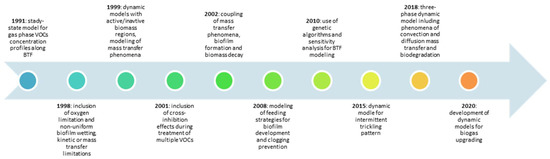
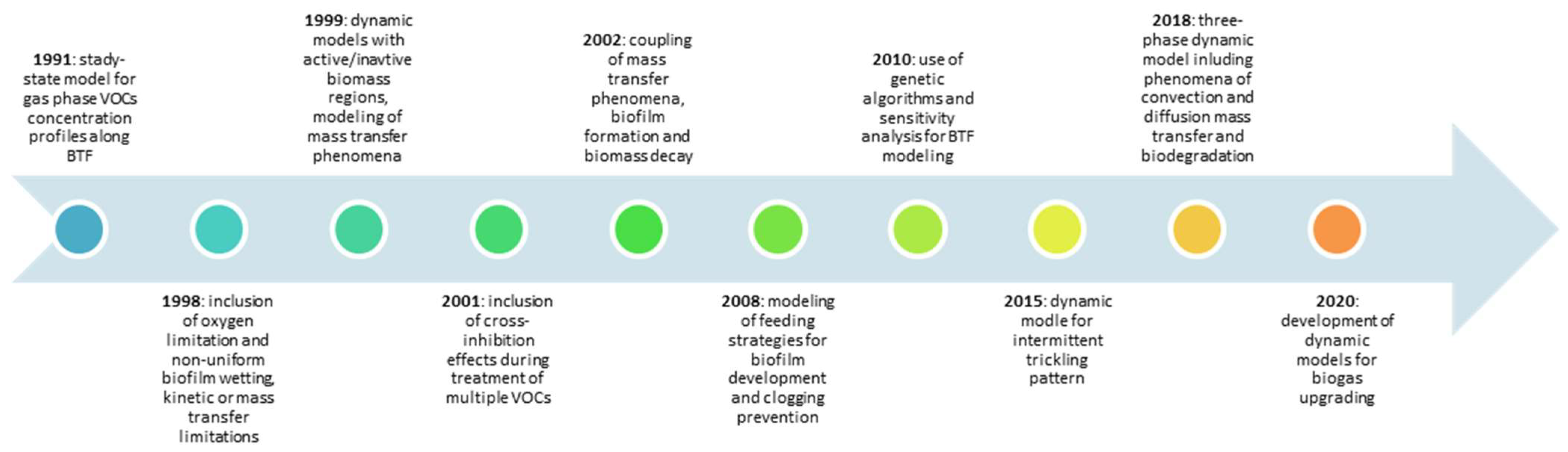

Publisher’s Note: MDPI stays neutral with regard to jurisdictional claims in published maps and institutional affiliations. |
© 2022 by the author. Licensee MDPI, Basel, Switzerland. This article is an open access article distributed under the terms and conditions of the Creative Commons Attribution (CC BY) license (https://creativecommons.org/licenses/by/4.0/).