


Highlights
What are the main findings?
- •
- A realistic rectal demonstration model was developed to visualize rectal foam administration and identify handling errors that are otherwise difficult to detect in routine pediatric care.
- •
- Handling errors occurred frequently in adolescent patients; in 15/19 administrations, at least one high-risk error was observed, with releasing the pump dome too quickly being the most common error.
What are the implications of the main findings?
- •
- The demonstration model can be integrated into pediatric routine care to identify and address clinically relevant handling errors during counseling.
- •
- Training with the model may help adolescent patients practice correct rectal foam administration and thereby improve drug effectiveness and patient safety.
Abstract
Background/Objectives: Inflammatory bowel disease (IBD) may require topical rectal treatment for distal colonic inflammation. Rectal foams or rectal enemas can reach deeper bowel sections but are complex to administer, especially for pediatric patients with IBD. Furthermore, it is a challenge to visualize this administration process in a structured manner. We aimed to design a rectal demonstration model to enable the visualization of rectal foam administration and to assess the clinical risk potentially associated with detectable errors. Methods: A rectal demonstration model was developed, handling errors were defined, and their clinical risk was rated. The model was tested for rectal foam administration by 19 adolescent patients (aged 12–18 years). Results: A total of 12 observable administration steps, including their clinical risk, were defined by an expert panel of physicians and pharmacists. Seven handling errors were rated with a high clinical risk, such as “Not shaking the spray can at all before administration”. In demonstrations by adolescent patients, a median of three (Q25/Q75; 2/4.5; min/max 1/7) handling errors were identified. The most frequent error was releasing the pump dome too quickly after pushing down (11/19, 58%). At least one error with high clinical risk (score: 5–6) was identified in 15/19 (79%) of patients’ administrations. Conclusions: The developed demonstration model facilitates the visualization of handling errors in rectal foam administration that would otherwise not be accessible in routine care. A high rate of clinically relevant handling errors was identified in adolescents. Prospectively, the model can be used to practice rectal foam administration and address patient handling errors to increase patient safety.
1. Introduction
Inflammatory bowel diseases (IBDs) such as Crohn’s disease and ulcerative colitis have a considerable incidence. For example, the incidence in adults is up to 15.9/100,000 person-years in the United States [1] and up to 74.0/100,000 in Europe [2], and the incidence for children and adolescents is up to 7.4/100,000 in the United States and up to 12.4/100,000 in some areas of Europe [3]. International guidelines recommend, among others, rectal dosage forms such as rectal foams for the treatment of IBDs as the first-line therapy, especially for distal ulcerative colitis [4,5,6,7,8,9]. For children and adolescents, suppositories are recommended as rectal therapy for mild to moderate IBDs, as data on rectal foam administration to children and adolescents are limited [5,10]. Rectal foams or rectal enemas reach deeper sections of the bowel, ensuring effectiveness by reaching the desired sites of action [11]. This may explain why gastroenterological specialists prescribe them off-label to pediatric patients. Nevertheless, it is already known from other complex dosage forms such as inhalation devices or rectal tubes that their administration is prone to handling errors [12,13,14,15,16]. Therefore, we hypothesized that rectal foam administration is also error-prone due to the complexity of this dosage form, especially if the pediatric patients administer the rectal foam themselves. In addition, rectal foam administration may be embarrassing for pediatric patients [17,18], so we assume that potential administration problems may not be addressed by the patients themselves. We also hypothesized that demonstration models could make those handling errors accessible, as this has been shown for other dosage forms [15,16,19]. However, existing rectal demonstration models, for example, for proctological examinations, are often not suitable to realistically simulate rectal drug administration.
Against this background, rectal foam administration represents a particular challenge for pediatric patients, especially when they are expected to self-administer the medication. Self-administration may be feasible from around 8 years of age, whereas younger children typically require assistance from their caregivers. Handling errors may remain unnoticed in routine care because the administration process is private, difficult to observe, and potentially embarrassing for patients to discuss. Therefore, our aim was to develop a realistic rectal demonstration model that allows pediatric patients to show how they administer rectal foams in a protected counseling setting. The model was intended to support the identification of individual handling difficulties, their frequency, and their potential clinical relevance. We explored the demonstration model under real-world conditions in pediatric patients with IBDs to assess whether it could be used in routine care.
2. Materials and Methods
2.1. Setting and Participants
After approval by the responsible ethics committee, we conducted an observational exploratory pilot study in the pediatric gastroenterological outpatient clinic of a university hospital in Saxony, Germany. We invited pediatric patients to participate in the study who were aged 8 to 18 years, had a diagnosis of IBD, and administered their rectal foam without parental support. This age range was chosen as children aged younger than 8 years usually do not administer the rectal foam themselves but receive help from their caregivers. Patients were required to have sufficient language skills, clinical constitution, and intellectual ability to perform the rectal foam administration on a demonstration model. Patients’ participation was voluntary, and written informed consent was obtained from all parents and participating patients aged ≥14 years. Data collection took place in a quiet environment to which unauthorized persons did not have access.
2.2. Development of the Rectal Model to Assess Errors in Drug Administration
2.2.1. Characteristics of the Model
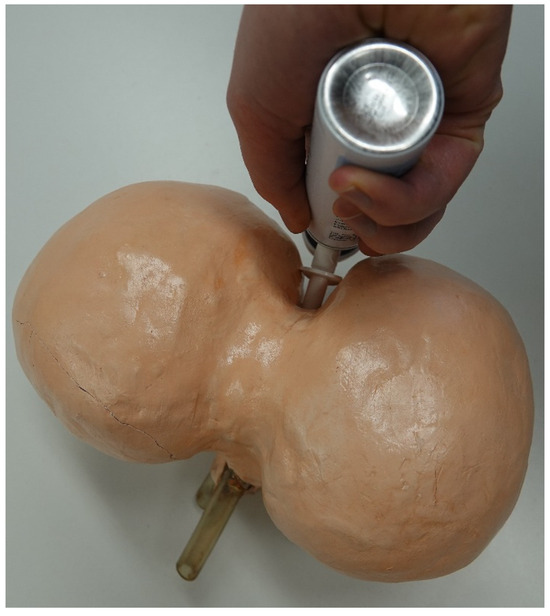
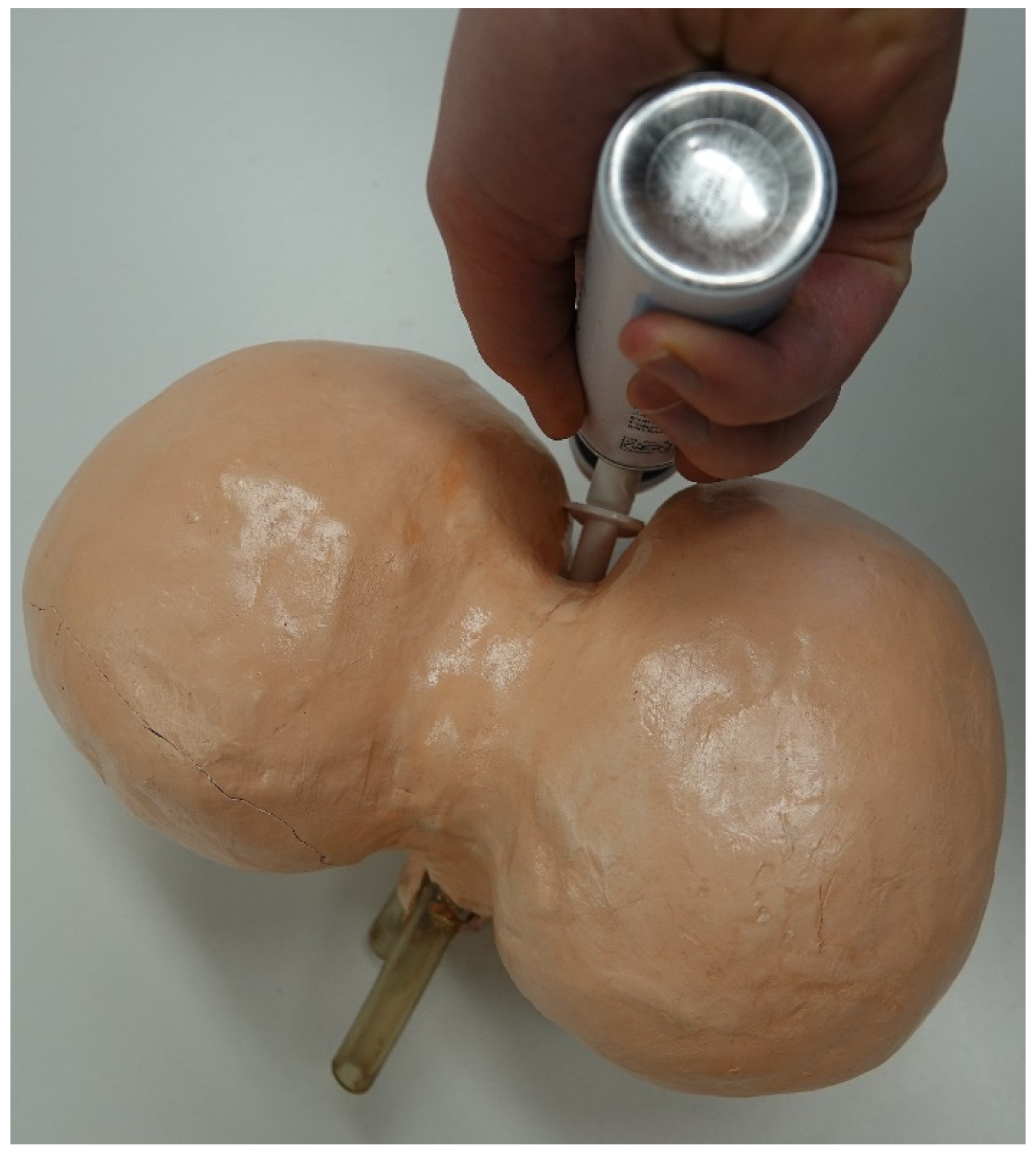
We designed a realistic rectal demonstration model for rectal foam administration, especially for pediatric patients. It represents a slightly bent-forward buttock, as rectal dosage forms are often administered in a standing or lying position (Figure 1). Small tubes lead to the front of the model so that it is possible to observe whether and how the administered drug comes out of the can and thus examine whether the pump dome was released correctly. The model was made from two cardboard tubes representing the legs and modeling clay in which two small tubes were embedded (rectal and vaginal opening); it was then painted with acrylic paint. The steps of the administration process were defined according to the Patient Information Leaflets (PILs) and Summaries of Product Characteristics (SmPCs) of rectal foams [20,21,22,23,24,25]. A structured observation sheet was developed to ensure consistent and standardized data collection during the demonstration process. Three clinical pharmacists tested whether each step could be reproduced with the demonstration model: Each of the pharmacists administered the rectal foam to the demonstration model while explaining what they were doing. Each procedure was documented using the developed observation sheet.
Figure 1.
Newly developed rectal demonstration model. It represents a slightly forward-bent buttock, which corresponds to the correct body position to administer the rectal foam. Furthermore, it enables the visualization of how a rectal foam is administered. Small tubes lead to the front of the model so that it can be observed whether and how the administered drug emerges from the can. Pictures from each side of the model are shown in Figures S1–S3.
2.2.2. Complementary Questionnaire to the Demonstration Model
As not all steps that are necessary for correct rectal foam administration are accessible with the demonstration model, such as toilet use, we also developed a short questionnaire to complement the demonstration model.
2.2.3. Definition and Rating of Handling Errors in Drug Administration
Deviations from the process according to the PILs and SmPCs were classified as handling errors in drug administration. An expert panel consisting of three pediatricians from the gastroenterological team and four clinical pharmacists categorized the handling errors in rectal foam administration according to their potential clinical risk of causing harm to patients. The potential clinical risk was rated on a scale ranging from 1 (lowest risk) to 6 (highest risk), indicating the probability to which an error in drug administration potentially leads to a negative impact on effectiveness or on patient safety. The resulting clinical risk score reflects the median of the ratings of the experts.
2.3. Data Assessment
2.3.1. Demonstration by Participants
The participating pediatric patients were asked to administer a rectal foam to the rectal demonstration model while a pharmacist from the study team observed. Along with the demonstration, they were asked to explain their actions in order not to miss anything. The observation and the participant’s explanations were documented on the observation sheet. In addition, the pharmacist documented the participant’s responses to the complementary questionnaire.
2.3.2. Sociodemographic Data
We additionally collected the diagnosis of IBD, onset of the disease, current prescribed medication, and sociodemographic data from the medical records.
3. Results
3.1. Study Population
Of 23 patients who were treated with a rectal foam, a total of 19 adolescent patients (83%) agreed to show the administration of their prescribed rectal foam on a demonstration model. Reasons for declining study participation were autism spectrum disorder (one patient), high burden due to other studies (one patient), or no motivation (two patients). Most patients had already been administering rectal foams for a longer period before study participation; specifically, 18 patients (95%) had prior experience with rectal foam administration, and one patient had received a rectal foam prescription for the first time. Detailed patient characteristics are summarized in Table 1.
Table 1.
Patients’ characteristics.
3.2. Development of the Rectal Model
In the development of the demonstration model, 12 observable administration steps were defined:
- Push the applicator firmly onto the spout of the spray can;
- Shake the spray can before administration;
- Twist the dome on top of the spray can;
- Turn the can upside down;
- Hold the can with the pump dome pointing down during the entire period of administration;
- Insert the applicator into the rectum;
- Push the pump dome down fully after insertion;
- Release the pump dome slowly after pushing down;
- Take out the applicator from the rectum;
- Remove the applicator from the can;
- Dispose of the applicator in the plastic bag provided;
- Turn back the pump dome.If an administration process requires two single doses, the number of administration steps increases to 15. For a second dose, the following steps are to be performed directly after step 8:
- Leave the applicator in the rectum;
- Push the pump dome down fully;
- Release the pump dome slowly after pushing down.
The errors in drug administration that occur if the steps are not carried out correctly were defined by the expert panel and are listed in Table 2. Pictures of each step are shown in Figures S4–S14.Table 2. Handling errors in the administration of rectal foam by adolescent patients [N = 19]. The predefined errors in drug administration are described in the order in which they were performed during the demonstration.
3.3. Complementary Questionnaire to the Demonstration Model
In addition, four administration steps that are not accessible with the demonstration model were identified:
- Emptying the bowels before administration;
- Washing hands before and after the administration;
- Assuming correct body position for administration;
- Storing the rectal foam.
To assess those items, a complementary questionnaire was developed.
3.4. Clinical Relevance Rated by Expert Panel
The expert panel rated seven handling errors in drug administration with a high clinical risk (score: 5–6), e.g., “Dome on top of the spray can not twisted” (Table 2). Administration steps such as “Applicator not disposed of in the plastic bag provided” were rated with a low clinical risk (score: 1–2).
3.5. Types and Frequencies of Handling Errors in Rectal Foam Administration
Three (median; Q25/Q75; 2/4.5; min/max 1/7) handling errors were identified in the demonstrations of rectal foam administration by adolescent patients. The most frequent handling error observed in 11/19 (58%) patients was “Pump dome released too quickly after pushing down” (Table 2). This handling error belonged to the highest clinical risk category according to the expert panel. In 15/19 (79%) demonstration processes, at least one error with high clinical risk occurred (Table 2). In the complementary questionnaire, 18/19 (95%) adolescent patients reported emptying the bowels before rectal foam administration, and 1/19 (5%) reported emptying the bowels after the administration. Table 3 shows the answers given in the complementary questionnaire about emptying the bowels, washing hands, information about storage, and the body position.
Table 3.
Complementary questionnaire to the demonstration [N = 19].
4. Discussion
The developed rectal demonstration model enables the realistic visualization of rectal foam administration, facilitating the identification of handling errors that would otherwise not be visible in routine care. At least one handling error with high clinical risk was identified during drug administration by almost all adolescent patients. Because of its simple structure, the rectal demonstration model can be well integrated into routine care to identify errors associated with the administration of rectal dosage forms.
4.1. Benefits of the Demonstration Model
The developed realistic rectal demonstration model has been shown to be appropriate for visualizing rectal foam administration. An important difference compared with other already existing rectal models is that these models are mainly designed for examination purposes, for example, to palpate pathological findings such as colorectal tumors, and do not allow the administration of rectal dosage forms. In contrast, our newly developed demonstration model makes it possible to observe the administered drug emerging from the model, thereby verifying whether administration has been performed successfully. By means of a demonstration model, non-visible administration situations in routine care can be made accessible to healthcare professionals, caregivers, and patients. By using a demonstration model for the administration of drugs, error-prone steps can be identified, even if they are not perceived by the administering persons themselves [16]. Demonstration models have already been developed for other complex dosage forms to observe administration processes and detect errors in drug administration. To give some examples, the benefit of demonstration models has been shown for the administration of rectal and buccal emergency medication in pediatric patients with seizures, auto-injectors to be used in case of anaphylaxis, or to train medical professionals for emergencies [16,19,26]. The model we developed enables real-life observation of rectal foam administration and facilitates the identification of handling errors. The high frequency of handling errors underlines the high need for practical counseling. This is particularly relevant in adolescent patients, because they may experience rectal administration as embarrassing [17,18], and may not ask for support if they experience problems with their medication. Also, adolescents may experience their medication as intrusive or difficult to reconcile with their daily lives, for example, when treatment has to be planned around school activities, meeting up with friends, or school trips. Although the inclusion criteria allowed for pediatric patients aged 8 years and older, no eligible patients younger than 12 years received treatment with rectal foam. Consequently, the results of the model evaluation are based on participants aged 12 to 18 years, representing an adolescent cohort. Yet, the demonstration model may also be useful for counseling on rectal foam administration in younger children. For children whose rectal foam administration is primarily performed by caregivers, the model provides an opportunity to practice the procedure in a safe environment, thereby reducing potential concerns about causing harm to the child. The model is not limited to pediatric care and may be applicable to adult patients using rectal dosage forms. However, depending on the type and extent of the IBD, alternative dosage forms are also available for adults, resulting in a comparatively less prominent role for rectal foam [4,5,6,8,9]. However, this study focused on pediatric patients in whom rectal foam administration may be particularly challenging, while evidence on rectal foam administration remains limited.
4.2. Handling Errors in Rectal Foam Administration
In our study, at least one high-risk handling error was observed in four out of five adolescent patients during rectal foam administration. The most common error in more than 50% of demonstrations was releasing the pump dome too quickly, immediately after pushing down, although this must be done slowly to deliver the entire amount of drug into the patient’s body. Using our demonstration model, it was possible to visualize the amount of foam coming out, indicating incorrect drug administration, as the amount of foam was reduced compared to correct drug usage. This step would not be visible in routine care, which underlines the benefits of the model, as the direct consequences of incorrect drug administration become visible. Also, shaking the spray can was forgotten by more than 50% of participants, although this is an important step to ensure that the active ingredients and excipients are thoroughly mixed to obtain a stable foam with an even distribution of active ingredients.
4.3. Unobservable Steps in Rectal Foam Administration
Demonstration models have limitations as not all administration steps may be observable, because they are not realistically accessible. Yet by means of our designed complementary questionnaire, information about non-observable steps such as emptying the bowels before administration or body position for administration could be well assessed. To give an example, only 42% of the patients emptied the bowels before administration. However, emptying the bowels before administration is important to ensure drug effectiveness, because defecation may be triggered by the increased pressure on the rectal sphincter caused by the foam volume [27], and the drug also needs space to reach the correct site of action. Thus, the complementary questionnaire is an important means to identify error-prone process steps that should be addressed when patients are advised on the administration of rectal foams.
4.4. Benefits of Early Active Involvement of Pediatrics
Various studies showed the benefit of early active involvement of pediatric patients in their drug therapy and the associated drug administration [28,29]. For example, pediatric patients with IBDs who were counseled about their medications and associated adverse drug reactions were more adherent [30]. It has also been reported that knowledge about the medications used to treat IBDs resulted in children and, especially, adolescents having a better start to self-managing their disease and the associated management of drug therapy [29]. As our study showed that handling errors in rectal foam administration were frequent in adolescent patients, their involvement in the administration process should be encouraged at an early stage. This is particularly relevant because pediatric patients may not always accept prescribed therapy readily and may therefore refuse rectal administration because of shame, discomfort, or the perceived effort required for correct use [17,18]. In addition, rectal foam administration can interfere with everyday routines because patients need sufficient time, privacy, and the opportunity to remain lying down for a while after administration. Ideally, early involvement should be facilitated by using child-friendly materials such as the developed demonstration model. When developing our model, we therefore made sure that it is easy to reproduce and simple to use in order to facilitate straightforward integration into the counseling processes of pediatric patients in routine care.
5. Conclusions
Our exploratory study indicates that the developed rectal demonstration model of a buttock bent forward enables a realistic visualization of the complex process of rectal foam administration. The demonstration model is also useful for identifying handling errors in drug administration that are otherwise not accessible in routine care. Therefore, the demonstration model could also be useful for demonstrating correct drug handling and educating adolescent patients, thus contributing to increased drug safety. Future studies should focus on whether the use of the rectal demonstration model in patient training can lead to a reduction in handling errors in drug administration. In addition, future research could examine whether the demonstration model can be adapted to other rectal forms, such as suppositories or enemas, to support counseling beyond rectal foam administration. The model may also be useful for younger children, although counseling would primarily need to address the caregivers in this age group. Although the current model was deliberately designed to be analogue and readily reproducible, further technical development, such as the development of a 3D-printed demonstration model, could be considered.
6. Strengths and Limitations
We developed an easily replicable demonstration model for rectal foam administration that can be used to identify drug handling errors in pediatric routine care. Limitations of this study include that pediatric patients were included in only one outpatient clinic in Saxony, Germany. Nevertheless, it is a specialized center that covers a wide area of Saxony and neighboring federal states. Furthermore, all participants in our study were adolescents aged 12 years or older; therefore, no conclusions can be drawn for younger patients.
Supplementary Materials
The following supporting information can be downloaded at: https://www.mdpi.com/article/10.3390/children13081119/s1. Figure S1: Facing the rectum (and optional the vagina opening). Figure S2: Facing the side of the demonstration model. Figure S3: Facing the tubes (rectal and vaginal openings). Figure S4: Push the applicator firmly onto the spout of the spray can. Figure S5: Shake the spray can before administration. Figure S6: Twist the dome on top of the spray can. Figure S7: Turn can upside down. Figure S8: Hold can with pump dome pointing down during the entire period of administration. Figure S9: Insert the applicator into the rectum. Figure S10: Push the pump dome down fully after insertion. Figure S11: Release the pump dome slowly after pushing down. Figure S12: Take out the applicator from the rectum. Figure S13: Remove the applicator from the can. Figure S14: Dispose of the applicator in the plastic bag provided. Figure S15: Turn back pump dome.
Author Contributions
Conceptualization, M.R., G.F., W.K., A.B., T.B. and M.P.N.; methodology, M.R., G.F., A.B., T.B. and M.P.N.; formal analysis, M.R. and M.P.N.; investigation, M.R. and M.P.N.; resources, W.K., G.F. and T.B.; writing—original draft preparation, M.R. and M.P.N.; writing—review and editing, G.F., W.K., A.B. and T.B.; supervision, T.B. and M.P.N.; project administration, T.B. and M.P.N. All authors have read and agreed to the published version of the manuscript.
Funding
The authors declare that no funds, grants, or other support were received during the preparation of this manuscript. Supported by the Open Access Publishing Fund of Leipzig University.
Institutional Review Board Statement
The study was conducted in accordance with the Declaration of Helsinki and approved by the Ethics Committee of the Medical Faculty of Leipzig University, Germany (Ethics approval number: 411/18-ek, approved 22 November 2018).
Informed Consent Statement
Patients’ participation was voluntary and written informed consent was obtained from all parents and participating patients aged ≥14 years.
Data Availability Statement
The datasets generated during and/or analyzed during the current study are not publicly available due to the privacy protection requirements of the study participants but are available from the corresponding author on reasonable request.
Acknowledgments
We thank Lisa Marie Kiesel, Ruth Melinda Müller, and the members of the gastroenterological team for categorizing the errors in drug administration according to their potential clinical risk and for their extraordinary dedication during the data assessment process.
Conflicts of Interest
Astrid Bertsche reports grants from UCB Pharma GmbH and honoraria for speaking engagements from Biogen GmbH, Desitin Arzneimittel GmbH, Eisai GmbH, GW Pharma GmbH, Jazz Pharmaceuticals GmbH, Neuraxpharm GmbH, Shire/Takeda GmbH, UCB Pharma GmbH, and ViroPharma GmbH. The other authors declare they have no conflicts of interest.
Abbreviations
The following abbreviations are used in this manuscript:
| IBD | Inflammatory Bowel Disease |
| PIL | Patient Information Leaflet |
| SmPC | Summaries of Product Characteristics |
References
- Lewis, J.D.; Parlett, L.E.; Jonsson Funk, M.L.; Brensinger, C.; Pate, V.; Wu, Q.; Dawwas, G.K.; Weiss, A.; Constant, B.D.; McCauley, M.; et al. Incidence, Prevalence, and Racial and Ethnic Distribution of Inflammatory Bowel Disease in the United States. Gastroenterology 2023, 165, 1197–1205. [Google Scholar] [CrossRef] [Scilit] [PubMed]
- Zhao, M.; Gönczi, L.; Lakatos, P.L.; Burisch, J. The Burden of Inflammatory Bowel Disease in Europe in 2020. J. Crohn’s Colitis 2021, 15, 1573–1587. [Google Scholar] [CrossRef] [Scilit] [PubMed]
- Wang, Y.; Pan, C.W.; Huang, Y.; Zheng, X.; Li, S.; He, M.; Hashash, J.G.; Farraye, F.A.; Ehrlich, A.C. Global Epidemiology and Geographic Variations of Pediatric-Onset Inflammatory Bowel Disease: A Comprehensive Analysis of the Global Burden of Disease Study 1990 to 2019. Inflamm. Bowel Dis. 2025, 31, 376–385. [Google Scholar] [CrossRef] [Scilit] [PubMed]
- Lichtenstein, G.R.; Loftus, E.V.; Afzali, A.; Long, M.D.; Barnes, E.L.; Isaacs, K.L.; Ha, C.Y. ACG Clinical Guideline: Management of Crohn’s Disease in Adults. Am. J. Gastroenterol. 2025, 120, 1225–1264. [Google Scholar] [CrossRef] [Scilit] [PubMed]
- Rubin, D.T.; Ananthakrishnan, A.N.; Siegel, C.A.; Barnes, E.L.; Long, M.D. ACG Clinical Guideline Update: Ulcerative Colitis in Adults. Am. J. Gastroenterol. 2025, 120, 1187–1224. [Google Scholar] [CrossRef] [Scilit] [PubMed]
- Blumenstein, I.; Schnoy, E.; Atreya, R.; Bettenworth, D.; de Laffolie, J.; Kaltz, B.; Kienle, P.; Langhorst, J.; Maaser, C.; Ockenga, J.; et al. Aktualisierte S3-Leitlinie Colitis ulcerosa (Version 7.0). Z. Gastroenterol. 2026, 64, 689–827. [Google Scholar] [CrossRef] [Scilit] [PubMed]
- Turner, D.; Ruemmele, F.M.; Orlanski-Meyer, E.; Griffiths, A.M.; de Carpi, J.M.; Bronsky, J.; Veres, G.; Aloi, M.; Strisciuglio, C.; Braegger, C.P.; et al. Management of Paediatric Ulcerative Colitis, Part 1: Ambulatory Care-An Evidence-based Guideline From European Crohn’s and Colitis Organization and European Society of Paediatric Gastroenterology. Hepatol. Nutr. J. Pediatr. Gastroenterol. Nutr. 2018, 67, 257–291. [Google Scholar]
- Raine, T.; Bonovas, S.; Burisch, J.; Kucharzik, T.; Adamina, M.; Annese, V.; Bachmann, O.; Bettenworth, D.; Chaparro, M.; Czuber-Dochan, W.; et al. ECCO guidelines on therapeutics in ulcerative colitis: Medical treatment. J. Crohn’s Colitis 2022, 16, 2–17. [Google Scholar] [CrossRef] [Scilit] [PubMed]
- Ko, C.W.; Singh, S.; Feuerstein, J.D.; Falck-Ytter, C.; Falck-Ytter, Y.; Cross, R.K. American Gastroenterological Association Institute Clinical Guidelines Committee. AGA Clinical practice guidelines on the management of mild-to-moderate ulcerative colitis. Gastroenterology 2019, 156, 748–764. [Google Scholar] [PubMed]
- Seibold, F.; Fournier, N.; Beglinger, C.; Mottet, C.; Pittet, V.; Rogler, G. Swiss IBD Cohort Study Group. Topical therapy is underused in patients with ulcerative colitis. J. Crohn’s Colitis 2014, 8, 56–63. [Google Scholar]
- Sandborn, W.J.; Bosworth, B.; Zakko, S.; Gordon, G.L.; Clemmons, D.R.; Golden, P.L.; Rolleri, R.L.; Yu, J.; Barrett, A.C.; Bortey, E.; et al. Budesonide Foam Induces Remission in Patients with Mild to Moderate Ulcerative Proctitis and Ulcerative Proctosigmoiditis. Gastroenterology 2015, 148, 740–750. [Google Scholar] [CrossRef] [Scilit] [PubMed]
- Sanchis, J.; Gich, I.; Pedersen, S. Aerosol Drug Management Improvement Team (ADMIT). Systematic Review of Errors in Inhaler Use: Has Patient Technique Improved over Time? Chest 2016, 150, 394–406. [Google Scholar] [PubMed]
- Neininger, M.P.; Kaune, A.; Musiol, J.; Kiess, W.; Bertsche, A.; Prenzel, F.; Bertsche, T. Handling Errors in the Use of Inhalation Devices. Inhalation Technique Skills and Knowledge in Pediatric Nurses. J. Nurs. Care Qual. 2021, 37, 180–187. [Google Scholar]
- Dumeier, H.K.; Neininger, M.P.; Kaune, A.; Schumacher, P.M.; Merkenschlager, A.; Kiess, W.; Bernhard, M.K.; Bertsche, T.; Bertsche, A. Seizure management by preschool teachers: A training concept focusing on practical skills. Seizure 2017, 50, 38–42. [Google Scholar] [CrossRef] [Scilit] [PubMed]
- Schumacher, P.M.; Kaune, A.; Merkenschlager, A.; Bernhard, M.K.; Kiess, W.; Neininger, M.P.; Bertsche, A.; Bertsche, T. Optimizing parents’ performance in anticonvulsant rescue medication administration. Epilepsy Behav. 2018, 84, 37–43. [Google Scholar] [CrossRef] [Scilit] [PubMed]
- Kaune, A.; Schumacher, P.M.; Hoppe, S.C.; Syrbe, S.; Bernhard, M.K.; Frontini, R.; Merkenschlager, A.; Kiess, W.; Neininger, M.P.; Bertsche, A.; et al. Administration of anticonvulsive rescue medication in children—Disprepancies between parents’ self-reports and limited practical performance. Eur. J. Pediatr. 2016, 175, 1139–1146. [Google Scholar] [CrossRef] [Scilit] [PubMed]
- Woltermann, S.; Jeschke, S.; Herziger, B.; Müller, R.M.; Kiess, W.; Bertsche, T.; Bertsche, A.; Neininger, M.P. Anticonvulsant long-term and rescue medication: The children’s perspective. Eur. J. Paediatr. Neurol. 2020, 28, 180–185. [Google Scholar] [CrossRef] [Scilit] [PubMed]
- Rothen, J.P.; Moerlen, F.; von Büren, C.; Allemann, S.; Arnet, I. Rectal treatment in ulcerative colitis; a qualitative study exploring reasons for under utilisation. Front. Health Serv. 2025, 5, 1654520. [Google Scholar] [CrossRef] [Scilit] [PubMed]
- Dumeier, H.K.; Richter, L.A.; Neininger, M.P.; Prenzel, F.; Kiess, W.; Bertsche, A.; Bertsche, T. Knowledge of allergies and performance in epinephrine auto-injector use: A controlled intervention in preschool teachers. Eur. J. Pediatr. 2018, 177, 575–581. [Google Scholar] [CrossRef] [Scilit] [PubMed]
- Dr. Falk Pharma GmbH. Salofalk 1g/Actuation Rectal Foam. In Summary of Product Characteristics; Dr. Falk Pharma GmbH: Freiburg, Germany, 2023. [Google Scholar]
- Dr. Falk Pharma GmbH. Salofalk 1g/Actuation Rectal Foam. In Patient Information Leaflet; Dr. Falk Pharma GmbH: Freiburg, Germany, 2023. [Google Scholar]
- Dr. Falk Pharma GmbH. Budenfalk 2mg/dose Rectal Foam. In Summary of Product Characteristics; Dr. Falk Pharma GmbH: Freiburg, Germany, 2022. [Google Scholar]
- Dr. Falk Pharma GmbH. Budenofalk 2mg/dose Rectal Foam. In Patient Information Leaflet; Dr. Falk Pharma GmbH: Freiburg, Germany, 2021. [Google Scholar]
- Recordati Pharma GmbH. Claversal 1g Rectal Foam. In Summary of Product Characteristics; Recordati Pharma GmbH: Ulm, Germany, 2023. [Google Scholar]
- Recordati Pharma GmbH. Leaflet Claversal 1g Rectal Foam. In Patient Information Leaflet; Recordati Pharma GmbH: Ulm, Germany, 2023. [Google Scholar]
- Yamazaki, J.; Yoshia, M.; Mizunuma, H. Experimental analyses of the retinal and subretinal haemorrhages accompanied by shaken baby syndrome/abusive head trauma using a dummy doll. Injury 2014, 45, 1196–1206. [Google Scholar] [CrossRef] [Scilit] [PubMed]
- Macygin, K.M.C.; Lee, J.; Lam, A.; Carlstedt, R.; Macy, B. Safe and effective administration of lactulose retention enema in the ED using specialized rectal medication administration catheter. Am. J. Emerg. Med. 2018, 36, 521–522. [Google Scholar] [CrossRef] [Scilit] [PubMed]
- Lim, J.K.; Lee, Y.J.; Park, J.H. Medication-Related Knowledge and Medication Adherence in Pediatric and Adolescent Patients with Inflammatory Bowel Disease. J. Korean Med. Sci. 2020, 35, e92. [Google Scholar] [CrossRef] [Scilit] [PubMed]
- Fishman, L.N.; Houtman, D.; Van Groningen, J.; Arnold, J.; Ziniel, S. Medication Knowledge: An Initial Step in Self-management for Youth with Inflammatory Bowel Disease. J. Pediatr. Gastroenterol. Nutr. 2011, 53, 641–645. [Google Scholar] [PubMed]
- Jeganathan, J.; Lee, C.H.; Rahme, A.; Tiao, D.K.; Weston, C.; Dutt, S.; Magoffin, A.; Kwan, V.; Alswaifi, A.; Katelaris, P.H.; et al. Pediatric-to-adult Transition and Medication Adherence in Patients with Inflammatory Bowel Disease. Inflamm. Bowel Dis. 2017, 23, 1065–1070. [Google Scholar] [CrossRef] [Scilit] [PubMed]

Disclaimer/Publisher’s Note: The statements, opinions and data contained in all publications are solely those of the individual author(s) and contributor(s) and not of MDPI and/or the editor(s). MDPI and/or the editor(s) disclaim responsibility for any injury to people or property resulting from any ideas, methods, instructions or products referred to in the content. |
© 2026 by the authors. Licensee MDPI, Basel, Switzerland. This article is an open access article distributed under the terms and conditions of the Creative Commons Attribution (CC BY) license.