


Highlights
What are the main findings?
- PROMs are not routinely used in paediatric Haematopoietic Stem Cell Transplant (HSCT) to inform clinical practice.
- There is limited understanding of patient symptom trajectories and symptom experiences during acute HSCT admission.
- Paediatric HSCT recipients with the highest symptom burden are the least represented in current evidence.
What are the implications of the main findings?
- There is a call for the integration of PROMs into routine paediatric HSCT care to establish their efficacy in supporting symptom assessment and management and improving clinical outcomes.
- Continued investigation into symptom trajectories, predictive patient factors, and intervention efficacy across the transplant continuum is essential for advancing symptom-focused care in paediatric HSCT.
- There is a critical need for vigilant nursing advocacy and family partnership to ensure accurate symptom identification and clinical practice guideline-based management.
Abstract
Background/Objectives: Children and adolescents undergoing Haematopoietic Stem Cell Transplantation (HSCT) experience complex symptoms, often under-reported by patients and undetected by clinicians, which cause distress. Patient-Reported Outcome Measures (PROMs) offer a way to capture symptom experiences directly from patients, with the potential of supporting effective symptom assessment and management, yet their routine use in paediatric HSCT remains unclear. This systematic review synthesises evidence on PROMs used during inpatient paediatric HSCT care, examining their role in symptom monitoring and clinical decision-making, and identifying gaps to strengthen person-centred, developmentally appropriate care. Methods: We searched the MEDLINE, CINAHL, Embase, APA PsychINFO, and Cochrane Library in October 2024 for studies published in English between 2014 and 2025 describing the use of PROMs during inpatient paediatric (0–18 years) HSCT admission (up to Day +100 post HSCT). In March 2025, prior to data extraction, we added additional studies published by authors of included studies. Two-stage independent screening and data extraction were conducted, and the Quality Assessment with Diverse Studies (QuADS) tool was used to appraise each study. Narrative syntheses informed by Symptom Management Theory were used to compare PROM use, clinical integration, and reported impacts. Results: Seventeen studies met inclusion criteria, describing 20 PROMs used during paediatric HSCT hospitalisation. PROMs captured a wide range of physical and psychological symptoms, with pain and nausea most frequently reported. While PROMs reportedly improve symptom detection and communication, integration into routine paediatric HSCT clinical care was rare; and only two studies systematically used PROMs data to guide symptom management. Evidence of PROMs-driven improvements in HSCT clinical outcomes was scarce, and longitudinal data on symptom trajectories were limited. Conclusions: PROMs are not routinely used to inform clinical practice in paediatric HSCT, and current evidence provides only a partial understanding of symptom trajectories and lived symptom experiences during the paediatric acute transplant admission. To realise the full potential of PROMs in enhancing symptom assessment and management, systematic PROMs integration into clinical workflows is required, supported by electronic health record integration, clinician training, and longitudinal research designs that capture symptom evolution across the transplant continuum.
1. Introduction
Child patients with cancer and other non-malignant conditions undergoing Haematopoietic Stem Cell Transplantation (HSCT) face a myriad of challenges, including complex symptomatology that can disrupt their daily lives and significantly impact their quality of life [1,2]. While some symptoms are anticipated, others may arise unexpectedly and go unreported by patients and undetected by clinicians, leading to inadequate management and long-term repercussions [3].
Symptom management in this population is inherently complex. It is shaped not only by the physiological burden of treatment but also by the child’s or adolescent’s capacity to recognise and communicate their symptoms, and by the interplay between their experience and that of their parents or caregivers [4]. Effective symptom management begins with symptom recognition, where accurate identification and understanding of a patient’s experience provides the foundation for the appropriate clinical response [5].
Patient-Reported Outcome Measures (PROMs) are used in research and clinical practice to capture outcomes as directly experienced from the patient’s perspective. They can be used as symptom screening tools to include the voice of the child or young person in symptom assessment [6]. PROMS are especially valuable for detecting and assessing symptoms that are experienced by, and thus best known to, the patient and may fluctuate in ways not otherwise visible in clinical charts or records. These tools typically screen for both physical and psychological symptoms and allow the patient to rate the presence and severity of symptoms through age-appropriate questions and scales [7]. Depending on the developmental stage or clinical condition, PROMs may be completed by the child or adolescent themselves, by a parent or carer acting as a proxy respondent, or through co-completion by both the child and parent [8,9].
The use of PROMs in adult HSCT demonstrates feasibility and acceptability and several clinical benefits, including reduced peak symptom burden, improved health-related quality of life (HRQoL), and improved patient–clinician communication and mental functioning [10,11,12]. Other studies conducted in post-transplant care and general paediatric oncology contexts have also demonstrated benefits including enhanced patient–clinician communication and more responsive and person-centred care planning [13,14]. However, the application of PROMs in paediatric contexts presents unique challenges, particularly the need for developmentally appropriate formats, the potential for shared or proxy completion, and the interpretive complexity that can arise when children’s self-reports diverge from parent or clinician assessments [7,8]. Despite the high burden of symptoms in paediatric HSCT, little is understood about the use of PROMs in this context.
Therefore, the aim of this systematic review is to identify the PROMs used during inpatient admission for paediatric HSCT and to evaluate how these tools contribute to the understanding and management of symptom experiences in this unique and vulnerable patient population.
2. Materials and Methods
This review was conducted in accordance with established systematic review methodology, following guidance from the Cochrane Handbook for Systematic Reviews of Interventions [15]. A detailed protocol outlining the objectives, eligibility criteria, and planned methods was prospectively registered with PROSPERO (registration number: CRD420250572124) [16]. Unpublished studies, editorials, letters and conference proceedings were not sought; however, reference lists of eligible studies were manually searched.
Studies were eligible for inclusion if they reported on children and young people (0–18 years), with any malignant or non-malignant condition, receiving HSCT treatment. Specifically, the inclusion of patients that were less than or equal to 100 days post HSCT were sought. Studies had to include the use of PROMs or a standardised assessment tool reported by the patient (or their proxy) in the inpatient setting. There were no restrictions on the types of study design eligible for inclusion.
Studies were excluded if they only reported on adults aged ≥18 years or reported on any treatments other than HSCT. Studies where patients were receiving care in the outpatient setting, where patients were discharged, and those at more than 100 days post HSCT were also excluded.
The search strategy was developed in consultation with a university librarian and was designed to capture literature at the intersection of symptom assessment and paediatric HSCT, with a focus on symptom screening during inpatient admission. To ensure comprehensiveness and validity, the strategy was tested to confirm its ability to retrieve a sample of known eligible studies [3,17,18]. The university librarian subsequently reviewed the search strategy using the Peer Review of Electronic Search Strategies (PRESS) 2015 evidence-based checklist [19]. The search was conducted in five databases: MEDLINE, CINAHL, Embase, APA PsychINFO, and Cochrane Library and limited to English publications and publications between 2014 and 2025 to reflect contemporary research and practice. A combination of free text terms, synonyms and MeSH terms with Boolean operators were used to combine key concepts of patient, assessment, and HSCT. For transparency and reproducibility, the full search strategy is provided in Table A1 of Appendix A.
All studies were uploaded to the Covidence application (2026 web-based SaaS; Veritas Health Innovation Ltd, Melbourne, VIC, Australia), for screening. Duplicates were removed and the eligibility criteria was applied to all titles, abstracts and full text during screening. Given the purpose of this review and the heterogeneity of included study designs, a pragmatic approach to study selection and data handling was adopted. Title and abstract screening were conducted in pairs using a two-reviewer process. To maintain consistency across screening decisions, one primary reviewer (RP) participated in both reviewer pairs, while the second reviewer differed between pairs. Each pair independently screened titles and abstracts against the predetermined eligibility criteria.
Inter-rater reliability was evaluated using Cohen’s kappa (κ), which adjusts for chance agreement. Inter-rater reliability was assessed at title/abstract screening and full-text screening using Cohen’s kappa (κ) statistic, calculated to evaluate the level of agreement beyond chance, and interpreted using the widely cited Landis and Koch scale [20]. This approach aligns with best practice in systematic review methodology and PRISMA guidance, which recommends kappa because it adjusts for chance agreement. Percent agreement was also calculated to provide descriptive context for κ values.
Discrepancies between reviewers were resolved through discussion, and if consensus could not be reached, a third reviewer was consulted to independently check the studies. All votes were blinded during the resolution of any conflicts. This process ensured rigour, transparency, and reproducibility throughout the study selection.
Due to the substantial volume of data extracted across diverse study types, data extraction was undertaken by one reviewer (RP) and subsequently checked for accuracy and completeness by a second reviewer. Discrepancies were resolved through discussion and, where they were unable to be resolved, a third person was consulted. Data extraction was performed using the Covidence application and exported for analysis.
The following data were extracted from included articles:
- Type of study/study design and methodology
- Participant demographics/baseline characteristics including age and location of care
- Type of PROMs used—(e.g., validated, disease or age-specific tool)
- Number and timepoints of data collection via PROMs
- Outcome of PROM use (e.g., for research purposes or to inform clinical care)
- The role/discipline stream of the healthcare professional receiving the PROMs data.
- PROMs scores (where applicable)
- Data describing identification and communication of symptoms.
- Barriers and enablers to the use of PROMs/standardised tools identified by patient, parents/carers, and healthcare professionals.
- Referrals made/impacts on care.
This dual-step verification process was also applied during the quality assessment stage which was conducted using the Quality Assessment with Diverse Studies (QuADS) tool to provide a descriptive assessment of methodological rigour across the included studies. The QuADS tool demonstrates strong reliability and ease of use for application to systematic reviews with mixed or multi-methods health services research [21]. The QuADS tool assesses quality of the body of evidence against 13 items. Assessment of each criterion was made on a scale of 1–4 (0—not at all; 4—completely). Quality assessment was performed independently by one person, using the QuADS tool. A selection of assessments was checked by a second reviewer and any discrepancies in judgement were resolved through discussion. QuADS scores were used to characterise common strengths and limitations of the evidence base but did not inform study inclusion, exclusion, or weighting in the synthesis.
Given the heterogeneity of populations, outcomes, and study designs, findings were synthesised narratively to compare the types of PROMs used, the domains assessed, and their integration into clinical care. The synthesis was informed by Symptom Management Theory (SMT), which provided a conceptual framework and lens for examining how symptoms were perceived, communicated, and managed [22]. Specifically, the components of the SMT, symptom experience, symptom management strategies, and outcomes were used to structure the analysis and interpretation of included studies. Qualitative and descriptive findings were organised around how PROMs captured the symptom experiences of children and young people, how these experiences informed clinical responses (symptom management), and what outcomes were reported. This approach supports a theory-informed understanding of the role of PROMs in paediatric HSCT and helped identify conceptual and practical gaps in the current evidence base. No subgroup analyses were performed.
3. Results
3.1. Overview of Included Studies
This systematic review was conducted in compliance with the Preferred Reporting Items for Systematic reviews and Meta-Analyses (PRISMA) 2020 statement which provides guidance for reporting systematic reviews [23,24]. The full PRISMA 2020 and PRISMA 2020 for abstracts checklists for this review can be found in the Supplementary Materials.
3.1.1. Study Selection
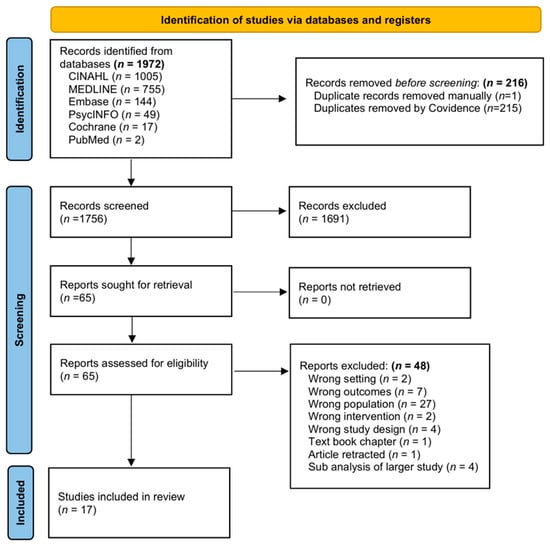
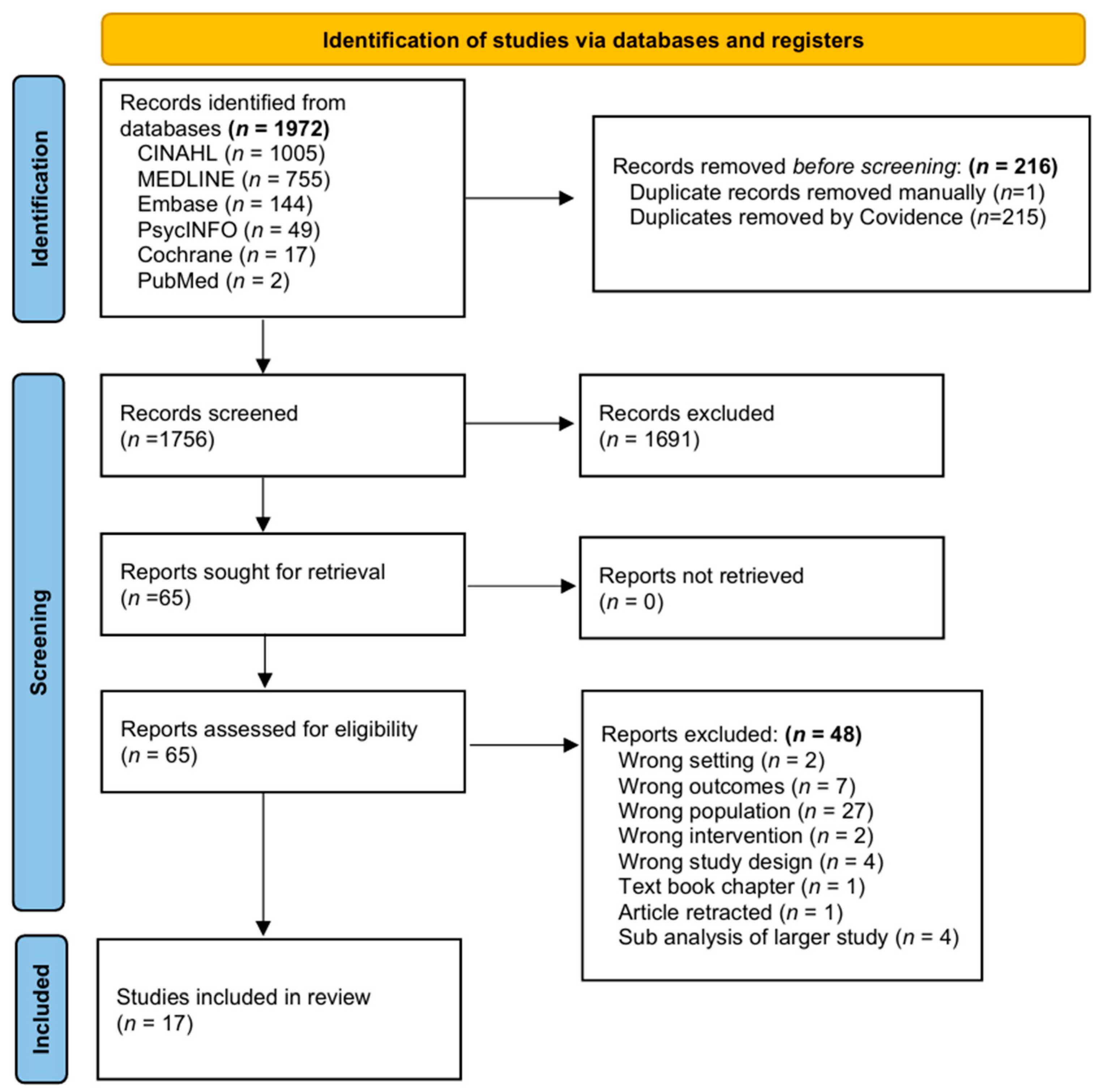
A total of 1972 potentially eligible records were identified through database searching. After removing 216 duplicates, 1756 records remained for title and abstract screening. Of these, 1691 were excluded based on the predefined eligibility criteria. The full text of the remaining 65 articles was assessed for eligibility. Forty-eight articles were excluded, with 17 studies included in the final review. Inter-rater reliability statistics demonstrated acceptable agreement across screening stages. For title and abstract screening, percent agreement ranged from 72.5% to 95.7%, with κ values between 0.353 and 0.442, indicating fair to moderate agreement. For full-text screening, percent agreement ranged from 75% to 77%, with κ values between 0.448 and 0.522, reflecting moderate agreement between reviewer pairs. All discrepancies were resolved through discussion, and a third reviewer was consulted when consensus could not be reached.
The results of the study selection can be viewed in Figure 1, PRISMA flow diagram.
Figure 1.
PRISMA flow diagram of article selection.
3.1.2. Study Characteristics
The seventeen studies were published in 14 different journals; see Table A2 of Appendix B. Characteristics of included studies. Seven studies were conducted in United States of America (USA), four in Canada, three in both USA and Canada, and one study was conducted in Austria, Brazil, and Turkey. The review included eleven prospective cohort studies, five randomised controlled trials and one pilot study. Most (94%) studies included paediatric oncology patients with HSCT participants reported as a subgroup. Participant numbers in individual studies ranged from four to 502 with a total of 2446 paediatric participants represented across all studies, 490 (20%) of whom were paediatric HSCT recipients. Where reported, male participants represented between 19.2 and 61.4 percent. Malignant diseases represented in the paediatric studies included children with leukaemia, making up the highest proportion, ranging from 42% to 66% of study participants and representative of chid cancer incidence patterns in high-income countries [25]; followed by children with solid cancers, lymphomas and brain tumours. Non-malignant conditions were reported in 14 studies and included aplastic anaemia, myelodysplastic syndrome, sickle cell disease, haemophagocytic lymphohistiocytosis, Wiskott–Aldrich syndrome, immune deficiencies, and metabolic disorders. See Table A2 of Appendix B for complete characteristics of participants in included studies.
Nine studies were multisite, involving between two and nine sites. Two of these studies were conducted exclusively in HSCT settings and the other seven across oncology services, including HSCT participants as a proportion of the total number of participants, as outlined in Table A2 of Appendix B. Seven of the eight single-site studies were conducted exclusively in a HSCT unit with the remaining single-site study capturing both oncology and HSCT participants. The percentage of HSCT participants included in these studies as a proportion of the total number of participants ranged between 6.4 and 33.3 percent. One study [26] included paediatric patients aged up to 17 years as a proportion (13%) of all participants. All other studies exclusively captured paediatric participants. Many of the included studies collected data from oncology and HSCT participants in both the inpatient and outpatient settings. Where paediatric HSCT specific symptom data was not specified in the manuscript, authors were contacted via email [3,9,26,27,28]. No further data was made available for synthesis.
3.1.3. Quality Appraisal
Most studies included were of a moderate to high standard as detailed in Table A3 of Appendix C. The majority (82%) of the included studies were conducted by a consortium of researchers in the USA and Canada with experience in conducting research focused on PROM use in the paediatric oncology setting. Most (98%) studies included in this review had a clear description of the research setting and target population, used appropriate data collection tools and were appropriately designed to address the stated research aims. Few (24%) studies described specific theories or concepts that informed each element of the study design. Across most (88%) studies, there was a notable lack of reported evidence that research stakeholders had been considered in the research design or study conduct.
3.2. Overview of PROMs
3.2.1. Types of PROMs
There were 20 different PROMs described in the included studies. Full PROMs details and implementation characteristics can be found in Table S1 of Supplemental Materials. Characteristics of PROMs used in included studies. Sixteen of the PROMs were validated. Two studies used the Memorial Symptom Assessment Scale (MSAS) which is validated for use in patients of any age with cancer [29,30]. These same authors in separate studies used the Paediatric Quality of Life and evaluation of symptoms study (PQ-MSAS), an adaptation of the MSAS for children aged 7–12 years and 13–18 years [18,31]. Three studies used unvalidated PROMs [3,28,31], two of which described novel PROMs and their validation processes [3,28]. Two additional studies failed to report whether the PROM being used was validated or not [17,32]. Both of these studies reported on the use of a mobile platform or software system designed to deliver and record PROMs rather than a single PROMs measure [17,32]. These electronic platforms as such are not validated PROMs; however, they deliver symptom questionnaires and have been shown to be feasible with evidence of validity and reliability in the paediatric oncology clinical context [17,32,33].
3.2.2. Domains Assessed
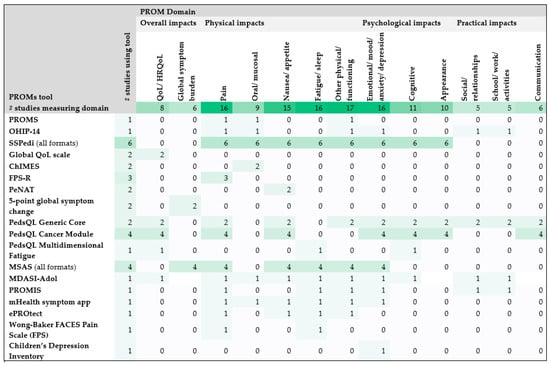
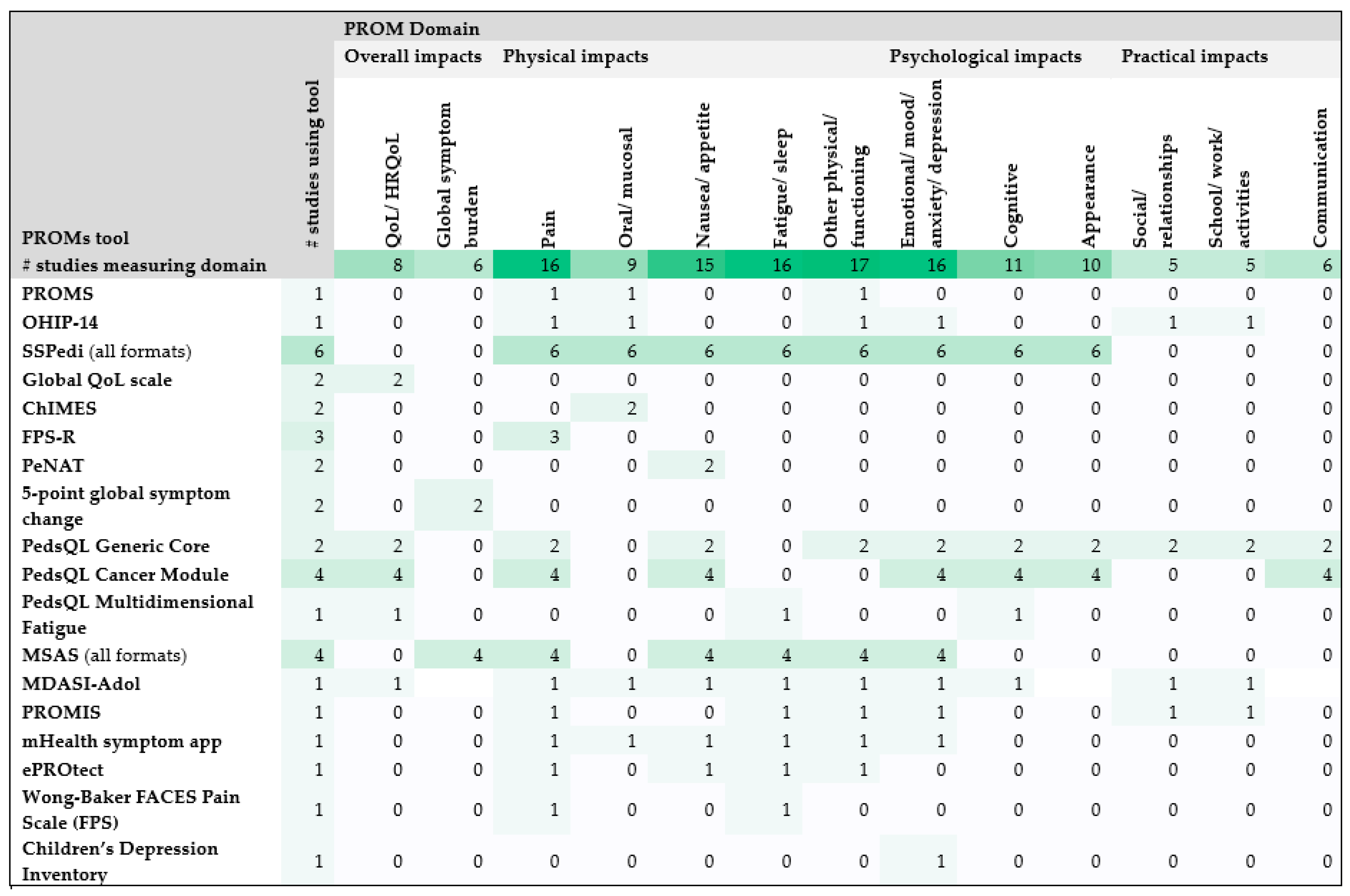
The PROMs used in the included studies assessed a broad range of physical, psychological, social, and quality of life domains, reflecting the complexity of the symptomatology experienced by patients during HSCT [3,9,17,18,27,28,29,30,31,32,34,35,36,37,38,39]. As seen in Figure 2, the most common physical domains assessed were pain, fatigue and nausea/appetite, whilst mood, including anxiety and depression, were the most common psychological domains assessed.
Figure 2.
Number of studies that measured each symptom domain and the PROMs used.
Global Quality of Life
Global Quality of life was measured in eight studies using one of three different PROMs, the Peds QL 4.0, Peds QL Cancer Module, and the Global Quality of Life (GQoL) visual categorical scale [3,18,27,28,29,30,31,35,36].
Physical
Eight PROMs assessed an individual physical symptom domain, such as depression, fatigue, mucositis, nausea, or pain [3,26,28,35,39], with one PROM, the Global Symptom Change Scale, assessing the overall change in symptoms [3,28].
Pain was the most common physical symptom domain captured across all studies. It was assessed by individual symptom PROMs such as the Wong–Baker FACES Pain Rating Scale, the Face Pain Scale–Revised (FPS-R), and the Patient-Reported Oral Mucositis Symptom (PROMS) scale [3,26,28,35,39]. Pain was also included and assessed within the physical domain in all multidimensional PROMs. Three PROMs, the OHIP-14, CHIMES and PROMS, were used in studies to assess mucositis. CHIMES was used by Dupuis et al. [3] and Tomlinson et al. [28] to perform construct validation of the SSPedi and Co-SSPedi tools respectively, whilst PROMS was used by Bezinelli et al. [26] to measure the effectiveness of low-level laser therapy on oral mucositis in HSCT patients.
Nausea was a domain reported using the Paediatric Nausea Assessment Tool (PeNAT) as an individual domain and was included in many of the multidimensional PROMs including the PedsQL CM™, MSAS, MDASI-Adol, MSAS 10-18, PQ-MSAS, SSPedi, Co-SSPedi, and ePROtect [3,9,17,18,27,28,29,30,31,34,35,36,38,39].
Psychological
Psychological domains such as mood, distress, discomfort, disability, feeling disappointed/sad, scared/worried, cranky/angry, procedural/treatment anxiety, and emotional functioning were assessed in the studies using multidimensional PROMs, and Yildiz et al. [39] also used a single-symptom domain PROM—the Children’s Depression Inventory.
3.2.3. Implementation of PROMs
Target Respondent
Most PROMs included in the studies were designed or adapted for use by children and young people, using strategies such as age-appropriate scales and pictural representations of symptoms or distress. These can be completed through a self-report by children; however, in the case of younger children, they have the option of parent proxy-reporting. Some PROMs are validated for patient self-report at certain developmental age ranges, e.g., SSPedi (8–18 years), PROMIS Paediatric (8–17 years), PROMS (8–18 years), MSAS 10-18, and MDASI-Adol (13–17 years), and some for co-completion, e.g., Co-SSPedi and the 5-point global symptom change scale [3,9,26,28,37]. Overall, co-completion was described in two studies [9,28], and the remaining studies described patient self-report with the option of parent proxy-reporting for younger children.
Frequency and Mode of Administration
Electronic completion of PROMs occurred in ten studies, through a handheld smart phone, tablet or other electronic device. In three studies, PROMs were completed in paper form [18,27,36] and in one study, participants were able to complete the PROMs in either paper or electronic form [30]. Four studies did not report the method of PROM completion [26,29,37,39].
Symptoms were captured by PROMs in a variety of ways, either before and after transplant, daily, weekly, or every 30 days, with only two studies capturing daily symptom data in the first 30 days of transplant [17,32]. Of the studies that were conducted exclusively in the inpatient HSCT setting, nine measured PROM data at baseline and post discharge with no longitudinal data collected during hospital admission. The timepoints and frequency of PROM assessment varied for each study during hospital admission, with no consistency demonstrated between studies. There were only two studies that captured daily longitudinal HSCT PROM data [17,32]. Hetzer et al. [17] collected daily PROM data throughout the acute phase of the transplant, up to 22 days post reinfusion of cells. Ford et al. [32] collected daily PROM data for up to 120 days; however, this was a pilot study limited by a small sample size of only four participants.
3.3. Outcomes of PROMs
3.3.1. Symptom Experience
Physical Symptom Burden
Nausea, fatigue, mucositis, and pain were consistently identified as prominent physical symptoms experienced during HSCT [17,31]. In studies that examined symptom experience between HSCT and non-HSCT patients, the severity of all symptoms was increased in patients following HSCT. For example, nausea was one of the most frequently reported symptoms across multiple studies, with distress scores for nausea significantly higher among HSCT patients compared with non-HSCT groups [31]. Hetzer et al. [17] identified nausea and appetite loss along with pain, physical functioning, and sleep disturbance as the most burdensome physical symptoms, particularly between Day +4 and Day +12 post HSCT and Rodgers et al. [29] found that vomiting was the most frequently reported symptom at one month post HSCT. Fatigue and sleeping difficulty were also notable [27,31], with Ward et al. [31] noting that HSCT patients consistently reported higher fatigue scores compared with non-HSCT oncology patients. HSCT patients also reported higher symptom severity and distress scores for lack of appetite as well as frequency and distress for diarrhoea than non-HSCT patients [31].
Psychological and Emotional Symptom Burden
Psychological distress including sadness, worry, and treatment-related anxiety was reported across several studies [27,31,32]. Two studies identified ‘feeling sad’ as the most prevalent psychological symptom [27,31]; however, Ward et al. [31] found no difference in psychological symptoms between transplant and non-transplant children. Emotional symptoms, where reported, were associated with significant reductions in health-related quality of life HRQoL [27,29,32]. Rodgers et al. [29] identified that symptoms of sadness, tiredness, and insomnia were strongly correlated with lower HRQoL during the recovery phase, with this association persisting for several months post HSCT. In their study of symptom distress and mood, Ford et al. [32] found a strong presence of emotional distress and its association with symptom distress and mood—in particular, the associations between feeling worried and sad, the emotional distress caused by feeling worried or angry, and the connection between the severity of feeling tired and feeling worried [32]. Sheikh et al. [27] noted a significantly increased symptom-related interference with general mood and enjoyment of life post-transplant.
Symptom Variations Between Child, Parent, and Dyadic Reporting
PROM findings revealed notable discrepancies between child self-report, parent proxy, and dyadic (co-completion) approaches. Tomlinson et al. [9] showed that proxy reports often underestimated the severity of sadness and irritability, while overestimating fatigue. In contrast, in their other study, they found that co-SSPedi scores provided a middle ground, reducing, but not eliminating, discrepancies between self- and proxy reports [28]. Tomlinson et al. [9] went on to test the various approaches to symptom assessment and completion of PROMs using SSPedi. While mean total SSPedi scores did not differ by patient or proxy report, individual symptom scores were significantly different for five symptoms: feeling disappointed or sad, feeling cranky or angry, feeling tired, mouth sores, and changes in taste.
Symptom Trajectories
Only two studies described the trajectory of symptoms across the acute transplant phase [17,32], with Hetzer et al. [17] identifying peak burden during the first two weeks post-transplant. Hetzer et al. [17] captured the level of bother a child experienced from the symptom using SSPedi whilst Ford et al. [32] examined the relationships between symptom distress and mood using network analysis.
Where longitudinal data were available, PROMs highlighted distinct trajectories in symptom experience. Hetzer et al. [17] observed that during the acute admission for HSCT, participants experienced an increase in symptom burden from baseline across all PROM scales, with a resolution of almost all symptoms from week 2 onward aligned to engraftment. Hetzer et al. [17] also note that peak symptom burden was experienced from nausea, pain, physical functioning and sleep disturbance between Day +4 and Day +12 of transplant whilst Rodgers et al. [29] report vomiting as the most common symptom at one month post HSCT. Importantly, Rodgers et al. [29] also observed that symptoms experienced at one month post HSCT such as feeling tired, sad, worried, and having insomnia correlated with lower HRQoL scores in the subsequent 5 months post HSCT. Notably, very few studies collected continuous daily or weekly PROM data, significantly limiting understanding of how symptoms evolved over time, particularly during the acute admission for HSCT.
3.3.2. Use in Clinical Practice
Integration into Clinical Practice
Of the seventeen studies, only two reported using the PROMs in implementation where data were available for the clinical team to review [17,35]. Dupuis et al. [35] measured scores for 5 consecutive days in a mixed group of participants from both oncology and HSCT settings. The SSPedi reports of the intervention group from Days 1–4 were shared with the bedside nurse, treating team, and placed in the patients’ health record. On Days 1 and 3, emails were sent to the responsible physician if any symptom was “a lot” or “extremely” bothersome. Reports and alerts contained links to clinical practice guidelines. Hetzer et al. [17] used ePROtect on a daily basis throughout the HSCT treatment period, and the scores were reviewed by the treating team before the morning visit, 7 days a week. Any score deviations were discussed immediately and interventions initiated as per standard operating procedures. These two studies were conducted in the last two years and included a total of 39 HSCT patients receiving the PROMs as an intervention to support clinical care.
In two additional research studies, the PROM data was uploaded to the electronic medical record [27,34], but the use of the information to inform clinical practice was not described. All other studies used PROMs to answer a research question, validate an assessment tool, or measure the outcome of an intervention, and did not use PROM reports to inform clinical care.
Communication and Care Processes
When PROMs were shared with clinical teams, they enhanced communication between patients, parents, and clinicians. Dupuis et al. [35] identified that symptom screening was associated with significantly more documented interventions for tingly or numb hands or feet, hurt or pain, and problems with thinking or remembering. Hetzer et al. [17] report that daily PROM reviews prompted timely discussions and immediate intervention when symptom deviations were noted. Similarly, Dupuis et al. [35] demonstrate that electronic alerts improved bedside nurse and physician awareness of bothersome symptoms. However, outside these examples, PROM data were rarely described as influencing team communication or care planning.
Documentation
Dupuis et al. [35] found that symptom screening was associated with an increase in documentation for some symptom domains (hurt or pain, feeling more or less hungry, and mucositis) and with more documented interventions for constipation. For those symptoms that caused severe bother, screening was associated with more documentation for constipation and more documented intervention for feeling cranky or angry. Overall, symptoms were documented or treated significantly more often with symptom screening [35].
Barriers and Enablers of Implementation
Several barriers to the use of PROMs in paediatric HSCT settings were identified. Two studies found that the most prominent challenge was the impact of symptom severity, with children experiencing high treatment-related burden often finding it difficult to complete PROMs consistently or at all [34,38]. This highlights the paradox that those with the greatest symptom burden may be the least represented in outcome data. Forgetting to complete the PROMs was another barrier [34]. In addition, the lack of seamless integration of PROMs into electronic medical record (EMR) systems and clinical workflows limited clinician engagement with PROM data. These issues reflect broader challenges of PROM implementation, in particular the feasibility and sustainability of PROM use in routine care.
In contrast, several enablers were reported that supported greater uptake and acceptability of PROMs. The use of electronic platforms with automated reminders or alarm features was the most common enabler to completing PROMs [34,38]. Cook et al. [34] also found that a reminder from a parent or research associate helped participants remember to complete PROMs. Johnston et al. [36], in contrast, described the challenges of consistent PROM completion during clinical trials and how, despite reminders from clinical research assistance and the addition of a coordinator, sustained improvements in completion rates were not evident for the duration of the clinical trial. Tools that were designed with user-friendly interfaces were found to be more accessible for children and families, lowering barriers to completion. Cook et al. [34] implemented PROMs via a web-based platform with participants most commonly reporting how easy it was to use, that the PROMs could be completed quickly and had the capacity for modification of responses if needed. Participants also reported liking the website aesthetics. Importantly, dyadic reporting approaches, where children and parents could contribute together, were associated with higher acceptability, recognising the value of family involvement in capturing symptom experiences [9]. These strategies, particularly automated reminders, electronic capture and a family-centred approach, demonstrate the potential to strengthen PROM implementation and ensure that symptom experiences are meaningfully integrated into clinical care.
3.3.3. Impact of PROMs on Outcomes
This review revealed some early evidence of potential outcomes and benefits of PROM use in paediatric HSCT care. Whilst PROMs consistently facilitated symptom detection, their impact on clinical outcomes, quality of life, or patient–family experiences was less consistently demonstrated and studied.
Patient-Related Outcomes
Symptom-related outcomes
PROMs enabled the early identification of common and burdensome symptoms, including nausea, fatigue, pain, and sleep disruption, with some evidence of improved monitoring when tools were integrated into daily care [17,35]. However, through most studies, PROM data were not linked to measurable reductions in symptom intensity, duration, or distress. Interventional studies, such as those testing exercise or oral care protocols, used PROMs primarily to evaluate the effect of the intervention on symptom intensity, clinical status, and QoL, rather than as a mechanism driving symptom relief [26,37,39].
The use of PROM alerts to remind patients was found to be associated with improved symptom-specific management [17,35]. There was modest evidence of reduction in symptom burden when PROMs were acted upon [40]. Some studies used PROMs to measure outcomes and describe trends across physical and psychological domains, before, during and after interventions [26,37]. The use of PROMs in these studies enabled the monitoring of trends in symptom intensity, occurrence, resolution, and their impact on QoL.
Clinical outcomes
Evidence of PROM-driven improvements in HRQoL or broader clinical outcomes were sparse. Two studies demonstrated associations between symptom burden and HRQoL, but did not establish whether PROM-informed interventions altered these outcomes [29,31]. As such, the causal pathway from PROM reporting informing management strategies that lead to improved outcomes remains underexplored in the paediatric HSCT setting.
Symptom Management Outcomes
Satisfaction and acceptability
The successful validation of two PROMs for use in the paediatric oncology context, including inpatient HSCT care, was achieved by two included studies [3,28], which has led to their use in subsequent studies [9,34,35,38] and to the first study to examine the integration of SSPedi into clinical practice [35].
PROM use was generally well received by children and families. Importantly, Tomlinson et al. [9] found that a dyadic approach to symptom screening, where children and parents could contribute together, was associated with higher acceptability, recognising the value of family involvement in capturing symptom experiences. Parents valued the opportunity to contribute to their child’s care, particularly when proxy or dyadic reporting was used. These findings suggest PROMs have the potential to enhance the patient–family care experience, even when their clinical impact remains limited.
Frequency and completion
Cook et al. [34] reported high acceptability of daily electronic symptom reporting, with most participants (93%) considering the frequency “about right”. Ward et al. [31] reported that children from both study cohorts equally reported no difficulty in completing the symptom assessments. In one study, PROM completion rates were found to be higher in participants who had received an autologous transplant when compared to those who had received an allogeneic transplant [17]. Ward et al. [31] reported that children undergoing HSCT completed a higher percentage of administered assessments compared with the non-HSCT cohort.
4. Discussion
4.1. Introduction to the Discussion
This review identified the PROMs used during inpatient paediatric HSCT and synthesised how these tools contribute to understanding symptom experiences and management. The included studies demonstrate that PROMs can capture a wide range of physical and psychological symptoms experienced during HSCT and are generally feasible and acceptable for children and families. However, their integration into routine inpatient HSCT care remains limited, and the evidence base to date, particularly regarding clinical impact, remains preliminary.
Symptom burden during paediatric HSCT is consistently high and contributes to significant distress, functional disruption and reduced quality of life for children and adolescents through the transplant course [41]. Symptom assessment is the cornerstone of symptom management [42] and PROMs provide an important mechanism for ensuring the voice of the child is represented in symptom assessment [43]. However, their effective integration into clinical practice requires attention to feasibility, workflow, and developmental considerations [44,45]. Although PROMs have demonstrated benefits in adult HSCT and broader paediatric oncology, such as improved communication, enhanced symptom identification, and in some cases reduced symptom burden [7], their use in paediatric HSCT remains in its infancy. Existing studies focus largely on feasibility and tool validation, with limited longitudinal data or evidence of routine clinical integration [3,9,11,17,28,35].
Symptom burden during paediatric HSCT is consistently high and contributes to significant distress, functional disruption, and reduced quality of life for children and adolescents throughout the transplant course. PROMs provide valuable information for the clinical team during symptom assessment and can guide appropriate symptom management strategies for patients. However, effectively implementing PROMs during the acute phase of HSCT requires attention to developmental appropriateness, patient burden, and workflow integration. Although PROMs have demonstrated clear benefits in adult HSCT and in paediatric oncology outpatient and survivorship contexts—such as enhanced communication, earlier symptom identification, and improved patient engagement—routine inpatient use in paediatric HSCT remains uncommon. As a result, most studies to date have focused on feasibility or tool validation rather than demonstrating how PROMs can influence clinical care.
There is a pressing need for a more detailed, continuous understanding of symptom occurrence, timing, and trajectories during acute HSCT admission, as evidence demonstrates that high symptom burden may persist beyond hospitalisation [14]. Existing studies suggest that symptoms peak during predictable periods, yet the scarcity of longitudinal and daily data hinders precise characterisation of these patterns or their clinical implications. Although PROMs appear to strengthen communication and patient engagement, it remains unclear whether their use during acute HSCT can facilitate earlier symptom detection, prompt more responsive management, or improve clinical outcomes. Understanding predictive factors and intervention effects across the transplant continuum is essential to advancing symptom-focused care. Addressing these questions will require studies that not only capture symptom data but also evaluate how PROM-informed interventions affect symptom burden, functioning, and recovery across the transplant continuum.
A persistent challenge is that children experiencing the highest symptom burden are often the least able to complete PROMs [34,38], leading to under-representation of those that are most vulnerable. This pattern mirrors challenges in other high-acuity paediatric settings, where children may be too unwell, fatigued, or overwhelmed to complete assessments, even when symptoms are most severe. These findings underscore the essential role of vigilant nursing advocacy and strong family partnership during HSCT.
A triadic approach to symptom assessment, drawing on perspectives of the child, parent, and nurse, is essential for forming an accurate clinical picture and guiding symptom management [46]. Evidence shows consistent under-reporting of symptoms by caregivers and clinicians, underscoring the need for research to determine how best to capture the child’s true symptom experience, particularly given substantial disagreement between child self-report and care-team assessments [47]. This reinforces the importance of nursing advocacy and family partnership in identifying subtle changes and ensuring timely, evidence-based management. Although age-appropriate PROMs, co-completion methods, and proxy reporting offer strategies to support symptom capture [3,9,28], discrepancies between reporting approaches highlight the complexity of accurately capturing a child’s lived experience through PROMs. Continued refinement and evaluation of these approaches will be essential to improving assessment accuracy and supporting high-quality, symptom-focused care.
4.2. Gaps and Limitations in Current Literature
The current PROM literature in paediatric HSCT is limited by a small number of HSCT-specific studies, with many drawing on broader oncology samples that limit generalisability for the acute transplant setting. Despite the inpatient phase being associated with the highest symptom burden, very few studies capture PROM data during this period, and longitudinal tracking of symptom trajectories across the transplant course remains scarce. Evidence that PROMs inform real-time care or lead to changes in symptom management is minimal, and most studies focus on symptom occurrence and severity rather than distress, meaning, or psychosocial dimensions. Methodological issues such as small sample sizes, inconsistent use of validated tools, and heterogeneity in study designs further limit comparability and generalisability, alongside geographic gaps and limited cultural or linguistic adaptation of PROMs. Overall, the literature lacks integration of PROMs into routine clinical workflows and offers little evidence linking PROM use to actionable management strategies or measurable outcomes. Studies predominantly used PROMs to capture symptom experience, while largely neglecting the evaluation of interventions and their outcomes—two critical components of Symptom Management Theory [22].
4.3. Implications for Research and Practice
When mapped to the three components of SMT: symptom experience, management strategies, and outcomes, the current PROM research in paediatric HSCT most comprehensively addresses the symptom experience component, capturing the occurrence and severity of physical and emotional symptoms. In contrast, far fewer studies connected PROMs to real-time management strategies or evaluated their impact on patient outcomes. The evidence base is heavily weighted to symptom identification with limited progression of PROM data to inform targeted management strategies or ultimately influence clinical and QoL outcomes. This mapping reinforces that, although PROMs are beginning to illuminate children’s symptom experiences during HSCT, the field has yet to realise the full SMT pathway that links symptom reporting to responsive symptom-focused care and measurable patient outcomes.
Future research should focus on rigorous, multi-site longitudinal studies to evaluate how PROM-based symptom screening and supportive care interventions affect symptom burden and HRQoL in paediatric HSCT populations [17,18,26,31,34]. PROMs need to be more fully integrated into routine clinical workflows [7], preferably through electronic health record systems with automated alerts, to support timely, personalised symptom management. To ensure PROM data translates into actionable care, clinician training and alignment with evidence-based guidelines are essential. Continued refinement and validation of PROMs, including cultural and linguistic adaptation and approaches that capture distress and symptom meaning, will strengthen their clinical utility [3,18,27]. Addressing barriers such as low completion rates and enhancing electronic data capture methods remain key priorities [28,31,36]. Greater attention to psychosocial screening and supporting multidisciplinary interpretation of PROM results will also be critical [48].
4.4. Strengths and Limitations
This systematic review draws strength from its adherence to PRISMA reporting guidelines, protocol-guided methodology, comprehensive multi-database search strategy, and transparent screening processes, supported by moderate inter-rater agreement that reinforces the reliability and validity of study selection. Its focus on an under-researched intersection, PROM use during paediatric HSCT inpatient care, adds novelty and clinical relevance, providing insight into a population whose symptom experiences are often underrepresented.
However, several limitations must be acknowledged. The inclusion of mixed-population studies where paediatric HSCT-specific data could not be delineated [3,9,27,28,40], and restriction to English-language peer-reviewed studies limit generalisability. Across included studies, small sample sizes, methodological variability, and a lack of longitudinal data further constrain interpretation [17,32]. Wide heterogeneity in study design, settings, PROM type, and outcome measures also reduces comparability. Together, these limitations highlight the need for more standardised, culturally adaptable PROMs, consistent methodological approaches, and robust longitudinal research to strengthen future evidence and clinical applicability.
5. Conclusions
Although PROMs are well established in adult oncology/HSCT and have gained traction over the last decade in paediatric oncology, outpatient and survivorship contexts, their systematic integration into routine inpatient paediatric HSCT care remains limited. While current evidence suggests they can effectively capture symptom experience, their routine use, guidance of symptom management, or influence of patient outcomes in paediatric HSCT is still limited and largely unrealised. Current evidence does not demonstrate consistent or causal improvements in clinical outcomes, and research to date remains exploratory, with limited HSCT-specific data and minimal integration of PROMs into real-time inpatient care. Future work should prioritise longitudinal, implementation-focused studies that evaluate not only symptom detection but also whether PROM-driven interventions can meaningfully improve the clinical experiences and outcomes of children undergoing HSCT.
Supplementary Materials
The following supporting information can be downloaded at: https://www.mdpi.com/article/10.3390/children13040491/s1, Table S1: Characteristics of PROMs used in included studies.
Author Contributions
Conceptualization, R.P. and N.B.; methodology, R.P.; validation, N.B., S.K. and J.S.; formal analysis, R.P.; investigation, R.P.; data curation, R.P.; writing—original draft preparation, R.P.; writing—review and editing, N.B., S.K. and J.S.; visualization, R.P.; supervision, N.B. and S.K.; project administration, R.P.; funding acquisition, R.P. All authors have read and agreed to the published version of the manuscript.
Funding
This research was supported by funding from the Cancer Nurses Society of Australia (CNSA), Nursing Research Grant, 2024 and The Kids Cancer Project (TKCP), Col Reynold’s Fellowship, 2024.
Institutional Review Board Statement
Not required.
Informed Consent Statement
Not applicable.
Data Availability Statement
The original contributions presented in this study are included in the article/Supplementary Materials. Further inquiries can be directed to the corresponding authors.
Acknowledgments
During the preparation of this manuscript, the authors used Microsoft (2025) Copilot (GPT-4) [Large Language Model] to support grammar, punctuation and improvements to the clarity and flow of the manuscript. All suggestions generated by Copilot were reviewed, verified, and edited by the authors, who take full responsibility for the final content of this publication.
Conflicts of Interest
The funders had no role in the design of the study; in the collection, analysis, or interpretation of data; in the writing of the manuscript; or in the decision to publish the results. The authors declare no conflicts of interest.
Abbreviations
The following abbreviations are used in this manuscript:
| CHIMES | Children’s International Mucositis Evaluation Scale |
| ERM | Electronic Medical Record |
| FACES | Wong–Baker FACES Pain Rating Scale |
| FPS-R | Faces Pain Scale–Revised |
| GQoL | Global Quality of Life visual categorical scale |
| HRQoL | Health Related Quality of Life |
| HSCT | Haematopoietic Stem Cell Transplant |
| MDASI-Adol | MD Anderson Symptom Inventory–adolescent |
| MSAS | Memorial Symptom Assessment Scale |
| OHIP-14 | Short form of the Oral Health Impact Profile |
| Peds QL | Peds Quality of Life |
| Peds QL CM | Peds Quality of Life Cancer Module |
| PeNAT | Pediatric Nausea Assessment Tool |
| PQ-MSAS- | The Pediatric Quality of Life and evaluation of Symptoms study |
| PRISMA | Preferred Reporting Items for Systematic Reviews and Meta-Analyses |
| PROMs | Patient-Reported Outcome Measures |
| PROMIS | Patient Reported Outcomes Measurement Information System |
| PROMS | Patient-Reported Oral Mucositis Symptom |
| QoL | Quality of Life |
| QuADS | Quality Assessment for Diverse Studies |
| SMT | Symptom Management Theory |
| SSPedi | Symptom Screening in Pediatrics Tool |
Appendix A
Table A1.
Search strategy.
Appendix B
Table A2.
Characteristics of included studies.
Appendix C
Table A3.
QuADS assessment of included studies.
References
- Schmit-Pokorny, K.E.S. Hematopoietic Stem Cell Transplantation: A Manual for Nursing Practice, 3rd ed.; Oncology Nursing Society: Pittsburgh, PA, USA, 2020. [Google Scholar]
- Ullrich, C.; Ma, C.; London, W.B.; Al-Sayegh, H.; Sridharan, M.; Holder, R.; Levine, D.; Lehmann, L.; Wolfe, J. 349—Symptoms Children Experience in the Acute Phase of Hematopoietic Stem Cell Transplant. Biol. Blood Marrow Transplant. 2018, 24, S281. [Google Scholar] [CrossRef] [Scilit]
- Dupuis, L.L.; Johnston, D.L.; Baggott, C.; Hyslop, S.; Tomlinson, D.; Gibson, P.; Orsey, A.; Dix, D.; Price, V.; Vanan, M.; et al. Validation of the Symptom Screening in Pediatrics Tool in Children Receiving Cancer Treatments. JNCI J. Natl. Cancer Inst. 2018, 110, 661–668. [Google Scholar] [CrossRef] [Scilit]
- Nap-van der Vlist, M.M.; van der Wal, R.C.; Grosfeld, E.; van de Putte, E.M.; Dalmeijer, G.W.; Grootenhuis, M.A.; van der Ent, C.K.; van den Heuvel-Eibrink, M.M.; Swart, J.F.; Bodenmann, G.; et al. Parent-Child Dyadic Coping and Quality of Life in Chronically Diseased Children. Front. Psychol. 2021, 12, 701540. [Google Scholar] [CrossRef] [Scilit]
- Withycombe, J.S.; Haugen, M.; Zupanec, S.; Macpherson, C.F.; Landier, W. Consensus Recommendations From the Children’s Oncology Group Nursing Discipline’s State of the Science Symposium: Symptom Assessment During Childhood Cancer Treatment. J. Pediatr. Oncol. Nurs. 2019, 36, 294–299. [Google Scholar] [CrossRef] [Scilit]
- Horan, M.R.; Sim, J.-A.; Krull, K.R.; Baker, J.N.; Huang, I.C. A Review of Patient-Reported Outcome Measures in Childhood Cancer. Children 2022, 9, 1497. [Google Scholar] [CrossRef] [Scilit] [PubMed]
- Bele, S.; Chugh, A.; Mohamed, B.; Teela, L.; Haverman, L.; Santana, M.J. Patient-Reported Outcome Measures in Routine Pediatric Clinical Care: A Systematic Review. Front. Pediatr. 2020, 8, 364. [Google Scholar] [CrossRef] [Scilit]
- Montgomery, K.E.; Raybin, J.L.; Ward, J.; Balian, C.; Gilger, E.; Murray, P.; Li, Z. Using patient-reported outcomes to measure symptoms in children with advanced cancer. Cancer Nurs. 2020, 43, 281–289. [Google Scholar] [CrossRef] [Scilit]
- Tomlinson, D.; Tardif-Theriault, C.; Schechter, T.; Dupuis, L.L.; Sung, L. Randomized trial of dyadic-report vs proxy-report and self-report symptom assessment for pediatric patients receiving cancer treatments. J. Natl. Cancer Inst. 2024, 116, 588–595. [Google Scholar] [CrossRef] [Scilit]
- Bryant, A.L.; Coffman, E.; Phillips, B.; Tan, X.; Bullard, E.; Hirschey, R.; Bradley, J.; Bennett, A.V.; Stover, A.M.; Song, L.; et al. Pilot randomized trial of an electronic symptom monitoring and reporting intervention for hospitalized adults undergoing hematopoietic stem cell transplantation. Support. Care Cancer 2020, 28, 1223–1231. [Google Scholar] [CrossRef] [Scilit]
- Wood, W.A.; Deal, A.M.; Abernethy, A.; Basch, E.; Battaglini, C.; Kim, Y.H.; Whitley, J.; Shatten, C.; Serody, J.; Shea, T.; et al. Feasibility of frequent patient-reported outcome surveillance in patients undergoing hematopoietic cell transplantation. Biol. Blood Marrow Transpl. 2013, 19, 450–459. [Google Scholar] [CrossRef] [Scilit] [PubMed]
- Lu, S.C.; Porter, I.; Valderas, J.M.; Harrison, C.J.; Sidey-Gibbons, C. Effectiveness of routine provision of feedback from patient-reported outcome measurements for cancer care improvement: A systematic review and meta-analysis. J. Patient Rep. Outcomes 2023, 7, 54. [Google Scholar] [PubMed]
- Graupner, C.; Kimman, M.L.; Mul, S.; Slok, A.H.M.; Claessens, D.; Kleijnen, J.; Dirksen, C.D.; Breukink, S.O. Patient outcomes, patient experiences and process indicators associated with the routine use of Patient-Reported Outcome Measures (PROMs) in cancer care: A systematic review. Support. Care Cancer 2021, 29, 573–593. [Google Scholar] [CrossRef] [Scilit] [PubMed]
- Bense, J.E.; Guilonard, N.; Zwaginga, F.; Stiggelbout, A.M.; Louwerens, M.; Mekelenkamp, H.; Lankester, A.C.; Pieterse, A.H.; de Pagter, A.P.J. The value of using patient-reported outcomes for health screening during long-term follow-up after paediatric stem cell transplantation for nonmalignant diseases. Health Expect. 2024, 27, e13902. [Google Scholar] [CrossRef] [Scilit]
- Higgins, J.P.T.; Thomas, T.J.; Chandler, J.; Cumpston, M.; Li, T.; Page, M.J.; Welch, V.A. (Eds.) Cochrane Handbook for Systematic Reviews of Interventions Version 6.5 (Updated August 2024); Cochrane: Copenhagen, Denmark, 2024; Available online: www.cochrane.org/handbook (accessed on 1 October 2024).
- Edwards, R.K.; Samantha, J.; Shergold, J.; Bradford, N. The Use of Patient Reported Outcome Measures to Inform Clinical Care in Paediatric Bone Marrow Transplant: A Systematic Review. 2025. Available online: https://www.crd.york.ac.uk/PROSPERO/view/CRD420250572124 (accessed on 1 April 2025).
- Hetzer, B.; Meryk, A.; Kropshofer, G.; Salvador, C.; Riedl, D.; Lehmann, J.; Rumpold, G.; Haid, A.; Schneeberger-Carta, V.; Holzner, B.; et al. Integration of Daily Patient-Reported Outcome Measures in Pediatric Stem Cell Transplantation. Transplant. Cell. Ther. 2023, 29, 776.e1–776.e7. [Google Scholar]
- Rodgers, C.; Highberger, M.; Powers, K.; Voigt, K.; Douglas, C. Symptom Trajectories of Adolescents During Hematopoietic Stem Cell Recovery. Cancer Nurs. 2019, 42, 468–474. [Google Scholar] [CrossRef] [Scilit]
- McGowan, J.; Sampson, M.; Salzwedel, D.M.; Cogo, E.; Foerster, V.; Lefebvre, C. PRESS Peer Review of Electronic Search Strategies: 2015 Guideline Statement. J. Clin. Epidemiol. 2016, 75, 40–46. [Google Scholar] [CrossRef] [Scilit]
- Landis, J.R.; Koch, G.G. The measurement of observer agreement for categorical data. Biometrics 1977, 33, 159–174. [Google Scholar] [CrossRef] [Scilit]
- Harrison, R.; Jones, B.; Gardner, P.; Lawton, R. Quality assessment with diverse studies (QuADS): An appraisal tool for methodological and reporting quality in systematic reviews of mixed- or multi-method studies. BMC Health Serv. Res. 2021, 21, 144. [Google Scholar]
- Linder, L. Analysis of the UCSF Symptom Management Theory: Implications for Pediatric Oncology Nursing. J. Pediatr. Oncol. Nurs. 2010, 27, 316–324. [Google Scholar] [CrossRef] [Scilit]
- Page, M.J.; McKenzie, J.E.; Bossuyt, P.M.; Boutron, I.; Hoffmann, T.C.; Mulrow, C.D.; Shamseer, L.; Tetzlaff, J.M.; Akl, E.A.; Brennan, S.E.; et al. The PRISMA 2020 statement: An updated guideline for reporting systematic reviews. BMJ 2021, 372, n71. [Google Scholar] [CrossRef] [Scilit]
- Page, M.J.; Moher, D.; Bossuyt, P.M.; Boutron, I.; Hoffmann, T.C.; Mulrow, C.D.; Shamseer, L.; Tetzlaff, J.M.; Akl, E.A.; Brennan, S.E.; et al. PRISMA 2020 explanation and elaboration: Updated guidance and exemplars for reporting systematic reviews. BMJ 2021, 372, n160. [Google Scholar] [CrossRef]
- Sultan, I.; Alfaar, A.S.; Sultan, Y.; Salman, Z.; Qaddoumi, I. Trends in childhood cancer: Incidence and survival analysis over 45 years of SEER data. PLoS ONE 2025, 20, e0314592. [Google Scholar] [CrossRef] [Scilit]
- Bezinelli, L.M.; Eduardo, F.P.; Neves, V.D.; Correa, L.; Lopes, R.M.G.; Michel-Crosato, E.; Hamerschlak, N.; Biazevic, M.G.H. Quality of life related to oral mucositis of patients undergoing haematopoietic stem cell transplantation and receiving specialised oral care with low-level laser therapy: A prospective observational study. Eur. J. Cancer Care 2016, 25, 668–674. [Google Scholar]
- Sheikh, I.N.; Miller, J.; Shoberu, B.; Andersen, C.R.; Wang, J.; Williams, L.A.; Mahadeo, K.M.; Robert, R. Using the MDASI-Adolescent for Early Symptom Identification and Mitigation of Symptom Impact on Daily Living in Adolescent and Young Adult Stem Cell Transplant Patients. Children 2021, 9, 19. [Google Scholar] [CrossRef] [Scilit]
- Tomlinson, D.; Dupuis, L.L.; Dix, D.; Crellin-Parsons, N.; Cook, S.; Kulkarni, K.; Schechter, T.; Tomlinson, G.A.; Sung, L. Validation of co-Symptom Screening in Pediatrics Tool: A novel dyadic approach to symptom screening in pediatric patients receiving cancer treatment. J. Natl. Cancer Inst. 2024, 116, 160–166. [Google Scholar] [CrossRef] [Scilit]
- Rodgers, C.; Wills-Bagnato, P.; Sloane, R.; Hockenberry, M. Health-Related Quality of Life among Children and Adolescents during Hematopoietic Stem Cell Transplant Recovery. J. Pediatr. Oncol. Nurs. 2015, 32, 329–336. [Google Scholar] [CrossRef] [Scilit] [PubMed]
- Ward, J.; Smith, J.; Powers, K.; Hellsten, M.; Murray, P. Parent Psychological Distress Is Associated with Symptom Burden and Health-Related Quality of Life in Children and Adolescents Undergoing Stem Cell Transplantation or Chimeric Antigen Receptor T Cell Therapy. Transplant. Cell. Ther. 2023, 29, 462.e1–462.e9. [Google Scholar] [CrossRef] [Scilit] [PubMed]
- Ward, J.A.; Balian, C.; Gilger, E.; Raybin, J.L.; Li, Z.; Montgomery, K.E. Electronic Symptom Assessment in Children and Adolescents with Advanced Cancer Undergoing Hematopoietic Stem Cell Transplantation. J. Pediatr. Oncol. Nurs. 2020, 37, 255–264. [Google Scholar] [CrossRef] [Scilit] [PubMed]
- Ford, S.; Vaughn, J.; Subramaniam, A.; Gundala, A.; Hensley, E.; Shah, N. Supporting data driven translational patient-centered care using network analysis to visualize symptom distress in children with serious illness. J. Spec. Pediatr. Nurs. 2024, 29, e12422. [Google Scholar] [CrossRef] [Scilit]
- Meryk, A.; Kropshofer, G.; Hetzer, B.; Riedl, D.; Lehmann, J.; Rumpold, G.; Haid, A.; Holzner, B.; Crazzolara, R. Implementation of daily patient-reported outcome measurements to support children with cancer. Pediatr. Blood Cancer 2021, 68, e29279. [Google Scholar] [CrossRef] [Scilit]
- Cook, S.; Vettese, E.; Tomlinson, G.A.; Soman, D.; Schechter, T.; Kuczynski, S.; Gladstone, B.; Dupuis, L.L.; Sung, L. Feasibility of a randomized controlled trial of symptom screening and feedback to healthcare providers compared with standard of care using the SPARK platform. Support. Care Cancer 2020, 28, 2729–2734. [Google Scholar] [CrossRef] [Scilit]
- Dupuis, L.L.; Johnston, D.L.; Dix, D.; McKillop, S.; Cook, S.; Crellin-Parsons, N.; Kulkarni, K.; Patel, S.; Vanan, M.L.; Gibson, P.; et al. Symptom Screening for Hospitalized Pediatric Patients with Cancer: A Randomized Clinical Trial. JAMA Pediatr. 2025, 179, 11–18. [Google Scholar] [CrossRef] [Scilit]
- Johnston, D.; Gerbing, R.; Alonzo, T.; Aplenc, R.; Nagarajan, R.; Schulte, F.; Cullen, P.; Sung, L. Patient-reported outcome coordinator did not improve quality of life assessment response rates: A report from the children’s oncology group. PLoS ONE 2015, 10, e0125290. [Google Scholar] [CrossRef] [Scilit]
- Smith, C.; Farhat, R.; Fern-Buneo, A.; Purrington, H.; Cobb, E.; Matson, L.; Kang, P.; Beebe, K.; Campbell, C.; Schwalbach, C.; et al. Effects of an exercise program during pediatric stem cell transplantation: A randomized controlled trial. Pediatr. Blood Cancer 2022, 69, e29618. [Google Scholar] [CrossRef] [Scilit] [PubMed]
- Vettese, E.; Cook, S.; Soman, D.; Kuczynski, S.; Spiegler, B.; Davis, H.; Duong, N.; Schechter, T.; Dupuis, L.L.; Sung, L. Longitudinal evaluation of Supportive care Prioritization, Assessment and Recommendations for Kids (SPARK), a symptom screening and management application. BMC Cancer 2019, 19, 458. [Google Scholar] [CrossRef] [Scilit]
- Yildiz Kabak, V.; Cetinkaya, D.U.; Kuskonmaz, B.; Cetin, N.; Duger, T. Effects of multimodal exercise on clinical status and patient-reported outcomes in children undergoing hematopoietic stem cell transplantation. Pediatr. Hematol. Oncol. 2019, 36, 410–421. [Google Scholar] [CrossRef] [Scilit] [PubMed]
- Dupuis, L.L.; Vettese, E.; Grimes, A.C.; Beauchemin, M.P.; Klesges, L.M.; Baggott, C.; Demedis, J.; Aftandilian, C.; Freyer, D.R.; Crellin-Parsons, N.; et al. Symptom Screening Linked to Care Pathways for Pediatric Patients with Cancer: A Randomized Clinical Trial. JAMA 2024, 332, 1981–1991. [Google Scholar] [CrossRef] [Scilit] [PubMed]
- Johnston, D.L.; Hyslop, S.; Tomlinson, D.; Baggott, C.; Gibson, P.; Orsey, A.; Dix, D.; Price, V.; Vanan, M.; Portwine, C.; et al. Describing symptoms using the Symptom Screening in Pediatrics Tool in hospitalized children with cancer and hematopoietic stem cell transplant recipients. Cancer Med. 2018, 7, 1750–1755. [Google Scholar] [CrossRef] [Scilit]
- Jibb, L.A.; Ameringer, S.; Macpherson, C.F.; Sivaratnam, S. The Symptom Experience in Pediatric Cancer: Current Conceptualizations and Future Directions. Curr. Oncol. Rep. 2022, 24, 443–450. [Google Scholar] [CrossRef] [Scilit]
- Basch, E.; Leahy, A.B.; Reeve, B.B. Symptom Monitoring with Patient-Reported Outcomes During Pediatric Cancer Care. JAMA 2024, 332, 1979–1980. [Google Scholar] [CrossRef] [Scilit]
- Mazariego, C.; Jefford, M.; Chan, R.J.; Roberts, N.; Millar, L.; Anazodo, A.; Hayes, S.; Brown, B.; Saunders, C.; Webber, K.; et al. Priority recommendations for the implementation of patient-reported outcomes in clinical cancer care: A Delphi study. J. Cancer Surviv. 2022, 16, 33–43. [Google Scholar] [CrossRef] [Scilit] [PubMed]
- Wolff, A.C.; Absolom, K.; Ahmed, S.; Bartlett, S.J.; Santana, M.J.; Stover, A.M.; Austin, E.J. Enhancing provider adoption of Patient-Reported Outcome Measures (PROMs) through implementation science: Insights from two international workshops. J. Patient Rep. Outcomes 2025, 9, 77. [Google Scholar] [CrossRef] [Scilit] [PubMed]
- Ullrich, C.K.; Rodday, A.M.; Bingen, K.M.; Kupst, M.J.; Patel, S.K.; Syrjala, K.L.; Harris, L.L.; Recklitis, C.J.; Chang, G.; Guinan, E.C.; et al. Three sides to a story: Child, parent, and nurse perspectives on the child’s experience during hematopoietic stem cell transplantation. Cancer 2017, 123, 3159–3166. [Google Scholar] [CrossRef] [Scilit]
- Olsavsky, A.L.; Montgomery, K.E.; Kochashvili, M.; Benhayoun, A.; Ranalli, M.; Skeens, M.A. Differences in Symptom Reporting by Children with Cancer, Caregivers, and Care Teams. J. Pain. Symptom Manag. 2025, 70, 278–286. [Google Scholar] [CrossRef] [Scilit]
- Pai, A.L.H.; Swain, A.M.; Chen, F.F.; Hwang, W.-T.; Vega, G.; Carlson, O.; Ortiz, F.A.; Canter, K.; Joffe, N.; Kolb, E.A.; et al. Screening for Family Psychosocial Risk in Pediatric Hematopoietic Stem Cell Transplantation with the Psychosocial Assessment Tool. Biol. Blood Marrow Transplant. 2019, 25, 1374–1381. [Google Scholar] [CrossRef] [Scilit] [PubMed]
Disclaimer/Publisher’s Note: The statements, opinions and data contained in all publications are solely those of the individual author(s) and contributor(s) and not of MDPI and/or the editor(s). MDPI and/or the editor(s) disclaim responsibility for any injury to people or property resulting from any ideas, methods, instructions or products referred to in the content. |
© 2026 by the authors. Licensee MDPI, Basel, Switzerland. This article is an open access article distributed under the terms and conditions of the Creative Commons Attribution (CC BY) license.