


Highlights
What are the main findings?
- Overall, 76.9% of respondents reported that high-flow nasal cannula (HFNC) equipment was available (97.3% in teaching hospitals vs. 47.0% in other hospitals), whereas only 14.7% of respondents with HFNC access reported having a written institutional protocol.
- In exploratory comparisons, physicians working in pediatric emergency departments or pediatric intensive care units rated their HFNC competence higher and reported more frequent use of sedation and exclusive parenteral nutrition during HFNC oxygen therapy than those working in other settings. No statistically significant differences in reported practices were detected according to protocol availability, although only 28 respondents reported having a protocol.
What are the implications of the main findings?
- Whether written protocols influence bedside practice could not be determined in this survey; adequately powered studies evaluating protocol content, implementation, and training are needed.
- The variability observed in feeding, sedation, nebulization, and weaning practices highlights areas of pediatric HFNC care that may benefit from further guidance and research, particularly in ward-level care.
Abstract
Background/Objectives: High-flow nasal cannula (HFNC) oxygen therapy is increasingly used in pediatric respiratory care, yet real-world practices remain heterogeneous. This survey aimed to describe HFNC availability, self-rated competence, and clinical practices across pediatric care settings in Türkiye and to explore differences by clinical setting and written protocol availability. Methods: A web-based cross-sectional survey of pediatricians and pediatric subspecialists was conducted between September and October 2025. Because the survey link was disseminated through professional messaging groups and the number of physicians reached was unknown, a response rate could not be calculated. Analyses of HFNC-related practices were restricted to respondents with HFNC access. Subgroup comparisons were exploratory. Respondents’ geographic distribution was compared with national physician workforce data. Results: Of 247 respondents (87.8% from metropolitan cities; 41.6% from Istanbul), 190 (76.9%) reported HFNC availability (97.3% in teaching hospitals vs. 47.0% in other hospitals); only 28/190 (14.7%) reported a written protocol. Bronchiolitis was the most frequently reported diagnosis (183/190 [96.3%]). Physicians working in pediatric emergency departments or pediatric intensive care units rated their HFNC competence higher than those working in other settings (5-point scale: 4.45 ± 0.83 vs. 3.88 ± 0.94; mean difference 0.57, 95% confidence interval 0.28–0.85) and more often reported using sedation (sometimes or often: 55.3% vs. 23.8%) and exclusive parenteral nutrition (51.1% vs. 27.5%). No statistically significant differences in reported practices were detected according to protocol availability, although estimates were imprecise. Conclusions: Among respondents, predominantly from metropolitan cities, HFNC was widely reported as available, especially in teaching hospitals, whereas written protocols were uncommon and practices varied. Evidence-based protocols with implementation support should be developed and evaluated, particularly for ward-level care.
1. Introduction
High-flow nasal cannula (HFNC) oxygen therapy has rapidly become a widely used mode of noninvasive respiratory support in children. By delivering heated, humidified oxygen at high flow rates, HFNC washes out nasopharyngeal dead space, reduces inspiratory resistance and the work of breathing, and generates modest positive airway pressure, which contributes to respiratory stability [1,2,3]. Its widespread adoption reflects its ease of application and good tolerability [4,5]. HFNC is also associated with fewer interface-related adverse events, mainly nasal trauma, than nasal continuous positive airway pressure (CPAP) [4]. Today, HFNC is used in children with respiratory failure of various causes, most commonly acute viral bronchiolitis, but also pneumonia, acute asthma, and cardiopulmonary or neuromuscular conditions [6,7,8].
However, standardized guidelines on patient selection, initial flow rate, fraction of inspired oxygen (FiO2) titration, weaning, nutritional management, and concurrent nebulization are lacking, which may contribute to substantial practice variability across institutions [9,10,11]. National and international surveys have documented this heterogeneity, suggesting that current practices may reflect institutional habits rather than evidence-based consensus [9,10,11,12,13]. Previous surveys from Türkiye focused mainly on physicians working in pediatric emergency departments (PEDs) and pediatric intensive care units (PICUs) [12,13]. In contrast, HFNC practices in the broader pediatric workforce, including general pediatricians who may initiate or manage HFNC outside PEDs and PICUs, remain poorly characterized. We therefore conducted a nationwide cross-sectional survey to describe HFNC availability, self-rated competence, attitudes, and clinical practices across pediatric care settings in Türkiye. We also explored whether reported practices differed by clinical setting (PEDs/PICUs vs. other pediatric settings) and by the availability of a written institutional protocol.
2. Materials and Methods
2.1. Study Design and Participants
This descriptive, web-based cross-sectional survey was conducted between 13 September and 6 October 2025 among pediatricians and pediatric subspecialists practicing in Türkiye. Participants were recruited using a nonprobability, voluntary-response approach (Section 2.3). Eligibility was based on self-report: respondents indicated their specialty and city (province) of practice, and no separate screening question was used. The study is reported in accordance with the Strengthening the Reporting of Observational Studies in Epidemiology (STROBE) checklist for cross-sectional studies [14] and the Checklist for Reporting Results of Internet E-Surveys (CHERRIES) [15].
2.2. Survey Development and Content
The questionnaire was developed on the basis of a literature review and consultation with clinical experts. It comprised 33 items in four domains: (1) demographic and professional characteristics; (2) availability of HFNC equipment and indications for use; (3) initiation, reassessment, and weaning; and (4) specific clinical decisions (enteral nutrition, sedation, and nebulization) and attitudes (File S1). Attitude items assessed the perceived effectiveness of HFNC compared with CPAP and the types of future studies considered necessary. Items on device brands, number of available devices, hospital units in which HFNC was used, criteria for HFNC failure, and sedative agents were also collected but are not reported in this article. Participants’ city (province) of practice was recorded; provinces officially designated as metropolitan municipalities were classified as metropolitan cities, and the remainder as other cities. Area of specialty or practice was recorded using three predefined categories (general pediatrics, pediatric emergency medicine, and pediatric intensive care) and an “other” option with free text. Years of professional experience in pediatrics were recorded in four predefined categories (0–5, 6–10, 11–15, and >15 years). Hospital type was recorded using four predefined categories (university hospital, training and research hospital, state hospital, and private hospital) and an “other” option with free text; all free-text responses specified a city hospital. To facilitate interpretation for an international readership, these categories were combined into two groups: teaching hospitals (university hospitals and Ministry of Health training and research hospitals, both of which provide residency training) and other hospitals (all remaining hospitals: state, private, and city hospitals). Items used multiple-choice, Likert-scale, and open-ended formats. Self-rated HFNC competence was assessed with a single five-point item (1 = lowest, 5 = highest), and the frequency of sedation during HFNC was assessed on a five-point scale (never, rarely, sometimes, often, always).
The questionnaire was piloted with 30 pediatricians to assess its clarity, face validity, and feasibility. On the basis of their feedback, the wording was simplified, and several questions were restructured. The final version was then readministered to the pilot participants, and only their responses to the final version were included in the analysis.
The questionnaire was designed to assess distinct aspects of HFNC availability, clinical practices, and self-reported experience rather than to measure a single underlying construct. Accordingly, internal consistency measures, such as Cronbach’s alpha, were not considered appropriate for the questionnaire as a whole. Although the literature review, expert consultation, and pilot testing were used to assess content coverage, clarity, and face validity, no formal quantitative content-validity index or psychometric reliability assessment (including test–retest reliability) was performed.
2.3. Study Administration, Recruitment, and Ethical Approval
The study was approved by the Clinical Research Ethics Committee of Marmara University Faculty of Medicine (approval no. 09.2025.25-0547) and was conducted in accordance with the Declaration of Helsinki. The first page of the survey described the purpose, scope, and confidentiality of the study. All participants provided informed consent through an online consent form, and those who declined could not access the questionnaire.
The survey was administered through Google Forms (Google LLC, Mountain View, CA, USA) and was open from 13 September to 6 October 2025. Multiple submissions were prevented by limiting responses to one per Google account. The link was circulated through professional messaging groups on WhatsApp and Telegram, including general pediatric groups and joint groups for pediatric emergency and pediatric intensive care specialists. Members of these groups were pediatricians, including general pediatricians, pediatric subspecialists, and pediatric subspecialty fellows (pediatricians undergoing subspecialty training), and their combined membership was approximately 3512. Up to three reminder messages were posted in the groups during the survey period. Participation was voluntary, and no incentives were offered. Because subspecialists could be members of both general pediatric and subspecialty groups, memberships are likely to have overlapped. In addition, it could not be established whether each member saw the invitation, and the link may have been forwarded outside these groups. Therefore, the number of unique eligible physicians exposed to the invitation could not be determined, and a conventional response rate could not be calculated [15].
Regardless of group membership, each respondent could select only one specialty or subspecialty in the questionnaire. Because the item asked for the area of specialty or practice and training status was not recorded, subspecialty fellows were expected to select the subspecialty in which they were training, and board-certified subspecialists could not be distinguished from subspecialty fellows. Respondents who reported that HFNC equipment was not available at their institution completed the demographic, institutional, and competence items, after which the survey ended.
2.4. Statistical Analysis
Statistical analyses were performed using Stata, version 17.0 (StataCorp LLC, College Station, TX, USA). Participant characteristics were described for the full sample and according to reported HFNC availability. Descriptive results are presented as counts and percentages or as means and standard deviations (SDs).
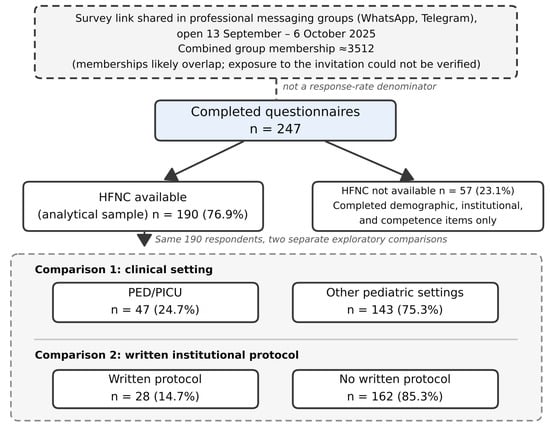
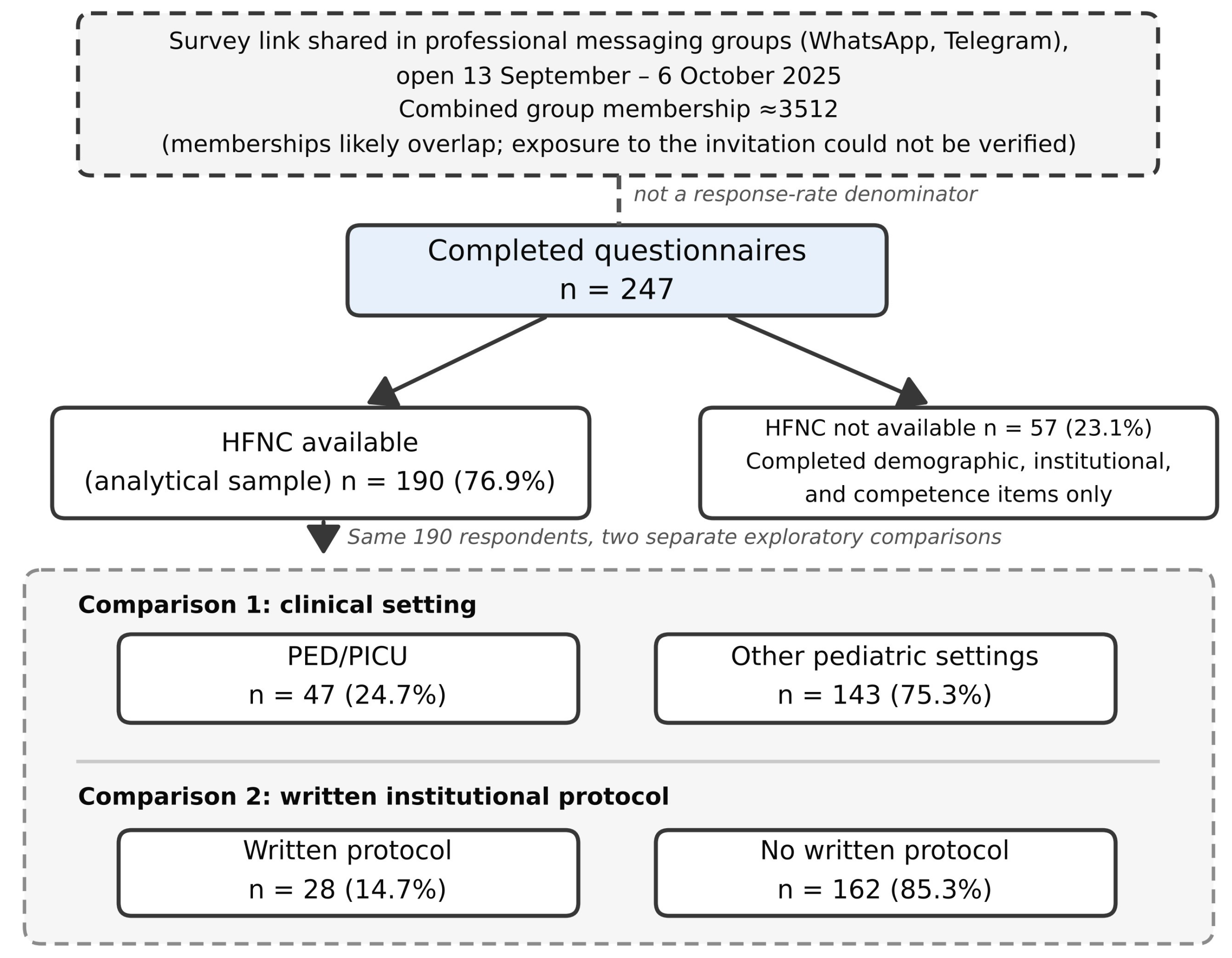
Analyses of clinical practices were restricted to the 190 respondents who reported HFNC availability at their institution. Practices were described for this analytical sample and compared (1) between respondents working in PEDs or PICUs and those working in other clinical settings, and (2) between respondents with and without a written institutional HFNC protocol (Figure 1).
Figure 1.
Survey dissemination, participation, and analytical subsamples. The figure of 3512 is the approximate combined membership of the messaging groups through which the survey link was shared; because memberships are likely to have overlapped and exposure to the invitation could not be verified, it was not used as a response-rate denominator. The two subgroup comparisons (clinical setting and written protocol availability) are separate, exploratory partitions of the same 190 respondents with HFNC access. Percentages for HFNC availability are based on all 247 respondents, and those for the subgroups on the 190 respondents with HFNC access. Abbreviations: HFNC, high-flow nasal cannula; PED, pediatric emergency department; PICU, pediatric intensive care unit.
Categorical response distributions were compared using Pearson’s chi-square test when expected cell counts were adequate. For sparse tables, p-values were estimated using a conditional Monte Carlo procedure based on fixed margins. Continuous variables (age and self-rated competence) were compared using Welch’s independent-samples t-test. For selected between-group comparisons, mean differences or percentage-point differences are reported with 95% confidence intervals (CIs). CIs for proportions were estimated using the Wilson score method, and intervals for differences between independent proportions were calculated using the Newcombe method. Post hoc power calculations were not performed; the precision of the protocol comparisons is conveyed by the confidence intervals. Subgroup analyses were exploratory and were not adjusted for multiple comparisons or for differences in case mix. Because institutional identifiers were not collected, percentages describe respondents reporting HFNC or protocol availability rather than the proportion of unique institutions, and within-institution clustering could not be accounted for. All statistical tests were two-sided, and a p-value of less than 0.05 was considered statistically significant.
To characterize the sample, the provincial distribution of respondents was compared descriptively with the 2024 province-level headcounts of all physicians and of specialist physicians published in Table 10.12 of the Health Statistics Yearbook of the Ministry of Health of Türkiye [16,17,18]. Because pediatric-specific provincial workforce distributions were not publicly available, this comparison describes geographic composition only and was not used as a formal test of representativeness.
2.5. Use of Generative Artificial Intelligence
During the preparation of this manuscript, the authors used ChatGPT Plus (GPT-5.6 Sol; OpenAI, San Francisco, CA, USA) and Google NotebookLM (Gemini 1.5 Pro; Google LLC, Mountain View, CA, USA) for language editing, formal structuring, and consistency checks in statistical reporting. During the revision, the authors used Claude (Opus 5.5; Anthropic, San Francisco, CA, USA) for language editing, proofreading, improving clarity and readability, performing consistency checks of the reported results, and refining the visual presentation and formatting of figures. All substantive research decisions and scientific interpretations were made by the authors, who reviewed and edited all AI-assisted output and take full responsibility for the content of this publication.
3. Results
3.1. Characteristics of the Respondents
A total of 247 physicians completed the survey (Figure 1). Of these, 173 (70.0%) were general pediatricians, 29 (11.7%) were PED physicians, 19 (7.7%) were PICU physicians, and the remaining 26 (10.5%) were other pediatric subspecialists. Of the 245 respondents with a known location, 215 (87.8%) practiced in metropolitan cities and 102 (41.6%) in Istanbul. Compared with the 2024 national province-level physician headcounts, respondents from Istanbul were overrepresented (41.6% vs. 22.5% of all physicians and 24.1% of specialist physicians), whereas respondents from provinces other than Istanbul, Ankara, and Izmir were underrepresented (42.0% vs. 58.2% and 57.5%, respectively; Tables S1 and S2; Figure S1). HFNC equipment was reported as available by 190 respondents (76.9%; 95% CI 71.3–81.7); because institutional identifiers were not collected, this figure describes respondents rather than unique institutions. Reported availability differed markedly by hospital type: 143/147 respondents (97.3%) working in teaching hospitals (university hospitals and training and research hospitals) reported HFNC availability, compared with 47/100 (47.0%) of those working in other hospitals (Table 1). All subsequent practice analyses were restricted to the 190 respondents with HFNC access. Respondents with HFNC access reported higher self-rated competence than those without access (4.02 ± 0.94 vs. 3.23 ± 1.27; mean difference 0.79, 95% CI 0.43–1.15; p < 0.001). In exploratory pairwise comparisons, respondents with more than 15 years of experience reported lower self-rated competence than those with 0–5 years of experience (3.46 vs. 3.98; mean difference −0.52, 95% CI −0.96 to −0.09; p = 0.019), whereas the 6–10- and 11–15-year groups did not differ significantly from the 0–5-year group.
Table 1.
Characteristics of respondents according to reported HFNC availability.
3.2. Diagnoses and Indications for HFNC Initiation
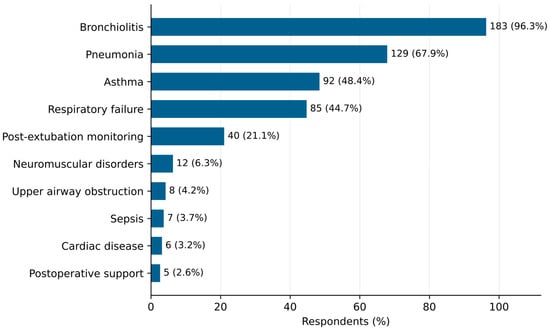
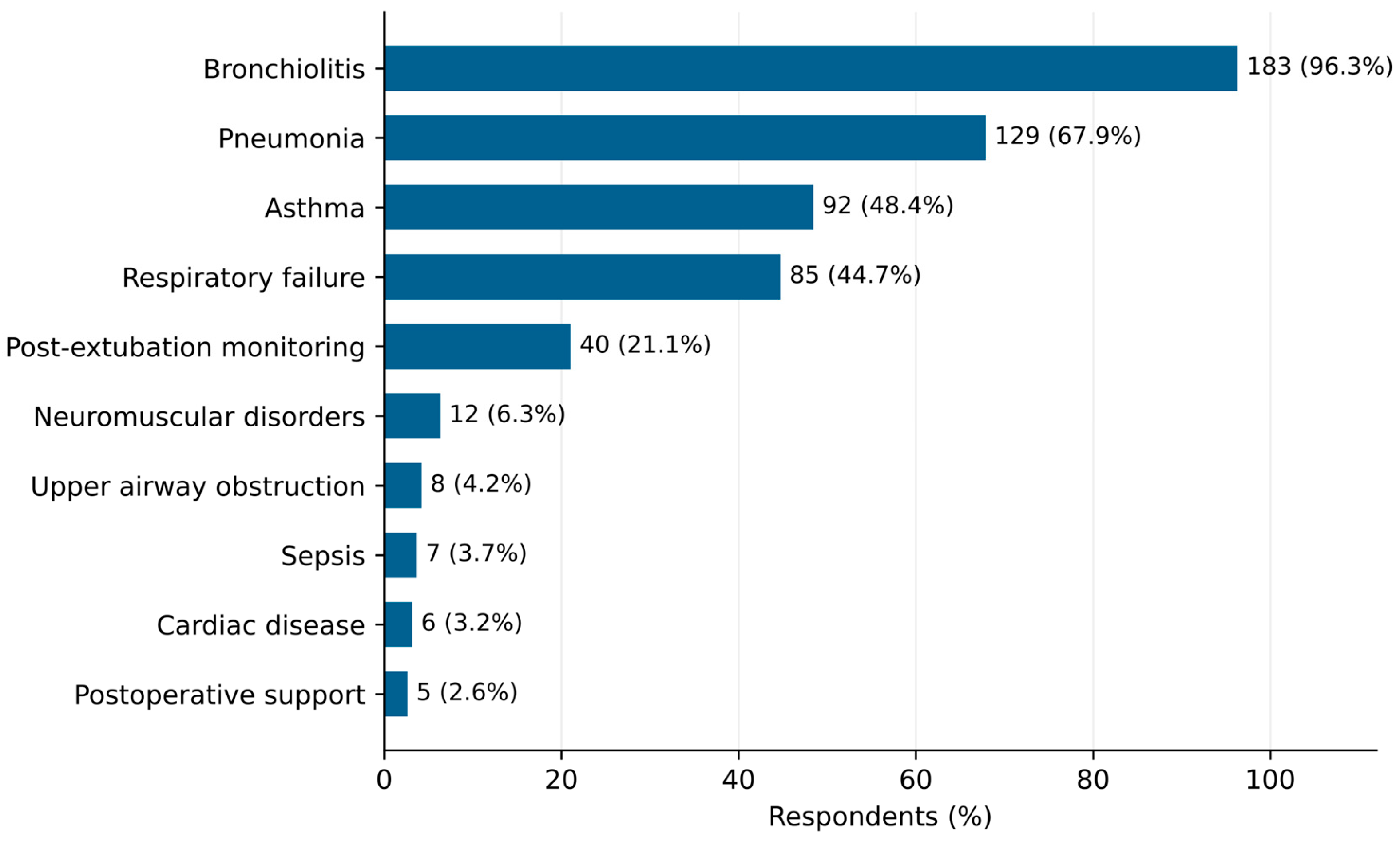
Among respondents with HFNC access, acute viral bronchiolitis was the most frequently reported diagnosis, reported by 183 respondents (96.3%; Figure 2). The most common indications for initiating HFNC were increased work of breathing, reported by 189 respondents (99.5%), and peripheral oxygen saturation (SpO2) below 92%, reported by 175 (92.1%; Table 2).
Figure 2.
Most common diagnoses and clinical situations for HFNC use among respondents with HFNC access (n = 190). Respondents could select up to three options. Abbreviations: HFNC, high-flow nasal cannula.
Table 2.
Most common clinical indications for HFNC (n = 190).
3.3. Differences by Clinical Setting: PED/PICU vs. Other Pediatric Settings
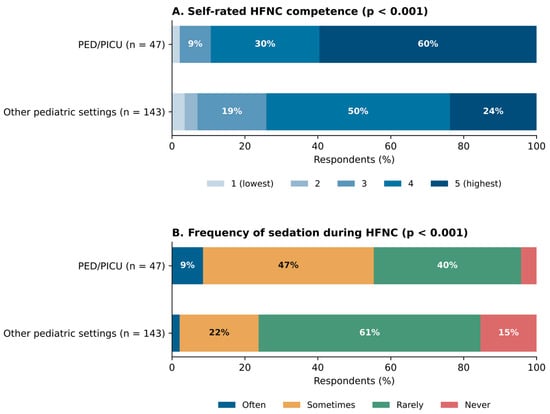
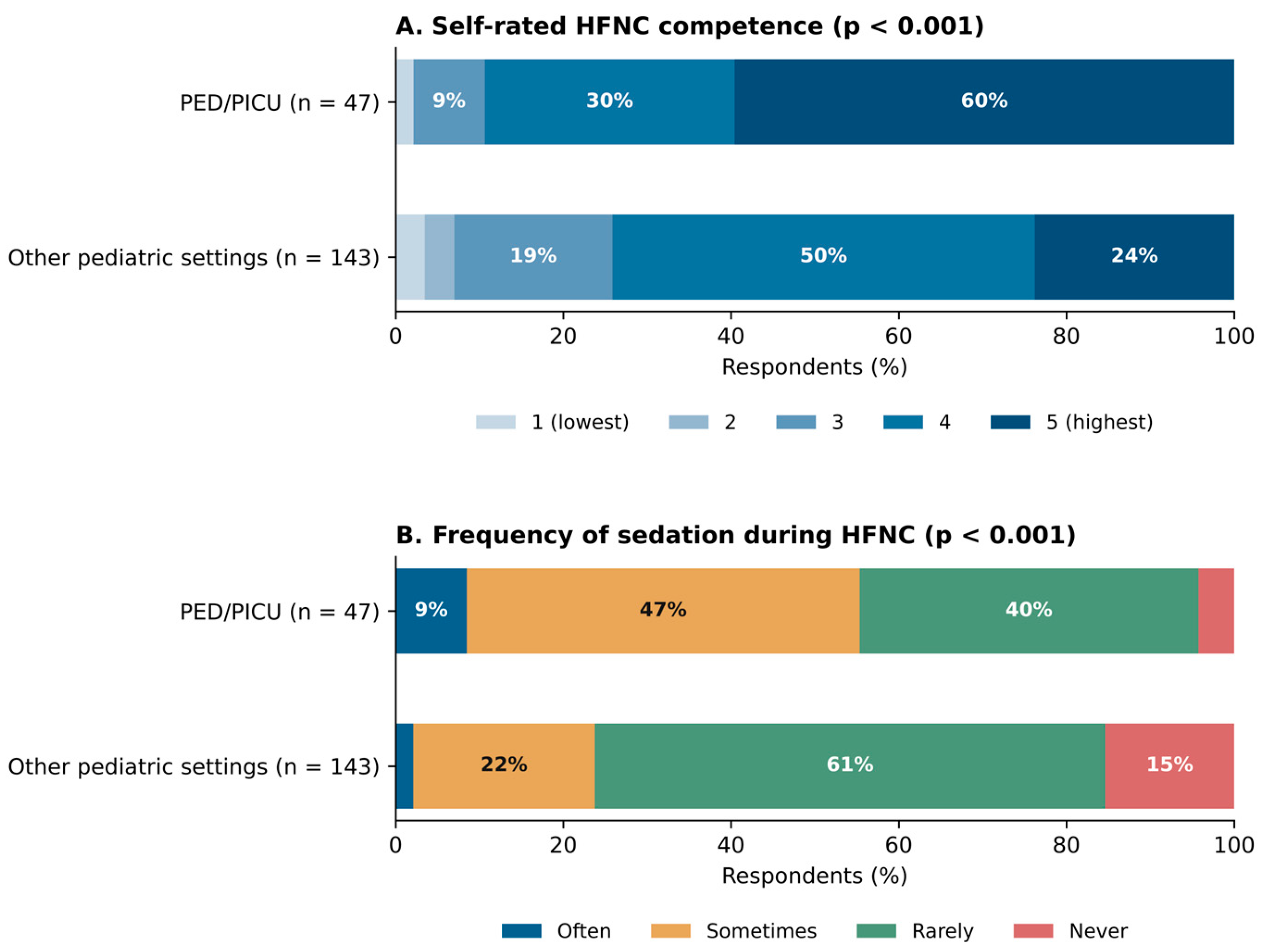
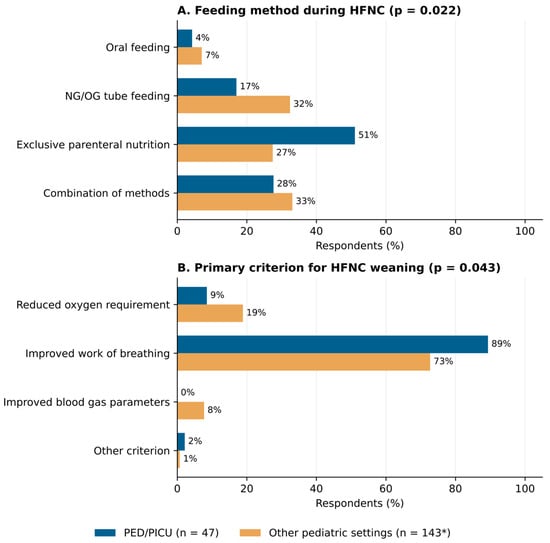
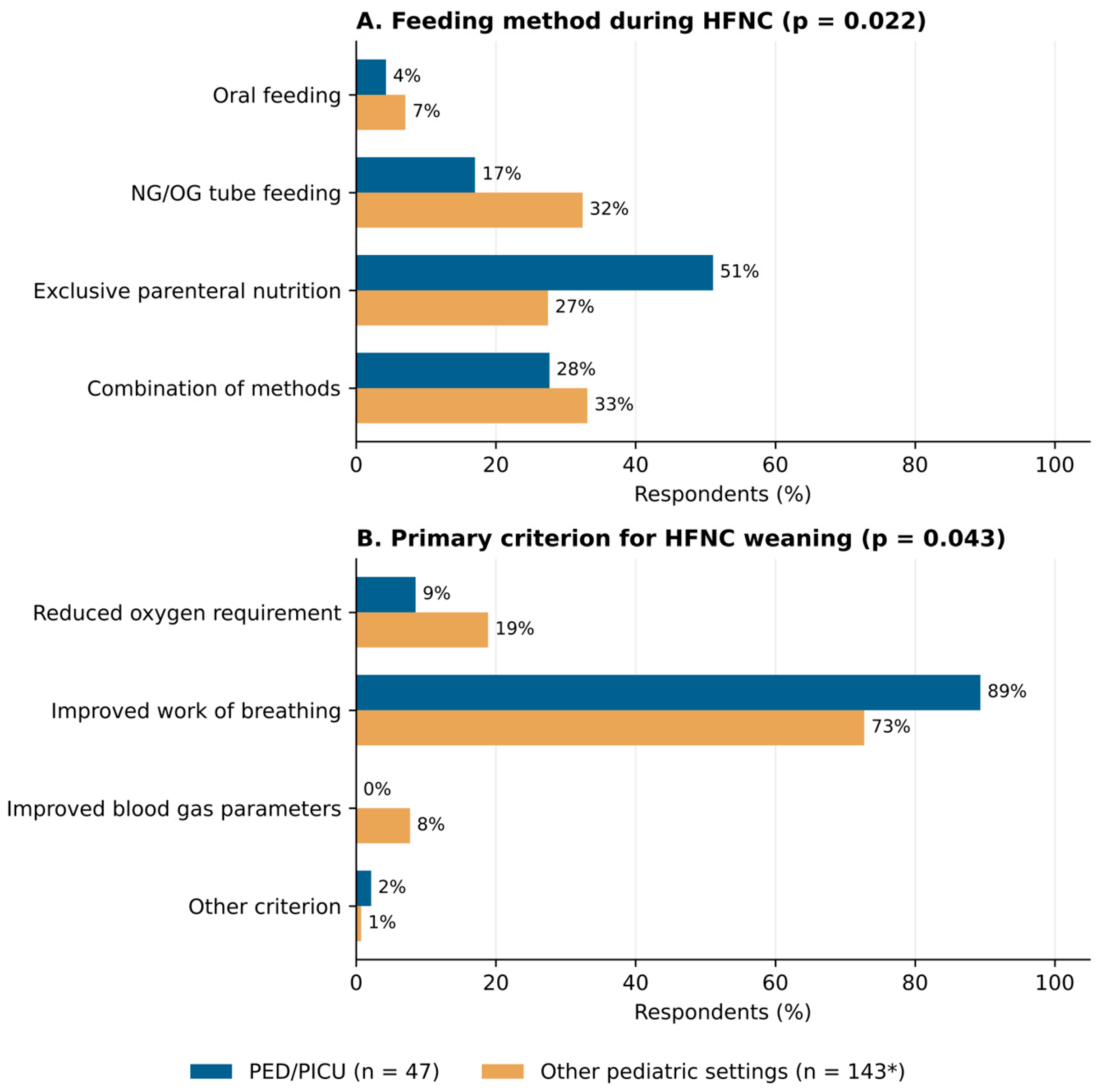
Respondents working in PEDs or PICUs reported higher self-rated HFNC competence than those working in other pediatric settings (4.45 ± 0.83 vs. 3.88 ± 0.94; mean difference 0.57, 95% CI 0.28–0.85; p < 0.001; Table 3; Figure 3A). The distribution of sedation frequency also differed (p < 0.001): 26/47 (55.3%) PED/PICU respondents and 34/143 (23.8%) respondents in other settings reported using sedation sometimes or often (Figure 3B; Table S3). Feeding practices differed as well (p = 0.022): exclusive parenteral nutrition was reported more often by PED/PICU respondents than by those in other settings (24/47 [51.1%] vs. 39/142 [27.5%]; difference 23.6 percentage points, 95% CI 7.7–38.8; Figure 4A; Table S3). Integrated mesh nebulizer use was reported by 23/47 (48.9%) PED/PICU respondents and by 50/143 (35.0%) respondents in other settings; this difference was not statistically significant (p = 0.088). The distribution of maximum HFNC flow did not differ significantly between settings (p = 0.828; Table 3).
Table 3.
Initial HFNC settings, monitoring practices, and weaning strategies according to clinical setting.
Figure 3.
Self-rated HFNC competence (A) and distribution of sedation frequency (B) according to clinical setting. Segments < 7% are not labeled. No respondent selected “always” for sedation frequency. Abbreviations: HFNC, high-flow nasal cannula; PED, pediatric emergency department; PICU, pediatric intensive care unit.
Figure 4.
Feeding method (A) and primary weaning criterion (B) during HFNC according to clinical setting. * For feeding method, n = 142 in other settings (one missing response). “Combination of methods” denotes free-text responses entered under the “other” option, all of which described combinations of oral, NG/OG tube, and/or parenteral feeding. The p-values test the overall distribution. Abbreviations: HFNC, high-flow nasal cannula; NG/OG, nasogastric/orogastric; PED, pediatric emergency department; PICU, pediatric intensive care unit.
The distribution of the primary weaning criterion also differed (p = 0.043): PED/PICU respondents more often selected improved work of breathing (89.4% vs. 72.7%) and less often selected reduced oxygen requirement (8.5% vs. 18.9%) or improved blood gas parameters (0% vs. 7.7%; Table 3; Figure 4B). Because this p-value was close to the significance threshold and no adjustment for multiple comparisons was applied, this finding should be interpreted with caution. The basis for choosing the initial flow, initial flow rate, timing of the first clinical reassessment, weaning method, and the FiO2 threshold for starting flow reduction did not differ significantly between settings (Table 3). All clinical-setting comparisons were exploratory and unadjusted; the observed differences may reflect patient age, diagnosis, illness severity, or clinician experience rather than the clinical setting itself.
3.4. Practices According to Written Protocol Availability
Only 28/190 respondents with HFNC access (14.7%; 95% CI 10.4–20.5) reported a written institutional protocol. Protocol availability was slightly higher among PED/PICU respondents than among those in other settings, but the difference was not statistically significant (9/47 [19.1%] vs. 19/143 [13.3%]; p = 0.325). No statistically significant differences were detected according to protocol availability in the basis for choosing the initial flow, initial flow rate, timing of the first clinical reassessment, maximum flow, or weaning strategies (all p > 0.05; Table S4). Likewise, no statistically significant differences were detected in the evaluated adjunctive practices, including nebulization, nasogastric tube use, feeding, criteria for starting enteral feeding, and sedation (Table 4). Self-rated competence also did not differ significantly by protocol availability (4.14 ± 0.89 vs. 4.00 ± 0.95; mean difference 0.14, 95% CI −0.23 to 0.52; p = 0.443). However, these estimates were imprecise. For example, exclusive parenteral nutrition was reported by 13/28 (46.4%) respondents with a protocol and 50/161 (31.1%) of those without (difference 15.4 percentage points, 95% CI −3.1 to 34.3), and many category-level confidence intervals extended beyond 20 percentage points in either direction (Table 4). Given the small protocol group, these results cannot exclude clinically meaningful differences and should not be interpreted as evidence of equivalence.
Table 4.
Adjunctive practices during HFNC therapy according to written protocol availability.
3.5. Perceived Comparative Effectiveness and Research Priorities
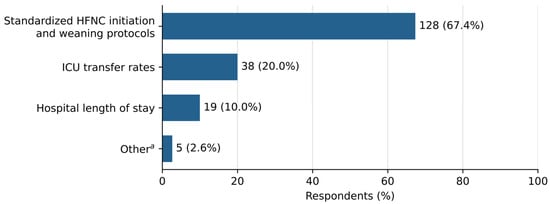
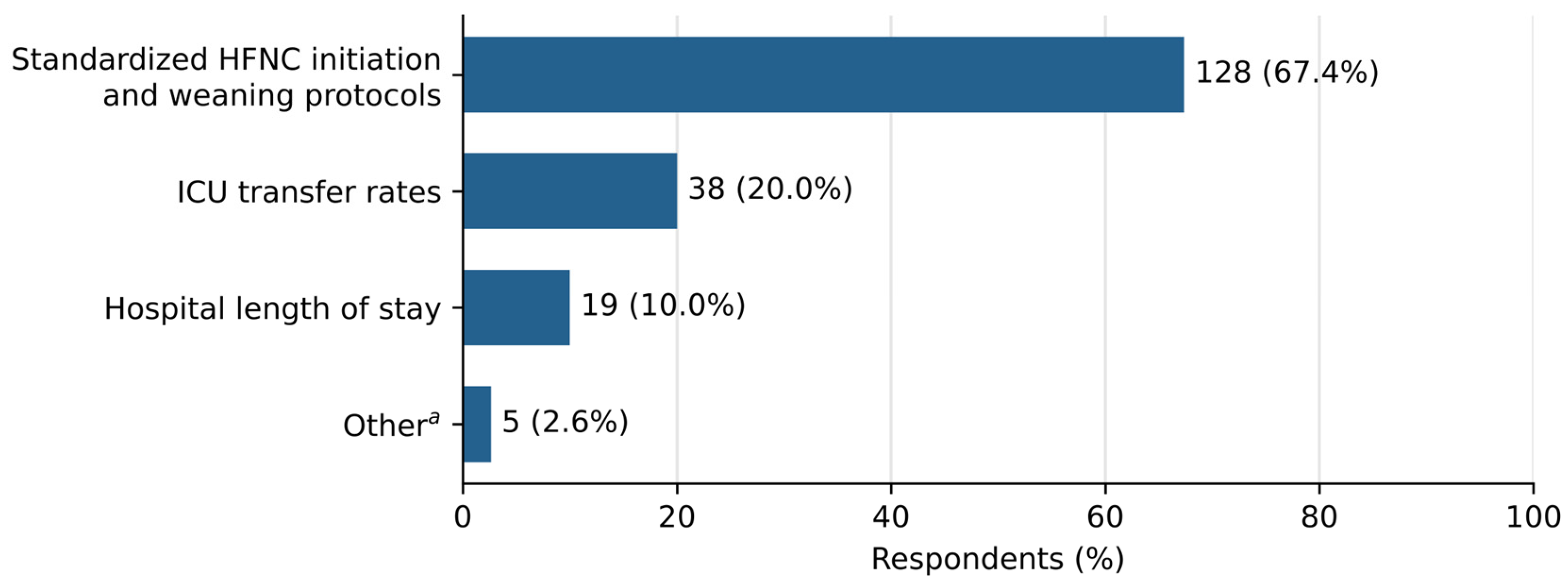
Among the 190 respondents who answered the item comparing HFNC with CPAP, 79 (41.6%) considered HFNC more effective than CPAP, 46 (24.2%) considered the two modalities equivalent, and 44 (23.2%) considered HFNC less effective. Six respondents (3.2%) reported not knowing, and 15 (7.9%) selected “Other.” Among those selecting “Other,” one respondent considered HFNC equivalent to CPAP, while five indicated that its comparative effectiveness depended on the patient’s clinical condition. The most frequently selected research priority, reported by 128 respondents (67.4%), was the development of optimal, standardized HFNC initiation and weaning protocols (Figure 5).
Figure 5.
Priorities for future HFNC research among respondents with HFNC access (n = 190). Respondents could select only one option. Percentages use the 190 respondents with HFNC access as the denominator. a Free-text responses entered under the “Other” option, each reported by one respondent: guidance for public hospitals, patient selection and monitoring, nebulization effectiveness, unnecessary HFNC use, and all of the above. Abbreviations: HFNC, high-flow nasal cannula; ICU, intensive care unit.
4. Discussion
In this survey of 247 respondents, predominantly from metropolitan cities and including general pediatricians as well as PED and PICU physicians, HFNC was widely reported as available, although much less often by respondents working outside teaching hospitals. Written institutional protocols were uncommon. Reported practices varied considerably across several domains of HFNC management, including initiation, reassessment, weaning, feeding, sedation, and nebulization. No statistically significant differences in reported practices were detected according to protocol availability; however, this comparison was limited by the small number of respondents reporting a written protocol (n = 28), and the wide confidence intervals are compatible with both no difference and clinically important differences. Moreover, comparing response distributions between groups does not show whether practices were more consistent within either group.
Previous surveys from Türkiye [12,13] and the review by Fainardi et al. [19] have also described substantial variability in HFNC practice, possibly reflecting the lack of standardized guidelines. Our study extends these findings by examining feeding, sedation, and nebulization alongside initiation and weaning within a single survey, and by exploring the relationship between written protocol availability and reported practice. Because the protocol group was small and the estimates were imprecise, our findings should not be taken to indicate that written protocols are ineffective. Protocol content, clinician awareness, implementation fidelity, adherence, and training were not measured in this survey; these factors therefore remain potential explanations for our findings and directions for future research rather than conclusions of the present study. Adequately powered studies, ideally with institution-level data, are needed to determine whether and how protocols influence bedside HFNC practice.
Most respondents reported an initial flow rate of 1 L/kg/min and a maximum flow rate of 2 L/kg/min. Pediatric studies have commonly used weight-based flow rates of 1–2 L/kg/min, and 2 L/kg/min has been proposed as the most effective flow with a low risk of adverse events in bronchiolitis [20]. Thus, despite variability in initial settings, the reported upper flow limits were broadly consistent with commonly described pediatric HFNC practice.
The inclusion of physicians practicing outside PEDs and PICUs is relevant because HFNC is increasingly initiated on general pediatric wards [10,20]. In a multicenter randomized trial of 1472 infants with bronchiolitis treated outside intensive care units in Australia and New Zealand, Franklin et al. found that high-flow therapy resulted in less frequent escalation of care due to treatment failure than standard oxygen therapy (12% vs. 23%), without significant differences in the duration of hospital stay or oxygen therapy [21]. In a randomized trial of children with moderate bronchiolitis managed in the emergency department and on the ward, Kepreotes et al. found that HFNC did not shorten the duration of oxygen therapy but was associated with less treatment failure and was frequently successful as rescue therapy [22]. These trials support ward-level HFNC use, but they also underscore the importance of clear criteria for patient selection, monitoring, and escalation when it is used outside critical care. In our survey, three-quarters of respondents with HFNC access worked outside PEDs or PICUs, and, in exploratory comparisons, several practices, including feeding, sedation, and the primary weaning criterion, differed from those reported by PED/PICU respondents. Ward-level guidance addressing these elements may therefore be particularly valuable.
The most frequent view among respondents was that HFNC is more effective than CPAP (41.6%). Although HFNC is generally better tolerated, current evidence remains insufficient to determine when and in which patients it can replace CPAP [19]. Meta-analyses in infants with bronchiolitis found no statistically significant difference in treatment failure between HFNC and CPAP, although point estimates favored CPAP and one analysis found a significantly higher risk of treatment failure with HFNC in a sensitivity analysis [23,24]. In contrast, in a large pragmatic trial in pediatric critical care units, HFNC was noninferior to CPAP for time to liberation from respiratory support [25]. The perception of HFNC as more effective may therefore partly reflect its ease of application and greater patient comfort rather than superior efficacy.
Reported practices also varied considerably in supportive care during HFNC, including feeding, sedation, and nebulization. PED/PICU respondents more often reported exclusive parenteral nutrition than respondents in other settings, possibly reflecting higher patient acuity and concerns about aspiration and respiratory deterioration [26,27]. Because patient age, diagnosis, and illness severity were not captured, this explanation remains speculative. Observational data, however, suggest that feeding during HFNC is generally well tolerated. Sarkis et al. found that, after adjustment, enteral feeding in critically ill children with bronchiolitis was associated with fewer adverse events at all flow levels—mainly less frequent escalation of respiratory support—as well as with earlier achievement of nutritional goals and shorter durations of HFNC support and hospital stay [26]. In otherwise healthy children with bronchiolitis who received HFNC on the ward and were fed orally from admission, Gray et al. reported adverse feeding events in 1.6% and no cases of aspiration pneumonia [27]. As HFNC use expands beyond intensive care, feeding during HFNC appears to be a priority for ward-level guidance.
Sedation practices also differed by clinical setting. HFNC has been associated with less frequent use of sedation than CPAP in a randomized trial in pediatric critical care [25] and in a smaller observational study [28]. In our survey, overall reported sedation use was low (rarely or never: 130/190 [68.4%]). PED/PICU respondents reported using sedation more often, which may reflect greater illness severity, agitation, or difficulty tolerating respiratory support among patients managed in these settings.
Concurrent nebulization during HFNC remains one of the least standardized aspects of care. Bench and clinical studies suggest that aerosol delivery is more efficient with a vibrating mesh nebulizer integrated into the HFNC circuit and with reduced gas flow during drug delivery [29,30]. Respondents reported a wide range of nebulization techniques, consistent with the national survey by Anıl et al., in which no standard method was identified [12]. Although integrated mesh nebulizers were reported by 38.4% of respondents with HFNC access, mesh nebulization combined with reduced HFNC flow—the strategy expected to optimize aerosol delivery—was reported by only 9.5%. Because in vivo data on optimal aerosol delivery in children receiving HFNC remain limited [29,30], this variation represents an opportunity for standardization and further research rather than evidence of incorrect practice.
In exploratory pairwise comparisons, respondents with more than 15 years of experience reported lower self-rated HFNC competence than those with 0–5 years of experience. Because this finding emerged from one of three unadjusted pairwise comparisons with the 0–5-year group, it should be interpreted with caution. One possible explanation is that HFNC has become widespread in pediatric practice only relatively recently, so senior physicians may have had less exposure to it during their training. In an adult intensive care survey, Besnier et al. suggested that differences between junior and senior physicians might reflect greater confidence among junior physicians, who had used HFNC since the beginning of their practice [31]. Similarly, in a survey on de-implementing HFNC in bronchiolitis, Gupta et al. found that providers’ attitudes toward de-implementation were associated with their perceived familiarity with the evidence but not with their years of clinical experience [32]. Specific exposure to HFNC may therefore matter more than overall years of professional experience, a hypothesis that warrants further study.
This study has several limitations. First, recruitment relied on voluntary participation through professional messaging groups rather than a probability-based sampling frame, creating potential selection bias if physicians with greater interest in or experience with HFNC were more likely to respond; such bias would tend to overestimate HFNC availability, protocol availability, and self-rated competence. Because group membership totals did not indicate the number of unique eligible physicians exposed to the survey invitation, a conventional response rate could not be calculated, and nonresponse bias could not be quantified directly. Second, geographic comparison with national administrative physician data indicated an overrepresentation of respondents from Istanbul, although pediatric-specific provincial workforce distributions were unavailable for a direct benchmark. Most respondents practiced in metropolitan cities, limiting the transferability of results to smaller hospitals and rural settings. Moreover, because reported HFNC availability depended strongly on hospital type, the pooled availability estimate is sensitive to the hospital-type composition of the sample, and hospital-type-specific figures are more informative. Some city hospitals also hold training and research hospital status; because respondents from these hospitals reported their hospital type as a city hospital, they were classified as other hospitals. Third, because respondents’ institutions could not be uniquely identified, responses from the same hospital may be correlated owing to shared institutional practice patterns. Such clustering could make p-values appear smaller than warranted and give greater weight to institutions with several respondents; for the same reason, reported equipment or protocol availability cannot be interpreted as institution-level prevalence. Fourth, only 28 respondents reported having a written protocol, limiting statistical power and the precision of comparisons; nonsignificant findings should not be interpreted as evidence of equivalence. Fifth, subgroup comparisons were exploratory, did not account for differences in clinical case mix, and were not adjusted for multiple testing; isolated findings near the significance threshold, such as the difference in the primary weaning criterion, should be interpreted cautiously. In addition, because training status was not recorded, the proportion of subspecialty fellows in each comparison group is unknown, and differences in self-rated competence and practices between settings may partly reflect differences in training level rather than clinical setting alone. Sixth, although the survey was developed through literature review and expert consultation and was pilot-tested, no formal content-validity index or psychometric reliability assessment was performed; self-rated competence was measured with a single item; and the responses of the 30 pilot participants who completed the final version were included in the analysis. Finally, all data were self-reported and cross-sectional, and reported practices may differ from actual bedside practice. Despite these limitations, this study extends earlier surveys from Türkiye centered on pediatric emergency and intensive care by documenting self-reported HFNC management across a broader range of pediatric practice settings, including feeding, weaning, sedation, nebulization, and the reported availability of written protocols.
5. Conclusions
Among responding physicians in Türkiye, predominantly from metropolitan cities, HFNC was widely reported as available, particularly by those working in teaching hospitals, whereas written institutional protocols were uncommon. Reported practices varied considerably in several key aspects of management, including initiation, reassessment, weaning, feeding, sedation, and nebulization, and, in exploratory comparisons, several practices differed between PED/PICU and other pediatric settings. No statistically significant differences in reported practices were detected according to protocol availability, but this comparison was limited by the small number of respondents with a written protocol. Evidence-based protocols, accompanied by implementation support and competency-based training, should be developed and evaluated, particularly for ward-level HFNC care.
Supplementary Materials
The following supporting information can be downloaded at: https://www.mdpi.com/article/10.3390/children13121621/s1, File S1: HFNC survey questionnaire (English version); Table S1: Geographic composition of the HFNC survey respondents and the national physician workforce; Table S2: National pediatric workforce context and evidence beyond geography; Table S3: Selected clinical-setting contrasts for sedation and feeding; Table S4: Initial HFNC settings, monitoring practices, and weaning strategies according to written protocol availability; Figure S1: Geographic composition of survey respondents and the national physician workforce. References [33,34] are cited in the Supplementary Materials.
Author Contributions
Conceptualization, E.E.-A., B.A. and N.Y.; Methodology, E.E.-A., B.A., Z.B. and N.Y.; Formal analysis, Z.B.; Investigation, E.E.-A., B.A. and E.Z.A.; Data curation, E.E.-A., B.A., E.Z.A. and Z.B.; Writing—original draft preparation, E.E.-A.; Writing—review and editing, E.E.-A., B.A., E.Z.A., Z.B. and N.Y.; Visualization, E.E.-A.; Supervision, N.Y.; Project administration, E.E.-A. and E.Z.A. All authors have read and agreed to the published version of the manuscript.
Funding
This research received no external funding.
Institutional Review Board Statement
The study was conducted in accordance with the Declaration of Helsinki and approved by the Clinical Research Ethics Committee of Marmara University Faculty of Medicine (protocol code 09.2025.25-0547; date of approval: 20 June 2025).
Informed Consent Statement
Informed consent was obtained from all subjects involved in the study. The first page of the online survey described the purpose, scope, and confidentiality of the study, and participants provided consent through an online consent form; those who declined could not access the questionnaire.
Data Availability Statement
The data supporting the findings of this study are available from the corresponding author upon reasonable request. The data are not publicly available owing to ethical restrictions related to participant confidentiality.
Acknowledgments
During the preparation of this manuscript, the authors used ChatGPT Plus (GPT-5.6 Sol; OpenAI) and Google NotebookLM (Gemini 1.5 Pro; Google) for the purposes of language editing, formal structuring, and consistency checks in statistical reporting. During the revision of this manuscript, the authors used Claude (Opus 5.5; Anthropic) for the purposes of language editing, proofreading, improving clarity and readability, performing consistency checks of the reported results, and refining the visual presentation and formatting of figures. All substantive research decisions and scientific interpretations were made by the authors. The authors have reviewed and edited the output and take full responsibility for the content of this publication.
Conflicts of Interest
The authors declare no conflicts of interest.
Abbreviations
The following abbreviations are used in this manuscript: CHERRIES, Checklist for Reporting Results of Internet E-Surveys; CI, confidence interval; CPAP, continuous positive airway pressure; FiO2, fraction of inspired oxygen; HFNC, high-flow nasal cannula; ICU, intensive care unit; NG, nasogastric; OG, orogastric; PED, pediatric emergency department; PICU, pediatric intensive care unit; SD, standard deviation; SpO2, peripheral oxygen saturation; STROBE, Strengthening the Reporting of Observational Studies in Epidemiology.
References
- Hutchings, F.A.; Hilliard, T.N.; Davis, P.J. Heated humidified high-flow nasal cannula therapy in children. Arch. Dis. Child. 2015, 100, 571–575. [Google Scholar] [CrossRef] [Scilit]
- Dysart, K.; Miller, T.L.; Wolfson, M.R.; Shaffer, T.H. Research in high flow therapy: Mechanisms of action. Respir. Med. 2009, 103, 1400–1405. [Google Scholar] [CrossRef] [Scilit]
- Kwon, J.W. High-flow nasal cannula oxygen therapy in children: A clinical review. Clin. Exp. Pediatr. 2020, 63, 3–7. [Google Scholar] [CrossRef] [Scilit]
- Zhao, X.; Qin, Q.; Zhang, X. Outcomes of high-flow nasal cannula vs. nasal continuous positive airway pressure in young children with respiratory distress: A systematic review and meta-analysis. Front. Pediatr. 2021, 9, 759297. [Google Scholar] [CrossRef] [Scilit]
- Klingenberg, C.; Pettersen, M.; Hansen, E.A.; Gustavsen, L.J.; Dahl, I.A.; Leknessund, A.; Kaaresen, P.I.; Nordhov, M. Patient comfort during treatment with heated humidified high flow nasal cannulae versus nasal continuous positive airway pressure: A randomised cross-over trial. Arch. Dis. Child. Fetal Neonatal Ed. 2014, 99, F134–F137. [Google Scholar] [CrossRef] [Scilit]
- Elmitwalli, I.; Abdelhady, E.; Kalsotra, S.; Gehred, A.; Tobias, J.D.; Olbrecht, V.A. Use of high-flow nasal cannula versus other noninvasive ventilation techniques or conventional oxygen therapy for respiratory support following pediatric cardiac surgery: A systematic review and meta-analysis. Paediatr. Anaesth. 2024, 34, 519–531. [Google Scholar] [CrossRef] [Scilit]
- Ballestero, Y.; De Pedro, J.; Portillo, N.; Martinez-Mugica, O.; Arana-Arri, E.; Benito, J. Pilot clinical trial of high-flow oxygen therapy in children with asthma in the emergency service. J. Pediatr. 2018, 194, 204–210.e3. [Google Scholar] [CrossRef] [Scilit]
- Lionello, F.; Lapia, F.; Molena, B.; Padoan, A.; Lococo, S.; Arcaro, G.; Guarnieri, G.; Vianello, A. The safety of a high-flow nasal cannula in neuromuscular disease patients with acute respiratory failure: A retrospective case-series study. J. Clin. Med. 2023, 12, 6061. [Google Scholar] [CrossRef] [Scilit]
- Turnham, H.; Agbeko, R.S.; Furness, J.; Pappachan, J.; Sutcliffe, A.G.; Ramnarayan, P. Non-invasive respiratory support for infants with bronchiolitis: A national survey of practice. BMC Pediatr. 2017, 17, 20. [Google Scholar] [CrossRef] [Scilit]
- Hosheh, O.; Edwards, C.T.; Ramnarayan, P. A nationwide survey on the use of heated humidified high flow oxygen therapy on the paediatric wards in the UK: Current practice and research priorities. BMC Pediatr. 2020, 20, 109. [Google Scholar] [CrossRef] [Scilit]
- Cheng, A.Y.; Simon, H.K.; Miller, J.; Wetzel, M.; Zmitrovich, A.; Hebbar, K.B. Survey of current institutional practices in the use of high-flow nasal cannula for pediatric patients. Pediatr. Emerg. Care 2022, 38, e151–e156. [Google Scholar] [CrossRef] [Scilit]
- Anıl, M.; Anıl, A.B.; Kamit, F. Comparison of opinions and practices of pediatric intensive care and pediatric emergency departments in high-flow nasal cannula oxygen therapy: A national survey study. J. Pediatr. Emerg. Intensive Care Med. 2022, 9, 101–108. [Google Scholar] [CrossRef] [Scilit]
- Üdürgücü, M.; Yener, N.; Albayrak, H. The high-flow nasal cannula practices of pediatric intensive care and pediatric emergency specialists in Turkey. J. Pediatr. Emerg. Intensive Care Med. 2022, 9, 162–167. [Google Scholar] [CrossRef] [Scilit]
- von Elm, E.; Altman, D.G.; Egger, M.; Pocock, S.J.; Gøtzsche, P.C.; Vandenbroucke, J.P.; STROBE Initiative. The Strengthening the Reporting of Observational Studies in Epidemiology (STROBE) statement: Guidelines for reporting observational studies. J. Clin. Epidemiol. 2008, 61, 344–349. [Google Scholar] [CrossRef] [Scilit]
- Eysenbach, G. Improving the quality of Web surveys: The Checklist for Reporting Results of Internet E-Surveys (CHERRIES). J. Med. Internet Res. 2004, 6, e34. [Google Scholar] [CrossRef] [Scilit]
- Republic of Türkiye Ministry of Health. Health Statistics Yearbook 2024; Table 10.12. Available online: https://www.saglik.gov.tr/TR-114952/saglik-istatistikleri-yilligi-2024.html (accessed on 7 November 2026).
- Kaya, E. Türkiye Sağlık İstatistikleri Arşivi: Province-Level Physician Counts, 2024 (Digitized from the Ministry of Health. Health Statistics Yearbook 2024, Table 10.12). Available online: https://saglikistatistikleri.com/gosterge.php?g=toplam_hekim&yil=2024 (accessed on 7 November 2026).
- Kaya, E. Türkiye Sağlık İstatistikleri Arşivi: Province-Level Specialist Physician Counts, 2024 (Digitized from the Ministry of Health. Health Statistics Yearbook 2024, Table 10.12). Available online: https://saglikistatistikleri.com/gosterge.php?g=uzman_hekim&yil=2024 (accessed on 7 November 2026).
- Fainardi, V.; Abelli, L.; Muscarà, M.; Pisi, G.; Principi, N.; Esposito, S. Update on the Role of High-Flow Nasal Cannula in Infants with Bronchiolitis. Children 2021, 8, 66. [Google Scholar] [CrossRef] [Scilit]
- Venanzi, A.; Di Filippo, P.; Santagata, C.; Di Pillo, S.; Chiarelli, F.; Attanasi, M. Heated Humidified High-Flow Nasal Cannula in Children: State of the Art. Biomedicines 2022, 10, 2353. [Google Scholar] [CrossRef] [Scilit]
- Franklin, D.; Babl, F.E.; Schlapbach, L.J.; Oakley, E.; Craig, S.; Neutze, J.; Furyk, J.; Fraser, J.F.; Jones, M.; Whitty, J.A.; et al. A randomized trial of high-flow oxygen therapy in infants with bronchiolitis. N. Engl. J. Med. 2018, 378, 1121–1131. [Google Scholar] [CrossRef] [Scilit]
- Kepreotes, E.; Whitehead, B.; Attia, J.; Oldmeadow, C.; Collison, A.; Searles, A.; Goddard, B.; Hilton, J.; Lee, M.; Mattes, J. High-flow warm humidified oxygen versus standard low-flow nasal cannula oxygen for moderate bronchiolitis (HFWHO RCT): An open, phase 4, randomised controlled trial. Lancet 2017, 389, 930–939. [Google Scholar] [CrossRef] [Scilit]
- Dafydd, C.; Saunders, B.J.; Kotecha, S.J.; Edwards, M.O. Efficacy and safety of high flow nasal oxygen for children with bronchiolitis: Systematic review and meta-analysis. BMJ Open Respir. Res. 2021, 8, e000844. [Google Scholar] [CrossRef] [Scilit]
- Barot, K.S.; Adusumilli, A.; Fathema, T.; Kumar Jha, S.; Hamid, I.M.; Chaudhari, S.S.; Wei, C.R.; Amin, A. Comparative efficacy of continuous positive airway pressure versus high-flow nasal cannula therapy in children with acute bronchiolitis: A systematic review and meta-analysis. Cureus 2025, 17, e81826. [Google Scholar] [CrossRef] [Scilit]
- Ramnarayan, P.; Richards-Belle, A.; Drikite, L.; Saull, M.; Orzechowska, I.; Darnell, R.; Sadique, Z.; Lester, J.; Morris, K.P.; Tume, L.N.; et al. Effect of high-flow nasal cannula therapy vs continuous positive airway pressure therapy on liberation from respiratory support in acutely ill children admitted to pediatric critical care units: A randomized clinical trial. JAMA 2022, 328, 162–172. [Google Scholar] [CrossRef] [Scilit]
- Sarkis, R.; Liu, W.; DeTallo, C.; Baloglu, O.; Latifi, S.Q.; Agarwal, H.S. Association of enteral feeds in critically ill bronchiolitis patients supported by high-flow nasal cannula with adverse events and outcomes. Eur. J. Pediatr. 2023, 182, 4015–4025. [Google Scholar] [CrossRef] [Scilit]
- Gray, S.; Lee, B.; Levy, M.; Rungvivatjarus, T.; Patel, A.; Mannino Avila, E.; Fisher, E.; Rhee, K.E. Oral feeding on high-flow nasal cannula in children hospitalized with bronchiolitis. Hosp. Pediatr. 2023, 13, 159–167. [Google Scholar] [CrossRef] [Scilit]
- Abdel Gawad, T.A.; Ibrahim, H.M.; Awadallah, S.M.; Hassan, M.H.; Magdy, S.M. Assessment of outcome and tolerability of high velocity nasal insufflation and continuous positive airway pressure in children with acute respiratory distress. BMC Pediatr. 2026, 26, 326. [Google Scholar] [CrossRef] [Scilit]
- Nolasco, S.; Manti, S.; Leonardi, S.; Vancheri, C.; Spicuzza, L. High-flow nasal cannula oxygen therapy: Physiological mechanisms and clinical applications in children. Front. Med. 2022, 9, 920549. [Google Scholar] [CrossRef] [Scilit]
- Calabrese, C.; Annunziata, A.; Mariniello, D.F.; Allocca, V.; Imitazione, P.; Cauteruccio, R.; Simioli, F.; Fiorentino, G. Aerosol delivery through high-flow nasal therapy: Technical issues and clinical benefits. Front. Med. 2023, 9, 1098427. [Google Scholar] [CrossRef] [Scilit]
- Besnier, E.; Hobeika, S.; Nseir, S.; Lambiotte, F.; Du Cheyron, D.; Sauneuf, B.; Misset, B.; Tamion, F.; Schnell, G.; Richecoeur, J.; et al. High-flow nasal cannula therapy: Clinical practice in intensive care units. Ann. Intensive Care 2019, 9, 98. [Google Scholar] [CrossRef] [Scilit]
- Gupta, N.; Port, C.; Jo, D.; Bastawrous, D.; Busch, H.; Weis, A.; Newcomb, A. Acceptability of deimplementing high-flow nasal cannula in pediatric bronchiolitis. Hosp. Pediatr. 2022, 12, 899–906. [Google Scholar] [CrossRef] [Scilit]
- Grand National Assembly of Türkiye. Plenary Session Transcript, 31st Sitting, 13 December 2025 (Statement by the Minister of Health on the Numbers of Pediatric Specialists and Residents). Available online: https://cdn.tbmm.gov.tr/TbmmWeb/Tutanak/28/4/31/Tam/c95e5c41-489f-4f42-9d11-ba532ed549be.html (accessed on 7 November 2026).
- Çelik, P.; Yoldaş, T.Ç.; Balcı, Ö.; Elitok, G.K.; Ünal, A.; Sucaklı, İ.A.; Erçel, N.Ö.; Sarıcı, D.; Çelik, T. Pediatricians’ attitudes, practices, and perceived barriers to school readiness. Turk. J. Pediatr. 2023, 65, 278–289. [Google Scholar] [CrossRef] [Scilit]

Disclaimer/Publisher’s Note: The statements, opinions and data contained in all publications are solely those of the individual author(s) and contributor(s) and not of MDPI and/or the editor(s). MDPI and/or the editor(s) disclaim responsibility for any injury to people or property resulting from any ideas, methods, instructions or products referred to in the content. |
© 2026 by the authors. Licensee MDPI, Basel, Switzerland. This article is an open access article distributed under the terms and conditions of the Creative Commons Attribution (CC BY) license.