


Highlights
What are the main findings?
- In use at a pathway to mental health and neurodevelopmental health care for children under 6 through a regional coordinated access and service navigation program, The HEADS-ED Under 6 showed high sensitivity (0.95), specificity (0.90), and accuracy (0.91) in guiding referrals to services.
- In total, 93.0% of referrals were accepted by the referred-to agency.
What are the implications of the main findings?
- The HEADS-ED Under 6 can be used effectively by non-specialist healthcare workers to accurately guide referrals to specialized mental health and neurodevelopmental health care for infants and children under 6.
- The HEADS-ED Under 6 can be used in the context of a coordinated access and service navigation program to help match the client’s acuity to a service, with a high rate of referral acceptance.
Abstract
Background/Objectives: To examine the effectiveness of the HEADS-ED Under 6 as a tool for determining the appropriate pathways to care for infants, toddlers, and children under 6. Methods: We used a retrospective cohort design to analyze client acuity and referrals at a centralized mental health and coordinated access program for infants, children, and youth (1Call1Click.ca). Specifically, we examined client acuity using HEADS-ED Under 6 total scores, accuracy of referrals, and the acceptance rate of referrals for clients at the agencies and hospital resources they were referred to. Clients aged 0–6 years who received referrals (N = 1637) between March 2023 and December 2025 were included in the analyses. Results: The HEADS-ED Under 6 showed high sensitivity (0.95), specificity (0.90), and accuracy (0.91) in guiding referrals to services. Client referrals were made with a high degree of acceptance, with 93.0% of referrals accepted by the referred-to agencies, community and hospital programs. Conclusions: The HEADS-ED Under 6 is a useful tool for assessing need in infants and children under 6 to accurately guide referrals to care resources.
1. Introduction
It is estimated that between 13–27% of children under the age of 6 have mental health (MH) challenges [1,2]. While the measures of the prevalence of neurodevelopmental health (NDH) concerns vary enormously worldwide, estimates in North America suggest a prevalence of 15–20% [3]. The need for efficient pathways to care for infants and young children facing NDH and MH challenges is important for the administration of timely care, the evaluation of early identification methods, and the future outcomes of treatment [4].
Inappropriate or inaccurate referrals delay access to care and increase wasteful administrative burden. However, rates of referral rejection are infrequently reported [5,6]. In the United Kingdom, from 2015–2021, between 10–67% year-to-year of specialist MH referrals for children aged 2 to 4 were rejected by the referred-to care provider, and in Denmark, a referral rejection rate for youth mental health referrals of 25.3% has been reported [5,6]. At CHEO, a Children’s Hospital in Ottawa, Canada, over 27% of referrals were denied between 2019–2022 across all specialized care clinics, many of which were duplicate referrals [7]. Mismatched referrals necessarily cause delays in accessing the correct care and wasted time for care providers who must review the referrals before rejecting them.
Screening tools are an important mechanism for determining which children to refer to more specialized care, improving the ability of non-specialist providers to identify concerns and also addressing equity concerns [8]. However, the most used screening tools for children under 6 are quite long and reliant on parent or teacher report [4,9]. A recent scoping review found only 3 brief, general screening tools designed for healthcare providers to use with infants and children aged 0–6, all of which had been developed over 35 years ago [10]. Systematic reviews and meta-analyses have found more variation in parent report measures of MH problems in preschool-aged children, varying from 5.2% to 35%, whereas the percentage identified by primary care or community practitioners was similar (17–18%) to that identified by standardized psychiatric diagnostic criteria (18.4%) [4]. However, the same research notes that there is little current evidence that the infants and children referred to specialist care are being accepted for specialist care, and urges the frequent use of standardized screening tools and monitoring or referral pathways to ensure timely access to appropriate MH care for young children.
Communimetric tools are intended to identify and communicate a client’s areas of need and the corresponding level of action appropriate to those needs, focusing on the need to communicate a level of action [11]. The HEADS-ED Under 6 is a recently developed communimetric screening tool to help guide a healthcare provider through a brief psychosocial interview with the caregivers of an infant or child under age 6 [12,13]. It covers a range of domains relevant to the MH and NDH of infants under the age of 6, including Home and caregivers, Eating and sleeping, Activities and peers, Development, speech/motor/language, Safety, Emotions, behaviours, and Discharge or Current resources. The HEADS-ED Under 6 has shown very good to excellent utility validity in previous studies [13].
1Call1Click.ca is a coordinated access and service navigation program serving parts of Eastern Ontario, designed to connect infants, children, youth and families from birth to age 21 to MH, NDH, or substance use healthcare suited to their specific needs. When a child, youth or family has an intake with 1Call1Click.ca, they undergo a robust training protocol including a series of demographic questions, a discussion of client needs and goals, and screening tools. 1Call1Click.ca uses the CASH Bundle for screening, which includes the HEADS-ED Under 6 [14] as a part of its MH and NDH pathway for infants and children under the age of 6. While the screening tools in the CASH Bundle are valid and reliable, the accuracy with which they can be used to refer families to care has not yet been explored.
In this manuscript, we examine the HEADS-ED Under 6 in guiding the referral decisions of 1Call1Click.ca intake workers for infants and children before their sixth birthday. We examine how the clients match the level of acuity served by the referrals provided in the form of Sensitivity, Specificity, Negative Predictive Value, Positive Predictive Value, and overall Accuracy. We also provide analyses of Threshold Probability for the HEADS-ED Under 6 in relation to referrals provided, and the number of referrals rejected by the referred-to community agency of hospital service as a secondary measure of referral accuracy.
2. Materials and Methods
2.1. Participants and Study Inclusion Criteria
1Call1Click.ca serves an area of Eastern Ontario home to over 1.5 million people, including 5 counties and a large metropolitan area (Ottawa). Referral decisions for infants and children under 6 are made using several considerations, including HEADS-ED Under 6 outcomes, the needs and goals of the family, and considerations including geographic location and preferred language of service. To limit the extent to which these other considerations influenced referrals, we limited this study to clients who resided within the city of Ottawa at the time of their intake.
The clients and families (N = 1637) included in this study are those who resided in the city of Ottawa and completed an intake at 1Call1Click.ca between March 2023 and December 2025 regarding an infant, toddler, or child prior to their sixth birthday. For all clients under 6, an intake worker completes the HEADS-ED Under 6 during the visit. Clients are then referred to at least one MH or NDH service that best meets their needs. Referrals may include community- or hospital-based programs, an information resource, or a connection to a parent-specific support resource. Clients who were not assigned a Level of Need by the intake worker were excluded from the analyses related to Level of Need.
2.2. Study Design and Data Analysis
This study used a retrospective cohort design to examine how accurately total scores from the HEADS-ED Under 6 screening tool map onto referral outcomes at a regional coordinated access and service navigation program (1Call1Click.ca). Analyses were performed using Excel and JASP (version 0.98.1).
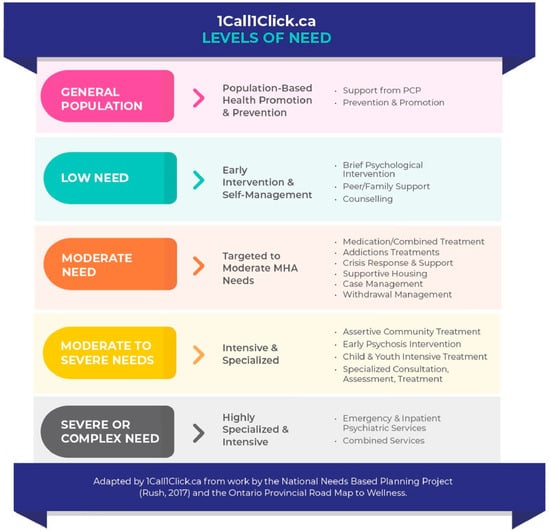
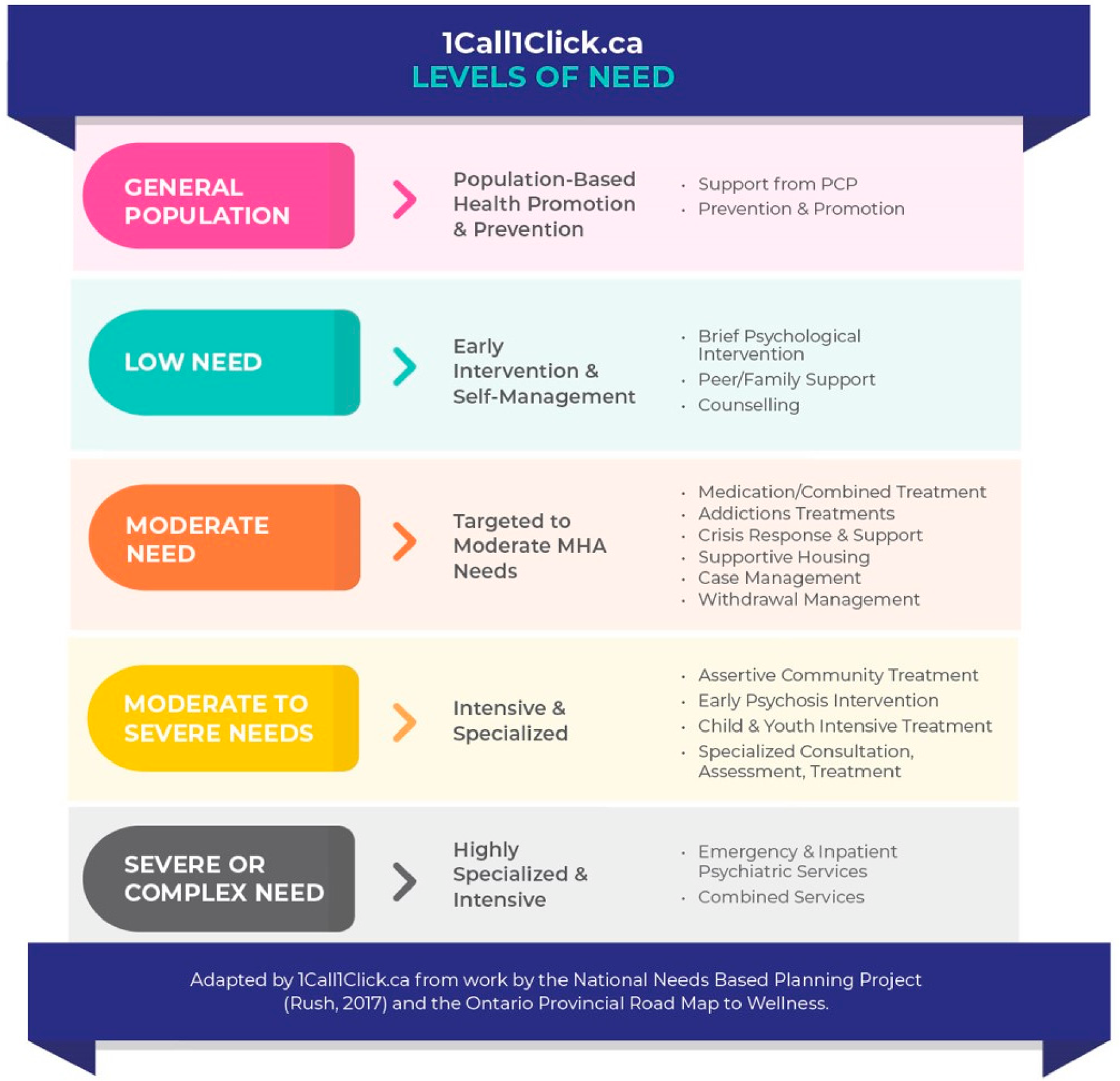
When a client, parent, or caregiver contacts 1Call1Click.ca regarding their infant or child, they complete an intake in which they are asked a variety of demographic questions, screened with the HEADS-ED Under 6, assigned a Level of Need (Figure 1), and connected directly to one or more MH or NDH service providers, parent/caregiver specific resources, or provided information specific to their needs. The information from the intake is shared with the agency, where it is reviewed in relation to the program’s acceptance criteria and scope of service.
Figure 1.
Levels of Need as utilized at 1Call1Click.ca. Each Level of Need includes a description of the type of care required for clients at that level, along with recommendations for specific types of care.
We examined referral outcomes by sorting the referrals into different categories based on the level of acuity of need the service provides treatment for. Specifically, services were labelled “Low Acuity Services” or “High Acuity Services”. Services that offer treatment at both low and high acuity levels were placed in both categories. The determination of service level was made by making a list of all referral codes attached to intakes with a child under 6 or their family. Researchers sorted these referrals using the descriptions of these services on their websites, followed by consultation with the Clinical Manager at 1Call1Click.ca, prior to any analysis of how these related to clinical measures.
1Call1Click.ca may also provide waitlist support or information to callers or provide a referral to parent/caregiver-specific resources. These referrals are often provided in addition to a child-specific referral. For the purposes of our analyses, which were focused on the child-specific referrals, we count parent/caregiver specific referrals or information only/waitlist support calls when those are the only listed outcomes of an intake. As 1Call1Click.ca is a service designed to provide referrals to the service that best matches the needs of the child, analyses related to accuracy of referrals exclude those clients where the only listed outcome is a parent/caregiver specific referral or information only/waitlist support call because these outcomes are directed at the parent/caregiver, and 1Call1Click.ca currently does not complete a parent-specific measure as part of their intake process. The complete list of referred-to services, as well as how they were categorized, can be found in Appendix A.
To describe acuity of need, we split the client outcomes on the HEADS-ED Under 6 based on the HEADS-ED Under 6 total score. Clients with a total score of 5 or lower were classified as “Low Acuity”, while clients with a total score of 6 or higher were categorized as “High Acuity”. This cutoff was informed by earlier findings with the HEADS-ED Under 6, in which a total score of 6 was found to support decision-making for moderate or higher needs with an Area Under Curve of 0.807 [13]. The intake workers administer the HEADS-ED Under 6 and know the client’s total score, but do not divide clients by acuity in the way we describe for the analyses in this manuscript. Instead, the intake workers assign a Level of Need to clients to guide their service referrals, based on the Ontario Roadmap to Wellness [15]. There are five levels, ranging from General Population (lowest acuity) to Severe or Complex Needs (highest acuity). These Levels are assigned using all information from the intake, including client/family needs, goals, and current connections to care, in addition to the information from the HEADS-ED Under 6 interview. We examine the distribution of clients in the Low Acuity and High Acuity groups across these Level of Need designations. We also analyze whether these differ based on the ages of the clients (0 to 3 years, 4 to 5 years) using a chi-square test of homogeneity.
We examine the Sensitivity, Specificity, Positive Predictive Value, Negative Predictive Value, and Threshold Probability of the HEADS-ED Under 6 for guiding referrals to Low or High Acuity services. For the purposes of this analysis, a client being matched to a service that matches their level of acuity as designated by the HEADS-ED Under 6 total score is counted as an accurate referral.
We also examined specific domains on the HEADS-ED Under 6, as elevated needs in a particular domain might signify a need for significant intervention even when the total score is below 6 [12,13]. These were analyzed using chi-square tests on each domain, comparing the High Acuity to the Low Acuity group using a Bonferroni-corrected threshold of p = 0.007 to account for the 7 comparisons. Standardized Pearson Residuals of +/−1 were used as indicators of significance across cells. Because this was not an analysis related to accuracy of referrals, this analysis includes all Under 6 clients who met inclusion criteria.
Additionally, we examined the outcomes of the referrals in relation to the number of referrals that were rejected by the target agency. These include rejections for any reason, including but not limited to the child’s level of acuity in relation to the service offered; specific reasons for rejection were not collected. A referral that is accepted by the referred-to agency or hospital service is counted as an accurate referral in these analyses because 1Call1Click.ca is a service that provides referrals, not diagnoses or clinical care. If the referrals are accepted as appropriate by the referred-to agencies, that is more relevant to the service, and the tools used for decision making there, than any outcomes of the treatments provided at the referred-to agencies which occur after the work of 1Call1Click.ca is complete. We additionally use the data from this analysis to examine Threshold Probability, which we examine by looking at the referrals to Low and High Acuity services for only clients who receive a total score of 5 or 6 (on either side of the screener threshold) on the HEADS-ED Under 6. We use whether the referrals to High Acuity services are accepted by the referred-to agency for these threshold cases to examine whether a different threshold might have been a more accurate dividing point.
3. Results
3.1. Demographics
During the study period, 2468 infants, toddlers, and children had an intake at 1Call1Click.ca prior to their sixth birthday. Of these, 1637 (66.3%) were residing in the Ottawa area at the time of their intake and were included in the study. Of the 1637 clients and families that received referrals, 31.7% (n = 519) reported female sex at birth. Most clients (58%, n = 955) were aged 4 (n = 485) and 5 (n = 470). Fewer than half of clients self-reported as having a White (43%, n = 704) racial background, with the second and third most frequently reported backgrounds being Black (12.7%, n = 208) and Multiracial (multiple racial backgrounds; 10.6%, n = 174). See Table 1 for a complete breakdown of the demographics of the clientele.
Table 1.
Demographic characteristics of the client population.
3.2. HEADS-ED Under 6 Domains
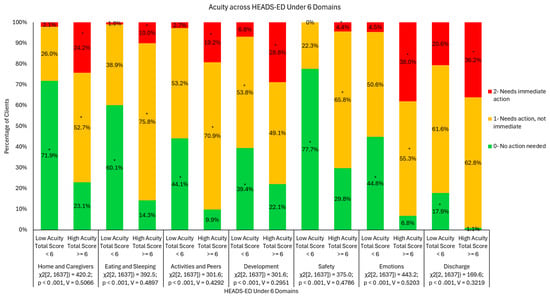
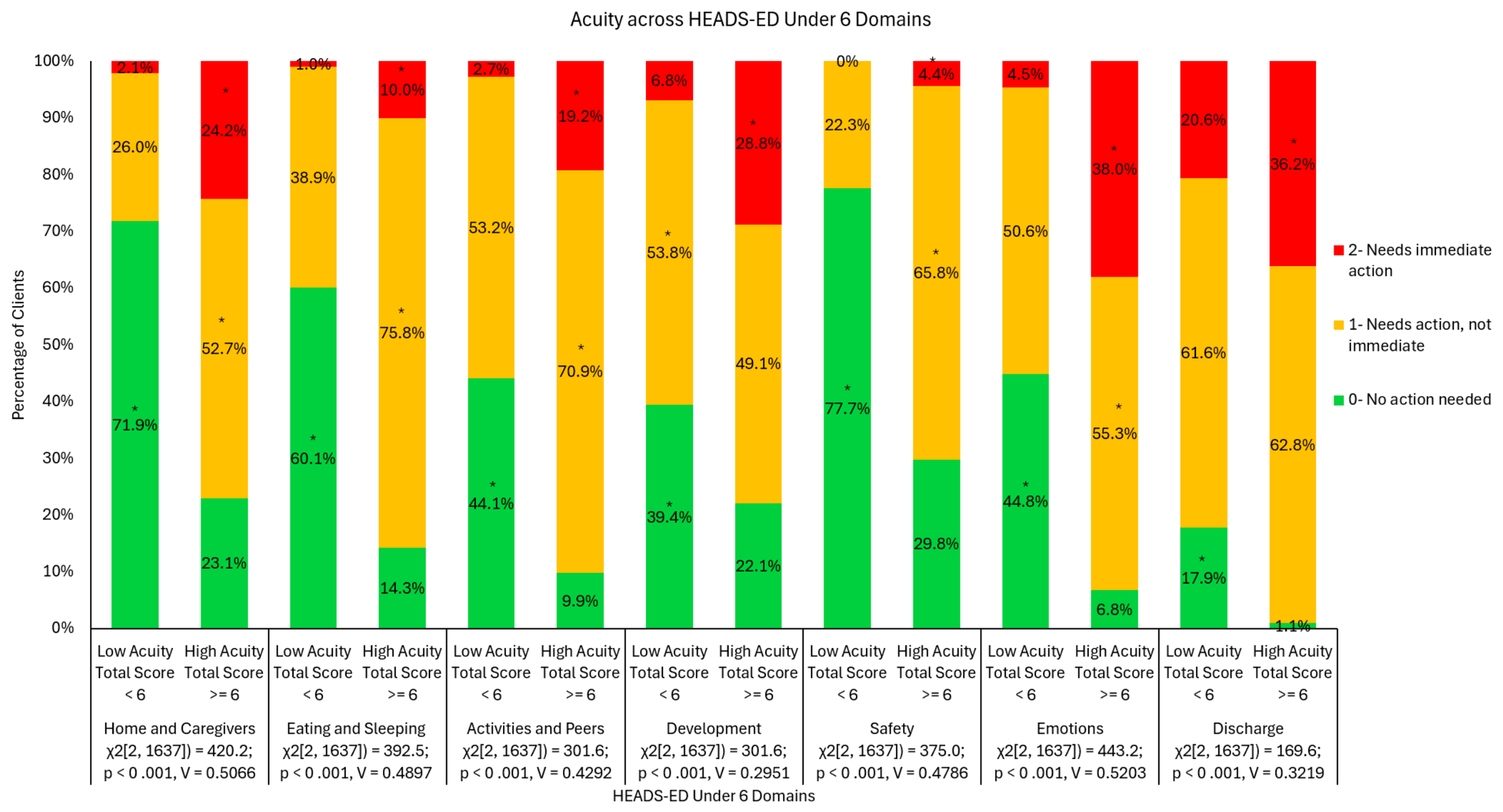
Clients in the High Acuity group (HEADS-ED Under 6 total score of 6 or higher) were significantly more likely to have elevated scores of one or two in every domain relative to the Low Acuity group, except for Development and Discharge, Current Resources (Figure 2). For each of these domains, the High Acuity Clients were significantly more likely to have a rating of 2, and significantly less likely to have a score of 0 or 1.
Figure 2.
The distribution of scores across domains of the HEADS-ED Under 6, for both the Low Acuity and High Acuity groups. A score that is significantly more frequent in one of the Acuity groups is marked with an *.
3.3. Level of Need & Service Allocation
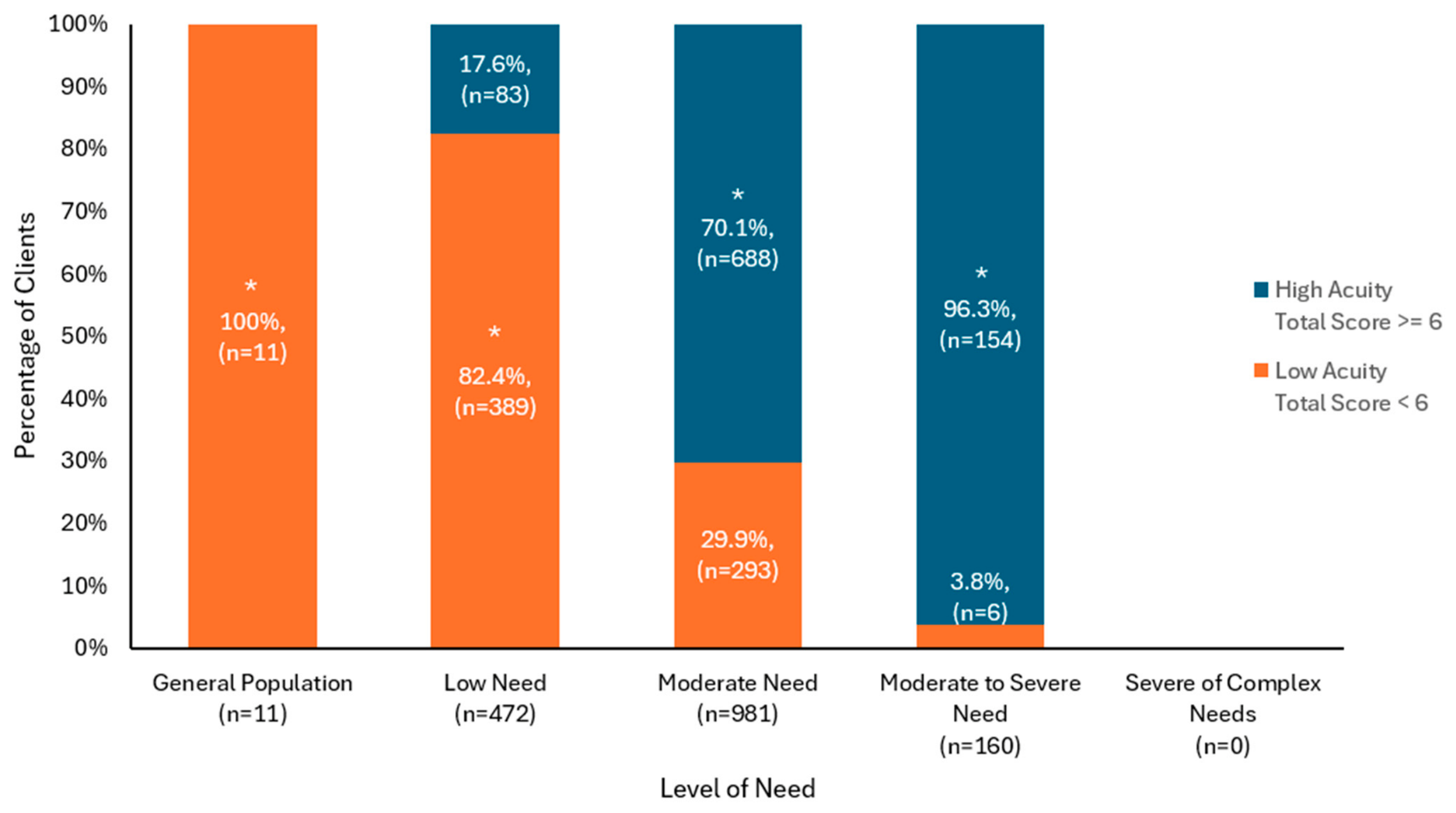
No clients in the Under 6 dataset were assigned a Level of “Severe or Complex Needs”, so the highest in this group is “Moderate to Severe Needs”. Thirteen Clients were not assigned a Level of Need by the intake worker (6 Low Acuity, 7 High Acuity) and were not included in this analysis. Chi-square test of independence (χ2[3, 1624]) = 483.2; p < 0.001, Cramer’s V = 0.55) indicated that there was a significant relationship with a large effect between the binary split on HEADS-ED Under 6 total and the assigned Level of Need (Figure 3). Using Standardized Pearson Residuals greater than +/−1, clients with total scores below six were significantly more likely to be assigned the lowest levels of need (General Population and Low Need), and significantly more likely to be assigned to the higher levels (Moderate Need, Moderate to Severe Need).
Figure 3.
The distribution of clients who were assigned each Level of Need by the Intake Workers, split by whether their HEADS-ED Under 6 Total Score was 5 or fewer or 6 and up. Groups present in significantly higher proportions (Pearson residuals greater than +/−1) are denoted with *.
Of the 1637 clients from Ottawa who had an intake during the study period, 40.3% of those (n = 659) were referred to a community- or hospital-based MH or NDH resource. The remainder were already connected to an appropriate MH resource and were either connected to an additional parent support resource only (40.7%, n = 667) or were provided with information or waitlist support (19.0%, n = 311). For clients who received a referral, the average intake call lasted 51 min.
Looking only at those clients referred to MH services, 192/659 (29.1%) had HEADS-ED Under 6 total scores of 5 or lower and were rated as “Low Acuity” for the purpose of our analyses, whereas the remaining 70.9% (467/659) had total scores of 6 or higher and were rated “High Acuity” (See Table 2 for complete breakdown of service allocation and client acuity level).
Table 2.
The referral outcomes following intake. Clients are sorted by their Acuity level as determined by their HEADS-ED Under 6 total score, whereas referrals are sorted by the acuity of service they provide, or if they are targeted at parents/caregivers. Info Only/Waitlist Support is for calls where the infant, child, and family either are only requesting information, not a referral, or are already on the waitlist for the appropriate service(s) but are requesting additional information or support during that wait.
Examination of the sensitivity and specificity of sorting clients to services on the basis of the HEADS-ED Under 6 total score can be found below in Table 3, demonstrating overall high Specificity, Sensitivity, and overall Accuracy.
Table 3.
Description of the Sensitivity, Specificity, Negative Predictive Value, and Accuracy of the HEADS-ED Total Score in the referral process for clients referred to an infant/child-specific service.
3.4. Functional Accuracy of Referrals
Some referrals made by the intake workers were not accepted by the referred-to resources. This can happen for a variety of reasons, including but not limited to a mismatch between client acuity and the scope of service at an MH resource. Overall, 93.0% of referrals (613/659, 95% CI: 0.91–0.95) were accepted by the referred-to agency, with the specific breakdown in Table 4 below. If we assume that all those sent to a service not matching their acuity would have been incorrectly referred, 84.8% of clients would have been referred correctly using only a HEADS-ED Under 6 total score to denote acuity (Low Acuity to Low Acuity Service, High Acuity to High Acuity Service).
Table 4.
Number of referrals at each level of acuity and service that were accepted by the referred-to agency for service.
3.5. Threshold Probability
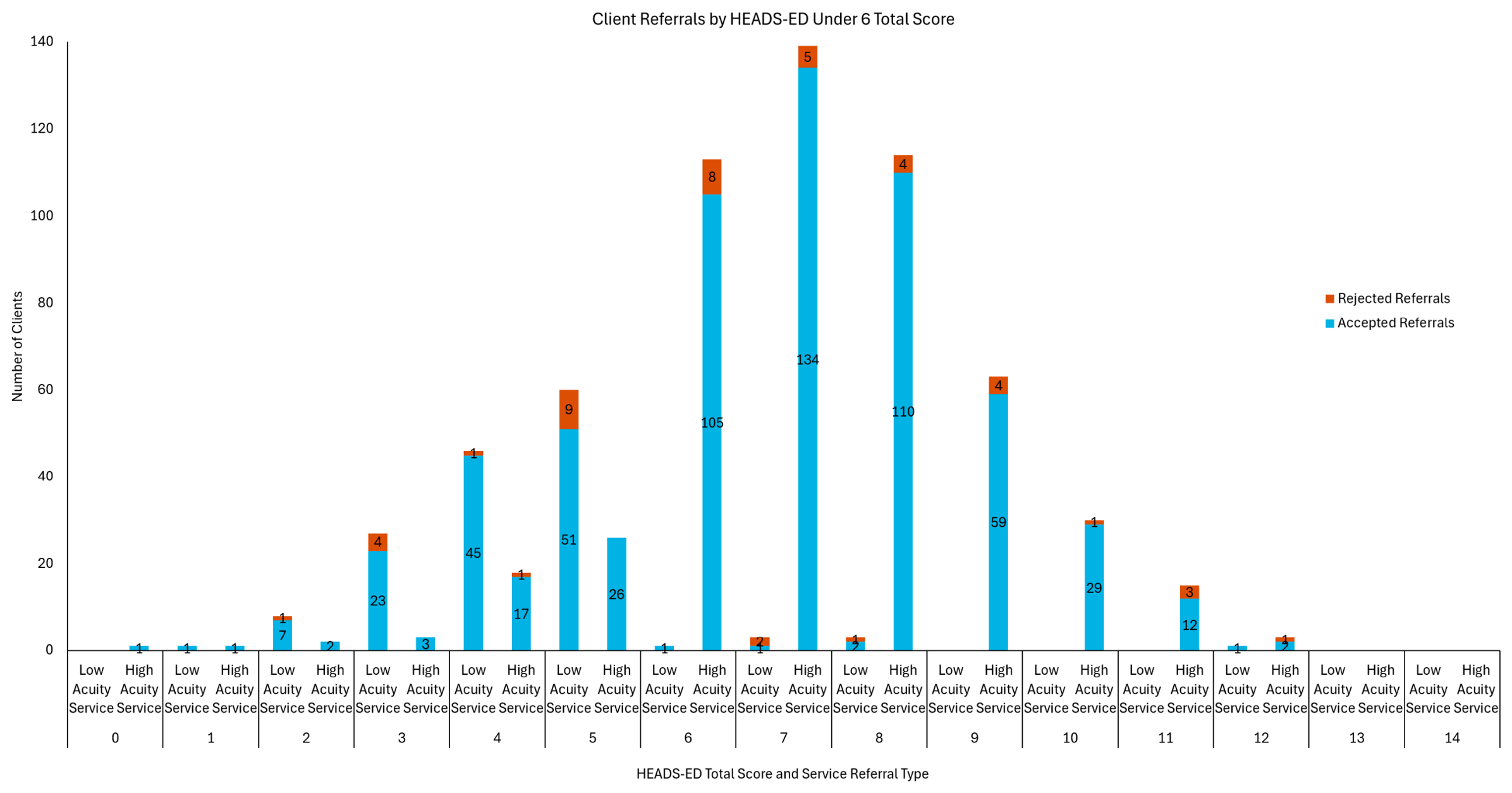
Threshold Probability is the probability that a client at the threshold score on a measure with an ordinal screening tool is assigned the correct outcome [16]. Threshold Probability is a useful measure to consider when discussing screening tools with ordinal scores, where those screened could fall at the threshold or directly below it. In our method, there are two ways we could calculate Threshold Probability: the probability that a client with a threshold score (total score of 6 in this case) is referred to a High Acuity Service, or the probability that a client with a score of 6 is accepted to the High Acuity Service they were referred to. If we examine only clients whose scores on the HEADS-ED Under 6 were at the cutoff point of 6, 99.1% (113/114) were referred to High Acuity Services, and 92.9% (105/113) of referrals to High Acuity Services were accepted (Figure 4). If the threshold for High Acuity had been a total score of 5, the Threshold Accuracy would drop to 30.2% (26/86), as 26 referrals to High Acuity Services were made to clients at a total score of 5 and accepted by the referred-to agency.
Figure 4.
The referrals provided to both Low Acuity Services and High Acuity Services at every HEADS-ED Under 6 total score, along with the number of accepted and rejected referrals to those services for clients at each.
If we look at the overall accuracy of referrals considering only clients whose scores were at the threshold (6) or one point below (5), we see referrals accepted in 91.5% (183/200) cases, only 1.5% lower than the overall referral accuracy of 93% when all scores are considered.
3.6. Age
A chi-square test of homogeneity found no significant difference (χ2[3, 659]) = 1.420; p = 0.7, Cramer’s V = 0.05) between the distribution of clients aged 3 or younger (n = 244) and clients aged 4 and 5 (n = 415) who were referred to child-focused services characterized as Low Acuity or High Acuity Services.
4. Discussion
This work suggests that coordinated access and service navigation programs can support accurate referrals to MH services for infants and children under the age of 6. Additionally, this work indicates that the HEADS-ED Under 6 total score works well as a mechanism for identifying client acuity for the purposes of service allocation. The HEADS-ED Under 6 is the primary tool used to determine acuity of need for clients under 6 at 1Call1Click.ca.
The process used at 1Call1Click.ca indicates very strong sensitivity, specificity, negative predictive value, and accuracy in guiding referrals to services. The positive predictive value of 0.74 indicates that there is a trend towards assigning lower acuity clients to higher acuity services. The high Threshold Probability using the HEADS-ED Under 6 total score of 6 as an indicator of High Acuity is similar to what has been observed in other studies of the tool [13]. The similarity in referral accuracy when only children scoring at or directly below the threshold supports this as well.
The accuracy of referrals to specialized care for infants and children under 6 has been pointed to as an important question, one best examined through the use of pathways to care [4]. Rates of acceptance of referrals are infrequently reported [5,6]. In cases where referral accuracy has been reported specifically for children under 6, it has been extremely variable, with annual rejection rates fluctuating from 10% to 67% [5]. The comparatively low referral rejection (7%) through this pathway for infants and children under 6 at 1Call1Click.ca indicates that the HEADS-ED Under 6 is working well to guide referrals.
The intake workers at 1Call1Click.ca are healthcare workers but are not physicians or psychologists. That non-specialist healthcare workers can use the HEADS-ED Under 6 as the primary tool to guide referrals to specialized care in under an hour, with an acceptance rate of 93%, points to this pathway to care as both efficient and effective. The existence of a referral pathway such as this has the potential to save both time and resources, though in ways that are not straightforwardly measurable. The time spent waiting by clients and families for the outcome of a rejected referral and the time spent getting a new one. The administrative burden of both making referrals and of receiving and reviewing referrals that cannot be accepted by the referred-to resource.
Limitations
This work is limited in the sense that the categories discussed, Low Acuity Services and High Acuity Services, are not universally defined. We attempted to overcome this by defining services using the way agencies described their own service population, where possible, along with assessment from the clinical director at 1Call1Click.ca. Additionally, by measuring whether the referrals were accepted by the target agencies, we provide a functional, if not clearly definable, measure of acuity agreement between the HEADS-ED Under 6, the Intake Workers at 1Call1Click.ca, and the agency staff.
It is important to note, as well, that when we discuss referral rejection, it includes referral rejection for any reason, as the specific reasons are not recorded; as referrals are made using considerations beyond clinical measures (location, language, needs and goals, current connections to care), there may be reasons for rejection that are not related to acuity. The referred-to agencies were categorized prior to analysis by someone with deep familiarity with the local landscape of MH and NDH resources, though without the use of a rubric, which could lead to classification biases. While our study sample is large, the results reflect a single urban area. Future studies of how the HEADS-ED Under 6 performs in other regions would be informative to the generalizability of the current findings.
A large proportion of clients (59.7% overall) were referred only to parent support resources or only provided with information or waitlist support during their calls. It was disclosed that these call outcomes occur in cases where clients are either already connected to the appropriate service for their needs (or on the wait list for that service), for cases where a child was connected but their parent/caregiver could be offered additional support resources, or where the purpose of the call was information gathering. However, our dataset included no means by which to assess whether this was so in all cases.
The sample is skewed heavily towards male clients (65.1%), which limits the interpretability of the results. At 1Call1Click.ca, there is a relationship between age and gender, wherein clients under 10 years are more frequently male-identifying, whereas clients over 10 are more frequently female-identifying. This is in line with other studies examining the age of onset for mental health challenges related to gender, wherein boys are more likely to have their challenges identified early in life while girls are more likely to present in adolescence [17,18,19].
Author Contributions
Conceptualization, S.R., N.S., P.C., M.C.; methodology, S.R., N.S., M.C.; validation, S.R.; formal analysis, S.R.; investigation, S.R., N.S.; data curation, SR.; writing—original draft preparation, S.R.; writing—review and editing, S.R., N.S., P.C., M.C.; visualization, S.R.; supervision, M.C.; project administration, S.R.; funding acquisition, M.C. All authors have read and agreed to the published version of the manuscript.
Funding
This research was funded by an operating grant from the Canadian Institutes of Health Research (UIP-179233).
Institutional Review Board Statement
This study was approved as Quality Improvement by the CHEO Research Ethics Board (#22/27X).
Informed Consent Statement
Individual consent was not collected for this work; this work was classified as Quality Improvement by the CHEO REB, which waives the requirement for individual consent on Quality Improvement work.
Data Availability Statement
The dataset includes potentially identifying personal health data and will not be made available for public access.
Acknowledgments
The authors thank Cindy Dawson for her input on the level of service acuity provided by the referred-to agencies.
Conflicts of Interest
The authors declare no conflicts of interest.
Abbreviations
The following abbreviations are used in this manuscript:
| MH | Mental Health |
| NDH | Neurodevelopmental Health |
Appendix A
Below is a list of the connected agencies to which children under the age of 6 were referred, or to which their parents or caregivers were referred, or the referral codes attached to those meetings indicating that the parents or caregivers were provided with information resources or waitlist support.
| Referral | Description | Level of Acuity Served |
| Mental Health And Additions Nurse (MHAN) | Community partner agencies with programs serving clients with low acuity needs | Low Acuity |
| South East MHAN | ||
| Britannia Woods Community Services | ||
| Family Services Ottawa | ||
| Jewish Family Services of Ottawa | ||
| Orleans Cumberland Resource Centre | ||
| Vanier Community Services Centre | ||
| Wabano Centre For Aboriginal Health | ||
| Western Ottawa Community Resource Centre | ||
| Crossroads Children’s Health Centre | Community Agencies that serve infants and children with either low or high acuity needs | Low and High Acuity |
| Le Cap | ||
| Other Mental Health/NDH/Addiction Services Partner | ||
| NDH School Support | Referrals to Hospital-based programs serving children with both low and high acuity needs | |
| NDH Social ABCs | ||
| Cheo Access Team | ||
| 1Call1Click.ca Care Coordination | Referral to Care Coordination | High Acuity |
| Centralized Mental Health and Neurodevelopmental Health Intake (Including 1Call1Click.ca) | Hospital-based programs specifically for infants and children with High Acuity MH and NDH challenges | High Acuity |
| Centralized Mental Health Intake | ||
| Cheo NDH Caregiver NVCI Training | ||
| Coordinated Access | Hospital-based programs specifically for infants and children with High Acuity MH and NDH challenges | High Acuity |
| CTC Infant And Child Development | ||
| DTC Day Treatment | ||
| ENS Support | ||
| Extensive Needs Services | ||
| NDH CTC Children’s Behavior Services | ||
| NDH Wrap ENS Clinic | ||
| Wrap Urgent Response Services | ||
| Autism Program: Post-Diagnostic Service | Support phone lines for parents and guardians of children & youth going through mental health challenges | Parent Support Resource |
| CTC Social Work | ||
| NDH Supporting Your Journey Call Provided | ||
| PLEO | ||
| No Referral-Provided Support and No Additional Services Required | Referral codes on intakes in which the primary outcome was either support of the provision of informational resources | Info Only/Waitlist Support |
| No Referral-Provided Support While On Waitlist | ||
| No Referral-Provided Support/Information and No Additional Services Required |
References
- Dougherty, L.R.; Leppert, K.A.; Merwin, S.M.; Smith, V.C.; Bufferd, S.J.; Kushner, M.R. Advances and directions in preschool mental health research. Child Dev. Perspect. 2015, 9, 14–19. [Google Scholar] [CrossRef] [Scilit]
- Skovgaard, A.M.; Houmann, T.; Christiansen, E.; Landorph, S.; Jørgensen, T.; CCC 2000 Study Team; Olsen, E.M.; Heering, K.; Kaas-Nielsen, S.; Samberg, V.; et al. The prevalence of mental health problems in children 1½ years of age—The Copenhagen Child Cohort 2000. J. Child Psychol. Psychiatry 2007, 48, 62–70. [Google Scholar] [CrossRef] [Scilit]
- Francés, L.; Quintero, J.; Fernández, A.; Ruiz, A.; Caules, J.; Fillon, G.; Hervás, A.; Soler, C.V. Current state of knowledge on the prevalence of neurodevelopmental disorders in childhood according to the DSM-5: A systematic review in accordance with the PRISMA criteria. Child Adolesc. Psychiatry Ment. Health 2022, 16, 27. [Google Scholar] [CrossRef] [Scilit]
- Charach, A.; Mohammadzadeh, F.; Belanger, S.A.; Easson, A.; Lipman, E.L.; McLennan, J.D.; Parkin, P.; Szatmari, P. Identification of preschool children with mental health problems in primary care: Systematic review and meta-analysis. J. Can. Acad. Child Adolesc. Psychiatry 2020, 29, 76. [Google Scholar]
- Ball, W.P.; Black, C.; Gordon, S.; Ostrovska, B.; Paranjothy, S.; Rasalam, A.; Ritchie, D.; Rowlands, H.; Rzewuska, M.; Thompson, E.; et al. Inequalities in children’s mental health care: Analysis of routinely collected data on prescribing and referrals to secondary care. BMC Psychiatry 2023, 23, 22. [Google Scholar] [CrossRef] [Scilit]
- Hansen, A.S.; Christoffersen, C.H.; Telléus, G.K.; Lauritsen, M.B. Referral patterns to outpatient child and adolescent mental health services and factors associated with referrals being rejected: A cross-sectional observational study. BMC Health Serv. Res. 2021, 21, 1–12. [Google Scholar] [CrossRef] [Scilit]
- O’Dwyer, B.; Macaulay, K.; Murray, J.; Jaana, M. Improving access to specialty pediatric care: Innovative referral and eConsult technology in a specialized acute care hospital. Telemed. e-Health 2024, 30, 1306–1316. [Google Scholar] [CrossRef] [Scilit]
- Reilly, M.; Weitzman, C. Mental health screening and measurement in children and adolescents. Pediatr. Clin. N. Am. 2024, 71, 1013–1026. [Google Scholar] [CrossRef] [Scilit]
- McLean, R.K.; Tully, L.A.; Brinley, S.K.; Carl, T.; Turnell, A.; Northam, J.C.; Dadds, M.R. Multi-informant universal mental health screening for preschool-aged children by parents and educators: A PRISMA systematic review. Clin. Child Fam. Psychol. Rev. 2025, 28, 1–21. [Google Scholar] [CrossRef] [Scilit]
- Radomski, A.D.; Polihronis, C.; Cloutier, P.; Beaudin, K.; Cappelli, M. Brief multidimensional screening tools for young children’s mental health and development for administration by primary care providers: A scoping review. BMC Prim. Care 2025, 26, 199. [Google Scholar] [CrossRef] [Scilit]
- Lyons, J.S. Communimetrics: A Communication Theory of Measurement in Human Service Settings; Springer Science + Business Media: New York, NY, USA, 2009. [Google Scholar]
- Polihronis, C.; Cloutier, P.; Kempe, L.; Schryer, J.; Cappelli, M. The HEADS-ED under 6: Piloting a new communimetric mental health and developmental screening and triage tool for young children. Infant Ment. Health J. 2024, 45, 557–568. [Google Scholar] [CrossRef] [Scilit]
- Polihronis, C.; Cloutier, P.; Robson, S.; Beaudin, K.; Blackburn, J.; Dawson, C.; Cappelli, M. HEADS-ED Under 6: A clinician-administered mental health and developmental screening and triage tool. Paediatr. Child Health 2025, 30, 312–319. [Google Scholar] [CrossRef] [Scilit]
- Robson, S.J.; Cloutier, P.F.; Polihronis, C.; Blackburn, J.; Dawson, C.; Cappelli, M. The CASH Bundle: A standardized screening assessment bundle for child and youth mental health, addictions, and substance use health implemented in a regional coordinated access and service navigation program: L’ensemble CASH: Outil normalisé de dépistage pour la santé mentale, les dépendances et la santé liée à l’utilisation de substances chez les enfants et les jeunes, mis en œuvre dans le cadre d’un programme régional coordonné d’accès et de navigation des services. Can. J. Psychiatry 2026. [Google Scholar] [CrossRef] [Scilit]
- Government of Ontario. Roadmap to Wellness: A Plan to Build Ontario’s Mental Health and Addictions System; Government of Ontario: Toronto, ON, Canada, 2020. Available online: https://www.ontario.ca/page/roadmap-wellness-plan-build-ontarios-mental-health-and-addictions-system (accessed on 9 November 2026).
- Sheldrick, R.C.; Benneyan, J.C.; Kiss, I.G.; Briggs-Gowan, M.J.; Copeland, W.; Carter, A.S. Thresholds and accuracy in screening tools for early detection of psychopathology. J. Child Psychol. Psychiatry 2015, 56, 936–948. [Google Scholar] [CrossRef] [Scilit]
- Dalsgaard, S.; Thorsteinsson, E.; Trabjerg, B.B.; Schullehner, J.; Plana-Ripoll, O.; Brikell, I.; Wimberley, T.; Thygesen, M.; Madsen, K.B.; Timmerman, A.; et al. Incidence rates and cumulative incidences of the full spectrum of diagnosed mental disorders in childhood and adolescence. JAMA Psychiatry 2020, 77, 155–164. [Google Scholar] [CrossRef] [Scilit]
- Scheiner, C.; Grashoff, J.; Kleindienst, N.; Buerger, A. Mental disorders at the beginning of adolescence: Prevalence estimates in a sample aged 11–14 years. Public Health Pract. 2022, 4, 100348. [Google Scholar] [CrossRef] [Scilit]
- Van Droogenbroeck, F.; Spruyt, B.; Keppens, G. Gender differences in mental health problems among adolescents and the role of social support: Results from the Belgian health interview surveys 2008 and 2013. BMC Psychiatry 2018, 18, 6. [Google Scholar] [CrossRef] [Scilit]

Disclaimer/Publisher’s Note: The statements, opinions and data contained in all publications are solely those of the individual author(s) and contributor(s) and not of MDPI and/or the editor(s). MDPI and/or the editor(s) disclaim responsibility for any injury to people or property resulting from any ideas, methods, instructions or products referred to in the content. |
© 2026 by the authors. Licensee MDPI, Basel, Switzerland. This article is an open access article distributed under the terms and conditions of the Creative Commons Attribution (CC BY) license.