


Abstract
Background/Objectives: Reading is a core cognitive ability that plays a central role in children’s brain development and academic success. This review aims to examine the neuroplastic relationship between reading acquisition and white matter development from infancy through adolescence, with a focus on implications for literacy interventions and educational planning. Methods: A systematic review of 89 neuroimaging studies published between 1998 and 2024 was conducted. Eligible studies utilized diffusion tensor imaging (DTI) or structural MRI to investigate white matter changes related to reading behavior in children aged 0 to 18. Studies were identified through comprehensive searches in Web of Science and Scopus databases. Results: Children with stronger reading abilities consistently showed increased fractional anisotropy (FA) in key white matter pathways, such as the arcuate fasciculus and superior longitudinal fasciculus, supporting phonological processing and reading fluency. Longitudinal data suggest that early exposure to literacy enhances brain flexibility and white matter organization. In contrast, children with reading disabilities, including dyslexia, often show disorganized white matter structure, but compensatory pathways may emerge through targeted interventions. Conclusions: Reading experience is associated with measurable changes in white matter development across childhood. Early and sustained literacy engagement appears to optimize neural structures for reading. These findings can inform early diagnosis and improve pedagogical strategies for literacy education. Further research is needed on the long-term neurobiological effects of reading interventions.
1. Introduction
Reading functions as a critical skill essential for both academic achievement and cognitive growth throughout childhood development, according to [1]. Modern neuroimaging research demonstrates that reading abilities and practices affect brain development through their impact on the structural integrity of white matter pathways vital for inter-regional brain communication [2]. Research using diffusion tensor imaging (DTI) has discovered important links between the characteristics of white matter and reading proficiency across populations of both children and adults. Structural variations have been linked to enhancements in cognitive functions, including attention, memory and language processing abilities which form key components of proficient reading. Reading is not only a foundational academic skill but also a powerful driver of neurodevelopment during childhood. Neuroimaging studies indicate that literacy experiences strengthen the white matter pathways that facilitate inter-regional brain communication [3,4].
Reading habits refer to the frequency and conditions of reading, while literacy encompasses the cognitive and linguistic skills required to understand written material and to acquire full literacy. In this systematic review, we use the term “reading habit” to refer to the frequency, regularity, and intensity of voluntary reading engagement, as reported or inferred in the included studies [5]. Across the studies included in this review, reading habit was assessed using a variety of methods, including self-report questionnaires, parental reports, and proxies such as print exposure frequency and the number of books available at home. In several longitudinal and interventional studies, structured reading programs and behavioral tasks were used to quantify reading engagement (e.g., 43, 78, 87). In line with the literature, we use the term “reading” as an umbrella construct that encompasses related concepts, such as reading habit, reading exposure, and reading experience, all of which refer to sustained and voluntary interaction with written language. These methodological and conceptual considerations reflect the multifaceted nature of reading behavior in the context of white matter development research. Research suggests that shared reading activities in early childhood promote phonological awareness and letter recognition skills that support later literacy development [6]. Children’s expressive language skills develop when parents participate in reading activities [7,8,9]. A study by [10] investigated the neural mechanisms behind early literacy events and how the combination of auditory and visual inputs enhances phonological processing. The arcuate fasciculus (AF), superior longitudinal fasciculus (SLF), and inferior longitudinal fasciculus (ILF) white matter pathways play a critical role in phonological processing, reading fluency, and comprehension [11,12]. Recent studies continue to explore how reading habits and skills affect white matter development. Neuroimaging studies indicate that these learning experiences can produce detectable structural changes in white matter integrity during key developmental periods [2,13].
Despite a growing number of studies on the neurobiological correlates of reading, there is a lack of synthesized knowledge regarding:
- which white matter pathways are consistently implicated across studies;
- how reading-related brain changes differ across developmental stages (e.g., preschool vs. adolescence);
- how these patterns vary between typically developing children and those with reading difficulties such as dyslexia.
This systematic review analyzes neuroimaging research outcomes to understand how reading activities impact white matter maturation in children aged 3 to 18. Specifically, we ask:
What role do reading habits and skills play in shaping white matter pathways in the developing brains of children and adolescents, and how do these effects vary across developmental stages and between typical and atypical readers?
Our research aims to develop an integrative view of structural brain changes that occur through literacy development, while examining how early experiences with reading and targeted interventions can influence brain plasticity.
1.1. Reading Habits
Numerous studies have examined how different reading frequencies impact cognitive development. An analysis of longitudinal data on children’s reading habits demonstrated that these habits develop primarily during their preschool years and early school years [14]. Reading frequency tends to correlate with socio-economic status (SES) because individuals with lower SES commonly show decreased reading frequency [15]. The practice of reading fosters cognitive stimulation while simultaneously improving multiple cognitive and executive functions [16]. A meta-analysis study demonstrated that children who read for leisure develop larger vocabularies compared to those who read less often [17]. Ref. [18] found that adolescents who read more often displayed superior performance in vocabulary tests as well as speech act analysis and oral narrative discourse measures. Researchers analyzed how reading habits connect to emotional vocabulary by asking 465 Swedish adolescents to generate words from emotional and neutral categories while gathering data about their reading patterns. The research showed that individuals who read often used a wider range of emotional vocabulary compared to those who read less frequently, demonstrating a relationship between reading frequency and emotional language proficiency [19].
1.2. Reading Skills
An individual’s executive functions and basic reading abilities, such as decoding and semantic processing, determine how well they read across various texts. The reader’s relevant background knowledge functions as a key factor that affects their comprehension of the text [20]. Reading abilities encompass the cognitive processes that enable people to translate written material into meaning through decoding and understanding. Literacy development depends on basic skills that comprise phonological awareness and vocabulary acquisition, along with reading fluency and comprehension, as identified by [21]. Phonological awareness involves recognizing linguistic sounds and manipulating them within a language system. Phonological awareness serves as an essential foundation for reading achievement because it enables learners to decode written texts [22]. Language attainment requires vocabulary acquisition because an understanding of a text depends on the reader’s ability to derive meaning from their vocabulary knowledge. Reading fluency enables learners to quickly identify words and process them efficiently. Research shows that both reading fluency, together with vocabulary acquisition, enhance reading proficiency [23]. Reading skills demonstrate a strong association with the structural integrity of brain white matter pathways, according to neuroimaging research [24,25,26]. The arcuate fasciculus serves as an essential connection between the temporal and frontal lobes that facilitates phonological processing and reading fluency [11]. The inferior longitudinal fasciculus, which connects the occipital and temporal lobes, has been linked to processes of visual word recognition and orthographic processing, according to [12]. Studies demonstrate that children who have better reading capabilities show increased fractional anisotropy (FA) values within these neural pathways, which reflects enhanced white matter integrity and connectivity. Children who struggle with reading tasks, such as dyslexic individuals [27], demonstrate diminished white matter organization in brain regions, which implies that their reading challenges stem from structural neural pathway differences.
Research into how brain structure affects reading abilities helps us to develop better literacy education methods and interventions for reading difficulties. Neuroimaging detection of white matter abnormalities early on allows for the development of specific educational approaches to improve children’s reading skills.
2. Methods
2.1. Review Framework and Search Strategy
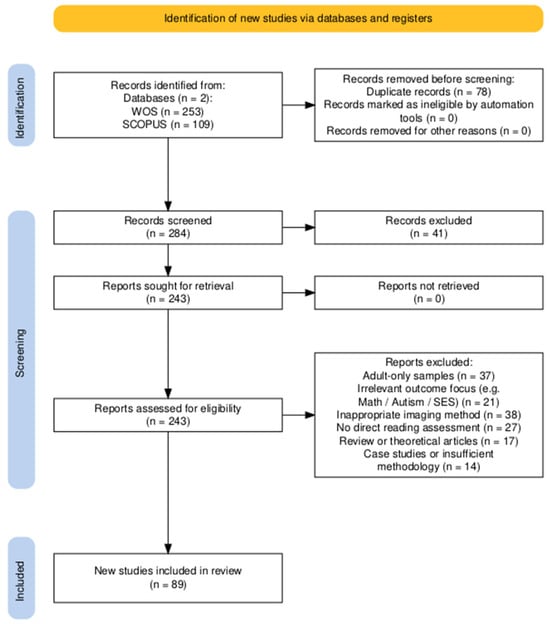
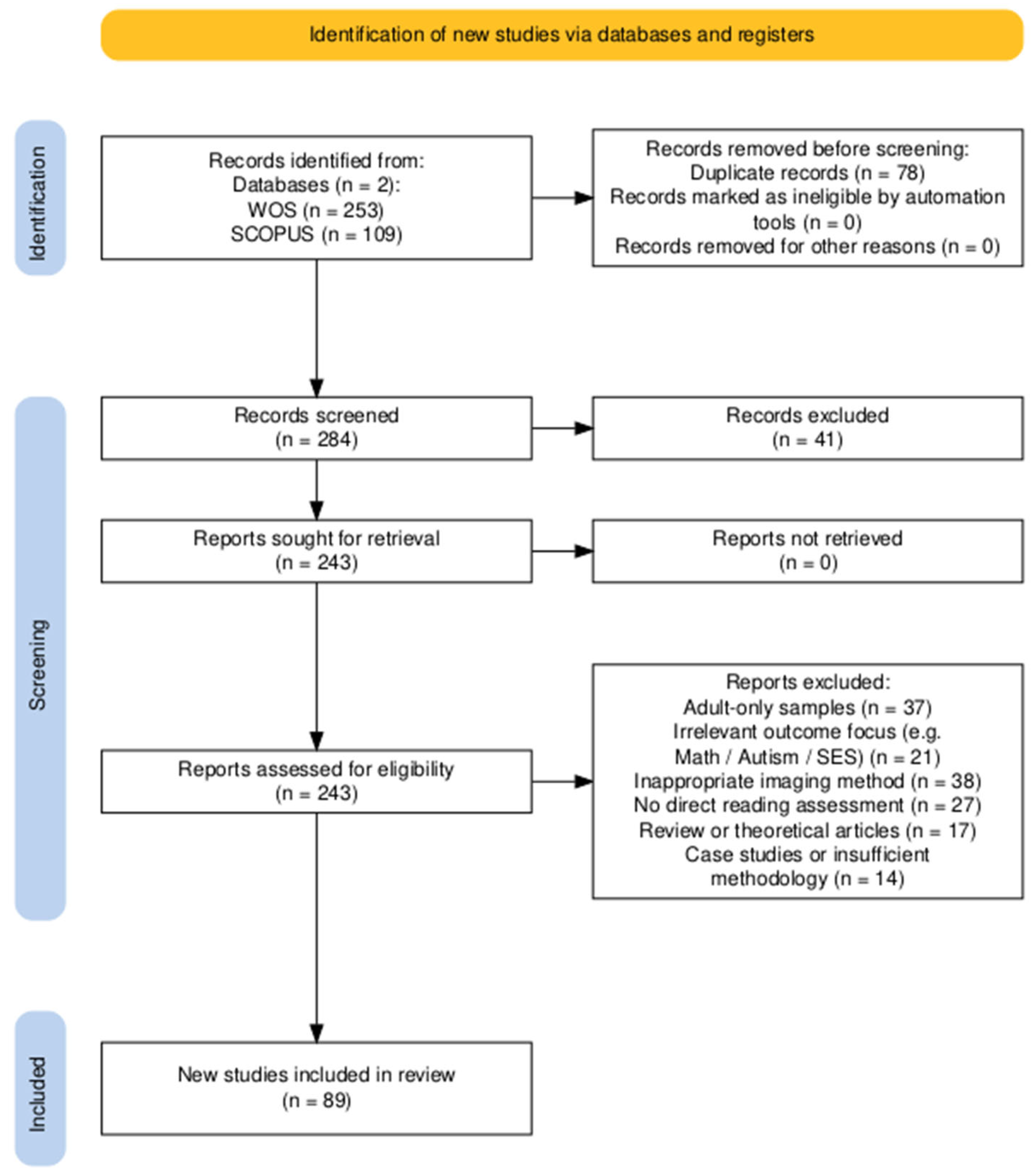
This systematic review followed the PRISMA 2020 guidelines [28]. We aimed to include neuroimaging studies examining how reading practices and skills influence white matter development in children and adolescents (aged 0–18 years). The search focused on studies published between 1998 and 2024, evaluating only those that met the predefined inclusion criteria. The first study included in the review was published in 1998, as the 1992 Shapiro study—a single case report on metachromatic leukodystrophy—did not broadly address reading development [29]. Figure 1 presents the PRISMA flowchart generated using the PRISMA2020 R package [28].
Figure 1.
PRISMA flow diagram for study selection.
A comprehensive search was performed on the Web of Science Core Collection and Scopus databases, covering studies from 1998 to 2024. The Boolean search string, applied across both databases, was: (“reading skills” OR “reading development” OR literacy) AND (“white matter” OR “diffusion tensor imaging” OR DTI OR “structural connectivity”) AND (children OR adolescents OR pediatric).
The searches were conducted from December 2024 to March 2025, resulting in 253 records from Web of Science and 109 from Scopus. After excluding 78 duplicates, 284 studies remained for screening.
2.2. Inclusion and Exclusion Criteria
Our review included studies published in peer-reviewed journals between 1998 and 2024, written in English, and focused on participants aged 0 to 18 years. Eligible studies used diffusion tensor imaging (DTI) or structural MRI to explore white matter structure and function in relation to reading development, literacy abilities, or behaviors such as reading habits and fluency.
We excluded studies if they: (a) included only adult participants; (b) lacked neuroimaging techniques; (c) consisted of theoretical or review articles without empirical findings; or (d) focused on cognitive areas unrelated to reading development such as math skills or general language abilities. Studies on home literacy environments were also excluded if they did not examine links to white matter structure or connectivity.
2.3. Data Extraction and Analysis
We systematically extracted data from each study that met the inclusion criteria to allow for cross-study comparison and synthesis. Key variables included participant characteristics (e.g., age range, reading ability), study design (cross-sectional or longitudinal), neuroimaging methods (e.g., DTI, structural MRI), imaging metrics (e.g., fractional anisotropy, mean diffusivity), types of reading assessments or tasks used, and the main findings regarding the relationship between reading and white matter structure.
2.4. Study Selection Process
The researchers screened 284 studies by title and abstract, following the removal of 78 duplicate records. A total of 41 studies were excluded during this stage for not meeting the initial inclusion criteria. The remaining 243 full-text articles were assessed for eligibility. Based on the predefined inclusion and exclusion criteria, 154 studies did not qualify for inclusion in the review. The final qualitative synthesis included 89 studies that met all eligibility requirements.
2.5. Study Grouping
To account for methodological and developmental variation, the included studies were grouped according to study design. Cross-sectional studies investigated the relationship between white matter structure and reading abilities at a single time point. In contrast, longitudinal studies examined changes in both white matter and reading skills across different developmental stages, allowing for the observation of trajectories over time.
A standardized quality assessment tool enabled researchers to evaluate the risk of bias present in each study. The research team evaluated methodological rigor by analyzing the sample size, imaging techniques used, age range of participants, and reporting clarity. Advanced neuroimaging methods including diffusion tensor imaging (DTI) and structural MRI earned better methodological quality ratings in studies. We resolved differences in bias evaluations by holding discussions.
The PRISMA flow diagram (Figure 1) summarizes the study selection process, including the number of records screened, excluded, and included in the final analysis. The diagram was generated using the PRISMA2020 R package [28].
3. Results
The systematic review covered 89 neuroimaging studies, including 64 cross-sectional studies and 25 longitudinal studies. The majority of cross-sectional studies indicated a robust link between reading abilities and white matter integrity in key neural pathways, including the superior longitudinal fasciculus (SLF), the inferior longitudinal fasciculus (ILF), and the uncinate fasciculus (UF). Multiple studies consistently reported that children with reading difficulties, such as dyslexia, exhibited lower fractional anisotropy (FA) values in these regions, critical for phonological processing and reading fluency [30,31,32]. Notably, preterm children—defined as those born before 37 weeks of gestation—also showed reduced FA values in the corpus callosum, correlating significantly with poorer reading performance [33]. According to specific cross-sectional research findings, higher FA values in the arcuate fasciculus (AF) and SLF correlated with enhanced phonological awareness, fluency, and comprehension abilities [2,13,34,35,36,37,38,39,40]. Dyslexic children showed compromised white matter connectivity, particularly in the left-lateralized structures essential for phonological processing and word recognition [41,42].
Longitudinal studies further confirmed these associations, illustrating clear developmental patterns in white matter pathways related to improvements in reading proficiency. Increased reading skills were associated with higher FA values in important white matter tracts, including the arcuate fasciculus, corpus callosum, and cerebellar regions [4]. Ref. [43] notably reported differential FA trajectories, where stronger readers initially showed lower FA values that increased over time, while poorer readers had initially higher FA values that declined. Early literacy interventions further enhanced FA growth in critical pathways, like the arcuate fasciculus and inferior fronto-occipital fasciculus (IFOF) [2,44], demonstrating how reading actively shapes white matter development. Table 1 and Table 2 present systematic methodological details and key findings from cross-sectional and longitudinal studies, respectively.
Additionally, research into reading disabilities highlighted unique neurobiological differences such as atypical compensatory mechanisms in the right hemisphere of dyslexic children, characterized by increased FA in right-lateralized pathways [45,46]. These findings underline that white matter connectivity continues to adapt dynamically in response to both developmental changes and targeted educational interventions.
Research into early literacy exposure demonstrated that pre-reading children who participated in regular literacy activities exhibited enhanced white matter development, particularly in the left inferior longitudinal fasciculus (ILF) and the left uncinate fasciculus (UF), regions involved in orthographic processing and language comprehension [13,47]. Moreover, developmental dyslexic children showed reduced FA values in neural pathways, reflecting compromised white matter connectivity [46,48]. Additionally, stronger reading abilities were associated with increased fiber density in the cross-sectional area in temporo-parietal white matter regions, further highlighting structural connectivity as a significant factor in reading development [39]. A summary of the detailed characteristics, methods, and key findings of the cross-sectional studies included in this review is provided in Table 1.
Table 1.
Cross-sectional studies.
Cross-sectional DTI studies have revealed that white matter integrity in the SLF, ILF, and UF may be correlated with reading; poor readers showed distinct tract dependence [24,55,66]. Studies have revealed that preterm infants have lower reading scores and lower FA values in the corpus callosum [33]. Lower FA has also been reported in the left inferior frontal gyrus (LIFG) and temporo-parietal white matter in individuals with dyslexia [13,30,55]. Some evidence indicates segment-specific compensatory lateralization in individuals with dyslexia [4]. In addition, better reading ability was associated with stronger pathways in the corpus callosum and cerebellum [92].
Longitudinal studies further support these associations, revealing that white matter integrity develops dynamically in response to reading. [43] reported that children with strong reading skills initially had lower FA that increased over time. In contrast, children with weaker reading abilities exhibited higher initial FA values that declined. This pattern suggests distinct developmental trajectories in reading-related neural pathways. In addition, early exposure to print materials and phonological instruction predicted higher FA growth in the AF and inferior fronto-occipital fasciculus (IFOF), further emphasizing the importance of early literacy interventions [16,93]. These findings highlight how early reading engagement actively influences neural plasticity and suggest that genetic and environmental factors collectively influence the development of the white matter pathways that support literacy.
Studies investigating children with reading disabilities have provided additional insights into neurobiological differences. Children with dyslexia showed atypical right-hemisphere compensation mechanisms, as evidenced by increased FA in the right fusiform gyrus and right SLF, possibly reflecting inefficient neural adaptations [45,94]. The persistence of these alterations across developmental stages suggests that white matter connectivity is not static but continues to evolve in response to environmental stimuli such as educational interventions and reading exposure.
Table 2 presents an overview of longitudinal and other studies, including the study groups, measures, and key results.
Table 2.
Longitudinal studies.
The systematic analysis of the 89 included studies consistently highlighted specific neurostructural patterns linked to literacy development. The left arcuate fasciculus (AF) emerged as the most-studied white matter tract, according to studies by [37,83,108]. These studies indicated that greater FA within the left AF led to better phonological awareness, as well as improved word reading and memory skills across multiple studies [16,21,35,36,37,45,80,83,107,108]. Children who achieved higher reading scores showed strong left lateralization in this brain tract. Studies involving preterm children [33,56] revealed reduced FA scores in both the corpus callosum and temporo-parietal regions, which were associated with poorer reading skills. Early disruptions in neural development may affect the maturation of white matter structures that support literacy.
Several studies have made comparisons between typically developing children and those with risk factors for reading disability (RD). [50] showed that children with RD had right-lateralized FA patterns associated with poor reading performance. [54] observed clear differences between association and projection pathways in individuals with reading difficulties. FA emerged as the most reliable white matter metric across studies, as it typically showed positive associations with reading and language skills. Different studies showed variability in additional metrics (RD, AD, CI), resulting in some inconsistencies, primarily due to sample heterogeneity and differences in cognitive measures.
Research suggests that white matter integrity in the dorsal language pathways of the left hemisphere plays a critical role in the development of the phonological and decoding skills necessary for early reading. Research from longitudinal and early intervention studies (e.g., [13]) shows that white matter structure serves as both a marker of current skills and a predictor of future reading skills.
4. Discussion
This review was designed to examine how the acquisition of literacy—particularly in childhood—interacts with the structural organization of the brain, with a specific focus on white matter adaptations detectable via neuroimaging. Across 89 studies, we identified consistent associations between reading development and microstructural changes in left-hemispheric tracts, most notably the arcuate fasciculus (AF), the superior longitudinal fasciculus (SLF), and the inferior longitudinal fasciculus (ILF). Importantly, these associations did not appear in isolation but were modulated by developmental context: the child’s age, pre-existing cognitive profile, and whether reading was supported through targeted instruction or emerged through autonomous engagement. Rather than representing a linear progression, white matter development in the context of literacy appears to reflect a highly plastic and experience-dependent reorganization process.
The findings of this review provide substantial evidence that reading habits and skills play a critical role in shaping white matter development. The observed associations between FA values in key white matter tracts and literacy skills suggest that regular reading engagement actively modifies neural pathways, thus supporting experience-dependent plasticity [4,13].
A crucial finding is the impact of early reading on neural structures. Children exposed to print materials from a young age demonstrate greater maturation of the left AF and ILF, which are essential for phonological processing and word recognition [13,47]. These findings support the hypothesis that environmental stimulation drives structural brain changes [2,44].
In addition to cross-sectional evidence, longitudinal studies further support these findings by demonstrating distinct white matter developmental trajectories in skilled and struggling readers. [4] found that children with strong reading abilities exhibit progressive increases in FA values, whereas children with reading difficulties experienced a decline in FA over time, suggesting that white matter plasticity is sensitive to ongoing literacy experiences. [37] further found that children with stronger FA in the direct segment of the AF demonstrated greater reading improvement over three years. These results highlight the importance of early intervention programs to support children at risk of reading impairments.
Children with developmental reading difficulties, such as dyslexia, exhibit distinct white matter alterations, particularly in the right-hemisphere tracts, suggesting compensatory mechanisms [27,45]. Increased FA in the right fusiform gyrus and right SLF may facilitate some reading functions and indicate inefficient processing strategies, reinforcing the need for targeted interventions to enhance left-lateralized reading networks. Furthermore, studies using multimodal imaging approaches have suggested that myelination deficits in these regions contribute to reading difficulties, highlighting the role of white matter integrity in reading proficiency [75,102].
Another critical insight gained from these findings is the relationship between the environmental factors and neural plasticity. Children who engage in regular reading exhibit higher fiber density and connectivity in reading-related white matter tracts (e.g., [2,13,37,39,47,98]). Similarly, ref. [2] demonstrated that frequent reading was associated with increased FA in the IFOF and AF, emphasizing the role of sustained literacy engagement in brain plasticity. This suggests that reading interventions are beneficial for improving literacy skills and have a direct impact on brain structures.
Findings from interventional studies further support the role of structured reading programs in modifying the white matter structure. Huber et al. (2018) [98] demonstrated that an eight-week reading intervention led to widespread white matter changes, particularly in motor-integration pathways such as the posterior corona radiata and inferior cerebellar peduncle. These results confirm that reading is both a cognitive skill and a driver of neurodevelopment, and that interventions tailored to enhance reading fluency can lead to measurable neural adaptations [2,37,44,81,95,96,97,102].
Furthermore, findings from studies on preterm children indicate that early disruptions in white matter development can have long-term consequences for reading ability. [33] found that preterm children exhibited lower FA values in corpus callosum tracts, correlating with poorer reading performance in later childhood. This highlights the importance of early identification and targeted reading support for at-risk populations.
The dynamic relationship between reading habits and brain structure highlights the need for early literacy interventions, particularly for at-risk children. As neural plasticity continues into adolescence, future research should explore the long-term impact of different types of reading exposure and intervention strategies that optimize white matter development. Understanding how reading shapes the brain will inform educational best practices and provide neuroscientific insights into literacy acquisition and its broader cognitive benefits. Future studies should employ longitudinal neuroimaging methods to examine how different types of reading interventions influence structural brain changes over time and explore the role of digital reading formats in shaping white matter connectivity compared to traditional print reading.
In light of the reviewed evidence, literacy emerges not merely as a cultural skill but as a biologically embedded force capable of reshaping brain architecture. The observed plasticity within white matter pathways—particularly those implicated in phonological processing and orthographic–phonological integration—underscores the sensitivity of the developing brain to literacy-related input. While considerable variability exists across age, population, and methodology, the overall trajectory points to a consistent theme: that structured reading exposure, especially when embedded in targeted interventions, can promote measurable neuroanatomical changes. This reinforces our initial aim of synthesizing a coherent framework for understanding the neurostructural correlates of literacy acquisition. Future research integrating behavioral, longitudinal, and interventional designs will be essential to refine this framework and translate it into pedagogical and clinical practice.
Limitations and Future Directions
This review provides a comprehensive summary of current neuroimaging research on reading and white matter development in children and adolescents; however, it is important to recognize certain limitations, including the lack of linguistic and cultural diversity in the reviewed studies. The exclusive use of Web of Science and SCOPUS as databases may have resulted in the exclusion of relevant studies indexed elsewhere. In addition, the diversity of age groups, imaging protocols and literacy measures in the included studies limited the potential for direct comparisons or meta-analyses. As part of this review, we synthesized findings from 89 neuroimaging studies and identified several consistent trends as well as important limitations. Most research utilized diffusion tensor imaging (DTI) methods to examine white matter structures like the arcuate fasciculus (AF), superior longitudinal fasciculus (SLF), and inferior longitudinal fasciculus (ILF). The bulk of research targeted children between 6 to 12 years old; only a small number of studies examined early childhood or adolescent periods. The research consistently showed white matter alterations connected to literacy but displayed significant methodological diversity through varied reading assessments, imaging parameters, and sample characteristics. The scarcity of studies investigating longitudinal trajectories and intervention outcomes restricts our knowledge of developmental timing and causal relationships. Future research would benefit from more standardized methods and greater reporting of null results to reduce publication bias. Studies that include linguistic and cultural diversity may also deepen our understanding of white matter development. The results of the review highlight the need for early identification and treatment of reading difficulties at crucial stages of brain development for practical applications. To improve reading skills and potentially support white matter development, policy makers and education systems need to adopt early diagnostic methods and specific educational programs. Collaboration between teachers, brain researchers and medical professionals can help to create literacy programs that match the developmental pathways of children’s brains.
5. Conclusions
The review demonstrates how children’s reading practices and abilities affect their brain’s white matter pathway development. The AF, ILF, and SLF white matter tracts demonstrate increased FA levels and myelination with stronger connectivity in children who frequently read and show high literacy proficiency.
Engaging in reading activities from an early age leads to enhanced white matter plasticity, which supports how reading habits shape neural structures. Exposure to literacy-rich environments enhances white matter pathways, leading to improved phonological awareness, reading fluency, and comprehension. Children who have reading disabilities, like dyslexia, show decreased FA and abnormal connectivity patterns, which indicates that poor white matter organization may obstruct reading skill development. Targeted reading interventions and phonological training programs produce measurable changes in white matter structure, indicating that literacy instruction can effectively influence brain adaptability.
The broader implications of these findings extend significantly beyond academic achievement, influencing both educational practices and societal outcomes. The diminishing traditional reading practices among children, together with the growing consumption of digital media, brings forward worries regarding literacy development in the future. Reading promotes deep cognitive processing and sustained attention while developing language skills, which serve as foundational elements for both academic achievement and professional advancement. Educators and caregivers, alongside policymakers, should focus on early literacy interventions and structured reading programs to enhance cognitive development and neural functions.
Through neuroimaging and cognitive assessments, professionals can identify children who are at risk early enough to provide timely interventions during their critical developmental phase. Studies conducted over extended periods demonstrate how early literacy programs reduce reading problems and confirm the critical period hypothesis stating that childhood interventions yield the best results. Research should investigate how white matter development responds differently to digital and print reading formats and evaluate the enduring effectiveness of reading interventions among varying socio-economic and linguistic groups.
Reading serves as a critical neurobiological mechanism for brain development, extending well beyond academic learning. Research demonstrates that children achieve better cognitive and neural development when they experience literacy-rich environments alongside early reading exposure and dedicated interventions. In today’s digital society, children need to build consistent reading habits to succeed. Research into the brain mechanisms involved in learning to read will inform the creation of educational policies and interventions that support lifelong literacy and cognitive health.
Author Contributions
Y.P., N.B., B.Y. and Y.Ö. conceived the review and contributed to the study design. Y.P. prepared the initial draft of the manuscript. N.B., B.Y. and Y.Ö. provided critical revisions and conceptual guidance. All authors have read and agreed to the published version of the manuscript.
Funding
The authors did not receive any external funding for this study.
Informed Consent Statement
We hereby confirm that the present report conforms to the ethical standards and guidelines of the journal.
Conflicts of Interest
The authors declare no conflict of interest.
References
- Cunningham, A.E.; Stanovich, K.E. Assessing print exposure and orthographic processing skill in children: A quick measure of reading experience. J. Educ. Psychol. 1990, 82, 733. [Google Scholar] [CrossRef]
- Takeuchi, H.; Taki, Y.; Hashizume, H.; Asano, K.; Asano, M.; Sassa, Y.; Kawashima, R. Impact of reading habit on white matter structure: Cross-sectional and longitudinal analyses. Neuroimage 2016, 133, 378–389. [Google Scholar] [CrossRef] [Scilit] [PubMed]
- Ben-Shachar, M.; Dougherty, R.F.; Wandell, B.A. White matter pathways in reading. Curr. Opin. Neurobiol. 2007, 17, 258–270. [Google Scholar] [CrossRef] [Scilit] [PubMed]
- Yeatman, J.D.; Dougherty, R.F.; Ben-Shachar, M.; Wandell, B.A. Development of white matter and reading skills. Proc. Natl. Acad. Sci. USA 2012, 109, e3045–e3053. [Google Scholar] [CrossRef] [Scilit]
- Clark, C.; Rumbold, K. Reading for Pleasure: A Research Overview; National Literacy Trust: London, UK, 2006. [Google Scholar]
- Dunst, C.J.; Simkus, A.; Hamby, D.W. Relationship between age of onset and frequency of reading and infants’ and toddlers’ early language and literacy development. Cent. Early Lit. Learn. Rev. 2012, 5, 4. [Google Scholar]
- Bennett, K.K.; Weigel, D.J.; Martin, S.S. Children’s acquisition of early literacy skills: Examining family contributions. Early Child. Res. Q. 2002, 17, 95–317. [Google Scholar] [CrossRef] [Scilit]
- Evans, M.A.; Shaw, D.; Bell, M. Home literacy activities and their influence on early literacy skills. Can. J. Exp. Psychol. 2000, 54, 65. [Google Scholar] [CrossRef] [Scilit]
- Mol, S.E.; Bus, A.G.; de Jong, M.T. Interactive Book Reading in Early Education: A Tool to Stimulate Print Knowledge as Well as Oral Language. Rev. Educ. Res. 2009, 79, 979–1007. [Google Scholar] [CrossRef] [Scilit]
- Pugh, K.R.; Landi, N.; Preston, J.L.; Mencl, W.E.; Austin, A.C.; Sibley, D.; Frost, S.J. The relationship between phonological and auditory processing and brain organization in beginning readers. Brain Lang. 2013, 125, 173–183. [Google Scholar] [CrossRef] [Scilit]
- Rollans, C.; Cheema, K.; Georgiou, G.K.; Cummine, J. Pathways of the inferior frontal occipital fasciculus in overt speech and reading. Neuroscience 2017, 364, 93–106. [Google Scholar] [CrossRef] [Scilit]
- Wang, K.; Li, X.; Huang, R.; Ding, J.; Song, L.; Han, Z. The left inferior longitudinal fasciculus supports orthographic processing: Evidence from a lesion-behavior mapping analysis. Brain Lang. 2020, 201, 104721. [Google Scholar] [CrossRef] [Scilit] [PubMed]
- Saygin, Z.M.; Norton, E.S.; Osher, D.E.; Beach, S.D.; Cyr, A.B.; Ozernov-Palchik, O.; Gabrieli, J.D. Tracking the roots of reading ability: White matter volume and integrity correlate with phonological awareness in prereading and early-reading kindergarten children. J. Neurosci. 2013, 33, 13251–13258. [Google Scholar] [CrossRef] [Scilit] [PubMed]
- Johnsson-Smaragdi, U.; Jönsson, A. Book Reading in Leisure Time: Long-Term changes in young peoples’ book reading habits. Scand. J. Educ. Res. 2006, 50, 519–540. [Google Scholar] [CrossRef] [Scilit]
- Jabbar, A.; Mahmood, K.; Warraich, N.F. Influence of Family Factors on Children’s Reading Habits: A Review of Literature. Bull. Educ. Res. 2021, 43, 121–144. [Google Scholar]
- Su, M.; Schotten, M.T.; Zhao, J.; Song, S.; Zhou, W.; Gong, G. Influences of the early family environment and long-term vocabulary development on the structure of white matter pathways: A longitudinal investigation. Dev. Cogn. Neurosci. 2020, 42, 100767. [Google Scholar] [CrossRef] [Scilit]
- Mol, S.E.; Bus, A.G. To read or not to read: A meta-analysis of print exposure from infancy to early adulthood. Psychol. Bull. 2011, 137, 267–296. [Google Scholar] [CrossRef] [Scilit]
- Salem, A.A.G.G.; Ferreira da Silva, P.; Felizardo, D.; Holz, M.R.; Fonseca, R.P. Does the frequency of reading and writing habits contribute to executive functions, intelligence, and learning in adolescents with healthy development? Appl. Neuropsychol. Child 2023, 12, 34–44. [Google Scholar] [CrossRef] [Scilit]
- Dylman, A.S.; Blomqvist, E.; Champoux-Larsson, M.F. Reading habits and emotional vocabulary in adolescents. Educ. Psychol. 2020, 40, 681–694. [Google Scholar] [CrossRef] [Scilit]
- Smith, R.; Snow, P.; Serry, T.; Hammond, L. The role of background knowledge in reading comprehension: A critical review. Read. Psychol. 2021, 42, 214–240. [Google Scholar] [CrossRef] [Scilit]
- Giazitzidou, S.; Mouzaki, A.; Padeliadu, S. Pathways from morphological awareness to reading fluency: The mediating role of phonological awareness and vocabulary. Read. Writ. 2024, 37, 1109–1131. [Google Scholar] [CrossRef] [Scilit]
- Zugarramurdi, C.; Fernández, L.; Lallier, M.; Valle-Lisboa, J.C.; Carreiras, M. Mind the orthography: Revisiting the contribution of prereading phonological awareness to reading acquisition. Dev. Psychol. 2022, 58, 1003–1016. [Google Scholar] [CrossRef] [Scilit] [PubMed]
- Morgan, P.L.; Farkas, G.; Hillemeier, M.M.; Hammer, C.S.; Maczuga, S. 24-month-old children with larger oral vocabularies display greater academic and behavioral functioning at kindergarten entry. Child Dev. 2015, 86, 1351–1370. [Google Scholar] [CrossRef] [Scilit] [PubMed]
- Arrington, C.N.; Kulesz, P.A.; Juranek, J.; Cirino, P.T.; Fletcher, J.M. White matter microstructure integrity in relation to reading proficiency☆. Brain Lang. 2017, 174, 103–111. [Google Scholar] [CrossRef] [Scilit] [PubMed]
- Reed, A.; Huynh, T.; Ostevik, A.V.; Cheema, K.; Sweneya, S.; Craig, J.; Cummine, J. Phonological, orthographic and morphological skills are related to structural properties of ventral and motor white matter pathways in skilled and impaired readers. Appl. Neuropsychol. Adult 2024, 1–12. [Google Scholar] [CrossRef] [Scilit]
- Travis, K.E.; Leitner, Y.; Feldman, H.M.; Ben-Shachar, M. Cerebellar white matter pathways are associated with reading skills in children and adolescents. Hum. Brain Mapp. 2015, 36, 1536–1553. [Google Scholar] [CrossRef] [Scilit]
- Liu, T.; Thiebaut de Schotten, M.; Altarelli, I.; Ramus, F.; Zhao, J. Neural dissociation of visual attention span and phonological deficits in developmental dyslexia: A hub-based white matter network analysis. Hum. Brain Mapp. 2022, 43, 5210–5219. [Google Scholar] [CrossRef] [Scilit]
- Page, M.J.; McKenzie, J.E.; Bossuyt, P.M.; Boutron, I.; Hoffmann, T.C.; Mulrow, C.D.; Moher, D. The PRISMA 2020 statement: An updated guideline for reporting systematic reviews. BMJ 2021, 372, n71. [Google Scholar] [CrossRef] [Scilit]
- Shapiro, E.G.; Lipton, M.E.; Krivit, W. White matter dysfunction and its neuropsychological correlates: A longitudinal study of a case of metachromatic leukodystrophy treated with bone marrow transplant. J. Clin. Exp. Neuropsychol. 1992, 14, 610–624. [Google Scholar] [CrossRef] [Scilit]
- Richards, T.L.; Grabowski, T.J.; Boord, P.; Yagle, K.; Askren, M.; Mestre, Z.; Berninger, V. Contrasting brain patterns of writing-related DTI parameters, fMRI connectivity, and DTI–fMRI connectivity correlations in children with and without dysgraphia or dyslexia. NeuroImage Clin. 2015, 8, 408–421. [Google Scholar] [CrossRef] [Scilit]
- Rimrodt, S.L.; Peterson, D.J.; Denckla, M.B.; Kaufmann, W.E.; Cutting, L.E. White matter microstructural differences linked to left perisylvian language network in children with dyslexia. Cortex 2010, 46, 739–749. [Google Scholar] [CrossRef] [Scilit]
- Skeide, M.A.; Kirsten, H.; Kraft, I.; Schaadt, G.; Müller, B.; Neef, N.; Friederici, A.D. Genetic dyslexia risk variant is related to neural connectivity patterns underlying phonological awareness in children. Neuroimage 2015, 118, 414–421. [Google Scholar] [CrossRef] [Scilit] [PubMed]
- Andrews, J.S.; Ben-Shachar, M.; Yeatman, J.D.; Flom, L.L.; Luna, B.; Feldman, H.M. Reading performance correlates with white-matter properties in preterm and term children. Dev. Med. Child Neurol. 2010, 52, e94–e100. [Google Scholar] [CrossRef] [Scilit] [PubMed]
- Beaulieu, C.; Plewes, C.; Paulson, L.A.; Roy, D.; Snook, L.; Concha, L.; Phillips, L. Imaging brain connectivity in children with diverse reading ability. Neuroimage 2005, 25, 1266–1271. [Google Scholar] [CrossRef] [Scilit] [PubMed]
- Dougherty, R.F.; Ben-Shachar, M.; Deutsch, G.K.; Hernandez, A.; Fox, G.R.; Wandell, B.A. Temporal-callosal pathway diffusivity predicts phonological skills in children. Proc. Natl. Acad. Sci. USA 2007, 104, 8556–8561. [Google Scholar] [CrossRef] [Scilit]
- Gao, Y.; Meng, X.; Bai, Z.; Liu, X.; Zhang, M.; Li, H.; Booth, J.R. Left and right arcuate fasciculi are uniquely related to word reading skills in Chinese-English bilingual children. Neurobiol. Lang. 2022, 3, 109–131. [Google Scholar] [CrossRef] [Scilit]
- Gullick, M.M.; Booth, J.R. The direct segment of the arcuate fasciculus is predictive of longitudinal reading change. Dev. Cogn. Neurosci. 2015, 13, 68–74. [Google Scholar] [CrossRef] [Scilit]
- Gullick, M.M.; Demir-Lira, Ö.E.; Booth, J.R. Reading skill–fractional anisotropy relationships in visuospatial tracts diverge depending on socioeconomic status. Dev. Sci. 2016, 19, 673–685. [Google Scholar] [CrossRef] [Scilit]
- Meisler, S.L.; Gabrieli, J.D. Fiber-specific structural properties relate to reading skills in children and adolescents. Elife 2022, 11, e82088. [Google Scholar] [CrossRef] [Scilit]
- Yeatman, J.D.; Dougherty, R.F.; Rykhlevskaia, E.; Sherbondy, A.J.; Deutsch, G.K.; Wandell, B.A.; Ben-Shachar, M. Anatomical properties of the arcuate fasciculus predict phonological and reading skills in children. J. Cogn. Neurosci. 2011, 23, 3304–3317. [Google Scholar] [CrossRef] [Scilit]
- Su, M.; Zhao, J.; de Schotten, M.T.; Zhou, W.; Gong, G.; Ramus, F.; Shu, H. Alterations in white matter pathways underlying phonological and morphological processing in Chinese developmental dyslexia. Dev. Cogn. Neurosci. 2018, 31, 11–19. [Google Scholar] [CrossRef] [Scilit]
- Zhao, J.; Zhao, Y.; Song, Z.; de Schotten, M.T.; Altarelli, I.; Ramus, F. Adaptive compensation of arcuate fasciculus lateralization in developmental dyslexia. Cortex 2023, 167, 1–11. [Google Scholar] [CrossRef] [Scilit] [PubMed]
- Weiss, Y.; Huber, E.; Ferjan Ramírez, N.; Corrigan, N.M.; Yarnykh, V.L.; Kuhl, P.K. Language input in late infancy scaffolds emergent literacy skills and predicts reading related white matter development. Front. Hum. Neurosci. 2022, 16, 922552. [Google Scholar] [CrossRef] [Scilit] [PubMed]
- Vandermosten, M.; Cuynen, L.; Vanderauwera, J.; Wouters, J.; Ghesquiere, P. White matter pathways mediate parental effects on children’s reading precursors. Brain Lang. 2017, 173, 10–19. [Google Scholar] [CrossRef] [Scilit] [PubMed]
- Brignoni-Pérez, E.; Morales, M.C.; Marchman, V.A.; Scala, M.; Feldman, H.M.; Yeom, K.; Travis, K.E. Listening to Mom in the NICU: Effects of increased maternal speech exposure on language outcomes and white matter development in infants born very preterm. Trials 2021, 22, 444. [Google Scholar] [CrossRef] [Scilit]
- Lou, C.; Duan, X.; Altarelli, I.; Sweeney, J.A.; Ramus, F.; Zhao, J. White matter network connectivity deficits in developmental dyslexia. Hum. Brain Mapp. 2019, 40, 505–516. [Google Scholar] [CrossRef] [Scilit]
- Walton, M.; Dewey, D.; Lebel, C. Brain white matter structure and language ability in preschool-aged children. Brain Lang. 2018, 176, 19–25. [Google Scholar] [CrossRef] [Scilit]
- De Moura, L.M.; Cogo-Moreira, H.; De Ávila, C.R.B.; Pan, P.M.; Gadelha, A.; Moriyama, T.; Jackowski, A.P. Children with poor reading skills at the word level show reduced fractional anisotropy in white matter tracts of both hemispheres. Brain Connect. 2016, 6, 519–523. [Google Scholar] [CrossRef] [Scilit]
- Deutsch, G.K.; Dougherty, R.F.; Bammer, R.; Siok, W.T.; Gabrieli, J.D.; Wandell, B. Children’s reading performance is correlated with white matter structure measured by diffusion tensor imaging. Cortex 2005, 41, 354–363. [Google Scholar] [CrossRef] [Scilit]
- Niogi, S.N.; McCandliss, B.D. Left lateralized white matter microstructure accounts for individual differences in reading ability and disability. Neuropsychologia 2006, 44, 2178–2188. [Google Scholar] [CrossRef] [Scilit]
- Leonard, C.; Eckert, M.; Given, B.; Virginia, B.; Eden, G. Individual differences in anatomy predict reading and oral language impairments in children. Brain 2006, 129, 3329–3342. [Google Scholar] [CrossRef] [Scilit]
- Cao, F.; Bitan, T.; Booth, J.R. Effective brain connectivity in children with reading difficulties during phonological processing. Brain Lang. 2008, 107, 91–101. [Google Scholar] [CrossRef] [Scilit] [PubMed]
- Odegard, T.N.; Farris, E.A.; Ring, J.; McColl, R.; Black, J. Brain connectivity in non-reading impaired children and children diagnosed with developmental dyslexia. Neuropsychologia 2009, 47, 1972–1977. [Google Scholar] [CrossRef] [Scilit] [PubMed]
- Frye, R.E.; Liederman, J.; Hasan, K.M.; Lincoln, A.; Malmberg, B.; McLean III, J.; Papanicolaou, A. Diffusion tensor quantification of the relations between microstructural and macrostructural indices of white matter and reading. Hum. Brain Mapp. 2011, 32, 1220–1235. [Google Scholar] [CrossRef] [Scilit] [PubMed]
- Raschle, N.M.; Chang, M.; Gaab, N. Structural brain alterations associated with dyslexia predate reading onset. Neuroimage 2011, 57, 742–749. [Google Scholar] [CrossRef] [Scilit]
- Feldman, H.M.; Lee, E.S.; Yeatman, J.D.; Yeom, K.W. Language and reading skills in school-aged children and adolescents born preterm are associated with white matter properties on diffusion tensor imaging. Neuropsychologia 2012, 50, 3348–3362. [Google Scholar] [CrossRef] [Scilit]
- Myers, C.A.; Vandermosten, M.; Farris, E.A.; Hancock, R.; Gimenez, P.; Black, J.M.; Hoeft, F. Structural changes in white matter are uniquely related to children’s reading development. Psychol. Sci. 2014, 25, 1870. [Google Scholar] [CrossRef] [Scilit]
- Horowitz-Kraus, T.; Wang, Y.; Plante, E.; Holland, S.K. Involvement of the right hemisphere in reading comprehension: A DTI study. Brain Res. 2014, 1582, 34–44. [Google Scholar] [CrossRef] [Scilit]
- Broce, I.; Bernal, B.; Altman, N.; Tremblay, P.; Dick, A.S. Fiber tracking of the frontal aslant tract and subcomponents of the arcuate fasciculus in 5–8-year-olds: Relation to speech and language function. Brain Lang. 2015, 149, 66–76. [Google Scholar] [CrossRef] [Scilit]
- Travis, K.E.; Ben-Shachar, M.; Myall, N.J.; Feldman, H.M. Variations in the neurobiology of reading in children and adolescents born full term and preterm. NeuroImage Clin. 2016, 11, 555–565. [Google Scholar] [CrossRef] [Scilit]
- Borst, G.; Cachia, A.; Tissier, C.; Ahr, E.; Simon, G.; Houdé, O. Early cerebral constraints on reading skills in school-age children: An MRI study. Mind Brain Educ. 2016, 10, 47–54. [Google Scholar] [CrossRef] [Scilit]
- Travis, K.E.; Adams, J.N.; Kovachy, V.N.; Ben-Shachar, M.; Feldman, H.M. White matter properties differ in 6-year old Readers and Pre-readers. Brain Struct. Funct. 2017, 222, 1685–1703. [Google Scholar] [CrossRef] [Scilit] [PubMed]
- Mürner-Lavanchy, I.M.; Kelly, C.E.; Reidy, N.; Doyle, L.W.; Lee, K.J.; Inder, T.; Anderson, P.J. White matter microstructure is associated with language in children born very preterm. NeuroImage Clin. 2018, 20, 808–822. [Google Scholar] [CrossRef] [Scilit] [PubMed]
- Sun, X.; Song, S.; Liang, X.; Xie, Y.; Zhao, C.; Zhang, Y.; Gong, G. ROBO1 polymorphisms, callosal connectivity, and reading skills. Hum. Brain Mapp. 2017, 38, 2616–2626. [Google Scholar] [CrossRef] [Scilit] [PubMed]
- Horowitz-Kraus, T.; Holland, S.K.; Versace, A.L.; Bertocci, M.A.; Bebko, G.; Almeida, J.R.; Phillips, M.L. Reading related white matter structures in adolescents are influenced more by dysregulation of emotion than behavior. NeuroImage Clin. 2017, 15, 732–740. [Google Scholar] [CrossRef] [Scilit]
- Wang, Y.; Mauer, M.V.; Raney, T.; Peysakhovich, B.; Becker, B.L.; Sliva, D.D.; Gaab, N. Development of tract-specific white matter pathways during early reading development in at-risk children and typical controls. Cereb. Cortex 2017, 27, 2469–2485. [Google Scholar] [CrossRef] [Scilit]
- Su, M.; Thiebaut de Schotten, M.; Zhao, J.; Song, S.; Zhou, W.; Gong, G.; Shu, H. Vocabulary growth rate from preschool to school-age years is reflected in the connectivity of the arcuate fasciculus in 14-year-old children. Dev. Sci. 2018, 21, e12647. [Google Scholar] [CrossRef] [Scilit]
- Banfi, C.; Koschutnig, K.; Moll, K.; Schulte-Körne, G.; Fink, A.; Landerl, K. White matter alterations and tract lateralization in children with dyslexia and isolated spelling deficits. Hum. Brain Mapp. 2019, 40, 765–776. [Google Scholar] [CrossRef] [Scilit]
- Huber, E.; Henriques, R.N.; Owen, J.P.; Rokem, A.; Yeatman, J.D. Applying microstructural models to understand the role of white matter in cognitive development. Dev. Cogn. Neurosci. 2019, 36, 100624. [Google Scholar] [CrossRef] [Scilit]
- Dubner, S.E.; Dodson, C.K.; Marchman, V.A.; Ben-Shachar, M.; Feldman, H.M.; Travis, K.E. White matter microstructure and cognitive outcomes in relation to neonatal inflammation in 6-year-old children born preterm. NeuroImage Clin. 2019, 23, 101832. [Google Scholar] [CrossRef] [Scilit]
- Broce, I.J.; Bernal, B.; Altman, N.; Bradley, C.; Baez, N.; Cabrera, L.; Dick, A.S. Fiber pathways supporting early literacy development in 5–8-year-old children. Brain Cogn. 2019, 134, 80–89. [Google Scholar] [CrossRef] [Scilit]
- Del Tufo, S.N.; Earle, F.S.; Cutting, L.E. The impact of expressive language development and the left inferior longitudinal fasciculus on listening and reading comprehension. J. Neurodev. Disord. 2019, 11, 37. [Google Scholar] [CrossRef] [Scilit] [PubMed]
- Vanderauwera, J.; van Setten, E.R.; Maurits, N.M.; Maassen, B.A. The interplay of socio-economic status represented by paternal educational level, white matter structure and reading. PLoS ONE 2019, 14, e0215560. [Google Scholar] [CrossRef] [Scilit] [PubMed]
- De Vos, A.; Vanderauwera, J.; Vanvooren, S.; Vandermosten, M.; Ghesquiere, P.; Wouters, J. The relation between neurofunctional and neurostructural determinants of phonological processing in pre-readers. Dev. Cogn. Neurosci. 2020, 46, 100874. [Google Scholar] [CrossRef] [Scilit] [PubMed]
- Beaulieu, C.; Yip, E.; Low, P.B.; Mädler, B.; Lebel, C.A.; Siegel, L.; Laule, C. Myelin water imaging demonstrates lower brain myelination in children and adolescents with poor reading ability. Front. Hum. Neurosci. 2020, 14, 568395. [Google Scholar] [CrossRef] [Scilit]
- Geeraert, B.L.; Chamberland, M.; Lebel, R.M.; Lebel, C. Multimodal principal component analysis to identify major features of white matter structure and links to reading. PLoS ONE 2020, 15, e0233244. [Google Scholar] [CrossRef] [Scilit]
- Hutton, J.S.; Dudley, J.; Horowitz-Kraus, T.; DeWitt, T.; Holland, S.K. Associations between home literacy environment, brain white matter integrity and cognitive abilities in preschool-age children. Acta Paediatr. 2020, 109, 1376–1386. [Google Scholar] [CrossRef] [Scilit]
- Bruckert, L.; Travis, K.E.; Mezer, A.A.; Ben-Shachar, M.; Feldman, H.M. Associations of reading efficiency with white matter properties of the cerebellar peduncles in children. Cerebellum 2020, 19, 771–777. [Google Scholar] [CrossRef] [Scilit]
- Liu, T.; Thiebaut de Schotten, M.; Altarelli, I.; Ramus, F.; Zhao, J. Maladaptive compensation of right fusiform gyrus in developmental dyslexia: A hub-based white matter network analysis. Cortex 2021, 145, 57–66. [Google Scholar] [CrossRef] [Scilit]
- Lou, C.; Cross, A.M.; Peters, L.; Ansari, D.; Joanisse, M.F. Rich-club structure contributes to individual variance of reading skills via feeder connections in children with reading disabilities. Dev. Cogn. Neurosci. 2021, 49, 100957. [Google Scholar] [CrossRef] [Scilit]
- Van Der Auwera, S.; Vandermosten, M.; Wouters, J.; Ghesquière, P.; Vanderauwera, J. A three-time point longitudinal investigation of the arcuate fasciculus throughout reading acquisition in children developing dyslexia. NeuroImage 2021, 237, 118087. [Google Scholar] [CrossRef] [Scilit]
- Zuk, J.; Dunstan, J.; Norton, E.; Yu, X.; Ozernov-Palchik, O.; Wang, Y.; Gaab, N. Multifactorial pathways facilitate resilience among kindergarteners at risk for dyslexia: A longitudinal behavioral and neuroimaging study. Dev. Sci. 2021, 24, e12983. [Google Scholar] [CrossRef] [Scilit] [PubMed]
- Wang, N.Y.H.; Wang, H.L.S.; Liu, Y.C.; Chang, Y.P.E.; Weng, J.C. Investigating the white matter correlates of reading performance: Evidence from Chinese childr en with reading difficulties. PLoS ONE 2021, 16, e0248434. [Google Scholar] [CrossRef] [Scilit] [PubMed]
- Koirala, N.; Perdue, M.V.; Su, X.; Grigorenko, E.L.; Landi, N. Neurite density and arborization is associated with reading skill and phonological processing in children. NeuroImage 2021, 241, 118426. [Google Scholar] [CrossRef] [Scilit] [PubMed]
- Yu, X.; Dunstan, J.; Jacobson, S.W.; Molteno, C.D.; Lindinger, N.M.; Turesky, T.K.; Gaab, N. Distinctive neural correlates of phonological and reading impairment in fetal alcohol-exposed adolescents with and without facial dysmorphology. Neuropsychologia 2022, 169, 108188. [Google Scholar] [CrossRef] [Scilit]
- Meisler, S.L.; Gabrieli, J.D. A large-scale investigation of white matter microstructural associations with reading ability. NeuroImage 2022, 249, 118909. [Google Scholar] [CrossRef] [Scilit]
- Ostertag, C.; Reynolds, J.E.; Kar, P.; Dewey, D.; Gibbard, W.B.; Tortorelli, C.; Lebel, C. Arcuate fasciculus and pre-reading language development in children with prenatal alcohol exposure. Front. Neurosci. 2023, 17, 1174165. [Google Scholar] [CrossRef] [Scilit]
- Harriott, E.M.; Nguyen, T.Q.; Landman, B.A.; Barquero, L.A.; Cutting, L.E. Using a semi-automated approach to quantify Unidentified Bright Objects in Neurofibromatosis type 1 and linkages to cognitive and academic outcomes. Magn. Reson. Imaging 2023, 98, 17–25. [Google Scholar] [CrossRef] [Scilit]
- Vandecruys, F.; Vandermosten, M.; De Smedt, B. The inferior fronto-occipital fasciculus correlates with early precursors of mathematics and reading before the start of formal schooling. Cortex 2024, 174, 149–163. [Google Scholar] [CrossRef] [Scilit]
- Ghasoub, M.; Perdue, M.; Long, X.; Donnici, C.; Dewey, D.; Lebel, C. Structural neural connectivity correlates with pre-reading abilities in preschool children. Dev. Cogn. Neurosci. 2024, 65, 101332. [Google Scholar] [CrossRef] [Scilit]
- Cross, A.M.; Lammert, J.M.; Peters, L.; Frijters, J.C.; Ansari, D.; Steinbach, K.A.; Joanisse, M.F. White matter correlates of reading subskills in children with and without reading disability. Brain Lang. 2023, 241, 105270. [Google Scholar] [CrossRef] [Scilit]
- Zhou, Y.; Li, G.; Song, Z.; Zhang, Z.; Huang, H.; Li, H.; Tang, X. Associations between Brain Microstructure and Phonological Processing Ability in Preschool Children. Children 2022, 9, 782. [Google Scholar] [CrossRef] [Scilit] [PubMed]
- Vandecruys, F.; Vandermosten, M.; De Smedt, B. The role of formal schooling in the development of children’s reading and arithmetic white matter networks. Dev. Sci. 2024, 27, e13557. [Google Scholar] [CrossRef] [Scilit] [PubMed]
- Manning, K.Y.; Reynolds, J.E.; Long, X.; Llera, A.; Dewey, D.; Lebel, C. Multimodal brain features at 3 years of age and their relationship with pre-reading measures 1 year later. Front. Hum. Neurosci. 2022, 16, 965602. [Google Scholar] [CrossRef] [Scilit] [PubMed]
- Hoeft, F.; McCandliss, B.D.; Black, J.M.; Gantman, A.; Zakerani, N.; Hulme, C.; Gabrieli, J.D. Neural systems predicting long-term outcome in dyslexia. Proc. Natl. Acad. Sci. USA 2011, 108, 361–366. [Google Scholar] [CrossRef] [Scilit]
- Kraft, I.; Schreiber, J.; Cafiero, R.; Metere, R.; Schaadt, G.; Brauer, J.; Skeide, M.A. Predicting early signs of dyslexia at a preliterate age by combining behavioral assessment with structural MRI. Neuroimage 2016, 143, 378–386. [Google Scholar] [CrossRef] [Scilit]
- Vanderauwera, J.; De Vos, A.; Forkel, S.J.; Catani, M.; Wouters, J.; Vandermosten, M.; Ghesquière, P. Neural organization of ventral white matter tracts parallels the initial steps of reading development: A DTI tractography study. Brain Lang. 2018, 183, 32–40. [Google Scholar] [CrossRef] [Scilit]
- Huber, E.; Donnelly, P.M.; Rokem, A.; Yeatman, J.D. Rapid and widespread white matter plasticity during an intensive reading intervention. Nat. Commun. 2018, 9, 2260. [Google Scholar] [CrossRef] [Scilit]
- Richards, T.L.; Berninger, V.W.; Yagle, K.; Abbott, R.D.; Peterson, D. Brain’s functional network clustering coefficient changes in response to instruction (RTI) in students with and without reading disabilities: Multi-leveled reading brain’s RTI. Cogent Psychol. 2018, 5, 1424680. [Google Scholar] [CrossRef] [Scilit]
- Bruckert, L.; Borchers, L.R.; Dodson, C.K.; Marchman, V.A.; Travis, K.E.; Ben-Shachar, M.; Feldman, H.M. White matter plasticity in reading-related pathways differs in children born preterm and at term: A longitudinal analysis. Front. Hum. Neurosci. 2019, 13, 139. [Google Scholar] [CrossRef] [Scilit]
- Borchers, L.R.; Bruckert, L.; Dodson, C.K.; Travis, K.E.; Marchman, V.A.; Ben-Shachar, M.; Feldman, H.M. Microstructural properties of white matter pathways in relation to subsequent reading abilities in children: A longitudinal analysis. Brain Struct. Funct. 2019, 224, 891–905. [Google Scholar] [CrossRef] [Scilit]
- Partanen, M.; Kim, D.H.; Rauscher, A.; Siegel, L.S.; Giaschi, D.E. White matter but not grey matter predicts change in reading skills after intervention. Dyslexia 2020, 27, 224–244. [Google Scholar] [CrossRef] [Scilit] [PubMed]
- Phan, T.V.; Sima, D.; Smeets, D.; Ghesquière, P.; Wouters, J.; Vandermosten, M. Structural brain dynamics across reading development: A longitudinal MRI study from kindergarten to grade 5. Hum. Brain Mapp. 2021, 42, 4497–4509. [Google Scholar] [CrossRef] [Scilit] [PubMed]
- Beelen, C.; Blockmans, L.; Wouters, J.; Ghesquiere, P.; Vandermosten, M. Brain-behavior dynamics between the left fusiform and reading. Brain Struct. Funct. 2022, 227, 587–597. [Google Scholar] [CrossRef] [Scilit] [PubMed]
- Davison, K.E.; Zuk, J.; Mullin, L.J.; Ozernov-Palchik, O.; Norton, E.; Gabrieli, J.D.; Gaab, N. Examining shared reading and white matter organization in kindergarten in relation to subsequent language and reading abilities: A longitudinal investigation. J. Cogn. Neurosci. 2023, 35, 259–275. [Google Scholar] [CrossRef] [Scilit]
- Ghasoub, M.; Perdue, M.; Long, X.; Donnici, C.; Kar, P.; Gibbard, B.; Lebel, C. The brain’s structural connectivity and pre-reading abilities in young children with prenatal alcohol exposure. Dev. Cogn. Neurosci. 2024, 70, 101467. [Google Scholar] [CrossRef] [Scilit]
- Lou, C.; Cross, A.M.; Peters, L.; Ansari, D.; Joanisse, M.F. Patterns of the left thalamus embedding into the connectome associated with reading skills in children with reading disabilities. Netw. Neurosci. 2024, 8, 1507–1528. [Google Scholar] [CrossRef] [Scilit]
- Roy, E.; Richie-Halford, A.; Kruper, J.; Narayan, M.; Bloom, D.; Nedelec, P.; Yeatman, J.D. White matter and literacy: A dynamic system in flux. Dev. Cogn. Neurosci. 2024, 65, 101341. [Google Scholar] [CrossRef] [Scilit]
Disclaimer/Publisher’s Note: The statements, opinions and data contained in all publications are solely those of the individual author(s) and contributor(s) and not of MDPI and/or the editor(s). MDPI and/or the editor(s) disclaim responsibility for any injury to people or property resulting from any ideas, methods, instructions or products referred to in the content. |
© 2025 by the authors. Licensee MDPI, Basel, Switzerland. This article is an open access article distributed under the terms and conditions of the Creative Commons Attribution (CC BY) license (https://creativecommons.org/licenses/by/4.0/).