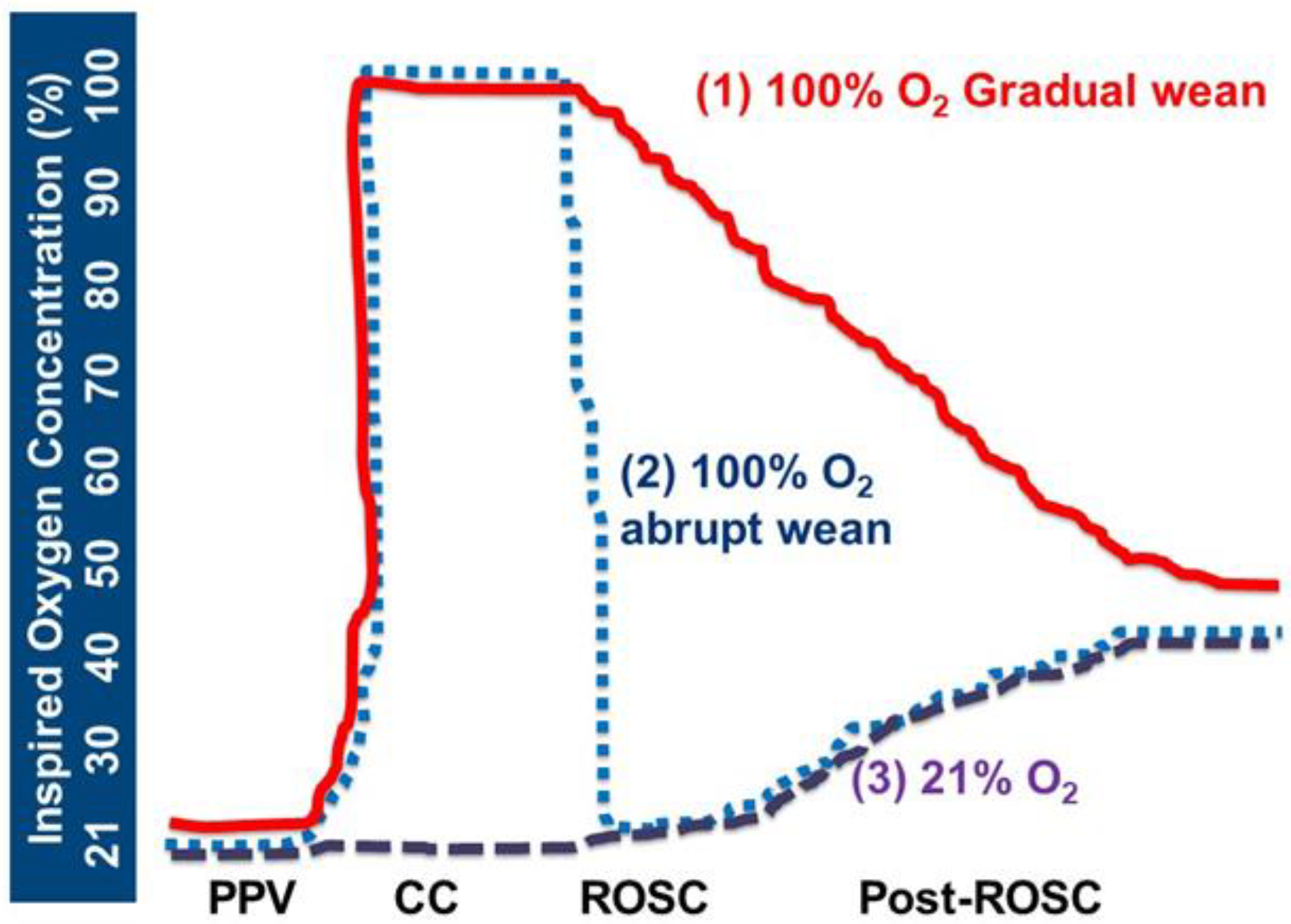
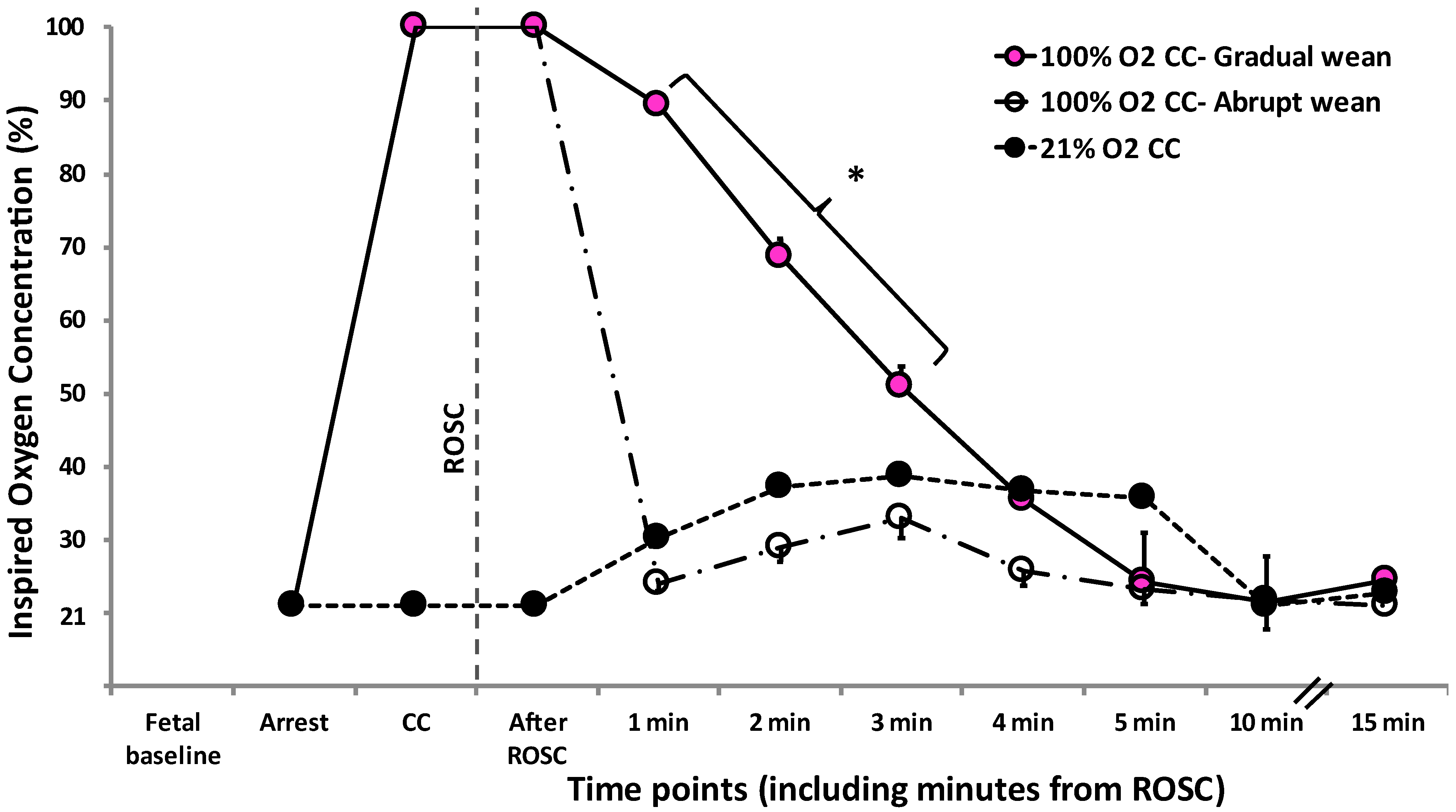
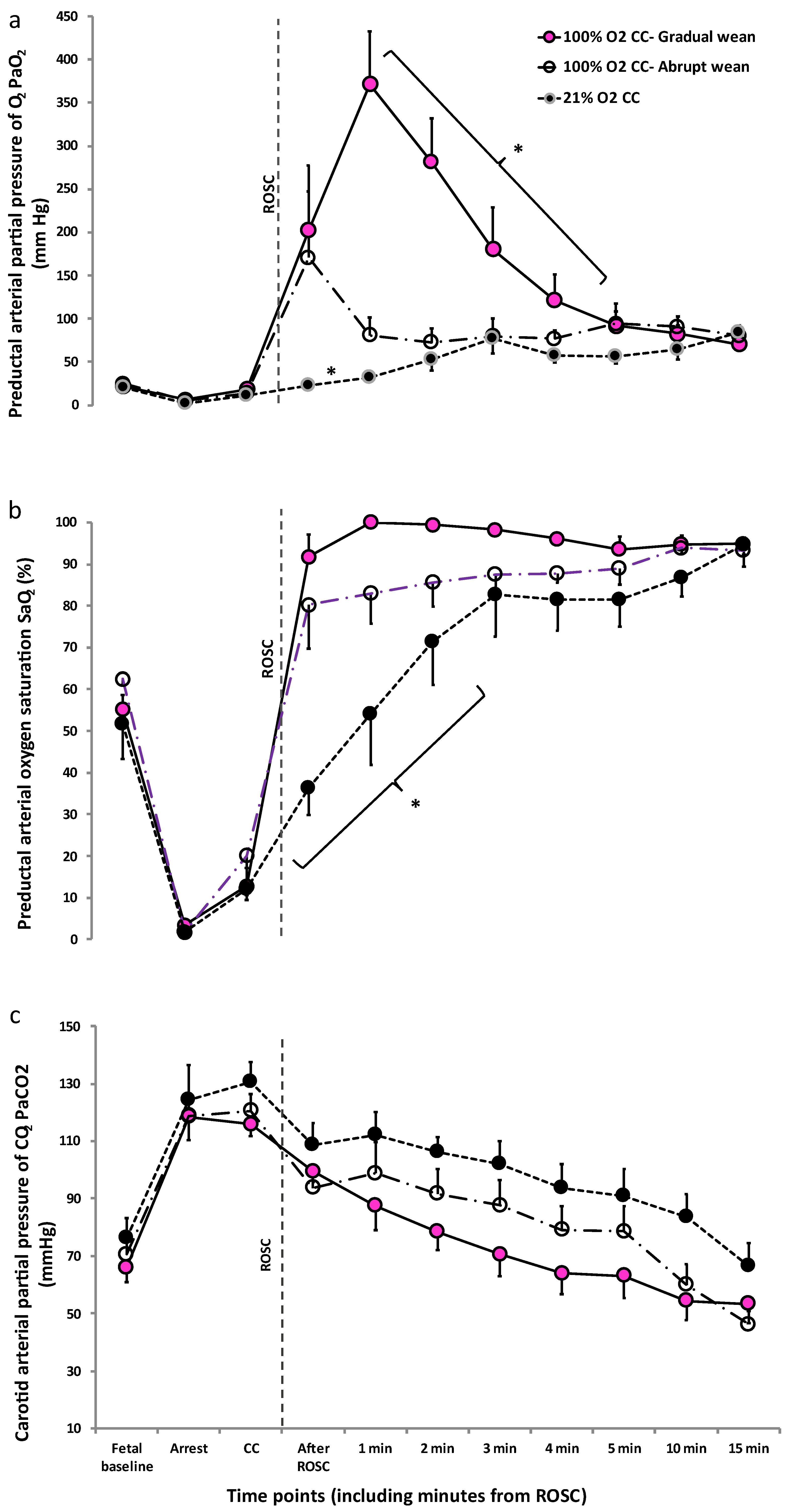
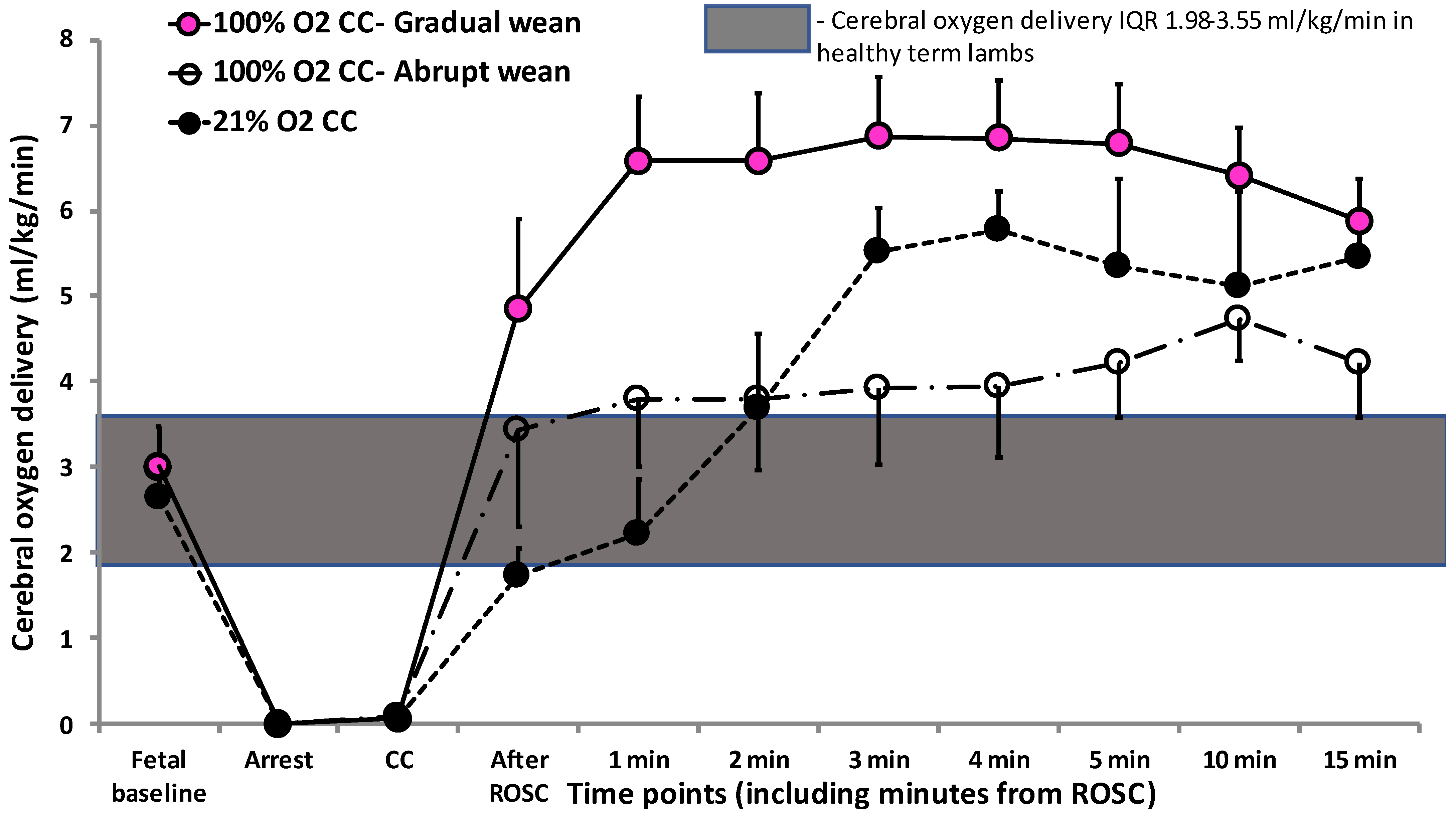
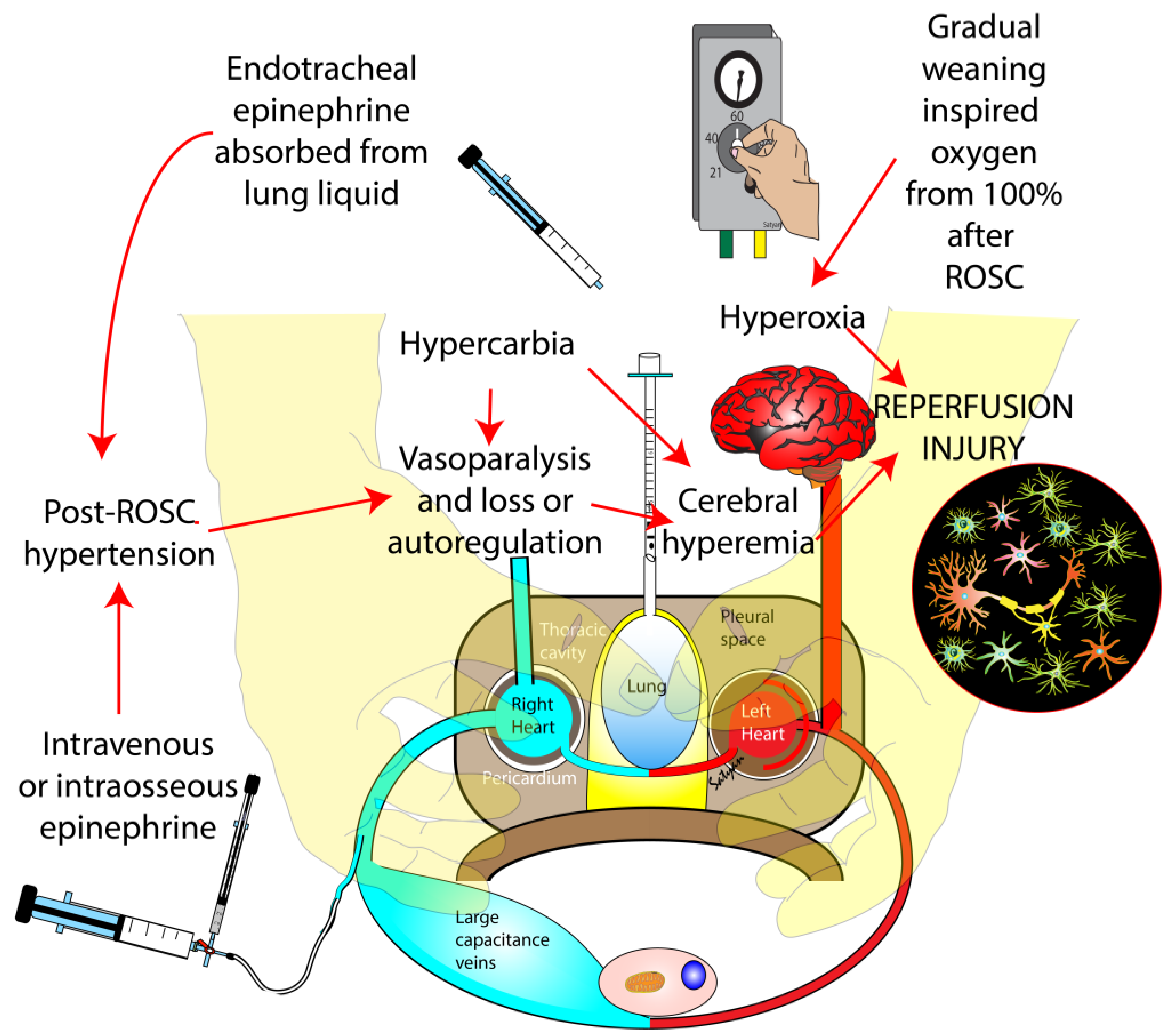
Randomized Trial of 21% versus 100% Oxygen during Chest Compressions Followed by Gradual versus Abrupt Oxygen Titration after Return of Spontaneous Circulation in Neonatal Lambs

 , ,
, , Abstract
Share and Cite
Sankaran, D.; Giusto, E.M.; Lesneski, A.L.; Hardie, M.E.; Joudi, H.M.; Lane, E.C.A.; Hammitt, V.L.; Tully, K.C.; Vali, P.; Lakshminrusimha, S. Randomized Trial of 21% versus 100% Oxygen during Chest Compressions Followed by Gradual versus Abrupt Oxygen Titration after Return of Spontaneous Circulation in Neonatal Lambs. Children 2023, 10, 575. https://doi.org/10.3390/children10030575
Sankaran D, Giusto EM, Lesneski AL, Hardie ME, Joudi HM, Lane ECA, Hammitt VL, Tully KC, Vali P, Lakshminrusimha S. Randomized Trial of 21% versus 100% Oxygen during Chest Compressions Followed by Gradual versus Abrupt Oxygen Titration after Return of Spontaneous Circulation in Neonatal Lambs. Children. 2023; 10(3):575. https://doi.org/10.3390/children10030575
Chicago/Turabian StyleSankaran, Deepika, Evan M. Giusto, Amy L. Lesneski, Morgan E. Hardie, Houssam M. Joudi, Emily C. A. Lane, Victoria L. Hammitt, Kirstie C. Tully, Payam Vali, and Satyan Lakshminrusimha. 2023. "Randomized Trial of 21% versus 100% Oxygen during Chest Compressions Followed by Gradual versus Abrupt Oxygen Titration after Return of Spontaneous Circulation in Neonatal Lambs" Children 10, no. 3: 575. https://doi.org/10.3390/children10030575
APA StyleSankaran, D., Giusto, E. M., Lesneski, A. L., Hardie, M. E., Joudi, H. M., Lane, E. C. A., Hammitt, V. L., Tully, K. C., Vali, P., & Lakshminrusimha, S. (2023). Randomized Trial of 21% versus 100% Oxygen during Chest Compressions Followed by Gradual versus Abrupt Oxygen Titration after Return of Spontaneous Circulation in Neonatal Lambs. Children, 10(3), 575. https://doi.org/10.3390/children10030575