


Abstract
The delivery of routine health care during the COVID-19 global pandemic continues to be challenged as public health guidelines and other local/regional/state and other policies are enforced to help prevent the spread of the virus. The objective of this systematic review is to identify the facilitators and barriers affecting the delivery of routine health care services during the pandemic to provide a framework for future research. In total, 32 articles were identified for common themes surrounding facilitators of routine care during COVID-19. Identified constructed in the literature include enhanced education initiatives for parents/patients regarding routine vaccinations, an importance of routine vaccinations as compared to the risk of COVID-19 infection, an enhanced use of telehealth resources (including diagnostic imagery) and identified patient throughput/PPE initiatives. Reviewers identified the following barriers to the delivery of routine care: conservation of medical providers and PPE for non-routine (acute) care delivery needs, specific routine care services incongruent the telehealth care delivery methods, and job-loss/food insecurity. Review results can assist healthcare organizations with process-related challenges related to current and/or future delivery of routine care and support future research initiatives as the global pandemic continues.
1. Introduction
1.1. Rationale
The COVID-19 global pandemic continues to challenge healthcare industries across the globe, with adaptations to the delivery of care to enforce public health initiatives ongoing. Physical distancing remains a vital task in preventing the spread of COVID-19, while other related variables stress the ability for healthcare systems to deliver routine care services [1,2,3]. With many healthcare organizations focusing solely on the delivery of urgent (acute) care to control the prevalence of the disease, routine health care services are often reprioritized by multiple industry stakeholders, to include the patients themselves [4,5]. While supporting physical distancing and other initiatives, the postponement of routine care may continue to delay the inevitable: an eventual influx of compounded chronic condition aliments that require urgent medical attention once the pandemic subsides.
Barriers influencing the delivery of routine care continue to exist, and many healthcare organizations continue to focus on adapted strategies and patient throughput models that enable the delivery of routine care during the pandemic. To continue to enforce public health initiatives, routine care services are often adjusted and/or adapted for pandemic precautions to be conducted in a safe manner while maintaining physical distancing and related preventive measures [6]. These best practices are often able to be adopted between healthcare organization types, and possibly between health care specialties and/or varying services lines.
1.2. Objectives
The purpose of this review is to identify and classify facilitators and barriers related to the delivery of routine care during the COVID-19 global pandemic. Furthermore, this information may be beneficial for healthcare organizations to assess their current levels of routine care being delivered and the potential for enabling medical personnel in establishing additional routine care services. As the number of individuals receiving the COVID-19 vaccination increases daily, organizations should be working to address any potential backlogs of patients who have delayed routine care services, yet also continuing to abide by local, regional, and/or national public health requirements.
2. Materials and Methods
2.1. Eligibility Criteria
This reviewed was guided by the Preferred Reporting Items for Systematic Reviews and Meta-Analysis (PRISMA) model. Articles were initially considered eligible in the study if they focused upon the delivery of routine care during the COVID-19 global pandemic. Articles had to be published in quality (peer-reviewed) journals and with publication dates between 1 January 2020 through 31 October 2020. This narrow publication window to permit eligibility into the study sample was to help ensure that studies were specifically related to the ongoing COVID-19 pandemic. Some of the studies assessed patient outcomes of routine care during the pandemic, although this was not a criterion for inclusion in the review.
2.2. Information Sources
The review team utilized four research databases to conduct the review: Cumulative Index to Nursing & Allied Health Literature (CINAHL) Complete, Scopus®, Complimentary Index and PubMed (which queries MEDLINE). Database searches were conducted between 1–5 November 2020.
2.3. Search
An initial Google and Google Scholar search was conducted by the researchers surrounding the overall topic surrounding the delivery of routine care during the COVID-19 global pandemic. The sample was limited to English-only and worked to identify main concepts and potential study variables to include in the research database postulated search string. While the Ebson B. Stephens Company (EBSCO host) search engine offers a programmed search suggestion (prepopulated) for COVID-19 and related terms, the Medical Subject Headings (MeSH) controlled vocabulary thesaurus for the National Library of Medicine did not offer related terminology for the “routine care”. Based upon the initial Google/Google Scholar search and multiple trial-and-error research database search queries by the research team, it was decided to simply use the term “routine” as a required search criterion in the review. This ensured a well-encompassed collection of potential articles in the study (yielding the highest initial article results). The final search string with Boolean operators utilized was: (“coronavirus” OR “COVID-19” OR “2019-ncov”) AND (“routine”).
2.4. Study Selection
Researchers met via a series of webinars to review identified articles and apply the review criteria specific to the research topic. A MS Excel spreadsheet hosted on an institutional cloud drive assisted in this collaboration process as initial search results were reviewed by the research team. The team worked to identify duplicate articles, books, other reviews, and publications that were not germane to the review topic. In the end, articles had to specifically focus on either a facilitator(s) and/or a barrier(s) to the delivery of routine care during the COVID-19 global pandemic to be included in the study sample.
2.5. Exclusion Criteria
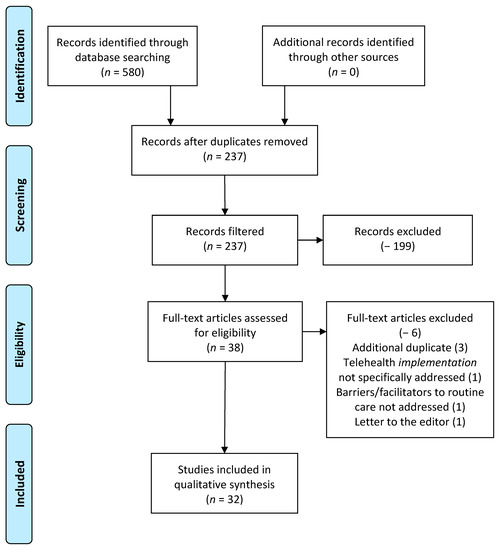
The study selection process with exclusion factors is illustrated in Figure 1. Upon completion of the screening process, at total of 32 articles were selected for inclusion in the review.
Figure 1.
Preferred reporting items for systematic reviews and meta-analysis (PRISMA) figure that demonstrates the study selection process.
2.6. Risk of Bias
It is important to emphasize the broader scope of this review to identify initial facilitators and barriers to the delivery of routine care during the COVID-19 pandemic. Many of the articles identified met the criteria for this review, yet did not incorporate high levels of research method rigor (experimental design) and/or related findings. Instead, many articles focused upon an expert review of individual organization experiences and related processes regarding the delivery of routine care. As a result, the research team worked to evaluate, analyze, and classify identified facilitators and barriers related to the delivery of routine care, and potential patient outcomes (if available). Articles were selected for inclusion in this review independently by each researcher, and any discrepancies were resolved via discussion and with unanimous consent on the final sample.
3. Results
3.1. Study Characteristics
Each article in the sample was reviewed for participants involved, as well as identified facilitators and barriers experienced with the delivery of routine care during the pandemic. Additionally, specific patient outcomes related to routine care was also assessed, if included in the sample article. In the end, to be included in the review at least one facilitator and/or barrier had to be identified as the primary theme of the article. Provision of patient outcomes related to an article’s facilitator/barrier (or both) theme was not a required variable. Articles included in the review sample are listed in alphabetical order by author last name in Table 1.
Table 1.
Summary of Findings (n = 32).
The sample included both U.S. health care organizations, as well as international. A variety of research methods were utilized across the entire sample, specific participants were identified, as well as potential facilitators and barriers identified with the routine care during the ongoing pandemic. Additionally, any patient outcomes (if included) were also identified. If not addressed, “n/a” was inserted for that article in Table 1.
A summary of the underlying concepts surrounding the type and/or delivery of routine medical care identified in the review is shown in Table 2. Review of the 32 sample articles demonstrated fourth main types of routine health care services. Such underlying themes incorporate both facilitator and barrier variables, and also provide initial insight into the types of routine services affected by the pandemic, as identified in the literature. Several articles in the review possess more than one underlying facilitator and/or barrier related to its identified construct (not mutually exclusive to any one type of routine service).
Table 2.
Summary of Overall Health Care Service Constructs Identified (n = 32).
The ‘Routine care, other’ overall construct identified in the literature summarizes routine care services similar to the initial construct (termed, ‘Chronic care management’), but excluding common chronic conditions such as heart disease, diabetes, and obesity. Examples of health services in this last category include conditions such as diagnostic imagining, preventive dental care, chronic (ongoing) orthopedic/arthritis care, and palliative care services.
3.2. Summary of Evidence
The pandemic has caused numerous limitations for healthcare employees to provide continuous, routine medical treatment for their patients. Research found notable impacts on rural and lower socioeconomic areas on a global scale [7]. Rural and lower socioeconomic areas prior to COVID-19 were limited in resources and healthcare options. Healthcare providers of all types noticed rapidly depleting resources, limiting their ability to provide care to their patients in routine care facilities [5]. Due to fear of possibly being infected with COVID-19, the prevalence of patient adherence to sustaining routine care encounters depleted substantially for organizations in the sample. However, other organizations identified the possibility of exposure to COVID-19 a calculated, assumed risk for other patients when it came to receiving routine care.
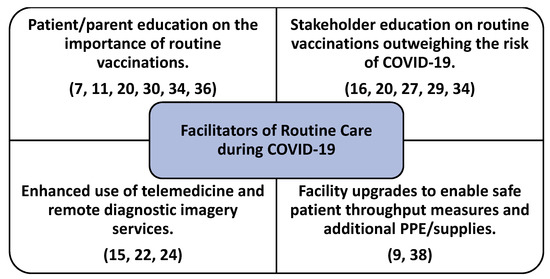
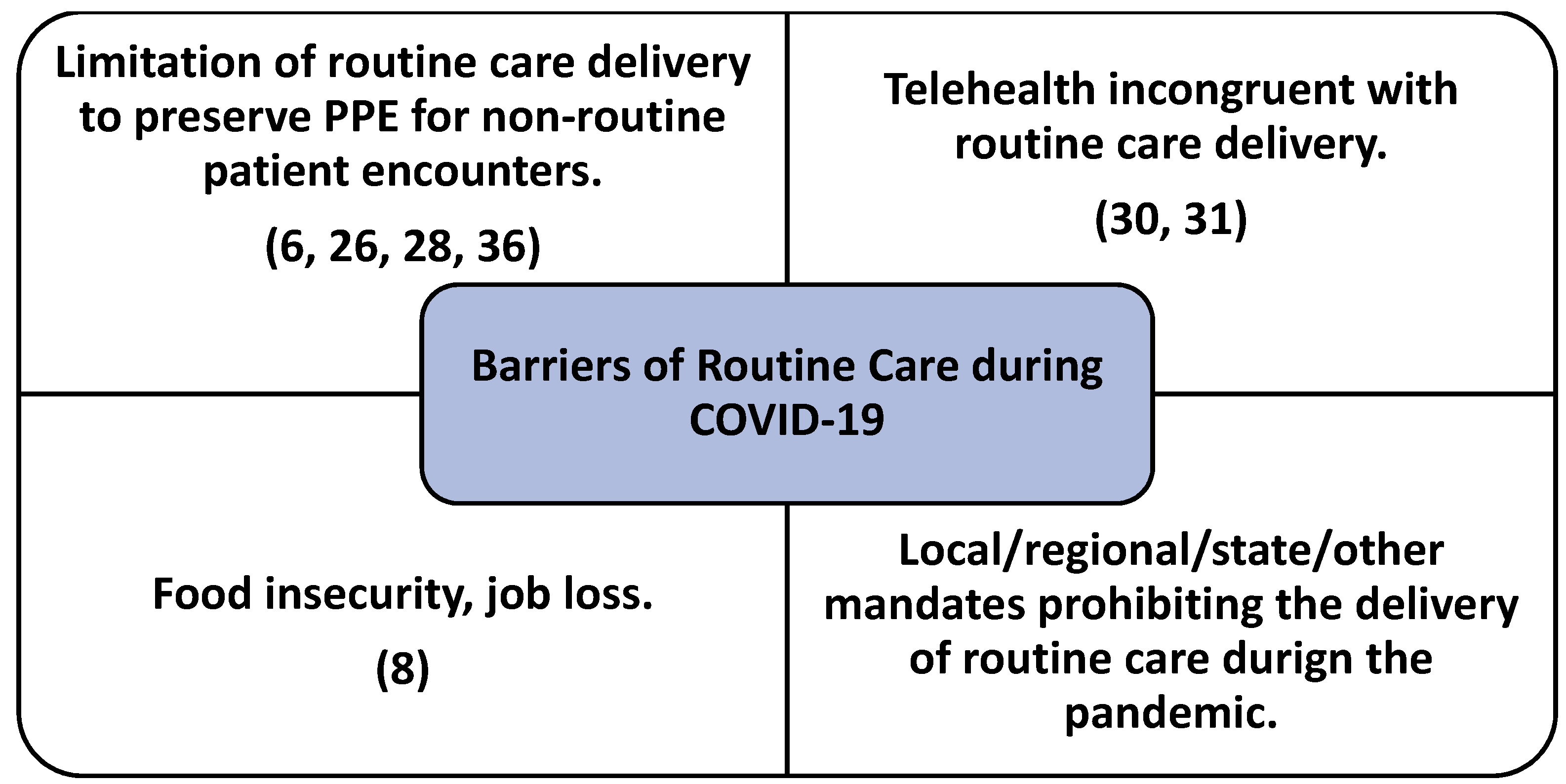
Figure 2 and Figure 3 demonstrate the underlying constructs identified in the sample regarding both facilitators and barriers to the delivery of routine care services during the global pandemic. In addition to the four construct categories identified for facilitator and barrier variables, the research team also discovered the importance of education for a variety of health care stakeholders (ex. patients, parents, and even providers) played a vital role in assisting with routine care delivery. Specifically, education of parents (or guardians of pediatric patients) was cited in the literature surrounding the importance of routine (non-COVID-19) vaccinations during the pandemic [11,20,30,36], while also playing an important role in demonstrating the necessity of routine vaccinations extending beyond the potential risk of contracting COVID-19 during routine vaccine administration processes [20,29,34].
Figure 2.
Underlying variables (constructs) identified as facilitators for the delivery of routine care during the pandemic.
Figure 3.
Underlying variables (constructs) identified as barriers for the delivery of routine care during the pandemic.
4. Discussion
4.1. Facilitators of Routine Care
This review identified many facilitators to help further enable the provision of routine health care services. Constituting a majority of the overall routine care constructs identified in the literature (Table 1), the provision of routine (non-COVID) vaccinations was significantly increased using a multitude of factors. Patient education surrounding the importance of routine vaccinations outweighing risk of contracting COVID-19 was a primary finding in the literature to facilitate routine vaccinations [10,16,30,32]. Parental awareness (education) regarding the importance of routine vaccination, even during a global pandemic was also identified as a significant facilitator to delivery of care [10,32].
In addition to patient and other healthcare stakeholder education surrounding the facilitation of routine vaccinations, the use of telemedicine and remote diagnosis using medical imagery was also identified in the literature [15,22,24]. While some obstetrical care was directly related to diagnostic and similar imaging procedures, facilitation of this service line was also enhanced through the increased use of telehealth resources, as well as facility upgrades to enable safe patient throughput, adequate PPE, and additional medical supplies [9,38].
4.2. Barriers to Routine Care
Health service categories recognized by the research team in Table 1 were also analyzed for potential barriers to routine care as preempted by COVID-19. When the pandemic began just over a year ago, adequate and appropriate PPE was of concern and challenged the healthcare industry significantly. Such constraints limited the amount of care physicians could safely provide. These initial limitations consequently placed pressure on who care should be prioritized for, including delivery of routine care services [6,26,28,36]. While PPE was cited as a routine care delivery constraint (barrier) in a majority of the articles in the review, the specific reference to the limiting of routine (including elective) care in an attempt to preserve PPE for non-routine, acute-care encounters was identified as a significant routine care barrier.
The increased use of telehealth during the global pandemic has assisted in the facilitation of health care delivery, to include routine care [39]. However, as specialty-specific clinical practice guidelines are continuing to develop and be implemented by providers of all industry segments, use of telehealth is not a 100% comprehensive solution to facilitate the provision of routine care. Identified as an inappropriate method of care delivery for specific types of routine health care services, and/or not accepted as a preferred method of treatment, telehealth was classified as a barrier to routine care in some routine treatment circumstances [30,31].
An important, non-clinical, yet key variable identified in the review surrounds those seeking routine health care services during the global pandemic who are also encountering significant socioeconomic challenges. While only identified in one article in the review [8], the practical significance food insecurity during the COVID-19 global pandemic is considered highly influential in a person’s decision to delay their routine health care service appointments [8]. Food pantry and other assistance measures continue to try and alleviate the pressures put on families during this difficult time, placing the scheduling and follow-on procurement of routine health care services much lower on the priority list of daily tasks for many [40]. An ongoing challenge in the United States and beyond [40], often the delayed routine care observation, because of food insecurity, is most-often also correlated with the person’s employment status (i.e., job loss) [8].
Another barrier to the delivery of routine care is local/regional/state/other public health mandate or governmental policy prohibiting the delivery of routine care during specific shut-down stages of the pandemic. Here, while understood as a barrier to the delivery of routine care and important to note in this review, it is not a process variable (care obstacle) that is able to be successfully managed by the healthcare organization, succumbed to appropriately following policy guidelines and related public health precautions.
4.3. Expansion of Telehealth: Pros and Cons
Use of telehealth services has become an essential care delivery method during the pandemic for both routine and acute care services [39]. While enhancing telehealth capabilities for the delivery of routine care has been identified as a care delivery facilitator by the research team (Figure 2), specific types of primary (routine) health care services have been identified in the literature as inappropriate when delivered solely using telehealth services (Figure 3). Healthcare organizations are urged to research their specific routine care delivery patient needs and determine the suitability of telehealth use in lieu of in-person visits. Regardless, the observed expansion of telehealth services offers both pros and cons as observed in the literature, even beyond the scope of this study specifically focusing on routine care delivery.
Offering a safe treatment modality (accommodating physical distancing), many patients comment on the experienced safety and provider consideration for COVID-19 precautions when using telehealth services [41]. Patient (and provider) convenience are also benefits identified in the literature [42,43]. Additional conveniences include elimination of some opportunity costs encountered with in-person visits, as compared to virtual visits (ex. missing work, travel expenses, etc.).
Alternatively, the enhanced use of virtual visits has resulted in some disadvantages as experienced by healthcare stakeholders. While many healthcare privacy requirements have been adjusted in an attempt to adapt to the global pandemic and enforce physical distancing, the concept of informed consent, patient privacy, and patient confidentiality are still of concern [42,44,45]. The expansion of telehealth has even been identified as a contributor to enhanced social isolation for specific patient population segments who prefer in-person (non-virtual) collaboration with their medical providers [41].
4.4. Limitations
As with any research study, this review’s findings also possess limitations. The researchers only investigated articles with publication dates within the 1 January 2020 through 31 October 2020 timeframe. While the intent was to limit the identified sample to only COVID-related publications, this did significantly limit the initial search findings. Only articles published in peer-reviewed journals were included in the study, and various study methods and associated levels of rigor related to the investigation of routine care delivery varied significantly across the final review sample. Reviewing articles only available in English also limited the sample. As the healthcare industry continues to work improving access and quality of care related to routine service delivery, additional investigation in this topic is necessary and a strong opportunity for future research.
5. Conclusions
The provision of routine health care services during the COVID-19 global pandemic is challenged by barriers that can be overcome with planning and community effort [7,10,16,29]. Identified routine care delivery facilitators demonstrate the healthcare industry’s ability to adapt to public health physical distancing and other COVID-19 precaution measures while still providing adequate care for the routine patient [11]. While many healthcare organizations have been successful with their attempt to adjust delivery of routine care processes to establish a continuity of care, an important organizational leadership decision must also be made regarding when to halt routine care delivery to focus on acute COVID-19 patients when limitations exist [35].
This research provides an initial investigation into facilitators and barriers related to the provision of routine care during COVID-19. Identified themes can assist healthcare organizations with future planning to address such concerns, while specific routine care delivery processes and procedures will be dependent upon organization type and other inherent organizational characteristics. Management of chronic conditions [13,23,25,35], obstetrical care [9,31] and other routine care [14,18,21,26] have been identified as successful routine care delivery services continued during COVID-19. Still, a recognized backlog of delayed routine care will require additional industry initiatives and adaptations as vaccinations continue to be administered and the pandemic eventually subsides.
Author Contributions
All authors contributed to this review in accordance with ICMJE standards. C.L. coordinated the research group and guided the investigation into the research topic, participation in the method, and original drafting of the manuscript. In addition to the initial screening and manuscript review/construct identification, B.H. and R.K. contributed to the discussion/analysis, while also overall editing of the manuscript. All authors have read and agreed to the published version of the manuscript.
Funding
This research received no external funding.
Institutional Review Board Statement
Not applicable.
Informed Consent Statement
Not applicable.
Acknowledgments
The research team would like to acknowledge the support of Clemens Scott Kruse in his provision of resources and guidance regarding the PRISMA systematic review process.
Conflicts of Interest
The authors declare no conflict of interest.
References
- New Data Confirms Alarming Trend: COVID-19 Fears Are Causing Americans to Avoid the Doctor’s Office and Delay Routine Care. Available online: https://finance.yahoo.com/news/data-confirms-alarming-trend-covid-130000356.html?guccounter=1&guce_referer=aHR0cHM6Ly93d3cuZ29vZ2xlLmNvbS8&guce_referer_sig=AQAAACDt_jUOtyde48ntQ7S__HFN_0oK1faKF6c9By9hCZJXAjvY2xEyO4LPG3QkKythQ3pas6NWnnY_SYJPwlhYAUKBNmvTqdSDk4jS2Y4tgU_ya64xpnWxpdNdD_kPgyIZv_kLfIPuZbebnYh6ROh1N3h46Q98gt5NsNIXAjDZ9M (accessed on 30 April 2021).
- Czeisler, M.É.; Marynak, K.; Clarke, K.E.N.; Salah, Z.; Shakya, I.; Thierry, J.M.; Ali, N.; McMillan, H.; Wiley, J.F.; Weaver, M.D.; et al. Delay or Avoidance of Medical Care Because of COVID-19-Related Concerns-United States, June 2020. Morb. Mortal. Wkly. Rep. 2020, 69, 1250–1257. [Google Scholar] [CrossRef] [Scilit]
- Greene, J. Dental practices, routine treatments on hold during COVID-19. Crain’s Detroit Bus. 2020, 36, 0006. [Google Scholar]
- Papautsky, E.L.; Hamlish, T. Patient-reported treatment delays in breast cancer care during the COVID-19 pandemic. Breast Cancer Res. Treat. 2020, 184, 249–254. [Google Scholar] [CrossRef] [Scilit]
- Zintsmaster, M.P.; Myers, D.T. Patients avoided important care during the early weeks of the coronavirus pandemic: Diverticulitis patients were more likely to present with an abscess on CT. Emerg. Radiol. 2021, 28, 279–282. [Google Scholar] [CrossRef] [Scilit]
- Nuara, A.; Fabbri-Destro, M.; Scalona, E.; Lenzi, S.E.; Rizzolatti, G.; Avanzini, P. Telerehabilitation in response to constrained physical distance: An opportunity to rethink neurorehabilitative routines. J. Neurol. 2021, 1–12. [Google Scholar] [CrossRef] [Scilit]
- LSHTMCMMIDCOVID-19 Working Group; Abbas, K.; Procter, S.R.; Zandvoort, K.; van Clark, A.; Funk, S.; Mengistu, T.; Hogan, D.; Dansereau, E.; Jit, M.; et al. Routine childhood immunisation during the COVID-19 pandemic in Africa: A benefit-risk analysis of health benefits versus excess risk of SARS-CoV-2 infection. Lancet Glob. Health 2020, 8, e1264–e1272. [Google Scholar] [CrossRef] [Scilit]
- Abrams, S.A.; Avalos, A.; Gray, M.; Hawthorne, K.M. High Level of Food Insecurity among Families with Children Seeking Routine Care at Federally Qualified Health Centers during the Coronavirus Disease 2019 Pandemic. J. Pediatr. X 2020, 4, 100044. [Google Scholar] [CrossRef] [Scilit] [PubMed]
- Abu-Rustum, R.S.; Akolekar, R.; Sotiriadis, A.; Salomon, L.J.; da Costa, F.S.; Wu, Q.; Frusca, T.; Bilardo, C.M.; Prefumo, F.; Poon, L.C. ISUOG Consensus Statement on organization of routine and specialist obstetric ultrasound services in context of COVID-19. Ultrasound Obstet. Gynecol. 2020, 55, 863–870. [Google Scholar] [CrossRef] [Scilit] [PubMed]
- Adamu, A.A.; Jalo, R.I.; Habonimana, D.; Wiysonge, C.S. COVID-19 and routine childhood immunization in Africa: Leveraging systems thinking and implementation science to improve immunization system performance. Int. J. Infect. Dis. 2020, 98, 161–165. [Google Scholar] [CrossRef] [Scilit] [PubMed]
- Alsuhaibani, M.; Alaqeel, A. Impact of the COVID-19 Pandemic on Routine Childhood Immunization in Saudi Arabia. Vaccines 2020, 8, 581. [Google Scholar] [CrossRef] [Scilit]
- Ardakani, A.A.; Kanafi, A.R.; Acharya, U.R.; Khadem, N.; Mohammadi, A. Application of deep learning technique to manage COVID-19 in routine clinical practice using CT images: Results of 10 convolutional neural networks. Comput. Biol. Med. 2020, 121, 103795. [Google Scholar] [CrossRef] [Scilit]
- Berger-Richardson, D.; Ko, G.; Hong, N.L. Preparing for the Renaissance: Treating Breast Cancer during the COVID-19 Pandemic and Planning for a Safe Re-Emergence to Routine Surgical Care within a Universal Health Care System. Curr. Oncol. 2020, 27, 163–168. [Google Scholar] [CrossRef] [Scilit] [PubMed]
- De Carmelo, J.C.; Alves, T.K.C.; Khouri, M.S.; da Santos, R.P.M.; Rodrigues, L.G.; Alvarez-Leite, M.E.; Manzi, F.R. Impact of COVID-19 on the daily routine of radiology clinics. Imaging Sci. Dent. 2020, 50, 261–263. [Google Scholar] [CrossRef] [Scilit]
- Chan, J.Y.K.; Tsang, R.K.Y.; Yeung, K.W.; Abdullah, V.; Ku, P.; Wong, E.W.Y.; Mehta, N.; Orosco, R.K.; Holsinger, F.C. There is no routine head and neck exam during the COVID-19 pandemic. Head Neck 2020, 42, 1235–1239. [Google Scholar] [CrossRef] [Scilit]
- Chandir, S.; Siddiqi, D.A.; Mehmood, M.; Setayesh, H.; Siddique, M.; Mirza, A.; Soundardjee, R.; Dharma, V.K.; Shah, M.T.; Abdullah, S.; et al. Impact of COVID-19 pandemic response on uptake of routine immunizations in Sindh, Pakistan: An analysis of provincial electronic immunization registry data. Vaccine 2020, 38, 7146–7155. [Google Scholar] [CrossRef] [Scilit] [PubMed]
- Chudasama, Y.V.; Gillies, C.L.; Zaccardi, F.; Coles, B.; Davies, M.J.; Seidu, S.; Khunti, K. Impact of COVID-19 on routine care for chronic diseases: A global survey of views from healthcare professionals. Diabetes Metab. Syndr. Clin. Res. Rev. 2020, 14, 965–967. [Google Scholar] [CrossRef] [Scilit] [PubMed]
- Corden, E.; Rogers, A.K.; Woo, W.A.; Simmonds, R.; Mitchell, C.D. A targeted response to the COVID-19 pandemic: Analysing effectiveness of remote consultations for triage and management of routine dermatology referrals. Clin. Exp. Dermatol. 2020, 45, 1047–1050. [Google Scholar] [CrossRef] [Scilit] [PubMed]
- Desai, U.; Kassardjian, C.D.; Del Toro, D.; Do, N.G.; Srinivasan, J.; Venesy, D.; Narayanaswami, P. The AANEM Quality and Patient Safety Committee Guidance for resumption of routine electrodiagnostic testing during the COVID-19 pandemic. Muscle Nerve 2020, 62, 176–181. [Google Scholar] [CrossRef] [Scilit] [PubMed]
- Dinleyici, E.C.; Borrow, R.; Safadi, M.A.P.; van Damme, P.; Munoz, F.M. Vaccines and routine immunization strategies during the COVID-19 pandemic. Hum. Vaccines Immunother. 2021, 17, 400–407. [Google Scholar] [CrossRef] [Scilit]
- Ekberg, K.; Weinglass, L.; Ekberg, S.; Danby, S.; Herbert, A. The pervasive relevance of COVID-19 within routine paediatric palliative care consultations during the pandemic: A conversation analytic study. Palliat. Med. 2020, 34, 1202–1219. [Google Scholar] [CrossRef] [Scilit]
- Franzini, T.A.P.; Kotinda, A.P.S.T.; de Moura, D.T.H.; de Moura, E.G.H.; Badana, M.L.V.; de Medeiros, M.S.; Lima, P.G.R.; de Mello, B.F.; Kayano, R.P.; Carmona, M.J.C.; et al. Approach to endoscopic procedures: A routine protocol from a quaternary university referral center exclusively for coronavirus disease 2019 patients. Clinics 2020, 75. [Google Scholar] [CrossRef] [Scilit]
- Fung, A.; Irvine, M.; Ayub, A.; Ziabakhsh, S.; Amed, S.; Hursh, B.E. Evaluation of telephone and virtual visits for routine pediatric diabetes care during the COVID-19 pandemic. J. Clin. Transl. Endocrinol. 2020, 22, 100238. [Google Scholar] [CrossRef] [Scilit]
- Gupta, S.; Shahidi, N.; Gilroy, N.; Rex, D.K.; Burgess, N.G.; Bourke, M.J. Proposal for the return to routine endoscopy during the COVID-19 pandemic. Gastrointest. Endosc. 2020, 92, 735–742. [Google Scholar] [CrossRef] [Scilit]
- Howley, F.; O’Doherty, L.; McEniff, N.; O’Riordan, R. Late presentation of ‘Lemierre’s syndrome’: How a delay in seeking healthcare and reduced access to routine services resulted in widely disseminated Fusobacterium necrophorum infection during the global COVID-19 pandemic. BMJ Case Rep. 2020, 13, e239269. [Google Scholar] [CrossRef] [Scilit]
- Jung, J.; Kim, J.Y.; Bae, S.; Cha, H.-H.; Kim, E.O.; Kim, M.J.; Kim, S.-H. Contamination of personal protective equipment by SARS-CoV-2 during routine care of patients with mild COVID-19. J. Infect. 2020, 81, e165–e167. [Google Scholar] [CrossRef] [Scilit]
- Kinoshita, M.; Tanaka, M. Impact of Routine Infant BCG Vaccination on COVID-19. J. Infect. 2020, 81, 625–633. [Google Scholar] [CrossRef] [Scilit]
- Langdon-Embry, M.; Papadouka, V.; Cheng, I.; Almashhadani, M.; Ternier, A.; Zucker, J.R. Notes from the Field: Rebound in Routine Childhood Vaccine Administration Following Decline During the COVID-19 Pandemic—New York City, March 1–June 27, 2020. Morb. Mortal. Wkly. Rep. 2020, 69, 999–1001. [Google Scholar] [CrossRef] [Scilit] [PubMed]
- MacDonald, N.E.; Comeau, J.L.; Dubé, È; Bucci, L.M. COVID-19 and missed routine immunizations: Designing for effective catch-up in Canada. Can. J. Public Health 2020, 111, 469. [Google Scholar] [CrossRef] [Scilit]
- McDonald, H.I.; Tessier, E.; White, J.M.; Woodruff, M.; Knowles, C.; Bates, C.; Parry, J.; Walker, J.L.; Scott, J.A.; Smeeth, L.; et al. Early impact of the coronavirus disease (COVID-19) pandemic and physical distancing measures on routine childhood vaccinations in England, January to April 2020. Eurosurveillance 2020, 25, 2000848. [Google Scholar] [CrossRef] [Scilit]
- Meyer, R.; Levin, G.; Hendin, N.; Katorza, E. Impact of the COVID-19 outbreak on routine obstetrical management: A cohort study. Authorea 2020, 22, 483–488. [Google Scholar] [CrossRef] [Scilit]
- Ogundele, O.A.; Omotoso, A.A.; Fagbemi, A.T. COVID-19 outbreak: A potential threat to routine vaccination programme activities in Nigeria. Hum. Vaccines Immunother. 2021, 17, 661–663. [Google Scholar] [CrossRef] [Scilit]
- Papanastasiou, E. The consequences of COVID-19 pandemic in the routine of Nuclear Medicine Departments. Hell. J. Nucl. Med. 2020, 23, 15–20. [Google Scholar]
- Ranganathan, R.; Khan, A.M. Routine immunization services during the coronavirus (COVID-19) pandemic. Indian J. Community Health 2020, 32, 236–239. [Google Scholar] [CrossRef] [Scilit]
- Rimmer, A. Covid-19: GPs can stop health checks for over 75s and routine medicine reviews. BMJ (Clin. Res. Ed.) 2020, 368, m1157. [Google Scholar] [CrossRef] [Scilit]
- Saxena, S.; Skirrow, H.; Bedford, H. Routine vaccination during covid-19 pandemic response. BMJ (Clin. Res. Ed.) 2020, 369, m2392. [Google Scholar] [CrossRef] [Scilit] [PubMed]
- Seyahi, E.; Poyraz, B.C.; Sut, N.; Akdogan, S.; Hamuryudan, V. The psychological state and changes in the routine of the patients with rheumatic diseases during the coronavirus disease (COVID-19) outbreak in Turkey: A web-based cross-sectional survey. Rheumatol. Int. 2020, 40, 1229–1238. [Google Scholar] [CrossRef] [Scilit] [PubMed]
- Kumari, A.; Zangmo, R.; Garg, D.; Sharma, K.A. Redesigning routine antenatal care in low resource setting during COVID-19 pandemic. J. Fam. Med. Prim. Care 2020, 9, 4547–4551. [Google Scholar] [CrossRef] [Scilit]
- Lieneck, C.; Garvey, J.; Collins, C.; Graham, D.; Loving, C.; Pearson, R. Rapid Telehealth Implementation during the COVID-19 Global Pandemic: A Rapid Review. Healthcare 2020, 8, 517. [Google Scholar] [CrossRef] [Scilit]
- Clarke, K. Lines grow outside food pantries as Covid-19 spikes again. America 2021, 2, 19. [Google Scholar]
- Kojima, N.; Klausner, J.D. Virtual House Calls: Telemedicine and Reforming the Health Care Delivery Model with Strategies Implemented in a Novel Coronavirus Pandemic. J. Gen. Intern. Med. 2020, 35, 2243. [Google Scholar] [CrossRef] [Scilit] [PubMed]
- Wosik, J.; Fudim, M.; Cameron, B.; Gellad, Z.F.; Cho, A.; Phinney, D.; Curtis, S.; Roman, M.; Poon, E.G.; Ferranti, J.; et al. Telehealth transformation: COVID-19 and the rise of virtual care. J. Am. Med. Inform. Assoc. 2020, 27, 957–962. [Google Scholar] [CrossRef] [Scilit] [PubMed]
- Levine, L.B.; Guidry, M. Telehealth and COVID-19. EP Magazine, 6 May 2020.
- Ma, K.J.; Cohen, J.A.; Ba, M.B.; Levin, A.O.; Goyal, N.; Bs, T.L.; Chesney, M.A.; Shumay, D.M. “Soup cans, brooms, and Zoom:” Rapid conversion of a cancer survivorship program to telehealth during COVID-19. Psychooncology 2020, 29. [Google Scholar] [CrossRef] [Scilit]
- Hirko, K.A.; Kerver, J.M.; Ford, S.; Szafranski, C.; Beckett, J.; Kitchen, C.; Wendling, A.L. Telehealth in response to the COVID-19 pandemic: Implications for rural health disparities. J. Am. Med. Inform. Assoc. 2020, 27, 1816–1818. [Google Scholar] [CrossRef] [Scilit]

Publisher’s Note: MDPI stays neutral with regard to jurisdictional claims in published maps and institutional affiliations. |
© 2021 by the authors. Licensee MDPI, Basel, Switzerland. This article is an open access article distributed under the terms and conditions of the Creative Commons Attribution (CC BY) license (https://creativecommons.org/licenses/by/4.0/).