


Abstract
Background/Objectives: Artificial intelligence (AI) provides novel ways for occupational therapy to enhance participation in everyday activities, including in home and community settings among adults with disabilities and chronic health conditions. To expand our understanding of how AI can be leveraged in interventions in these settings, this scoping review aimed to provide an overview of research on AI-supported interventions promoting participation among adults with disabilities, including chronic health conditions, in home and community settings. Methods: We conducted a comprehensive literature search across seven applied health and computer science databases. Studies were included if they investigated AI-supported, participation-focused interventions for adults with disabilities, including chronic health conditions, in home or community settings, published after 2013. Results: Sixty of 4315 studies were included. Most originated from the Global North (58%). The most common interventions combined machine learning, natural language processing, and computer vision (35%). Over half of the studies (55%) incorporated individual-level personalization, while only 13% included individualized goal-setting. Reporting of participant characteristics was many times incomplete: of the 42 studies involving human participants, 29% did not report age and 31% did not report gender. Eighteen studies evaluated participation outcomes, predominantly relying on proxy outcomes such as quality of life (56%). Conclusions: Three key gaps were identified: (1) limited representation of the Global South beyond India, alongside incomplete reporting of sociodemographic data; (2) limited use of client-centered approaches incorporating personalization and goal-setting tailored to individual needs; and (3) limited use of direct, standardized participation measures to evaluate AI-supported participation-focused interventions in home and community settings.
1. Introduction
Participation is a central aim of occupational therapy [1] and a key rehabilitation outcome, defined by the World Health Organization (WHO) as “involvement in life situations” [2]. Participation in activities is understood to enable individuals to find value and meaning in their daily lives [3], develop their identity and sense of self [4], and have a positive impact on their health and well-being [2].
The rising prevalence of chronic health conditions, alongside improved survival rates after disease or trauma, has led to an increasing number of individuals with participation needs [5]. Consequently, this growing demand poses significant challenges for healthcare systems, such as a shortage of healthcare professionals [6] and associated costs for inpatient rehabilitation services [7]. In response to these challenges, occupational therapy and other rehabilitation services have shifted toward home- and community-based rehabilitation with a focus on individuals’ functioning in everyday life [6]. Such services aim to provide tailored care in a person’s home, taking into account their physical, attitudinal, and social environment [8]. By personalizing interventions to an individual’s daily living context, therapists can better support meaningful and sustainable participation outcomes [9].
Additionally, digital tools are being developed to simplify services and improve access in home- and community-based rehabilitation, including occupational therapy [10,11]. One technology that has gained particular attention in recent years is artificial intelligence (AI) [12]. Within the European Union AI Act [13], AI has been defined as “a machine-based system that is designed to operate with varying levels of autonomy and that may exhibit adaptiveness after deployment, and that, for explicit or implicit objectives, infers, from the input it receives, how to generate outputs such as predictions, content, recommendations, or decisions that can influence physical or virtual environments.”
AI-supported digital tools may provide novel ways for occupational therapy to enhance participation in everyday activities, especially in home and community settings among adults with disabilities and chronic health conditions. Specifically, they have the potential to support two key aspects of participation-focused interventions in home and community settings: (1) accounting for individuals’ contexts by delivering services within the client’s home and community environment [7] and (2) enabling the personalization of interventions to align with individual goals and preferences (i.e., in a client-centered way) [14].
Despite these promises, the application of AI in rehabilitation and disability contexts has been subject to substantial critique (e.g., [15,16,17]). Concerns have been raised regarding a lack of client-centered approaches, particularly the absence of individualized goal-setting and tailoring to individual needs and preferences; as such applications often cater only to broad categories of disabilities [16], neglecting the heterogeneous and context-dependent nature of disabilities and individual needs [18,19,20]. Additionally, AI models focusing on participation have been criticized for not accurately reflecting participation, but rather oversimplifying it when put into computational formats such as those needed for AI applications [21,22].
To gain an overview of current research on AI-supported home- and community-based rehabilitation interventions, their level of personalization, and operationalization of participation, several recent reviews have been conducted on the application of AI in participation-focused pediatric rehabilitation [16,23] and on general AI-supported applications in home- and community-based rehabilitation settings [7,10,14,24]. However, these reviews either focused on pediatric populations [16,23] or lacked a specific focus on participation [7,10,14,24]. This limits our understanding of how AI-supported interventions can support the participation of adults with disabilities in everyday activities in home and community settings. Therefore, this scoping review aimed to provide an overview of research on AI-supported interventions promoting participation among adults with disabilities and chronic health conditions in home and community settings. Specifically, we aimed to summarize (1) the scope and characteristics of research exploring AI-supported interventions to promote participation in home and community settings, (2) the extent to which these interventions employ client-centered approaches (i.e., reflect the context of the individual and are tailored to their goals and preferences), and (3) how these interventions target and assess participation.
2. Materials and Methods
2.1. Study Design
This scoping review follows the framework proposed by Peters et al. [25] and the PRISMA-ScR guidelines for reporting [26] (Table S1). Scoping reviews are recommended for use in complex, diverse, or rapidly evolving research areas to summarize and map existing literature, provide a comprehensive overview, identify research gaps, and guide future research directions [27] and, thus, fit our research aim. The protocol of this scoping review was registered on the Open Science Framework (registration DOI: 10.17605/OSF.IO/HZEMQ) [28].
2.2. Search Strategy
We conducted a comprehensive systematic literature search across well-established health and computer science electronic databases, including CINAHL, ERIC, IEEE Xplore, PsycINFO, PubMed, Scopus, and Web of Science. We searched for literature published from 1 January 2014 onwards. The initial search was conducted on 26 January 2024; then we conducted an updated search on 8 August 2025, and 18 June 2026. Consistent with prior work [12], we restricted the search to publications from 2014 onwards to reflect the recent emergence and employment of AI applications in healthcare. No language restrictions were applied. We did not search additional sources.
Together with a health sciences librarian and a computer science librarian, we defined search terms related to ‘artificial intelligence’, ‘participation’, ‘disability’, ‘healthcare’, and ‘home and community’ that were adapted from an existing review by Kaelin et al. [16]. The complete search strategy for each database is available in Table S2. We exported all retrieved records to the systematic review management platform Covidence [29], where duplicates were removed, and a two-step screening process was initiated.
2.3. Eligibility Criteria
Table 1 presents the inclusion and exclusion criteria. In this study, we define participation as “involvement in life situations” [2]. However, due to the interdisciplinary nature of this scoping review, related terms such as “engagement”, “attendance”, "involvement" or “inclusion” (i.e., in daily living situations) were also included to ensure the inclusion of a broad scope of studies. Studies that addressed engagement only as engagement with the technology itself (e.g., app usage), without reference to involvement in daily life situations, were excluded. The age criterion was applied to the intended target population of the intervention rather than to the actual study sample; studies were therefore included when the intervention was designed for adults aged 18 to 65 years, even if individual participants fell outside this age range.
Table 1.
Inclusion and exclusion criteria for the screening process.
2.4. Evidence Screening and Selection
First, teams of two researchers (KQ and VK; KQ and VM) independently screened 30% of the documents based on their titles and abstracts and according to set inclusion and exclusion criteria (Table 1), aiming for at least 90% agreement [30]. Any disagreements were resolved through discussion. Once the teams reached 90% agreement, a single researcher (KQ, VK, or VM) continued screening the remaining documents. We randomly selected 5% of the remaining records for an additional round of independent double screening (KQ and VK; KQ and VM) to ensure consistency. Interrater agreement during title and abstract screening ranged from 94.8% to 96.7%.
In the second phase, we sought the full reports of all potentially eligible records. Two independent reviewers (KQ and either VK, AHP, KD, or VM) screened the full-text reports, using the same inclusion and exclusion criteria. Disagreements were resolved through discussion. Studies published in a language in which none of the review team was proficient (i.e., languages other than English, German, Dutch, and Swedish) were translated into English using machine translation software (e.g., Google Translate; Google LLC, Mountain View, CA, USA) prior to screening.
2.5. Data Extraction and Analysis
We developed and piloted a standardized data extraction template using Microsoft Excel [31]. We systematically extracted data from all included full-text studies and subsequently mapped them according to (1) the scope and characteristics of the included studies (i.e., authors, publication year, study aim, methods, country of origin, sample size, participants’ age, gender, diagnostic condition and AI application), (2) client-centered approaches (i.e., level of personalization and included goal-setting), and (3) how these interventions target and assess participation (i.e., the targeted activities and participation domains and participation-focused measurements used). Consistent with scoping review methodology, this review did not include a critical appraisal of the methodological quality of the included studies [25] or chart their funding sources, as we aimed to map intervention characteristics rather than appraise the evidence. One of two reviewers (KQ or VM) extracted the data, and the other reviewer verified the extracted data for accuracy and completeness. If information was missing, we charted it as “not reported”.
Mapping was guided by frameworks and taxonomies, some of which have been used in prior work on the use of AI in rehabilitation settings [16].
- Country of origin. We classified the country of origin reported in each study as Global South (developing economies) or Global North (developed economies) according to the classification of the United Nations Conference on Trade and Development [32].
- AI application. We mapped the AI technologies and their specific functions using the taxonomy of the Association for the Advancement of Artificial Intelligence as a guiding framework [33], distinguishing between subfields such as machine learning, computer vision, and natural language processing.
- Level of personalization. We categorized the level of personalization based on the framework by Fan and Poole [34] which uses two dimensions: categorical vs. individuated personalization and implicit vs. explicit personalization. Categorical personalization targets pre-defined categories, while individuated personalization tailors interventions to individual needs. Implicit personalization is system-led, whereas explicit personalization is user-initiated.
- Goal-setting approach. We categorized the goal-setting approach of each intervention based on the goal-setting and action planning framework for rehabilitation [35]. Interventions that involved active negotiation or user-defined targets were categorized as using individual goal-setting, whereas interventions lacking explicit mention of these processes (e.g., goals predefined by researchers or the system) were classified as relying on general goals. Interventions without any reported goals were categorized as having no goals.
- Targeted activities and participation domains. We mapped the specific everyday activities targeted by the AI-supported interventions using the ‘Activities and Participation’ domain of the International Classification of Functioning, Disability and Health (ICF). Categories include standard domains such as mobility, self-care, domestic life, interpersonal interactions, and major life areas [2].
2.6. Synthesis of Results
We summarized the data using descriptive statistics, including frequency counts and percentages, to provide a basic understanding of the breadth of the literature and answer the research questions. We organized the data according to the research questions, using narrative descriptions to exemplify key findings and figures and tables to visualize the overall results.
3. Results
The literature search resulted in a total of 8826 records. After removing 4511 duplicates, a total of 4315 records underwent screening based on their title and abstract. This screening phase identified 198 studies for full-text review and excluded 4117 documents. During the full-text screening phase, one study published in Spanish and one in Mandarin were translated before screening using Google Translate. The full-text screening excluded 138 studies and resulted in the inclusion of 60 studies for this scoping review.
Of the 138 excluded documents during the full-text screening phase, 87 (63.0%) did not focus on participation, 20 (14.5%) focused on older adults or children, 19 (13.8%) were excluded because of their format (e.g., study protocol, literature review), 7 (5.1%) of the interventions were not designed for use at home/community (e.g., designed for a hospital/health facility), 3 (2.2%) did not focus on people with a disability, and 2 (1.4%) studies did not use artificial intelligence in their described intervention. The results of the identification and selection phases are described in detail using the PRISMA-ScR flow diagram, as shown in Figure 1.
Figure 1.
PRISMA-ScR flow diagram of the selection process.
3.1. Scope and Characteristics of Research on AI-Supported Interventions
3.1.1. Study and Population Characteristics
A total of 60 peer-reviewed publications (hereafter referred to as studies) were included in this review [36,37,38,39,40,41,42,43,44,45,46,47,48,49,50,51,52,53,54,55,56,57,58,59,60,61,62,63,64,65,66,67,68,69,70,71,72,73,74,75,76,77,78,79,80,81,82,83,84,85,86,87,88,89,90,91,92,93,94,95] (detailed characteristics of all included studies are provided in Table S3) and were published between 2014 and 2026, with most studies (n = 49/60; 82%) published from 2020 onwards. The research included studies from 25 different countries (Figure 2), with India [36,38,40,46,47,49,50,53,54,55,75,92,95] being the largest contributor (n = 13/60; 22%). Overall, 58% (n = 35/60) of the studies originated from the Global North and 42% (n = 25/60) from the Global South.
Figure 2.
Countries represented in the included studies. Colors indicate the number of included studies per country; countries in gray were not represented.
Study objectives primarily centered on three areas, reflecting varying stages of development: (1) developing novel systems (n = 26/60; 43%) [37,38,40,41,42,45,46,47,48,49,50,51,52,53,54,55,56,59,61,64,66,68,75,80,90,95], (2) validating prototype feasibility and usability in simulated or home/community environments (n = 25/60; 42%) [36,43,44,57,58,60,62,65,67,69,70,71,73,74,76,78,79,81,83,86,87,89,91,92,93], and (3) measuring clinical efficacy and real-world outcomes (n = 9/60; 15%) [39,63,72,77,82,84,85,88,94].
Forty-two studies (70%) involved human participants [36,39,41,42,43,44,51,57,58,60,61,62,63,65,66,67,68,69,70,71,72,73,74,75,76,77,78,79,81,82,83,84,85,86,87,88,89,91,92,93,94,95], with sample sizes ranging from a single person [68,73,75] to 2135 participants [94]. Of those, 71% (n = 30/42) of the studies reported on participant ages [39,41,42,43,44,58,60,61,63,66,68,69,70,71,72,74,76,77,78,79,81,82,83,84,85,86,87,88,89,94], with mean ages, where reported, ranging from 24.6 [41] to 70.2 years [86]. Of the studies that reported on gender (n = 29/42; 69%) [39,41,42,44,58,60,61,63,66,67,68,69,70,71,72,74,76,77,78,81,82,83,84,85,86,87,88,89,94], 45% (n = 13/29) reported more males in their sample [39,41,58,60,66,67,68,70,72,74,76,87,88]. The remaining 18 studies (30%) did not involve human participants (Table S3).
Within the included studies, the largest cluster (n = 19/60; 32%) developed an intervention for the deaf and hard-of-hearing communities [36,37,38,40,43,44,45,46,47,48,49,50,51,52,53,54,55,56,71], while the second largest cluster (n = 6/60; 10%) focused on stroke [68,69,70,81,83,89].
3.1.2. AI Applications Used in Interventions
Figure 3.
Personalization, goal-setting features, and participation assessment by type of AI application. Numbers show the number of studies; bars show proportions within each group.
The first cluster (n = 21/60; 35%) primarily used machine learning, natural language processing, and computer vision to provide software-based support for communication, focusing on sign language recognition and translation. Computer vision (e.g., OpenCV, MediaPipe) extracted spatial facial, hand, and skeletal data from images or videos [37,42,46,56]. These data were then classified using deep learning models (e.g., convolutional neural networks, long short-term memory networks, transformers) or other machine learning methods such as decision trees and random forests [36,38,45,47,48,49,50,51,52,54]. Studies used speech recognition (e.g., OpenAI’s Whisper), natural language processing (e.g., NLTK, Dialogflow), and speech synthesis to develop conversational AI tools [39,40,41,53,55]. Additionally, some systems incorporated interactive practice features, such as offering real-time feedback on signing accuracy, as well as adaptive learning tools to help users build their signing skills [43,44].
The second cluster (n = 20/60; 33%) primarily used robotics to provide hardware-based support for activities of daily living, work, and mobility. Interventions included adapted industrial robotic arms [60], wheelchair-mounted assistive manipulators [63,72], soft robotic gloves supporting grip strength [70], and assistive hand devices designed to support fine motor function [64,69]. Mobility-focused interventions included autonomous balance assistants using fall intervention algorithms [66], wearable lower-limb exoskeletons for gait training [58], and gaze-driven power wheelchairs [76]. Telepresence and social robots (e.g., OriHime, MISTY II, Pepper) enabled users to navigate physical spaces, interact remotely, and operate robotic manipulators from a distance [57,59,61,62,68,71,73,74,75]. To enable control and communication, these systems used inputs like eye-gaze tracking or a tablet [65,67].
The third cluster (n = 13/60; 22%) involved interventions using virtual reality environments. Applications ranged from fully immersive head-mounted display systems, such as those for pain modulation [77] and group singing [87], to non-immersive screen- or video-based setups, such as a tandem cycling intervention on a computer screen [86]. Some systems used motion tracking, for example via Microsoft Kinect [83,88], WiiMote sensors [89], or a dedicated hand controller [81], while others delivered virtual rehabilitation through dedicated platforms [84,85]. Virtual reality was also employed in serious games and social environments, such as practicing for a job interview or driving a power wheelchair, a game to practice daily living skills for people with Down syndrome, and a remote virtual support group for people with aphasia [78,79,80,82].
The fourth cluster (n = 6/60; 10%) focused on recommender and adaptive systems. Within this group, navigation systems combined pathfinding algorithms (e.g., A*) with map data and crowdsourced accessibility information to generate routes tailored to users’ mobility needs [90,93,95]. Similarly, a job-search platform ranked postings by matching job descriptions to user profiles, combining several recommendation methods [92]. Finally, an e-learning platform recommended content and feedback for individual learners [91], and a wearable device adjusted electrical stimulation based on physiological signals [94].
3.2. Client-Centered Approaches in AI-Supported Interventions
3.2.1. Personalization
Slightly more than half of the described AI-supported interventions (n = 33/60; 55%) were designed to be personalized to the individual (i.e., tailored to a specific person’s needs) [39,43,44,51,55,58,60,63,68,69,70,71,72,73,75,76,77,79,80,81,82,84,85,86,87,88,89,90,91,92,93,94,95] (Figure 3; Table S3). The remaining 45% (n = 27/60) were designed to be personalized not to a single person but to a category of individuals (e.g., diagnostic group), such as the deaf community or adults with acquired brain injury [36,37,38,40,41,42,45,46,47,48,49,50,52,53,54,56,57,59,61,62,64,65,66,67,74,78,83].
Across all interventions, the majority (n = 46/60; 77%) used explicit forms of personalization (i.e., the user participates by making choices or providing information to the system on how to adapt) [36,39,40,41,44,45,46,47,49,51,52,53,54,56,57,58,59,60,61,62,63,64,65,67,68,69,70,72,73,74,76,77,78,79,81,82,83,84,85,86,87,88,89,90,93,95]. For example, the JACO robotic arm has a control interface that is manually personalized to the user’s specific preferences [72]. Similarly, in the game “Social Adventure,” a storyline is chosen to expose players to challenging social situations; players encounter a story choice point where they must explicitly select from predefined options to determine the next part of the story [41].
A minority of the systems (n = 14/60; 23%) used implicit approaches [37,38,42,43,48,50,55,66,71,75,80,91,92,94], where the system automatically learns and adapts without explicit user configuration, for example, an AI sign language translator that automatically recognizes and translates dynamic hand gestures without requiring individual calibration to tailor it to a specific user’s signing style [50] or a neural network that passively monitors skeletal data to detect dangerous poses in ambient-assisted living environments [42].
The level of personalization differed across types of AI application. Individualized personalization was used in all recommender and adaptive systems (n = 6/6; 100%), in most virtual reality interventions (n = 11/13; 85%), and in just over half of robotic interventions (n = 11/20; 55%), but was least common in machine learning, natural language processing, and computer vision applications (n = 5/21; 24%).
3.2.2. Goal-Setting in AI-Supported Interventions
The extent to which the interventions incorporated specific goal-setting features varied depending on the technology’s purpose (Table S3). A large portion of the included studies (n = 27/60; 45%) lacked goal-setting features entirely [36,37,38,40,45,46,47,48,49,50,51,52,53,54,55,56,57,59,61,62,64,66,67,71,73,74,90]; these were predominantly communication bridges or teleoperation interfaces focused strictly on functional translation rather than therapeutic achievement. Among the studies that did incorporate goal-setting strategies, most (n = 25/33; 76%) [41,42,43,44,60,65,69,72,76,78,79,80,81,82,83,84,85,86,87,88,89,91,92,93,95] discussed the use of goals in more general terms, such as “improving balance” [88], without establishing specific individual goals to tailor the intervention. Only 13% of the studies (n = 8/60) described an intervention that explicitly included individual, person-specific goal-setting [39,58,63,68,70,75,77,94]. In these studies, person-specific goal-setting was performed through mechanisms such as an exercise given by the AI virtual health coach ‘Lucy’ [39], discussed virtually with a therapist [77], or negotiated for specific functional robotic tasks [68].
Goal-setting features also differed by type of AI application. Most machine learning, natural language processing, and computer vision applications (n = 16/21; 76%) and half of the robotic interventions (n = 10/20; 50%) did not include any goal-setting features. All virtual reality interventions included goal-setting features, mostly based on general goals (n = 12/13; 92%), such as goals predefined by researchers or the system. Features for individual goal-setting were most common in robotic interventions (n = 5/20; 25%).
3.3. Operationalization of Participation
3.3.1. Participation-Focused Assessment
Among the 42 studies involving human participants, a total of 18 studies (43%) evaluated participation outcomes using standardized or non-standardized measures (Figure 3; Table S3). Of these studies, the majority (n = 10/18; 56%) [63,68,69,81,82,84,85,86,87,89] measured participation indirectly through generic health, quality-of-life, and functional-status scales. For example, researchers captured outcomes using the Stroke Impact Scale (SIS), the Patient-Reported Outcomes Measurement Information System-29 (PROMIS-29), and the Multiple Sclerosis Quality of Life-54 (MSQOL-54).
Two studies assessed participation directly (n = 2/18; 11%) [72,88] using participation-specific assessments, specifically the Assessment of Life Habits (LIFE-H) and the Participation Assessment with Recombined Tools–Objective (PART-O). One study evaluated the JACO robotic arm in powered wheelchair users with spinal cord injury or muscular dystrophy, reporting improvements in a mean of 3.1 (SD 3.2) life habits on the LIFE-H after one month of use at home, although no statistical testing was performed [72]. The second study, a randomized controlled trial comparing a home-based virtual reality balance intervention with a traditional home exercise program in adults with traumatic brain injury, found no significant change in participation on the PART-O in either group [88].
Finally, evaluation methods also included non-standardized measures to assess participation (n = 6/18; 33%) [70,76,77,79,93,94], including semi-structured interviews, focus groups, and goal attainment tracking.
Whether participation was evaluated also differed by type of AI application. None of the machine learning, natural language processing, or computer vision studies evaluated participation, compared with 30% (n = 6/20) of robotics studies, 33% (n = 2/6) of recommender and adaptive systems, and 77% (n = 10/13) of virtual reality studies. The two studies that measured participation directly evaluated a robotic arm and a virtual reality intervention. Moreover, all 18 studies that evaluated participation described individually personalized interventions, whereas none of the 27 categorically personalized interventions evaluated participation.
3.3.2. Targeted Activities and Participation Domains
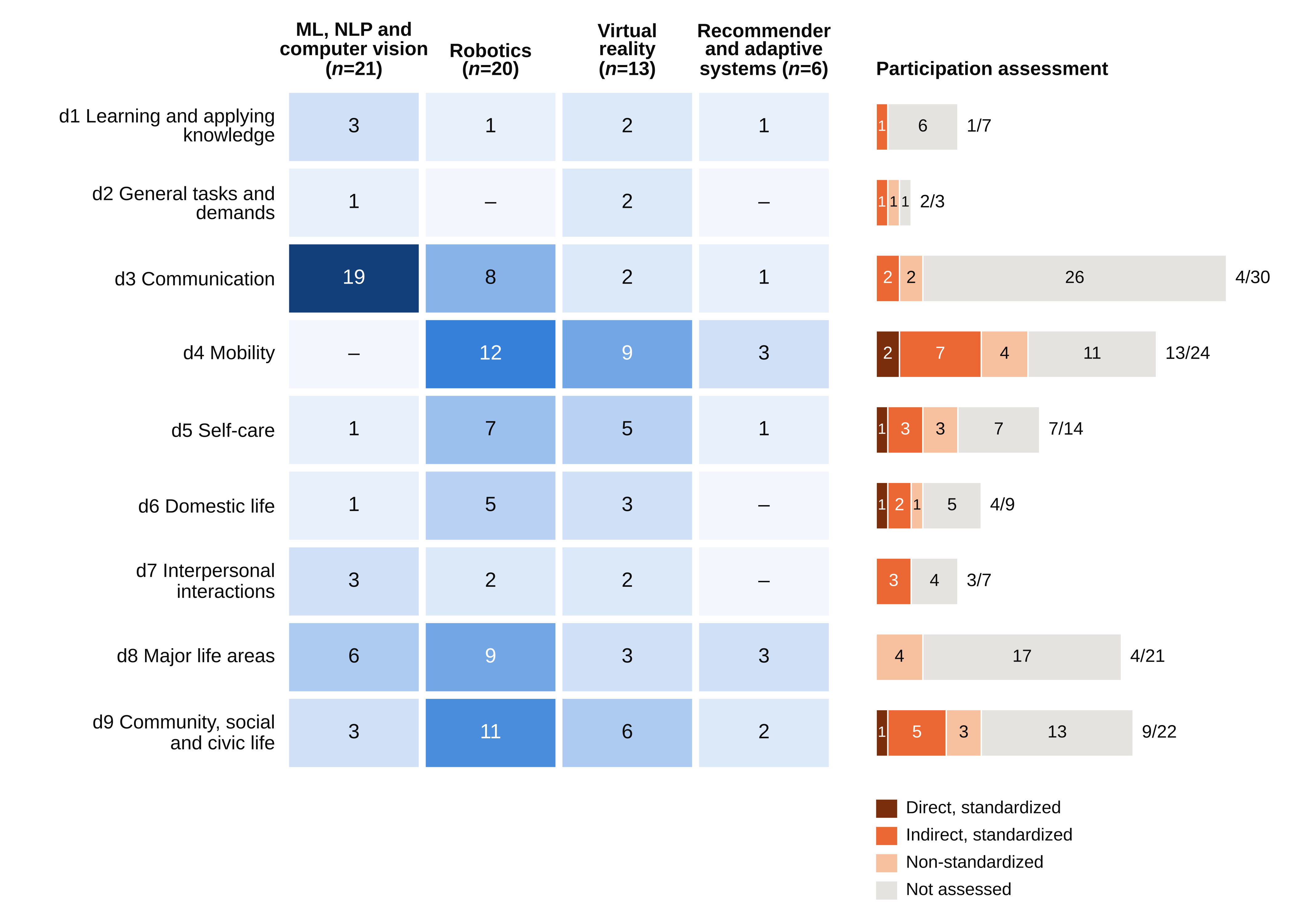
The interventions targeted a broad range of participation domains (Figure 4; Table S3), of which 57% (n = 34/60) targeted multiple domains. ‘Communication’ (d3) represented the largest category (n = 30/60; 50%) [36,37,38,40,41,43,44,45,46,47,48,49,50,51,52,53,54,55,56,59,61,62,64,70,71,74,76,82,87,91] and was predominantly targeted by machine learning, natural language processing, and computer vision applications (n = 19/30; 63%). Examples included AI sign language translators and telepresence robots specifically focused on bridging communication and social barriers. Although it was the most frequently targeted domain, participation was evaluated in only four of these 30 studies (13%).
‘Mobility’ (d4) (n = 24/60; 40%) [58,61,62,63,65,66,69,70,72,73,75,76,77,78,81,83,84,85,86,88,89,90,93,95] was predominantly targeted by physical rehabilitation interventions, mainly robotics (n = 12/24; 50%) and virtual reality (n = 9/24; 38%). For example, robotic arms, virtual reality telerehabilitation, and a wearable exoskeleton aimed at improving upper-limb manipulation and gait. Participation was evaluated in more than half of these studies (n = 13/24; 54%), including the two studies using direct, participation-specific measures.
‘Community, Social and Civic Life’ (d9) (n = 22/60; 37%) [41,45,56,58,61,62,63,64,65,68,70,72,74,76,77,78,80,82,86,87,90,95] was also a major focus within the included studies, mostly targeted by robotics (n = 11/22) and virtual reality (n = 6/22). Examples of interventions in this domain include accessibility rating applications; robotic mobility aids that support independent navigation in public spaces; telepresence robots that enable remote attendance at school, work, or cultural venues; and virtual reality platforms that facilitate group activities such as singing or social support groups. Participation was evaluated in 41% (n = 9/22) of these studies, including one study using a direct, participation-specific measure.
Interventions supporting ‘Major Life Areas’ (d8), specifically regarding education and employment, were moderately represented (n = 21/60; 35%) [37,39,41,43,45,56,57,59,60,61,64,67,70,71,74,77,79,80,91,92,93] across all types of AI application. For example, researchers used tools like virtual reality job interview training, collaborative industrial robots, and return-to-work programs. Participation was evaluated in four of these studies (19%).
‘Self-Care’ (d5) (n = 14/60; 23%) [42,63,64,68,70,72,73,74,77,78,80,83,86,94] and ‘Domestic Life’ (d6) (n = 9/60; 15%) [42,63,68,70,72,73,78,80,83] were targeted, for example, by assistive robotics (e.g., robotic arms) designed to assist with feeding, grooming, and household tasks and by virtual reality and telerehabilitation platforms aimed at training daily living skills. Participation was evaluated in half of the studies targeting ‘Self-Care’ (n = 7/14) and in 44% (n = 4/9) of studies targeting ‘Domestic Life’, of which one study used a direct, participation-specific measure.
The remaining less targeted domains included ‘Interpersonal Interactions and Relationships’ (d7) (n = 7/60; 12%) [41,45,56,68,74,82,87], ‘Learning and Applying Knowledge’ (d1) (n = 7/60; 12%) [37,43,44,71,83,84,91], and ‘General Tasks and Demands’ (d2) (n = 3/60; 5%) [39,77,84].
Figure 4.
Targeted ICF Activities and Participation domains by type of AI application (left) and the number of studies assessing participation per domain by type of assessment (right). Studies can target several domains. Numbers to the right of the bars indicate the number of studies assessing participation out of the number of studies targeting each domain. Direct: participation-specific instrument (PART-O, LIFE-H); indirect: generic health, quality-of-life, or functional-status instrument. ML, machine learning; NLP, natural language processing. Darker shades of blue indicate a higher number of studies.
4. Discussion
The shift toward home- and community-based rehabilitation, alongside the rapid integration of AI, provides novel ways for occupational therapy to support the participation of adults with disabilities and chronic health conditions. The growing body of literature in this area of work provides an important opportunity for undertaking this scoping review, which identified and synthesized the current state of research on the use of AI in home- and community-based interventions promoting the participation of adults with chronic health conditions and disabilities in everyday activities.
4.1. Scope and Characteristics: Limited Diversity of Contexts and Populations
Most of the studies (n = 35/60; 58%) included in this review were conducted in the Global North. This geographic disparity aligns with broader trends in digital health, wherein AI applications have predominantly been developed in high-income countries [96]. However, our findings also highlight a notable shift: 42% (n = 25/60) of the studies originated from the Global South, largely driven by a surge of research emerging from India (n = 13). This pattern aligns with registry-based evidence documenting the rapid recent expansion of AI-related health research in India [97]. Nevertheless, outside of India, representation from other countries of the Global South remains sparse. AI systems developed in the Global North reflect the infrastructural, cultural, and clinical realities of their specific environments. Consequently, these technologies risk performing poorly or yielding inaccurate results when deployed in the Global South [98,99,100]. To make AI developments more relevant to the Global South, funding initiatives should prioritize and support context-specific research within these regions. Such research must reflect the unique intersecting challenges that therapists in the Global South encounter that affect the participation of people with a disability, such as poverty, malnutrition, violence, and political instability [101].
Of the 42 studies involving human participants, 29% (n = 12/42) did not report participants’ age, and 31% (n = 13/42) did not report gender. This lack of transparency often reflects the early, technical development stages of AI-supported interventions. However, failing to report demographic data in AI research has been criticized in previous literature [16,23]. This opacity complicates the understanding of potential system biases, limits reproducibility, and can lead to hidden discrimination, particularly against underrepresented populations such as individuals with disabilities [15,99]. Therefore, it is crucial for researchers to report participant demographics and to include individuals with disabilities from the earliest stages of conceptualization to ensure equitable and safe technological advancement [102,103].
The included studies also differed in their target populations. The largest cluster of studies focused on deaf and hard-of-hearing communities (n = 19/60; 32%), followed by stroke (n = 6/60; 10%). This finding is consistent with that of Du et al., who found that AI applications for social support primarily addressed individuals with visual, hearing, and mobility impairments, while those with intellectual or psychosocial disabilities, complex communication needs, or multiple disabilities were underrepresented [104]. Du et al. suggested that one reason for this imbalance may be that the support needs of these larger groups are more easily aligned with existing AI methods. This may also explain the focus on deaf and hard-of-hearing communities in the present review, given that sign language recognition and translation align well with established machine learning and computer vision techniques. Overall, this suggests that the current body of research on AI-supported interventions reflects a narrow range of populations and contexts, thereby limiting its potential application to diverse groups of adults with disabilities and chronic health conditions.
4.2. Client-Centered Approaches: Limited Individualized Personalization and Goal-Setting
Slightly more than half of the studies (n = 33/60; 55%) tailored the AI-supported intervention to the individual participation needs of a person, reflecting the incorporation of client-centered care. This proportion is higher than that reported by Kaelin et al. [16] who examined the personalization of AI-facilitated participation-focused interventions in pediatric rehabilitation, in which only one intervention (n = 1/94; 1%) was tailored to individually reported participation needs. The higher proportion identified in the present scoping review may reflect recent advances in machine learning and generative AI techniques [105]. Alternatively, it may indicate that adults’ preferences continue to be prioritized more frequently than those of children and youth [106].
Nevertheless, 45% (n = 27/60) of the included studies described interventions that lacked personalization to individual participation needs and were instead primarily tailored to diagnostic categories, overlooking client-centered approaches. This was most common in machine learning, natural language processing, and computer vision applications (n = 16/21; 76%), suggesting that individualization depends less on the sophistication of the AI technique than on whether adaptation to the individual user is an explicit design aim. Both healthcare providers and individuals with disabilities have emphasized the importance of personalizing interventions to address individual needs [107,108] and that overlooking the lived realities, contexts, and priorities of people with disabilities risks producing interventions that are not suited to individuals’ particular situations [20].
The lack of client-centered approaches was further reflected in the finding that 45% (n = 27/60) of the interventions did not include any form of goal-setting features, most commonly in machine learning, natural language processing, and computer vision applications (n = 16/21; 76%). Among the interventions that did incorporate goal-setting, only 24% (n = 8/33) used methods for establishing individualized goals. Although this is more than that in pediatric rehabilitation, where only one intervention (n = 1/94; 1%) described individual goal-setting [16], even virtual reality interventions, which all incorporated goal-setting features, mostly relied on general goals rather than those defined by the individual user. The absence of individualized goal-setting suggests that many systems implicitly prescribe what participation should look like, for example, by emphasizing functional restoration toward normative standards. This approach has been criticized in prior literature as “techno-ableism” [109], a concept referring to the assumption that technology should or can “fix” disability, positioning disabled people as passive recipients awaiting correction rather than as agents with self-defined goals. These findings also point to the limited application of the social model of disability in AI research, which has been highlighted in a scoping review by El Morr et al. [110], revealing that 58% of the AI and disability literature operated strictly within the medical paradigm, while only 38% utilized a “social model” perspective on disability. The social model conceptualizes disability as arising primarily from societal and environmental barriers rather than solely from individual impairments [111].
Taken together, these findings highlight the need for future research on AI-supported interventions in home and community settings to prioritize client-centered personalization to individual preferences and contexts with a focus on individualized goal-setting that reflects the person’s own understanding of meaningful participation.
4.3. Operationalization of Participation: Limited Direct Assessment and Underrepresented Domains
Among the studies that assessed participation, more than half (n = 10/18; 56%) relied on proxy measures, such as clinical, functional, or quality-of-life assessments. Examples include the Stroke Impact Scale (SIS) [69], the 12-item Multiple Sclerosis Walking Scale (MSWS-12) [84,85], and various quality of life composite scores (e.g., MSQOL-54, SAQOL-39, PROMIS-29), as well as the Canadian Occupational Performance Measure (COPM), which captures self-perceived occupational performance and satisfaction rather than participation itself [4,63,82,84,85,86]. Additionally, mental health and symptom-specific scales, including the Beck Depression Inventory (BDI) [85] and the Fatigue Severity Scale (FSS) [85], were used to capture intervention outcomes under the umbrella of participation.
This reliance on proxy indicators likely reflects the limited availability of validated and standardized participation measures tailored to specific digital interventions, delivery contexts, and clinical populations [112]. While these metrics provide valuable insights into a user’s physical recovery or psychological well-being, using them as proxies for “participation” risks conflating distinct constructs and contributes to conceptual ambiguity. For example, framing physical recovery as participation rests on the implicit assumption that reducing a physical impairment or improving general health automatically translates into improved participation [113]. However, physical ability and emotional well-being are merely precursors to participation, not the construct itself [114]. Furthermore, all studies that evaluated participation described individually personalized interventions, suggesting that tailoring interventions to the individual and evaluating their impact on participation may go hand in hand.
The broad and inconsistent interpretation of participation has been widely criticized in the literature [114,115,116,117], including in prior research on technology-supported interventions targeting participation outcomes [16,23,118]. For example, in a scoping review of digital consumer technology for adults with intellectual disabilities, only four of 151 studies specifically examined participation, whereas most inferred it from measures of activity performance or from the views of users, caregivers, or researchers [119]. These findings reflect a broader issue within AI research, where the term ‘participation’ is often used imprecisely and in a way that does not align with the intended outcome [23]. Moreover, participation was evaluated almost exclusively in interventions using more established AI-supported technologies, such as virtual reality and robotics, whereas none of the studies applying machine learning, natural language processing, or computer vision evaluated participation, even though these studies most frequently targeted communication. This aligns with several recent reviews which have noted that studies on AI-enabled technologies for people with disabilities primarily report technical performance, such as accuracy, in controlled settings, whereas real-world benefits, user experience, and participation outcomes are rarely assessed [104,120,121]. Together, these findings indicate that AI-supported interventions are mainly evaluated in terms of their technical performance rather than their impact on participation in everyday life. Whether these emerging AI applications could support participation in daily life therefore remains largely unknown. This highlights a gap in the literature and underscores the need for future work to operationalize participation within AI applications based on established frameworks (e.g., the ICF [2] or the family of Participation-Related Constructs (fPRC) framework [4]) or occupational therapy models such as the Canadian Model of Occupational Participation [122] and to target participation as a direct outcome measure in interventions in home- and community-based settings.
The targeted participation domains also indicate areas that require more attention. Although all interventions were delivered in home and community settings, ‘Domestic Life’ (d6) (n = 9/60; 15%) and ‘Self-Care’ (d5) (n = 14/60; 23%) were relatively rarely targeted, whereas ‘Communication’ (d3) and ‘Mobility’ (d4) were much more common. These findings are consistent with the findings of Zhou et al., who found that digital technologies for older adults with functional disabilities at home prioritized medical surveillance and feasibility over assistance with daily living [120]. Similarly, ‘Interpersonal Interactions and Relationships’ (d7) (n = 7/60; 12%) was among the least targeted domains, in line with Du et al., who found that only 6.3% of AI applications for people with disabilities addressed mental health support and social inclusion [104]. Together, these findings suggest that AI research has mainly focused on domains in which technical solutions are more readily developed and demonstrated, rather than on the everyday activities and relationships that shape participation at home.
4.4. Implications for Research
Based on the gaps identified in this review, the following directions could inform future primary research:
- (1)
- Scope and characteristics of research: Future primary studies should not only focus on populations whose needs align readily with existing AI methods but also develop and evaluate AI-supported interventions for populations with more complex support needs. This includes persons with intellectual or psychosocial disabilities, complex communication needs, or multiple disabilities, as well as populations in countries in the Global South beyond India. To enable the identification of potential biases, these studies should consistently report participants’ demographics.
- (2)
- Client-centered approaches: Future development studies should integrate individualized personalization and user-defined goal-setting into AI-supported interventions, particularly into machine learning, natural language processing, and computer vision applications, in which these features were least common. For example, interventions could be co-designed with people with disabilities and healthcare professionals. Established client-centered tools, such as the COPM, could be used to identify and integrate individual goals into the intervention.
- (3)
- Operationalization of participation: Future evaluation studies should assess participation using standardized participation-specific measures based on established frameworks, rather than relying on quality-of-life or functional measures as proxies. Additionally, future research should develop and evaluate AI-supported interventions for participation domains that are relevant to everyday life at home but have been rarely targeted, such as “Domestic Life” (d6), “Self-Care” (d5), and “Interpersonal Interactions and Relationships” (d7).
4.5. Limitations and Strengths
An effort was made to conduct a comprehensive review aimed at identifying and synthesizing the current state of research on the use of AI in interventions in home and community settings, promoting the participation of adults with disabilities and chronic health conditions in occupations. A large number of articles were screened covering the last decade of AI development in participation-focused interventions, including both computer and health science databases. However, some limitations should be considered when interpreting the results.
First, in this review, we included relatively static applications, such as robotics and virtual reality, which some may argue do not fully encapsulate modern AI capabilities. This inclusive approach was chosen intentionally to capture a comprehensive overview of the field and to align with the methodology used by Kaelin et al. [16], who reviewed participation-focused interventions for children. By replicating their criteria, we aimed to ensure our findings remain comparable across different populations.
Second, only 30% of the total retrieved articles, plus an additional 5% random sample, were double-screened at the title and abstract stage. Although single-reviewer screening was only initiated after reaching at least 90% agreement, this approach may have introduced study selection bias.
5. Conclusions
This scoping review identified and synthesized the current state of research on home- and community-based AI interventions that promote participation in everyday activities among adults with disabilities and chronic health conditions. From an occupational therapy perspective, these findings highlight how emerging AI technologies can offer novel ways to enhance participation in everyday activities for adults with disabilities and chronic health conditions.
Based on the findings, three main gaps were identified, indicating the need for future research and development: (1) geographic concentration—with most research conducted in the Global North or India and limited representation from other countries of the Global South—a focus on a narrow range of target populations, such as deaf and hard-of-hearing communities, and incomplete reporting of sociodemographic data; (2) limited use of client-centered approaches incorporating personalization and goal-setting tailored to individual needs; and (3) limited use of direct, standardized participation measures to evaluate AI-supported participation-focused interventions in home and community settings, alongside limited attention to participation domains central to everyday life at home, such as domestic life and interpersonal relationships.
Future research should therefore (1) conduct and evaluate AI-supported interventions with people with disabilities in more diverse geographic contexts, particularly in underrepresented countries of the Global South, and with populations with more complex support needs, such as persons with intellectual or psychosocial disabilities, and consistently report participants’ sociodemographic characteristics, such as age and gender; (2) integrate individualized personalization and goal-setting into AI-supported interventions, for example, through co-design with people with disabilities and occupational therapists; and (3) evaluate participation directly, using standardized participation-specific measures grounded in established frameworks such as the ICF, and address underrepresented participation domains, such as domestic life and interpersonal relationships.
Supplementary Materials
The following supporting information can be downloaded at https://www.mdpi.com/article/10.3390/healthcare14234066/s1: Table S1: PRISMA-ScR checklist; Table S2: Search strategy; Table S3: General characteristics, client-centered approaches, and participation of the included studies.
Author Contributions
Conceptualization, K.Q., V.C.K. and A.-H.P.; methodology, K.Q., V.C.K. and A.-H.P.; validation, K.Q. and V.M.; formal analysis, K.Q.; investigation, K.Q., V.C.K., V.M. and A.-H.P.; data curation, K.Q. and V.M.; writing—original draft preparation, K.Q.; writing—review and editing, K.Q., V.C.K., M.S., V.M. and A.-H.P.; visualization, K.Q.; supervision, V.C.K., M.S. and A.-H.P.; project administration, K.Q. All authors have read and agreed to the published version of the manuscript.
Funding
The authors received no financial support for the research, authorship, and/or publication of this article.
Institutional Review Board Statement
Not applicable.
Informed Consent Statement
Not applicable.
Data Availability Statement
No new data were created or analyzed in this study. Data sharing is not applicable to this article.
Acknowledgments
We want to thank Kim Derksen for her assistance as a reviewer during the full-text screening phase of this review.
Conflicts of Interest
Author Valeria Maeusli was employed by the company MesoPhysio GmbH. The company had no role in the design of the study; in the collection, analyses, or interpretation of data; in the writing of the manuscript; or in the decision to publish the results. The remaining authors declare that the research was conducted in the absence of any commercial or financial relationships that could be construed as a potential conflict of interest.
References
- World Federation of Occupational Therapists About Occupational Therapy. Available online: https://wfot.org/about/about-occupational-therapy (accessed on 19 June 2024).
- World Health Organization. International Classification of Functioning, Disability and Health: ICF; World Health Organization: Geneva, Switzerland, 2001; ISBN 978-80-247-1587-2.
- Law, M. Participation in the Occupations of Everyday Life. Am. J. Occup. Ther. 2002, 56, 640–649. [Google Scholar] [CrossRef] [Scilit] [PubMed]
- Imms, C.; Granlund, M.; Wilson, P.H.; Steenbergen, B.; Rosenbaum, P.L.; Gordon, A.M. Participation, Both a Means and an End: A Conceptual Analysis of Processes and Outcomes in Childhood Disability. Dev. Med. Child. Neurol. 2017, 59, 16–25. [Google Scholar] [CrossRef] [Scilit] [PubMed]
- Cieza, A.; Causey, K.; Kamenov, K.; Hanson, S.W.; Chatterji, S.; Vos, T. Global Estimates of the Need for Rehabilitation Based on the Global Burden of Disease Study 2019: A Systematic Analysis for the Global Burden of Disease Study 2019. Lancet 2020, 396, 2006–2017. [Google Scholar] [CrossRef] [Scilit] [PubMed]
- World Health Organization. Strengthening Rehabilitation in Health Systems (Resolution WHA76.6); Seventy-Sixth World Health Assembly: Geneva, Switzerland, 2023.
- Arntz, A.; Weber, F.; Handgraaf, M.; Lällä, K.; Korniloff, K.; Murtonen, K.-P.; Chichaeva, J.; Kidritsch, A.; Heller, M.; Sakellari, E.; et al. Technologies in Home-Based Digital Rehabilitation: Scoping Review. JMIR Rehabil. Assist. Technol. 2023, 10, e43615. [Google Scholar] [CrossRef] [Scilit] [PubMed]
- Cunha, B.; Ferreira, R.; Sousa, A.S.P. Home-Based Rehabilitation of the Shoulder Using Auxiliary Systems and Artificial Intelligence: An Overview. Sensors 2023, 23, 7100. [Google Scholar] [CrossRef] [Scilit] [PubMed]
- Crawford, L.; Maxwell, J.; Colquhoun, H.; Kingsnorth, S.; Fehlings, D.; Zarshenas, S.; McFarland, S.; Fayed, N. Facilitators and Barriers to Patient-Centred Goal-Setting in Rehabilitation: A Scoping Review. Clin. Rehabil. 2022, 36, 1694–1704. [Google Scholar] [CrossRef] [Scilit] [PubMed]
- Abedi, A.; Colella, T.J.F.; Pakosh, M.; Khan, S.S. Artificial Intelligence-Driven Virtual Rehabilitation for People Living in the Community: A Scoping Review. npj Digit. Med. 2024, 7, 25. [Google Scholar] [CrossRef] [Scilit] [PubMed]
- Liu, L. Occupational Therapy in the Fourth Industrial Revolution. Can. J. Occup. Ther. 2018, 85, 272–283. [Google Scholar] [CrossRef] [Scilit]
- Mennella, C.; Maniscalco, U.; De Pietro, G.; Esposito, M. The Role of Artificial Intelligence in Future Rehabilitation Services: A Systematic Literature Review. IEEE Access 2023, 11, 11024–11043. [Google Scholar] [CrossRef] [Scilit]
- European Parliament and Council of the European Union. Regulation (EU) 2024/1689 of the European Parliament and of the Council of 13 June 2024 Laying down Harmonised Rules on Artificial Intelligence (Artificial Intelligence Act); European Parliament and Council of the European Union: Brussels, Belgium, 2024; Volume 2024/1689. [Google Scholar]
- Olawade, D.B.; Adeleye, K.K.; Egbon, E.; Nwabuoku, U.S.; Clement David-Olawade, A.; Boussios, S.; Vanderbloemen, L. Enhancing Home Rehabilitation through AI-Driven Virtual Assistants: A Narrative Review. Ann. Transl. Med. 2025, 13, 61. [Google Scholar] [CrossRef] [Scilit] [PubMed]
- Fosch-Villaronga, E.; Drukarch, H.; Khanna, P.; Verhoef, T.; Custers, B. Accounting for Diversity in AI for Medicine. Comput. Law. Secur. Rev. 2022, 47, 105735. [Google Scholar] [CrossRef] [Scilit]
- Kaelin, V.C.; Valizadeh, M.; Salgado, Z.; Parde, N.; Khetani, M.A. Artificial Intelligence in Rehabilitation Targeting the Participation of Children and Youth with Disabilities: Scoping Review. J. Med. Internet Res. 2021, 23, e25745. [Google Scholar] [CrossRef] [Scilit] [PubMed]
- Guo, A.; Kamar, E.; Vaughan, J.W.; Wallach, H.; Morris, M.R. Toward Fairness in AI for People with Disabilities: A Research Roadmap. ACM SIGACCESS Access. Comput. 2020, 125, 2. [Google Scholar] [CrossRef] [Scilit]
- Newman-Griffis, D.R.; Rauchberg, J.S.; Alharbi, R.; Hickman, L.; Hochheiser, H. Definition Drives Design: Disability Models and Mechanisms of Bias in AI Technologies. First Monday 2023, 28. [Google Scholar] [CrossRef] [Scilit]
- Newman-Griffis, D.R.; Hurwitz, M.B.; McKernan, G.P.; Houtrow, A.J.; Dicianno, B.E. A Roadmap to Reduce Information Inequities in Disability with Digital Health and Natural Language Processing. PLoS Digit. Health 2022, 1, e0000135. [Google Scholar] [CrossRef] [Scilit] [PubMed]
- Wald, M. AI Data-Driven Personalisation and Disability Inclusion. Front. Artif. Intell. 2021, 3, 571955. [Google Scholar] [CrossRef] [Scilit] [PubMed]
- Kaelin, V.C.; Bosak, D.L.; Saluja, S.; Newman-Griffis, D.; Boyd, A.D.; Khetani, M.A. Representation of Child and Youth Participation within the Unified Medical Language System (UMLS). Disabil. Rehabil. 2025, 47, 114–119. [Google Scholar] [CrossRef] [Scilit] [PubMed]
- Newman-Griffis, D.; Camacho Maldonado, J.; Ho, P.-S.; Sacco, M.; Jimenez Silva, R.; Porcino, J.; Chan, L. Linking Free Text Documentation of Functioning and Disability to the ICF with Natural Language Processing. Front. Rehabil. Sci. 2021, 2, 742702. [Google Scholar] [CrossRef] [Scilit] [PubMed]
- Kaelin, V.C.; Valizadeh, M.; Salgado, Z.; Sim, J.G.; Anaby, D.; Boyd, A.D.; Parde, N.; Khetani, M.A. Capturing and Operationalizing Participation in Pediatric Re/Habilitation Research Using Artificial Intelligence: A Scoping Review. Front. Rehabil. Sci. 2022, 3, 855240. [Google Scholar] [CrossRef] [Scilit] [PubMed]
- Vourganas, I.; Stankovic, V.; Stankovic, L. Individualised Responsible Artificial Intelligence for Home-Based Rehabilitation. Sensors 2020, 21, 2. [Google Scholar] [CrossRef] [Scilit] [PubMed]
- Peters, M.D.J.; Marnie, C.; Tricco, A.C.; Pollock, D.; Munn, Z.; Alexander, L.; McInerney, P.; Godfrey, C.M.; Khalil, H. Updated Methodological Guidance for the Conduct of Scoping Reviews. JBI Evid. Synth. 2020, 18, 2119. [Google Scholar] [CrossRef] [Scilit] [PubMed]
- Tricco, A.C.; Lillie, E.; Zarin, W.; O’Brien, K.K.; Colquhoun, H.; Levac, D.; Moher, D.; Peters, M.D.J.; Horsley, T.; Weeks, L.; et al. PRISMA Extension for Scoping Reviews (PRISMA-ScR): Checklist and Explanation. Ann. Intern. Med. 2018, 169, 467–473. [Google Scholar] [CrossRef] [Scilit] [PubMed]
- Pollock, D.; Davies, E.L.; Peters, M.D.J.; Tricco, A.C.; Alexander, L.; McInerney, P.; Godfrey, C.M.; Khalil, H.; Munn, Z. Undertaking a Scoping Review: A Practical Guide for Nursing and Midwifery Students, Clinicians, Researchers, and Academics. J. Adv. Nurs. 2021, 77, 2102–2113. [Google Scholar] [CrossRef] [Scilit] [PubMed]
- Quaaden, K.; Kaelin, V.C.; Patomella, A.-H. Using Artificial Intelligence to Support Participation-Focused Community- and Home-Based Rehabilitation Services: A Scoping Review Protocol. 2024. Available online: https://doi.org/10.17605/OSF.IO/HZEMQ (accessed on 14 October 2026).
- Covidence Systematic Review Software; Veritas Health Innovation: Melbourne, Australia, 2024.
- O’Connor, C.; Joffe, H. Intercoder Reliability in Qualitative Research: Debates and Practical Guidelines. Int. J. Qual. Methods 2020, 19, 1609406919899220. [Google Scholar] [CrossRef] [Scilit]
- Microsoft Excel for Microsoft 365; Microsoft Corporation: Redmond, WA, USA, 2024.
- UNCTAD Classifications: Development Status Groups. Available online: https://unctadstat.unctad.org/EN/Classifications.html (accessed on 6 November 2026).
- Conitzer, V. Designing Preferences, Beliefs, and Identities for Artificial Intelligence. Proc. AAAI Conf. Artif. Intell. 2019, 33, 9755–9759. [Google Scholar] [CrossRef] [Scilit]
- Fan, H.; Poole, M.S. What Is Personalization? Perspectives on the Design and Implementation of Personalization in Information Systems. J. Organ. Comput. Electron. Commer. 2006, 16, 179–202. [Google Scholar] [CrossRef] [Scilit]
- Scobbie, L.; Dixon, D.; Wyke, S. Goal Setting and Action Planning in the Rehabilitation Setting: Development of a Theoretically Informed Practice Framework. Clin. Rehabil. 2011, 25, 468–482. [Google Scholar] [CrossRef] [Scilit] [PubMed]
- Amrutkar, S.; Ansari, N.; Dahat, P.; Sable, G.; Kavitha, S. Real-Time Indian Sign Language to Voice and Text Translator: A Deep Learning-Based Inclusive Communication System. In Proceedings of the 2025 IEEE 2nd International Conference on Information Technology, Electronics and Intelligent Communication Systems (ICITEICS); IEEE: Bangalore, India, 2025; pp. 1–6. [Google Scholar]
- Azizah, D.F.; Handayani, A.N.; Wibawa, A.P.; Fukuda, O. Comparative Analysis of YOLOv8 Segmentation Variants for Indonesian Sign Language (SIBI) Recognition. J. RESTI 2026, 10, 495–506. [Google Scholar] [CrossRef] [Scilit]
- Bhuvanesh, E.S.; Anumala, A.; Jothi, K.C.; Siva, E.P. A Machine Learning Model for Converting Visual Indian Sign Language to Text. In Proceedings of the 2024 2nd International Conference on Networking and Communications (ICNWC), Chennai, India, 2–4 April 2024; pp. 1–11. [Google Scholar]
- Brinsley, J.; Singh, B.; Maher, C.A. A Digital Lifestyle Program for Psychological Distress, Wellbeing and Return-to-Work: A Proof-of-Concept Study. Arch. Phys. Med. Rehabil. 2023, 104, 1903–1912. [Google Scholar] [CrossRef] [Scilit] [PubMed]
- Dhamane, S.; Ainapure, A.; Dhage, S. Breaking Silence, Embracing Inclusivity: The Power of AI in Communication. In Proceedings of the 2023 IEEE 5th International Conference on Cybernetics, Cognition and Machine Learning Applications (ICCCMLA), Hamburg, Germany, 7–8 October 2023; pp. 231–236. [Google Scholar] [CrossRef] [Scilit]
- Greuter, S.; Watson, J.; Balandin, S. Social Adventure: Designing Interactive Smart Speaker Social Skills Games for People with Intellectual Disabilities. IJGCMS 2022, 14, 1–21. [Google Scholar] [CrossRef] [Scilit]
- Guerra, B.M.V.; Ramat, S.; Beltrami, G.; Schmid, M. Automatic Pose Recognition for Monitoring Dangerous Situations in Ambient-Assisted Living. Front. Bioeng. Biotechnol. 2020, 8, 415. [Google Scholar] [CrossRef] [Scilit] [PubMed]
- Hurtado-Sánchez, C.; Cisneros, R.R.; Cárdenas-Valdez, J.R.; Calvillo-Téllez, A.; Inzunza-Gonzalez, E. Adaptive Assistive Technologies for Learning Mexican Sign Language: Design of a Mobile Application with Computer Vision and Personalized Educational Interaction. Future Internet 2026, 18, 61. [Google Scholar] [CrossRef] [Scilit]
- Hwang, K.-F.; Wang, Y.-H.; Tsao, T.-Y.; Chou, S.-H.; Chueh, S.-Y.; Wu, C.-C.; Ho, K.-Y. Adopting Artificial Intelligence and Artificial Reality in an Interactive Sign Language Learning System: Acceptance of Interactive Technology. Eng. Proc. 2025, 89, 14. [Google Scholar] [CrossRef] [Scilit]
- Jaafar, H.; Almohsen, K. Bridging Communities: Developing ArSL Translator Application for Sustainable Community Development. In Proceedings of the 2024 International Conference on Electrical, Computer and Energy Technologies (ICECET), Sydney, Australia, 25–27 July 2024; pp. 1–6. [Google Scholar]
- Kaviyaraj, R.; Sathya, P.; Nandhini, P.; Vinoth Kumar, P.; Chelliah, S.; Ezhilmathi, S. Augmented Reality and Artificial Intelligence in Sign Language Expression. In Proceedings of the 2024 Third International Conference on Intelligent Techniques in Control, Optimization and Signal Processing (INCOS), Tamil Nadu, India, 14–16 March 2024; pp. 1–6. [Google Scholar]
- Kowsigan, M.; Dhawan, R.; Kundu, A. An Efficient Speech to Sign Language Conversion and Text Recognition through Live Gesture. In Proceedings of the 2024 IEEE International Conference on Smart Power Control and Renewable Energy (ICSPCRE), NIT Rourkela, India, 19–21 July 2024; pp. 1–6. [Google Scholar]
- Kozhamkulova, Z.; Nurlybaeva, E.; Kuntunova, L.; Amanzholova, S.; Vorogushina, M.; Maikotov, M.; Kenzhekhan, K. Two Dimensional Deep CNN Model for Vision-Based Fingerspelling Recognition System. Int. J. Adv. Comput. Sci. Appl. (IJACSA) 2023, 14, 1017–1024. [Google Scholar] [CrossRef] [Scilit]
- Krishnapriya, P.S.; Purushoath, G.; Manoj, H.; Bisht, D.; Siby, N. Indian Sign Language Translation Using Bidirectional Encoder Representations from Transformers (BERT). In Proceedings of the 2025 8th International Conference on Computing Methodologies and Communication (ICCMC), Erode, India, 23–25 July 2025; pp. 717–721. [Google Scholar]
- Kumar, C.M.N.; Vanitha, A.; Lavanya, N.Y.; Lekhana, N.C.; Tasmiya, R.; Nisarga, L.D. Deep Learning Based Recognition of Sign Language. In Proceedings of the 2024 Second International Conference on Data Science and Information System (ICDSIS), Hassan, India, 17–18 May 2024; pp. 1–6. [Google Scholar]
- Mapote, J.N.; Dequilla-Nicerio, M. SIGNSPEAK: Integrating Computer Vision and Speech Synthesis for Alphabet Filipino Sign Language (FSL). In Proceedings of the 2025 17th International Conference on Computer and Automation Engineering (ICCAE), Perth, Australia, 20–22 March 2025; pp. 395–399. [Google Scholar]
- Mosa, D.T.; Nasef, N.A.; Lotfy, M.A.; Abohany, A.A.; Essa, R.M.; Salem, A. A Real-Time Arabic Avatar for Deaf–Mute Community Using Attention Mechanism. Neural Comput. Applic 2023, 35, 21709–21723. [Google Scholar] [CrossRef] [Scilit]
- Parivazhagan, A.; Penugonda, K.R.; Pasham, N.; S, N.K.; T, M.R. AI-Powered Real-Time Speech-to-Sign Translation. In Proceedings of the 2025 5th International Conference on Pervasive Computing and Social Networking (ICPCSN), Salem, India, 14–16 May 2025; pp. 1389–1394. [Google Scholar] [CrossRef] [Scilit]
- RajaRajeswari, T.S.; Roja, G.; Dastagiraiah, C.; Isukapalli, R.K.; Harshini, K.; Pushpa Rani, K. Advanced Sign Language Recognition Using Sequential CNNs: Towards Inclusive Communication. In Proceedings of the 2026 IEEE International Conference on Emerging Computing and Intelligent Technologies (ICoECIT); IEEE: Hyderabad, India, 2026; pp. 1–6. [Google Scholar]
- Senthil Kumar, M.; Navaneethan, A.T.; Nishanth, P.; Sidharth, S. A Real Time System for Sign Language Detection from Multilingual Speech and Text Modalities. In Proceedings of the 2025 2nd Asian Conference on Intelligent Technologies (ACOIT); IEEE: KOLAR, India, 2025; pp. 1–7. [Google Scholar]
- Strobel, G.; Schoormann, T.; Banh, L.; Möller, F. Artificial Intelligence for Sign Language Translation—A Design Science Research Study. Commun. Assoc. Inf. Syst. 2023, 53, 42–64. [Google Scholar] [CrossRef] [Scilit]
- Auquilla, A.R.; Salamea, H.T.; Alvarado-Cando, O.; Molina, J.K.; Cedillo, P.A.S. Implementation of a Telerobotic System Based on the Kinect Sensor for the Inclusion of People with Physical Disabilities in the Industrial Sector. In Proceedings of the 2019 IEEE 4th Colombian Conference on Automatic Control (CCAC), Medellín, Colombia, 15–18 October 2019; pp. 1–6. [Google Scholar]
- Cahill, A.; Ginley, O.M.; Bertrand, C.; Lennon, O. Gym-Based Exoskeleton Walking: A Preliminary Exploration of Non-Ambulatory End-User Perspectives. Disabil. Health J. 2018, 11, 478–485. [Google Scholar] [CrossRef] [Scilit] [PubMed]
- Chang, Y.; Dai, Y.; Yu, C.; Cheng, X.; Yang, S.; Chieng, D.; You, S.; Park, J. Bangbang: A Multimodal Tele-Operated Avatar Robot for Enhancing Social Inclusion of Disabled Individuals. In Proceedings of the 2025 8th International Conference on Robotics, Control and Automation Engineering (RCAE); IEEE: Xi’an, China, 2025; pp. 154–159. [Google Scholar]
- Drolshagen, S.; Pfingsthorn, M.; Gliesche, P.; Hein, A. Acceptance of Industrial Collaborative Robots by People with Disabilities in Sheltered Workshops. Front. Robot. AI 2020, 7, 541741. [Google Scholar] [CrossRef] [Scilit] [PubMed]
- ElGibreen, H.; Ali, G.A.; AlMegren, R.; AlEid, R.; AlQahtani, S. Telepresence Robot System for People with Speech or Mobility Disabilities. Sensors 2022, 22, 8746. [Google Scholar] [CrossRef] [Scilit] [PubMed]
- Fissi, S.; Gori, E.; Romolini, A. Inclusivity and Digital Technologies in Museums: Lessons from an Italian Experience. Mus. Manag. Curatorship 2025, 40, 2–17. [Google Scholar] [CrossRef] [Scilit]
- Gitlow, L.; Amato, L.; Newcombe, E.; Mikula, D.; Alghamdi, A.; Gaglione, J.; Jones, C.; Kim, B.; Mountain, D.; Osofsky, N.; et al. Impacts of the Jaco Robotic Arm on User Satisfaction with Performance in Everyday Activities. Disabil. Rehabil. Assist. Technol. 2025, 20, 3097–3106. [Google Scholar] [CrossRef] [Scilit] [PubMed]
- Jung, S.; An, K.; Kim, J.; Kim, H. Mechanism and Kinematic Analysis of a Robotic Gadget for Assisting Hand Movements of Persons with Severe Disabilities to Promote Their Community Participation. In Proceedings of the 2014 14th International Conference on Control, Automation and Systems (ICCAS 2014), Gyeonggi-do, Republic of Korea, 22–25 October 2014; pp. 1594–1599. [Google Scholar]
- Kawamura, T.; Fujimoto, Y. Experimental Validation of Interface Aiding Human Depth Prediction on Images in Terms of Usability. In Proceedings of the 2021 IEEE International Conference on Mechatronics (ICM), Kashiwa, Japan, 7–9 March 2021; pp. 1–6. [Google Scholar]
- Li, L.; Foo, M.J.; Chen, J.; Tan, K.Y.; Cai, J.; Swaminathan, R.; Chua, K.S.G.; Wee, S.K.; Kuah, C.W.K.; Zhuo, H.; et al. Mobile Robotic Balance Assistant (MRBA): A Gait Assistive and Fall Intervention Robot for Daily Living. J. Neuroeng. Rehabil. 2023, 20, 29. [Google Scholar] [CrossRef] [Scilit] [PubMed]
- Mu, S.; Shibata, S.; Yamamoto, T.; Obayashi, H. Interface Using Eye-Gaze and Tablet Input for an Avatar Robot Control in Class Participation Support System. Comput. Electr. Eng. 2023, 111, 108914. [Google Scholar] [CrossRef] [Scilit]
- Nguyễn, V.; Cakmak, M.; Rogers, W.A.; Kemp, C.C.; Fair-Field, T. Beyond Motor Impairment: Empowering Functional Performance with Robotics. OTJR Occup. Ther. J. Res. 2026, 46, 555–563. [Google Scholar] [CrossRef] [Scilit] [PubMed]
- Nijenhuis, S.M.; Prange, G.B.; Amirabdollahian, F.; Sale, P.; Infarinato, F.; Nasr, N.; Mountain, G.; Hermens, H.J.; Stienen, A.H.A.; Buurke, J.H.; et al. Feasibility Study into Self-Administered Training at Home Using an Arm and Hand Device with Motivational Gaming Environment in Chronic Stroke. J. Neuroeng. Rehabil. 2015, 12, 89. [Google Scholar] [CrossRef] [Scilit] [PubMed]
- Palmcrantz, S.; Plantin, J.; Borg, J. Factors Affecting the Usability of an Assistive Soft Robotic Glove after Stroke or Multiple Sclerosis. J. Rehabil. Med. 2020, 52, jrm00027. [Google Scholar] [CrossRef] [Scilit] [PubMed]
- Pande, A.; Mishra, D. The Synergy between a Humanoid Robot and Whisper: Bridging a Gap in Education. Electronics 2023, 12, 3995. [Google Scholar] [CrossRef] [Scilit]
- Routhier, F.; Archambault, P.; Cyr, M.; Maheu, V.; Lemay, M.; Gélinas, I. Benefits of JACO Robotic Arm on Independent Living and Social Participation: An Exploratory Study. In Proceedings of the RESNA Annual Conference, Indianapolis, IN, USA, 11 June 2014. [Google Scholar]
- Sanfilippo, F.; Smith, J.; Bertrand, S.; Skarberg Svendsen, T.H. Mixed Reality (MR) Enabled Proprio and Teleoperation of a Humanoid Robot for Paraplegic Patients. In Proceedings of the 2022 5th International Conference on Information and Computer Technologies (ICICT), New York City, NY, USA, 4–6 March 2022; pp. 153–158. [Google Scholar]
- Vikkelsø, S.; Hoang, T.-H.; Carrara, F.; Hansen, K.D.; Dinesen, B. The Telepresence Avatar Robot OriHime as a Communication Tool for Adults with Acquired Brain Injury: An Ethnographic Case Study. Intel. Serv. Robot. 2020, 13, 521–537. [Google Scholar] [CrossRef] [Scilit]
- Vishnu, T.P.; Ray, D.; Thiyagarajan, K.; Chowdhury, A.R. Multimodal Sensing for Socially Compliant Safe Robot Navigation in Human-Aware Indoor Environments Using Group-Aware Pose Estimation and Modified RRT*. IEEE Sens. J. 2025, 25, 40428–40439. [Google Scholar] [CrossRef] [Scilit]
- Wästlund, E.; Sponseller, K.; Pettersson, O.; Bared, A. Evaluating Gaze-Driven Power Wheelchair with Navigation Support for Persons with Disabilities. J. Rehabil. Res. Dev. 2015, 52, 815–826. [Google Scholar] [CrossRef] [Scilit] [PubMed]
- Abd-Elsayed, A.; Hussain, N.; Stanley, G. Combining Virtual Reality and Behavioral Health to Promote Pain Resiliency: Analysis of a Novel BioPsychoSocial Modality for Solving Pain in the Workplace. Pain Ther. 2021, 10, 1731–1740. [Google Scholar] [CrossRef] [Scilit] [PubMed]
- Archambault, P.S.; Blackburn, É.; Reid, D.; Routhier, F.; Miller, W.C. Development and User Validation of Driving Tasks for a Power Wheelchair Simulator. Disabil. Rehabil. 2017, 39, 1549–1556. [Google Scholar] [CrossRef] [Scilit] [PubMed]
- Blajeski, S.M.; Smith, M.J.; Harrington, M.; Johnson, J.; Oulvey, E.A.; Mueser, K.T.; McGurk, S.R.; Razzano, L.A. Critical Elements in the Experience of Virtual Reality Job Interview Training for Unemployed Individuals with Serious Mental Illness: Implications for IPS Supported Employment. Psychiatr. Rehabil. J. 2023, 46, 353–359. [Google Scholar] [CrossRef] [Scilit] [PubMed]
- Bourazeri, A.; Bellamy-Wood, T.; Arnab, S. EnCity: A Serious Game for Empowering Young People with Down’s Syndrome. In Proceedings of the 2017 IEEE 5th International Conference on Serious Games and Applications for Health (SeGAH), Perth, Australia, 2–4 April 2017; pp. 1–6. [Google Scholar]
- Butcher, T.; Warland, A.; Stewart, V.; Aweid, B.; Samiyappan, A.; Kal, E.; Ryan, J.; Athanasiou, D.A.; Baker, K.; Singla-Buxarrais, G.; et al. Rehabilitation Using Virtual Gaming for Hospital and hOMe-Based Training for the Upper Limb in Acute and Subacute Stroke (RHOMBUS II): Results of a Feasibility Randomised Controlled Trial. BMJ Open 2025, 15, e089672. [Google Scholar] [CrossRef] [Scilit] [PubMed]
- Marshall, J.; Devane, N.; Talbot, R.; Caute, A.; Cruice, M.; Hilari, K.; MacKenzie, G.; Maguire, K.; Patel, A.; Roper, A.; et al. A Randomised Trial of Social Support Group Intervention for People with Aphasia: A Novel Application of Virtual Reality. PLoS ONE 2020, 15, e0239715. [Google Scholar] [CrossRef] [Scilit] [PubMed]
- Morse, H.; Biggart, L.; Pomeroy, V.; Rossit, S. Exploring Perspectives from Stroke Survivors, Carers and Clinicians on Virtual Reality as a Precursor to Using Telerehabilitation for Spatial Neglect Post-Stroke. Neuropsychol. Rehabil. 2022, 32, 767–791. [Google Scholar] [CrossRef] [Scilit] [PubMed]
- Pagliari, C.; Di Tella, S.; Jonsdottir, J.; Mendozzi, L.; Rovaris, M.; De Icco, R.; Milanesi, T.; Federico, S.; Agostini, M.; Goffredo, M.; et al. Effects of Home-Based Virtual Reality Telerehabilitation System in People with Multiple Sclerosis: A Randomized Controlled Trial. J. Telemed. Telecare 2021, 30, 344–355. [Google Scholar] [CrossRef] [Scilit] [PubMed]
- Pagliari, C.; Tella, S.D.; Bonanno, C.; Cacciante, L.; Cioeta, M.; De Icco, R.; Jonsdottir, J.; Federico, S.; Franceschini, M.; Goffredo, M.; et al. Enhancing the Effect of Rehabilitation on Multiple Sclerosis: A Randomized Clinical Trial Investigating the Impact of Remotely-Supervised Transcranial Direct Current Stimulation and Virtual Reality Telerehabilitation Training. Mult. Scler. Relat. Disord. 2025, 94, 106256. [Google Scholar] [CrossRef] [Scilit] [PubMed]
- Sadek, A.T.; Djerdjour, L.; Reyes, R.A.; Adams, G.P.; Logan, C.H.; Smith, M.A.; Biddle, S.G.; Wiles, T.S.; Urrea-Mendoza, E.; McConnell, T.M.; et al. The Feasibility and Efficacy of a Virtual Reality Tandem Cycling Program for Persons with Parkinson’s Disease and Their Care Partners. Neurol. Ther. 2024, 13, 1237–1257. [Google Scholar] [CrossRef] [Scilit] [PubMed]
- Tamplin, J.; Loveridge, B.; Clarke, K.; Li, Y.; Berlowitz, D.J. Development and Feasibility Testing of an Online Virtual Reality Platform for Delivering Therapeutic Group Singing Interventions for People Living with Spinal Cord Injury. J. Telemed. Telecare 2020, 26, 365–375. [Google Scholar] [CrossRef] [Scilit] [PubMed]
- Tefertiller, C.; Hays, K.; Natale, A.; O’Dell, D.; Ketchum, J.; Sevigny, M.; Eagye, C.B.; Philippus, A.; Harrison-Felix, C. Results From a Randomized Controlled Trial to Address Balance Deficits After Traumatic Brain Injury. Arch. Phys. Med. Rehabil. 2019, 100, 1409–1416. [Google Scholar] [CrossRef] [Scilit] [PubMed]
- Warland, A.; Paraskevopoulos, I.; Tsekleves, E.; Ryan, J.; Nowicky, A.; Griscti, J.; Levings, H.; Kilbride, C. The Feasibility, Acceptability and Preliminary Efficacy of a Low-Cost, Virtual-Reality Based, Upper-Limb Stroke Rehabilitation Device: A Mixed Methods Study. Disabil. Rehabil. 2019, 41, 2119–2134. [Google Scholar] [CrossRef] [Scilit] [PubMed]
- Aktar, S.F.; Drake, M.D.; Alami, K.S.; Michele O’Donnell, L.; Tian, S.; Smith, R.O.; Iqbal Ahamed, S. Mobile Application-Based Solution for Building Accessibility Assessment for Comprehensive and Personalized Assessment. In Proceedings of the 2023 IEEE 47th Annual Computers, Software, and Applications Conference (COMPSAC), Torino, Italy, 26–30 June 2023; pp. 1683–1690. [Google Scholar]
- Ariana, S.; Herdiansyah, M.I.; Negara, E.S.; Faturahman, A.; Dina, A.R.; Arasid, N.S. AI-Powered Adaptive E-Learning to Improve Accessibility for Diverse Learner Demographics. In Proceedings of the 2025 4th International Conference on Creative Communication and Innovative Technology (ICCIT); IEEE: Kota Cirebon, Indonesia, 2025; pp. 1–7. [Google Scholar]
- Elavarasi, A.; Devipriya, S.; Gayathri, S.; Periya Nayaki, A. AI-Enhanced Job Search Platform for Persons with Disabilities: A Fair and Accessible Approach. In Proceedings of the 2025 5th International Conference on Ubiquitous Computing and Intelligent Information Systems (ICUIS); IEEE: Erode, India, 2025; pp. 354–364. [Google Scholar]
- Goldberg, M.; Karimi, H.; Pearlman, J.L. Interactive, Mobile, AGIle and Novel Education (IMAGINE): A Conceptual Framework to Support Students with Mobility Challenges in Higher Education. Disabil. Rehabil. Assist. Technol. 2016, 11, 50–60. [Google Scholar] [CrossRef] [Scilit] [PubMed]
- Green, M.; Cabble, A.; Bailey, M.; Kappell, M.L.; Billet, B.; Kim, C.W.; Singh, J.; Suthar, M.; Kalia, H.; Kappell, S.; et al. Real-World Effectiveness of a Novel AI-Software Dependent Neuromodulation (ASDN) with Remote Monitoring Capability Field Stimulation Device for Chronic Pain: A 24-Month Analysis of Over 2000 Patients. J. Pain Res. 2025, 18, 4337–4348. [Google Scholar] [CrossRef] [Scilit] [PubMed]
- Nousheen, T.K.; Amina Afreen, M.; Sai Manaswini, K.; Samundeswari, S. A Crowdsourced, OpenStreetMap-Integrated Navigation System for Adaptive Route Generation and Location Accessibility for People with Disabilities. In Proceedings of the 2025 International Conference on Computing and Communication Technologies (ICCCT), Chennai, India, 16–17 April 2025; pp. 1–6. [Google Scholar] [CrossRef] [Scilit]
- Alami, H.; Rivard, L.; Lehoux, P.; Hoffman, S.J.; Cadeddu, S.B.M.; Savoldelli, M.; Samri, M.A.; Ag Ahmed, M.A.; Fleet, R.; Fortin, J.-P. Artificial Intelligence in Health Care: Laying the Foundation for Responsible, Sustainable, and Inclusive Innovation in Low- and Middle-Income Countries. Glob. Health 2020, 16, 52. [Google Scholar] [CrossRef] [Scilit] [PubMed]
- Mondal, H.; Juhi, A.; Sharma, M.; Sharma, S.; Chaudhary, P.K.; Mondal, S. Exploring Indian Research Trends in Artificial Intelligence for Human Health: An Analysis of the WHO Trial Registry Data. Perspect. Clin. Res. 2025, 16, 168–169. [Google Scholar] [CrossRef] [Scilit] [PubMed]
- Hussain, S.A.; Bresnahan, M.; Zhuang, J. Can Artificial Intelligence Revolutionize Healthcare in the Global South? A Scoping Review of Opportunities and Challenges. Digit. Health 2025, 11, 20552076251348024. [Google Scholar] [CrossRef] [Scilit] [PubMed]
- López, D.M.; Rico-Olarte, C.; Blobel, B.; Hullin, C. Challenges and Solutions for Transforming Health Ecosystems in Low- and Middle-Income Countries through Artificial Intelligence. Front. Med. 2022, 9, 958097. [Google Scholar] [CrossRef] [Scilit] [PubMed]
- Samuelkamaleshkumar, S.; Annpatriciacatherine, S.; Jithu, A.; Jeromedanypraveenraj, J.; Senthilvelkumar, T.; Augustine, T.A.; Chalageri, P.H.; George, J.; Thomas, R. Comparative Scoping Review: Robot-Assisted Upper Limb Stroke Rehabilitation in Low- and Middle-Income Countries Versus High-Income Nations. Arch. Phys. Med. Rehabil. 2025, 106, 424–432. [Google Scholar] [CrossRef] [Scilit] [PubMed]
- van Vuuren, J.J.; Okyere, C.; Aldersey, H. The Role of Occupational Therapy in Africa: A Scoping Review. S. Afr. J. Occup. Ther. 2020, 50, 3–21. [Google Scholar] [CrossRef] [Scilit]
- Birhane, A.; Isaac, W.; Prabhakaran, V.; Diaz, M.; Elish, M.C.; Gabriel, I.; Mohamed, S. Power to the People? Opportunities and Challenges for Participatory AI. In Proceedings of the 2nd ACM Conference on Equity and Access in Algorithms, Mechanisms, and Optimization; Association for Computing Machinery: New York, NY, USA, 2022; pp. 1–8. [Google Scholar]
- Vasey, B.; Nagendran, M.; Campbell, B.; Clifton, D.A.; Collins, G.S.; Denaxas, S.; Denniston, A.K.; Faes, L.; Geerts, B.; Ibrahim, M.; et al. Reporting Guideline for the Early-Stage Clinical Evaluation of Decision Support Systems Driven by Artificial Intelligence: DECIDE-AI. Nat. Med. 2022, 28, 924–933. [Google Scholar] [CrossRef] [PubMed]
- Du, W.; Peng, X.-Y.; Li, W.; Attiq, U.-R.; Li, X.-M.; Feng, R.; Zhong, K.; Lu, X.-R.; Chen, H.-L. Mapping Applications of Artificial Intelligence in Social Support for Persons with Disabilities: A Systematic Scoping Review. Rehabil. Psychol. 2026. [Google Scholar] [CrossRef] [Scilit] [PubMed]
- Baig, M.M.; Hobson, C.; GholamHosseini, H.; Ullah, E.; Afifi, S. Generative AI in Improving Personalized Patient Care Plans: Opportunities and Barriers Towards Its Wider Adoption. Appl. Sci. 2024, 14, 10899. [Google Scholar] [CrossRef] [Scilit]
- Teleman, B.; Vinblad, E.; Svedberg, P.; Nygren, J.M.; Larsson, I. Exploring Barriers to Participation in Pediatric Rehabilitation: Voices of Children and Young People with Disabilities, Parents, and Professionals. Int. J. Environ. Res. Public Health 2021, 18, 10119. [Google Scholar] [CrossRef] [Scilit] [PubMed]
- Barnett, A.; Ball, L.; Coppieters, M.W.; Morris, N.R.; Kendall, E.; Campbell, K.L. Patients’ Experiences with Rehabilitation Care: A Qualitative Study to Inform Patient-Centred Outcomes. Disabil. Rehabil. 2023, 45, 1307–1314. [Google Scholar] [CrossRef] [Scilit] [PubMed]
- Velez, M.; Lugo-Agudelo, L.H.; Lugo, D.F.P.; Glenton, C.; Posada, A.M.; Franco, L.F.M.; Negrini, S.; Kiekens, C.; Brunal, M.A.S.; Roberg, A.-S.B.; et al. Factors That Influence the Provision of Home-based Rehabilitation Services for People Needing Rehabilitation: A Qualitative Evidence Synthesis. Cochrane Database Syst. Rev. 2023, 2023, CD014823. [Google Scholar] [CrossRef] [Scilit] [PubMed]
- Shew, A. Ableism, Technoableism, and Future AI. IEEE Technol. Soc. Mag. 2020, 39, 40–85. [Google Scholar] [CrossRef] [Scilit]
- El Morr, C.; Kundi, B.; Mobeen, F.; Taleghani, S.; El-Lahib, Y.; Gorman, R. AI and Disability: A Systematic Scoping Review. Health Inform. J. 2024, 30, 14604582241285743. [Google Scholar] [CrossRef] [Scilit] [PubMed]
- Oliver, M. The Social Model of Disability: Thirty Years On. Disabil. Soc. 2013, 28, 1024–1026. [Google Scholar] [CrossRef] [Scilit]
- Antunes, A.A.M.; de Sousa Junior, R.R.; Vaz, D.V. Measuring Subjective Aspects of Participation in Adults with Disabilities: A Systematic Review of the Coverage, Content Validity and Internal Structure of Standardised Instruments. Clin. Rehabil. 2023, 37, 177–198. [Google Scholar] [CrossRef] [Scilit] [PubMed]
- Jette, A.M.; Haley, S.M.; Kooyoomjian, J.T. Are the ICF Activity and Participation Dimensions Distinct? J. Rehabil. Med. 2003, 35, 145–149. [Google Scholar] [CrossRef] [Scilit] [PubMed]
- Dijkers, M.P. Issues in the Conceptualization and Measurement of Participation: An Overview. Arch. Phys. Med. Rehabil. 2010, 91, S5–S16. [Google Scholar] [CrossRef] [Scilit] [PubMed]
- Eyssen, I.C.; Steultjens, M.P.; Dekker, J.; Terwee, C.B. A Systematic Review of Instruments Assessing Participation: Challenges in Defining Participation. Arch. Phys. Med. Rehabil. 2011, 92, 983–997. [Google Scholar] [CrossRef] [Scilit] [PubMed]
- Magasi, S.; Post, M.W. A Comparative Review of Contemporary Participation Measures’ Psychometric Properties and Content Coverage. Arch. Phys. Med. Rehabil. 2010, 91, S17–S28. [Google Scholar] [CrossRef] [Scilit] [PubMed]
- Chang, F.-H.; Coster, W.J.; Helfrich, C.A. Community Participation Measures for People with Disabilities: A Systematic Review of Content From an International Classification of Functioning, Disability and Health Perspective. Arch. Phys. Med. Rehabil. 2013, 94, 771–781. [Google Scholar] [CrossRef] [Scilit] [PubMed]
- Zonneveld, M.; Patomella, A.-H.; Asaba, E.; Guidetti, S. The Use of Information and Communication Technology in Healthcare to Improve Participation in Everyday Life: A Scoping Review. Disabil. Rehabil. 2020, 42, 3416–3423. [Google Scholar] [CrossRef] [Scilit] [PubMed]
- Braun, M.; Menschik, C.; Wahl, V.; Etges, T.; Löwe, L.-D.; Wölfel, M.; Kiuppis, F.; Kunze, C.; Renner, G. Current Digital Consumer Technology: Barriers, Facilitators, and Impact on Participation for Persons with Intellectual Disabilities—A Scoping Review. Disabil. Rehabil. 2025, 47, 5413–5434. [Google Scholar] [CrossRef] [Scilit] [PubMed]
- Zhou, L.; Luo, T.; Li, N.; Ge, C.; Wang, H.; Hou, S. Digital Technology for Older Adults with Functional Disabilities at Home: A Scoping Review. BMC Geriatr. 2026, 26, 559. [Google Scholar] [CrossRef] [Scilit] [PubMed]
- Xu, Z.; Liu, F.; Xia, G.; Duan, Y.; Yu, L. A Scoping Review of Inclusive and Adaptive Human–AI Interaction Design for Neurodivergent Users. Disabil. Rehabil. Assist. Technol. 2026, 21, 943–961. [Google Scholar] [CrossRef] [Scilit] [PubMed]
- Egan, M.; Restall, G. The Canadian Model of Occupational Participation. In Promoting Occupational Participation: Collaborative Relationship-Focused Occupational Therapy; Egan, M., Restall, G., Eds.; Canadian Association of Occupational Therapists: Ottawa, ON, Canada, 2022; pp. 75–95. [Google Scholar]
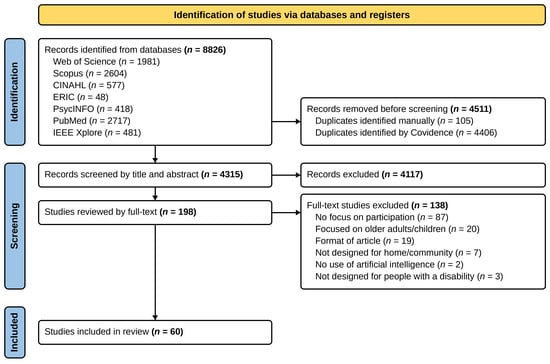
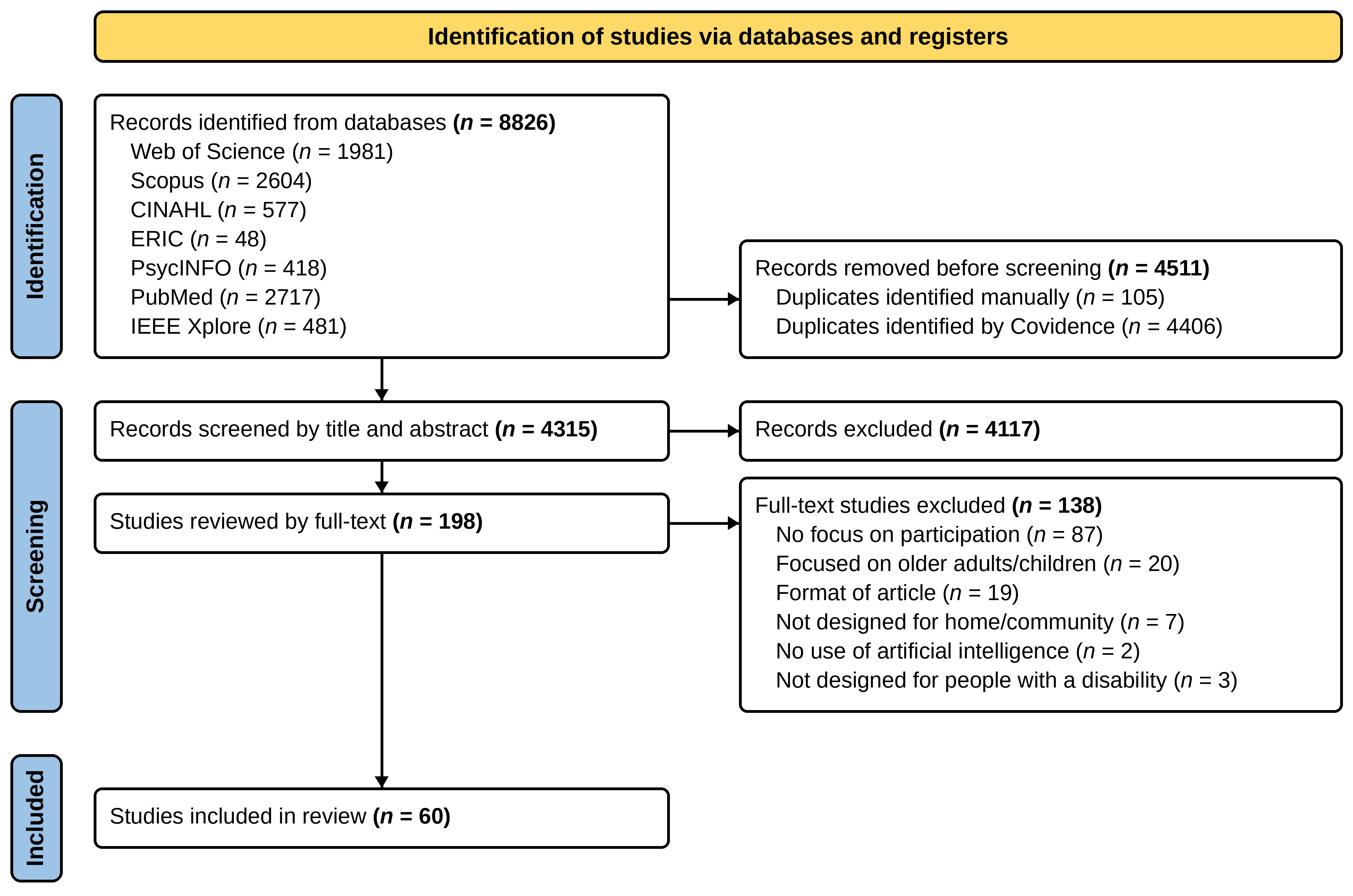
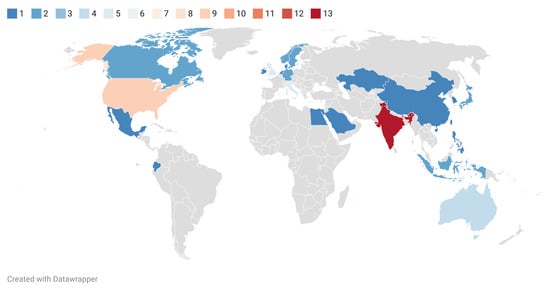
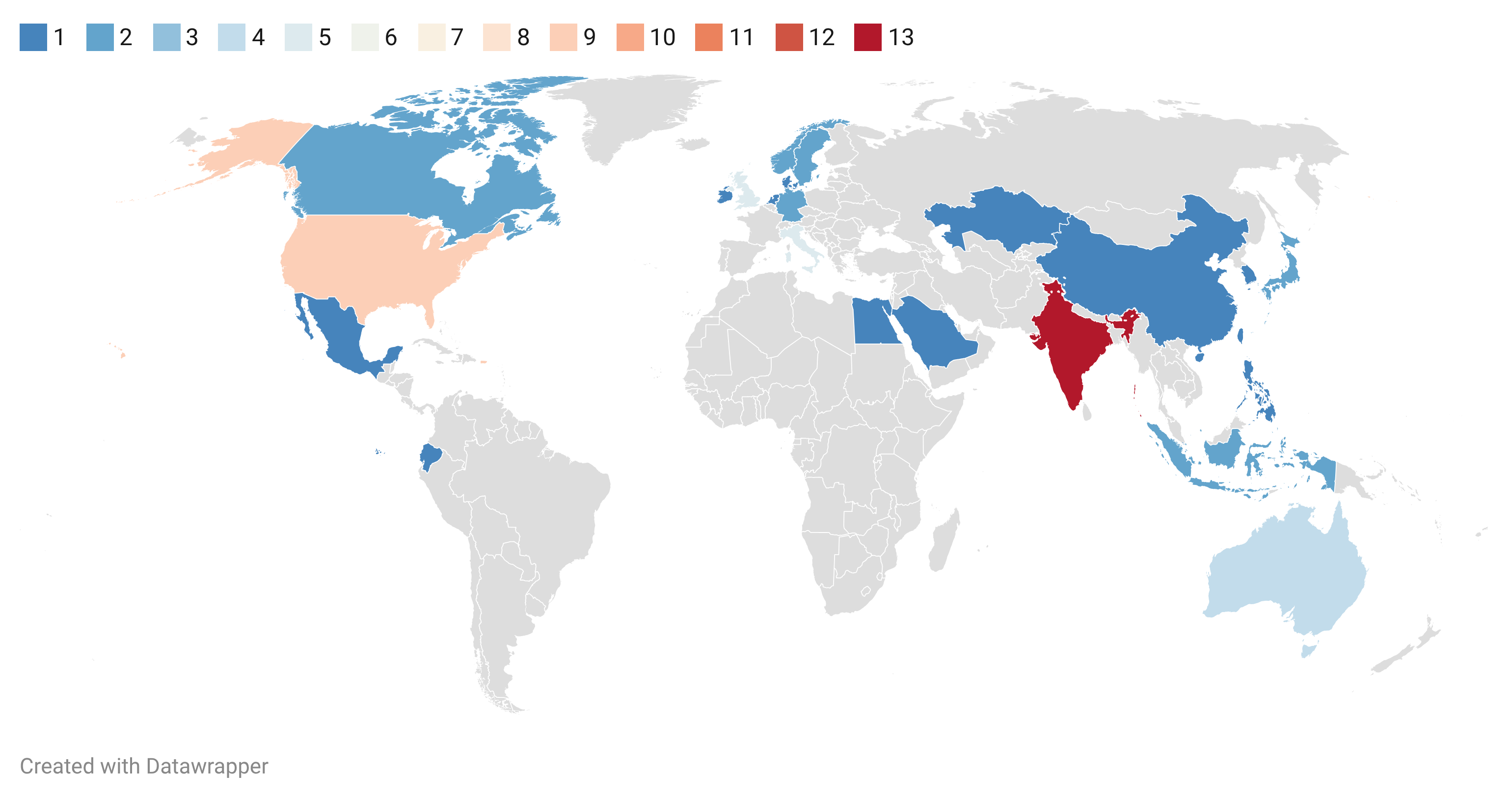
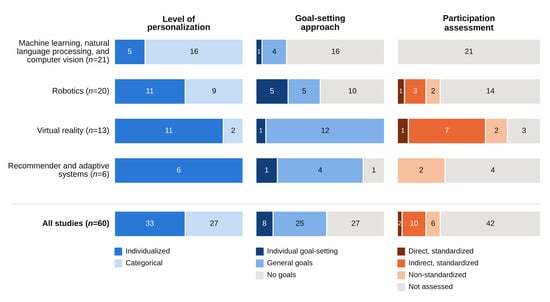
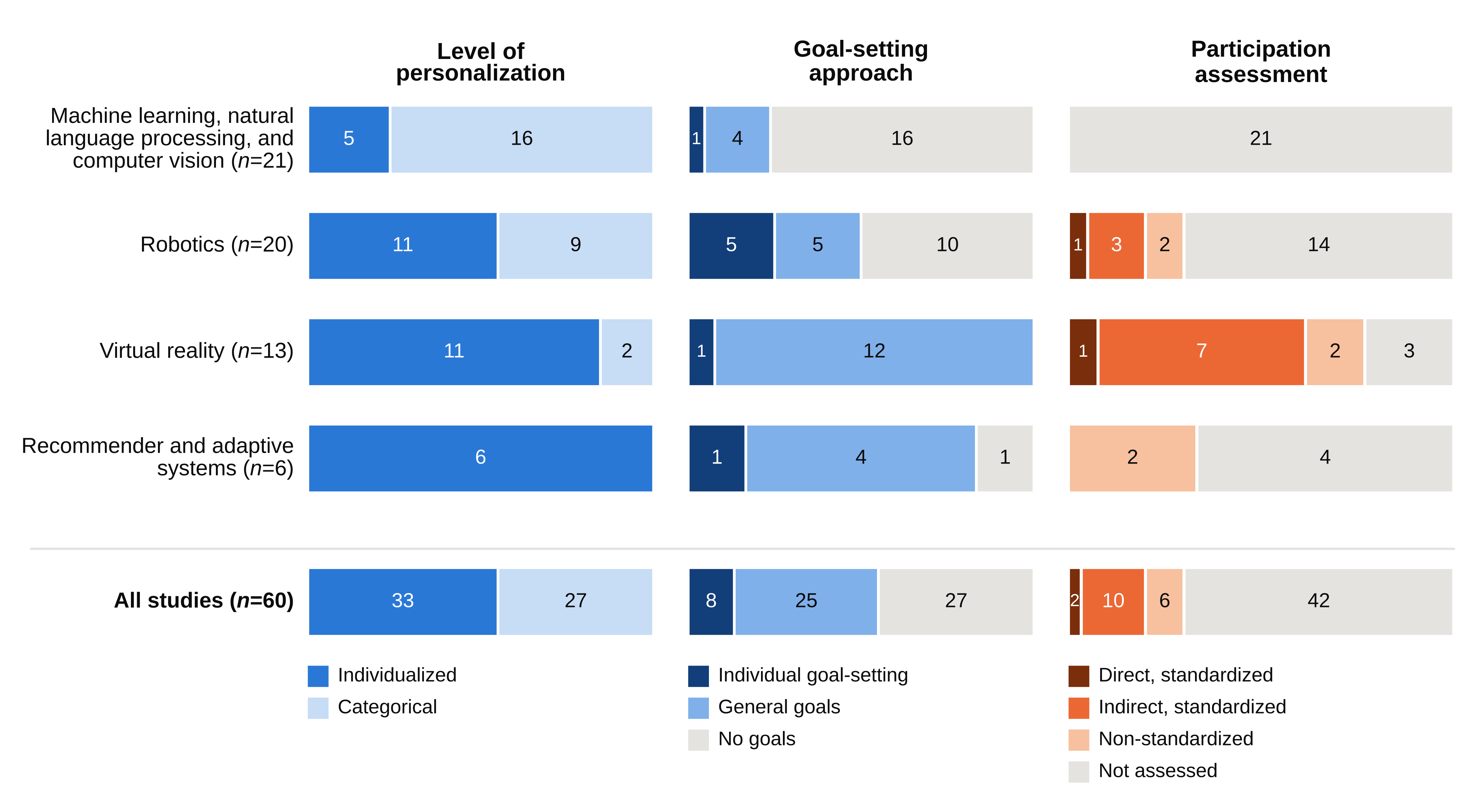

Disclaimer/Publisher’s Note: The statements, opinions and data contained in all publications are solely those of the individual author(s) and contributor(s) and not of MDPI and/or the editor(s). MDPI and/or the editor(s) disclaim responsibility for any injury to people or property resulting from any ideas, methods, instructions or products referred to in the content. |
© 2026 by the authors. Licensee MDPI, Basel, Switzerland. This article is an open access article distributed under the terms and conditions of the Creative Commons Attribution (CC BY) license.