


Abstract
Background/Objectives: In gerontological nursing, thriving has been conceptualised as place-related, subjectively experienced well-being. However, its defining attributes are often conflated with contextual conditions, and its meaning in Chinese nursing homes is unclear. This study aimed to clarify the defining attributes and contextually situated meaning of thriving among older adults living in nursing homes in China. Methods: Schwartz-Barcott and Kim’s hybrid model of concept development was used. A scoping review in the theoretical phase generated a working definition and candidate attributes. In the fieldwork phase, six residents of two nursing homes in eastern China took part in semi-structured interviews, analysed using qualitative content analysis that combined deductive and inductive coding. The analytical phase integrated the two sets of findings. Results: Thirty-nine reports were included. Four attributes were retained and refined: acceptance and contentment; autonomy and control within dependence; meaningful engagement and participation; and relational connectedness and a sense of home. Acceptance did not always bring contentment, so the two elements were distinguished. The two provisional features (vitality, growth and continued learning; contribution and reciprocity) overlapped with existing attributes and were not confirmed as separate attributes in these accounts. The wish not to burden others revealed how autonomy is negotiated, and limited, within dependence. Conclusions: Thriving in nursing homes can be understood as a subjectively experienced state of holistic well-being expressed through these four attributes. These attributes refine rather than replace existing conceptualisations and should be regarded as provisional. Distinguishing them from contextual conditions may inform future assessment and person-centred nursing care.
1. Introduction
Understanding how older adults experience everyday life in nursing homes is important for providing care that supports their well-being. Although later life may involve illness, functional decline, and substantial changes in living arrangements, it is not simply a period of cumulative loss. Life-span developmental theory and models of healthy ageing recognise adaptation and the maintenance of valued capacities in later life [1,2], and research on resilience and flourishing draws attention to psychological resources alongside vulnerability [3]. These constructs differ in focus. Healthy ageing models address the maintenance of physical, mental and social functioning [2], resilience refers to adaptation to or recovery from adversity [3,4], and flourishing denotes high levels of positive emotional, psychological and social functioning [5]. Thriving, by contrast, locates well-being within a particular living situation, which is relevant because many nursing-home residents live with conditions that preclude full recovery or high functioning [6].
In gerontological nursing, thriving has been conceptualised as place-related well-being, with an emphasis on ongoing interaction between the person and the care environment [6,7,8,9]. Across nursing-home studies, recurring features include acceptance of institutional life, autonomy while receiving care, engagement in personally meaningful activities, valued relationships and a sense of belonging [6,7,8,9,10,11].
Thriving has been studied in long-term care since the early 2000s [6], yet there is no consensus on its defining features. Whether physical states form part of the concept remains unclear. A hybrid concept analysis with six registered nurses and six residents in one US facility included freedom from pain and weight maintenance alongside social connection, autonomy and contribution [10]. In contrast, residents in an Australian nursing home did not regard pain or weight as part of thriving, and the US definition has been criticised for mixing staff observations with residents’ experiences [7,12]. Views on growth are similarly divided. Theories of thriving emphasise growth and learning [13,14], nursing-home staff have described thriving in these terms [15], and a Chinese concept analysis included self-growth as an attribute [16]. Residents, however, have mainly described contentment with their situation [8]. Studies also differ in whether residents’ attitudes are treated as factors that contribute to thriving [11,16] or as defining features of the concept [7,8].
Existing reviews have not resolved these differences. A meta-ethnography of seven qualitative reports described thriving as “lived experiences of situated contentment” [8], and a scoping review of 17 studies identified five contributing factors [17]. Both reviews were restricted to English-language publications, drew largely on Scandinavian research and focused more on factors associated with thriving than on its defining attributes. A Chinese concept analysis included 14 publications, all but one of which originated in Scandinavia, the United States or Australia [16]. Evidence from China remains particularly limited. Chinese studies of thriving have been theoretical or have involved community-dwelling older adults [18,19], and the only study of nursing-home residents that we found was a psychometric study in Taiwan [20].
That study tested the Chinese version of the Thriving of Older People Assessment Scale (TOPAS) with 285 residents of five long-term-care facilities and called for further validation in Chinese populations [20]. However, factor structure alone cannot establish how residents understand thriving or distinguish defining attributes from supportive conditions. This distinction is important because TOPAS combines residents’ attitudes and engagement with their evaluations of care and the physical environment [9,20]. In addition, three items concerning the receipt of help loaded on the attitude rather than the care domain, which the authors related to cultural expectations of care by adult children [20].
Such expectations need to be understood within the wider context of nursing-home care in China. Studies have reported that adult children decided on admission, acted as intermediaries with staff and sometimes continued to provide personal care [21,22,23]. Residents also experienced fixed schedules, shared rooms and limited choice over their daily routines, as well as restrictions on leaving the facility [21,22,23]. Some residents explained their admission, or their reluctance to disclose difficulties, as a way of avoiding burdening their children [21,22]. Although Chinese and Danish residents valued similar aspects of care-home life, Chinese residents understood burden primarily in relation to their children rather than to society more broadly [24]. These arrangements may change what autonomy, relationships and acceptance mean to residents, and residents’ own accounts are needed to examine this.
We therefore used Schwartz-Barcott and Kim’s hybrid model of concept development [25], which examines attributes derived from the literature against the accounts of people who live in the setting. This approach allowed attributes identified in the literature to be examined and refined through the experiences of residents in Chinese nursing homes, while distinguishing defining attributes from contextual conditions. This study aimed to clarify the meaning and defining attributes of thriving among nursing-home residents in China and to provide a conceptual basis for its assessment and for nursing care.
2. Materials and Methods
2.1. Study Design
The study followed the hybrid model of concept development proposed by Schwartz-Barcott and Kim [25]. The model comprises three iterative and partly overlapping phases. The theoretical phase develops a provisional understanding of the concept from existing knowledge; the fieldwork phase examines how that understanding is expressed, qualified or challenged in practice; and the analytical phase integrates the two forms of evidence to refine the concept and its definition. The study is reported in accordance with the Consolidated Criteria for Reporting Qualitative Research (COREQ) [26] for the fieldwork phase and the Preferred Reporting Items for Systematic Reviews and Meta-Analyses extension for Scoping Reviews (PRISMA-ScR) for the scoping review in the theoretical phase [27]; the completed PRISMA-ScR checklist is provided in Supplementary Table S5.
2.2. Ethical Considerations
The study was reviewed and approved by the Institutional Review Board of Lishui University (approval no. 2025R071). Before data collection, each participant was informed of the study purpose, interview procedures, audio-recording and intended use of the data. Participants were told that taking part was voluntary and that they could withdraw at any time without affecting the care they received. Written informed consent was obtained from all participants. Interview data were anonymised, participants are identified only by study codes, and original recordings and transcripts were accessible only to the research team.
2.3. Theoretical Phase
The theoretical phase aimed to develop a working definition and provisional candidate attributes of thriving for examination in the fieldwork phase [25]. Dictionary definitions of thrive and thriving [28,29,30,31] served only as an initial reference point; the main source was a scoping review of the academic literature.
The scoping review followed the Joanna Briggs Institute (JBI) methodology [32] and addressed three questions: (1) How has thriving among older adults been defined, described and measured? (2) Which attributes of thriving have been proposed, particularly for older adults living in nursing homes? (3) Which antecedents, contextual conditions and consequences have been associated with thriving? Following the Population–Concept–Context (PCC) framework [32], the population was older adults, as defined in the source publications; the concept was thriving; and the context was any care or community setting, with nursing homes and other long-term residential care as the primary context.
The main search was completed on 21 December 2025 in Scopus (Elsevier), Web of Science Core Collection (Clarivate), APA PsycINFO (Ovid), CINAHL (EBSCO), MEDLINE (Ovid), China National Knowledge Infrastructure (CNKI) and Wanfang. Search strategies combined terms for older adults, care settings and thriving; the complete database-specific strategies are provided in Supplementary Table S2. In CNKI and Wanfang, the setting block was limited to institutional care because a broader preliminary search retrieved many records unrelated to care settings. A supplementary search without the setting block was conducted to identify additional Chinese-language studies of thriving among older adults (Supplementary Table S2).
Related constructs such as well-being, flourishing and resilience were not included as search terms because the review examined how thriving itself has been defined and used [33], as in previous reviews of thriving [8,17]. They were considered when included publications explicitly compared them with thriving (Section 3.1). Settings other than nursing homes were searched to examine the concept across contexts, as required in the theoretical phase of the hybrid model [25]. Candidate attributes were derived primarily from nursing-home studies (Supplementary Table S3).
Publications were eligible if thriving in older adults, particularly in nursing homes, was a central focus and they addressed its meaning, attributes, antecedents, consequences or measurement; study design was not restricted. We excluded publications that used the term only as failure to thrive or were otherwise unrelated to the topic, publications in languages other than Chinese or English, duplicate reports, and records for which the full text could not be obtained. The period January 2000 to December 2025 was chosen because the positive, place-related conceptualisation of thriving in nursing-home care emerged at the start of this period [6,14,34], whereas earlier geriatric literature used the term mainly as failure to thrive [35]; earlier psychological work, such as Carver’s model of thriving after adversity [4], informed comparisons with related constructs but was not charted. Chinese and English were the languages the research team could analyse reliably.
Two reviewers independently screened titles and abstracts and subsequently assessed full texts. Disagreements were resolved through discussion or, when necessary, consultation with a third reviewer. Reasons for exclusion at the full-text stage were recorded. The selection process is presented using the PRISMA 2020 flow diagram [36] (Figure 1).
Figure 1.
Flow of literature identification, screening and inclusion in the theoretical phase, based on the PRISMA 2020 flow diagram [36]. Search dates and the handling of the re-run of the CNKI and Wanfang strategies are given in Supplementary Table S2.
Data from included publications were charted independently by two reviewers using a standardised form recording author, year, country, design, population, definition of thriving, reported attributes, antecedents, consequences and measures, and discrepancies were resolved through discussion. Formal critical appraisal was not undertaken, as the review focused on mapping existing conceptualisations of thriving rather than assessing the effectiveness of interventions [32]. The charted data were analysed using qualitative content analysis with inductive and deductive steps [37]. One reviewer coded the data, and a second reviewer checked the codes, groupings and classifications; disagreements were resolved through discussion. Definitions and descriptions were initially coded close to the wording of each source and then grouped into candidate features (Supplementary Table S3). Existing conceptualisations of thriving [6,9,11,13] were used as sensitising concepts rather than as a predetermined coding framework [38], and a feature was formed only when it was supported by the included reports.
Features were classified as defining attributes or as antecedents, contextual conditions or consequences according to whether they described the experience of thriving itself or something that preceded, shaped or followed it [25,33]. Because a feature cannot be both an antecedent and a defining attribute [33], features that sources classified differently, such as residents’ attitudes [7,8,11] and physical health and function [7,10], were classified according to how residents described them in first-person accounts: as part of their experience of thriving or as something that enabled or limited it. Each report was mapped against the features, with the type of evidence it provided (Supplementary Table S4). This mapping was interpretive rather than a frequency count, because qualitative accounts, measurement dimensions and statistical associations provide different kinds of evidence. Features that recurred in residents’ accounts and in the place-related nursing-home literature, and that were conceptually distinct, were carried forward as candidate attributes. Features supported mainly by other theoretical lineages, staff perspectives, intervention studies or other settings were retained provisionally for examination in the fieldwork phase. The candidate attributes and a tentative working definition informed the interview guide.
2.4. Fieldwork Phase
2.4.1. Researcher Preparation
All interviews were conducted by one researcher, a university nursing faculty member holding a doctoral degree and with research and practice experience in gerontological nursing and long-term care. The interviewer had received training in qualitative methods, including interviewing, verbatim transcription and the development of analytic categories, and had previous experience of conducting qualitative interviews with older adults. The interviewer had no relationship with the participating residents or the two nursing homes before the study. Participants were informed that the interviewer was a university researcher who was not affiliated with the nursing home, and that the purpose of the study was to understand residents’ views of their daily lives.
2.4.2. Participants and Data Collection
Participants were recruited through purposive sampling from two publicly built, privately run nursing homes in one area of eastern China, each with more than 300 beds. Nursing-home managers acted as gatekeepers and identified potentially eligible residents. Residents were eligible if they were aged 60 years or older, had lived in the nursing home for at least three months, could communicate in Mandarin, and could give informed consent. Those with severe cognitive impairment (eight or more errors on the Short Portable Mental Status Questionnaire [39]), serious illness or a diagnosed mental illness for which they were receiving psychiatric or psychological treatment were excluded [11,20]. Residents receiving routine treatment for stable chronic physical conditions remained eligible.
All invited residents agreed to take part, and none withdrew. Maximum variation was sought across gender, length of residence and previous occupation by asking managers to recommend residents who varied in these respects (Table 1). At the time of the interview, the interviewer assessed each resident’s independence in activities of daily living using the Barthel Index (range 0–100; higher scores indicate greater independence) [40]. Variation in self-care ability was limited: all participants were largely independent, with scores of 70–90 (Table 1).
Table 1.
Participant characteristics (N = 6).
Six residents were included because the fieldwork aimed to refine a focused set of literature-derived attributes rather than to produce an exhaustive account of nursing-home life. Sample adequacy was assessed using the concept of information power [41], given the narrow study aim, participants’ direct experience of the phenomenon and the use of an explicit conceptual framework in the analysis.
Individual semi-structured interviews were conducted in Mandarin between January and March 2026 in a private room at each facility, using an interview guide. Interviews lasted 27–68 min (mean 42 min) and were audio-recorded and transcribed verbatim. The interview guide was informed by the working definition and candidate attributes developed in the theoretical phase but began with open questions about admission, everyday life and residents’ overall experience of the nursing home. Follow-up questions explored everyday decisions and self-care, activities, relationships, sense of home and what residents considered necessary for living well. Prompts drew on participants’ own words. The provisional features were followed up with probes when residents mentioned related experiences and were asked about directly, in everyday language, when they did not; for example, the interviewer asked whether they still felt energetic and engaged in daily life, and after asking how residents got on with one another, “Can you describe any situations where residents help each other?” The term thriving was not used during recruitment or interviews. The guide was reviewed by two experts in gerontological nursing and qualitative research and piloted with one resident who was not included in the analysis. Several questions were simplified after the pilot; the final guide is provided in Supplementary Table S1.
2.4.3. Data Analysis
Interviews were transcribed verbatim in Mandarin, and coding was conducted in Mandarin to preserve the original expressions. Data were analysed using directed qualitative content analysis [42]. After repeated reading of each transcript, meaning units relevant to the research question were identified and condensed into codes. Because the theoretical phase had generated candidate attributes, codes were first examined in relation to each attribute for confirmation, qualification, contradiction and conceptual overlap. Material that did not fit these attributes was then coded inductively, so that context-specific or emerging features were retained. Codes with similar meanings were grouped into subcategories and broader categories, and disconfirming material was retained throughout. This combined deductive–inductive process allowed the fieldwork data to support, refine, challenge or extend the provisional structure derived from the literature. Analysis was conducted manually without qualitative data-analysis software. Quotations selected for publication were translated into English by one researcher and reviewed by the research team to ensure that their meaning was preserved.
2.4.4. Rigour
We drew on Lincoln and Guba’s criteria for trustworthiness [43]. For credibility, one researcher (Y.L.) coded all six transcripts, and a second researcher (Z.L.) trained in qualitative methods independently coded the first two (33%) to develop a shared coding frame and reviewed the codes and categories for the other four; the codes were compared, and differences were resolved through discussion or, when necessary, review by a third researcher (L.X.). Material that contradicted or qualified the candidate attributes was sought and retained throughout the analysis. For dependability, the audio recordings, transcripts, and coding comparison tables were retained as an audit trail. For confirmability, interpretations were repeatedly checked against the transcripts and supported by verbatim extracts, and translated quotations were checked against the Mandarin originals. For transferability, the setting and participant characteristics are described so that readers can judge the relevance of the findings to other settings.
2.5. Analytical Phase
In the analytical phase, the findings of the theoretical and fieldwork phases were integrated attribute by attribute and compared for convergence, qualification, overlap and absence [25]. For each feature, the key fieldwork evidence, analytical decision and rationale were recorded as an audit trail. Candidate attributes were retained when empirically supported and conceptually distinct, refined when residents’ accounts altered their meaning or emphasis, and not confirmed as independent attributes when their content overlapped substantially with another attribute; because absence of evidence in a small sample cannot establish that a feature lacks conceptual independence, such features were treated as open questions rather than rejected. Inductively emerging features were examined to determine whether they formed a new defining attribute or a contextually situated expression of an existing one. Decisions were reached through team discussion and informed the refined working definition of thriving.
3. Results
3.1. Theoretical Phase
3.1.1. Meanings and Conceptual Boundaries
The word thrive derives from the Old Norse thrífask and originally meant to grow or increase [28]. As a verb, it denotes growing vigorously, prospering or progressing towards a goal despite or because of circumstances [29], or continuing to be successful, strong and healthy [28]; as an adjective, it describes a state of success or prosperity [30] or of continuing success, strength and health [31]. These meanings served as an initial reference point but were not treated as defining attributes.
Across disciplines, thriving has been used with different emphases. In organisational behaviour, thriving at work is defined through the joint experience of vitality and learning [13], a perspective later extended in Chinese scholarship to community-dwelling older adults [18,44]. Geriatric literature historically used the term mainly in its negative form, failure to thrive, denoting loss of independence, multimorbidity and functional decline [35]. Within gerontological nursing, Bergland and Kirkevold reframed thriving as a positive way of understanding well-being among frail nursing-home residents [6], and subsequent research conceptualised it as well-being that develops within a specific care environment and produced instruments to capture it [7,8,9], including Chinese and other cultural adaptations [20,45]. This place-related nursing tradition provided the main conceptual foundation, while the vitality–learning tradition was retained for comparison.
Thriving was also distinguished from related constructs. Subjective well-being [46] and flourishing [5] are broad evaluations of life or functioning that are not tied to a particular care setting. Successful ageing has privileged low disease and disability, preserved function and active engagement [47], criteria that may exclude people with substantial impairment. Resilience centres on adaptation or recovery after adversity, whereas thriving emphasises doing well within challenging circumstances and the person–environment relationship that sustains this experience [4,48]. Illness and functional limitation may therefore constrain thriving but do not preclude it.
3.1.2. Candidate Attributes and Provisional Features
Comparison of definitions and empirical descriptions identified four recurrent features in the nursing-home literature: acceptance and contentment; autonomy and control within dependence; meaningful engagement and participation; and relational connectedness and a sense of home [6,7,8,9,10] (Table 2). They were formed inductively from the included reports, corresponded to existing conceptualisations of thriving in nursing homes [6,9,11] and were carried forward as candidate attributes (Supplementary Table S4). Autonomy and control within dependence appeared in fewer reports than the other three but was described in residents’ own accounts in three independent studies and a meta-ethnography [7,8,10,49]. Antecedents and contextual conditions were described in 29 of the 39 reports, whereas only six proposed or examined consequences, and a meta-ethnography found no evidence of negative consequences [8] (Supplementary Tables S3 and S4). Two further features were uncertain. Vitality, growth and continued learning was developed mainly in the thriving-at-work tradition and its Chinese extension [13,18] and in nursing theory, an early long-term-care working definition and a Chinese concept analysis [10,14,16]; resident-level accounts came only from a technology intervention and a grey-literature report [49,50]. Contribution and reciprocity appeared in a small, inconsistently named body of literature on giving, usefulness and mutual help [10,34,49,51]. In keeping with the hybrid model, both were carried forward as provisional features for empirical examination.
Table 2.
Literature for the six candidate features of thriving.
At the close of the theoretical phase, thriving was provisionally defined as place-related, subjectively experienced holistic well-being, expressed through acceptance and contentment, autonomy within dependence, meaningful engagement, and relational connectedness and a sense of home. This working definition and the six candidate features guided the fieldwork phase.
3.2. Fieldwork Phase: Empirical Testing and Contextual Refinement
Residents’ accounts were examined against the six candidate features identified in the theoretical phase, and material that did not fit these features was coded inductively.
3.2.1. Confirmation and Refinement of the Four Recurrent Attributes
The four recurrent attributes were recognisable in residents’ accounts, but each acquired a more situated meaning in relation to bodily change, care dependence, and family and cultural expectations.
Acceptance and contentment: Three residents described acceptance as an active process rather than passive resignation (P01, P04, P05). It was expressed through phrases such as “taking things philosophically”, “being content with what one has”, “not keeping score” and “not asking for much”, which referred to adjusting expectations, letting go of disappointments and deliberately preserving equanimity amid ageing, illness and relocation.
“You still have to be cheerful. There are only twenty-four hours in a day, whether you’re happy or not. Why make yourself miserable?”(P04)
For P01, acceptance meant recalibrating what could reasonably be expected:
“You can’t turn old age back into youth; excessive wishes are empty anyway—they can’t be met. You must adapt to this environment. Ask too much and it’s useless; what can’t be had only breeds vexation.”(P01)
Several residents also compared themselves favourably with less able residents (P01–P04):
“That’s how it is for the others. I count as one of the luckier ones, still able to walk down; the rest all sit about in wheelchairs.”(P03)
In most accounts, acceptance appeared less as a general positive stance than as a continuing, and sometimes effortful, process of adaptive self-regulation. Acceptance did not always bring contentment, however. P02, who had moved in because of a painful leg, said that he would still be living at home if his leg allowed and that there was “nothing to be happy about” in old age; he accepted the nursing home as the best available option under the circumstances without describing his life there as satisfying.
Autonomy and control within dependence: Autonomy was expressed primarily through the organisation of everyday life (P01, P04, P05). Residents maintained agency by arranging routines, washing their own clothes and doing what remained manageable for themselves.
“As a rule you must do for yourself; you cannot lean on other people. I like doing myself whatever I can do myself.”(P05)
Self-care carried symbolic as well as functional value, helping to sustain dignity and continuity of identity. Autonomy was also bounded by institutional rules: P01 described locked doors and leave slips as leaving little freedom, whereas P06 felt freer in the nursing home than she had in her daughter’s household. When assistance was needed, some residents deliberately limited their requests (Section 3.2.3), so that autonomy was exercised in relation to the people on whom they depended rather than as individual choice alone.
Meaningful engagement and participation: Residents located meaning less in abstract purpose or achievement than in the ordinary value of having something to do (P01, P03, P05). Walking, morning exercises, chess, paper-cutting and newspaper number puzzles gave structure to the day and kept mind and body in use.
“If you don’t go outside, there’s nothing. Sitting in the room all day watching television, no use in that. After all, I still have things of my own—number puzzles to fill in and work out. Move the brain, keep the brain moving.”(P05)
P01 described the same value while rejecting the language of meaning:
“It isn’t really a matter of meaningful or not, it’s all just the days passing. … It exercises the brain, trains the mind; the days feel fuller, the days pass more happily. Otherwise you sit there going blank.”(P01)
Opportunities for engagement were uneven: P02, whose leg prevented him from joining the exercises, reported that apart from sleeping and watching television there was little to do. Engagement in this setting therefore concerned everyday personal value rather than externally defined achievement, and depended on activities fitting the person’s interests and abilities.
Relational connectedness and a sense of home: Connectedness extended beyond relationships inside the facility. Family ties were sustained through visits, financial support, telephone calls and video contact, and the care available in the nursing home could create mutual reassurance for residents and their families (P01, P03, P04, P05).
“With me here my son is at ease too, there are people to look after me and here I’m more at ease myself, more settled, somehow. Not afraid anymore.”(P04)
Peer relationships varied widely. P06 formed a close friendship with a resident from her home area:
“Everyone says we’re two sisters. We tell them no, we only met here. But by now we really are like sisters.”(P06)
Others described limited contact with fellow residents, sometimes because of cognitive impairment among co-residents, and P01 remarked that “everyone is lonely”. A sense of home developed gradually as residents settled into the institution while remaining attached to hometowns, familiar places and earlier identities, such as P04’s network of former classmates in her home town. Belonging was therefore layered, linking the institution, significant relationships and biographical place.
3.2.2. Examination of the Two Provisional Features
Vitality, growth and continued learning: Experiences related to vitality, growth and continued learning were present, but they did not form a coherent pattern distinct from the four recurrent attributes. Residents described rehabilitation, information seeking, mental stimulation and physical activity, but framed these mainly as maintaining function, exercising self-direction or structuring everyday life in personally valued ways. P04 had regained her ability to walk after a stroke through sustained practice, P03 led the morning exercises and followed history programmes and current affairs, and P05 completed newspaper number puzzles to keep her mind active.
“I had to train this leg well again. I’d be so tired I couldn’t move, done in—but now it’s trained up.”(P04)
Vitality in the sense of abundant energy was rarely described; asked whether his life still had vigour, P01 replied, “At this age it’s naturally less; the energy is limited”, although he added that he was better off than other residents. This material overlapped substantially with autonomy and control within dependence and meaningful engagement and participation.
Contribution and reciprocity: Acts of giving and advocacy appeared in several accounts, but residents rarely presented them as a source of their own well-being. P03 started the exercise programme when staff were busy; P04 shared food with other residents and spoke up for those who were teased; and P06 raised with the manager the needs of a resident with severe tremor. These actions were embedded in residents’ everyday activities and relationships and were not analytically distinct from meaningful engagement and participation or relational connectedness and a sense of home. Illustrative coding trails from residents’ statements through codes and categories to the analytical decisions for both provisional features are given in Supplementary Table S6.
3.2.3. A Locally Salient Relational Feature: Not Burdening Others
In contrast to the two provisional features, the wish not to burden others recurred across interviews (P01, P03, P04, P05). Residents described maintaining self-care, limiting requests and remaining mindful of the demands placed on children or staff. For some, self-reliance was a deliberate stance linked to dignity and to valuing activity:
“It would be trouble for them too. I wash my own clothes, wash myself. I never go looking for them. … Doing something is better than sitting there stiff and idle.”(P01)
For others, not burdening others expressed concern for family members:
“If I fell ill as well, that would be more burden on my children. So I say: don’t spend your care on me, go to the hospital and see your father; lighten the children’s load, right?”(P05)
Financial independence enabled some residents to reduce their reliance on family. P03 had chosen the nursing home because living with a daughter “would be a great burden on them”, adding: “I have my own pension; living here is cleaner and simpler.” P04, whose only son worked abroad, paid the monthly fee from her pension and declined to join him: “With this body, what would you go out for? Only to be a bother to them—that’s not good.”
Not asking did not always reflect choice, however. P05 had never asked staff to open a games room she enjoyed, not because of concern about burdening them but because a refusal would have been embarrassing:
“Never tried, never asked. I think there’s no need. I think if I asked and he didn’t agree, it would be very embarrassing. So I let it be, I don’t ask.”(P05)
P03 similarly observed that some residents “can’t bring themselves” to raise problems with staff. Restraint in making requests could therefore signify a chosen way of preserving dignity or a perceived limit on asking, with needs left unexpressed. This stance was not equivalent to contribution or reciprocity: contribution concerns actively giving to others, whereas not burdening others concerns regulating one’s claims within a relationship of dependence. It was therefore carried forward to the analytical phase as a locally salient feature requiring conceptual placement.
3.3. Analytical Phase: Integration of Theoretical and Fieldwork Findings
All four recurrent attributes were retained, but each was refined in light of the fieldwork (Table 3). Acceptance and contentment were retained, with acceptance understood as an active, continuing process of adjustment. Because the fieldwork showed that acceptance could occur without contentment, the two elements were distinguished within the attribute, and acceptance alone was not taken as evidence of thriving, consistent with the earlier view that lowered expectations indicate conditional thriving [6]. The two elements were kept within one attribute because residents described acceptance not as a step completed before living well in the home but as a continuing stance towards their circumstances, which might or might not be accompanied by contentment; both form part of residents’ attitude towards living in the nursing home, which Bergland and Kirkevold identified as the innermost core aspect of thriving [11]. Treating acceptance as a separate attribute would allow resignation, as in P02’s account, to count as an expression of thriving. The other three attributes were refined as summarised in Table 3: autonomy to include relational agency and its limits, engagement to emphasise everyday personal value, and connectedness to include ties beyond the facility and continuity with hometown and biography.
Table 3.
Analytical audit trail from candidate features to the refined attributes of thriving in nursing-home life.
Neither provisional feature was retained as an independent attribute. The content of vitality, growth and continued learning was redistributed, with rehabilitation and self-directed practice placed within autonomy within dependence and mental and physical stimulation within meaningful engagement, and the content of contribution and reciprocity overlapped with meaningful engagement and relational connectedness. Both decisions rest on six interviews: they indicate that the features were not distinguishable in these accounts, not that they lack conceptual independence. The wish not to burden others was placed within autonomy and control within dependence as a point at which residents negotiated agency within relationships of care, not as an indicator of thriving. Chosen restraint expressed relational autonomy, whereas withholding requests because refusal or embarrassment was anticipated marked its limit and left needs unexpressed.
Features that shaped how the attributes were expressed, but did not themselves constitute the experience, were classified as contextual conditions. These included institutional rules, such as restrictions on leaving the facility; the availability and suitability of activities; the attentiveness of care workers and their openness to residents’ requests; and residents’ physical function, biographies and life transitions such as relocation. Physical limitation could constrain the expression of thriving, as in P02’s account, but did not preclude it, as P04’s account of living well after a stroke showed.
On this basis, thriving among older adults living in nursing homes was defined as follows: a subjectively experienced state of holistic well-being that develops and is sustained within the nursing home as a particular living environment, expressed through accepting one’s circumstances and finding contentment in them; maintaining autonomy while receiving necessary support; engaging in activities that hold everyday value; and sustaining connections and a sense of belonging with significant people and places. The integration process is shown in Figure 2. The four attributes are not proposed as a checklist of necessary and sufficient conditions. Consistent with an evolutionary view of concepts as dynamic and context-dependent [58], and with the measurement of thriving as a level rather than a category [9], thriving is understood as a matter of degree that may be expressed through different combinations and intensities of the attributes. In the fieldwork, peer relationships mattered to some residents but not to others, and limited mobility restricted engagement without precluding other expressions of thriving. The four attributes may be expressed in different combinations and to varying degrees across residents. Accounts of acceptance without contentment, or care without a sense of autonomy, highlight the importance of distinguishing outward circumstances from residents’ subjective experiences of thriving. Whether some attributes form a core without which the others do not contribute, as proposed in earlier nursing-home research [9,11,59], could not be determined from six interviews and requires further study.
Figure 2.
Conceptual development of thriving across the three phases of the hybrid model. Solid arrows show the four candidate attributes that were retained and refined, with the key refinement noted above each arrow; dashed and dotted arrows show where the content of the two provisional features and of the emerging wish not to burden others was placed. The supporting evidence and rationale are given in Table 3.
4. Discussion
4.1. Principal Findings
This hybrid concept analysis placed literature-derived attributes of thriving in dialogue with the accounts of residents in two Chinese nursing homes. All four recurrent attributes were retained in a more situated form, and neither provisional feature formed a separate attribute (Section 3.3). The main contribution of this study is therefore the refinement of existing attributes and the clarification of their meaning in the Chinese nursing-home setting studied, rather than the identification of new attributes: no new defining attribute emerged, and the locally salient wish not to burden others was interpreted as an expression of an existing attribute. The most distinctive refinements were that acceptance did not always bring contentment and that autonomy was negotiated, and limited, within relationships of care. These findings offer a situated interpretation of thriving rather than a structure presumed to characterise all Chinese residents.
4.2. Refined Attributes in Relation to Previous Research
The refined concept is consistent with earlier research linking thriving to residents’ attitudes, meaningful activity, relationships and the experience of place [7,11], and with Baxter and colleagues’ description of thriving as situated contentment [8]. Residents described acceptance as recalibrating their expectations, in line with work on goal adjustment and control [60,61], and several compared themselves favourably with less able residents. One resident, however, accepted the nursing home as the best available option without finding his life there satisfying. As the notion of conditional thriving anticipates [6], acceptance and contentment can diverge, and contentment alone cannot show whether adjustment was chosen or reflects restricted alternatives. Distinguishing the two elements within one attribute guards against treating resignation as thriving.
Engagement was valued for structuring the day and keeping mind and body active rather than for purpose or achievement; one resident rejected the language of meaning while describing the same value. This accords with associations between everyday activities and thriving [53] and can be interpreted through selection, optimisation and compensation [1,62]: choosing manageable activities and using assistance may allow residents to sustain what they value despite functional limitations. Engagement also depended on opportunity, as one resident unable to join the exercises had little else to do. What matters is whether activities fit a person’s interests and abilities, not whether they meet external expectations.
Belonging was layered. Residents maintained ties and shared reassurance with family beyond the facility, while peer relationships ranged from close friendship to distance, consistent with findings that relationships with caregivers or peers are not equally important to every resident [54,63] and with socioemotional selectivity theory [64]. Attachment to both the institution and the hometown points to continuity across place and biography, and a sense of belonging has been linked to dignity among Chinese nursing-home residents [57]. Observable social contact is therefore an insufficient indicator of connectedness.
4.3. Relational Autonomy and Not Burdening Others
The wish not to burden others was the clearest locally salient feature. Residents washed their own clothes, fetched their own water, asked little of staff and urged their children to attend to others first. This feature was placed within autonomy within dependence because residents used it to regulate their claims within relationships of care, consistent with relational accounts of autonomy [56]. The same behaviour, however, could reflect restraint chosen to preserve dignity or spare family members, or requests withheld because refusal was anticipated; only the former expresses autonomy, whereas the latter marks its limits. The wish itself should therefore not be treated as an indicator of thriving, and attention is needed to whether residents can also request assistance, express disagreement and revise their choices.
Similar concerns have been reported among Chinese nursing-home residents, for whom not burdening children was a dominant narrative of placement [21] and being a burden threatened dignity [57]. Filial piety provides a context for obligations between adult children and parents [65], institutional placement in urban China can be interpreted as compatible with filial piety [66], and cultural beliefs shape residents’ experiences of long-term care [67]. This evidence helps contextualise residents’ concern for their families but does not establish a single Chinese response to dependence. Concern about being a burden has also been reported among patients receiving palliative care [68] and Danish care-home residents, although the latter related it to society rather than to their children [24]. With six participants from one area of eastern China, not burdening others is best understood as locally salient, shaped by family relationships, material circumstances and institutional arrangements, rather than as uniquely Chinese.
4.4. Vitality, Growth and Adaptive Maintenance
Vitality, growth and continued learning was not confirmed as an independent attribute because its content overlapped with autonomy and meaningful engagement, and abundant energy was rarely described. This does not mean that growth is absent from later life; one resident’s sustained effort to walk again after a stroke shows what residents could achieve, although she described it as recovery rather than growth. All participants were aged 79–97 years and largely independent; residents with different capacities or access to structured learning might describe growth more clearly, as participants did in a technology intervention [50]. Material that could be read as growth or as self-directed function also had to be assigned by the analysts, and others might have placed it differently. Whether growth forms a distinct attribute therefore remains open, particularly as a Chinese concept analysis retained self-growth as a defining attribute [16]. Residents emphasised sustaining valued routines and capacities rather than continual expansion, which may partly reflect interview questions focused on daily life. Life-span developmental theory, with its emphasis on balancing gains and losses [1], suggests one post hoc interpretation of this emphasis as adaptive maintenance, without making reduced aspiration a requirement for thriving. The emphasis also distinguishes the place-related concept from the vitality–learning model of thriving at work [13] and its extension to community-dwelling older adults [18], although growth is central to the life-span theory of thriving [14].
Contribution and reciprocity also requires caution. Acts of giving and advocacy were expressed through activities and relationships already captured by other attributes, yet earlier studies identified contribution as a feature of thriving [10] and described feeling useful and caring for others in several care settings [34,49,51], and residents and staff may value helping differently [10]. Its status warrants examination in larger and more varied samples.
4.5. Contextual Conditions, Related Phenomena and Measurement
Clarifying thriving requires distinguishing the resident’s experience from the conditions in which it occurs and from related outcomes. In concept analysis, defining attributes allow an instance to be recognised as the concept, whereas antecedents and conditions precede or shape it and consequences follow from it [33]. This distinction follows from the place-related definition itself: if thriving develops within a particular environment [6,8], features of that environment are conditions for the experience rather than components of it. Treating them as attributes would make thriving partly a property of the facility and would obscure residents who adapt despite restrictive conditions or do not thrive despite supportive ones. The distinction is also consistent with ecological models of ageing, which treat the environment and personal competence as separate but interacting influences on well-being [69], and with the life-span theory of thriving, which locates it in person–environment interaction [14]; the double-headed arrow in Figure 3 represents this interaction. In keeping with the contextual focus of the hybrid model [25], institutional rules, the availability of suitable activities, care workers’ attentiveness and openness to requests, and residents’ physical function, biographies and life transitions were classified as conditions. Locked doors and leave slips, for example, constrained one resident’s sense of freedom without determining whether he adapted, and residents in an Australian study did not include pain or weight maintenance in the meaning of thriving, in contrast to an earlier long-term-care definition [7,10]. Figure 3 presents these relationships as a conceptual model, not as established causal pathways.
Figure 3.
Conceptual model of thriving among older adults living in nursing homes: antecedents and contextual conditions, defining attributes and related phenomena. The double-headed arrow denotes the proposed interplay between contextual conditions and residents’ experiences. The plain line links thriving with related phenomena and indicates association, not direction or causation. Contextual conditions are those identified in the fieldwork and discussed in Section 3.3 and Section 4.5.
This distinction is consistent with the separation of personal and social from environmental contributors in an earlier synthesis [8] and with associations between thriving and the psychosocial and physical environment in Swedish nursing homes [70]. Classifying a feature as a condition rather than an attribute nonetheless remains a conceptual judgement, not a conclusion drawn from statistical association.
Psychological well-being and quality of life were classified as related phenomena. Related concepts share some characteristics with the concept of interest but not its full set of attributes [58]: neither is defined by a particular living environment, and both are broader evaluations of life or psychological functioning. They were not classified as consequences because the included evidence was cross-sectional: studies reported associations of thriving with psychological well-being among urban older adults in China [71] and with quality of life and functional capacity [59] without establishing direction, and associations with social participation and self-determination in home care suggest relevance beyond institutional settings [52].
These boundaries have implications for measurement. TOPAS scores residents’ attitudes and engagement together with appraisals of care and the physical environment [9], and its Chinese and other adaptations [20,45] do not by themselves resolve whether conditions and experiences should be scored together. The present analysis offers a provisional framework for reviewing item content and testing that distinction; it does not establish a new factor structure or invalidate existing scores. Future development should involve residents in judging relevance and comprehensibility, and proxy and observational approaches require separate validation.
4.6. Implications for Nursing Practice and Research
Although the refined attributes have not yet been validated for assessment, they highlight several considerations for person-centred care. Staff should not assume that apparent acceptance indicates contentment or interpret reluctance to request help as independence. When residents express a wish not to burden others, staff should consider whether this reflects a personal preference or difficulty in asking for help and ensure that needs can be expressed without embarrassment.
Care planning should support flexible routines, feasible self-care, personally valued activities accessible to residents with limited mobility, safe opportunities to leave the facility and continued connections with family and familiar places.
Future research should examine the refined attributes across more diverse facilities and levels of dependence and over time, combining residents’ accounts with observation and analysing family and staff perspectives separately from those of residents. Measurement studies should then test whether the attributes remain distinguishable from appraisals of the care environment and from general well-being.
4.7. Strengths and Limitations
This study has several limitations. In the theoretical phase, the literature was heterogeneous in setting, perspective and publication type, and no review protocol was prepared; restricting the search to Chinese and English publications from 2000 onwards, to thriving and its equivalents and, in the Chinese databases, to institutional settings may have led to relevant studies being missed. In the fieldwork phase, the six participants came from two facilities in eastern China and were identified by managers, which may have favoured more cooperative residents. Residents with severe cognitive impairment or serious illness and those unable to communicate in Mandarin were excluded, and all participants were largely independent (Barthel Index 70–90). The findings therefore cannot show that the meanings identified apply to other Chinese nursing homes or are explained by culture alone, and not burdening others should be interpreted as a locally situated expression rather than a cultural trait. Although every resident discussed the provisional features, the absence of a distinct pattern in six accounts does not establish that these features lack conceptual independence. In addition, literature-derived prompts such as “vitality” may have directed attention towards expected features, only two transcripts were double-coded, member checking was not undertaken, and translation may have lost nuance.
Nevertheless, this study used residents’ own accounts to refine a literature-derived concept in a setting largely absent from the literature, and retaining disconfirming cases, such as acceptance without contentment, sharpened the boundaries of the concept.
5. Conclusions
Using a hybrid model, this study refined the attributes of thriving among older adults in Chinese nursing homes. Thriving can be understood as a subjectively experienced state of holistic well-being expressed through acceptance and contentment, autonomy and control within dependence, meaningful engagement and participation, and relational connectedness and a sense of home. In this setting, acceptance did not always bring contentment, and the wish not to burden others showed that restraint in making requests may express autonomy or mark its limits. Vitality, growth and continued learning, and contribution and reciprocity, were not confirmed as separate attributes and warrant further examination.
The framework is provisional and context-specific. It may help nurses explore residents’ experiences without equating thriving with activity or physical function, and could inform the development or review of assessment tools, such as the Chinese TOPAS, once its applicability to residents with greater dependence or cognitive impairment and to other settings has been examined in further qualitative and psychometric studies.
Supplementary Materials
The following supporting information can be downloaded at https://www.mdpi.com/article/10.3390/healthcare14234054/s1, Table S1: Interview guide; Table S2: Database-specific search strategies; Table S3: Characteristics and conceptual content of the 39 reports included in the theoretical phase; Table S4: Mapping of the 39 reports included in the theoretical phase to the six candidate features and to contextual conditions, with the type of evidence each report provides; Table S5: PRISMA-ScR checklist for the scoping review conducted in the theoretical phase; Table S6: Illustrative coding trails for the two provisional features, from residents’ statements to analytical decisions. References [6,7,8,9,10,11,14,15,16,17,18,19,20,27,34,45,49,50,51,52,53,54,55,59,63,70,71,72,73,74,75,76,77,78,79,80,81,82,83,84] are cited in the Supplementary Materials.
Author Contributions
Conceptualization, Y.L.; methodology, Y.L. and L.X.; investigation, Y.L.; formal analysis, Y.L. and Z.L.; validation, L.X.; data curation, Y.L. and Z.L.; writing—original draft preparation, Y.L.; writing—review and editing, Z.L. and L.X.; supervision, L.X.; funding acquisition, Y.L. and L.X. All authors have read and agreed to the published version of the manuscript.
Funding
This research was funded by the National Natural Science Foundation of China, grant number 71904073, and the Lishui Science and Technology Bureau, China, grant number 2025RKX40.
Institutional Review Board Statement
The study was approved by the Institutional Review Board of Lishui University (approval code 2025R071, approval date: 31 December 2025).
Informed Consent Statement
Informed consent was obtained from all subjects involved in the study.
Data Availability Statement
The data presented in this study are available on request from the corresponding author. The data are not publicly available due to participant privacy and the terms of the ethics approval.
Acknowledgments
The authors thank the residents who shared their experiences and the nursing-home managers who facilitated access. During the preparation of this manuscript, the authors used ChatGPT (version 5.6, OpenAI) for the purposes of language editing. The authors have reviewed and edited the output and take full responsibility for the content of this publication.
Conflicts of Interest
The authors declare no conflicts of interest. The funders had no role in the design of the study; in the collection, analyses, or interpretation of data; in the writing of the manuscript; or in the decision to publish the results.
Abbreviations
The following abbreviations are used in this manuscript: CNKI, China National Knowledge Infrastructure; COREQ, Consolidated Criteria for Reporting Qualitative Research; JBI, Joanna Briggs Institute; PCC, Population–Concept–Context; PRISMA, Preferred Reporting Items for Systematic Reviews and Meta-Analyses; PRISMA-ScR, Preferred Reporting Items for Systematic Reviews and Meta-Analyses extension for Scoping Reviews; TOPAS, Thriving of Older People Assessment Scale.
References
- Baltes, P.B.; Lindenberger, U.; Staudinger, U.M. Life Span Theory in Developmental Psychology. In Handbook of Child Psychology, 6th ed.; Damon, W., Lerner, R.M., Eds.; Wiley: Hoboken, NJ, USA, 2006; Volume 1, pp. 569–664. [Google Scholar] [CrossRef] [Scilit]
- Menassa, M.; Stronks, K.; Khatmi, F.; Díaz, Z.M.R.; Espinola, O.P.; Gamba, M.; Itodo, O.A.; Buttia, C.; Wehrli, F.; Minder, B.; et al. Concepts and Definitions of Healthy Ageing: A Systematic Review and Synthesis of Theoretical Models. eClinicalMedicine 2023, 56, 101821. [Google Scholar] [CrossRef] [Scilit] [PubMed]
- Zábó, V.; Csiszar, A.; Ungvari, Z.; Purebl, G. Psychological Resilience and Competence: Key Promoters of Successful Aging and Flourishing in Late Life. GeroScience 2023, 45, 3045–3058. [Google Scholar] [CrossRef] [Scilit] [PubMed]
- Carver, C.S. Resilience and Thriving: Issues, Models, and Linkages. J. Soc. Issues 1998, 54, 245–266. [Google Scholar] [CrossRef]
- Keyes, C.L.M. The Mental Health Continuum: From Languishing to Flourishing in Life. J. Health Soc. Behav. 2002, 43, 207–222. [Google Scholar] [CrossRef] [Scilit]
- Bergland, Å.; Kirkevold, M. Thriving—A Useful Theoretical Perspective to Capture the Experience of Well-Being among Frail Elderly in Nursing Homes? J. Adv. Nurs. 2001, 36, 426–432. [Google Scholar] [CrossRef] [Scilit] [PubMed]
- Baxter, R.; Sandman, P.O.; Björk, S.; Lood, Q.; Edvardsson, D. Illuminating Meanings of Thriving for Persons Living in Nursing Homes. Gerontologist 2020, 60, 859–867. [Google Scholar] [CrossRef] [Scilit] [PubMed]
- Baxter, R.; Corneliusson, L.; Björk, S.; Kloos, N.; Edvardsson, D. A Recipe for Thriving in Nursing Homes: A Meta-Ethnography. J. Adv. Nurs. 2021, 77, 2680–2688. [Google Scholar] [CrossRef] [Scilit] [PubMed]
- Bergland, Å.; Kirkevold, M.; Sandman, P.O.; Hofoss, D.; Edvardsson, D. The Thriving of Older People Assessment Scale: Validity and Reliability Assessments. J. Adv. Nurs. 2015, 71, 942–951. [Google Scholar] [CrossRef] [Scilit] [PubMed]
- Sullivan, L.; Willis, D.G. Towards Changing the Long Term Care (LTC) Paradigm: Explicating the Concept of Thriving in Older Adults Living in LTC. Issues Ment. Health Nurs. 2018, 39, 388–397. [Google Scholar] [CrossRef] [Scilit] [PubMed]
- Bergland, Å.; Kirkevold, M. Thriving in Nursing Homes in Norway: Contributing Aspects Described by Residents. Int. J. Nurs. Stud. 2006, 43, 681–691. [Google Scholar] [CrossRef] [Scilit] [PubMed]
- Baxter, R.; Björk, S.; Edvardsson, D. Commentary on: Sullivan and Willis (2018). Towards Changing the Long-Term Care (LTC) Paradigm: Explicating the Concept of Thriving in Older Adults Living in LTC. Issues Ment. Health Nurs. 2019, 40, 639–640. [Google Scholar] [CrossRef] [Scilit] [PubMed]
- Spreitzer, G.M.; Sutcliffe, K.; Dutton, J.; Sonenshein, S.; Grant, A.M. A Socially Embedded Model of Thriving at Work. Organ. Sci. 2005, 16, 537–549. [Google Scholar] [CrossRef] [Scilit]
- Haight, B.K.; Barba, B.E.; Tesh, A.S.; Courts, N.F. Thriving: A Life Span Theory. J. Gerontol. Nurs. 2002, 28, 14–22. [Google Scholar] [CrossRef] [Scilit] [PubMed]
- Baxter, R.; Sandman, P.O.; Björk, S.; Sköldunger, A.; Edvardsson, D. Recognizing Expressions of Thriving among Persons Living in Nursing Homes: A Qualitative Study. BMC Nurs. 2021, 20, 8. [Google Scholar] [CrossRef] [Scilit] [PubMed]
- Du, J.; Shi, Y.; Chen, Y. Thriving among the Elderly: A Concept Analysis. Chin. J. Mod. Nurs. 2024, 30, 1245–1250. (In Chinese) [Google Scholar] [CrossRef]
- Silvennoinen, A.S.; Finne-Soveri, H.; Fagerström, L. Interventions to Increase Thriving Amongst Older People in Care Homes and Factors Contributing to Their Thriving Experience—A Scoping Review. Nurs. Open 2025, 12, e70164. [Google Scholar] [CrossRef] [Scilit] [PubMed]
- Zhang, S.E.; Cao, D.P.; Zhang, Z.; Sun, T. Ethical Foundations and a Culturally Grounded Interpretation of Thriving in Life among Older Adults. Chin. J. Gerontol. 2022, 42, 2016–2022. (In Chinese) [Google Scholar]
- Zhang, S.E.; Liu, J.H.; Wang, Y.P.; Wu, Q.H.; Zhang, Z.; Sun, T.; Cao, D.P. The Association among Thriving in Life, Quality of Life, and Suicidal Ideation in Chinese Urban Older Adults: The Moderating Effects of Attitude toward Own Aging. BMC Psychol. 2024, 12, 315. [Google Scholar] [CrossRef] [Scilit] [PubMed]
- Li, C.P.; Lee, S.F.; Bergland, Å.; Edvardsson, D. Psychometric Properties of the Chinese Version Thriving of Older People Assessment Scale. Int. J. Older People Nurs. 2021, 16, e12346. [Google Scholar] [CrossRef] [Scilit] [PubMed]
- Wu, X. Negotiating Filial Care in Transitions: An Ethnographic Study of Family Involvement in China’s Nursing Homes. J. Chin. Sociol. 2023, 10, 9. [Google Scholar] [CrossRef] [Scilit] [PubMed]
- Zuo, Y.; Yang, G. “Maintaining Symbiosis in Conflict”: The Quality of Life of Disabled Elderly Individuals in Chinese Elderly Care Institutions—A Grounded Theory Study. Int. J. Qual. Stud. Health Well-Being 2024, 19, 2397845. [Google Scholar] [CrossRef] [Scilit] [PubMed]
- Sunzi, K.; Luo, H.; Yin, L.; Li, Y.; Zhou, X.; Lei, C. Exploring Perceptions of Dignity among Older Adults Living in Nursing Homes: A Qualitative Study. Front. Psychiatry 2025, 16, 1616114. [Google Scholar] [CrossRef] [Scilit] [PubMed]
- Ren, P. Life Quality in Care Homes: Chinese and Danish Older Adults’ Perspectives. Curr. Psychol. 2023, 42, 16587–16601. [Google Scholar] [CrossRef] [Scilit] [PubMed]
- Schwartz-Barcott, D.; Kim, H.S. An Expansion and Elaboration of the Hybrid Model of Concept Development. In Concept Development in Nursing: Foundations, Techniques, and Applications, 2nd ed.; Rodgers, B.L., Knafl, K.A., Eds.; W.B. Saunders: Philadelphia, PA, USA, 2000; pp. 129–159. [Google Scholar]
- Tong, A.; Sainsbury, P.; Craig, J. Consolidated Criteria for Reporting Qualitative Research (COREQ): A 32-Item Checklist for Interviews and Focus Groups. Int. J. Qual. Health Care 2007, 19, 349–357. [Google Scholar] [CrossRef] [Scilit] [PubMed]
- Tricco, A.C.; Lillie, E.; Zarin, W.; O’Brien, K.K.; Colquhoun, H.; Levac, D.; Moher, D.; Peters, M.D.J.; Horsley, T.; Weeks, L.; et al. PRISMA Extension for Scoping Reviews (PRISMA-ScR): Checklist and Explanation. Ann. Intern. Med. 2018, 169, 467–473. [Google Scholar] [CrossRef] [Scilit] [PubMed]
- Oxford Advanced Learner’s Dictionary. Thrive. Available online: https://www.oxfordlearnersdictionaries.com/definition/english/thrive (accessed on 26 June 2025).
- Merriam-Webster. Thrive. In Merriam-Webster.com Dictionary. Available online: https://www.merriam-webster.com/dictionary/thrive (accessed on 26 June 2025).
- Merriam-Webster. Thriving. In Merriam-Webster.com Dictionary. Available online: https://www.merriam-webster.com/dictionary/thriving (accessed on 26 June 2025).
- Oxford Advanced Learner’s Dictionary. Thriving. Available online: https://www.oxfordlearnersdictionaries.com/definition/english/thriving (accessed on 26 June 2025).
- Peters, M.D.J.; Marnie, C.; Tricco, A.C.; Pollock, D.; Munn, Z.; Alexander, L.; McInerney, P.; Godfrey, C.M.; Khalil, H. Updated Methodological Guidance for the Conduct of Scoping Reviews. JBI Evid. Synth. 2020, 18, 2119–2126. [Google Scholar] [CrossRef] [Scilit] [PubMed]
- Walker, L.O.; Avant, K.C. Strategies for Theory Construction in Nursing, 6th ed.; Pearson: New York, NY, USA, 2019. [Google Scholar]
- Barba, B.E.; Tesh, A.S.; Courts, N.F. Promoting Thriving in Nursing Homes: The Eden Alternative. J. Gerontol. Nurs. 2002, 28, 7–13. [Google Scholar] [CrossRef] [Scilit] [PubMed]
- Sarkisian, C.A.; Lachs, M.S. “Failure to Thrive” in Older Adults. Ann. Intern. Med. 1996, 124, 1072–1078. [Google Scholar] [CrossRef] [Scilit] [PubMed]
- Page, M.J.; McKenzie, J.E.; Bossuyt, P.M.; Boutron, I.; Hoffmann, T.C.; Mulrow, C.D.; Shamseer, L.; Tetzlaff, J.M.; Akl, E.A.; Brennan, S.E.; et al. The PRISMA 2020 Statement: An Updated Guideline for Reporting Systematic Reviews. BMJ 2021, 372, n71. [Google Scholar] [CrossRef] [Scilit] [PubMed]
- Pollock, D.; Peters, M.D.J.; Khalil, H.; McInerney, P.; Alexander, L.; Tricco, A.C.; Evans, C.; de Moraes, É.B.; Godfrey, C.M.; Pieper, D.; et al. Recommendations for the Extraction, Analysis, and Presentation of Results in Scoping Reviews. JBI Evid. Synth. 2023, 21, 520–532. [Google Scholar] [CrossRef] [Scilit] [PubMed]
- Bowen, G.A. Grounded Theory and Sensitizing Concepts. Int. J. Qual. Methods 2006, 5, 12–23. [Google Scholar] [CrossRef] [Scilit]
- Pfeiffer, E. A Short Portable Mental Status Questionnaire for the Assessment of Organic Brain Deficit in Elderly Patients. J. Am. Geriatr. Soc. 1975, 23, 433–441. [Google Scholar] [CrossRef] [Scilit] [PubMed]
- Mahoney, F.I.; Barthel, D.W. Functional Evaluation: The Barthel Index. Md. State Med. J. 1965, 14, 61–65. [Google Scholar] [PubMed]
- Malterud, K.; Siersma, V.D.; Guassora, A.D. Sample Size in Qualitative Interview Studies: Guided by Information Power. Qual. Health Res. 2016, 26, 1753–1760. [Google Scholar] [CrossRef] [Scilit] [PubMed]
- Hsieh, H.F.; Shannon, S.E. Three Approaches to Qualitative Content Analysis. Qual. Health Res. 2005, 15, 1277–1288. [Google Scholar] [CrossRef] [Scilit] [PubMed]
- Lincoln, Y.S.; Guba, E.G. Naturalistic Inquiry; Sage Publications: Beverly Hills, CA, USA, 1985. [Google Scholar]
- Zheng, X.M.; Lu, S.Y. Thriving at Work: Focus on Employees’ Health and Growth. Adv. Psychol. Sci. 2013, 21, 1283–1293. (In Chinese) [Google Scholar] [CrossRef] [Scilit]
- Santana-Berlanga, N.R.; Romero-Sanchez, J.M.; Botello-Hermosa, A.; Bergland, A.; Edvardsson, D.; Porcel-Gálvez, A.M. Thriving of Older People Assessment Scale (TOPAS): Transcultural Adaptation, Psychometric Evaluation, and Refinement in a Spanish Sample. Geriatr. Nurs. 2024, 59, 431–439. [Google Scholar] [CrossRef] [Scilit] [PubMed]
- Diener, E. Subjective Well-Being. Psychol. Bull. 1984, 95, 542–575. [Google Scholar] [CrossRef]
- Rowe, J.W.; Kahn, R.L. Successful Aging. Gerontologist 1997, 37, 433–440. [Google Scholar] [CrossRef] [Scilit] [PubMed]
- Bowling, J.; Vercruysse, C.; Krinner, L.M.; Greene, T.; Bello-Ogunu, F.; Webster, C. A Simultaneous Concept Analysis of Resilience, Coping, Posttraumatic Growth, and Thriving. Nurs. Forum 2022, 57, 905–919. [Google Scholar] [CrossRef] [Scilit] [PubMed]
- Morgan Brett, B.; Ryan, A.; Owen, T.; Thompson, S.; Davis, L. Thriving in Residential Care: The Voices of Older People, Families and Care Teams; My Home Life England, City St George’s; University of London: London, UK, 2024. [Google Scholar]
- Øderud, T.; Østensen, E.; Gjevjon, E.R.; Moen, A. Exploring the Use of Technology for Active Aging and Thriving. Stud. Health Technol. Inform. 2017, 242, 224–232. [Google Scholar] [CrossRef] [Scilit]
- Lund, A.; Engelsrud, G. ‘I Am Not That Old’: Inter-Personal Experiences of Thriving and Threats at a Senior Centre. Ageing Soc. 2008, 28, 675–692. [Google Scholar] [CrossRef] [Scilit]
- Lämås, K.; Bölenius, K.; Sandman, P.O.; Bergland, Å.; Lindkvist, M.; Edvardsson, D. Thriving among Older People Living at Home with Home Care Services: A Cross-Sectional Study. J. Adv. Nurs. 2020, 76, 999–1008. [Google Scholar] [CrossRef] [Scilit] [PubMed]
- Björk, S.; Lindkvist, M.; Wimo, A.; Juthberg, C.; Bergland, Å.; Edvardsson, D. Residents’ Engagement in Everyday Activities and Its Association with Thriving in Nursing Homes. J. Adv. Nurs. 2017, 73, 1884–1895. [Google Scholar] [CrossRef] [Scilit] [PubMed]
- Bergland, Å.; Kirkevold, M. Resident–Caregiver Relationships and Thriving among Nursing Home Residents. Res. Nurs. Health 2005, 28, 365–375. [Google Scholar] [CrossRef] [Scilit] [PubMed]
- Corneliusson, L.; Sköldunger, A.; Sjögren, K.; Edvardsson, D. ‘100 Metres to the Liquor Store and 300 Meters to the Cemetery’: Individual, Social, Environmental and Organisational Facilitators and Barriers to Thriving in Swedish Sheltered Housing Models. Ageing Soc. 2023, 43, 1068–1088. [Google Scholar] [CrossRef] [Scilit]
- Mackenzie, C.; Stoljar, N. (Eds.) Relational Autonomy: Feminist Perspectives on Autonomy, Agency, and the Social Self; Oxford University Press: New York, NY, USA, 2000. [Google Scholar]
- Liu, Y.; Wang, Y.; Li, X.; Ma, L.; Li, X. Dignity in Nursing Homes: A Qualitative Descriptive Study of Older Adults’ Experiences. Nurs. Ethics 2025, 32, 1060–1072. [Google Scholar] [CrossRef] [Scilit] [PubMed]
- Rodgers, B.L. Concepts, Analysis and the Development of Nursing Knowledge: The Evolutionary Cycle. J. Adv. Nurs. 1989, 14, 330–335. [Google Scholar] [CrossRef] [Scilit] [PubMed]
- Patomella, A.H.; Sandman, P.O.; Bergland, Å.; Edvardsson, D. Characteristics of Residents Who Thrive in Nursing Home Environments: A Cross-Sectional Study. J. Adv. Nurs. 2016, 72, 2153–2161. [Google Scholar] [CrossRef] [Scilit] [PubMed]
- Brandtstädter, J.; Rothermund, K. Self-Percepts of Control in Middle and Later Adulthood: Buffering Losses by Rescaling Goals. Psychol. Aging 1994, 9, 265–273. [Google Scholar] [CrossRef] [PubMed]
- Heckhausen, J.; Schulz, R. A Life-Span Theory of Control. Psychol. Rev. 1995, 102, 284–304. [Google Scholar] [CrossRef] [Scilit] [PubMed]
- Baltes, P.B.; Baltes, M.M. Psychological Perspectives on Successful Aging: The Model of Selective Optimization with Compensation. In Successful Aging: Perspectives from the Behavioral Sciences; Baltes, P.B., Baltes, M.M., Eds.; Cambridge University Press: Cambridge, UK, 1990; pp. 1–34. [Google Scholar] [CrossRef] [Scilit]
- Bergland, Å.; Kirkevold, M. The Significance of Peer Relationships to Thriving in Nursing Homes. J. Clin. Nurs. 2008, 17, 1295–1302. [Google Scholar] [CrossRef] [Scilit] [PubMed]
- Carstensen, L.L.; Isaacowitz, D.M.; Charles, S.T. Taking Time Seriously: A Theory of Socioemotional Selectivity. Am. Psychol. 1999, 54, 165–181. [Google Scholar] [CrossRef] [PubMed]
- Bedford, O.; Yeh, K.H. The History and the Future of the Psychology of Filial Piety: Chinese Norms to Contextualized Personality Construct. Front. Psychol. 2019, 10, 100. [Google Scholar] [CrossRef] [Scilit] [PubMed]
- Zhan, H.J.; Feng, X.; Luo, B. Placing Elderly Parents in Institutions in Urban China: A Reinterpretation of Filial Piety. Res. Aging 2008, 30, 543–571. [Google Scholar] [CrossRef] [Scilit]
- Wang, J.; Wang, J.; Cao, Y.; Jia, S.; Wu, B. Older Residents’ Perspectives of Long-Term Care Facilities in China. J. Gerontol. Nurs. 2016, 42, 34–43. [Google Scholar] [CrossRef] [Scilit] [PubMed]
- McPherson, C.J.; Wilson, K.G.; Murray, M.A. Feeling like a Burden: Exploring the Perspectives of Patients at the End of Life. Soc. Sci. Med. 2007, 64, 417–427. [Google Scholar] [CrossRef] [Scilit] [PubMed]
- Lawton, M.P.; Nahemow, L. Ecology and the Aging Process. In The Psychology of Adult Development and Aging; Eisdorfer, C., Lawton, M.P., Eds.; American Psychological Association: Washington, DC, USA, 1973; pp. 619–674. [Google Scholar] [CrossRef] [Scilit]
- Björk, S.; Lindkvist, M.; Lövheim, H.; Bergland, Å.; Wimo, A.; Edvardsson, D. Exploring Resident Thriving in Relation to the Nursing Home Environment: A Cross-Sectional Study. J. Adv. Nurs. 2018, 74, 2820–2830. [Google Scholar] [CrossRef] [Scilit] [PubMed]
- Zhang, S.E.; Yin, H.Y.; Wu, Q.H.; Sun, T.; Cao, D. How Does Thriving in Life Influence Psychological Well-Being among Urban Older Adults? Chin. Health Serv. Manag. 2024, 41, 798–803. (In Chinese) [Google Scholar]
- Østensen, E.; Gjevjon, E.R.; Øderud, T.; Moen, A. Introducing Technology for Thriving in Residential Long-Term Care. J. Nurs. Scholarsh. 2017, 49, 44–53. [Google Scholar] [CrossRef] [Scilit] [PubMed]
- Ericson-Lidman, E. Struggling between a Sense of Belonging and a Sense of Alienation: Residents’ Experiences of Living in a Residential Care Facility for Older People in Sweden. Nord. J. Nurs. Res. 2019, 39, 143–151. [Google Scholar] [CrossRef] [Scilit]
- Baxter, R.; Corneliusson, L.; Björk, S.; Edvardsson, D. Promoting Resident Thriving in Nursing Homes: A Qualitative Study. J. Adv. Nurs. 2025, 81, 399–408. [Google Scholar] [CrossRef] [Scilit] [PubMed]
- Bergland, Å.; Kirkevold, M.; Sandman, P.O.; Hofoss, D.; Vassbø, T.; Edvardsson, D. Thriving in Long-Term Care Facilities: Instrument Development, Correspondence between Proxy and Residents’ Self-Ratings and Internal Consistency in the Norwegian Version. J. Adv. Nurs. 2014, 70, 1672–1681. [Google Scholar] [CrossRef] [Scilit] [PubMed]
- Björk, S.; Lövheim, H.; Lindkvist, M.; Wimo, A.; Edvardsson, D. Thriving in Relation to Cognitive Impairment and Neuropsychiatric Symptoms in Swedish Nursing Home Residents. Int. J. Geriatr. Psychiatry 2018, 33, e49–e57. [Google Scholar] [CrossRef] [Scilit] [PubMed]
- Baxter, R.; Lövheim, H.; Björk, S.; Sköldunger, A.; Lindkvist, M.; Sjögren, K.; Sandman, P.; Bergland, Å.; Winblad, B.; Edvardsson, D. The Thriving of Older People Assessment Scale: Psychometric Evaluation and Short-Form Development. J. Adv. Nurs. 2019, 75, 3831–3843. [Google Scholar] [CrossRef] [Scilit] [PubMed]
- Corneliusson, L.; Sköldunger, A.; Sjögren, K.; Lövheim, H.; Lindkvist, M.; Wimo, A.; Winblad, B.; Sandman, P.; Edvardsson, D. Well-Being and Thriving in Sheltered Housing versus Ageing in Place: Results from the U-Age Sheltered Housing Study. J. Adv. Nurs. 2020, 76, 856–866. [Google Scholar] [CrossRef] [Scilit] [PubMed]
- Lämås, K.; Bölenius, K.; Sandman, P.O.; Lindkvist, M.; Edvardsson, D. Effects of a Person-Centred and Health-Promoting Intervention in Home Care Services—A Non-Randomized Controlled Trial. BMC Geriatr. 2021, 21, 720. [Google Scholar] [CrossRef] [Scilit] [PubMed]
- Baxter, R.; Lövheim, H.; Björk, S.; Sköldunger, A.; Edvardsson, D. Exploring Changes to Resident Thriving and Associated Factors in Swedish Nursing Homes: A Repeated Cross-Sectional Study. Int. J. Geriatr. Psychiatry 2022, 37, 1–10. [Google Scholar] [CrossRef] [Scilit] [PubMed]
- Sjögren, K.; Bergland, Å.; Kirkevold, M.; Lindkvist, M.; Lood, Q.; Sandman, P.; Vassbø, T.K.; Edvardsson, D. Effects of a Person-Centred and Thriving-Promoting Intervention on Nursing Home Residents’ Experiences of Thriving and Person-Centredness of the Environment. Nurs. Open 2022, 9, 2117–2129. [Google Scholar] [CrossRef] [Scilit] [PubMed]
- Forster, G.K.; Aarø, L.E.; Alme, M.N.; Hansen, T.; Nilsen, T.S.; Vedaa, Ø. Built Environment Accessibility and Disability as Predictors of Well-Being among Older Adults: A Norwegian Cross-Sectional Study. Int. J. Environ. Res. Public Health 2023, 20, 5898. [Google Scholar] [CrossRef] [Scilit] [PubMed]
- Zhang, S.E.; Wu, Q.H.; Cao, D.P.; Liu, X.N.; Sun, T. Contagion Characteristics of the Network Structure of Thriving in Life among Urban Older Adults: A Simulation Experiment. J. Nanjing Med. Univ. (Soc. Sci.) 2023, 23, 467–471. (In Chinese) [Google Scholar] [CrossRef]
- Silvennoinen, A.S.; Johansson, E.; Finne-Soveri, H.; Baxter, R.; Bergland, Å.; Edvardsson, D.; Fagerström, L. Cross-Sectional Study Exploring Associations between Thriving of Older Persons in Finnish Care Homes and interRAI Scale Factors. Nord. J. Nurs. Res. 2025, 45, 20571585251326061. [Google Scholar] [CrossRef] [Scilit]
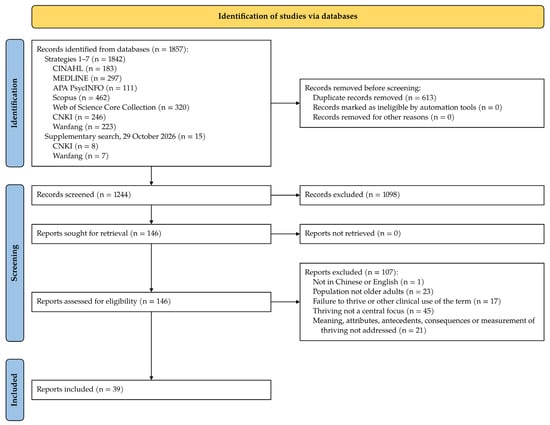
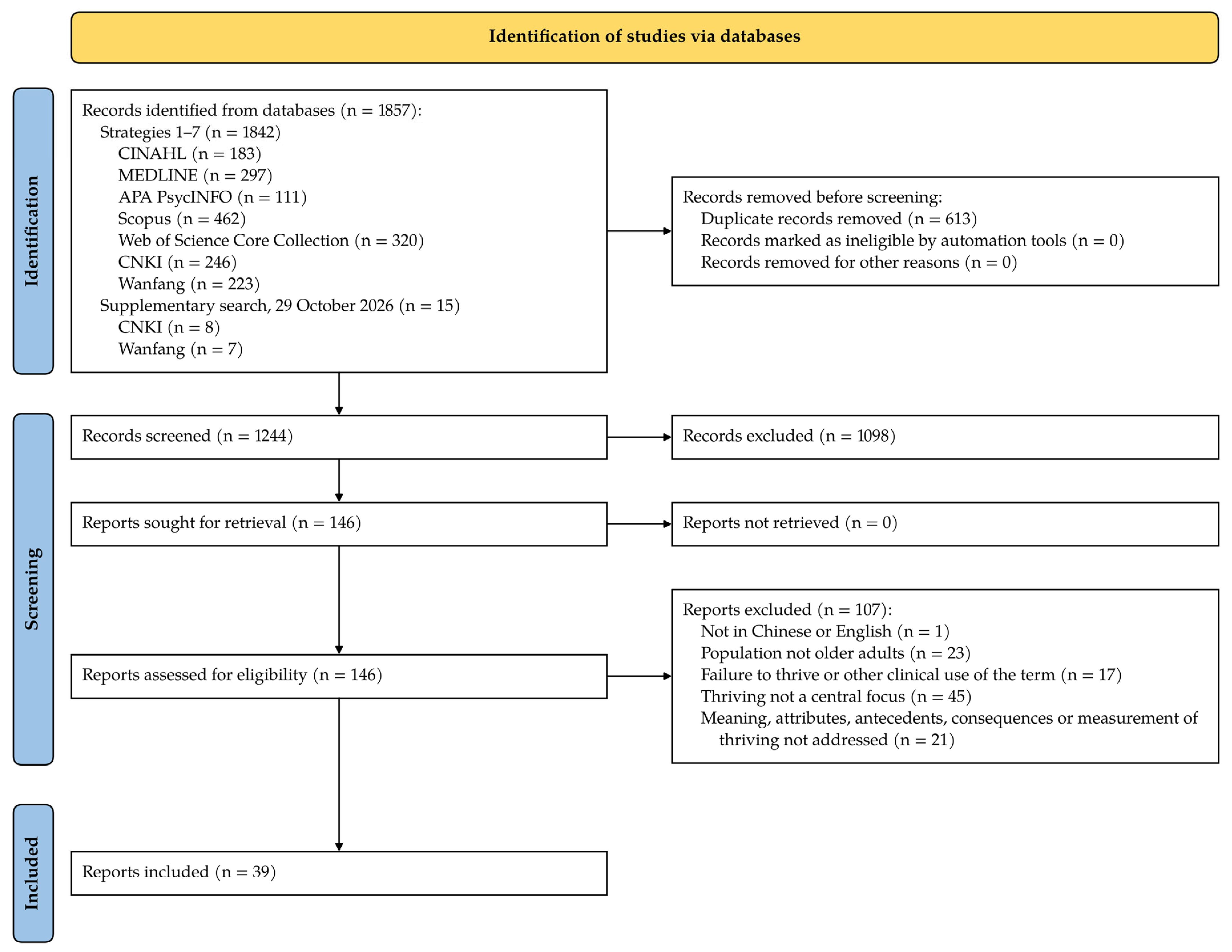
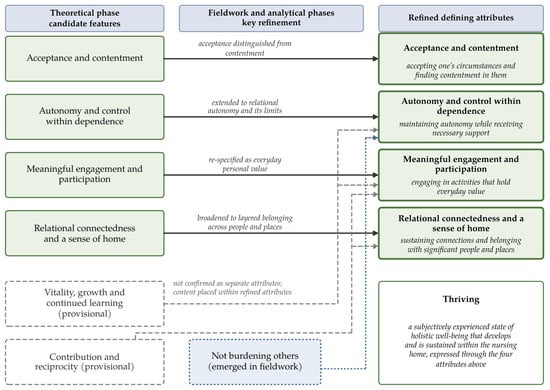
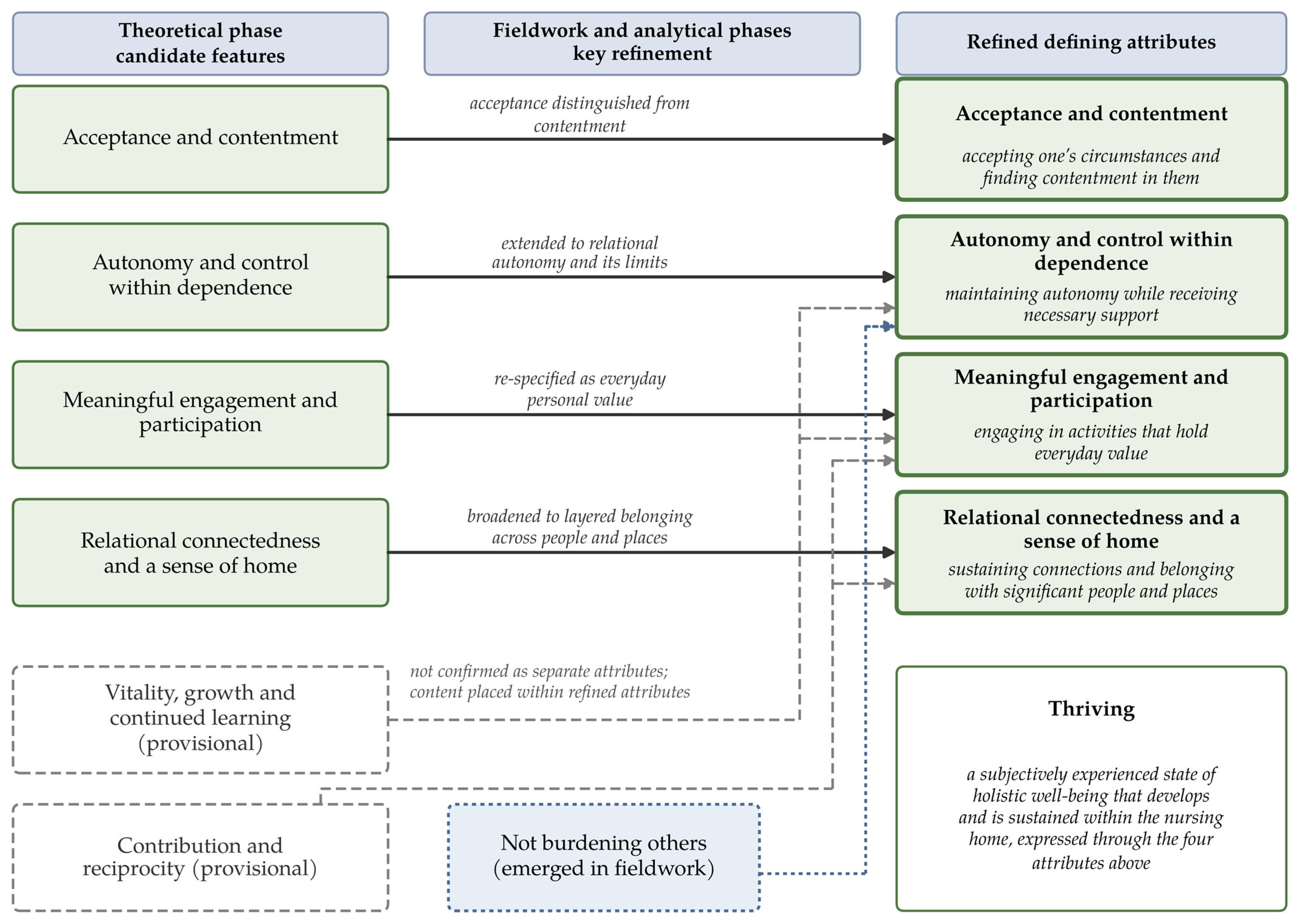
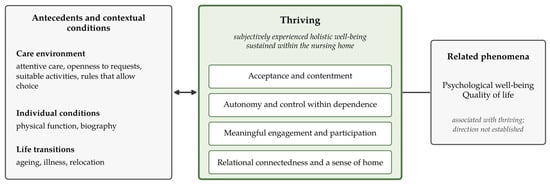
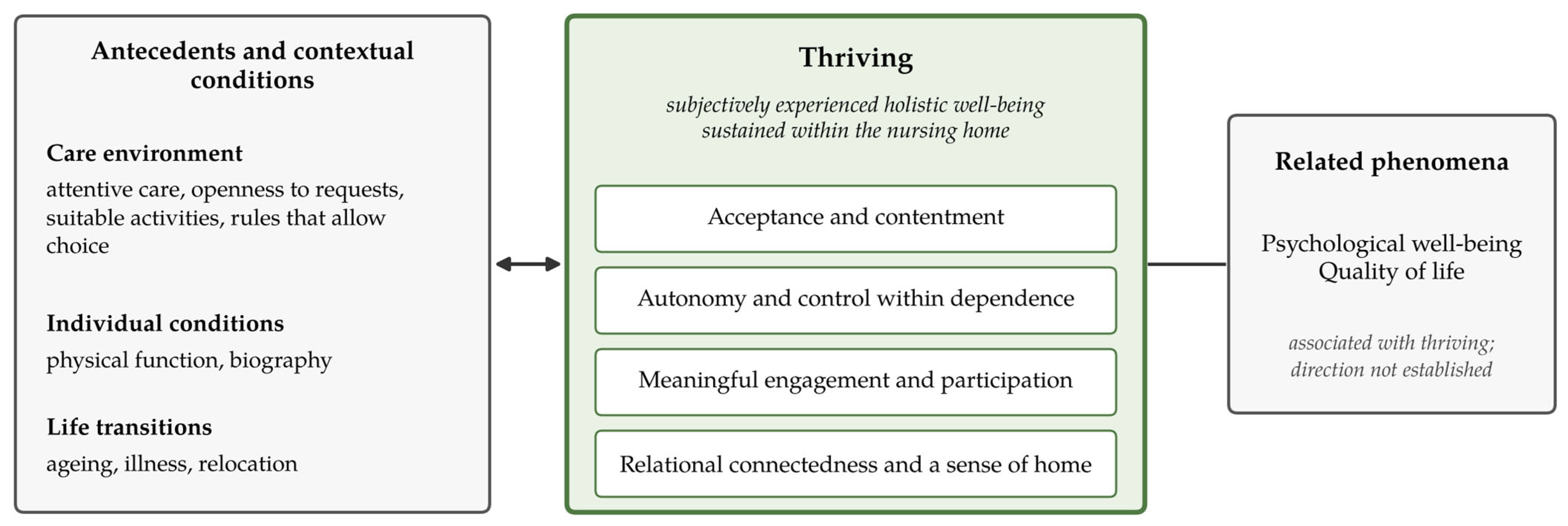

Disclaimer/Publisher’s Note: The statements, opinions and data contained in all publications are solely those of the individual author(s) and contributor(s) and not of MDPI and/or the editor(s). MDPI and/or the editor(s) disclaim responsibility for any injury to people or property resulting from any ideas, methods, instructions or products referred to in the content. |
© 2026 by the authors. Licensee MDPI, Basel, Switzerland. This article is an open access article distributed under the terms and conditions of the Creative Commons Attribution (CC BY) license.